Passionate Catholic.
Being a Catholic is a way of life - a love affair "Religion must be like the air we breathe..."- St John Bosco
Prayer is what the world needs combined with the example of our lives which testify to the Light of Christ.
This site, which is now using the Traditional Calendar, will mainly concentrate on Daily Prayers, Novenas and the Memorials and Feast Days of our friends in Heaven, the Saints who went before us and the great blessings the Church provides in our Catholic Monthly Devotions.
This Site is placed under the Patronage of my many favourite Saints and especially, St Paul.
"For the Saints are sent to us by God
as so many sermons.
We do not use them, it is they who move us
and lead us, to where we had not expected to go.”
Charles Cardinal Journet (1891-1975)
This site adheres to the pre-Vatican II Catholic Church and all her teachings. .
PLEASE ADVISE ME OF ANY GLARING TYPOS etc - In June 2021 I lost 100% sight in my left eye and sometimes miss errors. Thank you and I pray all those who visit here will be abundantly blessed. Pax et bonum! 🙏
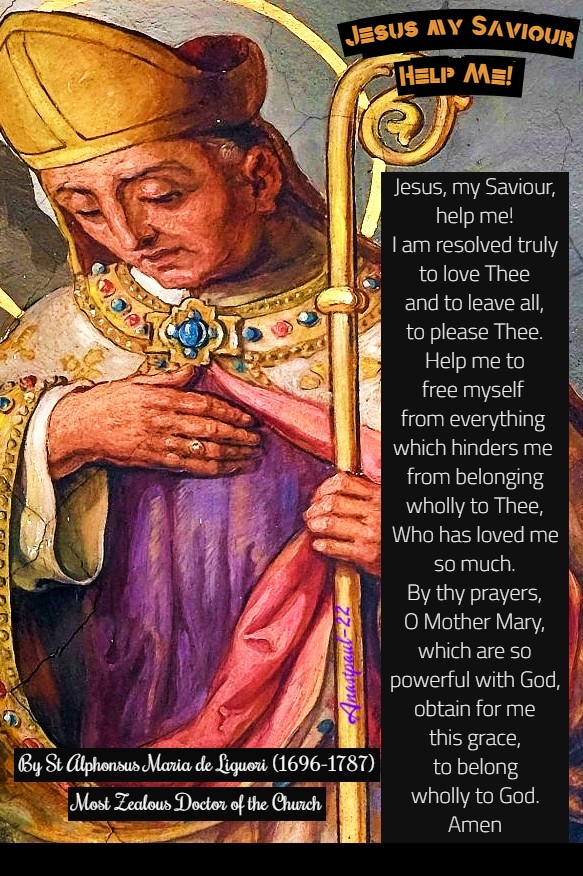
Our Morning Offering – 15 March – Ember Saturday in the 1st Week of Lent and the Feastday of St Clement Mary Hofbauer C.Ss.R (1751-1820) Below is a prayer by the Founder of his Order, the Redemptorists, St Alphonsus
Jesus, My Saviour, Help Me! By St Alphonsus Maria de Liguori (1696-1787) Most Zealous Doctor of the Church
Jesus, my Saviour, help me! I am resolved truly to love Thee and to leave all, to please Thee. Help me to free myself from everything which hinders me from belonging wholly to Thee, Who has loved me so much. By thy prayers, O Mother Mary, which are so powerful with God, obtain for me this grace, to belong wholly to God. Amen
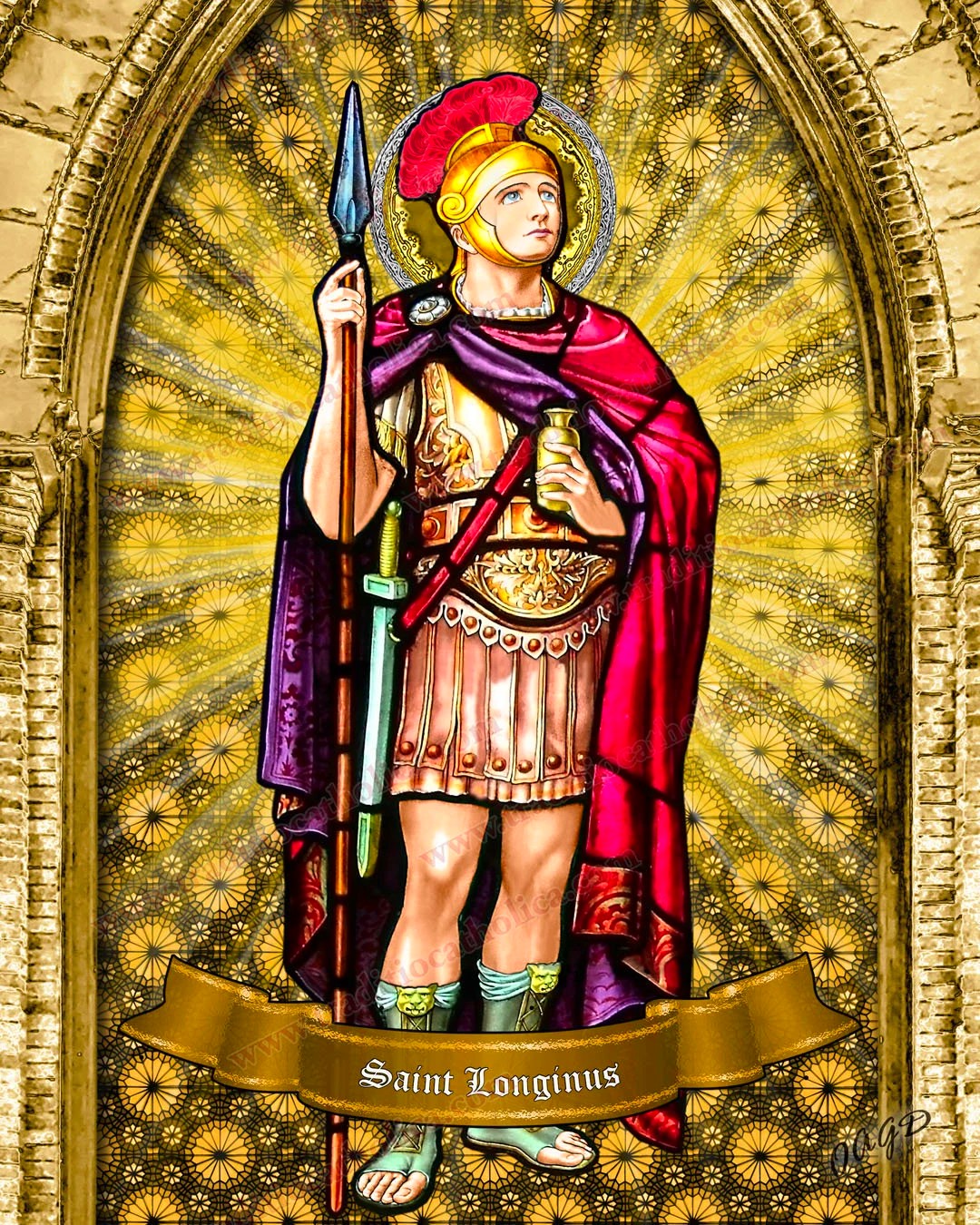
Saint of the Day – 15 March – St Longinus (1st Century) Martyr, the Roman Centurion who we believe was he who pierced the Sacred Side of Our Lord with his lance. He was Baptised and became a Monk in Caesarea, where he was Martyred by beheading.
The Roman Martyrology reads today: “At Caesarea, in Cappadocia, the Martyrdom of St Longinus, the soldier who is believed to have pierced the side of Our Lord Jesus Christ, with a lance.”
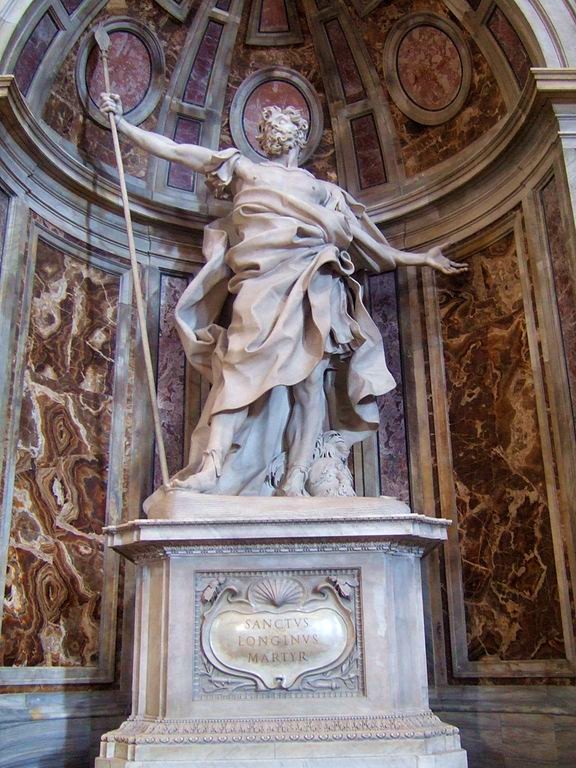
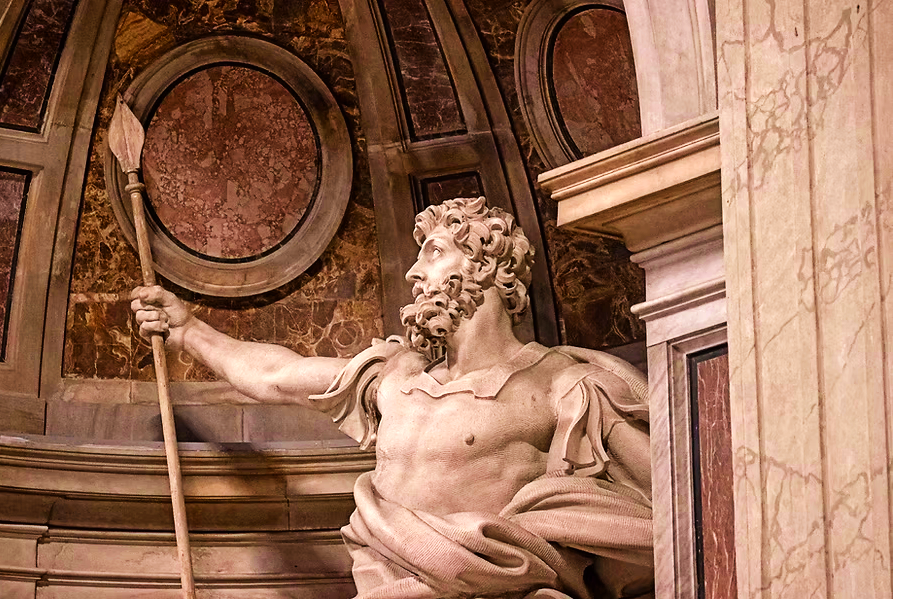
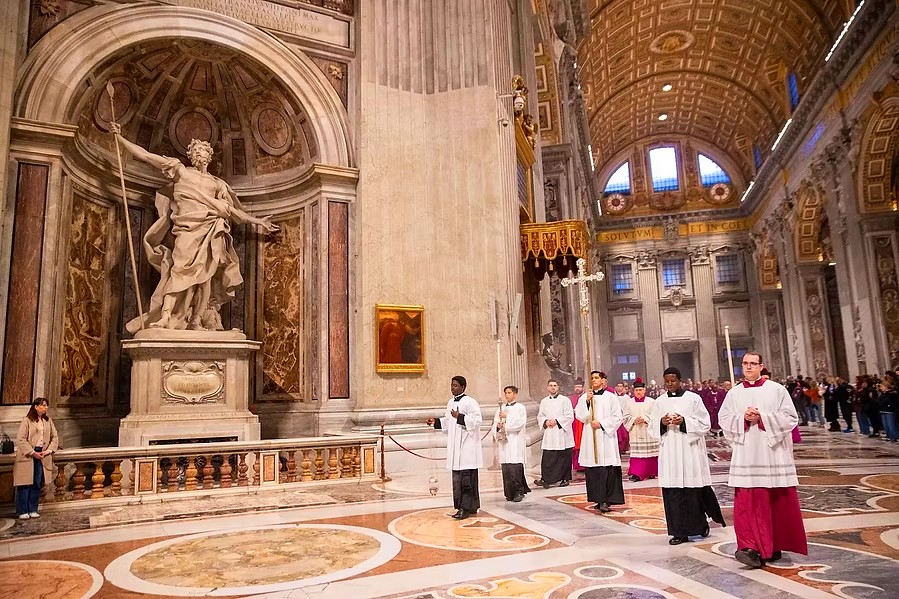
Statue of Saint Longinus by Bernini in Saint Peter’s Basilica
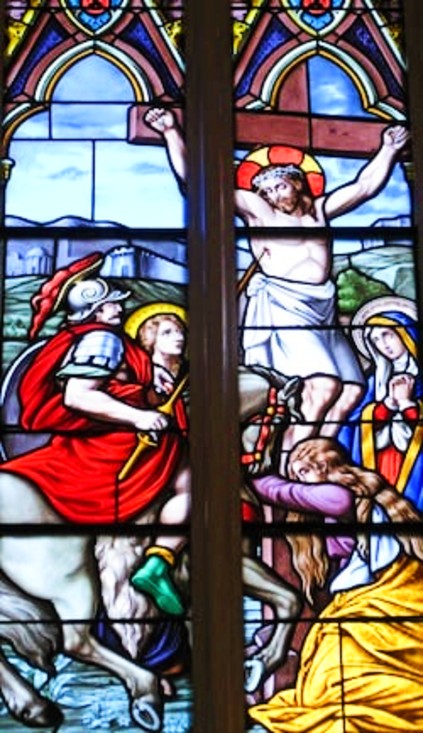
Longinus is the Centurion who pierced the side of Our Lord while He was hanging on the Cross.
Tradition tells us that Longinus, who was nearly blind, was healed when some of the blood and water from Jesus side, dripped into his eyes. It was then, he exclaimed “Indeed, this was the Son of God!” [Mark 15:39].
Longinus then converted, retired from the army, took instruction from the Apostles and became a Monk in Cappadocia.
There, he was arrested for his faith, his teeth forced out and tongue cut off. However, Longinus miraculously continued to speak clearly and managed to destroy several idols in the presence of the Governor. The Governor, who was made blind by the demons which came out of the idols, had his sight restored when Longinus was being beheaded because his blood came in contact with the Governors’ eyes.
St Longinus’ Relics are now in the Church of St Augustine in Rome. His Lance is contained in one of the four pillars over the Altar in St Peter’s Basilica in Rome, where also the glorious Bernin Statue, above resides. Below is a detail of the Statue and the Lance.
St Longinus (1st Century) Martyr St Mancius of Evora St Matrona of Capua St Matrona of Thessaloniki St Menignus of Parium Bl Monaldus of Ancona St Nicander of Alexandria St Peter Pasquale St Sisebuto St Speciosus St Vicenta of Coria Bl Walter of Quesnoy
Thought for the Day – 14 March – Meditations with Fr Richard Frederick Clarke SJ (1839-1900)
“Short Meditations for March, St Joseph” From “The Devout Year” By Fr Richard Frederick Clarke SJ (1839-1900)
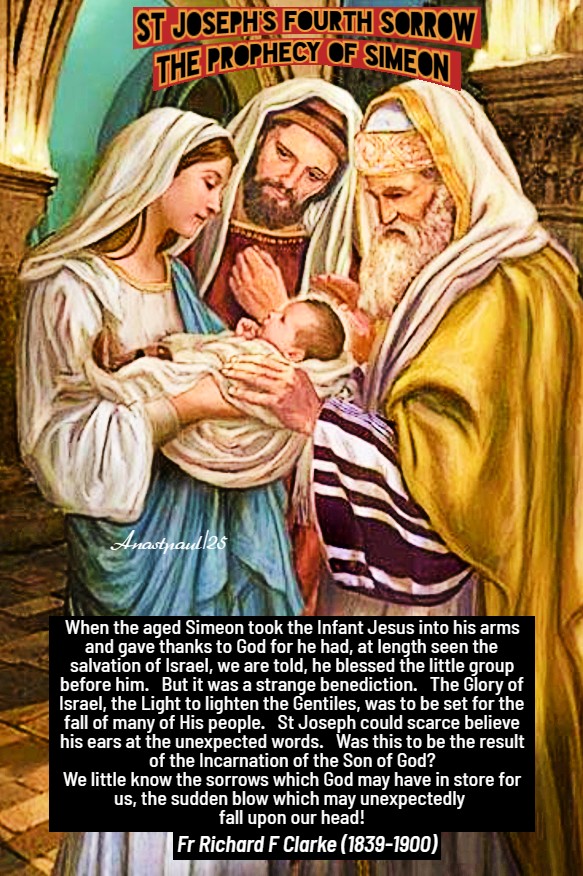
14th Day – St Joseph’s Fourth Sorrow The Prophecy of Simeon
+1. When the aged Simeon took the Infant Jesus into his arms and gave thanks to God for he had, at length seen the salvation of Israel, we are told, he blessed the little group before him. But it was a strange benediction. The Glory of Israel, the Light to lighten the Gentiles, was to be set for the fall of many of His people. St Joseph could scarce believe his ears at the unexpected words. Was this to be the result of the Incarnation of the Son of God? We little know the sorrows which God may have in store for us, the sudden blow which may unexpectedly fall upon our head!
+2. This was not all. Another clause in the strange blessing, declared that the spotless Lamb of God should be a Sign Who should be contradicted. What could there be in Him which should rouse ill-will, or opposition, or contradiction? Had He not come to be the Saviour of mankind? Were not His lips to be full of grace from the first day on which He began to speak? St Joseph accepted, with resignation, the heart-breaking news.
+3. It was not only Jesus Who was to suffer. Mary’s heart was to be pierced through with a sword. Her life was to be one continual sorrow. She was to suffer with the sufferings of Jesus. The tender, compassionate heart of Joseph was filled with fresh sorrow at the prospect of the anguish which was to overtake his holy spouse. To sorrow with the sorrow of others, assuages their grief. It is this which will win for us a share in the joy which St Joseph has in Heaven.
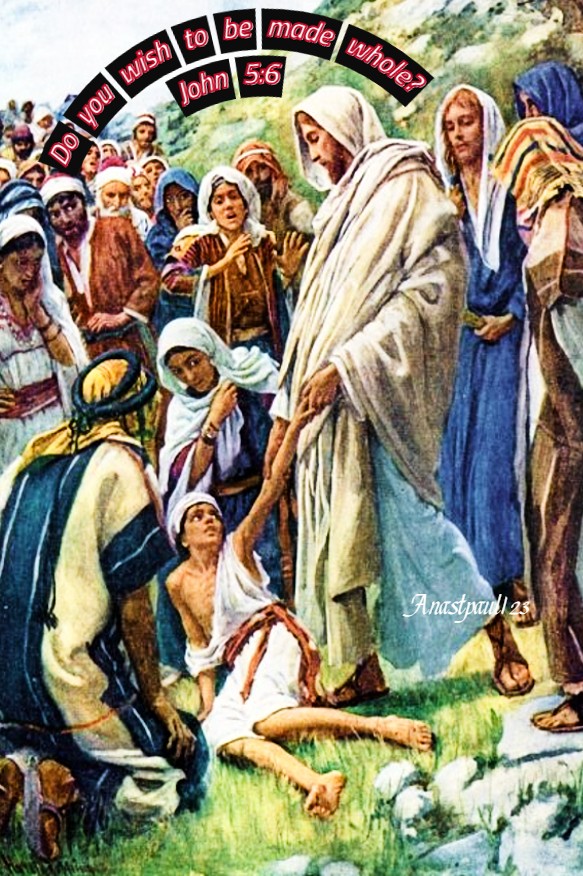
Quote/s of the Day – 14 March – Ember Friday, First Week of Lent – Ezekiel 18:20-28, John 5:1-15 – Scripture search here: https://www.drbo.org/
“Do you wish to be made whole?”
John 5:6
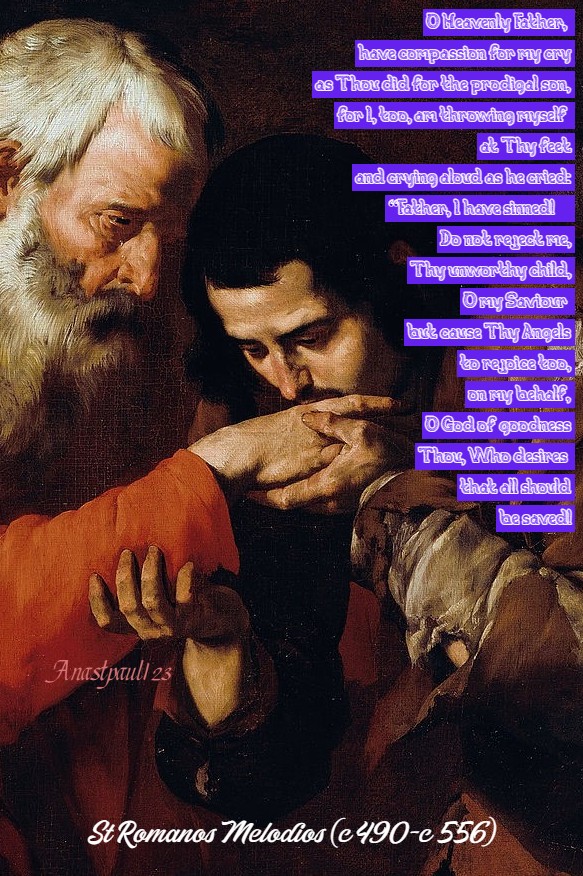
“O Heavenly Father, have compassion for my cry as Thou did for the prodigal son, for I, too, am throwing myself at Thy feet and crying aloud as he cried: “Father, I have sinned!” Do not reject me, Thy unworthy child, O my Saviour but cause Thy Angels to rejoice too, on my behalf, O God of goodness Thou, Who desires that all should be saved.”
St Romanos Melodios (c490-c 556) Monk, Composer of hymns, Poet
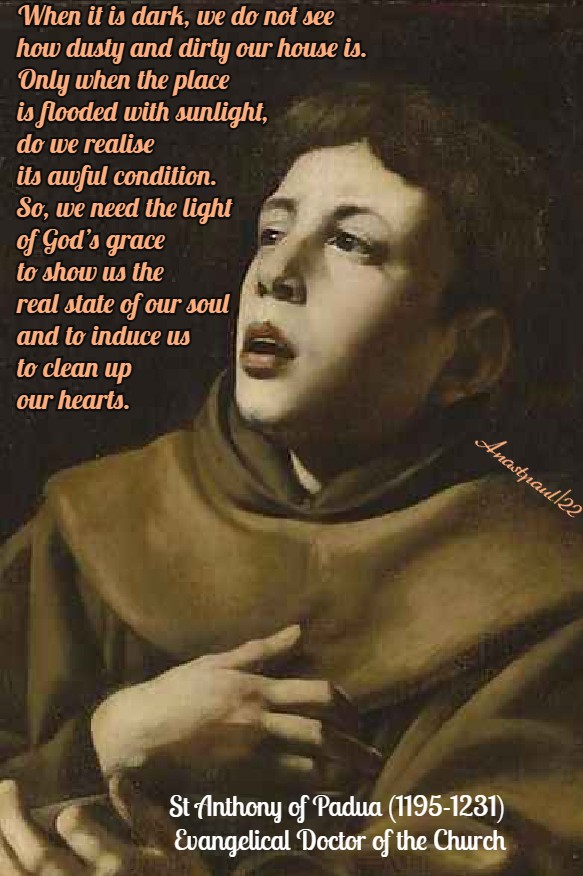
“When it is dark, we do not see how dusty and dirty our house is. Only when the place is flooded with sunlight, do we realise its awful condition. So, we need the light of God’s grace to show us the real state of our soul and to induce us to clean up our hearts!”
St Anthony of Padua (1195-1231) Evangelical Doctor of the Church
“Let us then depart, let us depart from Egypt, let us approach Our Lord, let us make provision of good works; let the feet of our affections be bare, let us clothe ourselves with innocence, let us not be satisfied with crying for mercy, let us go forth from Egypt, let us delay no longer. The hour is come to arise from sleep, since we know that He receives sinners; the Angels await our repentance, the Saints pray for it!”
St Francis de Sales 91567-1622) Doctor of the Church
Lenten Meditations – 14 March – With Fr Richard Frederick Clarke SJ (1839-1900) Scripture search here: https://www.drbo.org/
“The Sacred Passion of Our Lord Jesus Christ” “Short Meditations for Lent” From “The Devout Year” By Fr Richard Frederick Clarke SJ (1839-1900)
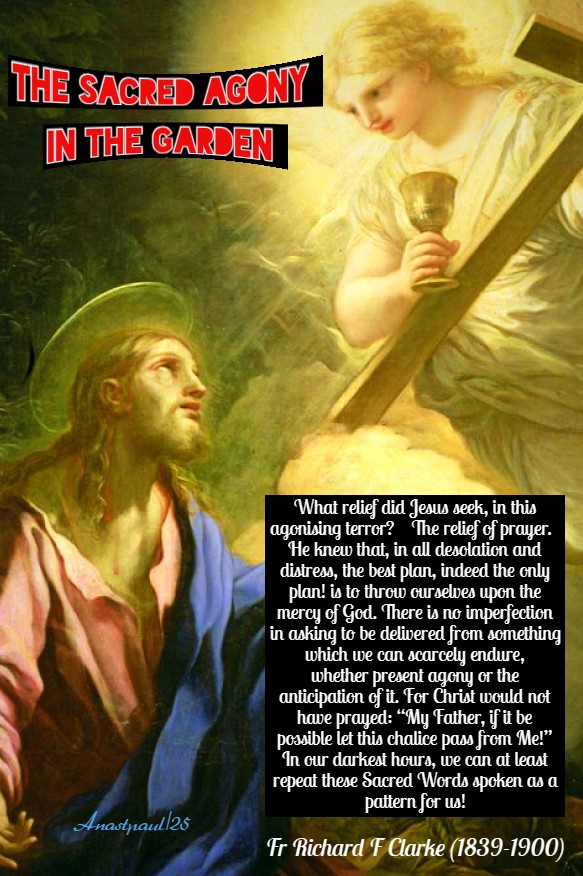
Friday of the First Week in Lent The Sacred Agony in the Garden
Read St Matthew xxvi: 30-40 (Posted at the end)
+I. During the Agony in the Garden, Our Lord anticipated all the coming agony of His Passion. He allowed His human soul to feel, in all its intensity, each detail of the unspeakable suffering which was now close at hand. Hitherto, it had indeed been distinctly present to Him but now, it seemed to take possession of His whole soul Now, it was a mortal horror, resulting from a clear, vivid realisation of all He had to endure – for those who would not believe and love Him! When darkness invades our souls, we should remember that none is like the deep, black darkness which spread over Jesus’ Sacred Soul.
+2. What relief did Jesus seek, in this agonising terror? The relief of prayer. He knew that, in all desolation and distress, the best plan, indeed the only plan! is to throw ourselves upon the mercy of God. There is no imperfection in asking to be delivered from something which we can scarcely endure, whether present agony or the anticipation of it. For Christ would not have prayed: “My Father, if it be possible let this chalice pass from Me!” In our darkest hours, we can at least repeat these Sacred Words spoken as a pattern for us!
+3. Yet. we must remember the conclusion of the prayer, the act of resignation which leaves all in the hands of God. “Not as I will but as Thou wilt!” These words spoken from our hearts, will always give us strength to bear that which seems unbearable and will take the bitterness out of our pains.
[30] And a hymn being said, they went out unto mount Olivet. [31] Then Jesus said to them: All you shall be scandalised in Me this night. For it is written: I will strike the shepherd and the sheep of the flock shall be dispersed. [32] But after I shall be risen again, I will go before you into Galilee. [33] And Peter answering, said to Him: Although all shall be scandalized in thee, I will never be scandalised. [34] Jesus said to him: Amen I say to thee, that in this night before the cock crow, thou wilt deny me thrice. [35] Peter saith to Him: Yea, though I should die with Thee, I will not deny Thee. And in like manner said all the disciples.
[36] Then Jesus came with them into a country place which is called Gethsemani and He said to His disciples: Sit you here, until I go yonder and pray. [37] And taking with Him, Peter and the two sons of Zebedee, He began to grow sorrowful and to be sad. [38] Then He saith to them: My soul is sorrowful even unto death, stay you here and watch with Me. [39] And going a little further, He fell upon His Face, praying and saying: My Father, if it be possible, let this chalice pass from Me. Nevertheless, not as I will but as Thou wilt. [40] And He cometh to His disciples and findeth them asleep and He saith to Peter: What? Could you not watch one hour with Me? [Matthew 26:30-40]
One Minute Reflection – 14 March – “The Month of Saint Joseph” – Ember Friday, 1st Week in Lent – Ezekiel 18:20-28 – John 5:1-15 – Scripture search here: https://www.drbo.org/
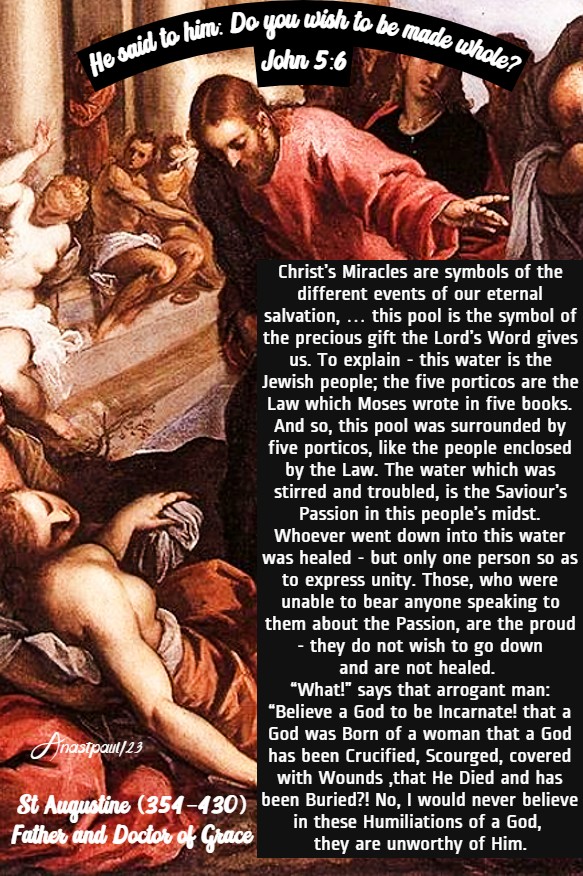
“Now a certain man was there who had been thirty-eight years under his infirmity. When Jesus saw him lying there and knew he had been in this state a long time, He said to him: Do you wish to be made whole?” – John 5:5-6
REFLECTION – “Christ’s Miracles are symbols of the different events of our eternal salvation … this pool is the symbol of the precious gift the Lord’s Word gives us. To explain – this water is the Jewish people; the five porticos are the Law which Moses wrote in five books. And so, this pool was surrounded by five porticos, like the people enclosed by the Law. The water which was stirred and troubled, is the Saviour’s Passion in this people’s midst. Whoever went down into this water was healed – but only one person, so as to express unity. Those, who were unable to bear anyone speaking to them about the Passion, are the proud – they do not wish to go down and are not healed. “What!” says that arrogant man: “Believe a God to be Incarnate! that a God was Born of a woman, that a God has been Crucified, Scourged, covered with Wounds ,that He Died and has been Buried?! No, I would never believe in these Humiliations of a God, they are unworthy of Him!”
Let your heart speak here, rather than your head. The Humiliations of a God seem unworthy to the arrogant and that is why, they are very far from a cure. So protect yourself from this pride. If you desire your cure, accept to go down. There would be something to be worried about, if someone said to you that Christ had undergone some sort of change, in becoming Incarnate. But no … your God remains what He Is, have no fear; He does not perish and He prevents you, yourselves from perishing. Yes, He remains what He Is; He Is born of a woman but according to the flesh … it is as Man that He has been Seized, Bound, Scourged, Mocked and finally Crucified and put to Death. Why be afraid? The Word of the Lord remains forever. Anyone who refuses these humiliations of a God, does not wish to be cured of the mortal swelling of his pride!
By His Incarnation, our Lord Jesus Christ has, therefore, restored hope to our flesh. He assumed the fruits of this earth which are only too well known and common – Birth and Death. Birth and death – here indeed are goods which the earth possesses in abundance! But in them were found, neither resurrection nor eternal life. He found here the unfortunate fruits of this unfruitful earth and gave us, in exchange, the possessions of His Heavenly Kingdom!” – St Augustine (354-430) Father and Doctor of Grace (Sermon 124).
PRAYER – From all perils of soul and body defend us, O Lord, we beseech Thee and by the intercession of blessed and gloriosus ever Virgin Mary, Mother of God, of blessed Joseph, of Thy blessed apostles Peter and Paul and all the Saints, graciously grant us safety and peace that all adversities and errors, being overcome, Thy Church may serve Thee in security and freedom. Through Jesus Christ, Thy Son our Lord, Who lives and reigns with Thee, in the unity of the Holy Ghost, God, world without end. Amen (Collect).Through the same Jesus Christ, Thy Son our Lord, Who lives and reigns with Thee, in the unity of the Holy Ghost, God, world without end. Amen (Collect).
Our Morning Offering – 14 March – The Feast of the Sacred Lance and Nails
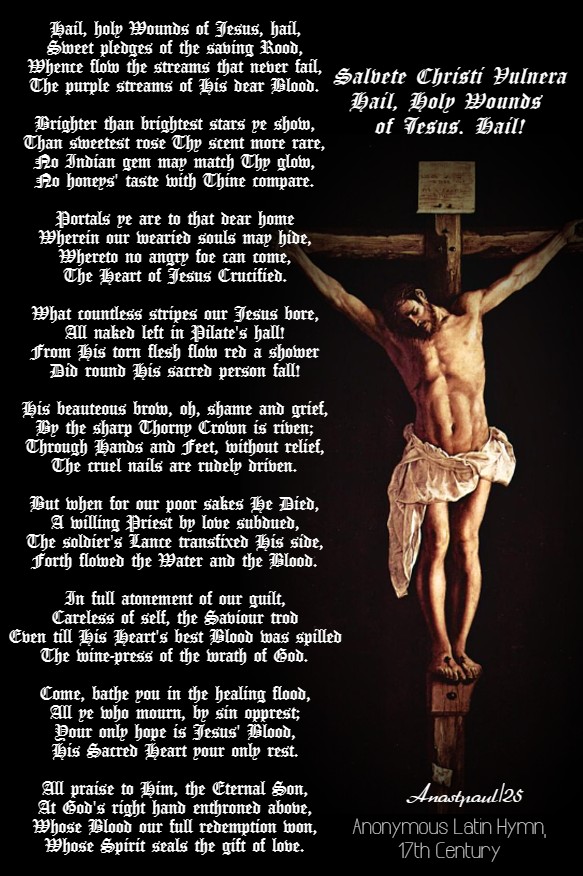
Salvete Christi Vulnera Hail, Holy Wounds of Jesus, Hail! Anonymous Latin Hymn, 17th Century
Hail, holy Wounds of Jesus, hail, Sweet pledges of the saving Rood, Whence flow the streams that never fail, The purple streams of His dear Blood.
Brighter than brightest stars ye show, Than sweetest rose Thy scent more rare, No Indian gem may match Thy glow, No honeys’ taste with Thine compare.
Portals ye are to that dear home Wherein our wearied souls may hide, Whereto no angry foe can come, The Heart of Jesus Crucified.
What countless stripes our Jesus bore, All naked left in Pilate’s hall! From His torn flesh flow red a shower Did round His sacred person fall!
His beauteous brow, oh, shame and grief, By the sharp Thorny Crown is riven; Through Hands and Feet, without relief, The cruel nails are rudely driven.
But when for our poor sakes He Died, A willing Priest by love subdued, The soldier’s Lance transfixed His side, Forth flowed the Water and the Blood.
In full atonement of our guilt, Careless of self, the Saviour trod Even till His Heart’s best Blood was spilled The wine-press of the wrath of God.
Come, bathe you in the healing flood, All ye who mourn, by sin opprest; Your only hope is Jesus’ Blood, His Sacred Heart your only rest.
All praise to Him, the Eternal Son, At God’s right hand enthroned above, Whose Blood our full redemption won, Whose Spirit seals the gift of love.
Office Hymn at Lauds on the Feast of the Most Precious Bloodand for the Fridays of Lent. Translated by – Henry Nutcombe Oxenham (1829-1888) for whom I find little information.
Saint of the Day – 14 March – Blessed Arnaldo OSB (c1185-1255) Abbot at the Santa Giustinain Monastery in Padua, Italy, a powerful and effective governor, a defender of the rights of the Monastery, the Church and the poor. Born in Padua, Italy in 1185 and died on 10 February 1255 in the prison at Asolo, Italy. Also known as – Arnaldo de’Cattanei, Arnold Cattaneo, Arnold… Arnaldo… Arnaud… Arnoldus…
Arnaldo, born in 1185 to the noble Cattanei family of Limena, near Padua, entered the Monastery of San Giustina in Padua, at a very young age.
Arnaldo soon distinguished himself for his piety, seriousness and exemplary life, so much so that, in 1209, at only 24 years of age, he was elected as the Abbot.
His government was very active – he defended the rights of the Monastery, then compromised, he claimed ancient privileges, such as the one according to which, the abbot of San Giustina participated in the election of the Bishop. He restored the Monastery and enriched it with new buildings and new possessions, he diverted the waters of the Bacchiglione to operate a mill plant and more. We do not know if and what type of relationship he had with St Anthony, who also worked in Padua at this time.
When Ezzelino III took over charge of Padua in 1237 and imprisoned Giordano Forzaté, the Pprior of San Benedetto, the other large Benedictine Monastery in Padua, Arnaldo fled to the Este family, first to Ferrara and then to the closer Monselice. In 1238, Emperor Frederick II returned the Monastery of San Giustina to Arnaldo and the following year, he was a guest there for two months.
However, when the Emperor left, the City remained at the mercy of Ezzelino, who, in 1246, as soon as he felt safe, had Arnaldo arrested and locked him in the fortress of Asolo. The Abbot languished there, on bread and water, for eight years and three months, until his death on 10 February 1255.
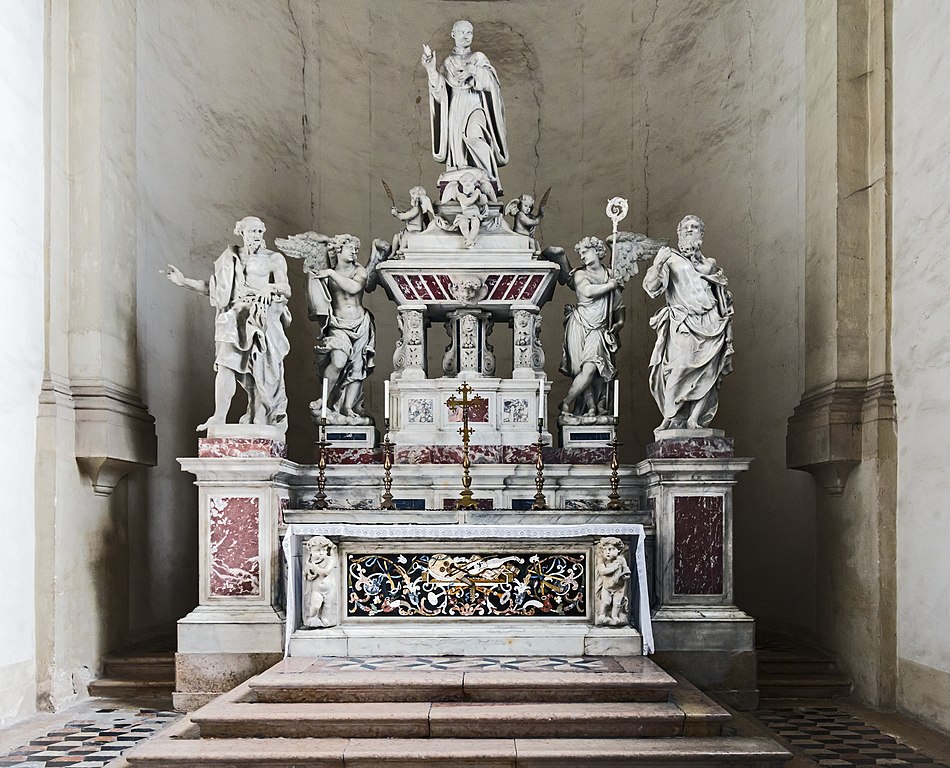
On that occasion, there were seen as two burning torches descending from the sky and shining above the castle. Buried temporarily in the Church of the Friars Minor of Asolo, as soon as the tyrant was driven out, his body was transported to Padua and placed in San Giustina in an Ark near the exit. When, on 14 March 1562, the Holy Bodies, already buried in the old Basilica, were definitively buried in the new Church, Arnaldo was placed in the second Chapel on the left starting from the choir, in a beautiful baroque Altar with a marble statue representing the blessed, SEE BELOW. An 18th Century painting representing our Saint is preserved in the large Sacristy.
Santa Giustina (Padua) – Chapel of Arnaldo da Limena
There is no evidence that his cult has official recognition – it is based on tradition. Arnaldo did not have his own Office but only the commemoration in the Martyrologies of the Order. In San Giustina, he continued to be celebrated on 15 March until the suppression of the Abbey in 1806 but since that period, his memory has been renewed. Blessed Arnaldo is also remembered on 10 February, the anniversary of his death.
San Giustina Abbey and Basilica which is replete with the most beaytiful Chapels, Relics (including St Luke) and artworks. Please do visit the Wikipedia page to view them.
The Feast of the Sacred Lance and Nails – Friday after the 1st Sunday in Lent: The Supreme Pontiff, Innocent VI, in his Decree establishing the Feast and Office of the Lance and Nails which pierced the Body of our Crucified Lord Jesus Christ, exhorts all the faithful to have a special veneration for and devotion to, all the Sacred Instruments of our Saviour’s Passion. The following are the Holy Father’s words: “We should honour the most holy Passion of our Lord and Redeemer, Jesus Christ, in such manner that, meditating on all the mysteries and merits of the same Passion, we venerate also each Sacred Instrument thereof.” Then this holy and zealous Pontiff, coming more directly to the honour due to the Lance and Nails, says: “Although the Lance and Nails and the other Sacred Instruments of the Passion, should be enerated everywhere, by the faithful of Christ and although every year the Church celebrates the Solemn Offices of the same Passion, yet, we deem it proper and fitting, that a special Solemn Feast should be instituted and celebrated in honour of those particular Instruments of the Passion, more especially, in those places wherein these salutary Instruments are preserved. Hence, we wish to encourage this devotion by a special Office and privileges.” (Innocent VI in Decret. de Fest. Lane, et Clav. Domini).
The Lance, also known as “The Spear of Longinus” is kept in the Vatican Basilica, given to Innocent VIII in 1492. The Nails were kept with the Crown of Thorns, along with a small piece of the Lance of Longinus at Saint Chapelle, France and were subsequently lost during the French Revolution. The Crown of Thorns was the only Relic saved and is now kept at Notre Dame Cathedral.
NOVENA to ST JOSEPH DAY FIVE – Click Link HERE: DAY FIVE
St Agno of Zaragoza St Alexander of Pydna St Aphrodisius of Africa Blessed Arnaldo (c1185-1255) Abbot in Padua St Boniface Curitan St Diaconus St Eutychius of Mesopotamia
St Peter of Africa St Philip of Turin St Talmach Bl Thomas Vives
47 Martyrs of Rome – Forty-sevenpeople who were Baptised into the Faith in Rome, Italy by Saint Peter the Apostle and were later Martyred together during the persecutions of Nero. Martyred c67 in Rome, Italy
Martyrs of Valeria – Two Monks Martyred by Lombards in Valeria, Italy who were never identified. After the monks were dead, their killers could still hear them singing Psalms. They were hanged on a tree in Valeria, Italy.
Thought for the Day – 13 March – Meditations with Fr Richard Frederick Clarke SJ (1839-1900)
“Short Meditations for March, St Joseph” From “The Devout Year” By Fr Richard Frederick Clarke SJ (1839-1900)
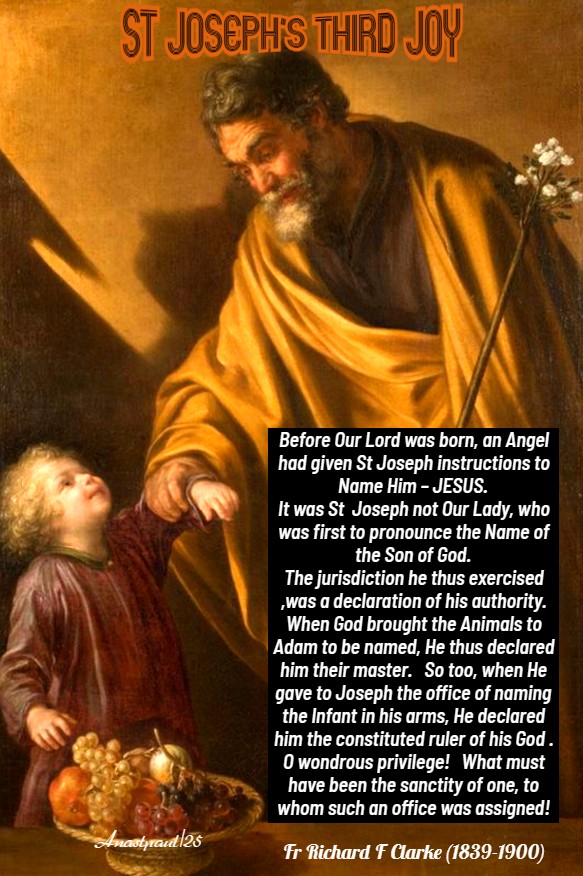
13th Day – St Joseph’s Third Joy Hearing the Name of Jesus
+1. Before Our Lord was born, an Angel had given St Joseph instructions to Name Him JESUS. It was St. Joseph not Our Lady, who was first to pronounce the Name of the Son of God. The jurisdiction he thus exercised was a declaration of his authority. When God brought the Animals to Adam to be named, He thus declared him their master. So too, when He gave to Joseph the office of naming the Infant in his arms, He declared him the constituted ruler of his God . O wondrous privilege! What must have been the sanctity of one, to whom such an office was assigned!
+2. The Name St Joseph gave to his Infant Son was Jesus , the Saviour – not Emmanuel, or Christ. Christ is the official Name of the Son of God, in virtue of His human nature; He was anointed as Man with the Holy Ghost. Emmanuel, or God with us, proclaims His Divinity but Jesus, or Saviour, declares His human nature and Divine personality, at the same time. As Our Saviour, He must be both God and Man – man to pay the price of our Redemption, God –,that the price maybe one that will satisfy the Eternal Father.
+3. What must have been the sweetness which filled St Joseph’s heart as he first breathed that Sacred Name! If to others it was as honey in their mouth, to St Joseph, it was as nectar and ambrosia, containing in itself, all possible sweetness. None save the holy Mother felt such joy as St Joseph did, in pronouncing the Holy Name. Yet how little I love it and relish it! How seldom I repeat it and with what coldness and indifference! My Jesus, mercy! May I love Thee ever more and more!
Quote/s of the Day – 13 March – Thursday of the First Week in Lent – Ezechiel 18:1-9, Matthew 15:21-28 – Scripture search here: https://www.drbo.org/
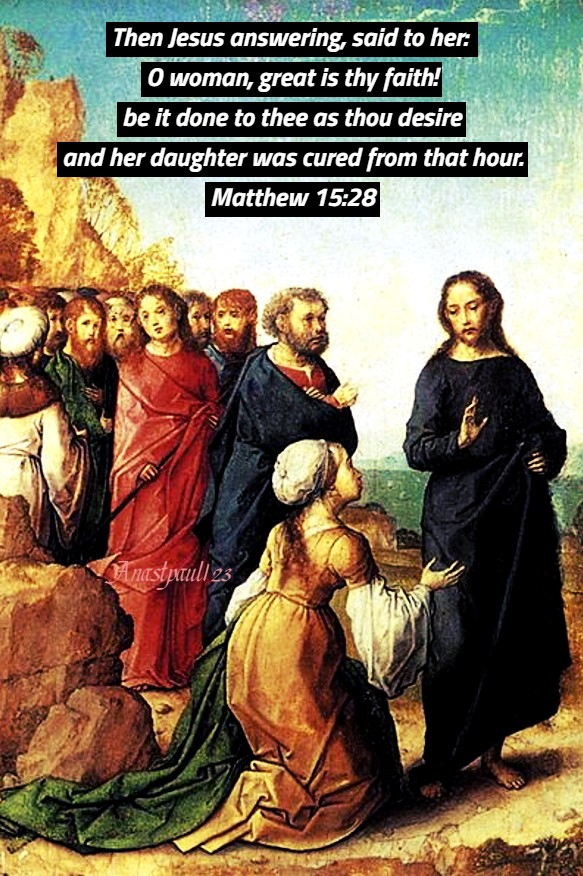
“Then Jesus answering, said to her: O woman, great is thy faith! be it done to thee as thou desire and her daughter was cured from that hour.”
Matthew 15:28
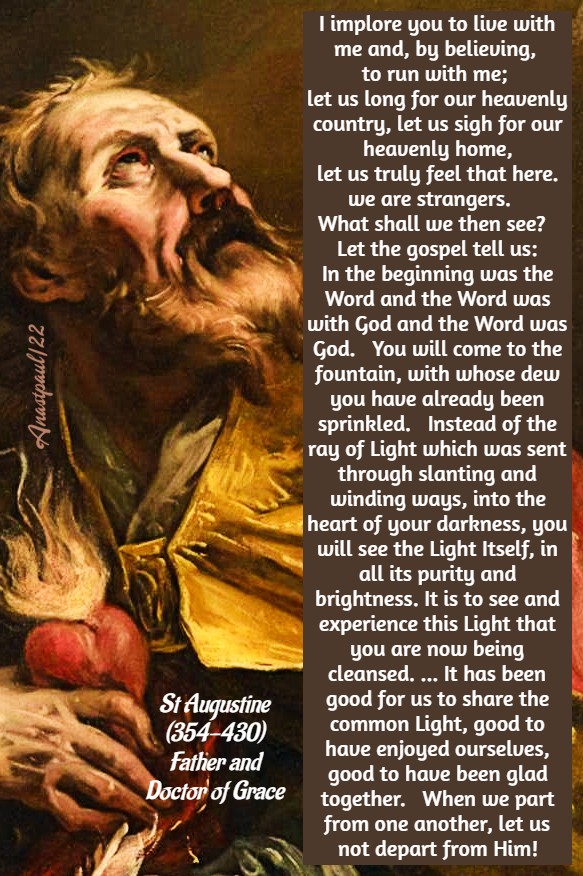
“I implore you to live with me and, by believing, to run with me; let us long for our Heavenly Country, let us sigh for our Heavenly Home, let us truly feel that here, we are strangers. What shall we then see? Let the Gospel tell us: In the beginning was the Word and the Word was with God and the Word was God. You will come to the fountain, with whose dew you have already been sprinkled. Instead of the ray of Light which was sent through slanting and winding ways, into the heart of your darkness, you will see the Light Itself, in all its purity and brightness. It is to see and experience this Light that you are now being cleansed. … It has been good for us to share the common Light, good to have enjoyed ourselves, good to have been glad together. When we part from one another, let us not depart from Him!”
St Augustine (354-430) Father and Doctor of Grace
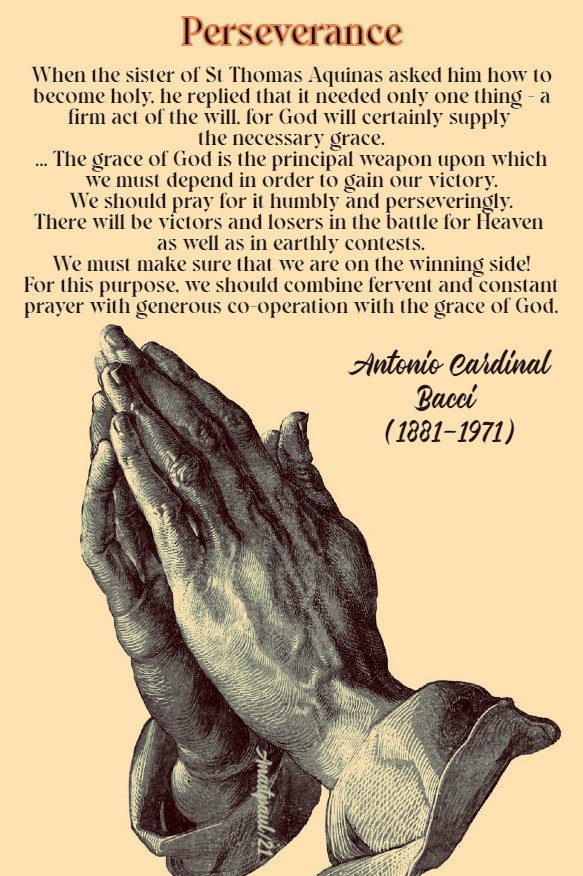
“When the sister of St Thomas Aquinas asked him how to become holy, he replied that it needed only one thing – a firm act of the will, for God will certainly supply the necessary grace. The grace of God is the principal weapon upon which we must depend in order to gain our victory. We should pray for it humbly and perseveringly. There will be victors and losers in the battle for Heaven, as well as in earthly contests. We must make sure, that we are on the winning side! For this purpose, we should combine fervent and constant prayer with generous co-operation with the grace of God.”
Lenten Meditations – 13 March – With Fr Richard Frederick Clarke SJ (1839-1900) Scripture search here: https://www.drbo.org/
“The Sacred Passion of Our Lord Jesus Christ” “Short Meditations for Lent” From “The Devout Year” By Fr Richard Frederick Clarke SJ (1839-1900)
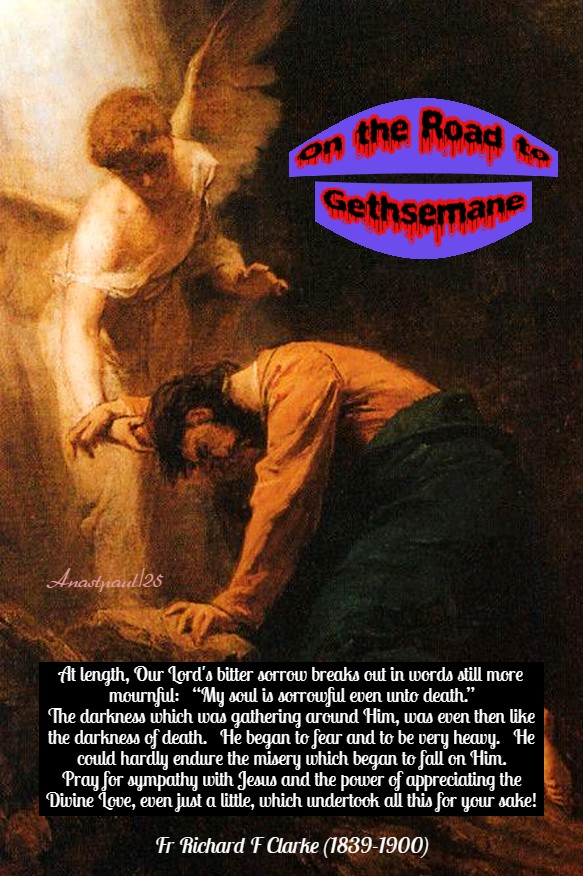
Thursday of the First Week in Lent On the Road to Gethsemane
Read St Mark xiv:26-34
[26] And when they had said a hymn, they went forth to the Mount of Olives. [27] And Jesus saith to them: You will all be scandalised in my regard this night; for it is written, I will strike the shepherd and the sheep shall be dispersed. [28] But after, I shall be risen again, I will go before you into Galilee. [29] But Peter saith to him: Although all shall be scandalised in Thee, yet not I. [30] And Jesus saith to him: Amen I say to thee, today, even in this night, before the cock crow twice, thou shall deny Me thrice.
[31] But he spoke the more vehemently: Although I should die together with Thee, I will not deny Thee. And in like manner too, said they all. [32] And they came to a farm called Gethsemani. And He saith to his disciples: Sit you here, while I pray. [33] And He taketh Peter and James and John with Him and He began to fear and to be heavy. [34] And He saith to them: My Soul is sorrowful even unto death; stay you here and watch. [Mark 14:26-34]
+1. After singing one of the paschal hymns, Our Lord and His Apostles went forth to the Garden of Gethsemane. On the way a strange sorrow spread over the countenance of Jesus. His unfailing cheerfulness forsook Him. His disciples wondered at the sudden change. It was the shadow of His Sacred Passion which fell upon Him, the beginning of the black darkness which was to envelop His Sacred Heart. When the shadow of desolation falls on me, may I remember Thee, O Lord, thus downcast on the road to Gethsemane!
+2. In mournful words Our Lord addresses the Apostles : “You will all be scandalised in My regard this night. You will all fly like cowards when the danger comes. One of you will betray Me, another will deny Me thrice, all will forsake Me.” How this thought pierced the sensitive Heart of Jesus, with anguish! of all who, for three years, had been His chosen friends and companions, who had seen His miracles and listened to His Divine Words not one would be found faithful. My God, how often have I been found unfaithful to Thee!
+3. At length, Our Lord’s bitter sorrow breaks out in words still more mournful: “My soul is sorrowful even unto death.” The darkness which was gathering around Him, was even then like the darkness of death. He began to fear and to be very heavy. He could hardly endure the misery which began to fall on Him. Pray for sympathy with Jesus and the power of appreciating the Divine Love, even just a little, which undertook all this for your sake!
One Minute Reflection – 13 March – “The Month of Saint Joseph” – Thursday of the 1st Week in Lent – Ferial Day – Ezechiel 18:1-9 – Matthew 15:21-28 – Scripture search here: https://www.drbo.org/
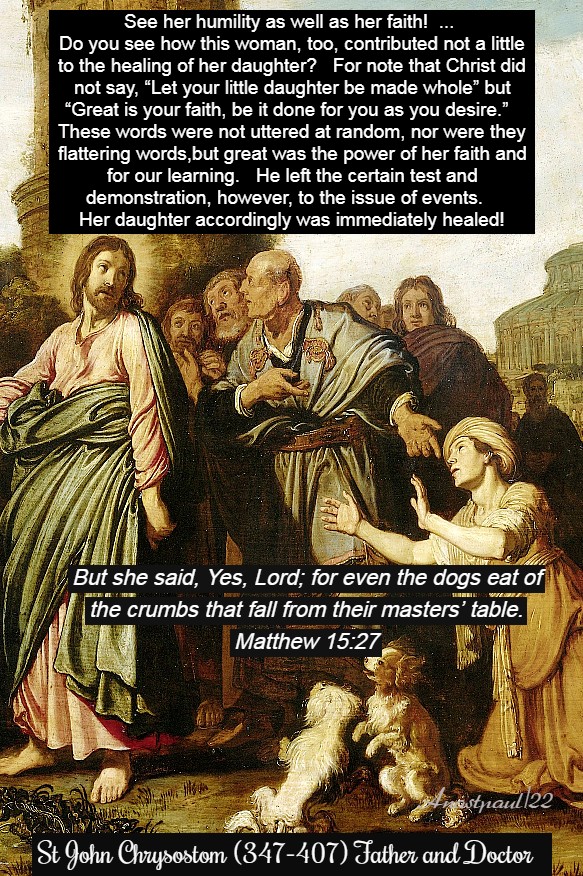
“But she said, Yes, Lord; for even the dogs eat of the crumbs that fall from their masters’ table.” – Matthew 15:27
REFLECTION – “See her humility as well as her faith! For He had called the Jews “children” but she was not satisfied with this. She even called them “masters,” so far was she from grieving at the praises of others. She said, “Yes, Lord, yet even the dogs eat the crumbs that fall from their masters’ table.” Behold the woman’s wisdom! She did not venture so much as to say a word against anyone else. She was not stung to see others praised, nor was she indignant to be reproached. Behold her constancy! When He answered, “It is not fair to take the children’s bread and throw it to the dogs,” she said, “Yes, Lord.” He called them “children” but she called them “masters.” He used the name of a dog but she described the action of the dog. Do you see this woman’s humility?
Then compare her humility with the proud language of the Jews: “We are Abraham’s seed and were never in bondage to any man.” “We are born of God.” But not so this woman. Rather, she calls herself a dog and them masters. So for this reason, she became a child. For what does Christ then say? “O woman, great is your faith!”
So we might surmise that this is the reason He put her off, in order that He might proclaim aloud this saying and that He might crown the woman: “Be it done for you as you desire.” This means “Your faith, indeed, is able to effect even greater things than these. Nevertheless, be it unto you even as you wish.” This Voice was at one with the Voice which said, “Let the heaven be,” and it was. “And her daughter was made whole from that very hour.”
Do you see how this woman, too, contributed, not a little, to the healing of her daughter? For note that Christ did not say, “Let your little daughter be made whole” but “Great is your faith, be it done for you as you desire.” These words were not uttered at random, nor were they flattering words,but great was the power of her faith and for our learning. He left the certain test and demonstration, however, to the issue of events. Her daughter accordingly was immediately healed.” – St John Chrysostom (347-407) Archbishop of Constantinople, Father and Doctor (The Gospel of Matthew – Homily 52).
PRAYER – From all perils of soul and body defend us, O Lord, we beseech Thee and by the intercession of blessed and gloriosus ever Virgin Mary, Mother of God, of blessed Joseph, of Thy blessed apostles Peter and Paul and all the Saints, graciously grant us safety and peace that all adversities and errors, being overcome, Thy Church may serve Thee in security and freedom. Through Jesus Christ, Thy Son our Lord, Who lives and reigns with Thee, in the unity of the Holy Ghost, God, world without end. Amen (Collect).
Our Morning Offering – 13 March – Thursday of the 1st Week in Lent
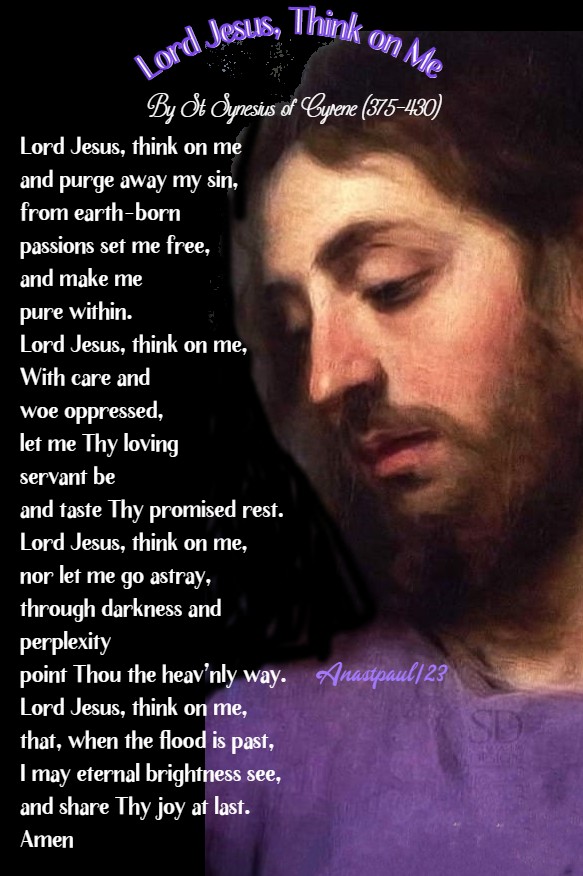
Lord Jesus, Think on Me By St Synesius of Cyrene (375-430) Bishop of Ptolemais, Father
Lord Jesus, think on me and purge away my sin, from earth-born passions set me free, and make me pure within. Lord Jesus, think on me, With care and woe oppressed, let me Thy loving servant be and taste Thy promised rest. Lord Jesus, think on me, nor let me go astray, through darkness and perplexity point Thou the heav’nly way. Lord Jesus, think on me, that, when the flood is past, I may eternal brightness see and share Thy joy at last. Amen
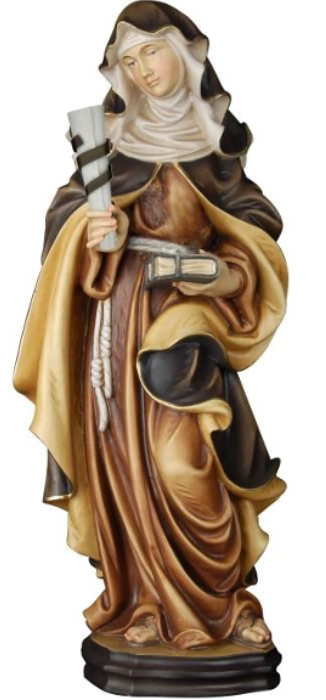
Saint of the Day – 13 March – Saint Euphrasia (c382-c412) Virgin, Nun, Ascetic, Penitent, Miracle-worker. Born in c382 in Constantinople and died on 13 March in c412 (aged 30) of natural causes in the Thebaid region, Egypt. Also known as – Euphrax.
The Roman Martyrology reads today: “AtThebaid St Euphrasia, virgin.”
Euphrasia, was the daughter of noble and pious parents, honoured by the devout Emperor Theodosius and the Empress of that country. After the early death of Antigonus, her father, her mother consecrated her widowhood to God and retired with their only child into Egypt, where she possessed a very large estate.
In those days, there were many Monasteries of Nuns, as well as of holy Hermits and, in one single City there were twenty thousand such holy women, Consecrated to Jesus Christ. Euphrasia’s mother chose to reside near a Monastery of one hundred and thirty Nuns which she often visited, accompanied by Euphrasia. When the little girl, seven years of age, begged that she might be permitted to serve God in this Monastery, the pious mother wept for joy.
Then the mother led her before an image of our Redeemer and lifting up her hands to Heaven said, Lord Jesus Christ, receive this child under Thy special protection. It is Thou alone Whom she loves and seeks; to Thee she recommends herself. Then leaving her in the hands of the Abbess, she left the Monastery weeping. She continued her life to prayer and mortification and, a few years later, when this good mother fell ill, she slept in peace.
On receiving the news of her death, Theodosius sent for the noble virgin to come to Court, as he considered himself her protector and already, during her childhood, had arranged for her to be married to a young Senator of Constantinople, when she would reach a suitable age. But the virgin wrote him, refusing the alliance, repeating her vow of virginity and requesting that her estates be sold and divided among the poor and all her slaves set at liberty. The Emperor punctually executed all her wishes, shortly before his own death in 395.
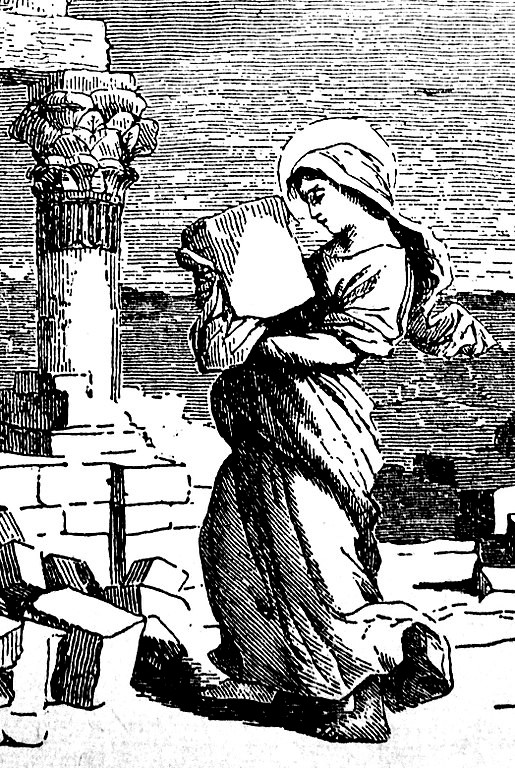
St Euphrasia carried heavy rocks as a penitential labour. From an 1878 Book, Little Pictorial Lives of the Saints
Saint Euphrasia was a perfect pattern of humility, meekness and charity. If she found herself assaulted by any temptation, she immediately sought the advice of the Abbess, who often, on such occasions, assigned her some humbling and painful penitential labour which, she would execute to perfection. Once she moved a pile of great rocks from one place to another, continuing for thirty days with wonderful simplicity, until the devil, vanquished by her humble obedience, left her in peace.
She became powerful over the demons and delivered many possessed persons. She cured a child who was paralysed, deaf and dumb, making the Sign of the Cross over him and saying, May He Who created you, heal you! She was favoured with other miracles, both before and after her death which occurred in the year 412, the thirtieth of her age.
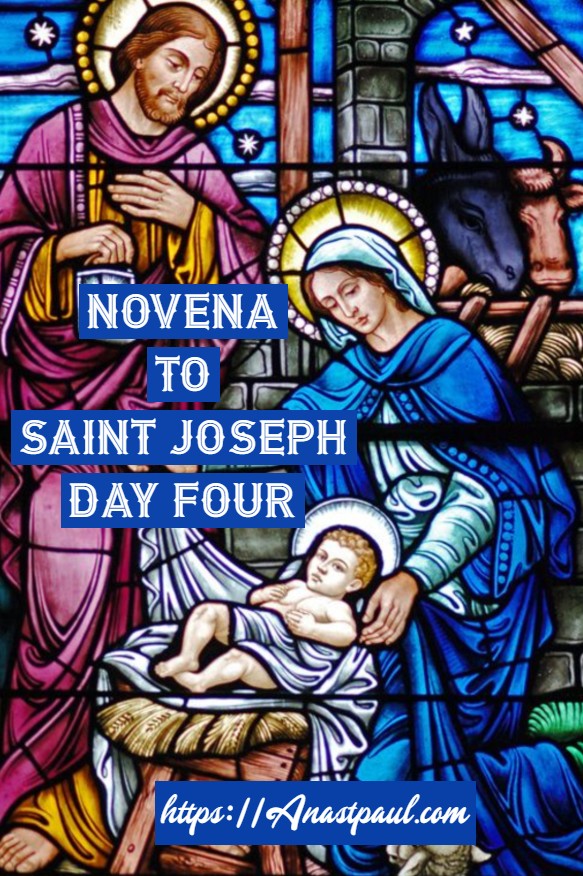
NOVENA for the INTERCESSION of ST JOSEPH DAY FOUR:Clink Link here:DAY FOUR
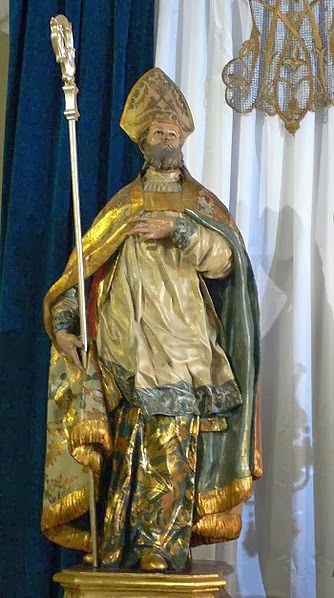
St Leander of Seville (c534-c 600) BIshop, Confessor of the Faith, Teacher, Writer, Apostle of Spain and Evangelisation, Father of the Church – Patron of Episcopal attire and Liturgical garments. Saint Leander, as Bishop, instituted the practice of praying the Nicene Creed during Mass—a practice which continues today. St Leander’s Holy Life of Grace: https://anastpaul.wordpress.com/2017/03/13/saint-of-the-day-13-march-st-leander-of-seville/
Bl Judith of Ringelheim St Kevoca of Kyle St Mochoemoc
St Nicephorus (c758-829) Bishop and Confessor, Defender of Sacred Images. The Roman Martyrology reads today: “At Constantinople, the Bishop St Nicephorus. In defence of the traditions of his forefathers and of the Churrch, the worship of Sacred images, he opposed the Iconoclast Emperor, by whom he was sent into exile, where he underwent a long martyrdom of fourteen years and departed for the Kingdom of God.” His Zealous Life: https://anastpaul.com/2024/03/13/saint-of-the-day-13-march-saint-nicephorus-c758-829-bishop-confessor/
Bl Peter II of La Cava St Pientius of Poitiers St Ramirus of Leon
Thought for the Day – 12 March – Meditations with Fr Richard Frederick Clarke SJ (1839-1900)
“Short Meditations for March, St Joseph” From “The Devout Year” By Fr Richard Frederick Clarke SJ (1839-1900)
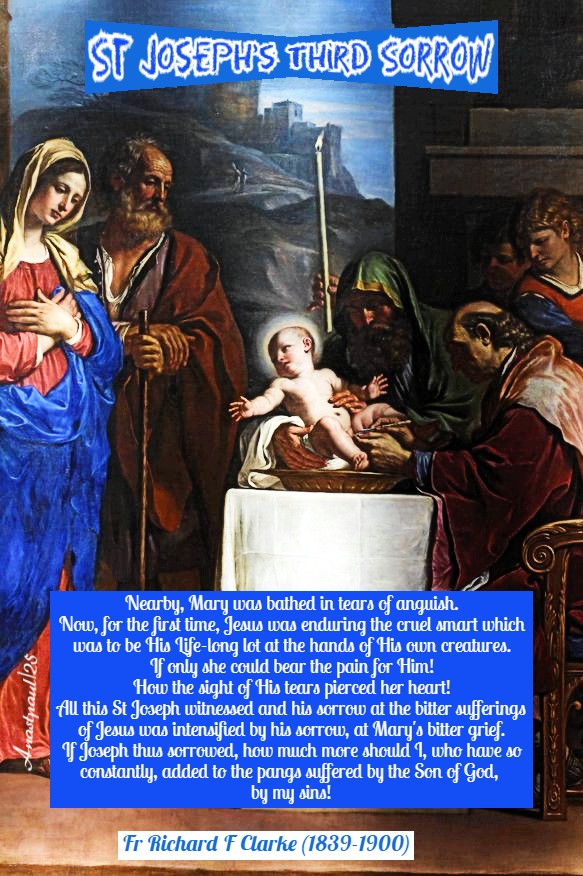
12th Day – St Joseph’s Third Sorrow The Shedding of Jesus ‘ Blood at His Circumcision
+I. On the eighth day after the birth of a Jewish boy-child, the ceremony of circumcision took place, according to God’s Covenant with Abraham. Was this cleansing rite to be performed in the case of the Son of God? Yes, He had come to suffer and to shed His Precious Blood for us and, on the very octave of His Birth, Mary and Joseph had to recognise that God, laid on Him, the iniquity of us all.
+2. It was St Joseph who had to be the minister of the Sacred rite. He had to be the reluctant and sorrowful cause of those tears of the Infant Jesus. What was St Joseph thinking of? We may at least conjecture that he was lamenting over the evil of sin that he was recognising,in the pain which he was inflicting, one of the most terrible consequences of sin that, he was praying to his foster-Son and his God, to forgive those sinners for whom He was shedding His Precious Blood.
+3. Nearby, Mary was bathed in tears of anguish. Now, for the first time, Jesus was enduring the cruel smart which was to be His Life-long lot at the hands of His own creatures. If only she could bear the pain for Him! How the sight of His tears pierced her heart! All this St Joseph witnessed and his sorrow at the bitter sufferings of Jesus was intensified by his sorrow, at Mary’s bitter grief. If Joseph thus sorrowed, how much more should I, who have so constantly, added to the pangs suffered by the Son of God, by my sins!
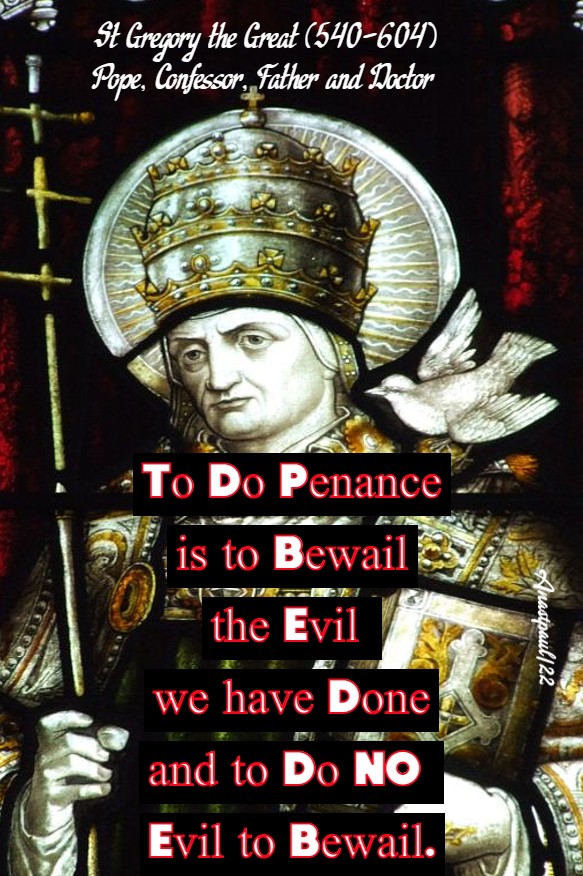
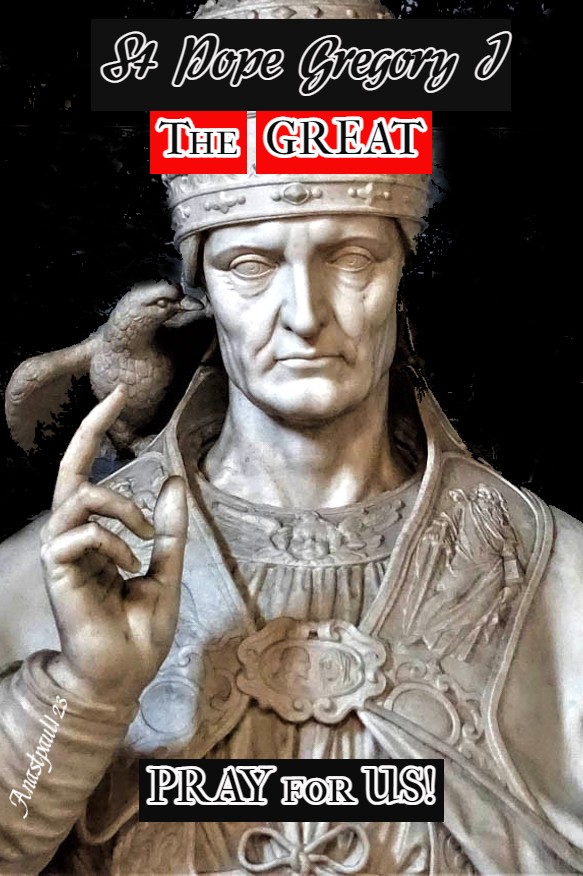
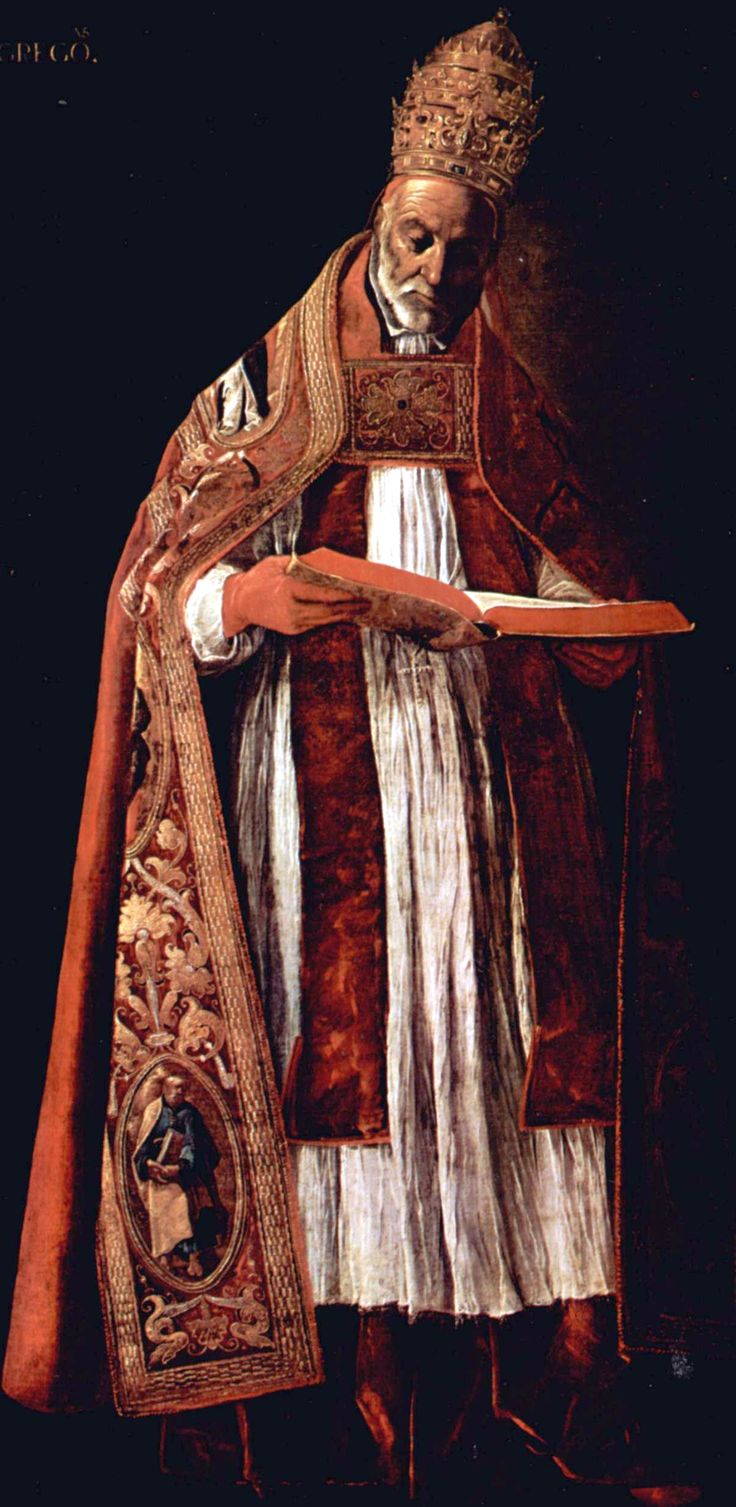
Quote/s of the Day – 12 March – St Gregory the Great (540-604), Pope, Confessor, Father & Doctor of the Church, “Father of the Fathers”
“To do penance is to bewail the evil we have done and to do no evil to bewail.”
“Learn of the Heart of God in the Words of God, so that you may ardently long for eternal things.”
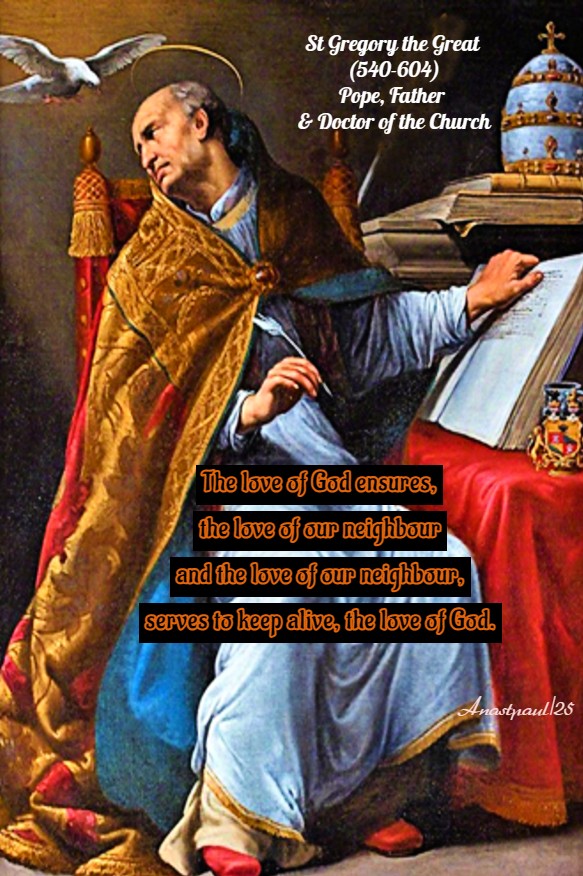
“The love of God ensures, the love of our neighbour and the love of our neighbour, serves to keep alive, the love of God.”
“Look at the fig tree and all the trees, when they produce their fruit you know that summer is near. So too, when you see these things happening, know that the Kingdom of God is near.” Luke 21:29-31
“He means that just as the coming of summer is recognised by the fruit on the trees, so is the nearness of the Kingdom of God recognised by the destruction of the world. These words show that the fruit of the world is destruction – it increases only to fall, it produces, only to destroy by its disasters whatever it produces. The Kingdom of God is aptly compared to summer, because it is then that the clouds of our sorrow pass away and the days of life shine with the brightness of the Eternal Sun. … Therefore, my friends, do not love what you see cannot long exist. Keep in mind the Apostle John’s precept, in which he counsels us not “to love the world or the things in the world because, if anyone loves the world, the love of the Father is not in him!” (1 Jn 2:15).”
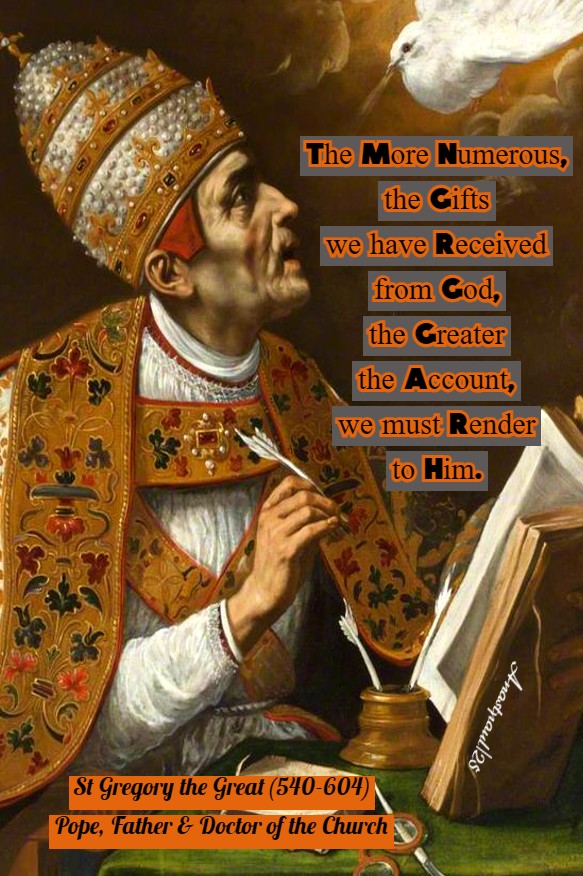
“The more numerous, the gifts we have received from God, the greater the account, we must render to Him.”
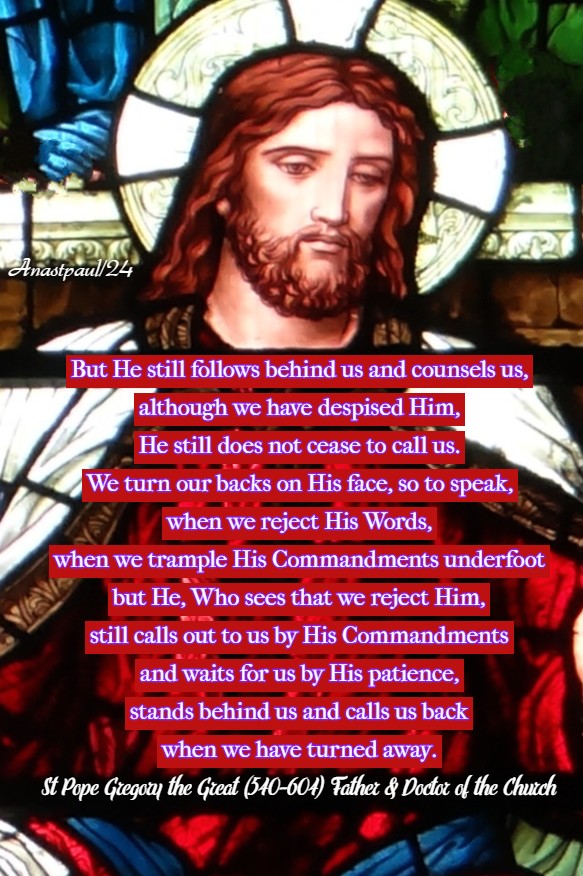
“But He still follows behind us and counsels us, although we have despised Him, He still does not cease to call us. We turn our backs on His Face, so to speak, when we reject His Words, when we trample His Commandments underfoot but He, Who sees that we reject Him, still calls out to us by His Commandments and waits for us by His patience, stands behind us and calls us back when we have turned away.”
Lenten Meditations – 12 March – With Fr Richard Frederick Clarke SJ (1839-1900) Scripture search here: https://www.drbo.org/
“The Sacred Passion of Our Lord Jesus Christ” “Short Meditations for Lent” From “The Devout Year” By Fr Richard Frederick Clarke SJ (1839-1900)
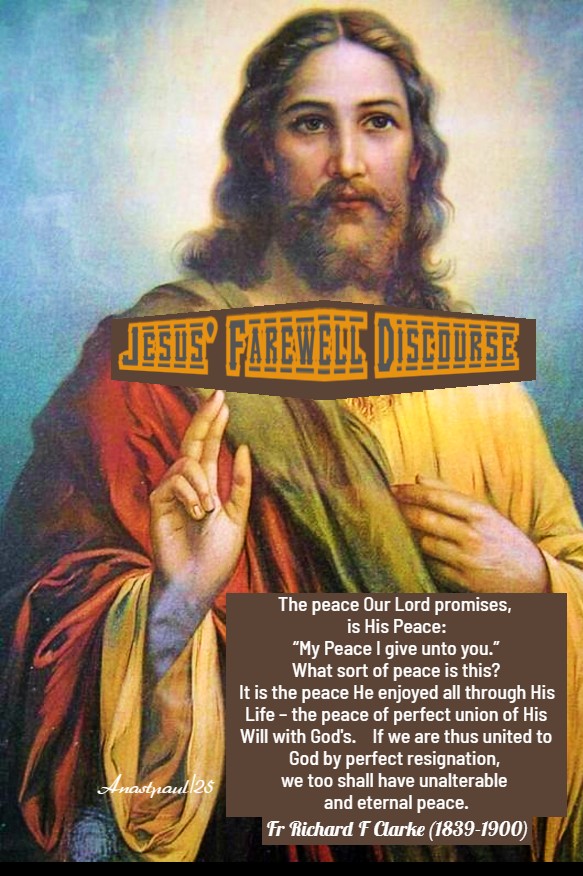
Wednesday of the First Week in Lent Jesus’ Farewell Discourse
Read St John xiv:1-3, 27-31 (Posted at the end)
+1. Our Lord’s farewell to His Apostles begins and ends with words of encouragement. He knew the importance of courage and confidence and, without these, they would never do great things for God. He knew too, how liable all men are to be discouraged and cast down when troubles and trials arise; how difficult it is to struggle on, when all seems dark around one. To us too, as to the Twelve, He says – “Let not your heart be troubled, you believe in God, believe also in Me.” Why do not we believe more in Christ, trust Him more, appeal more to Him in times of darkness? He will always have a word of comfort for us. “Let not your heart be troubled. I go to prepare a place for you.”
+2. Amid all the troubles Our Lord foretells to His Apostles, He promises them one gift which will enable them to rise above all their difficulties and all their sorrows. He promises to leave His Peace with them. What gift is there which is like this in the world? If we are at peace, we can bid defiance to all our foes; if we are not at peace, we might be lords of the universe, yet, we should be miserable. No wonder we pray in Holy Mass, “Dona nobis pacem – Give us peace.”
+3. The peace Our Lord promises, is His Peace : “My Peace I give unto you.” What sort of peace is this? It is the peace He enjoyed all through His Life – the peace of perfect union of His Will with God’s. If we are thus united to God by perfect resignation, we too shall have unalterable and eternal peace
1] Let not your heart be troubled. You believe in God, believe also in Me. [2] In My Father’s House there are many mansions. If not, I would have told you because, I go to prepare a place for you. [3] And if I shall go and prepare a place for you, I will come again and will take you to Myself that where I Am, you also may be. [John 14:1-3]
[27] Peace I leave with you, My Peace I give unto you, not as the world giveth, do I give unto you. Let not your heart be troubled, nor let it be afraid. [28] You have heard that I said to you: I go away and I come unto you. If you loved Me, you would indeed be glad because I go to the Father, for the Father is greater than I. [29] And now I have told you before it comes to pass, that when it shall come to pass, you may believe. [30] I will not now speak many things with you. For the prince of this world cometh and in Me he hath not any thing. [31] But that the world may know that I love the Father and as the Father hath given me commandment, so do I: Arise, let us go hence. [John 14:27-31]
One Minute Reflection – 12 March – “The Month of Saint Joseph” – St Gregory the Great (540-604), Pope, Confessor, Father & Doctor of the Church, “Father of the Fathers” – 1 Peter 5:1-4; 5:10-11; – Matthew 16:13-19 – Scripture search here: https://www.drbo.org/
“Upon this rock I will build My Church” – Matthew 16:18
REFLECTION – “Brothers, when it comes to fulfilling my duties as Bishop, I discover that I am weak and slack, weighed down by the weakness of my own condition, while at the same time, I want to act generously and courageously. However, I draw my strength from the untiring intercession of the Almighty and Eternal Priest, Who, like us but equal to the Father, lowered His Divinity to the level of man and raised humankind to the level of God. The decisions He made, give me a just and holy joy. For, when He delegated many shepherds to care for His flock, He did not abandon watching over His beloved sheep. Thanks to that fundamental and eternal assistance, I in turn, have received the protection and support of the Apostle Peter, who also does not abandon his function. This solid foundation, on which the whole of the Church is built, never grows tired of carrying the whole weight, of the building which rests on it.
The firmness of faith, for which the first of the Apostles was praised, never fails. Just as everything which Peter professed in Christ remains, so that which Christ established in Peter, remains … The order willed by God’s Truth remains. Saint Peter perseveres in the solidity which he received; he has not abandoned the governance of the Church which was placed in his hands. That, my brothers, is what that profession of faith, inspired by God the Father, obtained in the heart of the Apostle. He received the solidity of a rock which no assault can shake. In the entire Church, Peter says everyday: “Thou art the Messiah, the Son of the living God.” – St Leo the Great (400-461) Pope, Father and Doctor of the Church (Sermon on the anniversary of his Consecration as Bishop).
PRAYER – O God, Who granted the rewards of everlasting happiness to the soul of Thy servant Gregory, mercifully grant that we, who are weighed down with the burden of our sins, may be raised up by his prayers to Thee. Through Jesus Christ, Thy Son our Lord, Who lives and reigns with Thee, in the unity of the Holy Ghost, God, world without end. Amen (Collect).
Our Morning Offering – 12 March – St Pope Gregory the Great (540-604) – Father & Doctor
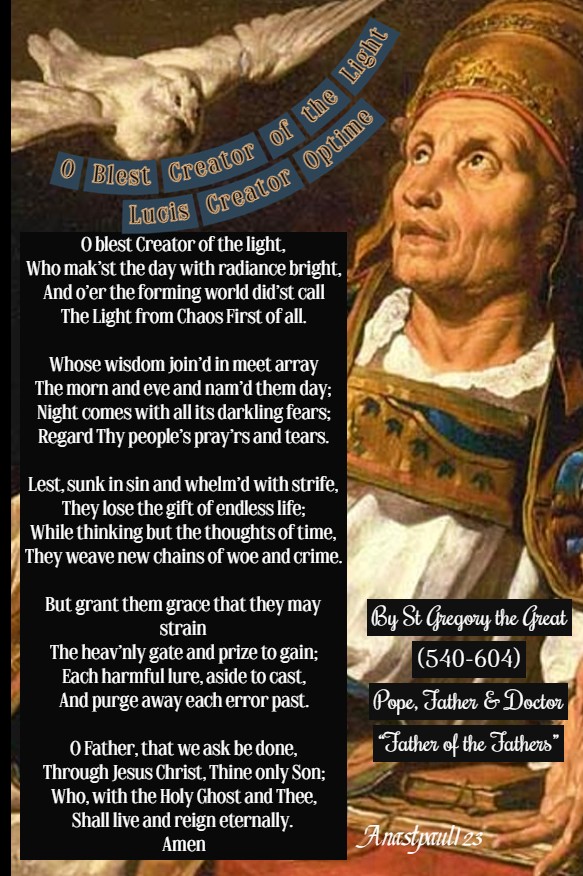
Lucis Creator Optime O Blest Creator of the Light By St Gregory the Great (540-604) Pope, Father & Doctor “Father of the Fathers”
O blest Creator of the light, Who mak’st the day with radiance bright, And o’er the forming world did’st call The Light from Chaos First of all.
Whose wisdom join’d in meet array The morn and eve and nam’d them day; Night comes with all its darkling fears; Regard Thy people’s pray’rs and tears.
Lest, sunk in sin and whelm’d with strife, They lose the gift of endless life; While thinking but the thoughts of time, They weave new chains of woe and crime.
But grant them grace that they may strain The heav’nly gate and prize to gain; Each harmful lure, aside to cast, And purge away each error past.
O Father, that we ask be done, Through Jesus Christ, Thine only Son; Who, with the Holy Ghost and Thee, Shall live and reign eternally. Amen
This Hymn is used for Vespers (II) on Sundays throughout the year in the Extraordinary Form of the Roman Breviary. Trans John M Neale (1818-1866), 1851. Tune: “Lucis Creator Optime” Gregorian Chant, Mode VIII, traditional.
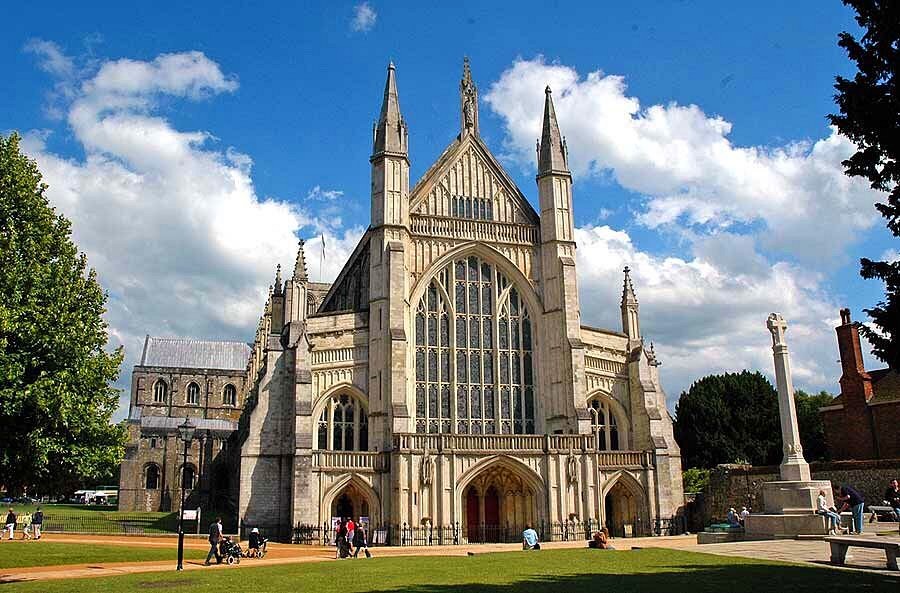
Saint of the Day – 12 March – St Alphege [the Elder] (Died 951) Bishop of Winchester, monastic reformer, protector and supporter. Born in England and died in Winchester of natural causes. Also known as – Alphege of Winchester, Ælfheah… Elphege… Elfego… Elpigio… (Not to be confused with St Alphege [the Younger] also the Bishop of Winchester before becoming the Archbishop of Canterbury) https://anastpaul.com/2017/04/19/saint-of-the-day-19-april-st-alphege/
Despite Alphege’s important role in the 10th Century monastic revival, little is known of St Alphege’s life.
He began his career as a Monk and was appointed as the Bishop of Winchester in 934 or 935. He was a relative of the great St Dunstan, the Archbishop of Canterbury (Died 988) and who had taken Alphege as a young man into his service. St Dunstan later Ordained Alphege as a Priest.
Alphege was an instigater of the monastic reforms and was the tutor of St Aethelwold, who became his successor in the See of Winchester and a most zealous monaster reformer.
Alphege died on 12 March 951 and was buried in Old Minster in Winchester. He was immediately revered as a Saint. Following the Norman conquest, Archbishop Lanfranc downgraded a number of Anglo-Saxon Saints, including our St Alphege to bring the Liturgical calendar into line with that of existing elsewhere in the country. However, under St Anselm’s influence, he was subsequently re-instated.
Blessed Jerome of Recanati OSA (Died 1350) Priest, Friar of the Hermits of Saint Augustine, Peacemaker. He was Beatified in 1804 by Pope Pius VII. The Roman Martyrology reads : “In Recanati in the Marche, Blessed Girolamo Gherarducci, Priest of the Order of the Hermits of St Agustine, who worked for peace and harmony between peoples.” essed l Jerome the Peacemaker: https://anastpaul.com/2022/03/12/saint-of-the-day-12-march-blessed-jerome-of-recanati-osa-died-1350/
St Theophanes (c758-817) Abbot, Confessor, Founder of Monasteries, Defender of Sacred images, Writer and Historian. The Roman Martyrology reads today: “At Constantinople, St Theophanes, who gave up great wealth to embrace poverty in the monastic state. By Leo the Armenian, he was kept in prison for two years for the worship of holy images, then, being exiled in Samothracia, where, overwhelmed with afflictions, he breathed his last and wrought many miracles.” Courageous and Brilliant St Theophanes: https://anastpaul.com/2024/03/12/saint-of-the-day-12-march-saint-theophanes-c758-817-abbot-confessor-defender-of-icons/
Martyrs of Nicomedia – 8 Beati: Christians who were Martyred in succession in a single incident during the persecutions of Diocletian. First there were the eight imprisoned Christians, Domna, Esmaragdus, Eugene, Hilary, Mardonius, Maximus, Mígdonus and Peter, about whom we know little more than their names. Each day for eight days one of them would be strangled to death in view of the others so that they would spend the night in dread, not knowing if they were next. Peter was the Chamberlain or Butler in the Palace of Diocletian. When he was overheard complaining about this cruelty, he was exposed as a Christian, arrested, tortured and executed by having the flesh torn from his bones, salt and vinegar poured on the wounds and then being roasted to death over a slow fire. Gorgonio was an army officer and member of the staff in the house of emperor Diocletian, Doroteo was a staff clerk. They were each exposed as Christians when they were overhead objecting to the torture and murder of Peter. This led to their own arrest, torture and executions. Died in 303 in Nicomedia, Bithynia (in modern Turkey) Additional Memorial – 28 December as part of the 20,000 Martyrs of Nicomedia. Beatified on 14 January 1891 by Pope Leo XIII (cultus confirmation).
Thought for the Day – 11 March – Meditations with Fr Richard Frederick Clarke SJ (1839-1900)
“Short Meditations for March, St Joseph” From “The Devout Year” By Fr Richard Frederick Clarke SJ (1839-1900)
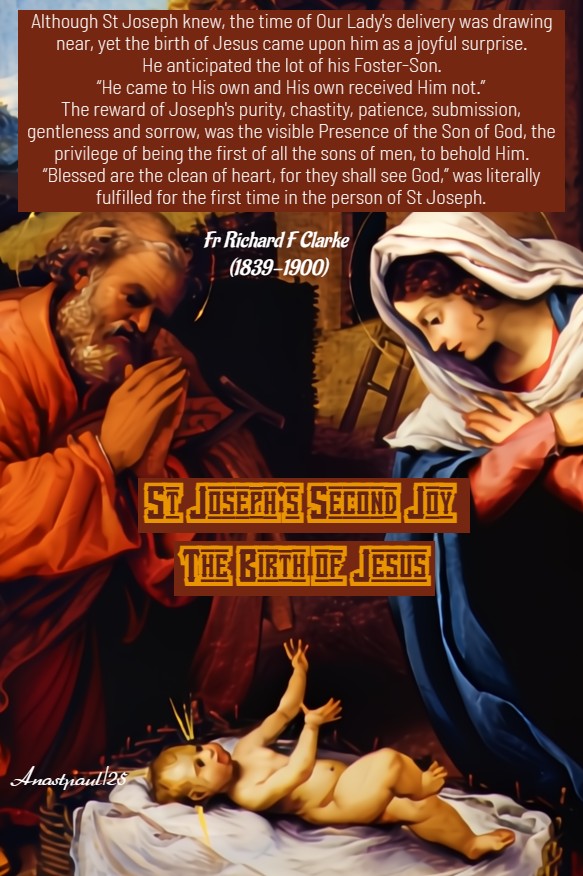
11th Day – St Joseph’s Second Joy: The Birth of Jesus
+1. Although St Joseph knew, the time of Our Lady’s delivery was drawing near, yet the birth of Jesus came upon him as a joyful surprise. He anticipated the lot of his Foster-Son. “He came to His own and His own received Him not.” The reward of Joseph’s purity, chastity, patience, submission, gentleness and sorrow, was the visible Presence of the Son of God, the privilege of being the first of all the sons of men, to behold Him. “Blessed are the clean of heart, for they shall see God,” was literally fulfilled for the first time in the person of St Joseph.
+2. It was but fitting that the coming of Christ Jesus into the world should be surrounded by celestial wonders. A choir of Angels sang angelic melodies and a brightness, dazzling beyond the brightness of the sun, illumined the cave and settled around the new -born Infant and His Virgin Mother. St Joseph saw the Holy Child and the sight was Heaven begun on earth! What was all the preceding sorrow compared with the unspeakable joy of that happy moment?
+3. Joseph was recalled to earthly things by hearing voices outside the cave and seeing a group of shepherds coming to adore the newborn King. It was not a dream then but a happy reality. God was really come to dwell among men and was born in that humble cave. What mattered it if it was bare and poor and rough? How much happier to be there, sitting on the hard cold ground, poor and despised of men, than to be lounging on perfumed couches, in the Palace of Herod! Where Jesus is, there is happiness! What are outward things if we enjoy His Peace!
Lenten Meditations – 11 March – With Fr Richard Frederick Clarke SJ (1839-1900) Scripture search here: https://www.drbo.org/
“The Sacred Passion of Our Lord Jesus Christ” “Short Meditations for Lent” From “The Devout Year” By Fr Richard Frederick Clarke SJ (1839-1900)
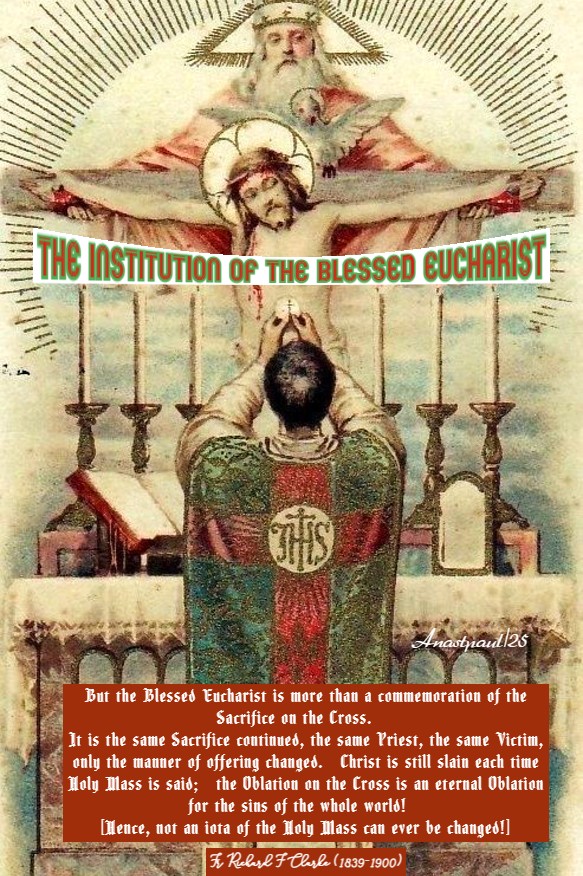
Tuesday of the 1st Week in Lent The Institution of the Blessed Eucharist
Read St Luke xxii:19-20
[19] And taking bread, He gave thanks and broke it and gave to them, saying: This is My Body which is given for you. Do this for a commemoration of Me. [20] In like manner, the chalice too, after He had supped, saying: This is the chalice, the new testament in My Blood which shall be shed for you. [Luke 22:19-20]
+1. St Paul tells us with pointed emphasis, it was on the very night in which He was betrayed that Our Lord instituted the Mystery of mysteries, the Sacrament of His Love. It was worthy of His Divine generosity to choose the occasion when He was to be outraged, insulted, betrayed, scourged and Crucified, to create this wondrous Sacrament of Love. To forgive, is always generous but what shall we say of the generosity of One, Who not only forgives the most horrible insults and cruelty but chooses, the very day on which He is to suffer them, for giving to His enemies, a gift compared with which all other gifts are small and insignificant – a gift , too which is none other than Himself!?
+2. What is the primary end of the institution of the Blessed Eucharist? Our Lord Himself tells us in the words: “Do this in commemoration of Me.” It is for the sake of putting us in mind of His Sacred Passion that He gives Himself to us that we, His brethren, for whom He Died, may not forget Him. He Loved us so dearly, He still Loves us, so dearly – He cannot bear to be absent from our thoughts and, for this end, He created this means of representing His Passion to us, as long as the world should last.
+3. But the Blessed Eucharist is more than a commemoration of the Sacrifice on the Cross. It is the same Sacrifice continued, the same Priest, the same Victim, only the manner of offering changed. Christ is still slain each time Holy Mass is said; the Oblation on the Cross is an eternal Oblation for the sins of the whole world! [Hence, not an iota of the Holy Mass can ever be changed!]
One Minute Reflection – 11 March – “The Month of Saint Joseph” – Tuesday of the 1st Week in Lent – Ferial Day – Isaias 55:6-11 – Matthew 21:10-17 – Scripture search here: https://www.drbo.org/
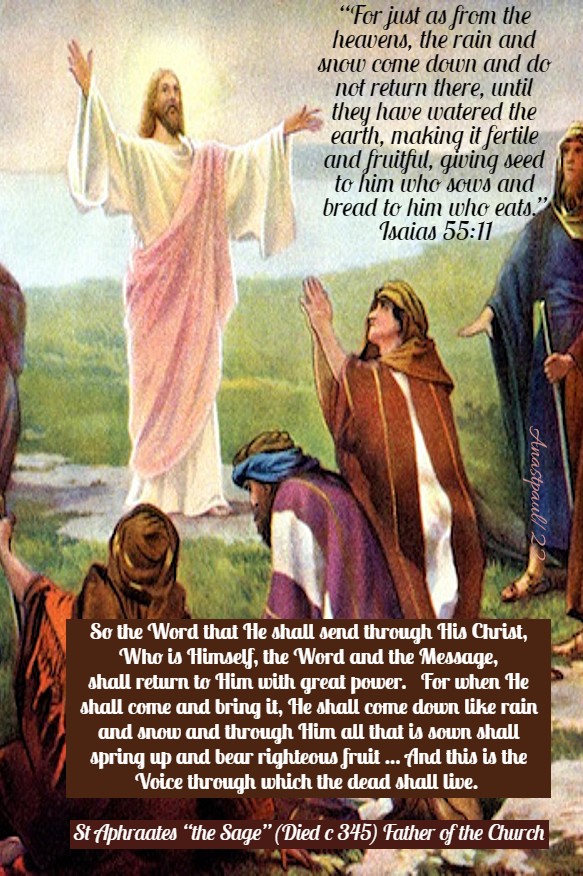
“For just as from the heavens, the rain and snow come down and do not return there, until they have watered the earth, making it fertile and fruitful, giving seed to him who sows and bread to him who eats.” – Isaias 55:11
REFLECTION – “For the rain and the snow do not return to Heaven but accomplish in the earth, the Will of Him Who sends them. So the Word that He shall send through His Christ, Who is Himself, the Word and the Message, shall return to Him with great power. For when He shall come and bring it, He shall come down like rain and snow and through Him ,all that is sown shall spring up and bear righteous fruit and the Word shall return to His Sender but not in vain shall His going have been but thus, shall He say, in the Presence of His Sender, “Behold, I and the children whom the Lord has given me.” And this is the Voice through which, the dead shall live. And this is the Voice of God which shall sound from on high and raise up all the dead.” – St Aphraates “the Sage” (Died c 345) (Feast Day – 29 January) Abbot, Father of the Church [see note below] (Demonstrations 8).
PRAYER – Grant, we beseech Thee, Almighty God, that we who devoutly keep the sacred observances, year by year, may be pleasing to Thee, both in body and soul. Through Jesus Christ, Thy Son our Lord, Who lives and reigns with Thee, in the unity of the Holy Ghost, God, world without end. Amen (Collect).
Our Morning Offering – 11 March – Tuesday of the 1st Week in Lent
Morning Offering By St Thérèse of the Child Jesus (1873 – 1897)
O my God! I offer Thee all my actions of this day for the intentions and for the glory of the Sacred Heart of Jesus. I desire to sanctify every beat of my heart, my every thought, my simplest works, by uniting them to It’s infinite merits and I wish to make reparation for my sins, by casting them into the furnace of It’s Merciful Love. O my God! I ask Thee for myself and for those whom I hold dear, the grace to fulfil perfectly Thy Holy Will, to accept for love of Thee, the joys and sorrows of this passing life, so that we may one day be united together in Heaven for all Eternity. Amen.
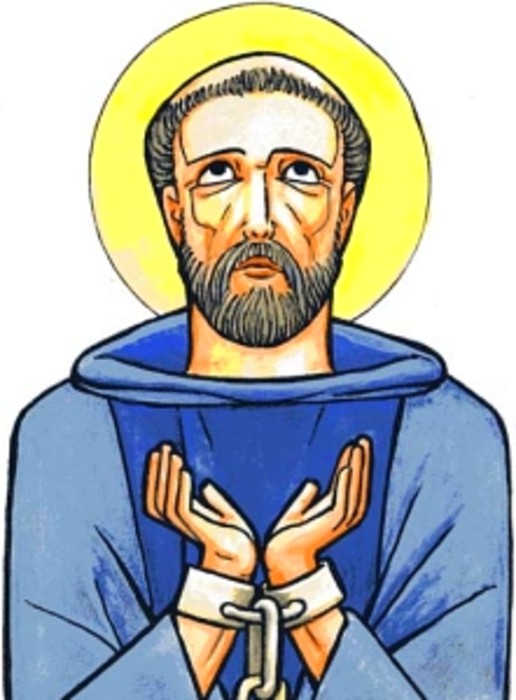
Saint of the Day – 11 March – Saint Vigilius (Died c684) the 21st Bishop and Confessor of Auxerre, France, Founder of a Monastery and a Hospital for the poor, Miracle-worker. He cared for his flock for 25 years with love and devotion. Vigilius was born probably in Auxerre or the nearby regions and died on 11 March by being murdered in a Forest of Compiègne near Soissons. Also known as – Vigil,Vigillis.
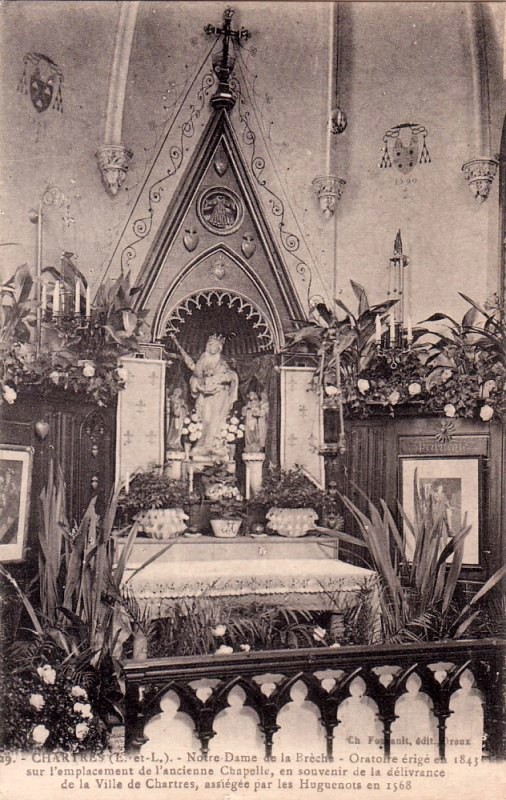
Vigilius was born of a noble family noted for its sanctity. As the Bishop of Auxerre, Vigilius built a Monastery on the outskirts of Auxerre, “Notre-Dame-la-d’Hors i.e. Outside the Walls” dedicated to the Mother of God. He endowed it richly. In the document of its foundation, it is recorded that the Monastery was later given to the Canons Regular of St Augustine and ultimately, to the Premonstratensians.
Beyond these few facts, not much is certain. Vigilius is credited with establishing a Hospital for the poor near the Monastery.
His death resembles that of St Leodegar of Autun; like Leodegar, Vigilius was murdered in a forest. An account by one Saussauis blames Ebroin for both murders.
Mirabilia attended Vigilius’s death and returned his body to Auxerre and as it passed a prison in Sens, chains fell from all the prisoners and they were freed. The chains were then attached to Vigilius’s coffin for all to see. His Episcopate had lasted for 25 years and five months. His remains, kept in a silver reliquary, were scattered by the Calvinists (1567) but, in 1589, the Relics were recovered and enshrined anew.






















 AnaStpaul
You must be logged in to post a comment.