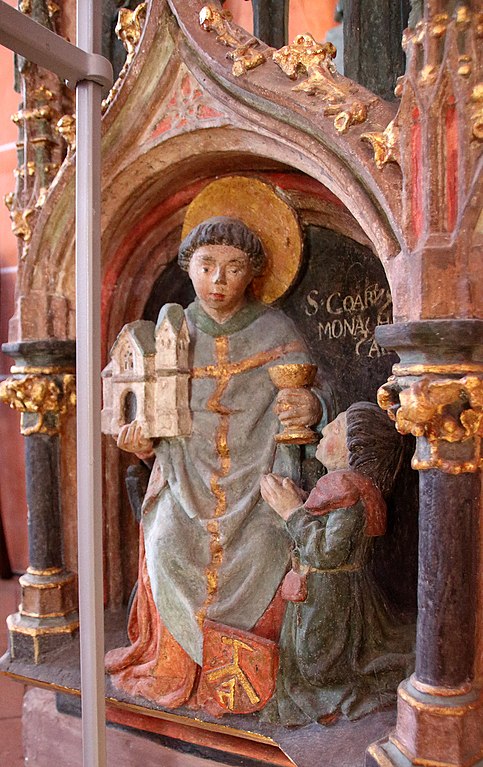
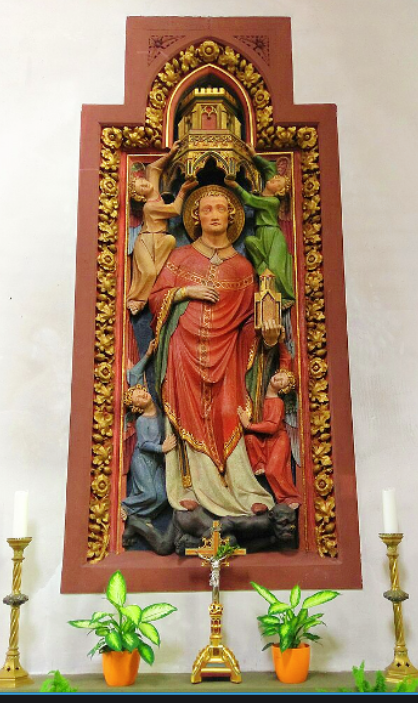
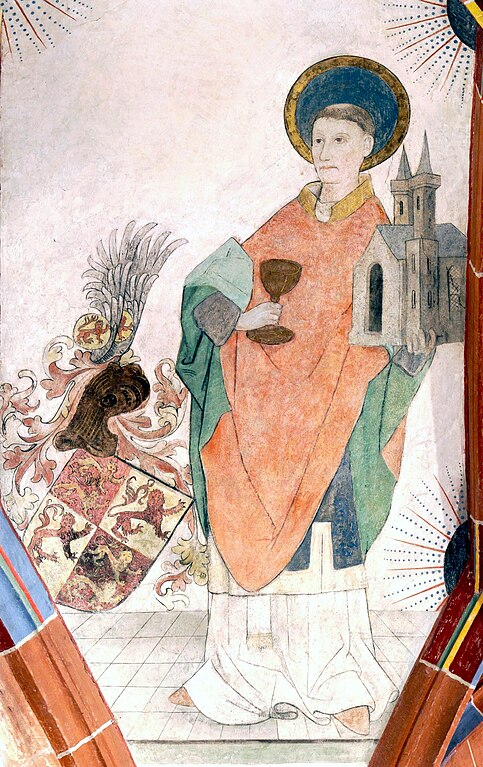
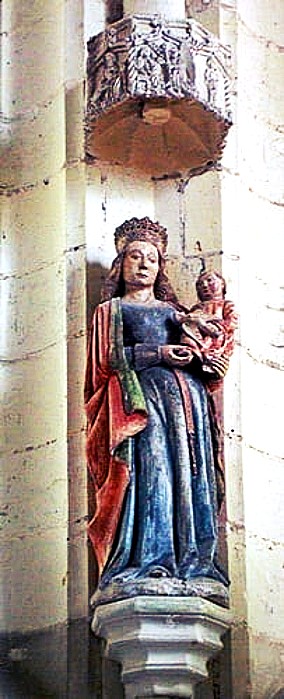
Saint of the Day – 7 July – Saint Odo of Urgell (c1063-1122) Bishop, a zealous Defender of the rights of his See, builder and restorer of numerous Churches but most of all, Bishop Odo is remembered as a most gentle and generous benefactor of the poor, the needy and the ill. Born in Sort, Catalan, Spain in c1063 and died on 7 July 1122 in Urgell, Catalan, Spain. Patronage – of La Seu d’Urgell, Spain. Also known as – Oddone, (in Catalan -Ot, Dot) Odón.
Odo was the third son of Artal and Lucia, of the noble family of the Counts of Pallars. He was born in Sort between 1063 and 1065.
He embraced the Ecclesiastical state from a young age and was the Archdeacon of the Cathedral of Urgell for several years. He was elected as the Bishop in 1095.
Odo was a courageous defender of the rights of his See and built or restored numerous Churches. He promoted religious and social brotherhoods and spent much of this time and energy on assisting the poor and ill.
He died on 7 July 1122 and in the inscription engraved on his Tomb, he was praised as “father of orphans and widows, health of the sick and life of the poor.”
He is buried in the Monastery of Santa Maria de Gerri – see the Monastery below. In 1133 his successor declared him to be a Saint and he is venerated as such today. Odo is one of the Patron Saints of the town of La Seu d’Urgell.
His successor, Peter Berenguer (1123-1141) and the Cathedral Chapter, together authorised his public veneration on 21 June 1133. Since then, his Feast has been celebrated in Urgell, of which he is the Patron Saint, on 7 July, with his own Office until the reform of Saint Pius V in 1568 and with the O“ffice de Comuni Confessorum Pontificum,” thereafter. He entered the Roman Martyrology in the second edition of 1589.
Saint Cyril (827-869) Saint Methodius (826-885) “Apostles to the Slavs,” Sibling Brother Bishops, Confessors, Theologians, Missionaries, Writers, Preachers, Patrons of Europe. Creators of the Glagolitic alphabet, the first alphabet used to transcribe Old Church Slavonic and Cyrillac Alphabet, which was developed from it. Their Feast Day is 7 July (moved in 1969). The great Saints Cyril & Methodius: https://anastpaul.wordpress.com/2018/02/14/saints-of-the-day-14-february-sts-cyril-827-869-methodius-826-885/
St Lawrence of Brindisi OFM Cap (1559-1619) Confessor, The “Franciscan Renaissance Man,” Priest and Friar of the Friars Minor Capuchin, Theologian, Vicar General of the Franciscans, Language scholar, Humanist, Philosopher, Biblicist, Preacher, Missionary, Professor, International Administrator, Confidant of Popes, Emperors, Kings and Princes, Diplomatic envoy, Army Chaplain, Military Strategist and Morale builder, Polemicist, Prolific writer. He was Beatified on 1 June 1783 by Pope Pius VI and Canonised on 8 December 1881 by Pope Leo XIII. His Zealous Life: https://anastpaul.com/2017/07/21/saint-of-the-day-21-july-st-lawrence-of-brindisi-o-f-m-cap-doctor-of-the-church/
St Alexander St Angelelmus of Auxerre St Apollonius of Brescia
Blessed Pope Benedict XI OP (1240-1303) Cardinal-Priest of St Sabina, Bishop of Ostia then of Rome, Dominican Friar, Prior Provincial of Lombardy prior to becoming the Master of the Order in 1296, Apostolic Papal Legate to Hungary and France, Teacher, Preacher, Writer and renowned Scholar with special emphasis on Scriptural commentary. His Papacy began on 22 Ocober 1303 and ended at his death on 7 July 1304. His Life: https://anastpaul.com/2020/07/07/saint-of-the-day-7-july-blessed-pope-benedict-xi-1240-1303/
Bl Bodard of Poitiers St Bonitus of Monte Cassino St Carissima of Rauzeille St Eoaldus of Vienne
St Hedda of Wessex St Maelruan St Medran St Merryn Bl Oddino Barrotti St Odo of Urgell (c1063-1122) Bishop St Odran St Palladius of Ireland St Pantaenus of Alexandria
St Pantænus (Died c 216) Father of the Church, Theologian, Philosopher, Teacher, Confessor and Defender of the Faith, Writer and interpreter of the Bible, the Trinity and Christology, |Missionary. Convert of the disciples of the Apostles. Head of the Alexandrian School of Learning – a famous pupil was St Clement of Alexandria. Biography: https://anastpaul.com/2019/07/07/saint-of-the-day-7-july-st-pantaenus-father-of-the-church-died-c-216/
St Peter Fourier C.R.S.A. (1565-1640) Priest, Founder, Reformer, Confessor, Theologian, Teacher, Preacher, Apostle of Prayer, Penance and Charity, Marian devotee – “the Good Father of Mattaincourt” “le bon pere de Mattaincourt”. Although he died on 9 December his Feast Day is celebrated today, 7 July, possibly the date of the translation of part of his Relics. St Peter spread everywhere devotion to the Immaculate Conception of the Blessed Virgin. More than two centuries before the Miraculous Medal in 1830 and the proclamation of the dogma in 1854, he saw to the distribution of large quantities of a medal he had struck, on which were engraved the words – “Mary was conceived without sin.” He was Beatified by Pope Benedict XIII in 1730 and Canonised by Pope Leo XIII in 1897. St Peter Fourier is honoured by a statue of him in St Peter’s Basilica among the founders of religious orders. His Zealous Life: https://anastpaul.com/2018/12/09/saint-of-the-day-9-december-st-peter-fourier-c-r-s-a-1565-1640/
Martyrs of Durres – 7 Saints: Also known as – Martyrs of Dyrrachium/Martyrs of Durazzo. A group of seven Italian Christians who fled Italy to escape the persecutions of Emperor Hadrian. Arrived in Dyrrachium, Macedonia to find Saint Astius tied to a cross, covered in honey, laid in the sun and left to be tortured by biting and stinging insects. When they expressed sympathy for Astius, they were accused of being Christians, arrested, chained, weighted down, taken off shore and drowned. We know little more about each of them than their names – Germaus, Hesychius, Lucian, Papius, Peregrinus, Pompeius and Saturninus. They were born in Italy and were Martyred at sea c117 off the coast of Dyrrachium (Durazzo), Macedonia (modern Durres, Albania).
Thought for the Day – 6 July – Meditations with Fr Richard Frederick Clarke SJ (1839-1900)
PATIENCE Meditations for a Month
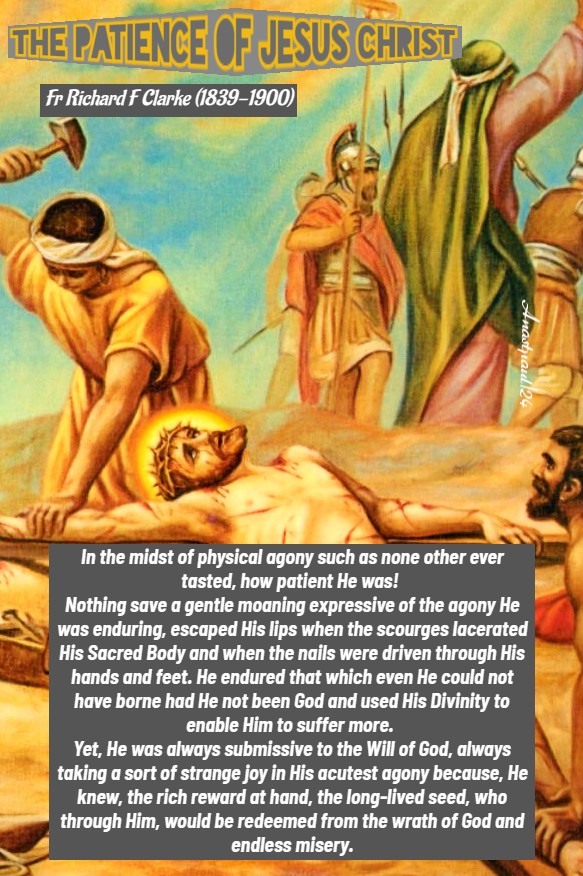
The Patience of Jesus Christ
As in all other virtues, so in patience, Jesus Chris is our Teacher and Example. None ever sufferer as He did and, therefore, none had to exercise such patience as He exercised.
How patient He was with those who reviled and abused Him! Never one indignant word, never one angry look, nothing but sweetness and kindness. ‘Father, forgive them, for they know not what they do.‘ Oh, when shall I be able to imitate the patience of Jesus! when shall I approach, even at a distance, the Divine Model, Whom I profess to imitate!
How patient He was with His Apostles! How their roughness, selfishness, stupidity, must have jarred upon Him! They misunderstood His word they quarrelled among themselves, His predictions respecting the Passion fell upon deaf ears, they all forsook Him in time of danger yet, He never was ruffled by the faintest breath of anger or impatience. He Who was the Infinite God put up with their inconstancy, selfishness, ambition. Once more, how far am I from the gentleness and patience of the Son of God!
In the midst of physical agony such as none other ever tasted, how patient He was! Nothing save a gentle moaning expressive of the agony He was enduring, escaped His lips when the scourges lacerated His Sacred Body and when the nails were driven through His hands and feet. He endured that which even He could not have borne had He not been God and used His Divinity to enable Him to suffer more. Yet, He was always submissive to the Will of God, always taking a sort of strange joy in His acutest agony because, He knew, the rich reward at hand, the long-lived seed, who through Him, would be redeemed from the wrath of God and endless misery.
Quote of the Day – 6 July – The Octave Day of Sts Peter and Paul
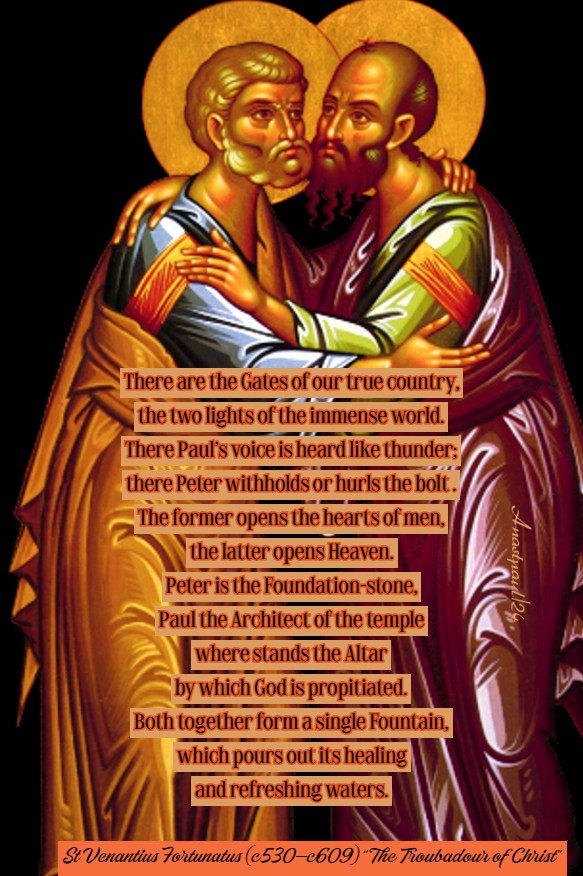
“There are the Gates of our true country, the two lights of the immense world. There Paul’s voice is heard like thunder; there Peter withholds or hurls the bolt . The former opens the hearts of men, the latter opens Heaven. Peter is the Foundation-stone, Paul the Architect of the temple where stands the Altar by which God is propitiated. Both together form a single Fountain, which pours out its healing and refreshing waters.”
St Venantius Fortunatus (c 530 – c 609) “The Troubadour of Christ”
One Minute Reflection – 6 July– “The Month of the Most Precious Blood” – The Octave Day of Sts Peter and Paul – Sirach 44:10-15, Matthew 14:22-33 – Scripture search here: https://www.drbo.org/
“O man of little faith, why did you doubt?” … Matthew 14:31
REFLECTION – “Once again the disciples are a plaything of the waves and a storm, similar to the first one (Mt 8:4), hurls itself against them. The first time, however, they had Jesus with them, whereas this time, they are alone and left to themselves. … I think this was because our Saviour wanted to stir their sleeping hearts and, by throwing them into a panic, He inspired in them, a strong desire for His presence and kept the remembrance of Him constantly in their minds. Hence, He did not come to their help at once but “during the fourth watch of the night He came towards them, walking on the sea”. …
Peter, ever volatile, always getting in before the other disciples, said: “Lord, if it is Thee, command me to come to Thee on the water” … He did not say, “Command me to walk on the water” but “come to Thee” for there was none who loved Jesus as much as he. He did the same thing after the Resurrection – unable to bear moving as slowly as the others in the boat, he jumped into the water to get there before them and satisfy his love for Christ. … Getting out of the boat, then, Peter went towards Jesus, more delighted to be going towards Him than to be walking on the water. But after confronting the greatest danger, that of the sea, he was to give in to a lesser, that of the wind. Such is human nature! Often, having overcome serious dangers we are conquered by lesser ones … Peter had not yet been set free from all his fear … in spite of Christ’s presence beside him. For it is of no use to be beside Christ if one is not close to Him by faith. This is what emphasises the distance separating Master from the disciple …
“O man of little faith, why did you doubt?”So, if Peter’s faith had not faltered, he would have resisted the wind without difficulty. And the proof of this, is that Jesus grasped Peter while leaving the wind to continue blowing … Just as the mother bird supports with her wings, as it is about to fall, the fledgling that has prematurely left the nest and draws it back into the nest, so does Christ with regard to Peter.” … St John Chrysostom (347-407) Bishop of Constantinople, Father and Doctor of the Church (Homilies on Saint Matthew’s Gospel, 50, 1-2).
PRAYER – O God, Who made this day holy by the Martyrdom of Your Apostles Peter and Paul, grant Thy Church to follow in all things, the teaching of those, from whom she first received the faith. Through Jesus Christ, Thy Son our Lord, Who lives and reigns with Thee, in the unity of the Holy Ghost, God, world without end. Amen (Collect).
Our Morning Offering – 6 July – The Octave Day of Saints Peter and Paul, Apostles
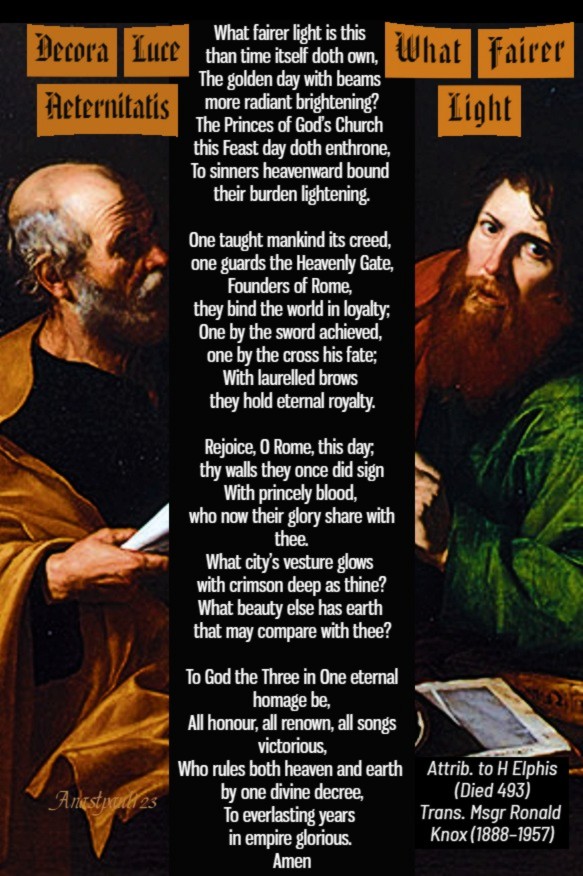
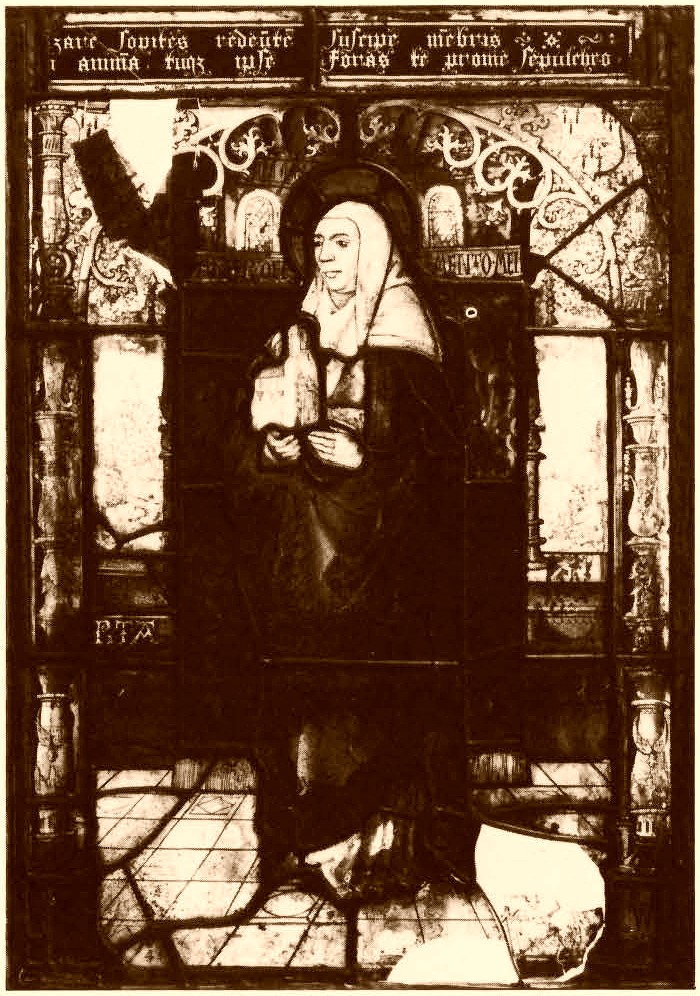
Decora Luce Aeternitatis What Fairer Light? Attrib. to H Elphis (Died 493) Wife of BL Severinus Boethius c 477– 524) Trans. Msgr Ronald Knox (1888–1957)
What fairer light is this than time itself doth own, The golden day with beams more radiant brightening? The Princes of God’s Church this Feast day doth enthrone, To sinners heavenward bound their burden lightening.
One taught mankind its creed, one guards the Heavenly Gate, Founders of Rome, they bind the world in loyalty; One by the sword achieved, one by the cross his fate; With laurelled brows they hold eternal royalty.
Rejoice, O Rome, this day; thy walls they once did sign With princely blood, who now their glory share with thee. What city’s vesture glows with crimson deep as thine? What beauty else has earth that may compare with thee?
To God the Three in One eternal homage be, All honour, all renown, all songs victorious, Who rules both heaven and earth by one divine decree, To everlasting years in empire glorious. Amen
5th century Latin Hymn “Aurea Luce” attributed to H Elphis (Died 493), first wife of the Roman philosopher-poet Boethius (c475–c525). He would eventually be Martyred for his defence of the Faith against the Arian ruler: Theodoric. Msgr Knox, a convert from Anglicanism, was a noted Scholar, Author, Hymnist and Translator, becoming the Secretary to St Pius X. Under direction of his religious superiors, he re-translated the Latin Vulgate Bible into English from Hebrew and Greek sources. What Fairer Light is set to the tune, Decora Lux by the English Catholic Composer, Samuel Webbe (1740–1816).
In 1632, in accord with changes called for by the Council of Trent, Pope Urban VIII (1568-1644) revised the original text of Aurea Luce and divided it into two new Hymns for Lauds and Vespers: Decora Lux and Beate Pastor Petre. In the Liturgy of the Hours, What Fairer Light is used on 29 June, the Solemnity of Sts Peter and Paul, Apostles. The above is the Older version.
Saint of the Day – 6 July – St Goar (6th Century) Priest and Confessor, Hermit. Born at Aquitaine, modern France and died Also known as – Goaris, Goarus.
The Roman Martyrology reads: “In the region of Treves, St Goar, Priest and Confessor.”
The oldest information about this Saint dates to 765, when King Pepin donated the ‘holy cell of Goaris’ near Oberwesel, not far from Bingen, on the left bank of the Rhine, in the Diocese of Trier, to the Nonastery of Pruem.
In 782, Charlemagne definitively confirmed the donation and then Abbot Asuarius had a large Basilica built there in which the body of the Saint was enshriuned.
From that time on, the Goar’s Tomb began to be the destination of numerous pilgrimages, a city developed around the Basilica that took the name of the Saint (Sankt Goar) and the oldest biography was also written, by a Monk from Pruem.
According to the author, Goar was originally from Aquitaine, at the time of King Chidelbert he went to Trier and, after being Ordained a Priest by Bishop Felix, was given permission to build a cell near Oberwesel. There he celebrated Holy Mass everyday except Friday, recited the entire Psalter and assisted the pilgrims who visited him.
During the government of Bishop Rusticus, he had some troubles which he happily overcame; he refused the Episcopate of Trier, offered to him by King Sigebert and died full of years and merits on 6 July of an unknown year.
It is impossible to say when Goar actually lived, nor is his Gallic origin certain, since the name was already known in the 5th Century in the Rhinelands, however, it seems that it should be attributed to the 6th Century.
Since the veneration of Goar was growing more and more and miracles were multiplying at his Tomb, in 839, Abbot Marcward of Pruem ordered the Monk Wandelbert, to write a new biography of the Saint in a more fluent style and to add the miracles which had been granted by his intercession up to that time.
For the history of the cult of Goar, it must be noted that his Feast, in addition to the Martyrology of Wandelbert and that of Blessed Rabanus Mauru which depends on it, is remembered in the codices of the Geronimiano on 6 July.
St Gervais St Giusto of Condat St Goar (6th Century) Priest and Confessor, Hermit. St Godelieve St Monenna St Noyala of Brittany St Petrus Wang Zuolung
Martyrs of Campania – 23 Saints: A group of 23 Christians arrested, tortured and then beheaded together in the later 3rd century by order Gf Governor Rictiovarus during the persecutions of Diocletian. The names that have come down to us are – Antoninus, Arnosus, Capicus, Cutonius, Diodorus, Dion, Isidore, Lucia, Lucian, Rexius, Satyrus and Severinus.
Martyrs of Fiesole – 5 Saints: Five Christians Martyred together during the persecutions of Emperor Domitian – Carissimus, Crescentius, Dulcissimus, Marchisianus and Romulus. c 90 near Fiesole, Italy.
Thought for the Day – 5 July – Meditations with Fr Richard Frederick Clarke SJ (1839-1900)
HUMILITY Meditations for a Month
Certain Temptations Against Humility
It is not easy to be humble when we are praised and flattered. Our self-love swallows, with eagerness, the words of compliment. We think they must be partly true, or at least, we are tempted to exult in the high opinion which others profess of us. Such occasions are very perilous to humility. We should do well to think of Herod when the people listened to his oration and shouted out, “It is the voice of a god and not of a man.” We read that, because he took the glory to himself instead of giving it to God, he was smitten down by the Angel of the Lord and died miserably (Acts 12).
Yet we cannot help being pleased when others speak kindly of us and we ought to be pleased when our superiors commend us but, we must observe certain precautions.
We must take care to rejoice rather in the kindness of others than in their praise.
We must strive to forget ourselves, raise our hearts to God and offer Him our success.
We must make an act of humility at the thought that, if those who praise us saw us as God sees us, they would despise, not honour us.
If we find we are puffed up by praise, this is fresh proof of our imperfection. The Saints disliked and dreaded praise and, when they were blamed unjustly, thanked God and took it as a mark of His love and favour. Father Lancicius used to consider unjust reproaches as pure gains because they had no drawback of self-reproach or regret. Which do I accept most gladly, undue praise or undeserved blame?
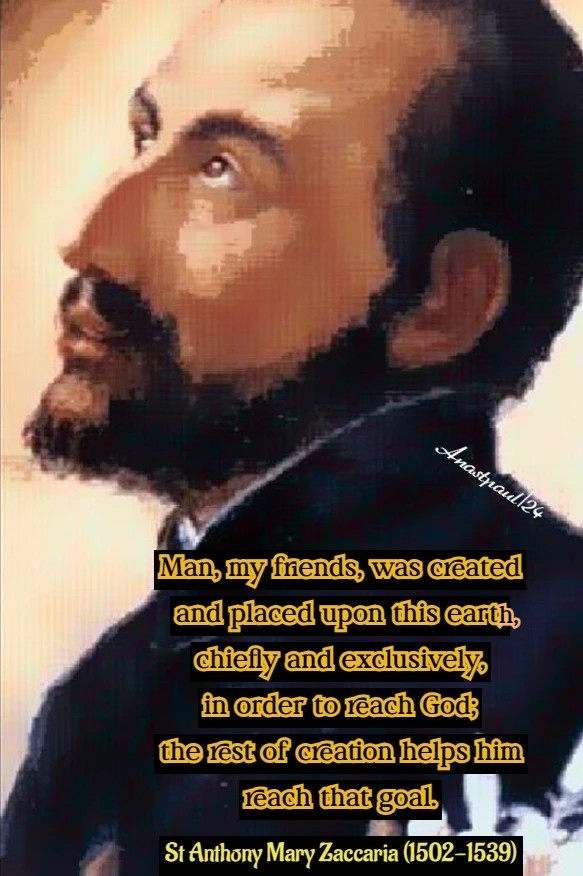
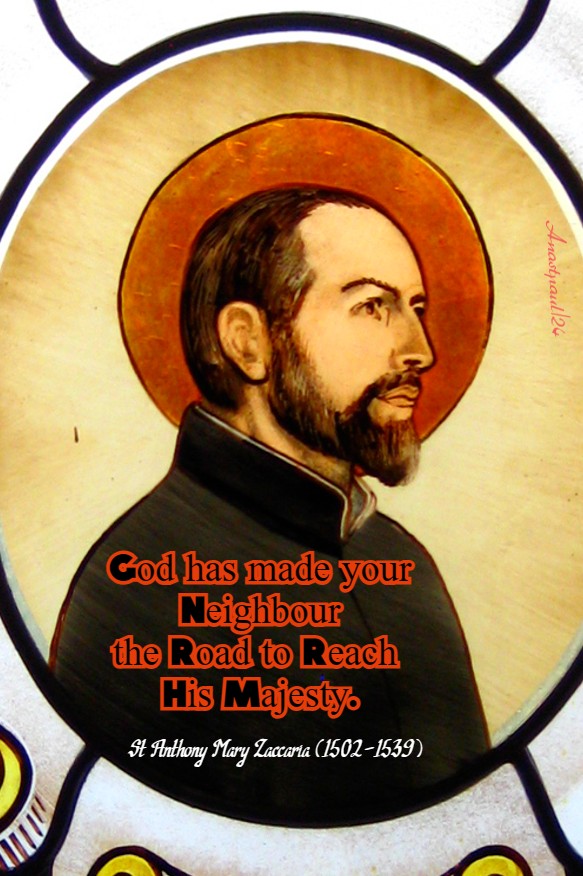
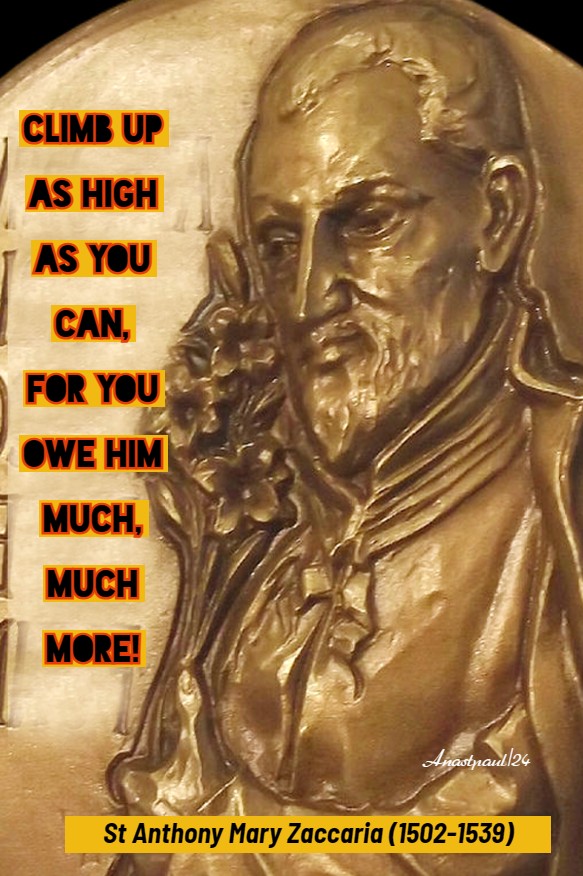
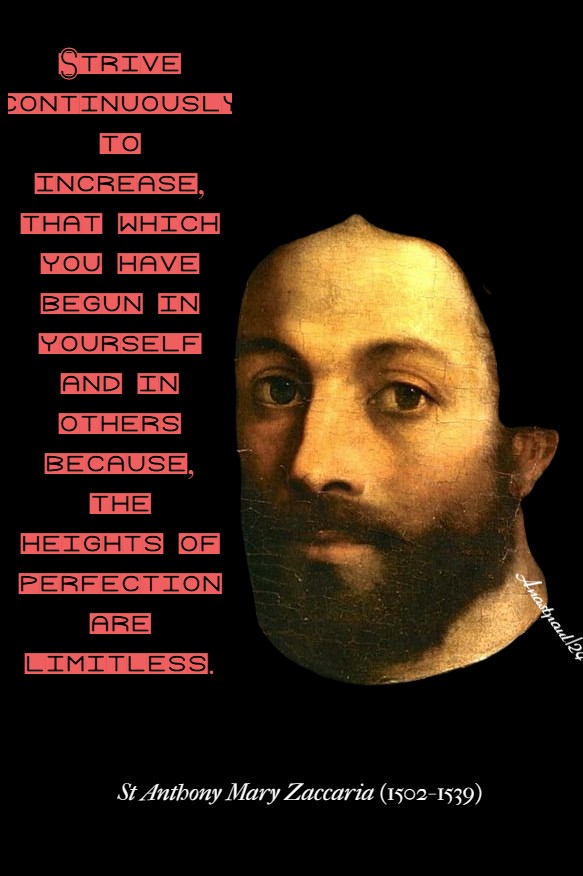
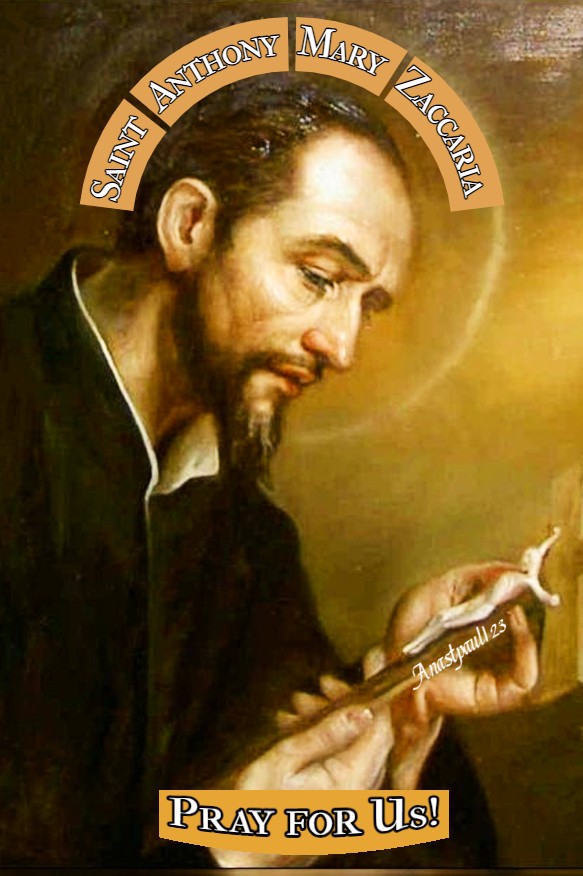
Quote/s of the Day – 5 July–St Anthony Mary Zaccaria (1502-1539) Confessor, Priest, Founder of the Barnabits – The First Religious Order Named after St Paul The Apostle
“Man, my friends, was created and placed upon this earth, chiefly and exclusively, in order to reach God; the rest of creation helps him reach that goal.”
“God has made your neighbour the road to reach His Majesty.”
“Climb up as high as you can, for you owe Him much, much more!”
“Strive continuously to increase, that which you have begun in yourself and in others because, the heights of perfection are limitless.”
One Minute Reflection – 5 July– “The Month of the Most Precious Blood” – St Anthony Mary Zaccaria (1502-1539) Confessor, Priest, Founder – 1 Timothy 4:8-16, Mark 10:15-21 – Scripture search here: https://www.drbo.org/
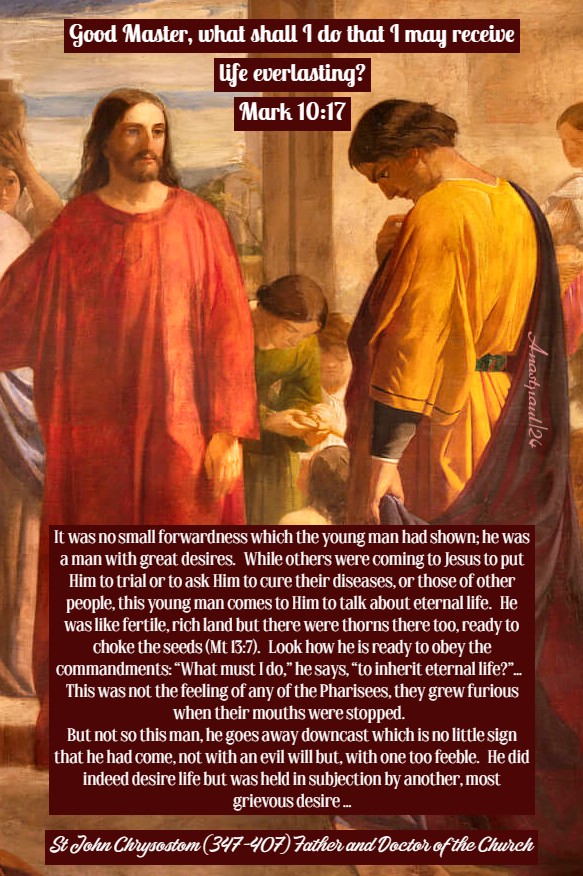
“Good Master, what shall I do that I may receive life everlasting?” – Mark 10:17
REFLECTION – “It was no small forwardness which the young man had shown; he was a man with great desires. While others were coming to Jesus to put Him to trial or to ask Him to cure their diseases, or those of other people, this young man comes to Him to talk about eternal life. He was like fertile, rich land but there were thorns there too, ready to choke the seeds (Mt 13:7). Look how he is ready to obey the commandments: “What must I do,” he says, “to inherit eternal life?”… This was not the feeling of any of the Pharisees, they grew furious when their mouths were stopped. But not so this man, he goes away downcast which is no little sign that he had come, not with an evil will but, with one too feeble. He did indeed desire life but was held in subjection by another, most grievous desire …
“If you wish to be perfect, go, sell what you have and give to the poor and you will have treasure in Heaven; then come, follow Me … At this statement, he went away sorrowful.” After this, the evangelist shows why he felt this way, by saying, “He had many possessions.” For those who have little, are not equally held in subjection by their possessions, as those who overflow with affluence, for then the love of it becomes more tyrannical. The increase of acquisitions kindles the flame more and renders those, who possess them, poorer, it puts them in greater desire and makes them feel more their “want”. See what strength this passion exhibited here … “How difficulkt it is for those who have wealth to enter the Kingdom of God!” Not that Christ blames wealth but those who are held in subjection by it.” – St John Chrysostom (347-407) Bishop of Constantinople, Father and Doctor of the Church (Homily 63 on Matthew).
PRAYER – Grant, O Lord God that in the spirit of Paul the Apostle, we may learn the knowledge of Jesus Christ which surpasses all understanding, wherein the blessed Anthony Mary was marvelously learned, who gathered together in Thy Church new households of Clerics and of Virgins. Through our Lord, Jesus Christ, Thy Son, Who liveth and reigneth with Thee in the unity of the Holy Spirit, God world without end. Amen (Collect).
Our Morning Offering – 5 July– “The Month of the Most Precious Blood” –
My Most Sweet Lord A Morning Offering Of St Alphonsus Maria de Liguori (1696-1787) Most Zealous Doctor
My most sweet Lord, I offer and consecrate to Thee. this morning all that I am and have – my senses, my thoughts, my affections, my desires, my pleasures, my inclinations, my liberty. In a word, I place my whole body and soul in Thy Hands. Amen.
Saint of the Day – 5 July – Saint Zoe of Rome (Died c286) Married laywoman, Martyr. She lived during the reign of Emperor Diocletian and his early persecution of Christians. Also known as – Zoa.
The Roman Martyrology reads today: “At Rome, St Zoe, Martyr, wife of the blessed Martyr Nicostratus. Whilst praying at the tomb of the Apostle, St Peter, during the time of Diocletian, she was seized by the persecutors and cast into a dark dungeon, then, being suspended on a tree by her neck and hair and suffocated by loathsome smoke, she yielded up her soul in the confession of the Lord.”
Saint Zoe, Martyr (18th Century, Portuguese)
For six years Zoe had been unable to speak. Saint Sebastian made the Sign of the Coss upon her forehead and she immediately began to speak and glorified the Lord Jesus Christ.
Zoe asked for Baptism brining her husband and family to Christ too.
She became greatly devoted to Saint Peter and was discovered praying at his tomb when she was arrested for her faith.
She died, suffocated by the terrible smoke of a dung fire, lit beneath her suspended body. Her body was tied to arock and thrown into the River Tiber. The following night Zoe appears to St Sebastian and showed him the place where her body might be found. Her Relics are preserved in Rome, in the Basilica of Santa Prassede.
St Agatho of Sicily St Athanasius the Athonite St Athanasius of Jerusalem St Cast St Cyprille of Libya St Cyrilla of Cyrene St Domèce St Domitius of Phrygia St Edana of West Ireland
St Numerian of Treves St Philomena of San Severino St Probus of Cornwall St Rosa Chen Aijieh St Sedolpha of Tomi St Stephen of Reggio St Teresia Chen Qingjieh St Theodotus of Tomi St Thomas of Terreti St Triphina of Brittany St Triphina of Sicily St Zoe of Rome (Died c286) Married laywoman, Martyr
Thought for the Day – 4 July – Meditations with Fr Richard Frederick Clarke SJ (1839-1900)
HUMILITY Meditations for a Month
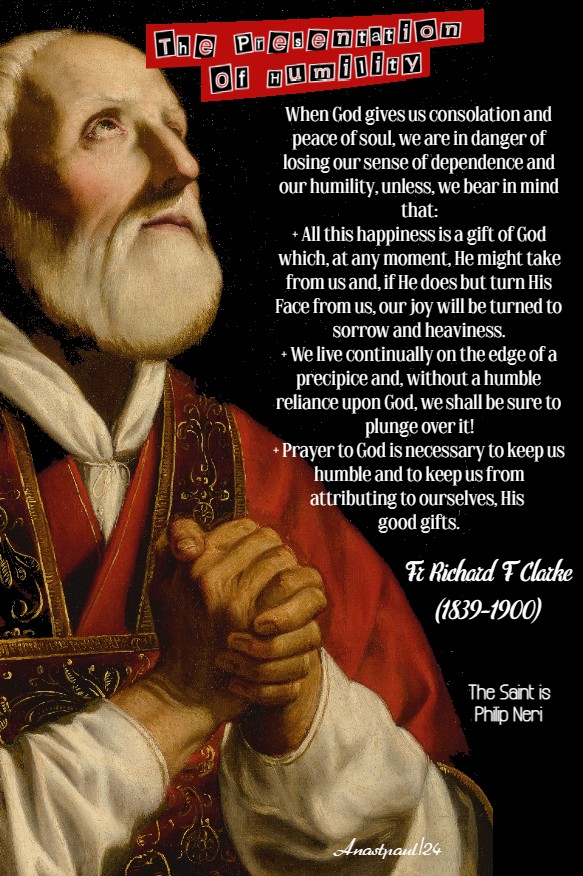
The Presentation of Humility
When God gives us consolation and peace of soul, we are in danger of losing our sense of dependence and our humility, unless, we bear in mind that: + All this happiness is a gift of God which, at any moment, He might take from us and, if He does but turn His Face from us, our joy will be turned to sorrow and heaviness. + We live continually on the edge of a precipice and, without a humble reliance upon God, we shall be sure to plunge over it! + Prayer to God is necessary to keep us humble and to keep us from attributing to ourselves, His good gifts.
However great may be the graces given us and, however, high the degree of virtue we may attain, we are never safe, unless we remember that we have, in ourselves, an inextinguishable fount of sin and weakness, of concupiscence and rebellion against God, otherwise, our very graces, may prove our ruin. We must cry out to God each morning as Saint Philip did, “Watch me, O Lord, this day – for, abandoned to myself, I shall surely betray Thee!” ‘Guard me against myself and the traitor within my heart which makes me so often unfaithful to Thee. Heal my soul, which abounds with that, which is displeasing to Thee.‘
Those who have great natural talents are in especial danger unless they cultivate constant dependence upon God. Their very ability, is a danger to them and makes them plume themselves, upon what they are able to effect. Nabuchodonosor did this and for a time God took from him his reason until he recognised his own nothingness. Beware of priding yourself on anything you do, lest God take away that talent which has been the cause of so great an evil!
Quote/s of the Day – 4 July – The Feast of St Andrew of Crete (c660-c740) Bishop, Father of the Church
“Thou art the Good Shepherd; seek me, Thy lamb and neglect me not, who has gone astray. [John 10:11-14]”
“Thou art my sweet Jesus, Thou art my Creator; in Thee, O Saviour, I shall be justified.”
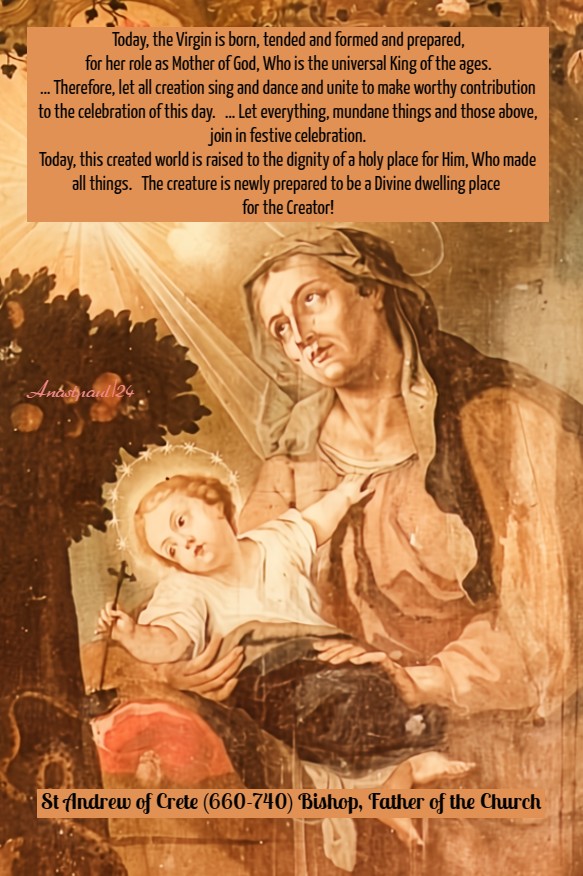
“Today, the Virgin is born, tended and formed and prepared, for her role as Mother of God, Who is the universal King of the ages. … Therefore, let all creation sing and dance and unite to make worthy contribution to the celebration of this day. … Let everything, mundane things and those above, join in festive celebration. Today, this created world is raised to the dignity of a holy place for Him, Who made all things. The creature is newly prepared to be a Divine dwelling place for the Creator!”
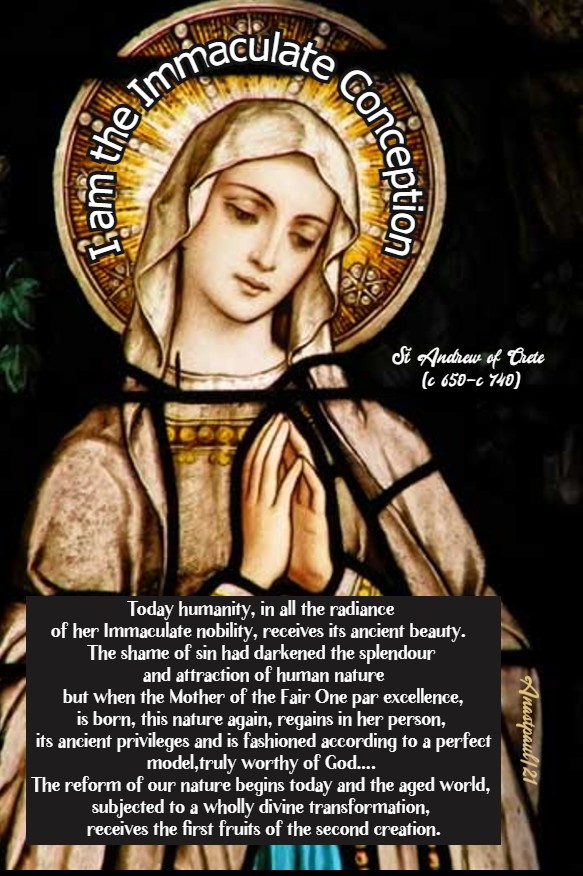
“Today humanity, in all the radiance of her Immaculate nobility, receives its ancient beauty. The shame of sin had darkened the splendour and attraction of human nature but when the Mother of the Fair One par excellence, is born, this nature again, regains, in her person, its ancient privileges and is fashioned according to a perfect model, truly worthy of God …. The reform of our nature begins today and the aged world, subjected to a wholly divine transformation, receives the first fruits of the second creation.”
One Minute Reflection – 4 July– “The Month of the Most Precious Blood” – Within the Octave of Sts Peter and Paul – Acts 5:12-16, Matthew 19:27-29 – Scripture search here: https://www.drbo.org/
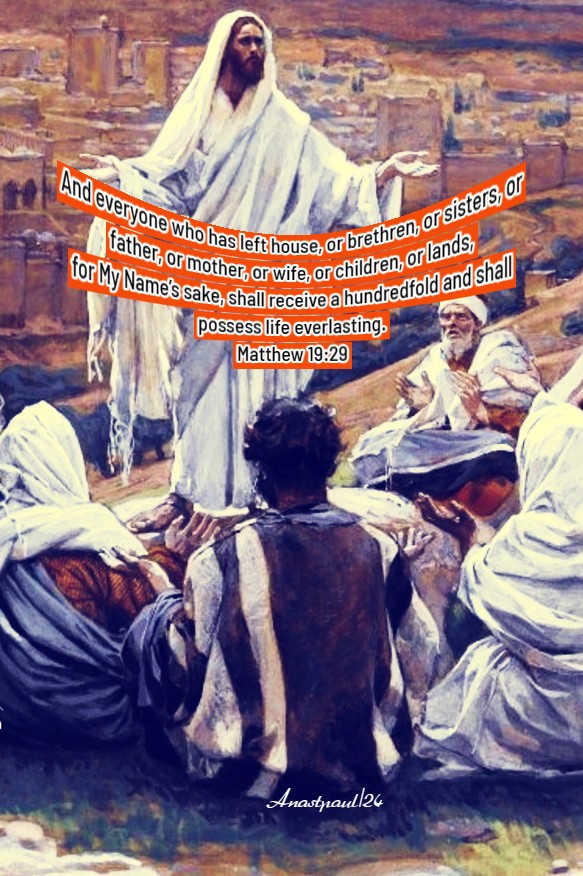
“And everyone who has left house, or brethren, or sisters, or father, or mother, or wife, or children, or lands, for My Name’s sake, shall receive a hundredfold and shall possess life everlasting.” – Matthew 19:29
REFLECTION – “WE MUST POSSESS a continual and imperturbable equanimity, amid the great variety of human occurrences and although, all things change around us, remain immovable, with our eyes fixed on God alone. And, although, all things, I will not merely say around us but even within us, should turn topsy-turvy; whether our souls be joyful or sorrowful, in peace or in trouble, in light or in darkness, in temptation or in repose, in happiness or in disgust, although the sun scorch, or the dew refresh – we should always keep our will fixed on the good pleasure of God, as its sole and supreme object.
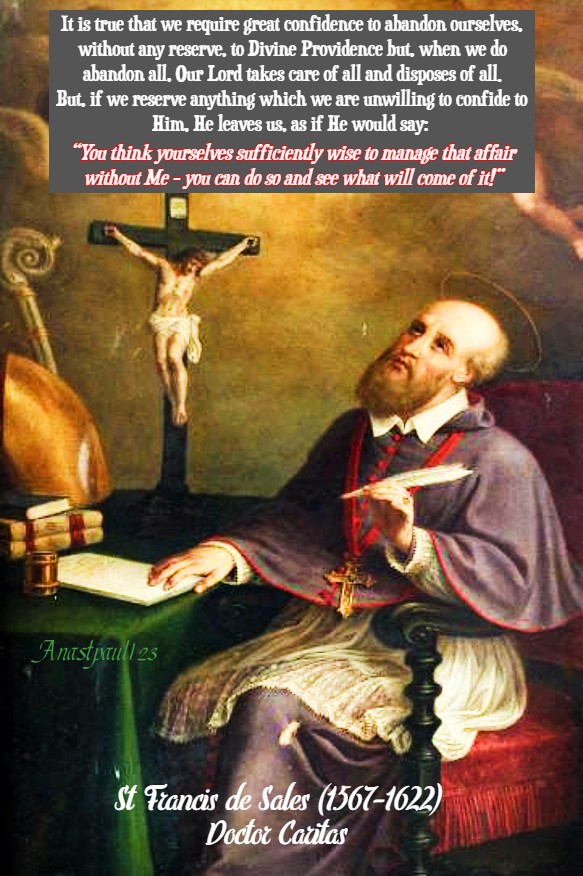
It is true that we require great confidence to abandon ourselves, without any reserve, to Divine Providence but, when we do abandon all, Our Lord takes care of all and disposes of all. But, if we reserve anything which we are unwilling to confide to Him, He leaves us, as if He would say: “You think yourselves sufficiently wise to manage that affair without Me – you can do so and see what will come of it!” – St Francis de Sales (1567-1622) Doctor Caritatis( Consoling Thoughts on God and Providence).
PRAYER – God, Who hast consecrated this day to the Martyrdom of Thy Apostles Peter and Paul, give Thy Church a precept to follow them in all things. Through Jesus Christ, Thy Son our Lord, Who lives and reigns with Thee, in the unity of the Holy Ghost, God, world without end. Amen (Collect).
Our Morning Offering – 4 July – “The Month of the Most Precious Blood of Jesus”
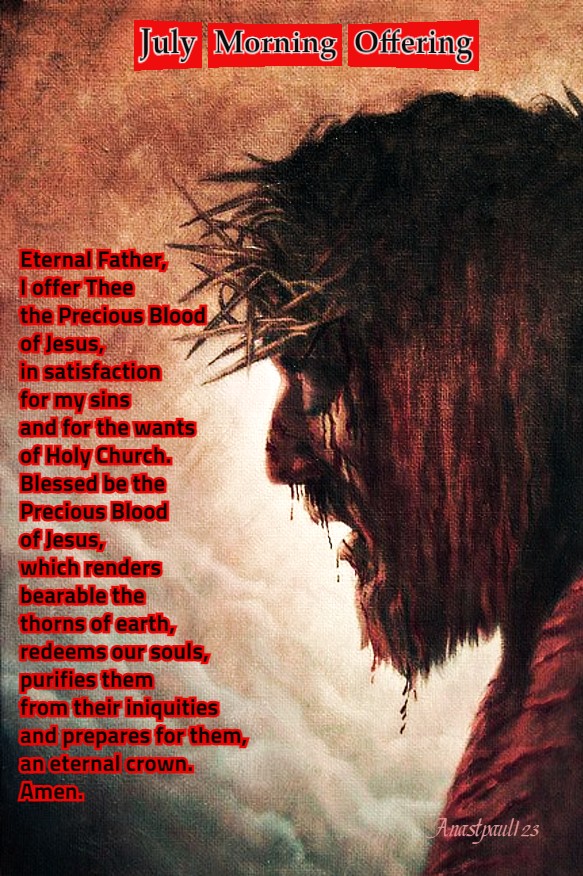
July Morning Offering
Eternal Father, I offer Thee the Precious Blood of Jesus, in satisfaction for my sins and for the wants of Holy Church. Blessed be the Precious Blood of Jesus, which renders bearable the thorns of earth, redeems our souls, purifies them from their iniquities and prepares for them, an eternal crown. Amen.
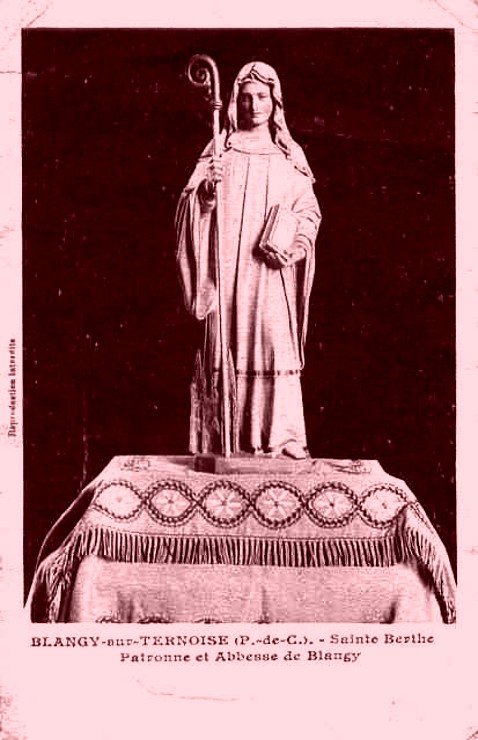
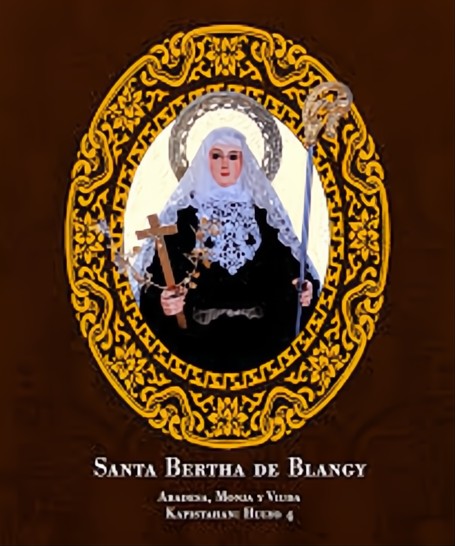
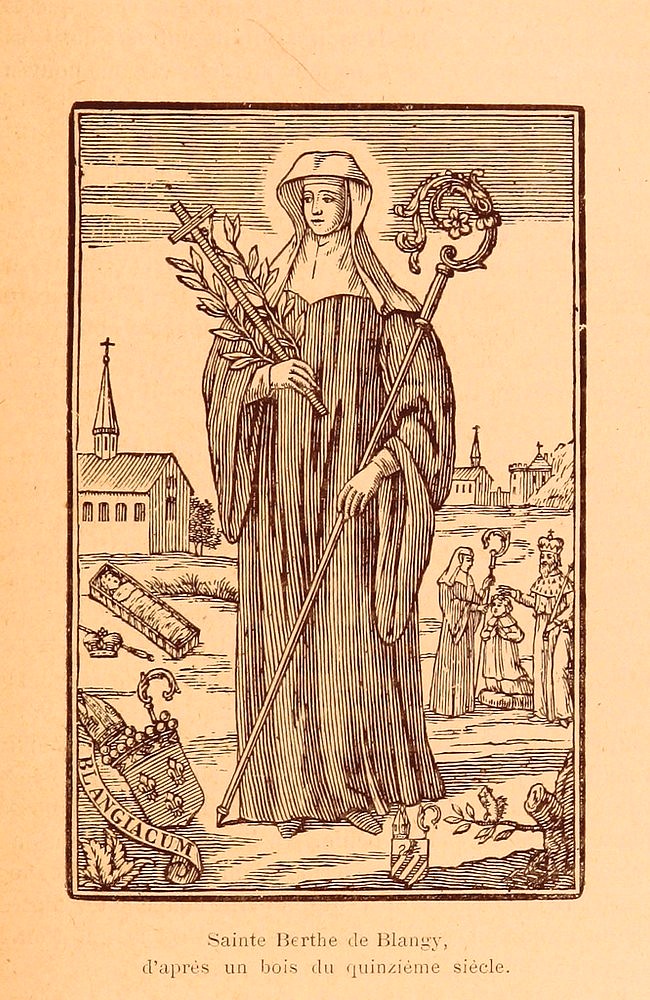
Saint of the Day – 4 July – Saint Bertha of Blangy (c644-c723) Widow, Abbess, Mother, Founder of a Monastery at Blangy, Artois and 3 Churches in the region. Born in c644 in France and died in c723 at her Convent in Blangy, France of natural causes. Patronage of Blangy. Also known as – Bertha of Artois, Berthe…
Bertha, born in France around the year 644, was the daughter of Count Rigobert, who served in the Court of King Clovis II and Princess Ursanna, the daughter of the King of Kent in England.
In the twentieth year of her age this beautiful and pious maiden was married to the cousin of the King, the noble Sigfried, who determined to advance with his spouse, along the paths of Christian perfection. They were blessed with five daughters, of whom two died in infancy; two others, Gertrude and Deotila, are Canonised Saints like their mother.
After several years of the most harmonious union, Sigfried died in 672 and Saint Bertha took the veil in a Monastery which by Divine instructions she built, at Blangy in the district of Artois. The Monastery was solemnly Consecrated in January of the year 682 and the holy widow endowed it with her terrains. Her daughters Gertrude and Deotila, greatly impressed by their mother’s act, soon followed her example.
Bertha was persecuted by Roger, or Rotgar, a young Lord of the Court of King Thierry III, who was furious over her refusal to give him her dauther, Gertrude’s hand in marriage, she already being a professed religious. He endeavoured to slander her mother as being opposed to the succession of Thierry and involved with the English Royalty in a conspiracy. The King sent for the Abbess to defend her cause, not sure that such conduct could be attributed to this holy woman. He was so impressed by Bertha’s demeanour and testimony that he took her under his protection and the persecution was immediately halted.
On her return to Blangy, Bertha had three Churches built, to honour Saint Omer, Saint Vaast and Saint Martin of Tours and completed the construction of her Convent. And then, after establishing the Rule of Saint Benedict and a regular observance in her community, she named Saint Deotila to replace her as the Abbess and retired to a solitary cell within the Convent, to spend the remainder of her days in prayer.
At the age of 79, having already buried her two daughters Deotila and Emma, she left Gertrude as Abbess in the Monastery of Blangy and died peacefully in the year 723 where she was buried and where her Relics (I believe) are still intact.
St Anthony Daniel St Aurelian of Lyons St Bertha of Blangy (c644-c723) Widow, Abbess St Carileffo of Anille Bl Catherine Jarrige St Cesidio Giacomantonio Bl Damiano Grassi of Rivoli St Donatus of Libya St Edward Fulthrop St Elias of Jerusalem St Finbar of Wexford St Fiorenzo of Cahors St Flavian of Antioch St Giocondiano Bl Giovanni of Vespignano St Haggai the Prophet Bl Hatto of Ottobeuren Bl Henry Abbot St Henry of Albano St Hosea the Prophet St Innocent of Sirmium Bl John Carey
Blessed John Cornelius SJ (1557– 1594) Martyr, English Priest of the Society of Jesus, Missionary. Additional Memorials – 29 October as one of the Martyrs of Douai, 1 December as one of the Martyrs of Oxford University. Fr Cornelius and his three companions, the Martyrs of England, were Beatified by Pope Pius XI on 15 December 1929. All their bodies were retrieved and given proper burial by Lady Arundell. His Life and Death: https://anastpaul.com/2021/07/04/saint-of-the-day-4-july-blessed-john-cornelius-sj-1557-1594-martyr/
St Jucundian St Laurian of Seville St Lauriano of Vistin St Namphanion the Archmartyr Bl Natalia of Toulouse St Odo the Good Bl Odolric of Lyon Bl Patrick Salmon St Sebastia of Sirmium St Theodore of Cyrene St Theodotus of Libya Bl Thomas Bosgrave Bl Thomas Warcop
Thought for the Day – 3 July – Meditations with Fr Richard Frederick Clarke SJ (1839-1900)
HUMILITY Meditations for a Month
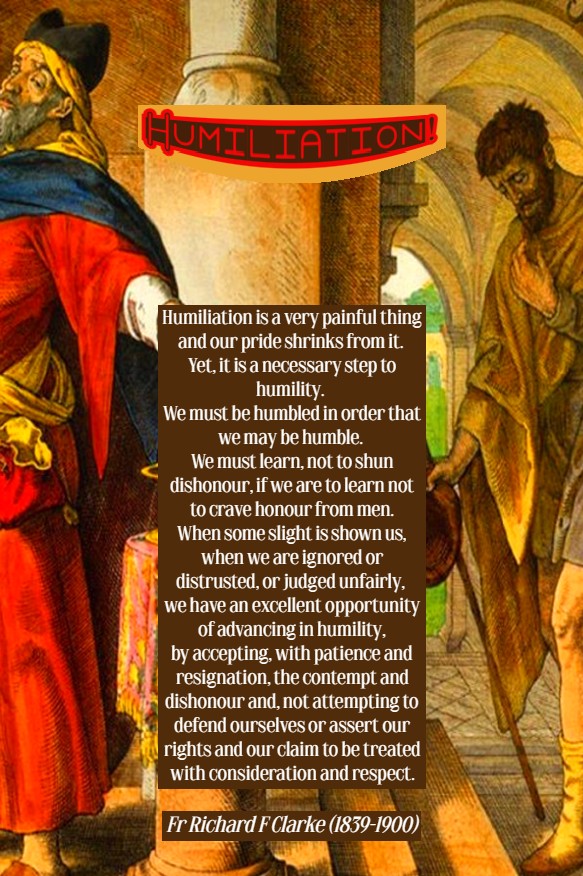
Humiliation!
Humiliation is a very painful thing and our pride shrinks from it. Yet, it is a necessary step to humility. We must be humbled in order that we may be humble. We must learn, not to shun dishonour, if we are to learn not to crave honour from men. When some slight is shown us, when we are ignored or distrusted, or judged unfairly, we have an excellent opportunity of advancing in humility, by accepting, with patience and resignation, the contempt and dishonour and, not attempting to defend ourselves or assert our rights and our claim to be treated with consideration and respect.
When we commit some fault which causes others to think less of us, we should be full of sorrow at the thought of having offended God and given bad example to our neighbour but we must not seek to shun the just contempt we have deserved, or allow ourselves to be miserable at the thought of being despised. On the contrary, we must be content to be esteemed according to our merits and must thank God for teaching us this lesson and giving us a greater insight into ourselves.
It is a sure sign of pride, if we seek to shirk the consequences of our fault, as Saul did when he begged Samuel still to honour him before the ancients of Israel (1 Kings 15:30). Such conduct only brings fresh humiliations. God, who resists the proud, always brings down those who refuse to humble themselves. The devils, who would not willingly bow the knee before Christ made Man, were forced to do so. God, sooner or later, will force all the proud, willingly or unwillingly, to bow before Him.
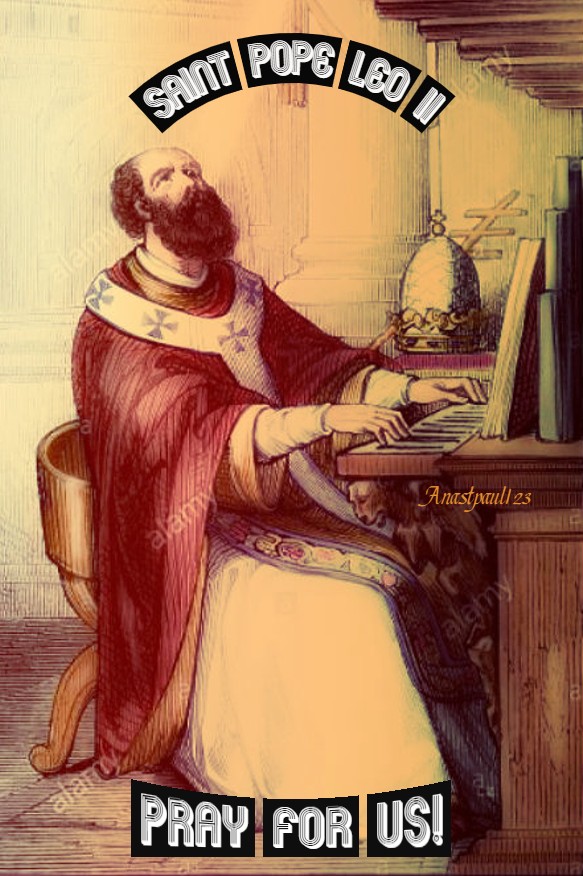
Quote/s of the Day – 3 July– “The Month of the Most Precious Blood” – St Leo II (611–683) Pope, Confessor – 1 Peter 5:1-4; 5:10-11, Matthew 16:13-19 – Scripture search here: https://www.drbo.org/
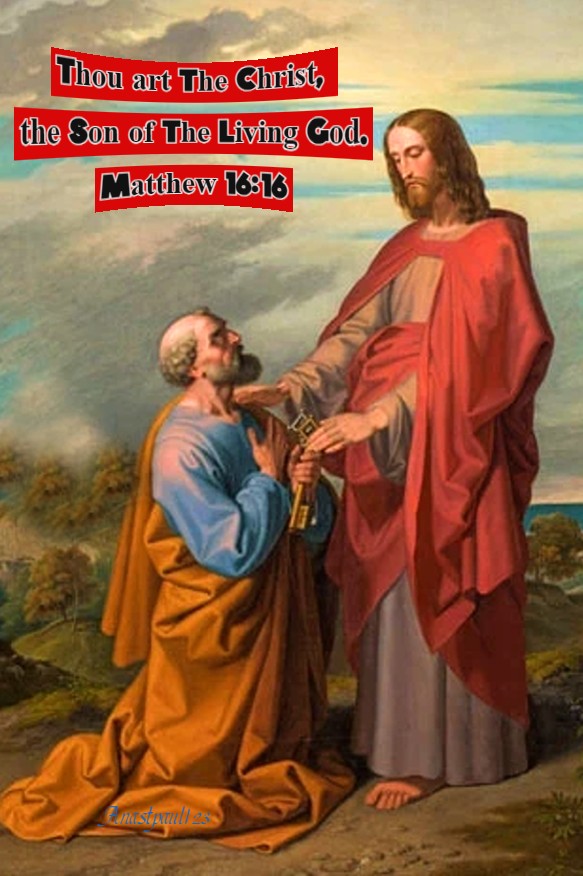
“Thou art the Christ, the Son of the living God.”
Matthew 16:16
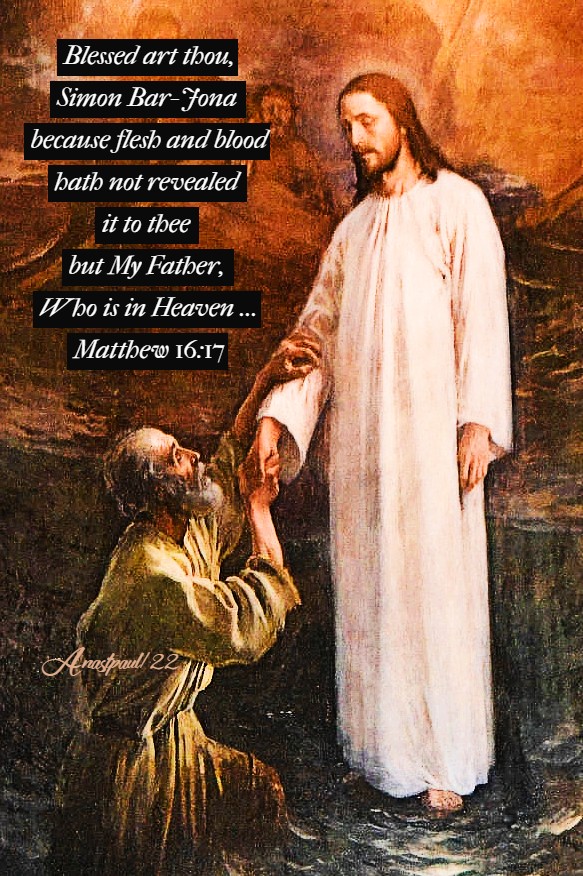
“Blessed art thou, Simon Bar-Jona because flesh and blood hath not revealed it to thee but My Father Who is in Heaven.”
Matthew 16:17
“Thomas answered and said to Him: My Lord and my God.”
John 20:28
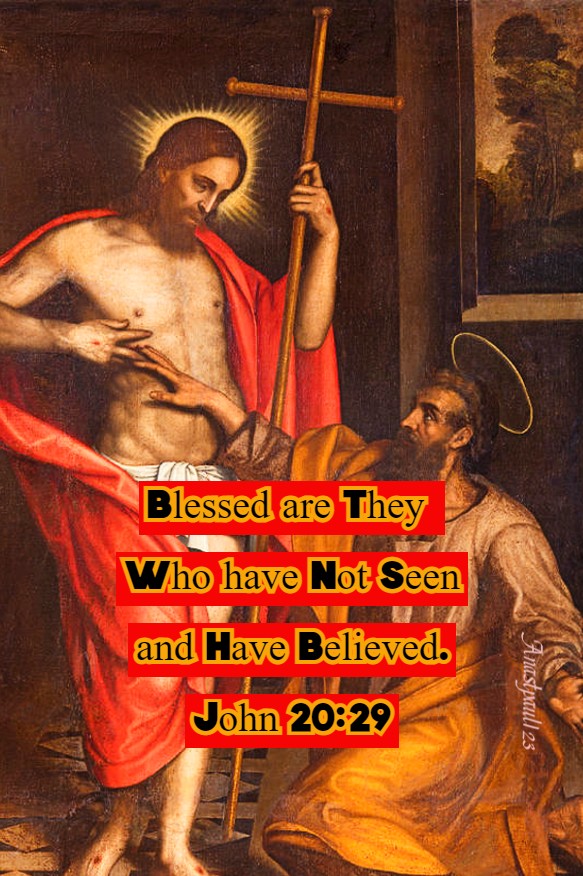
“Blessed are they who have not seen and have believed.”
John 20:29
“Our hearts were made for Thee, O God And restless must they be Until, O God, this grace accord, Until they rest in Thee!”
St Augustine (354-430) Father and Doctor of the Church
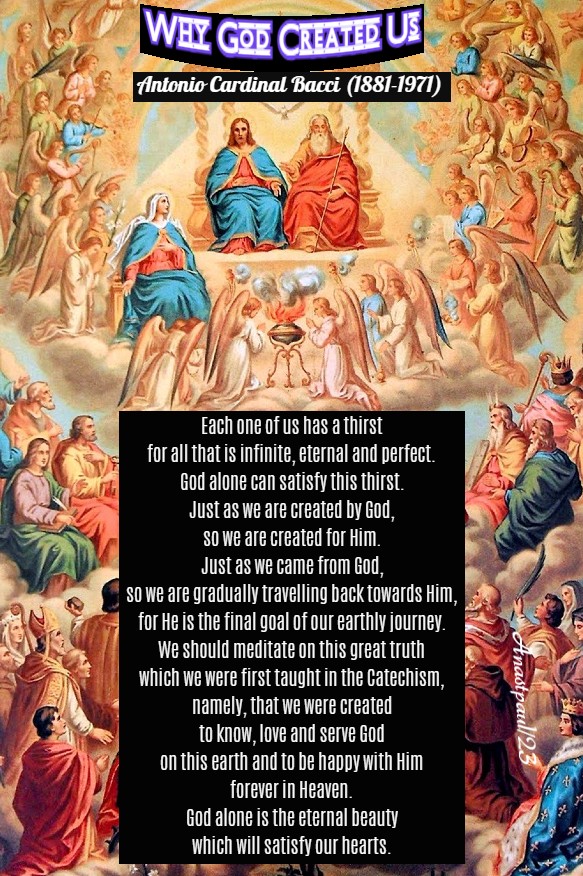
“Each one of us has a thirst for all that is infinite, eternal and perfect. God alone can satisfy this thirst. Just as we are created by God, so we are created for Him. Just as we came from God, so we are gradually travelling back towards Him, for He is the final goal of our earthly journey. We should meditate on this great truth which we were first taught in the Catechism, namely, that we were created to know, love and serve God on this earth and to be happy with Him forever in Heaven. God alone is the eternal beauty which will satisfy our hearts.”
One Minute Reflection – 3 July– “The Month of the Most Precious Blood” – St Leo II (611–683) Pope, Confessor – 1 Peter 5:1-4; 5:10-11, Matthew 16:13-19 – Scripture search here: https://www.drbo.org/
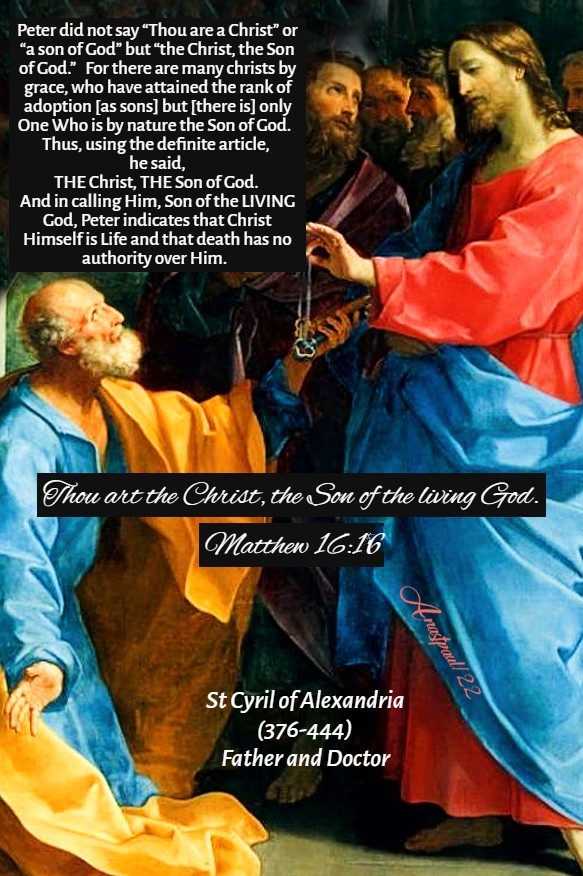
“Thou art the Christ, the Son of the living God.” – Matthew 16:16
REFLECTION – “Peter did not say “Thou are a Christ” or “a son of God” but “the Christ,the Son of God.” For there are many christs by grace, who have attained the rank of adoption [as sons] but [there is] only One Who is by nature the Son of God. Thus, using the definite article, he said, THE Christ, THE Son of God. And in calling Him, Son of the LIVING God, Peter indicates that Christ Himself is Life and that death has no authority over Him. And even if the flesh, for a short while, was weak and died, nevertheless, it rose again, since the Word, Who dwelled in it, could not be held under the bonds of death.” – St Cyril of Alexandria (376-444) Known as “The Pillar of Faith” Archbishop of Alexandria, Father and Doctor Incarnationis (Doctor of the Incarnation) (Fragment 190).
PRAYER – Look forgivingly on Thy flock, Eternal Shepherd and keep it in Thy constant protection, by the intercession of blessed Leo Thy Sovereign Pontiff, whom Thou didst constitute Shepherd of the whole Church. Through Jesus Christ, Thy Son our Lord, Who lives and reigns with Thee, in the unity of the Holy Ghost, God, world without end. Amen (Collect).
Our Morning Offering – 3 July– “The Month of the Most Precious Blood”
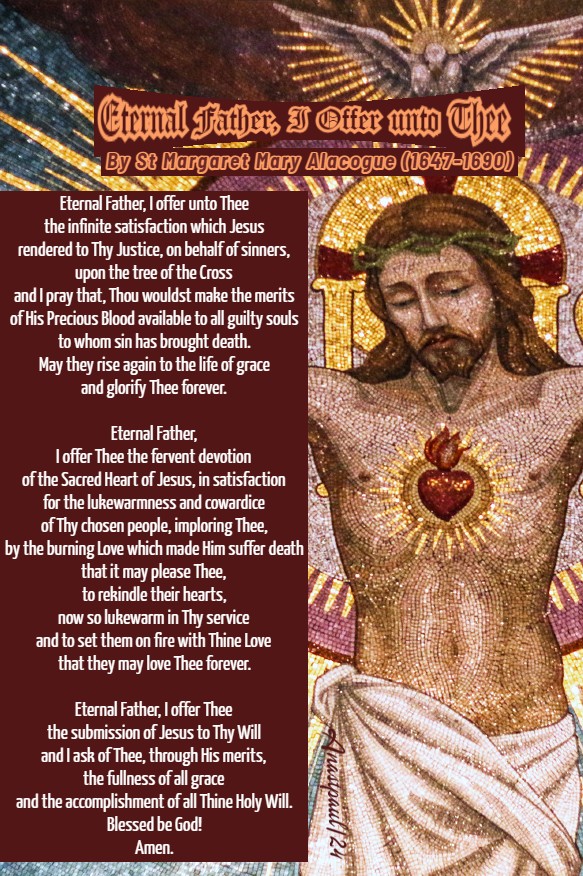
Eternal Father, I Offer unto Thee By St Margaret Mary Alacogue (1647-1690) Visionary and Apostle of the Sacred Heart of Jesus
Eternal Father, I offer unto Thee the infinite satisfaction which Jesus rendered to Thy Justice, on behalf of sinners, upon the tree of the Cross and I pray that, Thou wouldst make the merits of His Precious Blood available to all guilty souls to whom sin has brought death. May they rise again to the life of grace and glorify Thee forever.
Eternal Father, I offer Thee the fervent devotion of the Sacred Heart of Jesus, in satisfaction for the lukewarmness and cowardice of Thy chosen people, imploring Thee, by the burning Love which made Him suffer death that it may please Thee, to rekindle their hearts, now so lukewarm in Thy service and to set them on fire with Thine Love that they may love Thee forever.
Eternal Father, I offer Thee the submission of Jesus to Thy Will and I ask of Thee, through His merits, the fullness of all grace and the accomplishment of all Thine Holy Will. Blessed be God! Amen.
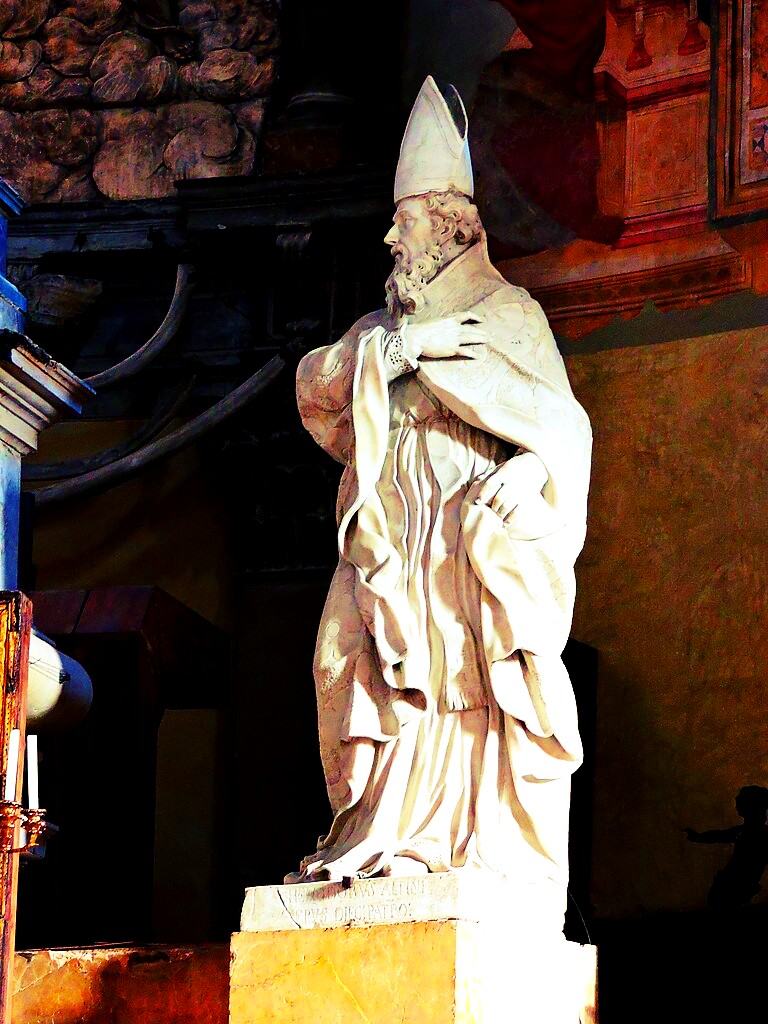
Saint of the Day – 3 July – St Heliodorus (332-390) the first Bishop of Altino in Italy, disciple, close friend and assistant of St Jerome. Scholar, ex-soldier, Born in332 at Dalmatia (present-day Albania, much of Croatia, Bosnia and Herzegovina) and died in 390 at Altino, Italy of natural causes. Patronage – of Torcello, Italy. Also known as – Heliodorus of Altino. of Altinum, Eliodoro.
The Roman Martyrology reads: “At Altino, St Heliodorus, a Bishop, distinguished for holiness and learning.”
Heliodorus was born at Dalmatia, a Roman Province north-east of the Adriatic Sea which was also the native land of St Jerome. He soon sought out that great Doctor, not only to follow his teachings in matters relating to Christian perfection but also, to profit by his deep learning.
The life of a recluse held great attractions for him but, to enter a Monastery, it would have been necessary to leave his spiritual master and director, a sacrifice he was not prepared to make. He, therefore, remained in the world, although not part of it and following the example of the holy Hermits, passed his time in prayer and devout reading.
He accompanied St Jerome on his voyage to the Holy Land, visiting the various Churches of the Orient,and remained with him for a time but a desire to revisit his native land and to see his parents once more drew him back to Dalmatia. St Jerome tried to persuade him to remain but Heliodorus’ intention was to return to St Jerome, as soon as he had fulfilled the duties he owed his parents.
Finding his absence had grown prolonged and fearing that love for his family and attachment to worldly things might lure him from his vocation, St Jerome wrote him an earnest letter. He exhorted his good disciple to break entirely with the world and to consecrate himself to the service of God. But the Lord, who disposes all things, had a mission of activity reserved for His servant. After the death of his mother, Heliodorus went to Italy and soon was remarked for his eminent piety. He was made Bishop of Altino and became one of the most distinguished Prelates of an age fruitful in great men. He sustained the Catholic Faith against the Arian heresy and in 381 assisted at the Council of Aquilea in north-eastern Italy, called for that purpose.
Neither Heliodorus, the disciple, nor his former spirtual advisor, St Jerome, ever forgot their great friendship and bond. St Jerome, in one of his letters, testifies that he was a Bishop who lived in his Episcopal dignity with as much fervour and regular pious devotion, as in a Monastery.
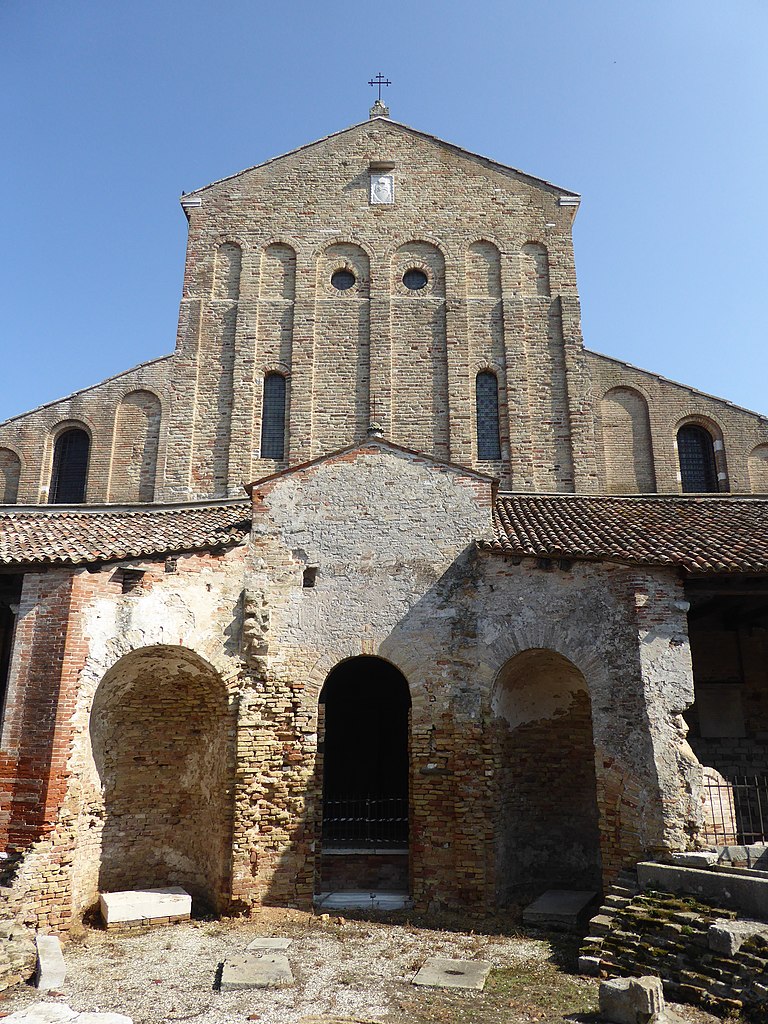
St Heliodorus’ Sepulchre beneath his Altar at Torcello Cathedral
Saint Heliodorus died in 390. Heliodorus’ Relics were carried to Altino during the barbarian invasions and then to Torcello, where they rest in a Sepulchre in the Cathedral of Santa Maria Assunta, see below.
Bl Andreas Ebersbach Bl Barbara Jeong Sun-mae St Bladus St Byblig St Cillene St Dathus of Ravenna St Eusebius of Laodicea St Firminus St Firmus Bl Gelduin St Giuse Nguyen Ðình Uyen St Gunthiern St Guthagon St Heliodorus (c332-c390) Bishop, close friend and assistant of St Jerome. St Hyacinth of Caesarea St Irenaeus of Chiusi St Maelmuire O’Gorman St Mark of Mesia St Mennone the Centurian St Mucian of Mesia St Paul of Mesia
St Raymond of Toulouse (Died 1118) ArchDeacon, Canon of the Lateran Canons Regular at St Sernin Basilica in Toulouse, France. The Roman Martyrology reads: “In Toulouse on the Garonne in France, Saint Raymond Gayrard, who, as a teacher, remained a widower, passionately devoted himself to works of charity, founded a hospice and was finally admitted among the Canons of the Basilica of San Saturnin.” https://anastpaul.com/2023/07/03/saint-of-the-day-3-july-saint-raymond-of-toulouse-died-1118/
Martyrs of Alexandria – 13 Saints: Thirteen Christian companions Marytred together. No details about them have survived but the names – Apricus, Cyrion (2 of), Eulogius, Hemerion, Julian, Julius, Justus, Menelaus, Orestes, Porfyrios and Tryphon (2 of). They martyred in Alexandria, Egypt, date unknown.
Martyrs of Constantinople – 24 Saints: A group of 24 Christians Martyred in the persecutions of Arian Emperor Valens. We know little more than their names – Acacios, Amedinos, Ammonius, Ammus, Cerealis, Cionia, Cionius, Cyrianus, Demetrius, Eulogius (2), Euphemia, Heliodoros, Heraclios, Horestes, Jocundus, Julian, Martyrios, Menelaeus, Sestratus, Strategos, Thomas, Timotheos and Tryphon. They were martyred in c367 in Constantintinople.
Theodotus and Companions – 6 Saints: Six Christians who were imprisoned, tortured and Martyred together in the persecutions of Trajan. Saint Hyacinth ministered to them in prison. We know nothing else about them but their names – Asclepiodotus, Diomedes, Eulampius, Golinduchus, Theodota and Theodotus. They were beheaded in c110, location unknown.
Thought for the Day – 2 July – Meditations with Fr Richard Frederick Clarke SJ (1839-1900)
HUMILITY Meditations for a Month
Humility under Trials
When God lays His heavy Hand upon us, we have an excellent opportunity of exercising the virtue of humility and of making great progress in it. There is nothing like a good knockdown blow, for teaching us our own nothingness and for schooling us in submission to God. If we take the chastisement well and do not allow ourselves to rebel against the Will of God but rather make it an occasion for humbling ourselves the more in His sight, we shall acquire more grace from God and advance more in perfection in a day, than in months of prosperity and spiritual consolation. How do I bear the trials God sends — well, or ill?
When the time of darkness is upon us and the gloom seems almost intolerable, there is no harm in praying for release from our misery or that God may avert some threatened blow but, the petition must always be accompanied by an act of humility, “Not my will, but Thine be done!” If we are patient, God will certainly send us speedy relief; just when we least expect it, peace will be restored to our souls.
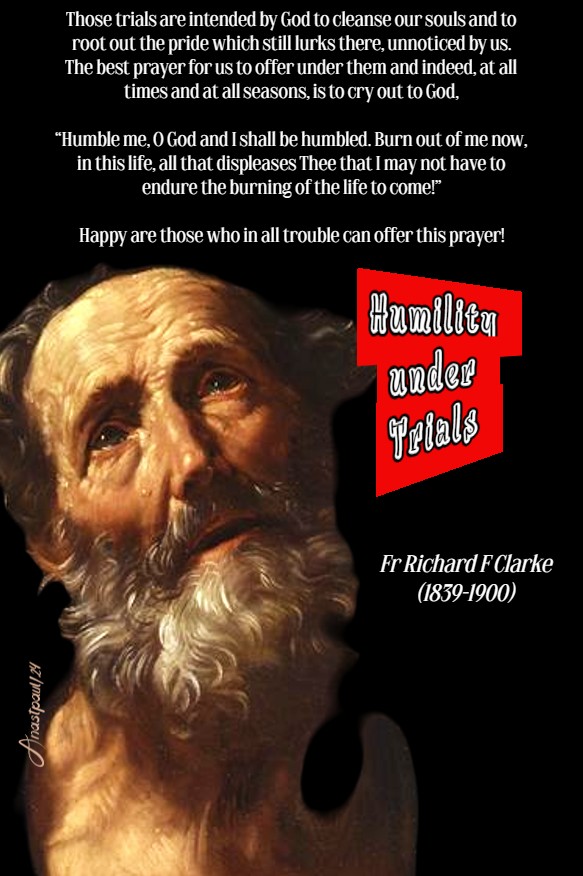
Those trials are intended by God to cleanse our souls and to root out the pride which still lurks there, unnoticed by us. The best prayer for us to offer under them and indeed, at all times and at all seasons, is to cry out to God, “Humble me, O God and I shall be humbled. Burn out of me now, in this life, all that displeases Thee that I may not have to endure the burning of the life to come!” Happy are those who in all trouble can offer this prayer!
Quote/s of the Day – 2 July – The Visitation of the Blessed Virgin Mary
Hail, O Mary, Mother of God By St Cyril of Alexandria (376-444) Father & Doctor of the Church
Hail, O Mary, Mother of God, Virgin and Mother! Morning Star, perfect vessel. Hail, O Mary, Mother of God, Holy Temple in which God Himself was conceived. Hail, O Mary, Mother of God, Chaste and pure dove. Hail, O Mary, Mother of God, who enclosed the One Who cannot be encompassed in your sacred womb. Hail, O Mary, Mother of God, From you flowed the true light, Jesus Christ, our Lord. Hail, O Mary, Mother of God, Through you the Conqueror and triumphant Vanquisher of hell, came to us. Hail, O Mary, Mother of God, Through you, the glory of the Resurrection blossoms. Hail, O Mary, Mother of God, You have saved every faithful Christian. Hail, O Mary, Mother of God, Pray for us sinners now and at the hour of our death. Amen
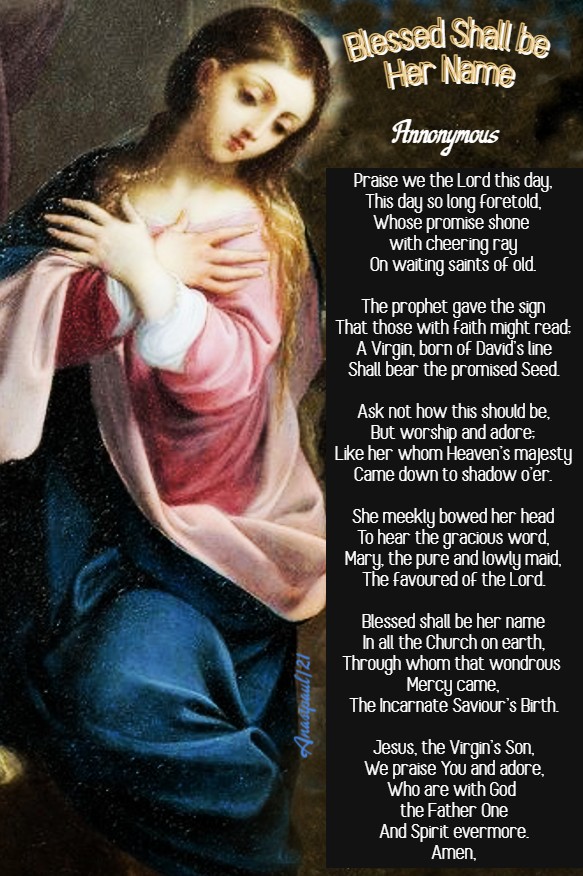
Blessed Shall be Her Name Anonymous Author
Praise we the Lord this day, This day so long foretold, Whose promise shone with cheering ray On waiting saints of old.
The prophet gave the sign That those with faith might read; A Virgin, born of David’s line Shall bear the promised Seed.
Ask not how this should be, But worship and adore; Like her whom Heaven’s majesty Came down to shadow o’er.
She meekly bowed her head To hear the gracious word, Mary, the pure and lowly maid, The favoured of the Lord.
Blessed shall be her name In all the Church on earth, Through whom that wondrous Mercy came, The Incarnate Saviour’s Birth.
Jesus, the Virgin’s Son, We praise You and adore, Who are with God the Father One And Spirit evermore. Amen
One Minute Reflection – 2 July– “The Month of the Most Precious Blood” – The Visitation of the Blessed Virgin Mary – Song 2:8-14; Luke 1:39-47 – – Scripture search here: https://www.drbo.org/
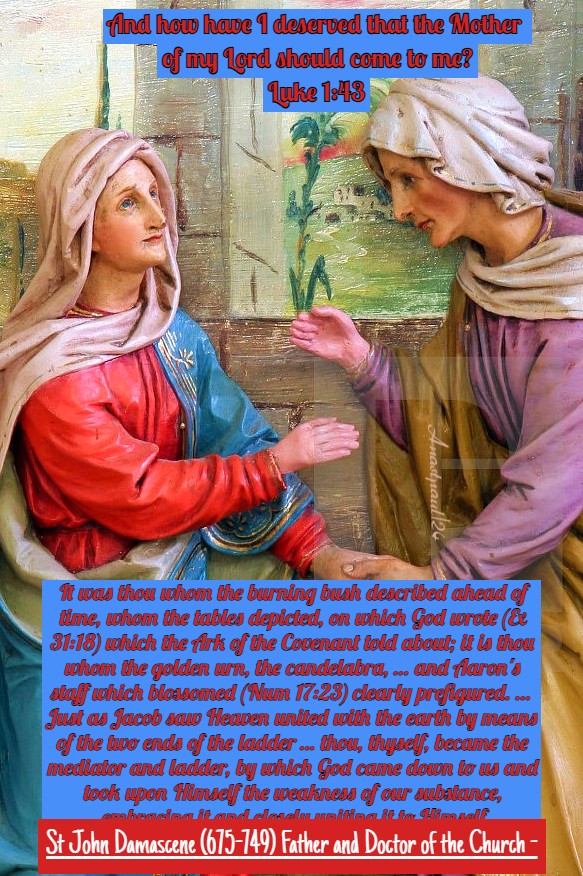
“ And how have I deserved that the Mother of my Lord should come to me?” – Luke 1:43
REFLECTION – “Most blessed are thou among women and blessed is the fruit of thy womb” … For all ages will call thee blessed, as thou said (Lk 1:48). The daughters of Jerusalem, that is to say, the Church, saw thee and proclaimed thy happiness … For thou art the royal throne near which the Angels stood contemplating their Master and Creator, Who was seated on it (Dan 7:9). Thou hast become the spiritual Eden, more sacred and more divine than the former one. The earthly Adam lived in the former, in thou lives the Lord Who came from Heaven (1 Cor 15:47). Noah’s ark was a prefiguration of thee, it saved the seed of the second creation, for thou gave birth to Christ, the world’s Salvation, Who submerged sin and pacified the floods.
It was thou whom the burning bush described ahead of time, whom the tables depicted, on which God wrote (Ex 31:18) which the Ark of the Covenant told about; it is thou whom the golden urn, the candelabra, … and Aaron’s staff which blossomed (Num 17:23) clearly prefigured. … I almost left out Jacob’s ladder. Just as Jacob saw Heaven united with the earth by means of the two ends of the ladder and the Angels descending and ascending and as the One who is really the strong and invincible One engaged in a symbolic struggle with him, thus thou, thyself, became the mediator and ladder, by which God came down to us and took upon Himself the weakness of our substance, embracing it and closely uniting it to Himself.” – St John Damascene (675-749) Monk, Theologian, Father and Doctor of the Church – Added by Pope Leo XIII in 1883 (1st Sermon on the Death and Assumption).
PRAYER – Bestow upon Thy servants, we beseech Thee, O Lord, the gift of heavenly grace that as the child-bearing of the Blessed Virgin marked the beginning of our salvation, so may the solemn Feast of her Visitation bring us an increase of peace.Through Jesus Christ, Thy Son our Lord, Who lives and reigns with Thee, in the unity of the Holy Ghost, God, world without end. Amen (Collect).
Our Morning Offering – 2 July– “The Month of the Most Precious Blood”
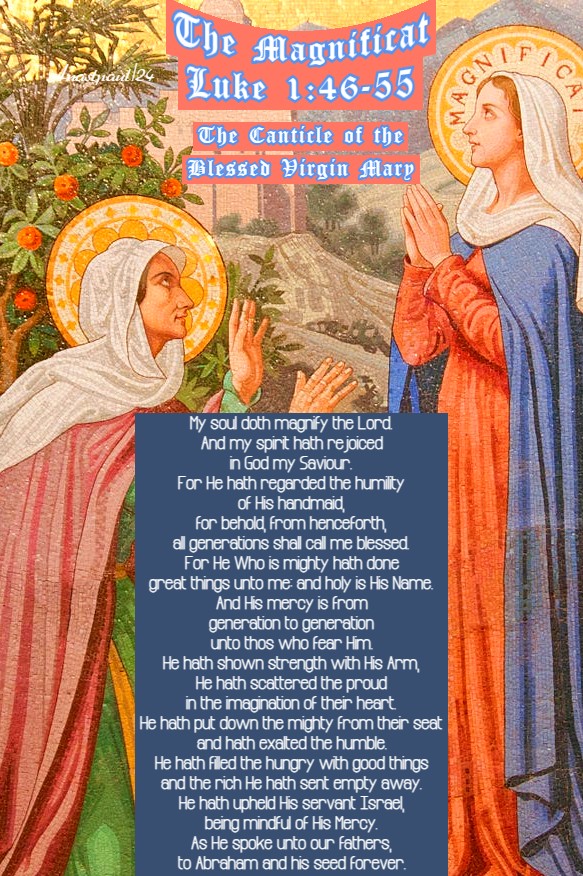
The Magnificat The Canticle of the Blessed Virgin Mary Luke 1:46-55 Indulgence 100 days
My soul doth magnify the Lord. And my spirit hath rejoiced in God my Saviour. For He hath regarded the humility of His handmaid, for behold, from henceforth, all generations shall call me blessed. For He Who is mighty hath done great things unto me: and holy is His Name. And His mercy is from generation to generation unto thos who fear Him. He hath shown strength with His Arm, He hath scattered the proud in the imagination of their heart. He hath put down the mighty from their seat and hath exalted the humble. He hath filled the hungry with good things and the rich He hath sent empty away. He hath upheld His servant Israel, being mindful of His Mercy. As He spoke unto our fathers, to Abraham and his seed forever.
Glory be to the Father and to the Son and to the Holy Ghost as it was in the beginning, is now and ever shall be, world without end! Amen

























 AnaStpaul
You must be logged in to post a comment.