Thought for the Day – 4 June – Meditations with Fr Richard Frederick Clarke SJ (1839-1900)
PATIENCE Meditations for a Month
The Second Degree of Patience
The repression of external signs of impatience has no value in God’s sight except, insofar as it is a step to the interior virtue. The soldier, the courtier, the servant, suppresses the exterior marks of impatience, from fear of punishment and hope of reward. The Christian must do more than this; he must have within himself, the motive of imitating the patience of Jesus Christ. Smoke is the sign of fire within but the smoke will not warm the house, unless there is the fire on the hearth; so too, external patience will not please God, unless there is also the motive of patience within the soul. Am I striving after the interior virtue? Have I even succeeded in repressing the exterior impatience for Christ’s sake?
When some unkindness or injury is done us, there arises in us a double feeling. We feel pained and hurt; in this there is no sort of sin. But we are also conscious of another feeling – a desire to retaliate, a wish to see some retribution befall the offender. We are bitter towards them, we are tempted to indulge ourselves in an animosity which approaches sometimes even to hatred! This is what has to be expelled from our souls if we are to resemble Him Who was meek and humble of heart.
What must we do to rid ourselves of this bitterness? Dislike may remain in spite of all our efforts; this we cannot help. But we must resolve that no unkind wish towards the offender shall be indulged. Then we must set to work to pray for calmness and a spirit of forgiveness and we must think of all we deserve for our offences against God and must say, from our heart: ‘Forgive us our trespasses as we forgive those who trespass against us.‘ Last of all, we must pray for the offender.
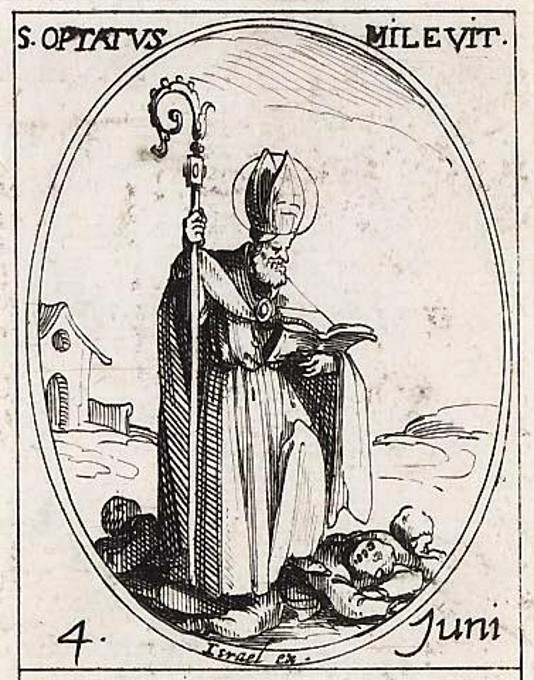
Quote of the Day – 4 June – Saint Optatus of Milevis (4th Century) Bishop, Father of the Church
“You cannot deny that you know that in the City of Rome, upon Peter first, the Chair of the Bishop was conferred, in which sat the Head of all the Apostles, Peter, whence also, he was called Cephas, in which One Chair unity should be preserved by all, lest the other Apostles should each stand up for his own chair, so that now, he should be a schismatic and a sinner who should, against this One Chair, set up another!”
St Optatus (4th Century) Bishop of Milevis Father of the Church
One Minute Reflection – 4 June – “The Month of the Sacred Heart of Jesus” – St Francis Caracciolo CRM (1563-1608) Confessor –Within the Corpus Christi Octave – 1 Corinthians 23-29; John 6:56-59.– Scripture search here: https://www.drbo.org/
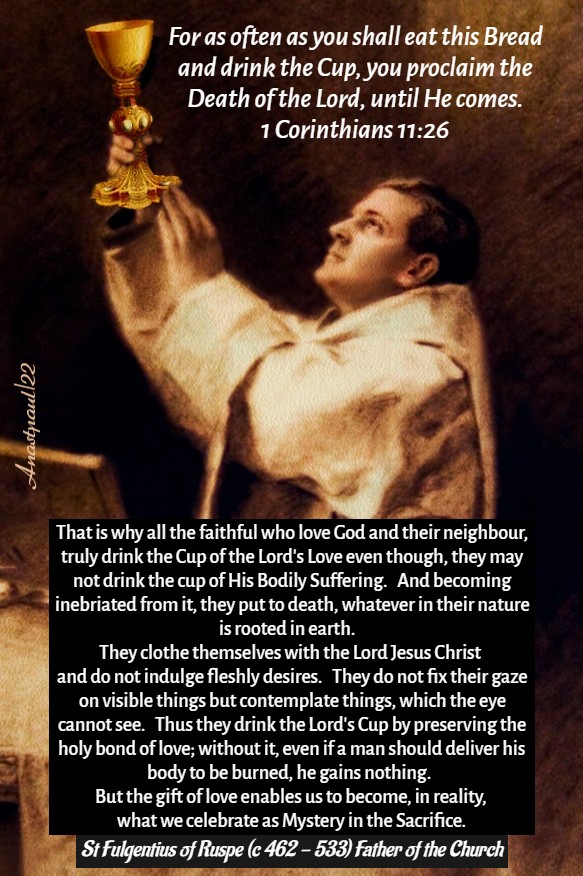
“For as often as you shall eat this Bread and drink the Cup, you proclaim the Death of the Lord, until He comes.” – 1 Corinthians 11:26
REFLECTION – “In our offering of the Holy Sacrifice we fulfil the Command of our Saviour, as recorded by the Apostle Paul: The Lord Jesus, on the night in which He was betrayed, took bread and after He had given thanks, broke it and said: This is My Body, which is given for you. Do this in remembrance of Me. The same way, after the supper, He took the Cup saying: This Cup is the New Covenant in My Blood. Do this, whenever you drink it, in remembrance of Me. For as often as you eat this Bread and drink this Cup, you shall proclaim the Death of the Lord until He comes.
This Sacrifice is offered, then, to proclaim the Lord’s Death; it is offered in remembrance of Him, Who laid down His Life for our sake. As He says: Greater love than this no man has, that he lay down his life for his friends. Because Christ died for us out of love, we ask, when we make remembrance of His Death, at the time of Sacrifice that we too may be granted love through the coming of the Holy Ghost. We pray, that by the Love which Christ had for us, when He braved the Cross, we may receive the grace of the Spirit and be crucified to the world and the world to us. The Death Christ died, He died to sin, once for all but the Life He lives, He lives to God. Let us imitate our Lord’s Death and also live a new life. Strengthened with the gift of His Love, let us die to sin and live for God.
For God’s Love has been poured out in our hearts, through the Holy Spirit, Who has been given to us. Indeed our sharing in the Lord’s Body and Blood, when we eat His Bread and drink His Cup, teaches us, that we should die to the world and that we should keep our life hidden with Christ in God, crucifying our flesh with its vices and evil desires.
That is why all the faithful who love God and their neighbour, truly drink the Cup of the Lord’s Love even though, they may not drink the cup of His Bodily Suffering. And becoming inebriated from it, they put to death, whatever in their nature is rooted in earth. They clothe themselves with the Lord Jesus Christ and do not indulge fleshly desires. They do not fix their gaze on visible things but contemplate things, which the eye cannot see. Thus they drink the Lord’s Cup by preserving the holy bond of love – without it, even if a man should deliver his body to be burned, he gains nothing. But the gift of love enables us to become, in reality, what we celebrate as Mystery in the Sacrifice.” – St Fulgentius of Ruspe (c462 – 533) Bishop, Father (An excerpt from Against Fabianus).
PRAYER – Almighty, eternal God, Thou Who have given Thy servants, in the confession of the true faith, to acknowledge the glory of the eternal Trinity and in the power of that Majesty, to adore its unity, grant, we beseech Thee, that in the firmness of this faith, we may ever be protected from all harm. And may the example and intercession of Thy Confessor, St Francis Caracciolo ever assist us on our journey to our eternal home. Through Jesus Christ, Thy Son our Lord, Who lives and reigns with Thee, in the unity of the Holy Ghost, God, world without end. Amen (Collect).
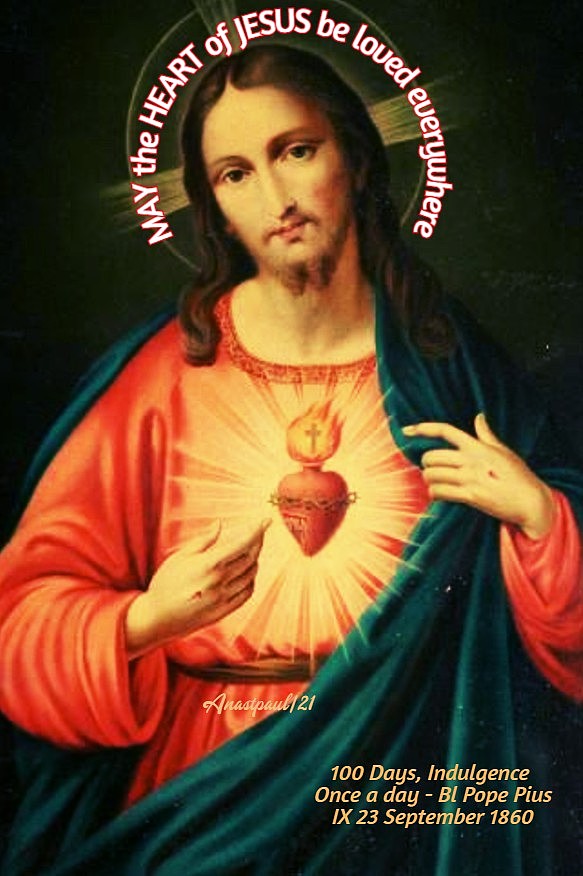
MAY the HEART of JESUS be loved everywhere.100 Days, Indulgence Once a day – Bl Pope Pius IX 23 September 1860
Our Morning Offering – 4 June – “The Month of the Sacred Heart of Jesus” – Within the Corpus Christi Octave
Daily Consecration to the Sacred Heart of Jesus Prayers to the Sacred Heart 1936 – 15th Edition, Dublin
O Sacred Heart of Jesus, filled with infinite love, broken by our ingratitude and pierced by our sins, yet loving us still, accept the Consecration we make to Thee, of all that we are and all that we have. Take every faculty of our souls and bodies, only day by day draw us, nearer and nearer to Thy Sacred Heart, and there, as we shall hear the lesson, teach us Thy Holy Way. Amen
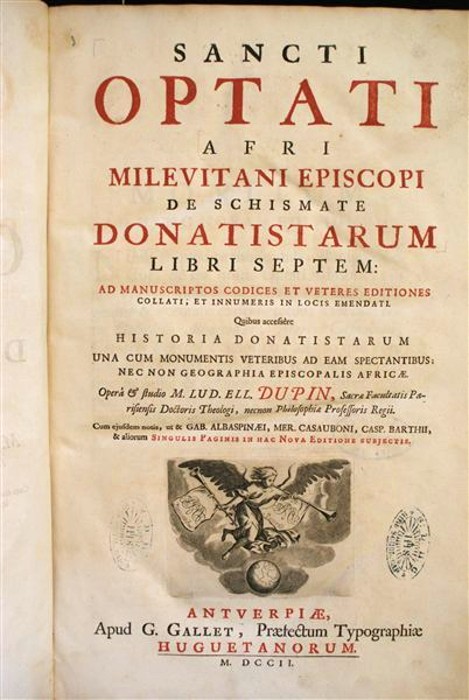
Saint of the Day – 4 June – Saint Optatus of Milevis (4th Century) Bishop of Milevis, Numidia, in Africa, Father of the Church, the first fierce opponent of Donatism, Writer against heresy, Scholar. Also known as – Optate, Ottato.
The Roman Martyrology reads today: “At Milevis, in Numidia, in Africa, Saint Optatus, Bishop of that place, celebrated for learning and holiness.”
Optatus was a convert, as we learn from St Augustine. He is perhaps the least known of all the Fathers of the Church. He was learned with a solid cultural preparation which ranged from Scriptural exegesis to Theology, without disdaining the profane disciplines, such as rhetoric and jurisprudence. All this must have supported Optatus as he ventured into his literary and pastoral activity.
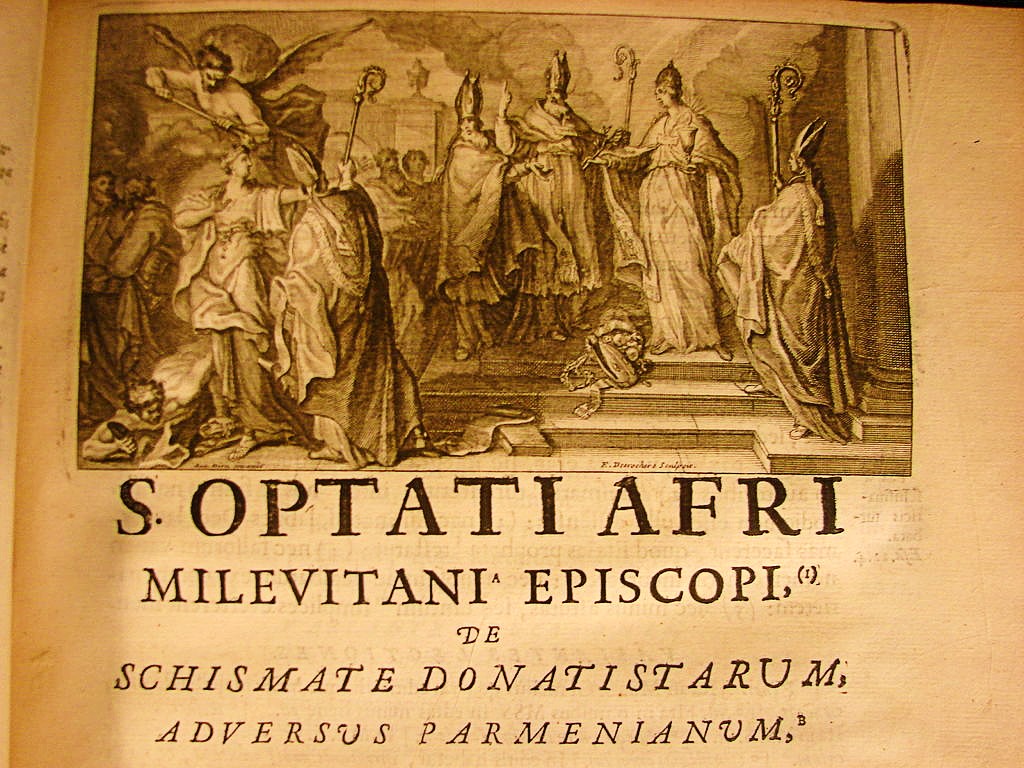
He is best known for his opposition to the heresy of Donatism and his six treatises composed against them. One of these, “Against Parmenian”, is still extant and was mentioned by St Jerome in his “De Viris Illustrius” as having been composed in six books.
The treatise stresses the need for unity and is conciliatory in tone but it criticises Donatist teachings on Baptism and stresses that the Church cannot be limited to Africa but is ‘Catholic.’
Optatus was much praised by such contemporaries as St Augustine and St Fulgentius of Ruspe.
“His treatise against the Donatists was translated into French in 1564. It is extremely improbable that, but for this exception, it has, until now, ever appeared in any language save Latin. It is quite certain that it has never yet been clothed in an English dress.
Indeed it is not too much to say that the very name of Optatus is barely known, even to many students of Theology and Ecclesiastical history. Yet his is no mean name and he cannot be ignored with safety, for he has bequeathed to the Church, material of no small value.”
The above excerpt was written by Fr O R Vassali-Phililips CSSR in his Introduction to his translation of our Saints works. His translation was published in 1917. Here is a link to the Treatise: https://www.tertullian.org/fathers/optatus_00_intro.htm
St Francis Caracciolo CRM (1563-1608) Confessor, Priest, Co-Founder of the Congregation of the Clerics Regular Minor with Venerable John Augustine (1551-1587) the “Adorno Fathers,” Apostle of the Eucharistic Adoration. His body was given enough preparation for a long journey to Naples. Truly, God has left His own sign on him. When the body was lanced, the blood spouted a red and scented fluid and his vital organs were incorrupt. Around his heart were printed the words of the Psalm: “The zeal of Thy House consumes me” (Ps 69:10). Wow!: https://anastpaul.com/2020/06/04/saint-of-the-day-4-june-saint-francis-caracciolo-crm-1563-1608/
St Aldegrin of Baume St Alexander of Verona Bishop St Alonio St Aretius of Rome Bl Boniface of Villers St Breaca of Cornwall St Buriana of Cornwall
St Christa of Sicily Martyr. No further information has survived.
St Clateus of Brescia St Cornelius McConchailleach OSA (Died 1176) Archbishop of Armagh St Croidan St Cyrinus of Aquileia St Dacian of Rome St Degan St Edfrith of Lindisfarne Bishop St Elsiar of Lavedan St Ernin of Cluain Blessed Francis Ronci (1223-1294) Bl Margaret of Vau-le-Duc St Medan Bl Menda Isategui St Metrophanes of Constantinople Bishop and Confessot St Nennoc St Nicolo of Sardinia St Optatus of Milevis (4th Century) Bishop
St Quirinus of Croatia St Quirinus of Tivoli St Rutilus of Sabaria St Saturnina of Arras St Trano of Sardinia St Walter of Fontenelle St Walter of Serviliano
Martyrs of Cilicia – 13 Saints: A group of 13 Christians who were Martyred together. The only details about them that have survived are their names – Cama• Christa• Crescentia• Eiagonus• Expergentus• Fortunus• Italius • Jucundian• Julia• Momna• Philip• Rustulus• Saturnin They were Martyred in Cilicia, Asia Minor (in modern Turkey), date unknown
Martyrs of Nyon – 41 Saints: A group of 41 Christians Martyred together for refusing to sacrifice to imperial Roman idols. We know the names of some but no other details. Amatus• Attalus• Camasus• Cirinus• Dinocus• Ebustus• Euticus• Eutychius • Fortunius• Galdunus• Julia• Quirinus• Rusticus• Saturnina• Saturninus • Silvius• Uinnita• Zoticus Martyred by being beheaded in Noviodunum (modern Nyon, Switzerland).
Thought for the Day – 3 June – Meditations with Fr Richard Frederick Clarke SJ (1839-1900)
PATIENCE Meditations for a Month
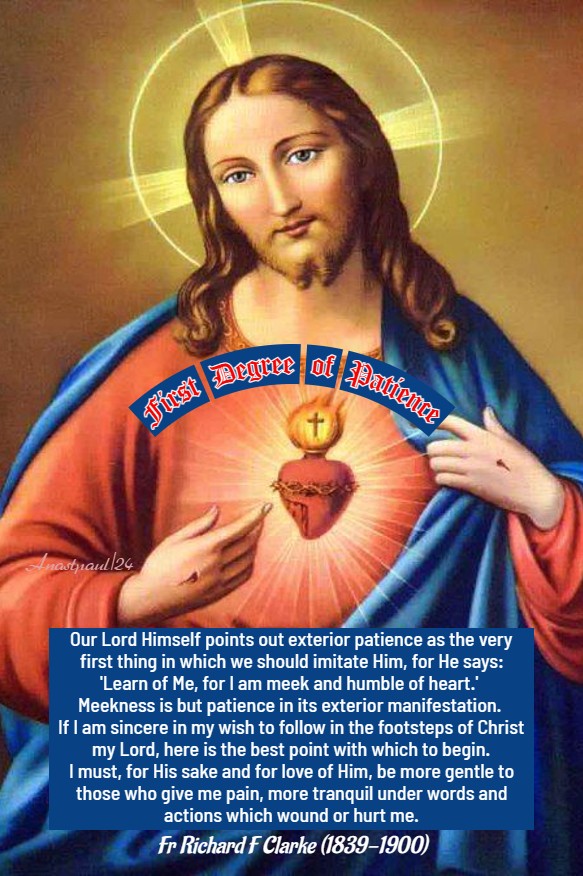
First Degree of Patience
When we are studying to acquire a virtue, it is generally the better plan to begin with external actions and thence, to proceed to the interior dispositions whence those actions proceed. In accordance with this rule, we must begin by repressing all signs of resentment and anger, when we are offended, or when someone crosses our path, or hinders some work in which we are engaged. If under all this, we can keep an unmoved and tranquil countenance and avoid all expression of personal feeling and annoyance, this is a great point gained. Am I able to do this?
Why is it important to begin with exterior patience? Firstly because, this helps enormously to calm the feelings within us, just as we can work ourselves up into a fury by raging externally. Peace will soon return if we keep a serene face and quiet demeanour. Secondly because, exterior calmness, under ill-usage, edifies others and honours Christ our Lord, just as impatience and irritability disedify and dishonour the Name of Christian. I must remember this when I am tempted to yield to my injured pride and to retaliate on those who have offended me.
Our Lord Himself points out exterior patience as the very first thing in which we should imitate Him, for He says: ‘Learn of Me, for I am meek and humble of heart.’ Meekness is but patience in its exterior manifestation. If I am sincere in my wish to follow in the footsteps of Christ my Lord, here is the best point with which to begin. I must, for His sake and for love of Him, be more gentle to those who give me pain, more tranquil under words and actions which wound or hurt me.
Quote/s of the Day – 3 June – “The Month of the Sacred Heart of Jesus” –
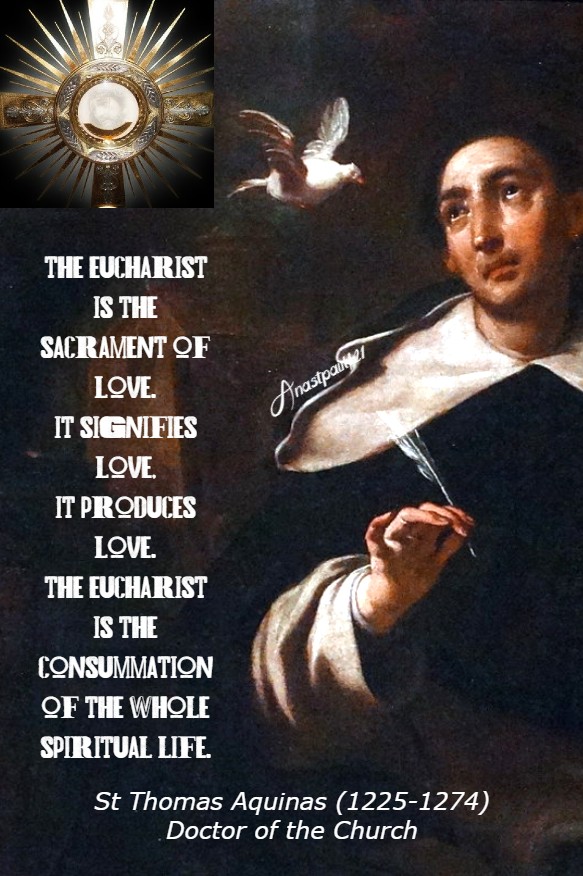
“The Eucharist is the Sacrament of Love. It signifies Love, It produces love. The Eucharist is the consummation of the whole spiritual life.”
St Thomas Aquinas (1225-1274) Doctor angelicus/Doctor communis
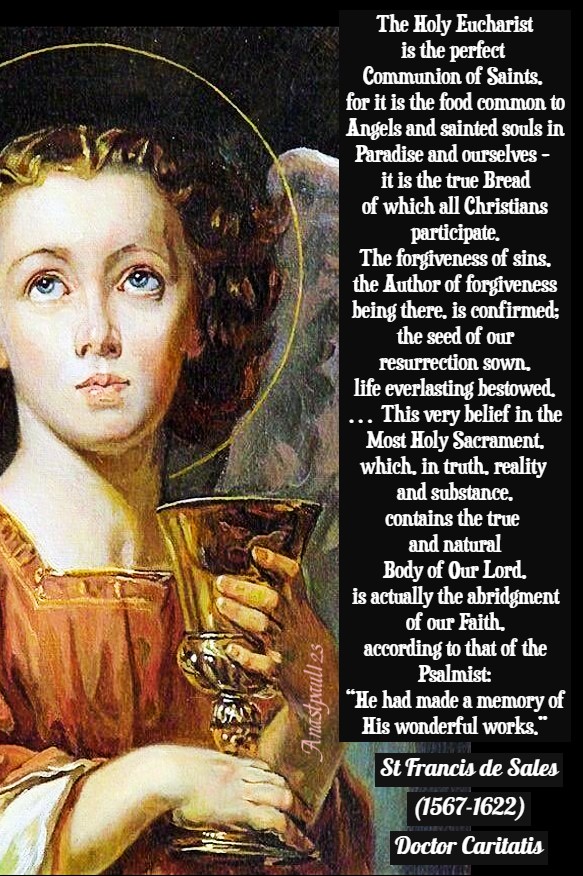
“The Holy Eucharist is the perfect Communion of Saints, for it is the food common to Angels and sainted souls in Paradise and ourselves – it is the true Bread of which all Christians participate. The forgiveness of sins, the Author of forgiveness being there, is confirmed; the seed of our resurrection sown, life everlasting bestowed. … This very belief in the Most Holy Sacrament, which, in truth, reality and substance, contains the true and natural Body of Our Lord, is actually the abridgment of our Faith, according to that of the Psalmist: “He had made a memory of His wonderful works.”
One Minute Reflection – 3 June – “The Month of the Sacred Heart of Jesus” – Within the Octave of Corpus Christi – 1 Corinthians 23-29; John 6:56-59– Scripture search here: https://www.drbo.org/
“This is the Bread that has come down from Heaven; not as your fathers ate the manna and died. He who eats this Bread shall live forever.” – John 6:59
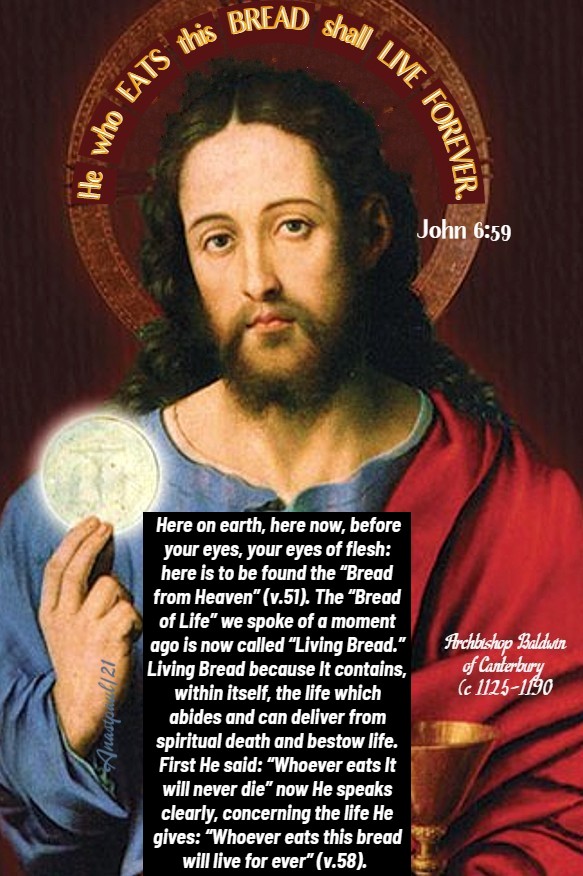
REFLECTION – Christ is “the bread of life” for those who believe in Him: to believe in Christ is to eat the Bread of Life, to possess Christ within one, is to possess eternal life… “I am the Bread of Life,” He says; “your fathers ate manna in the wilderness and they are dead” (Jn 6:48f). By this is to be understood ,spiritual death. Why are they dead? Because they believed in what they saw and did not understand what they could not see… Moses ate manna, Aaron ate it and many others, too, who pleased God and are not dead. Why are they not dead? Because they understood, in a spiritual fashion, they were spiritually hungry, they tasted the manna spiritually, so that they might be spiritually satisfied. “This is the Bread that came down from Heaven: whoever eats It will never die” (v.50). This manna – that is to say, Christ, who Himself spoke like this … was prefigured by the manna but was able to do more than manna could. For manna could not, of itself, prevent dying spiritually… But the righteous saw Christ in the manna, they believed in His coming and Christ, of Whom manna was the symbol, grants to all who believe in Him that they should not spiritually die. Hence He says: “This is the Bread come down from Heaven; whoever eats it will never see death.” Here on earth, here now, before your eyes, your eyes of flesh: here is to be found the “Bread from Heaven” (v.51). The “Bread of Life” we spoke of a moment ago is now called “Living Bread.” Living Bread because it contains, within Itself, the life which abides and can deliver from spiritual death and bestow life. First He said: “Whoever eats It will never die” now He speaks clearly, concerning the life He gives: “Whoever eats this bread will live for ever” (v.58). Archbishop Baldwin of Canterbury (c 1125-1190) Cistercian – The Sacrament of the Altar II
PRAYER – Grant, O Lord, that we may always fear and love Thy holy Name, for Thou never fail to guide those whom Thou firmly establishes in Thine Love. Through the same Jesus Christ, Thy Son our Lord, Who lives and reigns with Thee, in the unity of the Holy Ghost, God, world without end. Amen (Collect).
SACRED Heart of JESUS, Thy Kingdom come! Indulgence 300 Days. Everytime Raccolta 178 St Pius X, 4 May 1906.
Our Morning Offering – 3 June – “The Month of the Sacred Heart of Jesus”
O DIVINE Heart of JESUS Pope Leo XIII Indulgence 100 Days, Once a day Raccolta 167 13 March 1901.
O DIVINE Heart of JESUS, grant, we beseech Thee, eternal rest to the souls in purgatory, the final grace to those who shall die today, true repentance to sinners, the light of the faith to pagans and Thy Blessing to me and mine. To Thee, O most compassionate Heart of JESUS! I commend all these souls and I offer to Thee, on their behalf, all Thy merits, together with the merits of Thy most Holy Mother and of all the Saints, Angels and all the Sacrifices of the Holy Mass, Communions, prayers and good works, which shall be accomplished today, throughout the Christian world. Amen
Saint of the Day – 3 June – Saint Albert of Como (Died c1092) Bishop, the 15th Bishop of Como. Also known as – Aribert, Ariberto, Adalbert, Adelbert.
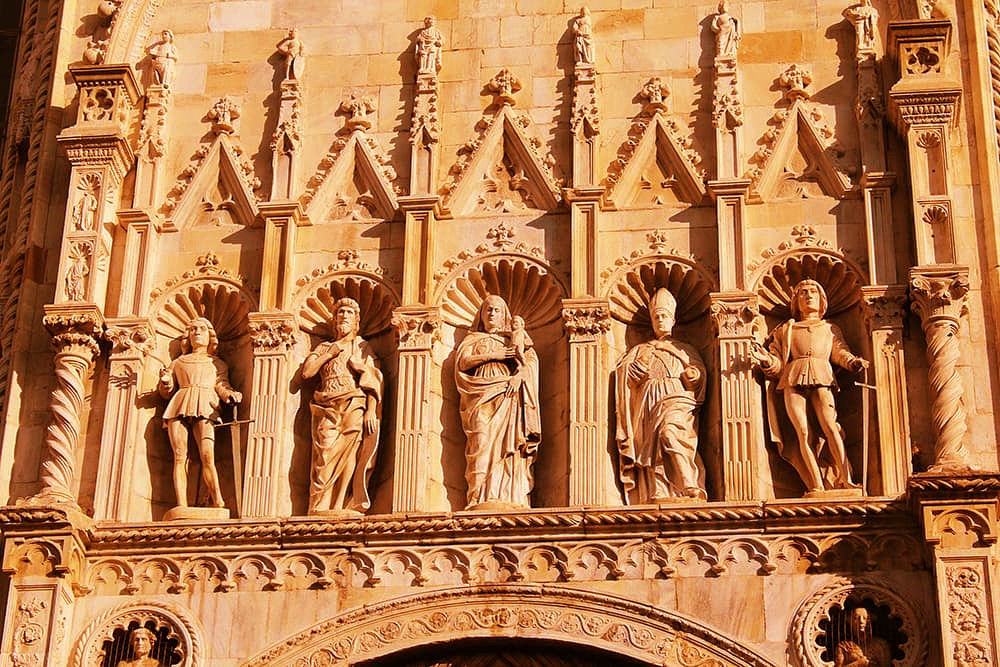
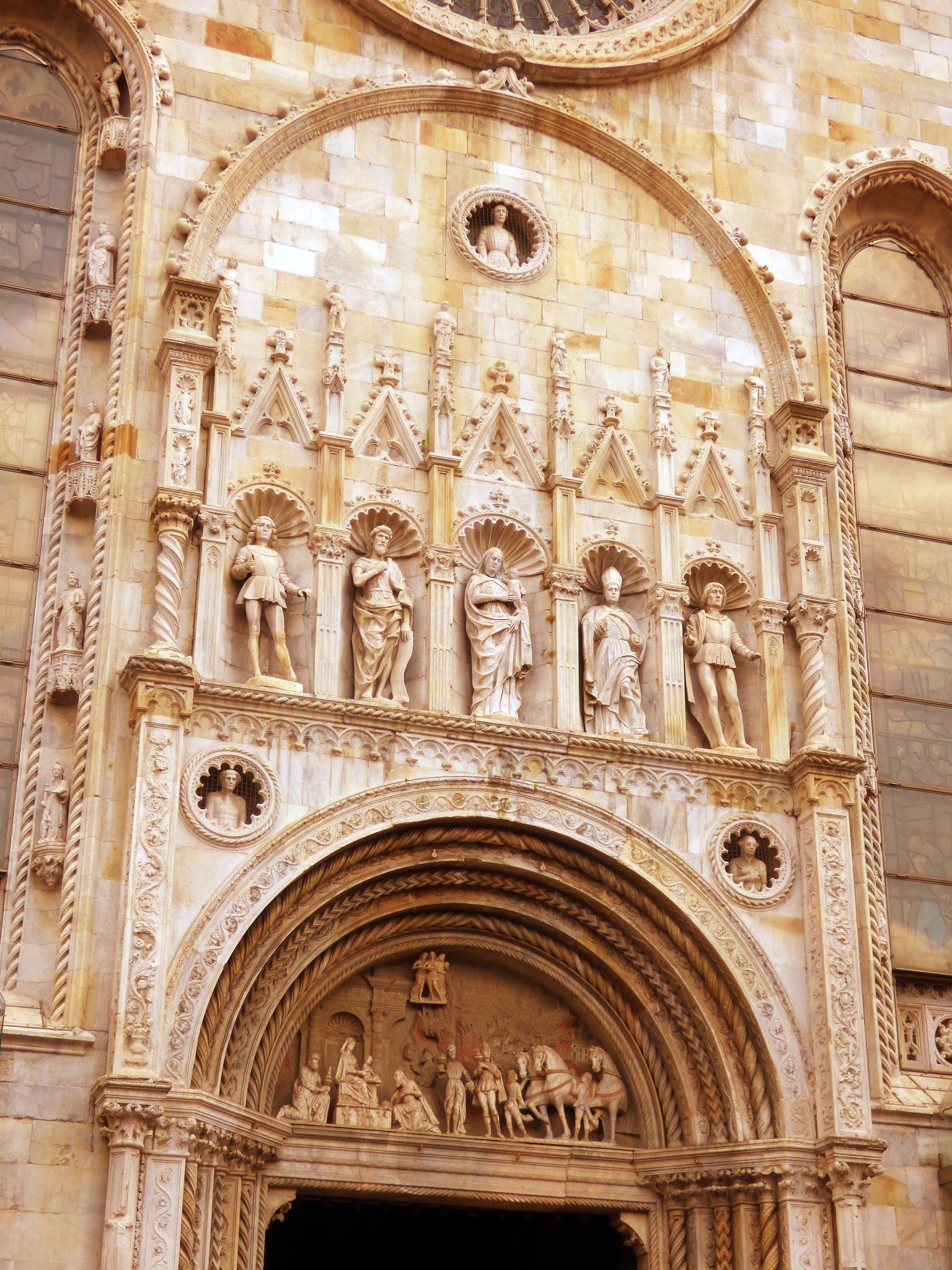
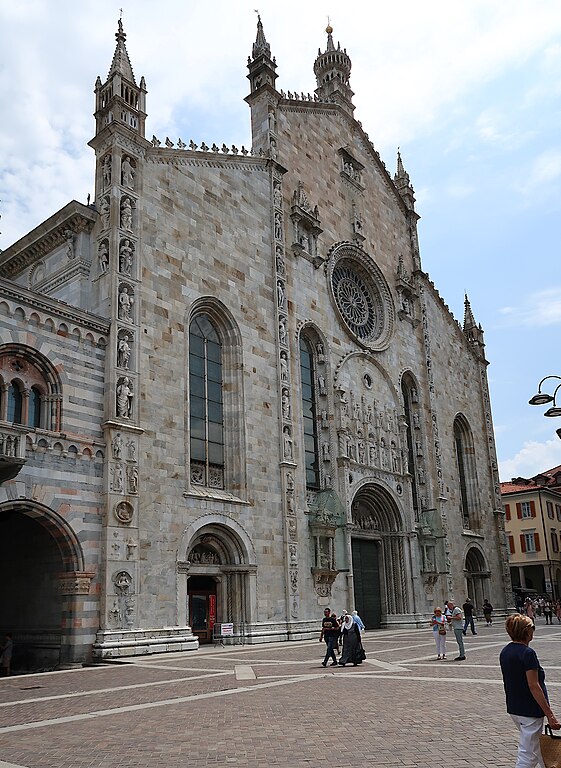
Various Saints on the facade of Como Cathedral
The scant historical information describes Albert as a zealous Bishop, dedicated to the care of his people, while legend exalts his heroic virtues and miraculous powers.
Legend has it that, accused by the Pope of incontinence, Albert managed to triumph over such slander with the evidence of his holy life, his apostolic zeal and his thaumaturgical powers. On this occasion, he actually went personally to Rome, where he performed various miracles in the presence of the Pope, announcing among other things, that his death would follow the recovery of full visual faculties of the same Pontiff, who had a monocle. The Pontiff, then, when he recovered, went to Como, where he assisted the holy Bishop on his deathbed and participated in his funeral.
The actual date of Albert’s death cannot be determined. He was buried in the Church of the Apostles which, from 818 was called St Abbondius. His Relics were later placed together with those of St Rubiano,his predeccessor, under an Altar dedicated to them. In 1580 there was a further transfer of the Relics of the two holy Bishops, placed partly in the Cathedral under the Altar of the Crucifix, partly in the Dominican Church of St John. St Albert’s Feast was celebrated on 7 July and on that date he was also remembered in the Breviary of 1519-1523. His Feast was later moved to 3 June.
St Albert of Como (Died c 1092) Bishop St Athanasius of Traiannos St Auditus of Braga Bl Beatrice Bicchieri St Caecilius of Carthage
St Clotilde of France (c475-545) Widow, Mother, Queen, Apostle of the poor and the sick. Patronages – against death of children, adopted children, brides, exiles, parenthood, parents of large families, people in exile, queens, widows. The Roman Martyrology reads today: “At Paris, St Clotilde, Queen, by whose prayers her husband, King Clovis, was converted to the Faith of Christ.” Her Holy Life: https://anastpaul.com/2023/06/03/saint-of-the-day-3-june-st-clotilde-of-france-c475-545-widow/
St Conus of Lucania St Cronan the Tanner St Davinus of Lucca Bl Diego Oddi St Gausmarus of Savigny St Genesius of Clermont St Glunshallaich St Hilary of Carcassone St Isaac of Córdoba
St Laurentinus of Arezzo St Liphardus of Orléans St Morand of Cluny St Moses of Arabia St Oliva of Anagni St Paula of Nicomedia St Pergentinus of Arezzo Bl Phaolô Vu Van Duong St Urbicius
Martyrs of Africa – 156 Saints: 156 Christians Martyred together in Africa, date unknown; the only other information to survive are some of their names – Abidianus• Demetria• Donatus• Gagus• Januaria• Juliana• Nepor• Papocinicus• Quirinus• Quirus.
Martyrs of Byzantium – 5 Saints: A group of Christians, possibly related by marriage, who were Martyred together. They were – Claudius, Dionysiu, Hypatius, Lucillian, Paul. They were Martyred in 273 in Byzantium.
Martyrs of Rome – 8 Saints: A group of Christians Martyred together. We know nothing else about them but the names – Amasius, Emerita, Erasmus, Lucianus, Orasus, Satuaucnus, Septiminus• Servulus. They were Martyred in Rome, Italy, date unknown.
Martyrs of Rome – 85+ Christians Martyred together in Rome, Italy, date unknown. The only details that have survived are some of their names – Apinus • Apronus • Aurelius • Avidus • Cassianus • Criscens • Cyprus • Domitius • Donata • Donatus • Emeritus • Extricatus • Exuperia • Faustina • Felicitas • Felix • Flavia • Florus • Fortunata • Fortunatus • Fructus • Gagia • Gagus • Gallicia • Gorgonia • Honorata • Januaria • Januarius • Justa • Justus • Libosus • Luca • Lucia • Matrona • Matura • Mesomus • Metuana • Nabor • Neptunalis • Obercus • Paula • Peter • Pompanus • Possemus • Prisca • Procula • Publius • Quintus • Rogatian • Romanus • Rufina • Saturnin • Saturnus • Secundus • Severa • Severus • Sextus • Silvana • Silvanus • Sinereus • Tertula • Titonia • Toga • Urban • Valeria • Veneria • Veranus • Victor • Victoria • Victorinus • Victuria • Victurina • Virianus • Weneria • Zetula. They were Martyred in Rome date unknown.
Thought for the Day – 2 June – Meditations with Fr Richard Frederick Clarke SJ (1839-1900)
Little Extracts from The Adorable Heart of Jesus
On the Nature of the Devotion
If we desire to enter into the designs of Jesus Christ, we must not seek this idea of the Devotion to the Sacred Heart, outside the revelation itself, from which it derived its origin and, since it has pleased this amiable Saviour to give an explanation Himself on this subject, it is from His own words that we must gather the real idea which we seek. It will not be difficult, since Jesus Christ has spoken very clearly. … But , we must here also allude to a circumstance which is essential to the nature of our Devotion and, that is, that the Love with which the Divine Heart of Jesus is inflamed, must be considered as a Love despised and wounded by the ingratitude of men. This circumstance is expressed in these words which our Lord adds : “ And in return, I receive, for the most part, only ingratitude, contempt, irreverence, sacrileges, in the indifference which they manifest towards Me in the Sacrament of Love.”
The Heart of Jesus must, therefore, here be considered under two aspects – on the one hand, as burning with Love for men and, on the other, as cruelly wounded by the ingratitude of these same men. These two motives united, must excite in us two feelings, both of which are equally essential to Devotion to the Sacred Heart, that is love which corresponds to Its Love and grief , which would leads us to make reparation for the insults it endures through the hard-heartedness of men!
Finally, the practices prescribed by Jesus Christ in fulfilment of this double duty, are laid down in these last words : “I ask of thee that the first Friday after the Octave of the Blessed Sacrament, should be dedicated as a special festival to do honour to My Heart, by devout acts of reparation and satisfaction, by communicating, on that day, to expiate the indignities it received whilst exposed on the Altar.” Jesus Christ contents Himself with explaining here the principal exercise of the devotion which He desires to establish but, it is not the only practice which must be employed, to do honour to the Divine Heart. There are many others which will be mentioned further on.
Quote/s of the Day – 2 June – “The Month of the Sacred Heart of Jesus” – The Solemnity of Corpus Christi
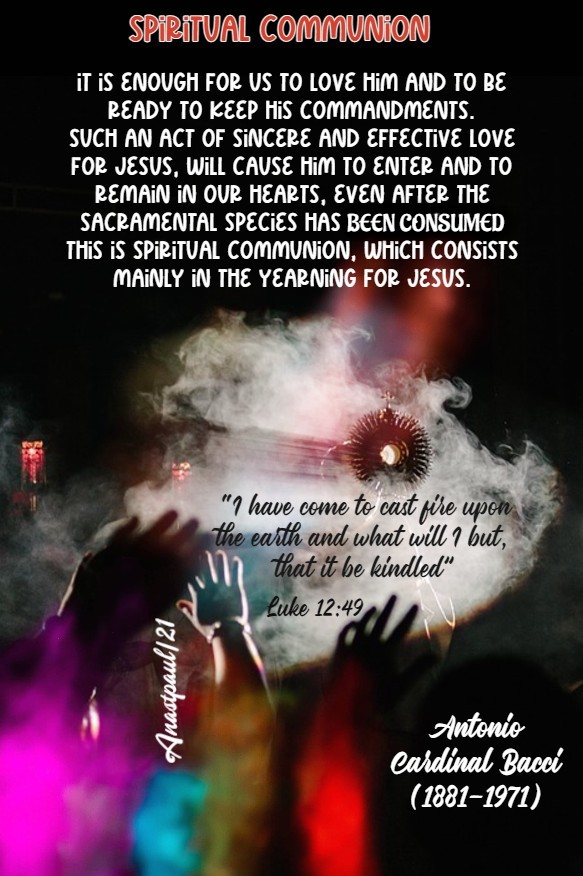
“It is enough for us to love Him and to be ready to keep His commandments. Such an act of sincere and effective love for Jesus, will cause Him to enter and to remain in our hearts, even after the Sacramental Species has been consumed. This is Spiritual Communion, which consists mainly in the yearning for Jesus. “I have come to cast fire upon the earth and what will I but, that it be kindled” (Lk 12:49).”
Antonio Cardinal Bacci (1881-1971)
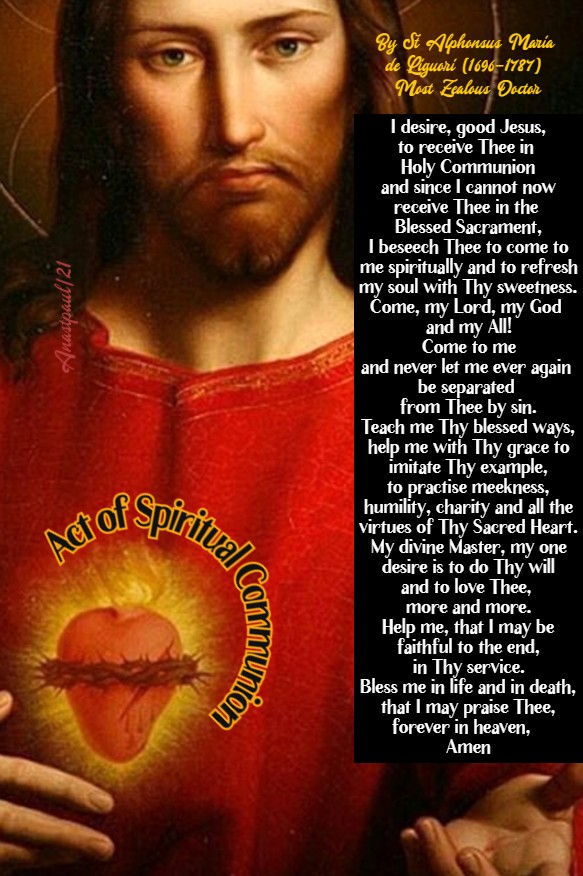
Act of Spiritual Communion By St Alphonsus Maria de Liguori (1696-1787) Most Zealous Doctor
I desire, good Jesus, to receive Thee in Holy Communion and since I cannot now receive Thee in the Blessed Sacrament, I beseech Thee to come to me spiritually and to refresh my soul with Thy sweetness. Come, my Lord, my God and my All! Come to me and never let me ever again be separated from Thee by sin. Teach me Thy blessed ways, help me with Thy grace to imitate Thy example, to practise meekness, humility, charity and all the virtues of Thy Sacred Heart. My divine Master, my one desire is to do Thy will and to love Thee, more and more. Help me, that I may be faithful to the end, in Thy service. Bless me in life and in death, that I may praise Thee, forever in heaven, Amen
One Minute Reflection – 2 June – “The Month of the Sacred Heart of Jesus” – The Solemnity of Corpus Christi The Second Sunday after Pentecost – 1 John 3:13-18; Luke 14:16-24.– Scripture search here: https://www.drbo.org/
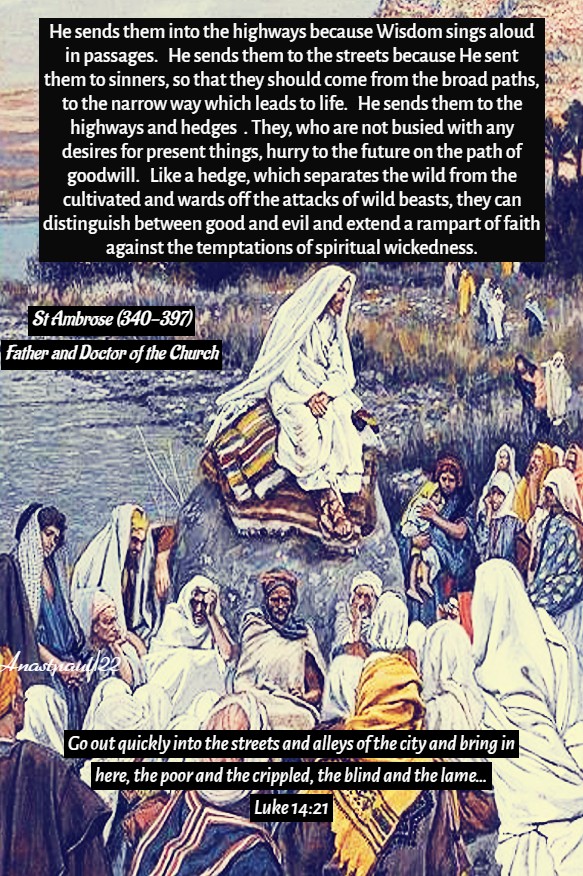
“The servant went and reported this to his Master. Then the Master of the house was angry and commanded His servant, ‘Go out quickly into the streets and alleys of the city and bring in here, the poor and the crippled, the blind and the lame…” – Luke 14:21
REFLECTION – “He turned to the Gentiles from the careless scorn of the rich. He invites both good and evil to enter, in order to strengthen the good and change the disposition of the wicked for the better. The saying that was read today is fulfilled, “Then wolves and lambs will feed together.” He summons the poor, the maimed and the blind. By this, He shows us, either that handicaps do not exclude us from the Kingdom of Heaven that the Lord’s mercy forgives the weakness of sinners. Whoever glories in the Lord, glories as one redeemed from reproach, not by works but by faith.
He sends them into the highways because Wisdom sings aloud in passages. He sends them to the streets because He sent them to sinners, so that they should come from the broad paths, to the narrow way which leads to life. He sends them to the highways and hedges . They, who are not busied with any desires for present things, hurry to the future on the path of goodwill. Like a hedge, which separates the wild from the cultivated and wards off the attacks of wild beasts, they can distinguish between good and evil and extend a rampart of faith against the temptations of spiritual wickedness.” – St Ambrose (340-397) Bishop of Milan, Father and Doctor of the Church (Exposition on the Gospel of Luke, 7).
PRAYER – O God, Thou Who in this wondrous sacrament have left us a memorial of Thy Passion, grant us, we beseech Thee, so to venerate the Sacred Mysteries of Thy Body and Blood, that we may ever experience, within us, the effect of Thy Redemption. Through Jesus Christ, Thy Son our Lord, Who lives and reigns with Thee, in the unity of the Holy Ghost, God, world without end. Amen (Collect). EUCHARISTIC Heart of JESUS, model of the priestly heart, have mercy on us. COR JESU Eucharisticum, cordis sacerdotalis exemplar, miserere nobis. – Indulgence 300 Days, Everytime – Raccolta 177 St Pius X, 11 September 1907.
Our Morning Offering – 2 June – The Solemnity of Corpus Christ, The Most Holy Body and Blood of our Lord Jesus Christ
Lauda Sion Salvatorem Sion, Lift Up thy Voice and Sing (Excerpt) By St Thomas Aquinas (1225-1274) Doctor Angelicus / Doctor Communis
Sion, lift thy voice and sing, Praise thy Saviour and thy King, Praise with hymns thy Shepherd true, Dare thy most to praise Him well, For He doth all praise excel, None can ever reach His due.
Special theme of praise is Thine, That true living Bread divine, That life-giving flesh adored, Which the brethren twelve received, As most faithfully believed, At the Supper of the Lord.
Let the chant be loud and high, Sweet and tranquil be the joy Felt to-day in every breast; On this festival divine Which recounts the origin Of the glorious Eucharist.
St Thomas Aquinas wrote the Liturgy for Corpus Christi when Pope Urban IV added the Solemnity to the universal Church’s Liturgical calendar in 1264. He provided a great sequence, one of the great poems chanted or recited before the proclamation of the Gospel. Lauda Sion is one of only four medieval sequences which were preserved in the Roman Missal published in 1570 following the Council of Trent (1545–1563)—the others being Victimae Paschali Laudes (Easter), Veni Sancte Spiritus (Pentecost) and Dies irae (requiem masses). (A fifth, Stabat Mater, would later be added in 1727.) Before Trent, many feasts had their own sequences. The existing versions were unified in the Roman Missal promulgated in 1570. The Lauda Sion is still sung today as solemn Eucharistic hymn, though its use is optional in the post-Vatican II Ordinary form. As with St Thomas’s other three Eucharistic Hymns, the last few stanzas of the Lauda Sion are often used alone, in this case, to form the “Ecce Panis Angelorum”.
Saint of the Day – 2 June – Saint Photinus of Lyons (c87-177) & Companions the First Bishop of Lyons, Martyr . Name means: the sweet one / the lovely one (Greek). Patronages – of the Archdiocese of Lyons and of the City of Lyons. Also known as – Pothin, Pothinus, Potino, Potinus.
The Roman Martyrology reads today: “At Lyons, many holy Martyrs (Photinus, the Bishop, Sanctus, the Deacond, Vetius, Epagathus, Maturus, Pontictus, Biblis, Attalus, Alexander and Blandina, with many others, whose many valiant combats in the time of Marcus Aurelius are recorded in a letter from the Church at Lyons to the Churches of Asia and Phrygia. …”
According to St Irenaeus, Photinus was born around the year 87, probably at Smyrna. He was a disciple of St Polycarp, the Apostolic Father and Martyr Bishop of Smyrna and accompanied him to Rome in 158.
St Pope Anicletus sent him to evangelise the Gauls. Photinus established himself at Lyons and founded there a flourishing Church, over which he presided for almost twenty years. In asserting his own authority as bishop of Lyons, St Irenaeus says that Pothinus had been his predecessor in the position and the first Bishop of that City.
By 177, a large number of the Christians in the area of Vienne and Lyons were Greeks from Asia. A violent persecution began against them while Photinus was the Bishop of Lyons and St Irenæus, who had been sent there by St Polycarp, was a Priest of that City.
Photinus died at the age of ninety, in 177, Martyred along with Alexander, Attalus, Espagathus, Maturus and Sanctius, during the tenure of Emperor Marcus Aurelius. Pothinus and several companions were seized by a mob and taken to the magistrate. Pothinus is believed to have died from the abuse he suffered in prison, while the others were killed by wild beasts in the local amphitheatre.
St Eusebius of Caesarea also reports on the number and nature of the battles for the Faith in Gaul. The Martyrology of St Jerome reports a total of 48 Martyrs.
St Ada of Ethiopia St Adalgis of Thiérarche St Armin of Egypt Venerated in Egypt but we have no information about him. St Barbarinus St Blandina the Slave St Bodfan of Wales St Daminh Ninh Bl Demetrios of Philadelphia St Dorotheus of Rome
St Evasius – Martyr. No other information has survived
Bl Giovanni de Barthulono
St Guido of Acqui (c 1004-1070) Bishop of Acqu in north-west Italy from 1034 until his death, zealous Reformer both in the lives of his clergy and his people. He built the Cathedral of Acqui amongst other religious buildings, including a Convent for Nuns. He donated his personal inheritance to the upkeep of the Diocese, the poor and for his building projects. Biography: https://anastpaul.com/2022/06/02/saint-of-the-day-2-june-saint-guido-of-acqui-c-1004-1070-patron-saint-against-famine/
St Photinus of Lyons (c87-177) 7 Companions Bishop Martyr St Rogate Bl Sadoc of Sandomierz St Stephen of Sweden
Martyrs of Lyons and Vienne: A group of 48 Christians from the areas of Vienne and Lyon, France, who were attacked by a pagan mob, arrested and tried for their faith, and murdered in the persecutions of Marcus Aurelius. A letter describing their fate, possibly written by Saint Irenaeus of Lyons, was sent to the churches in the Middle East. Only a few names and details of their lives have survived; some of them have separate entries on this date –
Alexander of Vienne Attalus of Pergamos Biblis of Lyons Blandina the Slave Cominus of Lugdunum Epagathus of Lugdunum Maturus the Novice Photinus of Lyons Ponticus of Lugdunum Sanctius of Vienne Vettius of Lugdunum They were Martyred in assorted ways at various times during the year 177.
Martyrs of Sandomierz: A group of 49 Dominicans, some of whom received the habit from Saint Dominic de Guzman himself. They worked separately and together to bring the faith and establish the Dominican Order in Poland, basing their operations in and around Sandomierz. In 1260 they were all Martyred by the Tartars as they were singing the Salve Regina at Compline; the custom of singing the Salve Regina at the deathbed of Dominicans, stems from this incident. We know a few details about a few of the martyrs, but most survive only as names – Zadok• Andrea, chaplain• James, novice master• Malachi, convent preacherPaul, vicar• Peter, guardian of the garden• Simone, penitentiaryfriarsAbel, Barnabas, Bartholomew, Clemente, Elia, John, Luke, Matthew, Philip deacons• Giuseppe, Joachim, Stefanosub-deacons• Abraham, Basil, Moses, Taddeoclerics• Aaron, Benedict, David, Dominico, Mattia, Mauro, Michele, Onofrio, Timothyprofessed students• Christopher, Donato, Feliciano, Gervasio, Gordian, John, Mark, Medardo, Valentinonovices• Daniele, Isaiah, Macario, Raffaele, Tobialay brothers• Cyril, tailor• Jeremiah, shoemaker, Thomas, organist. They were Martyred in 1260 at Sandomierz, Poland and Beatified on 18 October 1807 by Pope Pius VII (cultus confirmation).
1 June – Devotion for June – THE MONTH OF THE MOST SACRED HEART of JESUS
In 1899, Pope Leo XIII Consecrated the world to the Sacred Heart of Jesus. Since then, his successors have exhorted the faithful to turn to the Sacred Heart and make Acts of personal Consecration. They have also begged the faithful to offer prayers and penances to the Sacred Heart in reparation for the many sins of the world.
In his Encyclical on the Sacred Heart entitled Haurietis Aquas (“You Will Draw Waters”) Pope Pius XII notes that the genesis of the devotion to the Sacred Heart lies in the Covenant of Love from the Old Testament. He writes that “in the New Testament, the love which breathes from the Gospel, from the letters of the Apostles and the pages of the Apocalypse, all portray the Love of the Heart of Jesus.” He is linking this devotion to the Old Testament which was brought to life in Christ in the New Testament.
In the early 17th Century, Devotion to the Sacred Heart was given considerable attention in the preaching and writings of St John Eudes, known as “The Apostle of the Two Holy Hearts.”
St Francis (1567-1622) in his “Treatise on the Love of God,” lays out the foundation of the Devotion to the Sacred Heart. St Francis would greatly influence St Jane Frances de Chantal who was the Foundress of the Sisters of the Visitation of the Blessed Virgin Mary, the very Order which St Margaret Mary Alacoque VHM. (1647-1690), the Visionary of the Sacred Heart, would later join.
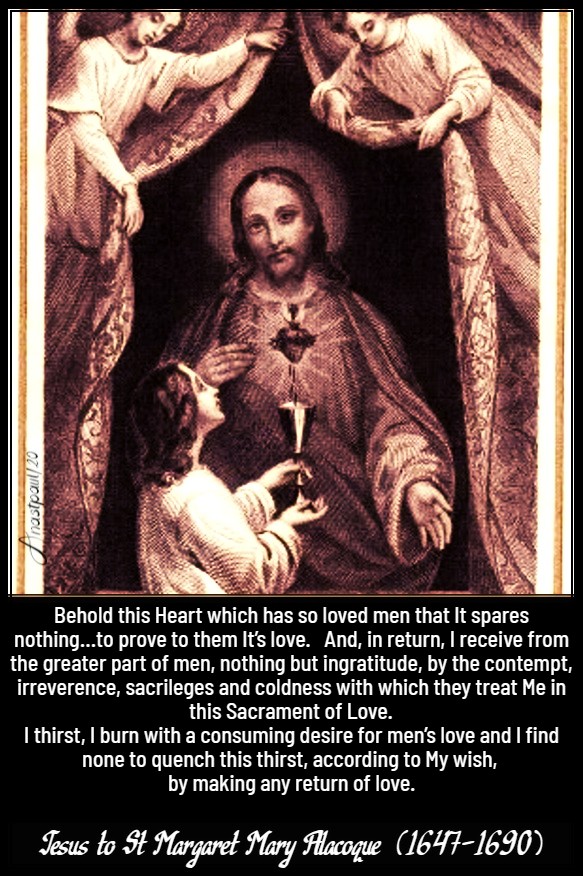
Our Lord appeared to St Margaret Mary, perhaps close to forty times. The first apparition occurred in the Visitation Chapel at Paray-le-Monial on 27 December 1673. The last apparition occurred less than two years later in June 1675. She saw His heart engulfed in flames and surrounded by thorns and heard His gentle voice:
“Behold this Heart which has so loved men that It spares nothing…to prove to them It’s love. And, in return, I receive from the greater part of men, nothing but ingratitude, by the contempt, irreverence, sacrileges and coldness with which they treat Me in this Sacrament of Love.
I thirst, I burn with a consuming desire for men’s love and I find none to quench this thirst, according to My wish, by making any return of love.”
From her cloister, St Margaret Mary promoted the Feast of the Sacred Heart of Jesus, First Friday Devotion, The Twelve Promises and the Holy Hour of Reparation.
The Sacred Heart Enthronement desires to follow in the footsteps of Saints who came before and hold true to the basic request of Jesus to St.Margaret Mary, “I will bless the home in which the Image of My Sacred Heart shall be exposed and honoured.”
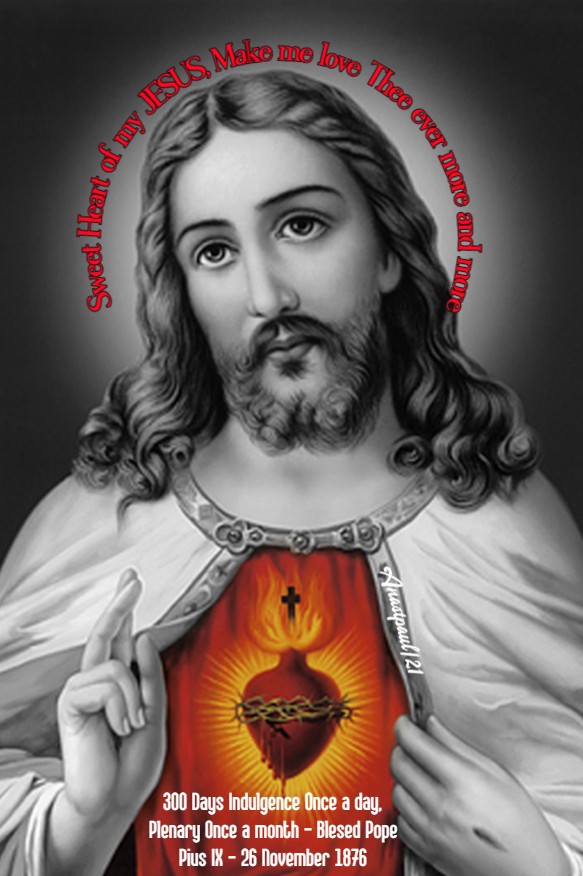
Sweet Heart of my JESUS, Make me love Thee ever more and more! –300 Days Indulgence Once a day, Plenary Once a month – Blessed Pope Pius IX – 26 November 1876
Thought for the Day – 1 June – Meditations with Fr Richard Frederick Clarke SJ (1839-1900)
PATIENCE Meditations for a Month
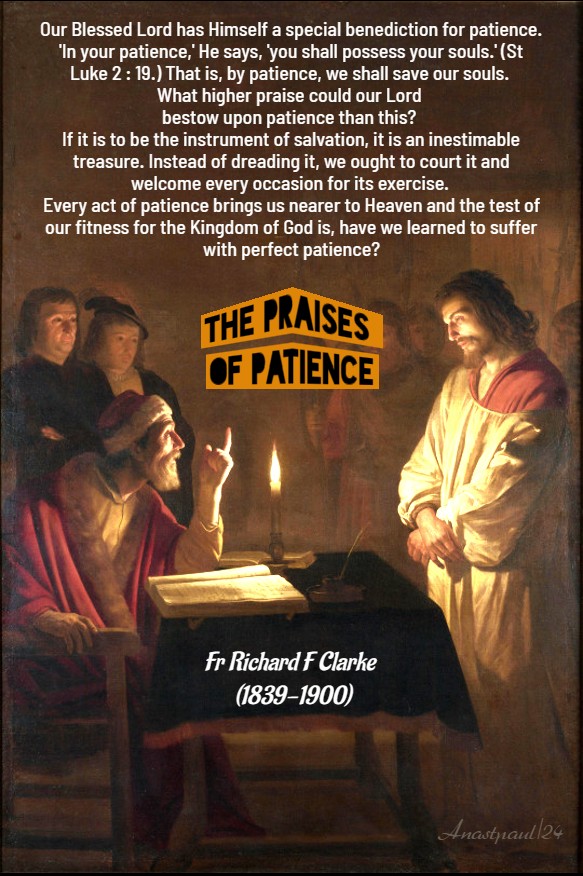
The Praises of Patience
Patience is a virtue which receives, in Holy Scripture and especially in the writings of St Paul, praise almost without end. ‘He that is patient,’ says the Wise Man, ‘is governed with much wisdom.’ (Prov 14 : 29) ‘Patience has a perfect work,‘ says St James (ch. 1 : 4). ‘Patience is necessary to you,‘ says St Paul, ‘that by doing the will of God you may receive the promise. ‘ (Hebrews 10 : 36.) Think over these passages one by one and question yourself whether you fulfil this necessary condition of eternal salvation.
Our Blessed Lord has Himself a special benediction for patience. ‘In your patience,‘ He says, ‘you shall possess your souls.‘ (St Luke 2 : 19.) That is, by patience, we shall save our souls. What higher praise could our Lord bestow upon patience than this? If it is to be the instrument of salvation, it is an inestimable treasure. Instead of dreading it, we ought to court it and welcome every occasion for its exercise. Every act of patience brings us nearer to Heaven and the test of our fitness for the Kingdom of God is, have we learned to suffer with perfect patience?
St John does but echo the words of his Divine Master when he says (Apoc 7 : 14) of the redeemed around the throne, ‘These are they who came out of great tribulation.’ Not that the mere passing through suffering is sufficient, for he adds ‘And have washed their robes and made them white in the Blood of the Lamb that is, have obtained forgiveness by uniting their sufferings with the sufferings of the Son of God.’ Do I find in myself this description realised? Have I suffered and suffered willingly for Christ’s sake? Or do I seek to avoid all suffering and fight against it,and bear it impatiently when it comes?
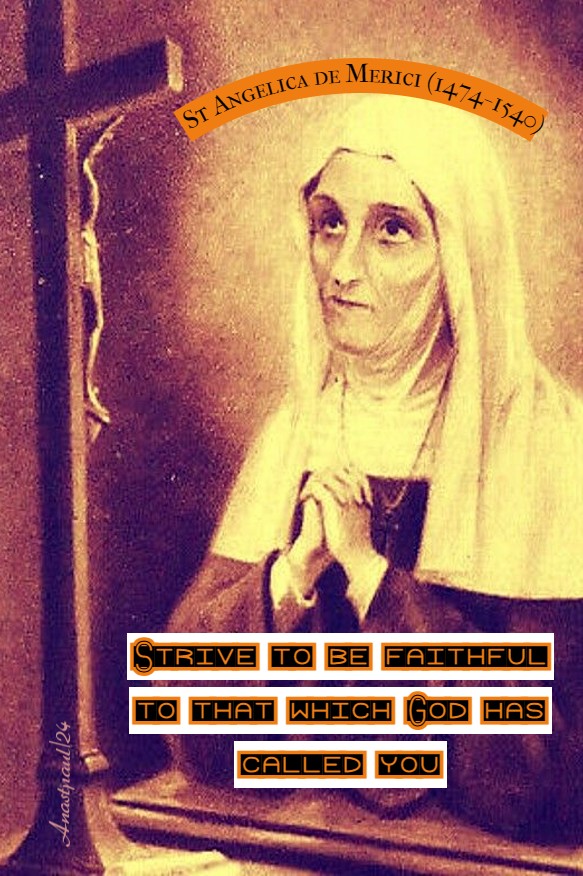
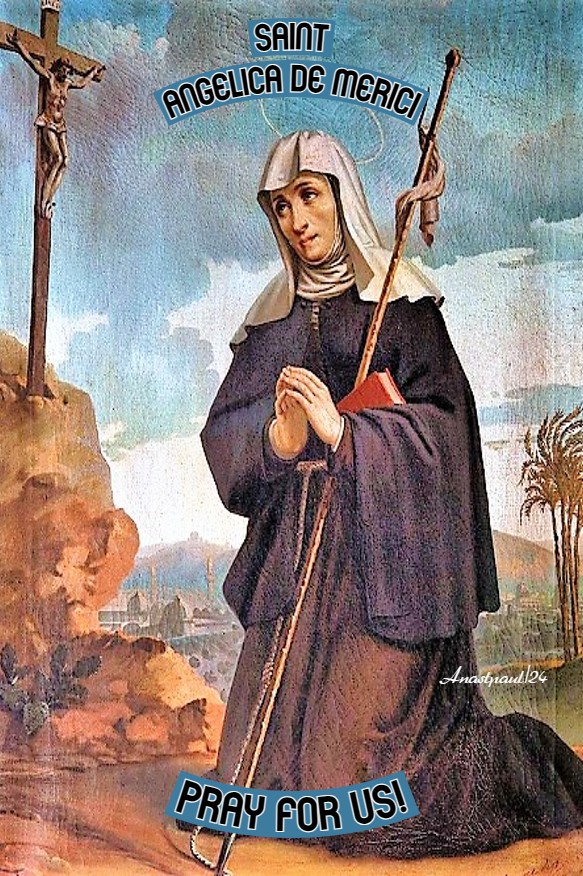
One Minute Reflection – 1 June – “The Month of the Sacred Heart of Jesus” – Within the Octave of Corpus Christi – St Angelica de Merici (1474-1540) Virgin – 1 Corinthians 23-29; John 6:56-59 – Scripture search here: https://www.drbo.org/
“For My flesh is food indeed and My Blood is drink indeed.”- John 6:56
REFLECTION – “Take and eat; this is My Body… Take and drink; this is My Blood.” (Mt 26:26.) Since then, Christ Himself clearly described the Bread to us in the words “This is My Body” who will dare henceforward, to dispute it? And since He has emphatically said, “This is My Blood” who will waver?… So let us partake with the fullest confidence that it is the Body and Blood of Christ. For His Body has been bestowed on you in the form of bread and His Blood in the form of wine, so that by partaking of Christ’s Body and Blood, you may share with Him, the same Body and Blood… This is how, in the blessed Peter’s words: “we become partakers of the divine nature” (2 Pt 1:4).
Christ once said in conversation with the Jews: “Unless you eat My Flesh and drink My Blood, you have no life in you” They were scandalised because they did not interpret His words spiritually… Even in the Old Testament, there were “Loaves of the Presence” but since they belonged to the old dispensation, they have come to fulfilment. But in the New Testament, the Bread is of Heaven and the Chalice brings salvation, (Jn 6:41; Ps 115:4) and they sanctify the soul and the body; for, as the bread relates to the body, so the word harmonises with the soul…
The Blessed David will inform you of the meaning of the Eucharist when he says: “Thou hast laid a table before me against those who oppress me” (Ps 22:5)… The only thing he can mean is that sacramental, spiritual table which God has made ready for us against the evil spirit… “And the chalice which inebriates me, how godly it is” (Ps 22), here he mentions the chalice which Jesus took in His Hand and giving thanks said: “This is the Blood which is poured out for many, for the remission of sins” (Mt 26:28)… David was speaking of this long ago when he sang: “Bread strengthens the heart of man, that he may make his face glad with oil” (Ps 103:15). So strengthen your heart by partaking of that spiritual bread and gladden the face of your soul.” – Catechesis to the Newly Baptised of the Church in Jerusalem (4th Century) No 4.
PRAYER – O God, Who willed that through blessed Angela a new family of holy Virgins should flower in Thy Church, grant us through her intercession, to lead angelic lives, so that, foregoing all worldly pleasures, we may be found worthy to enjoy eternal appiness.Through Jesus Christ, Thy Son our Lord, Who lives and reigns with Thee, in the unity of the Holy Ghost, God, world without end. Amen (Collect).
Our Morning Offering – 1 June – “The Month of the Sacred Heart of Jesus” – Within the Octave oif Corpus Christi
O Heart of Jesus in the Blessed Sacrament By The League of the Sacred Heart 1929 (Ireland)
O Heart of Jesus in the Blessed Sacrament, overflowing with gentleness, tenderness and charity, I bury in the abyss of Thy Mercy, all my iniquities and all my negligence. I offer Thee my labours and my sufferings, my sorrows and my miseries, I recommend to Thee my life and my death. Solace my doubts Sweet Jesus, calm my fears and grant, that day-by-day, I may become more united to Thy Sacred Heart, learning Thy love and Thy holiness. Amen
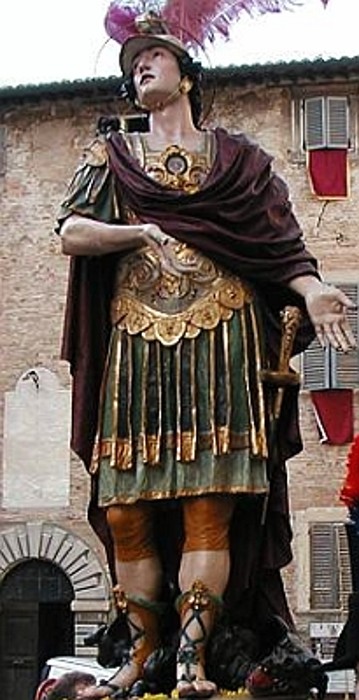
Saint of the Day – 1 June – Saint Crescentinus (Died 303) Martyr, Soldier. Died by being beheaded on 1 June 303 at Saldo, Italy. His Relics translated to Urbino, Italy in 1068 by Blessed Mainard of Urbino. Patronages – against headache (In Urbino the Saint’s Relics are used to touch the sufferer’s head, accompanied by prayers for the cure of the pain), of Città-di-Castello, Italy, Urbino, Italy. Also known as – Crescentian, Crescentino, Crescenziano, Crescentianus.
The Roman Martyrology reads today: “At Città-di-Castello, in Umbria, Italy, St Crescentian, a Roman Soldier, crowned with Martyrdom under the Emperior Diocletian.”
The annual procession on 1 June in Urbino
There are no documents, nor tombstones, nor epigraphs, prior to the 7th Century which remember our Saint. According to a ‘passio’ considered by scholars to be fictitious and fabulous, dating to the 7th Century, Crescentinus, was a Roman Soldier who fled to the countryside, killed a dragon which had been terrorising the district.
After this feat of courage, Crescentinus was captured by the his pursuers and was then killed by them on 1 June during the persecution of Diocletian and buried in the place called ‘Gaddi’ or ‘Saddi’.
A Church was built on the spot in which the Bishop of the City lived, St Floridus and the Priest St Amanzius, who were also buried in the Church.
Crescentinus Relics were donated to Mainard, Bishop of Urbino or it is also thought that they were stolen. The body of the Martyr Crescentinus was found on 18 December 1360 and, as in other cases, he was considered as the Bishop of Città-di-Castello.
But the most favourable hypothesis indicates that the Relics of the Roman Soldier Martyr Crescentinus, were buried on the Via Ostiense and were sent to Città -di-Castello in an unspecified period and placed under the Altar of the Basilica.
Subsequently, as has often happened, St Crescentinud was considered a local Martyr. In 1500, he was included on 1 June in the Roman Martyrology, taking into account the ancient cult which the holy Martyr enjoyed in the area.
St Agapetus of Ruthenia Bl Alfonso Navarrete Benito Bl Arnald Arench Bl Arnold of Geertruidenberg St Atto of Oca St Candida of Whitchurch St Caprasius of Lérins (Died 430) Hermit St Clarus of Aquitaine St Claudius of Vienne Bl Conrad of Hesse St Conrad of Trier Bishop, Martyr St Crescentinus (Died 303) Martyr, Soldier St Cronan of Lismore St Damian of Scotland St Dionysius of Ruthenia St Donatus of Lucania St Felinus of Perugia Bl Ferdinand Ayala St Firmus St Fortunatus of Spoleto Bl Gaius Xeymon St Gaudentius of Ossero St Giuse Túc St Gratian of Perugia Bl Herculanus of Piegare St Iñigo of Oña St Ischryrion and Companions Bl James of Strepar Bl John Pelingotto Bl John Storey St Juventius Bl Leo Tanaka St Melosa St Pamphilus of Alexandria
St Porphyrius of Alexandria St Proculus of Bologna St Proculus the Soldier St Ronan St Secundus of Amelia St Seleucus of Alexandria St Simeon of Syracuse St Telga of Denbighshire St Thecla of Antioch
Blessed Teobaldo Roggeri (c1100-1150) Layman Shoemaker, Porter, Apostle of the poor and needy, Penitent, Pilgrim. The Roman Martyrology states of him today: “In Alba in Piedmont, Blessed Teobaldo, who, driven by love for poverty, gave all his possessions to a widow and became a porter out of a spirit of humility, to carry the burdens of others on himself.” Biography: https://anastpaul.com/2021/06/01/saint-of-the-day-1-june-blessed-teobaldo-roggeri-c-1100-1150/
St Thespesius of Cappadocia St Wistan of Evesham St Zosimus of Antioch
Martyrs of Alexandria – 5 Saints: A group five of imperial Roman soldiers assigned to guard a group of Egyptian Christians who were imprisoned for their faith in the persecutions of Decius. During their trial, they encouraged the prisoners not to apostatize. This exposed them as Christians, were promptly arrested and executed. Martyrs. Their names are – Ammon, Ingen, Ptolomy, Theophilis and Zeno. They were beheaded in 249 at Alexandria, Egypt.
Martyrs of Caesarea – 3 Saints: Three Christians Martyred together in the persecutions of Galerius. We know little more about them than the name – Paul, Valens and Valerius. They diedf in 309 at Caesarea, Palestine.
Martyrs of Lycopolis – 6 Saints: Five foot soldiers and their commander who were Martyred for their faith by order of the imperial Roman prefect Arriano during the persecutions of Decius. In Lycopolis, Egypt.
Martyrs of Rome – 6 Saints: A group of spiritual students of Saint Justin Martyr who died with him and about whom we know nothing else but their names – Carito, Caritone, Evelpisto, Ierace, Liberiano and Peone. In Rome, Italy.
Thought for the Day – 31 May – Meditations with Fr Richard Frederick Clarke SJ (1839-1900)
HUMILITY Meditations for a Month
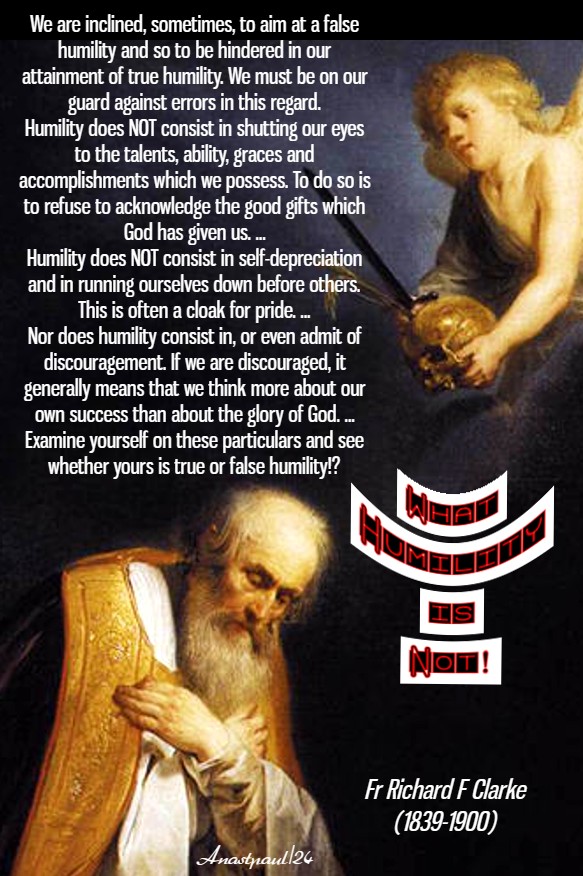
Chapter Five What Humility is Not!
We are inclined, sometimes, to aim at a false humility and so to be hindered in our attainment of true humility. We must be on our guard against errors in this regard.
Humility does NOT consist in shutting our eyes to the talents, ability, graces and accomplishments which we possess. To do so is to refuse to acknowledge the good gifts which God has given us. If we have skill in music, in conversation, in painting, in languages, it is no humility to deny the fact. We ought to thank God for His goodness in bestowing upon us this talent. What is contrary to humility is to take the credit to ourselves and to plume ourselves on what we have received from God.
Humility does NOT consist in self-depreciation and in running ourselves down before others. This is often a cloak for pride. Sometimes its object is to obtain, from others, the praise we deny to ourselves; sometimes it is a marked expression of discontent. The continual song, “What a poor worm I am!” is very much opposed to the spirit of the Catholic Church and to the cheerfulness which every Christian ought to show in his words.
Nor does humility consist in, or even admit of discouragement. If we are discouraged, it generally means that we think more about our own success than about the glory of God. It means that we are not perfectly resigned; it means that our pride is wounded and our self-will thwarted, or that we have worldly motives in what we do and seek honour from men and not from God. True humility is willing to fail in its projects, if God so wills it. Examine yourself on these particulars and see whether yours is true or false humility!?
Quote/s of the Day – 31 May – Within the Octave of Corpus Christi
“He who eats My Flesh and drinks My Blood, abides in Me and I in him. ”
John 6:57
“The Saviour has instituted the most glorious Sacrament of the Eucharist, which truly contains His Body and His Blood, so that, whoever eats it will live forever. Therefore, those who receive it frequently, with devotion, strengthen their spiritual life and well-being, to such an extent, that it is almost impossible for them to be poisoned by any kind of evil attachment.”
(Introduction to the Devout Life, Part II, Chapter 20)
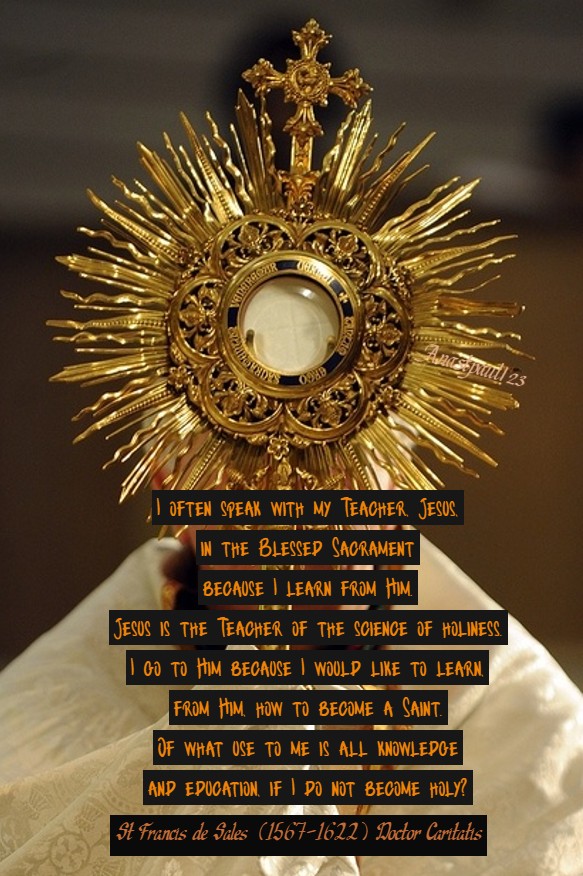
“I often speak with my Teacher, Jesus, in the Blessed Sacrament because I learn from Him. Jesus is the Teacher of the science of holiness. I go to Him because I would like to learn, from Him, how to become a Saint. Of what use to me is all knowledge and education, if I do not become holy?”
St Francis de Sales (1567-1622) Doctor of the Church
One Minute Reflection – 31 May – Within the Octave of Corpus Christi – Mamorial of St Petronilla of Rome (1st Century) Virgin Martyr – 1 Corinthians 23-29; John 6:56-59 – Scripture search here: https://www.drbo.org/
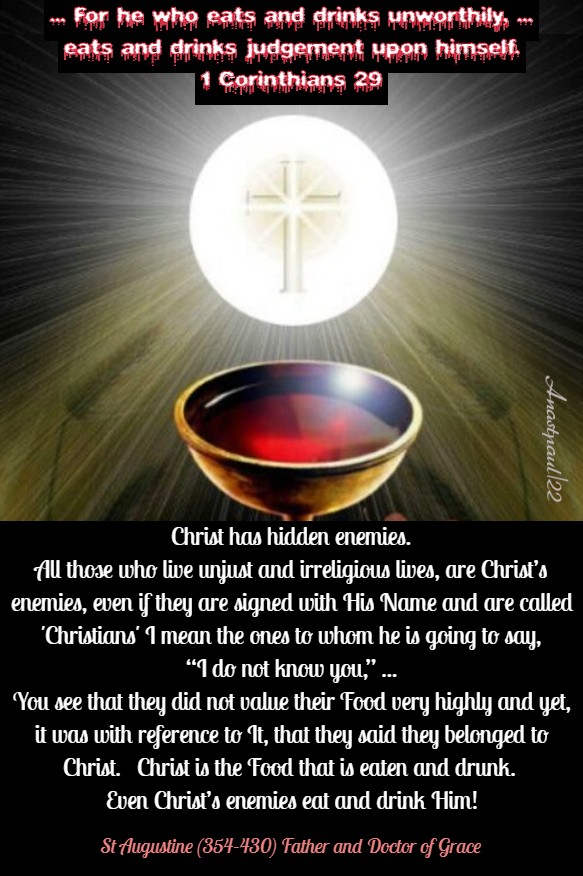
“ … For he who eats and drinks unworthily, … eats and drinks judgement upon himself.”- 1 Corinthians 29
REFLECTION – “Christ has hidden enemies. All those who live unjust and irreligious lives are Christ’s enemies, even if they are signed with His Name and are called ‘Christians’ – I mean the ones to whom he is going to say, “I do not know you” and they say to Him, “Lord, in Thy Name we ate and drank. In Thy Name, we performed many deeds of power. What did we eat and drink in Thy Name?”
You see that they did not value their food very highly and yet, it was with reference to It that they said they belonged to Christ. Christ is the Food that is eaten and drunk. Even Christ’s enemies eat and drink Him! The faithful know the Lamb without spot on which they feed, if only they fed on It in such a way that they are not liable to punishment! The Apostle says, “Whoever eats and drinks unworthily, is eating and drinking judgement upon himself.” – St Augustine (354-430) Father and Doctor of Grace (Sermon 308).
PRAYER – Graciously hear us, O God our Saviour, that as we rejoice in the festival of blessed Petronilla, Thy Virgin, so may we be nourished by the food of her heavenly teaching that we may be enlightened by the fervour of her dedicated holiness.Through the same Jesus Christ, Thy Son our Lord, Who lives and reigns with Thee, in the unity of the Holy Ghost, God, world without end. Amen (Collect).
Our Morning Offering – 31 May – “The Month of the Most Blessed Virgin Mother” and as it is Friday, we remember the Passion of Our Lord
My Most Sorrowful Lady By St Anselm (1033-1109) Marian Doctor Magnificent Doctor
My most sorrowful Lady, what can I say about the fountains, that flowed from your most pure eyes, when you saw your only Son before you, bound, beaten and suffering? What do I know of the flood, that drenched your matchless face, when you beheld your Son, your Lord and your God, stretched on the Cross without guilt, when the flesh of your flesh, was cruelly butchered by wicked me? How can I judge what sobs troubled your most pure breast when you heard, “Woman, behold your son,” and the disciple, “Behold, your Mother,” when you received, as a son, the disciple, in place of the Master, the servant, for the Lord? Amen
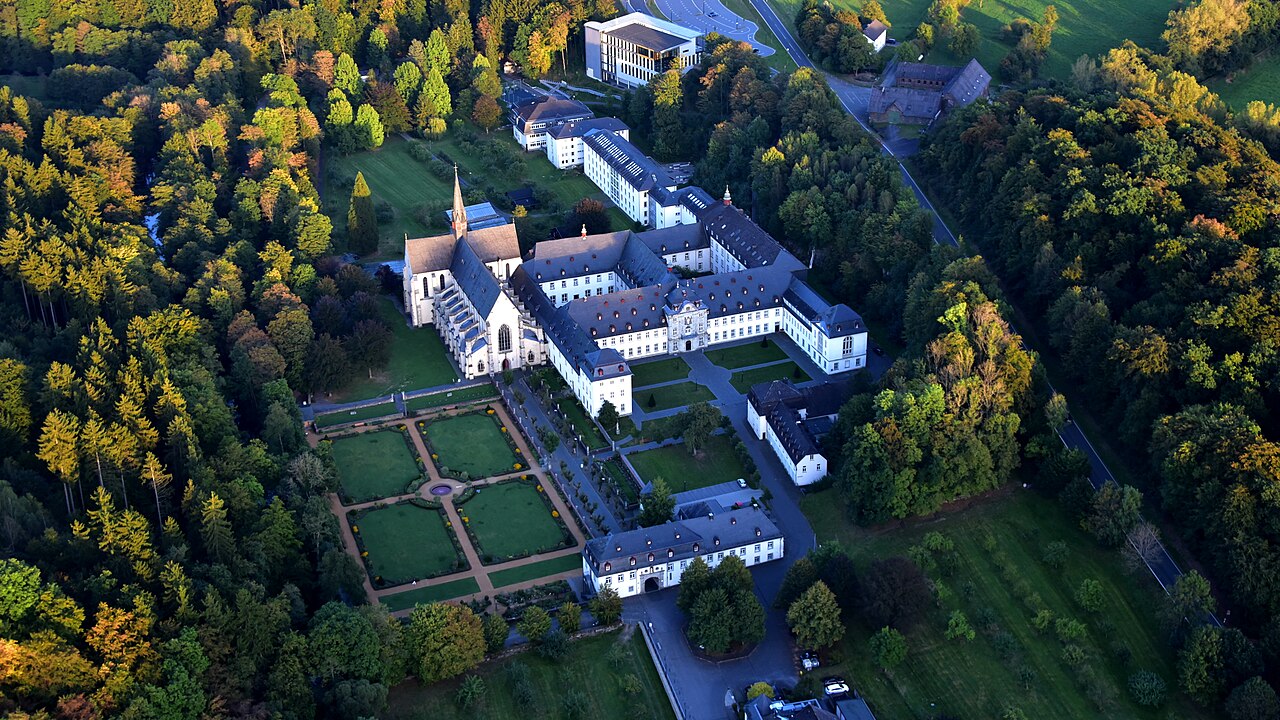
Saint of the Day – 31 May – Blessed Hermann of Marienstatt O.Cist. (1150-c1225) Cistercian Monk and Abbot of the Himmerod Abbey; founding Abbot of Heisterbach and Marienstatt Monasteries, Hermann was a zealous and powerful administrator, blessed with the gifts of prophecy, visions and miracles, Born in 1150 in the Rhineland (in modern Germany) and died in c1225 in Himmerod, Germany of natural causes.
Hermann is mentioned as Abbot for the last time in 1225. Soon after, he seems to have lived as a simple Monk in Himmerod, where he died around that time. In the Cistercian Order’s calendar, the commemoration (memoria) of “the Blessed Abbot Hermann, who laid the foundations of Marienstatt and who was famous for his gift of prophecy and also for many other miraculous signs” is recorded on 31 May.
Hermann von Marienstatt , depiction from the Baroque period, Marienstatt Abbey
Hermann von Marienstatt was born in 1150 into a noble Rhenish family (Rhenish meaning ‘of the Rhine’). He was initially a Canon at the St Cassius and Florentius Monastery in Bonn but , in around 1175, he joined the Cistercian Abbey of Himmerod.
When, in 1177, the Archbishop of Cologne, Philipp von Heinsberg, offered the Cistercians the property of a defunct Augustinian Canonry on the Stromberg – today’s Petersberg in the Siebengebirge – as a donation, Monks from Himmerod, led by Hermann as founding Abbot, more than 10 years later, in 1189, finally complied and took over the former Monastery.
Due to the unfavourable mountain location, the Convent soon moved to the nearby valley of the Heisterbach (1192-1199), from which the new Abbey took the name Heisterbach. From 1195, Abbot Hermann worked in Himmerod again. Endowments by Cologne Burgrave Eberhard von Aremberg and his wife Adelheid von Molsberg prompted Himmerod, together with its daughter Monastery, Heisterbach, to undertake one last founding action. In 1212, under the proven leadership of our Blessed Hermann, twelve Monks settled near Neunkhausen ‘at the place of St Maria’ – since then known as Marienstatt. Disputes over inheritance law within the founding family soon forced the abandonment of this site. Thanks to a new foundation by the Counts of Sayn the Cistercians were able to gain a foothold in the Westerwald again. In this context, Hermann is now also attested in Marienstatt documents.
A Cistercian Monk in front of the Heisterbach Monastery, depicted according to a reconstructed drawing around 1930, in the new Heisterbach Monastery Church
These events were later given legend on 27 December 1324.and recorded in writing, in the “Marienstatter Tafeln” the document for the Consecration of the Church. This iconographically valuable document is now in the Rheinisches Landes Museum in Bonn. Its border is decorated with fictitious portraits of the Abbots, beginning with Hermann.
The Cistercian Marienstatt Monastery in 2016
The text tells us that the Mother of God appeared to the worried Abbot in a dream and showed him an alternative building site, where a “hawthorn bush” blooms in the middle of winter. Its branch still adorns the Abbey’s Coat of Arms today, see below.
Hermann had to manage the founding of two Monasteries which were made difficult by geographical disadvantage, inheritance disputes and, in the case of Heisterbach, resistance from the population. When this happened, the Cistercian movement had already passed its peak in the area and was facing competition from new religious movements. Perhaps this is one of the reasons for Hermann’s resignation and retirement.






































 AnaStpaul
You must be logged in to post a comment.