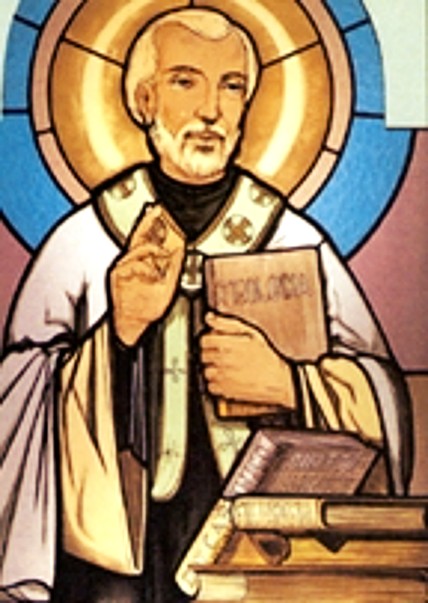
Saint of the Day – 7 July – Saint Prosper of Aquitaine (c 390-c 465) Theologian, Married Layman, Writer, disciple and friend of St Augustine (354-430). St Prosper was the first continuator of St Jerome’s Universal Chronicle. Born in c 390 in Aquitaine, France and died in c 465 in Rome, Italy, of natural causes. Also known as – Tiro Prosper or Prosper Tiro.
Prosper was a native of Aquitaine, France and may have been educated at Bordeaux. By 417 he arrived in Marseilles as a refugee from Aquitaine, in the aftermath of the Gothic invasions of Gaul.
We first meet Prosper definitively around 425 as a participant in the Pelagian controversy which rocked the Church in southern France. Pelagian heretics minimised the role of grace in the first steps of becoming a Christian. Many vigorously opposed St Augustine’s strict views that special grace was required for salvation and thus, many were predestined to damnation. Prosper, a lay theologian, championed St Augustine. And in 428, a letter from Prosper prompted Augustine to write a major work on predestination.
Although a layman, Prosper threw himself with ardour into the religious controversies of his day, defending St Augustine and propagating orthodoxy. In his De vocatione omnium gentium – “The Call of all Nations,”, in which the issues of the call to the Gentiles is discussed, in the light of Augustine’s doctrine of Grace, Prosper appears as the first of the medieval Augustinians.
In 431, Prosper went to Rome and obtained a letter from Pope Celestine I that affirmed Augustine and his views and urged the French Bishops to quell the dispute peacefully. But it raged on. For several more years, Prosper wrote extensively, defending and popularising St Augustine’s teaching.
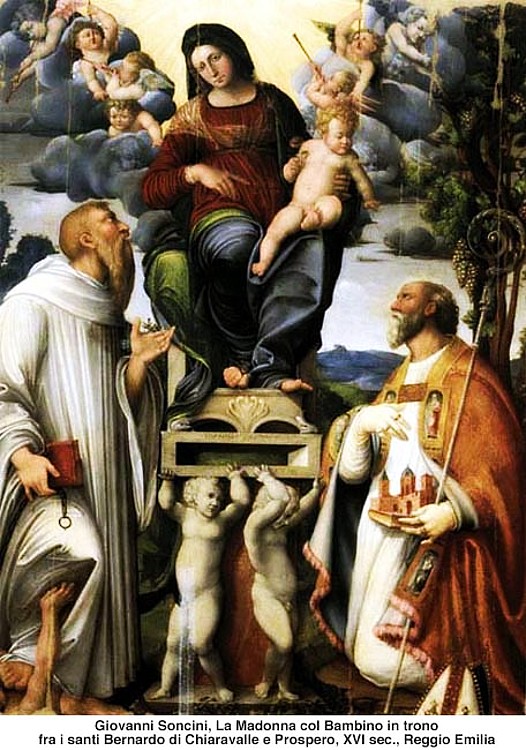
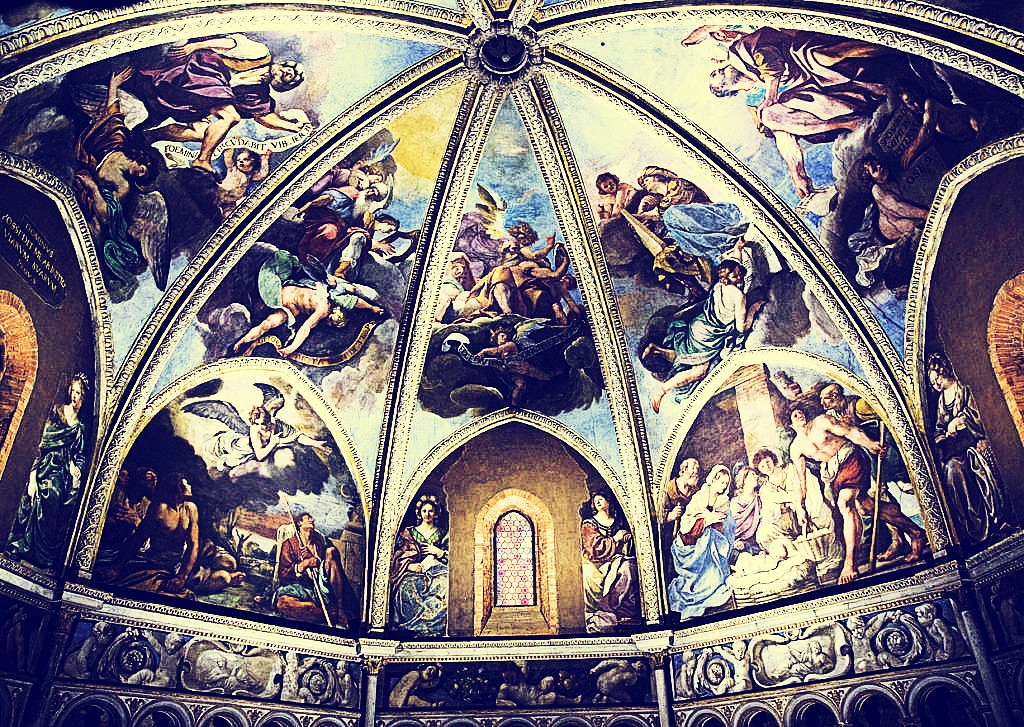
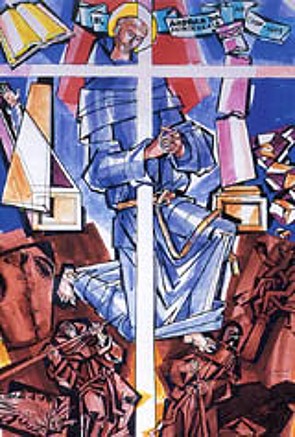
St Prosper on the right with Baby Jesus above him
In The Call to All Nations, Prosper seems to have mellowed somewhat, allowing that God mercifully made the Grace of Salvation available to all human beings. In the following excerpt Prosper describes the interplay of grace and free will:
“When the Word of God enters the ears through the ministry of preachers, the action of the Divine Power fuses with the sound of the human voice. The soul passes from one will to another will. Although the will that is driven out lingers on for a while, the newborn will claims for itself, all that is better in human beings. Thus the law of sin and the law of God do not dwell in the same way and together in the same person. Then the tempter tries to ambush the person through external things but the mind, strong with God’s help, prevails. For there are occasions for struggle and these greatly benefit the faithful. Their weakness is buffeted so that their holiness may not yield to pride. All good things, especially those conducive to eternal life, are obtained, increased and preserved through God’s favour.”
Prosper spent the last part of his life in Rome where he served as secretary to St Pope Leo the Great. During that tim, he wrote the Chronicle, a universal history from Adam’s fall to the Vandal’s conquest of Rome in 455. He died in Rome around 465.
You will remember yesterday’s Saint Palladius of Ireland, knowledge of whose history, was greatly enhanced by his contemporary’s writings, St Prosper, who speaks of St Palladius, in particular in regard to the Pelagian heresy.
Quote/s of the Day – 6 July – Octave Day of Saints Peter and Paul
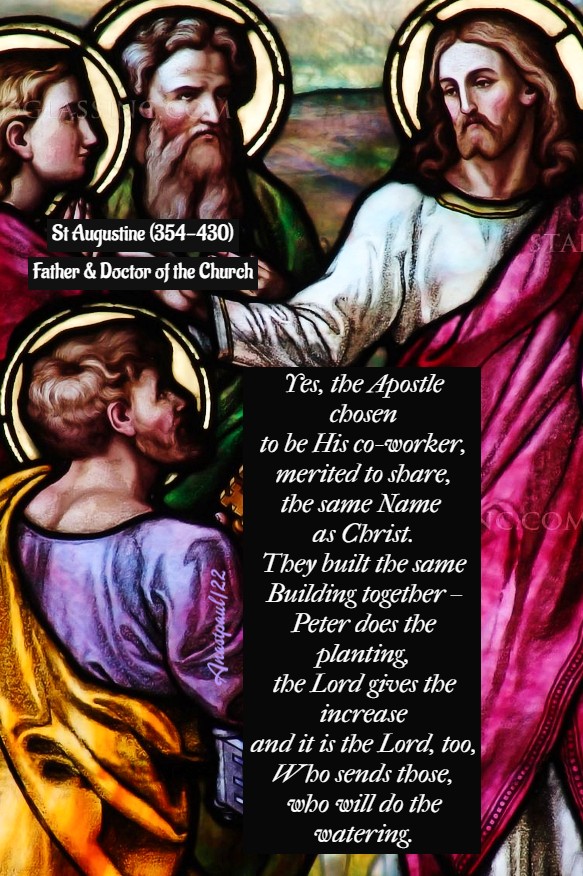
“Yes, the Apostle chosen to be His co-worker, merited to share, the same Name as Christ. They built the same Building together – Peter does the planting, the Lord gives the increase and it is the Lord, too, Who sends those, who will do the watering (cf 1 Cor 3:6f).”
St Augustine (354-430) Father & Doctor of the Church
“Nothing escaped the Wisdom and Power of Christ, the elements of nature lay at His service, spirits obeyed Him, Angels served Him. … And yet, out of all the world, Peter alone was chosen to stand at the head, for the calling of all the peoples and the oversight of all the Apostles and Fathers of the Church.”
St Pope Leo the Great (400-461) Father and Doctor of the Church
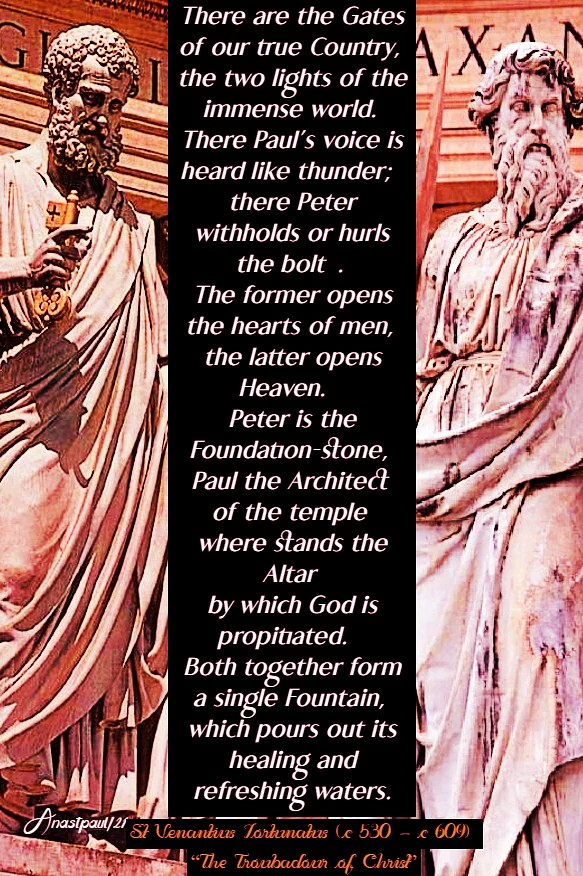
“There are the gates of our true country, the two lights of the immense world. There Paul’s voice is heard like thunder; there Peter withholds or hurls the bolt . The former opens the hearts of men, the latter opens Heaven. Peter is the Foundation-stone, Paul the Architect of the temple where stands the Altar by which God is propitiated. Both together form a single Fountain, which pours out its healing and refreshing waters.”
St Venantius Fortunatus (c 530 – c 609) “The Troubadour of Christ”
St Paul’s Prayer – Ephesians 3:14-21
For this reason, I bow my knees before the Father, from Whom every family in heaven and on earth takes its name. I pray that, according to the riches of His glory, He may grant that you may be strengthened in your inner being with power through His Spirit and that Christ may dwell in your hearts through faith, as you are being rooted and grounded in love. I pray that you may have the power to comprehend, with all the Saints, what is the breadth and length and height and depth and to know, the love of Christ that surpasses knowledge, so that you may be filled with all the fullness of God. Now to Him Who, by the power at work within us, is able to accomplish abundantly, far more than all we can ask or imagine. To Him be glory in the Church and in Christ Jesus, to all generations, forever and ever. Amen.
One Minute Reflection – 24 June – “The Month of the Sacred Heart” and the Feast of the Sacred Heart of Jesus – Ephesians 3:8-12, 14-19, John 19:31-37.
“And to have Christ dwelling, through faith, in your hearts, so that, being rooted and grounded in love, you may be able to comprehend, with all the saints, what is the breadth and length and height and depth and to know Christ’s Love, which surpasses knowledge,” – Ephesians 3:17-19
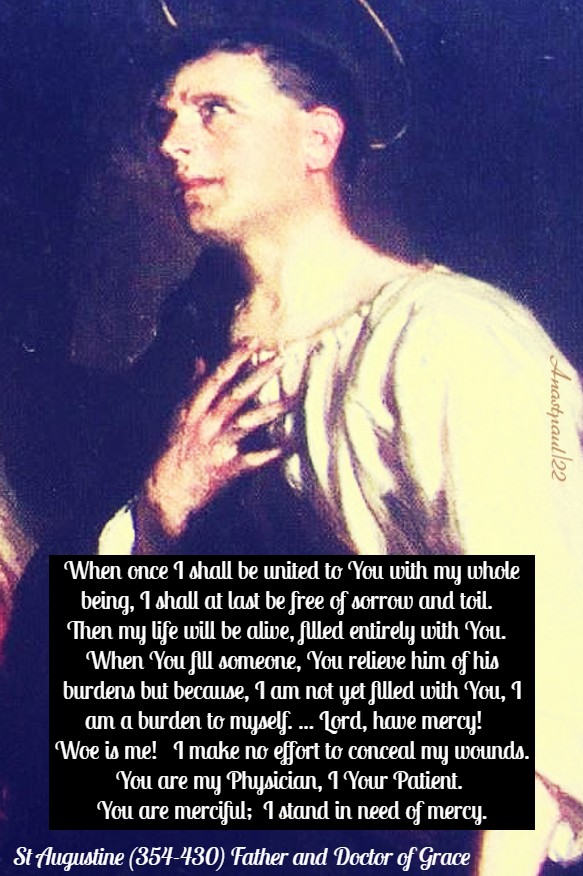
REFLECTION – “When once I shall be united to You with my whole being, I shall at last be free of sorrow and toil. Then my life will be alive, filled entirely with You. When You fill someone, You relieve him of his burdens but because, I am not yet filled with You, I am a burden to myself. My joy when I should be weeping, struggles with my sorrows, when I should be rejoicing. I know not where victory lies.
Woe is me! Lord, have mercy on me! My evil sorrows and good joys are at war with one another. I know not where victory lies. Woe is me! Lord, have mercy! Woe is me! I make no effort to conceal my wounds. You are my Physician, I Your Patient. You are merciful; I stand in need of mercy.” – St Augustine (354-430) Father and Doctor of Grace (An excerpt from: The Confessions Book 10).
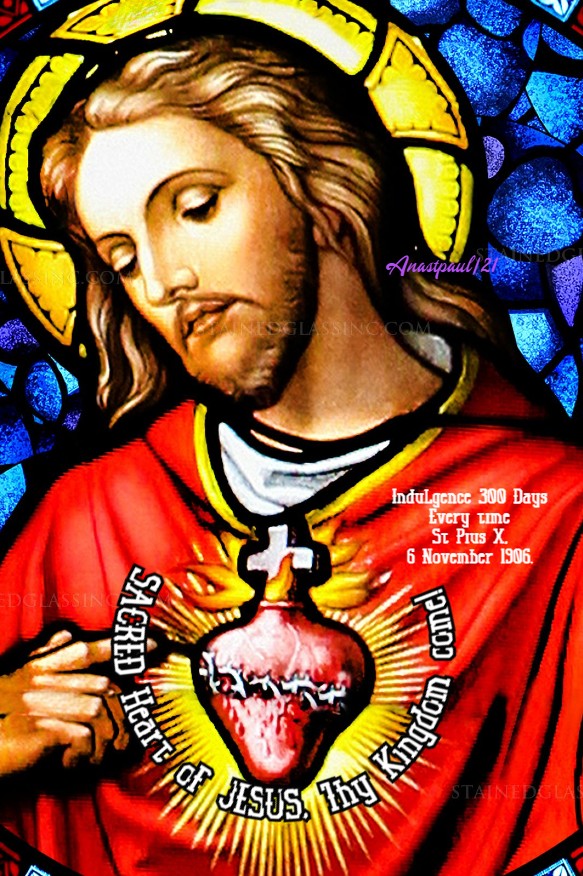
PRAYER – O God, Who in the Heart of Thy Son, wounded by our sins, mercifully lavish upon us the infinite riches of Love, grant, we beseech Thee, that as we offer Him the faithful service of our devotion, we may also show forth fitting reparation. Through Jesus Christ, Thy Son our Lord, Who lives and reigns with Thee, in the unity of the Holy Ghost, God, world without end. Amen (Collect). SACRED Heart of JESUS, Thy Kingdom come! – Indulgence 300 Days – Every time – Raccolta 179 St Pius X, 6 November 1906.
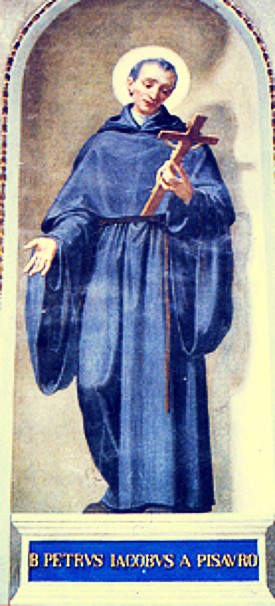
Saint of the Day – 23 June – Blessed Pietro Giacomo of Persaro OSA (c 1445 -1496) Priest of the Order of the Hermits of St Augustine, Professor in Sacred Theology, Novice Master, Born in c 1445 in Pesaro, Italy and died on 23 June 1496 the Hermitage of Valmanente in the Marche, Italy. Also known as – Peter James.
Pietro was born in Pesaro most likely, around the year 1445. Little is known about his family, which some historians call Gaspari. Ar a very young age, he asked and obtained, entrance to the Convent of the Augustinians in Pesaro, who instilled in him the compelling charm which inspired devotion in others, which characterised the Augustinians – with study as a way to wisdom, virtue and apostolic ministry.
At the end of his Novitiate, the young man made his profession and was sent to complete his studies necessary for the Priestly ministry and an academic career according to the rigid and demanding program prescribed for the Augustinian Order.
After his Priestly Ordination, he entered the Convent life with the commitment to continue his studies and to guide the young students of the Order.
In 1472 he was Master of the Novices in Perugia. In 1473 he was sent to teach in the Augustinian College in Florence. In 1482 we find him, already with the title of Professor in Sacred Theology in Rimini with the task of Master of the Novices..
He participated in two General Chapters: in 1482 in Perugia and in 1486 in Siena. He died in his early fifties. His life, therefore, ended not due to the wear and tear of the years but, probably, of the hardships of his mortication and penances. At the end of his life, always in the esteem of his Superiors and confreres, he renounced any office, even a prestigious one, in order to devote himself to the ascetic life and contemplation in the Hermitage of Valmanente, made famous by the holiness of St Nicholas of Tolentino, who in that place, had its famous vision of Purgatory.
Other records which historians have sometimes reported regarding our saint – such as his appointment as General Commissioner for a dispute between the Convents of Pergola and Corinaldo, his election as Prior Provincial of the Picena Province and the office of Prior in the famous Convent and College of St James the Greater in Bologna – should be better verified, also because some may refer to a another Pietro Giacomo da Pesaro, a contemporary of his.
However, we do know for sure, that the Blessed Pietro Giacomo emerged with some unmistakable characteristics – his holiness of life, love for study, commitment to evangelisation and the spiritual and cultural formation of young Augustinians, the search for solitude, asceticism, prayer and penance. ,
He died in 1496 in Valmanente, where his relics are now venerated in the Augustinian Church. Pope Pius IX, of blessed memory, approved his cult in 1848.
One Minute Reflection – 16 June – Corpus Christi, The Most Holy Body and Blood of our Lord Jesus Christ – 1 Corinthians 23-29, John 6:56-59.
“He who eats My Flesh and drinks My Blood, abides in Me and I in him..” – John 6:57
REFLECTION – “Or think of it this way: Whereas people desire meat and drink to satisfy hunger and thirst, real satisfaction is produced, only by that meat and drink that make the receivers of it, immortal and incorruptible. He’s talking here about the fellowship of the saints where there is peace and unity, full and perfect. Therefore, our Lord has chosen, for the types of His Body and Blood, things that become one out of many.
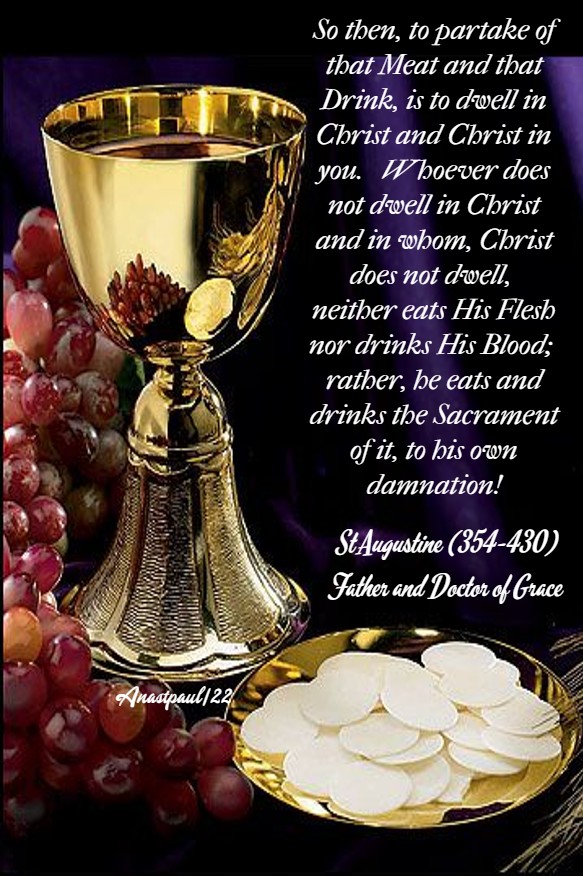
Bread is a quantity of grains united into one mass, wine a quantity of grapes squeezed together. Then He explains what it is to eat His Body and drink His Blood: “He that eats my flesh and drinks my blood dwells in me and I in him.” So then, to partake of that Meat and that Drink, is to dwell in Christ and Christ in you. Whoever does not dwell in Christ and in whom, Christ does not dwell, neither eats His Flesh nor drinks His Blood; rather, he eats and drinks the Sacrament of it, to his own damnation!” – St Augustine (354-430) Father and Doctor of Grace (Tractates on the Gospel of John, 26).
PRAYER – O God, Thou Who in this wondrous sacrament have left us a memorial of Thy Passion, grant us, we beseech Thee, so to venerate the Sacred Mysteries of Thy Body and Blood, that we may ever experience, within us, the effect of Thy Redemption. Through Jesus Christ, Thy Son our Lord, Who lives and reigns with Thee, in the unity of the Holy Ghost, God, world without end. Amen (Collect). EUCHARISTIC Heart of JESUS, model of the priestly heart, have mercy on us. COR JESU Eucharisticum, cordis sacerdotalis exemplar, miserere nobis. – Indulgence 300 Days, Everytime – Raccolta 177 St Pius X, 11 September 1907.
One Minute Reflection – 15 June – “The Month of the Sacred Heart” – The Memorial of St Vitus (c 290-c 303) and Companions, Martyrs – Wisdom 3:1-8, Luke 10:16-20
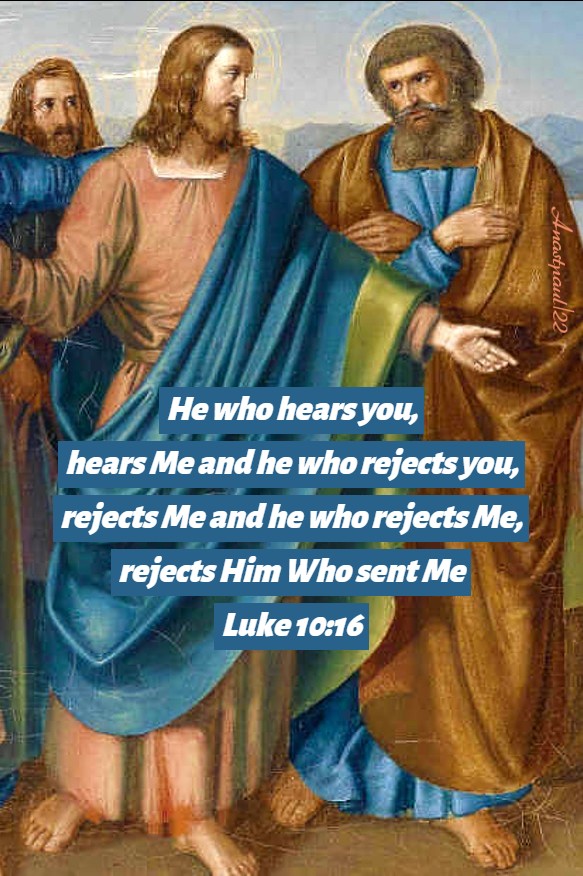
“He who hears you, hears Me and he who rejects you, rejects Me and he who rejects Me, rejects Him Who sent Me.”…Luke 10:16
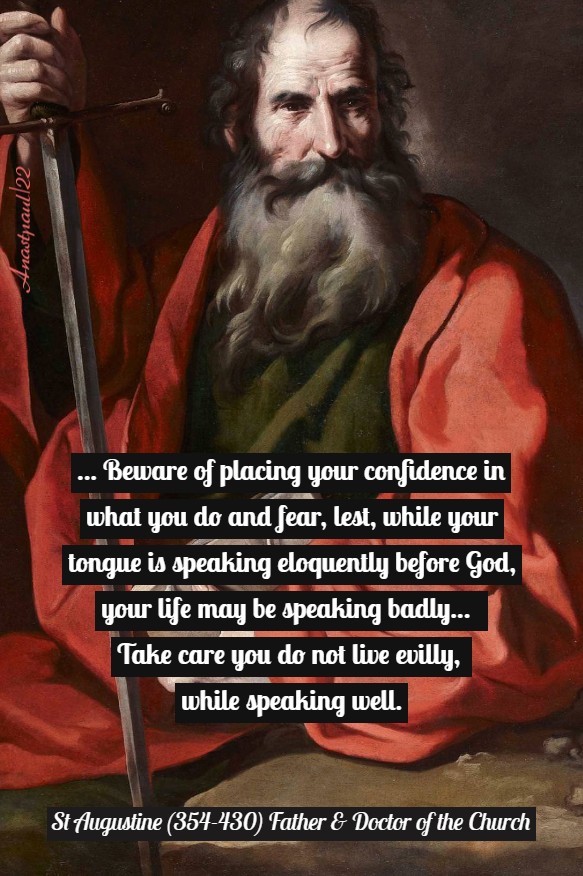
REFLECTION – “Someone, having listened to the verse: “Offer to God a sacrifice of praise” (Ps 50[49].14), said to himself: “I will go to Church every day when I get up and sing a morning hymn; then an evening hymn at the end of the day and then, in my own home, a third and fourth hymn. This is how I will make a sacrifice of praise everyday and offer it to my God.” It is good to do this if you do it in truth but beware of placing your confidence in what you do and fear lest, while your tongue is speaking eloquently before God, your life may be speaking badly… Take care you do not live evilly, while speaking well.”…St Augustine (354-430) Father & Doctor of the Church
PRAYER – Grant O Lord, we pray, that through the intercession of Thy Holy Martyrs Vitus, Modestus and Crescentia, Thy Church be not high-minded but grow in that humility which is pleasing to Thee, so that despising evil, she may practice whatever is good with unbounded charity. Through Jesus Christ, Thy Son our Lord, Who lives and reigns with Thee, in the unity of the Holy Ghost, God, world without end. Amen (Collect). “Jesus, meek and humble of heart, make my heart like unto Thine.” – 300 Days, EVERYTIME. (Unless otherwise stated, e.g., “once a day,” a partial Indulgence may be gained any number of times in succession.) St Pope Pius X, 15 September 1905.
Quote/s of the Day – 9 June – “The Month of the Sacred Heart” – Pentecost Thursday – Acts 8:5-8, Luke 9:1-6
“Take nothing for your journey, neither staff, nor bag, nor bread, nor money; neither have two tunics.”
Luke 9:3
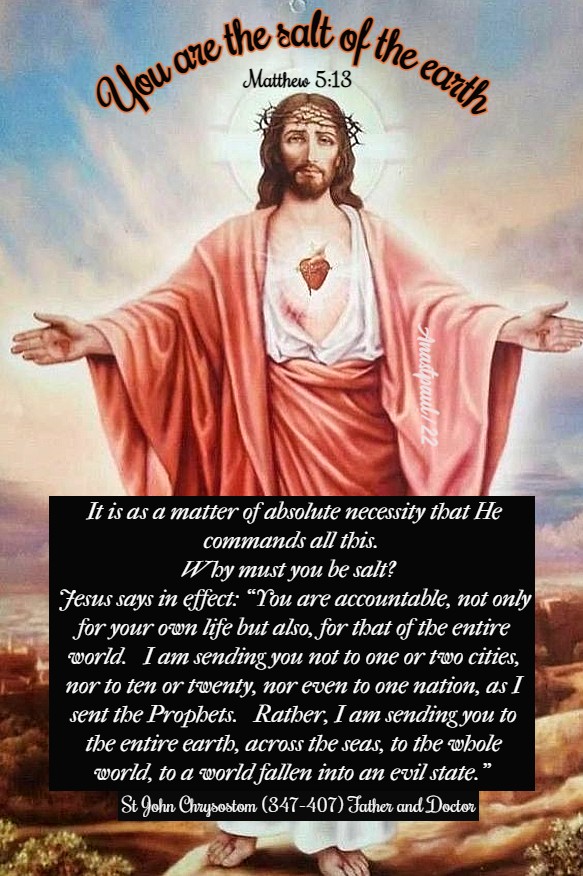
“You are the salt of the earth.”
Matthew 5:13
“It is as a matter of absolute necessity that He commands all this. Why must you be salt? Jesus says in effect: “You are accountable, not only for your own life but also, for that of the entire world. I am sending you not to one or two cities, nor to ten or twenty, nor even to one nation, as I sent the Prophets. Rather, I am sending you to the entire earth, across the seas, to the whole world, to a world fallen into an evil state.”
St John Chrysostom (347-407) Father and Doctor of the Church
“What is reprehensible, is that while leading good lives themselves and abhorring those of wicked men, some, fearing to offend, shut their eyes to evil deeds instead of condemning them and pointing out their malice.”
St Augustine (354-407) Father and Doctor of Grace
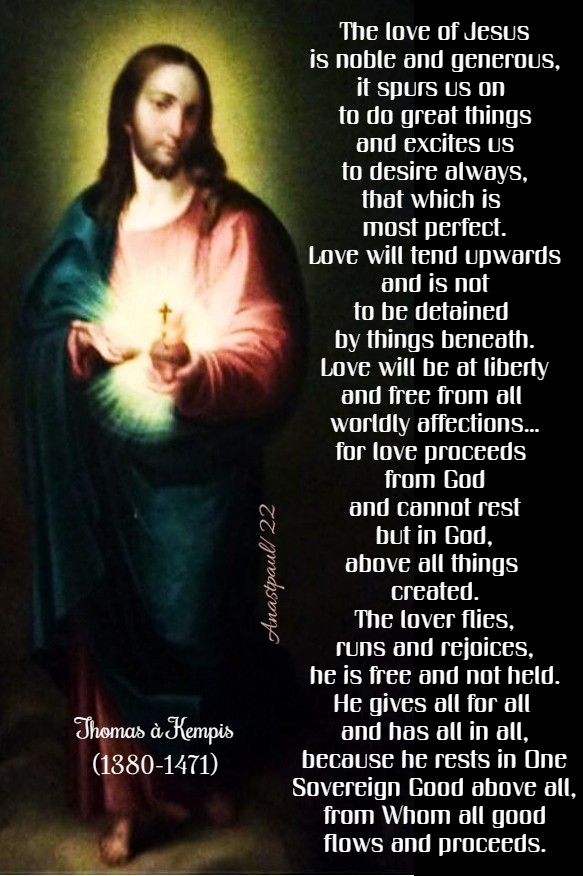
“The love of Jesus is noble and generous, it spurs us on to do great things and excites us to desire always, that which is most perfect. Love will tend upwards and is not to be detained by things beneath. Love will be at liberty and free from all worldly affections… for love proceeds from God and cannot rest but in God, above all things created. The lover flies, runs and rejoices, he is free and not held. He gives all for all and has all in all, because he rests in One Sovereign Good above all, from Whom all good flows and proceeds.”
Thomas à Kempis CRSA (1380-1471)
(Book III, Chapter V, 3-4)
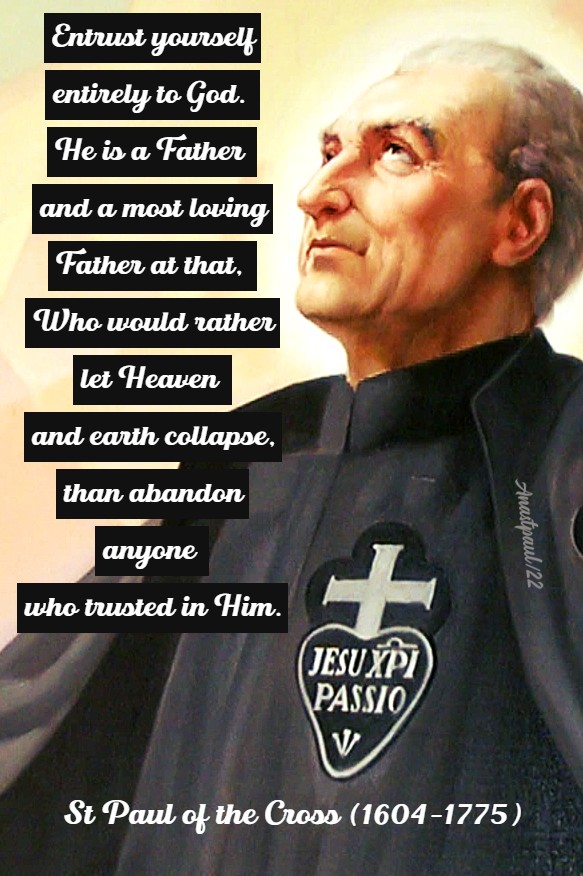
“Entrust yourself entirely to God. He is a Father and a most loving Father at that, Who would rather let Heaven and earth collapse, than abandon anyone who trusted in Him.”
St Paul of the Cross (1604-1775)
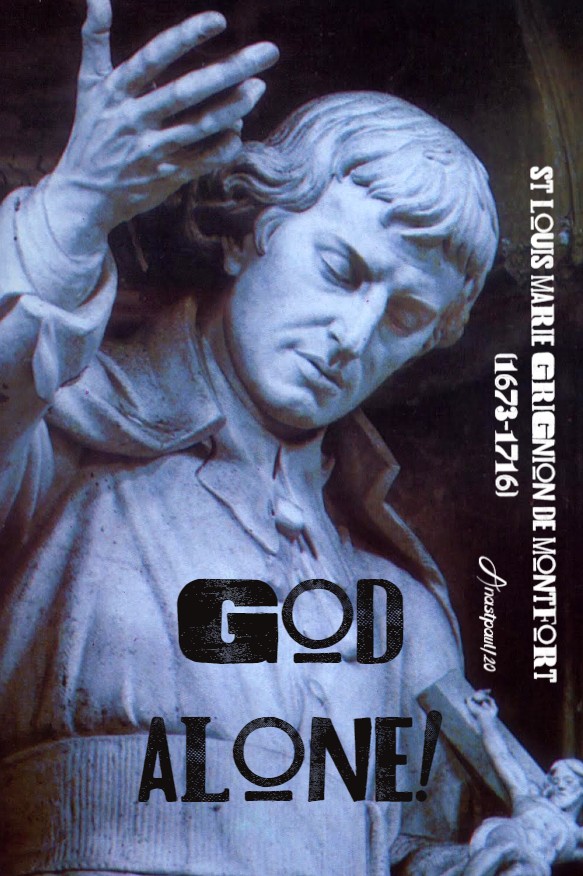
“God alone!”
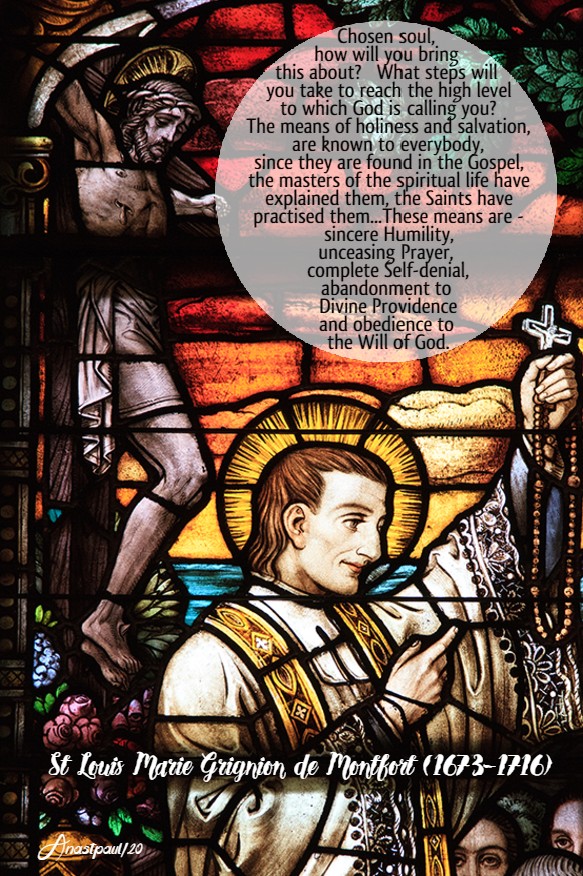
“Chosen soul, how will you bring this about? What steps will you take to reach the high level to which God is calling you? The means of holiness and salvation, are known to everybody, since they are found in the Gospel, the masters of the spiritual life have explained them, the Saints have practised them… These means are – sincere Humility, unceasing Prayer, complete Self-denial, abandonment to Divine Providence and obedience to the Will of God.”
Quote/s of the Day – 7 June – Pentecost Tuesday – Acts 8:14-17, John 10:1-10.
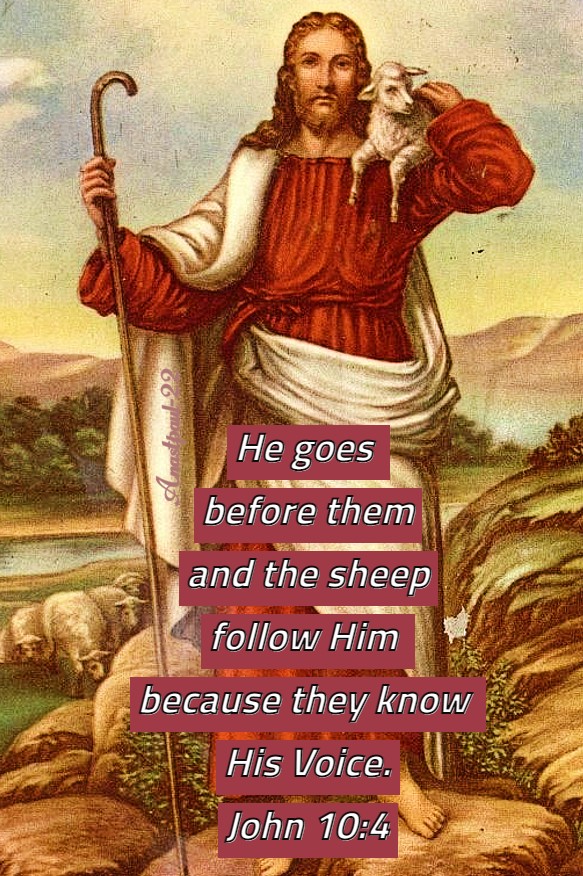
“… He goes before them and the sheep follow Him because they know His Voice.”
John 10:4
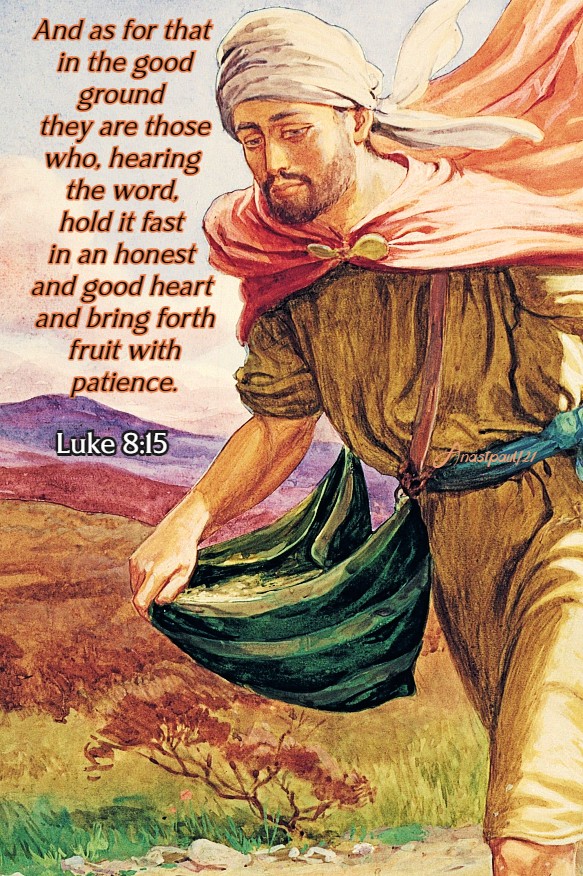
“And as for that in the good ground they are those who, hearing the word, hold it fast in an honest and good heart and bring forth fruit with patience.”
Luke 8:15
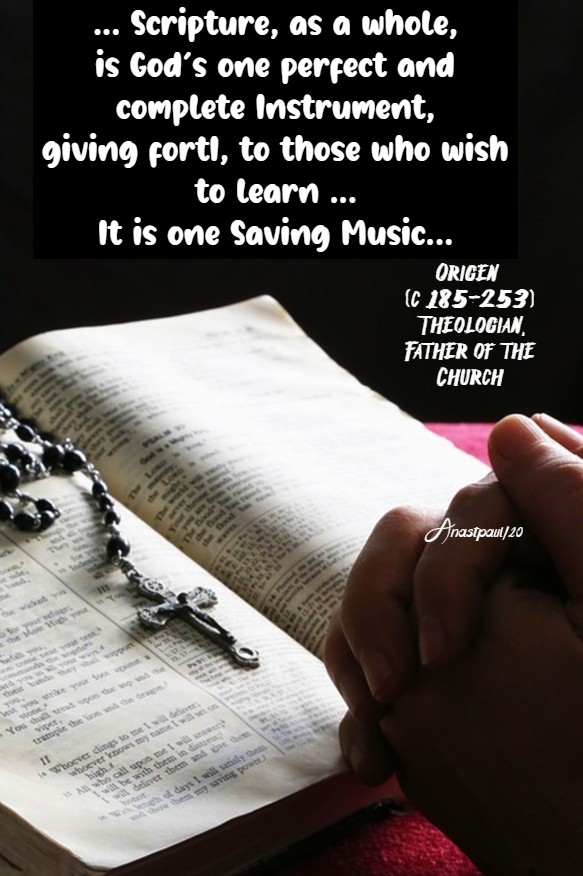
“… Scripture, as a whole, is God’s one perfect and complete instrument, giving forth, to those who wish to learn … It is one Saving Music…”
Origen (c 185-253) Theologian, Father of the Church
“If you believe what you like in the Gospels and reject what you don’t like, it is not the Gospel you believe but yourself.”
St Augustine (354-430) Father and Doctor of Grace
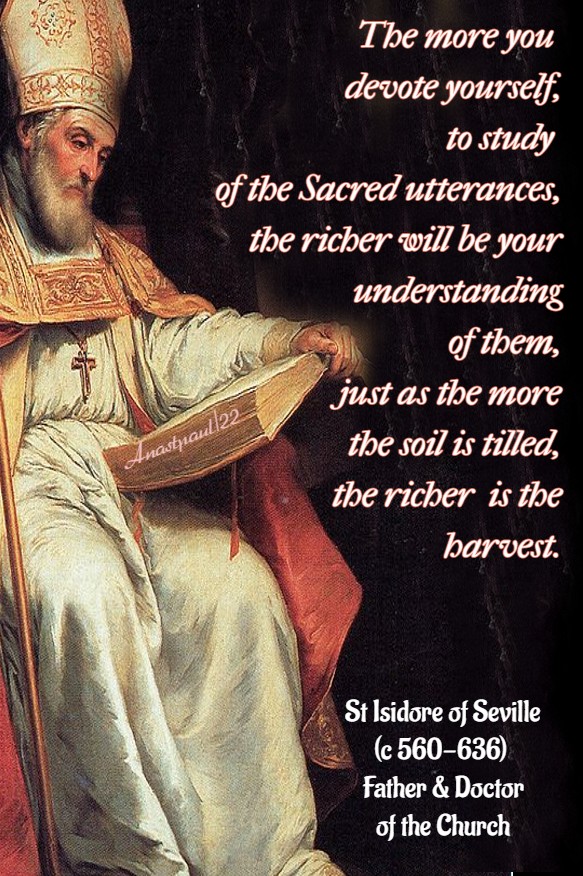
“The more you devote yourself, to study of the Sacred utterances, the richer will be your understanding of them, just as the more the soil is tilled,, the richer is the harvest.”
St Isidore of Seville (c 560-636) Father & Doctor of the Church
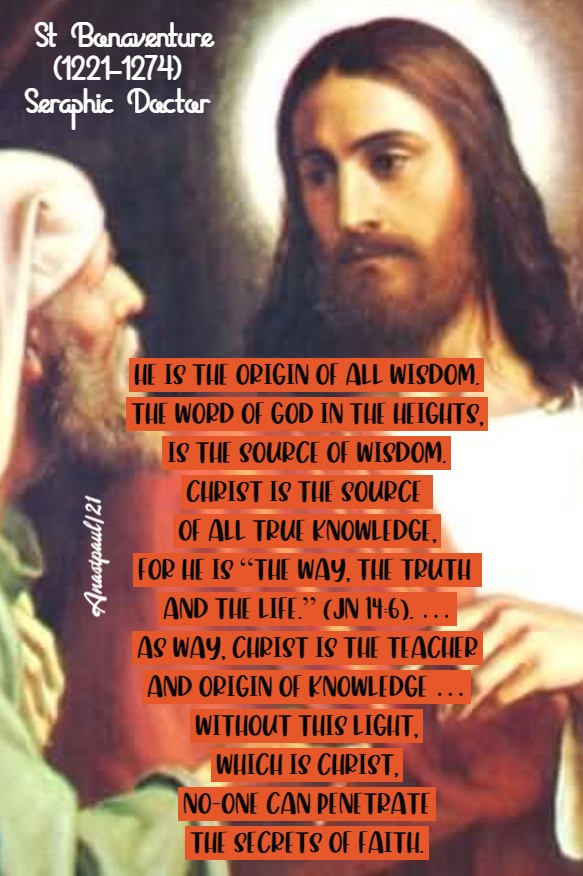
“He is the origin of all wisdom. The Word of God in the heights, is the source of wisdom. Christ is the source of all true knowledge, for He is “the way, the truth and the life.” (Jn 14:6). … As way, Christ is the teacher and origin of knowledge … Without this Light, which is Christ, no-one can penetrate the secrets of faith.”
One Minute Reflection – 7 June – Pentecost Tuesday – Acts 8:14-17, John 10:1-10.
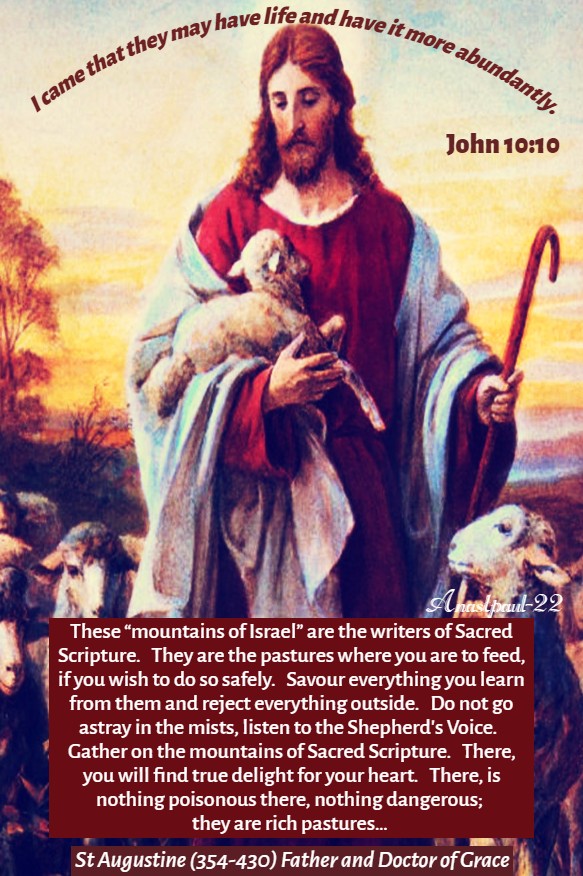
“I came that they may have life and have it more abundantly.” – John 10:10
REFLECTION – “Thus says the Lord: “I Myself will come’”… This is what He has undoubtedly done and what He will yet do: “I Myself am coming: I will seek out My sheep, I will tend them as a shepherd tends His flock.” The wicked shepherds took no care of them because they did not redeem their sheep, with their blood… “My sheep hear My Voice. I will seek out My sheep from the midst of the scattered sheep and will bring them out from all the places they were scattered, on the day of clouds and darkness. No matter how difficult it is to find them, I will find them… I will rescue My sheep from foreign lands, I will gather them and lead them back to their own homes; I will lead them to pasture on the mountains of Israel.”
These “mountains of Israel” are the writers of Sacred Scripture. They are the pastures where you are to feed, if you wish to do so safely. Savour everything you learn from them and reject everything outside. Do not go astray in the mists, listen to the Shepherd’s Voice. Gather on the mountains of Sacred Scripture. There, you will find true delight for your heart. There, is nothing poisonous there, nothing dangerous; they are rich pastures… “I will lead them beside rivers, in the best places.” From those mountains we were just talking about, rivers of Gospel preaching pour down since “the voice [of the Apostles] resounds to the ends of the earth” and all the ends of the earth provide pleasant and fertile pastures for the sheep.
“I will cause them to feed in good pasture… and their sheepfold will be there,” that is to say, there, they will rest, there, they will be able to say: “It is good to be here; true enough, it is perfectly clear, we have found the truth.” They will take their rest in the glory of God as in a sheepfold.” – St Augustine (354-430) Father and Doctor of Grace (Sermon 46, On the shepherds; CCL 41, 529).
PRAYER – Let the power of the Holy Spirit be present within us, O Lord, graciously to cleanse our hearts, as well as to guard us from all harm. Through Jesus Christ, Thy Son our Lord, Who lives and reigns with Thee, in the unity of the Holy Ghost, God, world without end. Amen (Collect).
SACRED Heart of JESUS, Thy Kingdom come! – Indulgence 300 Days – Every time – Raccolta 179 St Pius X, 6 November 1906.
One Minute Reflection – 4 June – “Month of the Sacred Heart” – The Vigil of Pentecost – Acts 19:1-8, John 14:15-21.
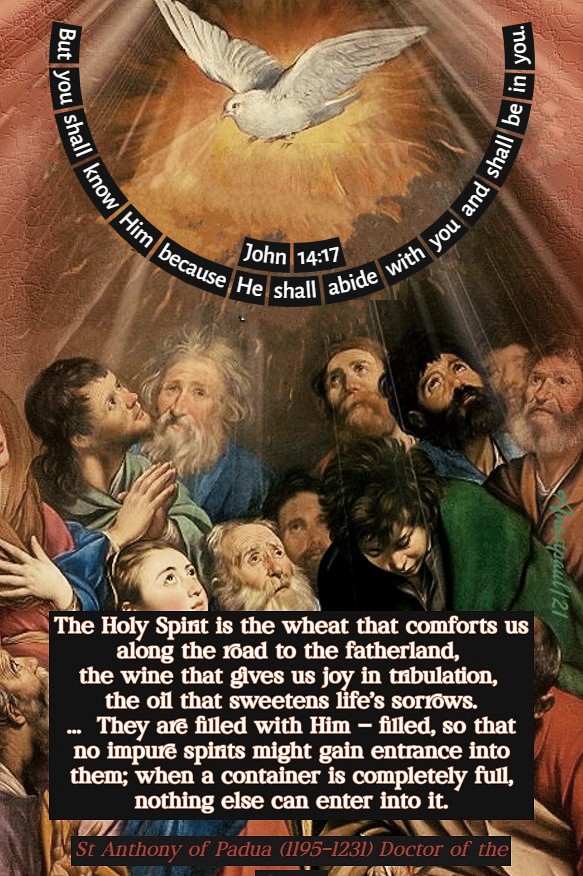
“But you shall know Him because He shall abide with you and shall be in you.” – John 14:17
REFLECTION – “The Holy Spirit is the wheat that comforts us along the road to the Fatherland, the wine that gives us joy in tribulation, the oil that sweetens life’s sorrows. This threefold support was needed by the Apostles, who had to go out to preach through the whole world. This is why Jesus sends the Holy Spirit to them. They are filled with Him – filled, so that no impure spirits might gain entrance into them for when a container is completely full nothing else can be put into it.
The Holy Spirit “will teach you” (Jn 16,13) so that you can know; he will prompt you so that you can will. He gives both knowledge and will add to this our “ability” according to the measure of our strength and we shall be temples of the Holy Spirit (1Cor 6,19).” – St Anthony of Padua (1195-1231) Doctor of the Church (Sermons for Sundays and the Feasts of the Saints).
PRAYER – Grant, we beseech Thee, almighty God, that the brightness of Thy glory may shine upon us and may the light of Thy Light may, through the enlightenment of the Holy Spirit, strengthen the minds of those who are reborn through Thy grace. Through Jesus Christ, Thy Son our Lord, Who lives and reigns with Thee, in the unity of the Holy Ghost, God, world without end. Amen (Collect).
Breathe in Me, O Holy Spirit By St Augustine (354-420)
Breathe in me, O Holy Spirit, that my thoughts may all be holy. Act in me, O Holy Spirit, that my work, too, may be holy. Draw my heart, O Holy Spirit, that I love but what is holy. Strengthen me, O Holy Spirit, to defend all that is holy. Guard me, then, O Holy Spirit, that I always may be holy. Amen
Quote/s of the Day – 3 June – Friday after the Octave of Ascension
“I speak out in order to lead Him into your hearts but He does not choose to come where I lead Him, unless you prepare the way for Him.”
“Everyone without God, has a dead soul. You, who bewail the dead, rather, should bewail sin. Bewail ungodliness. Bewail disbelief.”
St Augustine (354-430) Father and Doctor of the Church
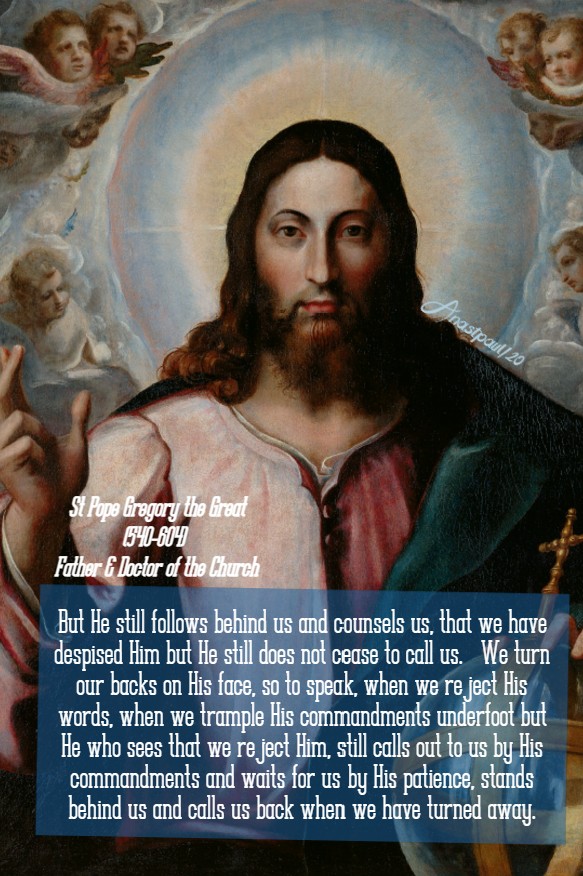
“But He still follows behind us and counsels us, that we have despised Him but He still does not cease to call us. We turn our backs on His face, so to speak, when we reject His words, when we trample His commandments underfoot but He who sees that we reject Him, still calls out to us by His commandments and waits for us by His patience, stands behind us and calls us back when we have turned away.”
St Pope Gregory the Great (540-604) Father & Doctor of the Church
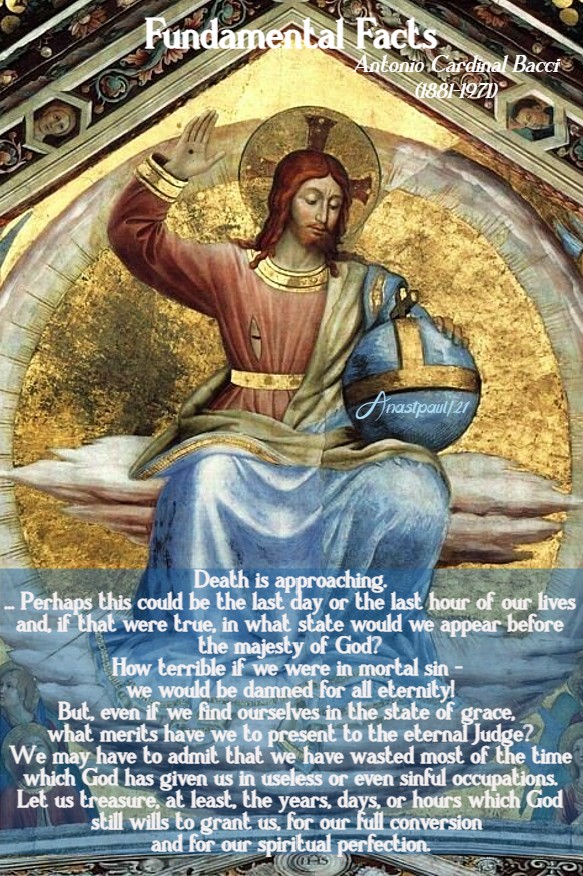
“Death is approaching. How many years have we left? How many months? How many hours? We do not know. Perhaps this could be the last day or the last hour of our lives and, if that were true, in what state would we appear before the majesty of God? How terrible if we were in mortal sin – we would be damned for all eternity! But, even if we find ourselves i n the state of grace, what merits have we to present to the eternal Judge? What sacrifices have we made to prove our love for Him? What mortifications and penances have we voluntarily undertake to purify ourselves of our sins? What good works have we done, what alms have we given, what prayers have we said? We may have to admit, that we have wasted most of the time which God has given us in useless or even sinful occupations. Let us treasure, at least, the years, days, or hours which God still wills to grant us, for our full conversion and for our spiritual perfection.”
Quote/s of the Day – 24 May – “The Month of the Blessed Virgin Mary” – James 1:22-27, John 16:23-30
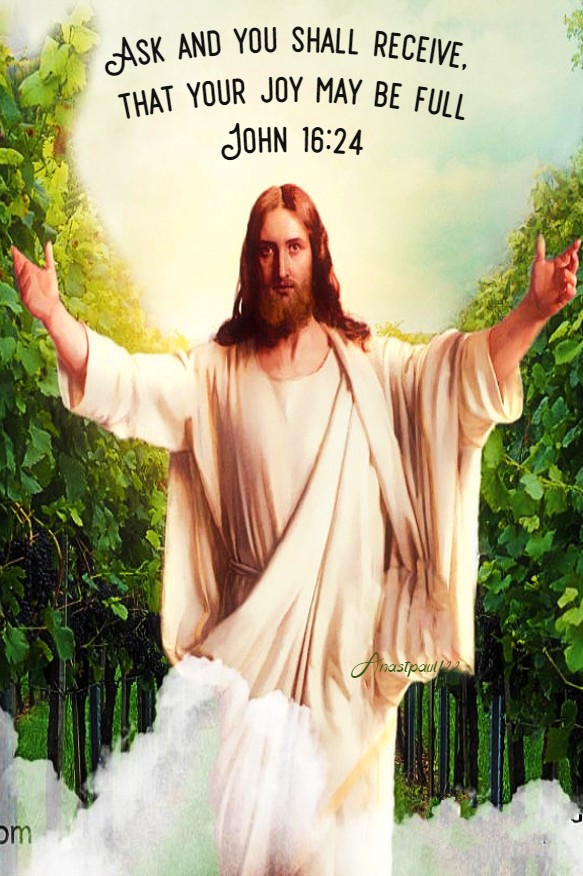
“Ask and you shall receive, that your joy may be full.”
John 16:24
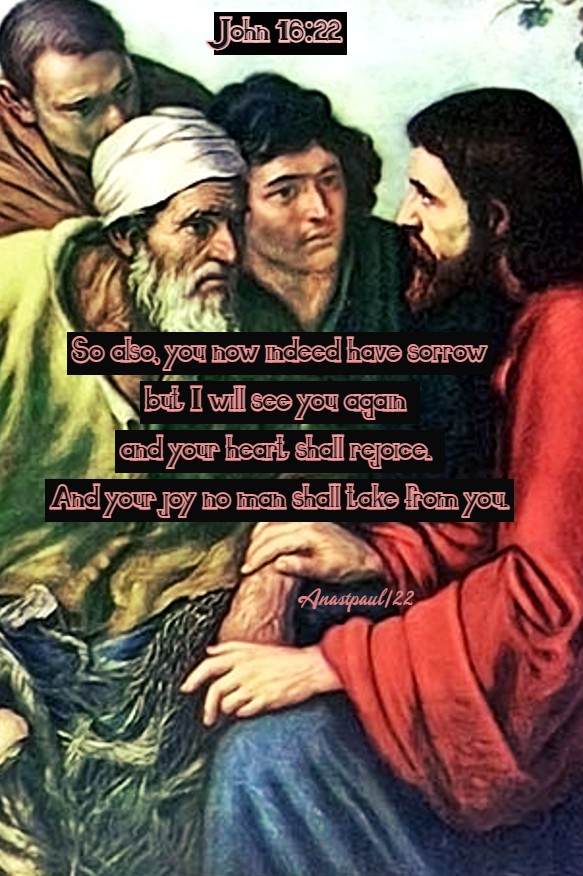
“So also, you now indeed have sorrow but I will see you again and your heart shall rejoice. And your joy, no man shall take from you.”
John 16:22
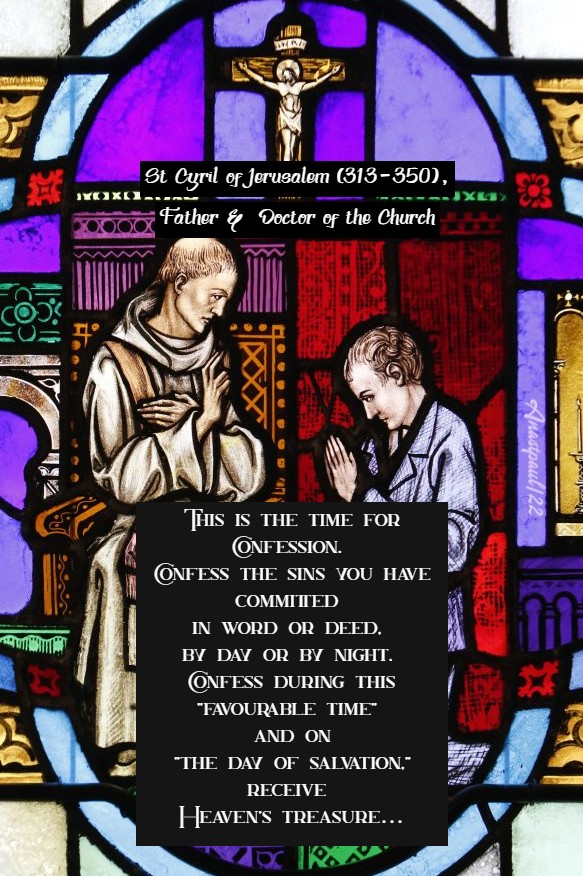
“This is the time for Confession. Confess the sins you have committed in word or deed, by day or by night. Confess during this “favourable time” and on “the day of salvation,” receive Heaven’s treasure… ”
St Cyril of Jerusalem (313-350), Father & Doctor of the Church
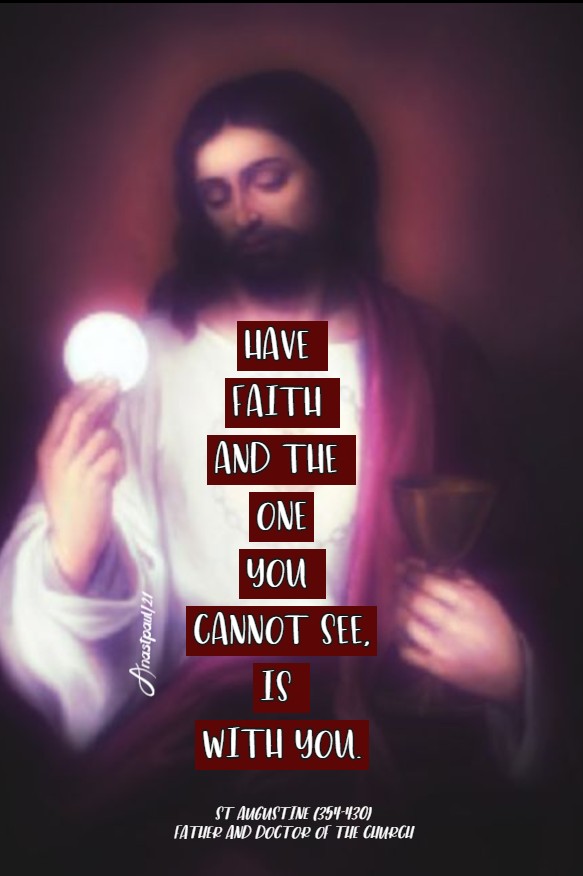
“Have faith and the One you cannot see, is with you.”
St Augustine (354-430) Father and Doctor of the Church
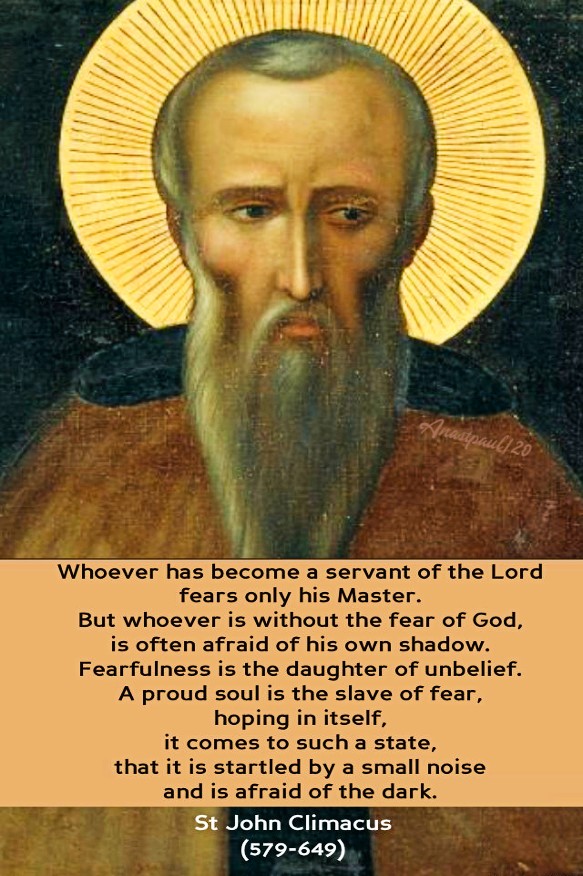
“Whoever has become a servant of the Lord, fears only his Master. But whoever is without the fear of God, is often afraid of his own shadow. Fearfulness is the daughter of unbelief. A proud soul is the slave of fear, hoping in itself, it comes to such a state, that it is startled by a small noise and is afraid of the dark.”
St John Climacus (579-649) Father of the Church
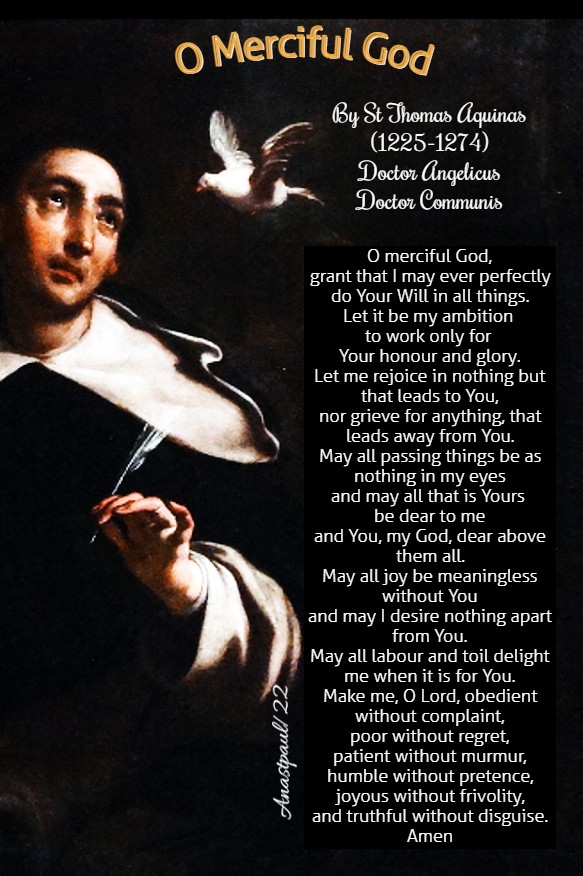
O Merciful God By St Thomas Aquinas (1225-1274) Doctor Angelicus, Doctor Communis
O merciful God, grant that I may ever perfectly do Your Will in all things. Let it be my ambition to work only for Your honour and glory. Let me rejoice in nothing but that leads to You, nor grieve for anything, that leads away from You. May all passing things be as nothing in my eyes and may all that is Yours, be dear to me and You, my God, dear above them all. May all joy be meaningless without You and may I desire nothing, apart from You. May all labour and toil delight me when it is for You. Make me, O Lord, obedient without complaint, poor without regret, patient without murmur, humble without pretence, joyous without frivolity, and truthful without disguise. Amen
One Minute Reflection – 24 May – “The Month of the Blessed Virgin Mary” – James 1:22-27, John 16:23-30
“That your joy may be full.” – John 16:24
REFLECTION – “The entire life of a good Christian is, in fact, an exercise of holy desire. You do not yet see what you long for but the very act of desiring, prepares you, so that when He comes, you may see and be utterly satisfied.
Suppose you are going to fill some holder or container and you know you will be given a large amount. Then you set about stretching your sack or wineskin or whatever it is. Why? Because you know the quantity with which you will fill it and your eyes tell you, there is not enough room. By stretching it, therefore, you increase the capacity of the sack and this is how God deals with us. Simply by making us wait, He increases our desire, which in turn, enlarges the capacity of our soul, making it able to receive what is to be given to us.
So, my brethren, let us continue to desire, for we shall be filled. Take note of Saint Paul, stretching as it were, his ability to receive what is to come – ‘Not that I have already obtained this,’ he said, ‘or am made perfect.Brethren, I do not consider that I have already obtained it.’ We might ask him, ‘If you have not yet obtained it, what are you doing in this life?’ ‘This one thing I do,‘ answers Paul, ‘forgetting what lies behind, and stretching forward to what lies ahead, I press on toward the prize to which I am called in the life above.‘ Not only did Paul say he stretched forward but he also declared that he pressed on toward a chosen goal. He realised, in fact, that he was still short of receiving ‘what no eye has seen, nor ear heard, nor the heart of man conceived.‘
Such is our Christian life. By desiring Heaven, we exercise the powers of our soul. Now this exercise will be effective, only to the extent, that we free ourselves from desires leading to infatuation with this world. Let me return to the example I have already used, of filling an empty container. God means to fill each of you with what is good – so cast out what is bad! If he wishes to fill you with honey and you are full of sour wine, where is the honey to go? The vessel must be emptied of its contents and then be cleansed. Yes, it must be cleansed, even if you have to work hard and scour it. It must be made fit for the new thing, whatever it may be!” – St Augustine (354-430) Father and Doctor of Grace (An excerpt from his Tractates on «The First Letter of John»)
PRAYER – Grant, we beseech Thee, O Lord God, unto all Thy servants, that they may remain continually in the enjoyment of soundness, both of mind and body and by the glorious intercession of the Blessed Mary, always a Virgin, may be delivered from present sadness and enter into the joy of thine eternal gladness. Through Jesus Christ, Thy Son our Lord, Who lives and reigns with Thee, in the unity of the Holy Ghost, God, world without end. Amen (Collect).
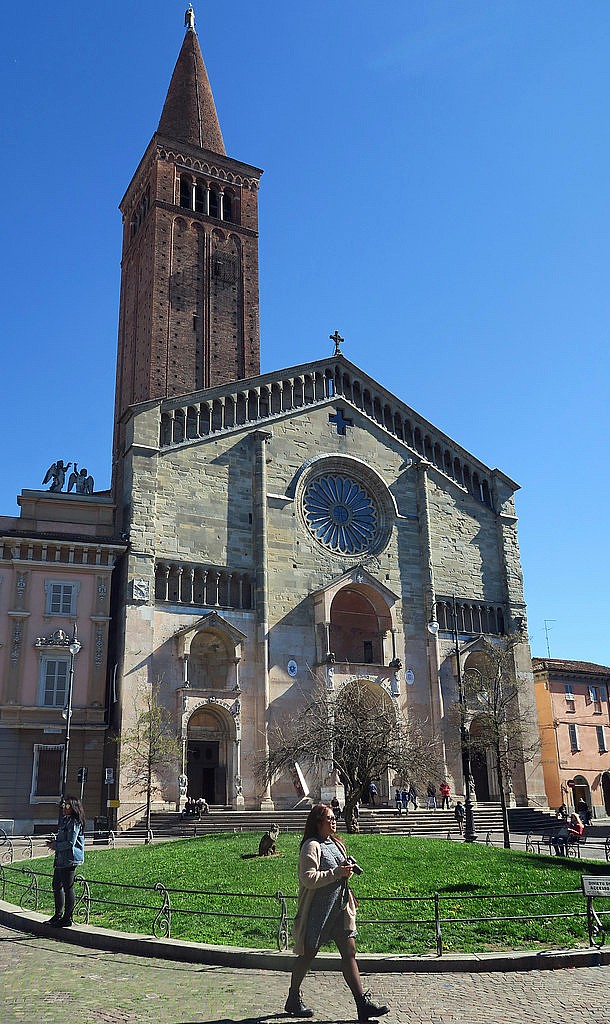
Saint of the Day – 24 May – Blessed Philip of Piacenza OSA (Died 1306) Priest of the Order of the Hermits of St Augustine. Ascetic, Penitent, Miracle-worker.
Blessed Philip, a contemporary of St Nicholas of Tolentino OSA (1245-1305), was one of those who bore witness to the tradition of holiness, which the Order has had since its very beginnings.
The Anonymous Florentine in A Brief Life of Some Hermit Friars, offers the following information concerning Philip:
Friar Philip, who spent his ministry in the City of Piacenza, Italy, practiced an admirable asceticism. For he used an iron breastplate to subdue his flesh, instead of the wool or haircloth employed by other servants of God. It was, therefore, fitting for God to work miracles on his behalf. I heard what I am narrating from Friar Albertino of Cumi, who actually experienced it. More than once when I was a student at Genoa, he told me how he had recovered from a severe fever by commending himself to both the renowned miracle worker, Friar Philip and our Patron, Saint Augustine.
Friar Philip also freed Master William of Cremona, the present Prior General of the Order, from an infirmity of the leg. And he conferred the blessing of health on many other sick people, especially those suffering from melancholy. All this is well known at the Augustinian Monastery in Piacenza.
Philip lived and worked in the Augustinian Monastery of Saint Lawrence in Piacenza, Italy. After his death on 24 May 1306, the people remembered him and celebrated his memory. Since the suppression of religious houses in 1808, his body has been preserved and venerated, in the Cathedral Church of Piacenza.
Our Lady of China: Our Lady of China is a title for the Virgin Mary in China who is believed to have appear at the small village of Donglu in 1900. In Chinese she is called Zhōnghuá Shèngmǔ. She is also known as Our Lady of Donglu.
St Afra of Brescia Bl Benedict of Cassino
St David, King of Scotland (1085-1183) King David was a social and religious Reformer, a man of great administrative skills, apostle of charity and of holy piety. He transformed his Kingdom by the widespread introduction of Catholic Churches and Monasteries, thus also assisting in the international diplomatic influence of his country, it’s farming and agricultural wealth and it’s education. He was the main force and instrument of God in Christianising Scotland. St David’s life: https://anastpaul.com/2020/05/24/saint-of-the-day-24-may-st-david-king-of-scotland-1085-1183/
Bl Diego Alonso St Donatian of Nantes St Gennadius of Astroga St Hubert of Bretigny St Joanna the Myrrhbearer Bl John del Prado Bl John of Montfort Bl Juan of Huete Bl Louis-Zéphirin Moreau St Manahen St Marciana of Galatia St Meletius the Soldier Bl Nicetas of Pereslav St Palladia St Patrick of Bayeux Blessed Philip of Piacenza OSA (Died 1306) Priest of the Order of the Hermits of St Augustine St Rogatian of Nantes St Sérvulo of Trieste St Simeon Stylites the Younger
St Susanna Martyr (Died 2nd Century) One of a group of wives of 2nd century Martyred soldiers under the command of Saint Meletius. Following the death of the soldiers, the wives and children were Martyred, as well.
Bl Thomas Vasière St Vincent of Lérins St Vincent of Porto Romano
Martyrs of Istria: A group of early Martyrs in the Istria peninsula. We know little more than some names – Diocles, Felix, Servilius, Silvanus and Zoëllus.
Martyrs of Plovdiv: 38 Christians Martyred together in the persecutions of Diocletian and Maximian. We don’t even known their names. They were beheaded in Plovdiv, Bulgaria.
One Minute Reflection – 23 May – “The Month of the Blessed Virgin Mary” – James 5:16-20, Luke 11:5-13
“Ask and it shall be given you: seek and you shall find: knock and it shall be opened to you. ” – Luke 11:9
REFLECTION – “Whatever you shall ask.” Then why do we often see believers asking and not receiving? Perhaps it is that they do not ask correctly. When a person would make a bad use of what he asks for, God in His mercy, does not grant him it. It is even more the case, that if someone asks what would, if answered, only tend to his injury, there is surely greater cause to fear, in case what God could not withhold with kindness, He should give in His anger. Still, if God even in kindness, often refuses the requests of believers, how are we to understand “Whatever you shall ask in My Name, I will do?” Was this said to the Apostles only? No. He says …, “He who believes in Me, the works that I do he shall do also.” And if we go to the lives of the Apostles themselves, we shall find that he who laboured more than them all, prayed that the messenger of Satan might depart from him but was not granted his request.
Wake up then, believer and note what is stated here: “In my Name.” That [Name] is Christ Jesus. Christ signifies King, Jesus signifies Saviour. Therefore, whatever we ask for that would hinder our salvation, we do not ask in our Saviour’s Name and yet, He is our Saviour, not only when He does what we ask but also, when He does not. When He sees us ask anything to the disadvantage of our salvation, He shows Himself our Saviour by not doing it. The physician knows whether what the sick person asks for, is to the advantage or disadvantage of his health. And [the physician] does not allow what would be harmful to him, although the sick person himself, desires it. But the physician looks to his final cure.
And some things we may even ask in His Name and He will not grant them to us, at the time, although He will some time. What we ask for is deferred, not denied. He adds, “that the Father may be glorified in the Son.” The Son does not do anything without the Father, inasmuch as He does it, in order that the Father may be glorified in the Son, for the Father and Son are One.” – St Augustine (354-430) Great Western Father and Doctor of Grace of the Church (Tractates on the Gospel of John, 73)
PRAYER – Grant, we beseech Thee, O Almighty God, that we, who in our tribulation are yet of good cheer because of Thy loving-kindness, may find Thee mighty to save from all dangers. Through Jesus Christ, Thy Son our Lord, Who lives and reigns with Thee, in the unity of the Holy Ghost, God, world without end. Amen (Collect).
Our Morning Offering – 22 May – The Fifth Sunday after Easter
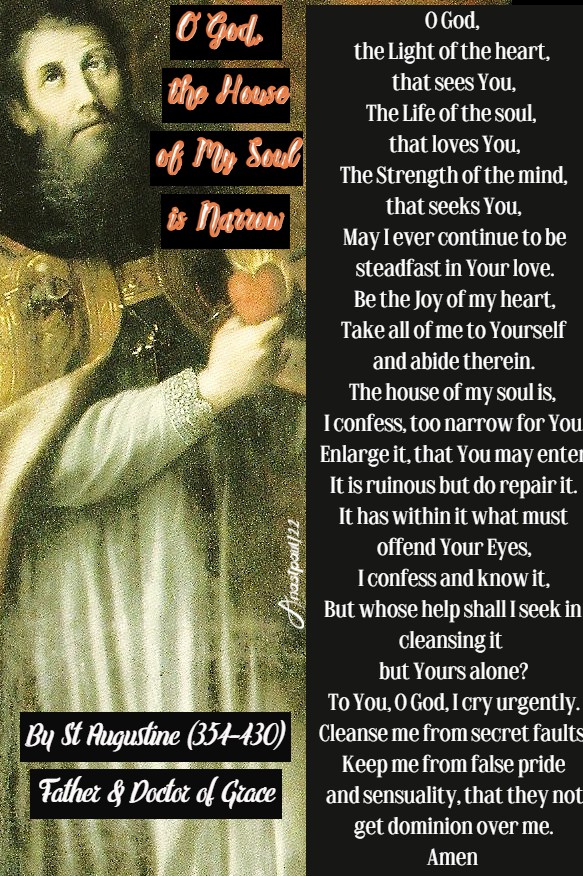
O God, the House of My Soul is Narrow By St Augustine (354-430) Father & Doctor of Grace
O God, the Light of the heart, that sees You, The Life of the soul, that loves You, The Strength of the mind, that seeks You, May I ever continue to be steadfast in Your love. Be the Joy of my heart, Take all of me to Yourself and abide therein. The house of my soul is, I confess, too narrow for You. Enlarge it, that You may enter. It is ruinous but do repair it. It has within it what must offend Your Eyes, I confess and know it, But whose help shall I seek in cleansing it but Yours alone? To You, O God, I cry urgently. Cleanse me from secret faults. Keep me from false pride and sensuality, that they not get dominion over me. Amen
Quote/s of the Day – 19 May – The Memorial of St Peter Celestine (1210-1296) Pope and Confessor – 1 Peter 5:1-4; 5:10-11, Matthew 16:13-19
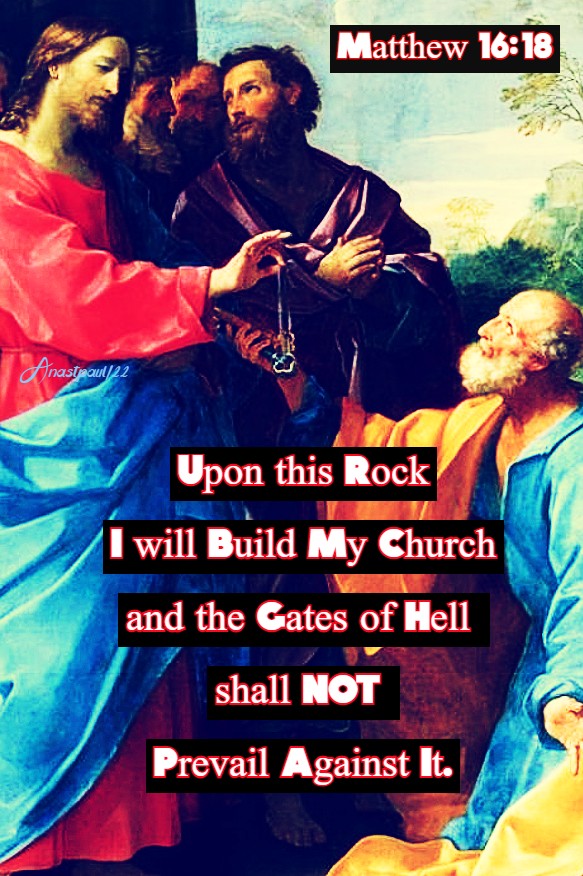
“Upon this rock I will build My Church and the gates of hell shall not prevail against it.”
Matthew 16:18
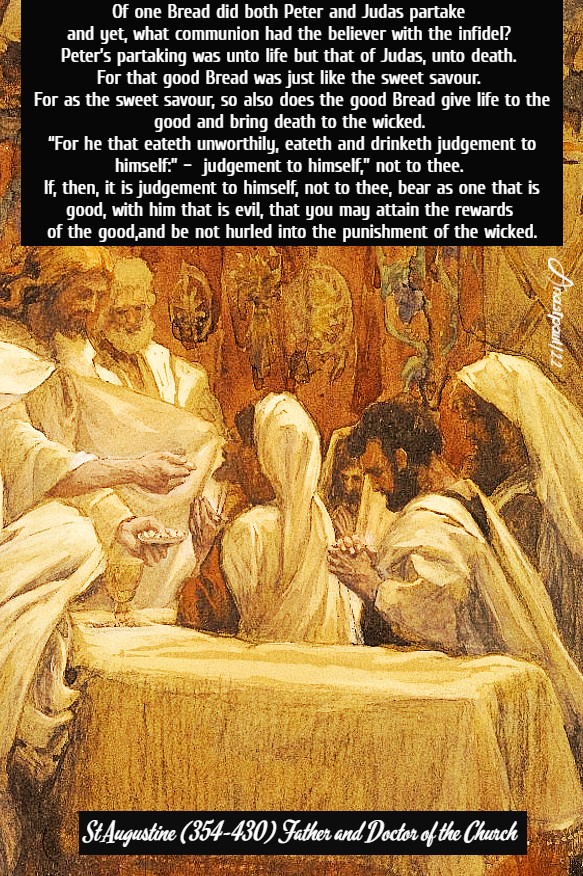
“Of one Bread did both Peter and Judas partake and yet, what communion had the believer with the infidel? Peter’s partaking was unto life but that of Judas, unto death. For that good Bread was just like the sweet savour. For as the sweet savour, so also does the good Bread give life to the good and bring death to the wicked. “For he that eateth unworthily, eateth and drinketh judgement to himself:” – judgement to himself,” not to thee. If, then, it is judgement to himself, not to thee, bear as one that is good, with him that is evil, that you may attain the rewards of the good,and be not hurled into the punishment of the wicked.”
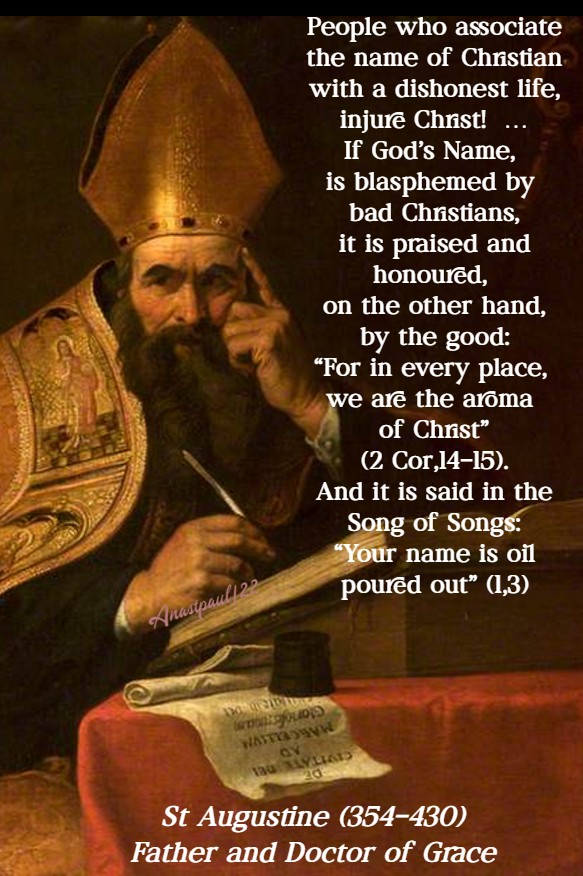
“People who associate the name of Christian with a dishonest life, injure Christ! … If God’s Name, is blasphemed by bad Christians, it is praised and honoured, on the other hand, by the good: “For in every place, we are the aroma of Christ” (2 Cor,14-15). And it is said in the Song of Songs: “Your name is oil poured out” (1,3).”
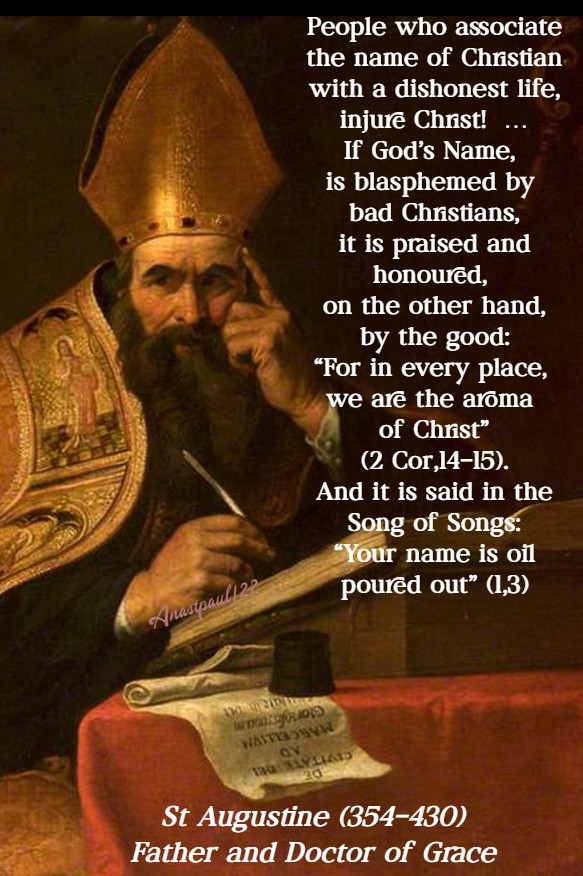
St Augustine (354-430) Father and Doctor of the Church
(On John 12:1-9 Monday of Holy Week).
“Better that only a few Catholics should be left, staunch and sincere in their religion, than that they should, remaining many, desire as it were, to be in collusion with the Church’s enemies and in conformity with the open foes of our faith.”
St Peter Canisius (1521-1397) Doctor of the Church
“The path to Heaven is narrow, rough and full of wearisome and trying ascents, nor can it be trodden without great toil and, therefore, wrong is their way, gross their error and assured their ruin, who, after the testimony of so many thousands of Saints, will not learn where to settle their footing!”
St Robert Southwell SJ (1561-1595) Priest and Martyr
St Crispin of Viterbo St Cyriaca of Nicomedia and Companions St Cyril of Trèves St Dunstan of Canterbury (909-988) Bishop of London, Worcester then Archbishop of Canterbury St Evonio of Auvergne
Quote/s of the Day – 18 May – The Memorial of St Venantius (Died c 250) Martyr – Wisdom 5:1-5, John 15:1-7
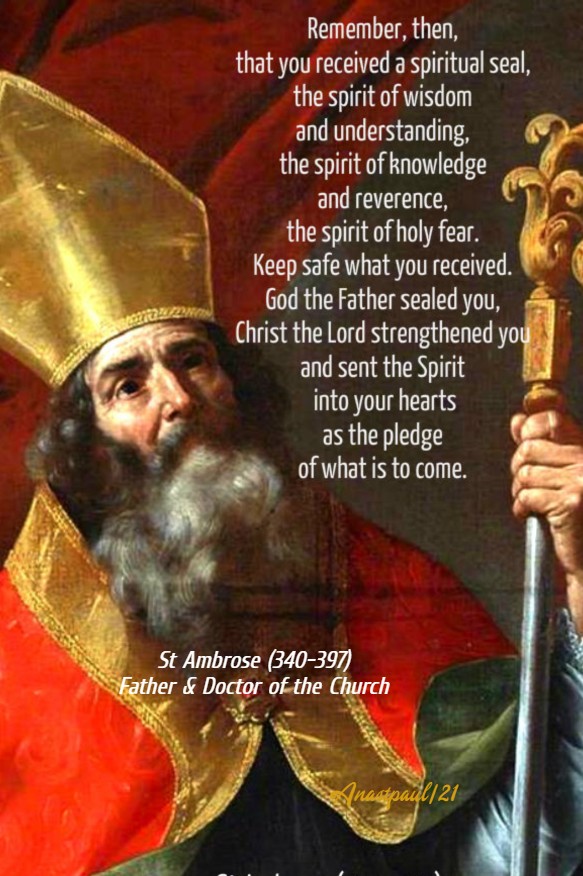
“Remember, then, that you received a spiritual seal, the spirit of wisdom and understanding, the spirit of knowledge and reverence, the spirit of holy fear. Keep safe what you received. God the Father sealed you, Christ the Lord strengthened you and sent the Spirit into your hearts as the pledge of what is to come.”
St Ambrose (340-397) Father & Doctor of the Church
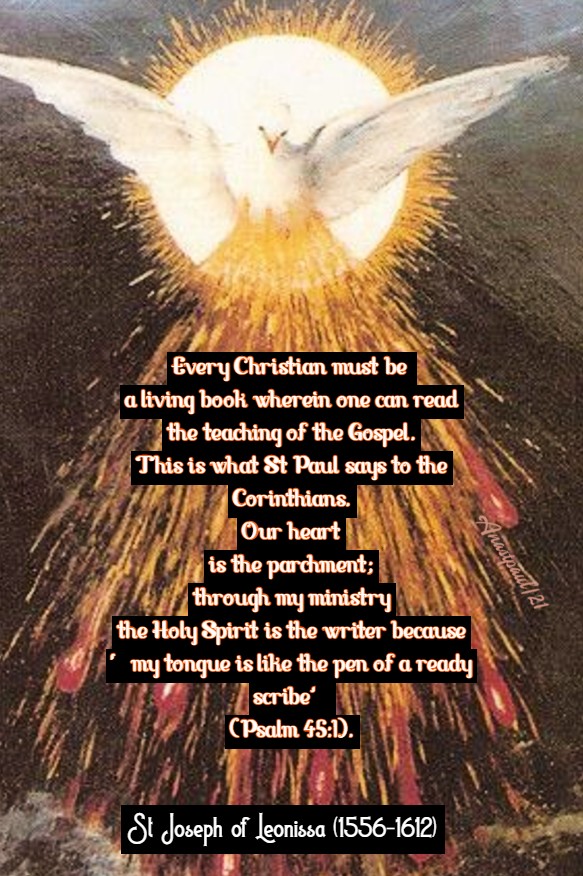
“Every Christian must be a living book wherein one can read the teaching of the Gospel. This is what St Paul says to the Corinthians. Our heart is the parchment; through my ministry the Holy Spirit is the writer because ‘my tongue is like the pen of a ready scribe’ (Psalm 45:1).”
St Joseph of Leonissa OFM CAP (1556-1612)
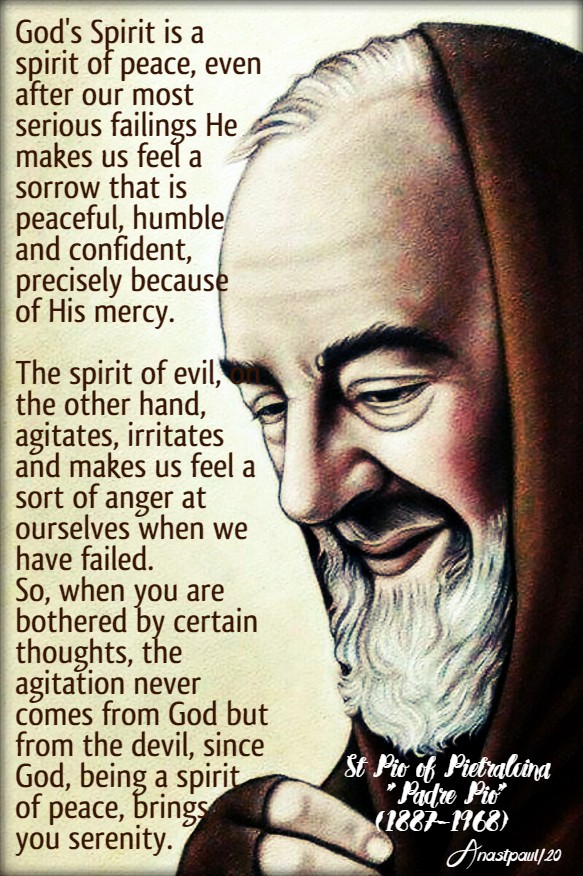
“God’s Spirit is a spirit of peace, even after our most serious failings He makes us feel a sorrow that is peaceful, humble and confident, precisely because of His mercy.
The spirit of evil, on the other hand, agitates, irritates and makes us feel a sort of anger at ourselves when we have failed. So, when you are bothered by certain thoughts, the agitation never comes from God but from the devil, since God, being a spirit of peace, brings you serenity.”
St Pio of Pietralcina “Padre Pio” (1887-1968)
( Letter 549)
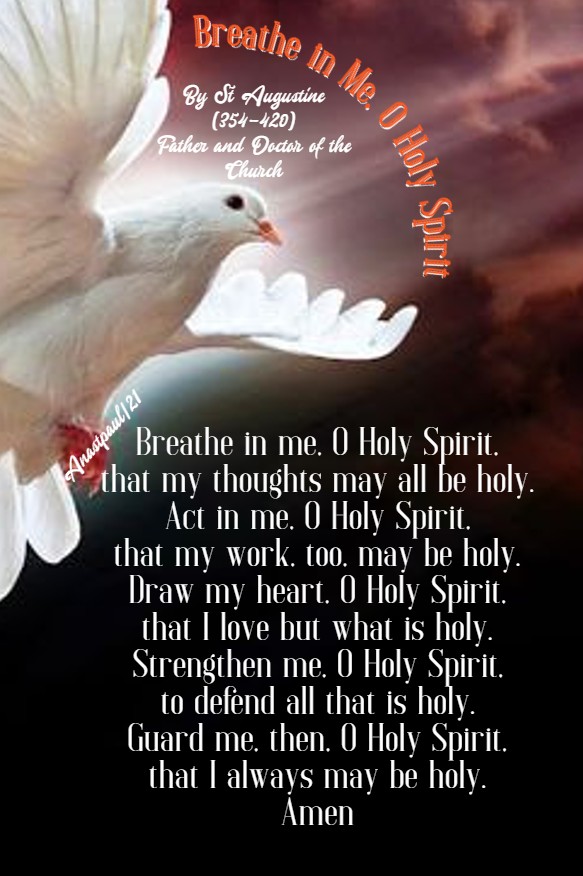
Breathe in Me, O Holy Spirit By St Augustine (354-420) Father and Doctor of the Church
Breathe in me, O Holy Spirit, that my thoughts may all be holy. Act in me, O Holy Spirit, that my work, too, may be holy. Draw my heart, O Holy Spirit, that I love but what is holy. Strengthen me, O Holy Spirit, to defend all that is holy. Guard me, then, O Holy Spirit, that I always may be holy. Amen
St Anastasius of Lérida St Anthimus of Rome St Bassus of Sabina St Bertilla St Criotan of MacReddin Bl Diego of Saldaña St Evellius of Pisa St Fabius of Sabina St Francesco Maria da Camporosso OFM Cap (1804-1866) Friar of the Friars Minor Capuchin Branch St Francesco de Girolamo SJ St Fremund of Dunstable St Gengulphus of Burgundy
Bl Illuminatus St Illuminatus of San Severino Bl James Walworth Bl John Rochester St Maiulo of Hadrumetum
St Mamertus (Died c 477) Archbishop of Vienne in Gaul – present day France, Theologian, Writer, Founder of the introduction of the praying of Litanies prior to Ascension Day, called “Rogation Days.” Rogation days are days of prayer and fasting in the Church. They are observed with processions and the praying of the Litany of the Saints. The major Rogation is held on 25 April, the minor Rogations are held on Monday to Wednesday, preceding Ascension Thursday. The word Rogation comes from the Latin verb rogare, meaning “to ask,” which reflects the beseeching of God, for the appeasement of His anger and for protection from calamities. His Life: https://anastpaul.com/2019/05/11/saint-of-the-day-11-may-st-mamertus-died-c-475/
St Mozio of Constantinople St Possessor of Verdun St Principia of Rome St Tudy St Vincent L’Hénoret Bl Vivaldus St Walbert of Hainault
Martyrs of Camerino: An imperial Roman official, his wife, their children and servants, all of whom were converts and martyrs: Anastasius, Aradius, Callisto, Eufemia, Evodius, Felice, Primitiva, Theopista.
Quote/s of the Day – 7 May – Wisdom 5:1-5, John 15,1-7.
“Without Me you can do nothing.”
John 15:5
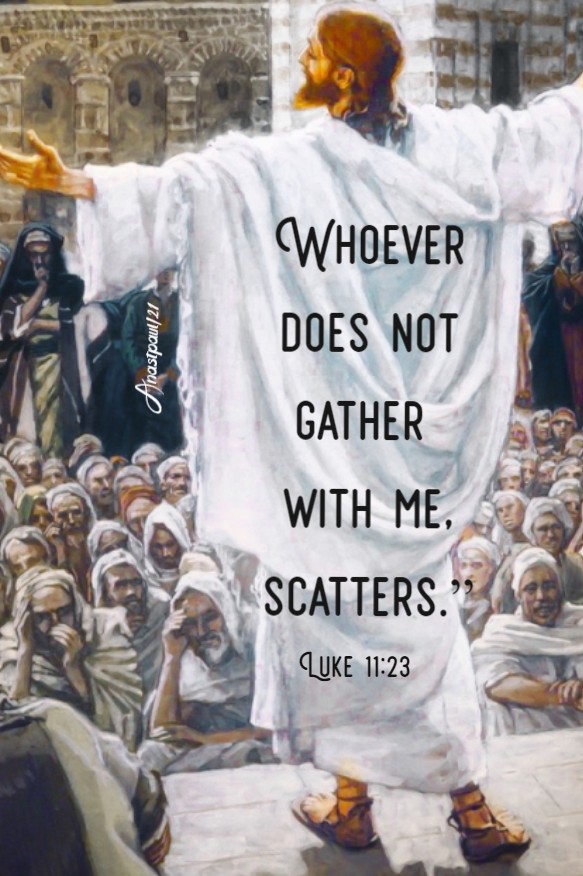
“Whoever does not gather with me, scatters.”
Luke 11:23
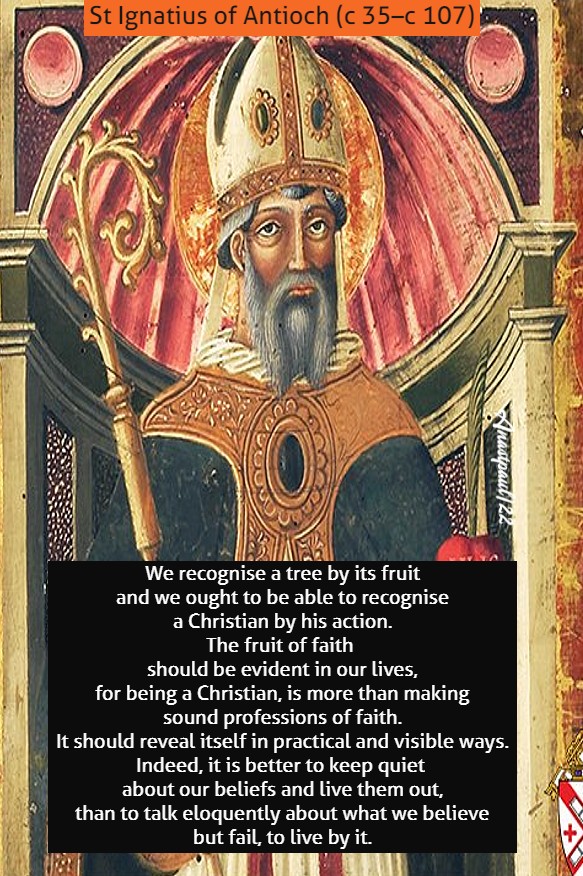
“We recognise a tree by its fruit and we ought to be able to recognise a Christian by his action. The fruit of faith should be evident in our lives, for being a Christian, is more than making sound professions of faith. It should reveal itself in practical and visible ways. Indeed, it is better to keep quiet about our beliefs and live them out, than to talk eloquently about what we believe but fail, to live by it.”
St Ignatius of Antioch (c 35-c 108) Father of the Church
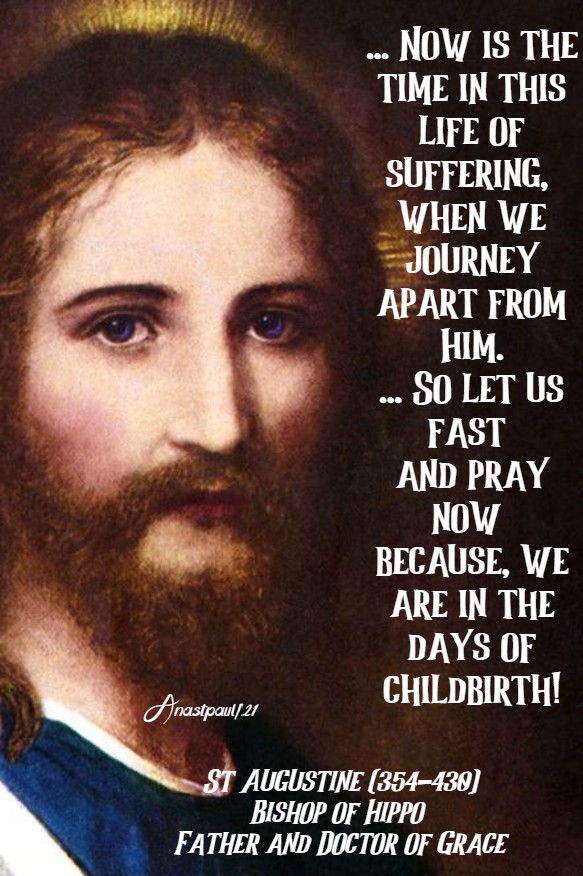
“… Now is the time in this life of suffering, when we journey apart from Him. … So let us fast and pray now because, we are in the days of childbirth!”
St Augustine (354-430) Bishop of Hippo Father and Doctor of Grace
“Girded with faith and the performance of good works, let us follow in His paths by the guidance of the Gospel.”
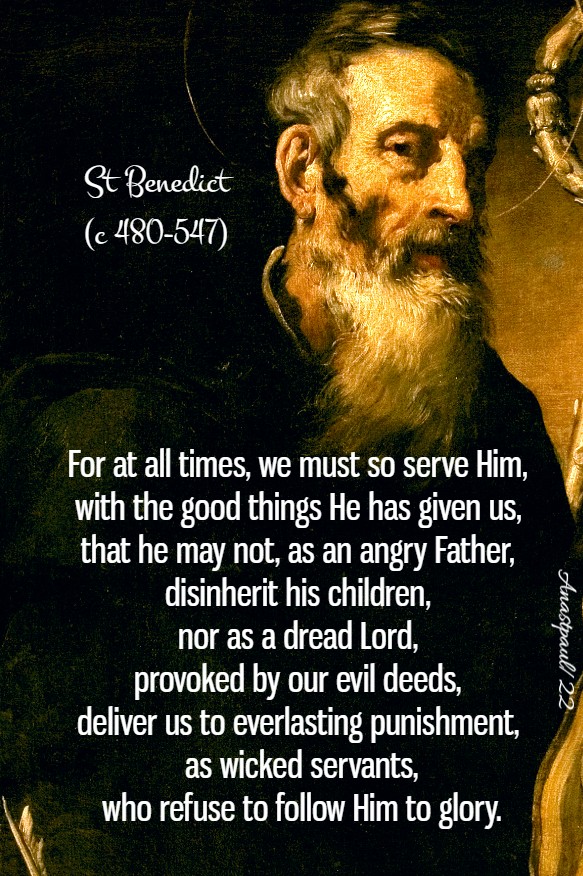
“For at all times, we must so serve Him, with the good things He has given us, that he may not, as an angry Father, disinherit his children, nor as a dread Lord, provoked by our evil deeds, deliver us to everlasting punishment, as wicked servants, who refuse to follow Him to glory.”
St Benedict (c 480-547)
“Each one of us has a thirst for all that is infinite, eternal and perfect. God alone can satisfy this thirst. Just as we are created by God, so we are created for Him. Just as we came from God, so we are gradually travelling back towards Him, for He is the final goal of our earthly journey. We should meditate on this great truth which we were first taught in the Catechism, namely, that we were created to know, love and serve God on this earth and to be happy with Him forever in Heaven. God alone is the eternal beauty which will satisfy our hearts.”
St Pius V OP (1504-1573) changed in 1969 this feast which had been celebrated on this day of his birth into Heaven since 1713. Bishop of Rome, Ruler of the Papal States, Pope of the Council of Trent, the Counter-Reformation, the Battle of Lepanto, the Holy Rosary and the Pope who declared St Thomas Aquinas as a Doctor of the Church (Optional Memorial) The Roman Martyrology states of St Pius V today: “At Rome, Pope St Pius V, of the Order of Preachers, who laboured zealously and successfully for the re-establishment of Ecclesiastical discipline, the extirpation of heresies, the destruction of the enemies of the Christian name and, governed the Catholic Church by holy laws and the example of a saintly lfe.” His Life: https://anastpaul.com/2019/04/30/saint-of-the-day-saint-pope-pius-v-1504-1572/ Lepanto by G K Chesterton: https://anastpaul.com/2019/04/30/lepanto-30-april/
St Crescentiana St Echa of Crayke St Eulogius of Edessa St Euthymius of Alexandria St Geruntius of Milan St Godehard of Hildesheim Bl Grzegorz Boleslaw Frackowiak St Hilary of Arles (c 400-449) Bishop
St Hydroc St Irenaeus of Thessalonica St Irenes of Thessalonica Bl John Haile St Jovinian of Auxerre St Jutta Kulmsee St Leo of Africo St Maurontius of Douai St Maximus of Jerusalem St Nectarius of Vienne St Nicetas of Vienne
Quote/s of the Day – 29 April – 2 Timothy 2:8-10; 3:10-12, John 15:1-7
“I am the vine, you the branches; whoever remains in me and I in him, the same bears much fruit; for without Me you can do nothing.”
John 15:5
“My sheep hear My Voice; and I know them and they follow Me.”
John 10:27
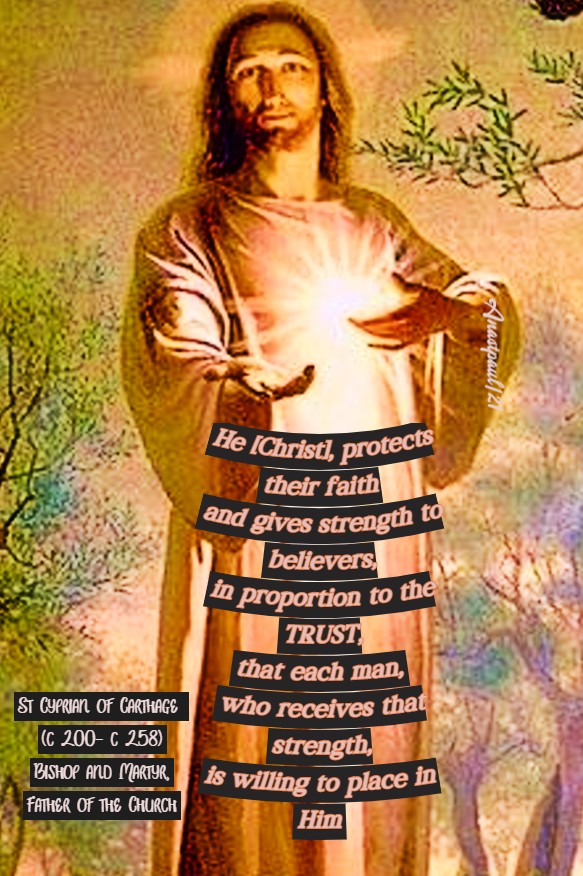
“He [Christ], protects their faith and gives strength to believers, in proportion to the TRUST, that each man, who receives that strength, is willing to place in Him.”
St Cyprian of Carthage (c 200- c 258) Martyr, Father of the Church
“The way to rest is through toil, the way to life is through death. Christ has taken on Himself the whole weakness of our lowly human nature. If then we are steadfast in our faith in Him and in our love for Him, we win the victory that He has won, we receive what He has promised.”
St Pope Leo the Great (400-461) Father and Doctor of the Church
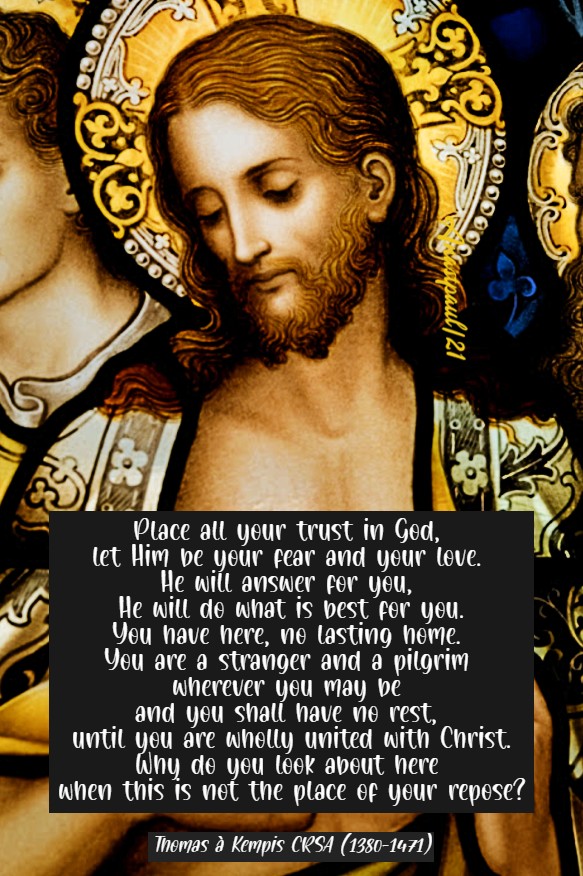
“Place all your trust in God, let Him be your fear and your love. He will answer for you, He will do what is best for you. You have here no lasting home. You are a stranger and a pilgrim wherever you may be and you shall have no rest, until you are wholly united with Christ. Why do you look about here when this is not the place of your repose?”
Thomas à Kempis (1380-1471)
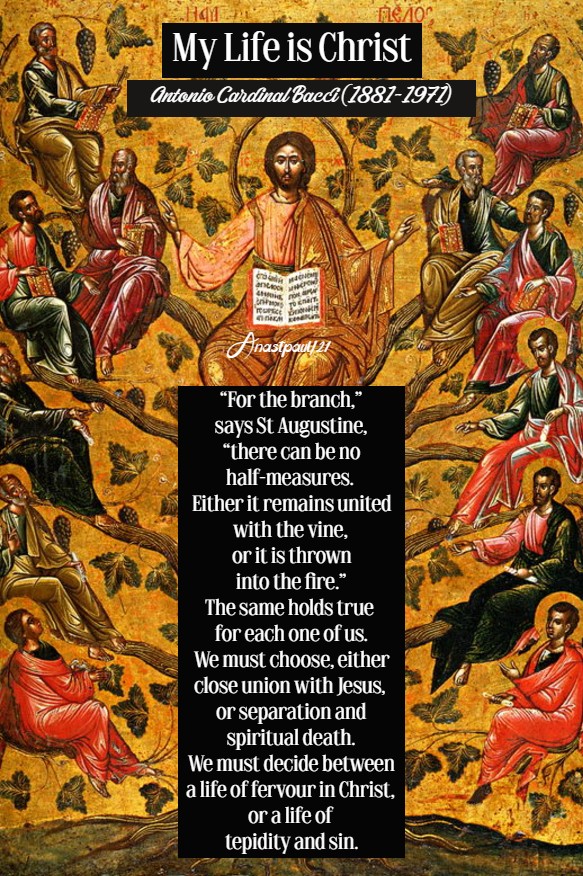
“For the branch,” says St Augustine, “there can be no half-measures. Either it remains united with the vine, or it is thrown into the fire.” The same holds true for each one of us. We must choose, either close union with Jesus, or separation and spiritual death. We must decide between a life of fervour in Christ, or a life of tepidity and sin.”
One Minute Reflection – 28 April – The Memorial of St Paul of the Cross CP (1604-1775) and St Louis Marie Grignion de Montfort (1673-1716 – 1 Corinthians 1:17-25, Luke 10:1-9
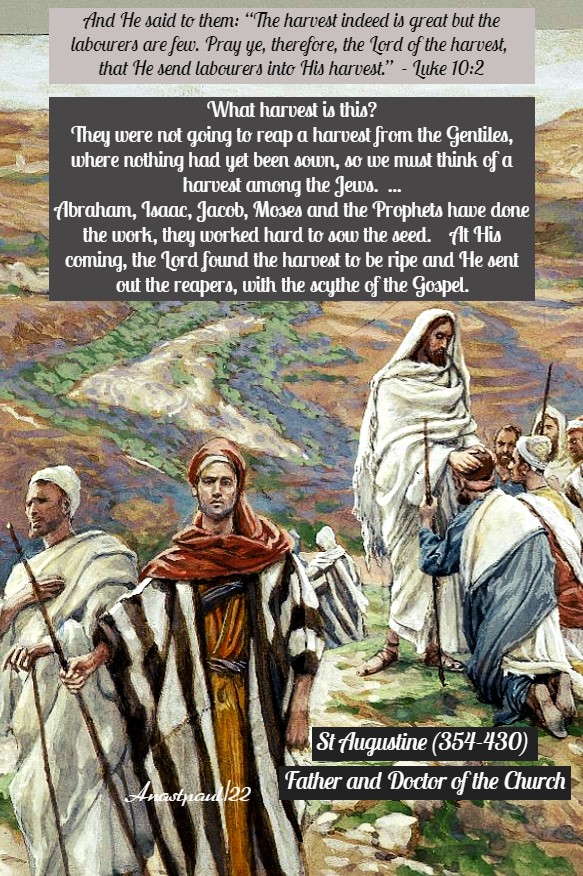
And He said to them: “The harvest indeed is great but the labourers are few. Pray ye, therefore, the Lord of the harvest, that He send labourers into His harvest.” – Luke 10:2
REFLECTION – “The Gospel that has just been read to us, invites us to seek out what this harvest might be, of which the Lord says to us, that: “The harvest is great, the labourers are few, so pray the Lord of the harvest to send out labourers into His harvest.” So it was that, in addition to those twelve disciples whom He called Apostles, (those who have been sent), He sent out seventy-two others. All of them, as His own words reveal, were sent to work at a harvest that had already been prepared. What harvest is this? They were not going to reap a harvest from the Gentiles, where nothing had yet been sown, so we must think of a harvest among the Jews. It was in order to reap this harvest that the Lord of the harvest came. But to the other peoples He sent, not reapers but sowers. Among the Jews, then, there was a harvest but elsewhere, the sowing. And it was particularly while reaping among the Jews, that He chose the Apostles. Harvest time had come, the harvest was ripe, for the prophets had done their sowing among them…
Did not the Lord declare to His disciples: “You say the harvest will be a long time. I tell you, look up and see, the fields ripe for harvest,” (Jn 4,35)? And again, He said: “Others have done the work and you are sharing the fruits of their work,” (ibid v.38). Abraham, Isaac, Jacob, Moses and the prophets have done the work, they worked hard to sow the seed. At His coming, the Lord found the harvest to be ripe and He sent out the reapers, with the scythe of the Gospel.” – St Augustine (354-430) Bishop of Hippo, Father and Doctor of the Church (Sermon 101).
PRAYER – Lord Jesus Christ, Who didst gift Thine holy servant Paul, with great love that he might preach the Mystery of Thy Cross and hast been pleased, that through him, a new family should grow up in Thy Church, grant unto us at his prayers, that upon earth we may so call Thy sufferings to mind, as worthily to gain the fruit thereof in Heaven. Who lives and reigns with God the Father, in the unity of the Holy Spirit, God, world without end. Amen (Collect).
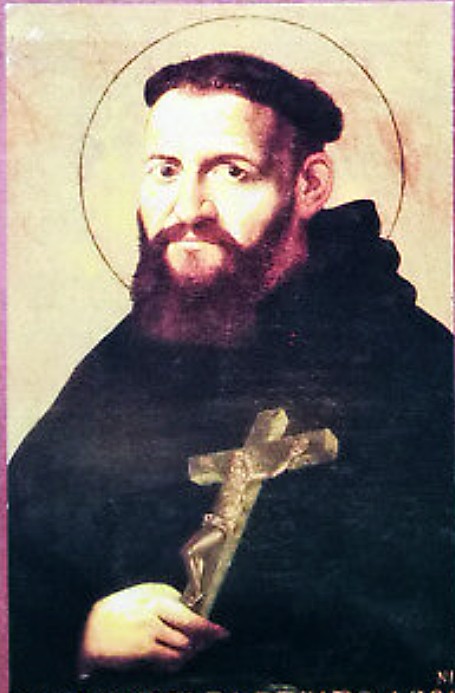
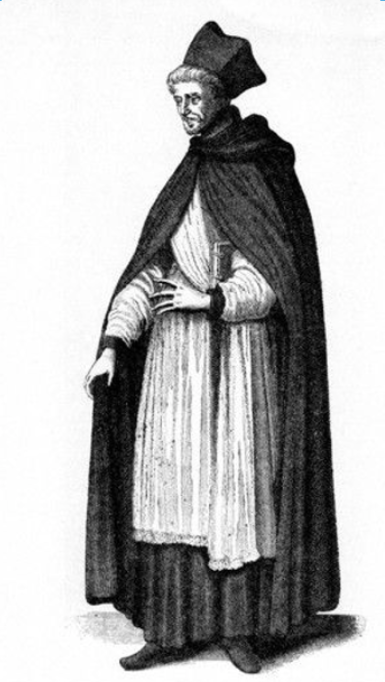
Saint of the Day – 12 April – Blessed Andrew of Montereale OSA (c 1403-1479) Priest of the Hermits of St Augustine, renowned Scholar, Preacher, Teacher, Reformer. Confessor and Spiritual Director to the Royal Court of France, Miracle-worker. His life was devoted to teaching, preaching and leading the Augustinians from several positions of leadership. He was hailed, even during his lifetime, as a pious Miracle worker. Born in c 1403 in Mascioni, Campotosto, Italy as Antonio Artesi and died on 18 April 1479 at the Augustinian Monastery of Montereale, Italy of natural causes. Additional Memorial – 18 April (The Augustinians). Patronage – Montereale, Italy.
The Roman Martyrology reads: “In Montereale in Abruzzo, Blessed Andrea, Priest of the Order of the Hermits of St Augustine, who devoted himself to preaching in Italy and France.”
The birthplace of Blessed Andrew is certain – Mascioni, on the shores of Lake Campotosto into a modest household; no less certain is the place of his death: the Augustinian Monastery in Montereale, a short distance from Mascioni, to which the Blessed retired, a few years before his death. His earthly sojourn ended on 18 April 1479.
The sad events of the Avignon Schism had negative effects on the Church and the Augustinian Order, well beyond 1417, the year in which Martin V was elected to the Supreme Pontificate. The quest for unity in the Order, which had been split by the schism and the path of reform, were the most urgent concerns of the General Chapters and the Priors General of the time. Those same events were inevitably echoed in the first part of Blessed Andrew’s life. According to tradition, he had, from childhood, worked as a shepherd. A meeting with Augustinian Father Augustine of Terni, Prior of the Monastery in Montereale, decided Andrew’s entrance into that same Monastery and the beginning of his Novitiate. He was Ordained a Priest at the age of twenty-five and then, in light of his bent for studies, was destined for teaching. To that end he acquired the various academic Degrees of Bachelor, Reader and Master of Theology while attending the general house of studies of the Order in Rimini and in Siena; he appears as Director of studies in the latter place, in 1459.
During these same years, enjoying, as he did, the trust of his superiors and fellow religious, he held Offices in Government. He was Vicar General and visitor of some Monasteries; he was elected Prior Provincial of the Province of the Valley of Spoleto and in that capacity, took part in the General Chapters of Avignon in 1455 and Pamiers (France) in 1465.
In 1459, for reasons we do not know, he resigned from the Priorate and his position as Director of studies in Siena and in 1461, by order of the Prior General, Father William Becchi, a Florentine, he was sent away from the Monastery of Norcia, along with the local Prior, Father Jerome of Cittaducale. This was “at the request of various religious of the Province, in order to avoid scandal and begin the reform of that Monastery.”
In 1468, when William Becchi was still the Prior General, he appointed Blessed Andrew as his Vicar for visiting the Monastery of Amatrice. In 1471, Andrew was again elected Prior Provincial of the Province of the Valley of Spoleto.
Thus far we have the cold facts of his “external” life as a religious. Other sources help us to know more about his interior life.
A few months after the Blessed’s death, his contemporary, Ambrose of Cori, who had been Provincial of the Roman Province and was now Prior General of the Order (1476-1482) listed 36 Blesseds of the Order, in the Chronicle of the Order, which he published in 1481. At the time when Blessed Andrew had been expelled from the Monastery of Norcia, Ambrose was Director of studies in Perugia and, therefore, knew Andrew personally. In the 36th place in his list he put Blessed Andrew of Montereale, “who lived in our time and is made glorious by many signs and miracles. He was very learned in Canon Law, Philosophy and Theology and showed the greatest example of holiness in preaching, helping the poor and enduring abuse and in every kind of patience.”
In a few words Ambrose exalts Blessed Andrew well above even fervent religious, tells us of his reputation for miracles and of his teaching and calls him Blessed, thereby, in all likelihood, expressing the sentiments of the people. In the epitaph engraved beneath the image of the Blessed on the wall of the Choir in the Church of Saint Augustine in Montereale—an epitaph that is now gone but was cited by Riccitelli in 1581 and went back to the end of the fourteenth or the beginning of the fifteenth century—people could read the following:
Here lies the body of Blessed Andrew of the Order of Hermits of Saint Augustine, who worked countless great miracles. Due to his holiness of life, the austerity of his ways and his Catholic teaching, due also to his honeyed preaching and great miracles, he was famous throughout Italy and France.
He is dear to God and humanity and is an honour to the Order, an adornment of his native land and of great advantage to his neighbour. He was and is, a great benefit to the world, having preached the Word of God for fifty years.
His works have not come down to us. At that time an inventory of goods had to be made by Masters of Theology. A copy of the one which the Blessed compiled on the day of his death has survived and therein, is a list of the books he had loaned to brother Friars. Among these was the Decretals, a Gloss on the subject and a “little book,” a term suggesting a work of his own. The other objects listed give a glimpse of the simplicity of his life, for among them are “a little brass jar, four table forks, a little bell and some other little things.”
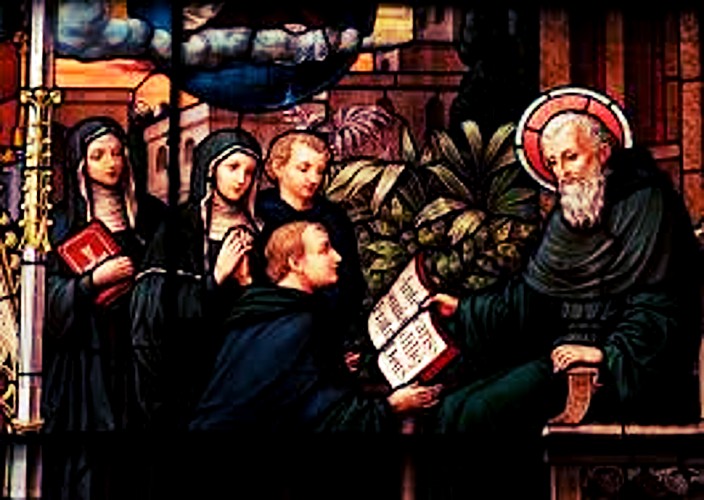
Augustinians and the Rule
Among the many writers who have spoken of him, mention may be made of Blessed Alonso de Orozco, who, in his Chronicle of the Glorious Saint Augustine, Father and Doctor of the Church (1551), lists Andrew among the blessed and describes him as “a very gifted man and a great preacher; very patient and charitable; – he performed many miracles.”
Although Andrew had the reputation of being a saint, it was only in the years 1756-1757, during the Pontificate of Benedict XIV, that the cause of his Beatification was taken up by the Diocese of Rieti, of which Montereale was a part. During the process, witnesses bore unanimous testimony to Andrew’s commitment to the struggle against schism and heresy, his exercise of the preaching office over several decades, his journeys to France and the role he played at the Court of the King of France, where he was the Queen’s Confessor and Spiritual Director. They also attested that his name was Antonio Artesi. Blessed Andrew was Beatified on 18 February 1764 by Pope Clement XIII (By the Augustinian Friends).
Monday of Holy Week – 11 April – Our Lenten Journey with the Great Fathers – Isaias 50:5-10, John 12:1-9
“Help us, O God, our saviour and for the glory of thy name, O Lord, deliver us and forgive us our sins, for Thy name’s sake” – Psalm 78:9
“He (Judas Iscariot) said this, not because he cared about the poor but because, he was a thief and held the money bag and used to steal the contributions.”
John 12:6
“LOOK NOW AND LEARN that this Judas did not become perverted, only at the time when he yielded to the bribery of the Jews and betrayed his Lord. For not a few, inattentive to the Gospel, suppose, that Judas only perished, when he accepted money from the Jews, to betray the Lord. It was not then that he perished but he was already a thief and a reprobate, when following the Lord;,for it was with his body and not with his heart, that he followed. He made up the apostolic number of twelve but had no part in the apostolic blessedness. He had been made the twelfth in semblance and on his departure and the succession of another, the apostolic reality was completed and the entirety of the number conserved.
WHAT LESSON THEN, my brethren, did our Lord Jesus Christ wish to impress on His Church, when it pleased Him, to have one castaway among the twelve – but this – that we should bear with the wicked and refrain from dividing the body of Christ? Here you have Judas among the saints,- that Judas, mark you! who was a thief, yes – do not overlook it – not a thief of any ordinary type but a thief and a sacrilegis – a robber of money bags,but of such as were the Lord’s; of money bags but of such as were sacred! . … How much more severe ought to be, the sentence on the sacrilegious thief, who has dared to steal, not from places of any ordinary kind but, to steal from the Church!?
HE WHO THIEVES from the Church, stands side by side with the castaway Judas. Such was this man Judas and yet, he went in and out with the eleven holy disciples. With them, he came even to the table of the Lord, he was permitted to have intercourse with them but he could not contaminate them.
OF ONE BREAD did both Peter and Judas partake and yet, what communion had the believer with the infidel? Peter’s partaking was unto life but that of Judas unto death. For that good bread was just like the sweet savour. For as the sweet savour, so also does the good bread give life to the good and bring death to the wicked. “For he that eateth unworthily, eateth and drinketh judgement to himself:” – “judgment to himself,” not to thee. If, then, it is judgement to himself, not to thee, bear as one that is good, with him that is evil, that you may attain the rewards of the good,and be not hurled into the punishment of the wicked.” – St Augustine (354-430) Bishop of Hippo, Great Western Father and Doctor of the Church (On John 12:1-9 Monday of Holy Week).
Quote/s of the Day – 11 April – Monday of Holy Week – Isaias 50:5-10, John 12:1-9
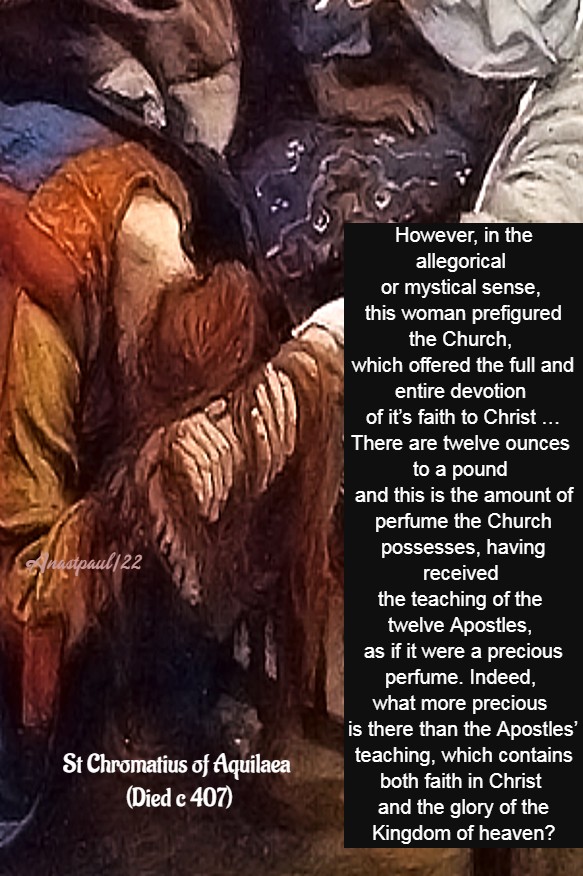
“However, in the allegorical or mystical sense, this woman prefigured the Church, which offered the full and entire devotion of it’s faith to Christ … There are twelve ounces to a pound and this is the amount of perfume the Church possesses, having received the teaching of the twelve Apostles, as if it were a precious perfume. Indeed, what more precious is there than the Apostles’ teaching, which contains both faith in Christ and the glory of the Kingdom of heaven? ”
St Chromatius of Aquilaea (Died c 407)
“People who associate the name of Christian with a dishonest life, injure Christ! … If God’s Name, is blasphemed by bad Christians, it is praised and honoured, on the other hand, by the good: “For in every place, we are the aroma of Christ” (2 Cor,14-15). And it is said in the Song of Songs: “Your name is oil poured out” (1,3).”










































 AnaStpaul
You must be logged in to post a comment.