Quote/s of the Day – 16 December – “Month of the Immaculate Conception” – Thursday of the Third week of Advent, Readings: Isaiah 54: 1-10; Psalm30: 2 and 4-6,11-12a and 13b; Luke 7: 24-30
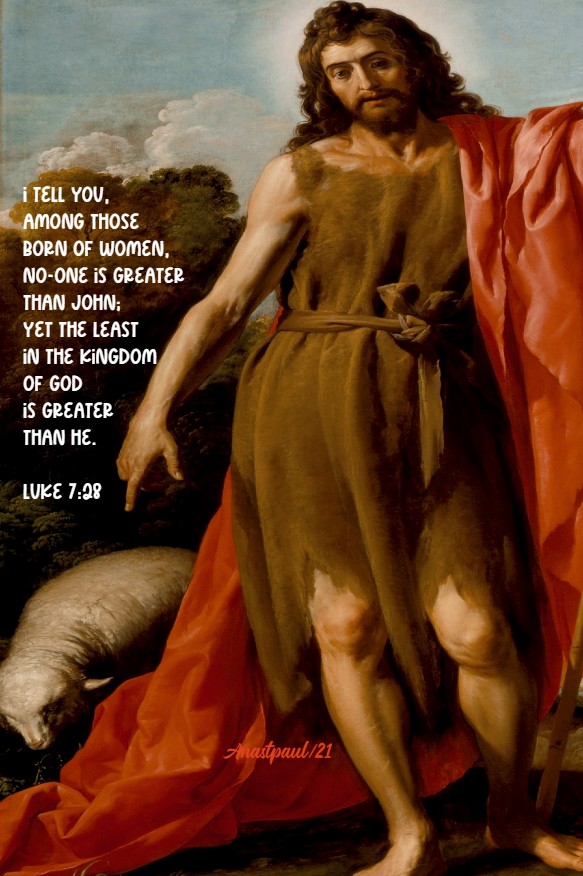
“I tell you, among those born of women, no-one is greater than John; yet the least in the kingdom of God is greater than he.”
Luke 7:28
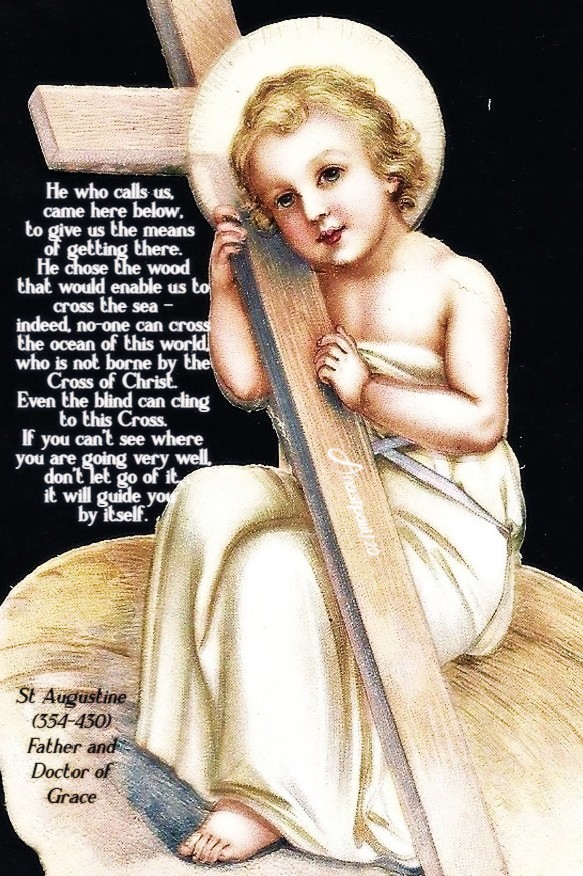
“He who calls us, came here below, to give us the means of getting there. He chose the wood that would enable us to cross the sea – indeed, no-one can cross the ocean of this world, who is not borne by the Cross of Christ. Even the blind can cling to this Cross. If you can’t see where you are going very well, don’t let go of it, it will guide you by itself.”
St Augustine (354-430) Father and Doctor of Grace
“Hate what the world seeks and seek, what it avoids.”
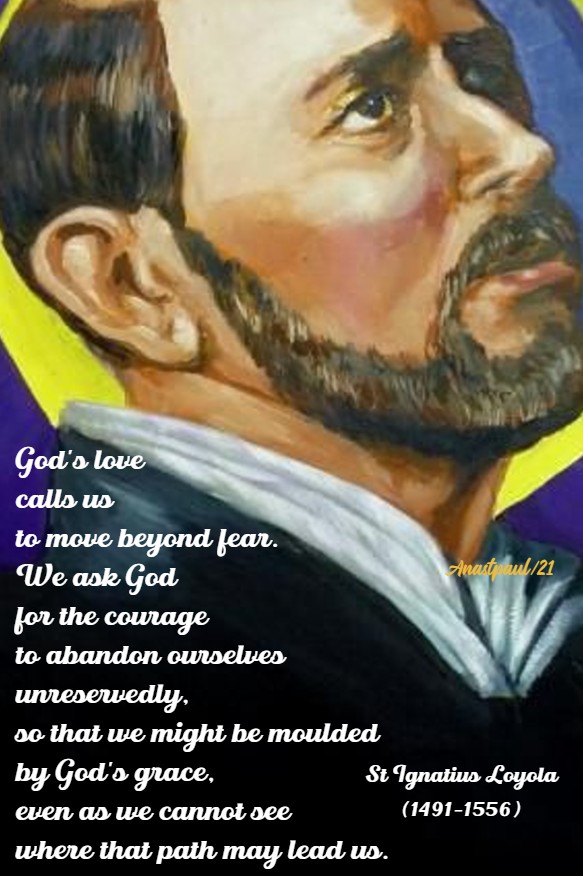
“God’s love calls us to move beyond fear. We ask God for the courage to abandon ourselves unreservedly, so that we might be moulded by God’s grace, even as we cannot see where that path may lead us.”
St Ignatius Loyola SJ (1491-1556)
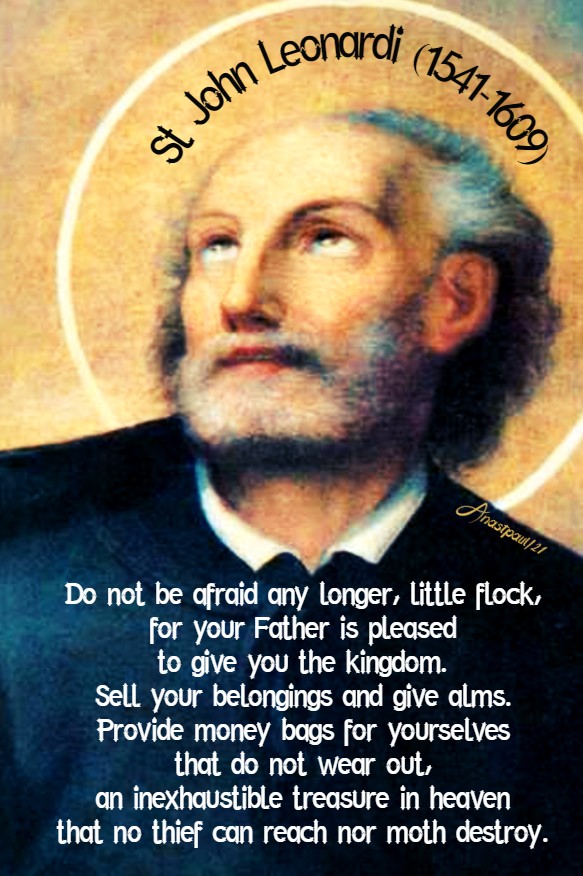
“Do not be afraid any longer, little flock, for your Father is pleased to give you the kingdom. Sell your belongings and give alms. Provide money bags for yourselves that do not wear out, an inexhaustible treasure in heaven that no thief can reach nor moth destroy.”
Quote/s of the Day – 9 December – Thursday of the Second week of Advent
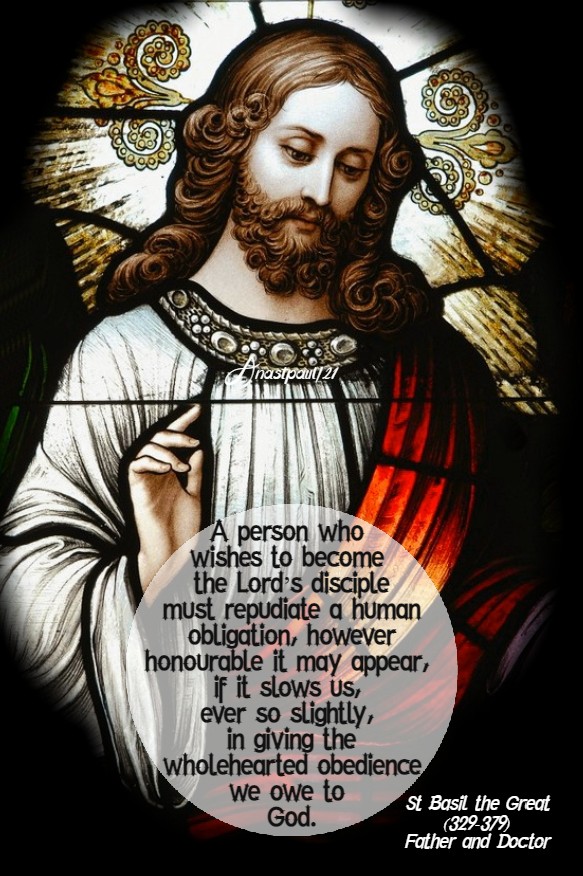
“A person who wishes to become the Lord’s disciple must repudiate a human obligation, however honourable it may appear, if it slows us, ever so slightly, in giving the wholehearted obedience we owe to God.”
St Basil the Great (329-379) Father and Doctor of the Church
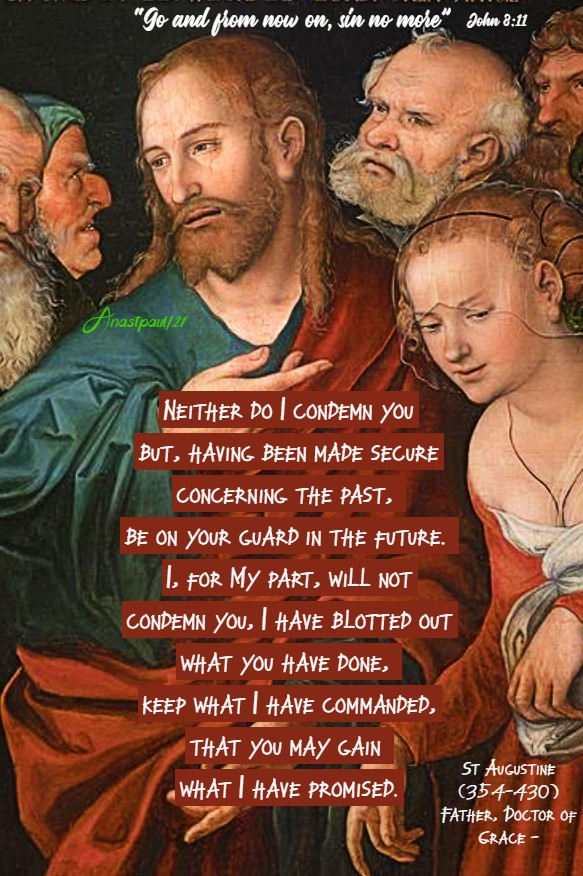
“Neither do I condemn you but, having been made secure concerning the past, be on your guard in the future. I, for My part, will not condemn you, I have blotted out what you have done; keep what I have commanded, that you may gain what I have promised.”
St Augustine (354-430) Father & Doctor of Grace
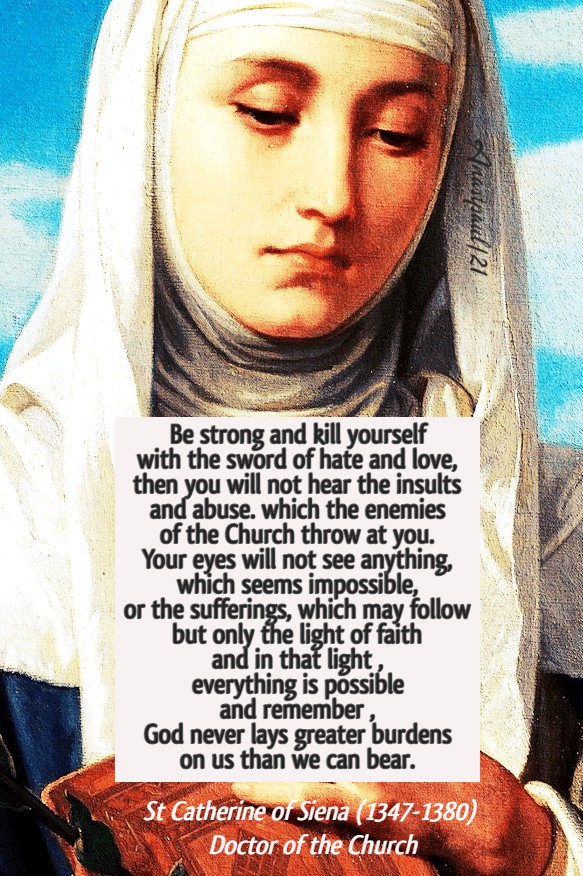
“Be strong and kill yourself with the sword of hate and love, then you will not hear the insults and abuse. which the enemies of the Church throw at you. Your eyes will not see anything, which seems impossible, or the sufferings, which may follow but only the light of faith and in that light , everything is possible and remember , God never lays greater burdens on us than we can bear.”
St Catherine of Siena (1347-1380) Doctor of the Church
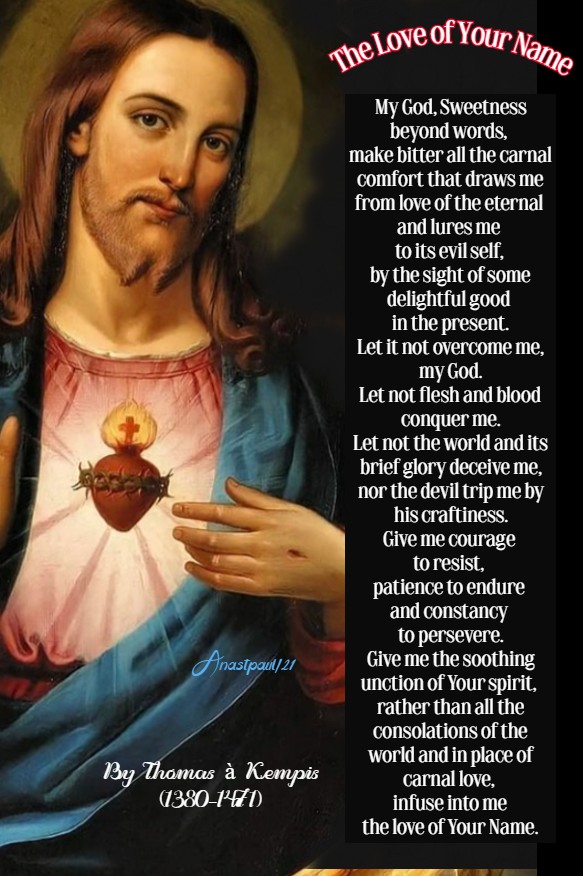
The Love of Your Name
“My God, Sweetness beyond words, make bitter all the carnal comfort that draws me from love of the eternal and lures me to its evil self, by the sight of some delightful good in the present. Let it not overcome me, my God. Let not flesh and blood conquer me. Let not the world and its brief glory deceive me, nor the devil trip me by his craftiness. Give me courage to resist, patience to endure and constancy to persevere. Give me the soothing unction of Your spirit, rather than all the consolations of the world and in place of carnal love, infuse into me the love of Your Name.”
Thomas à Kempis CRSA (1380-1471) The Imitation of Christ (Book 3 Ch 26:1-4)
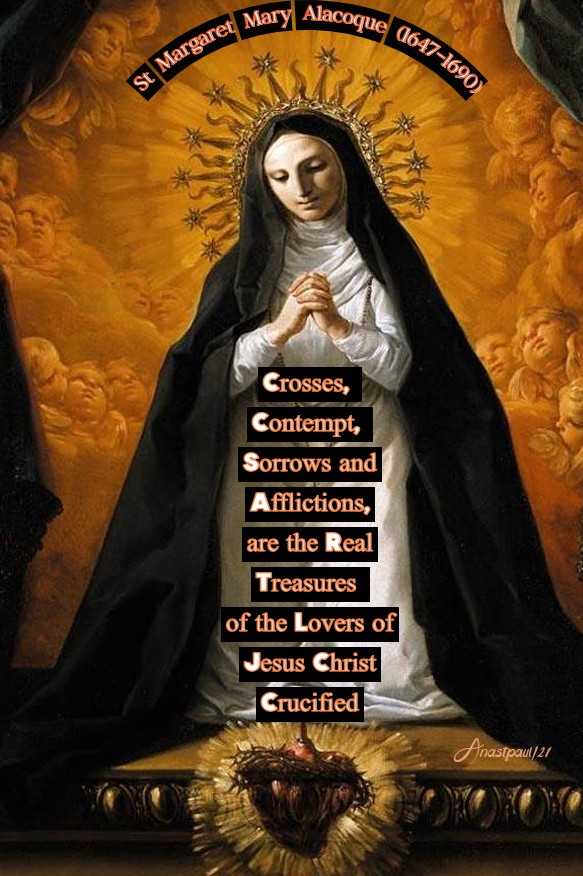
“Crosses, contempt, sorrows and afflictions, are the real treasures of the lovers of Jesus Christ Crucified.”
St Margaret Mary Alacoque (1647-1690) “Apostle of the Sacred Heart”
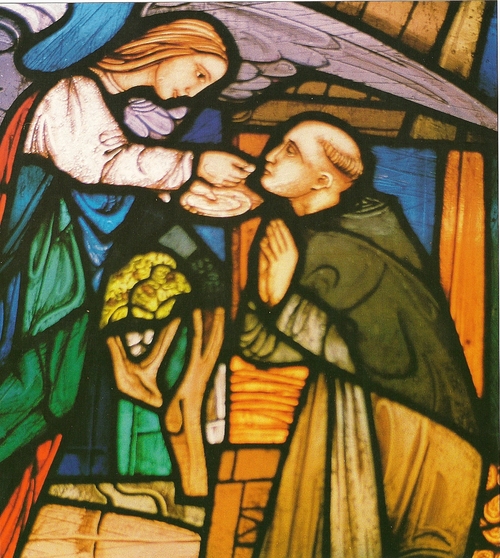
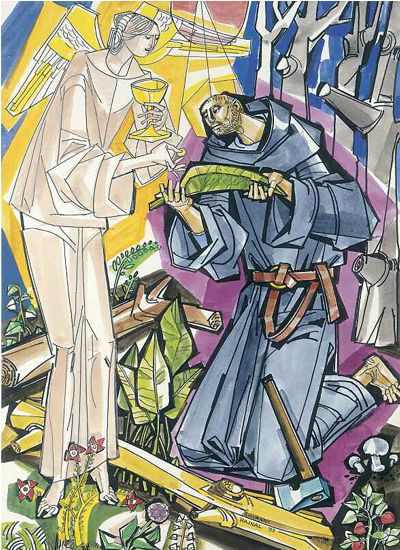
Saint of the Day – 30 November – Blessed Frederick of Regensburg OSA (Died 1329) Lay Friar of the Order of St Augustine, devotee of the Blessed Sacrament. Born in the late 13th century in Regensburg, Bohemia (in modern Germany) and died on 30 November 1329 in Regensburg, of natural causes. Additional Memorial – 29 November in the Augustinian Order.
The Holy Communion of the Blessed Frederick of Regensburg by Jan van den Hoecke (1611-1651) (detail)
History has not left us a great deal of factual information about Blessed Frederick. Perhaps this is an indication of the ‘ordinariness’ of this servant of God, who spent his religious life in fidelity to the daily cycle of prayer and work, which characterises so many religious of his day and ours. Frederick reminds us that loyal devotion to one’s state in life, lived in fidelity to the Gospel is the means to holiness.
Blessed Frederick was born of poor parents in Regensburg, Germany. He entered the Augustinian Monastery of Saint Nicholas in that City as a lay brother. At that time, the Monastery of Saint Nicholas was considered to be the most important community of the Bavarian Province of the Order and even hosted the General Chapter of 1290, at which the first Constitution of the Augustinians was promulgated.
His life as an Augustinian was marked by humility and generosity, dedication to prayer and great devotion to the Blessed Sacrament.
His talents served the community principally as carpenter and woodcutter, activities in which he demonstrated his concern for his fellow religious and the needs of the Moonastery.
Frederick died on 30 November 1329 in Regensburg where devotion to him continued without interruption and the testimony of miracles attributed to his intercession, were gathered. Frederick is buried at St Cecelia Church in the City of Regensburg.
St Pius X Beatified him on 12 May 1909.
Blessed Frederick’s secret to holiness and message to us, is one of humble service and generous offering of self for the well being of others. His life of prayer and devotion to the Blessed Sacrament were the food that nourished his spirit and strengthened his daily resolve, to live for God and to practice love for his brothers – which is the heart of the Gospel.
PRAYER
Almighty and eternal God, source of all that is good, You gave to Blessed Frederick a wonderful spirit of dedication, of penance and a love for the Holy Eucharist. Through his prayers and example may we grow to be like him as your good and faithful servants. We ask this through our Lord Jesus Christ, your Son, Who lives and reigns with You and the Holy Spirit, one God forever and ever. Amen
The Holy Communion of the Blessed Frederick of Regensburg by Jan van den Hoecke (1611-1651)
Quote/s of the Day – 29 November – Monday of the First Week of Advent – Readings: Isaiah 2: 1-5; Psalms 122: 1-9; Matthew 8: 5-11
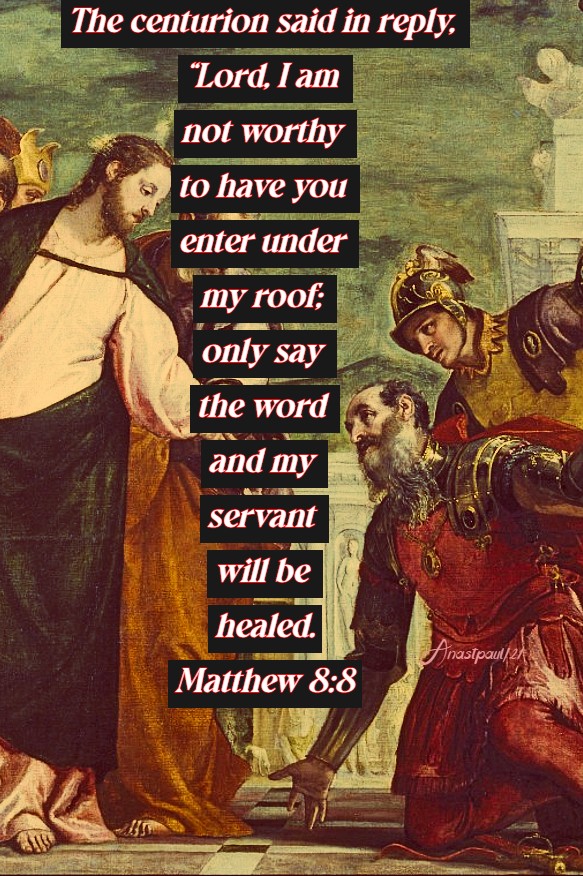
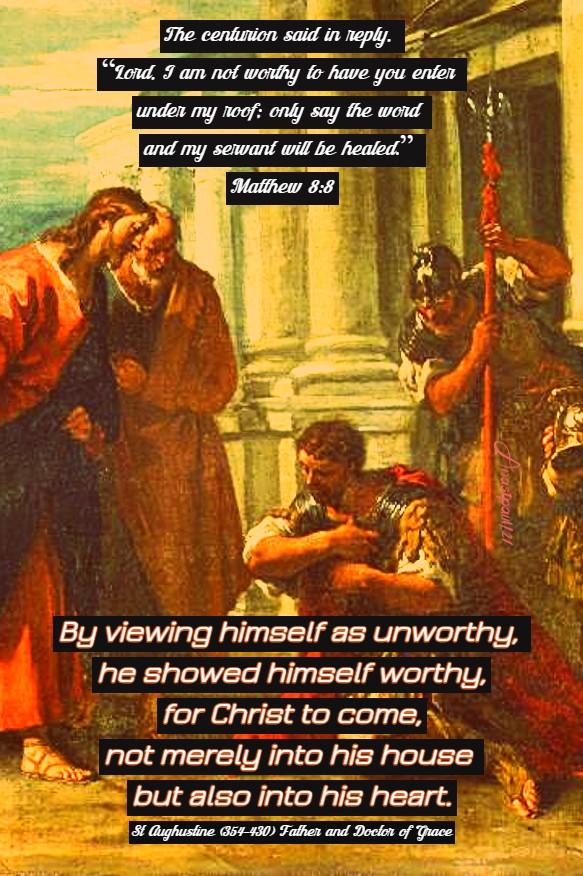
“The centurion said in reply, “Lord, I am not worthy to have you enter under my roof; only say the word and my servant will be healed.”
Matthew 8:8
“By viewing himself as unworthy, he showed himself worthy, for Christ to come, not merely into his house but also into his heart.”
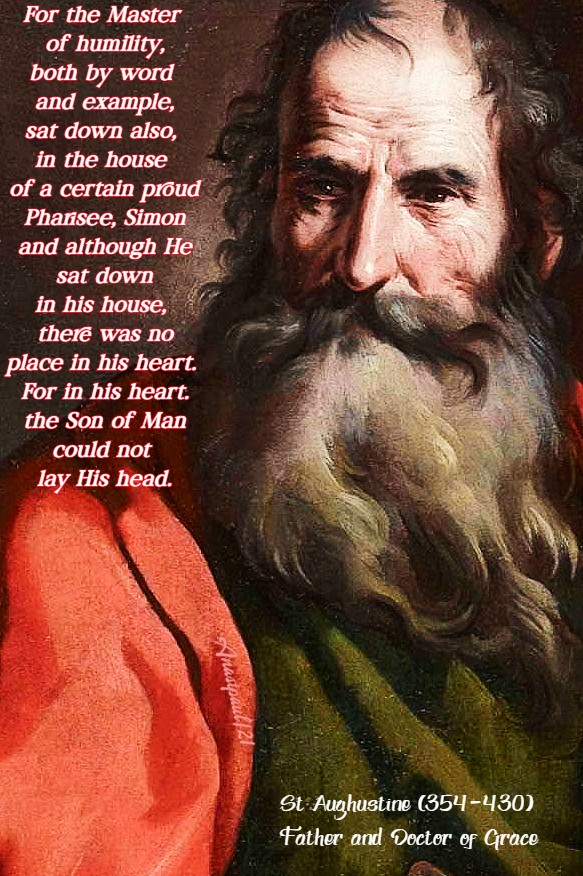
“For the Master of humility, both by word and example, sat down also, in the house of a certain proud Pharisee, Simon and although He sat down in his house, there was no place in his heart. For in his heart. the Son of Man could not lay His head.”
St Aughustine (354-430) Father and Doctor of Grace
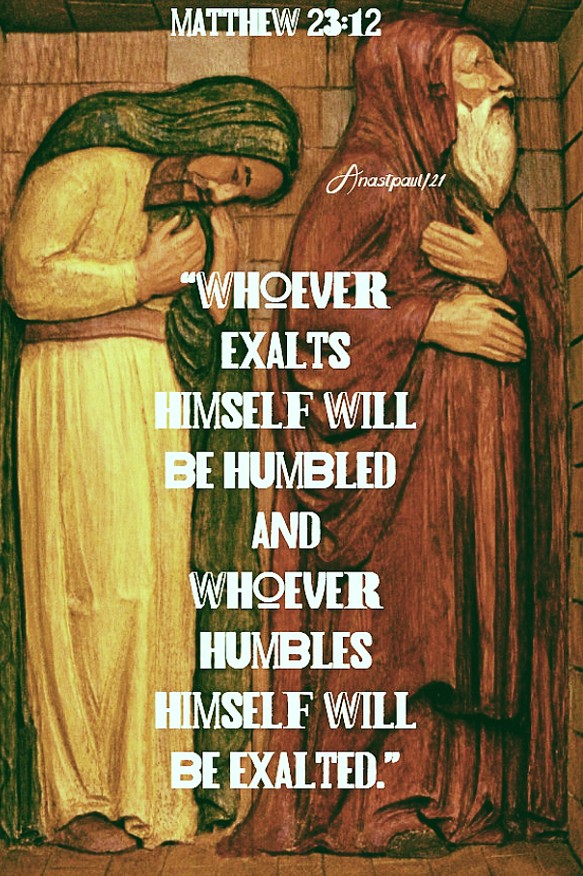
“Whoever exalts himself will be humbled and whoever humbles himself will be exalted.”
Matthew 23:12
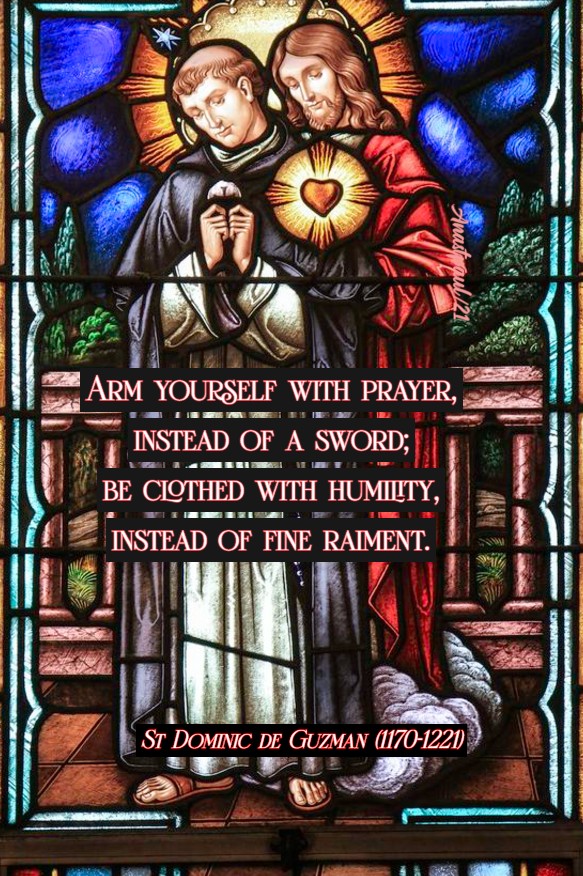
“Arm yourself with prayer, instead of a sword; be clothed with humility, instead of fine raiment.”
St Dominic de Guzman OP (1170-1221)
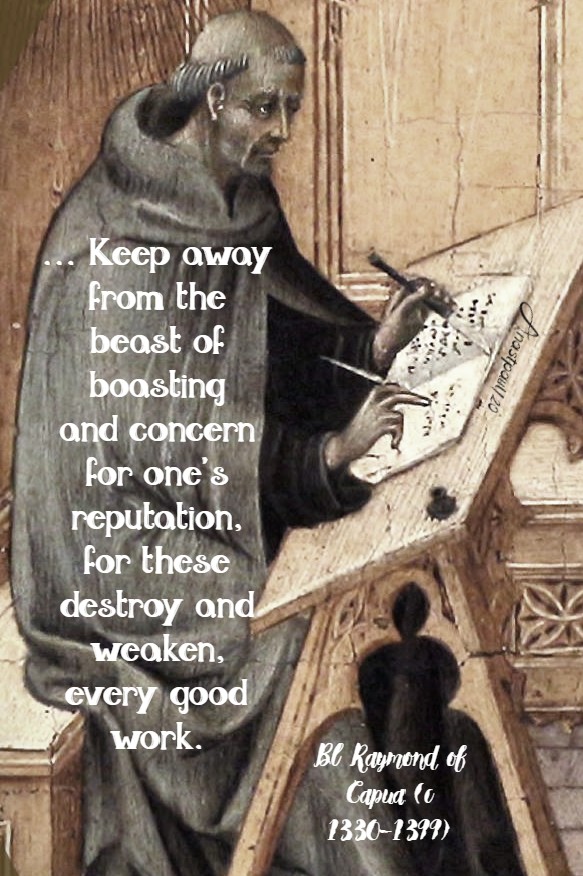
“My brothers, keep away from the beast of boasting and concern for one’s reputation, for these destroy and weaken, every good work.”
Bl Raymond of Capua (c 1330-1399)
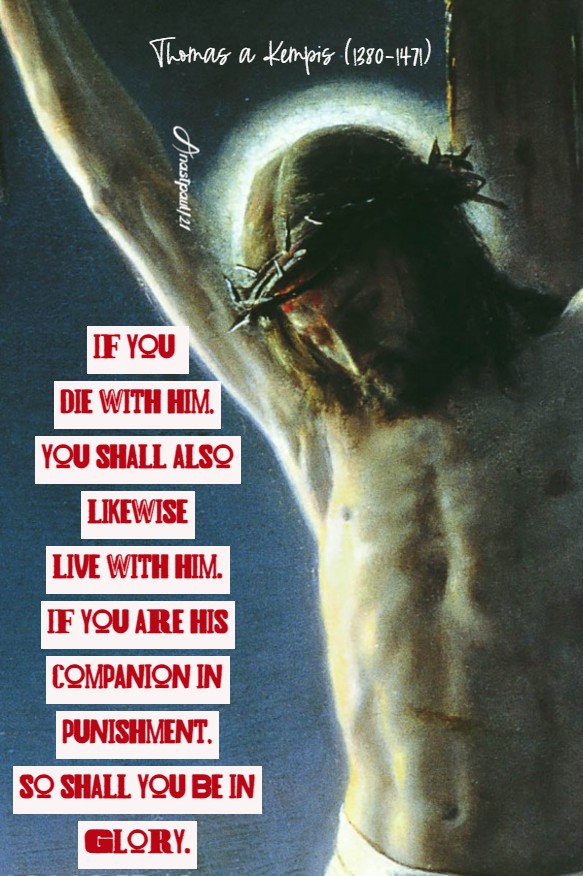
“ … If you die with Him, you shall also likewise live with Him. If you are His companion in punishment, so shall you be in glory.”
Thomas à Kempis (1380-1471)
“Humility and charity are the two master chords – one, the lowest; the other, the highest; all the others are dependent on them. Therefore, it is necessary, above all. to maintain ourselves in these two virtues, for observe well, that the preservation of the whole edifice depends on the foundation and the roof!”
Quote/s of the Day – 28 November – The Memorial of St Pope Gregory III (Died 741
“The only true riches are those that make us rich in virtue. Therefore, if you want to be rich, beloved, love true riches. If you aspire to the heights of real honour, strive to reach the Kingdom of Heaven. If you value rank and renown, hasten to be enrolled in the heavenly court of the Angels.”
St Pope Gregory III (Died 741)
“When God is our strength, it is strength indeed; when our strength is our own, it is only weakness.”
St Augustine (354-430) Father and Doctor of the Church
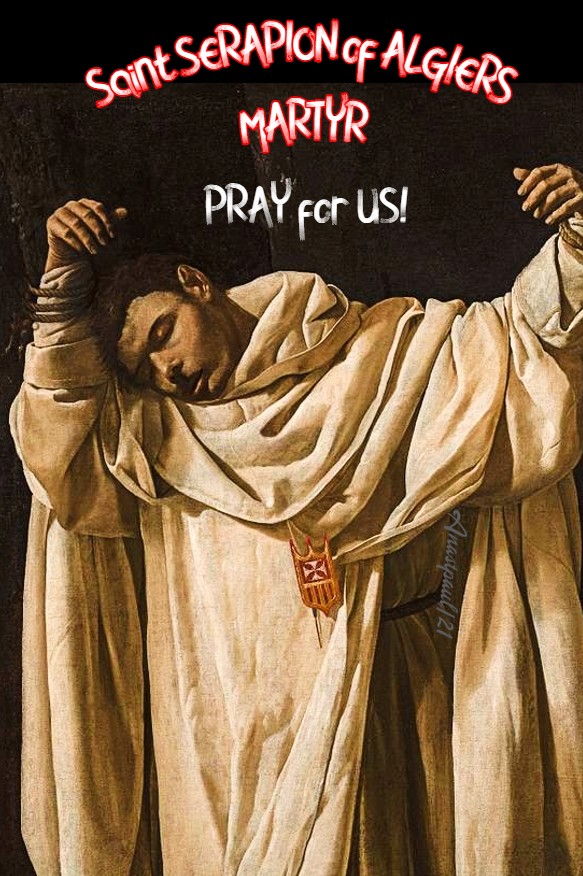
One Minute Reflection – 14 November – “Month of the Holy Souls in Purgatory” – Readings: Daniel 12: 1-3; Psalm 16: 5, 8, 9-10, 11; Hebrews 10: 11-14, 18; Mark 13: 24-32 and the Memorial of St Serapion of Algiers OdeM (c 1179–1240) Mercadarian Priest and Martyr
“And then they will see the Son of man coming in the clouds with great power and glory… ” – Mark 13:26
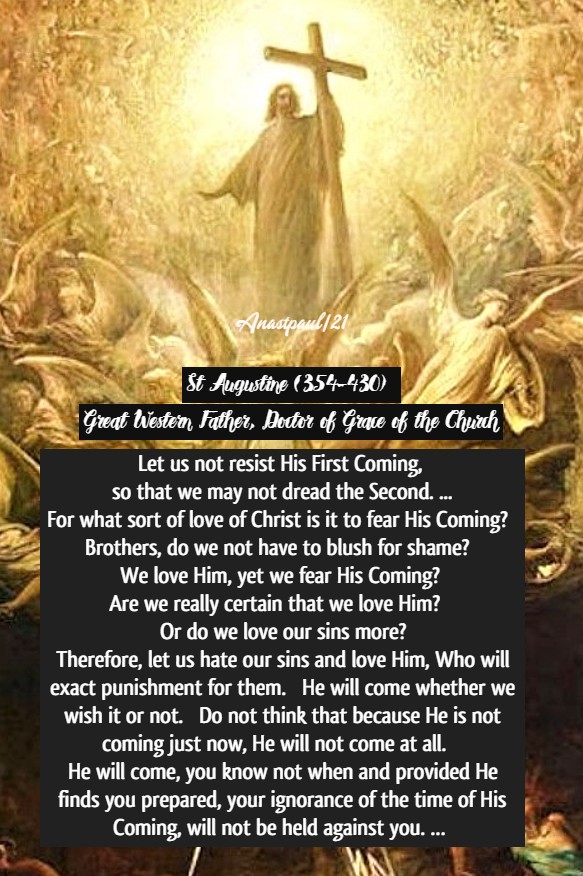
REFLECTION – “All the trees of the forest will exult before the Face of the Lord, for He has come, he has come to Judge the earth. He has come the first time and He will come again. At His first coming, His own voice declared in the gospel: “Hereafter, you shall see the Son of Man coming upon the clouds.” What does He mean, by hereafter? Does He not mean that the Lord will come at a future time when all the nations of the earth will be striking their breasts in grief? Previously He came through His preachers and He filled the whole world. Let us not resist His first coming, so that we may not dread the second. … But I wish you to be without anxiety. He who is without anxiety waits without fear until his Lord comes. For what sort of love of Christ is it to fear His Coming? Brothers, do we not have to blush for shame? We love Him, yet we fear His Coming? Are we really certain that we love Him? Or do we love our sins more? Therefore, let us hate our sins and love Him, Who will exact punishment for them. He will come whether we wish it or not. Do not think that because He is not coming just now, He will not come at all. He will come, you know not when and provided He finds you prepared, your ignorance of the time of His Coming, will not be held against you. … ” – St Augustine (354-430) Bishop and Great Western Father, Doctor of Grace of the Church – (An excerpt from his On The Psalms (Psalm 95) 14-15.)
PRAYER – Almighty Lord and God, protect us by Your power throughout the course of this day, even as You have enabled us to begin it. Your grace is all that we need, to see the loving kindness of Your Son, our Lord Jesus in all we see and do and think. Do not let us turn aside from His path but by the faith You have granted us, let us find meaning in all, which is the sign of Your glory. Do not let us turn aside to sin and may the intercession of St Serapion of Algiers, grant us courage and peace. Through Jesus Christ, our Saviour, with the Holy Spirit, God now and forever, amen.
Quote/s of the Day – 13 November – The Memorial of All Saints of the Augustinian Order and the Anniversary of the Birth of St Augustine (354-430)
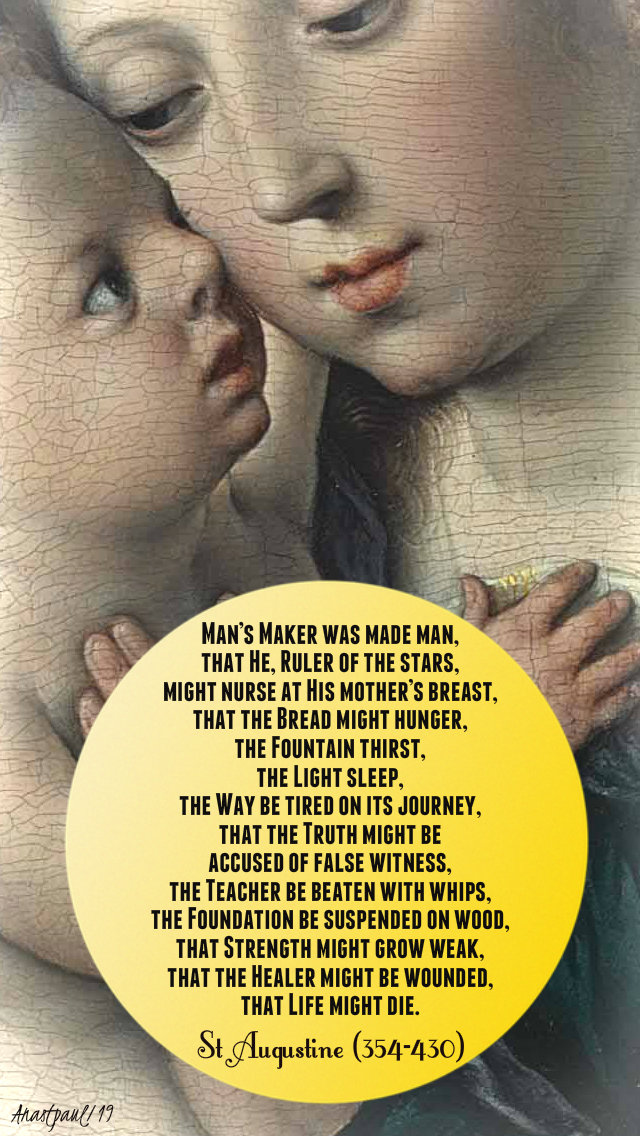
“Man’s Maker was made man, that He, Ruler of the stars, might nurse at His mother’s breast, that the Bread might hunger, the Fountain thirst, the Light sleep, the Way be tired on its journey, that the Truth might be accused of false witness, the Teacher be beaten with whips, the Foundation be suspended on wood, that Strength might grow weak, that the Healer might be wounded, that Life might die.”
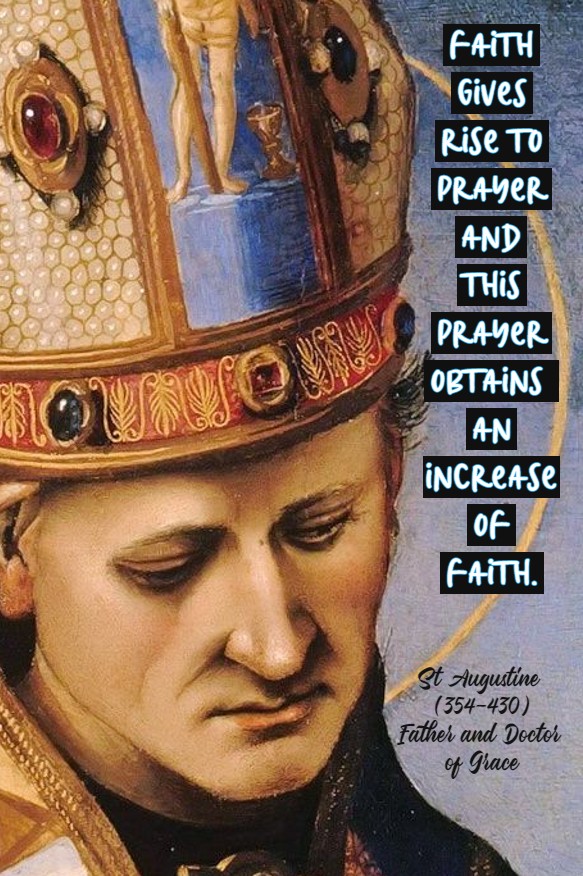
“Faith gives rise to prayer and this prayer obtains an increase of faith.”
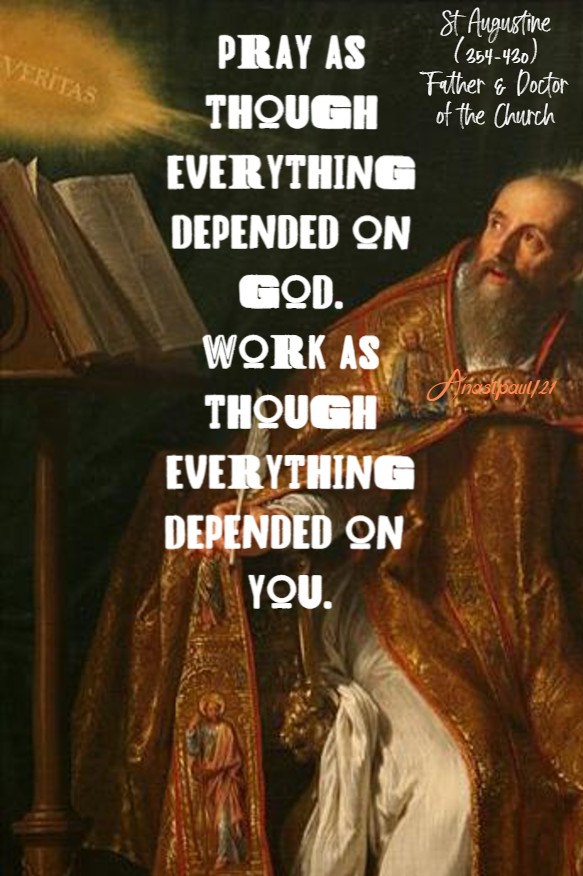
“Pray as though everything depended on God. Work as though everything depended on you.”
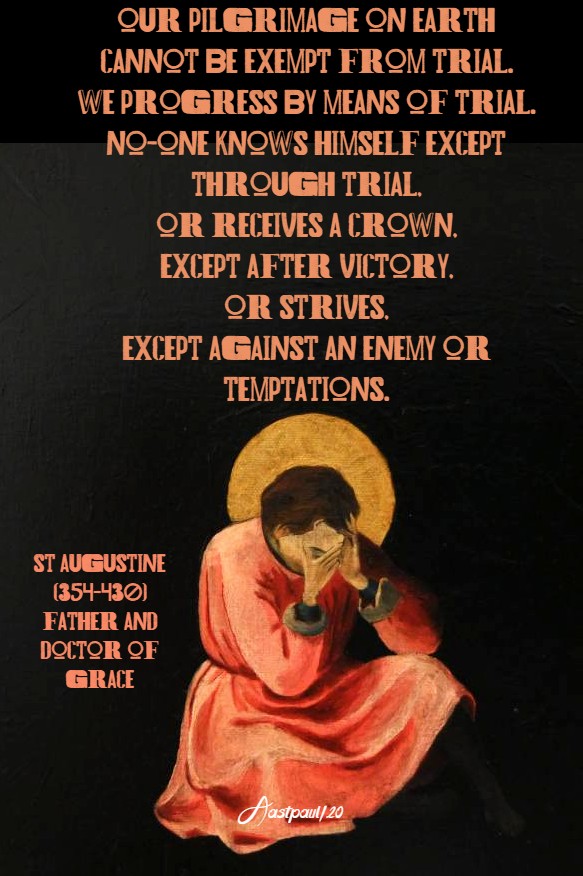
“Our pilgrimage on earth cannot be exempt from trial. We progress by means of trial. No-one knows himself except through trial, or receives a crown, except after victory, or strives, except against an enemy or temptations.”
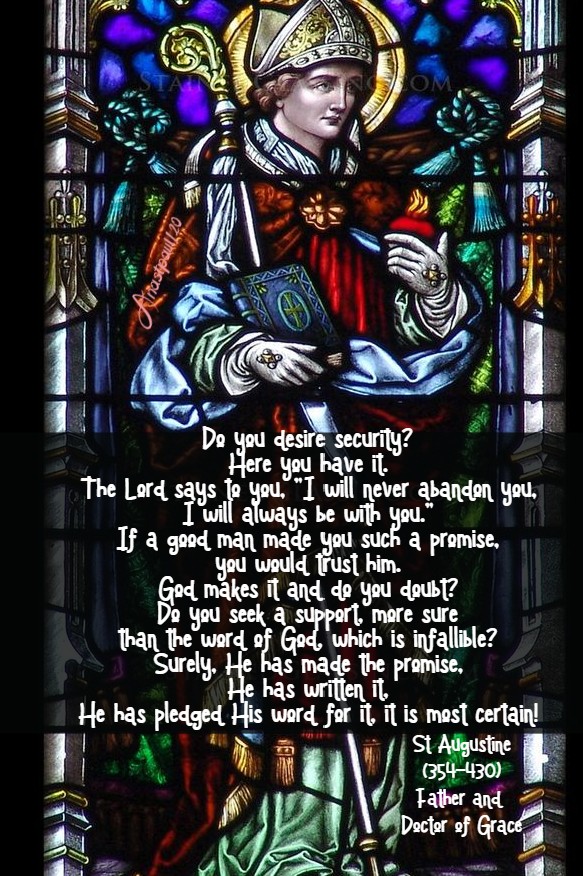
“Do you desire security? Here you have it. The Lord says to you, “I will never abandon you, I will always be with you.” If a good man made you such a promise, you would trust him. God makes it and do you doubt? Do you seek a support, more sure than the Word of God, which is infallible? Surely, He has made the promise, He has written it, He has pledged His Word for it, it is most certain!”
“If you believe what you like in the Gospels and reject what you don’t like, it is not the Gospel you believe but yourself.”
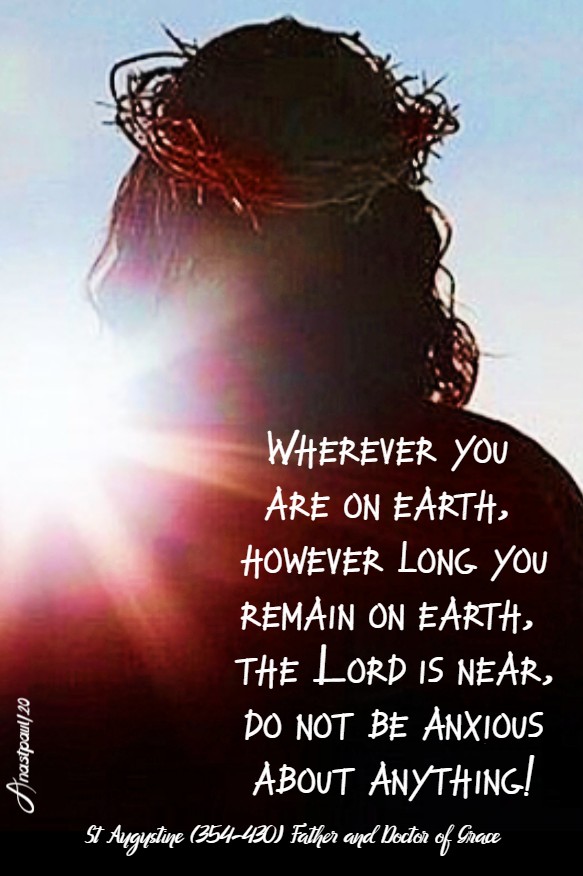
“Wherever you are on earth, however long you remain on earth, the Lord is near, do not be anxious about anything!”
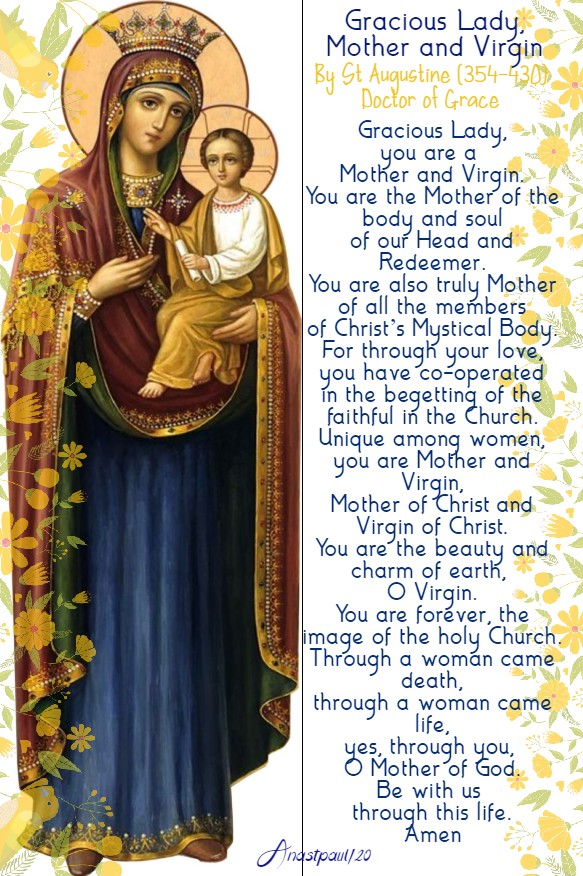
Gracious Lady, Mother and Virgin By St Augustine (354-430) Doctor of Grace
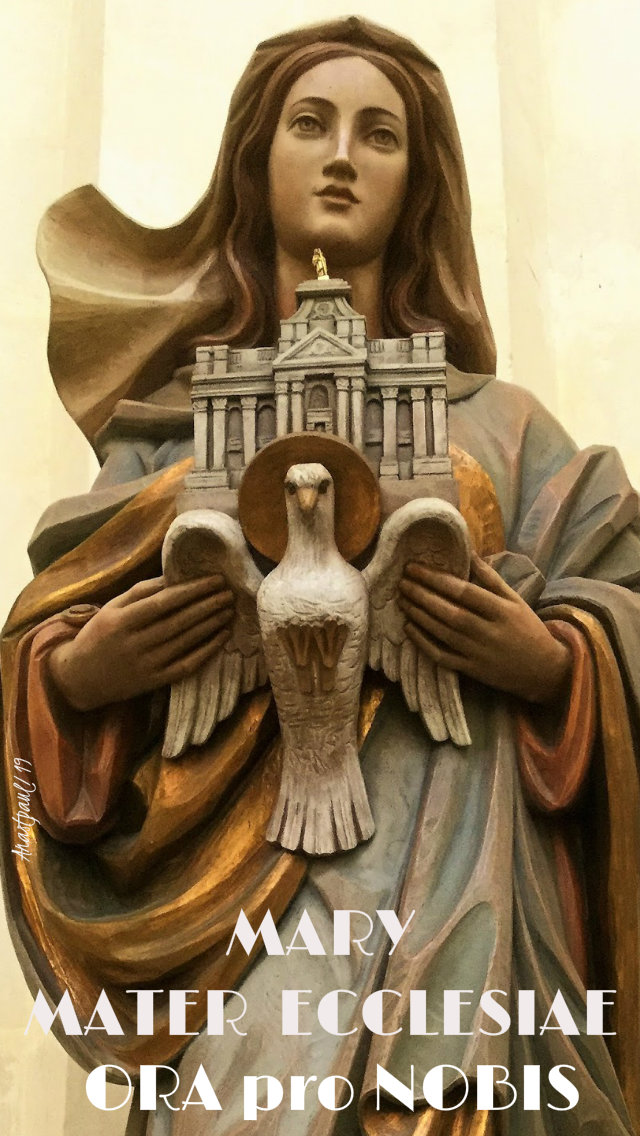
Gracious Lady, you are a Mother and Virgin. You are the Mother of the body and soul of our Head and Redeemer. You are also truly Mother of all the members of Christ’s Mystical Body. For through your love, you have co-operated in the begetting of the faithful in the Church. Unique among women, you are Mother and Virgin, Mother of Christ and Virgin of Christ. You are the beauty and charm of earth, O Virgin. You are forever, the image of the holy Church. Through a woman came death, through a woman came life, yes, through you, O Mother of God. Be with us through this life. Amen
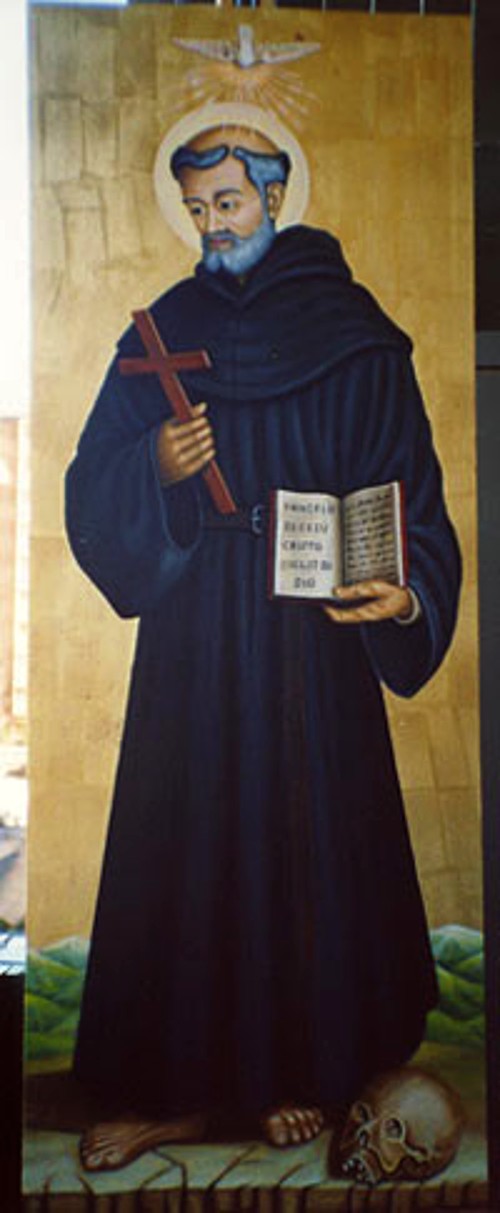
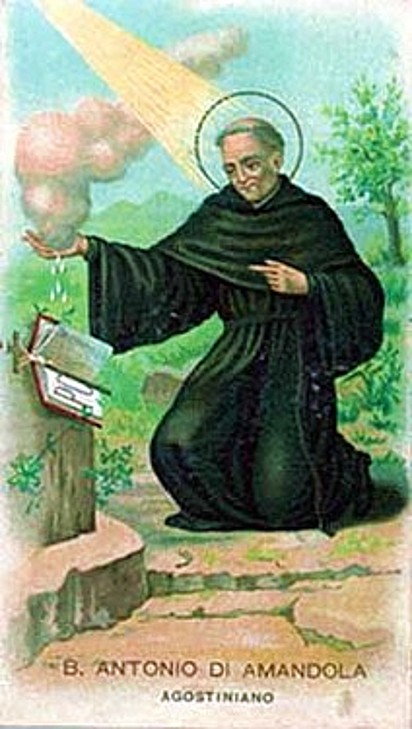
Saint of the Day – 24 January – Blessed Antonio Migliorati OSA (1355-1450) Priest and Friar of the Order of St Augustine, missionary Preacher, Confessor, Mystc, Sacristan of the Augustinian Church in Tolentino, Italy, the Church that housed the tomb of Saint Nicholas, noted for his zeal for the faith, his devotion to the poor. Also known as Antonio of Amandola. Born on 17 January 1355 in Amandola, Ascoli Piceno, Italy and died on 25 January 1450 in the Saint Augustine Monastery of Amandola, Ascoli Piceno, Italy of natural causes, aged 95. Additional Memorial – 29 January (Augustinians). Patronage – Amandola. His body is incorrupt.
Antonio was born on 17 January, 1355 the son of Simpliciano and Giovanna Migliorati, a farmer, whose family had little wealth but great faith. Antonia was Baptised on the day of birth. The various biographers are in agreement, in describing the first influence of the parents on the child. The names of Jesus and Mary were the first placed on the lips and heart of the child and he cultivated them with tender devotion throughout his life. The learning of the first prayers and the love of prayer, the acceptance of sacrifice and the hardness of life, the devotion to the Passion of Jesus and the sufferings of his Mother, the appreciation of the values of the spirit, were things that the little Antonio began to learn very early.
Antonio soon began to frequent the nearby Church of Sts Vincenzo and Anastasio and to spend time there in prayer. He had discovered contact with God and this was one of the determining factors of his life. He attended school at the Benedictine Monastery in his town, where he became a favoured and much-loved student. In fact, he had been adopted by the entire town, he was everyone’s son, everyone’s assistant, everyone’s favourite child, eveyone’s comfort.
Inspired by the life and work of St Nicola of Tolentino (1254-1305), Antonio, wishing to imitate St Nicholas’ virtues, joined the Augustinians of his native town, where he was Ordained a Priest. He lived about twelve years in the convent of Tolentino, after which he was for some time in Bari.
In 1400 he returned to his hometown of Amandola. His return was meant to be humble and hidden but, as he approached, a festive and spontaneous ringing from the various towers enveloped the city. He had left about fifteen years earlier, the joy and affection with which he was received home was well imaginable. He didn’t get upset. He was already accustomed to supporting the enthusiasm of his admirers with modesty and humility. Antonio once again became everyone’s comfort and defence. He spent many hours in the confessional, which was increasingly in demand, as his fame spread from land to land; real conversions came out, real comfort, real joy. There is no doubt that many also went there, for more practical and more material reasons but many too went with the hope that Antonio would cure their ills. Antonio blessed, prayed and cured but he knew how to take advantage of everything, to lift hearts to a more spiritual level.
Antonio rushed from the confessional to the homes of the needy and from these, with a hurried step, to the Convent, when the bell called the Monks to prayer and other community commitments. Wherever he was, in fact, when he heard the bell, he rushed to the call of that life he had chosen and sincerely loved. This love for the community was a constant feature, even after his death. In fact, it is said that several times the Friars heard his voice in the choir when the body was now buried under the door of the sacristy and that, if the person in charge forgot or delayed to ring the choir bell, it rang by itself, almost touched by the hands of Antonio.
He also worked to rebuild the old Augustinian Monastery and to build a new Church which was originally named for Saint Augustine of Hippo, but after his death was renamed in honour of Blessed Antonio himself, who led it, for many of his remaining 50 years there.
The death of Blessed Antonio has been handed down to us with an abundance of details. There is no mention of disease. He went out like a candle, of mere old age. He was 95 years old and had just begun the year 1450. Three years earlier he had had the great joy of the Canonisation of his dear St Nicholas, which had aroused so much joy in the world. He had received from the Celestial Mother, the revelation that his death was approaching and he communicated this to his confreres to help him with prayer.
A few days passed thus. When he felt that the end was imminent, he called all the Friars to his cell and, with humility and sincerity, asked that, if he had given some bad example or some sorrow, for the love of God and His Most Holy Mother, they would grant him their pardon. Then he confessed and received Communion with supreme devotion as Viaticum for eternity and Extreme Unction.
Finally, with full clarity of mind, always surrounded by his confreres, he turned to Fr Prior, who was Fr Giambattista Stazzi and asked to express his last wish. The Prior agreed, pledging to satisfy him whatever he asked. Then the dying man asked that his body be buried in the bare earth in front of the choir door; the religious, going to pray, would have passed over it and would have always remember him to the mercy of the Lord.
It was 25 January 1450.
The veneration that he had aroused in life, through humility, a spirit of obedience and mortification and a singular apostolic zeal, did not diminish with death. Already during his life, Antonio was considered a saint but the cult exploded immediately after his death and expanded in the lands near Amandola and throughout the Piceno area and then, through his Augustinian brothers, throughout the world. Antonio was invoked in every need. More and more frequent and numerous groups began to flock to his tomb. Among them there were often the miraculous ones who came to give thanks.
And so a very interesting custom began immediately – a book was created that was called the “Book of Miracles,” in which the most notable miracles were gradually recorded by dictation of the miraculous ones and written most often by the public notary. The book goes back to 1756 and records sudden healings of the crippled, paralysed, blind, epileptic, plagued, deliveries from grave misfortunes and even resurrections of the dead. The manuscript book was kept under the urn. It is from this book above all, that the 155 miracles examined for the Beatification of Anthony were deduced.
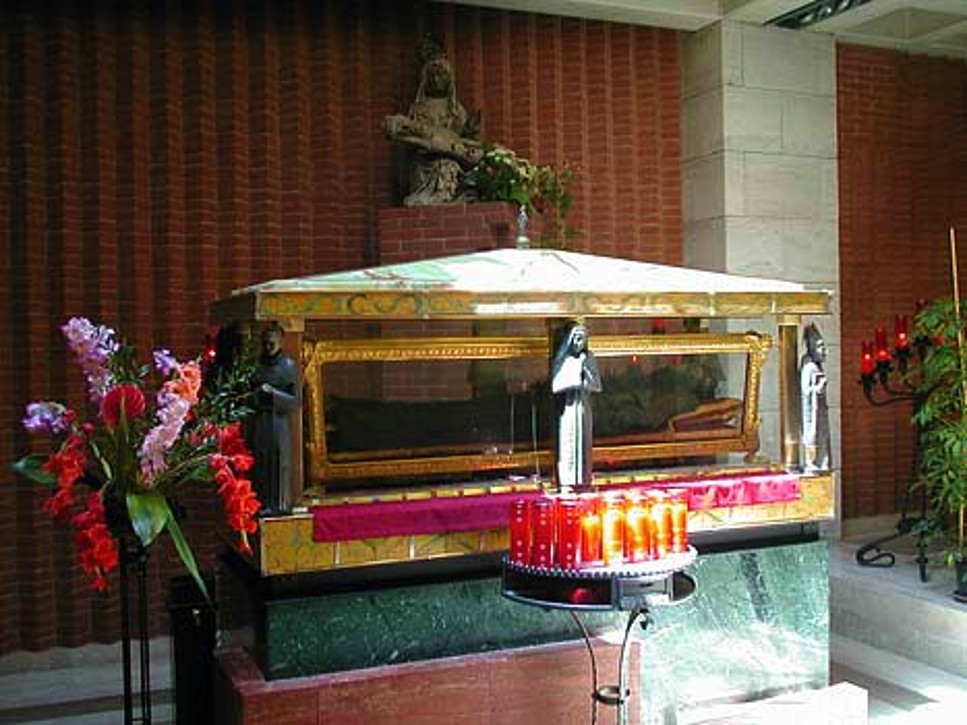
In 1453 his body, was discovered to be incorrupt when it was removed from the common sepulcher of the friars, was placed in a wooden ark on an Altar which was named after him, while the wonders (even the resurrection of the dead) multiplied. By 1460, his memorial was a civic holiday in Amandola, Italy
In 1641 it was placed in a wooden sarcophagus, worked by Domenico Malpiedi, which in 1897 was replaced by the marble one, which can now be seen in the recently built Chapel. In 1798 the revolutionary soldiers extracted from the sarcophagus and vilified the body of Antonio. A gold crown was placed on his head in 1899. His incorrupt body is still on display in the same church.
Since his death, the people of Amandola have venerated him and celebrated his “dies natalis.” On 11 July 1759 Pope Clement XIII ascribed Antonio in the number of blessed, recognising his cult “ab immemorabili,” and on 20 April 1890 Pope Leo XIII granted a plenary indulgence to visitors to his sanctuary.
PRAYER TO BLESSED ANTONIO (composed by Archbishop Norberto Perini of Fermo)
We come to You, O Lord, full of gratitude and filial confidence because You are rich in graces and ready to forgive. In the name of Blessed Anthony, Your faithful servant and our protector, we ask You to bless our country; to make families prosper by preserving prayer, peace, mutual love; to make young people docile, job-loving, honest; to give bread to the poor who suffer so much; to instill serenity and patience in the sick so that their pain becomes a means of purification for all; to comfort our elders; to assist the dying with Your grace so that, having overcome the last trials, they come to enjoy You in Your paradise. O Blessed Anthony, we all honour you and invoke your intercession with the Lord, so that He may allow us to always live your faith and to imitate your example made up of few words and many good works. Amen
Thought for the Day – 22 June – Meditations with Antonio Cardinal Bacci (1881-1971)
Interior Mortification
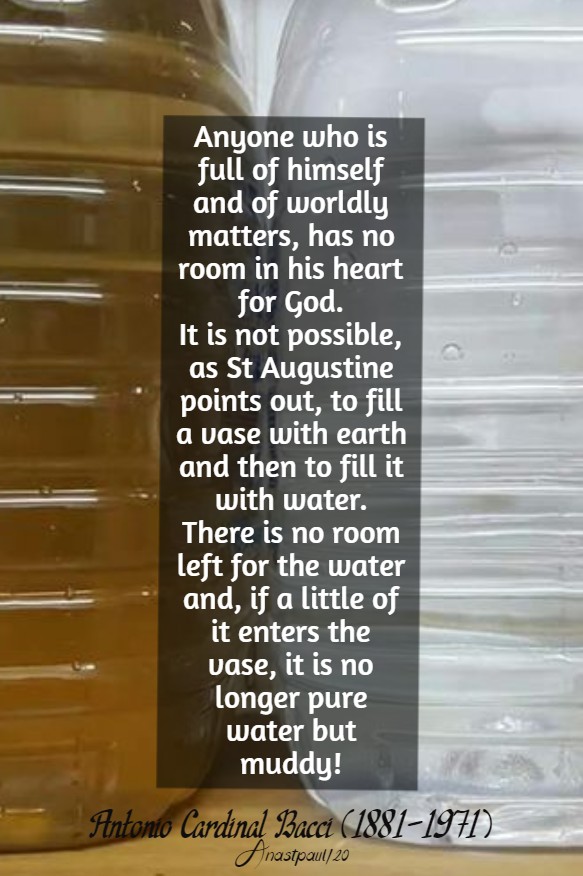
“In the spiritual life, as in the physical order, death is the beginning of life. “Unless the grain of wheat falls into the ground and dies, it remains alone. But, if it dies, it brings forth much fruit. He who loves his life, loses it and he who hates his life in this world, keeps it unto life everlasting” (Jn 12:24-25).
This passage of the Gospel, epitomises the doctrine of Christian mortification – it is necessary to die to ourselves, in order to live in God. Anyone who is full of himself and of worldly matters, has no room in his heart for God. It is not possible, as St Augustine points out, to fill a vase with earth and then to fill it with water. There is no room left for the water and, if a little of it enters the vase, it is no longer pure water but muddy!
We must empty ourselves of ourselves and of worldly things, in order to fill ourselves with God. Jesus told us this quite clearly. “If anyone wishes to come after me, let him deny himself” (Mt 16:24).
If anyone denies himself in order to do God’s will in all things, he has achieved real interior mortification. Moreover, he has perfect peace, which consists in being established in the love of God.
This does not mean that all self-love is wrong. In fact, there are two kinds of self-love. We can love our true good, which is God and, therefore, desire to live in harmony with this supreme good in this life in order to enjoy it as our eternal reward. This kind of self-love is founded on the love of God, Who is the main reason why we love ourselves. But if we prefer our own pleasure and satisfaction to God, then our self-love is disproportionate and wrong and leads us into sin.
The first thing we must do, therefore, is to mortify our inordinate self-love. In other words, we must deny ourselves in matters where self-love is keeping us apart from God, Whom we should love more than anything else in life.”
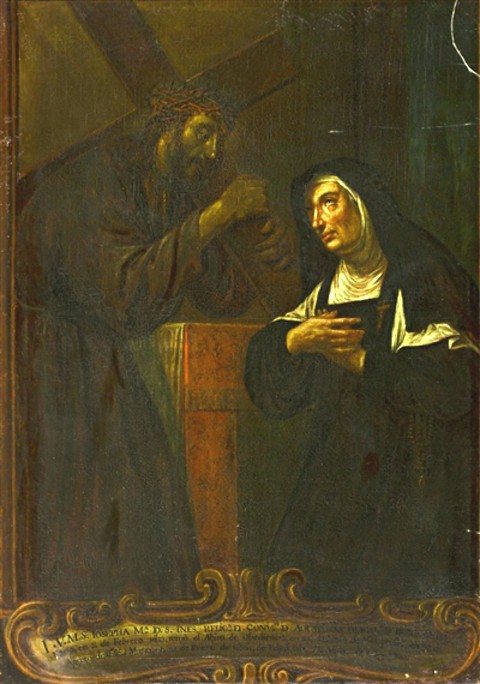
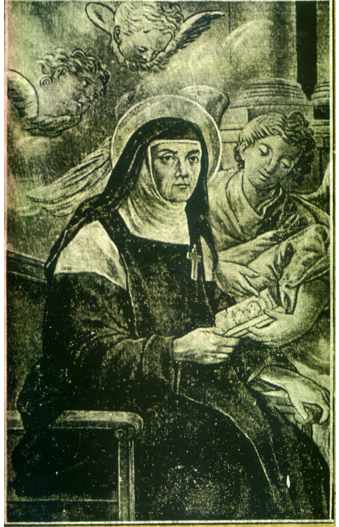
Saint of the Day – 21 January – Blessed Josefa María Inés de Benigánim OAD (1625–1696) born as Josefa María Albiñana Gomar on 9 February 1625 at Benigánim, Valencia, Spain and died on 21 January 1696 at Benigánim, Valencia, Spain of natural causes. She was a Spanish professed religious of the Discalced Augustinian Nuns with the religious name of “Josefa María of Saint Agnes,” Virgin, Mystic, gifted with the charism of prophecy and counsel. She became known for her profound spiritual and theological insight as well as for her severe austerities she practised during her life. Her body is incorrupt.
Josefa María was born to the poor Lluís Albiñana and Vicenta Gomar in Spain in 1625. Her father died during her childhood. The town mayor – her uncle Bartomeu Tudela – aided the family following the death of her father; she also suffered from epilepsy during her childhood. She received her Confirmation at the age of eight.
At the age of 13-14, she went out to the river to wash clothes and had a vision of Jesus Christ who called her to embrace Him and seek the religious life. She refused a marriage offer to do this – though the enraged suitor killed himself.
She entered the Discalced Augustinian convent in her hometown on 25 October 1643 and assumed her religious name – that of “Josefa María of Saint Agnes” – upon the profession of her vows and vesting in the habit on 26 June 1644; she made her solemn profession on 27 August 1645. Blessed Josefa began to practice severe austerities that characterised her life and her time amongst her fellow religious.
She became known for prophetic gifts, which prompted people to consult her for her spiritual insights. Though her formal education was minimal, her gifts of counsel and theological understanding were very evident, to the extent that she was admitted among the choir sisters in 1663 and was consulted for spiritual guidance and clarification on theological issues.
All of Josefa’s religious life was marked by the workings of grace. While her demeanour was simple and humble and her efforts dedicated to the service of the community, she possessed a remarkable spirit of contemplation.
Blessed Josefa died in 1696 – on the feast of Saint Agnes – after having received the sacraments for the last time. Her remains are incorrupt and in the Spanish Civil War her tomb was desecrated though later restored.
After the investigations and approval of two miracles, Blessed Josefa was Beatified on 26 February 1888, at Saint Peter’s Basilica by Pope Leo XIII.
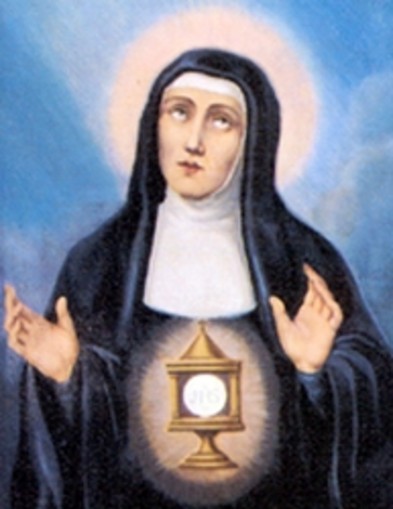
Saint of the Day – 18 January – Blessed Cristina Ciccarelli OSA (1481–1543) Religious of the Order of Saint Augustine, Mystic, Stigmatist, Apostle of the poor, Reformer, she had a had a particular devotion to the Eucharist and to the Passion and Death of Christ, she was granted the gift of Prophecy, visions and levitation – also known as Cristina of Aquila – born on 24 February 1481 at Luco, Abruzzi, Italy as Matthia Ciccarelli and died on 18 January 1543 at Aquileia, Italy of natural causes.
Mattia Ciccarelli was born in 1481 in Luco dei Marsi as the last of six children to Domenico de Pericolo and Maria de Pericolo. An image of the Pieta was kept in the Luco home from which she developed a strong and lifelong devotion to the Passion of Christ. Her parents taught her the importance of constant prayer. Her call to the religious life solidified during her childhood and she decided to enter the religious life as a nun.
In 1492 she was placed under the spiritual direction of the Franciscan priest Vincenzo dell’Aquila and took his advice on joining the Order of Saint Augustine.
Mattia entered the convent of Santa Lucia in Aquileia in June 1505 and assumed the habit and the religious name of “Cristina.” She served as the abbess several times and was noted for being a prophetic figure.
She became revered for her humble outlook as well as for her tender care of the poor. On one occasion – on the Feast of Corpus Christi – she was seen to have levitated and the image of the Eucharist as a host appeared and radiated from her upper chest.
On one Good Friday, she received the stigmata and the pains that Jesus felt until Holy Saturday when the pain subsided. This would be repeated every Friday of her life.
Blessed Cristina had a great devotion to Saint Mark. However, on one occasion Saint Martin of Tours appeared to her and asked why she had a devotion to the latter saint rather than to him – this prompted her to foster a devotion to him too.
Once a man accustomed to cursing, blasphemed Saint Anthony of Padua and she told him to be careful for if he continued to blaspheme she saw a black devil behind him set to choke him for such offences. The man – riding a donkey – did it again and was thrown to the ground where he fractured his skull and broke his neck which led to his death.
Blessed Cristina died in 1543 after a lengthy illness and was interred in the convent of Santa Lucia to the right side of the main altar.
The first biographical account of her life was written in 1595 by the nobleman Giampietro Interverj from l’Aquila and the Belgian Augustinian scholar, Cornelius Curtius, wrote another hagiography, in the Latin language, in Cologne.
Blessed Cristina was Beatified on 15 January 1841, at Saint Peter’s Basilica, Papal States by Pope Gregory XVI.
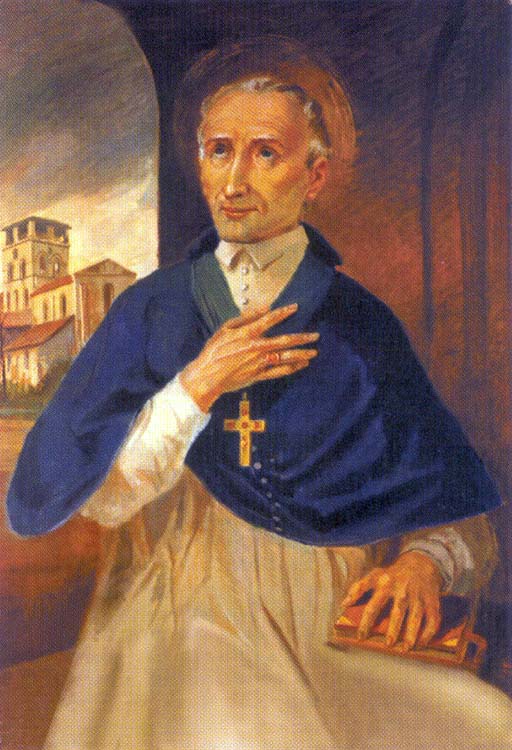
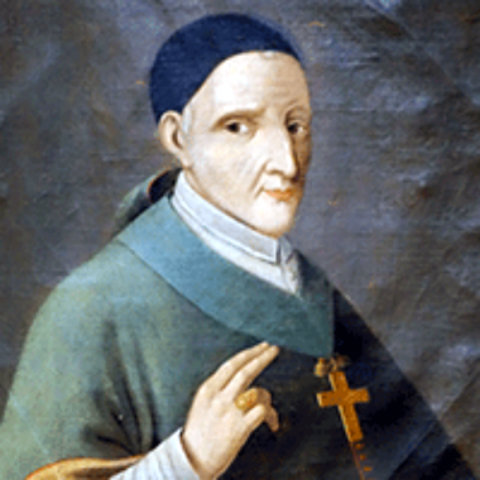
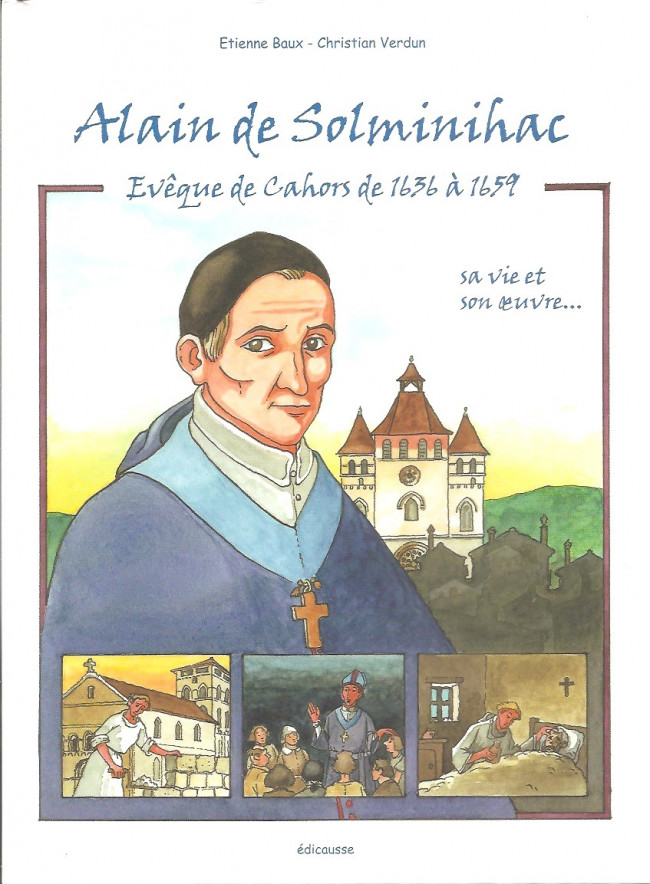
Saint of the Day – 31 December – Blessed Alain de Solminihac OSA (1593-1659) Bishop of Cahors from 1636 until his death, religious of the Order of the Canons Regular of Saint Augustine of Chancelade in Périgueux (now the Confederation of St Augustine). Blessed Alain was Abbot, Reformer, Marian devotee most especially to Our Lady of Rocamadour, Apostle of the Holy Eucharist especially by his promotion of Adoration, he was also a member of the Compagnie du Saint-Sacrement. Born on 25 November 1593 in the family castle at Belet, Dordogne, France and died on 31 December 1659, aged 66, at Mercues, Lot, France of natural causes. Patronage – the Diocese of Cahors.
Alain was born into an aristocratic family in castle Belet near Perigueux in France.
He wanted to become a member of the Knights of Malta in order to serve God but felt a strong call to the Priesthood and to the religious life so joined the Canons Regular of Saint Augustine of Chancelade in 1613 as a postulant. The completion of his theological studies soon saw him Ordained to the Priesthood on 22 September 1618. While still a young man he became the Abbot of Chancelade, which had fallen into disrepair as a result of the turmoil of the times. He strove with great effort and effect to reform his brothers in the Congregation of the Canons Regular of Chancelade.
In 1636 he became Bishop of Cahors. He was as a zealous shepherd of the flock with which he was entrusted. As Bishop he visited each of his 800 parishes at least nine times during the course of his episcopate and he held an episcopal consecration on one occasion.
His great devotion to the Holy Eucharist prompted him to promote Eucharistic Adoration as well as restoring a many pastoral devotions within his Diocese.
He attended the Council of Trent and followed the lead of Saint Charles Borromeo in enforcing it’s decrees in his diocese. During this time, he met Saint Francis de Sales during Lent in 1619 and the two became friends and had many more meetings following this. Another friendship was his close relationship with Saint Vincent de Paul.
His reform work not only blessed his Diocese but influenced other parts of France.
Moreover, he remained always faithful to the Holy See. Misconceptions, which surrounded him, were resolved in his favour. His convincing love of neighbour made him a brilliant light of faith in 17th Century France. After a long, zealous, faithful and strenuous life he died on 31 December 1659.
He was declared a Servant of God after Pope Pius VI opened his cause for sainthood on 6 August 1783 and Pope Pius XI declared him to be Venerable on 19 June 1927. St Pope John Paul II Beatified him on 4 October 1981. The miracle required for his Beatification involved the cure of Marie Ledoux on 29 June 1661 in France.
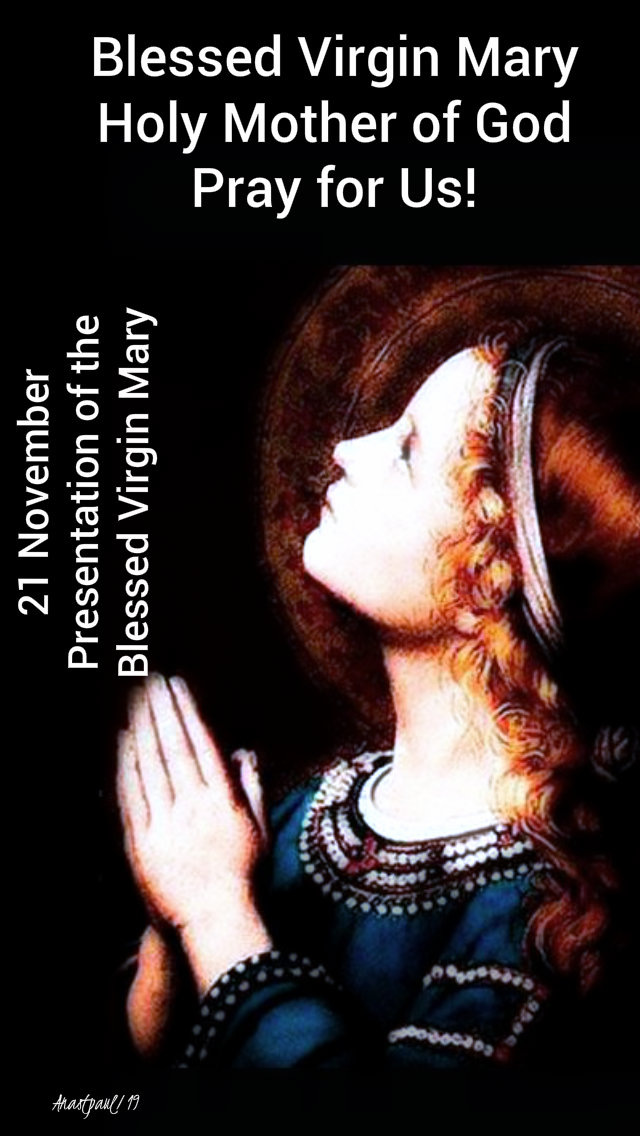
Thought for the Day – 21 November – The Memorial of the Presentation of the Blessed Virgin Mary
She Who Believed by Faith, Conceived by Faith
Saint Augustine (354-430)
Bishop, Father and Doctor of the Church
An excerpt from Sermon 25
“Stretching out His hand over His disciples, the Lord Christ declared: Here are my mother and my brothers; anyone who does the will of my Father who sent me is my brother and sister and my mother. I would urge you to ponder these words. Did the Virgin Mary, who believed by faith and conceived by faith, who was the chosen one from whom our Saviour was born among men, who was created by Christ before Christ was created in her—did she not do the will of the Father? Indeed the blessed Mary certainly did the Father’s will and so it was for her, a greater thing, to have been Christ’s disciple, than to have been His mother and she was more blessed in her discipleship than in her motherhood. Hers was the happiness of first bearing in her womb, Him, whom she would obey as her master.
Now listen and see if the words of Scripture do not agree with what I have said . The Lord was passing by and crowds were following Him. His miracles gave proof of divine power and a woman cried out: Happy is the womb that bore you, blessed is that womb! But the Lord, not wishing people to seek happiness in a purely physical relationship, replied: More blessed are those who hear the word of God and keep it. Mary heard God’s word and kept it and so she is blessed. She kept God’s truth in her mind, a nobler thing than carrying His body in her womb. The Truth and the Body were both Christ – He was kept in Mary’s mind, insofar as He is Truth, He was carried in her womb, insofar as He is man but, what is kept in the mind, is of a higher order than what is carried in the womb.
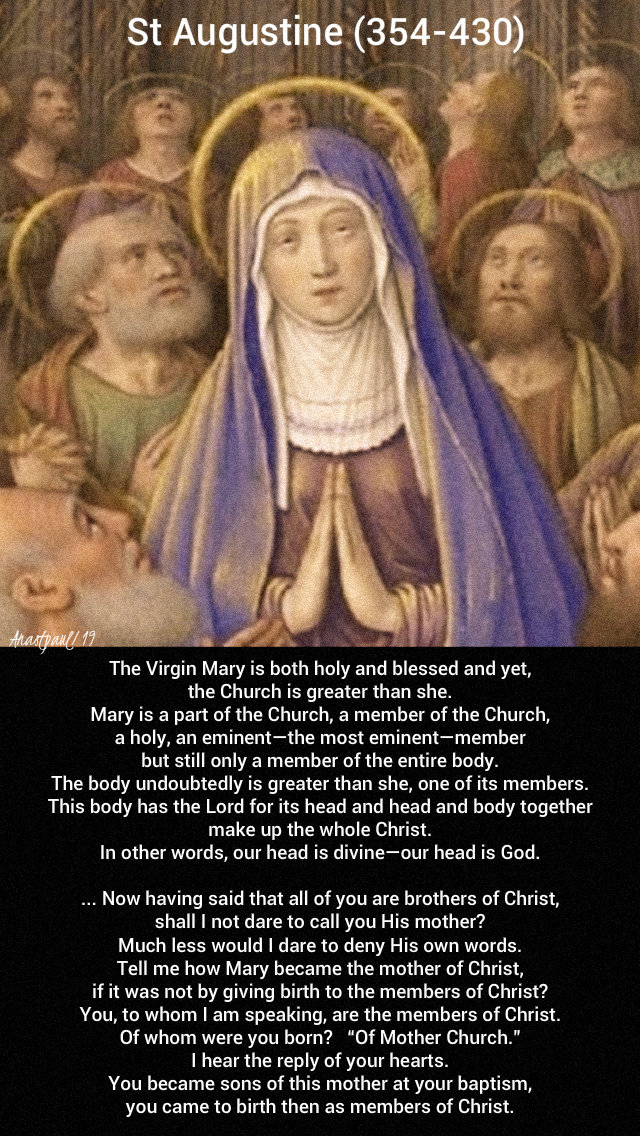
The Virgin Mary is both holy and blessed and yet, the Church is greater than she. Mary is a part of the Church, a member of the Church, a holy, an eminent—the most eminent—member but still only a member of the entire body. The body undoubtedly is greater than she, one of its members. This body has the Lord for its head and head and body together make up the whole Christ. In other words, our head is divine—our head is God.
Now, beloved, give me your whole attention, for you also are members of Christ, you also, are the body of Christ. Consider how you yourselves can be among those, of whom the Lord said: Here are my mother and my brothers. Do you wonder how you can be the mother of Christ? He Himself said: Whoever hears and fulfils the will of my Father in heaven is my brother and my sister and my mother. As for our being the brothers and sisters of Christ, we can understand this, because, although there is only one inheritance and Christ is the only Son, His mercy would not allow Him to remain alone. It was His wish, that we too should be heirs of the Father and co-heirs with Himself.
Now having said that all of you are brothers of Christ, shall I not dare to call you His mother? Much less would I dare to deny His own words. Tell me how Mary became the mother of Christ, if it was not by giving birth to the members of Christ? You, to whom I am speaking, are the members of Christ. Of whom were you born? “Of Mother Church,” I hear the reply of your hearts. You became sons of this mother at your baptism, you came to birth then as members of Christ. Now you, in your turn, must draw to the font of baptism as many as you possibly can. You became sons when you were born there yourselves and now, by bringing others to birth in the same way, you have it in your power, to become the mothers of Christ. Amen!”
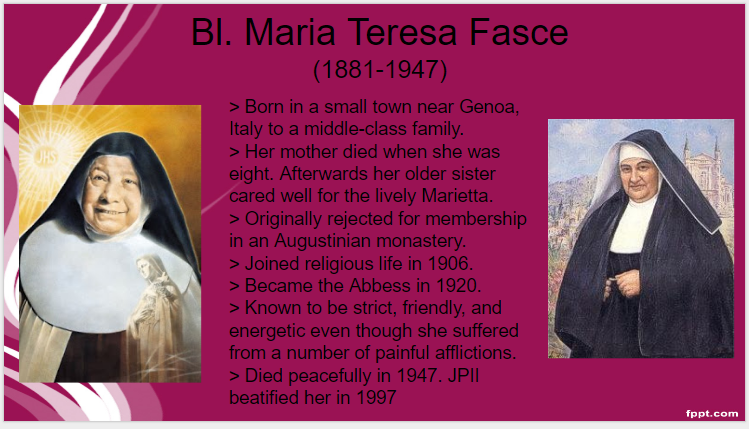
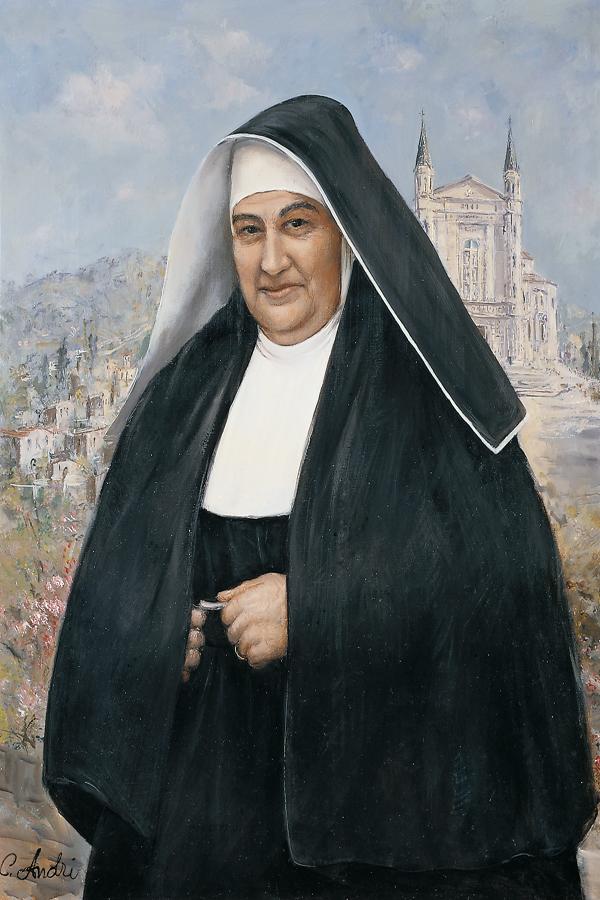
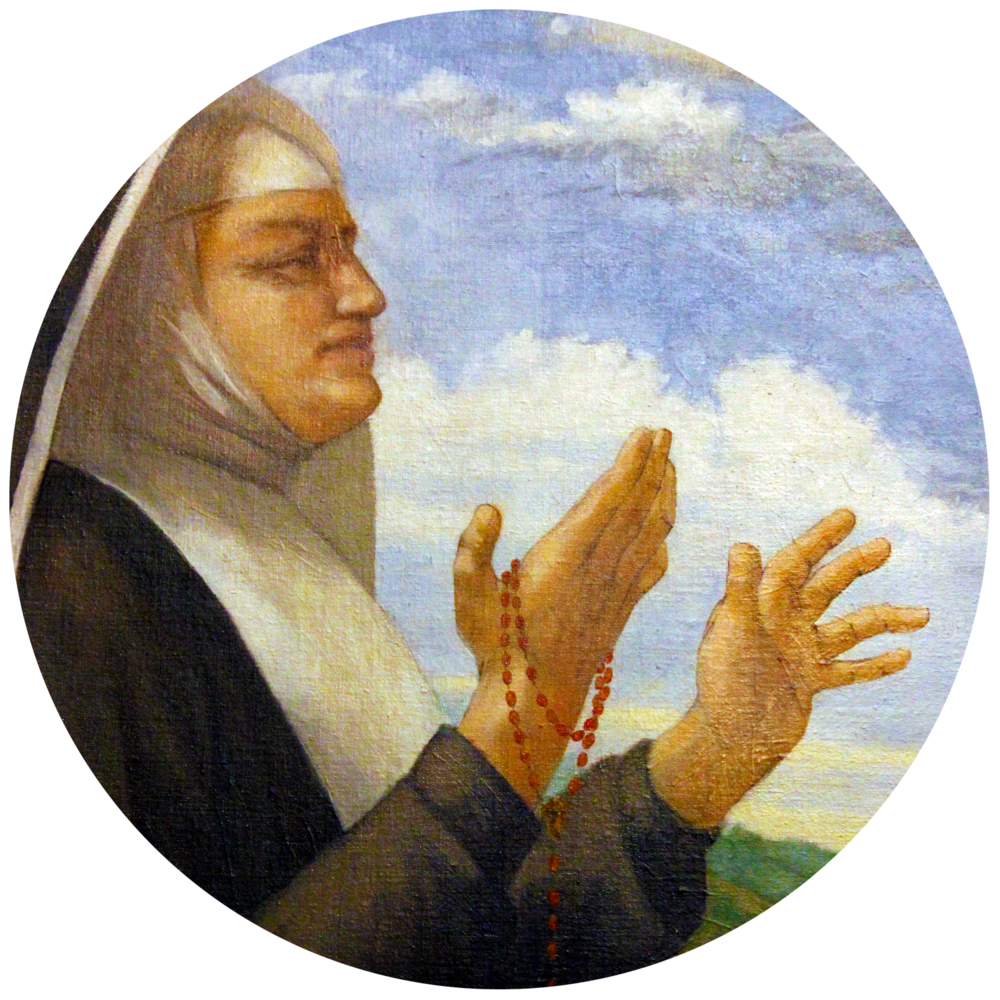
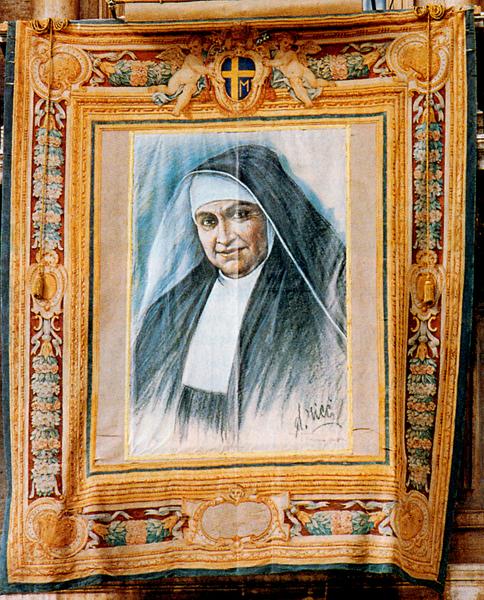
Saint of the Day – 18 January – Blessed Maria Giovanna Fasce OSA (1881-1947) Religious Augustinian nun with the religious name of Sr Maria Teresa. Born on 27 December 1881 at Torriglia, Genoa, Italy and died on 18 January 1947 of natural causes. Blessed Maria Teresa was an Italian Roman Catholic who served in various leadership positions in her convent in Genoa and was noted for the establishment of an orphanage and spreading the charism of Saint Augustine and Saint Rita of Cascia (1381-1457). She was beatified at Saint Peter’s Square on 12 October 1997 by St Pope John Paul.
Maria Giovanna Fasce was born on 27 December 1881 in Genoa to the middle-class Eugenio Fasce and his second wife Teresa Valente. She had seven siblings and her oldest sibling was Luigia. Her relations dubbed her as “Marietta”. Her mother died in 1889 which prompted her oldest sister Luigia to take care of the younger children.
Fasce taught catechism to children and grew to love the charism of Saint Augustine. She also met her confessor Father Mariano Ferriello in Genoa who encouraged her to learn of the Augustinian figures and pursue her vocation.
She became aware of the life of Saint Rita of Cascia and travelled to Rome in 1900 when Pope Leo XIII canonised her – this was the most important event of her life thus far and solidified her desire to become a nun. She expressed this intention to her relatives who took the news badly and her brothers in particular were negative about it. Her oldest sister Luigia accepted this but did not understand Fasce’s reasoning for living in a primitive place like Cascia. She applied for admission to a Ligurian convent but was rejected much to her surprise. The Abbess Giuseppina Gattarelli said that she believed Fasce was unable to handle the rigours of the monastic life. Fasce reapplied and was accepted in 1906.
On 22 June 1906 she entered the convent of the Order of Saint Augustine (she received the habit on the night of 25 December 1906) and made the profession of her initial vows on 25 December 1907 in the religious name of “Maria Teresa”. She became quite disillusioned due to the convent’s decline and returned home in June 1910 for a period of deep reflection. Her time at home saw her affirm her desire to be in the monastic life and returned to the convent in May 1911 and later made her solemn vows on 22 March 1912.
In August, 1920, she was elected abbess and was confirmed in this office nine times throughout the following 27 years until her death. The great ambition of Mother Teresa, which she succeeded in converting into a plan of action, was the enrichment of the religious spirit of her community and of each one of the nuns.
Her influence, however, reached far beyond the walls of the cloister by means of the initiatives she undertook to spread devotion to Saint Rita and to promote the well-being of her adopted town. Among these were the publication of the magazine “From the Bees to the Roses”, the establishment of an orphanage for girls, the founding of a seminary for candidates to the Order and the construction of the Basilica as a place of pilgrimage and the fitting resting place of the saint to whom she was so devoted.
During the Second World War she courageously protected the convent and defended the rights of the nuns as well as members of the resistance under attack.
Throughout her life Mother Teresa suffered many physical ailments, including cancer and a debilitating condition which at times made it difficult for her to walk. All of this she bore with complete resignation and patience and was an example of fortitude and serenity to the nuns and people of Cascia.
She died peacefully on 18 January 1947 and was beatified together with Blessed Elías Nieves on 12 October 1997. Her body is venerated in the lower shrine of the Basilica which she made possible next to Saint Rita of Cascia.
Mother Teresa Fasce was a cloistered contemplative nun, not only in name but also in fact, during the several decades of her religious life. At the same time she was a woman of great vision and action, who had the capacity to inspire others even as she was inspired by the life and message of her patroness, Saint Rita. She reminds us that there is no contradiction between contemplation and service – both are motivated by love and must be expressed in love.
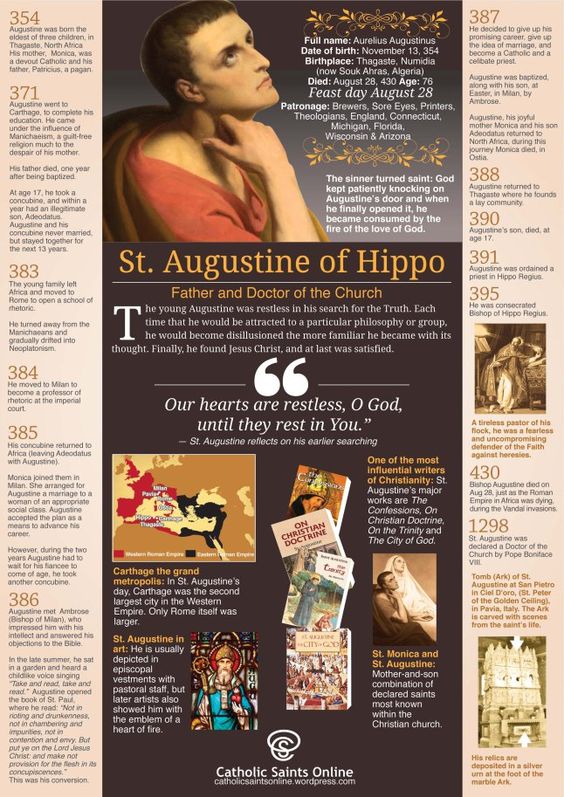
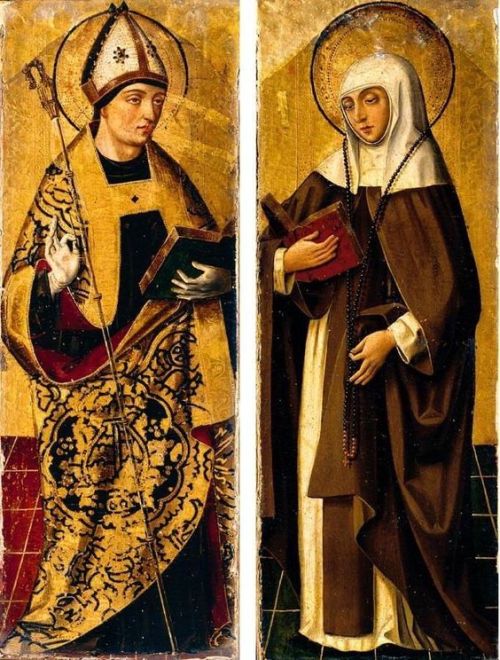
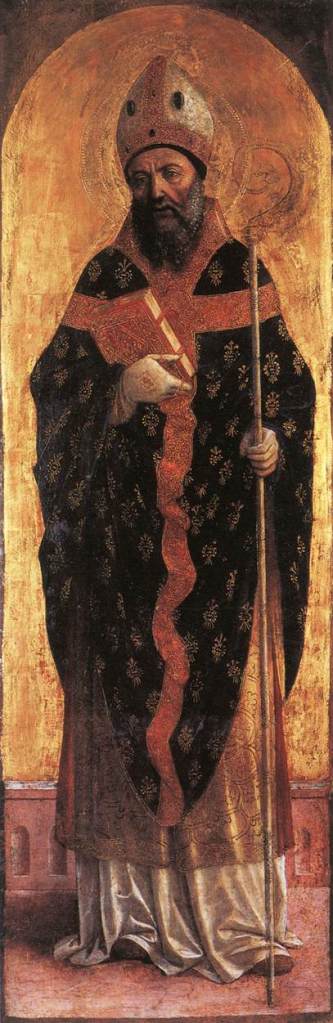
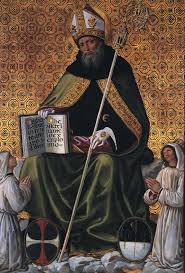
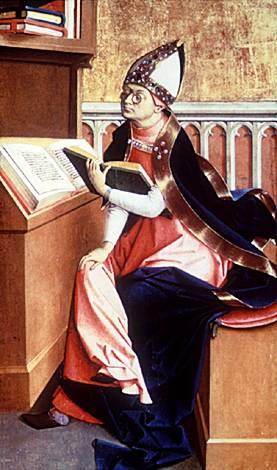
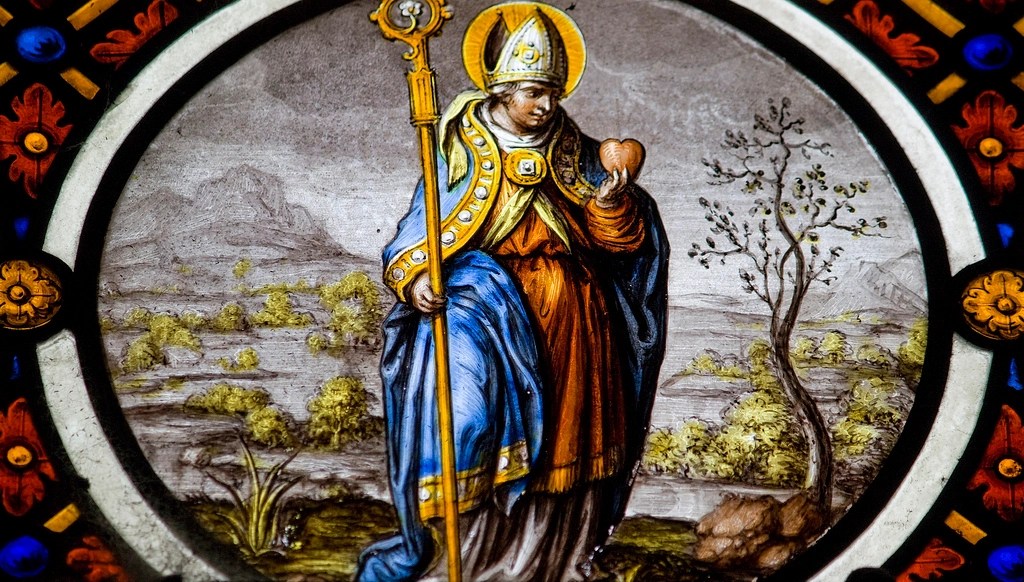
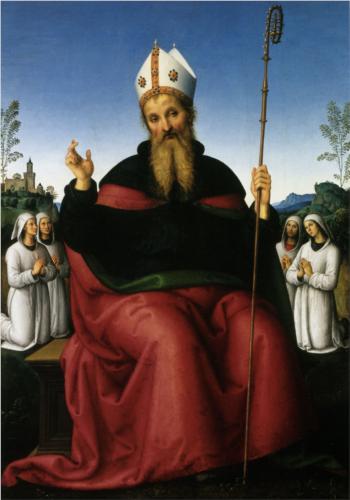
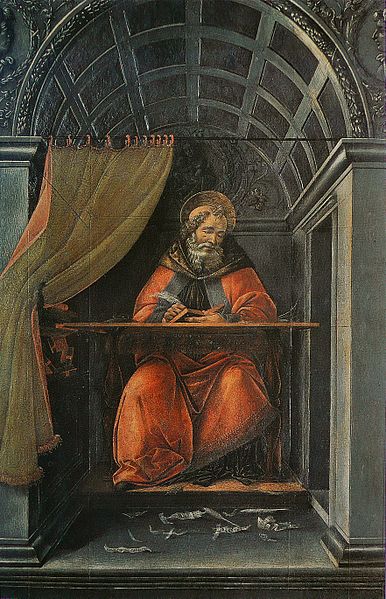
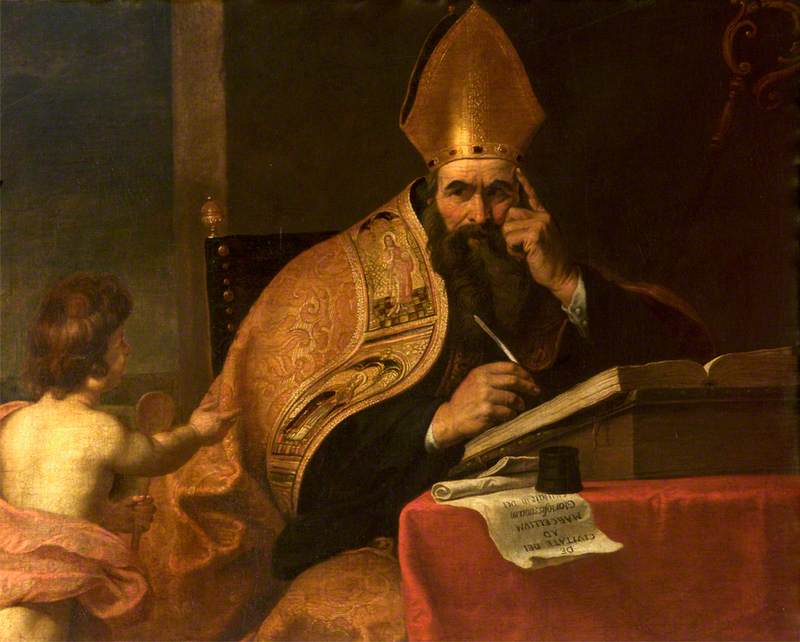
Saint of the Day – 28 August – St Augustine (354-430) born Augustinus Aurelius (13 November 354 at Tagaste, Numidia, North Africa (Souk-Ahras, Algeria) – 28 August 430 at Hippo, North Africa) – Doctor of Grace and one of the original Four Fathers & Doctors of the Latin Church – Bishop, Theologian, Philosopher, Rhetorician, Writer, Preacher, Teacher, Advisor, Reformer, Confessor, Apologist, Apostle of Charity. PATRONAGES – of theologians, brewers, printers, 7 Diocese, 7 Cities, against sore eyes, eye diseases, against vermin. Attributes – Child; dove; pen; shell, pierced heart, holding book with a small church, bishop’s staff, mitre, flaming heart, an allusion to a passage in his Confessions.
Augustine was born in the year on 13 November in 354 AD in the municipium of Thagaste (now Souk Ahras, Algeria) in Roman Africa. His mother, Monica, was a devout Christian; his father Patricius was a Pagan who converted to Christianity on his deathbed. Scholars generally agree that Augustine and his family were Berbers, an ethnic group indigenous to North Africa but that they were heavily Romanized, speaking only Latin at home as a matter of pride and dignity. In his writings, Augustine leaves some information as to the consciousness of his African heritage. For example, he refers to Apuleius as “the most notorious of us Africans,” to Ponticianus as “a country man of ours, insofar as being African”and to Faustus of Mileve as “an African Gentleman.”
Augustine’s family name, Aurelius, suggests that his father’s ancestors were freedmen of the gens Aurelia given full Roman citizenship by the Edict of Caracalla in 212. Augustine’s family had been Roman, from a legal standpoint, for at least a century when he was born. It is assumed that his mother, Monica, was of Berber origin, on the basis of her name but as his family were an upper class of citizens known as honorable men, Augustine’s first language is likely to have been Latin.
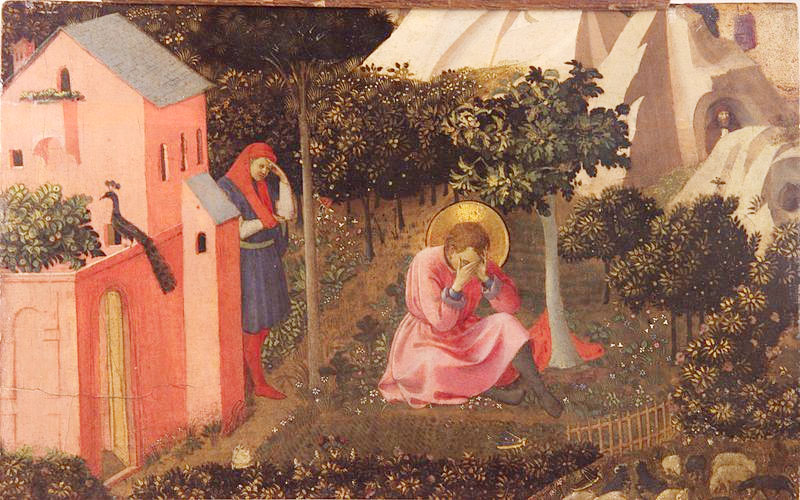
Augustine Aurelius still unbaptised and burning for knowledge, he came under the influence of the Manicheans, which caused his mother intense sorrow. He left Africa for Rome, deceiving his mother, who was ever anxious to be near him. She prayed and wept. A bishop consoled her by observing that a son of so many tears would never be lost. Yet the evil spirit drove him constantly deeper into moral degeneracy, capitalising on his leaning toward pride and stubbornness. Grace was playing a waiting game; there still was time and the greater the depths into which the evil spirit plunged its fledgling, the stronger would be the reaction.
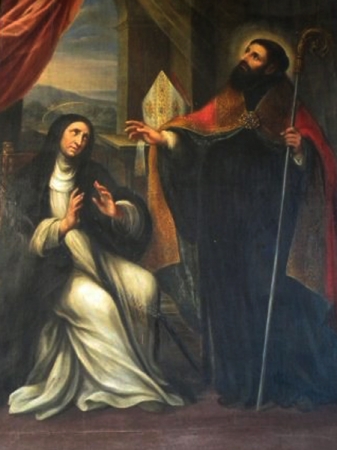
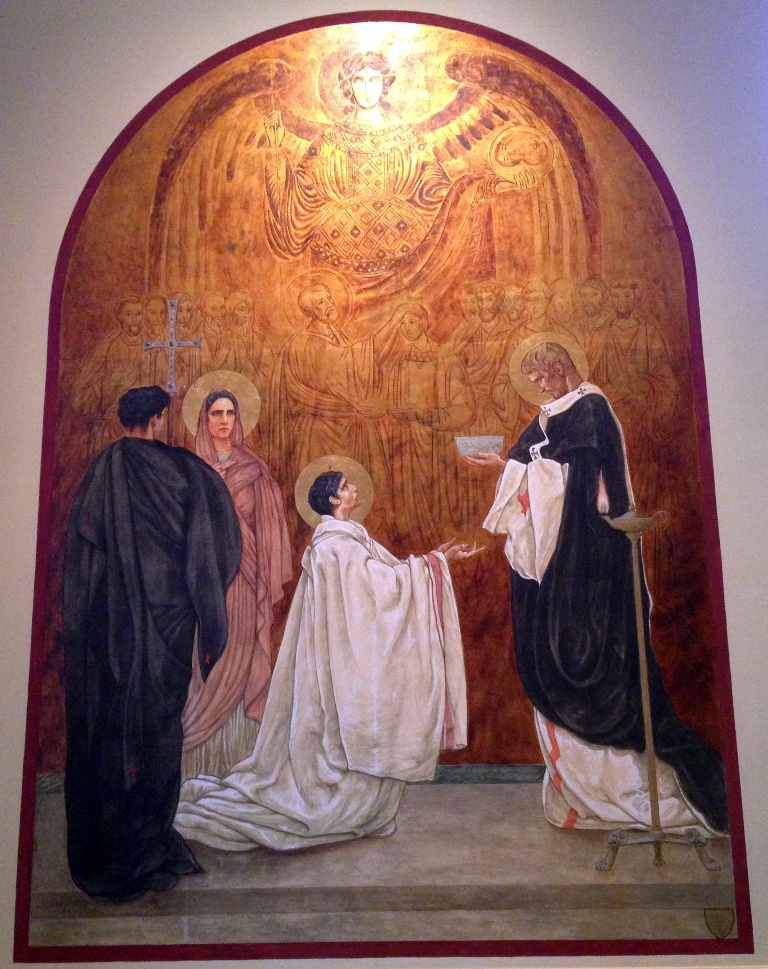
Augustine recognised this vacuum; he saw how the human heart is created with a great abyss; the earthly satisfactions that can be thrown into it are no more than a handful of stones that hardly cover the bottom. And in that moment grace was able to break through: Restless is the heart until it rests in God. The tears of his mother, the sanctity of Milan’s Bishop Ambrose, the book of St Anthony the hermit and the sacred Scriptures wrought his conversion, which was sealed by baptism on Easter night 387. Augustine’s mother went to Milan with joy and witnessed her son’s baptism. It was what it should have been, the greatest event of his life, his conversion — metanoia. Grace had conquered. Augustine accompanied his mother to Ostia, where she died. She was eager to die, for now she had given birth to her son for the second time.
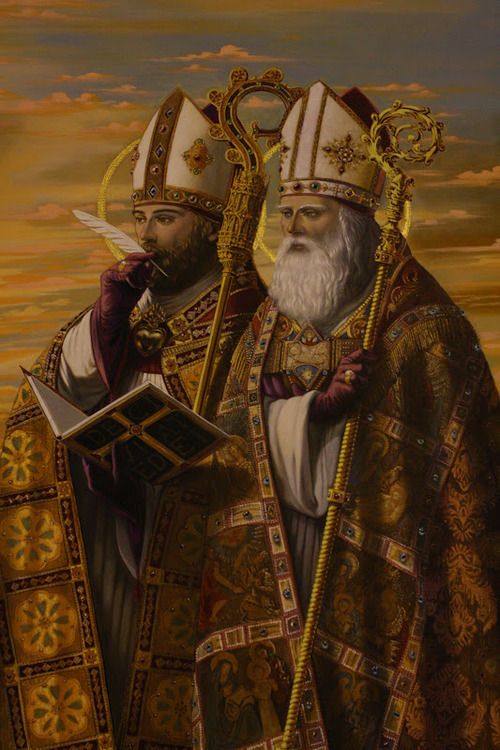
St Augustine and St Ambrose
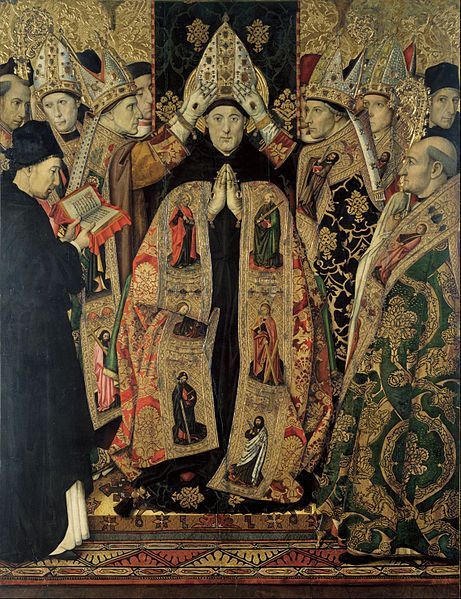
In 388 he returned to Tagaste, where he lived a common life of prayer and solitude with his friends. In 391 he was ordained priest at Hippo, in 394 made coadjutor to bishop Valerius and then from 396 to 430 bishop of Hippo.
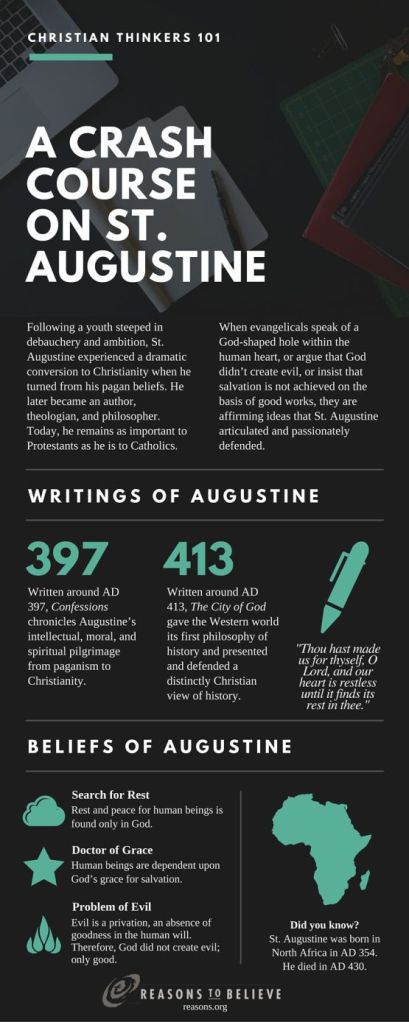
Augustine, numbered among the four great Doctors of the Western Church, possessed one of the most penetrating minds of ancient Christendom. He was the most important Platonist of patristic times, the Church’s most influential theologian, especially with regard to clarifying the dogmas of the Trinity, grace and the Church. He was a great speaker, a prolific writer, a saint with an inexhaustible spirituality. His Confessions, a book appreciated in every age, describes a notable portion of his life (until 400), his errors, his battles, his profound religious observations. Famous too is his work The City of God, a worthy memorial to his genius, a philosophy of history. Most edifying are his homilies, especially those on the psalms and on the Gospel of St. John.
Augustine’s episcopal life was filled with mighty battles against heretics, over all of whom he triumphed. His most illustrious victory was that over Pelagius, who denied the necessity of grace; from this encounter he earned the surname “Doctor of grace.” As an emblem Christian art accords him a burning heart to symbolise the ardent love of God which permeates all his writings. He is the founder of canonical life in common; therefore Augustinian monks and the Hermits of St. Augustine honour him as their spiritual father.
As bishop, Augustine worked tirelessly for his people. He fought false religious teachings, protected the people from corrupt officials and invaders and cared for the sick, the poor and those in prison. His many sermons, letters and books reflect the ever-deepening love he felt for God. He wisely observed: “You have made us, O God, for yourself, and our hearts shall find no rest until they rest in you.”
He wrote and advised bishops, popes and councils. His influence on the Church and his fight against heresy were exceptional. He was loved by many, for he had struggled much and could help others who were struggling.
In 430 Vandals invaded the province. For three months Augustine inspired Christian hope in his people. According to Possidius, Augustine spent his final days in prayer and repentance, requesting that the penitential Psalms of David be hung on his walls so that he could read them. vv He directed that the library of the church in Hippo and all the books therein should be carefully preserved. He died on 28 August 430. Shortly after his death, the Vandals lifted the siege of Hippo but they returned not long thereafter and burned the city. They destroyed all of it but Augustine’s cathedral and library, which they left untouched.
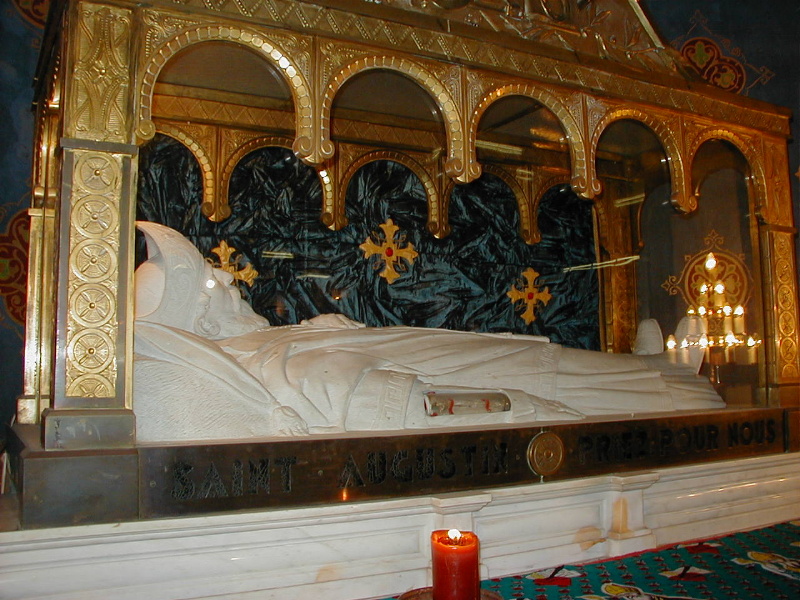
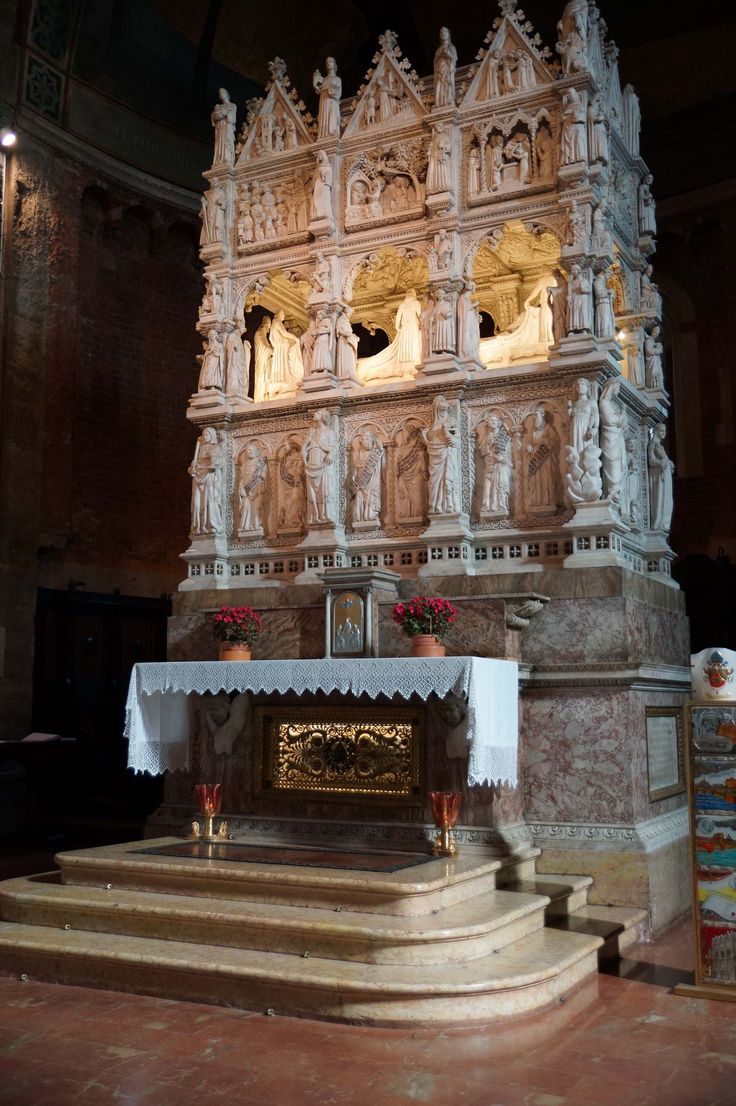
St Bede’s True Martyrology, recounts that Augustine’s body was later translated or moved to Cagliari, Sardinia, by the Catholic bishops expelled from North Africa by Huneric. Around 720, his remains were transported again by Peter, bishop of Pavia and uncle of the Lombard king Liutprand, to the church of San Pietro in Ciel d’Oro in Pavia, in order to save them from frequent coastal raids by Muslims. In January 1327, Pope John XXII issued the papal bull Veneranda Santorum Patrum, in which he appointed the Augustinians guardians of the tomb of Augustine (called Arca), which was remade in 1362 and elaborately carved with bas-reliefs of scenes from Augustine’s life.
St Augustine’s Relics in HippoSt Augustine’s Shrine at San Pietro















 AnaStpaul
You must be logged in to post a comment.