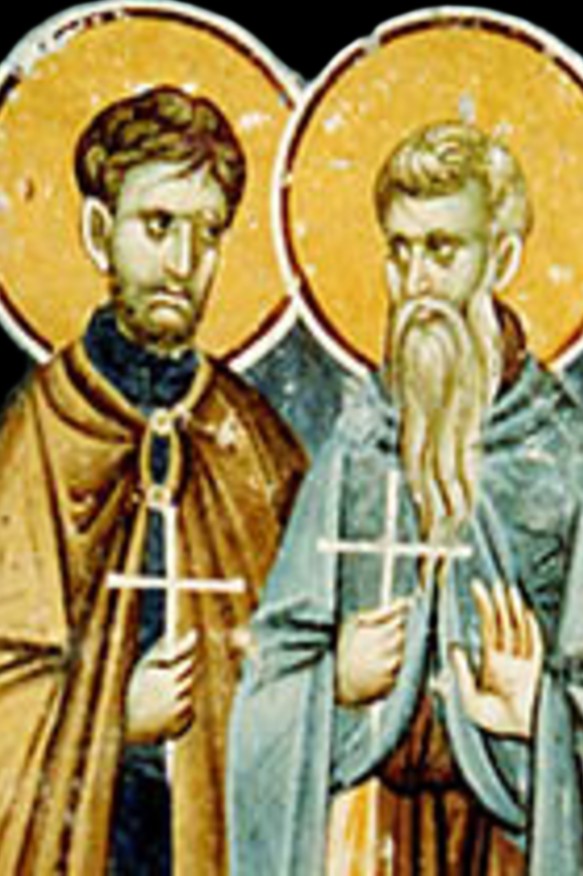
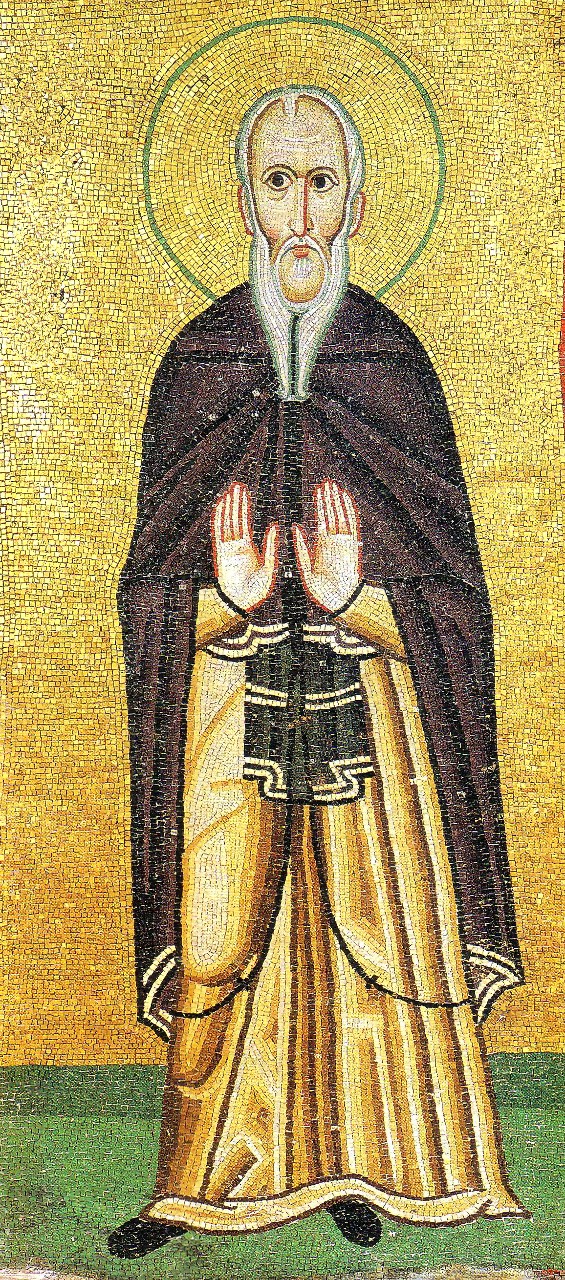
Saint/s of the Day – 27 February – St Basil (8th Century) Monk of Constantinople AND St Procopius (8th Century) Monk of Decapolis defenders of Sacred images. Both struggled against and were tortured and imprisoned in their fight against those who denied the veneration of Sared images. Some sources declare them as Martyrs but the Martyrology quoted below does not. Basil did probably die of his sufferings, having survived only a short time after their cessation but Procopius survived to carry on his work as a servant of Christ.
The Roman Martyrology reads today: “At Constantinople, in the time of the Emperor Leo, the holy Confessors Basil and Procoppius, who fought courageously for the worship of holy images.”
Saints Basil and Procopius were Monks, who lived in Constantinople in the 8th Century, during the reign of Emperor Leo III the Isaurian.
Basil was from a noble family, while Procopius was a Soldier who, after leaving the army, had retired to monastic life.
The two Monks were united by a deep devotion to Christ and the belief that the veneration of Sacred images was a fundamental tool and element in the growth of the Christian Faith.
In 726, Emperor Leo III issued an Edict prohibiting the veneration of Sacred images. This decision was strongly contested by the Church, which considered Sacred images a way to honour God and the Saints.
Basil and Procopius joined the fight against the Imperial Edict. They were arrested and subjected to harsh torture but never renounced their Faith. They were eventually imprisoned, where they spent several years.
Upon the death of Leo III in 741, Basil Procopius were freed. Basil died shortly thereafter, while Procopius continued to live and preach the Gospel of Christ.
In the 8th Century, the veneration of Sacred images was the subject of a controversy that divided the Church. Emperor Leo III and his supporters considered Sacred images a form of idolatry, while the Church maintained that they were a legitimate way to honour God and the Saints.
The controversy ended with the Second Council of Nicaea, which in 787 established that the veneration of Sacred images was devotional and in accordance with theteachings of Holy Church.
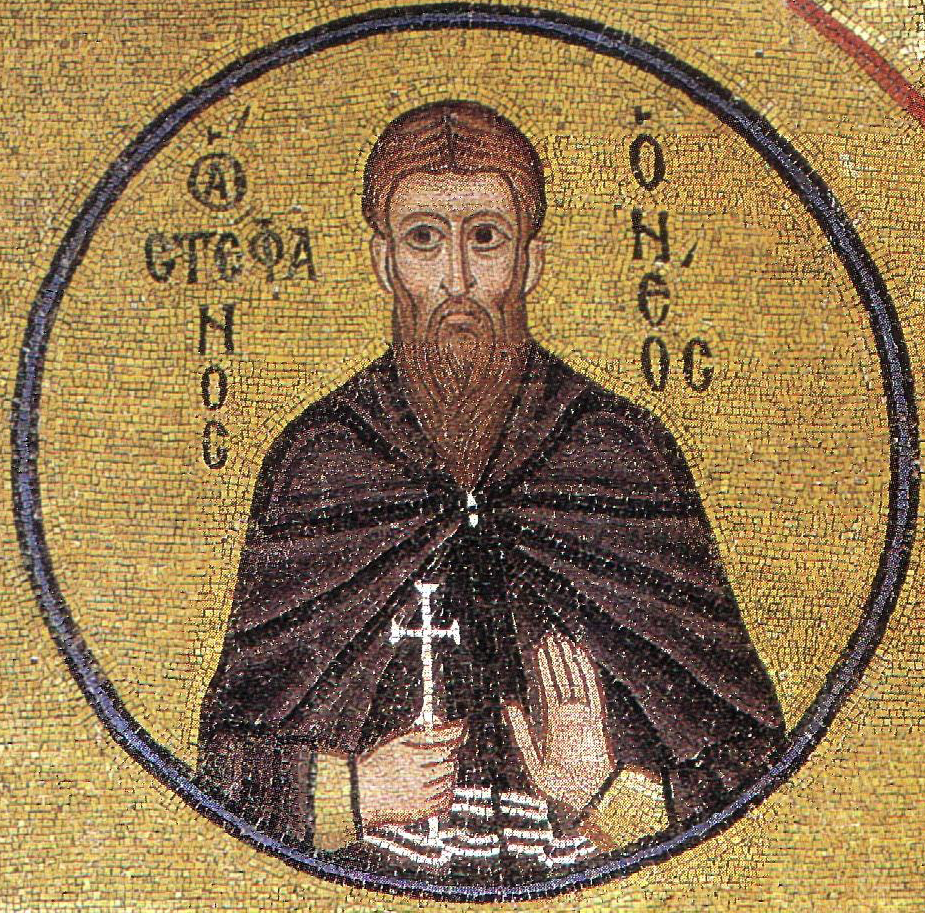
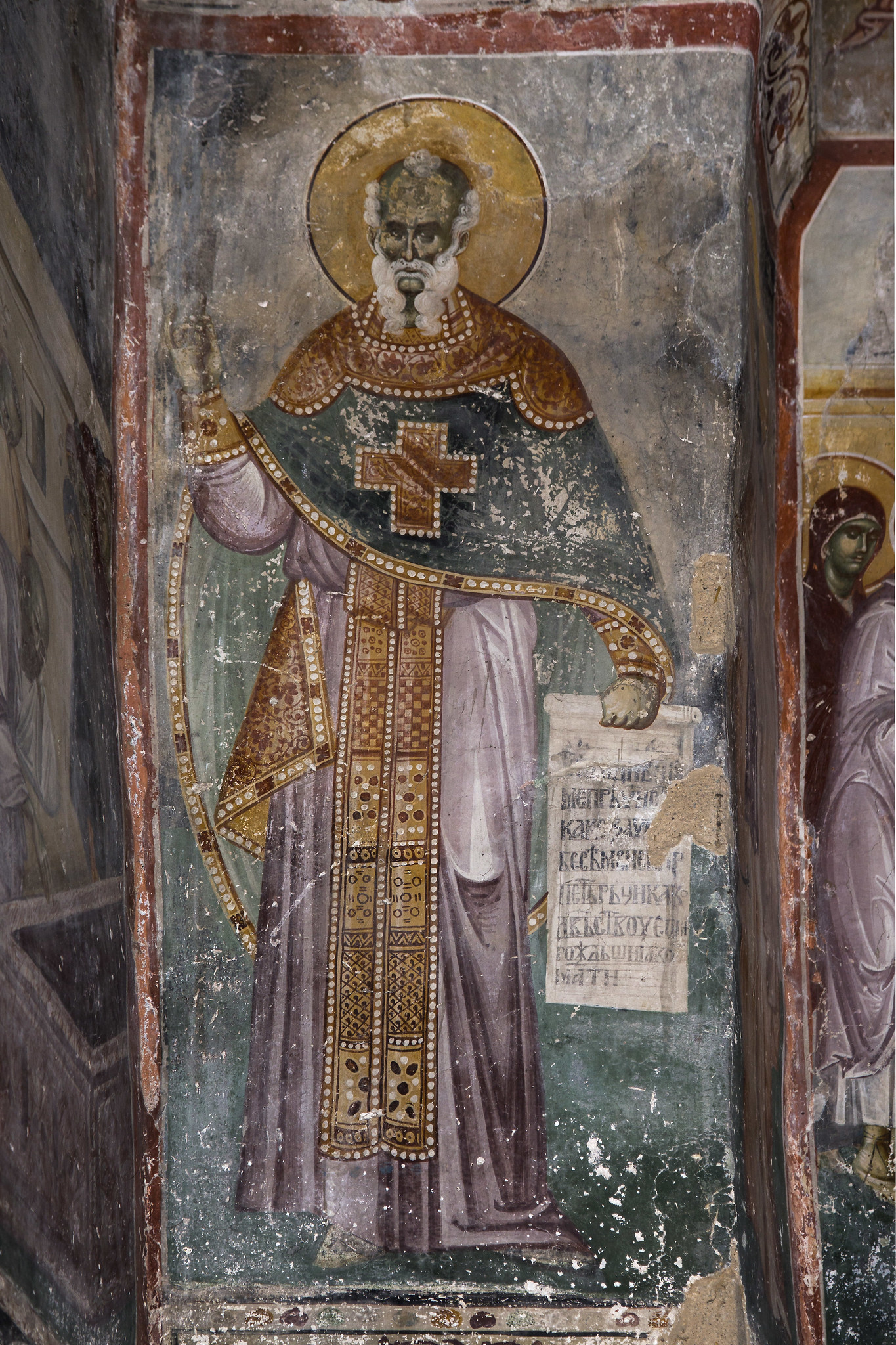
Saint of the Day – 28 November – Saint Stephen the Younger (c713-764) Abbot Martyr, Defender of Sacred Images, Born in c713 in Constantinople and died there in 764 by being scourged, stoned and dragged to death through the streets. Patronage – coin collectors, numismatists, smelters.
The Roman Martyrology reads today: “At Constantinople in the time of Constantine Copronymus, the holy Martyrs, Stephen the Younger, Basil, Peter, Andrew and their companions, numbering 339 Monks who were subjected to various torments for the veneration of holy images and confirmed the Catholic truth with the shedding of their blood.”
The ‘Life’ of this Monk was written around the year 809 by his namesake, the Deacon Stephen of Constantinople. The holy Abbot Stephen the Younger, was born in 713-715 in Constantinople, ancient Byzantium. As a young man, he initially placed himself under the guidance of a Hermit but then, choosing the religious life, entered the Monastery of Mount Auxentius in Bithynia, near Chalcedon. Here, he later became its Abbot.
He lived in this Monastery for ymany ears, devoted to prayer and as a copyist, the meritorious work of the Monks who copied ancient texts. At that time, the Eastern Emperor Constantine V Copronymus (718-775) was ruling, son of Leo III the Isaurian (675-741), the Emperor who, in 726, had initiated the religious policy against the veneration of images. This iconoclastic movement continued with his son Constantine V, who waged a fierce struggle, especially against the Monks, even convening the Council of Hiera, in 753 which condemned the defenders of the cult of sacred images.
Our Saint, the Abbot Stephen, openly opposed the decrees of this Council convened by the Emperor and not by the Pope, decrees which would later be disavowed with the approval of the veneration of images at the subsequent Second Council of Nicaea in 787.
Meanwhile, Constantine V Copronymus, in June 762, enjoined the Abbot of Mount Auxentius, to respect and adhere to the canons promulgated at Hiera; when he refused, he was taken to the Monastery of Chrysopolis near Constantinople and from there sent into exile on the Island of Proconnesus, allowing his mother and sister to join him.
After a year, in 763, he was brought back to Constantinople, where more than 300 Monks had been imprisoned for their devotion to the veneration of sacred images. Then, after another year of constant harassment and insults, on 28 November 764, Abbot Stephen was killed by Palace Officials during celebrations for Empress Eudoxia but without any order from the Emperor.
His Relics are recorded in various Churches and Monasteries during the 13th–15th Centuries. His body was deposited either at the Lips Monastery or the cemetary of St Stephen the Protomartyr, in Constantininople and his right hand was at the Pantokrator Monastery.
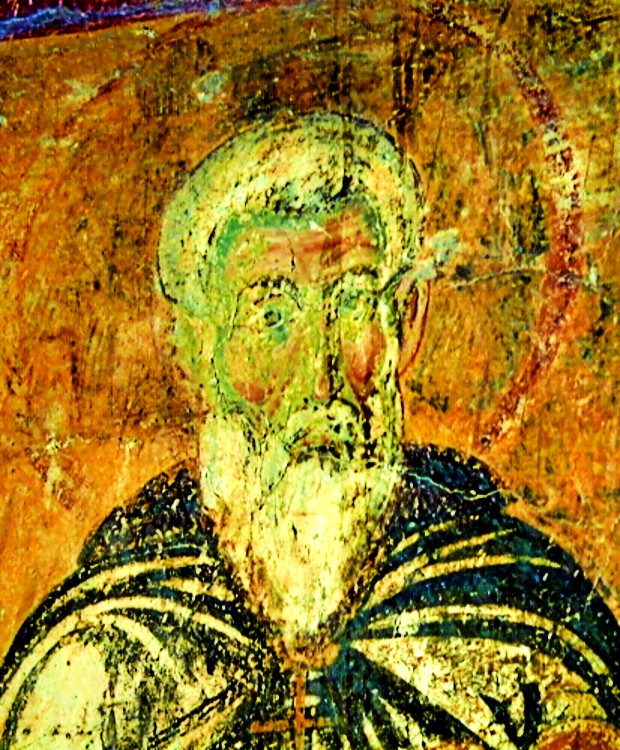
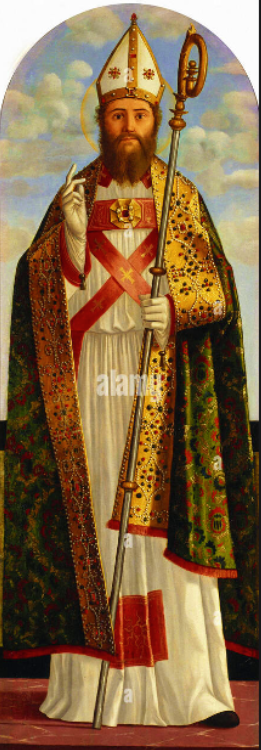
Saint of the Day – 20 March – Saint Nicetas (Died c733) Bishop of Apollonias in Bithynia, a region of Asia Minor, Defender of the veneration of holy images. We have no history of his birthplace but he died in exile in c733, presumably of natural causes, although some refer to him as a Martyr. Also known as – Nicetas of Apollonias, … of Bithynia, Niceta.
The Roman Martyrology reads today: “At Apollonia, the Bishop, St Nicetas, who breathed his last in exile, where he had been sent for upholding the veneration of holy images.”
Am unknown Saintly Bishop’s Benediction
The history of the Church preserves the memories of countless figures who, by their courage and dedication, have helped shape Christian doctrine and tradition. Among these, the figure of Saint Nicetas, Bishop of Apollonias, (in modern Turkey) is distinguished as a silent hero of the Faith whose tale, although fragmentary, offers us food for thought and admiration.
Unfortunately, information regarding St Nicetas is limited. The records of Constantinople describes him as a “Most Orthodox” Bishop of Apollonias, who lived during the era of denying the benefits of the veneration of holy images, a turbulent period in which sacred images were the subject of heated controversy and destruction.
Nicetas not only remained faithful to the cult of images but too, suffered harsh persecution for his unshakable faith. His resistance eventually led him to exile, where he died in circumstances which remain unknown.
The precise identification of Apollonias, the City of which Nicetas was the Bishop, presents several difficulties. In fact, there are several Cities with this name in the ancient Christian world. The most widespread tradition places him in Bithynia, a region of Asia Minor. However, some scholars hypothesise that Nicetas may have been the Bishop of another Apolloniad, located in Thrace or Illyria.
The date and circumstances of the death of Saint Nicetas is also uncertain. Some hypothese associate him with the persecution of Leo the Isaurian (717-741), while others place him at the time of Leo the Armenian (813-820), both anti-veneration of holy images.
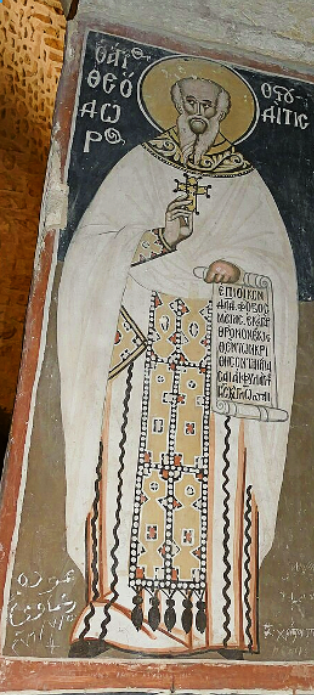
Saint of the Day – 12 November – St Theodore the Studite (759-826) Abbot of the Stoudios Monastery in Constantinople, Confessor, stern Reformer, zealous Defender of the sanctity of Marriage and of Sacred Images, two of several conflicts which set him at odds with both the Emperor and Bishops. He played a major role in the revivals both of Byzantine monasticism and of classical literary genres in Byzantium. He was a spiritual writer and exegesis and throughout his life, he maintained letter correspondences with many important spiritual, political and cultural figures of the Byzantine Empire. Born in 759 in Constantinople, (modern-day Istanbul, Turkey) and died on 11 November 826 (aged 66/67) whilst in exile in Cape Akritas (modern-day Tuzla, Istanbul, Turkey). Also known as – Theodorus Studita, Theodore of Studium, of Stoudios, of studion.
The Roman Martyrology reads today: “At Constantinople, St Theodore Studita, who became celebrated througout the whole Catholic Chirch by his vigorous defence of the Faith against the Iconoclasts.”
Theodore was born in Constantinople in 759 and from his youth he fought courageously in defence of the Sacred Imagery present in the capital of the Byzantine Empire, threatened by the adverse religious policy of the imperial government.
In 794 he succeeded his uncle Plato, (who ten years earlier had persuaded him to take monastic vows) in the direction of the Monastery of Sakkoudion in Bithynia. Shortly afterwards, however, he was sent into exile in Thessalonica, for having excommunicated the Emperor Constantine VI, later also venerated as a Saint, who had divorced his wife Mary to marry Theodota. This incident was not a simple occurence of one man’s sinful adultery but, under the name of “Synod of Adultery” an assembly of errant Bishops who, in the 9th Century, wished to approve the practice of second marriage after the repudiation of the legitimate wife, entered the history of the Church – (ring any bells – only no-one is being exiled for this now!?) Saint Theodore was the one who most vigorously opposed it and for this reason he was persecuted, imprisoned and exiled three times.
In 797, after the death of the Emperor, Theodore was recalled to his homeland with full honours, left Sakkoudion Monastery which, in the meantime, had been sacked by the Arabs and Theodore moved to the Monastery of Studios in Constantinople, from which he took his nickname. Here he undertook a powerful campaign in favour of asceticism and radical monastic reforms. The key points of his rule, later used in both Byzantine and Eastern Monasteries, were strict seclusion, poverty, discipline, study, religious offices and manual labour.
Abbot Theodore is also remembered for allowing his Monks to sprinkle nutmeg, one of the most expensive spices at the time, ontp their pea soup when they were forced to eat it. This anecdote, the veracity of which is difficult to ascertain, far from ridiculing the Saint, helps us to approach him in aspects of his daily life, as the shepherd of a community, certainly a firm spiritual leader but also, at the same time, a kindly shepherd displaying a generous love.
In 809, Theodore was again banished because of his refusal to receive Communion from Patriarch Nicephorus, who had reinstated the Priest Joseph, guilty of having officiated at the wedding between Constantine and Theodote. Two years later, Emperor Michael I, over whom our Saint had much influence, recalled him from exile but, he was again banished and flogged in 814 because of his strenuous opposition to the iconoclastic edict promulgated by Emperor Leo V which prohibited the veneration of Sacred Images. Released in 821 by Emperor Michael II, in 824 he promoted an insurrection against the latter, whom the Saint judged to be too indulgent towards the iconoclasts. However, when his plans failed, Theodore then thought it appropriate to leave Constantinople.
From that moment he wandered between various Monasteries in Bithynia and died in that of Chalcis on 11 November 826. Initially buried in that Monastery, on 26 January 844, his body was translated to Studios Monastery.
He is celebrated today 12 November, the day after his death. Saint Theodore composed several literary works. First of all, as an intrepid fighter for the defence of the indissolubility of Marriage; he wrote a treatise and a paper ‘On the economy in general’ which were unfortunately lost or more probably destroyed by order of the Patriarch Methodius. His letters the importance of which is constituted by the picture of the life and character of St Theodore which is displayed within them and, which also shed light, on the theological disputes in which he intervened. St Theodore also wrote Catechetical works divided into two collections, addressed to Monks and containing warnings and advice connected with spiritual life and monastic communities; funeral orations for his mother and for his uncle Plato; theological works focused on the use and veneration of Sacred Images; epigrams on various subjects, some of which demonstrate considerable originality and some Sacred Hymns. Furthermore, like all the Monks of the Studios, Saint Theodore was renowned too for his calligraphy and for his skill in copying manuscripts.
St Theodore the Studite, a simple but deeply religious man who dared to challenge the imperial power and the Ecclesiastical hierarchies of the time, should be considered one of the heavenly protectors of those who, even today, faced with the changed Church, have the courage to repeat an inflexible love of the One True Church and a denial of all unlawful practices. St Theodore the Studite, Pray for us!
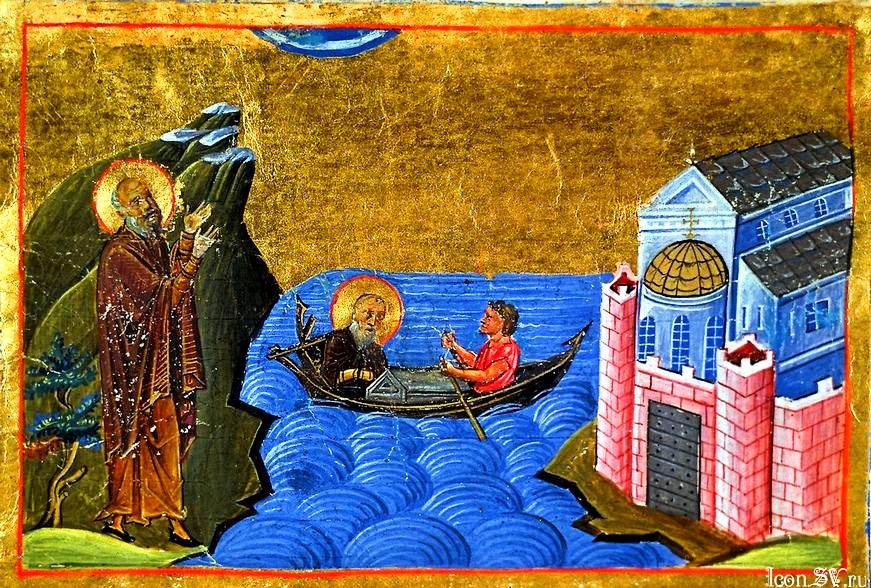
Byzantine miniature depicting the Stoudios Monastery and the Sea of Marmara.
Saint of the Day – 13 March – Saint Nicephorus (c758-829) Bishop and Confessor, Defender of Sacred images. Nicephorus was the Bishop of Constantinople from 806-815, Scholar and Writer. Born in c758 in Constantinople (modern-day Istanbul, Turkey) and died at the Monastery he had founded on the Black Sea coast on 5 April 828 or 2 June 829 (sources vary). Both these dates are variously celebrated in his honour.
The Roman Martyrology reads today: “At Constantinople, the Bishop St Nicephorus. In defence of the traditions of his forefathers and of the Churrch, the worship of Sacred images, he opposed the Iconoclast Emperor, by whom he was sent into exile, where he underwent a long martyrdom of fourteen years and departed for the Kingdom of God.”
This champion of the orthodox view in the second contest over the veneration of images belonged to a noted family of Constantinople. He was the son of the Imperial Secretary Theodore and his pious wife ,Eudoxia. Eudoxia was a strict adherent of the Church and Theodore had been banished by the Emperor Constantine Copronymus (741-75) on account of his steadfast support of the teaching of the Church concerning images.
While still young Nicephorus was brought to the Court, where he too became an Imperial Secretary. In 787, with two other officials of high rank, he represented the Empress Irene in 787 at the Second Council of Nicaea (the Seventh Ecumenical Council) which declared the Doctrine of the Church regarding images. Shortly after this Nicephorus sought solitude on the Thracian Bosporus, where he had founded a Monastery. There he devoted himself to ascetic practices and to the study both of secular learning, as grammar, mathematics and philosophy as well as to the that of the Sacred sciences especially the Scriptures.
Later he was recalled to the capital and given charge of the great hospital for the destitute, possibly that founded by St Basil the Great. Upon the death of Bishop Tarasius (25 February, 806), there was great division among the Clergy and higher Court officials, as to the choice of his successor. Finally, with the assent of the Bishops and Emperor, Nicephorus was appointed. Although still a layman, he was known by all to be very religious and highly educated. He received Holy Orders and was Consecrated Bishop on Easter Sunday, 12 April 806. He was opposed for a time by St Theodore the Studite after Nicephorus forgave a Priest who married Emperor Constantine VI toTheodota, despite the fact the Constantine’s wife, Mary, still lived. He seems to have been a gentle and forgiving man, devoted to reconciliation.
But in regard to Sacred images, Nicephorus challenged the Iconoclast policies of Emperor Leo V the Armenian without fear and was deposed by a Synod of Iconoclast Bishops at the conniving of the Emperor. Nearly assassinated on several occasions, Nicephorus was finally exiled to the Monastery he had founded on the Black Sea, spending his remaining years there in prayer.
He died in 829, never having been able to return to his See. While Bishop, he brought various reforms to his large Diocese and inspired zealous shepherded his faithful flock. He was also the Author of anti-Iconoclast writings and two historical works, a Chronographia and Brevianim.
In 847, St Nicephorus’ remains were solemnly brought back to Constantinople by Bishop Methodius I and interred in the Church of the Holy Apostles, where they were the object of an annual festival celebrated with much devotion.
Saint of the Day – 12 March – Saint Theophanes (c758-817) Abbot, Confessor, Founder of Monasteries, Defender of Sacred images, Writer and Historian. Born in Samothrace, Thrace, Greece and died there on 12 March 817 of natural causes (aged 57–59). Also known as – Theophanus of Isaurius, Teofane…
The Roman Martyrology reads today: “At Constantinople, St Theophanes, who gave up great wealth to embrace poverty in the monastic state. By Leo the Armenian, he was kept in prison for two years for the worship of holy images, then, being exiled in Samothracia, where, overwhelmed with afflictions, he breathed his last and wrought many miracles.”
Theophanes was born in Constantinople of wealthy and noble iconodule parents, being Isaac, the Governor of the Islands of the Aegean Sea and Theodora, of whose family nothing is known. His father died when Theophanes was three years old and the Byzantine Emperor, Constantine V (740–775) subsequently saw to the boy’s education and upbringing, at the Imperial Court. Theophanes would later hold several offices under Leo IV.
He was married at the age of eighteen but convinced his wife to lead a life of virginity. In 779, after the death of his father-in-law, they separated with mutual consent, to embrace the religious life. She chose a Convent on an Island near Constantinople, while he entered the Polychronius Monastery, located in the district of Sigiane on the Asian side of the Sea of Marmara. Later, he built a Monastery on his own lands, on the Island of Calonymus (now Calomio), where he acquired a high degree of skill in transcribing manuscripts.
After six years there, Theophanes returned to Sigriano, where he founded an Abbey known by the name ‘of the big settlement’ and governed it as the Abbot. In this position of leadership, he was present at the Second Council of Nicaea in 787 and signed its decrees in defence of the veneration of Icons.
During the years 810-815, Theophanes undertook, at the urgent request of his friend, the Monk and Historian, George Syncellus, who died shortly after Theophanes acceptance, the continuation of Syncellus’ Christian History. The language used occupies a place midway between the stiff Ecclesiastical and the vernacular Greek. Theophanes’ part of the History covered events from the accession of Diocletian in 284 to 813. This part of the History is valuable for having preserved the accounts of Byzantine Ecclesiatical history, for the 7th and 8th Centuries which would otherwise have been lost.
When Emperor Leo V the Armenian (813–820) resumed his iconoclastic warfare, he ordered Theophanes brought to Constantinople. The Emperor tried in vain to induce him to condemn the veneration of icons which had been sanctioned by the second Council of Nicaea. Theophanes was cast into prison and for two years suffered cruel treatment. After his release in 817, he was banished to Samothrace, where overwhelmed with afflictions, he lived only seventeen days in his home country.
He is credited with many miracles which occurred after his death, on 12 March, the day he is commemorated in the Roman Martyrology.
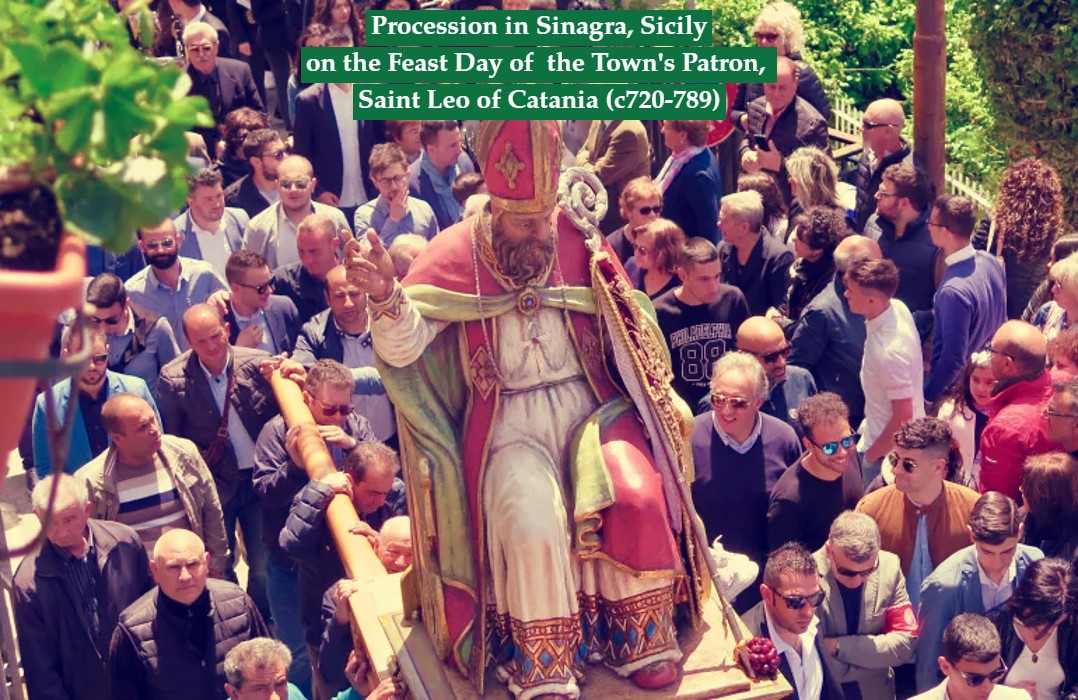
Saint of the Day – 20 February – St Leo of Catania (c720-789) Bishop, Defender of Sacred Images for which opposition he was forced to flee into exile for some years, Hermit. Born in c720 in Ravenna, Italy and died on 20 February 789 in Etna, Sicily, Italy, natural causes. St Leo was the 15th Bishop of Catania, Sicily, famed for his love and care for the poor, his brave opposition to the iconoclastic Government of the time and for his Miracles. Sadly I have found no accounts of his miracles but by the artworks below, it seems they were renowned in their day. Patronages – of these Cities and Towns in Sicily, Italy : Longi, Ronetta, Saracena, Sinagra. Also known as – “Il Maraviglioso” (the Wonderworker) or “He who performs Miracles” Leone.
The Roman Martyrology reads: “In Catania, Sicily, St Leo, the Bishop, illustrious vor virtue and miracles.”
Leo was born in Ravenna in around 720. Since his childhood, he felt the call of God. It is said that his mother saw him on his knees absorbed in prayer at the age of two. While still very young, he entered the Order of Benedictine Monks and moved to Reggio Calabria. Here he remained until he was elected Bishop of Catania. It is reported that the people of Catania had received an angelic vision in a collective dream, wherein they were informed that Leo was the perfect choice to hold the office of their new Bishop. Initially, Leo, not considering himself worthy, did not want to accept but after the insistence of the Catanian faithful, he became thei 15th Bishop of Catania.
In those years, the ferocious destruction of sacred images “iconoclasm – considered a sign of idolatry” was taking place throughout the Byzantine Empire. Those who did not obey the edict which forbid the use of sacred images, were imprisoned and often ended in exile and even Martyrdom. The Bishop of Catania openly opposed the imperial laws. For this reason, the Byzantine Governor of Sicily, ordered Leo’s arrest who was forced to leave Catania and take refuge in the mountains. He wandered in the wooded peaks of the area, in the surroundings of Longi and Sinagra, protected by the faithful, who honoured him as the proud opponent of the unjust laws of the Empire and as a Miracle-worker.
He finally arrived in Rometta. Here, in the nearby Peloritan mountains, he lived as a Hermit in a cave he dug himself. After some years, he returned, uncontested, to Catania, where he resumed his Episcopal Seat and his fight, with ever more energy, against the iconoclastic laws. He died in the City of Etna on 20 February 789. The image below was taken during the annual Procession held in Sinagra.
Thought for the Day – 6 August – Meditations with Antonio Cardinal Bacci (1881-1971)
Sacred Images
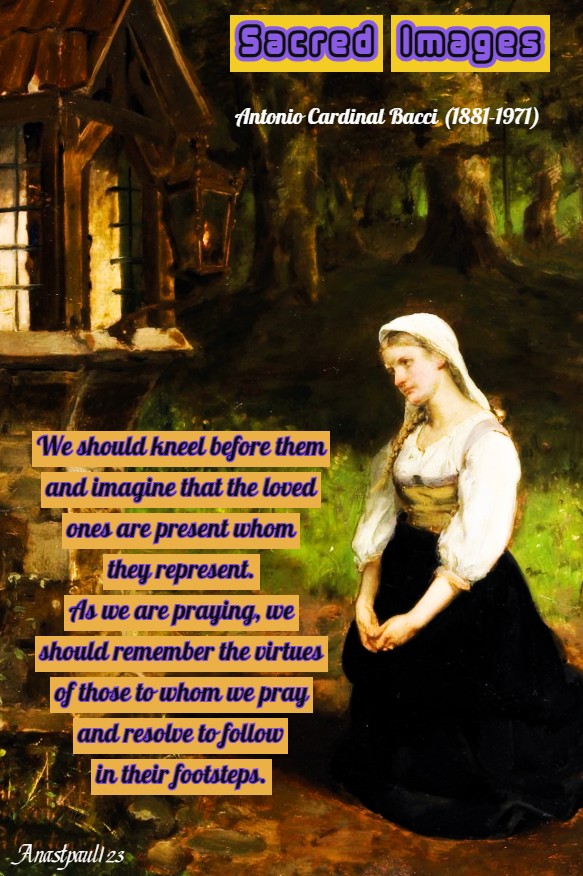
“Apart from avoiding the two extremes of behaviour which have been mentioned, we should cultivate a proper respect for the images of Saints, men and women, who have benefited mankind. If we can cherish so dearly the portraits of our parents, how much more should we revere the images of Christ, Our Lady and the Saints.
We should kneel before them and imagine that the loved ones are present whom they represent. As we are praying, we should remember the virtues of those to whom we pray and resolve to follow in their footsteps.”
Saint of the Day – 27 April – Saint John of Kathara (c770-c835) Priest, Abbot, Defender of Sacred Images. Born in c770 at Irenopolis, Isaurian Decapolis (modern Greece) and died in c835 on the prison island of Aphousia (modern Avsa, Balikesir, Turkey) of natural causes. Also known as – John di Catari, John of Cathare, John of Constantinople.
The Roman Martyrology states [somewhat erroneously * see below]: “At Constantinople, the Abbot St John, who combated vigorously, for the worship of holy images, under Leo the Isaurian.”
At the age of nine John embraced the monastic life. His master became attached to him and took him with him to the second Council of Nicaea (787) and then again when he left for Constantinople, where he became Superior of the Monastery known as the Dalmatian. Here John was Ordained to the Priesthood.
In Lent of 805, the Emperor Nicephorus (802-811) sent John to govern the Cathar Monastery in Bithynia and in the summer of 808, his convent separated from St. Theodore the Studite, probably because John had accepted the re-establishment of the Priest Giuseppe, made famous in the ‘Mechian’ controversy.
He had been Abbot for just over ten years when the iconoclast persecution, unleashed by Leo the Armenian (813-820), removed him from his Convent (April – May 815). Taken to Constantinople before the Emperor, he was scourged, then relegated to his residence where he remained for three months. He was finally exiled and imprisoned in the fortress of Pentadactylos in the region of Lampe, near Apamea.
During this confinement, he joined, together with other iconodule Abbots and Monks, the appeals addressed to Rome, in 816 and 817, by Saint Theodore the Studila. After ten months of detention, he had to appear again, in the capital (around April 817), before the Emperor and the usurping Bishop Theodotus.
John resisted magnificently and was exiled again (June 819) to the fort of Criautoros. Early in the reign of Michael the Stutterer, Leo’s successor, John was freed (after 25 December 820) and returned to Chalcedon but was not allowed to enter the capital. Perhaps he reached his Monastery. But when the Emperor Theophilos unleashed a new offensive against the cult of images (after October 832), John tried to rally the iconophile Monks around him. Therefore, he was again exiled to the island of Afusia,, where he died on 27 April 835.
* On 27 April, the Roman Martyrology contains a praise of the Saint which needs rectification – it speaks of Leo the Isaurian instead of Leo the Armenian; moreover, in fixing the place of John’s death at Constantinople, leading many to believe that the Saint had been the Abbot of the Cathar Monastery existing in the capital of the Byzantine Empire.
Thought for the Day – 4 August – Meditations with Antonio Cardinal Bacci (1881-1971)
Sacred Images
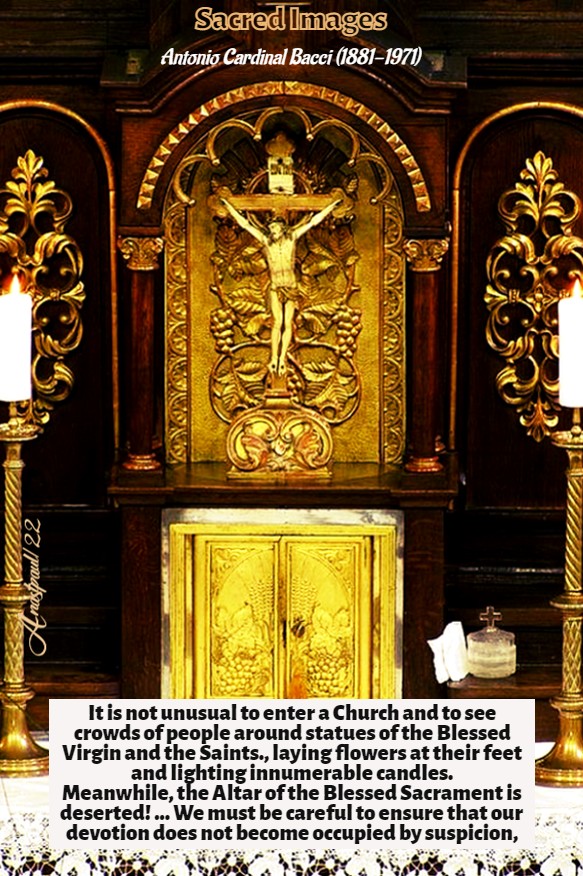
“The opposite extreme of over-superstitious veneration of images must also be avoided. As St Gregory the Great observed, Sacred images should be regarded as a means of impressing, on simple minds, the virtues which they ought to emplant. Sometimes, however, the ignorance or the faithful, in this regard, needs to be corrected.
It is not unusual to enter a Church and to see crowds of people around statues of the Blessed Virgin and the Saints., laying flowers at their feet and lighting innumerable candles. Meanwhile, the Altar of the Blessed Sacrament is deserted! Excessive homage can be paid to particular images, in such a manner, as to suggest that the piety of the worshippers is directed towards the material images themselves, rather than towards the Redeemer or our Divine Mother or the Saints. We must be careful to ensure that our devotion does not become occupied by suspicion,”
Quote/s of the Day – 27 March – The Memorial of St John Damascene (676-749) – Father and Doctor of the Church
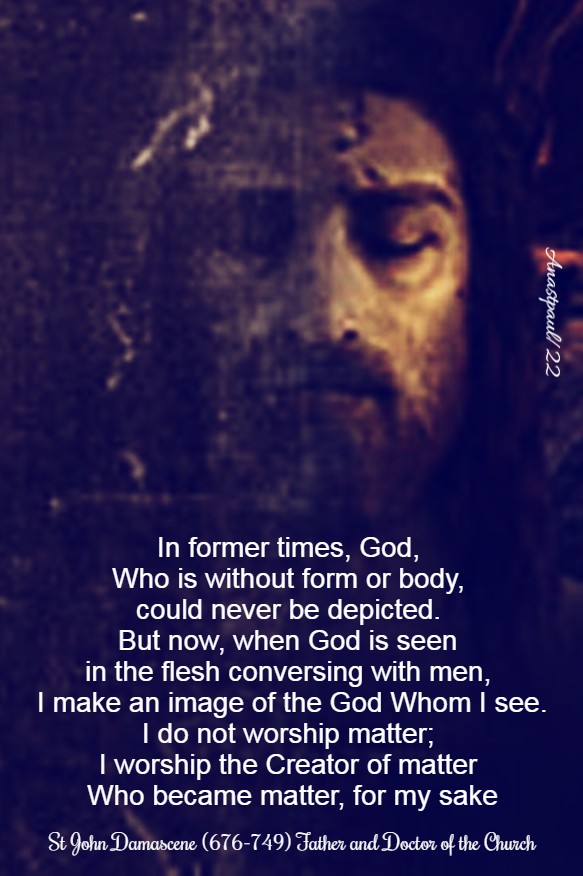
“In former times, God, Who is without form or body, could never be depicted. But now, when God is seen in the flesh conversing with men, I make an image of the God Whom I see. I do not worship matter; I worship the Creator of matter Who became matter, for my sake.”
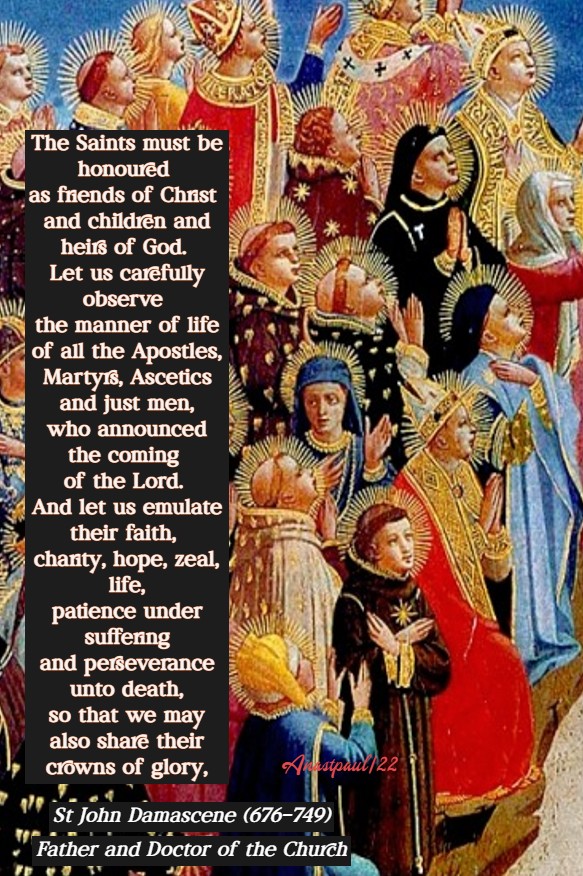
“The Saints must be honoured as friends of Christ and children and heirs of God. Let us carefully observe the manner of life of all the Apostles, Martyrs, Ascetics and just men, who announced the coming of the Lord. And let us emulate their faith, charity, hope, zeal, life, patience under suffering and perseverance unto death, so that we may also share their crowns of glory.”
St John Damascene (676-749) Father and Doctor of the Church
Bl Aimone of Halberstadt St Amphilochius of Illyria St Alexander of Drizipara St Alexander of Pannonia St Alkeld the Martyr St Amator the Hermit St Augusta of Treviso (Died 5th Century) Virgin Martyr St Claudio Gallo St Cronidas of Illyria St Ensfrid of Cologne Bl Francesco Faà di Bruno Bl Frowin of Engelberg St Gelasius of Armagh
Martyrs of Bardiaboch: A group of Christians who were arrested, tortured and executed together for their faith during the persecutions of Persian King Shapur II. Martyrs. – Abibus, Helias, Lazarus, Mares, Maruthas, Narses, Sabas, Sembeeth and Zanitas. 27 March 326 at Bardiaboch, Persia.
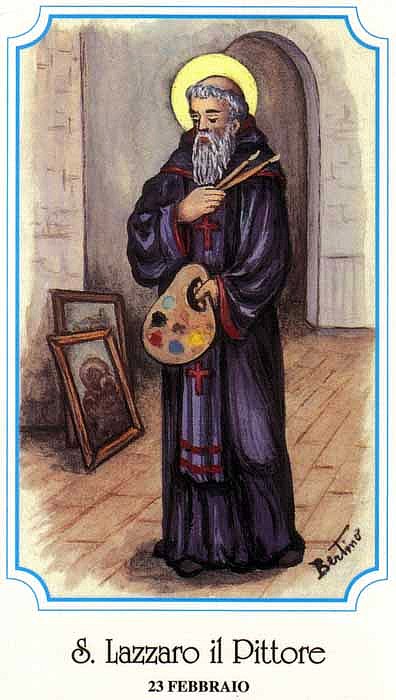
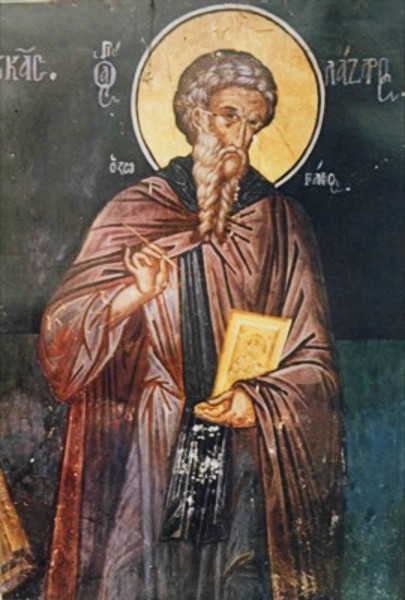
Saint of the Day – 23 February – St Lazarus Zographos (810 -865) surnamed Zographos (Greek for ‘painter’) Priest abd Monk known as “the Painter and the Iconographer.” Born at Mount Caucasus in Armenia on 17 November 810 in Armenia and died in 865 in Rome. Lazarus lived before and during the second period of Byzantine Iconoclasm. Also known as – Lazarus the Painter, the Iconographe, Lazarus of Constantinople, Lazzaro…
The Roman Martyrology states of him today: “St Lazarus, a Monk, whom the Iconoclast Emperor Theophilus ordered to be put to torture for having painted holy images. His hand was burned with a hot iron but, being healed by the power of God, he painted anew the holy images which had been defaced and finally rested in peace.”
Lazarus was noted to possess the virtues of love for Christ, asceticism, prayer and rejection of the vanities of the world. He was further recognised for his acts of self-control, discipline and alms-giving He was Ordained a Priest and in his lifetime, he was highly regarded and well-known for his frescos. He used faith and ritual as a means to transcribe his inner contemplation onto the images he painted. Thus, his ability to paint iSacred images was seen as a gift given by God.
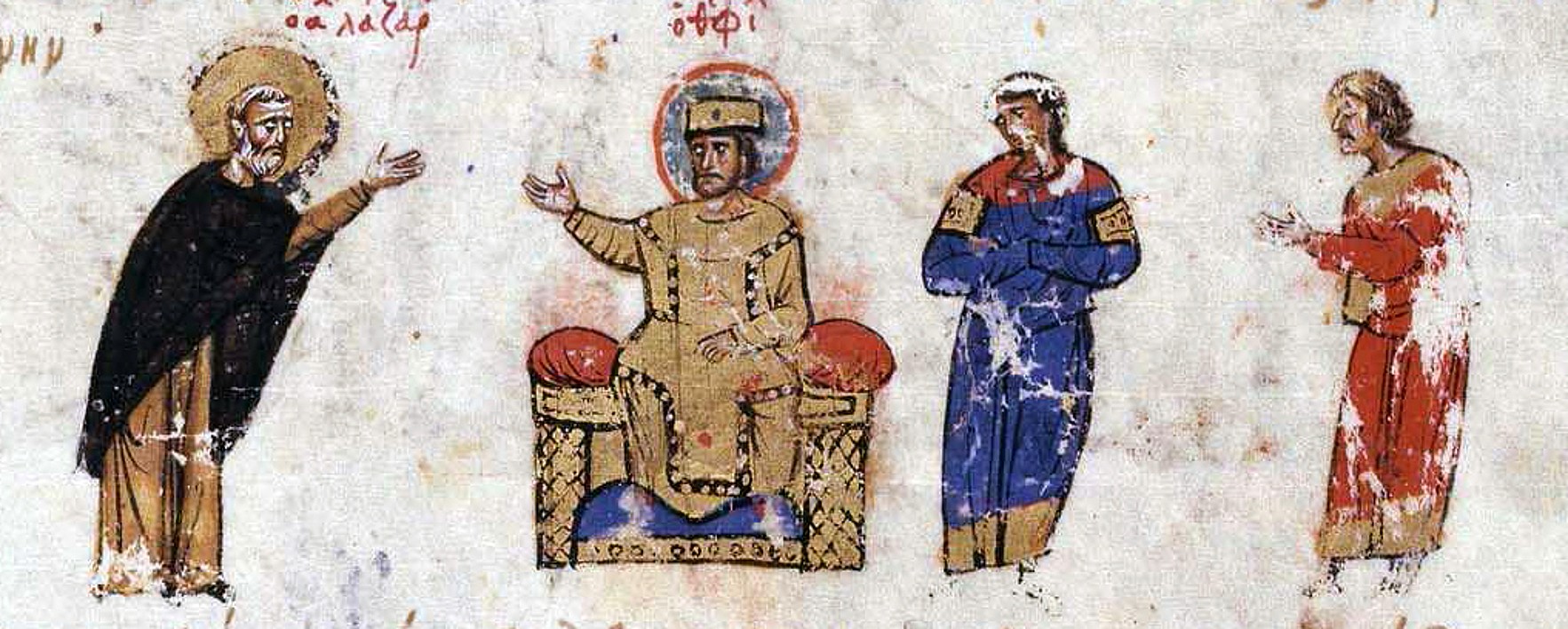
During the reign of Theophilus (829–842), an iconoclast Emperor opposed to all Sacred images, Lazarus stubbornly continued his craft of painting and began restoring images defaced by heretics. Theophilus sought out Lazarus, who was then famous for his artworks and intended to make an example of him. After being asked several times to cease painting, Lazarus was brought before the Emperor. Lazarus refused to destroy any of the images he painted. The Emperor soon found that Lazarus was above flattery and bribery. He was then threatened with the death penalty, which at the time was not an uncommon outcome for those who favoured icons (iconodules). However, Lazarus, being a holy man of the cloth, could not be put to death and so, he was instead thrown in prison.
St Lazarus before Emperor Theophilus
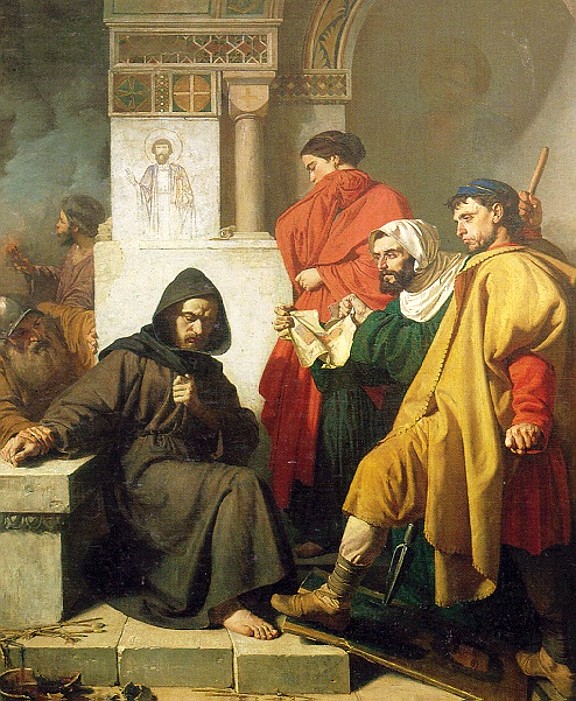
During his imprisonment he was subjected to such “severe torture that flesh melted away along with his blood.” He was left to die of his wounds but miraculously recovered. He then began to paint holy images on panels from his prison cell. Hearing of this, Theophilus gave orders to have “sheets of red hot iron to be applied to the palms of his hands ,where, as a result, he lost consciousness and lay half dead.” It is also said his hands were burned with red-hot horseshoes until his flesh melted to the bone.
As Lazarus lay on his deathbed, the Empress Theodora, an iconodule, convinced Theophilus to release Lazarus from prison. Lazarus found refuge at Tou Phoberou, a secluded Church of St John the Baptist. The Church is believed to have functioned as an Monastery which housed as many as one-hundred and seventy Monks.
After the death of Theophilus in 842, his wife, Theodora asked Lazarus to forgive her husband’s actions, to which he replied “God is not so unjust, O, Empress, as to forget our love and labours on His behalf.” Lazarus served as a model of perseverance for those who had suffered from iconoclast persecution.
St Lazarus and the Iconoclasts by Domenico Morelli (1855)
After the restoration of the icons in 843, Lazarus was again free to pursue his painting. Despite his previous wounds which the Almighty had completely healed, Lazarus was said to have painted a large fresco of St John at the Phoberos Monastery. The painted fresco was known to have the power to perform cures and miracles. That same year, he also famously restored a portrait of Christ known as the Christ of the Chalke, over the Chalke Gate, a ceremonial entrance of the Great Palace of Constantinople. Neither of these two works survive today.
Lazarus was also accredited with the mosaic decoration of the apse of the Hagia Sophia, within the pilgrim accounts of Antony, Archbishop of Novgorod during a visit to Constantinople. Antony described the mosaic as depicting the Mother of God holding a Child Christ flanked by two angels, which was noted to have been seen by both Emperor Basil l and Michael III (842–867) before his death the same year. However, these accounts are dated several centuries later in c. 1200.
In 856, Lazarus was sent as a diplomat for Michael III, Theophilos and Theodora’s son, who sent him as an Emissary to visit Pope Benedict III, to discuss the possibility of reconciliation between the Catholic Church of Rome and the Eastern Church of Constantinople, who at this time, had very strained relations. In 865, during his second mission to the Pope, Lazarus died at Rome on 28 September, although others dispute this date. He was buried in the Monastery of Evanderes, near Constantinople.
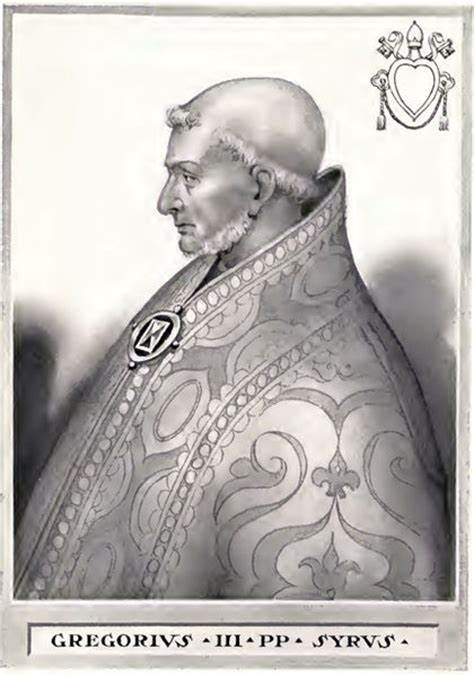
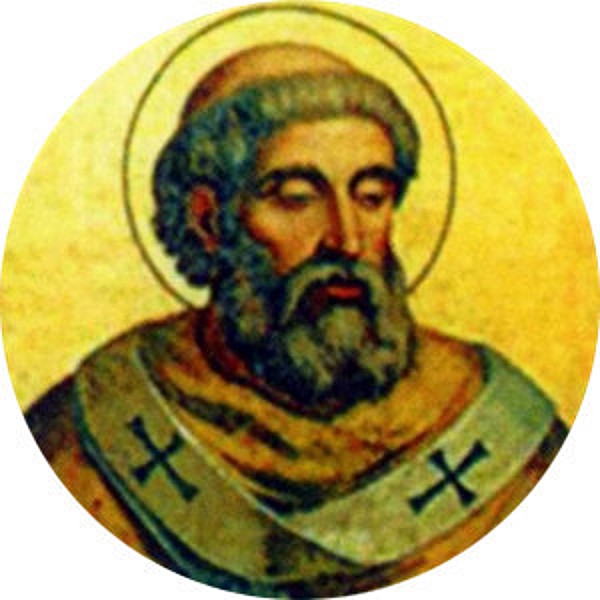
Saint of the Day – 28 November – Saint Pope Gregory III (Died 741) Bishop of Rome 11 February 731 until his death on 28 November 741. Born in Syria and died on 28 November 741 of natural causes.
The Roman Martyrology states: “St Rome, the blessed Pope Gregory III, who departed for Heaven with a reputation for great sanctity and miracles.“
Beside the fact that Gregory was a Priest at Saint Crisogono Church in Rome and that he was the son of a Syrian named John nothing else is known about his life prior to being elected the 90th pope. He was elected by popular acclamation in 731, during the funeral procession of his predecessor, because of his reputation for virtue and learninge.
Gregory’s Pontificate, like that of his predecessor, was troubled by the iconoclastic controversy (the deliberate destruction of religious icons and other symbols) in the Byzantine Empire.
Upon his accession as Pope, Gregory immediately appealed to the Byzantine Emperor Leo III, to moderate his position on the Iconoclastic controversy. When Pope Gregory’s representative was arrested on the orders of the Emperor, Gregory called a Synod in November 731, which condemned Iconoclasm outright. Leo responded by trying to bring the Pope under control, although the fleet he sent to enforce the imperial will, was shipwrecked in the Adriatic Sea. Failing, he appropriated Papal territories in Sicily and Calabria, transferring ecclesiastical jurisdictions in the former Praetorian Prefect, to the Patriarch of Constantinople. His attempt to force the Duke of Naples to enforce an imperial decree to confiscate [apal territory in the duchy failed, as the Duke was supportive of the Pope’s stand.
Pope Gregory demonstrated his opposition to Iconoclasm by emphasising his veneration of icons and relics. He repaired numerous beautiful Churches, adorning them with icons and images of Jesus Christ, the Virgin Mary and many Saints. He ordered, in the heart of St. Peter’s Basilica and Iconostasis, (an iconostasis is a wall of artworks and religious paintings, used to separate the Nave from the Sanctuary) situated between six onyx and marble columns. He also built a new oratory in St. Peter’s Basilica, which housed relics of several Saints. He was also an enthusiastic supporter of monasticism – he established the Monastery of S. Chrysogonus and rebuilt the Hospice of Saints Sergius and Bacchus near St Peter’s.
Pope Gregory also promoted the Church in northern Europe. He supported the continuing mission of St. Boniface in Germany, elevating him to the rank of Archbishop in 732. In 732, Gregory banned the consumption of horsemeat, both domestic and wild, comparing it as an “abomination” since it was associated with pagan ritual feastings. He was very conscious of the ongoing Lombard threat but was unsuccessful at stopping their advance. He also undertook and completed, the restoration of the Walls of Rome.
Pope Gregory III died on 28 November 741. He was succeeded by Pope Zachary and was buried in St Peter’s Basilica, in the oratory he had built at the start of his Pontificate.
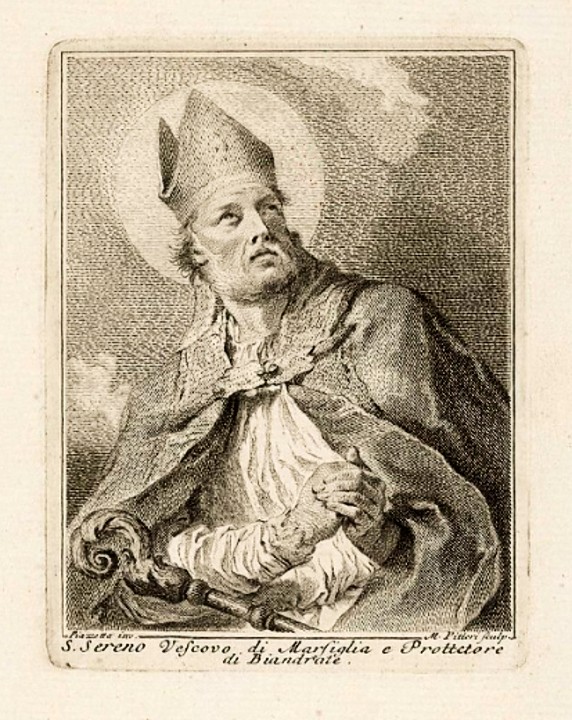
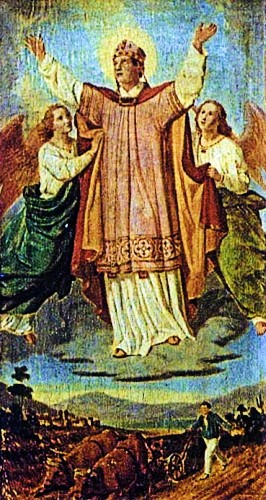
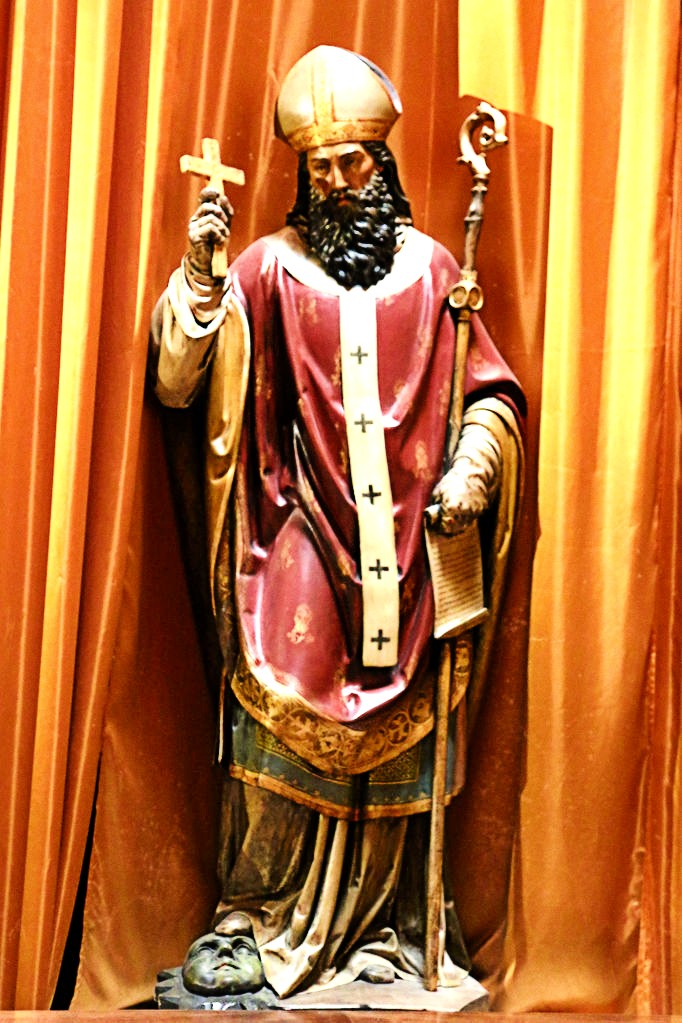
Saint of the Day – 2 August – Saint Serenus of Marseilles (Died c 606) the 10th Bishop of Marseilles. Died in c 606 near Biandrate, Piedmont, Italy of natural causes. Also known as – Sereno, Clear (translation of his name). Patronages – for good weather, for good harvests, of Biandrate, Italy.
Serenus is known through an exchange of letters with Pope Gregory the Great (540-604). The correspondence between the Pope and the Bishop of Marseilles concerned the position of the Church in regard to the images in the Churches and the journey undertaken by Saint Augustine, the future Archbishop of Canterbury and the Monks who accompanied him to the England.
He would have died near Biandrate in the Diocese of Vercelli on his return from Rome where he had been to discuss his iconoclastic positions regarding the veneration of images. We know little else but this Saint except that he was a zealous and holy Bishop sincerely aiming to foster the faith of his flock and adherence to Holy Mother Church.
He was buried in a field near the Benedictine Abbey of San Nazzaro. His body,was found in the Middle Ages, by a farmer working the field, and his relics were then reenshrined in the St Columba of Biandrate.
The Bishop had destroyed the holy images by strictly applying the commandment given by God to Moses. In 599, the Pope sent Father Cyriaque to Gaul. Having to go through Marseilles, he had given Cyriaque a letter he had written to the Bishop :
“I learned a long time ago that seeing a few people worshiping the pictures of the Church you broke them and threw them out. I praise your zeal to prevent man-made things from being worshiped but I believe you should not shatter these images. Because we put paintings in Churches so that those who cannot read can see, on the walls, what they cannot learn from books. So you had to keep them and divert the people from sinning by worshiping paintings . Serenus replied to the Pope, doubting that this letter was from him. The Pope replied to him the following year:
You must have had no suspicion of Father Cyriaque, who was the bearer of my letters . Then talking about pictures:
Tell me, my brother, what Bishop have you ever heard of who did the same? Should not this consideration only hold you back so as not to appear alone pious and wise, in contempt of your brothers? … It is said that by shattering these images you scandalised your people so much, that most of them broke away from your community. We must remind them of them and show them, that through the Holy Scriptures, that it is not allowed to worship what is made by hand. Then add, that seeing the legitimate use of the images, turned into worship, you were outraged and made them break. You will add – if you want to have images in the Church, for your instruction, for which they were made in the past, I will gladly allow you. So you will soften them and bring them back to union. If someone wants to make images, do not prevent him: only forbid worshiping them. The sight of the stories must excite in them compunction but they must prostrate themselves only to adore the Holy Trinity. I tell you all this only out of my love for the Church, not to weaken your zeal but to encourage you in your duty.“ Saint Gregory the Great, after Basil the Great (329-379), Gregory of Nazianze (330-390), Gregory of Nyssa (335-394) and PaulinE of Nola (353-431), resumes in his letters that the images are useful for those who cannot read books. Gregory the Great sets three roles for images in his two letters to Serenus
1. educate the illiterate, 2. to fix the memory of holy history, 3. arouse a feeling of compunction among the faithful.“ But the Bishop must teach, that pictures cannot be worshiped.
Quote/s of the Day – 12 May – The Memorial of St Germanus of Constantinople (c 640-733) Defender of Sacred Images
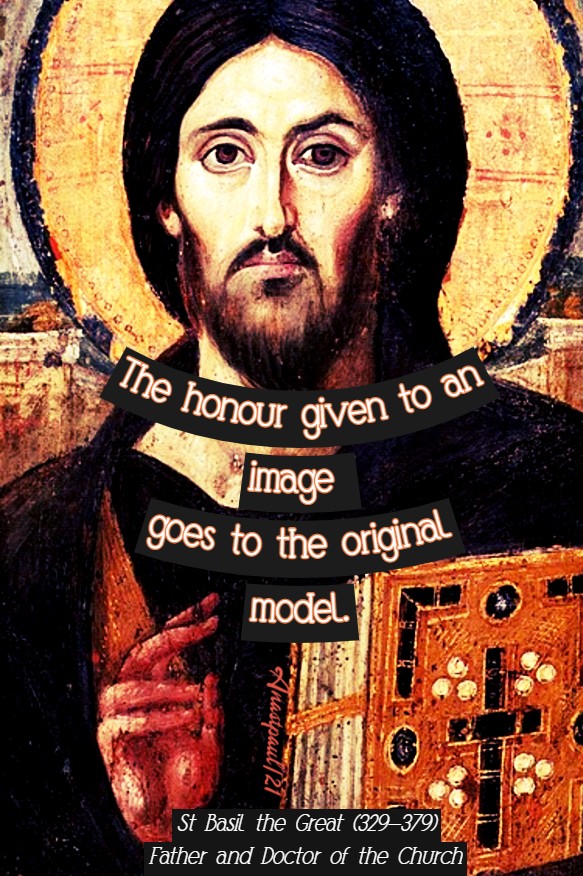
“The honour given to an image goes to the original model.”
St Basil the Great (329-379 Father and Doctor of the Church
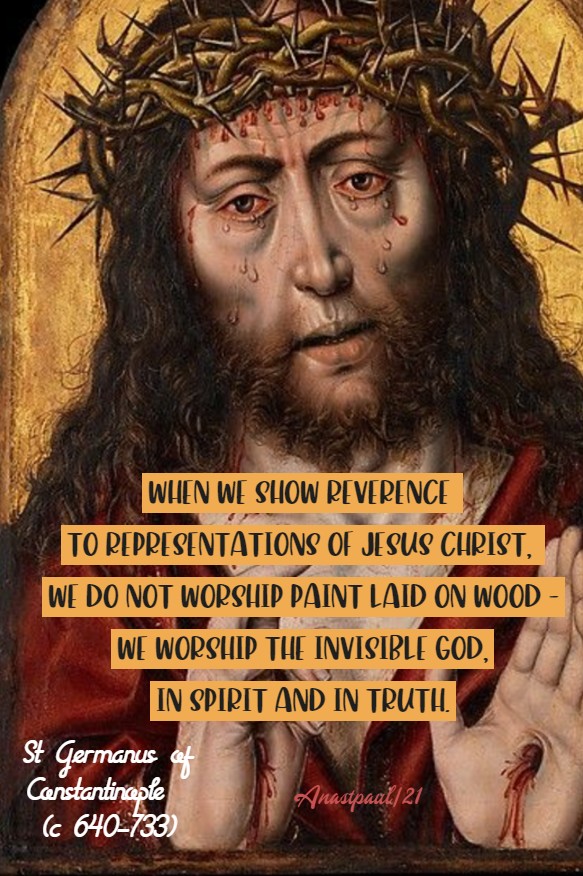
“When we show reverence to representations of Jesus Christ, we do not worship paint laid on wood – we worship the invisible God, in spirit and in truth.”
St Germanus of Constantinople (c 640-733)
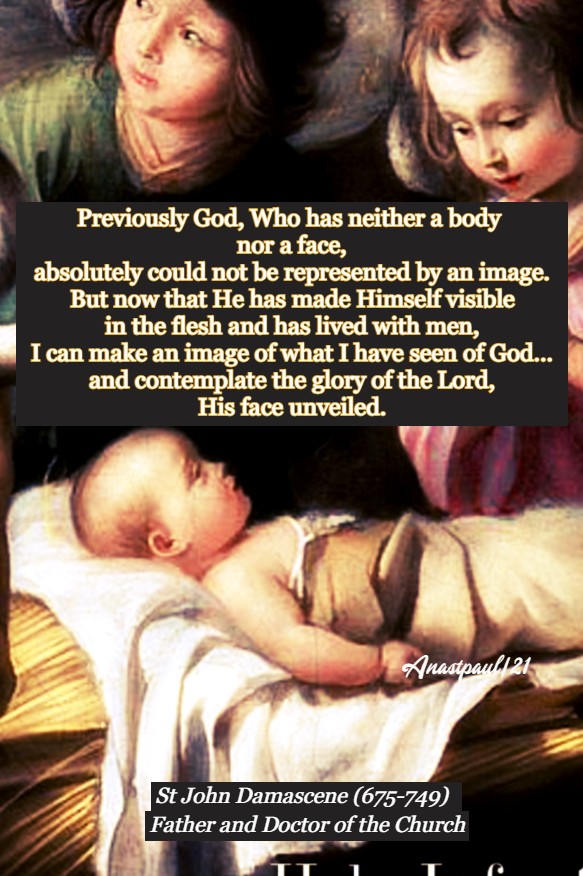
“Previously God, Who has neither a body nor a face, absolutely could not be represented by an image. But now that He has made Himself visible in the flesh and has lived with men, I can make an image of what I have seen of God… and contemplate the glory of the Lord, His face unveiled.”
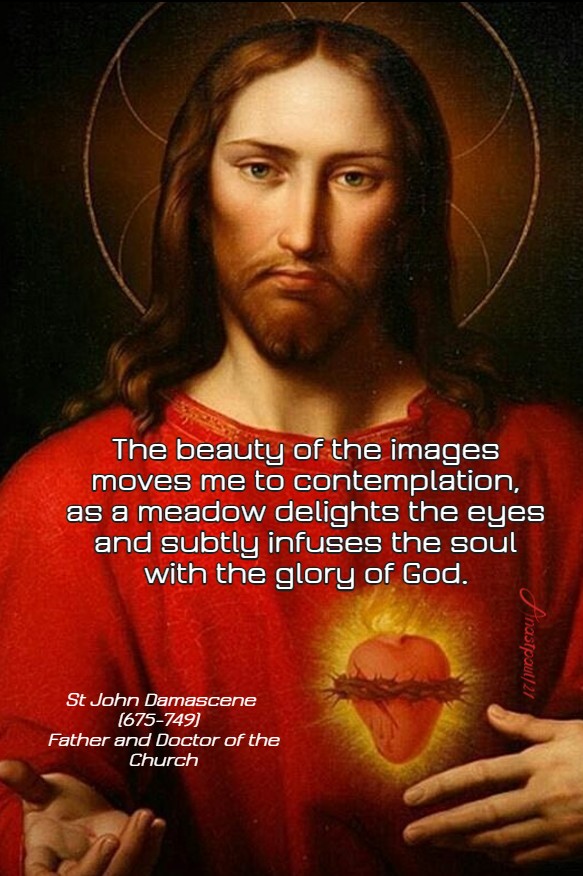
“The beauty of the images moves me to contemplation, as a meadow delights the eyes and subtly infuses the soul with the glory of God.”
St John Damascene (675-749) Father and Doctor of the Church
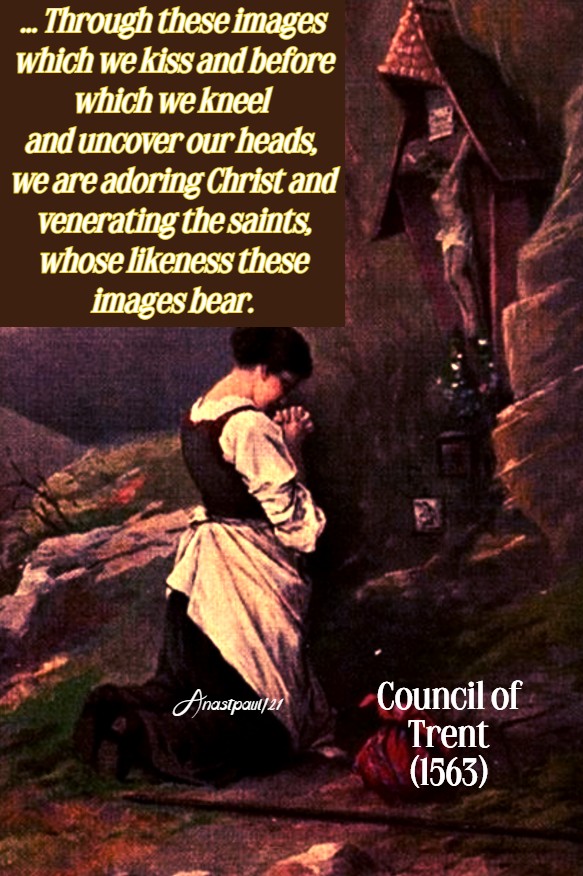
“… Through these images which we kiss and before which we kneel and uncover our heads, we are adoring Christ and venerating the saints, whose likeness these images bear.”








 AnaStpaul
You must be logged in to post a comment.