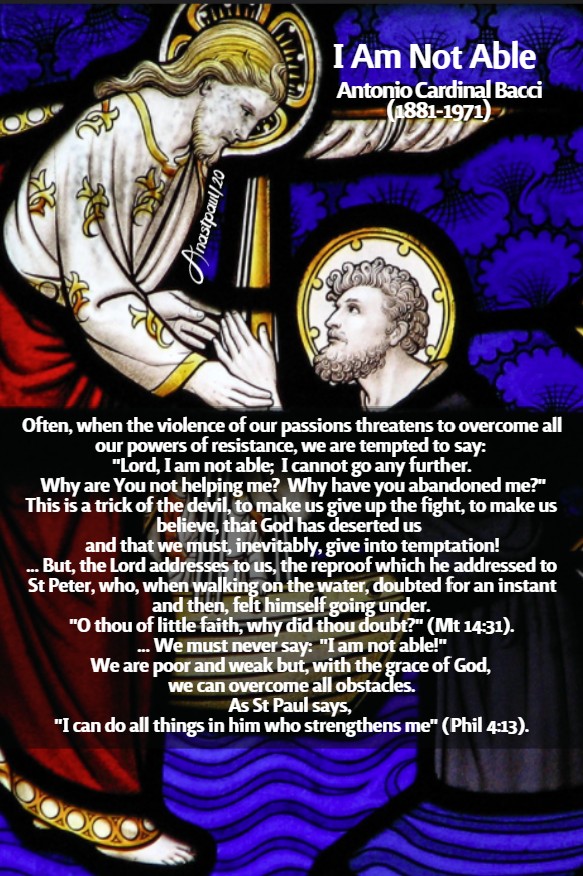
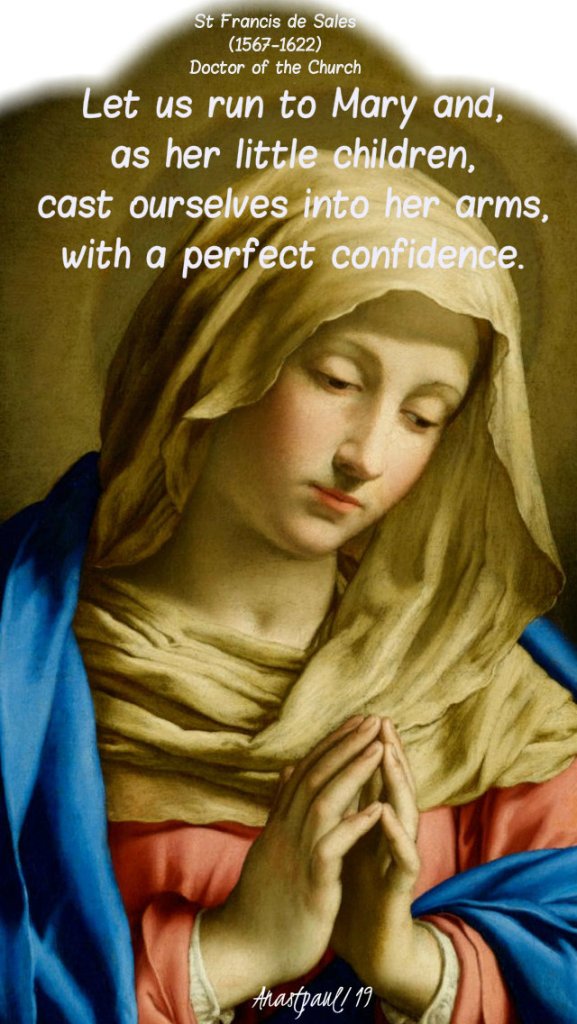
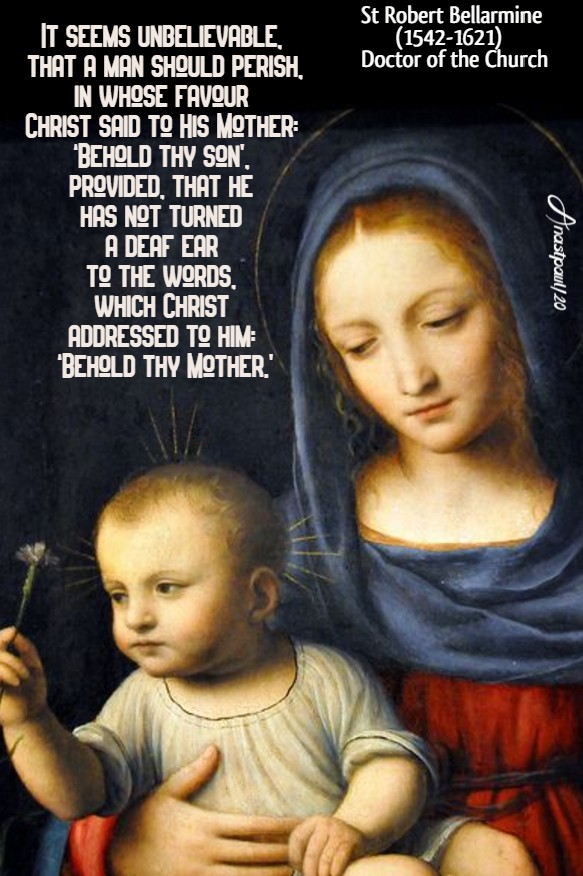
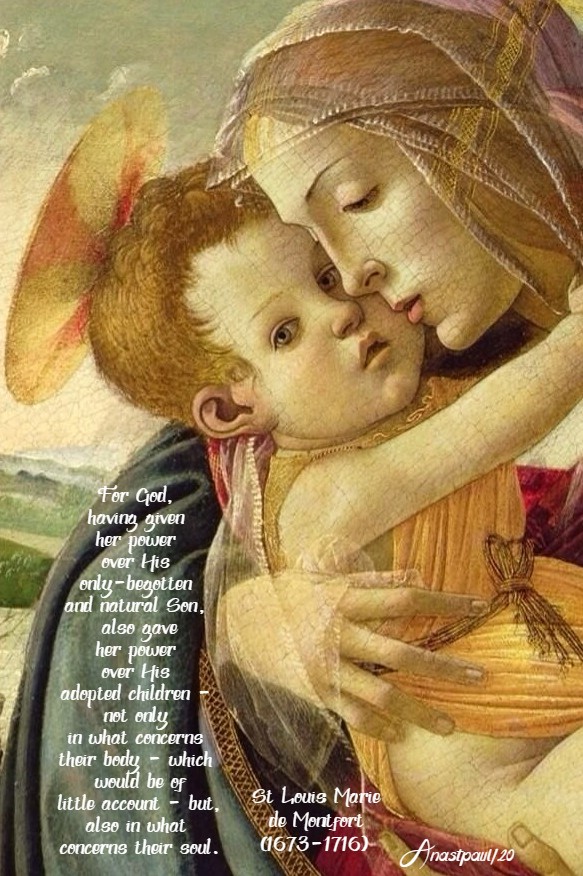
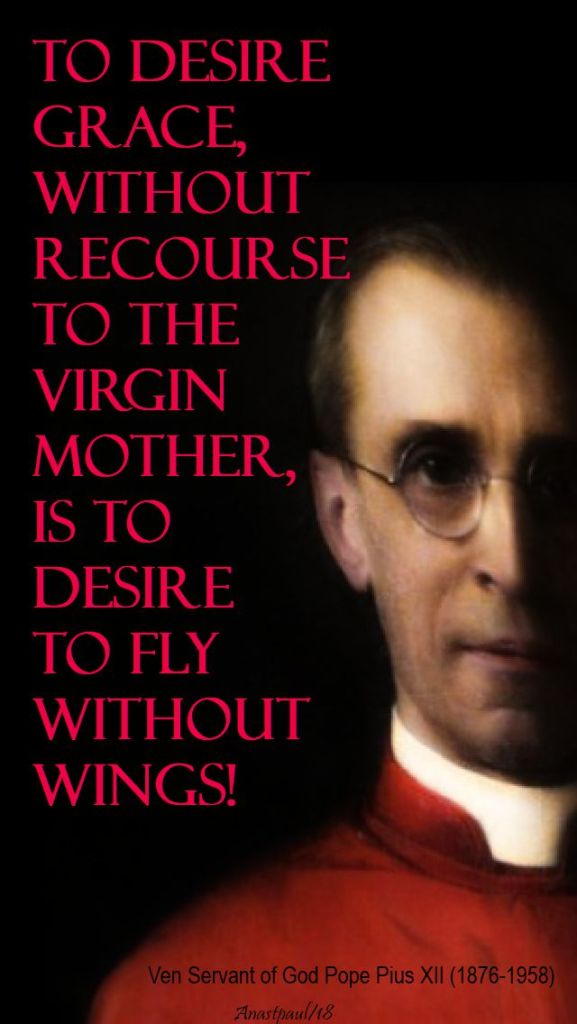
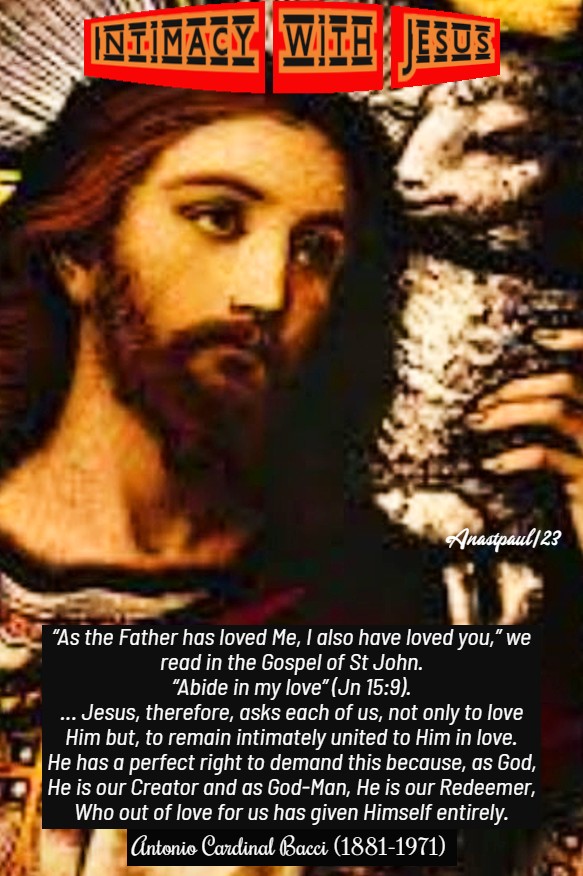
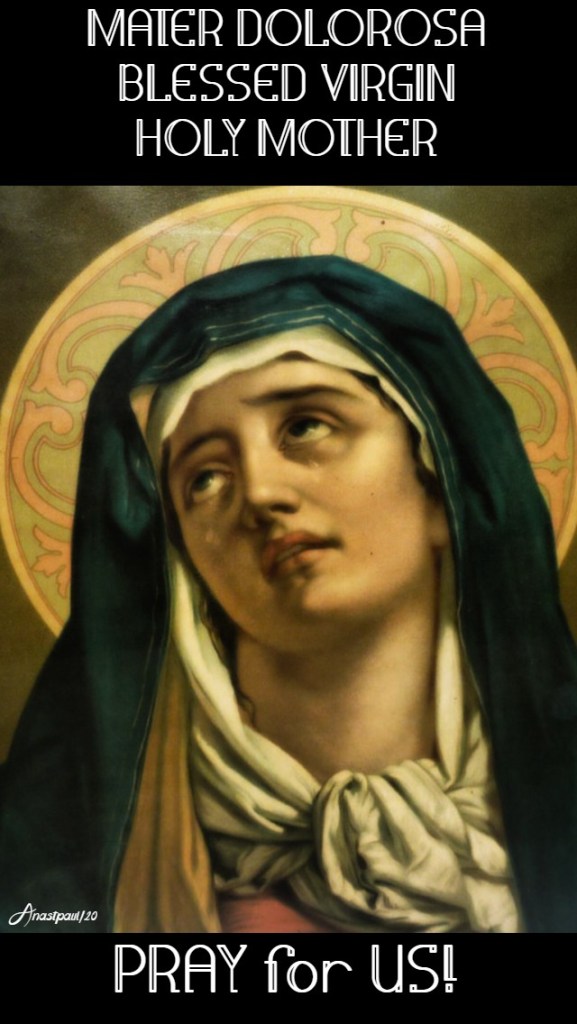
Thought for the Day – 8 August – Meditations with Antonio Cardinal Bacci (1881-1971)
The Awareness of the Presence of God
“The cultivation of a continual awareness of the presence of God is such a useful practice that many writers regard it as the fundamental principle of the spiritual life.
As St Alphonsus de’Liguori points out, it obliges us to do three thing:
(1) To preserve ourselves completely free from sin;
(2) To practise virtue, in every possible way and
(3) To seek a closer and more loving contact with God (Al Servizio Divino, III, 1,3).
The realisation of the presence of God is a particularly good way of subduing our passions and conquering temptation. “If we were always aware of God’s presence within us,” writes St Thomas Aquinas, “we should never, or hardly ever, sin” (Opusc 58, c 2).
It is unlikely that a man who is committing sin adverts to the fact that God is watching him and could intervene to punish him at any moment.
He has forgotten the presence of God, his Creator and Redeemer, Who has been so good to him and Who will one day be his judge.
His mind has been darkened and his heart led astray by the deceptive pleasures of this world.
God is far from the sinner because the sinner ignores His inspirations and advice and has, in short, rejected Him.
The unhappy man will never find peace in this world and is doomed to eternal unhappiness in the next.
“If we remained always in the presence of God,” wrote St John Chrysostom, “we should neither conceive, nor do anything evil” (Homil 8, ad, Phil 2).”
Quote/s of the Day – 8 August – Saturday of the Eighteenth week in Ordinary Time, Readings: Habakkuk 112-2, 4, Psalm 9:8-13, Matthew 17:14-20
“If you have faith” – Matthew 17:20
“If I only touch his garment, I will be made well.” Jesus turned, and seeing her he said, “Take heart, daughter, your faith has made you well.” And instantly the woman was made well.”
Matthew 9:21-22
Jesus said to him, “Have you come to believe because you have seen me? Blessed are those who have not seen and have believed.”
John 20:28-29
“Elizabeth says: ‘Blessed are you because you have believed.’ You also are blessed, because you have heard and believed. A soul that believes, both conceives and brings forth the Word of God and acknowledges His works.”
St Ambrose of Milan (340-397)
Great Latin Father and Doctor of the Church
“Do you desire security? Here you have it. The Lord says to you, “I will never abandon you, I will always be with you.” If a good man made you such a promise, you would trust him. God makes it and do you doubt? Do you seek a support, more sure than the word of God, which is infallible? Surely, He has made the promise, He has written it, He has pledged His word for it, it is most certain!”
“To one who has faith, no explanation is necessary. To one without faith, no explanation is possible.”
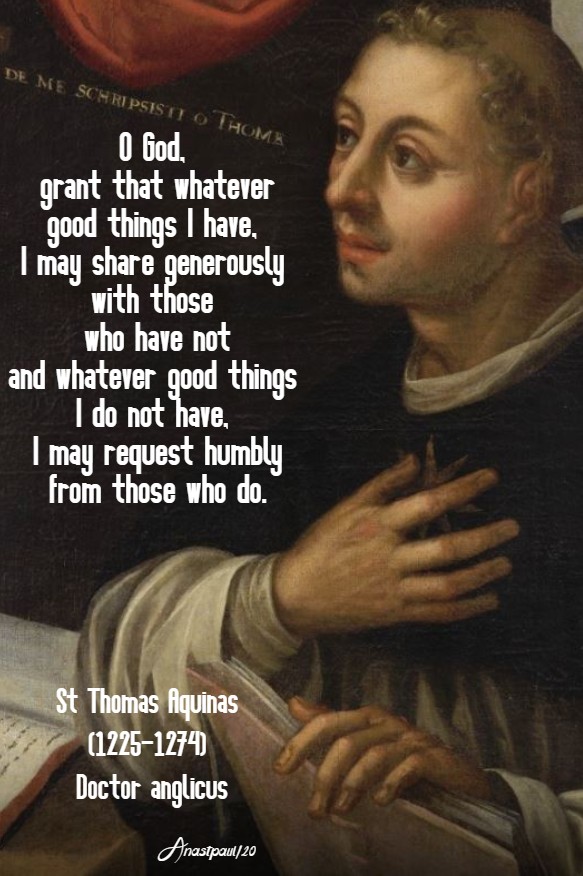
St Thomas Aquinas (1225-1274)
Doctor Angelicus, Doctor Communis
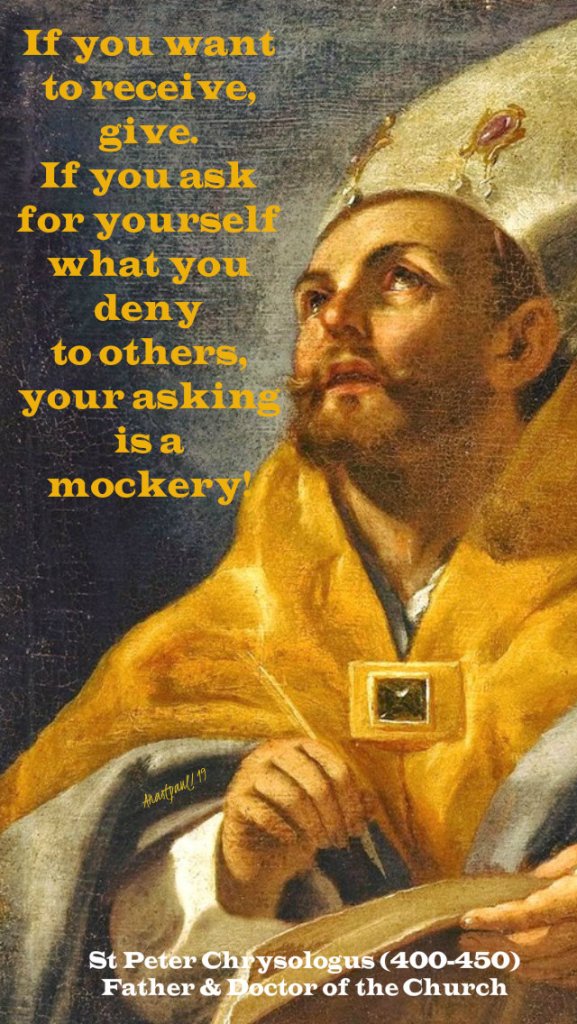
“Paul says: I appeal to you by the mercy of God, to present your bodies as a sacrifice, living and holy. The prophet said the same thing: Sacrifice and offering you did not desire but you have prepared a body for me. Each of us is called to be both a sacrifice to God and His priest. Do not forfeit what divine authority confers on you. Put on the garment of holiness, gird yourself with the belt of chastity. Let Christ be your helmet, let the cross on your forehead be your unfailing protection. Your breastplate, should be the knowledge of God, that He Himself has given you. Keep burning continually, the sweet smelling incense of prayer. Take up the sword of the Spirit. Let your heart be an altar. Then, with full confidence in God, present your body for sacrifice. God desires, not death but faith. God thirsts, not for blood but for self-surrender. God is appeased, not by slaughter but by the offering of your free will.”
St Peter Chrysologus (c 400-450)
Bishop, Father & Doctor of the Church
“Doctor of Homilies”
“All things are possible for him who believes, more to him who hopes, even more to him who loves.”
St Lawrence of Brindisi(1559-1619)
Apostolic Doctor of the Church
“Faith is like a bright ray of sunlight. It enables us to see God in all things, as well as, all things in God.”
St Francis de Sales (1567-1622)
Doctor of Charity
“Bad Christians lack faith and do not deny it but they claim to be excused, in that they have no reasons for believing. Because of this, there is nothing as common as this speech in the mouths of many people: “If I had witnessed a miracle I should be a saint!” “Evil and unfaithful generation! It seeks a sign!” (Mt 12:39). The wicked look for signs.”
St Claude la Colombière SJ (1641-1682)
Apostle of the Sacred Heart of Jesus
One Minute Reflection – 8 August – Saturday of the Eighteenth week in Ordinary Time, Readings: Habakkuk 112-2, 4, Psalm 9:8-13, Matthew 17:14-20 and the Memorial of St Cyriacus the Martyr, Deacon (Died c 303) One of the Fourteen Holy Helpers and of St Dominic (1170-1221)
He said to them, “Because of your little faith. For truly, I say to you, if you have faith as a grain of mustard seed, you will say to this mountain, ‘Move from here to there,’ and it will move; and nothing will be impossible to you.”… Matthew 17:20
REFLECTION – “The word “faith” has one syllable but two meanings. First of all it is concerned with doctrine and it denotes the assent of the soul to some truth. Faith in this sense brings blessing and salvation to the soul, as the Lord said: “He who hears my word and believes in him who sent me, has eternal life.” (Jn 5:24)…
The word “faith” has a second meaning – it is a particular gift and grace of Christ. “To one is given through the Spirit the utterance of wisdom and to another the utterance of knowledge according to the same Spirit, to another faith by the same Spirit, to another gifts of healing” (1Cor 12:8-9). Faith in the sense of a particular divine grace conferred by the Spirit is not, then, primarily concerned with doctrine but with giving a person powers, quite beyond their natural capability. Whoever has this faith will say to a mountain: “Move from here to there” and it will move and anyone who can in fact say these words through faith and “believes without hesitation that they will come to pass,” (Mk 11:23) receives this particular grace. It is to this kind of faith that the Lord’s words refer – “If you have faith as a grain of mustard seed.” Now, a mustard seed is small in size but its energy thrusts it upwards with the force of fire. Small are its roots, great the spread of its boughs and once it is fully grown the birds of the air find shelter in its branches (Mt 13:32). So too, in a flash, faith can produce the most wonderful effects in the soul.
Enlightened by faith the soul gazes at the glory of God so far as human nature allows and, even before the consummation of all things, ranging beyond the boundaries of the universe, it has a vision of the judgement and of God making good the rewards he promised. As far as it depends on you then, cherish this gift of faith that leads you to God and you will then receive the higher gift which no effort of yours can reach, no power of yours attain.”…St Cyril of Jerusalem (313-350) Bishop of Jerusalem, Father & Doctor of the Church (Baptismal Catechesis 5)
PRAYER – Holy God, grant we pray, Your Holy Spirit of love and divine grace to grow ever more in faith. By our prayers and love for You and our neighbour, may we merit Your divine assistance. Lord Jesus, help us to dwell often on the manner in which we are following You. Let us strive each day to become more and more like You in all things and, to become beacons of Your Light, to all the world. St Cyriacus Martyr for Christ, you who were and are a light to all, pray for us and may the prayers of St Dominic assist us in our day and may his zeal be our inspiration to always fight the good fight,amen.
Thought for the Day – 7 August – Meditations with Antonio Cardinal Bacci (1881-1971)
Sacred Images
“There are two extremes to be avoided in venerating the images of Christ and the Saints.
In emulation of the ancient heresy of the Iconoclasts, there are some, who regard the veneration of images as a superstitious and idolatrous practice.
In support of their view, they quote from the Book of Exodus: “You shall not carve idols for yourselves … you shall not bow down before them or worship them” (Ex 20:4-5).
The equivocation is obvious.
This prohibition refers to the images of false gods, not to the images of Saints.
It is the worship of idols which is forbidden, not devotion to the Saints.
There are examples in the Old Testament of the veneration of images and symbols, indicating the presence of God, such as the Ark of the Covenant, adorned by “two cherubim of beaten gold,” (Ex 25:18) and the bronze serpent mounted by Moses on a pole in the desert (Num 21:8).
From the early days of the Church, there existed in the Catacombs, representations of Jesus, the Blessed Virgin and the Martyrs and, the fact that they were adorned with halos, is a clear indication of the veneration with which they were regarded by the faithful.
The historian Eusebius, specifically mentions a bronze statue erected in honour of the Saviour, before which, the faithful prayed and were sometimes awarded with miracles.
Contrary to the accusations of some Protestants, therefore, this practice is not a novelty introduced by the Roman Church.
Moreover, the honouring of images is not idolatry because, it is not a direct adoration but, a relative and indirect veneration.
Homage is not paid to the actual statues or pictures but, to Christ, the Blessed Virgin and the Saints, whom the images represent.
“The images of Christ, of the Virgin Mother of God and of other Saints, are to be kept with honour in places of worship especially and, to them due honour and veneration is to be paid – not because it is believed that there is any divinity or power intrinsic to them, for which they are reverenced, nor because it is from them that something is sought, nor that a blind trust is to be attached to images as it once was, by the Gentiles who placed their hope in idols but, because the honour which is shown to them, is referred to the prototypes which they represent”(Council of Trent, Session 25).
The cult of images has, therefore, a solid theological foundation. “We make images of holy men,” as St Cyril of Alexandria expressed it, “not to adore them as Gods but, as a reminder and a stimulus to ourselves to imitate them. Moreover, we make images of Christ so that our love for Him may be more easily aroused” (In Ps 113:16).
Besides, being theologically correct, the practice is useful!”
Quote/s of the Day – 7 August – The Memorial of St Albert of Trapani O.Carm. (c 1240-1307) and St Cajetan (1480-1547)
Heal us Lord God Prayer of St Albert of Trapani O.Carm. (c 1240-1307)
O my God,
You have created the human race
by Your wonderful power.
It is an act of Your clemency that has called us
to share Your glory and eternal life.
When the first sin condemned us to suffer death,
out of Your goodness,
You wished to redeem us
through the blood of Your Son,
To unite us to You through our faith
and Your great mercy.
You have brought us back
from the shame of our sin,
You have veiled our dishonour
in the brightness of Your glory.
Look now and see that what You have created,
giving it subtle limbs and joints
and made beautiful through its immortal soul,
is now subject to the attack of Satan.
Be pleased Lord
to reconstitute Your work and heal it.
May Your power be glorified
and may the malice of the enemy be stunned.
Amen
St Albert of Trapani (c 1240-1307)
“My desire is not my way but Your way.”
“I am a sinner and do not think much of myself; I have recourse to the greatest servants of the Lord, that they may pray for me to the blessed Christ and His Mother. But do not forget, that all the saints cannot endear you to Christ as much as you can yourself. It is entirely up to you!”
“May all praise and thanks be continually given to the Most Holy and Most August Sacrament.”
“We may seek graces but shall never find them without the intercession of Mary.”
One Minute Reflection – 7 August – “Month of the Immaculate Heart of Mary” – Friday of the Eighteenth week in Ordinary Time, Readings: Nahum 1:15; 2, 2; 3, 1-3, 6-7 (2, 1, 3; 3,1-3, 6-7), Responsorial psalm Deuteronomy 32:35-36, 39-41, Matthew 16:24-28 and the Memorial of St Donatus of Arezzo (Died 362) Bishop
“If any man would come after me, let him deny himself and take up his cross and follow me.” … Matthew 16:24
REFLECTION – “At the responsory: “See, the Lord our protector comes, the Holy One of Israel,” Gertrude understood, that if someone applies himself, with all his heart, to desire that his whole life be governed, in prosperity and adversity, according to the most laudable will of God, then by such thoughts, by God’s grace, he would be giving as much honour to God, as one would give to an emperor in placing the imperial crown on his head. …
She saw the Lord walking along a path, pleasant to behold, with fairest flowers and verdure but narrow and lined with dense hedges bristling with sharp thorns. She saw that He seemed to be preceded by a cross which parted the thorns and made the way wider and easier. With a serene expression on His face, turning toward those who belonged to Him, He invited them to follow Him, saying: “Whoever wishes to come after me, let him deny himself and take up his cross and follow me…” (Mt 16:24).
From this she knew that the cross of each, is his own personal trial. For example, for some souls obedience is a cross when they are obliged to do what is contrary to their wishes. For others, to be burdened with infirmity, which acts as a restraint and so on. We should all carry our crosses and apply ourselves with a good will to suffer adversity gladly and, in addition, to do all that is in our power, neglecting nothing, which we know to be for the greater glory of God.” … St Gertrude of Helfta/the Great (1256-1302) Benedictine nun – The Herald of Divine Love, Book III, SC 143
PRAYER – “O my God, fill my soul with holy joy, courage and strength to serve You. Enkindle Your love in me and then walk with me along the next stretch of road before me. I do not see very far ahead but when I have arrived where the horizon now closes down, a new prospect will open before me and I shall be met with peace. How wondrous are the marvels of Your love, we are amazed, we stammer and grow dumb, for word and spirit fail us. Amen” … St Teresa Benedicta of the Cross (1891-1942) Martyr St Donatus of Arezzo, Pray for us!
Thought for the Day – 6 August – Meditations with Antonio Cardinal Bacci (1881-1971)
How to Remain Aware of the Presence of God
“It is useful to consider the ways in which we can develop a constant and effective awareness of the Presence of God. The first way in which we can do this, is by cultivating a lively faith, which will help us to see God everywhere. “Do not I fill heaven and earth, saith the Lord?” (Jer 23:24).
This kind of faith should deepen our sense of God’s Presence and inspire in us sentiments of love and gratitude, which will guide us in all our actions. We cannot expect that we shall be able to remain in a state of constant contemplation of God, for this is the privilege enjoyed by the blessed in Heaven, for whom faith has been replaced by the Beatific Vision. We must be satisfied with exciting in ourselves, as often as possible, the active awareness of God’s Presence. This should be a quiet and peaceful process, not involving undue mental effort or anxiety.
We should be able to attend quite naturally to our work and other obligations and, we should be helped and consoled in this, by directing our thoughts to God from time to time, in order to offer ourselves to Him. This can easily be done by means of frequent ejaculatory prayer, by renewing, at regular intervals, our intention of doing everything for the love of God and by being prepared to endure, in complete acceptance of the Divine Will, all the hardships and trials of the day. Whenever it is possible moreover, we should escape from the care and confusion of the world into a quiet Church. Here we can kneel in the Real Presence of Jesus in the Blessed Eucharist and express, in intimate prayer, our love for Him and our desire to serve Him.”
Quote/s of the Day – 6 August – Feast of the Transfiguration of the Lord and the Memorial of Justus and Pastor – The Holy Martyred Children of Alcala de Henares in Spain (Died 304)
“Do not fear death of the body nor the torments, little brother. Calmly receive the strike of the sword. The God who has seen fit to call us to such a great grace, will give us the necessary strength, to endure the sufferings that await us.”
St Justus to his Brother St Pastor (Died 304) Holy Children Martyrs
“No-one should fear to suffer for the sake of justice, no-one should lose confidence in the reward that has been promised. The way to rest is through toil, the way to life is through death. Christ has taken on Himself the whole weakness of our lowly human nature. If then we are steadfast in our faith in Him and in our love for Him, we win the victory that He has won, we receive what He has promised.”
St Pope Leo the Great (400-461)
Father and Doctor of the Church
“By His loving foresight, He allowed them to taste for a short time, the contemplation of eternal joy, so that they might bear persecution bravely.”
The Venerable St Bede (673-735) Father and Doctor of the Church
“Jesus goes before us to show us the way, both up the mountain and into heaven and — I speak boldly — it is for us now, to follow him with all speed . . . Let us run with confidence and joy to enter into the cloud like Moses and Elijah, or like James and John. Let us be caught up like Peter to behold the divine vision and to be transfigured by that glorious transfiguration. Let us retire from the world, stand aloof from the earth, rise above the body, detach ourselves from creatures and turn to the Creator, to whom Peter in ecstasy exclaimed: ‘Lord, it is good for us to be here.’”
St Anastasius (Died 628)
“At His Transfiguration Christ showed His disciples, the splendour of His beauty, to which He will shape and colour those who are His: ‘He will reform our lowness configured to the body of his glory.’”
St Thomas Aquinas (1225 – 1274) Doctor of the Church
REFLECTION – “He was transfigured before them” (Mt 17:2). Mould yourself on this figure as though with soft wax so to imprint the image of Christ on it, of whom it is said: “His face shone like the sun and his clothes became white as snow.” In this passage you should keep in mind four things – the face, the sun, the clothing and the snow. In the front of the head, which is called a man’s face, there are three senses that are ordered and disposed in a wonderful way. These are sight, smell, taste. In the same sort of way, in the face of our souls, there are the vision of faith, the smell of discretion and the taste of contemplation. (…)
In the sun there is brightness, whiteness and heat. The brightness of the sun accords perfectly with the vision of faith that, together with the clarity of its light, perceives and believes invisible realities. May the countenance of our souls shine like the sun! May what we see by faith shine in our deeds! May the good we perceive through our interior eyes be brought to fruition externally in the purity of our actions, may what we taste of God in contemplation, be transformed to heat, in love of neighbour. So, like that of Jesus, our faces “will shine like the sun.” … St Anthony of Padua (1195-1231) Doctor of the Church – Sermon for Septuagesima Sunday
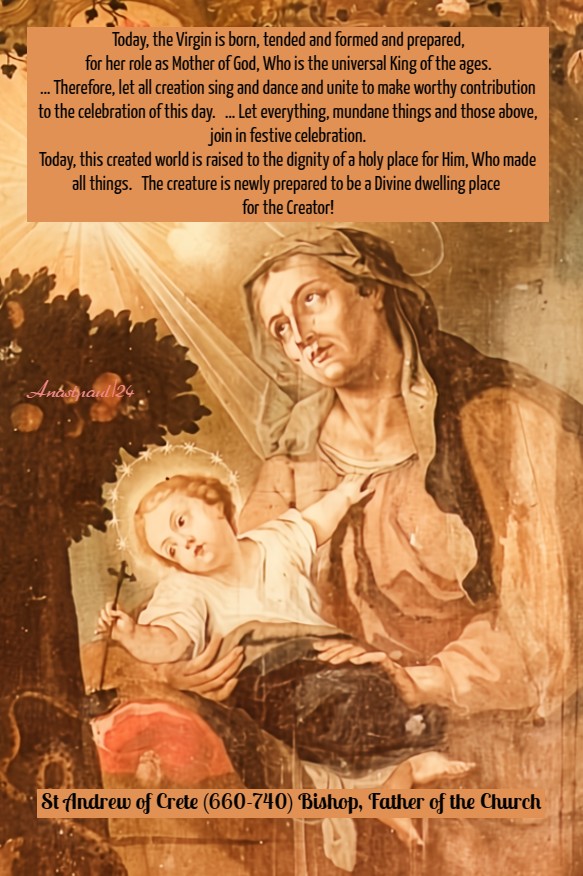
PRAYER – Father, at the Transfiguration in glory of Your only-begotten Son, You confirmed the mysteries of faith by the witness to Jesus of the prophets Moses and Elijah. You foreshadowed what we shall be when You bring our sonship to its perfection. Grant that by listening to the voice of Jesus, we may become heirs with Him, who lives and reigns with You and the Holy Spirit, God forever and may Mary, our tender and caring Mother, help us to be bright rays of the saving light of her Son Jesus. Amen
Thought for the Day – 5 August – Meditations with Antonio Cardinal Bacci (1881-1971)
Adoration of Jesus in the Blessed Sacrament
“Anyone who loves Jesus sincerely in the Sacrament of the Eucharist, must experience a pang of regret whenever he enters a Church and sees, that the spaces surrounding the Tabernacle are empty. Here and there, a few people may be praying before statues of Our Lady and of the Saints but, too often, there is nobody to worship Jesus in the Blessed Sacrament. Only the dim light of the Tabernacle lamp seems to be attempting to compensate in some small way, for the ingratitude of men. Yet, here is no mere image but the real living Jesus Who loves us and longs to shower His gifts upon us.
We are poor and He is rich; we are weak and He is strong. We are sinners and He wishes us to kneel repentant at His feet so that He may forgive us. We are bent beneath the weight of our cross, which seems too heavy for us to bear and He desires to lighten it by His grace. We are weary and worried and unable to find a friend who will fully understand and comfort us. But, if we go to Jesus, we shall find a Friend and a Comforter. “Come to me,” He says to us, “all you who labour and are burdened and I will give you rest. Take my yoke upon you and learn from me, for I am meek and humble of heart and you will find rest for your souls. For my yoke is easy and my burden light” (Mt 11:28-30). Let us kneel before Jesus in the Tabernacle and confide to Him, our worries, sorrows and desires. He will understand and enlighten us; He will strengthen our wavering resolution and inspire in our hearts, the divine love, which makes it easy to sacrifice ourselves for His sake.“
Quote/s of the Day – 5 August – “Month of the Immaculate Heart of Mary” – Wednesday of the Eighteenth Week in Ordinary Time and the Memorial of the Dedication of Mary Major
“Mary was placed by God in the centre of history and we can say, that everything was made through her and with her and in her.”
St Bernard (1090-1153) Doctor of the Church
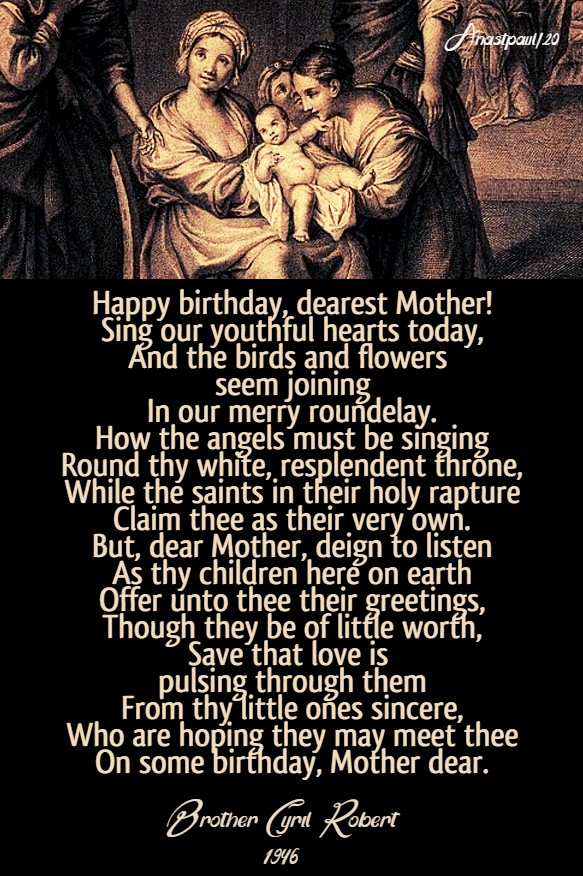
“Mary is the divine Page on which God the Father wrote the Word of God, His Son. Let us draw near to her and read her!”
St Albert the Great (1200-1280) Doctor of the Church
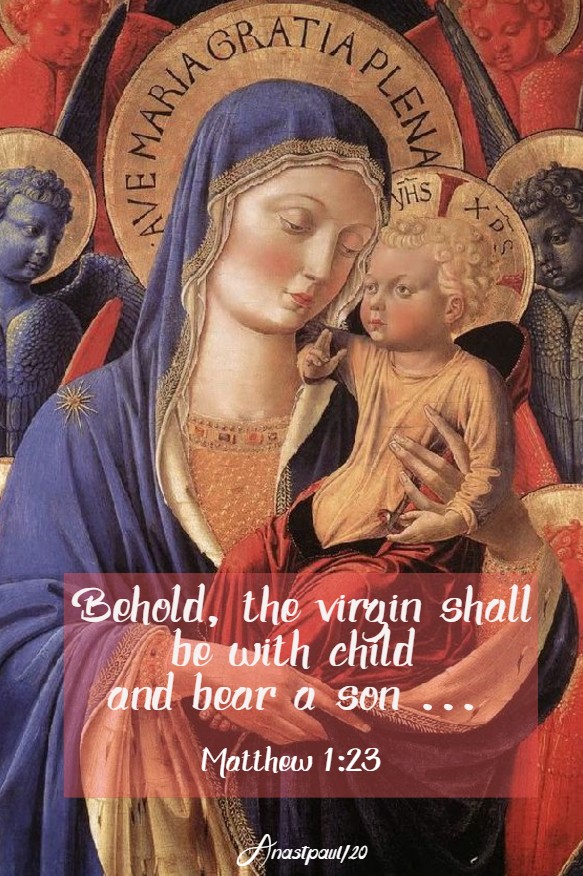
“The single richest treasure in the Vatican is the Rosary.”
Bl Pope Pius IX (1792-1878)
“All to Jesus through Mary, all to Mary for Jesus.”
St Marcellin Champagnat (1789-1840)
“No matter how enormous our sins may be, no matter how irresistible our carnal instincts may seem, no matter how hopelessly we may have plunged into the depths of evil, it is enough for us to raise our eyes in confidence towards Mary. … Like a merciful Mother, she will obtain for us from God, forgiveness and the strength to return to the path of penitence and of peace. … Let us turn to her with trust and humility and she will certainly assist us.”
One Minute Reflection – 5 August – “Month of the Immaculate Heart of Mary” – Wednesday of the Eighteenth Week in Ordinary Time, Readings: Jeremiah 31:1-7, Responsorial psalm Jeremiah 31:10-13, Matthew 15:21-28 and the Memorial of the Dedication of Mary Major
And Jesus went away from there and withdrew to the district of Tyre and Sidon. … Matthew 15:21
REFLECTION – “Jesus came out of Israel …: “Jesus went from that place and withdrew to the region of Tyre” (Mt 15:21), a name which means “gathering of the nations.”This was so, that, from among the people of that territory, those who believed might be saved when they came out from it.
Now, pay attention to these words: “And behold, a Canaanite woman, coming out of that district, called out saying: ‘Have pity on me, Lord, son of David! My daughter is tormented by a demon’” (v. 22). Now in my opinion, if she had not withdrawn from that territory she would not have been able to call out to Jesus with cries that sprang from “great faith,” as the Lord Himself testified (v. 28).
It is “according to the measure of our faith” (Rm 12:6) that we come out from the territory of the pagan nations … We must certainly believe that each one of us, so long as he is a sinner, finds himself in the region of Tyre or Sidon, of Pharaoh or Egypt, or of some other land alien to God’s inheritance. But when sinners abandon their wrongdoing, turning back to the good, they withdraw from those regions where sin dwells and hasten to the regions that are the portion of God …
Notice, too, the sort of journey Jesus makes to meet the Canaanite woman, for he seems to be going towards the region of Tyre and Sidon …. The righteous are directed towards the kingdom of heaven and elevation into the Kingdom of God but sinners are directed towards the outcome of their evildoing …
The Canaanite woman, by leaving these territories, also left that tendency towards decadence, when she cried out and said: “Have pity on me, Lord, Son of David” … All the miracles accomplished by Jesus, as the evangelists have told them, took place, then, so that those who saw them might have faith. But those events are the symbol of what is always been brought about by Jesus’ power, for there is no age when what was written is not being realised in exactly the same way.” … Origen (c 185-253) Priest and Theologian, Church Father – Commentary on Saint Matthew’s gospel, Book XI, ch. 16
PRAYER – Forgive the sins of Your people Lord and since of ourselves, we are unable to do what pleases You, lead us on the way of salvation in Your divine Son who lives in us and gives us life. May the prayers of Mary, His Mother help us to constantly meditate on His eternal sustenance. He is our food, our Lord Jesus Christ, who lives and reigns with You and the Holy Spirit, God forever and ever, amen.
Thought for the Day – 4 August – Meditations with Antonio Cardinal Bacci (1881-1971)
The Crucifix
“I determined not to know anything among you,” wrote St Paul to the Corinthians, “except Jesus Christ and him crucified” (1 Cor 2:2).
It was St Paul’s boast, that while the Jews were looking for signs and the Greeks were searching for wisdom, he continued to preach about Christ on the Cross. “The Jews ask for signs and the Greeks look for ‘wisdom’ but we, for our part, preach a crucified Christ – to the Jews indeed, a stumbling-block and to the Gentiles, foolishness” (1 Cor 1:22-23).
Christian doctrine and Christian living, are centred around Jesus Crucified.
Unfortunately, in modern times, as in the times of St Paul, the Crucifix is either ignored and forgotten, or attacked as a symbol of folly.
There is no need to be amazed at this.
When the holy old man, Simeon, took Jesus in his arms, he made the prophecy that this Child, would be “a sign that shall be contradicted” (Lk 2:34). The world is proud of it’s scientific and technical progress, whereas the Crucifix, is the symbol of the lowliness to which God Himself descended for love of us. The world is looking for pleasure and voluptuousness, whereas, the Crucifix preaches to us the spirit of sacrifice and the purifying value of suffering. The world is fond of ease, riches and honour; the Crucifix demonstrates the depths of the love of God, Who became man for our sakes, suffered and died to redeem us from sin, taught us fraternal love and commanded us to carry our cross daily, if we wished to follow Him.
We must choose whether to follow Jesus Crucified, or to follow the world! The world can only give us a vain and passing satisfaction, while the Crucifix can give us the peace of a good conscience, even in the midst of sorrow and trouble and the hope of lasting happiness in the next life.”
Quote/s of the Day – 4 August – The Memorial of St John Marie Baptiste Vianney (1786-1859)
“The Holy Spirit leads us along, as a mother leads her two year old child by the hand, as a sighted person leads a blind one. We should say each morning: “Oh my God, send me Your Holy Spirit who will make me understand what I am and what you are …” A soul who possesses the Holy Spirit enjoys an exquisite taste in prayer, it never loses the holy presence of God.”
“There is one thing everyone can do, whether they find it hard to meditate or not and that is to make up their mind in the morning, to cultivate some particular virtue during the day, to practice the interior Presence of God and to live their life in union with Him.”
“The sign of the cross is the most terrible weapon against the devil. Thus the Church wishes not only, that we have it continually in front of our minds, to recall to us just what our souls are worth and what they cost Jesus Christ but also that we should make it at every juncture ourselves: when we go to bed, when we awaken during the night, when we get up, when we begin any action, and, above all, when we are tempted.”
“To serve the Queen of Heaven is already to reign there and to live under her commands, is more than to govern.”
“What does Jesus Christ do in the Eucharist?
It is God, who, as our Saviour, offers Himself each day for us to His Father’s justice.
If you are in difficulties and sorrows, He will comfort and relieve you. If you are sick, He will either cure you or give you strength to suffer, so as to merit Heaven. If the devil, the world and the flesh are making war upon you, He will give you the weapons with which to fight, to resist and to win the victory. If you are poor, he will enrich you with all sorts of riches for time and for eternity. Let us open the door of His Sacred and Adorable Heart and be wrapped about for an instant, by the flames of His love and we shall see, what a God who loves us, can do. O my God, who shall be able to comprehend?”
“We should consider those moments spent before the Blessed Sacrament as the happiest of our lives.”
“We do not have to talk very much to pray well,” we know that God is there in His Holy Tabernacle. Let us open our hearts to Him, let us rejoice in His Sacred Presence. This is the best prayer.”
“When we cannot go to the church, let us turn towards the tabernacle; no wall can shut us out from the good God.”
One Minute Reflection – 4 August – “Month of the Immaculate Heart” – Tuesday of the Eighteenth week in Ordinary Time, Readings: Jeremiah 30:1-2, 12-15, 18-22, Psalm 102:16-21, 29, 22-23, Matthew 15:1-2,10-14 and The Memorial of St John Vianney (1786-1859)
“Let them alone; they are blind guides [of the blind]. If a blind person leads a blind person, both will fall into a pit.” … Matthew 15:14
REFLECTION – “When, in these last days, the Word of God was born of Mary, clothed in flesh and revealed to the world, what was seen of Him was something other than the mind could discern. The appearance of His body was clear to all but knowledge of His divinity was only granted to some. Similarly, when the Word of God speaks to us through the Old Law and the prophets, He shows Himself beneath the veil of the appropriate garments.
In His incarnation He is clothed with flesh; in the Holy Scriptures He is clothed with the veil of the letter. The veil of the letter can be compared to His humanity and the spiritual sense of the Law, to His divinity. In the book of Leviticus we find the rites of sacrifice, the various sacrificial animals, the priestly liturgical service … blessed the eyes that discern the divine Spirit hidden beneath the veil …
“Whenever a person turns to the Lord the veil is removed … and, where the Spirit of the Lord is, there is freedom,” says the Apostle Paul (2 Cor 3:16-17). Thus it is to the Lord Himself, the Spirit Himself, we must pray, that He will deign to remove every obscurity, so we can behold in Jesus, the wonders of the spiritual meaning of the Law, like the man who said: “Open my eyes that I may see the wonders of your Law (Ps 119[118]:18).” … Origen (c 185-253) Priest and Theologian, Church Father – Homily 1 on Leviticus
PRAYER – Lord God, light of the faithful and shepherd of souls, who gave blessed John Vianney to Your Church to feed Your flock by his teaching and form them by his example, grant that by his intercession, we may keep the faith which he taught and follow in the way he walked, through our Lord Jesus Christ, in union with the Holy Spirit. St John Vianney, pray for us, amen.
Our Morning Offering – 4 August – “Month of the Immaculate Heart” – Tuesday of the Eighteenth week in Ordinary Time and The Memorial of St John Marie Baptiste Vianney (1786-1859)
St John Vianney’s prayer which is quoted in the CCC
I Love You, O My God By St John Marie Baptiste Vianney (1786-1859)
I love You,
O my God
and my only desire is to love You
until the last breath of my life.
I love You,
O my infinitely lovable God
and I would rather die loving You,
than live without loving You.
I love You, Lord
and the only grace I ask,
is to love You eternally
My God,
if my tongue cannot say
in every moment that I love You,
I want my heart to repeat it to You
as often as I draw breath.
Amen
“This Virgin Mother of the Only begotten of God is called Mary, worthy of God, Immaculate of the Immaculate, one of the one.”
Origen (c 185-253)
Historically, devotion to Mary Most Holy in the form of her Immaculate Heart first occurs in the thirteenth century with St Mechtilde, St Gertrude, St Bernardine of Siena and others. In the seventeenth century, St Francis de Sales was an exponent of this devotion. But it was St John Eudes the great apostle of the Immaculate Heart (1601-1680), who gave the decisive impulse to the practice.
In the same century, the devotion to the Sacred Heart of Jesus came back to light through St Margaret Mary Alacoque and her confessor, St Claude de La Colombiere. As the devotion to the Sacred Heart spread, so did the devotion to the Immaculate Heart. Both St Margaret Mary and St Claude, were deeply dedicated to the Immaculate Heart of Mary as well.
Beginning with Pope Pius VI, several popes incrementally spread the devotion but in 1944 Pope Pius XII extended it to the whole Church, fixing the Feast Celebration on 22 August. Today, the feast of the Immaculate Heart of Mary is celebrated on the Saturday following the feast of the Sacred Heart of Jesus, which is movable, always observed on a Friday, nineteen days after Pentecost Sunday.
The Physical Heart, Symbol of the Spiritual Heart
The Fathers of the Church consider that when, from the Cross, Our Lord Jesus made the Blessed Lady, the mother of St John and thus He appointed her the mother of all men.
Thus, Mary’s heart is the physical symbol of her boundless love for God and humankind. But Our Lady’s physical heart is also the symbol of her spiritual heart. Thus, in the Immaculate Heart of Mary we also honour her inner life, her virtues, her perfect purity, her boundless humility, her affections and her sorrow.
Poignant in Catholic tradition is the representation of Mary’s heart pierced by a sword, symbol of her immense sorrow at witnessing and willing her Son’s passion and death for the salvation of our souls.
Fatima and the Immaculate Heart of Mary
–The Five First Saturdays Devotion
In the second apparition of Fatima, Our Lady showed the seers, Lucia, Francisco and Jacinta, her heart encircled by thorns. Later, on 10 December 1925, in a private apparition to Sister Lucia, she asked for the devotion of reparation of the Five First Saturdays.
The Blessed Mother appeared alongside the Child Jesus who stood over a luminous cloud. Our Lady rested one hand on the Child’s shoulder while she held on the other hand a heart pierced with thorns.
The Child said,
“Have pity on the Heart of your Most Holy Mother which is covered with thorns with which ungrateful men pierce it at every moment with no-one to extract them with an act of reparation.
I want My Church to…put the devotion to this Immaculate Heart beside the devotion to My Sacred Heart.”
“Look, my daughter, My Heart surrounded with thorns with which ungrateful men pierce me at every moment with blasphemies and ingratitude. You, at least, make sure to console me and announce that all those who for five months, on the first Saturdays, go to Confession, receive Communion, say five decades of the Rosary and keep me company for 15 minutes meditating on the Mysteries of the Rosary, with the purpose of making reparation to Me, I promise to assist them at the hour of death with all the graces necessary for the salvation of their souls.”
Our Lady assured Lúcia: “My Immaculate Heart will be your refuge and the way that will lead you to God.” Thus, if we devote ourselves to her Immaculate Heart, Mary will lead us to her Son, Jesus Christ and we will be on the way to Heaven.
Our Lady of Fatima
“…Let us continue Immaculate Mary’s mission. All is included in it. May [we].. follow her example and be the handmaid of the Lord in everything, everywhere and always.”
Thought for the Day – 28 July – Meditations with Antonio Cardinal Bacci (1881-1971)
Temptations
“When a man fears and loves God, temptation is the greatest trial which he can endure. “No-one, is so perfect and holy,” says The Imitation of Christ, “as not sometimes to have temptations and we never can be wholly free from them. Nevertheless, temptations are often very profitable to a man, troublesome and grievous though they may be; for, in them, a man is humbled, purified and instructed. All the Saints passed through many tribulations and temptations and profited by them. And they that could not support temptations became reprobate and fell away …
A man is never wholly secure from temptation as long as he lives, for there is within us, the source of temptation, since we were born in concupiscence …
Inconstancy of mind and little confidence in God, is the beginning of all evil temptations. For as a ship, without a helm, is driven to and fro by the waves, so the man who is negligent and gives up his resolutions,is tempted in various ways. Fire tries iron and temptation, a just man” (Bk 1, c 13).”
These words from The Imitation of Christ, should encourage us.
God sends us temptations in order to test our virtue and to make us understand that we are in continual need of Him.
The important thing is to overcome them with the help of His grace, for a thousand temptations do not constitute a single sin.
When we are prepared to make sacrifices and to rely upon God’s assistance, temptations can be a source of merit for us.
“Blessed is the man who endures temptations,” writes St James, “for when he has been tried, he will receive the crown of life, which God has promised to those who love Him” (Js 1:12).
We should not fear temptations, nor be discouraged by them.
Instead, we should watch and pray and love God!”
Quote/s of the Day – 28 July – “Month of the Most Precious Blood” – Tuesday of the Seventeenth week in Ordinary Time, year A, Readings: Jeremiah 14:17-22, Psalm 79:8-9, 11, 13, Matthew 13:36-43
“Then the righteous shall shine like the sun in the kingdom of their Father. He who has ears, let him hear.”
Matthew 13:43
“Christ shall minister to us and show us His radiant Face and His glorious Body with all the marks of faithfulness and love therein impressed. And we shall see all the glorious bodies clothed with all the many tokens of love won in the service of God since the beginning of the world… And our living hearts shall flame with burning love for God and all His saints…”
Bl Jan van Ruusbroec (1293-1381)
Canon Regular, “Doctor Divinus Ecstaticus,” Mystic, Spiritual Writer – The seven steps of the ladder of spiritual love
“Give me grace to amend my life and to have an eye to mine end, without grudge of death, which to them that die in You, good Lord, is the gate of a wealthy life.”
St Thomas More (1478-1535) Martyr
“We will not be proclaimed blessed on the altars in all probability but if we are faithful, in Heaven we will be proclaimed ‘blessed’ and that is enough for us. Let us try to merit this hour of eternal delights.”
Bl Mary of the Passion (1839-1904)
“Work always with the same spirit of Christ. Keep Jesus before your eyes. He is the model of all called to glory.”
“On the last day, we will not be asked if we accomplished great deeds, or been acclaimed by men, rather we will be asked if we followed His will, in the state and condition, to which we were called.”
One Minute Reflection – 28 July – “Month of the Most Precious Blood” – Tuesday of the Seventeenth week in Ordinary Time, year A, Readings: Jeremiah 14:17-22, Psalm 79:8-9, 11, 13, Matthew 13:36-43
“The Son of Man will send his angels and they will gather out of his kingdom, all causers of sin and all law-breakers and throw them into the fiery furnace. In that place, there will be weeping and gnashing of teeth. Then the righteous shall shine like the sun in the kingdom of their Father. He who has ears, let him hear.” … Matthew 13:41-43
REFLECTION – “In your imagination see our Lord Jesus Christ seated on a throne of glory; beside Him stand the seraphim, cherubim and each angelic order, serving Him with fear and trembling. Then those who will have finished the combat, without allowing themselves to be drawn by any worldly pleasures or seduced by the attractions of this vain world, will hear the blessed voice of the Master. “Then, he says, the righteous will shine like the sun” (Mt 13:43) when they have come from east and west, north and south to take their places at the feast with Abraham, Isaac and Jacob (cf. Mt 8:11) in an indescribable joy (cf. 1 Pt 1:8), when our King and Lord, will distribute gifts according to their merits. Ah! my brothers and children. ah! how great and beautiful is the glory which the thrice blessed will enjoy and the saints who practised asceticism! Yes, most certainly, each will receive the blessings promised, according to the degree to which they have pleased God. …
So from now on, run well (cf. Gal 5:7) and may the devil not bewitch you (cf. Gal 3:1) nor hinder you! … May mercy, peace, charity, freedom from envy, from jealousy and ostentation come upon you, docility, friendly speech, solidarity, compassion towards each other, humility. Live like this, act like this, praying, too, with all your heart for my humble self that I may not be thrown into the eternal fire. May we all escape it, having been judged worthy of the kingdom of heaven, in Christ Himself, our God, to whom belongs all glory, honour, adoration, magnificence, together with the Father and the Holy Spirit, now and always, world without end. Amen.” … St Theodore the Studite (759-826) Monk and Theologian – Catechesis 42
PRAYER – All-powerful and ever-living God, splendour of true light and never-ending day, chase away the night of sin and fill our minds with the glory of Your coming. Take away our heart of stone and give us a heart of flesh, help us in our battle with sin and the devil. By our prayers, Your holy Sacraments and the strength of the Holy Spirit, may we be ever vigilant of the evil one. By our Baptism in Your Son, we are Your children, grant us Your protection. Kindly listen to the prayers of the Blessed Virgin Mary and all the saints and angels, whose prayers we beg, through Christ our Lord, with the Holy Spirit, God for all eternity, amen.
Thought for the Day – 25 July – Meditations with Antonio Cardinal Bacci (1881-1971)
Purification
“We must recognise that we are all poor sinners in the sight of God.
Sacred Scripture warns us that “the just mans falls seven times” (Prov 24:16). “If we say that we have no sin,” says St John, “we deceive ourselves and the truth is not in us” (1 Jn 1:8).
Sin is the greatest evil because it offends God, our highest good and happiness.
It only needs our own malice for us to commit sin but, in order to make reparation for it and to redeem us from slavery, it was necessary for God to become man and to offer Himself as a victim of expiation for our sins.
Only a God-Man could have fully satisfied our debt, by offering Himself as a victim of reparation for His adopted brothers.
Jesus desires us to be associated with Him in His Passion, however (Cf Col 1:24).
Our justification cannot be something extrinsic to ourselves but should transform us and make us holy.
Our co-operation with divine grace is necessary for this purpose (1 Cor 15:10).
If we are in sin, we should not only repent but should purify ourselves by acts of penance.
Jesus Himself commands this. “Unless you repent, you will all perish,” (Lk 13:5) “Repent, for the Kingdom of Heaven is at hand” (Mt 3:2, 4:17).
We must make satisfaction for our sins, therefore, by voluntary co-operation with the grace of God.
Although God is infinitely good and merciful, He will not purify us without this co-operation on our part.
We can be purified by accepting the unavoidable tribulations of life with perfect resignation and by offering to God, our own voluntary mortifications and sacrifices.
Are we prepared to follow the example of the Saints in this matter?”
One Minute Reflection – 25 July – “Month of the Most Precious Blood” – The Memorial of St James the Greater, Apostle of Christ, Readings: 2 Corinthians 4:7-15, Psalm 126, Matthew 20:20-28
INTERNET PROBLEMS – CANNOT UPLOAD IMAGES!
“Can you drink the cup that I am going to drink?” … Matthew 20:28
REFLECTION – “How shall I repay the Lord?” (Ps 115[116B],12) Not with holocausts or sacrifices or the observances of the legal cult but with my whole life itself. And this is why, says the psalmist, “The cup of salvation I will take” (v.13). The labour he underwent in the struggles of his filial devotion to God and the constancy with which he resisted sin even to death – this is what the psalmist calls his cup.
It was concerning this cup that our Lord Himself expressed Himself in the Gospels : “My Father, if it is possible, let this cup pass from me” (Mt 26:39). And again, to His disciples: “Can you drink the cup that I shall drink?” He intended to speak of that death He desired to suffer, for the salvation of the world. Therefore, He says: “The cup of salvation I will take up,” namely, my whole being is reaching out, parched, towards the consummation of martyrdom, even to the point of holding the torments endured, in the struggles of filial love as rest and not as suffering, for soul and body. I too, He says, will offer Myself to the Lord as a sacrifice and oblation. … And I am ready to pay these vows before all the people, for: “My vows to the Lord I will pay in the presence of all his people!” (v.14).” … St Basil the Great (330-379) Monk and Bishop of Caesarea in Cappadocia, Father & Doctor of the Church
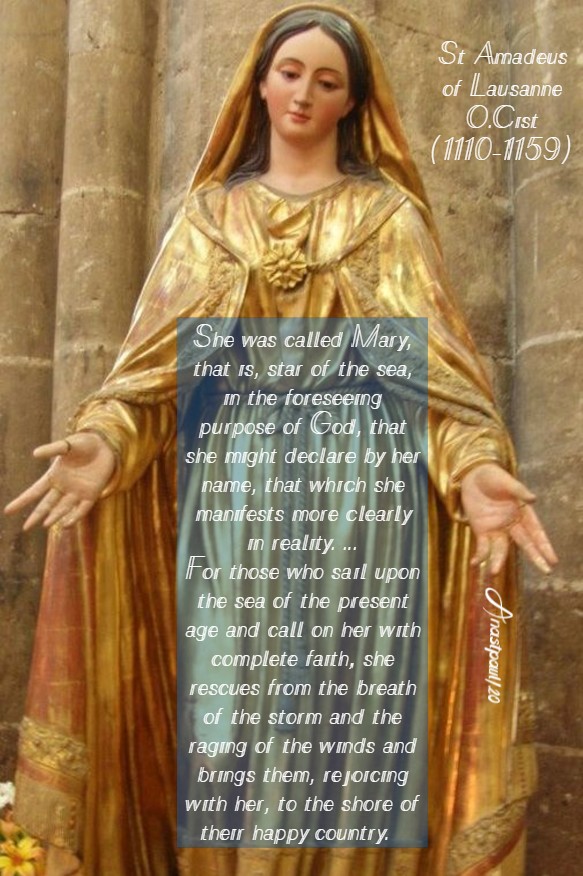
PRAYER – Lord our God, You accepted the sacrifice of St James, the first of Your Apostles to give his life for Your sake. May Your Church find strength in his martyrdom and support in his constant prayer. Through our Lord Jesus Christ, your Son, who lives and reigns with you in the unity of the Holy Spirit, one God, for ever and ever. St James the Greater, Apostle of Christ, Pray for us! Amen
Thought for the Day – 24 July – Meditations with Antonio Cardinal Bacci (1881-1971)
Progress in the Love of God
“The entire Christian system is based on the love of God. This, is “the greatest and first commandment” (Mt 22:38) of Jesus, from which the second commandment, to love our neighbour, naturally flows. A man who does not observe this first commandment is not a Christian, whereas a man who endeavours to increase, everyday, his love for God, is a saint. There are may grades of ascent in this love but, the basic step is indicated in the words of our Divine Master: “He who has my commandments and keeps them, he is is who loves me” (Jn 14:15,21).
The love of God should not consist of an empty and ineffective sentimentality but, should comprise a sincere determinations to please God by carrying out His will, without reserve and by becoming more closely united to Him, by the help of His holy grace. Progress in the love of God is divided by the masters of the spiritual lfe into three stages: (1) the period of purification; (2) the period of illuminations and; (3) the period of union with God. We may have advanced no farther than the first stage because there is still so much to be purified in our souls. Nevertheless, let us ask God’s grace, to help us to begin this work immediately!”
Quote/s of the Day – 24 July – Friday of the Sixteenth week in Ordinary Time, Year A, Readings: Jeremiah 3:14-17, Responsorial psalm Jeremiah 31:10-13, Matthew 13:18-23
“Good Soil”
“This, beloved, is the way in which we found our salvation, Jesus Christ, the High Priest who offers our gifts, the patron and helper in our weakness (Heb 10:20; 7:27; 4:15). It is through Him, that we look straight at the heavens above. Through Him, we see mirrored, God’s faultless and transcendent countenance. Through Him, the eyes of our heart were opened. Through Him, our unintelligent and darkened mind shoots up into the light. Through Him, the Master was pleased to let us taste the knowledge that never fades, He who is “the radiance of His splendour, who towers as much above the angels, as the title He has inherited, is superior to theirs.”
St Pope Clement I (c 35 – c 99)
O Lord and Master of My Life Prayer of Saint Ephrem the Syrian (306-373) Father & Doctor of the Church
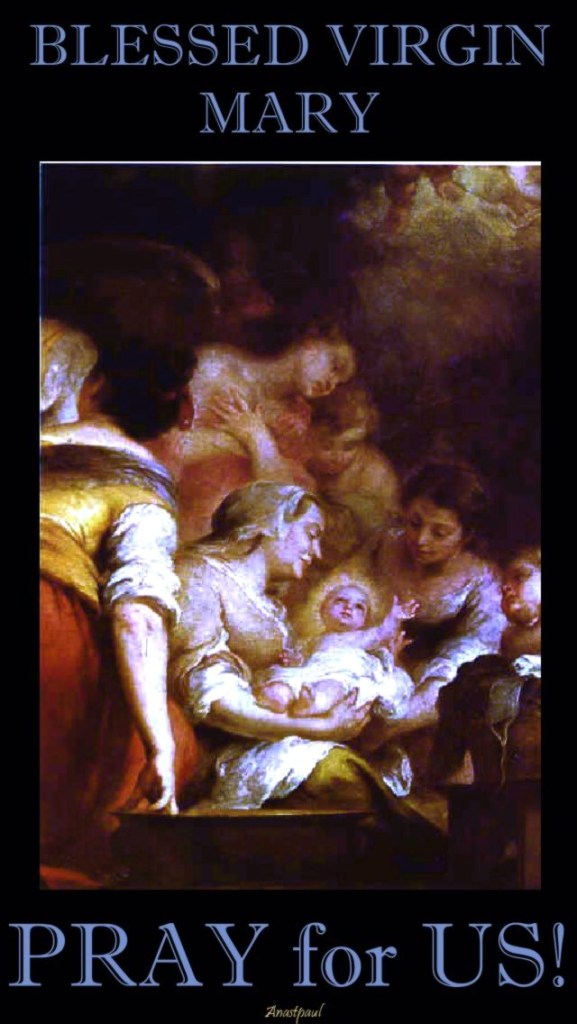
O Lord and Master of my life, give me not a spirit of sloth, vain curiosity, lust for power and idle talk. But give to me, Thy servant, a spirit of soberness, humility, patience and love. O Lord and King, grant me to see my own faults and not to condemn my brother. For blessed art Thou to the ages of ages. Amen O God, be merciful to me a sinner. O God, cleanse me, a sinner. O God, my Creator, save me and for my many sins forgive me!
“A Christian is: a mind through which Christ thinks, a heart through which Christ loves, a voice through which Christ speaks and a hand through which Christ helps.”
St Augustine (354-430)
Father & Doctor of the Church
“You have the words of eternal life”
John 6:68
“These words surely make quite obvious to us the necessity for sitting at the feet of Christ, taking Him as our one and only teacher and giving Him our constant and undivided attention. … Keeping with their guide was the Israelites’ salvation then, just as not leaving Christ is ours now. … We will stay with You always and hold fast to Your commandments. We will receive Your words without finding fault, or thinking Your teaching hard, as the ignorant do but thinking rather: “How sweet are Your words to my throat! Sweeter to the mouth are they, than honey or the honeycomb!”
St Cyril of Alexandria (376-444)
Father and Doctor of the Church
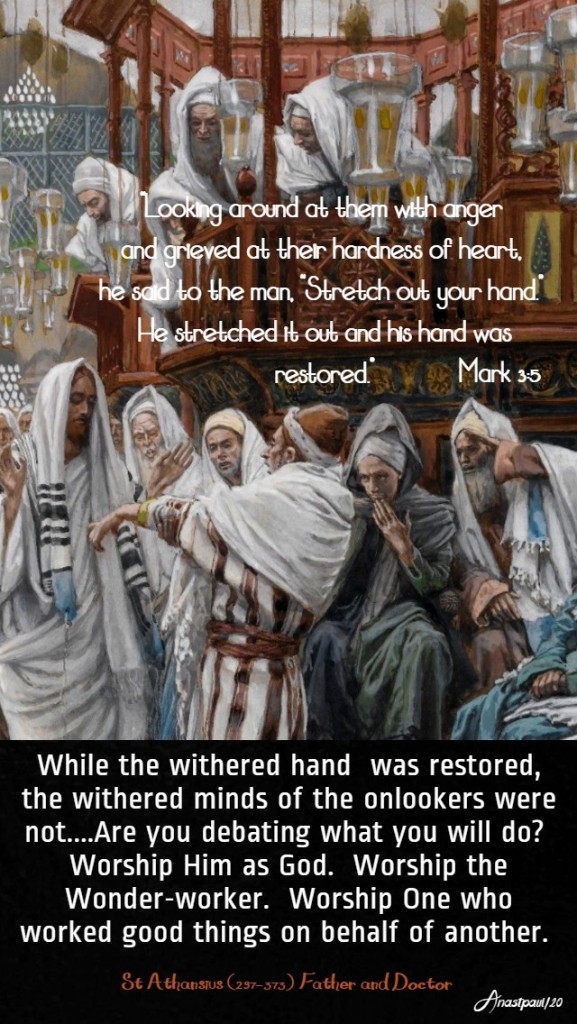
“Paul says: I appeal to you by the mercy of God, to present your bodies as a sacrifice, living and holy. The prophet said the same thing: Sacrifice and offering you did not desire but you have prepared a body for me. Each of us is called to be both a sacrifice to God and His priest. Do not forfeit what divine authority confers on you. Put on the garment of holiness, gird yourself with the belt of chastity. Let Christ be your helmet, let the cross on your forehead be your unfailing protection. Your breastplate, should be the knowledge of God, that He Himself has given you. Keep burning continually, the sweet smelling incense of prayer. Take up the sword of the Spirit. Let your heart be an altar. Then, with full confidence in God, present your body for sacrifice. God desires, not death but faith; God thirsts, not for blood but for self-surrender; God is appeased, not by slaughter but by the offering, of your free will.”
St Peter Chrysologus (c 400-450)
Bishop, Father & Doctor of the Church
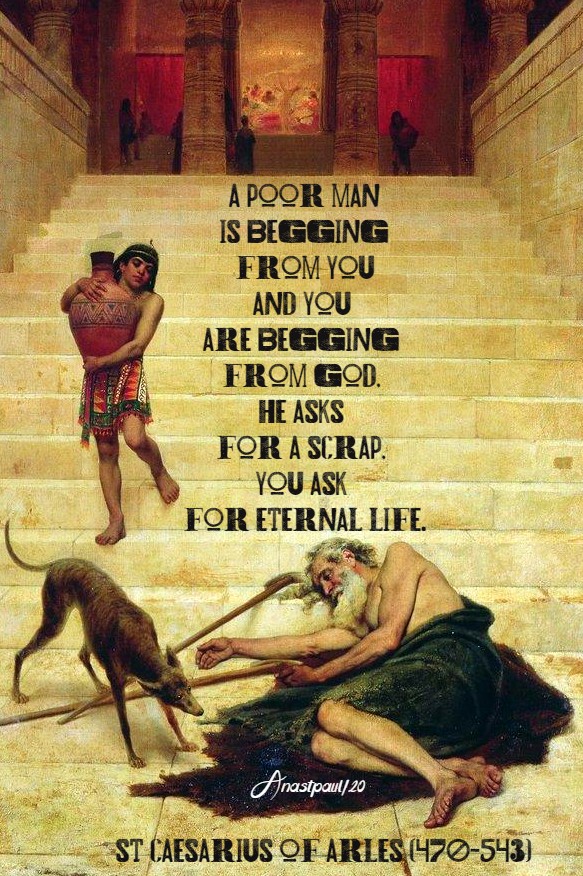
“Doctor of Homilies”
“Fix your minds on the passion of our Lord Jesus Christ. Inflamed with love for us, He came down from heaven to redeem us. For our sake He endured every torment of body and soul and shrank from no bodily pain. He Himself gave us an example of perfect patience and love. We, then, are to be patient in adversity.”
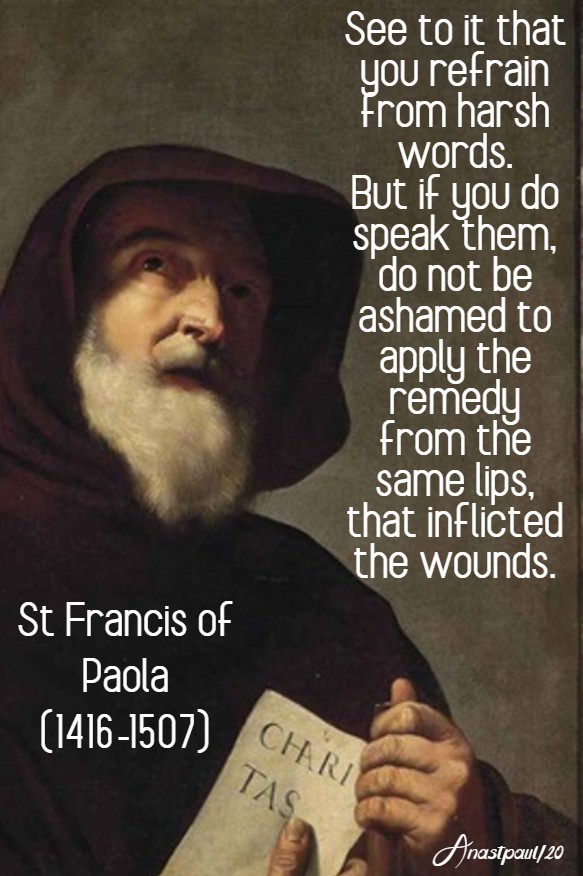
St Francis of Paola OM (1416-1507)
“There is One very near you Who knocks at your door every hour of the day, Who begs you to listen to Him and to keep silence in order to hear Him.”
St Simon-Marie-Just Ranfer de Bretenières (1838-1866)
Martyr
One Minute Reflection – 24 July – Friday of the Sixteenth week in Ordinary Time, Year A, Readings: Jeremiah 3:14-17, Responsorial psalm Jeremiah 31:10-13, Matthew 13:18-23 and the Memorial of St Charbel Makhluf (1828-1898)
“As for what was sown on good soil, this is he who hears the word and understands it; he indeed bears fruit and yields, in one case a hundredfold, in another sixty and in another thirty.”...Matthew 13:23
REFLECTION – “And yet, if both the land be good and the Sower one and the seed the same, wherefore did one bear a hundred, one sixty, one thirty?
Here again the difference is from the nature of the ground, for even where the ground is good, great even therein, is the difference.
Understand that not the Sower is to be blamed, nor the seed but the land that receives it? not for its nature but, for its disposition.
And herein too, great is His mercy to man, that He does not require one measure of virtue.
… And these things He says, lest they that followed Him should suppose that hearing is sufficient for salvation.
… Yes, both vainglory and all the rest belong to this world and to the deceitfulness of riches, such as pleasure and gluttony and envy and vainglory and all the like.
But He added also the “way” and the “rock,” signifying that it is not enough to be freed from riches only, but we must cultivate also the other parts of virtue.
But what if you are free indeed from riches, yet are soft and unmanly? and what if you are not indeed unmanly but are remiss and careless about the hearing of the word?
No one part is sufficient for our salvation but there is required first, a careful hearing and a continual recollection, then fortitude, then contempt of riches and deliverance from all worldly things.” … St John Chrysostom (347-407) Father and Doctor
PRAYER – A pure heart create for me O God, put a steadfast spirit within me! (Ps 50[51]) Lord God, bestow a full measure of Your grace to us. Keep us within in the path of Your commandments, help us to work on the earth of our souls, rooting out the weeds and casting forth the stones of malice. Grant that by the prayers of St Charbel Makhluf, who by Your grace triumphed in all virtues, we may succeed in attaining sanctity. Through Christ, our Lord, in union with the Holy Spirit, one God, forever, amen.
Thought for the Day – 23 July – Meditations with Antonio Cardinal Bacci (1881-1971)
Knowledge and Sanctity
“If there had been equal progress throughout the ages in sanctity and in science, men would now be very wise and very holy.
It is a well-known fact, that science has made great strides but, it must be admitted,unfortunately, that it has often forgotten it’s beginning and final end, which is God alone.
The object of knowledge, is truth and, all truth comes from God but, it dwells in created things like a reflection of divine light.
We must trace this reflected light back to it’s original source.
If students had always done this, they could have become wise as well as learned.
They would have gained from their studies and research, a deeper knowledge of God, the author of all the marvels in the universe and, they would have discovered, how to worship and obey Him.
When science goes astray or becomes an end in itself, it ceases to be of real service and can become an instrument of evil.
When the history of philosophy was described as the history of human aberrations, this was not altogether an exaggeration.
Moreover, the technical and practical science which are flourishing in this era, have often become the means of human destruction.
This is what happens when science turns away from God, who is it’s origin.
There is a great deal of learning in the modern world but, very little holiness.
As a result of their absorption in intellectual labour and scientific research, men have forgotten the most important thing in life, which is goodness.
It would seem that the intellect has stifled the impulses of the heart and the dictates of conscience.
Do not let this happen in your own case.
By all means, have and promote learning but, more than anything else, cultivate in your soul that sanctity which will be your greatest treasure in life.”
Quote/s of the Day – 23 July – the Memorial of St John Cassian (c 360- c 435), St Bridget of Sweden (c 1303 – 1373)
“Whoever has achieved love has God within himself and his intellect is always with God.”
“No structure of virtue can possibly be raised in our soul unless, first, the foundations of true humility are laid in our heart.”
“The thief on the cross certainly did not receive the Kingdom of Heaven as a reward for his virtues but as a grace and a mercy from God. He can serve as an authentic witness that our salvation is given to us only by God’s mercy and grace. All the holy masters knew this and unanimously taught that perfection in holiness can be achieved only through humility.”
St John Cassian (c 360- c 435)
“O Lord, make haste and illumine the night. Say to my soul that nothing happens without You permitting it and that nothing of what You permit, is without comfort.”
“There is no sinner in the world, however much at enmity with God, who cannot recover God’s grace, by recourse to Mary and by asking her assistance.”
One Minute Reflection – 23 July – “Month of the Precious Blood” – Thursday of the Sixteenth week in Ordinary Time, Year A, Readings: Jeremiah 2:1-3, 7-8, 12-13, Psalm 36:6-11, Matthew 13:10-17and the Memorial of St Bridget of Sweden (c 1303 – 1373) and Blessed Margarita de Maturana (1881-1934)
“For truly, I say to you, many prophets and righteous people longed to see what you see” … Matthew 13:17
REFLECTION – “In one of the psalms the prophet says: “My soul pines for your salvation; I hope in your word” (119[118]:1) … Who is it expressing this ardent desire if not “the chosen race, the royal priesthood, the people set apart for God” (1 Pt 2:9), each in their own day, in each one of those who have lived, are living or will live, from humanity’s first beginning, until the end of the world? … That is why our Lord Himself says to His disciples: “Many prophets and righteous men have longed to see what you see.” It is their voice, then, we must recognise in this psalm … Their longing has never come to an end in the saints, nor does it end even now in “the Body of Christ, the Church” (Col 1:18) until “the Desired of all nations” comes (Hag 2:8 Vg) …
So the beginning of the Church’s era, before the Virgin had given birth, comprised saints who longed to see Christ’s coming in the flesh and the period where we are now, following the Ascension, comprises other saints, who long to see the revealing of Christ to judge the living and the dead. From the beginning to the end of time, the Church’s longing has never lost its intensity, excepting only, when our Lord was alive on earth in the company of His disciples.” … St Augustine (354-430) Father and Doctor of Grace – Discourses on the Psalms, Ps 119[118], no. 20 ; CCL 40, 1730
PRAYER – “O Jesus, Son of God, You Who were silent in the presence of Your accusers, restrain my tongue until I find what should say and how to say it. Show me the way and make me ready to follow it. It is dangerous to delay, yet perilous to go forward. Answer my petition and show me the way. As the wounded go to the doctor in search of aid, so do I come to You. O Lord, give Your peace to my heart. “ (St Bridget). And we ask God our Father that the prayers of St Bridget and Blessed Margarita de Maturana, may serve as an aid as we strive to attain virtue and see Your Face, O Lord, through Christ our Lord, with the Holy Spirit, God forever, amen.
Thought for the Day – 21 July – “Month of the Most Precious Blood” – Meditations with Antonio Cardinal Bacci (1881-1971)
The Royal Road of the Cross
“The way of the Cross is the only road that leads to Heaven.
Consequently, a man who refuses to take this road cannot reach Heaven.
If there were another way, Jesus would have told us about it.
Instead, He insisted that if anyone wished to go after Him, he would have to deny himself, take up his cross daily and follow Him (Lk 9:23).
Our Lord did more than preach this way to us, for He gave us an example of the manner in which to follow it.
Jesus could have redeemed us by a single act of His human-divine will, simply by offering Himself to the Eternal Father in expiation of our sins.
But He chose to carry the weight of the Cross, to climb the Hill of Calvary and, to die in agony.
We must ascend our own Calvary, if we wish to imitate and follow Jesus.
Our divine Redeemer fulfilled perfectly, in His Passion, all the works of perfection which He had preached in the Gospel.
Let the Passion of Christ be our rule of life.
Let us be glad, when we seem to be more like Him and sorrowful, whenever we seem to be departing from the example which He set us.
Suffering should be a source of consolation for us, for it makes us more like Jesus, as long as we endure it with resignation and with love.”
Quote/s of the Day – 22 July – Feast of St Mary of Magdala, Readings: Song of Solomon 3:1-4 or 2 Corinthians 5:14-17, Psalm 63:2-6, 8-9, John 20:1-2, 11-18
Speaking of: Perseverance
“But Mary stood weeping outside the tomb…”
John 20:11
“And will not God vindicate his elect, who cry to him day and night?”
Luke 18:7
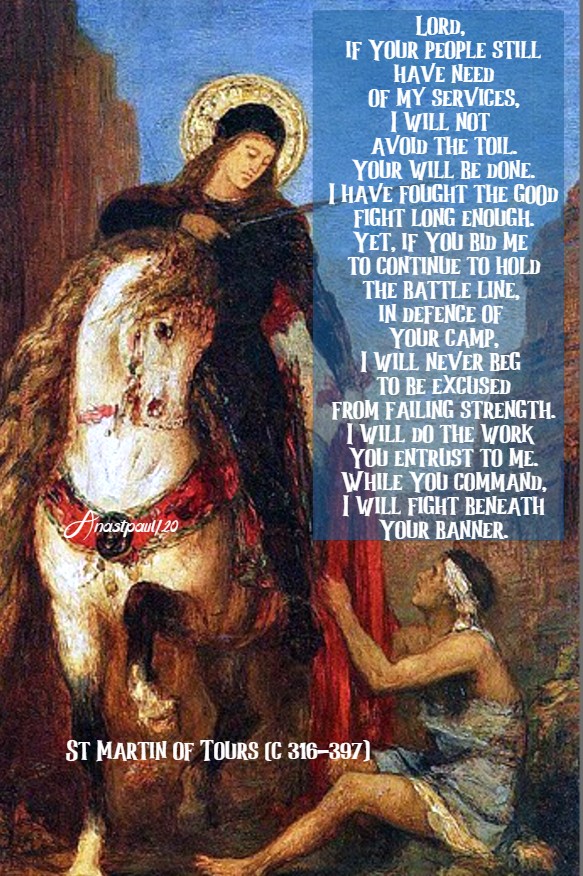
Lord, if Your people still have need of my services, I will not avoid the toil. Your will be done. I have fought the good fight long enough. Yet, if You bid me to continue to hold the battle line, in defence of Your camp, I will never beg to be excused from failing strength. I will do the work You entrust to me. While You command, I will fight beneath Your banner. Amen
St Martin of Tours (c 316-397)
“Our pilgrimage on earth cannot be exempt from trial. We progress by means of trial. No-one knows himself except through trial, or receives a crown, except after victory, or strives, except against an enemy or temptations.”
St Augustine (354-430)
Father and Doctor of Grace
“For now, let us persevere, children, dear children, let us be patient for a little, brothers, dear brothers.… Who will be crowned without having fought? Who will go to rest if he is not tired (cf. 2 Tim 2:5-6)? Who will gather the fruits of life, without having planted virtues in his soul? Cultivate them, prepare the earth with the greatest care, take trouble over it, sweat over it, children, God’s workers, imitators of the angels, competitors with incorporeal beings, lights for those who are in the world (cf. Phil 2:15)!”
St Theodore the Studite (759-826)
Monk
Catechesis 28
“Don’t sow your desires in someone else’s garden, just cultivate your own, as best you can; don’t long to be other than what you are but desire to be thoroughly what you are. Direct your thoughts, to being very good at that and to bearing the crosses, little or great, that you will find there. Believe me, this is the most important and least understood point to the spiritual life. We all love according to what is our taste, few people like what is according to their duty or to God’s liking. What is the use of building castles in Spain when we have to live in France?”
It is not then a case for tears, that we have so much work to do for our souls, for we need great courage to go ever onwards (since we must never stop) and much resolution to restrain our desires. Observe carefully this precept, that all the Saints have given to those who would emulate them – to speak little, or not at all, of yourself and your own interests.”
St Francis de Sales (1567-1622)
Doctor of the Church
“Love never says ‘I have done enough.’”
St Marie Eugénie de Jésus (1817-1898)
“On the last day, we will not be asked if we accomplished great deeds, or been acclaimed by men, rather we will be asked if we followed His will, in the state and condition, to which we were called.”
You must be logged in to post a comment.