Posted in Against SCRUPELOSITY, for Scrupulous people, All THEOLOGIANS, Moral Theologians, CONFESSORS, DOCTORS of the Church, GOUT, KNEE PROBLEMS, ARTHRITIS, etc, Of a Holy DEATH & AGAINST A SUDDEN DEATH, of the DYING, FINAL PERSEVERANCE, DEATH of CHILDREN, DEATH of PARENTS, Of and for VOCATIONS, REDEMPTORISTS CSSR, SAINT of the DAY

Saint of the Day – 2 August – St Alphonsus Maria de Liguori C.Ss.R. – Doctor of the Church

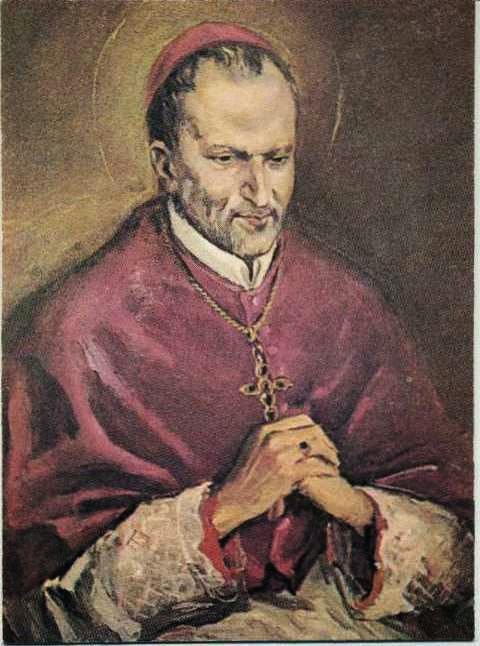
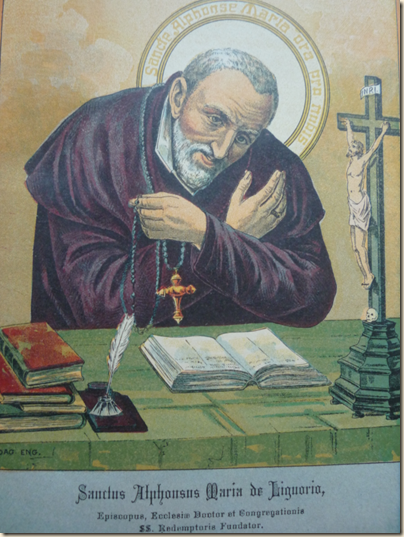
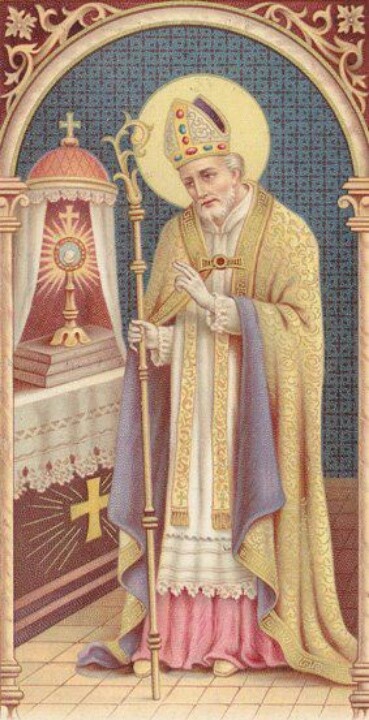
Saint of the Day – 2 August – St Alphonsus Maria de Liguori C.Ss.R. – Doctor of the Church-Bishop, Confessor, Founder, Spiritual Writer, Composer, Musician, Artist, Poet, Lawyer, Scholastic Philosopher and Theologian.   Born on 27 September 1696 at Marianelli near Naples, Italy and died on  1 August 1787 at Nocera, Italy of natural causes.   He was Canonised on 26 May 1839 by Pope Gregory XVI and declared Doctor of the Church by Pope Pius IX in 1871.    He founded the Congregation of the Most Holy Redeemer (the Redemptorists). In 1762 he was appointed Bishop of Sant’Agata dei Goti.  Patronages – against arthritis, against scrupulosity, of Confessors (given on 26 February 1950 by Pope Pius XII), final perseverance, moral theologians, moralists (1950 by Pope Pius XII), scrupulous people, vocations, Diocese of Acerra, Italy, Diocese of Agrigento, Italy,l Pagani, Italy, Sant’Agata de’ Goti, Italy.   Attributes – chaplet, praying with a monstrance in his hands, pen, quill, crucifix, writing, bishop with his chin on his chest (due to his arthritis).
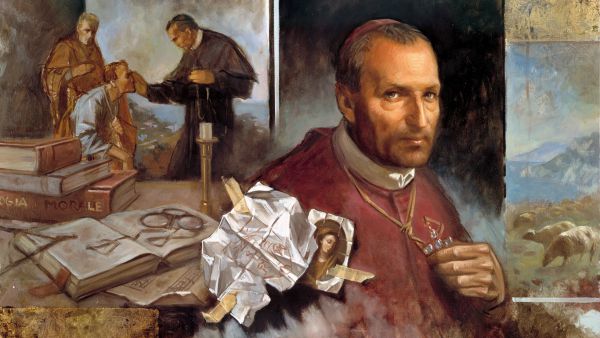
St Alphonsus learned to ride and fence but was never a good shot because of poor eyesight.   Myopia and chronic asthma precluded a military career so his father had him educated for the legal profession.   He was taught by tutors before entering the University of Naples, where he graduated with doctorates in civil and canon law at 16. He remarked later that he was so small at the time that he was almost buried in his doctor’s gown and that all the spectators laughed.   When he was 18, like many other nobles, he joined the Confraternity of Our Lady of Mercy with whom he assisted in the care of the sick at the hospital for “incurables”.

He became a successful lawyer.  He was thinking of leaving the profession and wrote to someone, “My friend, our profession is too full of difficulties and dangers;  we lead an unhappy life and run risk of dying an unhappy death”.   At 27, after having lost an important case, the first he had lost in eight years of practicing law, he made a firm resolution to leave the profession of law.   Moreover, he heard an interior voice saying: “Leave the world, and give yourself to me.”
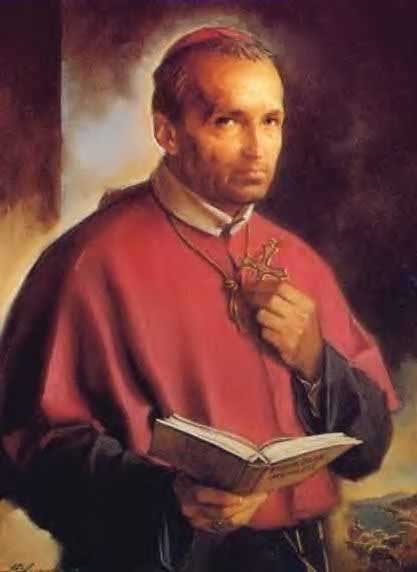
In 1723, he decided to offer himself as a novice to the Oratory of St. Philip Neri with the intention of becoming a priest.   His father opposed the plan but after two months (and with his Oratorian confessor’s permission), he and his father compromised:  he would study for the priesthood but not as an Oratorian and live at home.   He was ordained on 21 December 1726, at 30.   He lived his first years as a priest with the homeless and the marginalised youth of Naples.   He became very popular because of his plain and simple preaching.   He said: “I have never preached a sermon which the poorest old woman in the congregation could not understand”.    He founded the Evening Chapels, which were managed by the young people themselves.   The chapels were centres of prayer and piety, preaching, community, social activities and education.   At the time of his death, there were 72, with over 10,000 active participants.   His sermons were very effective at converting those who had been alienated from their faith.

Liguori suffered from scruples much of his adult life and felt guilty about the most minor issues relating to sin.    Moreover, the saint viewed scruples as a blessing at times and wrote:  “Scruples are useful in the beginning of conversion…. they cleanse the soul and at the same time make it careful”.

In 1729, Alphonsus left his family home and took up residence in the Chinese Institute in Naples.   It was there that he began his missionary experience in the interior regions of the Kingdom of Naples, where he found people who were much poorer and more abandoned than any of the street children in Naples.   In 1731, while he was ministering to earthquake victims in the town of Foggia, Alphonsus claimed to have had a vision of the Virgin Mother in the appearance of a young girl of 13 or 14, wearing a white veil.

Congregation of the Most Holy Redeemer (The Rdemptorists) – On 9 November 1732, he founded the Congregation of the Most Holy Redeemer, when Sister Maria Celeste Crostarosa told him that it had been revealed to her that he was the one that God had chosen to found the congregation.   He founded the congregation with the charism of preaching popular missions in the city and the countryside.   Its goal was to teach and preach in the slums of cities and other poor places.   They also fought Jansenism, a heresy that supported a very strict morality:  “the penitents should be treated as souls to be saved rather than as criminals to be punished”.  He is said never to have refused absolution to a penitent.

A gifted musician and composer, he wrote many popular hymns and taught them to the people in parish missions.   In 1732, while he was staying at the Convent of the Consolation, one of his order’s houses in the small city of Deliceto in the province of Foggia in Southeastern Italy, Liguori wrote the Italian carol “Tu scendi dalle stelle” (“From Starry Skies Descending”) in the musical style of a pastorale.   The version with Italian lyrics was based on his original song written in Neapolitan, which began Quanno nascette Ninno (When the child was born).   As it was traditionally associated with the zampogna, or large-format Italian bagpipe, it became known as Canzone d’i zampognari the (“Carol of the Bagpipers”).

Bishop
Alphonsus was consecrated Bishop of Sant’Agata dei Goti in 1762.   He tried to refuse the appointment by using his age and infirmities as arguments against his consecration.   He wrote sermons, books and articles to encourage devotion to the Blessed Sacrament and the Blessed Virgin Mary.   He first addressed ecclesiastical abuses in the diocese, reformed the seminary and spiritually rehabilitated the clergy and faithful.   He suspended those priests who celebrated Mass in less than 15 minutes and sold his carriage and episcopal ring to give the money to the poor.   In the last years of his life, he suffered a painful sickness and a bitter persecution from his fellow priests, who dismissed him from the Congregation that he had founded.
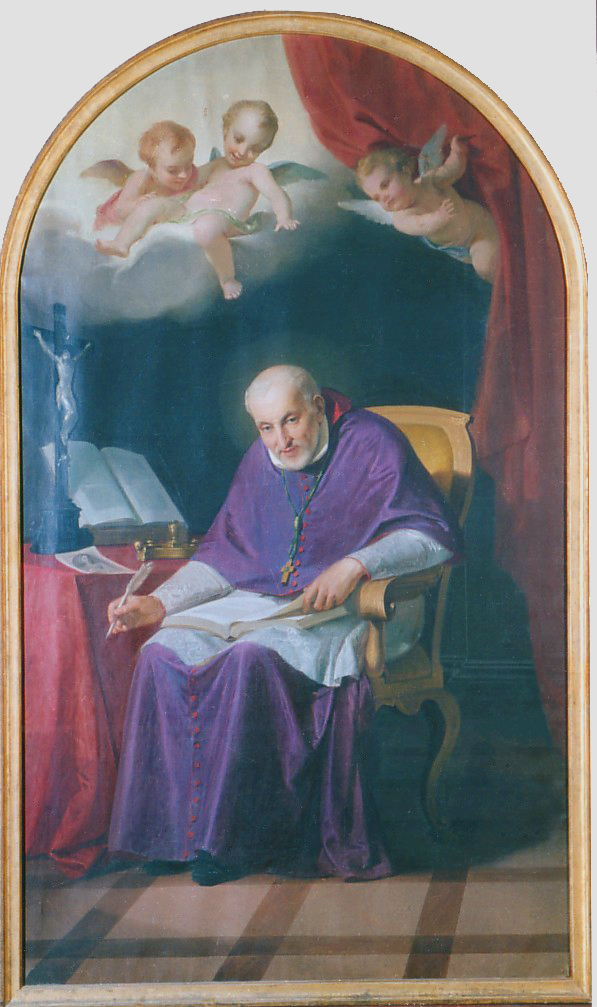
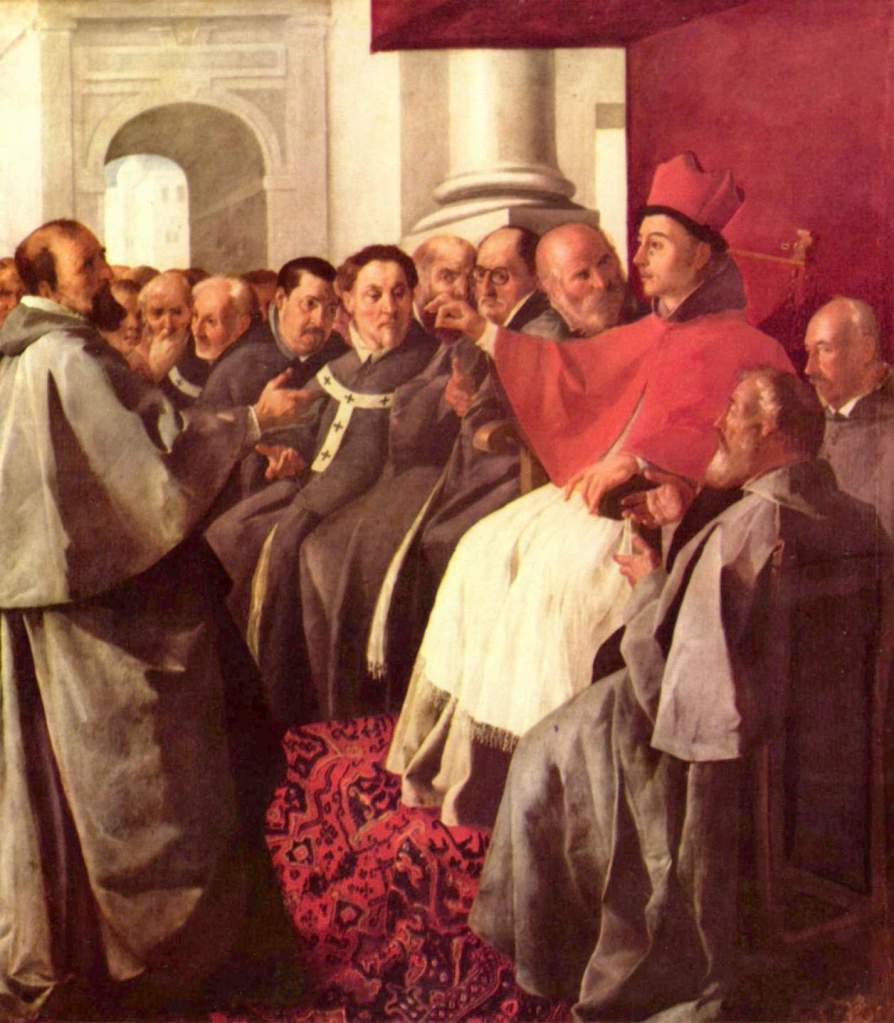
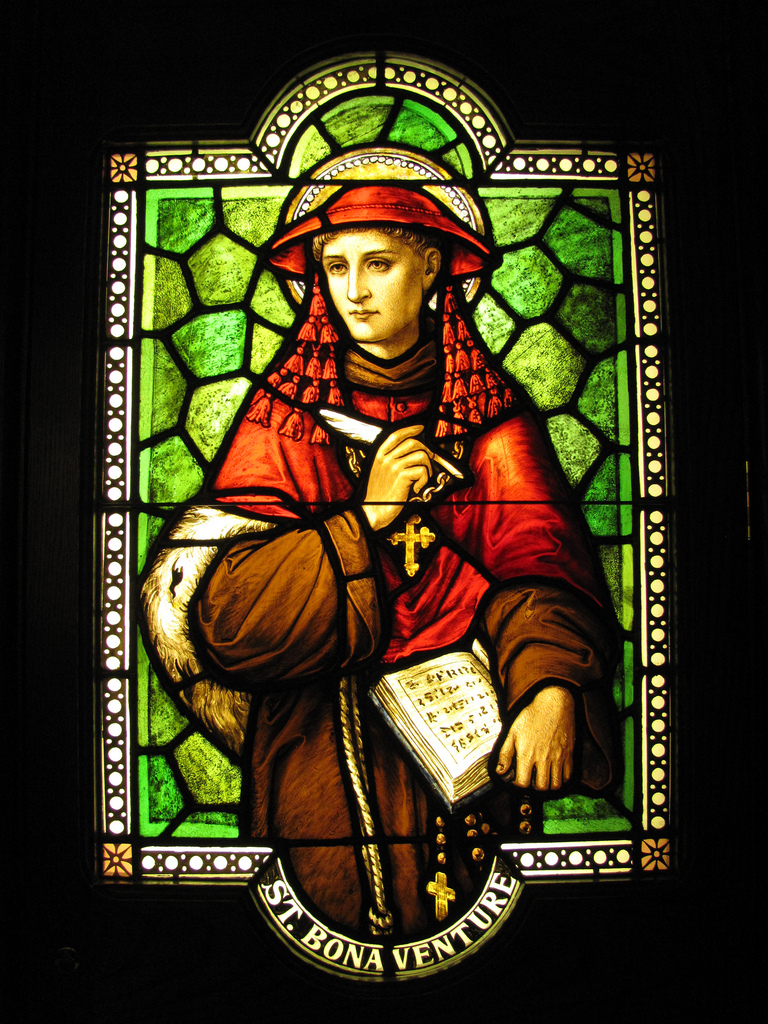
St-Alphonsus-at Mt St A, sm
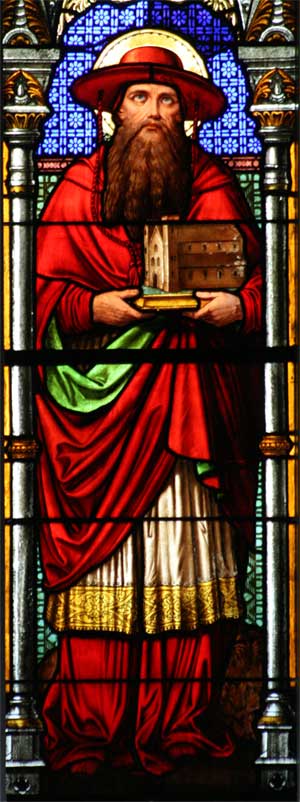
ST ALPHONSUS - 2.AUG 1
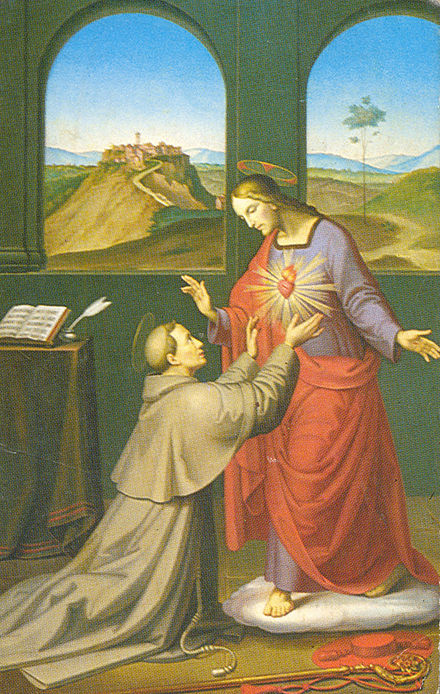
st alphonsus 3
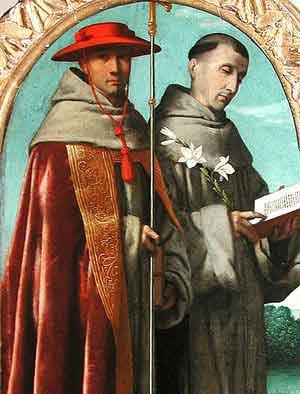
ST ALPHONSUS - HOLYCARD

Death
In 1775, he was allowed to retire from his office and went to live in the Redemptorist community in Pagani, Italy, where he died.

Veneration and legacy
He was beatified on 15 September 1816 by Pope Pius VII and canonized on 26 May 1839 by Pope Gregory XVI.

In 1949, the Redemptorists founded the Alphonsian Academy for the advanced study of Catholic moral theology.   He was named the patron of confessors and moral theologians by Pope Pius XII on 26 April 1950, who subsequently wrote of him in the encyclical Haurietis aquas.

Moral theology
Alphonsus’ greatest contribution to the Church was in the area of moral theology.    His masterpiece was The Moral Theology (1748), which was approved by the Pope himself and was born of Alphonsus’ pastoral experience, his ability to respond to the practical questions posed by the faithful and his contact with their everyday problems.   He opposed sterile legalism and strict rigoururism.   According to him, those were paths closed to the Gospel because “such rigour has never been taught nor practiced by the Church”.   His system of moral theology is noted for its prudence, avoiding both laxism and excessive rigour.   Since its publication it has remained in Latin, often in 10 volumes or in the combined 4-volume version of Gaudé.   It saw only recently its first publication in translation, in an English translation made by Ryan Grant and published in 2017 by Mediatrix Press.   The English translation of the work is projected to be around 5 volumes.

Mariology
His Mariology, though mainly pastoral in nature, rediscovered, integrated and defended that of St Augustine of Hippo, St Ambrose of Milan and other fathers;  it represented an intellectual defence of Mariology in the 18th century, the Age of Enlightenment, against the rationalism to which his often flaming Marian enthusiasm contrasted:

The Glories of Mary
Marian Devotion
Prayers to the Divine Mother
Spiritual Songs
The True Spouse of Jesus Christ

Other works
Great Means of Salvation and of Perfection
The Way of Salvation and of Perfection
The Way of the Cross,
Preparation for Death,
The Incarnation, Birth and Infancy of Jesus Christ
The Holy Eucharist
Victories of the Martyrs

Many of these are available online.
Posted in DOCTORS of the Church, MORNING Prayers, SAINT of the DAY

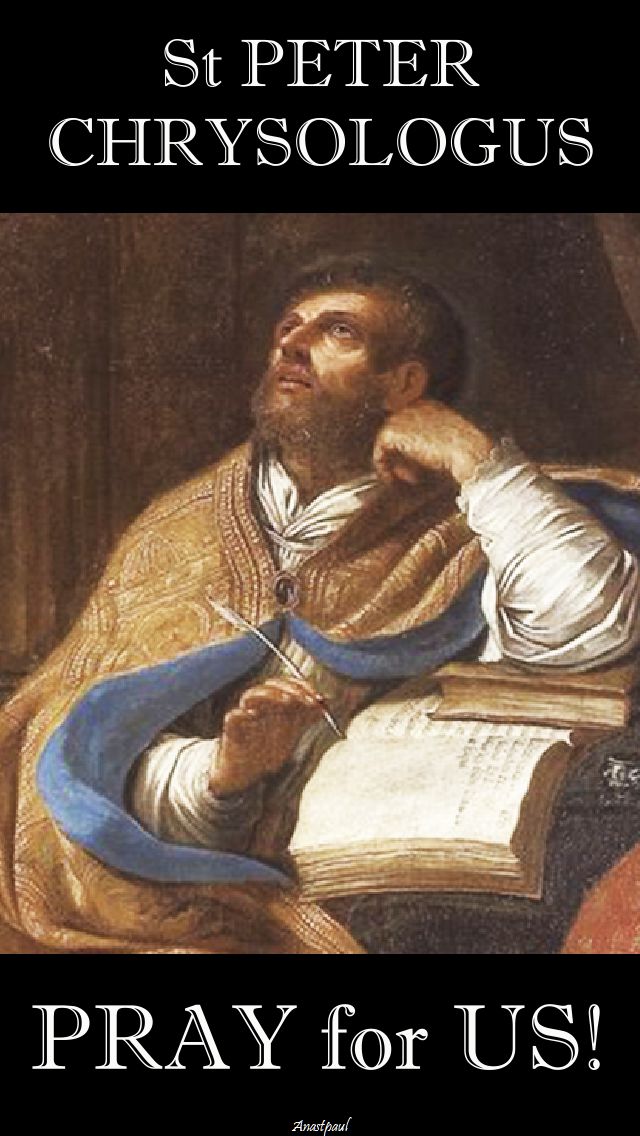
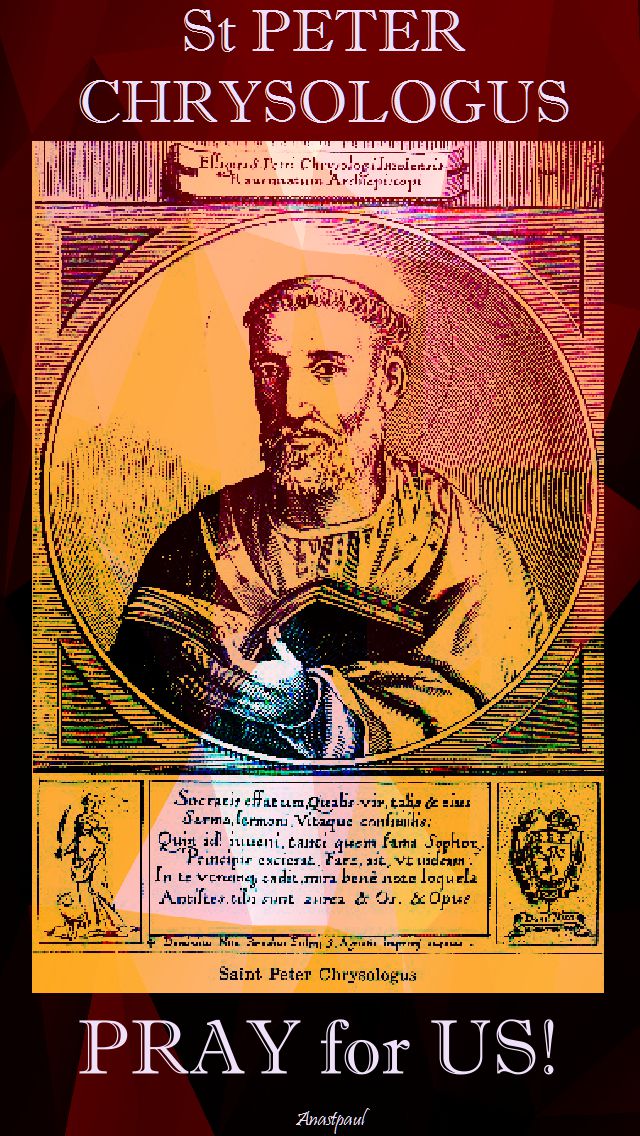
Thought for the Day – 30 July – The Memorial of St Peter Chrysologus “Golden Words”

Thought for the Day – 30 July – The Memorial of St Peter Chrysologus “Golden Words”

In addition to his zeal in the exercise of his office, Peter Chrysologus was distinguished by a fierce loyalty to the Church, not only in its teaching but in its authority as well.   He looked upon learning not as a mere opportunity but as an obligation for all, both as a development of God-given faculties and as a solid support for the worship of God……Next to virtue, learning, in his view, was the greatest improvement to the human mind and the support of true religion.   Ignorance is not a virtue, nor is anti-intellectualism. Knowledge is neither more nor less a source of pride than physical, administrative, or financial prowess. ( Fr Don Miller, OFM)
Keep in mind that we cannot practice anything at all if we do not study it – we cannot “be” a Catholic if we do not study our faith!

St Peter Chrysologus, pray for us!

st peter chrysologus pray for us 2

Posted in DOCTORS of the Church, MORNING Prayers, QUOTES on CHARITY, SAINT of the DAY, The HOLY EUCHARIST / The HOLY MASS

Quote/s of the Day – 30 July – Memorial of St Peter Chrysologus

Quote/s of the Day – 30 July – Memorial of St Peter Chrysologus

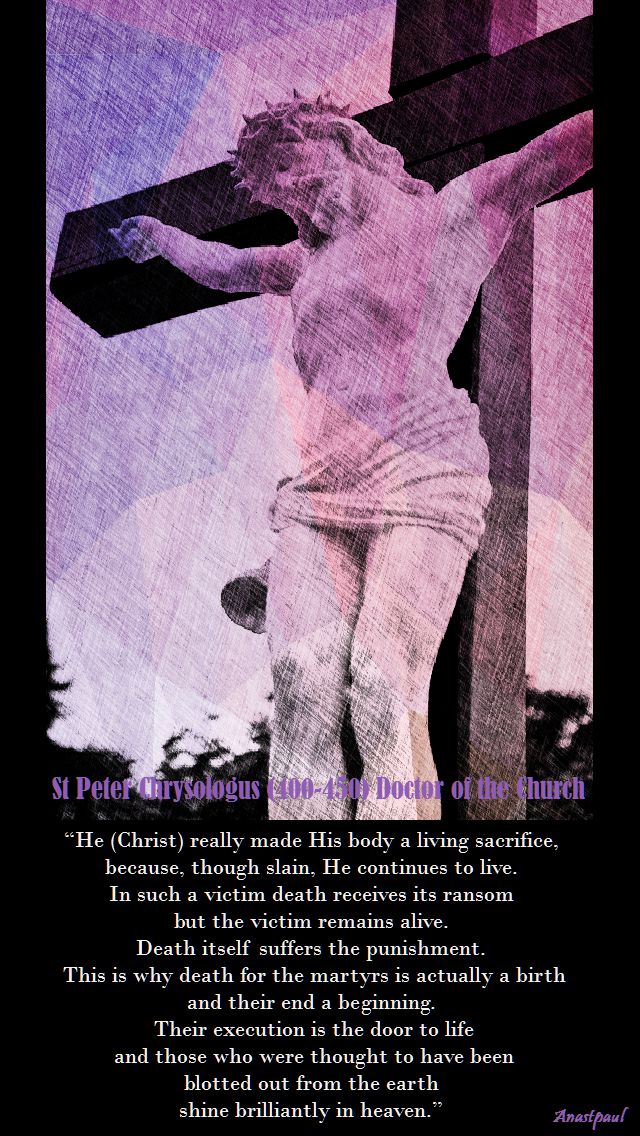
“He (Christ) really made His body a living sacrifice,
because, though slain, He continues to live.
In such a victim death receives its ransom
but the victim remains alive.
Death itself suffers the punishment.
This is why death for the martyrs is actually a birth
and their end a beginning.
Their execution is the door to life
and those who were thought to have been
blotted out from the earth
shine brilliantly in heaven.”

he (Christ) really made his body - st peter chrysologus

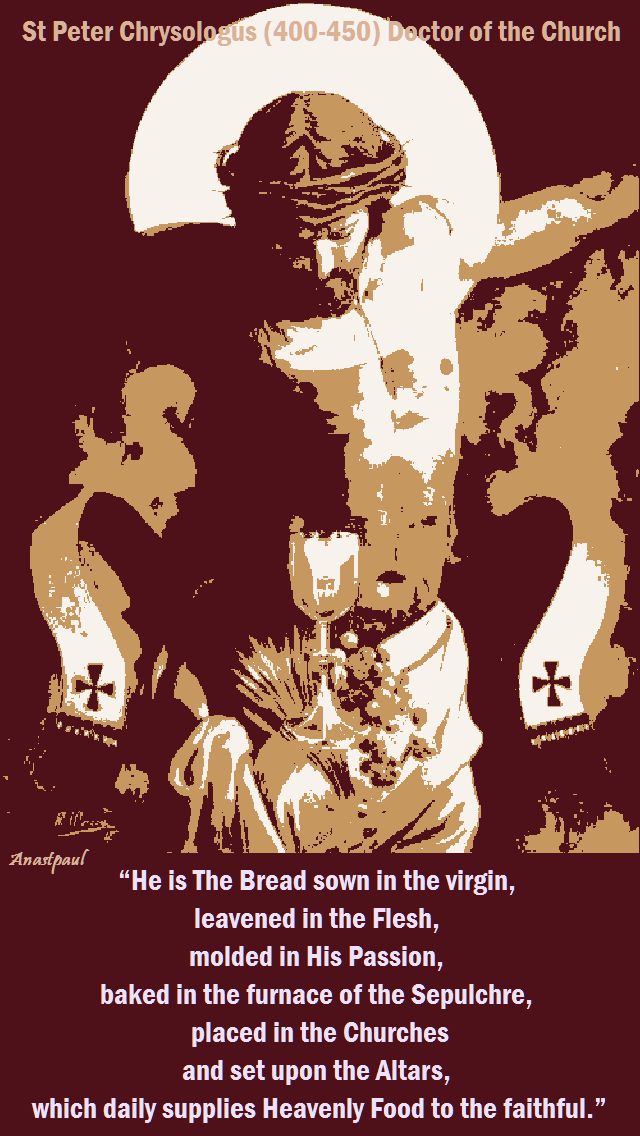
“He is The Bread sown in the virgin,
leavened in the Flesh,
molded in His Passion,
baked in the furnace of the Sepulchre,
placed in the Churches
and set upon the Altars,
which daily supplies Heavenly Food to the faithful.”

he is the bread 2.- st peter chrysologus

“For he who touches
the Body of Christ unworthily,
receives his damnation.”

for he who touches the body of christ - st peter chrysologus

“Anyone who wishes to frolic with the devil cannot rejoice with Christ.”

anyone who wishes to frolic with the devil -st peter chrysologus

“The poor stretch out the hand
but God receives what is offered.”

the poor stretch out the hand - st peter chrysologus

“Now that we are reborn,…
in the likeness of our Lord
and have indeed been adopted
by God as his children,
let us put on the complete image
of our Creator
so as to be wholly like Him,
not in the glory that He alone possesses
but in innocence, simplicity, gentleness,
patience, humility, mercy, harmony,
those qualities in which He chose to become
and to be, one with us.”

nw that we are reborn-st peer chrysologus

St Peter Chrysologus (400-450) Doctor of the Church


Posted in DOCTORS of the Church, MORNING Prayers, QUOTES of the SAINTS, SAINT of the DAY, The WORD

One Minute Reflection – 30 July – Memorial of St Peter Chrysologus

One Minute Reflection – 30 July

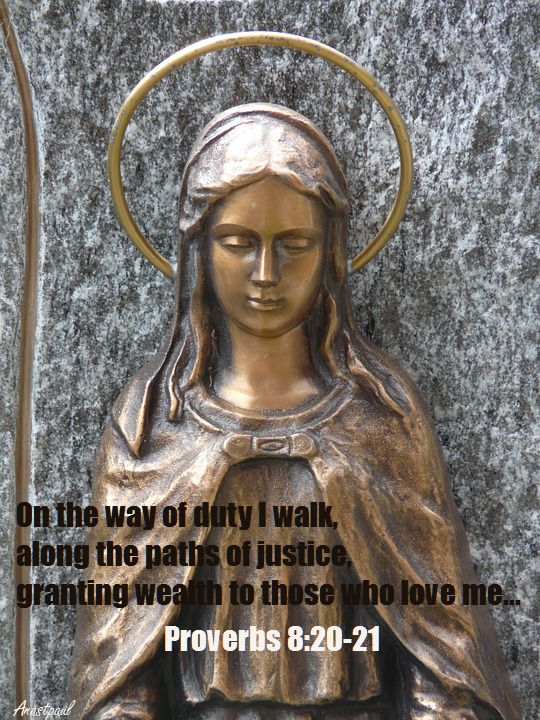
On the way of duty I walk, along the paths of justice, granting wealth to those who love me…..Proverbs 8:20-21

PROVERBS 8 20 21

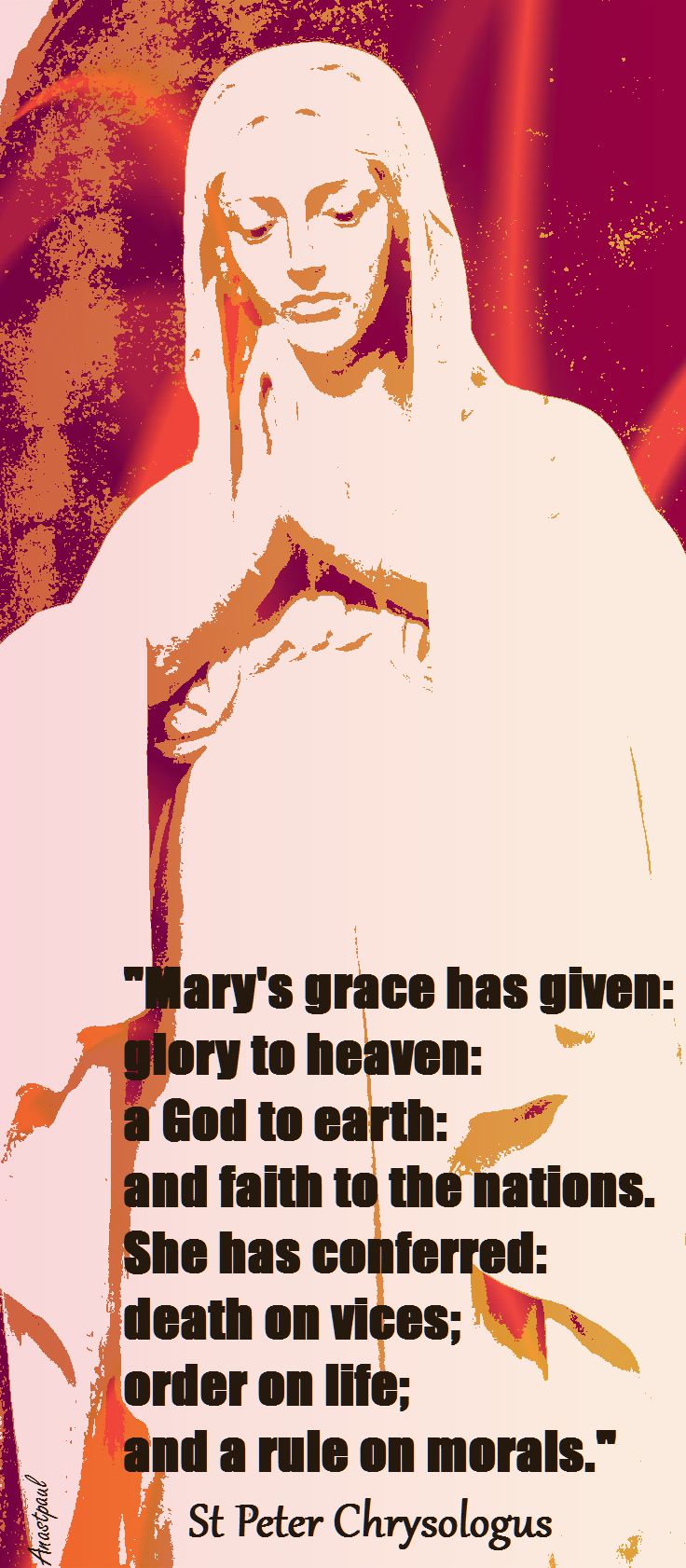
REFLECTION – “Mary’s grace has given glory to heaven; a God to earth and faith to the nations.Sh has conferred death on vices, order on life and a rule on morals.”….St Peter Chrysologus (c400-450) Doctor of the Church

ST PETER CHRYSOLOGUS MARY'S GRACE

PRAYER – Heavenly Father, grant me the grace to have Mary as my constant intercessor. In all difficulties let me call on her aid, for she is Your beloved Daughter. St Peter, you who so loved our Holy Mother, pray that we too may love her with total abandon and trust. Amen

st peter chrysologus pray for us

Posted in DOCTORS of the Church, SAINT of the DAY

Saint of the Day – 30 July – St Peter Chrysologus “Golden Worded” “Doctor of Homilies” – Doctor of the Church

Saint of the Day – 30 July – St Peter Chrysologus “Golden Worded” “Doctor of Homilies” – Doctor of the Church – Bishop, Confessor, Teacher, Writer and Doctor of the Church.   People knew St Peter Chrysologus, the Doctor of Homilies, for his very simple and short but inspired sermons, for he was afraid of fatiguing the attention of his hearers.    He was born c 400 at Imola, Italy and died 2 December 450 at Imola, Italy.   Patronage – against fever and against mad dogs.   His piety and zeal won universal admiration.   After hearing oratory of his first homily as bishop, Roman Empress Galla Placidia supposedly gave him the surname Chrysologus, meaning “golden-worded.”   He fought paganism and the Monophysite heresy, enforced reforms and built several churches and ornate altars in his see.    176 of his sermons have survived;  it is the strength of these beautiful explanations of the Incarnation, the Creed, the place of Mary and John the Baptist in the great plan of salvation, etc., that led to his being proclaimed a Doctor of the Church in 1729 by Pope Benedict XIII.

St. Peter Chrysologus

Peter was born in Imola, where Cornelius, bishop of Roman Catholic Diocese of Imola, baptised him, educated him and ordained him a deacon.   He was made an archdeacon through the influence of Emperor Valentinian III.   Pope Sixtus III appointed Peter as Bishop of Ravenna circa 433, apparently rejecting the candidate whom the people of the city of Ravenna elected.   At that time Ravenna was the capital of the West.

The traditional account, as recorded in the Roman Breviary, is that Sixtus had a vision of Pope Saint Peter the Apostle and Saint Apollinaris of Ravenna, the first bishop of that see, who showed Peter, a young man, the next Bishop of Ravenna.   When a group from Ravenna arrived, including Cornelius and his archdeacon Peter from Imola, Sixtus recognised Peter as the young man in his vision and consecrated him as a bishop.

In his extant homilies, Bishop Peter explained Biblical texts briefly and concisely.   He also condemned Arianism and Monophysitism as heresies and explained the Apostles’ Creed, the mystery of the Incarnation and other topics in simple and clear language.   He dedicated a series of homilies to Saint John the Baptist and the Blessed Virgin Mary.   Peter advocated daily reception of Eucharist.   He urged his listeners to confide in the forgiveness offered through Christ.   His surviving works attest to the Church’s traditional beliefs about Mary’s perpetual virginity, the penitential value of Lent, Christ’s Eucharistic presence and the primacy of St. Peter and his successors.   He shared the confidence of Saint Pope Leo I the Great (440-461), another doctor of the Church.

A synod held in Constantinople in 448 condemned Eutyches for Monophysitism; Eutyches then appealed to Peter Chrysologus but failed in his endeavour to win the support of the Bishop.   The Acts of the Council of Chalcedon (451) preserves the text of letter of Saint Peter Chrysologus in response to Eutyches;  Peter admonishes Eutyches to accept the ruling of the synod and to give obedience to the Bishop of Rome as the successor of Saint Peter.

Archbishop Felix of Ravenna in the early eighth century collected and preserved 176 of his homilies.   Various authors edited and translated these works into numerous languages.

St Peter died circa or after 450 during a visit to Imola, the town of his birth. Older reference books say he died on 2 December but a more recent interpretation of the ninth-century “Liber Pontificalis Ecclesiae Ravennatis” indicated that he died on 31 July.

When in 1729 he was declared a Doctor of the Church, his feast day, not already included in the Tridentine Calendar, was inserted in the General Roman Calendar for celebration on 4 December.   In 1969 his feast was moved to 30 July, as close as possible to the day of his death, 31 July, the feast day of Saint Ignatius of Loyola.

A contemporary portrait of Saint Peter Chrysologus, found in the mosaics of the Church of San Giovanni Evangelista in Ravenna, depicts him among the members of the eastern and western imperial family, showing his extraordinary influence.

Posted in DOCTORS of the Church, FATHERS of the Church, MORNING Prayers, QUOTES of the SAINTS, SAINT of the DAY

Quote of the Day – 29 July – Memorial of St Martha

Quote of the Day – 29 July – Memorial of St Martha

“Martha, Martha, you are anxious and worried about many things.
There is need of only one thing.
Mary has chosen the better part and it will not be taken from her.” – Luke 10:42

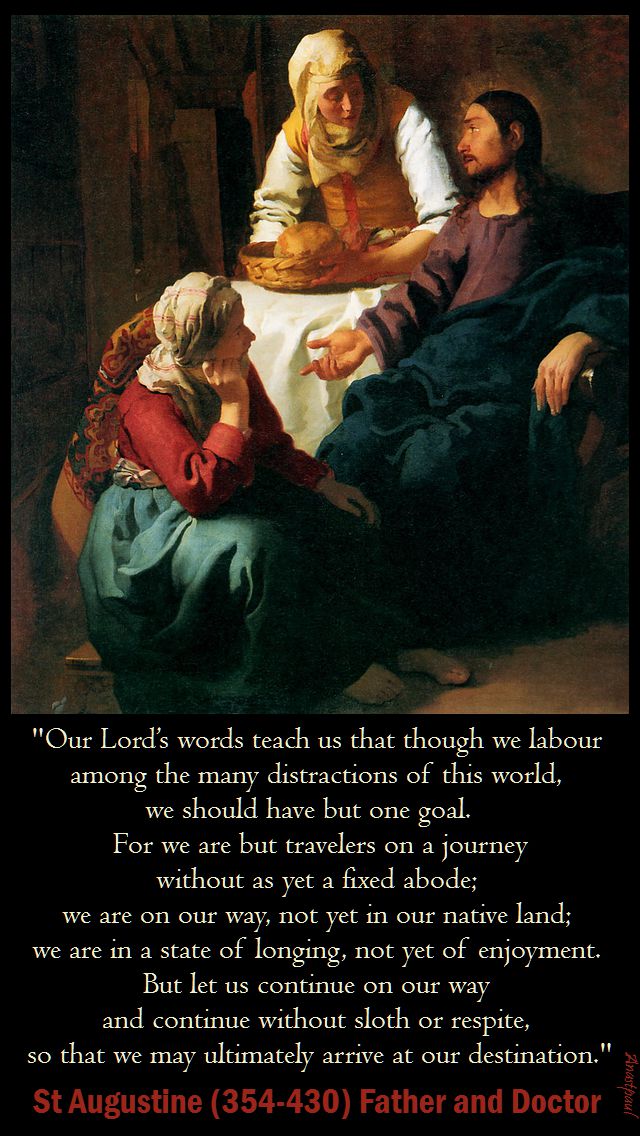
“Our Lord’s words teach us that though we labour
among the many distractions of this world,
we should have but one goal.   For we are but travelers
on a journey without as yet a fixed abode;
we are on our way, not yet in our native land;
we are in a state of longing, not yet of enjoyment.
But let us continue on our way
and continue without sloth or respite,
so that we may ultimately arrive at our destination.”

St Augustine (354-430) Father and Doctor
(Sermo 103, 1-2, 6: PL 38, 613, 615)

our lords words teach us - st augustine

Posted in DOCTORS of the Church, MORNING Prayers, QUOTES of the SAINTS, SAINT of the DAY

Thought for the day – 28 July – the Memorial of St Alphonsa of the Immaculate Conception

Thought for the day – 28 July

“From early in her life, Sister Alphonsa experienced great suffering.   With the passing of the years, the heavenly Father gave her an ever fuller share in the Passion of His beloved Son.   We recall how she experienced not only physical pain of great intensity but also the spiritual suffering of being misunderstood and misjudged by others.   But she constantly accepted all her sufferings with serenity and trust in God, being firmly convinced that they would purify her motives, help her to overcome all selfishness and unite her more closely with her beloved divine Spouse.   She wrote to her spiritual director:  “Dear Father, as my good Lord Jesus loves me so very much, I sincerely desire to remain on this sick bed and suffer not only this but anything else besides, even to the end of the world.   I feel now that God has intended my life to be an oblation, a sacrifice of suffering” (20 November 1944).   She came to love suffering because she loved the suffering Christ.   She learned to love the Cross through her love of the crucified Lord.

…Every one who has been baptised into Christ has discovered a pearl of “great value” and a “treasure” worth all that one has in life .   For all the baptised share in the very life of the Blessed Trinity and are called to be “light” and “salt” for the world .”…St Pope John Paul at the Beatification of St Alphonsa, 8 February 1986.

Let us be that “light” and that “salt”!

St Alphonsa of the Immaculate Conception, pray for us!

st alphonsa pray for us 2

Posted in DOCTORS of the Church, MORNING Prayers, QUOTES of the SAINTS, SAINT of the DAY

Quote/s of the Day – 28 July

Quote/s of the Day – 28 July

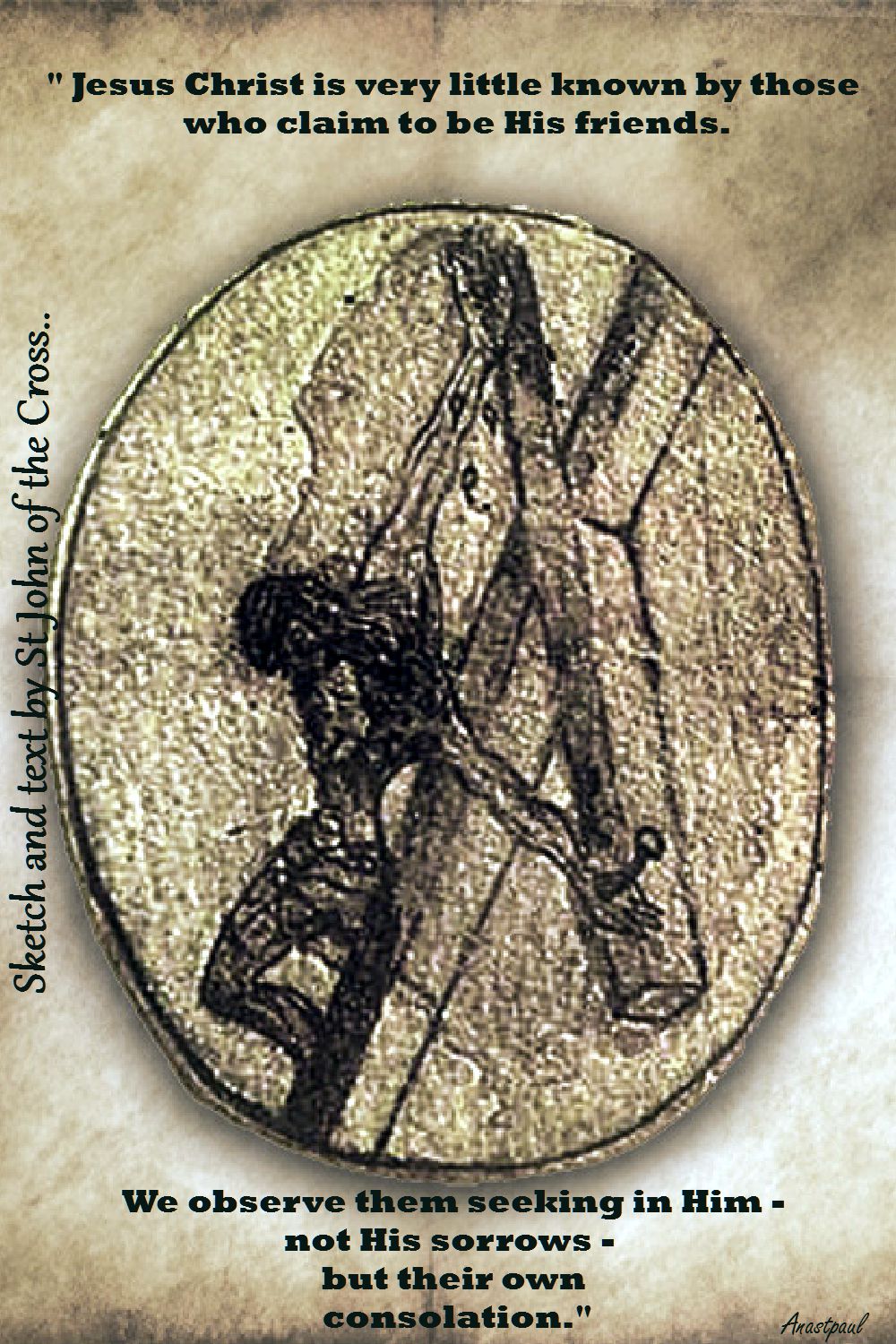
“Jesus Christ is very little known by those
who claim to be His friends.
We observe them seeking in Him,
not His sorrows but their own consolation.”

QUOTE ST JOHN OF THE CROSS 21 JAN

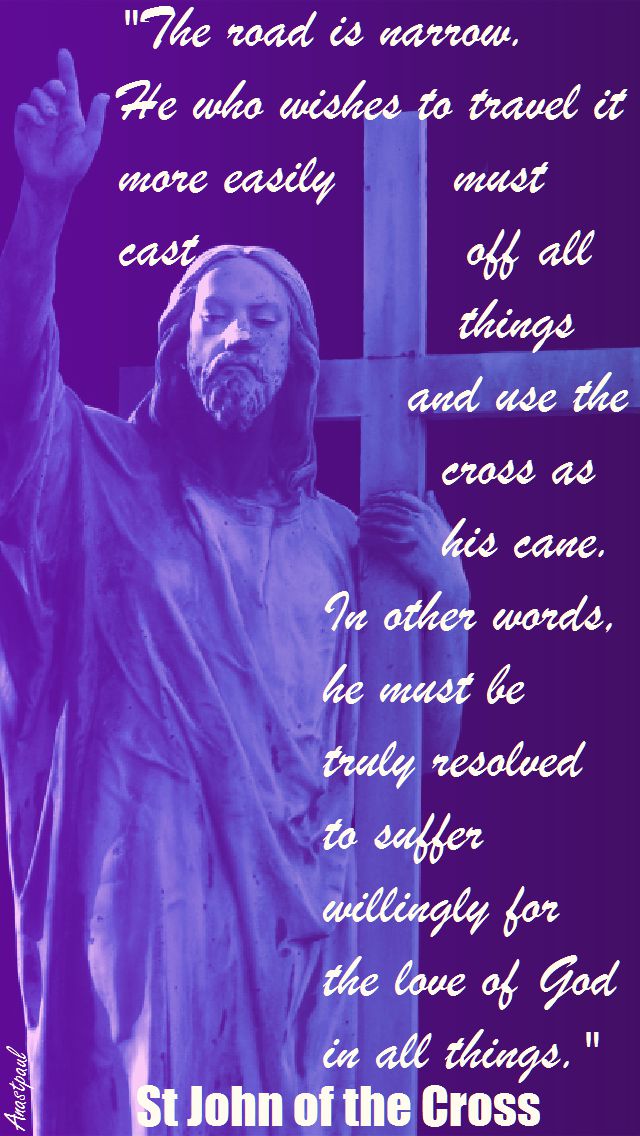
“The road is narrow.
He who wishes to travel it more easily,
must cast off all things and use the cross as his cane.
In other words, he must be truly resolved.
to suffer willingly
for the love of God in all things.”

THE RD IS NARROW-ST JOHN OF THE CROSS

St John of the Cross

Posted in DOCTORS of the Church, MORNING Prayers, QUOTES of the SAINTS, SAINT of the DAY, The BLESSED VIRGIN MARY, The WORD

One Minute Reflection – 26 July

One Minute Reflection – 26 July

How wonderful is God among his saints; come, let us adore him…..Psalm 94

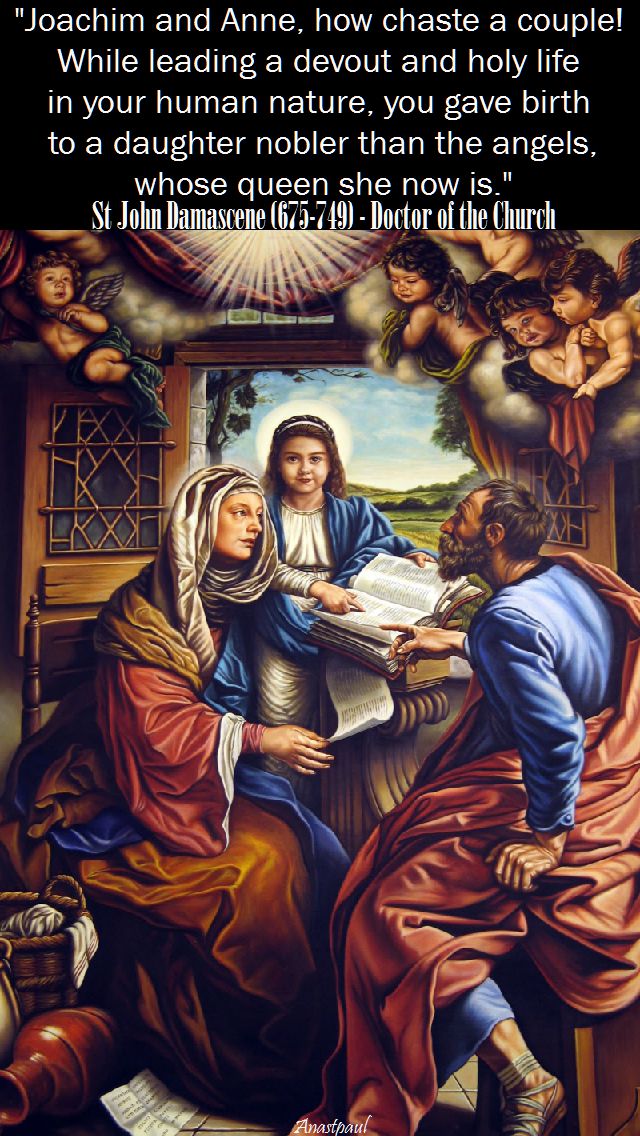
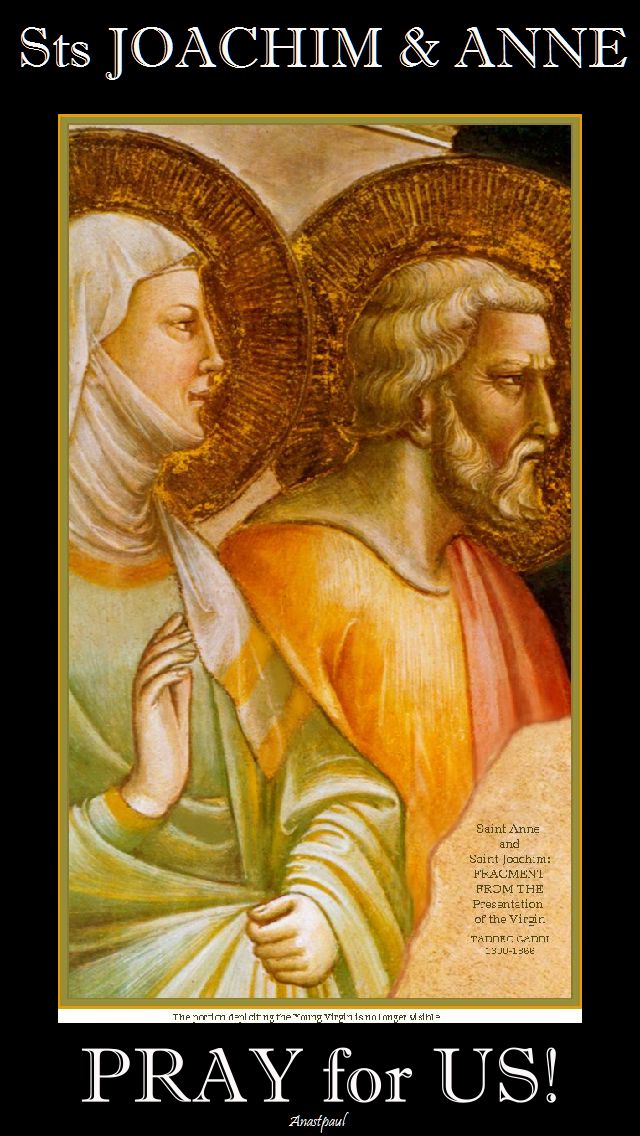
REFLECTION – “Joachim and Anne, how blessed a couple!   All creation is indebted to you. For at your hands the Creator was offered a gift excelling all other gifts:  a chaste mother, who alone was worthy of Him.   Joachim and Anne, how blessed and spotless a couple! You will be known by the fruit you have borne, as the Lord says:  “By their fruits you will know them.”   The conduct of your life pleased God and was worthy of your daughter.   For by the chaste and holy life you led together, you have fashioned a jewel of virginity: she who remained a virgin before, during and after giving birth.   She alone for all time would maintain her virginity in mind and soul as well as in body.   Joachim and Anne, how chaste a couple!   While leading a devout and holy life in your human nature, you gave birth to a daughter nobler than the angels, whose queen she now is.” – from a sermon by Saint John Damascene (675-749) – Doctor of the Church

joachim and anne - st john damascene

PRAYER – O Lord, God of our Fathers, who bestowed on Saints Joachim and Anne this grace, that of them should be born the Mother of your incarnate Son, grant, through the prayers of both, that we may attain the salvation you have promised to your people. Through our Lord Jesus Christ, your Son, who lives and reigns with you in the unity of the Holy Spirit, one God, for ever and ever. Sts Joachim and Anne, pray for us! Amen
sts anne and joachim pray for us

Posted in DOCTORS of the Church, FEASTS and SOLEMNITIES, MORNING Prayers, SAINT of the DAY, The WORD

Quote/s of the Day – 22 July

Quote/s of the Day – 22 July

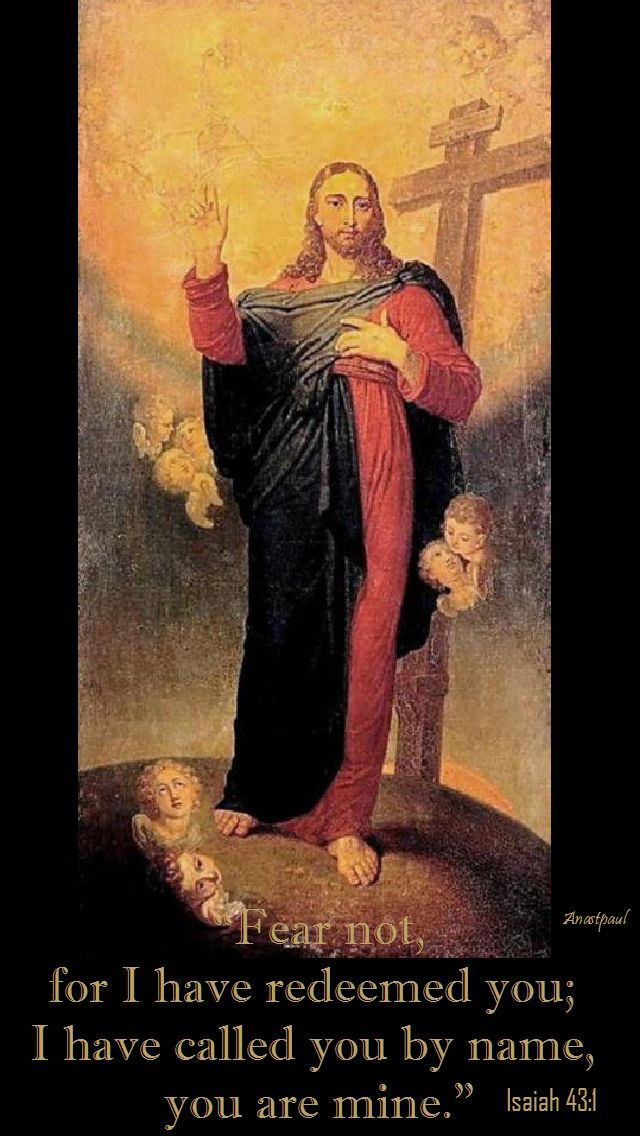
“Fear not, for I have redeemed you;
I have called you by name, you are mine”

Isaiah 43:1

isaiah 43 1

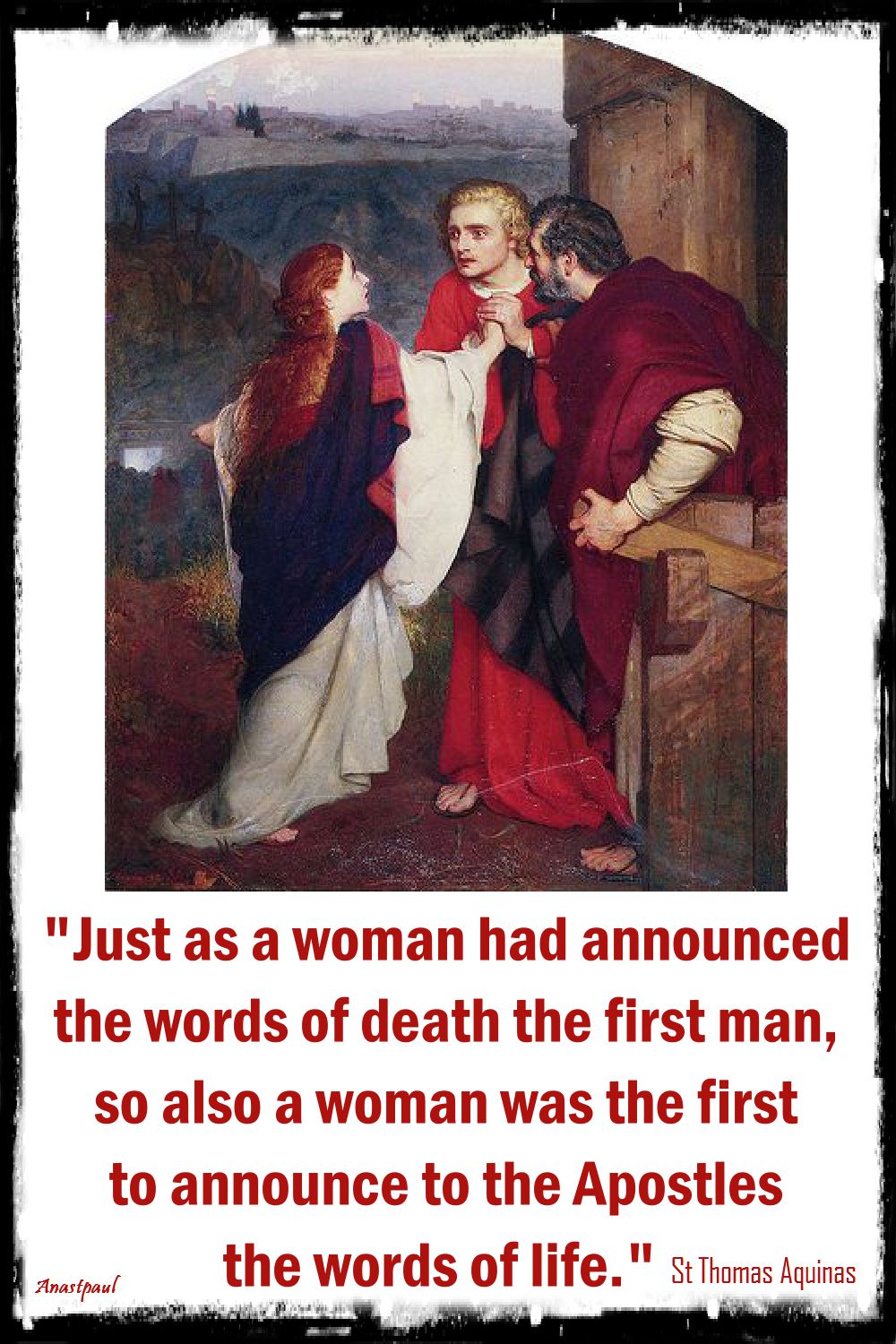
“Just as a woman had announced the words of death
to the first man, so also a woman was the first
to announce to the Apostles the words of life.”

….St Thomas Aquinas (Super Ioannem, ed. Cai, 2519)

just as a woman - st thomas aquinas

Posted in DOCTORS of the Church, FATHERS of the Church, MORNING Prayers, QUOTES of the SAINTS, SAINT of the DAY, The WORD

One Minute Reflection – 22 July

One Minute Reflection – 22 July

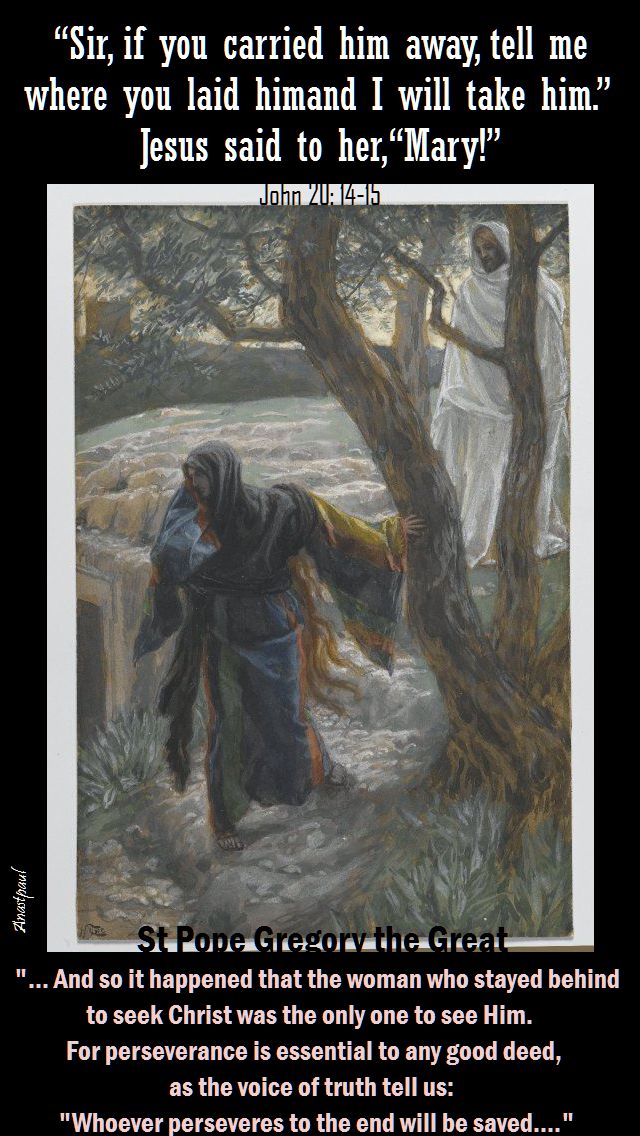
Jesus said to her, “Woman, why are you weeping? Whom are you looking for?” She thought it was the gardener and said to him, “Sir, if you carried him away, tell me where you laid him, and I will take him.” Jesus said to her, “Mary!” …….John 20: 13-15

REFLECTION – “When Mary Magdalen came to the tomb and did not find the Lord’s body, she thought it had been taken away and so informed the disciples. After they came and saw the tomb, they too believed what Mary had told them. The text then says: “The disciples went back home,” and it adds: “but Mary wept and remained standing outside the tomb.” We should reflect on Mary’s attitude and the great love she felt for Christ; for though the disciples had left the tomb, she remained. She was still seeking the one she had not found and while she sought she wept; burning with the fire of love, she longed for Him who she thought had been taken away. And so it happened that the woman who stayed behind to seek Christ was the only one to see Him. For perseverance is essential to any good deed, as the voice of truth tell us: “Whoever perseveres to the end will be saved….Jesus says to her: Mary. Jesus is not recognised when He calls her “woman”; so He calls her by name, as though He were saying: ‘Recognise me as I recognise you; for I do not know you as I know others; I know you as yourself.’ And so Mary, once addressed by name, recognises who is speaking. She immediately calls Him ‘Rabboni’, that is to say, teacher, because the one whom she sought outwardly was the one who inwardly taught her to keep on searching.” – from a homily by St Pope Gregory the Great

and so it happened - st pope gregory the great

PRAYER – Almighty, ever-living God, Your only-begotten Son, Jesus Christ made Mary of Magdala the first herald of Easter joy. Grant that, following her example and helped by her prayers, we may, in this life, proclaimn he living Christ and come to se Him reigning with You in glory. Through our Lord Jesus Christ, in unity with the Holy Spirit, one God for ever and ever, amen.

st mary of magdala pray for us

Posted in DOCTORS of the Church, FATHERS of the Church, MORNING Prayers, PRAYERS of the SAINTS

Our Morning Offering – 22 July

Our Morning Offering – 22 July

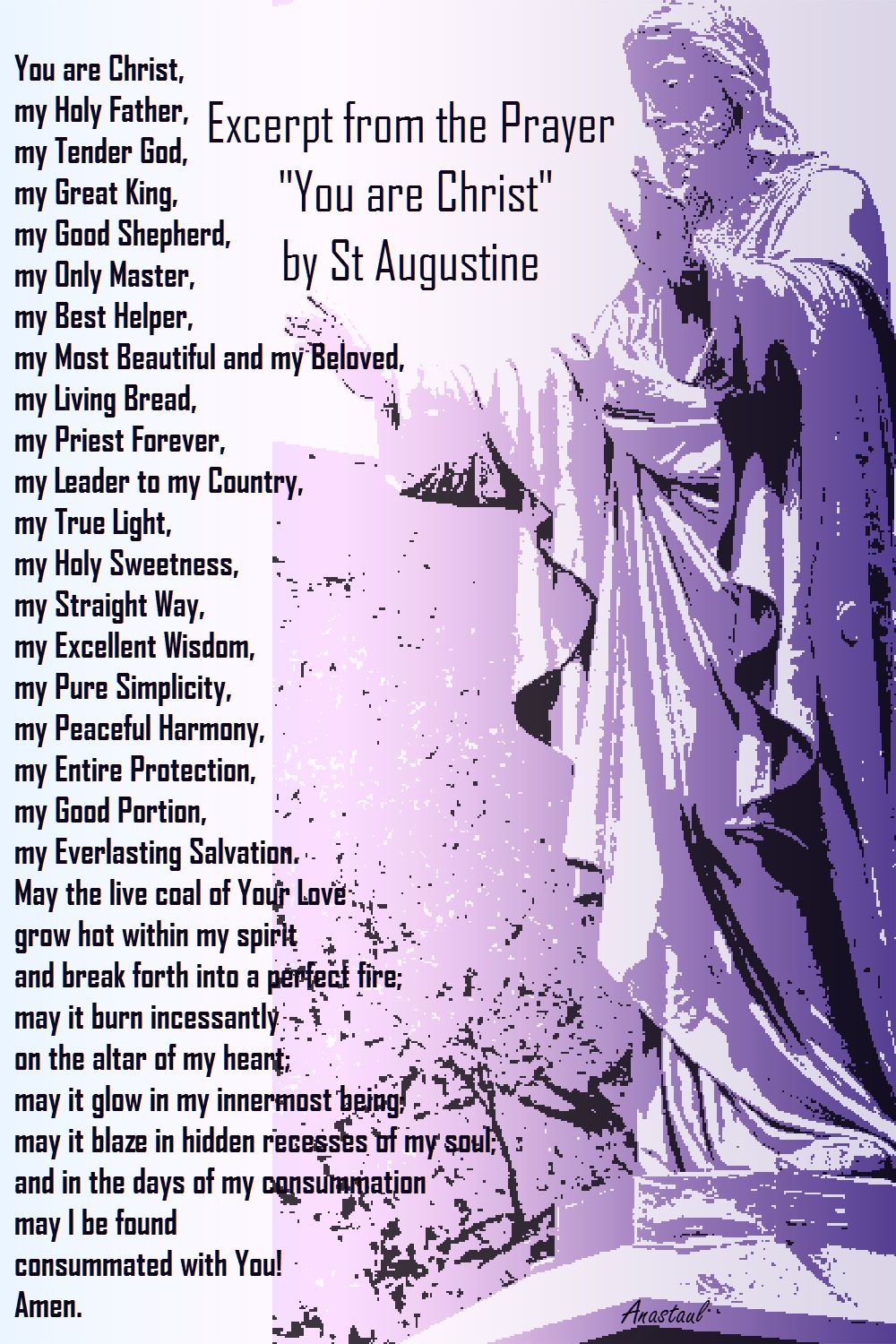
You are Christ
St Augustine

You are Christ,
my Holy Father,
my Tender God,
my Great King,
my Good Shepherd,
my Only Master,
my Best Helper,
my Most Beautiful
and my Beloved,
my Living Bread,
my Priest Forever,
my Leader to my Country,
my True Light,
my Holy Sweetness,
my Straight Way,
my Excellent Wisdom,
my Pure Simplicity,
my Peaceful Harmony,
my Entire Protection,
my Good Portion,
my Everlasting Salvation.
May the live coal of Your Love grow hot within my spirit
and break forth into a perfect fire;
may it burn incessantly on the altar of my heart;
may it glow in my innermost being;
may it blaze in hidden recesses of my soul;
and in the days of my consummation
may I be found consummated with You!
Amen.


YOU ARE CHRIST-ST AUGUSTINE

Posted in DOCTORS of the Church, franciscan OFM, MORNING Prayers, QUOTES of the SAINTS, SAINT of the DAY

Thought for the Day – 21 July – The Memorial of St Lawrence of Brindisi (1559-1619) Apostolic Doctor

Thought for the Day – 21 July – The Memorial of St Lawrence of Brindisi (1559-1619) Apostolic Doctor

“It is surprising that St Lawrence of Brindisi was able to continue without interruption his work as an appreciated and unflagging preacher in many cities of Italy and in different countries, in spite of holding other burdensome offices of great responsibility. Indeed, within the Order of Capuchins he was professor of theology, novice master, for several mandates minister provincial and definitor general, and finally, from 1602 to 1605, minister general. In the midst of this mountain of work,   Lawrence cultivated an exceptionally fervent spiritual life.   He devoted much time to prayer and, especially, to the celebration of Holy Mass — often protracted for hours — caught up in and moved by the memorial of the Passion, death and Resurrection of the Lord.
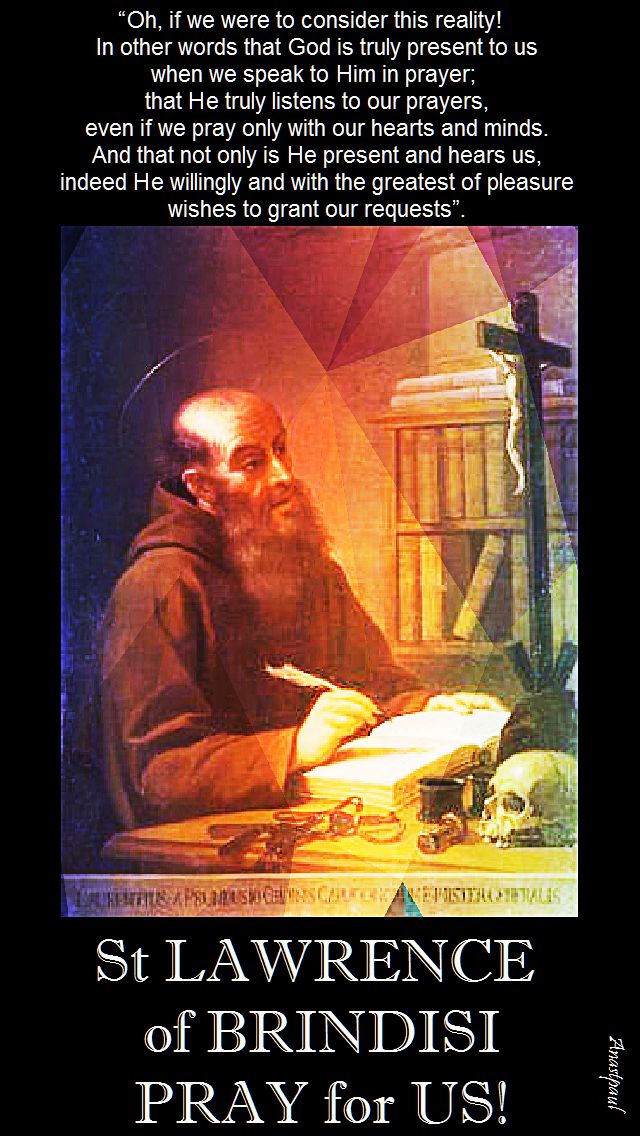
Moreover, with the unmistakable ardour of his style, Lawrence urged everyone and not only priests, to cultivate a life of prayer, for it is through prayer that we speak to God and that God speaks to us: “Oh, if we were to consider this reality!”, he exclaimed. “In other words that God is truly present to us when we speak to Him in prayer;  that He truly listens to our prayers, even if we pray only with our hearts and minds. And that not only is He present and hears us, indeed He willingly and with the greatest of pleasure wishes to grant our requests”.
St Lawrence of Brindisi teaches us to love Sacred Scripture, to increase in familiarity with it, to cultivate daily relations of friendship with the Lord in prayer, so that our every action, our every activity, may have its beginning and its fulfilment in Him.   This is the source from which to draw so that our Christian witness may be luminous and able to lead the people of our time to God.”…….Pope BENEDICT XVI (General Audience) – St. Peter’s Square, Wednesday, 23 March 2011

St Lawtence of Brindisi, pray for us!

of if we were to consider this reality!-st lawrence of brindisi

Posted in DOCTORS of the Church, franciscan OFM, MORNING Prayers, QUOTES of the SAINTS, The WORD

Quote/s of the Day – 21 July

Quote/s of the Day – 21 July

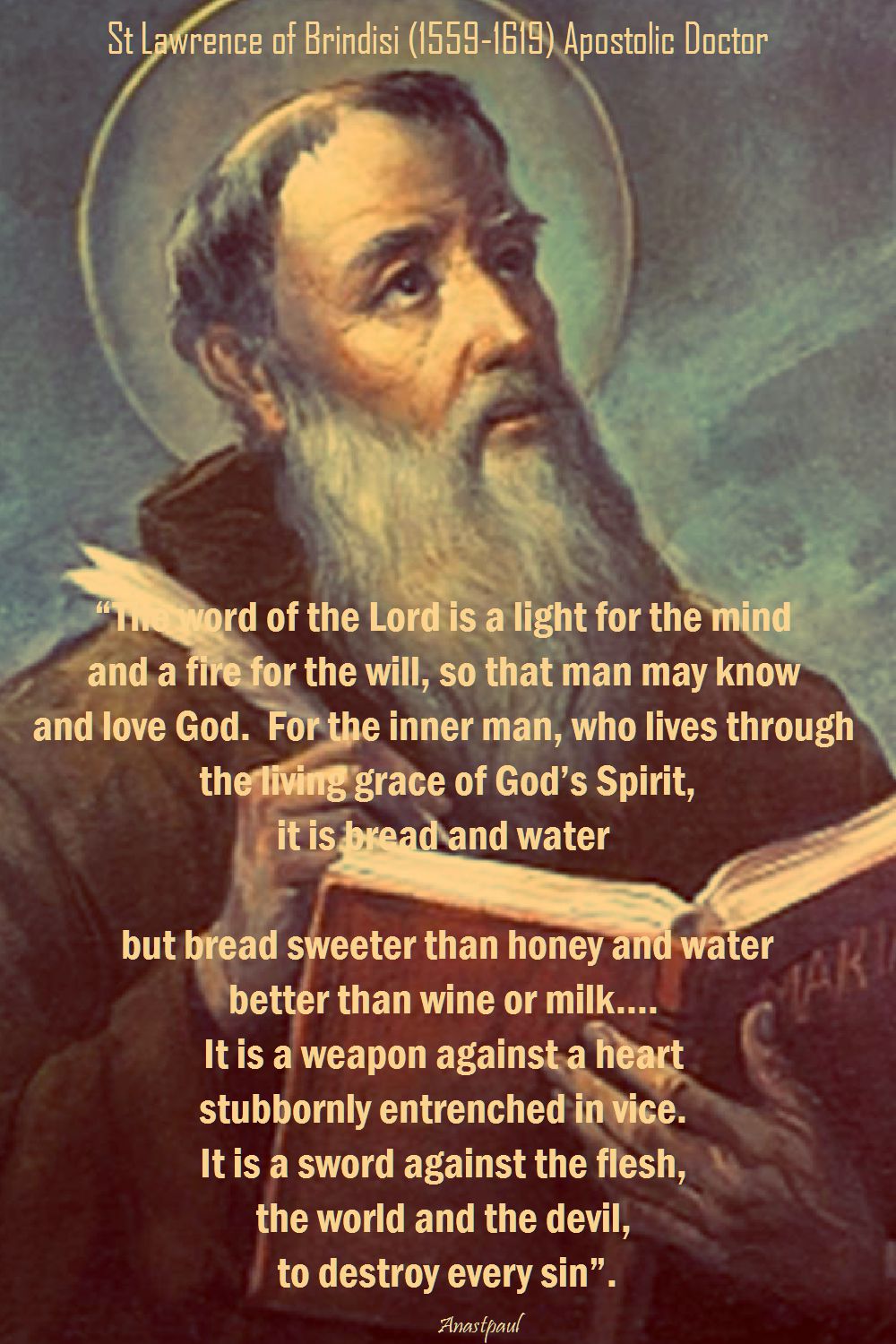
“The word of God is replete with manifold blessings, since it is, so to speak, a treasure of all goods.   It is the source of faith, hope, charity, all virtue, all the gifts of the Holy Spirit, all the beatitudes of the Gospel, all good works, all the rewards of life, all the glory of paradise…For the word of God is a light to the mind and a fire to the will.   It enables man to know God and to love Him.   And for the interior man who lives by the Spirit of God through grace, it is bread and water, but a bread sweeter than honey and the honeycomb, a water better than wine and milk.   For the soul it is a spiritual treasure of merits yielding an abundance of gold and precious stones.   Against the hardness of a heart that persists in wrongdoing, it acts like a hammer.   Against the world, the flesh and the devil it serves as a sword that destroys all sin.”

the word of the lord - st lawrence of brindisi

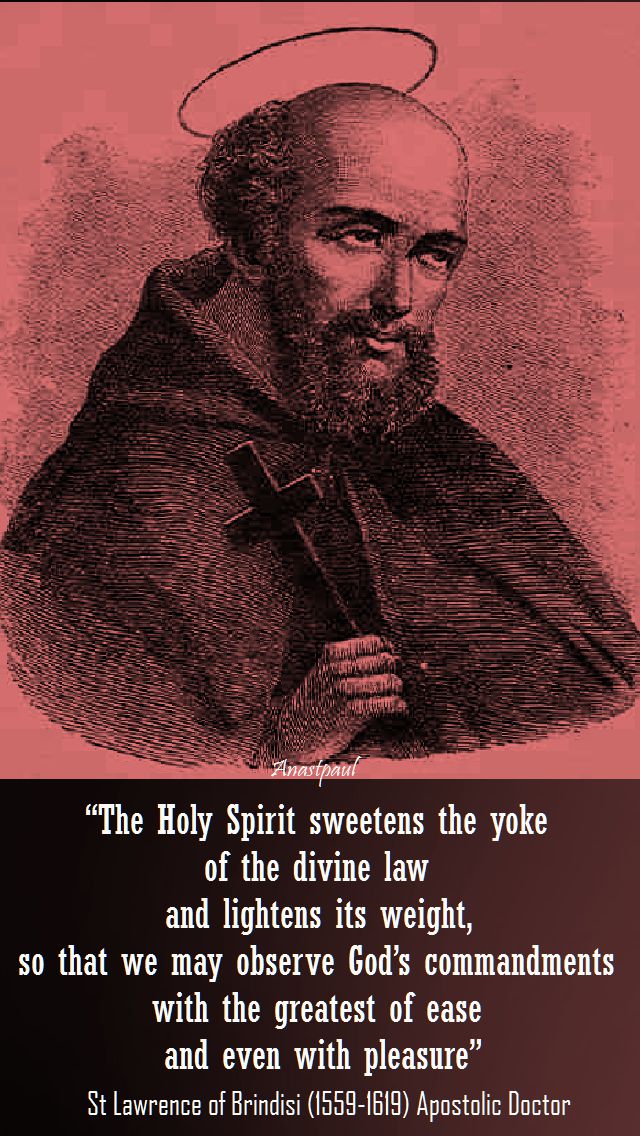
“The Holy Spirit sweetens the yoke
of the divine law and lightens its weight,
so that we may observe God’s commandments
with the greatest of ease and even with pleasure”

the holy spirit - st lawrence of brindisi

St Lawrence of Brindisi (1559-1619) Apostolic Doctor

Posted in DOCTORS of the Church, EUCHARISTIC Adoration, franciscan OFM, MORNING Prayers, QUOTES of the SAINTS, SAINT of the DAY, The HOLY EUCHARIST / The HOLY MASS, The WORD

One Minute Reflection – 21 July

One Minute Reflection – 21 July

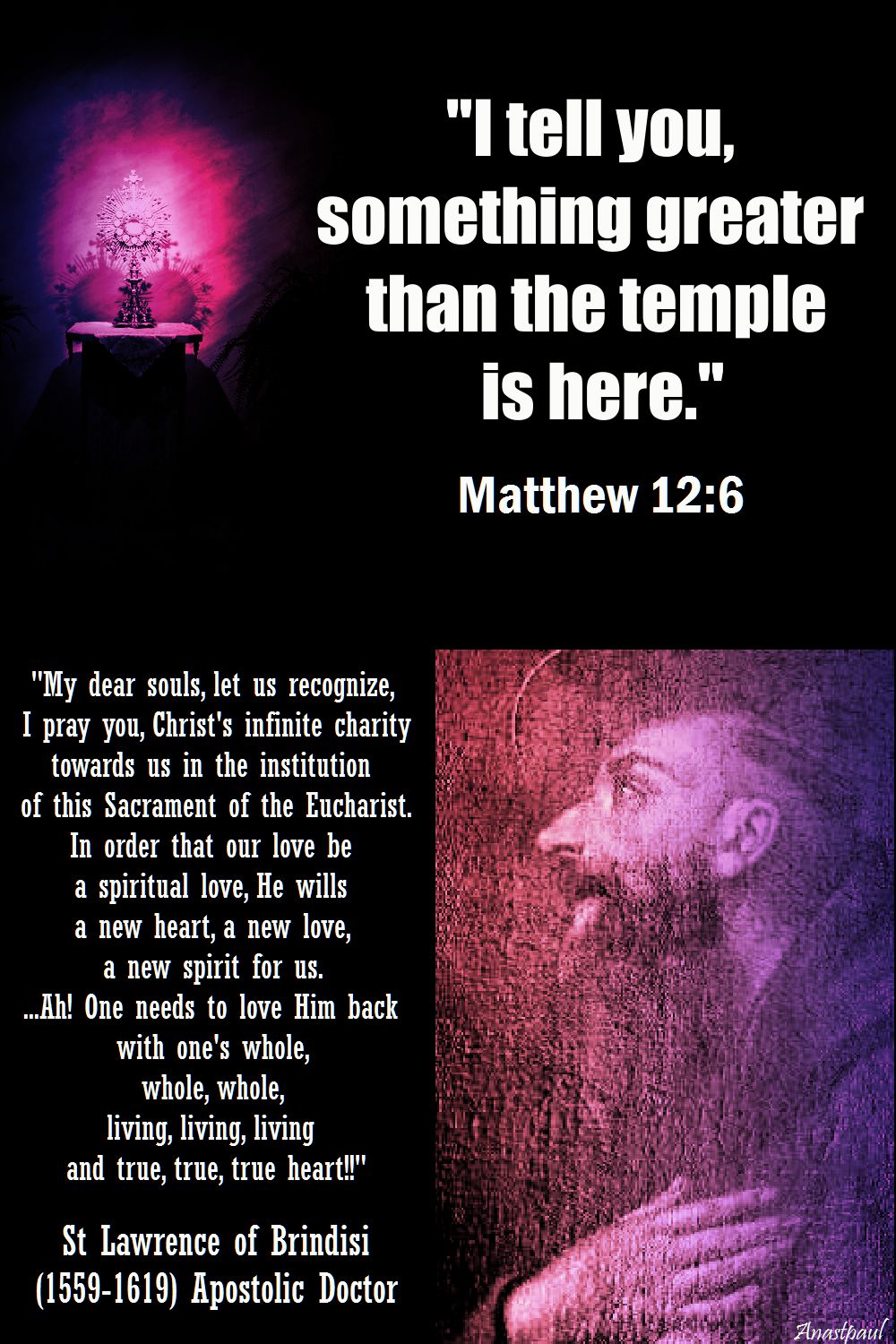
“I tell you, something greater than the temple is here.”………..Matthew 12:6

REFLECTION – “My dear souls, let us recognize, I pray you, Christ’s infinite charity towards us in the institution of this Sacrament of the Eucharist.  In order that our love be a spiritual love, He wills a new heart, a new love, a new spirit for us.  It is not with a carnal heart but with a spiritual one, that Christ has loved us with a gratuitous love, a supreme and most ardent love, by way of pure grace and charity.  Ah!  One needs to love Him back with one’s whole, whole, whole, living, living, living and true, true, true heart!!” …… St Lawrence of Brindisi (1559-1619) Apostolic Doctor

my dear souls - st lawrence of brindisi

PRAYER – Lord God, You bestowed on St Lawrence of Brindisi the spirit of counsel and fortitude, so that Your name might be glorified and souls be saved.  At the intercession of St Lawrence, grant that we may see what we have to do and, in Your mercy give us the strength to do it and the courage, love and charity to persevere.  Grant above all, that by his prayers we may love You above all and with all we are. St Lawrence pray for us, amen.

ST LAWRENCE OF BRINDISI PRAY FOR US

Posted in DOCTORS of the Church, franciscan OFM, SAINT of the DAY

Saint of the Day – 21 July – St Lawrence of Brindisi O.F.M. Cap – Doctor of the Church

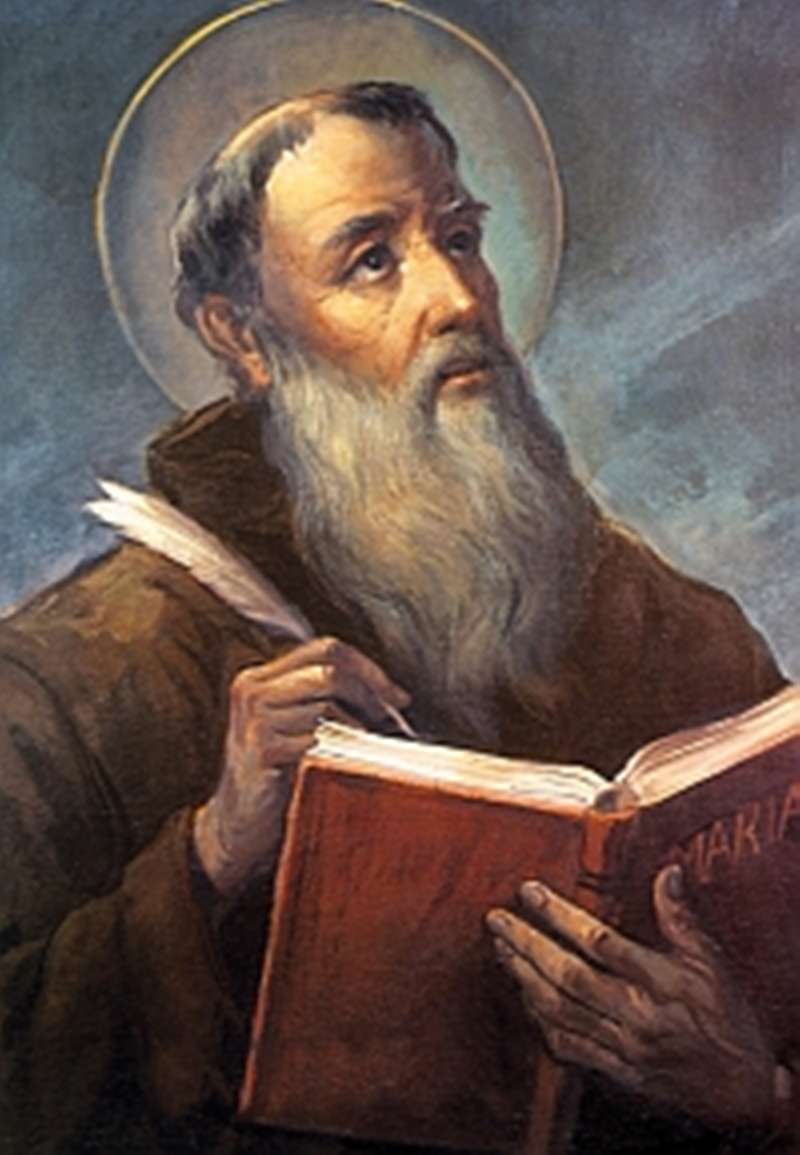
Saint of the Day – 21 July – St Lawrence of Brindisi O.F.M. Cap – Doctor of the Church – (22  July 1559 at Brindisi, Italy as Julius Caesar Rossi –  22 July 1619 at Lisbon, Portugal of natural causes).   His remains are buried in the cemetery of the Poor Clares in Villafranca, Spain.   He was Beatified on 1 June 1783 by Pope Pius VI and Canonised on 8 December 1881 by Pope Leo XIII.   He was created a Doctor of the Church by Blessed Pope John XXIII in 1959 with the title Doctor apostolicus (Apostolic Doctor).   Patronages – of Brindisi, Italy.   Attributes – leading the Christian army against the Turks, receiving the embrace of the Child Jesus.   He is known as the “Franciscan Renaissance Man”  – he was a Religious member of the Franciscan Friars Minor Capuchin, a Priest, Theologian, Vicar General of the Franciscans, Language scholar, Humanist, Philosopher, Biblicist, Preacher, Missionary, Professor, International Administrator, Confidant of Popes, Emperors, Kings and Princes, Diplomatic envoy, Army Chaplain, Military Strategist and Morale builder, Polemicist, Prolific writer.

st lawrence FIRST IMAGE

Despite Saint Lawrence of Brindisi’s later fame, little is known of his early years.   His father was William Russo, a well-to-do Venetian merchant and his mother was Elizabeth Masella.   He was born in the Southern Italian port city of Brindisi on the 22nd of July 1559.   He received his early education at a day school run by the Conventual Franciscans and made rapid progress in his studies.   At the tender age of six, following the Italian custom of the time, he publicly preached a short Christmastide sermon on the Child Jesus.  However, by the time he was 14 he had lost both his parents and his education was entrusted to his uncle, a high-ranking cleric at Venice’s Saint Mark’s Cathedral.   It was at Saint Mark’s College, a private school run by his uncle, that Julius Caesar received an excellent secondary education.

In Venice he came to know the Capuchin Friars Minor who had a small church dedicated to saint Mary of the Angels on the island of Giudeca.   Impressed by their austere life of Poverty, he asked for admission to the Order and was invested with the habit as a novice at the Verona Capuchin novitiate friary of on the 18th of February 1575.  At this time, Julius Caesar was given the religious name Brother Lawrence.     He made his perpetual profession on the 24th of March the following year.

His writings fill fifteen volumes and his knowledge of Hebrew allowed him to preach so effectively to the Jewish people in Italy that the rabbis were certain that Lawrence must have been a Jew who had become a Christian.   His skills in dealing with people meant that he served as a papal emissary to many countries but he never forgot that he was first and foremost a priest.

There is a very special title accorded by the Church to certain saints, who are named “Doctor of the Church” and this title indicates that the writings and preaching of such a person are useful to Christians “in any age of the Church.”   Such men and women are also particularly known for the depth of understanding and the orthodoxy of their theological teachings.   St. Lawrence of Brindisi was given this title and he is one of the thirty-six saints to be named “Doctor.”

doctors

While still a deacon, St. Lawrence of Brindisi became known as an excellent preacher and after his ordination captured the whole of northern Italy with his amazing sermons. He was sent into Germany by the pope to establish Capuchin houses.   While there, he became chaplain to Emperor Rudolf II and had a remarkable influence on the Christian soldiers fighting the Muslims who were threatening Hungary in 1601.   Through his efforts, the Catholic League was formed to unify Catholics for the purpose of strengthening the Catholic cause in Europe.   Sent by the emperor to persuade Philip III of Spain to join the League, he established a Capuchin friary in Madrid.   He also brought peace between Spain and the kingdom of Savoy.

His compassion for the poor, the needy and the sick was legendary.   Elected minister-general of his order in 1602, he made the Capuchins a major force in the Catholic Restoration, visiting every friary in the thirty-four provinces of the order and directing the work of nine thousand friars.   He himself was a dominant figure in carrying out the work of the Council of Trent and was described by Pope Benedict XV as having earned “a truly distinguished place among the most outstanding men ever raised up by Divine Providence to assist the Church in time of distress.”

Yet in the midst of all this feverish activity, Brother Lawrence found peace and strength to keep going by taking refuge in prayer.   Sometimes his Masses which were usually celebrated in private could last for up to twelve hours.   He wept copious tears as he celebrated the Holy Sacrifice and was even witnessed being lifted into the air as he prayed at the Altar.   When he entered the Order in 1575, he told the Provincial Minister who tried to dissuade him by describing in detail the rigours of the Capuchin lifestyle: “Nothing will be difficult for me as long as there is a Crucifix in my room.”   Pictures of Saint Lawrence often show him contemplating the Crucifix.

ST LAWRENCE OF BRINDISI - 2.JULY 21

To Mary he attributed his vocation, his restoration to health as a student, his knowledge of Hebrew and all his successes.   He went to her in all his needs.   When elected Vicar General of the Order, he first went to the Shrine of Our Lady’s Holy House at Loreto and returned there at the end of his term of office.   From his formation days onward, he prayed the Rosary and the Little Office of the Blessed Virgin daily.   His favourite greeting for the Brothers was: “Nos, cum prole pia, benedicat Virgo Maria! May the Virgin Mary bless us with her loving Child!”


In 1619, at the request of the Pope, Brother Lawrence had to travel once more to Spain to make known to the Spanish King the plight of Naples’s citizens under the tyrannical rule of the Spanish Viceroy of the region, the Duke of Ossuna.   He managed to escape the Duke’s attempts to block his mission and set sail secretly from Genoa.   He had to go to Lisbon in Portugal to meet the King of Spain.   His diplomatic mission was successfully concluded but worn out by the journey he fell critically ill.   Having received the Last Sacraments, Brother Lawrence of Brindisi died in Lisbon, Portugal before he could board a ship to return home on the 22nd of July 1619.   Saint Lawrence entered heaven the same date as he entered this world sixty years previously.

law_17_s

O God, who didst bestow on blessed Lawrence of Brindisi, Your Confessor and Doctor, the spirit of wisdom and fortitude to endure every labour for the glory of Your Name and the salvation of souls:  grant us, in the same spirit, both to perceive what we ought to do, and by his intercession to perform the same;  through Jesus Christ thy Son our Lord, who lives and reigns with You, in the unity of the Holy Spirit, ever one God, world without end, amen.

St Lawrence pray for us!

Lawrence_of_Brindisi

Posted in DOCTORS of the Church, FATHERS of the Church, MORNING Prayers, QUOTES of the SAINTS, The WORD

Quote/s of the Day – 20 July

Quote/s of the Day – 20 July

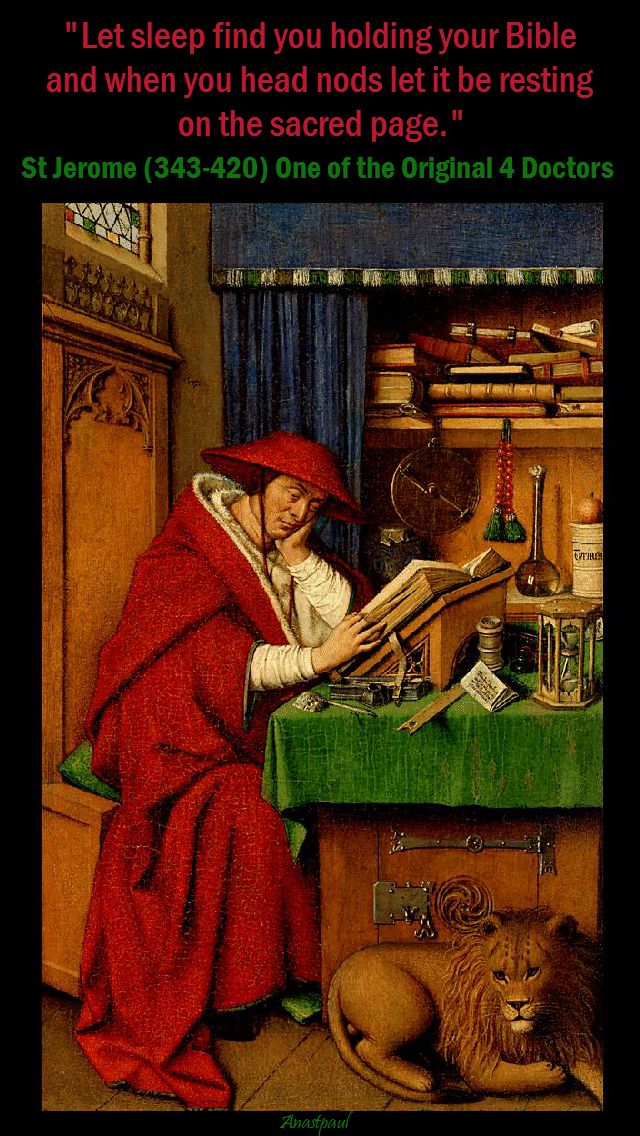
“Let sleep find you holding your Bible
and when you head nods let it be resting
on the sacred page.”
St Jerome (343-420) One of the Original 4 Doctors

le sleep find you - st jerome

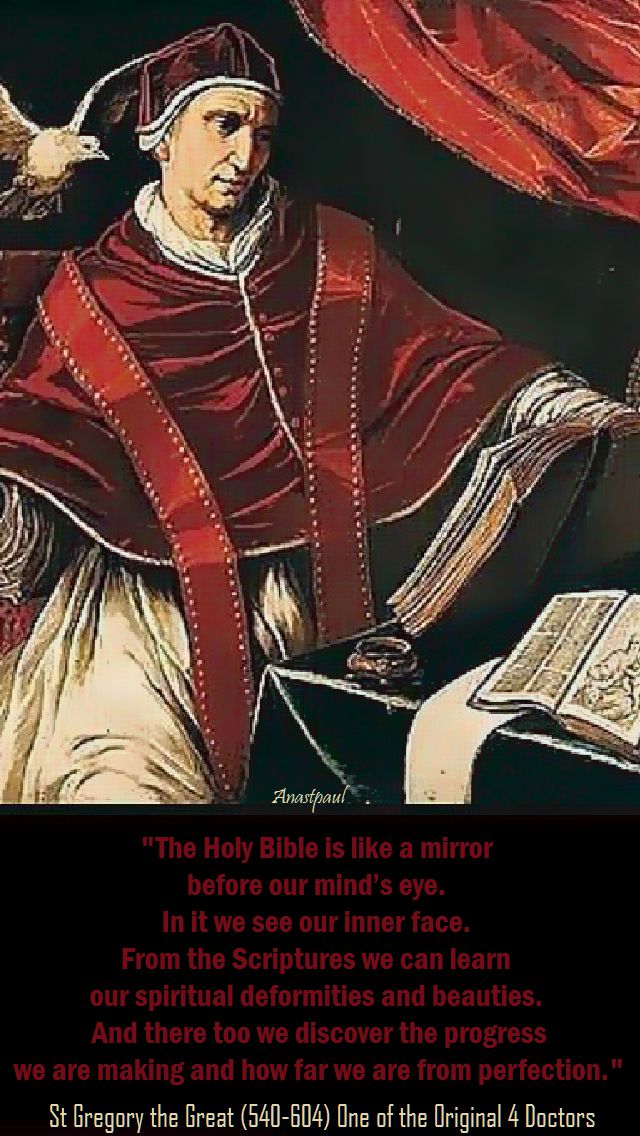
“The Holy Bible is like a mirror before our mind’s eye.
In it we see our inner face.
From the Scriptures we can learn
our spiritual deformities and beauties.
And there too we discover the progress
we are making and how far we are from perfection.”
St Gregory the Great (540-604) One of the Original 4 Doctors

the holy bible is like a mirror - st gregory he great

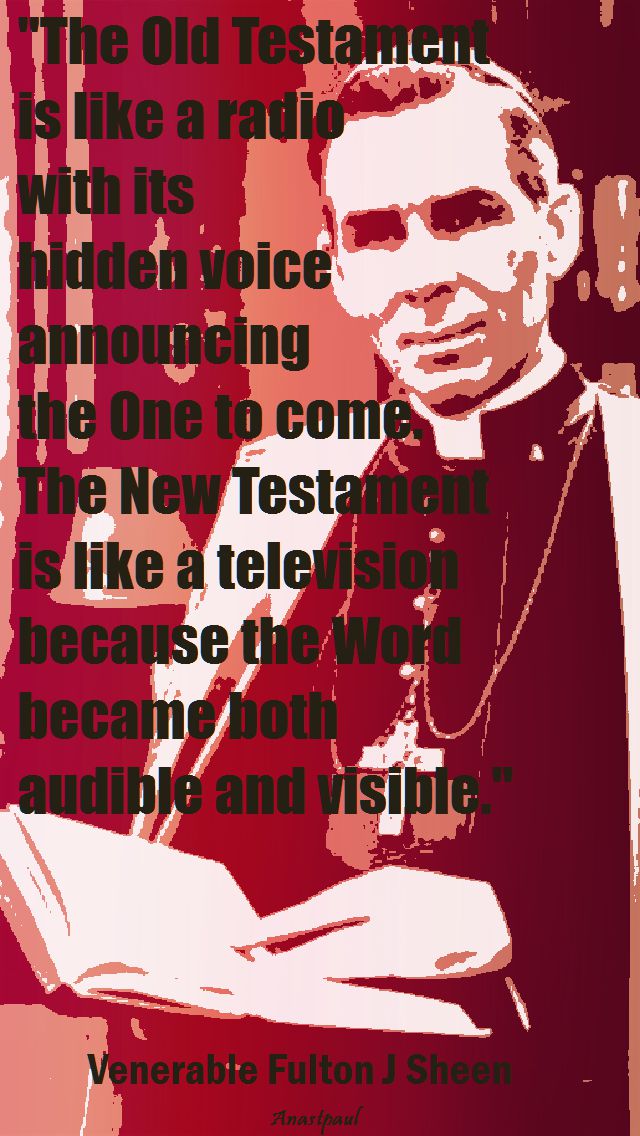
“The Old Testament is like a radio
with its hidden voice
announcing the One to come.
The New Testament is like a television
because the Word became both audible and visible.”
Venerable Archbishop Fulton Sheen

the old testament - fulton sheen

Posted in CATHOLIC DEVOTIONS of the Month, DEVOTIO, DOCTORS of the Church, MORNING Prayers, QUOTES of the SAINTS, SAINT of the DAY, The HOLY EUCHARIST / The HOLY MASS

Quote/s of the Day – 17 July – Memorial of the 16 Carmelite Martyrs of Compiegne and July – the Month of the Most Precious Blood

Quote/s of the Day – 17 July – Memorial of the 16 Carmelite Martyrs of Compiegne

“This Blood, that but one drop of, has the power to win All the world, forgiveness of its world of sin.”

“If, then, you are looking for the way by which you should go, take Christ, because He Himself is the way.”

St. Thomas Aquinas

this blood-st thomas aquinas

Posted in DOCTORS of the Church, MORNING Prayers, SAINT of the DAY, The BLESSED VIRGIN MARY, The WORD

One Minute Reflection – 16 July

One Minute Reflection – 16 July

I was (the Lord’s) delight day by day………….Proverbs 8:30

REFLECTION – “So pleasing to God was Mary’s humility that He was constrained by His goodness to entrust to her the Word, His only Son.
And it was that dearest Mother who gave Him to us.”……………St Catherine of Siena

so pleassing to God - st Catherine of Siena

PRAYER – Almighty Lord and God, let the gracious intercession of our Lady of Mount Carmel help us. Under her protection, may we come to the mountain of God, Christ the Lord, who lives and reigns with You and the Holy Spirit, one God, forever and ever. Amen

our lady of mount carmel - pray for us

Posted in DOCTORS of the Church, franciscan OFM, MORNING Prayers, QUOTES of the SAINTS, SAINT of the DAY

Thought for the Day – 15 July by Pope Benedict XVI – 10 March 2010 on St Bonaventure

Thought for the Day – 15 July by Pope Benedict XVI – 10 March 2010 on St Bonaventure

“Of these his writings, which are the soul of his government and show the way to follow either as an individual or a community, I would like to mention only one, his masterwork, the “Itinerarium mentis in Deum,” which is a “manual” of mystical contemplation.

This book was conceived in a place of profound spirituality: the hill of La Verna, where St. Francis had received the stigmata.   In the introduction, the author illustrates the circumstances that gave origin to his writing:

“While I meditated on the possibility of the soul ascending to God, presented to me, among others, was that wondrous event that occurred in that place to Blessed Francis, namely, the vision of the winged seraphim in the form of a crucifix. And meditating on this, immediately I realised that such a vision offered me the contemplative ecstasy of Father Francis himself and at the same time the way that leads to it” (Journey of the Mind in God, Prologue, 2, in Opere di San Bonaventura. Opuscoli Teologici / 1, Rome, 1993, p. 499).

The six wings of the seraphim thus became the symbol of six stages that lead man progressively to the knowledge of God through observation of the world and of creatures and through the exploration of the soul itself with its faculties, up to the satisfying union with the Trinity through Christ, in imitation of St. Francis of Assisi.

The last words of St. Bonaventure’s “Itinerarium,” which respond to the question of how one can reach this mystical communion with God, would make one descend to the depth of the heart:

“If you now yearn to know how that happens (mystical communion with God), ask grace, not doctrine;  desire, not the intellect; the groaning of prayer, not the study of the letter;  the spouse, not the teacher;  God, not man; darkness not clarity;  not light but the fire that inflames everything and transport to God with strong unctions and ardent affections. … We enter therefore into darkness, we silence worries, the passions and illusions;  we pass with Christ Crucified from this world to the Father, so that, after having seen him, we say with Philip: that is enough for me” (Ibid., VII, 6).

Dear friends, let us take up the invitation addressed to us by St. Bonaventure, the Seraphic Doctor, and let us enter the school of the divine Teacher.   We listen to his Word of life and truth, which resounds in the depth of our soul.    Let us purify our thoughts and actions, so that He can dwell in us, and we can hear His divine voice, which draws us toward true happiness”.        Pope Benedict XVI – 10 March 2010 on St Bonaventure

St Bonaventure, pray for us!

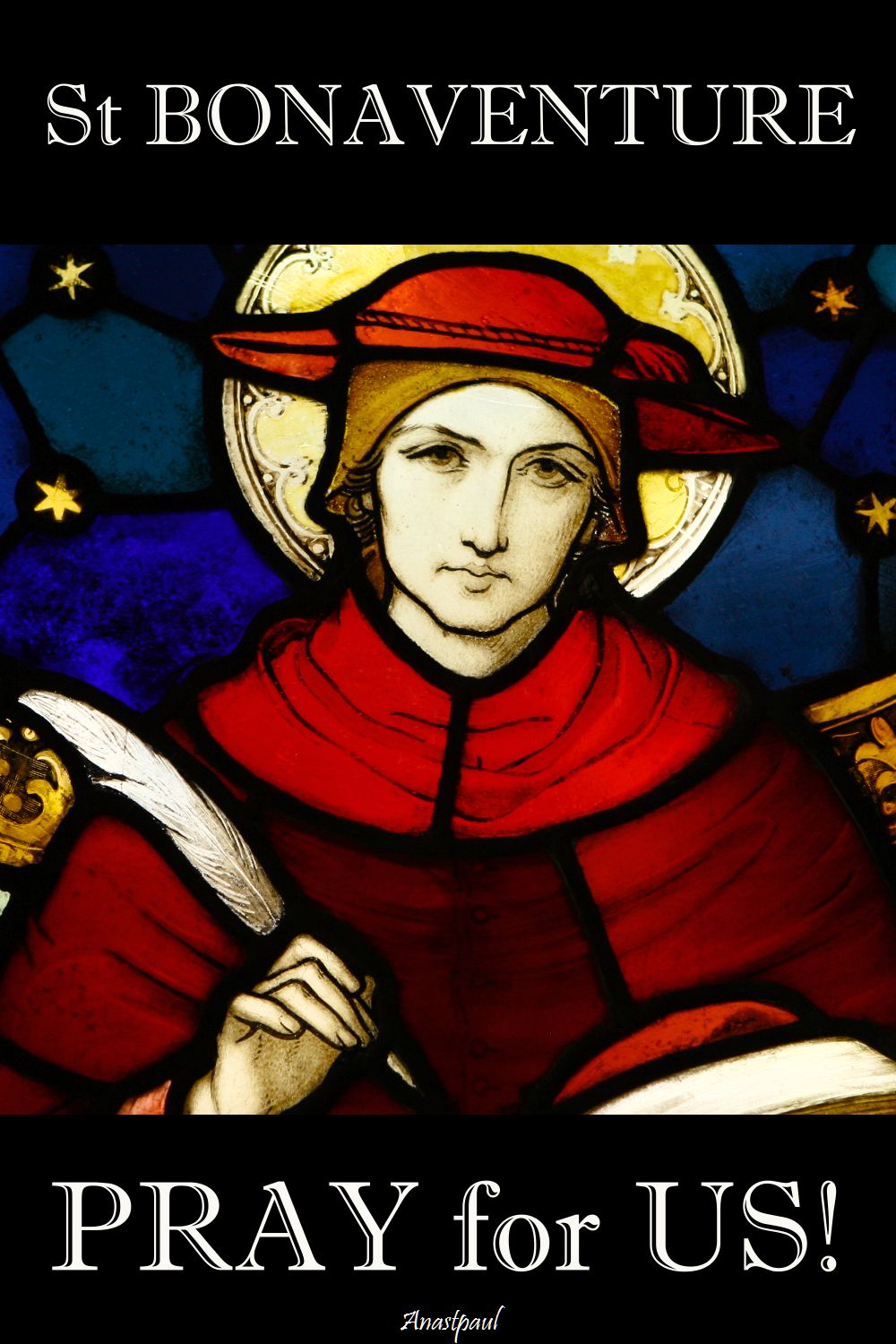
st bonaventure pray for us 2

Posted in DOCTORS of the Church, franciscan OFM, QUOTES of the SAINTS, SAINT of the DAY, The BLESSED VIRGIN MARY

Quote/s of the Day – 15 July

Quote/s of the Day – 15 July

“Christ is both the way and the door.
Christ is the staircase and the vehicle,
like the “throne of mercy over the Ark of the Covenant,”
and “the mystery hidden from the ages.”
A man should turn his full attention to this throne of mercy
and should gaze at Him hanging on the cross,
full of faith, hope and charity, devoted,
full of wonder and joy, marked by gratitude
and open to praise and jubilation.
Then such a man will make with Christ a “pasch,”
that is, a passing-over.
Through the branches of the cross.
he will pass over the Red Sea,
leaving Egypt and entering the desert.
There he will taste the hidden manna
and rest with Christ in the sepulcher,
as if he were dead to things outside.
He will experience, as much as is possible for one who is still living,
what was promised to the thief who hung beside Christ:
‘Today you will be with me in paradise.'”
– from Journey of the Mind to God by Saint Bonaventure

“The life of God — precisely because God is triune —
does not belong to God alone.
God who dwells in inaccessible light and eternal glory
comes to us in the face of Christ and the activity of the Holy Spirit.
Because of God’s outreach to the creature,
God is said to be essentially relational, ecstatic, fecund,
alive as passionate love. Divine life is therefore also our life.
The heart of the Christian life is to be united
with the God of Jesus Christ by means of communion with one another.
The doctrine of the Trinity is, ultimately, therefore,
a teaching not about the abstract nature of God,
nor about God in isolation from everything other than God
but a teaching about God’s life with us and our life with each other.”

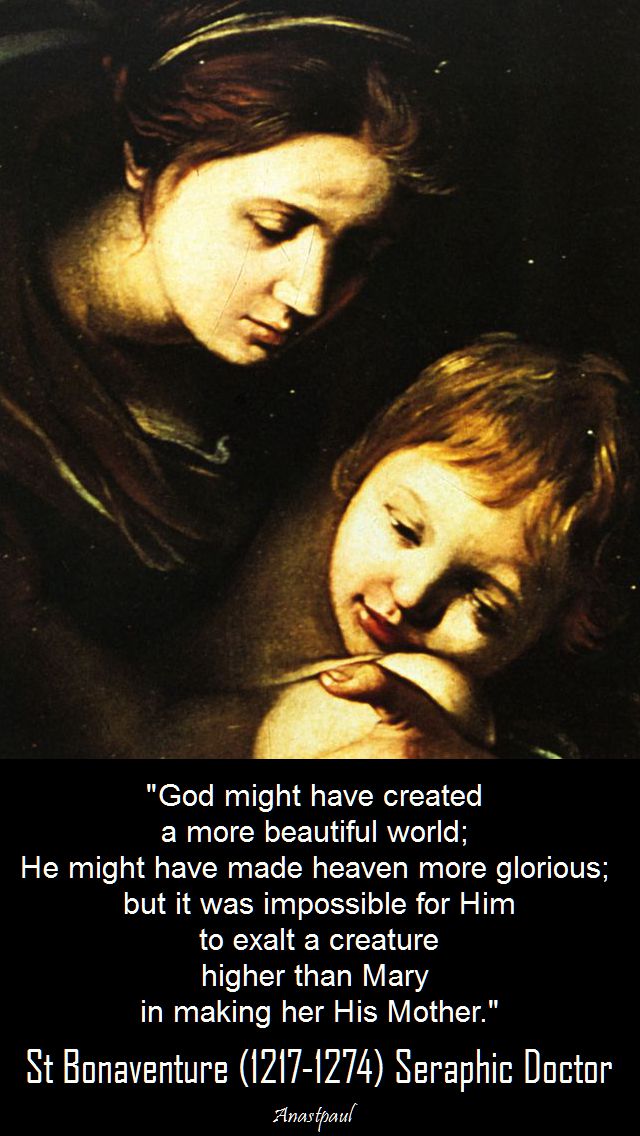
“God might have created a more beautiful world;
He might have made heaven more glorious;
but it was impossible for Him to exalt a creature
higher than Mary in making her His Mother.”

god might have created-st bonaventure


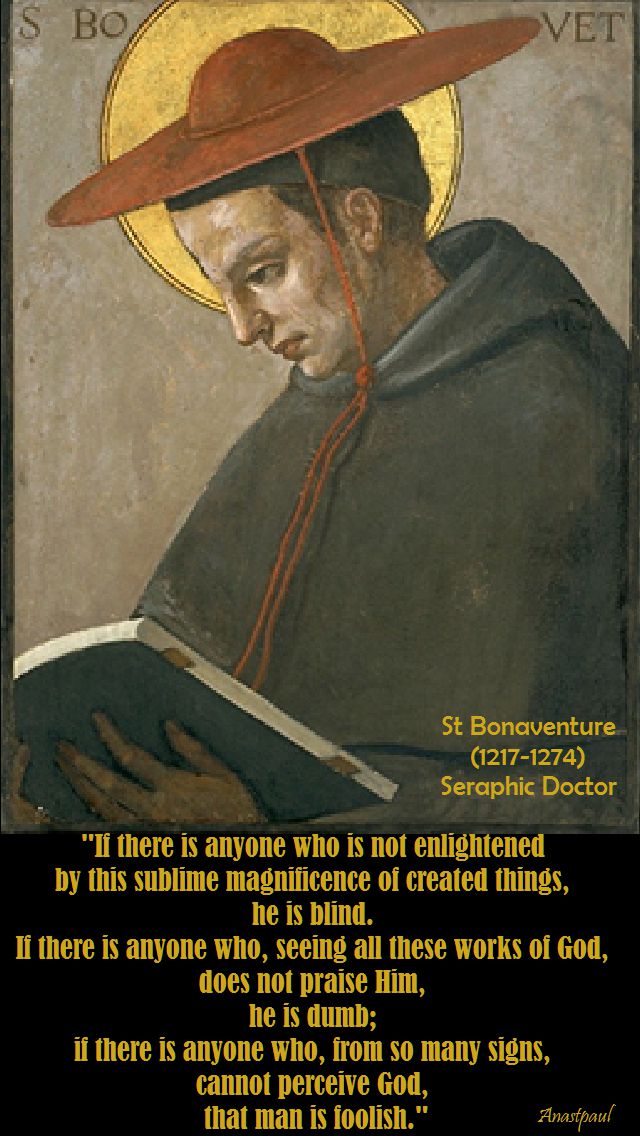
“If there is anyone who is not enlightened
by this sublime magnificence of created things,
he is blind.
If there is anyone who, seeing all these works of God,
does not praise Him,
he is dumb;
if there is anyone who, from so many signs,
cannot perceive God,
that man is foolish.”

if there is anyone who is not enlightened-st bonaventure


St Bonaventure (1217-1274) Seraphic Doctor

Posted in DOCTORS of the Church, MORNING Prayers, QUOTES of the SAINTS, SAINT of the DAY, The WORD

One Minute Reflection – 15 July

One Minute Reflection – 15 July

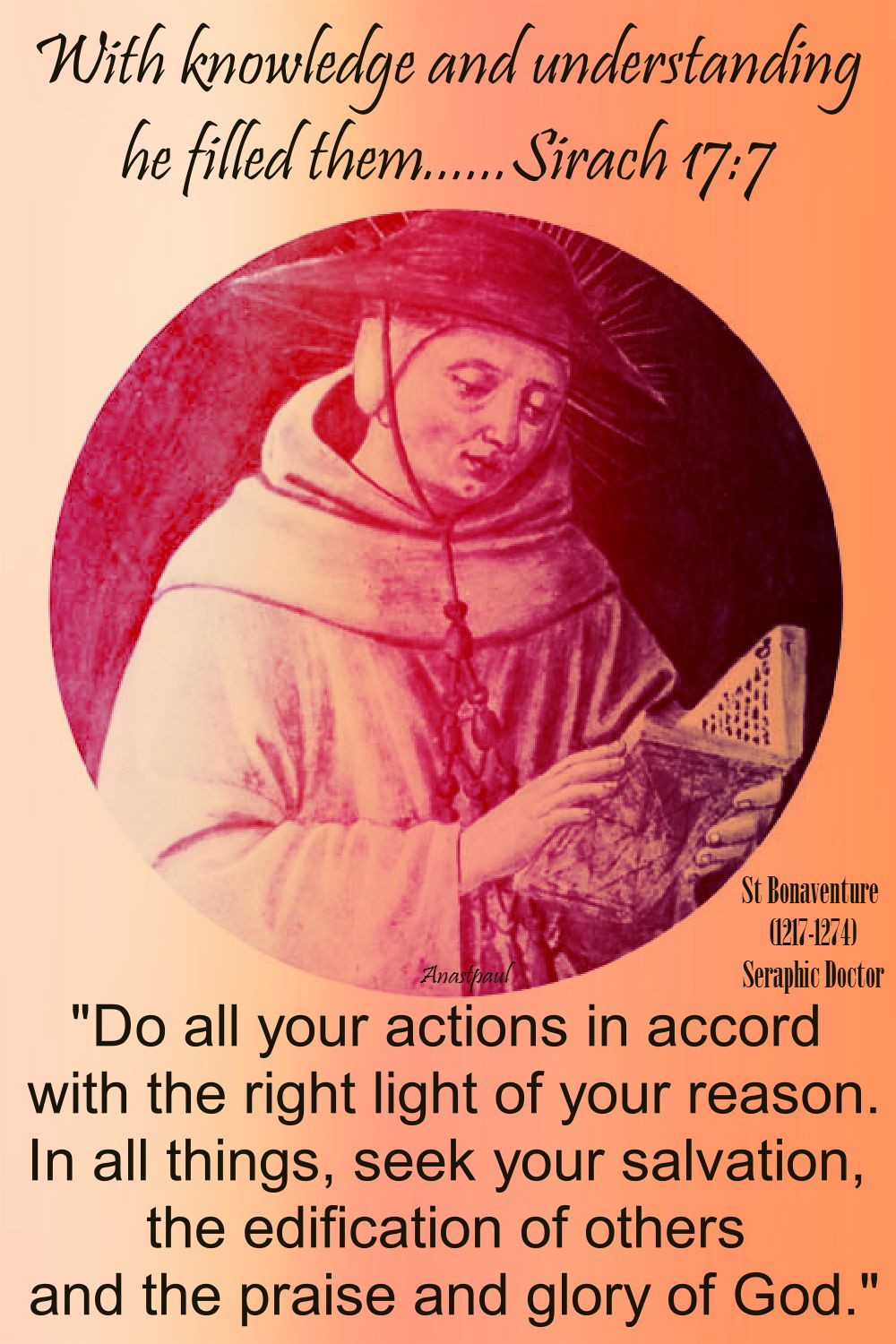
With knowledge and understanding he filled them……….Sirach 17:7

REFLECTION – “Do all your actions in accord with the right light of your reason.
In all things, seek your salvation, the edification of others and the praise and glory of God.”…..St Bonaventure

do all yur actions-st bonaventure


PRAYER – God of goodness and reason, grant me the gift of right reasoning and Christian understanding. Let me act always in accord with the dictates of that reason and so be pleasing to You. St Bonaventure , pray for us that we may always be graced with the gifts of Holy Spirit, amen.

st bonaventure pray for us

Posted in DOCTORS of the Church, MORNING Prayers, PRAYERS of the SAINTS, The HOLY EUCHARIST / The HOLY MASS

Our Morning Offering – 15 July

Our Morning Offering – 15 July

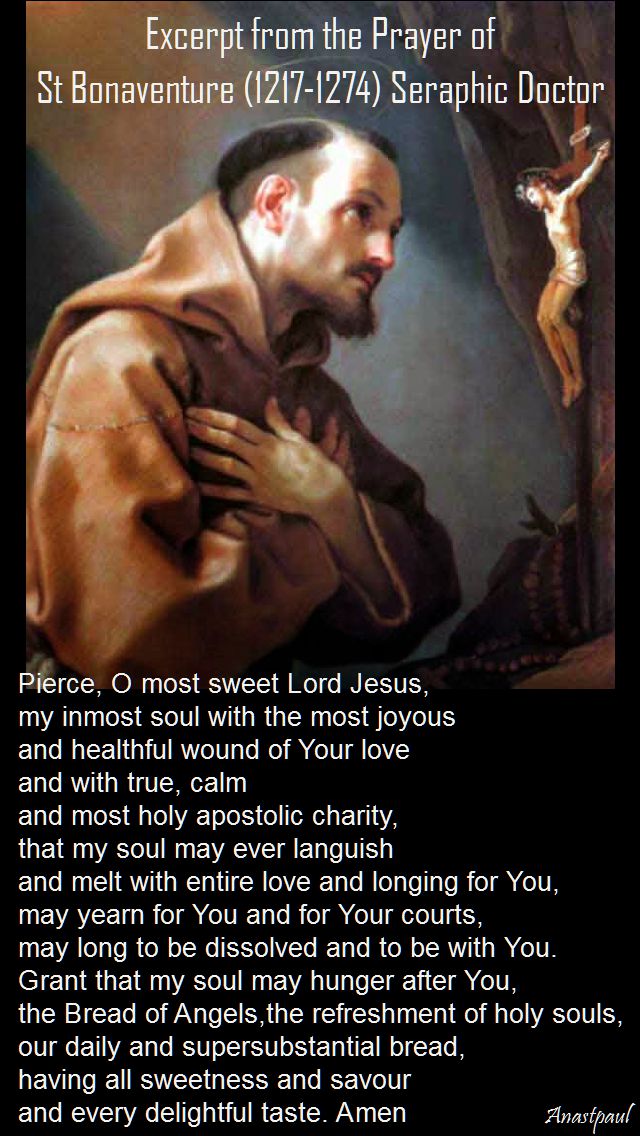
Excerpt from the Prayer of
St Bonaventure (1217-1274) Seraphic Doctor

Pierce, O most sweet Lord Jesus,
my inmost soul with the most joyous
and healthful wound of Your love
and with true, calm
and most holy apostolic charity,
that my soul may ever languish
and melt with entire love and longing for You,
may yearn for You and for Your courts,
may long to be dissolved and to be with You.
Grant that my soul may hunger after You,
the Bread of Angels,
the refreshment of holy souls,
our daily and supersubstantial bread,
having all sweetness and savour
and every delightful taste. Amen

pierce, o most sweet lord jesus - st bonaventure (excerpt)


Posted in DOCTORS of the Church, franciscan OFM, SAINT of the DAY, STOMACH DISEASES and PAIN, INTESTINAL DISORDERS

Saint of the Day – 15 July – St Bonaventure – Seraphic Doctor

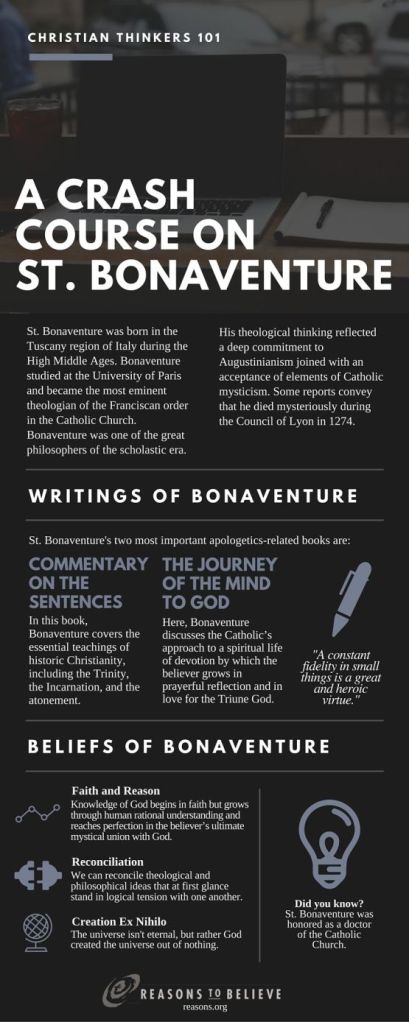
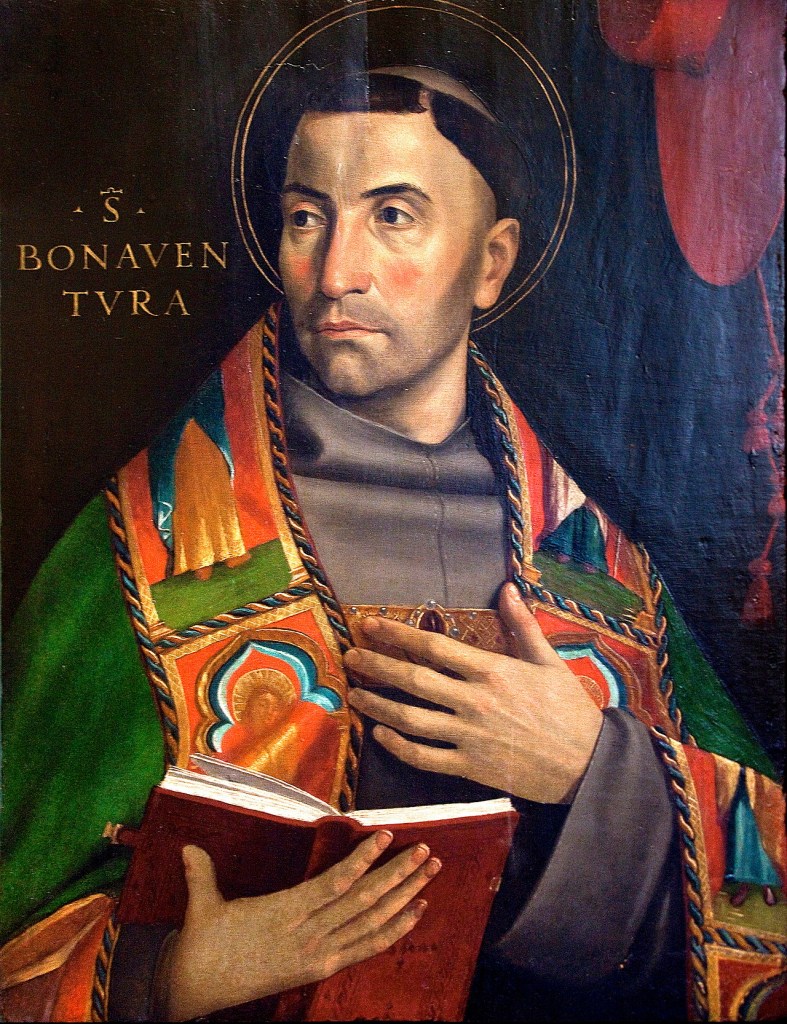
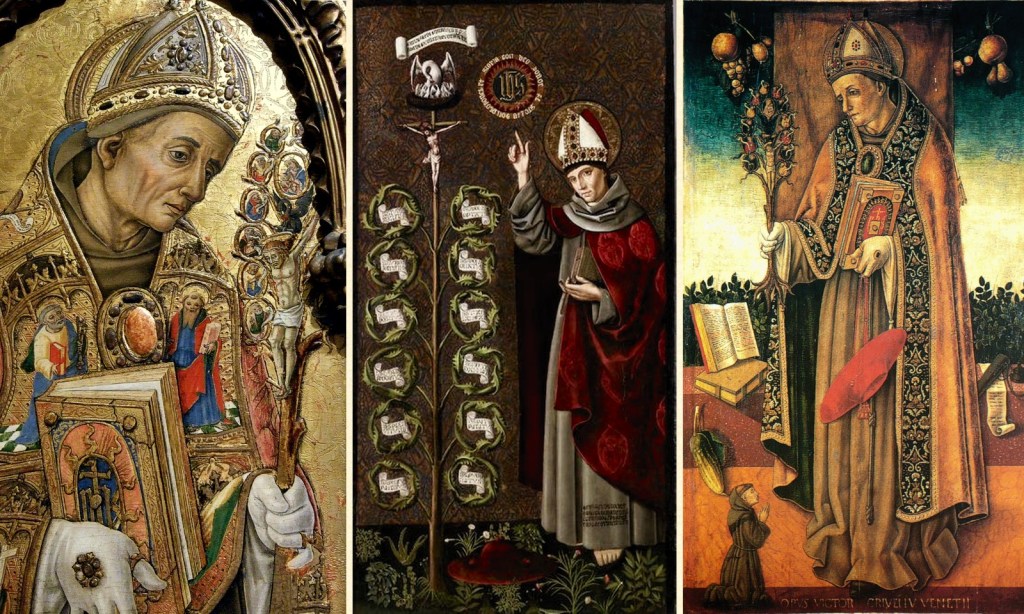
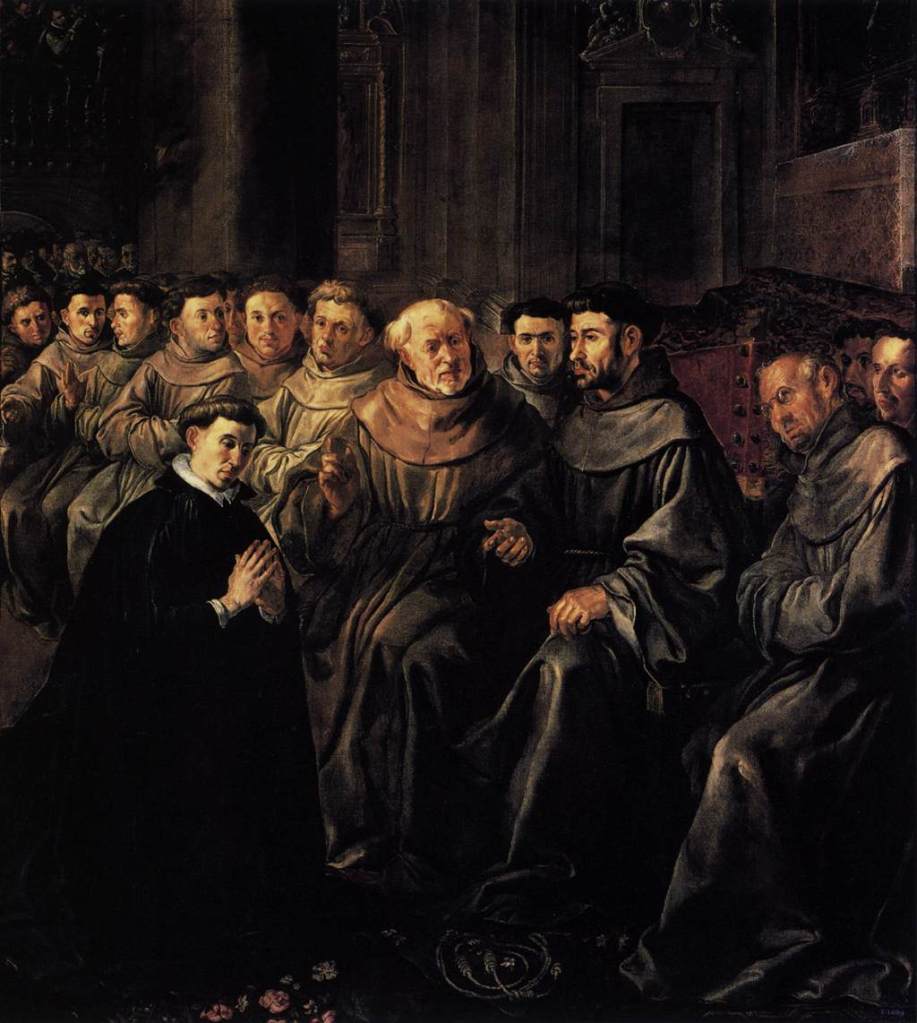
Saint of the Day – 15 July – St Bonaventure – Confessor, Bishop, Doctor of the Church – Friar, Theologian, Philosopher, Writer, Mystic, Preacher, Teacher – born in (1221 at Bagnoregio, Tuscany, Italy and died on 15 July 1274 at Lyon, France of natural causes).  He was born Giovanni di Fidanza and was the seventh Minister General of the Order of Friars Minor, he was also Cardinal Bishop of Albano.  Bonaventure was Canonised on 14 April 1482 by Pope Sixtus IV and declared a Doctor of the Church in the year 1588 by Pope Sixtus V.   He is known as the “Seraphic Doctor” (Latin: Doctor Seraphicus). PATRONAGESagainst intestinal problems, stomach diseases, of – Bagnoregio, Italy, Banja Luka, Bosnia and Herzegovina, Cochiti Indian Pueblo, Saint Bonaventure University, New York.

St Bonaventure was born at Bagnorea in Umbria, not far from Viterbo, then part of the Papal States.   Almost nothing is known of his childhood, other than the names of his parents, Giovanni di Fidanza and Maria Ritella.

He entered the Franciscan Order in 1243 and studied at the University of Paris, possibly under Alexander of Hales and certainly under Alexander’s successor, John of Rochelle. In 1253 he held the Franciscan chair at Paris.    A dispute between seculars and mendicants delayed his reception as Master until 1257, where his degree was taken in company with Thomas Aquinas.   Three years earlier his fame had earned him the position of lecturer on The Four Books of Sentences—a book of theology written by Peter Lombard in the twelfth century—and in 1255 he received the degree of master, the medieval equivalent of doctor.

After having successfully defended his order against the reproaches of the anti-mendicant party, he was elected Minister General of the Franciscan Order.   On 24 November 1265, he was selected for the post of Archbishop of York;   however, he was never consecrated and resigned the appointment in October 1266.[6]

Bonaventure was instrumental in procuring the election of Pope Gregory X, who rewarded him with the title of Cardinal Bishop of Albano and insisted on his presence at the great Second Council of Lyon in 1274.   There, after his significant contributions led to a union of the Greek and Latin churches, Bonaventure died suddenly and in suspicious circumstances.   The 1913 edition of the Catholic Encyclopedia has citations that suggest he was poisoned but no mention is made of this in the 2003 second edition of the New Catholic Encyclopedia.   The only extant relic of the saint is the arm and hand with which he wrote his Commentary on the Sentences, which is now conserved at Bagnoregio, in the parish church of St. Nicholas.

He steered the Franciscans on a moderate and intellectual course that made them the most prominent order in the Catholic Church until the coming of the Jesuits.   His theology was marked by an attempt completely to integrate faith and reason.   He thought of Christ as the “one true master” who offers humans knowledge that begins in faith, is developed through rational understanding and is perfected by mystical union with God.

Bonaventure’s feast day was included in the General Roman Calendar immediately upon his canonisation in 1482.  In 1969 it was classified as an obligatory memorial and assigned to the date of his death, 15 July.

Posted in DOCTORS of the Church, FATHERS of the Church, MORNING Prayers, QUOTES of the SAINTS

Quote of the Day – 13 July

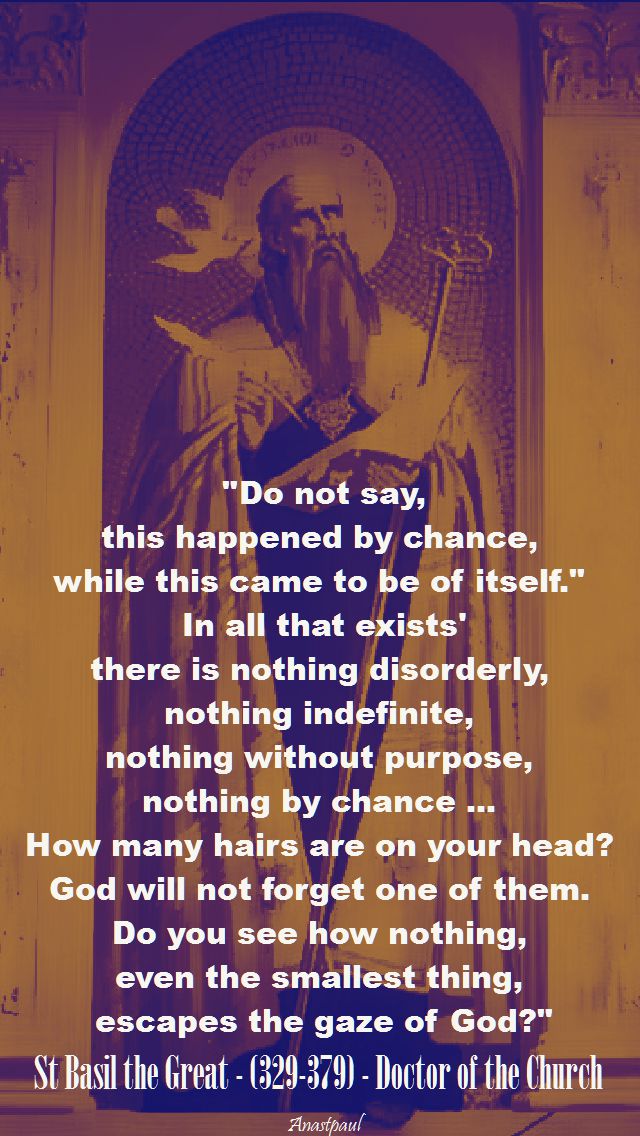
“Do not say,
this happened by chance,
while this came to be of itself.”
In all that exists’
there is nothing disorderly,
nothing indefinite,
nothing without purpose,
nothing by chance …
How many hairs are on your head?
God will not forget one of them.
Do you see how nothing,
even the smallest thing,
escapes the gaze of God?”
Saint Basil the Great (329-379)
Father & Doctor of the Church

do not say, this happened by chance-st basil the great


Posted in CATHOLIC DEVOTIONS of the Month, DOCTORS of the Church, MORNING Prayers, PRAYERS of the SAINTS, QUOTES of the SAINTS, SAINT of the DAY, The WORD

One Minute Reflection – 12 July

One Minute Reflection – 12 July

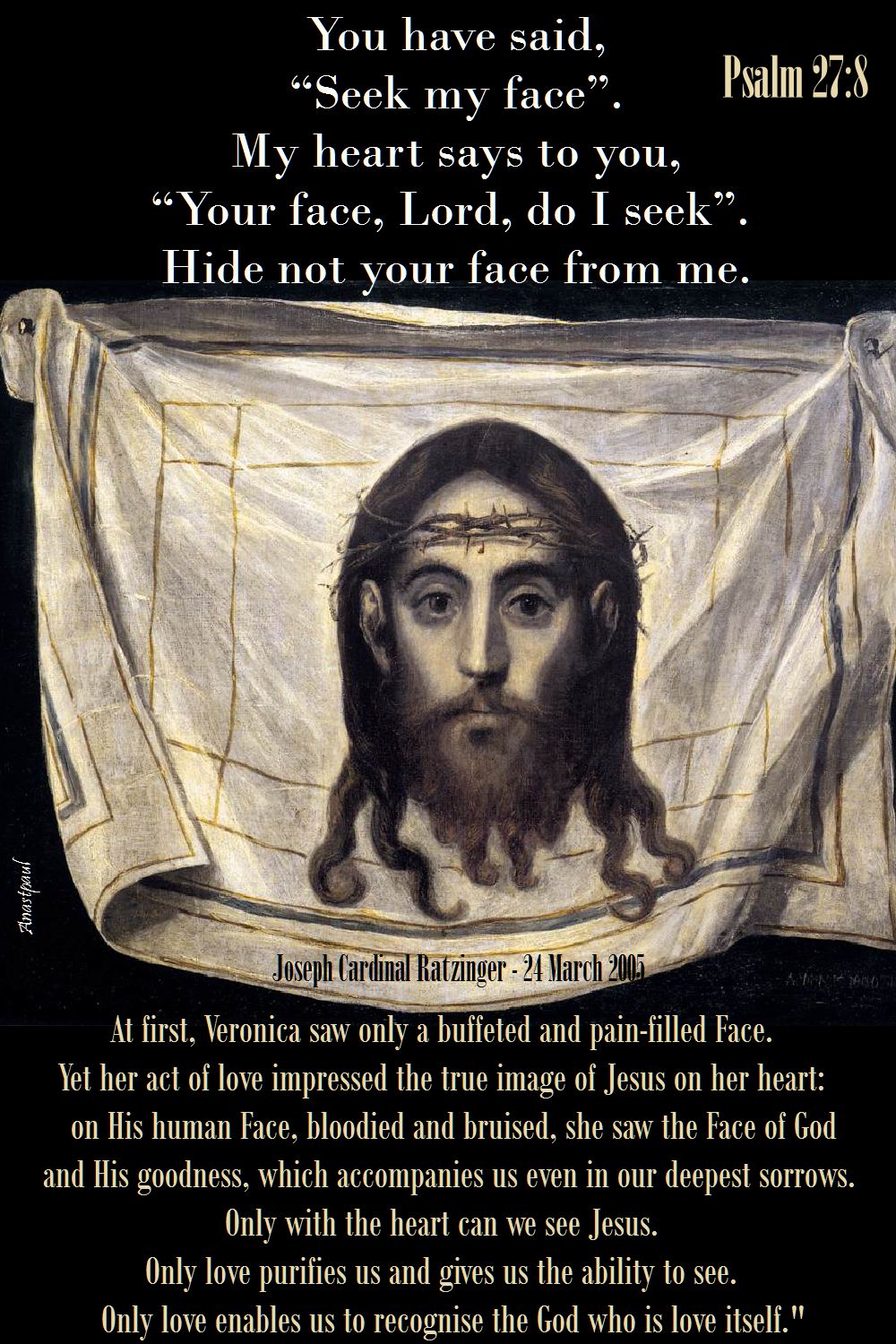
You have said, “Seek my face”. My heart says to you, “Your face, Lord, do I seek”.   Hide not your face from me.  Turn not your servant away in anger, you who have been my help.   Cast me not off, forsake me not, O God of my salvation………Psalm 27:8-9

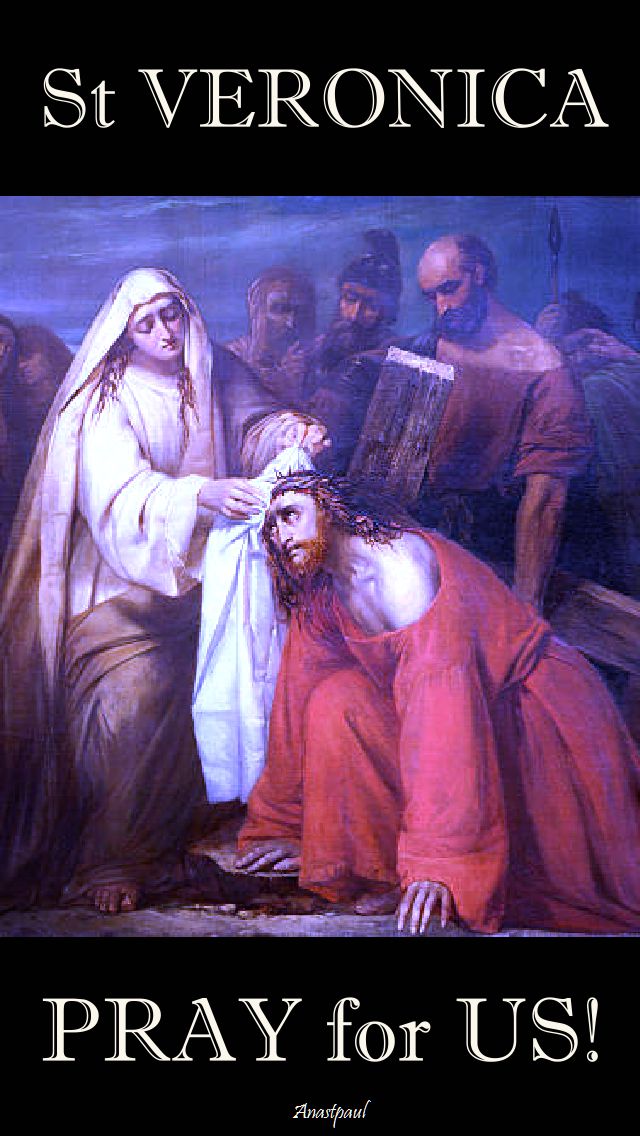
REFLECTION – “Veronica- ‘Bernice’ in the Greek tradition, embodies the universal yearning of the devout men and women of the Old Testament, the yearning of all believers to see the Face of God.   On Jesus’ Way of the Cross, though, she at first did nothing more than perform an act of womanly kindness: she held out a facecloth to Jesus.   She did not let herself be deterred by the brutality of the soldiers or the fear which gripped the disciples.   She is the image of that good woman, who, amid turmoil and dismay, shows the courage born of goodness and does not allow her heart to be bewildered. “Blessed are the pure in heart”, the Lord had said in his Sermon on the Mount, “for they shall see God” (Mt 5:8).   At first, Veronica saw only a buffeted and pain-filled Face.   Yet her act of love impressed the true image of Jesus on her heart: on His human Face, bloodied and bruised, she saw the Face of God and His goodness, which accompanies us even in our deepest sorrows.  Only with the heart can we see Jesus. Only love purifies us and gives us the ability to see.   Only love enables us to recognize the God who is love itself.”…………..Joseph Cardinal Ratzinger (24 March 2005)

at first, veronica saw only a ...- joseph card ratzinger 24 march 2005

PRAYER – Lord God, grant us restless hearts, hearts which seek Your Face. Keep us from the blindness of heart which sees only the surface of things.   Give us the simplicity and purity which allow us to recognise Your presence in the world.   When we are not able to accomplish great things, grant us the courage which is born of humility and goodness. Impress Your Face on our hearts.   May we encounter You along the way and show Your image to the world. St Veronica, Pray for us! Amen.

st veronica pray for us

Posted in DOCTORS of the Church, FATHERS of the Church, MORNING Prayers, QUOTES of the SAINTS

Quote of the Day – 9 July

Quote of the Day – 9 July

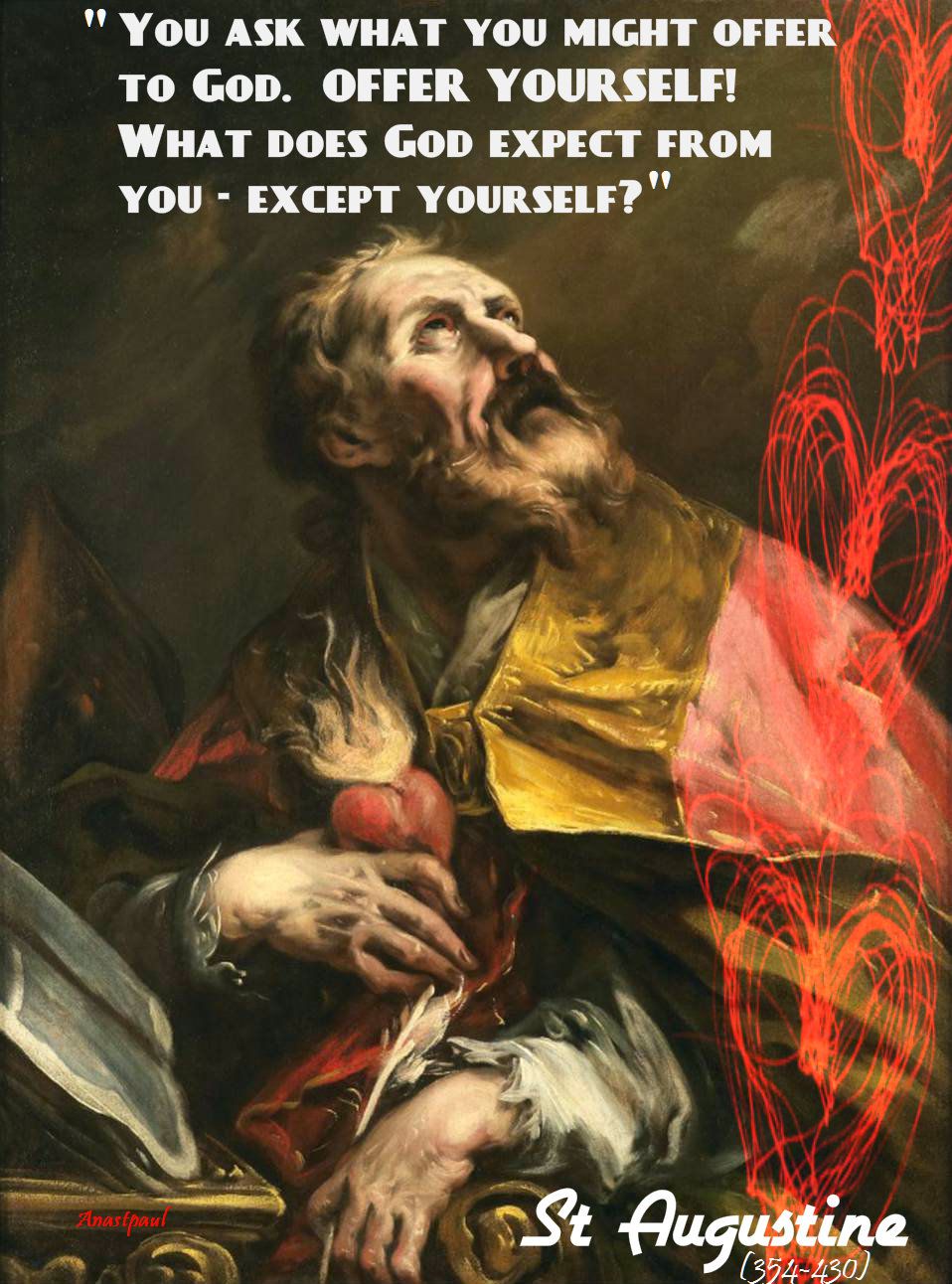
“You ask what you might offer to God,
Offer yourself!
What does God expect from you –
except yourself?”

St Augustine (354-430)

you ask what you might offer to god - st augustine


Posted in DOCTORS of the Church, FATHERS of the Church, MORNING Prayers, QUOTES of the SAINTS, SAINT of the DAY, The WORD

One Minute Reflection – 9 July

One Minute Reflection – 9 July

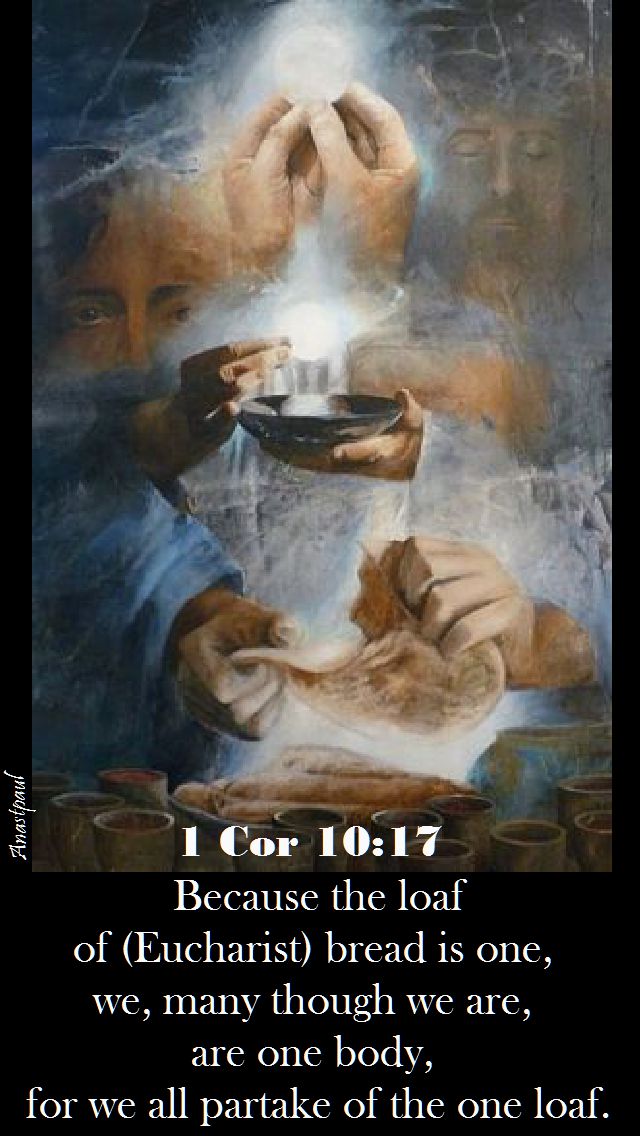
Because the loaf of (Eucharist) bread is one,
we, many though we are,
are one body,
for we all partake of the one loaf…………1 Cor 10:17

1 cor 10 17

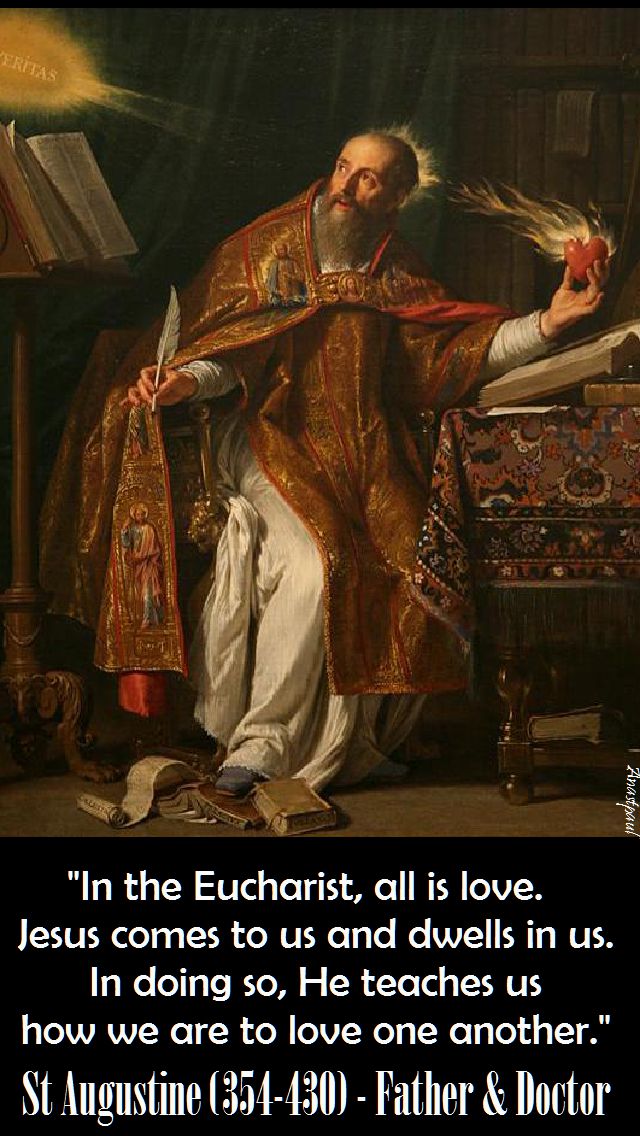
REFLECTION – “In the Eucharist, all is love. Jesus comes to us and dwells in us.
In doing so, He teaches us how we are to love one another.”………….St Augustine (354-430)

in the eucharist all is love - st augustine

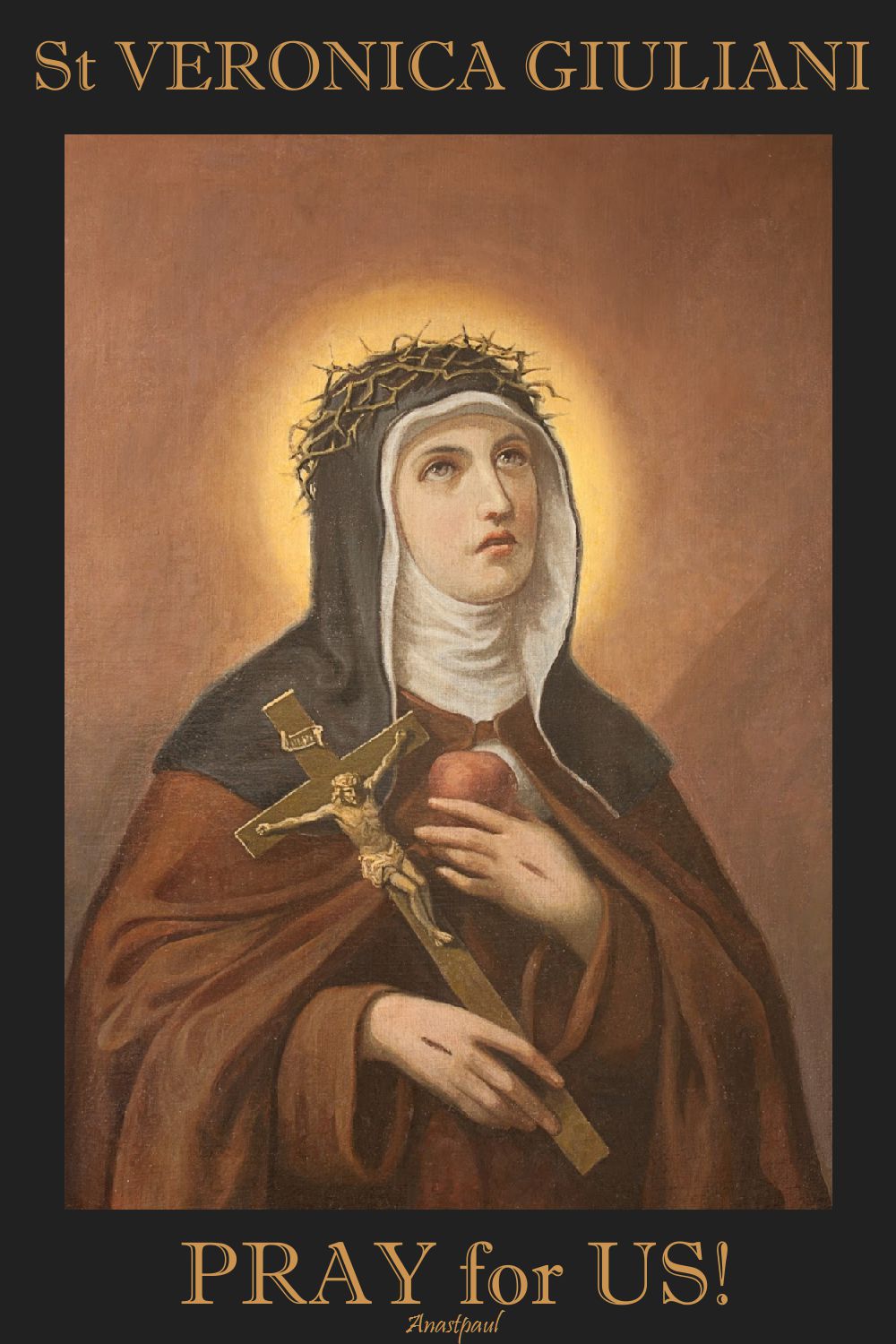
PRAYER – Most loving Father, grant that every Eucharistic Celebration may unit me more closely to Your Divine Son. May it also unite me to all Christians and help me to show greater love for them every day. St Veronica Giuliani, you truly experienced total and supreme love in Holy Communion, pray for us that we might come to understand this immense and ineffable love of our Saviour for us all, as He becomes our food of life, amen.

st veronica giuliani - pray for us

Posted in DOCTORS of the Church, EUCHARISTIC Adoration, MORNING Prayers, QUOTES of the SAINTS

Quote of the Day – 8 July

Quote of the Day – 8 July

“Know also that you will probably gain more by praying fifteen minutes before the Blessed Sacrament than by all the other spiritual exercises of the day. True, Our Lord hears our prayers anywhere, for He has made the promise, ‘Ask, and you shall receive,’ but He has revealed to His servants that those who visit Him in the Blessed Sacrament will obtain a more abundant measure of grace.”

St Alphonsus Liguori (1696-1787) Most Zealous Doctor

know alsos tha you will - st alphonsus liguori

Posted in DOCTORS of the Church, FATHERS of the Church, MORNING Prayers, QUOTES of the SAINTS, SAINT of the DAY, The WORD

One Minute Reflection – 8 July

One Minute Reflection – 8 July

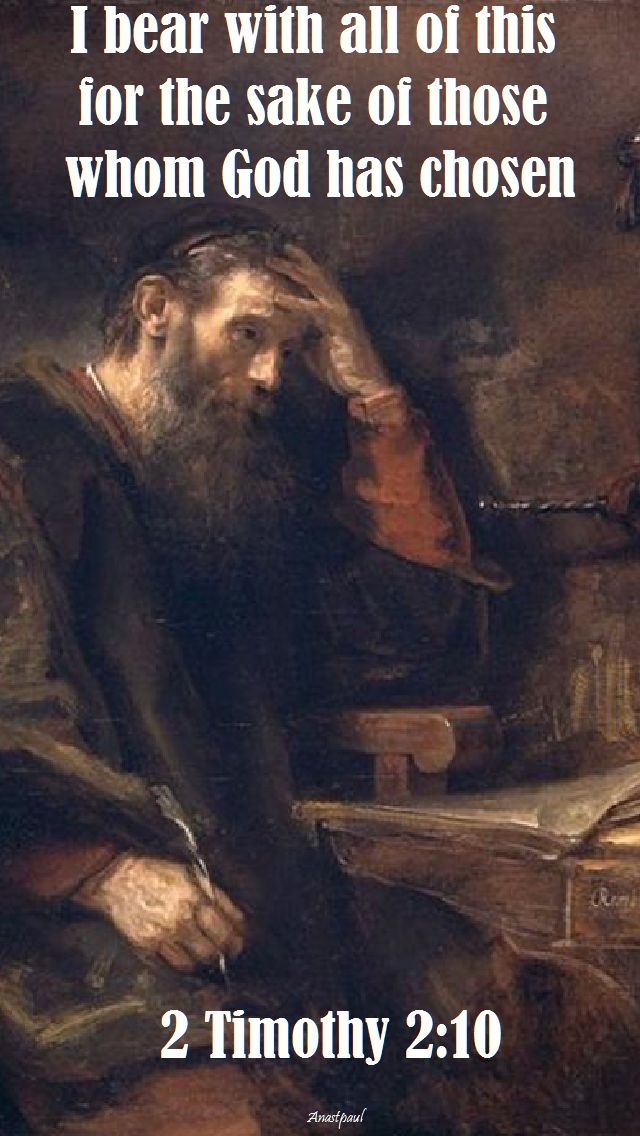
I bear with all of this for the sake of those whom God has chosen..2 Timothy 2:10

2 timothy 2 10

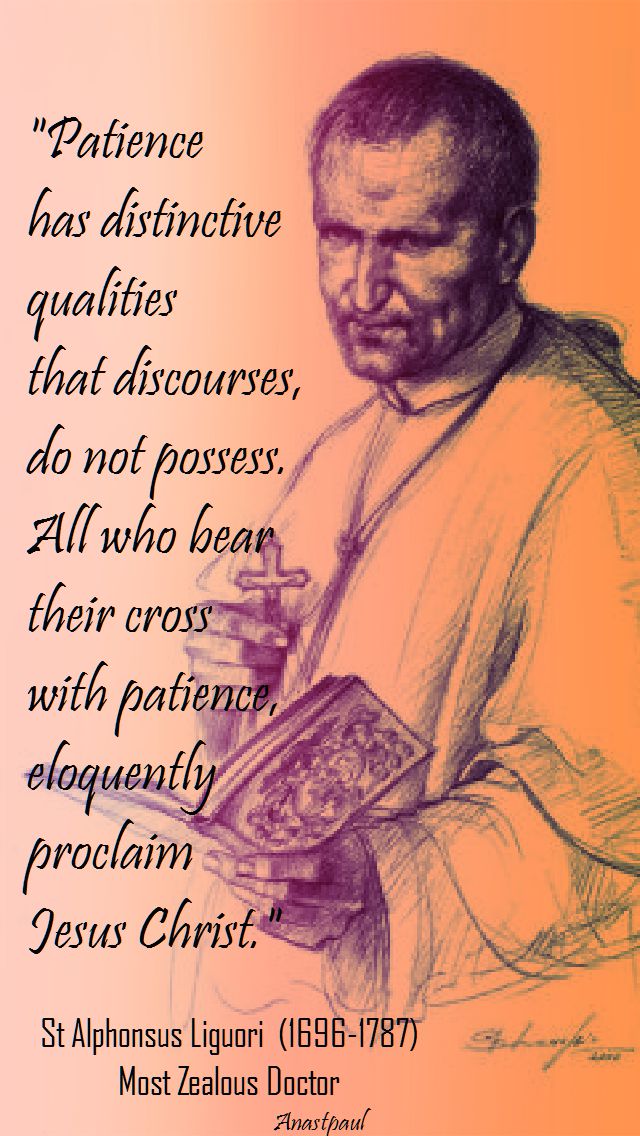
REFLECTION – “Patience has distinctive qualities that discourses do not possess. All who bear their cross with patience, eloquently proclaim Jesus Christ.”………….St Alphonsus Liguori

patience-st alphonsus liguori

PRAYER – Heavenly Father, teach me to be patient under the crosses that come my way. Let my silent example speak vlumes to others and lead them to faith in Your Son, our Lord Jesus Christ. St Killian, you worked tirelessly and patiently for the glory of the Kingdom, please intercede for us all, amen.

st killian pray for us