St Adam Scotus
Bl Agustín García Calvo *
Bl Antonio Martín Hernández *
St Auditor of Saint-Nectaire
St Balda of Jouarre
St Bernhard Mariea Silvestrelli
St Budoc of Brittany
Bl Carmen Rodríguez Banazal *
St Caesar of Korone
St Cephas
Bl Clara Isabella Fornari
St Cyprian of Perigueux
Bl Dolores Broseta Bonet *
Bl Estefanía Irisarri Irigaray *
St Ethelgiva of Shaftesbury
St Gorgonia
Bl Isidora Izquierdo García *
Bl José Ferrer Esteve *
Bl José Giménez López *
Bl Josefa Laborra Goyeneche *
Bl Josep Lluís Carrera Comas *
St Julian of Apamea
Bl Julián Rodríguez Sánchez *
St Leocadia of Toledo Blessed Liborius Wagner (1593-1631) Priest and Martyr
Bl María Pilar Nalda Franco *
St Michaela Andrusikiewicz
St Nectarius of Auvergne
St Proculus of Verona
Bl Recaredo de Los Ríos Fabregat *
St Syrus of Pavia
St Valeria of Limoges
St Wulfric of Holme
Blessed Mercedarian Fathers – (10 beati): The memorial of ten Mercedarian friars who were especially celebrated for their holiness.
• Arnaldo de Querol • Berengario Pic • Bernardo de Collotorto • Domenico de Ripparia • Giovanni de Mora • Guglielmo Pagesi • Lorenzo da Lorca • Pietro Serra • Raimondo Binezes • Sancio de Vaillo
Martyred Salesians of Valencia – (5 beati)
Martyrs of North Africa – (4 saints): Twenty-four Christians murdered together in North Africa for their faith. The only details to survive are four of their names – Bassian, Peter, Primitivus and Successus.
Martyrs of Paterna – (7 beati)
Martyrs of Samosata – (7 saints): Seven martyrs crucified in 297 in Samosata (an area of modern Turkey) for refusing to perform a pagan rite in celebration of the victory of Emperor Maximian over the Persians. They are – Abibus, Hipparchus, James, Lollian, Paragnus, Philotheus and Romanus. They were crucified in 297 in Samosata (an area in modern Turkey).
Martyrs of the Spanish Civil War – (13 beati):
• Blessed Agustín García Calvo
• Blessed Antonio Martín Hernández
• Blessed Carmen Rodríguez Banazal
• Blessed Dolores Broseta Bonet
• Blessed Estefanía Irisarri Irigaray
• Blessed Isidora Izquierdo García
• Blessed José Ferrer Esteve
• Blessed José Giménez López
• Blessed Josefa Laborra Goyeneche
• Blessed Josep Lluís Carrera Comas
• Blessed Julián Rodríguez Sánchez
• Blessed María Pilar Nalda Franco
• Blessed Recaredo de Los Ríos Fabregat
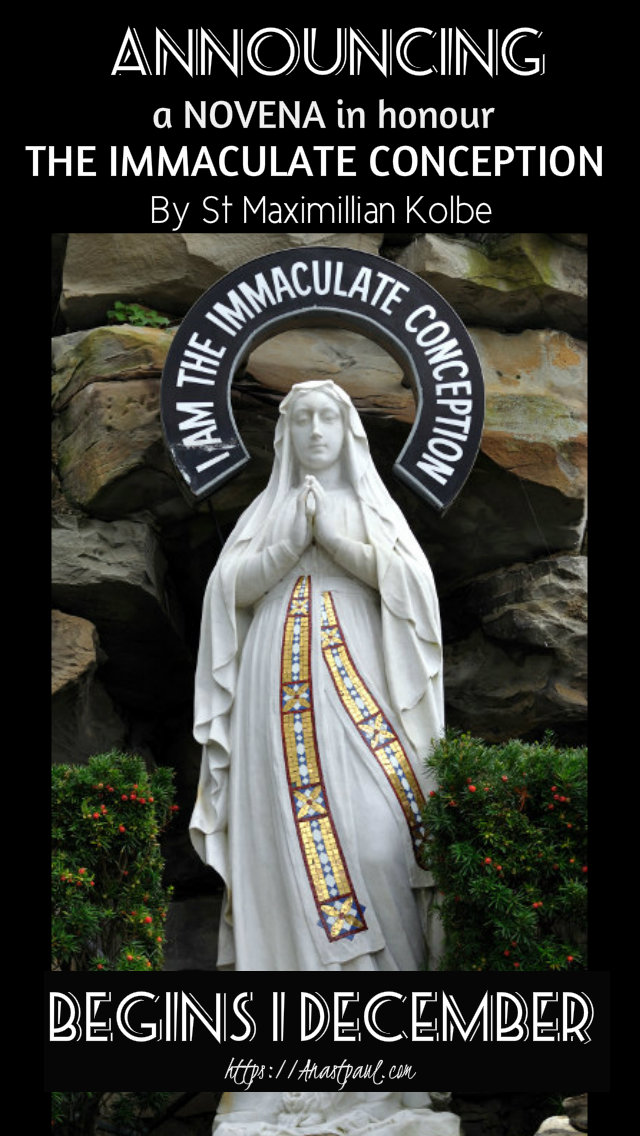
Announcing a Novena in honour of the Immaculate Conception Begins 1 December
As the Feast of the Immaculate Conception is moved forward by one day this year, from 8 to 9 December, due to the 8th being the 2nd Sunday of Advent, we will start the Novena a day later than usual.
This year we will use Reflections and Meditations from St Maximillian Kolbe.
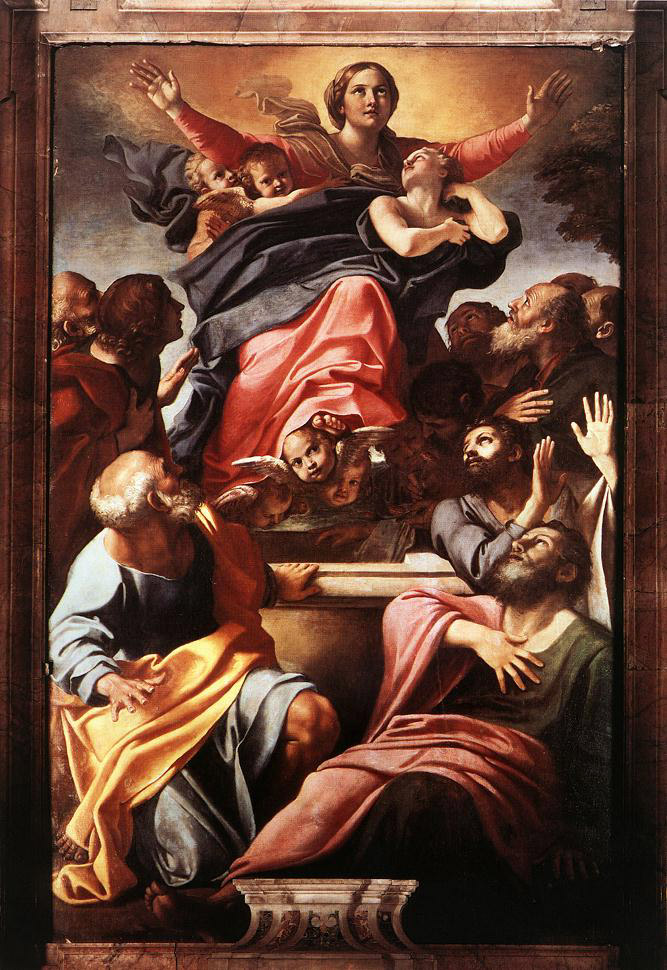
Solemnity of the Assumption of the Blessed Virgin Mary (in the US, however, in most countries of Africa, the Solemnity will celebrated on the Sunday following the 15th). The feast celebrates the assumption of the body of the Blessed Virgin Mary into heaven upon her death. According to Pope Benedict XIV, it is a probable opinion, which it is impious to deny, though not an article of faith but has since in 1950 has been raised to a DOGMA of the Faith. The origin of the feast day is not known but it was celebrated in Palestine before the year 500. It is a holy day of obligation, its vigil being a fast day, in many English-speaking countries. Among the many masters who have painted the subject of the Assumption are Fra Angelico, Ghirlandajo, Rubens, Del Sarto and Titian.
Patronages: Acadians, Cajuns, Cistercian Order, Cistercians, fish dealers, fish-mongers, French air crews, harness makers, France, Guatemala, India, Jamaica, Malta, Paraguay, Slovakia, east Africa (region of east Africa which includes diverse countries, proclaimed on 15 March 1952 by Pope Pius XII) South Africa (this is not a region but a country) and the Assumption is, therefore, the Patronal Feast of the Country of South Africa – proclaimed on 15 March 1952 by Pope Pius XII), 24 dioceses, 38 cities.
St Alipius of Tagaste
Bl Alfred of Hildesheim
Bl Agustín Hurtado Soler
St Arduinus of Rimini
Bl Claudio Granzotto
Bl George Halley Bl Isidore Bakanja (c 1887-1909) Martyr
St Napoleon of Alexandria
Bl Pio Alberto del Corona St Simplician (c 320-c 401) Bishop and Successor of St Ambrose (340-397) Doctor of the Church in the Archdiocese of Milan. Details of the life of St Simplician here:https://anastpaul.wordpress.com/2017/08/15/saint-of-the-day-15-august-st-simplician-of-milan/ St Tarcisius (3rd century) Martyr About St Tarcisius:
Martyrs of Nicomedia – 3 saints: Three Christians martyred together. No details survive but the names – Eutychian, Philip and Straton. They were martyred in Nicomedia, Bithynia (in modern Turkey).
Martyred in the Mexican Revolution: 4 Saints –
St David Roldán Lara
St Luis Batiz Sainz
St Manuel Moralez
St Salvador Lara Puente
Martyred in the Spanish Civil War: Thousands of people were murdered in the anti-Catholic persecutions of the Spanish Civil War from 1934 to 1939.
• Blessed Agustì Ibarra Angüela
• Blessed Carmelo Sastre y Sastre
• Blessed Clemente Vea Balaguer
• Blessed Francisco Míguez Fernández
• Blessed Ildefonso Alberto Flos
• Blessed Jaume Bonet Nadal
• Blessed Joan Ceró Cedó
• Blessed Josep Santonja Pinsach
• Blessed Juan Francisco Barahona Martín
• Blessed Juan Mesonero Huerta
• Blessed Luis Ros Ezcurra
• Blessed Manuel Formigo Giráldez
• Blessed Miguel Alberto Flos
• Blessed Sebastià Balcells Tonijuan
• Blessed Severiano Montes Fernández
Come, Holy Spirit, fill the heart of Your servant and enkindle in us the fire of Your gifts! Be with us, in us and lead us to the light, amen.
“…We have only to say “yes” to let Him take us there.“
St John Vianney (1786-1859)
“If the damned were asked – Why are you in Hell? they would answer: ‘For having resisted the Holy Spirit.’
And if the saints were asked – Why are you in Heaven? they would answer: ‘For having listened to the Holy Spirit.’
When good thoughts come into our minds, it is the Holy Spirit who is visiting us.
The Holy Spirit is a power.
The Holy Spirit …. sustained the martyrs. Without the Holy Spirit, the martyrs would have fallen like the leaves from the trees. When the fires were lighted under them, the Holy Spirit extinguished the heat of the fire by the heat of divine love.
The good God, in sending us the Holy Spirit, has treated us like a great king who should send his minister to guide one of his subjects, saying, “You will accompany this man everywhere and you will bring him back to me safe and sound.”
How beautiful it is, my children, to be accompanied by the Holy Spirit!
He is indeed a good Guide; and to think that there are some who will not follow Him!
The Holy Spirit is like a man with a carriage and horse, who should want to take us to Pans. We should only have to say “yes,” and to get into it. It is indeed an easy matter to say “yes”!… Well, the Holy Spirit wants to take us to Heaven, we have only to say “yes,” and to let Him take us there.“
“O Divine Spirit, draw us to the highest heaven where Jesus lives forever, interceding for us. Come, fill our hearts with Your fire, show us the way to the Lord, that we may find Him shining with beauty and love. Amen”
“Accordingly, in the Church, one God is preached, one God who is above all things and through all things and in all things. God is above all things as Father, for He is principle and source; He is through all things through the Word; and He is in all things in the Holy Spirit.”
St Athanasius (c295-373)
Father and Doctor of the Church
Thought for the Day – 13 January – May I serve You by making You known
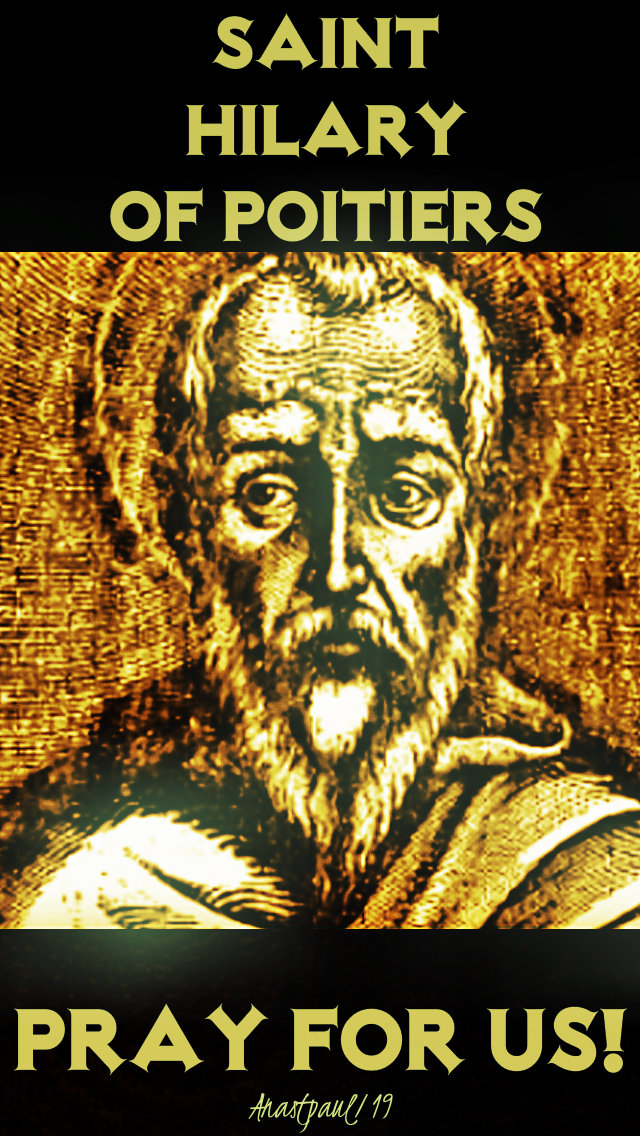
The Memorial of St Hilary of Poitiers (315-368) Father & Doctor of the Church
This prayer is an excerpt from a sermon On the Trinity by Saint Hilary of Poitiers, a bishop and early Church Father of the fourth century who struggled valiantly against the Arian heresy, defending the divinity of Christ and the doctrine of the Trinity. From a sermon on the Trinity by St Hilary of Poitiers (315-368) Father & Doctor of the Church – (Lib 1, 37-38: PL 10, 48-49)
May I serve You by making You known
“I am well aware, almighty God and Father, that in my life I owe You a most particular duty. It is to make my every thought and word speak of You.
In fact, You have conferred on me this gift of speech and it can yield no greater return than to be at Your service. It is for making You known as Father, the Father of the only-begotten God and preaching this to the world that knows You not and to the heretics who refuse to believe in You.
In this matter, the declaration of my intention, is only of limited value. For the rest, I need to pray for the gift of Your help and Your mercy. As we spread our sails of trusting faith and public avowal before You, fill them with the breath of Your Spirit, to drive us on, as we begin this course of proclaiming Your truth. We have been promised and He who made the promise is trustworthy: Ask, and it will be given to you; seek, and you will find; knock, and it will be opened to you.
Yes, in our poverty we will pray for our needs. We will study the sayings of Your prophets and apostles with unflagging attention and knock for admittance wherever the gift of understanding is safely kept. But Yours it is, Lord, to grant our petitions, to be present when we seek You and to open when we knock.
There is an inertia in our nature that makes us dull and in our attempt to penetrate Your truth. we are held within the bounds of ignorance. by the weakness of our minds. Yet we do comprehend divine ideas by earnest attention to Your teaching and by obedience to the faith, which carries us beyond mere human apprehension.
So we trust in You to inspire the beginnings of this ambitious venture, to strengthen its progress and to call us into a partnership, in the spirit, with the prophets and the apostles. To that end, may we grasp precisely what they meant to say, taking each word in its real and authentic sense. For we are about to say what they already have declared as part of the mystery of revelation – that You are the eternal God, the Father of the eternal, only-begotten God; that You are one and not born from another; and that the Lord Jesus is also one, born of You from all eternity. We must not proclaim a change in truth regarding the number of gods. We must not deny that He is begotten of You who are the one God, nor must we assert that He is other than the true God, born of You who are truly God the Father.
Impart to us, then, the meaning of the words of Scripture and the light to understand it, with reverence for the doctrine and confidence in its truth. Grant that we may express what we believe. Through the prophets and apostles we know about You, the one God the Father and the one Lord Jesus Christ. May we have the grace, in the face of heretics who deny You, to honour You as God, who is not alone and to proclaim this as truth.”
The above is used in the Roman Office of Readings for the feast (liturgical memorial) of St Hilary of Poitiers on 13 January.
Thought for the Day – 8 December – The Solemnity of the Immaculate Conception
Virgin Mary, all Nature is Blessed by You
From a sermon by Saint Anselm of Canterbury (1033-1109) Bishop and Doctor of the Church
“Blessed Lady, sky and stars, earth and rivers, day and night – everything that is subject to the power or use of man – rejoice that through you they are in some sense restored to their lost beauty and are endowed with inexpressible new grace. All creatures were dead, as it were, useless for men or for the praise of God, who made them. The world, contrary to its true destiny, was corrupted and tainted by the acts of men who served idols. Now all creation has been restored to life and rejoices that it is controlled and given splendour by men who believe in God. The universe rejoices with new and indefinable loveliness. Not only does it feel the unseen presence of God Himself, its Creator, it sees Him openly, working and making it holy. These great blessings spring from the blessed fruit of Mary’s womb.
Through the fullness of the grace that was given you, dead things rejoice in their freedom and those in heaven are glad to be made new. Through the Son who was the glorious fruit of your virgin womb, just souls who died before His life-giving death rejoice as they are freed from captivity and the angels are glad at the restoration of their shattered domain.
Lady, full and overflowing with grace, all creation receives new life from your abundance. Virgin, blessed above all creatures, through your blessing all creation is blessed, not only creation from its Creator but the Creator Himself has been blessed by creation.
To Mary, God gave His only-begotten Son, whom He loved as Himself. Through Mary, God made Himself a Son, not different but the same, by nature Son of God and Son of Mary. The whole universe was created by God and God was born of Mary. God created all things and Mary gave birth to God. The God who made all things gave Himself form, through Mary and thus He made His own creation. He who could create all things from nothing would not remake His ruined creation, without Mary.
God, then, is the Father of the created world and Mary the mother of the re-created world. God is the Father by whom all things were given life and Mary the mother through whom all things were given new life. For God begot the Son, through whom all things were made and Mary gave birth to Him as the Saviour of the world. Without God’s Son, nothing could exist; without Mary’s Son, nothing could be redeemed.
Truly the Lord is with you, to whom the Lord granted that all nature should owe as much to you as to Himself. Holy Mary, Blessed Virgin of the Immaculate Conception, Mother of God and Mother of Jesus Christ our Saviour and Redeemer, pray for us!”
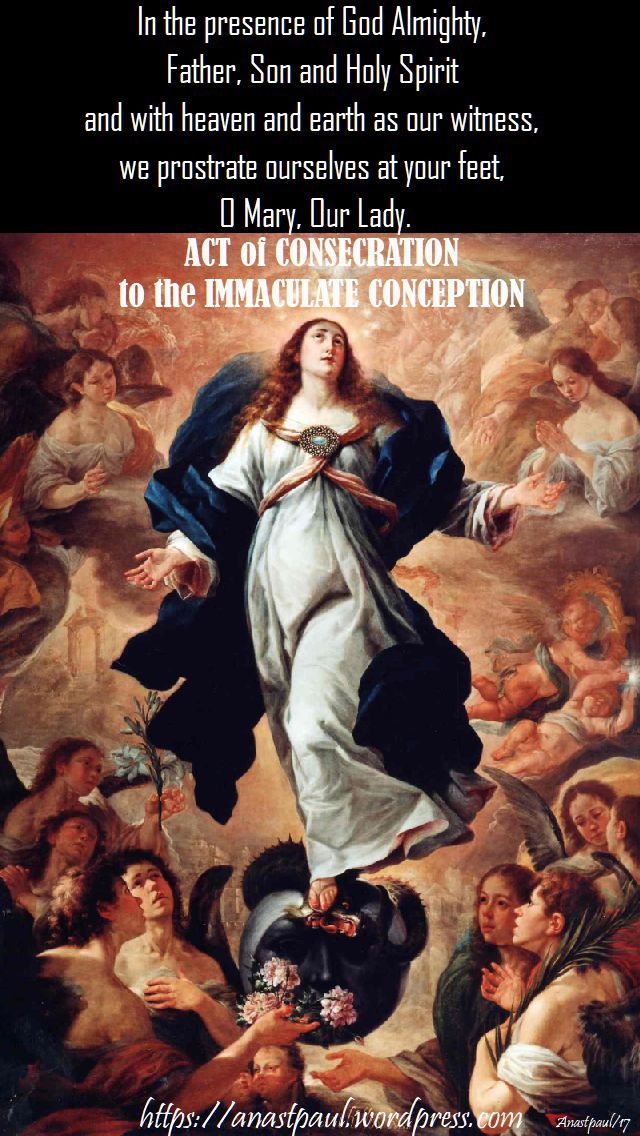
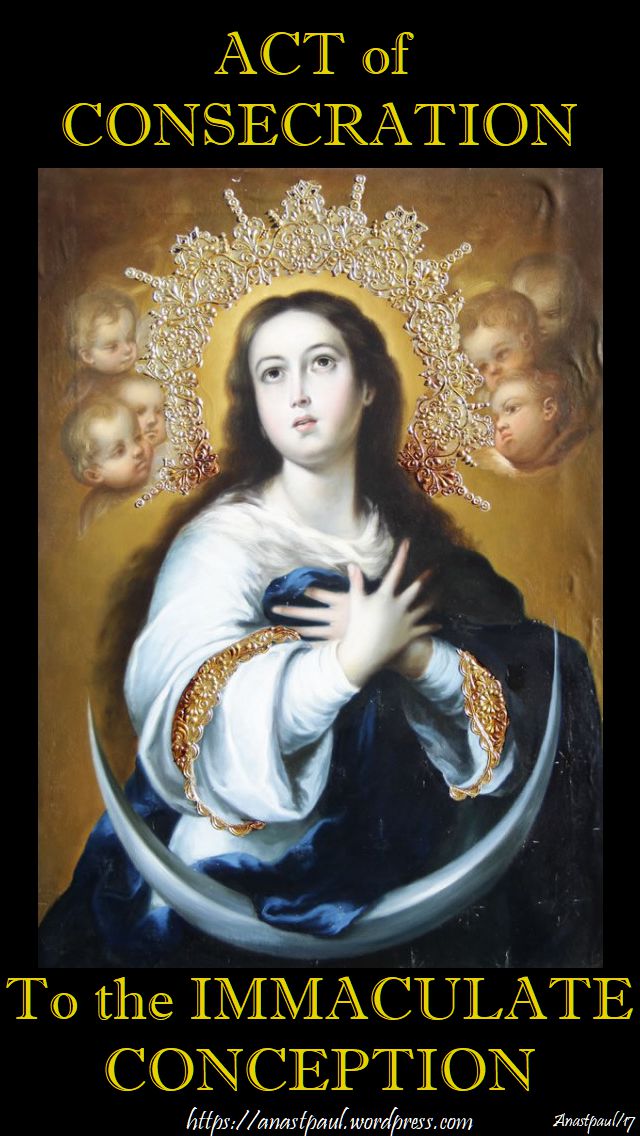
Our Morning Offering – 8 December – Act of Consecration to the Immaculate Conception
Act of Consecration By St Maximillian Kolbe (1894-1941)
O Immaculate, Queen of heaven and earth,
Refuge of sinners and our most loving Mother,
God has willed to entrust the entire order of mercy to You,
I, an unworthy sinner, cast myself at Your feet,
humbly imploring You
to take me with all that I am and have,
wholly to Yourself as Your possession and property.
Please make of me,
of all my powers of soul and body,
of my whole life, death and eternity,
whatever pleases You.
If it pleases You,
use all that I am and have without reserve,
wholly to accomplish what has been said of You:
“She will crush your head”,
and “You alone have destroyed all heresies in the whole world.”
Let me be a fit instrument in Your immaculate
and most merciful hands for introducing and increasing Your glory
to the maximum in all the many strayed and indifferent souls
and thus help extend as far as possible,
the blessed Kingdom of the Most Sacred Heart of Jesus.
For, wherever You enter,
You obtain the grace of conversion and sanctification,
since it is through Your hands,
that all graces come to us.
from the Most Sacred Heart of Jesus.
Today, 8 December, we celebrate the Solemnity of the Immaculate Conception. I wish you all a Blessed and Holy Feast Day!
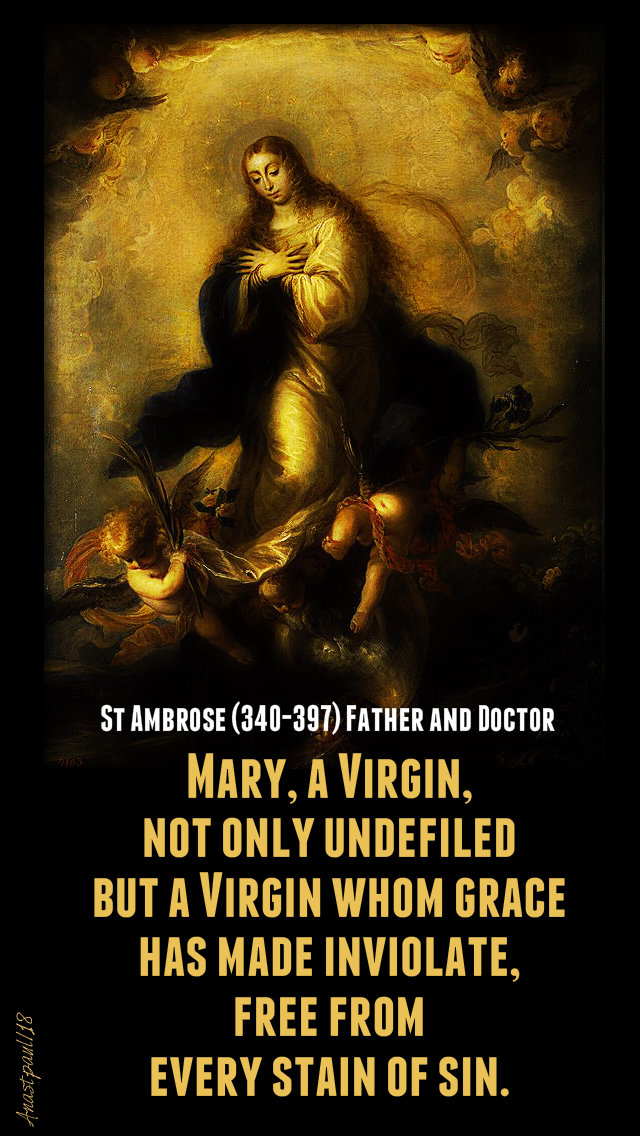
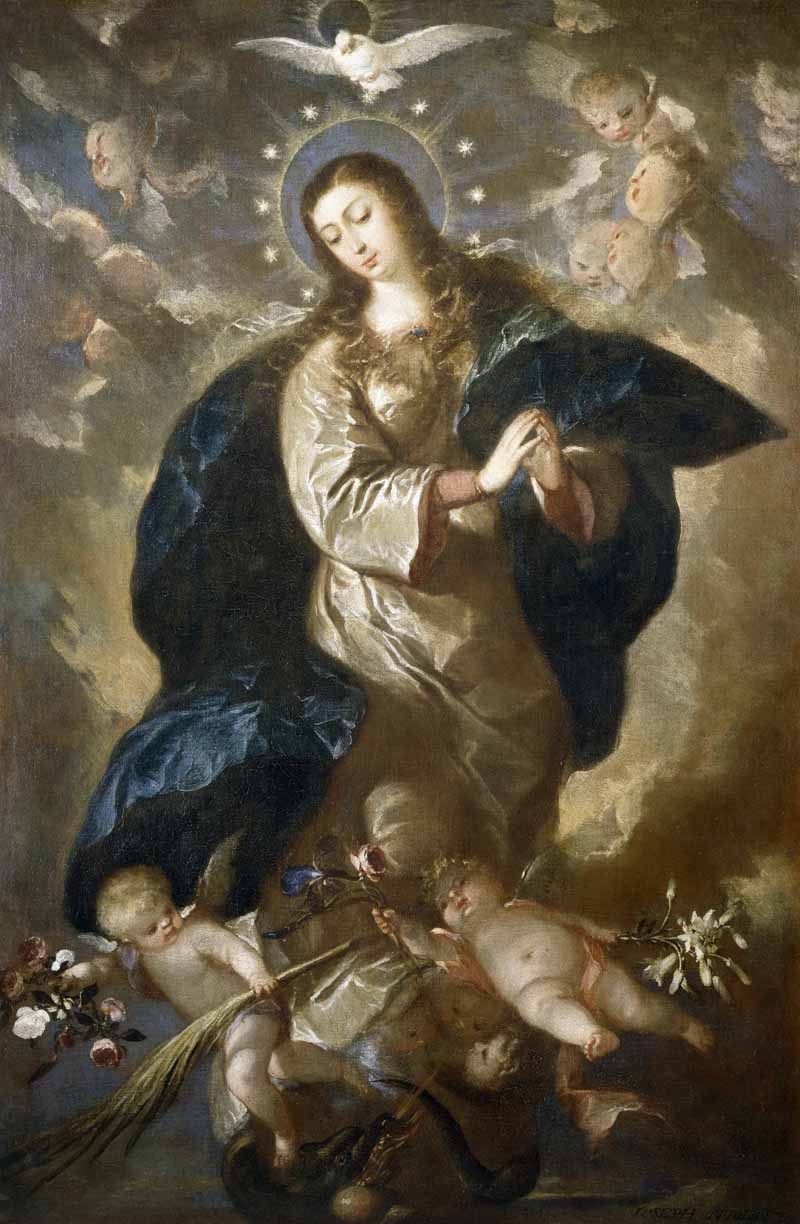
Murillo 1678
Pope Benedict XVI, Angelus, 8 December 2012
“I would like to emphasise that Mary is Immaculate through a freely given gift of God’s grace, which, however, found perfect willingness and cooperation in her. It is in this sense that she is “blessed” because “she believed” (Lk 1:45) and because she had steadfast faith in God. Mary represents that “remnant of Israel”, that holy root which the Prophets proclaimed. The promises of the Old Covenant find a ready welcome in her. In Mary, the Word of God is met with listening, acceptance and a response, He encounters that “yes” which enables Him to take flesh and to come and dwell among us.
Prado
In Mary, humanity and history are truly opened to God, they welcome His grace and are prepared to do His will. Mary is a genuine expression of Grace. She represents the new Israel, which the Scriptures of the Old Testament describe with the symbol of the bride. And St Paul takes up this language in his Letter to the Ephesians where he speaks of marriage and says “Christ loved the Church and gave himself up for her, that he might sanctify her, having cleansed her by the washing of water with the word, that he might present the Church to himself in splendour, without spot or wrinkle or any such thing, that she might be holy and without blemish” (5:25-27). The Fathers of the Church developed this image and thus the Doctrine of the Immaculate Virgin first came into being with reference to the Church virgin-mother and, subsequently, to Mary. Thus Ephraim the Syrian writes poetically: “Just as [it was] because these bodies themselves have sinned and are themselves dying, that the earth, their mother was also accursed (cf. Gen 3:7-19), because of this body which is the incorruptible Church, her land was blessed from the outset. This land is the body of Mary, a temple in which a seed was sown” (Diatessaron 4, 15: sc 121, 102).
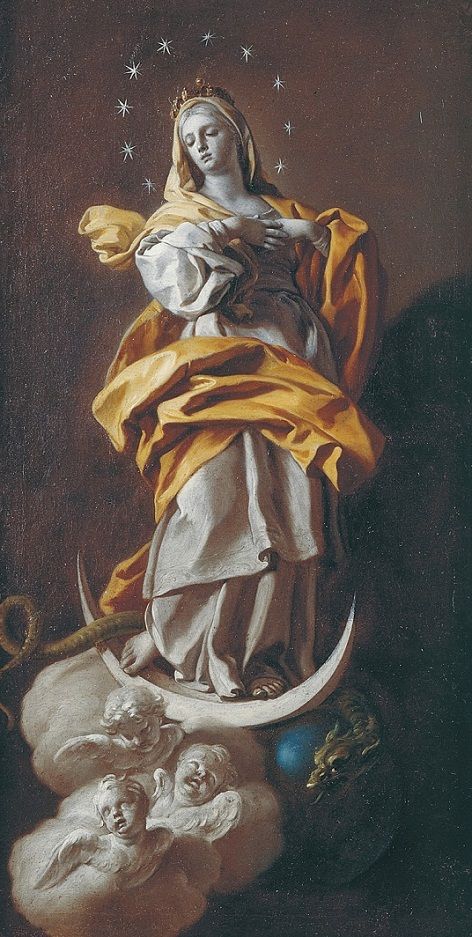
Francesco de Mura
The light that shines from the figure of Mary, also helps us to understand the true meaning of original sin. Indeed that relationship with God which sin truncates is fully alive and active in Mary. In her there is no opposition between God and her being, there is full communion, full understanding. There is a reciprocal “yes” – God to her and her to God. Mary is free from sin because she belongs entirely to God, she empties herself totally for Him. She is full of His Grace and of His Love.
To conclude, the Doctrine of the Immaculate Conception of Mary expresses the certainty of faith that God’s promises have been fulfilled and that His Covenant does not fail but has produced a holy root from which came forth the blessed Fruit of the whole universe, Jesus the Saviour. The Immaculate Virgin shows that Grace can give rise to a response, that God’s fidelity can bring forth a true and good faith.”
Jusepe de Ribera (1637)
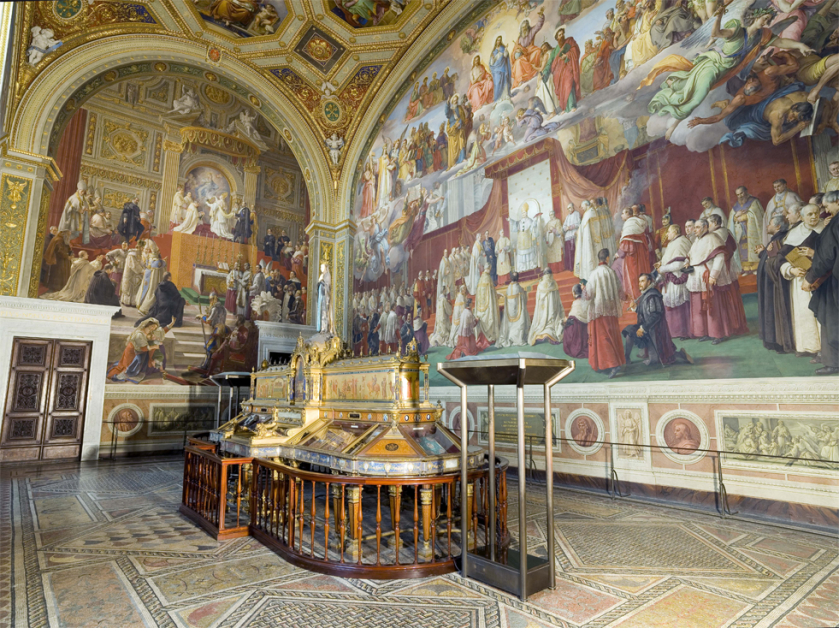
Room of the Immaculate Conception
Following the proclamation of the dogma of the Immaculate Conception by Pius IX, which took place on 8 December 1854, the pontiff decide to celebrate the event with a cycle of frescoes.
The large room adjacent to the Raphael Rooms was chosen and the task was assigned to Francis Podesti (1800-1895), a painter originally from Ancona but rooted in the Roman artistic and academic panorama. The artist, along with his team of workers, worked on the commission from 1856 to 1865, planning it and following its execution in all its aspects – the wooden doors and window frames and the inlaid marble work, as well as the installation of the Roman mosaic from Ostia Antica, purchased specifically for this space.
The pictorial decoration proceeds from the ceiling, with allegorical scenes alluding to the virtues of the Virgin; it continues along the northern wall with the homage of the continents to the Church enthroned; it continues on the west wall, devoted to the Discussion of dogma in St Peter’s Basilica and concludes on the east wall, with the Coronation of the Image of Mary, an event following the Proclamation, which took place in St Peter’s. Podesti, who was present, included a self-portrait here.
Bl Alojzy Liguda
St Anastasia of Pomerania
St Anthusa of Africa
St Antonio García Fernández
St Casari of Villeneuve-lès-Avignon
St Eucharius of Trier
St Pope Eutychian
St Gunthildis of Ohrdruf
Bl Jacob Gwon Sang-yeon
Bl Johanna of Cáceres
Bl José María Zabal Blasco
St Macarius of Alexandria
St Marin Shkurti
St Noel Chabanel
St Patapius
Bl Paul Yun Ji-chung
St Rafael Román Donaire
St Romaric of Remiremont
St Sofronius of Cyprus
Novena in Preparation for the Solemnity of The Immaculate Conception
By St Josemaria Escriva (1902-1975)
DAY EIGHT – 7 December
Mary, our teacher in everyday life
We must imitate her natural and supernatural refinement. She is a privileged creature in the history of salvation, for in Mary “the Word became flesh and dwelled among us.”
But she is a reserved, quiet witness. She never wished to be praised, for she never sought her own glory. Mary is present at the mysteries surrounding the infancy of her Son but these are “normal” mysteries, so to speak. When the great miracles take place and the crowds acclaim them in amazement, she is nowhere to be found. In Jerusalem when Christ, riding a little donkey, is proclaimed king, we don’t catch a glimpse of Mary. But after all have fled, she reappears next to the Cross. This way of acting bespeaks personal greatness and depth, the sanctity of her soul….(Christ is Passing By, 173)
To become God-like, to be divinised, we must begin by being very human, accepting from God our condition as ordinary men and women, and sanctifying its apparent worthlessness. That is how Mary lived. She who is full of grace, the object of God’s pleasure, exalted above all the angels and the saints, lived an ordinary life.
Mary is as much a creature as we are, with a heart like ours, made for joy and mirth as well as suffering and tears. Before Gabriel communicates God’s plan to her, our Lady does not know she has been chosen from all eternity to be the Mother of the Messiah. She sees herself as a humble creature. That is why she can acknowledge, with full humility, that “he who is mighty has done great things” in her. (Christ is Passing By, 172)
We can’t forget that Mary spent nearly every day of her life just like millions of other women who look after their family, bring up their children and take care of the house. Mary sanctifies the ordinary everyday things – what some people wrongly regard as unimportant and insignificant: everyday work, looking after those closest to you, visits to friends and relatives. What a blessed ordinariness, that can be so full of love of God!
For that’s what explains Mary’s life – her love. A complete love, so complete that she forgets herself and is happy just to be there where God wants her, fulfilling with care what God wants her to do. That is why even her slightest action is never routine or vain but, rather, full of meaning. Mary, our mother, is for us both an example and a way. We have to try to be like her, in the specific circumstances in which God wants us to live. (Christ is Passing By, 148)
Let us Pray
We turn to Our Lady for protection, because we can be quite sure that each of us, in our own state in life – priest or lay-person, single, married or widowed – if we are faithful in the daily fulfilment of our duties, will achieve victory on this earth, the victory of being always loyal to Our Lord. And afterwards we will reach Heaven and rejoice for ever in the friendship and love of God, with the Blessed Virgin Mary. (Prayer before Our Lady of Guadalupe, 24 May 1970)
Hail Mary full of grace!
It’s fair, gentle Lady,
for me to ask you for a present,
a proof of your affection –
contrition, compunction for my sins,
sorrow of love.
Hear me, O Lady, my life, my hope.
Take me by the hand
and if there is anything in me now
that is displeasing to my Father God,
make me see it,
and between the two of us,
we’ll tear it out.
Amen
Sincere apologies for the late arrival of today’s Novena – I have been unable to post anything due to a national electricity crises!
Novena in Preparation for the Solemnity of The Immaculate Conception
By St Josemaria Escriva (1902-1975)
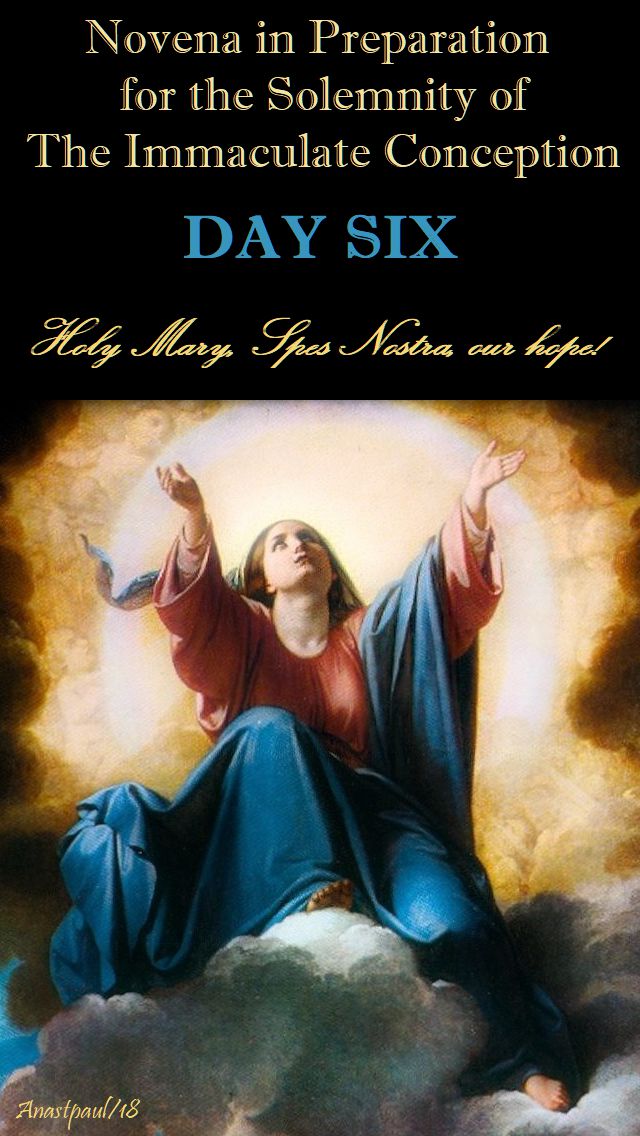
DAY SIX – 5 December
Holy Mary, our hope
Mary teaches us to hope. She proclaimed: “All generations will call me blessed.” Humanly speaking, how could she hope for such a thing? Who was she, in the eyes of the men and women of her time? The great heroines of the Old Testament – Judith, Esther, Deborah – won a measure of human glory even here on earth, for they were acclaimed and exalted by the people. Mary’s throne, by contrast, like that of her Son, is the Cross. During the rest of her life, until she was taken body and soul into Heaven, what most impresses us about her is her quiet presence. St Luke, who knew her well, describes her as being close to the first disciples, in prayer. This was the way she lived to the end of her days on earth, she who was to be praised by all creatures for all eternity.
What a contrast between Our Lady’s hope and our own impatience! So often we call upon God to reward us at once for any little good we have done. No sooner does the first difficulty appear than we start to complain. Often we are incapable of sustaining our efforts, of keeping our hope alive. Why? Because we lack faith. “Blessed art thou for thy believing; the message that was brought to thee from the Lord shall have fulfilment.” (Friends of God, 286)
Let us be full of hope! This is the great thing about being a contemplative soul. We live by Faith, Hope and Love and Hope makes us powerful. Do you remember what St John says? “I am writing to you, young men, because you are strong and the word of God abides in you and you have conquered the evil one.” God is urging us on, for the sake of the eternal youthfulness of the Church and of all mankind. You have the power to transform everything human into something divine, just as King Midas turned everything he touched into gold!
Do not ever forget that after death you will be welcomed by Love itself. And in the love of God you will find as well all the noble loves which you had on earth. Our Lord has arranged for us to spend this brief day of our earthly existence working and, like His only-begotten Son, “doing good.” Meanwhile we have to be on our guard, alert to the call St Ignatius of Antioch felt within his soul as the hour of his martyrdom approached.
“Come to the Father,” come to your Father, who anxiously awaits you. (Friends of God, 221)
Let us Pray
Let us ask Holy Mary, Spes Nostra, our hope, to kindle in us a holy desire that we may all come together to dwell in the house of the Father. Nothing need disturb us if we make up our minds to anchor our hearts in a real longing for our true fatherland. Our Lord will lead us there with His grace and He will send a good wind to carry our ship to the bright shores of our destination. (Friends of God, 221)
Teach us Holy Mother Mary,
teach us your holy hope!
This virtue that comes from the grace of God.
Intercede on our behalf that we may
be always guided by hope
that the great love of our Father,
will be our strength and our stay.
Pray for us Holy Mother of Hope.
Grant us your guiding hand.
Amen
Novena in Preparation for the Solemnity of The Immaculate Conception
By St Josemaria Escriva (1902-1975)
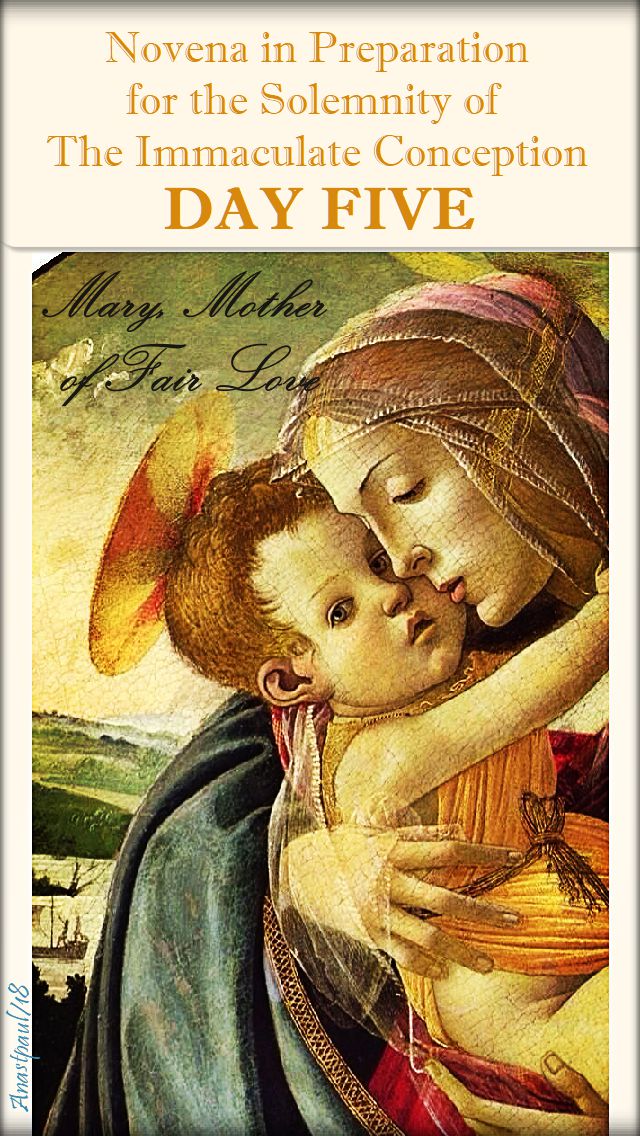
DAY FIVE – 4 December
Mary, Mother of Fair Love
“I am the Mother of fair love and of fear and of knowledge and of holy hope.” These are he lessons which Mary reminds us of today. The lesson of fair love, of living a clean life, of having a sensitive and passionate heart, so that we may learn to be faithful in our service to the Church. This is no ordinary love. It is Love itself. There is no room here for betrayal, or calculation, or forgetfulness. It is a fair, a beautiful love, because its beginning and end is God, who is thrice Holy, who is all Beauty, all Goodness and all Greatness.
But there is also a reference to fear. For myself, the only fear I can imagine is that of turning away from Love. God Our Lord, certainly does not want us to be inhibited, timid or lukewarm about our dedication to Him. He wants us to be daring, courageous and refined. When the sacred text speaks of fear here I am reminded of a complaint we find elsewhere in Scripture, “I searched for my heart’s love but found him not.” This can happen, if one has not yet fully understood what it means to love God. Then our hearts can be swayed by things which do not lead to Our Lord and so we lose sight of Him. At other times it may be Our Lord who hides Himself. He knows the reason why. In such cases, He will be encouraging us to seek Him more earnestly and, when we find Him, we shall be able to cry out with joy, “I took hold of Him and I will never let Him go.” (Friends of God, 277)
The spotless purity of John’s whole life makes him strong before the Cross. The other apostles fly from Golgotha: he, with the Mother of Christ, remains. Don’t forget that purity strengthens and invigorates the character. (The Way, 144)
This heart of ours was born to love. But when it is not given something pure, clean and noble to love, it takes revenge and fills itself with squalor. True love of God and consequently purity of life, is as far removed from sensuality as it is from insensitivity and as far from sentimentality as it is from heartlessness or hard-heartedness. (Friends of God, 183)
Why don’t you give yourself to God once and for all… really…, now? (The Way, 902)
Mary, the holy Mother of our King, the Queen of our heart, looks after us as only she knows how. Mother of mercy, throne of grace, we ask you to help us compose, verse by verse, the simple poem of charity in our own life and the lives of the people around us; it is “like a river of peace.” For you are a sea of inexhaustible mercy: “ All streams run to the sea, but the sea is never full.” (Christ is Passing By, 187)
Let us Pray:
At this very moment, you should trustingly beg Our Lady, as you accompany her in the solitude of your heart, without saying anything out loud:
“Mother, this poor heart of mine rebels so foolishly! If you don’t protect me…” Holy Mother, come to my aid, help me here and now. Help me always to love with a pure heart, to love my Lord and my God, to seek Him always! For you, who I dearly love, are my Mother, amen.
And she will help you, to keep it pure and to follow the way to which God has called you. (Friends of God, 180)
Novena in Preparation for the Solemnity of the Immaculate Conception By St Josemaria Escriva (1902-1975)
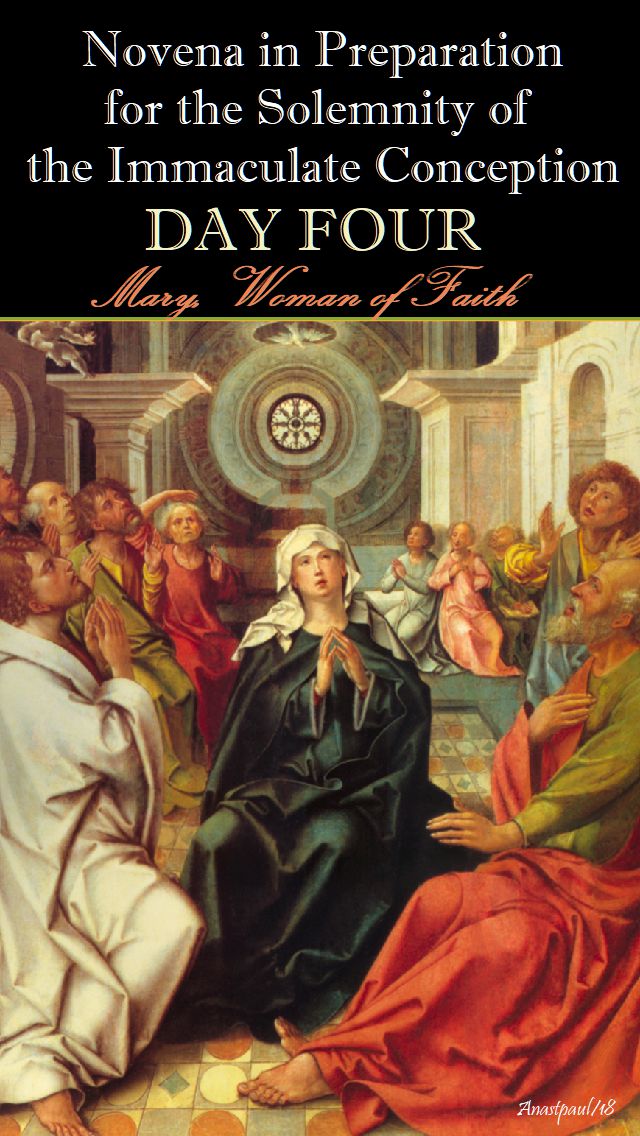
DAY FOUR – 3 December
Mary, Woman of Faith
She teaches us to have faith. “Blessed art thou for thy believing,” were the words of greeting uttered by her cousin Elizabeth when Our Lady went up into the hill country to visit her. Mary’s act of faith had been a wonderful one, “Behold the handmaid of the Lord, be it done unto me according to thy word.” When her Son was born she contemplated the greatness of God on earth: a choir of angels was present and not only the shepherds but also important men of this world came to adore the Child. Afterwards,however, the Holy Family had to flee to Egypt, to escape Herod’s murderous intent. Then, silence, thirty long years of simple, ordinary life, just like that of any other home in a small village in Galilee. (Friends of God, 284)
Lord, I do believe! I have been brought up to believe in You. I have decided to follow You closely. Repeatedly during my life I have implored Your mercy. And repeatedly too have thought it impossible that You could perform such marvels in the hearts of Your children.
Lord, I do believe but help me to believe more and better!
Let us address this same plea to Our Lady, Mother of God and our Mother and Teacher of faith: “Blessed art thou for thy believing. the message that was brought to thee from the Lord shall have fulfilment.” (Friends of God, 204)
The Virgin did not merely pronounce her fiat, in every moment she fulfilled that firm and irrevocable decision. So should we. When God’s love gets through to us and we come to know what He desires, we ought to commit ourselves to be faithful and loyal and then be so in fact. Because “not everyone who says to me, ‘Lord, Lord,’ will enter the kingdom of heaven but he who does the will of my Father in heaven.” (Christ is Passing By, 173)
Don’t forget: if God exalted His Mother, it is equally true that He did not spare her pain, exhaustion in her work or trials of her faith. A village woman one day broke into praise for Jesus, exclaiming: “Blessed is the womb that bore you and the breasts that nourished you!” Jesus said in reply: “Rather, blessed are they who hear the word of God and keep it.” It was a compliment to His Mother on her fiat, her “be it done.” She lived it sincerely, unstintingly, fulfilling its every consequence but never amid fanfare, rather in the hidden and silent sacrifice of each day. (Christ is Passing By, 172)
Let us Pray
“Mother!” Call her again and again. She is listening, she sees you in danger perhaps and with her Son’s grace she, your holy Mother Mary, offers you the refuge of her arms, the tenderness of her embrace. Call her and you will find yourself with added strength for the new struggle. The Way, 516
Hail Mary, Holy Mother! I cry unto you, help and assist me, lead me mother, teach me and guide me. Amen
Catholic Devotion for December – The Immaculate Conception
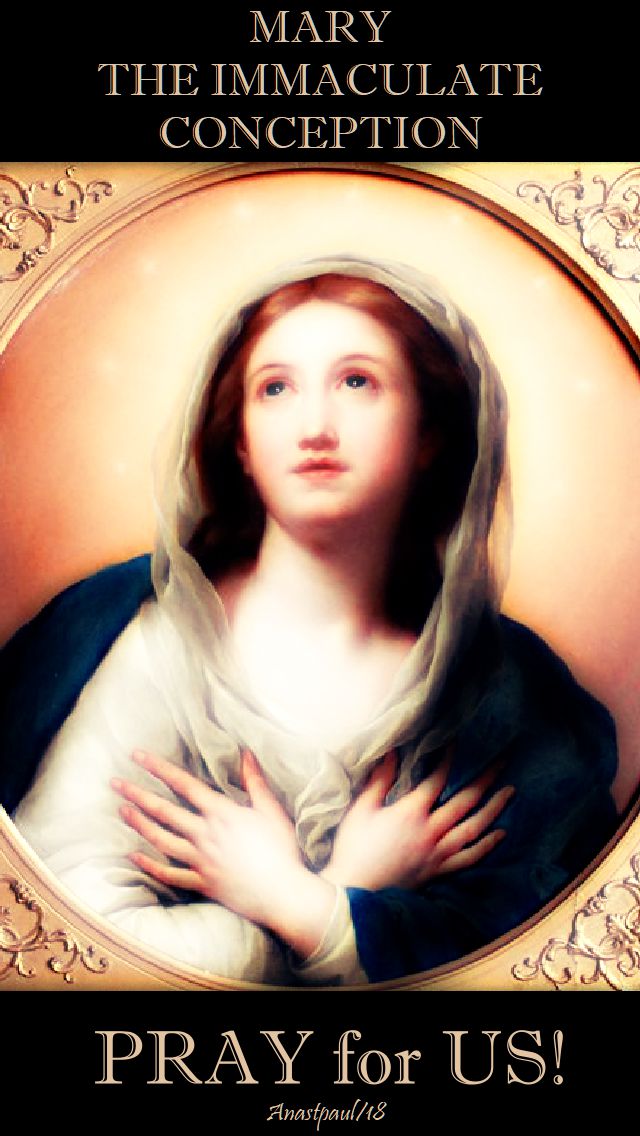
The Solemnity of the The Immaculate Conception, is celebrated on 8 December.
In 1854, Pope Pius IX’s solemn declaration, Ineffabilis Deus, clarified with finality the long-held belief of the Church that Mary was conceived free from original sin. In proclaiming the Immaculate Conception of Mary, as a dogma of the Church, the pope expressed precisely and clearly that Mary was conceived free from the stain of original sin. This privilege of Mary’s, derives from God’s having chosen her as Mother of the Saviour, thus she received the benefits of salvation in Christ, from the very moment of her conception.
This great gift to Mary, an ordinary human being just like us, was fitting because she was destined to be Mother of God. The purity and holiness of the Blessed Virgin Mary is a model for all Christians.
The Catechism of the Catholic Church says of the Immaculate Conception of Mary:
490. To become the mother of the Saviour, Mary “was enriched by God with gifts appropriate to such a role”. The angel Gabriel at the moment of the annunciation salutes her as “full of grace”. In fact, in order for Mary to be able to give the free assent of her faith to the announcement of her vocation, it was necessary that she be wholly borne by God’s grace.
491. Through the centuries the Church has become ever more aware that Mary, “full of grace” through God, was redeemed from the moment of her conception . That is what the dogma of the Immaculate Conception confesses, as Pope Pius IX proclaimed in 1844: “The most Blessed Virgin Mary was, from the first moment of her conception, by a singular grace and privilege of almighty God and by virtue of the merits of Jesus Christ, Savior of the human race, preserved immune from all stain of original sin.” (Pius IX, Ineffabilis Deus, 1854.)
492. The “splendour of an entirely unique holiness” by which Mary is “enriched from the first instant of her conception” comes wholly from Christ – she is “redeemed, in a more exalted fashion, by reason of the merits of her Son.” The Father blessed Mary more than any other created person “in Christ with every spiritual blessing in the heavenly places” and chose her “in Christ before the foundation of the world, to be holy and blameless before him in love.”
493. The Fathers of the Eastern tradition call the Mother of God “the All-Holy” (Panagia) and celebrate her as “free from any stain of sin, as though fashioned by the Holy Spirit and formed as a new creature”. By the grace of God Mary remained free of every personal sin her whole life long.
Immaculate Mary, Pray for the Church, the Mystical Body of your Son!
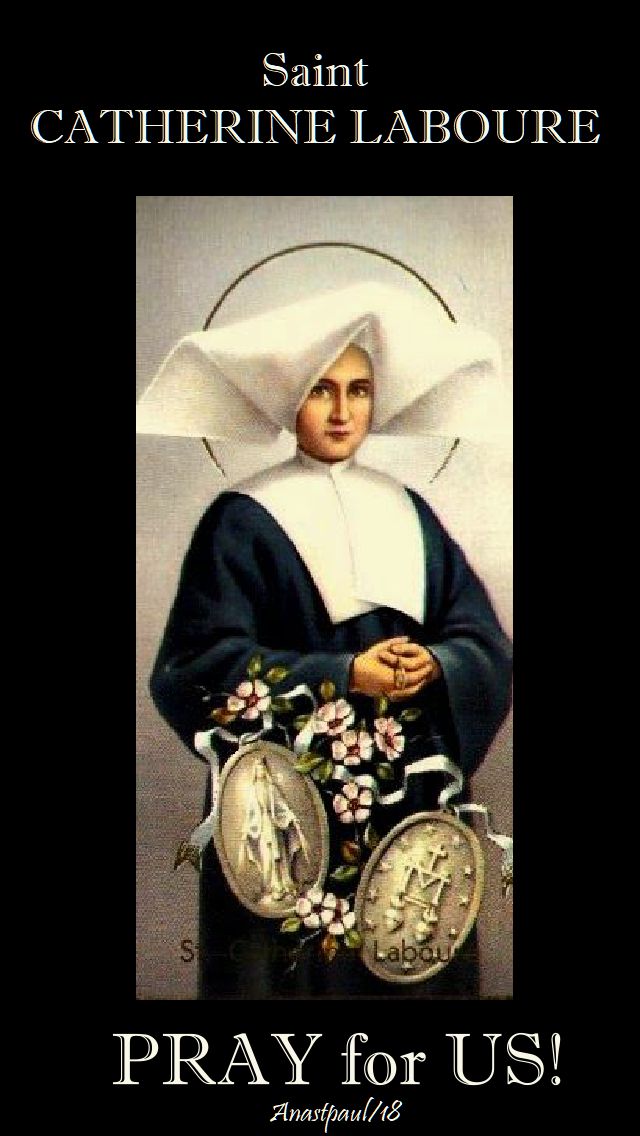
Thought for the Day – 28 November – The Memorial of St Catherine Labouré DC (1806-1876)
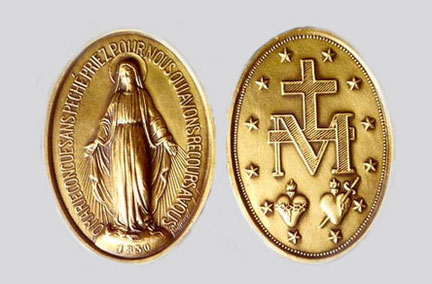
The Miraculous Medal has been called “a summary of the Church’s teaching on Our Lady, a mini-catechism of the faith for everyone.” Indeed, the Marian vision that inspired the medal included some important symbolism!
For starters, the reference to Mary’s having been conceived without sin on the medal, shown in its original French in the photo above, was defined as a Dogma by the church in 1854, hence the reason that the Medal is actually officially known as the Medal of the Immaculate Conception – (Note that this refers to Mary’s conception, not to Jesus’ birth, a common misconception!)
Note also that Mary is shown in the photo above standing on a globe crushing the head of a serpent. This is in line with scripture, from Genesis 3:15, which foretells Satan’s ultimate defeat at the hands of her Son. (Granted, this is not readily visible here or indeed on many Miraculous Medals, particularly small ones!)
On the back of the medal (the picture on the right above) we see symbols of Jesus and Mary, in the Cross (the symbol of her Son’s victory over sin and death for us at Calvary) with the Letter “M” for Mary right underneath it. Directly underneath that are two hearts, the Sacred Heart of Jesus and the Immaculate Heart of Mary, both filled with great love for each other and for us too! We see their sadness over our sins as well in this depiction. On the left side are the thorns of our indifference and ingratitude piercing our Lord’s Sacred Heart even while it burns with love for us. On the right side we see a sword piercing Mary’s heart, which is filled with sorrow as well as love (as described here). Surrounding these poignant images we see twelve stars symbolising the twelve apostles.
On the front of the medal (left) we see our Lady’s hands outstretched with rays of light, symbolising grace, streaming from her fingers. (Again, granted, this may be hard to see on a small medal!) We are reminded here of St Louis de Montfort’s reference to her as the “treasurer and dispenser of God’s graces.”
We can see from all this that the Miraculous Medal is an important sacramental, indeed, as it can give us the graces Our Lady wishes us to have on behalf of her Divine Son. Indeed, she herself said to St Catherine when giving her the vision of the medal “Have a medal made according to this model. Everybody who wears it will receive great graces by wearing it around the neck. The graces will be abundant for persons who wear it with confidence.” Remember, however, that the most important place of honour for Mary must be in our hearts, not around our necks.
It is important to note as well that, as with all sacramentals, the Miraculous Medal is not some “lucky charm”. Keep in mind also, that in expressing devotion to Mary, we do not worship her, as many Christians in other denominations, especially some Evangelicals, believe, but rather honour her in her devotion to our Lord! As the popular saying goes “to Jesus through Mary.”
Remember also her last words in Scripture, which could almost be her motto, in which she told the attendants at the wedding feast of Cana “Do whatever he [Jesus] tells you” (John 2:5).
Prayers such as the Hail Mary and the Memorare can also help do us worlds of good in receiving and sharing the graces she wishes to give us. They are all meant to lead us to a closer relationship with Jesus!
Mary showed St Catherine an intriguing symbol in her Miraculous Medal vision. The rays of light emanating graces came from sparkling jewels on Our Lady’s fingers. St Catherine noticed, however that some of these jewels were dark and not giving forth any light. Mary explained that “those stones which remain dark symbolise the graces people have forgotten to request.”Don’t let such graces be lost on you! And don’t ever be afraid to ask for her help in obtaining Christ’s mercy!
Thought for the Day – 19 August – On the Assumption of the Blessed Virgin Mary
By Blessed John Henry Cardinal Newman (1801-1890)
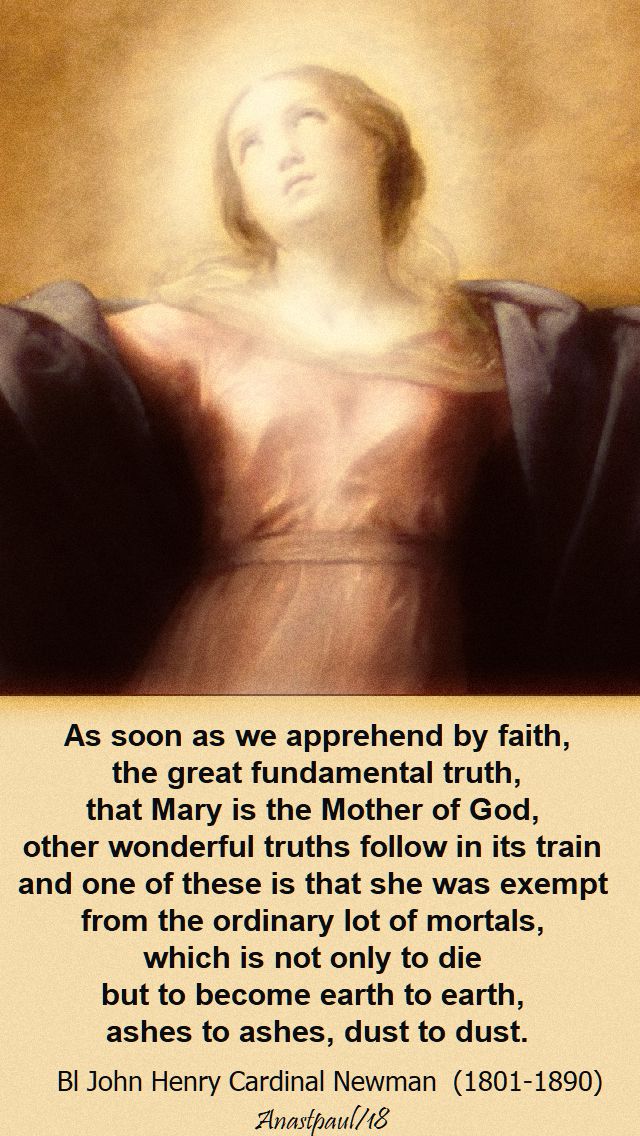
Blessed Newman says it begins with who Mary: “As soon as we apprehend by faith, the great fundamental truth, that Mary is the Mother of God, other wonderful truths follow in its train and one of these, is that, she was exempt from the ordinary lot of mortals, which is not only to die but to become earth to earth, ashes to ashes, dust to dust.” Mary receives honour because of who her Son is – our only Lord and Saviour and from His victory over sin and death, Mary is blessed with this gift.
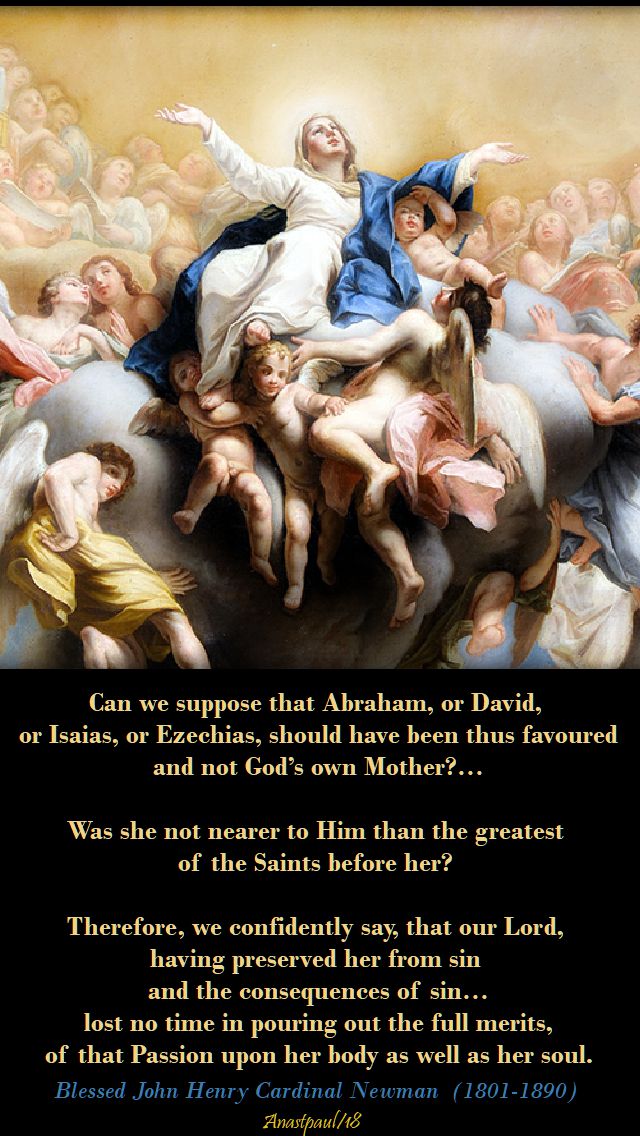
Yet, Mary was not the first or the only one to have her body preserved from corruption. Blessed Newman quotes St Matthew, who reports that bodies of the saints came out of the tombs following our Lord’s resurrection. “Can we suppose that Abraham, or David, or Isaias, or Ezechias, should have been thus favoured and not God’s own Mother?…Was she not nearer to Him than the greatest of the Saints before her? Therefore we confidently say that our Lord, having preserved her from sin and the consequences of sin…lost no time, in pouring out the full merits, of that Passion upon her body as well as her soul.”
We, too, want to be more fully conformed to our Lord, just as our Lady is and to be in Heaven as she is united with the Object of our love. She will help us bring to Him the little that we have and to rely on Him, as she did. She is the Mother of our Lord and she is our Mother too.
Let us go to her today and, with confidence, to our Heavenly Father, who never fails to honour and bless those who surrender to Him.
Mary, Holy Mother, Assumed into Heaven, Pray for us!
Our Morning Offering – 19 August – The Solemnity of the Assumption of the Blessed Virgin Mary
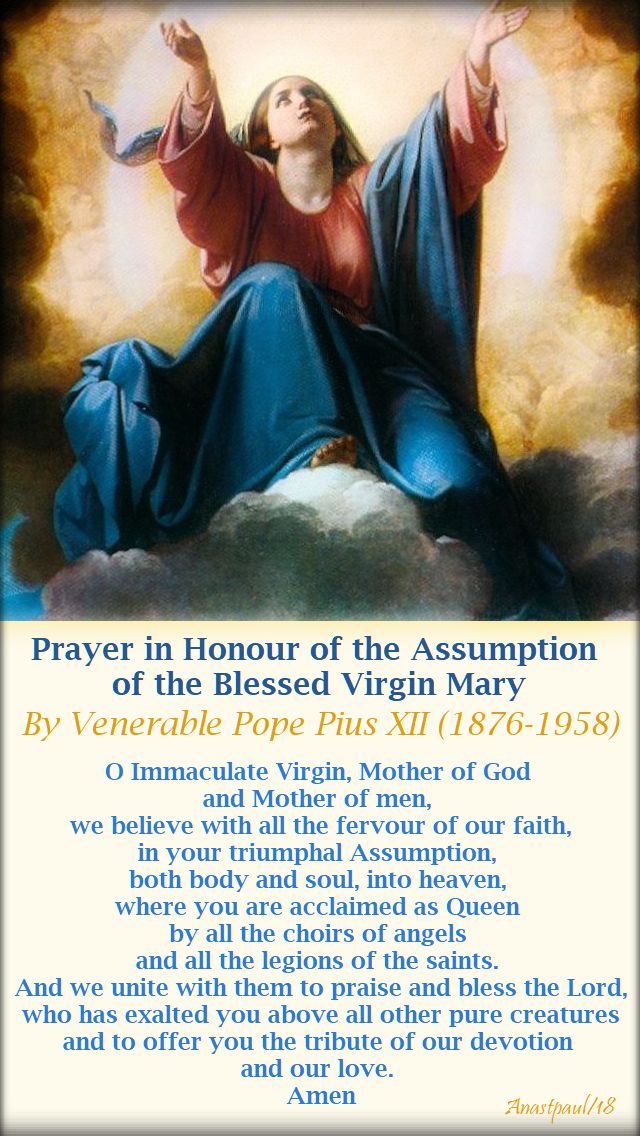
Prayer in Honour of the Assumption of the Blessed Virgin Mary By Venerable Pope Pius XII (1876-1958)
O Immaculate Virgin, Mother of God
and Mother of men,
we believe with all the fervour of our faith,
in your triumphal Assumption,
both body and soul, into heaven,
where you are acclaimed as Queen
by all the choirs of angels
and all the legions of the saints.
And we unite with them to praise and bless the Lord,
who has exalted you above all other pure creatures
and to offer you the tribute of our devotion
and our love.
Amen
The Solemnity of the Assumption of the Blessed Virgin Mary – celebrated today in South Africa and most countries of Africa, many others and in many Diocese where the local Bishops have decided to move the Solemnity to a Sunday.
St John Eudes (Optional Memorial)
Biography here: https://anastpaul.wordpress.com/2017/08/19/saint-of-the-day-19-august-st-john-eudes-apostle-of-two-hearts/
St Andrew the Tribune
St Badulf of Ainay
St Bertulf of Luxeuil
St Calminius
St Credan of Evesham
St Donatus of Mount Jura
St Elaphius of Châlons
St Ezekiel Moreno Y Diaz
St Guenninus
Bl Guerricus
Bl Hugh Green
St Julius of Rome
St Louis of Toulouse
St Magnus of Anagni
St Magnus of Avignon
St Magnus of Cuneo
St Marianus of Entreaigues
St Marinus of Besalu
St Magino of Tarragona
St Mochta
St Namadia of Marsat
St Rufinus of Mantua
St Sarah the Matriarch
St Sebaldus
St Thecla of Caesarea
St Timothy of Gaza
—
Martyrs of Nagasaki – 15 beati: A group of missionaries and their laymen supporters who were executed for spreading Christianity in Japan.
• Antonius Yamada
• Bartholomaeus Mohyoe
• Iacobus Matsuo Denji
• Ioachim Díaz Hirayama
• Ioannes Miyazaki Soemon
• Ioannes Nagata Matashichi
• Ioannes Yago
• Laurentius Ikegami Rokusuke
• Leo Sukeemon
• Ludovic Frarijn
• Marcus Takenoshita Shin’emon
• Michaël Díaz Hori
• Paulus Sankichi
• Pedro de Zúñiga
• Thomas Koyanagi
Theywere beheaded on 19 August 1622 at Nagasaki, Japan and Beatified on 7 May 1867 by Pope Pius IX.
Martyred in the Spanish Civil War
Martyred Carmelite Sisters of Charity – 9 beati
Martyred Salesians of Ciudad Real – 8 beati
Martyred Subiaco Benedictines of Barcelona – 7 beati
• Blessed Agueda Hernández Amorós
• Blessed Agustí Busquets Creixell
• Blessed Andrés Pradas Lahoz
• Blessed Antolín Martínez y Martínez
• Blessed Antoni Pedró Minguella
• Blessed Càndid Feliu Soler
• Blessed Cipriano González Millán
• Blessed Damián Gómez Jiménez
• Blessed Elvira Torrentallé Paraire
• Blessed Félix González Bustos
• Blessed Francisca de Amézua Ibaibarriaga
• Blessed Francisco de Paula Ibáñez y Ibáñez
• Blessed Ignasi Guilà Ximenes
• Blessed Isidro Muñoz Antolín
• Blessed Joan Roca Bosch
Solemnity of the Assumption of the Blessed Virgin Mary – 15 August (in the US, however, in most countries of Africa, the Solemnity will celebrated on Sunday 19 AUGUST): The feast celebrates the assumption of the body of the Blessed Virgin Mary into heaven upon her death. According to Pope Benedict XIV, it is a probable opinion, which it is impious to deny, though not an article of faith but has since in 1950 has been raised to a DOGMA of the Faith. The origin of the feast day is not known but it was celebrated in Palestine before the year 500. It is a holy day of obligation, its vigil being a fast day, in many English-speaking countries. Among the many masters who have painted the subject of the Assumption are Fra Angelico, Ghirlandajo, Rubens, Del Sarto and Titian.
Patronages:
• Acadians, Cajuns
• Cistercian Order, Cistercians
• fish dealers, fishmongers
• French air crews
• harness makers
• France
• Guatemala
• India
• Jamaica
• Malta
• Paraguay
• Slovakia
• East Africa (region of east Africa which includes diverse countries, proclaimed on 15 March 1952 by Pope Pius XII)
• South Africa (THIS IS NOT A REGION BUT A COUNTRY and the Assumption is, therefore, the Patronal Feast of the Country of South Africa – proclaimed on 15 March 1952 by Pope Pius XII)
• 24 dioceses
• 38 cities
Annabale Carraci 1600-1601
St Alipius of Tagaste
Bl Alfred of Hildesheim
Bl Agustín Hurtado Soler
St Arduinus of Rimini
St Arnulphus of Soissons
Bl Claudio Granzotto
Bl George Halley
St Napoleon of Alexandria
Bl Pio Alberto del Corona
St Simplician (c 320-c 401) Bishop and Successor of St Ambrose (340-397) Doctor of the Church in the ArchDiocese of Milan.
Details of the life of St Simplician here: https://anastpaul.wordpress.com/2017/08/15/saint-of-the-day-15-august-st-simplician-of-milan/
St Tarcisius (3rd century) Martyr
Martyrs of Nicomedia – 3 saints: Three Christians martyred together. No details survive but the names – Eutychian, Philip and Straton. They were martyred in Nicomedia, Bithynia (in modern Turkey).
Martyred in the Mexican Revolution: 4 Saints –
St David Roldán Lara
St Luis Batiz Sainz
St Manuel Moralez
St Salvador Lara Puente
Martyred in the Spanish Civil War: Thousands of people were murdered in the anti-Catholic persecutions of the Spanish Civil War from 1934 to 1939.
• Blessed Agustì Ibarra Angüela
• Blessed Carmelo Sastre y Sastre
• Blessed Clemente Vea Balaguer
• Blessed Francisco Míguez Fernández
• Blessed Ildefonso Alberto Flos
• Blessed Jaume Bonet Nadal
• Blessed Joan Ceró Cedó
• Blessed Josep Santonja Pinsach
• Blessed Juan Francisco Barahona Martín
• Blessed Juan Mesonero Huerta
• Blessed Luis Ros Ezcurra
• Blessed Manuel Formigo Giráldez
• Blessed Miguel Alberto Flos
• Blessed Sebastià Balcells Tonijuan
• Blessed Severiano Montes Fernández
One Minute Marian Reflection – 28 May “Mary’s Month!”
And after my skin has been destroyed, yet in my flesh I will see God; I myself will see him with my own eyes—I, and not another ‘s…Job 19:26-27
REFLECTION – “MARY: TAKEN UP TO HEAVEN – “Mary has gone to heaven in both body and soul and the angels rejoice. I can imagine, too, the delight of St Joseph, her most chaste spouse, who awaited her in paradise. Yet what of us who remain on earth? Our faith tells us that here below, in our present life, we are pilgrims, wayfarers. Our lot is one of suffering, of sacrifices, and privations. Nonetheless, joy must mark the rhythm of our steps. ‘Serve the Lord with joy’ — there is no other way to serve Him.” … St Josemaría Escrivá (1902-1975) – Cause of our Joy,” Christ is Passing By, 177. Let us offer to our Mother today: A smile when someone corrects us or misjudges us.
PRAYER – Accept our prayer, Lord, as we wend our way to You. Grant, we pray, that by the intercession of the Blessed Virgin Mary, we may remember her words and do whatever You tell us, for You are the Way, the Truth and our Life and Light, in doing Your will, is true joy on earth and eternal heavenly bliss. Mary, our Mother and Mother of our Lord Jesus, pray for us. Through Jesus Christ, in union with You and the Holy Spirit, one God, forever amen.
Second Thoughts for the Day – 27 May – The Solemnity of the Most Holy Trinity
Adopted into the Family of God
“In you all the families of the earth shall be blessed” (Gen 12:3) “For all, who are led by the Spirit of God, are children of God.” (Romans 8:14)
…”How would God be revealed to the other families of the earth? How would the other families of the earth enter the Covenant and become heirs to the promises of God.
The language of families here is significant, for it is through the revelation of God as Trinity, the Divine Family, that all other families of the earth would be invited into the Covenant family.
For the reality of the Trinity did not emerge for the earliest Christians in the context of complex philosophical discussions but in the experience of God as Father, Son and Holy Spirit.
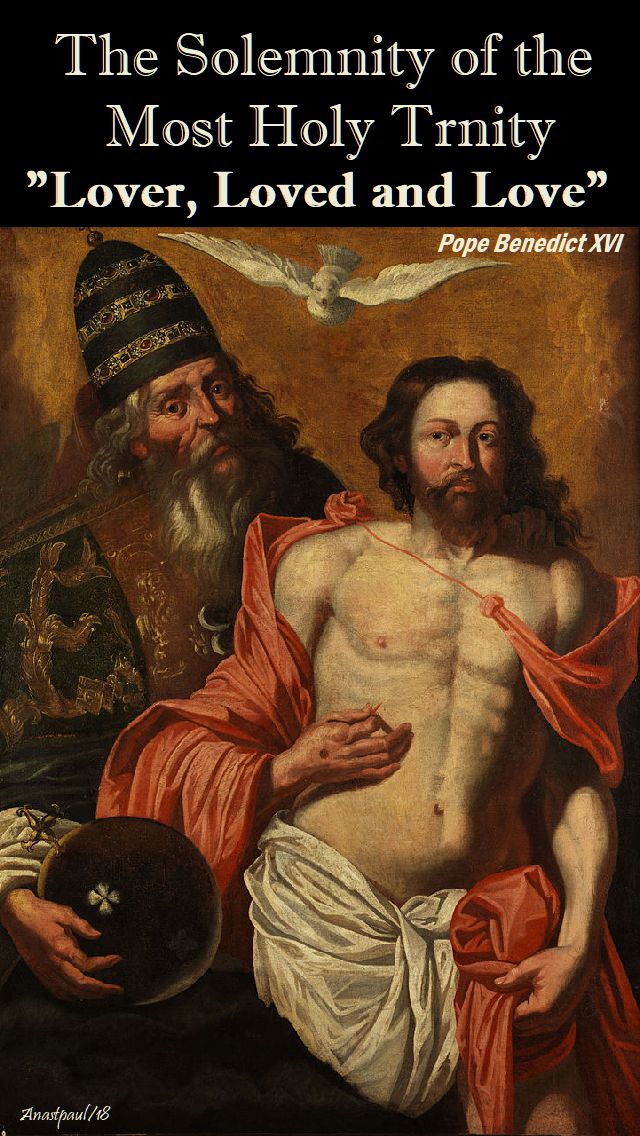
As Pope Benedict XVI stated in 2006. “the intimacy of God Himself, discovering that He is not infinite solitude but communion of light and love, life given and received in an eternal dialogue between the Father and the Son in the Holy Spirit – ‘Lover, Loved and Love,’ revealed the relational nature of God, through the guidance of the Holy Spirit and by the incarnation of Jesus Christ.” (Angelus, St Peter’s Square, 11 June 2006).
And it was by means of the revelation of God as Father, Son and Holy Spirit, that the early Christians came to know themselves as children of God, adopted into the family and Covenant of God. The Spirit, Paul tells us, empowers us to understand, that we too are children of God, for through the Spirit, we are able to cry “Abba, Father!” This Spirit-infused call to God as Abba, is an explicit recognition of our lineage, we belong in this family, for “it is that very Spirit bearing witness with our spirit that we are children of God.”
But the pathway to entering the family as heirs, children destined to share in the gifts and promises of the Father, in the Kingdom of God, was blazed for us, by the obedience of the Son. As Paul says in Galatians 3:29, “If you belong to Christ, then you are Abraham’s offspring, heirs according to the promise.” Christ through His suffering and death for us, has made us “joint heirs with Christ,” worthy of adoption into God’s family. We belong to the family of God, because we belong to the Son, who has made us “joint heirs.” Through the true heir, we are simply joined with our Covenantal and Divine Family.
We are welcomed into God’s family as joint heirs because of the love of the Trinity for us. The Trinity models the nature of the family by allowing us to experience the source of all love. It is because of the Trinitarian model of love for us and our experience of that love, that Jesus instructs us to go out and make the family bigger. We belong to the family of God but so do those who have not yet come home. We have learned something now about the nature of God and the extent of God’s family and the call is the same to all – come home and be loved!…John W Martens “The Word on the Street Year B”
John Martens is Professor of Theology at St Thomas University and Director of the MA in Theology at St Paul’s Seminary School of Divinity, Minnesota.
Announcing a Novena to the Most Holy Trinity Begins – Friday,18 May
Perhaps the deepest, the most profound of all mysteries is the mystery of the Trinity. The Church teaches us, that although there is only one God, yet, somehow, there are three Persons in God. ,,The Father is God, the Son is God, the Holy Spirit is God, yet we do not speak of three Gods but only one God. ,,They have the same nature, substance, and being.
We came to know this immense mystery because Christ revealed it to us. ,,Just before ascending He told them:, “Go teach all nations, baptising them in the name of the Father and of the Son and of the Holy Spirit” (Matthew 28:19). ,,We know that these Three are not just different ways of looking at one person. ,,For at the Last Supper, Jesus told us: “I came forth from the Father.” So He is different from the Father. But He also promised: “If I go, I will send Him [the Paraclete] to you. . . . He will guide you to all truth” (John 16:28, 7, 13). So the Holy Spirit is also different.
Even though the Three Persons are One God, yet they are distinct: for the Father has no origin, He came from no one. But the Son is begotten, He comes from the Father alone. The Holy Spirit comes or proceeds from both the Father and the Son. These different relations of origin tell us there are three distinct Persons, who have one and the same divine nature.
Even though everything the Three Persons do outside the Divine nature is done by all Three, yet it is suitable that we attribute some works specially to one or the other Person. So we speak of the Father especially as the power of creation, of the Son as the wisdom of the Father, of the Holy Spirit as goodness and sanctification.
The two doctrines of the Trinity and the Incarnation are the foundation of Christian life and worship. By becoming man, God the Son offered us a share in the inner life of the Trinity. By grace, we are brought into the perfect communion of life and love which is God, Father, Son and Holy Spirit. This sharing in the life of the Trinity is meant to culminate in heaven, where we will see the three Persons face to face, united to them in unspeakable love….Fr William G Most (from the Catechism of the Catholic Church 232-267).
Marian Thought for the Day – 14 May – Mary’s Month!” – Monday of the Seventh Week of Eastertide
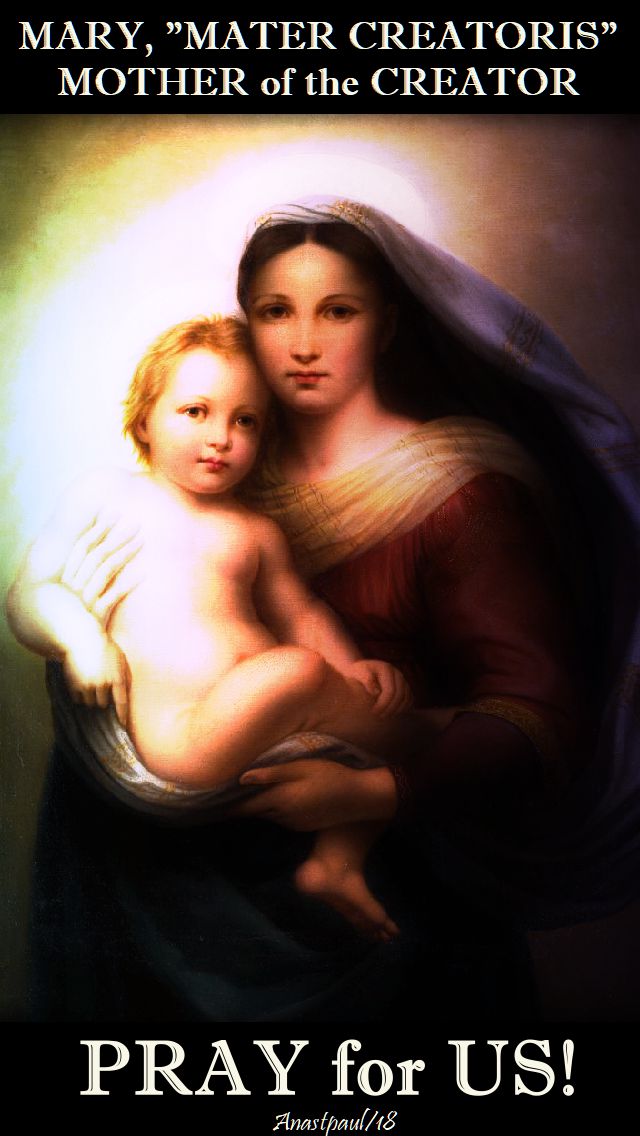
Mary is the “Mater Creatoris,” the Mother of the Creator
Blessed John Henry Newman (1801-1890)
THIS is a title which, of all others, we should have thought it impossible for any creature to possess. At first sight we might be tempted to say that it throws into confusion our primary ideas of the Creator and the creature, the Eternal and the temporal, the Self-subsisting and the dependent and yet, on further consideration, we shall see that we cannot refuse the title to Mary, without denying the Divine Incarnation—that is, the great and fundamental truth of revelation, that God became man.
And this was seen from the first age of the Church. Christians were accustomed from the first to call the Blessed Virgin “The Mother of God,” because they saw that it was impossible to deny her that title without denying St John’s words, “The Word” (that is, God the Son) “was made flesh.”
And in no long time it was found necessary to proclaim this truth by the voice of an Ecumenical Council of the Church. For, in consequence of the dislike which men have of a mystery, the error sprang up that our Lord was not really God but a man, differing from us in this merely—that God dwelt in Him, as God dwells in all good men, only in a higher measure; as the Holy Spirit dwelt in Angels and Prophets, as in a sort of Temple, or again, as our Lord now dwells in the Tabernacle in church. And then, the bishops and faithful people found there was no other way of hindering this false, bad view being taught but by declaring distinctly and making it a point of faith, that Mary was the Mother, not of man only but of God. And since that time the title of Mary, as Mother of God, has become what is called a dogma, or article of faith, in the Church.
But this leads us to a larger view of the subject. Is this title as given to Mary more wonderful than the doctrine that God, without ceasing to be God, should become man? Is it more mysterious that Mary should be Mother of God, than that God should be man? Yet the latter, as I have said, is the elementary truth of revelation, witnessed by Prophets, Evangelists and Apostles all through Scripture. And what can be more consoling and joyful than the wonderful promises which follow from this truth, that Mary is the Mother of God?—the great wonder, namely, that we become the brethren of our God, that, if we live well and die in the grace of God, we shall all of us hereafter be taken up by our Incarnate God to that place where angels dwel, that our bodies shall be raised from the dust and be taken to Heaven, that we shall be really united to God, that we shall be partakers of the Divine nature, that each of us, soul and body, shall be plunged into the abyss of glory which surrounds the Almighty, that we shall see Him and share His blessedness, according to the text, “Whosoever shall do the will of My Father that is in Heaven, the same is My brother and sister, and mother.”
Marian Thought for the Day – 3 May – Mary’s Month! – Thursday of the Fifth Week of Eastertide and the Feast of Sts Philip and James Apostles and Martyrs
On the Immaculate Conception
Mary is the “Virgo Purissima,” the Most Pure Virgin
By Blessed John Henry Newman (1801-1890)
BY the Immaculate Conception of the Blessed Virgin is meant the great revealed truth that she was conceived in the womb of her mother, St Anne, without original sin.
Since the fall of Adam all mankind, his descendants, are conceived and born in sin. “Behold,” says the inspired writer in the Psalm Miserere—“Behold, I was conceived in iniquity and in sin did my mother conceive me”. That sin which belongs to every one of us and is ours, from the first moment of our existence, is the sin of unbelief and disobedience, by which Adam lost Paradise. We, as the children of Adam, are heirs to the consequences of his sin and have forfeited in him, that spiritual robe of grace and holiness, which he had given him by his Creator at the time that he was made. In this state of forfeiture and disinheritance we are all of us conceived and born and the ordinary way, by which we are taken out of it, is the Sacrament of Baptism.
But Mary never was in this state, she was by the eternal decree of God exempted from it. From eternity, God, the Father, Son and Holy Ghost, decreed to create the race of man and, foreseeing the fall of Adam, decreed to redeem the whole race by the Son’s taking flesh and suffering on the Cross. In that same incomprehensible, eternal instant, in which the Son of God was born of the Father, was also the decree passed of man’s redemption through Him. He who was born from Eternity was born by an eternal decree to save us in Time and to redeem the whole race and Mary’s redemption, was determined in that special manner which we call the Immaculate Conception. It was decreed, not that she should be cleansed from sin but that she should, from the first moment of her being, be preserved from sin, so that the Evil One never had any part in her. Therefore, she was a child of Adam and Eve as if they had never fallen, she did not share with them their sin, she inherited the gifts and graces (and more than those) which Adam and Eve possessed in Paradise. This is her prerogative and the foundation of all those salutary truths, which are revealed to us concerning her.
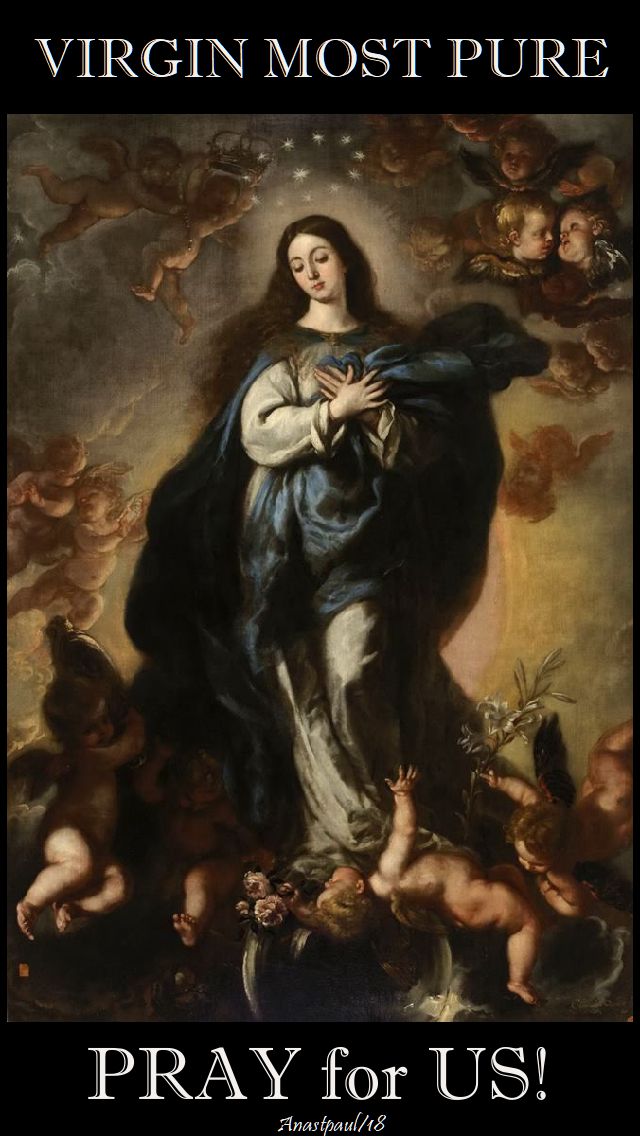
Let us say then with all holy souls, Virgin most pure, conceived without original sin, Mary, pray for us.
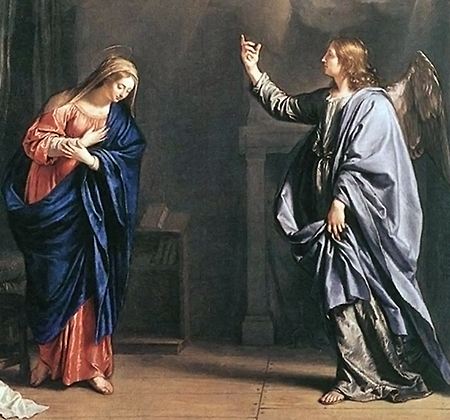
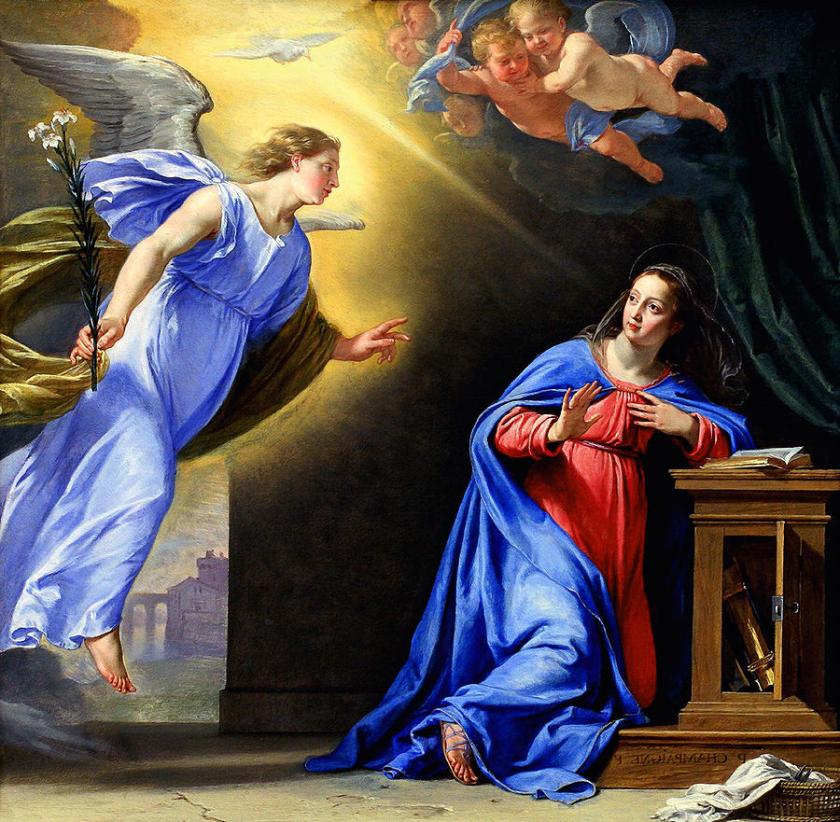
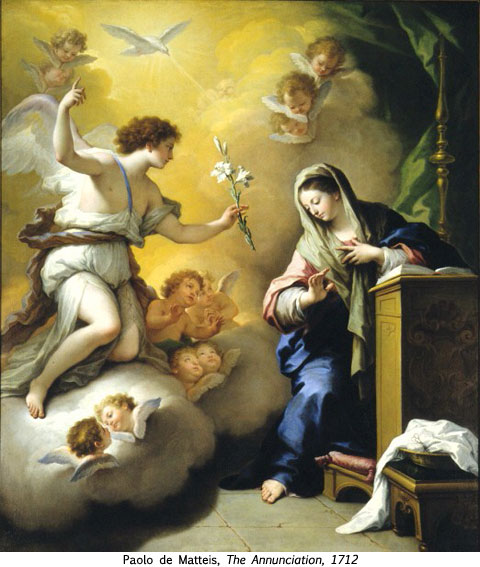
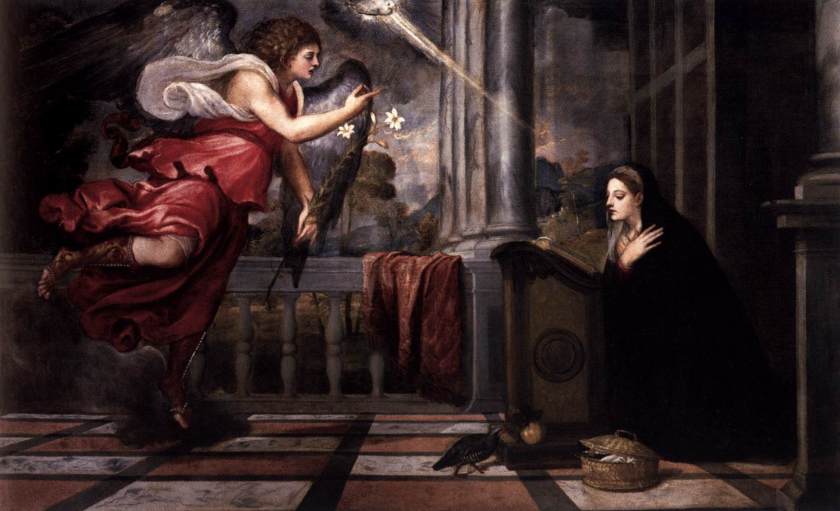
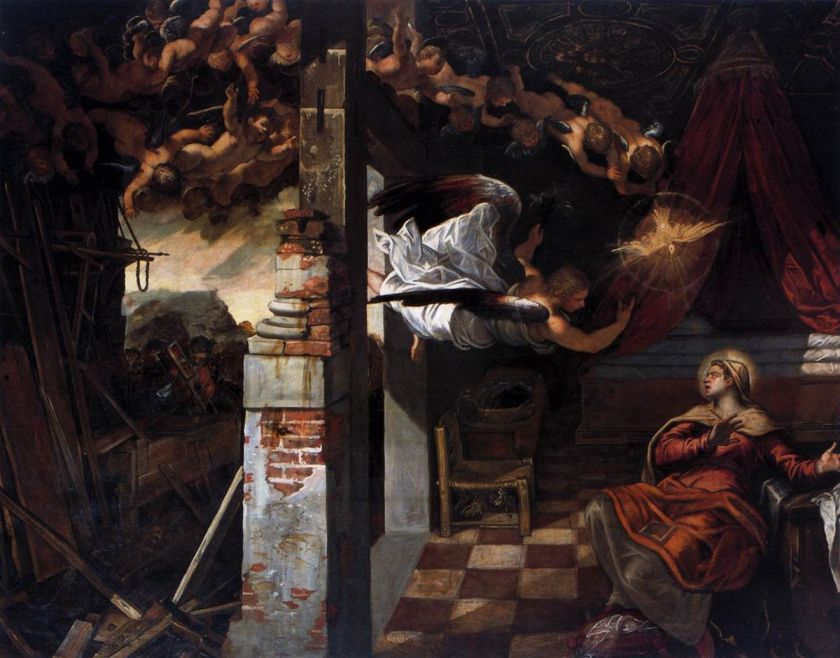
Annunciation of the Blessed Virgin Mary (Solemnity): The Annunciation to the Blessed Virgin Mary by Gabriel the Archangel that she was to be the Mother of God (Luke 1), the Word being made flesh through the power of the Holy Spirit. The feast probably originated about the time of the Council of Ephesus, c 431 and is first mentioned in the Sacramentary of Pope Gelasius (died 496). The Annunciation is represented in art by many masters, among them Fra Angelico, Hubert Van Eyck, Jan Van Eyck, Philippe de Champaigne (1 and 2 below), Ghirlandajo, Holbein the Elder, Lippi, Pinturicchio, Titian (2nd last below), Tintoretto (last below) and Del Sarto.
Our Lady of Betania: Actually the name Betania means Bethany in Spanish. It was originally given this name by Maria Esperanza and was the site of their farm, in Venezuela. Apparitions of the Blessed Virgin Mary were reported and eventually a small chapel was built here and the faithful began to gather, especially on Feast Days but throughout the year.
St Alfwold of Sherborne
St Barontius of Pistoia
St Desiderius of Pistoia
St Dismas
St Dula the Slave
Bl Emilian Kovch
Bl Everard of Nellenburg
Bl Herman of Zahringen
St Hermenland
St Humbert of Pelagius
Bl James Bird
Bl Josaphata Mykhailyna Hordashevska
St Kennocha of Fife
St Lucia Filippini
St Margaret Clitherow
Bl Margaretha Flesch
St Mariam Sultaneh Danil Ghattas
St Matrona of Barcelona
St Matrona of Thessaloniki
St Mona of Milan
St Ndre Zadeja
Bl Pawel Januszewski
St Pelagius of Laodicea
Bl Placido Riccardi
St Procopius
St Quirinus of Rome
Bl Tommaso of Costacciaro
—
262 Martyrs of Rome: A group 262 Christians martyred together in Rome. We know nothing else about them, not even their names.
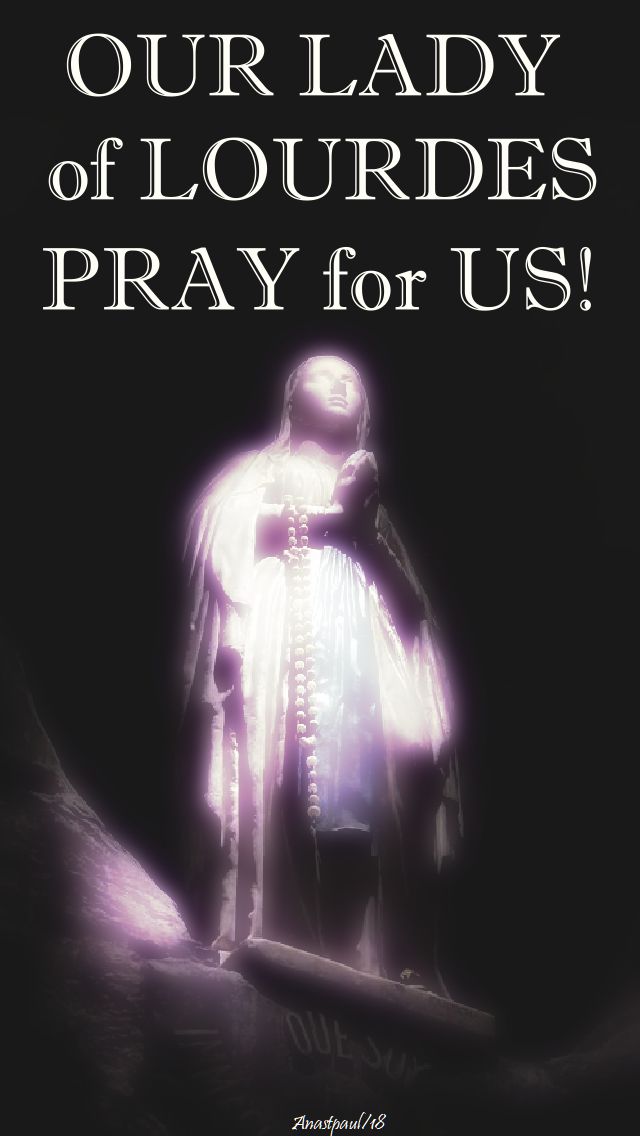
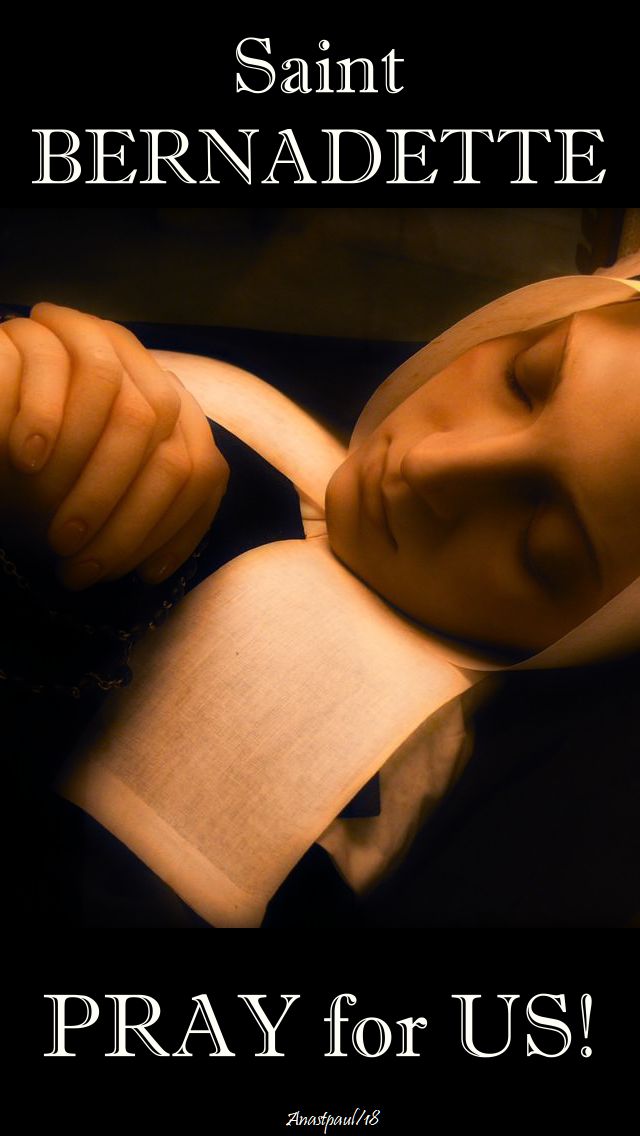
Thought for the Day – 11 February – Memorial of Our Lady of Lourdes and the 26th World Day of Prayer for the Sick
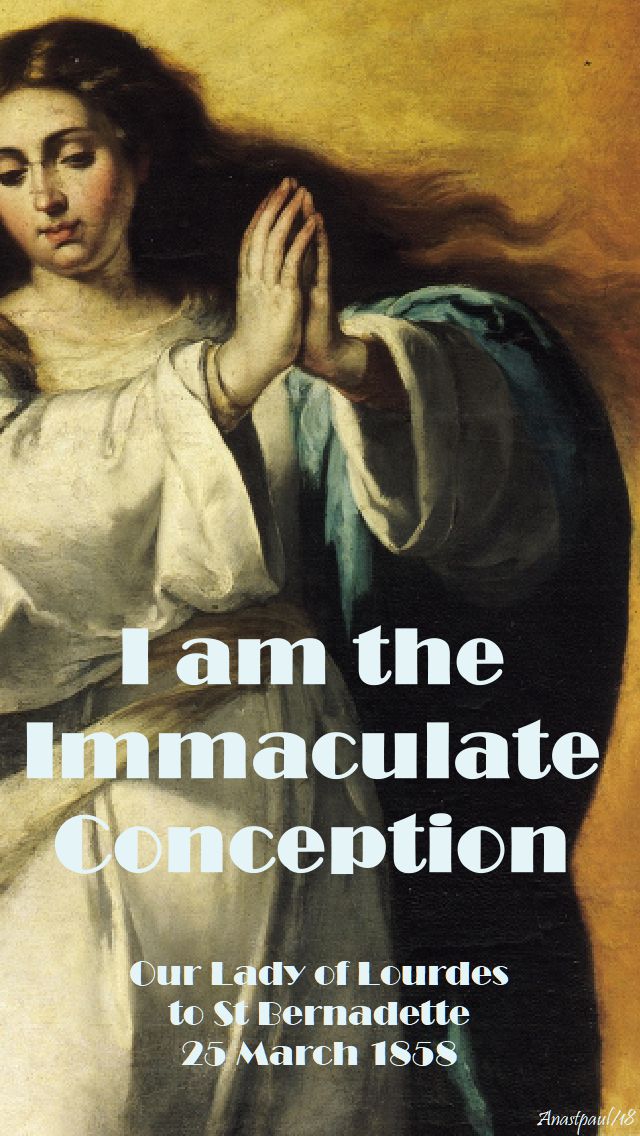
On 8 December 1854, Pope Pius IX proclaimed the dogma of the Immaculate Conception in the apostolic constitution Ineffabilis Deus. A little more than three years later, on 11 February 1858, a young lady appeared to Bernadette Soubirous. This began a series of visions. During the apparition on 25 March, the lady identified herself with the words: “I am the Immaculate Conception.”
Bernadette was a sickly child of poor parents. Their practice of the Catholic faith was scarcely more than lukewarm. Bernadette could pray the Our Father, the Hail Mary and the Creed. She also knew the prayer of the Miraculous Medal: “O Mary conceived without sin.”
During interrogations Bernadette gave an account of what she saw. It was “something white in the shape of a girl.” She used the word aquero, a dialect term meaning “this thing.” It was “a pretty young girl with a rosary over her arm.” Her white robe was encircled by a blue girdle. She wore a white veil. There was a yellow rose on each foot. A rosary was in her hand. Bernadette was also impressed by the fact that the lady did not use the informal form of address (tu), but the polite form (vous). The humble virgin appeared to a humble girl and treated her with dignity.
Through that humble girl, Mary revitalised and continues to revitalise the faith of millions of people. People began to flock to Lourdes from other parts of France and from all over the world. In 1862 Church authorities confirmed the authenticity of the apparitions and authorised the cult of Our Lady of Lourdes for the diocese. The Feast of Our Lady of Lourdes became worldwide in 1907.
Lourdes has become a place of pilgrimage and healing but even more of faith. Church authorities have recognised over 60 miraculous cures, although there have been accounts of many more. To people of faith this is not surprising. It is a continuation of Jesus’ healing miracles—now performed at the intercession of his mother. Some would say that the greater miracles are hidden. Many who visit Lourdes return home with renewed faith and a readiness to serve God in their needy brothers and sisters.
There still may be people who doubt the apparitions of Lourdes. Perhaps the best that can be said to them are the words that introduce the film The Song of Bernadette: “For those who believe in God, no explanation is necessary. For those who do not believe, no explanation is possible.”
Let us Pray:
Prayer to Our Lady of Lourdes By St Pope John Paul II (1920-2005)
To Mary, Mother of tender love,
we wish to entrust all those
who are ill in body and soul,
that she may sustain them in hope.
We ask her also to help us to be welcoming
to our sick brothers and sisters.
Hail Mary, poor and humble Woman,
Blessed by the Most High!
Virgin of hope, dawn of a new era,
We join in your song of praise,
to celebrate the Lord’s mercy,
to proclaim the coming of the Kingdom
and the full liberation of humanity.
Hail Mary, lowly handmaid of the Lord,
Glorious Mother of Christ!
Faithful Virgin, holy dwelling-place of the Word,
Teach us to persevere in listening to the Word,
and to be docile to the voice of the Spirit,
attentive to His promptings in the depths of our conscience
and to His manifestations in the events of history.
Hail Mary, Woman of sorrows,
Mother of the living!
Virgin spouse beneath the Cross, the new Eve,
Be our guide along the paths of the world.
Teach us to experience and to spread the love of Christ,
to stand with you before the innumerable crosses
on which your Son is still crucified.
Hail Mary, woman of faith,
First of the disciples!
Virgin Mother of the Church, help us always
to account for the hope that is in us,
with trust in human goodness and the Father’s love.
Teach us to build up the world beginning from within:
in the depths of silence and prayer,
in the joy of fraternal love,
in the unique fruitfulness of the Cross.
Holy Mary, Mother of believers,
Our Lady of Lourdes,
pray for us. Amen
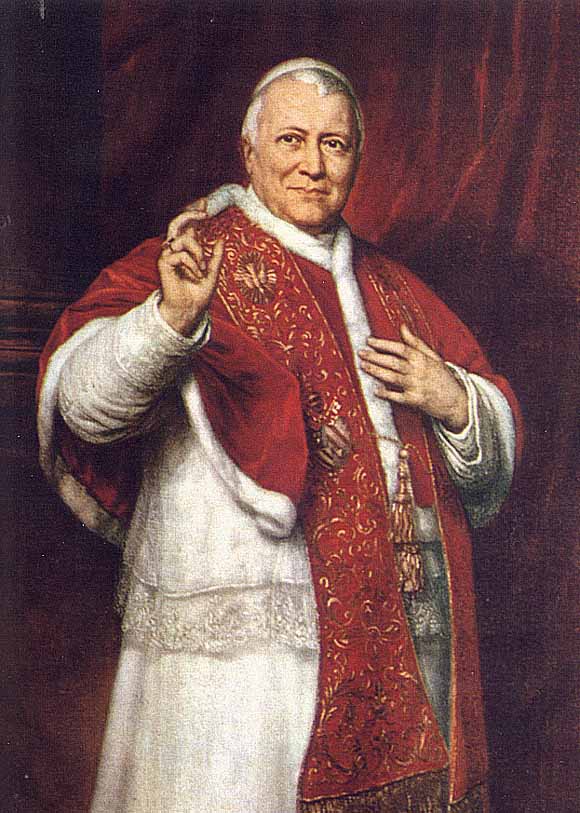
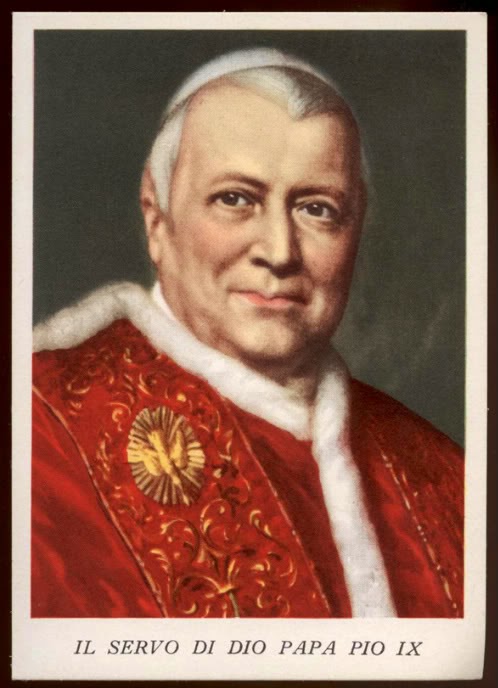
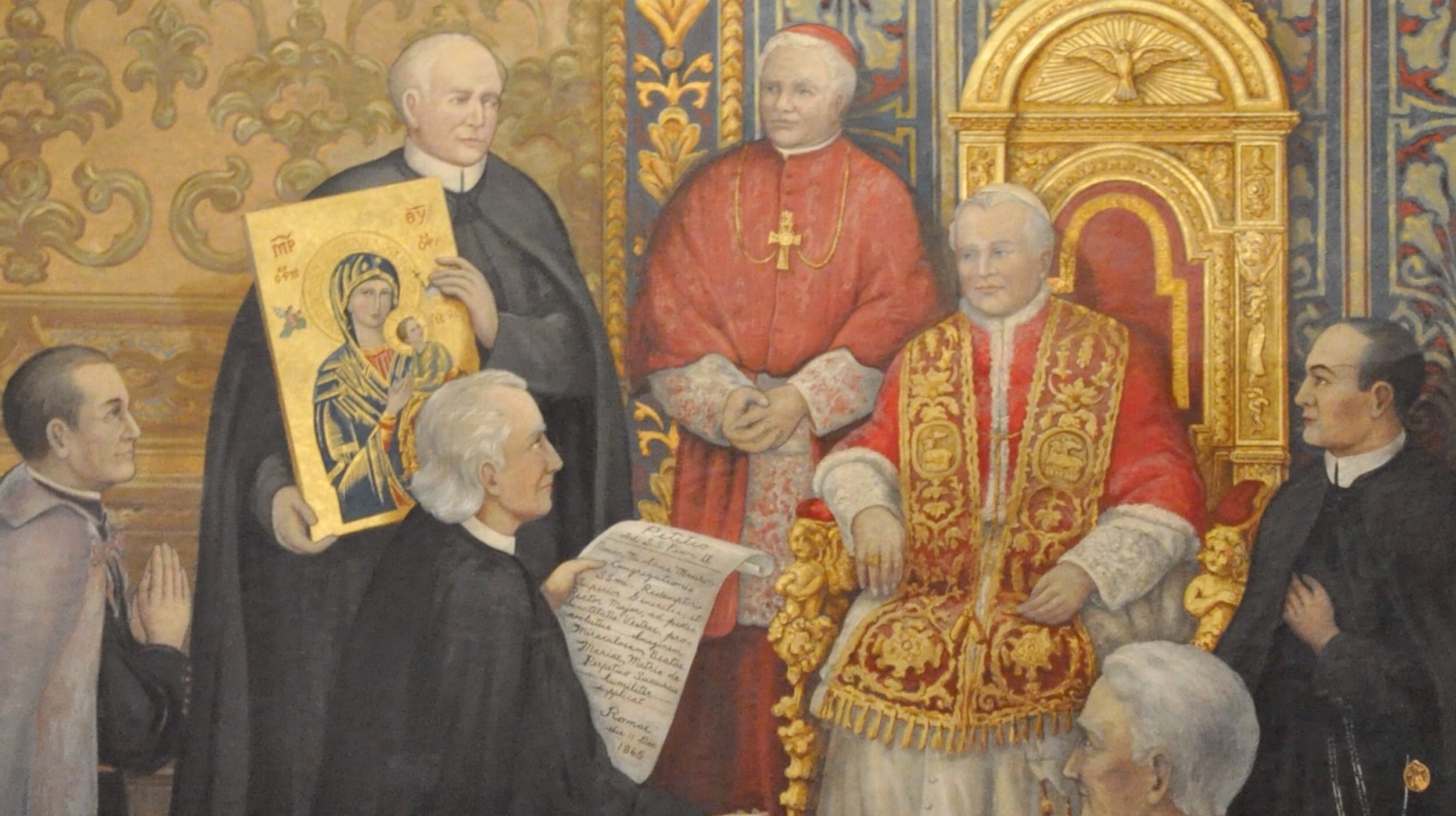
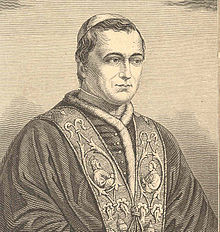
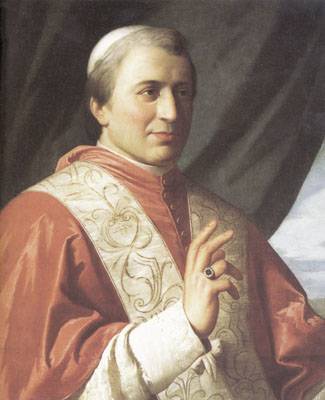
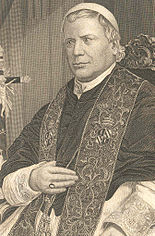
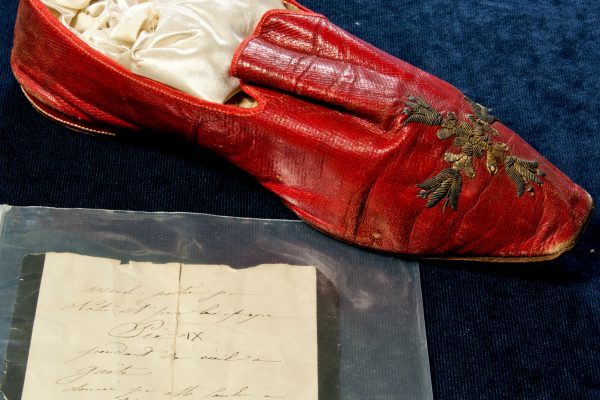
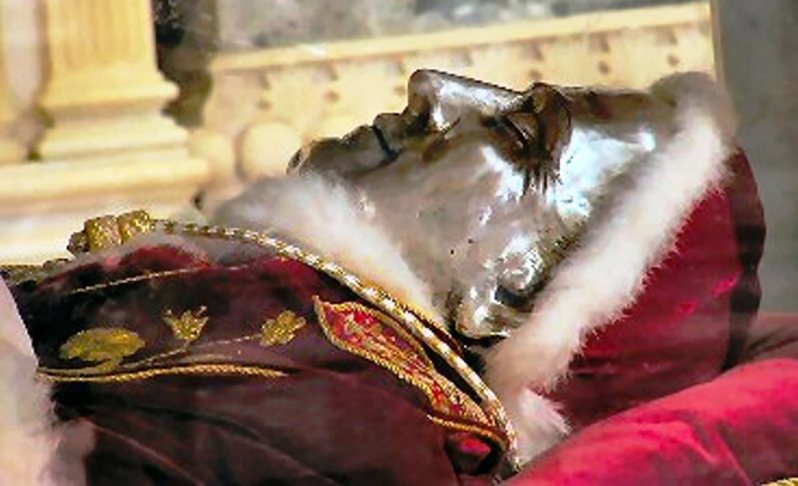
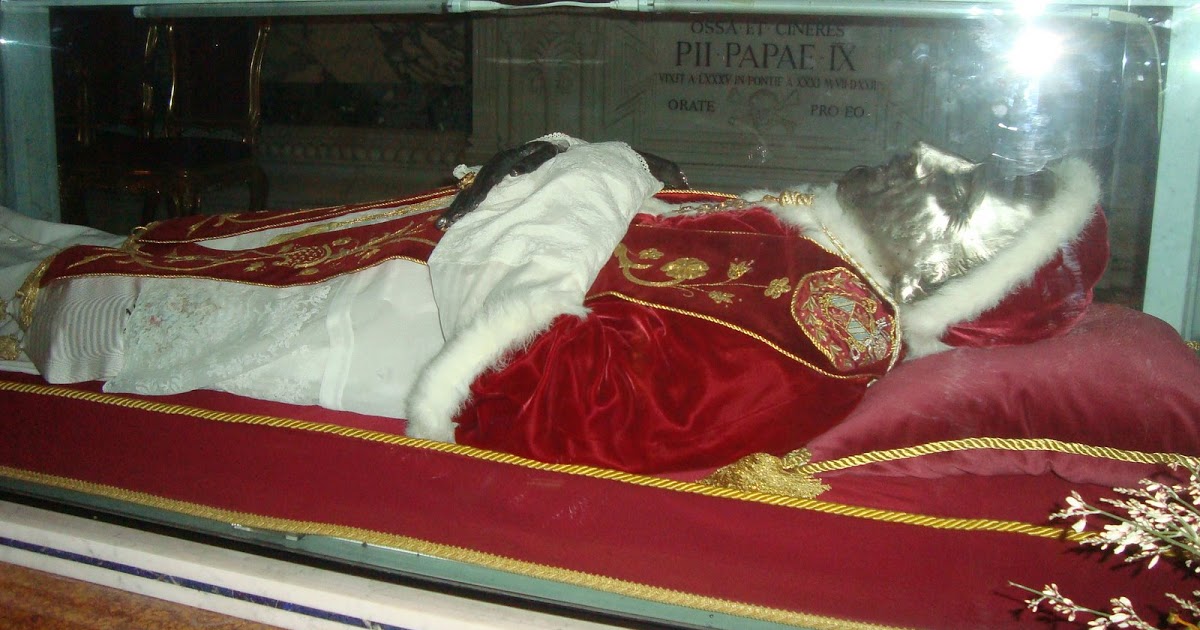
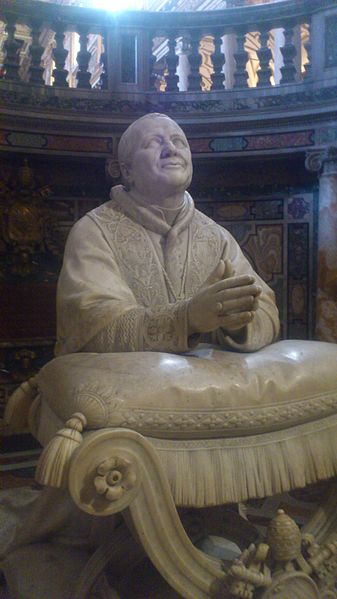
Saint of the Day 7 February – Blessed Pope Pius IX (1792-1878) Bishop of Rome, Writer. The longest regining Pope. Bl Pius was born as Giovanni Maria Mastai-Ferretti on 13 May 1792 in Senigallia, Italy and he died on 7 February 1878 in Vatican City of natural causes. He reigned from 16 June 1846 to the day of his death. He is the longest-reigning Pope in the history of the Church, serving for over 31 years. During his Pontificate, Pius IX convened the First Vatican Council (1869–70), which decreed Papal Infallibility and promulgated the Dogma of the Immaculate Conception, thus articulating a long-held belief that Mary, the Mother of God, was conceived without original sin. He conferred the title Our Mother of Perpetual Succour on a famous Byzantine icon from Crete entrusted to the Redemptorists. Pope Pius IX named three new Doctors of the Church: Hilary of Poitiers (1851), Alphonsus Liguori (1871), and Francis de Sales (19 July 1877).Patronages – Pius Seminary of Rome, Senigallia, Diocese of Senigallia, First Vatican Council. His body is incorrupt.
Bl Pope Pius IX was born in Senigallia, Italy, on 13 May 1792, the son of Gerolamo of the Counts Mastai Ferretti and Caterina Solazzi, of the local nobility. He was baptised on the day of his birth with the name Giovanni Maria. Of delicate physical constitution but of very lively intelligence, his childhood was marked by little voluntary mortifications and an intense religious life.
In 1809 he moved to Rome for higher studies. A disease not well diagnosed, which some called epilepsy, forced him to interrupt his studies in 1812. He was accepted into the Pontifical Noble Guard in 1815 but because of his illness he was immediately discharged. It was at this time that St Vincent Pallotti predicted that he would become Pope and that the Virgin of Loreto would free him eventually from the disease.
After serving briefly in the Tata Giovanni Educational Institute, he participated as a catechist in 1816 in a memorable mission in Senigallia and, immediately thereafter, decided to enter the ecclesiastical state. He was ordained a priest in 1819. Conscious of his noble rank, he committed himself to avoiding a prelatial career in order to remain only at the service of the Church.
He celebrated his first Mass in the Church of St Anne of the Carpenters at the Tata Giovanni Institute, of which he was named rector, remaining there until 1823. He was immediately recognised as assiduous in prayer, in the ministry of the Word, in the celebration of the liturgy, in the confessional and above all in his daily ministry at the service of the humblest and neediest. He admirably united the active and the contemplative life: ready for pastoral needs but always interiorly recollected, with strong Eucharistic and Marian devotion and fidelity to daily meditation and the examination of conscience.
In 1823 he left the institute to serve the Apostolic Nuncio in Chile, Mons. Giovanni Muzi. There he remained until 1825, when he was elected President of St Michael’s Hospice, a grand but complex institution in need of effective reform. To it Mastai applied himself with more than gratifying results but without ever neglecting his priestly duties. Two years later, at the age of 35, he was consecrated Archbishop of Spoleto. In 1831 the revolution which had begun in Parma and Modena spread to Spoleto. The Archbishop did not want the shedding of blood and repaired, as much as possible, the deleterious effects of the violence. When calm was restored, he obtained a pardon for all, even for those who did not merit it.
Another turbulent see awaited Mastai in Imola, where he was transferred in 1832. He remained an eloquent preacher, prompt in charity toward everyone, zealous for the supernatural as well as the material well-being of his Diocese, devoted to his clergy and seminarians, a promoter of education for the young, sensitive to the needs of the contemplative life, devoted to the Sacred Heart and to Our Lady, benevolent towards all but firm in his principles. In 1840 he received the Cardinal’s hat at the age of 48.
Despite having shunned honours, on the evening of 16 June 1846 Mastai found himself burdened with the greatest of them: he was elected Pope and took the name Pius IX.
He had a difficult pontificate, but precisely because of that he was a great Pope, certainly one of the greatest. Thoroughly aware of being the “Vicar of Christ” and responsible for the rights of God and of the Church, he was clear, simple consistent. He combined firmness and understanding, fidelity and openness.
He began with an act of generosity and Christian sensitivity: amnesty for political crimes. His first Encyclical was a programmatic vision but anticipated the “Syllabus”: in it he condemned secret societies, freemasonry and communism. In 1847 he promulgated a decree granting extensive freedom of the press and instituted a civil guard, the municipal and communal council, the Council of State and the Council of Ministers. From then on his interventions as Father of all nations and temporal Prince continued unabated.
The question of Italian independence, which he sympathised with, did not set the Prince against the Pope, a fact that alienated the most intransigent liberals. The situation came to a head on 15 November when Pellegrino Rossi, the head of government, was killed and Pius IX had to take refuge in Gaeta. After the proclamation of the Roman Republic (9 February 1849), he moved to Portici and later returned to Rome (12 April 1850). He reorganised the Council of State, established the Council for Finances, granted a new amnesty, re-established the Catholic hierarchy in England and in Holland.
In 1853 he condemned Gallican doctrines and founded the well-known “Seminario Pio”. He established the Commission on Christian Archaeology, defined the dogma of the Immaculate Conception on 8 December 1854 and blessed the rebuilt St Paul’s Basilica which had been destroyed by fire in 1823.
In 1856 he approved the plan for railways in the Papal States and on 24 April 1859 inaugurated the first section between Rome and Civitavecchia. In 1857 he visited the Papal States and was welcomed everywhere with rejoicing. He sent missionaries to the North Pole, India, Burma, China and Japan.
Meanwhile dark clouds gathered over him with the Italian “Risorgimento”, the Piedmontese annexations that were dismantling the Papal States and the expropriation of the Legations. Suffering but undaunted, he continued to show his charity and concern for all. In 1862 he established a dicastery to deal with the concerns of Eastern-rite Catholics; in 1864 he published his Syllabus condemning modern errors; in 1867 he celebrated the 18th centenary of the martyrdom of Peter and Paul; in 1869 he received the homage of the entire world for the golden jubilee of his priestly ordination. Later that year he opened the First Vatican Ecumenical Council, the pearl of his pontificate, and closed it on 18 July 1870.
With the fall of Rome (20 September 1870) and of the temporal power, the saddened Pontiff considered himself a prisoner of the Vatican, resisting the “Laws of Guarantees”, but approving the “Work of Congresses”. He consecrated the Church to the Sacred Heart of Jesus, disciplined the participation of Catholics in political life with the Non expedit and restored the Catholic hierarchy of Scotland. Suffering from poor health, he gave his last address to the parish priests of Rome on 2 February 1878. On 7 February the longest pontificate in history ended with his holy death. His body is incorrupt. He was Beatified on 3 September 2000 by St Pope John Paul II. (vatican.va).
Writings
• Amantissimi Redemptoris – On Priests and the Care of Souls, by Pope Pius IX, 3 May 1858 • Apostolicae Nostrae Caritatis – Urging Prayers For Peace, by Pope Pius IX, 1 August 1854 • Beneficia Dei – On The Twenty-Fifth Anniversary of His Pontificate, by Pope Pius IX, 4 June 1871 • Cum Nuper – On Care for Clerics, by Pope Pius IX, 20 January 1858 • Cum Sancta Mater Ecclesia – Pleading for Public Prayer, by Pope Pius IX, 27 April 1859 • Etsi Multa – On the Church in Italy, Germany, and Switzerland, by Pope Pius IX, 21 November 1873 • Exultavit Cor Nostrum – On the Effects of the Jubilee, by Pope Pius IX, 21 November 1851 • Graves ac Diuturnae – On the Church in Switzerland, by Pope Pius IX, 23 March 1875 • Gravibus Ecclesiae – Proclaiming a Jubilee for 1875, by Pope Pius IX, 24 December 1874 • Incredibili – On Persecution in New Granada, by Pope Pius IX, 17 September 1863 • Ineffabilis Deus – The Immaculate Conception, by Pope Pius IX, 8 December 1854 • Levate – On the Afflictions of the Church, by Pope Pius IX, 21 October 1867 • Maximae Quidem – On the Church in Bavaria, by Pope Pius IX, 18 August 1864 • Meridionali Americae – On the Seminary for Native Clergy, by Pope Pius IX, 30 September 1865 • Neminem Vestrum – On The Persecution Of Armenians, by Pope Pius IX, 2 February 1854 • Nemo Certe Ignorat – On Discipline for Clergy, by Pope Pius IX, 25 March 1852 • Nostis et Nobiscum – On The Church In The Pontifical States, by Pope Pius IX, 8 December 1849 • Nullis Certe Verbis – On the Need for Civil Sovereignty, by Pope Pius IX, 19 January 1860 • Omnem Sollicitudinem – On The Greek-Ruthenian Rite, Pope Pius IX, 13 May 1874 • Optime Noscitis – On Episcopal Meetings, by Pope Pius IX, 5 November 1855 • Optime Noscitis – On The Proposed Catholic University Of Ireland, by Pope Pius IX, 20 March 1854 • Praedecessores Nostros – On Aid for Ireland, by Pope Pius IX, 25 March 1847 • Quae in Patriarchatu – On the Church in Chaldae, by Pope Pius IX, 16 November 1872 • Quanta Cura – Condemning Current Errors, by Pope Pius IX, 8 December 1864 • Quanto Conficiamur Moerore – On Promotion of False Doctrines, by Pope Pius IX, 10 August 1863 • Quartus Supra – On the Church in Armenia, by Pope Pius IX, 6 January 1873 • Qui Nuper – On Pontifical States, by Pope Pius IX, 18 June 1859 • Qui Pluribus – On Faith And Religion, by Pope Pius IX, 9 November 1846 • Quod Nunquam – On the Church in Prussia, by Pope Pius IX, 5 February 1875 • Respicientes – Protesting the Taking of the Pontifical States, by Pope Pius IX, 1 November 1870 • Saepe Venerabiles Fratres – On Thanksgiving For Twenty-Five Years Of Pontificate, by Pope Pius IX, 5 August 1871 • Singulari Quidem – On the Church in Austria, by Pope Pius IX, 17 March 1856 • Syllabus of Errors, by Pope Blessed Pius IX, 8 December 1864 • Ubi Nos – On Pontifical States, by Pope Pius IX, 15 May 1871 • Ubi Primum – On Discipline for Religious, by Pope Pius IX, 17 June 1847 • Ubi Primum – On The Immaculate Conception, by Pope Pius IX, 2 February 1849 • Vix Dum a Nobis – On the Church in Austria, by Pope Pius IX, 7 March 1874















 AnaStpaul
You must be logged in to post a comment.