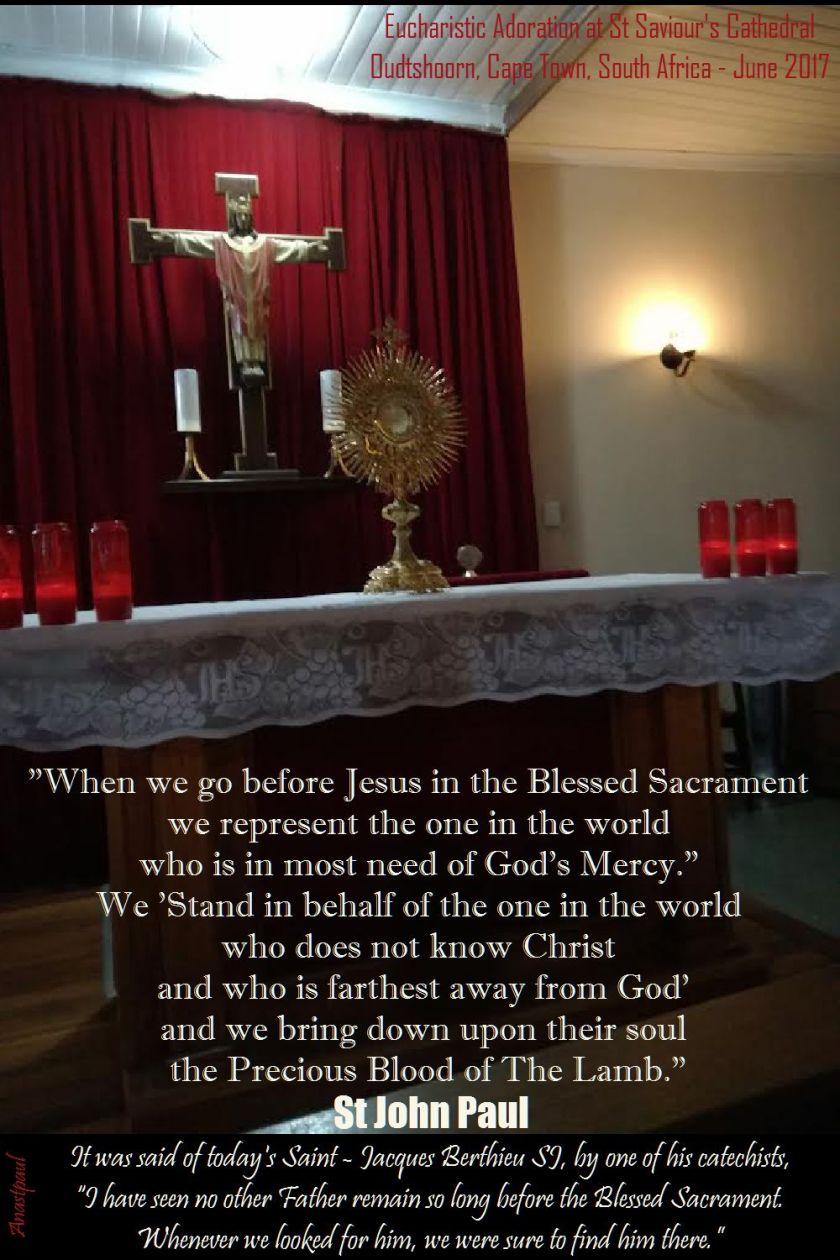
“When we go before Jesus in the Blessed Sacrament
we represent the one in the world
who is in most need of God’s Mercy.”
We “Stand in behalf of the one in the world
who does not know Christ and who is farthest away from God
and we bring down upon their soul the Precious Blood of The Lamb.”
– St Pope John Paul
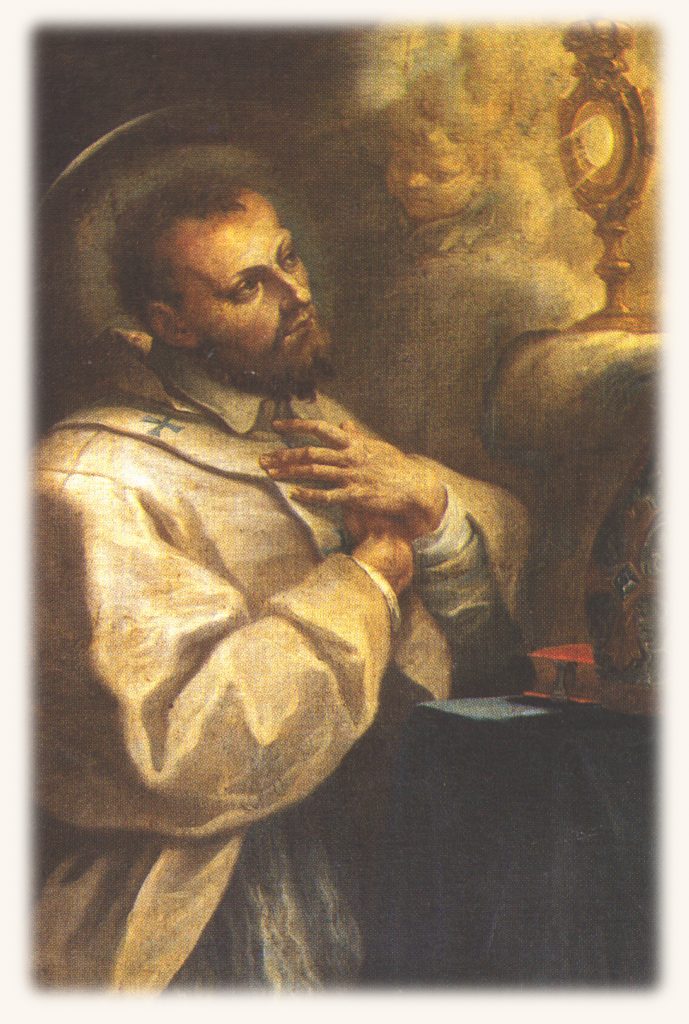
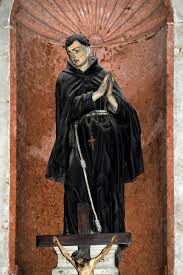
It was said of today’s Saint – Jacques Berthieu, by one of his catechists,
“I have seen no other Father remain so long before the Blessed Sacrament.
Whenever we looked for him, we were sure to find him there.”
“How can anyone be lonely, with Our Lord in the Blessed Sacrament?”
“Three things I cannot escape: the eye of God, the voice of conscience, the stroke of death. In company, guard your tongue. In your family, guard your temper. When alone guard your thoughts.”
The Defenders of the Eucharist
by Peter Paul Rubens, Flemish 1577-1640
SN 214 Oil on Canvas c1625
Artist:
Peter Paul Rubens, along with the Italian sculptor Gianlorenzo Bernini, was one of the greatest artists of the 17th century. His canvases can be said to define the scope and style of high baroque painting through their energy, earthy humanity and inventiveness. A devoutly religious man, a man of learning and a connoisseur of art and antiquities, he was also a man of the world who succeeded not only as an artist but as a respected diplomat in the service of Isabella and Albrecht of the Spanish Netherlands.
Travels to Venice where he studied Titian, Veronese & Tintoretto freed his artistic talent from rigid classicism. While he did incorporate copies of classical statues in his paintings he always avoided the appearance and coldness of stone. To the contrary, his nudes, for which he became famous, always depicted an ample female form of vitality and good health as well as of sensuousness. His mastery of color along with his knowledge of antiquity is seen particularly in his mythological paintings.
As court painter and confidant to the Archduchess Isabella Clara Eugenia, Rubens recognized the role art was to play in the Counter Reformation. His genius found expression in his designs for the Triumph of the Eucharist tapestries which he and his assistants completed between 1625 and 1628.
Knighted by two monarchs and master of a successful workshop, Rubens became rich and famous in his own time. Having executed over 3,000 paintings, woodcuts and engravings of all types, he died the most respected artist of his time in 1640.
The Defenders of the Eucharist by Peter Paul Rubens, Flemish 1577-1640 Including Sts Jerome, Norbert, Thomas Aquinas, Clare, Gregory the Great, Ambrose, Augustine
Subject:
This painting shows seven saints, all of whom were considered to be defenders of the doctrine of Transubstantiation an integral tenet of the Catholic Church. From the right the figures represent –
(1) St Jerome, (Feast Day 3 September) noted for his translation of the bible from Hebrew into Latin;
(2) St Norbert, (Feast Day 6 June) a German archbishop and saint, who preached against dissenters who attacked the Christian sacraments and official clergy;
(3) St Thomas Aquinas, (Feast Day 28 January) a medieval theologian of the Dominican order, whose writings became the basis for much of the doctrine of the Catholic Church;
(4) St Clare, (Feast Day 11 August) the founder of the Poor Clares, was a Franciscan heroine who repulsed the Saracens at Assisi by confronting them holding the Host in her hands;
(5) Gregory the Great, (Feast Day 3 September) who established, as Pope, the form of the Roman liturgy;
(6) St Ambrose, (Feast Day 7 December) renowned as both theologian and statesman of the Church, who in an age of controversy, was instrumental in crushing Arianism, a doctrine concerning the relationship of God the Father to Christ which was considered heresy and in direct opposition to orthodox teaching about the Trinity; and
(7) St Augustine, (Feast Day 28 August) perhaps the Church’s most celebrated and influential theologian.
Painting:
Seven Saints, including the four Latin Doctors of the Church, progress with great dignity from right to left, their heads seen in different views in a fashion similar to the heads of the Four Evangelists. The Dove of the Holy Ghost hovers protectively over the saints in the very center of the composition emitting golden light that illuminates the procession. Above the dove, a putti holds two trumpets to herald the message of the Church Fathers.
Leading the procession are Sts. Ambrose, Augustine and Gregory the Great, all wearing elaborate gold copes. The first two are crowned with bishop’s mitres, while the third wears the papal tiara. In the center of the procession, St. Clare carries a monstrance and looks directly out at the viewer. Rubens has shown his patroness, the Archduchess Isabella as St. Clare garbed in the black and white habit of the Discalced Carmalites, clothes she wore at the Convent of the Discalzas Reales in Madrid when she was a girl and later as a widow after her husband the Archduke Albert had died in 1621.
St. Thomas Aquinas follows, a large book under his arm wearing a gold chain from which is hung a blazing sun. Behind Aquinas is a monk in a white habit who is St. Norbert. Last in line is St. Jerome the fourth Doctor of the Church dressed in red as a cardinal, intensely reading from a large book. In the centre of the bottom of the composition, below the apron of the “stage” is a burning lamp (the lamp of truth), open books and writing supplies of ink pots and quill pens, all in reference to the writings of the Church Fathers.
All seven saints were known as defenders of the Eucharist, particularly the Four Doctors of the Church who developed the doctrine of transubstantiation and defended it against heretics.
Historical Context:
The cycle of eleven paintings of The Triumph of the Eucharist was commissioned by the Archduchess Isabella who was the daughter of Philip II of Spain and the Governor of the Spanish Netherlands. It was planned as a gift for the convent of the Descalzas Reales in Madrid in 1625 where it still hangs today. This Franciscan Order of Poor Clares was one with which Isabella was closely associated.
The series is a mixture of allegory and religious evangelisation intended to promote the worship of the Eucharist, the bread and wine consecrated as the body and blood of Christ and distributed at communion which had been strengthened recently by the Council of Trent and which constituted an important element in Counter Reformation Catholicism.
This was a time of great concern on the part of the Catholic church as it attempted to correct not only the abuses of the clergy but also to reaffirm its tenets / dogma in the face.
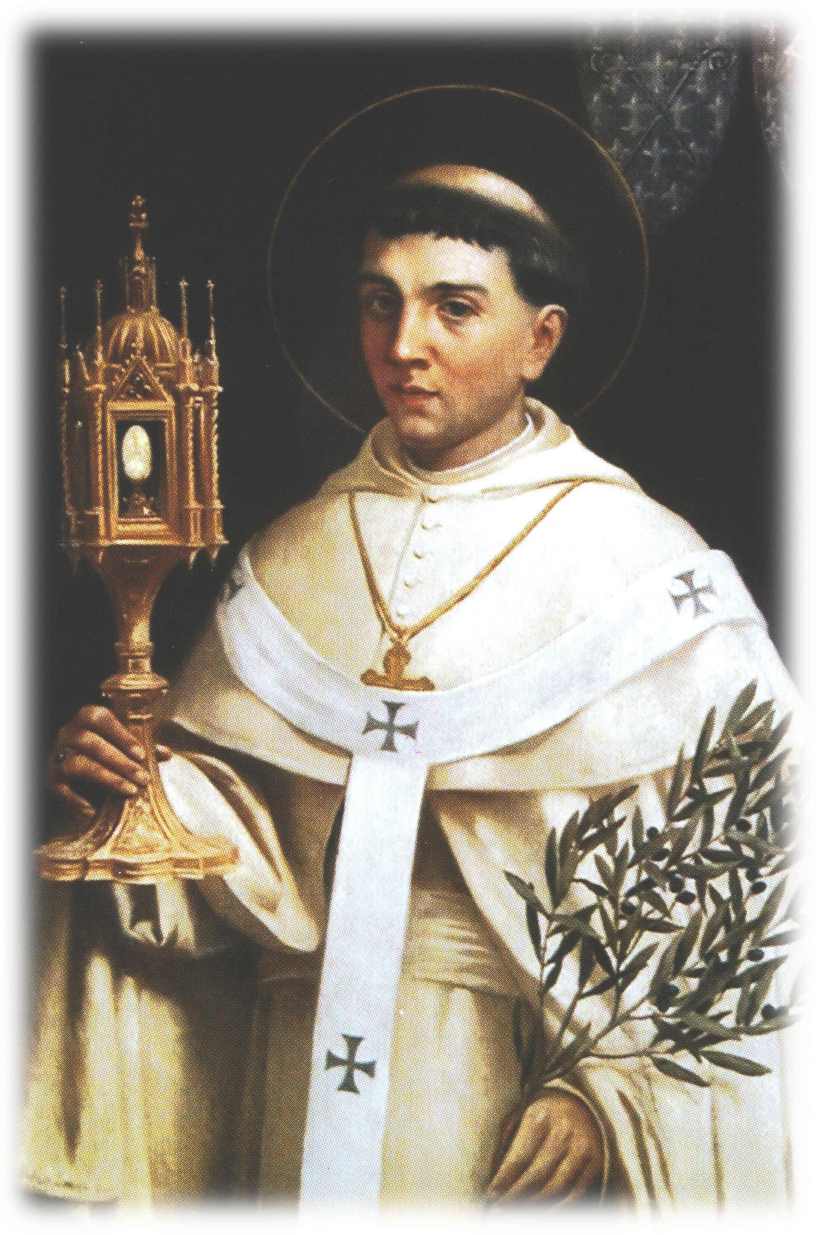
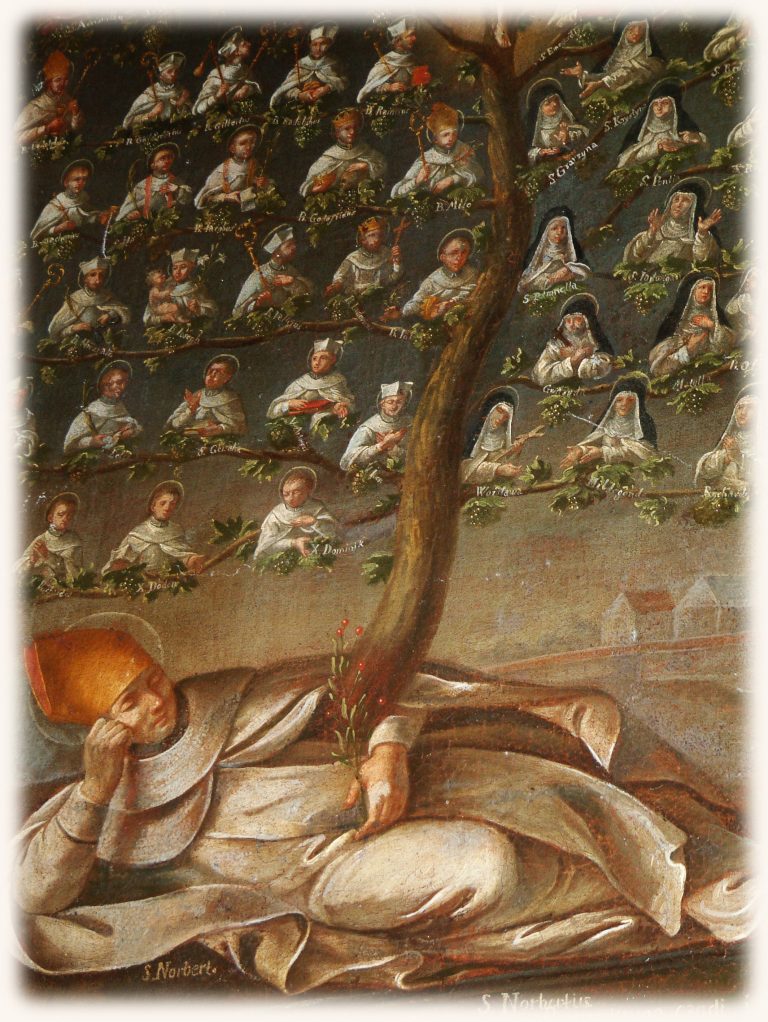
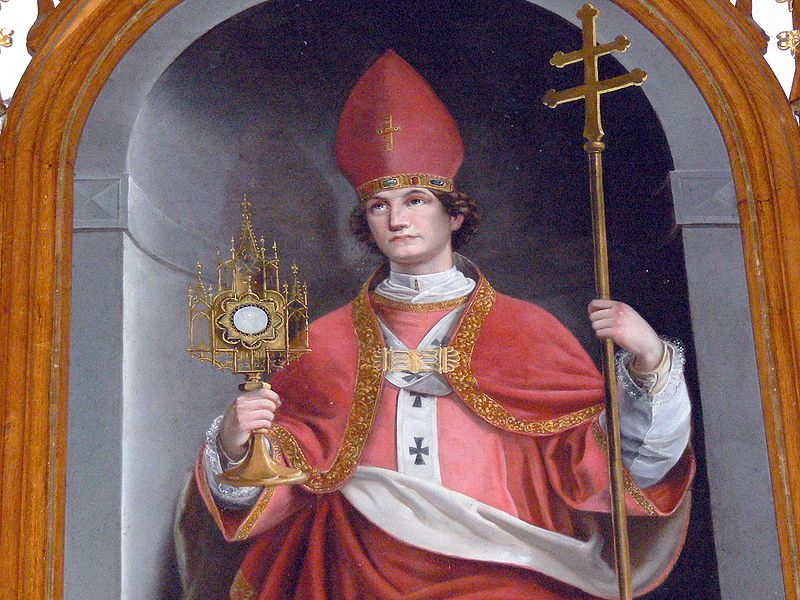
Saint of the Day – 6 June – St Norbert (c 1080-1134) – also known as St Norbert of Xanten – Bishop, Confessor, Founder, “Defender of the Eucharist” and “Apostle of the Eucharist”, Exorcist, Reformer, Preacher – (c1080 at Xanten, Germany – 6 June 1134 at Magdeburg, Germany, relics in Prague) – Patron for peace, invoked during childbirth for safe delivery, of infertile married couples, Bohemia (Czech Republic), Archdiocese of Magdeburg, Germany – Attributes – monstrance, cross with two cross-bars.
St Norbert was a German from illustrious Frankish and Salic German stock. Offered as a youth to the collegiate church of St Victor in Xanten, he was educated both in literature and the ways of the court and the world. At Xanten, he became a Subdeacon and at this period of his life, showed no inclination to pursue the dignity of the Priesthood. Rather, St Norbert, who was wealthy, handsome, thin and somewhat tall, sought approval in the courts of the great and of the emperor. Known to be an eloquent speaker and possessed of an affability that won him admiration and friendships, St Norbert used these natural gifts, not to seek the glory of God but to gain the love and esteem of men. His biographer describes him at this period before his conversion as one who “had no time for piety and quiet” and that he “lived his life according to his own desires.”
But soon life became one of interior strife for St Norbert. He had witnessed Emperor Henry V’s mistreatment of Pope Paschal II in Rome in 1111, when he travelled there in Frederick of Cologne’s retinue. These events left St Norbert with a sense of uneasiness he could not dispel. The man who had been so happy to live at court no longer felt comfortable in that atmosphere of intrigue, where the emperor’s arrogance took the place of law. He left the court and returned to Xanten, where we find him in 1115. In late spring of this year, St. Norbert, accompanied by a single servant, was travelling on the road to Freden when a storm suddenly came up. A bolt of lightning struck the ground before his horse’s feet and he was thrown to the ground. Shaken, he asked, “Lord what do you want me to do?” In response, he seemed to hear these words from Psalm 34, “Turn from evil and do good, seek peace and pursue it.” St Norbert underwent a profound conversion. Under the influence of grace and led by the Gospel, he became sure of one thing: he wanted to put on the new man (Eph. 4:24; Col. 3:10) and live a life of perfection in the service of the Church, according to the Gospel of Christ and in the footsteps of the Apostles.
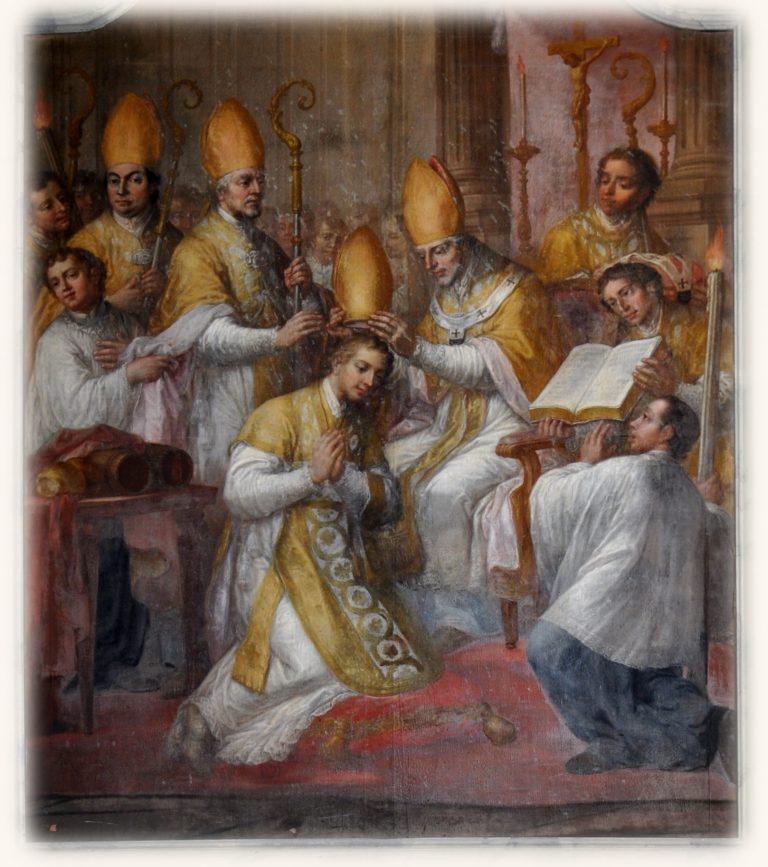
From the beginning of his conversion, St Norbert aimed at a life of priestly perfection through imitation of the Apostles. He sought ordination to the priesthood and gave his considerable wealth to the poor, in order “that he may follow the naked cross naked” ( Vita Norberti B, IX 22). Inflamed with the zeal of divine fervour, St Norbert went about with “no purse, no sandals nor two tunics,” (Mk. 6:8) proclaiming by his words and example the necessity of poverty of spirit in order to enter the kingdom of God. As Christ had sent out his Apostles not only “to proclaim the message,” but also “to have authority to cast out demons,” (Mk. 3:15) St Norbert was well known as an exorcist and his biographer records many instances when he was called upon to exercise this office. Regarded as a “minister of peace and concord,” he had the gift of reconciling people and establishing peace between feuding parties.
At the centre of St Norbert’s spiritual life and ministry was the Holy Sacrifice of the Mass. Contrary to custom of his times, he celebrated Mass every day and it was after offering the Eucharistic sacrifice that he loved to preach, while his heart was overflowing with the love he had drawn from intimate contact with Christ. The Acts of the Apostles record how the first Christians “devoted themselves to the apostles’ teaching and fellowship, to the breaking of bread and the prayers,” (2:42) and that “the whole group of those who believed were of one heart and soul” (4:32). St Norbert sought to realise the fullness of this Apostolic ideal in the founding of a new religious family.
In 1121, St Norbert established the first monastery of our Order in Prémontré, France. He had a great talent to speak to people, to fill people with enthusiasm for the kingdom of God, so much so that in a short period of time he was able to attract many men and women to the Apostolic Life and to start many foundations of religious communities of this “ordo novus”. Liturgical prayer held a central place in the life of Norbert and his first companions. The Eucharist, the heart of liturgical prayer occupied such a place at Prémontré and in the life of St Norbert that later tradition made Norbert the Apostle of the Eucharist. His order, the Premonstratensian or Norbertine Canons and Sisters are today in Europe, the US, Canada, South America, Zaire, South Africa, India and Australia are involved in education, parochial ministry, university chaplaincy and youth work.
In 1126, St Norbert was elected archbishop of Magdeburg, Germany. He worked for the kingdom of God on all levels and ready to commit himself to peace and justice, did not shy away from arguments and conflicts, neither in his own diocese nor in the conflict between emperor and pope, as he courageously defended the rights of the Church.
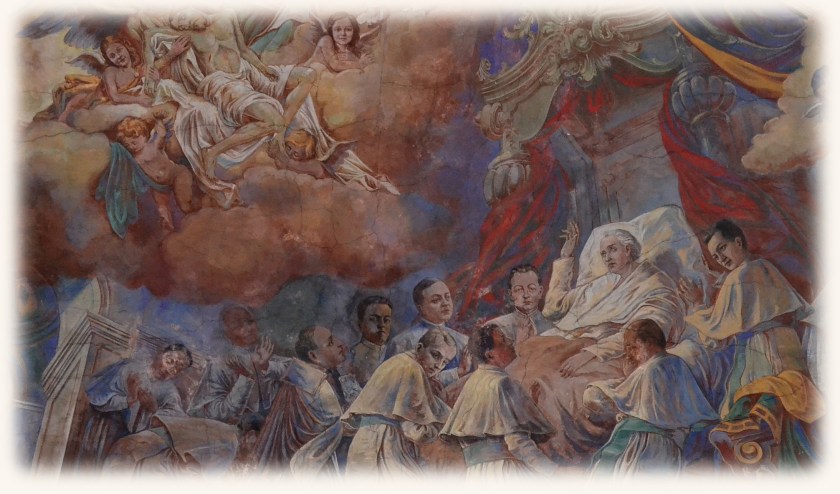
St Norbert died on 6 June 1134, the Wednesday after Pentecost. By order of the emperor, his body was laid at rest in Abbey Church of St. Mary’s at Magdeburg, where he had installed the confreres of his Order. St Norbert’s body was transferred to the Norbertine Abbey of Strahov in Prague in 1627 after numerous attempts were made over the centuries by the Abbey of Strahov in Prague to retrieve the saint’s body. Only after several military defeats at the hand of Emperor Ferdinand II was the abbot of Strahov able to claim the body. On 2 May 1627 the body was finally brought to Prague where it remains to this day, displayed in a glass-fronted tomb in the Royal Canonry of Strahov, Prague and is venerated by his sons and daughters from all over the world. As mentioned above, St. Norbert is venerated as the “Apostle and Defender of the Eucharist.” He is usually depicted with a ciborium or monstrance in his hand on account of his extraordinary devotion to the Most Blessed Sacrament. St Norbert is also a patron of childbirth/expectant mothers, as well as traditionally invoked by married couples who want to conceive a child, with many favours attributed to his intercession.
Shrine of St. Norbert, Royal Canonry of Strahov, Prague
Why is St Norbert Patron of Expectant Mothers & Infertile Married Couples?
A pious woman once approached St Norbert asking whether she and her husband ought to separate and enter monasteries because they lived in an infertile marriage. St Norbert prophesied that they would be blessed with children, the first of whom would be dedicated to God. This child, Nicholas, did indeed become a Norbertine at Prémontré. St Norbert is traditionally invoked for a good childbirth. The Norbertine Canonesses at Doksany (Czech Republic) in modern times promote this devotion to St. Norbert as patron of infertile couples or endangered pregnancies and report hundreds of families now blessed with children, the sisters having well over 3,000 spiritual children as of 2012.
A Prayer to St. Norbert for a Good Childbirth
St. Norbert, great and faithful servant of God!
You venerated the holy and miraculous birth of our Saviour,
Who His Mother, the purest Virgin Mary,
conceived without the loss of her virginity
and gave birth remaining a virgin.
You connected the origin of the Premonstratensian Order
with the day of the birth of Jesus Christ.
I humbly pray to you, St. Norbert,
as a great protector, so that God will give me the grace,
through your intercession,
to give birth to this conceived child.
And so that He will give me also the grace
that this child will join the Church of Christ
through the sacrament of Baptism
and that he/she will serve Him, Our Lord,
the whole of his/her life
so that in the end we both will reach eternal salvation.
Through Jesus Christ, Our Lord, Amen.
(Translated from The Little Hours, 1749, by one of our Norbertine Sisters at Doksany)
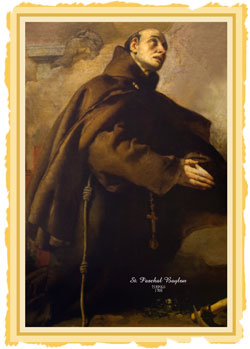
The life of St Paschal Baylon is one of simple adoration of the Lord. He recognised the importance of spending time before Our Saviour, in contemplation of His passion, love, and sacrifice—in the earthly presence of God. Through his devotion to the Blessed Sacrament, St Paschal was graced with wisdom beyond his education and obedience and charity beyond measure. His life inspires us to greater communion with the Lord, leading us to His spiritual treasures. As prayer before the Blessed Sacrament occupied much of Saint Francis’ energy. Most of his letters were to promote devotion to the Eucharist. St Paschal shared this concern. An hour in prayer before our Lord in the Eucharist could teach all of us a great deal! Many holy and busy Catholics today, across the world, find that their lives in every respect, are enriched by these minutes regularly spent in prayer and meditation.
O God, You filled St. Paschal with a wondrous love for the sacred mysteries of Your Body and Blood. May we draw from this Divine Banquet the same spiritual riches he received. St Paschal Baylon Pray for us amen!
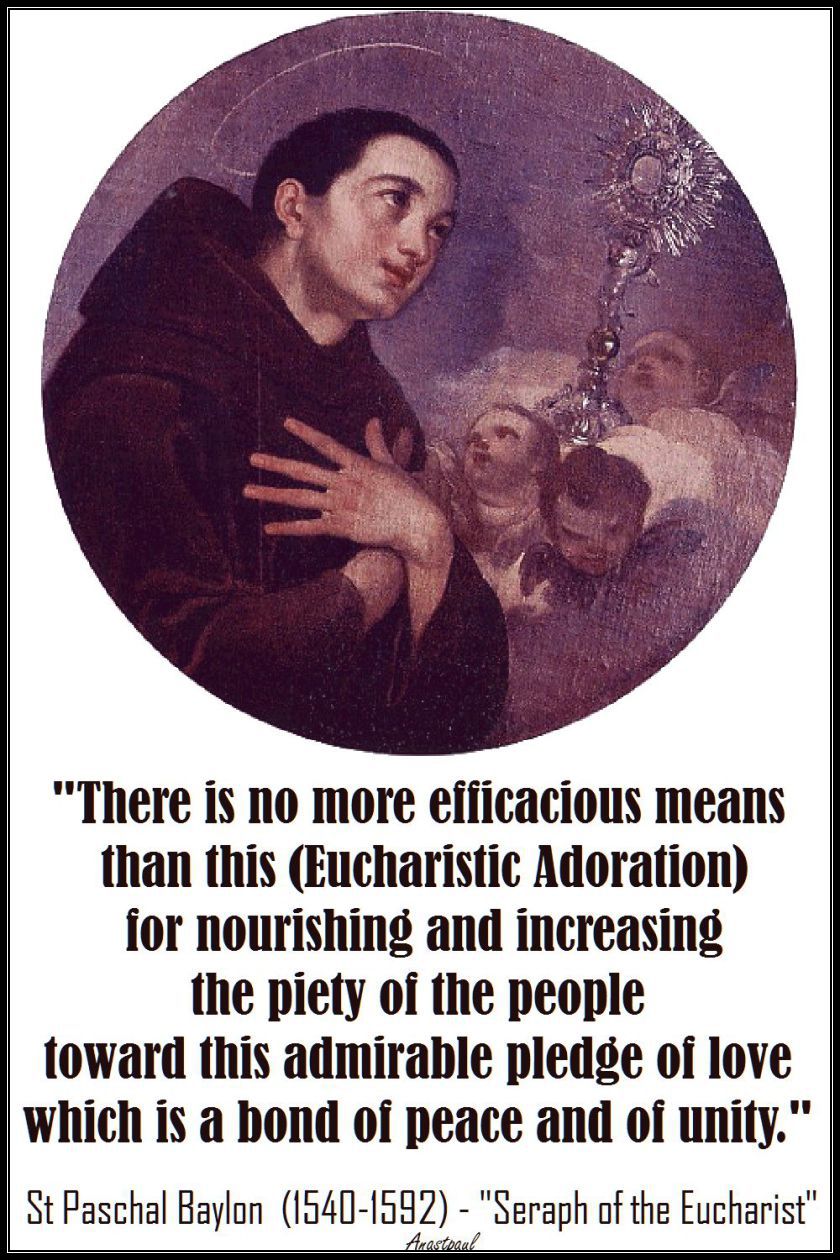
“There is no more efficacious means than this (Eucharistic Adoration)
for nourishing and increasing the piety of the people
toward this admirable pledge of love
which is a bond of peace and of unity.”
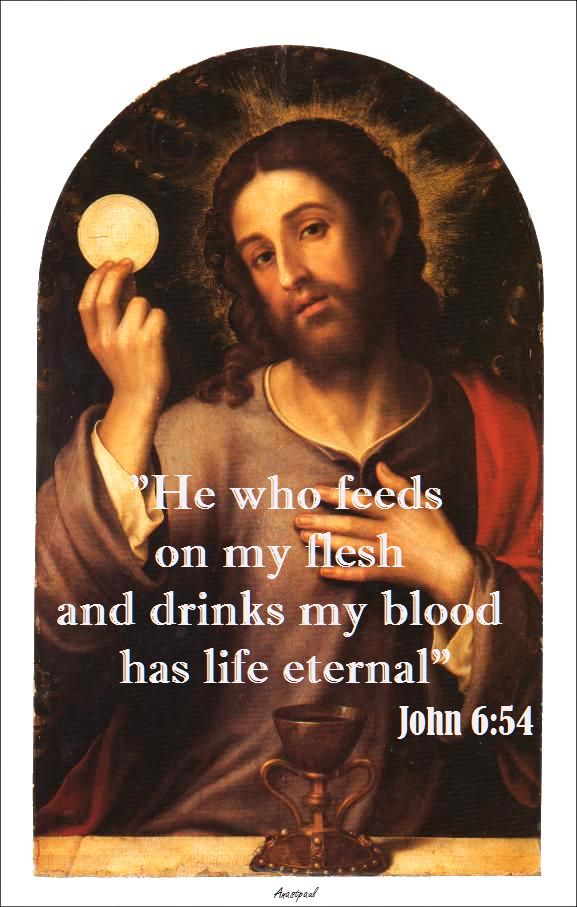
“He who feeds on my flesh and drinks my blood has life eternal”……………….John 6:54
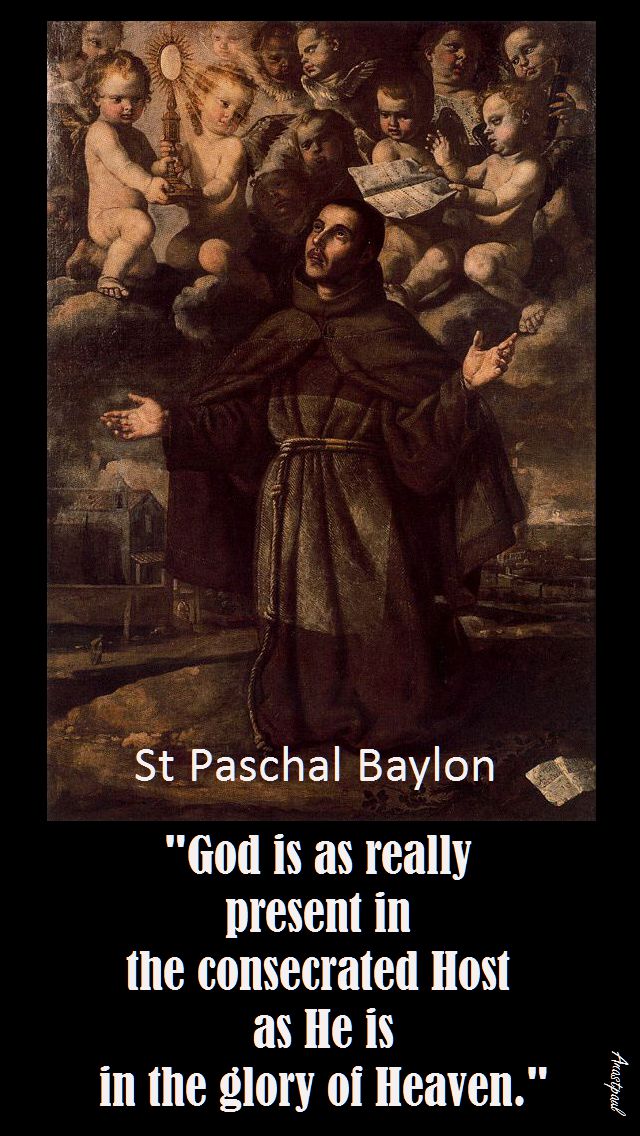
REFLECTION – “God is as really present in the consecrated Host as He is in the glory of Heaven”…..St Paschal Baylon
PRAYER – Lord Jesus Christ, never let me abstain from receiving You in Holy Communion and let me always find the time to visit You in the Tabernacle. Lord teach enlighten my mind with a fuller love and understanding of Your Eucharistic Heart. St Paschal Baylon, Seraph of the Eucharist, pray for us all! Amen
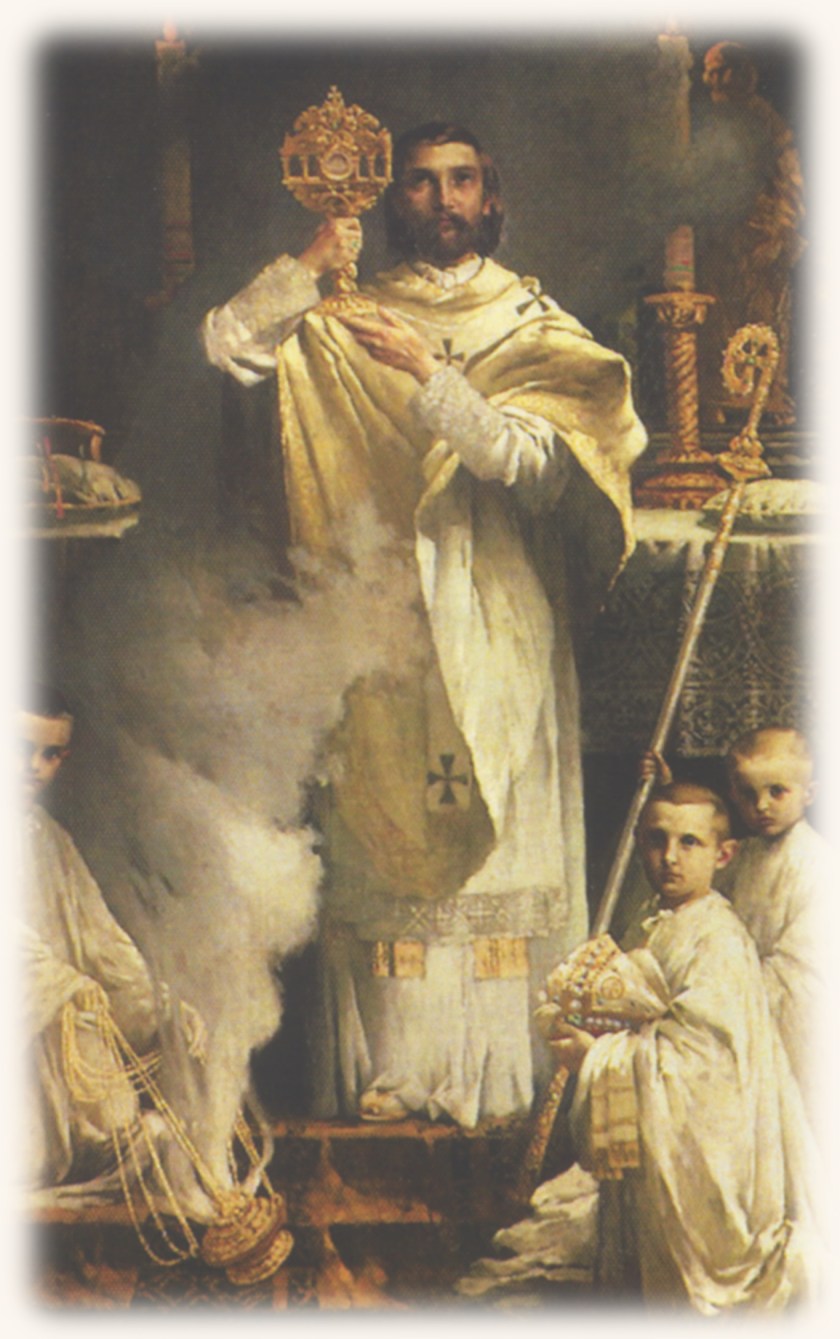
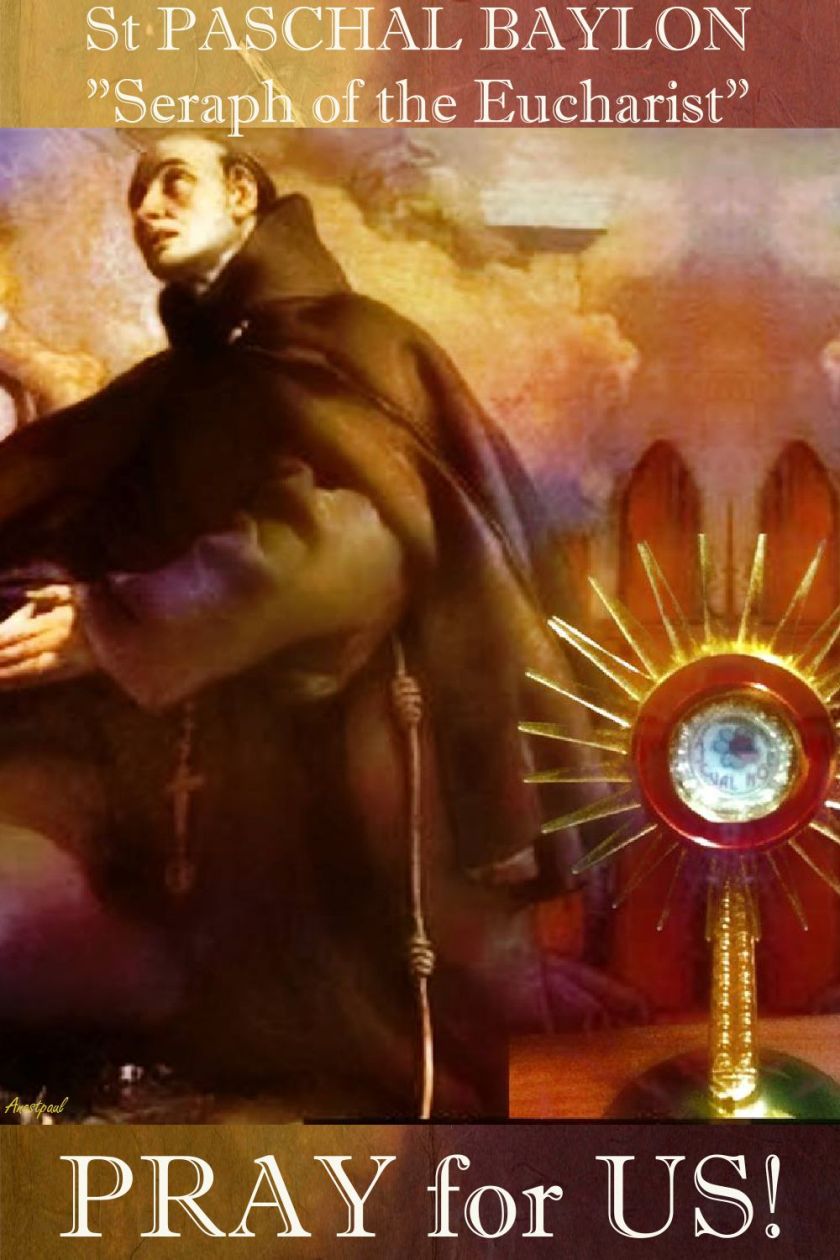
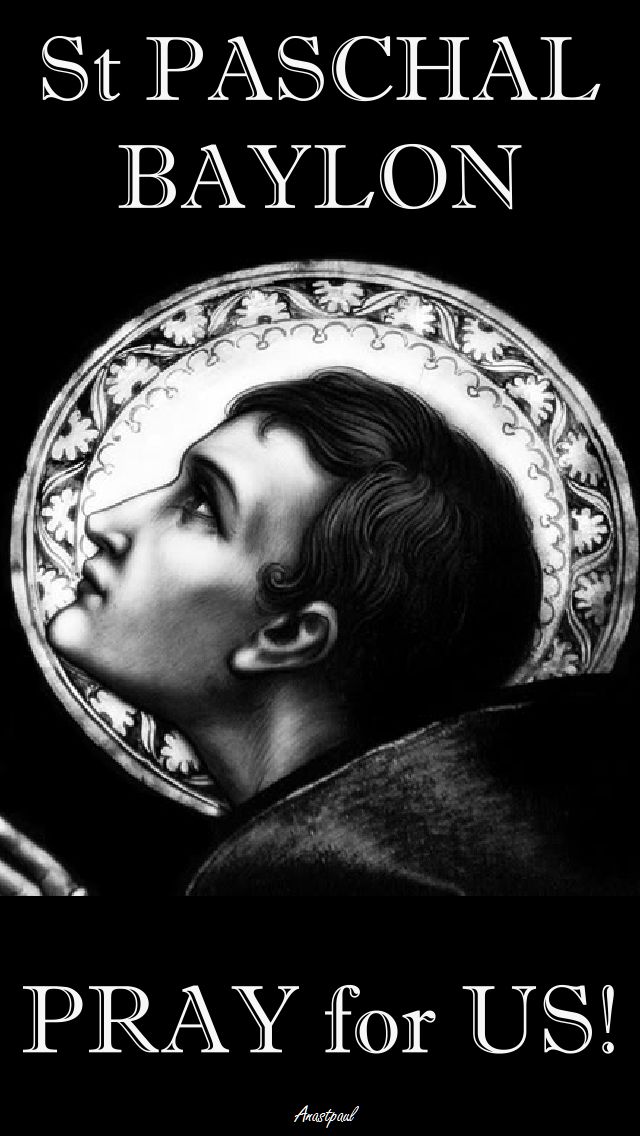
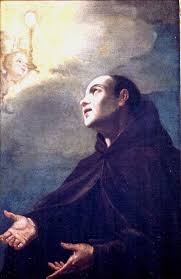
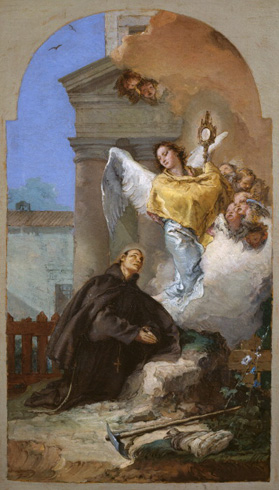
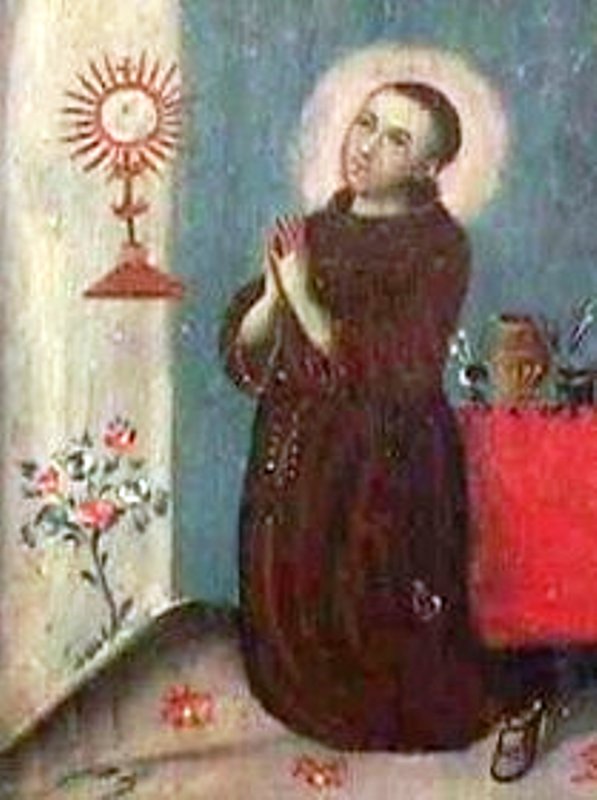
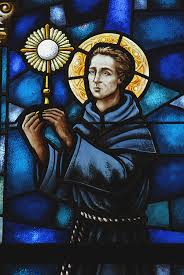
Saint of the Day – 17 May – St Paschal Baylon (1540 (feast of Pentecost) at Torre Hermosa, Aragon, (modern Spain) – 15 May 1592 (feast of Pentecost) at Villa Reale, Spain of natural causes) Franciscan lay brother, Mystic, Contemplate, known as the “Seraph of the Eucharist,” “Saint of the Blessed Sacrament,” “Servant of the Eucharist.”Patron of cooks, shepherds, Eucharistic congresses and organisations (proclaimed by Pope Leo XIII on 28 November 1897), Diocese of Segorbe-Castellón de la Plana, Spain, Obado, Bulacan, Philippines. Attributes – The Eucharist, Monstrance, Franciscan habit.
Today, 17 May marks the Feast Day of Saint Paschal Baylon, mystic, known for his profound devotion to the Blessed Sacrament. While Saint Paschal never became a priest, he is the saint most often thought of in relation to the Holy Eucharist and Pope Leo XIII declared him the patron saint of Eucharistic congresses and associations. He wrote, “There is no more efficacious means than this for nourishing and increasing the piety of the people toward this admirable pledge of love, which is a bond of peace and of unity.” Among all those most devoted to the Eucharist, Paschal Baylon seemed to the Pope to be “the greatest.”
As a youth, Paschal Baylon tended his family’s sheep. He taught himself to read so that he could pray the Little Office of the Blessed Virgin, the popular prayer book of his day. Paschal disciplined himself to endure the harshness and loneliness of a shepherd’s work. And when his sheep trod on others’ vines, he scrupulously paid for the damage out of his own meager resources.
At twenty-one, St Paschal joined the reformed Franciscans of St. Peter of Alcántara at Loreto. As a lay brother, Paschal for many years served as porter and guestmaster with patience and good humor. John Ximenes, his biographer, reports that he was a model friar, always the first at prayer and never once behaving badly in a relationship. “In no single case,” said Ximenes, “do I remember to have noted even the least fault in him, though I lived with him in several of our houses and was his companion on two long journeys.”
Like other saintly doorkeepers Brother André and Solanus Casey, Paschal gained a reputation for miracles.
For example, Martin Crespo once told how the saint freed him from his determination to take vengeance on his father’s murderers:
“One Good Friday there was a lifelike representation of the descent from the cross. Along with everyone else in town, I followed the crucifix borne in triumph through the streets. In a last ditch effort to get me to repent, my friends boxed me in and forced me to endure the preacher’s address. He concluded his eloquent speech in a pathetic peroration, urging me to forgiveness in memory of our Saviour’s passion. His fine discourse left me unmoved and cold.
“Quit tormenting me,” I exclaimed angrily. “It’s no use. I will not forgive them.” Brother Paschal, whom I had not noticed before, stepped forward. He took me by the arm and drew me aside. “My son,” he said, “have you not just now seen a representation of our Lord’s passion?” Then with a glance that penetrated my soul he said: “For the love of Jesus Crucified, my son, forgive them.”
“Yes, Father,” I replied, hanging my head and weeping. “For the love of God I forgive them with all my heart.” I no longer felt the same person. The crowd anxiously awaited the outcome of our mysterious conference. When Paschal announced that I had forgiven my enemies, they burst into applause.”
We remember Paschal Baylon most as the “Saint of the Blessed Sacrament.” Typically he spent as many hours a day as he could worshiping before the Tabernacle. Because of his faithful devotion, the Church has named him Patron of Eucharistic Congresses and conferences. He died in 1592 at the age of fifty-two.
Saint Paschal exhibited an ardent love for Christ and was especially devoted to the Eucharistic Mystery. He traveled from church to church, always on foot, visiting and praying before the Blessed Sacrament, referring to his encounters with “the real presence of Jesus” in these moments. During his prayers, he would often levitate above the floor, so much was his love and zeal for Christ.
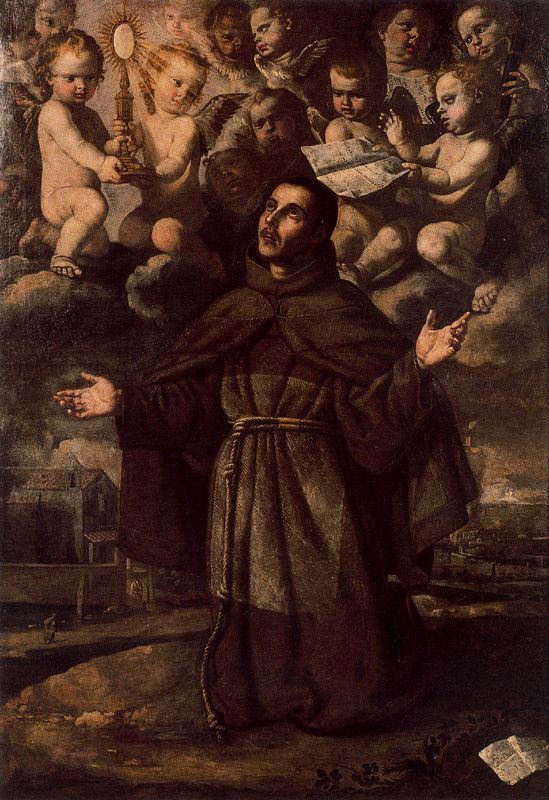
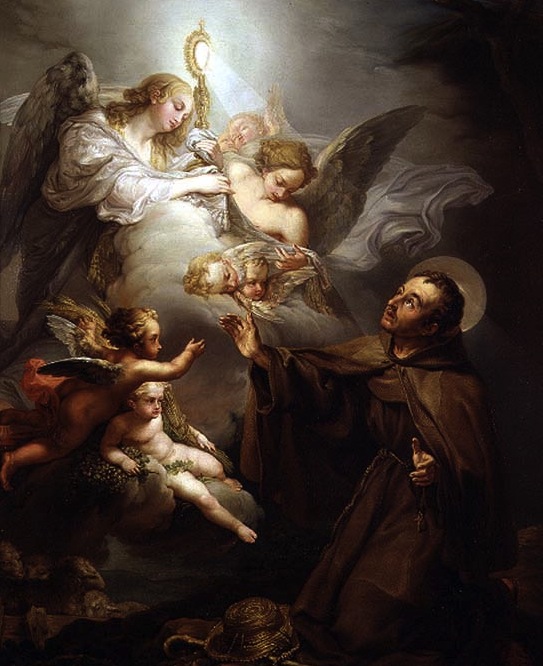
Many miracles are attributed to Saint Paschal, including creating fresh-flowing streams by striking the ground, healing, and miraculous charity. Saint Paschal also experienced mystical visions. On one such occasion, while he was out in the fields with his sheep and unable to go to Mass at the nearby monastery, Paschal was waiting for the sound of the Consecration Bell which he always observed in prayer. In his longing to be present at the Holy sacrifice of the Mass, he cried out, “My Master, My adorable Master, Oh that I might see Thee!” Suddenly before him he saw Angels bowed down before a Chalice, with the Blessed Sacrament floating above it. In the Divine Presence of Our Lord, Paschal fell flat on his face and adored God. Then taking courage he gazed upon the beautiful vision.
The “Servant of the Eucharist,” as he was commonly called, died on 17 May Pentecost Sunday, in 1592. His tomb at the Royal Chapel in Villareal, Valencia, Spain immediately became the object of innumerable pilgrimages, even by the king and the nobles of Spain. At his funeral Mass, Saint Paschal’s eyes miraculously opened during the Consecration, adoring the Blessed Sacrament even in death. Since his death, strange occurrences have continued to be reported, known as the “Knocks of St. Paschal.” At first, the knocks came from Paschal’s tomb. Later they came from relics and pictures of the saint. The knocking sound is believed to come as a kind of warning, to let people know that a terrible event was about to take place. It is also said that in Spain and Italy, those who are devoted to Saint Paschal, are warned about their death, days before, so that they may have a chance to receive the Last Sacraments. Beatified by Pope Paul V in 1618, he was Canonised by Pope Alexander VIII on 16 October 1690.
Adoration of the Blessed Sacrament is one of the best ways to spend time with Jesus. There is so much noise around us these days. Spending a quiet hour with Jesus in humble adoration will bring many graces and blessings to you. Things that you have never even considered before will now be made present to you. Bad things that would have happened to you will now not happen. Here are some thoughts about what Jesus is asking you during this time. As He told Peter, “Could you not spend one hour with me?”St. Peter Julian Eymard tells us all how to spend an hour in Adoration!
“MY CHILD, you need not know much in order to please Me; only love Me dearly. Speak to Me as you would talk to your mother, if she had taken you in her arms. Have you no one to recommend to Me? Tell Me the names of your relations, of your friends; after each name add what you wish Me to do for them. Ask a great deal: I love generous hearts that forget themselves for others.
TELL ME about the poor whom you want to help, the sick whom you have seen suffer, the sinner whom you would convert, the persons who are alienated from you and whose affections you wish to win back. For all recite a fervent prayer. Remind Me that I have promised to grant every prayer that comes from the heart; and surely the prayers are heartfelt which we say for those whom we love and who love us.
HAVE YOU no favours to ask for yourself’? Write, if you like, a long list of all your wishes of all the needs of your soul–and come and read it to Me. Tell Me simply how self-indulgent you are, how proud, how touchy, how selfish, how cowardly, how idle; ask Me to help you to improve. Poor child! Do not blush! There are in heaven many saints who had the same faults as you; they prayed to Me, and, little by little, they were cured.
DO NOT hesitate to ask for the goods of body and mind–for health, for memory, for success. I can give everything and I always give when the gifts would make souls more holy. What do you want today, My child? Oh, if you knew how I longed to do you good!
HAVE YOU no plans to interest you? Tell Me about them. Do they concern your vocation? What do you think of? What would you like? Are you planning some pleasure for your mother, for your family, for your guardian? What do you wish to do for them?
AND HAVE you no thoughts of zeal for Me? Are you not anxious to do a little good for the souls of your friends, for those whom you love and who, perhaps, forget Me? Tell Me who interests you, what motives urge you, what means you wish to take.
CONFIDE TO Me your failures; I will show you the cause. Whom do you wish to see interested in your work? I am the Master of all hearts, My child and I lead them gently where I please. I will place about you those who are necessary to you; never fear!
HAVE YOU nothing to annoy you? My child, tell Me your annoyances, with every detail. Who has pained you? Who as wounded your self-love? Who has treated you contemptuously? Tell Me all and then say that you forgive and forget; and I will give you My blessing.
DO YOU dread something painful? Is there in your soul a vague fear which seems unreasonable and yet torments you? Trust fully in My providence. I am here, I see everything; I will not leave you.
ARE THERE about you friends who seem less kind than formerly, who neglect you through indifference or forgetfulness, without your having consciously done anything to wound them? Pray for them, and I will restore them to you, if there companionship is good for you.
HAVE YOU no joys to tell Me? Why not confide to Me your pleasures? Tell Me what has happened since yesterday to console you, to make you look happy, to give you joy. An unexpected visit has done you good; a fear has been suddenly dispelled; you have met with unlooked for success; you have received some mark of affection in a letter, a present; some trial has left you stronger than you supposed. All these things, My child, I obtained for you. Why are you not grateful? Why do you not say, “I thank you?” Gratitude draws benefits and the benefactor loves to be reminded of His bounty.
HAVE YOU no promises to make Me? You know I read the very bottom of your heart. Men are deceived but not God; be frank.
ARE YOU resolved to avoid that occasion of sin, to give up the object which leads you astray–not to read that book which excites your imagination; to withdraw your friendship from that person who is irreligious and whose presence disturbs the peace of your soul? Will you go at once and be kind to that companion who annoyed you?
WELL, MY child, go now and resume your daily work. Be silent, be honest, be patient, be charitable, love very much the Blessed Mother of Jesus; and tomorrow bring Me a heart even more devoted and loving. Tomorrow I shall have new favours for you.”
With Ecclesiastical Approval
“I love You Lord Jesus, my love above all things. I repent with my whole heart for having offended You. Never permit me to separate myself from You again, grant that I may love You always and then do with me what You will!”
One Minute Reflection – 19 April – Wednesday of Easter Octave
Daily Meditation: Give us the joy of this feast.
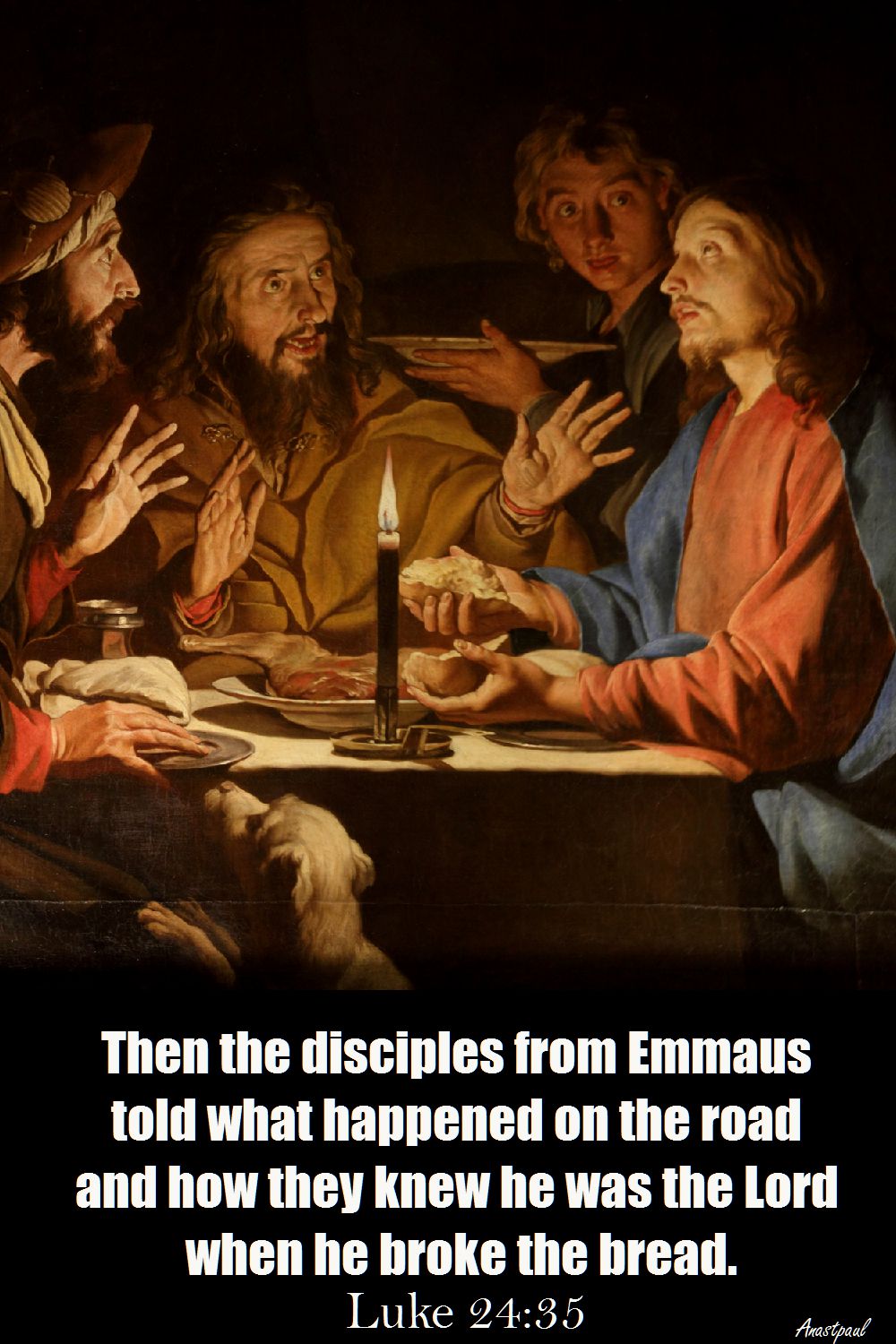
Then the disciples from Emmaus told what happened on the road and how they knew he was the Lord when he broke the bread.
— Luke 24:35
REFLECTION – “The fact that archaeologists have not identified the location of Emmaus with any certainty, holds for me a certain value : it suggests that Emmaus is really everywhere, the road that leads there is the path of every Christian, indeed, every human being. On our own journeys, the risen Jesus is a traveling companion who rekindles in our hearts the warmth of faith and hope and the breaking of the bread of eternal life. This beautiful evangelical text already contains the structure of the Mass: in the first part listening to the Word through the Scriptures; second in the Eucharistic liturgy and communion with Christ present in the sacrament of his Body and his Blood. Nourishing ourselves in this twofold meal, the Church builds itself up and is renewed every day in faith, hope and charity.”……………..Pope Benedict XVI 2008
PRAYER – Loving Father, do I feel this joy so deeply each year? I know how solemn this season is and yet I am overcome by sheer delight. I celebrate this joyful time of remembering how I am brought to new life by the sacrifice Your Son made for me. Help me to delight in the gift He left us, help me to experience the great joy of the feast of the Holy Mass and the Holy Eucharist the food to nourish me on my own road to Emmaus. Amen
Saint of the Day – 16 April – St Benedict Joseph Labre TOSF (1748-1783) “Beggar of Perpetual Adoration” – Patronages – against insanity and mental illness,bachelors, beggars, homeless people, mentally ill people, people rejected by religious orders, pilgrims – Attributes – beggar in a tri-cornered hat sharing his alms.
St Benedict Joseph Labre was born in 1748 in the village of Amettes, near Arras, in the former Province of Artois in the north of France. He was the eldest of fifteen children of a prosperous shopkeeper, Jean Baptist Labre and his wife, Anne Grandsire.
Labre had an uncle, a parish priest, living some distance from his family home; this uncle gladly received him and undertook his early education for the priesthood. At the age of sixteen, he approached his uncle about becoming a Trappist monk but his parents told him he would have to wait until he grew older. When Benedict was about eighteen, an epidemic fell upon the city, and uncle and nephew busied themselves in the service of the sick. While the uncle took care of the souls and bodies of the people, Benedict went to and fro caring for the cattle. He cleaned their stalls and fed them; exchanging the life of a farm labourer for that of a student under his uncle’s roof. Among the last victims of the epidemic was the uncle himself.
Labre set off for La Trappe Abbey to apply to the Order but did not come up to their requirements. He was under age, he was too delicate, he had no special recommendations. He later attempted to join the Carthusians and Cistercians but each order rejected him as unsuitable for communal life. He was, for about six weeks, a postulant with the Carthusians at Neuville. In November 1769 he obtained admission to the Cistercian Abbey of Sept-Fonts. After a short stay at Sept-Fonts his health gave way and it was decided that his vocation lay elsewhere.
Labre, according to Catholic tradition, experienced a desire, which he considered was given to him by God and inspired by the example of Saint Alexius of Rome and that of the holy Franciscan tertiary pilgrim, Saint Roch, to “abandon his country, his parents, and whatever is flattering in the world to lead a new sort of life, a life most painful, most penitential, not in a wilderness nor in a cloister but in the midst of the world, devoutly visiting as a pilgrim the famous places of Christian devotion”.
Labre joined the Third Order of Saint Francis and settled on a life of poverty and pilgrimage. He first traveled to Rome on foot, subsisting on what he could get by begging. He then travelled to most of the major shrines of Europe, often several times each. He visited the various shrines in Loreto, Assisi, Naples, and Bari in Italy, Einsiedeln in Switzerland, Paray-le-Monial in France and Santiago de Compostela in Spain. During these trips he would always travel on foot, sleeping in the open or in a corner of a room, with his clothes muddy and ragged. On one occasion he stopped at the farmhouse of Matthieu and Marie Vianney, who would later become the parents of the future saint, the Curé d’Ars. He lived on what little he was given and often shared the little he did receive with others. He is reported to have talked rarely, prayed often and accepted quietly the abuse he received.
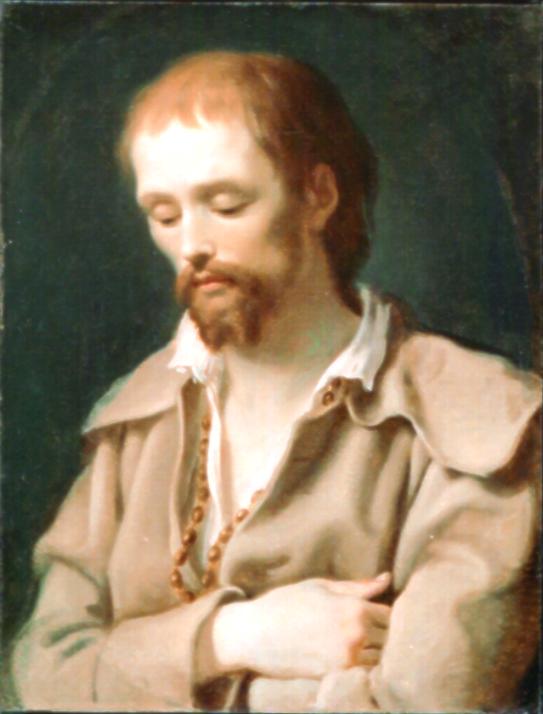
Benedict Joseph Labre depicted by Antonio Cavallucci (1752–1795)
In so doing, Labre was following in the role of the mendicant, the “Fool-for-Christ” . He would often swoon when contemplating the crown of thorns, in particular, and, during these states, it is said he would levitate or bilocate. He was also said to have cured some of the other homeless he met and to have multiplied bread for them. In the last years of his life (his thirties), he lived in Rome, for a time living in the ruins of the Colosseum and would leave only to make a yearly pilgrimage to the shrine of Our Lady of Loreto. He was a familiar figure in the city and known as the “saint of the Forty Hours” (or Quarant’ Ore) for his dedication to Eucharistic adoration.
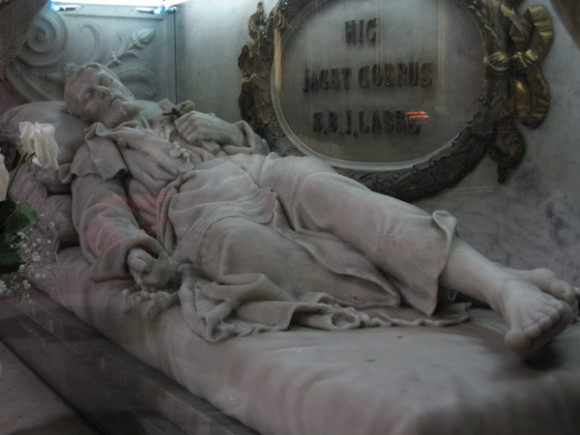
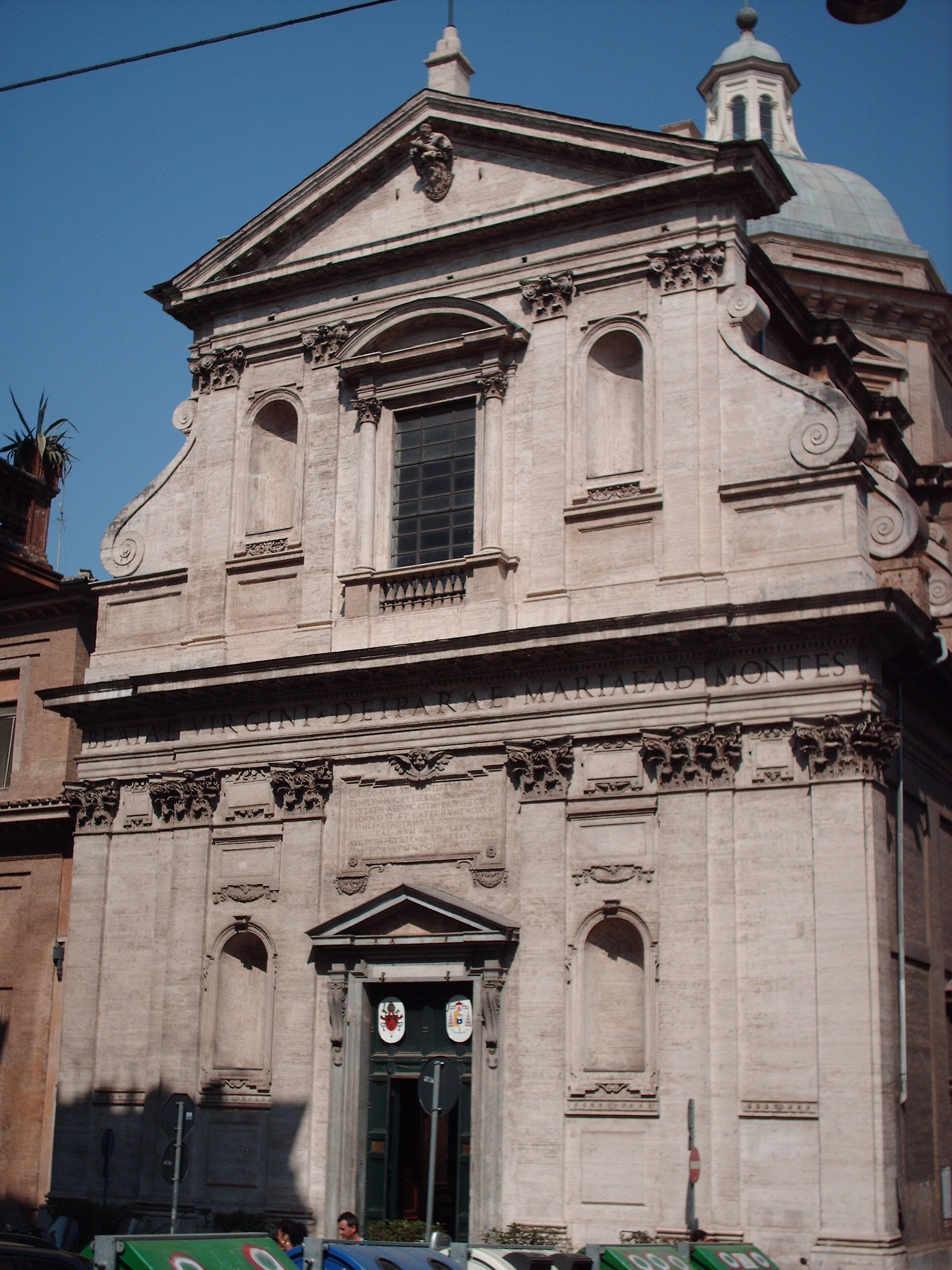
The day before he died, Labre collapsed in the church of Santa Maria ai Monti, blocks from the Colosseum and despite his protestations was charitably taken to a house behind the church at Via dei Serpenti 2. He died there of malnutrition on 16 April, during Holy Week, in 1783 and was buried in the Church of Santa Maria ai Monti.
S.Maria ai Monti: Tomb of St Benedict Joseph Labre
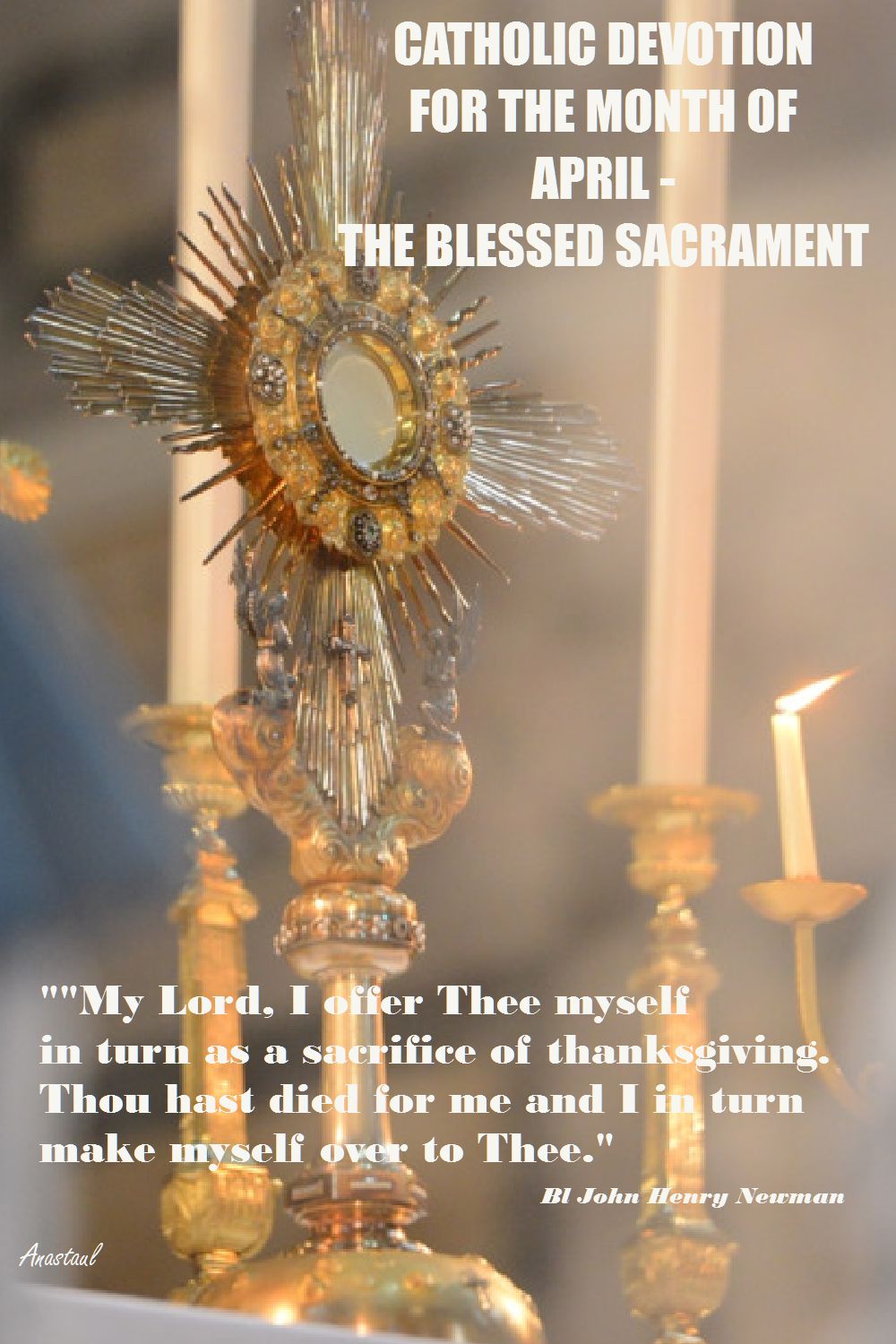
Devotion for the Month of April – The Blessed Sacrament
Every Catholic Church contains a tabernacle in which the Body of Christ is reserved between Masses and the faithful are encouraged to come and pray before the Blessed Sacrament. Frequent prayer before the Blessed Sacrament is a path to spiritual growth.
EUCHARISTIC ADORATION
The practice of Eucharistic adoration on earth not only brings us grace but prepares us for our life in Heaven. As Pope Pius XII wrote in Mediator Dei (1947):
“These exercises of piety have brought a wonderful increase in faith and supernatural life to the Church militant upon earth and they are re-echoed to a certain extent by the Church triumphant in heaven which sings continually a hymn of praise to God and to the Lamb “who was slain.”
This month, why not make a special effort to spend some time in prayer before the Blessed Sacrament? It doesn’t need to be long or elaborate: You can start simply by making the Sign of the Cross and uttering a short profession of faith, such as “My Lord and my God!” as you pass a Catholic church. If you have the time to stop for five minutes, all the better.
“My Lord, I offer Thee myself in turn as a sacrifice of thanksgiving. Thou hast died for me and I in turn make myself over to Thee. I am not my own. Thou hast bought me; I will by my own act and deed complete the purchase. My wish is to be separated from everything of this world; to cleanse myself simply from sin; to put away from me even what is innocent, if used for its own sake, and not for Thine. I put away reputation and honour and influence and power, for my praise and strength shall be in Thee. Enable me to carry on what I profess. Amen.”
AN EXPLANATION OF AN OFFERING OF ONESELF TO CHRIST IN THE EUCHARIST
We should leave each visit to the Blessed Sacrament renewed in our commitment to live a Christian life. This Offering of Oneself to Christ in the Eucharist, written by John Henry Cardinal Newman, reminds us of the sacrifice that Christ made for us, in dying on the Cross and asks Christ in the Blessed Sacrament to help us to dedicate our lives to Him. It is the perfect prayer to end a visit to the Blessed Sacrament.
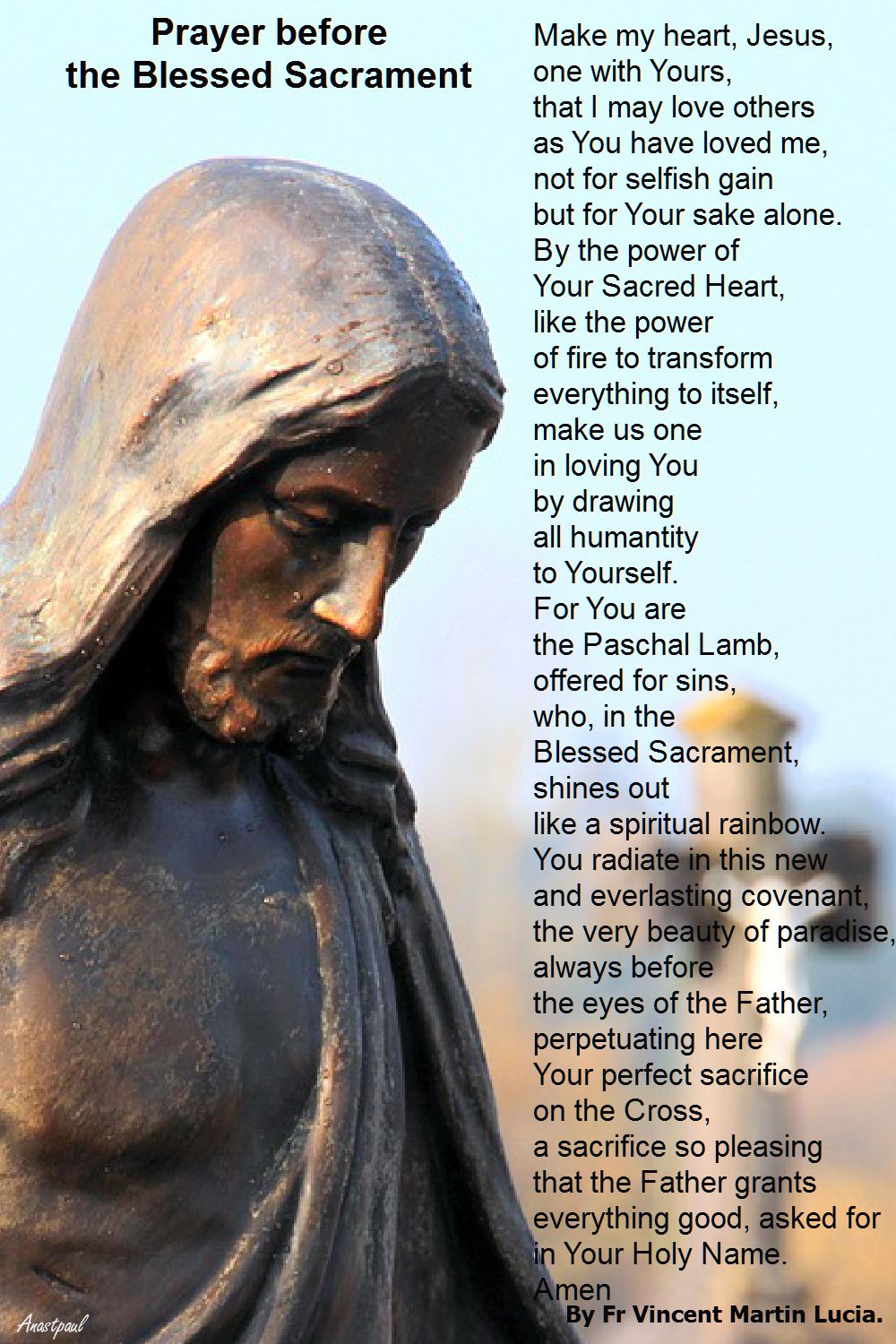
Make my heart, Jesus, one with Yours,
that I may love others as You have loved me,
not for selfish gain but for Your sake alone.
By the power of Your Sacred Heart,
like the power of fire to transform
everything to itself,
make us one in loving You
by drawing all humantity to Yourself.
For You are the Paschal Lamb,
offered for sins,
who, in the Blessed Sacrament,
shines out like a spiritual rainbow.
You radiate in this new
and everlasting covenant,
the very beauty of paradise,
always before the eyes of the Father,
perpetuating here Your perfect sacrifice
on the Cross,
a sacrifice so pleasing that the Father grants
everything good, asked for
in Your Holy Name.
Amen
By Fr Vincent Martin Lucia
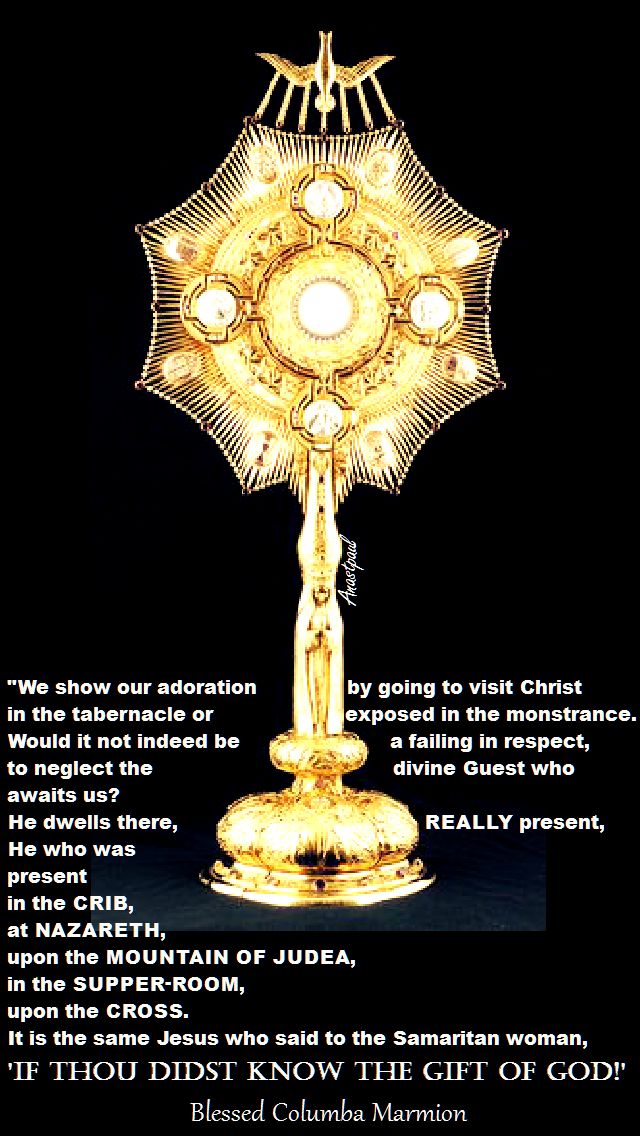
“We show our adoration by going to visit Christ in the tabernacle or exposed in the monstrance. Would it not indeed be a failing in respect to neglect the divine Guest who awaits us? He dwells there, really present, He who was present in the crib, at Nazareth, upon the mountains of Judea, in the supper-room, upon the Cross. It is the same Jesus who said to the Samaritan woman, ‘If thou didst know the gift of God!’
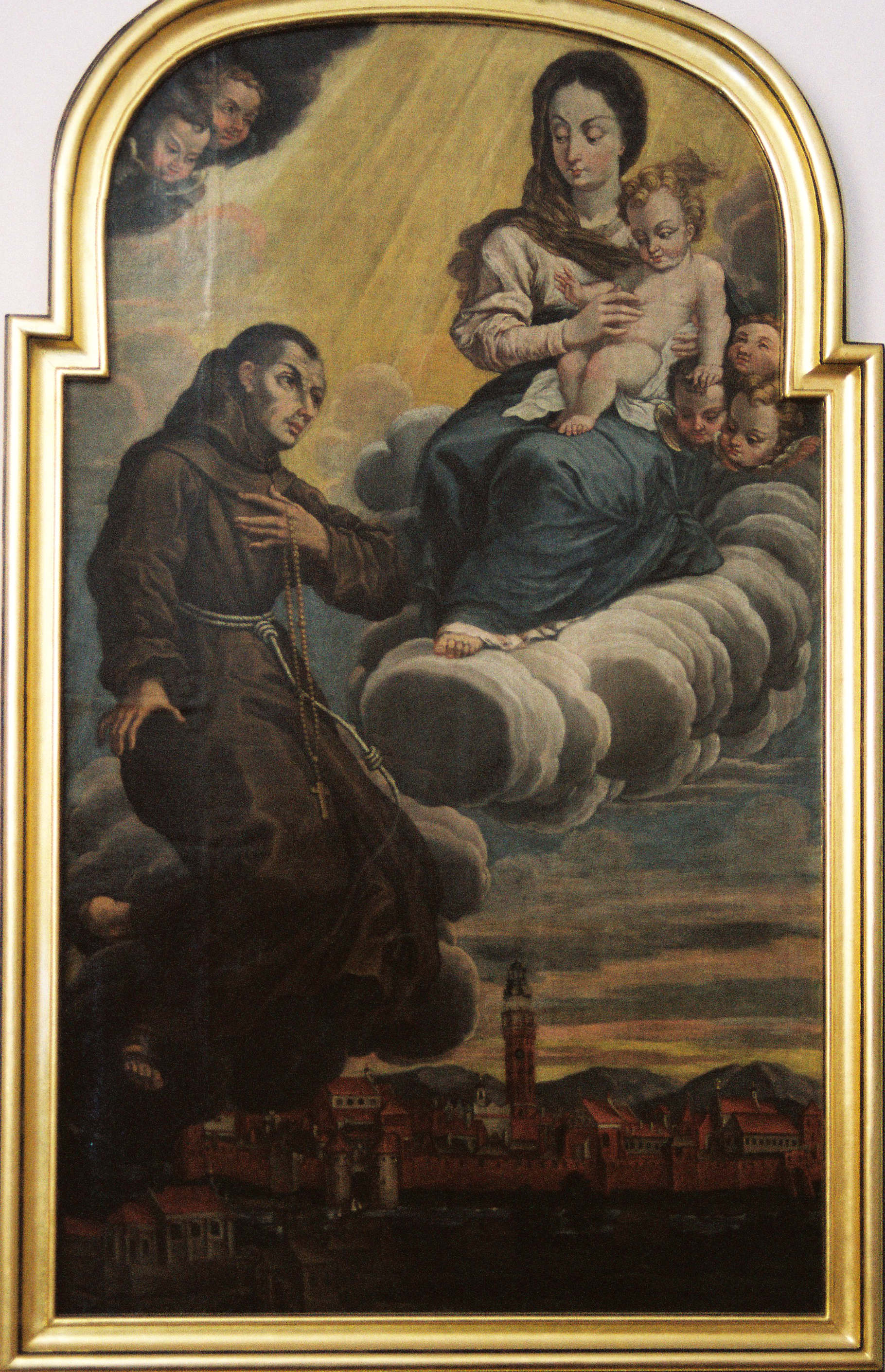
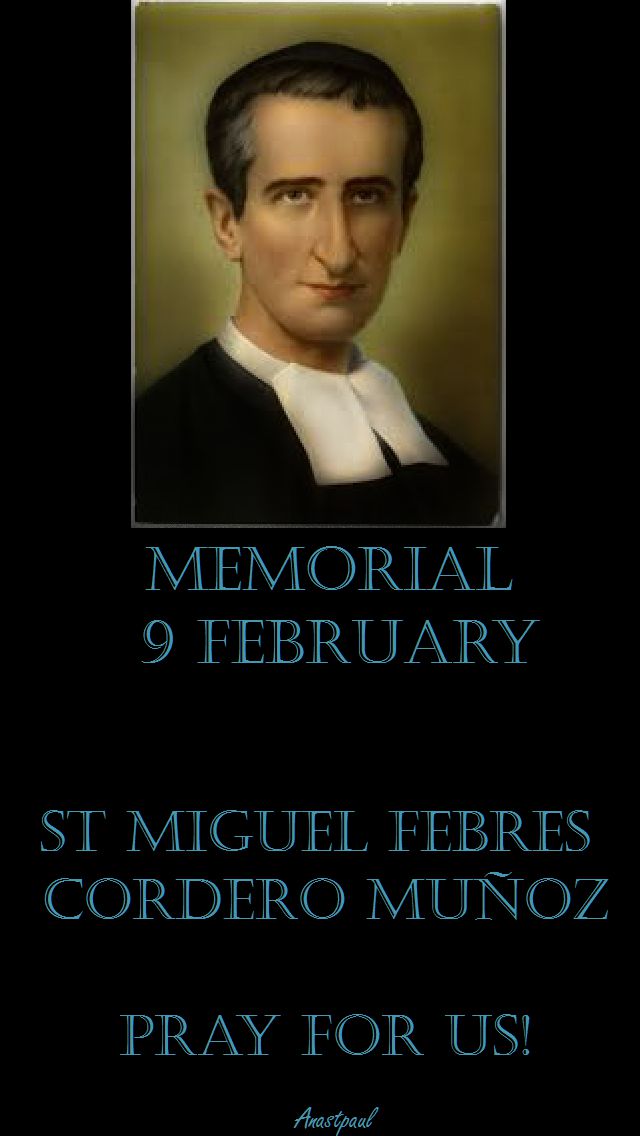
It seems at times that the saints begin with an unfair advantage. Today’s highlighted Saint, Miguel Febres Cordero, was born with a Club foot. At the age of five Our Lady appeared to him and he who previously could not stand alone or walk, ran to her – from then on his disability vanished! Where is our ‘unfair advantage’? Is it not in running to Him who waits in the Tabernacle? Our Lord is truly with us, Body, Blood, Soul and Divinity – is this not an unfair advantage?
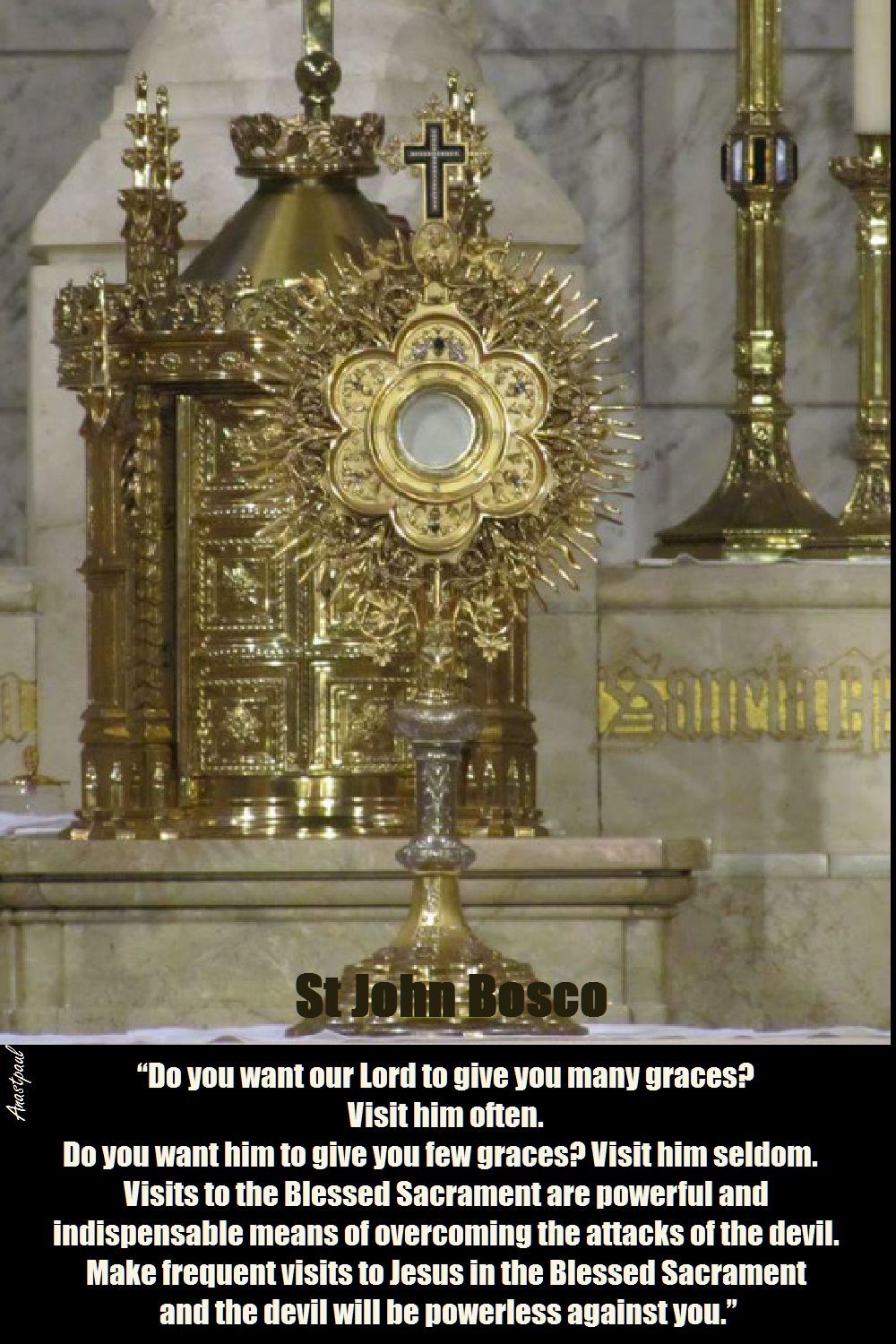
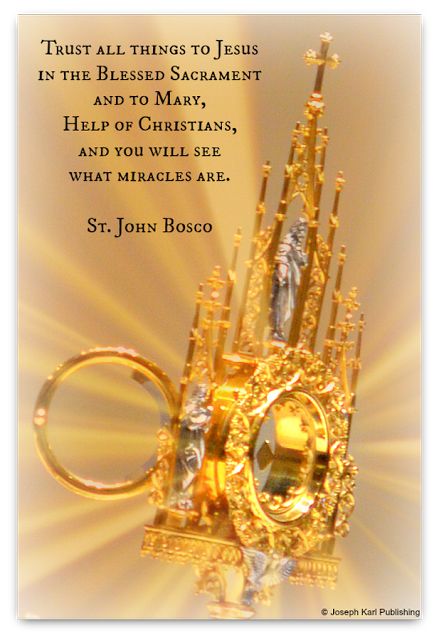
“Do you want our Lord to give you many graces? Visit him often. Do you want him to give you few graces? Visit him seldom. Visits to the Blessed Sacrament are powerful and indispensable means of overcoming the attacks of the devil. Make frequent visits to Jesus in the Blessed Sacrament and the devil will be powerless against you.”
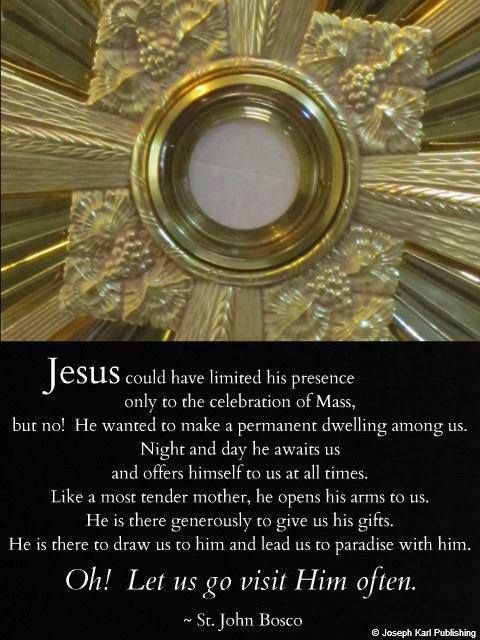
“Jesus could have limited his presence only to the celebration of Mass, but no! He wanted to make a permanent dwelling among us. Night and day he awaits us and offers himself to us at all times. Like a most tender mother, he opens his arms to us. He is there generously to give us his gifts. He is there to draw us to him and lead us to paradise with him. Oh! Let us go visit him often.”
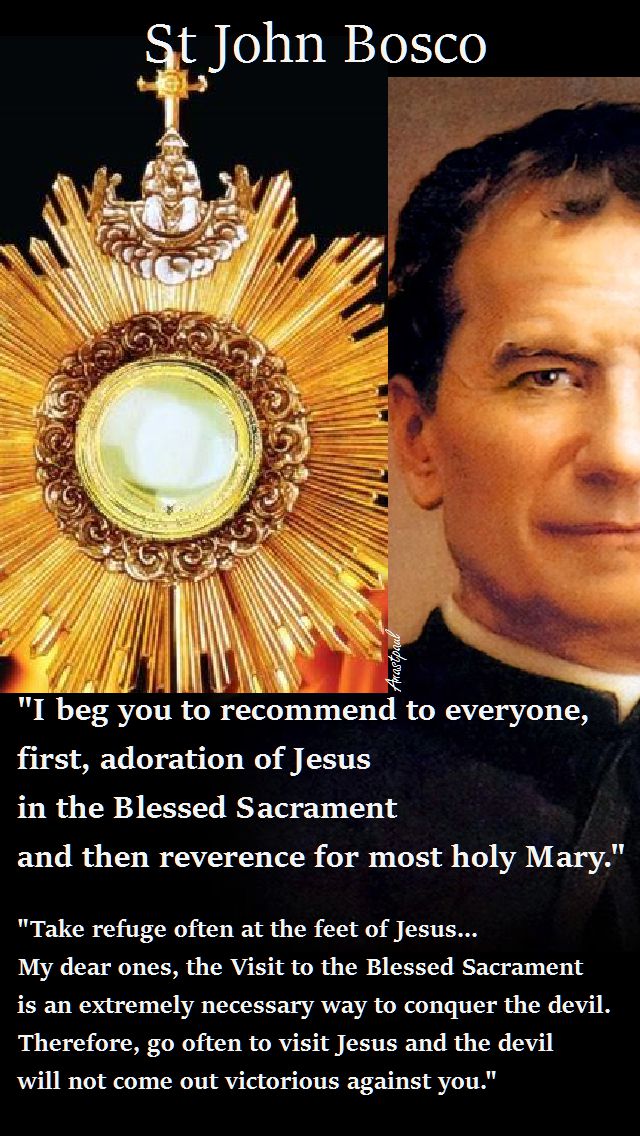
“I beg you to recommend to everyone, first, adoration of Jesus in the Blessed Sacrament and then reverence for most holy Mary.”
“Take refuge often at the feet of Jesus…My dear ones, the Visit to the Blessed Sacrament is an extremely necessary way to conquer the devil. Therefore, go often to visit Jesus and the devil will not come out victorious against you.”
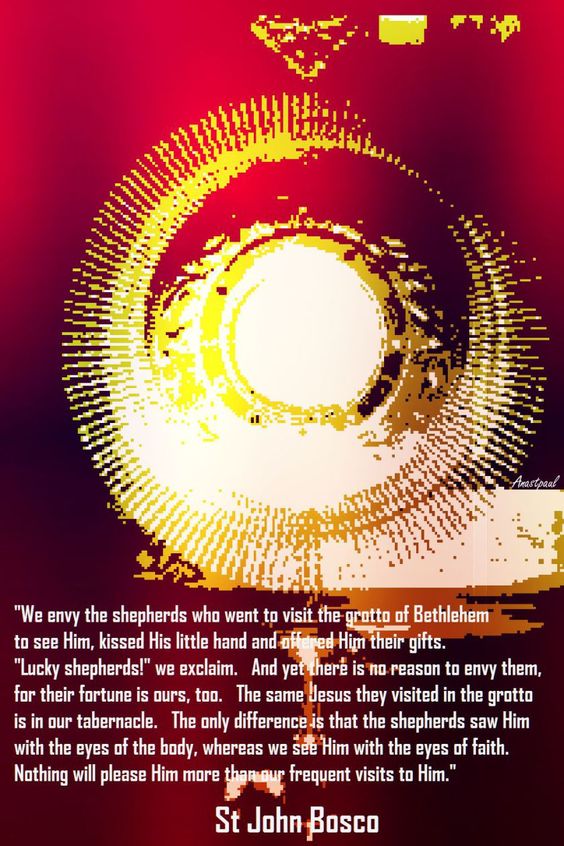
“We envy the shepherds who went to visit the grotto of Bethlehem to see Him, kissed His little hand and offered Him their gifts. “Lucky shepherds!” we exclaim. And yet there is no reason to envy them, for their fortune is ours, too. The same Jesus they visited in the grotto is in our tabernacle. The only difference is that the shepherds saw Him with the eyes of the body, whereas we see Him with the eyes of faith. Nothing will please Him more than our frequent visits to Him.”
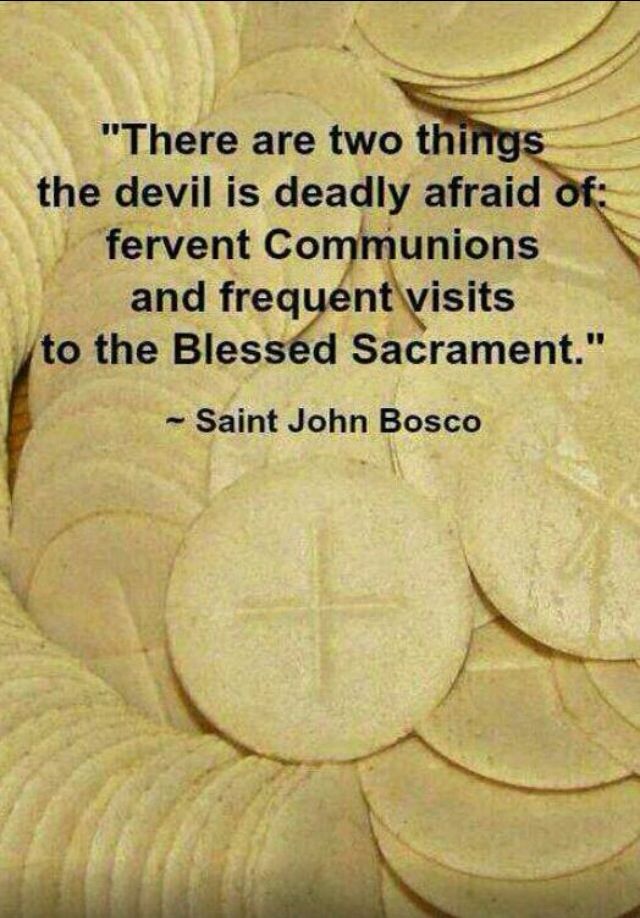
“There are two things the devil is deadly afraid of: fervent Communions and frequent visits to the Blessed Sacrament.”














 AnaStpaul
You must be logged in to post a comment.