Our Lenten Journey with the Angels and the Saints – 14 March – Thursday of the Fourth Week in Lent – 4 Kings 4:25-38, Luke 7:11-16 – Scripture search here: https://www.drbo.org/
“Seek the Lord and be strengthened, seek His Face evermore.” Psalm 104:4
“Young man, I say to thee, arise!” Luke 7:14
His Life-giving Eucharist
St Cyril of Alexandria (376-444) Father & Doctor of the Church
“Even for restoring the dead to life, the Saviour did not stop at acting by Word alone, although it was the bearer of Divine Commands. For such a surpassing work, He took His own Flesh as His assistant – if one might put it that way – that He might show, that it has the power to give life and, that He might cause it to be seen that it is entirely One with Him. For, it is indeed His very own Flesh and not an alien body.
This is what happened when He restored life to the synagogue leader’s daughter, saying to her: “My child, arise!” (Mk 5:41). He took her by the hand, as it is written. As God, He gave her back her life, by His all-powerful command and animated her too, by contact with His Holy Flesh. Thus, He bore witness that, in Flesh as in His Word, one and the same Divine energy was at work. In the same way, too, when he came to a Town called Nain, where the widow’s only son was being buried, He touched the coffin, saying: “Young man, I say to thee, arise!” (Lk 7:14).
Thus, He not only conferred to His Word the power to raise the dead but He even touched the dead, to show that His Body is Life-giving and, through His Flesh, He caused life to pass into their corpses. If the touch alone of His Sacred Flesh restores life to a corrupting body, what profit shall we not discover in His Life-giving Eucharist when we make of it our food? It will wholly transform into its own property which is immortality, those who participate in it.” – (Commentary on the Gospel of John Ch 4).
Quote/s of the Day – 13 March – Wednesday of the Fourth Week in Lent – Isaias 1:16-19, John 9:1-38 – Scripture search here: https://www.drbo.org/
“I am the Light of the world; he who follows me will not walk in darkness but will have the light of life.”
John 8:12
“Arise, be enlightened, … for thy Light is come!”
Isaias 60:1
“Let us listen to the holy Voice of God which summons us from on high, from the holy mountain top. There, we must hasten – I make bold to say – like Jesus, Who is our leader and has gone before us into Heaven. There, with Him, may the eyes of our mind shine with His light and the features of our soul be made new; may we be transfigured with Him and moulded to His image, ever becoming divine, being transformed in an ever greater degree of glory.”
St Anastasius Sinaita (Died 6th Century) Priest and Abbot
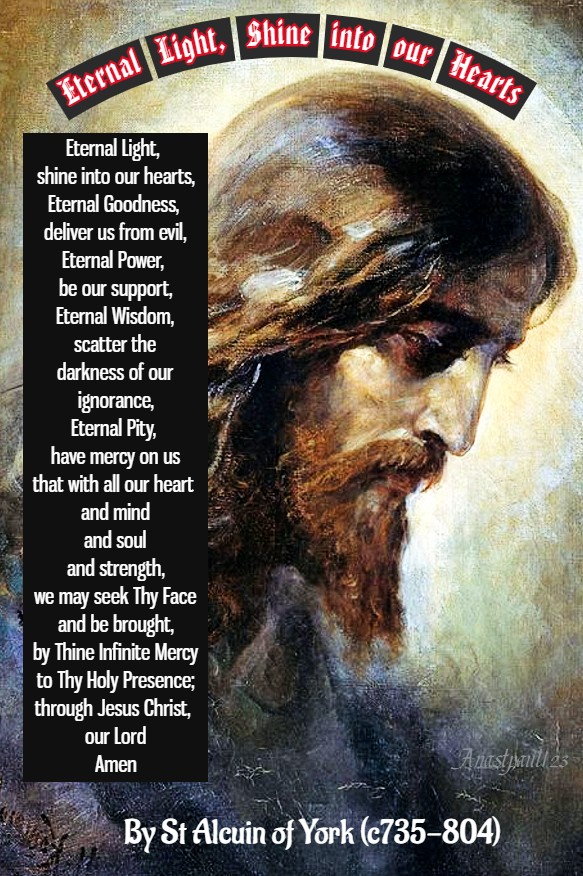
Eternal Light, Shine into our Hearts By St Alcuin of York (735-804)
Eternal Light, shine into our hearts, Eternal Goodness, deliver us from evil, Eternal Power, be our support, Eternal Wisdom, scatter the darkness of our ignorance, Eternal Pity, have mercy on us that with all our heart and mind and soul and strength, we may seek Thy Face and be brought, by Thine Infinite Mercy to Thy Holy Presence; through Jesus Christ, our Lord Amen
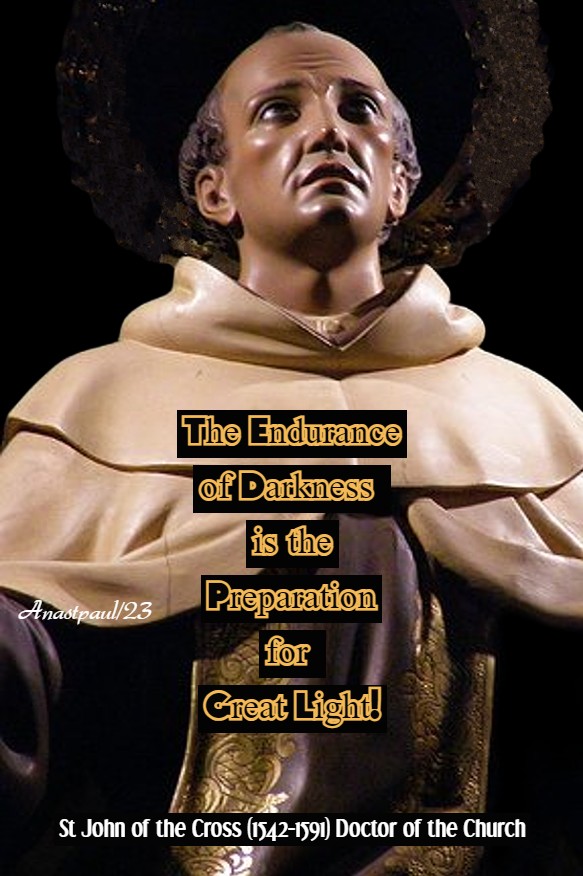
“The endurance of darkness is the preparation for great light!”
Our Lenten Journey with the Angels and the Saints – 13 March – Wednesday of the Fourth Week in Lent – Isaias 1:16-19, John 9:1-38 – Scripture search here: https://www.drbo.org/
“Wash yourselves, be clean, take away the evil of your deeds from my eyes …” Isaias 1:16
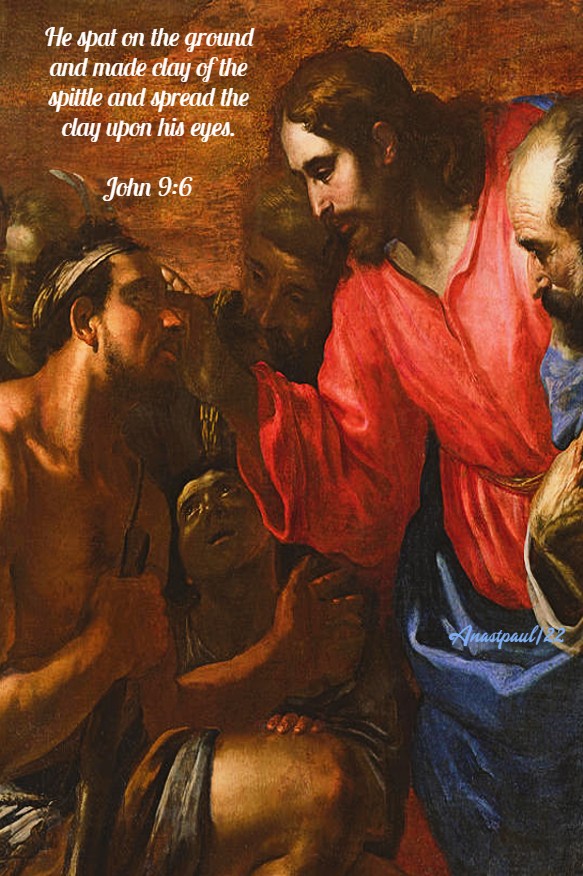
“And Jesus passing by, saw a man who was blind from his birth. … As long as I Am in the world, I Am the Light of the world. When He had said these things, He spat on the ground and made clay of the spittle and spread the clay upon his eyes,” John 9:1,5-6
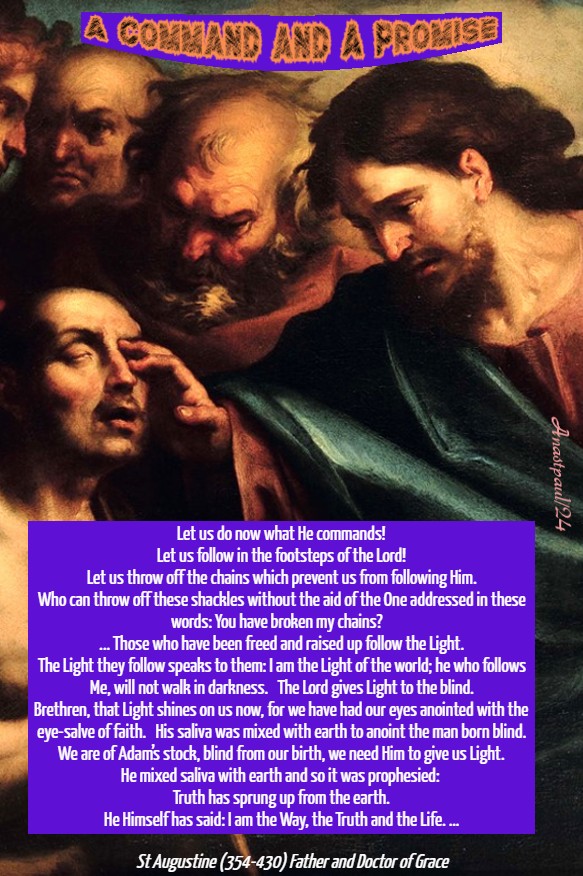
A Command and A Promise
St Augustine (354-430) Father and Doctor of Grace
“The Lord tells us – I am the Light of the world; he who follows Me, will not walk in darkness but will have the Light of life. In these few words He gives a COMMAND and makes a PROMISE. Let us do what He commands, so that we may not blush to covet what He promises and to hear Him say on the Day of Judgement: “I laid down certain conditions for obtaining My Promises. Have you fulfilled them?” If you say: “What did you command, Lord our God?” He will tell you: “I commanded you to follow Me. You asked for advice on how to enter into life. What life, if not the life about which it is written: With Thee is the fountain of life?”
Let us do now what He commands! Let us follow in the footsteps of the Lord! Let us throw off the chains which prevent us from following Him. Who can throw off these shackles without the aid of the One addressed in these words: You have broken my chains? Another psalm says of Him: The Lord frees those in chains, the Lord raises up the downcast.
Those who have been freed and raised up follow the Light. The Light they follow speaks to them: I am the Light of the world; he who follows Me, will not walk in darkness. The Lord gives Light to the blind. Brethren, that Light shines on us now, for we have had our eyes anointed with the eye-salve of faith. His saliva was mixed with earth to anoint the man born blind. We are of Adam’s stock, blind from our birth, we need Him to give us Light. He mixed saliva with earth and so it was prophesied: Truth has sprung up from the earth. He Himself has said: I am the Way, the Truth and the Life. …
If you love Me, follow Me. “I do love you,” you protest “but how do I follow you?” If the Lord your God said to you: “I am the Truth and the Life,” in your desire for truth, in your love for life, you would certainly ask Him to show you the way to reach them. You would say to yourself: “Truth is a great reality, life is a great reality – if only it were possible for my soul to find them!” – (An excerpt from: On John [Treatise 34]).
One Minute Reflection – 13 March – “The Month of St Joseph” – Wednesday of the Fourth Week in Lent – Isaias 1:16-19, John 9:1-38 – Scripture search here: https://www.drbo.org/
“I am the light of the world. When He had said these things, He spat on the ground and made clay of the spittle and spread the clay upon his eyes,” – John 9:5-6
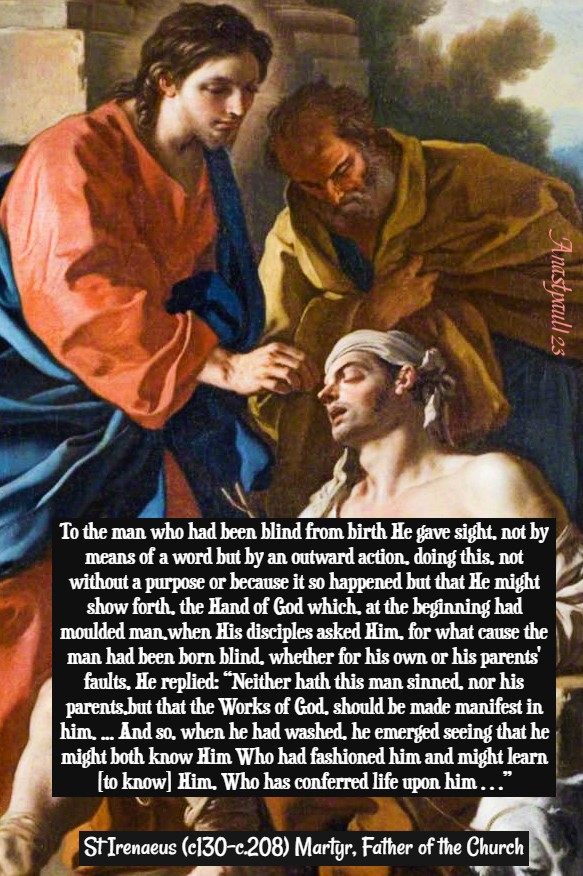
REFLECTION – “To the man who had been blind from birth He gave sight, not by means of a word but by an outward action, doing this, not without a purpose or because it so happened but that He might show forth, the Hand of God which, at the beginning had moulded man. And, therefore, when His disciples asked Him, for what cause the man had been born blind, whether for his own or his parents’ faults, He replied: “Neither hath this man sinned, nor his parents,but that the Works of God, should be made manifest in him.” Now the Work of God is the fashioning of man. For, as Scripture says, He made [man] by a kind of process: “And the Lord took clay from the earth and formed man.” (Gn 2:7). Wherefore also, the Lord spat on the ground and made clay and smeared it upon the eyes, pointing to the original fashioning, how it was effected and manifesting the Hand of God to those who can understand, by what [Hand] man was formed out of the dust…
And, inasmuch, as man, with respect to that formation which, after Adam, had fallen into transgression, needed the layer of regeneration, [the Lord] said to him [upon whom He had conferred sight], after He had smeared his eyes with the clay: “Go to Siloam and wash,” thus restoring to him, both [his perfect] confirmation and that regeneration which took place, by means of the smearing. And so, when he had washed, he emerged seeing that he might both know Him Who had fashioned him and might learn [to know] Him, Who has conferred life upon him …
But He, the very same Who formed Adam at the beginning, with Whom also the Father spoke, [saying], “Let Us make man after Our Image and Likeness,” revealing Himself in these last times to men, formed visual organs for him, who had been blind, [in that body which he had derived] from Adam.” – St Irenaeus (130-202) Bishop, Martyr, Theologian, Father of the Church (Against Heresies, V, 15, 2-4).
PRAYER – O Lord, we beseech Thee, in Thy mercy, pour forth Thy grace into our hearts, that, as we abstain from material food, so may we restrain our senses from sin. Through Jesus Christ, Thy Son our Lord, Who lives and reigns with Thee, in the unity of the Holy Ghost, God, world without end. Amen (Collect)
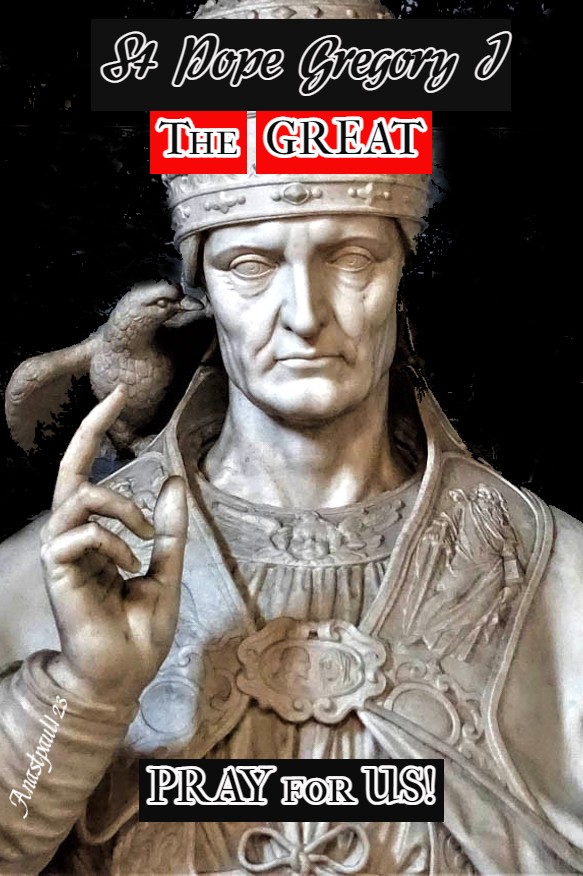
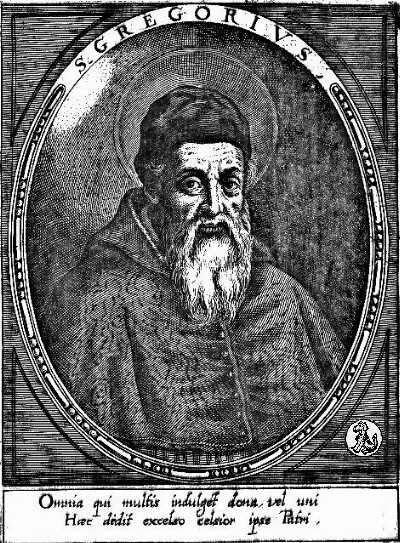
Quote/s of the Day – 12 March – St Gregory the Great (540-604) Pope, Confessor, Father & Doctor of the Church, “Father of the Fathers” “The Apostle of England”
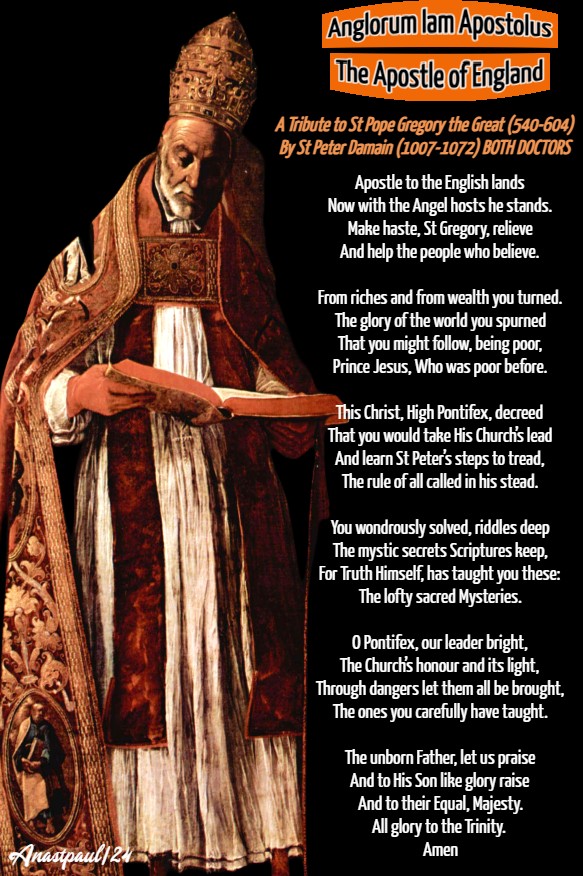
Anglorum Iam Apostolus The Apostle of England By St Peter Damian (1007-1072) Bishop, Confesssor, Father and Doctor A Tribute to his fellow Monk St Gregory the Great (540-604) Pope, Confessor, Father & Doctor of the Church
Apostle to the English lands Now with the Angel hosts he stands. Make haste, St Gregory, relieve And help the people who believe.
From riches and from wealth you turned. The glory of the world you spurned That you might follow, being poor, Prince Jesus, Who was poor before.
This Christ, High Pontifex, decreed That you would take His Church’s lead And learn St Peter’s steps to tread, The rule of all called in his stead.
You wondrously solved, riddles deep The mystic secrets Scriptures keep, For Truth Himself, has taught you these: The lofty sacred Mysteries.
O Pontifex, our leader bright, The Church’s honour and its light, Through dangers let them all be brought, The ones you carefully have taught.
The unborn Father, let us praise And to His Son like glory raise And to their Equal, Majesty. All glory to the Trinity. Amen
Our Lenten Journey with the Angels and the Saints – 12 March – Tuesday of the Fourth Week in Lent – St Gregory the Great (540-604), Pope, Confessor, Father & Doctor of the Church, “Father of the Fathers” “The Apostle of England”
Pride, Strength, That I May See!
St Gregory the Great (540-604), Pope, Confessor, Father & Doctor of the Church
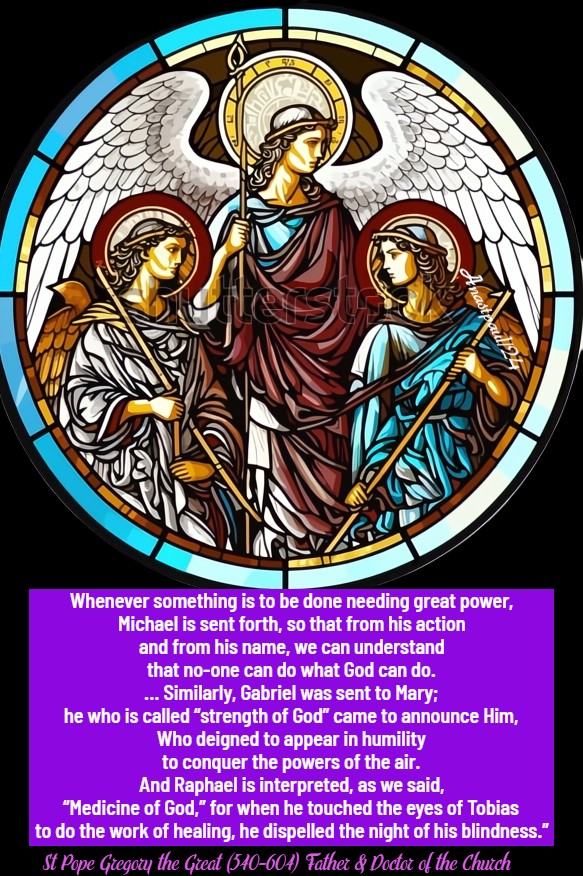
“Whenever something is to be done needing great power, Michael is sent forth, so that from his action and from his name, we can understand that no-one can do what God can do. Hence that old enemy, who through pride, desired to be like God, saying, “I will scale the heavens, I will set up my throne, I will be like the Most High,” is shown at the end of the world, left to his own strength and about to undergo the final punishment, as destined to fight with Michael the Archangel. Similarly, Gabriel was sent to Mary; he who is called “strength of God” came to announce Him, Who deigned to appear in humility to conquer the powers of the air. And Raphael is interpreted, as we said, “Medicine of God,” for when he touched the eyes of Tobias to do the work of healing, he dispelled the night of his blindness.”
Practice: If I am tempted to pride today I will ask St Michael to help me conquer my pride. I will have great confidence in his prayers for this intention since it was he who brought down Lucifer, the very spirit of pride. “Who is like unto God!” And to St Gabriel, in my weakness, I may ask prayers for strength and of St Raphael, his prayers to cure my many hurts, both physical and spiritual.
One Minute Reflection – 12 March – “Tuesday of the Fourth Week in Lent – St Gregory the Great (540-604), Pope, Confessor, Father & Doctor of the Church, “Father of the Fathers” – 1 Peter 5:1-4; 5:10-11; Matthew 16:13-19 – Scripture search here: https://www.drbo.org/
“And I say to thee: That thou art Peter and upon this rock, I will build My Church and the gates of hell shall not prevail against it.” – Matthew 16:18
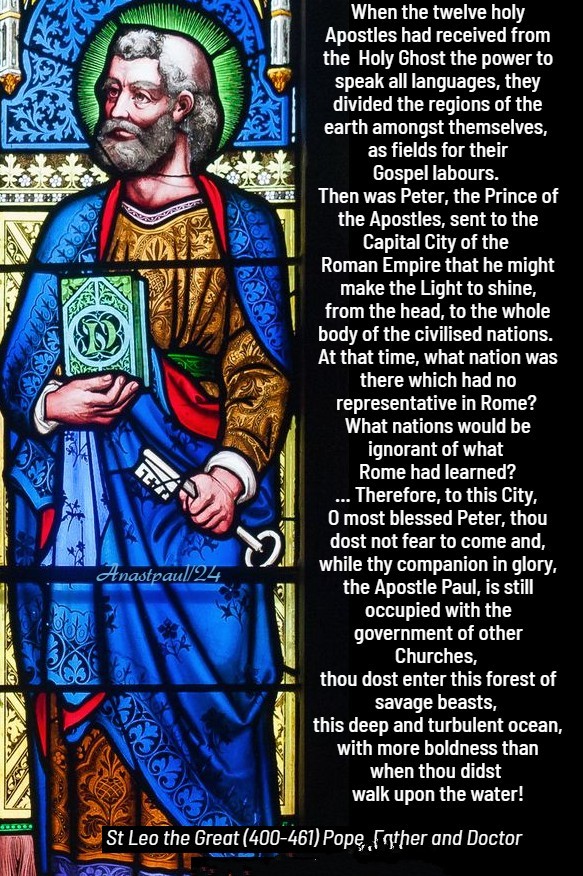
REFLECTION – “When the twelve holy Apostles had received from the Holy Ghost the power to speak all languages, they divided the regions of the earth amongst themselves, as fields for their Gospel labours. Then was Peter, the Prince of the Apostles, sent to the Capital City of the Roman Empire that he might make the Light to shine, from the head, to the whole body of the civilised nations. At that time, what nation was there which had no representative in Rome? What nations would be ignorant of what Rome had learned?
Here were to be refuted the theories of philosophers, here dissolved the vanities of earthly wisdom, here overthrown the worship of devils, here destroyed the impiety of every sacrilege; here, where superstitious zeal had collected all the error and vanity of the world. Therefore, to this City, O most blessed Peter, thou dost not fear to come and, while thy companion in glory, the Apostle Paul, is still occupied with the government of other Churches, thou dost enter this forest of savage beasts, this deep and turbulent ocean, with more boldness than when thou didst walk upon the water!
Thou hadst already taught those, of the circumcision who had been converted, thou hadst founded the Church of Antioch, the first that bore the noble name of Christian; thou hadst published the law of the Gospel throughout Pontus, Galatia, Cappadocia, Asia and Bithynia and, thou didst not fear for the difficulty of thy work, nor turn back because of thine old age but didst boldly set up the trophy of the Cross of Christ, upon those Roman walls, where the Providence of God had appointed the throne of thine honour and the glorious scene of thy passion.” – St Leo the Great (400-461) Pope, Father and Doctor of the Church (Sermon on the Feast of St Peter’s Chair at Rome).
PRAYER – O God, Who granted the rewards of everlasting happiness to the soul of Thy servant Gregory, mercifully grant that we, who are weighed down with the burden of our sins, may be raised up by his prayers to Thee. Through Jesus Christ, Thy Son our Lord, Who lives and reigns with Thee, in the unity of the Holy Ghost, God, world without end. Amen (Collect).
Our Morning Offering – 12 March – Tuesday of the Fourth Week in Lent and the Memorial of St Pope Gregory the Great (540-604) – Father & Doctor
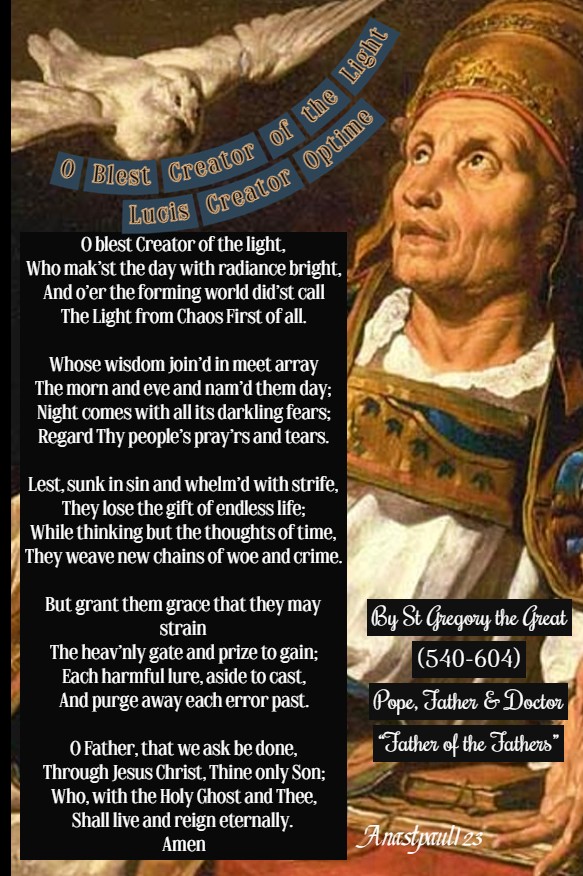
Lucis Creator Optime O Blest Creator of the Light By St Gregory the Great (540-604) Pope, Father & Doctor “Father of the Fathers”
O blest Creator of the light, Who mak’st the day with radiance bright, And o’er the forming world did’st call The Light from Chaos First of all.
Whose wisdom join’d in meet array The morn and eve and nam’d them day; Night comes with all its darkling fears; Regard Thy people’s pray’rs and tears.
Lest, sunk in sin and whelm’d with strife, They lose the gift of endless life; While thinking but the thoughts of time, They weave new chains of woe and crime.
But grant them grace that they may strain The heav’nly gate and prize to gain; Each harmful lure, aside to cast, And purge away each error past.
O Father, that we ask be done, Through Jesus Christ, Thine only Son; Who, with the Holy Ghost and Thee, Shall live and reign eternally. Amen
This hymn is used for Vespers (II) on Sundays throughout the year in the Extraordinary Form of the Roman Breviary. Trans John M Neale (1818-1866), 1851. Tune: “Lucis Creator Optime” Gregorian Chant, Mode VIII, traditional.
Blessed Jerome of Recanati OSA (Died 1350) Priest, Friar of the Hermits of Saint Augustine, Peacemaker. He was Beatified in 1804 by Pope Pius VII. The Roman Martyrology reads : “In Recanati in the Marche, Blessed Girolamo Gherarducci, Priest of the Order of the Hermits of St Agustine, who worked for peace and harmony between peoples.” About Bl Jerome: https://anastpaul.com/2022/03/12/saint-of-the-day-12-march-blessed-jerome-of-recanati-osa-died-1350/
St Theophanes (c758-817) Abbot, Confessor, Defender of Icons
Martyrs of Nicomedia – 8 Beati: Christians who were Martyred in succession in a single incident during the persecutions of Diocletian. First there were the eight imprisoned Christians, Domna, Esmaragdus, Eugene, Hilary, Mardonius, Maximus, Mígdonus and Peter, about whom we know little more than their names. Each day for eight days one of them would be strangled to death in view of the others so that they would spend the night in dread, not knowing if they were next. Peter was the Chamberlain or Butler in the Palace of Diocletian. When he was overheard complaining about this cruelty, he was exposed as a Christian, arrested, tortured and executed by having the flesh torn from his bones, salt and vinegar poured on the wounds and then being roasted to death over a slow fire. Gorgonio was an army officer and member of the staff in the house of emperor Diocletian, Doroteo was a staff clerk. They were each exposed as Christians when they were overhead objecting to the torture and murder of Peter. This led to their own arrest, torture and executions. Died in 303 in Nicomedia, Bithynia (in modern Turkey) Additional Memorial – 28 December as part of the 20,000 Martyrs of Nicomedia. Beatified on 14 January 1891 by Pope Leo XIII (cultus confirmation).
Quote/s of the Day – 11 March – Monday of the Fourth Week in Lent – 3 Kings 3:16-28; John 2:13-25 – Scripture search here: https://www.drbo.org/
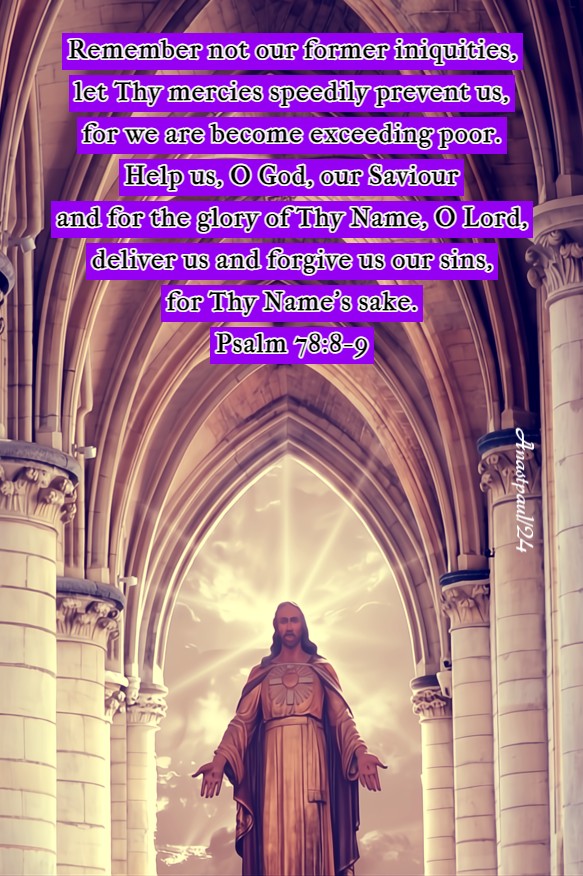
“Remember not our former iniquities, let Thy mercies speedily prevent us, for we are become exceeding poor. Help us, O God, our Saviour and for the glory of Thy Name, O Lord, deliver us and forgive us our sins, for Thy Name’s sake.”
Psalm 78:8-9
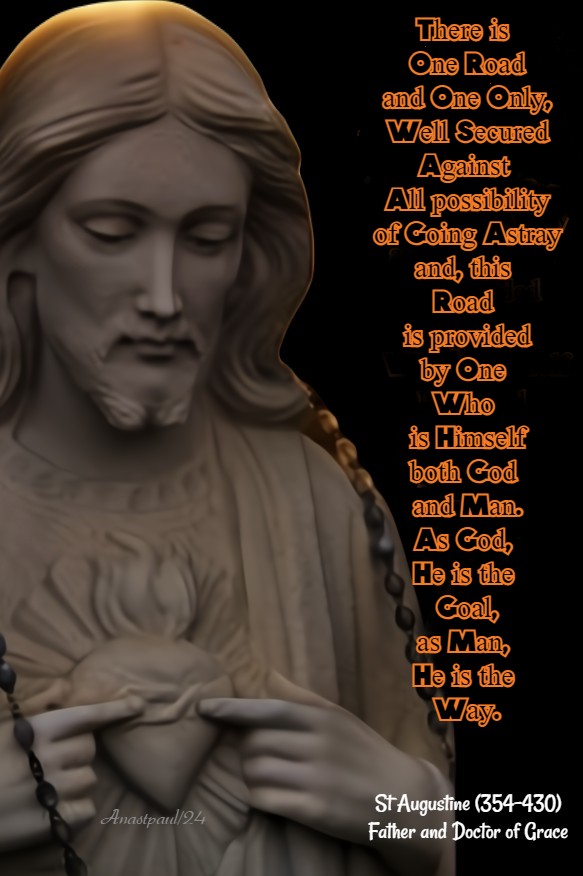
“… There is one Road and one only, well secured against all possibility of going astray and, this Road is provided by One, Who is Himself both God and Man. As God, He is the Goal, as Man, He is the Way.”
St Augustine (354-430) Father and Doctor of Grace
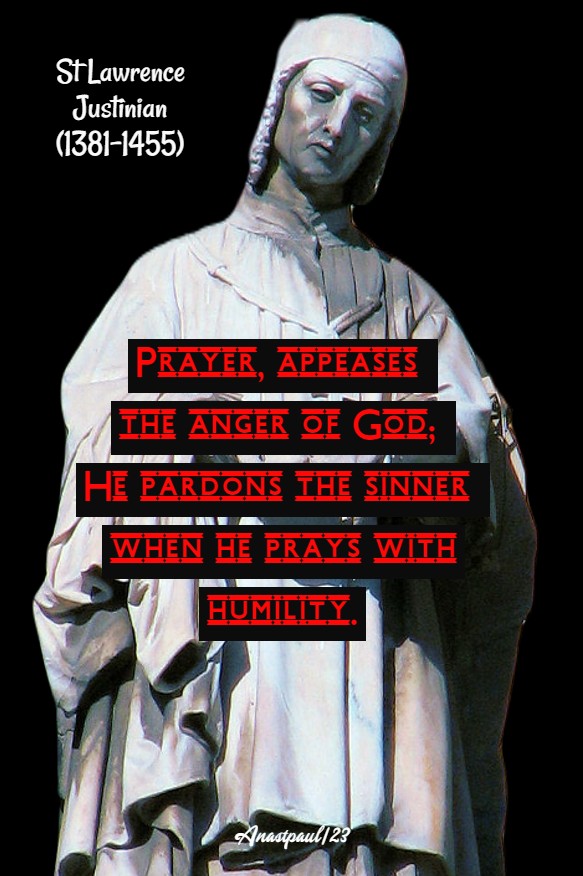
“Prayer, appeases the anger of God; He pardons the sinner when he prays with humility.”
St Lawrence Justinian (1381-1455)
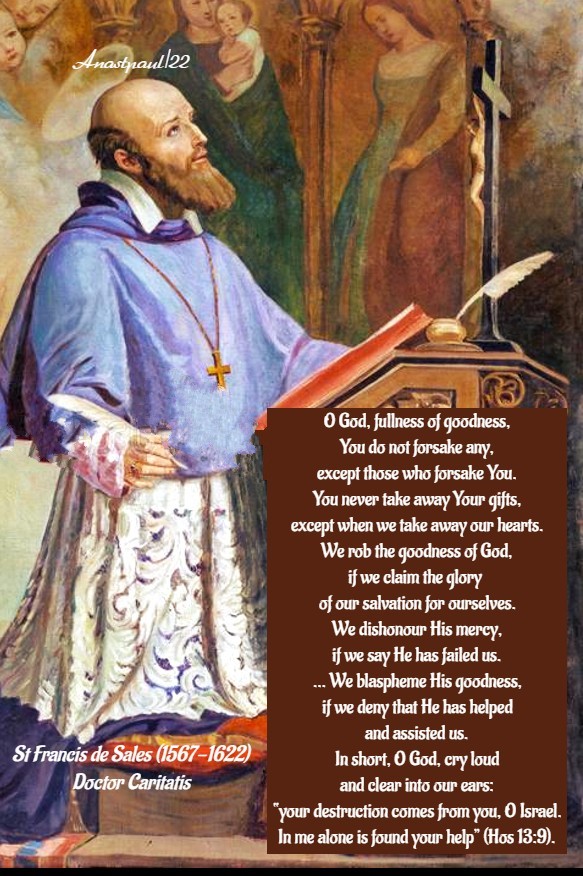
“O God, fullness of goodness, You do not forsake any, except those who forsake You. You never take away Your gifts, except when we take away our hearts. We rob the goodness of God, if we claim the glory of our salvation for ourselves. We dishonour His mercy, if we say He has failed us. … We blaspheme His goodness, if we deny that He has helped and assisted us. In short, O God, cry loud and clear into our ears: “your destruction comes from you, O Israel. In me alone is found your help” (Hos 13:9).
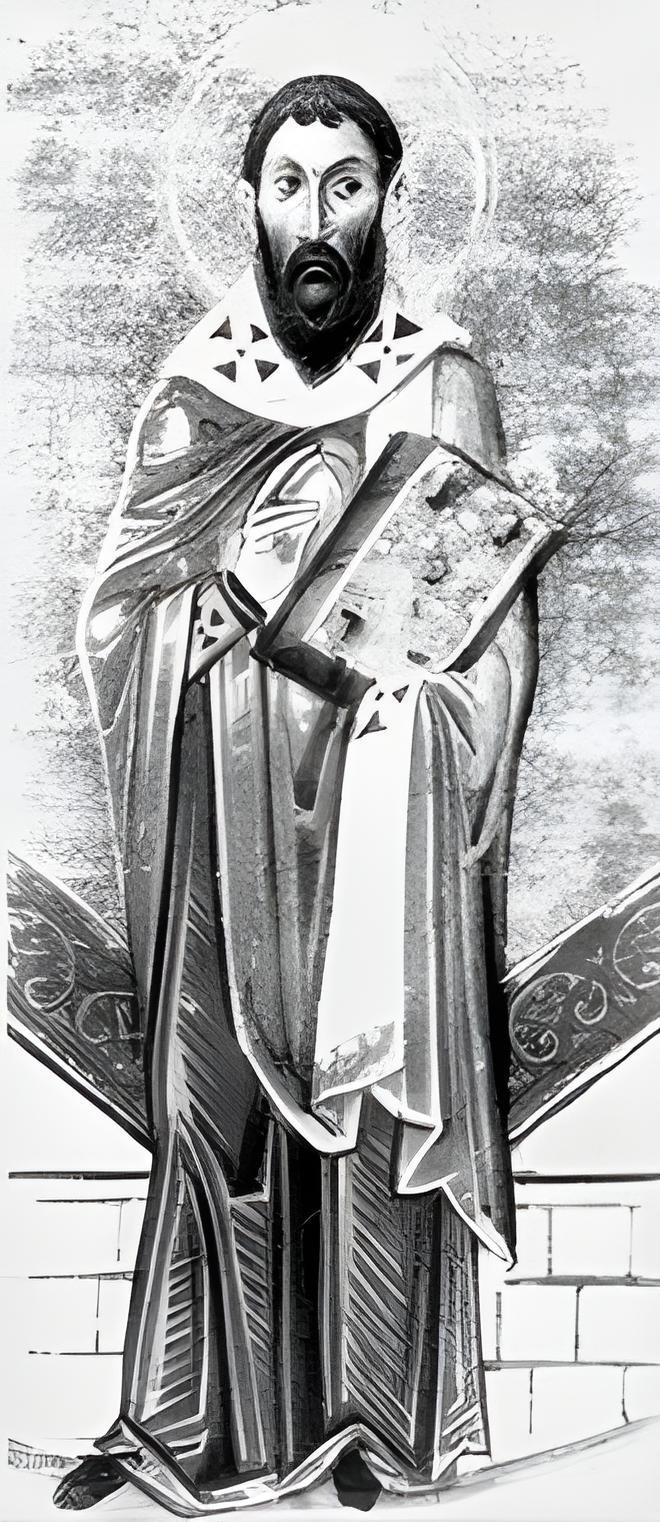
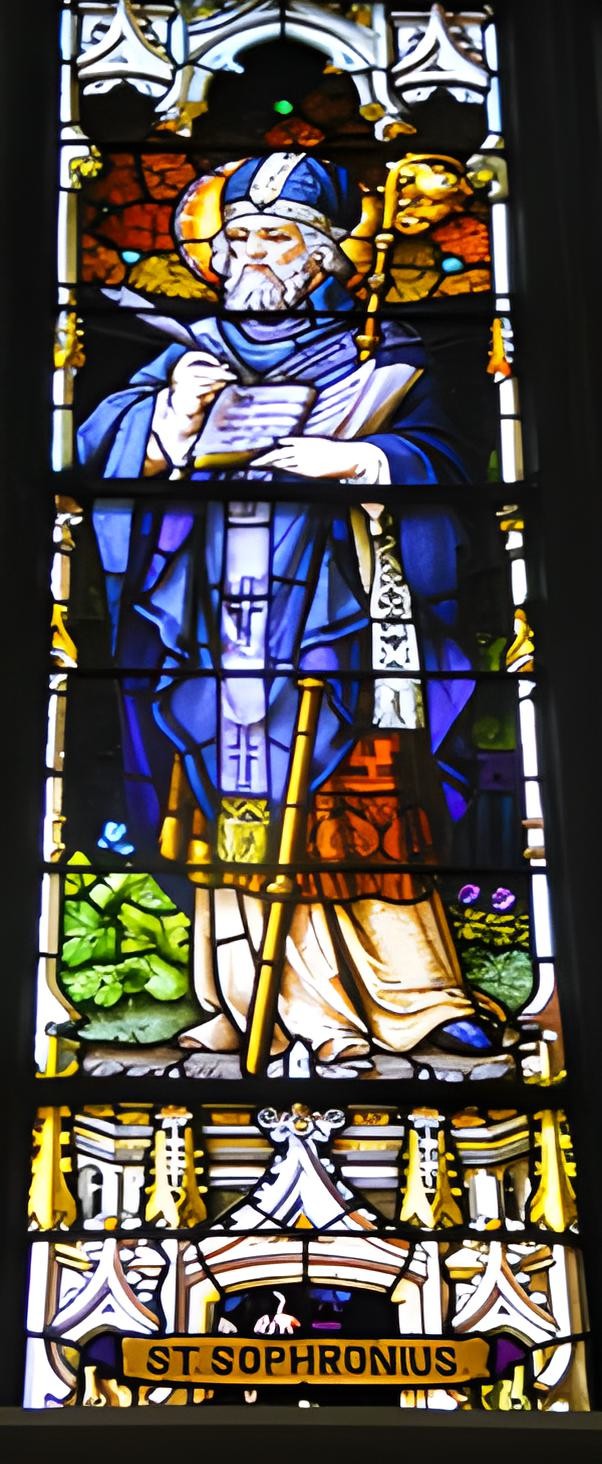
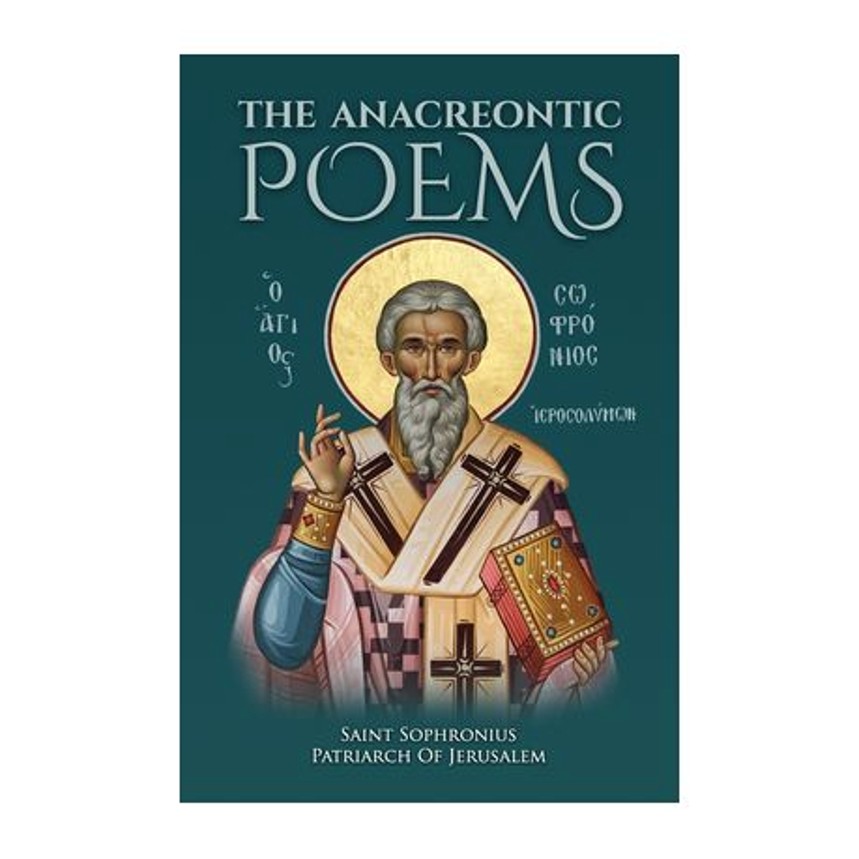
Saint of the Day – 11 March – Saint Sophronius of Jerusalem (c550-c638) Bishop of Jerusalem from 634 until his death, Father of the Church. Before rising to the primacy of the See of Jerusalem, he was a Monk, Theologian and Philosopher, who was the chief protagonist for orthodox teaching in the doctrinal controversy on the essential nature of Jesus. He was a well-travelled and honoured Teacher of Rhetoric, living for several years in Alexandria, Egypt near St John the Almoner. Ecclesiastical and Liturgical Writer, Poet and exercised an extensive correspondence, some of which has survived and some of which we still use within the Liturgy. He is also renowned in history for his peace negotiations with the invading Saracens, thus ensuring a level of protection to the City’s Christians Born in Damascus, Syria in the 6th Century and died in c638; sources disagree on cause and location. Also known as – Sophronius of Damascus, “Sophronius the Sophist” Sofronio…
Sophronius the Sophist, was one of the most rivetting personalities of the time, cultured, open-minded and a passionate defender of orthodoxy, was born in Damascus around 550. He abandoned his hometown as a young man to undertake numerous journeys but always remained proud of his place of origin: “where Paul arrived blind and left healed, where a fleeing persecutor became a preacher; the City which gave refuge to the Apostle and from which he fled in a basket lowered from the window, thus earning the graces of the saints and acquiring great fame […] ”
Sophronius completed his studies mainly in Damascus, where he was educated in Greek and Syriac culture. Eager to become a Monk, he visited the Monastery of San Theodosius, near Bethlehem in Judea and here he met the Monk ascetical Writer John Moschus (c550 – 619), with whom he formed a lasting bond of friendship.
It is difficult to evaluate the influence which each exerted on the other — Sophronius was decidedly more cultured but, he considered his friend his spiritual guide and advisor. Their main bond was perhaps their common Chalcedonian faith but they also began a collaboration in passing on the lives of the Desert Fathers to future generations. The conflicts already present at that time in the Middle Eastern world, caused the two friends to move around a lot, being hosted by different Monasteries. Between 578 and 584, they were in Egypt, where Sophronius was a pupil of the Aristotelian Stephen of Alexandria and both became friends of Theodore, the Philosopher and Zoilus, the latter an erudite Calligrapher. In this period, Sofronio began to lose his sight but he was miraculous cured of his ailment by visiting the Tombs of Saints Cyrus and John near Menuti and, in thanksgiving, he wrote an account of seventy miracles attributed to their intercession.
From 584 onwards it becomes difficult to reconstruct their movements exactly. For a certain time it seems they took different paths — Sophronius became a Monk in the Monastery of Saint Theodosius, while John Moschus wandered between Sinai, Cilicia and Syria. The two friends finally found themselves in the service of the Bishop of Alexandria, Saint John the Almoner, appointed in 610. A few years later the Persians occupied the holy places and headed towards Egypt, so the Bishop with Sophronius and John, left through Cyprus, moving onto other islands and finally arrived in Rome. In 619, in the Eternal City St John the Almoner, handing over his last wishes to Sophronius. Here too, sadly, our Saint lost another great friend and staunch advocate of orthodoxy, John Moschus, who also died in Rome in 619. Sophronius accompanied the body of his friend and spiritual advisor, back to Jerusalem for monastic burial.
Sophronius made great efforts to counteract the rampant heresies, in particular the Monothelitism which the Emperor Heraclius had imposed on the entire Empire with the approval of the Patriarch, Sergius of Constantinople. From 634 Sophronius was the new Bishop of Jerusalem, a rolewhich allowed him to continue his battle against heresy, with greater authority. As the heresies into which Sergius was falling, were increasingly evident and in fear that Pope Honorius might fall into the trap, he commissioned Bishop Stephen of Dora, to go to Rome in his stead, as he was unable to do so due to an imminent Saracen invasion and made him swear on Calvary, to remain faithful to the One True Faith taught our Saint so deeply by the Chalcedonian Fathers (remember we clebrated one of them recently – St Gregory of Nyssa).
The envoy, Bishop Stephen of Dora, reported Sophronius’ will to the Lateran Council of 649 (the image below shows St Sophronius on the left, St Michael the Archangel in the middler and St? Stephen of Dora on the right): “There he made me promise with a solemn oath: “If you forget or despise the Faith which is now threatened, you will have to give an account to Him Who, although God, was Crucified in this saintly place, when in His Next Coming, He will judge the living and the dead. As you know, I cannot make this journey, due to the invasion of the Saracens […]. Go without delay to the other end of the earth, to the Apostolic See, the Foundation of Orthodox teaching and tell the holy men who are there, not once, not twice but many times, what is happening — tell them the whole truth and nothing more. Do not hesitate, ask them and insistently pray to them, to use their inspired wisdom to pass a final judgement and destroy this new teaching which has been inflicted on us.” Impressed by the solemn appeal which Sophronius had pronounced in that holy and venerable place and, considering the Episcopal power which had been conferred on me, by the grace of God, I immediately left for Rome. I am here before you for the third time, bending before the Apostolic See imploring, as Sophronius and many others did, “come to the aid of the threatened Catholic faith!”.
St Sophronius on the left, St Michael the Archangel in the middler and St? Stephen of Dora on the right
It took a good ten years before Pope Saint Martin I condemned the heresy at the same Council. Sophronius came to terms with the Saracens, to avoid massacres of the people in Jerusalem but, he died a few months later. He left several sermons and writings to posterity, a splendid prayer (which we still use) to bless the water on the Feast of the Baptism of the Lord, as well as Hymns and Canticles of extraordinary beauty! His Antiphons for Holy Week constituted the source of the “Improperia” — lso known as the Reproaches, they are sung in the Liturgy as part of the observance of the Passion, usually on the afternoon of Good Friday.
Quote/s of the Day – 10 March – Laetare Sunday / The Fourth Sunday in Lent
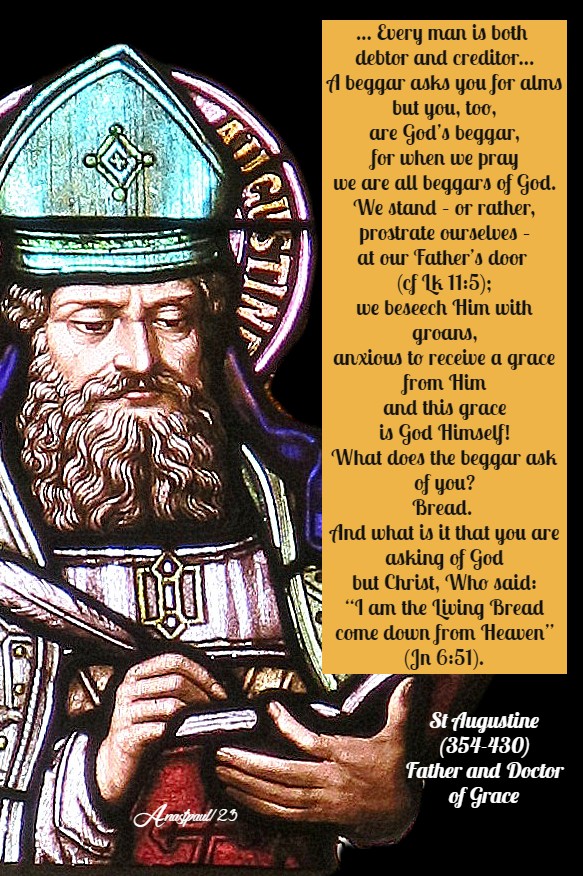
“… Every man is both debtor and creditor… A beggar asks you for alms but you, too, are God’s beggar, for when we pray we are all beggars of God. We stand – or rather, prostrate ourselves – at our Father’s door (cf Lk 11:5); we beseech Him with groans, anxious to receive a grace from Him and this grace is God Himself! What does the beggar ask of you? Bread. And what is it that you are asking of God but Christ, Who said: “I am the Living Bread come down from Heaven” (Jn 6:51).”
St Augustine (354-430) Father and Doctor of Grace
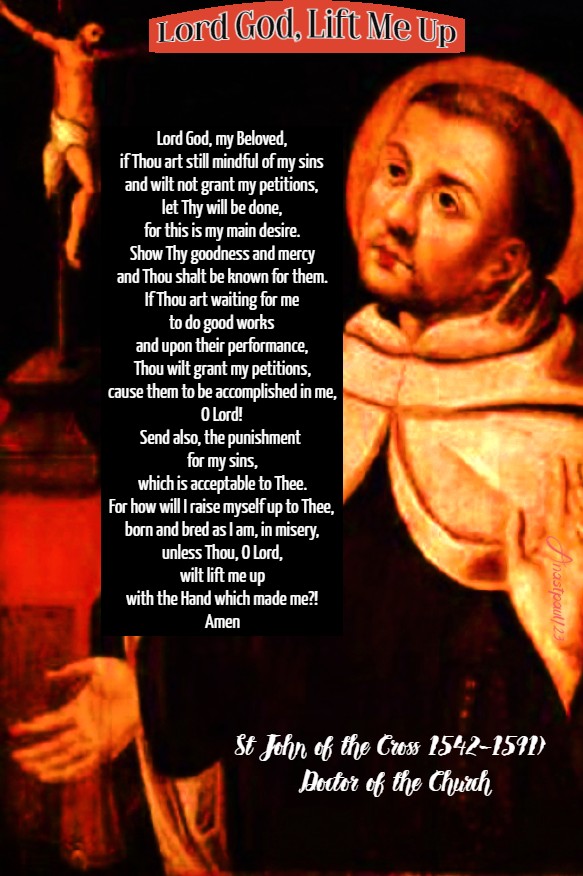
Lord God, Lift Me Up By St John of the Cross (1542-1591)
Lord God, my Beloved, if Thou art still mindful of my sins and wilt not grant my petitions, let Thy will be done, for this is my main desire. Show Thy goodness and mercy and Thou shalt be known for them. If Thou art waiting for me to do good works and upon their performance, Thou wilt grant my petitions, cause them to be accomplished in me, O Lord! Send also, the punishment for my sins, which is acceptable to Thee. For how will I raise myself up to Thee, born and bred as I am, in misery, unless Thou, O Lord, wilt lift me up with the Hand which made me?! Amen
St John of the Cross (1542-1591) Mystical Doctor of the Church
Quote/s of the Day – 9 March – St Gregory of Nyssa (c335–c395) Bishop, Father of the Church
On the Soul and the Resurrection in Two Parts
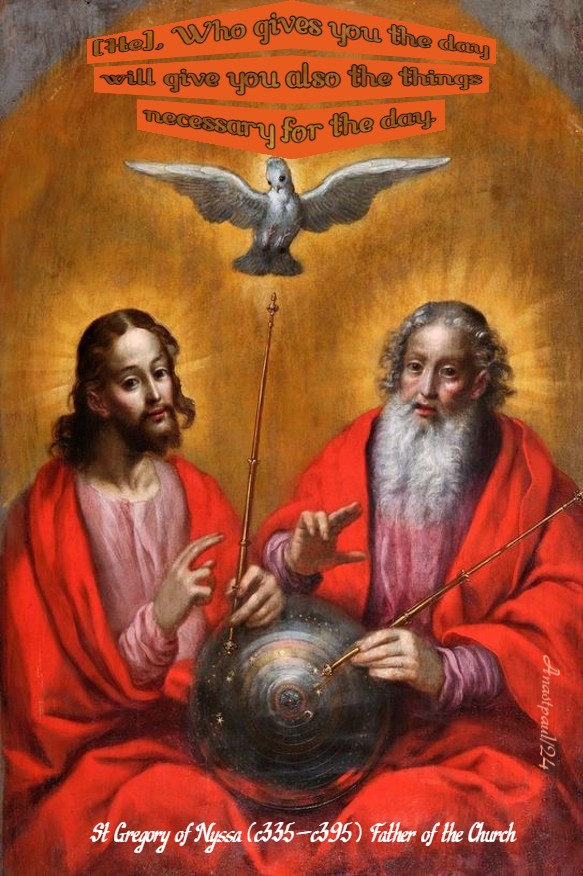
“[He], Who gives you the day will give you also the things necessary for the day.”
“As no darkness can be seen by anyone surrounded by light, so, no trivialities can capture, the attention of anyone, who has his eyes on Christ.”
“For when one considers the universe, can anyone be so simple-minded, as NOT to believe that the Divine is present in everything, pervading, embracing and penetrating it?”
“It is impossible for one to live without tears, who considers things, exactly as they are!”
“For the purity of Christ and the purity which is manifest in our hearts are identical. Christ’s purity, however, is the Fountainhead; ours has its Source in Him and flows out of Him. Our life is stamped with the beauty of His thought. The inner and the outer man, are harmonised in a kind of music. The mind of Christ is the controlling influence which inspires us to moderation and goodness in our behaviour. As I see it, Christian perfection consists in this – sharing the title which expresses the meaning of Christ’s Name, we bring out this meaning in our minds, our prayers and our way of life.”
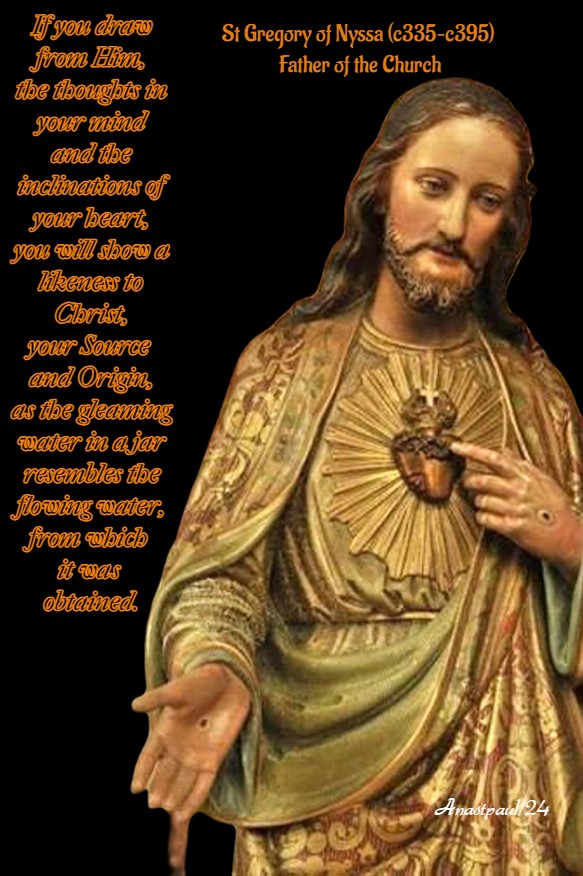
“If you draw from Him, the thoughts in your mind and the inclinations of your heart, you will show a likeness to Christ, your Source and Origin, as the gleaming water in a jar resembles the flowing water, from which it was obtained.”
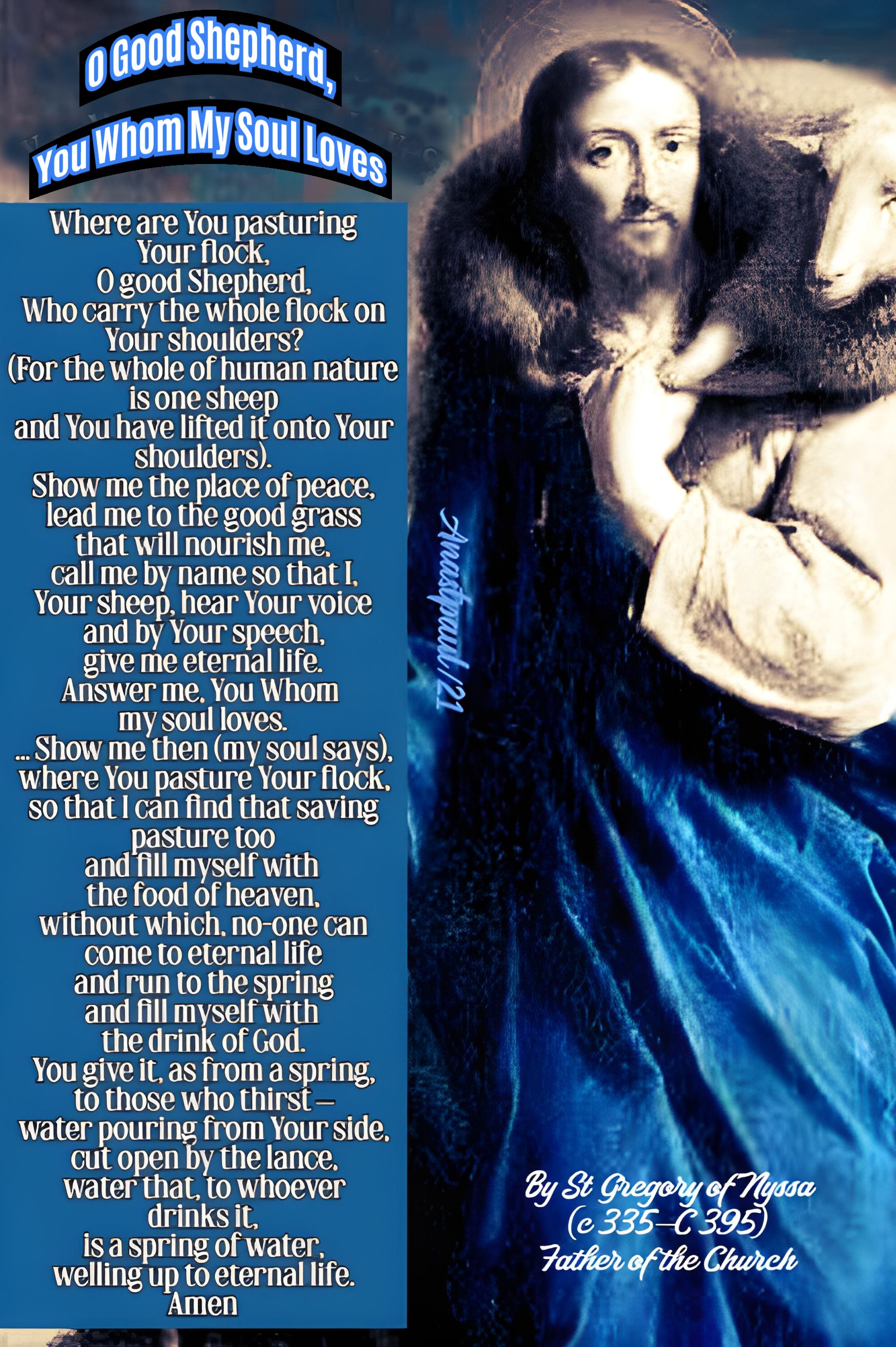
O Good Shepherd, You Whom My Soul Loves By St Gregory of Nyssa (c 335–C 395) Father of the Church
Where are You pasturing Your flock, O good Shepherd, Who carry the whole flock on Your shoulders? (For the whole of human nature is one sheep and You have lifted it onto Your shoulders). Show me the place of peace, lead me to the good grass that will nourish me, call me by name so that I, Your sheep, hear Your voice and by Your speech, give me eternal life. Answer me, You Whom my soul loves. … Show me then (my soul says), where You pasture Your flock, so that I can find that saving pasture too and fill myself with the food of heaven, without which, no-one can come to eternal life and run to the spring and fill myself with the drink of God. You give it, as from a spring, to those who thirst – water pouring from Your side, cut open by the lance, water that, to whoever drinks it, is a spring of water, welling up to eternal life. Amen
This is a tiny excerpt from St Gregory of Nyssa’s commentary on the Song of Songs (Cap 2: PG 44, 802), using the imagery of Psalm 23, appeals to the Lord Jesus Christ for the promised green pastures, restful waters and noonday rest that is the final, eternal destination of those who love God and walk in His ways.
St Gregory of Nyssa (c335–c395) Father of the Church
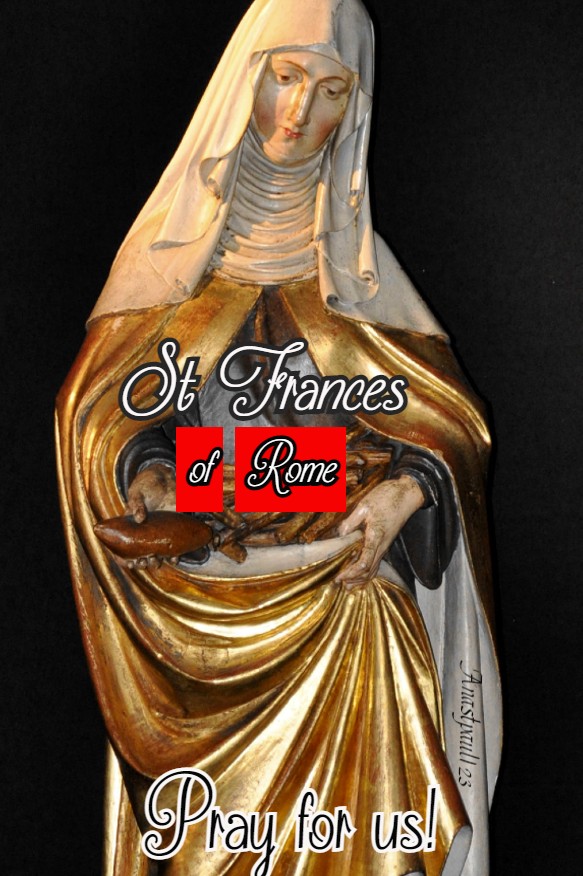
One Minute Reflection – 9 March – Saturday of the Third Week in Lent – St Frances of Rome Obl.S.B. (1384-1440) Widow – Proverbs 31:10-31, Matthew 13:44-52 – Scripture search here: https://www.drbo.org/
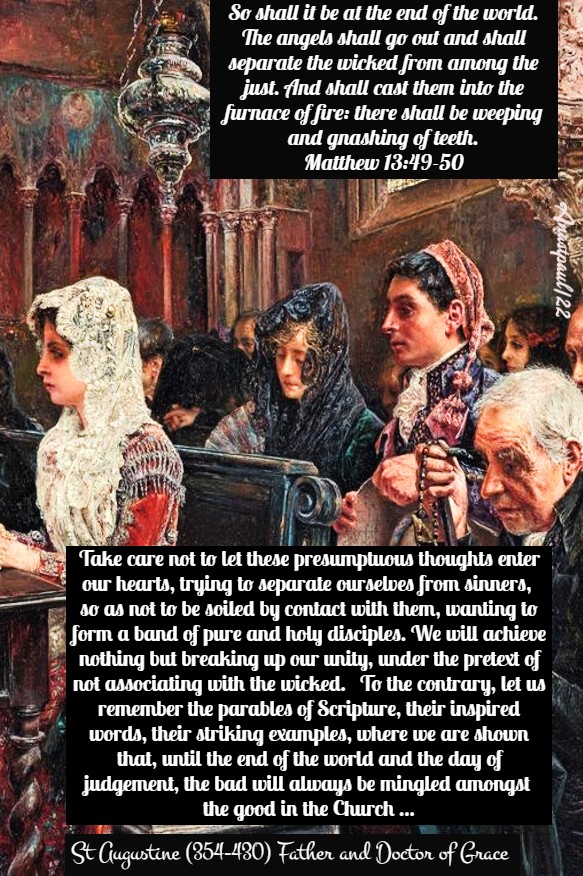
“So shall it be at the end of the world. The Angels shall go out and shall separate the wicked from among the just. And shall cast them into the furnace of fire – there shall be weeping and gnashing of teeth.” – Matthew 13:49-50
REFLECTION – “Our Lord was an example of incomparable patience. He bore with a “devil” among His disciples even to His Passion (Jn 6,70). He said: “Let them grow together until the harvest lest you uproot the wheat when you pull out the weeds” (cf. Mt 13,29f.). As a symbol of the Church, He preached that the net would bring back to shore, namely the end of the world, every kind of fish, both good and bad. And He made it known, in various other ways, whether openly or in parables, that there would always be a mixture of good and bad. But, nevertheless, He stresses, that we have to protect the Church’s discipline when He says: “If your brother sins against you, go and tell him his fault between you and him alone. If he listens to you, you have won over your brother” (Mt 18,15)…
Yet today, we see people who think of nothing but stern commandments, who order that troublemakers be reproved, ‘not giving what is holy to the dogs,’ treating, like the publicans, ‘anyone who despises the Church, cutting off the scandalous member from the body‘ (Mt 7,6 ; 18,17 ; 5,30). Their stormy zeal so troubles the Church, that they pull out the weeds before their time and their blindness makes of them enemies, of the unity of Jesus Christ…
Take care not to let these presumptuous thoughts enter our hearts, trying to separate ourselves from sinners, so as not to be soiled by contact with them, wanting to form a band of pure and holy disciples. We will achieve nothing but breaking up our unity, under the pretext of not associating with the wicked. To the contrary, let us remember the parables of Scripture, their inspired words, their striking examples, where we are shown that, until the end of the world and the day of judgement, the bad will always be mingled amongst the good in the Church, without their participation in the Sacraments being harmful to the good, so long as these latter, have not played a part in their sins.” – St Augustine (354-430) Father and Doctor of Grace (On Faith and Works – Excerpt ch 3-5)
PRAYER – O God, Who along with other gifts of Thy grace honoured blessed Frances, Thy handmaid, with the close companionship of an angel, grant, we beseech Thee, that by the help of her intercession we may be made worthy to attain the companionship of Angels in Heaven. Through Jesus Christ, Thy Son our Lord, Who lives and reigns with Thee, in the unity of the Holy Ghost, God, world without end. Amen (Collect).
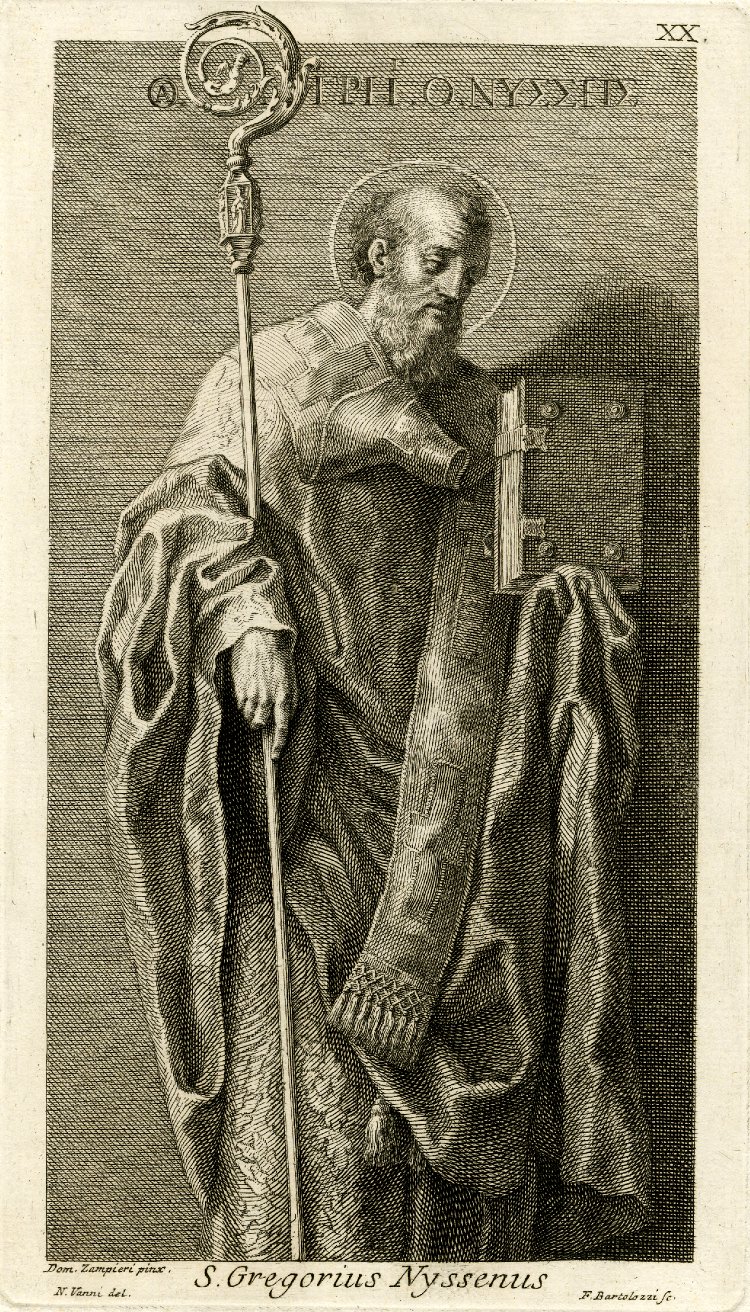
Saint of the Day – 9 March – St Gregory of Nyssa (c335–c395) Bishop, Father of the Church, Brother of St Basil the Great. Another of Gregory’s brothers, called Naucratius, was a Monk. He was the Bishop of Nyssa in Cappadocia from 372 to 376 and from 378 until his death in 395. Born in c335 at Caesarea, Cappadocia and died there in c395 of natural causes. St Gregory was an erudite Theologian, Philosopher. Writer , Defender of orthodoxy against heresy but he possible lacked the administrative ability of his brother, Basil or the contemporary influence of Gregory of Nazianzen but, he was an erudite Theologian who made significant contributions to the Doctrines of the Church, in particular, of the Trinity and the Nicene Creed. St Gregory, together with his elder brother, St Basil the Great (Doctor of the Church) and their great and lifelong friend, St Gregory of Nazianzen (also a Doctor of the Church) are collectively known as the “Cappadocian Fathers.”
The Roman Martyrology reads today: “At Nyssa, the demise of St Gregory, Bishop, brother of the blessed Basil the Great, whose life and erudition have rendered him illustrious. He was expelled from his own City for having defended the Catholic Faith during the reign of the Arian Emperor, Valens.”
Gregory’s eldest sister, St Macrina the Younger, had a great influence on him. A discussion he had with her, as he attended at her deathbed and she looked forward to what lay ahead, was later expanded by Gregory, into a Treatise entitled On the Soul and the Resurrection.
Gregory was born at Caesarea in Cappadocia (south-eastern Turkey), the third son and one of five brothers and five sisters. His father was a Rhetorician and his mother, Emelia an earnest Christian and woman of great personal charm. His elder brother, Basil becamethe Bishop of Caesarea. Gregory had an excellent education as a Rhetorician at Athens. He may have married a lady called Theosebeia, possibly the sister of his friend Gregory of Nazianzen. After some years he became disillusioned with his career as a Professor of Rhetoric.
St Gregory of Nazianzen prevailed on Gregory to devote himself to the service of the Church. He was Ordained in 362. It is not known whether his wife died or accompanied him to Nyssa. He gave himself to studying the Scriptures and the works of the Christian writer Origen.
In 371 Gregory was installed as the Bishop of Nyssa, a small town in Lower Armenia, by his brother Basil. However, a financial scandal, where he appeared perhaps too gentle, caused him to be excluded from his See for two years but he was re-instated in 378. It was only after Basil’s death in 379 that his gifts as a Theologian and Writer developed. He became the mainstay of orthodoxy against the Arians throughout Cappadocia and was one of the champions of orthodoxy at the Council of Constantinople (381). And by the time he died he was a greatly respected figure in the Church. He was also in favour with the Emperor Theodosius, who asked him to preach at the funeral of his daughter Pulcheria. He died in the same year as Theodosius, 395.
Many of Gregory’s writings are extant. In theme, they resemble the writings of the other Cappadocian Fathers – Basil and Gregory Naziazen – asserting the Divinity of Jesus and the Holy Ghost against different forms of Arianism (denying the Divinity of Jesus) and Macedonianism (denying the Divinity of the Holy Ghost) – but probably have a greater clarity and depth. Below is an image of his work ‘On Virginity.’ Among the Greeks he was nick-named ‘The Theologian’ and ‘The Father of the Fathers’.
Our Lenten Journey with the Angels and the Saints – 7 March – Wisdom 7:7-14; Matthew 5:13-19 – Scripture search here: https://www.drbo.org/
“For she is an infinite treasure to men! which they that use, become the friends of God” Wisdom 7:14
“Neither do men light a candle and put it under a bushel but upon a candlestick …” Matthew 5:15
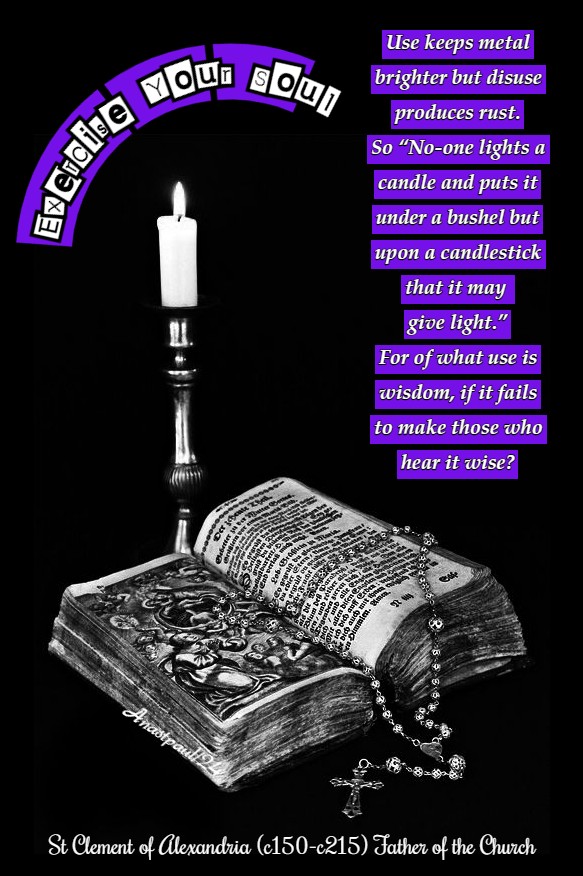
Exercise Your Soul
St Clement of Alexandria (c150-c215) Father of the Church
“A well, when pumped regularly, produces purer water. If neglected and no-one uses it, it changes into a source of pollution. Use keeps metal brighter but disuse produces rust.
For, in a word, exercise produces a healthy condition, both in souls and bodies.
So “No-one lights a candle and puts it under a bushel but upon a candlestick that it may give light.”
For of what use is wisdom, if it fails to make those who hear it wise?” (Stromateis 1)
One Minute Reflection – 7 March – “The Month of St Joseph” – – St Thomas Aquinas OP (1225-1274) Confessor, Doctor – Wisdom 7:7-14; Matthew 5:13-19 – Scripture search here: https://www.drbo.org/
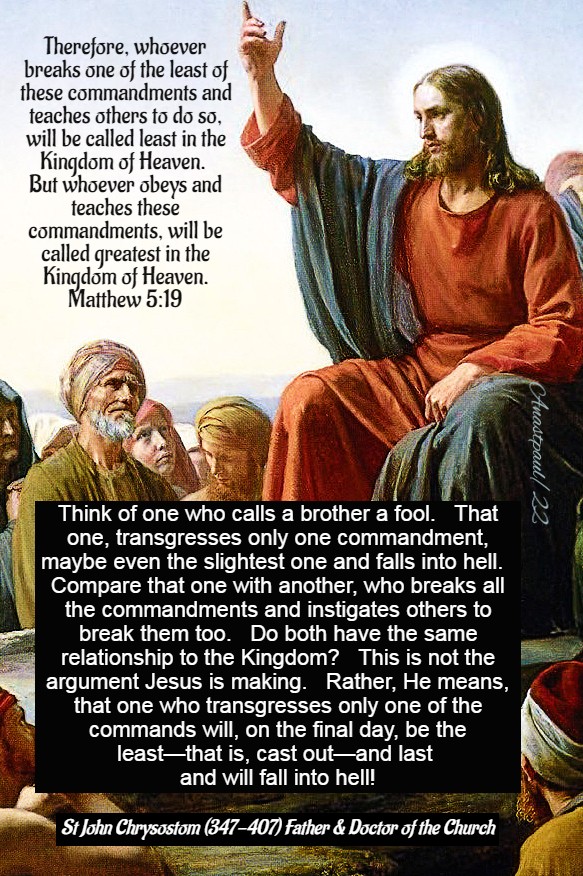
“Therefore, whoever breaks one of the least of these commandments and teaches others to do so, will be called least in the Kingdom of Heaven. But whoever obeys and teaches these commandments, will be called greatest in the Kingdom of Heaven.” – Matthew 5:19
REFLECTION – “For what reason then does He call some of these commandments “least,” although they are so magnificent and lofty? Jesus spoke this way because He was about to introduce His own teaching, as a new law . As He humbles Himself and speaks of Himself with great modesty, so He refers to His own teaching in the same manner. In this way, Jesus teaches us to practice humility in everything. And besides, since some suspected His teaching to be a new departure, He temporarily taught it in a more reserved way.
But when you hear “least in the Kingdom of Heaven,” you are to think of nothing but hell and punishment. For it was His practice to speak, not only of the joy the Kingdom brings but also, of the time of the resurrection and the fearful event of the Second Coming.
Think of one who calls a brother a fool. That one, transgresses only one commandment, maybe even the slightest one and falls into hell. Compare that one with another, who breaks all the commandments and instigates others to break them too. Do both have the same relationship to the Kingdom? This is not the argument Jesus is making. Rather, He means, that one who transgresses only one of the commands will, on the final day, be the least—that is, cast out—and last and will fall into hell!” – St John Chrysostom (347-407) Archbishop of Constantinople, Father and Doctor of the Church (The Gospel of Saint Matthew, Homily 16).
PRAYER – O God, Who enlightened Thy Church with the wondrous learning of blessed Thomas, Thy Confessor and enriched her through his holy life, grant us, we beseech Thee, both to understand what he taught and by following his example, to do what he did. Through tJesus Christ, Thy Son our Lord, Who lives and reigns with Thee, in the unity of the Holy Ghost, God, world without end. Amen (Collect).
Quote/s of the Day – 6 March – Wednesday of the Third Week in Lent – Ecclesiasticus Sirach 51:13-17; Matthew 13:44-52 – Scripture search here: https://www.drbo.org/
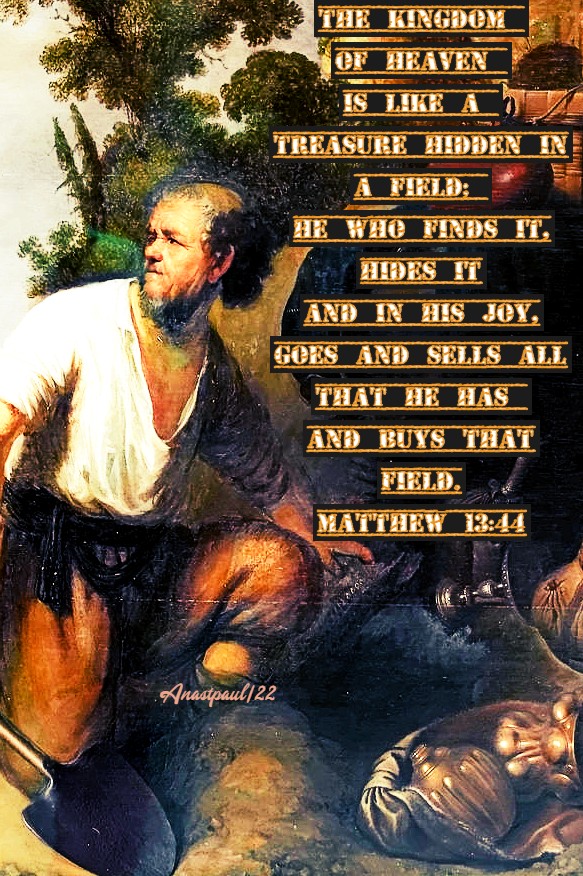
“The Kingdom of Heaven is like a treasure hidden in a field.”
Matthew 13:44
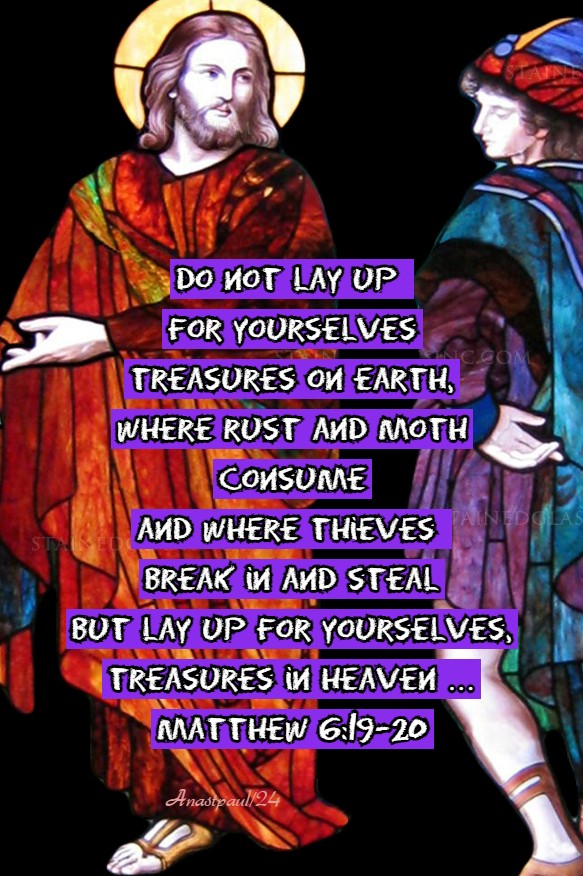
“Do not lay up for yourselves treasures on earth, where rust and moth consume and where thieves break in and steal but lay up for yourselves, treasures in Heaven …”
Matthew 6:19-20
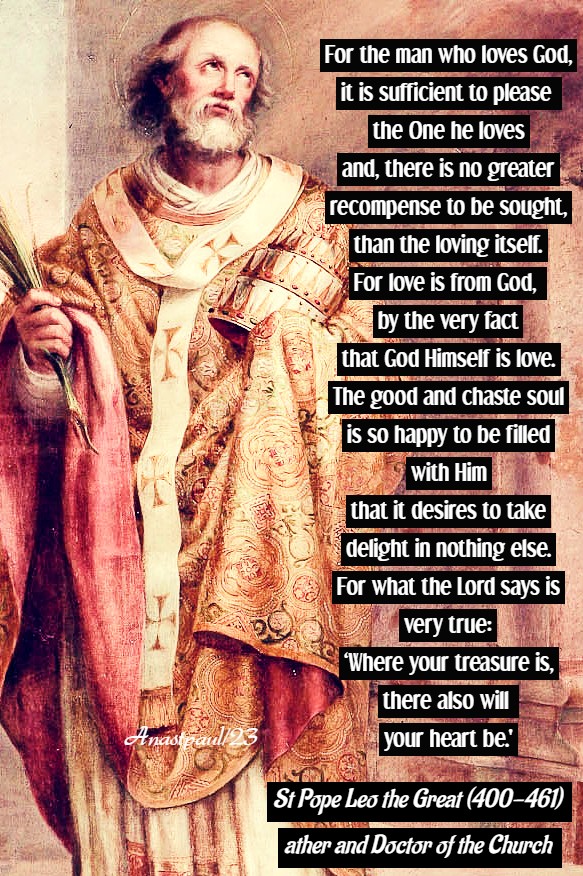
“For the man who loves God, it is sufficient to please the One he loves and, there is no greater recompense to be sought, than the loving itself. For love is from God, by the very fact that God Himself is love. The good and chaste soul is so happy to be filled with Him that it desires to take delight in nothing else. For what the Lord says is very true: ‘Where your treasure is, there also will your heart be.’”
St Pope Leo the Great (400-461) ather and Doctor of the Church
“Watch, therefore and pray and labour diligently and do not delay to weave the web of your wedding-garment that you may be found ready and adorned to meet the Bridegroom! And remember daily that He, Who gives you the morning, does not promise you the evening and although He gives the evening, yet promises not the morrow. Spend, therefore, every moment of every hour according to God’s will, as if it were your last and so much the more carefully, as, for every moment, you will have to give the strictest account!
Finally, I warn you to account that day lost, in which you will neither have gained some victory over your evil inclinations and your self-will, although it may have been full of busy action, nor returned thanksgiving to your Lord for His mercies and especially for His bitter Passion endured for you and for His sweet and fatherly correction, when He has made you worthy to receive, at His Hand, the inestimable treasure of suffering.”
Fr Lorenzo Scupoli OSM (c1530-1610)
“Where is the heart which loves? On the thing it loves. Therefore, where our love is, there our heart is held captive. It cannot leave it; it cannot be lifted higher, it cannot go either to the right or the left; see, it is fixed. Where the miser’s treasure is, there is his heart and where our heart is, there is our treasure. And what is so deplorable is that the things which hold us in servitude, are, for the most part, such unworthy things!”
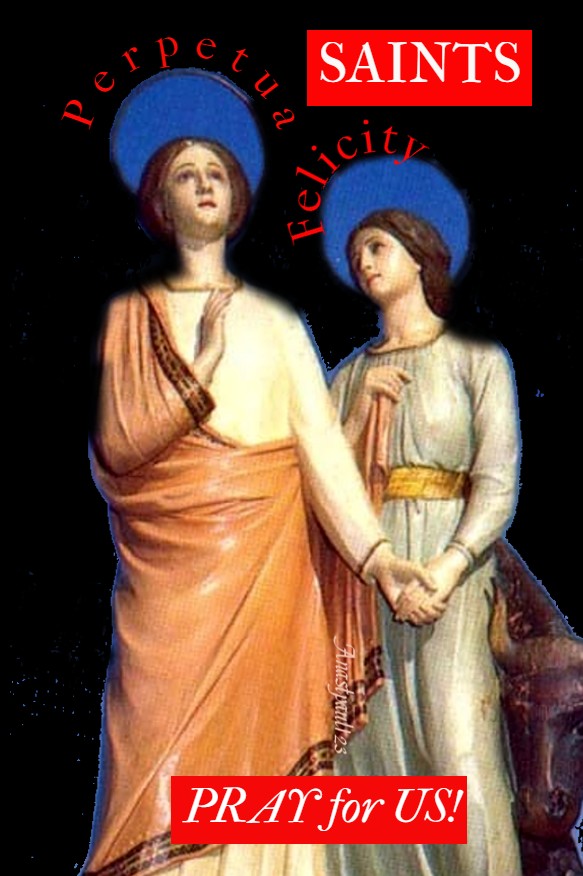
One Minute Reflection – 6 March – “The Month of St Joseph” – Wednesday of the Third Week in Lent Sts Perpetua and Felicity (Died c203) Martyrs – Ecclesiasticus Sirach 51:13-17; Matthew 13:44-52 – Scripture search here: https://www.drbo.org/
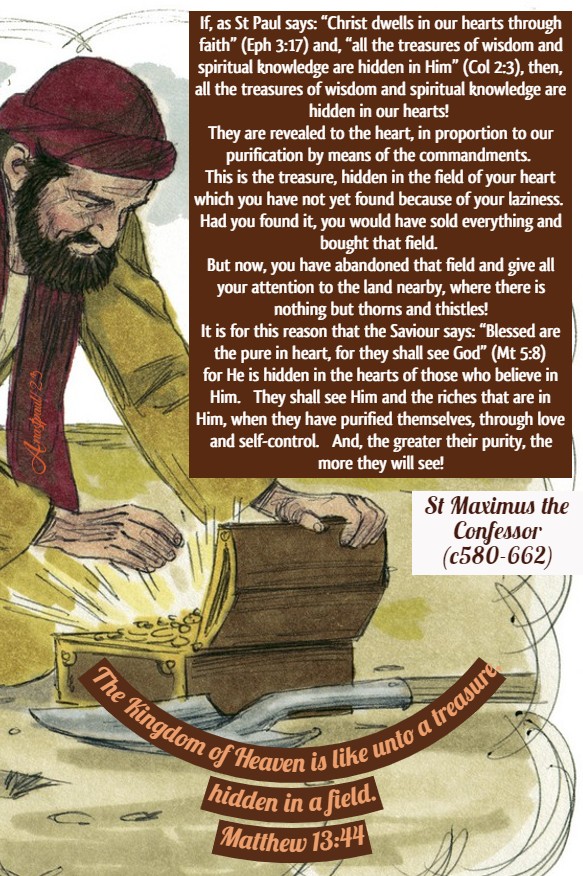
“The Kingdom of Heaven is like a treasure hidden in a field.” – Matthew 13:44
REFLECTION – “Some of the brethren think that they are excluded from the Holy Ghost’s gifts of grace. Because they neglect to practise the commandments, they do not know that he who has an unadulterated faith in Christ, has within himself, the sum total of all the Divine gifts. Since, through our laziness, we are far from having an active love for Him — a love which shows us the Divine Treasures within us — we naturally think that we are excluded from these gifts.
If, as St Paul says: “Christ dwells in our hearts through faith” (Eph 3:17) and, “all the treasures of wisdom and spiritual knowledge are hidden in Him” (Col 2:3), then, all the treasures of wisdom and spiritual knowledge are hidden in our hearts! They are revealed to the heart, in proportion to our purification by means of the commandments. This is the treasure, hidden in the field of your heart which you have not yet found because of your laziness. Had you found it, you would have sold everything and bought that field. But now, you have abandoned that field and give all your attention to the land nearby, where there is nothing but thorns and thistles! It is for this reason that the Saviour says: “Blessed are the pure in heart, for they shall see God” (Mt 5:8) for He is hidden in the hearts of those who believe in Him.They shall see Him and the riches that are in Him, when they have purified themselves, through love and self-control. And, the greater their purity, the more they will see!” – St Maximus the Confessor (c580-662) Abbot and Theologian (Centuries of love 4:69).
PRAYER – Grant, we beseech Thee, O Lord our God, that we may venerate with unceasing devotion Thy holy Martyrs Perpetua and Felicitas and, although we cannot pay them the honour that is their due, may we at least present to them, our humble homage. Through Jesus Christ, Thy Son our Lord, Who lives and reigns with Thee, in the unity of the Holy Ghost, God, world without end. Amen (Collect).
Quote/s of the Day – 5 March – Tuesday of the Third Week of Lent – 4 Kings 4:1-7; Matthew 18:15-22
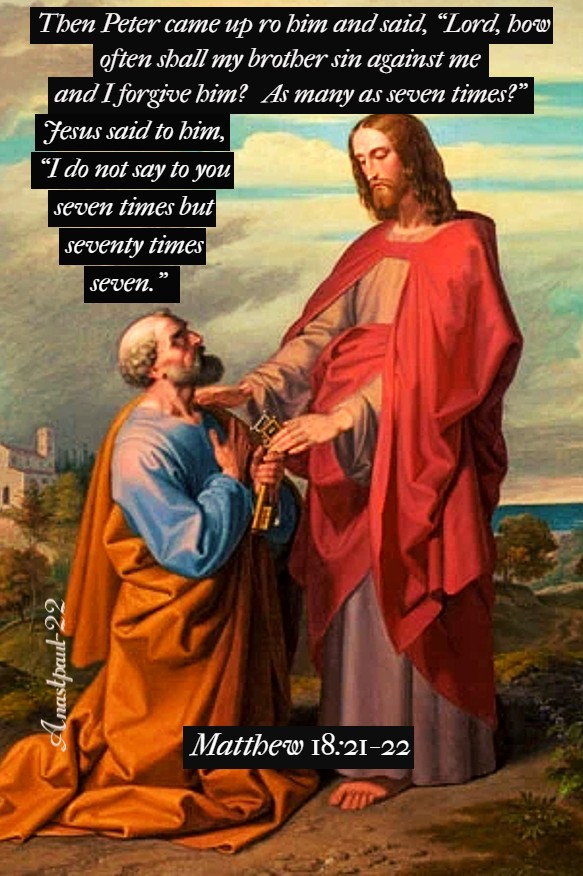
“Then Peter came up and said to Him, “Lord, how often shall my brother sin against me and I forgive him? As many as seven times?” Jesus said to him, “I do not say to you seven times but seventy times seven.”
Matthew 18:21-22
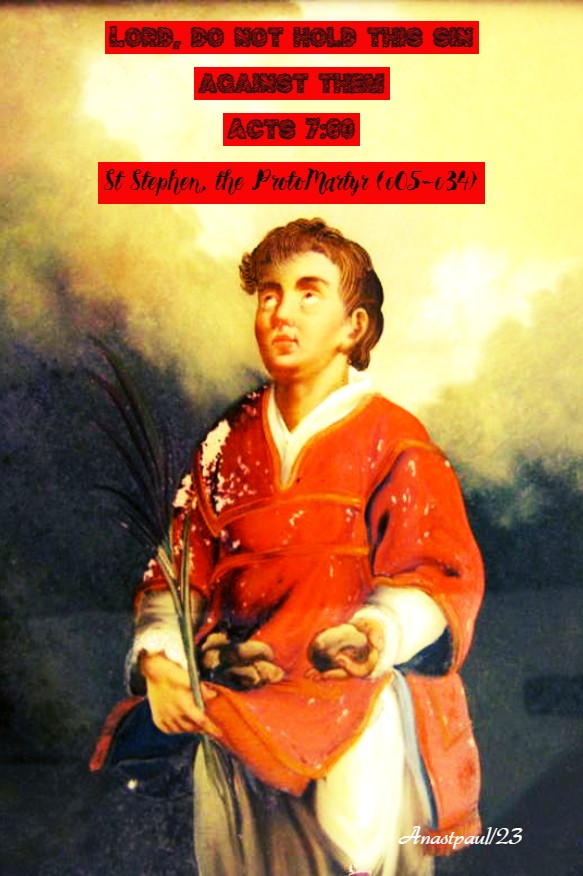
“Lord, do not hold this sin against them.”
Acts 7:60
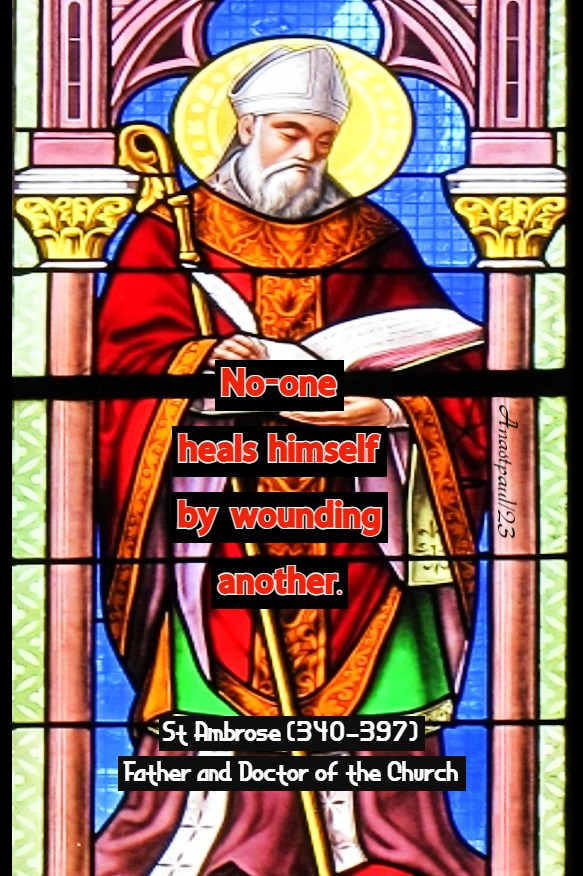
“No-one heals himself by wounding another.”
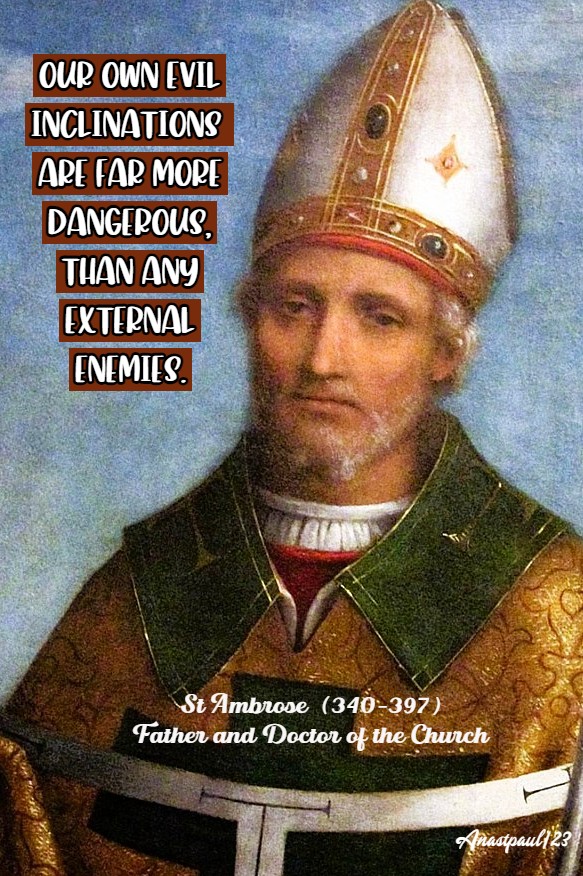
“Our own evil inclinations are far more dangerous, than any external enemies. ”
St Ambrose (340-397) Father and Doctor of the Church
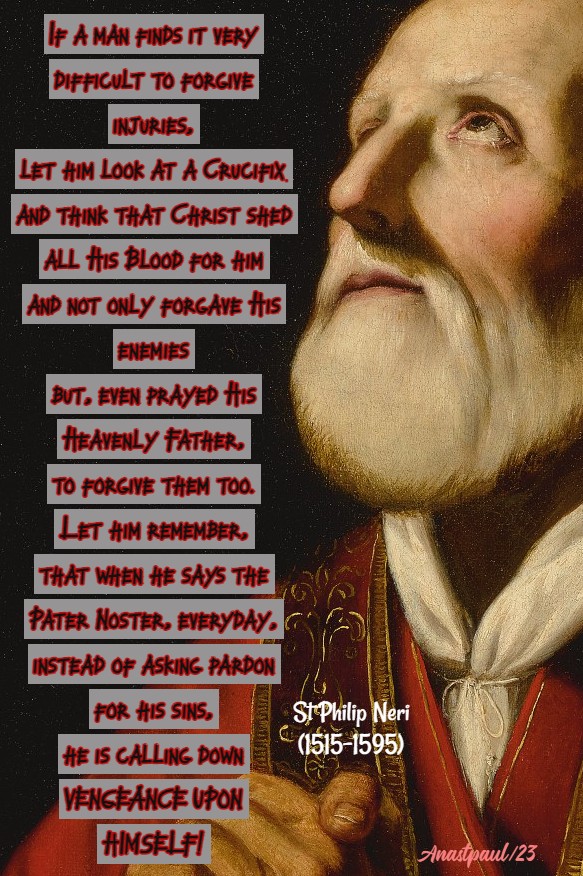
“If a man finds it very difficult to forgive injuries, let him look at a Crucifix and think that Christ shed all His Blood for him and not only forgave His enemies but, even prayed His Heavenly Father, to forgive them too. Let him remember, that when he says the Pater Noster, everyday, instead of asking pardon for his sins, he is calling down VENGEANCE UPON HIMSELF!”
St Philip Neri (1515-1595)
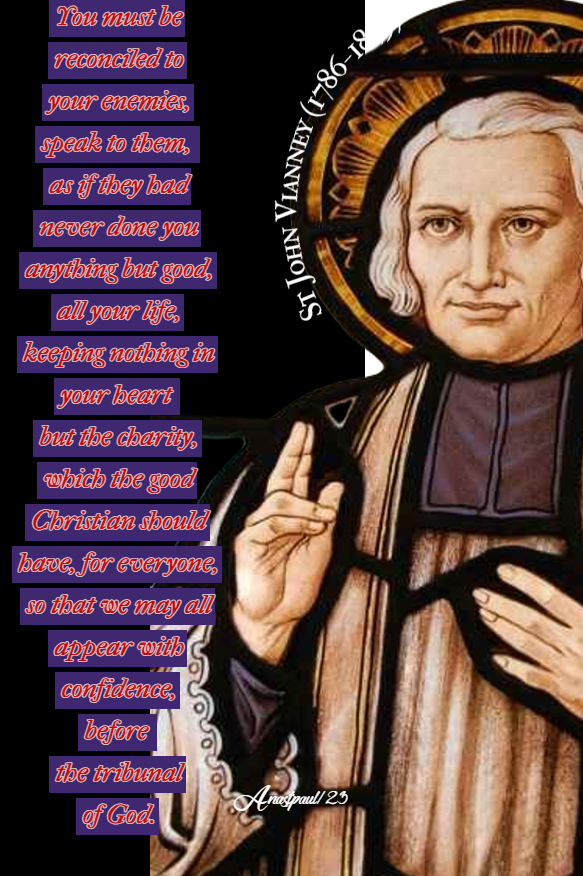
“You must be reconciled to your enemies, speak to them, as if they had never done you anything but good, all your life, keeping nothing in your heart but the charity, which the good Christian should have, for everyone, so that we may all appear with confidence, before the tribunal of God.”
One Minute Reflection – 5 March – Tuesday of the Third Week of Lent – 4 Kings 4:1-7, Matthew 18:15-22 – “The Month of St Joseph”
“Then Peter came up to him and said, “Lord, how often shall my brother sin against me and I forgive him? As many as seven times?” Jesus said to him, “I do not say to you seven times but seventy times seven.” – Matthew 18:21-22
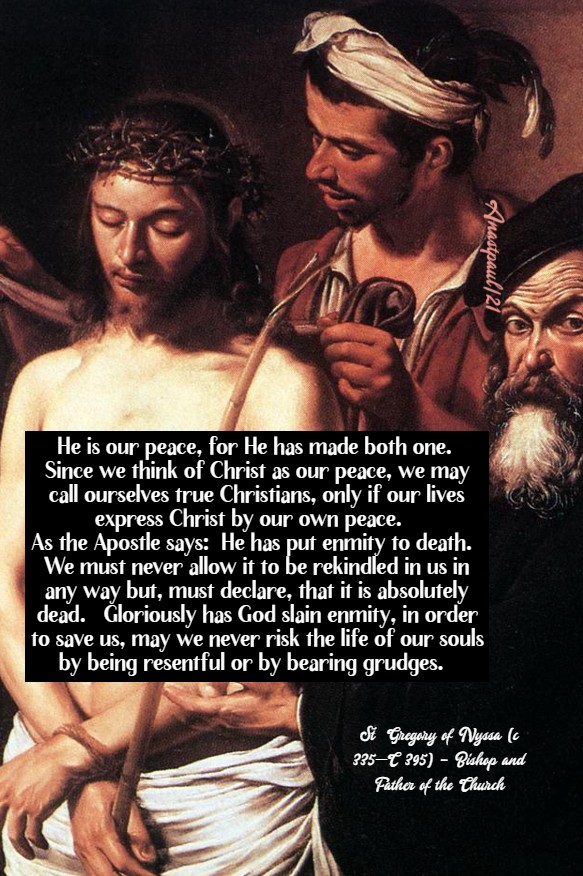
REFLECTION – “He is our peace, for He has made both one. Since we think of Christ as our peace, we may call ourselves true Christians, only if our lives express Christ by our own peace. As the Apostle says: He has put enmity to death. We must never allow it to be rekindled in us in any way but, must declare, that it is absolutely dead. Gloriously has God slain enmity, in order to save us, may we never risk the life of our souls by being resentful or by bearing grudges. …
No, since we possess Christ Who is Peace, we must put an end to this enmity and live as we believe He lived. He broke down the separating wall, uniting what was divided, bringing about peace by reconciling in His single person, those who disagreed. In the same way, we must be reconciled not only with those who attack us from outside but also with those who stir up dissension within; flesh then will no longer be opposed to the spirit, nor the spirit to the flesh. Once we subject the wisdom of the flesh to God’s law, we shall be re-created as one single man, at peace. Then, having become one instead of two, we shall have peace within ourselves.
Now peace is defined as harmony among those who are divided. When, therefore, we end that civil war within our nature and cultivate peace within ourselves, we become peace. By this peace we demonstrate that the Name of Christ, which we bear, is authentic and appropriate.
When we consider that Christ is the True Light, having nothing in common with deceit, we learn that our own life also must shine with the rays of that True Light. Now these rays of the Sun of Justice are the virtues which pour out to enlighten us so that we may put away the works of darkness and walk honourably as in broad daylight. When we reject the deeds of darkness and do everything in the light of day, we become light and, as light should, we give light to others by our actions. If we truly think of Christ as our source of holiness, we shall refrain from anything wicked or impure in thought or act and thus, show ourselves to be worthy bearers of His Name. For the quality of holiness is shown, not by what we say but by what we do in life.” – St Gregory of Nyssa (c 335–C 395) – Bishop and Father of the Church (Excerpt from his treatise, On Christian Perfection).
PRAYER – O God, Thou Who sees how we are deprived of all strength, guard us inwardly and outwardly that in body, we may be protected against all misfortunes and in mind, cleansed of evil thoughts and by the intercession of blessed and gloriosus ever Virgin Mary, Mother of God, be assisted on this earthly pilgrimage. Through Jesus Christ, Thy Son our Lord, Who lives and reigns with Thee, in the unity of the Holy Ghost, God, world without end. Amen (Collect).
Saint of the Day – 5 March – Saint Theophilus of Caesarea (Died c217) Bishop, Theologian, Writer , Apologist and Defender of the Faith. Born in Caesarea, Palestine and died c195 of natural causes. Also known as – Theophilus of Palestine.
The Roman Martyrology reads: “At Caesarea, in Palestine, in the time of the Emperor, Severus, St Theophilus, Bishop, who was conspicuous for his wisdom and the purity of his life.”
St Theophilus at Notre-Dame Basilica, Geneva (Switzerland)
Saint Theophilus was born in Caesarea in Palestine around 110. He was educated in a Christian environment and soon became a leader of the local Church. In 189 he was appointed as the Bishop of Caesarea.
He was a prolific Theologian and wrote several works, including the “Letter to Autolycus” an apologetic work defending Christianity against pagan accusations. In this work, Theophilus argues that Christianity is the true religion and that Jesus Christ is the Son of God.
Theophilus was an important leader of the Church. He was one of the main supporters of celebrating Easter on Sunday, according to Western tradition. In 190, he attended a Synod in Caesarea, in which it was decided that Easter would be celebrated on Sunday.
He died in Caesarea of Palestine around 217. He was officially Canonised in the 16th Century with a Feast today, 5 March.
Our Lenten Journey with the Angels and the Saints – 4 March – St Casimir (1458-1484) Confessor, Prince – 4 Kings 5:1-15; Luke 12:35-40 – Scripture search here: https://www.drbo.org/
“The just shall flourish like the palm tree, he shall grow up, like the cedar of Lebanon.” Psalm 91:13
“There were many widows in Israel” Luke 4:25
The Precept of Hospitality
St Ambrose (340-397) Father and Doctor of the Church
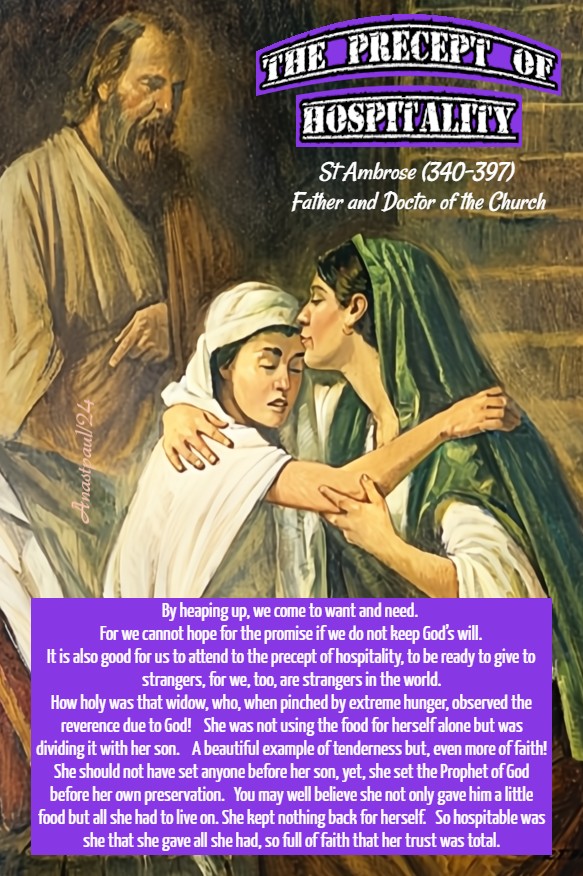
“At that time, when the whole human race was afflicted by famine, Elias was sent to a widow? And see how, for each is reserved her own special grace. An Angel is sent to the Virgin, a Prophet to the widow. In the one case it is Gabriel, in the other Elisha. The most excellent chiefs of the number of Angels and Prophet,s are seen to be chosen! But there is no praise, simply in widowhood, unless there be added the virtues of widowhood. For, indeed, there were many widows but one is preferred to all, by whose example of virtue, they are stimulated … The grace of hospitality is not lost sight of by God, Who, as He hHmself relates in the Gospel, rewards a cup of cold water with the exceeding recompense of eternity (Mt 10:42) and compensates the small measure of meal and oil, by an unfailing abundance of plenty …
Why consider the fruits of the earth are private, when the earth itself is common property? … But we turn aside the warnings of a general utterance to our private advantage. God says: “Every tree which has in it the fruit of a tree yielding seed, shall be to you for food and, to every beast and to every bird and to everything that creeps on the earth.” (Gn 1:29-30). By heaping up, we come to want and need. For we cannot hope for the promise if we do not keep God’s will. It is also good for us to attend to the precept of hospitality, to be ready to give to strangers, for we, too, are strangers in the world.
How holy was that widow, who, when pinched by extreme hunger, observed the reverence due to God! She was not using the food for herself alone but was dividing it with her son. A beautiful example of tenderness but, even more of faith! She should not have set anyone before her son, yet, she set the Prophet of God before her own preservation. You may well believe she not only gave him a little food but all she had to live on. She kept nothing back for herself. So hospitable was she that she gave all she had, so full of faith that her trust was total.” – (On Widows).
One Minute Reflection – 4 March – St Casimir (1458-1484) Confessor, Prince – 4 Kings 5:1-15; Luke 12:35-40 – Scripture search here: https://www.drbo.org/
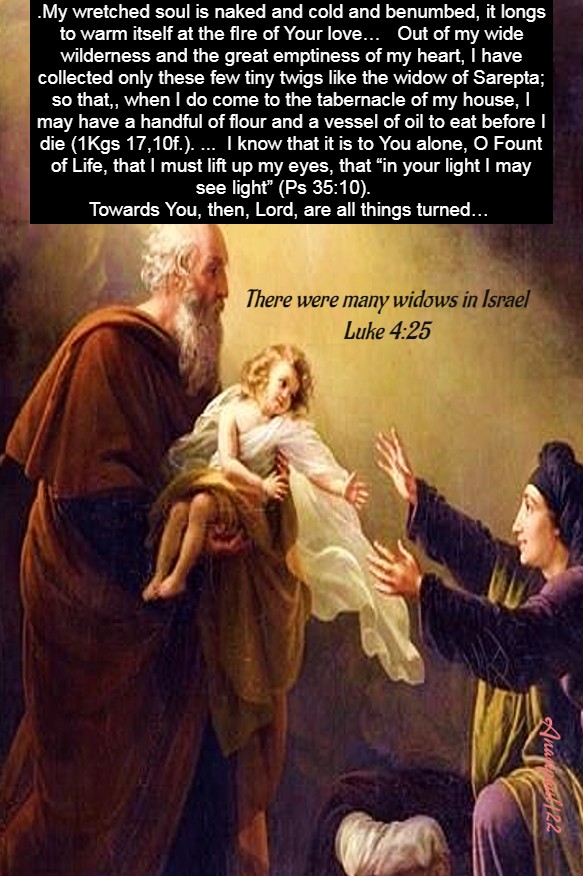
There were many widows in Israel” – Luke 4:25
REFLECTION – “My wretched soul is naked and cold and benumbed, it longs to warm itself at the fIre of Your love… Out of my wide wilderness and the great emptiness of my heart, I have collected only these few tiny twigs, like the widow of Sarepta; so that, when I do come to the tabernacle of my house, I may have a handful of flour and a vessel of oil to eat before I die (1 Kgs 17:10). Or maybe, Lord, I shall not die as quickly as all that! It may be rather that “I shall not die at all but live and declare the works of the Lord” (Ps 117:17).
So I stand in the house of solitude… I open my mouth in Your direction, Lord; I breathe in the Spirit. And sometimes, Lord,… You do put something in my heart’s mouth but You do not permit me to know just what it is. A savour I perceive, so sweet, so gracious and so comforting that… I should seek nothing more. But when I receive this thing, neither by bodily sight, nor by spiritual sense, nor by understanding of the mind, do You allow me to discern what it is. When I receive it, then I want to keep it, and think about it and assess its flavour but forthwith, it has gone… But every time this happens I hear the Lord say to me: “The Spirit blows whither he will. ” And I know, even in myself, that He breathes not, when I will but when He Himself wills…
I know that it is to You alone, O Fount of Life, that I must lift up my eyes, that “in your light I may see light” (Ps 35:10). Towards You, then, Lord, are all things turned… But in the meantime, Lord, how much longer are You going to put me off? How often must my wretched, harassed, gasping soul trail after You? “Hide me,” I beseech you, “in the secret place of Your Face away from the troubles of men, protect me in Your tabernacle from the strife of conguest!” (Ps 30:21).” – William of Saint-Thierry (c 1085-1148) Cistercian Monk, Theologian (The Contemplation of God 12).
PRAYER – O God, Who strengthened St Casimir with the virtue of steadfastness amid the luxuries of a Royal Court and the allurements of the world, we beseech Thee that through his intercession, Thy faithful may treat earthly things as naught and ever aspire to those of Heaven. Through Jesus Christ, Thy Son our Lord, Who lives and reigns with Thee, in the unity of the Holy Ghost, God, world without end. Amen (Collect).
One Minute Reflection – 3 March – “The Month of St Joseph” – The Third Sunday in Lent – The Third Sunday in Lent – Ephesians 5:1-9; Luke 11:14-28 – Scripture search here: https://www.drbo.org/
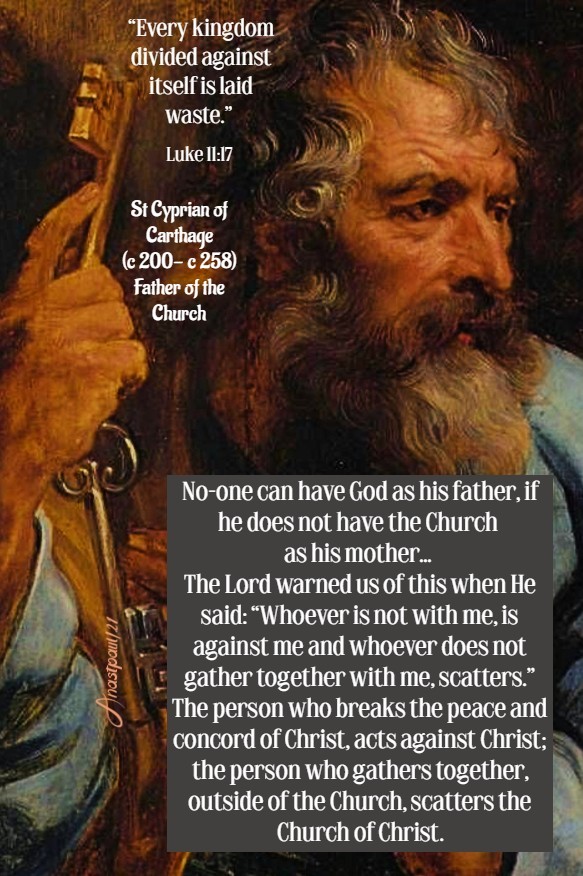
“Every kingdom divided against itself is laid waste.” – Luke 11:17
REFLECTION –“No-one can have God as his father, if he does not have the Church as his mother… The Lord warned us of this when He said: “Whoever is not with Me, is against Me and whoever does not gather together with Me, scatters.” The person who breaks the peace and concord of Christ, acts against Christ; the person who gathers together, outside of the Church, scatters the Church of Christ.
The Lord said: “The Father and I are one.” (Jn 10:30) It is also written of the Father, the Son and the Holy Ghost: “These Three are One.” (1 Jn 5:7) From now on, who can believe, that the unity which has its origin in this Divine harmony which is linked with this heavenly Mystery, can be divided up in the Church … through conflicts of will? Whoever does not observe this unity, neither observes the law of God, nor faith, in the Father and the Son – he keeps neither life, nor salvation.
In the Gospel, this sacrament of unity, this bond of concord, in indissoluble cohesion, is shown us through the Lord’s Tunic. It could neither be divided nor torn but they drew lots, so as to know who would put on Christ (Jn 19:24) … It is the symbol of unity which comes from on high!” – St Cyprian of Carthage (c 200- c 258) Bishop and Martyr, Father of the Church (On the unity of the Church).
PRAYER – We beseech Thee, Almighty God, hear the prayers of the humble and stretch forth the right hand of Thine majesty to protect us. Through Jesus Christ, Thy Son our Lord, Who lives and reigns with Thee, in the unity of the Holy Ghost, God, world without end. Amen (Collect).
Our Lenten Journey with the Angels and the Saints – 2 March – Saturday of the Second Week in Lent – Ferial Day – Genesis 27:6-40; Luke 15:11-32 – Scripture search here: https://www.drbo.org/
“ It is good to give praise to the Lord and to sing to Thy Name, O most High. To shew forth Thy mercy in the morning and Thy truth in the night.” Psalm 91:2-3
“I shall arise and shall go to my Father” Luke 15:18
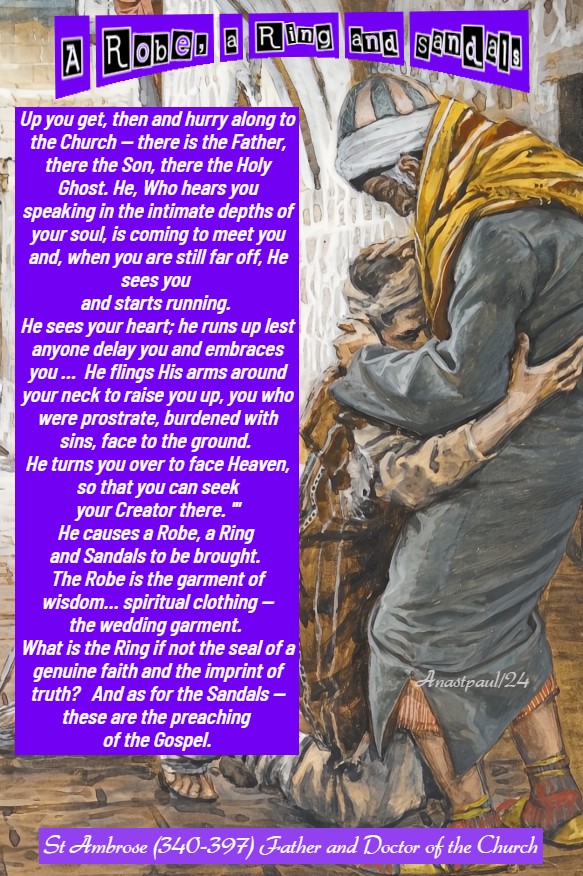
A Robe, a Ring and Sandals “Awake, O Sleeper and Rise from the Dead” (Ephesians 5:14)
St Ambrose (340-397) Father and Doctor of the Church
“I shall go to my father and say: ‘Father, I have sinned against Heaven and against you.’” Such is our first confession to our Creator, our merciful Lord, the Judge of our sins. For although He knows all things, God is waiting for an expression of our confession. For “if you confess with your mouth… you will be saved” (Rm 10:10)…
This is how the younger son spoke to himself. But it is not enough just to speak, unless you come to the Father. Where are we to look for Him? Where will we find Him? “He got up.” Get up first of all, you who have hitherto been sitting down asleep. This is what the Apostle Paul says: “Awake, O sleeper and rise from the dead” (Eph 5:14) … Up you get, then and hurry along to the Church — there is the Father, there the Son, there the Holy Ghost. He, Who hears you speaking in the intimate depths of your soul, is coming to meet you and, when you are still far off, He sees you and starts running. He sees your heart; he runs up lest anyone delay you and embraces you … He flings His arms around your neck to raise you up, you who were prostrate, burdened with sins, face to the ground. He turns you over to face Heaven, so that you can seek your Creator there. Christ flings His Arms around you, so as to free your neck from slavery’s yoke and set His gentle yoke upon you… He is embracing you when He says: “Come to me, all you who labour and are burdened and I will give you rest. Take my yoke upon you” (Mt 11:28). Such is His manner of embrace if you repent.
He causes a Robe, a Ring and Sandals to be brought. The Robe is the garment of wisdom… spiritual clothing — the wedding garment. What is the Ring if not the seal of a genuine faith and the imprint of truth? And as for the Sandals — these are the preaching of the Gospel.” – (Commentary on Saint Luke’s Gospel VII).
One Minute Reflection – 2 March – “The Month of St Joseph” – Saturday of the Second Week in Lent – Ferial Day – Genesis 27:6-40; Luke 15:11-32 – Scripture search here: https://www.drbo.org/
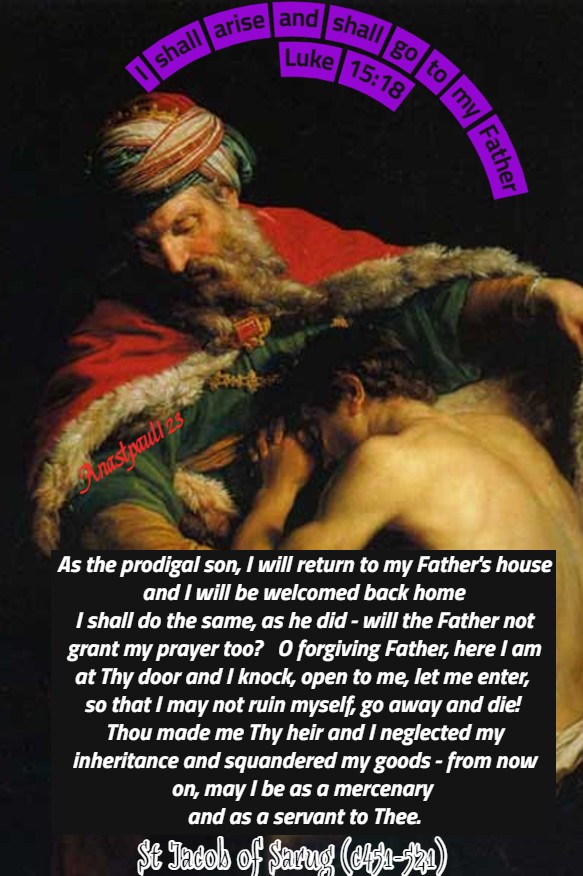
“I shall arise and shall go to my Father” – Luke 15:18
REFLECTION – “As the prodigal son, I will return to my Father’s house and I will be welcomed back home. I shall do the same, as he did – will the Father not grant my prayer too? O forgiving Father, here I am at Thy door and I knock, open to me, let me enter, so that I may not ruin myself, go away and die! Thou made me Thy heir and I neglected my inheritance and squandered my goods – from now on, may I be as a mercenary and as a servant to Thee.
As of the tax collector, have mercy on me and I shall live by Thy grace! O Son of God, forgive my sins as Thou did with the adulteress. Save me from the waves, as Thou did with Peter. Have mercy on my lowness, as Thou did for the good criminal and remember me! O Lord, come search for me, like the lost sheep and Thou will find me; carry me on Thy shoulders, Lord, to the house of Thy Father.
As Thou didst, with the blind man, open my eyes that I may see Thy Light! As for the deaf, open my ears, that I may hear Thy Voice! As for the paralytic, heal my disability so that I may praise Thy Name. As for the leper, cleanse me of my sin with Thy hyssop (cf Ps 50:9). As the young girl, the daughter of Jairus, make me live, our Lord. As Peter’s mother-in-law, heal me, for I am sick. As the young boy, the widow’s son, raise me up, that I may stand up again. As Thou did with Lazarus, cry out to me with Thy Own Voice and undo my bandages. For I am dead because of sin, like as for a sickness, raise me up from my ruin that I may praise Thy Name!
I beg Thee, Lord of Heaven and earth, come save me and show me Thy Way, so that I may come towards Thee. Bring me back to Thee, Son of the Good Lord and fill me with Thy Mercy. I will come to Thee and then will I be filled with joy!” – St Jacob of Sarug (c451-521) Bishop, Theologian, Poet, Writer, Father (A poem).
PRAYER – Grant that our fasting may be beneficial to us, we beseech Thee, O Lord, so that by chastising our flesh, we may obtain strength for our souls. Through tJesus Christ, Thy Son our Lord, Who lives and reigns with Thee, in the unity of the Holy Ghost, God, world without end. Amen (Collect).
Quote/s of the Day – 1 March – Friday of the Second Week in Lent and the Feast of the Holy Shroud – – Genesis 37:6-22; Matthew 21:33-46.– Scripture search here: https://www.drbo.org/
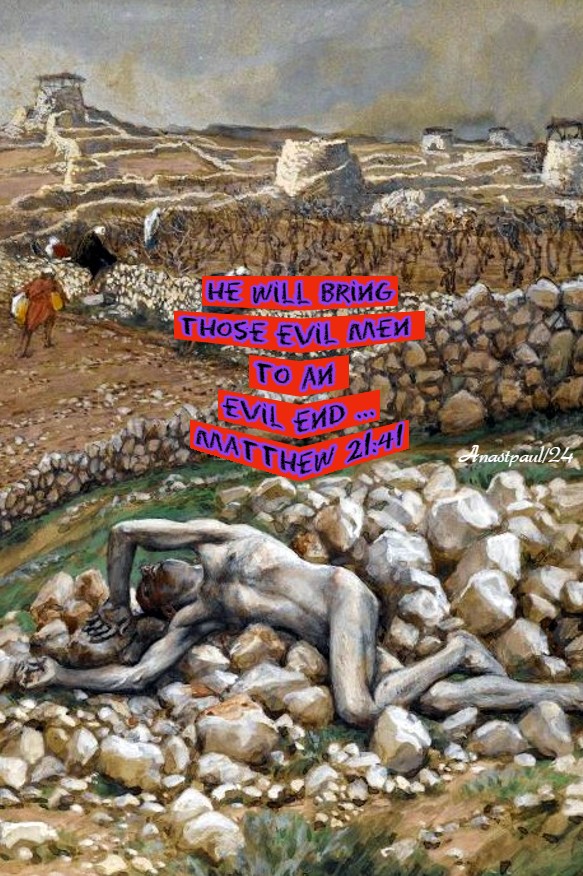
“He will bring those evil men to an evil end”
Matthew 21:41
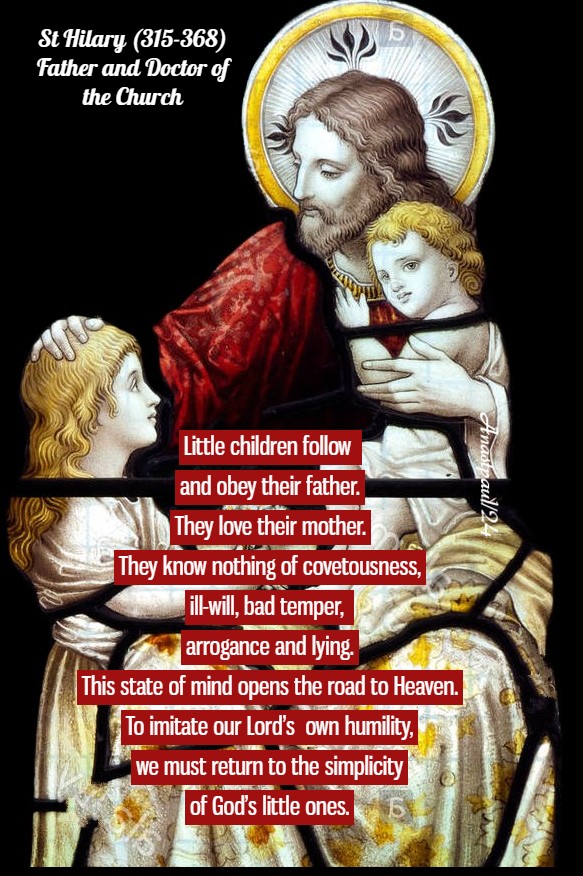
“Little children follow and obey their father. They love their mother. They know nothing of covetousness, ill-will, bad temper, arrogance and lying. This state of mind opens the road to Heaven. To imitate our Lord’s own humility, we must return to the simplicity of God’s little ones.”
St Hilary (315-368) Father and Doctor of the Church
“I see clearly with the interior eye, that the sweet God loves, with a pure love, the creature that He has created and has a HATRED for nothing but SIN, which is more opposed to Him, than can be thought or imagined.”
St Catherine of Genoa (1447-1510)
“Let us then depart, let us depart from Egypt, let us approach Our Lord, let us make provision of good works; let the feet of our affections be bare, let us clothe ourselves with innocence, let us not be satisfied with crying for mercy, let us go forth from Egypt, let us delay no longer. The hour is come to arise from sleep, since we know that He receives sinners; the Angels await our repentance, the Saints pray for it!”
St Francis de Sales 91567-1622) Doctor of the Church
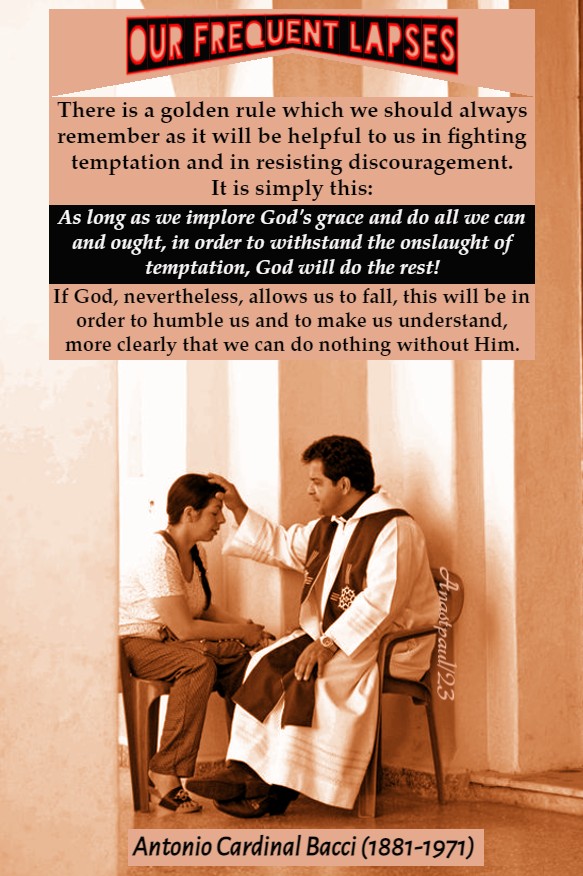
“There is a golden rule which we should always remember as it will be helpful to us in fighting temptation and in resisting discouragement. It is simply this: As long as we implore God’s grace and do all we can and ought, in order to withstand the onslaught of temptation, God will do the rest! If God, nevertheless, allows us to fall, this will be in order to humble us and to make us understand, more clearly that we can do nothing without Him.”
Our Lenten Journey with the Angels and the Saints – 1 March – Friday of the Second Week in Lent and the Feast of the Holy Shroud – – Genesis 37:6-22; Matthew 21:33-46.– Scripture search here: https://www.drbo.org/
“He has not dealt with us according to our sins, nor rewarded us according to our iniquities.” Psalm 102:10
“They seized Him, threw Him out of the vineyard and killed Him.” Matthew 21:39
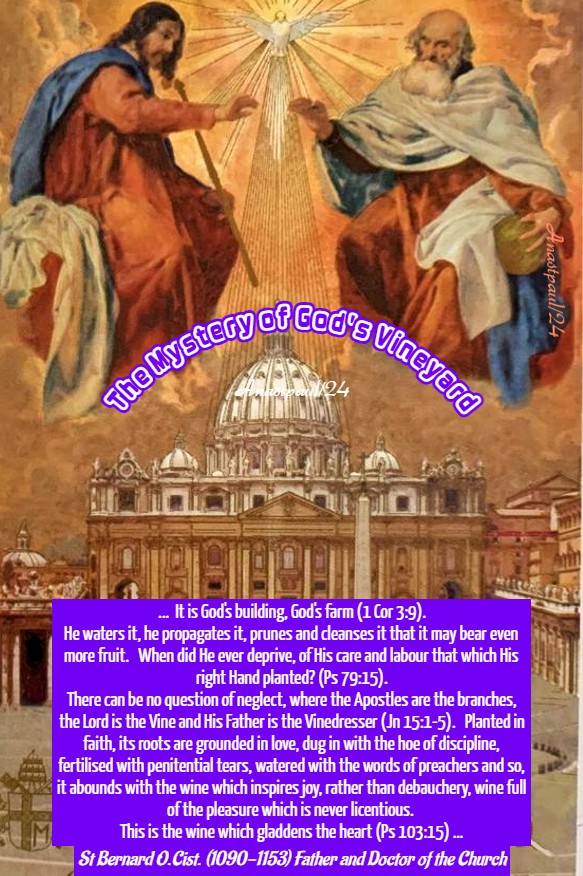
The Mystery of God’s Vineyard Faith, Love, Obedience, Penance …
St Bernard O.Cist. (1090-1153) Father and Doctor of the Church
“Brethren, if we understand the Lord’s Vineyard to be the Church … it seems to me that we here encounter a significant prerogative. Note,, in a special way, how the Church extended her boundaries all over the world …
By this I understand that company of believers, who were described as “of one heart and soul.” (Acts 4:32) … For during the persecution it had not been so uprooted that it could not be elsewhere replanted and leased “to other tenants, who will deliver the produce … when the season arrives.” No indeed, it did not perish, it changed in a new location; it even increased and spread further afield under the blessing of the Lord. So, brethren, lift up your eyes round about and see if “the mountains were not covered with its shade, the cedars of God with its branches; if its tendrils did not extend to the sea and its offshoots all the way to the river” (Ps 79:11-12).
No wonder this, for it is God’s building, God’s farm (1 Cor 3:9). He waters it, he propagates it, prunes and cleanses it that it may bear even more fruit. When did He ever deprive, of His care and labour that which His right Hand planted? (Ps 79:15). There can be no question of neglect, where the Apostles are the branches, the Lord is the Vine and His Father is the Vinedresser (Jn 15:1-5). Planted in faith, its roots are grounded in love, dug in with the hoe of discipline, fertilised with penitential tears, watered with the words of preachers and so, it abounds with the wine which inspires joy, rather than debauchery, wine full of the pleasure which is never licentious. This is the wine which gladdens the heart (Ps 103:15) … Be consoled, daughter of Sion! Yours is to wonder at the Mystery, rather than bewail the harm — let your heart be expanded to gather together, the fullness of the pagans!” — (Extract from Sermon 30 on the Song of Songs)




























 AnaStpaul
You must be logged in to post a comment.