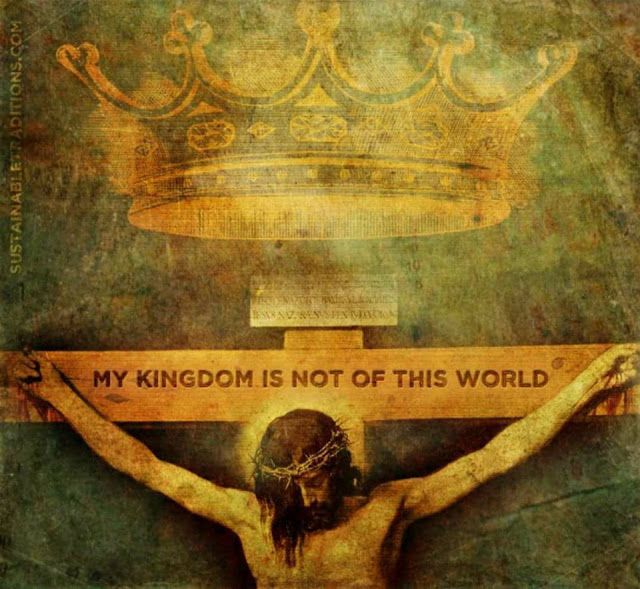
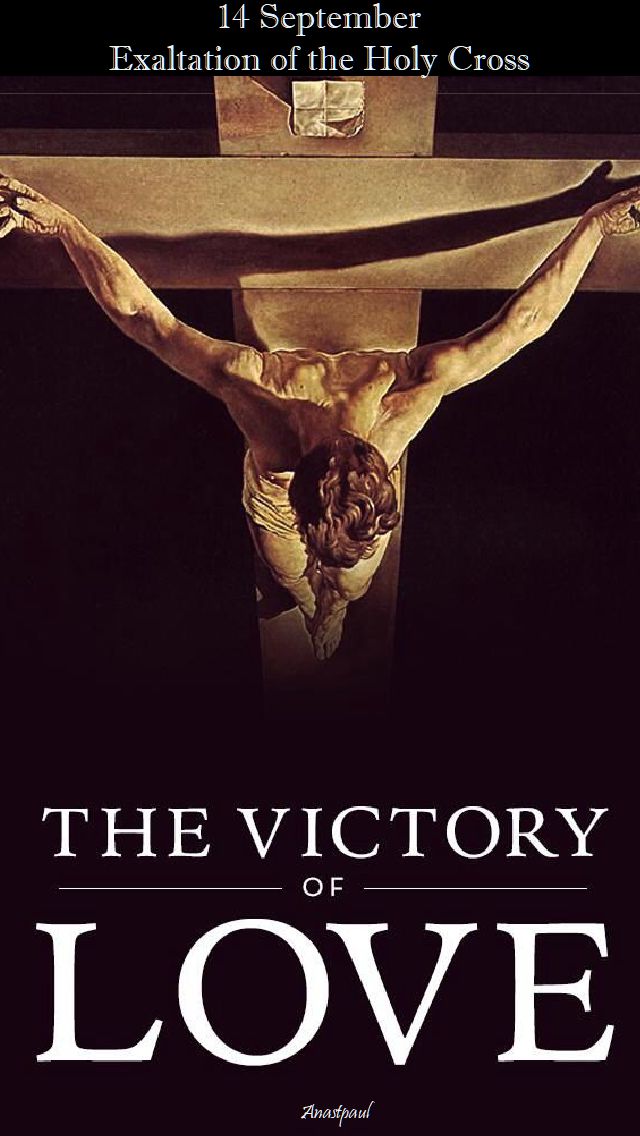
Quote/s of the Day – 14 September – Feast of the Exaltation of the Holy Cross
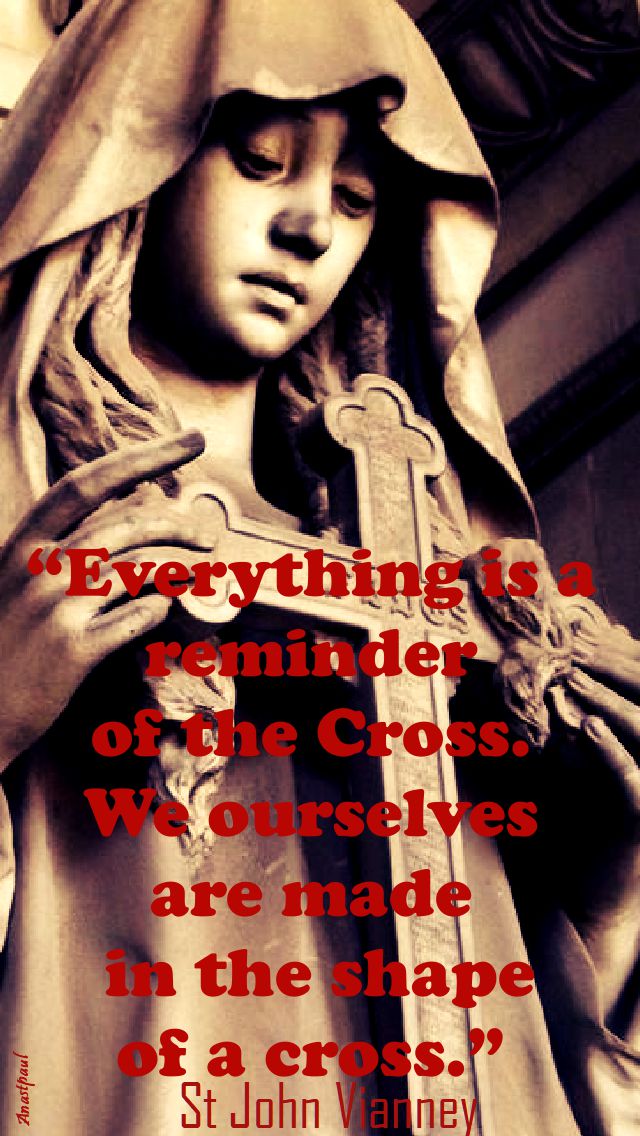
“Everything is a reminder of the Cross. We ourselves are made in the shape of a cross.”
“You must accept your cross. If you bear it courageously, it will carry you to heaven.”
“The sign of the cross is the most terrible weapon against the devil. Thus the Church wishes not only, that we have it continually in front of our minds, to recall to us just what our souls are worth and what they cost Jesus Christ but also that we should make it at every juncture ourselves: when we go to bed, when we awaken during the night, when we get up, when we begin any action, and, above all, when we are tempted.”
St John Vianney
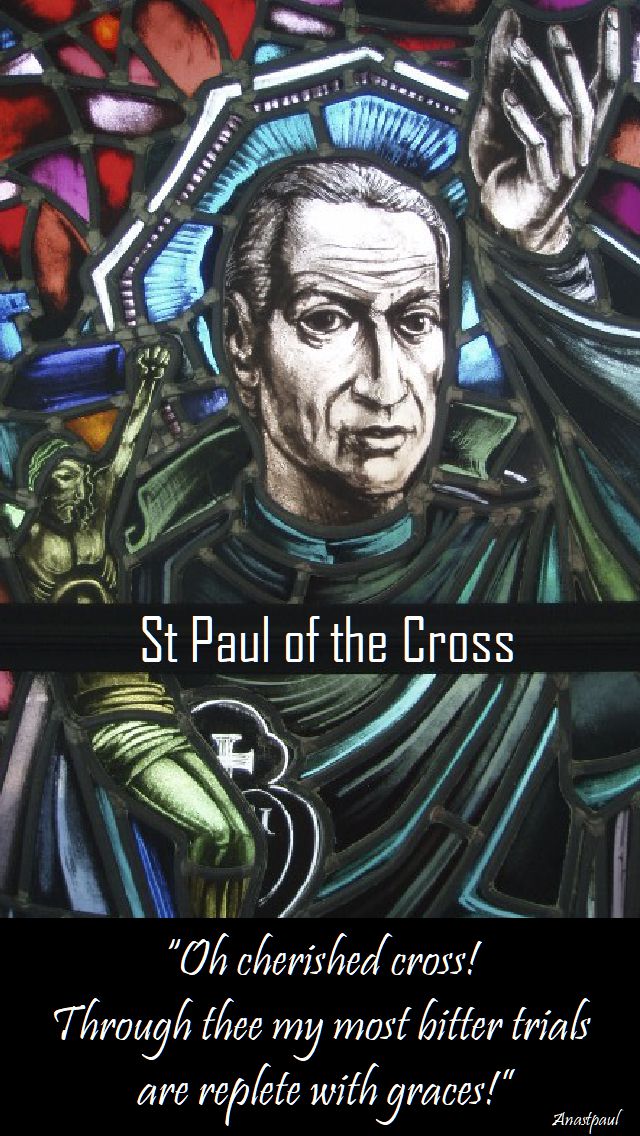
“Oh cherished cross! Through thee my most bitter trials are replete with graces!”
St Paul of the Cross
“In the Cross is salvation; in the Cross is life; in the Cross is protection against our enemies; in the Cross is infusion of heavenly sweetness; in the Cross is strength of mind; in the Cross is joy of spirit; in the Cross is excellence of virtue; in the Cross is perfection of holiness. There is no salvation of soul, nor hope of eternal life, save in the Cross.”
Fr Thomas à Kempis, The Inner Life
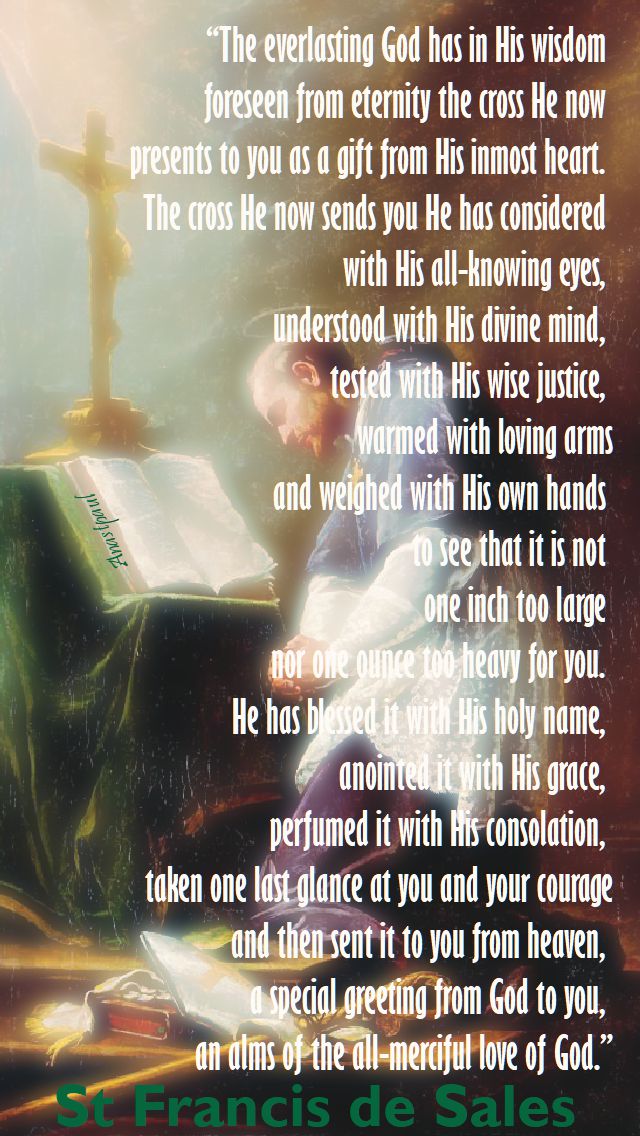
“The everlasting God has in His wisdom foreseen from eternity the cross He now presents to you as a gift from His inmost heart. The cross He now sends you He has considered with His all-knowing eyes, understood with His divine mind, tested with His wise justice, warmed with loving arms and weighed with His own hands to see that it is not one inch too large nor one ounce too heavy for you. He has blessed it with His holy name, anointed it with His grace, perfumed it with His consolation, taken one last glance at you and your courage and then sent it to you from heaven, a special greeting from God to you, an alms of the all-merciful love of God.”
One Minute Reflection – 14 September – Feast of the Exaltation of the Holy Cross
We proclaim Christ – yes, Christ nailed to the cross; and though it is a stumbling-block to Jews and folly to Greeks, yet to those who have heard his call, Jews and Greeks alike, he is the power of God and the wisdom of God...1 Corinthians 1:23-24
REFLECTION – “We are celebrating the Feast of the Cross which drove away darkness and brought in the light… Had there been no Cross, Christ could not have been Crucified. Had there been no Cross, Life Itself could not have been nailed to the tree. And if Life had not been nailed to it, there would be no streams of immortality pouring from Christ’s side, blood and water for the world’s cleansing. The legal bond of our sin would not be cancelled, we should not have obtained our freedom, we should not have enjoyed the fruit of the tree of life and the Gates of Paradise would not stand open. Had there been no Cross, death would not have been trodden underfoot, nor hell despoiled… The Cross is called Christ’s glory; it is saluted as His triumph!”….St Andrew of Crete (c660-740)
PRAYER – O God, who willed that your Only Begotten Son should undergo the Cross to save the human race, grant, we pray, that we, who have known his mystery on earth, may merit the grace of his redemption in heaven. For you placed the salvation of the human race on the wood of the Cross, so that, where death arose, life might again spring forth and the evil one, who conquered on a tree, might likewise on a tree be conquered through Christ. O cross, you are the glorious sign of victory. Through your power may we share in the triumph of Christ Jesus. We adore you Christ and we praise you, for by your holy Cross you have redeemed the world. Amen
Feast of the Exaltation of the Holy Cross – 14 September, also called Feast of the Triumph of the Cross and Holy Cross Feast.
This feast was observed in Rome before the end of the seventh century. It commemorates the recovery of the Holy Cross, which had been placed on Mount Calvary by St Helena and preserved in Jerusalem but then had fallen into the hands of Chosroas, King of the Persians. The precious relic was recovered and returned to Jerusalem by Emperor Heralius in 629.
The lessons from the Breviary tell us that Emperor Heraclius carried the Cross back to Jerusalem on his shoulders. He was clothed with costly garments and with ornaments of precious stones. But at the entrance to Mount Calvary a strange incident occurred. Try as hard as he would, he could not go forward. Zacharias, the Bishop of Jerusalem, then said to the astonished monarch: “Consider, O Emperor, that with these triumphal ornaments you are far from resembling Jesus carrying His Cross.” The Emperor then put on a penitential garb and continued the journey.
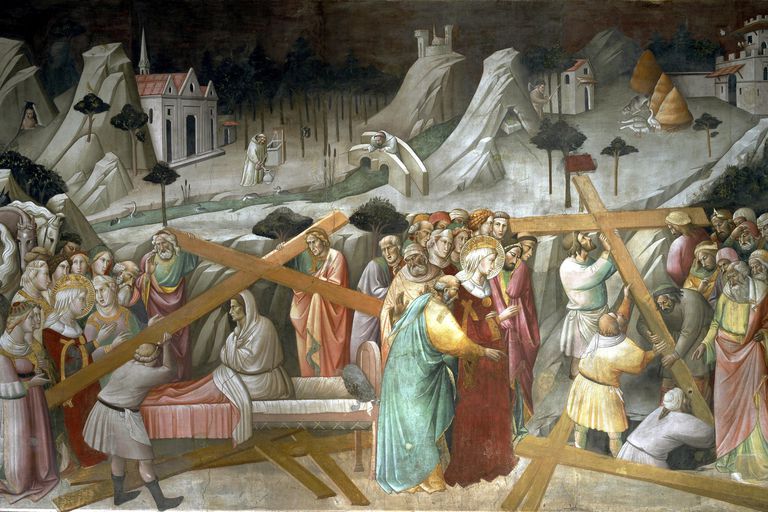
The Discovery of the True Cross, by Italian painter Agnolo Gaddi c.1350-96. Fresco, c.1385. Basilica di Santa Croce, Florence, Italy.
In celebration of the discovery of the Holy Cross, Constantine ordered the construction of churches at the site of the Holy Sepulchre and on Mount Calvary. Those churches were dedicated on September 13 and 14, 335 and shortly thereafter the Feast of the Exaltation of the Holy Cross began to be celebrated on the latter date.
The feast slowly spread from Jerusalem to other churches, until, by the year 720, the celebration was universal.
The liturgy of the Cross is a triumphant liturgy. When Moses lifted up the bronze serpent over the people, it was a foreshadowing of the salvation through Jesus when He was lifted up on the Cross. Our Mother Church sings of the triumph of the Cross, the instrument of our redemption. To follow Christ we must take up His cross, follow Him and become obedient until death, even if it means death on the cross. We identify with Christ on the Cross and become co-redeemers, sharing in His suffering and Cross.
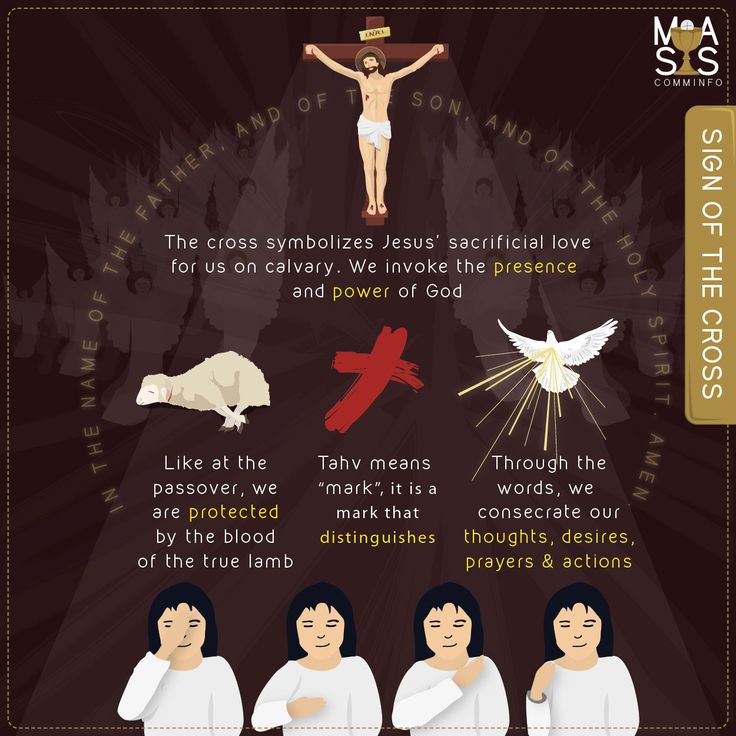
We make the Sign of the Cross before prayer which helps to fix our minds and hearts to God. After prayer we make the Sign of the Cross to keep close to God. During trials and temptations our strength and protection is the Sign of the Cross. At Baptism we are sealed with the Sign of the Cross, signifying the fullness of redemption and that we belong to Christ. Let us look to the cross frequently, and realize that when we make the Sign of the Cross we give our entire self to God — mind, soul, heart, body, will, thoughts.
WHY DO WE CELEBRATE THE FEAST OF THE HOLY CROSS?
It’s easy to understand that the Cross is special because Christ used it as the instrument of our salvation. But after His Resurrection, why would Christians continue to look to the Cross? Christ Himself offered us the answer: “If any man will come after me, let him deny himself, and take up his cross daily, and follow me” (Luke 9:23). The point of taking up our own cross is not simply self-sacrifice; in doing so, we unite ourselves to the sacrifice of Christ on His Cross.
When we participate in the Mass, the Cross is there, too. The “unbloody sacrifice” offered on the altar is the re-presentation of Christ’s Sacrifice on the Cross. When we receive the Sacrament of Holy Communion, we do not simply unite ourselves to Christ; we nail ourselves to the Cross, dying with Christ so that we might rise with Him.
“For the Jews require signs, and the Greeks seek after wisdom: but we preach Christ crucified, unto the Jews indeed a stumbling block and unto the Gentiles foolishness . . . ” (1 Corinthians 1:22-23). Today, more than ever, non-Christians see the Cross as foolishness. What kind of Saviour triumphs through death?
For Christians, however, the Cross is the crossroads of history and the Tree of Life. Christianity without the Cross is meaningless: only by uniting ourselves to Christ’s Sacrifice on the Cross can we enter into eternal life.
O cross, you are the glorious sign of victory.
Through your power may we share in the triumph of Christ Jesus.
Exaltation of the Holy Cross (Feast) – https://www.youtube.com/watch?v=qsiOJkpPk7w
—
St Aelia Flaccilla
St Albert of Jerusalem
St Caerealis
Bl Claude Laplace
St Cormac of Cashel
St Crescentian of Carthage
St Crescentius of Rome
St Generalis of Carthage
St Giulia Crostarosa
St Jean Gabriel Taurin du Fresse
St Maternus of Cologne
Bl Notburga
Bl Pedro Bruch Cotacáns
St Rosula of Carthage
St Sallustia
St Victor of Carthage
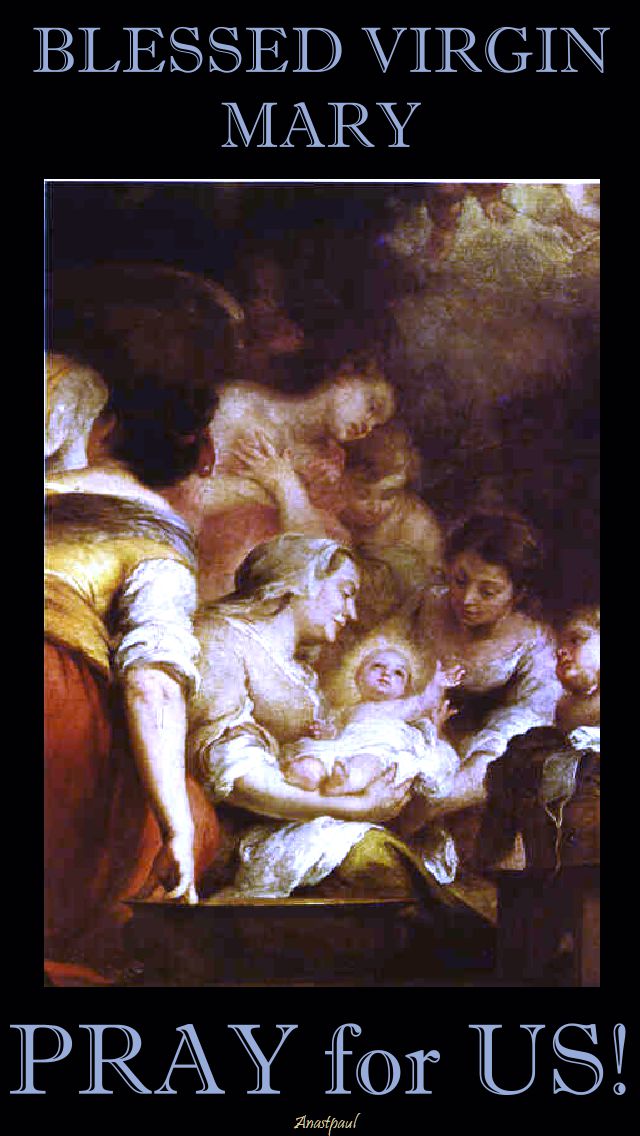
Thought for the Day – – The Feast of the Nativity of the Blessed Virgin Mary
We can see every human birth as a call for new hope in the world. The love of two human beings has joined with God in his creative work. The loving parents have shown hope in a world filled with travail. The new child has the potential to be a channel of God’s love and peace to the world.
This is all true in a magnificent way in Mary. If Jesus is the perfect expression of God’s love, Mary is the foreshadowing of that love. If Jesus has brought the fullness of salvation, Mary is its dawning.
Birthday celebrations bring happiness to the celebrant as well as to family and friends. Next to the birth of Jesus, Mary’s birth offers the greatest possible happiness to the world. Each time we celebrate her birth, we can confidently hope for an increase of peace in our hearts and in the world at large. (Fr Don Miller OFM)
One Minute Reflection – 8 September – The Feast of the Nativity of the Blessed Virgin Mary
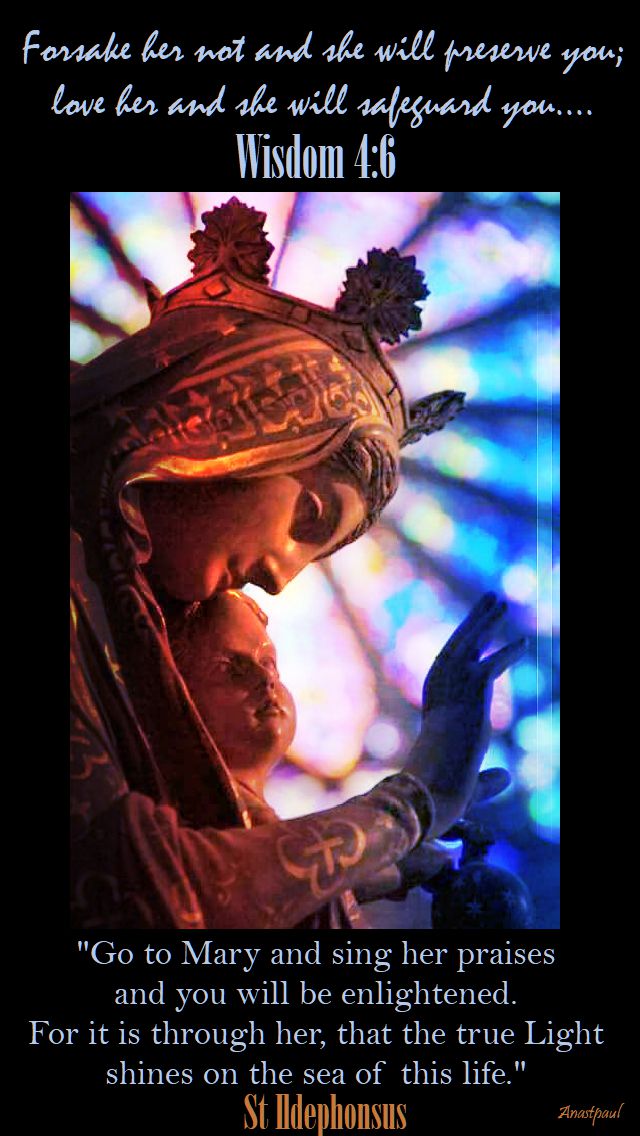
Forsake her not and she will preserve you; love her and she will safeguard you…..Wisdom 4:6
REFLECTION – “Go to Mary and sing her praises and you will be enlightened.
For it is through her that the true Light shines on the sea of this life.”…St Ildephonsus
PRAYER – Lord God, the day of our salvation dawned when the Blessed Virgin gave birth to Your Son.
As we celebrate her nativity, grant us Your grace and Your peace.
Through Christ, our Lord, Your Son in union with the Holy Spirit.
Mary, Mother of God, pray for us, amen.
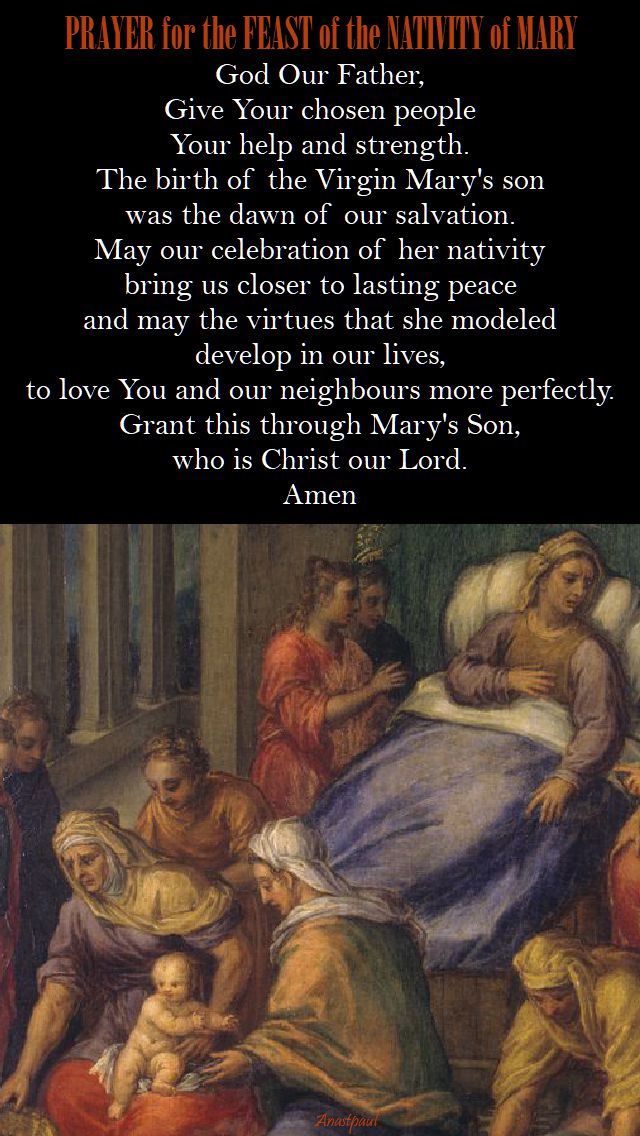
Our Morning Offering – 8 September – The Feast of the Nativity of the Blessed Virgin Mary
God Our Father,
Give Your chosen people
Your help and strength.
The birth of the Virgin Mary’s son
was the dawn of our salvation.
May our celebration of her nativity
bring us closer to lasting peace
and may the virtues that she modeled
develop in our lives,
to love You and our neighbours more perfectly.
Grant this through Mary’s Son,
who is Christ our Lord. Amen
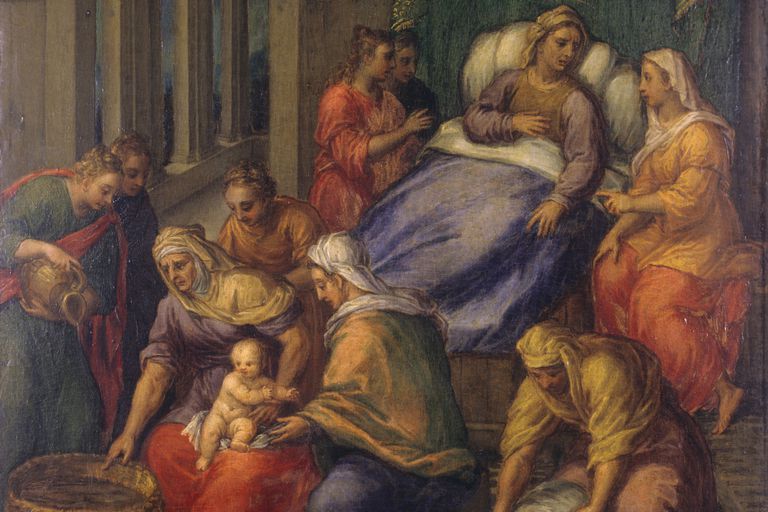
Feast of the Nativity of the Blessed Virgin Mary – 8 September – The Feast of the Nativity of the Blessed Virgin Mary, the day on which Christians East and West commemorate the birth of Mary, the Mother of God, was celebrated as early as the sixth century. We know that from the fact that Saint Romanos the Melodist, an Eastern Christian who composed many of the hymns used in the Eastern Catholic and Eastern Orthodox liturgies, composed a hymn for the feast at that time and it probably originated after the Council of Ephesus in 431, which established her right to the title of “Mother of God.” Patronages: • chefs, cooks and restauranteurs• coffee house owners or keepers
• distillers• drapers• fish dealers or fishmongers• gold workers or goldsmiths• needle and pin makers• potters• silk workers• silver workers or silversmiths• tile makers• 14 cities
The Feast of the Nativity of the Blessed Virgin Mary spread to Rome in the seventh century but it took a couple of more centuries before it was celebrated throughout the West.
HISTORY: Even though we cannot trace the celebration of the Feast of the Nativity of the Blessed Virgin Mary back any further than the sixth century, the source for the story of the birth of the Blessed Virgin Mary is much older. The earliest documented version is found in the Protoevangelium of James, an apocryphal gospel written about C 150. From the Protoevangelium of James, we learn the names of Mary’s parents, Joachim and Anna, as well as the tradition that the couple was childless until an angel appeared to Anna and told her that she would conceive. (Many of the same details appear also in the later apocryphal Gospel of the Nativity of Mary.)
WHY 8 SEPTEMBER: The traditional date of the feast, September 8, falls exactly nine months after the feast of the Immaculate Conception of Mary. Perhaps because of its close proximity to the feast of the Assumption of Mary, the Nativity of the Blessed Virgin Mary is not celebrated today with the same solemnity as the Immaculate Conception. It is, nonetheless, a very important feast, because it prepares the way for the birth of Christ. It is also an unusual feast, because it celebrates a birthday.
WHY DO WE CELEBRATE THE BLESSED VIRGIN MARY’S BIRTHDAY?: The feasts of saints are traditionally celebrated on the day of their death because that is the date on which they entered into eternal life. And, indeed, we also celebrate the Blessed Virgin Mary’s entrance into Heaven on August 15, the Feast of the Assumption.
There are only three people whose birthdays have traditionally been celebrated by Christians. Jesus Christ, at Christmas, Saint John the Baptist and the Blessed Virgin Mary. And we celebrate all three birthdays for the same reason: All three were born without Original Sin. Christ, because He was conceived by the Holy Spirit and is God; Mary, because she was kept free from the stain of Original Sin by the action of God in His foreknowledge that she would agree to be the mother of Christ; and Saint John, because he was blessed in the womb by the presence of his Saviour when Mary, pregnant with Jesus, came to aid her cousin Elizabeth in the final months of Elizabeth’s pregnancy (an event we celebrate in the Feast of the Visitation).
Readings: Micah 5:1-4A or Romans 8:28-30; Psalm 13:6AB, 6C; Matthew 1:1-16, 18-23 or Matthew 1:18-23
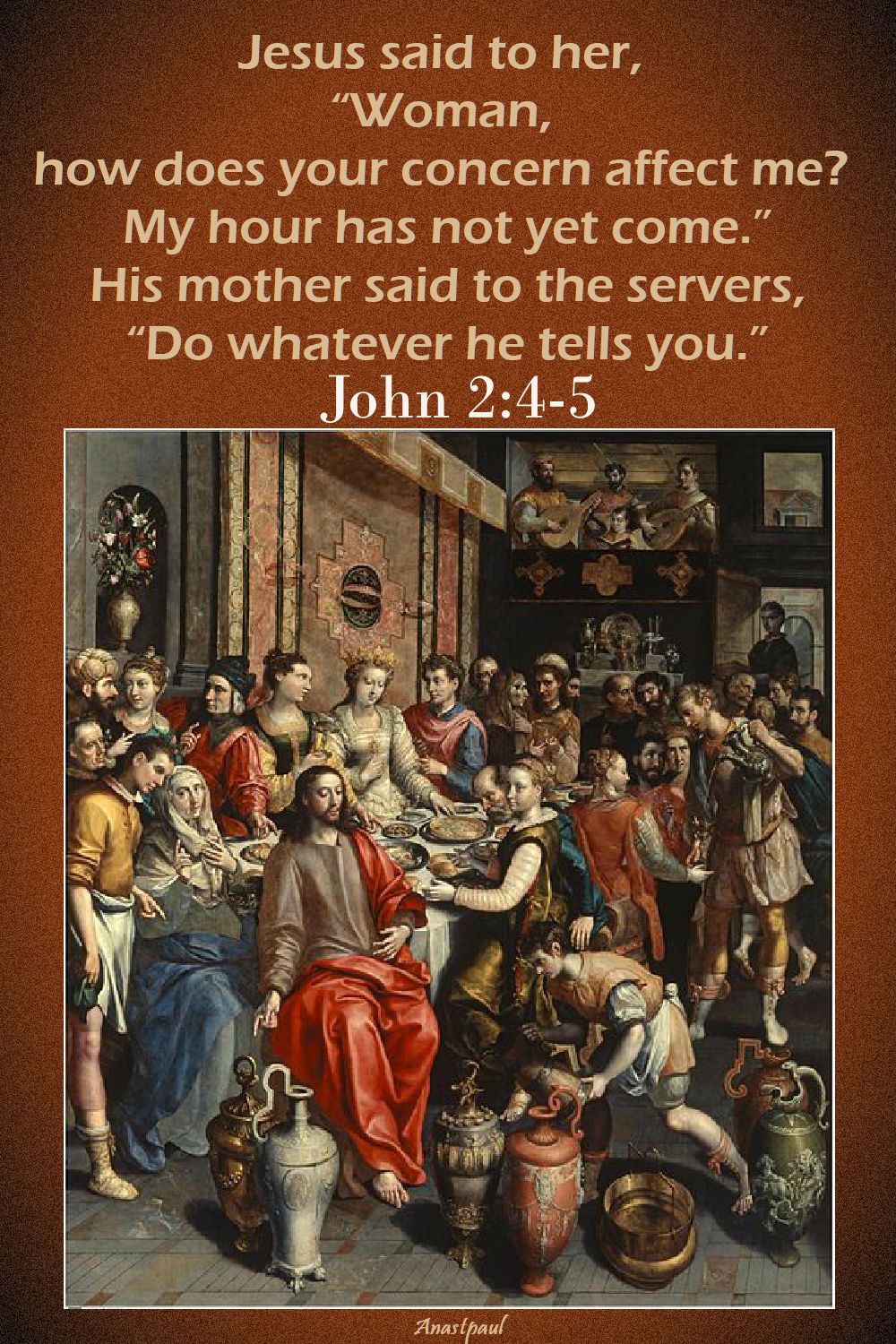
One Minute Reflection – 4 September – The Feast of Our Lady of Consolation
Jesus said to her, “Woman, how does your concern affect me? My hour has not yet come.” His mother said to the servers, “Do whatever he tells you.”….John 2:4-5
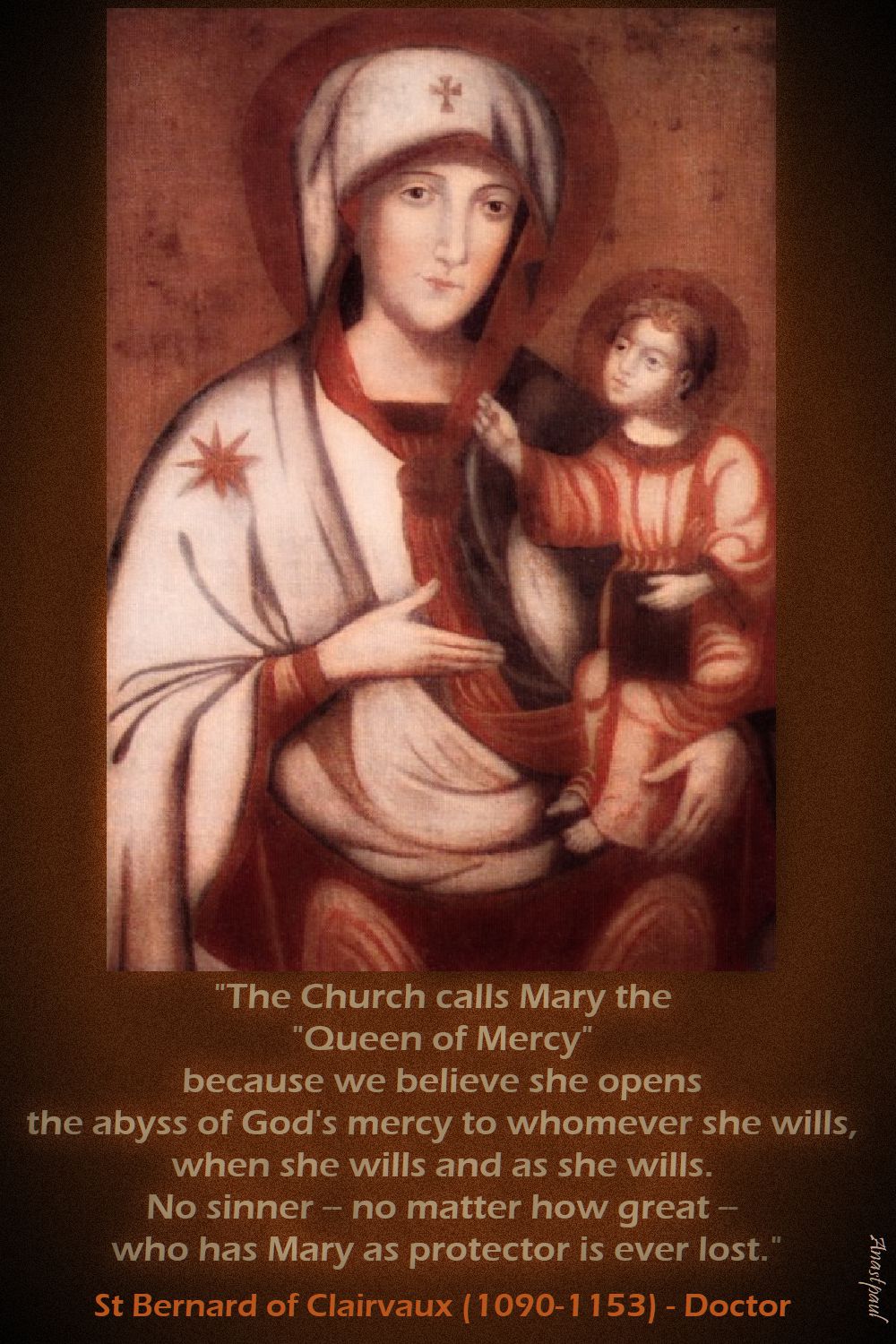
REFLECTION – “The Church calls Mary the “Queen of Mercy” because we believe she opens the abyss of God’s mercy to whomever she wills, when she wills and as she wills.
No sinner — no matter how great — who has Mary as protector is ever lost.”…St Bernard of Clairvaux (1090-1153) – Doctor of the Church
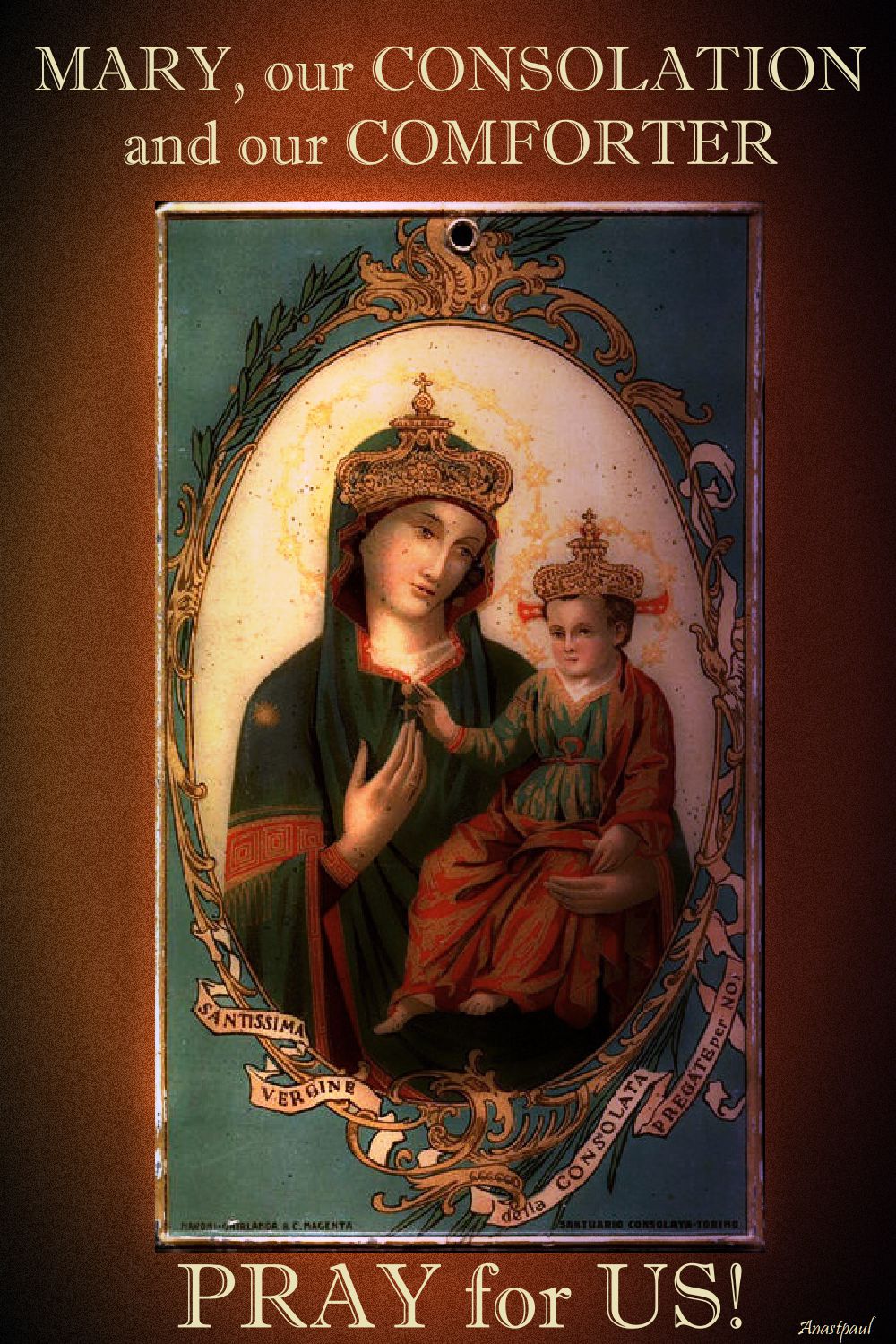
PRAYER – Almighty God, grant that Your faithful, who rejoice in the protection of the Blessed Virgin Mary, may be delivered from every evil here on earth, through her prayer and come to the enduring joys of heaven. Through our Lord, Jesus Christ, in union with the Holy Spirit Mary, our Consolation and Comforter, pray for us! Amen.
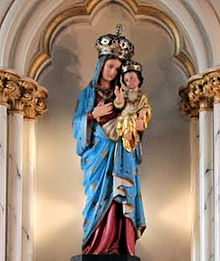
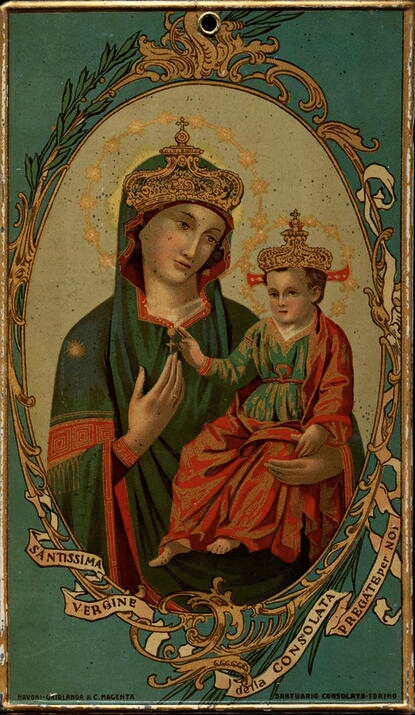
Madonna della Consolazione / Our Lady of Consolation
Beginning in the 2nd century, Catholics venerated Mary as Our Lady of Consolation, one of her earliest titles of honour. The title of Our Lady of Consolation, or Mary, Consoler of the Afflicted, comes from the Latin Consolatrix Afflictorum. It is found in the Litany of Loreto.
The origin of this invocation is derived from the Augustinian monks who propagated this particular devotion. In 1436 the Confraternity of the Holy Cincture of Our Lady of Consolation was founded in Bologna, Italy. It was based on an Augustinian tradition which hold that Saint Monica in the fourth century, was distraught with anxiety for her wayward son, Augustine and that Mary gave her a sash which the Virgin wore, with the assurance that whoever wore this belt would receive her special consolation and protection. Along with Augustine and Monica, Our Lady of Consolation is one of the three patrons of the Augustinians. The “Augustinian Rosary” is sometimes called the “Corona (or Crown) of Our Mother of Consolation.”
In the 1700s members of the Augustinian Order introduced devotion to Our Lady of Consolation to the island of Malta. On 1 December 1722 the Prior General of the Augustinian Order Fr Thomas Cervioni issued the Decree for the erection of the Confraternity of Our Lady of Consolation in the church of St Mark, run by the Augustinians at Rabat, although the devotion had been practiced for some time before. By this time the custom of asking for the final blessing before death in the name of Our Lady of Consolation was very popular and the monks were given a dispensation to leave the monastery at any time to confer it. Processions in Our Lady’s honour were suspended during the French occupation of 1798 to discourage the gathering of crowds.
An ancient story relates St Eusebius of Vercelli brought back an icon of Our Lady of Consolation when he was returning from exile in Egypt in 363. This icon was presented to the city of Turin. Later St Maximus, Bishop of Turin, established a small shrine to house the icon in a church dedicated to St Andrew. The icon became the object of great veneration and the church became the Santuario della Consolata. Giuseppe Allamano, rector of the Santuario della Consolata founded the Consolata Missionaries in 1902; they brought to devotion to Africa. At the age of nineteen Joseph Marello of Turin contracted typhus. He attributed his recovery to Our Lady of Consolation and went on to found the Oblates of St Joseph.
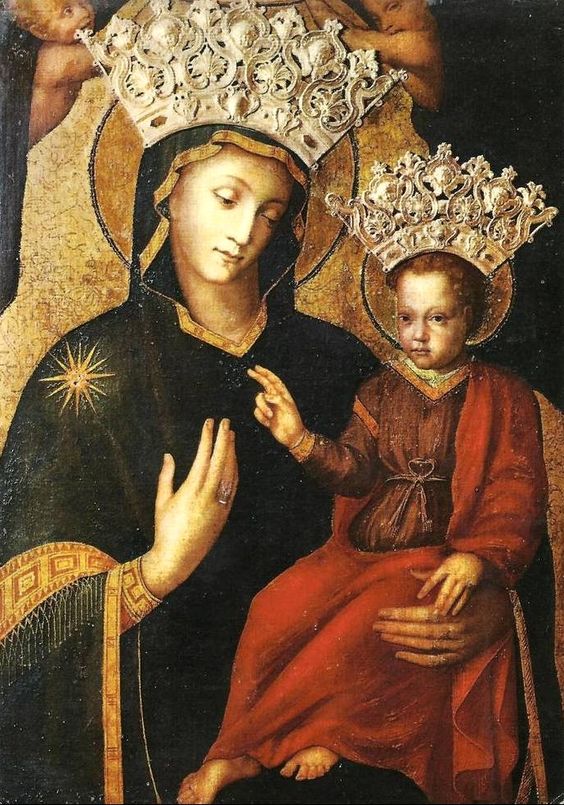
There are several versions of the image of Our Lady of Consolation. The original one is in Turin at the Santuario della Consolata. A star on her shoulder is characteristic of almost all the images. The traditional depiction of Our Mother of Consolation in Augustinian houses shows Mary holding the child Jesus on her lap. Jesus and Mary both hold the Augustinian cincture in their hands.
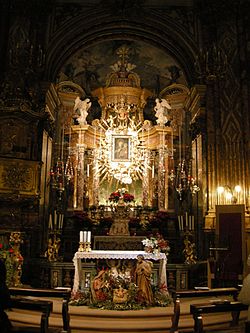
Altar with icon of the Virgin of the Consolation at the Santuario della Consolata or Sanctuary of the Virgin of the Consolation in Turin
In France the dioceses of Vannes, Valence, Montpelier, Laval, Nantes, Périgueux, Tours and many others, possessed churches or chapels dedicated to Mary under this title. In 1652, Pope Innocent X encouraged devotion to Our Lady of Consolation by establishing a confraternity.
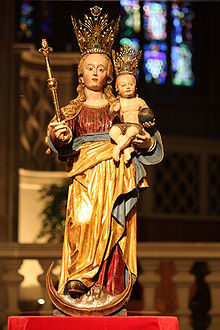
The cult of Our Lady of Luxembourg, Comforter of the Afflicted, was initiated by the Jesuits in 1624 and led to the election of Our Lady as the protectress of the City in 1666 and of the Duchy in 1678. After the destruction of the old pilgrimage chapel at the time of the French Revolution, the statue of Our Lady of Luxembourg was moved to St Peter church, today’s Cathedral in Luxembourg City. Statues depicting her can be found in niches in buildings throughout the city of Luxembourg. From there the devotion was adopted by the English Benedictine nuns of Cambrai.
Immigrants from Luxembourg transposed the cult of Our Lady of Consolation to the United States.
In 1848, Luxembourg immigrants began to settle in the area around Dacada, Wisconsin. The oldest statue of Our Lady of Luxembourg found in the United States, was brought to Dacada by a Luxembourg immigrant, Anna Margaret Deppiesse, in 1849. Mrs. Deppiesse donated it to St. Nicholas Church, where it can be found in an alcove shrine below the choir loft. When the church was remodeled in 1941, a mural depicting Our Lady of Luxembourg (Mary, Consoler of the Afflicted) was added to the apse in the sanctuary. The mural, which honours the parish’s Luxembourgian roots, was painted by liturgical artist, Bernard Grenkhe, using the “al secho” method (i.e., painting on wet plaster so as to make the image permanent.
During the Civil War, three parishioners of St. Augustine’s Parish in Leopold, Indiana fought for the North and were imprisoned at the notorious Andersonville Prison. Henry Devillez, Isidore Naviaux and Lambert Rogier, formerly of Belgium, vowed that if they survived, one of them would make a pilgrimage to Luxembourg and obtain a copy of the statue of Our Lady of Consolation that stood in their ancestral church. Rogier went to Luxembourg in 1867 and upon his return enshrined it in St. Augustine’s, where it now stands to the left of the main altar. In September 2013, Archbishop Joseph W. Tobin of Indianapolis dedicated a larger outdoor garden shrine.
Another centre of veneration and pilgrimage, which also adopted Our Lady, Comforter of the Afflicted is Kevaeler in Germany, not far from the Dutch border. In 1642 a copperplate engraving, representing Our Lady of Luxembourg, was installed in a sanctuary erected the same year. It is one of the best visited Catholic pilgrimage locations in north-western Europe. St Pope John Paul II visited in 1987.
The feast of Our Lady of Consolation is one of the solemnities not inscribed in the General Roman Calendar but which are observed in particular places, regions, churches or religious institutes. Augustinians observe 4 September, the Benedictines on 5 July. The popular girls name “Consuela” is derived from this title.
Our Lady of Consolation: Starting in the 2nd century, Catholics venerated Mary as Our Lady of Consolation, one of her earliest titles of honour. The title of Our Lady of Consolation, or Mary, Consoler of the Afflicted, comes from the Latin Consolatrix Afflictorum. It is found in the Litany of Loreto.
The original Icon of Our Lady of Consolation in Turin, Italy
St Ammianus the Martyr
St Pope Boniface I
St Caletricus of Chartres
St Candida of Naples
St Candida the Elder
St Castus of Ancyra
Bl Catherine of Racconigi
St Fredaldo of Mende
St Hermione
St Ida of Herzfeld
St Irmgard of Süchteln
St Julian the Martyr
St Magnus of Ancyra
St Marcellus of Chalon-sur-Saône
St Marcellus of Treves
St Maximus of Ancyra
St Monessa
St Moses the Prophet
Bl Nicolò Rusca
St Oceanus the Martyr
Bl Peter of Saint James
St Rebecca of Alexandria
St Rhuddlad
St Rosalia/Rose of Viterbo
St Rufinus of Ancyra
St Salvinus of Verdun
Bl Scipion-Jérôme Brigeat Lambert
St Silvanus of Ancyra
St Sulpicius of Bayeux
St Thamel
St Theodore the Martyr
St Ultan of Ardbraccan
St Victalicus
—
Martyred in the Spanish Civil War:
• Blessed Adrián Saiz y Saiz
• Blessed Baltasar Mariano Muñoz Martínez
• Facundo Fernández Rodríguez
• Blessed Francisco Sendra Ivars
• Blessed José Bleda Grau
• Blessed José Muñoz Quero
• Blessed José Pascual Carda Saporta
• Blessed Juan Moreno Juárez
• Blessed José Vicente Hormaechea Apoita
• Blessed Pedro Sánchez Barba
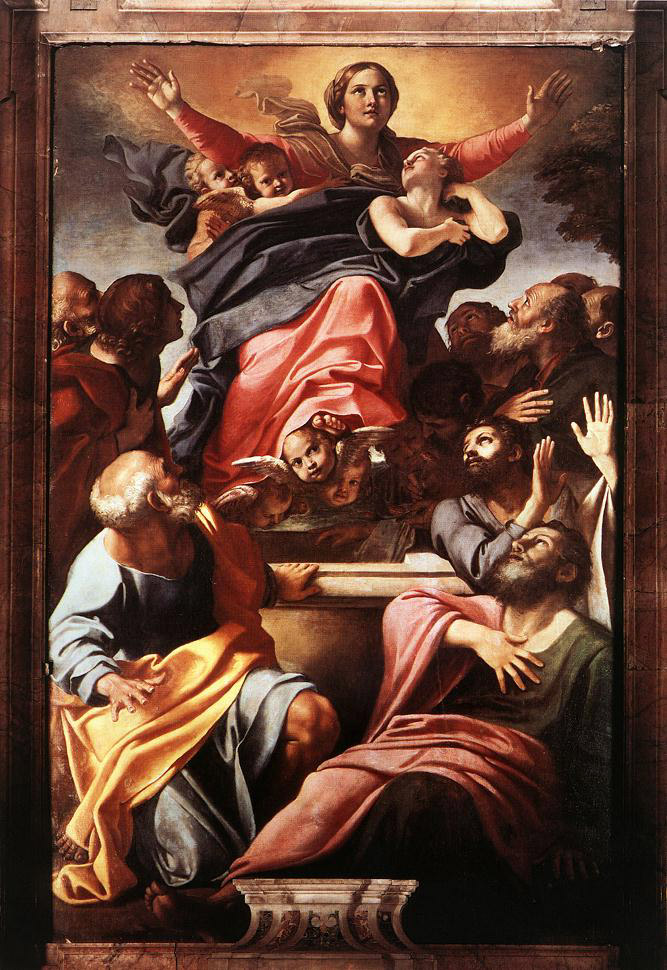
Solemnity of the Assumption of the Blessed Virgin Mary (in the US, however, in most countries of Africa, the Solemnity will celebrated on Sunday 20 AUGUST): The feast celebrates the assumption of the body of the Blessed Virgin Mary into heaven upon her death. According to Pope Benedict XIV, it is a probable opinion, which it is impious to deny, though not an article of faith but has since in 1950 has been raised to a DOGMA of the Faith. The origin of the feast day is not known but it was celebrated in Palestine before the year 500. It is a holy day of obligation, its vigil being a fast day, in all English-speaking countries except Canada. Among the many masters who have painted the subject of the Assumption are Fra Angelico, Ghirlandajo, Rubens, Del Sarto and Titian.
Patronages:
• Acadians, Cajuns
• Cistercian Order, Cistercians
• fish dealers, fishmongers
• French air crews
• harness makers
• —
• France
• Guatemala
• India
• Jamaica
• Malta
• Paraguay
• Slovakia
• —
• east Africa (region of east Africa which includes diverse countries, proclaimed on 15 March 1952 by Pope Pius XII)
• South Africa (THIS IS NOT AN REGION BUT A COUNTRY and the Assumption is, therefore, the Patronal Feast of the Country of South Africa – proclaimed on 15 March 1952 by Pope Pius XII)
• —
• 24 dioceses
• 38 cities
Annabale Carraci 1600-1601
—
St Alipius of Tagaste
Bl Alfred of Hildesheim
Bl Agustín Hurtado Soler
St Arduinus of Rimini
St Arnulphus of Soissons
Bl Claudio Granzotto
Bl George Halley
St Napoleon of Alexandria
Bl Pio Alberto del Corona
St Simplician of Milan
St Tarcisius
—
Martyrs of Nicomedia – 3 saints: Three Christians martyred together. No details survive but the names – Eutychian, Philip and Straton. They were martyred in Nicomedia, Bithynia (in modern Turkey).
Martyred in the Mexican Revolution: 4 Saints –
St David Roldán Lara
St Luis Batiz Sainz
St Manuel Moralez
St Salvador Lara Puente
Martyred in the Spanish Civil War: Thousands of people were murdered in the anti-Catholic persecutions of the Spanish Civil War from 1934 to 1939.
• Blessed Agustì Ibarra Angüela
• Blessed Carmelo Sastre y Sastre
• Blessed Clemente Vea Balaguer
• Blessed Francisco Míguez Fernández
• Blessed Ildefonso Alberto Flos
• Blessed Jaume Bonet Nadal
• Blessed Joan Ceró Cedó
• Blessed Josep Santonja Pinsach
• Blessed Juan Francisco Barahona Martín
• Blessed Juan Mesonero Huerta
• Blessed Luis Ros Ezcurra
• Blessed Manuel Formigo Giráldez
• Blessed Miguel Alberto Flos
• Blessed Sebastià Balcells Tonijuan
• Blessed Severiano Montes Fernández
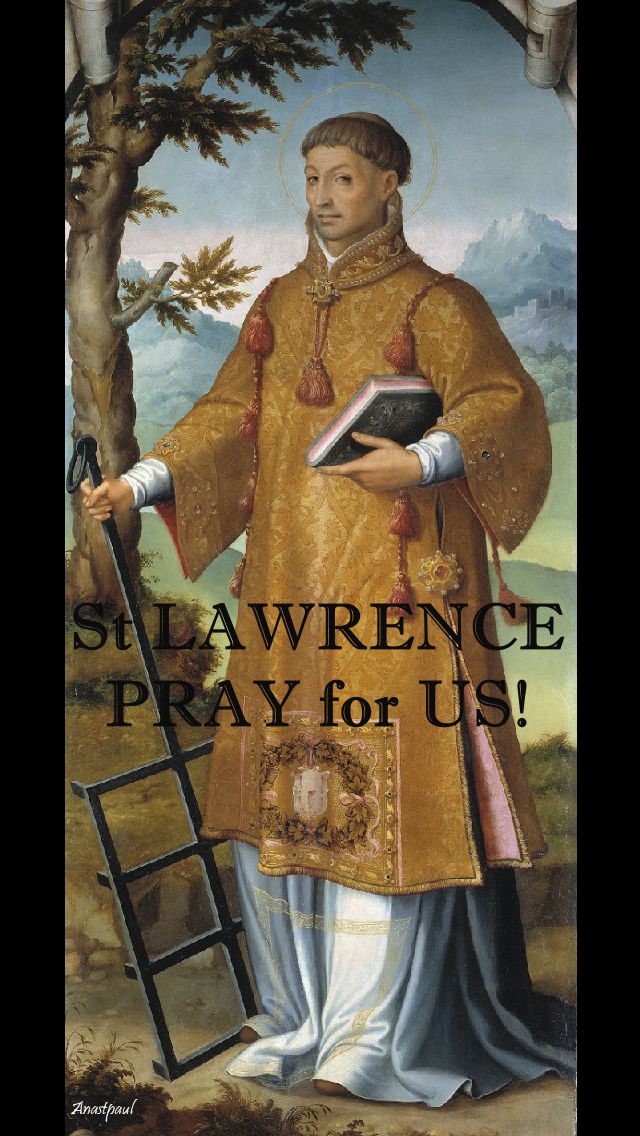
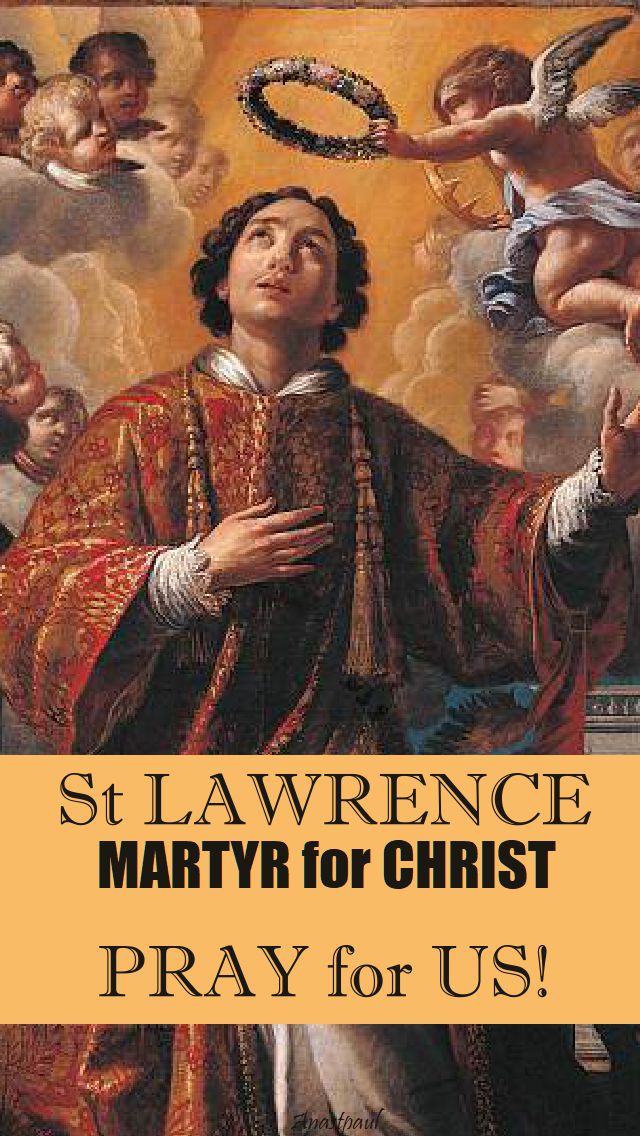
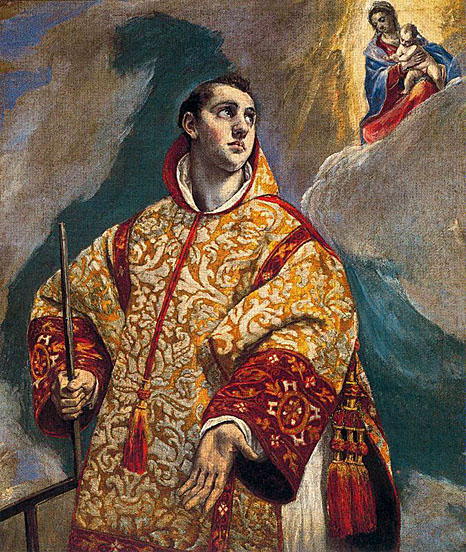
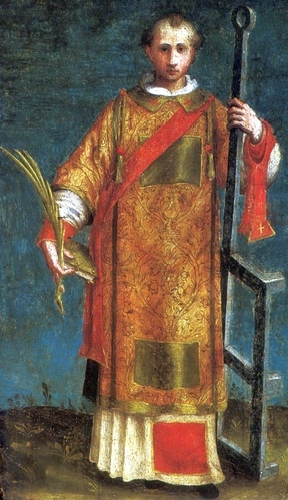
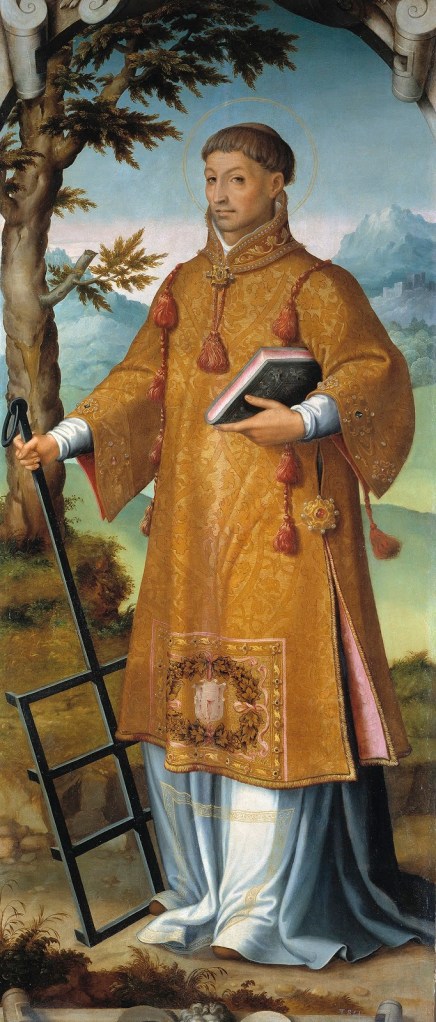
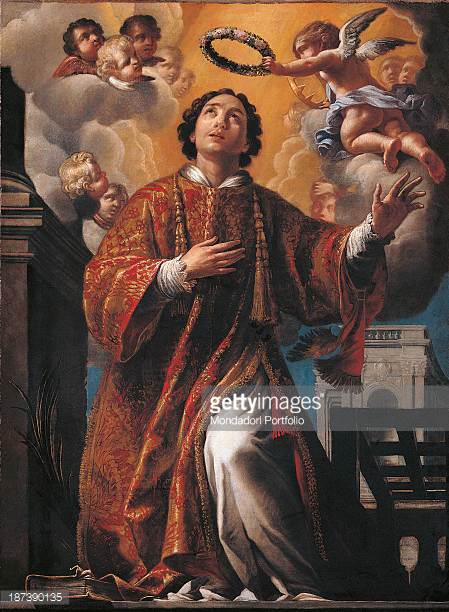
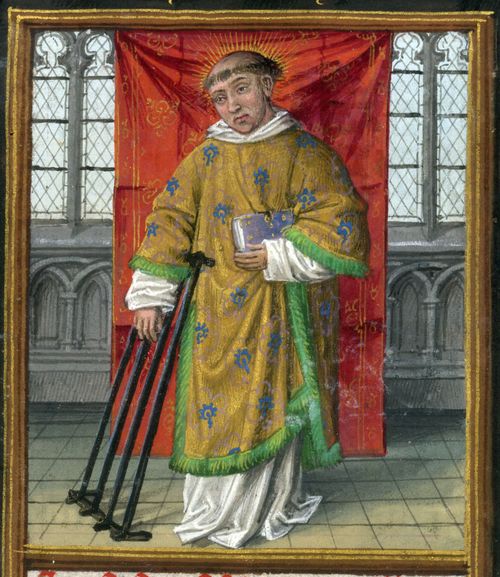
Thought for the Day – 10 August – The Feast of St Lawrence
“The esteem in which the Church holds Lawrence is seen in the fact that today’s celebration ranks as a feast. We know very little about his life. He is one of those whose martyrdom made a deep and lasting impression on the early Church. Celebration of his feast day spread rapidly.
Once again we have a saint about whom almost nothing is known, yet one who has received extraordinary honour in the Church since the fourth century. Almost nothing—yet the greatest fact of his life is certain: He died for Christ. We who are hungry for details about the lives of the saints are again reminded that their holiness was after all, a total response to Christ, expressed perfectly by a death like this.” (Fr Don Miller OFM)
St Lawrence, your total and complete response to Christ is our example today, please pray for us!
Quote/s of the Day – 10 August – The Feast of St Lawrence of Rome
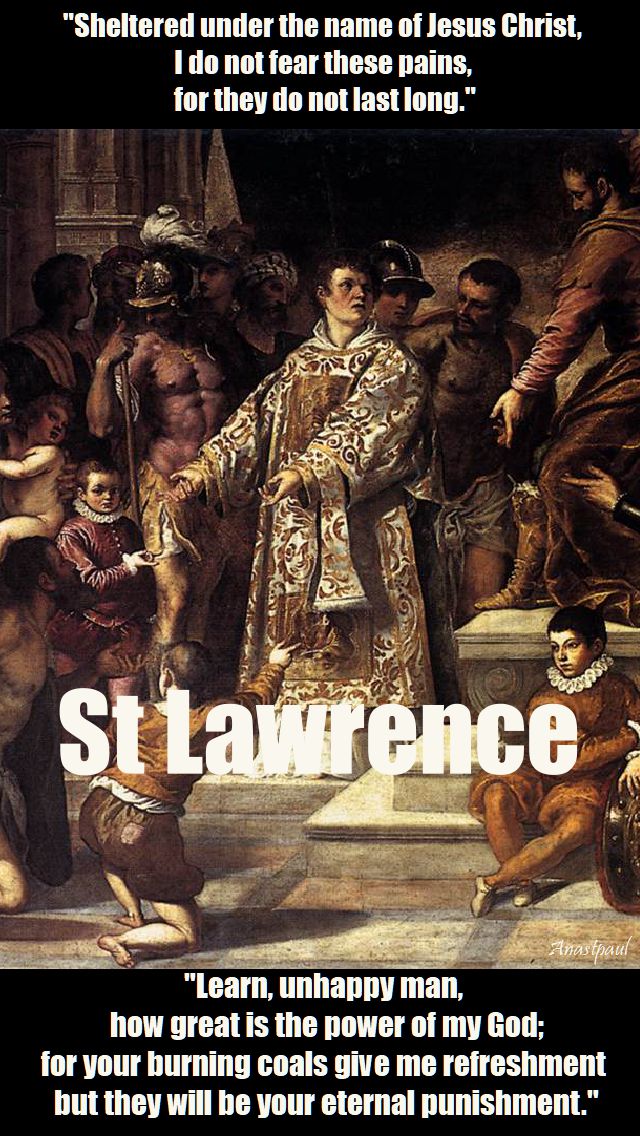
“Sheltered under the name of Jesus Christ, I do not fear these pains, for they do not last long.”
“Learn, unhappy man, how great is the power of my God; for your burning coals give me refreshment but they will be your eternal punishment.”
St Lawrence
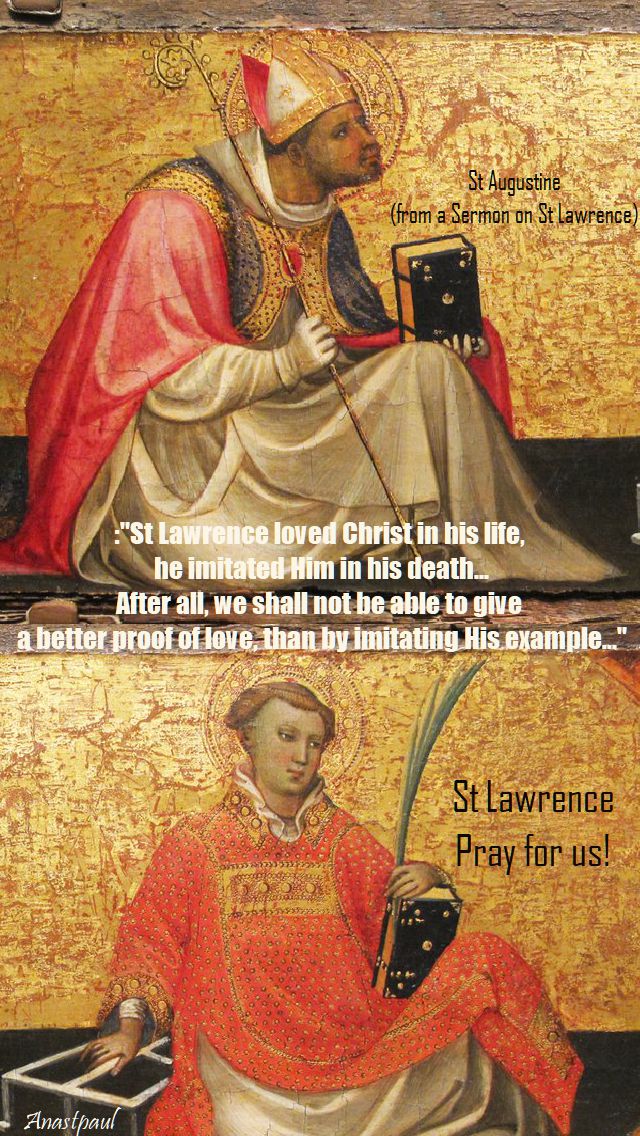
“(St Lawrence) loved Christ in his life, he imitated Him in his death…After all, we shall not be able to give a better proof of love than by imitating His example…”
“Christ humbled himself: you have something, Christian, to latch on to. Christ became obedient. – Why do you behave proudly? After running the course of these humiliations and laying death low, Christ ascended into heaven – let us follow Him there. Let us listen to the Apostle telling us, ‘If you have risen with Christ, savour the things that are above and is, seated at God’s right hand.’ “
(From a sermon delivered by St. Augustine in about 400 AD on the occasion of the Feast of Saint Lawrence.)
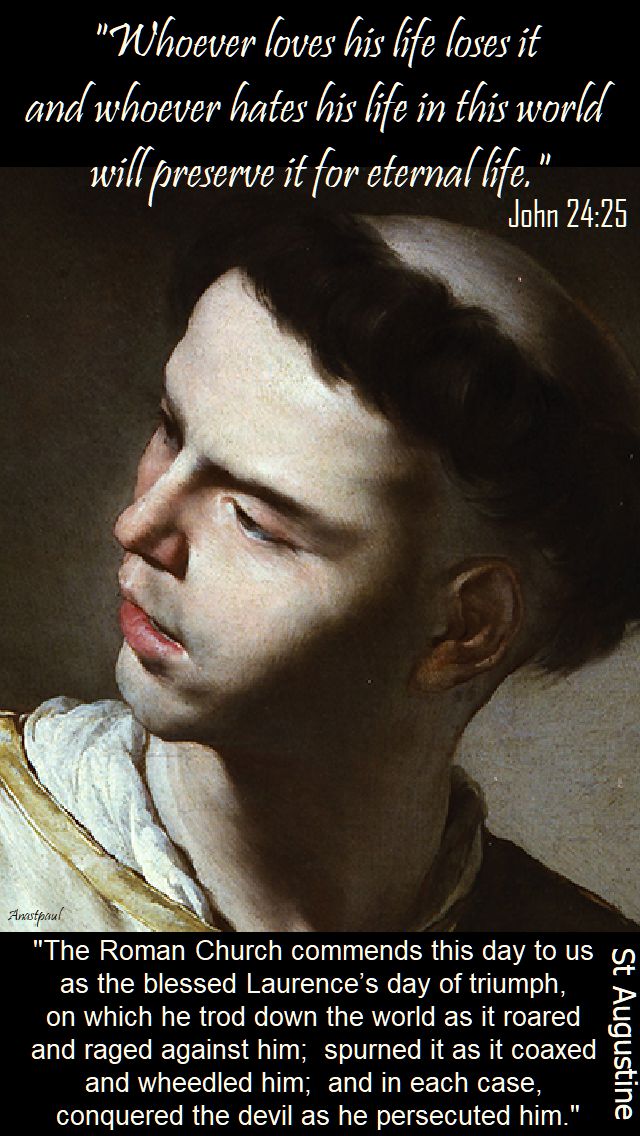
“I say to you, unless a grain of wheat falls to the ground and dies, it remains just a grain of wheat; but if it dies, it produces much fruit. Whoever loves his life loses it and whoever hates his life in this world will preserve it for eternal life.”…John 12:24-25
REFLECTION – “The Roman Church commends this day to us as the blessed Laurence’s day of triumph, on which he trod down the world as it roared and raged against him; spurned it as it coaxed and wheedled him; and in each case, conquered the devil as he persecuted him. For in that Church, you see, as you have regularly been told, he performed the office of deacon; it was there that he administered the sacred chalice of Christ’s blood; there that he shed his own blood for the name of Christ…And we too, brethren, if we truly love Him, let us imitate Him. After all, we shall not be able to give a better proof of love than by imitating His example; for Christ suffered for us, leaving us an example, so that we might follow in His footsteps.” …(From a sermon delivered by St. Augustine in about 400 AD on the occasion of the Feast of Saint Lawrence.)
PRAYER – Lord God, You inspired St Lawrence with so ardent a love that his life was renowned for the service of Your people and his death for the splendour of his martyrdom. Help us to love what he loved and to life as he showed us. St Lawrence, Martyr for Christ and His Church, pray for us. Through our Lord, Jesus Christ, in union with the Holy Spirit, one God forever and ever amen.
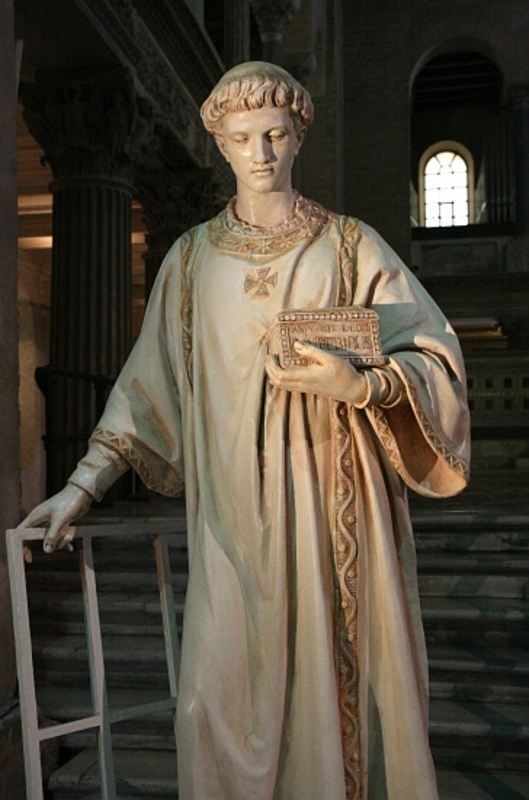
Saint of the Day – 10 August – St Lawrence of Rome (Died 258) – Martyr and Deacon (Archdeacon – distributor of alms and “Keeper of the Treasures of the Church”) Born at Huesca, Spain – cooked to death on a gridiron on 10 August 258). St Lawrence was one of the seven Deacons of the City of Rome, under Saint Pope Sixtus II who were martyred in the persecution of the Christians by decree of the Roman Emperor Valerian ordered in 258. His remains were buried in the cemetery of Saint Cyriaca on the road to Tivoli, Italy. His tomb was opened by Pelagius to inter the body of Saint Stephen the Martyr and his mummified head removed to the Quirinal Chapel. The gridiron believed to have been his deathbed is in San Lorenzo in Lucina and his garments in Our Lady’s Chapel in the Lateran Palace. Patronages – against fire, against lumbago, of archives, archivists, armories, armourers, brewers, butchers, chefs, cooks, comedians, comediennes, cutlers, deacons, glaziers, laundry workers, librarians, libraries, paupers, the poor, restauranteurs, schoolchildren, students, seminarians, stained glass workers, tanners, vine growers, vintners, wine makers, Ceylon, Sri Lanka, 38 cities and dioceses.
Saint Lawrence was chief of the seven Roman deacons of Pope Sixtus II who had been his mentor in Spain and taken him to Rome and ordained him as Deacon there, after he had been called to the Holy Office. In 258, Emperor Valerian increased his persecutions of the Christians. One day when Pope Sixtus II was in the cemetery of Saint Calistus celebrating Mass accompanied by some members of his clergy, he was arrested. Along with him, the other six Roman deacons were arrested. As the soldiers took the Pontiff to be put to death, Lawrence followed him in anguish crying out: “Where are you going, my father, without your son? Where are you going, Holy Pontiff, without your deacon? Isn’t it the custom to offer the sacrifice with an assistant? Let me prove I am worthy of the choice you made when you entrusted me with the distribution of the Blood of Our Lord.”
St Pope Sixtus II with the St Lawrence
The Pope replied to Saint Lawrence: “I am not leaving you, my son. They are lenient on old men, not the youth. A greater combat is reserved for you. You will follow me in three days.” With the Pontiff’s execution, Lawrence was the highest ranking church authority left in Rome.
Saint Lawrence was brought before Cornelius Secularis, prefect of Rome under the Emperor Valerian, who, according to Dom Prosper Guéranger in his Liturgical Year: “aimed at ruining the Christians by prohibiting their assemblies, putting their chief men to death, and confiscating their property.” Saint Lawrence asked for a short delay, so he could gather these riches for the prefect and true to the promise of Pope Sixtus, returned three days after the pontiff’s death to hand them over. However, heeding Pope Sixtus II’s final words, Lawrence used his three days to distribute the material wealth of the Church to the poor, before the Roman authorities could lay their hands on it.
When the archdeacon returned, instead of bringing vessels of gold and silver, he brought the poor of the city, saying, “Behold, these choice pearls, these sparkling gems that adorn the temple, these sacred virgins, I mean, and these widows who refuse second marriage…. Behold then, all our riches.” In response to his boldness, Cornelius ordered the scourging and torture of Saint Lawrence upon the rack.
From the Liturgical Year: “…Lawrence was taken down from the rack about midday. In his prison, however, he took no rest but wounded and bleeding as he was, he baptised the converts won to Christ by the sight of his courageous suffering. He confirmed their faith and fired their souls with a martyr’s intrepidity. When the evening hour summoned Rome to its pleasures, the prefect recalled the executioners to their work, for a few hours’ rest had sufficiently restored their energy to enable them to satisfy his cruelty.”
Surrounded by this ill-favoured company, the prefect thus addressed the valiant deacon: ‘Sacrifice to the gods, or else the whole night long shall be witness of your torments.’ ‘My night has no darkness,’answered Laurence, ‘and all things are full of light to me.’ They struck him on the mouth with stone, but he smiled and said, ‘I give Thee thanks, O Christ.’
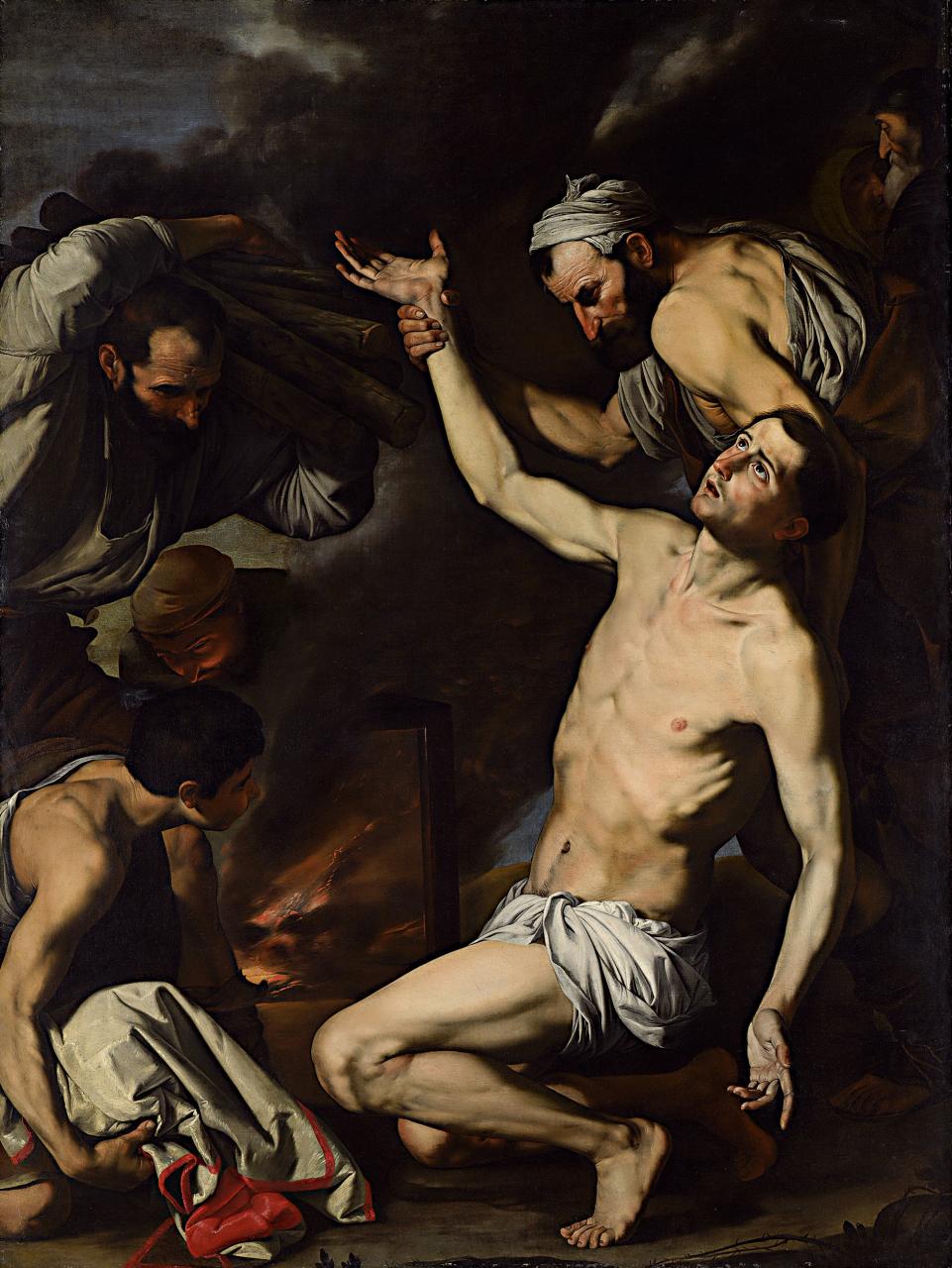
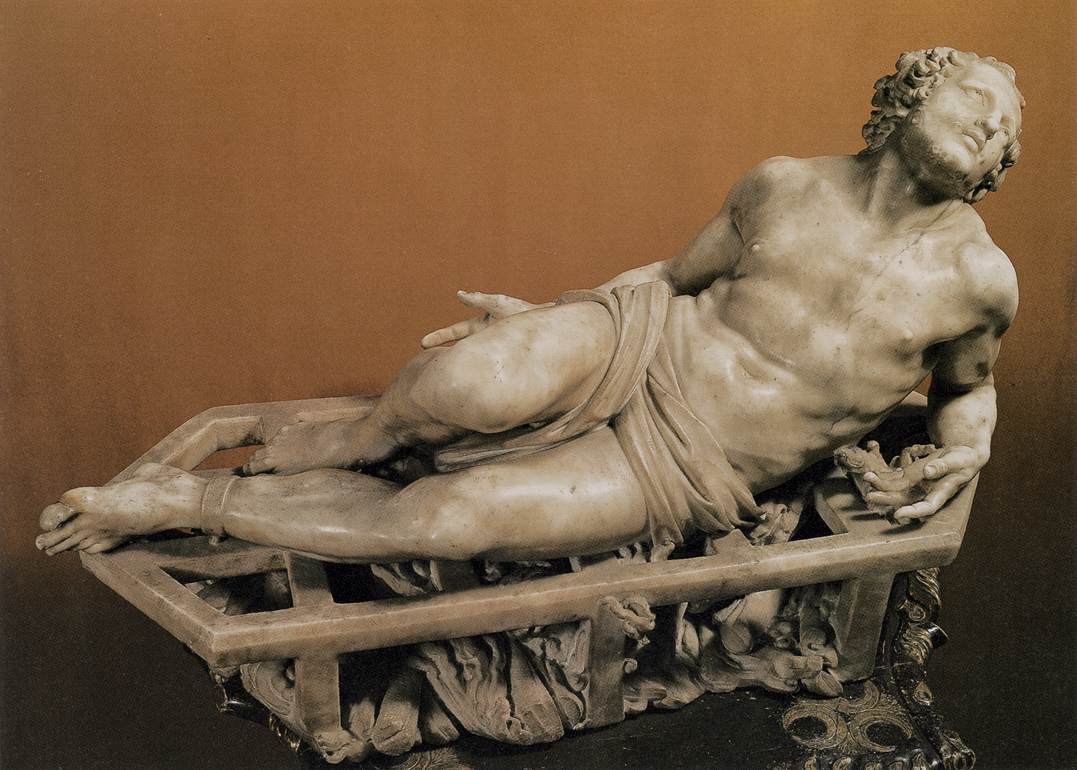
Then an iron bed or gridiron with three bars was brought in and the saint was stripped of his garments and extended upon it while burning coals were placed beneath it. As they were holding him down with iron fork, Lawrence said ‘I offer myself as a sacrifice to God for an odour of sweetness.’ The executioners continually stirred up the fire and brought fresh coals, while they still held him down with their forks. Then the saint said: ‘Learn, unhappy man, how great is the power of my God; for your burning coals give me refreshment but they will be your eternal punishment. I call Thee, O Lord, to witness: when I was accused, I did not deny Thee; when I was questioned, I confessed Thee, O Christ; on the red-hot coals I gave Thee thanks.’ And with his countenance radiant with heavenly beauty, he continued: ‘Yea, I give Thee thanks, O Lord Jesus Christ, for that Thou hast deigned to strengthen me.’ He then raised his eyes to his judge and said: ‘See, this side is well roasted; turn me on the other and eat.’ Then, continuing his canticle of praise to God [he said]: ‘I give Thee thanks, O Lord, that I have merited to enter into Thy dwelling place.’
As he was on the point of death, he remembered the Church. The thought of the eternal Rome gave him fresh strength and he breathed forth this ecstatic prayer: ‘O Christ, only God, O Splendour, O Power of the Father, O Maker of heaven and earth and builder of this city’s walls! Thou has placed Rome’s sceptre high over all; Thou hast willed to subject the world to it, in order to unite under one law the nations which differ in manners, customs, language, genius, and sacrifice. Behold the whole human race has submitted to its empire and all discord and dissensions disappear in its unity. Remember thy purpose: Thou didst will to bind the immense universe together into one Christian Kingdom. O Christ, for the sake of Thy Romans, make this city Christian; for to it Thou gavest the charge of leading all the rest to sacred unity. All its members in every place are united – a very type of Thy Kingdom; the conquered universe has bowed before it. Oh! may its royal head bowed in turn! Send Thy Gabriel and bid him heal the blindness of the sons of Iulus, that they may know the true God. I see a prince who is to come – an Emperor who is a servant of God. He will not suffer Rome to remain a slave; he will close the temples and fasten them with bolts forever.’
Thus he prayed and with these last words, he breathed forth his soul. Some noble Romans who had been conquered to Christ by the martyr’s admirable boldness, removed his body: the love of the most high God had suddenly filled their hearts and dispelled their former errors. From that day, the worship of the infamous gods grew cold; few people went now to the temples but hastened to the altars of Christ. Thus Lawrence, going unarmed to the battle, had wounded the enemy with his own sword.”
The burned body of Saint Lawrence was carried away by converted Roman Senators who buried him in a grotto in the Verano field, near Tivoli. On this day, the reliquary containing his burnt head is displayed in the Vatican for veneration. His feast spread throughout Italy and northern Africa after his martyrdom—and even Saint Augustine of Hippo wrote a beautiful sermon on St Lawrence’s life, connecting his “treasures of the Church” to martyrdom and the Holy Eucharist. Emperor Constantine built a beautiful basilica in Lawrence’s honour. Saint Lawrence is especially honoured in the city of Rome, where he is one of the city’s patrons. There are several churches in Rome dedicated to him, including San Lorenzo in Panisperna, traditionally identified as the place of his execution. The gridiron on which he was grilled is venerated there today.
Since the Perseid Meteor Shower typically occurs every year in mid-August, on or near Saint Lawrence’s feast day, some refer to the shower as the “Burning Tears of Saint Lawrence.” Saint Lawrence, for his care and love of the poor, is considered their patron. For having saved the treasures of the Church—including its documents, he is recognized as the patron saint of librarians. For his courage in being grilled to death, he is also the patron saint of cooks and kitchen workers.
St Lawrence of Rome (Feast) – https://www.youtube.com/watch?v=HlX5vBVi7kM
Our Lady of Good Success
—
St Agathonica of Carthage
St Agilberta of Jouarre
Bl Amadeus of Portugal
St Aredius of Lyon
St Asteria of Bergamo
Bl Augustine Ota
St Bassa of Carthage
St Bessus
St Bettelin
St Blane
Bl Claude-Joseph Jouffret de Bonnefont
St Deusdedit the Cobbler
Bl Edward Grzymala
Bl Franciszek Drzewiecki
Bl Francois François
St Gerontius
Bl Hugh of Montaigu
Bl Lazare Tiersot
St Paula of Carthage
St Thiento of Wessobrunn
—
Martyrs of Alexandria – 260+ saints: A large number of Christians who died in Alexandria, Egypt between 260 and 267 in the persecutions of Decius and Valerian, whose names have not come down to us and who are commemorated together.
Martyrs of Rome – 165 saints: Group of 165 Christians martyred in the persecutions of Aurelian. 274 in Rome, Italy.
Martyred in the Spanish Civil War:
• Blessed Antonio González Penín
• Blessed José Toledo Pellicer
• Blessed José Xavier Gorosterratzu Jaunarena
• Blessed Juan Martorell Soria
• Blessed Victoriano Calvo Lozano
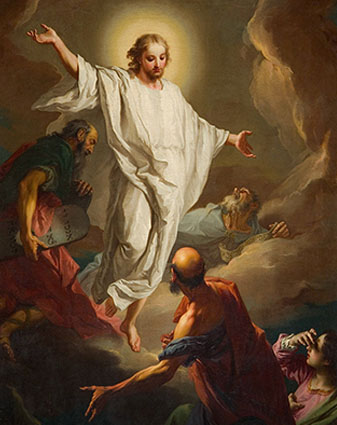
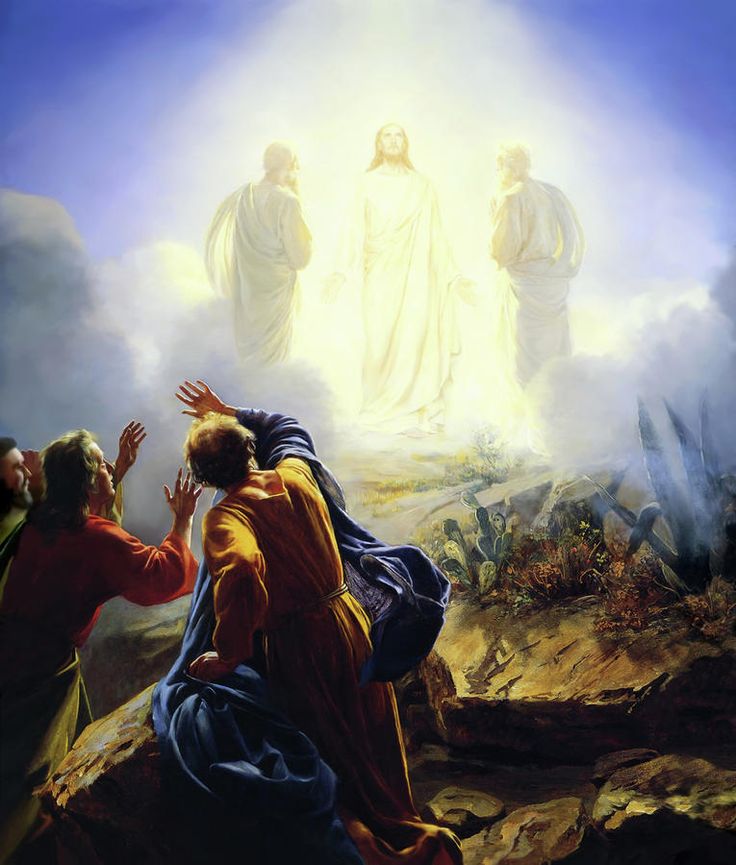
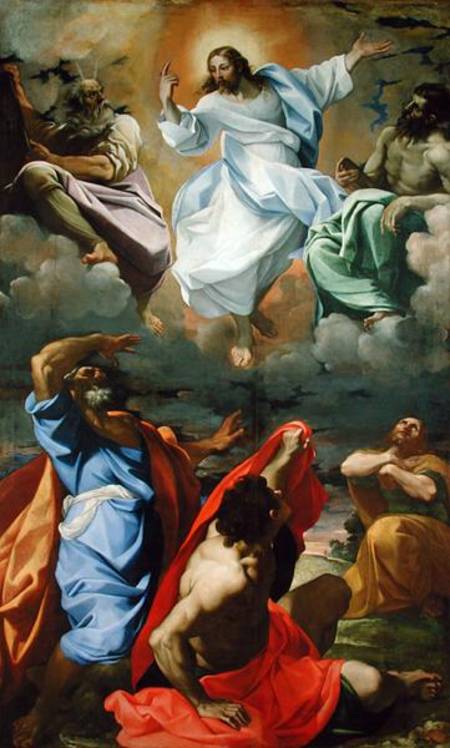
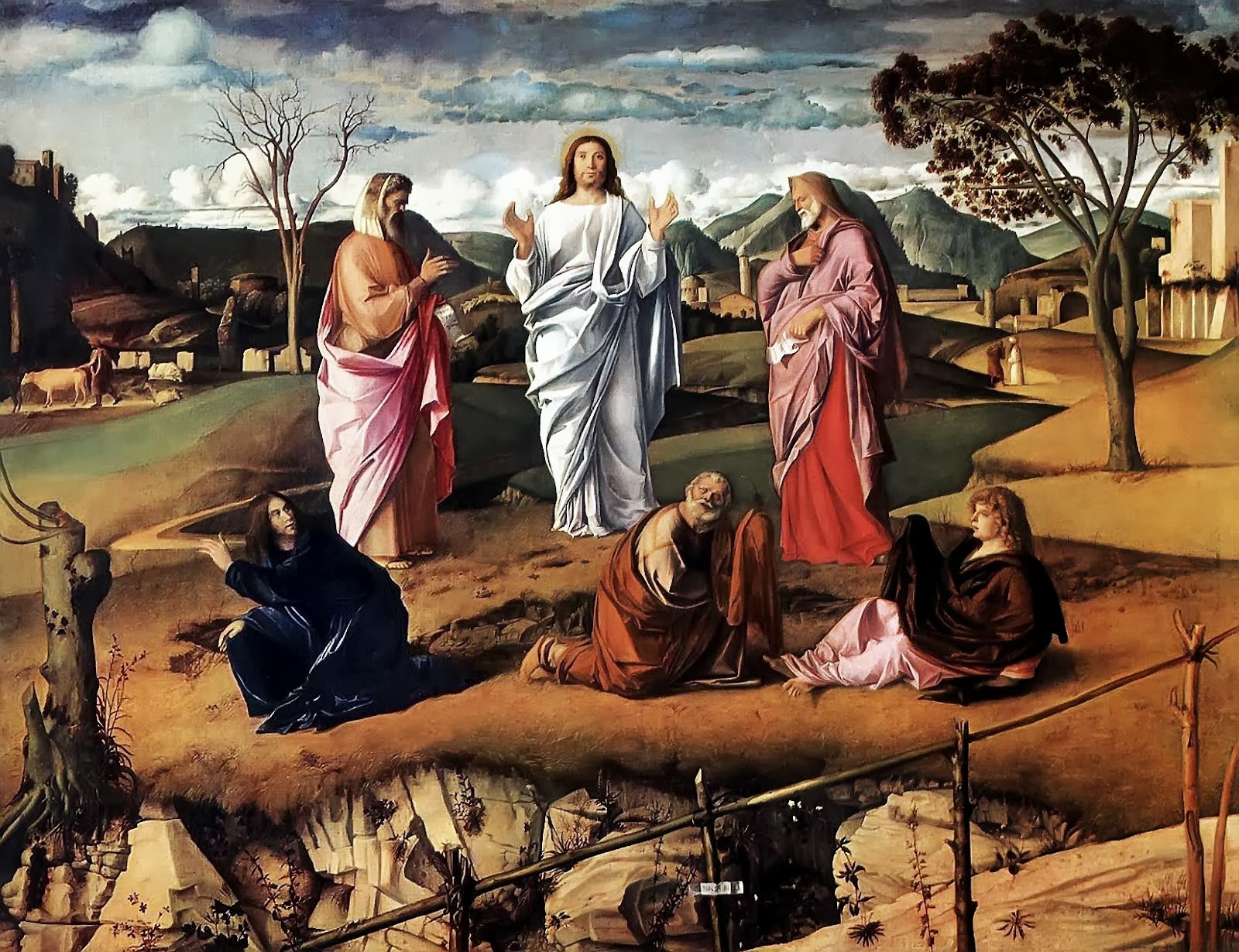
Thought for the Day – 6 August – The Feast of the Transfiguration of the Lord
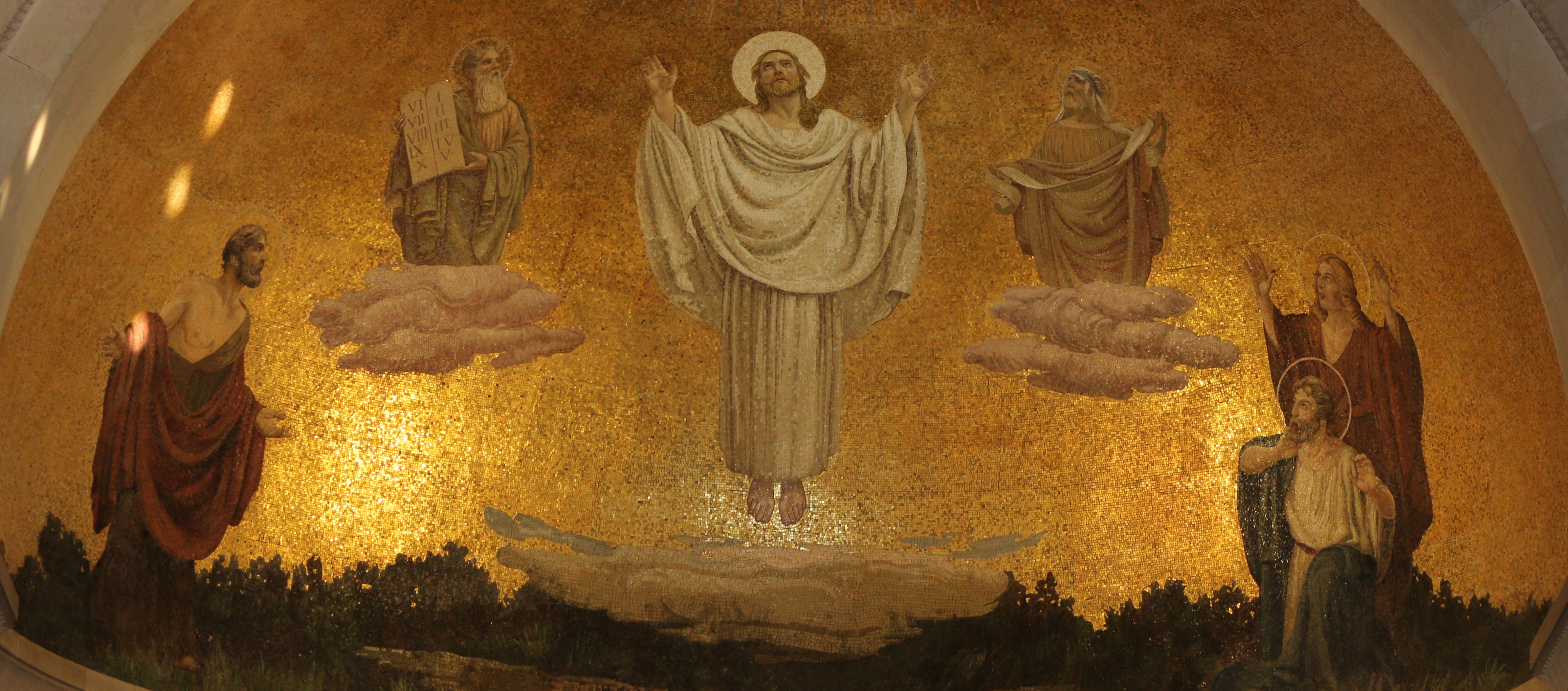
Commenting on the Transfiguration of the Lord on Mount Tabor, St Leo contrasts the law, symbolised by Moses, with the grace of the gospel brought by Jesus Christ. He notes how this glimpse of the glory of His divinity and risen humanity was given to Peter, James & John to prepare them for the shock and scandal of the cross.
“The Lord reveals his glory in the presence of chosen witnesses. His body is like that of the rest of mankind but He makes it shine with such splendour that His face becomes like the sun in glory and his garments as white as snow.
TWO WITNESSES
This marvel of the transfiguration contains another lesson for the apostles, to strengthen them and lead them into the fullness of knowledge. Moses and Elijah, the law and the prophets, appeared with the Lord in conversation with him. This was in order to fulfill exactly, through the presence of these five men, the text which says: Before two or three witnesses every word is ratified.
What word could be more firmly established, more securely based, than the word which is proclaimed by the trumpets of both old and new testaments, sounding in harmony and by the utterances of ancient prophecy and the teaching of the Gospel, in full agreement with each other?
The writings of the two testaments support each other. The radiance of the transfiguration reveals clearly and unmistakably the one who had been promised by signs foretelling Him under the veils of mystery. As Saint John says: The law was given through Moses, grace and truth came through Jesus Christ. In him the promise made through the shadows of prophecy stands revealed, along with the full meaning of the precepts of the law. He is the one who teaches the truth of the prophecy through His presence and makes obedience to the commandments possible through grace.
In the preaching of the holy Gospel all should receive a strengthening of their faith. No one should be ashamed of the cross of Christ, through which the world has been redeemed.”
St Pope Leo the Great (400-461) Doctor of the Church
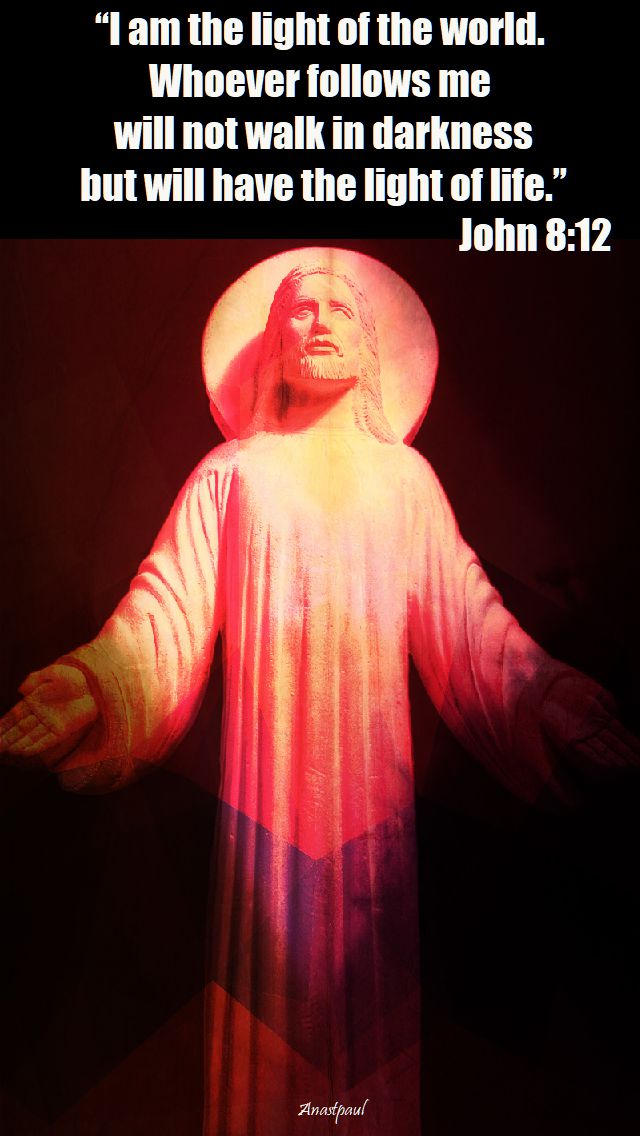
“I am the light of the world. Whoever follows me will not walk in darkness but will have the light of life.”……John 8:12
Quote of the Day – 6 August – The Feast of the Transfiguration of the Lord
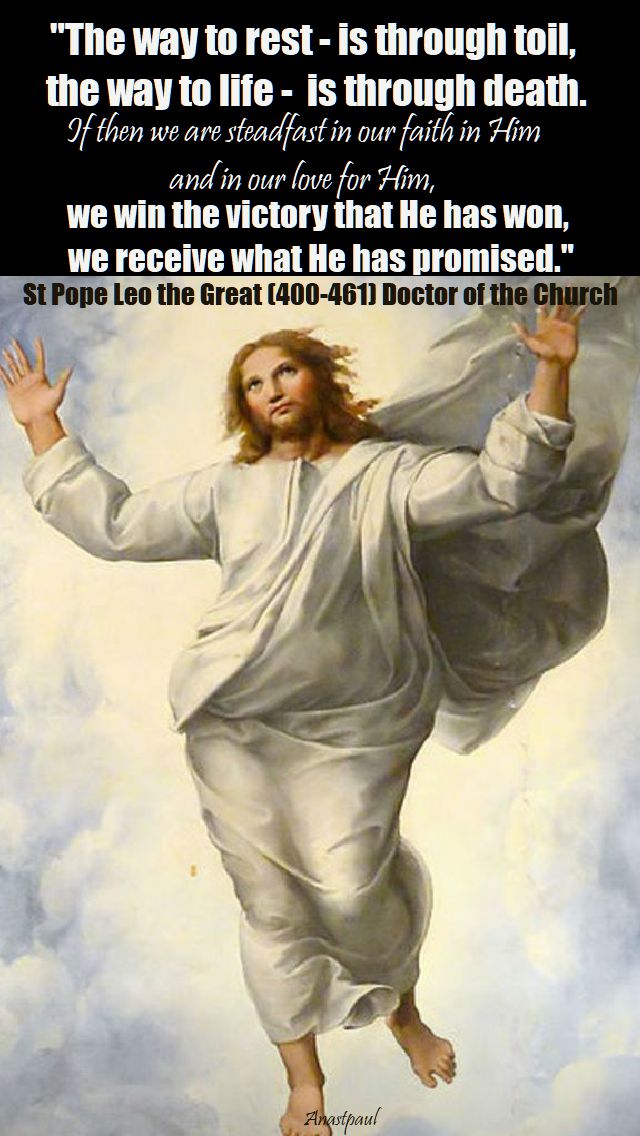
“No one should fear to suffer for the sake of justice; no one should lose confidence in the reward that has been promised. The way to rest is through toil, the way to life is through death. Christ has taken on Himself the whole weakness of our lowly human nature. If then we are steadfast in our faith in Him and in our love for Him, we win the victory that He has won, we receive what He has promised.”
St Pope Leo the Great (400-461) Doctor of the Church
‘Master, it is good that we are here; . . . ‘” Luke 9:28-33
REFLECTION – “Jesus goes before us to show us the way, both up the mountain and into heaven and — I speak boldly — it is for us now to follow him with all speed, . . .Let us run with confidence and joy to enter into the cloud like Moses and Elijah, or like James and John. Let us be caught up like Peter to behold the divine vision and to be transfigured by that glorious transfiguration. Let us retire from the world, stand aloof from the earth, rise above the body, detach ourselves from creatures and turn to the Creator, to whom Peter in ecstasy exclaimed: ‘Lord, it is good for us to be here.'”…St Anastasius (died 628)
PRAYER – Father, at the Transfiguration in glory of your Only-begotten Son, You confirmed the mysteries of faith by the witness to Jesus of the prophets Moses and Elijah. You foreshadowed there what we shall be when You bring our sonship to its perfection. Grant that by listening to the voice of Jesus, we may become heirs with Him, who lives and reigns with You and the Holy Spirit, God, forever and ever, amen.
6 August – The Feast of the Transfiguration of the Lord
This feast became widespread in the West in the 11th century and was introduced into the Roman calendar in 1457 to commemorate the victory over Islam in Belgrade. Before that, the Transfiguration of the Lord was celebrated in the Syrian, Byzantine and Coptic rites. The Transfiguration foretells the glory of the Lord as God and His Ascension into heaven. It anticipates the glory of heaven, where we shall see God face to face. Through grace, we already share in the divine promise of eternal life.
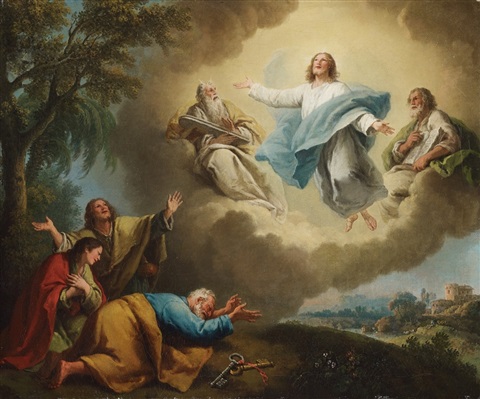
Zuccarelli
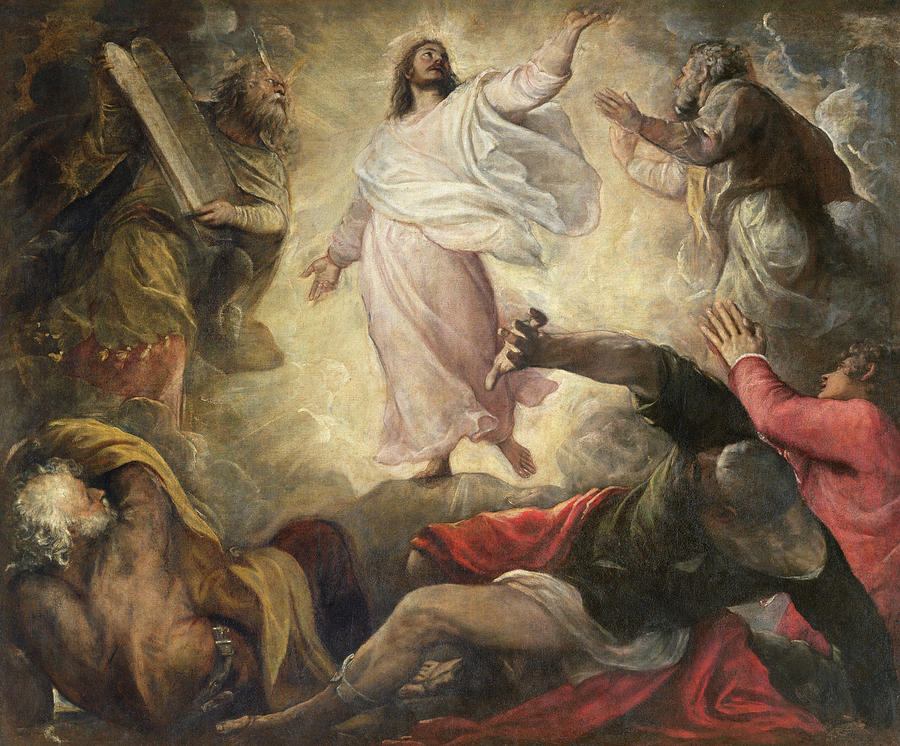
Titian
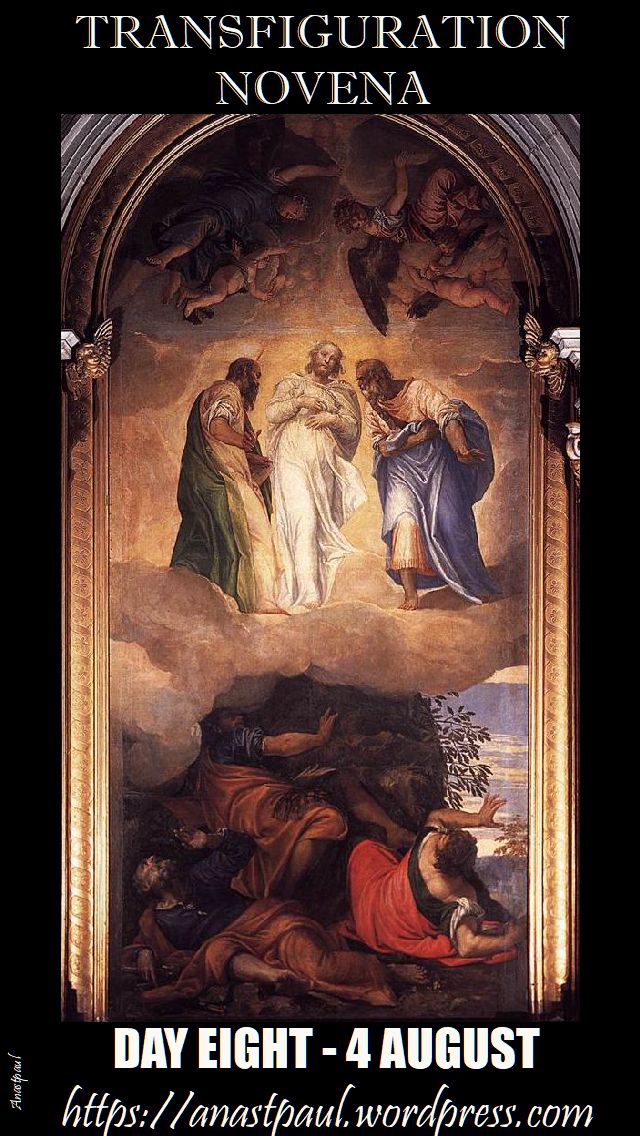
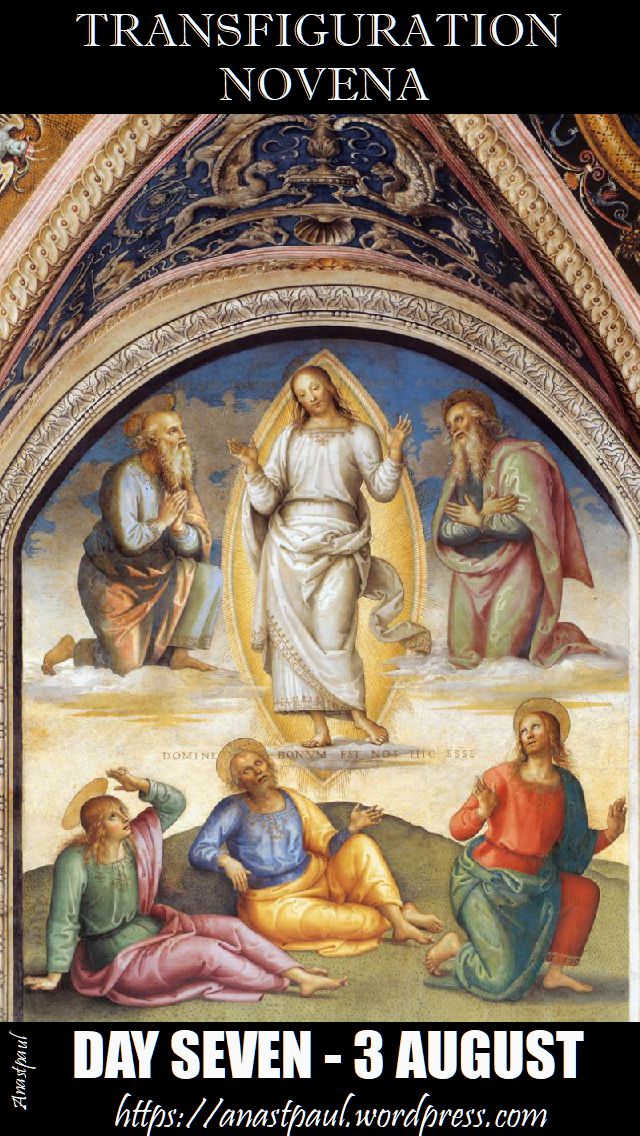
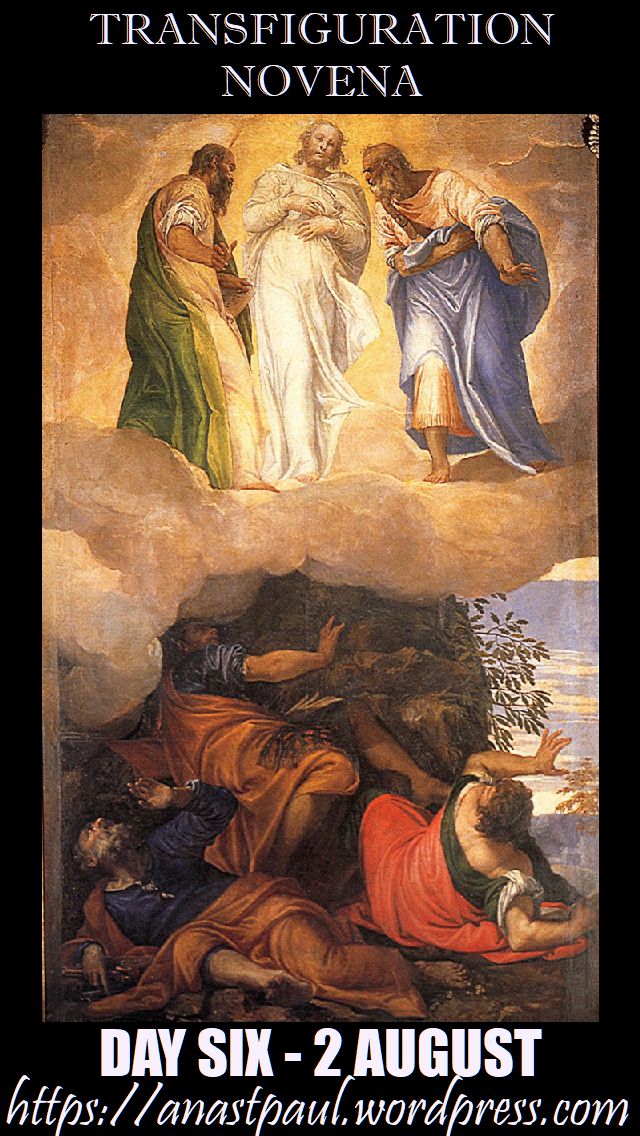
Our divine Redeemer, being in Galilee about a year before His sacred Passion, took with him St Peter and the two sons of Zebedee, Sts James and John and led them to a high mountain. Tradition assures us that this was Mount Tabor, which is exceedingly high and beautiful and was anciently covered with green trees and shrubs and was very fruitful. It rises something like a sugar-loaf, in a vast plain in the middle of Galilee. This was the place in which the Man-God appeared in His glory.
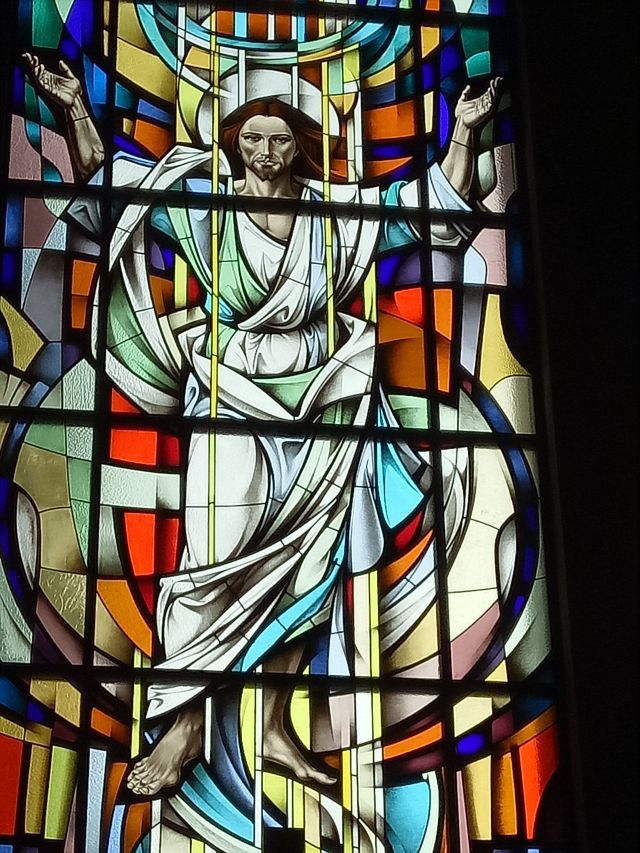
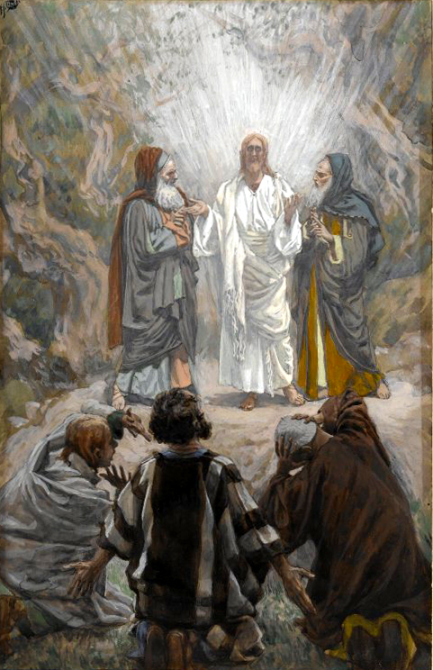
Whilst Jesus prayed, He suffered that glory which was always due to His sacred humility and of which, for our sake, He deprived it, to diffuse a ray over His whole body. His face was altered and shone as the sun and His garments became white as snow. Moses and Elias were seen by the three apostles in His company on this occasion and were heard discoursing with Him of the death which He was to suffer in Jerusalem.
The three apostles were wonderfully delighted with this glorious vision and St Peter cried out to Christ, “Lord, it is good for us to be here. Let us make three tents: one for thee, one for Moses, and one for Elias” Whilst St. Peter was speaking, there came, on a sudden, a bright shining cloud from heaven, an emblem of the presence of God’s majesty and from out of this cloud was heard a voice which said, “This is my beloved Son, in whom I am well pleased; hear ye him” The apostles that were present, upon hearing this voice, were seized with a sudden fear and fell upon the ground; but Jesus, going to them, touched them and bade them to rise. They immediately did so and saw no one but Jesus standing in His ordinary state.
This vision happened in the night. As they went down the mountain early the next morning, Jesus bade them not to tell any one what they had seen till He should be risen from the dead.
Excerpted from Butler’s Lives of the Saints, Benziger Bros. ed. [1894]
“In the Transfiguration Christ enjoyed for a short while that glorified state which was to be permanently His after His Resurrection on Easter Sunday. The splendour of His inward Divinity and of the Beatific Vision of His soul overflowed in His body and permeated His garments so that Christ stood before Peter, James and John in a snow-white brightness. The purpose of the Transfiguration was to encourage and strengthen the Apostles who were depressed by their Master’s prediction of His own Passion and Death. The Apostles were made to understand that His redeeming work has two phases: The Cross, and glory—that we shall be glorified with Him only if we first suffer with Him.”
Transfiguration of Our Lord (Feast)
—
Bl Gezelin of Schlebusch
St Gislain of Luxemburg
St Glisente of Brescia
Bl Goderanno
Bl Guillermo Sanz
St Hardulf of Breedon
St Pope Hormisdas
St James the Syrian
St Justus of Alcala
Bl Maria Francesca Rubatto
Bl Octavian of Savona
St Pastor of Alcala
St Stephen of Cardeña
BlTadeusz Dulny
Bl William of Altavilla
—
Martyrs of Cardeña: Two hundred Benedictine monks at the Saint Peter of Cardegna monastery, Burgos, Spain who were martyred in the 8th century by invading Saracens. They were buried by local Christians in a nearby churchyard in Burgos, Spain and Beatified in 1603 by Pope Clement VIII (cultus confirmed).
Martyred in the Spanish Civil War: 10 Beati
Alejandro Casare Menéndez
Andrés Soto Carrera
Antoni Serra Hortal
Bl Carlos López Vidal
Francesc Vives Antich
José González Ramos Campos
José María Recalde Magúregui
Juan Silverio Pérez Ruano
Pau Bertrán Mercadé
Saturnino Ortega Montealegre
The Transfiguration of the Lord is one shining moment in the life of the apostles that prepares them for the trials ahead. Peter, James and John experience the glory in the mountain of Transfiguration.
This is a foretaste of the glory that will be theirs in the Father’s kingdom
and it will help them survive with courage the “terrible” days when Jesus undergoes His passion and death
and when they themselves are persecuted in His name.
Let us Pray:
O Christ,
upon the mountaintop
You let the light of Your face
shine over Moses and Elijah.
Peter, James and John.
Shine Your Face upon Your Church,
that we may persevered with courage
and zeal to live for the glory of Your Kingdom.
We ask You too to bless Your people
who call on Your name,
as they strive to reach You
in Your kingdom of light and life. Amen
Seventh Day: Honour and Worship as we await Your second coming
Without the Risen Christ, Transfiguration has no meaning. It would appear to be just futile show without a happy ending. But the Resurrection confirms the glory that was shown during the transfiguration and which rightly belongs to Jesus. The glory will be manifested eventually in His second coming for the last judgment.
Let us Pray:
O Christ,
You gave light to the world
when the glory of the Creator shone over You.
You predicted Your coming Glory
in the Resurrection
and the Holy Eucharist,
the eternal promise You made to us all,
to remain with us until the end of time.
We pray for all men and women of good will
that they walk in Your light,
as we worship You in the Holy Mass
and await Your second coming. Amen
The value of the vision and the accompanying glory is its gift of equipping us for service and endurance.
No one can stay on the mountaintop of Tabor forever, for there are responsibilities in the valley.
Christ fulfilled His life’s work not in the glory but in the valley and it was there He was truly and completely the Messiah.
Let us Pray:
O Christ our Lord,
You took Peter, James and John
and led them up a high mountain by themselves
and there you equipped them, by Your glory,
with understanding and courage for the journey ahead.
We pray for ourselves,
that we may come to be transfigured and prepared,
for service to You, Your Holy Church and our neighbour
and be equipped with endurance to complete our mission
and to look forward in hope of being transfigured at the last day. Amen
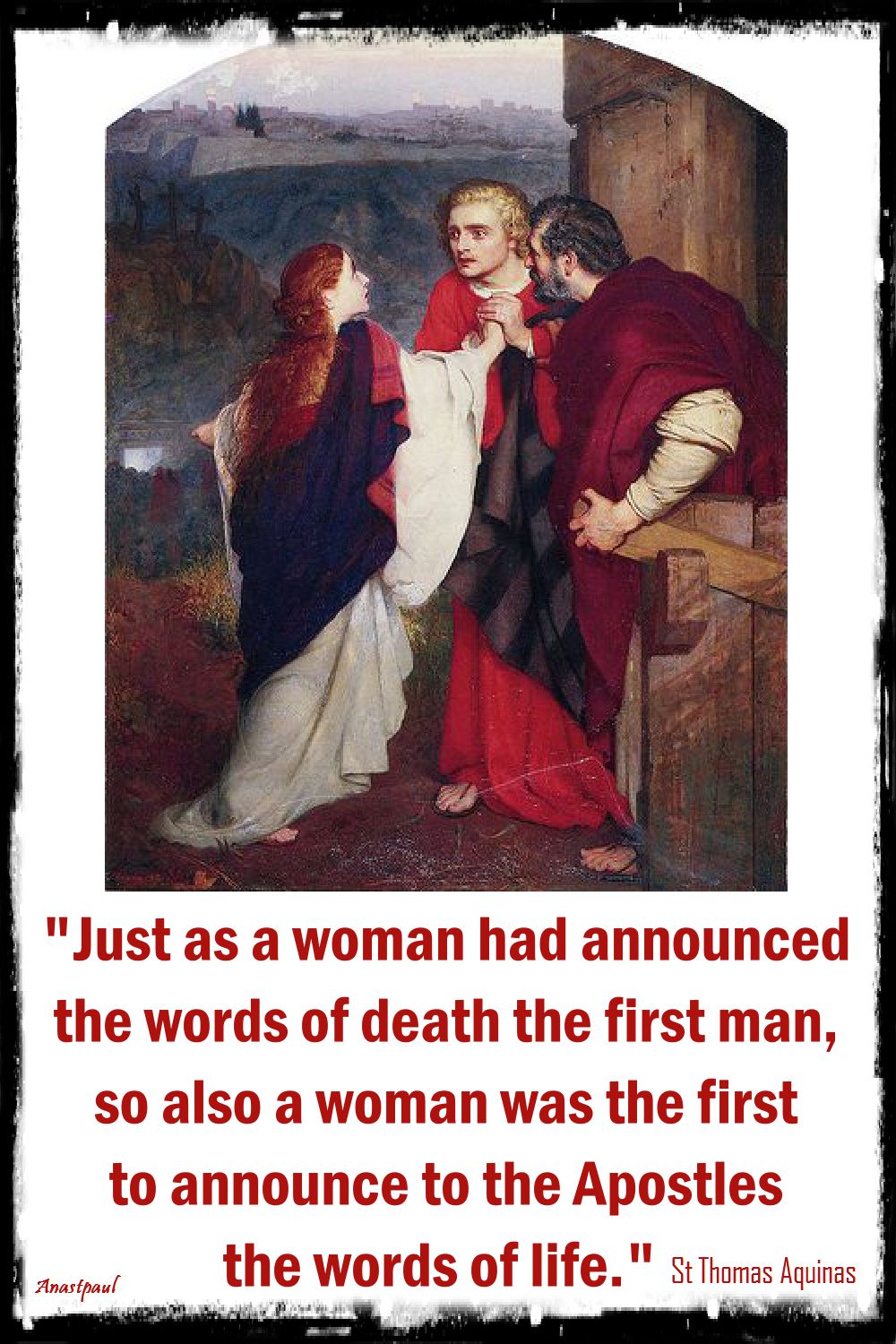
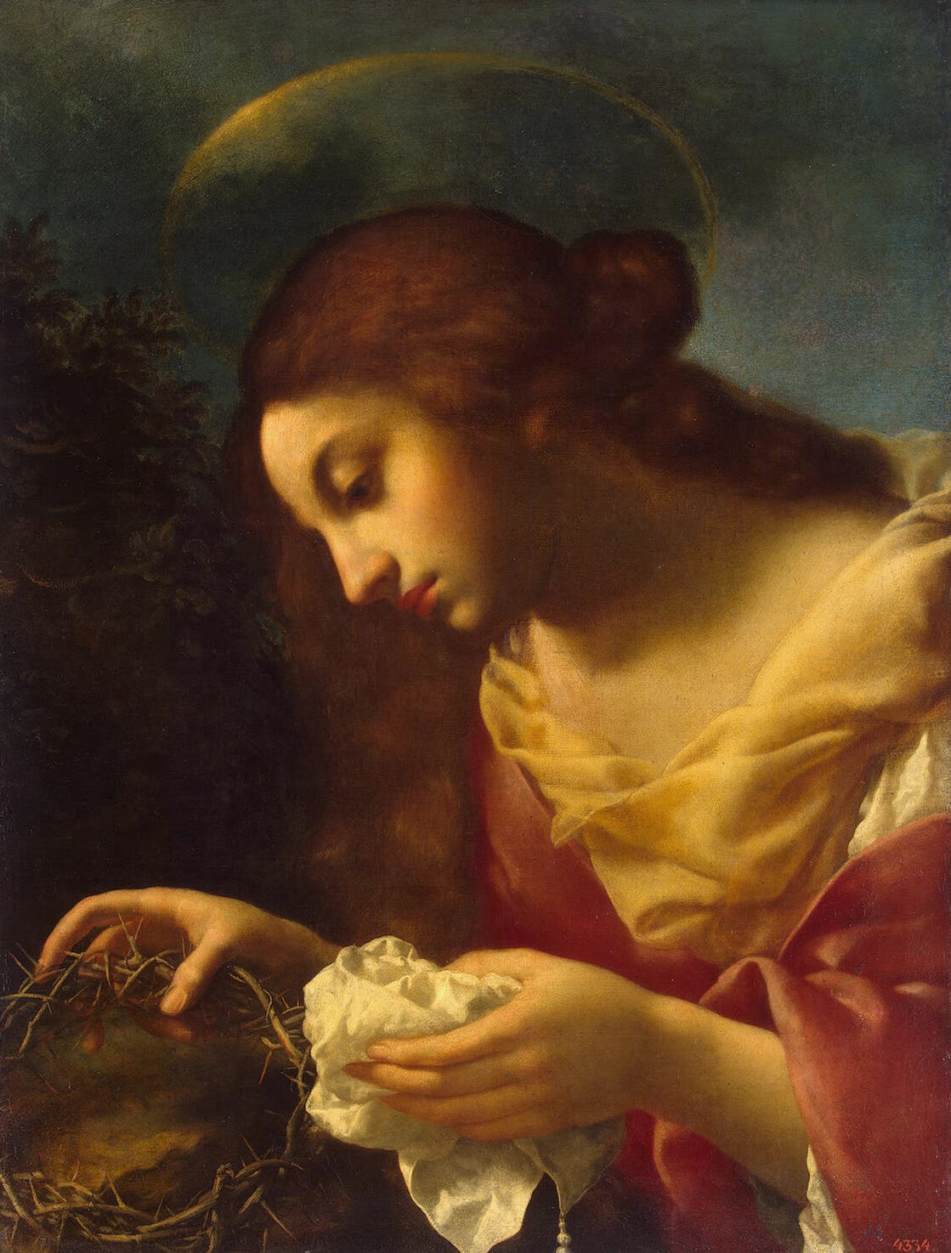
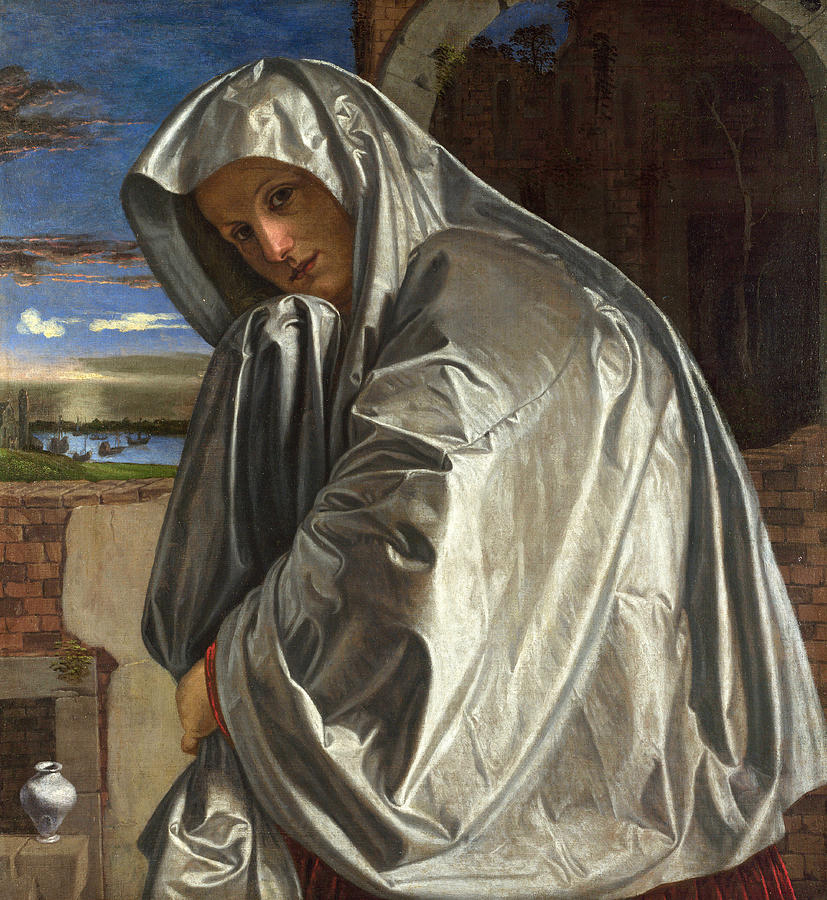
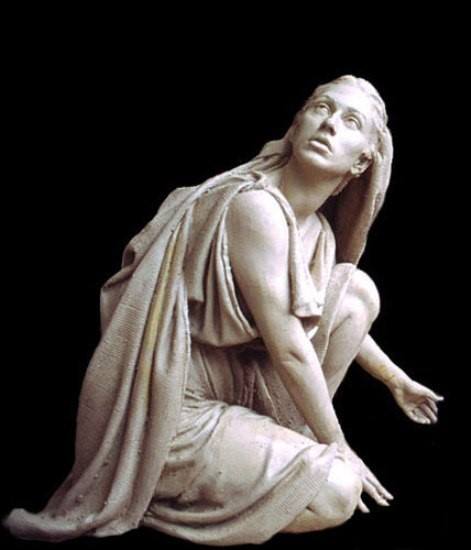
Saint of the Day – 22 July – The Feast of St Mary of Magdala – “Apostle to the Apostles” (born probably in Magdala – died at an unknown date possibly in Saint-Maximin-la-Sainte-Baume, Provence-Alpes-Côte d’Azur, France, or Ephesus, Asia Minor). Patronages – against sexual temptation, apothecaries, druggists, pharmacists, contemplative life, contemplatives, converts, glove makers, hairdressers, penitent sinners, penitent women, people ridiculed for their piety, perfumeries, reformed prostitutes, tanners, women, Diocese of Salt Lake City, Utah, 8 cities. During the Middle Ages, Mary Magdalene was regarded in Western Christianity as a repentant prostitute or promiscuous woman, claims not found in any of the four canonical gospels.
Mary Magdalene was one of Christ’s disciples. She has been identified with several Marys in the Gospel – Mary, the sister of Martha and Lazarus; Mary, the sinner who washed Jesus’ feet with her tears; Mary, a woman who cared for Jesus and his apostles on their journey. Today scholars believe that Mary Magdalene was not the sinful woman in Scripture although she has been confused with this unnamed woman for centuries. Except for the mother of Jesus, few women are more honoured in the Bible than Mary Magdalene. Yet she could well be the patron of the slandered, since there has been a persistent legend in the Church that she is the unnamed sinful woman who anointed the feet of Jesus in Luke 7:36-50.
Most Scripture scholars today point out that there is no scriptural basis for confusing the two women. Mary Magdalene, that is, “of Magdala,” was the one from whom Christ cast out “seven demons” (Luke 8:2)—an indication at the worst, of extreme demonic possession or possibly, severe illness.
Writing in the New Catholic Commentary, Father Wilfrid J Harrington, OP, says that “seven demons” “does not mean that Mary had lived an immoral life—a conclusion reached only by means of a mistaken identification with the anonymous woman of Luke 7:36.” In the Jerome Biblical Commentary, Father Edward Mally, SJ, agrees that she “is not…the same as the sinner of Luke 7:37, despite the later Western romantic tradition about her.”
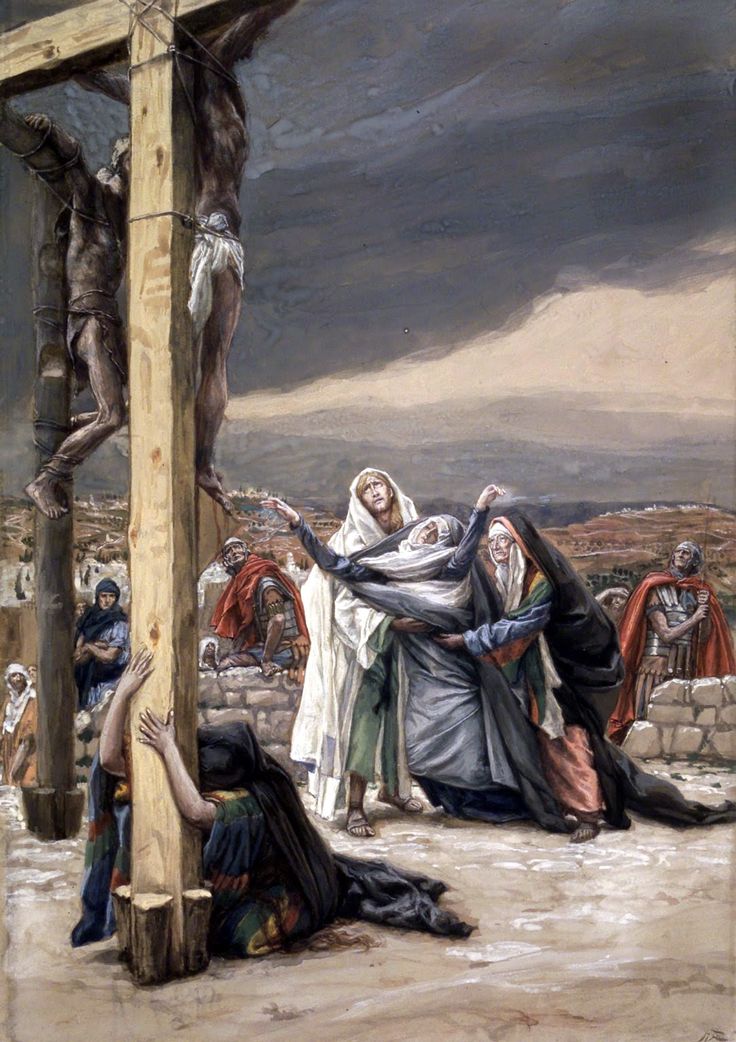
Mary Magdalene was one of the many “who were assisting them [Jesus and the Twelve] out of their means.” She was not the sister of Martha and Lazarus! She was one of those who stood by the Cross of Jesus with his mother. And, of all the “official” witnesses who might have been chosen for the first awareness of the Resurrection, she was the one to whom that privilege was given.
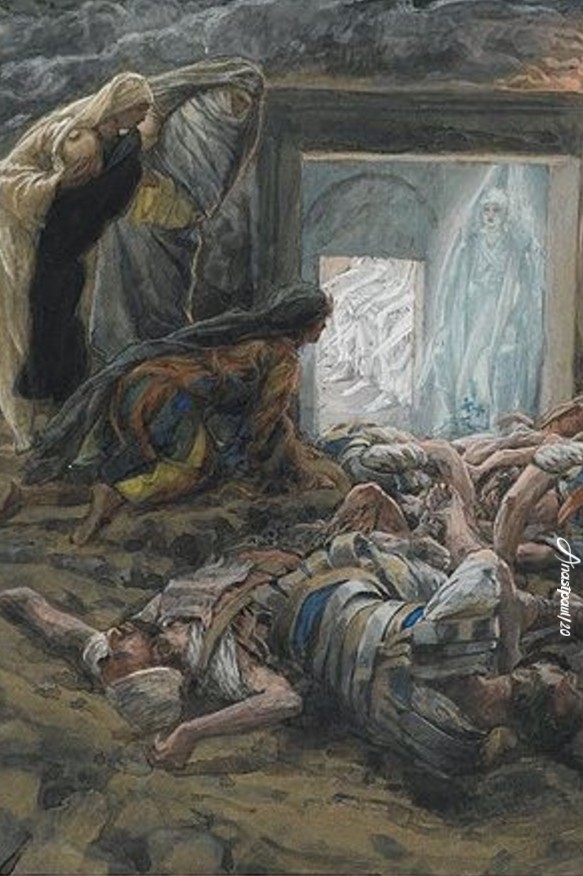
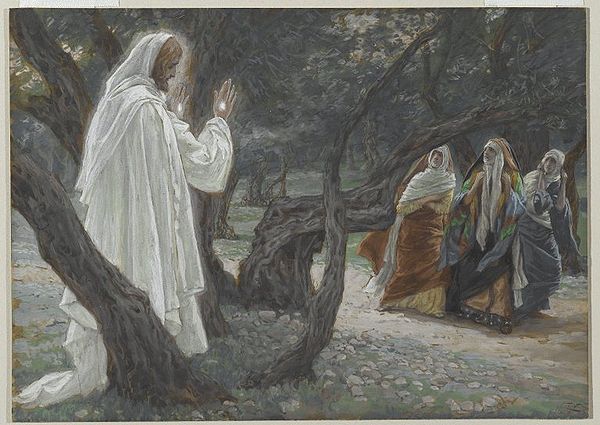
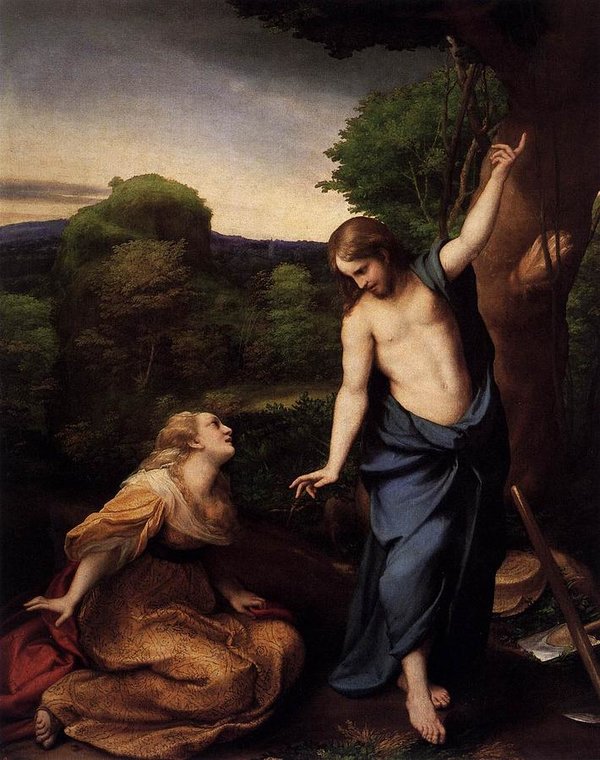
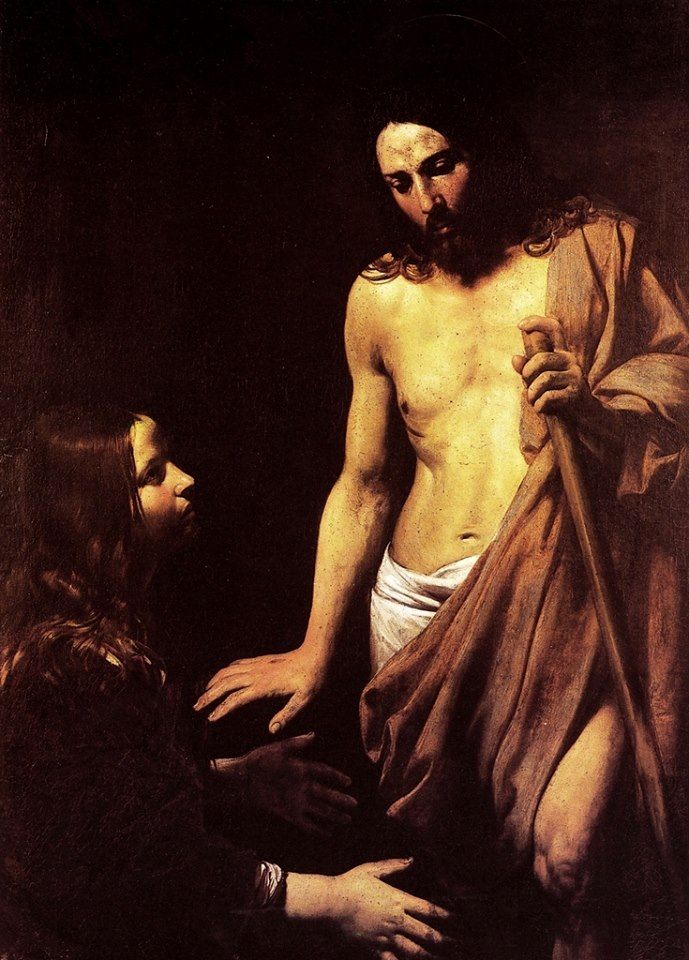
Matthew, Mark, and John record that Mary of Magdala was present at the Crucifixion of Jesus and that she was among the women who visited the Tomb on Easter morning. Luke mentions her presence only at the Tomb on Easter. According to John, Mary was specially privileged to see and speak to the risen Lord on Easter morning. She thought He was the gardener until he said her name.
So Mary Magdalene was near Jesus in His darkest hour and again in His most glorious hour. Moreover, she was an outstanding disciple of Jesus. Because Mary Magdalene was the one who brought the news of Jesus’ Resurrection to the apostles, she is called the Apostle to the Apostles.
Mother of God of Koloch: The Koloch Icon of the Mother of God manifested itself in the year 1413 during the reign of Basil I, 15 miles from the city of Mozhaisk, in the vicinity of Koloch in the Smolensk governia. A peasant of this village by the name of Luke found the holy icon and took it to his home. One of his household was paralyzed. The sick one put his forehead to the icon with faith and received complete healing.
This became known through the surrounding area and many of the suffering began to flock to the wonderworking icon and they received help from the Mother of God. Luke afterwards took the icon to Mozhaisk and from there to Moscow. At the capital, Metropolitan Photius, together with a gathering of clergy and a multitude of the people, visited the holy icon. As the icon was carried through Moscow many of the sick were healed of their infirmities. Later they returned the icon to Mozhaisk.
At the place where the icon appeared, a church was built in honour of the Mother of God. Here the holy icon was housed. With the offerings of the peasant Luke and others, Prince Andrew Dimitrievich built a monastery on this site called the Kolochsk or Mozhaisk.
—
St Anastasius of Schemarius
St Andrea of Antioch
St Andreas Wang Tianqing
St Anna Wang
Bl Augustine Fangi
St Baudry of Montfaucon
Bl Benno of Osnabruck
St Claudius Marius Victorinus of Saussaye
St Cyril of Antioch
St Dabius
Bl Jacques Lombardie
St John Lloyd
St Joseph of Palestine
St Lewine
St Lucia Wang Wangzhi
Bl Manuela de Jesus Arias Espinosa
St Maria Wang Lishi
St Meneleus of Ménat
St Movean of Inis-Coosery
St Pancharius of Besancon
Bl Paolo de Lara
St Philip Evans
St Plato of Ancyra
St Syntyche of Philippi
St Theophilus of Cyprus
St Wandrille of Fontenelle
—
Martyrs of Marula/Massylis: – 3 saints: Three Christians martyred together. We know nothing else about them but the names – Ajabosus, Andrew and Elian. They were martyred in Massylis (Marula), Numidia (in modern Algeria).
Martyrs of Massilitani: A group of Christians martyred together in northern Africa. Saint Augustine of Hippo wrote about them.
Martyred in the Spanish Civil War:
Jaime María Carretero Rojas
Bl Joaquin Rodríguez Bueno
José María Mateos Carballido
Juan Durán Cintas
Ramón María Pérez Sousa
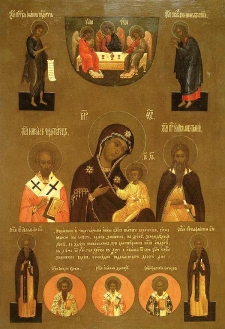
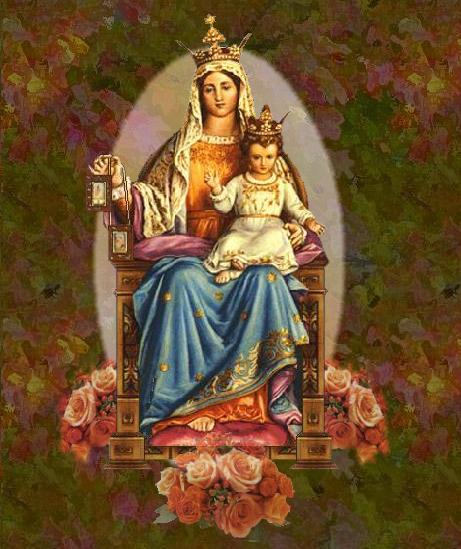
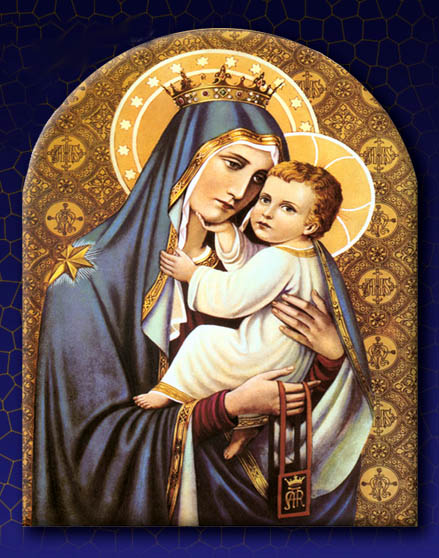
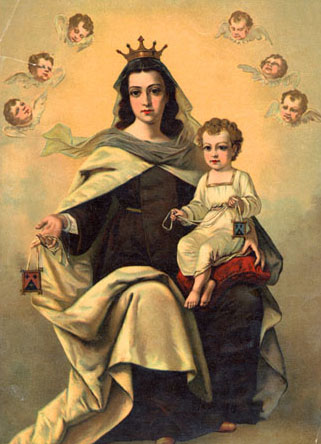
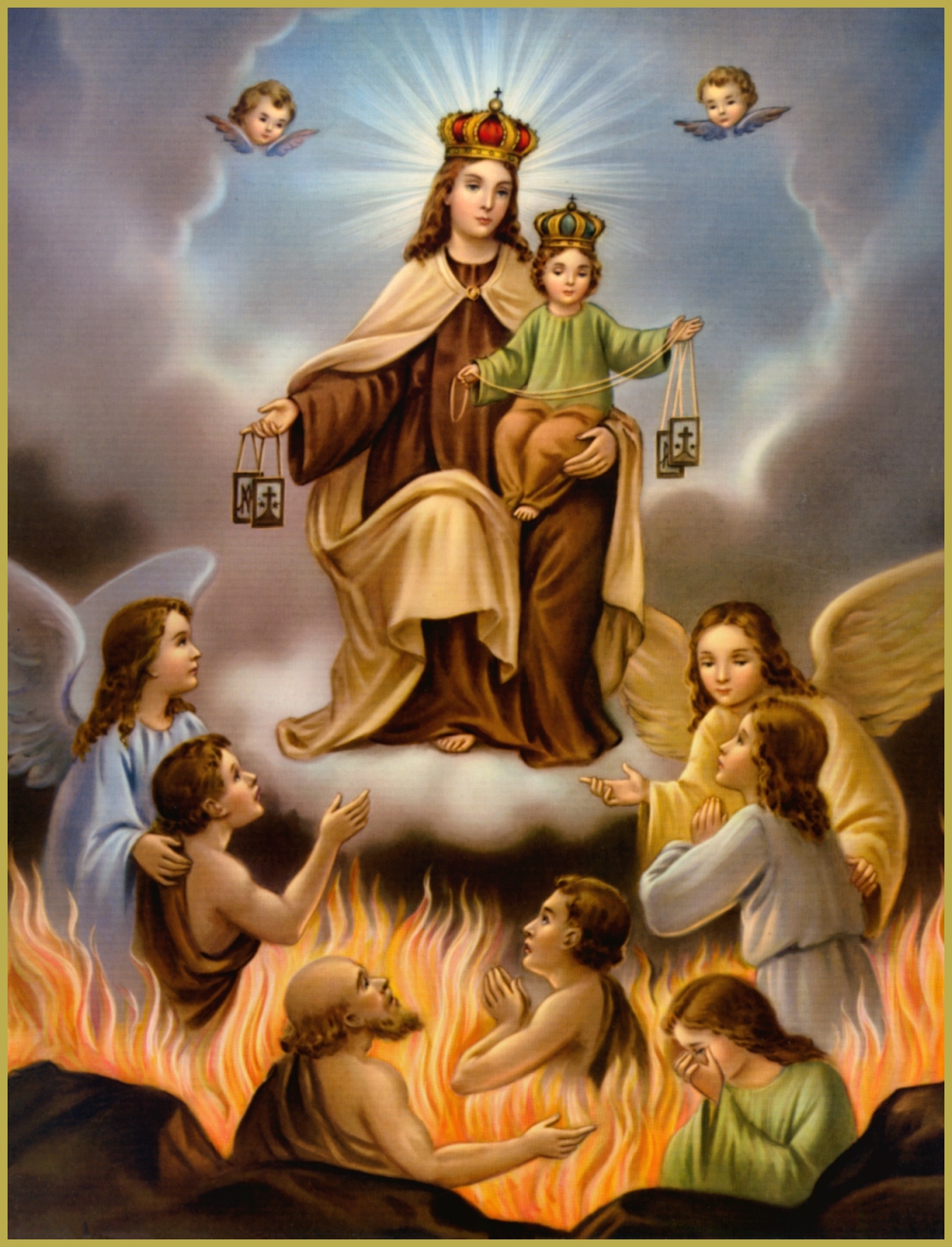
Since the 15th century, popular devotion to Our Lady of Mount Carmel has centered on the Scapular of Our Lady of Mount Carmel, also known as the Brown Scapular, a sacramental associated with promises of Mary’s special aid for the salvation of the devoted wearer. Traditionally, Mary is said to have given the Scapular to an early Carmelite named Saint Simon Stock. The liturgical feast of Our Lady of Mount Carmel is celebrated on 16 July.
The solemn liturgical feast of Our Lady of Mount Carmel was probably first celebrated in England in the later part of the 14th century. Its object was thanksgiving to Mary, the patroness of the Carmelite Order, for the benefits she had accorded to it through its difficult early years. The institution of the feast may have come in the wake of the vindication of their title “Brothers of the Blessed Virgin Mary” at Cambridge, England in 1374. The date chosen was 17 July; on the European mainland this date conflicted with the feast of St. Alexis, requiring a shift to 16 July, which remains the Feast of Our Lady of Mount Carmel throughout the Catholic Church. The Latin poem “Flos Carmeli” (meaning “Flower of Carmel”) first appears as the sequence for this Mass.
The Carmelite Order was the only religious order to be started in the Crusader States. In the 13th century, some of its people migrated west to England, setting up a chapter and being documented there about 1241-1242. A tradition first attested to in the late 14th century says that Saint Simon Stock, believed to be an early English prior general of the Carmelite Order soon after its migration to England, had a vision of the Blessed Virgin Mary in which she gave him the Brown Scapular. This formed part of the Carmelite habit after 1287. In Stock’s vision, Mary promised that those who died wearing the scapular would be saved.
The Feast of Our Lady of Mount Carmel is known to many Catholic faithful as the “scapular feast,” associated with the Brown Scapular of the Carmelite order. This is a devotional sacramental signifying the wearer’s consecration to Mary and affiliation with the Carmelite order.
Based on available historical documentation, the liturgical feast of Our Lady of Mount Carmel did not originally have a specific association with the Brown Scapular or the tradition of Stock’s vision of the Blessed Virgin Mary . This tradition grew gradually, as did the liturgical cult of St. Simon. The latter has been documented in Bordeaux, where Stock died, from the year 1435; in Ireland and England, from 1458; and in the rest of the Order, from 1564. Historians have long questioned whether Stock had the vision of Mary and the scapular. Although Simon Stock was never officially canonised, his feast day was celebrated in the church.
Also associated with Our Lady of Carmel was a papal bull saying that there was a Sabbatine privilege associated with devotion to the saint; that is, that until the late 1970s, the Catholic liturgy for that day expressed the scapular devotion. Vatican II resulted in scrutiny of the Feast of Our Lady of Mount Carmel, as well as that of Saint Simon Stock, because of the historical uncertainties about the origins. The liturgies were revised and, in the 21st century, neither, even in the Carmelite proper, makes reference to the scapular. The Carmelite convent of Aylesford, England, was restored and a relic of Saint Simon Stock was placed there in 1951. The saint’s feast is celebrated in the places dedicated to him.
Church teaching: A 1996 doctrinal statement approved by the Congregation for Divine Worship and the Discipline of the Sacraments states that
“Devotion to Our Lady of Mount Carmel is bound to the history and spiritual values of the Order of the Brothers of the Blessed Virgin Mary of Mount Carmel and is expressed through the scapular. Thus, whoever receives the scapular becomes a member of the order and pledges him/herself to live according to its spirituality in accordance with the characteristics of his/her state in life.”
According to the Church on the Brown Scapular: “The scapular is a Marian habit or garment. It is both a sign and pledge. A sign of belonging to Mary; a pledge of her motherly protection, not only in this life but after death. As a sign, it is a conventional sign signifying three elements strictly joined: first, belonging to a religious family particularly devoted to Mary, especially dear to Mary, the Carmelite Order; second, consecration to Mary, devotion to and trust in her Immaculate Heart; third, an urge to become like Mary by imitating her virtues, above all her humility, chastity, and spirit of prayer.”
Association with Purgatory: Since the Middle Ages, Our Lady of Mount Carmel has been related to Purgatory, where souls are purged of sins in the fires. In some images, she is portrayed as accompanied with angels and souls wearing Brown Scapulars, who plead for her mediation. In 1613, the Church forbade images to be made of Our Lady of Mt. Carmel descending into purgatory, due to errors being preached about certain privileges associated with the Brown Scapular (known as “the Sabbatine Privilege”).
That privilege appears in the noted Decree of the Holy Office (1613). It was inserted in its entirety (except for the words forbidding the painting of the pictures) into the list of the indulgences and privileges of the Confraternity of the Scapular of Mount Carmel. In the 21st century, the Carmelites do not promote the Sabbatine Privilege. They encourage a belief in Mary’s general aid and prayerful assistance for their souls beyond death, especially her aid to those who devoutly wear the Brown Scapular and commend devotion to Mary especially on Saturdays, which are dedicated to her.
Miracles: In Palmi, Italy, the anniversary of the earthquake of 1894 is observed annually on 16 November. The earthquake had its epicenter in the city. An associated event has been classified as the “miracle of Our Lady of Mount Carmel.” For 17 days preceding this earthquake, many of the faithful had reported strange eye movements and changes in the colouring of the face in a statue of Our Lady of Mount Carmel. The local and national press reported these occurrences.
In the evening of 16 November, the faithful improvised a procession carrying the statue of the Virgin of Carmel on their shoulders through the streets. When the procession reached the end of the city, a violent earthquake shook the whole district of Palmi, ruining most of the old houses along the way. But, only nine people died out of a population of about 15,000 inhabitants, as almost all of the population had been on the street to watch the procession and were not trapped inside the destroyed buildings. Therefore, the city commemorates the 1894 procession each year, accompanied by firecrackers, lights, and festive stalls.
The Catholic Church has officially recognised the miracle. On November 16, 1896 the statue of the Virgin was crowned, based on the decree issued September 22, 1895 by the Vatican Chapter.
Use in the peace movement: The first atomic bomb was exploded in the United States at the Trinity test site on 16 July 1945, near Alamogordo, New Mexico. The Catholic anti-war movement has built on the coincidence between this date and the Feast of Our Lady of Mount Carmel. In 1990, the Rev. Emmanuel Charles McCarthy, a priest of the Eastern Rite (Byzantine-Melkite) of the Catholic Church, initiated the “16 July Twenty-Four Hours Day of Prayer,” for Forgiveness and Protection with Our Lady of Mount Carmel, at Trinity Site in the New Mexico desert. Each year on 16 July, a prayer vigil is conducted at the Trinity site to pray for peace and the elimination of nuclear weapons.


























 AnaStpaul
You must be logged in to post a comment.