Posted in FEASTS and SOLEMNITIES, MORNING Prayers, SAINT of the DAY

Thought for the Day – 25 April

Thought for the Day – 25 April

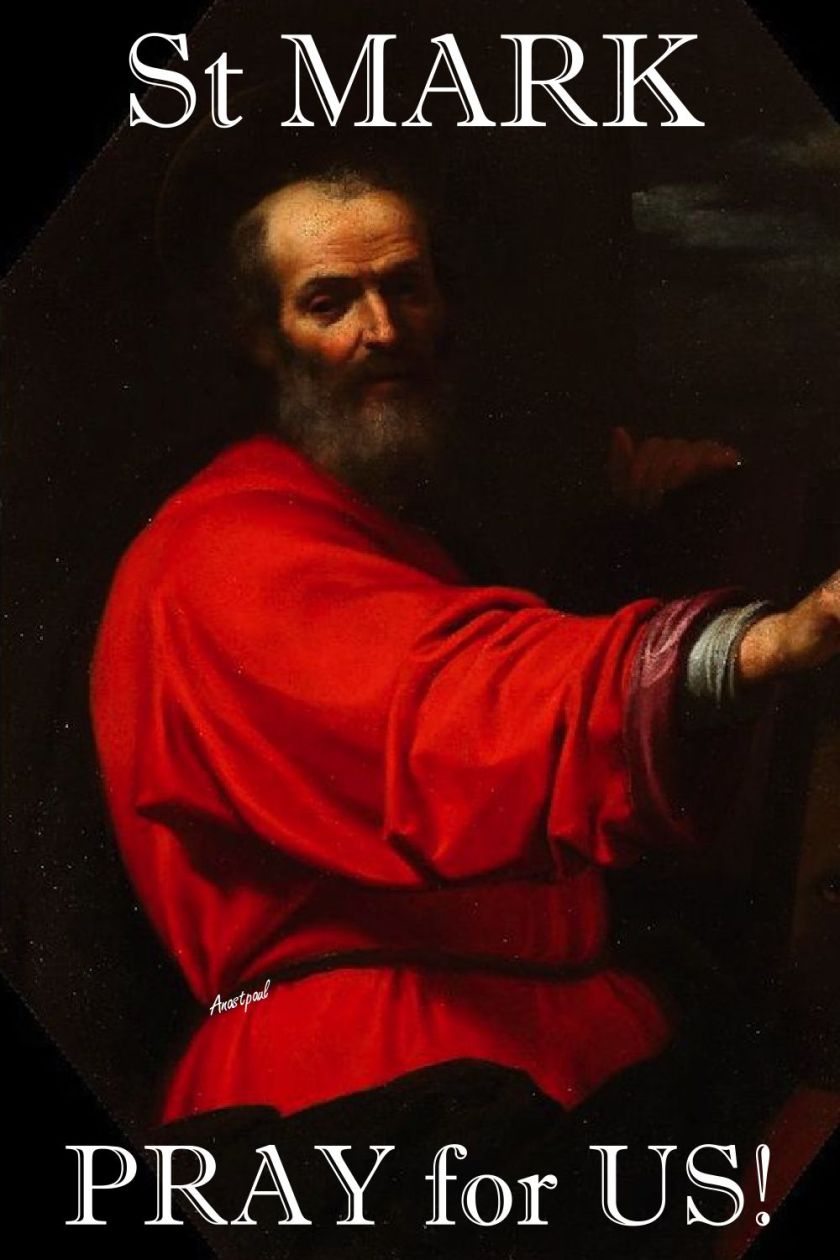
St Mark was the inadvertent cause of a quarrel between St Paul and St Barnabas.   Saints are not immune to human failings and it is good to know that saints sometimes struggle to get along in peace and harmony – they argue!   So, we should not be too discouraged by our own failings – rather, we should try to turn all things to the good.   God writes straight with crooked lines and St Mark fulfilled in his life what every Christian is called to do:  proclaim to all people the Good News that is the source of salvation – this is our job too!

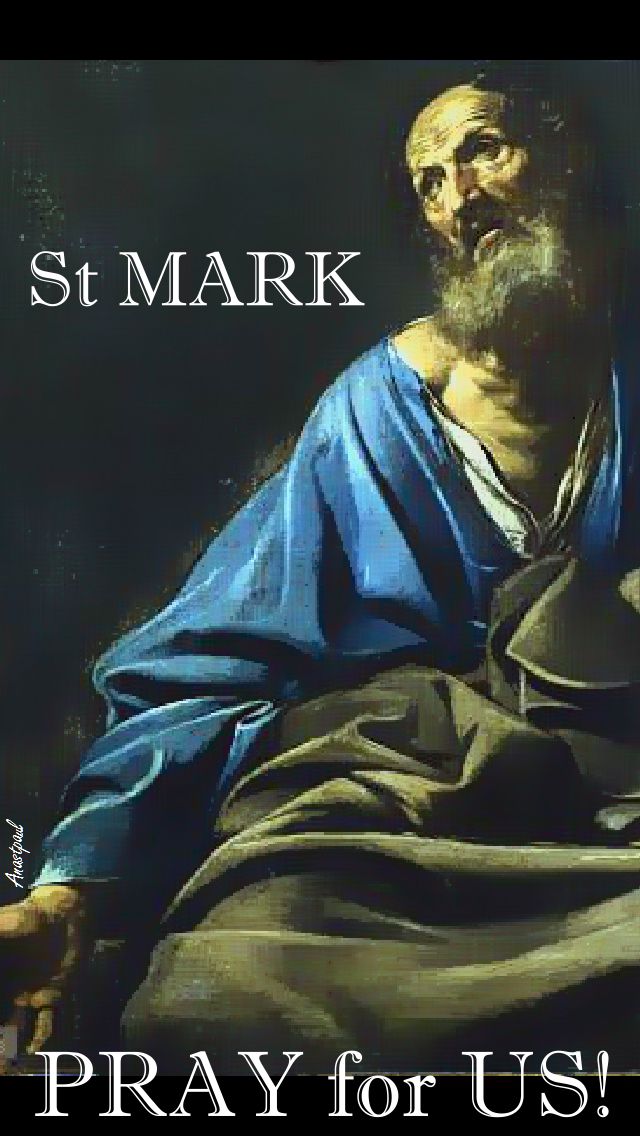
St Mark Pray for us!

ST MARK PRAY FOR US

Posted in FEASTS and SOLEMNITIES, MORNING Prayers, QUOTES of the SAINTS, SAINT of the DAY, The WORD

Quote of the Day – 25 April

Quote of the Day – 25 April

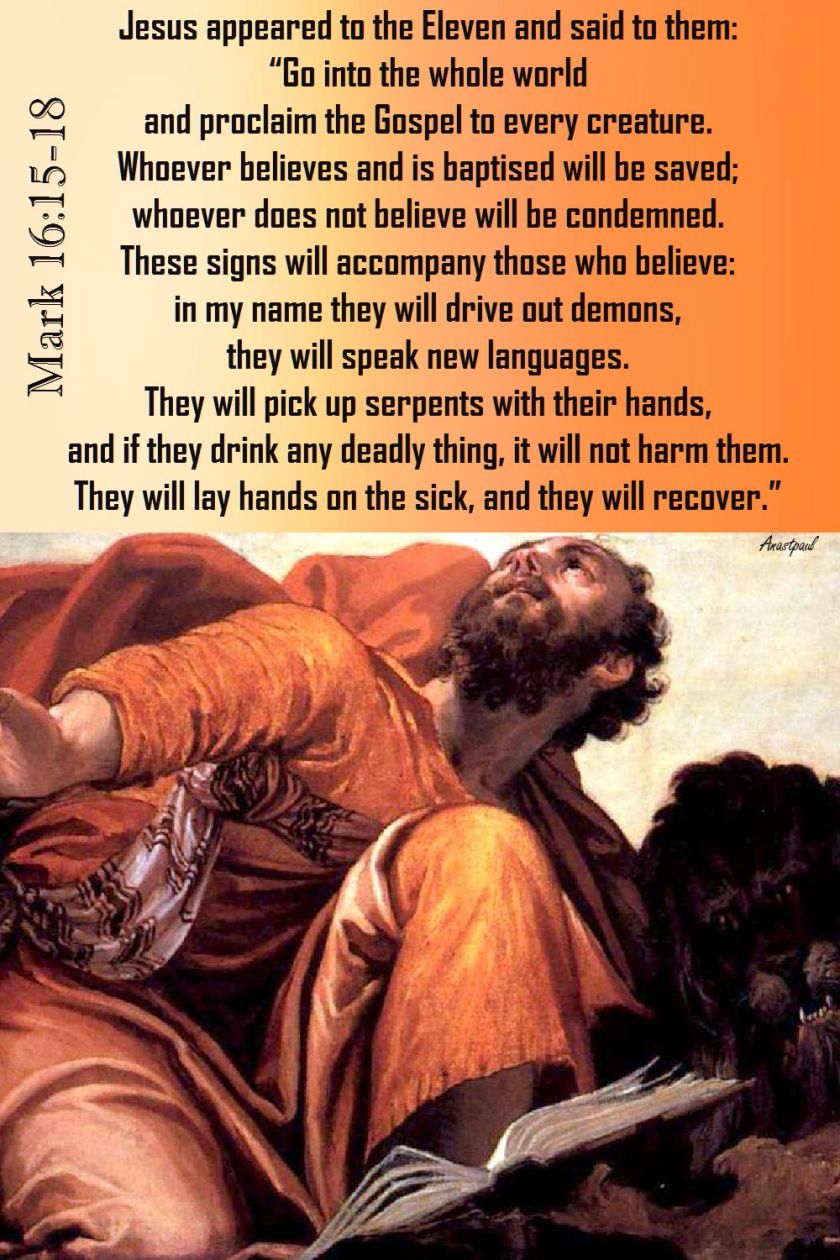
Jesus appeared to the Eleven and said to them:
“Go into the whole world
and proclaim the Gospel to every creature.
Whoever believes and is baptised will be saved;
whoever does not believe will be condemned.
These signs will accompany those who believe:
in my name they will drive out demons,
they will speak new languages.
They will pick up serpents with their hands,
and if they drink any deadly thing, it will not harm them.
They will lay hands on the sick, and they will recover.”

Mark 16:15-18

MARK 16-15-18


Posted in DOCTORS of the Church, FEASTS and SOLEMNITIES, MORNING Prayers, QUOTES of the SAINTS, SAINT of the DAY, The WORD

One Minute Reflection – 25 April

One Minute Reflection – 25 April

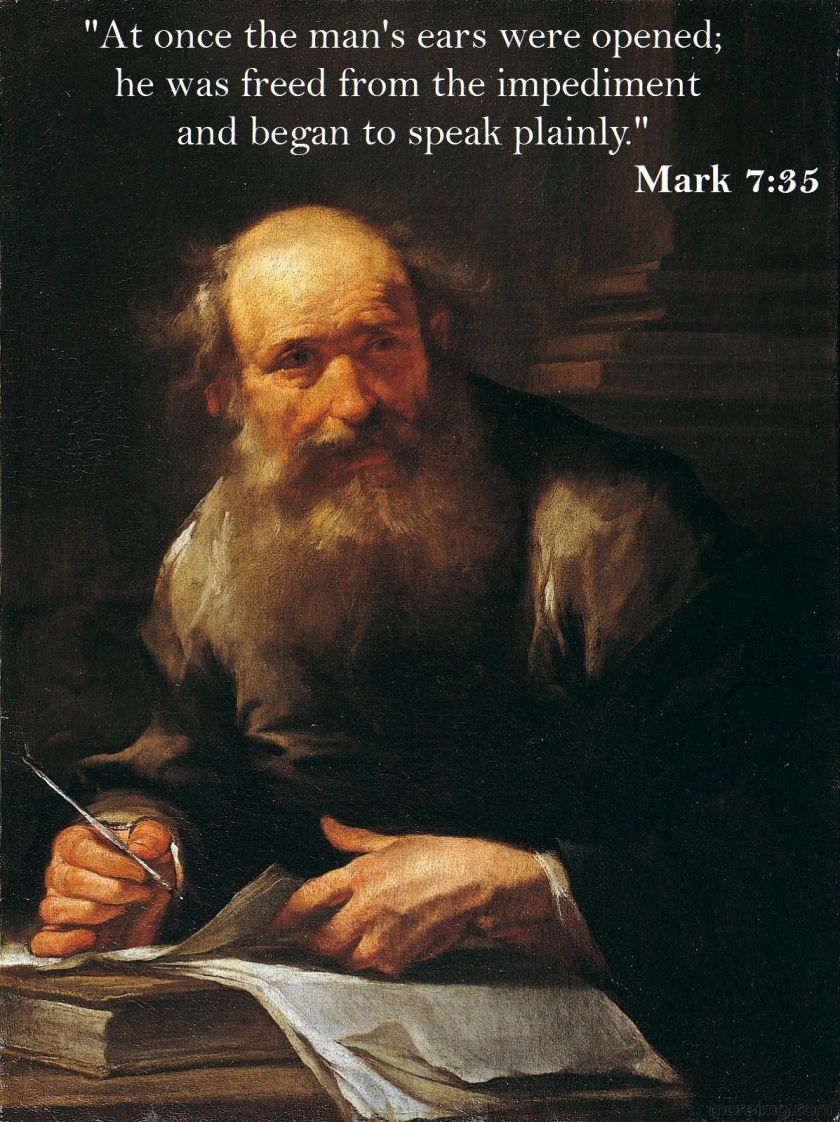
At once the man’s ears were opened; he was freed from the impediment and began to speak plainly……….Mark 7:35

MARK 7-35

REFLECTION – “The knot in his tongue was untied
and he spoke plainly. You too have the tongue
untied and can use it when you wish.
Why do you use it for evil rather than for good?
You take care to choose among foods,
what you wish to eat.
You should be just as careful to choose
what you want to say!”……….St Augustine

HIS TONGUE WAS UNTIED-ST AUGUSTINE

PRAYER – Heavenly Father, help me to realise the wonderful way of communicating with others that You have given to me. Let me always use for good and for Your glory. Almighty Father, You chose St Mark the Evangelist and ennobled him grace to preach the Gospel. May his teaching help us in our lives, that we may walk faithfully in the footsteps of Christ, Your Son. St Mark, pray for us, amen!

ST MARK PRAY FOR US 2

Posted in FEASTS and SOLEMNITIES, Of LAWYERS & CANON Lawyers, Attorneys, Solicitors, Barristers, Notaries, Para-Legals, PATRONAGE - PRISONERS, SAINT of the DAY

Saint of the Day – 25 April – St Mark the Evangelist – Solemnity

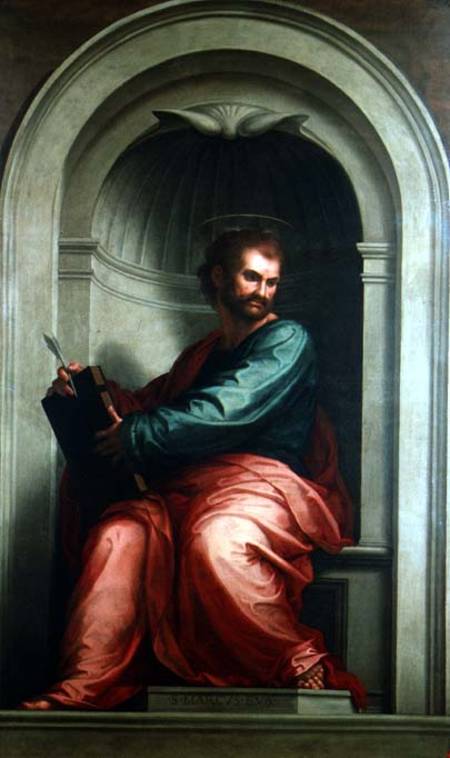
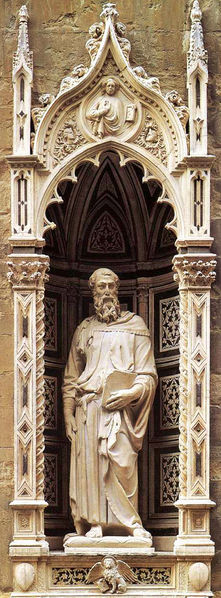
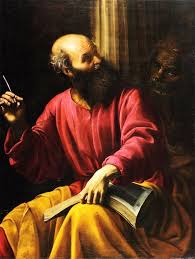
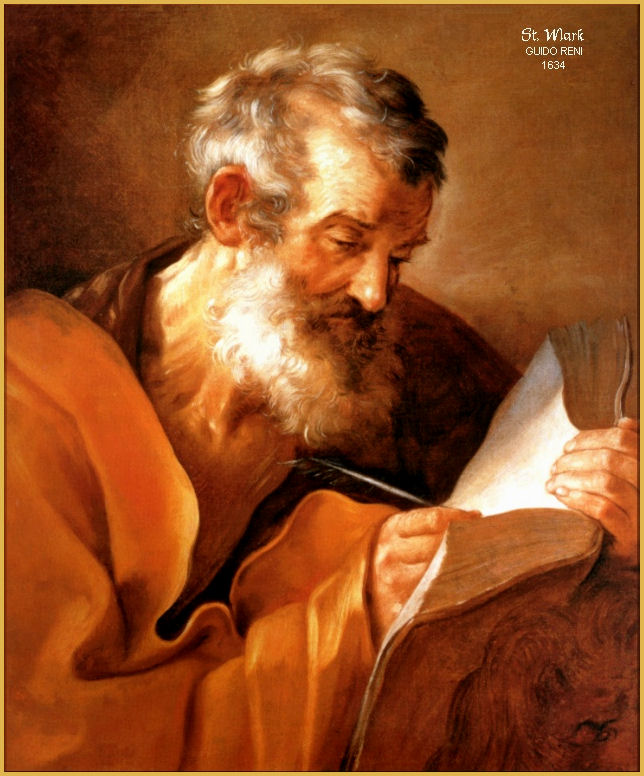
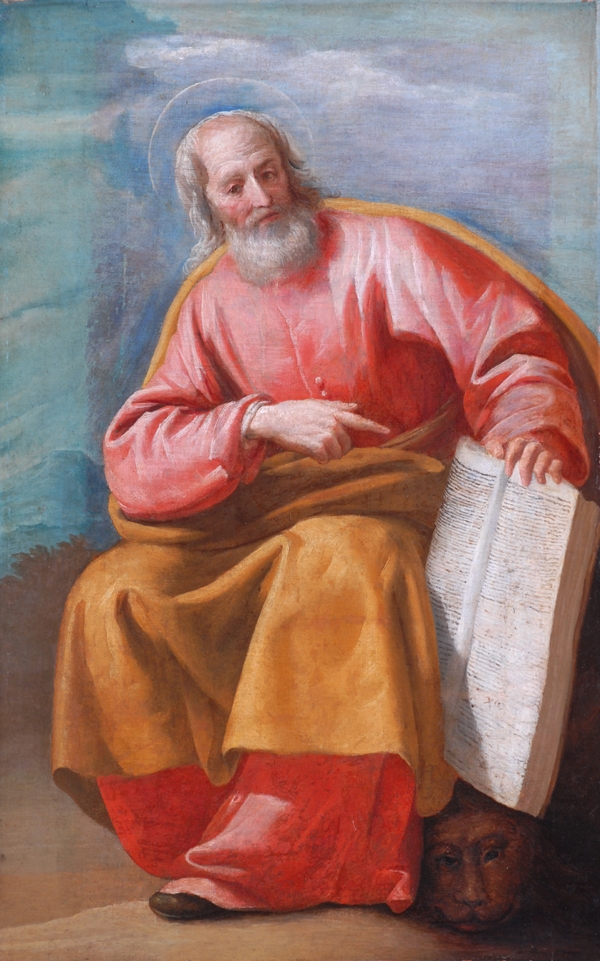
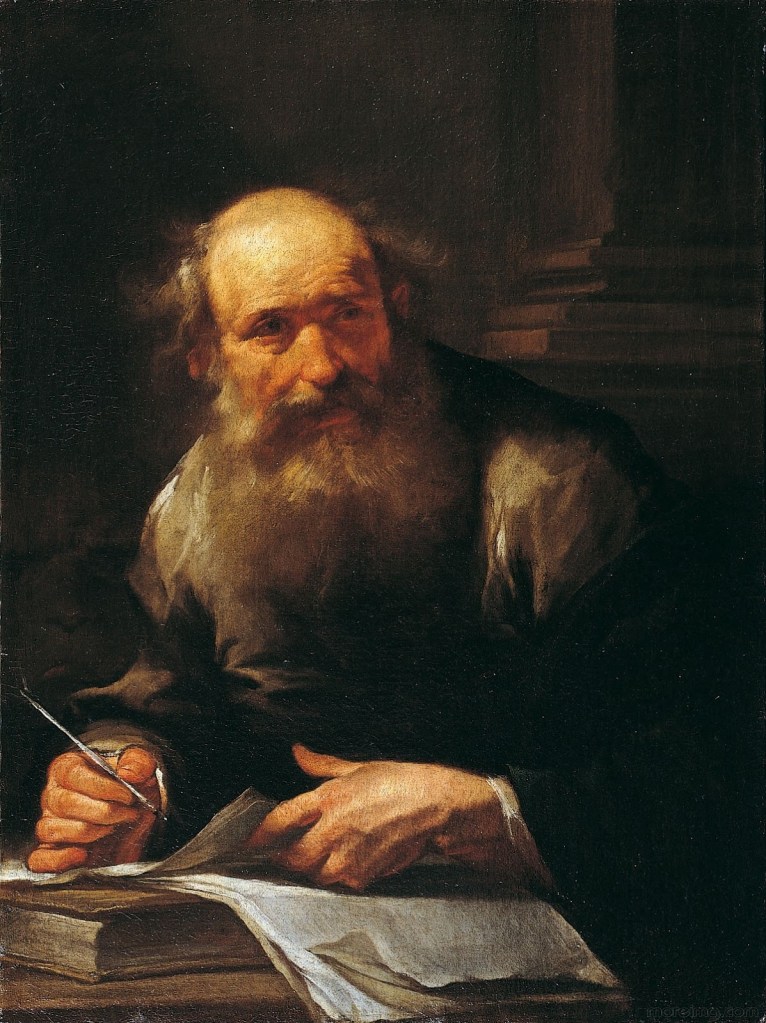
Saint of the Day – 25 April – St Mark the Evangelist (1st century -martyred 25 April 68 at Alexandria, Egypt) Evangelist, Martyr, Missionary, Preacher, Teacher, friend and assistant to St Peter, St Paul, cousin of St Barnabas – also known as John Mark. Patronages: – against unrepentance, against insect bites, Lawyers, notaries, prisoners, lions, glaziers and stained glass artists, of Egypt, Iona Islands, Arezzo-Cortona-Sansepolcro, Italy, Diocese of, Arica, Chile, Diocese of, Cortona, Italy, Diocese of Infanta, Philippines, Prelature of, Venice, Florida, Diocese of, 45 Cities – Attributes:  lion, winged lion, bishop on a throne decorated with lions, man helping Venetian sailors, man holding a book with pax tibi Marce written on it, man holding a palm and book, man with a book or scroll accompanied by a winged lion, man with a halter around his neck, man writing or holding his gospel, rescuing Christian slaves from Saracens, winged lion.   Major shrine – Venice, Italy.

St. Mark was an evangelist, or Gospel writer.    In fact, he was the pioneer in Gospel writing.    His is the shortest and the oldest of the Gospels.   Little is known of Mark except from the New Testament.    He was not one of the twelve apostles but was a member of the first Christian community. Mark had firsthand experience of the early Church and apostolic life.    He was a traveling companion and assistant of Paul and Barnabas on the first missionary journey.    Something happened to Mark on that journey, perhaps homesickness, so he returned to Jerusalem.    The incident caused a quarrel between Paul and Barnabas. Barnabas, Mark’s cousin, was sympathetic toward Mark but Paul would not hear of Mark accompanying them again.    Later Paul and Mark must have been reconciled, because when Paul wrote to Timothy during his final imprisonment, he asked for Mark’s help.

Like another Gospel writer Luke, Mark was not one of the 12 apostles.    We cannot be certain whether he knew Jesus personally.    Some scholars feel that the evangelist is speaking of himself (so he then did know Jesus) when describing the arrest of Jesus in Gethsemane:  “Now a young man followed him wearing nothing but a linen cloth about his body.    They seized him, but he left the cloth behind and ran off naked” (Mark 14:51-52).   Mark’s Gospel was a great contribution to the Church.   It included oral and written tradition concerning the words and deeds of Jesus.    Mark probably secured some of his material from St. Peter.   He shows Jesus as the suffering Son of God.    Mark knew that to accept the Risen Jesus meant to come to terms with the cross.    Jesus was glorified because he willingly allowed himself to suffer death for our salvation.    Mark writes that anyone who wishes to follow Jesus must accept the cross.

Mark wrote to proclaim the Good News to a community of both Jewish and Gentile Christians.   His Gospel is direct and simple to read.    He speaks to Christians about Jesus, who understands their difficulties and sufferings and will one day bring them to share with him eternal joy and glory.

Traditionally Mark is thought to have been founder and bishop of the church of Alexandria, Egypt, where he was martyred.

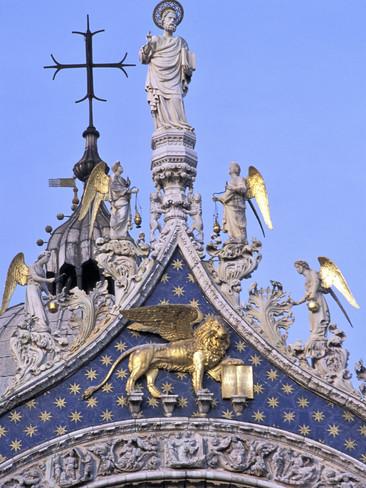
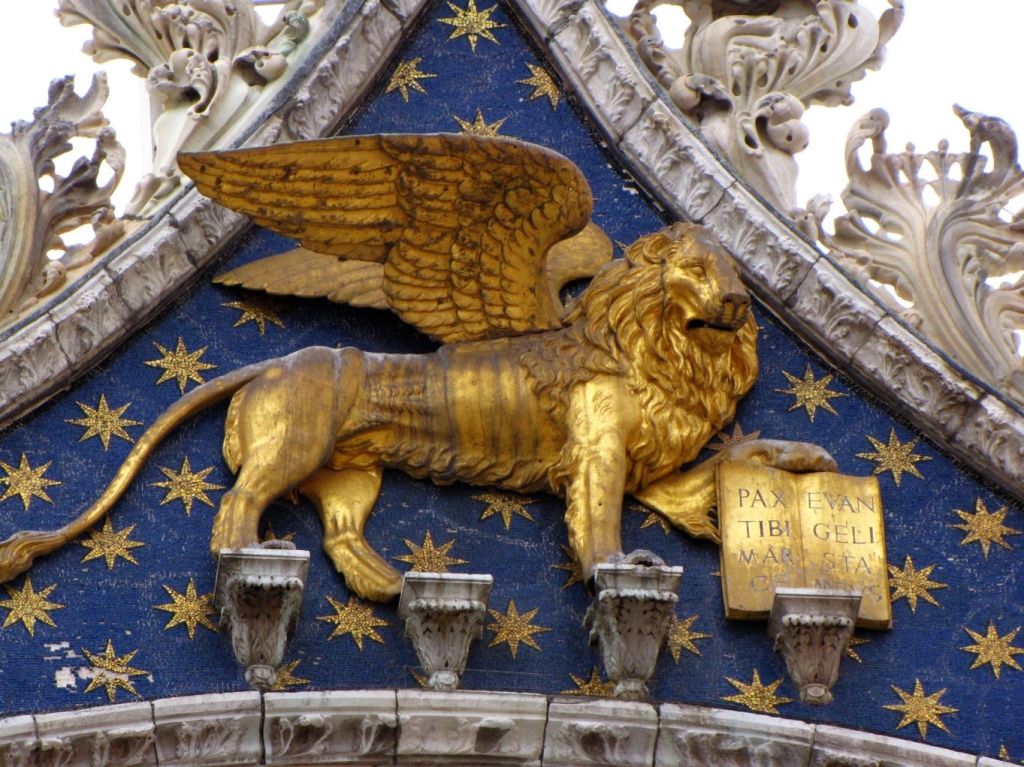
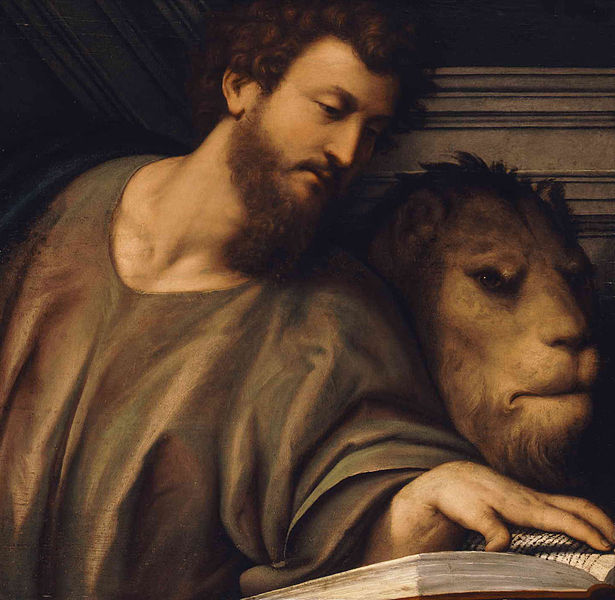
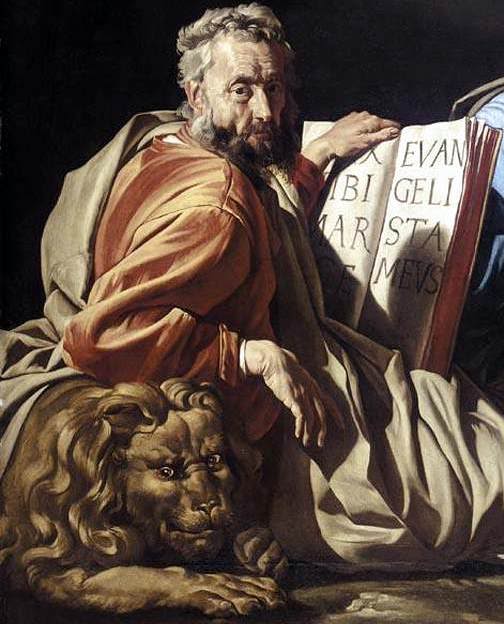
Over the years artists have given a symbol to each of the evangelists.    Mark’s symbol is a winged lion because his Gospel begins with the story of John the Baptist who, like a roaring lion, called people to repent.   The lion derives from Mark’s description of John the Baptist as a “voice of one crying out in the desert” (Mark 1:3), which artists compared to a roaring lion.    The wings come from the application of Ezekiel’s vision of four winged creatures to the evangelists.

Posted in FEASTS and SOLEMNITIES, SAINT of the DAY

Saint’s Memorials and Feasts – 25 April

St Mark the Evangelist (Feast)

St Agathopodes of Antioch
Bl Andrés Solá Molist
St Anianus of Alexandria
Bl Antonio Pérez Lários
St Callista of Syracuse
St Clarentius of Vienne
St Ermin of Lobbes
St Evodius of Syracuse
St Franca Visalta
St Giovanni Piamarta
St Heribaldus of Auxerre
St Hermogenes of Syracuse
Bl José Trinidad Rangel y Montaño
St Kebius
St Macaille
St Macedonius
St Mario Borzaga
St Pasicrate of Mesia
St Paul Thoj Xyooj
Pedro de San Jose Betancur
Phaebadius of Agen
Philo of Antioch
Robert of Syracuse
Bl Robert Anderton
Stefano of Antioch
St Valenzio of Mesia
Bl William Marsden

Martyrs of Yeoju – 3 saints: Three Christian laymen martyred together in the apostolic vicariate of Korea. 25 April 1801 in Yeoju, Gyeonggi-do, South Korea
They were Beatified15 August 2014 by Pope Francis
• Ioannes Won Gyeong-do
• Marcellinus Choe Chang-ju
• Martinus Yi Jung-bae

Posted in EASTER, FEASTS and SOLEMNITIES, MORNING Prayers, QUOTES of the SAINTS

Quote/s of the Day – 23 April – Divine Mercy Sunday

Quote/s of the Dat – 23 April – Divine Mercy Sunday

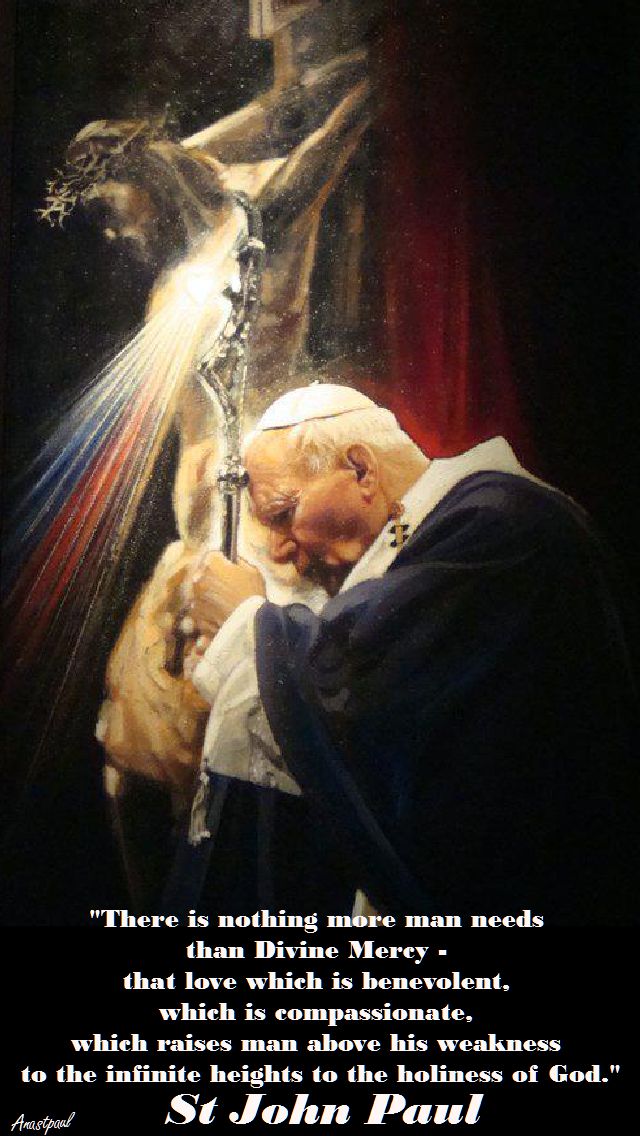
“There is nothing more man needs than Divine Mercy – that love which is benevolent, which is compassionate, which raises man above his weakness to the infinite heights to the holiness of God.”

THERE IS NOTHING MORE MAN NEEDS-STJP


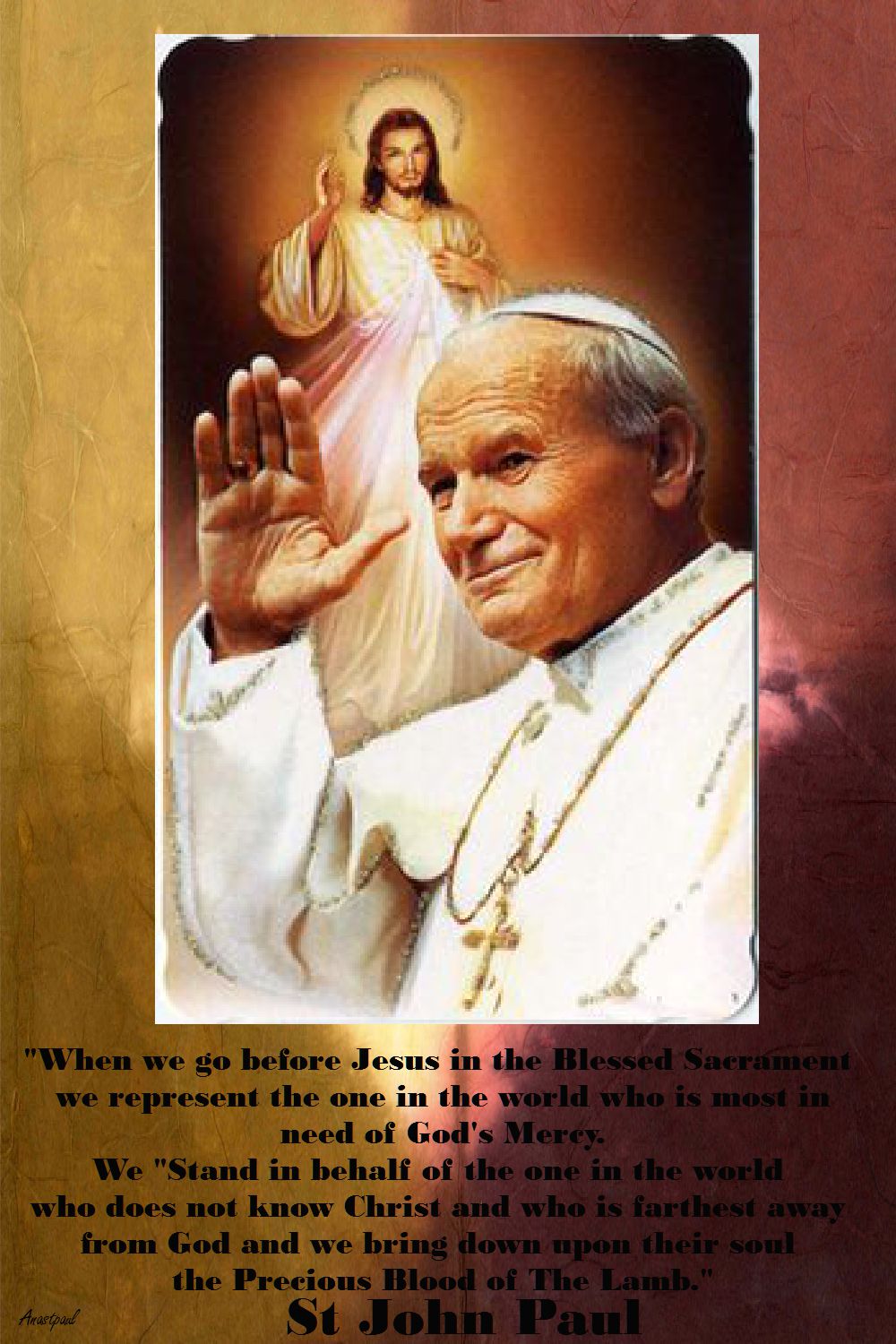
“When we go before Jesus in the Blessed Sacrament we represent the one in the world who is in most need of God’s Mercy.”   We “Stand in behalf of the one in the world who does not know Christ and who is farthest away from God and we bring down upon their soul the Precious Blood of The Lamb.”

WHEN WE GO BEFORE THE LORD

St Pope John Paul II

Posted in EASTER, FEASTS and SOLEMNITIES, MORNING Prayers, PRAYERS of the SAINTS, QUOTES of the SAINTS, SAINT of the DAY, The WORD

One Minute Reflection – 23 April Octave and Divine Mercy Sunday

One Minute Reflection – 23 April
Octave and Divine Mercy Sunday

DAILY MEDITATION: Kindle the faith of your people and show us Your Mercy!

But you are “a chosen race, a royal priesthood, a holy nation, a people of his own, so that you may announce the praises” of him who called you out of darkness into his wonderful light.    Once you were “no people” but now you are God’s people; you “had not received mercy” but now you have received mercy………………..1 Peter 2:9-10

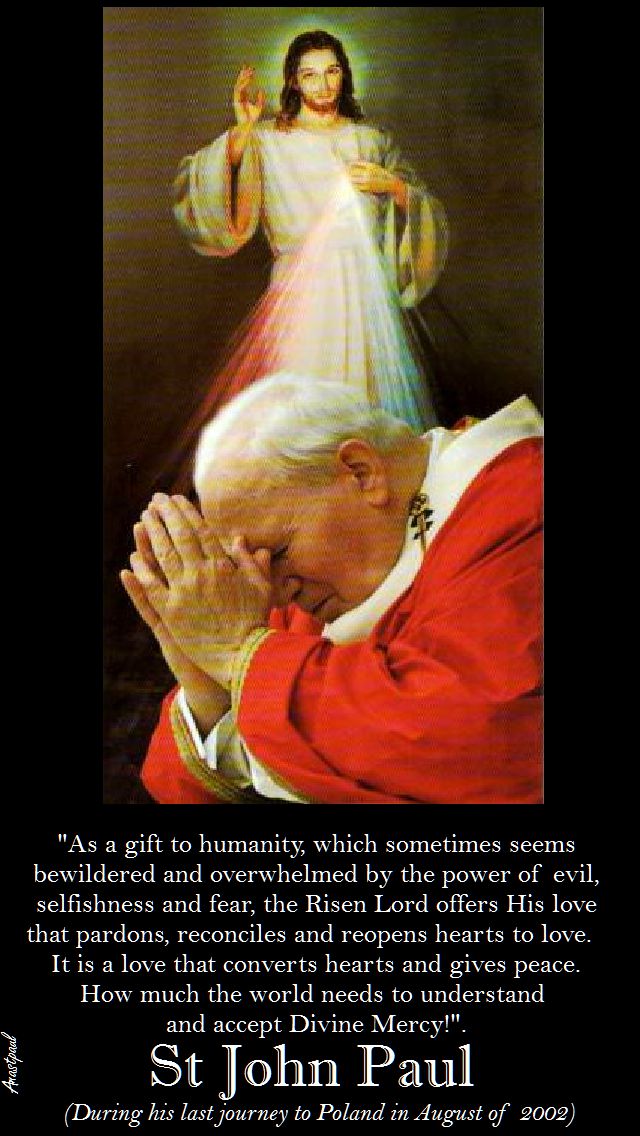
REFLECTION – “How much the world is in need of the mercy of God today!   In every continent, from the depths of human suffering, a cry for mercy seems to rise.   In those places where hatred and the thirst for revenge are overwhelming, where war brings suffering and the death of innocents, one needs the grace of mercy to pacify the minds and the hearts and make peace spring forth.   In those places where there is less respect for life and human dignity, one needs the merciful love of God, in whose light we see the ineffable value of every single human being.   Mercy is needed to ensure that every injustice may find its solution in the splendour of truth. …..As a gift to humanity, which sometimes seems bewildered and overwhelmed by the power of evil, selfishness, and fear, the Risen Lord offers His love that pardons, reconciles, and reopens hearts to love. It is a love that converts hearts and gives peace.   How much the world needs to understand and accept Divine Mercy!”…………St John Paul

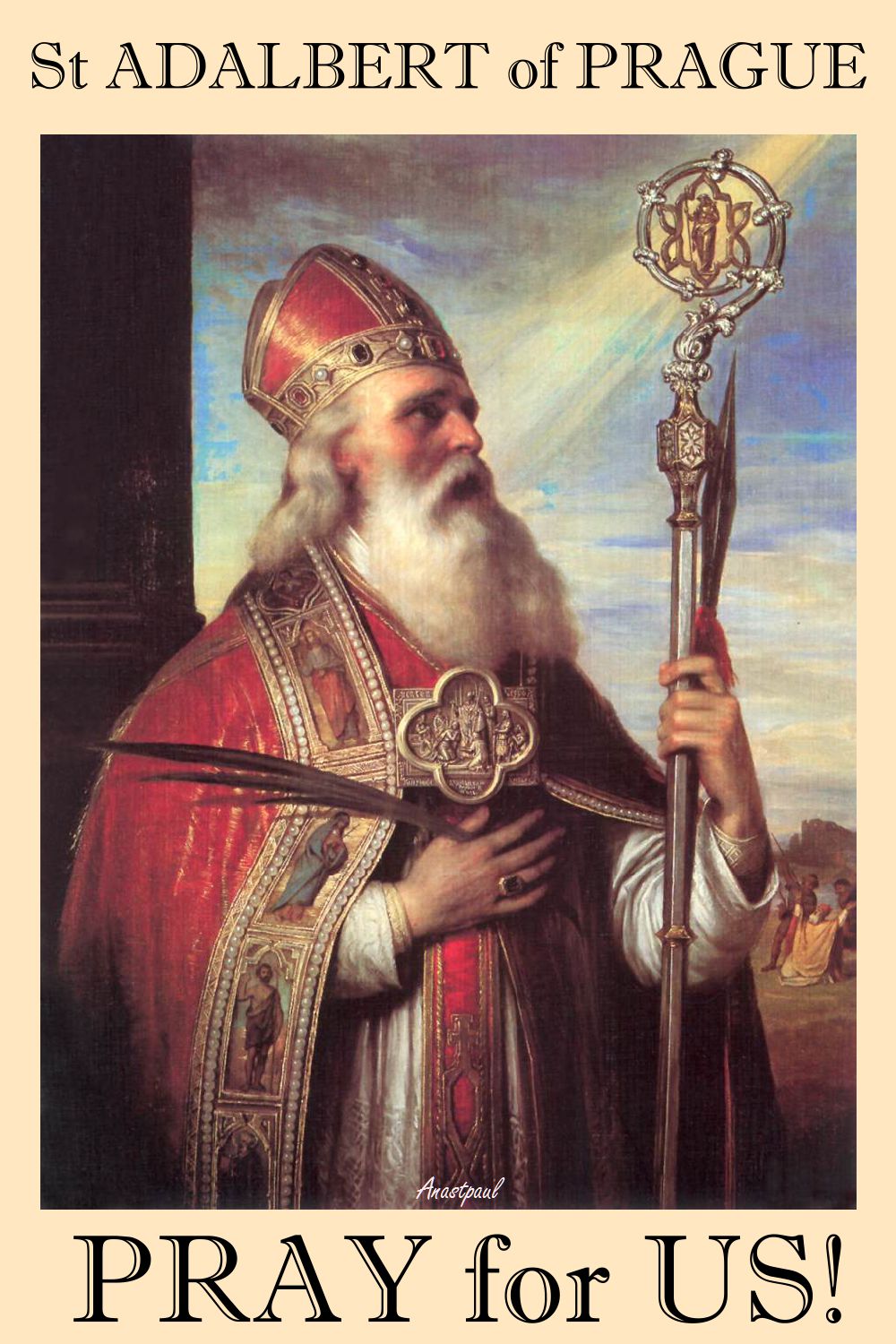
PRAYER – “Lord, who reveal the Father’s love by Your death and Resurrection, we believe in You and confidently repeat to You today: Jesus, I trust in You, have mercy upon us and upon the whole world. Amen.” – St John Paul (During his last journey to Poland in August of 2002) St Adalbert of Prague pray for us!

1 PETER 2-10AS A GIFT TO HUMANITY-ST JOHN PAULst adalbert of prague pray for us

Posted in FEASTS and SOLEMNITIES, SAINT of the DAY

Saints and Liturgical Feasts – 23 April

2nd Sunday of Easter (2017) – DIVINE MERCY SUNDAY and the OCTAVE DAY of EASTER
St Adalbert of Prague (Optional Memorial) – BRESKI VIDEO – https://www.youtube.com/watch?v=Dqz2ajDC8nY
St George (Optional Memorial)

Achilleus of Vienne
Bl Adalbert III of Salzburg
Felix of Vienne
Fortunatus of Vienna
George of San Giorio
Gerard of Orchimont
Bl Gerard of Toul
Bl Giles of Assisi
Bl Giles of Saumur
Bl Giorgio di Suelli
Bl Helen del Cavalanti
Ibar of Meath
Bl Maria Gabriela Sagheddu
Marolus of Milan
Pusinna of Champagne
Bl Teresa Maria of the Cross

French Mercedarian Martyrs

Martyrs of Africa: A group of Christians murdered for their faith in northern Africa. Little information has survived but their names. The ones we know are – Catulinus, Chorus, Faustinus, Felicis, Felix, Nabors, Plenus, Salunus, Saturninus, Silvius, Solutus, Theodora, Theodorus, Theon, Ursus, Valerius, Venustus, Victorinus, Victurus, Vitalis

Martyrs of Rome

Posted in CATHOLIC DEVOTIONS of the Month, FEASTS and SOLEMNITIES, NOVENAS, SAINT of the DAY

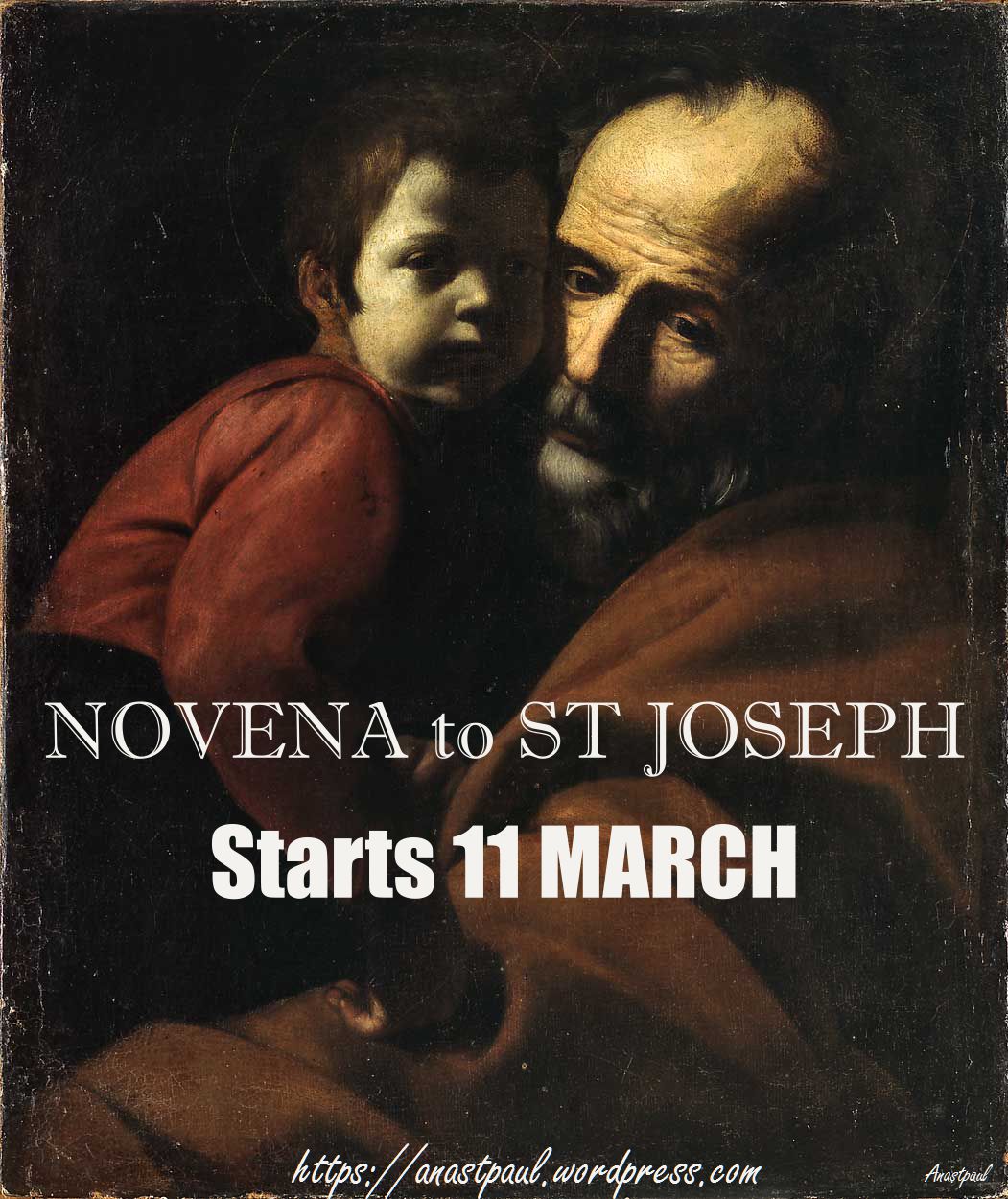
Announcing a Novena to St Joseph

Novena to St Joseph

The primary feast of St Joseph is on 19 March, the husband of the Blessed Virgin Mary and the foster father of Jesus Christ.

Indeed, the Catholic Church dedicates the entire month of March to Saint Joseph and urges us to pay special attention to his life and example.

Fathers, in particular, should cultivate devotion to Saint Joseph, whom God Himself chose to care for His Son. As we learn more about Saint Joseph, we can teach our own boys about the virtues of fatherhood through his example.

St. Teresa of Avila’s Plea

“Would that I could persuade all men to be devoted to this glorious Saint [St. Joseph], for I know by long experience what blessings he can obtain for us from God.   I have never known anyone who was truly devoted to him and honoured him by particular services who did not advance greatly in virtue: for he helps in a special way those souls who commend themselves to him.   It is now very many years since I began asking him for something on his feast and I have always received it. I  f the petition was in any way amiss, he rectified it for my greater good . . .

” I ask for the love of God that he who does not believe me will make the trial for himself—then he will find out by experience the great good that results from commending oneself to this glorious Patriarch and in being devoted to him.”

St. Alphonsus Liguori on St. Joseph,
Patron of a Happy Death

“Since we all must die, we should cherish a special devotion to St. Joseph, that he may obtain for us a happy death.   All Christians regard him as the advocate of the dying who had honoured him during their life and they do so for three reasons:

“First, because Jesus Christ loved him not only as a friend but as a father and on this account his mediation is far more efficacious than that of any other Saint.

“Second, because St. Joseph has obtained special power against the evil spirits, who tempt us with redoubled vigour at the hour of death.

“Third, the assistance given St. Joseph at his death by Jesus and Mary obtained for him the right to secure a holy and peaceful death for his servants.   Hence, if they invoke him at the hour of death he will not only help them but he will also obtain for them the assistance of Jesus and Mary.”

St Joseph we ask for your assistance in all our needs starting tomorrow, pray for us!

NOVENA TO ST JOSEPH STARTS 11 MARCH


Posted in FEASTS and SOLEMNITIES, MORNING Prayers, Uncategorized

Thought for the Day – 28 February

Thought for the Day – 28 February

After having renounced everything, one can still worship other idols, such as fame and name.   To be able to enjoy ‘hundred-fold’, one must detach oneself from ‘self’.   A true disciple is not the one who has left all material possessions to follow Jesus, rather the one who has given up the home of self-prestige, brother hatred, sister gossiping, mother backbiting, father pride and child selfishness.   When a person is free from such entanglements, she or he will receive a hundred times more the home of humanness, brother love, sister charity, mother understanding, father humility and child generosity.   This is the way one obtains eternal life.   It is easier to be a philanthropic than a disciple.   The former gives from abundance and earns worldwide praises;  the latter strives hard to let go the wealth of ego and receives mockery and persecution.   Only those who walk the talk can teach the value of renunciation and commitment.  (Sr Virginia Rajakumari SAB)

Lord, Lord help us all!

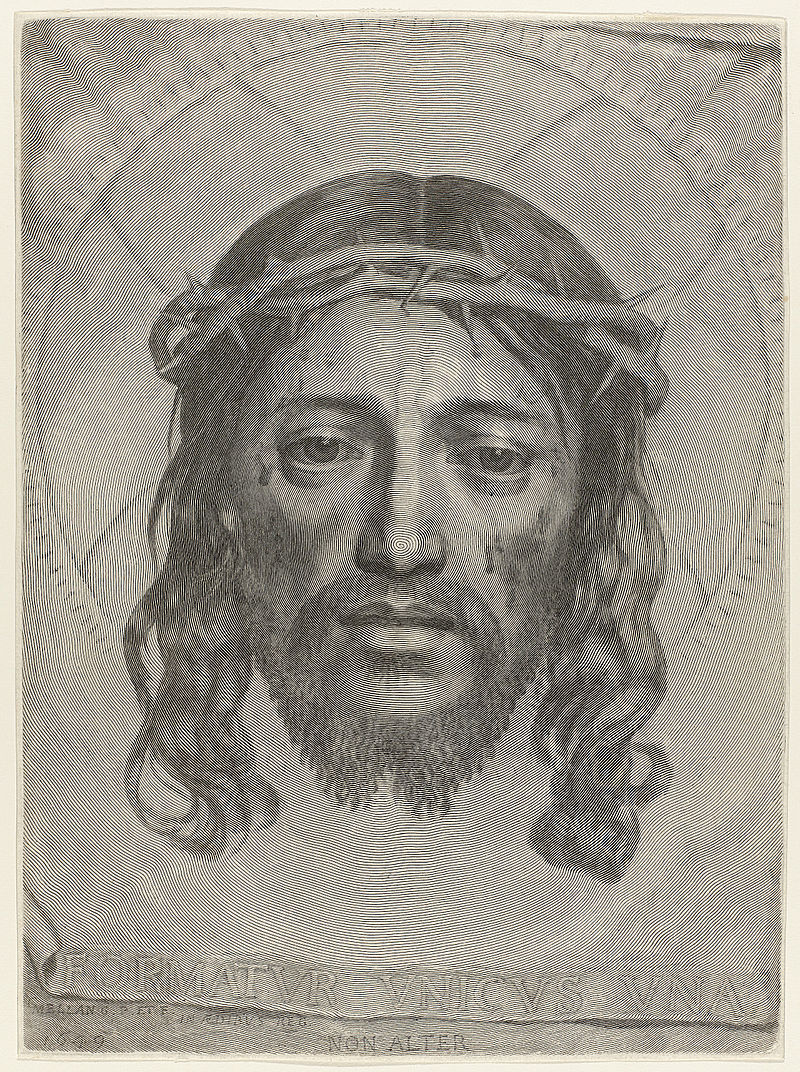
Veronica’s veil, by Claude Mellan (c. 1649).800px-claude_mellan_-_face_of_christ_-_wga14764


Posted in FEASTS and SOLEMNITIES, MORNING Prayers, PRAYERS of the CHURCH, PRAYERS of the SAINTS, SAINT of the DAY

Quote of the Day – 28 February

Quote of the Day – 28 February

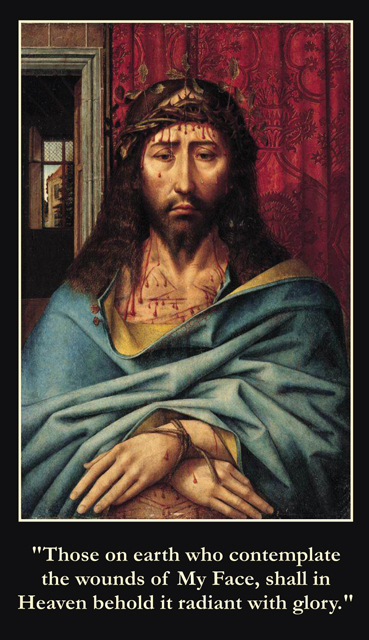
“Those on earth who contemplate the wounds of My Face

shall in heaven behold it radiant with glory.”

card_214_golden_arrow_1201-052710-g-final-front-web

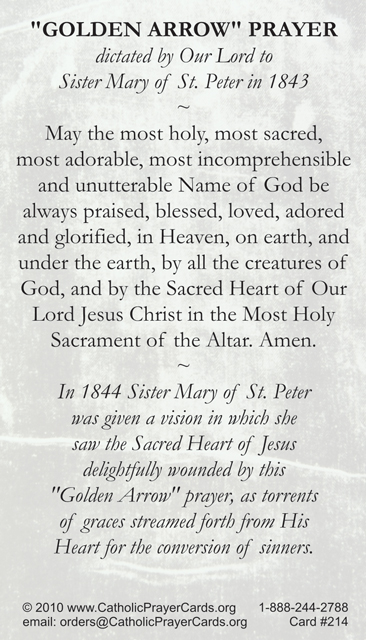
Jesus to Sr Mary of St Peter in 1844 and dictated The Golden Arrow Prayer

card_214_golden_arrow_1201-052710-g-final-back-web


Posted in FEASTS and SOLEMNITIES, MORNING Prayers, QUOTES of the SAINTS, SAINT of the DAY, The WORD

One Minute Reflection – 28 Februa

One Minute Reflection – 28 February

Whoever wishes to be my follower
must take up his cross each day
and follow in my footsteps…………..Luke 9:23

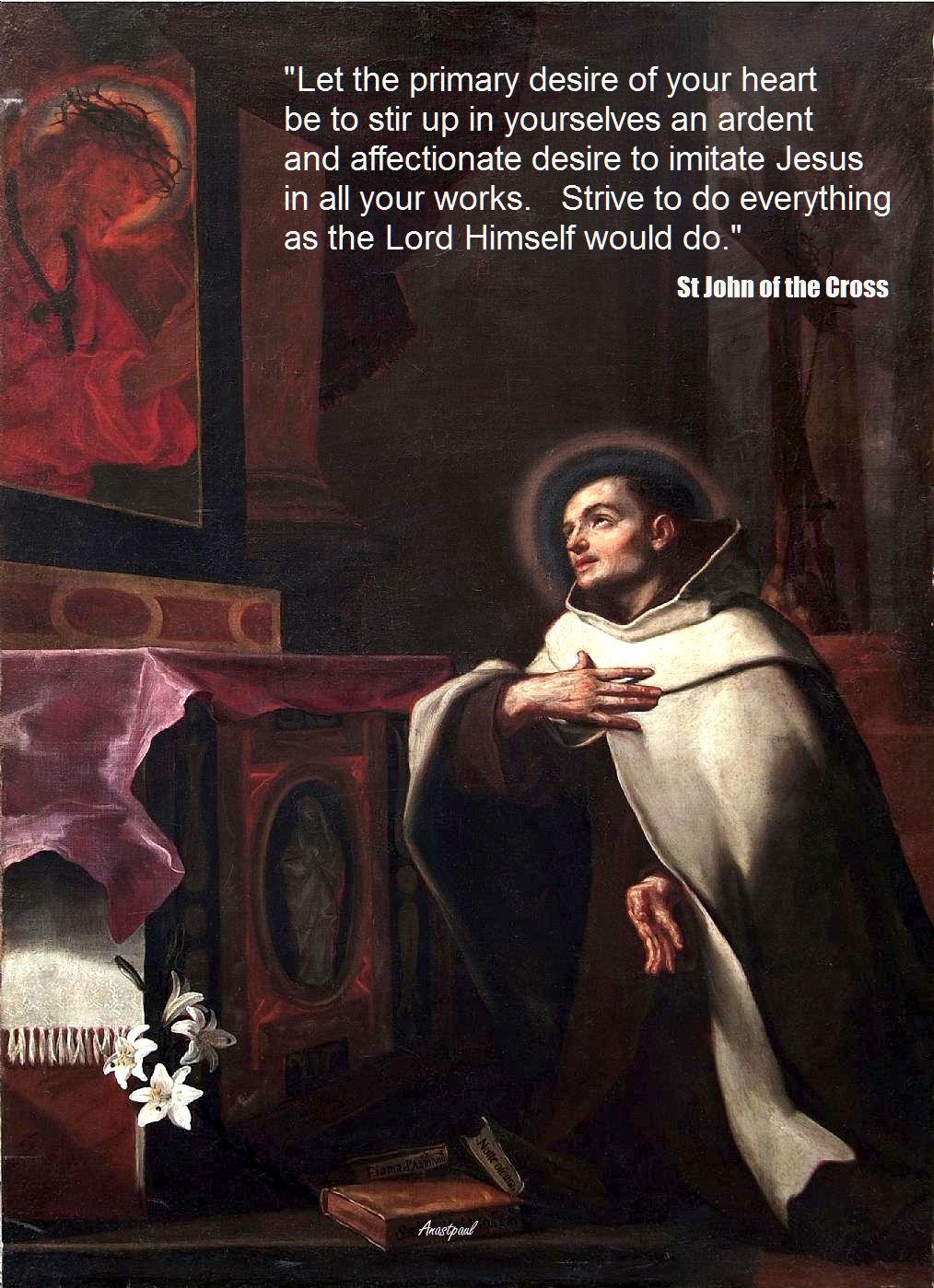
REFLECTION – Let the primary desire of your heart be to stir up in yourselves an ardent and affectionate desire to imitate Jesus in all your works.
Strive to do everything as the Lord Himself would do……………St John of the Cross

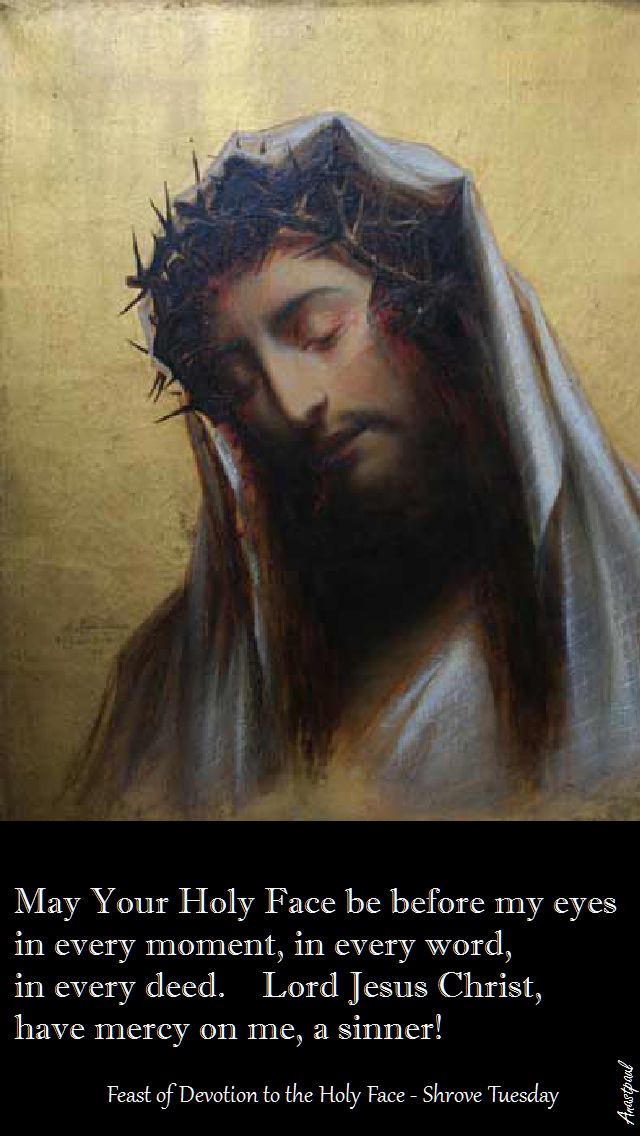
PRAYER – Lord Jesus, help me to pattern my life after You.  Grant that I may imitate You completely – in all my thoughts, words and deeds.  May Your Holy Face be before my eyes in every moment, in every word, in every deed.    Lord Jesus Christ, have mercy on me, a sinner!  Amen

luke-9-23

let-the-primary-desire-of-your-heart-stjohnofthecrossmay-your-holy-face-be-before-my-eyes

Posted in FEASTS and SOLEMNITIES, MORNING Prayers, SAINT of the DAY

Our Morning Offering – 28 February

Our Morning Offering – 28 February

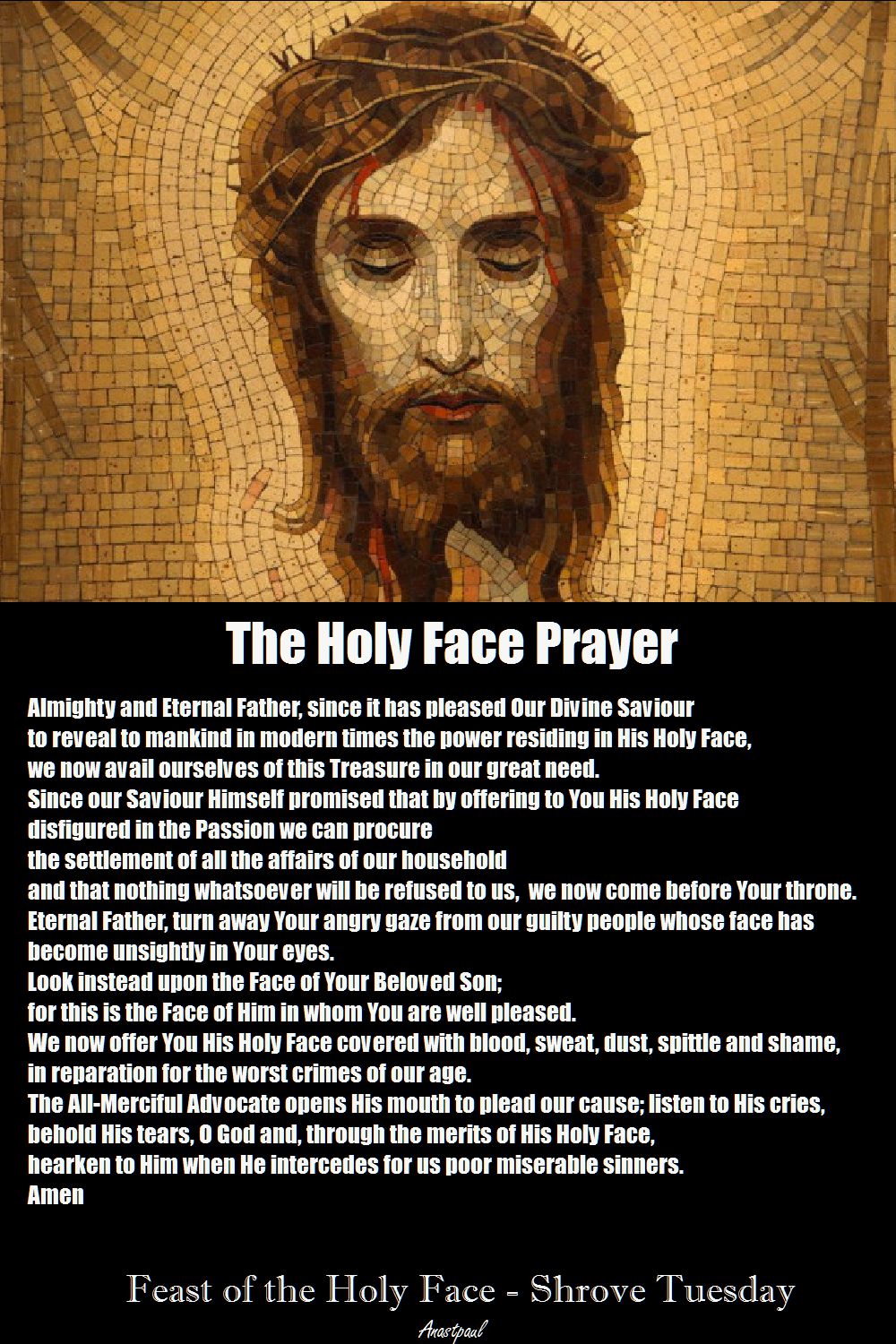
Almighty and Eternal Father,
since it has pleased Our Divine Saviour
to reveal to mankind in modern times
the power residing in His Holy Face,
we now avail ourselves of this Treasure
in our great need.
Since our Saviour Himself promised
that by offering to You His Holy Face
disfigured in the Passion we can procure
the settlement of all the affairs of our household
and that nothing whatsoever will be refused to us,
we now come before Your throne.
Eternal Father, turn away Your angry gaze
from our guilty people whose face has
become unsightly in Your eyes.
Look instead upon the Face of Your Beloved Son;
for this is the Face of Him in whom You are well pleased.
We now offer You His Holy Face covered
with blood, sweat, dust, spittle and shame,
in reparation for the worst crimes of our age.
The All-Merciful Advocate opens His mouth
to plead our cause; listen to His cries,
behold His tears, O God and,
through the merits of His Holy Face,
hearken to Him when He intercedes
for us poor miserable sinners.
Amen

the-holy-face-prayer

Posted in FEASTS and SOLEMNITIES, SAINT of the DAY

Feast of the Holy Face of Jesus – 28 February – Shrove Tuesday

Feast of the Holy Face of Jesus – 28 February – Shrove Tuesday

DEVOTION TO THE HOLY FACE OF JESUS

This ancient and venerable Catholic practice is rooted in the representation of the face of Christ said to have been left on the towel or veil used by a holy woman thought to be named, Veronica.   An Archconfraternity of the Holy Face was established in Tours, France, 1884;  its members make reparation for the blasphemies hurled at Christ.   Since St. Therese’s devotion to the Holy Face has become known, this devotion has spread worldwide.


In addition, a devout and pious nun, Sr. Pierina, who died in 1945, was given many visions through Our Blessed Lady who appeared to her, as did Our Lord Jesus.  They urged her to make reparation for the many insults Jesus suffered in His Passion, such as to be slapped, spit upon and kissed by Judas, as well as now being dishonoured in many ways in the Blessed Sacrament by neglect, sacrileges, and profanations.

She was given a medal which on one side bore a replica of the Holy Shroud and the inscription: “Illumina, Domine, vultum tuum super nos.” [O Lord, the light of Thy countenance shine upon us.]   On the reverse side was a radiant host with the words: “Mane nobiscum, Domine.” [Stay with us, O Lord.]    After great difficulties, Sr. Pierina obtained permission to have the medal cast.    Even the expenses for the casting were miraculously met when she found on her desk an envelope with the exact amount of the bill—–11,200 lire.

The Evil Spirit showed his chagrin and rage at the medals by flinging them down and burning the pictures of the Sacred Face and beating the nun savagely.

In 1940, when the Second World War had the world in turmoil, Italy saw a wide distribution of the medal: soldiers, sailors and pilots were provided with the replica of the Holy Face since the medal was already famous for its miracles and countless spiritual and temporal favours.

In Our Blessed Mother’s own word, the medal is a weapon for defense, a shield for courage, a token of love and mercy and which her Divine Son wished to give the world in these troubled days of lust and hatred for God and His Church.   Devilish snares have been set to rob the hearts of men of their faith while evil spreads the world over. Genuine apostles are few.   A Divine remedy to all these evils will be the Adorable Face of her Son, Jesus.

Whoever wears this medal and, if possible, pays a visit to the Blessed Sacrament on Tuesday in a spirit of reparation for the outrages received by the Holy Face of Our Blessed Saviour during His Passion and those bestowed on Him every day in the Sacrament of His Divine Love, will be granted the gift of a strong Faith and the grace to fly to its defense, conquering if need be, all exterior and interior difficulties.   Moreover, they are promised a happy death with special assistance of Christ Himself.

The very first medal of the Holy Face was offered to our glorious Pontiff, Pius XII; then the whole world became acquainted with this special object of holy favours and devotion.   No soldier taken as a prisoner of war and who wore the medal was ever executed.   Our Blessed Lord requested that a special feast be instituted to honor His Holy Face on Shrove Tuesday. Pope St. Pius XII obeyed and had this day set aside to honour the Holy Face in 1958.

When Venerable Pope Pius XII granted that the Feast of the Holy Face of Jesus be observed on Shrove Tuesday, the day before Ash Wednesday, he fulfilled the desire of Our Lord that His sorrowful Holy Face be contemplated in reparation for our sins.  The history and tradition of venerating His Holy Face began on the day of His crucifixion and continues through the centuries with the help of holy men and women chosen by  Our Lord and Our Blessed Mother to propagate this devotion.

The bloodied, bruised, disfigured face of Jesus was imprinted on a veil as St. Veronica comforted Christ by wiping His face on the road to Calvary.   The original veil is kept at St. Peter’s Basilica and is displayed every Passion Sunday.   The image of the face on the Shroud of Turin provides another opportunity of veneration of the Holy Face.


In his 2005 book On the Way to Jesus Christ, Pope Benedict XVI performed an analysis of Holy Face devotions and characterised them as having three separate components.   The first element is discipleship, and the orientation of one’s life towards an encounter with Jesus. The second element is seeing Jesus in the Eucharist, the third element is eschatological and is interwoven between the other two.

Referring to Matthew 25:31-36 Benedict XVI stated that the first element (i.e. discipleship) involves seeing Jesus in the face of the poor and the oppressed and caring for them but to properly see Jesus in the face of those in need, believers first need to become better acquainted with Jesus through the Eucharist.   The second element involves relating the Passion of Jesus, and the suffering expressed by the images that represent his wounded face to the Eucharistic experience.   Thus the devotion that starts with the images of the face of Jesus leads to his contemplation in the Eucharistic experience.    The eschatological element then builds on awakening to Christ by contemplating his face in the Eucharist

 

Posted in FEASTS and SOLEMNITIES, SAINT of the DAY

Saints and Feasts – 28 February – Shrove Tuesday

Feast of the Holy Face of Jesus
Shrove Tuesday (2017) – Derivation: Old English: to shrive, i.e., hear confessions. Monday and Tuesday (also sometimes the preceding Thursday) before Ash Wednesday, known in southern Europe as the Carnival (carnem levare, taking away of flesh); a period of festivity before Lent.

Abercius
Antonia of Florence
Augustus Chapdelaine
St Caerealis
St Caerealis of Alexandria
St Cyra of Beroea
Bl Daniel Brottier
St Ermine
St Gaius of Alexandria
St Pope Hilary/Hilarius
St Justus the Potter
St Llibio
St Macarius the Potter
St Maidoc
St Marana of Beroea
St Oswald of Worcester
St Proterius of Alexandria
St Pupulus of Alexandria
St Romanus of Condat
St Ruellinus of Treguier
St Rufinus the Potter
St Serapion of Alexandria
St Sillan of Bangor
Bl Stanislaw Antoni Trojanowski
St Theophilus the Potter
Bl Villana de’Botti

Martyrs of Alexandria – A number of clerics and layman who died as martyrs of charity for ministering to the sick during a plague that ravaged Alexandria, Egypt in 261.

Martyrs of Unzen – 16 lay people martyred together in one of the periodic anti-Christian persecutions in imperial Japan – Died: 28 February 1627 in Unzen, Japan. Beatified:
24 November 2008 by Pope Benedict XVI

• Alexius Sugi Shohachi
• Damianus Ichiyata
• Dionisius Saeki Zenka
• Gaspar Kizaemon
• Gaspar Nagai Sohan
• Ioannes Araki Kanshichi
• Ioannes Heisaku
• Ioannes Kisaki Kyuhachi
• Leo Nakajima Sokan
• Ludovicus Saeki Kizo
• Ludovicus Shinzaburo
• Maria Mine
• Paulus Nakajima
• Paulus Uchibori Sakuemon
• Thomas Kondo Hyoemon
• Thomas Uzumi Shingoro

Posted in FEASTS and SOLEMNITIES, MORNING Prayers, SAINT of the DAY

Thought for the Day – 22 February

Thought for the Day – 22 February

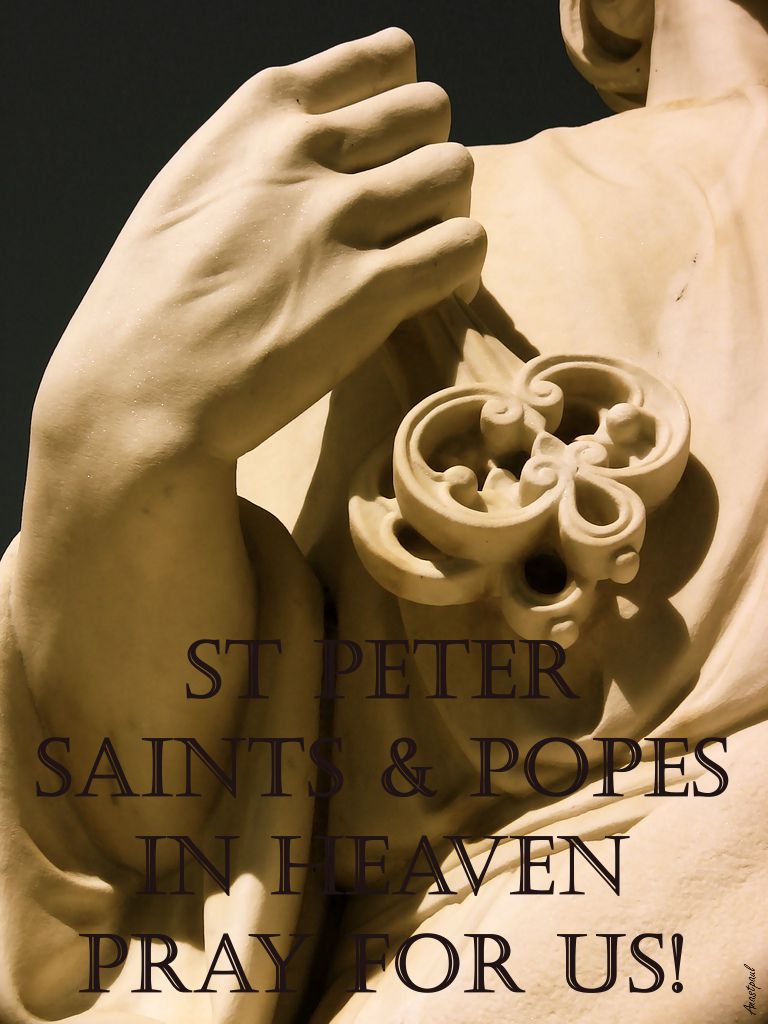
From the beginning, the specialness, or primacy, of Peter has been recognized.   On the feast of the Chair of Peter, we celebrate our unity as a Church.   We celebrate the love, presence and protection of Christ for us, the Church.    The title Chair of Peter refers to the chair from which a bishop presided, a symbol of his authority.   When the title refers to Saint Peter, it recalls the supreme teaching power of Peter and his successors.  Its first occupant stumbled a bit some of its later occupants have also stumbled a bit, sometimes even failed scandalously.   As individuals, we may sometimes think a particular pope has let us down.    Still, the office endures as a sign of the long tradition we cherish and as a focus for the universal Church.   It is from the chair, from the pastoral power given him, that the pope shepherds Christ’s flock.   When the pope cautions world leaders, pleads for peace, or condemns social injustice, people listen and respond.   What makes the world listen to this man?  The answer lies in Scripture and in Tradition.  Peter is named first among the apostles of Jesus; he was often their spokesman and leader; he was the first to preach after Pentecost and he was the leader in defending Christ and his message AND THE OCCUPANT OF THE CHAIR STILL IS!

Holy Father St Peter and all the Saints and Popes in Heaven, Pray for us!

st-peter-saints-and-popes


Posted in FEASTS and SOLEMNITIES, MORNING Prayers, QUOTES of the SAINTS, SAINT of the DAY

Quote of the Day – 22 February

Quote of the Day – 22 February

“He who deserts the chair of Peter,
upon whom the Church was founded,
does he trust himself to be in the Church?”
~~~~~ Saint Cyprian, Bishop of Carthage and Martyr

De Catholicae Ecclesiae Unitate, 251

he-who-deserts-sty-cyprian

Posted in CATHOLIC Quotes, FEASTS and SOLEMNITIES, SAINT of the DAY

Feast of the Chair of St Peter – 22 February

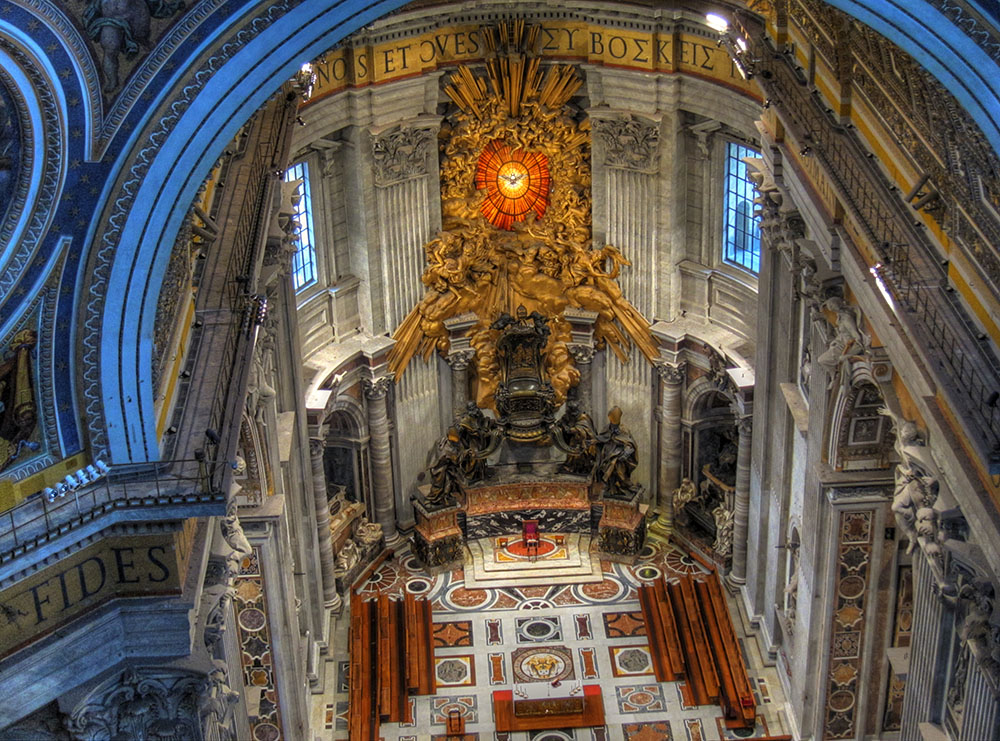
Feast of the Chair of St Peter – 22 February – Cathedra Petri), also known as the Throne of Saint Peter, is a relic conserved in St. Peter’s Basilica in Vatican City.    The relic is a wooden throne that tradition claims the Apostle Saint Peter, the leader of the Early Christians in Rome and first Pope, used as Bishop of Rome.    The relic is enclosed in a sculpted gilt bronze casing designed by Gian Lorenzo Bernini and executed between 1647 and 1653.    In 2012, Pope Benedict XVI described the chair as “a symbol of the special mission of Peter and his Successors to tend Christ’s flock, keeping it united in faith and in charity.”

The wooden throne was a gift from Holy Roman Emperor Charles the Bald to Pope John VIII in 875.    It has been studied many times over the years, the last being from 1968 to 1974, when it was last removed from the Bernini altar.    That study concluded that it was not a double, but rather a single, chair with a covering and that no part of the chair dated earlier than the sixth century.   Below – The Pope’s throne in St. Peter’s Basilica, Vatican City, last publicly exposed in 1867.

The Chair is the cathedra of St. Peter’s Basilica. Cathedra is Latin for “chair” or “throne”, and denominates the chair or seat of a bishop, hence “cathedral” denominates the Bishop’s church in an episcopal see.    The Popes formerly used the Chair.    It is distinct from the Papal Cathedra in St. John Lateran Archbasilica, also in Rome, which is the actual cathedral church of the Pope, because the Cathedra he currently and officially sits upon is in its apse.

“Dear Brothers and Sisters,

Today, the Latin-rite liturgy celebrates the Feast of the Chair of St Peter.   This is a very ancient tradition, proven to have existed in Rome since the fourth century. On it we give thanks to God for the mission he entrusted to the Apostle Peter and his Successors.

“Cathedra” literally means the established seat of the Bishop, placed in the mother church of a diocese which for this reason is known as a “cathedral”; it is the symbol of the Bishop’s authority and in particular, of his “magisterium”, that is, the evangelical teaching which, as a successor of the Apostles, he is called to safeguard and to transmit to the Christian Community.

When a Bishop takes possession of the particular Church that has been entrusted to him, wearing his mitre and holding the pastoral staff, he sits on the cathedra. From this seat, as teacher and pastor, he will guide the journey of the faithful in faith, hope and charity.

So what was the “Chair” of St Peter? Chosen by Christ as the “rock” on which to build the Church (cf. Mt 16: 18), he began his ministry in Jerusalem, after the Ascension of the Lord and Pentecost.   The Church’s first “seat” was the Upper Room, and it is likely that a special place was reserved for Simon Peter in that room where Mary, Mother of Jesus, also prayed with the disciples.   Therefore, we have the journey from Jerusalem, the newly born Church, to Antioch, the first centre of the Church formed from pagans and also still united with the Church that came from the Jews.   Then Peter went to Rome, the centre of the Empire, the symbol of the “Orbis” – the “Urbs”, which expresses “Orbis”, the earth, where he ended his race at the service of the Gospel with martyrdom.

…This is testified by the most ancient Fathers of the Church, such as, for example, St Irenaeus, Bishop of Lyons, but who came from Asia Minor, who in his treatise Adversus Haereses, describes the Church of Rome as the “greatest and most ancient, known by all… founded and established in Rome by the two most glorious Apostles, Peter and Paul”; and he added: “The universal Church, that is, the faithful everywhere, must be in agreement with this Church because of her outstanding superiority” (III, 3, 2-3)….

Tertullian, a little later, said for his part: “How blessed is the Church of Rome, on which the Apostles poured forth all their doctrine along with their blood!” (De Praescriptione Hereticorum, 36).
Consequently, the Chair of the Bishop of Rome represents not only his service to the Roman community but also his mission as guide of the entire People of God.

Celebrating the “Chair” of Peter, therefore, as we are doing today, means attributing a strong spiritual significance to it and recognizing it as a privileged sign of the love of God, the eternal Good Shepherd, who wanted to gather his whole Church and lead her on the path of salvation.

Among the numerous testimonies of the Fathers, I would like to quote St Jerome’s. It is an extract from one of his letters, addressed to the Bishop of Rome. It is especially interesting precisely because it makes an explicit reference to the “Chair” of Peter, presenting it as a safe harbour of truth and peace.

This is what Jerome wrote:   “I decided to consult the Chair of Peter, where that faith is found exalted by the lips of an Apostle; I now come to ask for nourishment for my soul there, where once I received the garment of Christ. I follow no leader save Christ, so I enter into communion with your beatitude, that is, with the Chair of Peter, for this I know is the rock upon which the Church is built” (cf. Le lettere I, 15, 1-2).

Dear brothers and sisters, in the apse of St Peter’s Basilica, as you know, is the monument to the Chair of the Apostle, a mature work of Bernini.    It is in the form of a great bronze throne supported by the statues of four Doctors of the Church: two from the West, St Augustine and St Ambrose and two from the East: St John Chrysostom and St Athanasius.

I invite you to pause before this evocative work which today can be admired, decorated with myriads of candles and to say a special prayer for the ministry that God has entrusted to me.    Raise your eyes to the alabaster glass window located directly above the Chair and call upon the Holy Spirit, so that with his enlightenment and power, He will always sustain my daily service to the entire Church.   For this, as for your devoted attention, I thank you from my heart.”…………….. Pope Benedict XVI Wednesday, 22 February 2006

43abb21fa88456beb01516a6554a2156cathedra-altar

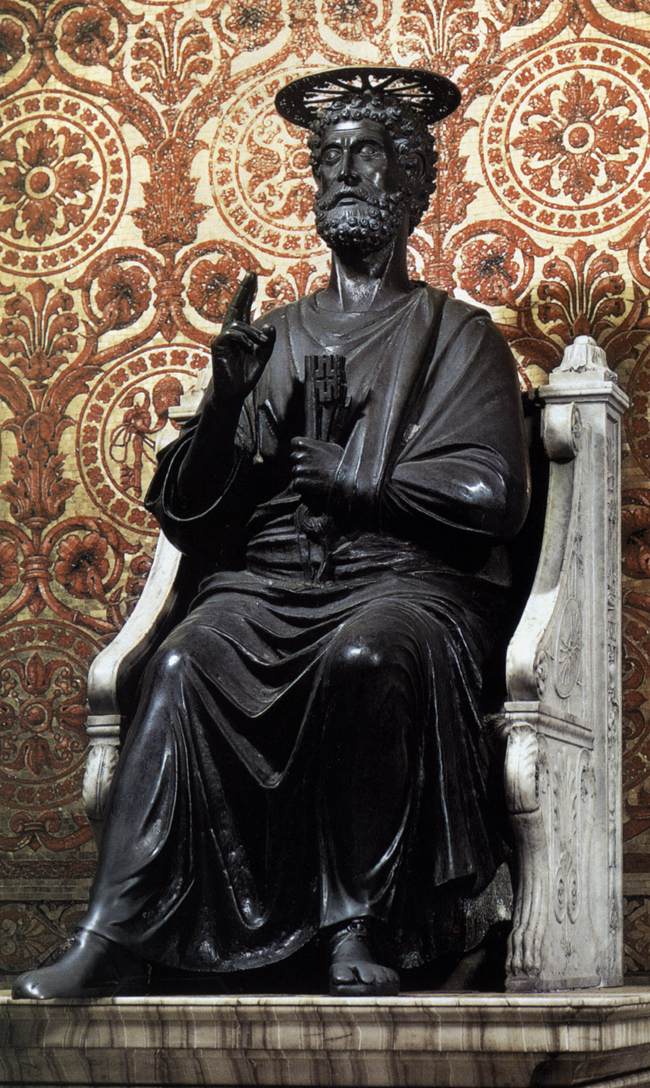
arnolfo_di_cambio_the_statue_of_saint_peter


Posted in FEASTS and SOLEMNITIES, SAINT of the DAY

Saints and Feasts 22 February

Chair of Saint Peter (Feast)

St Ailius of Alexandria
St Angelus Portasole
St Aristion of Salamis
St Athanasius of Nicomedia
St Baradates of Cyrrhus
Bl Diego Carvalho
St Elwin
Bl Émilie d’Oultremont d’Hoogvorst
Bl Isabella of France
St John the Saxon
St Limnaeus
St Margaret of Cortona
St Maximian of Ravenna
St Miguel Facerías Garcés
St Mohammed Abdalla
St Papias of Heirapolis
St Paschasius of Vienne
St Raynerius of Beaulieu
St Thalassius

Martyrs of Arabia – A memorial for all the unnamed Christians martyred in the desert and mountainous areas south of the Dead Sea during the persecutions of Emperor Valerius Maximianus Galerius.

Posted in FEASTS and SOLEMNITIES, MORNING Prayers, VOCATIONS

Thought for the Day – 2 February

On this holy feast-day we each have an opportunity to consecrate our lives anew to the Lord.    How do we do this?    We can simply make a prayer of re-dedication to God which can take many forms.    It can be a simple heartfelt prayer reaffirming our baptismal promises or a re-visiting of our religious or marriage vows.    Or it can be a prayer which asks the Holy Spirit to renew our sense of vocation as a priest or religious or as a lay person in our chosen job, trade or profession.
We gave our life to the Lord when we were baptised but the call to conversion continues to resound throughout our lives and ‘this second conversion is an uninterrupted task for the whole church’ (Catechism of the Catholic Church 1428).    A re-dedication or renewal of vows or promises is a movement of conversion within our heart and is always a work of the Holy Spirit.
Today, step out in faith, whatever your vocation, whatever your calling and give your life to the Lord, in the assurance of God’s grace, blessing and renewal in the power of the Holy Spirit.

LET US PRAY FOR ALL CONSECRATED MEN & WOMEN AND FOR VOCATIONS:

Loving God, You call all who believe in You
to grow perfect in love
by following in the footsteps
of Christ Your Son.
Call from among us more men and women
who will serve You as religious.
Open the hearts of many, raise up
faithful servants of the Gospel, dedicated,
holy priests, sisters, brothers and deacons,
who will spend themselves for Your people
and their needs.
Bless those who are serving now
with courage and perseverance.
Grant that many will be inspired by their
example and faith.
By their way of life, may they provide a convincing sign
of Your Kingdom for the Church and the whole world.
We ask this through our Lord Jesus Christ. Amen.

prayer-for-consecrated-and-vocations

Posted in CATHOLIC Quotes, FEASTS and SOLEMNITIES, MORNING Prayers, The BLESSED VIRGIN MARY

Quote of the Day – 2 February

Quote of the Day – 2 February

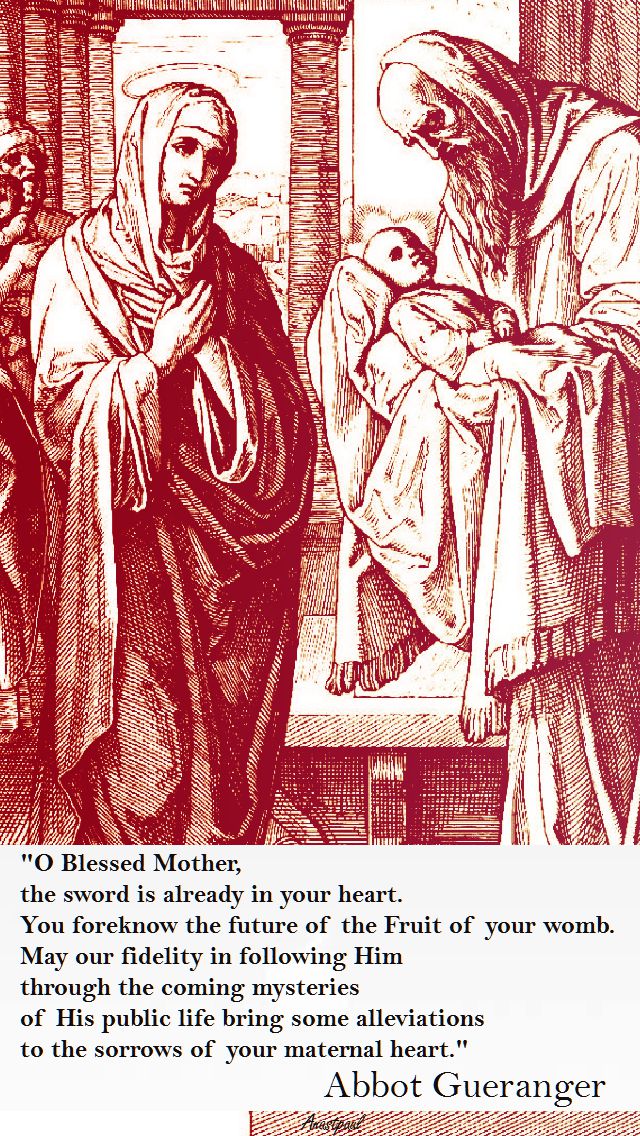
“O Blessed Mother, the sword is already in your heart.
You foreknow the future of the Fruit of your womb.
May our fidelity in following Him through the coming mysteries
of His public life bring some alleviations
to the sorrows of your maternal heart. ”

Abbot Gueranger

abbot-guerange-on-the-presentation-of-the-lord

Posted in FEASTS and SOLEMNITIES

World Day of Prayer for Consecrated Life

World Day of Prayer for Consecrated Life

Begun in 1997 by Pope John Paul II, the World Day for Consecrated Life was intended to serve three purposes

• to praise the Lord and thank him for the great gift of consecrated life

• to promote a knowledge of and esteem for the consecrated life by the entire People of God

• to allow those in consecrated life to celebrate together the marvels which the Lord has accomplished in them, to discover by a more illumined faith the rays of divine beauty spread by the Spirit in their way of life and to acquire a more vivid consciousness of their irreplaceable mission in the Church and in the world

It serves an opportunity to highlight the extraordinary contributions of men and women religious as well as a time to pray for vocations to the consecrated life.

my-world-day-for-consecrated-life

Posted in FEASTS and SOLEMNITIES

Feast of the Presentation of the Lord

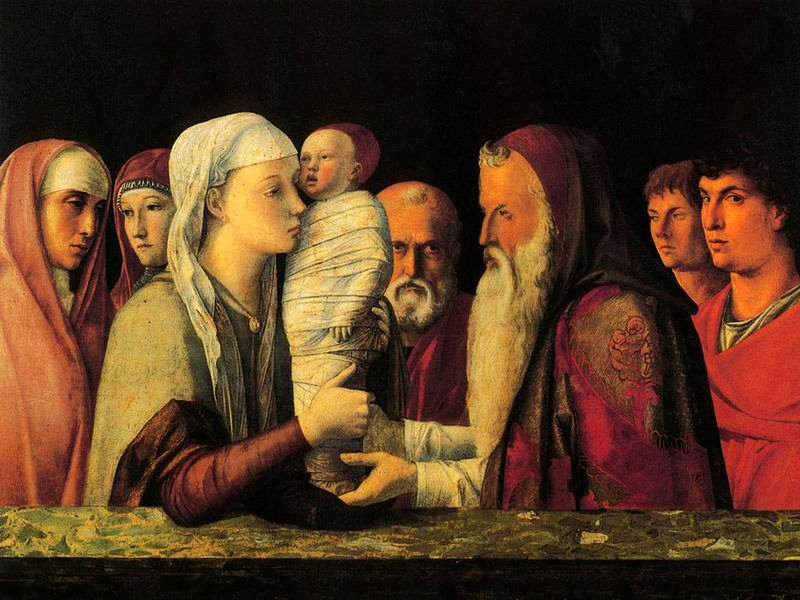
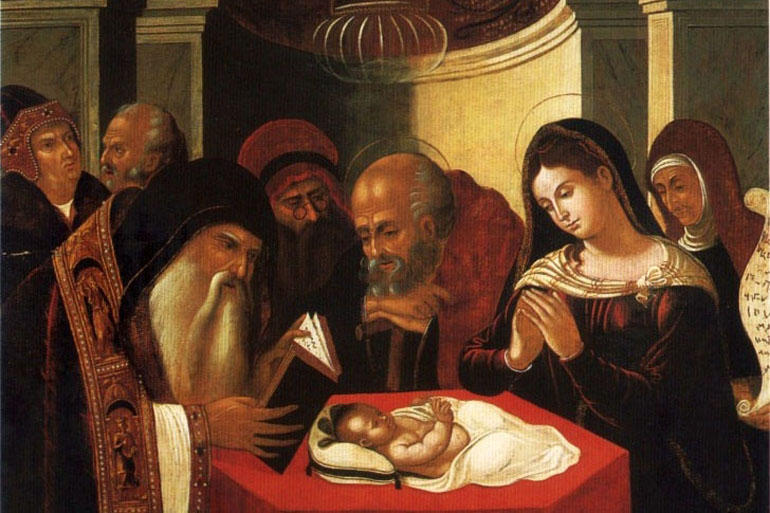
2 February – Feast of the Presentation of the Lord – This is known as a “Christmas feast” since it points back to the Solemnity of Christmas.    Many Catholics practice the tradition of keeping out the Nativity creche or other Christmas decorations until this feast.   The Presentation of Jesus at the Temple is an early episode in the life of Jesus that is celebrated by the Church on the holiday of Candlemas. It is described in the Gospel of Luke of the New Testament. Within the account, “Luke’s narration of the Presentation in the Temple combines the purification rite with the Jewish ceremony of the redemption of the firstborn (Luke 2:23-24).”

bellinipresentation
Bellini

At the end of the fourth century, a woman named Etheria made a pilgrimage to Jerusalem. Her journal, discovered in 1887, gives an unprecedented glimpse of liturgical life there. Among the celebrations she describes is the Epiphany, the observance of Christ’s birth, and the gala procession in honor of his Presentation in the Temple 40 days later. (Under the Mosaic Law, a woman was ritually “unclean” for 40 days after childbirth, when she was to present herself to the priests and offer sacrifice—her “purification.” Contact with anyone who had brushed against mystery—birth or death—excluded a person from Jewish worship.) This feast emphasizes Jesus’ first appearance in the Temple more than Mary’s purification.

brooklyn_museum_-_the_presentation_of_jesus_in_the_temple_la_presentation_de_jesus_au_temple_-_james_tissot_-_overall

James Tissot, The Presentation of Jesus in the Temple

The observance spread throughout the Western Church in the fifth and sixth centuries. Because the Church in the West celebrated Jesus’ birth on December 25, the Presentation was moved to February 2, 40 days after Christmas.

At the beginning of the eighth century, Pope Sergius inaugurated a candlelight procession; at the end of the same century the blessing and distribution of candles which continues to this day became part of the celebration, giving the feast its popular name: Candlemas.

bellini-s-presentation-of-jesus-in-the-temple_photodisplay
Bellini

Posted in FEASTS and SOLEMNITIES, SAINT of the DAY, The BLESSED VIRGIN MARY

Saints & Feasts: 2 February

Presentation of the Lord (Feast)
Our Lady of Candelaria
World Day for Consecrated Life

St Adalbald of Ostrevant
St Adeloga of Kitzingen
St Agathodoros of Tyana
St Andrea Carlo Ferrari
St Apronian the Executioner
St Bruno of Ebsdorf
St Burchard of Wurzburg
St St Candidus the Martyr
Catherine del Ricci
St Columbanus of Ghent
St Cornelius the Centurion
St Felician the Martyr
St Feock
St Firmus of Rome
St Flosculus of Orléans
St Fortunatus the Martyr
St Giovanni Battista Clemente Saggio
St Hilarus the Martyr
St Jean Theophane Venard
St Jeanne de Lestonnac
St Lawrence of Canterbury
Bl Louis Alexander Alphonse Brisson
Bl Maria Domenica Mantovani
St Marquard of Hildesheim
St Mun
Bl Peter Cambiano
St Rogatus the Martyr
St Saturninus the Martyr
St Sicharia of Orleans
St Simon of Cassia Fidati
Bl Stephen Bellesini
St Theodoric of Ninden
St Victoria the Martyr

Martyrs of Ebsdorf

Posted in FEASTS and SOLEMNITIES, MORNING Prayers, PRAYERS of the SAINTS, SAINT of the DAY, The WORD

Our Morning Offering – 25 January

Our Morning Offering – 25 January

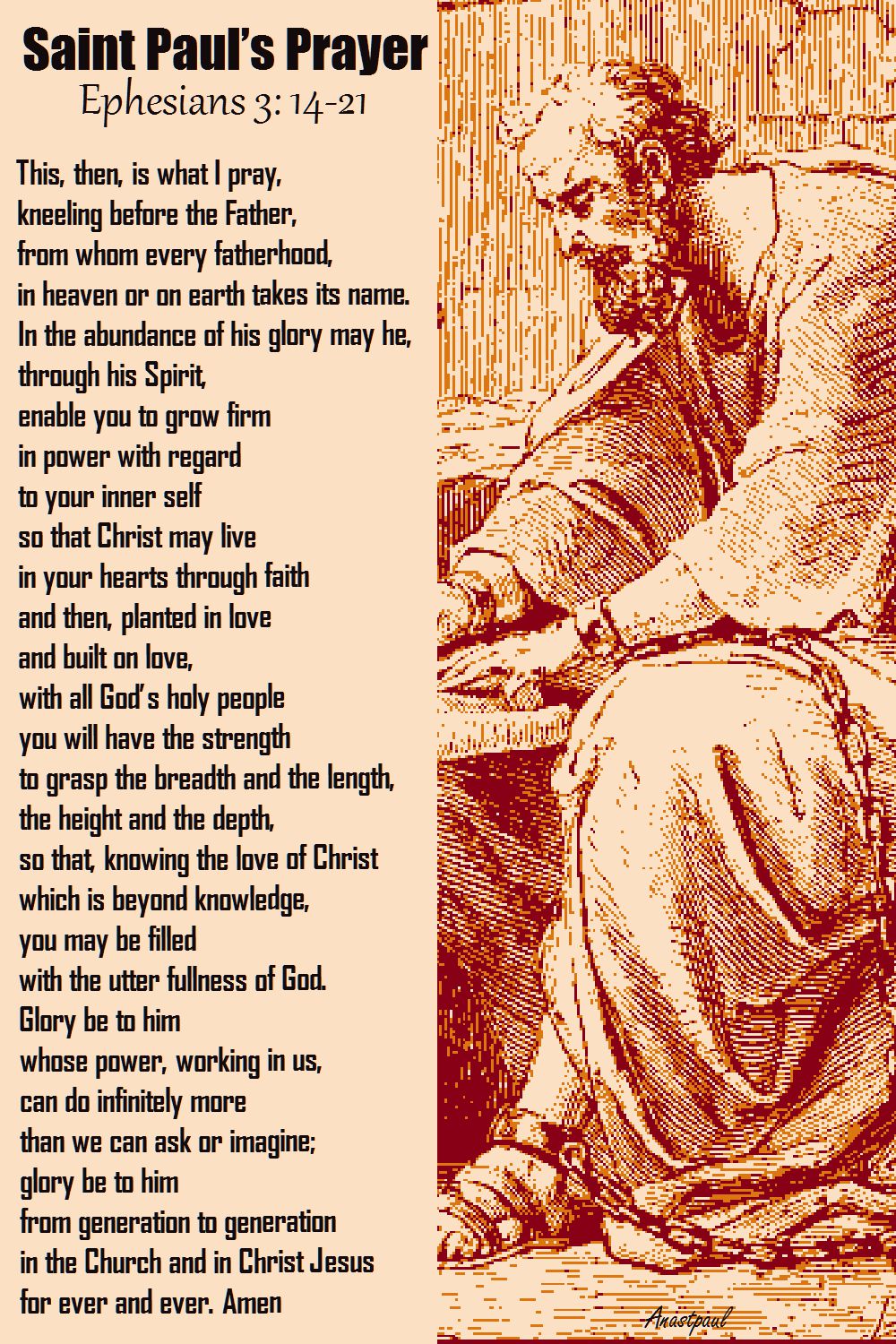
Saint Paul’s Prayer (Ephesians 3: 14-21)

This, then, is what I pray,
kneeling before the Father,
from whom every fatherhood,
in heaven or on earth takes its name.
In the abundance of his glory may he,
through his Spirit,
enable you to grow firm
in power with regard to your inner self
so that Christ may live
in your hearts through faith
and then, planted in love
and built on love,
with all God’s holy people
you will have the strength
to grasp the breadth and the length,
the height and the depth,
so that, knowing the love of Christ
which is beyond knowledge,
you may be filled
with the utter fullness of God.
Glory be to him whose power, working in us,
can do infinitely more
than we can ask or imagine;
glory be to him
from generation to generation
in the Church and in Christ Jesus
for ever and ever. Amen

st-pauls-prayer

Posted in FEASTS and SOLEMNITIES

Saint of the Day – 25 January – St Paul on his Conversion

Saint of the Day – 25 January – St Paul on his Conversion

The conversion of Paul the Apostle, was, according to the New Testament, an event in the life of Paul the Apostle that led him to cease persecuting early Christians and to become a follower of Jesus. It is normally dated to AD 33–36. The phrases Pauline conversion, Damascene conversion and Damascus Christophany and road to Damascus allude to this event.

The great Apostle Paul, named Saul at his circumcision, was born at Tarsus, the capital of Cilicia and was by privilege a Roman citizen, to which quality a great distinction and several exemptions were granted by the laws of the empire.   He was early instructed in the strict observance of the Mosaic law and lived up to it in the most scrupulous manner.   In his zeal for the Jewish law, which he thought the cause of God, he became a violent persecutor of the Christians.   He was one of those who combined to murder Saint Stephen and in the violent persecution of the faithful, which followed the martyrdom of the holy deacon, Saul exemplified himself above others.   By virtue of the power he had received from the high priest, he dragged the Christians out of their houses, loaded them with chains and thrust them into prison.

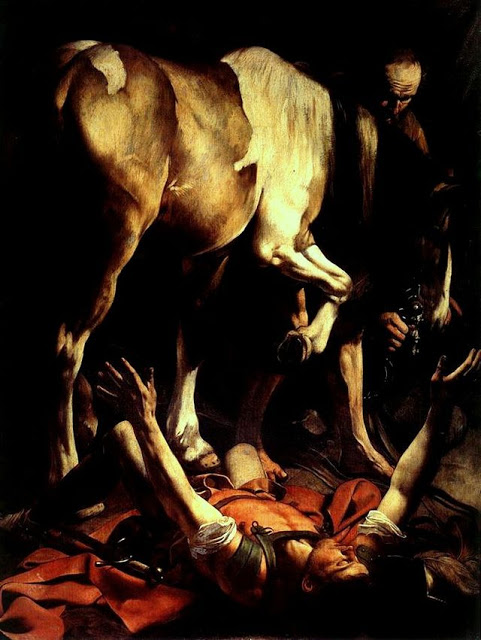
In the fury of his zeal he applied for a commission to take up all Jews at Damascus who confessed Jesus Christ and bring them bound to Jerusalem, that they might serve as examples for the others.   But God was pleased to show forth in him His patience and mercy.   While on his way to Damascus, he and his party were surrounded by a light from heaven, brighter than the sun and suddenly struck to the ground.   And then a voice was heard saying, “Saul, Saul, why dost thou persecute me?”   And Saul answered,   “Who art thou, Lord?” and the voice replied,  “I am Jesus whom thou dost persecute.”   This mild expostulation of our Redeemer, accompanied with a powerful interior grace, cured Saul’s pride, assuaged his rage and wrought at once a total change in him.

640px-caravaggio_-conversion-of-stpaul

Wherefore, trembling and astonished, he cried out, “Lord, what wilt Thou have me to do?” Our Lord ordered him to arise and to proceed on his way to the city, where he should be informed of what was expected from him.   Saul, arising from the ground, found that though his eyes were open, he saw nothing.   He was led by hand into Damascus, where he was lodged in the house of a Jew named Judas.   To this house came by divine appointment a holy man named Ananias, who, laying his hands on Saul, said,  “Brother Saul, the Lord Jesus who appeared to thee on thy journey, hath sent me that thou mayest receive thy sight and be filled with the Holy Ghost.”   Immediately something like scales fell from Saul’s eyes and he recovered his eyesight.


Then he arose and was baptised;  he stayed some few days with the disciples at Damascus, and began immediately to preach in the synagogues that Jesus was the Son of God.   Thus a blasphemer and a persecutor was made an apostle and chosen as one of God’s principal instruments in the conversion of the world.

From then on, his only work was to “present everyone perfect in Christ.   For this I labour and struggle, in accord with the exercise of his power working within me” (Colossians 1:28b-29). “For our gospel did not come to you in word alone but also in power and in the Holy Spirit and [with] much conviction” (1 Thessalonians 1:5a).

Paul’s life became a tireless proclaiming and living out of the message of the cross: Christians die baptismally to sin and are buried with Christ;  they are dead to all that is sinful and unredeemed in the world.   They are made into a new creation, already sharing Christ’s victory and someday to rise from the dead like him.   Through this risen Christ the Father pours out the Spirit on them, making them completely new.

So Paul’s great message to the world was:   You are saved entirely by God, not by anything you can do.   Saving faith is the gift of total, free, personal and loving commitment to Christ, a commitment that then bears fruit in more “works” than the Law could ever contemplate.


Posted in FEASTS and SOLEMNITIES, SAINT of the DAY

Saints & Feasts – 25 January

Conversion of Paul the Apostle (Feast)

St Agape the Martyr
St Agileus of Carthage
St Amarinus of Clermont
St Ananias of Damascus
Bl Antoni Swiadek
Bl Antonio Migliorati
St Apollo of Heliopolis
Bl Archangela Girlani
St Artemas of Pozzuoli
St Auxentius of Epirus
St Bretannion of Tomi
St Donatus the Martyr
St Dwynwen
St Emilia Fernández Rodríguez de Cortés
St Eochod of Galloway
Bl Francesco Zirano
Bl Henry Suso
St Joel of Pulsano
St Juventinus of Antioch
Bl Manuel Domingo y Sol
St Maximinus of Antioch
St Palaemon
St Poppo
St Praejectus of Clermont
St Publius of Zeugma
St Racho of Autun
St Sabinus the Martyr
Bl Teresa Grillo Michel

Posted in FEASTS and SOLEMNITIES, SAINT of the DAY

Saints and Memorials – 17 January

St Anthony the Abbot (Memorial)
Our Lady of Pontmain

St Achillas of Sketis
St Amoes of Sketis
St Antony of Rome
Bl Euphemia Domitilla
Bl Gamelbert of Michaelsbuch
St Genitus
St Genulfus
St Jenaro Sánchez Delgadillo – Additional Memorial: 21 May as one of the Martyrs of the Mexican Revolution
St John of Rome
Bl Joseph of Freising
St Julian Sabas the Elder
St Marcellus of Die
St Merulus of Rome
St Mildgytha
St Nennius
St Neosnadia
St Pior
St Richimir
Bl Rosalina of Villeneuve
St Sabinus of Piacenza
St Sulpicius of Bourges
Martyrs of Langres: Eleusippus, Leonilla, Meleusippus, Speusippus

Posted in CHRISTMASTIDE!, FEASTS and SOLEMNITIES, QUOTES of the SAINTS

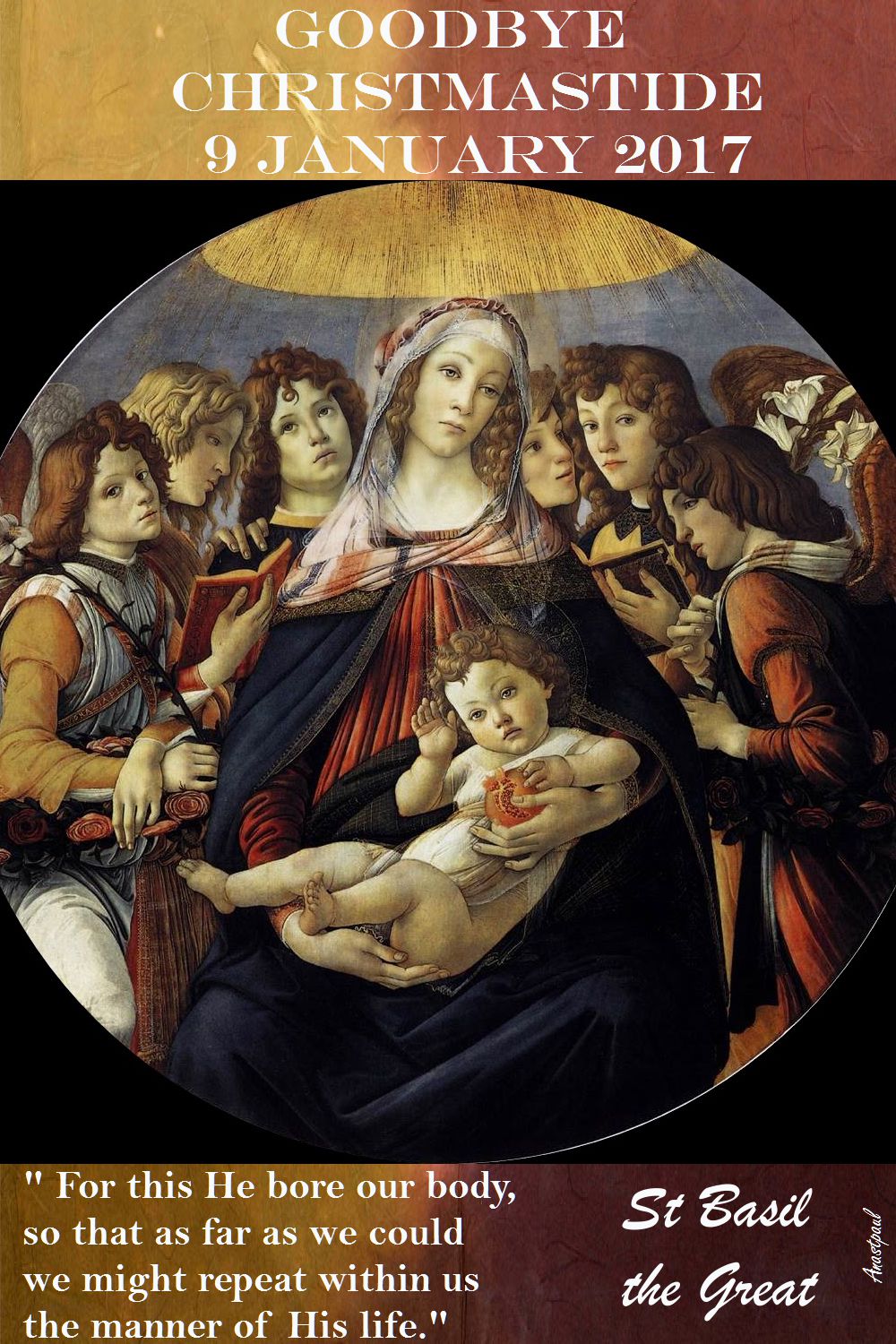
Goodbye Christmastide: 9 January 2017 The Feast of the Baptism of the Lord

Goodbye Christmastide: 9 January 2017 The Feast of the Baptism of the Lord

“Dearly Beloved, each word and deed of Our Saviour Jesus Christ is for us a lesson in virtue and piety.  For this end also did He assumed our nature, so that every man and every woman, contemplating as in a picture the practice of all virtue and piety, might strive with all their hearts to imitate His example.  For this He bore our body, so that as far as we could we might repeat within us the manner of His life.  And so, therefore, when you hear mention of some word or deed of His, take care not to receive it simply as something that incidentally happened but raise your mind upwards towards the sublimity of what He is teaching and strive to see what has been mystically handed down to us”

St Basil the Great

goodbye-christmas


Posted in CATHOLIC Quotes, CHRISTMASTIDE!, FEASTS and SOLEMNITIES, MORNING Prayers, SAINT of the DAY, The WORD

Thought for the Day – 9 January

Thought for the Day – 9 January

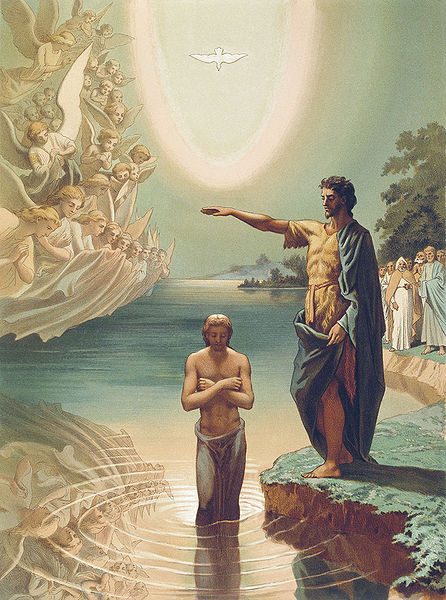
The same Spirit, that descended on the water of the River Jordan wafted over the waters during the first creation (Gen 1:2). Therefore, the Baptism in the Jordan presents yet another truth: that Jesus has started a new creation. He is the second man (1 Cor 15:47) or the last Adam (1 Cor 15:45), that comes to repair the first Adam’s guilt. He does this as the Lamb of God that takes away our sins.

‘Looking at the events in light of the Cross and Resurrection, the Christian people realised what happened: Jesus loaded the burden of all mankind’s guilt upon His shoulders; He bore it down into the depths of the Jordan. He inaugurated His public activity by stepping into the place of sinners’ (Joseph Ratzinger, Jesus of Nazareth, Bloomsbury 2007, p 18).

446px-gagarin_krescheniehristovo

131029691288fb5eb308d48c66351305