Posted in CHRISTMASTIDE!, FEASTS and SOLEMNITIES, MORNING Prayers, QUOTES of the SAINTS

Quote of the Day – 9 January

Quote of the Day – 9 January

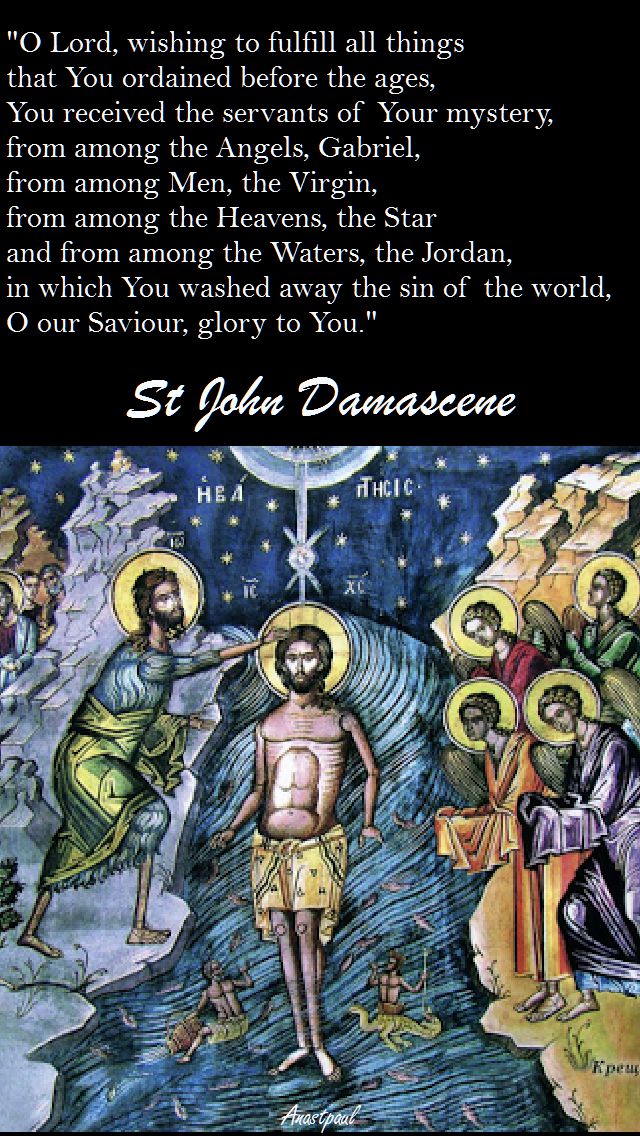
“O Lord, wishing to fulfill all things
that You ordained before the ages,
You received the servants of Your mystery,
from among the Angels, Gabriel,
from among Men, the Virgin,
from among the Heavens, the Star
and from among the Waters, the Jordan,
in which You washed away the sin of the world,
O our Saviour, glory to You.”

St. John of Damascus

st-john-damascene

Posted in CHRISTMASTIDE!, FEASTS and SOLEMNITIES, SAINT of the DAY

Feast of the Day – 9 January – The Baptism of the Lord

Feast of the Day – 9 January – The Baptism of the Lord

Today the Church celebrates the Solemnity of the Baptism of Our Lord. This brings to an end the season of Christmas. The Church recalls Our Lord’s second manifestation or epiphany which occurred on the occasion of His baptism in the Jordan. Jesus descended into the River to sanctify its waters and to give them the power to beget sons of God. The event takes on the importance of a second creation in which the entire Trinity intervenes.

Many of the incidents which accompanied Christ’s baptism are symbolical of what happened at our Baptism. At Christ’s baptism the Holy Spirit descended upon Him; at our Baptism the Trinity took its abode in our soul. At His baptism Christ was proclaimed the “Beloved Son” of the Father; at our Baptism we become the adopted sons of God. At Christ’s baptism the heavens were opened; at our Baptism heaven was opened to us. At His baptism Jesus prayed; after our Baptism we must pray to avoid actual sin.  ( Excerpted from Msgr. Rudolph G. Bandas)

At first glance, the Baptism of the Lord might seem an odd feast. Since the Catholic Church teaches that the Sacrament of Baptism is necessary for the remission of sins, particularly Original Sin, why was Christ baptised? After all, He was born without Original Sin, and He lived His entire life without sinning. Therefore, He had no need of the sacrament, as we do.   In submitting Himself humbly to the baptism of St. John the Baptist, however, Christ provided the example for the rest of us. If even He should be baptised, though He had no need of it, how much more should the rest of us be thankful for this sacrament, which frees us from the darkness of sin and incorporates us into the Church, the life of Christ on earth! His Baptism, therefore, was necessary–not for Him, but for us.  Many of the Fathers of the Church, as well as the medieval Scholastics, saw Christ’s Baptism as the institution of the sacrament.

The Baptism in the Jordan returns to the great Christmas theme of ‘Christification,’ Jesus of Nazareth’s spiritual anointing, His presentation as the Anointed One par excellence, the Messiah or the One sent by the Father for the salvation of mankind. The Spirit that descended on Jesus shows and seals in an incontrovertible way the ‘Christification’ of Jesus’ humanity that the Word had already fulfilled from the first moment of His miraculous conception by Mary.  Jesus, from the very beginning, was always the Lord’s Christ, He was always God.  Yet, His one, true humanity, that which is perfect in every way, as the Gospel records, constantly grew in natural and supernatural perfection. ‘And Jesus increased in wisdom, in stature, and in favour with God and with men’ (Lk2:52).  In Israel at 30 years of age, one reached full maturity and therefore could become a master. Jesus came of age and the Spirit, descending and remaining on Him, definitively consecrated His whole being as the Christ.   (Excerpted from the Congregation for the Clergy)

Posted in FEASTS and SOLEMNITIES, SAINT of the DAY

Saints, Feasts and Solemnities 9 January

Baptism of the Lord (Feast)
Black Nazarene

St Adrian of Canterbury
Bl Alix le Clerc
St Agatha Yi
Bl Antony Fatati
St Brithwald of Canterbury
St Eustratius of Olympus
Bl Franciscus Yi Bo-Hyeon
St Honorius of Buzancais
Bl Józef Pawlowski
Bl Kazimierz Grelewski
St Marcellinus of Ancona
St Marciana
Bl Martinus In Eon-min
St Maurontius
St Nearchus
St Paschasia of Dijon
St Peter of Sebaste
St Philip Berruyer
St Polyeucte
St Teresa Kim
St Waningus of Fécamp

Martyrs of Africa – 21 saints
Martyrs of Antioch – 6 saints
Martyrs of Smyrna

Posted in CHRISTMASTIDE!, FEASTS and SOLEMNITIES, The WORD

Celebrating the CHRISTMAS SEASON The Third Week: SOLEMNITY of EPHIPHANY – 8 January 2017

Celebrating the
CHRISTMAS SEASON
The Third Week
SOLEMNITY of EPHIPHANY
8 January 2017

“Lord, open my lips,and my mouth shall declare your praise.”

Daily Meditation:

Beloved, if God so loved us, we also must love one another. …
There is no fear in love, but perfect love drives out fear
because fear has to do with punishment,
and so one who fears is not yet perfect in love. 1 John 4

“Take courage, it is I, do not be afraid!”
He got into the boat with them and the wind died down. They were (completely) astounded.
They had not understood the incident of the loaves. On the contrary, their hearts were hardened. Mark 6

How often fear takes away our ability to love!
But, love drives out fear.
It appears that the key is to “understand the incident of the loaves.”
If Jesus has power, then it is foolish for us to fear.
If we won’t let Jesus have power in our lives,
then our hearts are still hardened.

Let us surrender our hearts to the Lord,
that we might let him love us
and take away all our fears,
that we might love more courageously, more completely.

Closing Prayer:
Lord.give me the joy of lasting peace
and fill my heart with so much love
that there is no more room for the worry and dread.

Teach me too, to follow Your Star and thus to become a shining star in the world.

May the Lord bless us,
protect us from all evil
and bring us to everlasting life.
Amen.

sunday-third-week-epiphany

Posted in CATHOLIC Quotes, CHRISTMASTIDE!, DEVOTIO, FEASTS and SOLEMNITIES, MORNING Prayers

Thought for the Day – Epiphany

Thought for the Day – Epiphany

“These men who set out towards the unknown were, in any event, men with a restless heart. Men driven by a restless quest for God and the salvation of the world. They were filled with expectation, not satisfied with their secure income and their respectable place in society. They were looking for something greater. They were no doubt learned men, quite knowledgeable about the heavens and probably possessed of a fine philosophical formation. But they desired more than simply knowledge about things. They wanted above all else to know what is essential. They wanted to know how we succeed in being human. And therefore they wanted to know if God exists and where and how he exists. Whether he is concerned about us and how we can encounter him. Nor did they want just to know. They wanted to understand the truth about ourselves and about God and the world. Their outward pilgrimage was an expression of their inward journey, the inner pilgrimage of their hearts. They were men who sought God and were ultimately on the way towards him. They were seekers after God.

The Wise Men followed the star and thus came to Jesus, to the great Light which enlightens everyone coming into this world (cf. Jn 1:9). As pilgrims of faith, the Wise Men themselves became stars shining in the firmament of history and they show us the way. The saints are God’s true constellations, which light up the nights of this world, serving as our guides. Saint Paul, in his Letter to the Philippians, told his faithful that they must shine like stars in the world (cf. 2:15).”

Extract from the HOMILY OF HIS HOLINESS BENEDICT XVI – Vatican Basilica
Sunday, 6 January 201
3

benedict-on-epiphany

Posted in FEASTS and SOLEMNITIES, MORNING Prayers, QUOTES of the SAINTS, The WORD

One Minute Reflection – 8 January

One Minute Reflection – 8 January

…..and on entering the house they saw the child with Mary his mother. They prostrated themselves and did him homage. …………..Mt 2:11

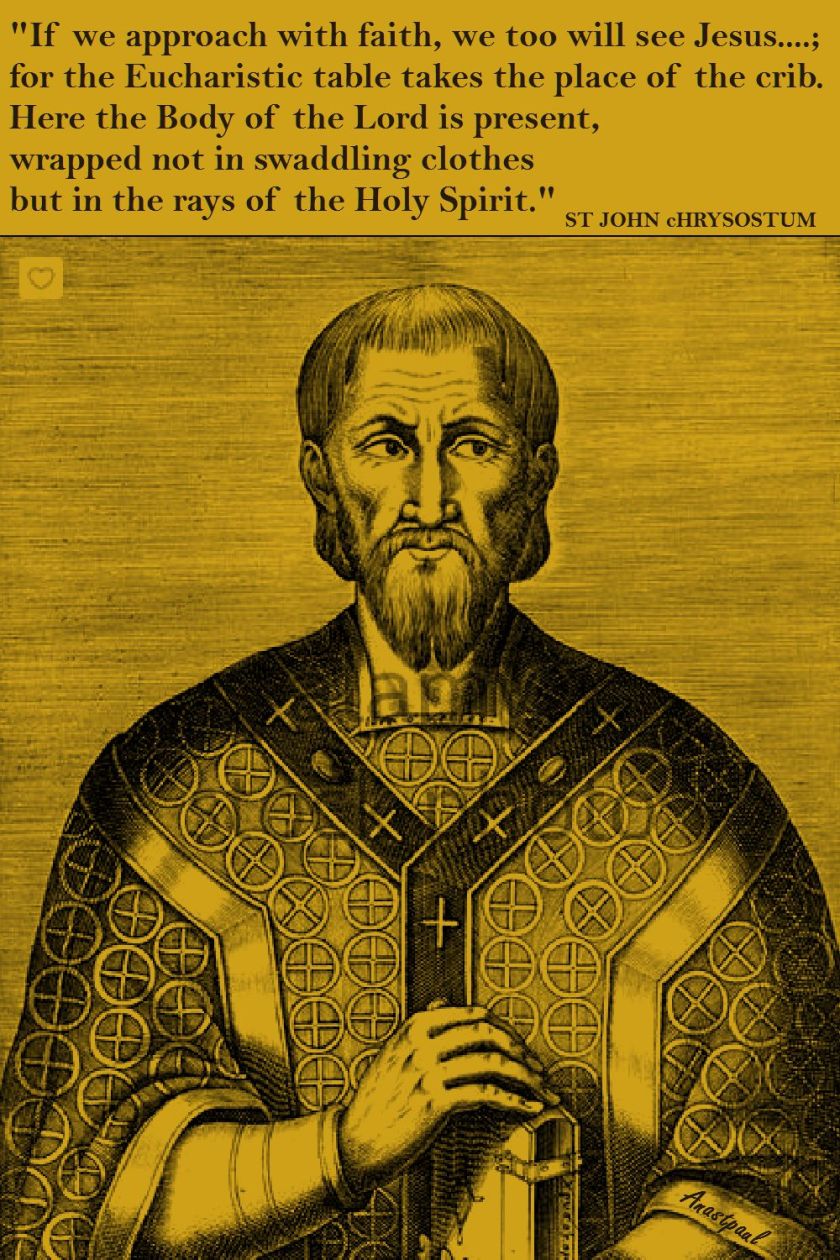
REFLECTION – If we approach with faith, we too will see Jesus….; for the Eucharistic table takes the place of the crib.
Here the Body of the Lord is present, wrapped not in swaddling clothes but in the rays of the Holy Spirit……………..St John Chrysostum

PRAYER – Lord, God, teach me to see the living presence of Your Divine Son in the Eucharist. Make my faith so vivid that I will gladly come to encounter Jesus in every Mass.
Holy Christ Child, intercede for us, amen.

matthew-2-11if-we-approachepiphany-feast

Posted in CHRISTMASTIDE!, FEASTS and SOLEMNITIES, MORNING Prayers

Our Morning Offering – 8 January EPIPHANY

Our Morning Offering – 8 January EPIPHANY

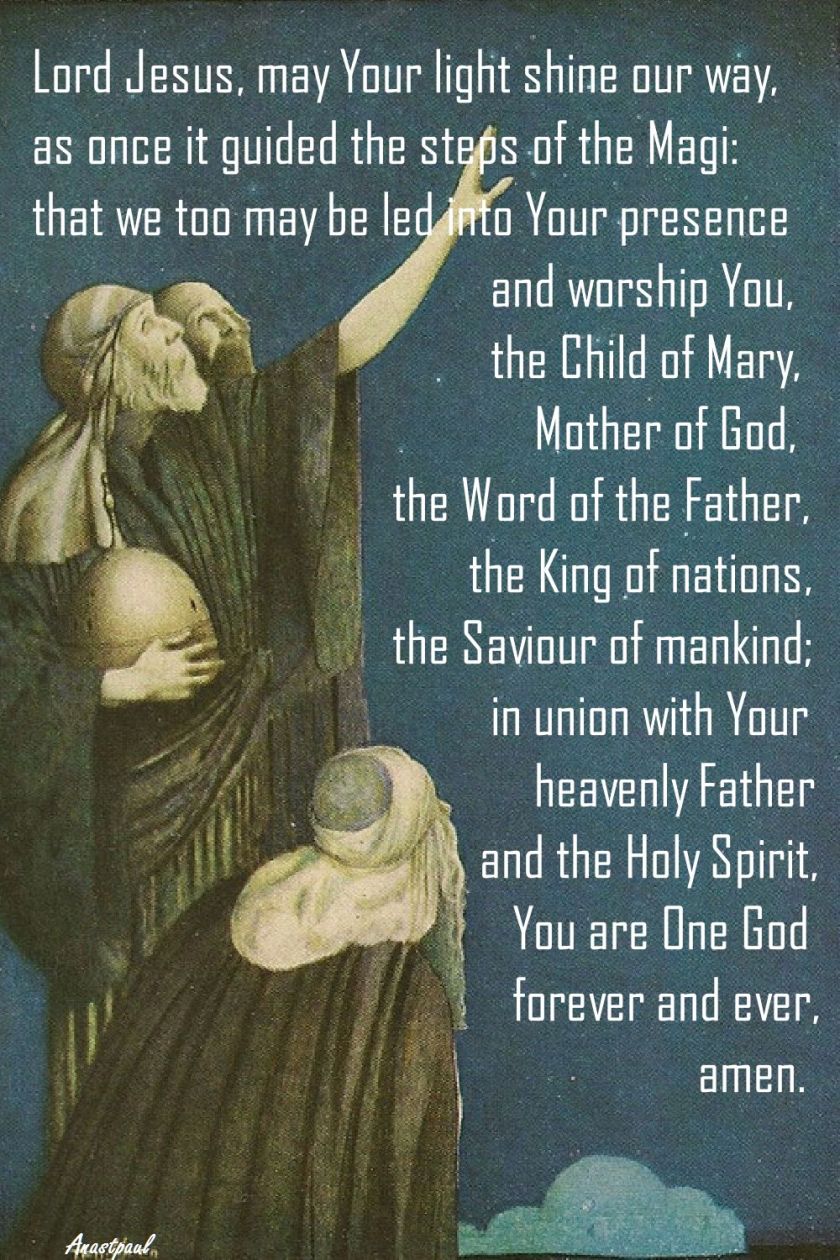
Lord Jesus
may Your light shine our way,
as once it guided the steps of the Magi:
that we too may be led into Your presence
and worship You,
the Child of Mary,
Mother of God,
the Word of the Father,
the King of nations,
the Saviour of mankind;
in union with Your heavenly Father
and the Holy Spirit, You are One God
forever and ever, amen.

epiphany-prayer

Posted in CHRISTMASTIDE!, DEVOTIO, FEASTS and SOLEMNITIES, MORNING Prayers

Blessing of a Home at Epiphany

Blessing of a Home at Epiphany

Priest: Peace be to this house.
All: And to all who live here.

Priest: Bless, O Lord, Almighty God,
this home, that in it there may be health,
chastity, strength of victory, humility,
goodness, and industry,
a fullness of law and the action of graces
through God the Father and the Son
and the Holy Spirit and that this blessing
may remain on this home
and on those who frequent it.
Through Christ our Lord. Amen..

After the blessing,
the initials of the Magi
(traditional names: Caspar, Melchior, and Balthazar)
are written with chalk over the main door way of the house, like this:
20 + C + M + B + 17
(the + is a cross; the “17” stands for 2017;
change the year accordingly).

house-blessing

Posted in FEASTS and SOLEMNITIES, MORNING Prayers, SAINT of the DAY

SOLEMNITY of the Epiphany of the Lord

Today the Church celebrates the Solemnity of the Epiphany. “The Lord and ruler is coming; kingship is his, and government and power.” With these words the Church proclaims that today’s feast brings to a perfect fulfillment all the purposes of Advent. Epiphany, therefore, marks the liturgical zenith of the Advent-Christmas season. — Pius Parsch

The Solemnity of the Epiphany is celebrated either on January 6 or, according to the decision of the episcopal conference, on the Sunday between January 2 and January 8. The young Messiah is revealed as the light of the nations. Yet, as the antiphon for the Magnificat at Second Vespers reminds us, three mysteries are encompassed in this solemnity: the adoration of the Christ Child by the Magi, the Baptism of Christ and the wedding feast at Cana. Extra candles and/or lamps may be placed around the sanctuary and in other parts of the church to honor Christ revealed as the Light of the Gentiles (Ceremonial of Bishops). It is customary to replace the images of the shepherds at the crib with the three Magi and their gifts. — Ceremonies of the Liturgical Year, Msgr. Peter J. Elliott, Ignatius Press.

The feast of the Epiphany, which was kept in the East and in certain Western Churches before being observed in Rome, seems to have been originally a feast of the nativity; January 6, for those churches where it was kept, was the equivalent of Christmas (December 25) in the Roman Church. The feast was introduced at Rome in the second half of the sixth century and became the complement and, so to say, the crown of the Christmas festival.

Epiphany means manifestation. What the Church celebrates today is the manifestation of our Lord to the whole world; after being made known to the shepherds of Bethlehem He is revealed to the Magi who have come from the East to adore Him. Christian tradition has ever seen in the Magi the first fruits of the Gentiles; they lead in their wake all the peoples of the earth and thus the Epiphany is an affirmation of universal salvation. St. Leo brings out this point admirably in a sermon, read at Matins, in which he shows in the adoration of the Magi the beginnings of Christian faith, the time when the great mass of the heathen sets off to follow the star which summons it to seek its Saviour.

Traditions for the Solemnity of the Lord’s Epiphany

Many traditions and genuine manifestations of popular piety have been developed in relation to the Solemnity of the Lord’s Epiphany, which is of ancient origin and rich in spiritual content. Among such forms of popular piety, mention may be made of:

  • the solemn proclamation of Easter and the principal dominical feasts; its revival in many places would be opportune since it served to make the connection between the Epiphany and Easter, and orientate all feasts towards the greatest Christian solemnity;
  • the exchange of “Epiphany gifts”, which derives from the gifts offered to Jesus by the three kings (cf. Mt 2,11) and more radically from the gift made to mankind by God in the birth of Emmanuel amongst us (cf. Is 7, 14; 9, 16; Mt 1, 23). It is important, however, to ensure that the exchange of gifts on the solemnity of the Epiphany retain a Christian character, indicating that its meaning is evangelical: hence the gifts offered should be a genuine expression of popular piety and free from extravagance, luxury, and waste, all of which are extraneous to the Christian origins of this practice;
  • the blessing of homes, on whose lintels are inscribed the Cross of salvation, together with the indication of the year and the initials of the three wise men (C+M+B), which can also be interpreted to mean Christus Mansionem Benedicat, written in blessed chalk; this custom, often accompanied by processions of children accompanied by their parents, expresses the blessing of Christ through the intercession of the three wise men and is an occasion for gathering offerings for charitable and missionary purposes;
  • initiatives in solidarity with those who come from afar; whether Christian or not, popular piety has encouraged a sense of solidarity and openness;
    assistance to the work of evangelisation; the strong missionary character of the Epiphany has been well understood by popular piety and many initiatives in support of the missions flourish on 6 January, especially the “Missionary work of the Holy Child”, promoted by the Apostolic See;
  • the assignation of Patrons; in many religious communities and confraternities, patron saints are assigned to the members for the coming year.
    — Directory on Popular Piety and the Liturgy
Posted in FEASTS and SOLEMNITIES, SAINT of the DAY

Saints and Feasts – 8 January

SOLEMNITY of the Epiphany of the Lord

St Abo of Tblisi
St Albert of Cashel
St Apollinaris the Apologist
St Athelm of Canterbury
St Atticus of Constantinople
St Carterius of Caesarea
Bl Edward Waterson
St Ergnad of Ulster
St Erhard of Regensburg
St Eugenian of Autun
Bl Eurosia Fabris
St Garibaldus of Regensburg
St Gudule of Brussels
St Helladius
St Julian of Beauvais
St Lawrence Giustiniani
St Lucian of Beauvais
St Maximian of Beauvais
St Maximus of Pavia
Bl Nathalan of Aberdeen
St Patiens of Metz
St Pega of Peakirk
St Severinus of Noricum
St Theophilus the Martyr
St Thorfinn
St Wulsin of Sherborne

Martyrs of Greece – 9 saints
Martyrs of Terni – 4 saints

Posted in CHRISTMASTIDE!, FEASTS and SOLEMNITIES, The WORD

Celebrating the CHRISTMAS SEASON FRIDAY OF THE SECOND WEEK 6 January 2017 – EPIPHANY of the LORD

Celebrating the
CHRISTMAS SEASON
FRIDAY OF THE SECOND WEEK
6 January 2017 – EPIPHANY of the LORD

“Lord, open my lips, and my mouth shall declare your praise.”

Daily Meditation:
Beloved, if God so loved us, we also must love one another. …
There is no fear in love but perfect love drives out fear
because fear has to do with punishment,
and so one who fears is not yet perfect in love………… 1 John 4

“Take courage, it is I, do not be afraid!”
He got into the boat with them and the wind died down.
They were astounded.
They had not understood the incident of the loaves.
On the contrary, their hearts were hardened”………….. Mark 6

How often fear takes away our ability to love!
But, love drives out fear.
It appears that the key is to “understand the incident of the loaves.”
If Jesus has power, then it is foolish for us to fear.
If we won’t let Jesus have power in our lives,
then our hearts are still hardened.

Let us surrender our hearts to the Lord,
that we might let Him love us
and take away all our fears,
that we might love more courageously, more completely.

Closing Prayer:
My love for You is so imperfect, Lord.
I know I am filled with fear
and yet I long to taste the depths of Your love.

Give me the joy of lasting peace
and fill my heart with so much love
that there is no more room for the worry and dread.

Open my eyes to those around me
and give me the courage to act in justice
to help make their lives better,
to share Your love with all.

May the Lord bless us,
protect us from all evil
and bring us to everlasting life.
Amen.

epiphany-friday-6-jan

Posted in FEASTS and SOLEMNITIES, SAINT of the DAY

Saints and Feasts : 6 January

Epiphany (Celebrated generally on Sunday 8 January) – Epiphany celebrates the visit of the three kings or wise men to the Christ Child, signifying the extension of salvation to the Gentiles. The date of Epiphany, one of the oldest Christian feasts, is January 6, the 12th day after Christmas. However, in most countries, including the United States, the celebration of Epiphany is transferred to the Sunday that falls between January 2 and January 8 (inclusive). Greece, Ireland, Italy and Poland continue to observe Epiphany on January 6, as do some dioceses in Germany.
AND just in case you wish to know and be ready:
When Is the Feast of the Epiphany in Future Years?

Here is the date of Epiphany and the date it will be observed in most countries, next year and in future years:
Epiphany 2018: Saturday, January 6, 2018 (transferred to Sunday, January 7, in the United States and most other countries)
Epiphany 2019: Sunday, January 6, 2019
Epiphany 2020: Monday, January 6, 2020 (generally transferred to Sunday, January 5)
Epiphany 2021: Wednesday, January 6, 2021 (generally transferred to Sunday January 2)
Epiphany 2022: Thursday, January 6, 2022 (generally transferred to Sunday January 2)
Epiphany 2023: Friday, January 6, 2023 (generally transferred to sUNDAY January 9)
Epiphany 2024: Saturday, January 6, 2024 (generally transferred to Sunday January 7)
Epiphany 2025: Monday, January 6, 2025 (generally transferred to Sunday January 5)
Epiphany 2026: Tuesday, January 6, 2026 (generally transferred to Sunday January 4)
Epiphany 2027: Wednesday, January 6, 2027 (generally transferred to Sunday, January 3)
Epiphany 2028: Thursday, January 6, 2028 (generally transferred to Sunday, January 2)
Epiphany 2029: Saturday, January 6, 2029 (generally transferred to Sunday, January 7)
Epiphany 2030: Sunday, January 6, 2030

Because Epiphany is one of the most important Christian feasts, it is a Holy Day of Obligation.


St André Bessette (Optional Memorial,
St Andrew Corsini
St Antoninus
St Basillisa of Antinoë
St Demetrius of Philadelphia
St Diman Dubh of Connor
St Edeyrn
St Eigrad
St Erminold of Prüfening
St Felix of Nantes
Bl Frederick of Saint-Vanne
Bl Gertrud of Traunkirchen
Bl Gertrude van Oosten
St Guarinus of Sion
St Guy of Auxerre
St Honorius
St Hywyn of Aberdaron
St John de Ribera
St Julian of Antinoë
St Julius
Bl Luc of Roucy
Bl Macarius the Scot
St Macra of Rheims
St Merinus
St Nilammon of Geris
St St Petran of Landévennec
Peter of Canterbury
Bl Peter Thomas
St Pia of Quedlinburg
St Pompejanus
St Rafaela Porras y Ayllón
Bl Raymond de Blanes
Bl Rita Amada de Jesus
St Schotin
St Wiltrudis of Bergen

Martyrs in Africa
Martyrs of Sirmium – 8 saints
Martyrs of Ukraine – 25 beati
Seven Holy Deacons
Twelve Apostles of Ireland

Posted in FEASTS and SOLEMNITIES, JESUIT SJ, SAINT of the DAY

Thought for the Day – 3 January

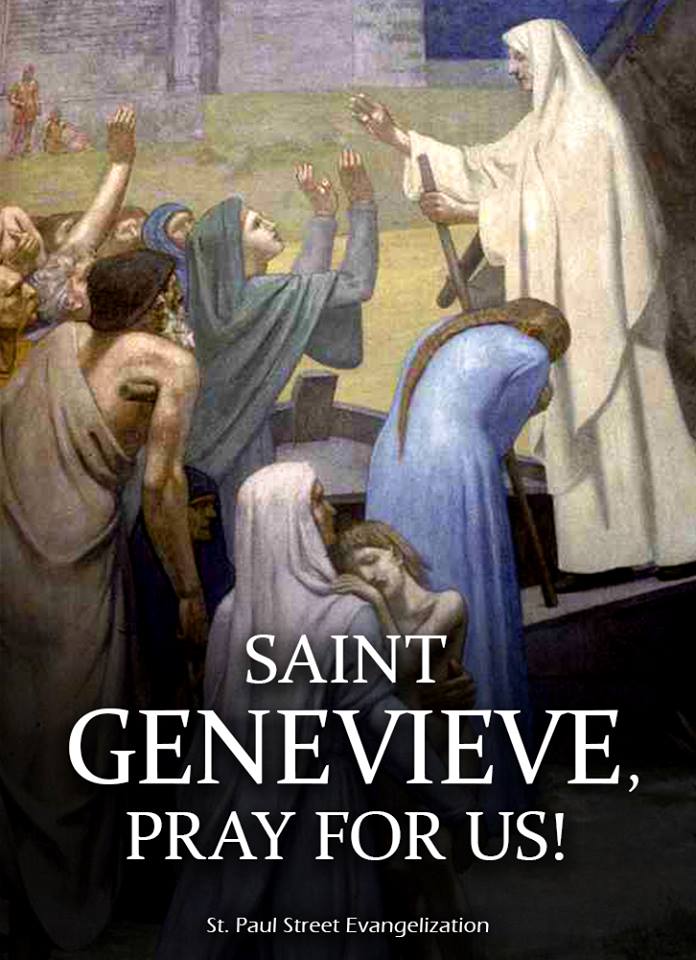
Saints like St Genevieve believed in the power of prayer and in a kind and loving Providence watching over human affairs.  By their own faith, they inspired others to this same kind of trust in God – that they were not alone in the human struggle and that God does marvelous things in answer to prayer.  Prayer is and always will be a powerful means of accomplishing wonders.

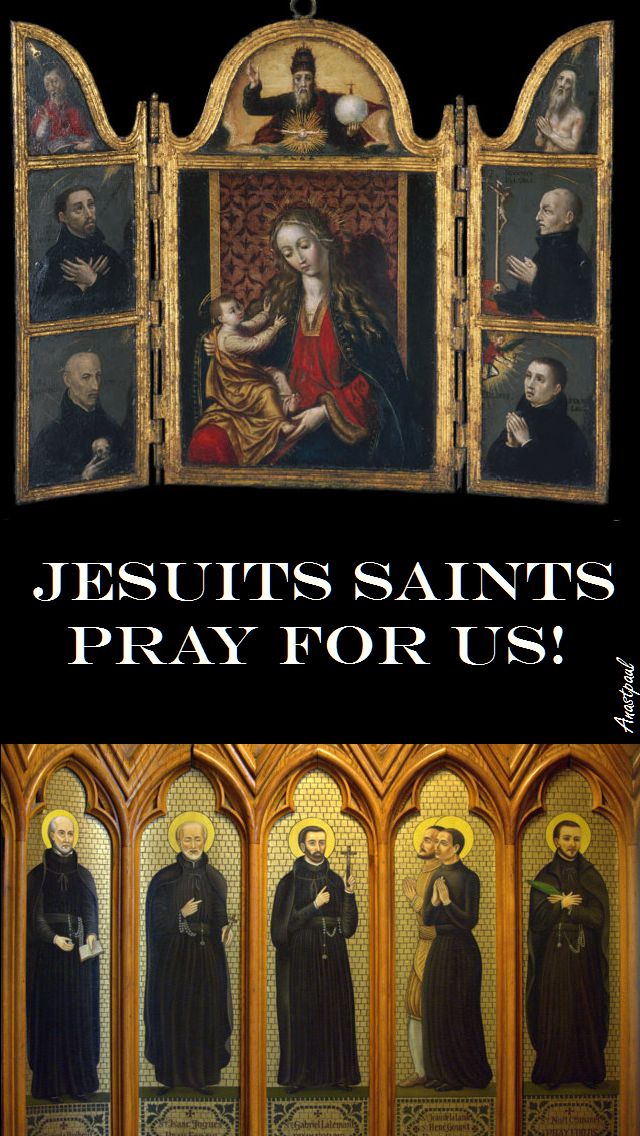
St Genevieve and all you Jesuit Sains, Pray for us!

“So You haven’t really sent me away from You, after all. When You assigned me the task of going out among men, You were only repeating to me Your one and only commandment: to find my way home to You in love. All care of souls is ultimately possible only in union with You, only in the love that binds me to You and thus makes me Your companion in finding a path to the hearts of men.”   (Encounters with Silence, Karl Rahner, translated and foreword by James M. Demske, SJ, South Bend, IN: St. Augustine’s Press 1999, p. 67.)

st-genevieve-pray-for-usjesuits-saints-pray-for-us

Posted in CATHOLIC Quotes, FEASTS and SOLEMNITIES, JESUIT SJ

Quote of the Day – 3 January

Quote of the Day – 3 January

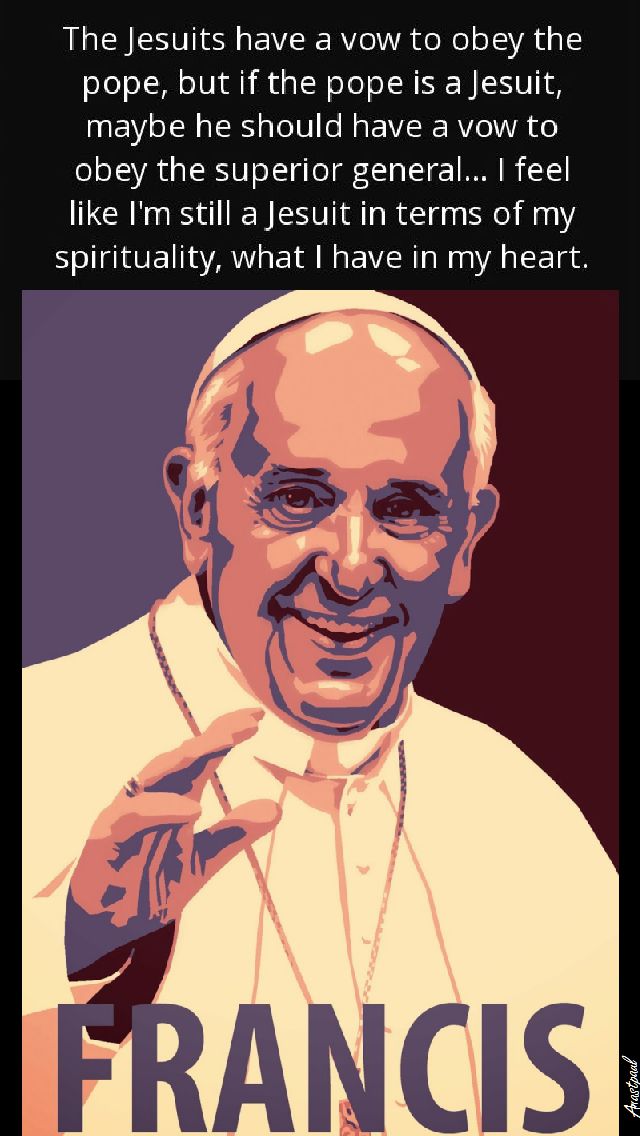
“The Jesuits have a vow to obey the pope but if the pope is a Jesuit, maybe he should have a vow to obey the superior general… I feel like I’m still a Jesuit in terms of my spirituality, what I have in my heart.”

~~~~Pope Francis
francis-quote

Posted in FEASTS and SOLEMNITIES, JESUIT SJ, MORNING Prayers, QUOTES of the SAINTS, SAINT of the DAY, The WORD

One Minute Reflection – 3 January

One Minute Reflection – 3 January

I planted the seed and Apollos watered it but God made it grow…………1 Cor 3:6

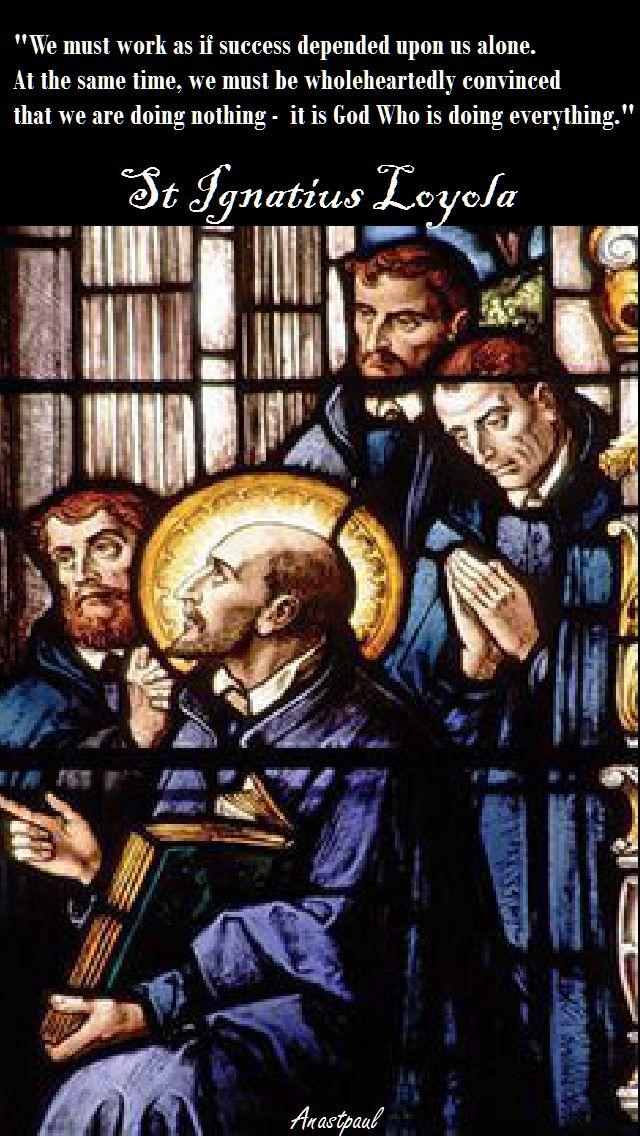
REFLECTION – We must work as if success depended upon us alone.

At the same time, we must be wholeheartedly convinced that we are doing nothing –  it is God Who is doing everything………St Ignatius Loyola

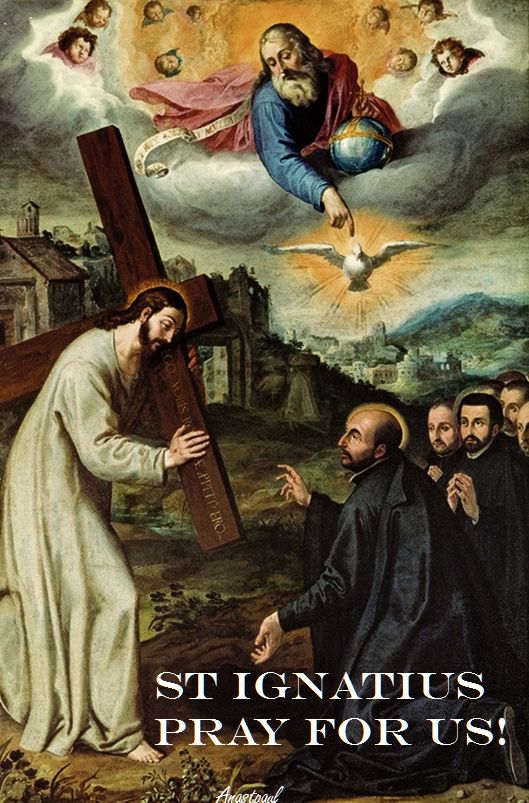
PRAYER – All-powerful God, let me realise that no matter what I do, it is only through You that I do it.  Help me to work as if all depended on me and pray as if all depended on You.  St Genevieve you were a sure example of working as if all dependd on you, please pray for us.  St Ignatius and all the great saints of the Society of Jesus, pray for us unceasingly, amen!

131029691288fb5eb308d48c663513056773fa1718edf9937216e343fa5471bbst-genevieve-jan-3

Posted in FEASTS and SOLEMNITIES, JESUIT SJ

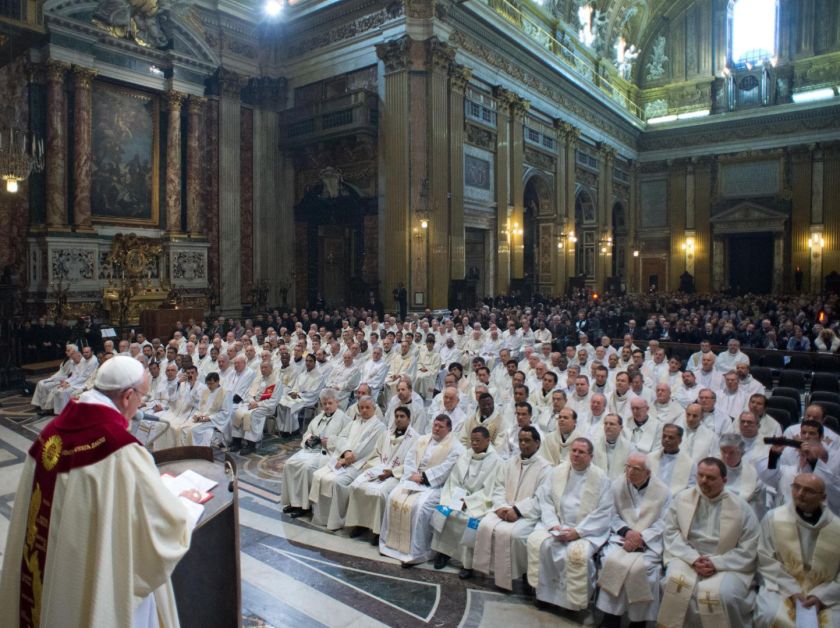
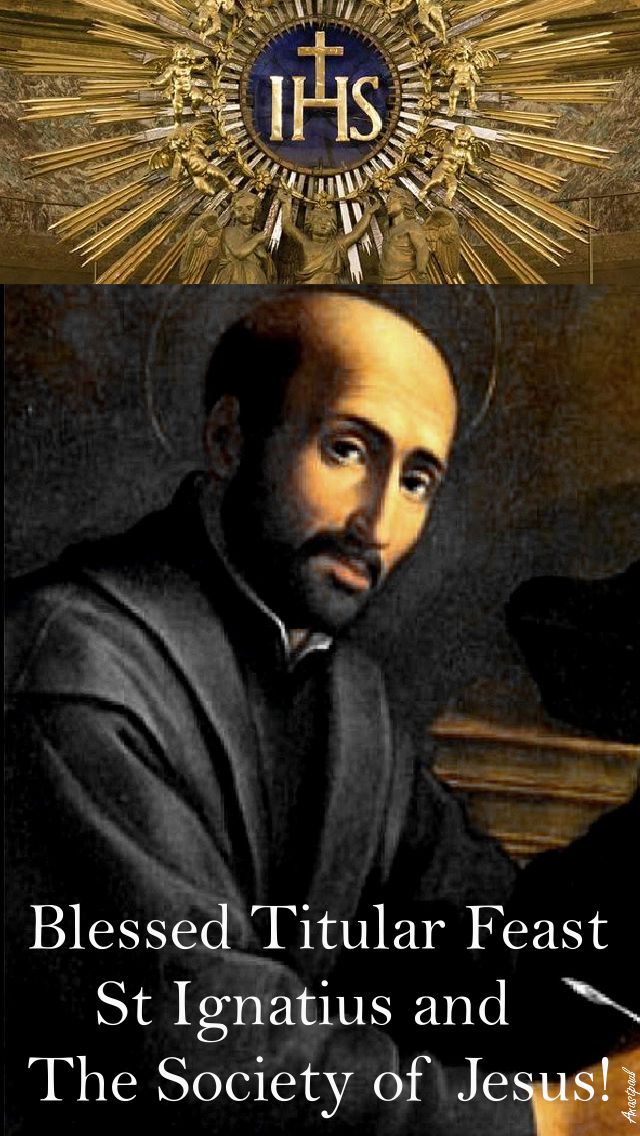
THE TITULAR FEAST OF THE JESUITS

Today, 3 January, the Celebration of the Feast of the Holy Name of Jesus, we celebrate too, the gift of the Society of Jesus.

See Video 3 January 2014 – https://www.youtube.com/watch?v=kUuOT_rre0w
Pope Francis celebrates the Holy Mass at the Church of the
Jesus, with all the Jesuits in Rome, for thanksgiving for the entry of
Blessed Peter Faber into the catalogue of Saint and on the Solemnity of the
Holy Name of Jesus, the titular feast of the Society of Jesus.

17449930

Jesus said to him, “I am the way and the truth and the life.  No one comes to the Father except through me.”………..John 14:6

The giving of the name “Company (Society) of Jesus” occurred in September 1540 when the early companions and Ignatius were founded as a religious institute.

Ignatius and two of his companions, Peter Faber and James Lainez, decided to go to Rome to place themselves and the other companions at the disposal of the Pope. A few miles outside of Rome at a chapel at La Storta, the companions stopped to pray. At this spot, Ignatius had the second most significant of his mystical experiences. In his vision, God the Father told Ignatius, “I will be favourable to you in Rome” and that he would place him (Ignatius) with His Son. Ignatius did not know what his experience meant, for it could mean persecution as well as success since Jesus experienced both.

Formal approval of this new order was given by Pope Paul III on September 27, 1540. Since they had referred to themselves as the Company of Jesus, in English their order became known as the Society of Jesus. Ignatius was elected on the first ballot of the group to be superior but he begged them to reconsider, pray and vote again a few days later. The second ballot came out as the first, unanimous for Ignatius, except for his own vote. He was still reluctant to accept but his Franciscan confessor told him it was God’s will, so he acquiesced. On the Friday of Easter week, April 22, 1541, at the Church of St. Paul Outside-the-Walls, the friends pronounced their vows in the newly formed Order.

titular-feast-jesuit

Posted in FEASTS and SOLEMNITIES, SAINT of the DAY

Feast of the Circumcision of Jesus Christ – 1 January

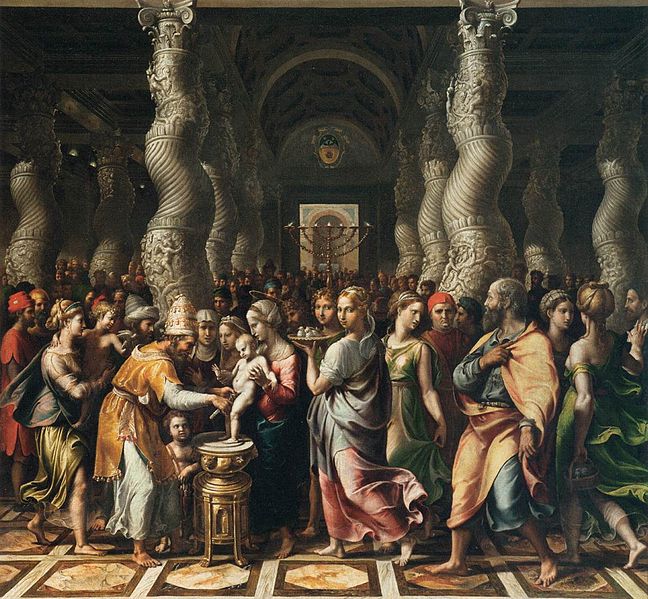
At an early stage the Church in Rome celebrated on 1 January a feast that it called the anniversary (Natale) of the Mother of God.  When this was overshadowed by the feasts of the Annunciation and the Assumption, adopted from Constantinople at the start of the 7th century, 1 January began to be celebrated simply as the octave day of Christmas, the “eighth day” on which, according to Luke 2:21, the child was circumcised and given the name Jesus.  In the 13th or 14th century 1 January began to be celebrated in Rome, as already in Spain and Gaul, as the feast of the Circumcision of the Lord and the Octave of the Nativity, while still oriented towards Mary and Christmas.  The emphasis that Saint Bernardine of Siena (1380–1444) laid on the name of Jesus in his preaching led in 1721 to the institution of a separate Feast of the Holy Name of Jesus. Pope John XXIII’s 1960 rubrical and calendrical revision called 1 January simply the Octave of the Nativity. (This 1960 calendar was incorporated into the 1962 Roman Missal, whose continued use is authorized by the motu proprio Summorum Pontificum.) The 1969 revision states: “1 January, the Octave Day of the Nativity of the Lord, is the Solemnity of Mary, the Holy Mother of God and also the commemoration of the conferral of the Most Holy Name of Jesus.”

the_circumcision_by_luca_signorelli
Luca Signorelli
648px-giulio_romano_-_the_circumcision_-_wga09617
Giulio Romano
Posted in FEASTS and SOLEMNITIES, MORNING Prayers, Uncategorized

Thought for the Day 1 January 2017

Thought for the Day 1 January 2017

Many themes come together at today’s celebration. It is the Octave of Christmas: Our remembrance of Mary’s divine motherhood injects a further note of Christmas joy. It is a day of prayer for world peace: Mary is the mother of the Prince of Peace. It is the first day of a new year: Mary continues to bring new life to her children—who are also God’s children

Mary, Mother of God, Pray for us!

mary-mother-of-god-1-jan

Posted in FEASTS and SOLEMNITIES, SAINT of the DAY, The BLESSED VIRGIN MARY, Uncategorized

Solemnity of Mary, Mother of God Octave Day of Christmas

The precise title “Mother of God” goes back at least to the third or fourth century. In the Greek form Theotokos (God-bearer), it became the touchstone of the Church’s teaching about the Incarnation. The Council of Ephesus in 431 insisted that the holy Fathers were right in calling the holy virgin Theotokos. At the end of this particular session, crowds of people marched through the street shouting: “Praised be the Theotokos!” The tradition reaches to our own day. In its chapter on Mary’s role in the Church, Vatican II’s Dogmatic Constitution on the Church calls Mary “Mother of God” 12 times.

We learn the great truth that Mary is the Mother of God from St. Luke’s Gospel, in the message given by the angel to Mary: “You are going to be the mother of a Son and you will call Him Jesus, and He will be called the Son of the Most High.”  Once she said yes, the Holy Spirit created in her womb the human nature that God the Son would assume. Since motherhood is of the person and not of the nature alone and since Mary is the mother of Jesus, true God and true Man, then she is rightly called the Mother of God. After the angel had appeared to her and told her that she would be the mother of Jesus, the Blessed Virgin Mary visited Elizabeth. At Mary’s greeting Elizabeth said, “Why should this great thing happen to me, that my Lord’s mother comes to visit me?” [Lk 1:43]. The Holy Scriptures teach us that Jesus was both God and man.   John writes: “The Word became flesh and lived among us” [Jn 1:14].  St. Paul refers to this event when he writes to the Galatians, “God sent forth His Son, born of a woman,” and as, “eternally begotten of the Father.”  So Bible teaches that Mary was the mother of the God-Man Jesus, not in the sense that she gave birth to Jesus as God but in the sense that the Baby she bore had the nature of God and the nature of Man.

For centuries, Mary has been praised because she believed. She is Mother of God because of her faith in God. The Solemnity of Mary, Mother of God, celebrates Mary’s faith and trust in God alone. The Church wants us to imitate her faith.

Holy Mary, Mother of God, Pray for us!

326_600

1460-64-giovanni-bellini-italian-early-renaissance-painter-1430-1516-presentation-at-the-temple
Giovanni Bellini 1430
2861e5ec88d90c872f154accc9a23223
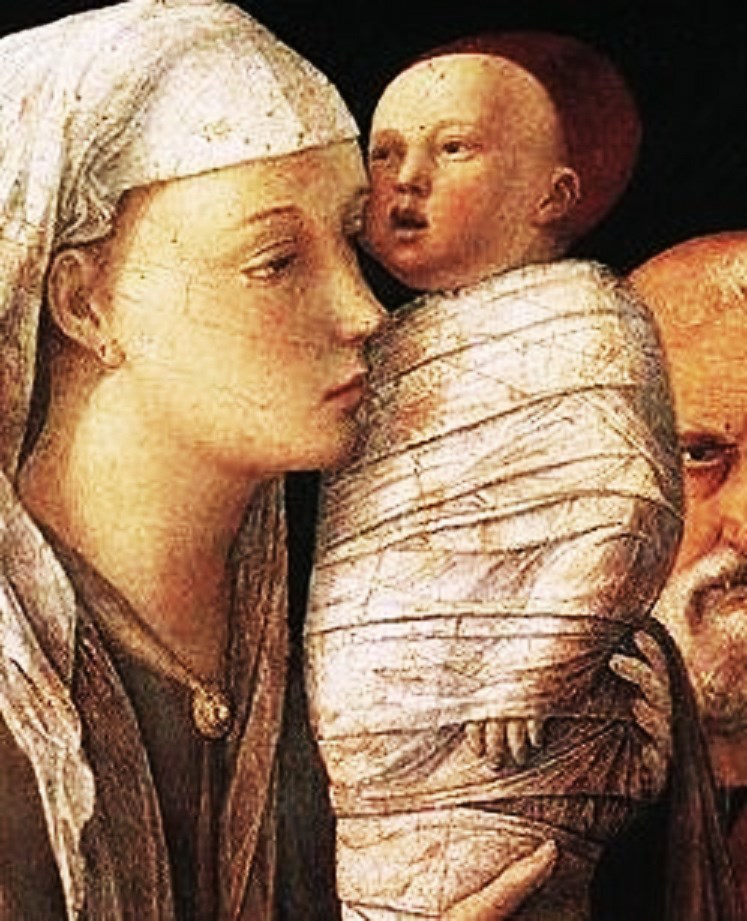
Mantegna 1465-1470


mary-mother-of-god

mary-mother-of-god-jan-1

Posted in FEASTS and SOLEMNITIES, MORNING Prayers, SAINT of the DAY

Our Morning Offering – 30 December

Our Morning Offering – 30 December
JESUS, Son of God and Son of Mary, bless our family.
Graciously inspire in us the unity, peace and mutual love
that You found in Your own family in the little town of Nazareth.
MARY, Mother of Jesus and Our Mother,
nourish our family with your faith and your love.
Keep us close to your Son, Jesus, in all our sorrows and joys.
JOSEPH, Foster-father to Jesus, guardianand spouse of Mary, keep our family safe
from harm. Help us in all times of discouragement or anxiety.
HOLY FAMILY OF NAZARETH,
make our family one with you. Help us to be instruments of peace. Grant that love,
strengthened by grace, may prove mightierthan all the weaknesses and trials through
which our families sometimes pass.
May we always have God at the centre of our hearts and homes until we are all one family,
happy and at peace in our true home with you.
Amen

morning-offering-holy-family


Posted in CONSECRATION Prayers, DEVOTIO, FEASTS and SOLEMNITIES, MORNING Prayers, SAINT of the DAY

Saint of the Day – 30 December

Saint of the Day – 30 December – The Holy Family

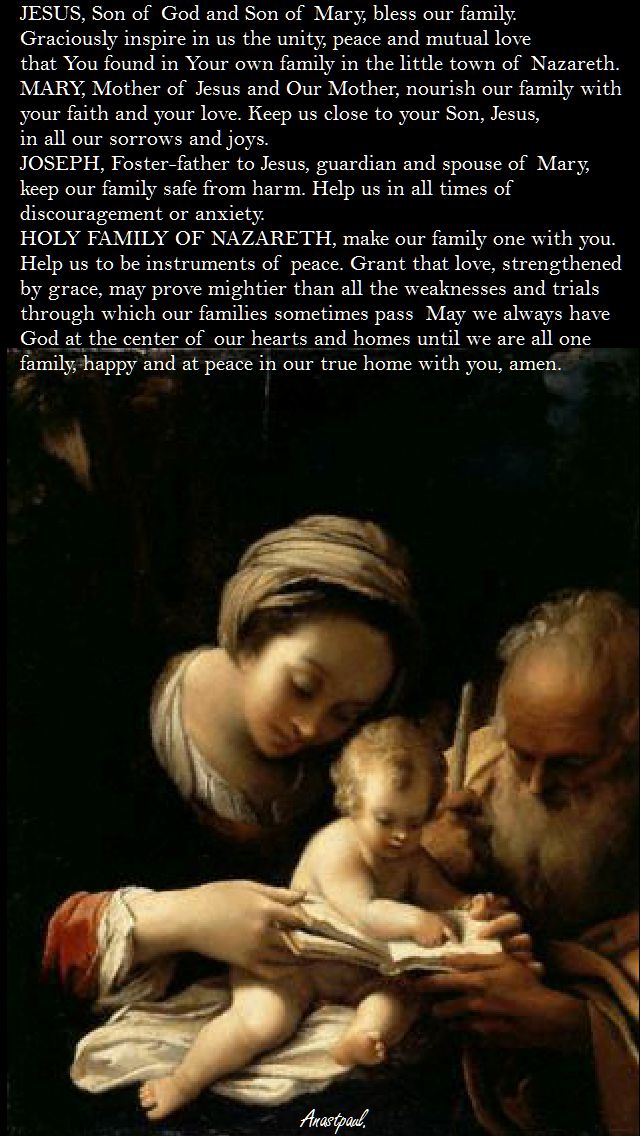
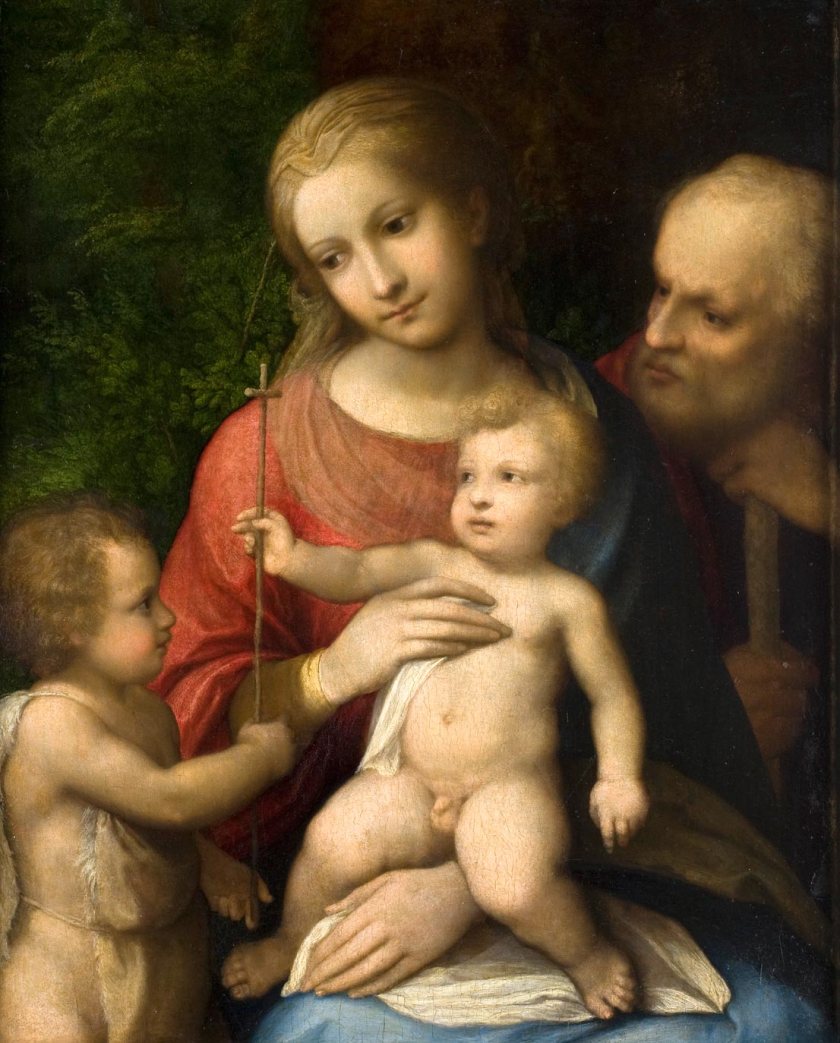
The Feast of the Holy Family is a liturgical celebration in the Catholic Church in honour of Jesus of Nazareth, his mother, the Blessed Virgin Mary and his foster father, Saint Joseph, as a family. The primary purpose of this feast is to present the Holy Family as a model for Christian families. Since the 1969 revision of the General Roman Calendar, the feast is celebrated on the Sunday within the Octave of Christmas, the Sunday between Christmas Day and New Year’s Day (both exclusive), or if both Christmas Day and the Solemnity of Mary, Mother of God are Sundays, on 30 December (always a Friday in such years). It is a holy day of obligation only if it falls on a Sunday.

correggio
Correggio
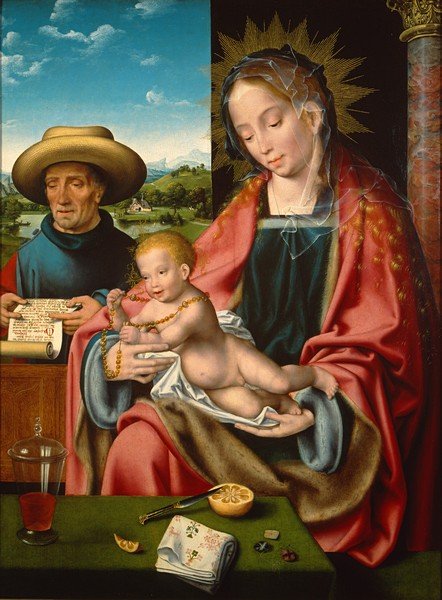
the-holy-family-currier-museum-in-manchester-new-hampshire-by-joos-van-cleve-c-1520
The Holy Family (Currier Museum in Manchester, New Hampshire ) by Joos van Cleve

The members of the Holy Family are the patrons of the Congregation of Holy Cross. The Holy Cross Sisters are dedicated to the Immaculate Heart of Mary, the Holy Cross Brothers to St. Joseph and the Priests of Holy Cross to the Sacred Heart. The Sons of the Holy Family is another religious congregation devoted to the Holy Family

A pious practice among Catholics is to write “J.M.J.” at the top of letters and personal notes as a reference to Jesus, Mary and Joseph as the Holy Family.

The feast was instituted by Pope Leo XIII in 1893

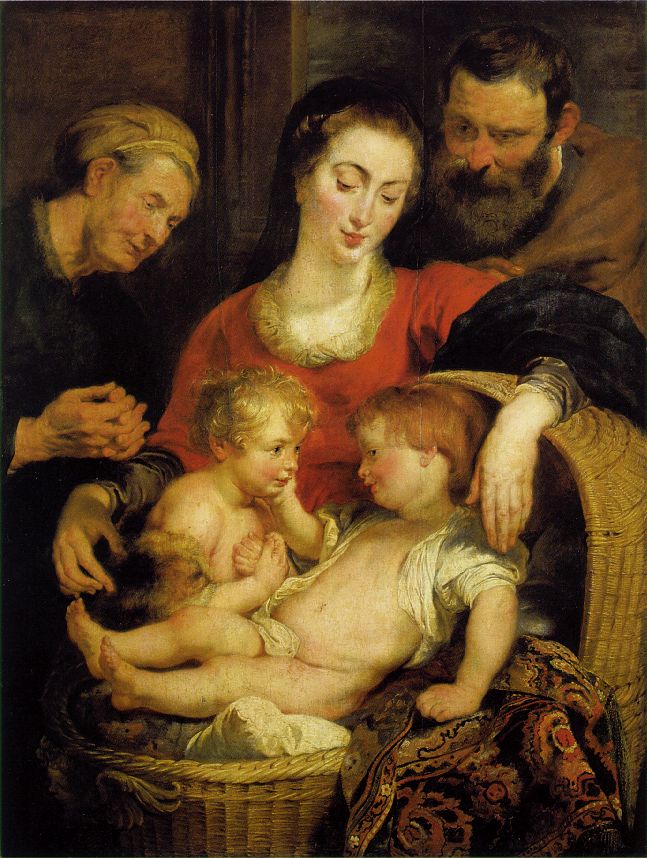
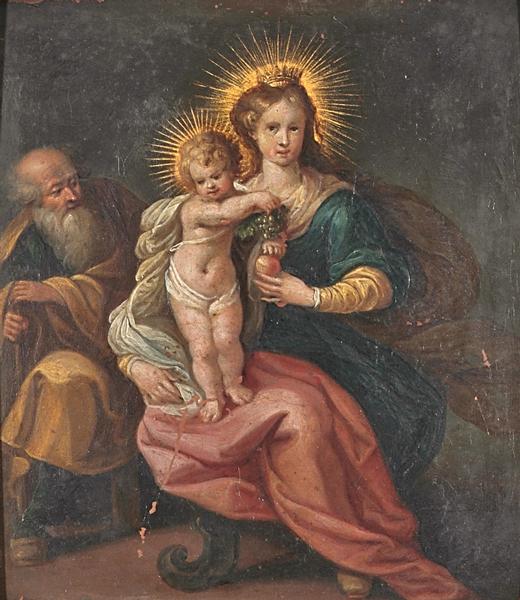
hfamilyrubens
Rubens
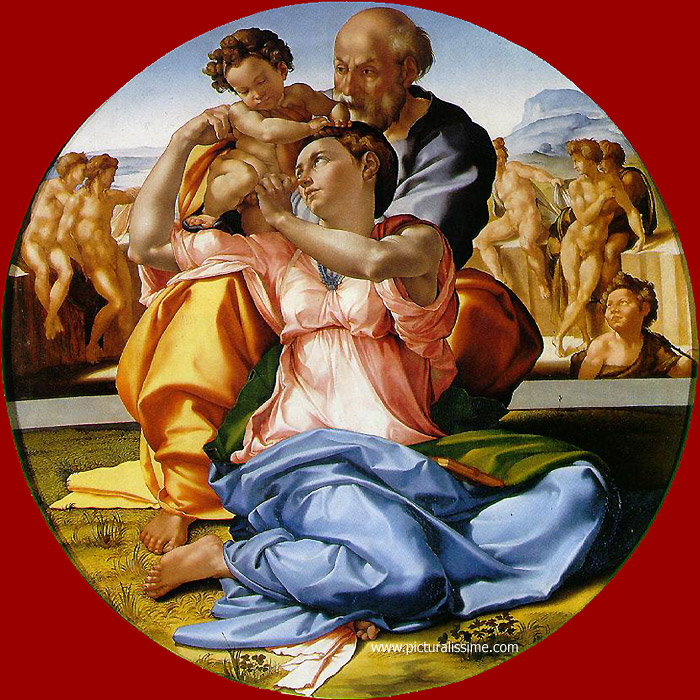
michelangelo_doni_tondo_l
Michelangelo The Doni Tondo, The Holy Family with the infant St. John the Baptist

There are few private devotions associated with this day, though the blessing of children by their parents, the renewal of marriage vows (even if just privately) and consecration of the family to the Holy Family are a few.

Consecration to the Holy Family

O Jesus, our most loving Redeemer, who having come to enlighten the world with Your teaching and example, willed to pass the greater part of Your life in humility and subjection to Mary and Joseph in the poor home of Nazareth, thus sanctifying the Family that was to be an example for all Christian families, graciously receive our family as it dedicates and consecrates itself to You this day.  Please protect us, guard us and establish among us Your holy fear, true peace and concord in Christian love: in order that by living according to the divine pattern of Your holy family we may be able, all of us without exception, to attain to eternal happiness.

Mary, dear Mother of Jesus, Mother of God and Mother of us all, by the kindly intercession make this our humble offering acceptable in the sight of your Son and obtain for us His graces and blessings.

O Saint Joseph, most holy Guardian of Jesus and Mary, help us by your prayers in all our spiritual and temporal needs; that so we may be enabled to praise our divine Saviour Jesus the Christ, together with Mary and yourself, for all eternity. Amen.

Say an Our Father, Hail Mary and Glory be three times.

the-holy-family-by-an-unknown-flemish-artist-1601
Unknown Flemish Artist 1601
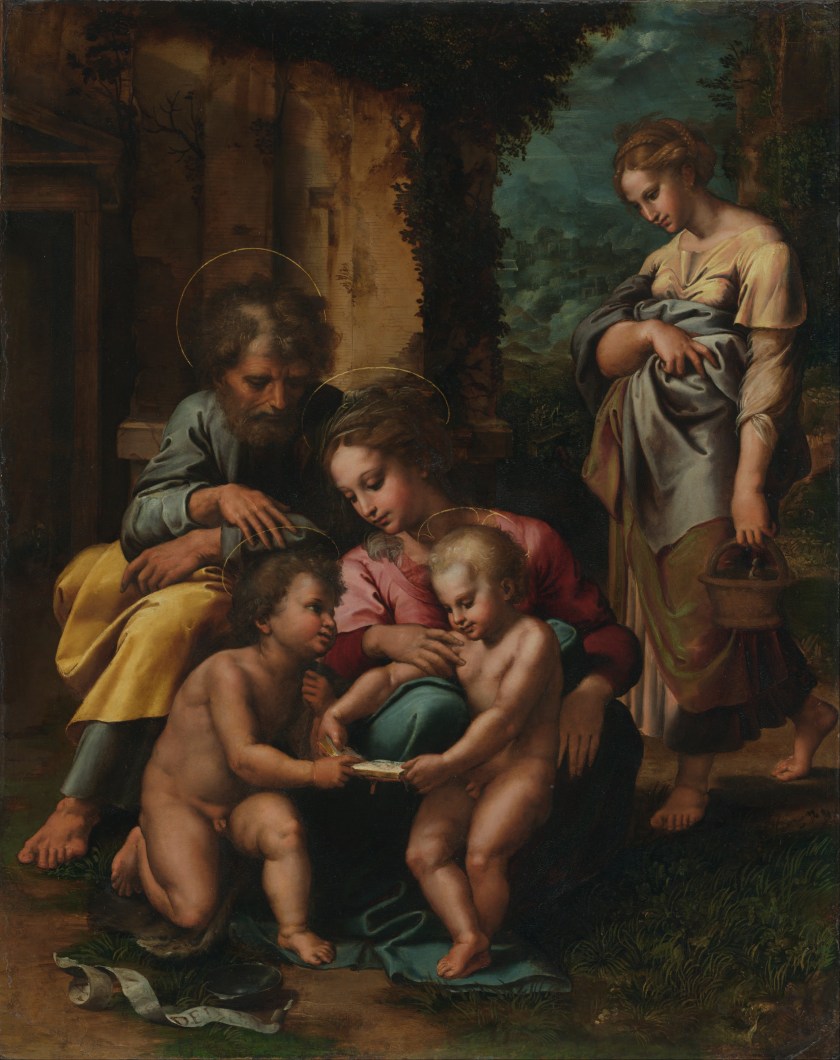
giulio-romano-giulio-pippi
Giulio Romano (Giulio Pippi) 1499


Posted in FEASTS and SOLEMNITIES, SAINT of the DAY

Saint/s of the Day – 28 December

Saint/s of the Day – 28 December – The Holy Innocents

Herod “the Great,” king of Judea, was unpopular with his people because of his connections with the Romans and his religious indifference. Hence he was insecure and fearful of any threat to his throne. He was a master politician and a tyrant capable of extreme brutality. He killed his wife, his brother and his sister’s two husbands, to name only a few.

Matthew 2:1-18 tells this story: Herod was “greatly troubled” when astrologers from the east came asking the whereabouts of “the newborn king of the Jews,” whose star they had seen. They were told that the Jewish Scriptures named Bethlehem as the place where the Messiah would be born. Herod cunningly told them to report back to him so that he could also “do him homage.” They found Jesus, offered him their gifts and, warned by an angel, avoided Herod on their way home. Jesus escaped to Egypt.

Herod became furious and “ordered the massacre of all the boys in Bethlehem and its vicinity two years old and under.” The horror of the massacre and the devastation of the mothers and fathers led Matthew to quote Jeremiah: “A voice was heard in Ramah, sobbing and loud lamentation; Rachel weeping for her children…” (Matthew 2:18). Rachel was the wife of Jacob/Israel. She is pictured as weeping at the place where the Israelites were herded together by the conquering Assyrians for their march into captivity.

It is impossible to determine the day or the year of the death of the Holy Innocents, since the chronology of the birth of Christ and the subsequent Biblical events is most uncertain. All we know is that the infants were slaughtered within two years following the apparition of the star to the Wise Men (Belser, in the Tübingen “Quartalschrift”, 1890, p. 361). The Church venerates these children as martyrs (flores martyrum); they are the first buds of the Church killed by the frost of persecution; they died not only for Christ but in his stead (St. Aug., “Sermo 10us de sanctis”). In connection with them the Apostle recalls the words of the Prophet Jeremias (xxxi, 15) speaking of the lamentation of Rachel. At Rama is the tomb of Rachel, representative of the ancestresses of Israel. There the remnants of the nation were gathered to be led into captivity. As Rachel, after the fall of Jerusalem from her tomb wept for the sons of Ephraim so she now weeps again for the men children of Bethlehem. The ruin of her people, led away to Babylon, is only a type of the ruin which menaces her children now, when the Messias is to be murdered and is compelled to flee from the midst of His own nation to escape from the sword of the apparitor. The lamentation of Rachel after the fall of Jerusalem receives its eminent completion at the sight of the downfall of her people, ushered in by the slaughter of her children and the banishment of the Messias.

The Latin Church instituted the feast of the Holy Innocents at a date now unknown, not before the end of the fourth and not later than the end of the fifth century. It is, with the feasts of St. Stephen and St. John, first found in the Leonine Sacramentary, dating from about 485. To the Philocalian Calendar of 354 it is unknown. The Latins keep it on 28 December, the Greeks on 29 December, the Syrians and Chaldeans on 27 December. These dates have nothing to do with the chronological order of the event; the feast is kept within the octave of Christmas because the Holy Innocents gave their life for the newborn Saviour. Stephen the first martyr (martyr by will, love, and blood), John, the Disciple of Love (martyr by will and love), and these first flowers of the Church (martyrs by blood alone) accompany the Holy Child Jesus entering this world on Christmas day. Only the Church of Rome applies the word Innocentes to these children; in other Latin countries they are called simply Infantes and the feast had the title “Allisio infantium” (Brev. Goth.), “Natale infantum”, or “Necatio infantum”. The Armenians keep it on Monday after the Second Sunday after Pentecost (Armenian Menology, 11 May), because they believe the Holy Innocents were killed fifteen weeks after the birth of Christ.

The Roman Station of 28 December is at St. Paul’s Outside the Walls, because that church is believed to possess the bodies of several of the Holy Innocents. A portion of these relics was transferred by Sixtus V to Santa Maria Maggiore (feast on 5 May; it is a semi-double). The church of St. Justina at Padua, the cathedrals of Lisbon and Milan, and other churches also preserve bodies which they claim to be those of some of the Holy Innocents. In many churches in England, Germany, and France on the feast of St. Nicholas (6 December) a boy-bishop was elected, who officiated on the feast of St. Nicholas and of the Holy Innocents. He wore a mitre and other pontifical insignia, sang the collect, preached, and gave the blessing. He sat in the bishop’s chair whilst the choir-boys sang in the stalls of the canons. They directed the choir on these two days and had their solemn procession (Schmidt, “Thesaurus jur eccl.”, III, 67 sqq.; Kirchenlex., IV, 1400; P.L., CXLVII, 135).

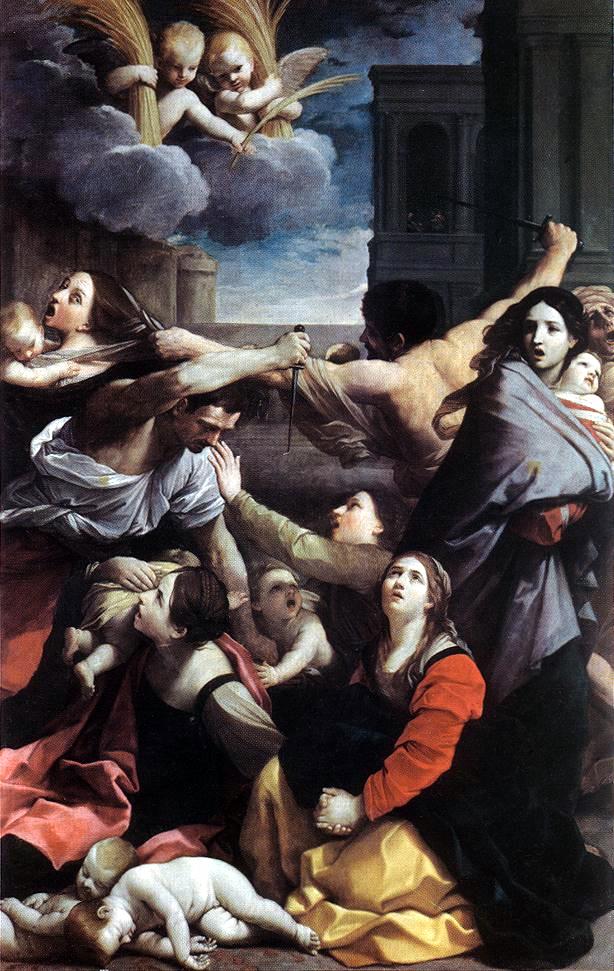
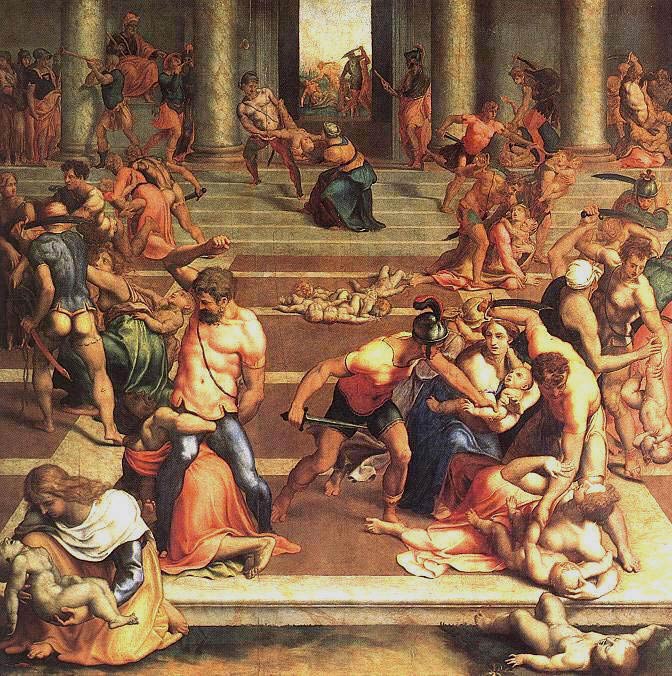
holy-innocentsdec28santos-inocentes-2holy-innocents-matteo-di-giovanni

Posted in FEASTS and SOLEMNITIES, SAINT of the DAY

Saint of the Day – 27 December

Saint of the Day – 27 December – St John APOSTLE/ EVANGELIST/Writer, teacher, Priest,Theologian – (c 6-c 100) “The Beloved Apostle; Apostle of Charity; Beloved Disciple; Giovanni Evangelista;  John the Divine;  John the Evangelist; John the Theologian- Patron of  love, loyalty, friendships, authors, booksellers, burn-victims, poison-victims, art-dealers, editors, papermakers, publishers, scribes, scholars, theologians, against epilepsy, against foot problems, against hailstorms, authors, writers,  glaziers, government officials, harvests, lithographers, notaries, saddle-makers, painters/artists, Asia Minor (proclaimed on 26 October 1914 by Pope Benedict XV), 6 dioceses, 7 cities

St. John the Evangelist had the experience of living with Jesus—walking at His side, watching hHm perform miracles, listening to His teaching and receiving signs of personal love.

Much of what we know about John’s life comes through the Gospels. According to Matthew’s Gospel, John was in a boat mending nets with his older brother James and his father Zebedee when Jesus called them to follow him. Their “Yes!” led to a great adventure.

John and James were called Sons of Thunder, possibly because of their fiery tempers. One example was when people in a Samaritan town would not accept Jesus. James and John wanted to call down fire to destroy the town. At another time the brothers secretly asked Jesus to have the highest place in His kingdom. Jesus explained that real greatness comes to those who serve.

John had the special privilege of being with Jesus at crucial times. With Peter and James, John was permitted to watch the miracle of Jairus’s daughter coming back to life. The three witnessed the glory of Jesus’ transfiguration. They were also the three invited to be with Jesus during His agony in the garden. John’s own Gospel refers to him as “the disciple whom Jesus loved” (see John 13:23; 19:26; 20:2), the one who reclined next to Jesus at the Last Supper and the one to whom He gave the exquisite honour, as he stood beneath the cross, of caring for His mother. “Woman, behold your son…. Behold, your mother” (John 19:26b, 27b).
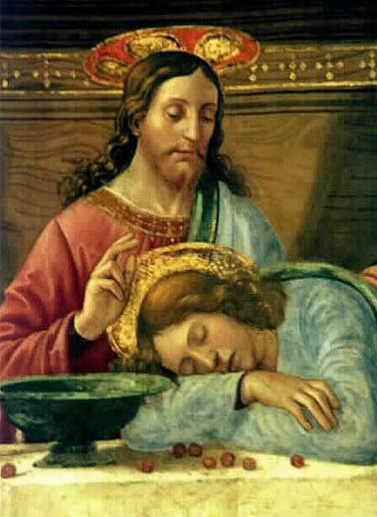
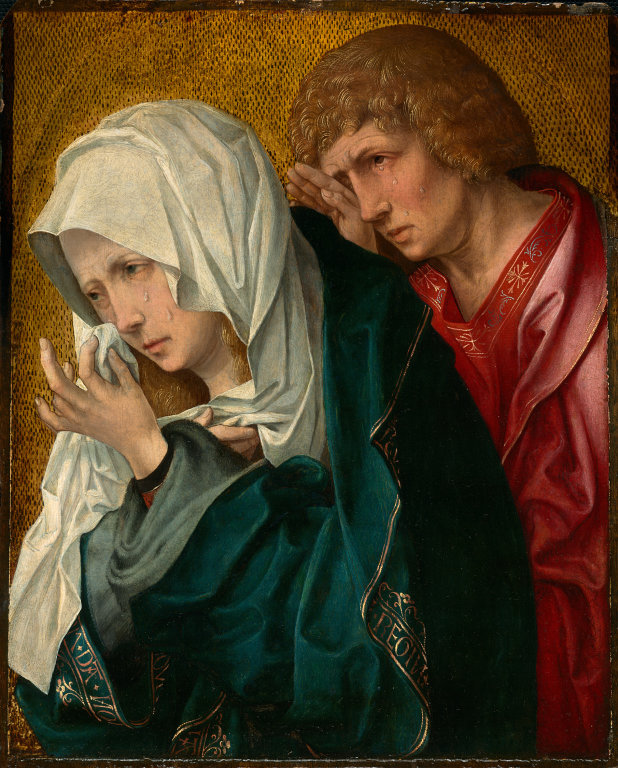
st-john-devotions-163000_1903454

Because of the depth of his Gospel, John is usually thought of as the eagle of theology, soaring in high regions that other writers did not enter.
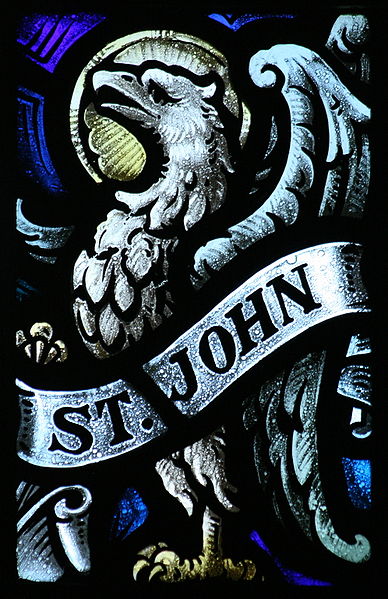
st-john-evangelist

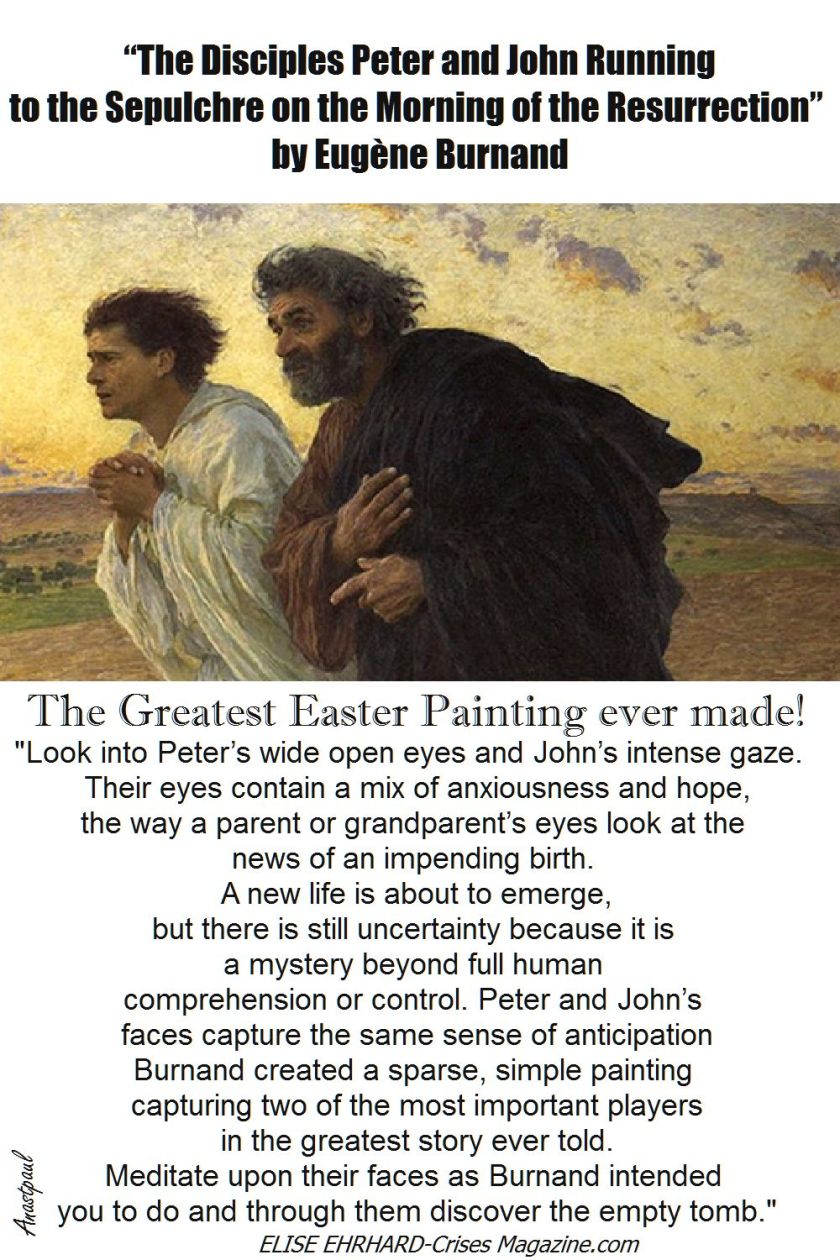
On the first Easter, Mary Magdalene “ran and went to Simon Peter and to the other disciple whom Jesus loved, and told them, ‘They have taken the Lord from the tomb and we don’t know where they put him’” (John 20:2). John recalls, perhaps with a smile, that he and Peter ran side by side, but then “the other disciple ran faster than Peter and arrived at the tomb first” (John 20:4b). He did not enter but waited for Peter and let him go in first. “Then the other disciple also went in, the one who had arrived at the tomb first, and he saw and believed” (John 20:8).THE GREATEST EASTER PAINTING - ELISE EHRHARD CRISES MAG
 

John was with Peter when the first great miracle after the Resurrection took place—the cure of the man crippled from birth—which led to their spending the night in jail together. The mysterious experience of the Resurrection is perhaps best contained in the words of Acts: “Observing the boldness of Peter and John and perceiving them to be uneducated, ordinary men, they [the questioners] were amazed, and they recognized them as the companions of Jesus” (Acts 4:13).

The Apostle John is traditionally considered the author of the Fourth Gospel, three New Testament letters and the Book of Revelation. His Gospel is a very personal account. He sees the glorious and divine Jesus already in the incidents of His mortal life. At the Last Supper, John’s Jesus speaks as if he were already in heaven. It is the Gospel of Jesus’ glory!

It is said that when St. John was very old, people had to carry him to where the Christians assembled to worship. Each time he preached, he gave the same homily: “Little children, love one another.” When people asked if he would talk on a different topic, he said that this is the Lord’s word and if they really did this, they would do enough.

St. John, pray that we may understand the mysteries of our faith more and more!

Posted in CHRISTMASTIDE!, FEASTS and SOLEMNITIES, MORNING Prayers, The WORD

Celebrating the CHRISTMAS SEASON – 25 December – Christmas Day

Celebrating the CHRISTMAS SEASON – Christmas Day

Christmas is not the end of Advent. It is a real season of the Church year. We usually miss it because the consumer society that some of us live in has nothing to offer us, except for days to return gifts. Too often, within days after Christmas day, the decorations are down and it is over.Lorenzo Costa

This year, let’s try to really celebrate Christmas and the days that follow. Let’s enter a new Season, which has its own spirit and desires and graces.

Special Feasts begin the season and we continue the story, so that we enter more deeply into the story of Jesus’ coming to be one with our life, but also that we might enter more deeply into how Jesus comes this year to bless each of us.

CHRISTMAS DAY

“Lord, open my lips, and my mouth shall declare your praise.”

Daily Meditation:
All the ends of the earth have seen the saving power of God.

But to those who did accept him
he gave power to become children of God. John 1

We plan to celebrate the family Christmas morning, with our traditional customs,
perhaps with a Christmas tree gift sharing with the children.
When we come to church to celebrate our faith together,
there is a different feel than midnight Mass or even an early
morning Mass.
Still, the choir draws us in immediately.
We look at each other and smile and we see the bright eyes of
the elderly and single friends around the community.
We know why we are here, and it is easy to join in the singing.

Let us give thanks today. Let us repeat the sounding joy of a faith-filled Christmas.
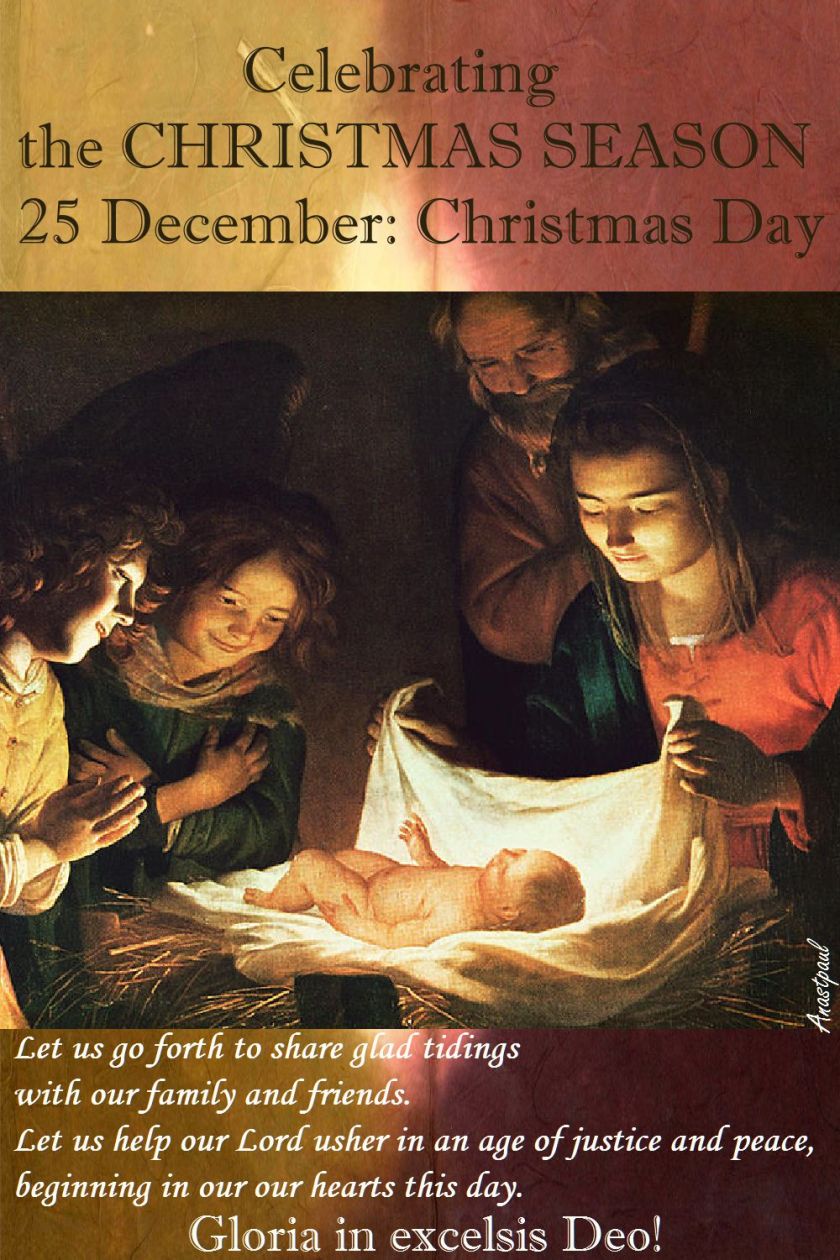
Let us go forth to share glad tidings with our family and friends.
Let us help our Lord usher in an age of justice and peace,
beginning in our our hearts this day.

In times past, God spoke in partial and various way to our ancestors through the prophets;
in these last days, he has spoken to us through the Son. Hebrews 1

Closing Prayer:
This day feels so different already, dear Lord.
You promised the glory of this day by the birth of Jesus.
So humble, so simple, such a complete act of love.

Make me one of your people of the light
and help me to be faithful to your word.
I am filled with the joy of the world
and ask you to fill my heart
with a longing for your justice and peace.

My savior – you are here with me on this day,
bringing life to the waiting world.
Gloria in excelsis Deo!

May the Lord bless us,
protect us from all evil
and bring us to everlasting life, amen.

christmas-day

Posted in CHRISTMASTIDE!, FEASTS and SOLEMNITIES, MORNING Prayers

Thought for the Day – 25 December

Thought for the Day – 25 December

On this day, the Church focuses especially on the newborn Child, God become human, who embodies for us all the hope and peace we seek. We need no other special saint today to lead us to Christ in the manger, although his mother Mary and Joseph, caring for his foster-son, help round out the scene.

But if we were to select a patron for today, perhaps it might be appropriate for us to imagine an anonymous shepherd, summoned to the birthplace by a wondrous and even disturbing vision in the night, a summons from an angelic choir, promising peace and goodwill. A shepherd willing to seek out something that might just be too unbelievable to chase after and yet compelling enough to leave behind the flocks in the field and search for a mystery.

On the day of the Lord’s birth, let’s let an unnamed, “non-celebrity” at the edge of the crowd model for us the way to discover Christ in our own hearts—somewhere between skepticism and wonder, between mystery and faith. And, like Mary and the shepherds, let us treasure that discovery in our hearts.

The precise dating in this passage sounds like a textbook on creationism. If we focus on the time frame, however, we miss the point. It lays out the story of a love affair: creation, the deliverance of the Hebrews from slavery in Egypt, the rise of Israel under David. It climaxes with the birth of Jesus. From the beginning, some scholars insist, God intended to enter the world as one of us, the beloved people. Praise God!

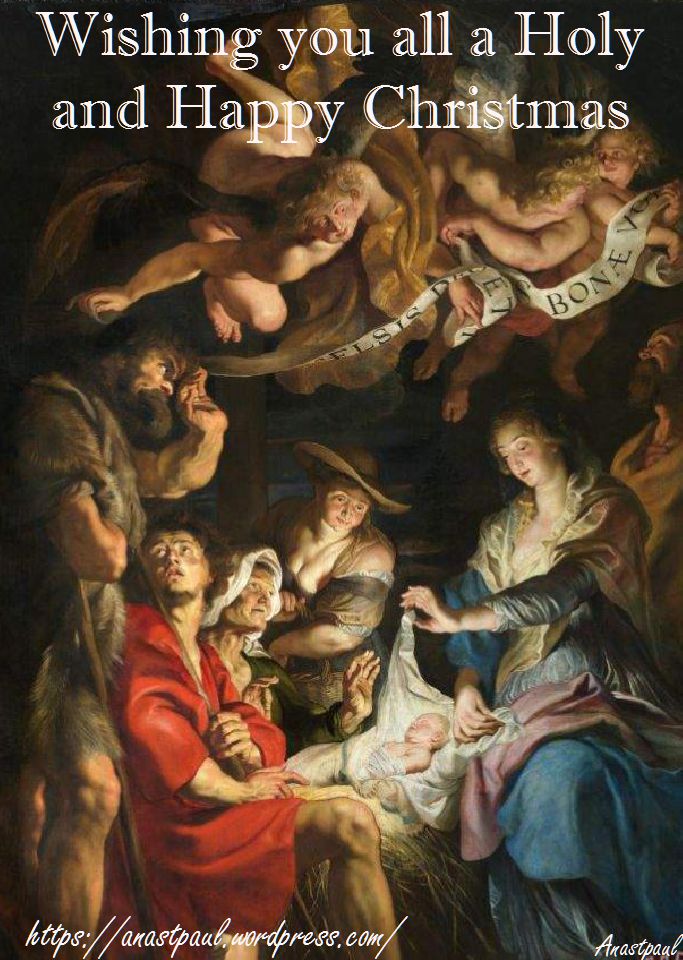
And a Holy and Happy Christmas to All!  May the Christ Child live in your hearts!

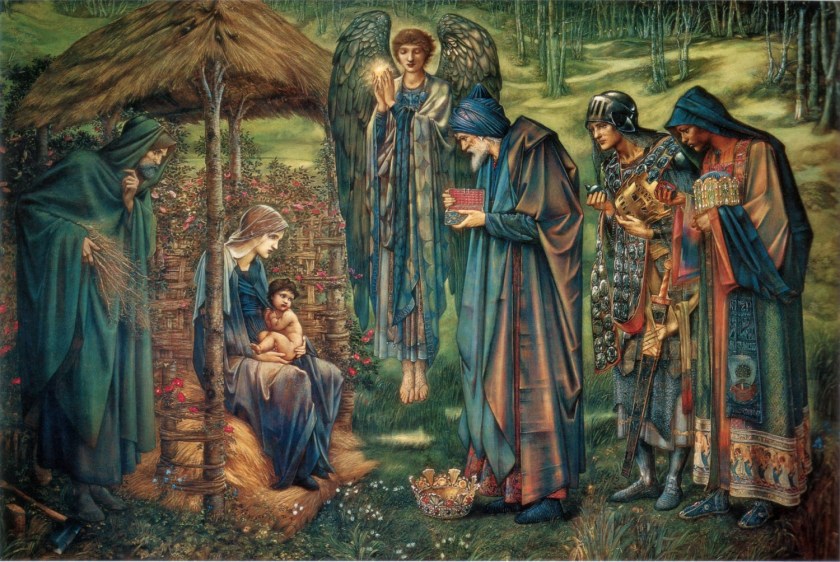
edward_burne-jones_star_of_bethlehemmy-christmas-wishes

Posted in CHRISTMASTIDE!, FEASTS and SOLEMNITIES, MORNING Prayers, PRAYERS of the SAINTS

Our Morning Offering – 25 December

Our Morning Offering – 25 December

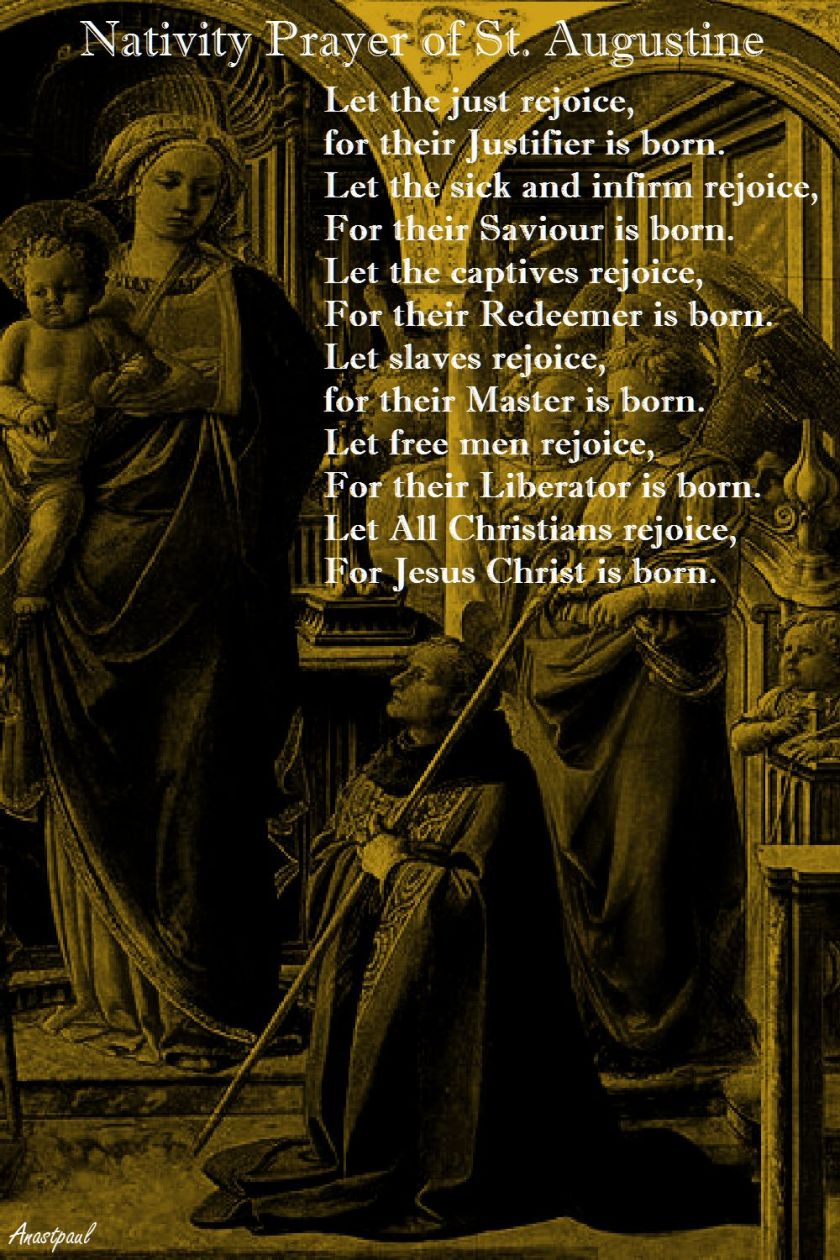
Nativity Prayer of St. Augustine

Let the just rejoice,
for theirJjustifier is born.
Let the sick and infirm rejoice,
For their Saviour is born.
Let the captives rejoice,
For their Redeemer is born.
Let slaves rejoice,
for their Master is born.
Let free men rejoice,
For their Liberator is born.
Let All Christians rejoice,
For Jesus Christ is born.

The Barbadori Altarpiece is a painting by Filippo Lippi, dated to 1438 (detail)

st-augustine-nativity-prayer-for-christmas-day

Posted in CHRISTMASTIDE!, FEASTS and SOLEMNITIES

25 December – The Solemnity of the Birth of Our Lord Jesus Christ

25 December – The Solemnity of the Birth of Our Lord Jesus Christ

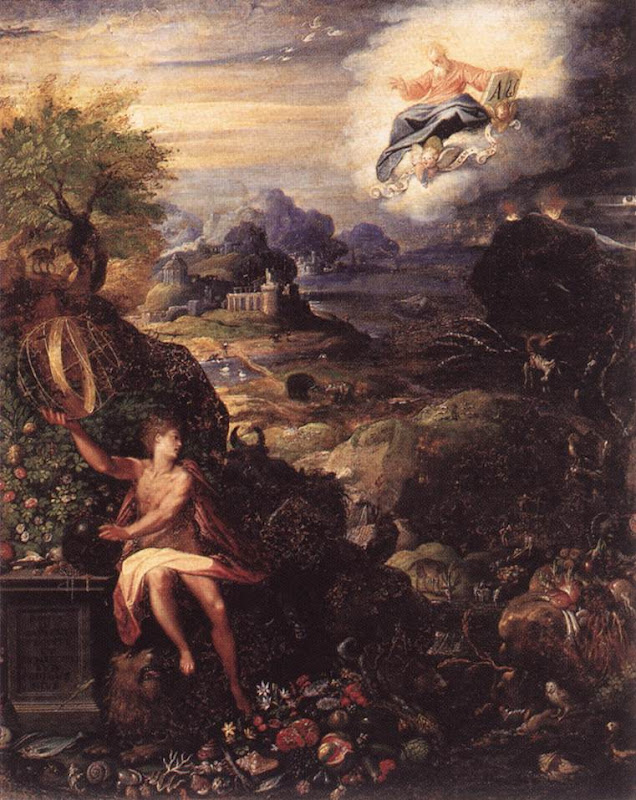
Traditional Bible Time From the Creation to The Birth of Jesus
On December 25 in the Latin Breviary’s Martyrology we have a very important time line in the birth of Our Lord Jesus Christ.

In the year 5199th from the creation of the world, when in the beginning’ God created the heavens and the earth.
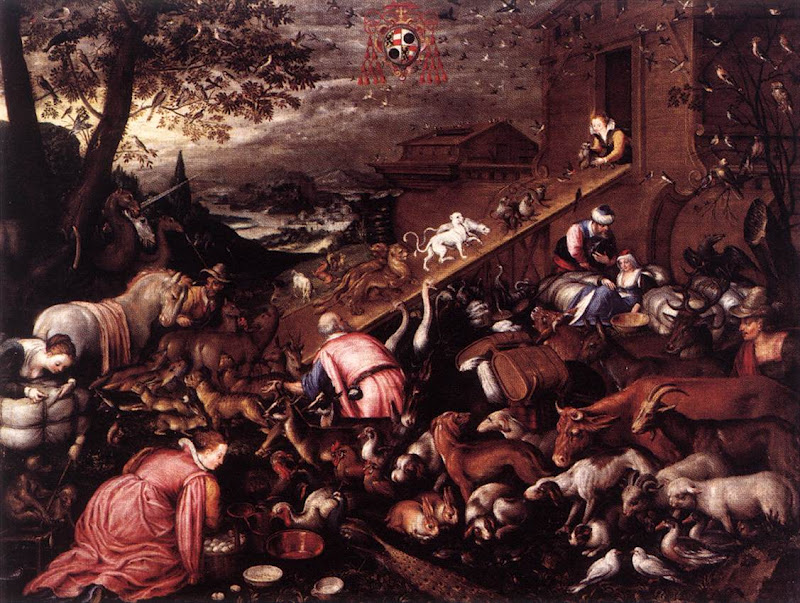
In the year 2959th from the flood.
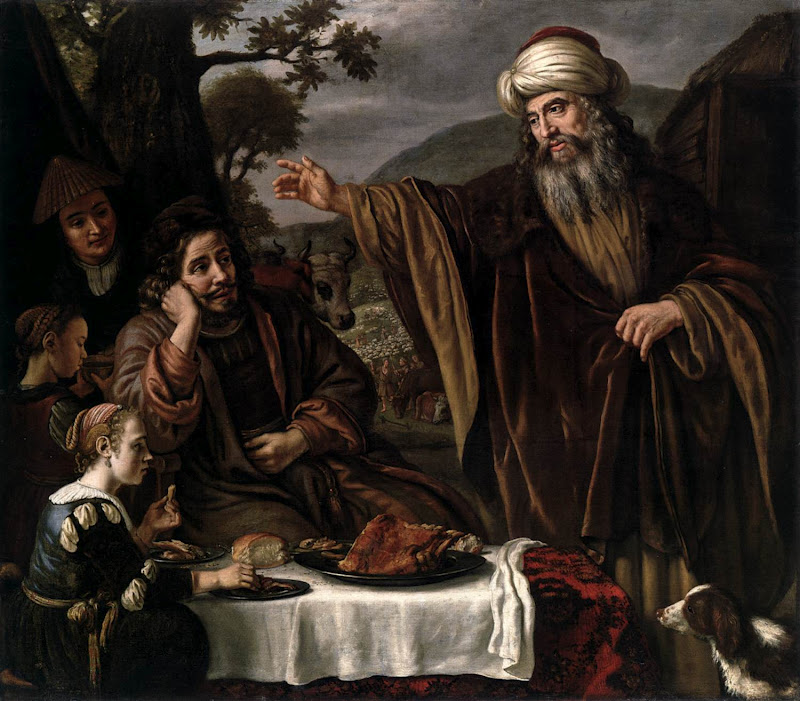
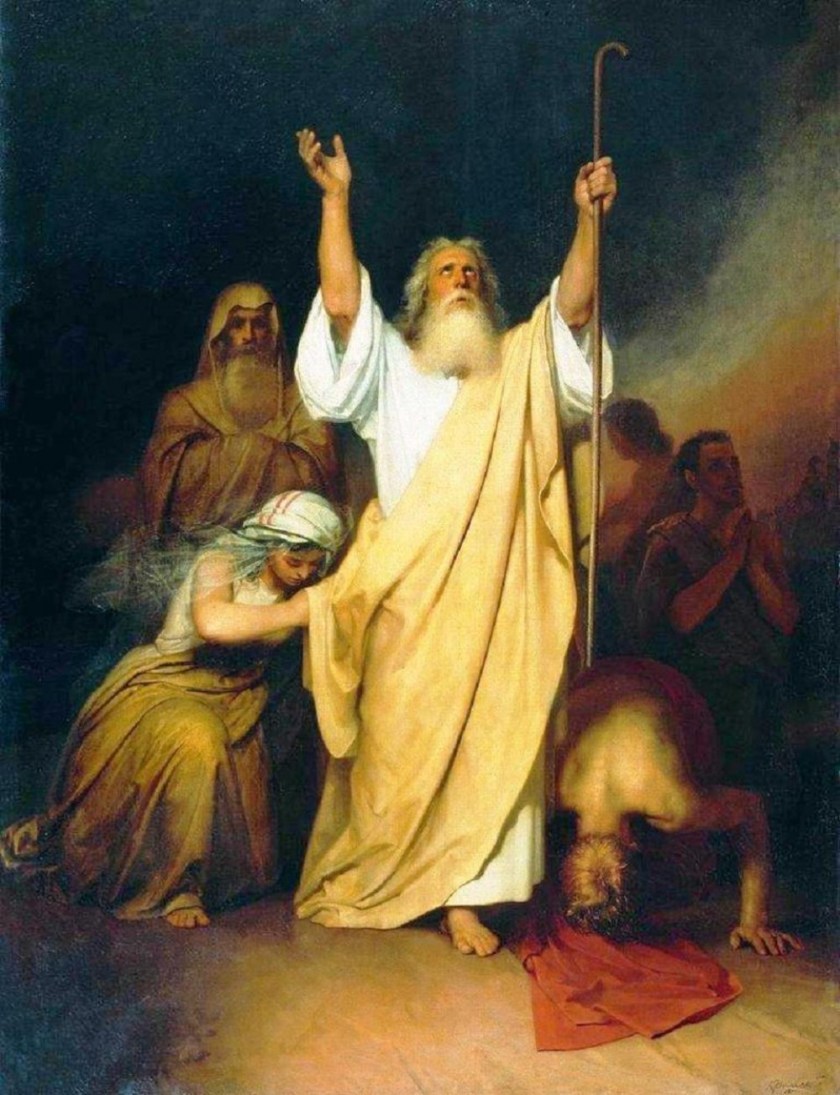
In the year 2015 from the birth of AbrahamIn the year 1510th from the going forth of the people of Israel out of Egypt under Moses.
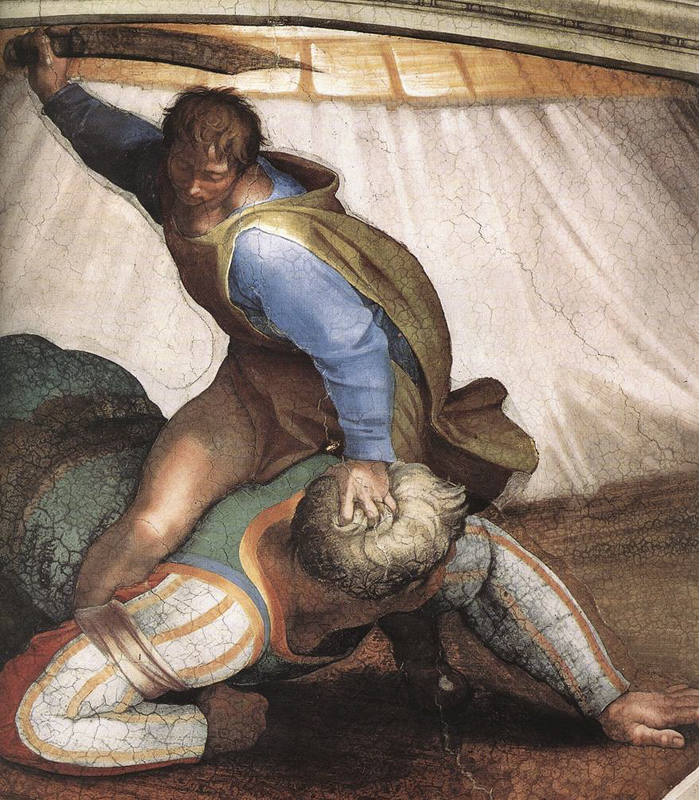
In the year 1032th from the anointing of David as King.
In the 65th week according to the prophecy of Daniel.
In the 194th Olympiad.
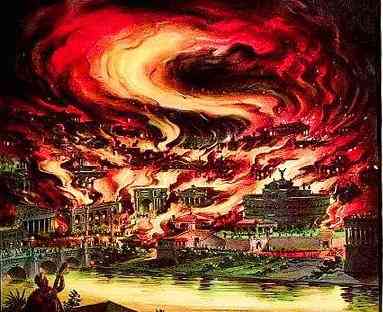
In the 752th from the foundation of the city of Rome.
In the 42nd year of the reign of the Emperor Octavian Augustus.
In the 6th age of the world, while the whole earth was at peace, Jesus Christ, Himself Eternal God and Son of the Eternal Father, being pleased to hallow the world by His most gracious coming, having been conceived of the Holy Ghost, and when nine months were passed after His conception, (all kneel down) was born of the Virgin Mary at Bethlehem of Juda made Man, THE BIRTHDAY OF OUR LORD JESUS CHRIST was born according to the flesh.

The story begins with the simple lines of St Luke’s Gospel “And Joseph also went up from Galilee….to the city of David which is called Bethlehem.”  In Palestine, in the reign of Caesar Augustus, a homeless couple were driven underground to escape the night and the cold.  And there, in silence and wonder a child is born.  A child who was truly a human child but just as truly is God.  That is the mystery we celebrate today and it is belief in that mystery that makes us Christians.

Happy Birthday Jesus!

creation_allegory-of_zucchi-jacopo-jpg-1

noahs-ark_entering-the-ark_memberger-kaspar-the-elder-jpg-2abraham_parting-company-with-the-family-of-lot_victors-janivan-kramskoi-the-prayer-of-moses-before-the-israelites-passed-through-the-red-sea-1861-e1276316730207

davidgoliath

rome-burning

happy-birthday-jesus

Posted in CHRISTMASTIDE!, FEASTS and SOLEMNITIES, SAINT of the DAY

Saints and Feasts for 25 December

Nativity of the Lord (Solemnity)

St Adalsindis of Hamay
St Alburga of Wilton
St Anastasia of Sirmium
Bl Artale
St Basilée of the Via Latina
Bl Bentivoglio de Bonis
Bl Diego de Aro
St Eugenia of Rome
St Fulk of Toulouse
Bl Jacopone da Todi
St Jovin of the Via Latina
Bl Maria Therese von Wüllenweber
Bl Matthew of Albano
Bl Michael Nakashima Saburoemon
Bl Nera
St Peter Nolasco
St Romulus of Berry

Martyrs of Nicomedia

Posted in FEASTS and SOLEMNITIES, SAINT of the DAY, The APOSTLES & EVANGELISTS

24 August – The Saints

Saints for today