
Quote of the Day – 13 May – The Solemnity of the Ascension of the Lord
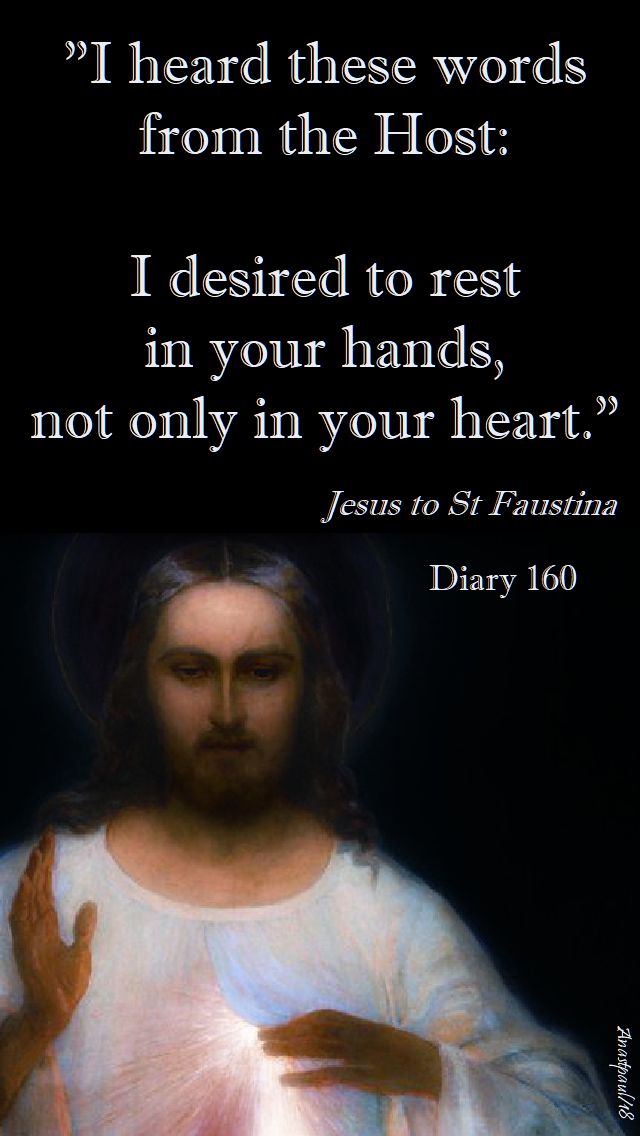
“I heard these words from the Host:
I desired to rest in your hands,
not only in your heart.”Jesus to St Faustina Kowalska (1905-1938)
Diary 160
Quote of the Day – 13 May – The Solemnity of the Ascension of the Lord
“I heard these words from the Host:
I desired to rest in your hands,
not only in your heart.”Jesus to St Faustina Kowalska (1905-1938)
Diary 160
Thought for the Day – 29 April – Fifth Sunday of Eastertide and the Memorial of St Catherine of Siena (1347-1380) Doctor of the Church
Catherine of Siena is one of the most remarkable figures of the fourteenth century and had an influence far beyond her holiness of life. She took part in the politics of both Church and State and was a beacon of light in a very difficult time.
The mystical experiences that were to last throughout her whole life and an intimacy with her Saviour that transformed her whole existence began when she was but six years old. She grew up, known for cheerfulness and merriment, with no indication of the astonishing role she was to play in the work of the Church.
In 1364, she became a member of the Third Order of St Dominic and from this time her influence began to grow in Siena as she gathered around her a circle of followers. She began dictating letters to this circle and to take part in public affairs. (She had never learnt to write, which was not uncommon for women in that era). In 1374, she began to interest herself in furthering a crusade against the Turks and in the return of the Pope from Avignon to Rome. In 1376, she went to Avignon to urge Pope Gregory XI to return to Rome. With her encouragement, he did but died shortly thereafter. In 1375, whilst on a trip to Pisa, she received the Stigmata.
Pope Gregory’s successor, Urban VI, so alienated the Cardinals who elected him, that they decided to elect another pope. This was the beginning of the Great Western Schism in which two and later three, popes, divided the allegiance of Christendom. Catherine was shattered by this division in the Church and went to Rome to work for the reunification of the Church.
Burdened with sorrow and offering herself for the unity of the Church, Catherine died in Rome on 29 April 1380. She left a huge collection of letters as well as her chief work, The Dialogues.
By the sheer force of her personality, St Catherine converted thousands and the mere sight of her would convert hardened sinners. We may not have her personality but we can reach into the lives of others and influence them for good. We cannot have warmth ourselves, without giving it to others. “Then they said to each other, ‘Did not our hearts burn within us as he talked to us on the road and explained the scriptures to us?’...Luke 24:32
St Catherine of Siena, Pray for us!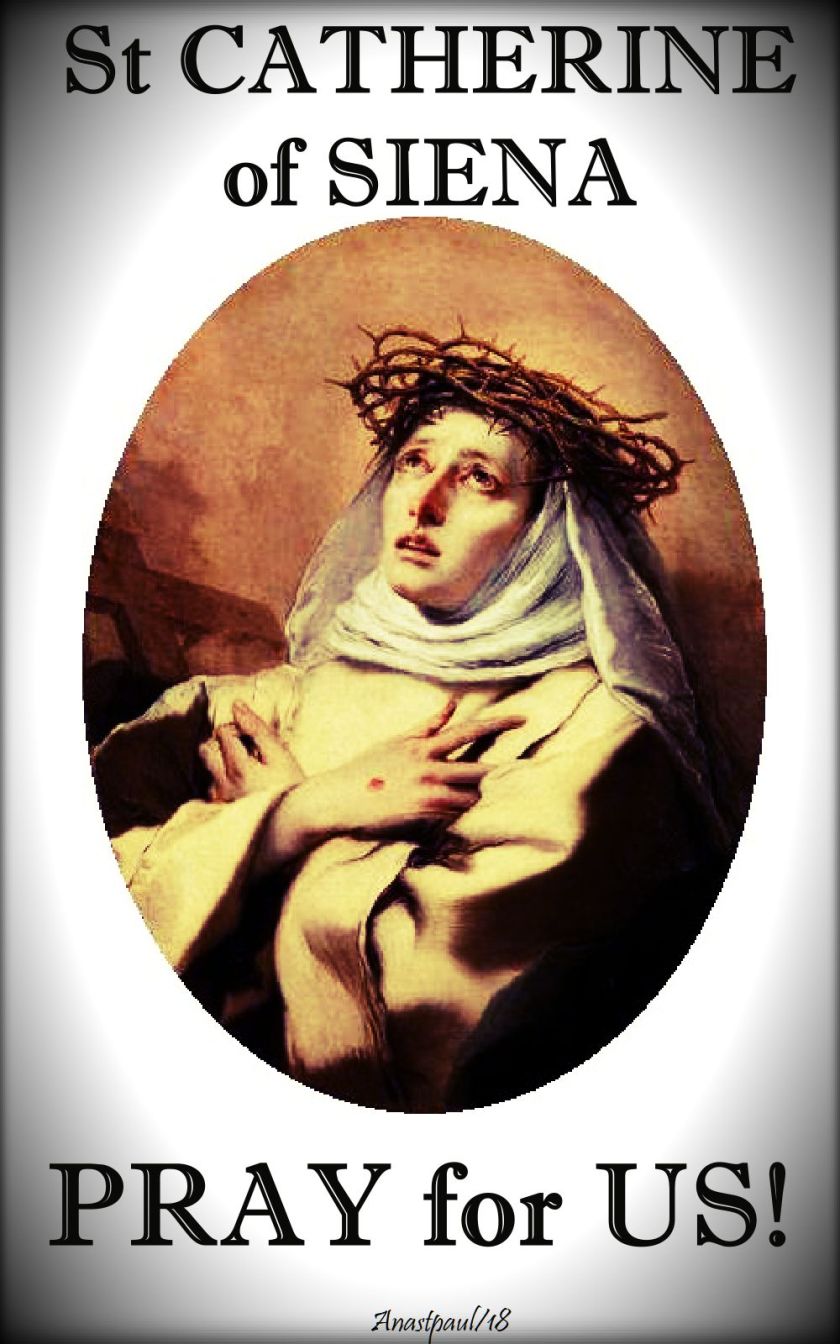
Quote/s of the Day – 29 April – Fifth Sunday of Eastertide and the Memorial of St Catherine of Siena (1347-1380) Doctor of the Church
“Proclaim the Truth
and do not be silent
through fear.”
“Preach the Truth
as if you had a million voices.
It is silence that kills the world.”
“Nothing great is ever achieved,
without much enduring.”
“All the way to heaven is heaven
because Jesus said, “I am the way.”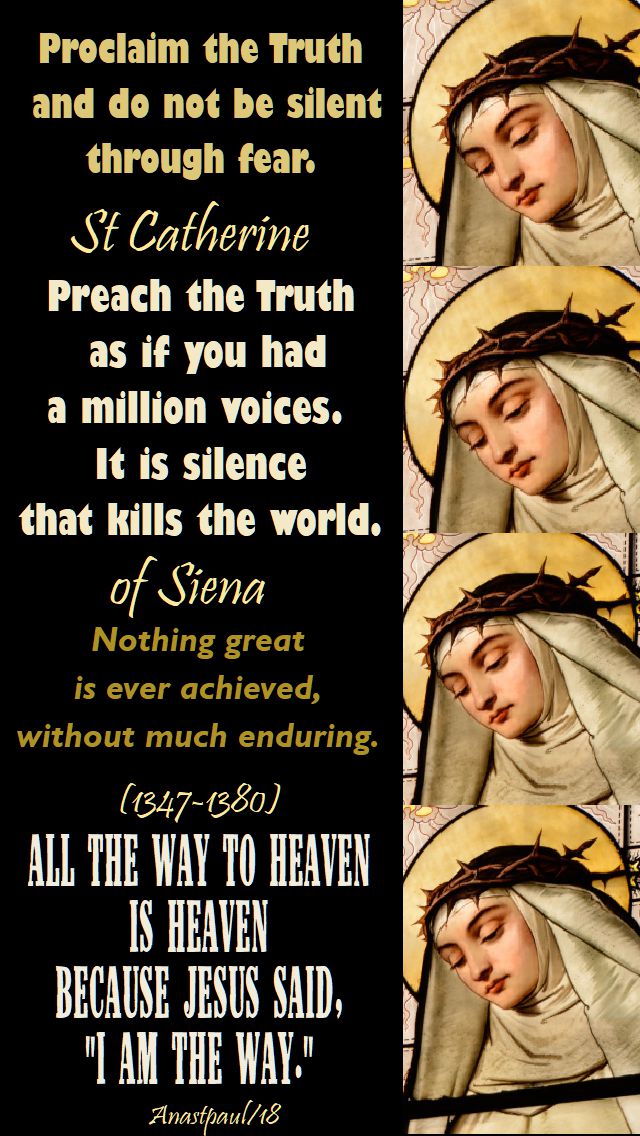
“Strange that so much suffering is caused
because of the misunderstandings
of God’s true nature.
God’s heart is more gentle
than the Virgin’s first kiss upon the Christ.
And God’s forgiveness to all, to any thought or act,
is more certain than our own being.”
“Everything comes from love,
all is ordained for the salvation of man,
God does nothing without this goal in mind.”
“A soul cannot live without loving.
It must have something to love,
for it was created to love.”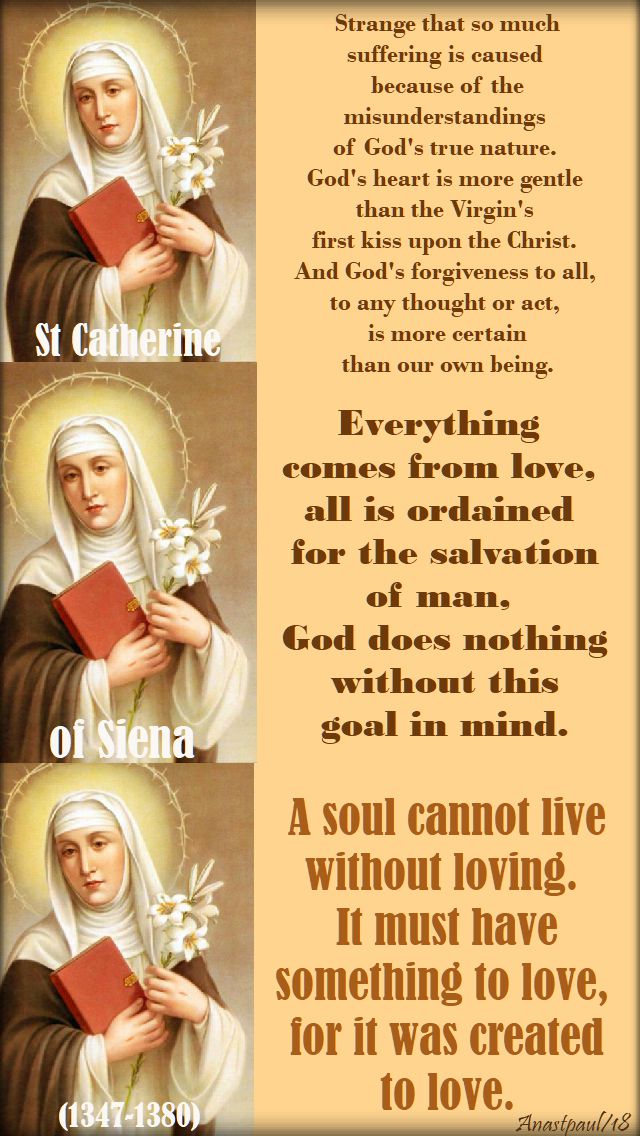
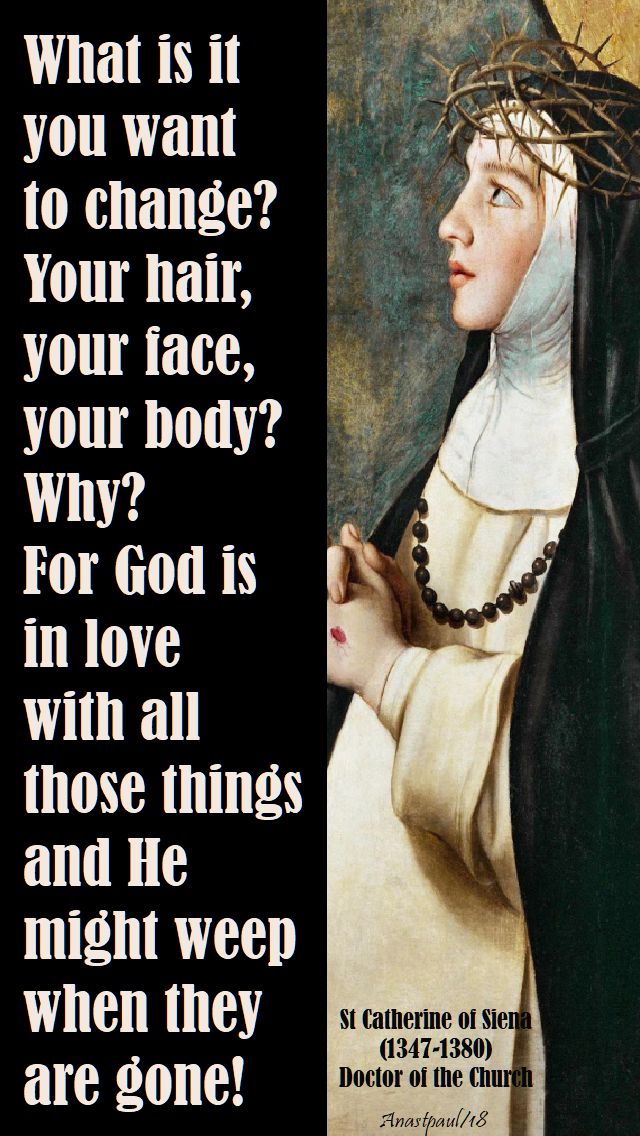
“What is it you want to change?
Your hair, your face, your body?
Why? For God is in love with all those things
and He might weep when they are gone!”
One Minute Reflection – 11 April – Wednesday of the Second Week of Eastertide and the memorial of St Gemma Galgani (1878-1903)
Jesus said to them, “I am the bread of life; he who comes to Me will not hunger and he who believes in Me will never thirst.”…John 6:35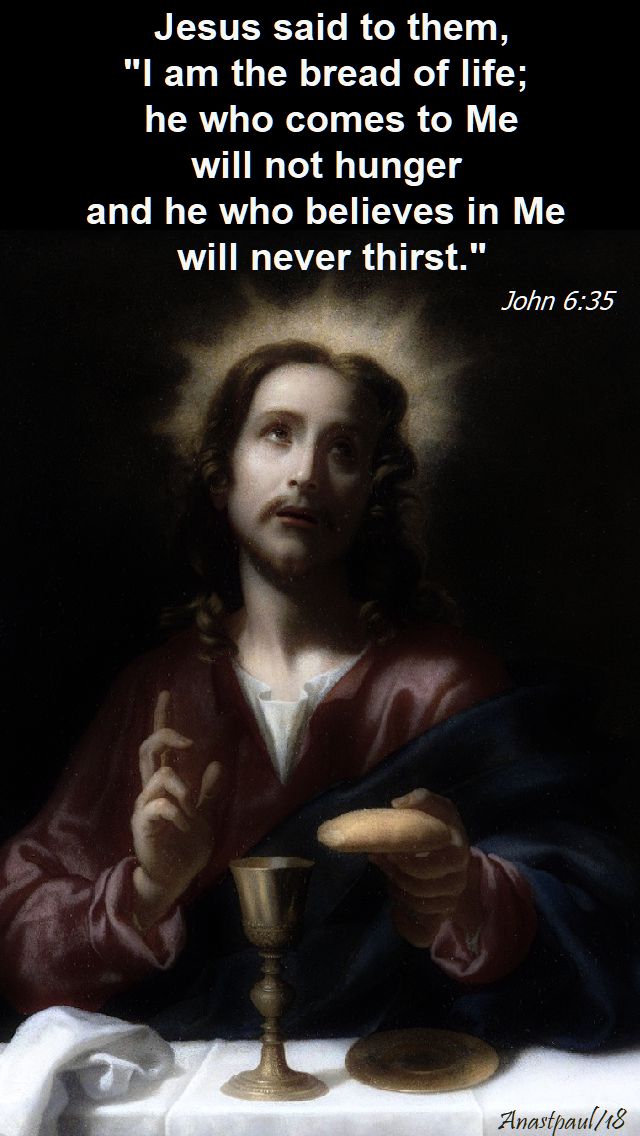
REFLECTION – “Jesus, Food of strong souls, strengthen me, purify me, make me godlike.”…St Gemma Galgani
PRAYER – Oh my Lord, Food of my soul, Food of my life, teach us to fully grow in our love and understanding of the great Mystery of the Holy Eucharist. Help us to participate more fully at each Holy Mass. St Gemma pray for us that we may love the food of our souls and one day join you in our heavenly home. Through our Lord Jesus in unity with the Holy Spirit, one God forever and ever, amen.
Our Morning Offering – 11 April – Wednesday of the Second Week of Eastertide and the Memorial of St Gemma Galgani (1878-1903)
Prayer for Forgiveness
By St Gemma Galgani (1878-1903)
My crucified God, behold me at Your feet.
Do not reject me, a poor sinner,
as I appear before You.
I have offended You much in the past, my Jesus
but in the future I resolve to sin no more.
My God, I put all my sins before You.
I have considered them and realise
they do not deserve Your pardon.
But I beg of you to cast one glance upon Your sufferings
and see how great is the worth of that Precious Blood
that flows from your veins.
My God, at this hour,
close Your eyes to my want of merit
and open them to Your infinite merits.
Since You, dear Jesus,
have been pleased to die for my sins,
grant me forgiveness for them all,
that I may no longer feel their heavy burden,
which presses me to the earth.
My Jesus, help me, for I desire to become good,
no matter what it may cost.
Take away, destroy, root out completely,
all that You find in me that may be contrary to Your holy Will.
At the same time I beg You, O Jesus,
to enlighten me, that I may be able to walk in Your holy light.
Amen
Saint of the Day – 11 April – St Gemma Galgani (1878-1903) known as “The Flower of Lucca,” “The Virgin of Lucca ” and “Daughter of the Passion” – Stigmatist & Mystic – born on 12 March 1878 at Borgo Nuovo di Camigliano, Lucca, Tuscany, Italy and died on Holy Saturday, 11 April 1903 at Borgo Nuovo di Camigliano, Lucca, Italy of tuberculosis., aged 25. Her relics interred in the Passionist monastery, Lucca. Patronages – Students, Pharmacists, Paratroopers and Parachutists, loss of parents, those suffering back injury or back pain, those suffering with headaches/migraines, those struggling with temptations to impurity and those seeking purity of heart. Attributes – Passionist robe, flowers (lilies and roses), guardian angel, stigmata, heavenward gaze.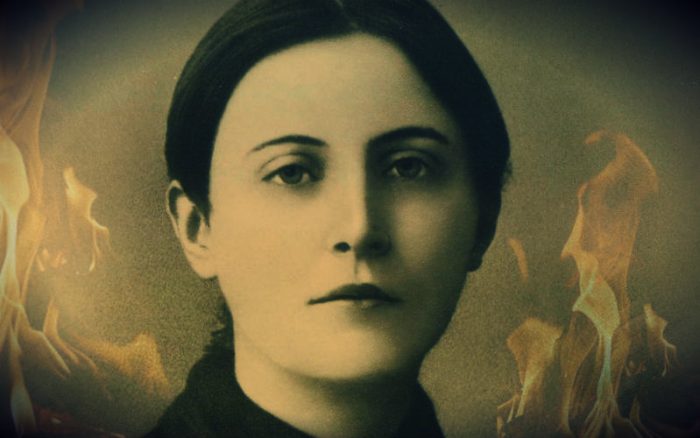
Gemma Galgani was born on 12 March 1878, in a small Italian town near Lucca. Gemma is the Italian word for gem. The child’s mother was worried that this name was not a saint’s name but a priest friend comforted her with the remark that perhaps the child would one day be a “gem of Paradise.”
At a very young age, Gemma developed a love for prayer. She credited her mother, who died when Gemma was very young, with inspiring in her the desire for Heaven and with teaching her about God. Gemma made her First Communion on 17 June 1887. Later, she wrote, “It is impossible for me to describe what passed between Jesus and myself in that moment. He made himself felt so strongly in my soul. I realised in that moment how the delights of Heaven are not like those of the earth and I was seized by a desire to make that union with my God everlasting.”
As a day pupil at the school run by the Sisters of St Zita, Gemma was loved by her teachers and her fellow pupils. Although quiet and reserved, she always had a friendly smile for everyone. Though by nature a bright and lively child, she exercised great self discipline even as a schoolgirl, keeping her feelings under control. The superior of the sisters at the school once asked Gemma’s teacher and her class to pray for a dying man who refused the Sacraments. After the prayer, Gemma arose from her seat and going up to her teacher, whispered in her ear, “The grace is granted.” That evening the news as brought that the man had indeed converted and received the consolations of the Faith before his death.
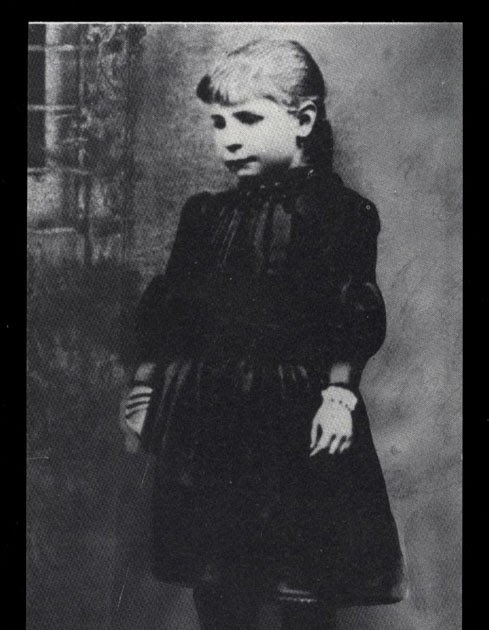
Throughout her life, Gemma was to be favoured with many mystical experiences and special graces. Often these were misunderstood by others, bringing ridicule. A sensitive person, Gemma suffered these heartaches, too, in reparation, remembering that Our Lord Himself had been misunderstood and ridiculed.
Although she was a good student, Gemma had to quit school due to chronic ill heath before completing the course of study. Throughout her life, her frail constitution did not stand up well to several illnesses.
Gemma’s father had been a moderately successful pharmacist. But because of his generosity and his willingness to extend credit to those in need, he began to get into financial trouble. His death in 1897 left Gemma and his other children penniless orphans. Gemma felt the loss of her father keenly but did not appear to be bothered by the poverty of her circumstances. She must have felt desolate when the creditors came and took away the few possessions left to the family on the very day of her father’s funeral but she maintained her cheerful, patient attitude.
Gemma had an immense love for the poor and when she went out, many poor people came to her for help. When she could, she gave them things from home. Later, when she too was a “povera,” or poor girl, she gave them the gift of friendship. She would weep over their misfortunes, completely ignoring her own.
After her father’s death, the nineteen-year-old Gemma became the mother of her seven brothers and sisters. When some were old enough to share this responsibility, she lived briefly with a married aunt. Although she returned the love given by this aunt and uncle, Gemma was unhappy with the busy social life of the couple. They were well off and wanted Gemma to join in the fun which they could afford to provide. At this time, two young men proposed marriage to her. Gemma, however, wanted silence and retirement and more than ever she desired to pray and speak only to God.
Gemma returned home and almost immediately became very ill with meningitis. Gradually she lost her hearing and some of her hair. In addition, she suffered a complete paralysis of her limbs. All earthly remedies proved vain and Gemma was confined to bed for more than a year. Throughout this illness, her one regret was the trouble she caused her relatives in taking care of her. News of the heroic patience of the gentle girl spread about the town and many visitors came to cheer her up. For each visitor, Gemma had a smile and a welcoming comment.
Feeling herself tempted by the devil, she prayed for help to the Venerable Passionist, Gabriel Possenti. (Gabriel was later canonised.) He appeared to her in dreams several times, promising her help and calling her “sister.” Through his intercession, Gemma was miraculously cured. In one of her visions of Gabriel, he placed the badge of the Passionists on Gemma. When she spoke of her desire to enter a convent, he told her to make her vow to be a religious but not to add anything to this vow. Gabriel was telling her that although she might live the life of a nun, she would never enter any particular convent. Later, Gemma was rejected as a candidate for the religious life on the grounds of her health was too delicate. She offered this disappointment to God as a sacrifice.
Gifted with an ability for prophecy, Gemma predicted that the Passionists would establish a monastery at Lucca; this came to pass two years after her death. When she understood that she would not be able to enter a Passionist monastery, Gemma said, “The Passionists did not wish to receive me; nevertheless, because I wish to stay with them, I shall when I am dead.” Today, Gemma’s mortal remains are still treasured at the Passionist monastery in Lucca.
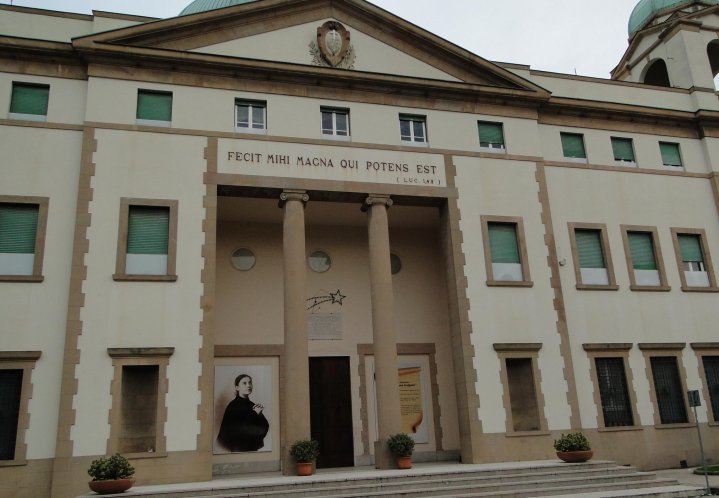
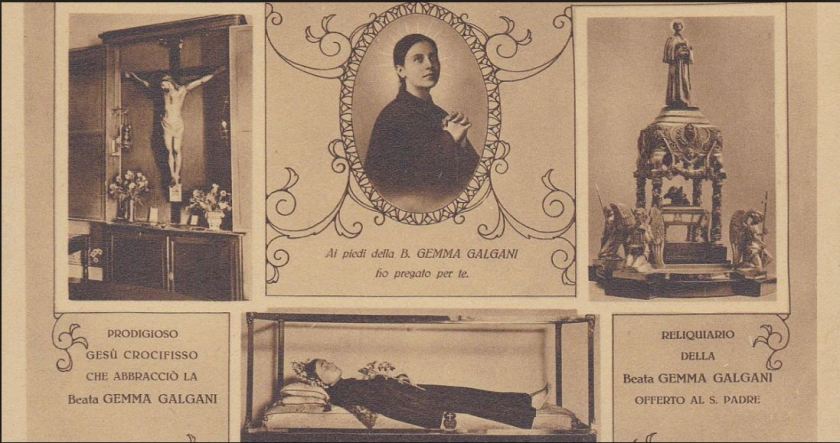
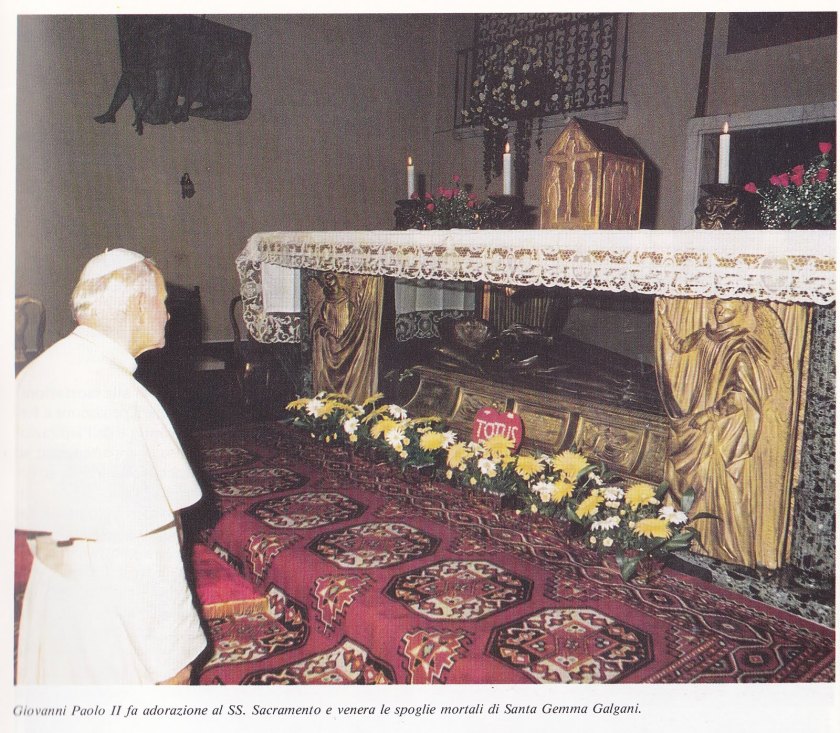
On the 8 June, 1899, Gemma had an interior warning that some unusual grace was to be granted to her. She spoke of this to her confessor and received absolution. She later gave the following account to her spiritual director: “It was Thursday evening, and suddenly I felt an inward sorrow for my sins; but so intense that I have never felt the like again; my sorrow made me feel as if I should die then and there. After that I felt all the powers of my soul in recollection. My intellect seemed to know nothing but my sins and how they offended God . . . Then thoughts crowded thickly within me and they were thoughts of sorrow, love, fear, hope and comfort.”
In rapture, she saw her heavenly Mother, who wrapped Gemma in her mantle. At that moment, according to her own account, “Jesus appeared with His wounds all open; blood was not flowing from them but flames of fire which in one moment came and touched my hands, feet and heart. I felt I was dying and should have fallen down but for my Mother who supported me and kept me under her cloak. Thus I remained for several hours. Then my Mother kissed my forehead, the vision disappeared and I found myself on my knees; but I had still a keen pain in my hands, feet and heart. I got up to get into bed and I saw that blood was coming from the places where I had the pain. I covered them as well as I could and then, helped by my Guardian Angel, got into bed.”
The next day, covering her hands with gloves, Gemma attended Mass as usual. Later, she showed the marks of the stigmata to one of her aunts, saying, “Just look at what Jesus has done to me!”

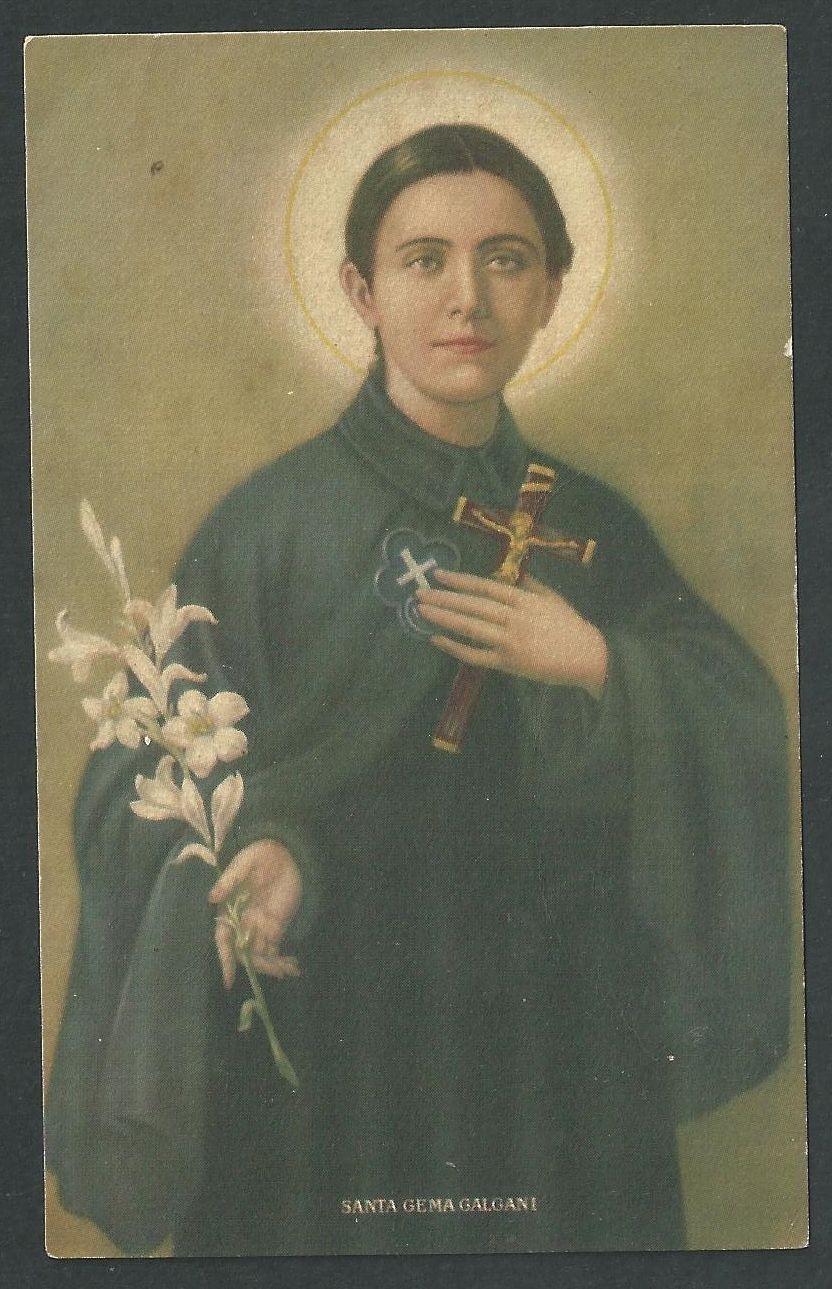
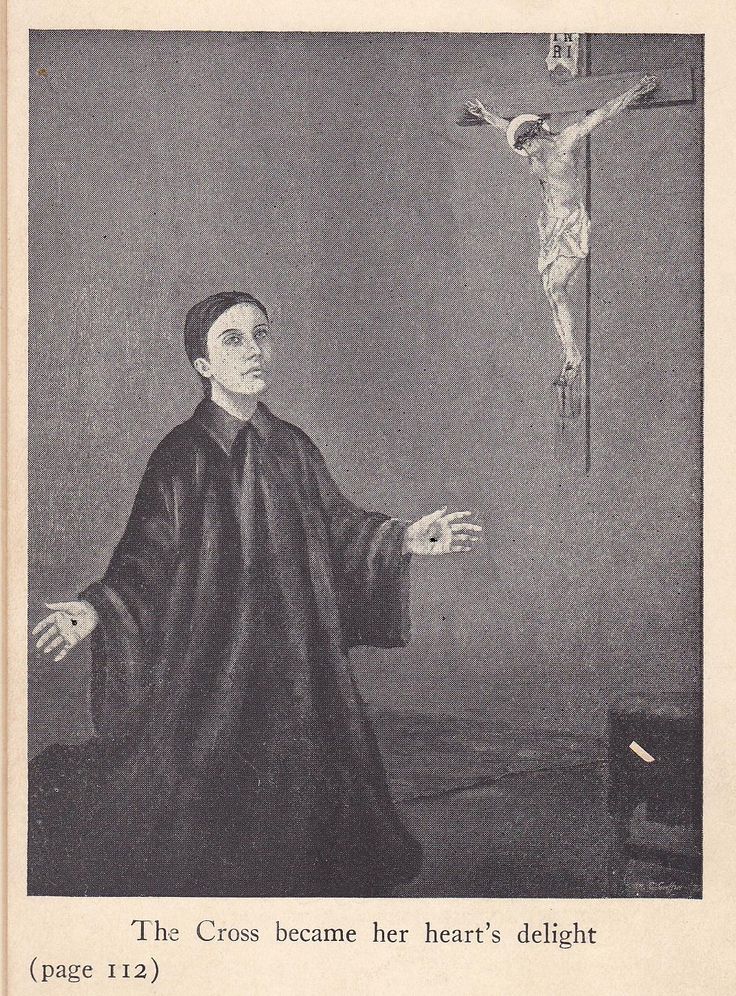
Each Thursday evening, Gemma would fall into rapture and the marks would appear. The stigmata remained until Friday afternoon or Saturday morning when the bleeding would stop, the wounds would close and only white marks would remain in place of the deep gashes. Later, one of Gemma’s directors turned to science and had a doctor examine the stigmata. As Gemma had foreseen, the doctor considered them a manifestation of some form of disease, or the delusions of an overly pious soul. Gemma’s stigmata continued to appear until the last three years before her death. At this time, her director forbade her to accept this phenomenon and through her prayers it ceased, although whitish marks remained on her skin until her death.
Through the help of her confessor, Gemma went to live with a family named Giannini, where she was allowed more freedom than at home for her spiritual life. She was very grateful to this adoptive family and was more than once overheard in ecstasy praying for its members. In this home, Gemma cheerfully did housework and helped in the training and education of the children.
There is a good record of Gemma’s words during ecstasy. In this state of rapture, the soul is so absorbed in God that the normal activity of the senses is suspended. Both her confessor and a relative of the head of her adoptive family, Aunt Cecilia, often overheard Gemma and recorded her conversations.
Father Germano once overheard her arguing with Divine Justice for the salvation of a soul. Some of her words were: “I do not seek Your justice, but for Your mercy. I know, he made You shed tears; but . . . You must not think of his sins; You must think of the Blood You shed. And now answer, Jesus and tell me You have saved my sinner.” Gemma actually named the man she was praying for. Soon afterwards, she broke out joyfully, “He is saved! You have won, Jesus; triumph always thus.” Then she came out of ecstasy.
Father Germano had just left the room when he heard a knock and was told that a stranger wished to speak to him. As soon as the man was before the priest, he fell to his knees weeping and said, “Father, I want to make my confession.” The priest was stunned to realise that it was Gemma’s sinner.
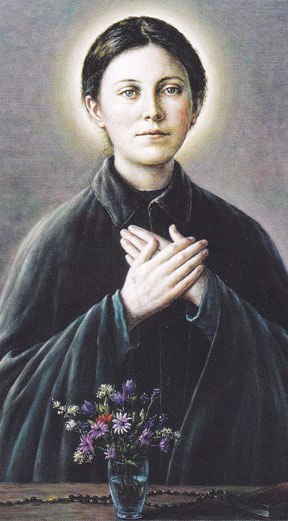
Gemma often saw her guardian angel, with whom she was on familiar terms. Sometimes the angel protected and consoled her, sometimes he counselled her and occasionally he scolded her very severely for her faults. He would say, “I am ashamed of you.” At times Gemma was heard arguing with her guardian angel, so that her spiritual director, Father Germano, had to remind her that she was speaking with a blessed spirit of Heaven and should be very respectful. The angel is mentioned on almost every single page of Gemma’s diary. In one entry, Gemma wrote that the devil had been raining down blows on her shoulder for nearly half an hour. “Then my guardian angel came and asked me what was the matter; I begged him to stay with me all night and he said: ‘But I must sleep.’ ‘No,’ I replied, ‘the Angels of Jesus do not sleep!’ ‘Nevertheless,’ he rejoined, smiling, ‘I ought to rest. Where shall you put me?’ I begged him to remain n ear me. I went to bed; after that he seemed to spread his wings and come over my head. In the morning he was still there.”
One of the most extraordinary things is the fact that Gemma often sent her guardian angel on errands, usually to deliver a letter or oral message to Father Germano in Rome. Often the reply was delivered by the priest’s guardian angel. Realising how unusual this was, Father Germano asked Heaven for a sign that it was in accord with God’s Will. After Gemma’s death, he wrote: “To how many tests didn’t I submit this singular phenomenon in order to convince myself that it took place through a supernatural intervention! And yet none of my tests ever failed; and thus I was convinced again and again that in this, like in many other extraordinary things in her life, Heaven was delighted in amusing itself, as it were, with this innocent and dear maiden.”
During the apostolic investigations into her life, all witnesses testified that there was no artfulness in Gemma’s manner. At the end of each of her ecstasies, she returned to normal and went quietly and serenely about the family life. Most of her severe penances and sacrifices were hidden from most who knew her. Only a few around her privileged to realise that she was exceptionally favoured.
In spite of everything which had happened to her, Gemma understood the true joy of her way of life. She said, “There is neither cross nor sorrow, when we are tightly united to Jesus.”
In January of 1903, Gemma was diagnosed as having tuberculosis. To avoid danger to her adoptive family, she was isolated in a small apartment close to the Giannini house. For four months Gemma suffered uncomplainingly from the disease. She died quietly, in the company of the parish priest, on 11 April. In his testimony he said, “I have been present at many deathbeds but never have I seen anyone die like Gemma, without even a precursor sign, nor a tear, nor a panting breath. She died with a smile which remained upon her lips, so that I could not convince myself that she was really dead.”
The Church authorities began to study Gemma’s life in 1917 and she was beatified in 1933. The decree approving the miracles for canonisation was read 26 March 1939—Passion Sunday. Gemma was canonised on 2 May 1940, only thirty-seven years after her death.
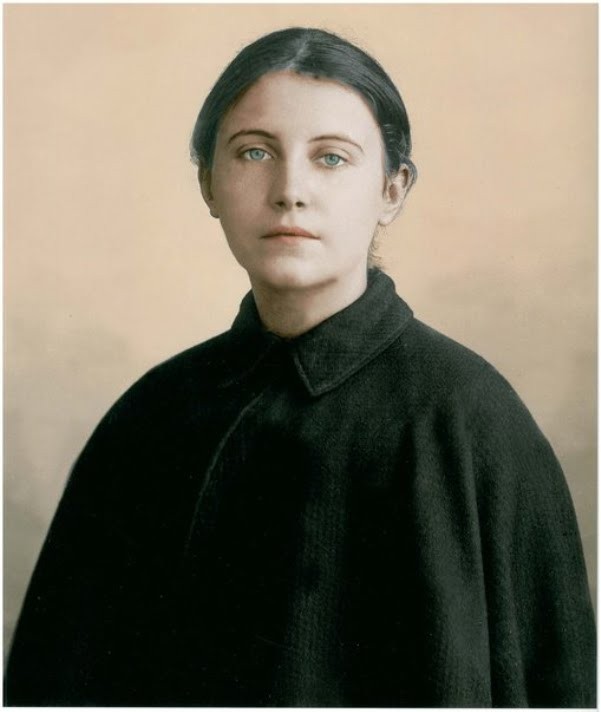
Saint of the Day – 28 May – Blessed Maria Bartolomea Bagnesi OP (1514-1577) Virgin, Third Order Dominican, Mystic, Ecstatic, with the gift of levitation – born as Maria Bagnesi but always called “Marietta” because of her tiny frame, on 15 August 1514 at Florence, Italy and died on 28 May 1577 at Florence, Italy of natural causes, agd 62. Patronages – abuse victims, ill people, against the death of parents, Dominican tertiaries. Her body is incorrupt.
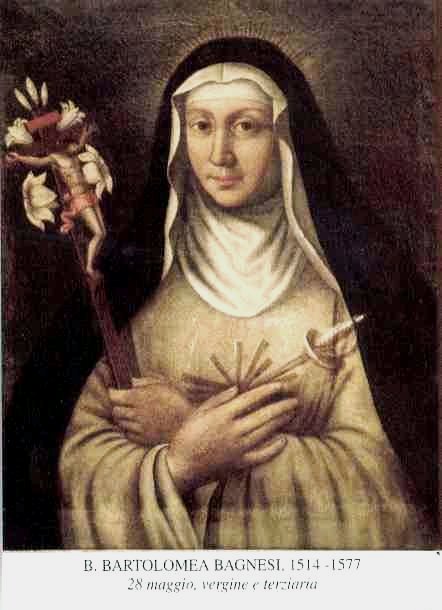
Maria Bagnesi was born in Florence on 15 August 1514 – the Feast of the Assumption – to Carlo Bagnesi and Alessandra Orlandini. Bagnesi was a neglected child and her mother often left her in the care of others which included one of Bagnesi’s sisters who was a nun from the Order of Preachers so she spent most of her childhood in her sister’s convent. Four of her sisters would end up in the religious life.
Her father organised a marriage for her when she turned seventeen and she fainted in horror upon learning this. The thought made Bagnesi so ill she could not walk and was thus confined to her bed. Her father turned to con men and charlatans – for he could be manipulated with ease – and put his daughter through over three decades of non-stop “treatment”. Being bedridden meant that she could not follow her sisters into the religious life but she nevertheless became a member of the Third Order of Saint Dominic in 1544 and made her profession in 1545. She made her profession into the hands of and received the habit from Vittorio di Mattheo who allowed for this to take place in Bagnesi’s room. Bl Maria developed a deep devotion to Saint Bartholomew the Apostle and she assumed the name of “Bartolomea” as part of her actual name as a sort of middle name when she made her profession. After she professed she found that she could get out of her bed for brief periods of time. The combination of asthma and these quack treatments immobilised her just as she began to heal and she started to have visions and converse with angels and demons alike. Neighbours began to believe she was under demonic possession and summoned a local priest – who became her spiritual advisor who assured the locals she was not possessed or in need of an exorcism. People also claim to have seen her levitate. She was also granted the special privilege of having Mass celebrated in her room at times.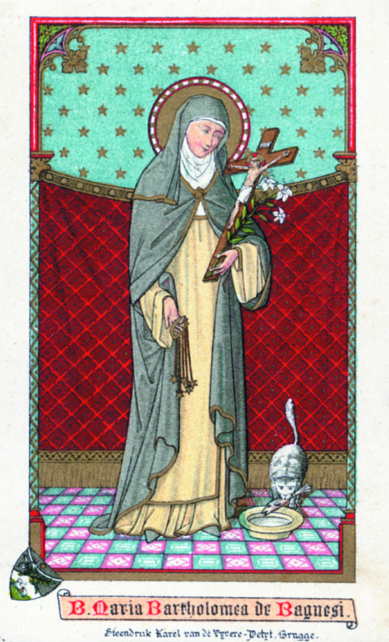
Her room soon became a place for pilgrims to go to in order to seek her wisdom and counsel and her room became a place for cats to roam – some remained with her and even slept on her bed while guarding her pet songbirds. She also came to know Saint Maria Maddalena de’ Pazzi and shared her visions with her; the saint would herself be cured due to Bagnesi’s intercession on 16 June 1584. Bagnesi received the Eucharist three to six times a week and prepared beforehand with docile care and spent the time following her reception of it in deep reflection. Her confessors were the Priests Alessandro Capocchi and Agostino Campi.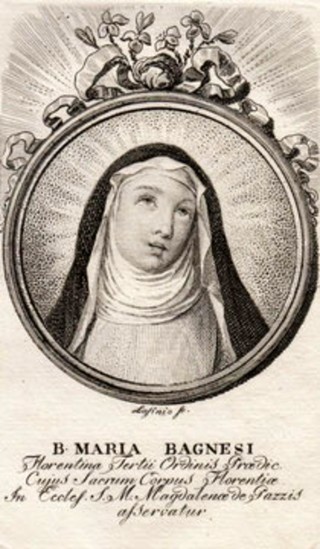
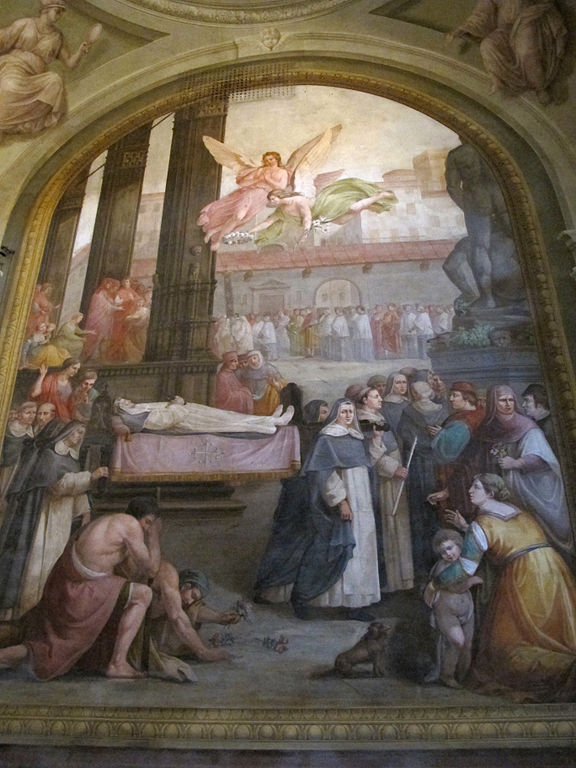
Bagnesi died in Florence in 1577 and at the end of her life, five Priests were present at her deathbed and one of them read to her one of the Gospel accounts of the Passion of Jesus Christ. Her remains were taken in procession for her funeral from Santa Maria Novella to Santa Maria degli Angeli where she was interred.
Let us Pray: O God, the lover of souls, who in Blessed Mary Bartholomew, Thy Virgin, didst unite wonderful endurance of illness with equal innocence of mind, grant , that we who are afflicted according to our deserts may be refreshed with the comfort of Thy grace. Through Christ our Lord. Amen.
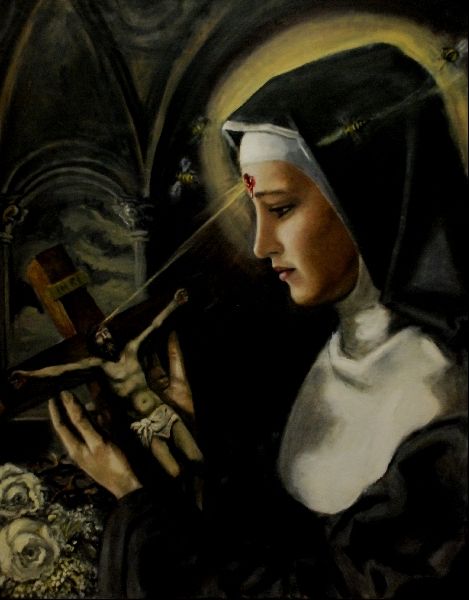
Saint of the Day – 22 May – St Rita of Cascia – (born Margherita Lotti) IN 1386 at Roccaparena, Umbria, Italy and died on 22 May 1457 at the Augustinian Convent at Cascia, Italy of tuberculosis)- Mother, Widow, Stigmatist, Consecrated Religious, Mystic, – Patron of Lost and impossible causes, sickness, wounds, marital problems, abuse, mothers, against infertility or sterility, infertile people, against loneliness, against sickness or bodily ill, sick people, wounds, wounded people, desperate people, forgotten people, difficult marriages, parenthood, Cascia, Italy, Dalayap, Philippines, Igbaras, Iloilo, Philippines. Attributes – nun holding a crown of thorns, holding roses, holding roses and figs, with a wound on her forehead. Her Body is Incorrupt and lies in the Basilica of Cascia. Pope Leo XIII canonised Rita on 24 May 1900.
Blessed by God,
you were a light in darkness
through your steadfast courage
when you had to suffer such agony
upon your cross. You turned aside from this vale of tears
to seek wholeness for your hidden wounds
in the great passion of Christ. . . .
You were not content with less than perfect healing,
and so endured the thorn for fifteen years
before you entered into the joy
of your Lord.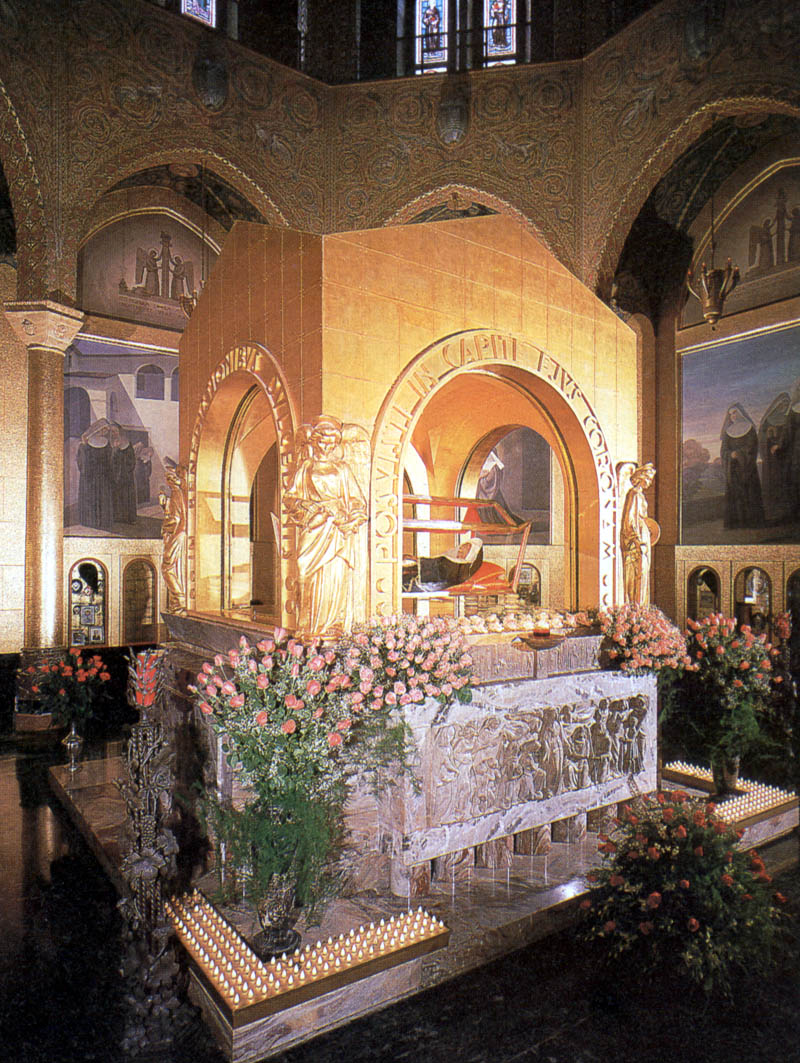
This poem was engraved on the casket of St Rita of Cascia and is one of the few contemporary sources that tell us about her. St Rita received her “hidden wounds” in an unfortunate marriage. She was born in 1381 in the city of Roccaporena (near Spoleto, Umbria, Italy) where various sites connected with her are the focus of pilgrimages. Her parents, Antonio and Amata Ferri Lotti, were known to be noble, charitable persons, who gained the epithet Conciliatore di Cristo “Peacemakers of Christ.” She was married at age twelve to a nobleman named Paolo Mancini. Her parents arranged her marriage, a common practice at the time, despite her repeated requests to be allowed to enter a convent of religious sisters. Her husband, Paolo Mancini, was known to be a rich, quick-tempered, immoral man, who had many enemies in the region of Cascia. Rita had her first child at the age of twelve. For eighteen years she endured the abuses and infidelities of a violent husband. She also suffered the unruly behaviour of two sons who were strongly influenced by their father. She was delivered from these miserable circumstances in a horrific way – one day her husband was brought home dead, brutally slashed by his enemies. Her rambunctious sons planned to get revenge but died before they could obtain it.
Rita was then free to pursue her lifelong dream of becoming a nun. She applied to enter the Augustinian convent at Cascia of Italy, in 1407. But her suffering was not over. Even though orders customarily received widows, the Augustinians three times refused Rita because she had been married. Only after six years did they acquiesce and install her as a nun.
The poem said Rita “sought wholeness” in the passion of Christ. In her meditations she preoccupied her imagination with his agony. On Good Friday, 1441, she prostrated herself before a Crucifix and begged Christ for some small share of his suffering. As though punctured by a crown of thorns, a single wound opened on Rita’s forehead. For fifteen years it caused her daily pain and embarrassed her, as its putrid odour frequently offended her sisters. In 1450, when she was preparing to visit Rome for the jubilee year, the wound temporarily healed. But it reappeared when she returned to Cascia and remained until her death.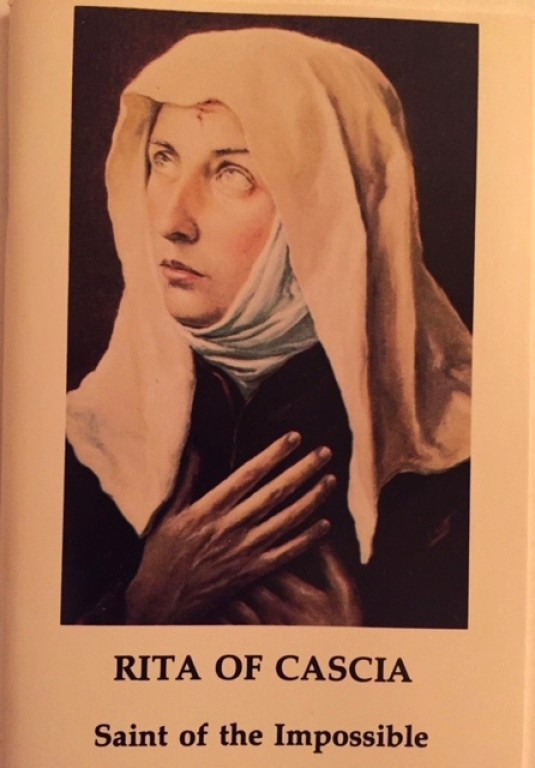
Rita died of tuberculosis on 22 May 1457. Three days later, Domenico Angeli, a notary of Cascia, recorded eleven miracles that occurred upon the saint’s death. He left us this brief profile of her religious life:
“A very honourable nun, Lady Rita, having spent forty years as a nun in the cloister of the Church of Saint Mary Magdalene of Cascia by living with charity in the service of God, followed the destiny of every human being. God, in whose service she persevered for the aforementioned time—desiring to show all the faithful a model of life, so that as she had lived serving God with love by fasting and prayer, they too, all faithful Christians, would live also—worked many wonderful miracles and through the merits of Saint Rita, especially on 25 May 1457.”
The Miracle of the Rose
It is said that near the end of her life Rita was bedridden at the convent. While visiting her, a cousin asked if she desired anything from her old home. Rita responded by asking for a rose from the garden. It was January and her cousin did not expect to find one due to the season. However, when her relative went to the house, a single blooming rose was found in the garden and her cousin brought it back to Rita at the convent. St Rita is often depicted holding roses or with roses nearby. On her feast day churches and shrines of St Rita provide roses to the congregation that are blessed by the priest during Mass.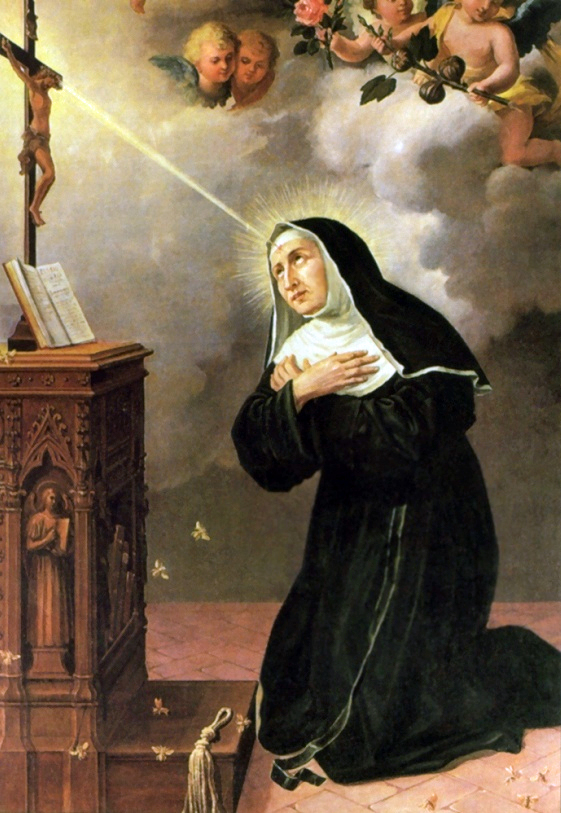
The Miracle of the Bees
In the Parish Church of Laarne, near Ghent, Belgium, there is a statue of St Rita in which several bees are featured. This depiction originates from the story of her Baptism as an infant. On the day after her Baptism, her family noticed a swarm of white bees flying around her as she slept in her crib. However, the bees peacefully entered and exited her mouth without causing her any harm or injury. Instead of being alarmed for her safety, her family was mystified by this sight. According to Butler, this was taken to indicate that the career of the child was to be marked by industry, virtue and devotion.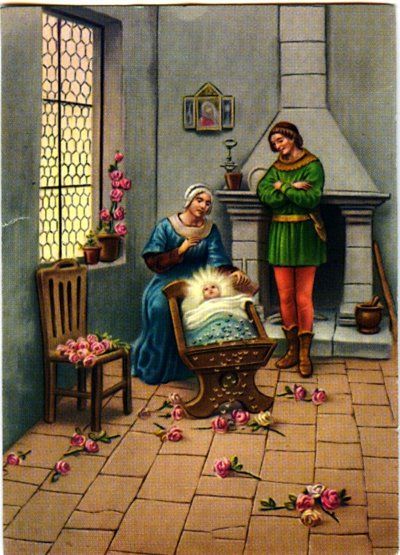
Legacy
A large sanctuary of St Rita was built in the early 20th century in Cascia. The sanctuary and the house where she was born are among the most active pilgrimage sites of Umbria.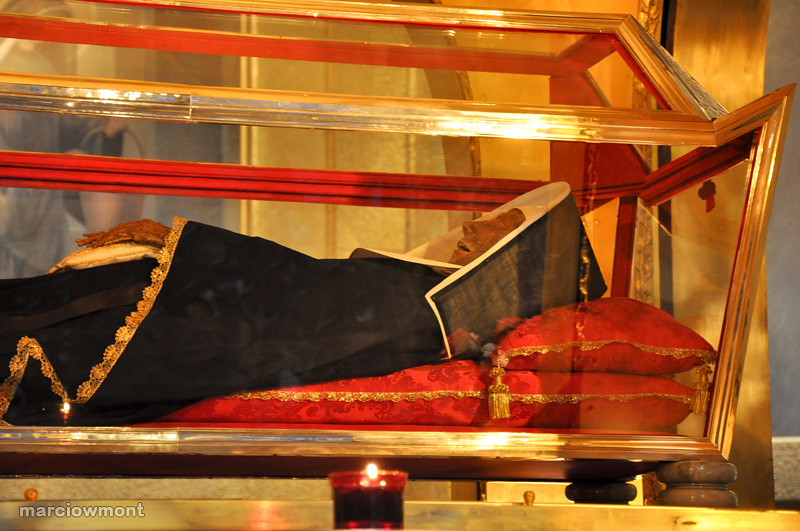
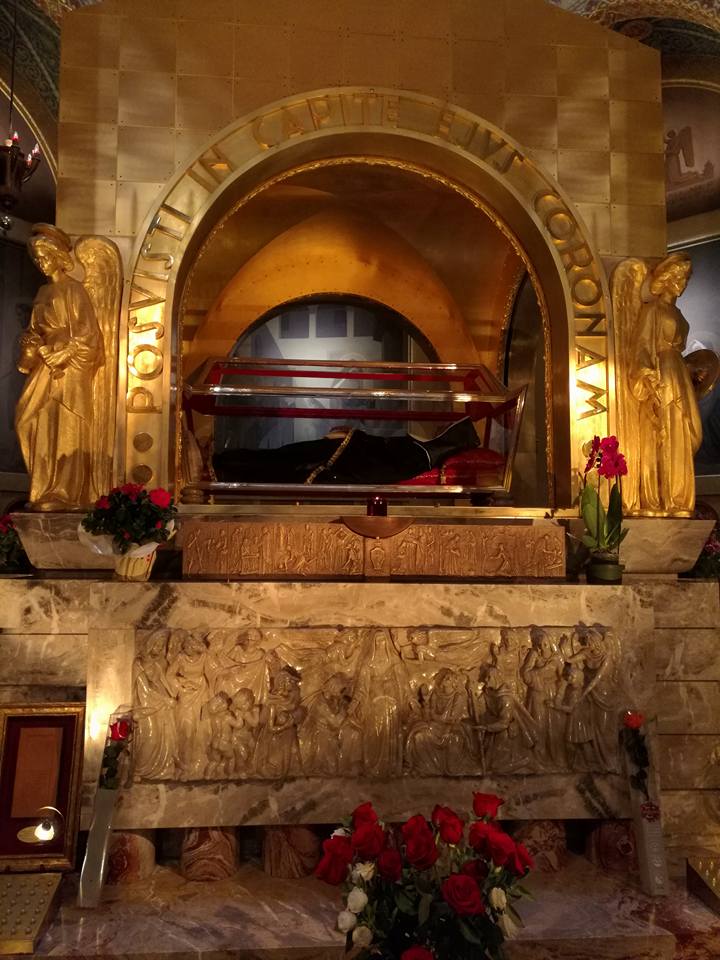
French singer Mireille Mathieu adopted St Rita as her patron saint on the advice of her paternal grandmother. In her autobiography, Mathieu describes buying a candle for St Rita using her last franc. Though Mathieu claims that her prayers did not always come true, she testifies that they inspired her to become a strong and determined woman.


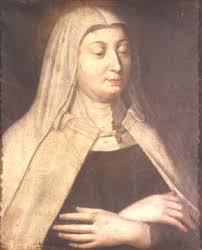
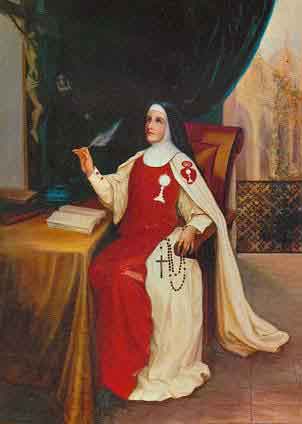
Saint of the Day – 30 April – St Marie Guyart of the Incarnation O.S.U. (1599-1672) – Missionary, Mystic, Widow, Religious Nun, Foundress of the Ursuline Order in Canada. Also known as Marie Guyard, Marie Guyart of the Incarnation, Marie Guyart, Marie de l’Incarnation, Marie of the Ursulines, Mother of New France, Theresa of the New World.
Saint Marie of the Incarnation, the most significant leader to establish the Ursuline Convent in Quebec.
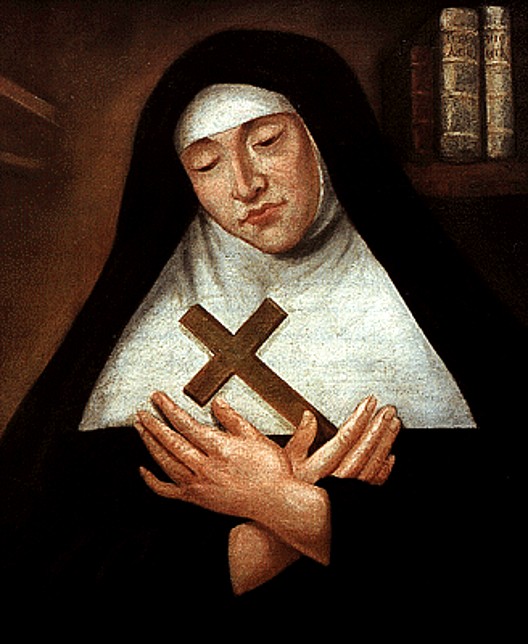
She was born as Marie Guyart in Tours, France in 1599. At about 14 years of age she saw that she could join the convent, but she sensed her mother did not share the same vision. She ended up marrying a silk merchant named Claude Martin and together they had a son.
Unfortunately, when their baby was only six-months-old, Marie became a widow. Called again by God, after much discerning, she got rid of the family business and entrusted her son to her sister and brother-in-law to take the Ursuline veil.
Who was Marie of the Incarnation?
Already very close to God as a young girl, she said she saw the heavens open and Jesus went to her and kissed her asking, “Will you be mine?” To which she replied, “Yes!”
She is considered a mystic of the Church as she had extraordinary encounters with our Lord and our Lady, which directed her in the path to bring the Faith to the peoples of New France.
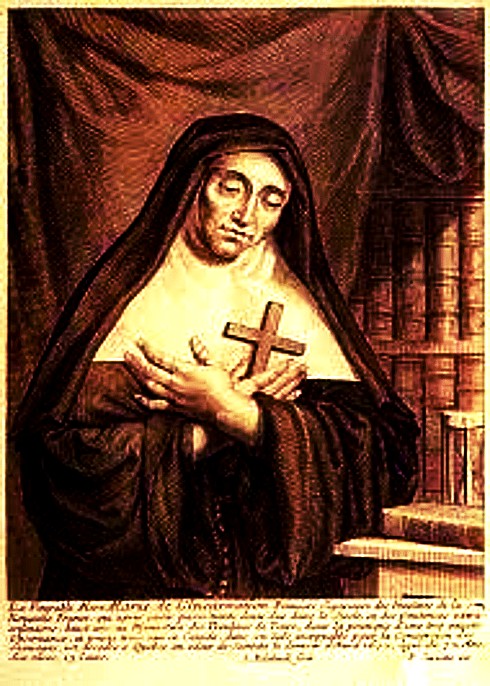
Among her many accomplishments, Saint Marie learned the languages in her surrounding areas and even developed dictionaries in Algonquin and Iroquois, a sacred history in Algonquin, and a catechism in Iroquois.
She was among the first women missionaries in North America. Her life and her spirituality have inspired many people around the world, spanning from other regions of Quebec, Peru, Japan and the Philippines. In Quebec you can find the Marie of the Incarnation Centre.
In June 22, 1980, Pope John Paul the II declared her Blessed. She was Canonised on 3 April 2014 by Pope Francis (equipollent canonisation)
Note: To read about the equipollent canonisation of St Marie Guyart go here: http://en.radiovaticana.va/news/2014/10/11/what_is_equipollent_canonization/1108383
 AnaStpaul
You must be logged in to post a comment.