St Paul the Apostle is the greatest of the early Christian missionaries. He first appears in the Acts of the Apostles under the name of Saul. Saul was raised in the Jewish faith as a Pharisee trained in the strict observance of God’s Law. He believed the Law should be obeyed by himself and all Jews. Saul was upset by the early Christian Church, believing that the early Christians had broken away from their Jewish traditions. He actively persecuted the Church in Jerusalem. As the first Christian martyr Stephen was being stoned to death, Saul watched the cloaks of the persecutors (Acts 7:58).
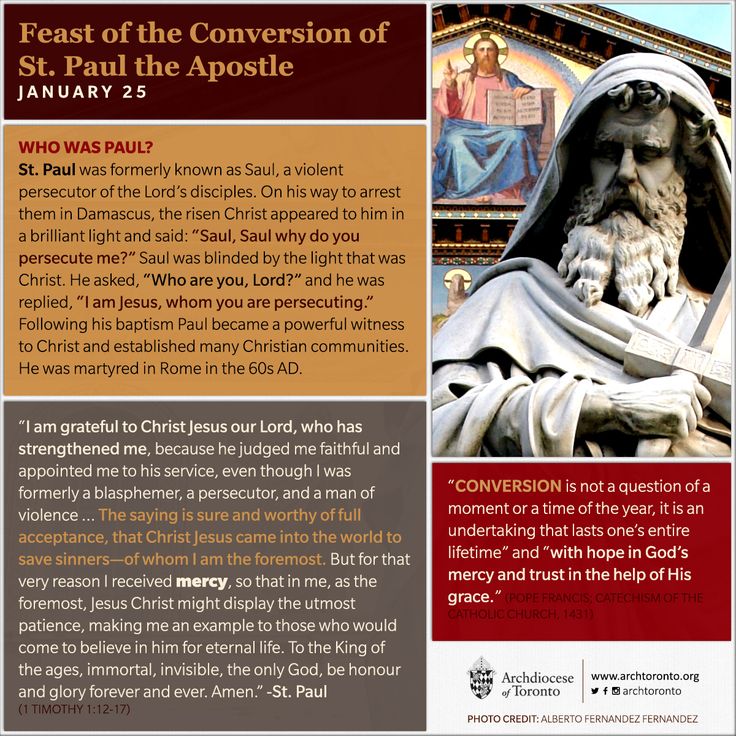
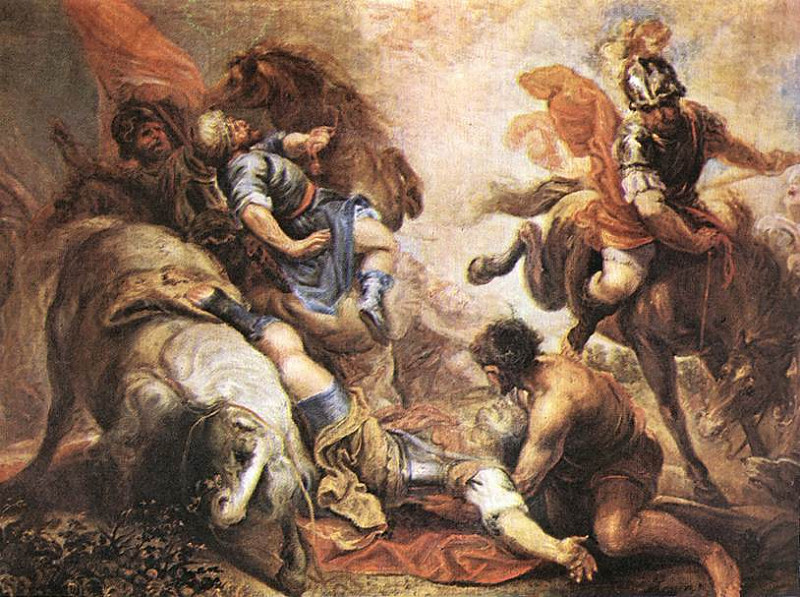
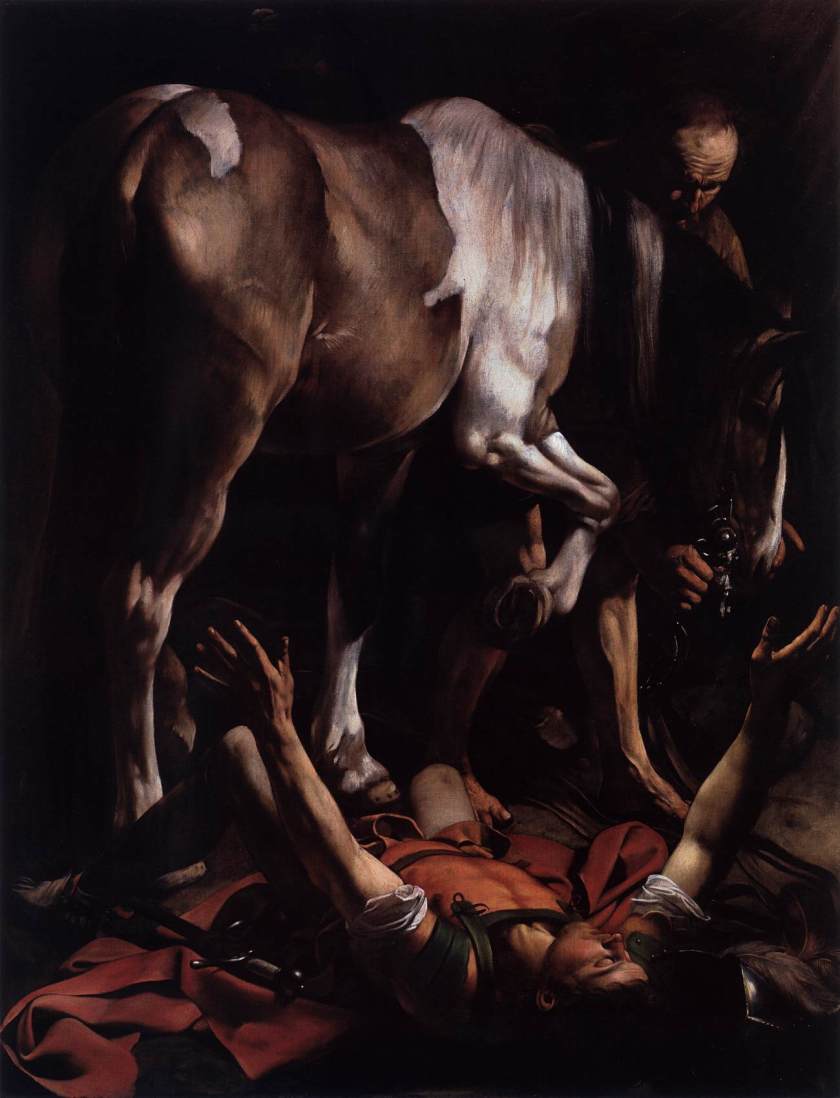
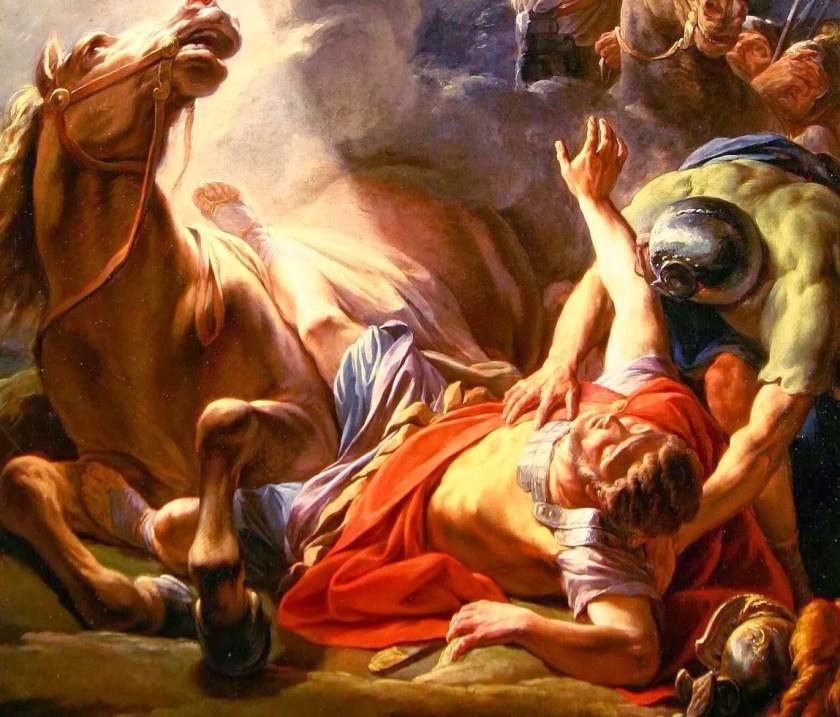
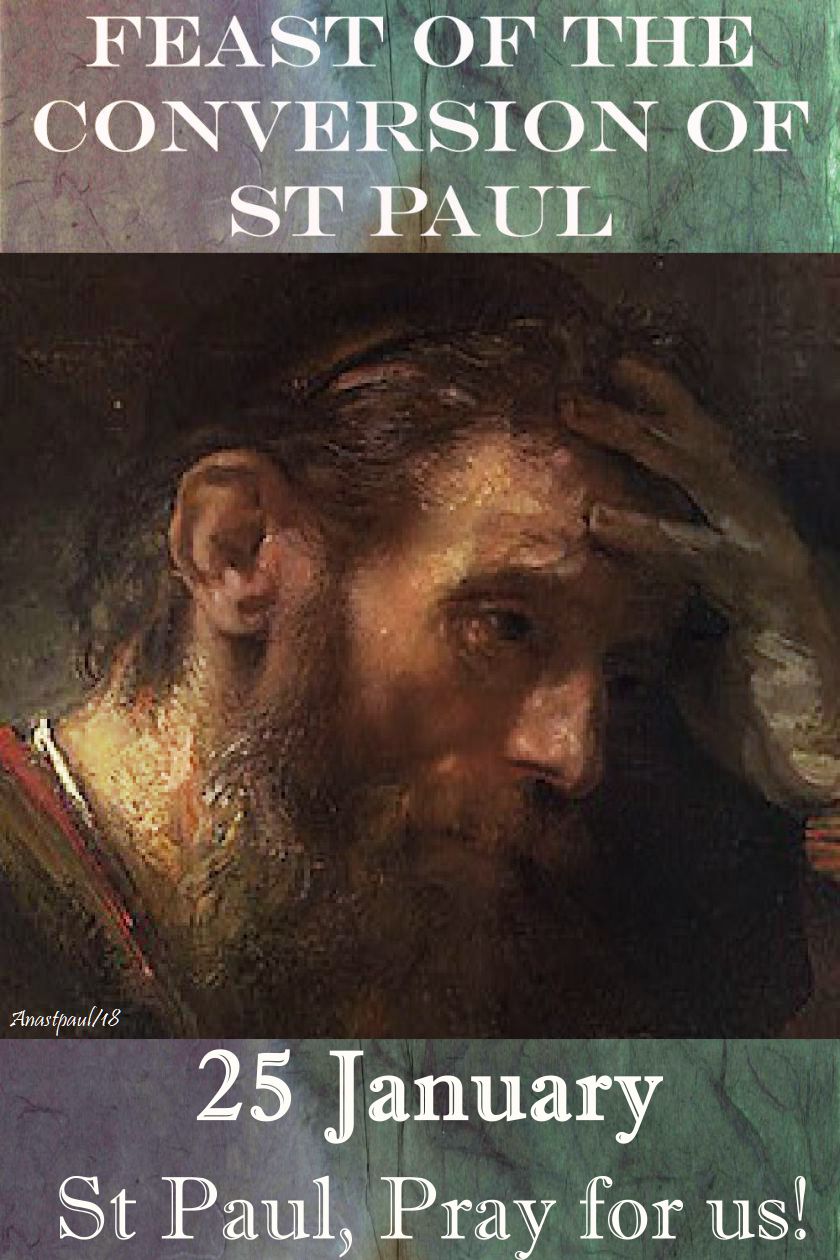
Paul then traveled to Damascus to further persecute early Christians. On the road to Damascus Saul had an encounter with the Risen Jesus Christ (Acts of the Apostles 9:1–19, Galatians 1: 13–14). Jesus asked, “Saul, Saul, why are you persecuting me?” Paul replied, “Who are you, sir?” Jesus responded, “I am Jesus whom you are persecuting”(Acts 9: 4 – 5). Jesus then sent Saul into Damascus to wait for further instructions. Saul was shaken and blinded by the experience. When a Christian named Ananias came and baptised Saul, his blindness went away. As a result of this encounter Saul became a follower of Christ. He was now convinced that fellowship with the risen Jesus Christ, not the observance of the Law, was all that was needed to receive God’s promise of salvation. (Galatians 1:11–12; 3:1–5)
Saul, whose name now became Paul, went to Jerusalem to consult with Peter (Galatians 1: 18). After his first missionary journeys, Paul was called by Jesus to proclaim the Gospel to the Gentiles. He spent the rest of his life journeying on his missions, establishing local churches and writing to them when he heard of their accomplishments and failures. Paul’s letters are the earliest records of the life and history of the early Church. As inspired by the Holy Spirit Paul’s letters are part of the Canon of the New Testament. As a record of the happenings in the early Church they are in invaluable record of the expansion of the Christianity.
St Paul’s Writings
All together, there are 13 epistles that bear Paul’s name as the author. However, scholars do not believe that he wrote them all. Paul himself was the author of first and second Thessalonians, Galatians, Philippians, first and second Corinthians, Romans and Philemon. The epistles to the Ephesians, Colossians, Titus and first and second Timothy bear Paul’s name but it is believed that they were written after his death. The writers of these letters were disciples of Paul who wanted to continue his teaching. Whoever the authors of these epistles were, these writings have been accepted into the New Testament as inspired by the Holy Spirit.
Centrality of Jesus Christ
The most profound and moving day in Paul’s life was when he met the risen Jesus Christ. Paul was well respected by the Jewish community and his peers. But he gave it all up for Christ. “More than that, I even consider everything as a loss because of the supreme good of knowing Jesus Christ my Lord.” (Philippians 3:8) Jesus Christ, Paul realised, was sent by the Father to bring salvation for all. Paul taught that we are united with Christ in faith and Baptism – “We were indeed buried with him through baptism into death, so that, just as Christ was raised from the dead by the glory of the Father, we too might live in newness of life.”(Romans 6:4)
On the personal level, individual Christians recognise that when they are united with Christ, they receive the grace needed to overcome sin and to live moral lives. (Galatians 5:16–26)
Justification
Paul teaches that the justice of God was saving justice at its best. God is faithful, fulfilling the promises made in the Old Testament covenant. Through the sin of Adam and Eve the human family was alienated from God. Through Christ the human family is called back into relationship with God. This process of reuniting the human family with God is called justification. (Romans 3:21–31) It is impossible for us to justify ourselves; we are only justified by being united in faith with Jesus Christ and by accepting the gift of grace won by Christ. (Romans 5:1–2) We can only be made right with God and set free from a life of immoral living by accepting the gift of God’s reconciling grace.
Life in the Spirit
Paul teaches that the love of God is being poured into our hearts through the Holy Spirit. (Romans 5:5) The Holy Spirit is the source of all love. The Holy Spirit creates a bond between us and God like children bound to a father. (Romans 8:14–16) The Holy Spirit not only establishes our relationship with the Father. Even though we are weak, the Holy Spirit helps us to live faithfully within that relationship. (Romans 8:26–27) It is through the Holy Spirit that we can live in love with all people. (1 Corinthians 13:3–7)
The Moral Life
What does it mean to live a Christian moral life? Paul thought deeply about this question. He was raised as a faithful Jew. As we have seen Paul, was raised to believe that following the strict moral code of the Jewish faith was the way to salvation. Paul believed “… the law is holy and the commandment is holy and righteous and good.”(Romans 7:12.) What Paul realised, however, that because we are weakened by the sin of Adam and Eve, it was impossible to us to reconnect in our relationship with God through our efforts alone (Romans 7:14).
After his experience with Jesus Christ, Paul knew that he was not alone on the road to salvation. Jesus Christ has already accomplished salvation for us. In faith and Baptism, Christians receive the grace of the Holy Spirit, who is our constant guide. The Holy Spirit helps us to live in relationship with God and others.
So Paul’s great message to the world was: You are saved entirely by God, not by anything you can do. Saving faith is the gift of total, free, personal and loving commitment to Christ, a commitment that then bears fruit in more “works” than the Law could ever contemplate.
Thought for the Day – 23 January – The Memorial of St Marianne Cope (1838-1918)
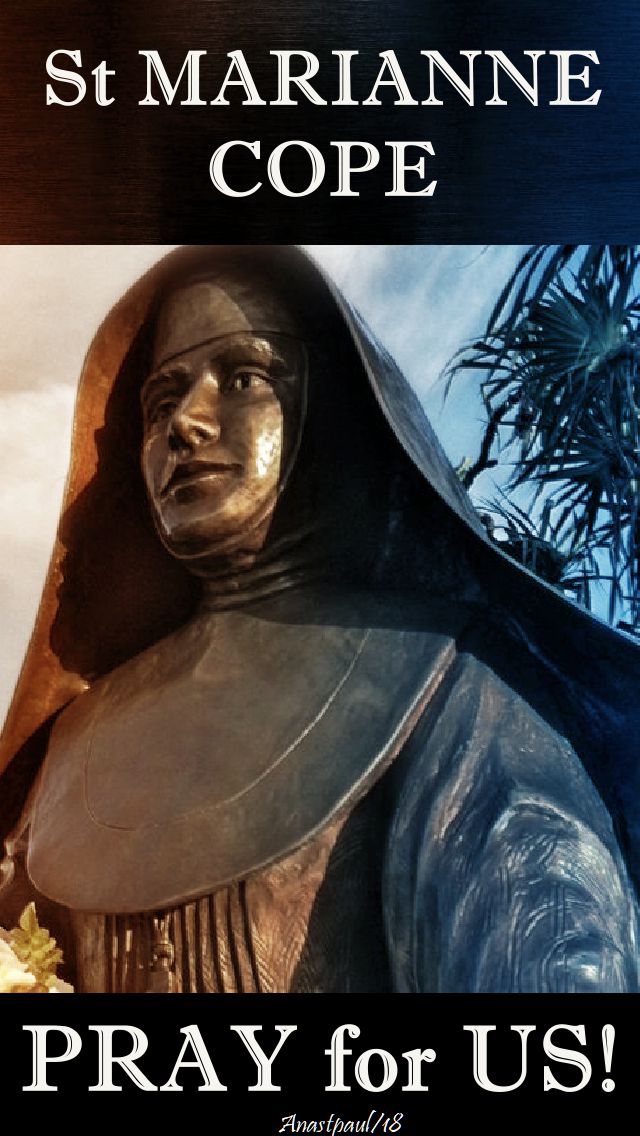
“The life of Marianne Cope is a wonderful work of divine grace. She demonstrated the beauty of the life of a true Franciscan. The encounter of Mother Marianne with those suffering from leprosy took place when she was far along on her journey to Christ. For 20 years she had been a member of the Congregation of the Sisters of the Third Order of St Francis of Syracuse in New York. She was already a woman of vast experience and was spiritually mature. But suddenly God called her to a more radical giving, to a more difficult missionary service.
Blessed Marianne, who was Provincial Superior at the time, heard the voice of Christ in the invitation of the Bishop of Honolulu. He was looking for Sisters to assist those suffering from leprosy on the Island of Molokai. Like Isaiah, she did not hesitate to answer: “Here I am. Send me!” (Is 6: 8). She left everything and abandoned herself completely to the will of God, to the call of the Church and to the demands of her new brothers and sisters. She put her own health and life at risk.”….Homily of Cardinal Jose Saraiva Martins on the Beatification of St Marianne Cope 14 May 2005
Awarded the Royal Order of Kapiolani by the Hawaiian government and celebrated in a poem by Robert Louis Stevenson, Mother Marianne continued her work faithfully. Her sisters have attracted vocations among the Hawaiian people and still work on Molokai.
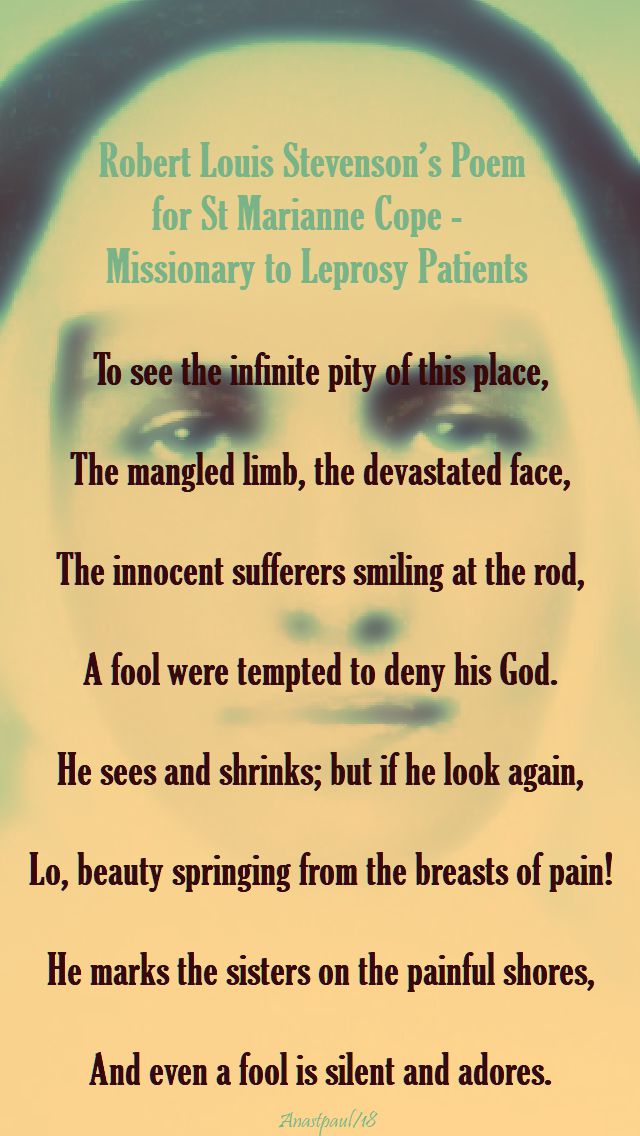
Robert Louis Stevenson’s Poem for St Marianne Cope – Missionary to Leprosy Patients
To the Reverend Sister Marianne, Missionary to Leprosy Patients Matron of the Bishop Home, Kalaupapa.
To see the infinite pity of this place, The mangled limb, the devastated face, The innocent sufferers smiling at the rod, A fool were tempted to deny his God. He sees and shrinks; but if he look again, Lo, beauty springing from the breasts of pain! He marks the sisters on the painful shores, And even a fool is silent and adores.
“Rivers of living water will gush forth from the heart” of the one who believes in Christ. The signs of his presence are summarised in the Letter to the Galatians: They are: “love, joy, peace, patient endurance, kindness, generosity, faith, mildness and chastity” (5: 22).
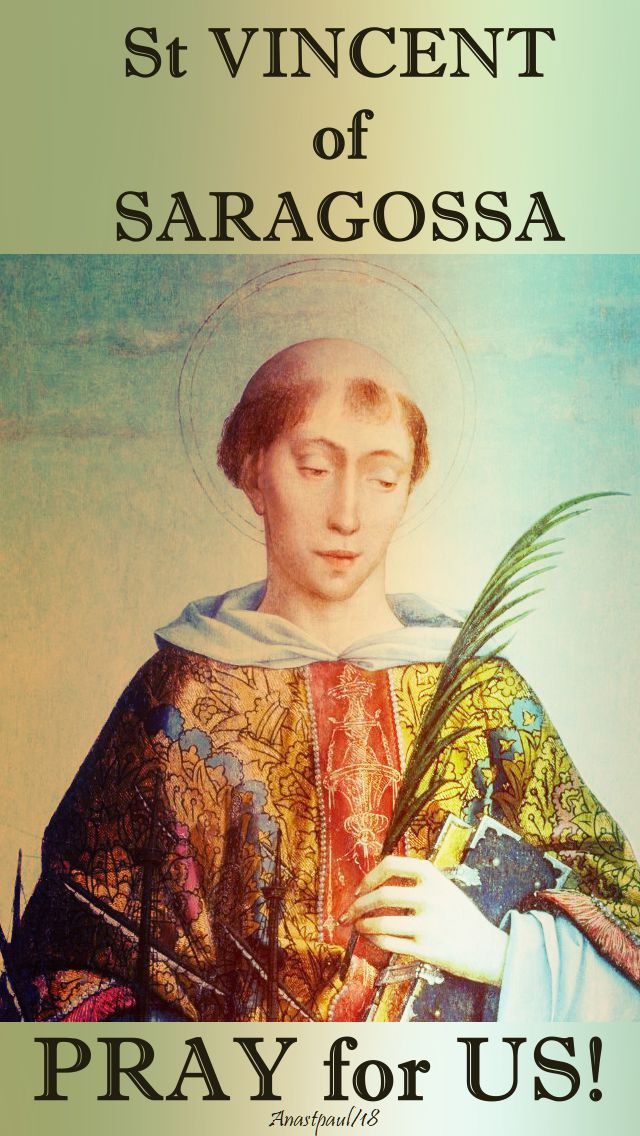
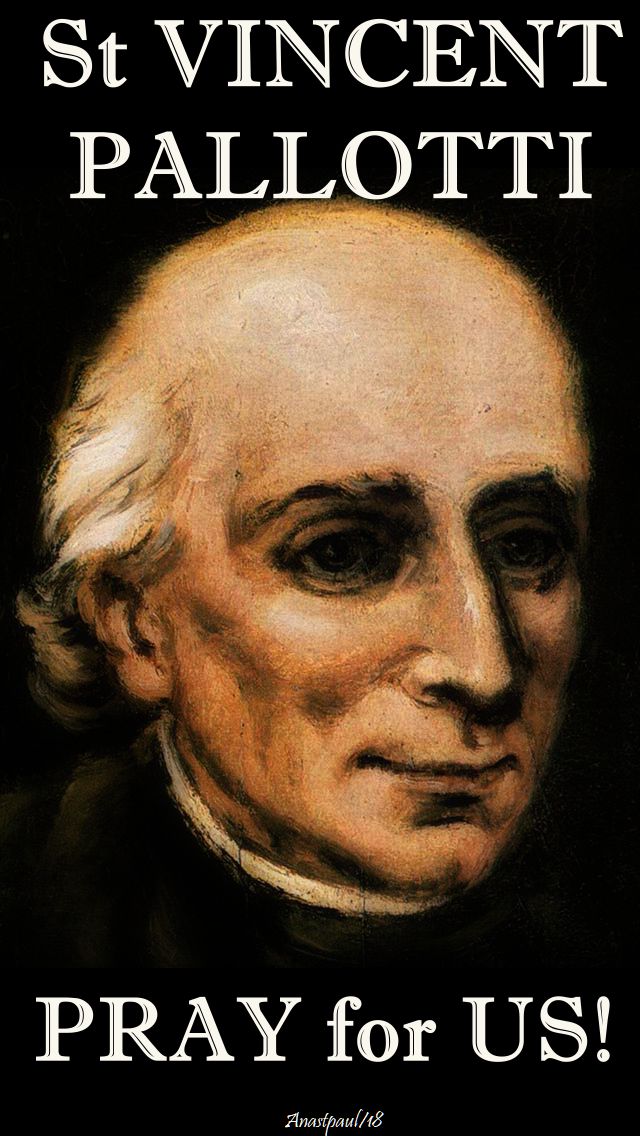
Second Thoughts for Today – 22 January – The Memorial of St Vincent of Saragossa (Died 304) – Deacon and Martyr – The Protomartyr of Spain, St Vincent Pallotti (1795-1850) Priest, Missionary, Apostle of Charity and Marian Devotion, Founder and Blessed William Joseph Chaminade S.M. (1761-1850) Priest, Apostle of Mary and Founder of the “Society of Mary or Marianists”
There is a certain genius that comes from the faith and we saw it in our own day in St Mother Teresa. The saints tend to tackle great and difficult things and accomplish wonders because they did NOT and do NOT depend on their OWN strength and effort. They KNOW that all things are possible ONLY with and in God – they take Him at His word – they ask for miracles and receive them!
They are never disappointed – this is the genius of faith!
St Vincent of Saragossa, pray for us! St Vincent Pallotti, pray for us! Blessed William Joseph Chaminade S.M., pray for us!
Thought for the Day – 4 January – The Memorial of St Elizabeth Ann Seton (1774-1821) “What is a Saint?”
Excerpt from HOMILY OF THE HOLY FATHER BLESSED PAUL VI – 14 September 1975, on the Canonisation of St Elizabeth Ann Seton
Elizabeth Ann Seton is a Saint! We rejoice and we are deeply moved that our apostolic ministry authorises us to make this solemn declaration before all of you here present, before the holy Catholic Church, before our other Christian brethren in the world, before the entire American people and before all humanity. Elizabeth Ann Bayley Seton is a Saint!
She is the first daughter of the United States of America to be glorified with this incomparable attribute! But what do we mean when we say: «She is a Saint»? We all have some idea of the meaning of this highest title; but it is still difficult for us to make an exact analysis of it. Being a Saint means being perfect, with a perfection that attains the highest level that a human being can reach. A Saint is a human creature fully conformed to the will of God. A Saint is a person in whom all sin-the principle of death-is cancelled out and replaced by the living splendour of divine grace. The analysis of the concept of sanctity brings us to recognise in a soul the mingling of two elements that are entirely different but which come together to produce a single effect: SANCTITY. One of these elements is the human and moral element, raised to the degree of heroism: heroic virtues are always required by the Church for the recognition of a person’s sanctity. The second element is the mystical element, which express the measure and form of divine action in the person chosen by God to realise in herself-always in an original way-the image of Christ (Cfr. Rom. 8, 29).
The Church has made this study of the life, that is, the interior and exterior history, of Elizabeth Ann Seton. And the Church has exulted with admiration and jo, and has today heard her own charism of truth poured out in the exclamation that we send up to God and announce to the world: she is a Saint!
May the dynamism and authenticity of her life be an example in our day-and for generations to come-of what women can and must accomplish, in the fulfilment of their role, for the good of humanity.
St Elizabeth Ann Seton – Pray for us that we may all travel safely this path of sanctity and join you in Heaven in the halls of Sanctity!
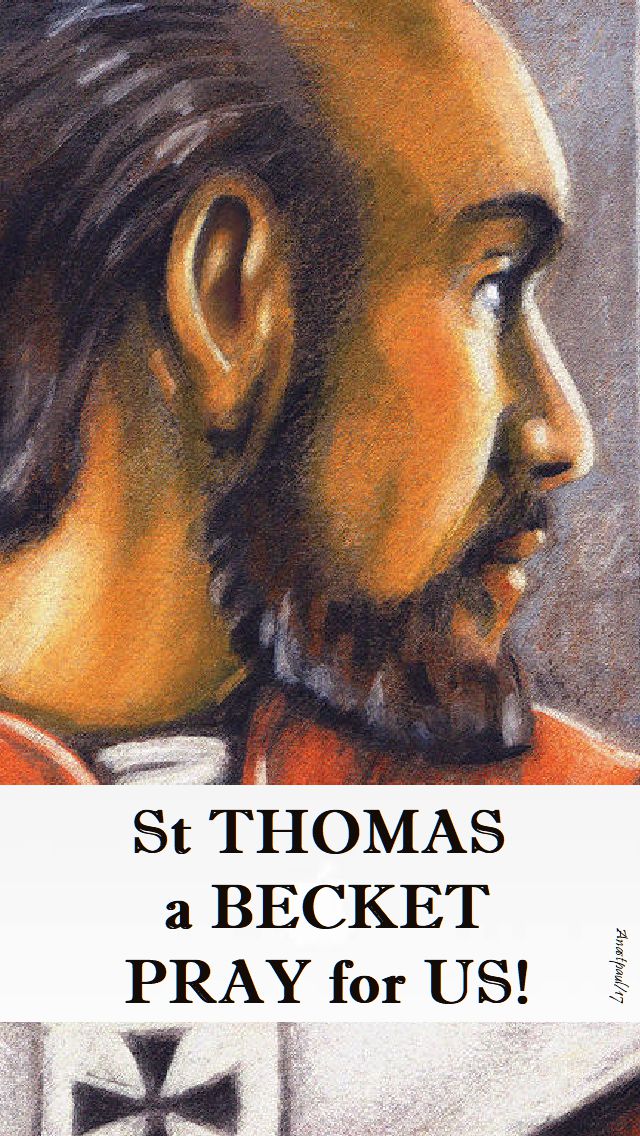
Thought for the Day – 29 December – Fifth Day of the Octave and the Memorial of St Thomas a Becket
I think we know that the twentieth century is probably the century of the greatest flowering of Christian martyrs: across Nazi Germany, the Soviet Union, Vietnam, in communist regimes in Latin America and other places too. Now the twenty-first century is following a similar pattern in other parts of the world: the Middle East, parts of Africa, Pakistan. This moment of prominence for St Thomas a Becket helps us to remember and focus on this fruitfulness of courage and faith which is always the seed of the Church.
For some, Thomas died a traitor, betraying the loyalty they believe he owed to the King. For others he died a martyr, put to death for his defence of the things of the Lord, in this case the honour and rights of the Church.
We know that this relationship between the role and powers of the state on the one hand and the role and commitment of the Church on the other, is never an easy one. It is always a point of tension, a daily struggle in conscience and in public debate. But Thomas’ martyrdom reminds us what can happen when the state seeks to dominate religious belief and reshape it to its own ends, to its own selection of values. When observance of those particular values becomes absolute requirement then we are on a path of confrontation. The example of Thomas a Becket stands before us as a reminder to every age that the point may come where there is no longer any space left for that religious freedom, such a basic human right, which permits the holding and expressing of religious belief in word and action in the public forum.
The tensions that can lead to that point were well delineated in the speech given by Pope Benedict XVI in 2010 when he spoke in Westminster Hall. He said:
‘Each generation, as it seeks to advance the common good, must ask anew: what are the requirements that governments may reasonably impose upon citizens, and how far do they extend? By appeal to what authorities can moral dilemmas be resolved. These questions take us directly to the ethical foundations of civil discourse. If the moral principles underpinning the democratic process are themselves determined by nothing more solid than social consensus, then the fragility of the process becomes all too evident – herein lies the real challenge for democracy.’ Pope Benedict called modern democracies, including our own, to engage in constructive dialogue which brings together faith and reason, affirming that ‘religion is not a problem for legislators to solve, but a vital contributor to national conversation.’
I have only to think of another Thomas, four hundred years after Becket, whose dilemma and heroism echoes that of the earlier Thomas. Thomas More was also asked to show where his fundamental loyalty lay and he too, lacking support from his fellow clergy, stood alone, an uncompromising figure, yet never seeking conflict or confrontation. What was well summed up of him, in words beautifully attributed to him, can also be applied to Thomas a Becket. ‘I am indeed the King’s good servant, but God’s first.’
Excerpt from the Archbishop of Westminister at the Symposium on St Thomas a Becket at Lambeth Palace on 27 May 2016.
St Thomas a Becket, God’s good servant, pray for us!
Thought for the Day – 28 December – The Feast of the Holy Innocents – The 4th Octave Day of Christmas
An angel of the Lord appeared to Joseph in a dream and said, “Rise, take the child and his mother and flee to Egypt and remain there till I tell you, for Herod is about to search for the child, to destroy him.” And he rose and took the child and his mother by night and departed to Egypt… Then Herod, when he saw that he had been tricked by the wise men, was in a furious rage and he sent and killed all the male children in Bethlehem and in all that region, who were two years old or under, according to the time which he had ascertained from the wise men….Matthew 2:13-18
We call martyrs those saints who chose to give their lives for Jesus Christ. These innocent children also gave their lives but they didn’t choose to . They were chosen for martyrdom. For centuries innocent lives have been taken and people can’t help asking ‘why?’ The suffering of innocent children is still a scandal for our human hearts. That happened during WWII in a concentration camp. The Nazi guards decided one day to hang a child in front of thousands of prisoners in formation. Elie Wiesel, who writes the story, explains that the child was so light that he hanged, struggling to gasp, for more than half an hour. ‘Where is God now?’ asked one of those prisoners forced to contemplate the suffering of the child. “Behind me,” writes Wiesel, “I heard the same man asking: ‘For God’s sake, where is God?’ And from within me, I heard a voice answer- ‘Where is He? This is where – hanging here from this gallows…’”
God’s agony didn’t finish on Calvary. When innocent children cry, God mixes His Tears with theirs, when they bleed, God’s Heart bleeds with them. If they ask you ‘where is God?’, tell them that God is on Calvary still, dying every day in the womb of some mothers, He is the Victim of famines, of epidemics, of wars, of abuses, of bullying, of mafias, of trafficking, of abandonment, of persecution, of terrorism, of injustice of any kind. God is still in agony in the suffering of innocents.
But we are with you, Mary, Mother of all Innocents, helping Jesus to bear His Cross, comforting Him with our prayer and reminding Him with our love that all that He suffers for us is worthwhile, and asking God for the end of all this injustice.
Fr George Boronat M.D. S.T.D is a Catholic priest from the Prelature of Opus Dei,
working in the Archdiocese of Southwark in London.
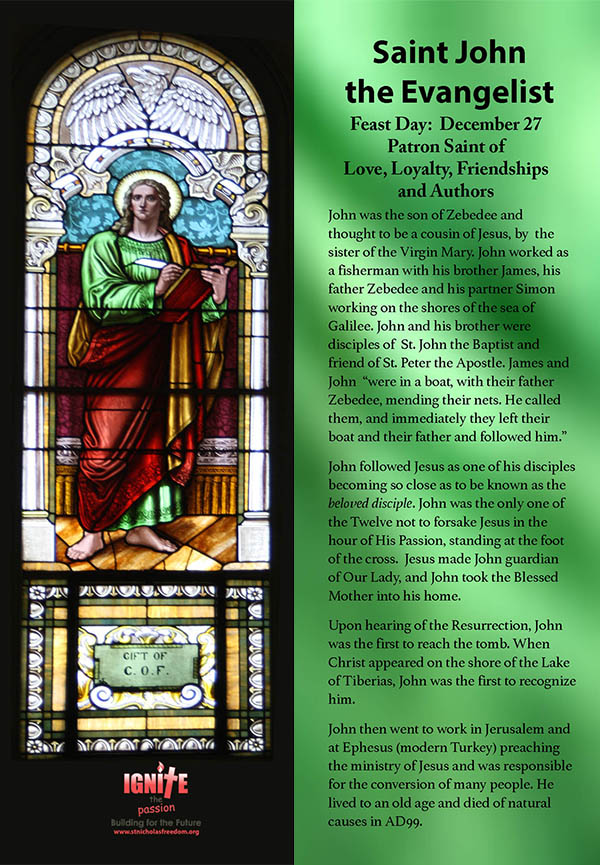
Thought for the Day – 27 December – the Feast of St John the Apostle and Evangelist “The Disciple whom Jesus Loved” and the 3rd Octave Day
Taken From THE LITURGICAL YEAR, Abbot Dom Guéranger OSB, Book II
NEAREST to Jesus’ Crib, after Stephen, stands John, the Apostle and Evangelist. It was only right that the first place should be assigned to him, who so loved his God that he shed his blood in his service; for, as this God Himself declares, greater love than this hath no man, that he lay down his life for his friends, [St. John xv 13] and Martyrdom has ever been counted by the Church as the greatest act of love and as having, consequently, the power of remitting sins, like a second Baptism. But next to the sacrifice of Blood, the noblest, the bravest sacrifice and that which most wins the heart of Him Who is the Spouse of souls, is the sacrifice of Virginity. Now just as St Stephen is looked upon as the type of Martyrs, St John is honoured as the Prince of Virgins. Martyrdom won for Stephen the Crown and palm; Virginity merited for John most singular prerogatives, which, while they show how dear to God is holy Chastity, put this Disciple among those who by their dignity and influence are above the rest of men.
St John was of the family of David, as was our Blessed Lady. He was consequently a relation of Jesus. This same honour belonged to St James the Greater, his brother; as also to St James the Less and St Jude, both sons of Alpheub. When our Saint was in the prime of his youth, he left not only his boat and nets, not only his Father Zebedee but even his betrothed, when everything was prepared for the marriage. He followed Jesus, and never once looked back. Hence the special love which our Lord bore him. Others were Disciples or Apostles, John was the Friend of Jesus. The cause of this our Lord’s partiality was, as the Church tells us in the Liturgy, that John had offered his Virginity to the Man-God. Let us, on this his Feast, enumerate the graces and privileges that came to St. John from his being the Disciple whom Jesus loved.
This very expression of the Gospel, which the Evangelist repeats several times—–The Disciple whom Jesus loved [St. John xiii 23; xix 26; xxi 7; xxi 20]—–says more than any commentary could do. St Peter, it is true, was chosen by our Divine Lord to be the Head of the Apostolic College and the Rock whereon the Church was to be built: he, then, was honoured most; but St John was loved most. Peter was bid to love more than the rest loved and he was able to say, in answer to Jesus’ thrice repeated question, that he did love Him in this highest way: and yet, notwithstanding, John was more loved by Jesus than was Peter himself, because his Virginity deserved this special mark of honour.
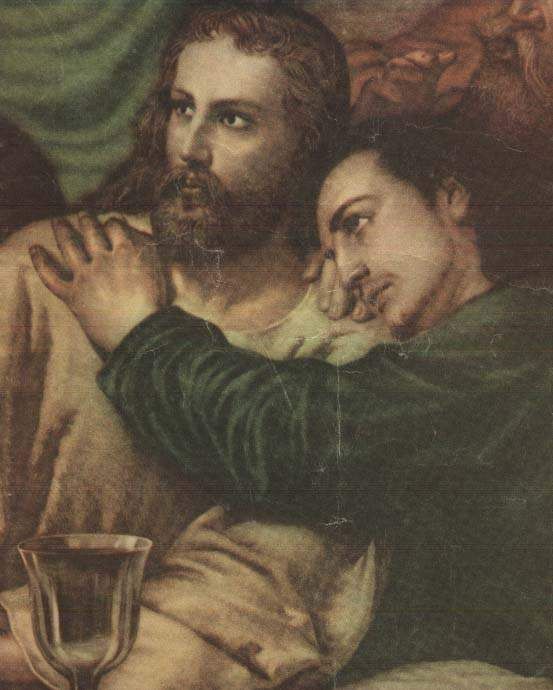
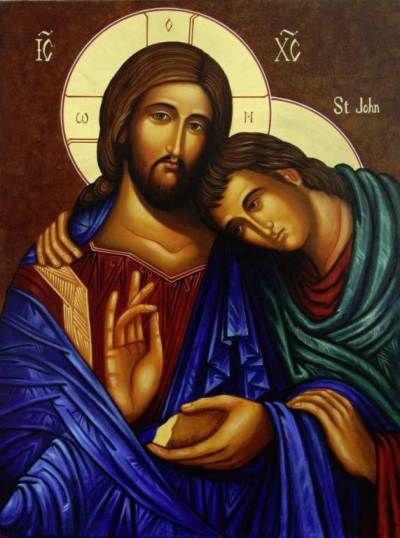
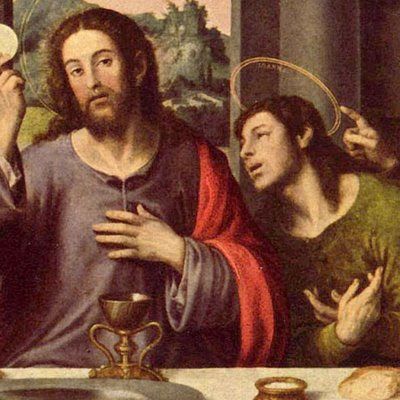
Chastity of soul and body brings him who possesses it into a sacred nearness and intimacy with God. Hence it was that at the Last Supper—–that Supper which was to be renewed on our Altars to the end of the world, in order to cure our spiritual infirmities and give life to our souls—–John was placed near to Jesus, nay, was permitted, as the tenderly loved Disciple, to lean his head upon the Breast of the Man-God. Then it was that he was filled, from their very Fountain, with Light and Love: it was both a recompense and a favour and became the source of two signal graces, which make St John an object of special reverence to the whole Church.
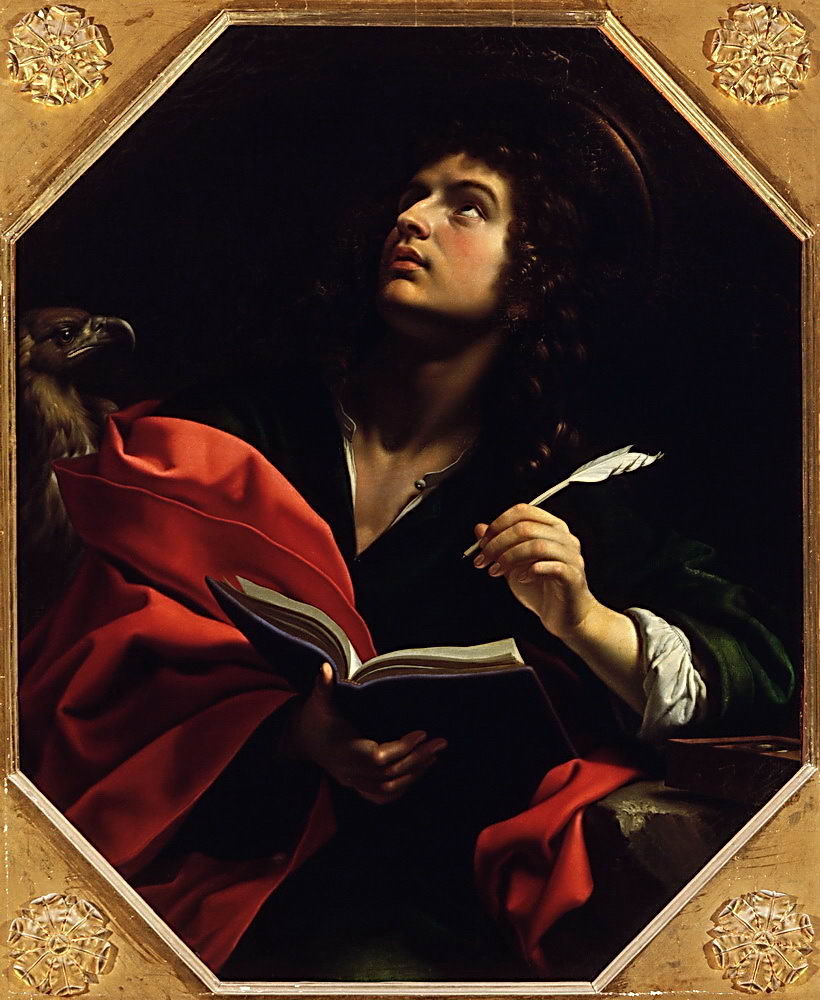
Divine wisdom wishing to make known to the world the Mystery of the Word and commit to Scripture those profound secrets which, so far, no pen of mortal had been permitted to write, the task was put upon John. Peter had been crucified, Paul had been beheaded and the rest of the Apostles had laid down their lives in testimony of the Truths they had been sent to preach to the world; John was the only one left in the Church. Heresy had already begun its blasphemies against the Apostolic Teachings; it refused to admit the Incarnate Word as the Son of God, Consubstantial to the Father. John was asked by the Churches to speak and he did so in language heavenly above measure. His Divine Master had reserved to this His Virgin-Disciple the honour of writing those sublime Mysteries which the other Apostles had been commissioned only to teach—–THE WORD WAS GOD, and this WORD WAS MADE FLESH for the salvation of mankind. Thus did our Evangelist soar, like the Eagle, up to the Divine Sun and gaze upon Him with undazzled eye, because his heart and senses were pure and therefore fitted for such vision of the uncreated Light. If Moses, after having conversed with God in the cloud, came from the Divine interview with rays of miraculous light encircling his head: how radiant must have been the face of St John, which had rested on the very Heart of Jesus, in Whom are hid all the treasures of wisdom and knowledge [Col. ii 3] how sublime his writings! how Divine his teaching! Hence the symbol of the Eagle, shown to the Prophet Ezechiel, [Ezech. i 10; x 14] and to St John himself in his Revelations, [Apoc. iv 7] has been assigned to him by the Church: and to this title of The Eagle has been added, by universal tradition, the other beautiful name of Theologian.
This was the first recompense given by Jesus to His Beloved John—–a profound penetration into Divine Mysteries. The second was the imparting to him of a most ardent charity, which was equally a grace consequent upon his angelic purity, for purity unburdens the soul from grovelling egotistic affections and raises it to a chaste and generous love. John had treasured up in his heart the Discourses of his Master: he made them known to the Church, and especially that Divine one of the Last Supper, wherein Jesus had poured forth His whole Soul to His Own, whom He had always tenderly loved but most so at the end. [1 St. John xiii 1] He wrote his Epistles and Charity is his subject: God is Charity—–he that loveth not, knoweth not God—–perfect Charity casts out fear—–and so on throughout, always on Love. During the rest of his life, even when so enfeebled by old age as not to be able to walk, he was for ever insisting upon all men loving each other, after the example of God, Who had loved them and so loved them! Thus, he that had announced more clearly than the rest of the Apostles the Divinity of the Incarnate Word, was par excellence the Apostle of that Divine Charity which Jesus came to enkindle upon the earth.
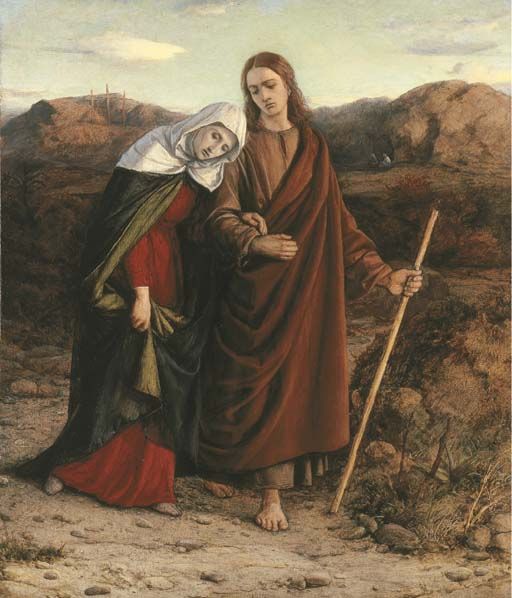
But our Lord had a further gift to bestow and it was sweetly appropriate to the Virgin-Disciple. When dying on his Cross, Jesus left Mary upon this earth. Joseph had been dead now some years. Who then shall watch over His Mother? Who is there worthy of the charge? Will Jesus send His Angels to protect and console her? For, surely, what man could ever merit to be to her as a second Joseph? Looking down, He sees the Virgin-Disciple standing at the foot of the Cross: we know the rest, John is to be Mary’s Son: Mary is to be John’s Mother. Oh! wonderful Chastity, that wins from Jesus such an inheritance as this! Peter, says St Peter Damian, shall have left to him the Church, the Mother of men; but John shall receive Mary, the Mother of God, whom he will love as his own dearest Treasur, and to whom he will stand in Jesus’ stead; whilst Mary will tenderly love John, her Jesus’ Friend, as her Son.
Can we be surprised after this, that St John is looked upon by the Church as one of her greatest glories? He is a Relative of Jesus in the flesh; he is an Apostle, a Virgin, the Friend of the Divine Spouse, the Eagle, the Theologian, the Son of Mary; he is an Evangelist, by the history he has given of the Life of his Divine Master and Friend; he is a Sacred Writer, by the three Epistles he wrote under the inspiration of the Holy Ghost; he is a Prophet, by his mysterious Apocalypse, wherein are treasured the secrets of time and eternity. But is he a Martyr? Yes, for if he did not complete his sacrifice, he drank the Chalice of Jesus, [St. Matt. xx 22] when, after being cruelly scourged, he was thrown into a caldron of boiling oil before the Latin Gate at Rome. He was therefore a Martyr in desire and intention, though not in fact. If our Lord, wishing to prolong a life so dear to the Church, as well as to show how he loves and honours Virginity, miraculously stayed the effects of the frightful punishment, St John had, on his part, unreservedly accepted Martyrdom.
Such is the companion of Stephen at the Crib, wherein lies our Infant Jesus. If the Protomartyr dazzles us with the robes he wears of the bright scarlet of his own blood; is not the virginal whiteness of John’s vestment fairer than the untrod snow? The spotless beauty of the Lilies of Mary’s adopted Son and the bright vermilion of Stephen’s Roses——what is there more lovely than their union? Glory, then, be to our New-Born King, Whose court is tapestried with such heaven-made colours as these! Yes, Bethlehem’s Stable is a very Heaven on earth and we have seen its transformation. First we saw Mary and Joseph alone there: they were adoring Jesus in His Crib; then, immediately, there descended a heavenly host of Angels singing the wonderful Hymn; the Shepherds soon followed, the humble, simple-hearted Shepherds; after these entered Stephen the Crowned and John the Beloved Disciple; and even before there enters the pageant of the devout Magi, we shall have others coming in, and there will be each day grander glory in the Cave, and gladder joy in our hearts. Oh! this birth of our Jesus! Humble as it seems, yet how Divine! What King or Emperor ever received in his gilded cradle, honours like these shown to the Babe of Bethlehem? Let us unite our homage with that given Him by these the favoured inmates of His court. Yesterday the sight of the Palm in Stephen’s hand animated us and we offered to our Jesus the promise of a stronger Faith: today the Wreath that decks the brow of the Beloved Disciple breathes upon the Church the heavenly fragrance of Virginity: an intenser love of Purity must be our resolution, and our tribute to the Lamb.
Beloved Disciple of the Babe of Bethlehem! how great is thy happiness! how wonderful is the reward given to thy love and thy purity! In thee was fulfilled that word of thy Master: Blessed are the clean of heart; for they shall see God. Not only didst thou see this God-Man: thou wast His Friend and on His Bosom didst rest thy head. John the Baptist trembles at having to bend the head of Jesus under the water of Jordan; Magdalen, though assured by his own lips that her pardon was perfect as her love, yet dares not raise her head, but keeps clinging to his feet; Thomas scarce presumes to obey Him when He bids him put his finger into His wounded Side; and thou, in the presence of all the Apostles, sittest close to Him, leaning thy head upon His Breast! Nor is it only Jesus in his Humanity that thou seest and possessest; but, because thy heart is pure, thou soarest like an eagle up to the Sun of Justice and fixest thine eye upon Him in the light inaccessible wherein He dwells eternally with the Father and the Holy Ghost.
Thus was rewarded the fidelity wherewith thou didst keep intact for Jesus the precious treasure of thy Purity. And now, O worthy favourite of the great King! forget not us poor sinners. We believe and confess the Divinity of the Incarnate Word Whom thou hast evangelised unto us; but we desire to draw nigh to Him during this holy season, now that He shows himself so desirous of our company, so humble, so full of love, so dear a Child, and so poor! Alas! our sins keep us back; our heart is not pure like thine; we have need of a Patron to introduce us to our Master’s crib. [Isa. i 3] Thou, O Beloved Disciple of Emmanuel! Thou must procure us this happiness. Thou hast shown us the Divinity of the Word in the bosom of the Eternal Father; lead us now to this same Word made flesh. Under thy patronage Jesus will permit us to enter into the Stable, to stand near His Crib, to see with our eyes and touch with our hands [1 St. John i 1] this sweet Fruit of eternal Life. May it be granted us to contemplate the sweet Face of Him that is our Saviour and thy Friend; to feel the throbs of that Heart which loves both thee and us, which thou didst see wounded by the Spear, on Calvary. It is good for us to fix ourselves here near the Crib of our Jesus and share in the graces He there lavishes and learn, as thou didst, the grand lesson of this Child’s simplicity: thy prayers must procure all this for us.
Then too, as Son and Guardian of Mary, thou hast to present us to thine own and our Mother. Ask her to give us somewhat of the tender love wherewith she watches over the Crib of her Divine Son; to see in us the Brothers of that Child she bore; and to admit us to a share of the maternal affection she had for thee, the favoured confidant of the secrets of her Jesus.
We also pray to thee, O holy Apostle! for the Church of God. She was planted and watered by thy labours, embalmed with the celestial fragrance of thy virtues and illumined by thy sublime teachings; pray now that these graces may bring forth their fruit, and that to the end of her pilgrimage faith may be firm, the love of Jesus fervent, and Christian morals pure and holy. Thou has told us in thy Gospel of a saying of thy Divine Master: I will not now call you my Servants but my Friends: [St. John xv 15] pray, dear Saint, that there may come to this, from our hearts and lips, a response of love and courage, telling our Emmanuel that, like thyself, we will follow Him whithersoever He leads us.
Let us, on this second day after our Divine Infant’s Birth, meditate upon the Sleep He deigns to take. Let us consider how this God of all goodness, Who has come down from Heaven to invite His creature man to come to Him and seek rest for his soul, seeks rest Himself in our earthly home and sanctifies by His Own Divine sleep that rest which to us is a necessity. We have just been dwelling with delighted devotion on the thought of His offering His Breast as a resting-place for the Beloved Disciple and for all souls that imitate John in his love and devotedness: now let us look at this our God, sweetly sleeping in His humble Crib, or on His Mother’s lap.
Thought for the Day from Pope Benedict – 21 December – The Memorial of St Peter Canisius (1521-1597) Doctor of the Church
Characteristic of St Canisius’ spirituality was his profound personal friendship with Jesus. For example, on 4 September 1549 he wrote in his journal, speaking with the Lord: “In the end, as if you were opening to me the heart of the Most Sacred Body, which it seemed to me I saw before me, you commanded me to drink from that source, inviting me, as it were, to draw the waters of my salvation from your founts, O my Saviour”.
Then he saw that the Saviour was giving him a garment with three pieces that were called peace, love and perseverance. And with this garment, made up of peace, love and perseverance, Canisius carried out his work of renewing Catholicism. His friendship with Jesus — which was the core of his personality — nourished by love of the Bible, by love of the Blessed Sacrament and by love of the Fathers, this friendship was clearly united with the awareness of being a perpetuator of the Apostles’ mission in the Church. And this reminds us that every genuine evangeliser is always an instrument united with Jesus and with His Church and is fruitful for this very reason.
Friendship with Jesus had been inculcated in St Peter Canisius in the spiritual environment of the Charterhouse of Cologne, in which he had been in close contact with two Carthusian mystics: Johannes Lansperger, whose name has been Latinised as “Lanspergius” and Nikolaus van Esche, Latinized as “Eschius”.
He subsequently deepened the experience of this friendship, familiaritas stupenda nimis, through contemplation of the mysteries of Jesus’ life, which form a large part of St Ignatius’ Spiritual Exercises. This is the foundation of his intense devotion to the Heart of the Lord, which culminated in his consecration to the apostolic ministry in the Vatican Basilica.
The Christocentric spirituality of St Peter Canisius is rooted in a profound conviction: no soul anxious for perfection fails to practice prayer daily, mental prayer, an ordinary means that enables the disciple of Jesus to live in intimacy with the divine Teacher.
For this reason in his writings for the spiritual education of the people, our Saint insists on the importance of the Liturgy with his comments on the Gospels, on Feasts, on the Rite of Holy Mass and on the sacraments; yet, at the same time, he is careful to show the faithful the need for and beauty of personal daily prayer, which should accompany and permeate participation in the public worship of the Church.
This exhortation and method have kept their value intact, especially after being authoritatively proposed anew by the Second Vatican Council in the Constitution Sacrosanctum Concilium: Christian life does not develop unless it is nourished by participation in the Liturgy — particularly at Sunday Mass — and by personal daily prayer, by personal contact with God.
Among the thousands of activities and multiple distractions that surround us, we must find moments for recollection before the Lord every day, in order to listen to Him and speak with Him.
At the same time, the example that St Peter Canisius has bequeathed to us, not only in his works but especially with his life, is ever timely and of lasting value. He teaches clearly that the apostolic ministry is effective and produces fruits of salvation in hearts only if the preacher is a personal witness of Jesus and an instrument at his disposal, bound to Him closely by faith in His Gospel and in His Church, by a morally consistent life and by prayer as ceaseless as love. And this is true for every Christian who wishes to live his adherence to Christ with commitment and fidelity. Thank you. (Pope Benedict XVI – GENERAL AUDIENCE, Paul VI Audience Hall, Wednesday, 9 February 2011).
St Peter Canisius, pray for us!
And last year’s Thought for the Day is also inspiring – https://anastpaul.wordpress.com/2016/12/21/thought-for-the-day-21-december/
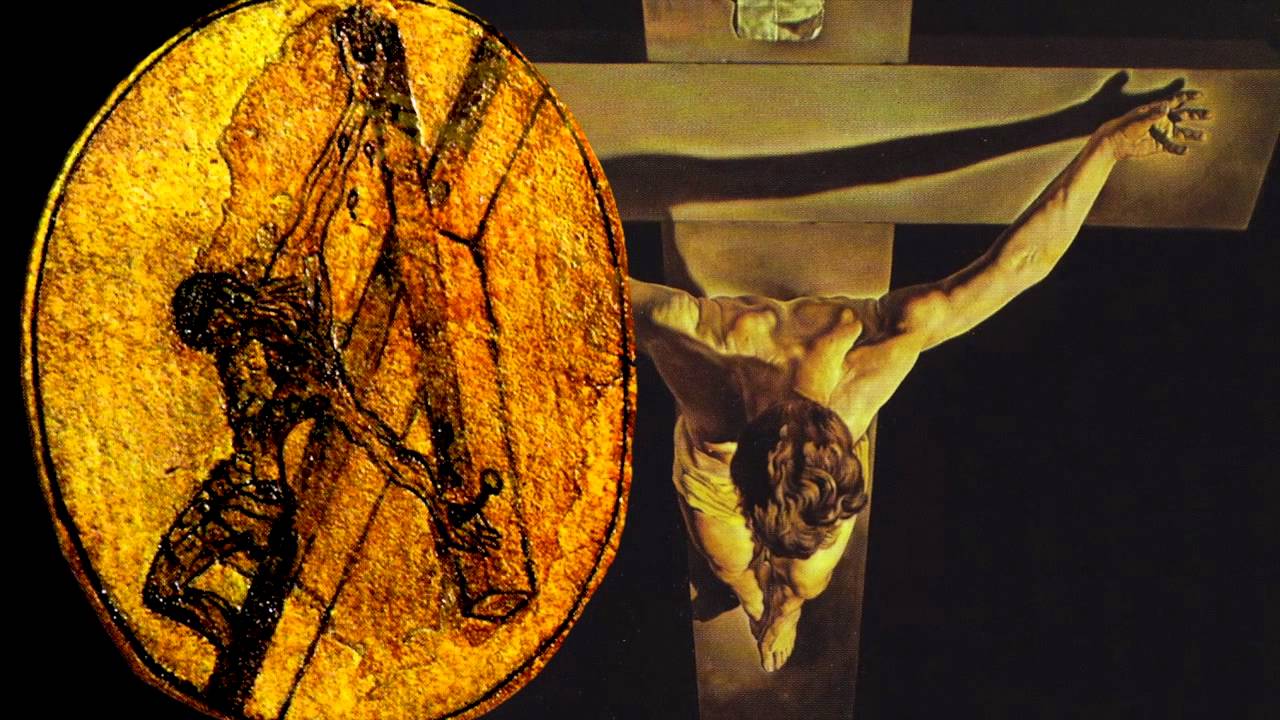
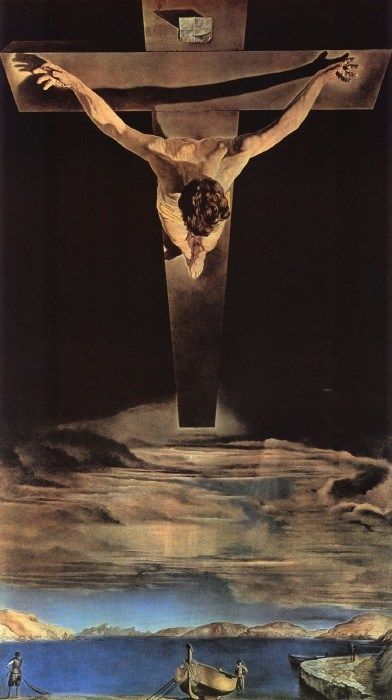
Christ of Saint John of the Cross is a painting by Salvador Dalí made in 1951.
It depicts Jesus Christ on the cross in a darkened sky floating over a body of water complete with a boat and fishermen. Although it is a depiction of the Crucifixion, it is devoid of nails, blood and a crown of thorns, because, according to Dalí, he was convinced by a dream that these features would mar his depiction of Christ. Also in a dream, the importance of depicting Christ in the extreme angle evident in the painting was revealed to him.
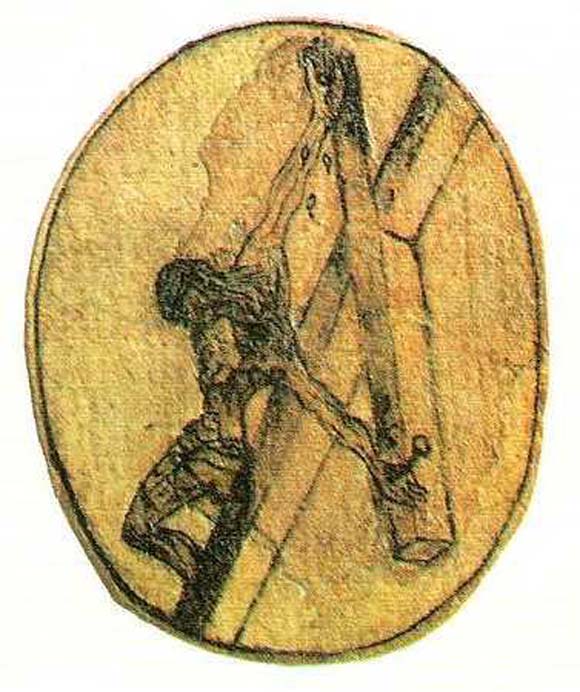
It is known by it’s Title because its design is based on a drawing by the 16th-century Spanish friar, today’s saint and a Doctor of the Church, St Jon of the Cross. The composition of Christ is also based on a triangle and circle (the triangle is formed by Christ’s arms; the circle is formed by Christ’s head). The triangle, since it has three sides, can be seen as a reference to the Trinity and the circle represents Unity. Below is the drawing by St John of the Cross.
On the bottom of his studies for the painting, Dalí explained its inspiration: “In the first place, in 1950, I had a ‘cosmic dream’ in which I saw this image in colour and which in my dream represented the ‘nucleus of the atom.’ This nucleus later took on a metaphysical sense; I considered it ‘the very unity of the universe,’ the Christ!”
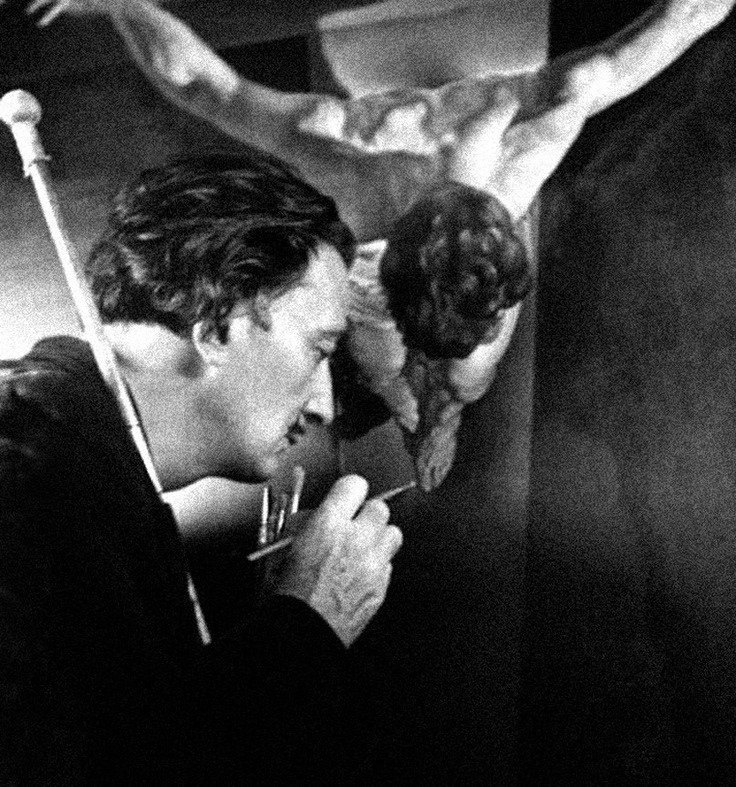
In order to create the figure of Christ, Dalí had Hollywood stuntman Russell Saunders suspended from an overhead gantry, so he could see how the body would appear from the desired angle and also envisage the pull of gravity on the human body. The depicted body of water is the bay of Port Lligat, Dalí’s residence at the time of the painting.
Thought for the Day – 10 December – The Memorial of Our Lady and the Holy House of Loreto
LORETO enshrines the original home of the holiest persons who walked the earth: the God-Man Jesus Christ, His mother Mary and the virginal father, St Joseph. Therefore, it should not be surprising that this sanctuary should attract Saints. There is a marble plaque in the basilica on which are carved the names of thirty-nine saints and twenty-two other holy persons who came on pilgrimage to Loreto. In 1846, there were one hundred and sixty names. One hundred and fifty years later that number must have easily doubled.
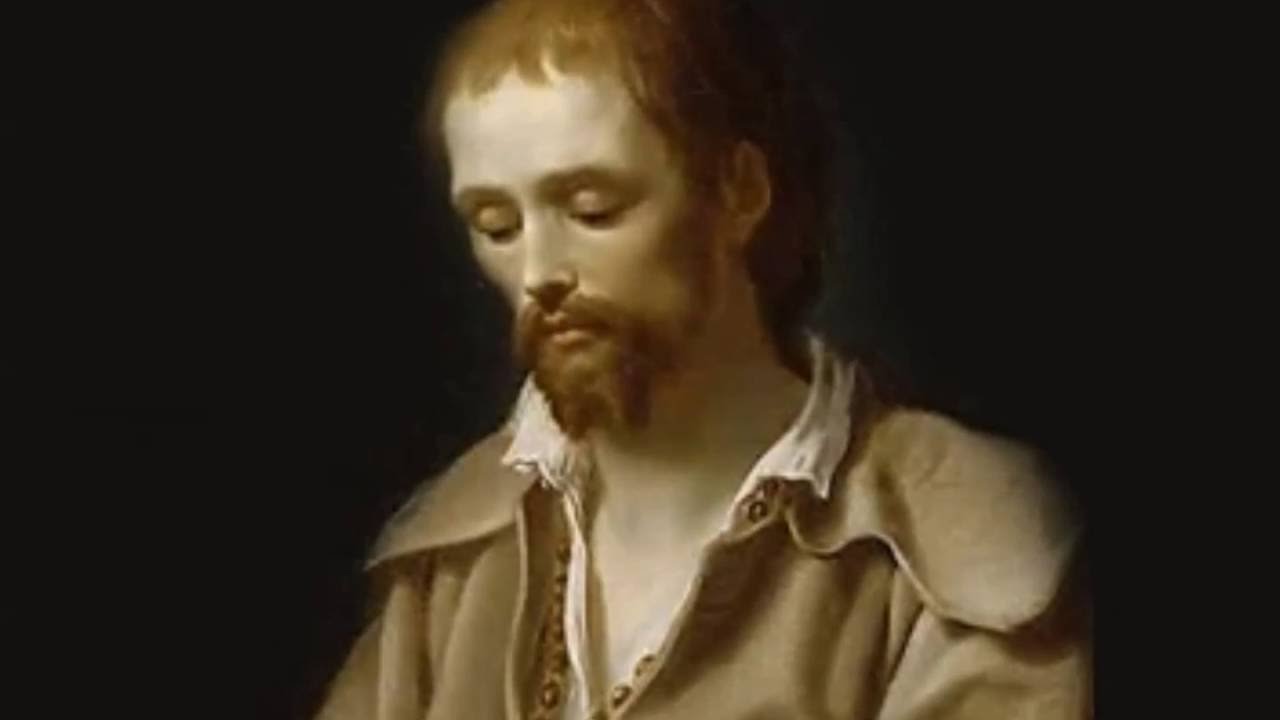
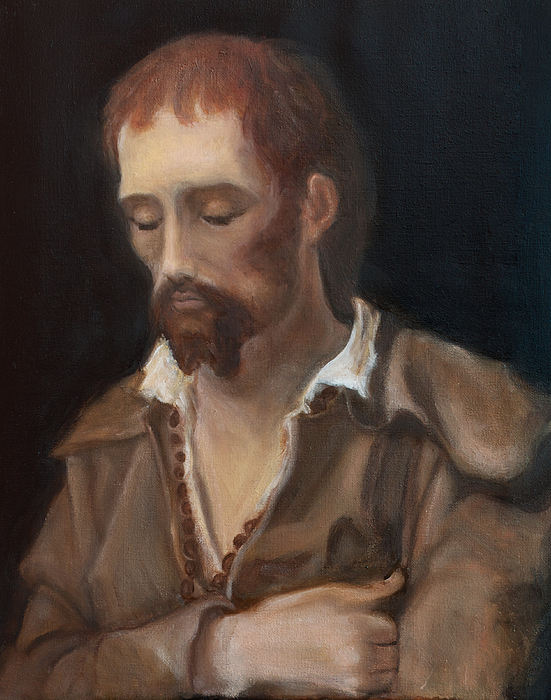
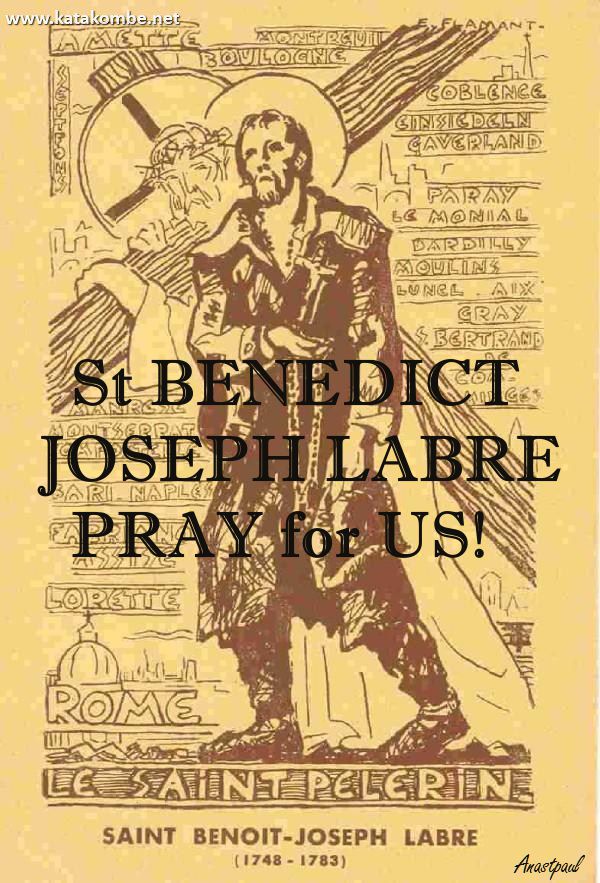
If one were to single out a Saint who was particularly attached to Loreto, it would seem that the pilgrim saint, Benedict Joseph Labre, would have first place. After finding out that his vocation was to be a rather exceptional one—–literally a pilgrim beggar—–Benedict left his home in France in 1770 for Rome at age twenty-two. On this first journey, he stopped on his way at Loreto and Assisi. He stayed in Rome for nine months visiting all the holy places but was back in Loreto in September of the following year. In June 1772, he was back again at Loreto. He then extended his pilgrimages to all the famous shrines in Europe. At the end of 1776, he settled down in Rome, leaving only to make an occasional pilgrimage to his favorite shrine, the Holy House. He continued this each year until his death in 1783 at the age of 35.
The people of Loreto came to know him well. He was that beggar who lived on the charity of others, refusing to take any more than necessary to fill his immediate needs. When compassionate friends offered him a room closer to the shrine, he turned it down when he found it contained a bed. Surely the poverty and utter detachment of the Holy Family of Nazareth was reflected in a most outstanding way in this Saint who spent many long vigils of prayer in the Holy House.
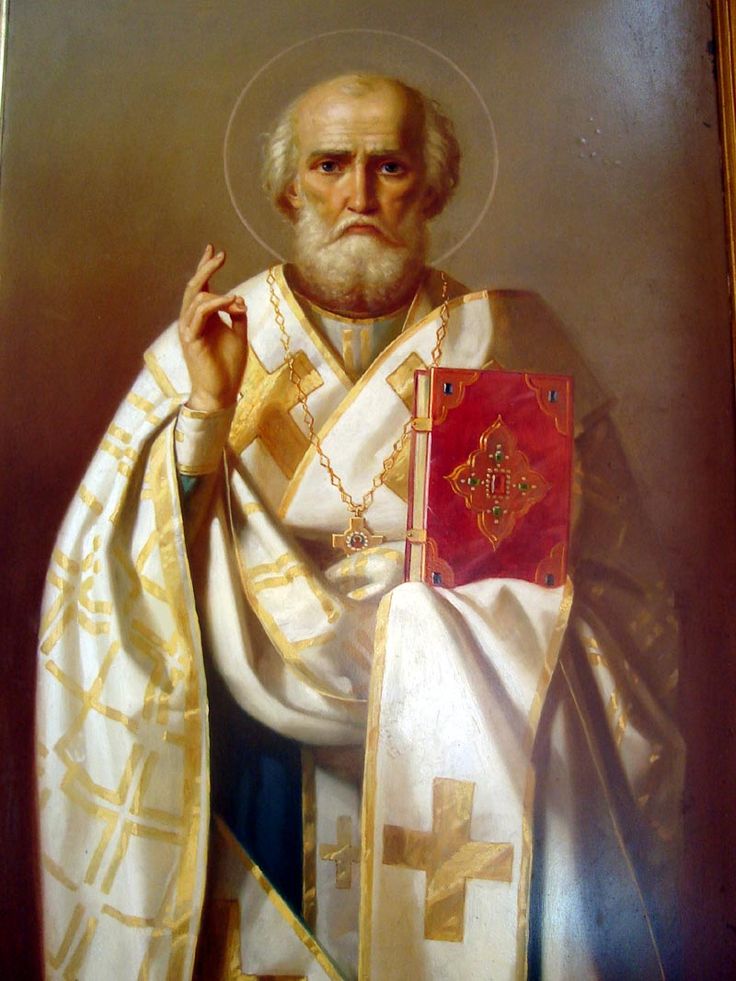
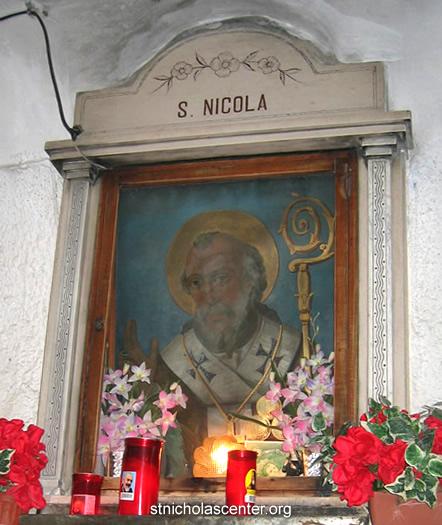
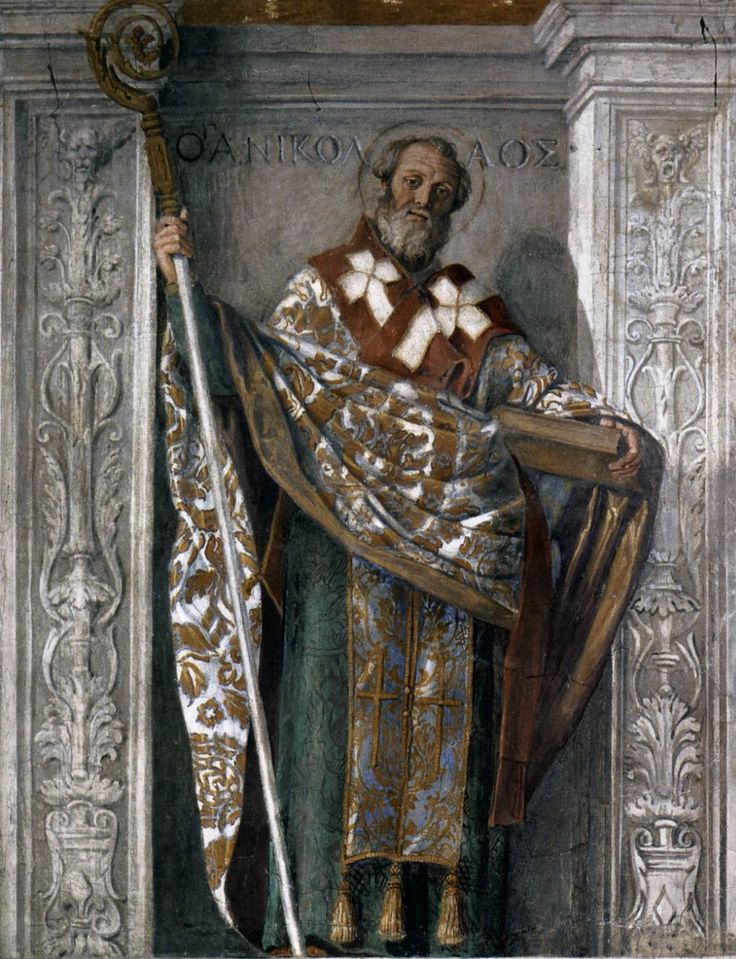
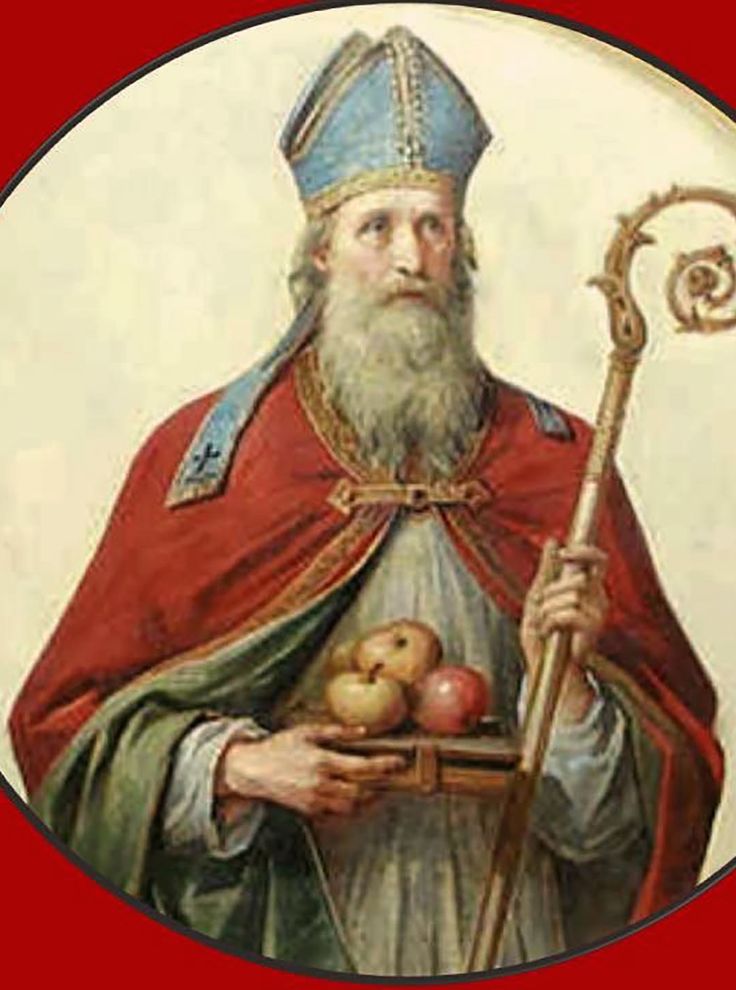
Saint of the Day – 6 December – St Nicholas (270-343) Confessor, Bishop, Miracle-Worker, Apostle of Charity. Also known as – • Nicholas of Bari• Nicholas of Lpnenskij • Nicholas of Lipno • Nicholas of Sarajskij • Nicholas the Miracle Worker • Klaus, Mikulas, Nikolai, Nicolaas, Nicolas, Niklaas, Niklas. Nikolaus, Santa Claus.
Patronages -• against fire • against imprisonment • against robberies • against robbers • against storms at sea • against sterility • against thefts • altar servers • archers • boys • brides • captives • children • choir boys • happy marriages • lawsuits lost unjustly • lovers • maidens • penitent murderers • newlyweds • paupers • pilgrims • poor people • prisoners • scholars • schoolchildren, students • penitent thieves • travellers • unmarried girls • apothecaries • bakers • bankers • barrel makers • boatmen • boot blacks • brewers • butchers • button makers • candle makers • chair makers • cloth shearers • coopers • dock workers • educators • farm workers, farmers • firefighters • fish mongers • fishermen • grain merchants • grocers • grooms • hoteliers • innkeepers • judges • lace merchants • lawyers • linen merchants • longshoremen • mariners • merchants • millers • notaries • parish clerks • pawnbrokers • perfumeries • perfumers • poets • ribbon weavers • sailors • ship owners • shoe shiners • soldiers • spice merchants • spinners • stone masons • tape weavers • toy makers • vintners • watermen • weavers • Greek Catholic Church in America • Greek Catholic Union • Varangian Guard • Germany • Greece • Russia • 3 Diocese • 78 Cities.
Attributes – • anchor • bishop calming a storm • bishop holding three bags of gold • bishop holding three balls • bishop with three children • bishop with three children in a tub at his feet • purse • ship • three bags of gold • three balls • three golden balls on a book • boy in a boat. Saint Nicholas’ reputation evolved among the faithful, as was common for early Christian saints and his legendary habit of secret gift-giving gave rise to the traditional model of Santa Claus through Sinterklaas. St Nicholas was generous to the poor and special protector of the innocent and wronged. Many stories grew up around him prior to his becoming associated with Santa Claus.
Some examples of the Miracles of St Nicholas and the reasons for various Patronages:
• Upon hearing that a local man had fallen on such hard times that he was planning to sell his daughters into prostitution, Nicholas went by night to the house and threw three bags of gold in through the window, saving the girls from an evil life. These three bags, gold generously given in time of trouble, became the three golden balls that indicate a pawn broker’s shop.
• He raised to life three young boys who had been murdered and pickled in a barrel of brine to hide the crime. These stories led to his patronage of children in general and of barrel-makers besides.
• Induced some thieves to return their plunder. This explains his protection against theft and robbery and his patronage of them – he’s not helping them steal but to repent and change. In the past, thieves have been known as Saint Nicholas’ clerks or Knights of Saint Nicholas.
• During a voyage to the Holy Lands, a fierce storm blew up, threatening the ship. He prayed about it and the storm calmed – hence the patronage of sailors and those like dockworkers who work on the sea.
St Nicholas died in 346 at Myra, Lycia (in modern Turkey) of natural causes and his relics are believed to be at Bari, Italy.
Here is the story of St Nicholas by Prosper Dom Gueranger:
Nicholas was born in the celebrated city of Patara, in the province of Lycia. His birth was the fruit of his parents’ prayers. Evidences of his great future holiness were given from his very cradle. For when he was an infant, he would only take his food once on Wednesdays and Fridays and then not till evening but on all other days he frequently took the breast: he kept up this custom of fasting during the rest of his life.
Having lost his parents when he was a boy, he gave all his goods to the poor. Of his Christian kindheartedness there is the following noble example. One of his fellow-citizens had three daughters but being too poor to obtain them an honourable marriage, he was minded to abandon them to a life of prostitution. Nicholas having learned of the case, went to the house during the night and threw in by the window a sum of money sufficient for the dower of one of the daughters; he did the same a second and a third time and thus the three were married to respectable men.
Having given himself wholly to the service of God, he set out for Palestine, that he might visit and venerate the holy places. During this pilgrimage, which he made by sea, he foretold to the mariners, on embarking, though the heavens were then serene and the sea tranquil, that they would be overtaken by a frightful storm. In a very short time, the storm arose. All were in the most imminent danger, when he quelled it by his prayers.
His pilgrimage ended, he returned home, giving to all men example of the greatest sanctity. He went, by an inspiration from God, to Myra, the Metropolis of Lycia,which had just lost its Bishop by death and the Bishops of the province had come together for the purpose of electing a successor. Whilst they were holding council for the election, they were told by a revelation from heaven, that they should choose him who, on the morrow, should be the first to enter the church, his name being Nicholas. Accordingly, the requisite observations were made, when they found Nicholas to be waiting at the church door: they took him and, to the incredible delight of all, made him the Bishop of Myra.
During his episcopate, he never flagged in the virtues looked for in a bishop; chastity, which indeed he had always preserved, gravity, assiduity in prayer, watchings, abstinence, generosity and hospitality, meekness in exhortation, severity in reproving. He befriended widows and orphans by money, by advice and by every service in his power. So zealous a defender was he of all who suffered oppression, that, on one occasion, three Tribunes having been condemned by the Emperor Constantine, who had been deceived by calumny and having heard of the miracles wrought by Nicholas, they recommended themselves to his prayers, though he was living at a very great distance from that place: the saint appeared to Constantine and angrily looking upon him, obtained from the terrified Emperor their deliverance.
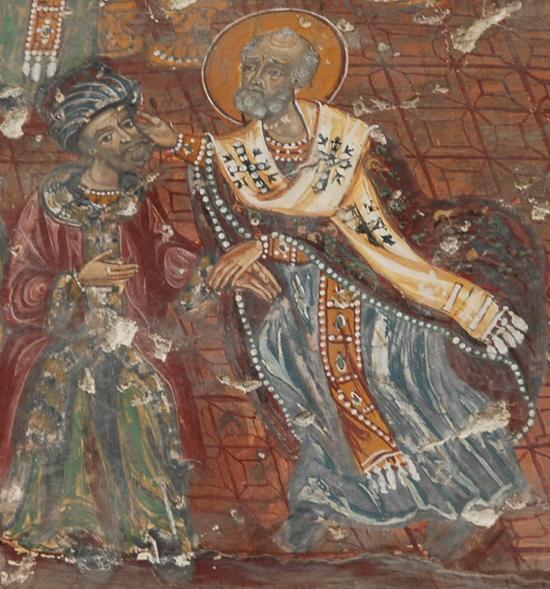
Having, contrary to the edict of Dioclesian and Maximian, preached in Myra the truth of the Christian faith, he was taken up by the servants of the two Emperors. He was taken off to a great distance and thrown into prison, where he remained until Constantine, having become Emperor, ordered his rescue and the Saint returned to Myra. Shortly afterwards, he repaired to the Council which was being held at Nicaea: there he took part with the three hundred and eighteen Fathers in condemning the Arian heresy (Tradition has it that he became so angry with the heretic Arius during the Council that he struck him in the face).
Scarcely had he returned to his See than he was taken with the sickness of which he soon died. Looking up to heaven and seeing Angels coming to meet him, he began the Psalm, In thee, O Lord, have I hoped and having come to those words, Into your hands I commend my spirit, his soul took its flight to the heavenly country. His body, having been translated to Bari in Apulia, is the object of universal veneration.
For St Nicholas traditional biscuits see here: https://anastpaul.wordpress.com/2016/12/06/st-nicholas-6-december/
Quote/s of the Day – 4 December – The Memorial of St John Damascene (676-749) – Father and Doctor of the Church
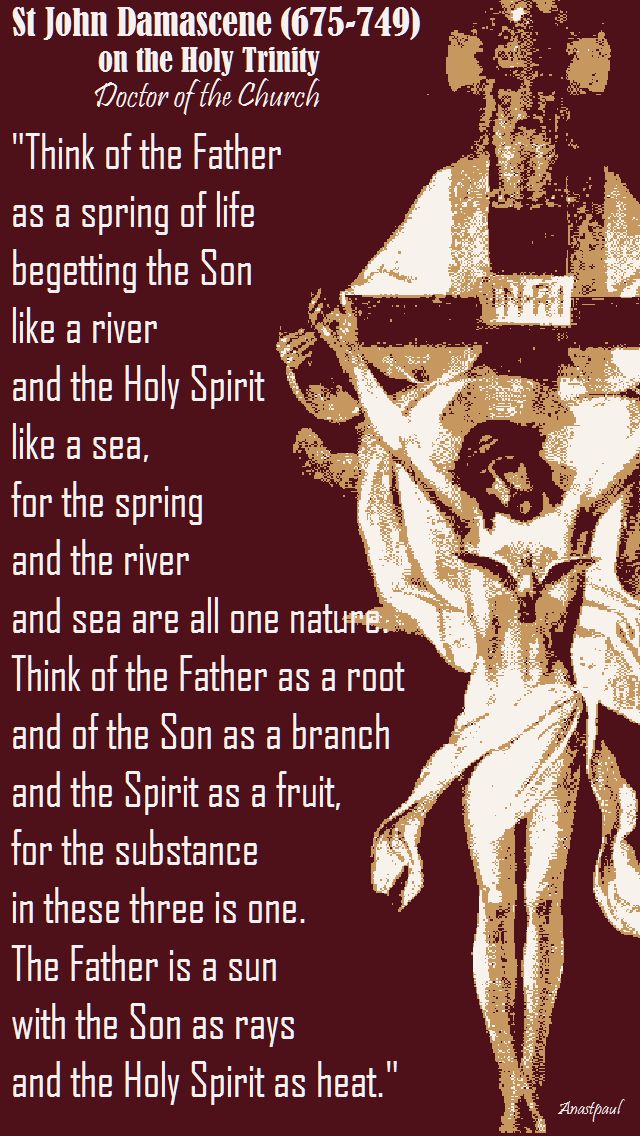
“Think of the Father as a spring of life begetting the Son, like a river and the Holy Ghost like a sea, for the spring and the river and sea are all one nature. Think of the Father as a root and of the Son as a branch and the Spirit as a fruit, for the substance in these three is one. The Father is a sun with the Son as rays and the Holy Ghost as heat.”
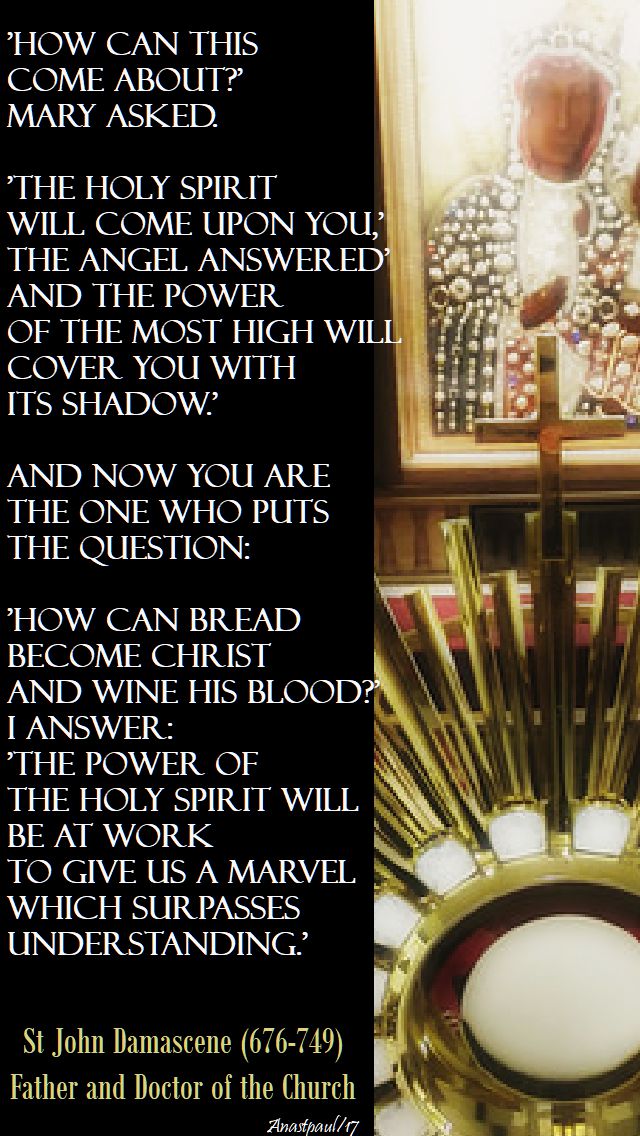
“‘How can this come about?’ Mary asked. ‘The Holy Spirit will come upon you,’ the angel answered’ and the power of the Most High will cover you with its shadow.’ And now you are the one who puts the question: ‘How can bread become Christ and wine His Blood?’ I answer: ‘The power of the Holy Spirit will be at work to give us a marvel which surpasses understanding.'”
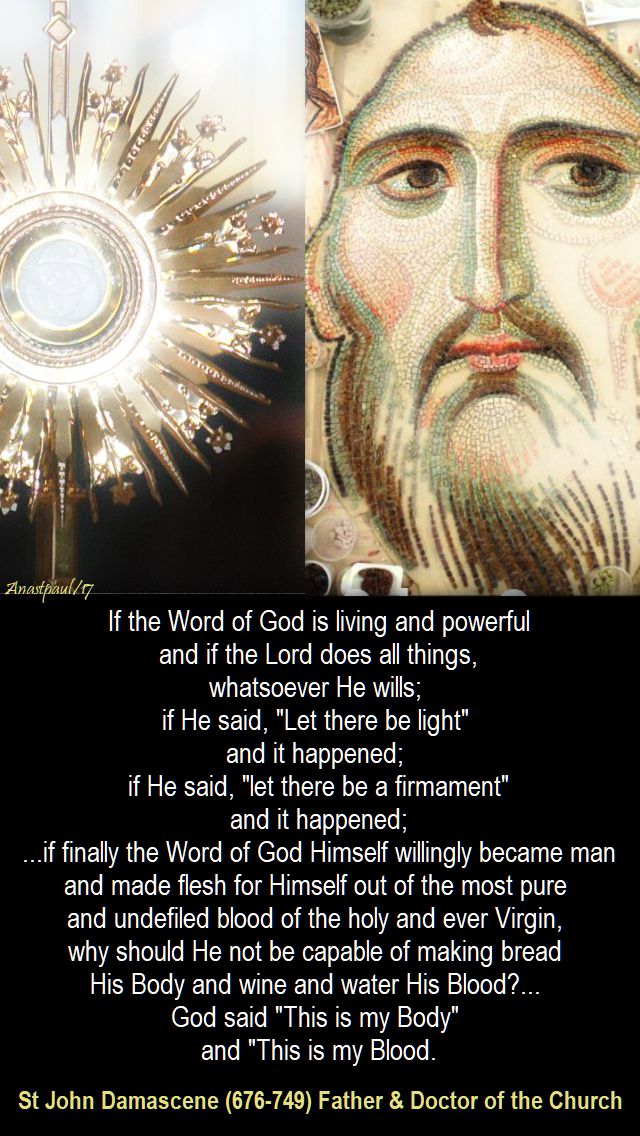
“If the Word of God is living and powerful and if the Lord does all things whatsoever he wills; if he said, “Let there be light” and it happened; if he said, “let there be a firmament” and it happened; …if finally the Word of God Himself willingly became man and made flesh for Himself out of the most pure and undefiled blood of the holy and ever Virgin, why should He not be capable of making bread His Body and wine and water His Blood?… God said “This is my Body” and “This is my Blood.”
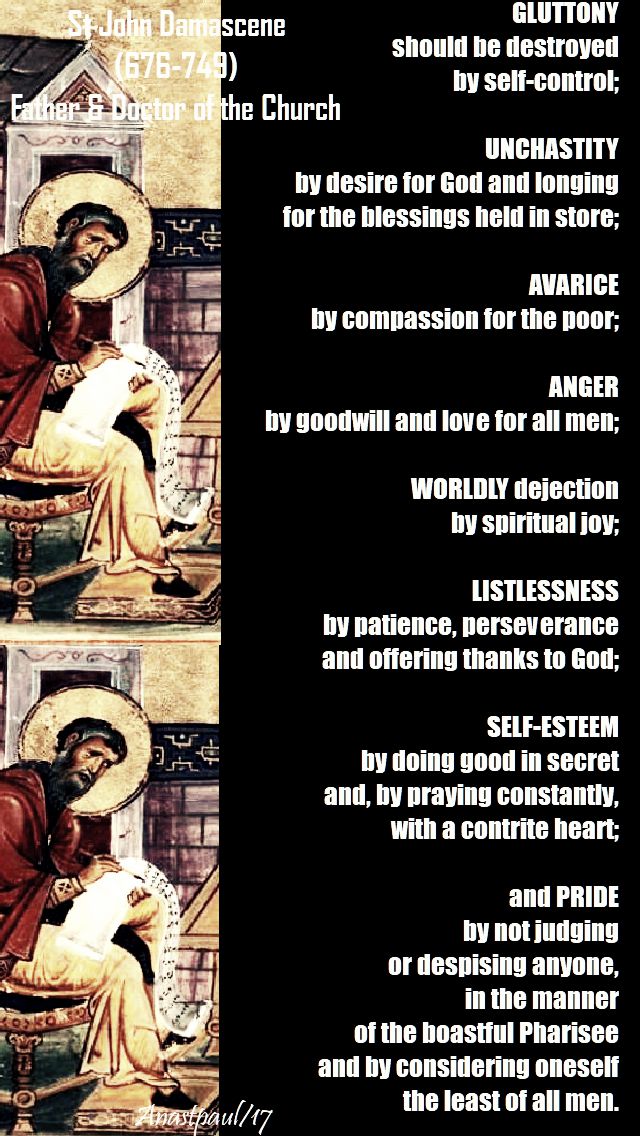
“”GLUTTONY should be destroyed by self-control;
UNCHASTITY by desire for God and longing for the blessings held in store;
AVARICE by compassion for the poor;
ANGER by goodwill and love for all men;
WORLDLY dejection by spiritual joy;
LISTLESSNESS by patience, perseverance and offering thanks to God;
SELF-ESTEEM by doing good in secret and, by praying constantly,with a contrite heart;
and PRIDE by not judging or despising anyone, in the manner of the boastful Pharisee and by considering oneself the least of all men.”
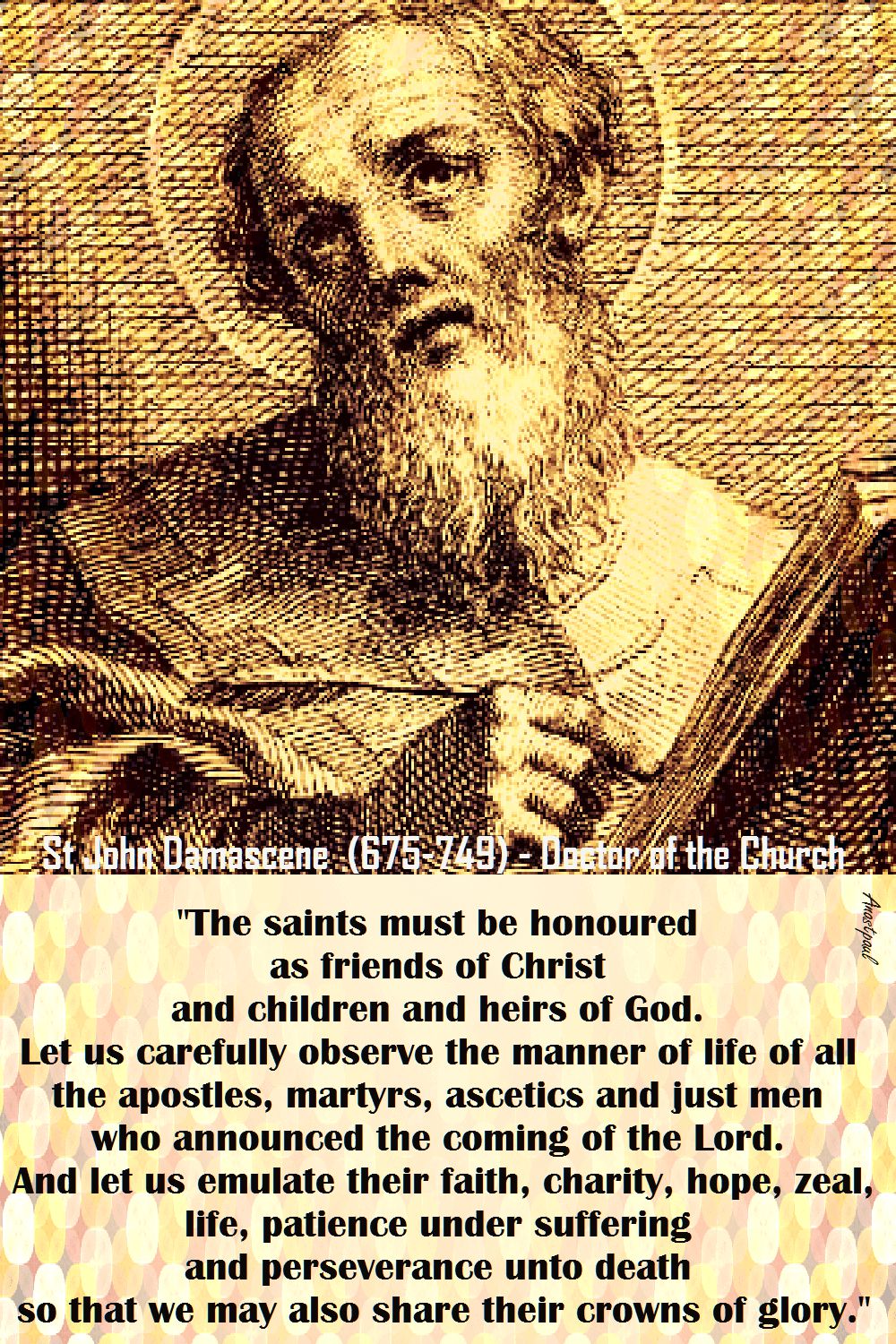
“The saints must be honoured as friends of Christ and children and heirs of God. Let us carefully observe the manner of life of all the apostles, martyrs, ascetics and just men who announced the coming of the Lord. And let us emulate their faith, charity, hope, zeal, life, patience under suffering and perseverance unto death so that we may also share their crowns of glory.”
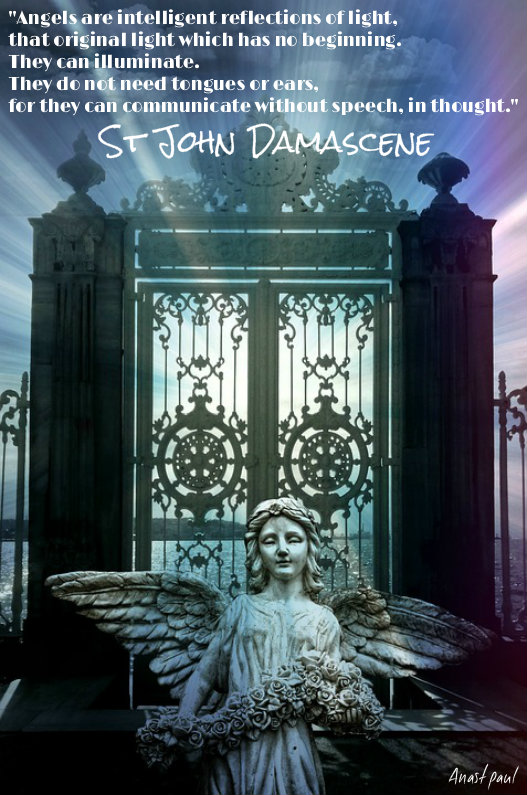
“Angels are intelligent reflections of light, that original light which has no beginning. They can illuminate. They do not need tongues or ears, for they can communicate without speech, in thought.”
St John Damascene (676-749) – Father and Doctor of the Church
Thought for the Day – 17 November – The Memorial of St Elizabeth of Hungary (1207-1231)
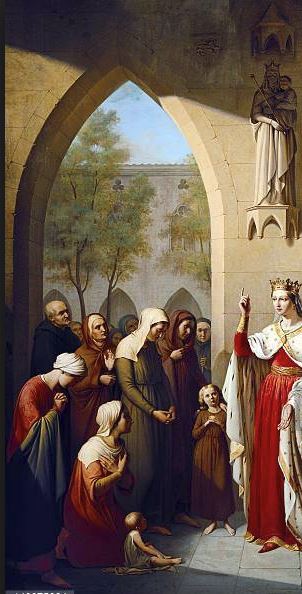
“Elizabeth was a lifelong friend of the poor and gave herself entirely to relieving the hungry. She ordered that one of her castles should be converted into a hospital in which she gathered many of the weak and feeble. She generously gave alms to all who were in need, not only in that place but in all the territories of her husband’s empire. She spent all her own revenue from her husband’s four principalities and finally she sold her luxurious possessions and rich clothes for the sake of the poor.
Twice a day, in the morning and in the evening, Elizabeth went to visit the sick. She personally cared for those who were particularly repulsive; to some she gave good, to others clothing; some she carried on her own shoulders and performed many other kindly services. Her husband, of happy memory, gladly approved of these charitable works. Finally, when her husband died, she sought the highest perfection; filled with tears, she implored me to let her beg for alms from door to door.
On Good Friday of that year, when the altars had been stripped, she laid her hands on the altar in a chapel in her own town, where she had established the Friars Minor and before witnesses she voluntarily renounced all worldly display and everything that our Saviour in the gospel advises us to abandon. Even then she saw that she could still be distracted by the cares and worldly glory which had surrounded her while her husband was alive. Against my will she followed me to Marburg. Here in the town she built a hospice where she gathered together the weak and the feeble. There she attended the most wretched and contemptible at her own table.
St Elizabeth at the Hospice she built
Apart from those active good works, I declare before God that I have seldom seen a more contemplative woman.
Before her death I heard her confession. When I asked what should be done about her goods and possessions, she replied that anything which seemed to be hers belonged to the poor. She asked me to distribute everything except one worn-out dress in which she wished to be buried. When all this had been decided, she received the body of our Lord. Afterward, until vespers, she spoke often of the holiest things she had heard in sermons. Then, she devoutly commended to God all who were sitting near her and as if falling into a gentle sleep, she died.” – from a letter by Fr Conrad of Marburg, spiritual director of Saint Elizabeth of Hungary
Elizabeth understood well the lesson Jesus taught when he washed his disciples’ feet at the Last Supper: the Christian must be one who serves the humblest needs of others, even if one serves from an exalted position. In her short life, Elizabeth manifested such great love for the poor and suffering that she has become the patroness of Catholic charities and of the Secular Franciscan Order. The daughter of the King of Hungary, Elizabeth chose a life of penance and asceticism when a life of leisure and luxury could easily have been hers. This choice endeared her in the hearts of the common people throughout Europe. Of royal blood, Elizabeth could have lorded it over her subjects. Yet she served them with such a loving heart that her brief life won for her a special place in the hearts of many. Elizabeth is also an example to us in her following the guidance of a spiritual director. Growth in the spiritual life is a difficult process. We can play games very easily if we don’t have someone to challenge us.
Quote/s of the Day – 7 November “On Achieving Sanctity”
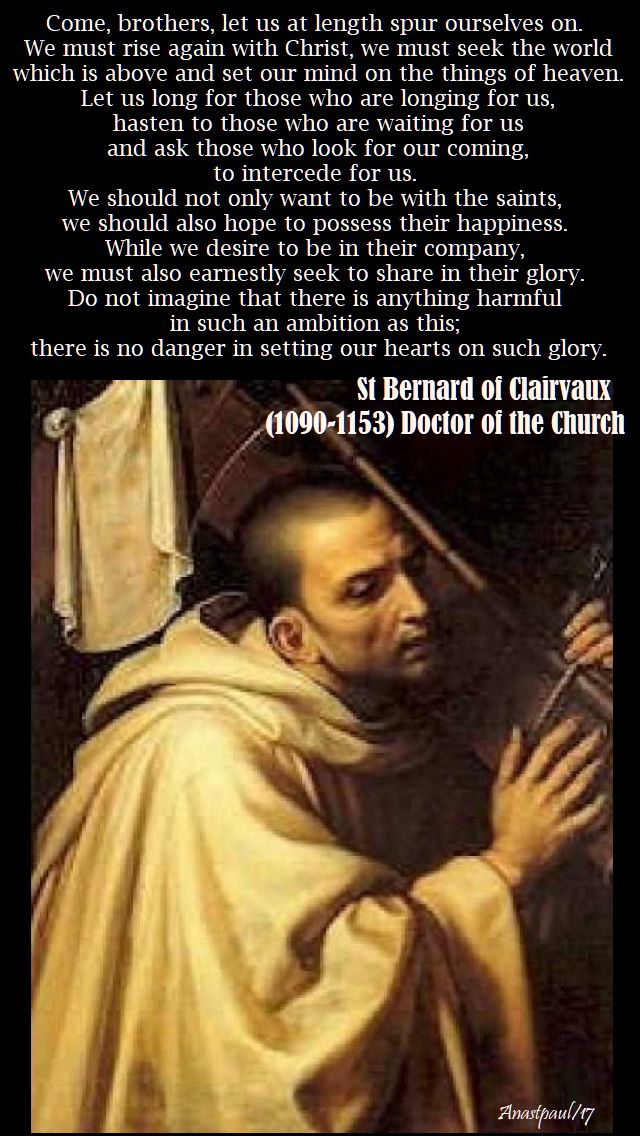
“Come, brothers, let us at length spur ourselves on. We must rise again with Christ, we must seek the world which is above and set our mind on the things of heaven. Let us long for those who are longing for us, hasten to those who are waiting for us and ask those who look for our coming to intercede for us. We should not only want to be with the saints, we should also hope to possess their happiness. While we desire to be in their company, we must also earnestly seek to share in their glory. Do not imagine that there is anything harmful in such an ambition as this; there is no danger in setting our hearts on such glory.”
St Bernard of Clairvaux (1090-1153) Doctor of the Church
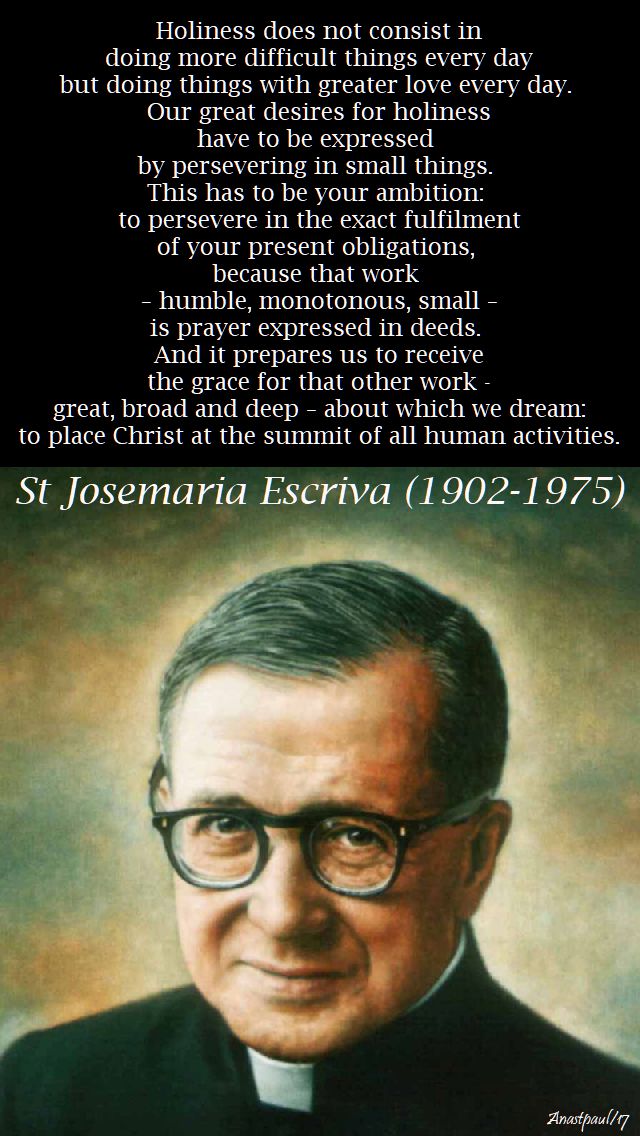
“Holiness does not consist of doing more difficult things every day but doing things with greater love every day. Our great desires for holiness have to be expressed by persevering in small things. This has to be your ambition: to persevere in the exact fulfilment of your present obligations, because that work – humble, monotonous, small – is prayer expressed in deeds. And it prepares us to receive the grace for that other work – great, broad and deep – about which we dream: to place Christ at the summit of all human activities.”
St Josemaria Escriva (1902-1975)
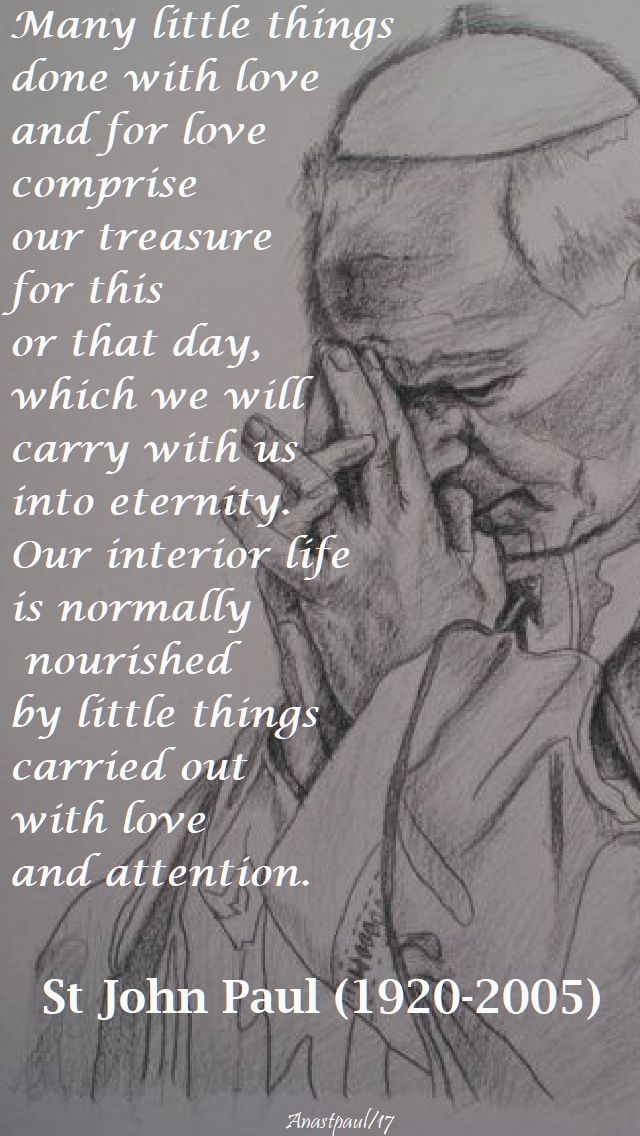
“Many little things done with love and for love comprise our treasure for this or that day, which we will carry with us into eternity. Our interior life is normally nourished by little things carried out with love and attention.”
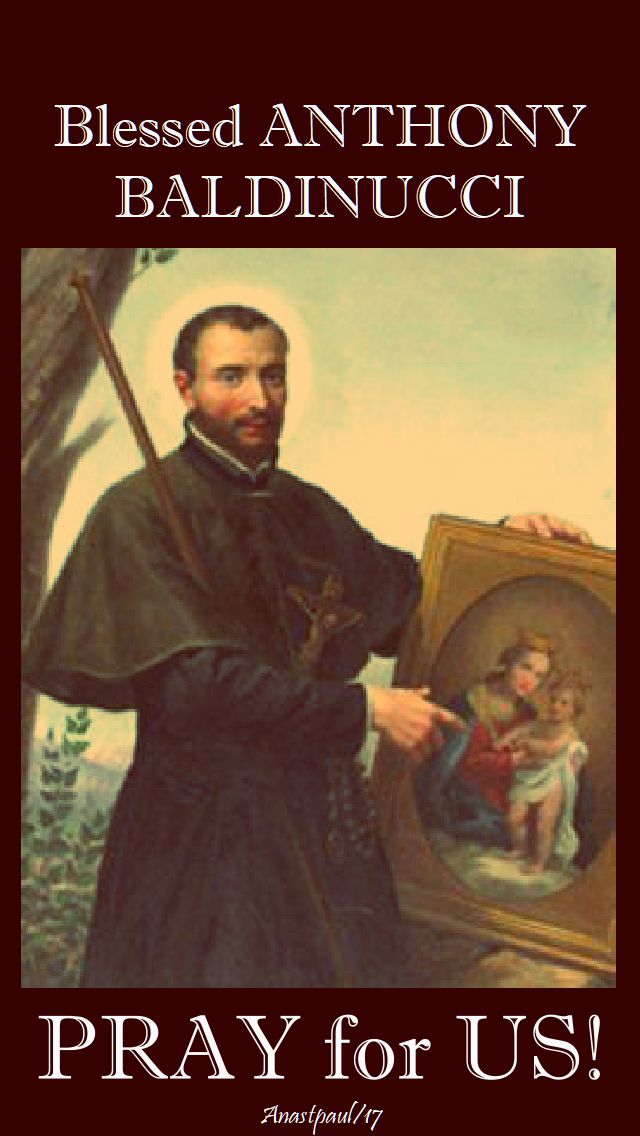
One Minute Reflection – 7 November – The Memorial of Bl Anthony Baldinucci SJ (1665-1717)
After this I had a vision of a great multitude, which no one could count, from every nation, race, people and tongue….Revelations 7:9
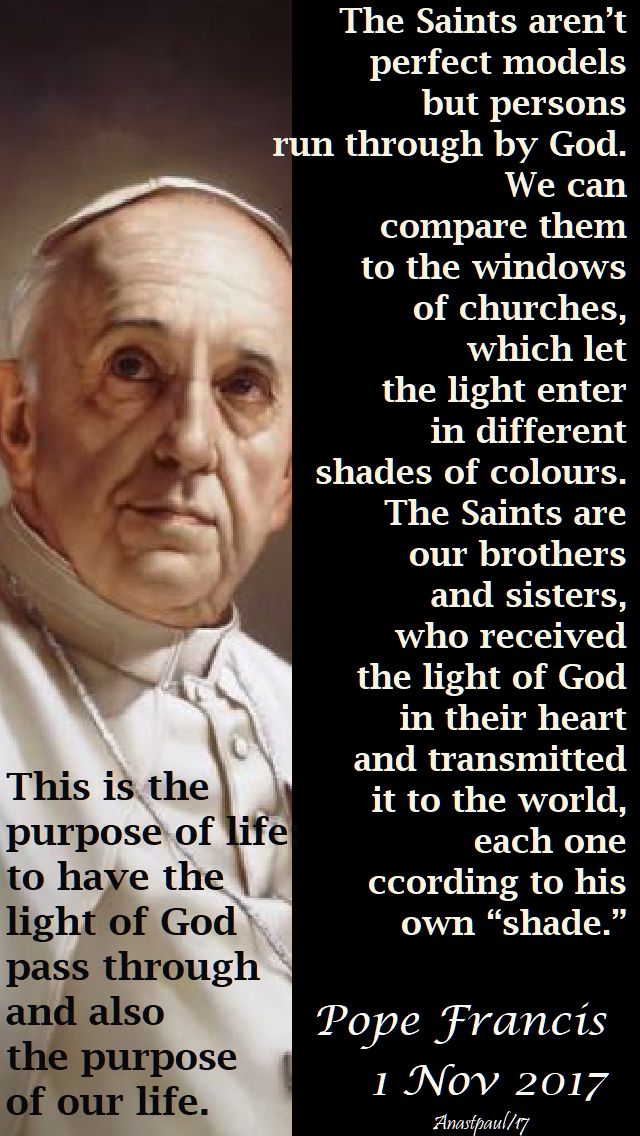
REFLECTION – “All Saints is “our” feast, not because we are good but because God’s holiness has touched our life. The Saints aren’t perfect models but persons run through by God. We can compare them to the windows of churches, which let the light enter in different shades of colours. The Saints are our brothers and sisters who received the light of God in their heart and transmitted it to the world, each one according to his own “shade.” However, they were all transparent; they too struggled to remove the stains and the darkness of sin, so as to have God’s kindly light pass through. This is the purpose of life: to have the light of God pass through and also the purpose of our life…..Pope Francis – 1 November 2017
PRAYER – Heavenly Father, may I love and respect Your Saints and by their lives, gain inspiration and assistance. Grant me to obtain an example from their way of life, fellowship in their communion and aid through their prayers. Bl Anthony Baldinucci, displayed a great zeal for teaching and converting sinful souls by his love for the Passion of Your Son and great love for the Holy Eucharist, help me Father to imitate his passionate love. Bl Anthony Baldinucci, pray for us all, amen.
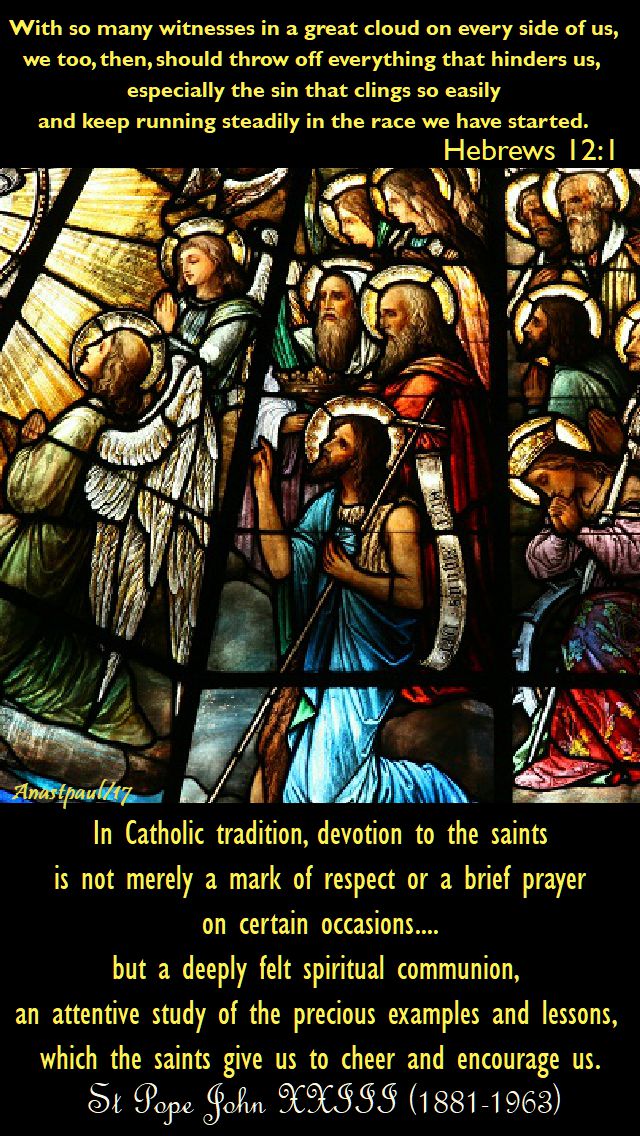
With so many witnesses in a great cloud on every side of us, we too, then, should throw off everything that hinders us, especially the sin that clings so easily, and keep running steadily in the race we have started….Hebrews 12:1
REFLECTION – “In Catholic tradition, devotion to the saints is not merely a mark of respect or a brief prayer on certain occasions….but a deeply felt spiritual communion, an attentive study of the precious examples and lessons, which the saints give us to cheer and encourage us.”…St Pope John XXIII
PRAYER – Oh bless us O Holy Father, in Your saints, in the suffering army in Purgatory and in Your angels! May those who stand in adoration with You in Heaven and those who cry out for mercy, be our intercessors as we struggle to throw off everything that hinders us on our way to You and them! Eternal Father, may we reach our heavenly goal by their constant prayer. As we pray for the Holy Souls and they for us, may the Saints and angels be our champions, amen.
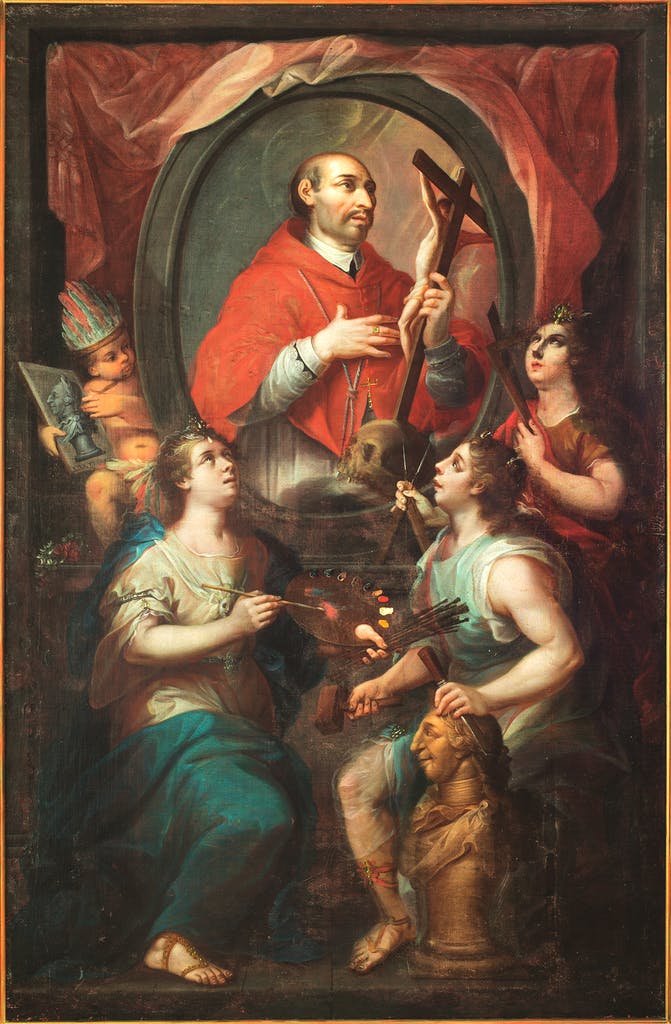
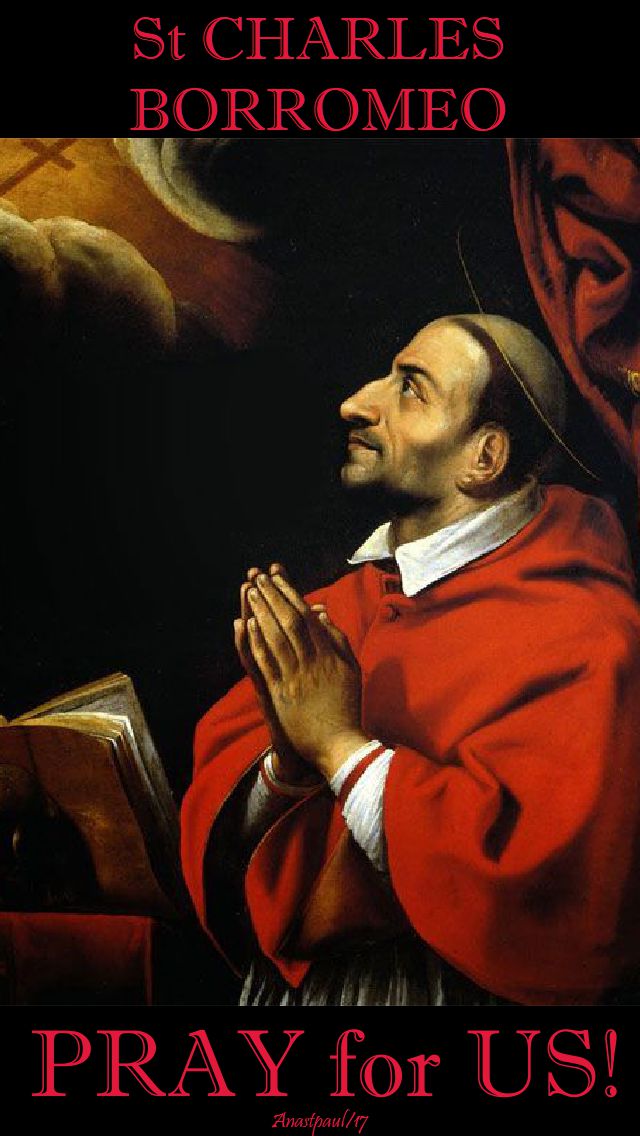
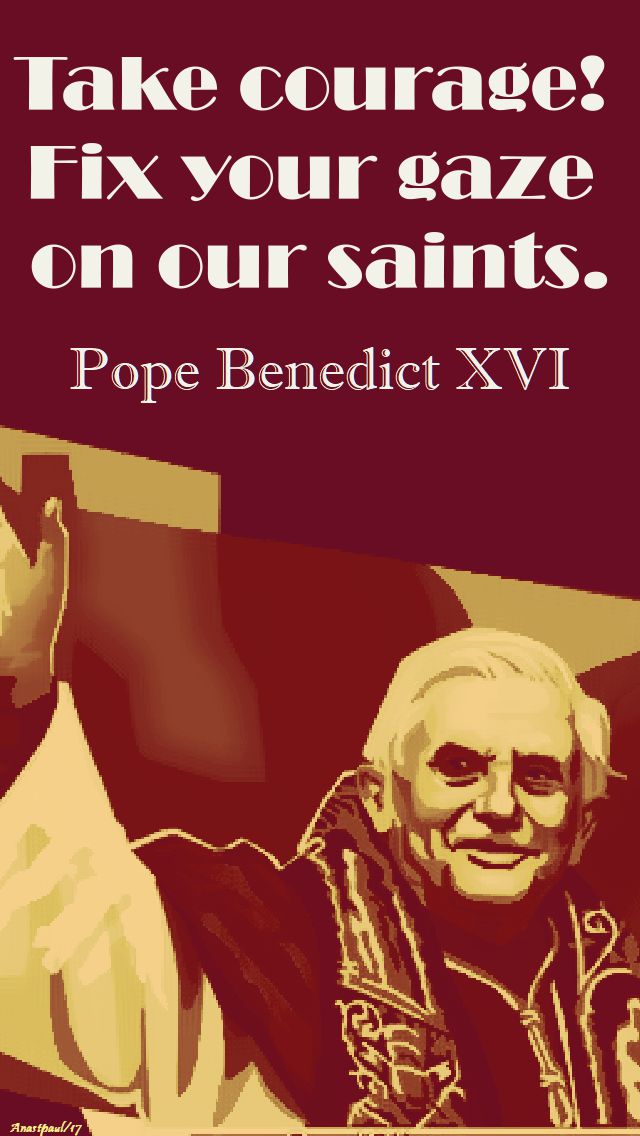
Pope Benedict XVI on the Commemoration of the fourth centenary of the Canonisation of St Charles Borromeo (1538-1584) – 4 November 2010
With the Church, we pray,
Preserve in the midst of Your people, we ask, O Lord, the spirit with which you filled the Bishop Saint Charles Borromeo, that Your Church may be constantly renewed and, by conforming herself to the likeness of Christ, may show His face to the world.
The Pope emeritus writes:
Lumen caritatis. The light of charity of St Charles Borromeo has illumined the whole Church and, by renewing the miracles of the love of Christ, our Supreme and Eternal Pastor, has brought new life and new youthfulness to God’s flock, which was going through sorrowful and difficult times. For this reason I join with all my heart in the joy of the Ambrogian Archdiocese in commemorating the fourth centenary of the Canonisation of this great Pastor on 1 November 1610.
1. The time in which Charles Borromeo lived was very delicate for Christianity. In it the Archbishop of Milan gave a splendid example of what it means to work for the reform of the Church. There were many disorders to sanction, many errors to correct and many structures to renew; yet St Charles strove for a profound reform of the Church, starting with his own life. It was in himself, in fact, that the young Borromeo promoted the first and most radical work of renewal. His career had begun promisingly in accordance with the canons of that time: for the younger son of the noble family Borromeo, a future of prosperity and success lay in store, an ecclesiastical life full of honours but without any ministerial responsibilities; he also had the possibility of assuming the direction of the family after the unexpected death of his brother Federico.
Yet Charles Borromeo, illumined by Grace, was attentive to the call with which the Lord was attracting him and desiring him to dedicate the whole of himself to the service of his people. Thus he was capable of making a clear and heroic detachment from the lifestyle characterised by his worldly dignity and dedication without reserve to the service of God and of the Church. In times that were darkened by numerous trials for the Christian community, with divisions and confusions of doctrine, with the clouding of the purity of the faith and of morals and with the bad example of various sacred ministries, Charles Borromeo neither limited himself to deploring or condemning nor merely to hoping that others would change but rather set about reforming his own life which, after he had abandoned wealth and ease, he filled with prayer, penance and loving dedication to his people. St Charles lived heroically the evangelical virtues of poverty, humility and chastity, in a continuous process of ascetic purification and Christian perfection.
He was aware that a serious and credible reform had to begin precisely with Pastors if it was to have beneficial and lasting effects on the whole People of God. In this action of reform he was able to draw from the traditional and ever living sources of the Catholic Church: the centrality of the Eucharist, in which he recognised and proposed anew the adorable presence of the Lord Jesus and of his Sacrifice of love for our salvation; the spirituality of the Cross as a force of renewal, capable of inspiring the daily exercise of the evangelical virtues; assiduous reception of the Sacraments in which to accept with faith the action of Christ who saves and purifies His Church; the word of God, meditated upon, read and interpreted in the channel of Tradition; love for and devotion to theSupreme Pontiffin prompt and filial obedience to his instructions as a guarantee of full ecclesial communion.
The extraordinary reform that St Charles carried out in the structures of the Church in total fidelity to the mandate of the Council of Trent was also born from his holy life, ever more closely conformed to Christ. His work in guiding the People of God, as a meticulous legislator and a brilliant organizer was marvellous. All this, however, found strength and fruitfulness in his personal commitment to penance and holiness. Indeed this is the Church’s primary and most urgent need in every epoch: that each and every one of her members should be converted to God. Nor does the ecclesial community lack trials and suffering in our day and it shows that it stands in need of purification and reform. May St Charles’ example always spur us to start from a serious commitment of personal and community conversion to transform hearts, believing with steadfast certainty in the power of prayer and penance. I encourage sacred ministers, priests and deacons in particular to make their life a courageous journey of holiness, not to fear being drunk with that trusting love for Christ that made Bishop Charles ready to forget himself and to leave everything. Dear brothers in the ministry, may the Ambrogian Church always find in you a clear faith and a sober and pure life that can renew the apostolic zeal which St Ambrose, St Charles and many of your holy Pastors possessed!
2. During St Charles’ episcopate, the whole of his vast diocese felt infected with a current of holiness that spread to the entire people. How did this Bishop, so demanding and strict, manage to fascinate and to win over the Christian people? The answer is easy: St Charles enlightened the people and enticed them with the ardour of his love. “Deus caritas est”, and where there is a living experience of love the profound Face of God who attracts us and makes us His own is revealed.
The love of St Charles Borromeo was first and foremost the love of the Good Shepherd who is ready to give his whole life for the flock entrusted to his care, putting the demands and duties of his ministry before any form of personal interest, amenity or advantage. Thus the Archbishop of Milan, faithful to the Tridentine directives, visited several times his immense Diocese even the most remote localities, and took care of his people, nourishing them ceaselessly with the Sacraments and with the word of God through his rich and effective preaching; he was never afraid to face adversities and dangers to defend the faith of the simple and the rights of the poor.
St Charles, moreover, was recognised as a true and loving father of the poor. Love impelled him to empty his home and to give away his possessions in order to provide for the needy, to support the hungry, to clothe and relieve the sick. He set up institutions that aimed to provide social assistance and to rescue people in need; but his charity for the poor and the suffering shone out in an extraordinary way during the plague of 1576 when the holy Archbishop chose to stay in the midst of his people to encourage them, serve them and defend them with the weapons of prayer, penance and love.
Furthermore it was charity that spurred Borromeo to become an authentic and enterprising educator: for his people with schools of Christian doctrine; for the clergy with the establishment of seminaries; for children and young people with special initiatives for them and by encouraging the foundation of religious congregations and confraternities dedicated to the formation of children and young people.
Charity was always the deep motive of the severity with which St Charles practiced fasting, penance and mortification. For the holy Bishop it was not only a matter of ascetic practices aiming for his own spiritual perfection but rather of a true ministerial means for expiating sins, for invoking the conversion of sinners and for interceding for his children’s needs.
Throughout his life, therefore, we may contemplate the light of evangelical charity, of forbearing, patient and strong love that “bears all things, believes all things, hopes all things, endures all things” (1 Cor 13:7). I thank God that the Church of Milan has always had a wealth of vocations especially dedicated to charity; I praise the Lord for the splendid fruits of love for the poor, of service to the suffering and of attention to youth of which it can be proud. May St Charles’ example of prayer obtain that you may be faithful to this heritage, so that every baptised person can live out in contemporary society that fascinating prophecy which, in every epoch, is the love of Christ alive in us.
3. However it is impossible to understand the charity of St Charles Borromeo without knowing his relationship of passionate love with the Lord Jesus. He contemplated this love in the holy mysteries of the Eucharist and of the Cross, venerated in very close union with the mystery of the Church. The Eucharist and the Crucified One immersed St Charles in Christ’s love and this transfigured and kindled fervour in his entire life, filled his nights spent in prayer, motivated his every action, inspired the solemn Liturgies he celebrated with the people and touched his heart so deeply that he was often moved to tears.
His contemplative gaze at the holy Mystery of the Altar and at the Crucified one stirred within him feelings of compassion for the miseries of humankind and kindled in his heart the apostolic yearning to proclaim the Gospel to all. On the other hand we know well that there is no mission in the Church which does not stem from “abiding” in the love of the Lord Jesus, made present within us in the Eucharistic Sacrifice. Let us learn from this great Mystery! Let us make the Eucharist the true centre of our communities and allow ourselves to be educated and moulded by this abyss of love! Every apostolic and charitable deed will draw strength and fruitfulness from this source!
4. The splendid figure of St Charles suggests to me a final reflection which I address to young people in particular. The history of this great Bishop was in fact totally determined by some courageous “yeses”, spoken when he was still very young. When he was only 24 years old he decided to give up being head of the family to respond generously to the Lord’s call; the following year he accepted priestly and episcopal Ordination. At the age of 27 he took possession of the Ambrogian Diocese and gave himself entirely to pastoral ministry. In the years of his youth St Charles realized that holiness was possible and that the conversion of his life could overcome every bad habit. Thus he made his whole youth a gift of love to Christ and to the Church, becoming an all-time giant of holiness.
Dear young people, let yourselves be renewed by this appeal that I have very much at heart: God wants you to be holy, for He knows you in your depths and loves you with a love that exceeds all human understanding. God knows what is in your hearts and is waiting to see the marvellous gift He has planted within you blossom and bear fruit. Like St Charles, you too can make your youth an offering to Christ and to your brethren. Like him you can decide, in this season of life, “to put your stakes” on God and on the Gospel. Dear young people, you are not only the hope of the Church; you are already part of her present! And if you dare to believe in holiness you will be the greatest treasure of your Ambrogian Church which is founded on Saints.
Venerable Brother, I joyfully entrust these reflections to you and as I invoke the heavenly intercession of St Charles Borromeo and the constant protection of Mary Most Holy, I warmly impart to you and to the entire Archdiocese a special Apostolic Blessing.
From the Vatican, 1 November 2010, the fourth centenary of the canonization of St Charles Borromeo.
Pope Benedict XVI
This letter addressed Dionigi Cardinal Tettamanzi, Archbishop of Milan, on the occasion of the 400th Anniversary of the Canonisation of Saint Charles Borromeo.
Thought for the Day – 1 November – The Solemnity of All the Saints:
“What is a Saint?”
Saints are not freaks or exceptions, they are the standard operating model for human beings. Because, as Charles Péguy put it, “life holds only one tragedy, ultimately: not to have been a saint.”
Why does the Church include All Saints’ Day (1 Nov) in her calendar of solemn feasts? Why does the Apostles’ Creed include “the communion of saints” as one of the 12 essential articles of our faith?
Because, as Charles Péguy (1873-1914) put it, “life holds only one tragedy, ultimately: not to have been a saint.”
Saints are not freaks or exceptions: They are the standard operating model for human beings. In fact, in the biblical sense of the word, all believers are saints. “Sanctity” means holiness. All men, women and children, born or unborn, beautiful or ugly, straight or gay, are holy, for they bear the image of God.
Saints are not the opposite of sinners: There are no opposites of sinners in this world. There are only saved sinners and unsaved sinners. Thus holy does not mean “sinless” but “set-apart:” called out of the world to the destiny of eternal ecstasy with God.
What is a saint? First of all, one who knows he is a sinner. A saint knows all the news, both the bad news of sin and the good news of salvation. A saint is a true scientist, a true philosopher:
A saint knows the truth: A saint is a seer, one who sees what’s there. A saint is a realist.
A saint is also an idealist: A saint embraces heroic suffering out of heroic love. A saint also embraces heroic joy. (This is one of the criteria for canonisation: Saints must have joy.)
A saint is a servant of Christ: A saint is also a conqueror greater than Alexander, who only conquered the world. A saint conquers himself. What does it profit a man if he conquers the whole world but does not conquer himself?
A saint is so open that he can say, with Paul: “I have learned, in whatever situation I find myself, to be self-sufficient. I know how to live in humble circumstances; I know also how to live with abundance” (Phil. 4:11-12).
A saint marries God: “for better or for worse, for richer or for poorer, in sickness and in health, till death.” A saint is also so determined, so stubborn, that he will die before compromising the truth and will write credo in the sand with his own blood as he dies.(One saint actually did this.)
A saint is a sworn enemy of the world, the flesh and the devil: He is locked in mortal combat with principalities and powers. A saint is also a friend and lover of the world. He kisses this sin-cancered world with the tender lips of the God of John 3:16. A saint declares God’s war on this world, sinking the cross into the enemy occupied earth like a sword, the hilt held by heaven. At the same time he stretches his arms out on that very cross as if to say, “See? This is how wide my love is for you!”
A saint is Christ’s bride, totally attached, faithful, dependent: A saint is also totally independent, detached from idols and from other husbands. A saint works among these others money, power, pleasure as a married woman works with other men but will not marry them or even flirt with them.
A saint is higher than anyone else in the world: A saint is the real mountain climber. A saint is also lower than anyone else in the world: As with water, he flows to the lowest places like Calcutta.
A saint’s heart is broken by every little sorrow and sin: A saint’s heart is also so strong that not even death can break it. It is indestructible because it’s so breakable.
A saint takes his hands off the steering wheel of his life and lets God steer: That’s scary, for God is invisible. A saint also has hands that move the world. He has feet that move through the world with a sure step.
A saint does not let others play God to him: A saint takes his orders from the General, not from the army. A saint also does not play God to others.
A saint is a little Christ: Not only do we see Christ through His saints, as we see a light through a stained glass window but we also understand the saints only through Christ, as we understand eggs only through chickens.
The saints are our family: We are one Body. They are our legs and we are theirs. That’s why their feast is our feast. As Pascal says, “Examples of noble deaths of Spartans and others hardly affect us… but the example of the deaths of martyrs affects us, for they are our members… we do not become rich through seeing a rich stranger, but through seeing a father or husband rich.”
We become saints not by thinking about it, and not (certainly) by writing about it, but simply by doing it. There comes a time when the “how?” question stops and we just do it. If the one we love were at our door knocking to come in, would we wonder how the door lock works and how we could move our muscles to open it?
Francis of Assisi once told his monks that if they were in the midst of the Beatific Vision and a tramp knocked at their door asking for a cup of cold water, turning away from the heavenly vision to help the tramp would be the real heaven and turning away from the tramp to keep the blissful vision would be turning from God’s face.
Quote/s of the Day – 1 November – – The Solemnity of All the Saints
“If we only got to heaven, what a sweet and easy thing it will be there, to be always saying with the angels and the saints, ‘Sanctus, sanctus, sanctus.’”
St Philip Neri (1515-1595)
...”But do not forget that all the saints cannot endear you to Christ as much as you can yourseIf. It is entirely up to You!”
St Cajetan (1480-1547) Founder of the Theatines
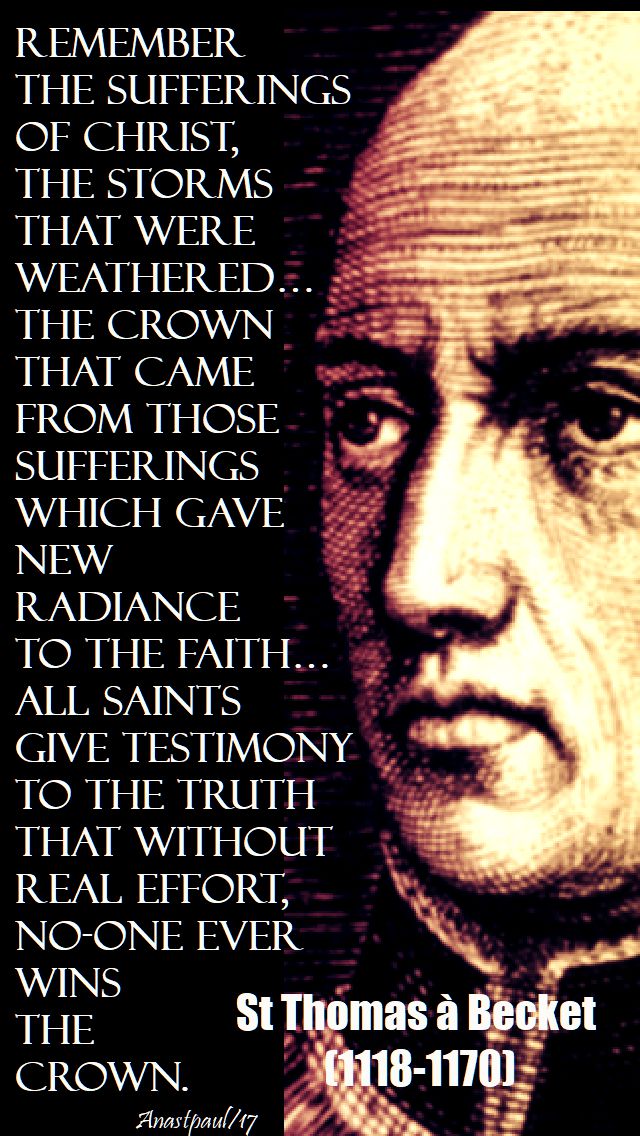
“Remember the sufferings of Christ, the storms that were weathered… the crown that came from those sufferings which gave new radiance to the faith… All saints give testimony to the truth that without real effort, no-one ever wins the crown.”
St Thomas à Becket (1118-1170)
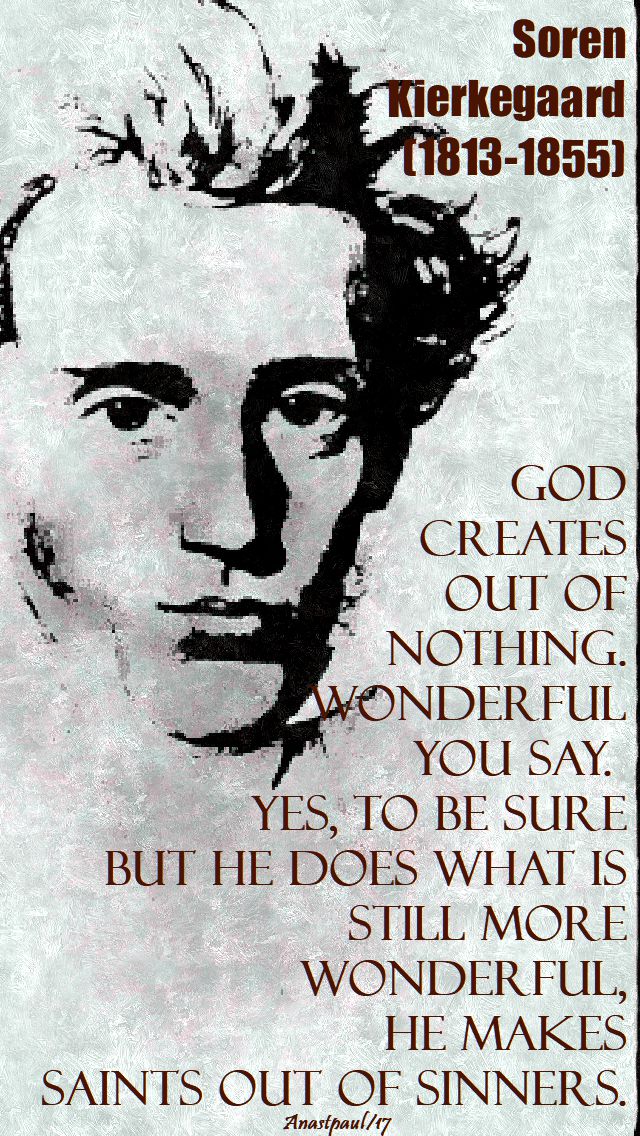
“God creates out of nothing. Wonderful you say. Yes, to be sure but He does. what is still more wonderful, He makes saints out of sinners.”
Our Morning Offering – 1 November – The Solemnity of All the Saints
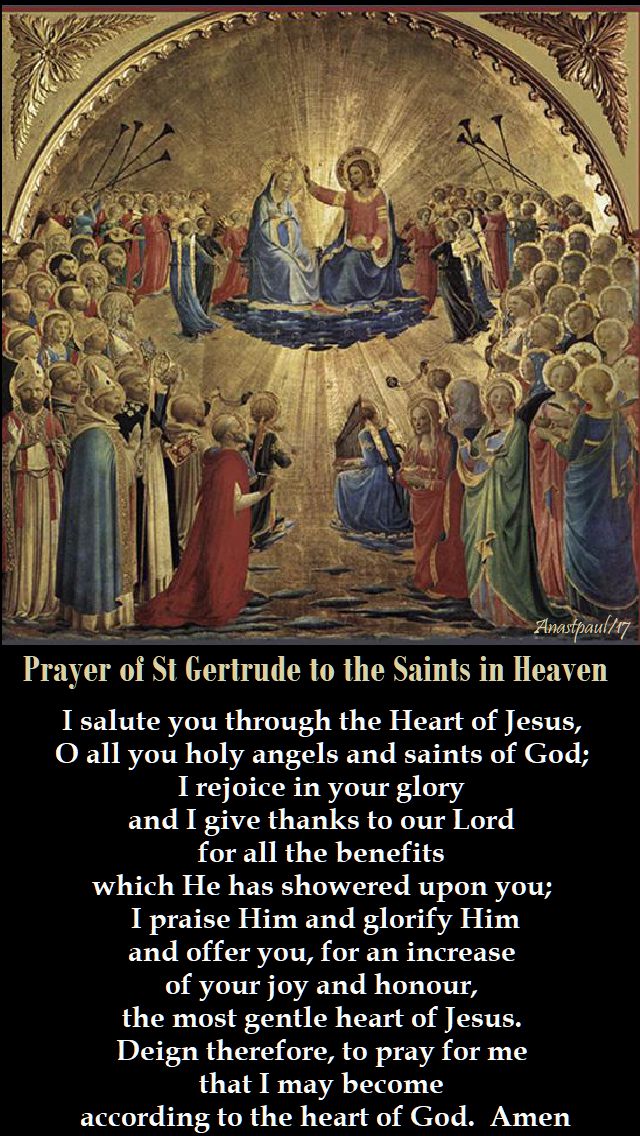
Prayer of St Gertrude to the Saints in Heaven
I salute you through the Heart of Jesus,
O all you holy angels and saints of God;
I rejoice in your glory and I give thanks to our Lord
for all the benefits which He has showered upon you;
I praise Him and glorify Him
and offer you, for an increase of your joy and honour,
the most gentle heart of Jesus.
Deign therefore, to pray for me
that I may become
according to the heart of God. Amen























 AnaStpaul
You must be logged in to post a comment.