Posted in FEASTS and SOLEMNITIES, MORNING Prayers, PAPAL SERMONS, QUOTES of the SAINTS, SAINT of the DAY

Quote/s of the Day – 24 June – The Solemnity of the Nativity of St John the Baptist, B

Quote/s of the Day – 24 June – The Solemnity of the Nativity of St John the Baptist, B

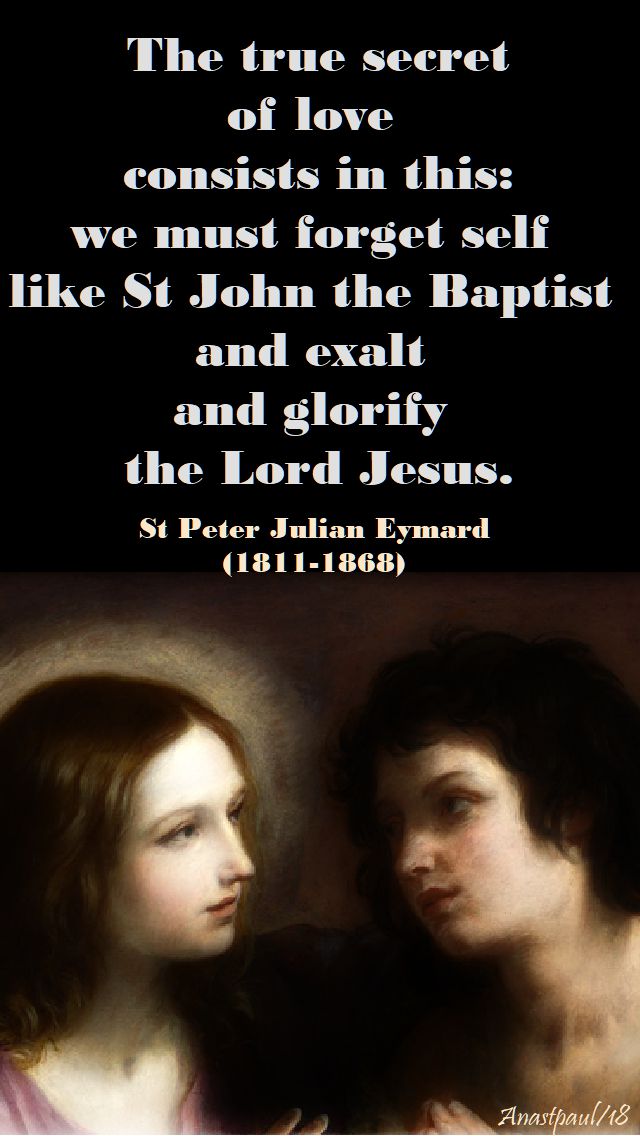
“The true secret of love consists in this:
we must forget self
like St John the Baptist
and exalt and glorify the Lord Jesus.”

St Peter Julian Eymard (1811-1868)the true secret of love is this - st peter julian eymard - 24 june 2018

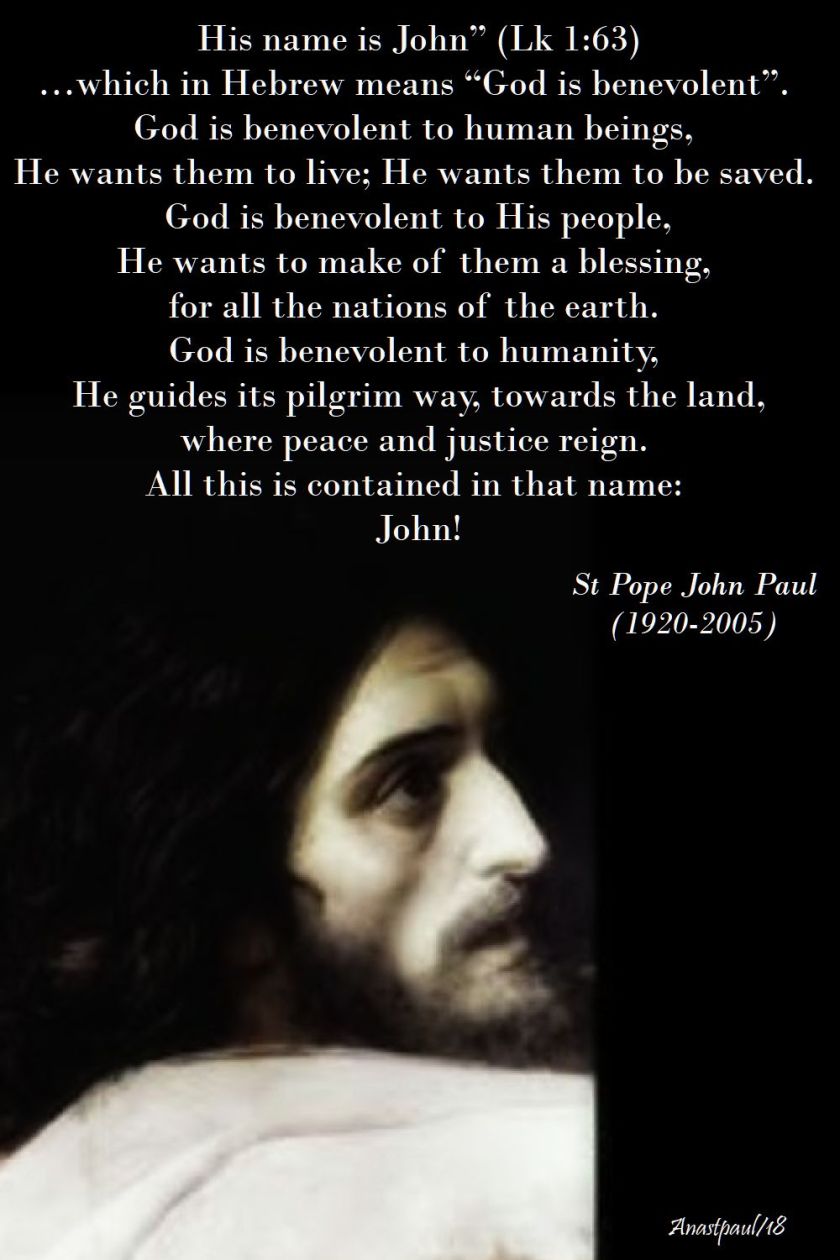
“His name is John” (Lk 1:63)
…which in Hebrew means “God is benevolent”.
God is benevolent to human beings,
He wants them to live; He wants them to be saved.
God is benevolent to His people,
He wants to make of them a blessing, for all the nations of the earth.
God is benevolent to humanity,
He guides its pilgrim way, towards the land,
where peace and justice reign.
All this is contained in that name:
John!”his name is john - st john paul - 24 june 2018

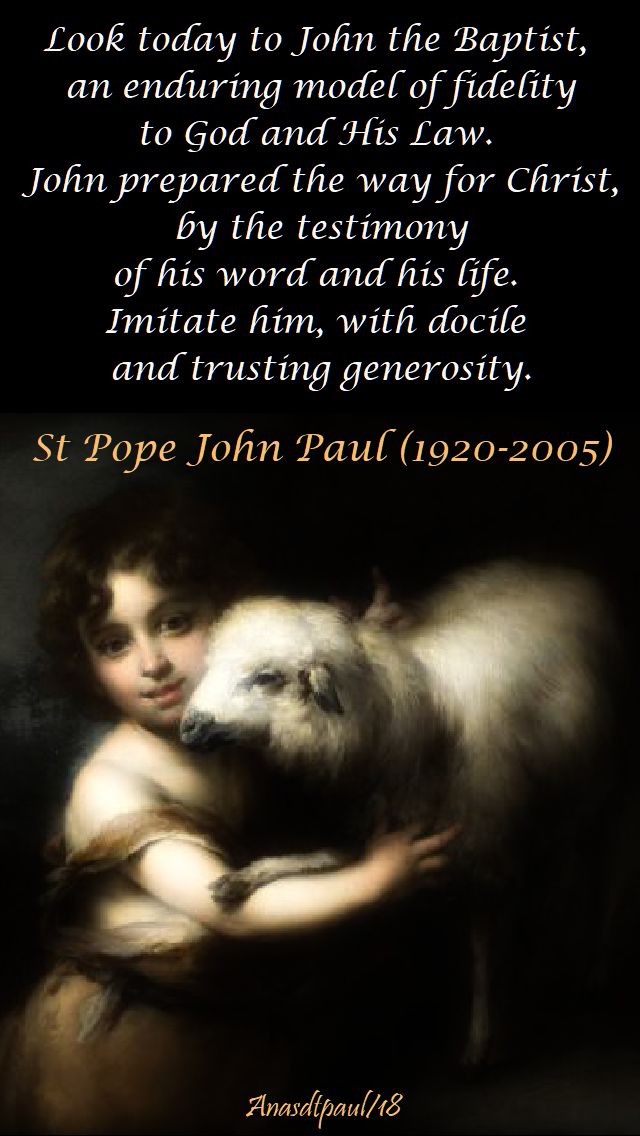
“Look today to John the Baptist,
an enduring model of fidelity to God and His Law.
John prepared the way for Christ,
by the testimony of his word and his life.
Imitate him with docile and trusting generosity.”

St Pope John Paul (1920-2005)

(24 June 2001)look today to john - st john paul - 24 june 2018

Posted in MORNING Prayers, ON the SAINTS, PAPAL SERMONS, PRAYERS for PRIESTS, QUOTES on the PRIESTHOOD, The WORD, VATICAN Resources

One Minute Reflection – – 23 June – The Memorial of St Joseph Cafasso (1811-1860)

One Minute Reflection – – 23 June – The Memorial of St Joseph Cafasso (1811-1860)

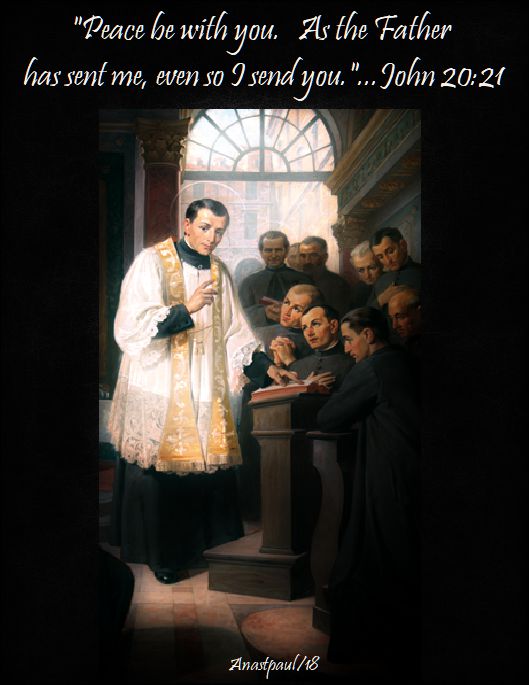
“Peace be with you.   As the Father has sent me, even so I send you.”…John 20:21as the father has sent me - john 20-21 - st joseph cafasso - 23 june 2018

REFLECTION – “Not without a special and beneficial disposition of Divine Goodness have we witnessed new stars rising on the horizon of the Catholic Church: the parish priest of Ars and the Venerable Servant of God, Joseph Cafasso.   These two beautiful, beloved, providently timely figures must be presented today; one, the parish priest of Ars, as small and humble, poor and simple as he was glorious and the other, a beautiful, great, complex and rich figure of a priest, the educator and formation teacher of priests, Venerable Joseph Cafasso”….Pope Pius XI

PRAYER – Holy God, may St Joseph Cafasso’s example serve as a reminder to all to hasten towards the perfection of Christian life, towards holiness.   In particular, may St Joseph Cafasso, remind priests of the importance of devoting time to the sacrament of Reconciliation and to spiritual direction and to all, the concern we should have for the most deprived.   May we find help in his intercession and that of the Blessed Virgin Mary, to whom St Joseph Cafasso was very devoted and whom he called “Our beloved Mother, our consolation, our hope”.   St Joseph Cafasso, St John Vianney, please pray for all our priests!   We make our prayer through our Lord Jesus Christ, with You, in the union of the Holy Spirit, one God forever, amen.sts joseph cafasso and john vianney - pray for us and all priests - 23 june 2018

Posted in PAPAL SERMONS, SAINT of the DAY, VATICAN Resources

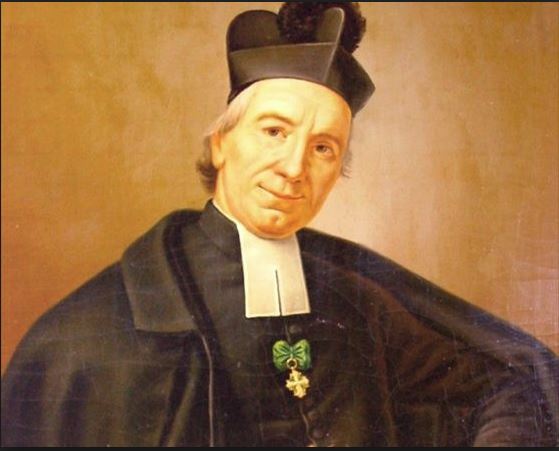
Saint of the Day – 23 June – St Joseph Cafasso (1811-1860) “Priest of the Gallows”

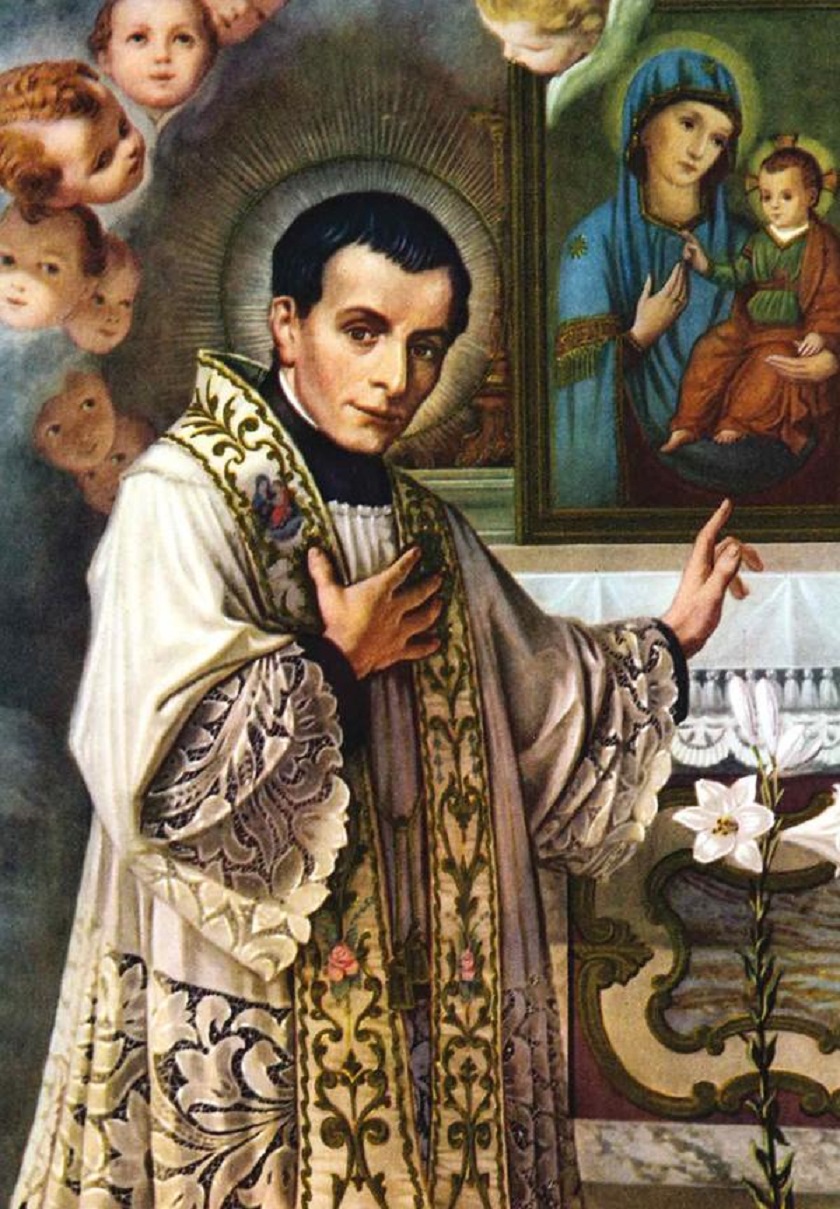
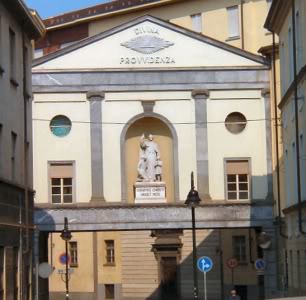
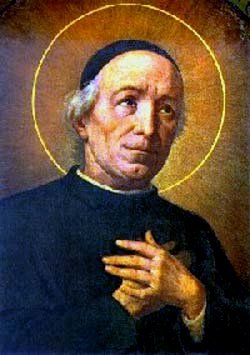
Saint of the Day – 23 June – St Joseph Cafasso (1811-1860) “Priest of the Gallows”, Priest, Theology Lecturer, Social Reformer, Confessor, Spiritual Director (of St John Bosco and quite a few other saints), Rector of a post-Ordination Theological College, member of the Third Order of St Francis – born Giuseppe Cafasso on 15 January 1811 at Castelnuovo d’Asti, Italy and died on 23 June 1860 at Turin, Italy of pneumonia, a stomach hemorrhage and complications of his congenital medical problems (he had been born with a deformed spine which contributed to his short stature and frail constitution).   His will bequeathed everything to aid the Little House of Divine Providence which was the religious order founded by St Joseph Benedict Cottolengo (1786-1842).    St John Bosco (1815-1888) preached the funeral Mass homily.  Patronages – Italian prisons, Prison chaplains, Prisoners, those condemned to death.0627giuseppe-cafasso-header no 2

Joseph Cafasso was born in Castelnuovo d’Asti, the same village in which St John Bosco was born, on 15 January 1811.   He was the third of four children.   The last, his sister Marianna, was to be the mother of Bl Joseph Allamano, Founder of the Consolata Missionary Fathers and the Consolata Missionary Sisters.   He was born in 19th-century Piedmont, marked by serious social problems but also by many Saints who strove to find remedies for them.   These Saints were bound to each other by total love of Christ and by their profound charity for the poorest people.   The grace of the Lord can spread and multiply the seeds of holiness!   

Cafasso completed his secondary school studies and the two years of philosophy at the College of Chieri and, in 1839, went on to the theological seminary where he was ordained a priest in 1833.   Four months later he entered what for him was to be the fundamental and only “stage” in his priestly life:  the “Convitto Ecclesiastico di S. Francesco d’Assisi” in Turin.   Having entered it to perfect himself in pastoral ministry, it was here that he brought to fruition his gifts as a spiritual director and his great spirit of charity.   The “Convitto” was in fact not only a school of moral theology where young priests, who came mainly from the countryside, learned how to become confessors and how to preach but was also a true and proper school of priestly life, where priests were formed in the spirituality of St Ignatius of Loyola and in the moral and pastoral theology of the great holy Bishop St Alphonsus Mary de’ Liguori.   The type of priest that Cafasso met at the “Convitto” and that he himself helped to strengthen especially as Recto, was that of the true pastor with a rich inner life and profound zeal in pastoral care, faithful to prayer, committed to preaching and to catechesis, dedicated to the celebration of the Eucharist and to the ministry of Confession, after the model embodied by St Charles Borromeo and St Francis de Sales and promoted by the Council of Trent.   A felicitous saying of St John Bosco sums up the meaning of educational work in that community:  “at the “Convitto’ men learn to be priests”.lg - st joseph cafasso

St Joseph Cafasso sought to bring this model into being in the formation of the young priests so that, in turn, they might become the formation teachers of other priests, religious and lay people, forming a special and effective chain.   From his chair of moral theology he taught them to be good confessors and spiritual directors, concerned for the true spiritual good of people, motivated equally by a desire to make God’s mercy felt and, by an acute and lively sense of sin.   Cafasso the teacher had three main virtues, as St John Bosco recalled:  calmness, wisdom and prudence.   For him the test of the lessons taught was the ministry of Confession, to which he himself devoted many hours of the day.   Bishops, priests, religious, eminent laymen and women and simple people sought him.   He was able to give them all the time they needed.   He was also a wise spiritual counsellor to many who became Saints and founders of religious institutes.   His teaching was never abstract, nor based exclusively on the books that were used in that period. Rather, it was born from the living experience of God’s mercy and the profound knowledge of the human soul that he acquired in the long hours he spent in the confessional and in spiritual direction:  his was a real school of priestly life.

His secret was simple:  to be a man of God; to do in small daily actions “what can result in the greater glory of God and the advantage of souls”.   He loved the Lord without reserve, he was enlivened by a firmly-rooted faith, supported by profound and prolonged prayer and exercised in sincere charity to all.   He was versed in moral theology but was likewise familiar with the situation and hearts of people, of whose good he took charge as the good pastor that he was.   Those who had the grace to be close to him were transformed into as many good pastors and sound confessors.   He would point out clearly to all priests the holiness to achieve in their own pastoral ministry.   Bl. Fr Clement Marchisio, Founder of the Daughters of St Joseph, declared:  “You entered the “Convitto’ as a very mischievous, thoughtless youth, with no idea of what it meant to be a priest;  and you came out entirely different, fully aware of the dignity of the priest”.   How many priests were trained by him at the “Convitto” and then accompanied by him spiritually!   Among them as I have said emerges St John Bosco who had him as his spiritual director for a good 25 years, from 1835 to 1860:  first as a seminarian, then as a priest and lastly as a Founder.   In all the fundamental decisions of his life St John Bosco had St Joseph Cafasso to advise him but in a very specific way – Cafasso never sought to form Don Bosco as a disciple “in his own image and likeness”and Don Bosco did not copy Cafasso –  he imitated Cafasso’s human and priestly virtues, certainly and described him as “a model of priestly life” but according to his own personal disposition and his own specific vocation;   a sign of the wisdom of the spiritual teacher and of the intelligence of the disciple,the former did not impose himself on the latter but respected his personality and helped him to interpret God’s will for him.

Dear friends, this is a valuable lesson for all who are involved in the formation and education of the young generations and also a strong reminder of how important it is to have a spiritual guide in one’s life, who helps one to understand what God expects of each of us.   Our Saint declared with simplicity and depth:   “All a person’s holiness, perfection and profit lies in doing God’s will perfectly…. Happy are we if we succeed in pouring out our heart into God’s, in uniting our desires and our will to His to the point, that one heart and one will are formed, wanting what God wants, wanting in the way, in the time and in the circumstances that He desires and willing it all for no other reason, than that God wills it”.st joseph cafasso - lovely

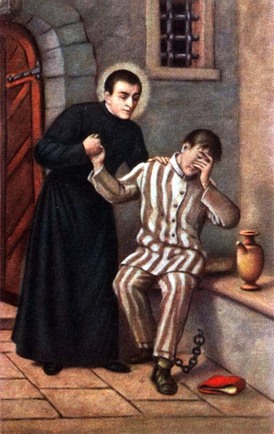
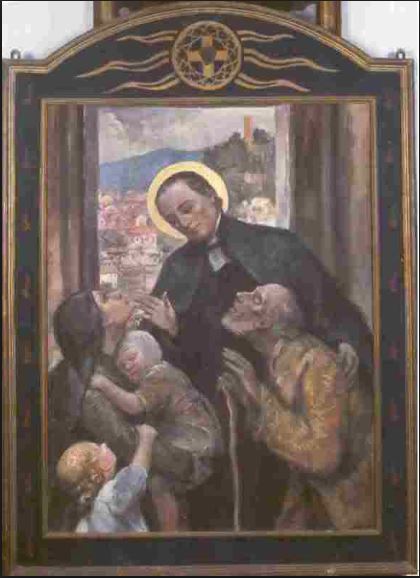
However, another element characterises the ministry of our Saint:  attention to the least and in particular to prisoners who in 19th-century Turin lived in inhumane and dehumanising conditions.   In this sensitive service too, which he carried out for more than 20 years, he was always a good, understanding and compassionate pastor, qualities perceived by the prisoners who ended up by being won over by his sincere love, whose origin lay in God himself.

Cafasso’s simple presence did good: it reassured, it moved hearts hardened by the events of life and above all it enlightened and jolted indifferent consciences.   In his early prison ministry he often had recourse to great sermons that managed to involve almost the entire population of the prison.   As time passed, he gave priority to plain catechesis in conversation and in personal meetings.   Respectful of each individual’s affairs, he addressed the important topics of Christian life, speaking of trust in God, of adherence to His will, of the usefulness of prayer and of the sacraments whose goal is Confession, the encounter with God who makes Himself infinite mercy for us.

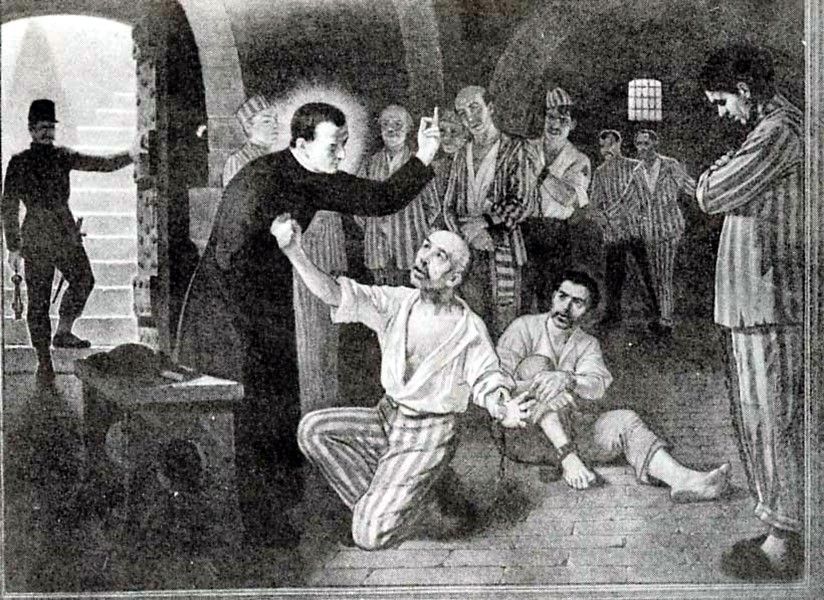
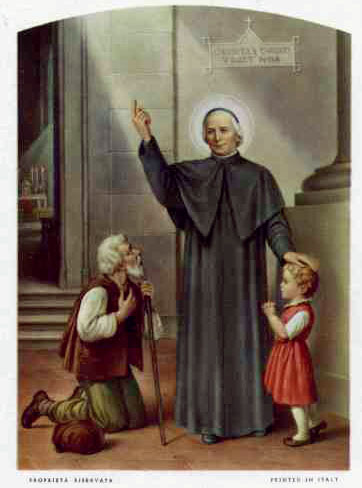
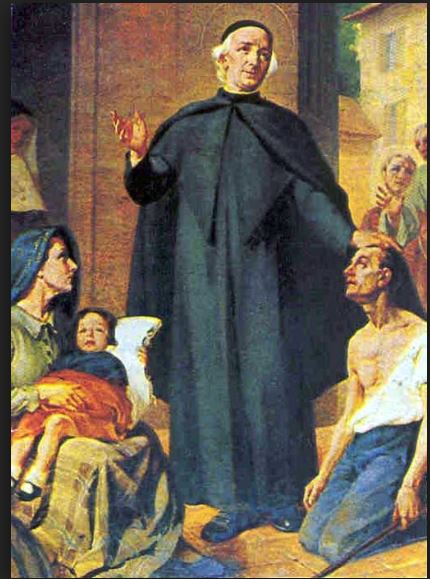
Those condemned to death were the object of very special human and spiritual care.   He accompanied to the scaffold 57 of the men sentenced to death, having heard their confession and having administered the Eucharist to them.   He accompanied them with deep love until the last breath of their earthly existence.joseph with prisonersSt Joseph Cafasso-thumb-275x434-6841

Joseph Cafasso died on 23 June 1860, after a life offered entirely to the Lord and spent for his neighbour.   My Predecessor, the Venerable Servant of God Pope Pius XII, proclaimed him Patron of Italian prisons on 9 April 1948 and, with his Apostolic Exhortation Menti Nostrae, on 23 September 1950 held him up as a model to priests engaged in Confession and in spiritual direction.”…Pope Benedict XVI, General Audience,  30 June 2010

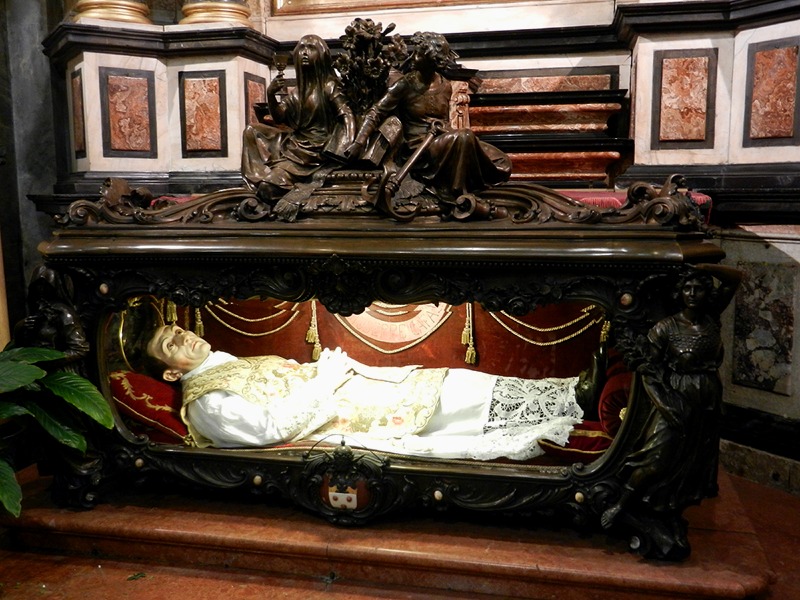
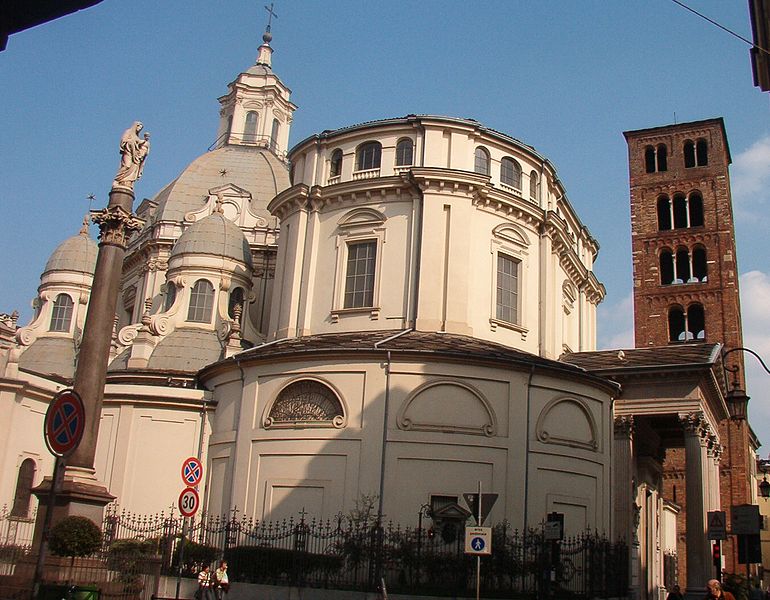
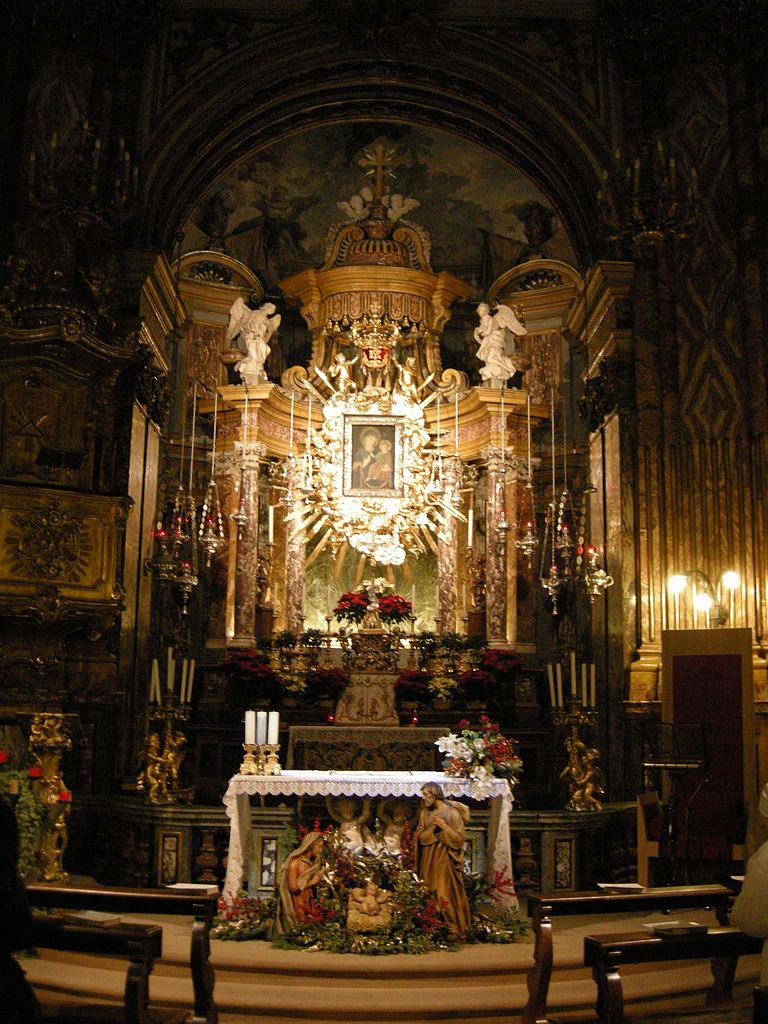
St Joseph was Beatified on 3 May 1925 by Pope Pius XI and Canonised 22 June 1947, by Pope Pius XII.   His Major shrine is Santuario della Consolata, Turin, Italy.3186TorinoConsolatainside770px-Santuario_della_Consolata_Torino768px-Consolata_di_torino,_interno,_25


Posted in MORNING Prayers, PAPAL SERMONS, QUOTES - J R R Tolkien and MORE, QUOTES on LOVE, QUOTES on PERSECUTION, QUOTES on PRAYER, QUOTES on the DEVIL/EVIL

Thought for the Day – 18 June – Pope Francis: to love your enemies, prayer is the way

Thought for the Day – 18 June – Monday of the Eleventh Week in Ordinary Time, Year B – Today’s Gospel Matthew 5:38-42

Pope Francis: to love your enemies, prayer is the way

“Love your enemies and pray for those who persecute you.”

“Pray for the one who hurt me?” the Pope asked. “Yes,” he answered, “because it changes lives.”   If we think it is impossible, then pray, the Pope said.   Pray every day for the grace to forgive and the grace to love.

“This advice: ‘Be holy, for I the Lord your God, am holy.’   And then: ‘You shall be perfect as your heavenly Father is perfect’,” the Pope remarked.   Forgiveness and prayer are the way to do this.   “This is the way of holiness,” he said. “If all men and women of the world learned this, there would be no wars, there would not be.”

Wars begin “in bitterness, rancour, the desire for revenge, to make someone pay.   But that destroys families, destroys friendships, destroys neighbourhoods, destroys so much,” he said.   For Pope Francis, this is why we must pray always for the grace not to hold grudges and for “the grace to pray for our enemies, to pray for the people that do not love us, the grace of peace.”

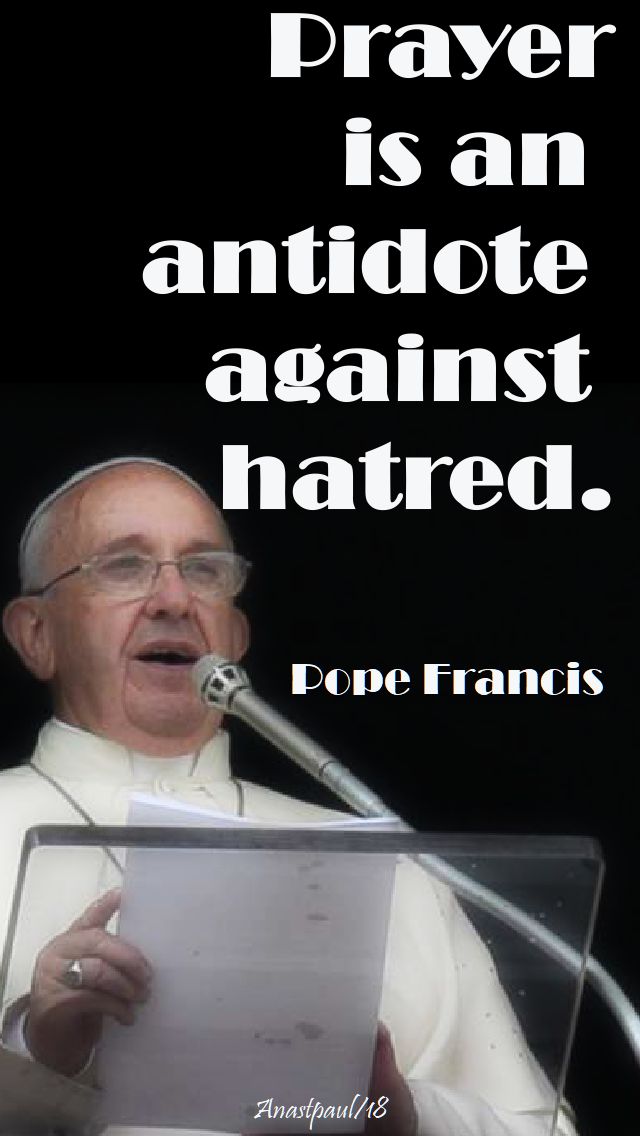
If we make this our daily prayer, the Pope continued, even just praying one prayer a day for our enemies, this is how we will “win” and make progress “on the path of holiness and perfection.”   In the end, “evil is overcome by good,” he said, and “sin is won with generosity.”   “Prayer is an antidote against hatred, against wars, these wars that start at home, which start in the neighbourhood, which begin in families,” he said.

The Pope said if he knows that someone wants to hurt him and does not love him, “I pray especially for him.”

“Pray for there to be peace.”

“Prayer is an antidote against hatred.”

Pope Francis 19 February 2017prayer is an antidote against hatred - pope francis - 18 June 2018

Posted in CATECHESIS, MORNING Prayers, PAPAL SERMONS, SUNDAY REFLECTIONS, The HOLY EUCHARIST / The HOLY MASS

Sunday Reflection – 17 June – Eleventh Sunday in Ordinary Time Year B

Sunday Reflection – 17 June – Eleventh Sunday in Ordinary Time Year B

….What happens in Spring?   Plants blossom, trees flower.   I will ask you some questions. Can a sick tree or plant fully blossom if it is sick?   No!   Can a tree, a plant which is not watered by rain or artificially, blossom nicely?   No.   And can a tree and a plant whose roots have been removed or which have no roots flower?   No.   Without roots, can they flower?   No!   And this is a message:  Christian life has to be a life that must blossom in works of charity, in doing what is good.   But if you have no roots, you cannot blossom, and who is the root?   Jesus  ! If you are not with Jesus, there in the roots, you will not blossom.   If you do not water your life with prayer and the sacraments, will you bear Christian flowers?   No!   Because prayer and the sacraments water the roots and our life blossoms.   I hope that your Spring may be bloom beautifully, as blooming as Easter will be;  blossoming with good works, virtue and doing good to others.   Remember this, this is a very beautiful verse from my country:   “What blossoms a tree bears come from what lies underneath it”.   Never cut off Jesus’ roots.

During Mass, after breaking the consecrated Bread, that is the Body of Christ, the priest shows it to the faithful, inviting them to participate in the Eucharistic banquet.   We know the words that ring out from the sacred altar:  “Happy are those who are called to his Supper.   This is the Lamb of God who takes away the sin of the world”.   Inspired by a passage in the Book of Revelation — “Blessed are those who are invited to the marriage supper of the Lamb” (Rev 19:9): it says “marriage” because Jesus is the Spouse of the Church — this invitation calls us to experience intimate union with Christ, the source of joy and holiness.   It is an invitation which brings happiness and at the same time spurs us to an examination of conscience enlightened by faith.

Although we are the ones who stand in procession to receive Communion;  we approach the altar in a procession to receive communion, in reality it is Christ who comes towards us to assimilate us in Him.   There is an encounter with Jesus!   To nourish oneself of the Eucharist means to allow oneself to be changed by what we receive.   Saint Augustine helps us understand this when he talks about the light he received when he heard Christ say to him:   “I am the food of strong men;  grow and you shall feed upon me;  nor shall you convert me, like the food of your flesh, into you but you shall be converted into me” (Confessions VII, 10, 16: pl 32, 742).

Each time we receive Communion, we resemble Jesus more;  we transform ourselves more fully into Jesus.   As the Bread and the Wine are converted into the Body and Blood of the Lord, so too those who receive it with faith, are transformed into a living Eucharist.

You reply “Amen” to the priest who distributes the Eucharist saying “the Body of Christ”; that is, you recognise the grace and the commitment involved in becoming the Body of Christ.   Because when you receive the Eucharist, you become the Body of Christ.  This is beautiful;  it is very beautiful.   As it unites us to Christ, tearing us away from our selfishness, Communion opens us and unites us to all those who are a single thing in Him.   This is the wonder of Communion:  we become what we receive!

Let us approach the Eucharist:  receiving Jesus who transforms us into Him makes us stronger.   The Lord is so good and so great!

Pope Francis, General Audience, 21 March 2018each time we receive communion - pope francis - 17 june 2018

Posted in DOCTORS of the Church, franciscan OFM, MORNING Prayers, PAPAL SERMONS, QUOTES of the SAINTS, QUOTES on HUMAN DIGNITY, QUOTES on the CROSS of CHRIST, SAINT of the DAY, The HOLY CROSS, The PASSION

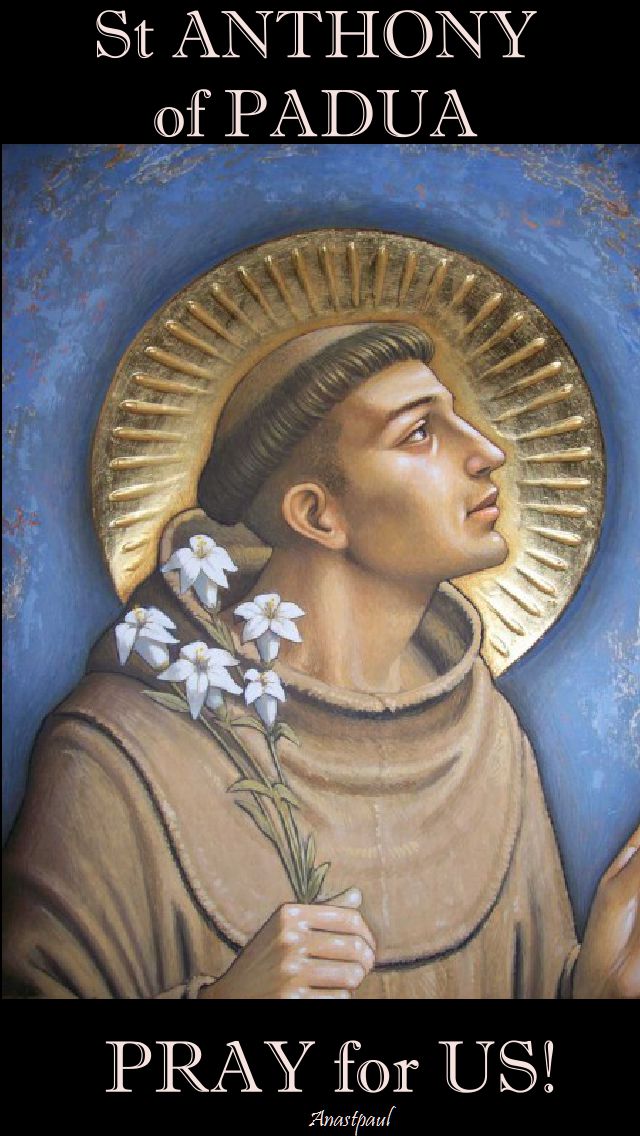
Thought for the Day – 13 June – The Memorial of St Anthony of Padua (1195-1231) Doctor of the Church

Thought for the Day – 13 June – The Memorial of St Anthony of Padua (1195-1231) Doctor of the Church

Not only the Nativity, a central point of Christ’s love for humanity but also the vision of the Crucified One inspired in Anthony thoughts of gratitude to God and esteem for the dignity of the human person, so that all believers and non-believers might find in the Crucified One and in His image a life-enriching meaning.

St Anthony writes:  “Christ, who is your life, is hanging before you, so that you may look at the Cross, as in a mirror.   There you will be able to know, how mortal were your wounds, that no medicine other, than the Blood of the Son of God, could heal.  If you look closely, you will be able to realise, how great your human dignity and your value are…. Nowhere other than looking at himself, in the mirror of the Cross, can man better understand how much he is worth”   (Sermones Dominicales et Festivi III, pp. 213-214).christ, who is your life, - st anthony of padua - 13 june 2018

In meditating on these words we are better able to understand the importance of the image of the Crucified One for our culture, for our humanity that is born from the Christian faith.   Precisely by looking at the Crucified One we see, as St Anthony says, how great are the dignity and worth of the human being.   At no other point can we understand how much the human person is worth, precisely because God makes us so important, considers us so important that, in his opinion, we are worthy of his suffering; thus all human dignity appears in the mirror of the Crucified One and our gazing upon him is ever a source of acknowledgement of human dignity…..Pope Benedict XVI (General Audience – February 10, 2010)

St Anthony of Padua, pray for us!st-anthony-pray-for-us-2.13 june 2017

Posted in MARIAN QUOTES, MORNING Prayers, PAPAL SERMONS

One Minute Reflection – 12 June – Tuesday of the Tenth week in Ordinary Time Year B – Today’s Gospel Matthew 5:13-16.

One Minute Reflection – 12 June – Tuesday of the Tenth week in Ordinary Time Year B – Today’s Gospel Matthew 5:13-16.

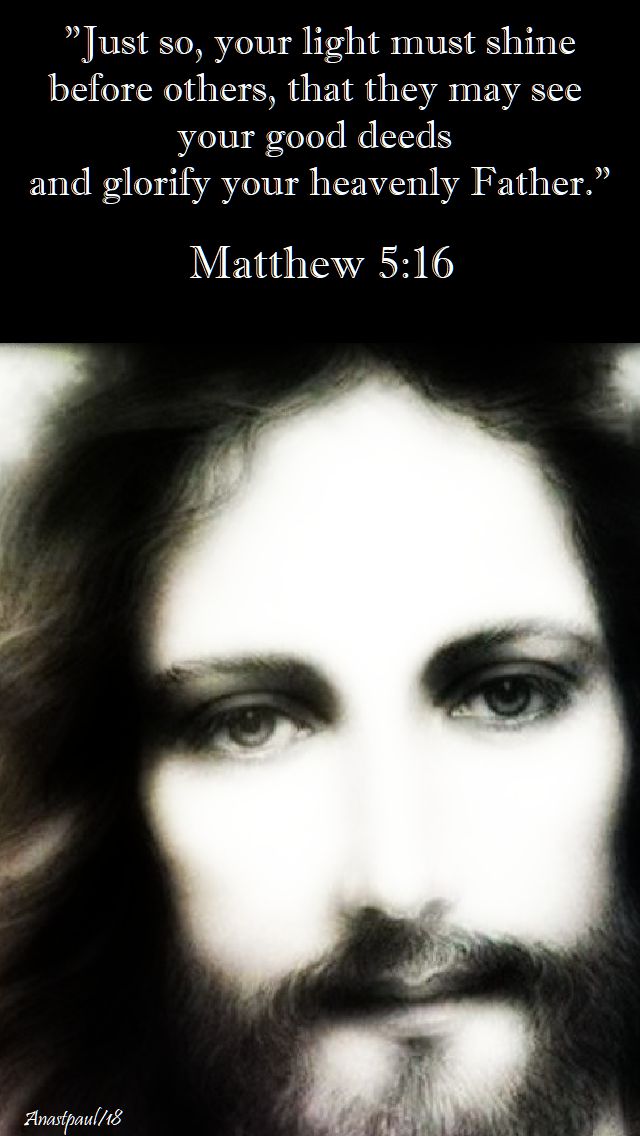
“Just so, your light must shine before others, that they may see your good deeds and glorify your heavenly Father.“…Matthew 5:16just so, your light must shine - matthew 5 16 - 12 june 2018

REFLECTION – “…We have a task and a responsibility for the gift received:  the light of faith, which is in us through Christ and the action of the Holy Spirit, we must not keep as if it were our property.   Instead, we are called to make it shine in the world, to give it to others through good works.   And how much the world needs the light of the Gospel, which transforms, heals and guarantees salvation to those who receive it!    By giving itself, the light of our faith is not extinguished but reinforced.   Instead, it can fail, if we do not nourish it with love and with works of charity….Therefore, the mission of Christians in society is to give “flavour” to life with the faith and love that Christ has given us.”…Pope Francis, Angelus 5 Feb 2017we have a task and a responsibility - pope francis - light and salt - 12 june 2018

PRAYER – Holy Almighty Father, we pray that we may be the light of Your divine Son and the salt of the earth.   Help us, we pray, to ever strive to be both the light and salt of the earth and “may the protection of Mary Most Holy, first disciple of Jesus and model, be of help to believers who live every day their vocation and mission in history.   May our Mother help us, to let ourselves always be purified and illumined by the Lord, to become in turn “salt of the earth” and “light of the world.” …(Pope Francis Angelus 5 Feb 2017)sancta maria -mary most holy - pray for us - 10 may 2018

Posted in BREVIARY Prayers, DOCTORS of the Church, FATHERS of the Church, MORNING Prayers, PAPAL SERMONS, QUOTES of the SAINTS, SAINT of the DAY, The APOSTLES & EVANGELISTS, The WORD

One Minute Reflection – 11 June – Memorial of St Barnabas, Apostle

One Minute Reflection – 11 June – Memorial of St Barnabas, Apostle – Today’s First Reading  Acts of the Apostles 11:21b-26.13:1-3.

News of this came to the ears of the church in Jerusalem and they sent Barnabas to Antioch.   When he came and saw the grace of God, he was glad and he exhorted them all, to remain faithful to the Lord, with steadfast purpose;  for he was a good man, full of the Holy Spirit and of faith.   And a large company was added to the Lord...Acts 11:22-24

REFLECTION – “While we cannot see God, there is something we can do, to open a way, for the eye of our understanding to come to Him.   It is certain that we can see now in His servants, one whom we can in no way see in Himself.   When we see them doing astonishing things, we can be sure that God dwells in their hearts…   None of us can look directly at the rising sun by gazing at its orb.   Our eyes are repelled as they strain to see its rays.   But we look at mountains bathed in sunlight and see that it has risen.   Because we cannot see the Sun of righteousness (Mal 3,20) Himself, let us see the mountains bathed in His brightness, I mean the holy apostles.   They shine with virtues and gleam with miracles…  The power of His divinity, is in itself, like the sun in the sky;  in human beings it is like the sun shining on earth…”…St Pope Gregory the Great (c 540-604), Father & Doctor of the Church (Homilies on the Gospel, no 30)when he came and saw - acts 11 22-24 - when we see them doing - st pope gregory the great - 11 june 2018 st barnabas

PRAYER – O God, who decreed that Saint Barnabas, a man filled with faith and the Holy Spirit, should be set apart to convert the nations, grant that the Gospel of Christ, which he strenuously preached, may be faithfully proclaimed by word and by deed.   We pray you Lord, that by the intercession of St Barnabas, we too may grow in faith and love and live to glorify Your kingdom.   Through our Lord Jesus Christ, Your Son, who lives and reigns with you in the unity of the Holy Spirit, one God, forever and ever. Amen.st barnabas - pray for us - 11 june 2018

Posted in DOCTORS of the Church, FATHERS of the Church, MORNING Prayers, PAPAL SERMONS, QUOTES of the SAINTS, SAINT of the DAY, The HOLY GHOST, The WORD

One Minute Reflection – 7 June – Thursday of the Ninth Week of Ordinary Time, Year B

One Minute Reflection – 7 June – Thursday of the Ninth Week of Ordinary Time, Year B – Today’s Gospel Mark 12:28-34.

Jesus replied, “The first is this: ‘Hear, O Israel!   The Lord our God is Lord alone!
You shall love the Lord your God with all your heart, with all your soul, with all your mind and with all your strength.’
The second is this: ‘You shall love your neighbour as yourself.’  There is no other commandment greater than these.” …Mark 12:29-31

REFLECTION – “We cannot truly love God without loving our neighbour, nor can we truly love our neighbour, without loving God.   This is why… the Holy Spirit was given a second time to the disciples.   First it was given by the Lord, while He was still dwelling on earth and later, while He was watching over us in heaven (Jn 20:22; Acts 2).   He was given to us on earth, that we may love our neighbours, from heaven that we may love God.   Why first on earth and later from heaven, except for the reason, given us openly by John:  “How can anyone who does not love his brother whom he sees, love God whom he does not see?”   So let us love our neighbours, my friends, let us love the one who is near us, so that we may be able to attain the love of the one, who is above us.”…St Gregory the Great (c 540-604), Pope, Doctor of the Church (Homilies on the Gospel, no 30)so let us love our neighbours and you must love the lord your god - st pope gregory and mark 12 30-31 - 7 june 2018

PRAYER – Lord Almighty God, You sanctify Your Church, by the gifts of the Holy Spirit. Fulfil in us the words of Your Son that our love for You and Your children may be come to perfection.   Grant that by the prayers of St Anthony Mary Gianelli, who served You through his neighbour, with love and zeal, we too may attain our heavenly home. Through Christ our Lord, in union with You and the Holy Spirit, one God, amen.st anthony mary gianelli - pray for us - 7 june 2018

Posted in EUCHARISTIC Adoration, MORNING Prayers, PAPAL SERMONS, QUOTES - J R R Tolkien and MORE, QUOTES on CHARITY, SAINT of the DAY, The HOLY EUCHARIST / The HOLY MASS

Thought for the Day – 4 June – Ninth Week in Ordinary Time, Year B and the Memorial of St Filippo Smaldone (1848-1923)

Thought for the Day – 4 June – Ninth Week in Ordinary Time, Year B and the Memorial of St Filippo Smaldone (1848-1923) – Apostle of Eucharistic Adoration and of Charity

Speaking of: Eucharistic Adoration

“St Filippo Smaldone, son of South Italy, knew how to instil in his life the higher virtues characteristic of his land.

A priest with a great heart nourished continuously on prayer and Eucharistic Adoration, he was above all, a witness and servant of charity, which he manifested in an eminent way through service to the poor, in particular to deaf-mutes, to whom he dedicated himself entirely.

The work that he began developed thanks to the Congregation of the Salesian Sisters of the Sacred Hearts, founded by him and which spread to various parts of Italy and the world.

St Filippo Smaldone saw the image of God reflected in deaf-mutes and he used to repeat that, just as we prostrate before the Blessed Sacrament, so we should kneel before a deaf-mute.

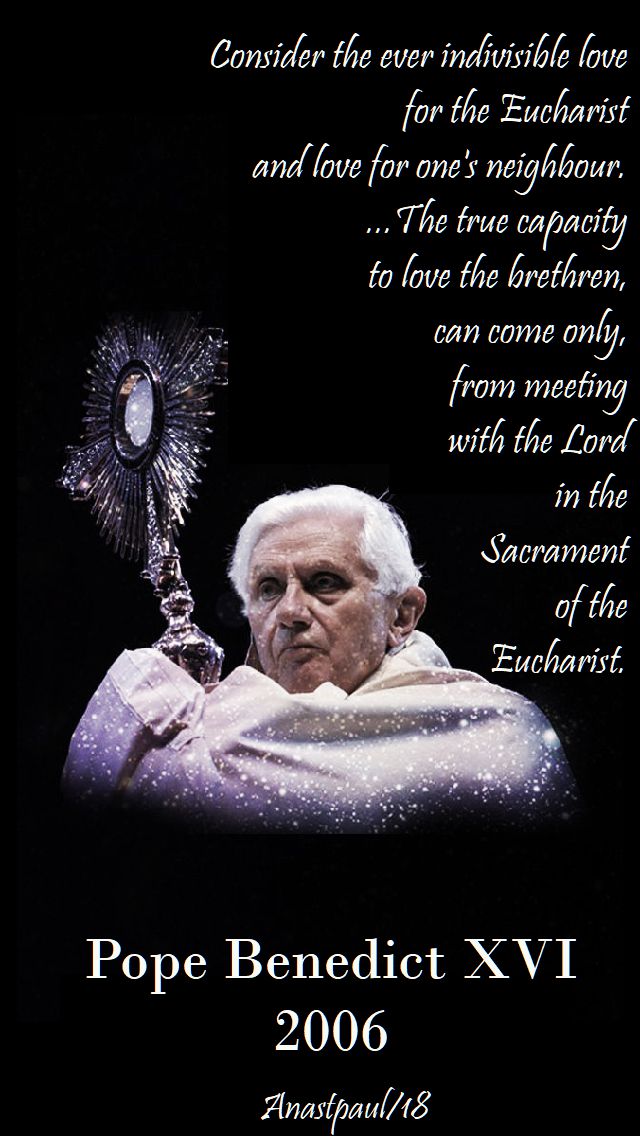
From his example we welcome the invitation to consider the ever indivisible love for the Eucharist and love for one’s neighbour.   But the true capacity to love the brethren, can come only, from meeting with the Lord in the Sacrament of the Eucharist.”

Pope Benedict XVI on the Canonisation of St Filippo Smaldone, St Peter’s Square, Sunday, 15 October 2006consider the ever indivisble love of the eucharist and love neighbour - pope benedict - 4 june 2018

St Filippo Smaldone, Pray for us!st filippo smaldone - pray for us no 2 - 4 june 2018

Posted in EUCHARISTIC Adoration, FEASTS and SOLEMNITIES, MARIAN QUOTES, MORNING Prayers, PAPAL SERMONS, QUOTES - J R R Tolkien and MORE, SAINT of the DAY, The BLESSED VIRGIN MARY, The HOLY EUCHARIST / The HOLY MASS

Quote of the Day – 3 June 2018 – The Solemnity of Corpus Christi

Quote of the Day – 3 June 2018 – The Solemnity of Corpus Christi

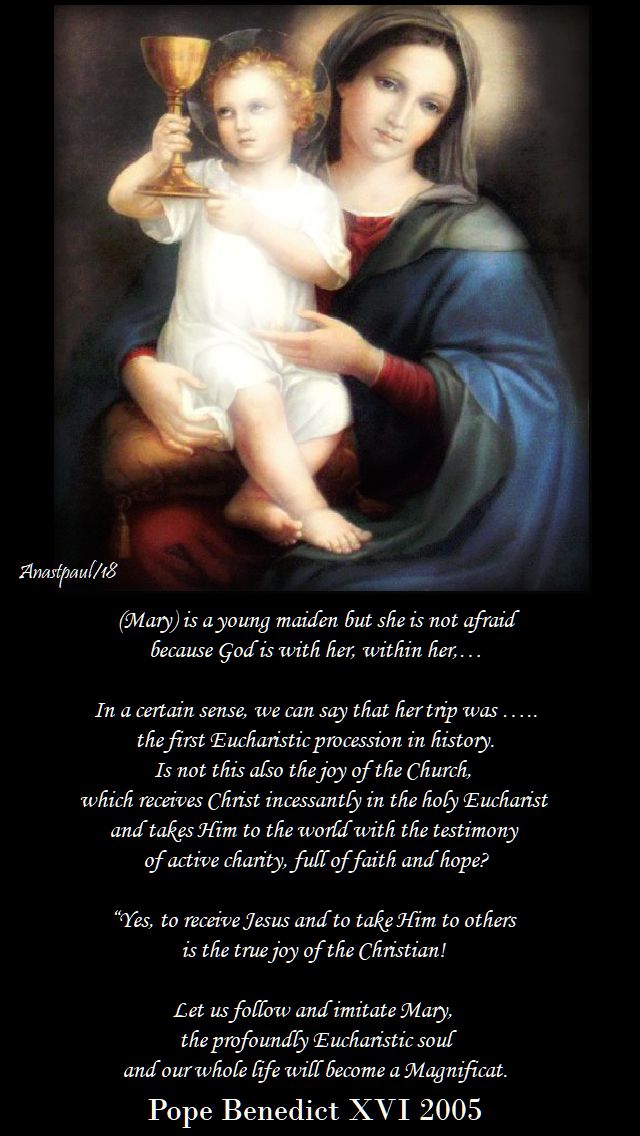
“(Mary) is a young maiden but she is not afraid
because God is with her, within her,…
In a certain sense, we can say that her trip was …..
the first Eucharistic procession in history.
Is not this also the joy of the Church,
which receives Christ incessantly in the holy Eucharist
and takes Him to the world with the testimony
of active charity, full of faith and hope?

“Yes, to receive Jesus and to take Him to others
is the true joy of the Christian!

Let us follow and imitate Mary,
the profoundly Eucharistic soul
and our whole life will become a Magnificat.”

Pope Benedict XVI 2005mary is a young maiden - first eucharistic procession in history - 3 june 2018 - corpus christi

Posted in CATHOLIC-PRAYERS OF THE CHURCH, DOCTORS of the Church, EUCHARISTIC Adoration, FEASTS and SOLEMNITIES, MORNING Prayers, PAPAL SERMONS, PRACTISING CATHOLIC, PRAYERS of the CHURCH, PRAYERS of the SAINTS, SAINT of the DAY, The HOLY EUCHARIST / The HOLY MASS

The Solemnity of The Body and Blood of Christ “Corpus Christi” – 3 June

The Solemnity of The Body and Blood of Christ “Corpus Christi” – 3 June

Happy Solemnity of the Most Holy Body and Blood, Soul and Divinity of Jesus Christ, our Lord and God!  What a Gift we celebrate today!

The Eucharist is the source and summit of the whole Christian life.   The feast of Corpus Christi is a celebration of Christ’s Real Presence in the Eucharist.   It parallels the celebration on Holy Thursday in commemoration of the institution of this Aacrament. When the Eucharist is carried through the streets in solemn procession, the Christian people give public witness of their faith and devotion toward the Sacrament of the Eucharist

In 1246, Bishop Robert de Thorete of the Belgian diocese of Liège, at the suggestion of St Juliana of Mont Cornillon (also in Belgium), convened a synod and instituted the celebration of the feast.

From Liège, the celebration began to spread and, on 8 September 1264, Pope Urban IV issued the papal bull “Transiturus,” which established the Feast of Corpus Christi as a universal feast of the Church, to be celebrated on the Thursday following Trinity Sunday.

At the request of Pope Urban IV, St Thomas Aquinas (1225-1274), Doctor of the Church, composed the office, the official prayers of the Churc, for the feast.   This office is widely considered one of the most beautiful in the traditional Roman Breviary and it is the source of the famous Eucharistic hymns Pange Lingua Gloriosi and Tantum Ergo Sacramentum.

The feast is also celebrated with a Eucharistic procession, in which the Sacred Host is carried throughout the town, accompanied by hymns and litanies.   There the Eucharistic Lord, held in the monstrance by the priest, is escorted by candles, canopies, incense, choirs, altar servers, and worshipers.   The faithful venerate the Body of Christ as the procession passed by, with Benediction celebrated along the way.

The feast of Corpus Christi is one time when our Lord in the Blessed Sacrament is exposed not just to faithful Catholics but to all the world.   This is a time when Catholics can show their love for Christ in the Real Presence by honouring Him in a very public way.   It is also a wonderful way in which we can show our love for our neighbors by bringing Our Lord and Savior closer to them.   So many conversions are a result of Eucharistic Adoration experienced from inside the Church.   How many more there would be if we could reach those who only drive by the church in worldly pursuits.

“Corpus Christi reminds us first of all of this:, that being Christian means coming together from all parts of the world to be in the presence of the one Lord and to become one with him and in him.
The second constitutive aspect, is walking with the Lord. ,This is the reality manifested by the procession that we shall experience together after Holy Mass, almost as if it were naturally prolonged by moving behind the One who is the Way, the Journey. With the gift of Himself in the Eucharist, the Lord Jesus sets us free from our “paralyses”, He helps us up and enables us to “proceed “, that is, He makes us take a step ahead and then another step and thus sets us going with the power of the Bread of Life.”

Pope Benedict XVI, Corpus Christ 2008

Throughout our lives, if we were raised Catholic, we were taught reverence for the Eucharist.    But “reverence” is not enough.  Most Catholics reverence the Eucharist, meaning, we genuflect, kneel and treat the Sacred Host with respect.    But it’s important to ponder a question in your heart.    Do you believe the Eucharist is God Almighty, the Saviour of the world, the second Person of the Most Holy Trinity?  Do you believe deeply enough to have your heart moved with love and profound devotion every time you are before our divine Lord present before us under the veil of the Eucharist?   When you kneel do you fall down prostrate in your heart, loving God with your whole being?5 - Adoration of the Eucharist, by Jeronimo Jacinto Espinosa, 1650

Perhaps this sounds like it’s a bit excessive.  Perhaps simple reverence and respect is enough for you.   But it’s not.   Since the Eucharist is God Almighty, we must see Him there with the eyes of faith in our soul.   We must profoundly adore Him as the angels do in Heaven.   We must cry out, “Holy, Holy, Holy is the Lord God Almighty.”  We must be moved to the deepest of worship as we enter into His divine presence.

Ponder the depth of your faith in the Eucharist today and strive to renew it, worshiping God as one who believes with your whole being.

I devoutly adore You, O hidden Deity, truly hidden beneath these appearances.  My whole heart submits to You and in contemplating You, it surrenders itself completely.  Sight, touch, taste are all deceived in their judgement of You but hearing suffices firmly to believe.  Jesus, I trust in You.

Posted in MORNING Prayers, ON the SAINTS, PAPAL SERMONS, QUOTES of the SAINTS, SAINT of the DAY

Thought for the Day – 1 June – The Memorial of Blessed John Baptist Scalabrini (1839-1905)

Thought for the Day – 1 June – The Memorial of Blessed John Baptist Scalabrini (1839-1905)

“God’s temple is holy, and that temple you are” (1 Cor 3:17).   The universal call to holiness was constantly felt and personally lived by John Baptist Scalabrini.   He loved to say over and over: “Would that I could sanctify myself and all the souls entrusted to me!”. Striving for holiness and proposing it to everyone he met, was always his first concern.

Deeply in love with God and extraordinarily devoted to the Eucharist, he knew how to translate the contemplation of God and his mystery into intense apostolic and missionary activity, making himself all things to all men in order to proclaim the Gospel. This ardent passion of his for the kingdom of God made him zealous in catechesis, pastoral activities and charitable work, especially for those most in need.   Pope Pius IX called him the “Apostle of the Catechism” because of his efforts to promote the systematic teaching of the Church’s doctrine to children and adults in every parish.

Out of his love for the poor, particularly for emigrants, he became the apostle of his many compatriots compelled to leave their country, often under difficult conditions and in concrete danger of losing their faith: for them he was a father and sure guide.   We can say that Bl John Baptist Scalabrini intensely lived the paschal mystery, not through martyrdom but by serving the poor and crucified Christ, in the many needy and suffering people, whom he loved, with the heart of a true Shepherd in solidarity with his flock….St Pope John Paul (1920-2005) on the Beatification of Bl Scalabrini – Sunday, 9 November 1997.

Oh if we could gain just a grain of such zeal, we would all become saints.

Blessed John Baptist Scalabrini, Pray for us!

bl john baptist scalabrini - pray for us - 1 june 2018

Posted in PAPAL SERMONS, SAINT of the DAY

Saint of the Day – 30 May – St Joan of Arc (1412-1431)

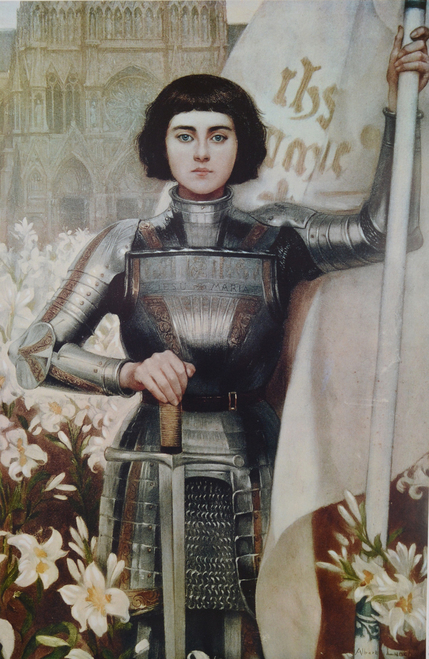
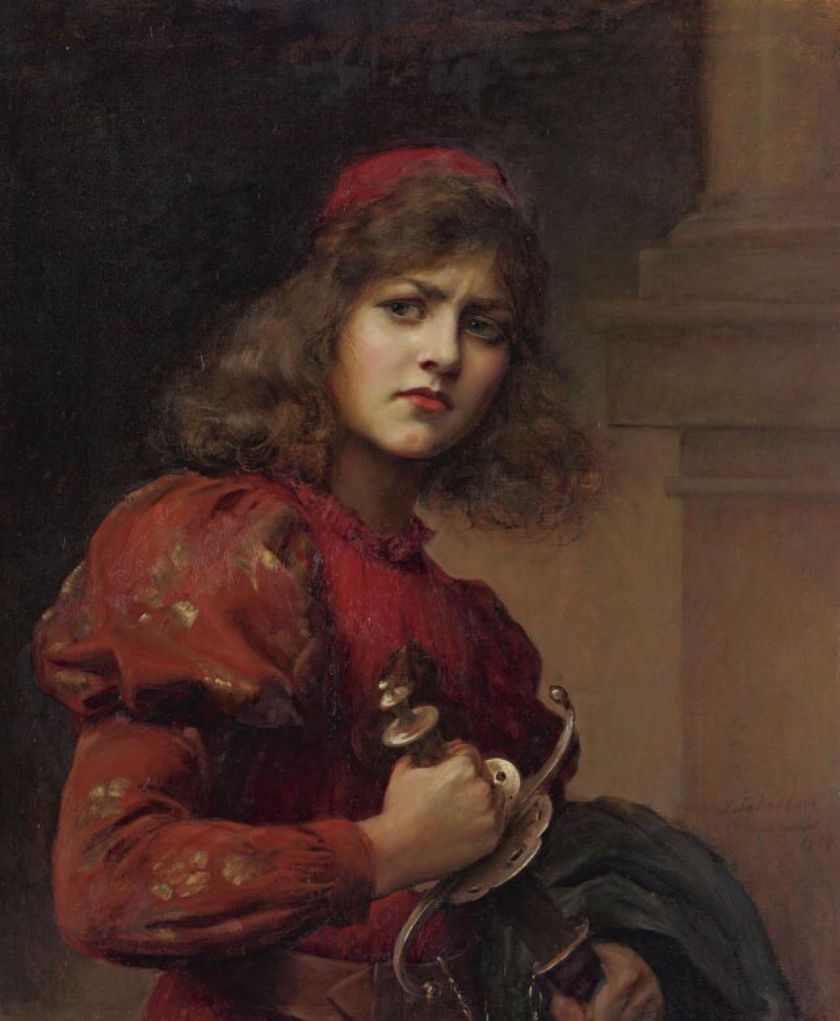
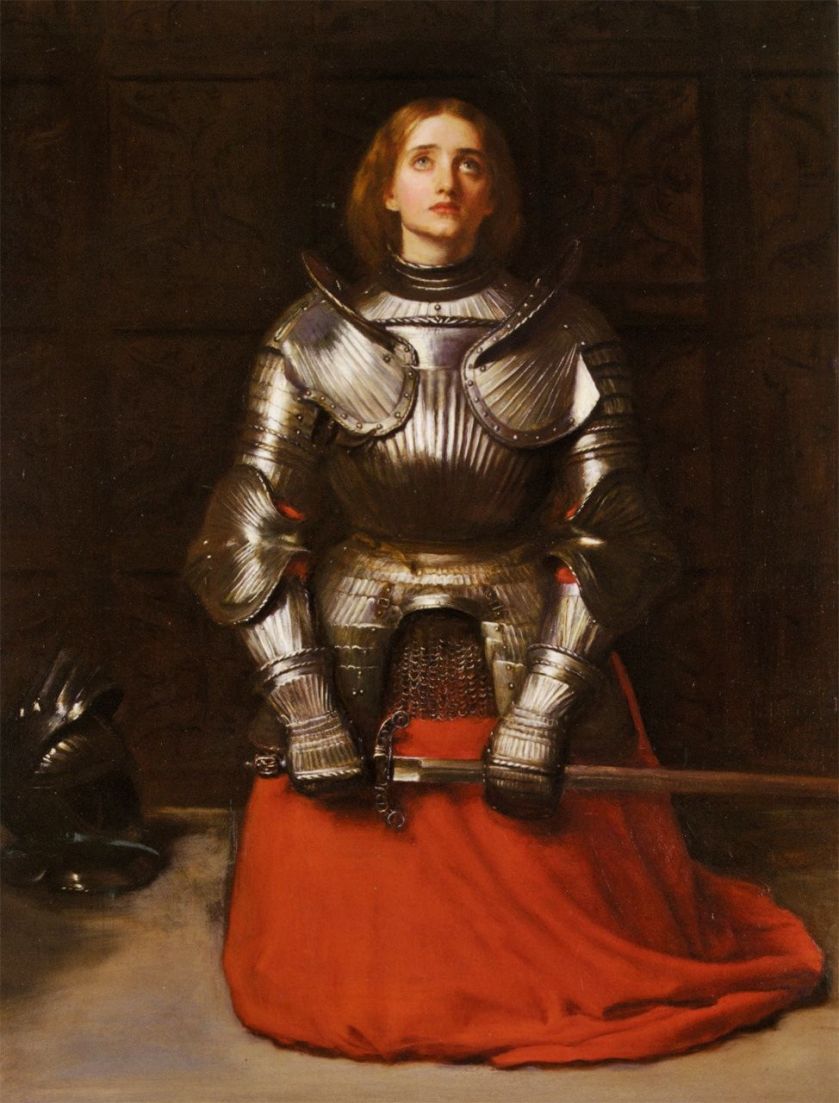
Saint of the Day – 30 May – St Joan of Arc (1412-1431) Jeanne d’Arc “The Maid of Orléans” Holy Virgin.   Biography and details of St Joan’s life here – https://anastpaul.wordpress.com/2017/05/30/saint-of-the-day-30-may-st-joan-of-arc/joan-11joan of arc

BENEDICT XVI

GENERAL AUDIENCE

Paul VI Audience Hall
Wednesday, 26 January 2011

Dear Brothers and Sisters,

Today I would like to talk to you about Joan of Arc, a young Saint who lived at the end of the Middle Ages who died at the age of 19, in 1431.   This French Saint, mentioned several times in the Catechism of the Catholic Church, is particularly close to St Catherine of Siena, Patroness of Italy and of Europe, of whom I spoke in a recent Catechesis.   They were in fact two young women of the people, lay women consecrated in virginity, two committed mystics, not in the cloister, but in the midst of the most dramatic reality of the Church and the world of their time.   They are perhaps the most representative of those “strong women” who, at the end of the Middle Ages, fearlessly bore the great light of the Gospel in the complex events of history.   We could liken them to the holy women who stayed on Calvary, close to the Crucified Jesus and to Mary his Mother, while the Apostles had fled and Peter himself had denied him three times.

The Church in that period was going through the profound crisis of the great schism of the West, which lasted almost 40 years.   In 1380, when Catherine of Siena died, there was not only a Pope but also an antipope; when Joan was born, in 1412, there was a Pope as well as two antipopes.   In addition to this internal laceration in the Church, were the continuous fratricidal wars among the Christian peoples of Europe, the most dramatic of which was the protracted Hundred Years’ War between France and England.

Joan of Arc did not know how to read or write but the depths of her soul can be known thanks to two sources of exceptional historical value: the two Trials that concern her. The first, the Trial of Condemnation (PCon), contains the transcription of the long and numerous interrogations to which Joan was subjected in the last months of her life (February-May 1431) and reports the Saint’s own words.   The second, the Trial of Nullity of the Condemnation or of “rehabilitation” (PNul), contains the depositions of about 120 eyewitnesses of all the periods of her life (cfProcès de Condamnation de Jeanne d’Arc, 3 vol. and Procès en Nullité de la Condamnation de Jeanne d’Arc, 5 vol., ed. Klincksieck, Paris, 1960-1989).

Joan was born at Domremy, a little village on the border between France and Lorraine. Her parents were well-off peasants, known to all as good Christians.   From them she received a sound religious upbringing, considerably influenced by the spirituality of the Name of Jesus, taught by St Bernardine of Siena and spread in Europe by the Franciscans.

The Name of Mary was always associated with the Name of Jesus and thus, against the background of popular piety, Joan’s spirituality was profoundly Christocentric and Marian.   From childhood, she showed great love and compassion for the poorest, the sick and all the suffering, in the dramatic context of the war.

We know from Joan’s own words that her religious life developed as a mystical experience from the time when she was 13 (PCon, I, p. 47-48).   Through the “voice” of St Michael the Archangel, Joan felt called by the Lord to intensify her Christian life and also to commit herself in the first person to the liberation of her people.   Her immediate response, her “yes”, was her vow of virginity, with a new commitment to sacramental life and to prayer: daily participation in Mass, frequent Confession and Communion and long periods of silent prayer before the Crucified One or the image of Our Lady.

The young French peasant girl’s compassion and dedication in the face of her people’s suffering were intensified by her mystical relationship with God.   One of the most original aspects of this young woman’s holiness was precisely this link between mystical experience and political mission.   The years of her hidden life and her interior development were followed by the brief but intense two years of her public life: a year of action and a year of passion.

At the beginning of 1429, Joan began her work of liberation.   The many witnesses show us this young woman who was only 17 years old as a very strong and determined person, able to convince people who felt insecure and discouraged.   Overcoming all obstacles, she met the Dauphin of France, the future King Charles VII, who subjected her to an examination in Poitiers by some theologians of the university.   Their opinion was positive:  they saw in her nothing evil, only a good Christian.

On 22 March 1429 Joan dictated an important letter to the King of England and to his men at arms who were besieging the city of Orléans (ibid., pp. 221-222).   Hers was a true proposal of peace in justice between the two Christian peoples in light of the Name of Jesus and Mary, but it was rejected and Joan had to gird herself to fight for the city’s liberation which took place on 8 May. The other culminating moment of her political action was the coronation of King Charles VII in Rheims on 17 July 1429.   For a whole year, Joan lived with the soldiers, carrying out among them a true mission of evangelization.   Many of them testified to her goodness, her courage and her extraordinary purity.   She was called by all and by herself “La pucelle” (“the Maid”), that is, virgin.

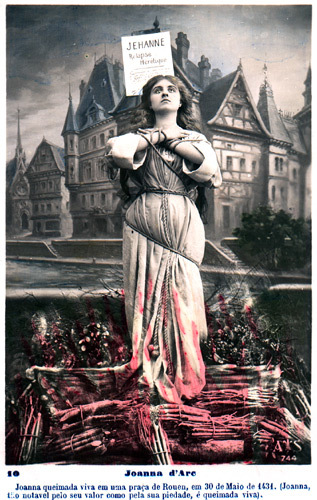
Joan’s passion began on 23 May 1430, when she fell into enemy hands and was taken prisoner.   On 23 December she was led to the city of Rouen.   There the long and dramatic Trial of Condemnation took place, that began in February 1431 and ended on 30 May with her being burned at the stake.

It was a great and solemn Trial, at which two ecclesiastical judges presided, Bishop Pierre Cauchon and the Inquisitor Jean le Maistre, but in fact it was conducted entirely by a large group of theologians from the renowned University of Paris, who took part in the Trial as assessors.   They were French clerics, who, on the side politically opposed to Joan’s, had a priori a negative opinion of both her and her mission.   This Trial is a distressing page in the history of holiness and also an illuminating page on the mystery of the Church which, according to the words of the Second Vatican Council, is “at once holy and always in need of purification” (Lumen Gentium, n. 8).

The Trial was the dramatic encounter between this Saint and her judges, who were clerics.   Joan was accused and convicted by them, even condemned as a heretic and sent to the terrible death of being burned at the stake.   Unlike the holy theologians who had illuminated the University of Paris, such as St Bonaventure, St Thomas Aquinas and Bl Duns Scotus, of whom I have spoken in several Catecheses, these judges were theologians who lacked charity and the humility to see God’s action in this young woman.

The words of Jesus, who said that God’s mysteries are revealed to those who have a child’s heart while they remain hidden to the learned and the wise who have no humility (cf. Lk 10:21), spring to mind.   Thus, Joan’s judges were radically incapable of understanding her or of perceiving the beauty of her soul.   They did not know that they were condemning a Saint.

Joan’s appeal to the Pope, on 24 May, was rejected by the tribunal.   On the morning of 30 May, in prison, she received Holy Communion for the last time and was immediately led to her torture in the Old Market Square.   She asked one of the priests to hold up a processional Cross in front of the stake.   Thus she died, her gaze fixed upon the Crucified Jesus and crying out several times the Name of Jesus (PNul, I, p. 457; cf. Catechism of the Catholic Church, n. 435).   About 25 years later the Trial of Nullity, which opened under the authority of Pope Calixtus III, ended with a solemn sentence that declared the condemnation null and void (7 July 1456; PNul, II, pp. 604-610).  This long trial, which collected the evidence of witnesses and the opinions of many theologians, all favourable to Joan, sheds light on her innocence and on her perfect fidelity to the Church.   Joan of Arc was subsequently canonised by Benedict XV in 1920.

Dear brothers and sisters, the Name of Jesus, invoked by our Saint until the very last moments of her earthly life was like the continuous breathing of her soul, like the beating of her heart, the centre of her whole life.   The Mystery of the Charity of Joan of Arcwhich so fascinated the poet Charles Péguy was this total love for Jesus and for her neighbour in Jesus and for Jesus.   This Saint had understood that Love embraces the whole of the reality of God and of the human being, of Heaven and of earth, of the Church and of the world.   Jesus always had pride of place in her life, in accordance to her beautiful affirmation:  “We must serve God first” (PCon, I, p. 288; cf. Catechismo della Chiesa Cattolica, n. 223). Loving him means always doing his will.   She declared with total surrender and trust:  “I entrust myself to God my Creator, I love him with my whole my heart” (PCon, I, p. 337).   With the vow of virginity, Joan consecrated her whole being exclusively to the one Love of Jesus:  “it was the promise that she made to Our Lord to preserve the virginity of her body and her mind well” (PCon, I, pp. 149-150).

Virginity of soul is the state of grace, a supreme value, for her more precious than life. It is a gift of God which is to be received and preserved with humility and trust.   One of the best known texts of the first Trial concerns precisely this:  “Asked if she knew that she was in God’s grace, she replied:  ‘If I am not, may it please God to put me in it; if I am, may it please God to keep me there’” (ibid., p. 62; cf. Catechism of the Catholic Church, n. 2005).

Our Saint lived prayer in the form of a continuous dialogue with the Lord who also illuminated her dialogue with the judges and gave her peace and security.   She asked him with trust:  “Sweetest God, in honour of your holy Passion, I ask you, if you love me, to show me how I must answer these men of the Church” (PCon, I, p. 252).   Joan saw Jesus as the “King of Heaven and of the earth”.   She therefore had painted on her standard the image of “Our Lord holding the world” (ibid., p. 172):  the emblem of her political mission.   The liberation of her people was a work of human justice which Joan carried out in charity, for love of Jesus.   Her holiness is a beautiful example for lay people engaged in politics, especially in the most difficult situations.   Faith is the light that guides every decision, as a century later another great Saint, the Englishman Thomas More, was to testify.

In Jesus Joan contemplated the whole reality of the Church, the “Church triumphant” of Heaven, as well as the “Church militant” on earth.   According to her words, “About Jesus Christ and the Church, I simply know they’re just one thing” (ibid., p. 166). This affirmation, cited in the Catechism of the Catholic Church (n. 795), has a truly heroic character in the context of the Trial of Condemnation, before her judges, men of the Church who were persecuting and condemning her. In the Love of Jesus Joan found the strength to love the Church to the very end, even at the moment she was sentenced.

I like to recall that St Joan of Arc had a profound influence on a young Saint of the modern age:  Thérèse of the Child Jesus. In the context of a completely different life, spent in the cloister, the Carmelite of Lisieux felt very close to Joan, living in the heart of the Church and participating in Christ’s suffering for the world’s salvation.   The Church has brought them together as Patronesses of France, after the Virgin Mary.

St Thérèse expressed her desire to die, like Joan, with the Name of Jesus on her lips (Manoscritto B, 3r), and she was motivated by the same great love for Jesus and her neighbour, lived in consecrated virginity.

Dear brothers and sisters, with her luminous witness St Joan of Arc invites us to a high standard of Christian living, to make prayer the guiding motive of our days, to have full trust in doing God’s will, whatever it may be, to live charity without favouritism, without limits and drawing, like her, from the Love of Jesus a profound love for the Church. Thank you.

joan Ajoan john everett millaisRossetti, Dante Gabriel, joan-of-arc-kisses-the-sword-of-liberation-1863.jpg!Blogbronze statue st joanjoan-16

Posted in CATHOLIC DEVOTIONS of the Month, MARIAN PRAYERS, MARIAN QUOTES, MARIAN TITLES, MORNING Prayers, PAPAL SERMONS, PRAYERS of the SAINTS, QUOTES of the SAINTS, SAINT of the DAY, The BLESSED VIRGIN MARY, VATICAN Resources

Thought for the Day and it’s Marian too – 29 May “Mary’s Month!” – The Memorial of Blessed Joseph Gerard O.M.I. (1831-1914)

Thought for the Day and it’s Marian too – 29 May “Mary’s Month!” – The Memorial of Blessed Joseph Gerard O.M.I. (1831-1914)

BEATIFICATION OF FATHER JOSEPH GÉRARD

HOMILY OF JOHN PAUL II

Maseru Race Course (Lesotho)
Thursday, 15 September 1988

“My soul proclaims the greatness of the Lord” (Luc. 1, 46).

Dear Brothers and Sisters in Christ,

1. On the day after the feast of the Triumph of the Cross of Christ, the liturgy of the Church, directs our attention towards her, who is found at the foot of the Cross, to the Mother of Christ, Mary.

She stood at the foot of the Cross, together with three other women and with John, the disciple whom Christ loved.   The Second Vatican Council, teaches us that Mary is found there, at the foot of the Cross, “in keeping with the divine plan” (Lumen Gentium, 58).

Indeed in a certain sense this was the climax in her life’s pilgrimage, the moment for which the Holy Spirit had been preparing her throughout her entire existence and especially from the time of the Annunciation.   It was the culmination of her pilgrimage of faith, of hope and of that special union with Jesus, her Son, the Redeemer of the world.

At the beginning of this pilgrimage, we hear Mary say in the house of her kinswoman Elizabeth, when she speaks of the great things the Almighty has done for her:  “My soul proclaims the greatness of the Lord”.   At the foot of the Cross, “a sword pierces Mary’s soul”, fulfilling the words of Simeon (Cfr. Luc. 2, 35).

And yet, Mary does not cease to believe.   The great works of God are accomplished precisely through this Cross, through the Sacrifice of the life of her Son.   And united to the redemptive Sacrifice of her Son is the maternal sacrifice of her heart.

2. The Church leads us today into the very centre of the Heart of Mary, into the intimate mystery of her union with her Son, a union which here, at the foot of the Cross, reaches its particular fullness.

In the Letter to the Hebrews we read that Christ, while being Son of God, one in being with the Father, “learned to obey through suffering” (Hebr 5, 8).   And precisely through this obedience, even to death on the Cross “he became for all who obey him the source of eternal salvation” (Ibid 5, 9).

At the moment of the Annunciation Mary first spoke her “fiat”.

She said:  “Let what you have said be done to me”.   And, with new strength of faith and trust in God, she repeated this “fiat” at the foot of the Cross!   This was her maternal sharing in the redemptive obedience of her Son as he offered his life on the Cross for the sins of the world.

At the foot of the Cross, Mary never ceased to praise the wondrous mercy of God, the mercy which endures “from generation to generation”.     And she did not cease to proclaim the saving “power of his arm”, which puts down the proud and raises the lowly. Like no other person on earth, Mary was able to penetrate the Paschal Mystery of Christ; she understood it with her heart.

3. And therefore the Church sees the Mother of God, as the one who “preceded in the pilgrimage of faith” all the People of God on earth.  In this faith, she became a true daughter of Abraham; indeed she even surpassed him whom Saint Paul calls “the Father of all believers” (Rom. 4, 11).   Her pilgrimage of faith, has done something even greater:  it has enabled us to enter, ever more profoundly, into the inscrutable mysteries of God.

The Church in your country, in Lesotho, here in Maseru, as does the Church throughout the earth, goes forward on this same pilgrimage of faith, the pilgrimage on which the Mother of God has gone before us.   Today the Bishop of Rome meets you on this pilgrimage.   He stands in your midst and celebrates with you the Eucharistic Sacrifice on the Feast of Our Lady of Sorrows.

4. It is with great joy, that I join you in prayer today, my brothers and sisters of the Church in Lesotho.   I know that many of you have had to make many sacrifices in order to be here and I assure you of my happiness and gratitude that you have come.   Your presence at this Liturgy is a sign of your love for the Church and an expression of your willingness to bear witness to the Kingdom of Christ.

I am also aware that many people would have liked to be with us but have been unable to do so:  the sick and suffering, those who live too far away, those who are too young or too old.   To all of them, I say with deep affection, the Pope embraces you and loves you in the Sacred Heart of Jesus Christ our Redeemer.

My fraternal greetings go to Archbishop Morapeli of Maseru and to the bishops of the other dioceses of Lesotho.   With them, I greet all your dedicated priests and religious, your catechists and all the members of your Christian families.

I greet our non-Catholic brothers and sisters in Christ and all people of good will and I thank you for joining us on this historic occasion.   I offer very cordial greetings, to those who have come from beyond the borders of this country.

In a very special way, I greet the people of South Africa where Blessed Joseph Gérard laboured in Natal and the eastern Free State.

As members of one family, united in the love of Jesus, we rejoice today in the everlasting mercy of God who has granted us the gift of faith and made us a people of hope, a people on pilgrimage to the eternal Kingdom of God.

5. This day has a particular significance for the journey of faith which the Church in Lesotho is making.   For today we celebrate the Beatification of the Servant of God, Joseph Gérard.

In the First Reading of the Liturgy, taken from the book of Genesis, we hear God calling Abraham to set out on a journey of faith, to set out on a road that will take him away from all that he has ever known and loved, to put all his trust in the promise of the Lord.

Father Gérard heard God addressing to him a similar call of faith.   As in the case of Abraham, the Lord said to the young Frenchman named Joseph, “Leave your country, your family and your father’s house, for the land I will show you” (Gen. 12, 1).   And he went promptly, as the Lord told him.   He followed God’s call.   He placed all his trust in the promise he had heard from on high.

The land that God showed Blessed Joseph was Africa, more precisely the land of South Africa and then some years laser the land of the Basotho people.   To this land, this Kingdom of Lesotho, he came as a man of faith.   He came because he had been called and sent to proclaim the Kingdom of God.

6. From an early age, Joseph Gérard had been convinced that God was calling him to be a missionary.   His heart overflowed with gratitude for the gift of the Christian life and he longed to share with others this treasure, this priceless pearl, the infinite riches of knowing Jesus Christ.   And it was this constant zeal for evangelisation that shaped every stage of his long life.

Upon his arrival in Lesotho, together with Bishop Allard and Brother Bernard, he at once set about learning the language and customs of the Basotho people.   He tried to understand their way of thinking, their sensitivities, their hopes and desires.   He was eager to understand their very souls, so that he could decide on the best methods to use in preaching to them the Good News of salvation.

Father Gérard and his companions began their apostolic work at the mission called Roma.   They gave themselves wholeheartedly and sacrificially to the task, relying completely on the grace of the Holy Spirit.   And the Spirit of God soon brought forth fruit.   Only a few years later, in 1866, a second mission at Korokoro was established.   And in 1868 yet a third mission dedicated to Saint Michael was begun.

In obedience to his superior, Father Gérard went to the northern part of the country in 1876, where he founded the mission of Saint Monica.   For the next twenty years and more, he laboured there untiringly, establishing a convent and school and building other missions in the surrounding area.   In all his pastoral endeavours and plans, he placed all his hope in God, remembering the words spoken at his priestly ordination, namely that God who began the good work in him would bring it to completion.

Wherever Blessed Joseph Gérard went, he lived his missionary vocation with extraordinary apostolic fervour.   His love for God, which burned ever more ardently in his heart, showed itself in practical love of neighbour.   Above all he is remembered for his special care for the sick and suffering.   Through frequent visits and his gentle manner, he always seemed to bring them fresh courage and hope.   For those near the hour of death he found the right words to prepare them to meet God peacefully, face to face.

The secret of his holiness, the key to his joy and zeal, was the simple fact that he lived continually in the presence of God.   Blessed Joseph’s whole life was caught up in the love of the Holy Trinity.   People wanted to be near to Father Gérard because he always seemed near to God.   He was filled with a spirit of prayer, nourished daily by the Liturgy of the Hours and by frequent visits to the Blessed Sacrament.   He had a fervent devotion to the Mother of God and the Saints.   During his long and difficult journeys to outlying missions and the homes of the sick, he conversed continually with his beloved Lord.   It is undoubtedly, this vivid sense of being always in the presence of God, that explains his lifelong fidelity to his religious vows of chastity, poverty and obedience and to his obligations as a priest.

God blessed Father Gérard with a long life of apostolic service.   He granted him the grace to see over half a century of the unfolding evangelisation of Lesotho.   Father Gérard is certainly rejoicing today at the vitality of the Church in this country which was so dear to his heart:  its bishops are native sons, there is an increasing number of vocations to the priesthood and religious life, the active laity numbers more than six hundred thousand people, including a hundred and forty thousand studying in Catholic schools.   But with his missionary spirit, would he not still encourage us today to carry on with fresh enthusiasm the many-sided task of proclaiming the Gospel of Christ?

7. Here in Lesotho you have a traditional greeting:  Khotso, Pula, Nala, – peace, rain and abundance.   Blessed Joseph Gérard must have often prayed for these same blessings, he must have often uttered this same greeting in this land.   Above all, he always tried to be a servant of reconciliation and peace, for this is an essential part of evangelisation.

To evangelise means to proclaim the Good News of our Lord Jesus Christ, the Saviour of the whole world, to tell the story of how “God wanted all perfection to be found in him and all things to be reconciled through him and for him, everything in heaven and everything on earth, by his death on the Cross” (Col. 1, 19-20).   The first step of evangelisation is to accept the grace of conversion into our own minds and hearts, to let ourselves be reconciled to God.   We must first experience God’s gracious mercy, the love of Christ which has “reconciled us to himself” and given us “the work of handing on this reconciliation” (2Cor. 5-18).

As the twentieth century draws to a close and as your country looks to the future, this is the special gift and the greatest responsibility which the members of the Church offer to their fellow citizens, to be servants of reconciliation and peace, after the example of Blessed Joseph Gérard.

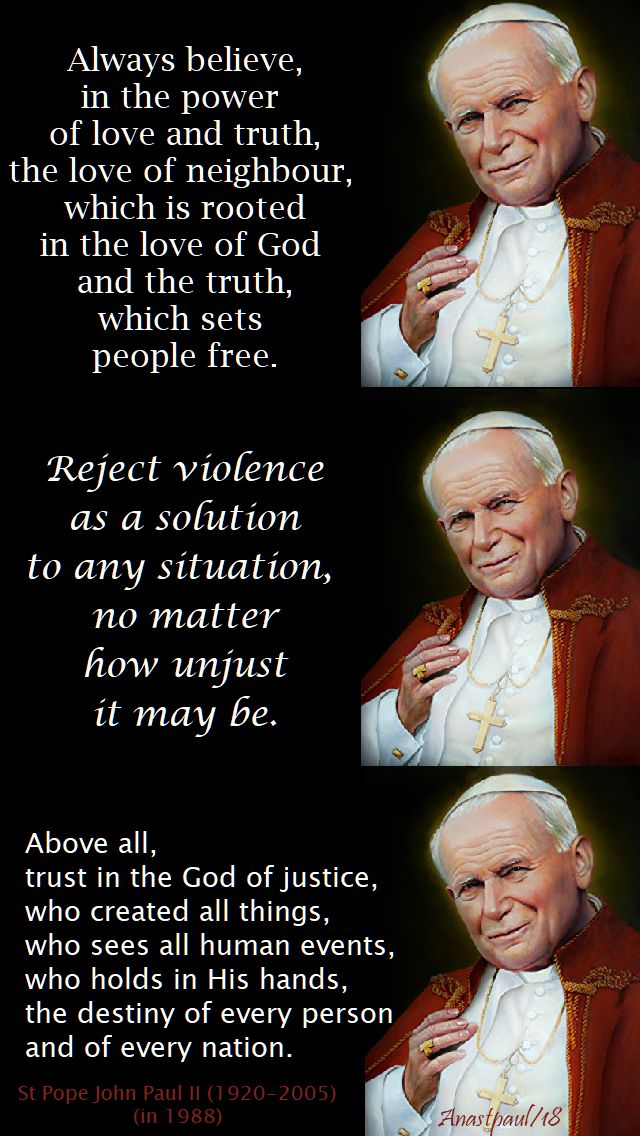
Always believe in the power of love and truth, the love of neighbour which is rooted in the love of God and the truth which sets people free.    Reject violence as a solution to any situation, no matter how unjust it may be.   Put your trust in the methods that respect the rights of all and that are fully in accordance with the Gospel.   Above all, trust in the God of justice, who created all things, who sees all human events, who holds in his hands the destiny of every person and of every nation.

8. Dear brothers and sisters:  I rejoice with you on this solemn day of celebration.   It is a day of great importance in your pilgrimage of faith and hope, a day of jubilation on the journey to union with Christ which the People of God in this land are making.   Let us give thanks to the most holy God for this day.   Let us sing, together with Mary:  “My soul proclaims the greatness of the Lord and my spirit exults in God my Saviour” (Luc. 1, 46-47).

Together with Mary and with Blessed Joseph Gérard, let all the people of Lesotho exult in God our Saviour.   Yes, all of you: young and old, children and parents, workers and teachers, priests and religious, the handicapped and the sick.   Let us all praise the Lord with grateful voices, for the Almighty has done great things for us.   Holy is his name!

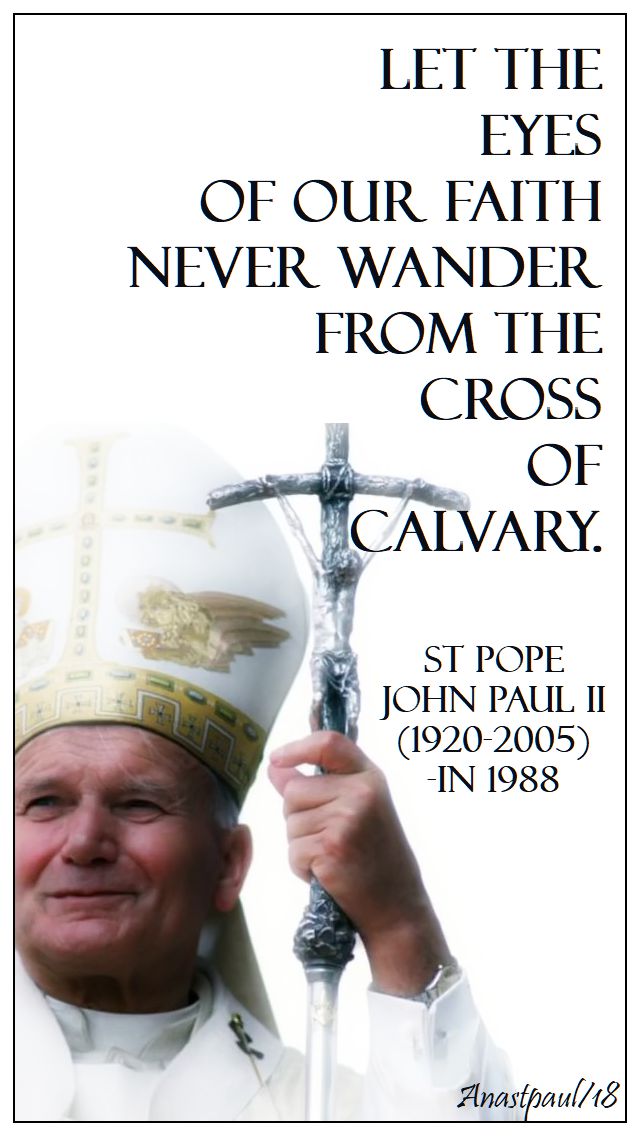
9. Yet, at the same time, let the eyes of our faith never wander from the Cross of Calvary.

We read in the Gospel: “Seeing his mother and the disciple he loved standing near her, Jesus said to his mother, ‘Woman, this is your son’. Then to the disciple he said, ‘This is your mother’. And from that moment the disciple made a place for her in his home” (Io. 19, 26-27).

My fervent wish for all of you, dear brothers and sisters, is that the word of John’s Gospel may be fulfilled in you.

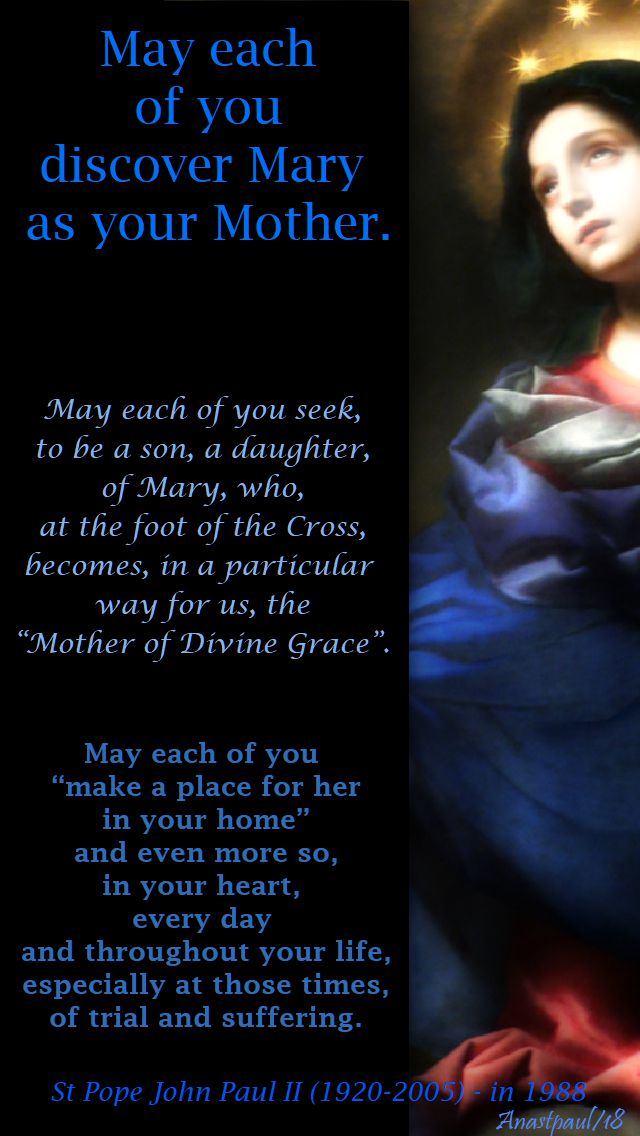
May each of you discover Mary as your Mother.

May each of you seek to be a son, a daughter, of Mary, who at the foot of the Cross becomes in a particular way for us the “Mother of Divine Grace”.

May each of you “make a place for her in your home”, and even more so in your heart, every day and throughout your life, especially at those times of trial and suffering.

May the memory of this blessed day be inscribed for ever in the history of this city and this country, in the history of the whole continent of Africa.

Blessed Joseph Gérard, pray for us, lead us to Jesus through the Immaculate Heart of Mary, our Mother in faith. Amenbl joseph gerard - pray for us - 29 may 2018

Act of entrustment to Mary

O Mary, Mother of our Redeemer, Mother of the Church, at the end of this celebration of the Eucharist, we turn to you with confidence and love.   On this feast of Our Lady of Sorrows, we remember your own sharing in the suffering and death of Christ your Son.

O Mother of Sorrows, it was precisely at the hour of your Son’s death that you became by a new title our Mother, Mother of all the faithful.   For your loving Son said to you, as you stood at the foot of the Cross, “Woman, this is your son!”.

From that moment onwards and throughout the course of human history, you are the Mother not only of the beloved disciple but of every member of the Church.   You are our gentle Mother.   You care for us all as your dear children.   In fact, you see in each of us the face of your beloved Jesus and you intercede with Him on our behalf, for our good and the Redemption of the world.

Today, dearest Mother, I entrust to you all those present at this Holy Sacrifice of the Mass, and all the people living in this mountain Kingdom.   I entrust them to you with complete confidence and love.

O Mother of Sorrows, I bring before you the sick and the elderly and all who are burdened by sin.   I know they will find in you a safe harbour and a consoling help.   You will bring them tenderly but surely, to the foot of the Triumphant Cross.

O Immaculate Heart of Mary, so filled with love for your Son, I entrust to you the youth of Lesotho in whose eyes the future shines.   Protect them from the evil one.   Enable them to see that only your Son is “the Way and the Truth and the Life”, only in Him is there a future full of hope and a life truly founded on love.

O Blessed Virgin of Nazareth, I place before you the families of the Basotho people, all married couples who with their children are called to form a lifelong communion of love.   Keep them pure and chaste, ever faithful to one another, always faithful, as you were, to the life-giving word of God.

O Mary, Model of holiness and first disciple of your Son, I entrust to your gentle care the Church in Lesotho.   As it rejoices in a century and a quarter of evangelisation and in the beatification of Father Joseph Gérard, lead your sons and daughters in the way of constant conversion, along the path of spiritual renewal.   Pray for this local Church, so dear to the Successor of Peter, so dear to your own Immaculate Heart.   Help our brothers and sisters to come to believe with conviction what you believed at the foot of the Cross. that human death is not the final word, for the final word belongs to God, the God of love and mercy, the God who has saved the world through the victorious Cross of your Son.   Amen.

Immaculate Heart of Mary, Pray for us!

O Mother of Sorrows, Pray for us!

 

Posted in CATHOLIC DEVOTIONS of the Month, CONSECRATION Prayers, MARIAN DEVOTIONS, MARIAN PRAYERS, MARIAN QUOTES, MORNING Prayers, PAPAL PRAYERS, PAPAL SERMONS, PRAYERS of the SAINTS, QUOTES of the SAINTS, QUOTES on CHARITY, QUOTES on DIVINE PROVIDENCE, QUOTES on EVANGELISATION, QUOTES on FAITH, QUOTES on JOY, QUOTES on LOVE, QUOTES on PEACE, QUOTES on PERSECUTION, QUOTES on SANCTITY, QUOTES on SUFFERING, QUOTES on TRUST and complete CONFIDENCE in GOD, QUOTES on TRUTH, QUOTES on VIOLENCE, The BLESSED VIRGIN MARY, The HOLY CROSS, VATICAN Resources

Quote/s of the Day – and Marian too – 29 May “Mary’s Month!” – The Memorial of Blessed Joseph Gerard O.M.I. (1831-1914)

Quote/s of the Day – and Marian too – 29 May “Mary’s Month!” – The Memorial of Blessed Joseph Gerard O.M.I. (1831-1914)

“Always believe, in the power of love and truth,
the love of neighbour, which is rooted in the love of God
and the truth, which sets people free.”

“Reject violence as a solution to any situation,
no matter how unjust it may be.”

“Above all, trust in the God of justice,
who created all things,
who sees all human events,
who holds in His hands,
the destiny of every person and of every nation.”always believe in the power of love - above all trust in the god of justice - reject violence - st pope john paul - 29 may 2018

“Let the eyes of our faith
never wander
from the Cross of Calvary.”let the eyes of our faith - st pope john paul - 29 may 2018- no 2

“May each of you, discover Mary, as your Mother.”

“May each of you, seek to be a son, a daughter, of Mary,
who at the foot of the Cross,
becomes in a particular way for us,
the “Mother of Divine Grace”.”

May each of you, “make a place for her in your home”
and even more so in your heart,
every day and throughout your life,
especially at those times, of trial and suffering.”may each of you (on mary) - st pope john paul - 29 may 2018

Maseru Race Course (Lesotho)
Thursday, 15 September 1988

St Pope John Paul II (1920-2005)

Taken from the Beatification Homily of St Pope John Paul II
(See today’s thought for the Day)

Posted in DOGMA, FEASTS and SOLEMNITIES, MORNING Prayers, PAPAL SERMONS, QUOTES - J R R Tolkien and MORE, The MOST HOLY & BLESSED TRINITY, The WORD

Second Thoughts for the Day – 27 May – The Solemnity of the Most Holy Trinity

Second Thoughts for the Day – 27 May – The Solemnity of the Most Holy Trinity

Adopted into the Family of God

“In you all the families of the earth shall be blessed” (Gen 12:3)
“For all, who are led by the Spirit of God, are children of God.” (Romans 8:14)

…”How would God be revealed to the other families of the earth?   How would the other families of the earth enter the Covenant and become heirs to the promises of God.
The language of families here is significant, for it is through the revelation of God as Trinity, the Divine Family, that all other families of the earth would be invited into the Covenant family.
For the reality of the Trinity did not emerge for the earliest Christians in the context of complex philosophical discussions but in the experience of God as Father, Son and Holy Spirit.

As Pope Benedict XVI stated in 2006.
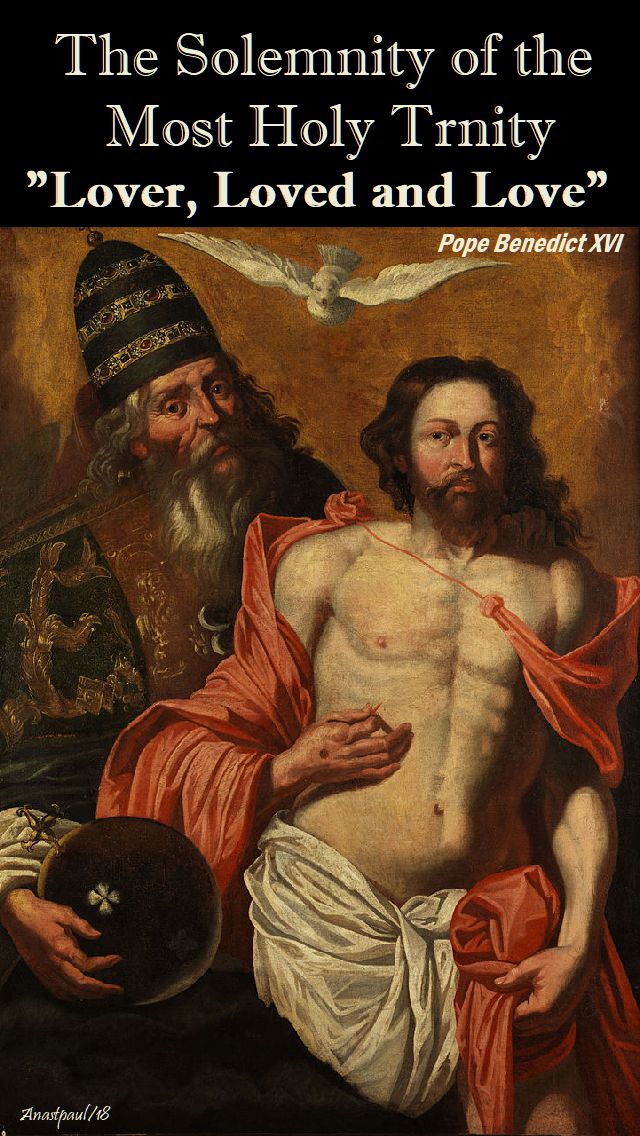
“the intimacy of God Himself, discovering that He is not infinite solitude but communion of light and love, life given and received in an eternal dialogue between the Father and the Son in the Holy Spirit – ‘Lover, Loved and Love,’ revealed the relational nature of God, through the guidance of the Holy Spirit and by the incarnation of Jesus Christ.”    (Angelus, St Peter’s Square, 11 June 2006).

And it was by means of the revelation of God as Father, Son and Holy Spirit, that the early Christians came to know themselves as children of God, adopted into the family and Covenant of God.   The Spirit, Paul tells us, empowers us to understand, that we too are children of God, for through the Spirit, we are able to cry “Abba, Father!”   This Spirit-infused call to God as Abba, is an explicit recognition of our lineage, we belong in this family, for “it is that very Spirit bearing witness with our spirit that we are children of God.”

But the pathway to entering the family as heirs, children destined to share in the gifts and promises of the Father, in the Kingdom of God, was blazed for us, by the obedience of the Son.   As Paul says in Galatians 3:29, “If you belong to Christ, then you are Abraham’s offspring, heirs according to the promise.”   Christ through His suffering and death for us, has made us “joint heirs with Christ,” worthy of adoption into God’s family. We belong to the family of God, because we belong to the Son, who has made us “joint heirs.”   Through the true heir, we are simply joined with our Covenantal and Divine Family.

We are welcomed into God’s family as joint heirs because of the love of the Trinity for us. The Trinity models the nature of the family by allowing us to experience the source of all love.   It is because of the Trinitarian model of love for us and our experience of that love, that Jesus instructs us to go out and make the family bigger.   We belong to the family of God but so do those who have not yet come home.   We have learned something now about the nature of God and the extent of God’s family and the call is the same to all – come home and be loved!…John W Martens “The Word on the Street Year B”

John Martens is Professor of Theology at St Thomas University and Director of the MA in Theology at St Paul’s Seminary School of Divinity, Minnesota.lover, loved and love - pope benedict - holy trinity sunday - 27 may 2018

Posted in FEASTS and SOLEMNITIES, MORNING Prayers, PAPAL SERMONS, PRACTISING CATHOLIC, QUOTES of the SAINTS, The MOST HOLY & BLESSED TRINITY, The WORD

Thought for the Day – 27 May – The Solemnity of the Most Holy Trinity

Thought for the Day – 27 May – The Solemnity of the Most Holy Trinity

Brothers and sisters, rejoice.
Mend your ways, encourage one another,
agree with one another, live in peace,
and the God of love and peace will be with you.
Greet one another with a holy kiss.
All the holy ones greet you.
The grace of the Lord Jesus Christ
and the love of God
and the fellowship of the Holy Spirit be with all of you…2 Corinthians 13:11-13

“The one, holy, catholic and apostolic Church is the People of God,
the Body of Christ
and the Temple of the Holy Spirit.
These three biblical images, point to the Trinitarian dimension of the Church.
In this dimension, are found, all disciples of Christ,
who are called, to live it, ever more deeply and in an ever more intense communion.”

St Pope John Paul II (1920-2005)

the one holy catholic and apostolic church - st john paul - 27 may 2018 - trinity sunday

Posted in CATHOLIC DEVOTIONS of the Month, MARIAN DEVOTIONS, MARIAN PRAYERS, MARIAN QUOTES, MARIAN TITLES, MARY, MATER ECCLESIAE, MORNING Prayers, PAPAL MESSAGES, PAPAL SERMONS, QUOTES of the SAINTS, The BLESSED VIRGIN MARY

Marian thought for the Day – 21 May 2018 “Mary’s Month!” – The First Memorial of Mary, Mother of the Church

Marian thought for the Day – 21 May 2018 “Mary’s Month!” – The First Memorial of Mary, Mother of the Church

“Mary Mother of the Church, Mater Ecclesiae

our new Universal Memorial today!mary-mother-of-the-church-21 nov 2017

Blessed Pope Paul VI explicitly proclaimed Mary Mother of the Church and asked that she be honoured and invoked with this title by all the Christian people.

The title “Mother of the Church” thus reflects the deep conviction of the Christian faithful, who see in Mary not only the mother of the person of Christ but also of the faithful.   She who is recognised as mother of salvation, life and grace, mother of the saved and mother of the living, is rightly proclaimed Mother of the Church.

Pope Paul VI would have liked the Second Vatican Council itself to have proclaimed “Mary Mother of the Church, that is, of the whole People of God, of the faithful and their Pastors”.   He did so himself in his speech at the end of the Council’s third session (21 November 1964), also asking that “henceforth the Blessed Virgin be honoured and invoked with this title by all the Christian people” (AAS 1964, 37).

In this way, my venerable Predecessor explicitly enunciated the doctrine contained in chapter eight of Lumen gentium, hoping that the title of Mary, Mother of the Church, would have an ever more important place in the liturgy and piety of the Christian people.” – St Pope John Paul II (1920-2005)

“We need to meditate frequently on the fact that the Church is a deep, great mystery, so that we never forget it.   We cannot fully understand the Church on this earth.   If men, using only their reason, were to analyse it, they would see only a group of people who abide by certain precepts and think in a similar way.   But that would not be the Church.

In the Church we Catholics find our faith, our norms of conduct, our prayer, our sense of fraternity.   Through it we are united with all our brothers and sisters who have already left this life and are being cleansed in Purgatory—the Church suffering—and with those who already enjoy the beatific vision and love forever the thrice holy God—the Church triumphant.   The Church is in our midst and at the same time transcends history.   It was born under the mantle of our Lady and continues to praise her on earth and in heaven as its Mother (“The Supernatural Aim of the Church,” 28 May 1972).

If we become identified with Mary and imitate her virtues, we will be able to bring Christ to life, through grace, in the souls of many who will in turn become identified with him through the action of the Holy Spirit.   If we imitate Mary, we will share in some way in her spiritual motherhood.   And all this silently, like Our Lady; without being noticed, almost without words, through the true and genuine witness of our lives as Christians, and the generosity of ceaselessly repeating her fiat, which we renew as an intimate link between ourselves and God.” – St Josemaria Escrivá (1902-1975) – Friends of God, 281-283

“….We have spoken about Mary, about Jesus. What about us?   We who are the Church? What kind of love do we bring to others?   Is it the love of Jesus that shares, that forgives, that accompanies, or is it a watered-down love, like wine so diluted that it seems like water?   Is it a strong love, or a love so weak that it follows the emotions, that it seeks a return, an interested love?   Another question: is self-interested love pleasing to Jesus? No, it is not because love should be freely given, like His is.   What are the relationships like in our parishes, in our communities?   Do we treat each other like brothers and sisters?   Or do we judge one another, do we speak evil of one another, do we just tend our own vegetable patch? Or do we care for one another?   These are the questions of charity!

And briefly, one last aspect:  Mary as the model of union with Christ.
The life of the Holy Virgin was the life of a woman of her people:  Mary prayed, she worked, she went to the synagogue…  But every action was carried out in perfect union with Jesus.   This union finds its culmination on Calvary, here Mary is united to the Son in the martyrdom of her heart and in the offering of his life to the Father for the salvation of humanity.   Our Lady shared in the pain of the Son and accepted with Him the will of the Father, in that obedience that bears fruit, that grants the true victory over evil and death.

The reality Mary teaches us, is very beautiful:  to always be united with Jesus.   We can ask ourselves:  do we remember Jesus only when something goes wrong and we are in need, or is ours a constant relation, a deep friendship, even when it means following him on the way of the Cross?

Let us ask the Lord to grant us His grace, His strength, so that the model of Mary, Mother of the Church, may be reflected in our lives and in the life of every ecclesial community. So be it!”...Pope Francis 23 October 2013

Mary, Mater Ecclesiae, Mother of the Church

Pray for the Universal Church, pray for us all!mary mater ecclesiae - mother of the church - pray for us - 21 may 2018

Posted in MORNING Prayers, PAPAL SERMONS, PRACTISING CATHOLIC, QUOTES - J R R Tolkien and MORE, SAINT of the DAY, The APOSTLES & EVANGELISTS, The WORD

Thought for the Day – 14 May – Monday of the Seventh Week of Eastertide – Feast of St Matthias, Apostle

Thought for the Day – 14 May – Monday of the Seventh Week of Eastertide – Feast of St Matthias, Apostle – Today’s Readings: Acts of the Apostles 1:15-17.20-26, Holy Gospel of Jesus Christ according to Saint John 15:9-17

Pope Benedict XVI, (Holy Father from 2005 to 2013)
Homily of the 14 May 2010 (Apostolic journey to Portugal – trans. © Libreria Editrice Vaticana)

Be witnesses!

“One of these men, then […] must become a witness with us to his resurrection” (Acts 1:20-22).

These were the words of Peter… My brothers and sisters, you need to become witnesses… to the resurrection of Jesus.   In effect, if you do not become His witnesses in your daily lives, who will do so in your place?   Christians are, in the Church and with the Church, missionaries of Christ sent into the world.   This is the indispensable mission of every ecclesial community, to receive from God the Father and to offer to the world the Risen Christ, so that every situation of weakness and of death may be transformed, through the Holy Spirit, into an opportunity for growth and life.

We impose nothing, yet we propose ceaselessly, as Peter recommends in one of his Letters:  “In your hearts, reverence Christ as Lord.   Always be prepared to make a defence to anyone who calls you to account for the hope that is in you” (1 Pet 3:15).   And everyone, in the end, asks this of us, even those who seem not to.   From personal and communal experience, we know well that it is Jesus whom everyone awaits.   In fact, the most profound expectations of the world and the great certainties of the Gospel meet in the ineluctable mission which is ours, for “without God man neither knows which way to go, nor even understands who he is.”   In the face of the enormous problems surrounding the development of peoples, which almost make us yield to discouragement, we find solace in the sayings of our Lord Jesus Christ, who teaches us:  ‘Apart from me you can do nothing’ (Jn 15:5) and who encourages us:  ‘I am with you always, to the close of the age’ (Mt 28:20)” (cf.Caritas in Veritate, 78)…

Yes!  We are called to serve the humanity of our own time, trusting in Jesus alone, letting ourselves be enlightened by His word:  “You did not choose me but I chose you and appointed you that you should go and bear fruit and that your fruit should abide” (Jn 15:16).   How much time we have lost, how much work has been set back, on account of our lack of attention to this point!   Everything is to be defined starting with Christ, as far as the origins and effectiveness of mission is concerned, we receive mission always from Christ, who has made known to us what He has heard from His Father and we are appointed to mission, through the Spirit, in the Church.   Like the Church herself, which is the work of Christ and His Spirit, it is a question of renewing the face of the earth, starting from God, God always and alone!you did not choose me - how much time has been lost - pope benedict - 14 may 2018
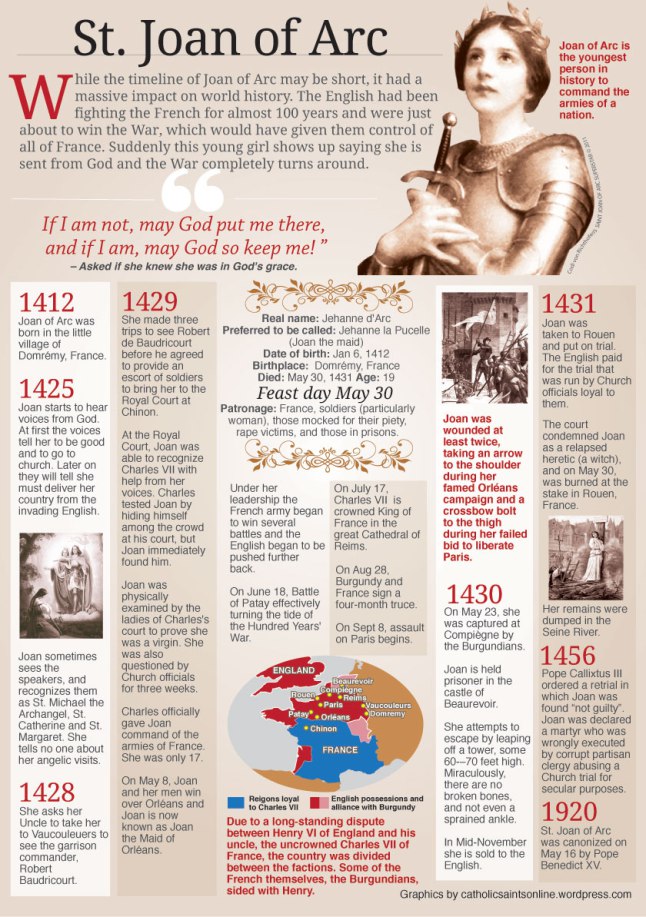
So we say, St Matthias, today we call on you for your intercession!st-matthias-pray-for-us-14 may 2018-2

Posted in PAPAL SERMONS, SAINT of the DAY, VATICAN Resources

Saint of the Day – 30 April – St Joseph Benedict Cottolengo (1786-1842) – An Intense Day of Love

Saint of the Day – 30 April – St Joseph Benedict Cottolengo (1786-1842) Priest, Founder, Confessor, Apostle of Charity.   Born as Giuseppe Benedetto Cottolengo on 3 May 1786 at Bra, Cuneo, Piedmont region, Italy and died on 30 April 1842 of typhus at Chieri, Turin, Italy.  He was buried in the Mary altar in the main chapel in Valdocco, Italy.   St Joseph was Canonised on 19 March 1934 by Pope Pius XI.   Known as “the labourer of Divine Providence”.

Header - st joseph benedetto cottolengo

“Joseph Benedict Cottolengo was born in Bra, a small town in the Province of Cuneo, on 3 May 1786.   The eldest of 12, six of whom died in infancy, he showed great sensitivity to the poor from childhood.   He embraced the way of the priesthood, setting an example to two of his brothers.   The years of his youth coincided with the Napoleonic period and the consequent hardships in both the religious and social contexts.   Cottolengo became a good priest much sought after by penitents and, in the Turin of that time, a preacher of spiritual exercises and conferences for university students who always met with noteworthy success.   At the age of 32, he was appointed canon of the Santissima Trinità, a congregation of priests whose task was to officiate in the Corpus Domini Church and to ensure the decorum of the city’s religious ceremonies but he felt uneasy in this situation.   God was preparing him for a special mission and, precisely with an unexpected and decisive encounter, made him realise what was to be his future destiny in the exercise of the ministry.

The Lord always sets signs on our path to guide us according to his will to our own true good.   This also happened to Cottolengo, dramatically, on Sunday morning, 2 September 1827.   The diligence from Milan arrived in Turin, more crowded than ever.   Crammed into it was a whole French family.   The mother, with five children, was at an advanced stage of pregnancy and had a high temperature.   After traipsing to various hospitals, this family found lodgings in a public dormitory but the woman’s situation was serious and some people went in search of a priest.   By a mysterious design they came across Cottolengo and it was precisely he who, heavy hearted, accompanied this young mother to her death, amid the distress of the entire family.   Having carried out this painful task, with deep anguish he went to the Blessed Sacrament and knelt in prayer:  “My God, why?   Why did you want me to be a witness?   What do you want of me?  Something must be done!”.   He got to his feet and had all the bells rung and the candles lit and, gathering in the church those who were curious, told them:  “The grace has been granted!   The grace has been granted!”.   From that time Cottolengo was transformed: all his skills, especially his financial and organisational ability, were used to give life to projects in support of the neediest.

In his undertaking he was able to involve dozens and dozens of collaborators and volunteers.   Moving towards the outskirts of Turin to expand his work, he created a sort of village, in which he assigned a meaningful name to every building he managed to build:  “House of Faith”, “House of Hope”, “House of Charity”.   He adopted a “familystyle”, establishing true and proper communities of people with volunteers, men and women religious and lay people, who joined forces in order to face and overcome the difficulties that arose.   Everyone in that Little House of Divine Providence had a precise task:  work, prayer, service, teaching or administration.   The healthy and the sick shared the same daily burden.   With time religious life could be specifically planned in accordance with particular needs and requirements.

 430piccolacasa

Cottolengo even thought of setting up his own seminary to provide specific formation for the priests of his Work.   He was always ready to follow and serve Divine Providence and never questioned it.   He would say:  “I am a good for nothing and I don’t even know what to make of myself.   But Divine Providence certainly knows what it wants.   It is only up to me to support it. Let us go ahead in Domino”.   To his poor and the neediest, he would always call himself “the labourer of Divine Providence”.

St Joseph Benedict Cottolengo 7st joseph benedetto cottolengo.4st joseph benedetto cottolengo.3

He also chose to found beside the small citadels five monasteries of contemplative sisters and one of hermits and considered them among his most important achievements.   They were a sort of “heart” which was to beat for the entire Work.   He died on 30 April 1842, with these words on his lips:  “Misericordia, Domine, Misericordia, Domine.   Good and Holy Providence… Blessed Virgin, it is now up to you”.   The whole of his life, as a newspaper of the time said, was “an intense day of love”.”….Pope Benedict XVI General Audience, Saint Peter’s Square, Wednesday, 28 April 2010.

Today Cottolengo Fathers, Sisters and Brothers still work together in activities focused on communicating God’s love for the poorest. They are spread out all over the world: Ecuador, India, Italy, Kenya, Switzerland, Tanzania and the United States.   Don Cottolengo contracted typhoid while assisting his patients and died in Chieri, Piedmont on 30 April 1842.   Cottolengo was beatified by Pope Benedict XV in 1917 and was Canonised by Pope Pius XI in 1934.
Joseph Benedict Cottolengo was enlisted among the saints of charity by Pope Benedict XVI in his encyclical Deus caritas est.   The parish of Saint Joseph Benedict Cottolengo is located in Grosseto, Italy.   There is a Via San Giuseppe Benedetto Cottolengo in Pisa.

StJosephCottolengo30-4a

The Sisters of St. Joseph Cottolengo pray before the blessed sacrament inside the Chiesa Piccola.jpg
The Sisters of St Joseph Cottolengo pray before the blessed sacrament inside the Chiesa Piccola
cottolengo sisters
Cottolengo Sisters at Prayer
Posted in CATECHESIS, EASTER, FEASTS and SOLEMNITIES, MORNING Prayers, ON the SAINTS, PAPAL MESSAGES, PAPAL SERMONS, QUOTES - J R R Tolkien and MORE, QUOTES on FAITH, QUOTES on LOVE, QUOTES on the CHURCH, SAINT of the DAY, The WORD

Thought for the Day – 25 April – Wednesday of the Fourth Week of Easter and the Feast of St Mark the Evangelist

Thought for the Day – 25 April – Wednesday of the Fourth Week of Easter and the Feast of St Mark the Evangelist

Today we celebrate St Mark, the Evangelist, the first Gospel writer and the friend of Sts Peter and Paul, the cousin of St Barnabas and our Father in faith – our friend too, a chosen member of the Catholic Church who has gone before to show us the way.   Mark knew there would be difficulties for believers in every age, for the persecution of the early Church was the beginning “of the labour pains” (13:8), since “the Gospel must first be preached to all nations” (13:10).   He has given us a moving story of how God works in mysterious ways and shown us in the actions of Jesus how to be patient in our faith even in the most troubling circumstances, for “he is going before you to Galilee; there you will see him as he told you” (16:7).   This narrative could only have been created by someone who himself knew suffering, the pain of unfulfilled hopes and the sorrow of untimely death.   His faith made him write about it.   His hope makes it so convincing!   Let us listen to Pope Benedict on being a Catholic today, now, in the world we live in!

Chosen:   I think it is worth reflecting on this word.   We are chosen.   God has always known us, even before our birth, before our conception, God wanted me as a Christian, as a Catholic, He wanted me as a priest.   God thought of me, He sought me among millions, among a great many, He saw me and He chose me.   It was not for my merits, which were non-existent but out of His goodness;  He wanted me to be a messenger of His choice, which is also always a mission, above all a mission and a responsibility for others.   Chosen: we must be grateful and joyful for this event.   God thought of me, he chose me as a Catholic, me, as a messenger of His Gospel, as a priest.   In my opinion it is worth reflecting several times on this and coming back to this fact of His choice;  He chose me, He wanted me, now I am responding.

Perhaps today we are tempted to say:  we do not want to rejoice at having been chosen, for this would be triumphalism.   It would be triumphalism to think that God had chosen me because I was so important.   This would really be erroneous triumphalism. However, being glad because God wanted me is not triumphalism.   Rather, it is gratitude and I think we should relearn this joy:  God wanted me to be born in this way, into a Catholic family, he wanted me to know Jesus from the first.   What a gift to be wanted by God so that I could know His face, so that I could know Jesus Christ, the human face of God, the human history of God in this world!   Being joyful because He has chosen me to be a Catholic, to be in this Church of His, where subsistit Ecclesia unica;  we should rejoice because God has given me this grace, this beauty of knowing the fullness of God’s truth, the joy of his love.

Chosen:  a word of privilege and at the same time of humility.   However “chosen” — as I said — is accompanied by the word “parepidemois”, exiles, foreigners.   As Christians we are dispersed and we are foreigners:  we see that Christians are the most persecuted group in the world today, because it does not conform, because it is a stimulus, because it opposes the tendencies to selfishness, to materialism and to all these things.

Christians are certainly not only foreigners; we are also Christian nations, we are proud of having contributed to the formation of culture, there is a healthy patriotism, a healthy joy of belonging to a nation that has a great history of culture and of faith.   Yet, as Christians, we are always also foreigners — the destiny of Abraham, described in the Letter to the Hebrews.   As Christians we are, even today, also always foreigners. In the work place Christians are a minority, they find themselves in an extraneous situation;  it is surprising that a person today can still believe and live like this.   This is also part of our life:  it is a form of being with the Crucified Christ, this being foreigners, not living in the way that everyone else lives, but living — or at least seeking to live — in accordance with His Word, very differently from what everyone says.   And it is precisely this that is characteristic of Christians.   They all say:  “But everyone does this, why don’t I?”   No, I don’t, because I want to live in accordance with God.   St Augustine once said:  “Christians are those who do not have their roots below, like tree, but have their roots above and they do not live this gravity in the natural downwards gravitation”.   Let us pray the Lord that he help us to accept this mission of living as exiles, as a minority, in a certain sense, of living as foreigners and yet being responsible for others and, in this way, reinforcing the goodness in our world.

This is faith:  touching Christ with the hand of faith, with our heart and thus entering into the power of His life, into the healing power of the Lord.   And let us pray the Lord, that we may touch Him more and more, so as to be healed.   Let us pray that He will not let us fall, that He too may take us by the hand and thus preserve us for true life….

LECTIO DIVINA” OF THE HOLY FATHER BENEDICT XVI

Chapel of the Seminary
Friday
, 8 February 2013

St Mark, Pray for us!st-mark-pray-for-us-25 april 2017


Posted in EASTER, MORNING Prayers, PAPAL SERMONS, The HOLY EUCHARIST / The HOLY MASS, The PASSION, The RESURRECTION, The WORD

One Minute Reflection – 15 April – The Third Sunday of Easter Year B

One Minute Reflection – 15 April – The Third Sunday of Easter Year B

Then he opened their minds to understand the scriptures and said to them, “Thus it is written, that the Christ should suffer and on the third day rise from the dead and that repentance and forgiveness of sins should be preached in his name to all nations, beginning from Jerusalem.”... Luke 24:45-48o lord let the light of your countenance shine upon us - pope benedict - third sun easter B - 15 april 2018

REFLECTION – “This very experience of repentance and forgiveness is relived in every community in the Eucharistic celebration, especially on Sundays.   The Eucharist, the privileged place in which the Church recognises “the Author of life” (Acts 3: 15) is “the breaking of the bread”, as it is called in the Acts of the Apostles.   In it, through faith, we enter into communion with Christ, who is “the priest, the altar and the lamb of sacrifice” (see Preface for Easter, 5) and is among us.   Let us gather round Him to cherish the memory of His words and of the events contained in Scripture;  let us relive His Passion, death and Resurrection.   In celebrating the Eucharist, we communicate with Christ, the victim of expiation and from Him we draw forgiveness and life.   What would our lives as Christians be without the Eucharist?   The Eucharist is the perpetual, living inheritance which the Lord has bequeathed to us in the Sacrament of His Body and His Blood and which we must constantly rethink and deepen so that, as venerable Pope Paul VI said, it may “impress its inexhaustible effectiveness on all the days of our earthly life” (Insegnamenti, V [1967], p. 779).”…Pope Benedict XVIin it, through faith, - pope benedict - 15 april 2018

PRAYER – Lord God, grant Your people constant joy in the renewed vigour of their souls. Grant them sorrow for their sins and gratitude for the suffering of Your Son.   Grant them forgiveness and life in the Holy Eucharist, through which we meet Him, who saved us. Grant, we pray, that we may grow in our love for the saving banquet to which we are called so that we may one day rejoice eternally, with You, in union with our Lord, Jesus Christ and the Holy Spirit, one God, forever amen.   “O Lord, let the light of your countenance shine upon us”!

Posted in EASTER, MORNING Prayers, PAPAL SERMONS, QUOTES - J R R Tolkien and MORE

Thought for the Day – 12 April – Thursday of the Second Week of Eastertide

Thought for the Day – 12 April – Thursday of the Second Week of Eastertide

The Resurrection of the Lord is Our Hope

Dear Brothers and Sisters in Rome and throughout the world,

From the depths of my heart, I wish all of you a blessed Easter.   To quote Saint Augustine, “Resurrectio Domini, spes nostra – the resurrection of the Lord is our hope” (Sermon 261:1).   With these words, the great Bishop explained to the faithful that Jesus rose again so that we, though destined to die, should not despair, worrying that with death life is completely finished;  Christ is risen to give us hope (cf. ibid.).

Indeed, one of the questions that most preoccupies men and women is this:  what is there after death?   To this mystery today´s solemnity allows us to respond that death does not have the last word because Life will be victorious at the end.   This certainty of ours is based not on simple human reasoning but on a historical fact of faith:  Jesus Christ, crucified and buried, is risen with His glorified body.   Jesus is risen so that we too, believing in Him, may have eternal life.   This proclamation is at the heart of the Gospel message.   As Saint Paul vigorously declares:  “If Christ has not been raised, our preaching is in vain and your faith is in vain.”   He goes on to say:  “If for this life only we have hoped in Christ, we are of all men most to be pitied” (1 Cor 15:14,19).   Ever since the dawn of Easter a new Spring of hope has filled the world; from that day forward our resurrection has begun because Easter does not simply signal a moment in history but the beginning of a new condition:   Jesus is risen not because His memory remains alive in the hearts of His disciples but because He Himself lives in us and in Him we can already savour the joy of eternal life.

The resurrection, then, is not a theory but a historical reality revealed by the man Jesus Christ by means of His “Passover”, His “passage”, that has opened a “new way” between heaven and earth (cf. Heb 10:20).   It is neither a myth nor a dream, it is not a vision or a utopia, it is not a fairy tale but it is a singular and unrepeatable event:  Jesus of Nazareth, son of Mary, who at dusk on Friday was taken down from the Cross and buried, has victoriously left the tomb.   In fact, at dawn on the first day after the Sabbath, Peter and John found the tomb empty.   Mary Magdalene and the other women encountered the risen Jesus.   On the way to Emmaus the two disciples recognised Him at the breaking of the bread.   The Risen One appeared to the Apostles that evening in the Upper Room and then to many other disciples in Galilee.

If it is true that death no longer has power over man and over the world, there still remain very many, in fact too many signs of its former dominion.   Even if through Easter, Christ has destroyed the root of evil, He still wants the assistance of men and women in every time and place who help Him to affirm His victory using His own weapons:  the weapons of justice and truth, mercy, forgiveness and love.

Pope Benedict XVI – 13 April 2009 (Excerpt)even if through easter - pope benedict - 12 april 2018


Posted in DOCTORS of the Church, EASTER, FATHERS of the Church, MORNING Prayers, PAPAL MESSAGES, PAPAL SERMONS, QUOTES of the SAINTS, The RESURRECTION, The WORD

Thought for the Day – 5 April – Easter Thursday Fifth Day in the Easter Octave

Thought for the Day – 5 April – Easter Thursday Fifth Day in the Easter Octave

Christ’s Resurrection – Our Sure Hope
St Cyril of Alexandria (376-444) Father & Doctor of the Church

“And he said to them, “Why are you troubled and why do questionings rise in your hearts? See my hands and my feet, that it is I myself; handle me and see; for a spirit has not flesh and bones as you see that I have.” And when he had said this he showed them his hands and his feet. And while they still disbelieved for joy, and wondered, he said to them, “Have you anything here to eat?” They gave him a piece of broiled fish and he took it and ate before them..”..Luke 24:36-43

“Those who have a sure hope, guaranteed by the Spirit, that they will rise again lay hold of what lies in the future as though it were already present.

They say: “Outward appearances will no longer be our standard in judging other men. Our lives are all controlled by the Spirit now and are not confined to this physical world that is subject to corruption.   The light of the Only-begotten has shone on us and we have been transformed into the Word, the source of all life.   While sin was still our master, the bonds of death had a firm hold on us but now, that the righteousness of Christ has found a place in our hearts, we have freed ourselves from our former condition of corruptibility”.

This means that none of us lives in the flesh anymore, at least not in so far as living in the flesh means being subject to the weaknesses of the flesh, which include corruptibility.   Once we thought of Christ as being in the flesh but we do not do so any longer, says Saint Paul [2 Corinthians 5:16].   By this he meant that the Word became flesh and dwelt among us;  He suffered death in the flesh in order to give all men life.

It was in this flesh that we knew Him before but we do so no longer.   Even though He remains in the flesh, since He came to life again on the third day and is now with His Father in heaven, we know that He has passed beyond the life of the flesh, for having died once, He will never die again, death has no power over Him any more.   His death was a death to sin, which He died once for all;  His life is life with God [Romans 6:9].

Since Christ has in this way become the source of life for us, we who follow in His footsteps must not think of ourselves as living in the flesh any longer but as having passed beyond it.   Saint Paul’s saying is absolutely true that when anyone is in Christ he becomes a completely different person:  his old life is over and a new life has begun [2 Cor. 5:17].

We have been justified by our faith in Christ and the power of the curse has been broken. Christ’s coming to life again for our sake has put an end to the sovereignty of death.   We have come to know the true God and to worship Him in spirit and in truth, through the Son, our mediator, who sends down upon the world the Father’s blessings.

And so Saint Paul shows deep insight when He says:  This is all God’s doing:  it is He who has reconciled us to Himself through Christ.   For the mystery of the incarnation and the renewal it accomplished could not have taken place without the Father’s will.   Through Christ we have gained access to the Father, for as Christ himself says, no one comes to the Father except through Him.   This is all God’s doing, then.   It is He who has reconciled us to Himself through Christ and who has given us, the ministry of reconciliation.”those who have sure hope - st cyril of alexandria - easter thursday - 5 april 2018

“The One who from nothingness had called the world into existence, only He could break the seals of the tomb, only He could become the source of New Life for us, who are subject to the universal law of death.   “Who will roll away the stone for us from the door of the tomb?” (Mk 16:3), the women were asking one another, when very early they were going to the tomb where the Lord had been laid.   To this question, asked by the people of every age, of every country, culture and continent, the Bishop of Rome replies, this year too, with the message “Urbi et Orbi”:

“Scimus Christum surrexisse a mortuis vere…”   Yes, we know for certain that Christ is truly risen from the dead.   You, victorious King, have mercy on us.   Amen! Alleluia!”

St Pope John Paul – 10 April 1996

yes we know for certain that christ is truly risen - st john paul - easter thursday - 5 april 2018


Posted in DOCTORS of the Church, EASTER, FATHERS of the Church, FEASTS and SOLEMNITIES, MORNING Prayers, PAPAL SERMONS, QUOTES - J R R Tolkien and MORE, QUOTES of the SAINTS, SPEAKING of ....., The RESURRECTION

Quote/s of the Day – 5 April – Easter Thursday Fifth Day in the Easter Octave

Quote/s of the Day – 5 April – Easter Thursday Fifth Day in the Easter Octave

O Death, where is your sting?
O Hell, where is your victory?
Christ is Risen and you are overthrown.
Christ is Risen and the demons are fallen.
Christ is Risen and the Angels rejoice.
Christ is Risen and Life reigns.
Christ is Risen and not one dead remains in the grave.
For Christ, being Risen from the dead,
is become the First Fruits of those who have fallen asleep.
To Him be glory and dominion unto ages of ages.

St John Chrysostom (347-407)
Father & Doctor of the Church

The Lord’s triumph, on the day of the Resurrection, is final.
Where are the soldiers the rulers posted there?
Where are the seals that were fixed to the stone of the tomb?
Where are those who condemned the Master?
Where are those who crucified Jesus?
He is victorious and faced with His victory,
those poor wretches have all taken flight.
Be filled with hope:
Jesus Christ is always victorious.”

St Josemarie Escrivá (1902-1975), The Forge, 660the lord triumph on the day of the resurrection is final - st josemaria - easter thursday 5 april 2018

Posted in EASTER, PAPAL SERMONS, QUOTES of the SAINTS, The BLESSED VIRGIN MARY, The HOLY CROSS, The RESURRECTION

Christós anésti. Jesus Christ is risen! He is truly risen! Easter Sunday – 1 April 2018

Christós anésti.
Jesus Christ is risen! He is truly risen!Christós anésti. -1 april 2018

In the words of Pope Francis in the Urbi et Orbi Message of Easter 2013, “let us accept the grace of Christ’s Resurrection!  Let us be renewed by God’s mercy, let us be loved by Jesus, let us enable the power of His love to transform our lives too and let us become agents of this mercy, channels through which God can water the earth, protect all creation and make justice and peace flourish”.

The tomb is empty.   It is a silent witness to the central event of human history:  the Resurrection of our Lord Jesus Christ.   For almost 2,000 years the empty tomb has borne witness to the victory of Life over death.   With the Apostles and Evangelists, with the Church of every time and place, we too bear witness and proclaim:  “Christ is risen! Raised from the dead he will never die again; death no longer has power over him” (cf. Rom 6:9).gospel-easter-sunday-be-not-affrighted-ye-seek-jesus-of-nazareth-who-was-crucified-he-is-risen-he-is-not-here

“Mors et vita duello conflixere mirando; dux vitae mortuus, regnat vivus” (Latin Easter Sequence Victimae paschali).   The Lord of Life was dead;  now He reigns, victorious over death, the source of everlasting life for all who believe.

Resurrection of Christ – Bartolomé Esteban Murillo

“Dear Brothers and Sisters,

These have been days of intense emotion, a time when our soul has been stirred not only by the memory of what God has done but by His very presence, walking with us once again in the land of Christ’s Birth, Death and Resurrection.   And at every step of this Jubilee Pilgrimage Mary has been with us, lighting our pilgrim path and sharing the joys and sorrows of her sons and daughters.

With Mary, Mater dolorosa, we stand in the shadow of the Cross and weep with her over the affliction of Jerusalem and over the sins of the world.   We stand with her in the silence of Calvary and see the blood and water flowing from the wounded side of her Son.   Realising the terrible consequences of sin, we are moved to repentance for our own sins and for the sins of the Church’s children in every age.   O Mary, conceived without sin, help us on the path to conversion!

With Mary, Stella matutina, we have been touched by the light of the Resurrection.   We rejoice with her that the empty tomb has become the womb of eternal life, where He who rose from the dead now sits at the Father’s right hand.   With her we give endless thanks for the grace of the Holy Spirit whom the risen Lord sent upon the Church at Pentecost and whom He continually pours into our hearts, for our salvation and for the good of the human family.

Mary, Regina in caelum assumpta  . From the tomb of her Son, we look to the tomb where Mary lay sleeping in peace, awaiting her glorious Assumption.   The Divine Liturgy celebrated at her tomb in Jerusalem has Mary say:  “Even beyond death, I am not far from you”.   And in the Liturgy her children reply:  “Seeing your tomb, O holy Mother of God, we seem to contemplate you.   O Mary, you are the joy of the angels, the comfort of the afflicted.   We proclaim you as the stronghold of all Christians and, most of all, as our Mother”.

In contemplating the Theotókos, almost at this journey’s end, we look upon the true face of the Church, radiant in all her beauty, shining with “the glory of God which is on the face of Christ” (2 Cor 4:6).  O Advocate, help the Church to be ever more like you, her exalted model.   Help her to grow in faith, hope and love, as she searches out and does the will of God in all things (cf. Lumen gentium, n. 65).   O clement, O loving, O sweet Virgin Mary!”

St Pope John Paul – March 2000, JerusalemTHE GREATEST EASTER PAINTING - ELISE EHRHARD CRISES MAG

Posted in EASTER, HOLY WEEK, PAPAL SERMONS, PRACTISING CATHOLIC, QUOTES - J R R Tolkien and MORE, QUOTES on CONVERSION, QUOTES on FAITH, QUOTES on SANCTITY, QUOTES on TEMPTATION, QUOTES on TRUST and complete CONFIDENCE in GOD, The WORD

One Minute Reflection – – 31 March – Holy Saturday 2018

One Minute Reflection – – 31 March – Holy Saturday 2018

The man who loves his life loses it, while the man who hates his life in this world, preserves it to life eternal...John 12:25john 12 25

REFLECTION“Sursum corda” – lift up your hearts, high above the tangled web of our concerns, desires, anxieties and thoughtlessness – “Lift up your hearts, your inner selves!”   In both exclamations we are summoned, as it were, to a renewal of our Baptism: “Conversi ad Dominum” – we must distance ourselves ever anew from taking false paths, onto which we stray so often in our thoughts and actions.   We must turn ever anew towards Him who is the Way, the Truth and the Life.   We must be converted ever anew, turning with our whole life towards the Lord.   And ever anew we must allow our hearts to be withdrawn from the force of gravity, which pulls them down and inwardly we must raise them high,in truth and love.   At this hour, let us thank the Lord, because through the power of His word and of the holy Sacraments, He points us in the right direction and draws our heart upwards.”…Pope Benedict 22 March 2008susum corda - lift up your hearts - pope benedict - easter vigil holy sat 31 march 2018

PRAYER – Yes, Lord, make us Easter people, men and women of light, filled with the fire of Your love. Amen.yes lord, make us easter people - 31 march 2018 - holy sat

Posted in DEVOTIO, HOLY WEEK, MARIAN TITLES, MORNING Prayers, PAPAL SERMONS, PRACTISING CATHOLIC, The BLESSED VIRGIN MARY

Sabbatum Sanctum – Holy Saturday: “Watching” and The Easter Vigil of the Holy Night

Sabbatum Sanctum – Holy Saturday:  “Watching” and The Easter Vigil of the Holy Night

On Holy Saturday the Church waits at the Lord’s tomb, meditating on His suffering and death.   The altar is left bare and the sacrifice of the Mass is not celebrated.   Only after the solemn vigil during the night, held in anticipation of the resurrection, does the Easter celebration begin, with a spirit of joy that overflows into the following period of fifty days.The Entombment by the Maitre du Chaorce. “HOLY SAT 2

Holy Saturday (from Sabbatum Sanctum, its official liturgical name) is sacred as the day of the Lord’s rest; it has been called the “Second Sabbath” after creation.   The day is and should be the most calm and quiet day of the entire Church year, a day broken by no liturgical function.   Christ lies in the grave, the Church sits near and mourns.   After the great battle He is resting in peace but upon Him we see the scars of intense suffering…The mortal wounds on His Body remain visible…Jesus’ enemies are still furious, attempting to obliterate the very memory of the Lord by lies and slander.

HOLY SAT INFOHOLY SAT INFO 2HOLY SAT INFO 3

Mary and the disciples are grief-stricken, while the Church must mournfully admit that too many of her children return home from Calvary cold and hard of heart.   When Mother Church reflects upon all of this, it seems as if the wounds of her dearly Beloved were again beginning to bleed.

According to tradition, the entire body of the Church is represented in Mary:  she is the “credentium collectio universa” (Congregation for Divine Worship, Lettera circolare sulla preparazione e celebrazione delle feste pasquali, 73).   Thus, the Blessed Virgin Mary, as she waits near the Lord’s tomb, as she is represented in Christian tradition, is an icon of the Virgin Church keeping vigil at the tomb of her Spouse while awaiting the celebration of His resurrection.


The pious exercise of the Ora di Maria is inspired by this intuition of the relationship between the Virgin Mary and the Church:  while the body of her Son lays in the tomb and His soul has descended to the dead to announce liberation from the shadow of darkness to His ancestors, the Blessed Virgin Mary, foreshadowing and representing the Church, awaits, in faith, the victorious triumph of her Son over death. — Directory on Popular Piety and the Liturgy

“This same night is a night of watching kept to the Lord . . . throughout every generation” (cf. Ex 12:42)lumen christi - 31 march 2018

On this holy night we celebrate the Easter Vigil, the first — indeed the “mother” — of all vigils of the liturgical year.   On this night, as is sung over and over again in the Preconio, we walk once more the path of humanity from creation to the culminating event of salvation, the death and resurrection of Christ.

The light of Him who “has been raised from the dead, the first fruits of those who have fallen asleep” (1 Cor 15:20) makes this memorable night, which is rightly considered the “heart” of the liturgical year, “bright as the day” (Ps 139:12).   On this night the entire Church keeps watch and recalls, in meditation, the significant stages of God’s saving intervention in the universe.

“A night of watching kept to the Lord”.   There is a twofold significance to this solemn Easter Vigil, so rich with symbols accompanied by an extraordinary abundance of biblical texts.   On the one hand, it is the prayerful memory of the mirabilia Dei, in the re-presentation of key texts from the Sacred Scriptures, from creation to the sacrifice of Isaac, to the passage through the Red Sea, to the promise of the New Covenant.

On the other hand, this evocative vigil is the trusting expectation of the complete fulfilment of the ancient promises.   The memory of God’s work reaches its climax in the resurrection of Christ and is projected onto the eschatological event of the parusia.   We thus catch a glimpse, on this night of Passover, of the dawning of that day that never ends, the day of the Risen Christ, which inaugurates the new life, the “new heavens and a new earth” (2 Pet 3:13; cf. Is 65:17; 66:22; Rev 21:1).

From its very beginnings, the Christian community placed the celebration of Baptism within the context of the Easter Vigil.   Here too, on this night, some catechumens will be immersed with Jesus into his death to rise with Him to immortal life.   Thus the wonder of the mysterious spiritual rebirth, wrought by the Holy Spirit, is renewed; the rebirth that incorporates the newly baptised into the people of the new and final Covenant, sealed by the death and resurrection of Christ.

Together with those who will shortly receive Baptism, the liturgy invites all of us here present to renew the promises of our own Baptism.   The Lord asks us to renew the expression of our full obedience to Him and of our total dedication to the service of his Gospel.

Beloved Brothers and Sisters! If this mission may sometimes seem difficult, call to mind the words of the Risen Lord:  “I am with you always, to the close of the age” (Mt 28:20). Certain of His presence, you shall fear no difficulty and no obstacle.   His word will enlighten you;   His Body and His Blood will nourish you and sustain you on your daily journey to eternity.

At the side of each of you there will always be Mary, as she was present among the Apostles, frightened and confused at the time of trial.   And with her faith she will show you, beyond the night of the world, the glorious dawn of the resurrection. Amen

Lumen Christi!

St Pope John Paul II easter vigil in the holy night - 31 march 2018

Posted in DEVOTIO, HOLY WEEK, MORNING Prayers, PAPAL SERMONS, QUOTES - J R R Tolkien and MORE, QUOTES on CHARITY, QUOTES on LOVE, The PASSION, The SEVEN LAST WORDS of CHRIST

Devotion of The Seven Last Words of Christ – The Fifth Word – 30 March – Good Friday morning 2018

Devotion of The Seven Last Words of Christ – The Fifth Word – 30 March – Good Friday morning 2018

The Seven Last Words of Christ

The Seven Last Words of Christ refer, not to individual words but to the final seven phrases that Our Lord uttered as He hung on the Cross.   These phrases were not recorded in a single Gospel but are taken from the combined accounts of the four Gospels.   Greatly revered, these last words of Jesus have been the subject of many books, sermons and musical settings.

“Love is not loved”:  this reality, according to some accounts, is what upset Saint Francis of Assisi.   For love of the suffering Lord, he was not ashamed to cry out and grieve loudly (cf. Fonti Francescane, no. 1413).   This same reality must be in our hearts as we contemplate Christ Crucified, He who thirsts for love.   Mother Teresa of Calcutta desired that in the chapel of every community of her sisters the words “I thirst” would be written next to the crucifix.   Her response was to quench Jesus’ thirst for love on the Cross through service to the poorest of the poor.   The Lord’s thirst is indeed quenched by our compassionate love;  He is consoled when, in His name, we bend down to another’s suffering.   On the day of judgement they will be called “blessed” who gave drink to those who were thirsty, who offered true gestures of love to those in need:  “As you did it to one of the least of these my brethren, you did it to me”  (Mt 25:40).”

Pope Francisthe lord's thirst is indeed quenched - pope francis - good friday no 2 - 30 march 2018

The Fifth Word

“I thirst” (John 19:28)

Gospel:  After this, Jesus knew that everything had now been completed and, so that the scripture should be completely fulfilled, he said:  I thirst.   A jar full of sour wine stood there; so, putting a sponge soaked in the wine on a hyssop stick, they held it up to his mouth….John 19:28-29

During Our Lord’s Passion, He was twice offered a drink.   This first was a mixture of wine and myrrh.   This Our Lord refused because it was commonly given to condemned criminals to deaden pain.   His Passion and Death would have been rendered worthless if He had allowed anything to mitigate the pain He was about to suffer.   The second drink He was offered was sour wine or vinegar.   This He drank.   In doing so, He drank deeply of the cup which He had begged His Father to remove from Him in the Garden.   He drank the last dregs of the cup of our punishment.

Lord God, Your Only Begotten Son drank deeply of the cup of iniquity for my sake.   If I were to try to drink the same draft by myself, I would not be able to survive.   It is only with Your help that I can hope to drink of my own bitter draught and survive.   Help me to turn away from the sweetness of the world and accept the bitter drink that is punishment for my sins.   I beg You to send me the grace and strength required to accept this bitter cup.   Let not my will be done, but Thine.  Amen.

Prayer of Abandonment to God’s Providence

My Lord and my God:
into your hands I abandon the past and the present and the future,
what is small and what is great,
what amounts to a little and what amounts to a lot,
things temporal and things eternal.
Amen. Our Father. Hail Mary. Glory Be.THE FIFTH WORD -JOHN 19 28 - THE SEVEN LAST WORDS OF CHRIST - THE DEVOTION - 30 MARCH 2018