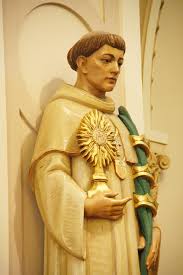
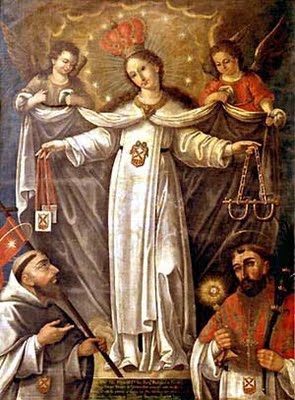
Posted in Against Unexplained FEVER or HIGH Temperatures, HORSES - and sick horses, JOCKEYS, all HORSE-related workers, Of GARDENERS, Horticulturists, Farmers, SAINT of the DAY

Saint of the Day – 9 February – Saint Teilo (6th Century) Bishop

Saint of the Day – 9 February – Saint Teilo (6th Century) Bishop of Llandaff, Wales. Welsh born in Penally, Wales and died at his See of Llandaff. Most Welsh sources confirm that Teilo was a close relative of St David, spiritual student of St Dyfrid and St Paulinus of Wales. Patronages – against fever, of horses, of apple orchards, farms and farmers, the City and Diocese of Cardiff (Capital of Wales), the Town of Saint-Thélo in Brittany, France . Also known as – Teilio, Teilus, Thelian, Teilan, Teilou, Teliou, Elidius, Eliud, Dillo, Dillon. The festival in honour of Saint Teilo is observed at different times of the year at different locations. In Wales and at Saint-Thélo, on 9 February; at Dol, on 29 November and on 25 November in the rest of the Churches in Brittany. Following 1752, however, his fair at Llandeilo in Wales, was not observed on the 9th but eleven days later on the 20th February or on the Sunday following that date.

St Teilo was probably born at Penally, near Tenby in Pembrokeshire, Wales, around the year 500. Although there are conflicting reports about his early life, he was thought to be a cousin of the national Patron of Wales, St David.

He received his education at institutions directed by Saints, one being St Dyfrid, who he succeeded as the Bishop of Llandaff, founding the very first Church in Llandaff, where the Cathedral stands today. He was also educated by St Paulinus of Wales at a place thought to be Whitland in Carmarthenshire. Here he is thought to have made contact with his cousin and became a close companion St David.

He travelled extensively, including Brittany, Rome and Jerusalem and to St David’s in north Pembrokeshire, where David founded his Monastery. Teilo too founded a Monasteries in Llandeilo (the name of the Town literally means ‘Church of St Teilo’), the place with which he is most associated and at Penally. Penally Abbey was located on the pilgrims’ trail to St David’s.

Legend has it that Teilo went on pilgrimage to Jerusalem with Saints David and St Padarn around the year 518. Three seats, one decorated ornately in gold, one of bronze and one of cedar, were erected in their honour in readiness for their Ordination as Bishops by the Bishop of Jerusalem. The legend has it that the humble Teilo chose the simple wooden seat.

A plague of Yellow Fever devastated parts of Wales in the year 547. Teilo and his followers fled, firstly to Cornwall and then to Brittany, where they were welcomed by St Samson of Dol. It is thought that Teilo and Samson planted a grove of apple-bearing trees between Dol and Cai, where the apple groves are still known as the groves of Teilo and Samson and still bear fruit today.
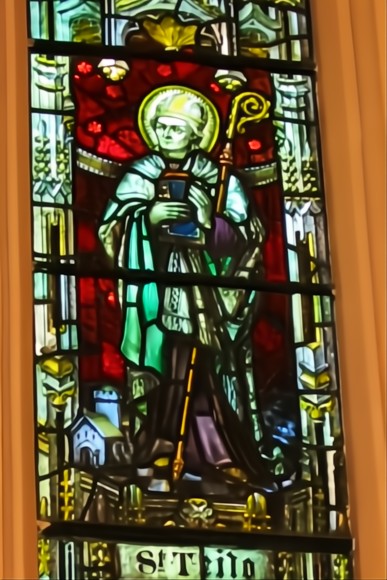
At Landaul in Brittany, Teilo is considered the Patron Saint of apple trees and the town of Saint-Thélo in Brittany which bears his name. At St. Teilo’s Church, one of the stained glass windows, shows an apple tree in honour of St Teilo.

Teilo returned from Brittany to Llandaff. He died on 9 February, most likely in the year 560. After his death he became one of the most venerated Saints in Wales. Several sites in Wales claim to house his remains. A tomb of St Teilo is located in Llandaff Cathedral while a part of his skull is kept in the South Chapel.

At least 25 Churches and schools in Wales, Brittany, Cornwall and Devon are dedicated to him.
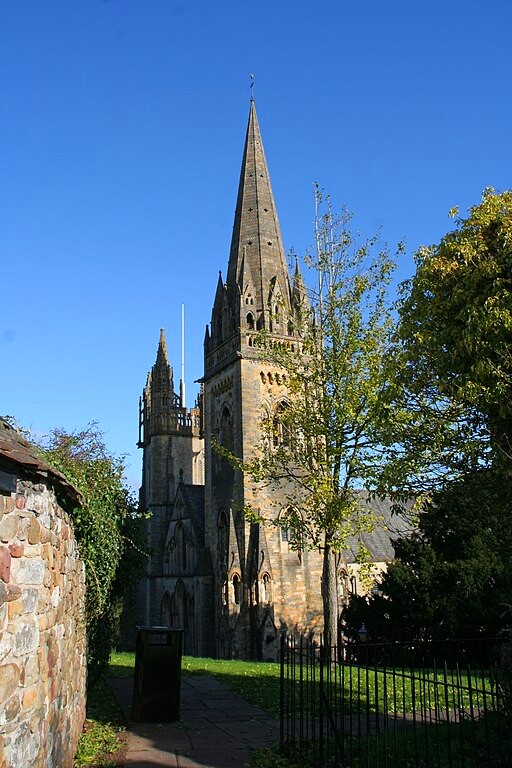
Llandaff Cathedral, Wales
Posted in Against SNAKE BITES / POISON, Against STORMS, EARTHQUAKES, THUNDER & LIGHTENING, FIRES, DROUGHT / NATURAL DISASTERS, Against Unexplained FEVER or HIGH Temperatures, PATRONAGE - TOOTHACHE and Diseases of the TEETH,, of DENTISTS, SAINT of the DAY

Saint of the Day – 22 January – Saint Dominic of Sora (951-1031) Abbot

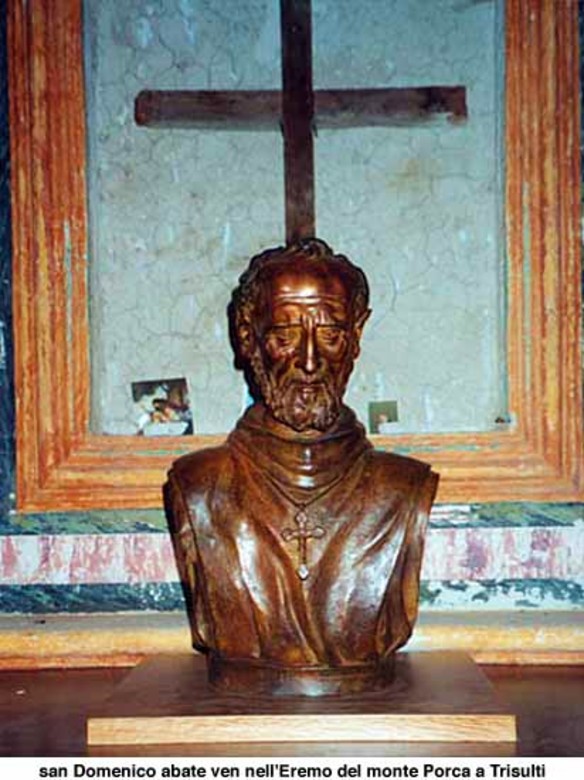
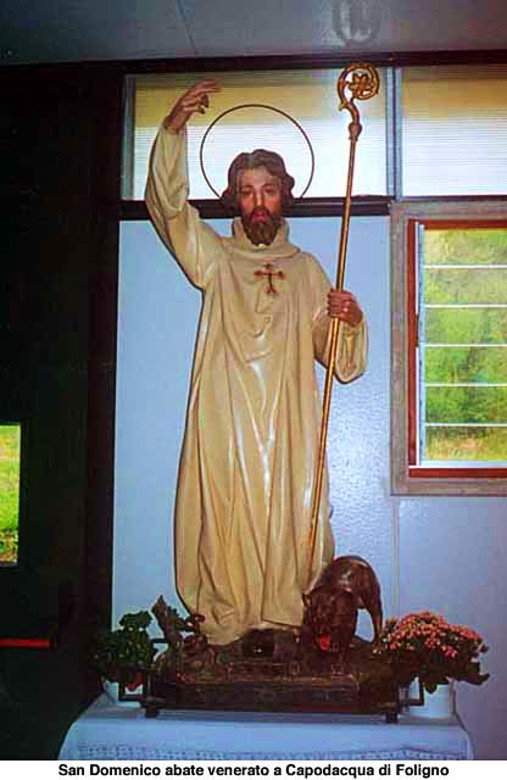
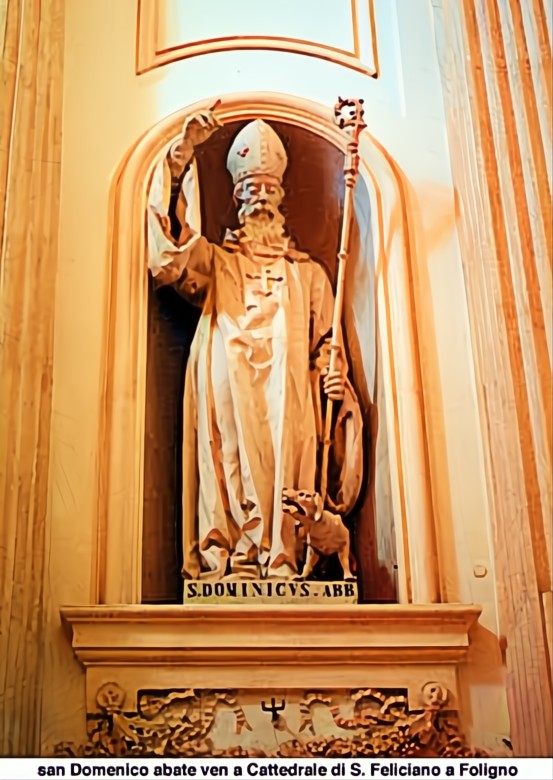
Saint of the Day – 22 January – Saint Dominic of Sora (951-1031) Abbot, Priest, Founder of many Monasteries, Miracle-worker. Born in 951 at Foligno, Etruria (Tuscany district of modern Italy) and died on 22 January 1031 in his Monastery in Sora, Campania, Italy of natural causes. Patronage – against fever, against toothache, against poisonous snakes and snake bites, against rabid dogs, protection from storms and hail, of the Italian Towns of Sora and Cocullo. Also known as – Dominico.

The Roman Martyrology reads today: “At Sora, the holy Abbot Dominic, renowned for miracles.

The Monk Giovanni, who was Dominic’s companion on all his travels, wrote his ‘Life’ which is, therefore, very accurate and truthful.

Domenic was born in Foligno in 951. He was entrusted as a child by his parents, to the Monks of St Silvester of Foligno, to carry out the necessary studies. When he became a young man, Dominic left everyone and went to the Monastery of St Maria di Pietrademone, where he was Ordained a Priest and vowed his profession as a Monk.
But Dominic desired a Hermit’s life, so he began to alternate solitude with the community life – he retired to a mountain in the Province of Rieti. But he was immediately followed by disciples from the surrounding area, for them he founded the Monastery of St Salvatore, becoming its Abbot.

Since his fame of sanctity attracted many people, to hide he moved towards L’Aquila, where he founded the Monastery of St Pietro del Lago, in the same way he founded the Monastery of St Pietro di Avellana in the Sangro region. During his journeys he arrived in Campania, where he remained unknown, for three years, until the population recognised him through some hunters, surrounded him with devotion and there was a rush of sick people. The reports of his miracles consisted above all, in curing the illness and death caused by snake bites, hence his Patronage.

In Trisulti he founded the Monastery of St Bartolomew which achieved much fame, it was richly endowed by the inhabitants of the nearby municipalities which Domenic then visited, urging them to a life woven with charity, penance and good works.

Dominic met with Pope John XVIII, from whom he asked for Papal protection for his foundations. Thanks to a donation of land, made by Count Pietro Rainerio, the Lord of Sora, he was able to build another Monastery, which remained, due to its importance, linked to his name, permanently.

Dominic fell ill while undertaking yet another journey to Tusculum but he returned back to Sora and died there on 22 January 1031 and was buried in the Monastery Church, where he is still preserved.

Dominic of Sora, like other great Founders of that era, remains a reformer of the life of the medieval Church, all intent on expanding monastic life with its great flowering, also a precursor of the great Orders which, a few centuries later, would appear in the Church, starting with his great namesake St Dominic of Guzman.

In Sora, as in the whole Liri Valley, he is invoked against the bites of poisonous snakes and rabid dogs, from storms and hail but also against fever and toothache.

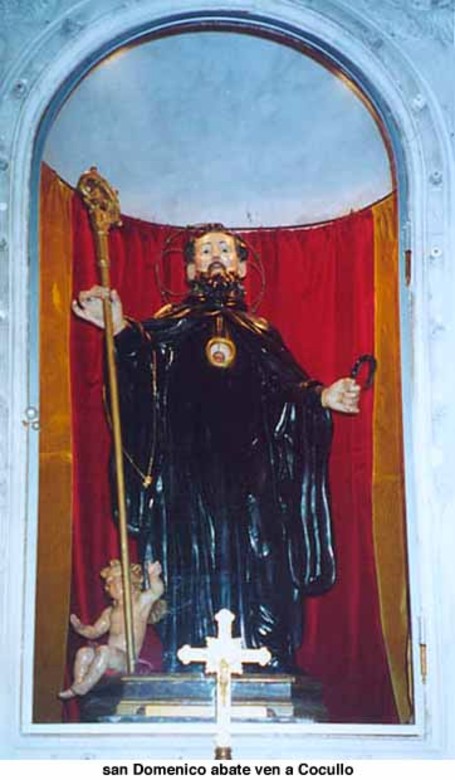
His Feast is celebrated with solemnity, both in Sora, of which he is the Patron and where there is a Sanctuary containing his body and in Arpino and nearby Towns but above all, for his particularity in Cocullo, where his Statue is carried in procession covered in real live snakes! Once, after the Mass, the snakes were killed or sold to tourists, today with a different environmentalist culture, they are set free. The ‘snake catchers’ are very careful to capture the harmless snakes, while they leave the poisonous vipers alone, the population participating in the celebrations has an almost sacred respect for reptiles, a legacy of a pagan cult of pre-Christian times which the Church had to make its own and this union, between pagan use and Christian celebration, in this case occurred through St Domenic of Sora, the great miracle- worker, who from the Middle Ages until today, attracts a multitude of imploring faithful ever venerating and imploring his aid in all their needs.

A Processional Statue of St Dominic I believe the one used in Cocullo and covered with live snakes
Posted in Against Unexplained FEVER or HIGH Temperatures, SAINT of the DAY

Saint of the Day – 18 June – Saint Abraham of Clermont (Died c479) Abbot

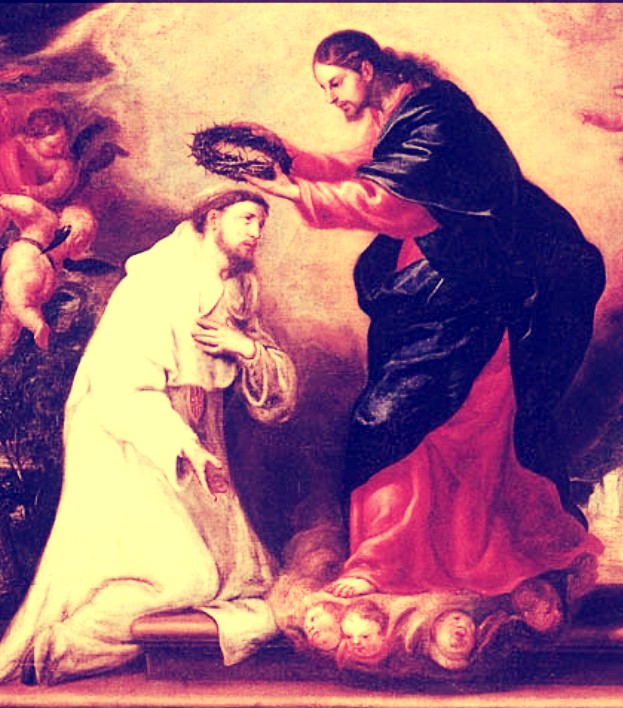
Saint of the Day – 18 June – Saint Abraham of Clermont (Died c479) Abbot and Founder of the Monastery of St Cyriacus in Clermont-Ferrand, Hermit, Miracle-worker. Born in 5th Century Syria and died in c479 of natural causes in his Monastery in France. Patronage – against fever. Also known as – Abraham the Abbot.

Ancient Monks with an old Abbot

Abraham was born in Syria, along the Euphrates River and was of Persian origins. He later left for Egypt, to visit some of the hermits and Monks there, seeking knowledge of monastic life and rules. However, on the way to Egypt, he was kidnapped and held prisoner for five years.

Finally. he managed to escape and ardously travelled to Gaul (France). He settled in Clermont in the Auvergne region as a Hermit. His reputation for holiness spread rapidly and he attracted so many disciples that he needed to build a Monastery to house them, near the Basilica of Saint Cyricus not far from St Illidius Church in Clermont.

He died around 479. St Apollinaris Sedonius, the Bishop of Clermont wrote an Epitaph on the grave of St Abraham from which we have been granted confirmation of some facts concerning our Saint’s life.

The Basilica of Saint Cyricus
Posted in Against TEMPTATIONS, Against Unexplained FEVER or HIGH Temperatures, Of a Holy DEATH & AGAINST A SUDDEN DEATH, of the DYING, FINAL PERSEVERANCE, DEATH of CHILDREN, DEATH of PARENTS, SAINT of the DAY

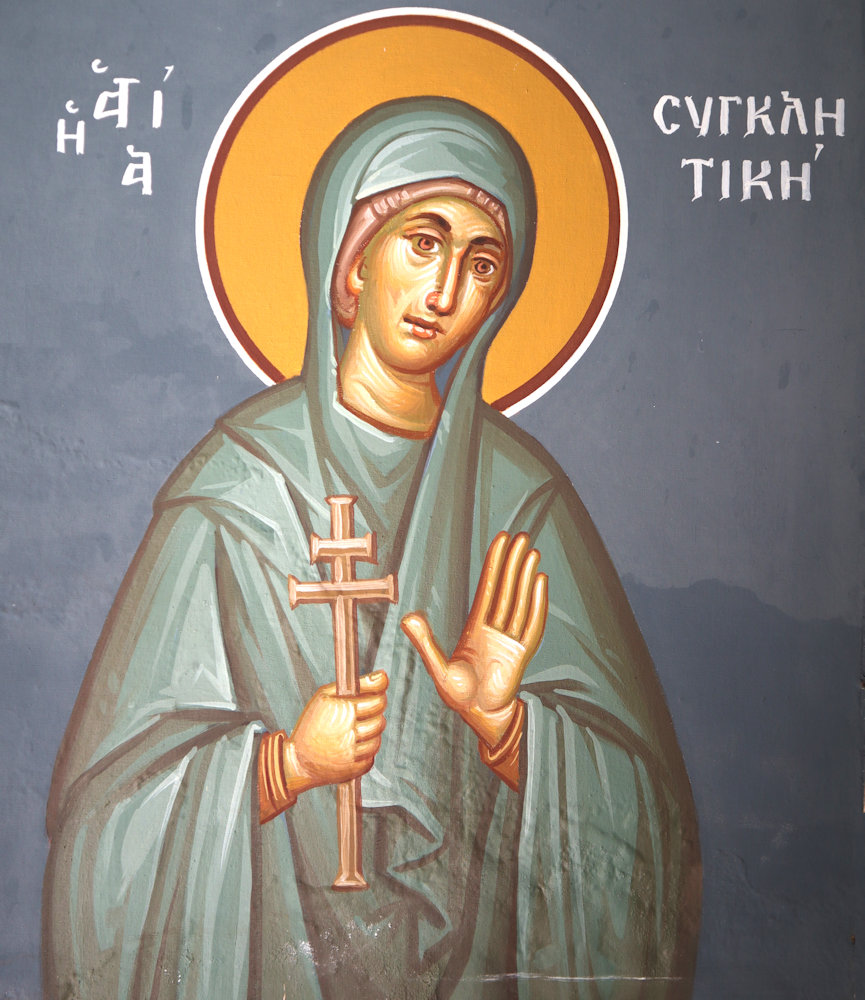
Saint of the Day – 5 January –S aint Syncletica (c320-c400) Virgin

Saint of the Day – 5 January –S aint Syncletica (c320-c400) Virgin, Anchorite, Mystic, Spiritual Guide, Abbess in the Sketic Desert? Name means: “the chosen one” (From the Greek). Syncletica was born around 320 in Alexandria in Egypt and died there of natural causes in around 400. Patronages – against bodily ills, against loss of parents, against temptations, of the ill, of single laywomen. Also known as – Sincletica.

The Roman Martyrology reads: “St Syncletica, whose noble deeds have been recorded by St Athanasius.

According to tradition, Syncletica came from a rich and pious family and is reputed to have been very beautiful. From childhood, however, Syncletica was drawn to a life of holiness and piety. She rejected several marriage proposals for she wished to lead a virtuous life devoted to her heavenly Spouse alone.

After the death of her parents, she distributed her inheritance to the poor and with her younger blind sister, Syncletica abandoned the life of the City withdrawing into a cave as a Recluse. Her holy life soon gained the attention of locals and, gradually, many women joined her to live as her disciples in Christ, teaching them the ascetic way of life.

She was mystically gifted. At the end of their lives, the tempter asked God for permission to test them – just as he had done with Job. Syncletica was tormented by many sufferings but despite her old age, she remained steadfast in her faith and asceticism until she died at the age of 84.

About 40 sayings have been preserved of and about Syncletica. Her life story probably dates to the 5th Century.

We are exposed to many temptations in life. Syncletica advises how we should deal with them:

The devil’s snares are common. If he cannot dissuade the soul through poverty, then he brings wealth as a lure. If he cannot do anything through disgrace, then he withholds praise and honour from her. If he has to accept defeat through health, he makes the body sick. If he cannot deceive with his desires, then he tries to bring about a change through unwanted efforts.
He brings about certain very serious illnesses if he is allowed to, in order to darken the love of God in those who become faint-hearted. Then the body is worn out by the most violent fever and is harassed by unbearable thirst. If you, as a sinner, have to endure this, then remember the coming punishment and the eternal fire and the torments inflicted by the Judge and do not be discouraged because of the present.
Rejoice that God has visited you, and have that sweet word on your tongue – God has chastened me but has not delivered me to death (Psalm 117:18).
You were like iron but with fire you burnt away the rust but if you, as a righteous person, fall into sickness, you will progress from greatness to greaterness.
You are gold but through fire you become even more proven.

An Angel has been appointed to you for the flesh (2 Corinthians 12:7).
Be happy!
See who you have become like!
For you were worthy of the lot of St Paul . …
In such exercises let us form our souls. Because we see the enemy before our eyes!
” (Compiled by Abbot em. Dr Emmeram Kränkl OSB
Benedictine Abbey Schäftlarn – for the Katholische SonntagsZeitung).

Fresco in the Chapel at St Thodosios’ Tomb in the Monastery of Agiou Theodosiou tou Neou near Agia Triada near Argos
Posted in Against Unexplained FEVER or HIGH Temperatures, PATRONAGE - NEWBORN BABIES, YOUNG CHILDREN l, PATRONAGE-INFERTILITY & SAFE CHILDBIRTH, PREGNANCY, SAINT of the DAY

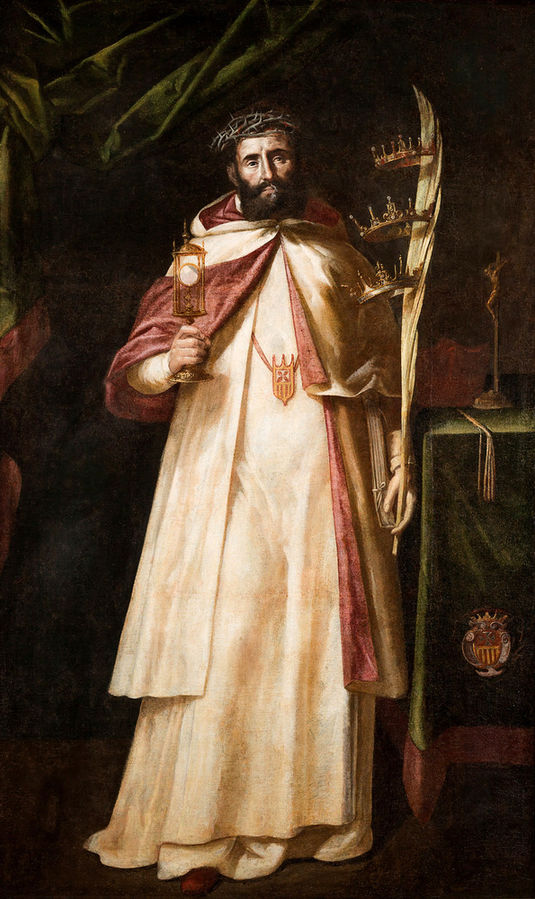
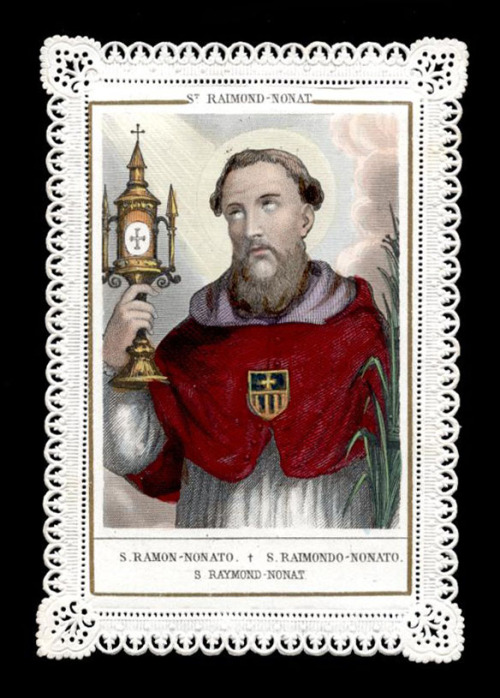
Saint of the Day – 31 August – St Raymond Nonnatus (1204-1240) Priest, Confessor

Saint of the Day – 31 August – St Raymond Nonnatus (1204-1240) Priest, Confessor, Cardinal, Friar of the Mercedarian Order.
Patronages – against gossip, of silence, against fever, of babies, infants, childbirth, children, pregnant women, falsely accused people, midwives, obstetricians, Baltoa, Dominican Republic, San Ramon, Costa Rica.  
Raymond was delivered by Caesarean operation when his mother died during childbirth – hence the name: non natus = not born.

Saint Raymond Nonnatus, Confessor
By Fr Francis Xavier Weninger SJ (1805-1888)

Catalonia, Spain, was the native country of St Raymund who, to the astonishment of the Physicians, was born after his mother’s death! As soon as he was old enough to comprehend how early he had become an orphan, he chose the Queen of Heaven as his mother and, to his last day, called her by no other name. When he had studied for some time with great success, his father, fearing the youth would enter a Religious Order, sent him into the too, opportunities to serve God. He became very fond of solitude and, therefore, chose for his occupation, the care of the sheep, in order to gain more time for prayer and meditation.

At the foot of the mountain to which he generally led his flock, was a small deserted hermitage, with a Chapel, in which an extremely lovely picture of the Blessed Virgin was kept, which was a source of great joy to him. There, he spent several hours daily, in devout exercises. Other shepherds, who observed this and to whom the piety of Raymund was a reproach of their own negligence, reported to his father that he was doing nothing but praying and, thereby neglected his flock. The father came to convince himself of the fact but, although he found his son praying in the Chapel, he saw that the flock was, meanwhile attended to by a youth of uncommon beauty of form and features. Asking his son who this young shepherd was and why he had engaged him, Raymund, to whom it was unknown that Providence had worked a miracle on his behalf, fell on his knees before his father and begging forgiveness, earnestly promised not to commit the fault again.

The Divine Mother, of Whom he begged the grace of knowing his vocation, appeared to him, saying that she desired him to take the habit of the newly established Order for the Redemption of Captives. He did so,and was sent to Algiers where he found a great many Christians in slavery and, as the money he had brought for their ransom was not sufficient, he offered himself as a hostage to redeem the others. He was induced to this by the danger in which the prisoners were of losing their faith and with it eternal life. This great and heroic charity gave him occasion to suffer much for the sake of Christ. At first, he was treated very harshly by his masters but when they began to fear that he would die before the ransom was paid, they allowed him more liberty which the holy man used, only for the salvation of the captive Christians. He strengthened them in their faith and, at the same time, endeavoured to convert the infidels.

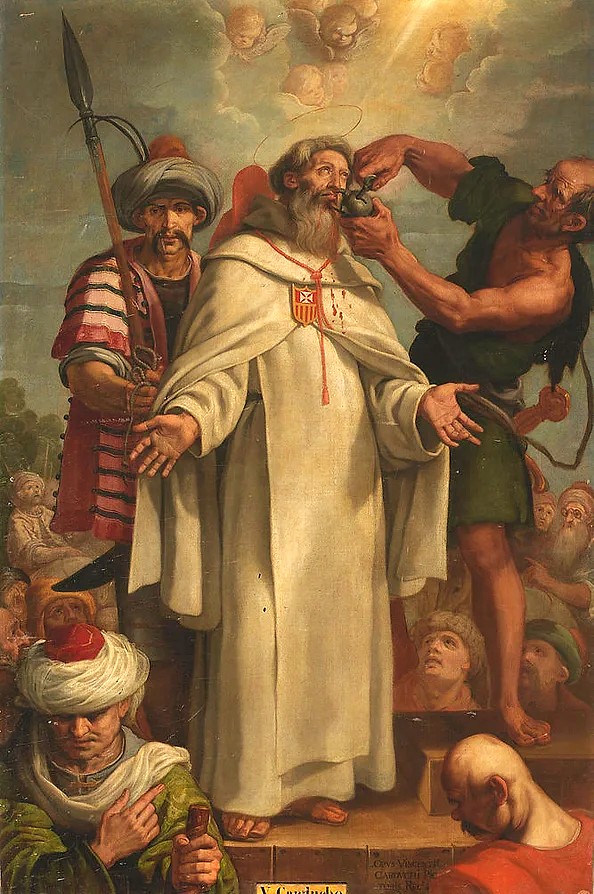
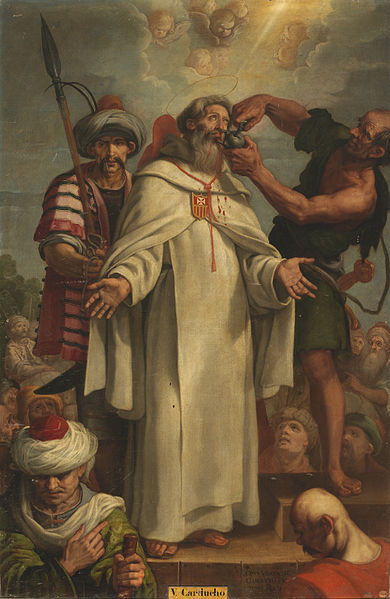
Accused of this before the Judge, he was condemned to be impaled alive and nothing but the hope of a large ransom prevented the execution of this barbarous sentence and caused it to be changed into a cruel bastinado (a form of torture which involves the caning of the soles of the feet). Raymund, who desired nothing more fervently than to die for Christ’s sake, was not intimidated by what he had undergone but wherever an opportunity offered itself, he explained to the infidels, the word of God. The Judge, informed of it, ordered him to be whipped through all the streets of the city and then to be brought to the marketplace, where the executioner, with a red hot iron, pierced his lips, through which a small chain was drawn and closed with a padlock, in order that the holy man might no more use his tongue to instruct others. Every three days the lock was opened and he received just enough food to keep him from starvation. Besides this, he was loaded with chains and cast into a dungeon, where he lay for eight months, until his ransom arrived. Although it was the desire of the Saint to remain among the infidels, as he would there have an opportunity to gain the Crown of Martyrdom, obedience recalled him to his Monastery.

When the Pope was informed of all that Raymund had suffered during his captivity, he appointed him as a Cardinal but the humble Saint returned to his Convent and lived like all the other brothers of the Order, without making the least change in his dress, food, or dwelling, nor accepting any honour due to him as so high a dignitary of the Church.

Pope Gregory IX, desired to have so holy a man near him and called him to Rome. The Saint obeyed and set out on his journey. He had,, however, scarcely reached Cardona, six miles from Barcelona, when he was seized with a malignant fever which soon became fatal. He desired most fervently to receive the holy Sacraments but, as the Priest called to administer them to him, delayed to come, God sent an Angel, who brought him the Divine food. After receiving it, he returned thanks to God for all the graces he had received from Him during his life and peacefully gave up his soul, in the 37th year of his age.

After his death, the inhabitants of Cardona, the Clergy of Barcelona and the religious of his Order, contended as to where the holy body should be buried. Each party thought they had the greatest claim to possess his tomb. At last they resolved to leave the decision to Providence. They placed the coffin, in which the holy body reposed, upon a blind mule, determined that the treasure should be deposited in the place to which this animal should carry it. The mule, accompanied by a large concourse of people, went on until it had reached the hermitage and Chapel where the holy Cardinal, as a shepherd boy, had spent so many hours in prayer and had received so many graces from God. There the Saint was buried and St Peter Nolasco, Founder of the Order in the course of time, founded there a Convent, with a Church in which the holy remains are still preserved and greatly honoUred by the people of Catalonia.

Posted in Against Unexplained FEVER or HIGH Temperatures, SAINT of the DAY

Saint of the Day – 25 June – Blessed John the Spaniard O.Cart. (1123-1160)

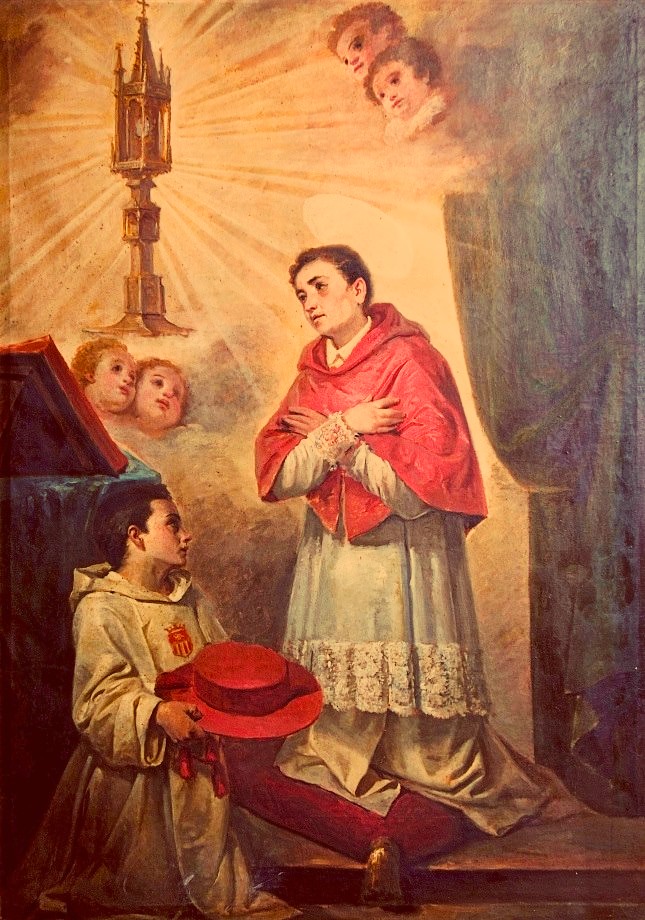
Saint of the Day – 25 June – Blessed John the Spaniard O.Cart. (1123-1160) Carthusian Prior, Founder of the female branch of the Carthusians for which he wrote the Rule, also Founder of the Reposoir Monastery. Born in 1123 at Almanza, Spain and died on 25 June 1160 at the Reposoit Chapterhouse in Switzerland of natural causes, aged just 37. Patronage – against fever. Also known as – John of Spain. Blessed John was Beatified in 1864 by Pope Pius IX.

At the age of thirteen John left his country for France, both to escape the Moslems and for the purpose of studies. He settled in the Town of Arles , in Southern France. At sixteen he felt drawn to the monastic life and entered a Monastery in the vicinity. After some years, he heard about the recently founded Order of the Carthusians and their Monastery of Montrieux, not far away, founded in 1118, 5 years before he himself was born. Drawn to their austere and entirely contemplative life, he joined the Carthusians there.

Once a vowed Carthusian, he was Ordained a Priest, was named Sacristan and eventually — still a man in his twenties! —elected Prior. We may assume he was precocious on the natural level but, even more so, by the early maturity of his virtues.

The Nuns of the Monastery of Prébayon in the vicinity, following the Rules of Saint Caesarius of Arles and of Saint Benedict , were so impressed with the fervour of Montrieux, under John’s leadership that they asked to be admitted to the Carthusian Order which, unil then, had consisted only of Monks. The Prior of the Motherhouse, La Grande Chartreuse and Superior General of the Order, Saint Anthelm, authorised this. He asked John to adapt the Consuetudines of Guigo , which were the Carthusian Rule at that time, to the nuns. He did so and this was the beginning of the female branch of the Order. It was the year 1145.

Virginal Consecration of Carthusian nuns, by Mathias de Visch (1748)

Various difficulties at Montrieux lead to his retirement from the Priorship and he moved to la Grande Chartreuse in 1150. Just then, a noble lord in neighbouring Savoy, asked for a Monastery of Carthusians on his lands. Saint Anthelm saw in Blessed John the man of Providence. He sent him to make the foundation in Savoy, which was eventually given the name of le Reposoir. There he ruled wisely as Prior for some years.

While being in this new Monastery, for several years he copied, for the Nuns, the liturgical books in use at the Chartreuse. Finally, he contributed to the ratification of the Nuns’ affiliation with the Order, probably during the Second General Chapter in 1155, in which he participated as Prior of the Charterhouse of Reposoir.

Reposoir Charterhouse. 
This House still exists but is today a monastery of Carmelite nuns.

On 25 June 1160 John died, not yet forty years old. Through unusual circumstances he was interred not inside the enclosure, as the custom is but outside. In fact, during his Priorate, two servants of the Monastery, having died in the mountains, under an avalanche of snow, had been interred in an inappropriate place, outside the enclosure, for which John had been reproved. To make amends he had made his Monks swear that after his death they would bury him at the same place as the two servants. This, however, permitted John’s Tomb—with his renowned for sanctity—to become the object of popular pilgrimages. The faithful prayed at his Tomb and many miracles occurred in the course of the centuries, particularly cures of malignant fever. In 1864 Blessed Pius IX approved the cult of Blessed John of Spain, venerated since time immemorial.

Let us pray:
God our Father, Thou called on Blessed John
to help draw up a Rule for our Nuns.
May we ,who have eagerly embraced the monastic life,
also arrive at the perfection of charity.
We ask this through Christ Our Lord.
Amen.

Posted in Against Unexplained FEVER or HIGH Temperatures, Of TRAVELLERS / MOTORISTS, SAINT of the DAY

Saint of the Day – 31 May – St Petronilla (1st Century) Virgin Martyr.

Saint of the Day – 31 May – St Petronilla (1st Century) Virgin Martyr. Born in the 1st Century as a Roman citizen and died in the same Century. Her Relics reside at Saint Peter’s Basilica Rome. Patronages against fever, heirs of the Throne [Dauphins] of France, mountain travellers, treaties between Popes and Frankish Emperors, Acciano, Italy. Also known as – Petronilla of Rome, Aurelia Petronilla, Pernelle, Perolin, Perrenotte, Perrette, Perrine, Perronell, Petronella, Peyronne, Peyronnelle, Pierrette, Pérette, Périne, Pétronille.

The Roman Martyrology reads today: “In Rome in the cemetery of Domitilla on the Via Ardeatina, Saint Petronilla, Virgin and Martyr.

As for many Saints of the early Christian era, even in this case there are conflicting reports or ‘Vitas.’ Also for Petronilla, despite the fact that she has had such a widespread cult, we have dubious legends about her.

What is certain is that she was buried in the Domitilla Cemetery near or within the underground Basilica of the Catacombs. Archaeological sources indicate the oldest testimony in a 4th Century fresco which still exists behind the apse of the underground Basilica, built by Pope Siricius between 390 and 395. The fresco depicts the blessed introduced into a paradise full of roses, held by the hand of a girl with her head covered and on whose side is written “Petronilla Mart(yr).

Fresco of the mid-4th Century, with the Martyr Petronilla on the right, leading a young woman named Veneranda into the garden of Paradise.

Petronilla is traditionally identified as the daughter of the Apostle St Peter, although this may stem simply from the similarity of their names. It is believed she may have been a converted by St Peter (and thus a “spiritual daughter”or his disciple or servant. It is said that Peter cured her of paralysis.

Many stories found in the writings of St Marcellus (and retold in The Golden Legend) say that Peter, who thought his daughter too beautiful, asked God to afflict her with a fever, of which he refused to cure her until she began to be perfected in the love of God.

She is said to have refused Count Flaccus’ hand in marriage. Traditions say she died a natural death but accounts of her Martyrdom can be found.

Petronilla is thought to have been Aurelia Petronilla, a scion of the gens Flavius, the family of Vespasian and Domitian. She was also related to St. Domitilla, who was exiled in the 1st Century to Pandateria, whose property on the Via Ardentina became a Catacomb Cemetary. Inscriptions there describe Petronilla as a Martyr.

During the Papacy of Siricius (384-399), a Basilica was built on the site of her tomb. In the 8th Century, Pope Gregory III established a place of public prayer in the Basilica and her Relics were translated o St Peter’s, where a Chapel was dedicated in her honour.

The Burial and Reception of St Petronilla into Heaven by Giovanni Francesco Barbieri (Guercino)

Emperors Charlemagne (died 814) and Carlomen (died 771) were considered adopted sons of St Peter and they, along with the French Monarchs who succeeded them, considered Petronilla their sister. Her Chapel became the Chapel of the Kings of France. Her emblem, like that of St. Peter, is a set of keys.

St Petronilla Statue on the Colonnade of St Peter’s Basilica, Rome
Posted in Against DROWNING, Against Unexplained FEVER or HIGH Temperatures, Of a Holy DEATH & AGAINST A SUDDEN DEATH, of the DYING, FINAL PERSEVERANCE, DEATH of CHILDREN, DEATH of PARENTS, Of the SICK, the INFIRM, All ILLNESS, PATRONAGE - of BASKET-WEAVERS, CRAFTSMEN, PATRONAGE - SPOUSAL ABUSE / DIFFICULT MARRIAGES / VICTIMS OF ABUSE, SAINT of the DAY, SKIN DISEASES, RASHES

Saint of the Day – 13 August – St Wigbert of Fritzlar (c 675-c 746)

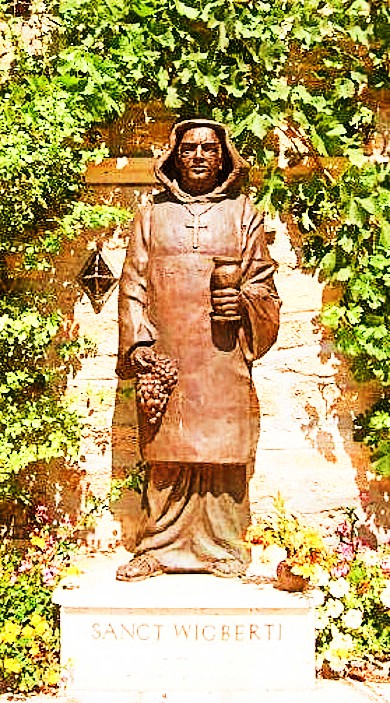
Saint of the Day – 13 August – St Wigbert of Fritzlar (c 675-c 746) a learned Scholar and Abbot, Missionary, Miracle-worker, gifted with a penetrating understanding of Sacred Scripture as well as the gift of prophecy, companion of St Boniface, the Apostle of Germany. Born in c 518 in Erfurt, Saxony (England) and died on 13 August c 587 in Poitiers, France of natural causes. Wigbert was known as a quiet and gentle man and a great teacher. Both St Alcuin and St Bede knew and mentioned him in their historical writings of the times and of the Church. St Bede admired his contempt of this world and his learning. Patronages against drowning, against fever/high temperature, against leprosy/skin diseases for example against scabies, against the death of parents, against ulcers, difficult marriages, of potters, weavers, Poitiers, France.

Wigbert was born in England about 675 of noble parents. He was known for the purity of his morals, his zeal for the salvation of souls, his boundless love, his penetrating knowledge and familiarity with the Sacred Scriptures.

Wigbert became a Monk, working with great piety to increase his sanctity in the monastic environment, to live the Rule in its entirety and to help others to do the same. He spent many years in Ireland, there using his great skill in teaching to help others in their search for knowledge and wisdom. St Boniface summoned him from England to Germany and, in about the year 734 Wigbert went to Germany to join the great Missionary. , There he was made Abbot of the Monastery of Hersfeld in Hesse. Among his pupils was St Sturmi, first Abbot of Fulda.

In about 737, Boniface transferred Wigbert to Thuringia as Abbot of Ohrdruf, where he worked with the same success as in Hersfeld. Later, Wigbert obtained Boniface’s permission to return to Hersfeld to spend his remaining days in stillness and to prepare for the hour of death.

Even in old age and in illness, he continued his austere mode of life, until the very end. The Saint reposed at Hersfeld in about 746. He was buried at Fritzlar in an inconspicuous grave but during an incursion of Saxons (774), his remains were taken for safety to Buraburg and from there, in 780, his sacred relics were transferred by Abbot St Lullus to Hersfeld.

In the year 850 a beautiful Church was built and dedicated to St Wigbert but it was razed by fire in 1037. A new Church replaced it and dedicated in 1144 but it burned in 1761 in a great fire. Thereafter, St Wigbert’s sacred relics were never found again by men.

Posted in Against Unexplained FEVER or HIGH Temperatures, DOMESTIC ANIMALS, EARACHE, EAR disorders, EPILEPSY, Of ANIMALS / ANIMAL WELFARE, SAINT of the DAY

Saints of the Day – 16 September – St Pope Cornelius and St Cyprian of Carthage – Martyrs

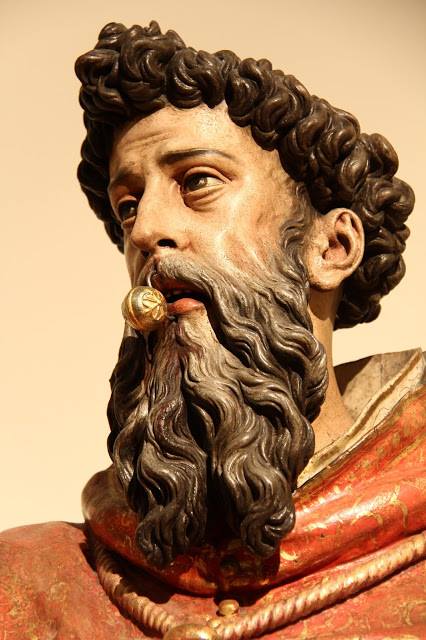
Saints of the Day – 16 September – St Pope Cornelius and St Cyprian of Carthage – Martyrs.  St Pope Cornelius – Papal Ascension:  251.  He was Martyred in 253 and his remains were buried at the Cemetery of Saint Callistus Rome.   “Cornelius” means ‘battle horn.‘   Patronages – • against earache; earache sufferers• epileptics; against epilepsy• against fever• against myoclonus• cattle• domestic animals• Kornelimünster, Germany. St Cornelius was a Bishop becoming ar reluctant 21st Pope, elected after a 1 1/2 year period, during which the persecutions were so severe that Papal ascension was an immediate death sentence.   He worked to maintain unity in a time of schism and apostasy and fought Novatianism. He also called a Synod of Bishops to confirm him as rightful Pontiff, as opposed to the anti-pope Novatian.  He had the support of Saint Cyprian of Carthage and Saint Dionysius.   He welcomed back those who had apostacised during the persecutions of Decius –  the documents which settled this matter prove the final authority of the Pope. Exiled to Centumcellae in 252 by Roman authorities to punish Christians in general, who were said to have provoked the gods to send plague against Rome. Martyr.   A document from Cornelius shows the size of the Roman Clergy during his Papacy – 46 Priests, 7 Deacons, 7 Sub-deacons, approximately 50,000 Christians.   His name is in the Communicantes in the Canon of the Mass.

St Cyprian of Carthage – (Died in 190 in Carthage, North Africa – Bishop and Martyr, learned Rhetorician, Teacher, Writer, Theologian – beheaded 14 September 258 in Carthage, North Africa).   Patronages – • Algeria (proclaimed on 6 July 1914 by Pope Pius X)• North Africa (proclaimed on 6 July 1914 by Pope Pius X, on 10 January 1958 by Pope Pius XII and on 27 July 1962 by Pope John XXIII  NOTE – no, I don’t know why it was done so many times).  

St Cyprian was born to wealthy pagan parents.   He taught rhetoric and literature.    He was adult convert in 246, taught the faith by Saint Caecilius of Carthage. He was ordained in 247 and became the Bishop of Carthage in 249.   During the persecution of Decius, beginning in 250, Cyprian lived in hiding, covertly ministering to his flock;  his enemies condemned him for being a coward and not standing up for his faith.   As a writer he was second only in importance to Tertullian as a Latin Father of the Church.   Friend of Saint Pontius.   St Cyprian was involved in the great argument over whether apostates should be readmitted to the Church;  Cyprian believed they should but under stringent conditions.   He was supported St Pope Cornelius against the anti-pope Novatian.   During the persecutions of Valerian he was exiled to Curubis in 257, brought back Carthage and then martyred in 258.   His name is in the Communicantes in the Canon of the Mass.CORNELIUS POPESts. Cornelius and Cyprian

CORNELIUS AND CYPRIAN MY SNIP

An excerpt written to Cornelius, Bishop of Rome condemned to martyrdom for his faith, from his brother Bishop Cyprian of Carthage, himself to give his witness as a Martyr a few years later.  Read on the feasts of Sts Cornelius and Cyprian, Martyrs, on 16 September.

Cyprian to his brother Cornelius.

My very dear brother, we have heard of the glorious witness given by your courageous faith.   On learning of the honour you had won by your witness, we were filled with such joy that we felt ourselves sharers and companions in your praiseworthy achievements. After all, we have the same Church, the same mind, the same unbroken harmony.   Why then should a priest not take pride in the praise given to a fellow priest as though it were given to him?   What brotherhood fails to rejoice in the happiness of its brothers wherever they are?

Words cannot express how great was the exultation and delight here when we heard of your good fortune and brave deeds:   how you stood out as leader of your brothers in their declaration of faith, while the leader’s confession was enhanced as they declared their faith.  You led the way to glory, but you gained many companions in that glory; being foremost in your readiness to bear witness on behalf of all, you prevailed on your people to become a single witness.

We cannot decide which we ought to praise, your own ready and unshaken faith or the love of your brothers who would not leave you.   While the courage of the bishop who thus led the way has been demonstrated, at the same time the unity of the brotherhood who followed has been manifested.   Since you have one heart and one voice, it is the Roman Church as a whole that has thus born witness.

Dearest brother bright and shining is the faith which the blessed Apostle praised in your community.   He foresaw in the spirit the praise your courage deserves and the strength that could not be broken;  he was heralding the future when he testified to your achievements; his praise of the fathers was a challenge to the sons.   Your unity, your strength have become shining examples of these virtues to the rest of the brethren.

Divine providence has now prepared us.  God’s merciful design has warned us that the day of our own struggle, our own contest, is at hand.   By that shared love which binds us close together, we are doing all we can to exhort our congregation, to give ourselves unceasingly to fastings, vigils and prayers in common.   These are the heavenly weapons which give us the strength to stand firm and endure;  they are the spiritual defenses, the God-given armaments that protect us.

Let us then remember one another, united in mind and heart.   Let us pray without ceasing, you for us, we for you;  by the love we share we shall thus relieve the strain of these great trials.

letter-to-cornelius-cyprian
Posted in Against Unexplained FEVER or HIGH Temperatures, DOCTORS, / SURGEONS / MIDWIVES., PATRONAGE - NEWBORN BABIES, YOUNG CHILDREN l, PATRONAGE-INFERTILITY & SAFE CHILDBIRTH, PREGNANCY, SAINT of the DAY

Saint of the Day – 31 August – St Raymond Nonnatus O.deM. (1204-1240)

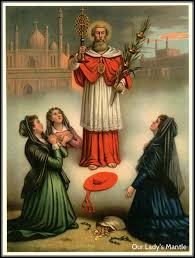
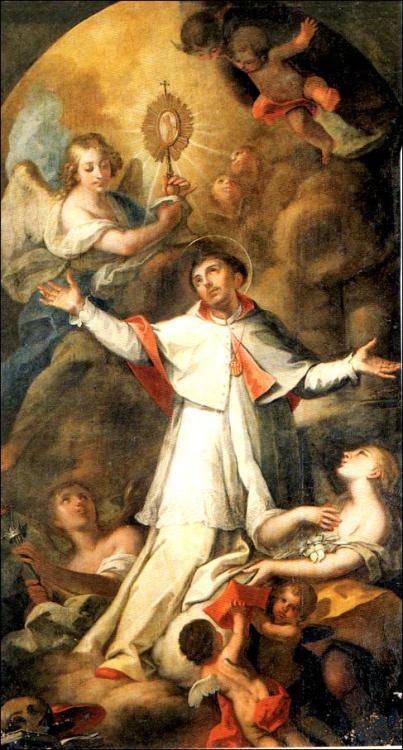
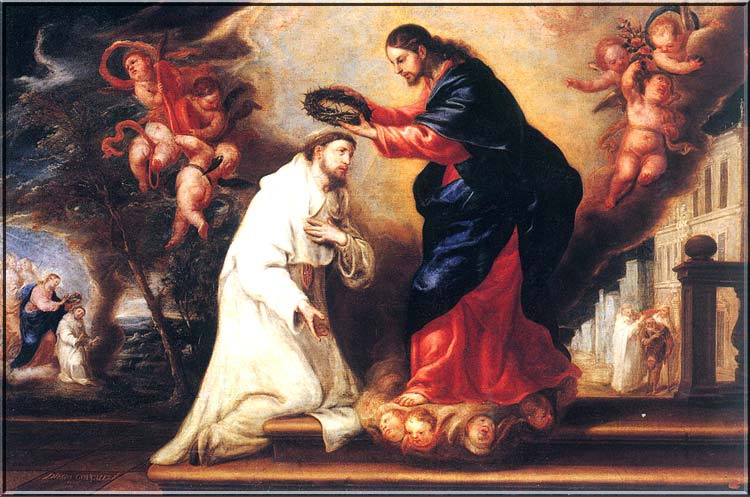
Saint of the Day – 31 August – St Raymond Nonnatus O.deM (1204-1240). Priest, Confessor, Cardinal, Friar of the Mercedarian Order.  He was delivered by Caesarean operation when his mother died in childbirth; hence the name non natus = not born. Born in  1204 at Portella, diocese of Urgel, Catalonia, Spain and died on 31 August 1240 at Cardona, Spain of a fever.   He was buried at the Chapel of Saint Nicholas near his family farm he was supposed to have managed.   He was Beatified on 5 November 1625 by Pope Urban VIII (cultus confirmed) and Canonised on 1657 by Pope Alexander VII.   Patronages  against gossip, of silence, against fever, of babies, infants, childbirth, children, pregnant women, falsely accused people, midwives, obstetricians, Baltoa, Dominican Republic, San Ramon, Costa Rica.  

st raymond nonnatus.4.

From the time he was very young, he manifested a great devotion to the Most Holy Virgin.   He prayed the Rosary every day in the hermitage of St. Nicholas of Mira  . Once Our Lady appeared to him and promised him her protection.   Afterward he was strongly tempted to sin against chastity but did not fall.   He went to thank his Patroness and consecrated his virginity to her.   Mary appeared to him again, showing her satisfaction and advising him to enter the Order of the Mercedarians (Order of Mercy), whose foundation she had inspired St. Peter Nolasco to make only shortly before, in 1218.

He was ordained a Priest and dedicated himself to the redemption of captives until 1231. He liberated 140 captives in Valencia, 250 in Argel and 28 in Tunis.   It was in this last city that he had the occasion to fulfill the special fourth vow of the Mercedarians to offer themselves to remain in captivity in the place of Catholic prisoners.   Since he was unable to pay the ransom demanded by the slave dealers in Tunis, Raymond offered himself to take the place of some prisoners.

The trade was made and he began a hard captivity.   To prevent him from speaking about Our Lord, for his engaging words were converting numerous Muslims, the Arabian slave masters pierced his lips with a red-hot iron and closed them with a padlock.   This padlock was only opened for him to eat.   After eight months of this torment, other Mercedarians arrived from Spain bringing the demanded ransom.

The last ten years of his life were spent in Rome, where he became the representative of his Order and in traveling throughout different countries to preach the Crusade.   As a cardinal representative of Pope Gregory IX he was sent to meet with St Louis of France and encourage him to go on the Crusade, which actually took place 10 years later.

St. Raymond Nonnatus died in Cardona, a Spanish village close to Barcelona, on August 31, 1240. He was only 37-years-old.

One particular devotion is centered around the padlock that is part of his martyrdom. Locks are placed at his altar representing a prayer request to end gossip, rumours, false testimonies and other sins of the tongue.   The locks are used as a visible sign of such prayer request, which first and foremost must take place interiorly, a prayer to God through St. Raymond’s intercession.

The Mercedarians – Order of the Blessed Virgin Mary of Mercy:

The Order of the Blessed Virgin Mary of Mercy is an international community of priests and brothers who live a life of prayer and communal fraternity.   In addition to the vows of poverty, chastity and obedience, their members take a special fourth vow to give up their own selves for others whose faith is in danger.

The Order, also called the Mercedarians, or Order of Mercy, was founded in 1218 in Spain by St Peter Nolasco to redeem Christian captives from their Muslim captors.   The Order exists today in 17 countries, including Spain, Italy, Brazil, India and the United States.

St. Peter Nolasco 01
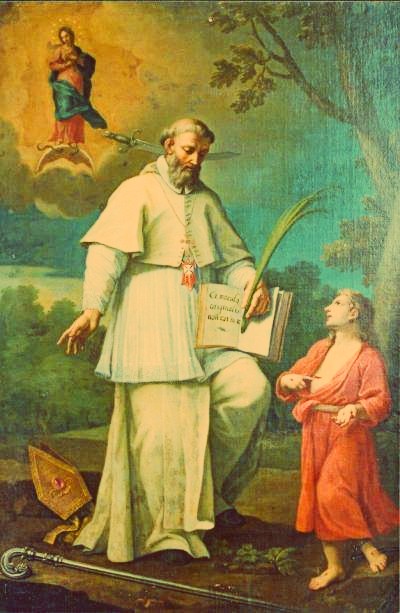
St Peter Nolasco & St Raymond Nonnatus and the Blessed Virgin Mary

Today, friars of the Order of Mercy continue to rescue others from modern types of captivity, such as social, political, and psychological forms.   They work in jails, marginal neighborhoods, among addicts and in hospitals.

The spiritual and communal life of the friars include prayer, meditation, Holy Mass, recreation and apostolate.   Their life is based on the Rule of St. Augustine and the Constitutions of the Order.

Overall, the Order of Mercy commits itself to give testimony to the same Good News of love and redemption that it has shown since the beginning of its history.