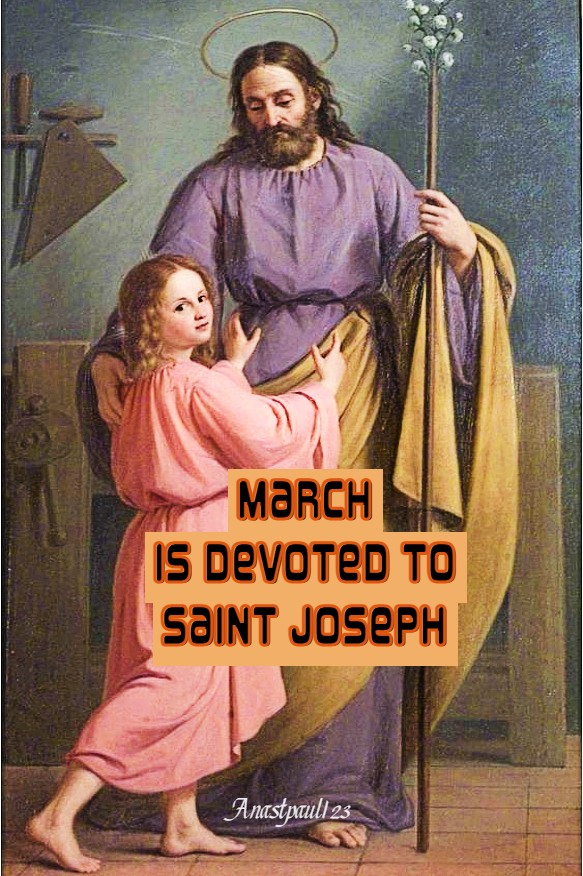
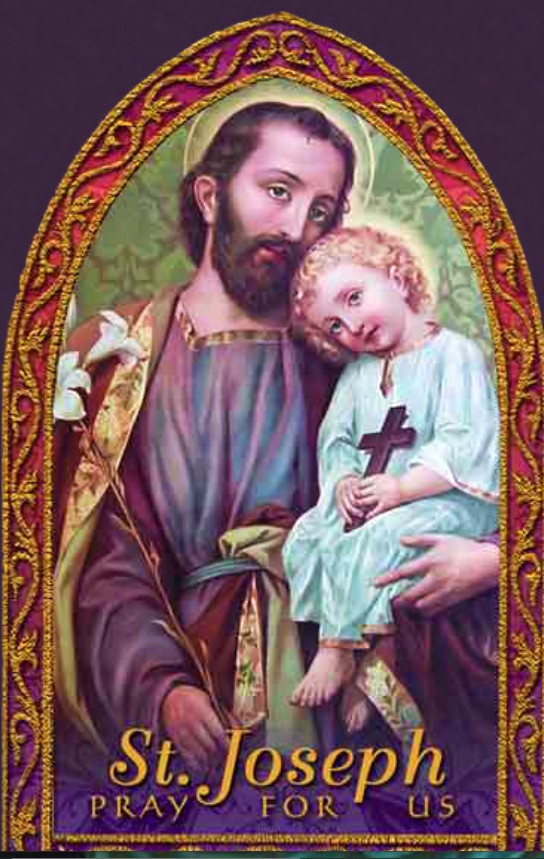
The beloved Foster-Father and Guardian of Jesus and Protector of the Holy Family, is celebrated for this whole month and his Feast Day falls on 19 March .
“Quamquam Pluries” On the Devotion to St Joseph Pope Leo XIII
“On 10 March, [11 MARCH THIS YEAR], we begin the Novena to St Joseph, entrusting so many of our woes and cares to his holy and fatherly care and intercession. His Patronages are numerous, as we know, one of them will fit our needs perfectly and if not, then we should all ask him to intercede on our behalf for our families and for a Happy and Holy Death. On the 19thFEAST we pray the Consecration to St Joseph.”
Indulgenced Prayer to St Joseph O St Joseph! Pray for Us Daily O Joseph! virgin father of Jesus, pure Spouse of the Virgin Mother, pray for us daily to the Son of God, that, armed with the weapons of His grace, we may fight as we ought in life and be crowned by Him in death. Amen (Indulgence of 100 days, twice a day St Pius X 26 November 1906)
Patronages in Alphabetical Order:
of Accountants • Bursars • Cabinetmakers • Carpenters • Catholic Church • Cemetery Workers • Children • Civil Engineers • against Communism • Confectioners • Craftsmen • against Doubt and Hesitation • the Dying • Emigrants • Exiles • Expectant Mothers • Families • Fathers • Furniture Makers • Grave diggers • Happy Death • Holy Death • House Hunters • House Sellers • Immigrants • Joiners • Labourers • all the Legal Profession • Married Couples • Oblates of Saint Joseph • Orphans • Pioneers • Social Justice • Teachers • Travellers • the Unborn • Wheelwrights • Workers • Americas • Austria • Belgium • Bohemia • Canada • China • Croatian people • Korea • Mexico • New France • New World • Peru • Philippines • Vatican City • VietNam • Canadian Armed Forces • Papal States • 46 Diocese • 26 Cities,States and Regions.
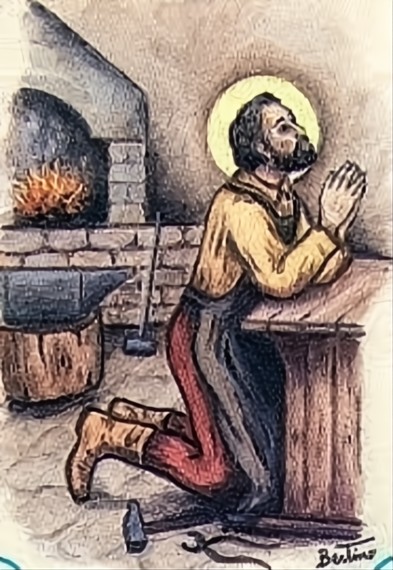
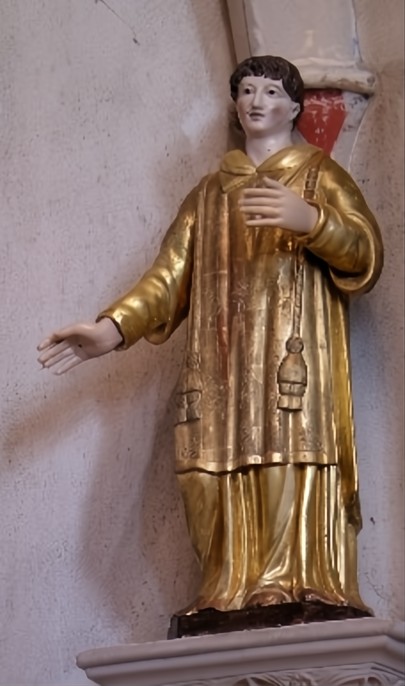
Saint of the Day – 27 February – Saint Baldomerus of Saint Just (Died c650) SubDeacon, Lay Brother, Blacksmith. Born in Ouvacou Auditiac, near Lyon in France and died in Lyon in c650. Patronages – of Blacksmiths, Lyon, France and Nuremberg, Germany. Also known as – Baldomerus of Lyons, Baldimerus… Baldomer… Baldomero… Baudemer… Galmier…Garmier… Germier… Gaumier… Geaumier… Waldimer… Waldimerus…
Baldomerus was born in the village of Ouvacou Auditiac, near Lugdunum , now Lyon which was then part of the County of Forez . Already as a young man he practiced the trade of a Blacksmith.
He lived poorly himself, nevertheless, his care and attention was always concerned with the poor, whom he continually assisted as much as he could. In the absence of anything else, sometimes he even gave them his work tools.
He was devoted to prayer, meditation and reading the Holy Scriptures and his favourite phrase was: “Always thanks be to God.” He had a very cheerful and lively character. One day he met the Abbot Viventius (who later became the Bishop of Lyon), who, in fact, had visited the village particularly to meet our Saint as he had been attracted by the fame of sanctity that had already spread around Baldomerus. The Abbot wanted him to become a Monk in his Monastery of Saint Just in Lyon. Baldomerus immediately left his forge and followed him.
Bishop Gaudry (Ganderic) consecrated him as SubDeacon, overriding Baldomerus’ objections based on his feeling of unworthiness. He wanted to remain a lowly Lay Brother but he was able to continue to practice his craft – a much-needed art, even today but especially in the days of horses and wagons.
Statue in the Church of Montanay near Lyon
After a life of prayers, fasting and sacrifices, he died around the middle of the 7th Century, between 642 and 660
He was buried by the Bishop of Lyon, Viventius II in the Church of the Monastery of Saint-Just. His Relics were immediately the object of great veneration by the people, until the 16th Century, when they were dispersed and burned by the Huguenots. Of them, only one arm was saved which had previously been detached from the body and taken to the Church of Saint-Galmier (Baldomerus), a Town in the Loire which bears his name and is famous for its Badoit table water. ..
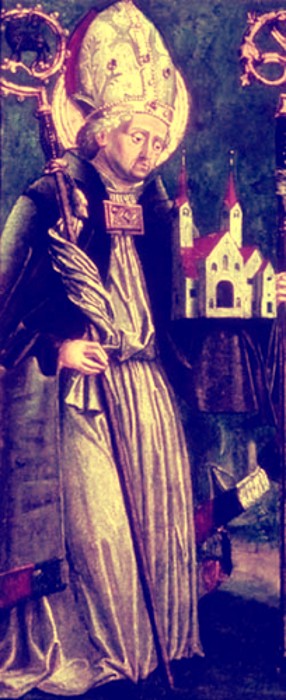
Saint of the Day – 5 February – Saint Genuinus of Sabion (Died c605) Bishop , Miracle-worker. Born in the 6th Century probably in Rome and died in c605 in Sabiona, Italy of natural causes. Patronages – of the Mines and of Miners, the Diocese of Bolzano-Bressanone, Italy, the City and Diocese of Brixen, Italy. Also known as – Genuino, Ingenium, Ingenuin, Ingenuino, Ingenuinus, Ingwin, Jenewein. Additional Memorial – 13 May (translation of Relics).
Genuinus was the Bishop of Sabion in South Tyrol, a small Town which has since disappeared, the area being incorporated into a larger City – Brixen. It was located at Klausen near present-day Bressanone (then Brixen)in northern Italy. At the time, the Diocese belonged to the Archdiocese of Aquileia and only in 798 was it transferred to Salzburg.
Genuinus attended the synod of Marano in 588.
Genuinus died around 605. At the beginning of the 6th Century, South Tyrol suffered greatly from attacks by Lombards and Bajuvars and, therefore, some assume that he died as a Martyr, while others seem to think that he died in exile.
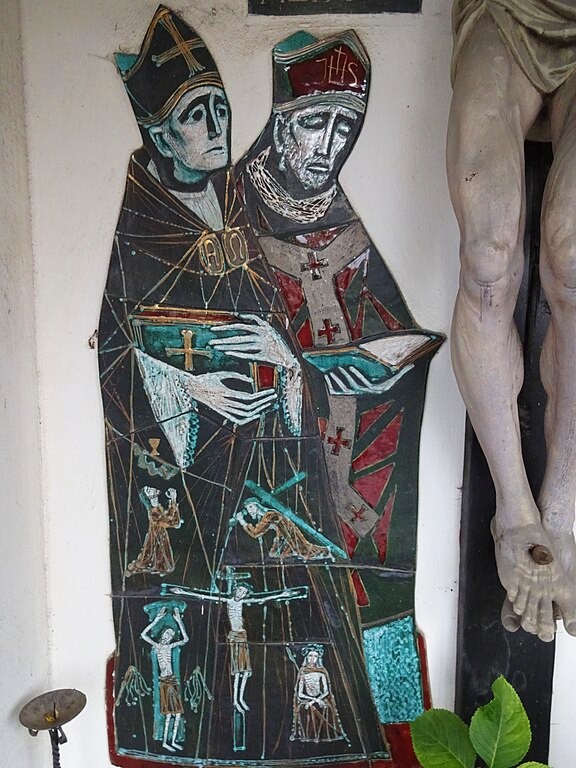
In 1141, the blessed Bishop Hartmann of Brixen (1090-1164) transferred his Relics to the High Altar of the Cathedral of Brixen together with the Relics of one of his successors, Saint Albinus (Died 1005), who was Bishop of Brixen. They are both remembered today, 5 February. A translation festival is also celebrated in Brixen on 13 May. St Genuinus is portrayed as a Bishop, most often together with his successor, St Albinus. Even the Roman Martyrology links them in one sentence: “At Brixen, the Bishops Genuinus and Albinus, whose lives were illustrious for holiness and miracles.”
The Relics of St Genuinus and St Albinus under the High Altar of the Cathedral of Brixen
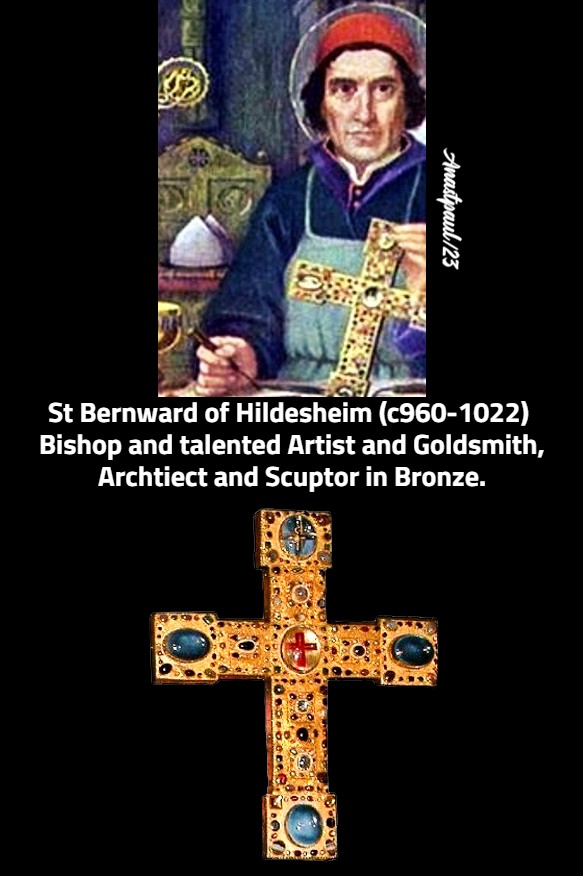
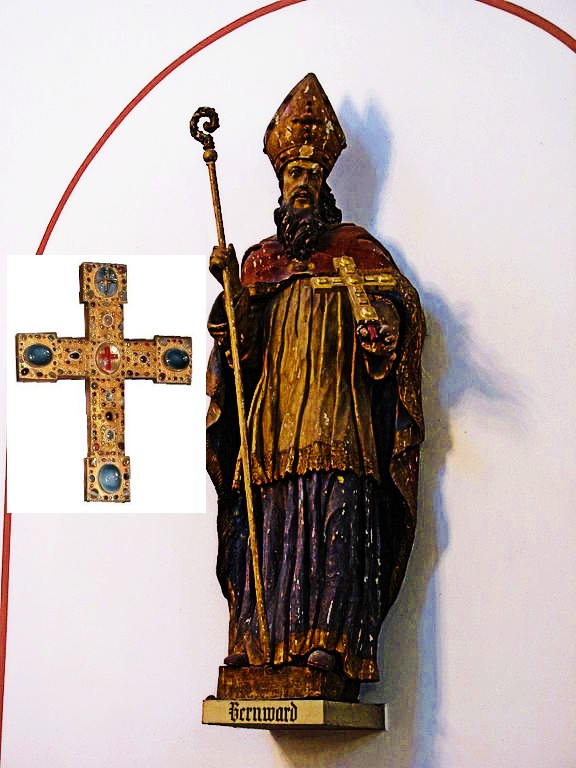
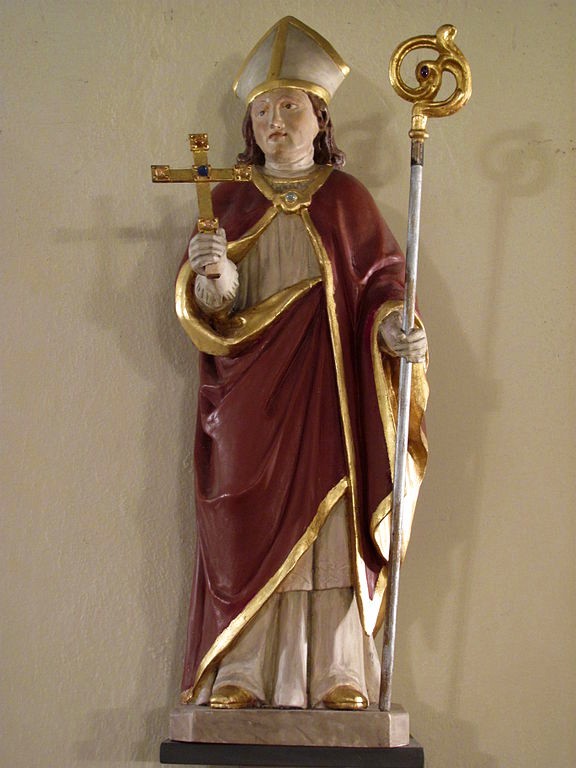
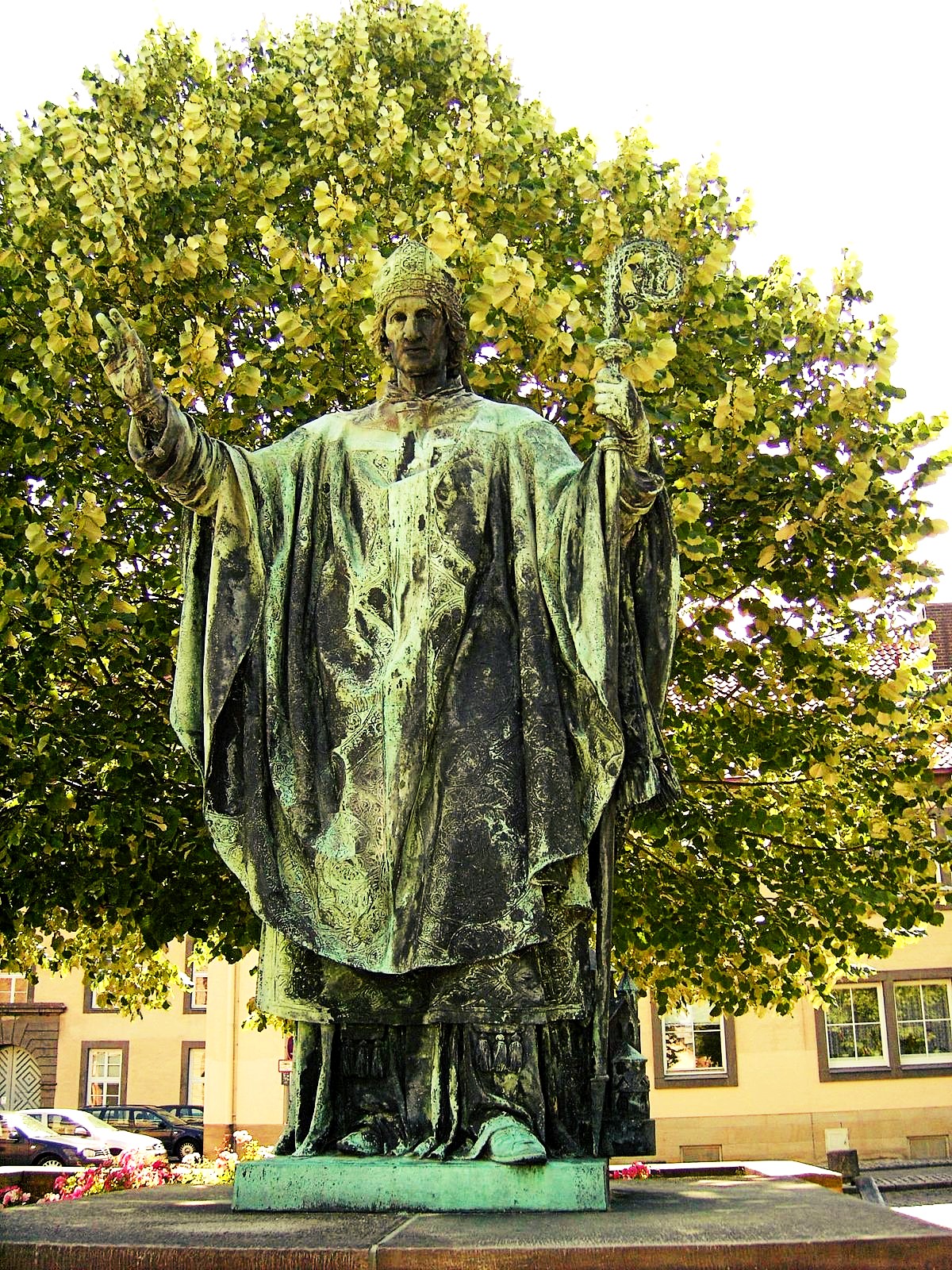
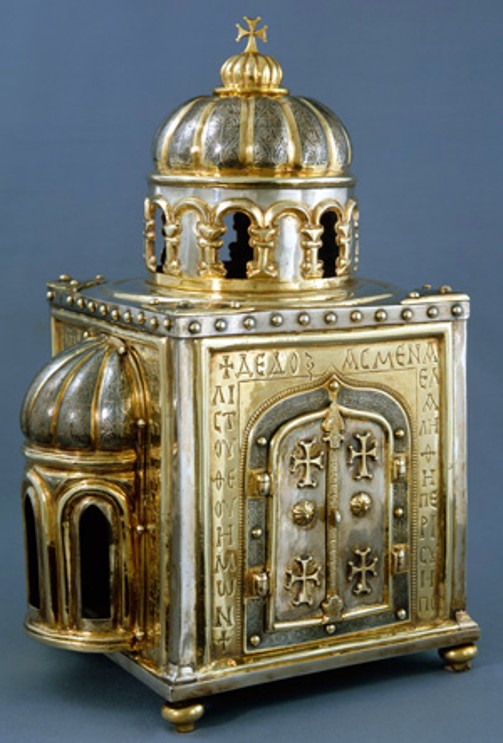
Saint of the Day – 20 July – St Bernward of Hildesheim (c960-1022) Bishop. Bernward was the thirteenth Bishop of Hildesheim from 993 until his death in 1022. He was an exceptionally gifted and talented Creative Artist and Craftsman, in particular, in the creation of Sacred Vessels and adornments of Holy items, in precious metals. Born – c960 at Saxony and died on 20 November 1022 of natural causes. Patronages – Architects, Builders, Goldsmiths, Sculptors, Craftsmen, Painters, Artists. . Also known as – Berward, Bernward. Canonised in 1193 by Pope Celestine III.
Bernward came from a noble German family. His grandfather was Athelbero, Count Palatine of Saxony (in the coastal region of today’s north Germany). Having lost his parents at an early age, he came under the care of his uncle,Volkmar, Bishop of Utrecht, who entrusted his education to Thangmar, learned director of the Cathedral school at Heidelberg.
Under this master, Bernward made rapid progress in the sciences and in the liberal and even mechanical arts. He became very proficient in mathematics, painting, architecture and particularly. in the manufacture of Sacred Ecclesiastical Vessels and ornaments of silver and gold. He completed his studies at Mainz, where he was Ordained to the Priesthood by Archbishop Willigis, Chancellor of the Empire (975-1011).
Bernward declined a valuable preferment in the Diocese of his uncle, Bishop Volkmar and chose to remain with his grandfather, Athelbero, to comfort him in his old age. Upon the death of the latter, in 987, he became Chaplain at the Imperial Court and, in 987 shortly afterwards, appointed by the Empress-Regent Theophan, as the Tutor to her son, the future Emperor Otto III, then six years of age.
In 993, Bernward was appointed as the Bishop of Hildesheim. His time in office fell during the era of the Saxon Emperors, who had their roots in the area around Hildesheim and were personally related to Bernward. During this time, Hildesheim was a centre of power in the Holy Roman Empire and Bernward was determined to give his City an image fitting for one of its stature.
Bernward ecouraged the arts, commissioned religious paintings and sculpture, refurbished existing Ecclesiastical buildings, built new ones, he built up the Cathedral district with a strong twelve-towered wall and erected further forts in the countryside to protect against attacks by the neighbouring Slavic peoples. Under his direction numerous Churches and other edifices arose, including even fortifications for the defence of his Episcopal City against the invasions of the pagan Normans. He protected his Diocese vigorously from all attacks and consequently his administration was marked by peace. Around 1020, he retired to a Benedictine Monastary to spend his remaining days in prayer.
His life was set down in writing by his mentor, Thangmar, in Vita Bernwardi. He died on 20 November 1022, a few weeks after the Consecration of the magnificent Church of St Michael, which he had built. Beloved Bishop Bernward was Canonized by Pope Celestine III on 8 January 1193.
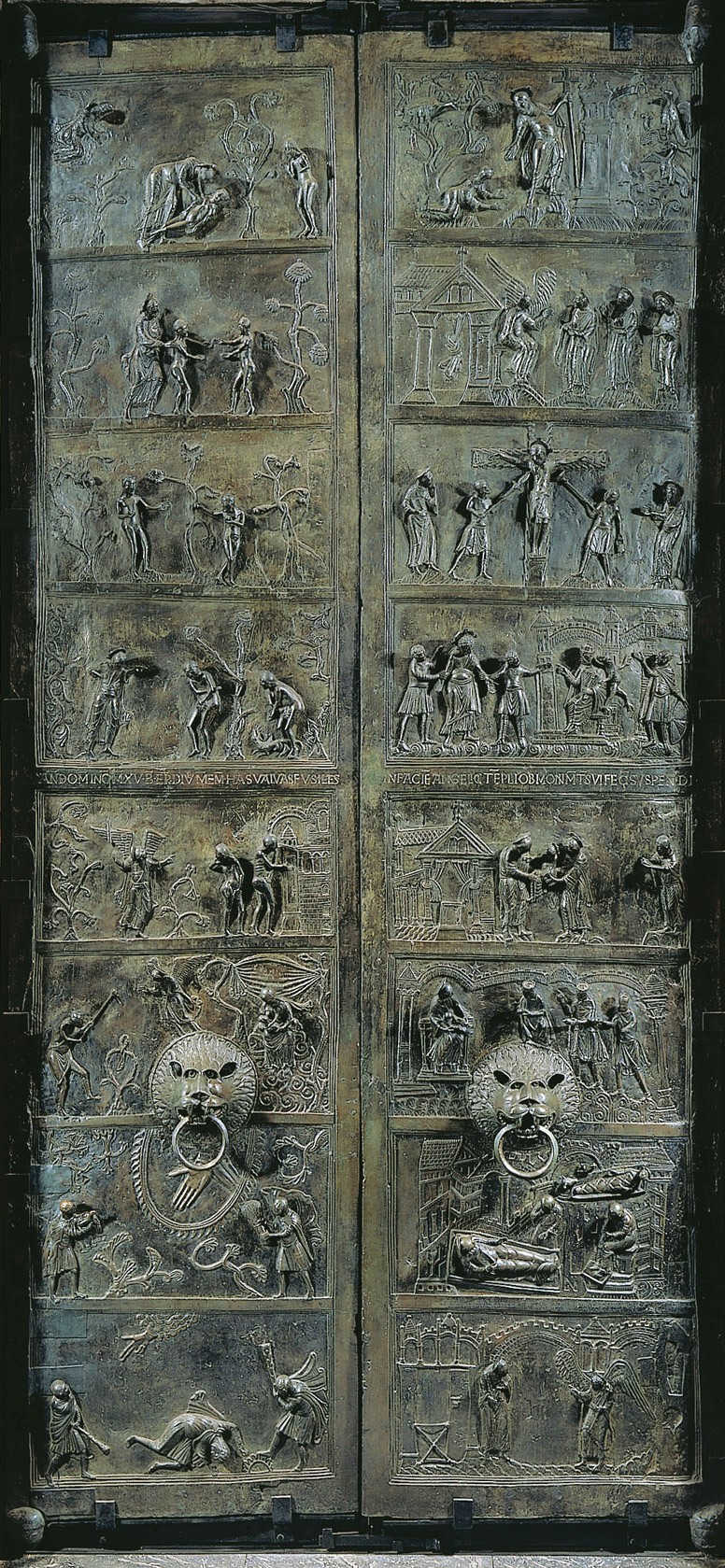
One of the most famous examples of Bernward’s work ,is a monumental set of cast bronze doors, known as the Bernward Doors, now installed at St. Mary’s Cathedral. The Doors are sculpted with scenes of the Fall of Man and the Salvation of Man – Life of Christ and which are related, in some ways to the wooden doors of Santa Sabina in Rome.
St Bernward’s Doors at St Mary’s Cathedral
Bernward was instrumental in the construction of the early Romanesque St Michael’s Church was completed after Bernward’s death and he is buried in the western crypt. These projects of Bernward’s are today UNESCO World Heritage Sites.
St Michael’s Church has exerted great influence on developments in Architecture. The complex bears exceptional testimony to a civilization that has disappeared. These two edifices and their artistic treasures, give a better overall and more immediate understanding, than any other decoration in Romanesque Churches. St Michael’s Church was built between 1010 and 1020 on a symmetrical plan with two apses that was characteristic of Ottonian Romanesque art in Old Saxony. Its interior, in particular the wooden ceiling and painted stucco-work, its famous bronze doors and the Bernward bronze column, are – together with the treasures of St Mary’s Cathedral – of exceptional interest as examples of the Romanesque Churches of the Holy Roman Empire.
St Mary’s Cathedral, rebuilt after the fire of 1046, still retains its original Crypt. The nave arrangement, with the familiar alternation of two consecutive columns for every pillar, was modelled after that of St Michael’s but its proportions are more slender.
St Bernward’s Church in Hildesheim, a Neo-Romanesque Church built 1905-07 and St Bernward’s Chapel in Klein Düngen which dates from the 13th Century nad St Bernward’s in Hanover and all dedicated to our Saint.
Saint of the Day – 7 April – Saint Hermann Joseph O.Praem (c1150-1241) Priest, Friar of the Order of of Canons Regular of Prémontré (the Norbertines or White Canons), Mystic, a prolific writer on spiritual subjects and the Sacred Scriptures, known as “The Boy who Played with Angels.” From childhood, Hermann had an intense devotion to Our Bless Mother Mary, who herself, assisted him in many ways and throughout his life. This beautiful painting below by Sir Antony van Dyck, shows Mother Mary receiving an apple from Hermann, to give to Baby Jesus. Born im c1150 as Hermann von Steinfeld in Cologne, Germany and died on 7 April 1241 in Hoven, Germany of natural causes. Additional Memorials – 24 May (translation of relics) and 21 May (Diocese of Cologne) and the the Sixth Sunday after Easter at Steinfeld in Cologne. In 1958 Hermann’s status as a Saint of the Church was formally recognised by Pope Pius XII. Patronages – watch and clockmakers, children and young students, Altar boys, Acolytes, Sextons and Sacristans, expectant mothers and safe childbirth. Also known as St Hermann Josef.
Hermann was born in Cologne, the son of Count Lothair of Meer and his wife Blessed Hildegund O.Praem (c1130-1185). His sister was Blessed Hadewych of Meer, also a Norbertine Nun. Although of the nobility, the family was not overly wealthy.
According to the biography by Razo Bonvisinus, a contemporary and Prior of Steinfeld Abbey, at the age of seven, Hermann attended school and very early was known for devotion to the Blessed Virgin. At every available moment he could be found at the Church of St Maria im Kapitol, where he would kneel rapt in prayer to Mary. Bonvisinus says that the boy once presented an apple, saved from his own lunch, to a statue of Jesus Who accepted it. On another occasion, when on a cold day he made his appearance with bare feet, Mary procured him the means of obtaining shoes.
At the age of twelve, he entered the Abbey of the Premonstratensian at Steinfeld. As he was too young to be accepted into the Order, he was sent to study, probably in the Netherlands. Upon his return, he made his vows and was given the Habit and later, the additional name “Joseph.”
As a Novice, he was initially entrusted with the service of the Refectory and later, of the Sacristy. After his Ordination, Hermann was sometimes sent out to perform pastoral duties and was also in frequent demand for the making and repairing of clock – a talent and skill which he enjoyed as a recreation. Hermann became noted for the devotion with which he celebrated the Holy Sacrifice of the Mass. Indeed, he fell into an ecstasy of prayer so often at Mass that his Masses went on “forever.”
As a Monk, Father Hermann retained all the blameless innocence of spirit which had characterised him as a child. He was much loved for his readiness to assist anyone in need and anyone who asked. But while he had practical skills (he was an able mechanic and clock-maker), he was essentially a contemplative.
His confreres jokingly called him “Joseph” for his attention to the Madonna and Child. Typically, he declared himself unworthy to be called after the father of the Holy Family. But Our Lady took a fancy to the name and in a vision, put upon his finger a wedding ring to confirm that he was her spiritual spouse. On the basis of this vision, Hermann added “Joseph” to his other name.
The Mystical Marriage of St Hermann Joseph by Jean-Guillaume Carlier
He was also active in pastoral care outside the Monastery, especially in the female monasteries in the region, as both his mother (after her widowhood) and his sister had become Norbertine Nuns.
Hermann was characterised by his child-like devotion to Mary. Late in his life, he had, under his charge, the spiritual welfare of the Cistercian Nuns at Hoven whom he served as Chaplain. There he died and was buried in their cloister.
Countless miracles were reported at his tomb – the blind were cured, physical ailments were cured and even demons fled those who were possessed and were brought to Herman’s tomb. Hermann Joseph received visits from expectant women who asked his intercession for a safe delivery. The patronage of expectant mothers has been handed down since the 17th century in the use of “touch relics”, such as brooches and clasps, which were left on the Reliquary or tomb and retrieved later and then fastened to their clothing, in the hope of a happy and safe childbirth, through the intercession of the Saint. We presume that Hermann’s prayers, both during life and after, had proved efficacious in these matters.
His body was later transferred back to Steinfeld Monastery, where his marble tomb and large picture may be seen to the present day. By custom apples are left at his tomb – in the image below the large picture (as posted above by Sir Antony van Dyck) as well as an apple, can be seen. Portions of his Relics are at Cologne and at Antwerp. His grave in Steinfeld is a pilgrimage destination – in the Middle Ages, especially by mothers, in modern times, by children and students. The Hermann Joseph Festival is held at Steinfeld on the Sixth Sunday after Easter, every year.
Saint of the Day – 21 January – St Anastasius the Persian (Died 628) Martyr, Monk. Born in Persia as Magundat and died by strangulation and beheading in 628 in Persia. Patronages – against headaches, of goldsmiths.
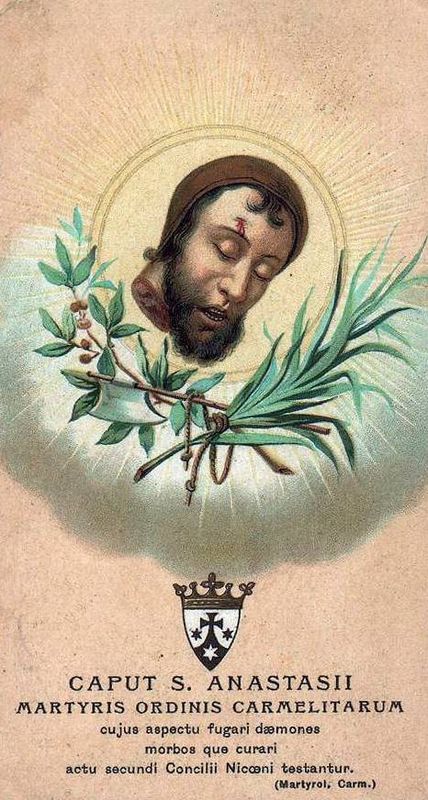
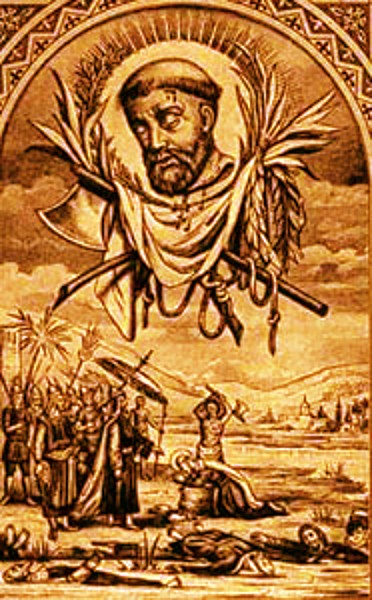
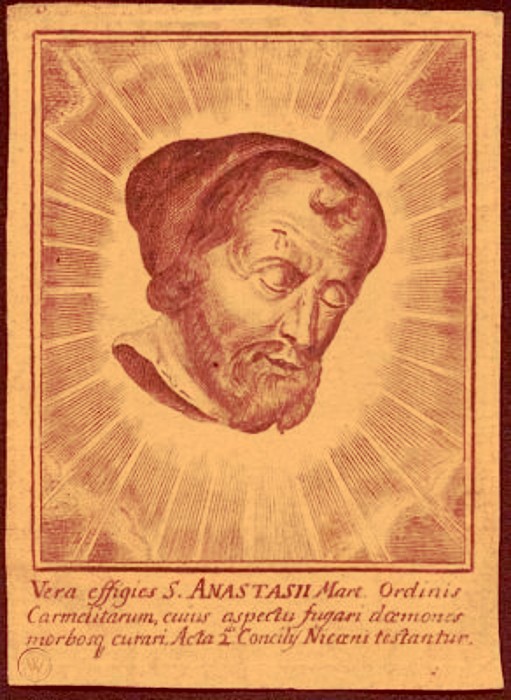
The Roman Martyrology reads: “At Rome, at Aquiae, Salviae, St Anastasius, a Persian Monk, who, after suffering much at Caesarea in Palestine, from imprisonment, stripes and fetters, had to bear many afflictions from Chosroes, King of Persia, who caused him to be beheaded. He had sent before him, to Martyrdom, seventy of his companions, who were precipitated into rivers. His head was brought to Rome, together with his venerable likeness, by the sight of which, the demons are expelled and diseases cured, as is attested by the Acts of the Second Council of Nicacea.”
Anastasius was born in the City of Ray. He was the son of a Magian named Bau. He had a brother whose name is unknown. He was a cavalryman in the army of Khosrow II (590–628) and participated in the capture of the True Cross in Jerusalem which was carried to the Sasanian capital.
The occasion prompted him to ask for information about the Christian religion. He then experienced a conversion of faith, left the army, became a Christian and then a Monk at the Monastery of Saint Savvas (Mar Saba) in Jerusalem.
Anastasius was baptised by St Modestus, the Bishop of Jerusalem, receiving the Christian name Anastasius to honour the Resurrection of Jesus Christ (anástasis” in Greek meaning resurrection).
After seven years of the monastic observance, he was moved by the Holy Ghost to go in quest of Martyrdom and went to Caesarea, then subject to the Sasanians. There he interrupted and ridiculed the pagan priests for their religion and was, as a result, arrested by the local governor, taken prisoner, cruelly tortured to make him deny Christ and finally carried down near the Euphrates river, where his tortures was continued, while at the same time, the highest honours in the service of King Khosrow II, as a Magi, were promised him, if he would renounce Christianity.
Finally, after refusing to renounce Christ, with seventy others, he was strangled to death and decapitated on 22 January 628. His body, which was thrown to the dogs but was left untouched by them, was carried from there to Palestine, then to Constantinople and finally, to Rome, where the relics were venerated at the Tre Fontane Abbey.
A Passio written in Greek, was devoted to the Saint. An adapted Latin translation, possibly by Archbishop Theodore of Canterbury, was available to the Anglo-Saxon Historian, the Venerable St Bede, who criticised the result and took it upon himself to improve it. There are sadly, no surviving manuscripts of St Bede’s revision, although one copy did survive to the 15th Century.
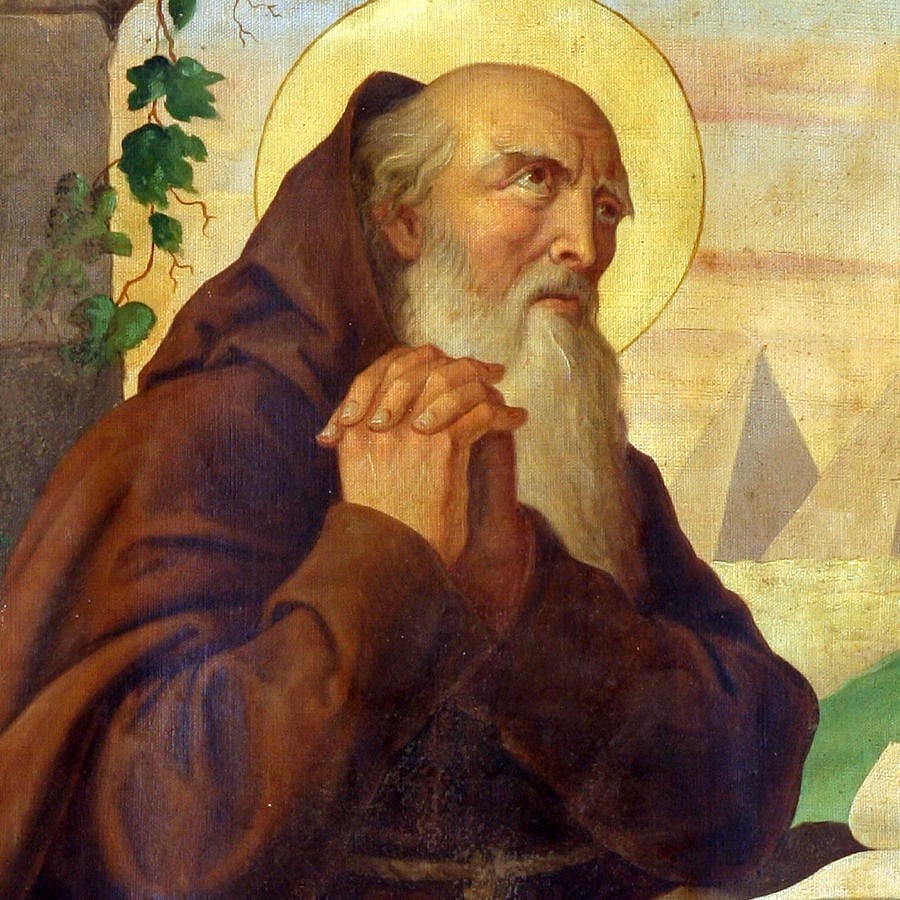
Saint of the Day – 27 October – Saint Odrian (c Died 563) Bishop of Waterford, Ireland, Abbot, Missionary. Born in County Meath, Ireland and died in c 563 at Iona Abbey, Scotland. Patronages – Silversmiths, the City and Diocese of Waterford, Ireland, Also known as – Odrioan of Waterford, Odrian of Iona, Otteran, Odhran, Odran, Oran, Oterano.
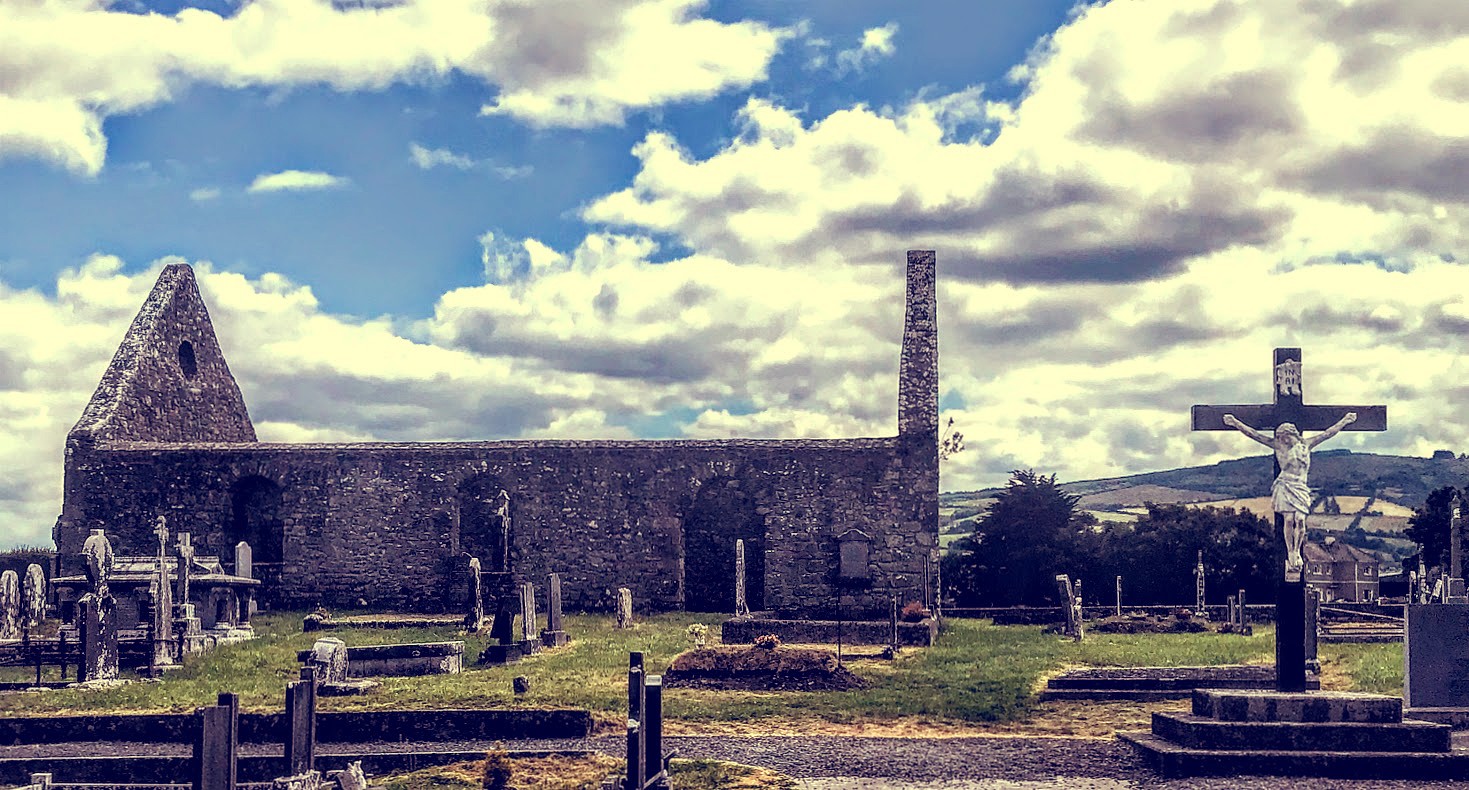
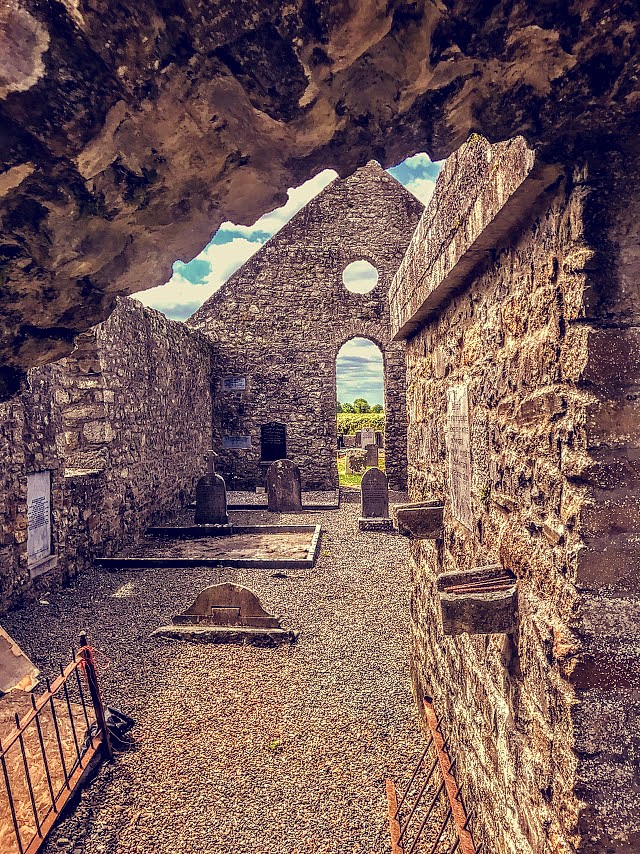
Odrian lived for over forty years in the area now known as Silvermines, in County Tipperary, Ireland, building a Church there in 520. According to Irish tradition, Odrian also served as Abbot of Meath and founded Lattreagh Monastery – images of the ruins below. He became one of the first Bishops of Waterford, Ireland. Waterford was part of an ancient deanery system at the time, ruled by an Abbot Bishop.
In 563, he was among the twelve who accompanied St Columba to the Scottish island of Iona, where he died and was buried. Columba is said to have seen devils and angels fight over Odran’s soul before it ascended into Heaven.
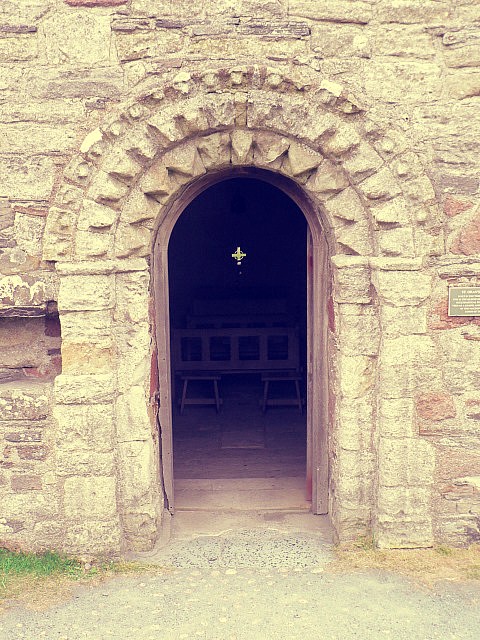
The oldest remaining Church on Iona is dedicated to Saint Odrian, see below. The surrounding cemetery is called Reilig Odhráin in his memory.
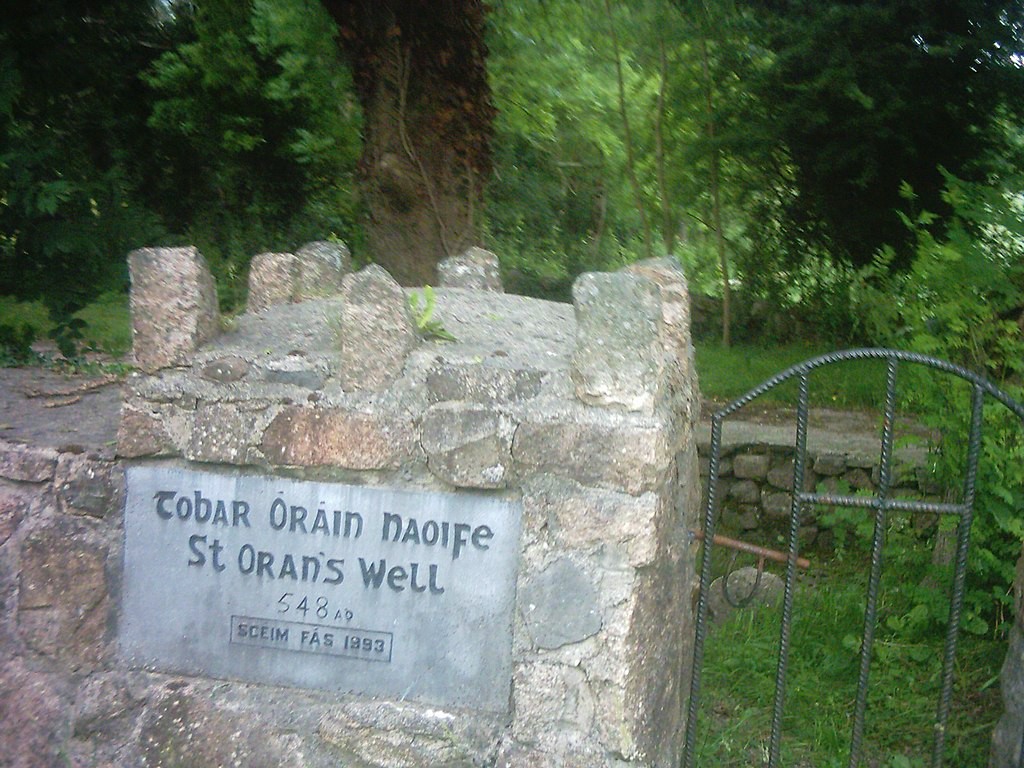
St Odrian is the Patron Saint of the Parish of Silvermines, County Tipperary. He was chosen by the Vikings as Patron of the City of Waterford in 1096 and later chosen as Patron of the Diocese. Below is St Odrian’s Well, Oranmore, County Galway.
Saint of the Day – 1 December – “Good St Eligius”- St Eligius of Noyon (c 588-660) Bishop, Goldsmith, Royal Courtier and adviser to the King, peace-maker, servant of the poor and of slaves. He founded Monasteries and donated his own property for the founding of the first female Monastery in the area. Born in c 588 at at Catelat, near Limoges, France and died on 1 December 660 at Noyon, France of high fever, Also known as – Alar, Elaere, Elar, Elard, Eler, Eloi, Eloy, Eloye, Iler, Loie, Loije, Loy, Additional Memorials – 24 June (translation of relics, and blessing of horses), 8 November as one of the Saints of the Diocese of Evry. Patronages – carpenters, cartwrights, clock/watch makers, coin collectors, craftsmen of all kinds, cutlers, gilders, goldsmiths, harness makers, horses especially sick horses, jewelers; jockeys; knife makers; labourers, locksmiths, metalworkers in general, miners, minters, Royal Electrical and Mechanical Engineers, Royal Australian Electrical and Mechanical Engineers, saddlers, tool makers, Veterinarians, against boils, against epidemics, against equine diseases, against poverty, against ulcers, agricultural workers, basket makers, Eloois-Vijve, Belgium, Sint-Eloois-Winkel, Belgium, Schinveld, Netherlands.
The Roman Martyrology states: “In Noyon in Neustria, now in France, Saint Eligius, Bishop, who, goldsmith and adviser to King Dagobert, after having contributed to the foundation of many Monasteries and built Sepulchral buildings of outstanding art and beauty in honour of the Saints, was raised to the See of Noyon and Tournai, where he zealously evangelised.”
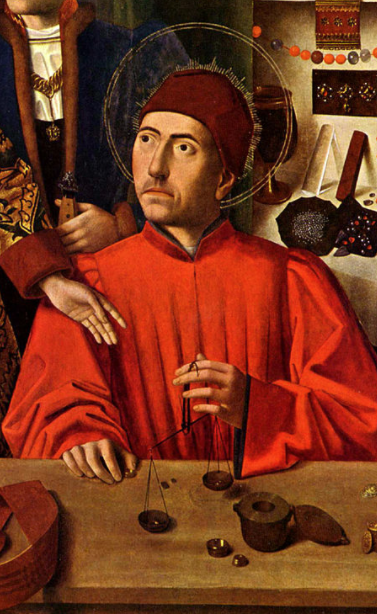
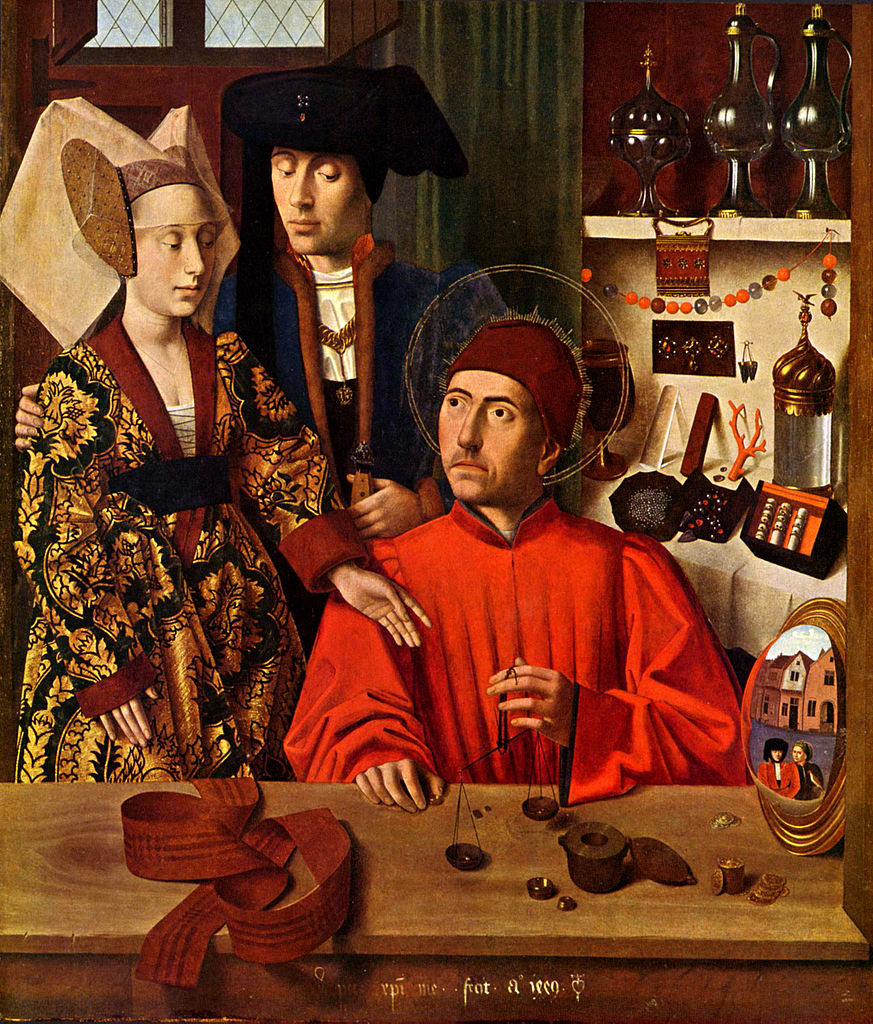
The Legend of Saint Eligius and Saint Godeberta, by Petrus Christus.
Eligius was born around 588, originally from Chaptelat in Limousin. He belonged to a wealthy rural family who worked their own land, unlike many landowners who left the cultivation to slaves. He left the care of the family farm to one of his brothers and entered trade as a Goldsmith apprentice in a shop in which the Royal Coin was hammered, according to ancient Roman methods. He saved some of the income from his family and gave it in charity to the poor and to slaves. He was as clever in enamel as in gold chiselling. These professional qualities went hand-in-hand with a scrupulous honesty. When they asked him to make a golden throne for King Clothair II (613-629), he made a second with the extra gold he did not want to hold for himself.
This gesture, extraordinary at the time, earned him the trust of the King, who asked him to reside in Paris as the Royal Goldsmith, a Royal Court Officer and Court Counselor. Named coinmaster in Marseilles, he would redeem many of the slaves sold at the Port. When Dagobert became King in 629, he was summoned to Paris where he directed the shops of the Frankish kingdom in which coin was minted, which were in Paris on the Quai des Orfèvres at the present-day Rue de la Monnaie. Among others, he had the task of embellishing the tombs of Saint Genevieve and Saint Denis.
He made Reliquaries for Saint Germain, Saint Severinus, Saint Martin and Saint Columba and numerous Liturgical objects for the new Abbey of Saint Denis. Thanks to his honesty, his frankness and his capacity for peaceable judgement, he came so far into the King’s trust, that the latter called him to himself, and entrusted him with a peace mission to the Breton king, King Judicael.
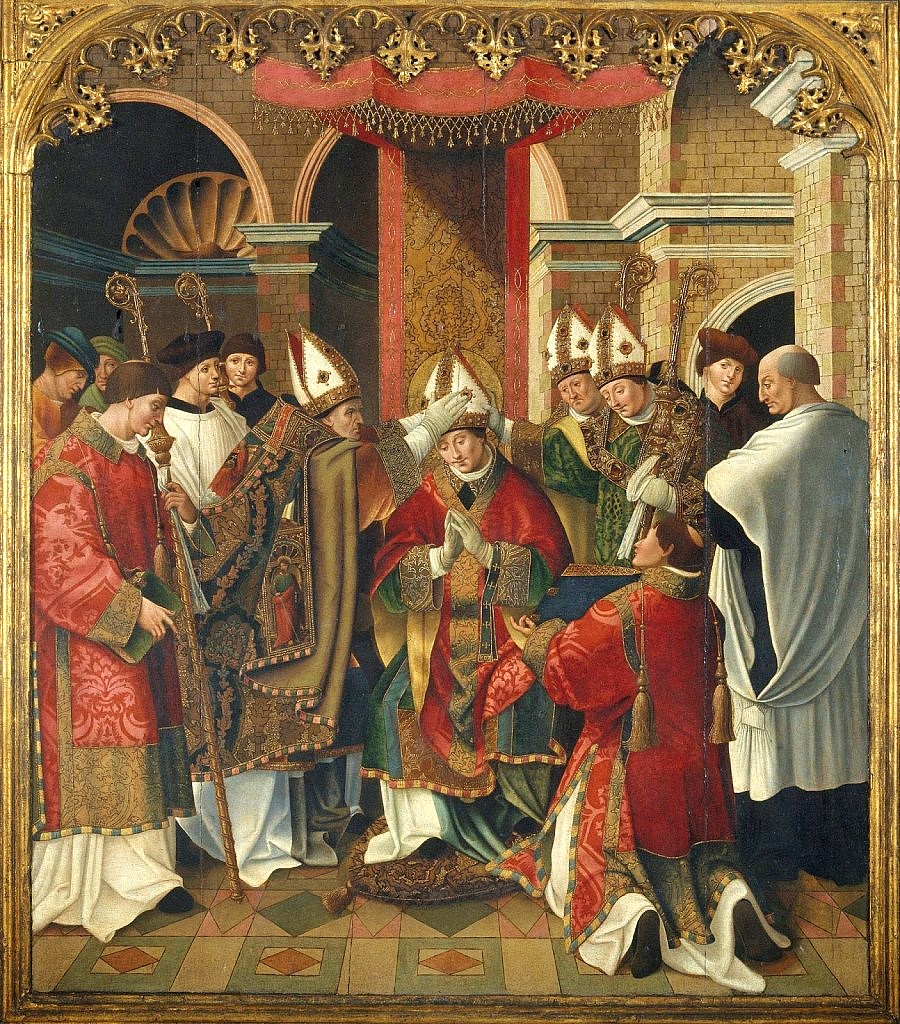
St Eligius Consecrated Bishop of Novon
Great was the piety and prayer life of this layman, who often attended monastic offices. In 632 he founded the Solignac Monastery south of Limoges. While Eligius still lived, the Monastery had grown to count more than 150 Monks under the two rules of St Benedict and St Colomba: – the Monastery was under the protection of the King and not under the authority of the Bishop. The religious fervour and the ardour of the Monks, made it one of the most illustrious Monasteries of the time. One year after the foundation of Solignac, Eligius founded, in his Ile de la Cité home, the first Monastic house for women religious in Paris, whose direction he entrusted to Saint Aurea.
A year after the death of King Dagobert, whom he had seen in the last moments of his life, Eligius left the Court together with Saint Audenus, who had served as adviser and Chancellor under Dagobert . Like Audenus, Eligius also entered formation and was Ordained Priest. On the same day, 13 May 641, they received the Episcopate: Saint Audenus to the See of Rouen; Eligius to that of Noyon and Tournai. Eligius put all his zeal into apostolic mission.
He died in 660, on the eve of his departure for Cahors. Holy Queen Bathilde travelled to greet him but she arrived too late.
There is a wonderful legend of St Eligius – the devil appeared to him dressed as a woman and he, Eligius, quickly grabbed him by the nose with his pincers. This colourful legend is depicted in two French Cathedrals (Angers and Le Mans) and in the Milan Cathedral, with the stained glass window by Niccolò da Varallo, a gift from the Milanese Goldsmiths in the fifteenth century. Ungfortunately, I cannot find any of these artworks.
In Paris, a Church was dedicated to him in the quarter of the blacksmiths, locksmiths and cabinet-makers. The Church of Saint Eligius was rebuilt in 1967. A church destroyed in 1793 was dedicated to him in the Rue des Orfèvres near the Hôtel de la Monnaie (the mint). In Notre Dame Cathedral, in the Chapel of Saint Ann, once home to the jewellers’ and goldsmiths’ confraternity, the jewellers and goldsmiths of Paris have placed his Statue and restored his Altar.
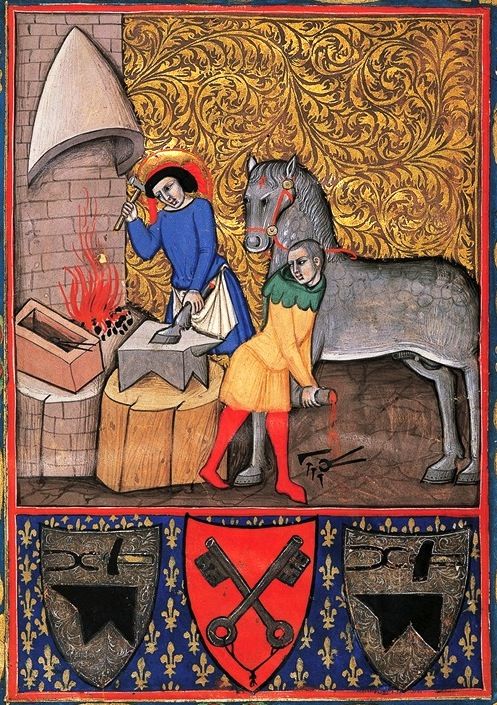
These are the Representations of this our little-known but o so holy and worthy Saint: • anvil • Bishop with a Crosier in his right hand, on the open palm of his left a miniature Church of chased gold • Bishop with a hammer, anvil and horseshoe • Bishop with a horse • Courtier • Goldsmith • hammer • horseshoe • man grasping a devil’s nose with pincers • man holding a Chalice and Goldsmith’s hammer • man holding a horse’s leg, which he detached from the horse in order to shoe it more easily • man shoeing a horse • man with hammer and crown near a smithy • man with hammer, anvil and Saint Anthony • pincers • man with Saint Godebertha of Noyon • man giving a ring to Saint Godebertha • man working as a Goldsmith. (catholicsaintsinfo.mobi).
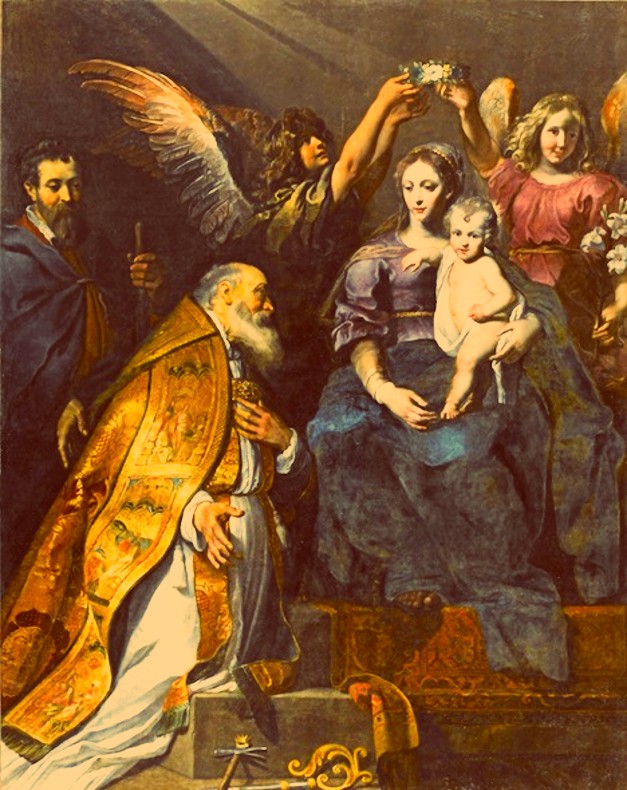
St Eligius at the feet of the Virgin and Child by Gerard Seghers
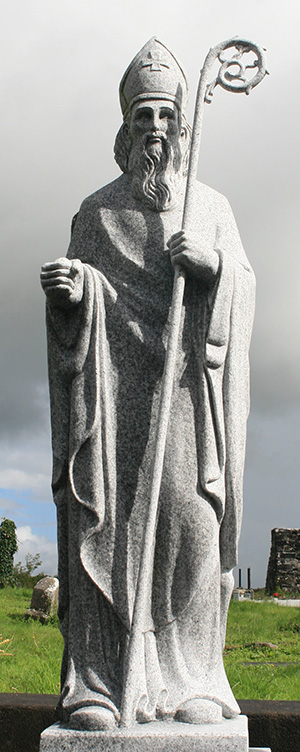
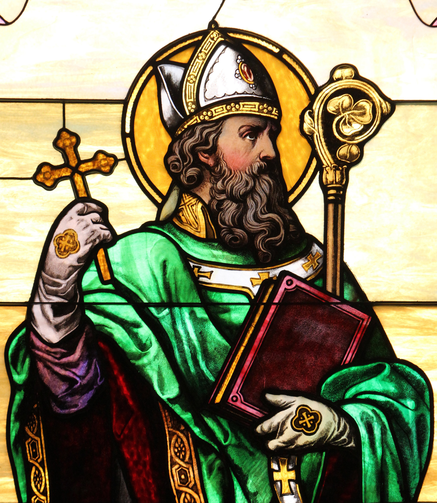
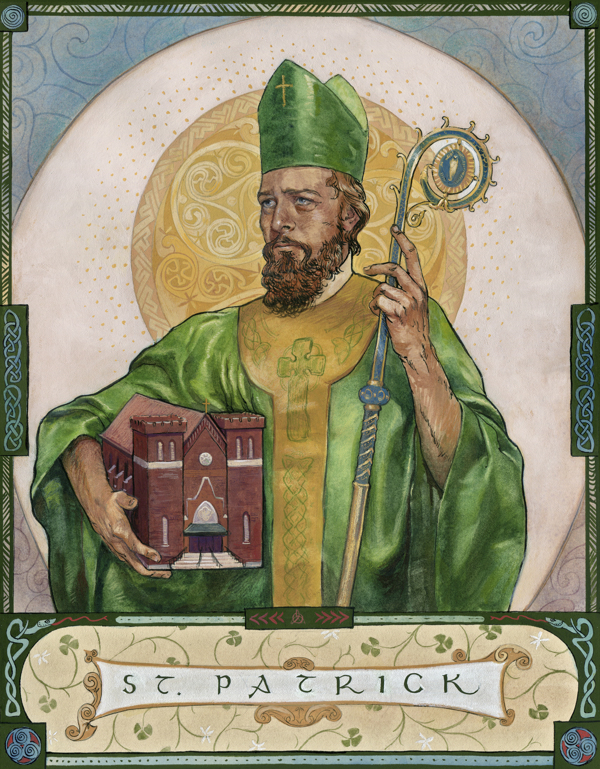
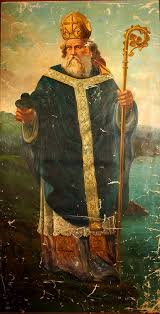
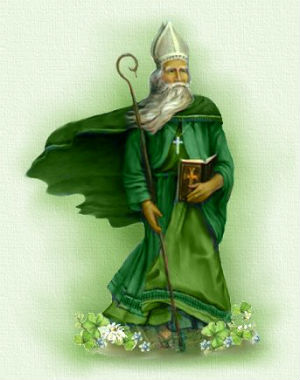
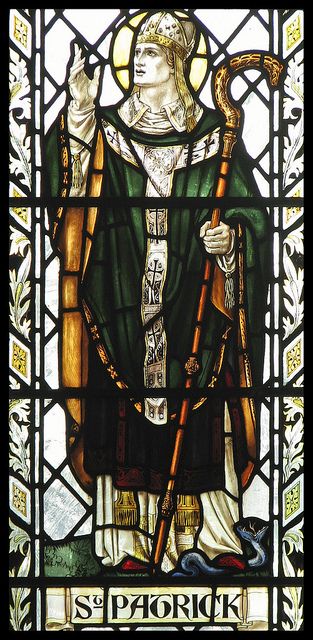
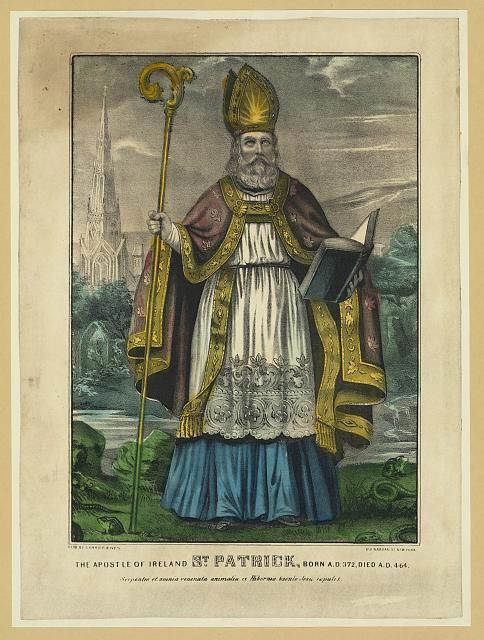
Saint of the Day – 17 March – St Patrick (c 386–461) “The Apostle of Ireland,” P riest, Bishop, Missionary.Patronages – against fear of snakes or ophidiophobia. ophidiophobics, against snake bites, against snakes, of barbers, hairdressers, barrel makers; coopers, blacksmiths, cattle, engineers, excluded people, miners, Ireland, Nigeria (1961), Loiza, Puerto Rico, 29 Diocese.
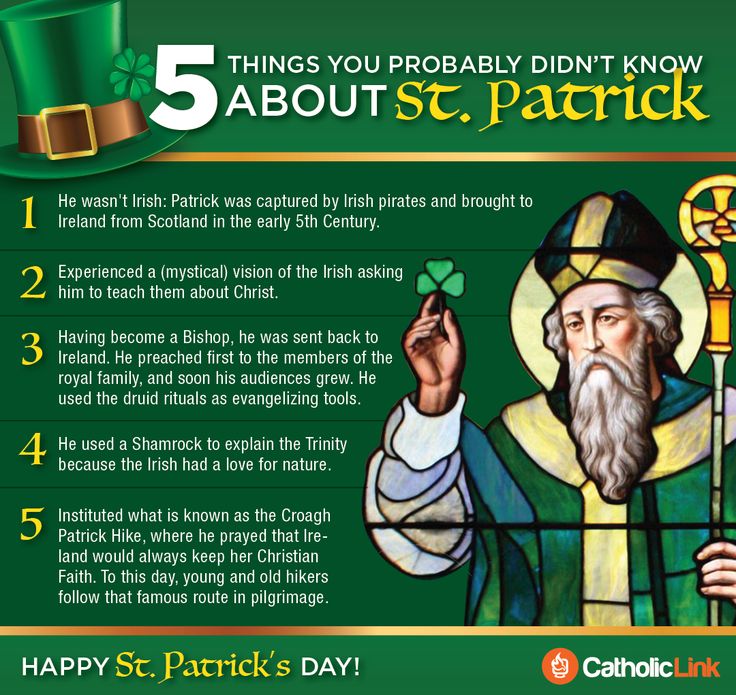
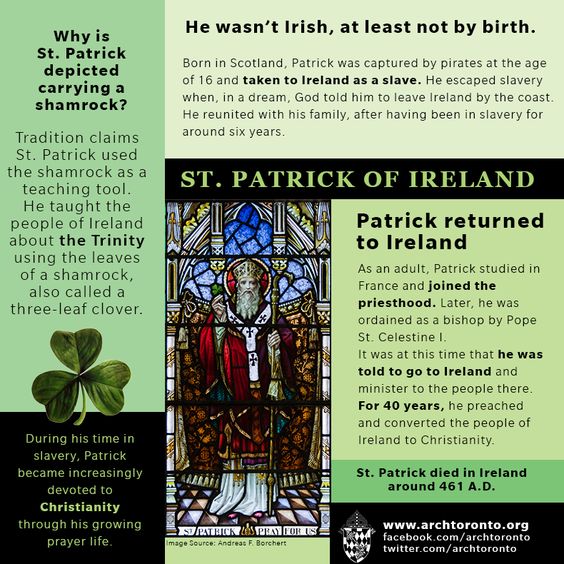
Although we think of Ireland when we remember St Patrick, he wasn not born in Ireland. He was born probably in Scotland but sources differ on this point – he might have been born in England or in France. His father was a Deacon and his grandfather had been a Priest.
But Patrick’s happy, carefree childhood life ended one day when crowds of strangers appeared on the horizon. They looked dangerous and frightening and they were. They were pirates and thieves, on their way to capture slaves to take back to Ireland. Patrick was one of those hundreds of captives. He was snatched from his family and his home. He was taken from all of his future hopes and dreams. Patrick was thrown on a ship, bound in chains and taken over the sea to Ireland. He was sixteen years old. For six years, Patrick was a slave in Ireland. He was put to work watching sheep and cattle. Patrick had just enough food to live on and when not working, he tried to rest in tiny huts which were damp and cold.
But something strange and wonderful happened in Ireland. All alone, frightened for his life and among people who worshiped trees and stones, Patrick opened his heart to God.
During those years, Patrick started to pray. He thought about God all the time and it gave him peace. He knew that no matter how much he was suffering, God loved him.
Eventually, Patrick escaped from slavery and travelled to France, which in those days was called Gaul. We are not sure exactly how much time Patrick spent in Gaul. But it was enough time for him to draw closer to God, as he prayed and studied in a Monastery. One night, deep in a dreamy vision, Patrick heard voices. He heard many voices, joined together, pleading with him. “Come back,” the voices cried, “come back and walk once more among us.” Patrick knew it was the Irish people calling him.
Strengthened by the courage that only God can give, Patrick went back. He returned to the very people who had stolen him from his family, worked him mercilessly as a slave and knew little, if anything, about the love of the true God.
Before he left Gaul, Patrick was made the Bishop of Ireland. He then travelled across the sea to teach Ireland about Jesus Christ. It wasn’t easy. The people of Ireland practiced pagan religions. They worshiped nature,and they practiced magic. They feared the spirits, they believed lived in the woods. The Irish people believed they could bring evil spirits down on those they wanted to harm.
Patrick had a big job ahead of him. He had to show a country full of students that there was no point in worshiping nature. Trees can’t forgive your sins or teach you how to love. The sun, as powerful as it is, could not have created the world. Patrick explained things using simple examples that people could easily understand. For example, he used the three-leaf clover to show people how there could be three persons in one God. Patrick preached to huge crowds and small villages. He preached to kings and princes. He preached in the open air and he preached in huts. Patrick never stopped preaching and he never stopped teaching. He couldn’t stop—the whole country of Ireland was his classroom and he couldn’t afford to miss even one student!
Soon, Patrick had help. Men became Priests and Monks. Women became Nuns. Wherever they lived, those Monks and Nuns settled in Monasteries and set up schools. More students were being reached every day. But, of course, the greatest help Patrick had was from God.
When he was young, Patrick had forgotten God but that would never happen again. He knew that God supported him in every step he took. God gave Patrick the courage to speak, even when Patrick was in danger of being hurt by pagan priests who didn’t want to lose their power over the people.
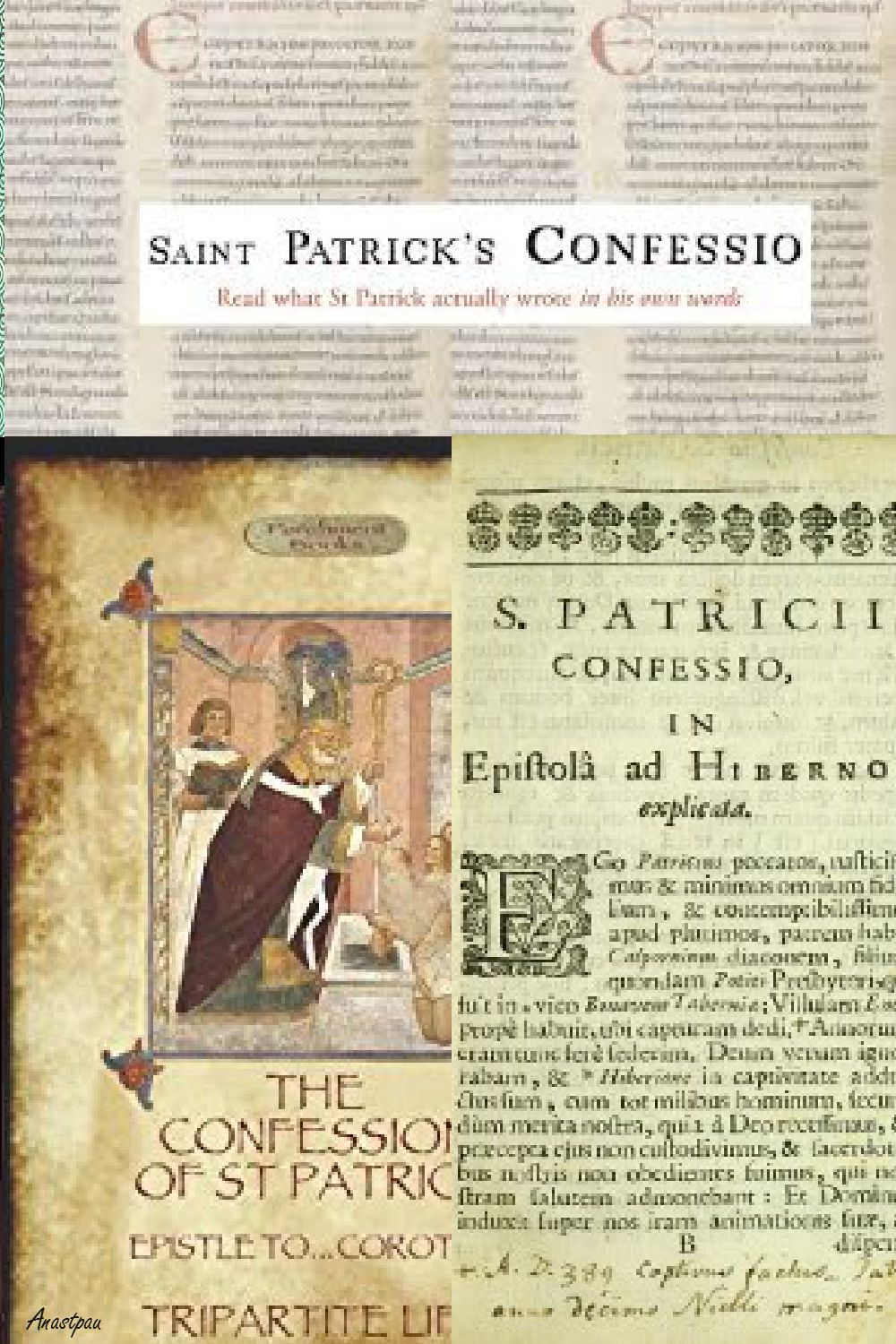
Patrick’s most famous prayer (excerpt below) shows us how close he was to God. It’s called “St. Patrick’s Breastplate.” A breastplate is the piece of armour that protects a soldier’s heart from harm. We have this prayer and his own story in one of the few certainly authentic writings of Patrick – his Confessio, which is above all an act of homage to God for having called Patrick, unworthy sinner, to the apostolate.
Christ with me, Christ before me,
Christ behind me, Christ within me,
Christ beneath me, Christ above me,
Christ at my right, Christ at my left.
Patrick banishes all snakes from Ireland
The absence of snakes in Ireland gave rise to the legend that they had all been banished by St. Patrick chasing them into the sea after they attacked him during a 40-day fast he was undertaking on top of a hill. This hagiographic theme draws on the Biblical account of the staff of the prophet Moses. In Exodus 7:8–7:13, Moses and Aaron use their staffs in their struggle with Pharaoh’s sorcerers, the staffs of each side morphing into snakes. Aaron’s snake-staff prevails by consuming the other snakes.
Patrick’s walking stick grows into a living tree
Some Irish legends involve the Oilliphéist, the Caoránach and the Copóg Phádraig. During his evangelising journey back to Ireland from his parent’s home at Birdoswald, he is understood to have carried with him an ash wood walking stick or staff. He thrust this stick into the ground wherever he was evangelising and at the place now known as Aspatria (ash of Patrick) the message of the dogma took so long to get through to the people there that the stick had taken root by the time he was ready to move on.
St Patrick died between 461 and 464 at Saul, County Down, Ireland of natural causes








 AnaStpaul
You must be logged in to post a comment.