Posted in Against Unexplained FEVER or HIGH Temperatures, HORSES - and sick horses, JOCKEYS, all HORSE-related workers, Of GARDENERS, Horticulturists, Farmers, SAINT of the DAY

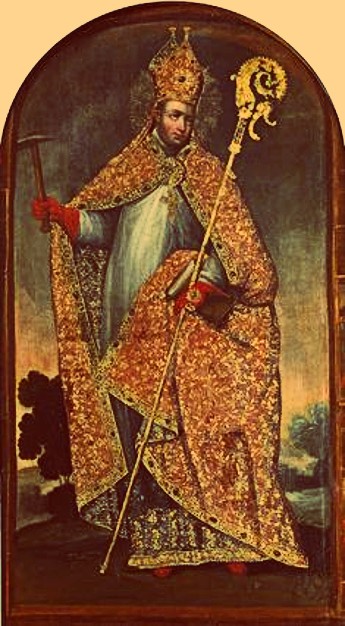
Saint of the Day – 9 February – Saint Teilo (6th Century) Bishop

Saint of the Day – 9 February – Saint Teilo (6th Century) Bishop of Llandaff, Wales. Welsh born in Penally, Wales and died at his See of Llandaff. Most Welsh sources confirm that Teilo was a close relative of St David, spiritual student of St Dyfrid and St Paulinus of Wales. Patronages – against fever, of horses, of apple orchards, farms and farmers, the City and Diocese of Cardiff (Capital of Wales), the Town of Saint-Thélo in Brittany, France . Also known as – Teilio, Teilus, Thelian, Teilan, Teilou, Teliou, Elidius, Eliud, Dillo, Dillon. The festival in honour of Saint Teilo is observed at different times of the year at different locations. In Wales and at Saint-Thélo, on 9 February; at Dol, on 29 November and on 25 November in the rest of the Churches in Brittany. Following 1752, however, his fair at Llandeilo in Wales, was not observed on the 9th but eleven days later on the 20th February or on the Sunday following that date.

St Teilo was probably born at Penally, near Tenby in Pembrokeshire, Wales, around the year 500. Although there are conflicting reports about his early life, he was thought to be a cousin of the national Patron of Wales, St David.

He received his education at institutions directed by Saints, one being St Dyfrid, who he succeeded as the Bishop of Llandaff, founding the very first Church in Llandaff, where the Cathedral stands today. He was also educated by St Paulinus of Wales at a place thought to be Whitland in Carmarthenshire. Here he is thought to have made contact with his cousin and became a close companion St David.

He travelled extensively, including Brittany, Rome and Jerusalem and to St David’s in north Pembrokeshire, where David founded his Monastery. Teilo too founded a Monasteries in Llandeilo (the name of the Town literally means ‘Church of St Teilo’), the place with which he is most associated and at Penally. Penally Abbey was located on the pilgrims’ trail to St David’s.

Legend has it that Teilo went on pilgrimage to Jerusalem with Saints David and St Padarn around the year 518. Three seats, one decorated ornately in gold, one of bronze and one of cedar, were erected in their honour in readiness for their Ordination as Bishops by the Bishop of Jerusalem. The legend has it that the humble Teilo chose the simple wooden seat.

A plague of Yellow Fever devastated parts of Wales in the year 547. Teilo and his followers fled, firstly to Cornwall and then to Brittany, where they were welcomed by St Samson of Dol. It is thought that Teilo and Samson planted a grove of apple-bearing trees between Dol and Cai, where the apple groves are still known as the groves of Teilo and Samson and still bear fruit today.
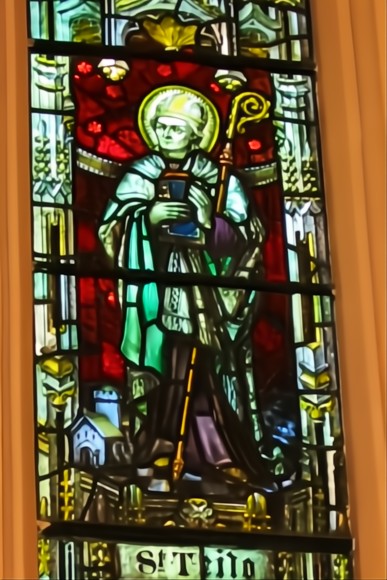
At Landaul in Brittany, Teilo is considered the Patron Saint of apple trees and the town of Saint-Thélo in Brittany which bears his name. At St. Teilo’s Church, one of the stained glass windows, shows an apple tree in honour of St Teilo.

Teilo returned from Brittany to Llandaff. He died on 9 February, most likely in the year 560. After his death he became one of the most venerated Saints in Wales. Several sites in Wales claim to house his remains. A tomb of St Teilo is located in Llandaff Cathedral while a part of his skull is kept in the South Chapel.

At least 25 Churches and schools in Wales, Brittany, Cornwall and Devon are dedicated to him.
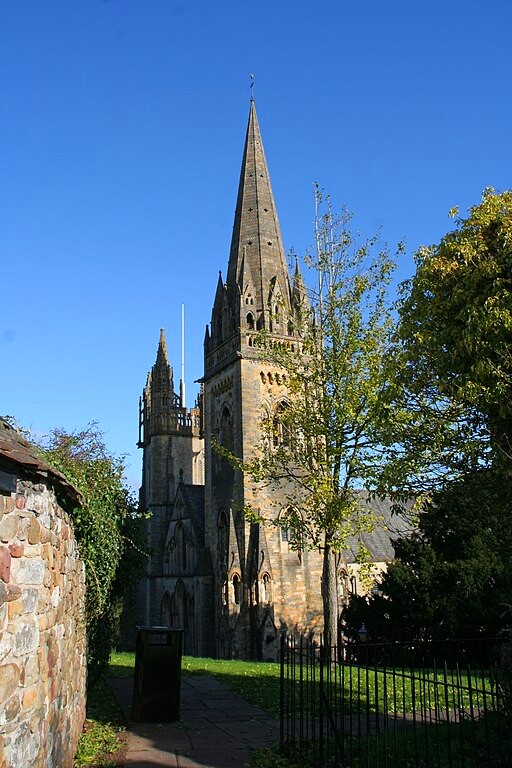
Llandaff Cathedral, Wales
Posted in DYING / LAST WORDS, HORSES - and sick horses, JOCKEYS, all HORSE-related workers, Of Catholic Education, Students, Schools, Colleges etc, SAINT of the DAY, TEACHERS, LECTURERS, INSTRUCTORS

Saint/s of the Day – 13 August – Saints Hippolytus and Cassian (Died c235) Martyrs.

Saint/s of the Day – 13 August – Saints Hippolytus and Cassian (Died c235) Martyrs. St Hippolytus is the Patron Saint of horses, prison guards, officers and workers’ In Austria: Sankt Pölten, Zell am See. In Italy: Bardonecchia, Bibbiena, Cassano Valcuvia, Fogliano di Cascia, Laterina, Rogeno.
St Cassian is the Patron Saint of parish clerks and secretaries, of stenographers (proclaimed on 23 December 1952 by Pope Pius XII), students, teachers, typists. In Italy – Bibbiena, Cassano Valcuvia, Comacchio, Imola, La Salle, Laterina, Macherio, Rogeno, San Casciano dei Bagni, San Casciano in Val di Pesa, San Cassiano a Vico, San Cassiano di Controne, San Cassiano di Moriano, Trecate, the Diocese of Bolzano-Bressanone, the Diocese of Brixenand Imola. Of Mexico City, Mexico, Of Las Galletas, Tenerife, Spain.

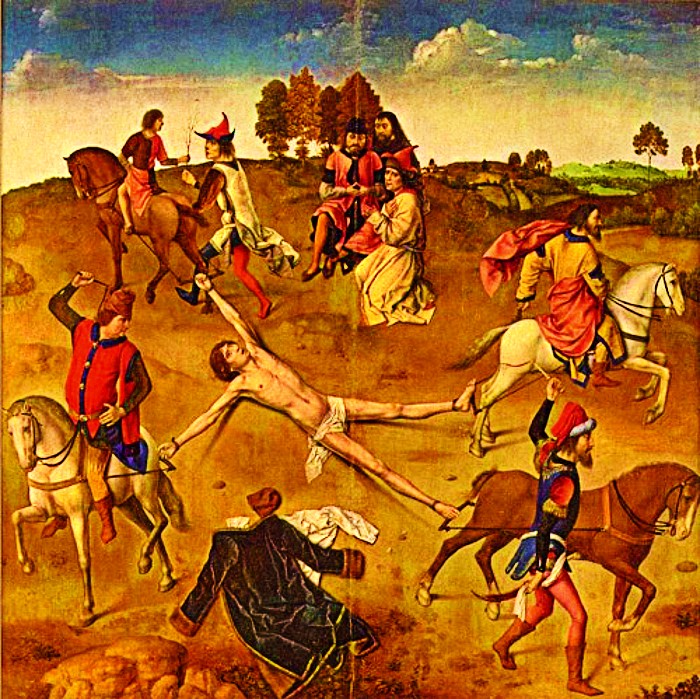
The Roman Martyrology reads today: “At Rome, blessed Hippolytus, Martyr, who gloriously confessed the Faith, under the Emperor Decius {mpt Valerian}. After enduring other torments, he was tied by the feet to the necks of wild horses and being cruelly dragged through briars and brambles and having all his body lacerated, he yielded his spirit.
AND:
“At Imola, the birthday of St Cassian, Martyr. As he refused to worship idols, the persecutor called the boys whom the Saint taught and who hated him, giving them leave to kill him. The torment suffered by the Martyr was the more grievious, as the hand which inflicted it by reason of its weakness, rendered death more tardy.

St Hippolytus and St Cassian, (Died c235) Martyrs
By Fr Francis Xavier Weninger SJ (1805-1888)

St Hippolytus, an Officer of the body-guard of the Emperor Decius, had been born in the darkness of idolatry but he had become a Christian, with all his household, in consequence of witnessing the many miracles which St Lawrence performedwhile in the prison under his charge.

The Martyrdom of St Hippolytus

He had also been present when the Saint, lying on the red-hot gridiron, endured the most terrible tortures. At the sight of the heroism of St Lawrence, he was filled with the desire to announce himself a Christian but he was prevented by St Lawrence. But when this Martyr had gloriously ended his combat, Hippolytus, with the assistance of a Priest, named Justinus, buried the sacred remains with great devotion and veneration. The Emperor on being informed of it, had Hippolytus seized and brought before him. He asked him if it was true that he had become a Christian? Hippolytus answered firmly: “Yes, I am a Christian and, moreover, resolved to die such.” The emperor, who had always highly esteemed him, endeavoured, first by promises and then by menaces, to induce him to forsake Christ. As, however, all was unavailing, he caused him to be tortured.

He was accordingly stretched on the ground, whipped with scourges and beaten with clubs so fearfully that it was believed he could not survive. But God, by a visible miracle, prolonged his life. Keeping his eyes fixed upon Heaven, he frequently repeated: “I am a Christian, I suffer for Christ’s sake.

After having been tormented for a long time, he was cast into prison and the Prefect received the order to behead him. Before executing this order, however, he went to the house of Hippolytus to secure his property. Finding the entire household had become Christians, he took them beyond the gates of the City and had them beheaded. Concordia, an old and holy matron, who had been Hippolytus’ nurse, was scourged until she expired because she encouraged the others to remain firm in their faith.

At last, Hippolytus was taken out of prison and fastened to the necks of two horses and dragged by them until he was torn to pieces and his heroic soul was received into the Presence of Him Whom he had so fearlessly confessed.

On the same day, although at another place, St Cassian suffered a Martyrdom of unprecedented cruelty. This Saint, was the Bishop of Brescia but had been banished from his See on account of his faith.

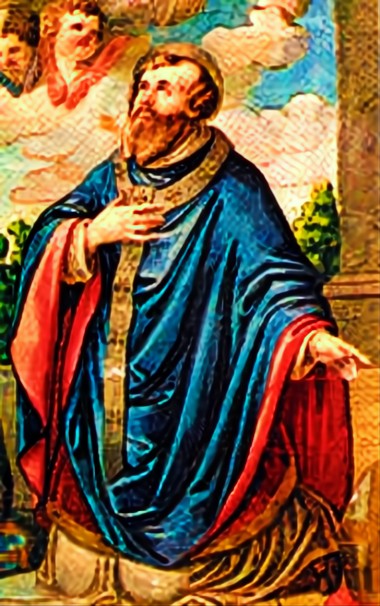
St Cassian

He intended to go to Rome and offer the Pope his services for the salvation of souls in some other place. On his way, he changed his mind and taking up his residence at Imola, a Town in Italy, he resolved to teach children to read and write, hoping that occasion would not be wanting to do good. In this apparently humble position, he was no less zealous than he had been in the administration of his Diocese. He taught the children with love and gentleness and endeavoured to inspire them with respect for the Christian faith, fear and horror of sin and love of virtue and piety.

He continued in this occupation with great zeal for some years, to the great benefit of young and old. Suddenly a terrible persecution of the Christians arose. Cassian was one of the first who were taken prisoners. The tyrant commanded him to sacrifice to the gods. The holy Bishop and teacher refused, as might have been expected and tried to convince the Judge of his fearful blindness in worshipping dumb idols or making gods of godless men.

The tyrant, furious at his arguments, ordered the executioners to strip him of his clothes and tie his hands behind his back and leave him exposed to the mercy of the children whom he had taken such pains to teach. The children, who had been taught that Cassian was a magician and consequently must die, a most painful death, took their sharp iron pencils with which, in those days, they wrote upon their wax tablets and pierced him with them till the blood ran profusely from his veins. This torture lasted long and was extremely painful. The Saint, however, never complained of the ingratitude of his pupils, nor gave a sign of impatience but praised and thanked the Lord until his soul went to Heaven to receive the Crown of Martyrdom.

Posted in HORSES - and sick horses, JOCKEYS, all HORSE-related workers, SAINT of the DAY

Saint of the Day – 30 April – Saint Gualfardus of Augsburg (1070-1127)

Saint of the Day – 30 April – Saint Gualfardus of Augsburg (1070-1127) Hermit, Monk, Miracle-worker. Born in 1070 at Augsburg, Germany and died on 30 April 1127 at San Salvatore Priory, Verona, Italy of natural causes. Patronages – harness makers, saddlers. Also known as – Gualfardus of Verona, Gualfardo of … Wolfhard of… (Germanic version of his name). Additional Memorials – 1 May in Verona and 27 October (translation of relics).

The Roman Martyrology states today: “In Verona, Saint Gualfardo, who, a saddler from Germany, after many years spent in solitude, was welcomed in this City by the Monks of San Salvatore.

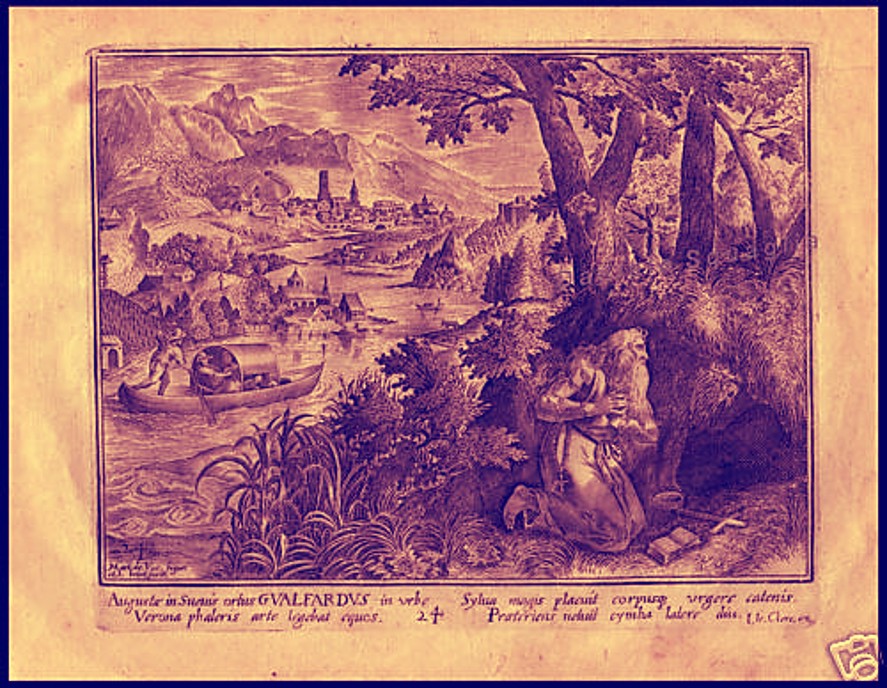
St Gualfardus by I Brint (1620)

A saddle-maker by trade, Gualfardus, obeying his inner desire for a life entirely dedicated to God, after spending some time in Verona, withdrew into solitude, in a nearby place. known as all’Adige.

Following the example of St Romuald, Founder of the Camaldolese Order of Hermits, at Mount Corona, Gualfardus spent twenty years in hiding in this solitary place, in prayer to God. Then some boatmen, who were sailing on the river discovered him and it wasn’t long before others sought him out, thus forcing him to move to Verona to the Church of St Peter.

After a while, he passed to the Church of the Blessed Trinity outside the city walls and was finally received with great joy as an oblate by the Camaldolese Monks of St Salvatore di Corteregia in Verona. There, Gualfardus remained for ten years until his death.

Gualfardus reached the highest degrees of contemplation and holiness, with incessant prayer, night vigils, fasts, penances; all interwoven with serenity, modesty and prudence, which reflected peace and intimate union with God.

A contemporary Monk, who was the author of his first ‘Vita,’ described the fervour with which Gualfardus conversed with the faithful and with the Camaldolese Monks and the many miracles obtained by Gualfardus both in life and after his death.

He died in the Convent of Verona on 30 April 1127. The Veronese celebrate his feast on 1 May, as protector of saddlers, while the Camaldolese Order and the Roman Martyrology remember him on 30 April, the anniversary of his birth into heaven.

Posted in HORSES - and sick horses, JOCKEYS, all HORSE-related workers, SAINT of the DAY

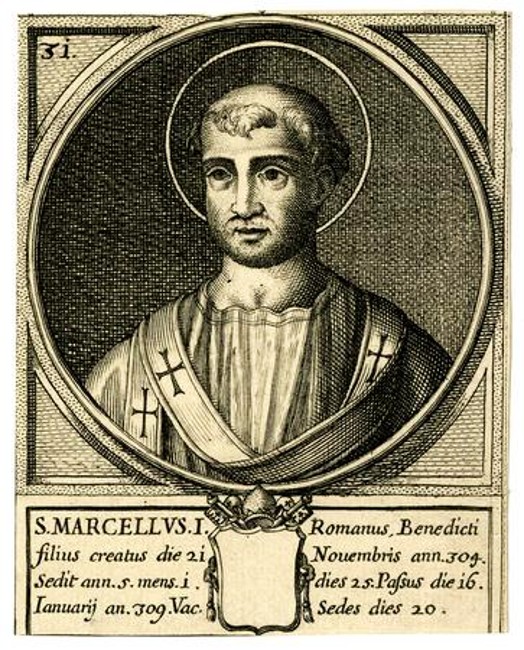
Saint of the Day – 16 January – Saint Pope Marcellus I (Died 309)

Saint of the Day – 16 January – Saint Pope Marcellus I (Died 309) Papal Ascension May-June 308. Also known as – Marcel, Marcelo. Patronage – Stablemen.

Nothing of Marcellus’ life before his papacy has survived the centuries. He became Pope at the end of the persecutions of Diocletian in aound 3089. The persecutions had disrupted the Church so much, that there had been a gap of over a year without a Pope.

Once he was elected, he faced several challenges, including reconsituting the clergy, which had been decimated and whose remnant had practiced their vocation only covertly and with the expectation of martyrdom. He worked hard to recover and welcome back all who had denied the faith in order to keep from being murdered.

When a group of the apostatised, known as the Lapsi, refused to do penance, Marcellus refused to allow their return to the Church. Some of these caused such civil disruption that Emperor Maxentius exiled the Pope in order to settle the matter.

Legend says that Marcellus was forced to work as a stable slave as punishment, however we do know that he died of the terrible conditions he suffered in exile and is considered a Martyr because of that.

The account in the Liber Pontificalis continues:
But although he served many days in the stable, he did not cease his service to the Lord with prayers and fastings. Moreover, in the ninth month, all his clergy came by night and removed him by night from the stable. A certain matron and widow whose name was Lucina, who had lived with her husband Marcus for 15 years and had been 19 years a widow, received the blessed man. And she dedicated her house as a Church in the name of the blessed Marcellus and there day and night the Lord Jesus Christ was confessed with hymns and prayers.

This is the Church known in modern times as San Lorenzo in Lucina where a Basilica was subsequently built in the mid-4th century, restored and embellished numerous times throughout the centuries. Traces of the original Roman structure may be seen amidst the foundations even to this day.

The Liber Pontificalis continues:
But Maxentius heard of it and sent and seized the blessed Marcellus a second time and gave orders that in that very Church, boards should be laid down and the animals of the stable should be collected and kept there and the blessed Marcellus should tend them. And he died in the service of the animals, clad only in a hair shirt.

And the blessed Lucina took is body and he was buried in the cemetery of Priscilla on the Via Salaria, 16 January.

And the Bishopric was empty 20 days.

Lucina herself was condemned by proscription.

The remains of the Martyred Pope were later transferred to the Basilica of San Marcello al Corso in Rome. An epitaph of Pope Saint Marcellus, written by Pope Damasus about 80 years after Marcellus’s Martyrdom, was found in the cemetery of Priscilla.

Posted in Against EPIDEMICS, GOLDSMITHS, SILVERSMITHS, GILDERS, MINERS, JEWELLERS, CLOCK/WATCH-MAKERS, METAL CRAFTSMEN, HORSES - and sick horses, JOCKEYS, all HORSE-related workers, Of BEGGARS, the POOR, against POVERTY, PATRONAGE-ENGINEERS, Electrical, Mechanical etc, SAINT of the DAY

Saint of the Day – 1 December – “Good St Eligius” – St Eligius of Noyon (c 588-660)

Saint of the Day – 1 December – “Good St Eligius”- St Eligius of Noyon (c 588-660) Bishop, Goldsmith, Royal Courtier and adviser to the King, peace-maker, servant of the poor and of slaves. He founded Monasteries and donated his own property for the founding of the first female Monastery in the area. Born in c 588 at at Catelat, near Limoges, France and died on 1 December 660 at Noyon, France of high fever, Also known as – Alar, Elaere, Elar, Elard, Eler, Eloi, Eloy, Eloye, Iler, Loie, Loije, Loy, Additional Memorials – 24 June (translation of relics, and blessing of horses), 8 November as one of the Saints of the Diocese of Evry. Patronages – carpenters, cartwrights, clock/watch makers, coin collectors, craftsmen of all kinds, cutlers, gilders, goldsmiths, harness makers, horses especially sick horses, jewelers; jockeys; knife makers; labourers, locksmiths, metalworkers in general, miners, minters, Royal Electrical and Mechanical Engineers, Royal Australian Electrical and Mechanical Engineers, saddlers, tool makers, Veterinarians, against boils, against epidemics, against equine diseases, against poverty, against ulcers, agricultural workers, basket makers, Eloois-Vijve, Belgium, Sint-Eloois-Winkel, Belgium,
Schinveld, Netherlands.

The Roman Martyrology states: “In Noyon in Neustria, now in France, Saint Eligius, Bishop, who, goldsmith and adviser to King Dagobert, after having contributed to the foundation of many Monasteries and built Sepulchral buildings of outstanding art and beauty in honour of the Saints, was raised to the See of Noyon and Tournai, where he zealously evangelised.”

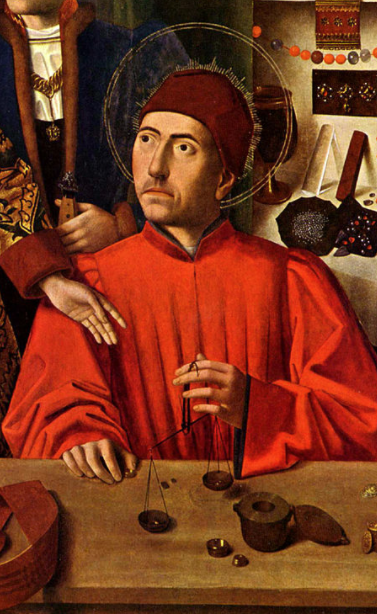
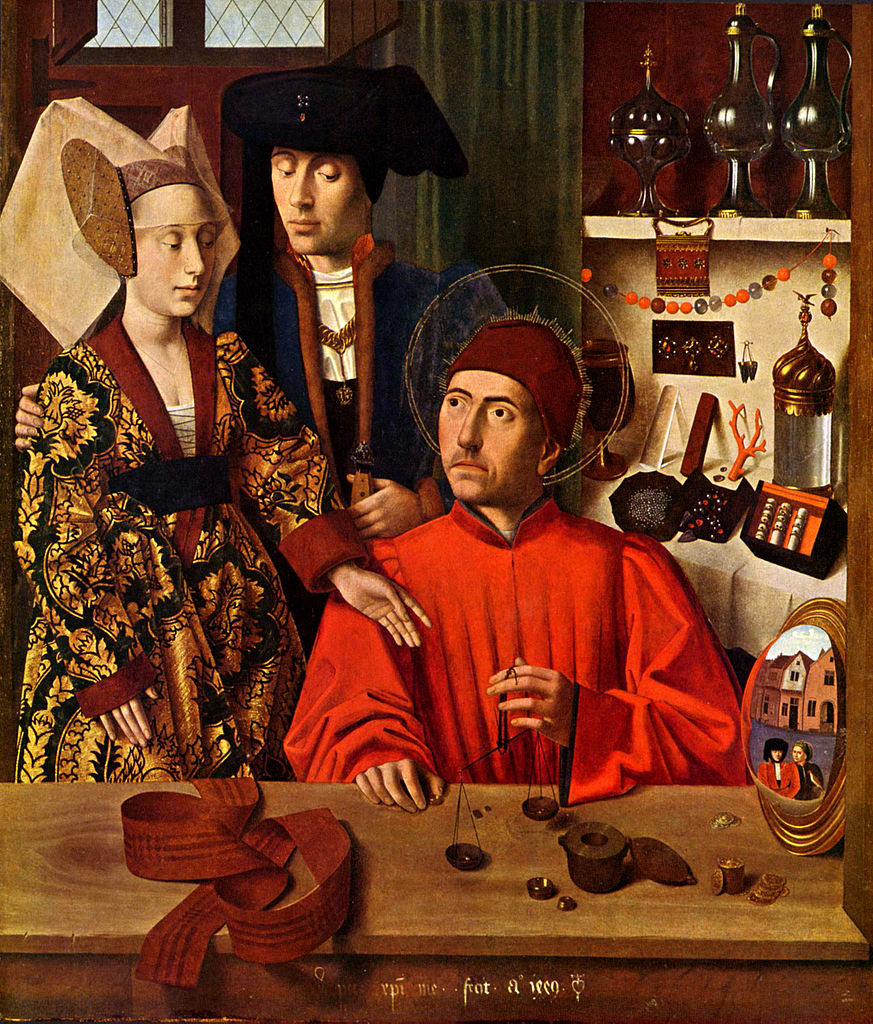
The Legend of Saint Eligius and Saint Godeberta, by Petrus Christus.

Eligius was born around 588, originally from Chaptelat in Limousin. He belonged to a wealthy rural family who worked their own land, unlike many landowners who left the cultivation to slaves. He left the care of the family farm to one of his brothers and entered trade as a Goldsmith apprentice in a shop in which the Royal Coin was hammered, according to ancient Roman methods. He saved some of the income from his family and gave it in charity to the poor and to slaves. He was as clever in enamel as in gold chiselling. These professional qualities went hand-in-hand with a scrupulous honesty. When they asked him to make a golden throne for King Clothair II (613-629), he made a second with the extra gold he did not want to hold for himself.

This gesture, extraordinary at the time, earned him the trust of the King, who asked him to reside in Paris as the Royal Goldsmith, a Royal Court Officer and Court Counselor. Named coinmaster in Marseilles, he would redeem many of the slaves sold at the Port. When Dagobert became King in 629, he was summoned to Paris where he directed the shops of the Frankish kingdom in which coin was minted, which were in Paris on the Quai des Orfèvres at the present-day Rue de la Monnaie. Among others, he had the task of embellishing the tombs of Saint Genevieve and Saint Denis.

He made Reliquaries for Saint Germain, Saint Severinus, Saint Martin and Saint Columba and numerous Liturgical objects for the new Abbey of Saint Denis. Thanks to his honesty, his frankness and his capacity for peaceable judgement, he came so far into the King’s trust, that the latter called him to himself, and entrusted him with a peace mission to the Breton king, King Judicael.

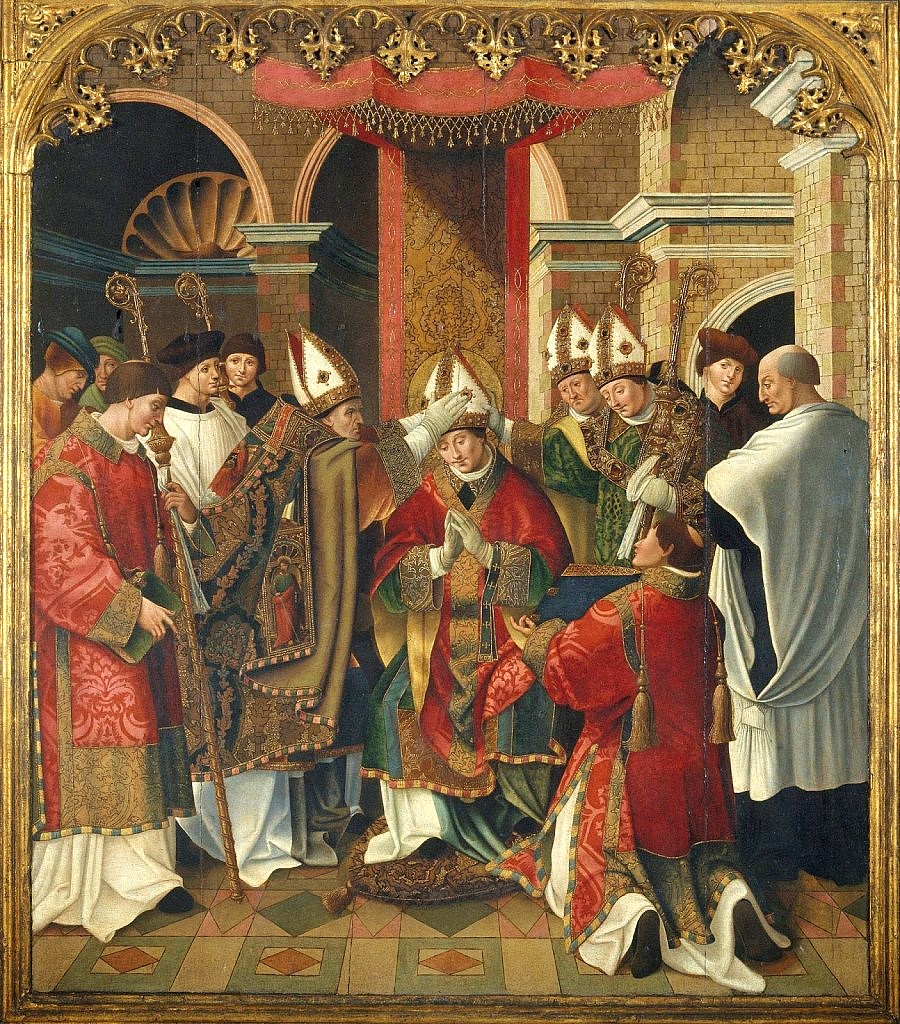
St Eligius Consecrated Bishop of Novon

Great was the piety and prayer life of this layman, who often attended monastic offices. In 632 he founded the Solignac Monastery south of Limoges. While Eligius still lived, the Monastery had grown to count more than 150 Monks under the two rules of St Benedict and St Colomba: – the Monastery was under the protection of the King and not under the authority of the Bishop. The religious fervour and the ardour of the Monks, made it one of the most illustrious Monasteries of the time. One year after the foundation of Solignac, Eligius founded, in his Ile de la Cité home, the first Monastic house for women religious in Paris, whose direction he entrusted to Saint Aurea.

A year after the death of King Dagobert, whom he had seen in the last moments of his life, Eligius left the Court together with Saint Audenus, who had served as adviser and Chancellor under Dagobert . Like Audenus, Eligius also entered formation and was Ordained Priest. On the same day, 13 May 641, they received the Episcopate: Saint Audenus to the See of Rouen; Eligius to that of Noyon and Tournai. Eligius put all his zeal into apostolic mission.

He died in 660, on the eve of his departure for Cahors. Holy Queen Bathilde travelled to greet him but she arrived too late.

There is a wonderful legend of St Eligius – the devil appeared to him dressed as a woman and he, Eligius, quickly grabbed him by the nose with his pincers. This colourful legend is depicted in two French Cathedrals (Angers and Le Mans) and in the Milan Cathedral, with the stained glass window by Niccolò da Varallo, a gift from the Milanese Goldsmiths in the fifteenth century. Ungfortunately, I cannot find any of these artworks.

In Paris, a Church was dedicated to him in the quarter of the blacksmiths, locksmiths and cabinet-makers. The Church of Saint Eligius was rebuilt in 1967. A church destroyed in 1793 was dedicated to him in the Rue des Orfèvres near the Hôtel de la Monnaie (the mint). In Notre Dame Cathedral, in the Chapel of Saint Ann, once home to the jewellers’ and goldsmiths’ confraternity, the jewellers and goldsmiths of Paris have placed his Statue and restored his Altar.

These are the Representations of this our little-known but o so holy and worthy Saint:
• anvil
• Bishop with a Crosier in his right hand, on the open palm of his left a miniature Church of chased gold
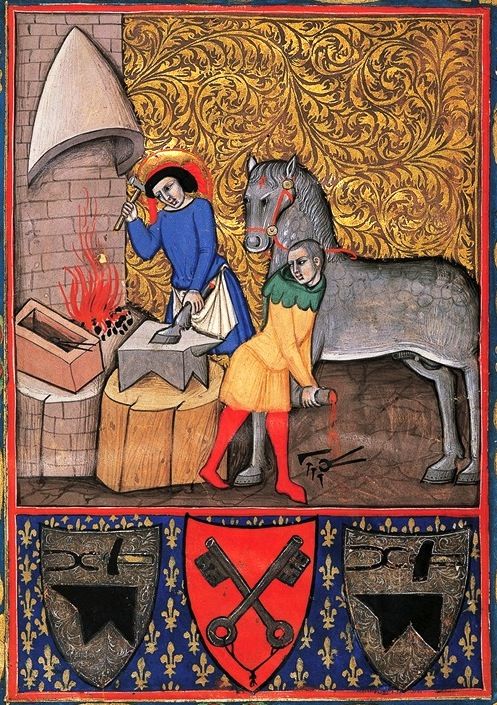
• Bishop with a hammer, anvil and horseshoe
• Bishop with a horse
• Courtier
• Goldsmith
• hammer
• horseshoe
• man grasping a devil’s nose with pincers
• man holding a Chalice and Goldsmith’s hammer
• man holding a horse’s leg, which he detached from the horse in order to shoe it more easily
• man shoeing a horse
• man with hammer and crown near a smithy
• man with hammer, anvil and Saint Anthony
• pincers
• man with Saint Godebertha of Noyon
• man giving a ring to Saint Godebertha
• man working as a Goldsmith.
(catholicsaintsinfo.mobi).

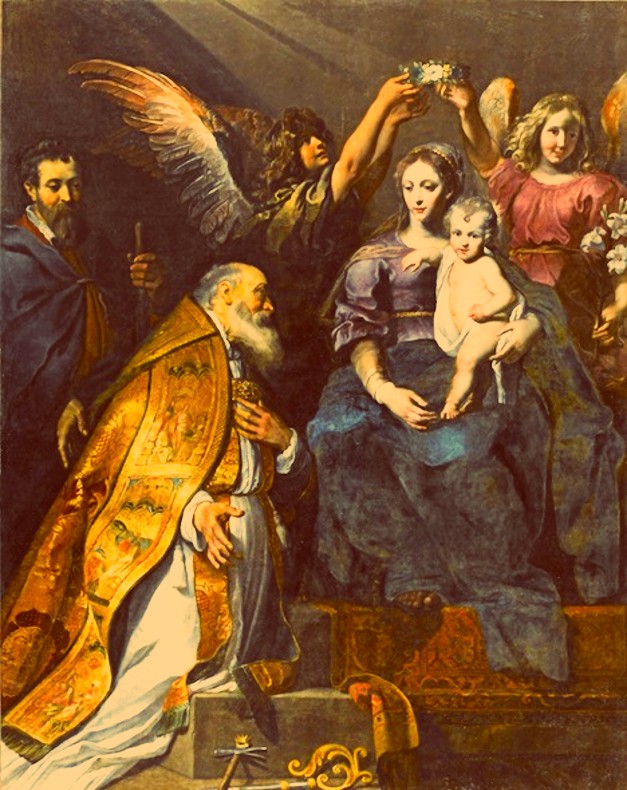
St Eligius at the feet of the Virgin and Child by Gerard Seghers
Posted in Against EPIDEMICS, HORSES - and sick horses, JOCKEYS, all HORSE-related workers, Of GARDENERS, Horticulturists, Farmers, PATRONAGE - POLICE, SOLDIERS, SAINT of the DAY, SKIN DISEASES, RASHES

Saint of the Day – 23 April – St George (died c 303) Martyr, one of the Fourteen Holy Helpers

Saint of the Day – 23 April – St George (died c 303) also known as St George of Lydda,  Jirí, Jordi, Zorzo,  Victory Bringer – Martyr and Soldier.   St George was born c 256-285 in Palestine and was tortured and beheaded to death in c 303 in Nicomedia, Bithynia, Roman Empire.   Patronages – • against herpes • against leprosy • against plague • against skin diseases • against skin rashes • against syphilis • agricultural workers • Aragon • archers • armourers • Boy Scouts • butchers • Canada • Cappadocia • Catalonia • cavalry • chivalry • Crusaders • England • equestrians • Ethiopia • farmers • field hands • field workers • Georgia • Germany • Greece • halberdiers • horsemen • horses  • knights • lepers • Lithuania • Malta • Montenegro • Order of the Garter • Palestine • Palestinian Christians • Portugal • riders • Romanian Army • saddle makers • saddlers • Serbia • sheep • shepherds • soldiers • Teutonic Knights • 2 Dioceses • 181 Cities.   He is one of the Fourteen Holy Helpers.

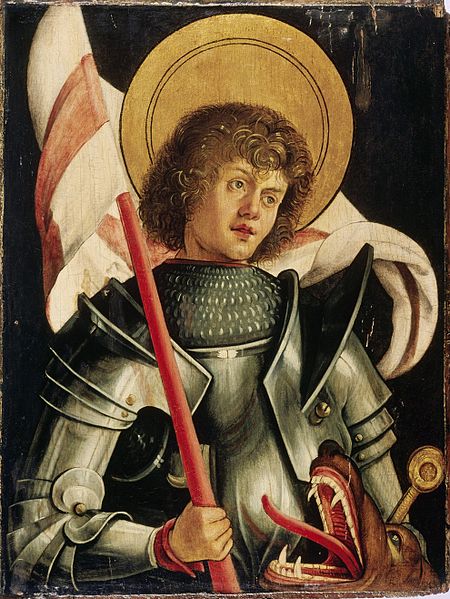
450px-Hans_Süß_von_Kulmbach_(zugeschr.)_-_Heiliger_Georg

St George was a Roman soldier of Greek origin and officer in the Guard of Roman emperor Diocletian, who was sentenced to death for refusing to recant his Christian faith.   As a Christian Martyr, he later became one of the most venerated saints in Christianity and was especially venerated by the Crusaders.   George’s parents were Christians of Greek background, his father Gerontius was a Roman army official from Cappadocia and his mother Polychronia was a Christian and a Greek native from Lydda in the Roman province of Syria Palaestina.

St George is commemorated and remembered as one of the Fourteen Holy Helpers and one of the most prominent military Saints, he is immortalised in the myth of Saint George and the Dragon.  Due to his chivalrous behaviour (protecting women, fighting evil, dependence on faith and might of arms, largesse to the poor), devotion to Saint George became popular in the Europe after the 10th century.   In the 15th century his feast day was as popular and important as Christmas.   Many of his areas of patronage have to do with life as a knight on horseback.   The celebrated Knights of the Garter are actually Knights of the Order of Saint George.   The shrine built for his relics at Lydda, Palestine was a popular point of pilgrimage for centuries.

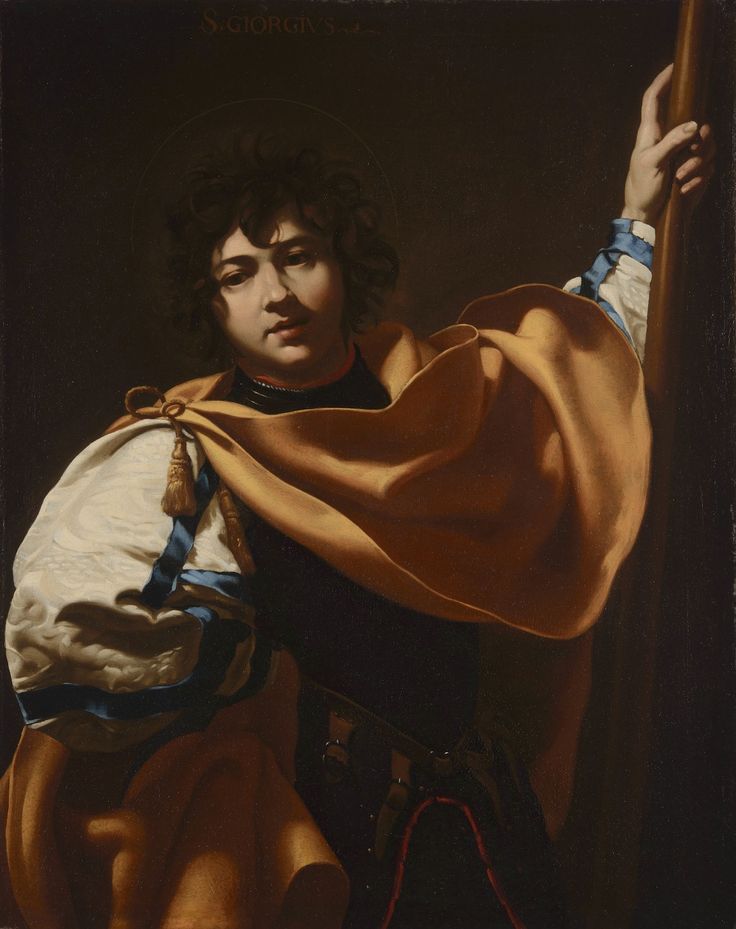
Simon Vouet - ST GEORGE

There is little information on the early life of Saint George.   Herbert Thurston in The Catholic Encyclopedia states that based upon an ancient cultus, narratives of the early pilgrims and the early dedications of churches to Saint George, going back to the fourth century, “there seems, therefore, no ground for doubting the historical existence of St. George”.    According to Donald Attwater, “No historical particulars of his life have survived, … The widespread veneration for St George as a soldier saint from early times had its centre in Palestine at Diospolis, now Lydda.   St George was apparently martyred there, at the end of the third or the beginning of the fourth century; that is all that can be reasonably surmised about him.”

On 24 February 303, Diocletian, who hated Christians, announced that every Christian the army passed would be arrested and every other soldier should offer a sacrifice to the Roman gods.   George refused to abide by the order and told Diocletian, who was angry but greatly valued his friendship with George’s father.   When George announced his beliefs before his peers, Diocletian was unable to keep the news to himself.   In an effort to save George, Diocletian attempted to convert him to believe in the Roman gods, offered him land, money and slaves in exchange for offering a sacrifice to the Roman gods and made several other offers that George refused.

Finally, after exhausting all other options, Diocletian ordered George’s execution.   In preparation for his death, George gave his money to the poor and was sent for several torture sessions.   He was lacerated on a wheel of swords and required resuscitation three times but still George did not turn from God.

283px-StGeorgeDragged
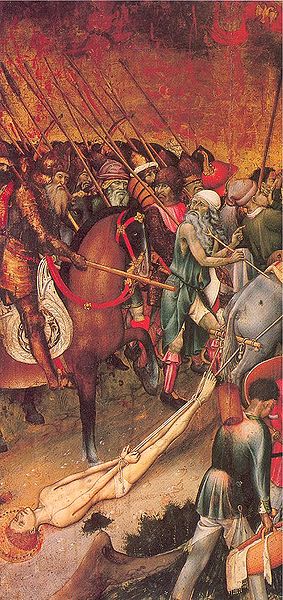
Saint George dragged through the city behind horses – 15th century – Bernardo Martorell

George was decapitated before Nicomedia’s outer wall.   His body was sent to Lydda for burial and other Christians went to honour George as a martyr.

Saint George and the Dragon

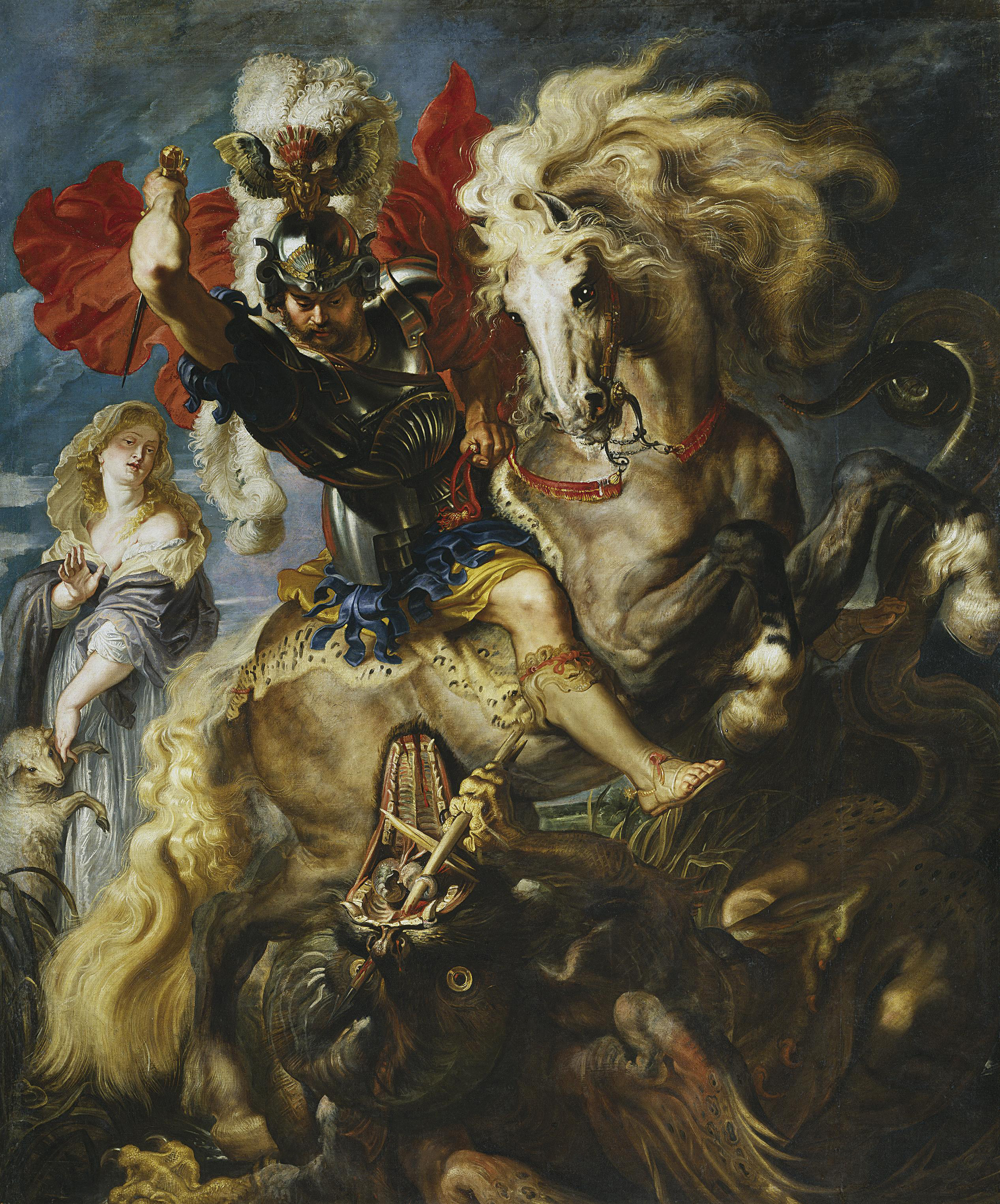
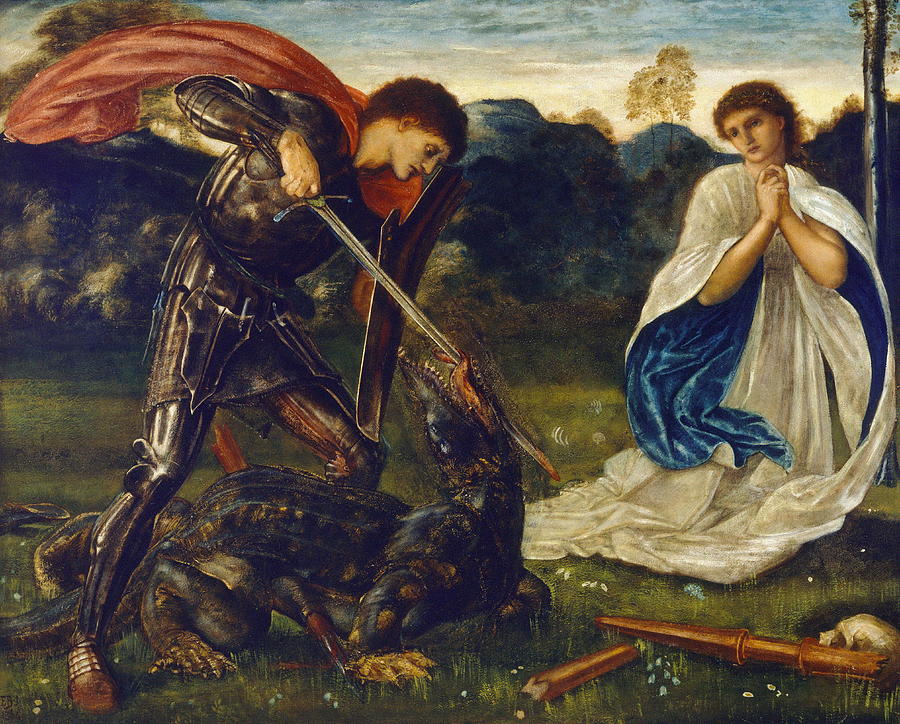
There are several stories about George fighting dragons but in the Western version, a dragon or crocodile made its nest at a spring that provided water to Silene, believed to be modern-day Lcyrene in Libya.   The people were unable to collect water and so attempted to remove the dragon from its nest on several occasions.   It would temporarily leave its nest when they offered it a sheep each day, until the sheep disappeared and the people were distraught.  This was when they decided that a maiden would be just as effective as sending a sheep.   The townspeople chose the victim by drawing straws.   This continued until one day the princess’ straw was drawn.   The monarch begged for her to be spared but the people would not have it.   She was offered to the dragon but before she could be devoured, George appeared.   He faced the dragon, protected himself with the sign of the Cross and slayed the dragon.   After saving the town, the citizens abandoned their paganism and were all converted to Christianity.

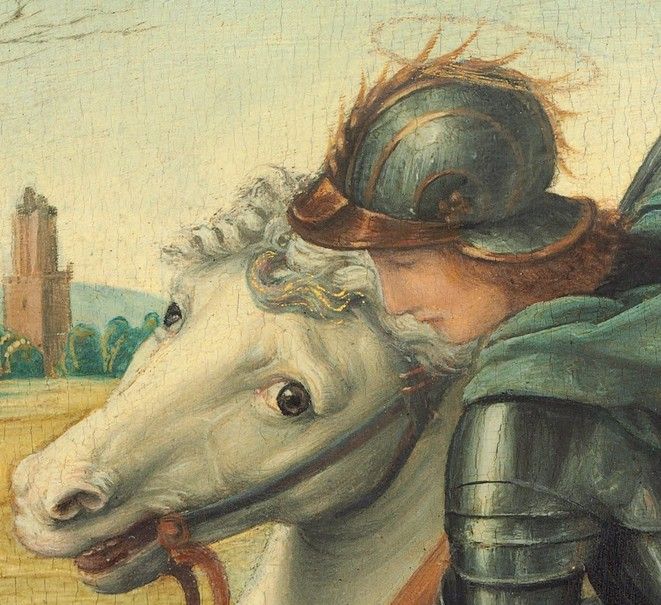
header - Detail from Saint George and the Dragon, Raphael, about 1506 ·1-the-fight-st-george-kills-the-dragon-vi-edward-burne-jonesRubens_-_San_Jorge_y_el_Dragón_(Museo_del_Prado,_1605)

Interesting Facts

Saint George stands out among other saints and legends because he is known and revered by both Muslims and Christians.
It is said Saint George killed the dragon near the sea in Beirut, thus Saint George Bay was named in his honour.
Saint George’s feast day is celebrated on 23 April but if it falls before Easter, it is celebrated Easter Monday.
The Russian Orthodox Church celebrates three St George feast days each year -23 April, 3 November, to commemorate the consecration of a cathedral dedicated to him in Lydda, and on 26 November for when a church in Kiev was dedicated to him.
In Bulgaria, his feast day is celebrated 6 May with the slaughter and roasting of a lamb.
In Egypt, the Coptic Orthodox Church of Alexandria calls St George the “Prince of Martyrs” and celebrates on 1 May.   There is a second celebration 17 November in honour of the first church dedicated to him.
Saint George is the patron saint of England and Catalonia and his cross can be found throughout England including on the English and other Commonwealth flags.
In older works, Saint George is depicted wearing armour and holding a lance or fighting a dragon, which represents Christ’s enemies.

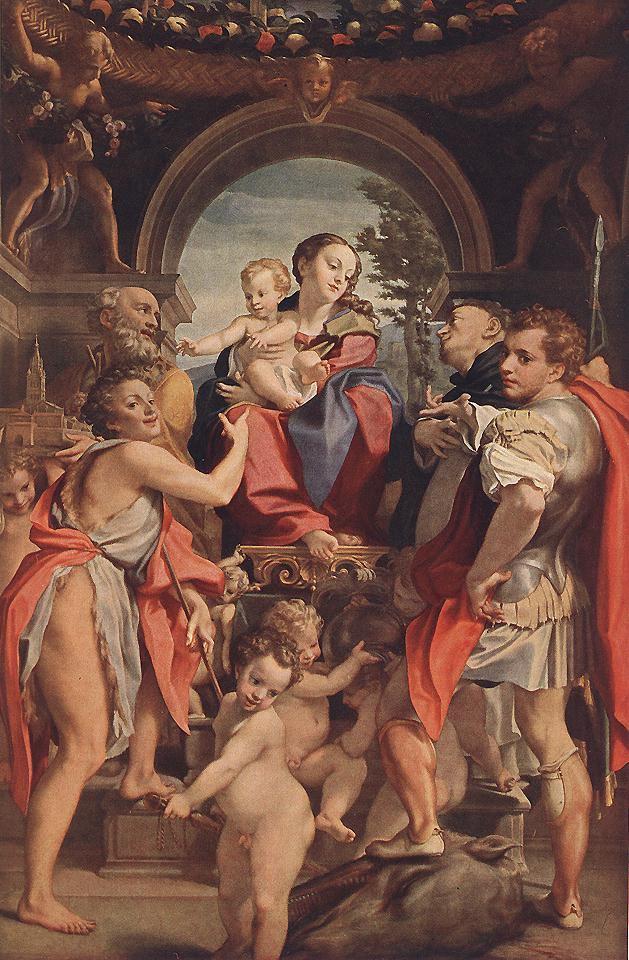
Correggio, Madonna with St George, 1530-32,
The Madonna with St George – Correggio