Saint of the Day – 3 November – Saint Pirminus (c690-753) Missionary Bishop on the Upper Rhine in Germany, Abbot, Founder of Monasteries, Reformer, Miracle-worker, Born in around 690 in Ireland or in Narbonne or in Paris, France and died on 3 November in 753 in Hornbach, Germany. Patronages – against eye ailments, against plague/epidemics, against poisoning, against rheumatism, against snake bites, against vermin, for happy birth, of livestock; in Austria – Innsbruck; in France – Alsace; in Germany – Amorbach, Monsheim, Palatinate, Pirmasens, Reichenau Island, Speyer, Diocese (with St Bernard). Also known as – Pirmin, Pirminius.
The Roman Martyrology reads today: “The departure from this life of St Pirminus, Bishop of Meaux.”
St Pirminus Statue in the Murbach Monastery
Pirminus is described in various sources, as a Visigoth, an Irish Scot, or of Roman origin. He was Consecrated as an itinerant Bishop around 720 – possibly in Meaux in France – and sent on a mission to north-western France and the Upper Rhine region.
Arrival of Saint Pirmin on the Island of Reichenau
He maintained good relations with the Frankish Mayor of the Palace, Charles Martel, who, in 724, placed him under his protection and founded numerous Monasteries, including probably Pfungen near Winterthur and certainly the Mittelzell Monastery on the Lake Constance Island of Reichenau. All the crawling creatures which damaged the Island are said to have fallen into the water upon his arrival and thus disappeared. According to tradition, Pirminus remained on Reichenau until 726 and was then expelled by Duke Theobald.
Pirminus then went to Alsace to continue his work there. Here he was active in the Carolingian territory. In 727, he founded what was then Murbach Abbey and was able to realise his ideas there, that is, monastic life based on the Benedictine Rule, understood as a permanent pilgrimage without worldly ties and the Abbey’s freedom from the local Bishop, led by its own Abbot. Pirminus held this office in Murbach. The founding of the Monasteries in Neuweiler (present-day Neuwiller-lès-Saverne ) , Schwarzach in Rheinmünster in Baden and Pfäfers near Chur, are also attributed to Pirminus. According to local tradition, he lived for a time in the cave near Winterthur which was later named after him.
Illustration from the Hornbach Sacramentary: Abbot Adalbert of Hornbach presents the manuscript to his Patron Saint, St Pirminus
According to 9th and 12th Century traditions, Pirminus founded the Monastery in Gengenbach with the support of the Frankish nobleman Ruthard. By 820, it was the largest Monastery in the region and an Imperial Abbey. He is said to have introduced the Benedictine Rule at the Monastery in Schuttern, thus initiating its flourishing. The Monastery of Amorbach in the Odenwald may also indeed, have originated by our Saint Pirminus. In around 742, Pirminus founded the Monastery in Hornbach in the Palatinate on a hill where a Roman sanctuary had likely previously stood. He reformed the Monasteries in Weißenburg /Wissembourg and Maursmünster Marmoutier in Alsace which had been founded in the 5th/6th Centuries and, in 741 he sent Monks from Mittelzell to found Niederaltaich Abbey.
St Pirminus Relics at Speyer Cathedral
Pirminus died in his Monastery in Hornbach. As early as the end of the 8th Century, he was referred to as a Saint in a manuscript from Metz . After 814, Abbot Wyerund of Hornbach Monastery had Pirminus’ remains exhumed and interred in the Church he had recently built. In 827, Pirminus was first mentioned as the Church’s Patron Saint, and Hrabanus Maurus wrote a Tomb Inscription. The Tomb was excavated in 1953 and, in 1957, the present Chapel was built over it.
St Pirminus Grave built in 1957
“The first recorded version of the Apostles’ Creed, as it is known today, is found in the Treatise De singulis libris canonicis scarapsus (Excerpt from the Unique Canonical Books), most possibly written by St Pirminus. In it, he describes how the Apostles were gathered at Pentecost, the Holy Ghost descended upon them and they then began to speak in turn: Peter : I believe in God, the Father Almighty, Creator of Heaven and earth. John : And in Jesus Christ, His only Son, our Lord. James said: He was conceived by the Holy Ghost and born of the Virgin Mary. Andrew said: He suffered under Pontius Pilate, was Crucified, Died and was buried. Philip said: He descended into Hades. Thomas said: On the third day He Rose from the dead. Bartholomew said: He Ascended into Heaven and was seated at the Right Hand of God the Father Almighty. Matthew said: From thence He shall come to judge the living and the dead. James, the son of Alpheus, said: I believe in the Holy Ghost. Simon the Zealot said: And the Holy Catholic Church. Jude, the son of James, said: In the communion of the Saints and the forgiveness of sins. Likewise, Thomas said [he spoke a second time]: In the Resurrection of the body and eternal life.”
Saint of the Day – 25 January – St Dwynwen (Died c460) Virgin, Princess, Nun. Patronages – lovers (especially in Wales where her Feast today is celebrated in a similar as that of St Valentine’s Feast on 14 February), of the sick and of animals in danger. Also known as – Donwen, Donwenna, Dunwen, Dwyn – this last is the ‘pet’ name of our Saint and the most often used.
Dwynwen lived in the 5th Century, the daughter of Saint Brychan of Brecknock (6 April), a prolific Welsh King who fathered 24 sons and daughters, all venerated as Saints and very famous especially in the Celtic world. Dwynwen, another daughter of the august parent King was then naturally a Princess. She was a beautiful and virtuous girl and fell madly in love with a Welsh Prince, Maelon Dafodrill,but the idea of marriage faded naturally from her heart.
Several legends have attempted to find an explanation for this loss of the romantic fervour – one of them could be that King Brychan had already promised his daughter to another Prince. The Saint, however, understood that her calling was to dedicate her existence to God by undertaking a religious life. She then tried to separate from Maelon but he reacted by drastically changing towards her and becoming unbearable.
Dwynwen took refuge in the woods, raising fervent prayers to God to help her and put an end to her miseries. She fell asleep and when she awoke she had been given a sweet drink which immediately deprived her of Maelon’s attentions and the sadness of her heart. The same drink was given to Maelon but in him, it had the effect of transforming him into an ice statue. Dwynwen then prayed again for three of her requests to be granted – that Maelon be freed from the ice, that she might never wqish to marry again and finally, that all lovers, with the help of God, find happiness through the fulfillment of their love or be healed of their passions.
God granted all her prayers and she did not hesitate to devote her entire existence to Him. She then founded a Convent on the Island of Llanddwyn, just opposite the Island of Anglesey (Yns Mon). She died there around the year 460.
St Dwynwen’s Church, Llanddwyn c1778
Here a fountain of fresh water called Ffynnon Dwynwen was considered a holy spring and soon became a place of pilgrimage. Over time the Saint was also invoked for the healing of the sick and animals in danger, a tradition which has survived to the present day.
The ruins of Llanddwyn Chapel, a 16th Century Tudor Church built on the site of an ancient priory, can still be seen today. St Dwynwen’s name is also invoked in the Town of Porthddwyn and a Church remains dedicated to her in the British peninsula of Cornwall.
St Dwynwen is celebrated especially throughout Wales and by lovers, on 25 January. One of the Dwynwen’s favourite maxims was: “Nothing wins hearts like joy.”
Saint of the Day – 18 January – St Deicolus of Lure (c530-625) Abbot, Founder of the Monastery at Lure, Companion and Disciple of St Columban, some believe Deicolus to be the older brother of St. Gall (c550-c645) who was also one of St Columban’s original 12 companions, Missionary. Born in Leinster, Ireland and died in 625 at Vosges, France of natural causes. Patronages – curing of children’s illnesses, protector of livestock. Also known as – Deel, Deicolo, Deicola, Deille, Delle, Desle, Dichul, Diey, Deicuil, Dicuil.
The Roman Martyrology reads today: “In Brittany, St Deicola, Abbot, disciple of St Columban.”
The Life of St Deicolus
Born in Leinster, Deicolus and his brother, Gall, studied at Bangor Abbey in County Down. He was selected to be one of the twelve disciples to accompany St Columbanuon his missionary journey.
In 576 he journeyed to France and laboured with Columban in Austrasia and Burgundy. Deicolus is believed to have resided with Columban at the Monastery of Luxeuil from c590.
In 610, when Columban was expelled by King Theuderic II, Deicolus, then eighty years of age, determined to follow his master,but was forced, to abandon the journey due to the inadeguacies of his age and remained behind alone.
Diecolus establishing a hermitage at a nearby Church dedicated to Saint Martin in a place called Lure, in the Diocese of Besançon.
Until his death, he became the apostle of this district, where he was given a Church and a tract of land by Berthelde, widow of Weifar, the lord of Lure. Soon a noble Abbey was erected for his many disciples and the Rule of St Columban was adopted.
Numerous miracles are recorded of Deicolus, including the suspension of his cloak on a sunbeam and the taming of wild beasts.
Clothaire II, the King of Burgundy, recognised the virtues of Deicolus and considerably enriched the Abbey of Lure, also granting Deicolus the manor, woods, fisheries, of the Town which had grown around the Monastery.
St Deicolus and the bear
Feeling his end approaching, Deicolus conceded the government of his Abbey to Columban, one of his young Monks and retreated to a little Oratory he had built a in honour of the Holy Trinity, where he died on 18 January c625.
His Feast is observed on this day, his birthday into Heaven. So revered was his memory that his name Diacolus, under the shortened French form of Del or Deel and Deela, (being corrupted from Del de Lure) is still borne by many of the children of the Lure district and too, is often found there as a surname. St Diacolus’ cultus is strong in the area of Lure where a Spring associated with St Diacolus has miraculous properties and, in particular, to cure children’s ailments if their garments were washed in this water.
St Del Chapel the destination of the Pilgrimage
Saint Deicolus is considered a Saint who heals illnesses in young children but also a regarded as a protector of livestock. There are mirackes associated with a wild bear which I have been unable to trace. A pilgrimage takes place today 18 January, to the Chapel of Gerbamont where he died.
His memory is also perpetuated in several other Lorraine Villages. His Vita and Acts were written by a Monk of his own Monastery in the 10th Century.
Relics of St Deicolus and St Columban at the Church of St Martin in Lure
Saint of the Day – 17 January – St Anthony Abbot (251-356) Hermit, Founder of Monasteries, Abbot and Spiritual Guide, Mystic and Miracle-Worker, beloved of all animals. Born in 251 at Heracleus, Egyptand died on 17 January 356 at Mount Colzim of natural causes. Also known as – Anthony of Egypt, Anthony of the Desert, Anthony the Anchorite, Anthony the Hermit, Antonio Abate, Father of All Monks, Father of Western Monasticism. His Patronages are numerous – against eczema, skin diseases and rashes, pestilence, Saint Anthony’s Fire, of firefighters, of wild animals, amputees, anchorites, basket weavers and makers, bell ringers, brushmakers, domestic animals, butchers, cemetery and funeral workers and gravediggers, epileptics, farmers, hermits, monks, pigs, livestock, Hospitallers, of 29 Cities in Europe.
The Roman Martyrology says: “In Thebais, St Anthony, Abbot and Spiritual Guide of many Monks. He was most celebrated for his life and miracles, of which St Athanasius has written a detailed account. His holy body was found by divine revelation, during the reign of the Emperor Justinian and brought to Alexandria, where it was buring in the Church of St John the Baptist.”
St Anthony unknown artist Italian School
St Anthony’s Vocation Anthony was born in 251 to a wealthy family of farmers in the village of Coma, now Qumans, in Egypt. Around the age of 18-20, he was left an orphan with a rich estate to manage and with a younger sister to educate. Attracted by the evangelical teaching “If you wish to be perfect, go, sell what you have, give to the poor and you will have treasure in heaven, then come, follow me” and by the example of some Anchorites who lived nearby in prayer, poverty and chastity, Anthony’s heart was drawn to choose this path. He, therefore, sold his goods, entrusted his sister to a community of virgins and dedicated himself to an ascetic life in front of his house and then outside the town.
Seeking a penitential and isolated life, he prayed to God for enlightenment. Not far away he saw a Hermit, like himself, who sat and worked, weaving a rope, then stopped, stood up and prayed; immediately after, he went back to working and praying again. This Anchorite was an Angel of God showing Anthony the path of work and prayer which, two Centuries later, would form the basis of the Benedictine Rule “Ora et labora” and Western Monasticism. Part of Anthony’s work was used to obtain food and part was distributed to the poor. St Athanasius asserts that he prayed continually and was so attentive to reading the Scriptures that he trained them verbatim in his memory oand he no longer needed scrolls.
From the Sienese Altarpiece (1425-50) depiciting the Life of St Anthony – this image shows him as a little boy on the right and as a young adult on the left, after hearing the Gospel of the rich young man
St Anthony’s Temptations While still very young, after a few years of his solitary life, very difficult trials began for him. Impure thoughts tormented him, doubts assailed him about the advisability of such a solitary life. The instinct of the flesh and the attachment to material goods which he had tried to suppress, returned in overbearing and uncontrollable force. He, therefore, asked for help from other Hermits, who told him not to be afraid but to move forward with confidence because God was with him. They also advised him to get rid of all ties and material possessions and retreat to a more solitary place. Thus, barely covered by a rough cloth, Anthony took refuge in an ancient tomb dug into the rock of a hill, aurrounding the village of Coma. A friend brought him some bread every now and then; for the rest, he had to make do with wild berries and herbs growing around him. In this place, the first temptations were replaced by terrifying visions and noises. Furthermore, he went through a period of terrible spiritual darkness. All this Anthonye overcame by patiently persevering in faith, carrying out the will of God, day by day, as his teachers had taught him. When Christ finally revealed Himself to him as the Hermit, he asked: “Where were Thou? Why did Thou not appear from the beginning, to put an end to my sufferings?”. He heard Him reply: “Anthony, I was here with thee and witnessed thy fight”…
St Anthony’s Temptations
On the Mountains of Pispir Discovered by his fellow citizens, who, like all Christians of those times, flocked to the Hermits to receive spiritual advice, prayer and consolation but, at the same time, disturbed their solitude and meditation, forced Anthony to move further away. In the Pispir mountains there was an abandoned fortress, infested with snakes but with a spring source and in 285 Anthony moved there and remained there for 20 years. Twice a year, bread was dropped to him from above. In this new solitude he followed the example of Jesus, Who, guided by the Spirit, retreated into the desert “to be tempted by the devil,”
St Athanasius tells of the many times when St Anthony struggled against devils, not only by resisting temptations but also suffering bodily harm which they were permitted to inflict upon him. On one such occasion, “a multitude of demons … so cut him with stripes that he lay on the ground speechless from the excessive pain.” He was discovered unconscious by the local villagers, who thought him dead and brought him to their Church, here depicted in the background. (Life of Anthony 8 and 9)
The First Communities of disciples Then came the time when many people who wanted to dedicate themselves to the solitary eremitcal life arrived at the fort. Anthony went out and began to console the afflicted, obtaining cures from the Lord, freeing the possessed and instructing the new disciples. Two groups of Monks were formed who gave rise to two Monasteries, one east of the Nile and the other on the left bank of the river. Each Monk had his own solitary cave but obeyed a brother more experienced in spiritual life. Anthony gave everyone his advice on the path towards perfection of the spirit and union with God, thus operating as their Abbot from his cave.
In the Thebaid Once again, to escape the many curious people who went to the fortress, Anthony decided to retreat to a more isolated place. He, therefore ,went to the Thebaid desert, in Upper Egypt, where he began to cultivate a small garden to support himself and those disciples and visitors, who followed him. He lived in the Thebaid region until the end of his very long life. He was able to bury the body of the Hermit Saint Paul the Hermit, with the help of a lion — for this reason he is considered the Patron Saint of wild animals, of cemeteries, gravediggers and funeral workers. In his last years he welcomed two Monks who looked after him in his extreme old age. He died at the age of 106, on 17 January 356 and was buried in a secret place.
St Anthony meets St Paul the Hermit
The Spiritual Inheritance His presence had also attracted many people to the Thebaid eager for a more spiritual life. Many chose to follow his style, thus Monasteries arose among those mountains. The desert was populated by Monks, the first of that multitude of consecrated men, who in the East and the West, continued the path he had begun, expanding it and adapting it to the needs of the times. His disciples handed down his wisdom to the Church, collected in 120 sayings and 20 letters. In Letter 8, Saint Anthony wrote: “Ask with a sincere heart for that great Spirit of fire which I myself have received and it will be given to you.”
The Last Rites and Death of St Anthony
Protection against Shingles (Herpes Zoster) In 561 his tomb was discovered and the Relics began a long journey through time and space, from Alexandria to Constantinople, until arriving in France, in the 11th Century, in Motte-Saint-Didier, where a Church was built in his honour. Crowds of sick people flocked to venerate his Relics in this Church, especially those suffering from skin eruptions, caused by the poisoning of a fungus present in rye, used to make bread (or so it was thought). The disease, now scientifically known as herpes zoster, was known since ancient times as ‘ignis sacer’ (sacred fire) due to the burning sensation it caused. Also for this reason, our Saint is invoked against skin diseases in general. To house all the sick people who arrived, a hospital was built and a brotherhood of religious people was founded, the ancient hospital order of the ‘Antoniani.’ Hence the Patronage of Hospitallers. The village took the name of Saint-Antoine de Viennois.
The Tau Staff is visible in St Anthony’s hand
The Pig, the Fire, the “Tau” The Pope granted the Antonians the privilege of raising pigs for their own use and at the expense of the community, so the piglets could move freely between courtyards and streets; no-one touched them, if they wore an identification bell. Their fat was used to treat ergotism, which was called “sickness. Antonio” and then “fire of St Anthony.” For this reason, in popular religiosity, the pig began to be associated with the great Egyptian Hermit, later considered the Patron Saint of pigs and by extension, of all domestic and stable animals. In his iconography, in addition to the pig with the bell, there also appears the T-shaped Hermits’ staff, the “tau” the last letter of the Hebrew alphabet and, therefore, an allusion to the last things and destiny. A popular legend which connects his iconographic attributes, narrates that Saint Anthony went to hell to contend with the devil for the souls of the dead. While his little pig, sneaking in, created havoc among the demons, he lit his tau-shaped stick with infernal fire and took it out together with the recovered little pig — he gave fire to humanity, lighting a pile of wood.
Popular devotion On the day of his liturgical memory, the stables are blessed and the domestic animals are brought to be blessed. In some countries of Celtic origin, Saint Anthony took on the functions of the divinity of rebirth and light, Lug, the guarantor of new life, to whom wild boars and pigs were consecrated. Therefore, in various works of art, there is a boar at his feet. Patron of all those involved in processing pigs, alive or slaughtered, he is also the Patron of those who work with fire, such as firefighters because he cured that metaphorical fire which was Herpes Zoster. Even today, on 17 January, especially in agricultural villages and farmhouses, it is customary to light the so-called “St Anthony’s bonfire which had a purifying and fertilising function, like all the fires which marked the transition from winter to the imminent spring. The ashes, then collected in the home braziers of the past, were used to heat the house and, using a special bell made with wooden slats, to dry damp clothes. Venerated throughout the Centuries, his name is among the most widespread in Catholicism. Saint Anthony of Padua himself, precisely to indicate his desire for greater perfection, chose to change the name received at his Baptism to that of our Saint today.
The Life of St Anthony by St Athanasius: https://www.youtube.com/watch? v=XiKDl_lOb74&list=PL5_ax08Z6UX9h2VWw84sk4zcAQUliDUo7
Saint of the Day – 4 February – Saint Aventinus of Troyes (Died c538) Priest, Almoner and Administrator of the funds for the See of Troyes, Hermit, Miracle-worker, gifted with a great affinity with animals, who came to him for help when ill or hurt. Born in Bourges, France and died in c538 of natural causes. Patronages – headaches, nervous disorders, of ill animals, of Saint Aventin sous Verrières and the Town of Creney, France. Also known as – Aventin, Aventine.
In the heart of ancient Gaul (today’s France), in the second half of the fifth century, Saint Aventinus was born, probably in Bourges. From the few documents which have come down to us, we know that his parents belonged to the middle class and were very religious. According to tradition, Christianity in those lands already spread in the third century. The sound moral and Christian principles of the parents would form the basis of his holiness – from an early age, Aventinus was held up as a model.
As a teenager, he began to wonder about the purpose of his life. He wanted to visit the most famous holy manof that region, the Bishop St Lupus of Troyes who, in the year 451 had saved the city from the invasion of Attila the Hun, by offering himself as a hostage. The elderly prelate was not slow to see sincere Christian virtues in the young man and desiring to see them brought to fruition for the glory of the Lord and the Church and so, St Lupo kept him with him as a disciple and assistant. It was the happy meeting of two true men of God.
Aventinus distinguished himself by the humility and zeal with which he carried out the work; constant in the practices of piety, he was growing internally. He had as an example a Saint who continually turned his attentions to him. The virtue that shone most in him was charity towards others. Slavery of foreign prisoners of war was widespread in those days – St Lupus and Aventinus did not remain indifferent to the children of God who were treated like beasts. They ransomed as many as they could, collecting alms for this purpose. Given their freedom, they worried about their spiritual health, often helping them to approach the Sacraments. St Luuso died in 479 and was succeeded by St Camelianus, who, knowing well the virtues of Aventinus, made him Steward, with ample power to manage alms.
God only knows how widespread poverty was and Aventinus’ attention to the poor was never limited to material aid. He aroused amazement at the miraculous way the Bishop’s finances could cope with so many expenses, there was something supernatural at work. Aventinus fame went on spreading but he, keeping faith with his humility and with the deep regret of the Bishop, decided to retire.
He was welcomed into a hermitage with the will to sanctify himself by living in solitude. Although he was not inclined to lead, he was soon elected Superior of the community. Precious was his example and the retreat became a school of perfection. That place was later named after him.
While living withdrawn from the world, he could not help but think about the redemption of slaves. Among others, news reached him of a certain Fidolus, of rare virtues, perhaps already a cleric, originally from Auvergne, who had lost his freedom at the hands of Theodoric I, King of Austrasia. It was about the year 530. Aventinus ransomed him for twelve gold pieces. Fidolus’ happiness and gratitude was immense and he decided to join the holy community, which seemed a most natural development.
Meanwhile, Aventinus’ fame was spreading again among the people who often visited him. The tranquility of the brothers was compromised and Aventinus decided to leave. It was Fidolus himself who took over the position of Superior (he died with fame as a Saint on 16 May 540).
Aventinus withdrew to a solitary place along the Seine, about seven miles distant from Troyes. He had only brought with him some bread, legumes, a hoe and some seeds. He did not want to be a burden to anyone. Finally he had achieved the desired tranquility, dividing his time between prayer, work and penance. He slept little, wore a poor and rough dress, ate only three days a week.
A few years passed but even here he could not escape the admiration of the people, while not even the Bishop St Camelianus had forgotten about him. The latter, who also knew well of his knowledge of the Psalms and Sacred Scripture, conferred upon him Sacred Orders. The maturity of the years was crowned by the Priesthood. He lived peacefully the last period of his life celebrating Mass near his hut, for the benefit of the locals. Demanding with himself, he looked to the needs of his neighbour with his big heart, also curing those who were sick. His charity became legendary and it is said that even a bear knocked on his door one night. He lay down on the ground and held out a paw in which a thorn was stuck. The hermit assisted him by releasing the thorn and bandaging his wound.
He fell asleep in the peace of the Lord on 4 February of the year 538. Acclaimed Saint and Patron of those places he had lived, a few years later Bishop Vincent had a Church built in his honour, where he placed his precious Relics and in which he then wanted to be buried. Chapels and Churches were erected in his honour, even outside France. From time immemorial he has been particularly invoked against headaches and nervous diseases. Today, near Troyes, a Town has his name (Saint Aventin sous Verrières) and Creney venerates him as Patron.
St Aventinus, Hermit and Priest, is not to be confused with the Aventinus, the Saint Bishop of Chartres, who died in 520, also venerated on today, 4 February.
PRAYER
Among the many graces which the Lord grants through your intercession, glorious Saint Aventinus, frequent are the cures from headaches and other nervous diseases, of which you have been a singular protector since time immemorial. With all humility and trust I resort to your patronage and I ask you to obtain from the Supreme Giver of all good, health of mind and body so that I may serve God with greater fervour and attend to the duties of my state. I ask you, not only for freedom from headaches but also for the grace to live as a studious emulator of your examples, that I may one day attain eternal happiness, where faith guides me and hope invites me. Amen
Saint of the Day – 4 October – St Francis of Assisi OFM (c 1181–1226)
An Excerpt from The Little Flowers of St Francis of Assisi Translated from the 14th Century Fioretti (1905)
“In this book are contained certain little Flowers, namely, miracles and devout examples of the glorious poor Little One of Christ, St Francis and of some of his holy companions, to the praise of Jesus Christ. Amen.
In the first place, let us consider how the glorious St Francis, in all the acts of his life, was conformed to the life of that blessed Christ; that, as Christ in the beginning of His preaching elected twelve Apostles that they should despise every worldly thing and follow Him in poverty and in all virtues, so St Francis, for the founding of his Order, elected, in the beginning, twelve companions, who were to be possessors of nothing but an entire poverty.
And, as one of the twelve Apostles of Christ, rejected by God for his infidelity, finally strangled himself, so also, one of the twelve companions of St Francis, who was called Brother John della Capella, apostatised and finally, hanged himself in like manner. And this is to the elect, a great warning and a matter of humility and of fear, to cause them to remember that no-one is certain, to persevere to the end, in the grace of God.
As the blessed Apostles were wholly marvellous for sanctity and humility and full of the Holy Ghost, so the blessed companions of St Francis were men of such great sanctity that, since the time of the Apostles, the world had not seen the like; since one of them, like St Paul, was taken up into the third heaven and this was Brother Giles; another of them, namely Brother Filippo Longo, was touched on the lips by an angel, like the Prophet Isaias, with a coal of fire; another of them and this was Brother Silvester, spoke with God, as one friend with another, after the manner of Moses; another, by the purity of his soul, flew up to the light of the Divine Wisdom, like the eagle, St John the Evangelist and this was the most humble Brother Bernard, who explained, most profoundly, Holy Writ and another was sanctified by God and canonised in Heaven whilst still living on earth and this was Brother Ruffino, who was a gentleman of Assisi. And so were they all privileged with remarkable signs of holiness, as will be declared in the sequel . . .” –page 1 – 2
Saint of the Day – 22 September – Saint Gunthildis of Suffersheim (Died c 1057) Laywoman, Apostle of the poor. Patronages – cattle, lepers, servants. Also known as Gunthild.
Historical certainty of her life has not been passed down. The name comes from Old High German and means “the combative fighter.” She is said to have been a pious maid who was distinguished by special charity. She died around 1057 in Suffersheim in Bavaria. According to another tradition, Gunthildis is said to have been a disciple of St Willibald who came to Germany from southern England in the 8th century.
Gunthildis from Suffersheim served as a cattle maid and led a very pious and devout life in the midst of her rural work. She remains a constant model for all the maidservants in the country. Devoted to all virtues, she was especially distinguished by compassion and merciful love. Her greatest joy was giving alms to the poor. Through her prayer God caused two crystal-clear springs to appear, one from a rock. Through the latter, a leper obtained perfect healing. Gunthildis drove the cattle to these sources of clear and refreshing water. After drinking from these springs, the cows gave an extraordinary amount of milk. Gunthildis shared this abundant blessing with the poor of the neighbourhood.
The Gunthildis spring near Suffersheim
When she once wanted to carry the milk she had saved from her own mouth to poor people, she met her employer. Very angry, he asked her what she was carrying. She replied that it was only lye. And the employer only saw lye when he opened the vessel. In this service, the pious maid endured until the end of her life. She died a blessed death, rich in graces and virtues.
The body of the maid, generally venerated as a Saint, was loaded onto a cart and two untamed oxen hitched to it. They calmly carried her body to Suffersheim. Here they stopped. Thus it was understood that Gunthildis should be buried there. Soon afterwards, many miracles occurred at her grave. As a result, a Chapel was built over this grave, although it no longer exists. Today, next to the foundations of this Chapel uncovered in 1957, there is a new Gunthildis Chapel built from 1993 to 1995.
Saint of the Day – 23 April – Saint William Firmatus (1026–1103) Priest, Pilgrim Hermit, Physician, miracle-worker. He had a great infinity with and love for, all animals, who were tame and docile in his hands. Born as Guillaume Firmat in 1026 and died in 1103 of natural causes. Patronages – against headaches, of animals. Also known as William Firmatus of Tours.
William Firmatus was a Canon and a Physician of Tours, France. Following a spiritual prompting against greed, he gave away all his possessions to the poor. He lived a reclusive life with his mother until he entered a hermitage near Laval, Mayenne. He spent the rest of his life on pilgrimages and as a hermit at Savigny and Mantilly.
According to legend, he saved the people of Choilley-Dardenay during drought by striking the ground with his pilgrim’s staff, which caused a spring of water to bubble up. He died in 1103 of natural causes.
William is especially noted for his love of wildlife and the unusual level of communication he seemed to have had with animals. This was so much so, that the local people used to ask his help with animals that raided their crops. One particular miracle involved a wild boar, which William led by the ear from a farmer’s plot, instructing it to fast for the night in a solitary cell.
The Little Bollandists go on to record, along with the boar miracle:
It is said of him, that even the wildest birds would approach him without fear and come and eat out of his hand and take refuge under his clothes from the cold. When he sat by a pond near his cell, the fish would swim to his feet and readily allow themselves to be taken up by the Servant of God, who put them back into the water, without hurting them.
Upon William’s death, three townships disputed possession of his remains. The winner was Mortain, which, to procure the relics, used the full force of “its entire clergy and an innumerable crowd of its people”.
Saint William is also venerated at Savigny and Mantilly. The Catholic Encyclopedia mentions William in its article on Coutances, which accords him special honour as well and, mentions his Patronage of the collegiate Church of Mortain. He is a Patron against headaches and of all wild and domestic animals.
Saint of the Day – 13 June – St Anthony of Padua OFM (1195-1231) Evangelical Doctor – Hammer of Heretics – Professor of Miracles – Wonder-Worker – Ark of the Testament – Repository of Holy Scripture.
St Anthony of Padua is one of the most famous disciples of St Francis of Assisi. He was a famous preacher and worker of miracles in his own day and throughout the eight centuries since his death, he has so generously come to the assistance of the faithful who invoke him, that he is known throughout the world amongst many who are not Catholics too.
The gospel call to leave everything and follow Christ was the rule of Anthony’s life. Over and over again, God called him to something new in his plan. Every time Anthony responded with renewed zeal and self-sacrifice to serve his Lord Jesus more completely.
His journey as the servant of God began as a very young man when he decided to join the Augustinians in Lisbon, giving up a future of wealth and power to be a servant of God. Later when the bodies of the first Franciscan martyrs went through the Portuguese city where he was stationed, he was again filled with an intense longing to be one of those closest to Jesus himself: those who die for the Good News.
So Anthony entered the Franciscan Order and set out to preach to the Moors. But an illness prevented him from achieving that goal.
He went to Italy and was stationed in a small hermitage where he spent most of his time praying, reading the Scriptures and doing menial tasks.
The call of God came again at an ordination where no one was prepared to speak. The humble and obedient Anthony hesitantly accepted the task. The years of searching for Jesus in prayer, of reading sacred Scripture and of serving him in poverty, chastity and obedience had prepared Anthony to allow the Spirit to use his talents. Anthony’s sermon was astounding to those who expected an unprepared speech and knew not the Spirit’s power to give people words.
Recognised as a great man of prayer and a great Scripture and theology scholar, Anthony became the first friar to teach theology to the other friars. Soon he was called from that post to preach to the Albigensians in France, using his profound knowledge of Scripture and theology to convert and reassure those who had been misled by their denial of Christ’s divinity and of the sacraments..
The number of those who came to hear him was sometimes so great that no church was large enough to accommodate and so he had to preach in the open air. Frequently St Anthony wrought veritable miracles of conversion. Deadly enemies were reconciled. Thieves and usurers made restitution. Calumniators and detractors recanted and apologised. He was so energetic in defending the truths of the Catholic Faith that many heretics returned to the Church. This occasioned the epitaph given him by Pope Gregory IX “the ark of the covenant.”
In all his labours he never forgot the admonition of his spiritual father, St Francis, that the spirit of prayer must not be extinguished. If he spent the day in teaching and heard the confession of sinners till late in the evening, then many hours of the night were spent in intimate union with God before the Blessed Sacrament.
After he led the friars in northern Italy for three years, he made his headquarters in the city of Padua. He resumed his preaching and began writing sermon notes to help other preachers. In the spring of 1231 Anthony withdrew to a friary at Camposampiero where he had a sort of treehouse built as a hermitage. There he prayed and prepared for death. After receiving the last sacraments he kept looking upward with a smile on his countenance. When he was asked what he saw there, he answered: “I see my Lord.” He breathed forth his soul on 13 June 1231 being only thirty six years old. Soon the children in the streets of the city of Padua were crying: “The saint is dead, Anthony is dead.”
Once a man, at whose home St Anthony was spending the night, came upon the saint and found him, in ecstasy, holding in his arms the Child Jesus, unspeakably beautiful and surrounded with heavenly light. For this reason St Anthony is often depicted holding the Child Jesus.
Saint of the Day – 17 January – St Anthony Abbot (c 251-358) Also known as: • Abba Antonius • Anthony of Egypt• Anthony of the Desert• Anthony the Anchorite• Anthony the Great• Anthony the Hermit• Antonio Abate• Father of Cenobites• Father of All Monks• Father of Western Monasticism. PATRONAGES – against eczema/skin diseases/skin rashes, epileptics; against ergotism, against pestilence, , of amputees, anchorites, animals, basket makers and weavers, brushmakers, butchers, cemetery workers, domestic animals, farmers, gravediggers, graveyards, hermits, pigs, monks, relief from pestilence, swineherds, Hospitallers, Tempio-Ampurias, Italy, Diocese of 9 Cities.
The biography of Anthony’s life by Athanasius of Alexandria helped to spread the concept of Christian monasticism, particularly in Western Europe via its Latin translations. He is often erroneously considered the first Christian monk but as his biography and other sources make clear, there were many ascetics before him. Anthony was, however, the first to go into the wilderness (about ad 270), which seems to have contributed to his renown. Accounts of Anthony enduring supernatural temptation during his sojourn in the Eastern Desert of Egypt inspired the often-repeated subject of the temptation of St Anthony in Western art and literature. St Anthony is appealed to against infectious diseases, particularly skin diseases. In the past, many such afflictions, including ergotism, erysipelas, and shingles, were referred to as St Anthony’s fire.
Anthony was born in Egypt in 250. At age 20, when his parents died, Anthony made sure his younger sister’s education could be completed in a community of holy women. He then sold all his possessions and left for a life of solitude in the desert. There an elderly hermit taught him about prayer and penance. For 20 years, he lived in isolation. Anthony wanted to know God deeply. He did penance by taking only bread and water once a day at sunset. The devil appeared to him in terrible shapes to tempt him. But Anthony had great confidence in God. Anthony’s unusual life did not make him harsh but radiant with God’s love and compassion.
The Temptation of St Anthony (detail) – Carracci
Stories of Anthony’s holiness spread and people came to learn from him how to become holy. Some admirers wanted to stay, so Anthony—at age 54—founded a type of monastery consisting of hermitages near one another. Anthony wrote a rule that guided the monks. Later when Anthony heard of the persecutions of the Christians, he wanted to die a martyr. At 60, he left the desert to minister to the Christians in prisons, fearlessly exposing himself to danger. He came to realise that a person can die daily for Christ by serving him in ordinary ways with great love.
So he returned to the desert to his life of prayer and penance. His life of solitude was again interrupted, however, when at age 88 he had a vision in which he saw the harm Arian followers were doing to the Church by denying the divinity of Christ. Anthony left for Alexandria to preach against this heresy. At age 90, another vision sent Anthony searching the desert for Saint Paul, the first hermit. These two holy men met and spoke of the wonders of God. Anthony is said to have died peacefully in a cave at age 105.
The life of Anthony will remind many people of St Francis of Assisi. At 20, Anthony was so moved by the Gospel message, “Go, sell what you have, and give to [the] poor” (Mark 10:21b), that he actually did just that with his large inheritance. He is different from Francis in that most of Anthony’s life was spent in solitude. At 54, he responded to many requests and founded a sort of monastery of scattered cells. Again like Francis, he had great fear of “stately buildings and well-laden tables.” Like Francis and of course, many saints, Anthony too desired martyrdom. Anthony is associated in art with a T-shaped cross (which St Francis adopted), a pig and a book. The pig and the cross are symbols of his valiant warfare with the devil—the cross his constant means of power over evil spirits, the pig a symbol of the devil himself. The book recalls his preference for “the book of nature” over the printed word.
Saint of the Day – 4 October – St Francis of Assisi OFM Confessor, Religious, Deacon, Stigmatist and ounder, Apostle of the Holy Eucharist, the Blessed Virgin and of Charity, Preacher, Missionary, Mystic, Miracle-Worker, Co-patron of Italy, Founder of the Seraphic Order – the men’s Order of Friars Minor, the women’s Order of Saint Clare, the Third Order of Saint Francis and the Custody of the Holy Land, as well as being the Founder of the Nativity Crib and Manger as we know it today.
The oldest surviving depiction of Saint Francis is a fresco near the entrance of the Benedictine abbey of Subiaco, painted between March 1228 and March 1229. He is depicted without the stigmata but the image is a religious image and not a portrait.
Born Giovanni di Pietro di Bernardone ( informally called Francesco by his Mother) – (1181 at Assisi, Umbria, Italy – 4 October 1226 at Portiuncula, Italy of natural causes). His relics are enshrined in the Basilica built and named for him in Assisi, Italy. St Francis was Canonised on 16 July 1228 by Pope Gregory IX. Patronages – • against dying alone• against fire• animal welfare societies• animals• birds• ecologists, ecology• environment, environmentalism, environmentalists• families• lace makers, lace workers• merchants• needle workers• peace• tapestry workers• zoos• Italy• Colorado• Catholic Action• Franciscan Order• 10 dioceses• 10 cities. Attributes – • apparition of Jesus• Christ child• birds• deer• fish• lamb• skull• stigmata• wolf. In 1224 he received the stigmata during the apparition of Seraphic angels in a religious ecstasy making him the first recorded person in Christian history to bear the wounds of Christ’s Passion. He died during the evening hours of 3 October 1226, while listening to a reading he had requested of Psalm 142 (141). Francis is one of the most venerated religious figures in history.
Francis was born in Assisi in 1182, the son of a wealthy cloth merchant, Pietro Bernardone, and his wife, Pica. He was baptised Giovanni (John) but soon gained the nickname Francesco because of his father’s close trading links with France.
Francis’ early years were not especially religious. He was a leader among the young men of Assisi, enjoying a good social life, singing and partying. His first biographer, Thomas of Celano, describes him as quite short, with black eyes, hair and beard; he had a long face, with a straight nose and small, upright ears. His arms were short but his hands and fingers slender and long. He had a strong, clear, sweet voice. Francis didn’t want to follow his father into the cloth trade; he wanted to be a knight. So at the age of twenty he joined the forces of Assisi in a minor skirmish with the neighbouring city of Perugia. He was captured and spent a year in a Perugian jail, until his father ransomed him. This became the first of a series of experiences through which God called Francis to the life which he finally embraced.
One of these experiences, at San Damiano, led to a rift with his father. Francis, in response to a voice from the crucifix in this tiny ruined Church, began to rebuild churches; when he ran out of money he took cloth from his father’s shop and sold it. His father disowned him before the bishop of Assisi and Francis in his turn stripped off his clothes, returning to his father everything he had received from him and promising that in future he would call only God his Father.
And thus, Francis of Assisi, this poor little man began a journey to astound and inspire the Church by taking the gospel literally—not in a narrow fundamentalist sense but by actually following all that Jesus said and did, joyfully, without limit and without a mite of self-importance.
Serious illness brought the young Francis to see the emptiness of his frolicking life as leader of Assisi’s youth. Prayer—lengthy and difficult—led him to a self-emptying like that of Christ, climaxed by embracing a leper he met on the road. It symbolised his complete obedience to what he had heard in prayer: “Francis! Everything you have loved and desired in the flesh it is your duty to despise and hate, if you wish to know my will. And when you have begun this, all that now seems sweet and lovely to you will become intolerable and bitter but all that you used to avoid will turn itself to great sweetness and exceeding joy.”
From the Cross in the neglected Chapel of San Damiano, Christ told him, “Francis, go out and build up my house, for it is nearly falling down.” Francis became the totally poor and humble workman.
He must have suspected a deeper meaning to “build up my house.” But he would have been content to be for the rest of his life the poor “nothing” man actually putting brick on brick in abandoned chapels. He gave up every material thing he had, piling even his clothes before his earthly father (who was demanding restitution for Francis’ “gifts” to the poor) so that he would be totally free to say, “Our Father in heaven.”
He was, for a time, considered to be a religious “nut,” begging from door to door when he could not get money for his work, bringing sadness or disgust to the hearts of his former friends, ridicule from the unthinking.
But genuineness will tell. A few people began to realise that this man was actually trying to be Christian. He really believed what Jesus said: “Announce the kingdom! Possess no gold or silver or copper in your purses, no traveling bag, no sandals, no staff” (see Lk 9:1-3).
Francis’ first rule for his followers was a collection of texts from the Gospels. He had no idea of founding an order but once it began he protected it and accepted all the legal structures needed to support it. His devotion and loyalty to the Church were absolute and highly exemplary at a time when various movements of reform tended to break the Church’s unity.
He was torn between a life devoted entirely to prayer and a life of active preaching of the Good News. He decerned in favour of the latter but always returned to solitude when he could. He wanted to be a missionary in Syria or in Africa but was prevented by shipwreck and illness in both cases. He did try to convert the sultan of Egypt during the Fifth Crusade.
During the last years of his relatively short life (he died at 44) he was half blind and seriously ill. Two years before his death, he received the stigmata, the real and painful wounds of Christ in his hands, feet and side.
On his deathbed, he said over and over again the last addition to his Canticle of the Sun, “Be praised, O Lord, for our Sister Death.” He sang Psalm 141 and at the end asked his superior to have his clothes removed when the last hour came and for permission to expire lying naked on the earth, in imitation of his Lord.
On 13 March 2013, upon his election as Pope, Archbishop and Cardinal Jorge Mario Bergoglio of Argentina chose Francis as his papal name in honour of Saint Francis of Assisi, becoming Pope Francis I. At his first audience on 16 March 2013, Pope Francis told journalists that he had chosen the name in honour of Saint Francis of Assisi and had done so because he was especially concerned for the well-being of the poor. He explained that, as it was becoming clear during the conclave voting that he would be elected the new bishop of Rome, the Brazilian Cardinal Cláudio Hummes had embraced him and whispered, “Don’t forget the poor”, which had made Bergoglio think of the saint. Bergoglio had previously expressed his admiration for St Francis, explaining that “He brought to Christianity an idea of poverty against the luxury, pride, vanity of the civil and ecclesiastical powers of the time. He changed history.” Bergoglio’s selection of his papal name is the first time that a pope has been named Francis.
Saints of the Day – 16 September – St Pope Cornelius and St Cyprian of Carthage – Martyrs. St Pope Cornelius – Papal Ascension: 251. He was Martyred in 253 and his remains were buried at the Cemetery of Saint Callistus Rome. “Cornelius” means ‘battle horn.‘ Patronages – • against earache; earache sufferers• epileptics; against epilepsy• against fever• against myoclonus• cattle• domestic animals• Kornelimünster, Germany. St Cornelius was a Bishop becoming ar reluctant 21st Pope, elected after a 1 1/2 year period, during which the persecutions were so severe that Papal ascension was an immediate death sentence. He worked to maintain unity in a time of schism and apostasy and fought Novatianism. He also called a Synod of Bishops to confirm him as rightful Pontiff, as opposed to the anti-pope Novatian. He had the support of Saint Cyprian of Carthage and Saint Dionysius. He welcomed back those who had apostacised during the persecutions of Decius – the documents which settled this matter prove the final authority of the Pope. Exiled to Centumcellae in 252 by Roman authorities to punish Christians in general, who were said to have provoked the gods to send plague against Rome. Martyr. A document from Cornelius shows the size of the Roman Clergy during his Papacy – 46 Priests, 7 Deacons, 7 Sub-deacons, approximately 50,000 Christians. His name is in the Communicantes in the Canon of the Mass.
St Cyprian of Carthage – (Died in 190 in Carthage, North Africa – Bishop and Martyr, learned Rhetorician, Teacher, Writer, Theologian – beheaded 14 September 258 in Carthage, North Africa). Patronages – • Algeria (proclaimed on 6 July 1914 by Pope Pius X)• North Africa (proclaimed on 6 July 1914 by Pope Pius X, on 10 January 1958 by Pope Pius XII and on 27 July 1962 by Pope John XXIII NOTE – no, I don’t know why it was done so many times).
St Cyprian was born to wealthy pagan parents. He taught rhetoric and literature. He was adult convert in 246, taught the faith by Saint Caecilius of Carthage. He was ordained in 247 and became the Bishop of Carthage in 249. During the persecution of Decius, beginning in 250, Cyprian lived in hiding, covertly ministering to his flock; his enemies condemned him for being a coward and not standing up for his faith. As a writer he was second only in importance to Tertullian as a Latin Father of the Church. Friend of Saint Pontius. St Cyprian was involved in the great argument over whether apostates should be readmitted to the Church; Cyprian believed they should but under stringent conditions. He was supported St Pope Cornelius against the anti-pope Novatian. During the persecutions of Valerian he was exiled to Curubis in 257, brought back Carthage and then martyred in 258. His name is in the Communicantes in the Canon of the Mass.
An excerpt written to Cornelius, Bishop of Rome condemned to martyrdom for his faith, from his brother Bishop Cyprian of Carthage, himself to give his witness as a Martyr a few years later. Read on the feasts of Sts Cornelius and Cyprian, Martyrs, on 16 September.
Cyprian to his brother Cornelius.
My very dear brother, we have heard of the glorious witness given by your courageous faith. On learning of the honour you had won by your witness, we were filled with such joy that we felt ourselves sharers and companions in your praiseworthy achievements. After all, we have the same Church, the same mind, the same unbroken harmony. Why then should a priest not take pride in the praise given to a fellow priest as though it were given to him? What brotherhood fails to rejoice in the happiness of its brothers wherever they are?
Words cannot express how great was the exultation and delight here when we heard of your good fortune and brave deeds: how you stood out as leader of your brothers in their declaration of faith, while the leader’s confession was enhanced as they declared their faith. You led the way to glory, but you gained many companions in that glory; being foremost in your readiness to bear witness on behalf of all, you prevailed on your people to become a single witness.
We cannot decide which we ought to praise, your own ready and unshaken faith or the love of your brothers who would not leave you. While the courage of the bishop who thus led the way has been demonstrated, at the same time the unity of the brotherhood who followed has been manifested. Since you have one heart and one voice, it is the Roman Church as a whole that has thus born witness.
Dearest brother bright and shining is the faith which the blessed Apostle praised in your community. He foresaw in the spirit the praise your courage deserves and the strength that could not be broken; he was heralding the future when he testified to your achievements; his praise of the fathers was a challenge to the sons. Your unity, your strength have become shining examples of these virtues to the rest of the brethren.
Divine providence has now prepared us. God’s merciful design has warned us that the day of our own struggle, our own contest, is at hand. By that shared love which binds us close together, we are doing all we can to exhort our congregation, to give ourselves unceasingly to fastings, vigils and prayers in common. These are the heavenly weapons which give us the strength to stand firm and endure; they are the spiritual defenses, the God-given armaments that protect us.
Let us then remember one another, united in mind and heart. Let us pray without ceasing, you for us, we for you; by the love we share we shall thus relieve the strain of these great trials.
Saint of the Day – 10 September – St Nicholas of Tolentino OSA (1245-1305)- known as The Patron of Holy Souls, Priest, Augustinian Friar Monk, Confessor, Mystic, Preacher. Born in 1245 at Sant’Angelo, March of Ancona, Diocese of Fermo, Italy and died on 10 September 1305 at Tolentino, Italy following a long illness. His Relics were re-discovered at Tolentino in 1926. In previous times his Relics were known to exude blood when the Church was in danger. He was Canonised on 5 June (Pentecost) 1446 by Pope Eugene IV – over 300 miracles were recognised by the Congregation. Patronages – animals, babies (reported to have raised more than 100 children from the dead), sailors, dying people, sick animals, the Holy Souls in Purgatory, 4 Cities, 3 Diocese. Attributes – Augustinian holding a bird on a plate in the right hand and a crucifix on the other hand; holding a basket of bread, giving bread to a sick person; holding a lily or a crucifix garlanded with lilies; with a star above him or on his breast.
St Nicholas was born in 1245 in Sant’Angelo. He was named after St Nicholas of Myra, at whose Shrine his parents prayed to have a child. Nicholas became a Monk at 18 and seven years later, he was Ordained a Priest. He gained a reputation as a Preacher and a Confessor. In c 1274, he was sent to Tolentino, near his birthplace where he lived the rest of his lif. Nicholas was primarily a shepherd to his flock. He ministered to the poor and the criminal. He is said to have cured the sick with bread over which he had prayed to Mary, the mother of God. He gained a reputation as a wonder-worker.
On account of his kind and gentle manner his superiors entrusted him with the daily feeding of the poor at the monastery gates but at times he was so free with the friary’s provisions that the procurator begged the superior to check his generosity. Once, when weak after a long fast, he received a vision of the Blessed Virgin Mary and Saint Augustine who told him to eat some bread marked with cross and dipped in water. Upon doing so he was immediately stronger. He started distributing these rolls to the ailing, while praying to Mary, often curing the sufferers; this is the origin of the Augustinian custom of blessing and distributing Saint Nicholas Bread. When working wonders or healing people, he always asked those he helped to “Say nothing of this”, explaining that he was just God’s instrument.
During his life, Nicholas is said to have received visions, including images of Purgatory, which friends ascribed to his lengthy fasts. Prayer for the souls in purgatory was the outstanding characteristic of his spirituality. Because of this Nicholas was proclaimed patron of the souls in Purgatory in 1884 by Leo XIII. Towards the end of his life he became ill, suffering greatly, but still continued the mortifications that had been part of his holy life. Nicholas died on 10 September 1305.
Miracles:
There are many tales and legends which relate to Nicholas. One says the devil once beat him with a stick, which was then displayed for years in his church. In another, Nicholas, a vegetarian, was served a roasted fowl, for which he made the sign of the cross and it flew out a window. Nine passengers on a ship going down at sea once asked Nicholas’ aid and he appeared in the sky, wearing the black Augustinian habit, radiating golden light, holding a lily in his left hand, and with his right hand, he quelled the storm. An apparition of the saint, it is said, once saved the burning palace of the Doge of Venice by throwing a piece of blessed bread on the flames. He was also reported to have resurrected over one hundred dead children, including several who had drowned together.
According to the Peruvian chronicler Antonio de la Calancha, it was St. Nicholas of Tolentino who made possible a permanent Spanish settlement in the rigorous, high-altitude climate of Potosí, Bolivia. e reported that all children born to Spanish colonists there died in childbirth or soon thereafter, until a father dedicated his unborn child to St Nicholas of Tolentino (whose own parents, after all, had required saintly intervention to have a child). The colonist’s son, born on Christmas Eve, 1598, survived to healthy adulthood and many later parents followed the example of naming their sons Nicolás.
Veneration:
Nicholas was Canonised by Pope Eugene IV (also an Augustinian) in 1446. He was the first Augustinian to be Canonised. At his Canonisation, Nicholas was credited with three hundred miracles, including three resurrections.
The remains of St Nicholas are preserved at the Shrine of Saint Nicholas in the Basilica di San Nicola da Tolentino in the city of Tolentino, province of Macerata in Marche, Italy.
He is particularly invoked as an advocate for the souls in Purgatory, especially during Lent and the month of November. In many Augustinian churches, there are weekly devotions to St Nicholas on behalf of the suffering souls. November 2, All Souls’ Day, holds special significance for the devotees of St. Nicholas of Tolentino.
Saint of the Day – 16 August- St Roch (1295-1327) Confessor, Pilgrim, Hermit, Apostle of the Sick, Miracle Worker. Born in 1295 at Montpelier, France and died in 1327 at Montpelier or Angleria, France of natural causes). His relics are in Venice, Italy in the Church of San Rocco,some reside in Rome and others in Arles, France. Patronages – against cholera, against diseased cattle, against epidemics, against knee problems, against the plague, against skin diseases and rashes, bachelors, of dogs, falsely accused people, invalids, relief from pestilence, OF surgeons, tile makers, The Diocese of Tagbilaran, Philippines,Constantinople, 24 other assorted Cities around the world. Attributes – angel, bread, dog, pilgrim with staff, often displaying a plague wound on his leg, pilgrim with a dog, pilgrim with a dog licking the wound, pilgrim with a dog carrying a loaf of bread in its mouth.
According to his Acta and his vita in the Golden Legend, he was born at Montpellier, at that time “upon the border of France“, as the Golden Legend has it, the son of the noble governor of that city. Even his birth was accounted a miracle, for his noble mother had been barren until she prayed to the Virgin Mary. Miraculously marked from birth with a red cross on his breast which grew as he did, he began to manifest strict asceticism and great devotion and piety from a very early age. On days when his “devout mother fasted twice in the week and the blessed child Rocke abstained twice also, he would drink from his mother but once that day.”
On the death of his parents in his twentieth year he distributed all his worldly goods among the poor like Francis of Assisi—although his father, on his deathbed, had ordained him governor of Montpellier—and set out as a mendicant pilgrim for Rome. Coming into Italy during an epidemic of plague, he was very diligent in tending the sick in the public hospitals at Acquapendente, Cesena, Rimini, Novara and Rome, and is said to have effected many miraculous cures by prayer and the sign of the cross and the touch of his hand. In In Rome, according to the Golden Legend he preserved the “Cardinal of Angleria in Lombardy” by making the Sign of the Cross on his forehead, which miraculously remained there, visi nbble to all! Ministering at Piacenza he himself finally fell ill. He was expelled from the Town and withdrew into the forest, where he fashioned a shelter of boughs and leaves which was miraculously supplied with water, by a spring wic arose in the place;. He would have perished, had not a dog belonging to a nobleman named Gothard Palastrelli, supplied him with bread and licked his wounds, healing them. Count Gothard, following his hunting dog carrying the bread, discovered Saint Roch and became his acolyte.
On his incognito return to Montpellier he was arrested as a spy (by orders of his own uncle) and thrown into prison, where he languished five years and died on 16 August 1327, without revealing his name, to avoid worldly glory. After his death, according to the Golden Legend;
“anon, an Angel brought a table into the prison, from Heaven, divinely written with letters of gold, which he laid under the head of St Roch. And on that table was written, God had granted to him his prayer, that is, to wit, that who that calleth meekly to St Roch shall not be hurt with any hurt of pestilence.”
The townspeople recognised him as well by his birthmark; he was soon Canonised in the popular mind and a great Church erected in veneration.
The story that, in 1414, when the Council of Constance was threatened with plague, public processions and prayers for the intercession of Roch were ordered and the outbreak ceased, is provided by Francesco Diedo, the Venetian governor of Brescia, in his Vita Sancti Rochi, 1478. The cult of Roch gained momentum during the bubonic plague that passed through northern Italy in 1477–79.
His popularity, originally in central and northern Italy and at Montpellier, spread through Spain, France, Lebanon the Low Countries, Brazil and Germany, where he was often interpolated into the roster of the Fourteen Holy Helpers, whose veneration spread in the wake of the Black Death. The magnificent 16th-century Scuola Grande di San Rocco and the adjacent church of San Rocco were dedicated to him by a confraternity at Venice, where his body was said to have been surreptitiously translated and was triumphantly inaugurated in 1485; the Scuola Grande is famous for its sequence of paintings by Tintoretto, who painted St Roch visited by an angel, in a ceiling canvas (1564).
DIGITAL CAMERA
Tomb of St Roch in San Rocco in Venice
We know for certain that, in 1465, the body of St Roch was carried from Voghera, instead of Montpellier as previously thought, to Venice. Pope Alexander VI (1492–1503) built a Church and a hospital in his honour. Pope Paul III (1534–1549) instituted a confraternity of St Roch. This was raised to an Arch-confraternity in 1556 by Pope Paul IV; it still thrives today.
Saint Roch had not been officially recognised as a Saint as yet, however. In 1590 the Venetian Ambassador to Rome reported to the Serenissima that he had been repeatedly urged to present the witnesses and documentation of the life and miracles of St Rocco, already deeply entrenched in the Venetian life because Pope Sixtus V “is strong in his opinion either to Canonise him or else to remove him from the ranks of the Saints.” The Ambassador had warned a Cardinal of the general scandal that would result, if the widely venerated St Rocco, were impugned as an impostor. Sixtus did not pursue the matter but left it to later Popes to proceed with the Canonisation process. His successor, Pope Gregory XIV (1590–1591), added Roch of Montpellier, who had already been memorialised in the Holy Sacrifice of the Mass for two centuries, to the Roman Martyrology, thereby fixing 16 August as his universal Feast Day.
Numerous brotherhoods have been instituted in his honour. He is usually represented in the garb of a pilgrim, often lifting his tunic to demonstrate the plague sore in his thigh and accompanied by a dog carrying a loaf in its mouth. The Third Order of Saint Francis, by tradition, claims him as a member and includes his Feast on its own calendar, observing his Feast on 17 August.
Saint of the Day – 13 June – St Anthony of Padua OFM (1195-1231) Evangelical Doctor – KNOWN AS THE Hammer of Heretics – Professor of Miracles – Wonder-Worker – Ark of the Testament – Repository of Holy Scripture (1195 at Lisbon, Portugal – 13 June 1231 of natural causes). Religious Priest and Friar of the Franciscan Order, Evangelist, Preacher, Teacher, Apostle of Charity, Apostle of the Holy Eucharist, Scriptural expert, Miracle Worker, Teacher, Confessor, Defender of the Faith. He was buried on the Tuesday following his death in the Church of Santa Maria Maggiore, Padua, Italy and legend says that all the sick who visited his new grave were healed. Also known as St Anthony of Lisbon.Patronages – against sterility, against shipwreck, against starvation, American Indians, amputees, animals – both wild and domestic, asses, mariners, elderly people, expectant mothers, for faith in the Blessed Sacrament, fishermen, for good harvests, horses, lost articles, seekers of lost articles, posted articles, oppressed people, poor people, swineherds, travel guides, travellers, Brazil, Portugal, Tigua Indians, 4 Diocese, 17 Cities.
St Anthony of Padua/Lisbon, was a Portuguese Priest and Friar of the Franciscan Order. He was born and raised by a wealthy family in Lisbon, Portugal and died in Padua, Italy. Noted by his contemporaries for his forceful preaching, expert knowledge of scripture and undying love and devotion to the poor and the sick, he was one of the most-quickly Canonised Saints in Church history. He was proclaimed a Doctor of the Church by Pope Pius XII on 16 January 1946.
St. Anthony’s Youth & Conversion
St Anthony was born in the year 1195at Lisbon (Portugal) where his father was a captain in the royal army. Already at the age of fifteen years, he had entered the Congregation of Canons Regular of St Augustine and devoted himself with great earnestness both to study and to the practice of piety in the Monastery at Coimbra (Portugal).
About that time some of the first members of the Order of Friars Minor, which St. Francis has founded in 1206 came to Coimbra. They begged from the Canons Regular a small and very poor place, from which by their evangelical poverty and simplicity they edified everyone in the region. Then in 1219 some of these friars, moved by divine inspiration, went as missionaries to preach the Gospel of Christ to the inhabitants of Morocco. There they were brutally martyred for the Faith. Some Christian merchants succeeded in recovering their remains and so brought their relics in triumph back to Coimbra. The relics of St Bernard and companions, the first martyrs of the Franciscan Order, seized St. Anthony with an intense desire to suffer martyrdom in a like manner. So moved by their heroic example he repeatedly begged and petitioned his superiors to be given leave to join the Franciscan Order. In the quiet little Franciscan convent at Coimbra he received a friendly reception and in the same year his earnest wish to be sent to the missions in Africa was fulfilled.
St Anthony’s Arrival in Italy
But God had decreed otherwise. And so, St Anthony scarcely set foot on African soil when he was seized with a grievous illness. Even after recovering from it, he was so weak that, resigning himself to the will of God, he boarded a boat back to Portugal. Unexpectedly a storm came upon them and drove the ship to the east where it found refuge on coast of Sicily. St Anthony was greeted and given shelter by the Franciscans of that island and thus came to be sent to Assisi, where the general chapter of the Order was held in May, 1221. Since he still looked weak and sickly,and gave no evidence of his scholarship, no one paid any attention to the stranger until Father Gratian, the Provincial of friars living in the region of Romagna (Italy), had compassion on him and sent him to the quiet little convent near Forli (also in Italy). There St Anthony remained nine months as chaplain to the hermits, occupied in the lowliest duties of the kitchen and convent and to his heart’s content he practiced interior as well as exterior mortification.
St Anthony, Preacher and Teacher
But the hidden jewel was soon to appear in all its brilliance. For the occasion of a ceremony of ordination some of the hermits along with St Anthony were sent to the town of Forli. Before the ceremony was to begin, however, it was announced that the priest who was to give the sermon had fallen sick. The local superior, to avert the embarrassment of the moment, quickly asked the friars in attendance to volunteer. Each excused himself, saying that he was not prepared, until finally, St Anthony was asked to give it. When he too, excused himself in a most humble manner, his superior ordered him by virtue of the vow of obedience to give the sermon. St Anthony began to speak in a very reserved manner; but soon holy animation seized him and he spoke with such eloquence, learning and unction that everybody was fairly amazed.
When St Francis was informed of the event, he gave St Anthony the mission to preach throughout Italy. At the request of the brethren, St. Anthony was later commissioned also to teach theology, “but in such a manner,” St Francis distinctly wrote, ” that the spirit of prayer be not extinguished either in yourself or in the other brethren.” St Anthony himself placed greater value in the salvation of souls than on learning. For that reason he never ceased to exercise his office as preacher despite his work of teaching.
The number of those who came to hear him was sometimes so great that no church was large enough to accommodate and so he had to preach in the open air. Frequently St. Anthony wrought veritable miracles of conversion. Deadly enemies were reconciled. Thieves and usurers made restitution. Calumniators and detractors recanted and apologised. He was so energetic in defending the truths of the Catholic Faith that many heretics returned to the Church. This occasioned the epitaph given him by Pope Gregory IX “the ark of the covenant.”
In all his labours he never forgot the admonition of his spiritual father, St Francis, that the spirit of prayer must not be extinguished. If he spent the day in teaching and heard the confession of sinners till late in the evening, then many hours of the night were spent in intimate union with God.
Once a man, at whose home St Anthony was spending the night, came upon the saint and found him holding in his arms the Child Jesus, unspeakably beautiful and surrounded with heavenly light. For this reason St. Anthony is often depicted holding the Child Jesus.
St Anthony’s Death
In 1227 St Anthony was elected Minister Provincial of the friars living in northern Italy. Thus he resumed the work of preaching. Due to his taxing labours and his austere penance, he soon felt his strength so spent that he prepared himself for death. After receiving the last sacraments he kept looking upward with a smile on his countenance. When he was asked what he saw there, he answered: “I see my Lord.”He breathed forth his soul on June 13, 1231 A. D., being only thirty six year old. Soon the children in the streets of the city of Padua were crying: “The saint is dead, Anthony is dead.” Anthony is buried in a chapel within the large basilica built to honour him, where his tongue is displayed for veneration in a large reliquary. For, when his body was exhumed thirty years after his death, it was claimed that the tongue glistened and looked as if it was still alive and moist; apparently a further claim was made that this was a sign of his gift of preaching.
Pope Gregory IX enrolled him among the saints in the very next year. At Padua, a magnificent basilica was built in his honour, his holy relics were entombed there in 1263. From the time of his death up to the present day, countless miracles have occurred through St. Anthony’s intercession, so that he is known as the Wonder-Worker. In 1946 St Anthony was declared a Doctor of the Church.
Basilica of St Anthony in Padua
Why do we ask St Anthony to help us find lost things?
St. Anthony had a book of psalms that was quite special to him. It was special because in those days before the printing press, books were rare and expensive. But it was also special because it contained many notes Anthony had made to help him in his preaching and teaching.
Late one night, a young Franciscan decided to leave the community. He’d had enough of that life, so he made plans to just sneak out in the middle of the night. He saw Anthony’s book of psalms on his way out and he snatched it up and ran. He knew that he could sell this precious book for a good deal of money.
Of course, Anthony was quite upset. He prayed that God would change the young man’s heart and bring him back to the Franciscan life. He also hoped that while God was at it, he would return Anthony’s book too. The next day, the young man returned, tired and ashamed, with Anthony’s book. He also brought back his own gifts and talents, which he decided once more to offer to the Franciscan community.
So that’s why we like to ask St Anthony to help us find lost things. He was an extraordinary man who can still help us from heaven, even in the most ordinary ways.
Saint of the Day – 15 May – Isidore the Farmer (c 1070 -1130) – Layman, Confessor, Farm Worker and Apostle of Charity – Patronages – against against the death of children, of agricultural workers, farm workers, farmers, field hands, husbandmen, ranchers, day labourers, for rain, livestock, rural communities, United States National Rural Life Conference, Diocese of Digos, Philippines, Diocese of Malaybalay, Philippines, 24 Cities. His body is incorrupt.
St. Isidore, the Farmer, was born in Madrid, Spain, about the year 1110. He came from a poor and humble family. From childhood he worked as a farm hand on the De Vargas estate. He was very prayerful and particularly devoted to the Mass and the Holy Eucharist. He loved the good earth, he was honest in his work and careful in his farming practices. It is said that domestic beasts and birds showed their attachment to him because he was gentle and kind to them. Master De Vargas watched Isidore at plowing and he saw two angels as his helpers. Hence, the saying arose, “St. Isidore plowing with angels does the work of three farmers.”
Isidore married a sweet and pious maid-servant by the name of Maria. They had only one son who died in youth. Both were most charitable and ever willing to help neighbours in distress and the poor in the city slums.
St. Isidore died on May 15, 1170 (the Spanish feast day), his saintly wife, a little later. He was canonised on March 22, 1622. The earthly remains of the holy couple are found over the main altar of the cathedral in Madrid, Spain. S. Maria was not officially canonised but is honoured as a saint throughout Spanish countries. Her head (cabeza) is carried in solemn processions during times of drought. By a special decree of the Sacred Congregation of Rites, dated February 22, 1947, St. Isidore was constituted as the special protector of the National Catholic Rural Life Conference and American farmers.
How beautiful and appropriate for the Catholic farm family to be devoted to this simple and saintly couple, who like farmers everywhere are “partners with God,” in furnishing to the world food, fiber and shelter.
In the morning before going to work, Isidore would usually attend Mass at one of the churches in Madrid. One day, his fellow farm workers complained to their master that Isidore was always late for work in the morning. Upon investigation, so runs the legend, the master found Isidore at prayer whilst an angel was doing the ploughing for him.
On another occasion, his master saw an angel ploughing on either side of him, so that Isidore’s work was equal to that of three of his fellow field workers. Isidore is also said to have brought back to life his master’s deceased daughter and to have caused a fountain of fresh water to burst from the dry earth to quench his master’s thirst.
One snowy day, when going to the mill with corn to be ground, he passed a flock of wood-pigeons scratching vainly for food on the hard surface of the frosty ground. Taking pity on the poor animals, he poured half of his sack of precious wheat upon the ground for the birds, despite the mocking of witnesses. When he reached the mill, however, the bag was full, and the wheat, when it was ground, produced double the expected amount of flour.
Isidore’s wife, Maria, always kept a pot of stew on the fireplace in their humble home as Isidore would often bring home anyone who was hungry. One day he brought home more hungry people than usual. After she served many of them, Maria told him that there simply was no more stew in the pot. He insisted that she check the pot again and she was able to spoon out enough stew to feed them all.
He is said to have appeared to Alfonso VIII of Castile and to have shown him the hidden path by which he surprised the Moors and gained the victory of Las Navas de Tolosa, in 1212. When King Philip III of Spain was cured of a deadly disease after touching the relics of the saint, the king replaced the old reliquary with a costly silver one and instigated the process of his beatification. Throughout history, other members of the royal family would seek curative powers from the saint.
The number of miracles attributed to him has been counted as 438. The only original source of hagiography on him is a fourteenth century codex called Códice de Juan Diácono which relates five of his miracles: 1. The pigeons and the grain. 2. The angels ploughing. 3. The saving of his donkey, through prayer, from a wolf attack. 4. The account of his wife’s pot of food. 5. A similar account of his feeding the brotherhood. The codex also attests to the incorruptible state of his body, stating it was exhumed 40 years after his death.
Isidore was beatified in Rome on 2 May 1619, by Pope Paul V. He was canoniSed nearly three years later by Pope Gregory XV, along with Saints Ignatius of Loyola, Francis Xavier, Teresa of Ávila and Philip Neri, on 12 March 1622.
In 1696, his relics were moved to the Royal Alcazar of Madrid to intervene on behalf of the health of Charles II of Spain. While there, the King’s locksmith pulled a tooth from the body and gave it to the monarch, who slept with it under his pillow until his death. This was not the first, nor the last time his body was allegedly mutilated out of religious fervour. For example, it was reported one of the ladies in the court of Isabella I of Castile bit off one of his toes.
In 1760, his body was brought to the Royal Palace of Madrid during the illness of Maria Amalia of Saxony.
In 1769, Charles III of Spain had the remains of Saint Isidore and his wife Maria relocated to the San Isidro Church, Madrid. The sepulchre has nine locks and only the King of Spain has the master key. The opening of the sepulchre must be performed by the Archbishop of Madrid and authorized by the King himself. Consequently, it has not been opened since 1985.
Saint of the Day – 17 January – St Anthony Abbot (c 251-358) Also known as: • Abba Antonius • Anthony of Egypt• Anthony of the Desert• Anthony the Anchorite• Anthony the Great• Anthony the Hermit• Antonio Abate• Father of Cenobites• Father of All Monks• Father of Western Monasticism. PATRONAGES – against eczema/skin diseases/skin rashes, epileptics; against ergotism, against pestilence, , of amputees, anchorites, animals, basket makers and weavers, brushmakers, butchers, cemetery workers, domestic animals, farmers, gravediggers, graveyards, hermits, pigs, monks, relief from pestilence, swineherds, Hospitallers, Tempio-Ampurias, Italy, Diocese of 9 Cities.
The life of Anthony will remind many people of St Francis of Assisi. At 20, Anthony was so moved by the Gospel message, “Go, sell what you have, and give to [the] poor” (Mark 10:21b), that he actually did just that with his large inheritance. He is different from Francis in that most of Anthony’s life was spent in solitude. He saw the world completely covered with snares and gave the Church and the world the witness of solitary asceticism, great personal mortification and prayer. But no saint is antisocial and Anthony drew many people to himself for spiritual healing and guidance.
At 54, he responded to many requests and founded a sort of monastery of scattered cells. Again like Francis, he had great fear of “stately buildings and well-laden tables.”
At 60, he hoped to be a martyr in the renewed Roman persecution of 311, fearlessly exposing himself to danger while giving moral and material support to those in prison. At 88, he was fighting the Arian heresy, that massive trauma from which it took the Church centuries to recover. “The mule kicking over the altar” denied the divinity of Christ.
Anthony is associated in art with a T-shaped cross, a pig and a book. The pig and the cross are symbols of his valiant warfare with the devil—the cross his constant means of power over evil spirits, the pig a symbol of the devil himself. The book recalls his preference for “the book of nature” over the printed word. Anthony died in solitude at age 105.

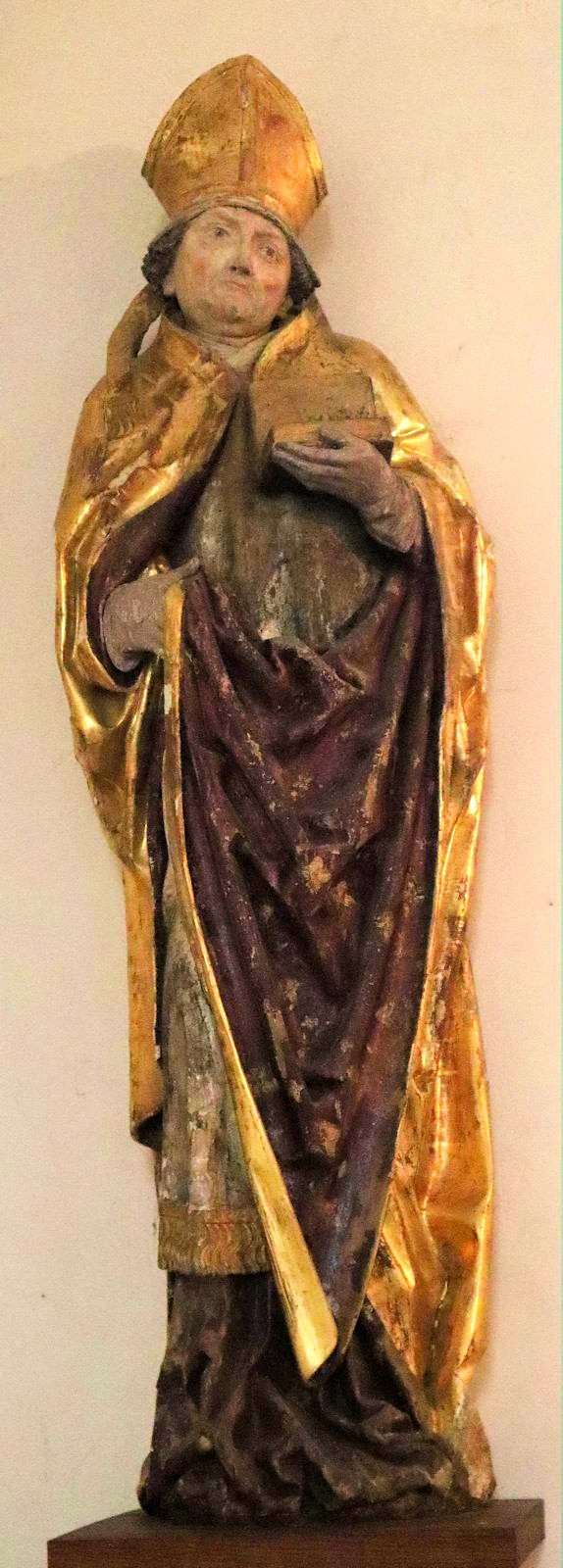
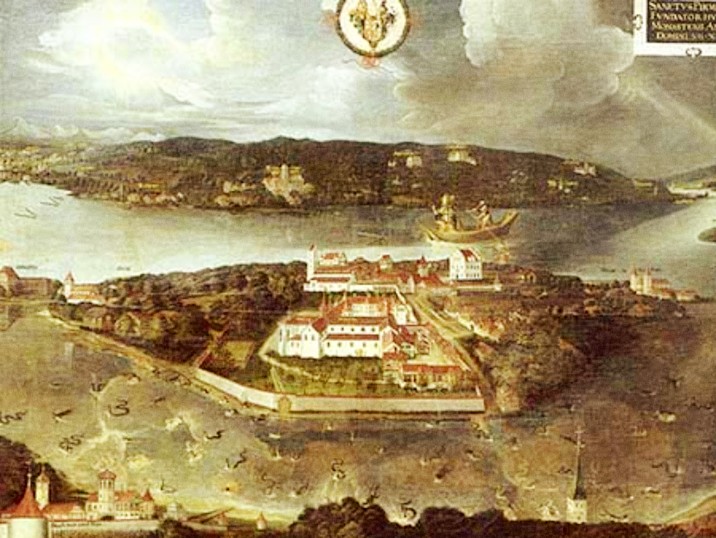
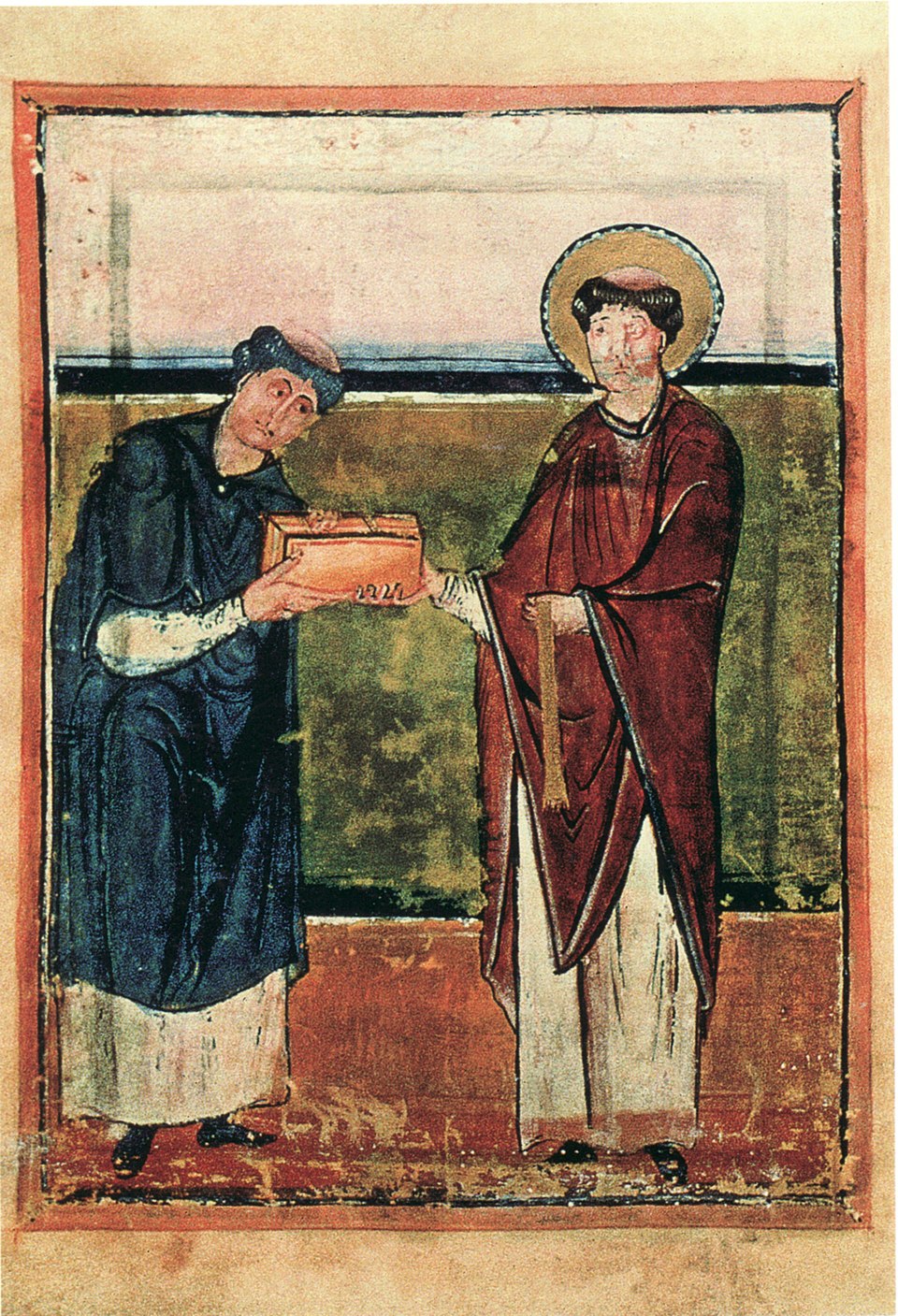

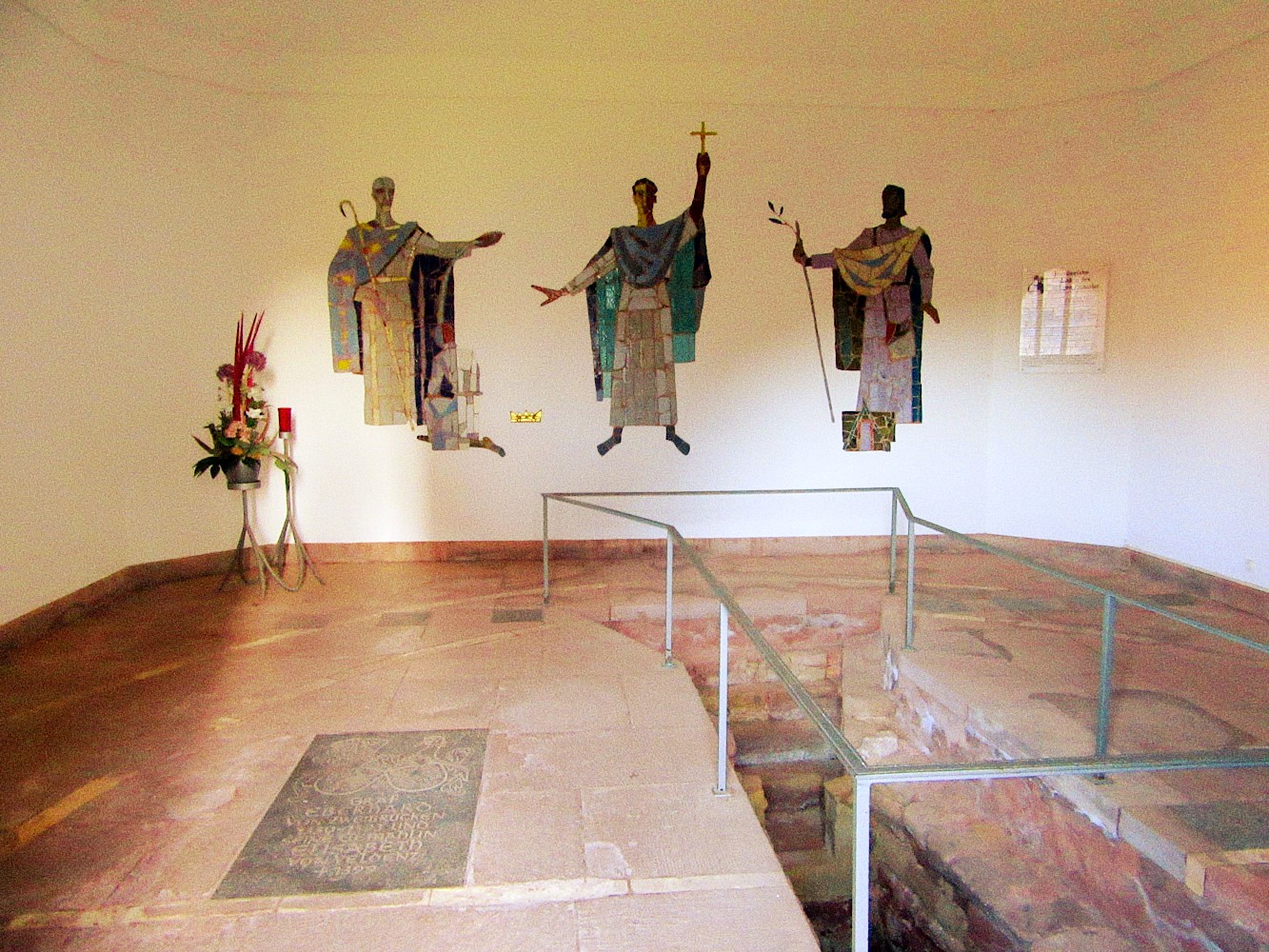
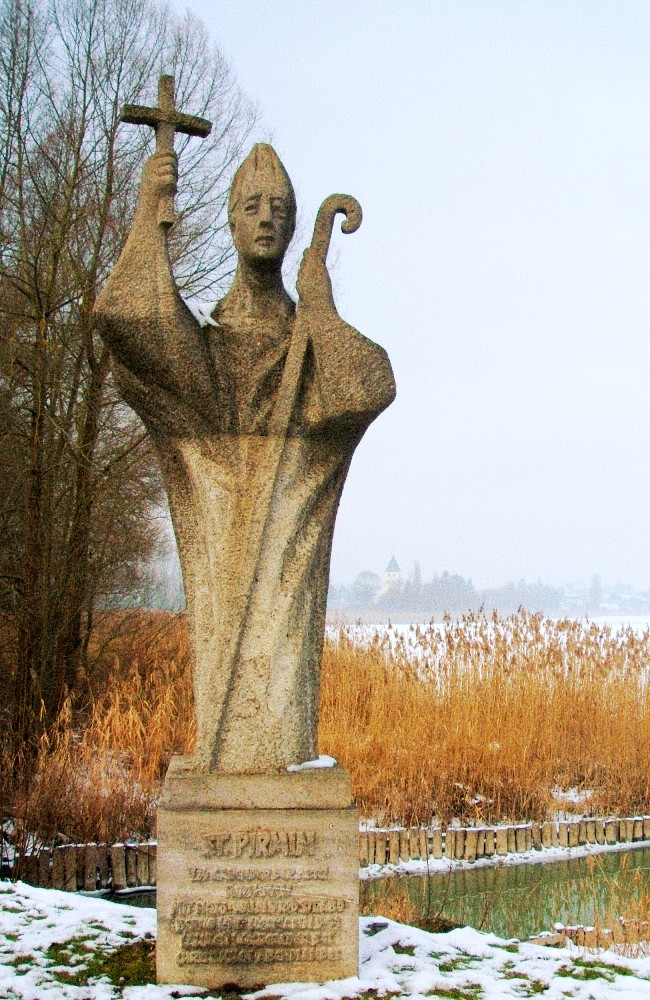
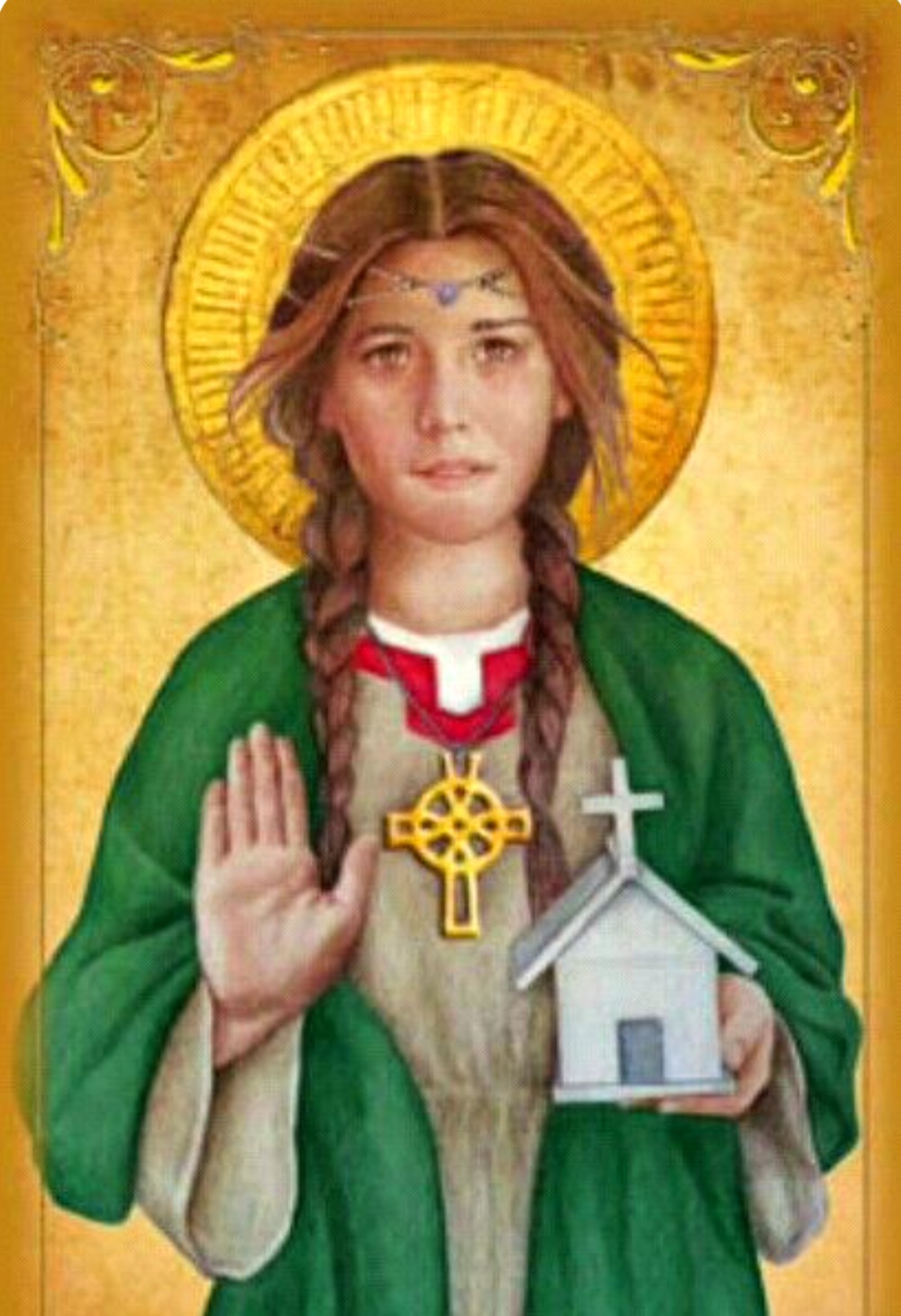
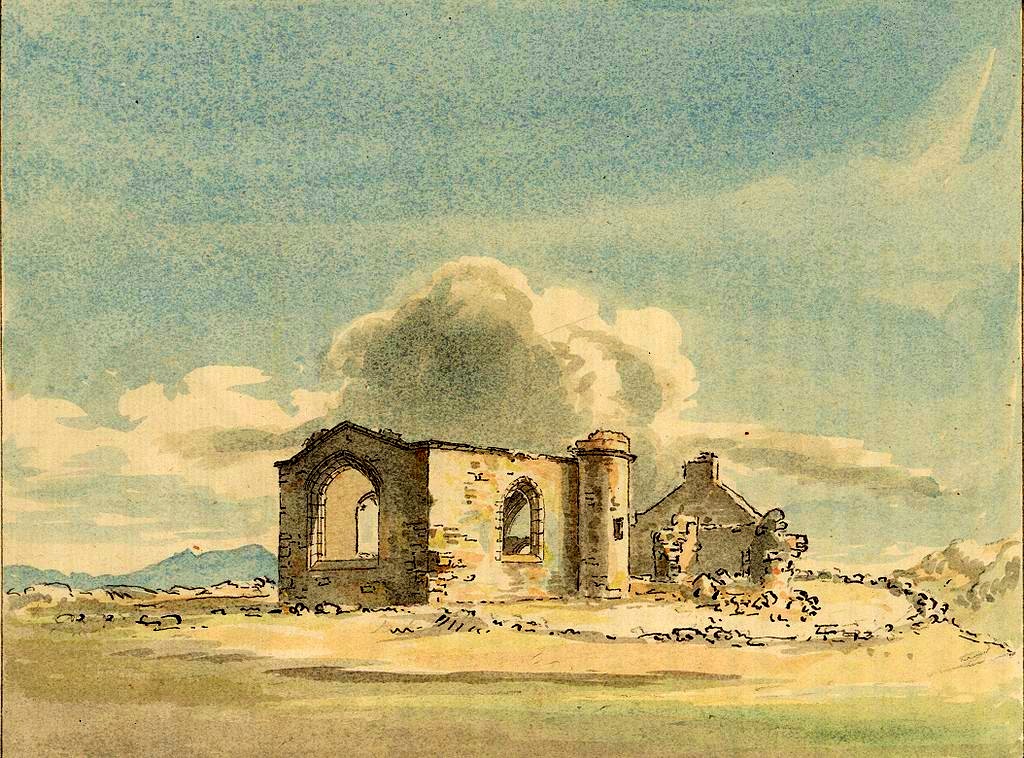
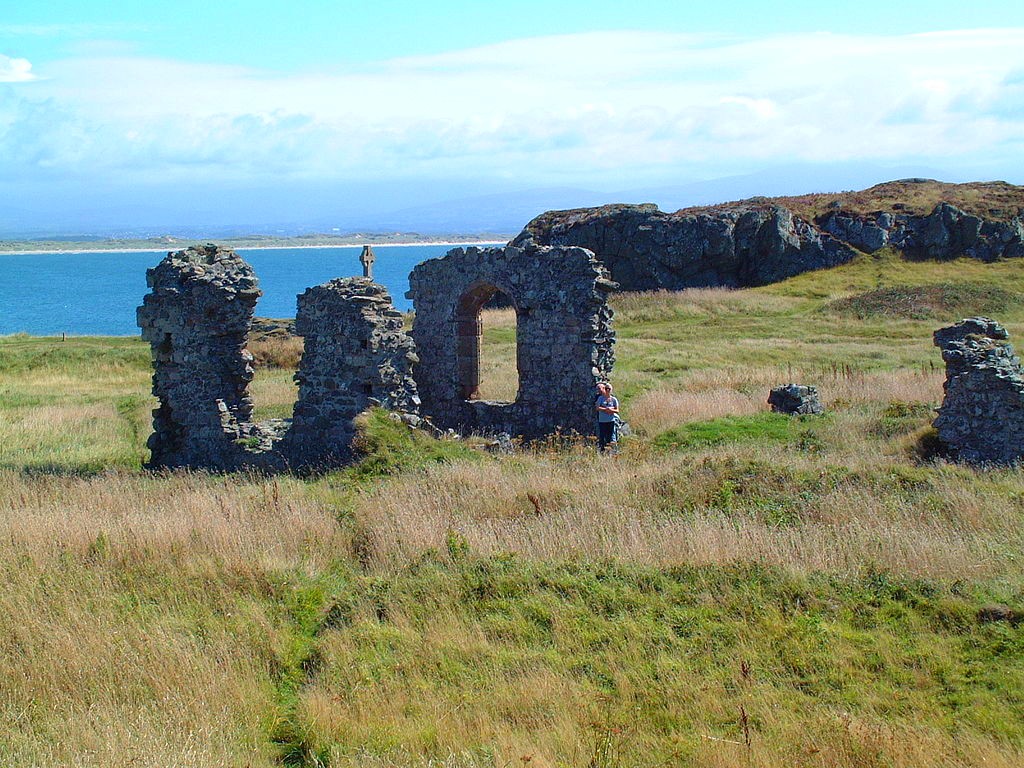
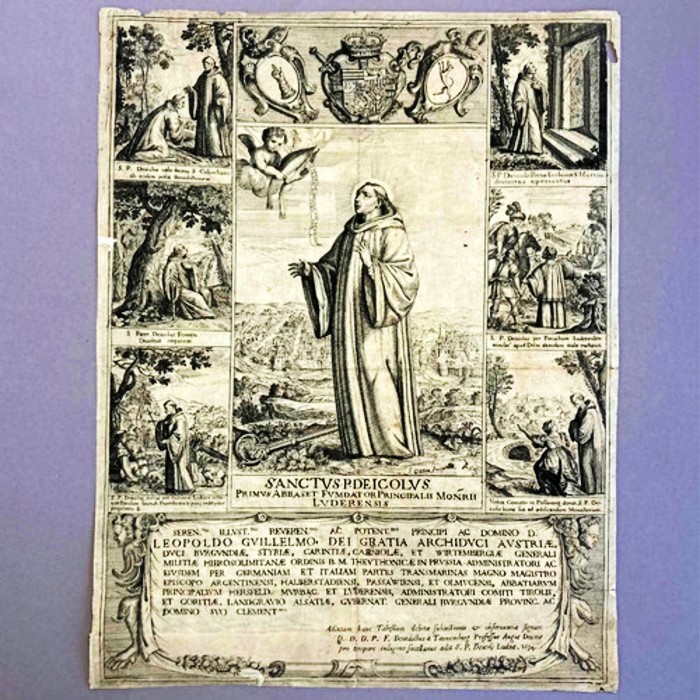
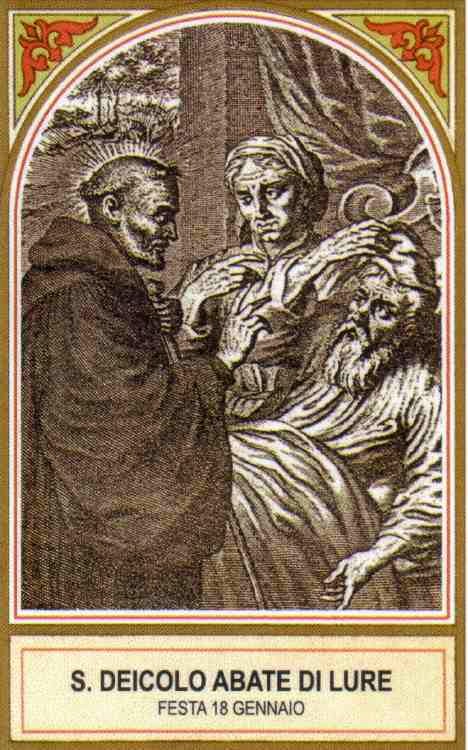
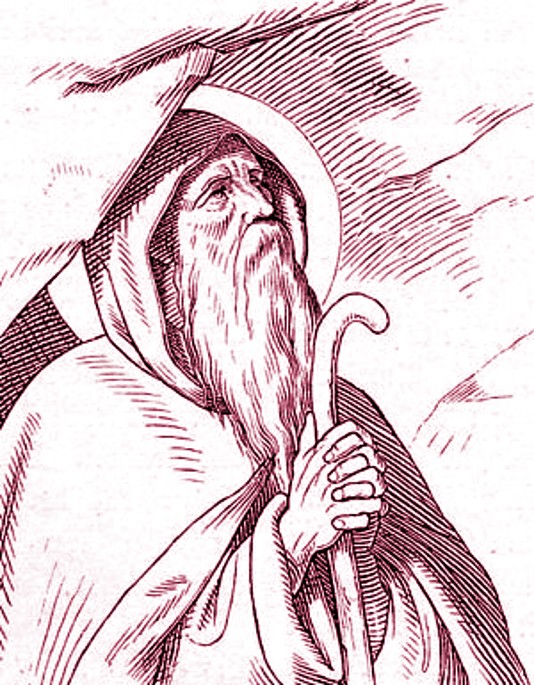
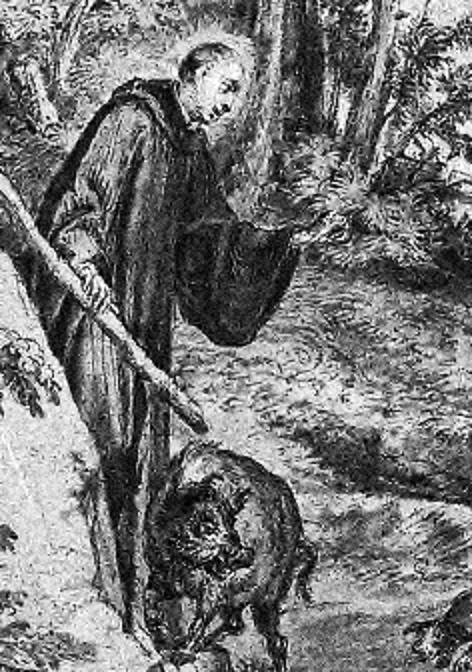
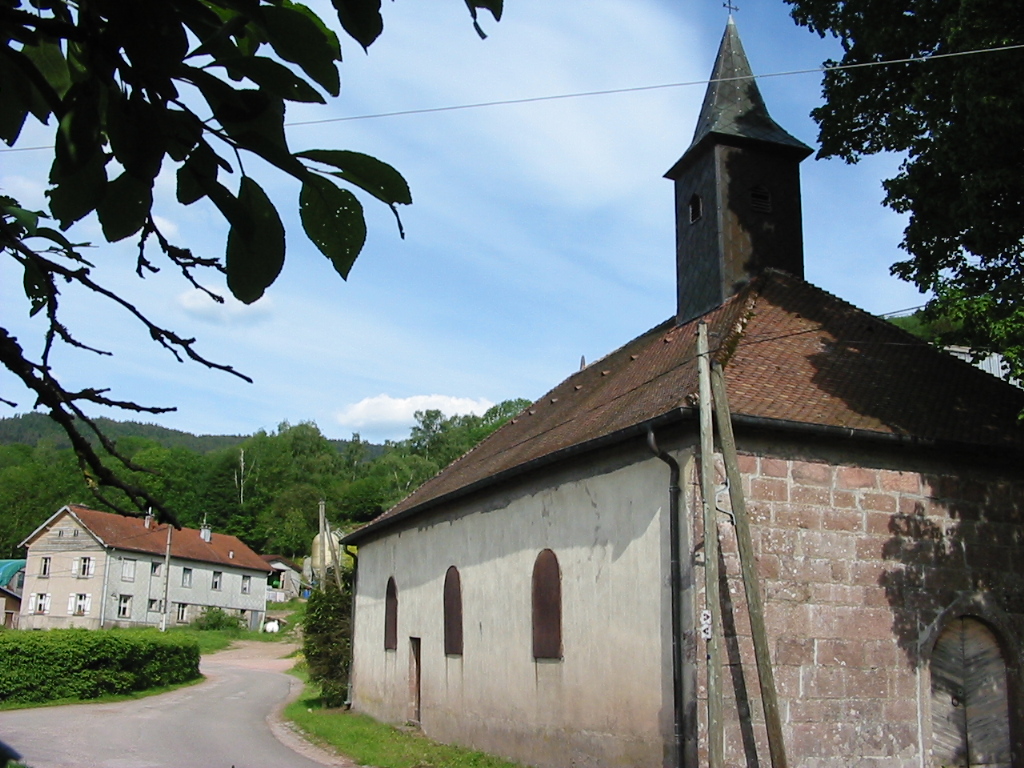
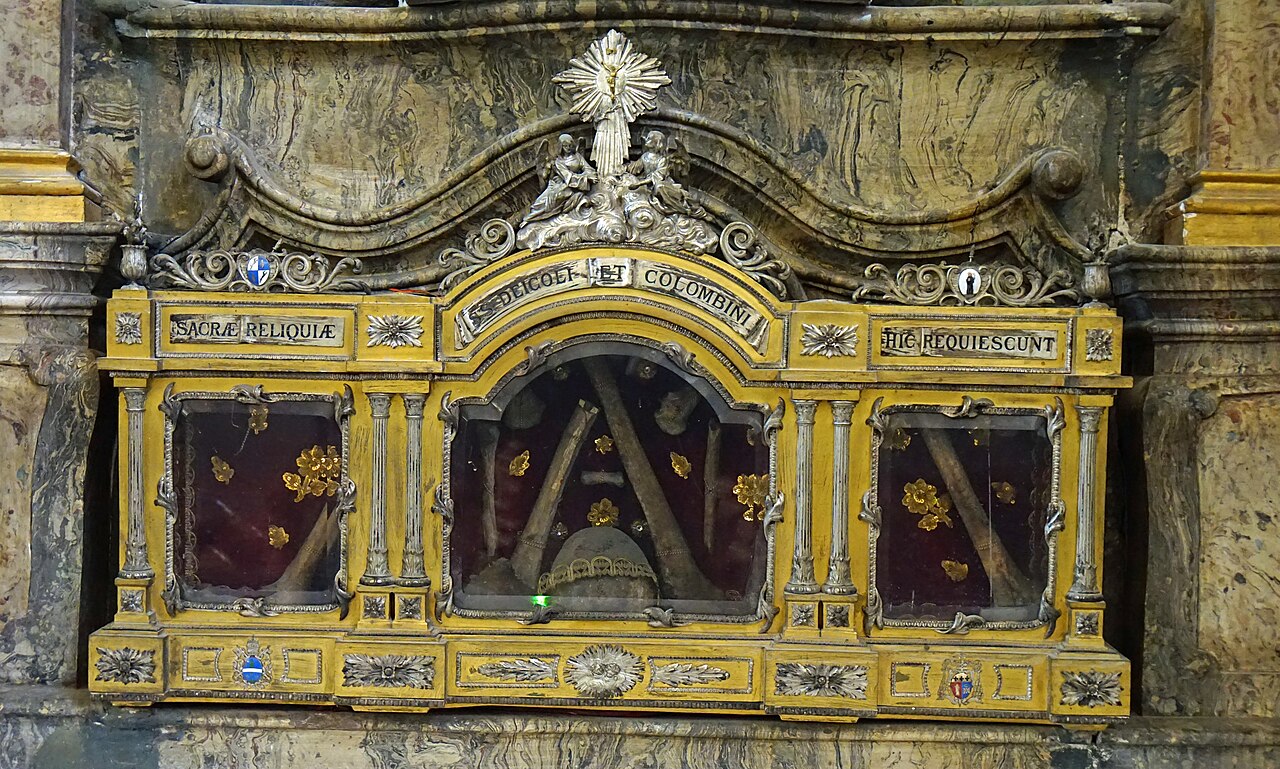

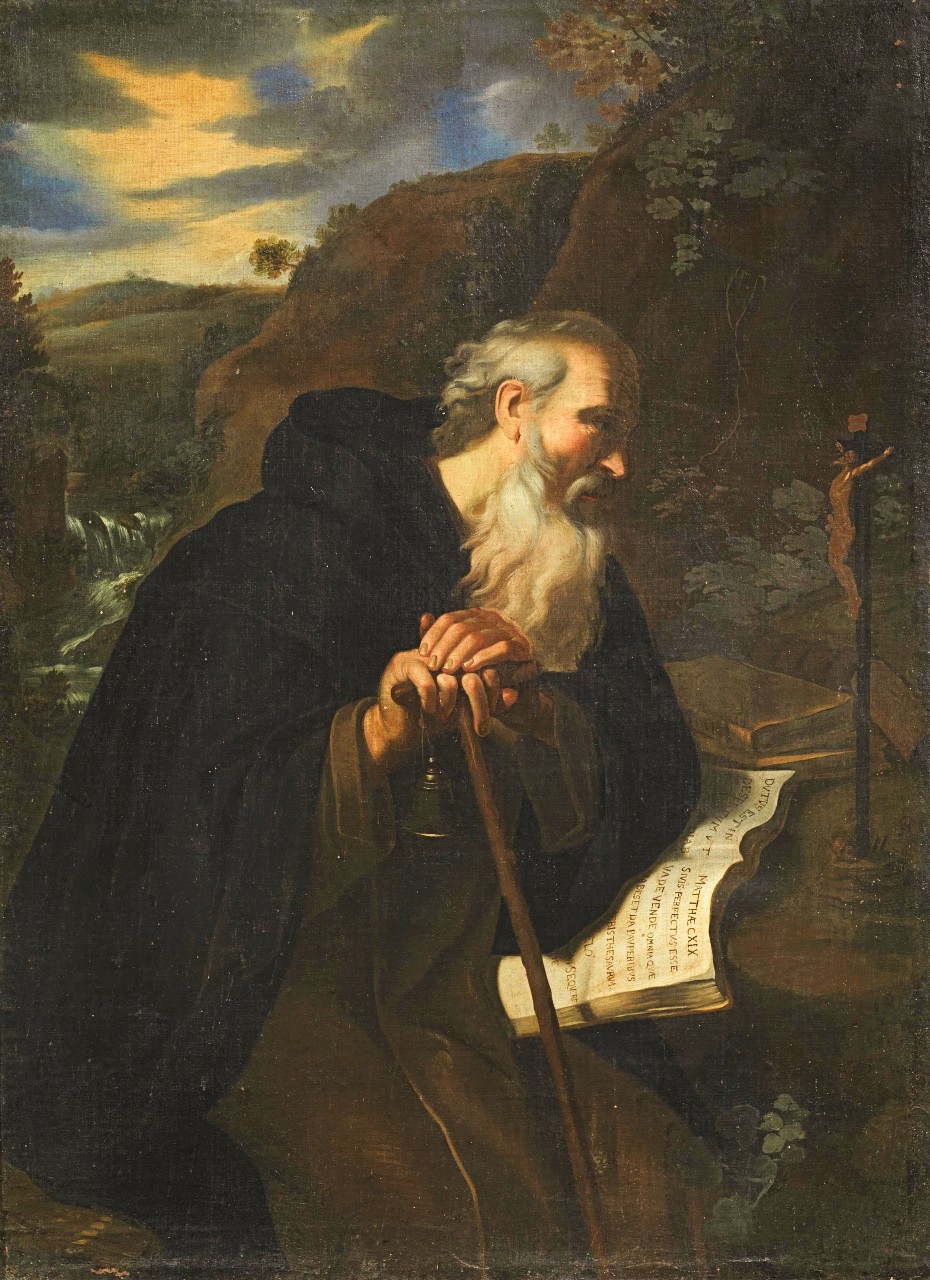
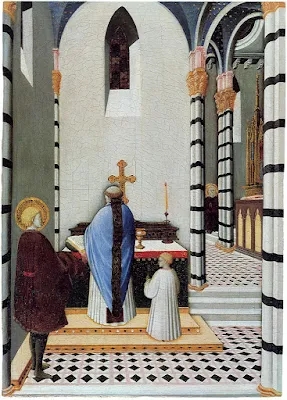
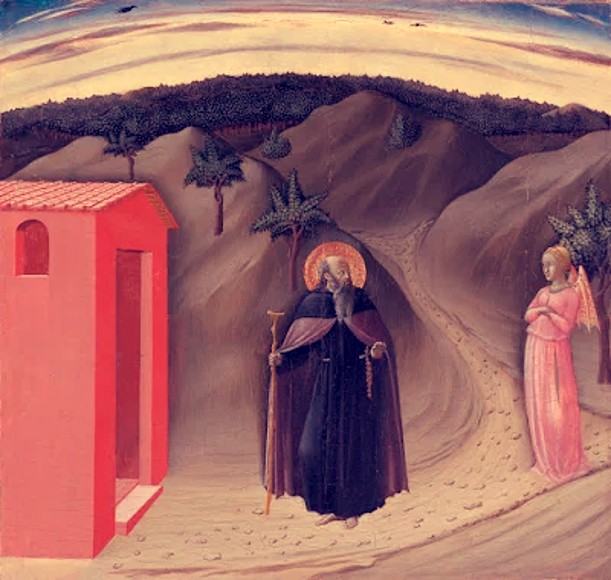
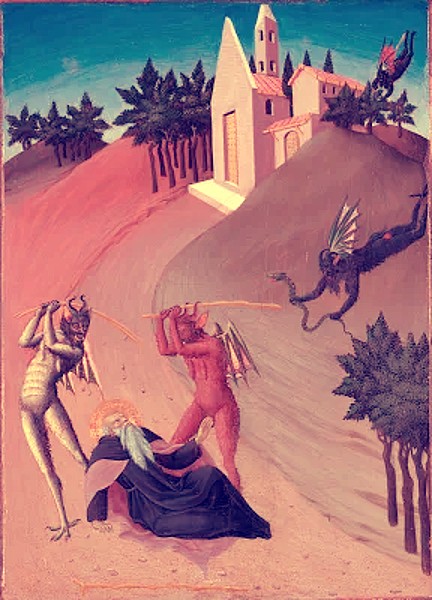
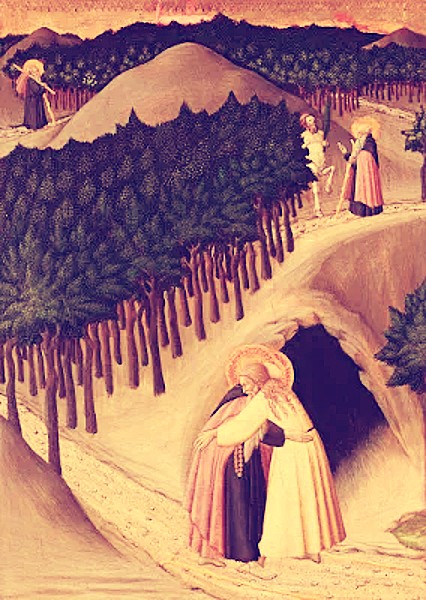
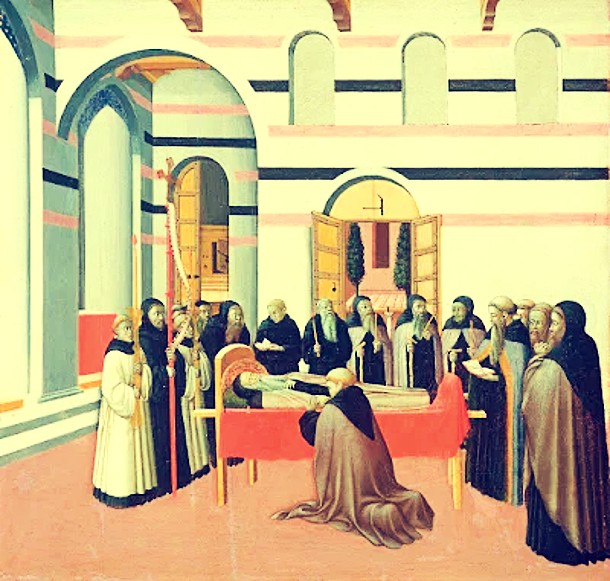
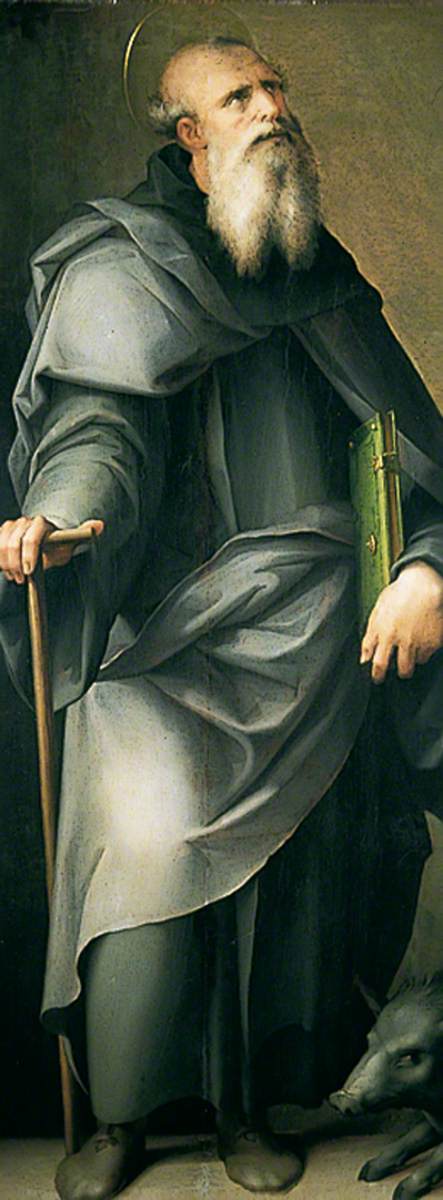
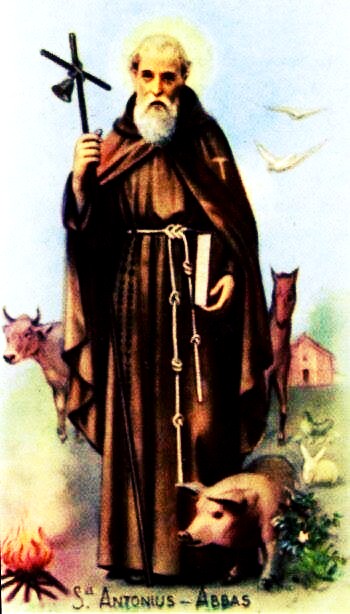
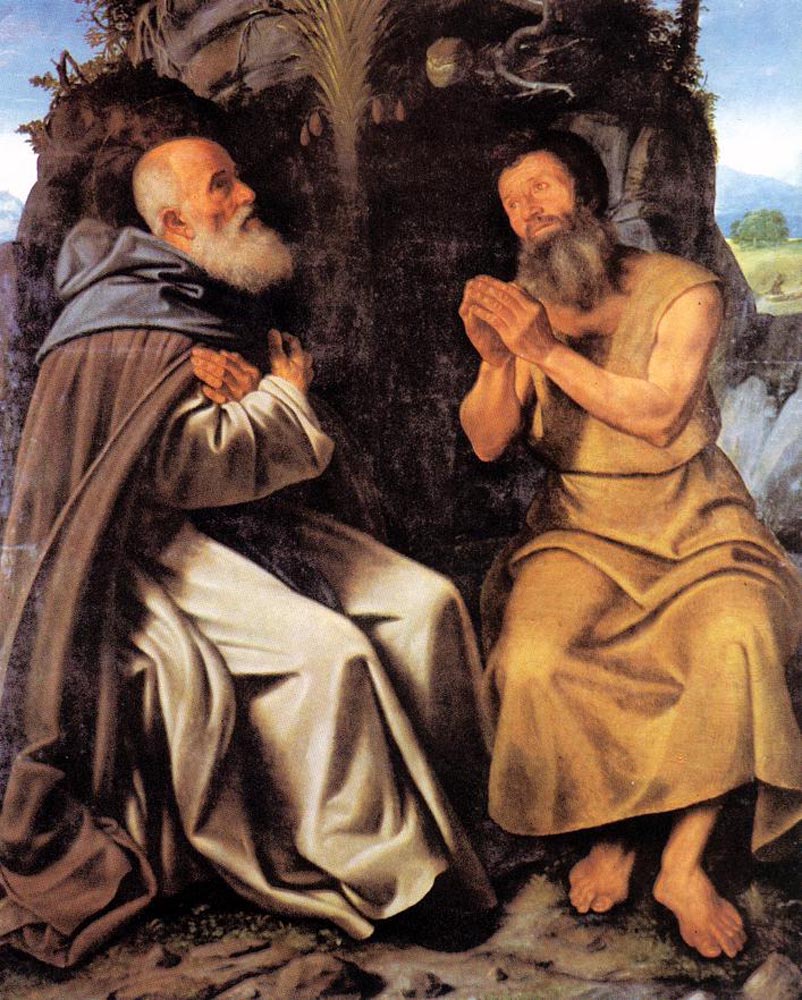
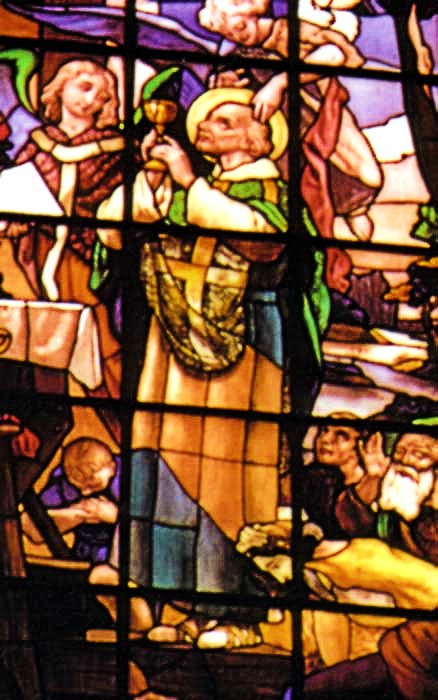
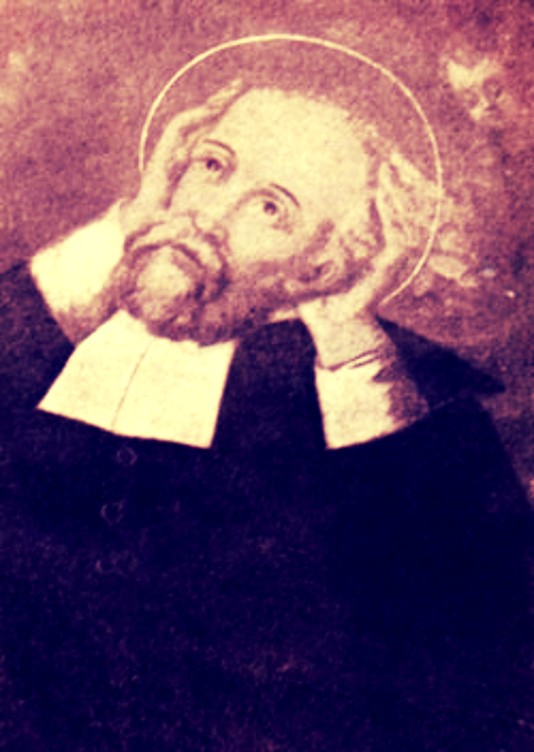



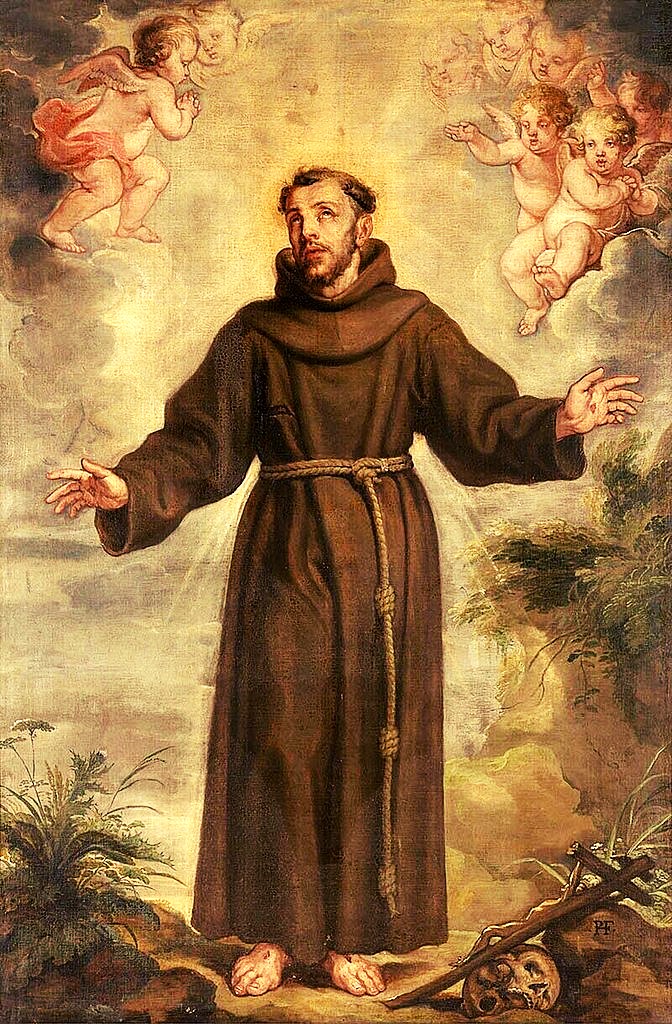


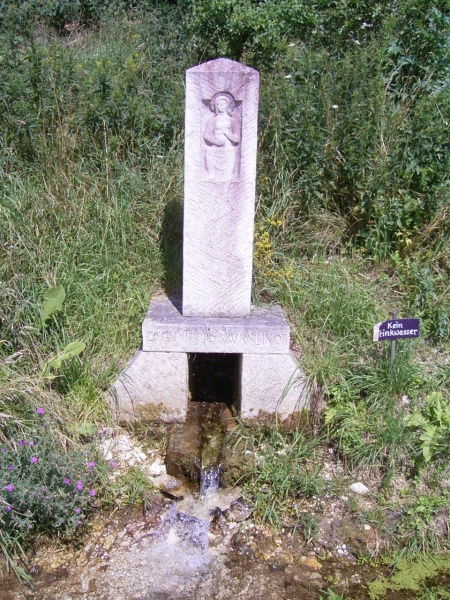
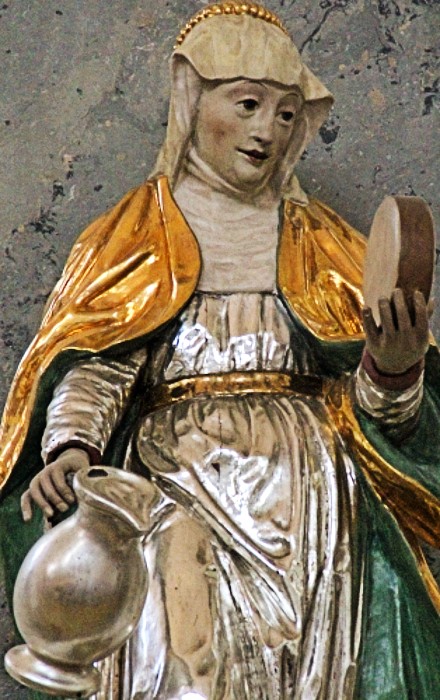
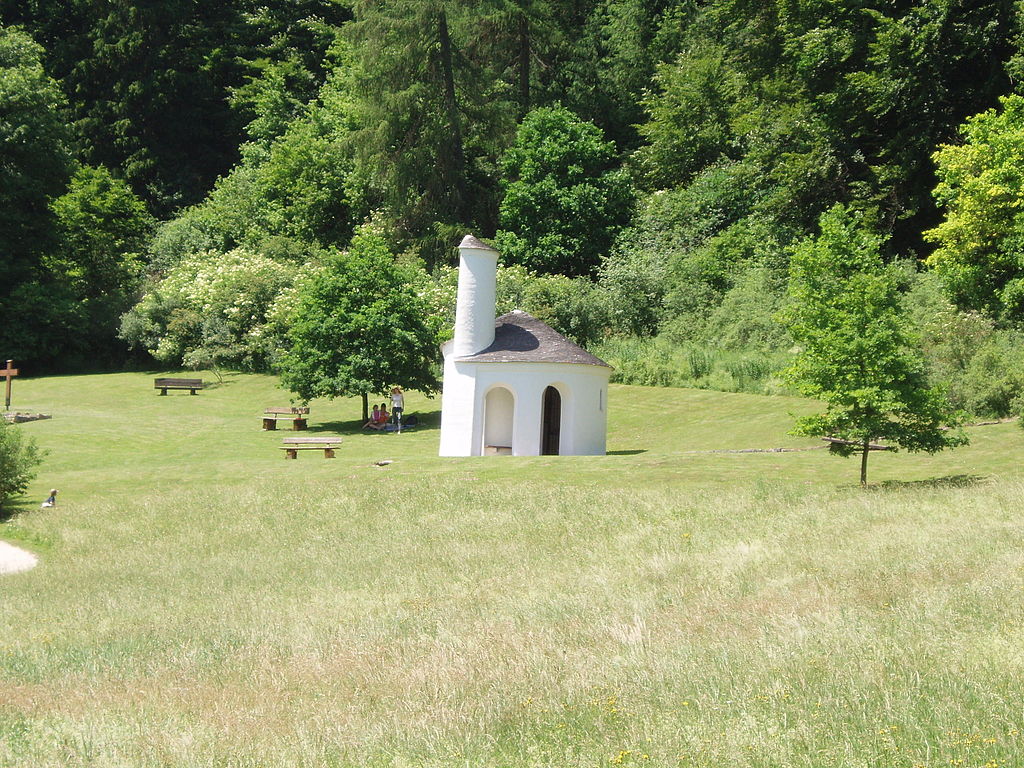
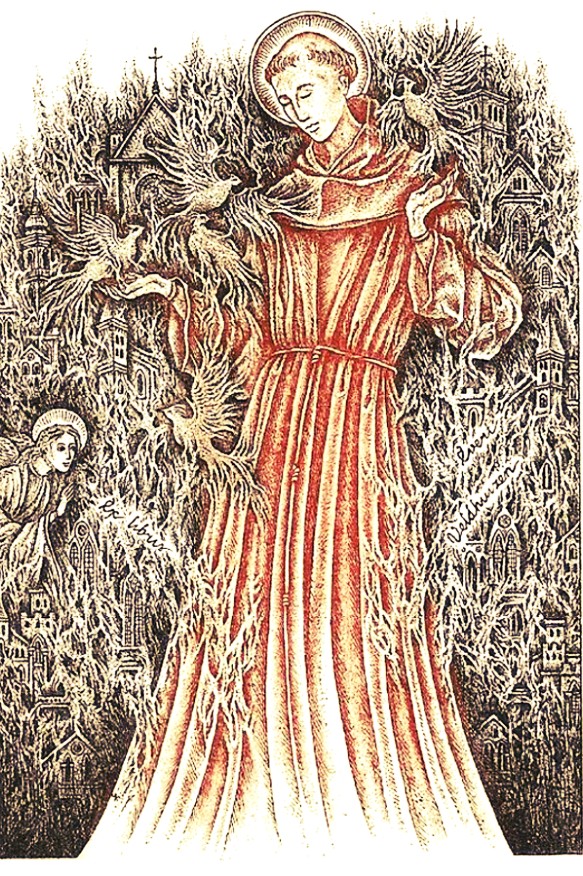
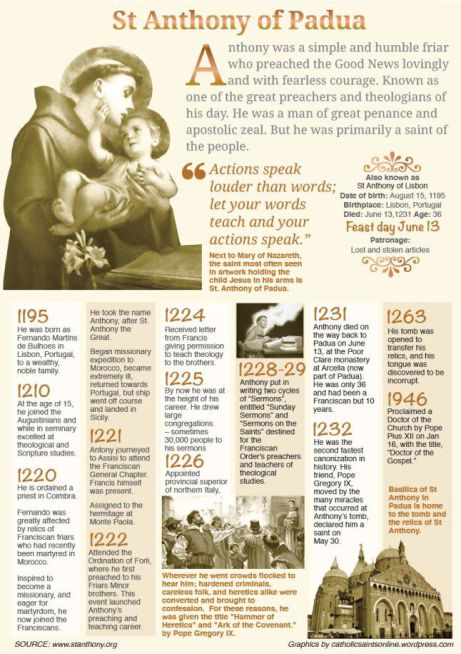
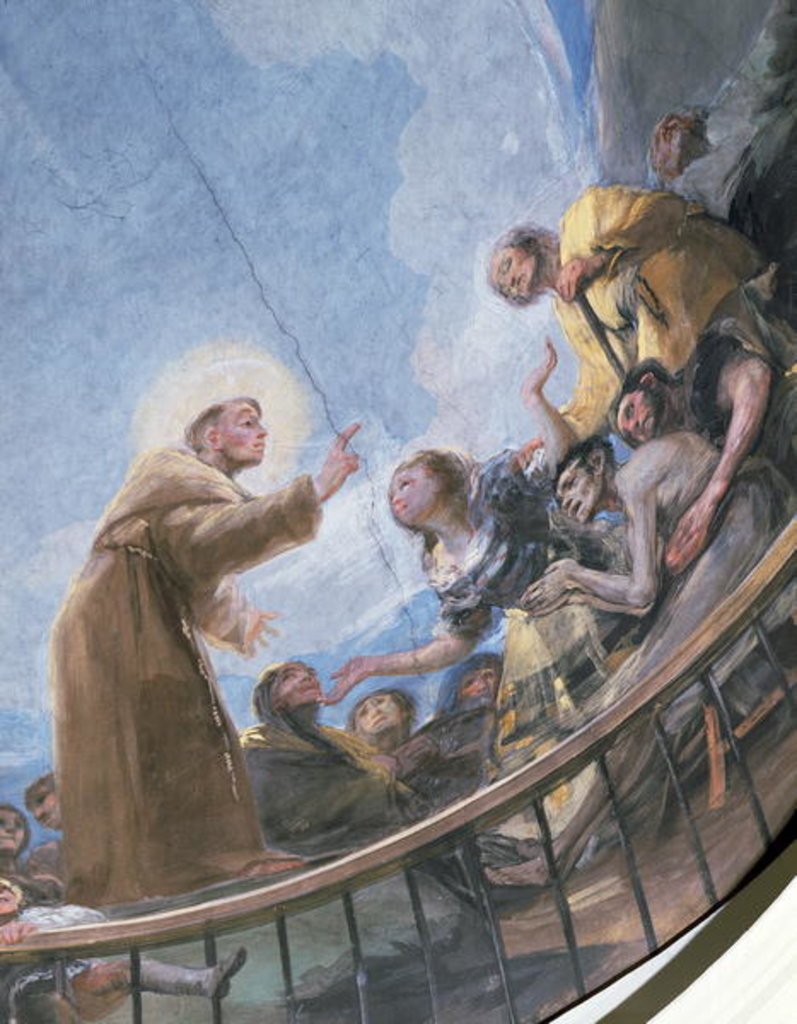
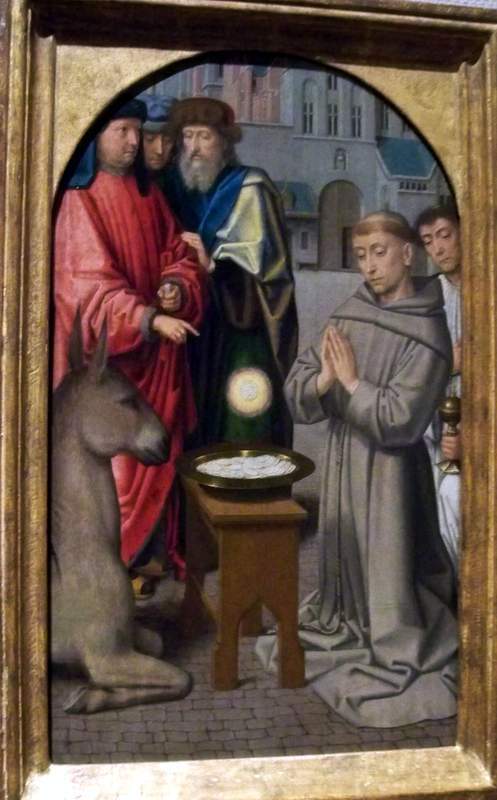
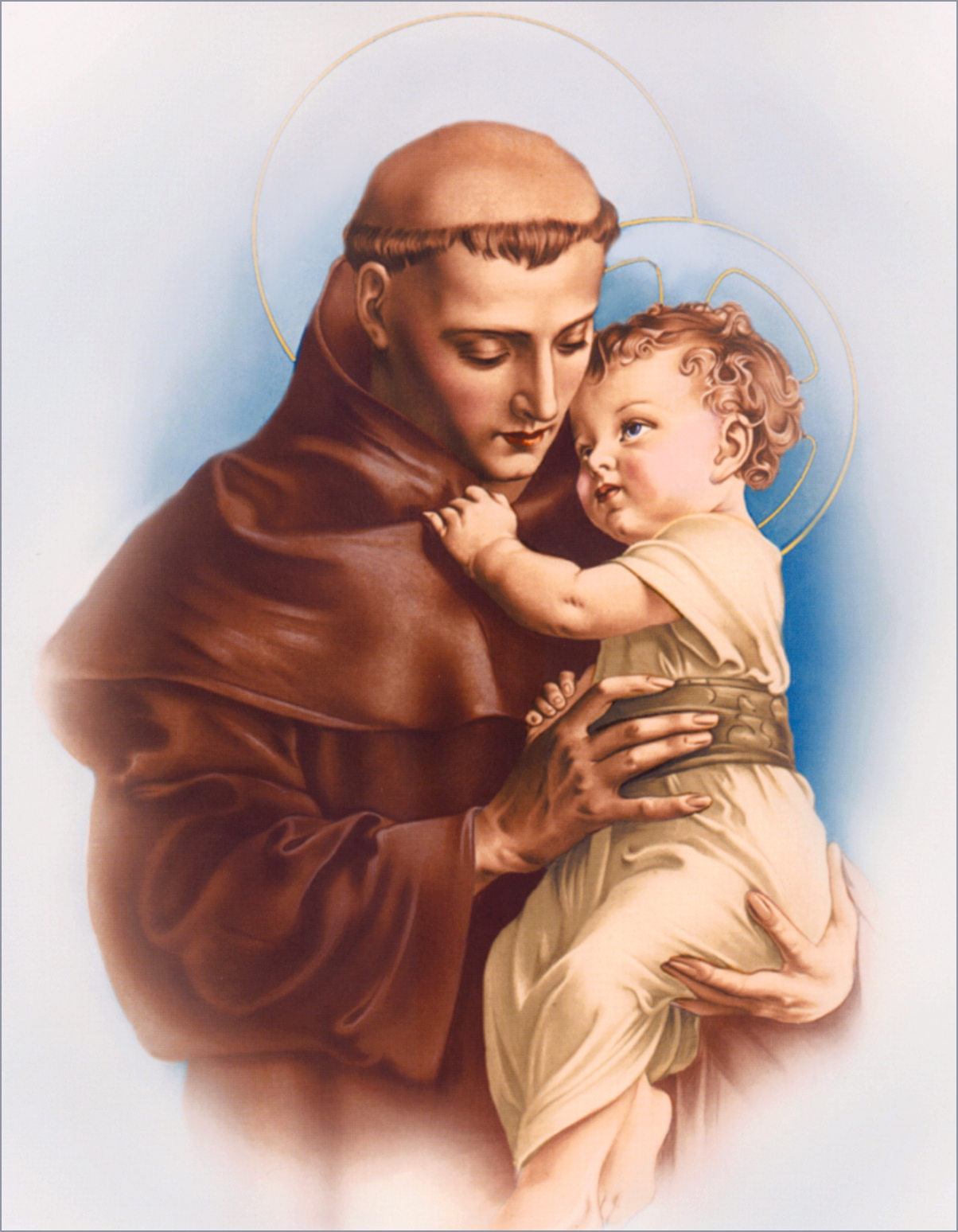
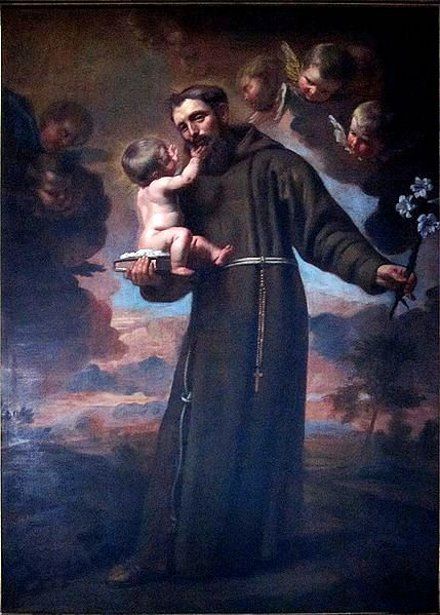
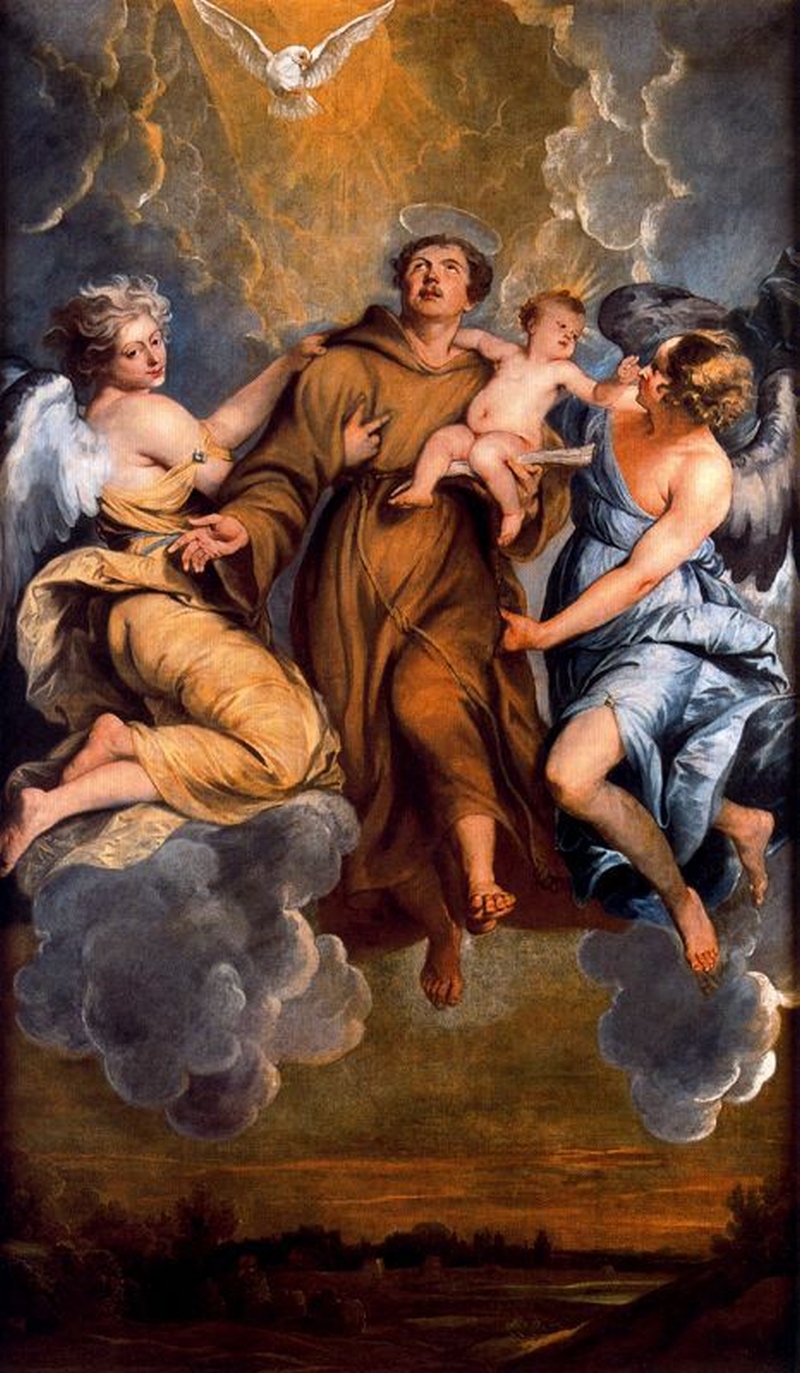
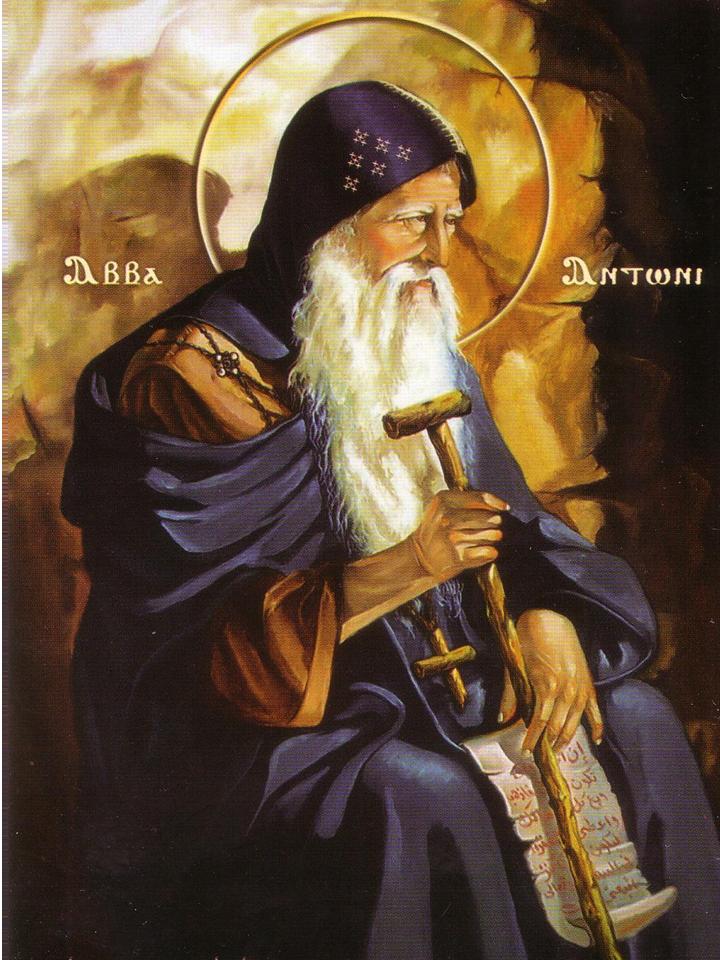

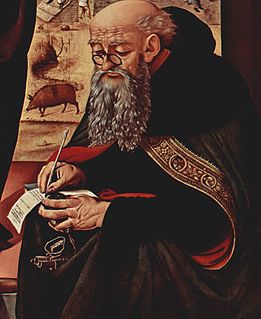
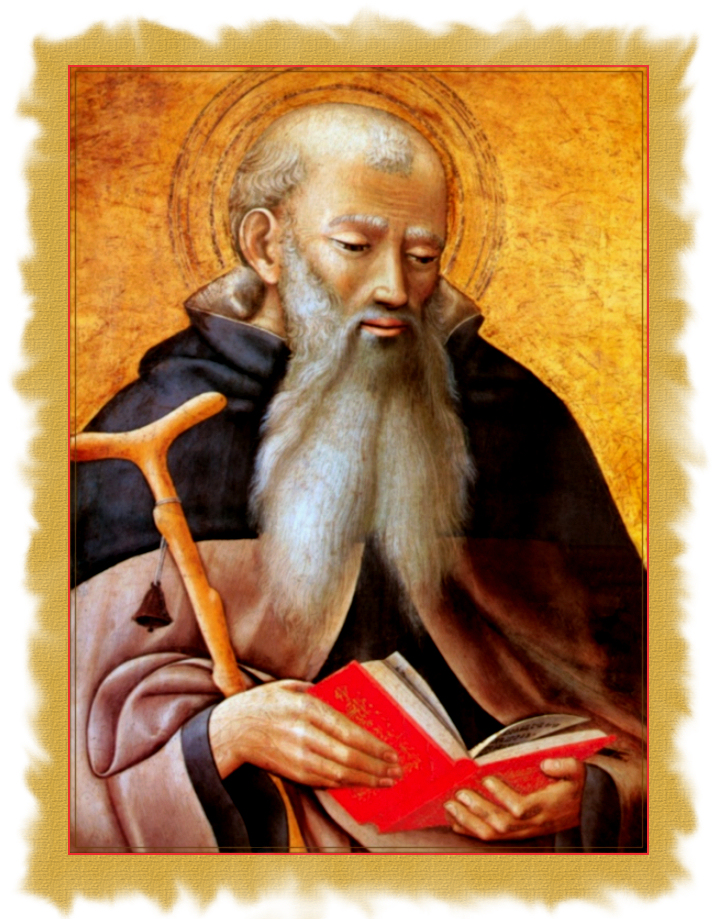

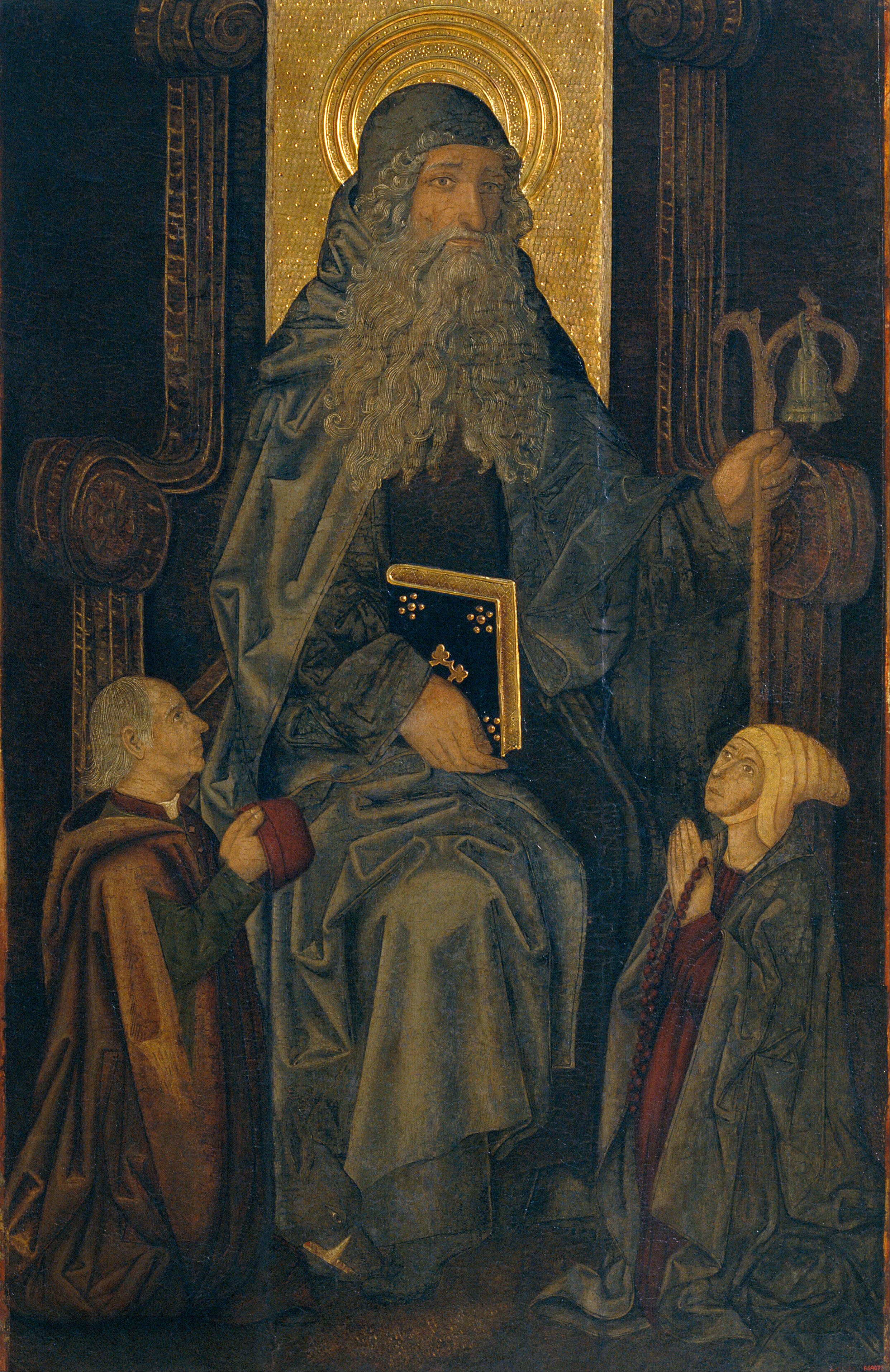
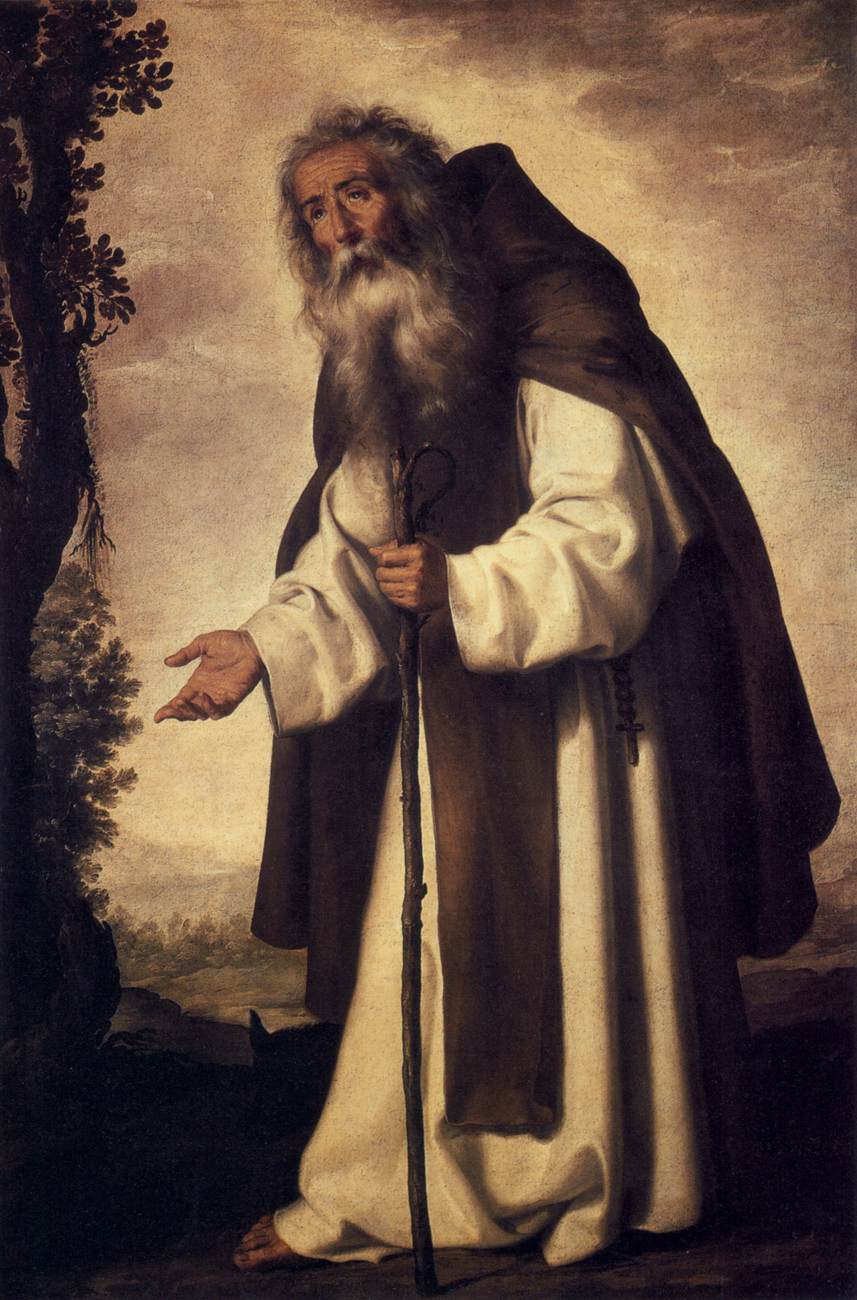
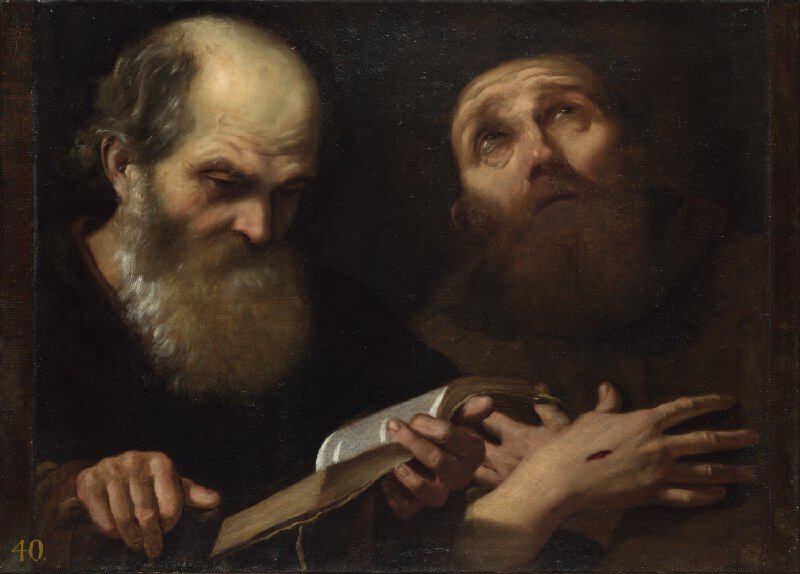
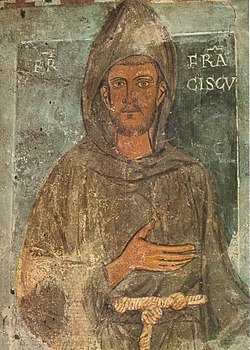
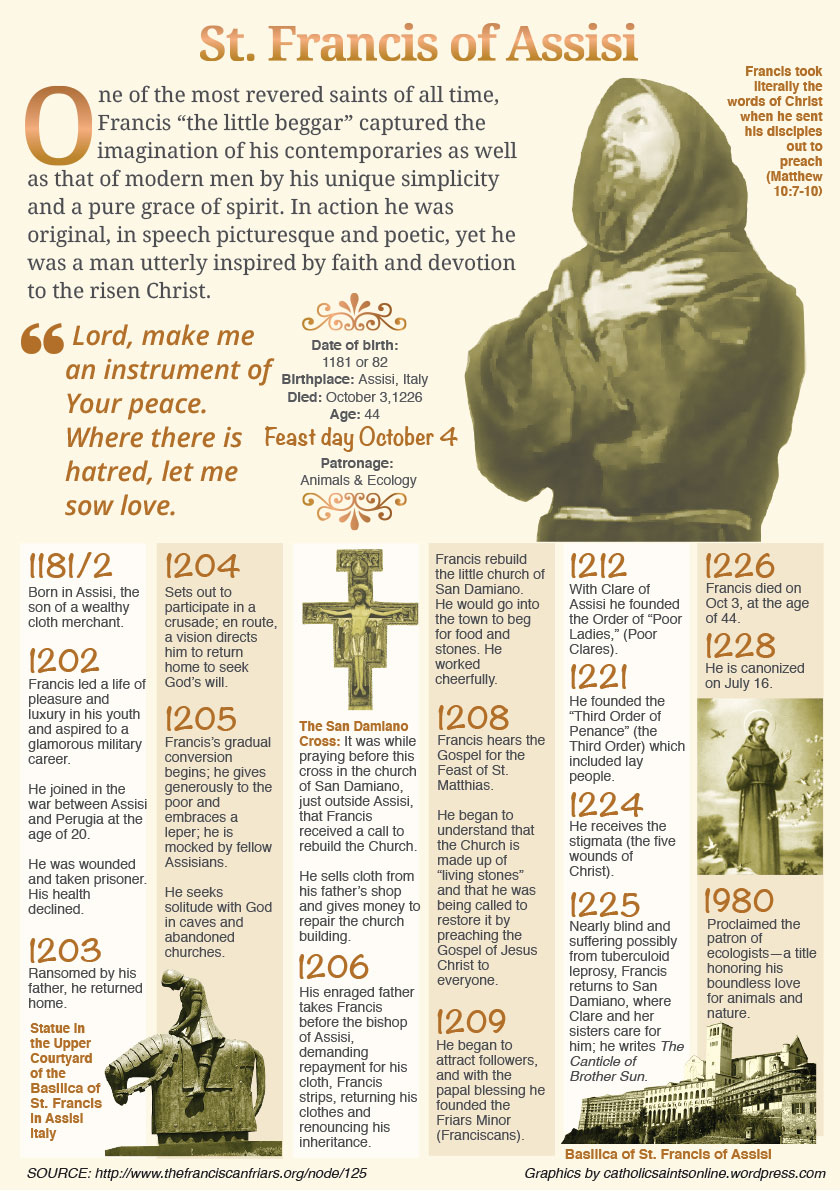


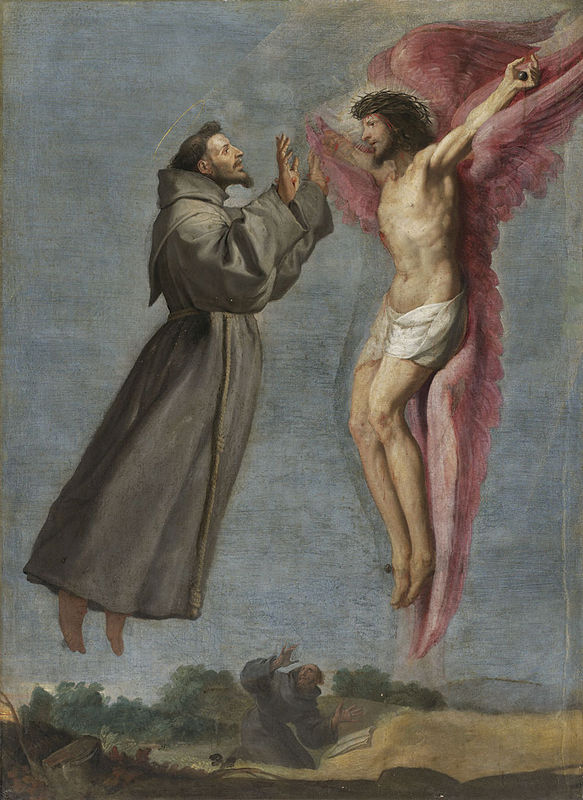
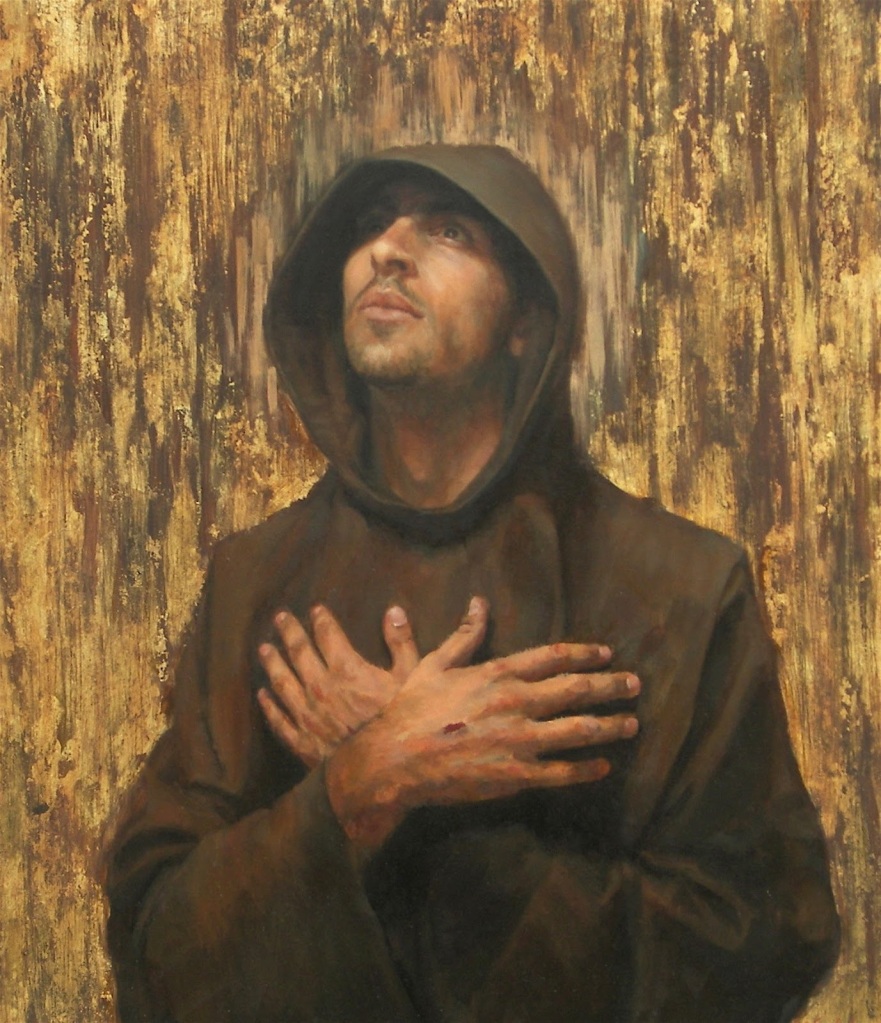
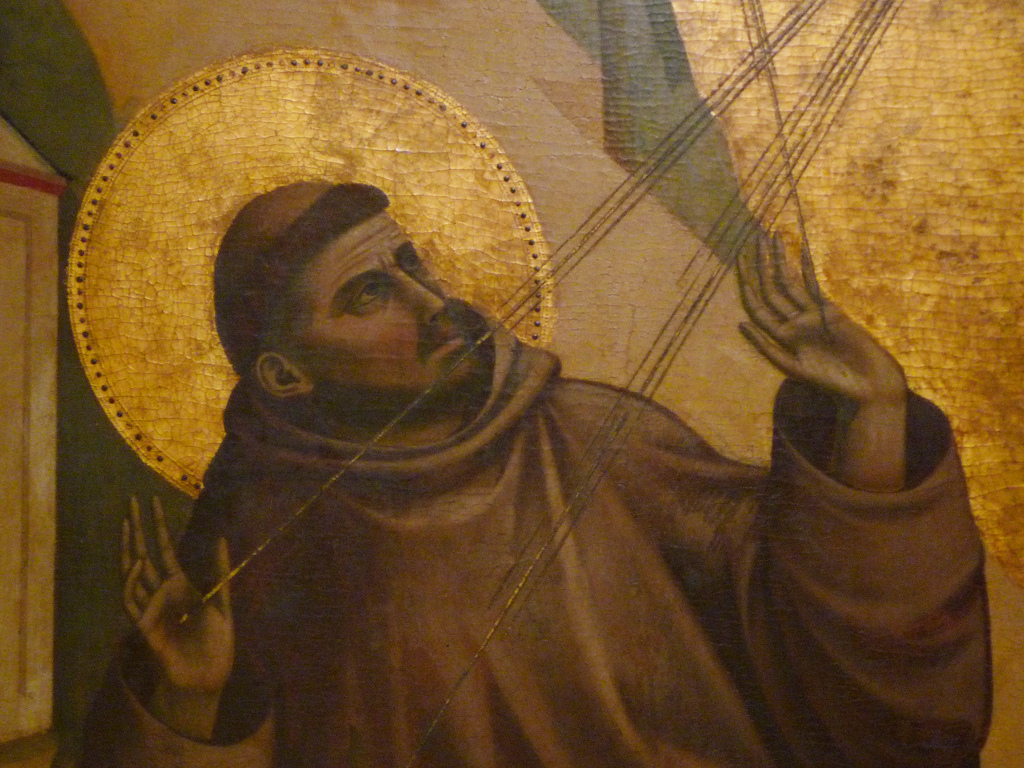
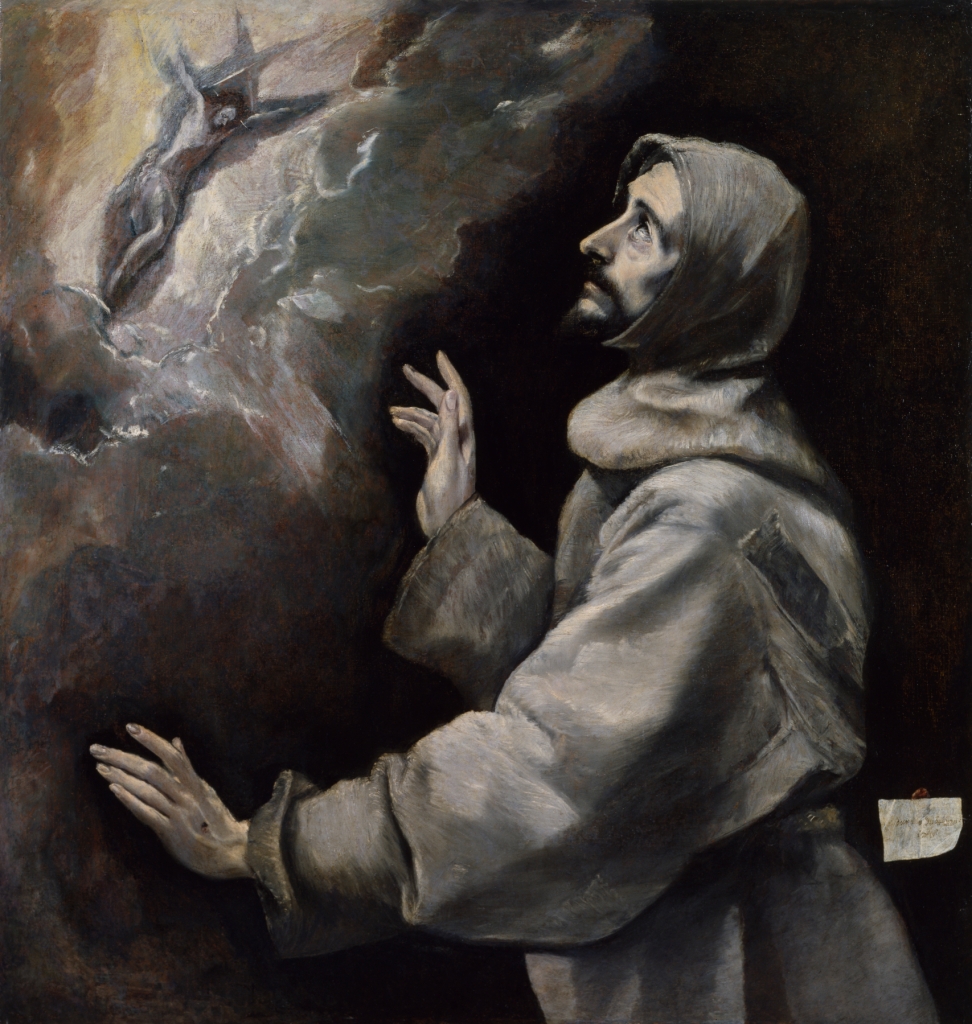
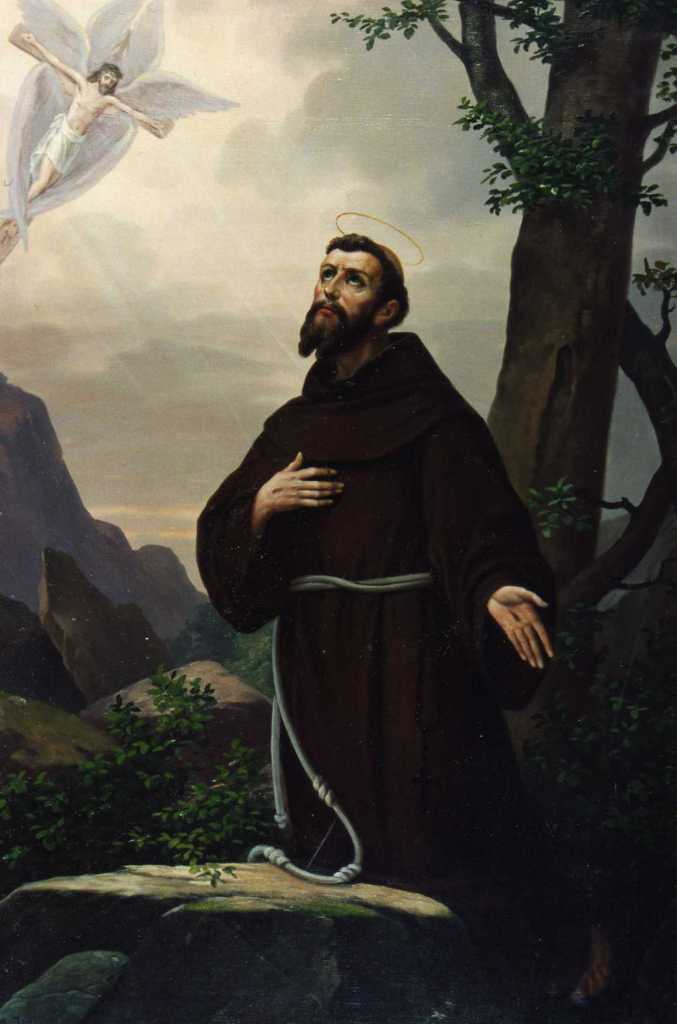
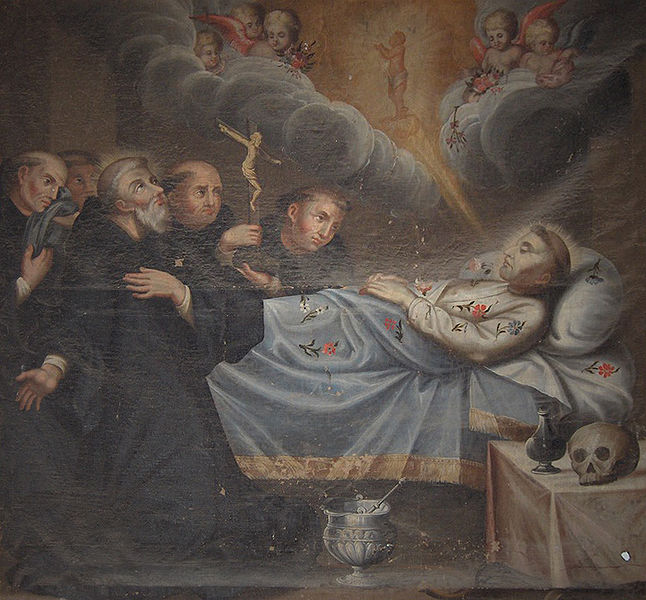


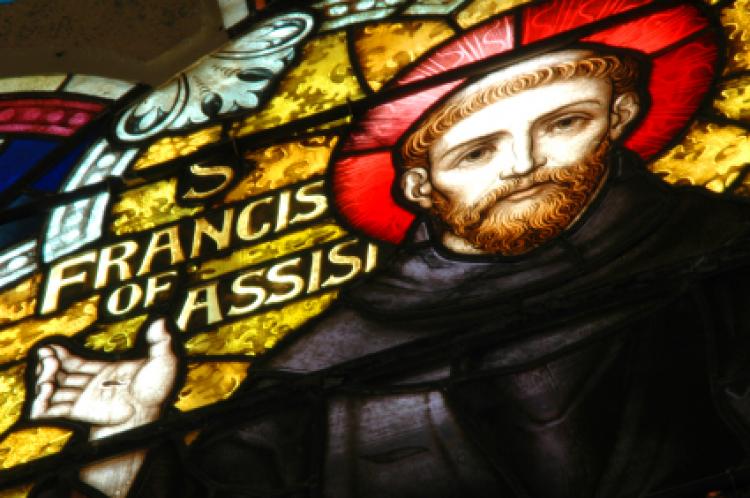
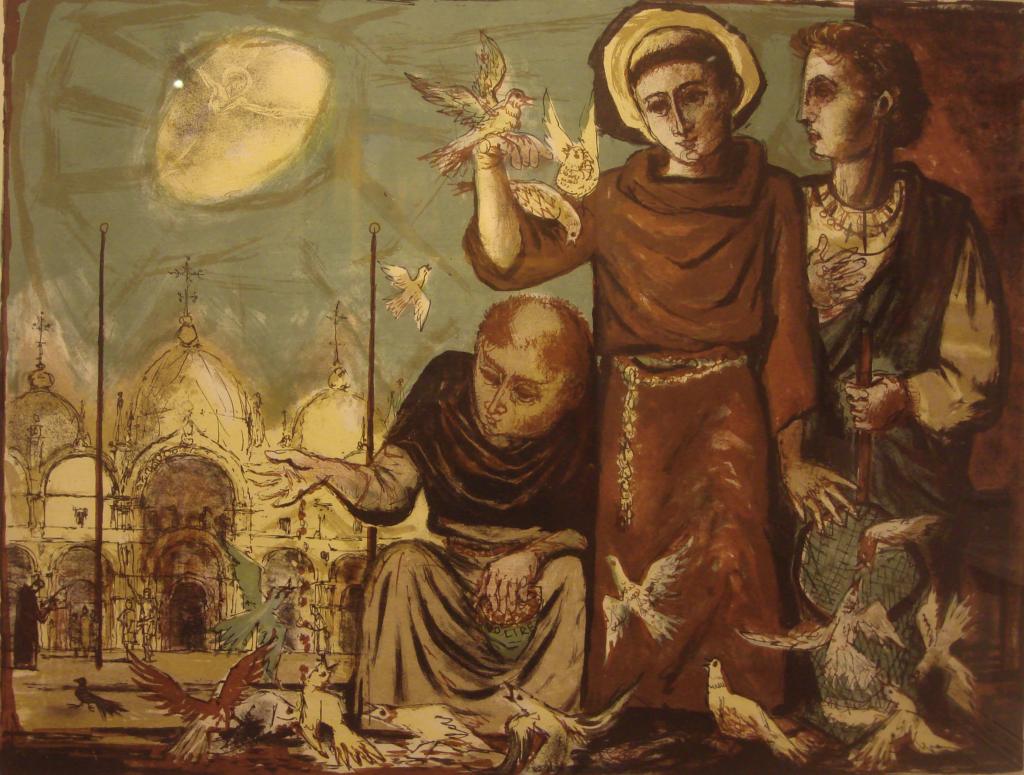


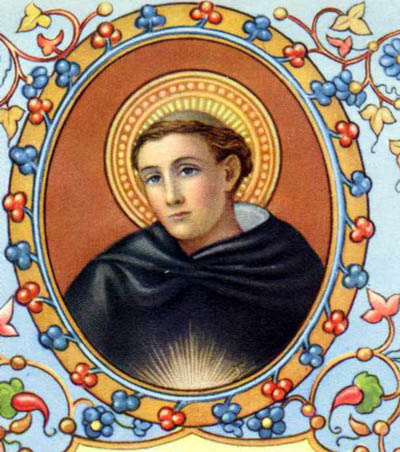
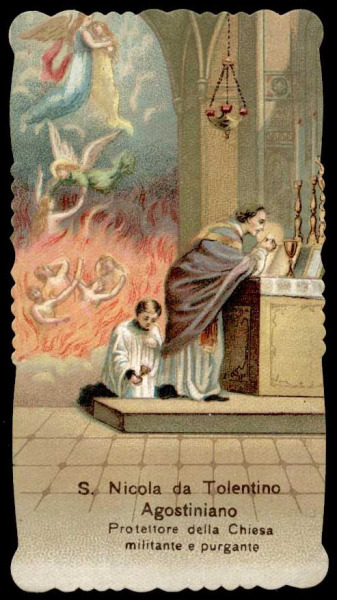
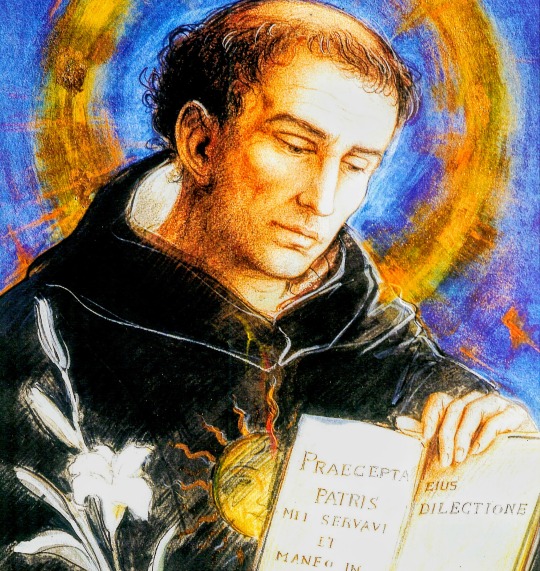


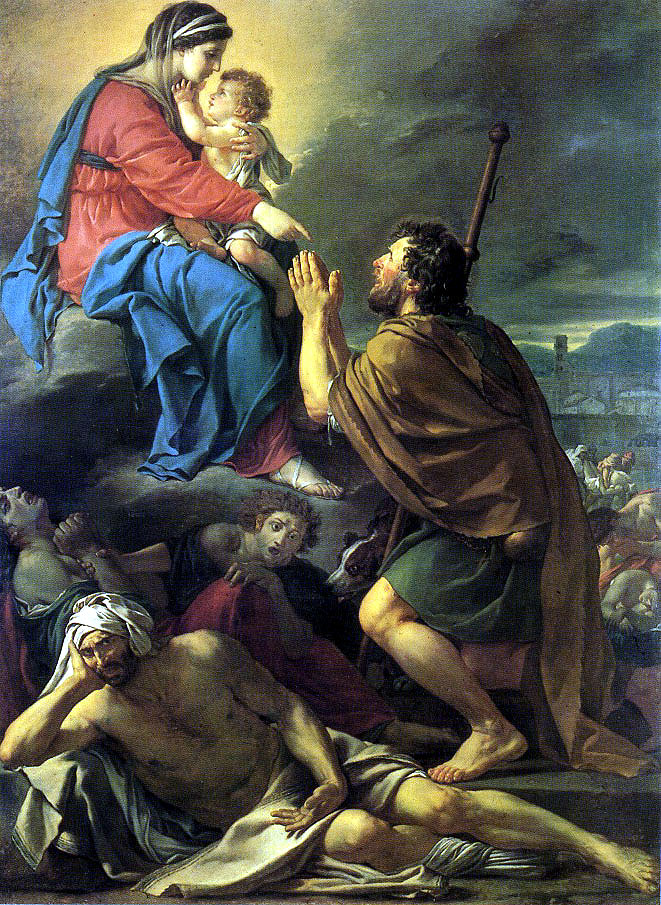 In In Rome, according to the Golden Legend he preserved the “Cardinal of Angleria in Lombardy” by making the Sign of the Cross on his forehead, which miraculously remained there, visi nbble to all! Ministering at Piacenza he himself finally fell ill. He was expelled from the Town and withdrew into the forest, where he fashioned a shelter of boughs and leaves which was miraculously supplied with water, by a spring wic arose in the place;. He would have perished, had not a dog belonging to a nobleman named Gothard Palastrelli, supplied him with bread and licked his wounds, healing them. Count Gothard, following his hunting dog carrying the bread, discovered Saint Roch and became his acolyte.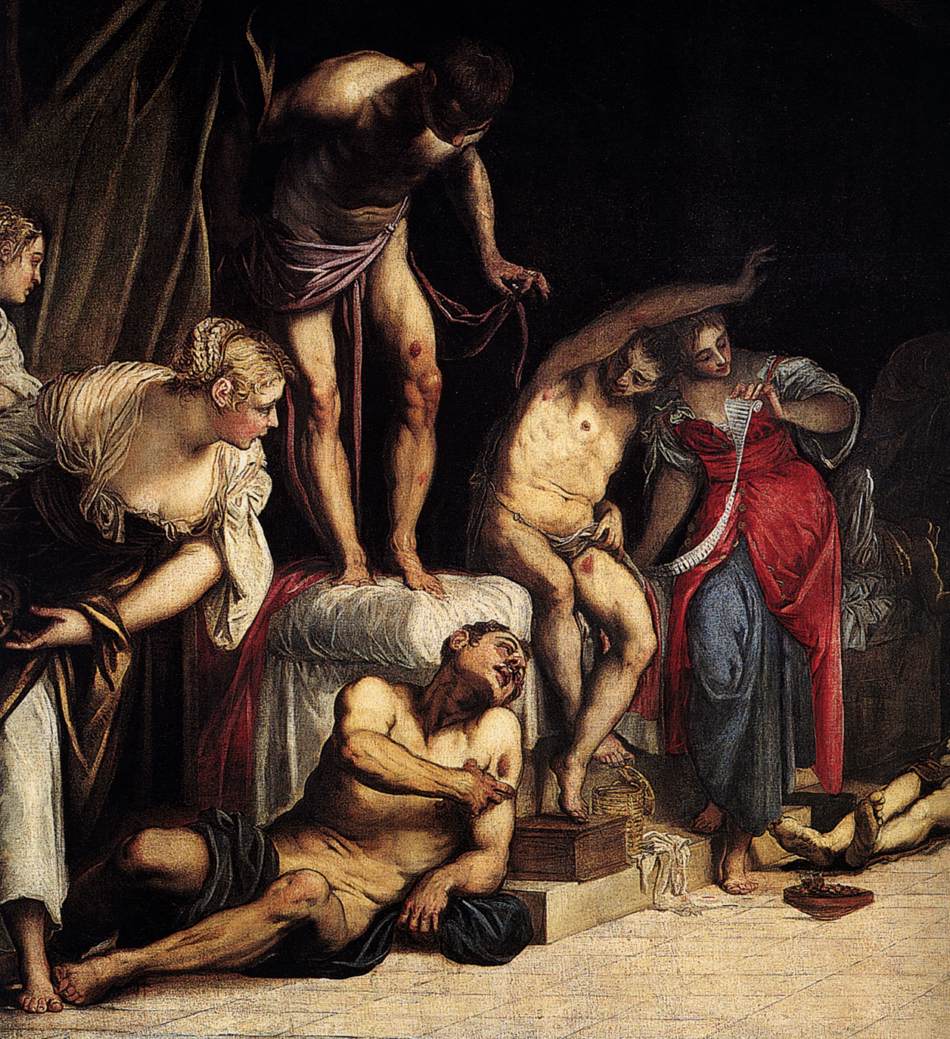
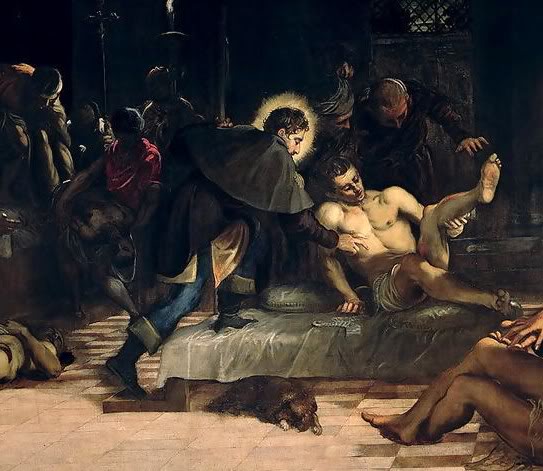
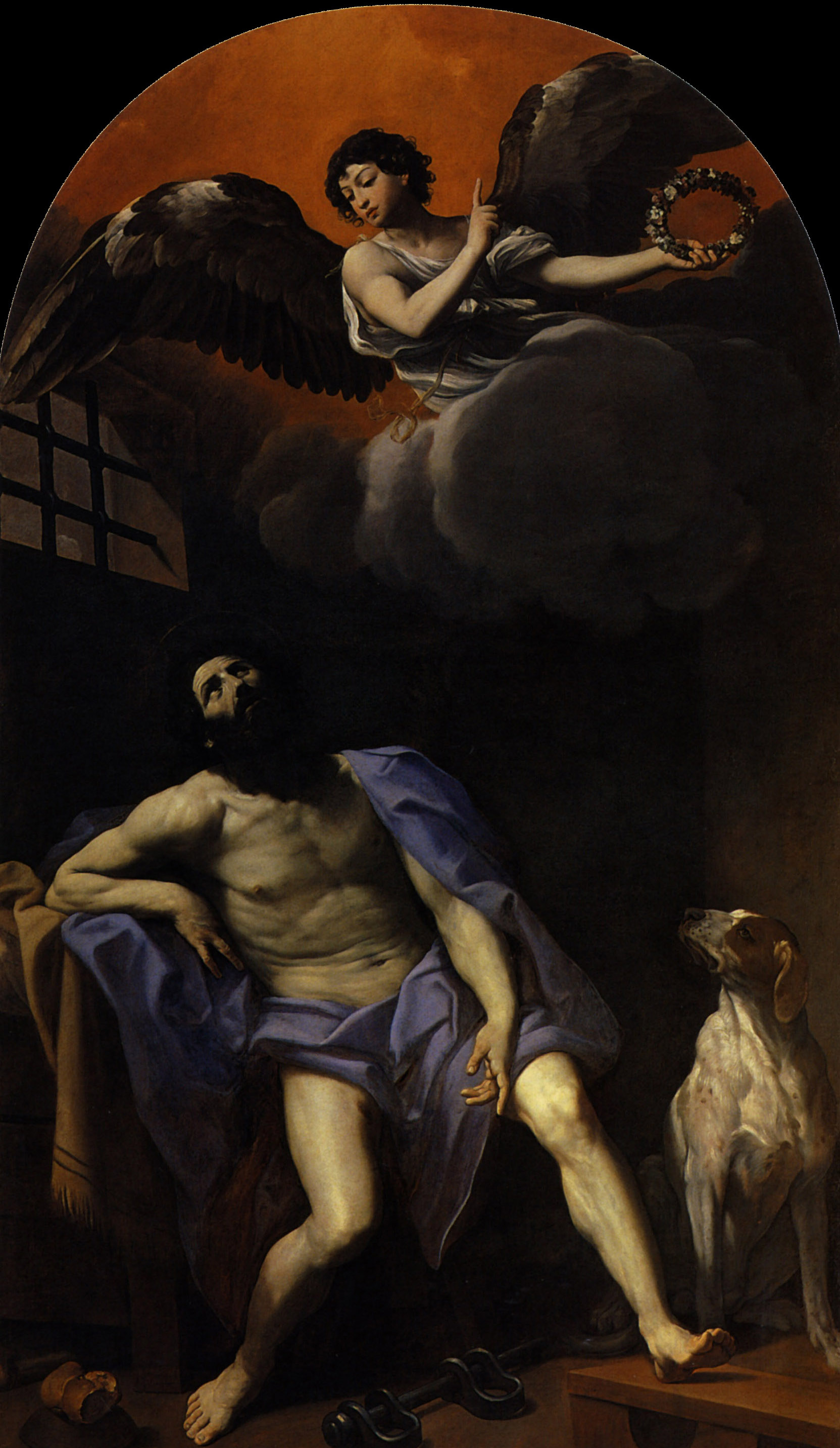
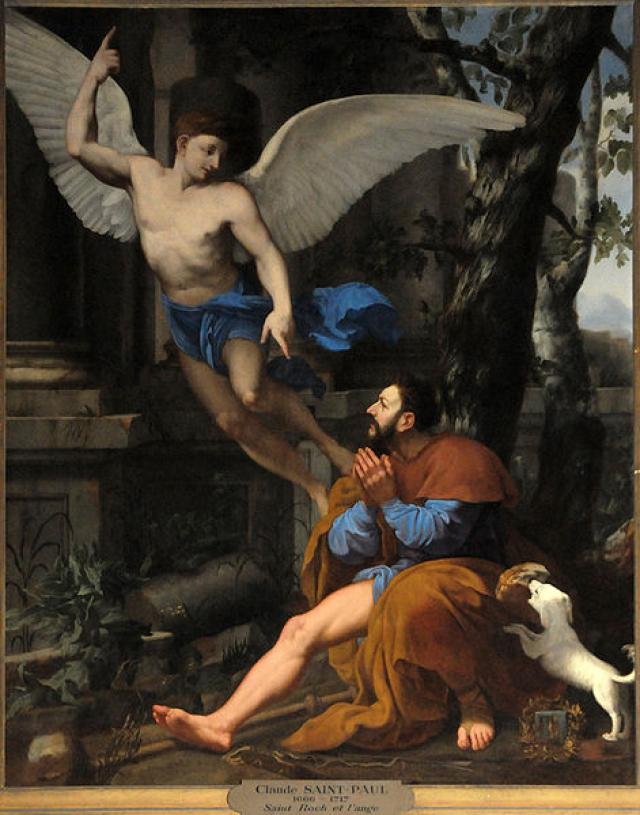
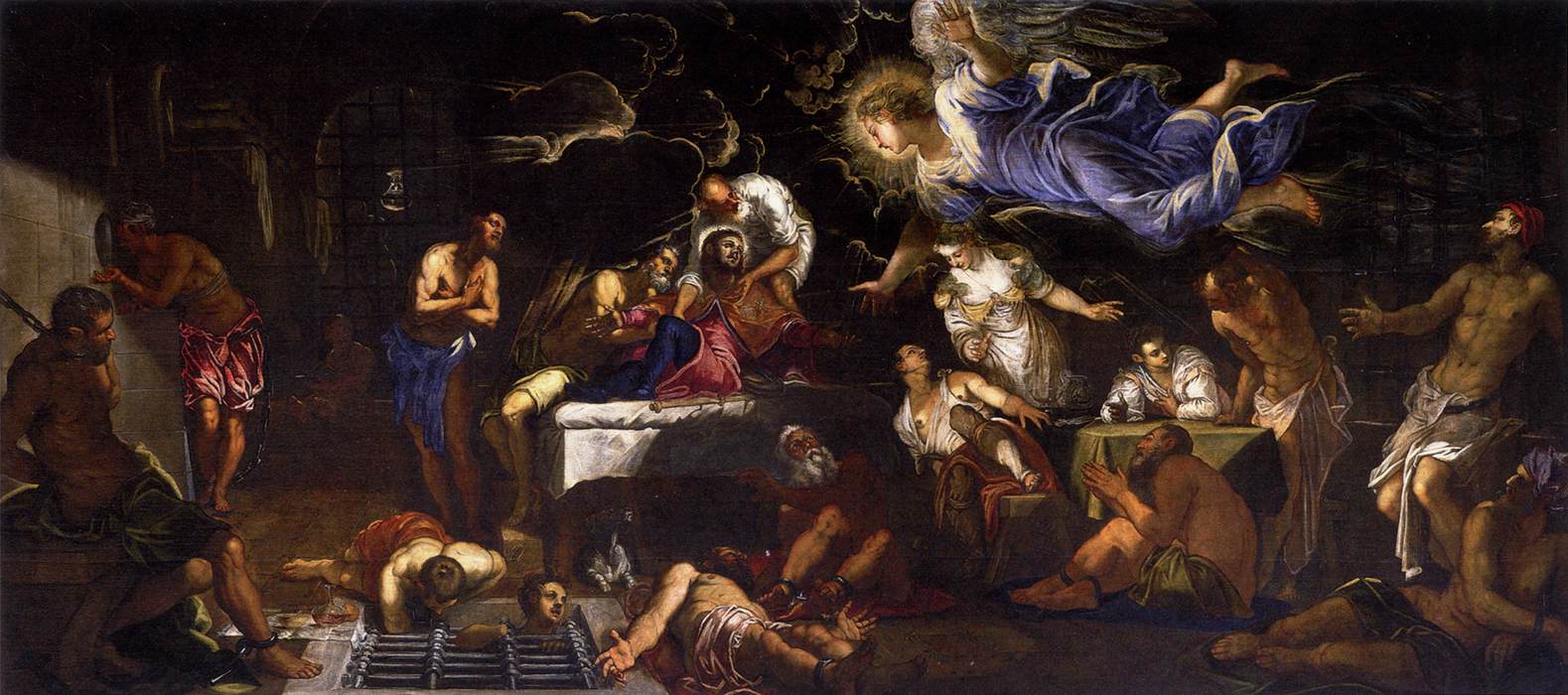


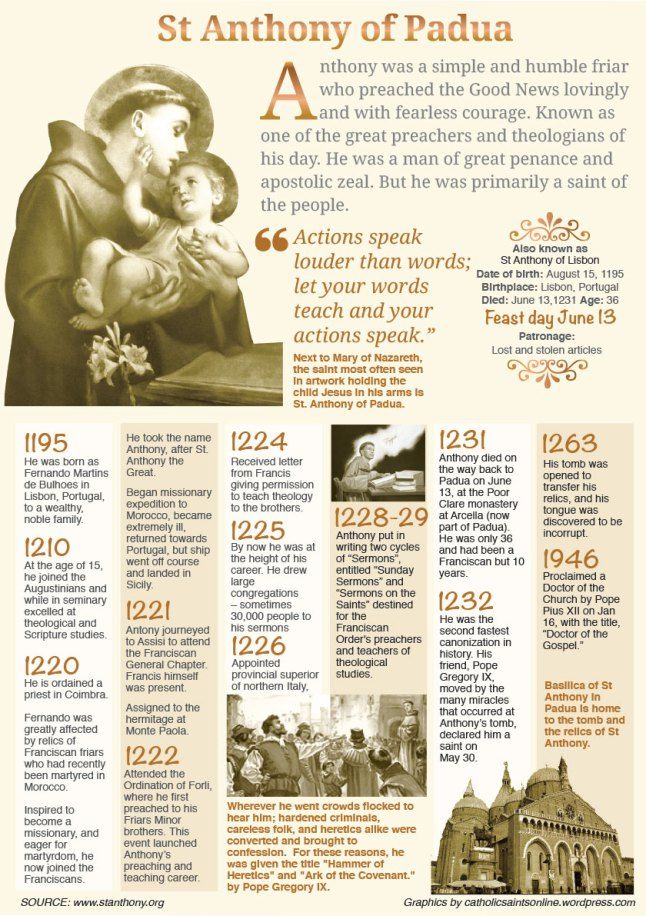
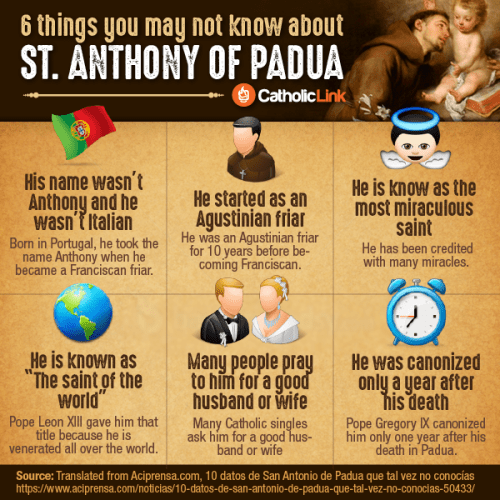
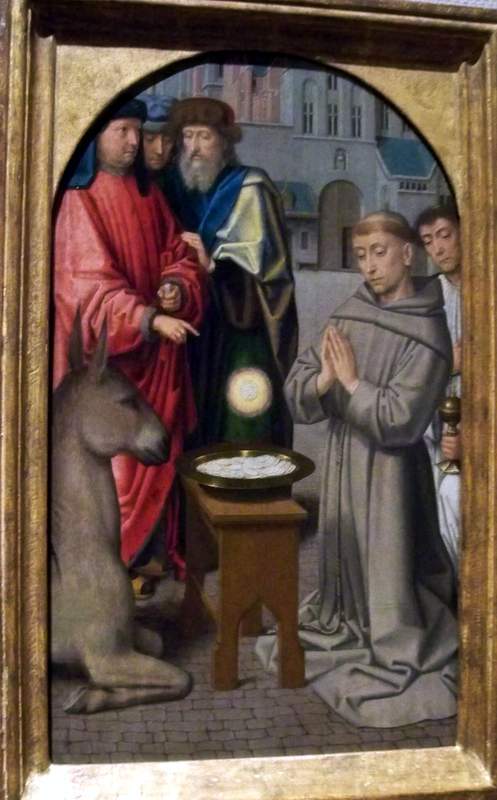
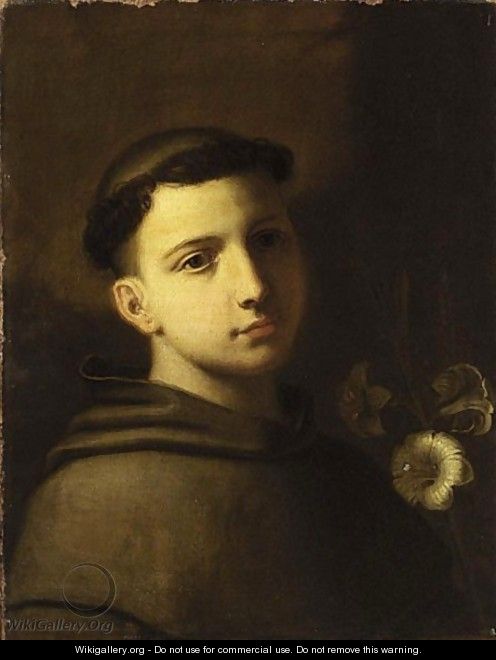
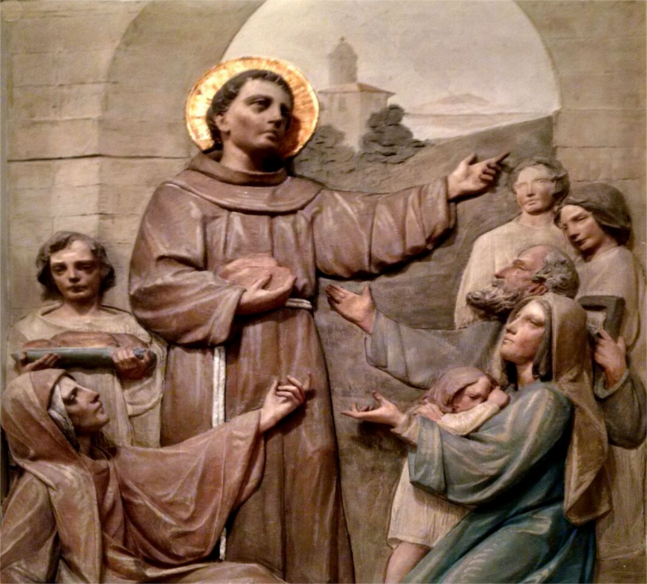
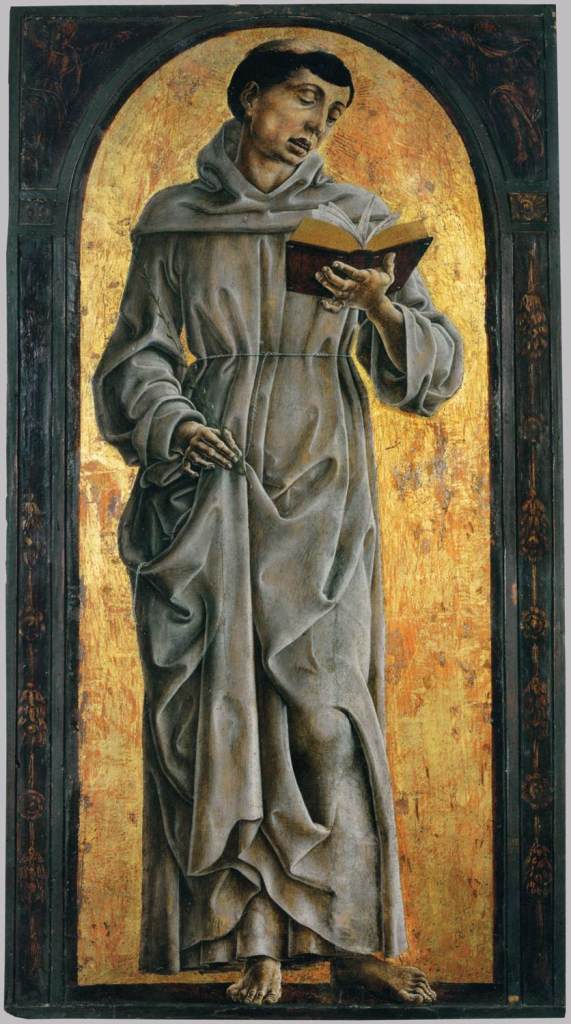
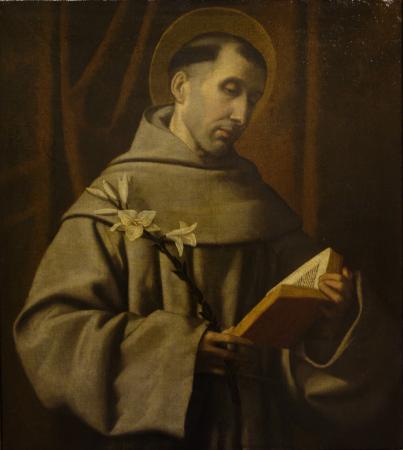
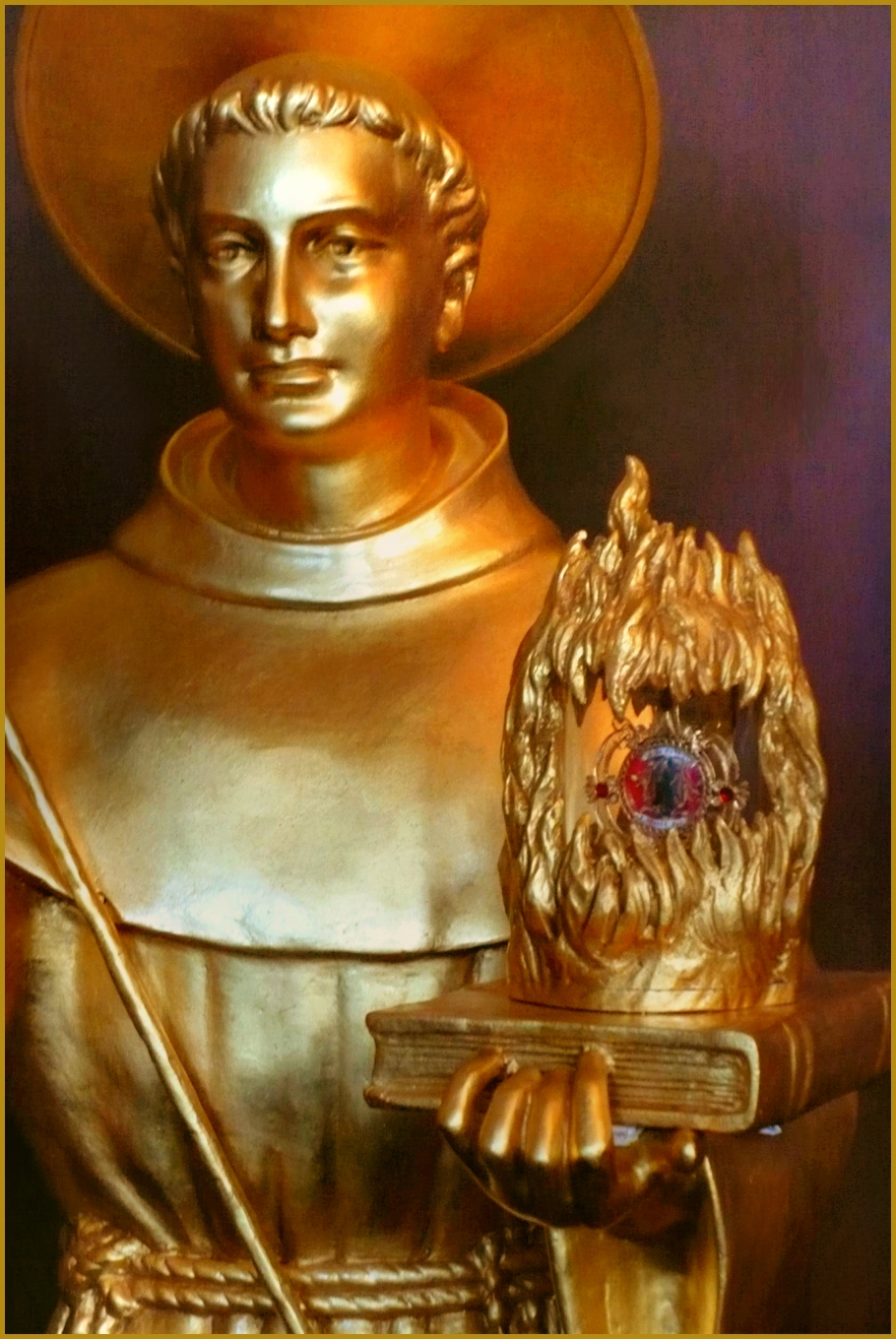
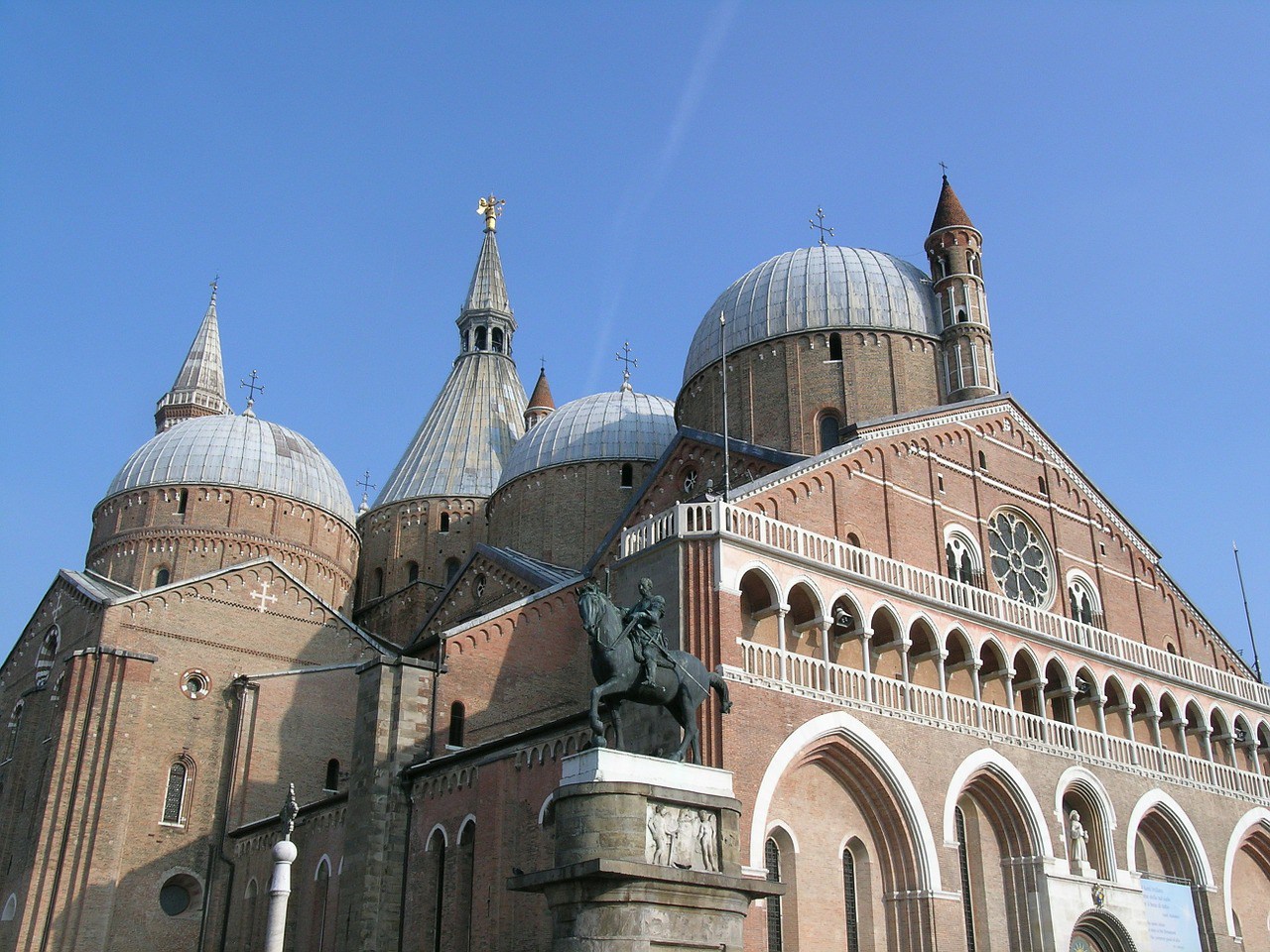

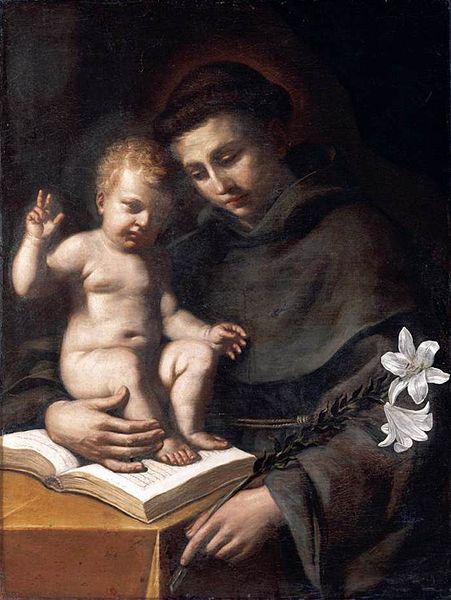
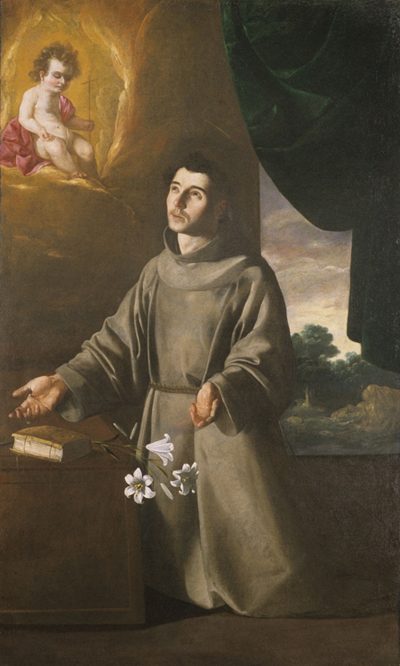
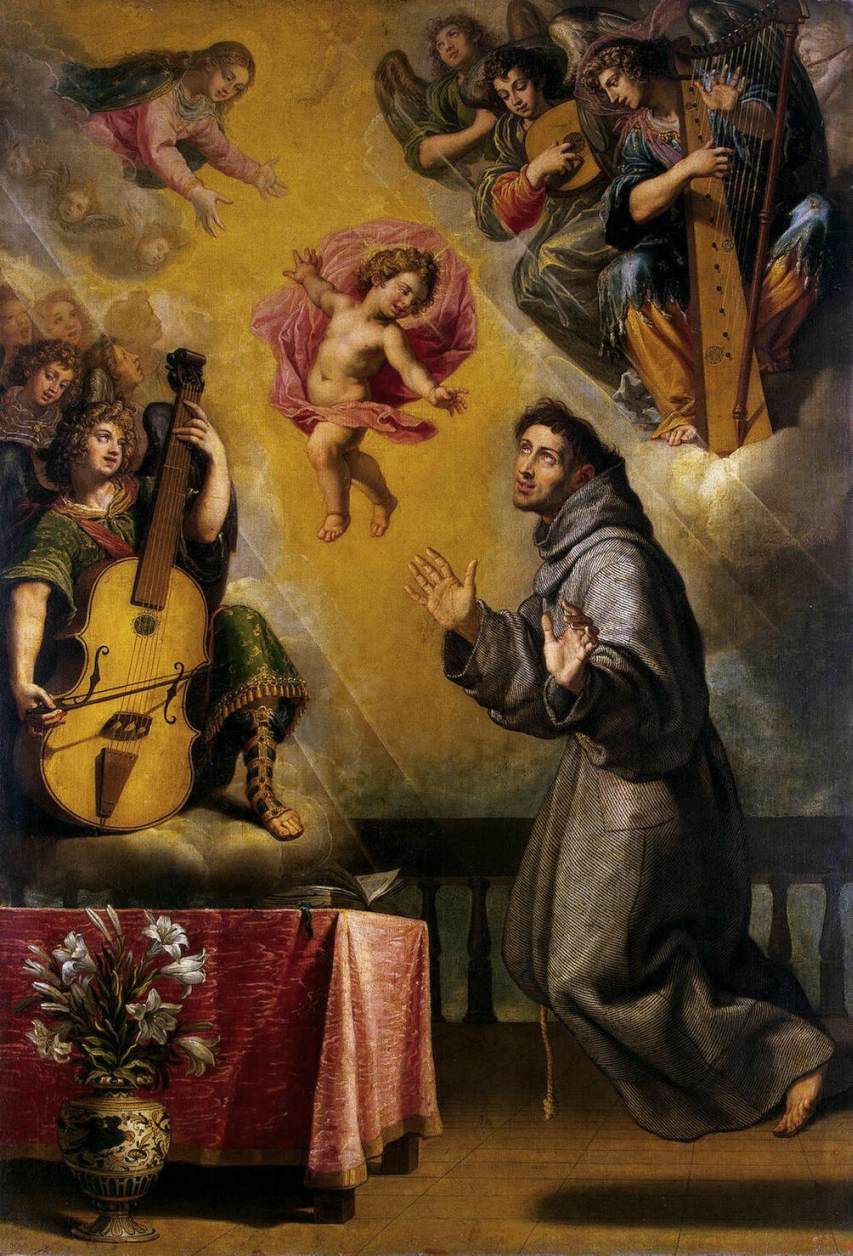




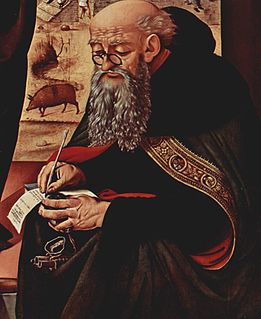
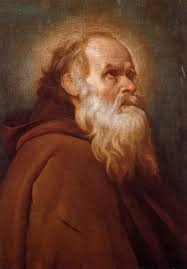
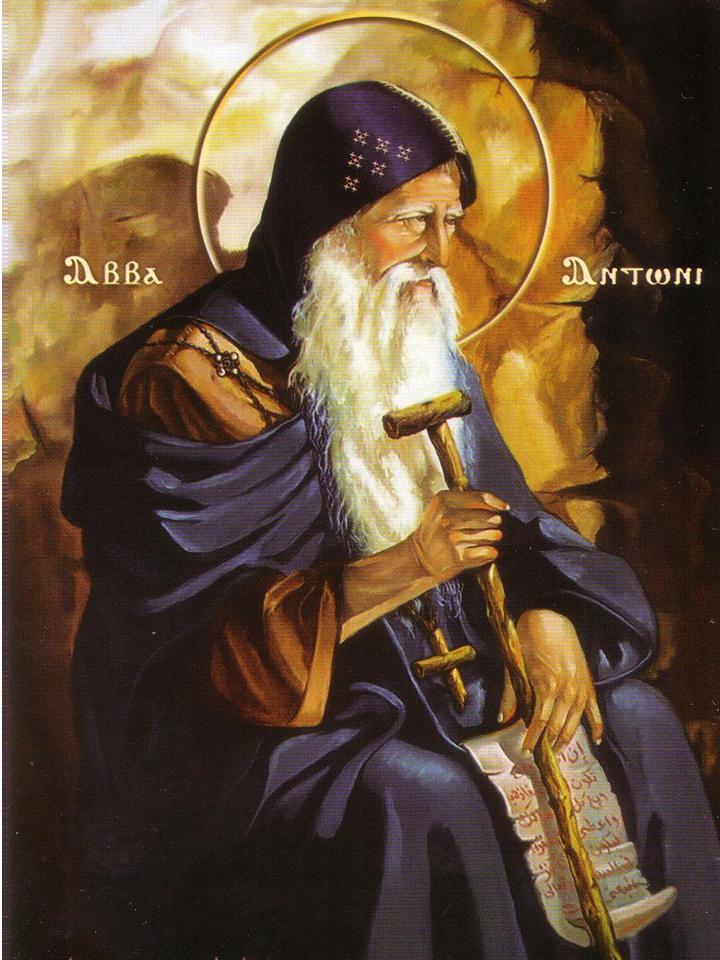
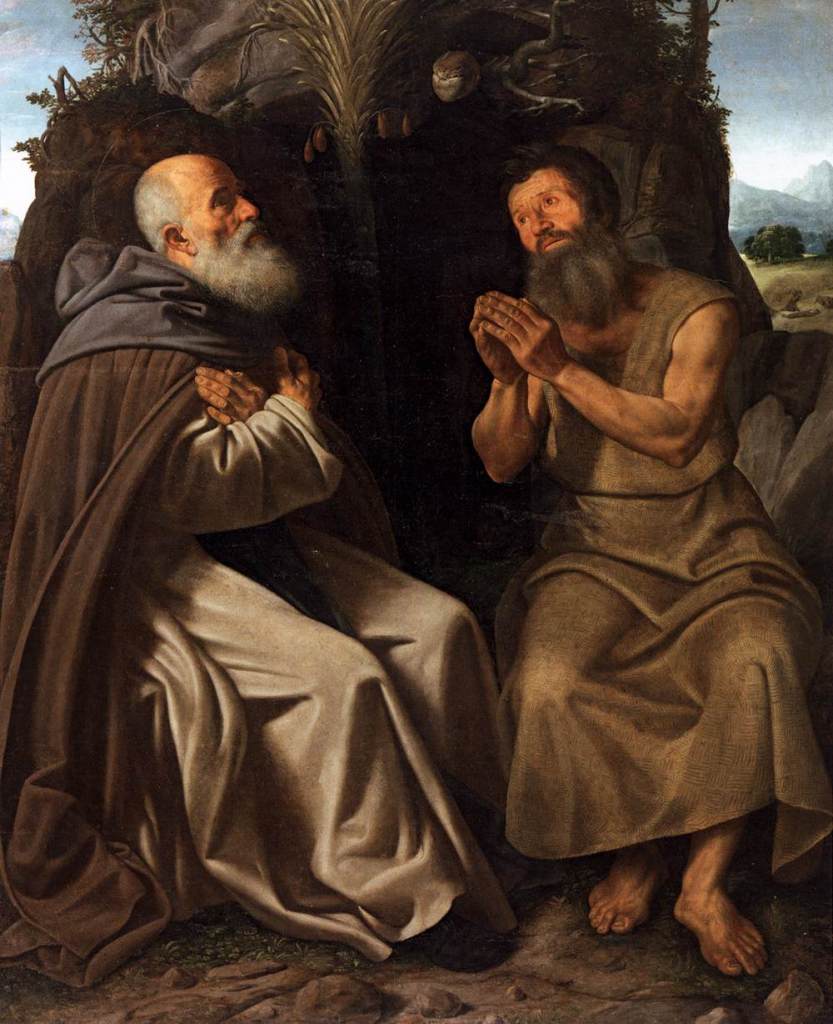
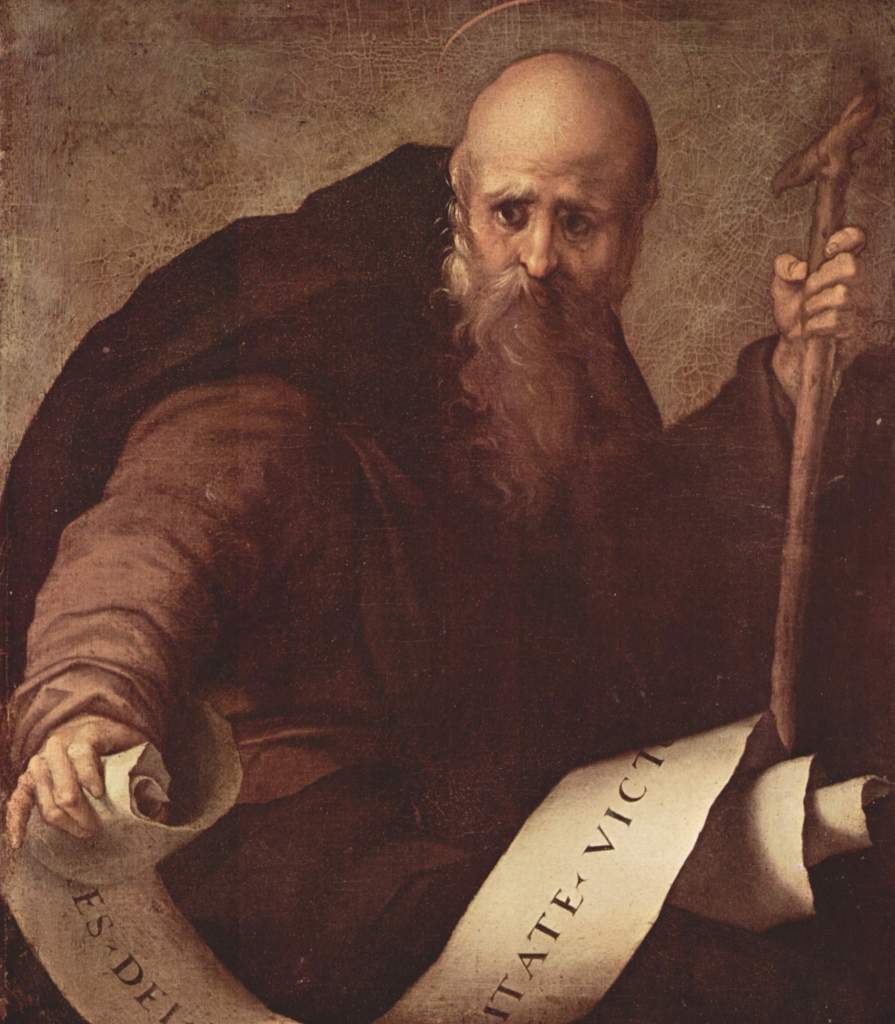
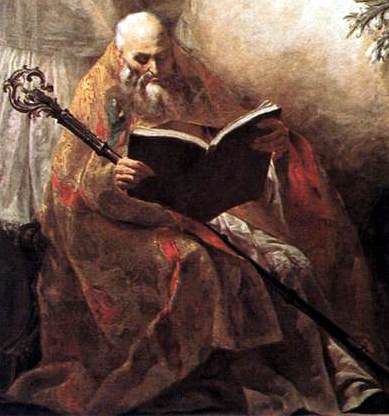
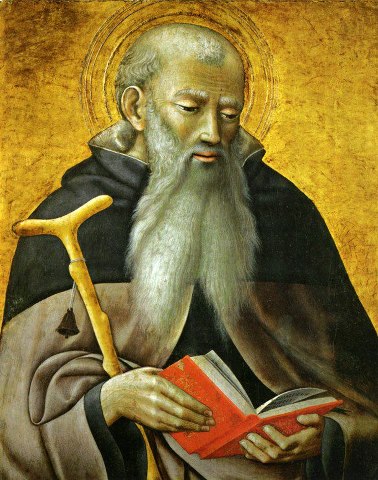
 AnaStpaul
You must be logged in to post a comment.