Posted in Of the Holy Souls in PURGATORY, PURGATORY, QUOTES on PATIENCE, The GREAT TRUTHS, VENIAL SIN

Thought for the Day – 19 February – The Punishment of Venial Sin

Thought for the Day – 19 February – Meditations with Fr Richard Frederick Clarke SJ (1839-1900)

Meditations on “The Great Truths”
From “The Devout Year
By Fr Richard Frederick Clarke SJ (1839-1900)

19th Day – The Punishment of Venial Sin

Thou shalt not go out from thence
until thou repay the last farthing.

(St Matthew v:26)

Venial Sin is the great evil in the world next to mortal sin and, therefore, it deserves a punishment greater than all the miseries of earth.
God has taught us what sort of an evil it is, by one or two instances of the way in which He visits it in this life.

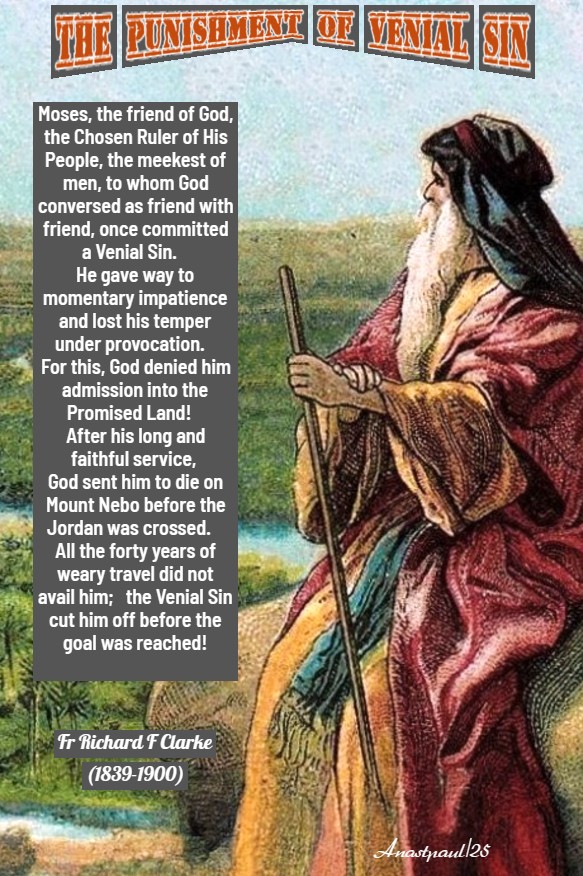
+1. Moses, the friend of God, the Chosen Ruler of His People, the meekest of men, to whom God conversed as friend with friend, once committed a Venial Sin. He gave way to momentary impatience and lost his temper under provocation. For this, God denied him admission into the Promised Land! After his long and faithful service, God sent him to die on Mount Nebo before the Jordan was crossed. All the forty years of weary travel did not avail him; the Venial Sin cut him off before the goal was reached!

+2. David , the man after God’s Own Heart, in a moment of vanity, determined to number the people, boastfully priding himself on the strength of his fighting men.
In punishment of this, God sent a pestilence which, in less than three days, destroyed seventy thousand Israelites.
Jerusalem itself, would have been decimated, had not David entreated God to avert His destroying Hand.
How God must hate Venial Sin!

+3. After death, there will remain for most, a debt still to be paid for Venial Sin.
It is in Purgatory where we shall see its true character.
No earthly agony even approaches the agony of the Purgatorial Fire. The souls God loves, must be tormented there until they have paid the last farthing.
Alas! what do I still owe?
Am I doing my best to pay the debt and avoid adding to it?
Beg for an intense dread of Venial Sin .

Posted in AUGUSTINIANS OSA, CHRIST the JUDGE, NOVEMBER - Month of the SOULS in PURGATORY, Of the Holy Souls in PURGATORY, QUOTES on PURITY, The HOLY EUCHARIST / The HOLY MASS

Quote/s of the Day – 10 September – Saint Nicholas of Tolentino

Quote/s of the Day – 10 September – Saint Nicholas of Tolentino OSA (1245-1305) Confessor, “The Patron of Holy Souls” Priest, Augustinian Friar Monk, Mystic, Preacher, Miralce-worker and Apostle of the poor, the sick, the needy.

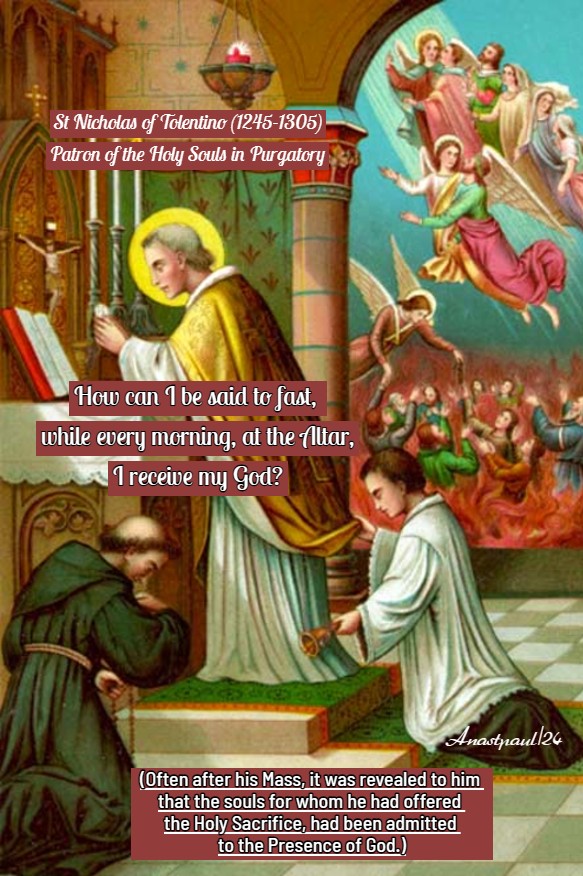
How can I be said to fast,
while every morning, at the Altar,
I receive my God?

(Often after his Mass, it was revealed to him
that the souls for whom he had offered
the Holy Sacrifice, had been admitted
to the Presence of God.)

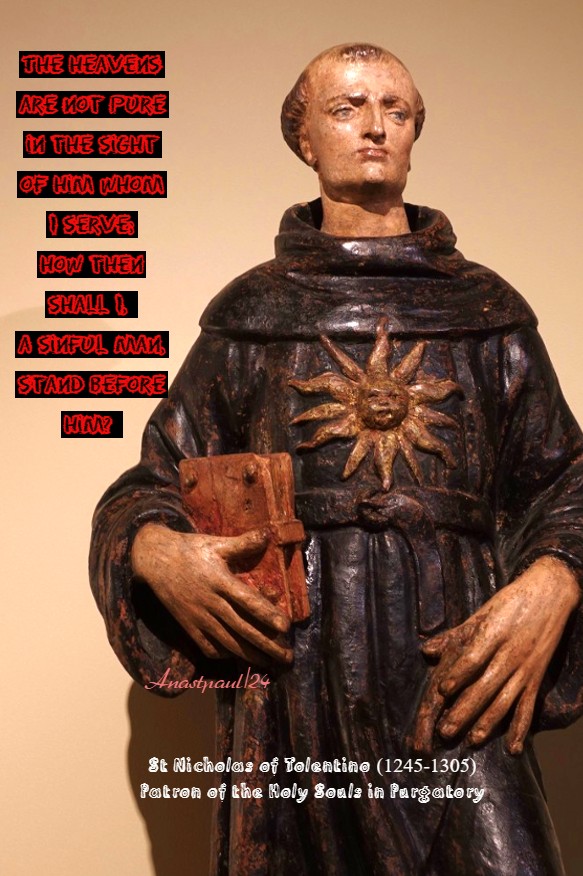
The heavens are not pure
in the sight of Him Whom I serve;
how then shall I, a sinful man,
stand before Him?

St Nicholas of Tolentino (1245-1305)

Posted in AUGUSTINIANS OSA, DOMESTIC ANIMALS, Of a Holy DEATH & AGAINST A SUDDEN DEATH, of the DYING, FINAL PERSEVERANCE, DEATH of CHILDREN, DEATH of PARENTS, Of the Holy Souls in PURGATORY, PATRONAGE - NEWBORN BABIES, YOUNG CHILDREN l, SAILORS, MARINERS, NAVIGATORS, SAINT of the DAY

Saint of the Day – 10 September – Saint Nicholas of Tolentino OSA (1245-1305) Confessor,

Saint of the Day – 10 September – Saint Nicholas of Tolentino OSA (1245-1305) Confessor, “The Patron of Holy Souls” Priest, Augustinian Friar Monk, Mystic, Preacher, Miralce-worker and Apostle of the poor, the sick, the needy. Patronages – animals, babies (reported to have raised more than 100 children from the dead), sailors, dying people, sick animals, the Holy Souls in Purgatory, 4 Cities, 3 Diocese. The Name Nicholas from the Greek means means: “the victor over the people.”

The Roman Martyrology reads today: “At Tolentino, in the March of Ancona, the departure from this life of St Nicholas, Confessor of the Order of Augustinians.

Nicholas was born in the angelic town of Sant’ Angelo in Pontano, Italy. An angel had advised his previously childless parents, to make a pilgrimage to the Tomb of St Nicholas of Myra and out of gratitude, they gave their son the name of the Saint.

Nicholas was admitted into the Augustinian Hermits’ Order in 1255 , was Ordained a Priest in 1270 and initially, worked as a Preacher and Confessor. In 1275 he was sent to Tolentino , where he experienced miraculous confirmations from Angels whom he saw standing around the Altar.

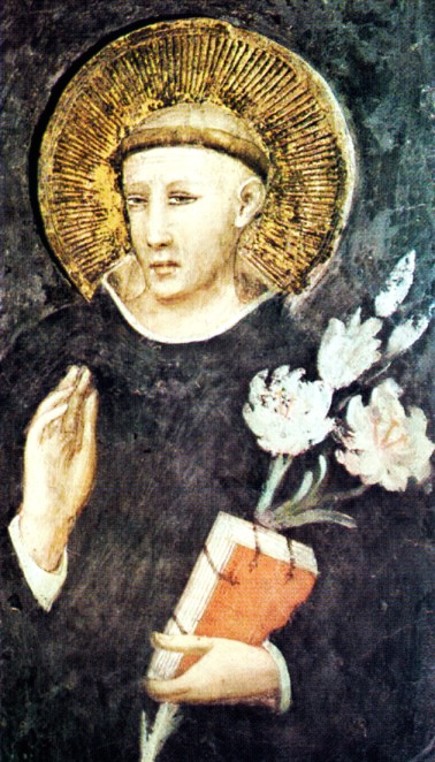
14th Century, painting now in the Basilica named after St Nicholas in Tolentino

Nicholas became a very popular Preacher and Shepherd of the sick and led a life of strict asceticism and active charity. He worked tirelessly as a pastor of the common people and cared for the poor and sick. It is said that miracles occurred through his intercession during his lifetime; his prayers had a healing effect, he overcame the devil who broke the lamp on the Altar and tried to harm others. Even when he was seriously ill, he refused to eat two roasted birds because of the mortification he had vowed but when he obediently obeyed the Prior’s command to take a bite, the partridges – alive – flew away.

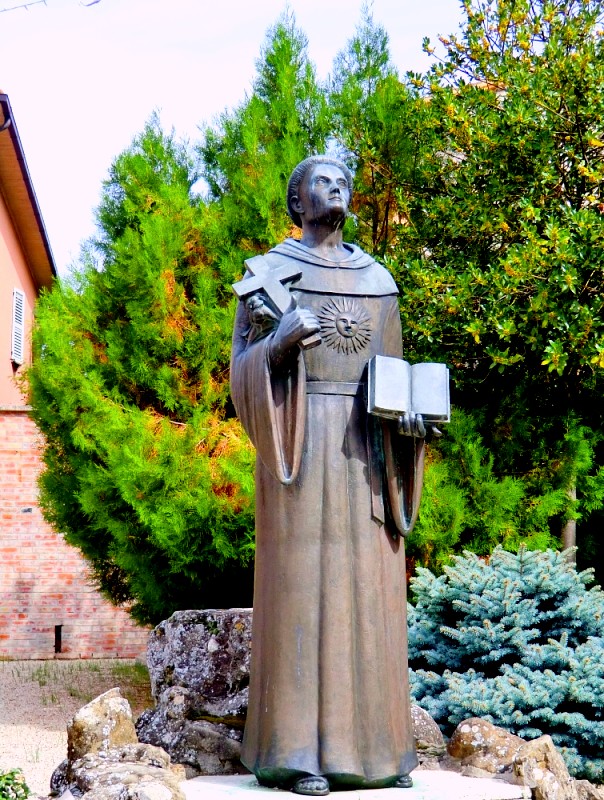
Statue at the site of Nicholas’ birthplace in Sant’ Angelo in Pontano, erected by the Municipality and population, on the 650th Anniversary of his death – 10 September 1955.

Nicholas’ Grave is in the Basilica in Tolentino which was built above it and named after him. He was not buried in the coffin originally intended for him which is in the large Chapel built for his veneration but under the floor, after his arms were taken as Relics. Numerous miracles occurred there and more than 300 were officially confirmed in the twenty years after his death alone. In 1926, his bones were rediscovered during excavations and were placed in a glass shrine and brought to the newly equipped Crypt. His Grave remains an important place of pilgrimage to this day.

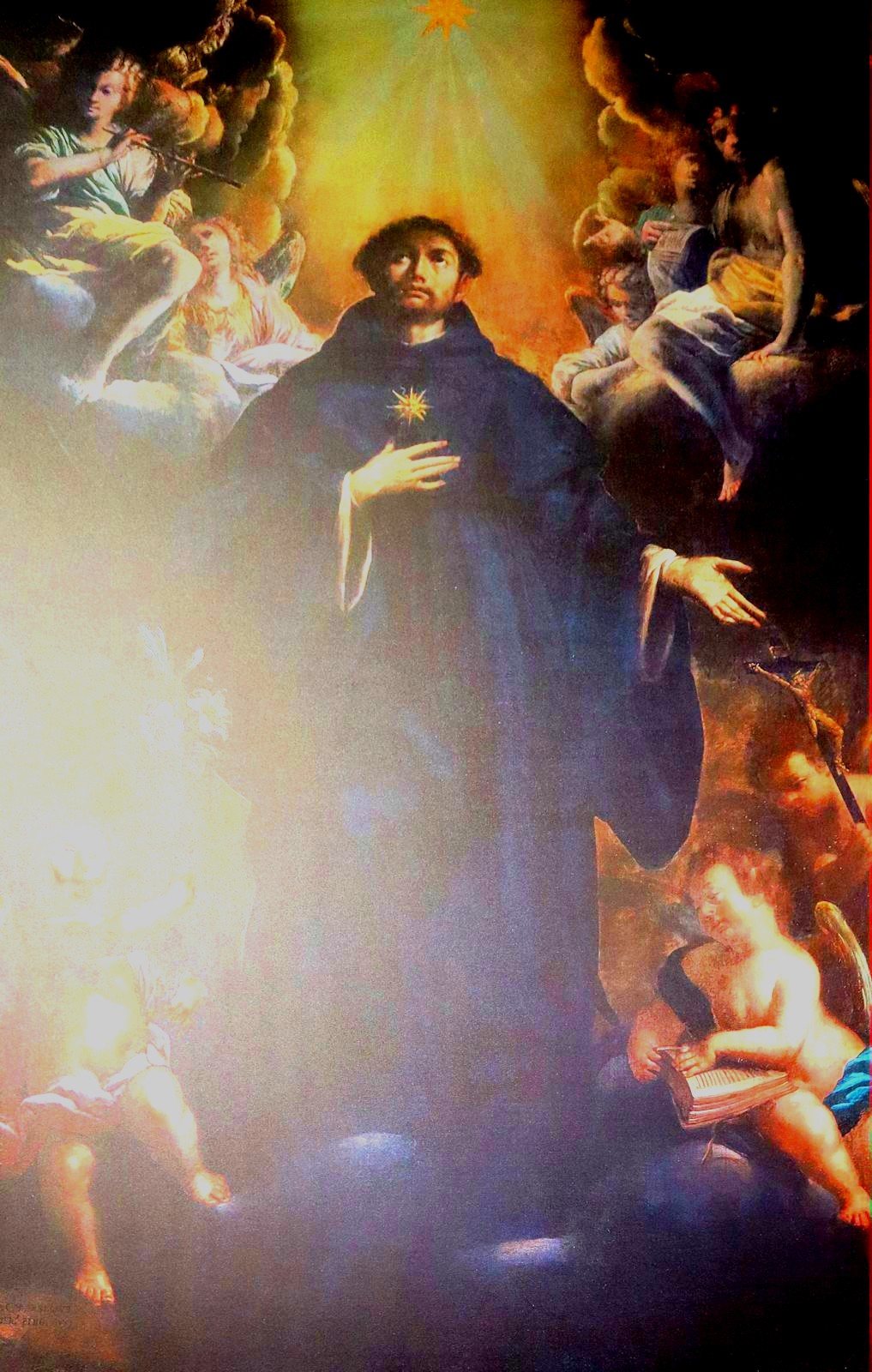
Gian Giacomo Barbelli: “Glorification of St Nicholas” 1653, in the Church of Sant’Andrea in Bergamo

From the 16th to the 18th Centuries, Nicholas was one of the most venerated Saints in Europe. In many Countries he is considered a helper in times of need. In Cordoba he became the Patron Saint of the City because his intercession ended a plague epidemic. In Venice the Church of San Nicola da Tolentino was dedicated to him for the same reason and there too, he became the Patron of the City. On his Feast Day, according to old custom, bread is blessed which is said to help against gout or is thrown into the flames of fires to contain them – the background is the story of how Nicholas was cured of a fever after asking an old woman for bread at the behest of the Blessed Virgin Mary.

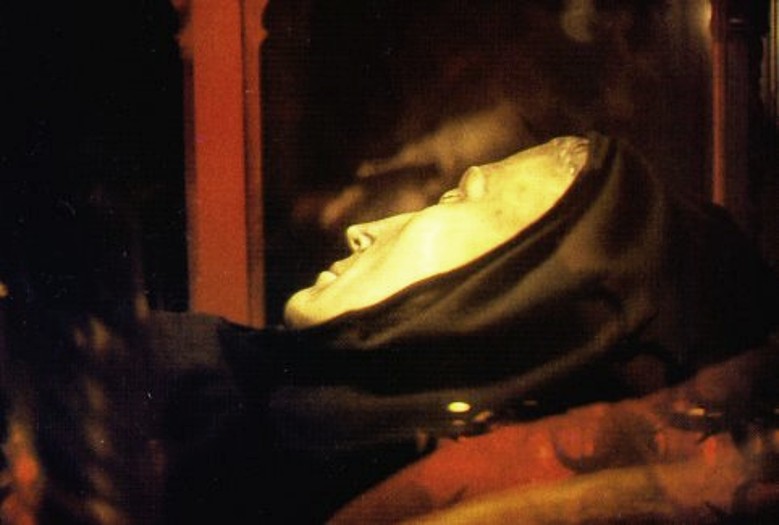
St Nicholas in a glass coffin in the Basilica di San Nicola in Tolentino

MORE on St Nicholas:
https://anastpaul.com/2017/09/10/saint-of-the-day-10-september-st-nicholas-of-tolentino-patron-of-holy-souls/

Posted in Of a Holy DEATH & AGAINST A SUDDEN DEATH, of the DYING, FINAL PERSEVERANCE, DEATH of CHILDREN, DEATH of PARENTS, Of ANIMALS / ANIMAL WELFARE, Of the Holy Souls in PURGATORY, PATRONAGE - NEWBORN BABIES, YOUNG CHILDREN l, SAILORS, MARINERS, NAVIGATORS, SAINT of the DAY

Saint of the Day – 10 September – St Nicholas of Tolentino OSA (1245-1305)- Patron of The Holy Souls

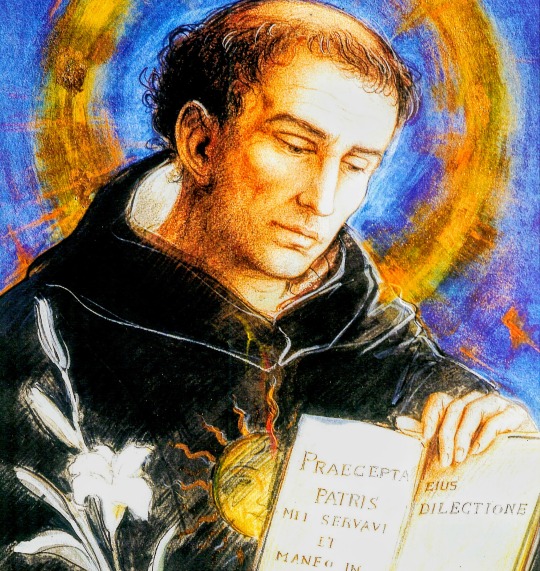
Saint of the Day – 10 September – St Nicholas of Tolentino OSA (1245-1305)- known as The Patron of Holy Souls, Priest, Augustinian Friar Monk, Confessor, Mystic, Preacher.   Born in 1245 at Sant’Angelo, March of Ancona, Diocese of Fermo, Italy and died on  10 September 1305 at Tolentino, Italy following a long illness.   His Relics were re-discovered at Tolentino in 1926.   In previous times his Relics were known to exude blood when the Church was in danger.   He was Canonised on 5 June (Pentecost) 1446 by Pope Eugene IV – over 300 miracles were recognised by the Congregation.   Patronages – animals, babies (reported to have raised more than 100 children from the dead), sailors,  dying people, sick animals, the Holy Souls in Purgatory, 4 Cities, 3 Diocese.   Attributes – Augustinian holding a bird on a plate in the right hand and a crucifix on the other hand;   holding a basket of bread, giving bread to a sick person;   holding a lily or a crucifix garlanded with lilies; with a star above him or on his breast.
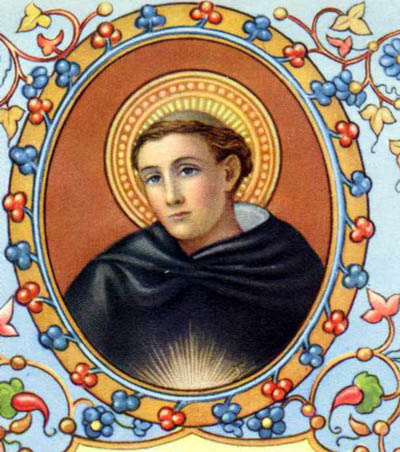
St.-Nicholas-of-Tolentino

St Nicholas was born in 1245 in Sant’Angelo.   He was named after St Nicholas of Myra, at whose Shrine his parents prayed to have a child.   Nicholas became a Monk at 18 and seven years later, he was Ordained a Priest.   He gained a reputation as a Preacher and a Confessor.   In c 1274, he was sent to Tolentino, near his birthplace where he lived the rest of his lif.   Nicholas was primarily a shepherd to his flock.   He ministered to the poor and the criminal.   He is said to have cured the sick with bread over which he had prayed to Mary, the mother of God.   He gained a reputation as a wonder-worker.

On account of his kind and gentle manner his superiors entrusted him with the daily feeding of the poor at the monastery gates but at times he was so free with the friary’s provisions that the procurator begged the superior to check his generosity.  Once, when weak after a long fast, he received a vision of the Blessed Virgin Mary and Saint Augustine who told him to eat some bread marked with cross and dipped in water.   Upon doing so he was immediately stronger.   He started distributing these rolls to the ailing, while praying to Mary, often curing the sufferers;  this is the origin of the Augustinian custom of blessing and distributing Saint Nicholas Bread.   When working wonders or healing people, he always asked those he helped to “Say nothing of this”, explaining that he was just God’s instrument.

During his life, Nicholas is said to have received visions, including images of Purgatory, which friends ascribed to his lengthy fasts.  Prayer for the souls in purgatory was the outstanding characteristic of his spirituality.   Because of this Nicholas was proclaimed patron of the souls in Purgatory in 1884 by Leo XIII.  Towards the end of his life he became ill, suffering greatly, but still continued the mortifications that had been part of his holy life.   Nicholas died on 10 September 1305.St.-Nicholas-of-Tolentino-Purgatory-2.jpg
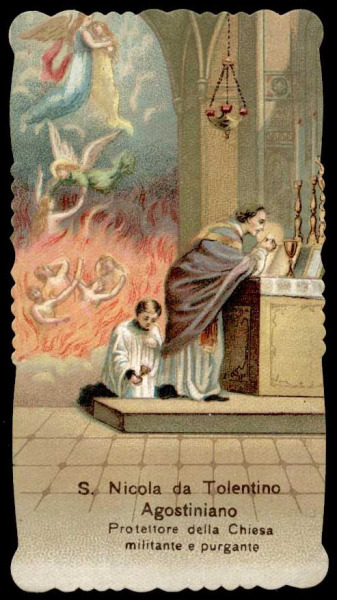
Miracles:
There are many tales and legends which relate to Nicholas.   One says the devil once beat him with a stick, which was then displayed for years in his church.   In another, Nicholas, a vegetarian, was served a roasted fowl, for which he made the sign of the cross and it flew out a window.   Nine passengers on a ship going down at sea once asked Nicholas’ aid and he appeared in the sky, wearing the black Augustinian habit, radiating golden light, holding a lily in his left hand, and with his right hand, he quelled the storm.   An apparition of the saint, it is said, once saved the burning palace of the Doge of Venice by throwing a piece of blessed bread on the flames.  He was also reported to have resurrected over one hundred dead children, including several who had drowned together.

According to the Peruvian chronicler Antonio de la Calancha, it was St. Nicholas of Tolentino who made possible a permanent Spanish settlement in the rigorous, high-altitude climate of Potosí, Bolivia.   e reported that all children born to Spanish colonists there died in childbirth or soon thereafter, until a father dedicated his unborn child to St Nicholas of Tolentino (whose own parents, after all, had required saintly intervention to have a child).   The colonist’s son, born on Christmas Eve, 1598, survived to healthy adulthood and many later parents followed the example of naming their sons Nicolás.st nicholas of tolentino
Veneration:
Nicholas was Canonised by Pope Eugene IV (also an Augustinian) in 1446.   He was the first Augustinian to be Canonised.   At his Canonisation, Nicholas was credited with three hundred miracles, including three resurrections.

The remains of St Nicholas are preserved at the Shrine of Saint Nicholas in the Basilica di San Nicola da Tolentino in the city of Tolentino, province of Macerata in Marche, Italy.

He is particularly invoked as an advocate for the souls in Purgatory, especially during Lent and the month of November.  In many Augustinian churches, there are weekly devotions to St Nicholas on behalf of the suffering souls.  November 2, All Souls’ Day, holds special significance for the devotees of St. Nicholas of Tolentino.