Posted in For RAIN OR Against RAIN, Of a Holy DEATH & AGAINST A SUDDEN DEATH, of the DYING, FINAL PERSEVERANCE, DEATH of CHILDREN, DEATH of PARENTS, Of ANIMALS / ANIMAL WELFARE, Of GARDENERS, Horticulturists, Farmers, SAINT of the DAY

Saint of the Day – 15 May – Isidore the Farmer (c 1070 -1130)

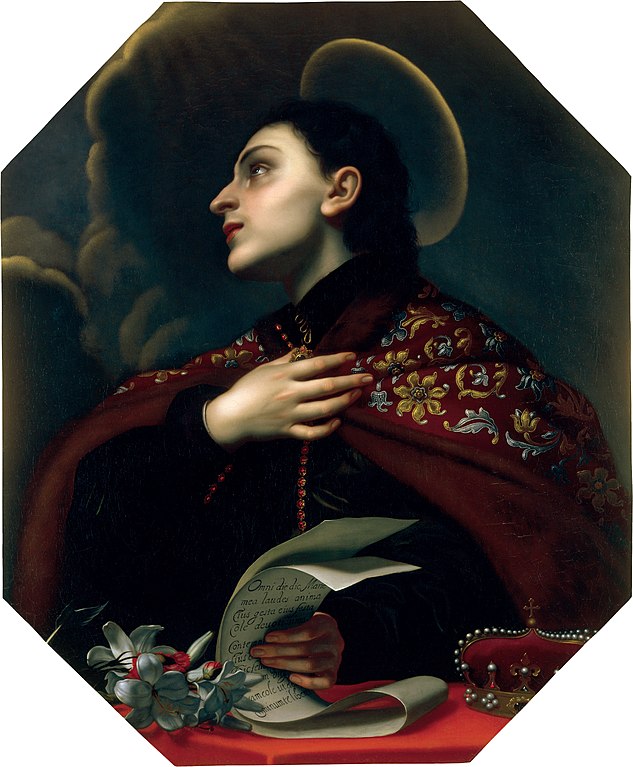
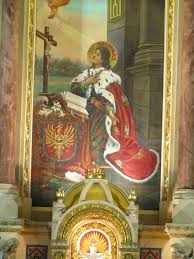
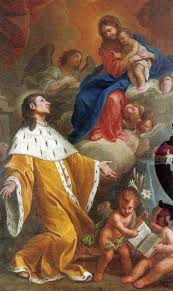
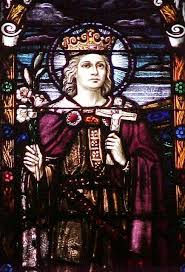
Saint of the Day – 15 May – Isidore the Farmer (c 1070 -1130) – Layman, Confessor, Farm Worker and Apostle of Charity – Patronages –  against against the death of children, of agricultural workers, farm workers, farmers, field hands, husbandmen, ranchers, day labourers, for rain, livestock, rural communities, United States National Rural Life Conference,  Diocese of Digos, Philippines, Diocese of Malaybalay, Philippines, 24 Cities.   His body is incorrupt.

St. Isidore, the Farmer, was born in Madrid, Spain, about the year 1110.   He came from a poor and humble family.    From childhood he worked as a farm hand on the De Vargas estate.   He was very prayerful and particularly devoted to the Mass and the Holy Eucharist.   He loved the good earth, he was honest in his work and careful in his farming practices.   It is said that domestic beasts and birds showed their attachment to him because he was gentle and kind to them.   Master De Vargas watched Isidore at plowing and he saw two angels as his helpers.   Hence, the saying arose, “St. Isidore plowing with angels does the work of three farmers.”

Isidore married a sweet and pious maid-servant by the name of Maria.  They had only one son who died in youth.   Both were most charitable and ever willing to help neighbours in distress and the poor in the city slums.

St. Isidore died on May 15, 1170 (the Spanish feast day), his saintly wife, a little later.   He was canonised on March 22, 1622.   The earthly remains of the holy couple are found over the main altar of the cathedral in Madrid, Spain. S. Maria was not officially canonised but is honoured as a saint throughout Spanish countries.   Her head (cabeza) is carried in solemn processions during times of drought.   By a special decree of the Sacred Congregation of Rites, dated February 22, 1947, St. Isidore was constituted as the special protector of the National Catholic Rural Life Conference and American farmers.

How beautiful and appropriate for the Catholic farm family to be devoted to this simple and saintly couple, who like farmers everywhere are “partners with God,” in furnishing to the world food, fiber and shelter.

In the morning before going to work, Isidore would usually attend Mass at one of the churches in Madrid.   One day, his fellow farm workers complained to their master that Isidore was always late for work in the morning.   Upon investigation, so runs the legend, the master found Isidore at prayer whilst an angel was doing the ploughing for him.

On another occasion, his master saw an angel ploughing on either side of him, so that Isidore’s work was equal to that of three of his fellow field workers.   Isidore is also said to have brought back to life his master’s deceased daughter and to have caused a fountain of fresh water to burst from the dry earth to quench his master’s thirst.

One snowy day, when going to the mill with corn to be ground, he passed a flock of wood-pigeons scratching vainly for food on the hard surface of the frosty ground.   Taking pity on the poor animals, he poured half of his sack of precious wheat upon the ground for the birds, despite the mocking of witnesses.   When he reached the mill, however, the bag was full, and the wheat, when it was ground, produced double the expected amount of flour.

Isidore’s wife, Maria, always kept a pot of stew on the fireplace in their humble home as Isidore would often bring home anyone who was hungry.  One day he brought home more hungry people than usual.    After she served many of them, Maria told him that there simply was no more stew in the pot.   He insisted that she check the pot again and she was able to spoon out enough stew to feed them all.

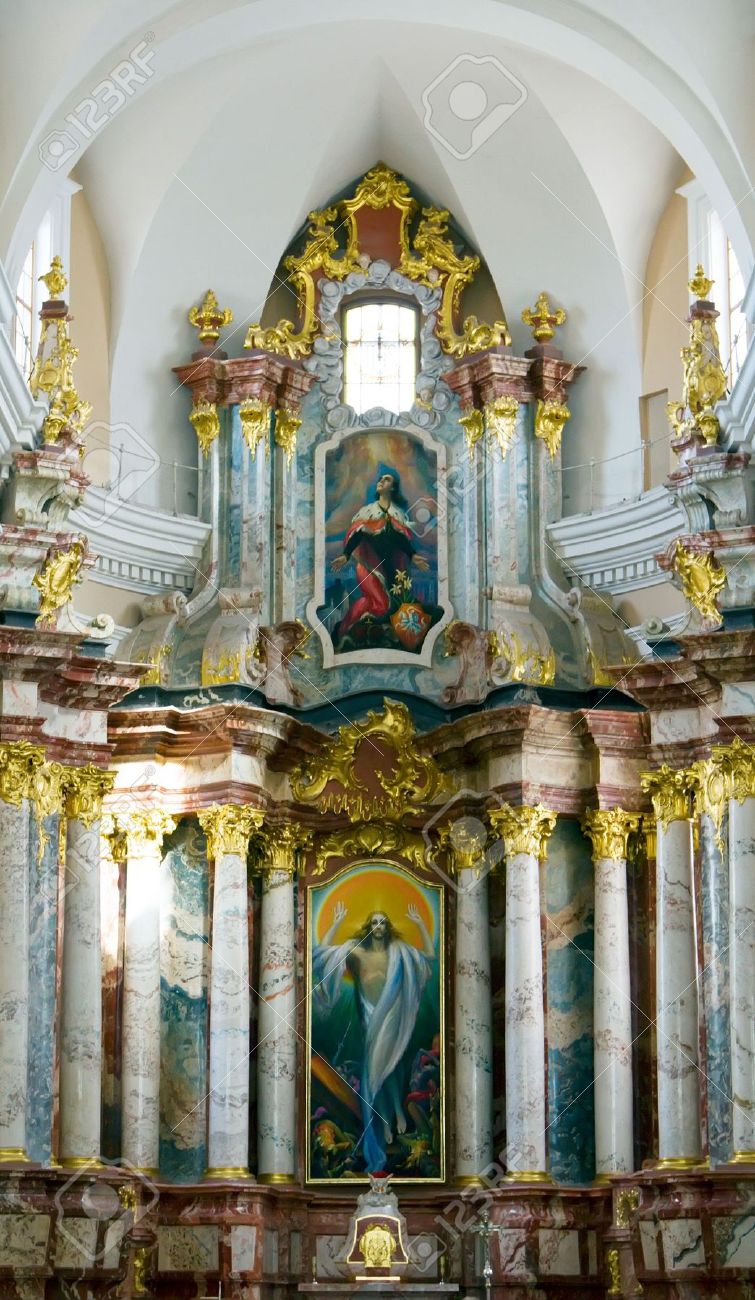
He is said to have appeared to Alfonso VIII of Castile and to have shown him the hidden path by which he surprised the Moors and gained the victory of Las Navas de Tolosa, in 1212.   When King Philip III of Spain was cured of a deadly disease after touching the relics of the saint, the king replaced the old reliquary with a costly silver one and instigated the process of his beatification.   Throughout history, other members of the royal family would seek curative powers from the saint.

The number of miracles attributed to him has been counted as 438.  The only original source of hagiography on him is a fourteenth century codex called Códice de Juan Diácono which relates five of his miracles:   1. The pigeons and the grain.   2. The angels ploughing.   3. The saving of his donkey, through prayer, from a wolf attack.   4. The account of his wife’s pot of food.   5. A similar account of his feeding the brotherhood. The codex also attests to the incorruptible state of his body, stating it was exhumed 40 years after his death.

Isidore was beatified in Rome on 2 May 1619, by Pope Paul V.   He was canoniSed nearly three years later by Pope Gregory XV, along with Saints Ignatius of Loyola, Francis Xavier, Teresa of Ávila and Philip Neri, on 12 March 1622.

In 1696, his relics were moved to the Royal Alcazar of Madrid to intervene on behalf of the health of Charles II of Spain.   While there, the King’s locksmith pulled a tooth from the body and gave it to the monarch, who slept with it under his pillow until his death. This was not the first, nor the last time his body was allegedly mutilated out of religious fervour.   For example, it was reported one of the ladies in the court of Isabella I of Castile bit off one of his toes.

In 1760, his body was brought to the Royal Palace of Madrid during the illness of Maria Amalia of Saxony.

In 1769, Charles III of Spain had the remains of Saint Isidore and his wife Maria relocated to the San Isidro Church, Madrid.   The sepulchre has nine locks and only the King of Spain has the master key.   The opening of the sepulchre must be performed by the Archbishop of Madrid and authorized by the King himself.   Consequently, it has not been opened since 1985.
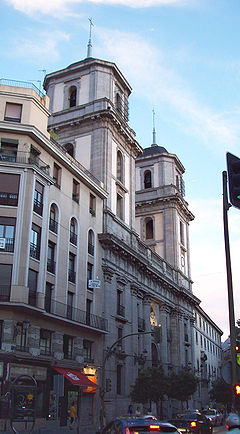
240px-Colegiata_de_San_Isidro_(Madrid)_03
St Isidore Church, Madrid
Posted in FEASTS and SOLEMNITIES, Of LAWYERS & CANON Lawyers, Attorneys, Solicitors, Barristers, Notaries, Para-Legals, PATRONAGE - PRISONERS, SAINT of the DAY

Saint of the Day – 25 April – St Mark the Evangelist – Solemnity

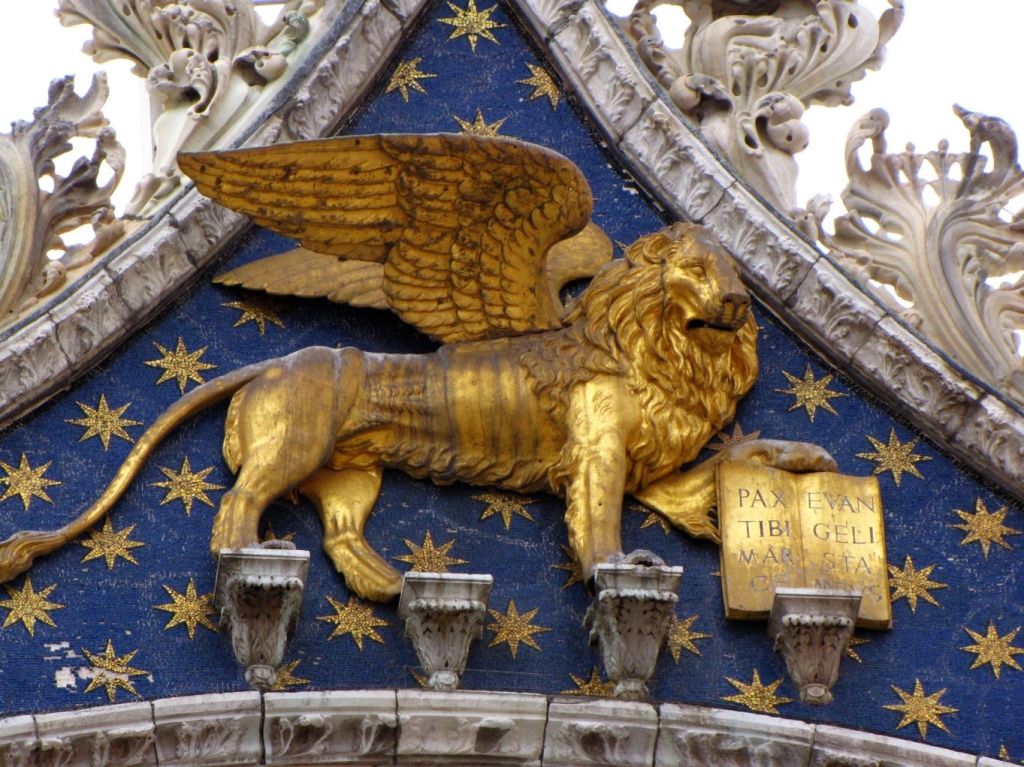
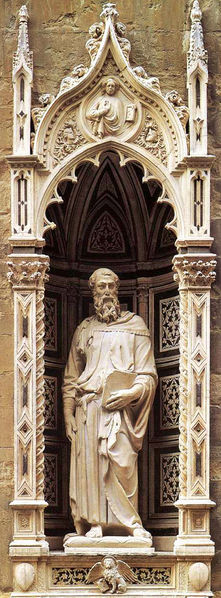
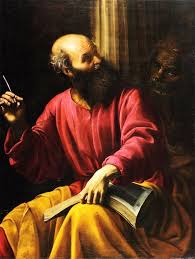
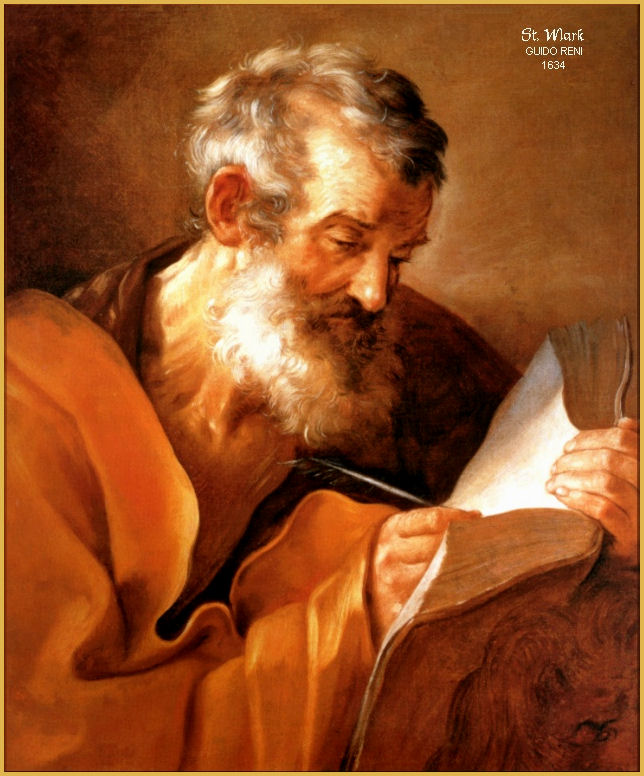
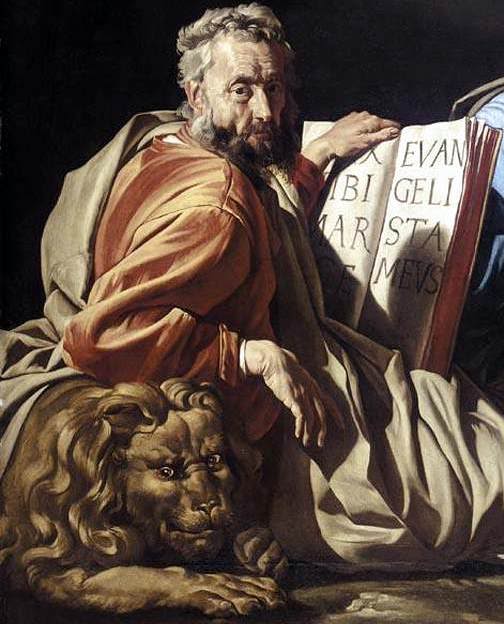
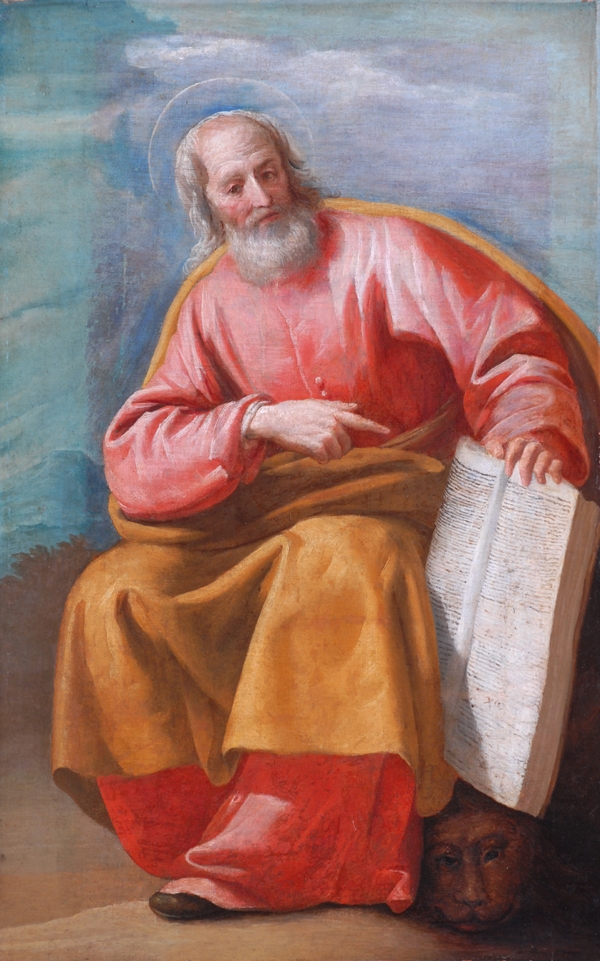
Saint of the Day – 25 April – St Mark the Evangelist (1st century -martyred 25 April 68 at Alexandria, Egypt) Evangelist, Martyr, Missionary, Preacher, Teacher, friend and assistant to St Peter, St Paul, cousin of St Barnabas – also known as John Mark. Patronages: – against unrepentance, against insect bites, Lawyers, notaries, prisoners, lions, glaziers and stained glass artists, of Egypt, Iona Islands, Arezzo-Cortona-Sansepolcro, Italy, Diocese of, Arica, Chile, Diocese of, Cortona, Italy, Diocese of Infanta, Philippines, Prelature of, Venice, Florida, Diocese of, 45 Cities – Attributes:  lion, winged lion, bishop on a throne decorated with lions, man helping Venetian sailors, man holding a book with pax tibi Marce written on it, man holding a palm and book, man with a book or scroll accompanied by a winged lion, man with a halter around his neck, man writing or holding his gospel, rescuing Christian slaves from Saracens, winged lion.   Major shrine – Venice, Italy.

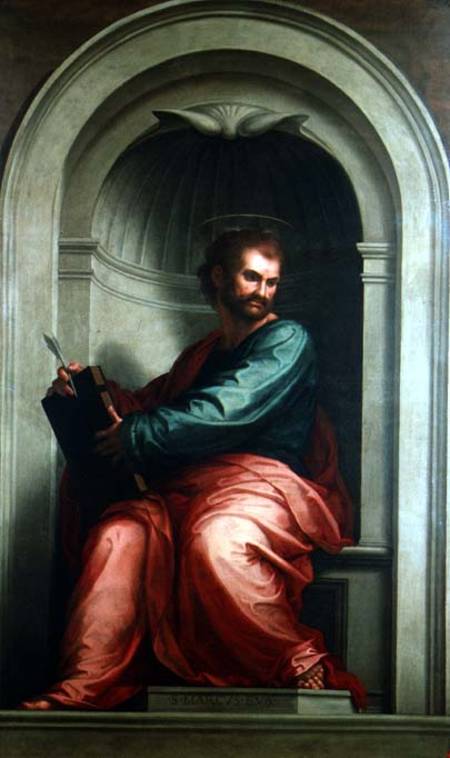
St. Mark was an evangelist, or Gospel writer.    In fact, he was the pioneer in Gospel writing.    His is the shortest and the oldest of the Gospels.   Little is known of Mark except from the New Testament.    He was not one of the twelve apostles but was a member of the first Christian community. Mark had firsthand experience of the early Church and apostolic life.    He was a traveling companion and assistant of Paul and Barnabas on the first missionary journey.    Something happened to Mark on that journey, perhaps homesickness, so he returned to Jerusalem.    The incident caused a quarrel between Paul and Barnabas. Barnabas, Mark’s cousin, was sympathetic toward Mark but Paul would not hear of Mark accompanying them again.    Later Paul and Mark must have been reconciled, because when Paul wrote to Timothy during his final imprisonment, he asked for Mark’s help.

Like another Gospel writer Luke, Mark was not one of the 12 apostles.    We cannot be certain whether he knew Jesus personally.    Some scholars feel that the evangelist is speaking of himself (so he then did know Jesus) when describing the arrest of Jesus in Gethsemane:  “Now a young man followed him wearing nothing but a linen cloth about his body.    They seized him, but he left the cloth behind and ran off naked” (Mark 14:51-52).   Mark’s Gospel was a great contribution to the Church.   It included oral and written tradition concerning the words and deeds of Jesus.    Mark probably secured some of his material from St. Peter.   He shows Jesus as the suffering Son of God.    Mark knew that to accept the Risen Jesus meant to come to terms with the cross.    Jesus was glorified because he willingly allowed himself to suffer death for our salvation.    Mark writes that anyone who wishes to follow Jesus must accept the cross.

Mark wrote to proclaim the Good News to a community of both Jewish and Gentile Christians.   His Gospel is direct and simple to read.    He speaks to Christians about Jesus, who understands their difficulties and sufferings and will one day bring them to share with him eternal joy and glory.

Traditionally Mark is thought to have been founder and bishop of the church of Alexandria, Egypt, where he was martyred.

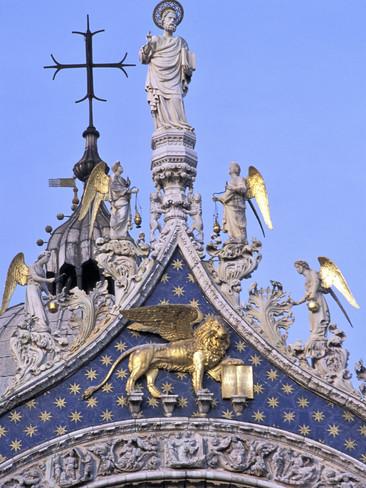
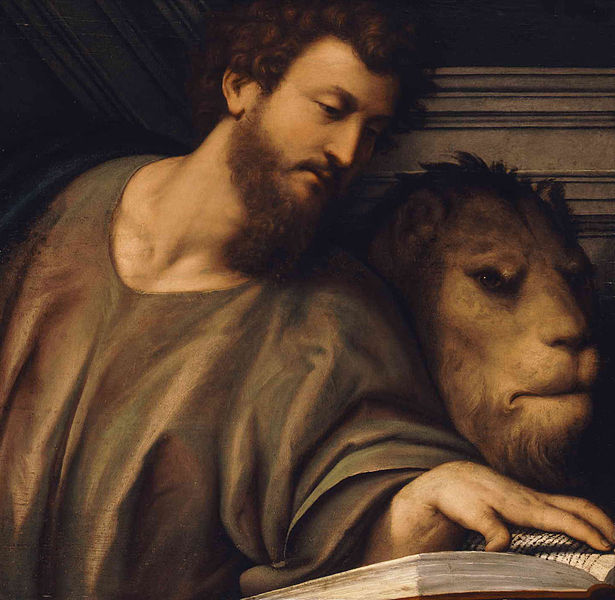
Over the years artists have given a symbol to each of the evangelists.    Mark’s symbol is a winged lion because his Gospel begins with the story of John the Baptist who, like a roaring lion, called people to repent.   The lion derives from Mark’s description of John the Baptist as a “voice of one crying out in the desert” (Mark 1:3), which artists compared to a roaring lion.    The wings come from the application of Ezekiel’s vision of four winged creatures to the evangelists.

Posted in For RAIN OR Against RAIN, PATRONAGE - SPOUSAL ABUSE / DIFFICULT MARRIAGES / VICTIMS OF ABUSE, SAINT of the DAY

Saint of the Day – 22 April – St Theodore of Sykeon (Died c613) Bishop

Saint of the Day – 22 April – St Theodore of Sykeon (Died c613) Bishop, Monk, Abbot, (born at Sykeon, Galaia, Bulgaria on an unknown date  and died c613) – Patronages –  of difficult marriages, for rain.

A native of Sykeon, in Galatia, Asia Minor, he was the son of a Byzantine imperial messenger and possibly of a prostitute.   Entering a monastery in Jerusalem, he served there for many years until becoming abbot of a number of monastic institutions.   He predicted the rise of Emperor Maurice and cured a royal prince of leprosy. About 590, he was appointed Bishop of Anastasiopol is, in Galatia.

St. Theodore spent his childhood at his mother’s inn that doubled as a brothel at Sykeon in Asia Minor.  v When Theodore was about six years old a wonderful cook arrived at the inn who created so much business that his mother stopped her prostitution.    The cook became Theodore’s spiritual director, teaching him to visit churches, to pray and fast, and to use the sacraments.

In his teens Theodore lived as a hermit in a cave near Sykeon.   Then he shut himself up in a mountainous cave to practice extreme mortification.   But Theodore also became well known for serving his neighbours with his gifts of healing, exorcism and prophecy.

When the church at Anastasiopolis chose Theodore as bishop, he reluctantly accepted the office.   About his administration we know very little as his biography records only a long series of his miracles.   After ten years he resigned because he was neglecting his prayer and his monks at Sykeon.   Theodore retired to an oratory near Heliopolis.   There he exercised a apostolate of charity and miracles until his death in 613.

Posted in EUCHARISTIC Adoration, Of BACHELORS, Of BEGGARS, the POOR, against POVERTY, Of PILGRIMS, PATRONAGE - MENTAL ILLNESS, SAINT of the DAY

Saint of the Day – 16 April – St Benedict Joseph Labre TOSF (1748-1783)

Saint of the Day – 16 April – St Benedict Joseph Labre TOSF (1748-1783) “Beggar of Perpetual Adoration” – Patronages – against insanity and mental illness,bachelors, beggars, homeless people, mentally ill people, people rejected by religious orders, pilgrims – Attributes – beggar in a tri-cornered hat sharing his alms.

St Benedict Joseph Labre was born in 1748 in the village of Amettes, near Arras, in the former Province of Artois in the north of France.    He was the eldest of fifteen children of a prosperous shopkeeper, Jean Baptist Labre and his wife, Anne Grandsire.

Labre had an uncle, a parish priest, living some distance from his family home;   this uncle gladly received him and undertook his early education for the priesthood.    At the age of sixteen, he approached his uncle about becoming a Trappist monk but his parents told him he would have to wait until he grew older.    When Benedict was about eighteen, an epidemic fell upon the city, and uncle and nephew busied themselves in the service of the sick.    While the uncle took care of the souls and bodies of the people, Benedict went to and fro caring for the cattle.    He cleaned their stalls and fed them;   exchanging the life of a farm labourer for that of a student under his uncle’s roof.    Among the last victims of the epidemic was the uncle himself.

Labre set off for La Trappe Abbey to apply to the Order but did not come up to their requirements.   He was under age, he was too delicate, he had no special recommendations.    He later attempted to join the Carthusians and Cistercians but each order rejected him as unsuitable for communal life.    He was, for about six weeks, a postulant with the Carthusians at Neuville.    In November 1769 he obtained admission to the Cistercian Abbey of Sept-Fonts.    After a short stay at Sept-Fonts his health gave way and it was decided that his vocation lay elsewhere.

Labre, according to Catholic tradition, experienced a desire, which he considered was given to him by God and inspired by the example of Saint Alexius of Rome and that of the holy Franciscan tertiary pilgrim, Saint Roch, to “abandon his country, his parents, and whatever is flattering in the world to lead a new sort of life, a life most painful, most penitential, not in a wilderness nor in a cloister but in the midst of the world, devoutly visiting as a pilgrim the famous places of Christian devotion”.

Labre joined the Third Order of Saint Francis and settled on a life of poverty and pilgrimage.    He first traveled to Rome on foot, subsisting on what he could get by begging.    He then travelled to most of the major shrines of Europe, often several times each.    He visited the various shrines in Loreto, Assisi, Naples, and Bari in Italy, Einsiedeln in Switzerland, Paray-le-Monial in France and Santiago de Compostela in Spain.    During these trips he would always travel on foot, sleeping in the open or in a corner of a room, with his clothes muddy and ragged.    On one occasion he stopped at the farmhouse of Matthieu and Marie Vianney, who would later become the parents of the future saint, the Curé d’Ars.    He lived on what little he was given and often shared the little he did receive with others.    He is reported to have talked rarely, prayed often and accepted quietly the abuse he received.

Bjmaster
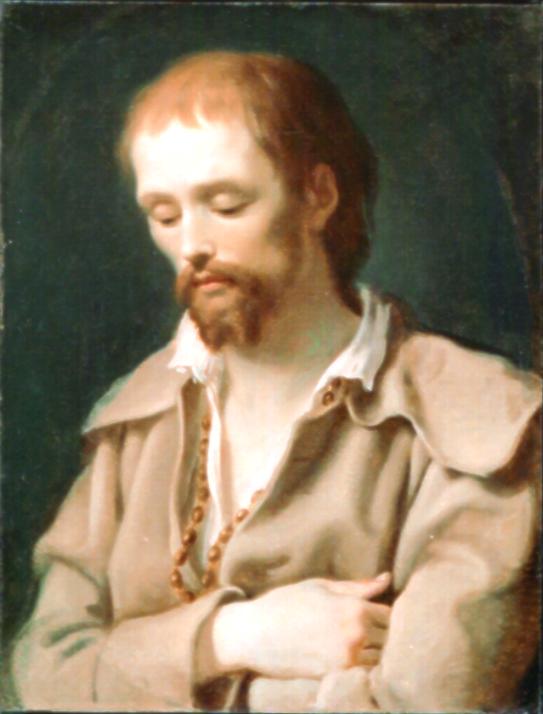
Benedict Joseph Labre depicted by Antonio Cavallucci (1752–1795)

In so doing, Labre was following in the role of the mendicant, the “Fool-for-Christ” . He would often swoon when contemplating the crown of thorns, in particular, and, during these states, it is said he would levitate or bilocate.    He was also said to have cured some of the other homeless he met and to have multiplied bread for them.    In the last years of his life (his thirties), he lived in Rome, for a time living in the ruins of the Colosseum and would leave only to make a yearly pilgrimage to the shrine of Our Lady of Loreto.   He was a familiar figure in the city and known as the “saint of the Forty Hours” (or Quarant’ Ore) for his dedication to Eucharistic adoration.

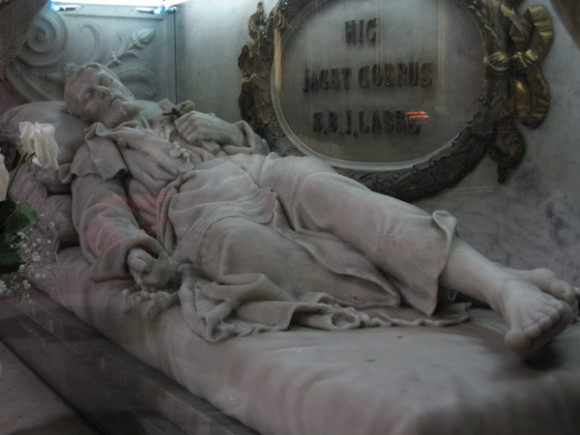
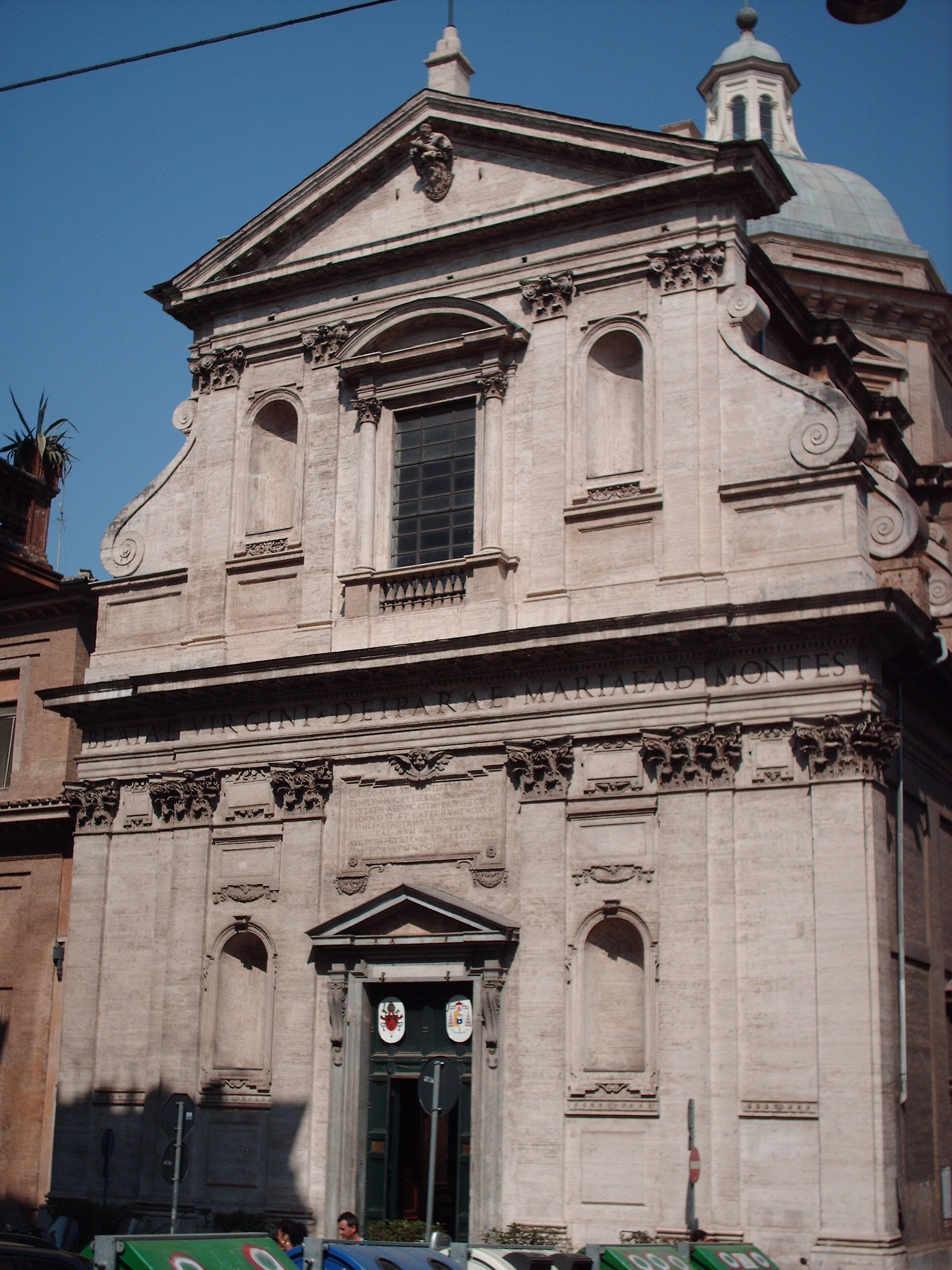
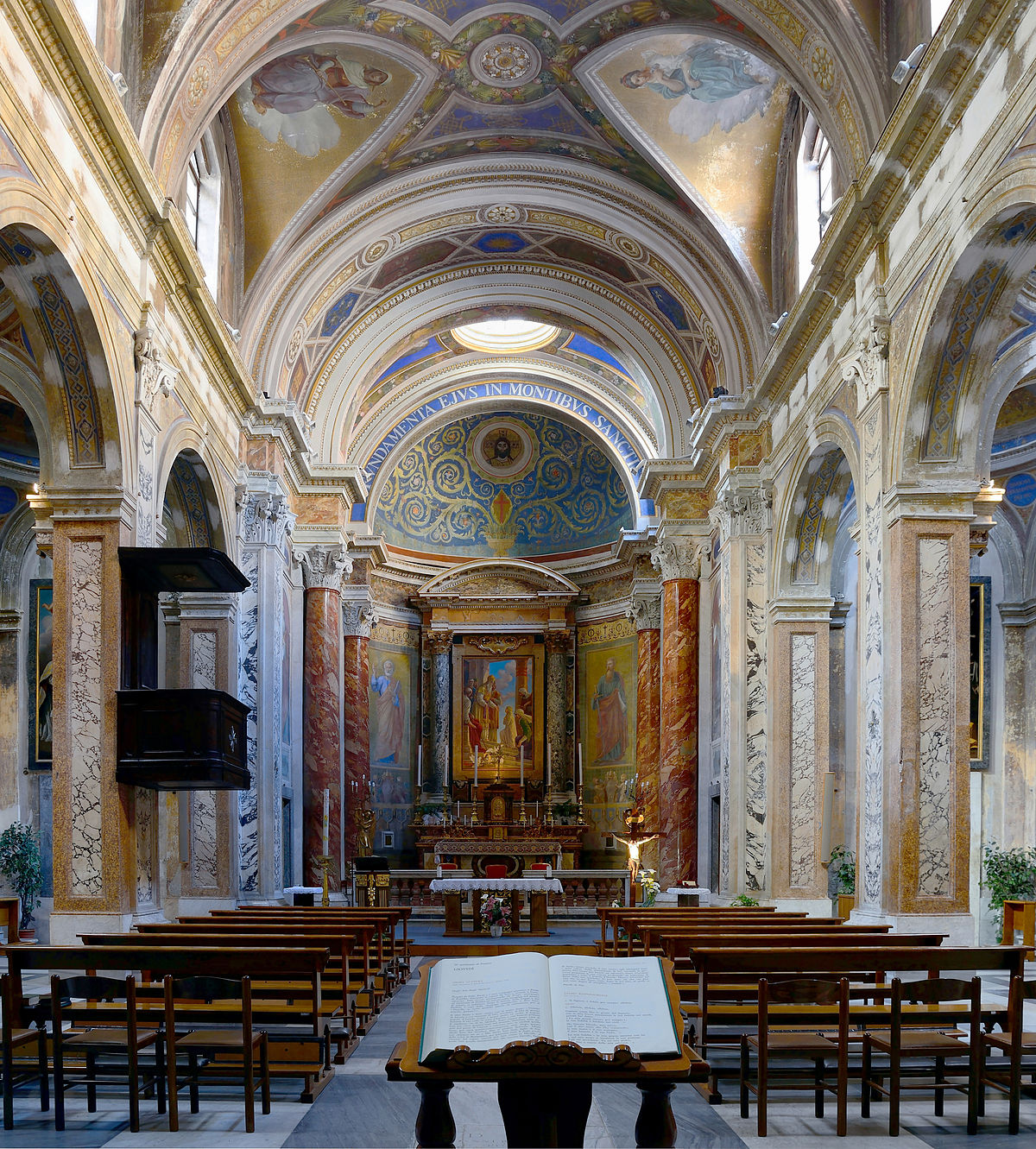
The day before he died, Labre collapsed in the church of Santa Maria ai Monti, blocks from the Colosseum and despite his protestations was charitably taken to a house behind the church at Via dei Serpenti 2.    He died there of malnutrition on 16 April, during Holy Week, in 1783 and was buried in the Church of Santa Maria ai Monti.

S.Maria ai Monti: Tomb of St Benedict Joseph Labrerome2007_img_1029-1

Church_of_Santa_Maria_ai_Monti_in_RomeSanta_Maria_in_Monticelli_(Rome)_-_interiorSanta_Maria_in_Monticelli_interno_d0

Posted in Of FISHERMEN, FISHMONGERS, SAILORS, MARINERS, NAVIGATORS, SAINT of the DAY

Saint of the Day – 14 April – Blessed Peter Gonzalez OP (1190 – 1246)

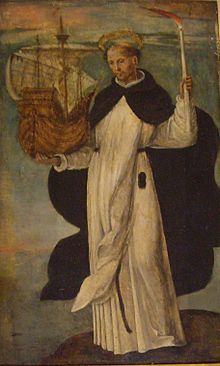
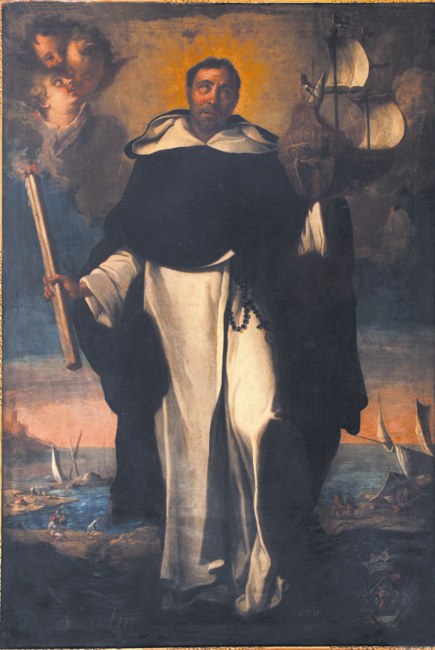
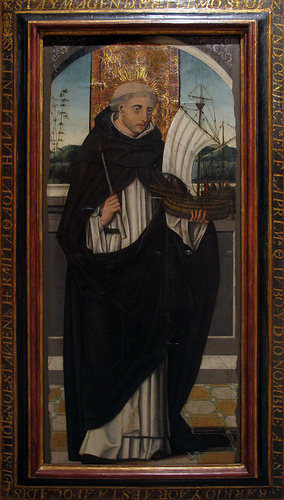
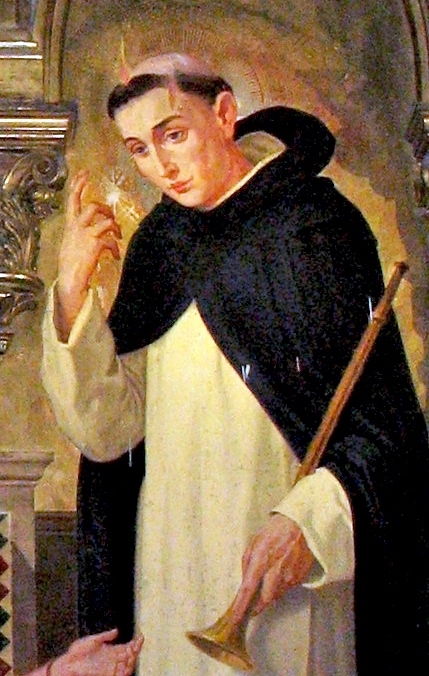
Saint of the Day – 14 April – Blessed Peter Gonzalez OP. (1190 – 1246) also known as -Pedro González Telmo, Saint Telmo, or Saint Elmo, was a Castilian Priest, and Friar of the Order of Preachers, born in 1190 in Frómista, Palencia, Kingdom of Castile and Leon.    Confessor, Preacher – Patron of  mariners, sailors, fisherman, Tui, Spain, Tui-Vigo, Spain, diocese of, Attributes – Dominican holding a blue candle or a candle with a blue flame; Dominican lying on his cloak which is spread over hot coals; Dominican holding fire in his bare hands; Dominican catching fish with his bare hands; Dominican beside the ocean, often holding or otherwise protecting a ship.   Image below – 16th-century painting of the Blessed Peter González, by Alejo Fernández, in the Alcázar of Seville

220px-San_Telmo_representacion_con_cirio_y_barco

Saint Paul had a conversion experience on the road to Damascus.   Many years later, the same proved true for Peter Gonzalez, who triumphantly rode his horse into the Spanish city of Astorga in the 13thcentury to take up an important post at the cathedral.   The animal stumbled and fell, leaving Peter in the mud and onlookers amused.

Humbled, Peter re-evaluated his motivations–his bishop-uncle had secured the cathedral post for him– and started down a new path.   He became a Dominican priest and proved to be a most effective preacher.   He spent much of his time as court chaplain and attempted to exert positive influence on the behaviour of members of the court.   After King Ferdinand III and his troops defeated the Moors at Cordoba, Peter was successful in restraining the soldiers from pillaging and persuaded the king to treat the defeated Moors with compassion.

After retiring from the court, Peter devoted the remainder of his life to preaching in northwest Spain.   Having developed a special mission to Spanish and Portuguese seamen, he is considered their patron.

guerra10

6264700478_7371714712

Peter Gonzalez died in 1246 and was beatified in 1741.

Although his cultus was confirmed in 1741 by Pope Benedict XIV and despite his common epithet of “saint,” Peter was never formally Canonised. Peter González was Beatified in 1254 by Pope Innocent IV.

The diminutive “Elmo” (or “Telmo”) belongs properly to the Martyr-Bishop Saint Erasmus (died c. 303), one of the Fourteen Holy Helpers, of whose name “Elmo” is a contraction. However, as Erasmus is the patron saint of sailors generally and Peter González of Spanish and Portuguese sailors specifically, they have both been popularly invoked as “Saint Elmo.

Posted in Against STUTTERING or Stammering, of speech defects or disabilities, Of MUSICIANS, Choristors, SAINT of the DAY

Saint of the Day – 6 April – Blessed Notker Balbulus

Saint of the Day – 6 April – Blessed Notker Balbulus/Notker the Stammerer/Notker of Saint Gall (c840-912) Benedictine monk. Priest. Poet. Musician. Teacher. Writer. Historian. Hagiographer; wrote a martyrology, a collection of legends and a metrical biography of Saint Gall. Friend of Saint Tutilo – Patronages –  of Musicians and invoked against stuttering/stammering -Representation:  A rod; Benedictine habit; book in one hand and a broken rod in the other with which he strikes the devil, mill wheel, staff.

220px-Notker_Balbulus_2

Notker was the son of noble Swiss parents.   His father and mother sent him, when he was a child, to be educated in the Benedictine Abbey of St. Gall, Switzerland.    In medieval times Benedictine monks often accepted youngsters as boarding students in their monastery schools.    There may have been an additional reason for entrusting Notker to these monks.    He was frail in health and stammered.   (That is the meaning of his nickname “Balbulus”.)

When he was a teenager, Notker decided to stay on at St. Gall as a monk.    Frailty of body did not keep him from becoming a leader in this religious community.    It was later said of him that he was “weakly in body but not in mind, stammering of tongue but not of intellect, pressing forward boldly in things divine–a vessel filled with the Holy Ghost without equal in his time.”    Notker, a brilliant student, was appointed librarian of the monastery in 890 and held the post of guest master in 892 and 894.
But the stammering little monk gained fame mostly through his own literary work. Having been trained by such able monastic scholars as Iso and the musical Irishman Marcellus (Moengal), he himself became a noted teacher in the monastic school.    Notker was probably the anonymous “Monk of St. Gall” who composed the book Gesta Caroli (The Deeds of Charles), a collection of folk stories about the Emperor Charlemagne.   This popular work did much to make Charlemagne a colossal legendary figure among the German peoples.

In addition to prose, Father Notker, a good theologian, also wrote poetry and composed music, with talent and taste.    In fact, he is considered the first musical composer of German stock.    Some of his musical compositions are hymns in honour of saints.    Most of his fame, however, is based on his two-score sequences.

The sequence is a type of liturgical hymn that originated in the ninth century.    It is a hymn sung after that Alleluia of the Latin Rite Mass that comes just before the singing of the Gospel.   ur liturgy used to have many of these sequences but today the Church retains only the Victimae Paschali (Easter);   the Veni Sancte Spiritus (Pentecost);   the Lauda Sion (Corpus Christi);   and the Stabat Mater (Seven Sorrows of Mary).    (A fifth sequence the Dies Irae for funerals was dropped only after Vatican II).    Now, none of these five sequences was written by Notker but the pattern he gave to the format by his own popular compositions was decisive among later composers.

Notker the Stammerer was so much loved by the monks of his abbey that for a long time after his death, they could not speak of him without shedding tears.    They venerated him as a saint. T   he Holy See confirmed this cult of Blessed Notker in 1512 by permitting a Mass to be celebrated in his honour at the Abbey of St. Gall.    The permission was extended to the diocese of Constance in 1513.    His relics were enshrined in the cathedral of Sankt Gallen in 1628 – see below

Blessed Notker has been declared by some to be the greatest poet of the Middle Ages. Being tongue-tied may impair the speech but it cannot inhibit the soaring imagination.

–Father Robert F. McNamara

Posted in Against SNAKE BITES / POISON, GOLDSMITHS, SILVERSMITHS, GILDERS, MINERS, JEWELLERS, CLOCK/WATCH-MAKERS, METAL CRAFTSMEN, PATRONAGE-ENGINEERS, Electrical, Mechanical etc, SAINT of the DAY

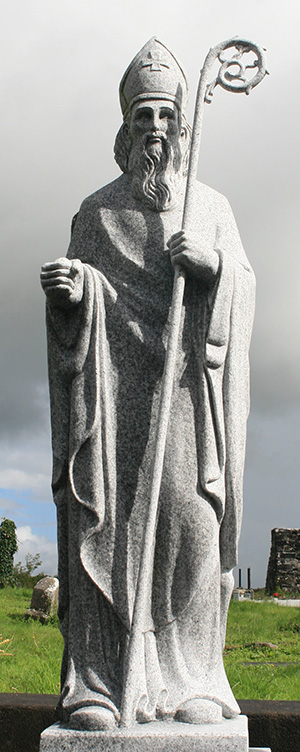
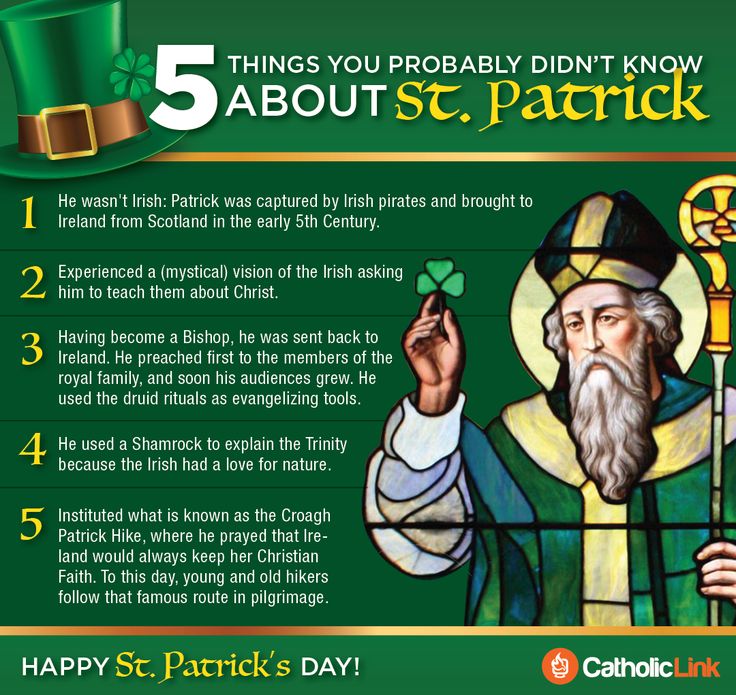
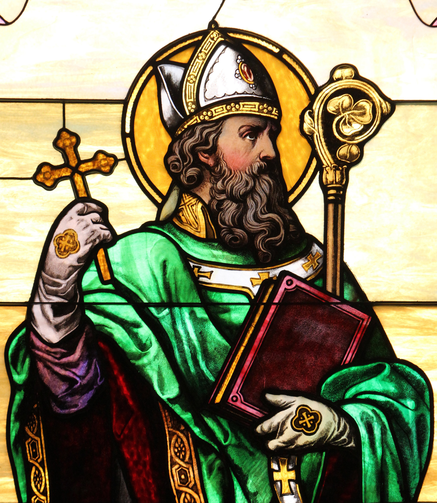
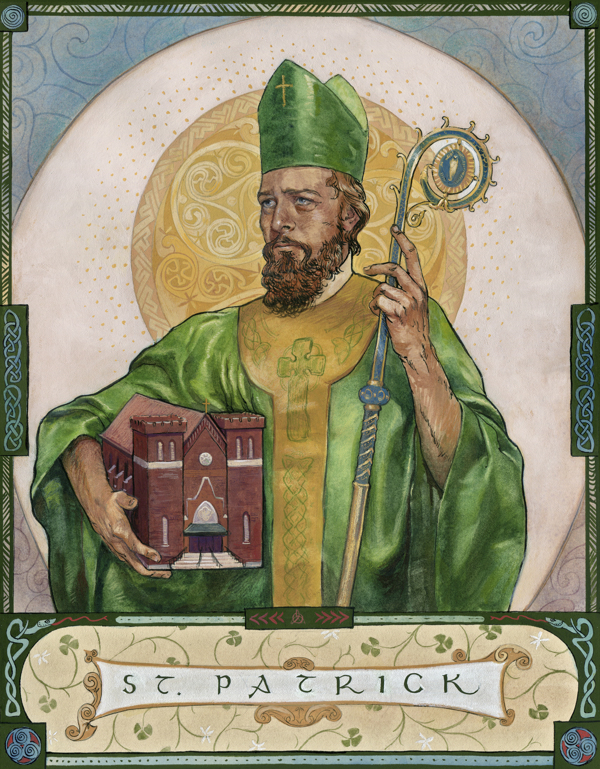
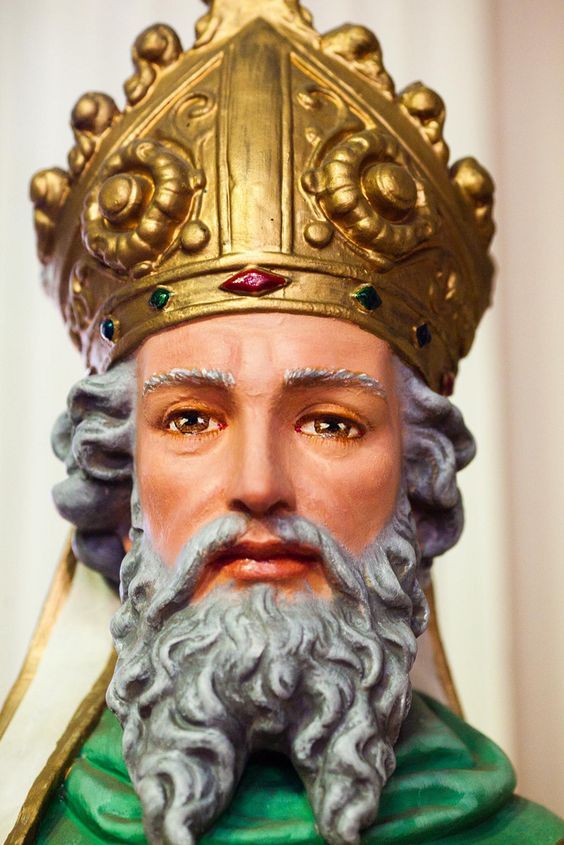
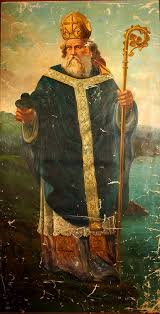
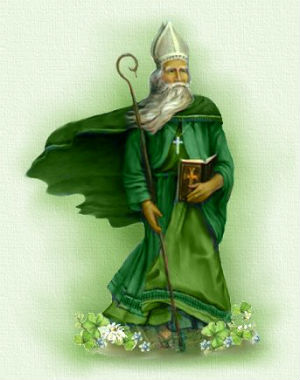
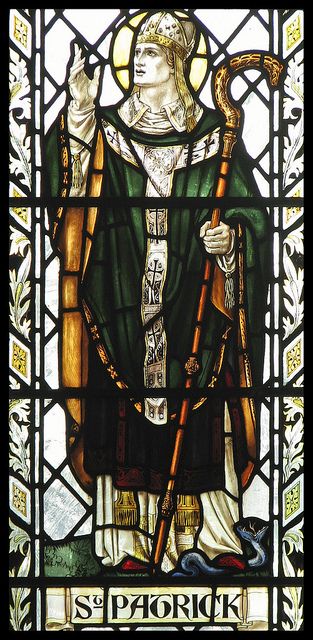
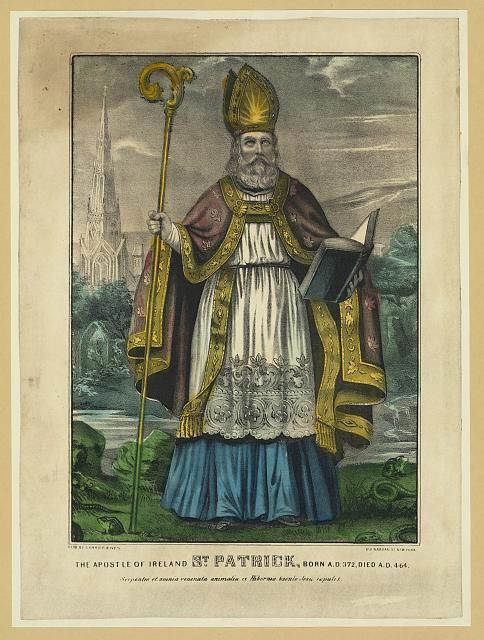
Saint of the Day – 17 March – St Patrick (c 386–461) “The Apostle of Ireland,”

Saint of the Day – 17 March – St Patrick (c 386–461) “The Apostle of Ireland,” P riest, Bishop, Missionary. Patronages – against fear of snakes or ophidiophobia. ophidiophobics, against snake bites, against snakes, of barbers, hairdressers, barrel makers; coopers, blacksmiths, cattle, engineers, excluded people, miners, Ireland, Nigeria (1961), Loiza, Puerto Rico, 29 Diocese.

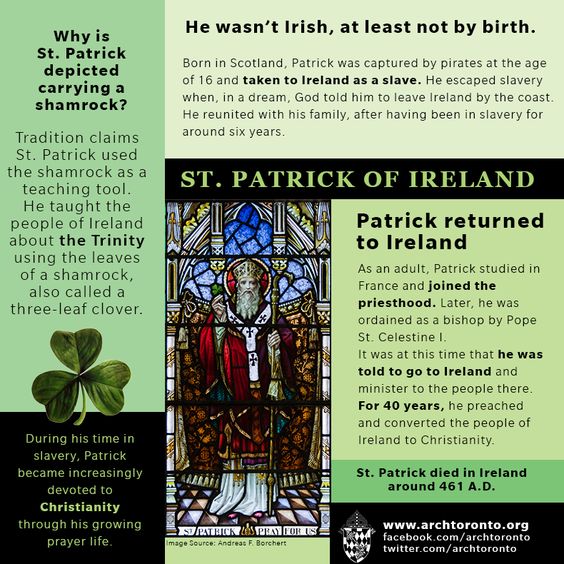
Although we think of Ireland when we remember St Patrick, he wasn not born in Ireland.   He was born probably in Scotland but sources differ on this point – he might have been born in England or in France.   His father was a Deacon and his grandfather had been a Priest.  

Patrick

But Patrick’s happy, carefree childhood life ended one day when crowds of strangers appeared on the horizon.   They looked dangerous and frightening and they were.   They were pirates and thieves, on their way to capture slaves to take back to Ireland.   Patrick was one of those hundreds of captives.   He was snatched from his family and his home.   He was taken from all of his future hopes and dreams.   Patrick was thrown on a ship, bound in chains and taken over the sea to Ireland.   He was sixteen years old.   For six years, Patrick was a slave in Ireland.   He was put to work watching sheep and cattle.   Patrick had just enough food to live on and when not working, he tried to rest in tiny huts which were damp and cold.

But something strange and wonderful happened in Ireland.   All alone, frightened for his life and among people who worshiped trees and stones, Patrick opened his heart to God.

During those years, Patrick started to pray.   He thought about God all the time and it gave him peace.   He knew that no matter how much he was suffering, God loved him.

Eventually, Patrick escaped from slavery and travelled to France, which in those days was called Gaul.   We are not sure exactly how much time Patrick spent in Gaul.   But it was enough time for him to draw closer to God, as he prayed and studied in a Monastery.   One night, deep in a dreamy vision, Patrick heard voices.   He heard many voices, joined together, pleading with him.   “Come back,” the voices cried, “come back and walk once more among us.”   Patrick knew it was the Irish people calling him.

Strengthened by the courage that only God can give, Patrick went back.   He returned to the very people who had stolen him from his family, worked him mercilessly as a slave and knew little, if anything, about the love of the true God.

Before he left Gaul, Patrick was made the Bishop of Ireland.   He then travelled across the sea to teach Ireland about Jesus Christ.   It wasn’t easy. The people of Ireland practiced pagan religions.   They worshiped nature,and they practiced magic.   They feared the spirits, they believed lived in the woods.   The Irish people believed they could bring evil spirits down on those they wanted to harm.

Patrick had a big job ahead of him. He had to show a country full of students that there was no point in worshiping nature.   Trees can’t forgive your sins or teach you how to love.   The sun, as powerful as it is, could not have created the world.   Patrick explained things using simple examples that people could easily understand.   For example, he used the three-leaf clover to show people how there could be three persons in one God.   Patrick preached to huge crowds and small villages.   He preached to kings and princes.   He preached in the open air and he preached in huts.   Patrick never stopped preaching and he never stopped teaching.   He couldn’t stop—the whole country of Ireland was his classroom and he couldn’t afford to miss even one student!

Soon, Patrick had help.   Men became Priests and Monks.   Women became Nuns. Wherever they lived, those Monks and Nuns settled in Monasteries and set up schools. More students were being reached every day. But, of course, the greatest help Patrick had was from God.

When he was young, Patrick had forgotten God but that would never happen again.   He knew that God supported him in every step he took.   God gave Patrick the courage to speak, even when Patrick was in danger of being hurt by pagan priests who didn’t want to lose their power over the people.

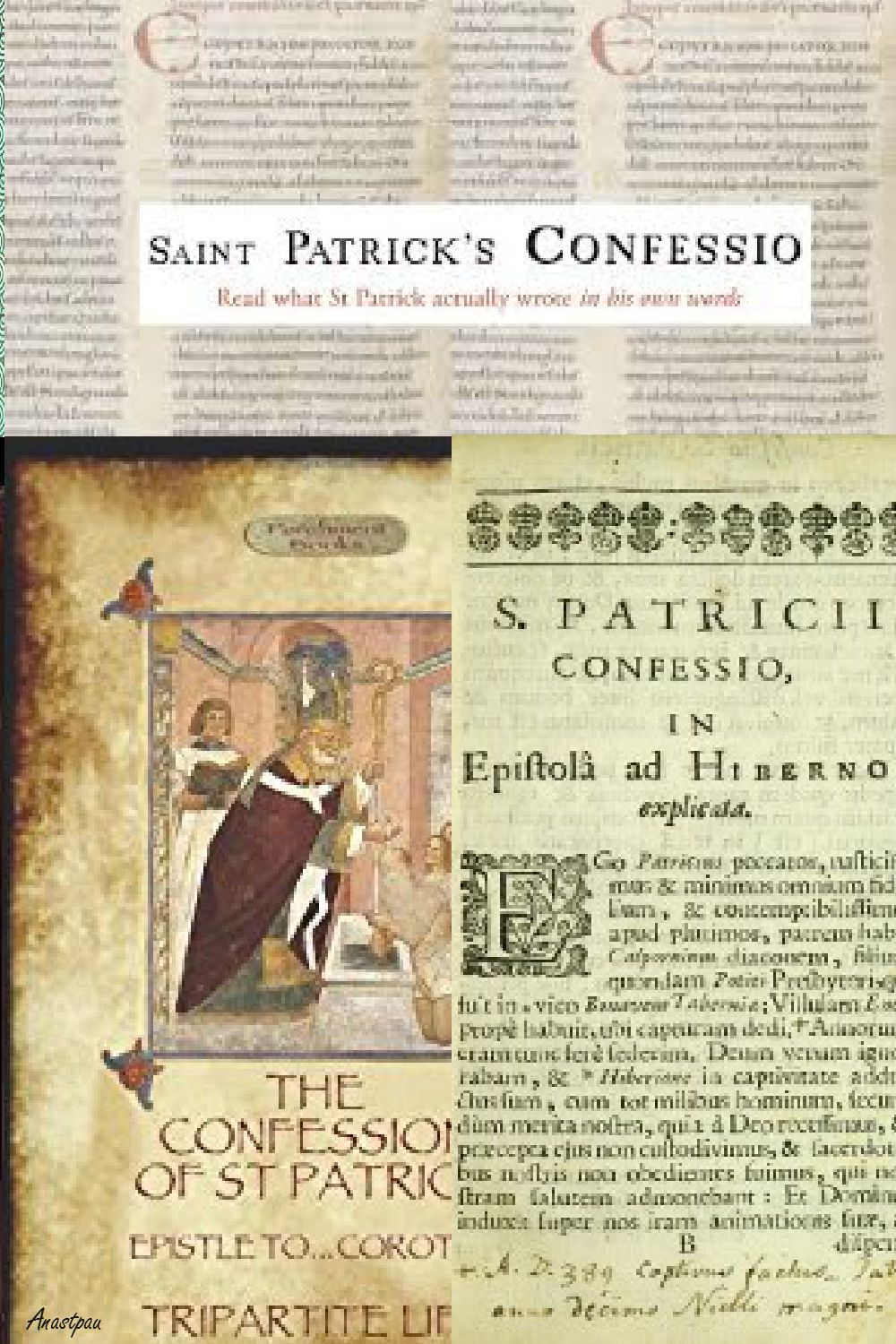
Patrick’s most famous prayer (excerpt below) shows us how close he was to God. It’s called “St. Patrick’s Breastplate.”   A breastplate is the piece of armour that protects a soldier’s heart from harm.   We have this prayer and his own story in one of the few certainly authentic writings of Patrick – his Confessio, which is above all an act of homage to God for having called Patrick, unworthy sinner, to the apostolate.

Christ with me, Christ before me,
Christ behind me, Christ within me,
Christ beneath me, Christ above me,
Christ at my right, Christ at my left.

ST PATRICK'S CONFESSIO

Patrick banishes all snakes from Ireland
The absence of snakes in Ireland gave rise to the legend that they had all been banished by St. Patrick chasing them into the sea after they attacked him during a 40-day fast he was undertaking on top of a hill.    This hagiographic theme draws on the Biblical account of the staff of the prophet Moses.   In Exodus 7:8–7:13, Moses and Aaron use their staffs in their struggle with Pharaoh’s sorcerers, the staffs of each side morphing into snakes. Aaron’s snake-staff prevails by consuming the other snakes.

 Patrick’s walking stick grows into a living tree
Some Irish legends involve the Oilliphéist, the Caoránach and the Copóg Phádraig.   During his evangelising journey back to Ireland from his parent’s home at Birdoswald, he is understood to have carried with him an ash wood walking stick or staff.   He thrust this stick into the ground wherever he was evangelising and at the place now known as Aspatria (ash of Patrick) the message of the dogma took so long to get through to the people there that the stick had taken root by the time he was ready to move on.

St Patrick died between 461 and 464 at Saul, County Down, Ireland of natural causes

Posted in Of a Holy DEATH & AGAINST A SUDDEN DEATH, of the DYING, FINAL PERSEVERANCE, DEATH of CHILDREN, DEATH of PARENTS, Of PARENTS & FAMILIES of LARGE Families, SAINT of the DAY, WIDOWS and WIDOWERS

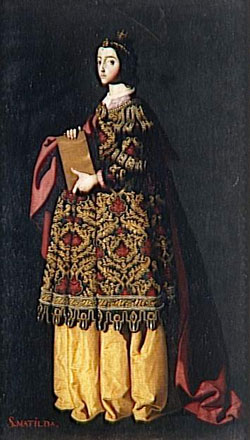
Saint of the Day – 14 March – St Matilda of Saxony

Saint of the Day – 14 March – St Matilda of Saxony  (c 894-968) – Queen, Apostle of Prayer and Almsgiving, Foundress  – Patronages – of death of children, disappointing children, falsely accused people, large families, people ridiculed for their piety, queens, second marriages, widows.  Medieval chroniclers like Liutprand of Cremona and Thietmar of Merseburg celebrated Matilda for her devotion to prayer and almsgiving.   Her first biographer depicted her leaving her husband’s side in the middle of the night and sneaking off to church to pray.   St. Matilda founded many religious institutions, including the canonry of Quedlinburg, which became a center of ecclesiastical and secular life in Germany under the rule of the Ottonian dynasty.   She also founded the convents of St. Wigbert in Quedlinburg, in Pöhlde, Enger, and Nordhausen, likely the source of at least one of her vitae.

Born in Saxony, Mathilda was the daughter of Thierri, a prince of considerable importance. From an early age, Mathilda demonstrated great piety and love for the Lord and was raised by her pious grandmother, Maud, the abbess of Enford, in the cloister.   There, as she grew up, she practiced daily prayer and penance and learned a love of labour and spiritual reading.   Mathilda would have been more than content to spend her life dedicated to religious pursuits.   However, her father arranged her marriage to Henry, the son of the Duke of Saxony.   Within seven years, Henry found himself the King of Germany, and Mathilda, the queen.

804

King Henry demonstrated through his actions that he was a God-fearing and pious spouse. His equity and courage won him the respect of his subjects and he encouraged and financed Mathilda’s longing to live a life of charitable service to others.   While Henry ruled his kingdom, Mathilda devoted herself to penance and spent her days visiting the poor and sick, offering them consolation and comfort.   She also founded schools to provide education to all, visited incarcerated prisoners and worked for the conversion of souls.   Overall, her life was relatively a simple one, despite her royalty, with her primary focus on daily prayer.

66b14b42003354aa389e0136cdbdc49f

After seventeen years, Henry died of apoplexy, and Mathilda, looking to the Lord, gave up her royal vestments and jewels, laying them on the alter of the Lord.   Divesting herself of her title, she stepped aside for her children, with the eldest, Otho, becoming king. Henry became Duke of Bavaria and the youngest, Bruno, the Archbishop of Cologne.

However, all was not smooth prior to the coronation, with Henry contesting his brother’s rightful place as heir.   Mathilda, for her part, always partial to Henry, sided with him, her words creating significant discord between the brothers.   Eventually, the brothers reconciled, but turned against their mother, stripping her of her dowry,and accusing her publicly of mismanaging the royal funds in service to her charities.   Saint Mathilda accepted the punishment gracefully, recognising her sinfulness in siding with one son above another, repenting and offering herself wholly to the Lord in reparation.

The persecution and suffering of Mathilda was long and cruel but she patiently bore this all, until her son reconciled with her.   Her dowry restored, Mathilda was allowed to move back into the royal court.   However, instead, she chose to live in the Benedictine monastery of Quedlinbourg, using her funds to serve the poor and extend the religious communities in the region dedicated to charity.  he founded five monasteries, and built many churches.

Saint Mathilda grew ill and realized that death was upon her. In the presence of her community at the monastery, she made a public confession, donned sackcloth and covered herself with ashes.   She further received last sacraments from William, Archbishop of Mayence, her nephew.   Her body remains at Quedlinburg, where she is buried beside her husband.   She is venerated there today.

Posted in Against EPIDEMICS, AVIATORS, PILOTS, AEROPLANE industry related WORKERS, Of a Holy DEATH & AGAINST A SUDDEN DEATH, of the DYING, FINAL PERSEVERANCE, DEATH of CHILDREN, DEATH of PARENTS, Of TRAVELLERS / MOTORISTS, SAINT of the DAY, The LAITY, WIDOWS and WIDOWERS

Saint of the Day – 9 March – St Frances of Rome

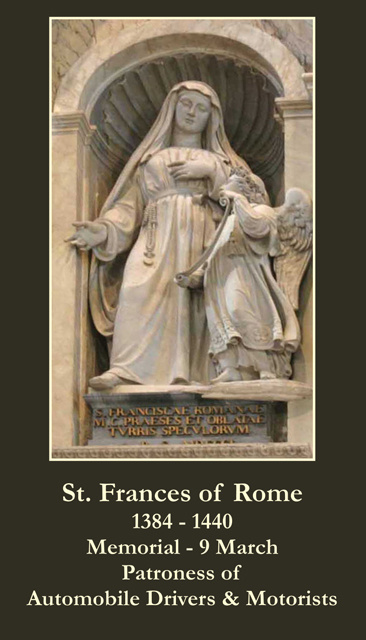
Saint of the Day – 9 March – St Frances of Rome Obl.S.B. (1384-1440)  Wife, Mother, Mystic, Organiser of charitable services and a Benedictine Oblate who founded a religious community of Oblates, who share a common life without religious vows – Patronages – against plague/epidemics, of automobile drivers (given in 1951), aviators, taxi drivers, death of children, the laity, motorcyclists, motorists, people ridiculed for their piety, Roman housewives, widows, women, Rome, Italy.

card_242_FRANCES_OF_ROME_1497-09282010-B-final-fro

Frances was born in 1384 in Rome to a wealthy and aristocratic couple, Paolo Bussa and Iacobella dei Roffredeschi, in the up-and-coming district of Parione and christened in the nearby Church of St Agnes on the famed Piazza Navona.   When she was eleven years old, she wanted to be a nun but, at about the age of twelve, her parents forced her to marry Lorenzo Ponziani, commander of the papal troops of Rome and member of an extremely wealthy family.   Although the marriage had been arranged, it was a happy one, lasting for forty years, partly because Lorenzo admired his wife and partly because he was frequently away at war.

With her sister-in-law Vannozza, Frances visited the poor and took care of the sick, inspiring other wealthy women of the city to do the same.   Soon after her marriage, Frances fell seriously ill.   Her husband called a man in who dabbled in magic but Frances drove him away and later recounted to Vannozza that St Alexis had appeared to her and cured her.

When her mother-in-law died, Frances became mistress of the household.   During a time of flood and famine, she turned part of the family’s country estate into a hospital and distributed food and clothing to the poor.   According to one account, her father-in-law was so angry that he took away from her the keys to the supply rooms but gave them back when he saw that the corn bin and wine barrel were replenished after Frances finished praying.

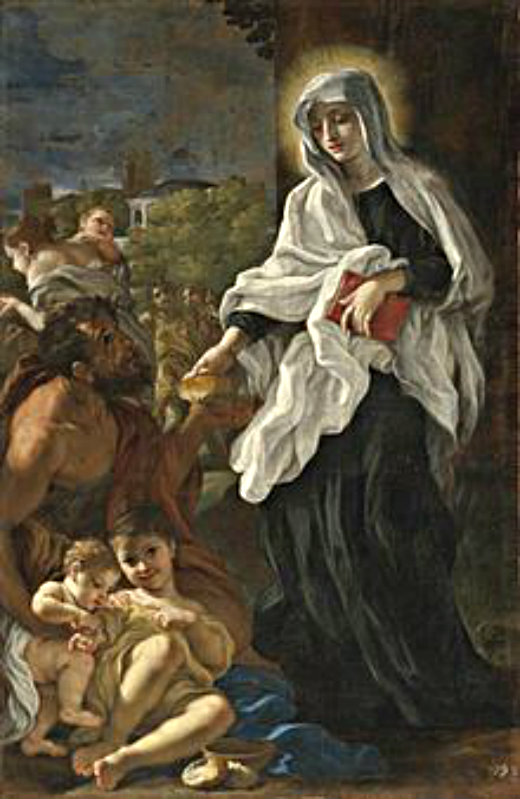
baciccio-saint_francesca_romana_giving_alms-1.jpg
St Frances of Rome Giving Alms by Baciccio

During the wars between the pope in Rome and various anti-popes in the Western Schism of the Church, Lorenzo served the former.   According to one story, their son, Battista, was to be delivered as a hostage to the commander of the Neapolitan troops.   Obeying this order on the command of her spiritual director, Frances brought the boy to the Campidoglio.   On the way, she stopped in the Church of the Aracoeli located there and entrusted the life of her son to the Blessed Mother.   When they arrived at the appointed site, the soldiers went to put her son on a horse to transport him off to captivity.   The horse, however, refused to move, despite heavy whipping.   The superstitious soldiers saw the hand of God in this and returned the boy to his mother.

During a period of forced exile, much of Lorenzo’s property and possessions were destroyed.   In the course of one occupation of Rome by Neapolitan forces in the early part of the century, he was wounded so severely that he never fully recovered.   Frances nursed him throughout the rest of his life.

Frances experienced other sorrows in the course of her marriage with Lorenzo Ponziani. They lost two children to the plague.   Chaos ruled the city in that period of neglect by the pope and the ongoing warfare between him and the various forces competing for power on the Italian peninsula devastated the city.   The city of Rome was largely in ruins—wolves were known to enter the streets.   Frances again opened her home as a hospital and drove her wagon through the countryside to collect wood for fire and herbs for medicine.   It is said she had the gift of healing, and more than sixty cases were attested to during the Canonisation proceedings.

According to the Catholic Encyclopedia, “With her husband’s consent St Frances practised continence and advanced in a life of contemplation. Saint_Frances.jpg

Her visions often assumed the form of drama enacted for her by heavenly personages.   She had the gift of miracles and ecstasy, as well as the bodily vision of her guardian angel, had revelations concerning Purgatory and Hell and foretold the ending of the Western Schism.   She could read the secrets of consciences and detect plots of diabolical origin.   She was remarkable for her humility and detachment, her obedience and patience”.francescaromana.jpg

On August 15, 1425, the feast of the Assumption of Mary, she founded the Olivetan Oblates of Mary, a confraternity of pious women, under the authority of the Olivetan monks of the Abbey of Santa Maria Nova in Rome but neither cloistered nor bound by formal vows, so they could follow her pattern of combining a life of prayer with answering the needs of their society.

In March 1433, she founded a monastery at Tor de’ Specchi, near the Campidoglio, in order to allow for a common life by those members of the confraternity who felt so called.    This monastery remains the only house of the Institute.   On 4 July of that same year, they received the approval of Pope Eugene IV as a religious congregation of oblates with private religious vows.  The community later became known simply as the Oblates of St. Frances of Rome.

Frances herself remained in her own home, nursing her husband for the last seven years of his life from wounds he had received in battle.   When he died in 1436, she moved into the monastery and became the superior.   She died in 1440 and was buried in Santa Maria Nova.

sos_T_002-pic

st-frances-of-rome-02On 9 May 1608, she was Canonised by Pope Paul V and in the following decades a diligent search was made for her remains, which had been hidden due to the troubled times in which she lived.   Her body was found incorrupt some months after her death.   Her grave was identified on 2 April 1638, (but this time only the bones remained) and her remains were reburied in the Church of Santa Maria Nova on 9 March 1649, which since then has been her feast day.   Again, in 1869, her body was exhumed and has since then been displayed in a glass coffin for the veneration of the faithful.   The Church of Santa Maria Nova is now usually referred to as the Church of St Frances.
In 1925, Pope Pius XI declared her the patron saint of automobile drivers because of a legend that an angel used to light the road before her with a lantern when she travelled, keeping her safe from hazards.   Within the Benedictine Order, she is also honoured as a patron saint of all oblates.
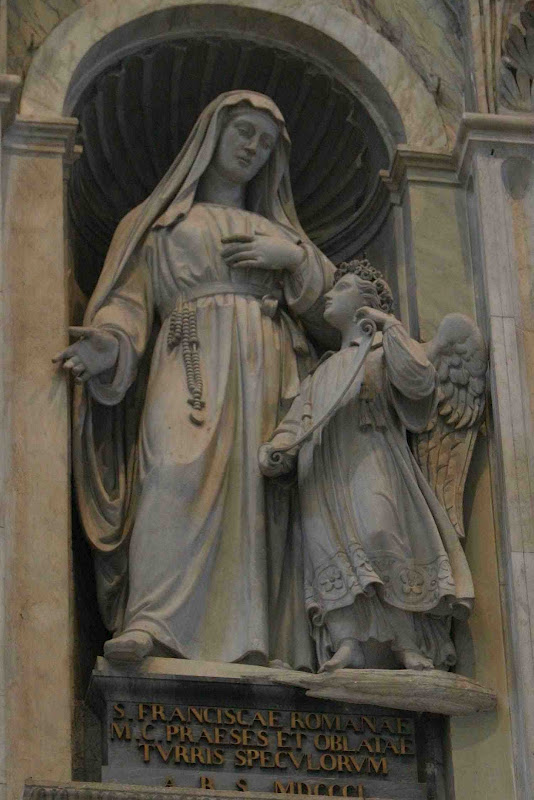
Frances-of-Rome_St-Peters-Basilica_Founders-Statue
St Frances of Rome Founder Statue at St Peter’s

Posted in Against ALCOHOLISM, of ALCOHOLICS, Of a Holy DEATH & AGAINST A SUDDEN DEATH, of the DYING, FINAL PERSEVERANCE, DEATH of CHILDREN, DEATH of PARENTS, Of HOSPITALS, NURSES, NURSING ASSOCIATIONS, PATRONAGE - MENTAL ILLNESS, PATRONAGE - WRITERS, PRINTERS, PUBLISHERS, EDITORS, etc, SAINT of the DAY

Saint of the Day – 8 March – St John of God OH (1495-1550)

Saint of the Day – 8 March – St John of God OH (1495-1550) – aged 55 – Founder of the  Brothers Hospitallers of Saint John of God, a worldwide Catholic religious institute dedicated to the care of the poor, sick, and those suffering from mental disorders.  Patronages –  against alcoholism and of alcoholics, against bodily ills of all sickness and of the sick, bookbinders, booksellers, publishers and printers, of the dying, firefighters, heart patients, hospitals (proclaimed on 22 June 1886 by Pope Leo XIII), hospital workers, nurses (proclaimed in 1930 by Pope Pius XI),Tultepec, Mexico
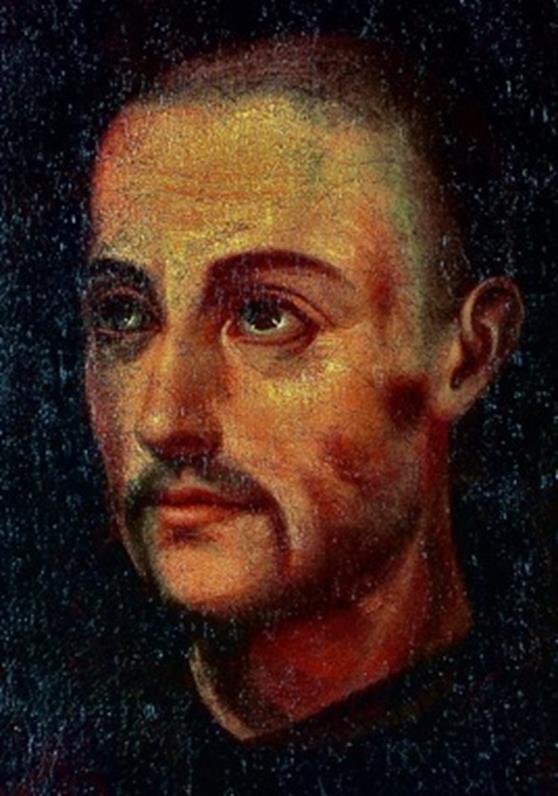
by Pedro de Raxis,

As a 16th-century Spanish soldier, John gave up religion and led a wild life.   When he left the military at age 40, he became a shepherd.   John decided to make a radical conversion—to go to Muslim North Africa and free Christian slaves.   He saw himself dying as a martyr.   His confessor helped John settle on a more prudent plan: to open a religious bookstore in Granada, Spain.   He successfully managed this project.    It was during this period of his life that Cidade is said to have had a vision of the Infant Jesus, who bestowed on him the name by which he was later known, John of God, also directing him to go to Granada.    He then settled in that city, where he worked disseminating books, using the recent movable type printing press of Johannes Gutenberg to provide people with works of chivalry and devotional literature.
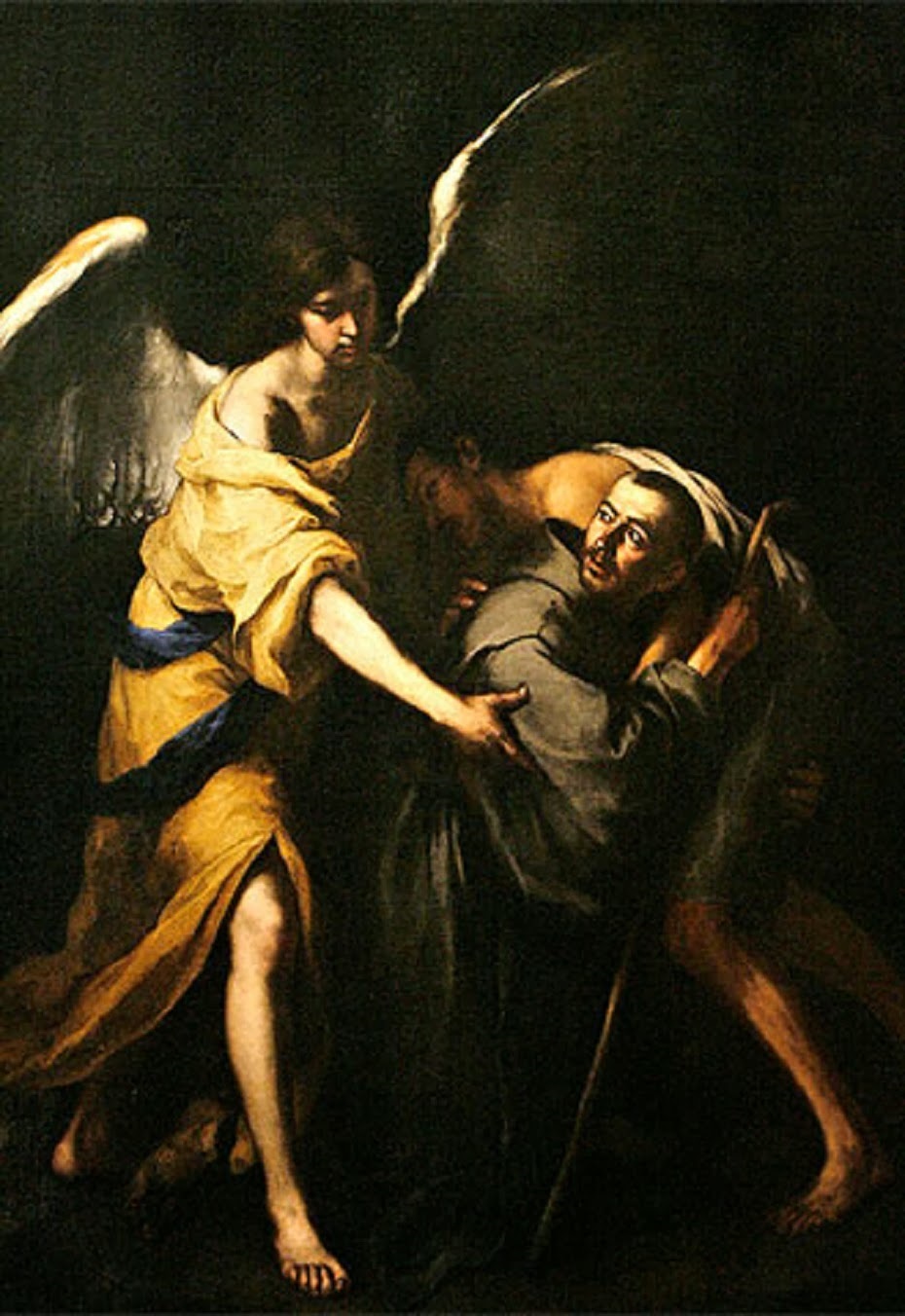
John_of_god_murillo.jpg
Saint John of God by Murillo (1672)
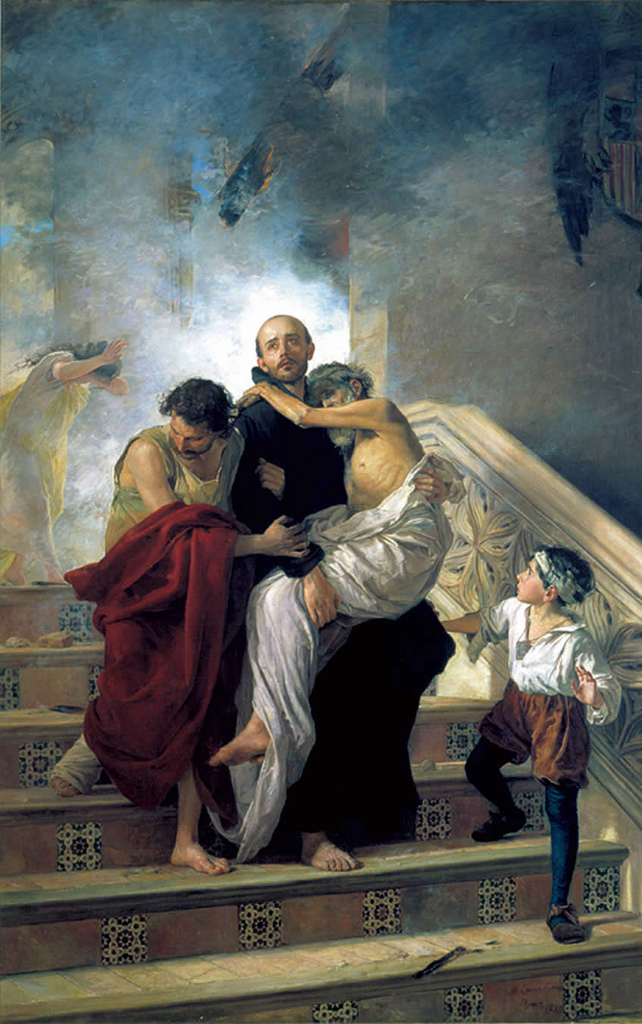
Manuel_Gómez-Moreno_González._San_Juan_de_Dios_salvando_a_los_enfermos_de_incendio_del_Hospital_Real_(1880).jpg
St John of God saving the Sick from a Fire at the Royal Hospital in 1549 by Manuel Gómez-Moreno González (1880)

At first, John begged for money to support those in need but soon people volunteered to help.   John led a life of total giving and constant prayer.   He found work for unemployed people.   When the archbishop called John to his office because people complained that John kept immoral women in his hospital, he was silenced by John’s humility.   John fell on his knees, saying, “I know of no bad person in my hospital except myself, who am unworthy to eat the bread of the poor.”   John soon had a flourishing hospital.   His helpers formed a community called the Brothers Hospitallers.

John of God died from pneumonia contracted while saving a drowning man. When John realised he was dying, he went over all the accounts, revised the rules and timetable and appointed a new leader.   He died kneeling before the altar in his hospital chapel.   John is the patron of hospitals.

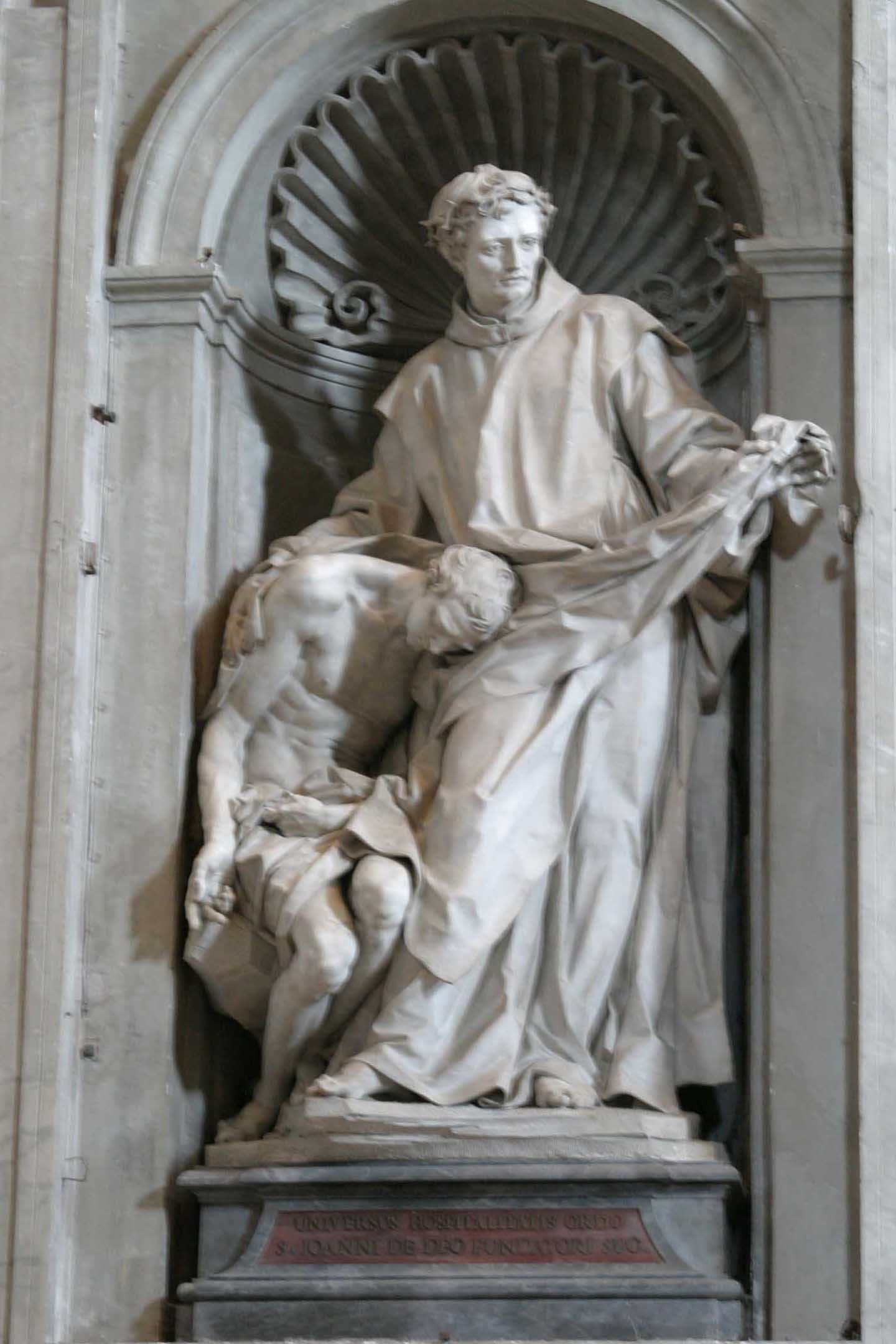
St John of God-FounderStatue.jpg
Founder Statue at the Vatican

The first biography of John of God was written by Francisco de Castro, the chaplain at John of God’s hospital in Granada, Spain.   He drew from his personal knowledge of John as a young man and also used material gathered from eyewitnesses and contemporaries of his subject.   It was published at the express wish of the Archbishop of Granada, who gave financial backing to its publication.    Castro began writing in 1579, twenty-nine years after John of God’s death but he did not live to see it published, for he died soon after completing the work.   His mother, Catalina de Castro, had the book published in 1585.

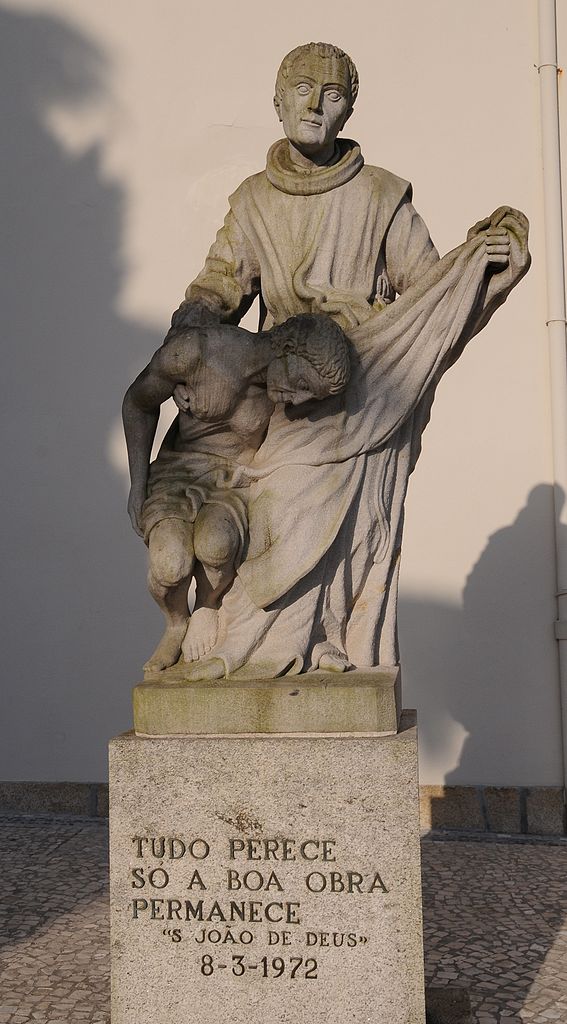
567px-Sao_Joao_de_Deus
Statue of St John of God at the Church of Vilar de Frades, Barcelos, Portugal.
The inscription reads: All things pass, only good works last.
Posted in PATRONAGE - of MOTHERS, MOTHERHOOD, PREGNANCY, SAINT of the DAY

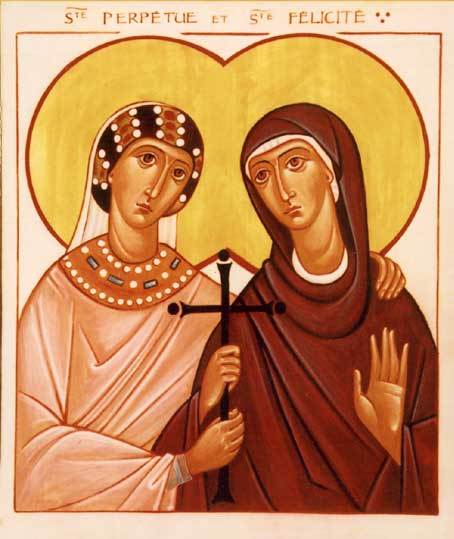
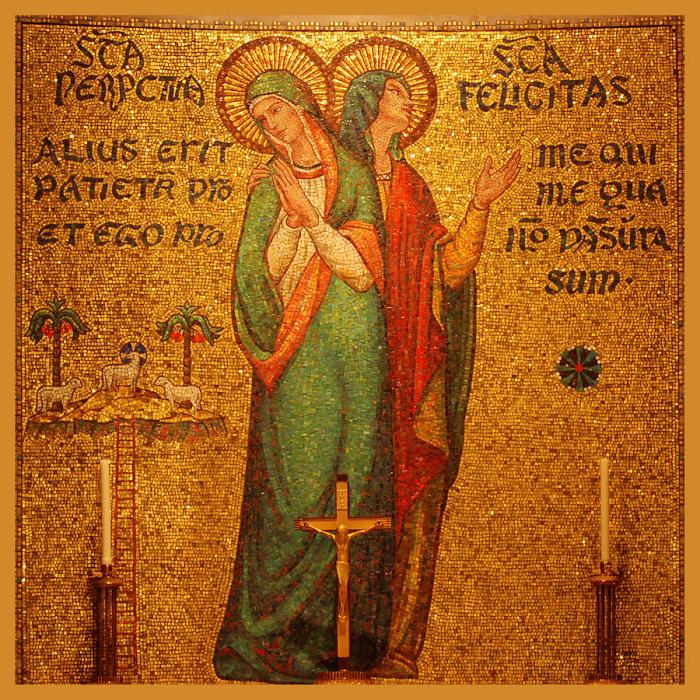
Saint/s of the Day – 7 March – Saints Perpetua and Felicity

Saint/s of the Day – 7 March – Saints Perpetua and Felicity – Martyrs (died c203) in Carthage (Roman province of Africa – modern day Tunisia) – Patrons of Mothers, Expectant Mothers, ranchers, butchers, Carthage, Catalonia.sts perpetua & felicity.jpg

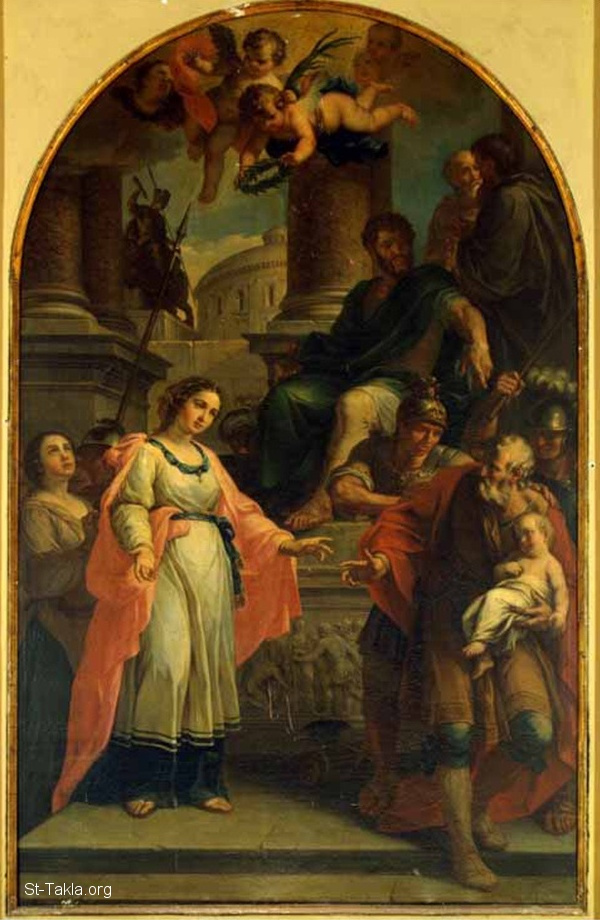
Vibia Perpetua was a married noblewoman, said to have been 22 years old at the time of her death and mother of an infant she was nursing.   Felicity, a slave imprisoned with her and pregnant at the time, was martyred with her.   They were put to death along with others at Carthage in the Roman province of Africa.   According to the passion, a slave named Revocatus, his fellow slave Felicitas, the two free men Saturninus and Secundulus, and Perpetua, who were catechumens, that is, Christians being instructed in the faith but not yet baptised, were arrested and executed at the military games in celebration of the Emperor Septimus Severus’s birthday.   To this group was added a man named Saturus (the Catechist of St Perpetua) who voluntarily went before the magistrate and proclaimed himself a Christian.saints-perpetua-and-felicitas-altar-philip-ralley.jpg

St Perpetua kept a diary during her last days, while she awaited her execution.   Her diary, along with an eyewitness’s account of her death, is one of the oldest, most reliable histories of a martyr’s sufferings.   This account was passed down to encourage other Christians to witness to the world with their lives—to teach others that greater than life itself is knowing Jesus and being loyal to him.

Perpetua’s account records the events that took place in Carthage, Africa, in the year 202, when the Emperor Severus issued an anti-Christian law forbidding anyone to be baptised and become a Christian.   At that time twenty-two-year-old Perpetua was a catechumen, studying to become a Christian.   She was also the mother of an infant son.   Perpetua was arrested along with four other catechumens, including Felicity, her slave woman, who was about to give birth to a child.   All were tried and sentenced to be thrown to the wild beasts in the amphitheatre during a national holiday.   Their deaths would be scheduled along with sports events and various games.

During the days before their execution, their teacher Saturus voluntarily joined the catechumens so that he might die for Christ with them.   Perpetua’s father, a wealthy pagan, pleaded with her to offer sacrifice to the pagan gods so she could be free, but she refused. She said, “Father do you see this water jar, or whatever it is, standing here? Could one call it by any other name than what it is?   Well, in the same way I cannot be called by any other name than what I am—a Christian.”www-st-takla-org-sts-perpetua-n-felicity-015.jpg

While they were awaiting death, Perpetua and her companions were baptised.   Shortly before the scheduled execution, Felicity gave birth to a baby girl.   During childbirth, she had cried out in pain.  Someone hearing her asked her how she would ever endure the suffering of martyrdom.   She replied, “Now it is I who suffer what I am suffering, then, there will be another in me who will suffer for me, because I will be suffering for Him.”

On the day of their execution, the martyrs left their prison “joyfully as though they were on their way to heaven” and entered the arena, where they were killed before the cheering crowd.   Perpetua and Felicity were beheaded; the others were killed by wild beasts.    Today these women are mentioned in the first Eucharistic Prayer.www-st-takla-org-sts-perpetua-n-felicity-021.jpg

Posted in EYES - Diseases, of the BLIND, Of a Holy DEATH & AGAINST A SUDDEN DEATH, of the DYING, FINAL PERSEVERANCE, DEATH of CHILDREN, DEATH of PARENTS, Of the SICK, the INFIRM, All ILLNESS, PATRONAGE - HEADACHES, PATRONAGE - of BASKET-WEAVERS, CRAFTSMEN, PATRONAGE-INFERTILITY & SAFE CHILDBIRTH, PREGNANCY, SAINT of the DAY, SERVANTS, MAIDS, BUTLERS, CHAMBERMAIDS

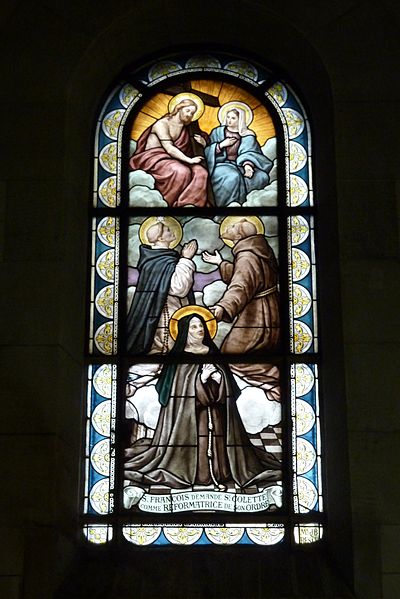
Saint of the Day – 6 March – St Colette Saint of the Day – 6 March – St Colette PCC. (1381-1447

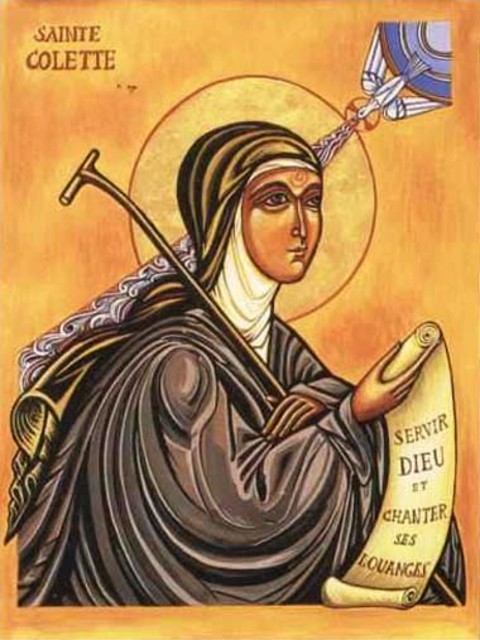
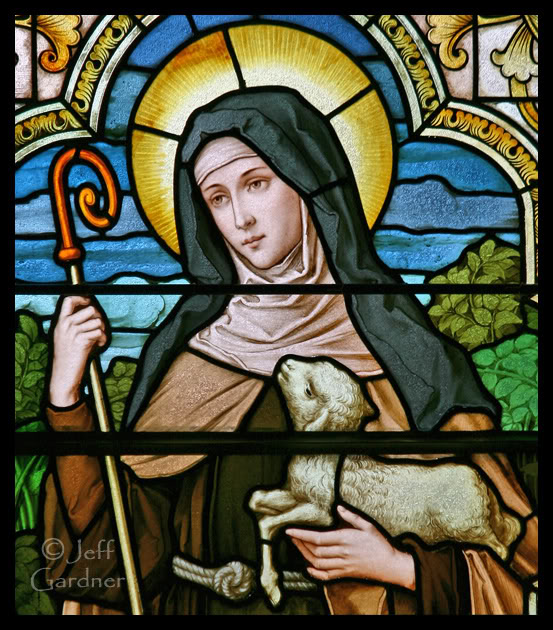
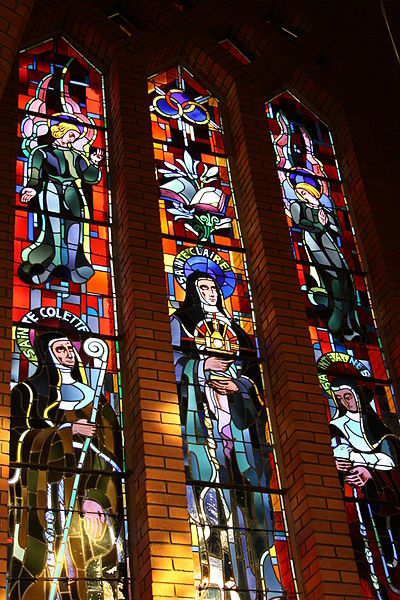
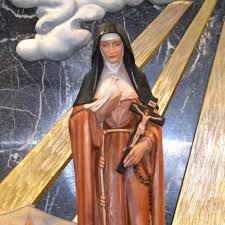
Saint of the Day – 6 March – St Colette PCC. (1381-1447) -aged 66, Abbess and Foundress of the Colettine Poor Clares, a reform branch of the Order of Saint Clare, better known as the Poor Clares.  Patronages – against eye disorders, against fever, against headaches, against infertility, against the death of parents, of women seeking to conceive, expectant mothers and sick children, craftsmen, Poor Clares, servants, Corbie, France, Ghent, Belgium.

She was born Nicole Boellet (or Boylet) in the village of Corbie, in the Picardy region of France, on 13 January 1381, to Robert Boellet, a poor carpenter at the noted Benedictine Abbey of Corbie and to his wife, Marguerite Moyon.   Her contemporary biographers say that her parents had grown old without having children, before praying to Saint Nicholas for help in having a child.   Their prayers were answered when, at the age of 60, Marguerite gave birth to a daughter.   Out of gratitude, they named the baby after the saint to whom they credited the miracle of her birth.   She was affectionately called Nicolette by her parents, which soon came to be shorted to Colette, by which name she is known.

After her parents died in 1399, Colette joined the Beguines, she was seventeen but found their manner of life unchallenging.   She received the habit of the Third Order of St. Francis in 1402 and became a hermit under the direction of the Abbot of Corbie, living near the abbey church.

Renewing religious institutions is not easy. We would expect a person chosen to reform convents and monasteries to be formidable.   Maybe even physically tall, overbearing, and somewhat threatening.   God, however, doesn’t seem to agree.   For example, in the fifteenth century he selected St. Colette, a young woman the opposite of these characteristics, to call Franciscans to strict observance of the rules of St. Clare and St. Francis.

Not that Colette was unimpressive.   She was a beautiful woman whose radiant inner strength attracted people. However, her spirituality, her commitment to God, and her heart for souls, not her physical qualities, suited her for her reforming mission.

St. Francis appeared to her in a vision and charged her to restore the Poor Clares to their original austerity.   When Friar Henry de Beaume came in 1406 to conform her mission, Colette had the door of her hut torn down, a sign that her solitude was over and her work begun.  And she then prayed her commitment:

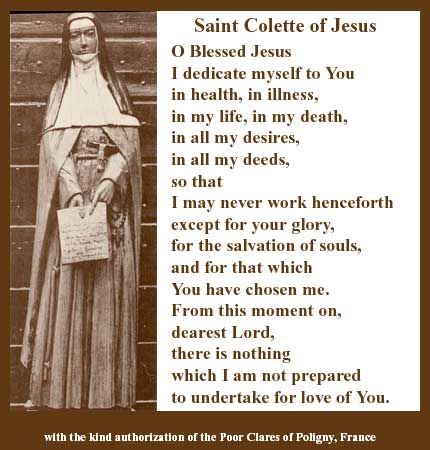
“I dedicate myself in health, in illness, in my life, in my death, in all my desires, in all my deeds so that I may never work henceforth except for your glory, for the salvation of souls, and towards the reform for which you have chosen me. From this moment on, dearest Lord, there is nothing which I am not prepared to undertake for love of you.”

Colette’s first reports to reform convents met vigorous opposition.   Then she sought the approval of the Avignon pope, Benedict XIII, who professed her as a Poor Clare and put her in charge of all convents she would reform.   He also appointed Henry de Beaume to assist her.   Thus equipped, she launched her reform in 1410 with the Poor Clares at Besancon. Before her death in 1447, the saint had founded or renewed seventeen convents and several friaries throughout France, Savoy, Burgundy, and Spain.

Like Francis and Clare, Colette devoted herself to Christ crucified, spending every Friday meditating on the passion.   She is said to have miraculously received a piece of the cross, which she gave to St.Vincent Ferrer when he came to visit her.

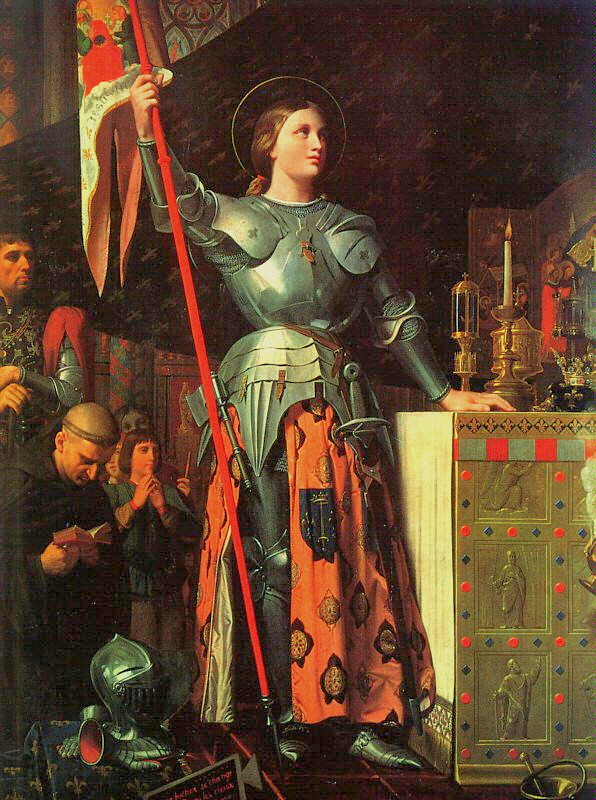
St. Joan of Arc once passed by Colette’s convent in Moulins but there is no evidence that the two met.   Like Joan, Colette was a visionary.   Once, for instance, she saw souls falling from grace in great numbers, like flakes in a snowstorm.   Afterward she prayed daily for the conversion of sinners.   She personally brought many strays back to Christ and helped them unravel their sinful patterns.   At age sixty-six, Colette foretold her death, received the sacrament of the sick and died at her convent in Ghent, Flanders.

Miracles
Helping a mother in childbirth
While traveling to Nice to meet Pope Benedict, Colette stayed at the home of a friend.   His wife was in labour at that time with their third child and was having major difficulties in he childbirth, leaving her in danger of death.   Colette immediately went to the local church to pray for her.   The mother gave birth successfully and survived the ordeal.  She credited Colette’s prayers for this.   The child born, a girl named Pierinne, later entered a monastery founded by Colette. She would become Colette’s secretary and biographer.

Saving a sick child
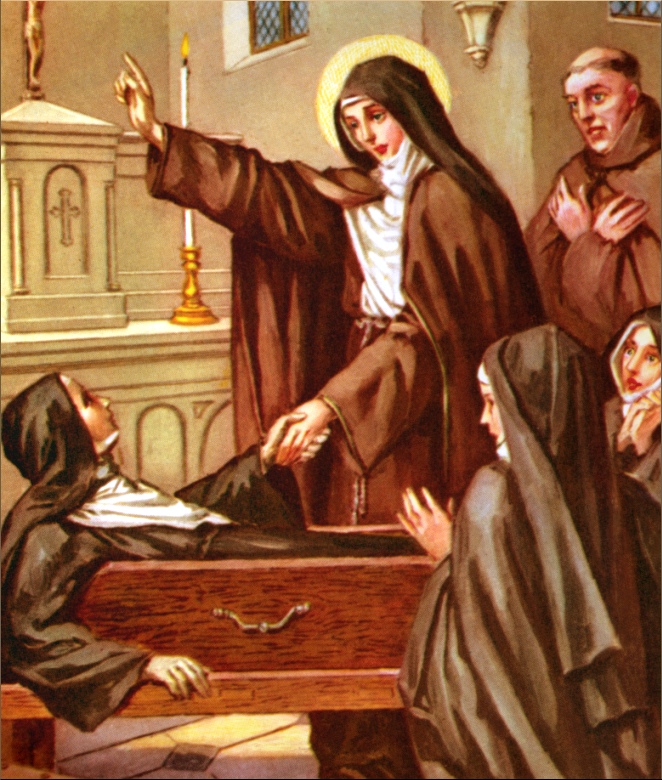
After the pope had authorised Colette to establish a regimen of strict poverty in the Poor Clare monasteries of France, she started with that of Besançon.   The local populace was suspicious of her reform, with its total reliance on them for the sustenance of the monastery.   One incident helped turn this around.   According to legend, a local peasant woman gave birth to a stillborn child.   In desperation, out of fear for the child’s soul, the father took the baby to the local parish priest for baptism.   Seeing that the child was already dead, the priest refused to baptise the body.   When the man became insistent, out of frustration, the priest told him to go to the nuns, which he did immediately.   When he arrived at the monastery, Mother Colette was made aware of his situation by the portress. Her response was to take off the veil given to her by the Pope, when he gave her the habit of the Second Order and told the portress to have the father wrap the child’s body in it and for him to return to the priest.   By the time he arrived at the parish church with his small bundle, the child was conscious and crying.   The priest immediately baptised the baby.

Colette was beatified 23 January 1740, by Pope Clement XII and was canonized 24 May 1807 by Pope Pius VII.

Posted in Against EPIDEMICS, CHILDREN / YOUTH, INCORRUPTIBLES, Of BACHELORS, SAINT of the DAY

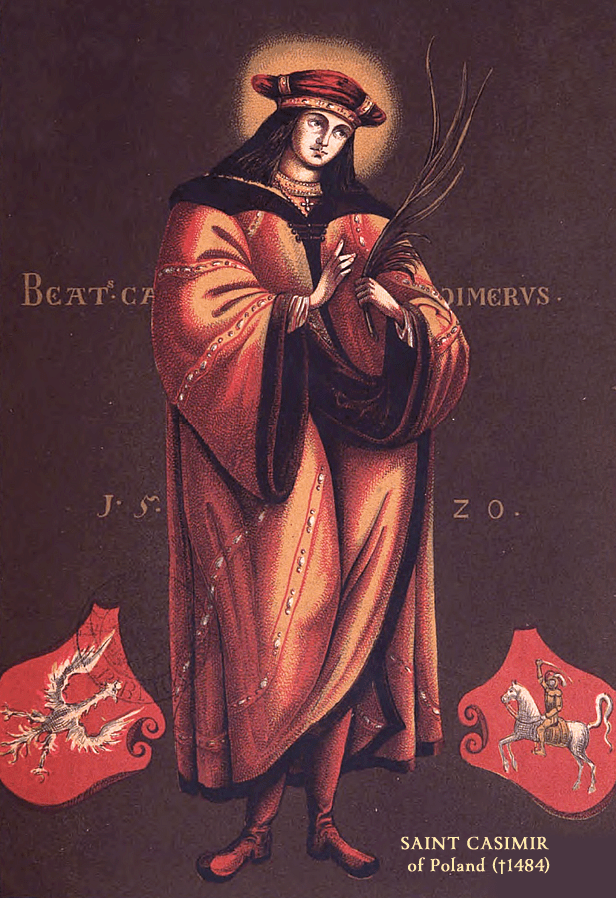
Saint of the Day – 4 March – St Casimir (1458-1484) Confessor

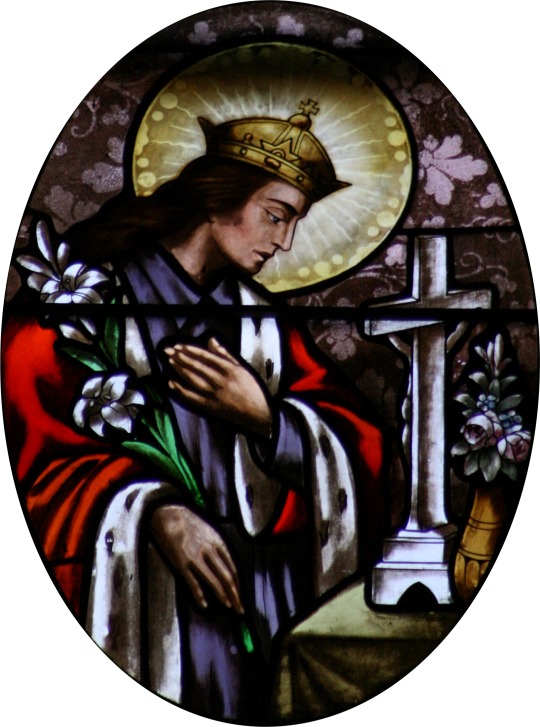
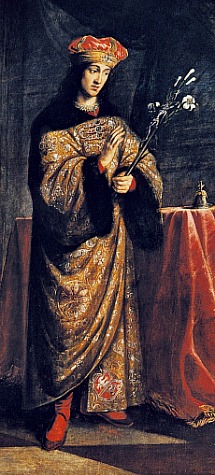
Saint of the Day – 4 March – St Casimir- (1458-148) aged 25 Confessor, Prince, Celibate, Ascetic, Apostle of Prayer, Apostle of Charity and Mercy, Marian Devotee, Eucharistic Adorer, Confessor – Patronages – against plagues/epidemics, of bachelors, kings, princes, Lithuania (proclaimed by Pope Urban VIII in 1636, Poland, Grodno, Belarus, Diocese of, youth. His body is incorrupt.

Casimir Jagiellon was born in 1458, the third of thirteen children born to Poland’s King Casimir IV and his wife Elizabeth of Austria.   He and several of his brothers studied with the Priest and Historian, John Dlugosz, whose deep piety and political expertise influenced Casimir in his education.

The young Prince had a distaste for the luxury of courtly life and instead chose the way of asceticism and devotion.   He wore plain clothes with a hair shirt beneath them, slept frequently on the ground and would spend much of the night in prayer and meditation on the suffering and death of Christ.

Casimir showed his love for God through these exercises of devotion and also through his material charity to the poor.   He was known as a deeply compassionate young man who felt others’ pains acutely.

The young Prince was only 13 years old when his father was asked by the Hungarians to offer his son as their new King. Casimir was eager to aid the Hungarians in their defence against the Turks and went to be crowned.   This plan was unsuccessful, however and he was forced to return to Poland.

After his return Casimir resumed his studies with Fr Dlugosz, while developing a canny grasp of politics by observing his father’s rule.   In 1479 the King left Poland to attend to state business in Lithuania, leaving Prince Casimir in charge of the realm .between 1481 and 1483.

Advisers to the p=Prince joined his father in trying to convince Casimir to marry.   But he preferred to remain single, focusing his life on the service of God and the good of his people.

After experiencing symptoms of tuberculosis, Casimir foresaw his death and prepared for it by deepening his devotion to God.   He died en route to Lithuania on 4 March 1484 and was buried with a copy of the Marian Hymn he sang daily “Daily, Daily Sing to Mary.” Pope Adrian VI Canonised him in 1522.   After a lapse of one hundred and twenty years, his body was taken up, and found without the slightest sign of corruption.

Five centuries after his death, John Paul II recalled how St Casimir “embraced a life of celibacy, submitted himself humbly to God’s will in all things, devoted himself with tender love to the Blessed Virgin Mary and developed a fervent practice of adoring Christ present in the Blessed Sacrament.

Posted in Of the SICK, the INFIRM, All ILLNESS, SAINT of the DAY

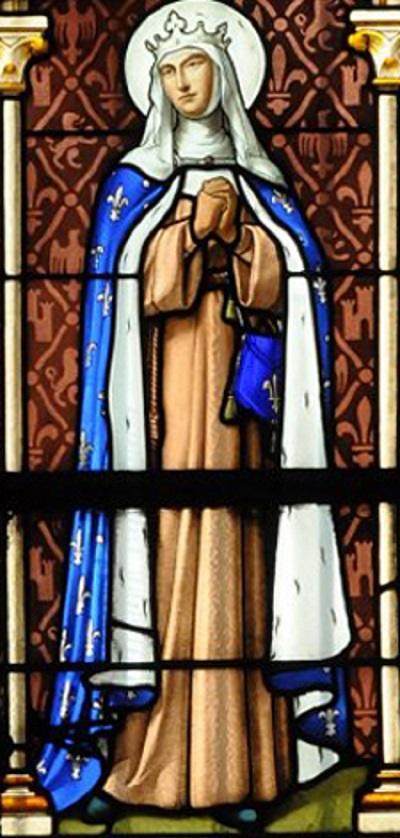
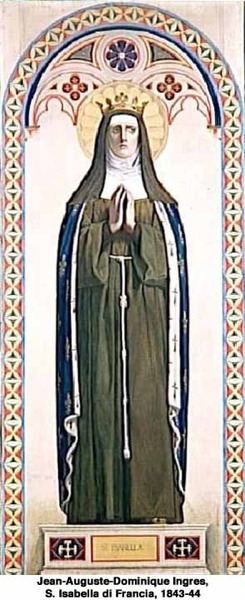
Saint of the Day – 26 February – Blessed Isabella of France (1224-1270)

Saint of the Day – 26 February – Bl Isabella of France (1224-1270) – Virgin/Princess and Lay Religious, Founder and Apostle of Mercy – Patron of the sick. Additional Memorials – 31 August (Franciscans), 8 November as one of the Saints of the Diocese of Evry, 22 February – the day of her death.

img-blessed-isabella-of-france

Isabella was the sister of King Saint Loius IX of France. Her mother, the saintly Queen Blance, bore this child special affection because, after the death of her husband, Isabella was the only daughter still living. Her cousin was King Saint Fernando III of Castile and Leon. Isabella was endowed with remarkable gifts, and special attention was paid to educate her in the requirements of her high position. She knew Latin perfectly and could read the writings of the Gathers of the Church in that language. She was, however, no less capable in accomplishments that are peculiarly feminine. With consummate artistry she embroidered vestments for divine services, and took great pleasure in working for the poor and the sick.

The princess loved and honored her saintly brother Louis, who was her senior by ten years and had then been king for many a year. But her love for God was still greater. One day she was knitting a new-fashioned nightcap. The king asked her to give it to him when finished.

“No,” she said, “this is the first of its kind and I must make it for my Savior Jesus Christ.”

Accordingly, she gave it to a poor sick person, and then made another for the king.

Her life in the royal palace was as retired as that of a nun in her convent. Hardly ever did she speak at mealtime. The choicest food she sent to the sick, and she ate so little even of the ordinary food that it was remarkable how she could live. Blessed Isabella of France fasted three days every week. All the court considered the princess a saint. One of the court ladies, who wrote her life, says,

“We beheld in her a mirror of innocence, and at the same time an admirable model of penance, a lily of purity, a fragrant rose of patience and self-renunciation, and endless fountain of goodness and mercy.”

Isabella’s only desire was to belong entirely to God, and so she took the vow of perpetual virginity. However, Emperor Frederick II sought her consent for marriage with his eldest son Conrad. Her mother, her brother, the king, and even Pope Innocent IV would have liked to see the marriage take place for the good of the State and the Church. But Isabella wrote the Holy Father a letter in which she expressed such high regard for consecrated virginity and so strong a desire to persevere in it, that the pope praised her highly and encouraged Blessed Isabella of France in her noble sentiments.

When her mother died, Isabella wished to withdraw from the court in order to consecrate herself entirely to God in a convent. With the king’s assistance she built a convent for the Poor Clares at Longchamps near Paris, and then with several ladies of the court she obtained admission. At the request of the Holy Father, the strict rule of St Clare was mitigated for this community by St Bonaventure, who was minister general of the Franciscan Order at that time, and the modified rule was confirmed anew by Pope Urban IV.

At Isabella’s request, the convent was named for the Humility of Our Blessed Lady. Blessed Isabella of France lived there nine years and desired nothing more than to be a humble subject although she surpassed everyone in sanctity. At her death in 1270 angels were heard singing. Several miracles occurred also after her death, and so Pope Leo X beatified her.

Posted in Against EPIDEMICS, Against FAMINE, Against SORE THROATS, COUGHS, WHOOPING COUGH,, Against STORMS, EARTHQUAKES, THUNDER & LIGHTENING, FIRES, DROUGHT / NATURAL DISASTERS, Of GARDENERS, Horticulturists, Farmers, PATRONAGE - OF DOGS and against DOG BITES and/or RABIES, SAILORS, MARINERS, NAVIGATORS, SAINT of the DAY

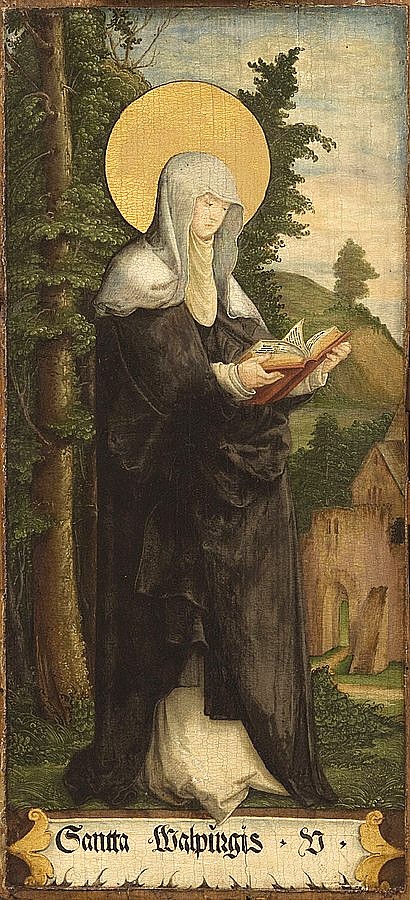
Saint of the Day – 25 February – St Walburga (c 710-779)

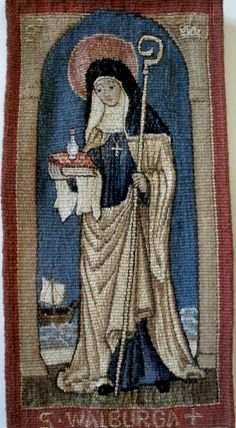
Saint of the Day – 25 February – St Walburga (c 710-779) Nun and Missionary. Daughter of St Richard the King. Sister of St Willibald and St Winebald, niece of St Boniface.  Also known as:-Auboué, Avangour, Avongourg, Bugga, Falbourg, Gaubourg, Gauburge, Gaudurge, Gualbourg, Valborg, Valburg, Valpurge, Valpuri, Vaubouer, Vaubourg, Walbourg, Walburg, Walburge, Walpurd, Walpurga, Walpurgis, Waltpurde, Warpurg – Religious/Missionary – Patronages – against coughs,,against dog bites, against famine, against hydrophobia (as a symptom of) rabies, against mad dogs, against plague/epidemics, against storms, sailors, farmers, harvests, Eichstätt, Germany, Diocese of, Plymouth, England, Diocese of and  4 Cities. Additional Memorials – 12 October (translation of relics to Eichstätt), 24 September (translation of relics to Zutphen).

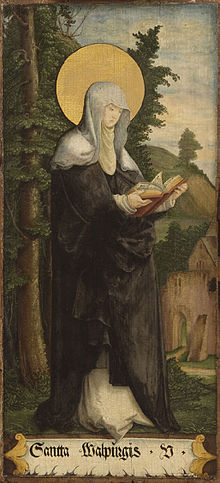
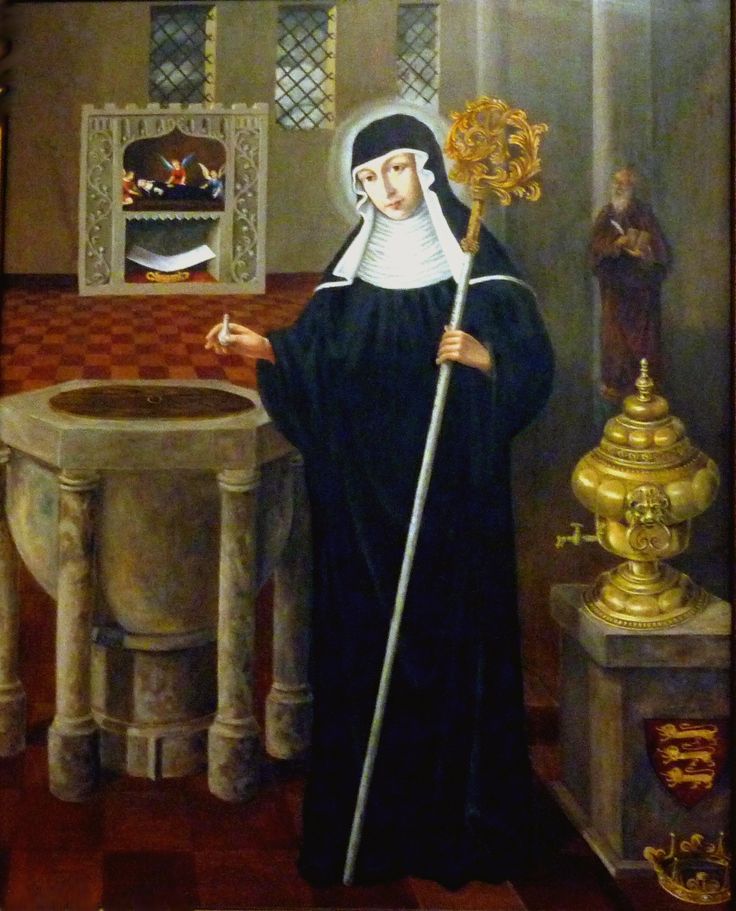
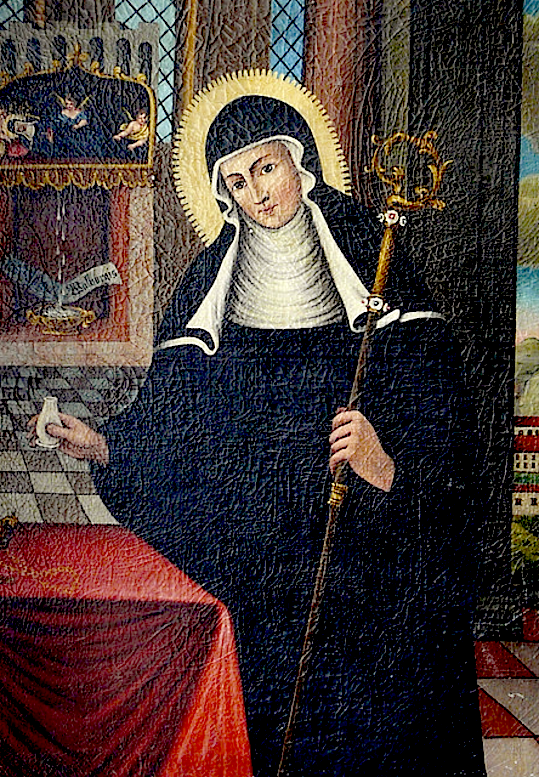
Painting by the Master of Meßkirch, c 1535–1540.

St Walburga was English, the sister of two associates of St Boniface in evangelising Germany and the Lowlands.  She was the daughter of St.Richard the Pilgrim, a West Saxon chieftain and Winna, sister of St. Boniface, Apostle to Germany. She had at least three siblings; two of her brothers are known by name, St Willibald and St Winibald.

In 720 her father and two older brothers went on a pilgrimage to Rome. Her father died at Lucca, Italy, but the brothers reached Rome where St. Winibald (c.701-761) became a monk, while St. Willibald (c.700-787) went on to the Holy Land.

Walburga was educated at Wimborne Monastery in Dorset, where she became a nun. In 748, she was sent with St. Lioba to Germany to help St. Boniface in his missionary work. She spent two years at Bishofsheim, after which she became Abbess of the monastery at Heidenheim founded by her brother St. Winebald.    At her brother’s death in 761, St. Walburga was appointed Abbess of both monasteries by her other brother St. Willibald, who was then Bishop of Eichstadt.    She remained superior of both men and women until her death on February 25, 779.

She was buried first at Heidenheim but her body was tranferred next to that of her brother, St. Winebald, at Eichstadt. n the 870s, Walpurga’s remains were transferred to Eichstätt. In Finland, Sweden, and Bavaria, her feast day commemorates the transfer of her relics on May 1.   At present the most famous of the oils of saints is the Oil of Saint Walburga (Walburgis oleum).   It flows from the stone slab and the surrounding metal plate on which rest the relics of Saint Walburga in her church in Eichstädt in Bavaria.   The fluid is caught in a silver cup, placed beneath the slab for that purpose, and is distributed among the faithful in small vials by the Sisters of Saint Benedict, to whom the church belongs.   A chemical analysis has shown that the fluid contains nothing but the ingredients of water. Though the origin of the fluid is probably due to natural causes, the fact that it came in contact with the relics of the saint justifies the practice of using it as a remedy against diseases of the body and the soul.   Mention of the oil of Saint Walburga is made as early as the ninth century by her biographer Wolfhard of Herrieden. – from the Catholic Encyclopedia article Oil of Saints

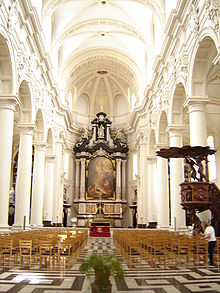
Second-last – Painting by the Master of Meßkirch, c. 1535–40.   Last image – The St. Walburga Church in Bruges was originally a Jesuit church


Posted in Against STORMS, EARTHQUAKES, THUNDER & LIGHTENING, FIRES, DROUGHT / NATURAL DISASTERS, Of Catholic Education, Students, Schools, Colleges etc, SAINT of the DAY

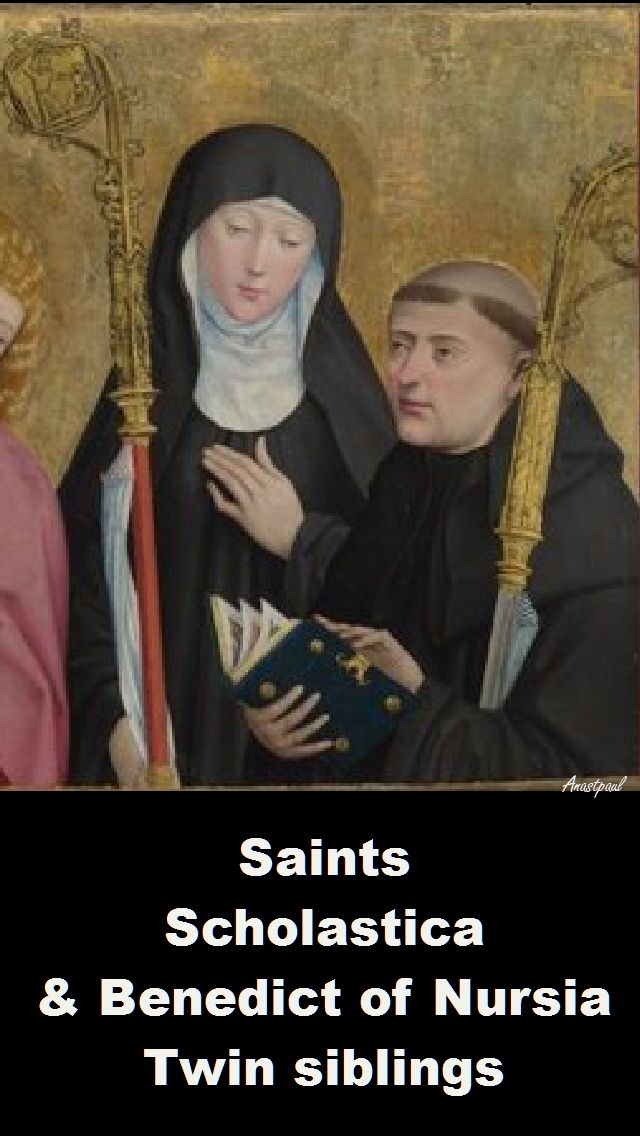
Saint of the Day -10 February – St Scholastica

Saint of the Day -10 February – St Scholastica Virgin and Religious – (c482-547) Patron of schools – tests, reading; convulsive children; nuns; invoked against storms, lightening and rain; City of Le Mans.

Scholastica was born in 480 in Nursia, Umbria, of wealthy parents and according to Gregory the Great’s Dialogues, was dedicated to God from a young age.   She and her twin brother Benedict were brought up together until the time he left to pursue studies in Rome.

131029691288fb5eb308d48c66351305

A young Roman woman of Scholastica’s class and time would likely have remained in her father’s house until marriage (likely arranged) or entry into religious life.   But wealthy women could inherit property, divorce and were generally literate.   On occasion several young women would live together in a household and form a religious community.

Benedictine tradition holds that Scholastica lived in a convent at Plumbariola about five miles from Monte Cassino and that this was the first “Benedictine” convent.   However, it has been suggested that it is more likely that she lived in a hermitage with one or two other religious women in a cluster of houses at the base of Mount Cassino where there is an ancient church named after her.   Ruth Clifford Engs notes that since Dialogues indicates that Scholastica was dedicated to God at an early age, perhaps she lived in her father’s house with other religious women until his death and then moved nearer to Benedict.

The most commonly told story about her is that she would, once a year, go and visit her brother at a place near his abbey and they would spend the day worshiping together and discussing sacred texts and issues.

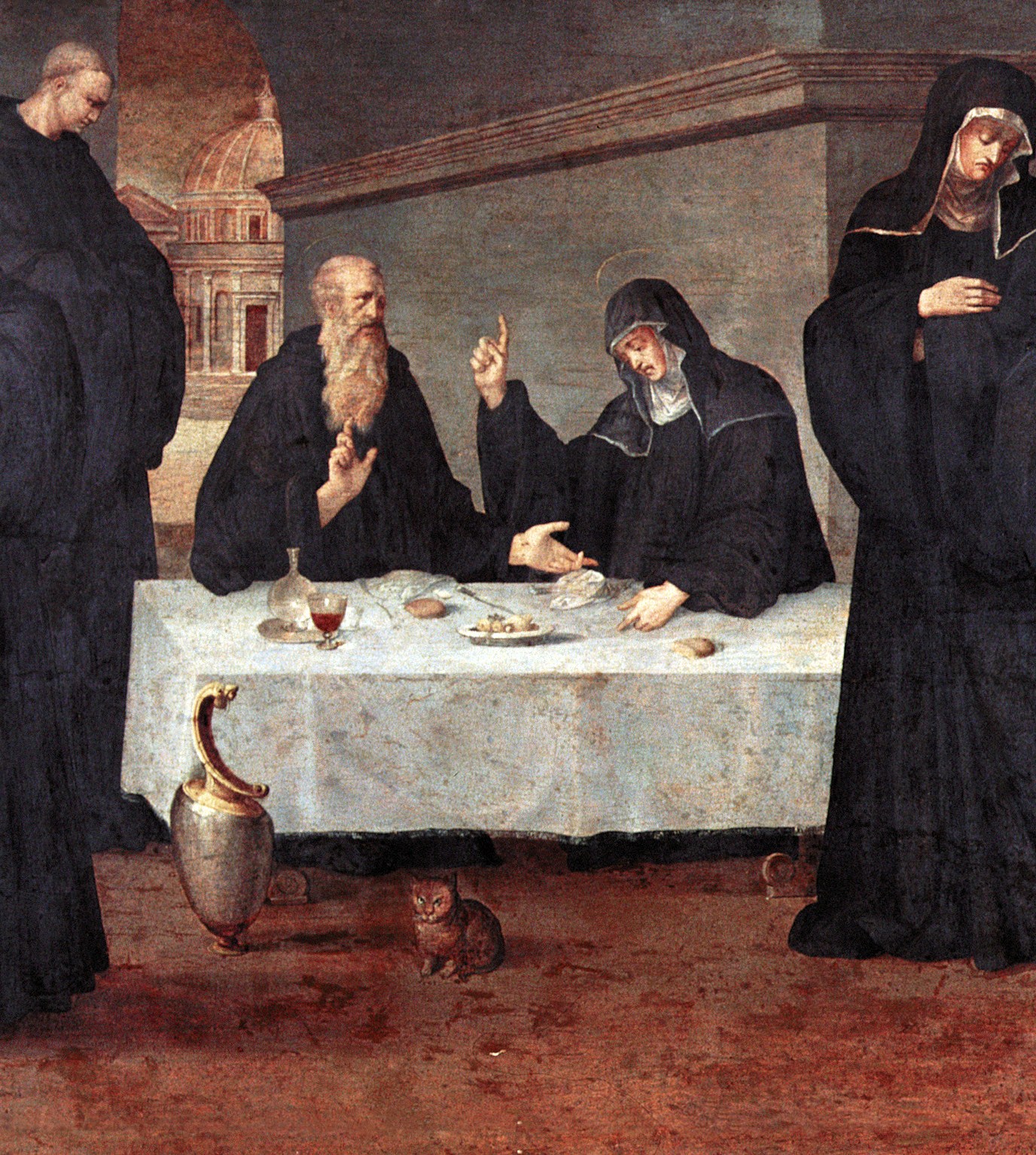
One day they had supper and continued their conversation.   When Benedict indicated it was time for him to leave, perhaps sensing the time of her death was drawing near, Scholastica asked him to stay with her for the evening so they could continue their discussions.   Not wishing to break his own Rule, Benedict refused, insisting that he needed to return to his cell.   At that point, Scholastica closed her hands in prayer and after a moment, a wild storm started outside of the guest house in which they were housed.   Benedict asked, “God forgive you, Sister.What have you done?”, to which she replied, “I asked you and you would not listen; so I asked my God and He did listen. So now go off, if you can, leave me and return to your monastery.”   Benedict was unable to return to his monastery, and they spent the night in discussion.

scholastica-and-benedict

According to Gregory’s Dialogues, three days later, from his cell, he saw his sister’s soul leaving the earth and ascending to heaven in the form of a shining white dove.   Benedict had her body brought to his monastery, where he caused it to be laid in the tomb which he had prepared for himself.

Posted in DOMESTIC ANIMALS, EPILEPSY, Of ANIMALS / ANIMAL WELFARE, Of GARDENERS, Horticulturists, Farmers, SAINT of the DAY, SKIN DISEASES, RASHES

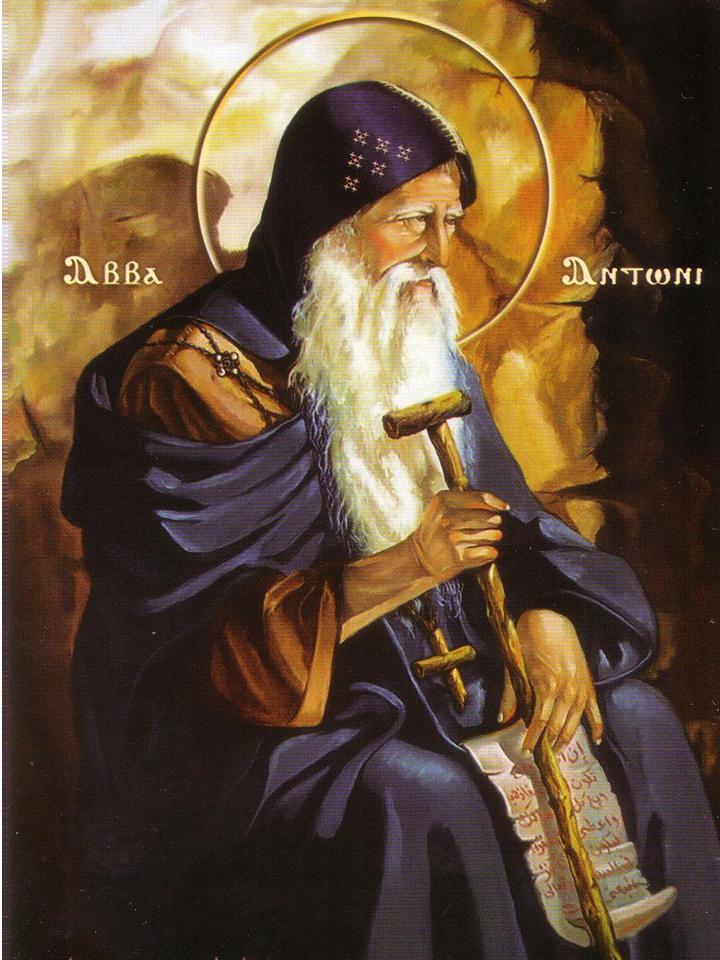
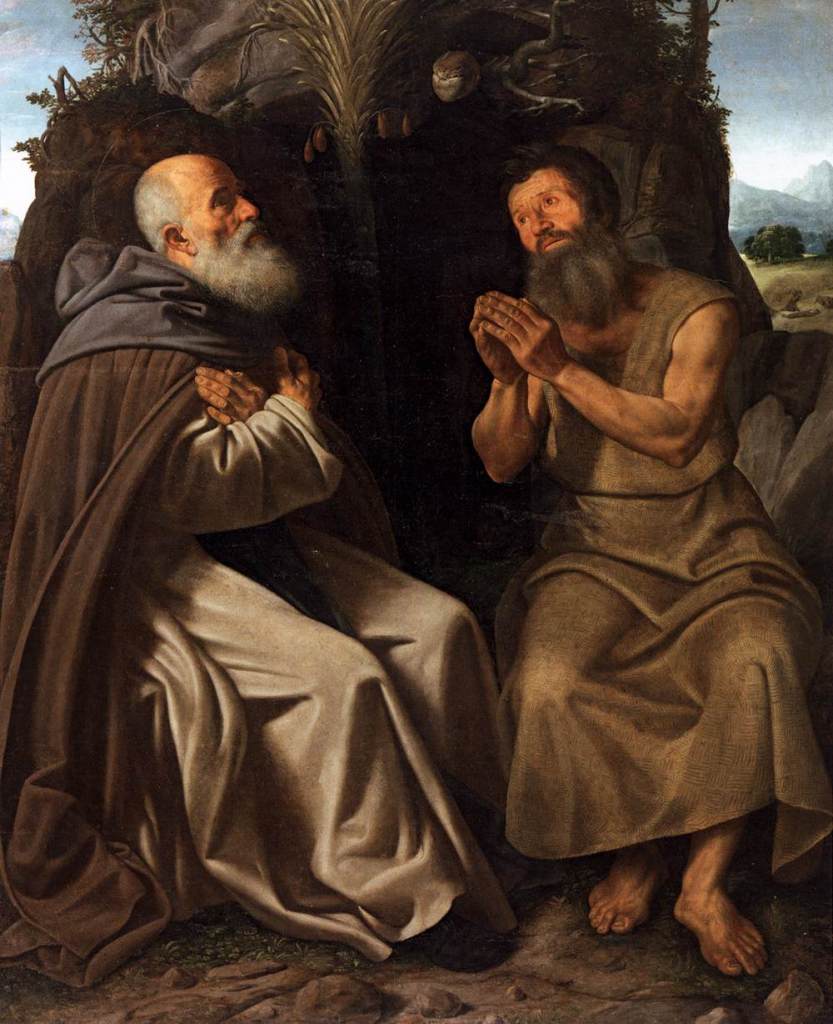
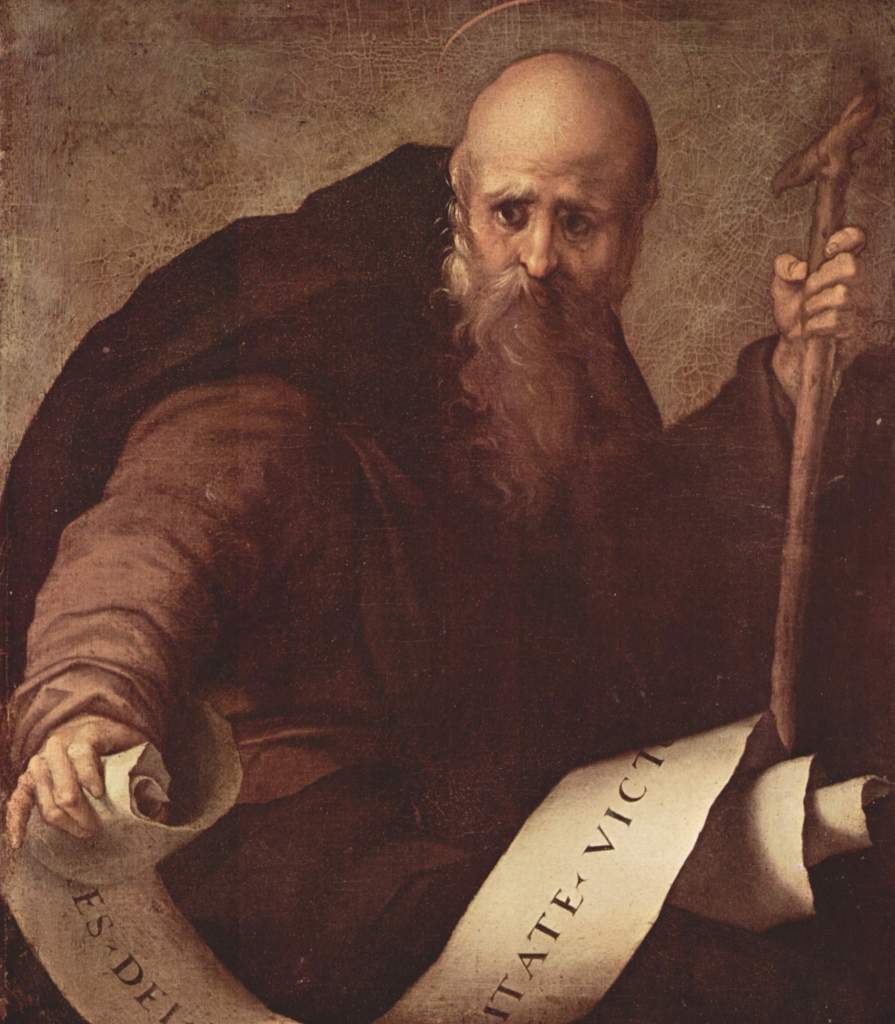
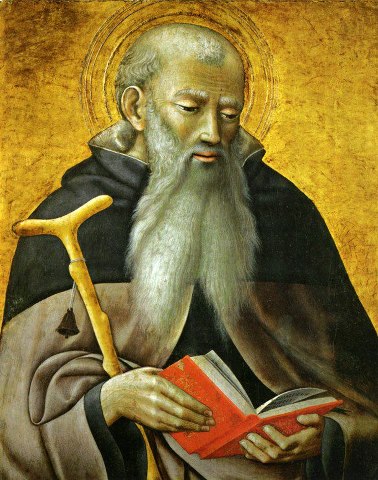
Saint of the Day – 17 January – St Anthony Abbot t (c 251-358)

Saint of the Day – 17 January – St Anthony Abbot (c 251-358) Also known as: • Abba Antonius • Anthony of Egypt• Anthony of the Desert• Anthony the Anchorite• Anthony the Great• Anthony the Hermit• Antonio Abate• Father of Cenobites• Father of All Monks• Father of Western Monasticism.  PATRONAGES – against eczema/skin diseases/skin rashes, epileptics; against ergotism, against pestilence, , of amputees, anchorites, animals, basket makers and weavers, brushmakers, butchers, cemetery workers, domestic animals, farmers, gravediggers, graveyards, hermits, pigs, monks, relief from pestilence, swineherds, Hospitallers, Tempio-Ampurias, Italy, Diocese of 9 Cities.

The life of Anthony will remind many people of St Francis of Assisi. At 20, Anthony was so moved by the Gospel message, “Go, sell what you have, and give to [the] poor” (Mark 10:21b), that he actually did just that with his large inheritance.   He is different from Francis in that most of Anthony’s life was spent in solitude. He saw the world completely covered with snares and gave the Church and the world the witness of solitary asceticism, great personal mortification and prayer.   But no saint is antisocial and Anthony drew many people to himself for spiritual healing and guidance.

At 54, he responded to many requests and founded a sort of monastery of scattered cells. Again like Francis, he had great fear of “stately buildings and well-laden tables.”

At 60, he hoped to be a martyr in the renewed Roman persecution of 311, fearlessly exposing himself to danger while giving moral and material support to those in prison.   At 88, he was fighting the Arian heresy, that massive trauma from which it took the Church centuries to recover. “The mule kicking over the altar” denied the divinity of Christ.

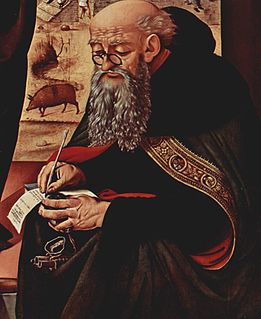
Anthony is associated in art with a T-shaped cross, a pig and a book.   The pig and the cross are symbols of his valiant warfare with the devil—the cross his constant means of power over evil spirits, the pig a symbol of the devil himself.   The book recalls his preference for “the book of nature” over the printed word.   Anthony died in solitude at age 105.

Posted in Against EPIDEMICS, PATRONAGE - HEADACHES, PATRONAGE - MENTAL ILLNESS, PATRONAGE - SPOUSAL ABUSE / DIFFICULT MARRIAGES / VICTIMS OF ABUSE, SAINT of the DAY, Spinsters - Single LAYWOMEN

Saint of the Day – 2 December – St Bibiana (Died c 361)

Saint of the Day – 2 December – St Bibiana (Died c 361) also known as Vivian/Viviana (4th century died c361) Virgin, Martyr.  Patronages –  of parishes, epilepsy, epileptics, hangovers, headaches, insanity, mentally ill people, single laywomen, torture/abuse victims.

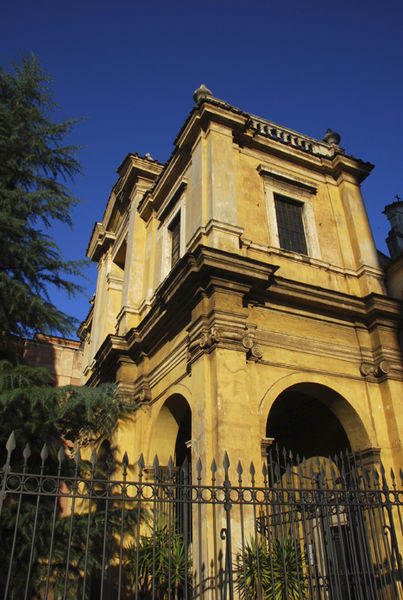
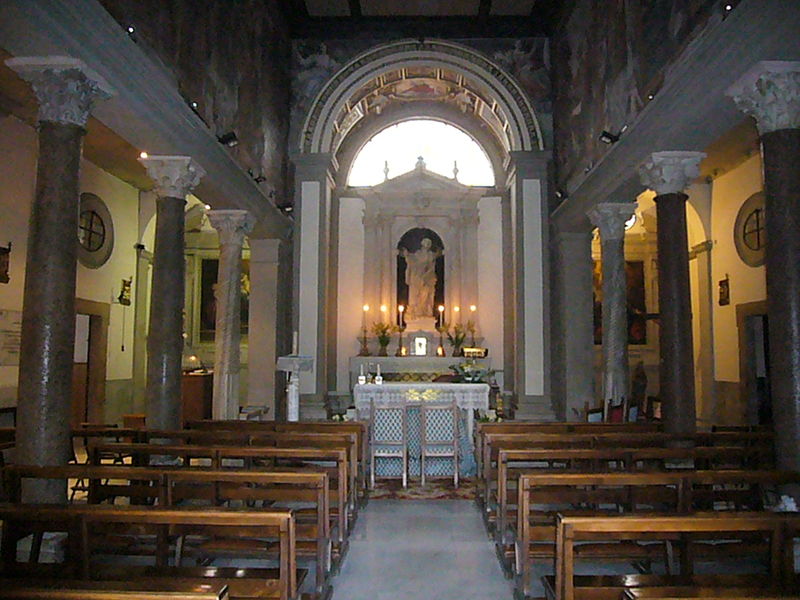
The earliest mention in an authentic historical authority occurs in the Liber Pontificalis,”, where the biography of Pope Simplicius (468–483) states that this pope “consecrated a basilica of the holy martyr Bibiana, which contained her body, near the ‘palatium Licinianum’ “ . The Basilica of Santa Bibiana still exists.

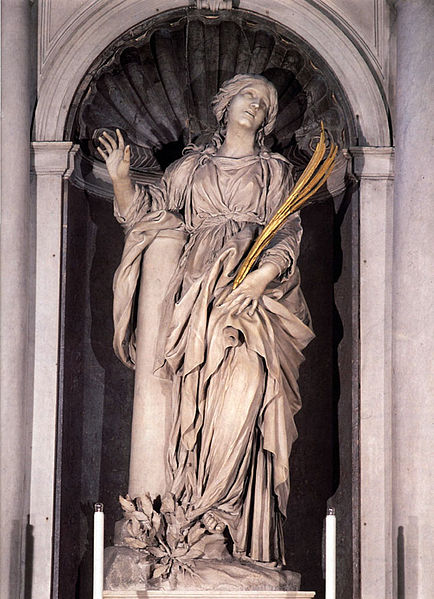
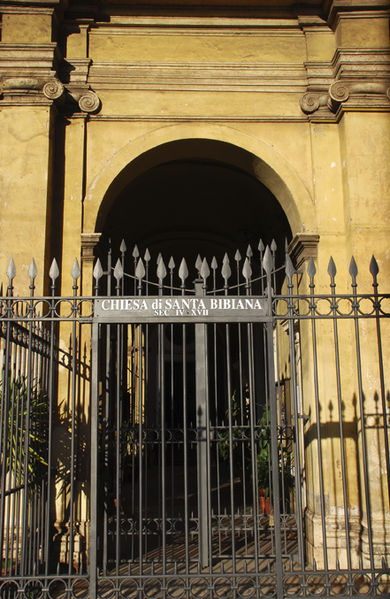
434px-saint_bibiana_by_bernini403px-chiesa_di_santa_bibiana_rome_-_facade_02390px-chiesa_di_santa_bibiana_rome_-_facade_-_gate800px-esquilino_-_s_bibiana_interno_1190004

According to legend, Bibiana was the daughter of a former prefect, Flavianus, who was banished by Julian the Apostate. His wife Dafrosa, and two daughters, Demetria and Bibiana, were also persecuted by Julian. Dafrosa and Demetria died a natural death and were buried by Bibiana in their own house but Bibiana was tortured and died as a result of her sufferings. Two days after her death a priest named John buried Bibiana near her mother and sister in her home, the house being later turned into a church. It is evident that the legend seeks to explain in this way the origin of the church and the presence in it of the bodies of the above-mentioned confessors.

An alternate account says that in the year 363, Emperor Julian made Apronianus Governor of Rome. Bibiana suffered in the persecution started by him. She was the daughter of Christians, Flavian, a Roman knight, and Dafrosa, his wife. Flavian was tortured and sent into exile, where he died of his wounds. Dafrosa was beheaded, and their two daughters, Bibiana and Demetria, were stripped of their possessions and left to suffer poverty. However, they remained in their house, spending their time in fasting and prayer. Apronianus, seeing that hunger and want had no effect upon them, summoned them. Demetria, after confessing her faith, fell dead at the feet of the tyrant. Bibiana was reserved for greater sufferings. She was placed in the hands of a wicked woman called Rufina, who in vain endeavored to seduce her. She used blows as well as persuasion, but the Christian virgin remained faithful. Enraged at the constancy of this saintly virgin, Apronianus ordered her to be tied to a pillar and beaten with scourges, laden with lead plummets, until she expired. The saint endured the torments with joy, and died under the blows inflicted by the hands of the executioner. Her body was then put in the open air to be torn apart by wild animals, yet none would touch it. After two days she was buried.

#stbibiana