Saint of the Day – 1 September – St Verena (c260-c320) Virgin, Recluse, Ascetic, Apostle of the sick, gifted with the charism of curing illness and by her prayers, healing the sick, Miracle-worker. Born in Egypt in c260 and died in Tenedo, today (Bad) Zurzach, in Switzerland. Also known as – Verena of Zurzach, Verena of Thebes.Patronage – against eye ailments, children, fishermen, for male offspring, housewives, especially those serving in a presbitory, mariners, sailors, millers, nurses, poor people, ship captains, – in Switzerland: Basel, Diocese of Zurich.
The Roman Martyrology reads today: “In Baden, in the Diocese of Constance, St Verena, virgin.”
Verena was born to wealthy parents and Baptised in her hometown by Bishop Chaeremon of Nilopolis. She fell in love with a young Christian who was a member of the Theban Legion of St Maurice who was her cousin. When the Legion was ordered to Gaul by Emperor Maximilian around 300, Verena joined the entourage which travelled with the soldiers as far as Milan . There she lived in the house of the holy man St Maximus and fed and buried fellow Christian. When she heard of the beheading of St Maurice and his followers in Agaunum, she went there to bury them.
Then she travelled on to Solothurn, where Victor – according to some versions of the legend, her fiancé – and Ursus had also been Martyred. She settled there in a hermitage, a cave in the Verena Gorge near Solothurn which was later named after her and lived there as an ascetic.
Martins Chapel, behind it the cave in which Verena is said to have lived, at the Hermitage in the St Verena Gorge near Solothurn
Verena often sought out lepers outside the gates of the City of Solothurn to wash them. Because of her healing powers, Verena was considered a Saint by the people; the sick sought her assistance and prayers in her hermitage through her miracles. Soon many young women joined her and formed a community. Verena supported herself and the these young women by selling handicrafts and converted many Alemanni to the Faith in Christ but was eventually imprisoned by the anti-Christian City Commander, Hirtacus. In prison, St Maurice appeared to her , radiant with heavenly light and strengthened her faith. When Hirtacus fell ill and was healed by Verena, he released her but expelled her from the City.
Verena is said to have then floated down the Aare River on a flat stone—or a millstone. In Koblenz, then a small Roman settlement, she made a long stop on an island in the Rhine, freed it of snakes and once again devoted herself to nursing the ill.
Island near Koblenz at the mouth of the Aare (right) into the Rhine (left)
Then she came to the nearby Roman Fort of Tenedo – present-day Zurzach (Bad) – where she became the Priest’s domestic servant. Everyday, carrying a jug and comb, she went outside the City walls to wash the lepers. When she was accused of unlawfully carrying wine and bread to the poor, the wine turned into water. The Priest’s ring, which he refused to wear during Lent, was given to her for safekeeping. A servant, fearing discovery, stole it and threw it into the Rhine. A fisherman brought a large fish as a gift, and Verena cut it up and found the ring.
The Priest then had a cell built for her in Zurzach where, until her death, she washed the heads of the sick with the healing waters of a spring, combed their hair, healed them and anointed them. In her hour of death, Our Lady Mary appeared to Verena with many holy women who guided her to Heaven.
St Verena Chapel at the Hermitage in the St. Verena Gorge near Solothurn
Probably in the 5th Century – proven by archaeological finds – a Church was built over Verena’s grave which lay in a burial ground near an old Roman Fort on the Roman road – on the site of the Cathedral in Bad Zurzach which is now named after St Verena In around 745, a Benedictine Monastery was opened there. This Monastery was converted into a Canonry in the 13th Century and dissolved in 1876.
The first biography was written in 888 in Reichenau Monastery by the Benedictine Abbot Hatto, later Archbishop of Mainz; a further Vita with additions about her work in Koblenz and Zurzach was probably written in the Zurzach Monastery in the 10th Century and a collection of her miracles followed around 1000. Although heavily interspersed with legendary elements, they probably contain a historical core. The gravestone of her Sarcophagus was erected in 1613.
St Verena depicted at the Monastery Church in Rot an der Rot
The St Verena Minster in Bad Zurzach houses the arm Relic a valuable piece of gold from the 14th Century. Relics are also kept in the Minster in Radolfzell . The Church of the Monastery in Rot an der Rot, is dedicated to her. The small Church of St Verena in Rotholz near Lengstein/Longostagno – a district of Ritten near Bolzano – first mentioned in documents in 1256, is also named after her.
Gold figure at the Fountain in the Cathedral in Bad Zurzach
Saint of the Day – 10 September – Saint Nicholas of Tolentino OSA (1245-1305) Confessor, “The Patron of Holy Souls” Priest, Augustinian Friar Monk, Mystic, Preacher, Miralce-worker and Apostle of the poor, the sick, the needy. Patronages – animals, babies (reported to have raised more than 100 children from the dead), sailors, dying people, sick animals, the Holy Souls in Purgatory, 4 Cities, 3 Diocese. The Name Nicholas from the Greek means means: “the victor over the people.”
The Roman Martyrology reads today: “At Tolentino, in the March of Ancona, the departure from this life of St Nicholas, Confessor of the Order of Augustinians.”
Nicholas was born in the angelic town of Sant’ Angelo in Pontano, Italy. An angel had advised his previously childless parents, to make a pilgrimage to the Tomb of St Nicholas of Myra and out of gratitude, they gave their son the name of the Saint.
Nicholas was admitted into the Augustinian Hermits’ Order in 1255 , was Ordained a Priest in 1270 and initially, worked as a Preacher and Confessor. In 1275 he was sent to Tolentino , where he experienced miraculous confirmations from Angels whom he saw standing around the Altar.
14th Century, painting now in the Basilica named after St Nicholas in Tolentino
Nicholas became a very popular Preacher and Shepherd of the sick and led a life of strict asceticism and active charity. He worked tirelessly as a pastor of the common people and cared for the poor and sick. It is said that miracles occurred through his intercession during his lifetime; his prayers had a healing effect, he overcame the devil who broke the lamp on the Altar and tried to harm others. Even when he was seriously ill, he refused to eat two roasted birds because of the mortification he had vowed but when he obediently obeyed the Prior’s command to take a bite, the partridges – alive – flew away.
Statue at the site of Nicholas’ birthplace in Sant’ Angelo in Pontano, erected by the Municipality and population, on the 650th Anniversary of his death – 10 September 1955.
Nicholas’ Grave is in the Basilica in Tolentino which was built above it and named after him. He was not buried in the coffin originally intended for him which is in the large Chapel built for his veneration but under the floor, after his arms were taken as Relics. Numerous miracles occurred there and more than 300 were officially confirmed in the twenty years after his death alone. In 1926, his bones were rediscovered during excavations and were placed in a glass shrine and brought to the newly equipped Crypt. His Grave remains an important place of pilgrimage to this day.
Gian Giacomo Barbelli: “Glorification of St Nicholas” 1653, in the Church of Sant’Andrea in Bergamo
From the 16th to the 18th Centuries, Nicholas was one of the most venerated Saints in Europe. In many Countries he is considered a helper in times of need. In Cordoba he became the Patron Saint of the City because his intercession ended a plague epidemic. In Venice the Church of San Nicola da Tolentino was dedicated to him for the same reason and there too, he became the Patron of the City. On his Feast Day, according to old custom, bread is blessed which is said to help against gout or is thrown into the flames of fires to contain them – the background is the story of how Nicholas was cured of a fever after asking an old woman for bread at the behest of the Blessed Virgin Mary.
St Nicholas in a glass coffin in the Basilica di San Nicola in Tolentino
Saint of the Day – 16 September – Saint Edith of Wilton (961-984) Virgin, Nun, Princess, Founder of a Church and a Hospital for the poor. Born in 961 at Kensing, Kent, England and died on 15 September 984 aged just 23 years, a date foretold by Saint Dunstan of Canterbury, of natural causes. Edith also had a gift for communicating with wild animals as so many Saints have had. Edith is one of the most venerated female Saints of England. Her extensive legacy continues to this day – there is a Pilgrimage route, “St Edith’s Way” and annual devotions take place on her Feast day. Also known as – Edith of Barking, Eadgyth…. Eadgith…. Editha…. Ediva…. Patronage – against blindness and eye diseases, of sailors, against storms at sea, Wilton Abbey.
Edith was the only daughter of King Edgar the Peaceful (959-975) and St Wulfthryth, who later became Abbess of Wilton Abbey. Edith is an interesting Saint because she seemed to be able to combine her Royal status and its concerns, with the asceticism of a Benedictine Monastery. There seems to be some doubt about the relationship of her parents. Apparently Edgar took the noblewoman Wulfthryth, from the Convent at Wilton and either kept her as a concubine or else married her. However, the union was dissolved and Wulfthryth returned to her Convent with Edith. Edgar, nonetheless, continued to take an interest in his daughter, arranging her education with two foreign Chaplains, Fr Radbod of Rheims and Fr Benno of Trier.
There is a indecision over whether Edith was actually a Nun or a lay member of the community – whether she took Vows or not. Her main biographer, writing about a hundred years after her death, was a Flemish Benedictine Monk, who came to England and wrote lives of the Saints. He relates that her father, Edgar, came to the Convent and placed before her the finest clothes and jewels, while her mother placed religious objects before her eyes. Edith, opted for the religious life, although she always wore fine clothes – the Bishop of Winchester admonished her for this but she replied: “My father, the mind maybe modest and God-fearing under fine clothes, as under a serge habit. The God I love looks to the heart and not to the dress.” According to legend, she was vindicated when a chest caught fire as a candle was accidentally dropped on it – the clothes remained untouched inside! The chest was preserved in the Convent. She also maintained the custom, suited to a Princess but not expected of a Nun in a cloistered community, of heating her bath water with a special metal casket.
In spite of her fine clothes, she observed strict fasting and abstinence and wore a hair shirt under those clothes – a lesson in not juding a book by its cover, I would think. She had a care for the poor and sick and asked that a hospital be built to care for the poor and destitute patients. It was said of her that at night she would wash the stockings of her fellow sisters.
Her education was one that befitted a Royal lady. She seems to have been a talented needlewoman and designed and embroidered a sumptuous Alb and other Ecclesiastical Vestments. She was versed in literary languages and the arts. She had a fine singing voice, painted, wrote and composed. She had a library and wrote out a book of prayers. She was also very well read. Edith also seemed to have been free to indulge her interest in animals, as she kept a menagerie of native and exotic creatures.
Although she had chosen a Convent life, she seems to have had influence at her father’s Court and that of her half-brothers Edward the Martyr and Ethelred. She was highly regarded by the nobility of England; foreign Kings and Ambassadors sought her favour through letters and gifts and high-ranking Clergy, her intercession. Her father tried to make her Abbess of three Convents but she refused the honour. When Edward the Martyr was murdered, she was offered the throne,but again declined.
St Dunstan, Archbishop of Canterbury, predicted her death and that the thumb on her right hand – which made the Sign of the Cross in an unusual way – would remain incorrupt. Edith died three weeks after his prediction, on 16 September 984. Dunstan presided when her body was removed to the Chapel of St Denys, which our Saint had built and the thumb had not decomposed.
Edith’s cult seemed to have developed slowly. The Abbess, Aelfgifu was cured of an eye disease during a dream vision. There are stories of her intervention, when either her surroundings or Relics were interfered with. King Canute did not believe she was a Saint and demanded that her Tomb be opened so he could decide for himself. The body of Edith rose up and struck him! He got the message and generously endowed the Convent. He claimed also that later, Edith had rescued him from a storm at sea.
She was Canonised thirteen years after her death through the offices of her half-brother King Ethelred II and with the support of St Dunstan and other Ecclesiastics. Her body was removed to the Church of St Denys, which she had founded.
She became a very popular Saint in medieval Britain with the help of Royal patronage. The Convent at Wilton became a place where Royal and noble ladies could receive a good education. The Abbey continued to function until the Reformation when it was dissolved. St Edith, however, has not been forgotten. She is venerated at her birth-place in Kemsing. The Holy Well in the centre of the Village bears her name and, it is said, to have healing properties. Well dressing has been revived recently. There is also a Pilgrimage entitled “St Edith’s Way.”
Saint of the Day – 3 December – St Francis Xavier SJ (1506-1552) Confessor, Priest, Missionary, Miracle-worker, co-Founder with St Ignatius Loyola (1491-1556) and St Peter Faber (1506-1546) of the Society of Jesus. One of the Greatest Missionaries since St Paul. St Francis was Canonised on 12 March 1622 by Pope Gregory XV. His body is incorrupt.
St Francis Xavier By Fr Francis Xavier Weninger SJ (1805-1888) Part One -(His early years, before departing for the Indies).
St Francis Xavier,–the great Apostle of the Indies, as he is called in the Bull of his Canonisation–the celebrated Thaumaturgus of the 16th Century, the irreproachable witness of the truth of our holy religion, the ornament of the Society of Jesus and of the entire Catholic Church–was of Royal lineage and was born of illustrious parents, at the Castle of Xavier, in the Kingdom of Navarre.
Having passed his childhood there, he was sent to the University of Paris, to study the liberal arts, for which he evinced an especial inclination. He applied himself so diligently and made so much progress that he was not only created. Doctor of Philosophy but also appointed to instruct others in that science. All his aim was to gain honours and to become great in the eyes of the world. His father intended to recall him home after some years but his sister, who was Prioress in the Convent of the Poor Clares at Gandia and had the reputation of being a Saint, knew, by Divine inspiration, the great work for which her brother was destined by the Almighty and persuaded her father not to insist on his return, saying, in a prophetic manner that Francis was chosen to become the apostle of many nations.
Whilst Xavier was teaching at Paris, St Ignatius came to the same City to finish his studies. Knowing, by Divine inspiration, how much good Francis, who was so highly gifted by the Almighty, would be able to do for the salvation of souls, he sought the friendship of the young Professor and gradually showed him the emptiness, of all temporal greatness and drew him from his eagerness to obtain worldly honours, by repeating the earnest words of Christ: “What will it profit a man if he gain the whole world and lose his own soul!” These words of our Saviour, coming from the lips of a St Ignatius, so deeply pierced the heart of Xavier and made so indelible an impression that he became entirely converted.
Taking St Ignatius as his guide, he followed his precepts and after having most fervently gone through the “Spiritual Exercises,” he resolved to devote himself, with Ignatius, to the greater glory of God.
On the Feast of the Assumption of the Blessed Virgin, in the year 1534, Ignatius, St Francis and five others, made a vow in the Church of Montmartre at Paris, to consecrate their lives to the salvation of souls. Soon after, St Francis, by the order of St Ignatius, went with some of these zealous men to Italy.
At the very beginning of this journey, which was to be performed on foot, St Francis gave a striking proof of the ardour of his spirit. Before his conversion, he had been a great lover of dancing and gymnastic exercises and, so greatly excelled in them that he had taken great pride in these accomplishments. To punish this vanity, he tied his arms and ankles so tightly with small knotted cords, that he could not make the least motion without pain. After the first day’s march, his pains became so intense that he fainted away and was forced to reveal the cause. The cords had cut so deeply into the flesh that they could hardly be seen. The surgeon who was called, declared that a painful operation was necessary to cut the cords out of the flesh.St Francis and his companions, not wishing to be delayed on their way, prayed for aid from on High and, on the following morning they found, not only the cords broken but all the wounds entirely healed. Having given due thanks to the Almighty for this miracle, they continued their journey.
At Venice, St Francis spent two months in the hospital, nursing the sick most tenderly. While there, it happened that he found, among the sick, one who was suffering from a loathsome ulcer. St Francis felt a natural repugnance to approach the poor patient, but, recollecting the maxim of St. Ignatius, “Conquer thyself,” he unhesitatingly went to the sick, embraced him kindly and putting his lips to the ulcer, cleansed it of all offensive matter. As a reward for so heroic a victory over self, God restored the sick man’s health and took from St Francis all repugnance to the most hideous forms of disease.
Two months after this, he was Ordained Priest and said his first Holy Mass, amid a flood of tears, after having prepared himself for it, by forty days of solitude, many prayers, austere fasting and other penances.
At Rome, whither he was called by St Ignatius, he preached for a time with great success. It was at this period that John III., King of Portugal, requested the Pope to send him six of the disciples of St Ignatius, for the Indies. St Ignatius, on account of the small number of his followers, gave only two, Simon Rodriguez and Nicholas Bobadilla but, as the latter fell ill just before the time appointed for setting out, St Francis Xavier., whom Heaven had selected for this mission, was sent in his stead.
No tongue can tell the joy with which the Saint received this news, which fulfilled that which had been shown him, years before, in a mysterious dream. It had appeared to him, in his sleep that he had a negro on his shoulders, whom he was obliged to carry and that he was so fatigued, as to sink to the ground under his burden. He then awoke and found himself in truth, covered with perspiration and extremely tired.
He was soon prepared for his journey from Rome to Lisbon, whence he was to sail for the Indies and having received, from St Ignatius, valuable instructions and from the Vicar of Christ, the Papal Blessing, with the powers of an Apostolic Nuncio, he set out with his companion, Rodriguez, carrying nothing with him but the Crucifix on his breast, his Breviary under his arm and his staff in his hand.
At the holy house of Loretto, where he stopped on his way, he commended his important mission to his divine Mother, and begged, with childlike trust, for her motherly assistance. Feeling in his heart that his prayer had been heard, he was greatly comforted, on leaving this blessed spot. To be continued …
Saint of the Day – 23 November – St Clement I (c 88–c 101) Pope Martyr, Miracle-worker. St Clement is considered to be the first Apostolic Father of the Church, one of the three chief ones together with St Polycarp and St Ignatius of Antioch. Papal Ascensi,on c 88. Born in Rome, Italy and died by drowning at Chersonesus, Taurica, Bosporan Kingdom (modern Greece). Patronages – boatmen, sailors, marble workers, against blindness, sick children, stonecutters, Diocese of Aarhus, Denmark, Dundee, Scotland. Steenwijk, Netherlands, Velletri, Italy. Also known as – Clement of Rome, Clemens Romanus.
The Roman Martyrology reads: “The birthday of Pope Clement, who held the sovereign Pontificate, the third after the blessed Apostle St Peter. In the persecution of Trajan, he was banisbed to Chersonesus, where being percipitated into the sea with an anchor tied to his neck, he was crowned with Martyrdom. His body was taken to Rome during the Pontificate of Nicholas I and placecd, with due honour in the Church which had been previously built under his invocation.”
c 1000 portrayal at Saint Sophia’s Cathedral, Kyiv
Saint Clement I., Pope and Martyr By Father Francis Xavier Weninger SJ (1805-1888)
Whilst the holy Apostles, Peter and Paul, were preaching the Gospel at Rome, there came to them Clement, a son of Faustinus, who was related to the Emperor Domitian. After several discourses with St Peter, he saw the error of Paganism, in which he had been born and educated and became a convert to the Christian faith. He progressed so rapidly in virtue and holiness that he was of great help to Paul in converting the heathens, as the holy Apostle testifies in his Epistle to the Philippians. The unwearied zeal he manifested in such holy endeavours, his purity and other bright virtues, raised him, after the death of Sts Linus and Cletus, to the government of the entire Church of Christ.
In this elevated but burdensome dignity, his holy life was an example to his flock. He gave several excellent laws to the Church, by one of which he divided the City into seven districts and placed in each, a notary to record the deeds, virtues and Martyrdom, of those who were persecuted for Christ’s sake that posterity, admiring their heroism, might be animated to follow their example. His sermons were so full of deep thought and so powerful, that he daily converted several heathens. Among these was Flavia Domitilla, a niece of the Emperor Domitian, who not only became a zealous Christian but, refusing several advantageous offers of marriage, vowed her virginity to God.
He converted Sisinius, one of the most influential men in the City, by a miracle. While yet a heathen, Sisinius went unseen into the secret Chapel where the Christians assembled, in order to ascertain what they were doing and to see whether his wife was among them. God, however, punished him immediately with blindness in both eyes. He revealed himself by calling for, someone to lead him home and St. Clement, who was present, went to him and, restoring his sight after a short prayer, he improved the occasion, to explain to him, the truths of Christianity. Sisinius, being soon convinced, received holy Baptism and many heathens followed his example. The Emperor Trajan, being informed of this, commanded St Clement to be banished to the Chersonesus, unless he consented to sacrifice to the gods. Nearly two thousand Christians had already been banished to that region, where they were forced to work in mines and quarries. The holy Vicar of Christ rejoiced to be thought worthy to suffer for his Divine Master and indignantly, refused to comply with the Emperor’s command to worship the Pagan idols. He was accordingly transported, and condemned to labour like the others.
This fate at first seemed very hard to him but. the thought that he suffered it for Christ’s sake, strengthened him. With the same thought. he endeavoured also to inspire his unhappy companions, when he saw that they became discouraged and lost their patience. He also frequently represented to them, the reward which was awaiting them in Heaven. A miracle which God performed through him, raised him to great consideration, even with the heathens.
There was a great scarcity of water and the Christians suffered much from the thirst occasioned by their hard work. St Clement, pitying them most deeply, prayed to God to help them. Rising from his knees, he saw, on a high rock, a lamb, which seemed, with his raised right foot, to point to the place where water could be found. The holy man, trusting in the Almighty, seized an axe and, lightly striking the rock, procured a rich stream of clear water, which refreshed all the inhabitants of the country, especially the poor persecuted Christians. So many heathens were converted on account of this miracle, that, in the course of a year, almost all the idolatrous temples were torn down and Christian c=Churches erected in their stead.
St Clement by Tiepolo
Some of the idolatrous priests complained of this to the Emperor, who immediately sent Aufidian, a cruel tyrant, to force the Christians to forsake their faith and to put St Clement to death. The tyrant endeavoured to induce the holy man to forsake Christ but finding that all words were useless, he commanded the executioners to tie an anchor to the neck of St Clement, take him out into the sea and cast him into the deep, in order that nothing of him should remain to comfort the Christians. The last words of the holy Pope were: “Eternal Father! receive my spirit!”
Martyrdom of St Clement by Fungai
The Christians, who had been encouraged by him to remain constant in their faith, stood on the sea-shore, until the tyrant and his followers had departed, after the death of the Saint. They then knelt in prayer, to beg of the Almighty that He would restore to them the body of their beloved shepherd and, whilst they prayed, the sea began slowly to retreat from the shore. The Christians, following the retreating water, came to the place where the Saint had been cast into the sea and found, to their inexpressible astonishment and joy, a small marble Chapel and in it, a tomb of stone, in which the body of the holy Pope was reposing. At his side, lay the anchor which had been tied around his neck. The joy and comfort which filled the hearts of the faithful at this sight, can more easily be imagined than described. They wished to take the holy body away but God made known to them that, for the present, it should not be disturbed and that, every year, the sea would retreat, during seven days, so as to permit all to visit the shrine of the Saint! This took place for several years, until, at last, by divine revelation, the Relics were transported to Rome.
Saint of the Day – 20 March – Saint Cuthbert of Lindisfarne (c 634-687) “The Wonder-Worker of England,” Bishop of Lindisfarne, Monk, Hermit, Miracle-worker, Born in c 634 possibly in Northumbria, England and died on 20 March 687 at Lindisfarne, England of natural causes. Patronages – against plague and epidemics, of boatmen, mariners, sailors, shepherds, England, the Diocese of Hexham and Newcastle, England, Diocese of Lancaster, England, of Durham, England, Northumbria, England. Both during his life and after his death he became a popular medieval Saint of Northern England, with a cult centred on his tomb at Durham Cathedral. I am always saddened by the almost total lack of veneration at this Tomb, although there are still a few organised Catholic pilgrimages per year. The Church is now no longer ours (Anglican) and for the most part, the only visitors to the Tomb are camera-flashing tourists.
The Roman Martyrology reads today: “In England, St Cuthbert, Bishop of Lindisfarne, who, from his childhood until his death, was renowned for good works and miracles.”
Cuthbert was born in North Northumbria in about the year 634 – the same year in which St Aidan founded the Monastery at Lindisfarne. He came from a notable and wea\lthy English family and like most boys of that class, he was placed with foster-parents for part of his childhood and taught the arts of war. We know nothing of his foster-father but he was very fond of his foster-mother, Kenswith.
It seems, from stories about his childhood, that he was brought up as a Christian. He was credited, for instance, with having saved, by his prayers, some Monks who were being swept out to sea on a raft. There is some evidence that, in his mid-teens, he was involved in at least one battle, which would have been quite normal for a boy of his social background.
St Cuthbert discovers a piece of timber to save drowning Monks, from a 12th-century manuscript of St Bede’s ‘Life of St Cuthbert.’
His life changed when he was about 17 years old. He was looking after some neighbour’s sheep on the hills. (As he was certainly not a shepherd boy it is possible that he was mounting a military guard – a suitable occupation for a young warrior!) Gazing into the night sky he saw a light descend to earth and then return, escorting, he believed, a human soul to Heaven. The date was 31 August 651- the night that St Aidan died! Perhaps Cuthbert had already been considering a possible monastic calling but that was his moment of decision.
He went to the Monastery at Melrose, also founded by St Aidan and asked to be admitted as a Novice. For the next 13 years he was with the Melrose Monks. When Melrose was given land to found a new Monastery at Ripon, North Yorkshire, Cuthbert went with the founding party and was made Administrator. In his late 20s he returned to Melrose and found that his former teacher and friend, the Prior Boisil, was dying of the plague. Cuthbert became Prior (second to the Abbot) at Melrose.
In 664 the Synod of Whitby decided that Northumbria should cease to look to Ireland for its spiritual leadership and turn instead to the continent. The Irish Monks of Lindisfarne, with others, went back to Iona. The Abbot of Melrose subsequently became also Abbot of Lindisfarne and Cuthbert its Prior.
Cuthbert seems to have moved to Lindisfarne at about the age of 30 and lived there for the next 10 years. He ran the Monastery; – he was an active missionary; he was much in demand as a spiritual guide and he was graced with the charism of miraculous curing of the ill. He was an outgoing, cheerful, compassionate person and no doubt became popular. But when he was 40 years old he believed that he was being called to be a hermit and to do the hermit’s job of fighting the spiritual forces of evil in a life of solitude.
After a short trial period on the tiny islet adjoining Lindisfarne, he moved to the more remote and larger island known as ‘Inner Farne’ and built a hermitage where he lived for 10 years. Of course, people did not leave him alone – they went out in their little boats to consult him or ask for healing. However, on many days of the year the seas around the islands are simply too rough to make the crossing and Cuthbert was left in peace.
Cuthbert’s fame for piety, diligence, and obedience quickly grew.and at the age of about 50 he was asked by both Church and King to leave his hermitage and become a Bishop. He reluctantly agreed. For two years he was an active, travelling Bishop as St Aidan had been. He seems to have journeyed extensively. On one occasion he was visiting the Queen in Carlisle (on the other side of the country from Lindisfarne) when he knew by miraculous understanding that her husband, the King, had been slain by the Picts in battle in Scotland.
Feeling the approach of death, he retired back to the hermitage on the Inner Farne where, in the company of Lindisfarne Monks, he died on 20 March 687.
His body was brought back and buried at Lindisfarne. People immediately came to pray at the grave and many miracles occured. To the Monks of Lindisfarne this was a clear sign that Cuthbert was a Saint in Heaven and they, desired to declare to the world the great power of intercession, of their St Cuthbert.
They decided to allow 11 years for his body to become a skeleton and then ‘elevate’ his remains on the anniversary of this death (20 March 698). We believe that during these years, the beautiful manuscript known as ‘The Lindisfarne Gospels‘ was made, to be used for the first time at the great ceremony of the Translation of St Cuthbert. The declaration of Cuthbert’s sainthood was to be a day of joy and thanksgiving. It turned out to be also a day of surprise, even shock, for when they opened the coffin ,they found no skeleton but a complete and undecayed body. That was a sign of very great sainthood indeed.
So the cult of St Cuthbert began. Pilgrims began to flock to the Shrine. The ordinary life of the Monastery continued for almost another century until, on 8 June 793, the Vikings came. The Monks were totally unprepared; some were killed; some younger ones and boys were taken away to be sold as slaves; gold and silver was taken and the monastery partly burned down. After that, the Monastery lived under threat and it seems that in the 9th century there was a gradual movement of goods and buildings to the nearby mainland. The traditional date for the final abandonment of Lindisfarne is 875.
The body of St.Cuthbert, together with other relics and treasures which had survived the Viking attack, were carried by the Monks and villagers onto the mainland.
For over 100 years the community settled at the old Roman Town of Chester-le-Street. It was said that fear of further attack took them inland to Ripon but not for long and on their journey back from there they finally settled at Durham.
After the Norman Conquest (1066) a Benedictine community began to build the great Cathedral at Durham. They proposed to honour the body of St.Cuthbert with a new Shrine immediately east of the new High Altar and in 1104, all was ready for the translation. The Durham Monks opened up the coffin and found, that the St Cuthbert’s body was indeed still incorrupt. Throughout the Middle Ages the coffin was placed in a beautiful Shrine and visited by great numbers of pilgrims. But at the reformation, when the Monastery was dissolved, the Shrine was dismantled and the coffin opened – the body was still complete. It was buried in a plain grave behind the High Altar and the Sacred items buried with St Cuthbert were removed. Below is St Cuthbert’s Gospel of St John, recovered from his coffin; the original tooled red goatskin binding is the earliest surviving Western binding.
The human remains were then re-interred in the same place and marked by a plain gravestone with the name Cuthbertus. The Site, remaibs the focus of many pilgrimages today, including myself and family who have venerated St Cuthbert, a few times, in the Cathedral built to house his Shrine – of course, this is now a protestant church.
The 8th-century historian St Bede, wrote both a verse and a prose life of St Cuthbert around 720. He has been described as the most popular Saint in England prior to the death of Thomas Becket in 1170. In particular, Alfred the Great, King of Wessex, was inspired and encouraged in his struggle against the Danes by a vision or dream he had of St Cuthbert. Thereafter, the royal house of Wessex, who became the Kings of England, made a point of great devotion to St Cuthbert.
Why is St Cuthbert depicted holding St Oswald’s Head (c 605-642) King of Northumbia and why is it entombed with St Cuthbert?
St Bede tells us that Oswald was born around 605, the son of the King of Northumbria. After his father’s death, Oswald and his brothers were exiled to western Scotland, possibly to Iona, where they were inspired by St Columba’s Monks and were Baptised. In 634 Oswald returned to Northumbria where Cadwalla was massacring the people having killed King Edwin. After setting up a Cross as his standard and leading his men in prayer on the night before battle, Oswald defeated Cadwalla’s much larger army at Heavenfield and reclaimed the throne. The Intercession of St Columba,who died some 35 years earlier, assisted Oswald and his men, for Columba,appeared to Oswald in a vision and promised Heavenly assistance.
Oswald asked the Monks at Iona to send Missionaries to convert and guide his people. The first Monk they sent went back and reported that he could make no progress, due to the ungovernability, obstinacy and barbarous temperament of Oswald’s people, so they sent St Aidan instead. Oswald let Aidan choose where to base his Monastery and his mission. Aidan chose Lindisfarne and Oswald then worked closely with Aidan, travelling the countryside, acting as Aidan’s translator. In St Bede’s words, “while the Bishop, who was not fluent in the English language, preached the gospel, it was most delightful to see the King himself, interpreting the word of God to his ealdormen and thegns; for he, himself, had obtained perfect command of the Irish tongue during his long exile.”
Oswald was killed at Oswestry on 5 August 642, fighting the Mercians led by King Penda. His head was rescued from the battlefield and is buried in the Durham Cathedral, in St Cuthbert’s tomb, which is why you sometimes see pictures or statues of Cuthbert holding Oswald’s head. Soon miracles occurred at the place of his death, as they had at the place where he knelt to pray before battle and he was effectively canonised by the loving devotion of his people.
Saint of the Day – 8 March – Saint Senan of Scattery (c 488-541) Monk, Abbot, Founder of many Monasteries and Churches. miracle-worker, one of the Twelve Apostles of Ireland. Born in c 488 at Corca Bhaisin, County Clare, Ireland, tradition says that Saint Patrick foretold his birth and saintliness and died on 8 March 544 at Inish Cathaig, Ireland of natural causes. Patronages – sailors and bodily afflictions. Also known as – Senan of Inis Cathaigh, Senames… Additional Memorial – 6 January as one of the Twelve Apostles of Ireland.
Senan was born in Corca Bhaisin, County Clare about 488. It seems that Senan’s family had two farms, one at Moylough and the other at a place called Tracht Termainn.
He placed himself under the Abbot Cassidan and took the monastic Habit. Cassidan was originally from South-west Cork. Senan then went to the Monastery of Kilmanagh (Ossory) to continue his preparations for the religious life. There he was credited with the performance of many miracles. He is next heard of having established a Church at Enniscorthy. The Book of Lismore states that Senan went to Rome and from there to Tours, which was at that time, the great monastic establishment in West Europe. Returning to Ireland,Senan established a Church and Monastery at Inniscarra, in Cork. Returning to his native district, he began his work on the islands of the Fergus . He crossed to Mutton Island, then to Bishop’s Island, south of Kilkee. Finally, about 534, he established himself at Scattery, the low green island about a mile off the coast off Kilrush.
Before Senan arrived on Scattery, also called Inis Cathaig, a legendary monster called “The Cathach” inhabited the island and terrorised the people who were afraid to approach the island. Sometimes referred to as the “peist” or sea-serpent, the Cathach was depicted on a carving in the old chapel of Kilrush as the “Cata.” On his arrival in the island, the Angel Raphael led Senan to the highest hill from which he was able to locate the Cathach. He then faced the monster and ordered it, in the name of the Trinity, to depart from the island. The Cathach obeyed immediately and “neither stopped nor stayed” until he reached the dark waters of Doolough Lake at the foot of Mount Callan.
Little is known of the Saint’s life in Scattery beyond the miracles recorded and the fact that the rule of his monastery was austere in the extreme. Apparently, no woman was allowed to live in or even land on the island. St Cainir, a relation of enans, had a convent to the West of Ballylongford. She crossed the river and hoped to end her days on Scattery Island but Senan forbade her to come ashore. She requested the last sacraments and a grave on the island. Senan agreed to this and she was buried at high water mark.
Senan died on 8 March 544. The river Shannon is believed to be named after him. His patron day on 8 March is an important day of pilgrimage to Inis Cathaig. He is buried on Scattery Island. The grave is supposed to be the site of miraculous cures as well as the miraculous holy well. Stones from St Senan’s Bed (his grave) were regarded as relics and a protection against diseases and especially drowning. In the folklore of West Clare the cult of Senan still survives.
In 1864 it is reported, that the Saint appeared in a vision to a paralysed woman who had visited Senan’s grave on the island. He came to her in a dream and asked her why she had come. She told the bearded man she wanted to be cured of her disease and trusted in the intercession of St Senan whom she had invoked. The next morning she awoke and found herself completely healed!
The above statue of St Senan came all the way from Australia and now rests in the parish of Doonbeg in West Clare.
Saint of the Day – 17 February – Saint Constabilis of Cava OSB (c 1070-1124) Abbot, miracle-worker, known as “The Blanket of the Brothers” for his gentle kindness and caring humility for all the Monks in their trials and sorrows. He is the Patron Saint of the Town of Castellabate in Cilento, which he founded in 1123 and whose name clearly indicates it. Born in c1070 at Lucania, Italy and died on 17 February 1124 at Cava de’ Tirreni of natural causes. Patronages – • Castelabbate, Italy, of sailors, since 1979 he has been elevated to Co-Patron of the Diocese of Vallo della Lucania. Also known as – Constabile, Costabile.
Miracle of the ships saved from wreckage
The Roman Martyrology reads today: “In the monastery of Cava de ‘Tirreni in Campania, Saint Constabilis, Abbot: – for his extraordinary meekness and his charity towards everyone, he was commonly called the “Blanket” of the brothers.”
Constabilis was born around 1070 at Tresino, in Lucania to the noble Gentilcore family. At the age of seven, he was entrusted to the care of Abbot of Cava, St Leo I.
He became a Monk at the Abbey, which followed the Benedictine Rule . Constabilis zealously lived the Rule to perfection and was entrusted by the Abbot to manage important negotiations and transactions on behalf of the Abbey.
On 10 January 1118, he was promoted by Abbot St Peter of Pappacarbone to the position of Coadjutor. He subsequently succeeded Peter as the Abbot after the latter’s death on 4 March 1122. His work was carried out with kindness, understanding for each of the Monks and their individual problems, without imposing authoritarian superiority over them. He approached each with humility and gentleness in his administration of the Abbey,.
He died on 17 February 1124 at the age of around 53 and was buried in the part of the Church overlooking the ‘Arsicia’ Cave used by St Alferius. After his death he appeared several times to his successor Abbots, coming to their aid in contingencies, there are records of his miraculous interventions for the salvation of the ships, which later belonged to the famous Abbey. These miraculous intercessions granted him widespread veneration as the protector of sailors.
Protector of Sailors
On 21 December 1893, Pope Leo XIII recognised the ancient verneration and the title of Saint, to the first four Abbots, of the famous Abbey of Trinità di Cava dei Tirreni, founded in the 11th century. They are St Alferius the Founder and first Abbot († 1050), St Leo I (1050-1079), St Peter Pappacarbone (1079-1123) and St Constabilis (c 1122-1124). Their relics rest in the Abbey Church in the Chapel of the Saintly Fathers.’
Saint of the Day – 30 August – Blessed John Roche (Died 1588) Lay Martyr Born in Ireland and died by being hanged on 30 August 1588 at Tyburn, London, England. Also known as – John Neele, John Neale. Patronages – boatmen, mariners, sailors, watermen. Additional feast days – He is counted among the English Martyrs on 22 November and is also venerated in Ireland where his feast is celebrated on 20 June.
John Roche was born in Ireland and, as a young man, he went to London where he found work as a servant and a waterman. As was common at that time, Catholics often worked under an alias and Roche sometimes used the name of John Neale. A devout Catholic, he became involved with Margaret Ward and others who were aiding persecuted Priests. One such Priest was Fr William/Richard Watson.
Fr Watson had been arrested and tortured and, upon learning of this, Margaret Ward began visiting the Priest in Bridewell Prison. Eventually she devised a plan to help him escape. She smuggled a length of rope into the prison and , at a prearranged time, he was to let himself down from his cell which was at the top of the prison building. She found two Catholic watermen who would be waiting nearby with a boat to spirit the Priest away. However, the two watermen lost their nerve and backed out. Margaret did not give up! She approached John Roche who readily agreed to assist the Priest. Disastrously, the rope was too short and the Priest had to jump the remaining distance. He crashed down onto a shed below, breaking his right arm and leg. Immediately, John Roche ran to his assistance and carried him to the boat.
Of course, the clatter had alerted the jailor and others and the rope, still dangling from the cornice, was discovered. Margaret Ward, being Fr Watson’s only visitor, was swiftly arrested.
John had managed to get the Priest to safety and he was recuperating in John’s house. When he had recovered, John swapped clothes with him and the Priest got safely away. Sadly, John, in the Priest’s clothes, was spotted by the jailor who arrested him. He was vigorously interrogated and eventually admitted his role in the escape of Fr Watson. He was charged with treason and condemned to death. Offered a full pardon if he would seek the Queen’s forgiveness and attend a Protestant service, John Roche refused both!
On 30 August 1588, John Roche and Margaret Ward were hanged, drawn and quartered at Tyburn. Four other Catholics, including Welshman Richard Flowers, were executed with them that day.
On 15 December 1929, Pope Pius XI Beatified John Roche.
Saint of the Day – 20 March – Saint Wulfram of Sens (c 640-c 703) Archbishop of Sens and Confessor, Missionary, miracle-worker. Born in c 640 in France and died on 20 March c 703 at Fontenelle, France of natural causes. Patronages – Abbeville, France, against the dangers of the sea/of sailors, childbirth and young children. Also known as Wulfram of Fontenelle, Offran, Oufran, Suffrain, Vuilfran, Vulfran, Vulfranno, Vulphran, Wilfranus, Wolfram, Wolframus, Wolfran, Wulframnus, Wulfran, Wulfrann, Wulfrannus. Additional Memorials – 15 October (translation of relics) and 8 November as one of the Saints of the Diocese of Evry.
Wulfran’s life was recorded eleven years after he died by the Monk Jonas of Fontenelle. However, there seems to be little consensus about the precise dates of most events, whether during his life or after hs death.
Wulfran’s father was an Officer in the armies of Dagobert, a powerful King of the Franks. The Saint spent some years in the Court of King Clotaire III and his mother, Saint Bathildes but he occupied his heart only with God, despising worldly greatness as empty and dangerous and daily advancing in virtue. He renounced the world and received Sacred Orders; his estate he bestowed on the Abbey of Fontenelle, or Saint Wandrille, in Normandy. He was nonetheless called to the Court, where he served until his father died. Then, because the Archbishop of Sens had recently died in 682, he was chosen to replace him, by the common consent of the clergy and people of that City.
He governed that Diocese for two and a half years, with great zeal and sanctity. It was a tender compassion for the blindness of the idolaters of Friesland and the example of the zealous English preachers in those parts, which moved him then to resign his Bishopric, with proper advice and after a retreat at Fontenelle, to enter Friesland as a poor missionary Priest.
On the voyage by water, the Deacon who served him at the Altar, accidentally dropped the paten into the sea. Saint Wulfran told him to place his hand where it had fallen on the waves and it came up to him by a miracle. For long years that paten was conserved in the Monastery of Saint Wandrille. On this mission wULFRAM baptized great multitudes, among them a son of their King, Radbod and drew the people away from the barbarous custom of sacrificing human beings to idols.
The custom was that pagan people, including children, were sacrificed to the local gods having been selected by a form of lottery. Wulfram, having remonstrated with Radbod on the subject, was told that the King was unable to change the custom but Wulfram was invited to save them if he could. The saint then waded into the sea, to save two children who had been tied to posts and left to drown as the tide rose. The turning point came, with the rescue of a young man, Ovon, who had been chosen by lot, to be sacrificed by hanging. Wulfram begged King Radbod to stop the killing but the people were outraged at the sacrilege proposed. In the end, they agreed that Wulfram’s God could have a chance to save Ovon’s life and if he did, Wulfram and his God could rescue him. Ovon was hanged and left for a few of hours, while Wulfram prayed. When the Frisians decided to leave Ovon for dead, the rope broke, Ovon fell and was still alive. Ovon became Wulfram’s devoted servant, his disciple, a Monk and then a Priest at Fontenelle Abbey. The faith of the missionaries (and their power to work miracles) frightened and awed the pagan people, who were Baptised and turned away from paganism.
Even Radbod seemed ready for conversion but just before his Baptism, he asked where his ancestors were. Wulfram told him that idolaters went to Hell. Rather than be apart from his ancestors, he chose to stay as he was.
Wulfran finally retired to Fontenelle, where he died in c 703. The Saint’s year of death is sometimes given as 720 but his interred body is said to have been moved in 704. Regardless of the exact year, St Wulfram’s feast day is kept on 20 March. He was buried in St Paul’s Chapel in the Abbey but in 704, his relics were translated to the Church. The body was again moved in 1058, this time to the collegiate Church of Our Lady in Abbeville, which was then re-dedicated in Wulfram’s name. The translation of his body to Abbeville is commemorated on 15 October.
The Square of the Church of Saint Wulfram in Abbeville, Eugène Boudin, 1884
At about this time or later, perhaps when his body was again moved, this time to Rouen, his arm was taken as a relic to Croyland Abbey, Lincolnshire. The interest in him there, may have arisen from Ingulph, the Zbbot being a former Monk of Fontenelle. After the building at Crowland was damaged by fire, there was no longer a suitable place for keeping the relic, so it went to Grantham for safe-keeping. For two or three hundred years, it was kept in the Crypt Chapel below the Lady Chapel, where the pilgrims helped to wear the hollow, now to be seen in stone step before the Altar. Later, towards 1350, the arm went to the specially added Chapel above the north porch. At some stage in the long process of the English Reformation, this relic was lost.
A hagiographical account of his miracles was produced at the Abbey of Saint Wandrille before 1066. Among the miracles are two pertaining to childbirth and children. In one, Wulfram is credited with the miraculous delivery of a stillborn baby, the mother having commenced labour on 20 January (the feast day of Saint Sebastian). A week after Easter, prayers to Wulfram caused her belly to split open so the dead child could be delivered, after which, the wound healed as if it had never been, leaving only a “token of the cut.”
In the other, Wulfram is credited with the safe passage of an accidentally swallowed clothespin, which left the body of a two-year-old boy, after three days, without having injured it: “Is it not miraculous how through all the twists of the boy’s intestines, as if through fine small round tubes, the copper sharp object, now going up high, now going down low, could travel without getting stuck anywhere or causing wounds and so at last through Nature’s lower parts, find a way out all in one piece?”
St Wulfram statue at his Church in Grantham, Lincolnshire.
Saint of the Day – 4 December – Saint Barbara (3rd Century) Martyr – died by being beheaded by her father c 235 at Nicomedia during the persecution of Maximinus of Thrace. Patronages – against death by artillery, against explosions, against fire, against impenitence, against lightning, against storms ,against vermin, ammunition workers, architects, armourers, artillerymen, boatmen, bomb technicians. brass workers, brewers, builders, carpenters, construction workers, dying people, fire prevention, firefighters, fireworks manufacturers, fortifications, foundry workers, geologists, gravediggers, gunners, hatmakers, mariners, martyrs, masons, mathematicians, miners, ordnance workers, prisoners, saltpetre workers, smelters, stonecutters, Syria, tilers, warehouses, 8 Cities. Saint Barbara is one of the Fourteen Holy Helpers. Her association with the lightning, which killed her father has caused her to be invoked against lightning and fire. By association with explosions, she is also the patron of artillery and mining.
St Barbara with her attributes – three-windowed tower, central panel of St Barbara Altarpiece (1447), National Museum in Warsaw
Because of doubts about the historicity of her legend, she was removed from the General Roman Calendar in the 1969 revision, though not from the Catholic Church’s list of saints.
Saint Barbara is often portrayed with miniature chains and a tower. As one of the Fourteen Holy Helpers, Barbara continues to be a popular saint in modern times. A 15th-century French version of her story credits her with thirteen miracles, many rest upon the security she offered, that her devotees would not die before getting to make confession and receiving extreme unction.
According to the hagiographies, Barbara, the daughter of a rich pagan named Dioscorus, was carefully guarded by her father who kept her locked up in a tower in order to preserve her from the outside world. Having secretly become a Christian, she rejected an offer of marriage that she received through her father.
Before going on a journey, her father commanded that a private bath-house be erected for her use near her dwelling and during his absence, Barbara had three windows put in it, as a symbol of the Holy Trinity, instead of the two originally intended. When her father returned, she acknowledged herself to be a Christian, whereupon he drew his sword to kill her but her prayers created an opening in the tower wall and she was miraculously transported to a mountain gorge, where two shepherds watched their flocks. Dioscorus, in pursuit of his daughter, was rebuffed by the first shepherd but the second betrayed her. For doing this, he was turned to stone and his flock was changed to locusts.
Dragged before the prefect of the province, Martinianus, who had her cruelly tortured, Barbara remained faithful to her Christian faith. During the night, the dark prison was bathed in light and new miracles occurred. Every morning, her wounds were healed. Torches that would be used to burn her, were extinquished as they approached her. Finally, she was condemned to death by beheading. Her father himself carried out the death-sentence. However, as punishment, he was struck by lightning on the way home and his body was consumed by flame. Barbara was buried by a Christian, Valentinus and her tomb became the site of miracles. This summary omits picturesque details, supplemented from Old French accounts.
According to the Golden Legend, her martyrdom took place on 4 December “in the reign of emperor Maximianus and Prefect Marcien” (r. 286–305); the year was given as 267 in the French version.
Saint of the Day – 1 February – St Brigid of Ireland/Kildare (c 453-523) Virgin, Abbess, Apostle of Charity and foundress of several Monasteries of Nuns, including that of Kildare in Ireland, which was famous and was greatly revered – born in 453 at Faughart, County Louth, Ireland and died on 1 February 523 at Kildare, Ireland of natural causes. Patronages – Ireland, babies, blacksmiths, sailors, brewers, cattle, chicken farmers, children whose parents are not married, children with abusive fathers, children born into abusive unions, Clan Douglas, dairy workers, Florida, fugitives, Leinster, midwives, Nuns, poets, the poor, printing presses, students, travellers.
Next to the glorious St Patrick, St Brigid, whom we may consider his spiritual daughter in Christ, has ever been held in singular veneration in Ireland.
Historians say we know a lot more about St Brigid than we have facts, a polite way of saying that legends swirl about Ireland’s most celebrated woman. But even legends may have cores of truth. And some miracle stories are not legends at all but true accounts of God’s interventions.
St Bride (Brigid) Carried By Angels, a painting by Scottish artist, John Duncan, 1913.
Brigid was the daughter of a slave woman and a chieftain, who liberated her at the urging of his overlord. As a girl she sensed a call to become a nun and St Mel, bishop of Armagh, received her vows. Before Brigid, consecrated virgins lived at home with their families. But the saint, imitating Patrick, began to assemble nuns in communities, a historic move which enriched the church in Ireland.
In 471, Brigid founded a monastery for both women and men at Kildare. This was the first convent in Ireland and Brigid was the abbess. Under her leadership Kildare became a centre of learning and spirituality. Her school of art fashioned both lovely utensils for worship and beautifully illustrated manuscripts. Again following Patrick’s model, Brigid used Kildare as a base and built convents throughout the island. The renown of Brigid’s unbounded charity drew multitudes of the poor to Kildare, the fame of her piety attracted thither many persons anxious to solicit her prayers or to profit by her holy example. In course of time the number of these so much increased that it became necessary to provide accommodation for them in the neighbourhood of the new monastery and thus was laid the foundation and origin of the town of Kildare.
Brigid’s hallmark was uninhibited, generous giving to anyone in need. Many of the saint’s earliest miracles seem to have rescued her from punishment for having given something to the poor that was intended for someone else. For example, once as a child she gave a piece of bacon to a dog and was glad to find it replaced when she was about to be disciplined. Brigid exhibited this unbounded charity all her life, giving away valuables, clothing, food—anything close by—to anyone who asked.
One of the most appealing things told of Brigid is her contemporaries’ belief that there was peace in her blessing. Not merely did contentiousness die out in her presence but just as by the touch of her hand she healed leprosy, so by her very will for peace she healed strife and laid antiseptics on the suppurating bitterness that foments it.
In the ninth century, the country being desolated by the Danes, the remains of St Brigid were removed in order to secure them from irreverence and, being transferred to Down-Patrick, were deposited in the same grave with those of the glorious St Patrick. Their bodies, together with that of St Columba, were translated afterwards to the cathedral of the same city but their monument was destroyed in the reign of King Henry VIII. The head of St Brigid is now kept in the church of the Jesuits at Lisbon.
Saint Brigid’s Cross
A special type of cross known as “Saint Brigid’s cross” is popular throughout Ireland. It commemorates a famous story in which Brigid went to the home of a pagan leader when people told her that he was dying and needed to hear the Gospel message quickly. When Brigid arrived, the man was delirious and upset, unwilling to listen to what Brigid had to say. So she sat with him and prayed and while she did, she took some of the straw from the floor and began weaving it into the shape of a cross. Gradually the man quieted down and asked Brigid what she was doing. She then explained the Gospel to him, using her handmade cross as a visual aid. The man then came to faith in Jesus Christ and Brigid baptised him just before he died.
Today, many Irish people display a Saint Brigid’s cross in their homes, since it is said to help ward off evil and welcome good. Brigid died in 523 and after her death people began to venerate her as a saint, praying to her for help seeking to heal from God, since many of the miracles during her lifetime related to healing.
Blessing of St Brigid’s Crosses
Father of all creation and Lord of Light,
You have given us life and entrusted Your creation to us, to use it and to care for it.
We ask You to bless these crosses made of green rushes in memory of holy Brigid,
who used the cross to recall and to teach Your Son’s life, death and resurrection.
May these crosses be a sign of our sharing in the Paschal Mystery of your Son
and a sign of Your protection of our lives, our land and its creatures,
through Brigid’s intercession, during the coming year and always.
We ask this through Christ our Lord.
The crosses are sprinkled with holy water:
May the blessing of God, Father, Son and Holy Spirit
be on these crosses and on the places where they hang
and on everyone who looks at them.
Amen
Saint of the Day – 6 December – St Nicholas (270-343) Bishop
The absence of the “hard facts” of history is not necessarily an obstacle to the popularity of saints, as the devotion to Saint Nicholas shows. Both the Eastern and Western Churches honour him and it is claimed that after the Blessed Virgin, he is the saint most pictured by Christian artists. And yet historically, we can pinpoint only the fact that Nicholas was the fourth-century bishop of Myra, a city in Lycia, a province of Asia Minor.
As with many of the saints, however, we are able to capture the relationship which Nicholas had with God through the admiration which Christians have had for him—an admiration expressed in the colourful stories which have been told and retold through the centuries.
Perhaps the best-known story about Nicholas concerns his charity toward a poor man who was unable to provide dowries for his three daughters of marriageable age. Rather than see them forced into prostitution, Nicholas secretly tossed a bag of gold through the poor man’s window on three separate occasions, thus enabling the daughters to be married. Over the centuries, this particular legend evolved into the custom of gift-giving on the saint’s feast.
Fra Angelico’s St Nicholas donating the dowries
In the English-speaking countries, Saint Nicholas became, by a twist of the tongue, Santa Claus—further expanding the example of generosity portrayed by this holy bishop.
Saint of the Day – 3 December – St Francis Xavier SJ (1506-1552 – aged 46) – Priest, Missionary, co-Founder with St Ignatius Loyola (1491-1556) and St Peter Faber (1506-1546) of the Society of Jesus (the Jesuits) – he was born Francisco de Jasso y Azpilicueta on 7 April 1506 at Javier, Spanish Navarre, Basque region and died on 3 December 1552 at Sancian, China of a fever contracted on a mission journey. Patronages: African missions, black missions, foreign missions (proclaimed on 25 March 1904 by St Pope Pius X), missionaries, sailors, navigators, parish missions, plague epidemics, World Youth Day 2011, Australia, Borneo, Brunei, China, East Indies, India, Japan, Kenya, New Zealand, South Africa, Apostleship of Prayer, Congregation for the Propagation of the Faith, Fathers of the Precious Blood, Missioners of the Precious Blood, University of Saint Francis Xavier, 6 cities, 16 dioceses. His body is incorrupt.
St Francis was a companion of Saint Ignatius of Loyola and one of the first seven Jesuits who took vows of poverty and chastity at Montmartre, Paris, in 1534. He led an extensive mission into Asia, mainly in the Portuguese Empire of the time and was influential in evangelisation work, most notably in India. He also was the first Christian missionary to venture into Japan, Borneo, the Maluku Islands and other areas. In those areas, struggling to learn the local languages and in the face of opposition, he had less success than he had enjoyed in India. Xavier was about to extend his missionary preaching to China when he died on Shangchuan Island.
He was Beatified by Pope Paul V on 25 October 1619 and Canonised by Pope Gregory XV on 12 March 1622. In 1624 he was made co-patron of Navarre. Known as the “Apostle of the Indies” and “Apostle of Japan”, he is considered to be one of the greatest missionaries since Saint Paul. In 1927, Pope Pius XI published the decree “Apostolicorum in Missionibus” naming Saint Francis Xavier, along with Saint Thérèse of Lisieux, co-patron of all foreign missions. He is now co-patron saint of Navarre with San Fermin. The Day of Navarre (Día de Navarra) in Spain marks the anniversary of Saint Francis Xavier’s death, on 3 December 1552.
A young Spanish gentleman, in the dangerous days of the Reformation, was making a name for himself as a professor of philosophy at the University of Paris. He was aspiring, apparently, to a high dignity, until Saint Ignatius of Loyola decided to undertake the spiritual conquest of this ardent soul. What does it profit a man to gain the entire world, if he suffers the loss of his soul? Ignatius often repeated to the brilliant teacher. The words of Christ, joined to the example of Ignatius and his disciples, prevailed. It was not long before his gifted friend decided to labour for the glory of God, by adopting the evangelical life of an apostle, to which he was indeed called. He was among the first members of the Society of Jesus, those who with Ignatius made their religious vows in the church of Montmartre in Paris, on the feast of the Assumption in 1534.
St Ignatius, St Peter & St Francis
St Francis, St Ignatius, St Peter
On his way to Rome with the others, handicapped by severe penances he had imposed on himself, he remained in Venice and exercised a brief apostolate by caring for the sick in the city hospital. The others waited for him to regain his ability to walk. These first fervent Jesuits were intending to embark for the Holy Land but were prevented by a war. In Rome, Francis again went to a hospital to serve the sick and visited the prisons to encourage and console the poor inmates, while preparing for ordination with the others, according to the desire of the Pope.
Saint Ignatius having remained in Venice, the other five returned there afterwards. Francis was sent by Saint Ignatius to the Orient in 1534, where for twelve years he laboured unceasingly to win souls, sleeping only three hours a night, eating very little, and bearing the Gospel to Hindustan, to Malacca and as far as Japan. At all times thwarted by jealousy, covetousness and the carelessness of those who should have helped and encouraged him, he did not slacken in his apostolic endeavours despite opposition and the difficulties of every sort which he encountered.
Miracles accompanied him everywhere, he resurrected several who had died. His inexhaustible kindness was not the least of his assets in winning thousands of pagans to the Faith. He baptised so many that his arm became virtually disabled, ten thousand in a single month in the kingdom of Trevancor, where in the same space of time he saw to the building of forty-five churches. At Meliapour, site of the martyrdom of Saint Thomas, he found the marble on which the Apostle was sacrificed and which exuded blood the first time Mass was said upon it. Passing through various islands, cities and provinces of India, he strengthened his first conquests by additional preaching. He planted crosses in the public squares and overcame all obstacles.
Saint Francis is called Apostle of Japan as well as of India. There the pagan priests opposed and calumniated him and tried without success to outwit him in debates. Humiliated, they used subtle means to instil dislike for him in the minds of the court authorities. But he won the love as well as the respect of those he evangelised, blessing them with such miracles as filling the hitherto sterile sea of Cangoxima with inexhaustible reserves of fish. The vast kingdom of China appealed to his charity and he was resolved to risk his life to force an entry, when God took him to Himself. It was on 2 December 1552, that the Apostle of the Indies died on Sancian, an island facing the city of Canton in China, like Moses, in sight of the land of promise.
St Francis on the South Colonnade at St Peter’s Rome
St Francis on the Charles Bridge, Prague
St Francis was first buried on a beach at Shangchuan Island, Taishan, Guangdong. His incorrupt body was taken from the island in February 1553 and was temporarily buried in St Paul’s church in Portuguese Malacca on 22 March 1553. An open grave in the church now marks the place of Xavier’s burial. Pereira came back from Goa, removed the corpse shortly after 15 April 1553 and moved it to his house. On 11 December 1553, Xavier’s body was shipped to Goa. The body is now in the Basilica of Bom Jesus in Goa, where it was placed in a glass container encased in a silver casket on 2 December 1637. This casket, constructed by Goan silversmiths between 1636 and 1637, was an exemplary blend of Italian and Indian aesthetic sensibilities. There are 32 silver plates on all the four sides of the casket depicting different episodes from the life of the Saint. The right forearm, which Xavier used to bless and baptise his converts, was detached by Superior General Claudio Acquaviva in 1614. It has been displayed since in a silver reliquary at the main Jesuit church in Rome, Il Gesù.
Casket of Saint Francis Xavier in the Basilica of Bom Jesus in Goa, India
St Francis’ Incorrupt arm at the Jesuit Church of the Gesu, Rome
Saint of the Day – 13 June – St Anthony of Padua OFM (1195-1231) Evangelical Doctor – Hammer of Heretics – Professor of Miracles – Wonder-Worker – Ark of the Testament – Repository of Holy Scripture.
St Anthony of Padua is one of the most famous disciples of St Francis of Assisi. He was a famous preacher and worker of miracles in his own day and throughout the eight centuries since his death, he has so generously come to the assistance of the faithful who invoke him, that he is known throughout the world amongst many who are not Catholics too.
The gospel call to leave everything and follow Christ was the rule of Anthony’s life. Over and over again, God called him to something new in his plan. Every time Anthony responded with renewed zeal and self-sacrifice to serve his Lord Jesus more completely.
His journey as the servant of God began as a very young man when he decided to join the Augustinians in Lisbon, giving up a future of wealth and power to be a servant of God. Later when the bodies of the first Franciscan martyrs went through the Portuguese city where he was stationed, he was again filled with an intense longing to be one of those closest to Jesus himself: those who die for the Good News.
So Anthony entered the Franciscan Order and set out to preach to the Moors. But an illness prevented him from achieving that goal.
He went to Italy and was stationed in a small hermitage where he spent most of his time praying, reading the Scriptures and doing menial tasks.
The call of God came again at an ordination where no one was prepared to speak. The humble and obedient Anthony hesitantly accepted the task. The years of searching for Jesus in prayer, of reading sacred Scripture and of serving him in poverty, chastity and obedience had prepared Anthony to allow the Spirit to use his talents. Anthony’s sermon was astounding to those who expected an unprepared speech and knew not the Spirit’s power to give people words.
Recognised as a great man of prayer and a great Scripture and theology scholar, Anthony became the first friar to teach theology to the other friars. Soon he was called from that post to preach to the Albigensians in France, using his profound knowledge of Scripture and theology to convert and reassure those who had been misled by their denial of Christ’s divinity and of the sacraments..
The number of those who came to hear him was sometimes so great that no church was large enough to accommodate and so he had to preach in the open air. Frequently St Anthony wrought veritable miracles of conversion. Deadly enemies were reconciled. Thieves and usurers made restitution. Calumniators and detractors recanted and apologised. He was so energetic in defending the truths of the Catholic Faith that many heretics returned to the Church. This occasioned the epitaph given him by Pope Gregory IX “the ark of the covenant.”
In all his labours he never forgot the admonition of his spiritual father, St Francis, that the spirit of prayer must not be extinguished. If he spent the day in teaching and heard the confession of sinners till late in the evening, then many hours of the night were spent in intimate union with God before the Blessed Sacrament.
After he led the friars in northern Italy for three years, he made his headquarters in the city of Padua. He resumed his preaching and began writing sermon notes to help other preachers. In the spring of 1231 Anthony withdrew to a friary at Camposampiero where he had a sort of treehouse built as a hermitage. There he prayed and prepared for death. After receiving the last sacraments he kept looking upward with a smile on his countenance. When he was asked what he saw there, he answered: “I see my Lord.” He breathed forth his soul on 13 June 1231 being only thirty six years old. Soon the children in the streets of the city of Padua were crying: “The saint is dead, Anthony is dead.”
Once a man, at whose home St Anthony was spending the night, came upon the saint and found him, in ecstasy, holding in his arms the Child Jesus, unspeakably beautiful and surrounded with heavenly light. For this reason St Anthony is often depicted holding the Child Jesus.
Saint of the Day – 2 April – St Francis of Paola O.M. (1416-1507) also known as “Saint Francis the Fire Handler” – Monk and Founder, inspired with the Gift of Prophecy and still called the “Miracle-Worker“, Apostle of the poor, Peacemaker – born on 27 March 1416 at Paola, Calabria, Kingdom of Italy (part of modern Italy) and died on 2 April 1507 (Good Friday) at Plessis, France of natural causes. He was an Italian mendicant Friar and the Founder of the Order of Minims. Unlike the majority of founders of men’s religious orders and like his Patron Saint, Francis was never Ordained a Priest In 1562 Huguenots broke open his tomb, found his body incorrupt and burned it. The bones were salvaged by Catholics and distributed as relics to various churches. Patronages – against fire, against plague/epidemics, against sterility, mariners, sailors, naval officers, travellers, 7 Cities.
St Francis founded the Hermits of St Francis which Rule was formally approved by Pope Alexander VI, who, however, changed their title into that of “Minims”. Their name refers to their role as the “least of all the faithful”. Humility was to be the hallmark of the brothers as it had been in Francis’s personal life. bstinence from meat and other animal products became a “fourth vow” of his religious order, along with the traditional vows of poverty, chastity and obedience. Francis instituted the continual, year-round observance of this diet in an effort to revive the tradition of fasting during Lent, which many Roman Catholics had ceased to practice by the 15th century. The rule of life adopted by Francis and his religious was one of extraordinary severity. He felt that heroic mortification was necessary as a means for spiritual growth. They were to seek to live unknown and hidden from the world. After the approbation of the order, Francis founded several new monasteries in Calabria and Sicily. He also established monasteries of nuns and a third order for people living in the world, after the example of St Francis of Assisi.
Francis was born in the town of Paola, which lies in the southern Italian Province of Cosenza, Calabria. In his youth he was educated by the Franciscan friars in Paola. His parents were remarkable for the holiness of their lives, having remained childless for some years after their marriage, they had recourse to prayer and especially commended themselves to the intercession of St Francis of Assisi, after whom they named their first-born son. Two other children were eventually born to them.
When still in the cradle, Francis suffered from a swelling which endangered the sight of one of his eyes. His parents again had recourse to Francis of Assisi and made a vow that their son should pass an entire year wearing the “little habit” of St Francis in one of the friaries of his Order, a not-uncommon practice in the Middle Ages. The child was immediately cured.
From his early years Francis showed signs of extraordinary sanctity and at the age of 13, being admonished by a vision of a Franciscan friar, he entered a friary of the Franciscan Order to fulfil the vow made by his parents. Here he gave great edification by his love of prayer and mortification, his profound humility and his prompt obedience. At the completion of the year he went with his parents on a pilgrimage to Assisi, Rome, and other places of devotion. Returning to Paola, he selected a secluded cave on his father’s estate and there lived in solitude; but later on he found an even-more secluded cave on the sea coast. Here he remained alone for about six years, giving himself to prayer and mortification.
Soon others joined him and they took the name Hermits of Saint Francis of Assisi and followed the practices of the Franciscans, or the Franciscan Minim Friars. The order attracted many candidates within a sort space of time.
Francis later felt God calling him to defend those who were poor and oppressed. He scolded King Ferdinand of Naples and his sons for their wrongdoing. In 1482, when King Louis XI of France was dying, he begged that Francis come to cure him. Francis at first refused but Pope Sixtus IV ordered him to care for the king and prepare him for death. When the king saw Francis, he pleaded for a miracle. Francis rebuked him, saying that the lives of kings are in the hands of God. Francis restored peace between France and Great Britain and between France and Spain.
Famous Miracles:
According to a famous story, in the year 1464, he was refused passage by a boatman while trying to cross the Strait of Messina to Sicily. He reportedly laid his cloak on the water, tied one end to his staff as a sail and sailed across the strait with his companions following in the boat. The second of Franz Liszt’s “Legendes” (for solo piano) describes this story in music.
After his nephew died, the boy’s mother—the saint’s own sister—appealed to Francis for comfort and filled his apartment with lamentations. After the Mass and divine office had been said for the repose of his soul, St Francis ordered the corpse to be carried from the church into his cell, where he continued praying until, to her great astonishment, the boy’s life was restored and Francis presented him to his mother in perfect health. The young man entered his order and is the celebrated Nicholas Alesso who afterwards followed his uncle into France and was famous for sanctity and many great actions.
St Francis also raised his pet lamb, Martinello, from the dead after it had been eaten by workmen. “Being in need of food, the workmen caught and slaughtered Francis’ pet lamb, Martinello, roasting it in their lime kiln. They were eating when the Saint approached them, looking for his lamb. They told him they had eaten it, having no other food. He asked what they had done with the fleece and the bones. They told him they had thrown them into the furnace. Francis walked over to the furnace, looked into the fire and called ‘Martinello, come out!’ The lamb jumped out, completely untouched, bleating happily on seeing his master.”
Pope Leo X canonised him in 1519. He is considered to be a patron saint of boatmen, mariners and naval officers. His liturgical feast day is celebrated by the universal Church today, the day on which he died. In 1963, Pope John XXIII designated him as the patron saint of Calabria. Though his miracles were numerous, he was canonised for his humility and discernment in blending the contemplative life with the active one.
Devotion of the Thirteen Fridays:
Pope Clement XII, in the brief “Coelestium Munerum Dispensatio” of 2 December 1738, promulgated an indulgence to all the faithful who, upon 13 Fridays continuously preceding the Feast of St Francis of Paola (2 April), or at any other time of the year, shall, in honour of this Saint, visit a church of the Minims and pray there for the Church. In this brief, mention is made of a devotion which originated with St Francis himself, who, on each of 13 Fridays, used to recite 13 Pater Nosters (Our Fathers) and as many Ave Marias (Hail Marys) and this devotion he promulgated by word of mouth and by letter to his own devout followers, as an efficacious means of obtaining from God the graces they desired, provided they were for the greater good of their souls
Saint of the Day – 6 December – St Nicholas (270-343) Confessor, Bishop, Miracle-Worker, Apostle of Charity. Also known as – • Nicholas of Bari• Nicholas of Lpnenskij • Nicholas of Lipno • Nicholas of Sarajskij • Nicholas the Miracle Worker • Klaus, Mikulas, Nikolai, Nicolaas, Nicolas, Niklaas, Niklas. Nikolaus, Santa Claus.
Patronages -• against fire • against imprisonment • against robberies • against robbers • against storms at sea • against sterility • against thefts • altar servers • archers • boys • brides • captives • children • choir boys • happy marriages • lawsuits lost unjustly • lovers • maidens • penitent murderers • newlyweds • paupers • pilgrims • poor people • prisoners • scholars • schoolchildren, students • penitent thieves • travellers • unmarried girls • apothecaries • bakers • bankers • barrel makers • boatmen • boot blacks • brewers • butchers • button makers • candle makers • chair makers • cloth shearers • coopers • dock workers • educators • farm workers, farmers • firefighters • fish mongers • fishermen • grain merchants • grocers • grooms • hoteliers • innkeepers • judges • lace merchants • lawyers • linen merchants • longshoremen • mariners • merchants • millers • notaries • parish clerks • pawnbrokers • perfumeries • perfumers • poets • ribbon weavers • sailors • ship owners • shoe shiners • soldiers • spice merchants • spinners • stone masons • tape weavers • toy makers • vintners • watermen • weavers • Greek Catholic Church in America • Greek Catholic Union • Varangian Guard • Germany • Greece • Russia • 3 Diocese • 78 Cities.
Attributes – • anchor • bishop calming a storm • bishop holding three bags of gold • bishop holding three balls • bishop with three children • bishop with three children in a tub at his feet • purse • ship • three bags of gold • three balls • three golden balls on a book • boy in a boat. Saint Nicholas’ reputation evolved among the faithful, as was common for early Christian saints and his legendary habit of secret gift-giving gave rise to the traditional model of Santa Claus through Sinterklaas. St Nicholas was generous to the poor and special protector of the innocent and wronged. Many stories grew up around him prior to his becoming associated with Santa Claus.
Some examples of the Miracles of St Nicholas and the reasons for various Patronages:
• Upon hearing that a local man had fallen on such hard times that he was planning to sell his daughters into prostitution, Nicholas went by night to the house and threw three bags of gold in through the window, saving the girls from an evil life. These three bags, gold generously given in time of trouble, became the three golden balls that indicate a pawn broker’s shop.
• He raised to life three young boys who had been murdered and pickled in a barrel of brine to hide the crime. These stories led to his patronage of children in general and of barrel-makers besides.
• Induced some thieves to return their plunder. This explains his protection against theft and robbery and his patronage of them – he’s not helping them steal but to repent and change. In the past, thieves have been known as Saint Nicholas’ clerks or Knights of Saint Nicholas.
• During a voyage to the Holy Lands, a fierce storm blew up, threatening the ship. He prayed about it and the storm calmed – hence the patronage of sailors and those like dockworkers who work on the sea.
St Nicholas died in 346 at Myra, Lycia (in modern Turkey) of natural causes and his relics are believed to be at Bari, Italy.
Here is the story of St Nicholas by Prosper Dom Gueranger:
Nicholas was born in the celebrated city of Patara, in the province of Lycia. His birth was the fruit of his parents’ prayers. Evidences of his great future holiness were given from his very cradle. For when he was an infant, he would only take his food once on Wednesdays and Fridays and then not till evening but on all other days he frequently took the breast: he kept up this custom of fasting during the rest of his life.
Having lost his parents when he was a boy, he gave all his goods to the poor. Of his Christian kindheartedness there is the following noble example. One of his fellow-citizens had three daughters but being too poor to obtain them an honourable marriage, he was minded to abandon them to a life of prostitution. Nicholas having learned of the case, went to the house during the night and threw in by the window a sum of money sufficient for the dower of one of the daughters; he did the same a second and a third time and thus the three were married to respectable men.
Having given himself wholly to the service of God, he set out for Palestine, that he might visit and venerate the holy places. During this pilgrimage, which he made by sea, he foretold to the mariners, on embarking, though the heavens were then serene and the sea tranquil, that they would be overtaken by a frightful storm. In a very short time, the storm arose. All were in the most imminent danger, when he quelled it by his prayers.
His pilgrimage ended, he returned home, giving to all men example of the greatest sanctity. He went, by an inspiration from God, to Myra, the Metropolis of Lycia,which had just lost its Bishop by death and the Bishops of the province had come together for the purpose of electing a successor. Whilst they were holding council for the election, they were told by a revelation from heaven, that they should choose him who, on the morrow, should be the first to enter the church, his name being Nicholas. Accordingly, the requisite observations were made, when they found Nicholas to be waiting at the church door: they took him and, to the incredible delight of all, made him the Bishop of Myra.
During his episcopate, he never flagged in the virtues looked for in a bishop; chastity, which indeed he had always preserved, gravity, assiduity in prayer, watchings, abstinence, generosity and hospitality, meekness in exhortation, severity in reproving. He befriended widows and orphans by money, by advice and by every service in his power. So zealous a defender was he of all who suffered oppression, that, on one occasion, three Tribunes having been condemned by the Emperor Constantine, who had been deceived by calumny and having heard of the miracles wrought by Nicholas, they recommended themselves to his prayers, though he was living at a very great distance from that place: the saint appeared to Constantine and angrily looking upon him, obtained from the terrified Emperor their deliverance.
Having, contrary to the edict of Dioclesian and Maximian, preached in Myra the truth of the Christian faith, he was taken up by the servants of the two Emperors. He was taken off to a great distance and thrown into prison, where he remained until Constantine, having become Emperor, ordered his rescue and the Saint returned to Myra. Shortly afterwards, he repaired to the Council which was being held at Nicaea: there he took part with the three hundred and eighteen Fathers in condemning the Arian heresy (Tradition has it that he became so angry with the heretic Arius during the Council that he struck him in the face).
Scarcely had he returned to his See than he was taken with the sickness of which he soon died. Looking up to heaven and seeing Angels coming to meet him, he began the Psalm, In thee, O Lord, have I hoped and having come to those words, Into your hands I commend my spirit, his soul took its flight to the heavenly country. His body, having been translated to Bari in Apulia, is the object of universal veneration.
For St Nicholas traditional biscuits see here: https://anastpaul.wordpress.com/2016/12/06/st-nicholas-6-december/
Saint of the Day – 10 September – St Nicholas of Tolentino OSA (1245-1305)- known as The Patron of Holy Souls, Priest, Augustinian Friar Monk, Confessor, Mystic, Preacher. Born in 1245 at Sant’Angelo, March of Ancona, Diocese of Fermo, Italy and died on 10 September 1305 at Tolentino, Italy following a long illness. His Relics were re-discovered at Tolentino in 1926. In previous times his Relics were known to exude blood when the Church was in danger. He was Canonised on 5 June (Pentecost) 1446 by Pope Eugene IV – over 300 miracles were recognised by the Congregation. Patronages – animals, babies (reported to have raised more than 100 children from the dead), sailors, dying people, sick animals, the Holy Souls in Purgatory, 4 Cities, 3 Diocese. Attributes – Augustinian holding a bird on a plate in the right hand and a crucifix on the other hand; holding a basket of bread, giving bread to a sick person; holding a lily or a crucifix garlanded with lilies; with a star above him or on his breast.
St Nicholas was born in 1245 in Sant’Angelo. He was named after St Nicholas of Myra, at whose Shrine his parents prayed to have a child. Nicholas became a Monk at 18 and seven years later, he was Ordained a Priest. He gained a reputation as a Preacher and a Confessor. In c 1274, he was sent to Tolentino, near his birthplace where he lived the rest of his lif. Nicholas was primarily a shepherd to his flock. He ministered to the poor and the criminal. He is said to have cured the sick with bread over which he had prayed to Mary, the mother of God. He gained a reputation as a wonder-worker.
On account of his kind and gentle manner his superiors entrusted him with the daily feeding of the poor at the monastery gates but at times he was so free with the friary’s provisions that the procurator begged the superior to check his generosity. Once, when weak after a long fast, he received a vision of the Blessed Virgin Mary and Saint Augustine who told him to eat some bread marked with cross and dipped in water. Upon doing so he was immediately stronger. He started distributing these rolls to the ailing, while praying to Mary, often curing the sufferers; this is the origin of the Augustinian custom of blessing and distributing Saint Nicholas Bread. When working wonders or healing people, he always asked those he helped to “Say nothing of this”, explaining that he was just God’s instrument.
During his life, Nicholas is said to have received visions, including images of Purgatory, which friends ascribed to his lengthy fasts. Prayer for the souls in purgatory was the outstanding characteristic of his spirituality. Because of this Nicholas was proclaimed patron of the souls in Purgatory in 1884 by Leo XIII. Towards the end of his life he became ill, suffering greatly, but still continued the mortifications that had been part of his holy life. Nicholas died on 10 September 1305.
Miracles:
There are many tales and legends which relate to Nicholas. One says the devil once beat him with a stick, which was then displayed for years in his church. In another, Nicholas, a vegetarian, was served a roasted fowl, for which he made the sign of the cross and it flew out a window. Nine passengers on a ship going down at sea once asked Nicholas’ aid and he appeared in the sky, wearing the black Augustinian habit, radiating golden light, holding a lily in his left hand, and with his right hand, he quelled the storm. An apparition of the saint, it is said, once saved the burning palace of the Doge of Venice by throwing a piece of blessed bread on the flames. He was also reported to have resurrected over one hundred dead children, including several who had drowned together.
According to the Peruvian chronicler Antonio de la Calancha, it was St. Nicholas of Tolentino who made possible a permanent Spanish settlement in the rigorous, high-altitude climate of Potosí, Bolivia. e reported that all children born to Spanish colonists there died in childbirth or soon thereafter, until a father dedicated his unborn child to St Nicholas of Tolentino (whose own parents, after all, had required saintly intervention to have a child). The colonist’s son, born on Christmas Eve, 1598, survived to healthy adulthood and many later parents followed the example of naming their sons Nicolás.
Veneration:
Nicholas was Canonised by Pope Eugene IV (also an Augustinian) in 1446. He was the first Augustinian to be Canonised. At his Canonisation, Nicholas was credited with three hundred miracles, including three resurrections.
The remains of St Nicholas are preserved at the Shrine of Saint Nicholas in the Basilica di San Nicola da Tolentino in the city of Tolentino, province of Macerata in Marche, Italy.
He is particularly invoked as an advocate for the souls in Purgatory, especially during Lent and the month of November. In many Augustinian churches, there are weekly devotions to St Nicholas on behalf of the suffering souls. November 2, All Souls’ Day, holds special significance for the devotees of St. Nicholas of Tolentino.
Saint of the Day – 9 September – St Peter Claver SJ (1581-1654) Confessor- Priest, Religious, Missionary. Also known as • Apostle of Cartagena • Slave of the Blacks • Slave of the Slaves. Born at 1581 at Verdu, Catalonia, Spain and died on 8 September 1654 at Cartegena, Colombia of natural causes. During the 40 years of his apostolic work in Colombia, it is estimated he personally Baptised around 300,000 people. The Congress of the Republic of Colombia declared September 9 as the Human Rights national Day in his honour. Patronages – African missions (proclaimed in 1896 by Pope Leo XIII), African-Americans, slaves, against slavery, black missions, black people, Human Rights, foreign missions, inter-racial justice, race relations, seafarers, Missionary Sisters of Saint Peter Claver, Colombia, Accra, Ghana, archdiocese of Lake Charles, Louisiana, Diocese of•Shreveport, Louisiana, Diocese of Witbank, South Africa, Apostleship of the Sea.
Claver was born in 1580 into a devoutly Catholic and prosperous farming family in the Catalan village of Verdú, Urgell, located in the Province of Lleida, about 54 miles (87 km) from Barcelona. He was born 70 years after King Ferdinand of Spain set the colonial slavery culture into motion by authorising the purchase of 250 African slaves in Lisbon for his territories in New Spain, an event which was to shape Claver’s life.
As a student at the University of Barcelona, Claver was noted for his intelligence and piety. After two years of study there, Claver wrote these words in the notebook he kept throughout his life: “I must dedicate myself to the service of God until death, on the understanding that I am like a slave.”
After he had completed his studies, at the age of 20 years, Peter entered the Society of Jesus in Tarragona . When he had completed the Novitiate, he was sent to study Philosophy at Palma, Mallorca. While there, he came to know the porter of the college, St. Alphonsus Rodriguez, a Lay Brother known for his holiness and gift of prophecy. St Alphonsus informed Peter that he had been told by God that Peter was to spend his life in service in the Colonies of New Spain and he frequently urged the young student to accept that calling.
Peter volunteered for the Spanish Colonies and was sent to the Kingdom of New Granada, where he arrived in the port City of Cartagena in 1610. Required to wait six years to be Ordained as a Priest, while he completed his Theological studies, he lived in Jesuit houses at Tunja and Bogotá. During those preparatory years, he was deeply disturbed by the harsh treatment and living conditions of the black slaves who had been brought from Africa. By this time, the slave trade had already been established for a Century, in the Americas. Local natives were considered not physically suited to work in the gold and silver mines and this created a demand for blacks from Angola and Congo. These were bought in West Africa for four crowns a head, or bartered for goods and sold in America for an average of two hundred crowns apiece. Others were captured at random, especially able-bodied males deemed suitable for labour.
Cartagena was a slave-trading hub. 10,000 slaves poured into the port annually, crossing the Atlantic from West Africa under such foul and inhuman conditions that an estimated one-third died in transit. Although the slave trade was condemned by Pope Paul III and Urban VIII had issued a Papal Decree prohibiting slavery, (later called “supreme villainy” by Pope Pius IX), it was a lucrative business and continued to flourish.
Peter’s predecessor in his eventual lifelong mission, Father Alonso de Sandoval, SJ, was his mentor and inspiration. Sandoval devoted himself to serving the slaves for 40 years before Claver arrived, to continue his work. Sandoval attempted to learn about their customs and languages; he was so successful that, when he returned to Seville, he wrote a book in 1627 about the nature, customs, rites and beliefs of the Africans. Sandoval found Claver an apt pupil. When he was solemnly professed in 1622, Claver signed his final profession document in Latin as: Petrus Claver, aethiopum semper servus (Peter Claver, servant of the Ethiopians [i.e. Africans] forever).
The Church of St. Peter Claver in Cartagena, Colombia, where Claver lived and ministered. Whereas Sandoval had visited the slaves where they worked, Claver preferred to head for the wharf as soon as a slave ship entered the port. Boarding the ship, he entered the filthy and diseased holds to treat and minister to their badly treated, terrified human cargo, who had survived a voyage of several months under horrible conditions. It was difficult to move around on the ships because the slave traffickers filled them to capacity. The slaves were often told they were being taken to a land where they would be eaten. Claver wore a cloak, which he would lend to anyone in need. A legend arose that whoever wore the cloak received lifetime health and was cured of all disease. After the slaves were herded from the ship and penned in nearby yards to be scrutinised by crowds of buyers, Claver joined them with medicine, food, bread, brandy, lemons and tobacco With the help of interpreters and pictures which he carried with him, he gave basic instructions.
Claver saw the slaves as fellow Christians, encouraging others to do so as well. During the season when slavers were not accustomed to arrive, he traversed the country, visiting plantation after plantation, to give spiritual consolation to the slaves. During his 40 years of ministry it is estimated that he personally catechised and baptised 300,000 slaves. He would then follow up on them to ensure that as Christians they received their Christian and civil rights. His mission extended beyond caring for slaves, however. He preached in the city square, to sailors and traders and conducted country missions, returning every spring to visit those he had baptised, ensuring that they were treated humanely. During these missions, whenever possible he avoided the hospitality of planters and overseers; instead, he would lodge in the slave quarters.
Claver’s work on behalf of slaves did not prevent him from ministering to the souls of well-to-do members of society, traders and visitors to Cartagena (including Muslims and English Protestants) and condemned criminals, many of whom he spiritually prepared for death; he was also a frequent visitor at the city’s hospitals. Through years of unremitting toil and the force of his own unique personality, the slaves’ situation slowly improved. n time he became a moral force, the Apostle of Cartagena.
In the last years of his life Peter was too ill to leave his room. He lingered for four years, largely forgotten and neglected, physically abused and starved by an ex-slave who had been hired by the Superior of the house to care for him. He never complained about his treatment, accepting it as a just punishment for his sins. He died on 8 September 1654.
When the people of the City heard of his death, many forced their way into his room to pay their last respects. Such was his reputation for holiness that they stripped away anything to serve as a relic of the saint. The city magistrates, who had previously considered him a nuisance for his persistent advocacy on behalf of the slaves, ordered a public funeral and he was buried with pomp and ceremony. The extent of Claver’s ministry, which was prodigious even before considering the astronomical number of people he baptised, came to be realised only after his death.
He was Canonised in 1888 by Pope Leo XIII, along with the holy Jesuit porter, Alphonsus Rodriguez. In 1896 Pope Leo also declared Claver the Patron of missionary work among all African peoples. His body is preserved and venerated in the Church of the Jesuit residence, now renamed in his honour.
Legacy:“No life, except the life of Christ, has moved me so deeply ,as that of Peter Claver”. St Pope Leo XIII, on the occasion of his Canonisation.
Many Organisations, Missions, Parishes, Religious Congregations, Schools and Hospitals bear the name of St. Peter Claver and also claim to continue the Mission of Claver as the following:
The Knights of Peter Claver Inc is the largest African-American Catholic fraternal organisation in the United States. In 2006, a unit was established in San Andres, Colombia. The Order was founded in Mobile, Alabama and is presently headquartered in New Orleans. Claver’s mission continues today in the work of the Apostleship of the Sea (AoS) and his inspiration remains among port chaplains and those who visit ships in the name of the Church, through the AoS. The Missionary Sisters of St. Peter Claver are a religious congregation of women dedicated to serving the spiritual and social needs of the poor around the world, particularly in Africa. They were founded in Austria by the Blessed Mary Theresa Ledóchowska in 1894.
Among the many schools dedicated to St. Peter Claver are those in Decatur, Georgia and Pimville, South Africa. The oldest African American school in the Diocese of St. Petersburg and the oldest African American school still functioning in the State of Florida, is the St Peter Claver Catholic School.
St Peter Claver’s under the altar at the Church of St Peter Claver in Cartagena
Saint of the Day – 13 June – St Anthony of Padua OFM (1195-1231) Evangelical Doctor – KNOWN AS THE Hammer of Heretics – Professor of Miracles – Wonder-Worker – Ark of the Testament – Repository of Holy Scripture (1195 at Lisbon, Portugal – 13 June 1231 of natural causes). Religious Priest and Friar of the Franciscan Order, Evangelist, Preacher, Teacher, Apostle of Charity, Apostle of the Holy Eucharist, Scriptural expert, Miracle Worker, Teacher, Confessor, Defender of the Faith. He was buried on the Tuesday following his death in the Church of Santa Maria Maggiore, Padua, Italy and legend says that all the sick who visited his new grave were healed. Also known as St Anthony of Lisbon.Patronages – against sterility, against shipwreck, against starvation, American Indians, amputees, animals – both wild and domestic, asses, mariners, elderly people, expectant mothers, for faith in the Blessed Sacrament, fishermen, for good harvests, horses, lost articles, seekers of lost articles, posted articles, oppressed people, poor people, swineherds, travel guides, travellers, Brazil, Portugal, Tigua Indians, 4 Diocese, 17 Cities.
St Anthony of Padua/Lisbon, was a Portuguese Priest and Friar of the Franciscan Order. He was born and raised by a wealthy family in Lisbon, Portugal and died in Padua, Italy. Noted by his contemporaries for his forceful preaching, expert knowledge of scripture and undying love and devotion to the poor and the sick, he was one of the most-quickly Canonised Saints in Church history. He was proclaimed a Doctor of the Church by Pope Pius XII on 16 January 1946.
St. Anthony’s Youth & Conversion
St Anthony was born in the year 1195at Lisbon (Portugal) where his father was a captain in the royal army. Already at the age of fifteen years, he had entered the Congregation of Canons Regular of St Augustine and devoted himself with great earnestness both to study and to the practice of piety in the Monastery at Coimbra (Portugal).
About that time some of the first members of the Order of Friars Minor, which St. Francis has founded in 1206 came to Coimbra. They begged from the Canons Regular a small and very poor place, from which by their evangelical poverty and simplicity they edified everyone in the region. Then in 1219 some of these friars, moved by divine inspiration, went as missionaries to preach the Gospel of Christ to the inhabitants of Morocco. There they were brutally martyred for the Faith. Some Christian merchants succeeded in recovering their remains and so brought their relics in triumph back to Coimbra. The relics of St Bernard and companions, the first martyrs of the Franciscan Order, seized St. Anthony with an intense desire to suffer martyrdom in a like manner. So moved by their heroic example he repeatedly begged and petitioned his superiors to be given leave to join the Franciscan Order. In the quiet little Franciscan convent at Coimbra he received a friendly reception and in the same year his earnest wish to be sent to the missions in Africa was fulfilled.
St Anthony’s Arrival in Italy
But God had decreed otherwise. And so, St Anthony scarcely set foot on African soil when he was seized with a grievous illness. Even after recovering from it, he was so weak that, resigning himself to the will of God, he boarded a boat back to Portugal. Unexpectedly a storm came upon them and drove the ship to the east where it found refuge on coast of Sicily. St Anthony was greeted and given shelter by the Franciscans of that island and thus came to be sent to Assisi, where the general chapter of the Order was held in May, 1221. Since he still looked weak and sickly,and gave no evidence of his scholarship, no one paid any attention to the stranger until Father Gratian, the Provincial of friars living in the region of Romagna (Italy), had compassion on him and sent him to the quiet little convent near Forli (also in Italy). There St Anthony remained nine months as chaplain to the hermits, occupied in the lowliest duties of the kitchen and convent and to his heart’s content he practiced interior as well as exterior mortification.
St Anthony, Preacher and Teacher
But the hidden jewel was soon to appear in all its brilliance. For the occasion of a ceremony of ordination some of the hermits along with St Anthony were sent to the town of Forli. Before the ceremony was to begin, however, it was announced that the priest who was to give the sermon had fallen sick. The local superior, to avert the embarrassment of the moment, quickly asked the friars in attendance to volunteer. Each excused himself, saying that he was not prepared, until finally, St Anthony was asked to give it. When he too, excused himself in a most humble manner, his superior ordered him by virtue of the vow of obedience to give the sermon. St Anthony began to speak in a very reserved manner; but soon holy animation seized him and he spoke with such eloquence, learning and unction that everybody was fairly amazed.
When St Francis was informed of the event, he gave St Anthony the mission to preach throughout Italy. At the request of the brethren, St. Anthony was later commissioned also to teach theology, “but in such a manner,” St Francis distinctly wrote, ” that the spirit of prayer be not extinguished either in yourself or in the other brethren.” St Anthony himself placed greater value in the salvation of souls than on learning. For that reason he never ceased to exercise his office as preacher despite his work of teaching.
The number of those who came to hear him was sometimes so great that no church was large enough to accommodate and so he had to preach in the open air. Frequently St. Anthony wrought veritable miracles of conversion. Deadly enemies were reconciled. Thieves and usurers made restitution. Calumniators and detractors recanted and apologised. He was so energetic in defending the truths of the Catholic Faith that many heretics returned to the Church. This occasioned the epitaph given him by Pope Gregory IX “the ark of the covenant.”
In all his labours he never forgot the admonition of his spiritual father, St Francis, that the spirit of prayer must not be extinguished. If he spent the day in teaching and heard the confession of sinners till late in the evening, then many hours of the night were spent in intimate union with God.
Once a man, at whose home St Anthony was spending the night, came upon the saint and found him holding in his arms the Child Jesus, unspeakably beautiful and surrounded with heavenly light. For this reason St. Anthony is often depicted holding the Child Jesus.
St Anthony’s Death
In 1227 St Anthony was elected Minister Provincial of the friars living in northern Italy. Thus he resumed the work of preaching. Due to his taxing labours and his austere penance, he soon felt his strength so spent that he prepared himself for death. After receiving the last sacraments he kept looking upward with a smile on his countenance. When he was asked what he saw there, he answered: “I see my Lord.”He breathed forth his soul on June 13, 1231 A. D., being only thirty six year old. Soon the children in the streets of the city of Padua were crying: “The saint is dead, Anthony is dead.” Anthony is buried in a chapel within the large basilica built to honour him, where his tongue is displayed for veneration in a large reliquary. For, when his body was exhumed thirty years after his death, it was claimed that the tongue glistened and looked as if it was still alive and moist; apparently a further claim was made that this was a sign of his gift of preaching.
Pope Gregory IX enrolled him among the saints in the very next year. At Padua, a magnificent basilica was built in his honour, his holy relics were entombed there in 1263. From the time of his death up to the present day, countless miracles have occurred through St. Anthony’s intercession, so that he is known as the Wonder-Worker. In 1946 St Anthony was declared a Doctor of the Church.
Basilica of St Anthony in Padua
Why do we ask St Anthony to help us find lost things?
St. Anthony had a book of psalms that was quite special to him. It was special because in those days before the printing press, books were rare and expensive. But it was also special because it contained many notes Anthony had made to help him in his preaching and teaching.
Late one night, a young Franciscan decided to leave the community. He’d had enough of that life, so he made plans to just sneak out in the middle of the night. He saw Anthony’s book of psalms on his way out and he snatched it up and ran. He knew that he could sell this precious book for a good deal of money.
Of course, Anthony was quite upset. He prayed that God would change the young man’s heart and bring him back to the Franciscan life. He also hoped that while God was at it, he would return Anthony’s book too. The next day, the young man returned, tired and ashamed, with Anthony’s book. He also brought back his own gifts and talents, which he decided once more to offer to the Franciscan community.
So that’s why we like to ask St Anthony to help us find lost things. He was an extraordinary man who can still help us from heaven, even in the most ordinary ways.
Saint of the Day – 14 April – Blessed Peter Gonzalez OP. (1190 – 1246) also known as -Pedro González Telmo, Saint Telmo, or Saint Elmo, was a Castilian Priest, and Friar of the Order of Preachers, born in 1190 in Frómista, Palencia, Kingdom of Castile and Leon. Confessor, Preacher – Patron of mariners, sailors, fisherman, Tui, Spain, Tui-Vigo, Spain, diocese of, Attributes – Dominican holding a blue candle or a candle with a blue flame; Dominican lying on his cloak which is spread over hot coals; Dominican holding fire in his bare hands; Dominican catching fish with his bare hands; Dominican beside the ocean, often holding or otherwise protecting a ship. Image below – 16th-century painting of the Blessed Peter González, by Alejo Fernández, in the Alcázar of Seville
Saint Paul had a conversion experience on the road to Damascus. Many years later, the same proved true for Peter Gonzalez, who triumphantly rode his horse into the Spanish city of Astorga in the 13thcentury to take up an important post at the cathedral. The animal stumbled and fell, leaving Peter in the mud and onlookers amused.
Humbled, Peter re-evaluated his motivations–his bishop-uncle had secured the cathedral post for him– and started down a new path. He became a Dominican priest and proved to be a most effective preacher. He spent much of his time as court chaplain and attempted to exert positive influence on the behaviour of members of the court. After King Ferdinand III and his troops defeated the Moors at Cordoba, Peter was successful in restraining the soldiers from pillaging and persuaded the king to treat the defeated Moors with compassion.
After retiring from the court, Peter devoted the remainder of his life to preaching in northwest Spain. Having developed a special mission to Spanish and Portuguese seamen, he is considered their patron.
Peter Gonzalez died in 1246 and was beatified in 1741.
Although his cultus was confirmed in 1741 by Pope Benedict XIV and despite his common epithet of “saint,” Peter was never formally Canonised. Peter González was Beatified in 1254 by Pope Innocent IV.
The diminutive “Elmo” (or “Telmo”) belongs properly to the Martyr-Bishop Saint Erasmus (died c. 303), one of the Fourteen Holy Helpers, of whose name “Elmo” is a contraction. However, as Erasmus is the patron saint of sailors generally and Peter González of Spanish and Portuguese sailors specifically, they have both been popularly invoked as “Saint Elmo.“
Saint of the Day – 25 February – St Walburga (c 710-779) Nun and Missionary. Daughter of St Richard the King. Sister of St Willibald and St Winebald, niece of St Boniface. Also known as:-Auboué, Avangour, Avongourg, Bugga, Falbourg, Gaubourg, Gauburge, Gaudurge, Gualbourg, Valborg, Valburg, Valpurge, Valpuri, Vaubouer, Vaubourg, Walbourg, Walburg, Walburge, Walpurd, Walpurga, Walpurgis, Waltpurde, Warpurg – Religious/Missionary – Patronages – against coughs,,against dog bites, against famine, against hydrophobia (as a symptom of) rabies, against mad dogs, against plague/epidemics, against storms, sailors, farmers, harvests, Eichstätt, Germany, Diocese of, Plymouth, England, Diocese of and 4 Cities. Additional Memorials – 12 October (translation of relics to Eichstätt), 24 September (translation of relics to Zutphen).
Painting by the Master of Meßkirch, c 1535–1540.
St Walburga was English, the sister of two associates of St Boniface in evangelising Germany and the Lowlands. She was the daughter of St.Richard the Pilgrim, a West Saxon chieftain and Winna, sister of St. Boniface, Apostle to Germany. She had at least three siblings; two of her brothers are known by name, St Willibald and St Winibald.
In 720 her father and two older brothers went on a pilgrimage to Rome. Her father died at Lucca, Italy, but the brothers reached Rome where St. Winibald (c.701-761) became a monk, while St. Willibald (c.700-787) went on to the Holy Land.
Walburga was educated at Wimborne Monastery in Dorset, where she became a nun. In 748, she was sent with St. Lioba to Germany to help St. Boniface in his missionary work. She spent two years at Bishofsheim, after which she became Abbess of the monastery at Heidenheim founded by her brother St. Winebald. At her brother’s death in 761, St. Walburga was appointed Abbess of both monasteries by her other brother St. Willibald, who was then Bishop of Eichstadt. She remained superior of both men and women until her death on February 25, 779.
She was buried first at Heidenheim but her body was tranferred next to that of her brother, St. Winebald, at Eichstadt. n the 870s, Walpurga’s remains were transferred to Eichstätt. In Finland, Sweden, and Bavaria, her feast day commemorates the transfer of her relics on May 1. At present the most famous of the oils of saints is the Oil of Saint Walburga (Walburgis oleum). It flows from the stone slab and the surrounding metal plate on which rest the relics of Saint Walburga in her church in Eichstädt in Bavaria. The fluid is caught in a silver cup, placed beneath the slab for that purpose, and is distributed among the faithful in small vials by the Sisters of Saint Benedict, to whom the church belongs. A chemical analysis has shown that the fluid contains nothing but the ingredients of water. Though the origin of the fluid is probably due to natural causes, the fact that it came in contact with the relics of the saint justifies the practice of using it as a remedy against diseases of the body and the soul. Mention of the oil of Saint Walburga is made as early as the ninth century by her biographer Wolfhard of Herrieden. – from the Catholic Encyclopedia article Oil of Saints

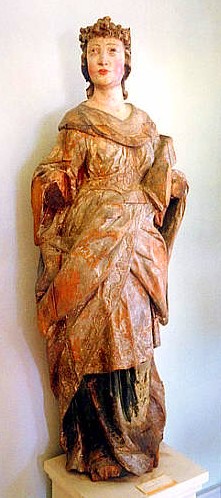
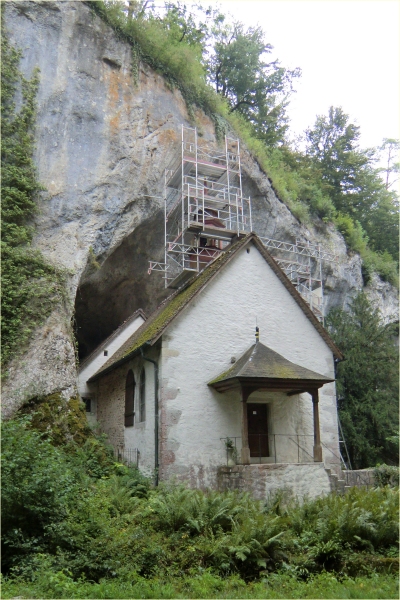
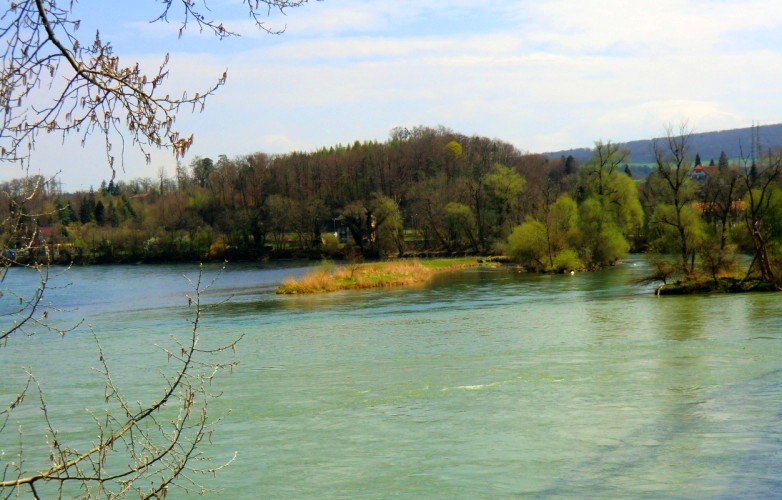
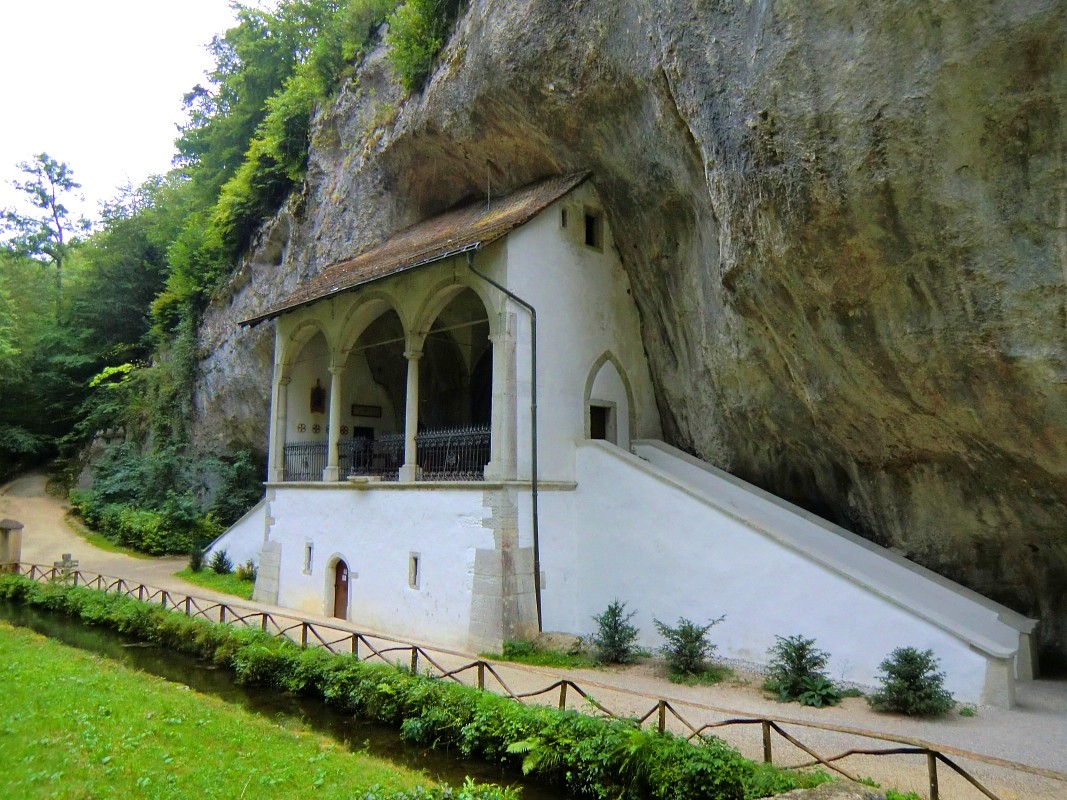
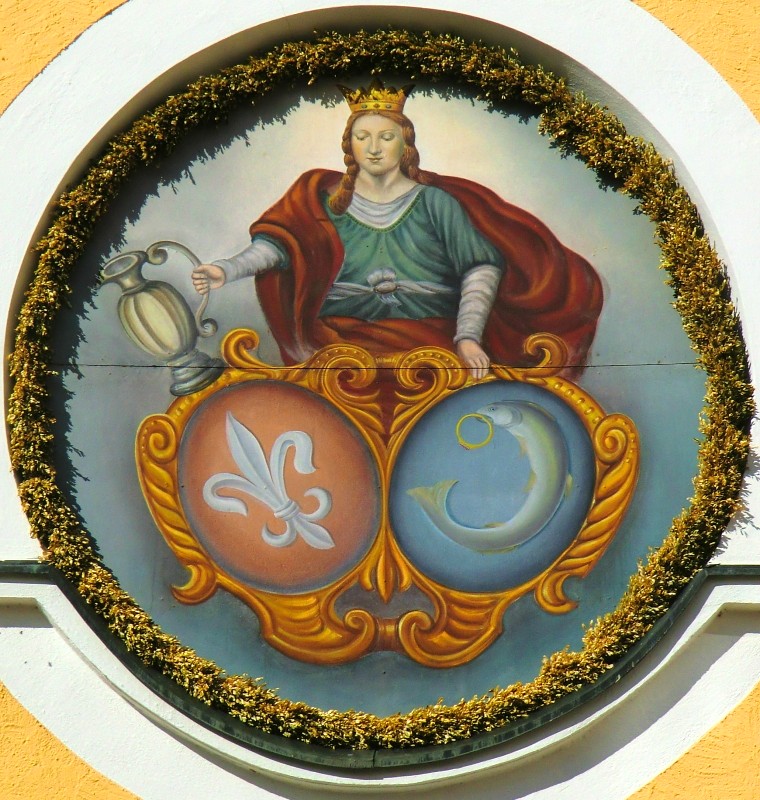
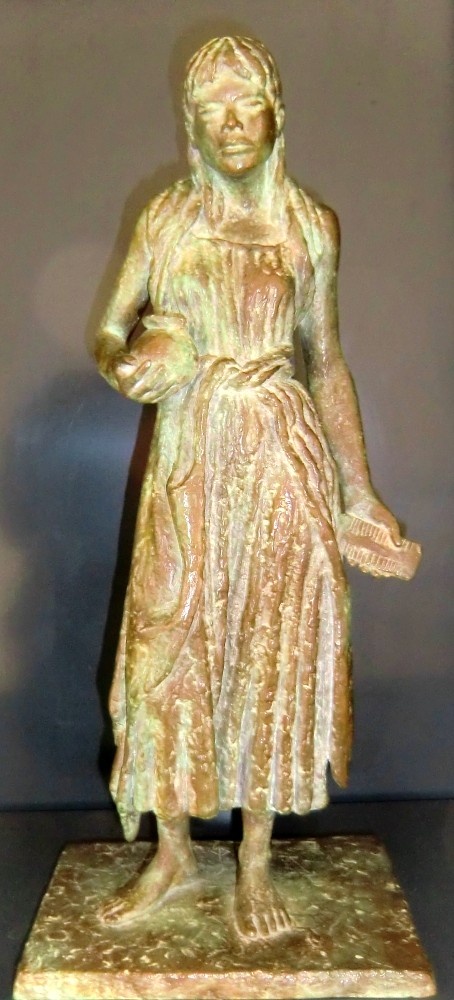
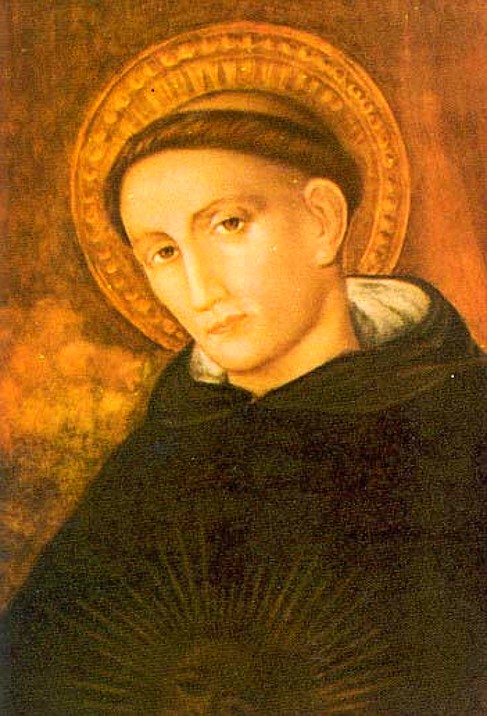
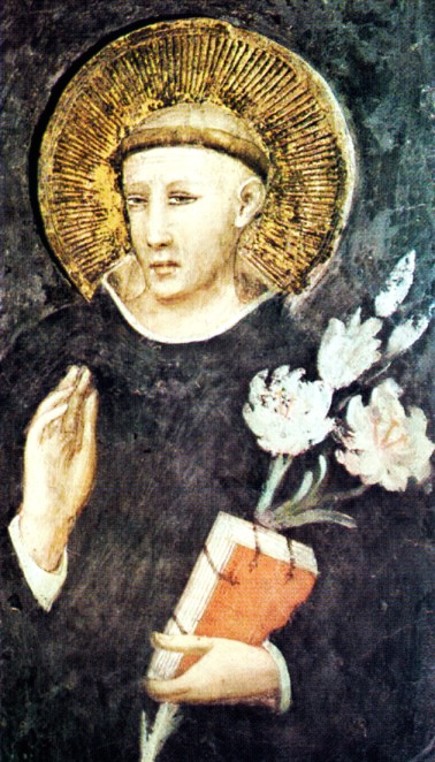
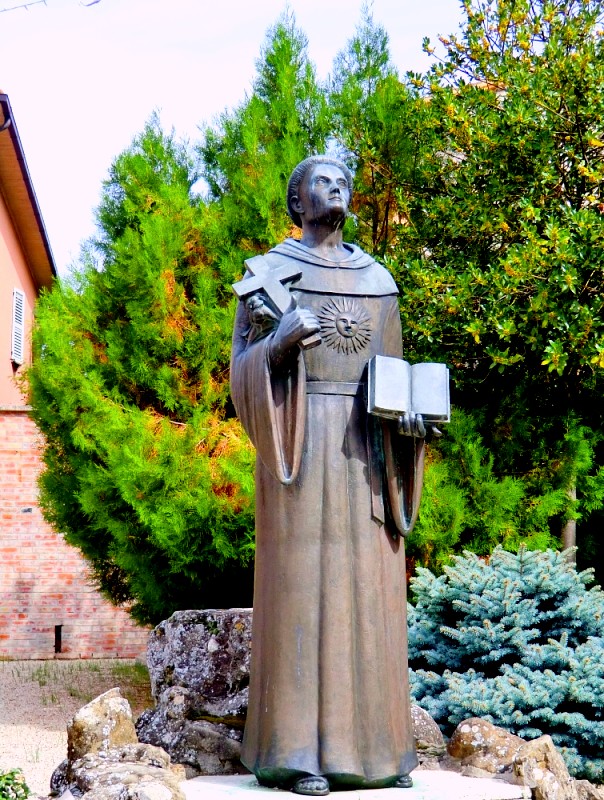
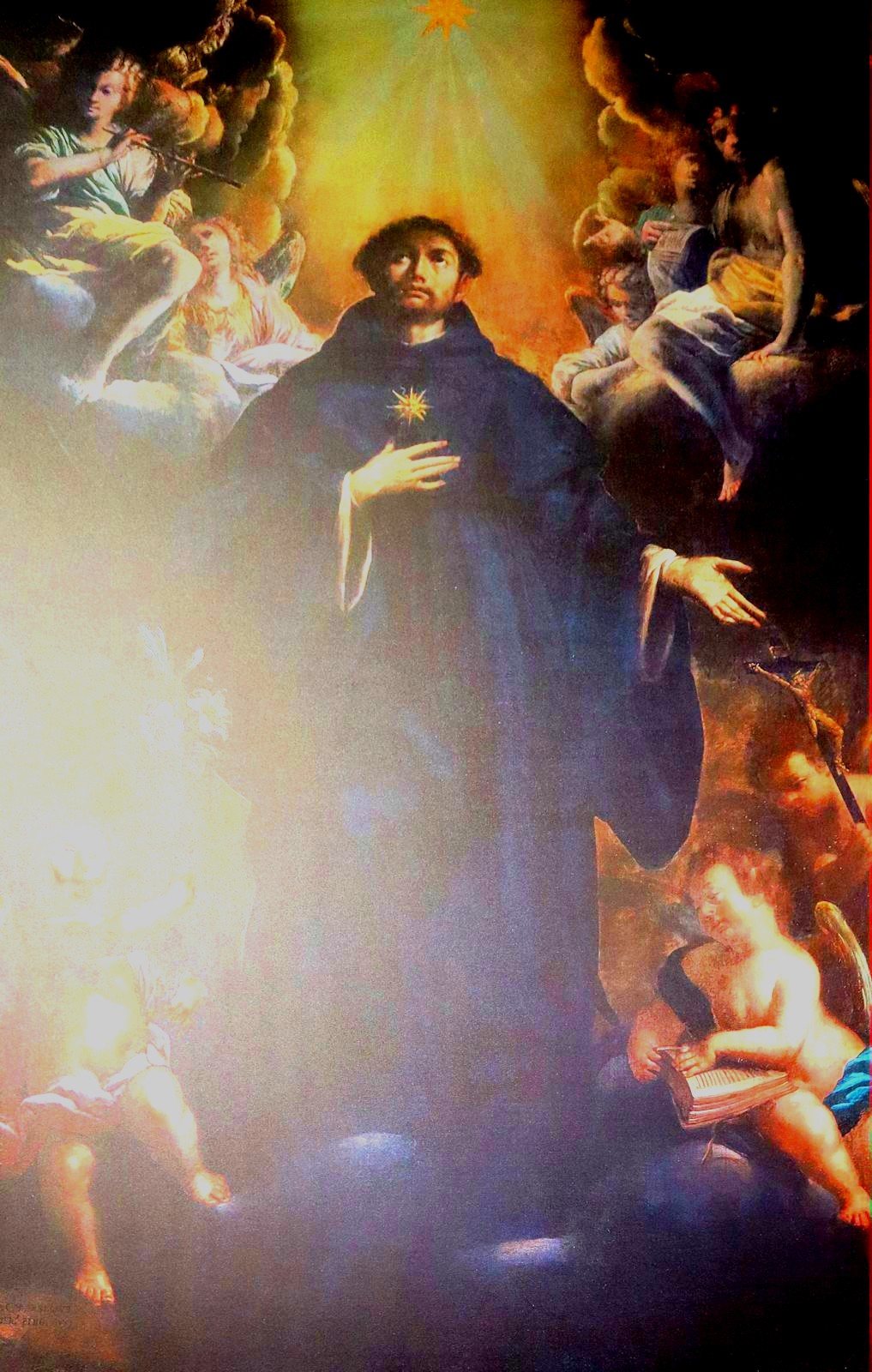
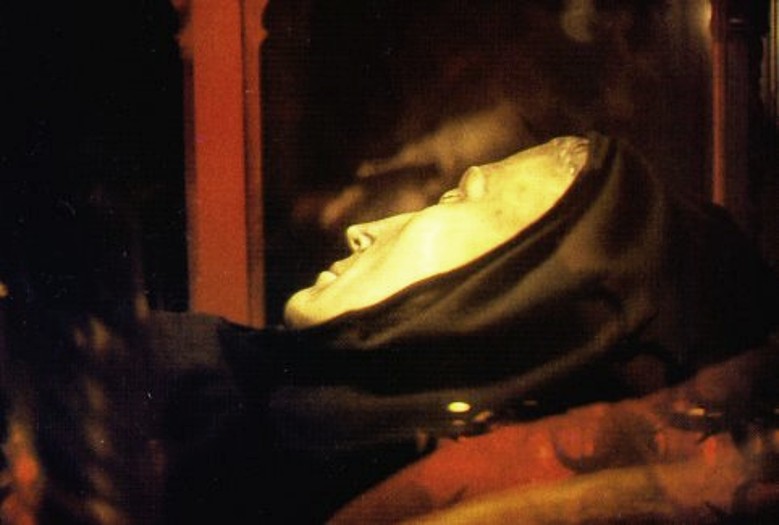

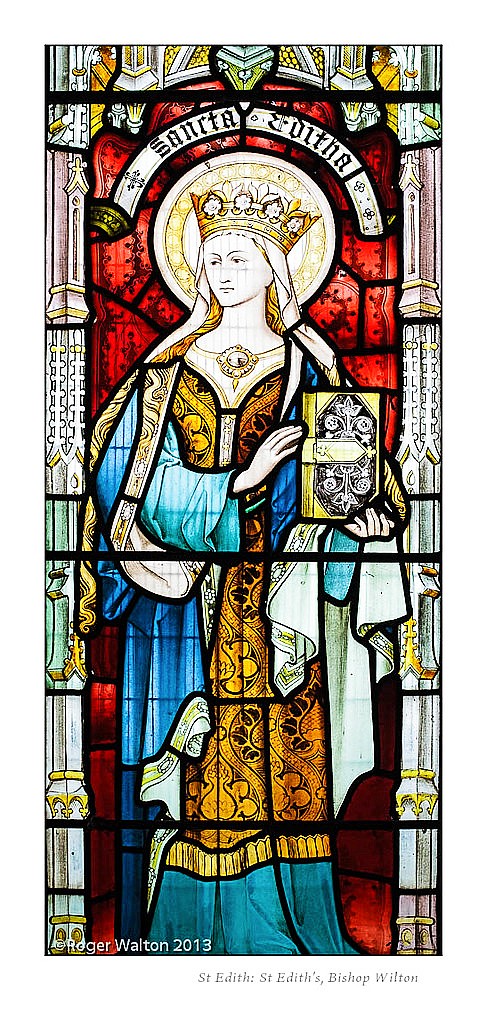
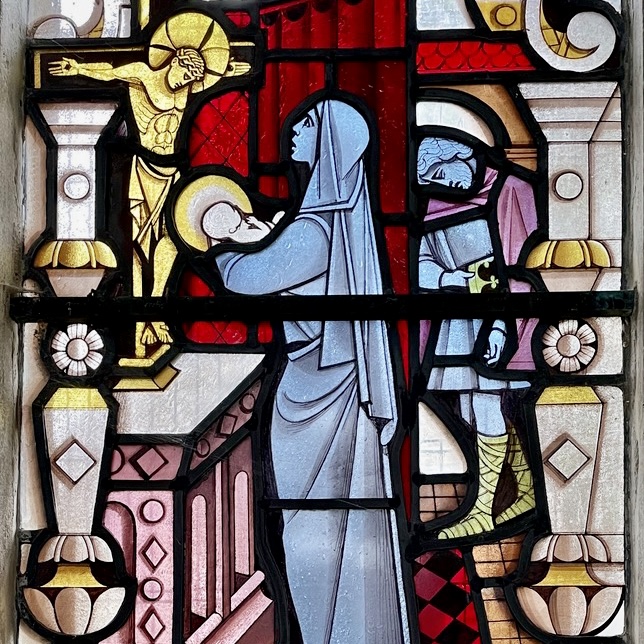
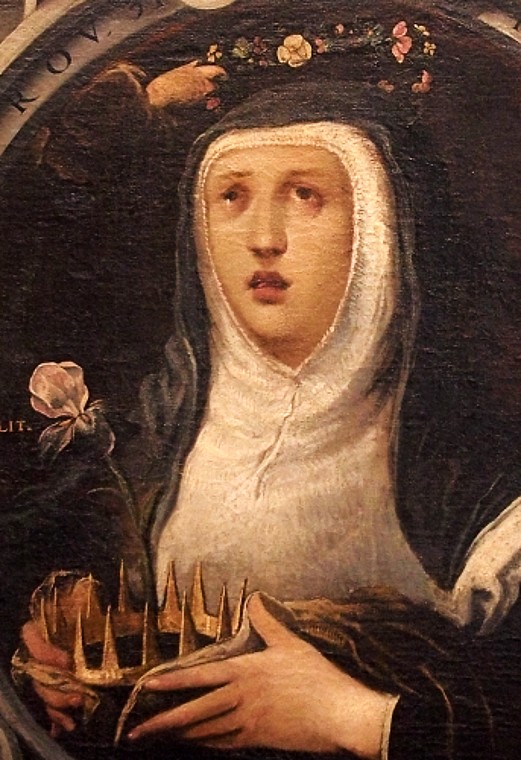
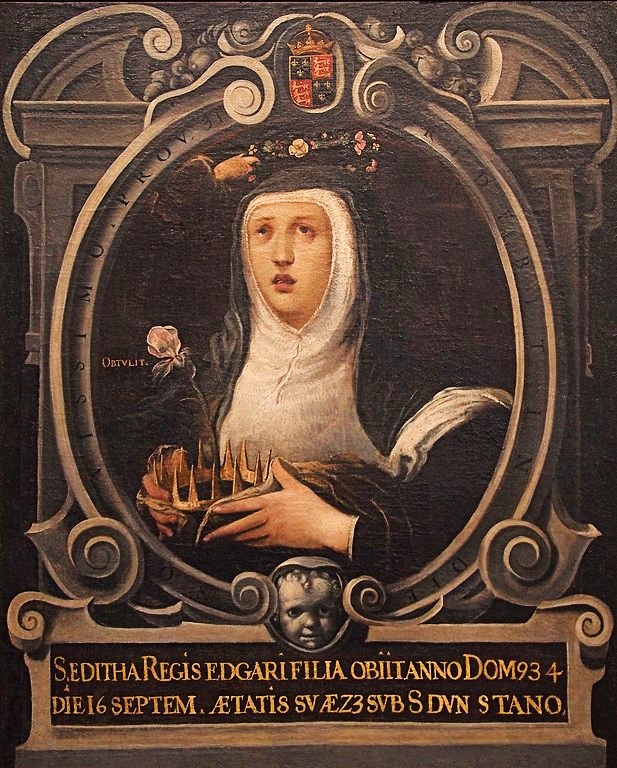
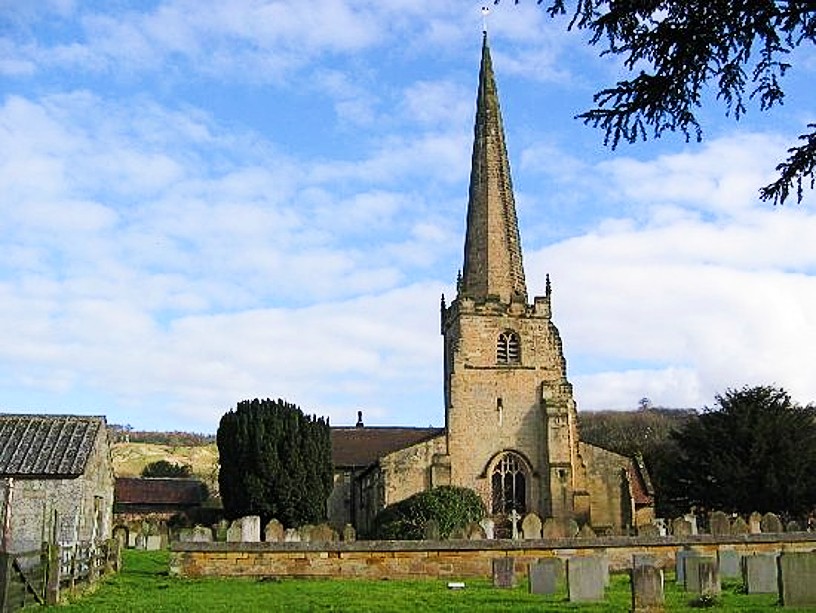
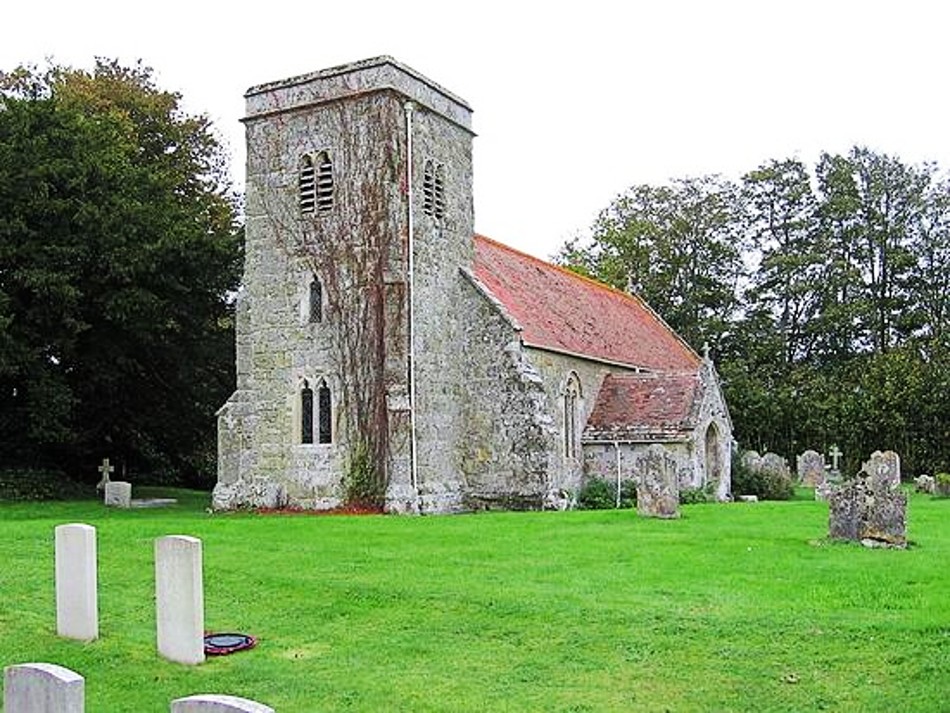
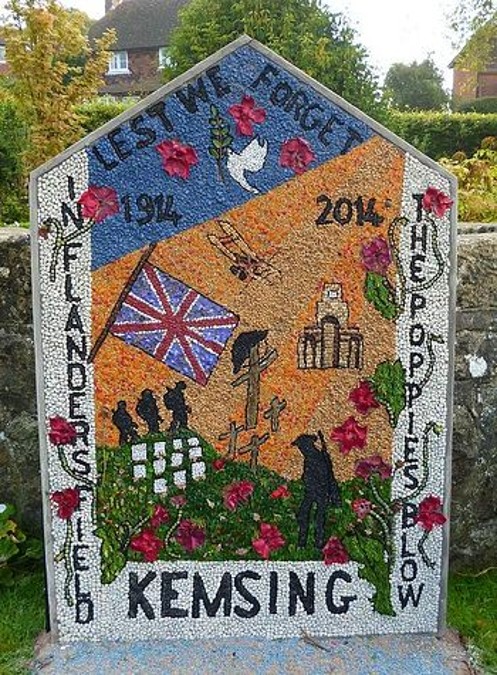
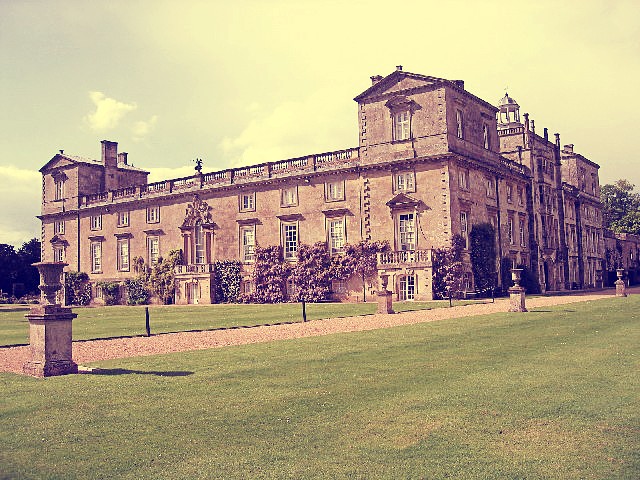
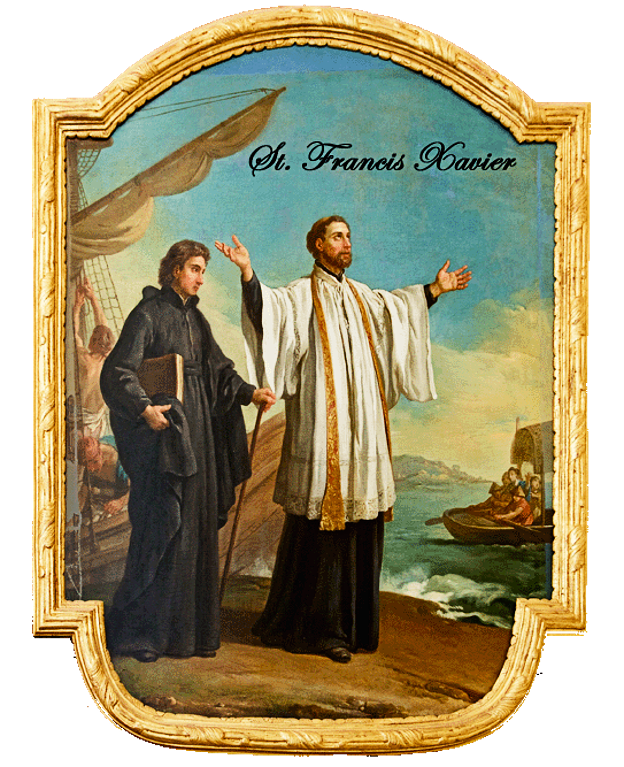
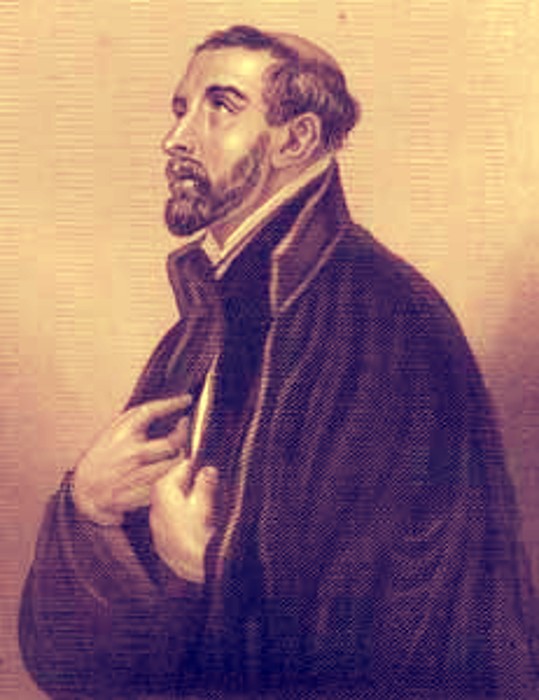
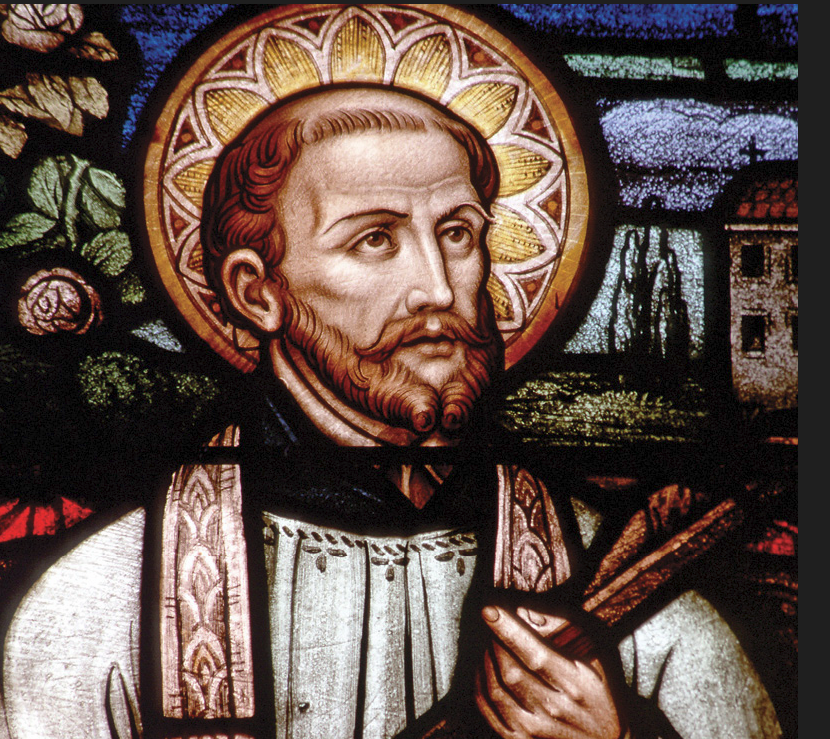



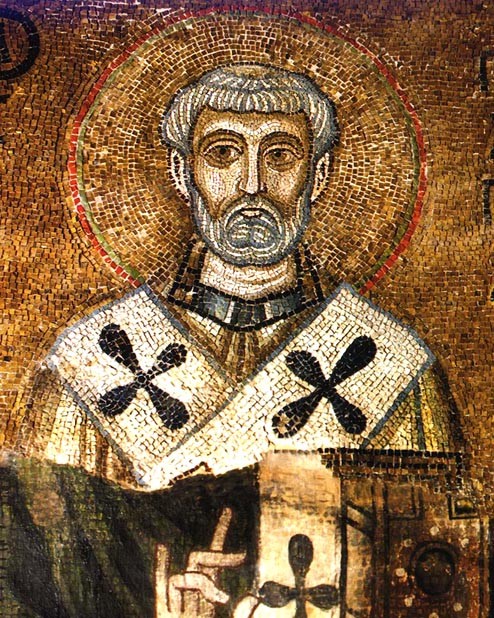
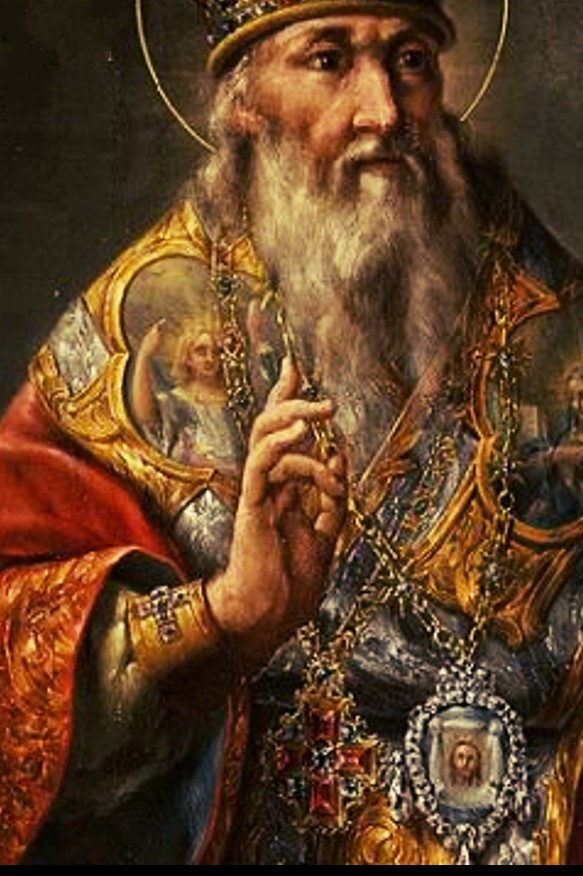
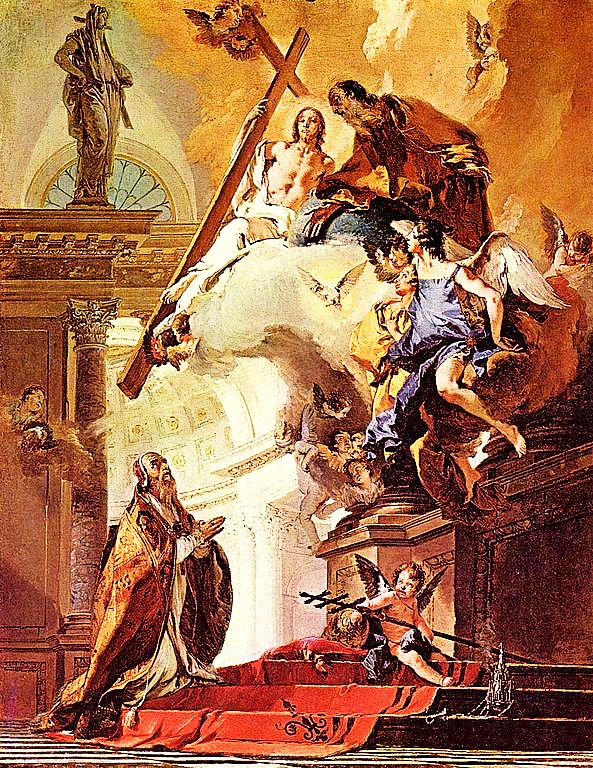
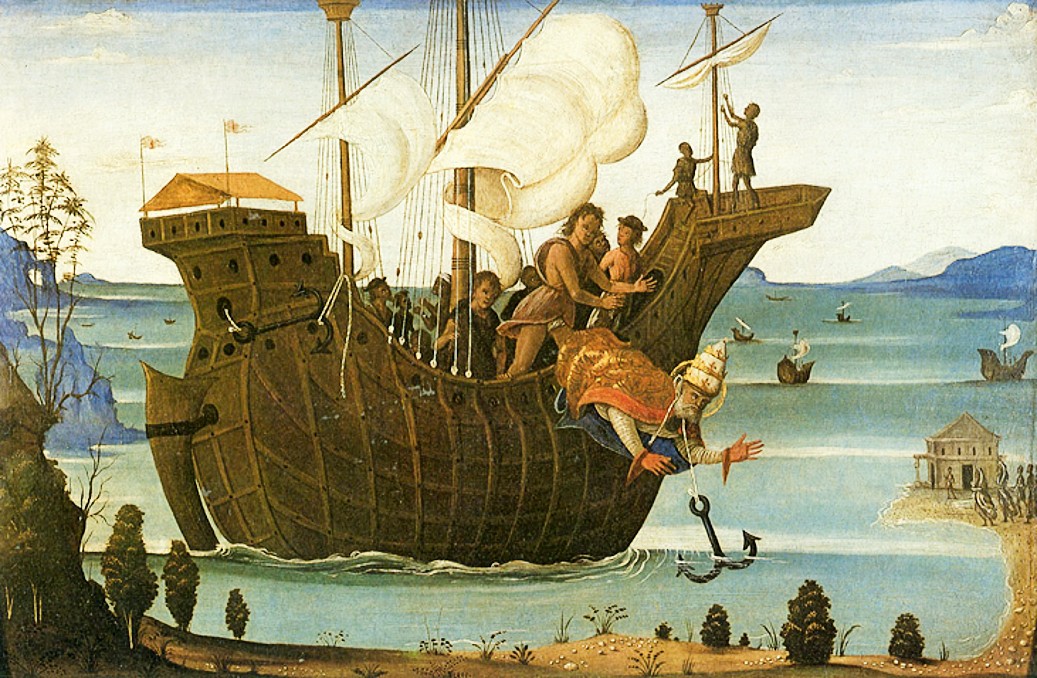

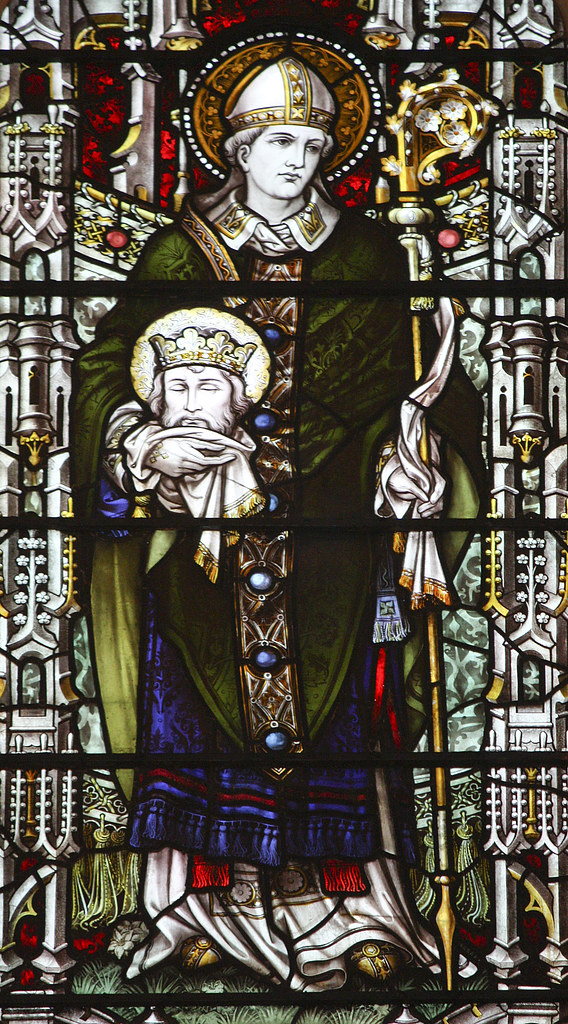

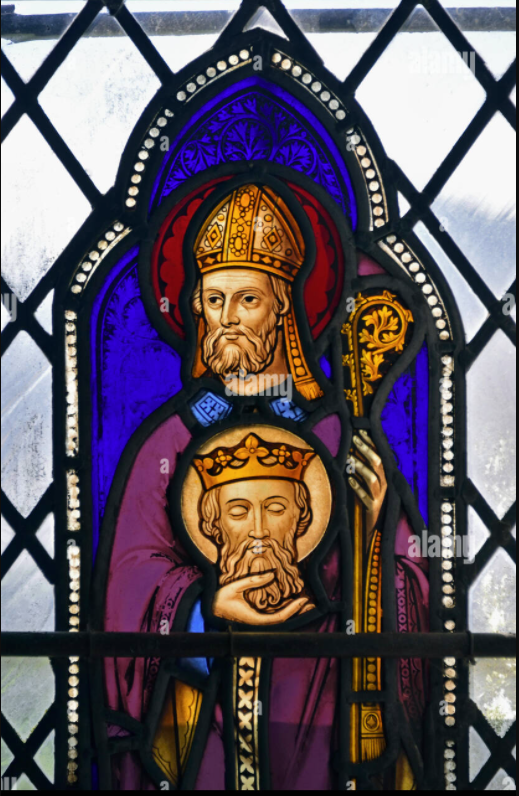
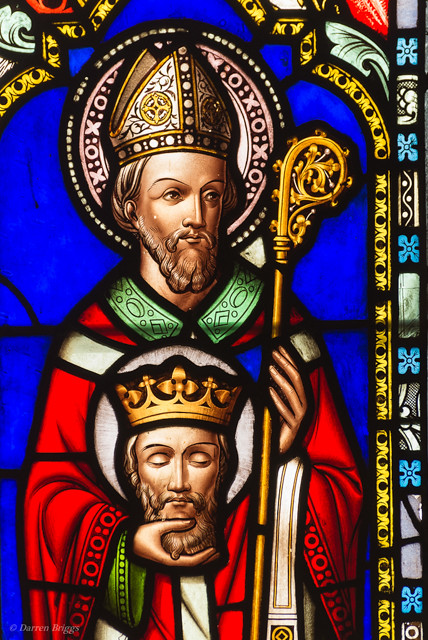
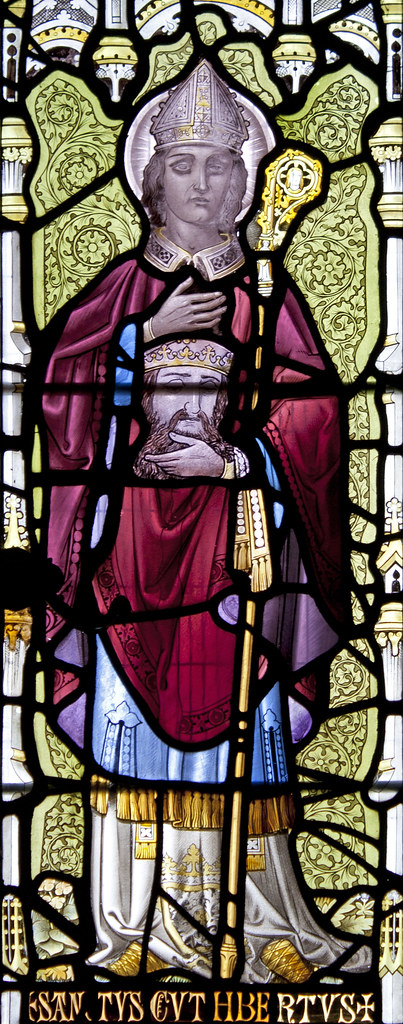

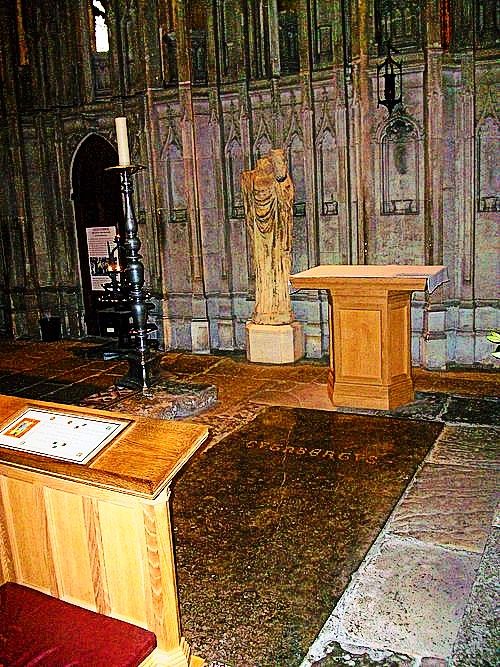
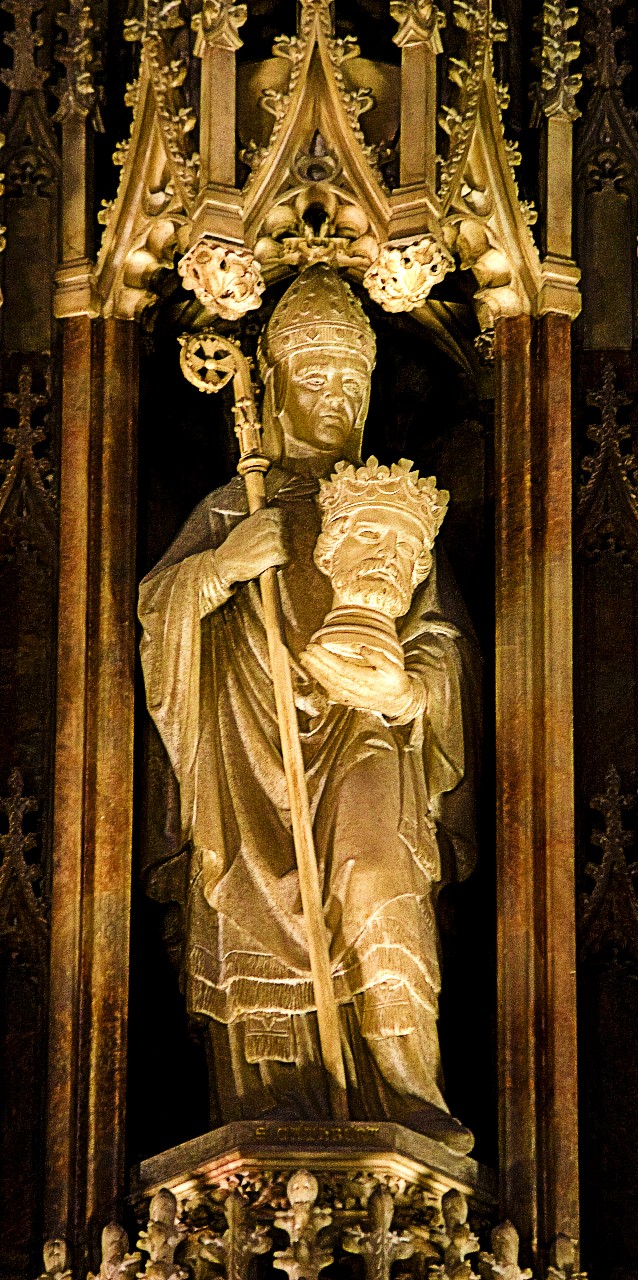
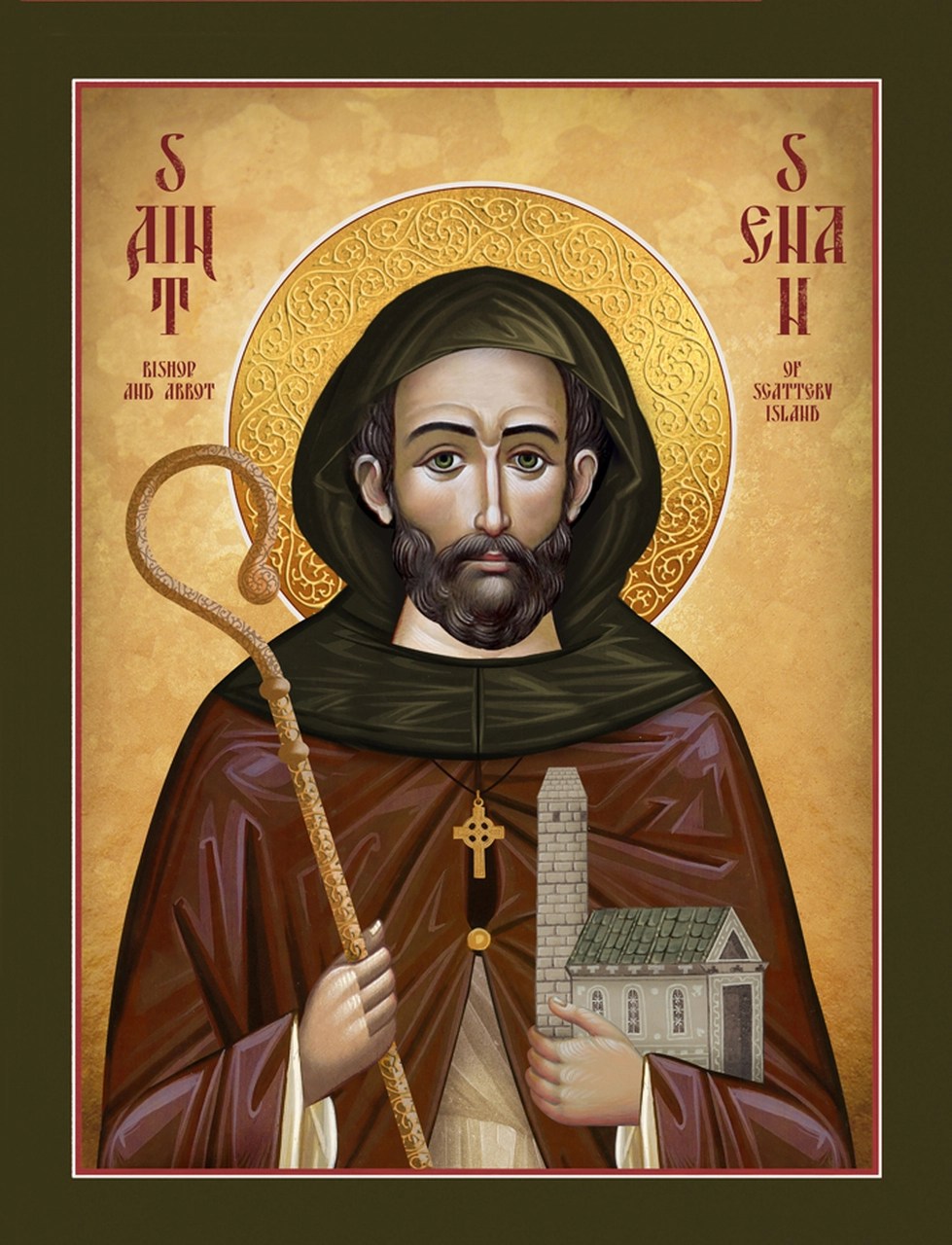

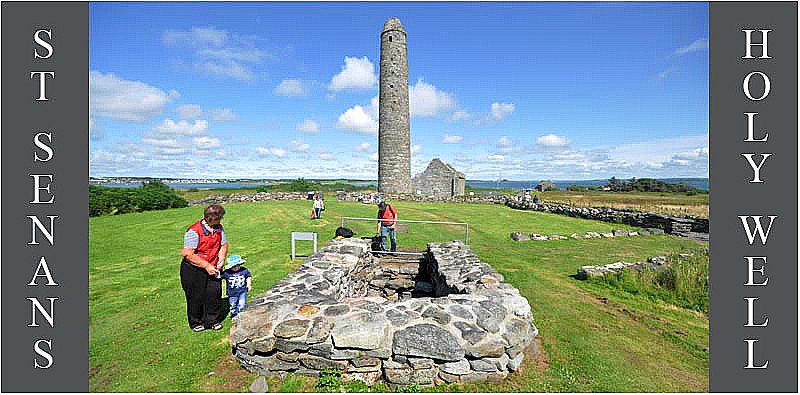
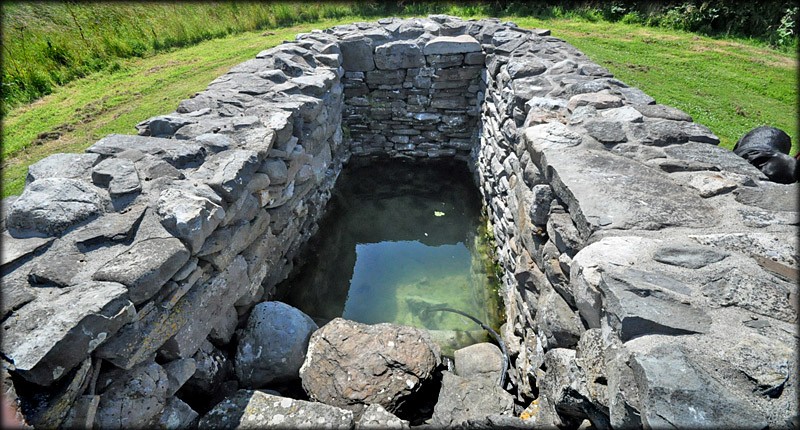


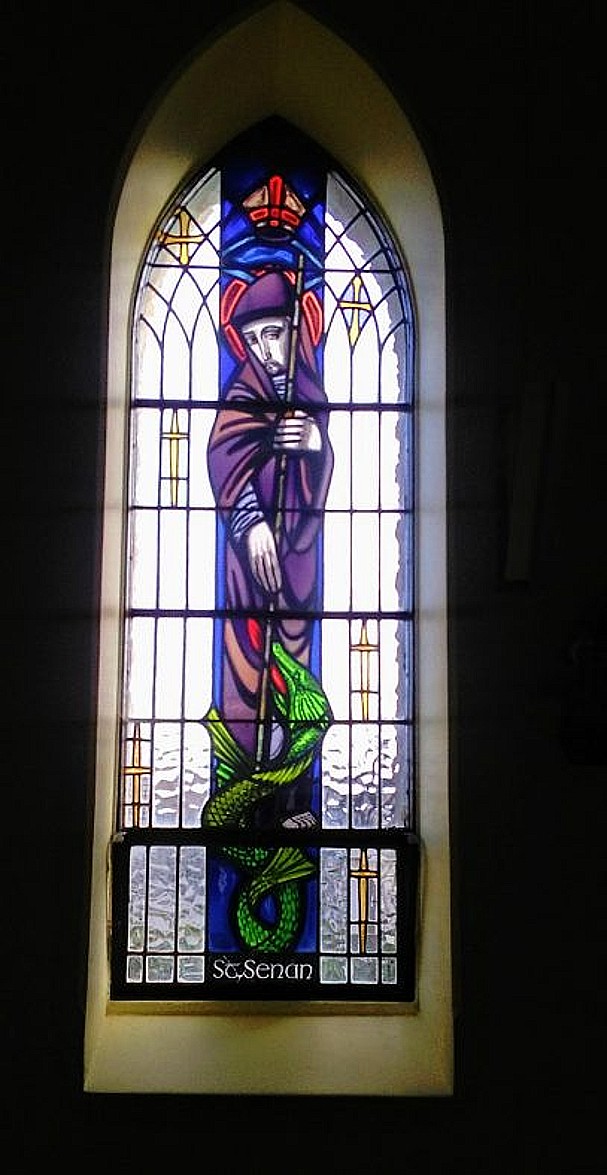

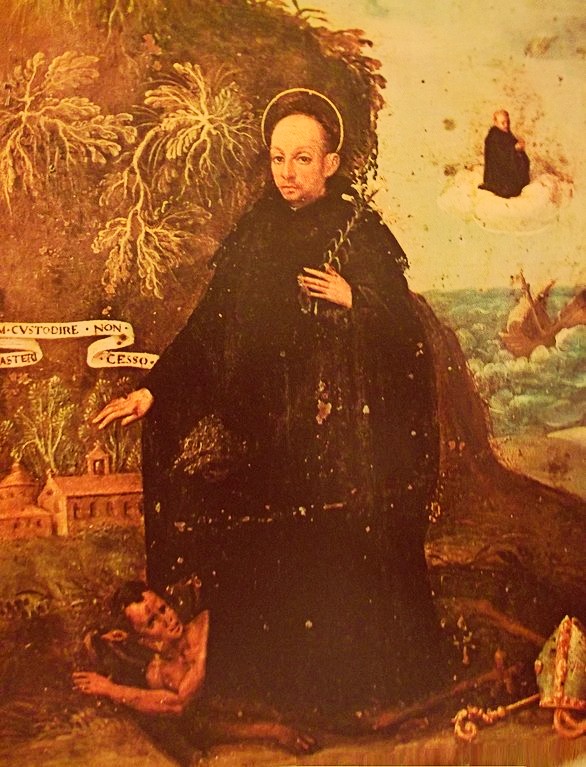
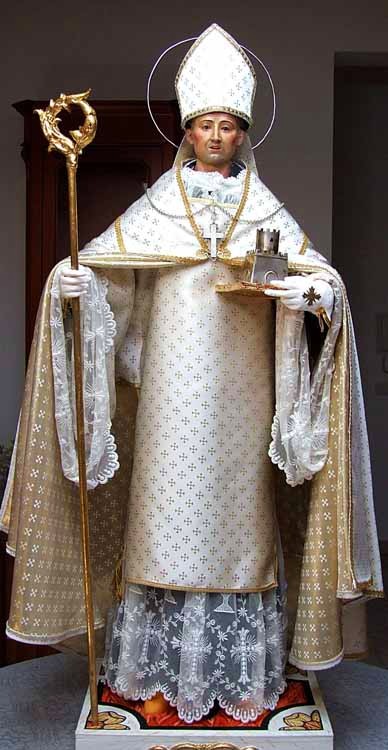
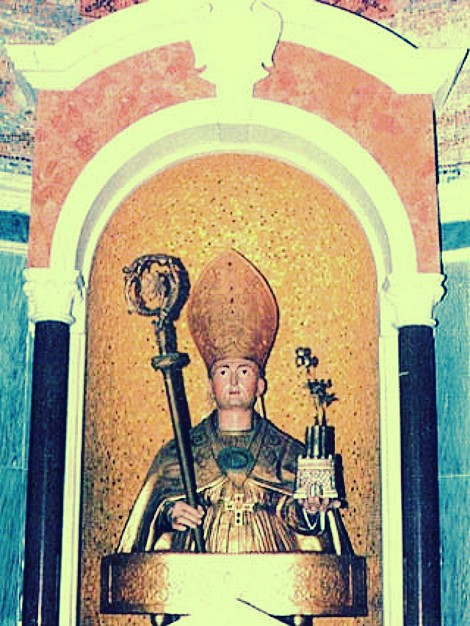
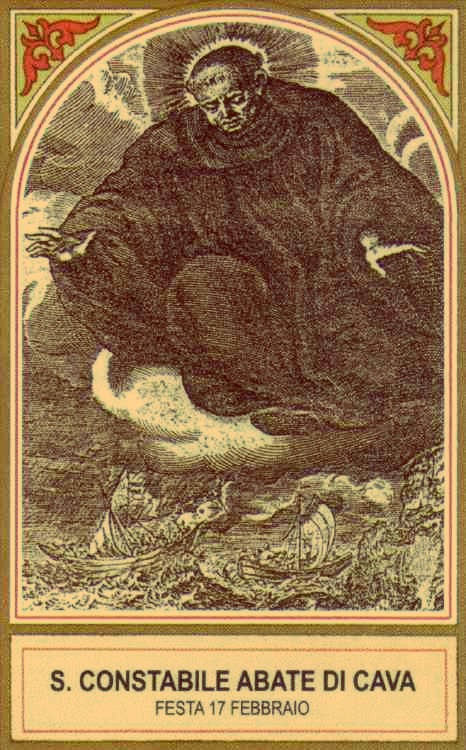
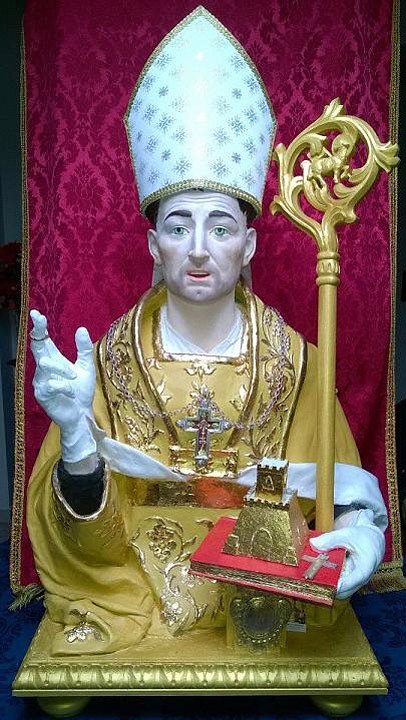
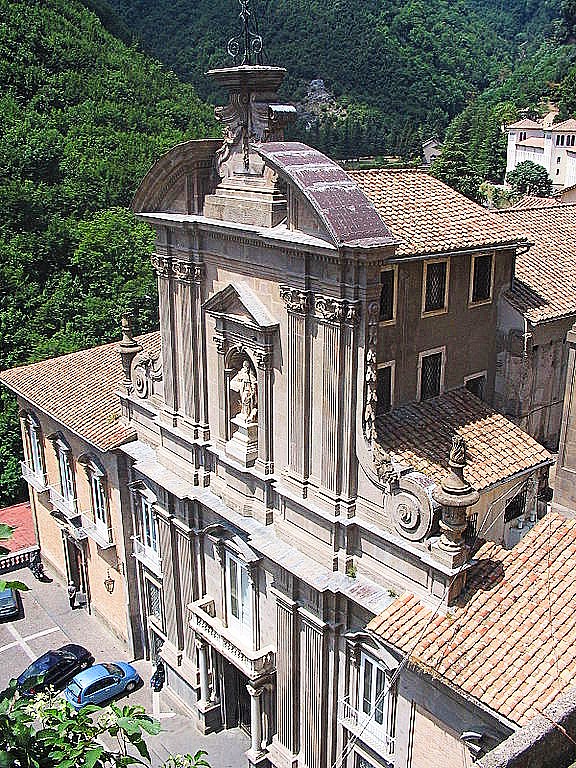

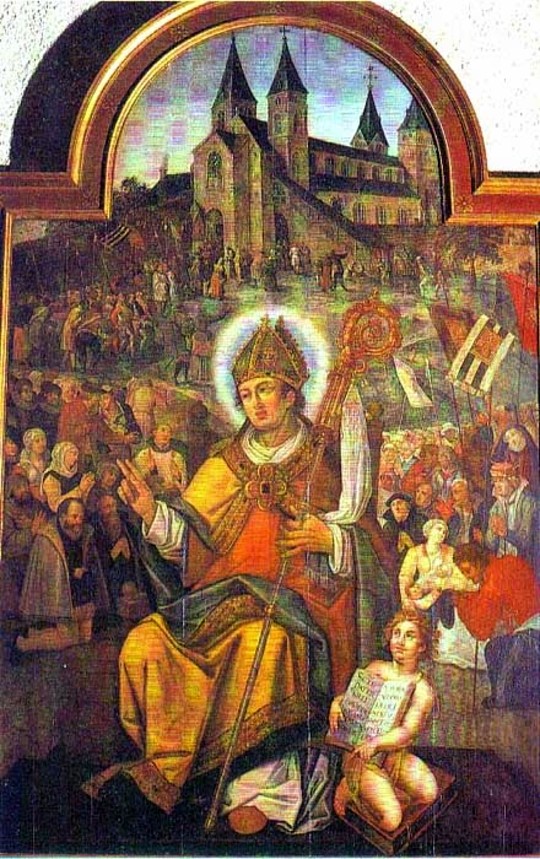
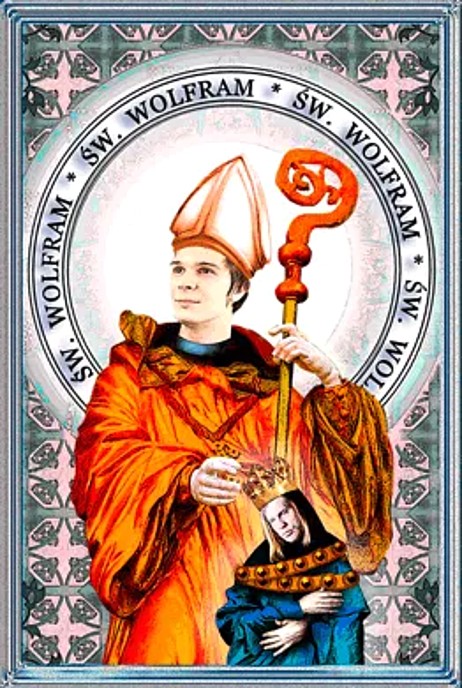
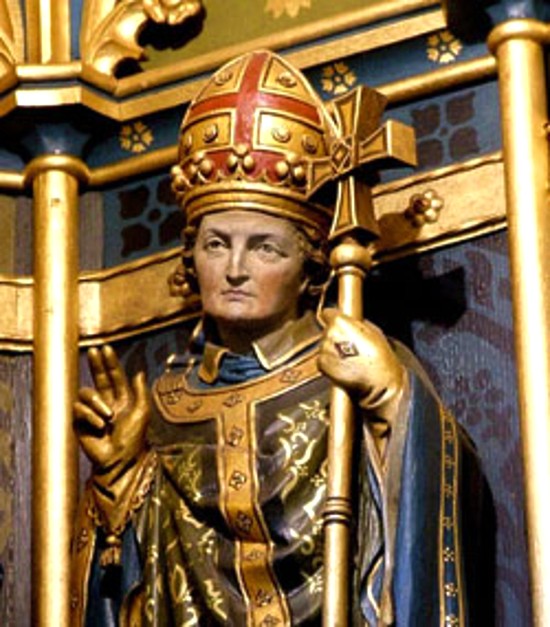
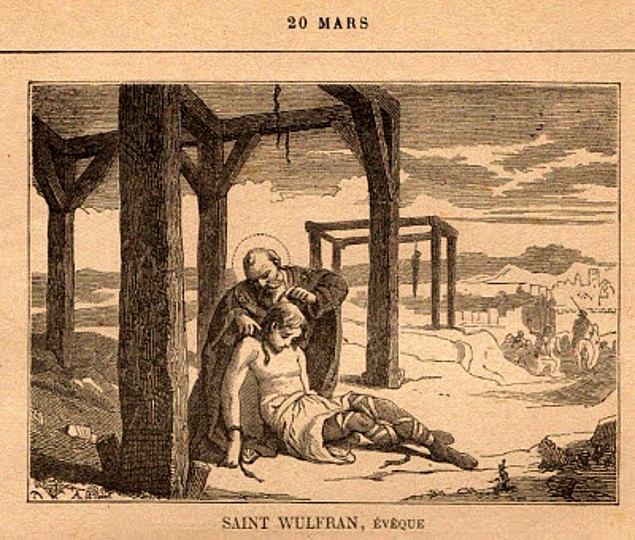
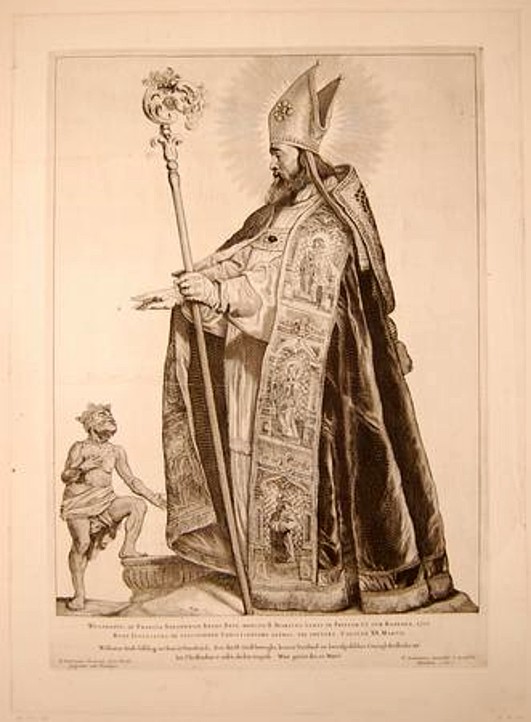
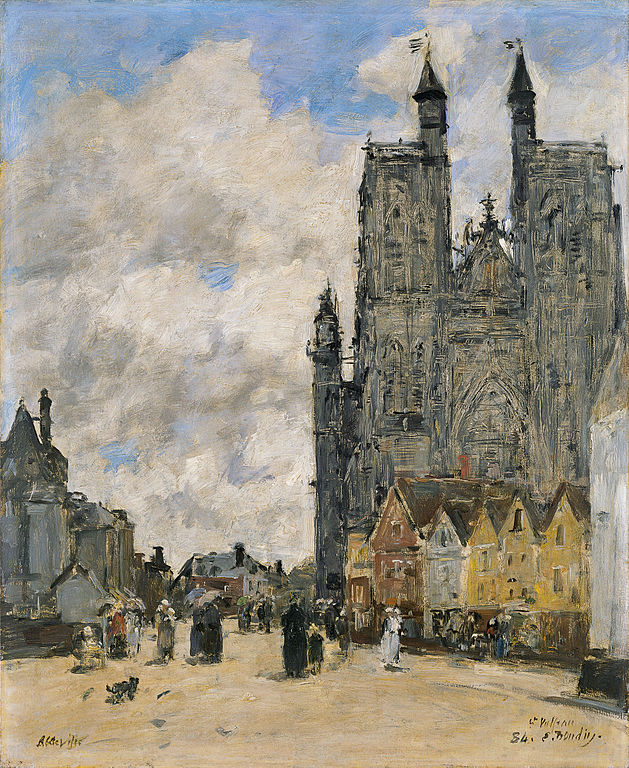
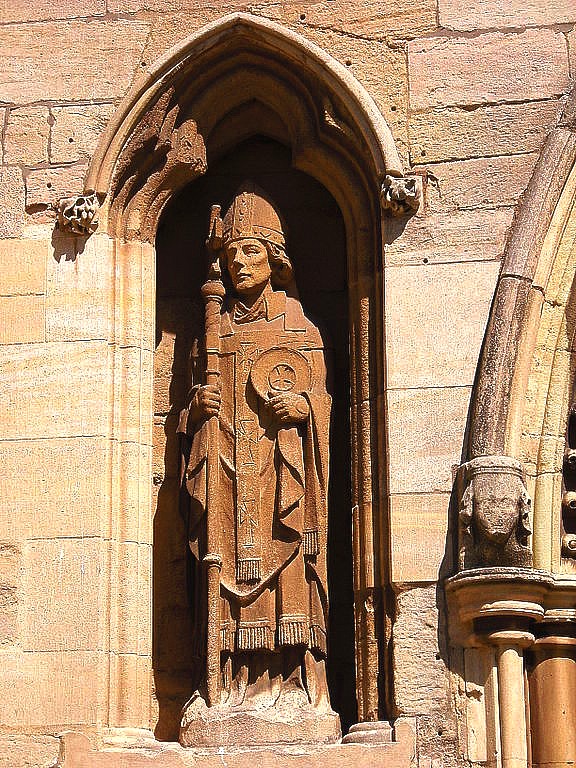
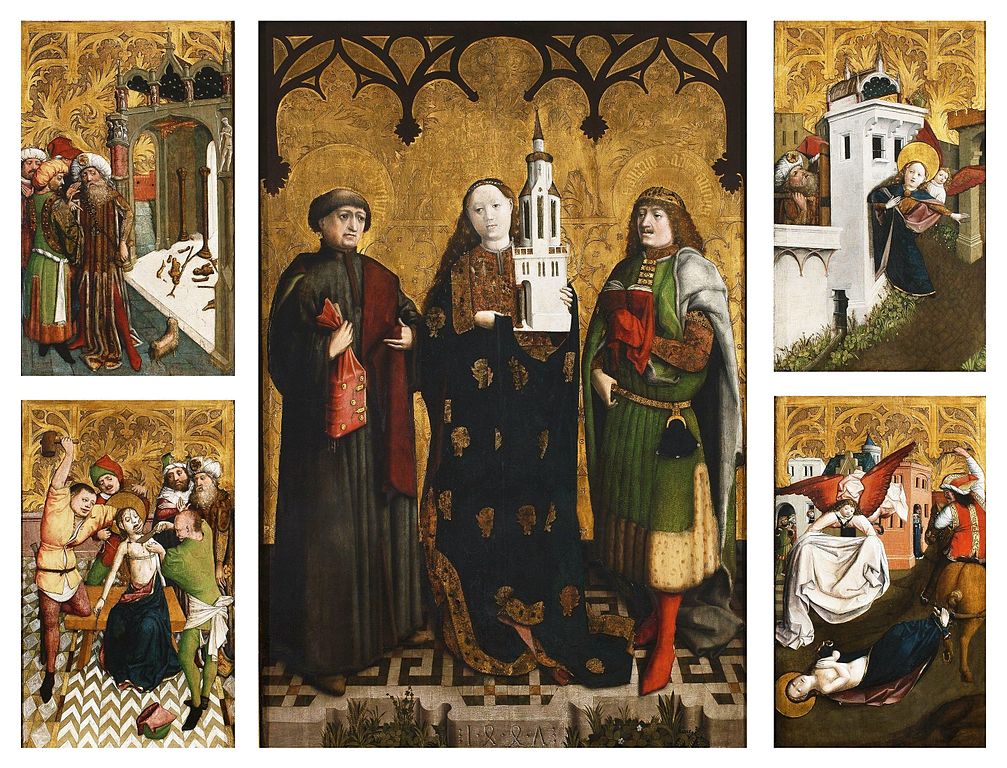
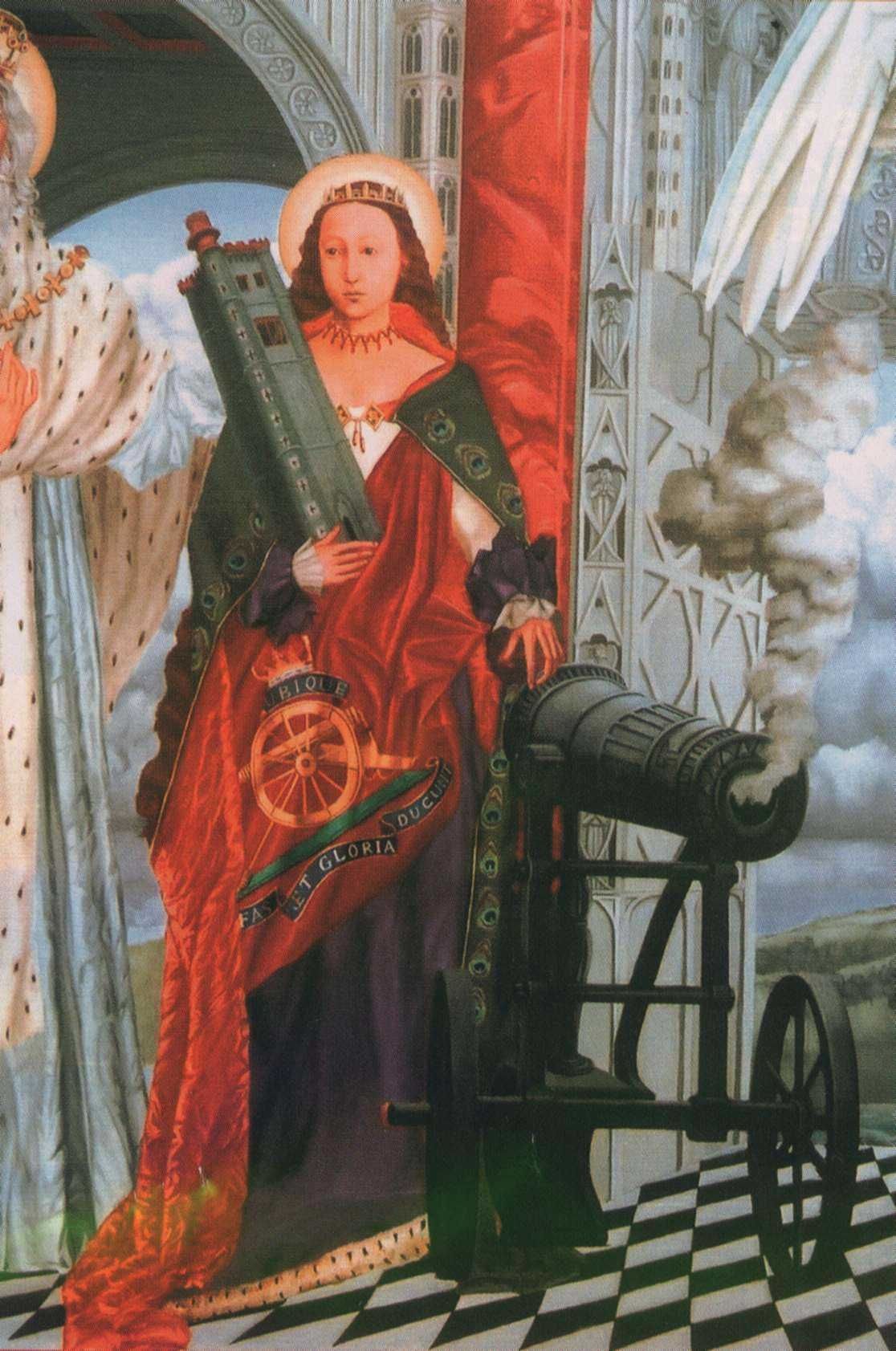
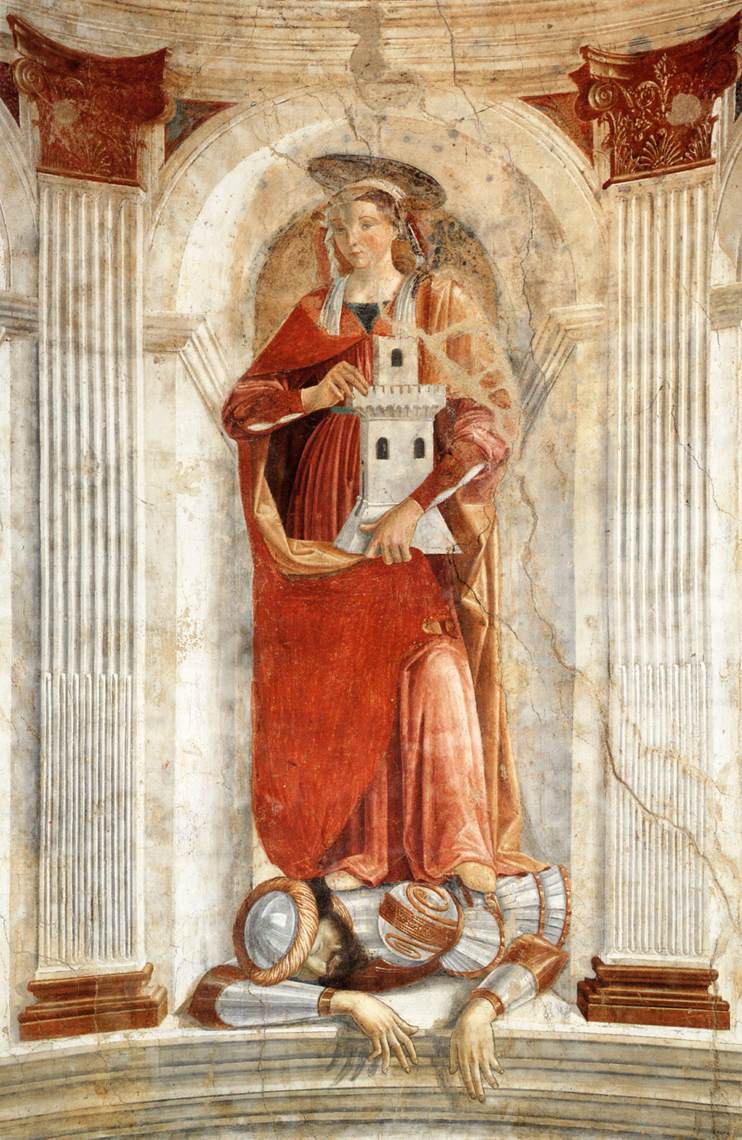
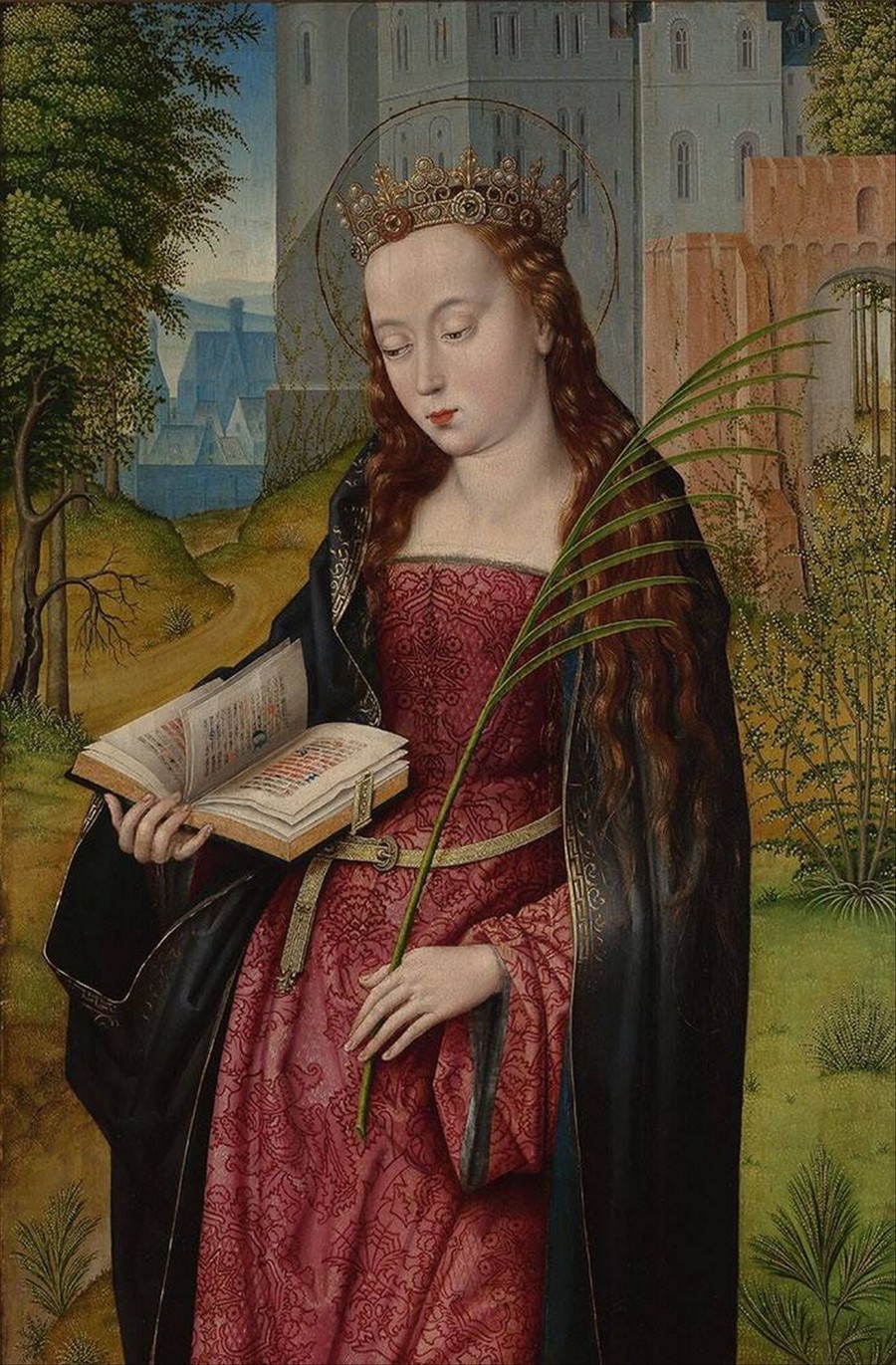
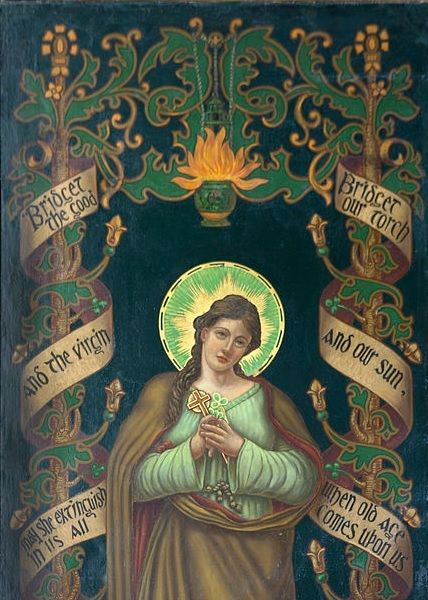
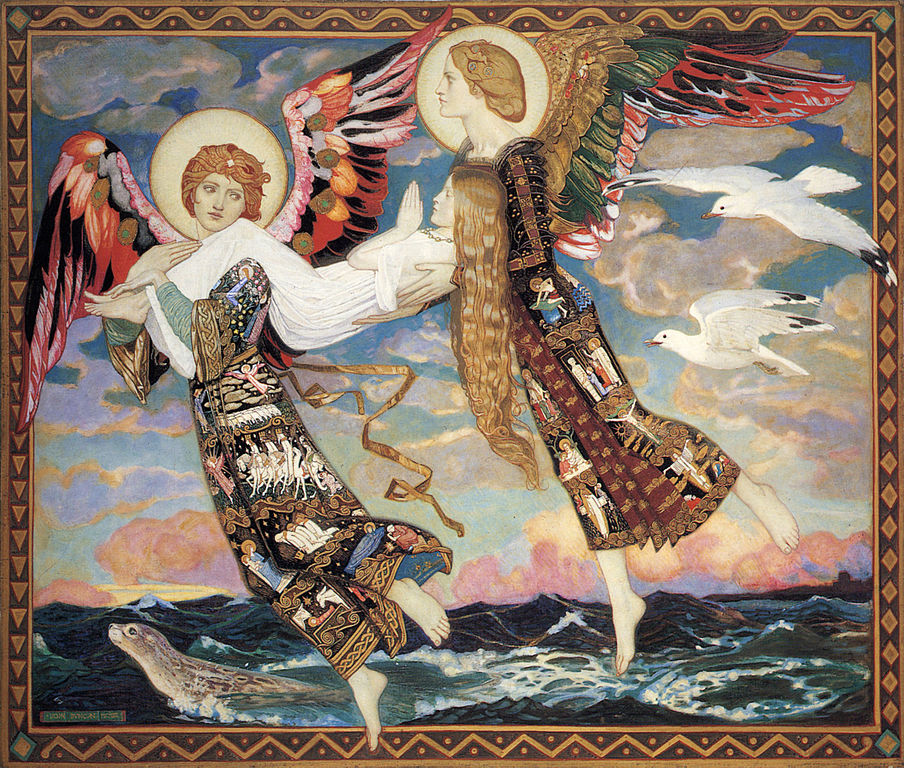
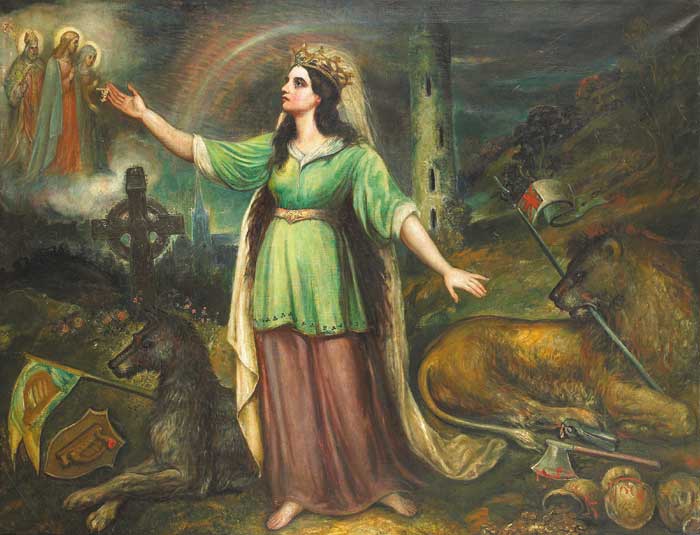
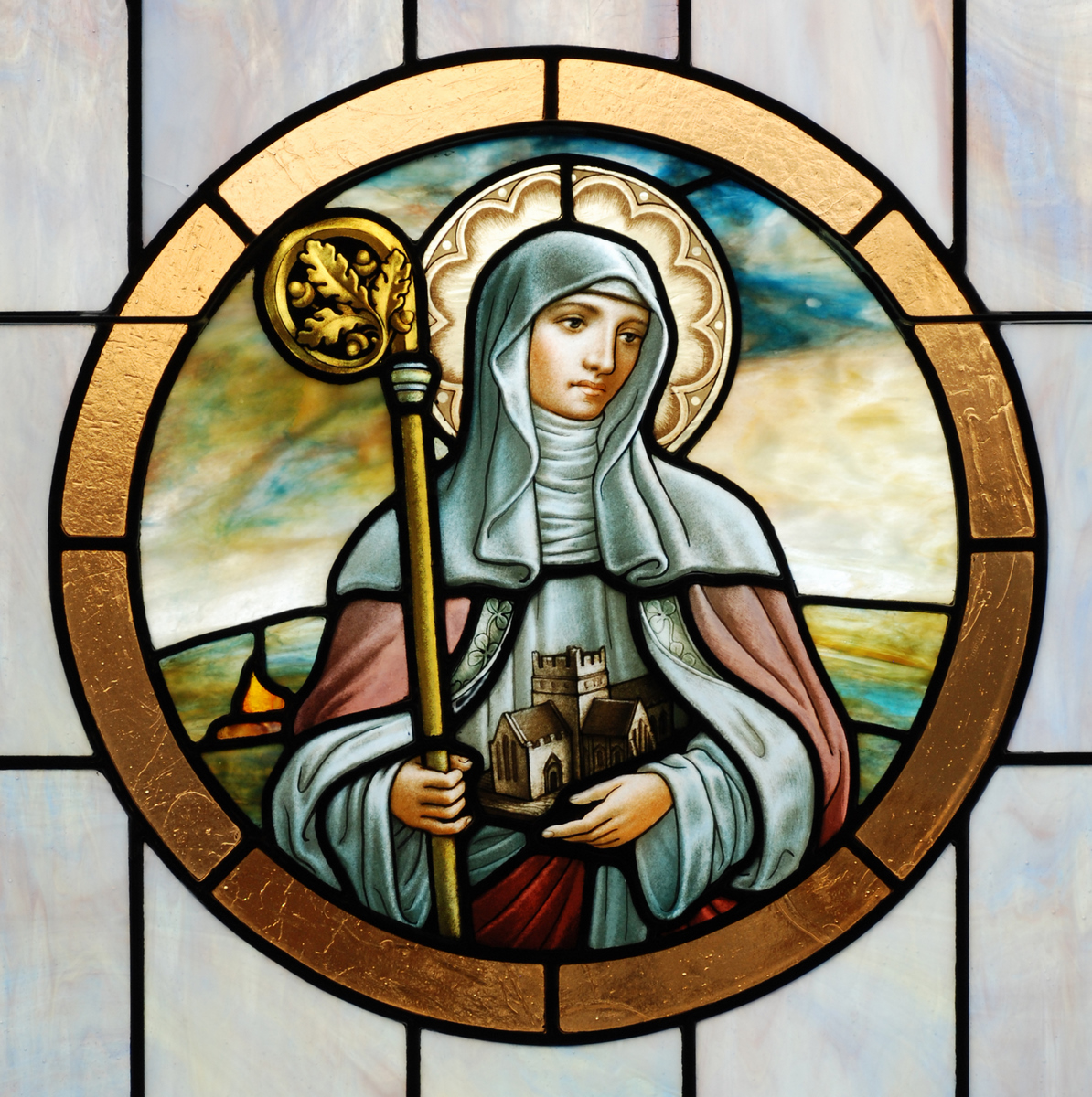
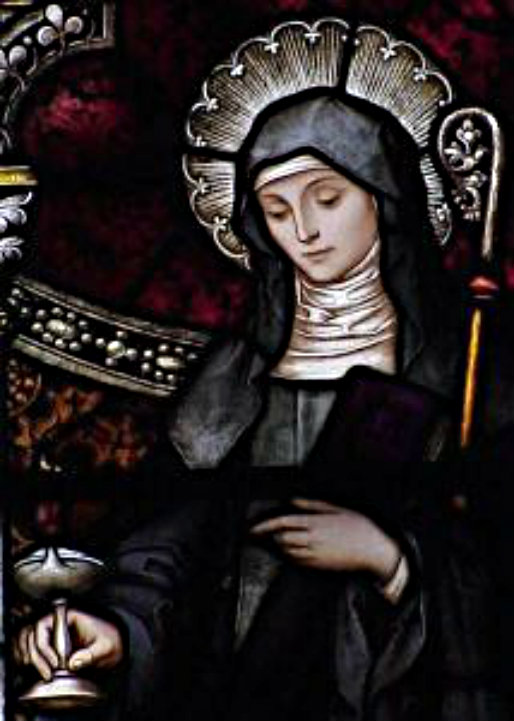


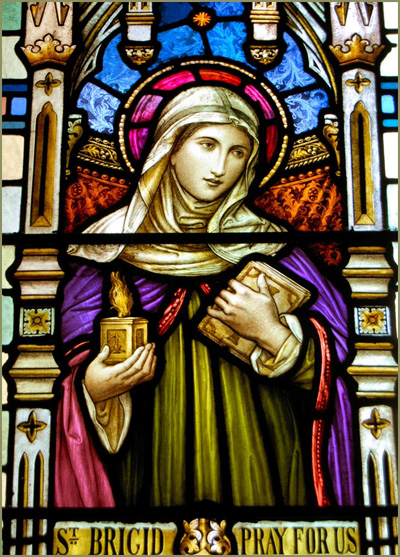
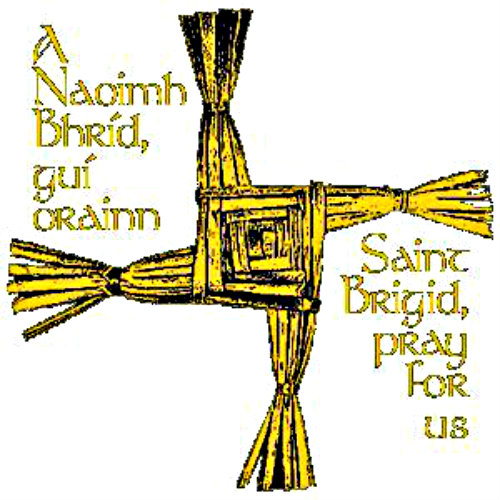
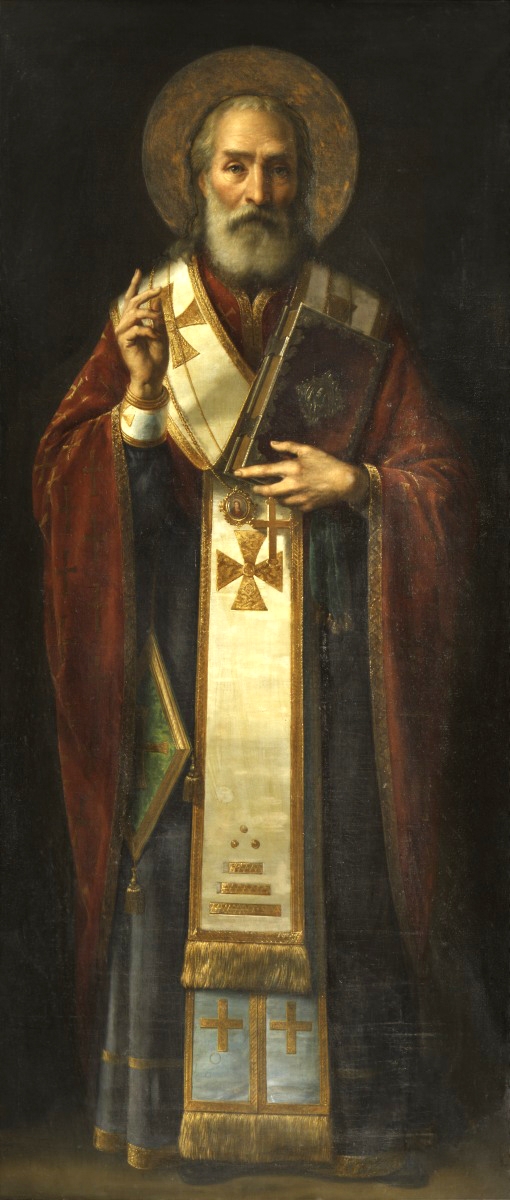
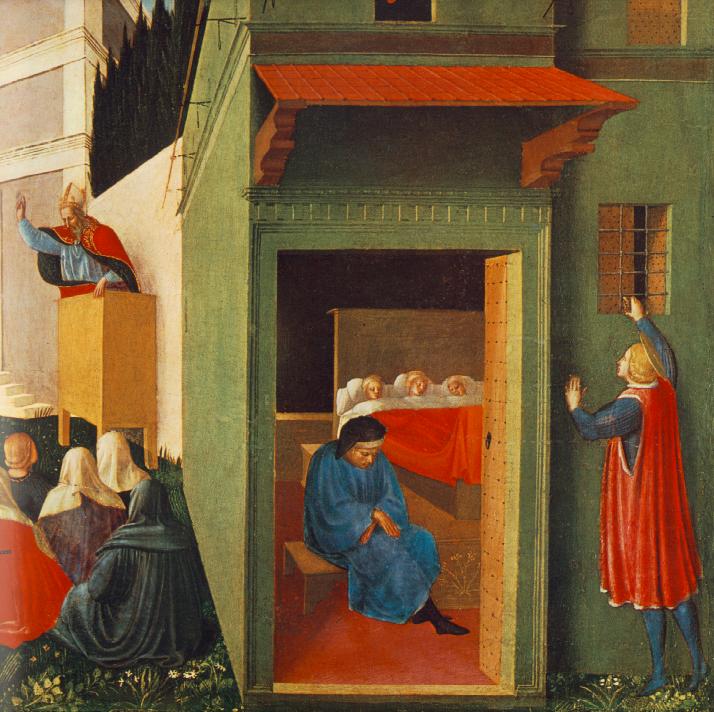
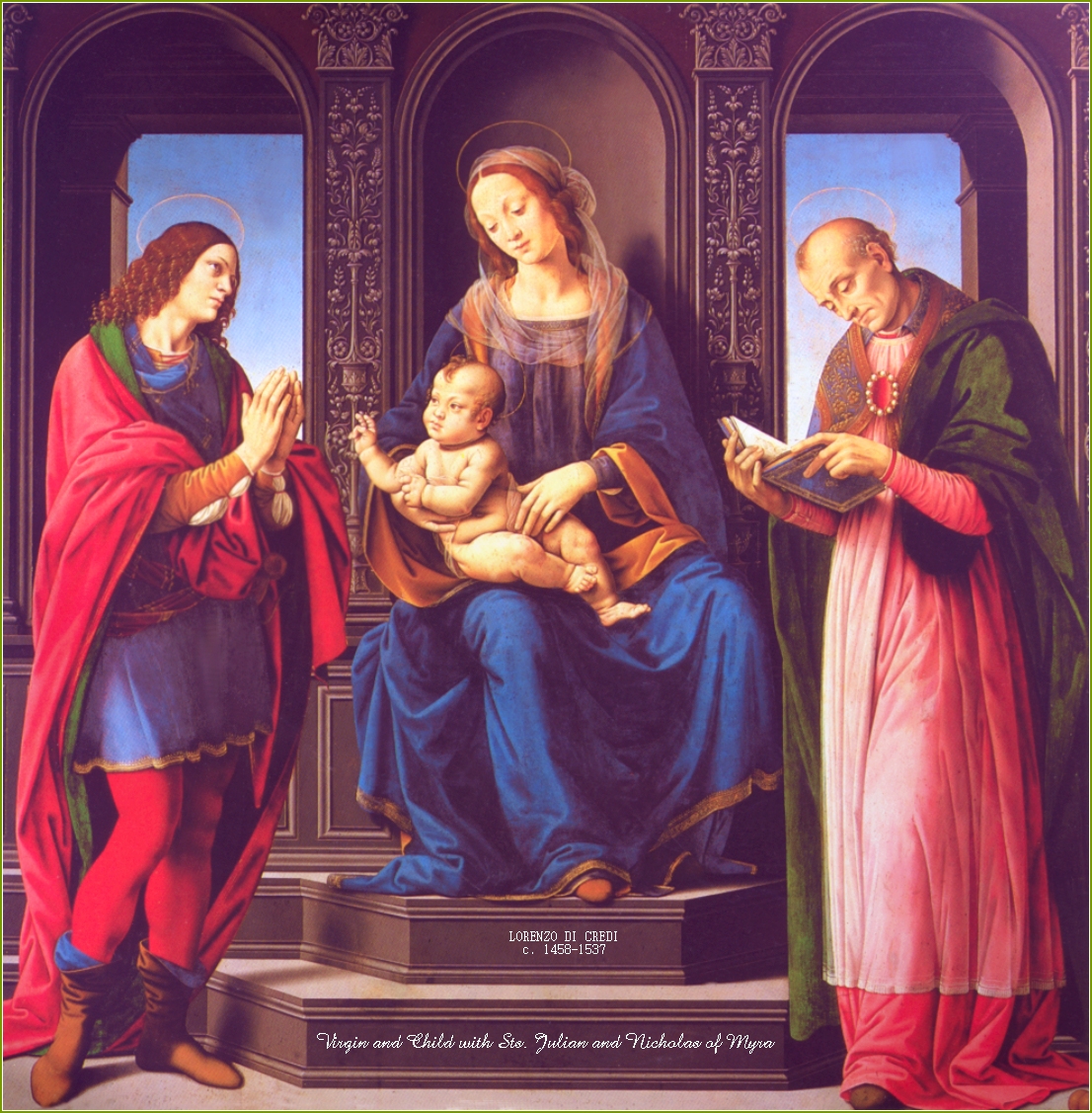
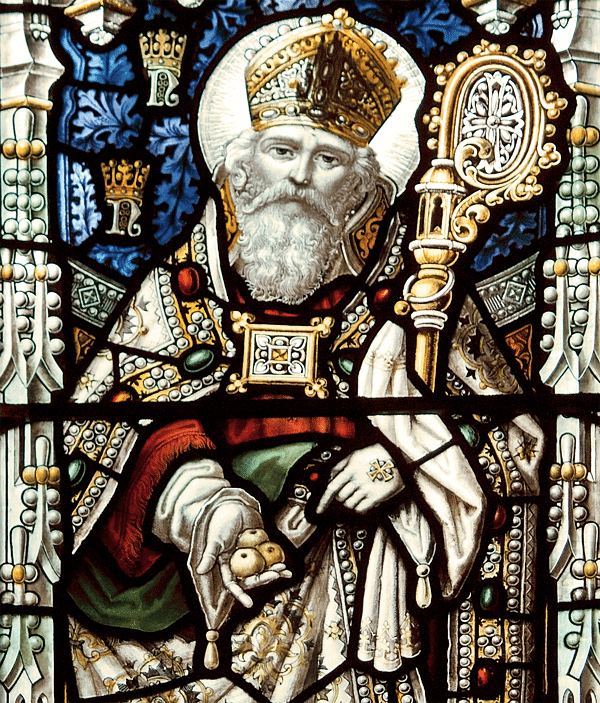
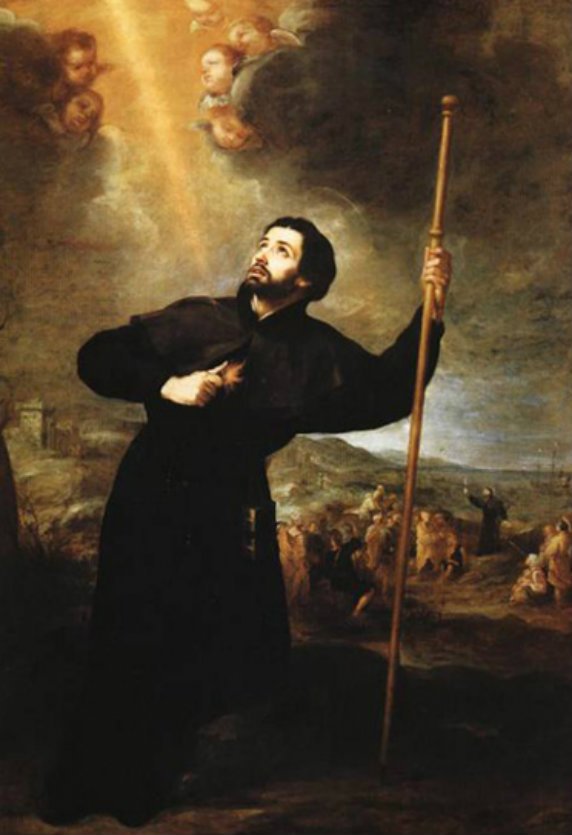
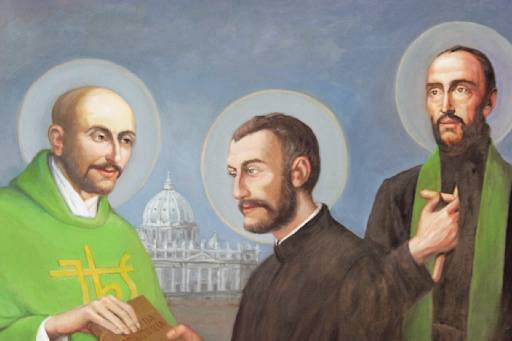
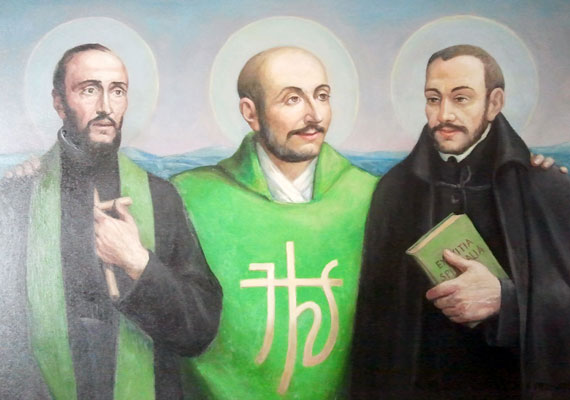
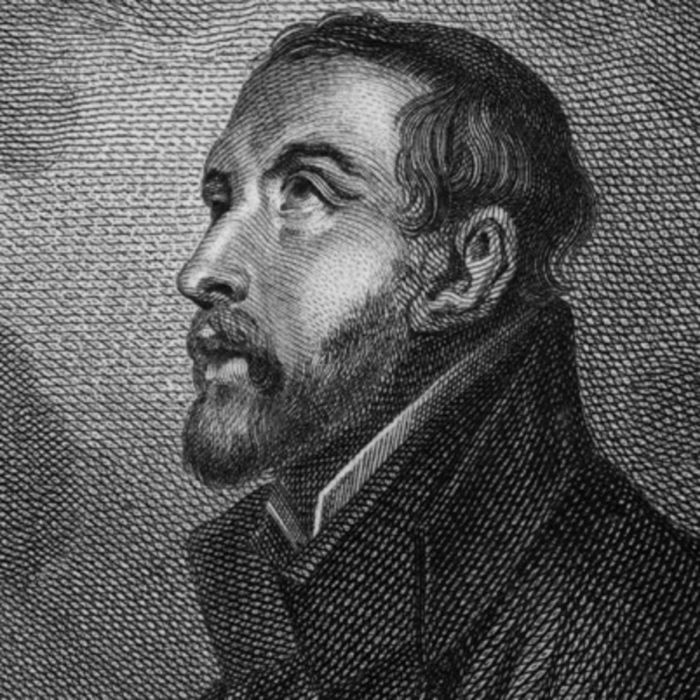
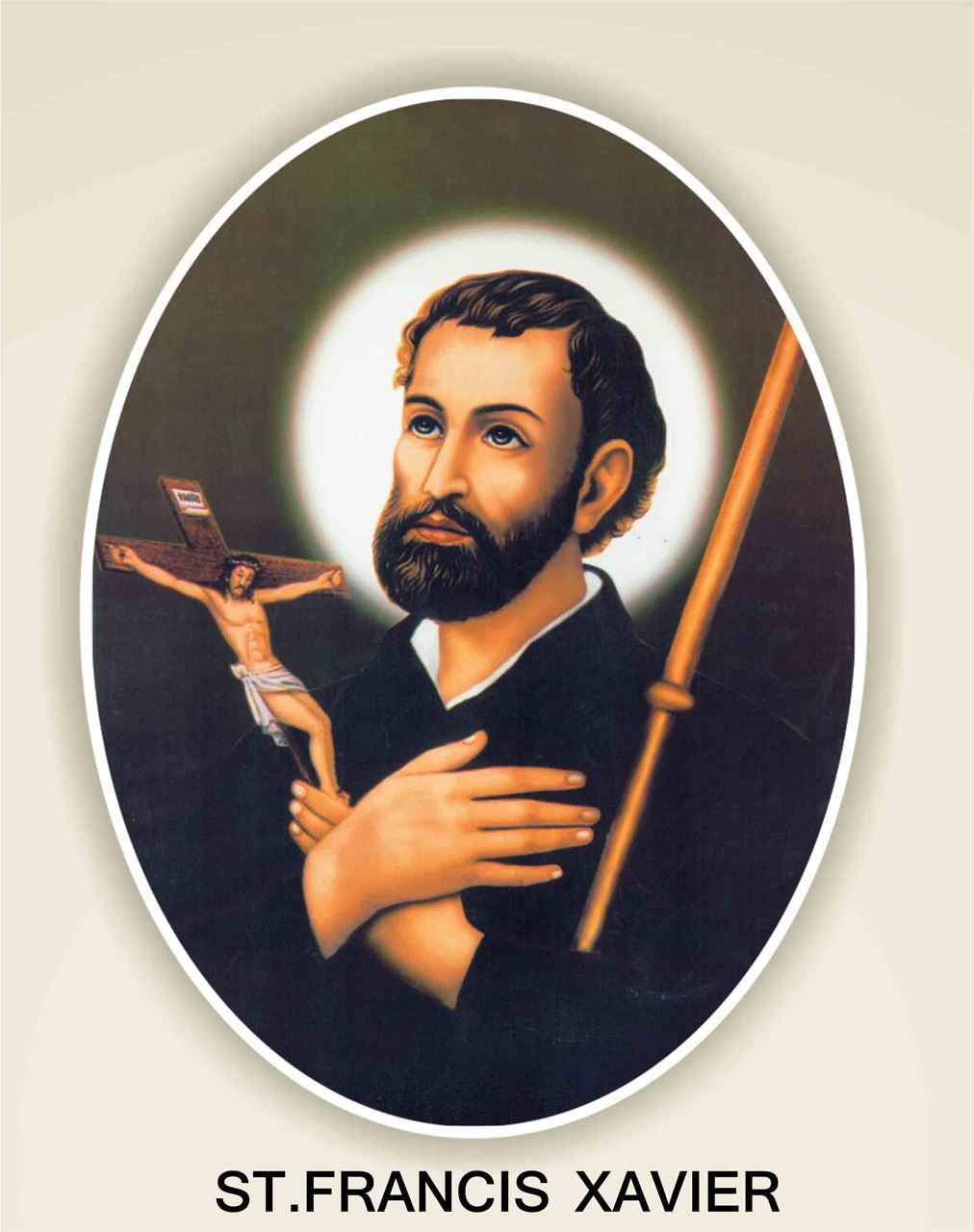
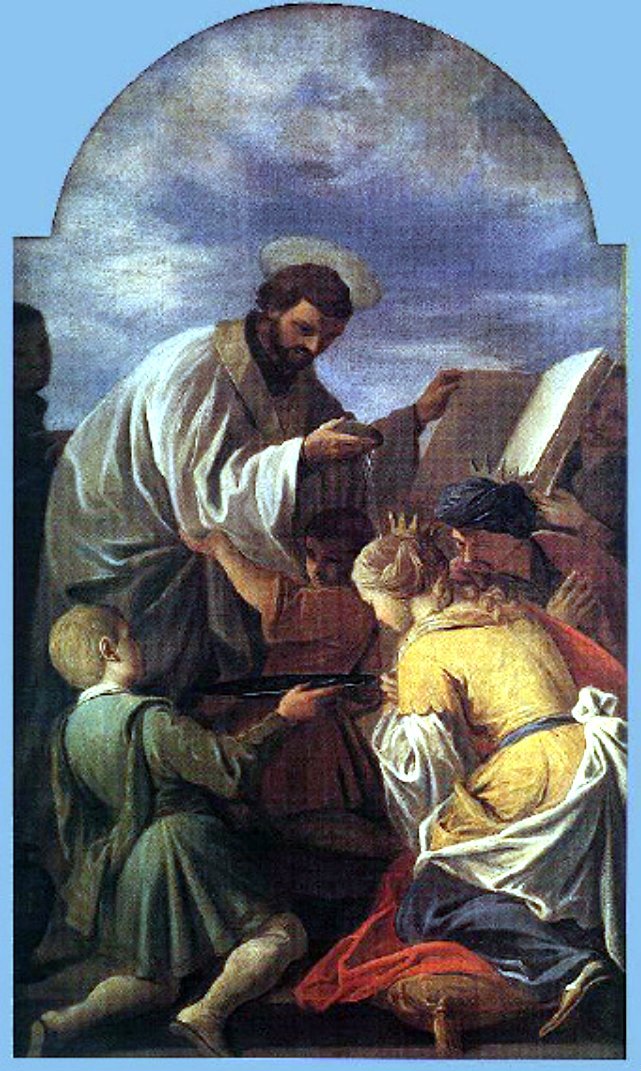
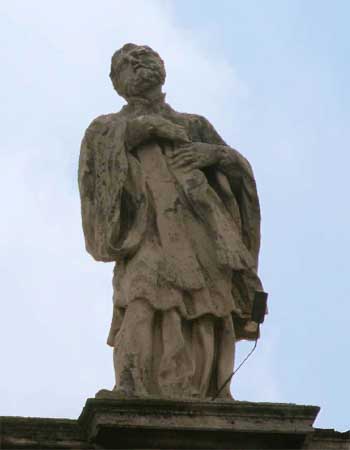
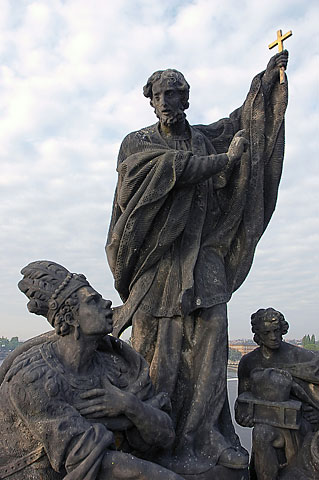
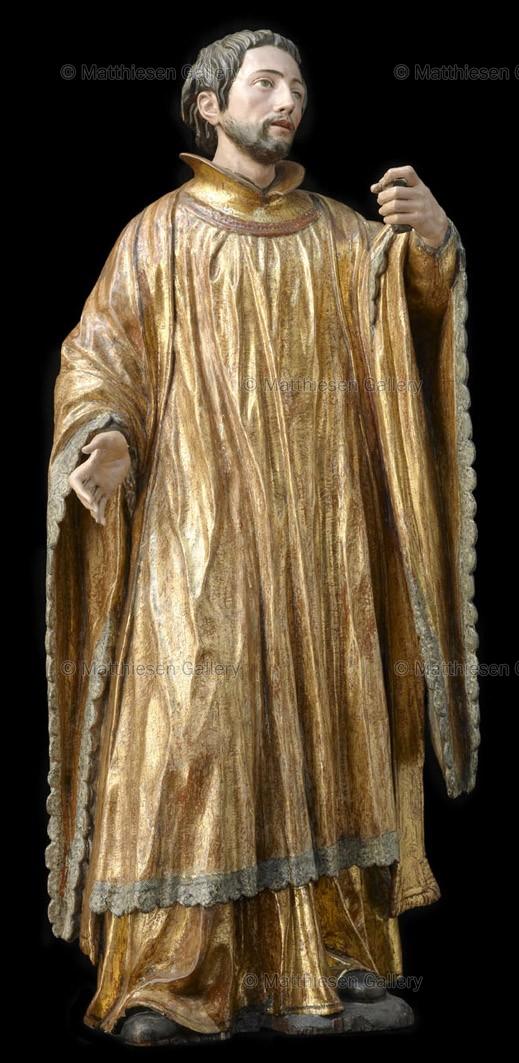
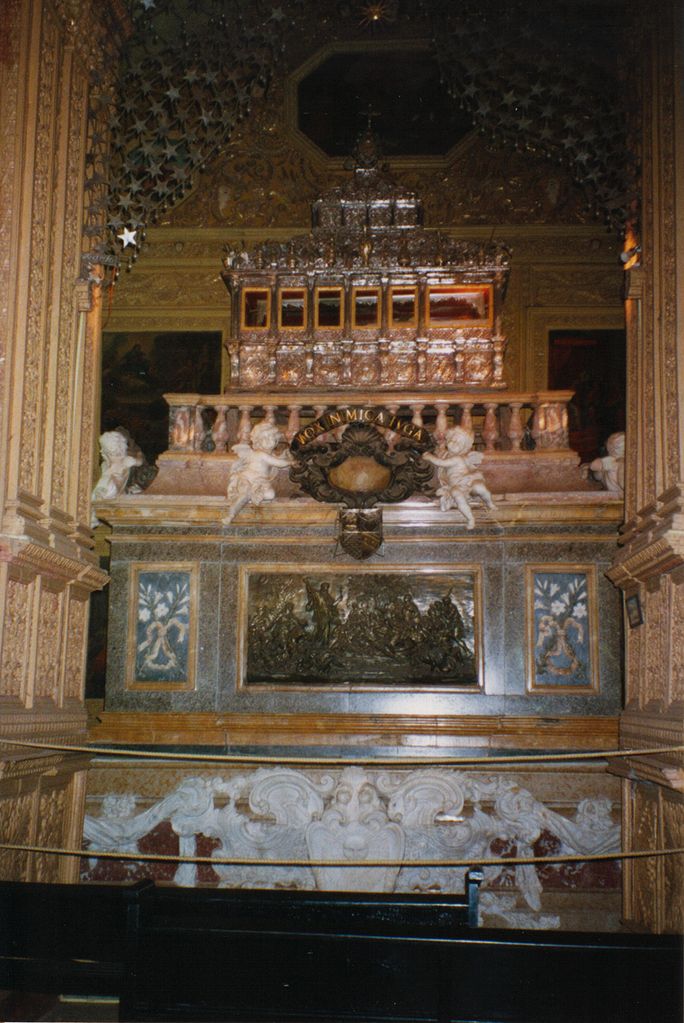

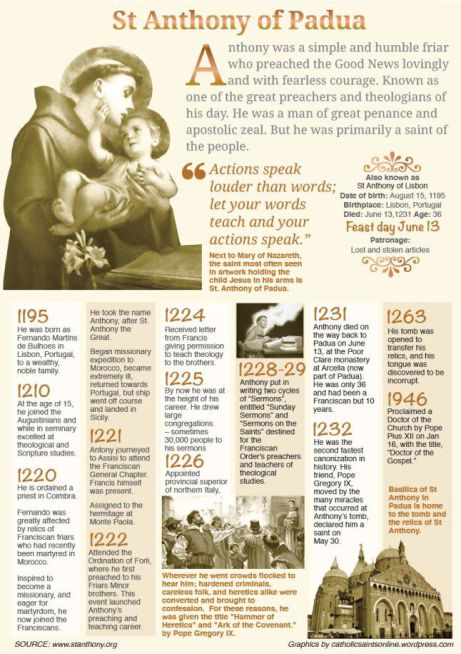
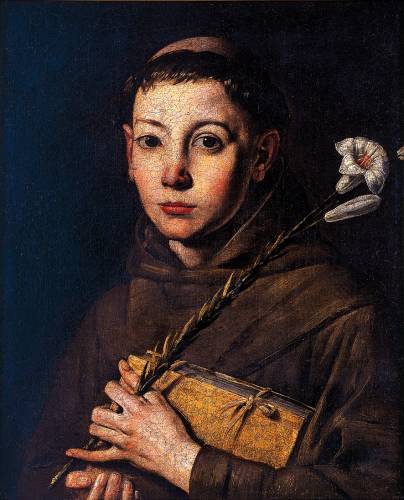
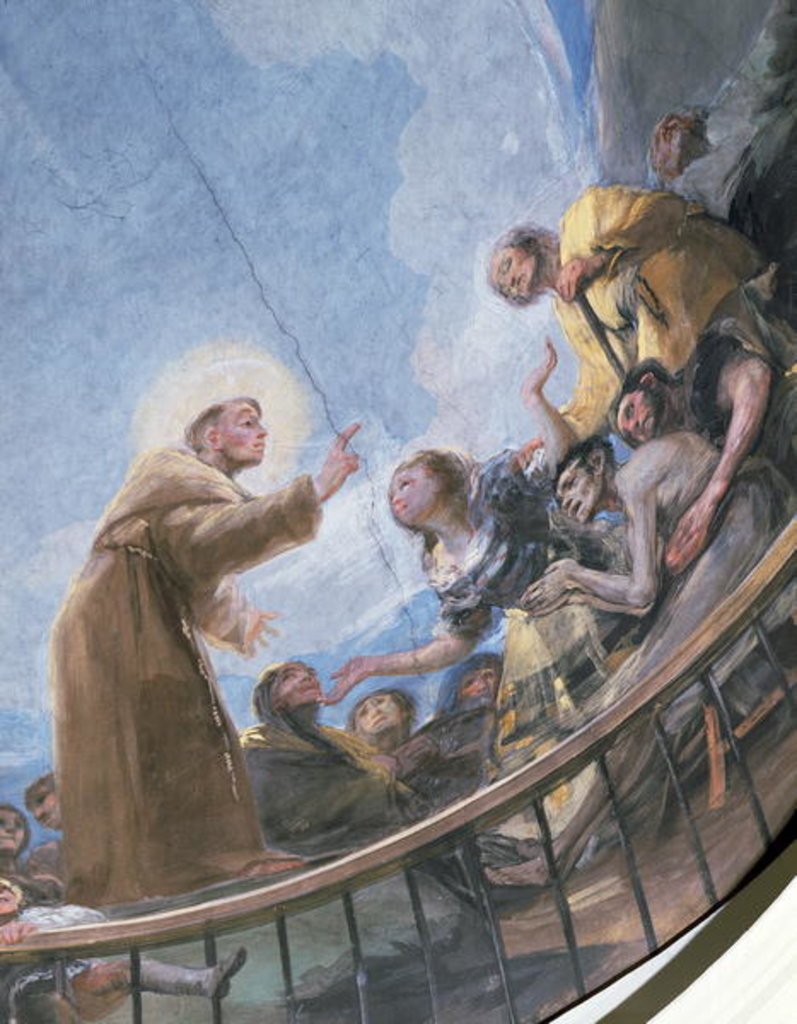
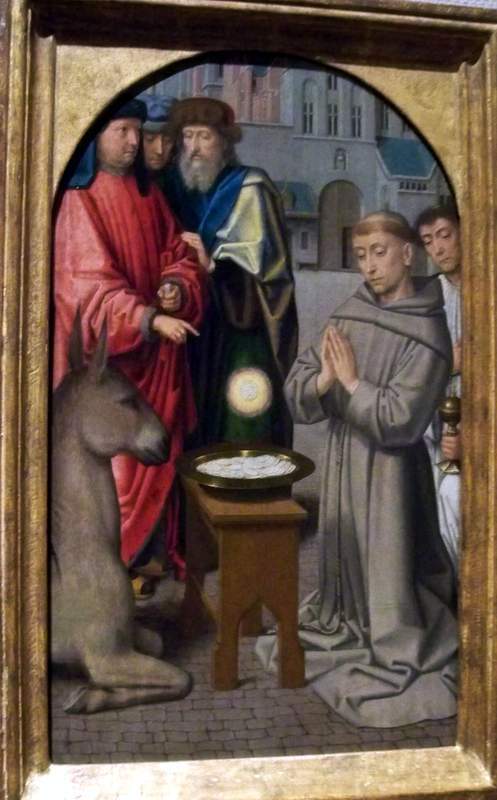
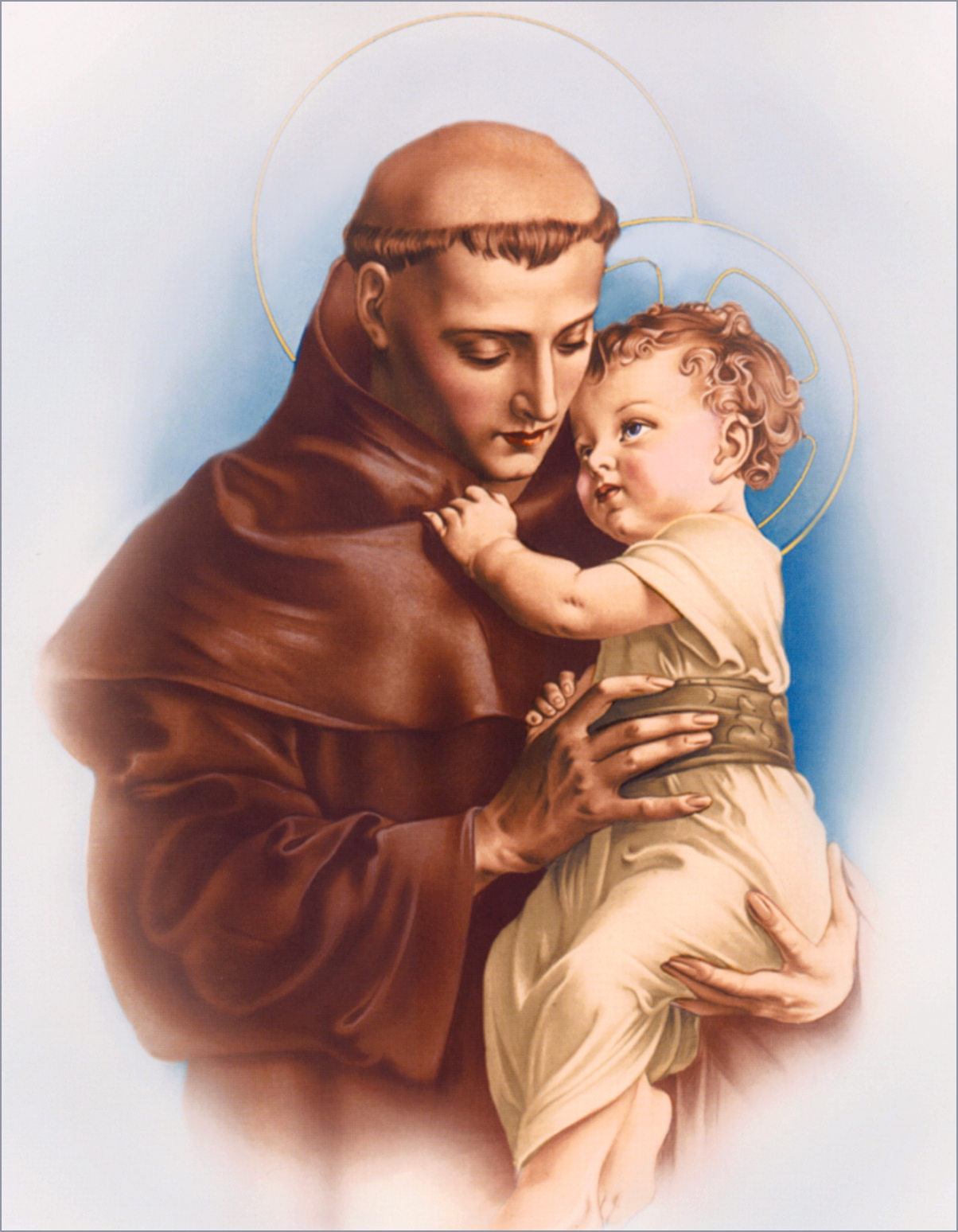
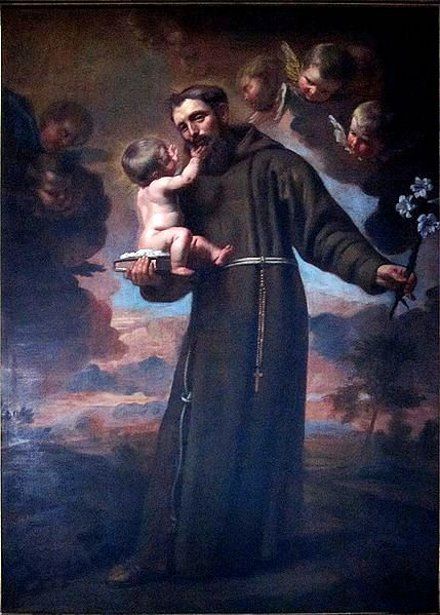
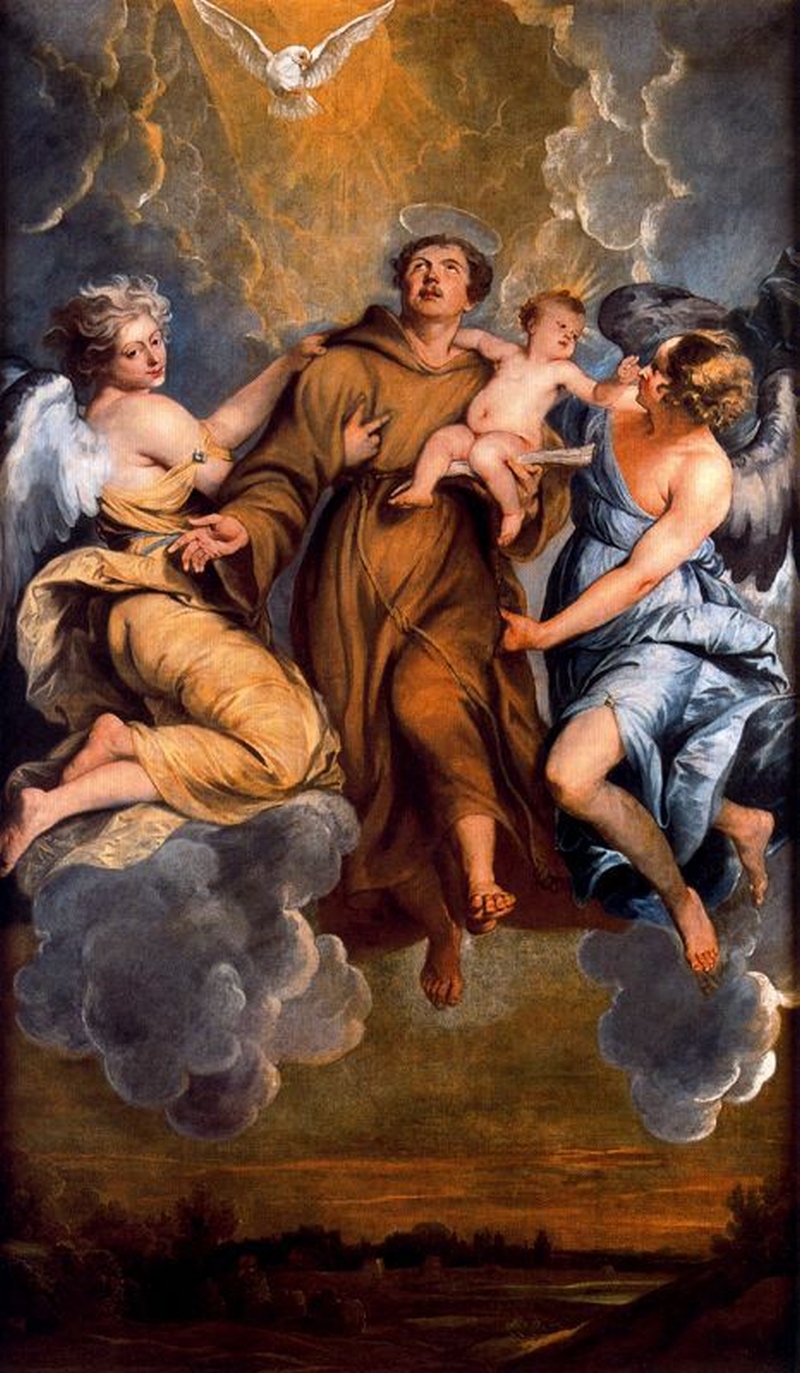
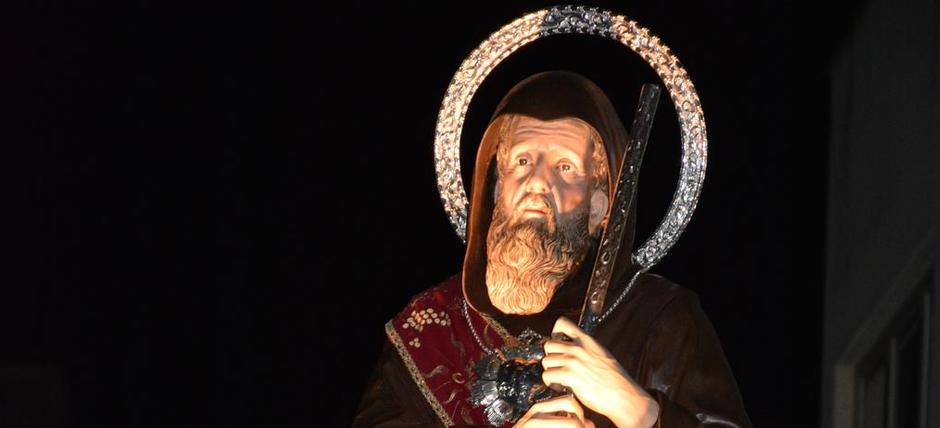
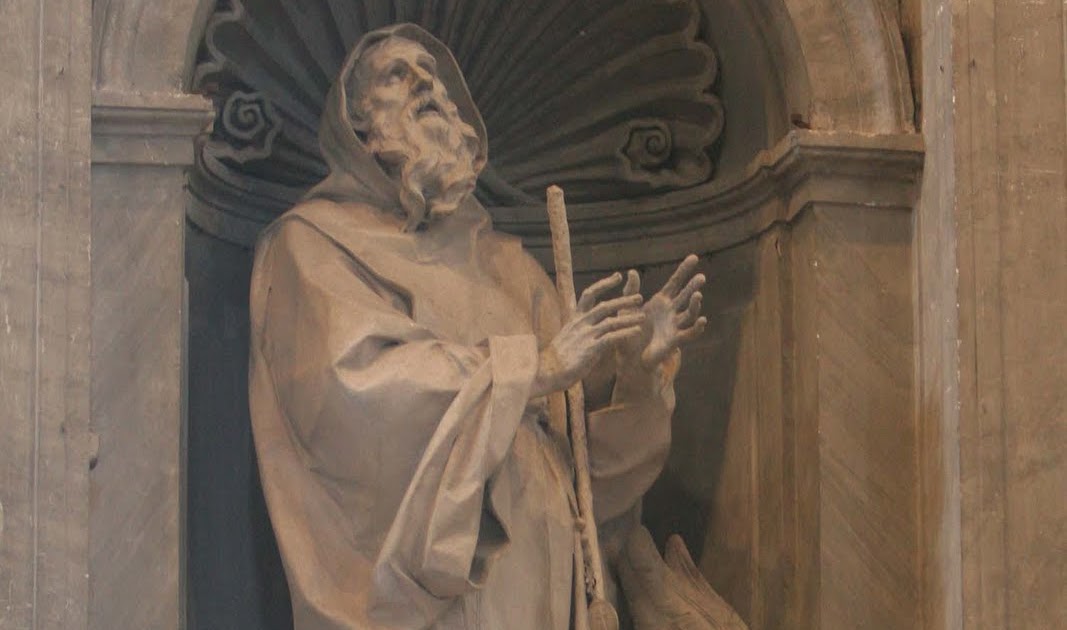
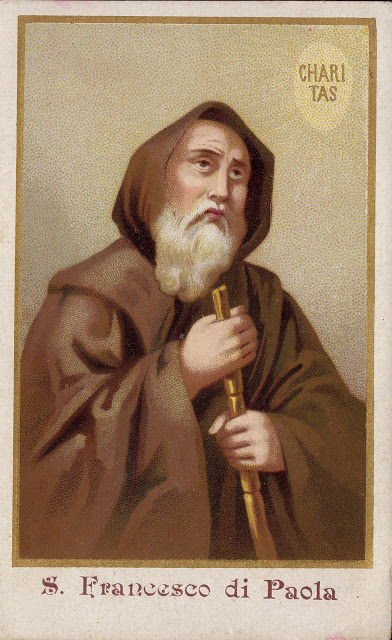
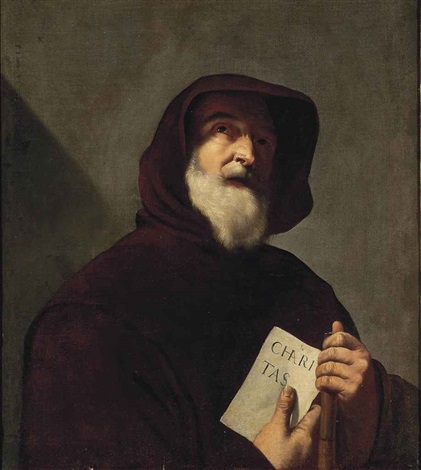
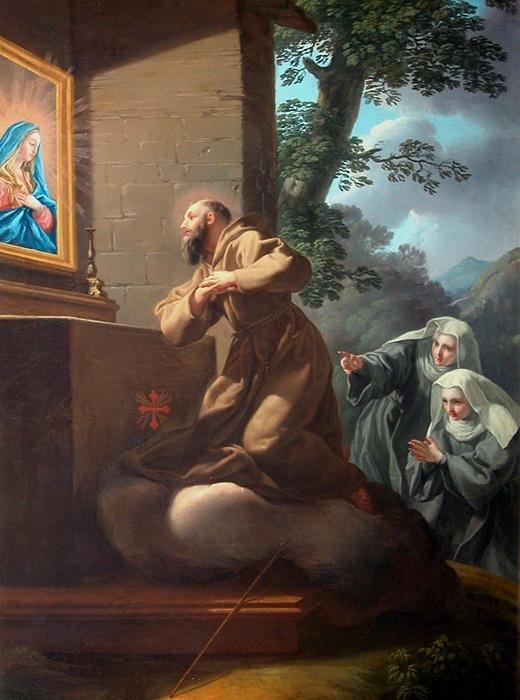
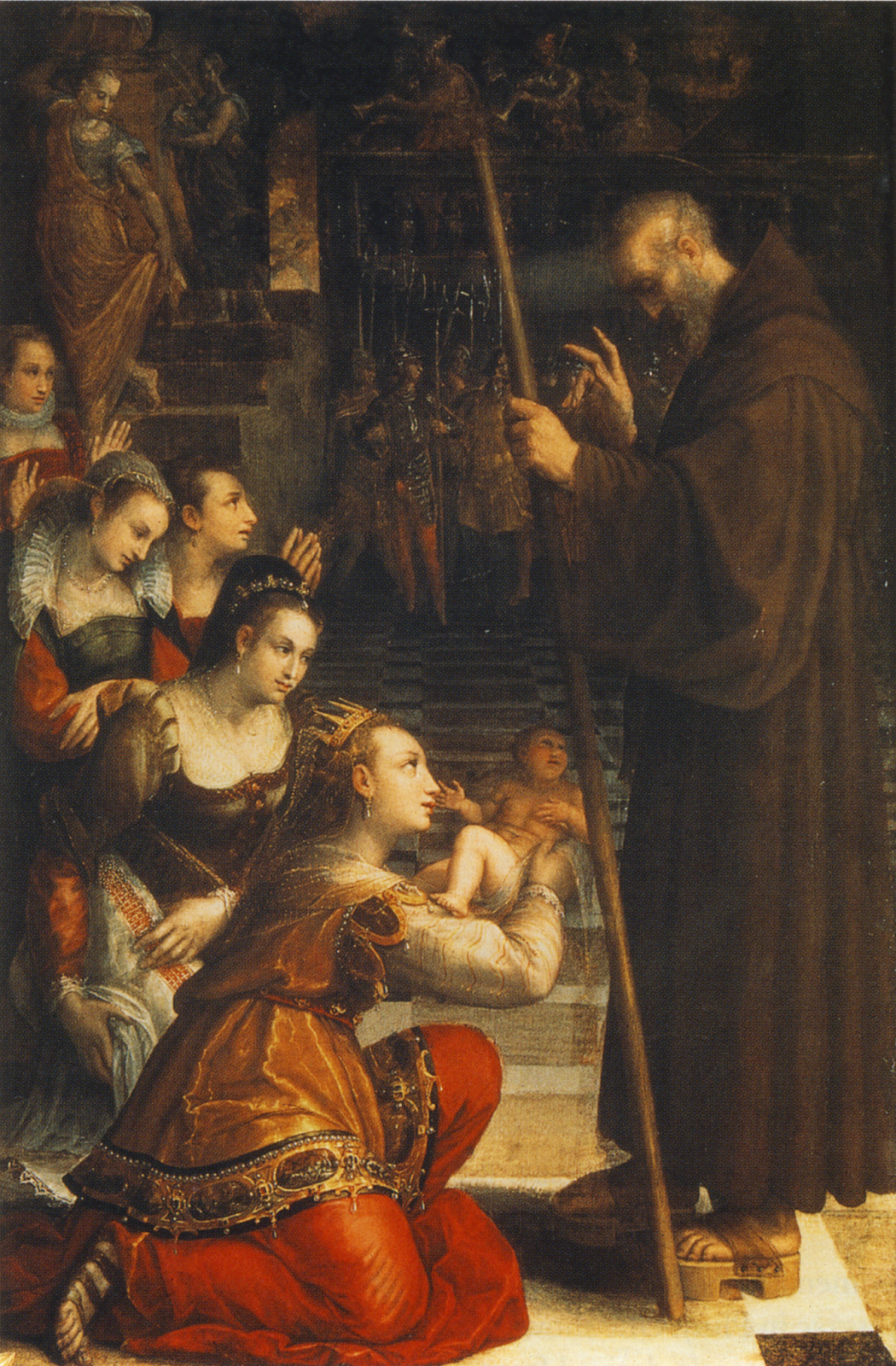


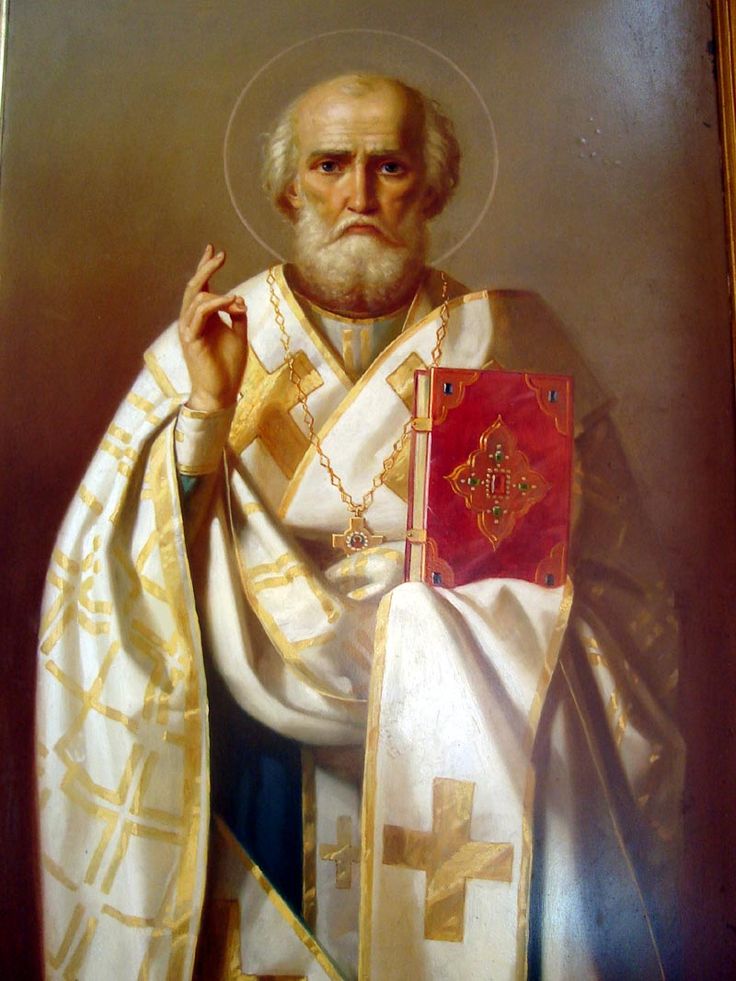


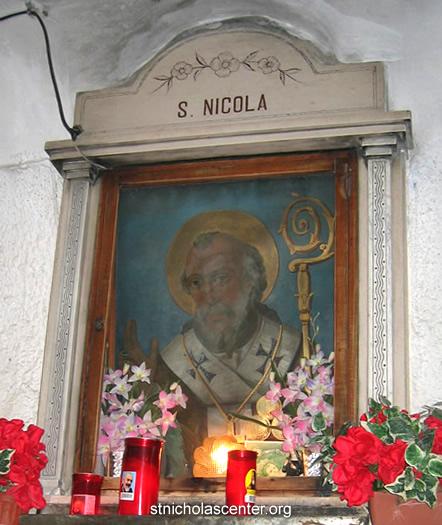


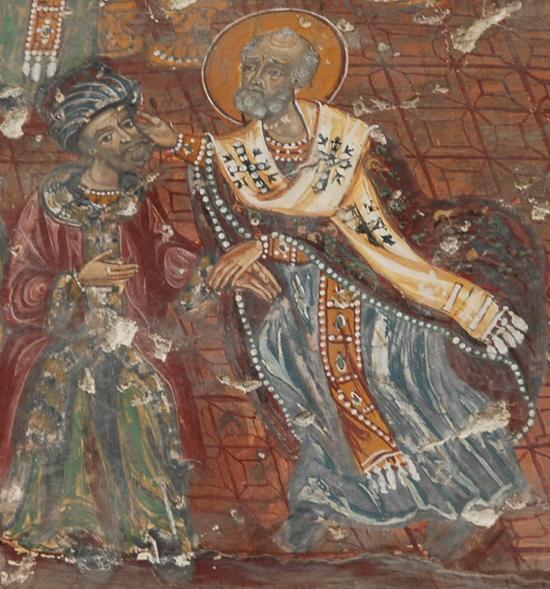
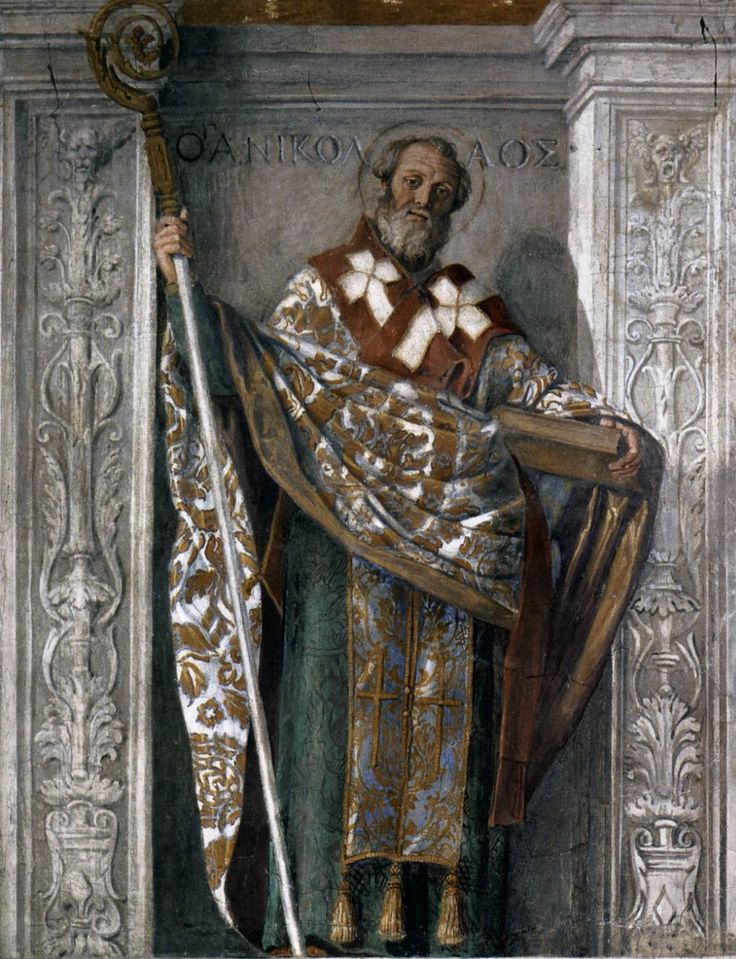
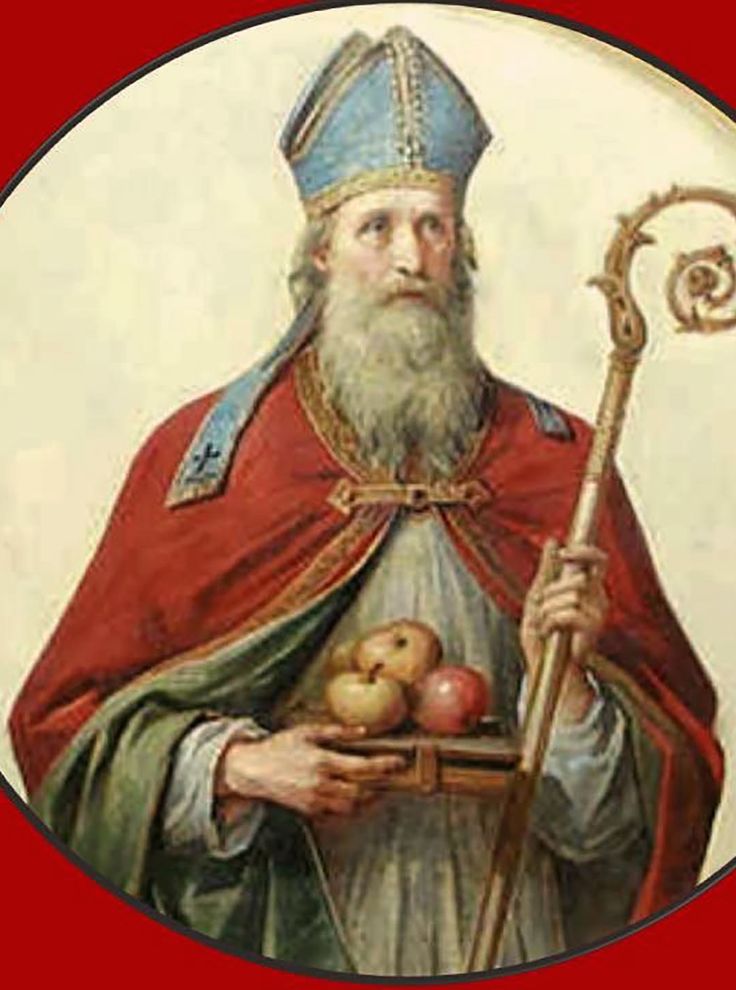
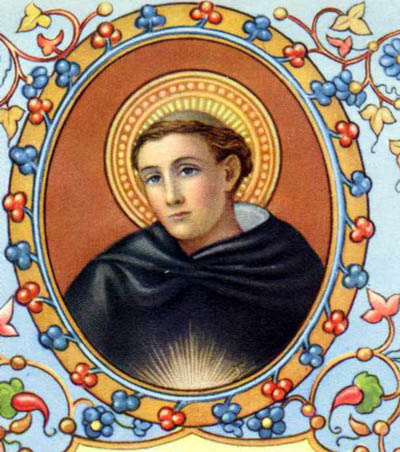
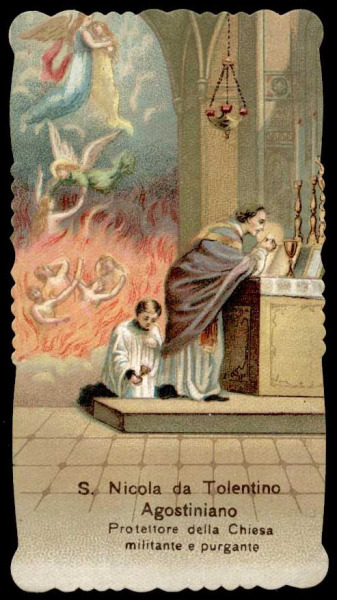
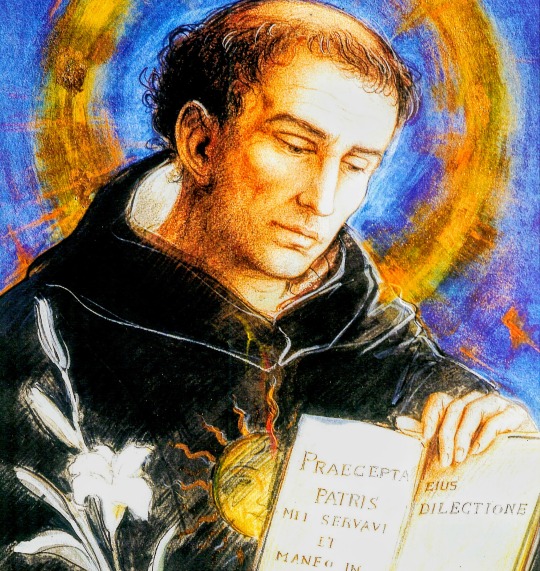


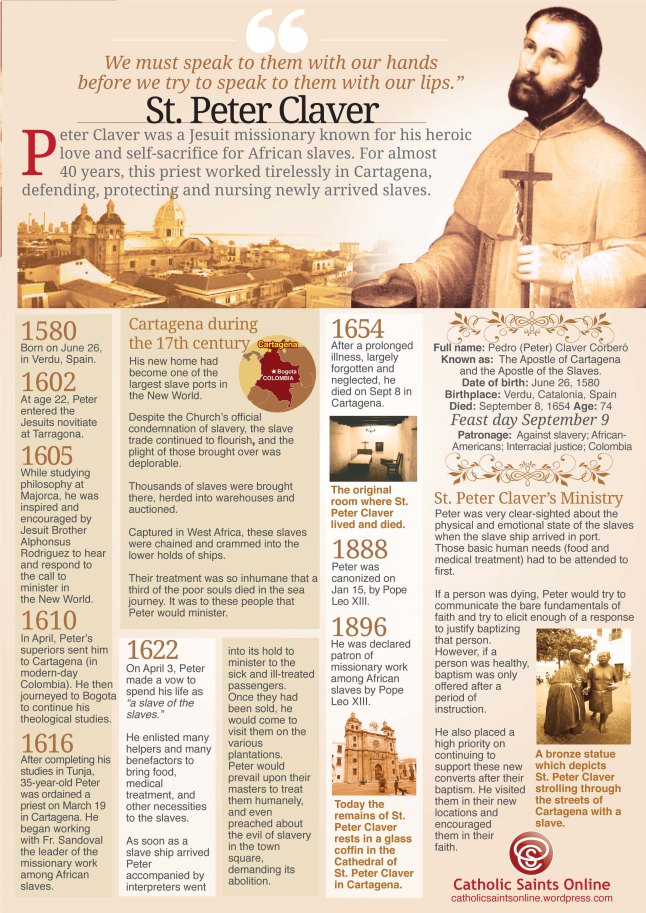
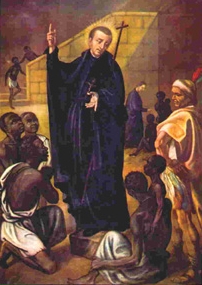
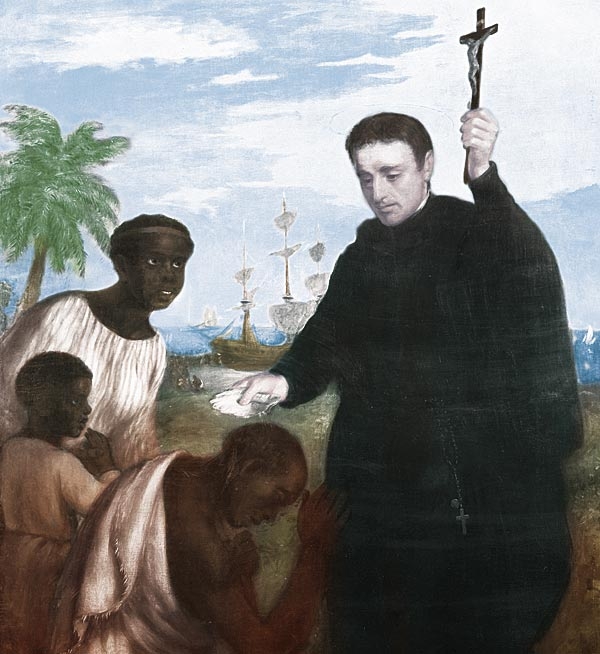
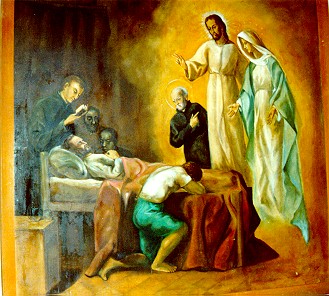
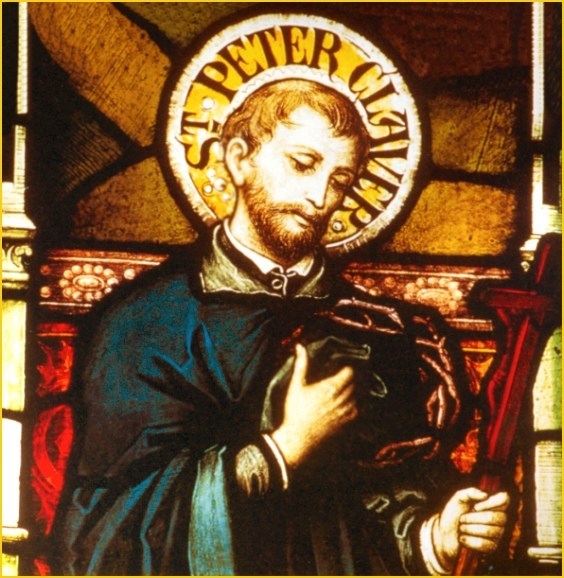
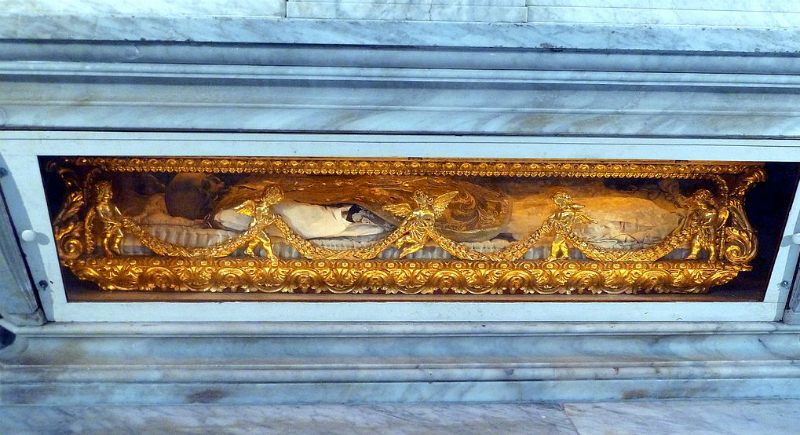
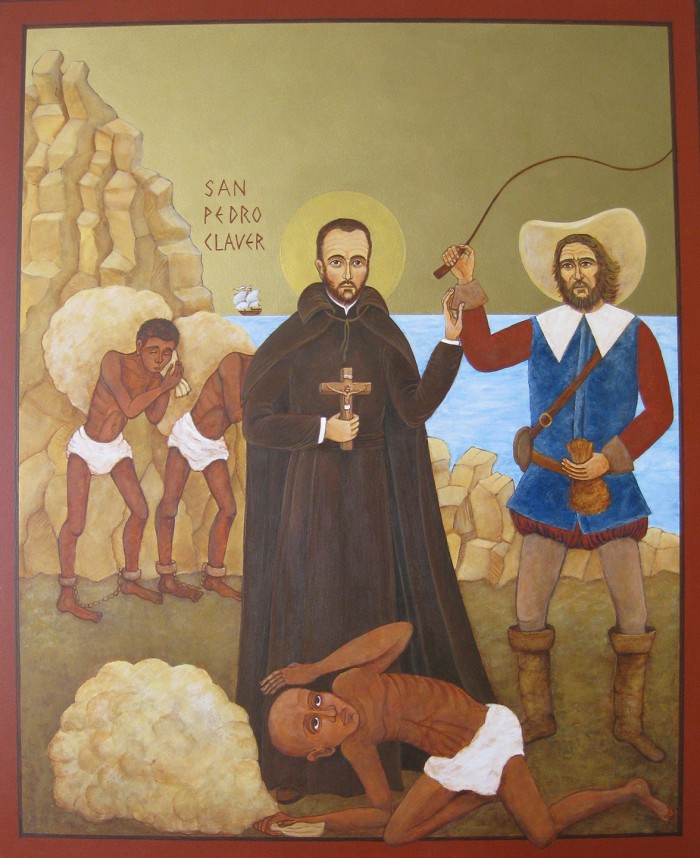
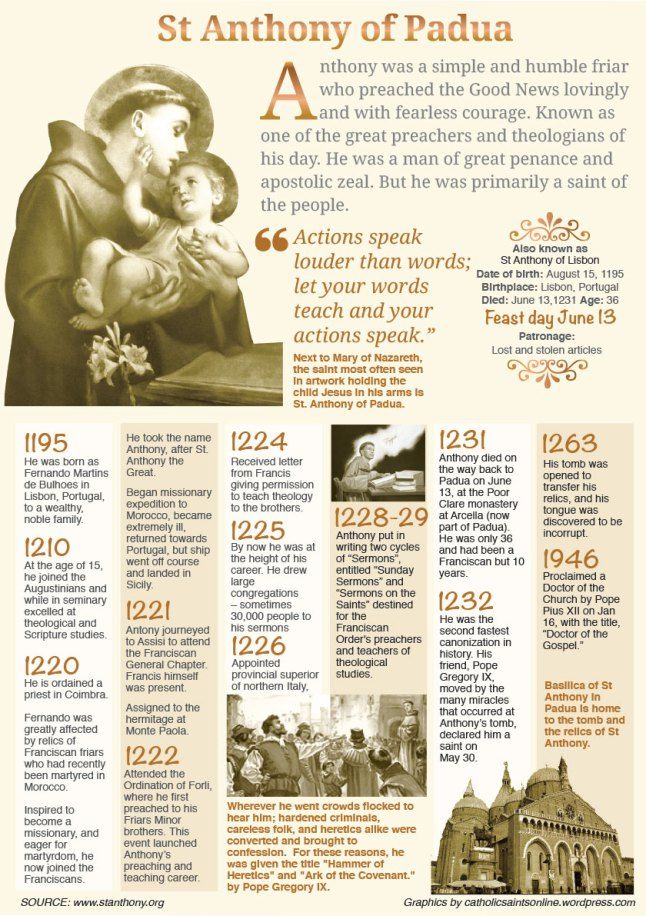
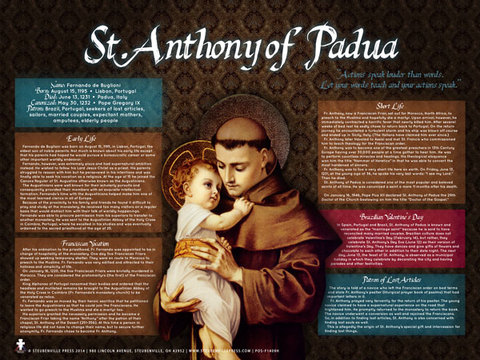
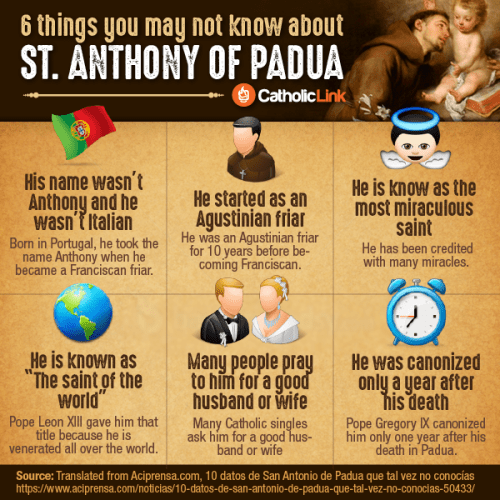
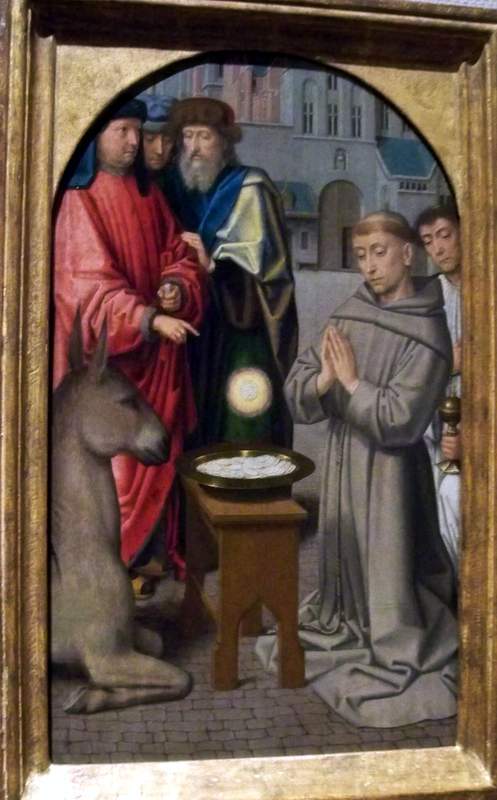
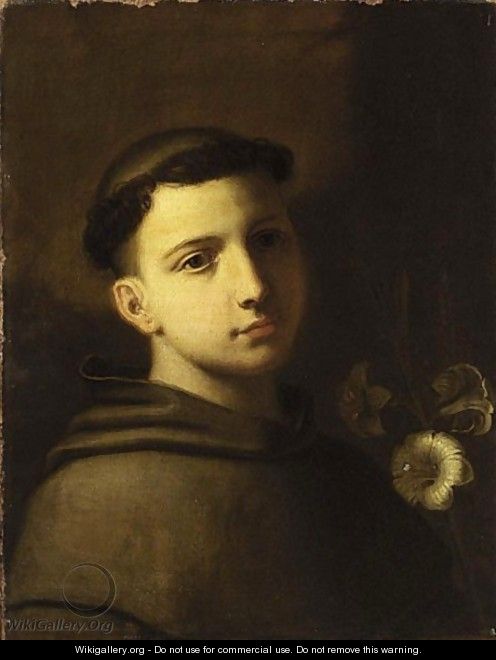
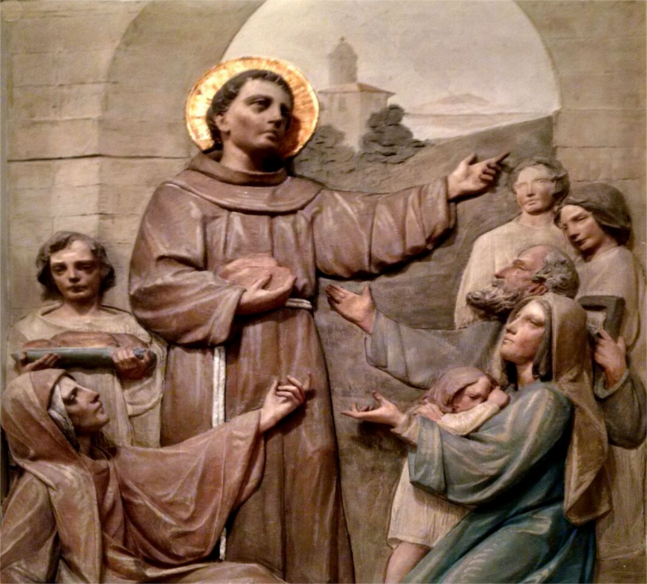
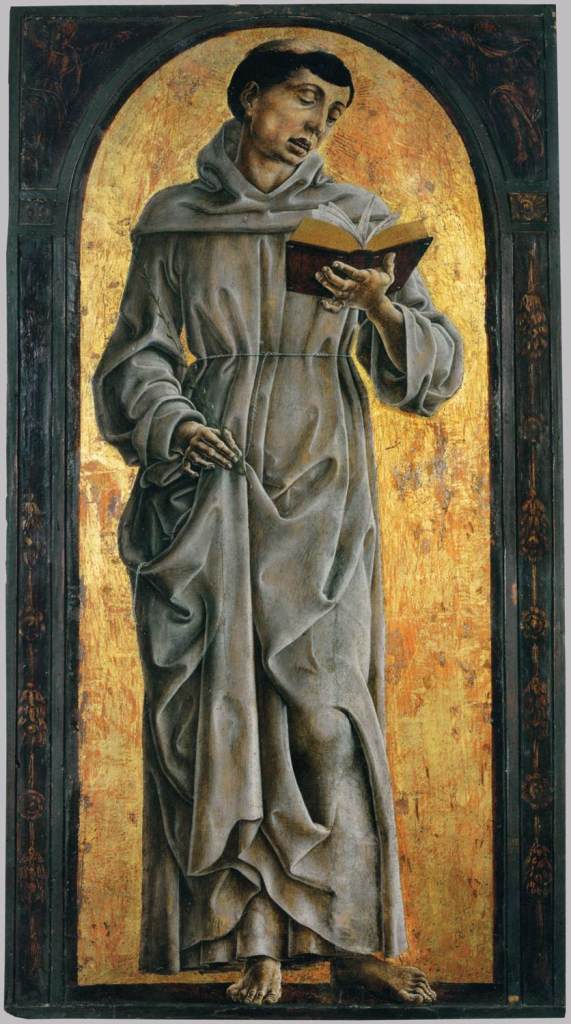
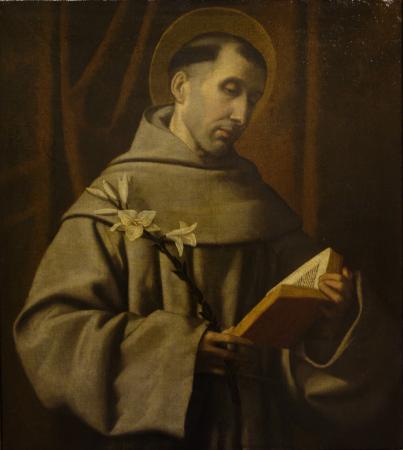
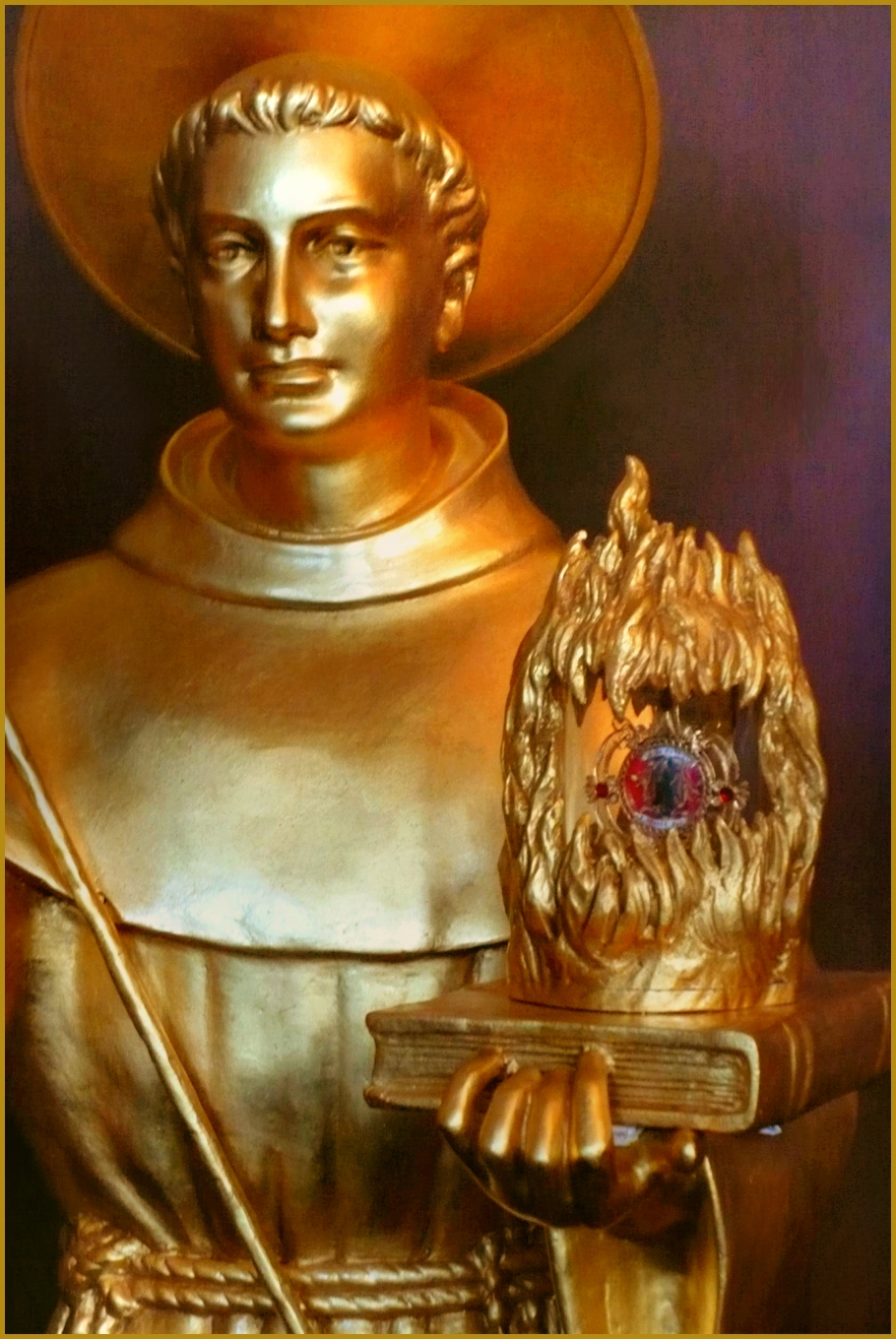
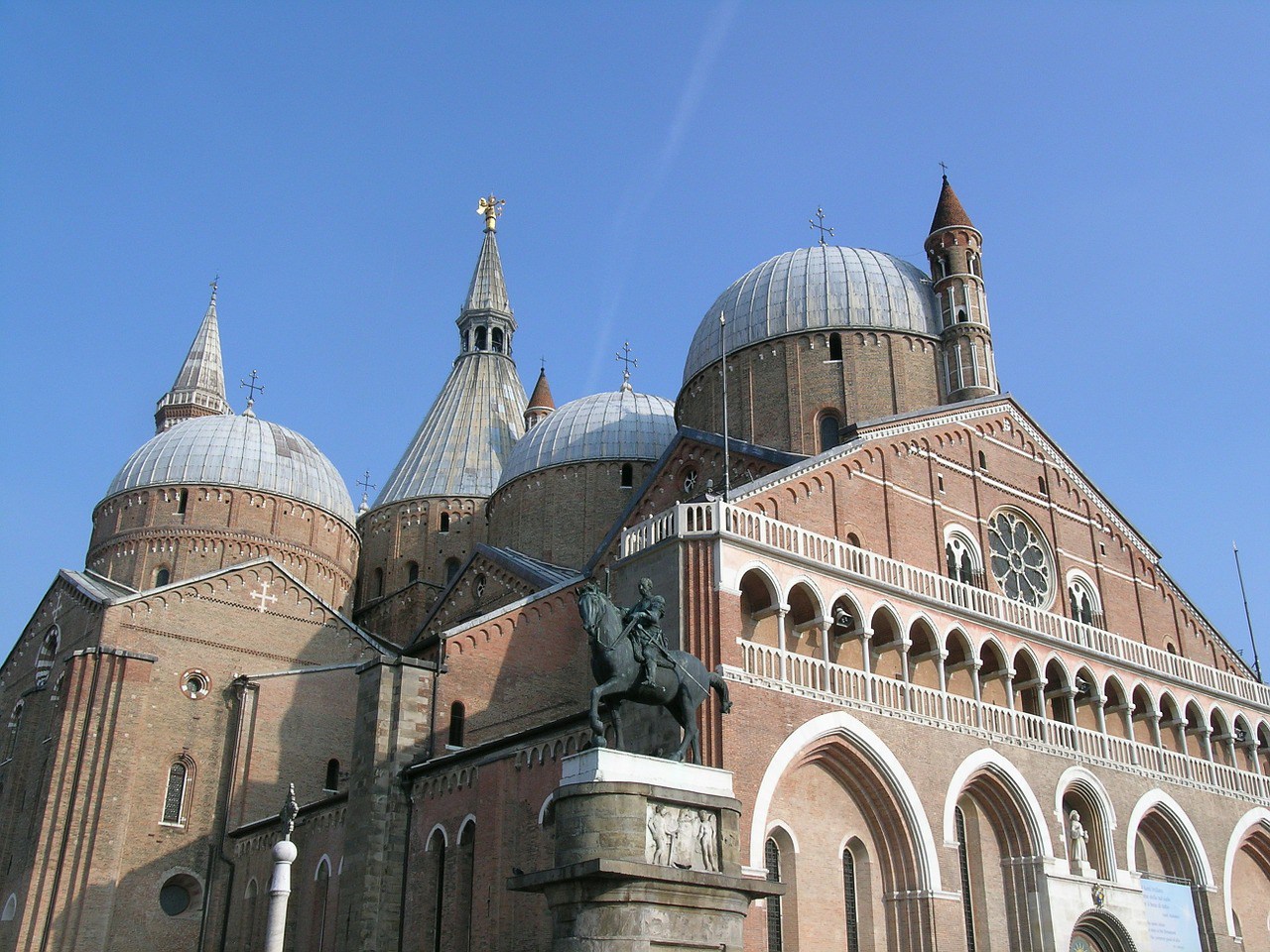

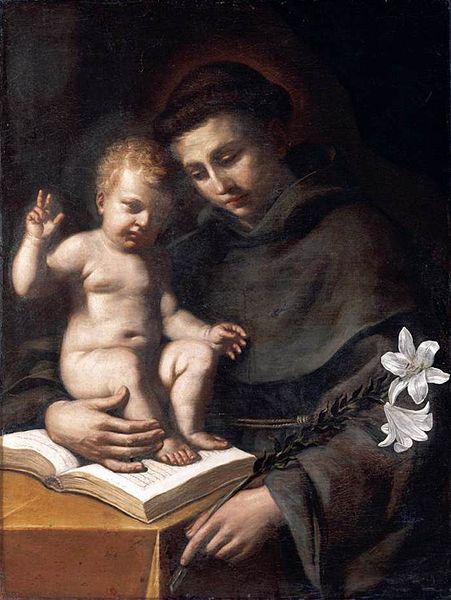
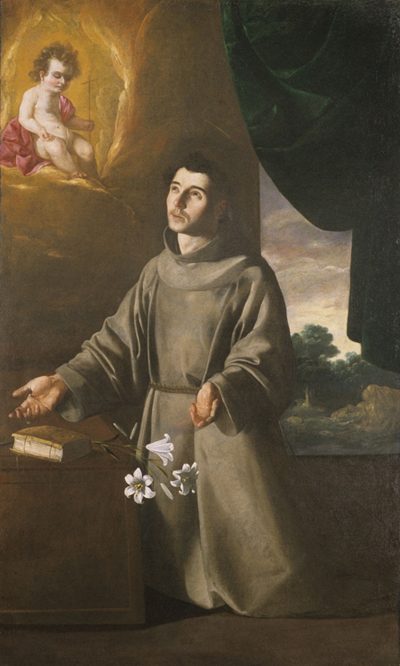
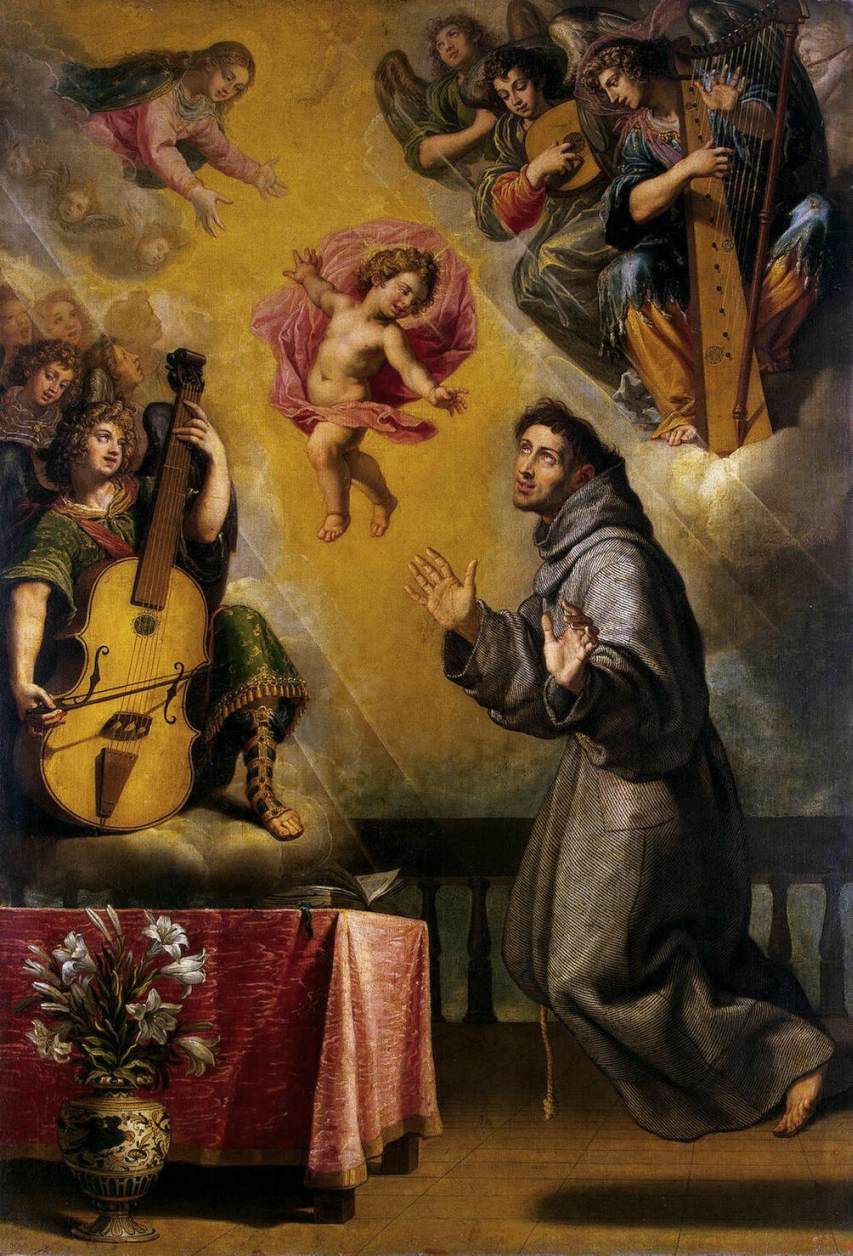
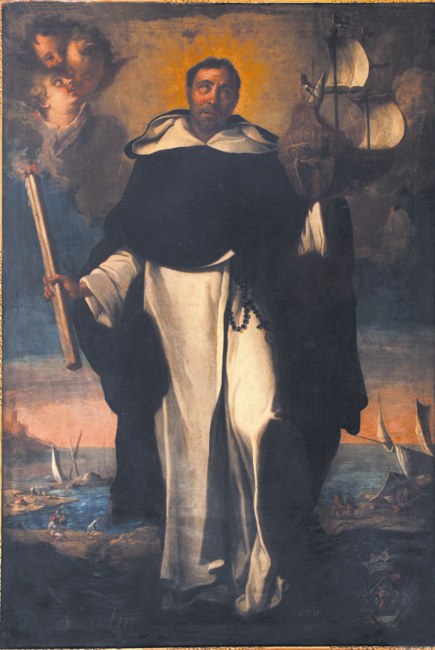
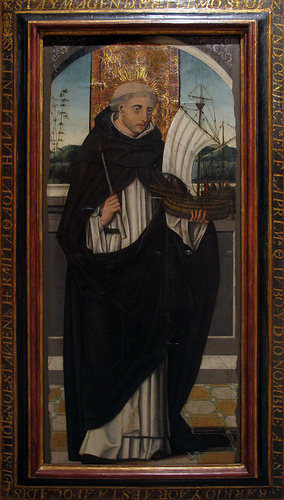


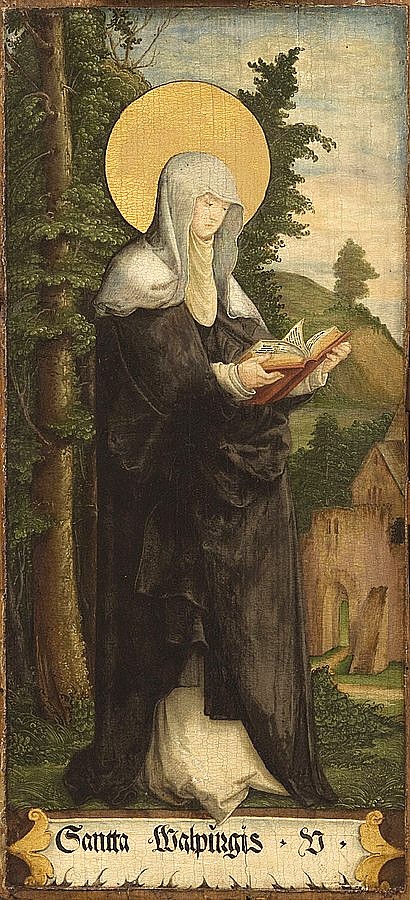
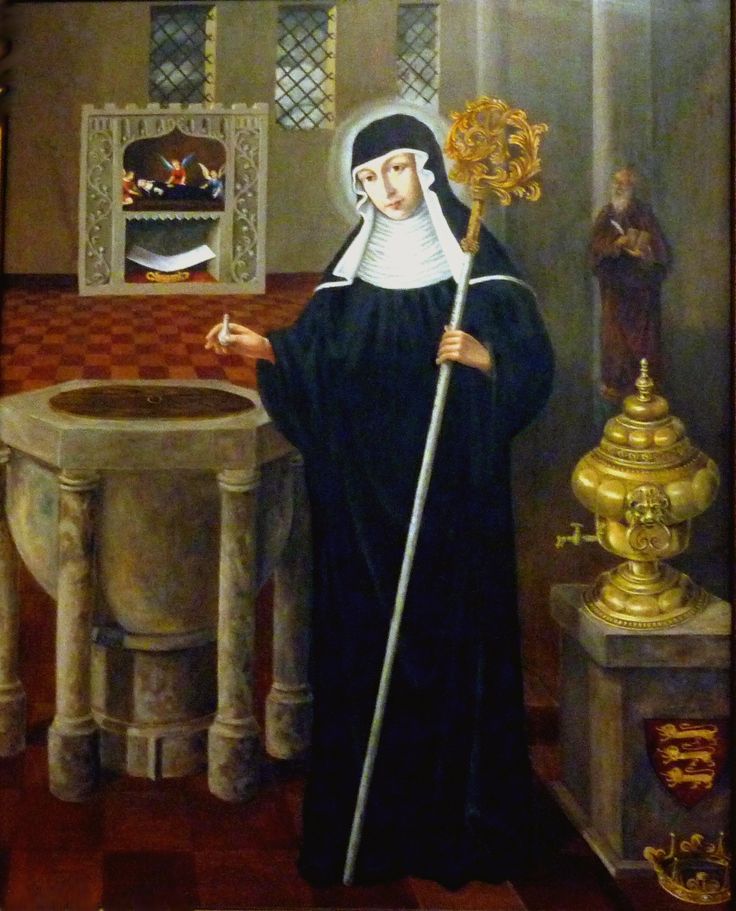
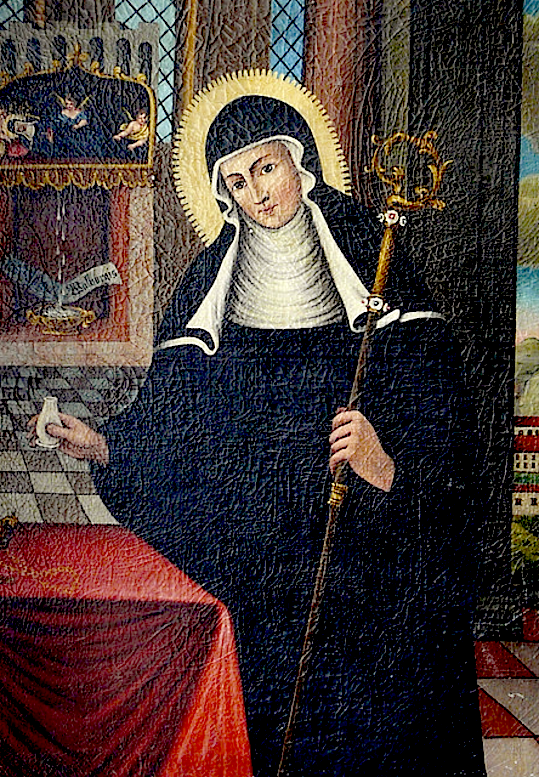
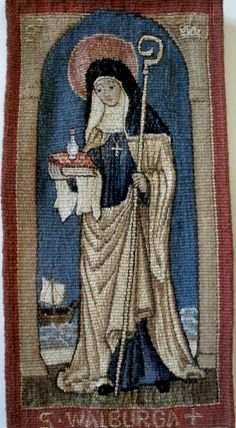
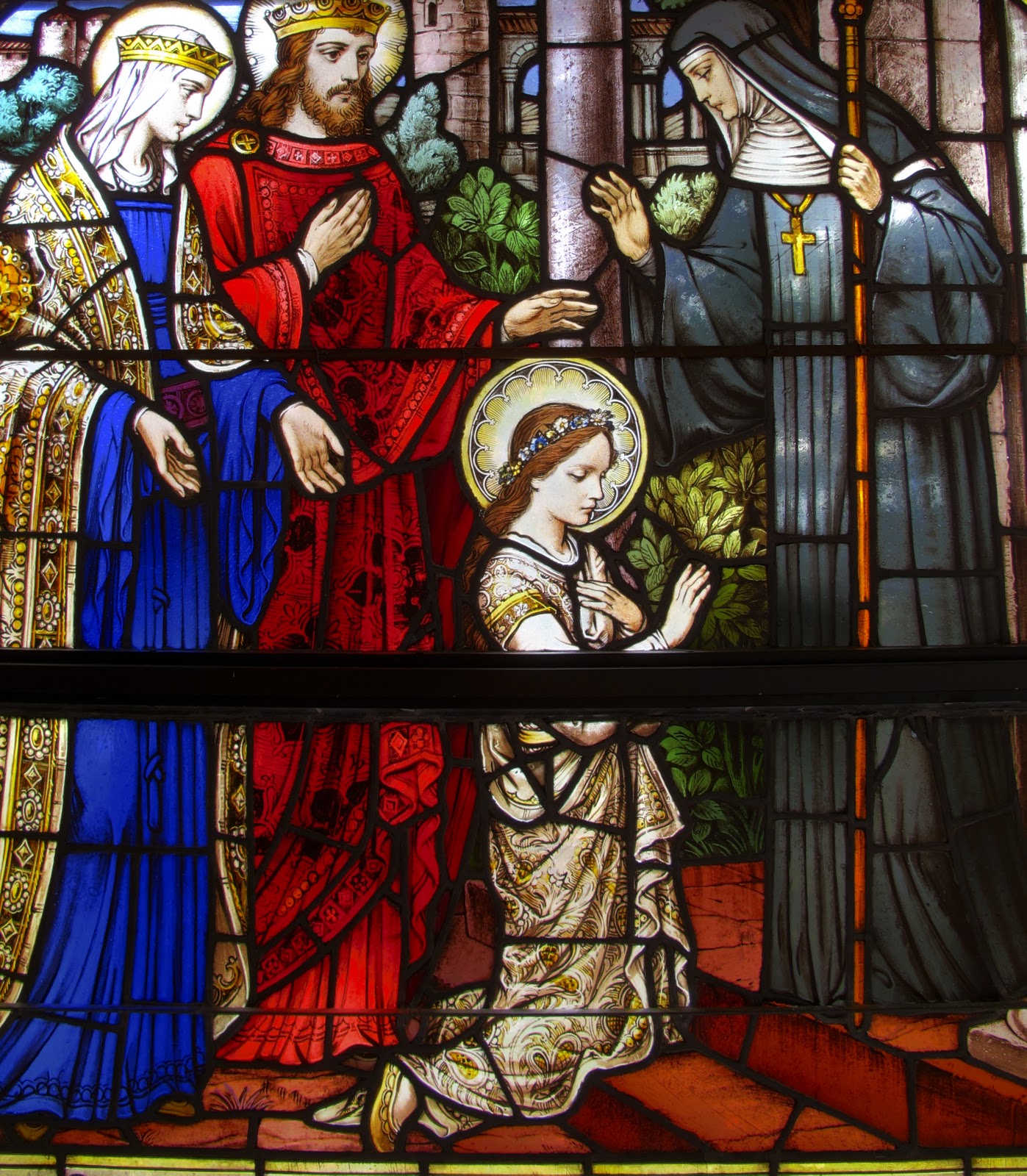
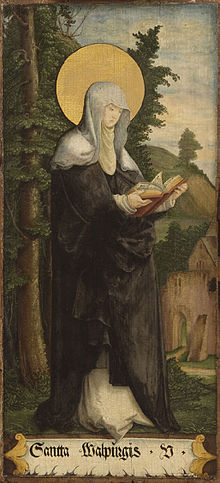
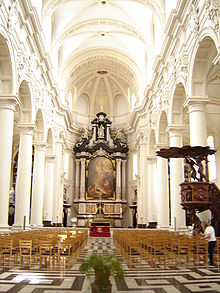
 AnaStpaul
You must be logged in to post a comment.