Posted in Against EPIDEMICS, DOMESTIC ANIMALS, EPILEPSY, Of ANIMALS / ANIMAL WELFARE, Of GARDENERS, Horticulturists, Farmers, Of UNDERTAKERS, Morticians, Catholic Cemetaries, PALLBEARERS, PATRONAGE - of BASKET-WEAVERS, CRAFTSMEN, SAINT of the DAY, SKIN DISEASES, RASHES

Saint of the Day – 17 January – St Anthony Abbot (251-356)

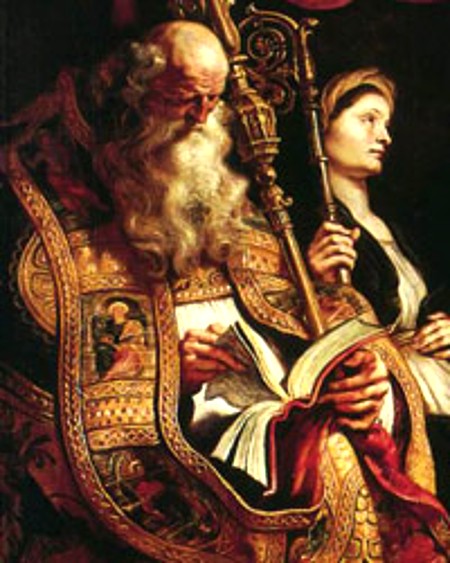
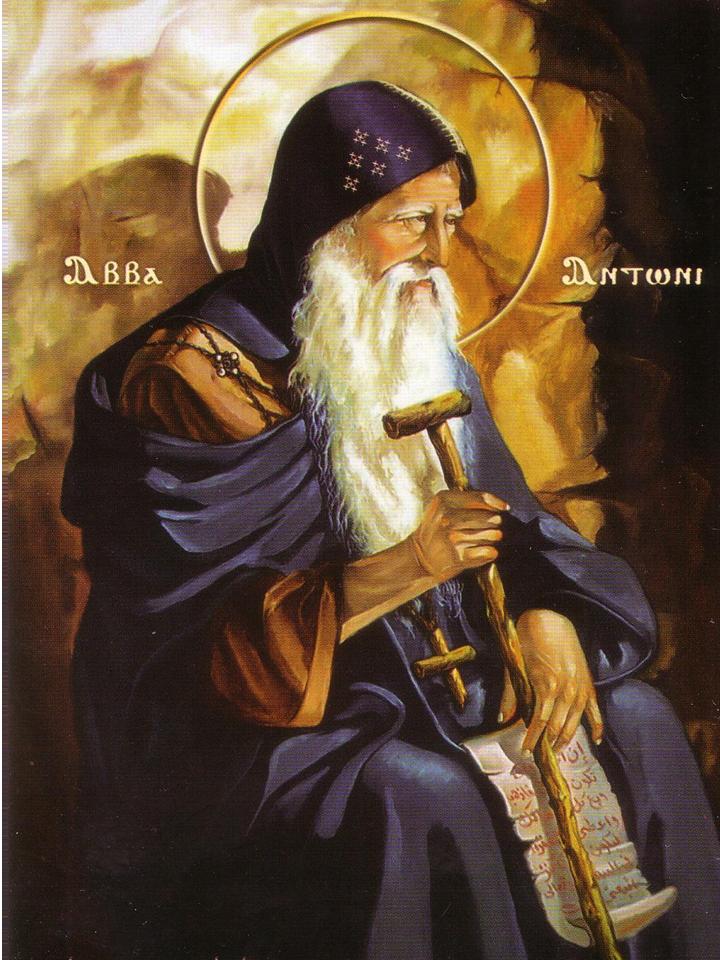
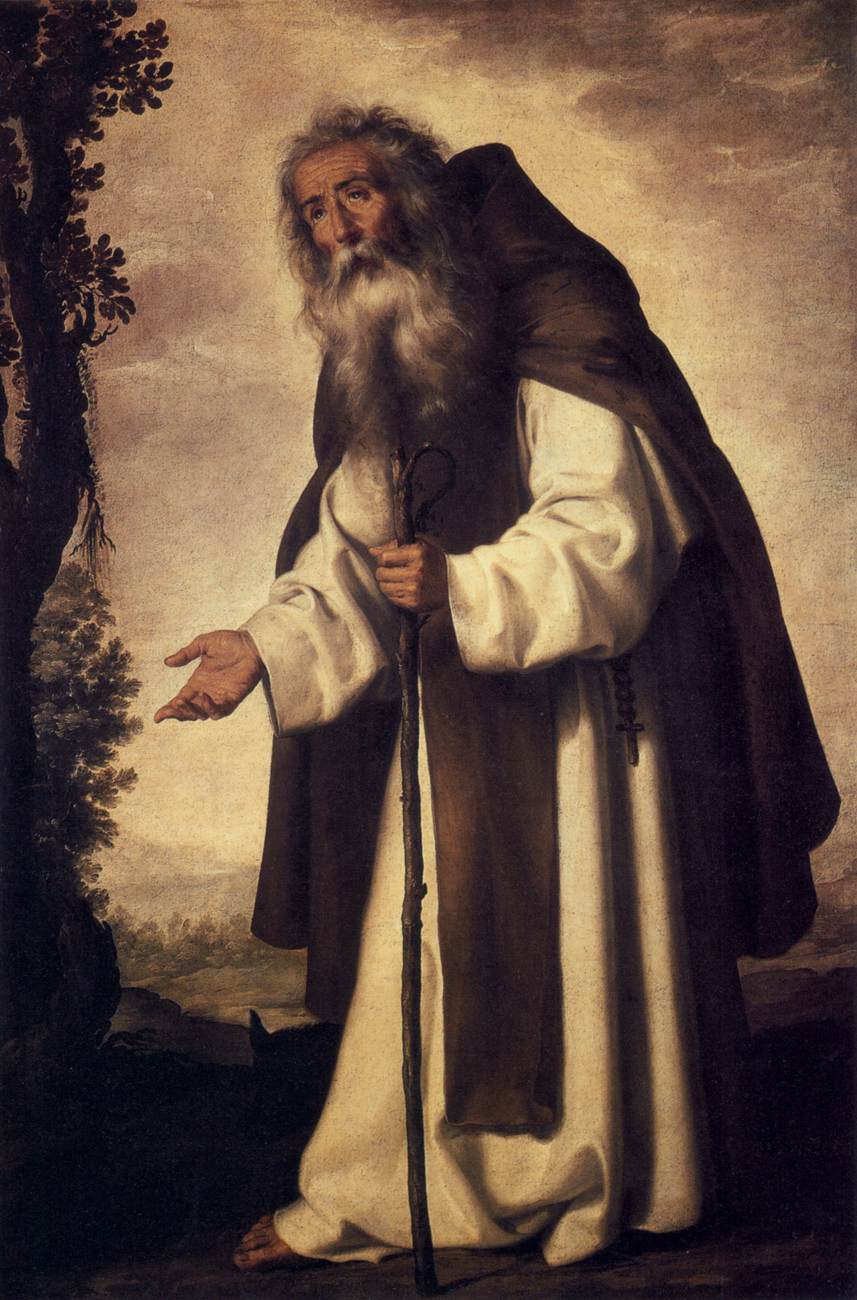
Saint of the Day – 17 January – St Anthony Abbot (251-356) Hermit, Founder of Monasteries, Abbot and Spiritual Guide, Mystic and Miracle-Worker, beloved of all animals. Born in 251 at Heracleus, Egyptand died on 17 January 356 at Mount Colzim of natural causes. Also known as – Anthony of Egypt, Anthony of the Desert, Anthony the Anchorite, Anthony the Hermit, Antonio Abate, Father of All Monks, Father of Western Monasticism. His Patronages are numerous against eczema, skin diseases and rashes, pestilence, Saint Anthony’s Fire, of firefighters, of wild animals, amputees, anchorites, basket weavers and makers, bell ringers, brushmakers, domestic animals, butchers, cemetery and funeral workers and gravediggers, epileptics, farmers, hermits, monks, pigs, livestock, Hospitallers, of 29 Cities in Europe.

The Roman Martyrology says: “In Thebais, St Anthony, Abbot and Spiritual Guide of many Monks. He was most celebrated for his life and miracles, of which St Athanasius has written a detailed account. His holy body was found by divine revelation, during the reign of the Emperor Justinian and brought to Alexandria, where it was buring in the Church of St John the Baptist.

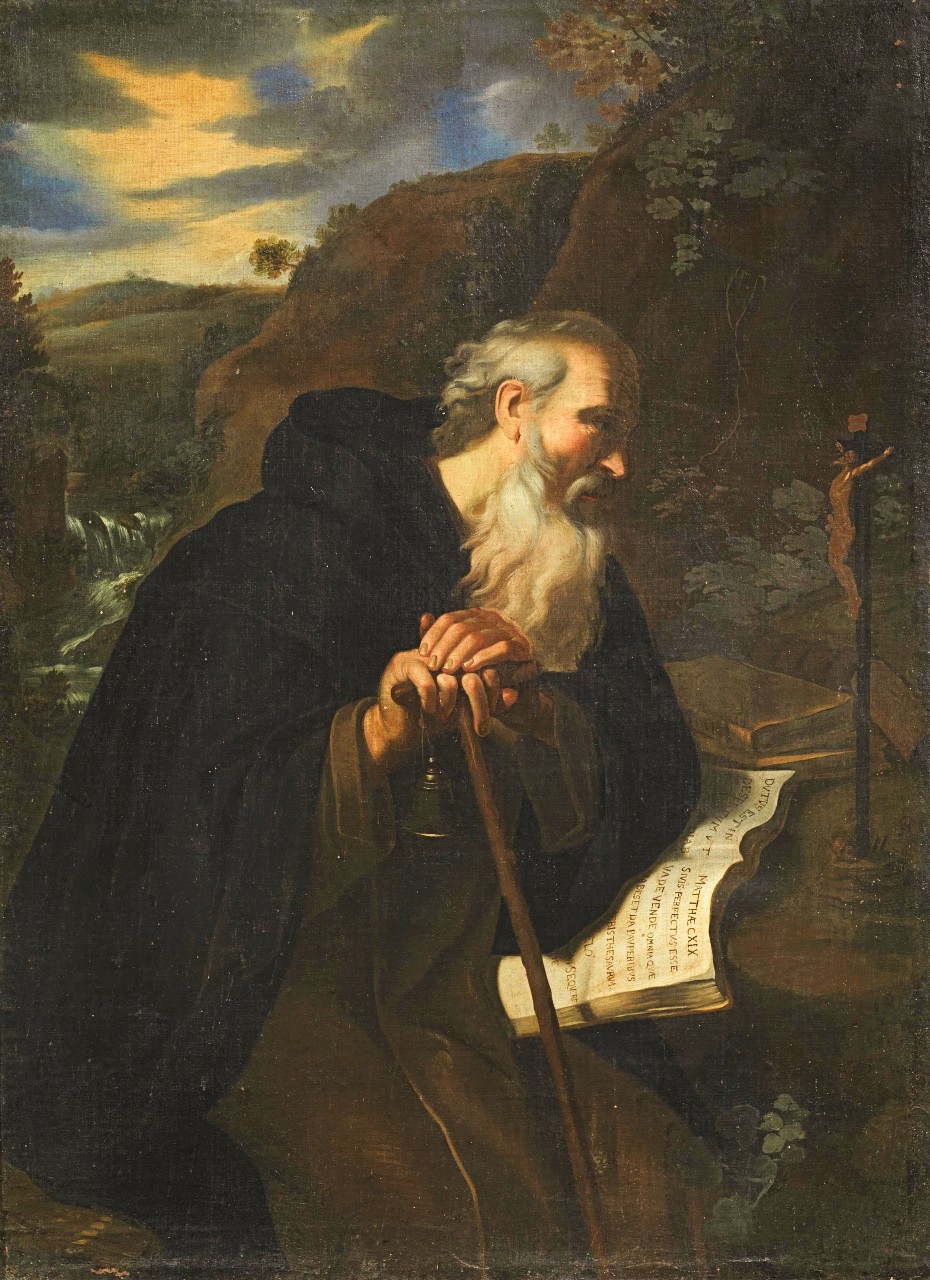
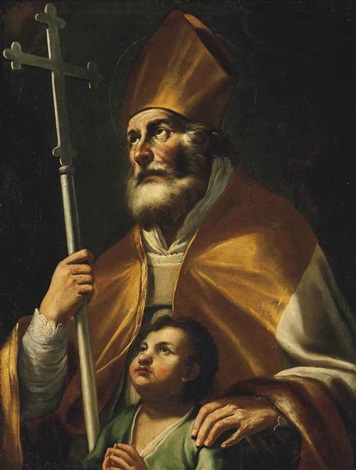
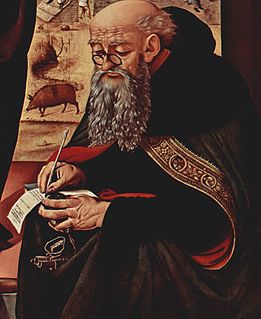
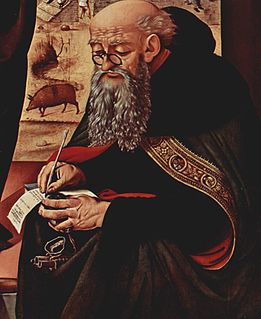
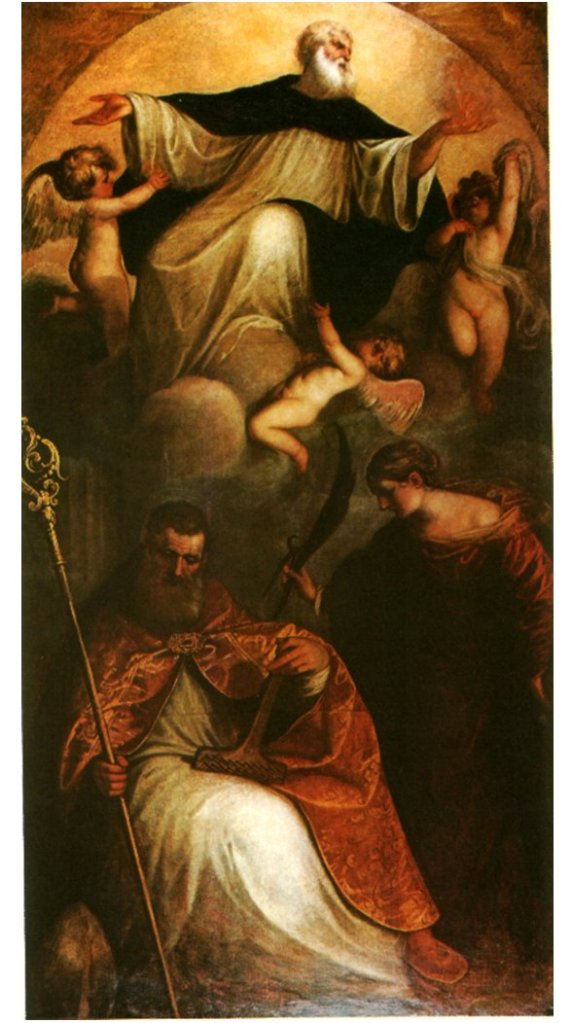
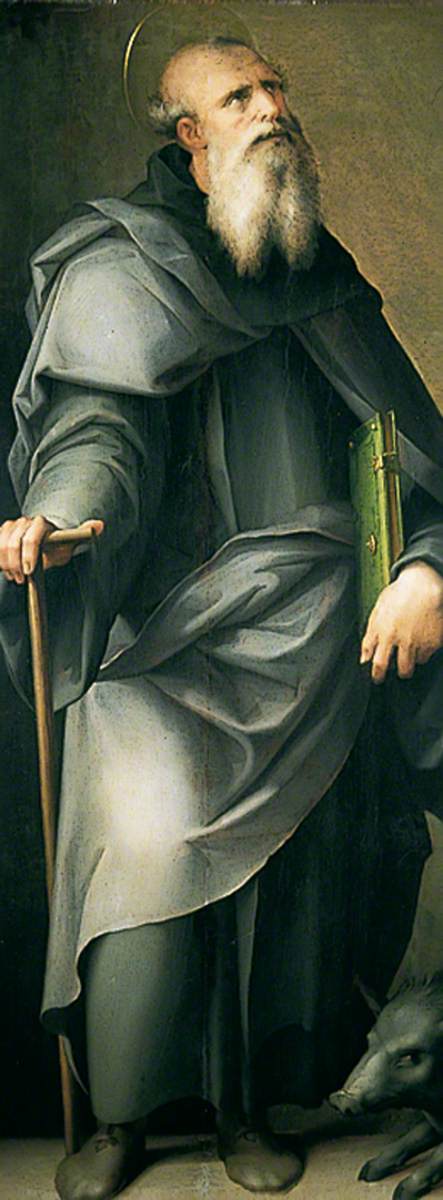
St Anthony unknown artist Italian School

St Anthony’s Vocation
Anthony was born in 251 to a wealthy family of farmers in the village of Coma, now Qumans, in Egypt. Around the age of 18-20, he was left an orphan with a rich estate to manage and with a younger sister to educate.
Attracted by the evangelical teaching “If you wish to be perfect, go, sell what you have, give to the poor and you will have treasure in heaven, then come, follow me” and by the example of some Anchorites who lived nearby in prayer, poverty and chastity, Anthony’s heart was drawn to choose this path. He, therefore, sold his goods, entrusted his sister to a community of virgins and dedicated himself to an ascetic life in front of his house and then outside the town.

Seeking a penitential and isolated life, he prayed to God for enlightenment. Not far away he saw a Hermit, like himself, who sat and worked, weaving a rope, then stopped, stood up and prayed; immediately after, he went back to working and praying again. This Anchorite was an Angel of God showing Anthony the path of work and prayer which, two Centuries later, would form the basis of the Benedictine Rule “Ora et labora” and Western Monasticism. Part of Anthony’s work was used to obtain food and part was distributed to the poor. St Athanasius asserts that he prayed continually and was so attentive to reading the Scriptures that he trained them verbatim in his memory oand he no longer needed scrolls.
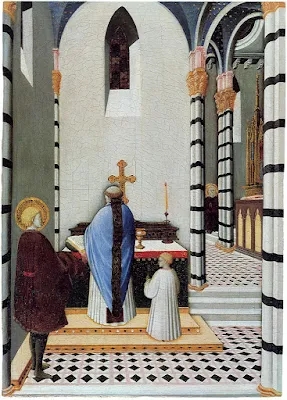
From the Sienese Altarpiece (1425-50) depiciting the Life of St Anthony – this image shows him as a little boy on the right and as a young adult on the left, after hearing the Gospel of the rich young man

St Anthony’s Temptations
While still very young, after a few years of his solitary life, very difficult trials began for him. Impure thoughts tormented him, doubts assailed him about the advisability of such a solitary life. The instinct of the flesh and the attachment to material goods which he had tried to suppress, returned in overbearing and uncontrollable force.
He, therefore, asked for help from other Hermits, who told him not to be afraid but to move forward with confidence because God was with him. They also advised him to get rid of all ties and material possessions and retreat to a more solitary place.
Thus, barely covered by a rough cloth, Anthony took refuge in an ancient tomb dug into the rock of a hill, aurrounding the village of Coma. A friend brought him some bread every now and then; for the rest, he had to make do with wild berries and herbs growing around him.
In this place, the first temptations were replaced by terrifying visions and noises. Furthermore, he went through a period of terrible spiritual darkness. All this Anthonye overcame by patiently persevering in faith, carrying out the will of God, day by day, as his teachers had taught him.
When Christ finally revealed Himself to him as the Hermit, he asked: “Where were Thou? Why did Thou not appear from the beginning, to put an end to my sufferings?”. He heard Him reply: “Anthony, I was here with thee and witnessed thy fight”…
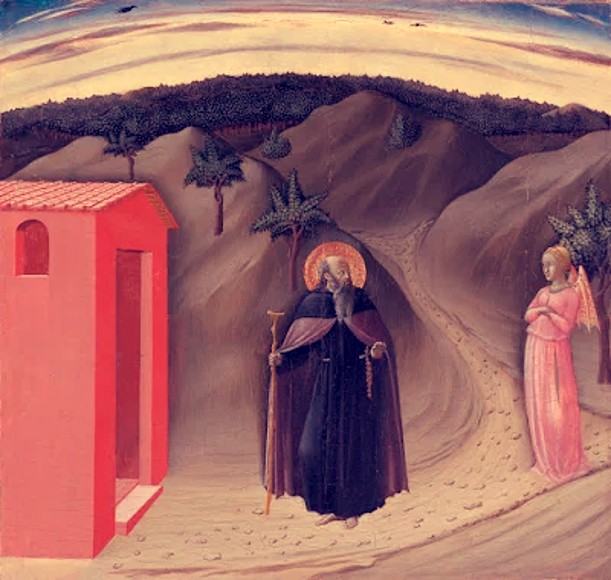
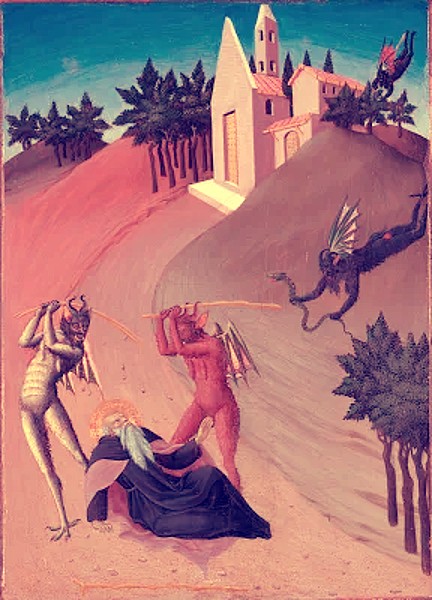
St Anthony’s Temptations

On the Mountains of Pispir
Discovered by his fellow citizens, who, like all Christians of those times, flocked to the Hermits to receive spiritual advice, prayer and consolation but, at the same time, disturbed their solitude and meditation, forced Anthony to move further away. In the Pispir mountains there was an abandoned fortress, infested with snakes but with a spring source and in 285 Anthony moved there and remained there for 20 years.
Twice a year, bread was dropped to him from above. In this new solitude he followed the example of Jesus, Who, guided by the Spirit, retreated into the desert “to be tempted by the devil,

St Athanasius tells of the many times when St Anthony struggled against devils, not only by resisting temptations but also suffering bodily harm which they were permitted to inflict upon him. On one such occasion, “a multitude of demons … so cut him with stripes that he lay on the ground speechless from the excessive pain.” He was discovered unconscious by the local villagers, who thought him dead and brought him to their Church, here depicted in the background. (Life of Anthony 8 and 9

The First Communities of disciples
Then came the time when many people who wanted to dedicate themselves to the solitary eremitcal life arrived at the fort. Anthony went out and began to console the afflicted, obtaining cures from the Lord, freeing the possessed and instructing the new disciples.
Two groups of Monks were formed who gave rise to two Monasteries, one east of the Nile and the other on the left bank of the river. Each Monk had his own solitary cave but obeyed a brother more experienced in spiritual life. Anthony gave everyone his advice on the path towards perfection of the spirit and union with God, thus operating as their Abbot from his cave.

In the Thebaid
Once again, to escape the many curious people who went to the fortress, Anthony decided to retreat to a more isolated place. He, therefore ,went to the Thebaid desert, in Upper Egypt, where he began to cultivate a small garden to support himself and those disciples and visitors, who followed him.
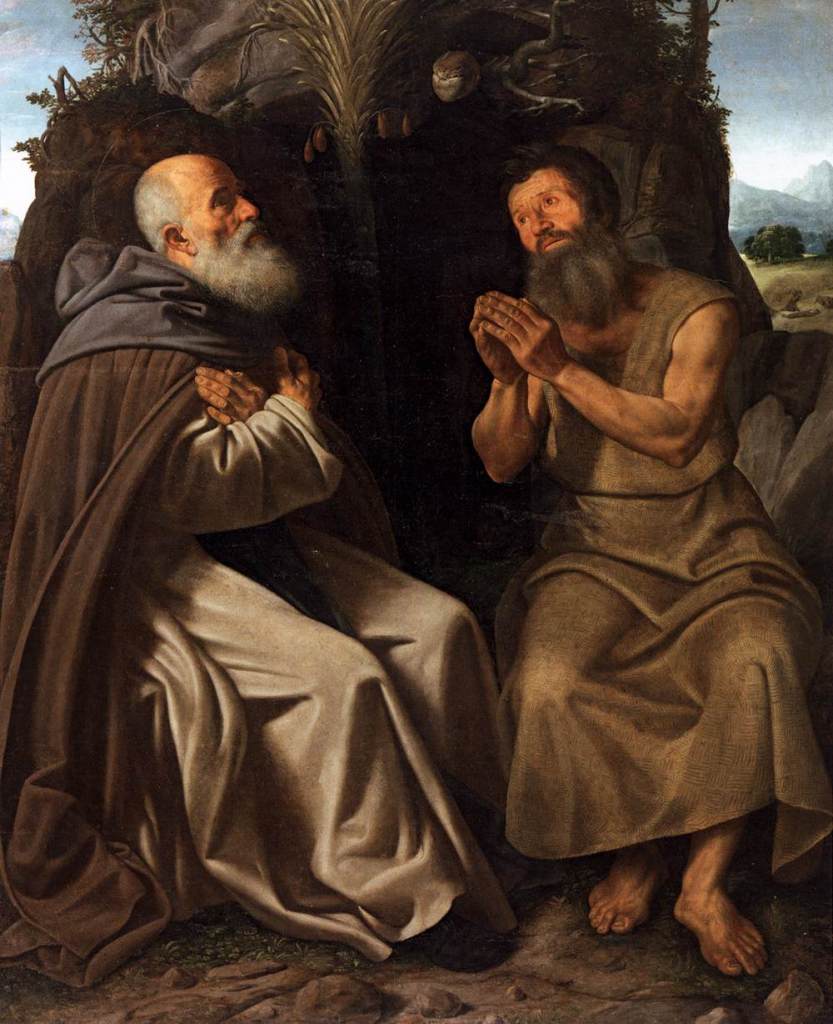
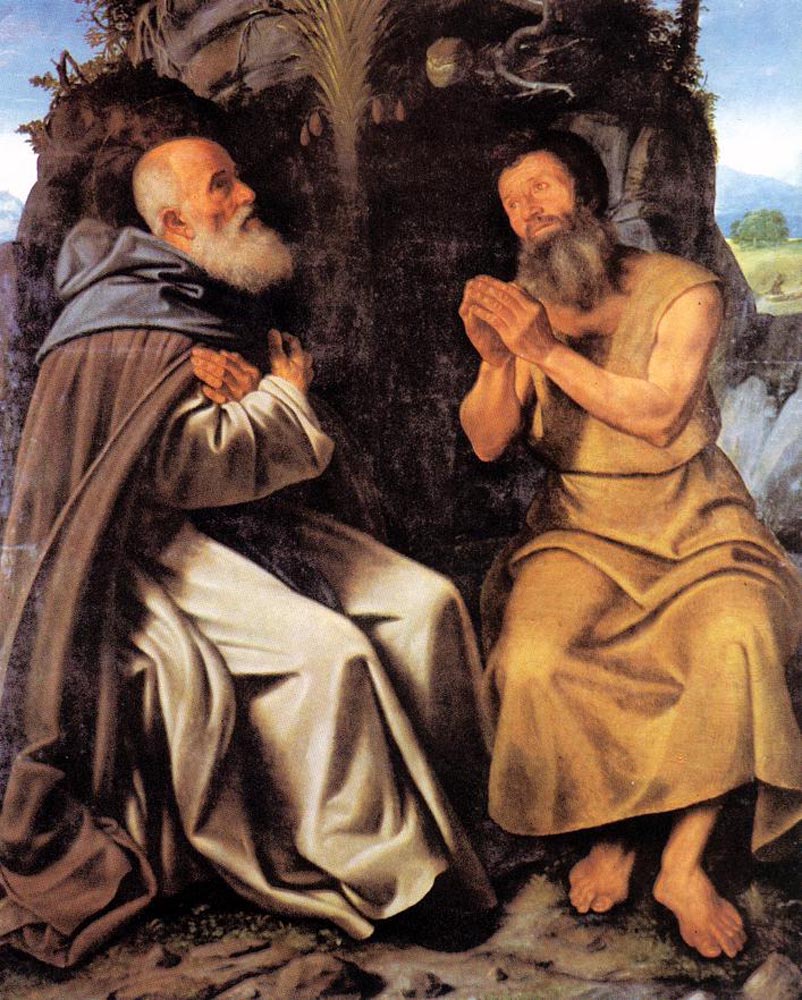
He lived in the Thebaid region until the end of his very long life. He was able to bury the body of the Hermit Saint Paul the Hermit, with the help of a lion — for this reason he is considered the Patron Saint of wild animals, of cemeteries, gravediggers and funeral workers.
In his last years he welcomed two Monks who looked after him in his extreme old age. He died at the age of 106, on 17 January 356 and was buried in a secret place.
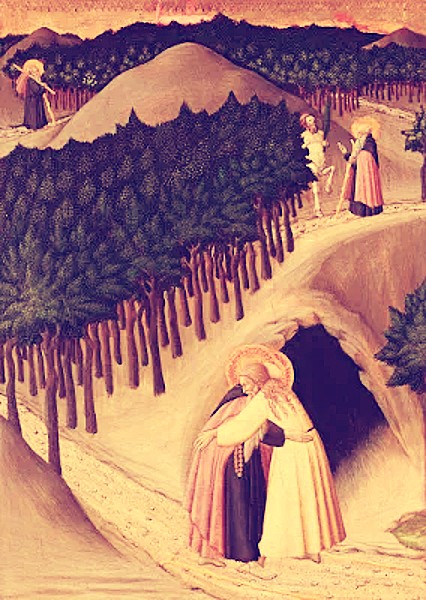
St Anthony meets St Paul the Hermit

The Spiritual Inheritance
His presence had also attracted many people to the Thebaid eager for a more spiritual life. Many chose to follow his style, thus Monasteries arose among those mountains. The desert was populated by Monks, the first of that multitude of consecrated men, who in the East and the West, continued the path he had begun, expanding it and adapting it to the needs of the times.
His disciples handed down his wisdom to the Church, collected in 120 sayings and 20 letters. In Letter 8, Saint Anthony wrote: “Ask with a sincere heart for that great Spirit of fire which I myself have received and it will be given to you.

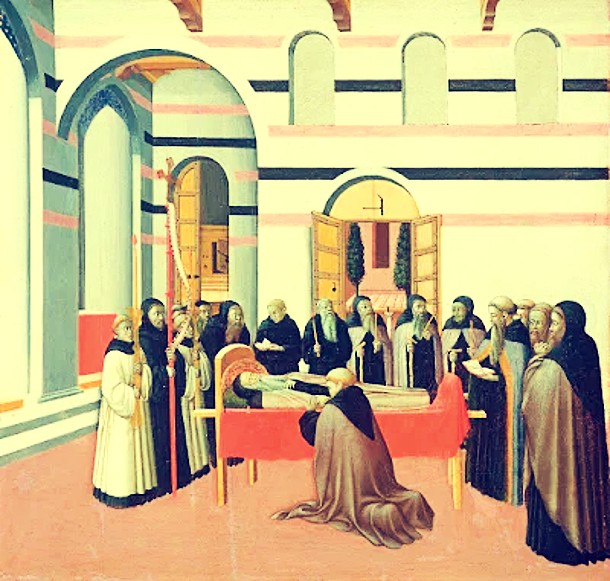
The Last Rites and Death of St Anthony

Protection against Shingles (Herpes Zoster)
In 561 his tomb was discovered and the Relics began a long journey through time and space, from Alexandria to Constantinople, until arriving in France, in the 11th Century, in Motte-Saint-Didier, where a Church was built in his honour.
Crowds of sick people flocked to venerate his Relics in this Church, especially those suffering from skin eruptions, caused by the poisoning of a fungus present in rye, used to make bread (or so it was thought).
The disease, now scientifically known as herpes zoster, was known since ancient times as ‘ignis sacer’ (sacred fire) due to the burning sensation it caused. Also for this reason, our Saint is invoked against skin diseases in general.
To house all the sick people who arrived, a hospital was built and a brotherhood of religious people was founded, the ancient hospital order of the ‘Antoniani.’ Hence the Patronage of Hospitallers.
The village took the name of Saint-Antoine de Viennois.
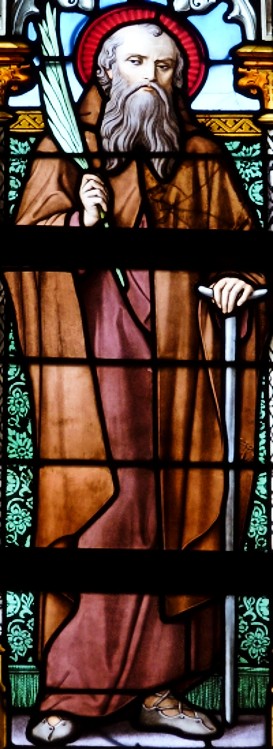
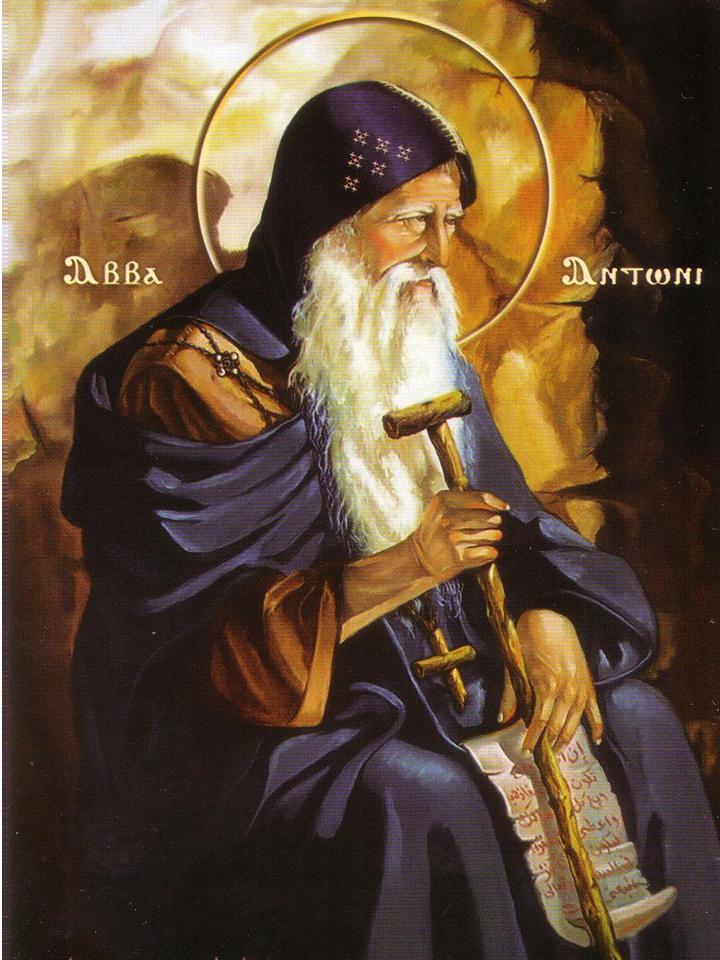
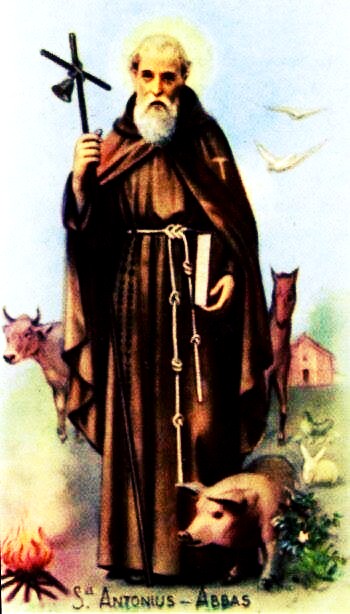
The Tau Staff is visible in St Anthony’s hand

The Pig, the Fire, the “Tau”
The Pope granted the Antonians the privilege of raising pigs for their own use and at the expense of the community, so the piglets could move freely between courtyards and streets; no-one touched them, if they wore an identification bell.
Their fat was used to treat ergotism, which was called “sickness. Antonio” and then “fire of St Anthony.” For this reason, in popular religiosity, the pig began to be associated with the great Egyptian Hermit, later considered the Patron Saint of pigs and by extension, of all domestic and stable animals.
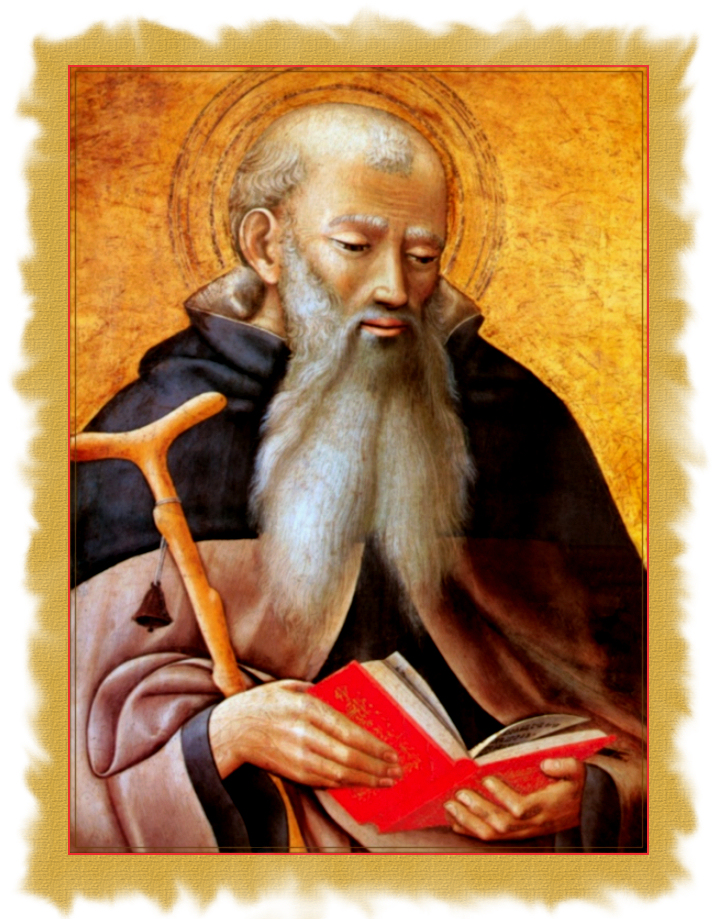
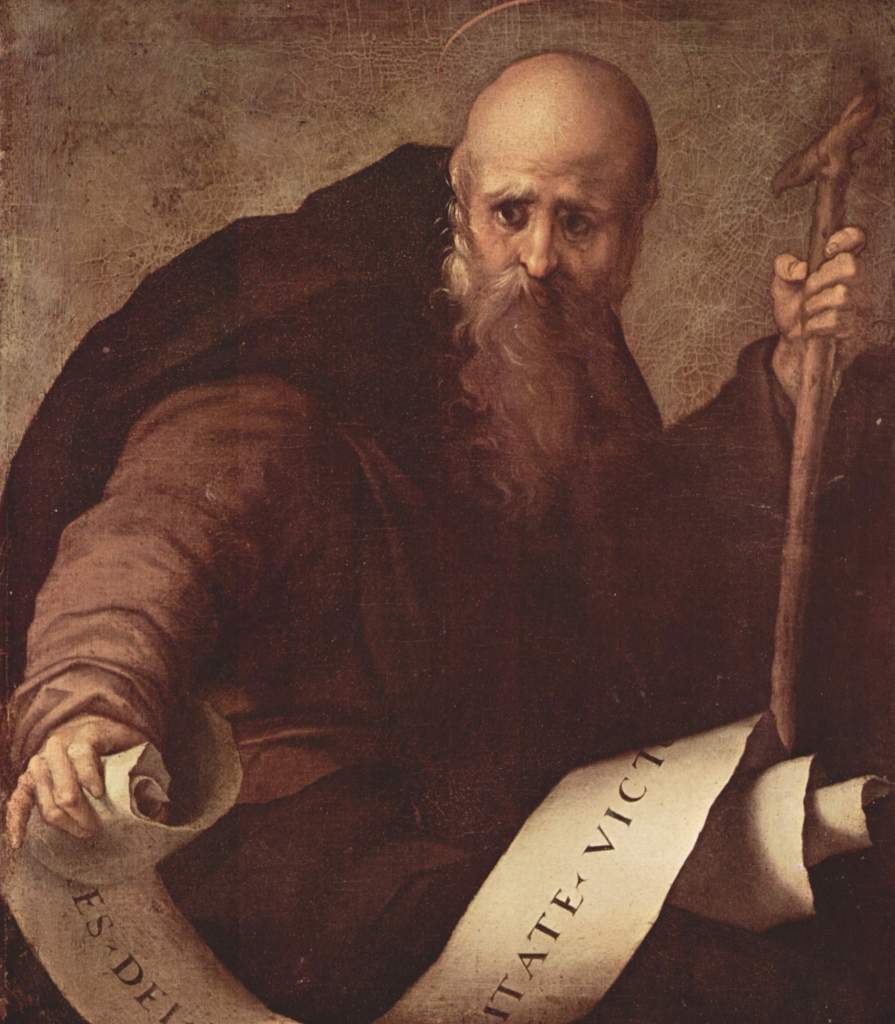
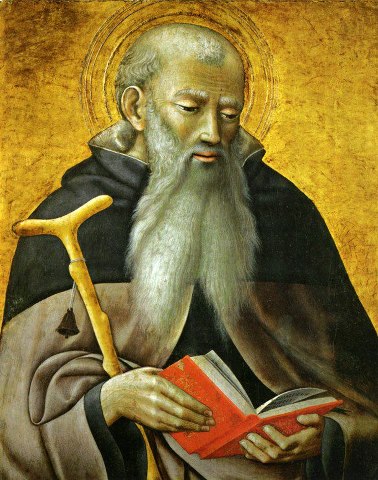
In his iconography, in addition to the pig with the bell, there also appears the T-shaped Hermits’ staff, the “tau” the last letter of the Hebrew alphabet and, therefore, an allusion to the last things and destiny.
A popular legend which connects his iconographic attributes, narrates that Saint Anthony went to hell to contend with the devil for the souls of the dead. While his little pig, sneaking in, created havoc among the demons, he lit his tau-shaped stick with infernal fire and took it out together with the recovered little pig — he gave fire to humanity, lighting a pile of wood.
Popular devotion
On the day of his liturgical memory, the stables are blessed and the domestic animals are brought to be blessed. In some countries of Celtic origin, Saint Anthony took on the functions of the divinity of rebirth and light, Lug, the guarantor of new life, to whom wild boars and pigs were consecrated. Therefore, in various works of art, there is a boar at his feet.
Patron of all those involved in processing pigs, alive or slaughtered, he is also the Patron of those who work with fire, such as firefighters because he cured that metaphorical fire which was Herpes Zoster.
Even today, on 17 January, especially in agricultural villages and farmhouses, it is customary to light the so-called “St Anthony’s bonfire which had a purifying and fertilising function, like all the fires which marked the transition from winter to the imminent spring. The ashes, then collected in the home braziers of the past, were used to heat the house and, using a special bell made with wooden slats, to dry damp clothes.
Venerated throughout the Centuries, his name is among the most widespread in Catholicism. Saint Anthony of Padua himself, precisely to indicate his desire for greater perfection, chose to change the name received at his Baptism to that of our Saint today.

The Life of St Anthony by St Athanasius:
https://www.youtube.com/watch?
v=XiKDl_lOb74&list=PL5_ax08Z6UX9h2VWw84sk4zcAQUliDUo7
With St Paul the Hermit
Posted in EYES - Diseases, of the BLIND, SAINT of the DAY, SKIN DISEASES, RASHES

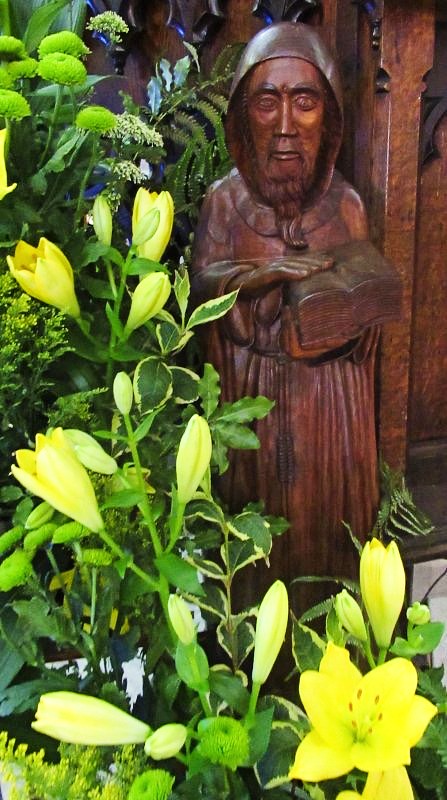
Saint of the Day – 16 July – St Helier of Jersey (Died c555) Martyr, Missionary, Hermit

Saint of the Day – 16 July – St Helier of Jersey (Died c555) Martyr, Missionary from Belgium, Hermit, Ascetic, Miracle-worker. Born at Tongres, Belgium and died at Jersey in the Channel Islands. PATRONAGES – St Helier is the Patron Saint of Jersey and in particular of the Diocese and Capital City of Jersey, named for him – Saint Helier, he is invoked against and for the cure of EYE diseases and skin disorders, Also known as – Elerio, Elie, Helerous, Hielier, Helerius, Hélyi.

Helier was born to pagan parents in Tongeren (now in Belgium). His father was Sigebert, a nobleman from Tongres and his mother was Lusigard. Having had difficulties conceiving a child, they turned to a Christian teacher named St Cunibert, who advised them to pray to God and that when they had a child they must hand him over to God and that he, Cunibert, would bring him up in the Christian faith.

Their prayers having been answered, Helier was born but Helier’s father, the Frankish Governor of that place, eventually grew angry at the influence Cunibert exerted over his precocious son, who was already causing consternation with his youthful miracles. Helier’s father had Cunibert killed, whereupon Helier fled.

Helier’s wanderings led him to the coast of France where he sought retreat from the distractions of the world in the monastic community of Saint Marculf at Nantus (now St.-Marcouf-de-l’Isle in Manche).

Helier, however, found the monastic community did not provide the quiet he required to devote himself fully to a life of contemplation. St Marculf had received pleas from the few inhabitants of the island called Gersut, or Agna, now called Jersey, which was all but depopulated due to repeated attacks by Vikings. The inhabitants requested someone to help them and bring the Gospel to them as they had no shepherd to guide and care for their spiritual needs.

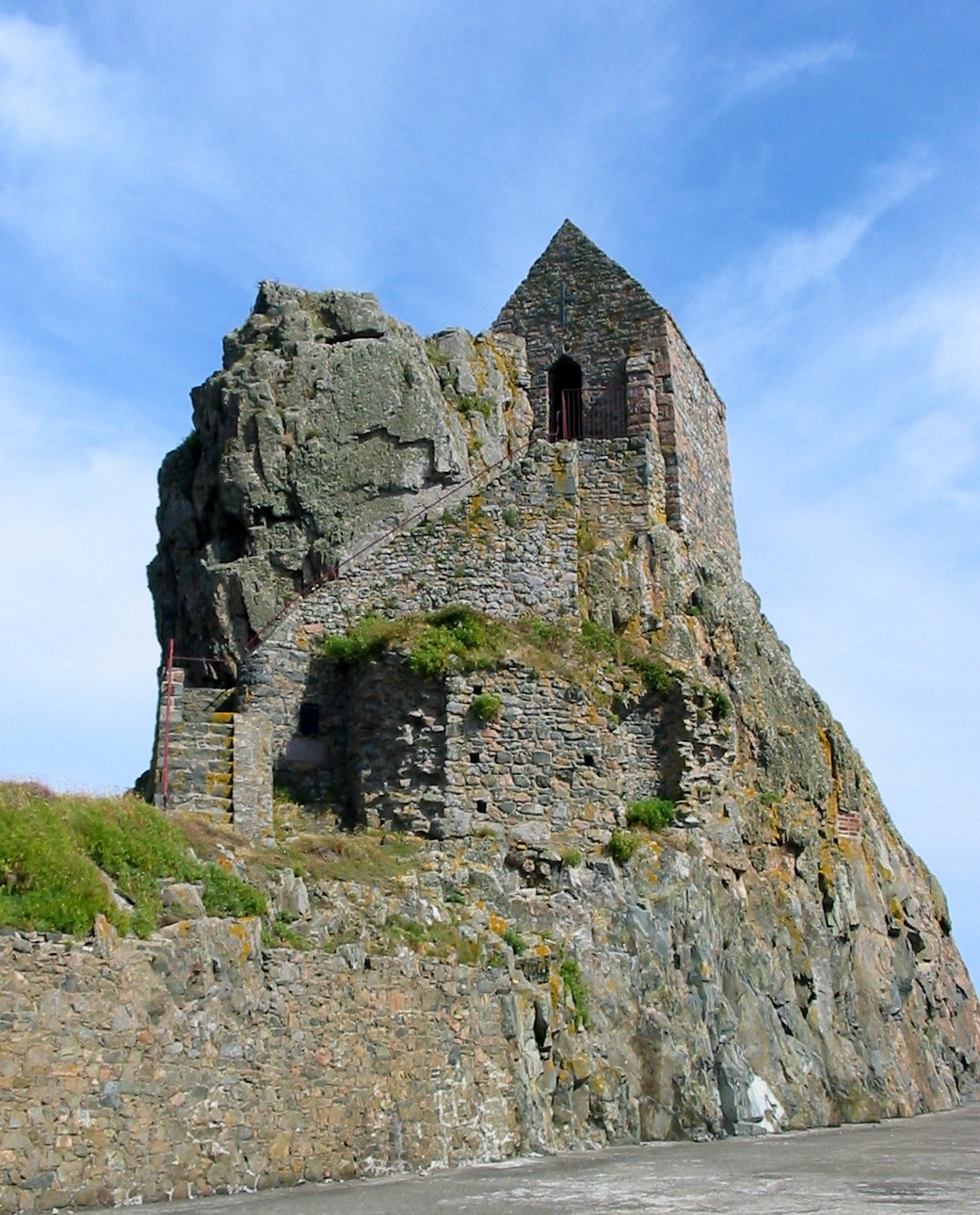
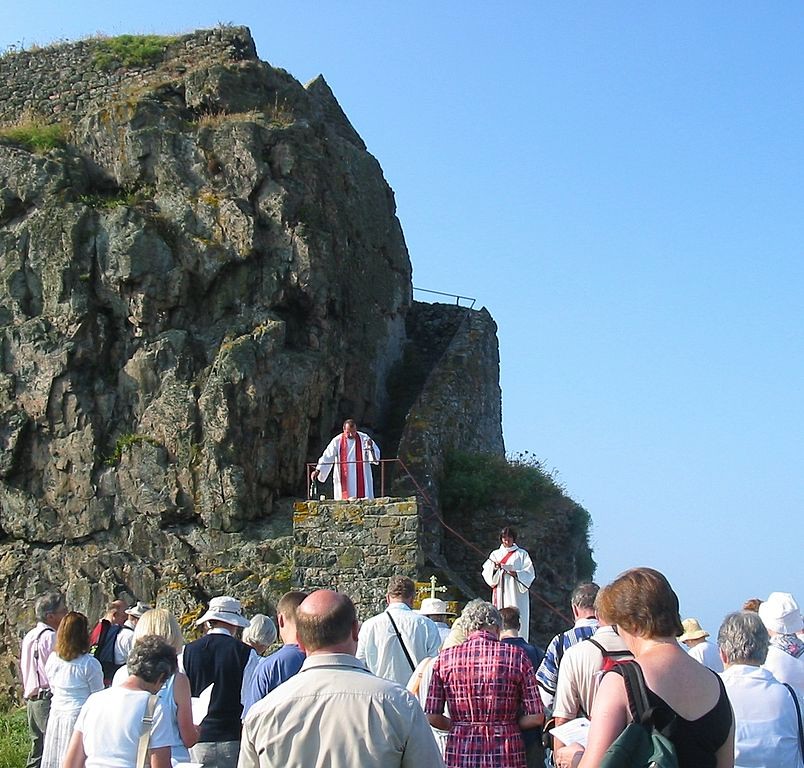
A medieval Chapel was constructed over ‘St Helier’s Bed’ the hollow in the rock whre Helier sheltered. The Hermitage rock is the focus of the annual pilgrimage

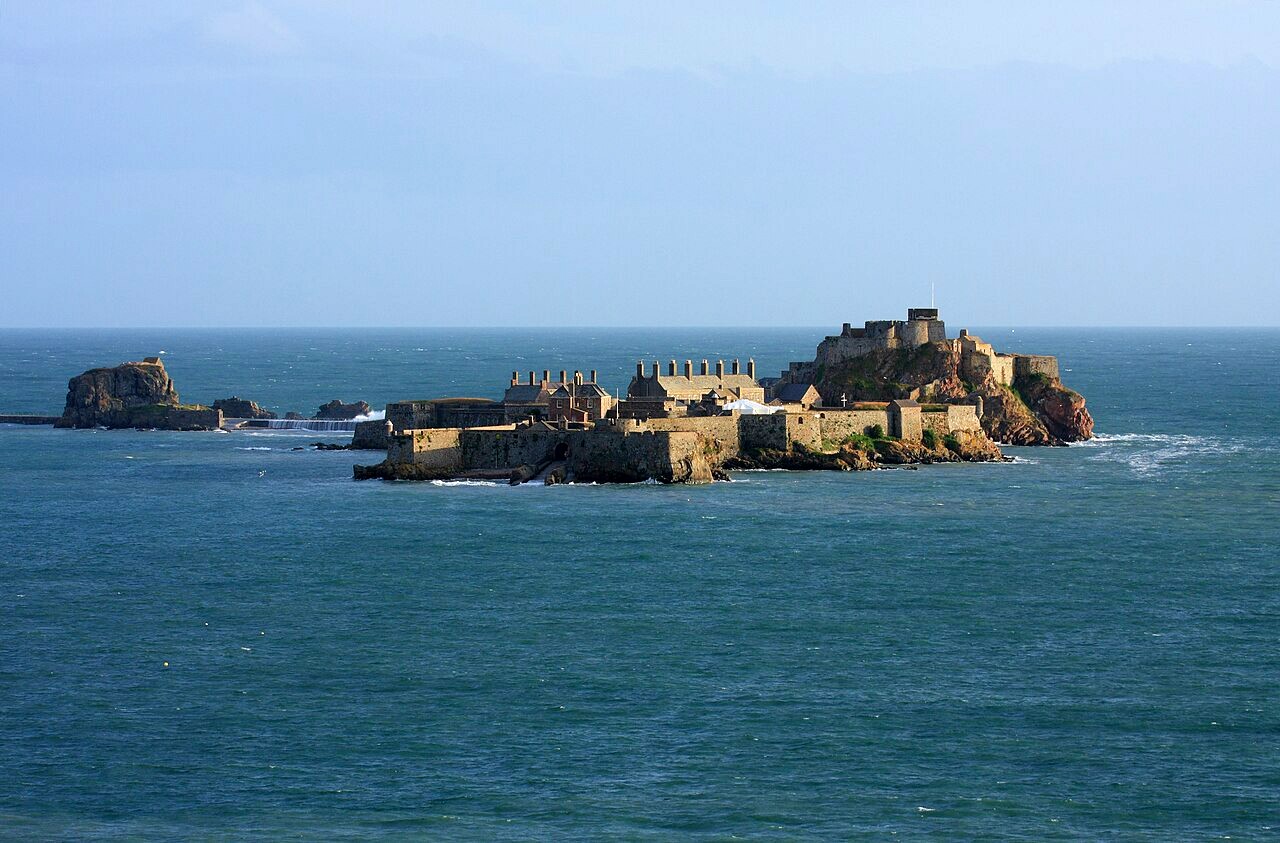
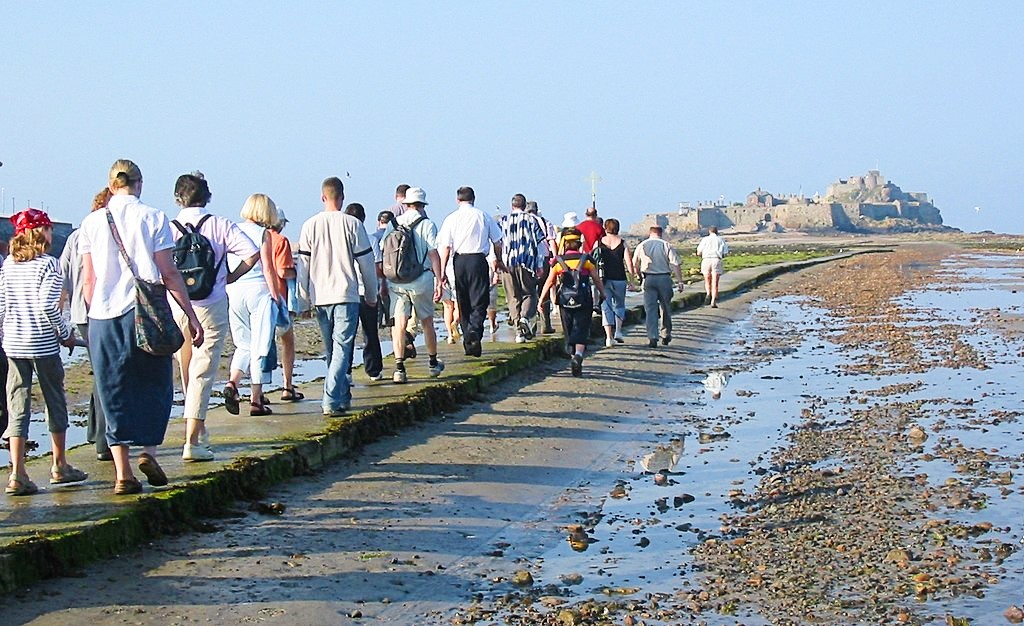
Marculf sent Helier and a companion, Saint Romard, to Jersey where he found a small community of fishermen on the sand dunes where the modern City of St Helier was to develop. Helier settled on a tidal islet, nowadays known as the Hermitage Rock, next to L’Islet,[ another tidal island now occupied by the 16th Century Elizabeth Castle. The Romard would travel back and forth between the hermitage on this rock and the fishing village.

The Elizabeth Castle

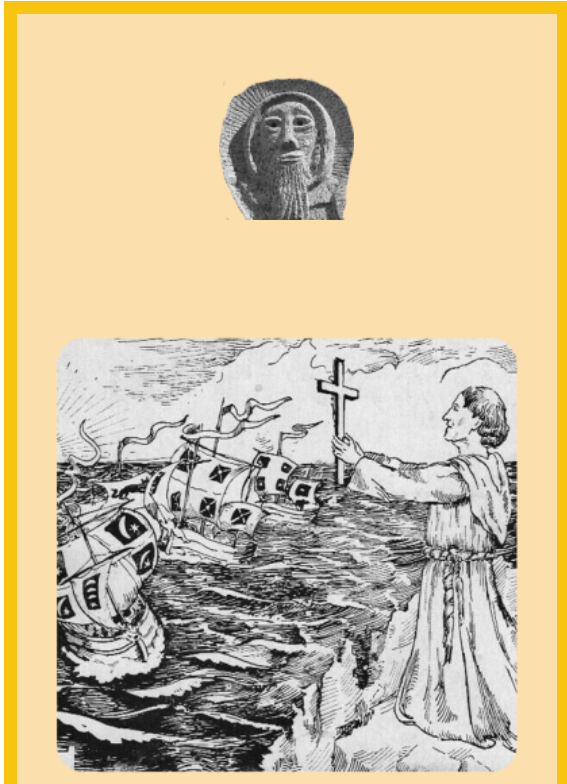
From the vantage point on his rock, Helier could see the sails of approaching attackers and would signal to the shore, whereupon the inhabitants would scatter into the surrounding marshes, thereby frustrating the attackers’ bloodlust. Small dark clouds on the horizon are still known in Jersey as the sails of St Helier.

Helier remained at his hermitage in fasting and prayer for about fifteen years. The belief is that around 555 he was Martyred by marauding pirates who beheaded him with an axe – hence the crossed axes on the parish crest.

Once while Marculf was visiting, a band of raiders arrived. The Holy men, Marculf, Helier and Romard, prayed atogether nd made the Sign of the Cross resulting in a great storm awhich suddenly arose and destroyed the raiders ships.

Although Helier’s fasting ensured that his body was of a very lean and weak statue, legend holds that he had the strength, when he was beheaded by attackers, to pick up his head and walk to shore. According to the hagiography, Romard discovered Helier’s body on the beach still clutching his head in his hands. He placed it in a boat and set off for the mainland. The boat, guided by the hand of God, arrived at Bréville-sur-Mer, where a miraculous Spring arose on the spot where Helier’s body had rested overnight. A Church was founded next to the Spring, which is now topped by a statue and still attracts those seeking a cure.

Marculf founded an Abbey on L’Islet not far from Helier’s Hermitage and named it for his pupil. It was later visited by St Samson of Dol.

Churches dedicated to Helier can be found in Rennes, St Helier, Beuzeville, Amécourt, Barentin (Seine-Maritime), Monhoudou (Sarthe). Evidence of veneration of the saint can be found in La Hague in the Cotentin at Querqueville and also at Omonville-la-Rogue where a 13th-Century mural in the Church of St John the Baptist links Helier with Thomas Becket.

St Helier’s Feast day, marked in Jersey by an annual municipal and Ecumenical Pilgrimage to the Hermitage on 16 July. The Hermitage is depicted on the Jersey 2 pence coin and on the 2010 issue of the Jersey £10 note.

In 2005, the tides necessitated an early morning start to the Pilgrimage.
Posted in Of BUILDERS, CONSTRUCTION WORKERS, PATRONAGE - WRITERS, PRINTERS, PUBLISHERS, EDITORS, etc, SAINT of the DAY, SKIN DISEASES, RASHES, The APOSTLES & EVANGELISTS

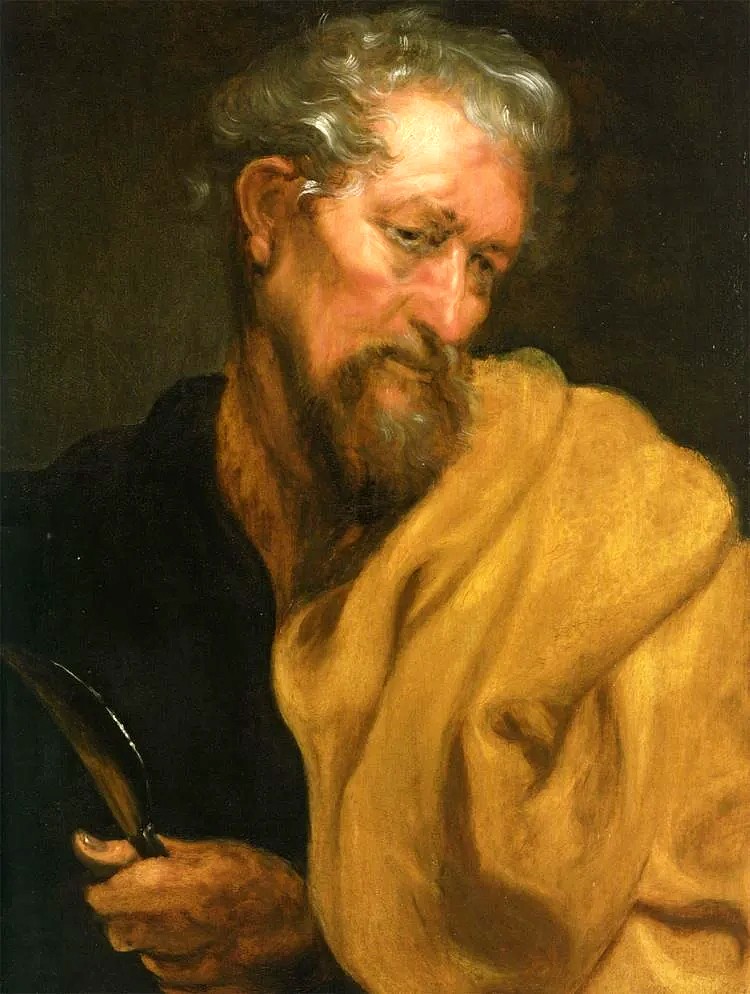
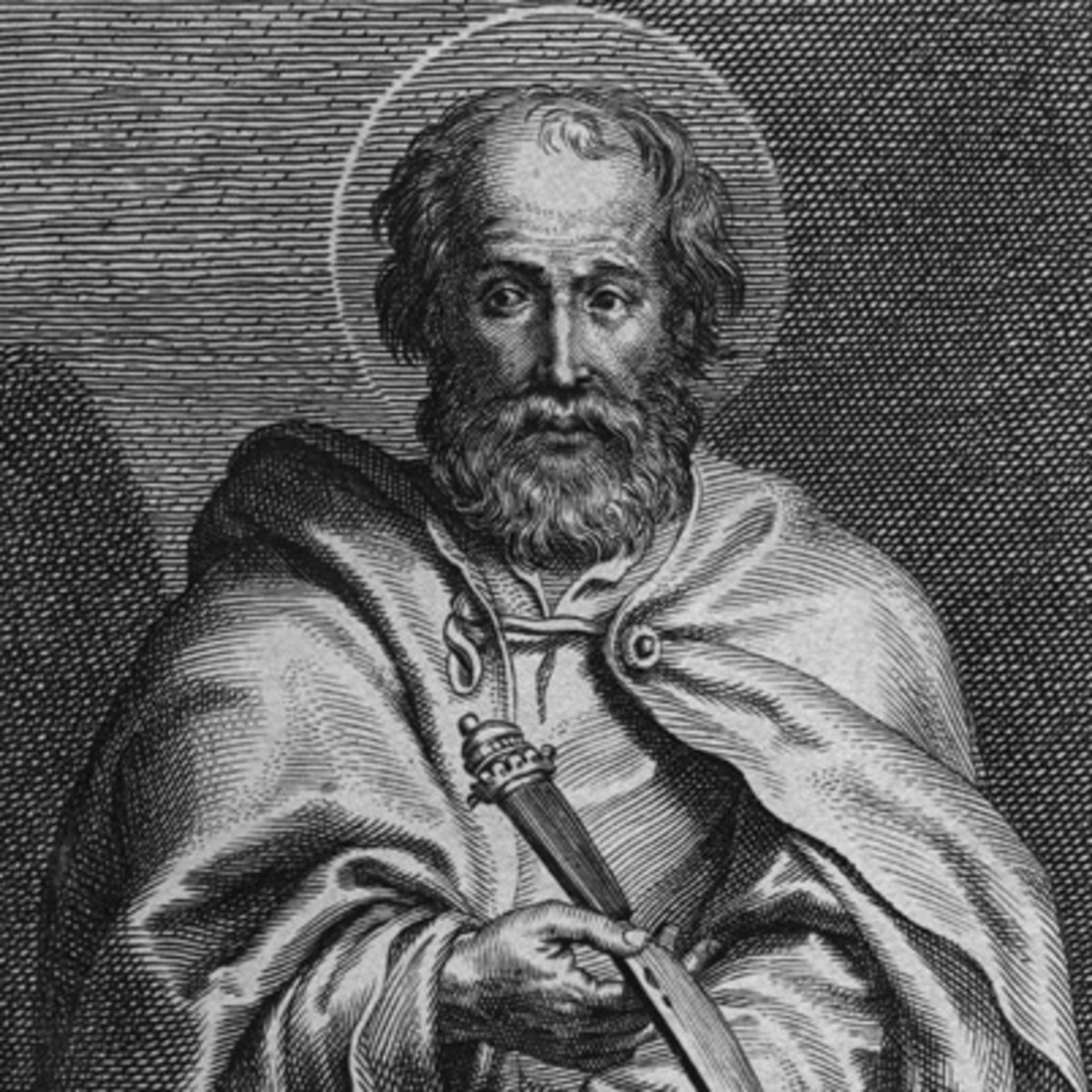
Saint of the Day – 24 August – St Bartholomew the Apostle and Martyr

Saint of the Day – 24 August – St Bartholomew the Apostle and Martyr. Saint Bartholomew, whose name appears only in the lists of the Apostles, is believed to be Nathanael, whom Philip brought to Christ. He preached in Persia and Egypt and was flayed alive in Armenia. His relics are believed to be in the Church of Saint Bartholomew in Rome. Patronages – Armenia; bookbinders/publishers; butchers; Florentine cheese and salt merchants; Gambatesa, Italy; Catbalogan, Samar; Għargħur, Malta; leather workers; neurological diseases; plasterers/construction workers; shoemakers; tanners; trappers; skin diseases/rashes, against involuntary  shaking disorders;  Los Cerricos (Spain), 16 further cities all over the world. 

Saint Bartholomew Apostle and Martyr
Excerpt from The Liturgical Year
By Prosper Guéranger OSB (1805-1875)

A witness of the Son of God, one of the princes who announced His glory to the nations, lights up this day with his apostolic flame.

Personally, who was this Apostle who borrowed such solemnity from the scene of his apostolic labours? Under the name or surname of Bartholomew (“Son of Tholmai“), the only mark of recognition given him, by the first three Gospels, do we see, as many have thought that Nathaniel, whose presentation to Jesus by Philip forms so sweet a scene in St John’s Gospel (1: 45-51)?
A man of uprightness, innocence and simplicity, … for whom, the Man-God had choice graces and caresses from the very beginning.

Be this as it may, the lot which fell to our Saint among the Twelve, points to the special confidence of the Divine Heart. The heroism of the terrible Martyrdom which sealed his apostolate, reveals his fidelity. The dignity preserved by the nation he grafted onto Christ, in all the countries where it has been transplanted, witnesses to the excellence of the sap first infused into its branches. When, two centuries and a half later, St Gregory the Illuminator, so successfully cultivated the soil of Armenia, he did but quicken the seed sown by the Apostle, which the trials never wanting to that generous land, had retarded for a time but could not stifle. …

We learn from Eusebius and from St Jerome that before going to Armenia, his final destination, St Bartholomew evangelised the Indies, where Pantaenus a century later found a copy of St Matthew’s Gospel in Hebrew characters, left there by him. …

The City of Rome used to celebrate the Feast of St Bartholomew on the following day, as do also the Greeks who commemorate on 25 August – a translation of the Apostle’s relics. It is owing, in fact, to the various translations of his holy body and to the difficulty of ascertaining the date of his Martyrdom that different days have been adopted for his Feast ,by different Churches, both in the east and in the west. The 24th of this month, consecrated by the use of most of the Latin Churches, is the day assigned in the most ancient Martyrologies, including that of St Jerome. In the 13th Century, Pope Innocent III, having been consulted as to the divergence, answered that local custom was to be observed.

The Church gives just the following Lessons for the life of the Apostle of Armenia:

The Holy Apostle Bartholomew was a native of Galilee. It fell to his lot to preach the Gospel in western India;and he announced to those nations the coming of Our Lord Jesus Christ according to the Gospel of St Matthew. But after converting many souls to Jesus Christ in that Province and, undergoing much labour and suffering, he went into eastern Armenia.

Here he converted to the Christian Faith, the King Polymius and his Queen, as well as twelve Cities. This caused the pagan priests of that nation to be exceedingly jealous of him and they stirred up Astyages, the brother of King Polymius against the Apostle, so that he commanded him to be flayed alive and finally beheaded. In this cruel Martyrdom he gave up his soul to God.

His body was buried at Albanapolis, the town of eastern Armenia where he was Martyred but it was afterwards taken to the island of Lispari and thence to Beneventum. Finally it was translated to Rome by the Emperor Otto III and placed on the island of the Tiber, in a Church dedicated to God under his invocation.

On this day of thy Feast, O holy Apostle, the Church (in the Collect of the Mass) prays for grace to love what thou didst believe and to preach what thou didst teach. Not that the Bride of the Son of God, could ever fail, either in faith or in love but She knows, only too well that, although Her Head is ever in the light and Her heart ever united to the Spouse, in the Holy Ghost Who sanctifies Her, nevertheless ,Her members and particular Churches may detach themselves from their centre of life and wander away in darkness. O thou who didst choose the west as the place of thy rest, thou in whose precious relics Rome glories in possessing, bring back to St Peter, the nations thou didst evangelise, that we may together, enjoy the treasures of our concordant traditions and go to God, even at the cost of being despoiled of all things, by the course so grand and yet so simple, taught us by thy example and by thy sublime theology. Amen.

Posted in Against DROWNING, Against Unexplained FEVER or HIGH Temperatures, Of a Holy DEATH & AGAINST A SUDDEN DEATH, of the DYING, FINAL PERSEVERANCE, DEATH of CHILDREN, DEATH of PARENTS, Of the SICK, the INFIRM, All ILLNESS, PATRONAGE - of BASKET-WEAVERS, CRAFTSMEN, PATRONAGE - SPOUSAL ABUSE / DIFFICULT MARRIAGES / VICTIMS OF ABUSE, SAINT of the DAY, SKIN DISEASES, RASHES

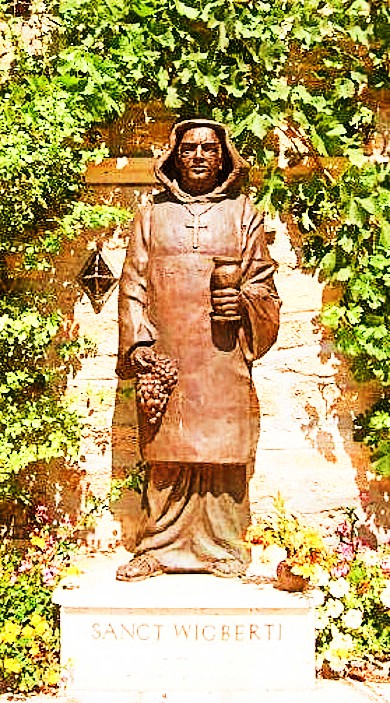
Saint of the Day – 13 August – St Wigbert of Fritzlar (c 675-c 746)

Saint of the Day – 13 August – St Wigbert of Fritzlar (c 675-c 746) a learned Scholar and Abbot, Missionary, Miracle-worker, gifted with a penetrating understanding of Sacred Scripture as well as the gift of prophecy, companion of St Boniface, the Apostle of Germany. Born in c 518 in Erfurt, Saxony (England) and died on 13 August c 587 in Poitiers, France of natural causes. Wigbert was known as a quiet and gentle man and a great teacher. Both St Alcuin and St Bede knew and mentioned him in their historical writings of the times and of the Church. St Bede admired his contempt of this world and his learning. Patronages against drowning, against fever/high temperature, against leprosy/skin diseases for example against scabies, against the death of parents, against ulcers, difficult marriages, of potters, weavers, Poitiers, France.
Wigbert was born in England about 675 of noble parents. He was known for the purity of his morals, his zeal for the salvation of souls, his boundless love, his penetrating knowledge and familiarity with the Sacred Scriptures.

Wigbert became a Monk, working with great piety to increase his sanctity in the monastic environment, to live the Rule in its entirety and to help others to do the same. He spent many years in Ireland, there using his great skill in teaching to help others in their search for knowledge and wisdom. St Boniface summoned him from England to Germany and, in about the year 734 Wigbert went to Germany to join the great Missionary. , There he was made Abbot of the Monastery of Hersfeld in Hesse. Among his pupils was St Sturmi, first Abbot of Fulda.

In about 737, Boniface transferred Wigbert to Thuringia as Abbot of Ohrdruf, where he worked with the same success as in Hersfeld. Later, Wigbert obtained Boniface’s permission to return to Hersfeld to spend his remaining days in stillness and to prepare for the hour of death.

Even in old age and in illness, he continued his austere mode of life, until the very end. The Saint reposed at Hersfeld in about 746. He was buried at Fritzlar in an inconspicuous grave but during an incursion of Saxons (774), his remains were taken for safety to Buraburg and from there, in 780, his sacred relics were transferred by Abbot St Lullus to Hersfeld.

In the year 850 a beautiful Church was built and dedicated to St Wigbert but it was razed by fire in 1037. A new Church replaced it and dedicated in 1144 but it burned in 1761 in a great fire. Thereafter, St Wigbert’s sacred relics were never found again by men.

Posted in Of ANIMALS / ANIMAL WELFARE, SAINT of the DAY, SERVANTS, MAIDS, BUTLERS, CHAMBERMAIDS, SKIN DISEASES, RASHES

Saint of the Day – 22 September – Saint Gunthildis of Suffersheim (Died c 1057)

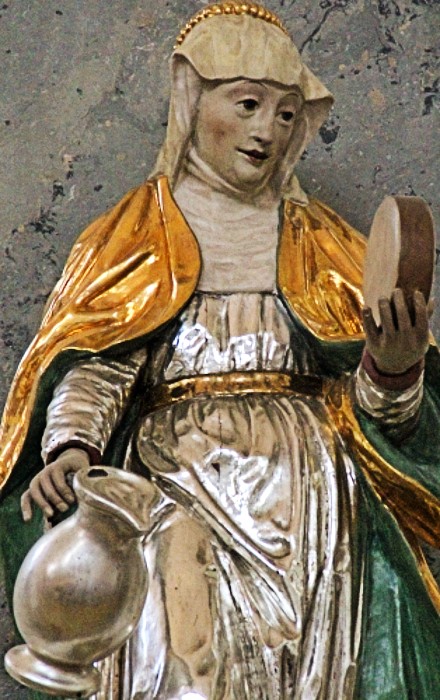
Saint of the Day – 22 September – Saint Gunthildis of Suffersheim (Died c 1057) Laywoman, Apostle of the poor. Patronages – cattle, lepers, servants. Also known as Gunthild.

Historical certainty of her life has not been passed down. The name comes from Old High German and means “the combative fighter.” She is said to have been a pious maid who was distinguished by special charity. She died around 1057 in Suffersheim in Bavaria. According to another tradition, Gunthildis is said to have been a disciple of St Willibald who came to Germany from southern England in the 8th century.

Gunthildis from Suffersheim served as a cattle maid and led a very pious and devout life in the midst of her rural work. She remains a constant model for all the maidservants in the country. Devoted to all virtues, she was especially distinguished by compassion and merciful love. Her greatest joy was giving alms to the poor. Through her prayer God caused two crystal-clear springs to appear, one from a rock. Through the latter, a leper obtained perfect healing. Gunthildis drove the cattle to these sources of clear and refreshing water. After drinking from these springs, the cows gave an extraordinary amount of milk. Gunthildis shared this abundant blessing with the poor of the neighbourhood.

The Gunthildis spring near Suffersheim

When she once wanted to carry the milk she had saved from her own mouth to poor people, she met her employer. Very angry, he asked her what she was carrying. She replied that it was only lye. And the employer only saw lye when he opened the vessel. In this service, the pious maid endured until the end of her life. She died a blessed death, rich in graces and virtues.

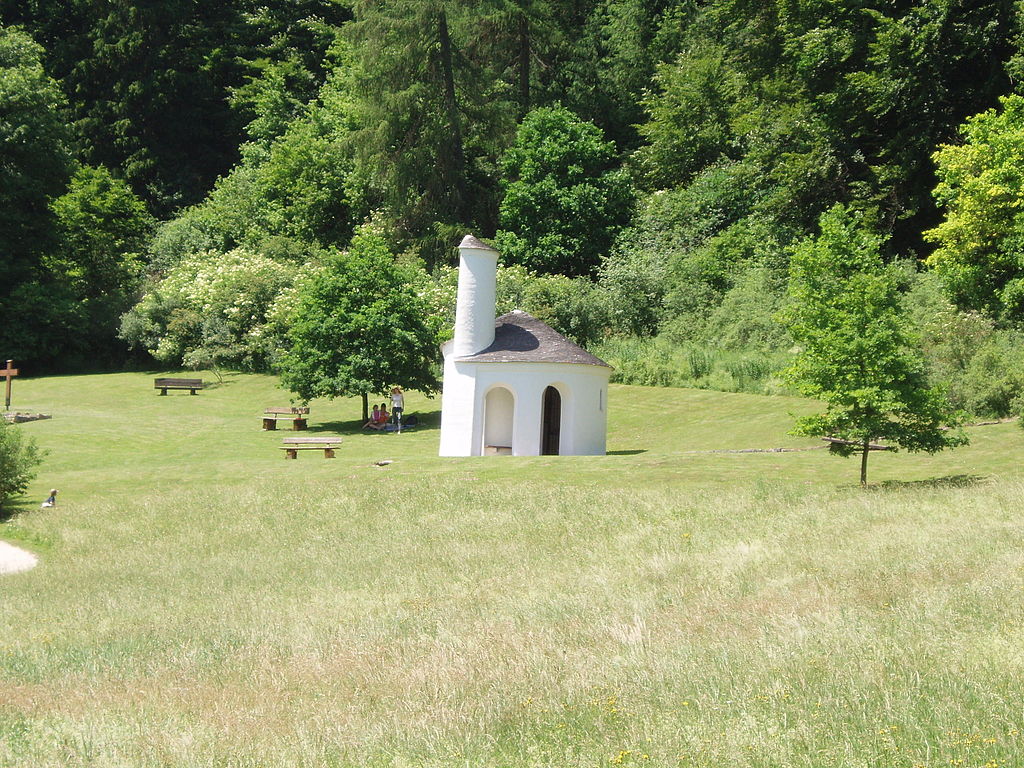
The body of the maid, generally venerated as a Saint, was loaded onto a cart and two untamed oxen hitched to it. They calmly carried her body to Suffersheim. Here they stopped. Thus it was understood that Gunthildis should be buried there. Soon afterwards, many miracles occurred at her grave. As a result, a Chapel was built over this grave, although it no longer exists. Today, next to the foundations of this Chapel uncovered in 1957, there is a new Gunthildis Chapel built from 1993 to 1995.

St Gunthildis Chapel
Posted in Against DROWNING, Against STORMS, EARTHQUAKES, THUNDER & LIGHTENING, FIRES, DROUGHT / NATURAL DISASTERS, Of GARDENERS, Horticulturists, Farmers, SAINT of the DAY, SKIN DISEASES, RASHES

Saint of the Day – 26 March – Saint Castulus of Rome (Died c 288) Martyr

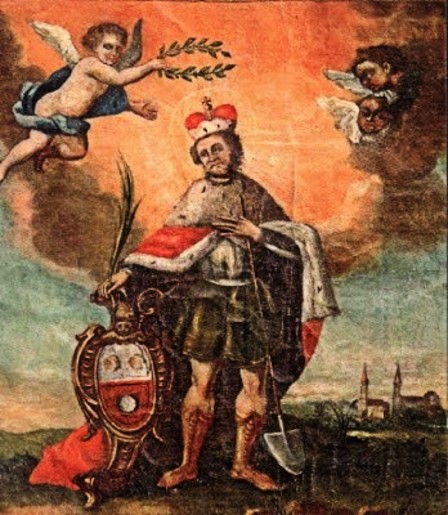
Saint of the Day – 26 March – Saint Castulus of Rome (Died c 288) Martyr, married to Saint Irene of Rome (the woman who assisted St Sebastian after he had been wounded by the Imperial archers), Military Officer and he was the Chamberlain (or officer, valet) of Emperor Diocletian. Martyred in c in 288 on the Via Labicana outside Rome near the Colosseum. Patronages – against blood poisoning, against drowning, against skin diseases and rashes, against fever, against horse theft, against lightning, against storms, against wildfire, cowherds, farmers, shepherds, Hallertau, Germany, Moosburg an der Isar, Germany.

The Roman Martyrology states: “At Rome, on the Labicana road, St Castulus, Martyr, Chamberlain in the Palace of the Emperor. For harbourig Christians, he was three times suspended by the hands, three times cited before the Tribunals and as he persevered in the confession of the Lord, he was thrown into a pit, overwhelmed with a mass of sand and thus obtained the crown of martyrdom.”

Castulus was a convert to the Christian religion. He sheltered Christians in his home and arranged for religious services, unbelievably, inside Emperor Diocletian’s Palace. Among those he sheltered, were the Saints and Marytrs, Mark and Marcellian. He is one of the saints associated with the life and martyrdom of Saint Sebastian.

With his friend Saint Tiburtius, he converted many men and woman to Christianity and brought them to Pope Saint Caius to be baptised. He was betrayed by an apostate named Torquatus and taken before Fabian, prefect of the City.

He was tortured and executed by being buried alive in a sand pit on the Via Labicana. According to traditional sources, his wife, Irene subsequently buried the body of the martyred Saint Sebastian. She was later be martyred herself, it is thought also in c 288.

A Church is dedicated to him in Rome, built on the site of his martyrdom and has existed, from at least the seventh century.

Castulus was venerated in Bavaria after relics of his were taken to Moosburg. Duke Heinrich der Löwe started the construction of the Castulus Cathedral in 1171.

In 1604, relics were also brought to Landshut, Germany. His relics still rest in Landshut’s Church of St Martin’s and in the Church of St Castulus, Prague.

Church of St Castulus in Prague
Posted in Against APOPLEXY or STROKES, BREWERS, EPILEPSY, EYES - Diseases, of the BLIND, GOUT, KNEE PROBLEMS, ARTHRITIS, etc, Of PHARMACISTS / CHEMISTS, PATRONAGE - VINTNERS, WINE-FARMERS, SAINT of the DAY, SKIN DISEASES, RASHES

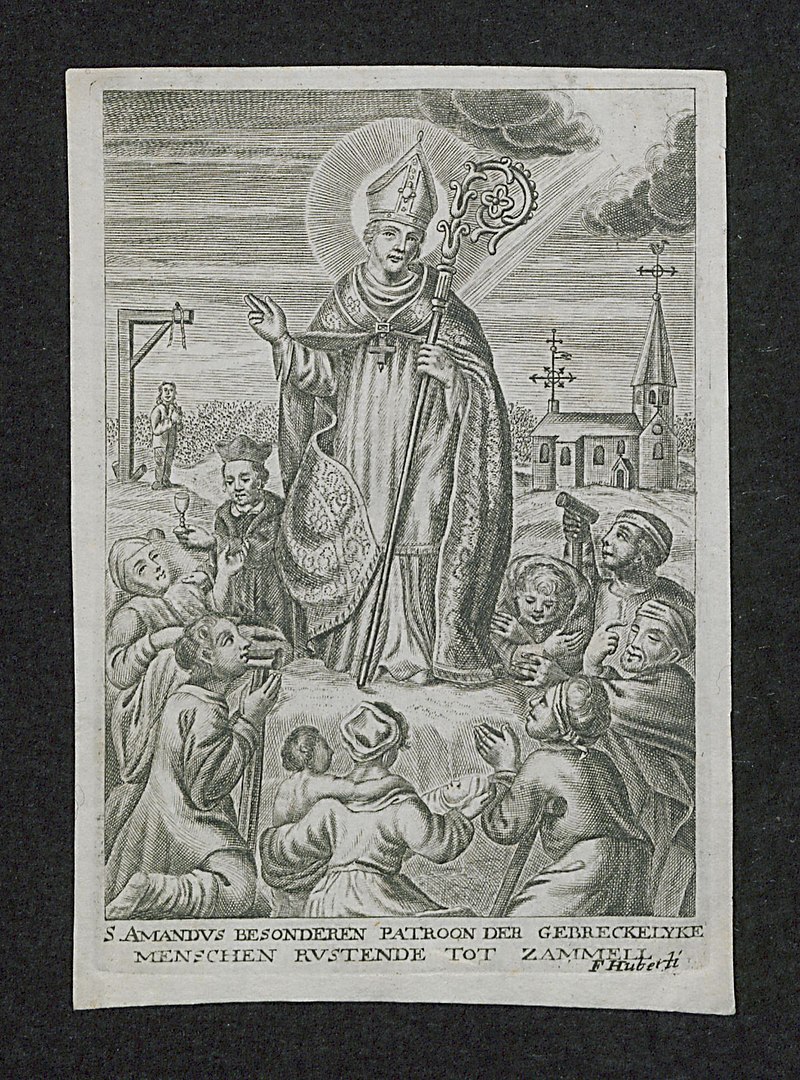
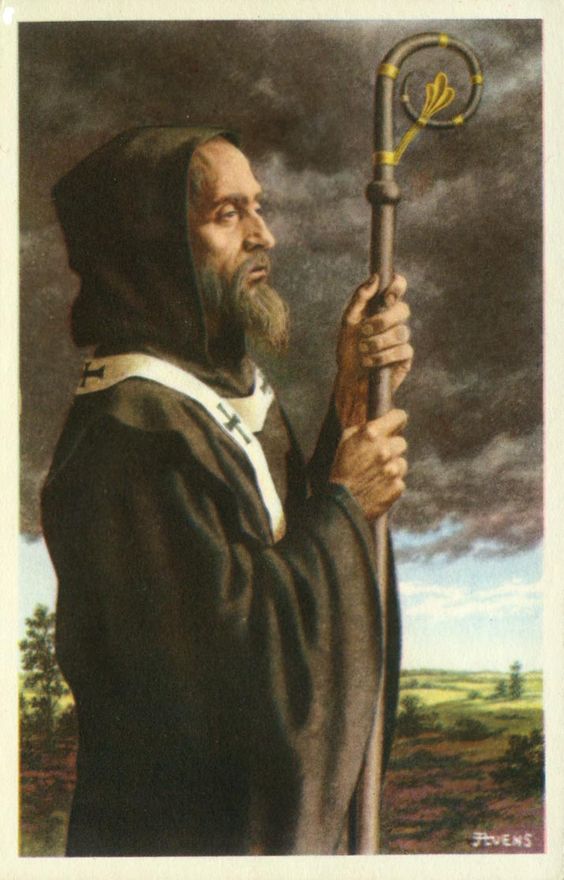
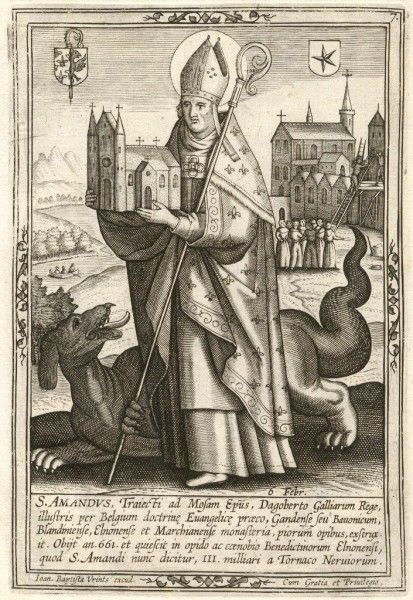
Saint of the Day – 6 February – Saint Amand of Maastricht (c584-c679) Bishop, the Apostle of Belgium

Saint of the Day – 6 February – Saint Amand of Maastricht (c584-c679) Bishop of Tongeren-Maastricht and one of the great Missionaries of Flanders (Belgium), Monk, Abbot, Papal Missionary, Advisor, Miracle-worker, Founder of numerous Monasteries which became known for their hospitality to pilgrims. Born c584 at Poitou, France and died in c679 in the Monastery at Elnone-en-Pevele (modern Saint-Amand-les-Eaux), France. Patronages – against diseases of cattle, against fever, against paralysis, against rheumatism, against seizures against skin diseases, against vision problems, Boy Scouts, bar staff, barkeepers, bartenders, brewers, grocers, hotel keepers, innkeepers, merchants, pharmacists, druggists, vinegar makers, vine growers, vintners, wine merchants, 4 Cities. Also known as the Apostle of Belgium, Apostle of Flanders, Amand of Elnone, Amand of France, Amandus, Amantius, Amatius.

The chief source of details of his life is the Vita Sancti Amandi, an eighth-century text attributed to Beaudemond. The vita was expanded by Philippe, Abbot of Aumône. According to this biography, Amand was born in Lower Poitou. He was of noble birth but at the age of twenty, he became a monk, against the wishes of his family. His father threatened to disinherit him if he did not return home but our Saint chose rather to ensure his riches in the heavenly kingdom. From there Amandus went to Bourges and became a pupil of Bishop Austregisilus. There he lived in solitude in a cell for fifteen years, living on no more than bread and water.

Amand’s fervent disciple, St Humbert of Maroilles (died c 682), was of a noble family and trained as a Monk in Laon. However, upon the death of his parents, he returned to his estates to settle some inheritance issues and found fine food, servants and various conveniences, sufficiently distracting, that he gave up any thought of the monastic life, until one day Amand took him on a pilgrimage to Rome. Humbert became his disciple and companion.

After the pilgrimage to Rome, Amand was made a Missionary Bishop in France in 628, without a fixed Diocese. At the request of Clotaire II, he evangelised the pagan inhabitants of Ghent, later extending his field of operations to all of Flanders. Initially, he had little success, suffering persecution and undergoing great hardships. However, after performing a miracle (bringing back to life a hanged criminal), the attitude of the people changed and he made many converts. He founded a Monastery at Elnon where he served as Abbot for four years. He returned to France in 630.

Amand was a close friend of St Adalbard of Ostrevent (died c 652), whom he advised on the founding Marchiennes Abbey. Amand angered Dagobert I by attempting to have the King amend his life. In spite of the intervention of Saint Acarius, Amand was expelled from the kingdom and went to Gascony.

Later Dagobert asked him to return and tutor the heir to the throne. Amand however declined. In 633, Amand founded two Monasteries in Ghent; one at Blandinberg and the other named for St Bavo, who gave his estate for its foundation. His next missionary task was among the Slavic people of the Danube valley in present-day Slovakia but this was unsuccessful. Amand went to Rome and reported to the Pope. While returning to France, Amand calmed a storm at sea. In 639, he built an Abbey near Tournay.

From 647 till 650, Amand briefly served as Bishop of Maastricht. The Pope gave him some advice on how to deal with disobedient clerics and warned him about the Monothelite heresy, at that time prevalent in the East. Amand was commissioned by the Pope to organise Church Councils, in Neustria and Austrasia, in order to pass on the various decrees from Rome. The Bishops asked Amand to report and transmit the proceedings of the Church Councils to the Pope. He resigned the See of Maastricht to St Remaclus, to resume his missionary work.

Around this time, Amand established contact with the family of Pepin of Landen and helped St Gertrude of Nivelles OSB (died 659) and her mother, St Itta (died 652), establish the famous Monastery of Nivelles. Amand was now 70 years old but at this time, the inhabitants of the Basque country asked him to return to their country to evangelise, although 30 years earlier he had preached there in vain. Returning home, he founded several more Monasteries in present-day Belgium, with the help of King Dagobert.

Amand died in Elnone Abbey (later Saint-Amand Abbey, in Saint-Amand-les-Eaux, near Tournai) at the age of ninety. The Vita of St Aldegonde recounts, that on the day of his death, St Aldegonde was shown a vision of the great Missionary Saint, ascending to heaven. This account did much to further the cult of Amand.

Elnone Abbey (later Saint-Amand Abbey)

St Amand was known for his hospitality and is, therefore, the Patron Saint of all who produce beer, brewers, innkeepers and bartenders. He is also the Patron of vine growers, vintners and merchants. St Amand is greatly venerated in Belgium, in particular.

Posted in Against EPIDEMICS, HORSES - and sick horses, JOCKEYS, all HORSE-related workers, Of GARDENERS, Horticulturists, Farmers, PATRONAGE - POLICE, SOLDIERS, SAINT of the DAY, SKIN DISEASES, RASHES

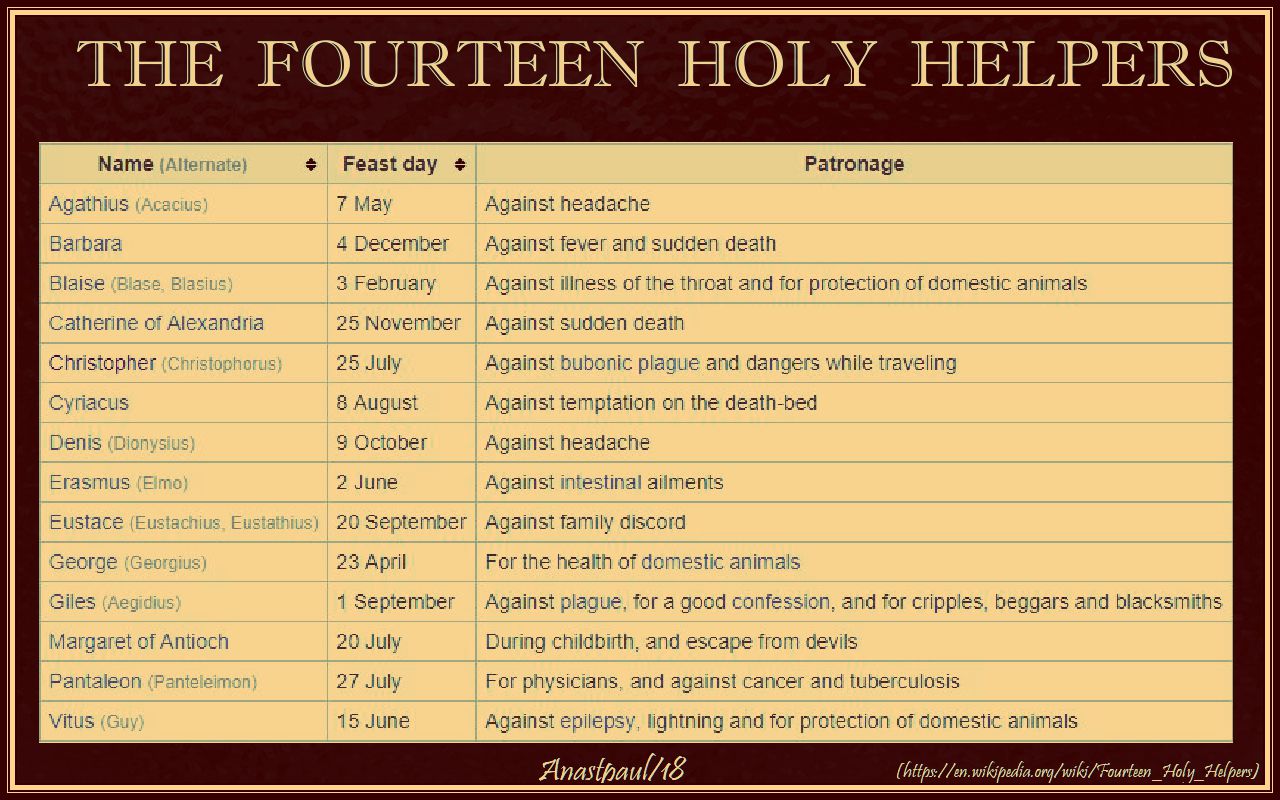
Saint of the Day – 23 April – St George (died c 303) Martyr, one of the Fourteen Holy Helpers

Saint of the Day – 23 April – St George (died c 303) also known as St George of Lydda,  Jirí, Jordi, Zorzo,  Victory Bringer – Martyr and Soldier.   St George was born c 256-285 in Palestine and was tortured and beheaded to death in c 303 in Nicomedia, Bithynia, Roman Empire.   Patronages – • against herpes • against leprosy • against plague • against skin diseases • against skin rashes • against syphilis • agricultural workers • Aragon • archers • armourers • Boy Scouts • butchers • Canada • Cappadocia • Catalonia • cavalry • chivalry • Crusaders • England • equestrians • Ethiopia • farmers • field hands • field workers • Georgia • Germany • Greece • halberdiers • horsemen • horses  • knights • lepers • Lithuania • Malta • Montenegro • Order of the Garter • Palestine • Palestinian Christians • Portugal • riders • Romanian Army • saddle makers • saddlers • Serbia • sheep • shepherds • soldiers • Teutonic Knights • 2 Dioceses • 181 Cities.   He is one of the Fourteen Holy Helpers.

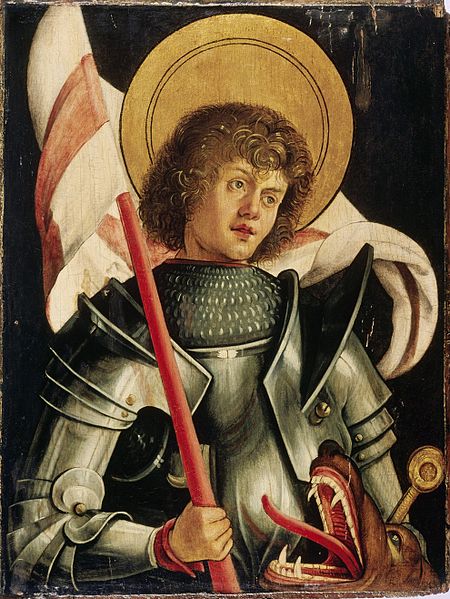
450px-Hans_Süß_von_Kulmbach_(zugeschr.)_-_Heiliger_Georg

St George was a Roman soldier of Greek origin and officer in the Guard of Roman emperor Diocletian, who was sentenced to death for refusing to recant his Christian faith.   As a Christian Martyr, he later became one of the most venerated saints in Christianity and was especially venerated by the Crusaders.   George’s parents were Christians of Greek background, his father Gerontius was a Roman army official from Cappadocia and his mother Polychronia was a Christian and a Greek native from Lydda in the Roman province of Syria Palaestina.

St George is commemorated and remembered as one of the Fourteen Holy Helpers and one of the most prominent military Saints, he is immortalised in the myth of Saint George and the Dragon.  Due to his chivalrous behaviour (protecting women, fighting evil, dependence on faith and might of arms, largesse to the poor), devotion to Saint George became popular in the Europe after the 10th century.   In the 15th century his feast day was as popular and important as Christmas.   Many of his areas of patronage have to do with life as a knight on horseback.   The celebrated Knights of the Garter are actually Knights of the Order of Saint George.   The shrine built for his relics at Lydda, Palestine was a popular point of pilgrimage for centuries.

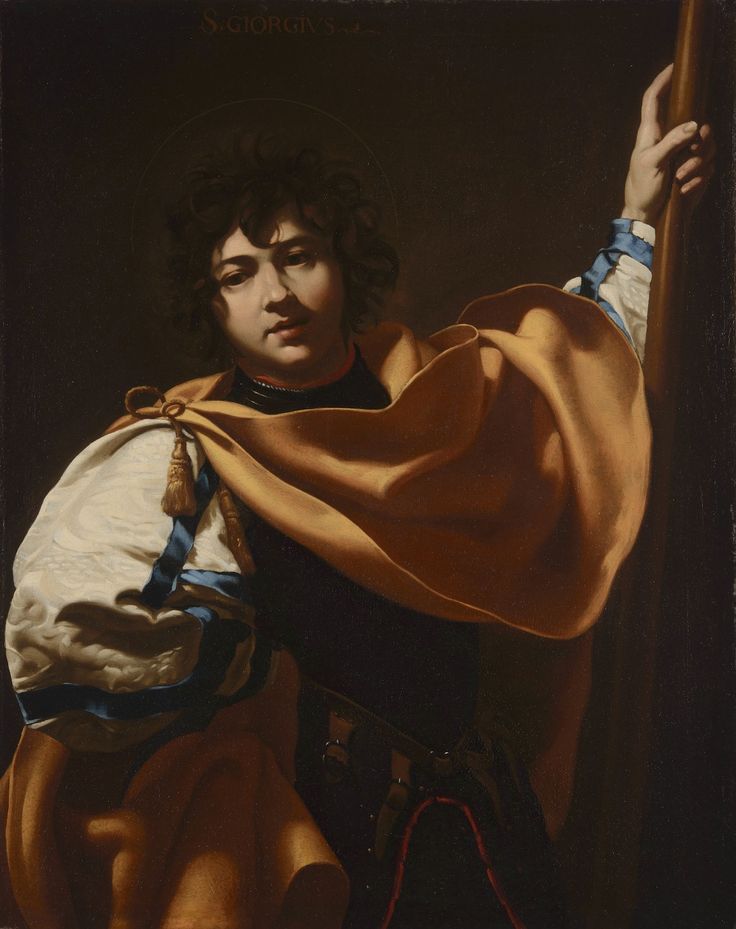
Simon Vouet - ST GEORGE

There is little information on the early life of Saint George.   Herbert Thurston in The Catholic Encyclopedia states that based upon an ancient cultus, narratives of the early pilgrims and the early dedications of churches to Saint George, going back to the fourth century, “there seems, therefore, no ground for doubting the historical existence of St. George”.    According to Donald Attwater, “No historical particulars of his life have survived, … The widespread veneration for St George as a soldier saint from early times had its centre in Palestine at Diospolis, now Lydda.   St George was apparently martyred there, at the end of the third or the beginning of the fourth century; that is all that can be reasonably surmised about him.”

On 24 February 303, Diocletian, who hated Christians, announced that every Christian the army passed would be arrested and every other soldier should offer a sacrifice to the Roman gods.   George refused to abide by the order and told Diocletian, who was angry but greatly valued his friendship with George’s father.   When George announced his beliefs before his peers, Diocletian was unable to keep the news to himself.   In an effort to save George, Diocletian attempted to convert him to believe in the Roman gods, offered him land, money and slaves in exchange for offering a sacrifice to the Roman gods and made several other offers that George refused.

Finally, after exhausting all other options, Diocletian ordered George’s execution.   In preparation for his death, George gave his money to the poor and was sent for several torture sessions.   He was lacerated on a wheel of swords and required resuscitation three times but still George did not turn from God.

283px-StGeorgeDragged
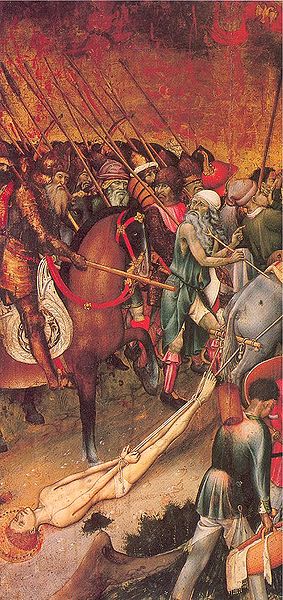
Saint George dragged through the city behind horses – 15th century – Bernardo Martorell

George was decapitated before Nicomedia’s outer wall.   His body was sent to Lydda for burial and other Christians went to honour George as a martyr.

Saint George and the Dragon

There are several stories about George fighting dragons but in the Western version, a dragon or crocodile made its nest at a spring that provided water to Silene, believed to be modern-day Lcyrene in Libya.   The people were unable to collect water and so attempted to remove the dragon from its nest on several occasions.   It would temporarily leave its nest when they offered it a sheep each day, until the sheep disappeared and the people were distraught.  This was when they decided that a maiden would be just as effective as sending a sheep.   The townspeople chose the victim by drawing straws.   This continued until one day the princess’ straw was drawn.   The monarch begged for her to be spared but the people would not have it.   She was offered to the dragon but before she could be devoured, George appeared.   He faced the dragon, protected himself with the sign of the Cross and slayed the dragon.   After saving the town, the citizens abandoned their paganism and were all converted to Christianity.

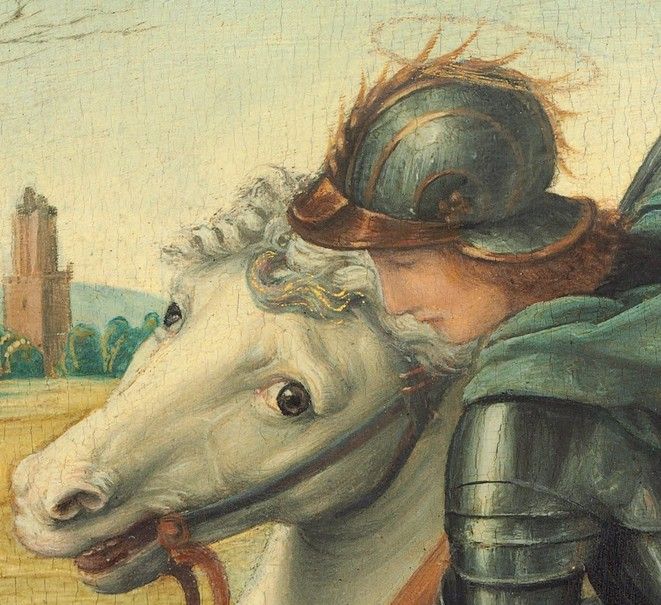
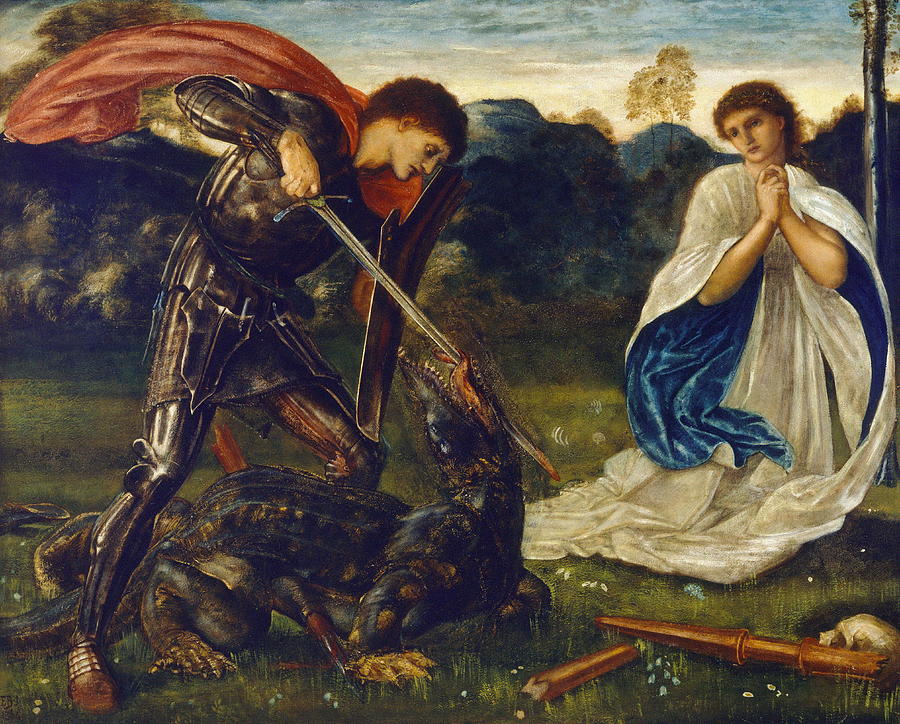
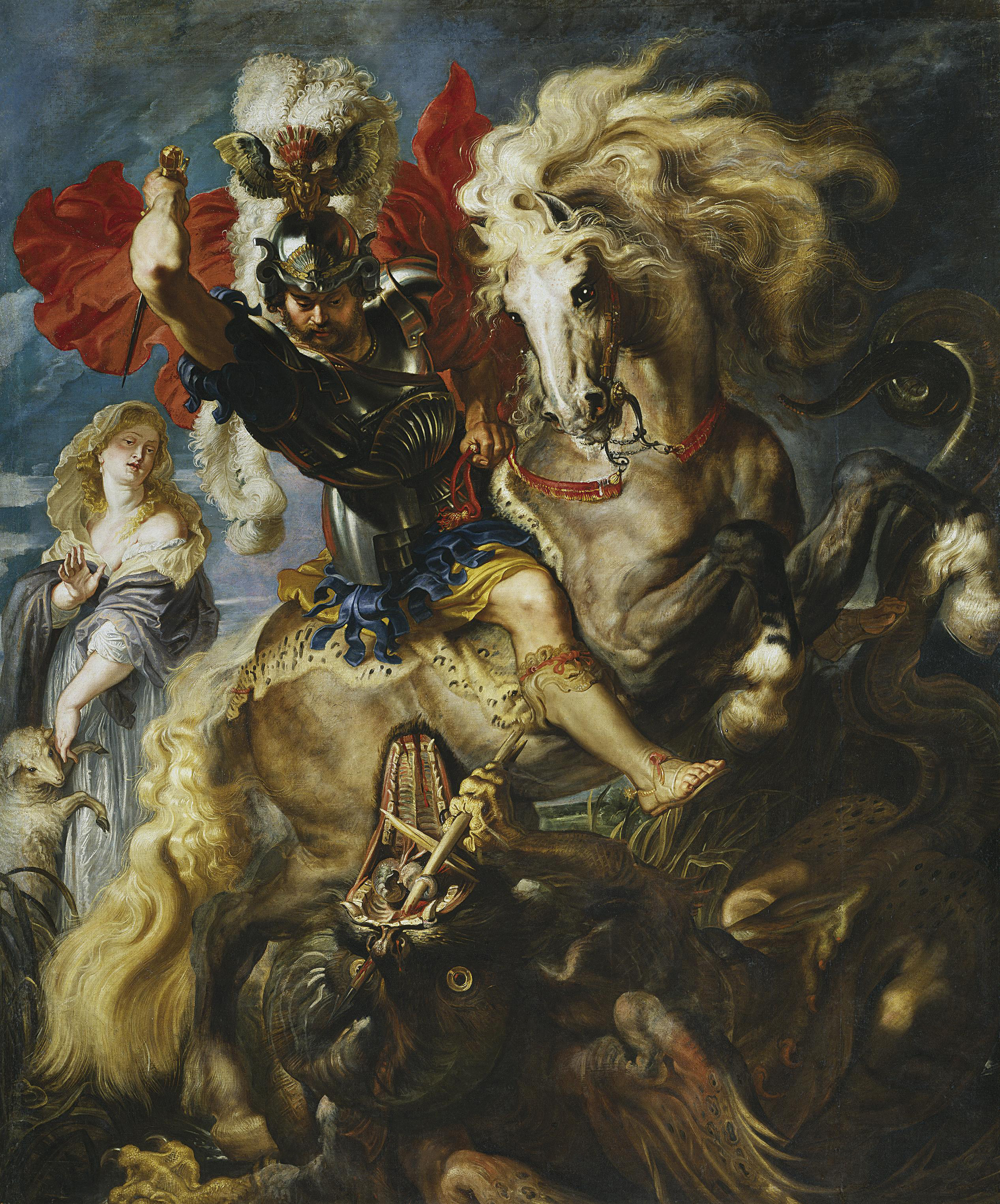
header - Detail from Saint George and the Dragon, Raphael, about 1506 ·1-the-fight-st-george-kills-the-dragon-vi-edward-burne-jonesRubens_-_San_Jorge_y_el_Dragón_(Museo_del_Prado,_1605)

Interesting Facts

Saint George stands out among other saints and legends because he is known and revered by both Muslims and Christians.
It is said Saint George killed the dragon near the sea in Beirut, thus Saint George Bay was named in his honour.
Saint George’s feast day is celebrated on 23 April but if it falls before Easter, it is celebrated Easter Monday.
The Russian Orthodox Church celebrates three St George feast days each year -23 April, 3 November, to commemorate the consecration of a cathedral dedicated to him in Lydda, and on 26 November for when a church in Kiev was dedicated to him.
In Bulgaria, his feast day is celebrated 6 May with the slaughter and roasting of a lamb.
In Egypt, the Coptic Orthodox Church of Alexandria calls St George the “Prince of Martyrs” and celebrates on 1 May.   There is a second celebration 17 November in honour of the first church dedicated to him.
Saint George is the patron saint of England and Catalonia and his cross can be found throughout England including on the English and other Commonwealth flags.
In older works, Saint George is depicted wearing armour and holding a lance or fighting a dragon, which represents Christ’s enemies.

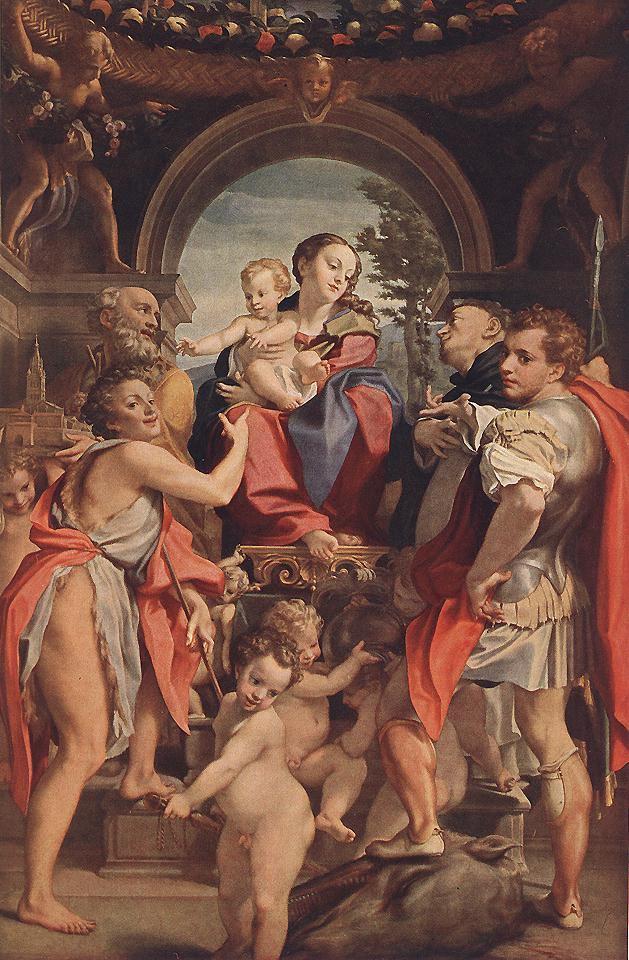
Correggio, Madonna with St George, 1530-32,
The Madonna with St George – Correggio

Posted in Against SNAKE BITES / POISON, Against SORE THROATS, COUGHS, WHOOPING COUGH,, Against STORMS, EARTHQUAKES, THUNDER & LIGHTENING, FIRES, DROUGHT / NATURAL DISASTERS, Of BUILDERS, CONSTRUCTION WORKERS, Of the SICK, the INFIRM, All ILLNESS, PATRONAGE - HEADACHES, PATRONAGE - ORPHANS,ABANDONED CHILDREN, PATRONAGE - TOOTHACHE and Diseases of the TEETH,, of DENTISTS, SAINT of the DAY, SKIN DISEASES, RASHES, STOMACH DISEASES and PAIN, INTESTINAL DISORDERS, Thomas a Kempis, Uncategorized

Saint of the Day – 3 February – St Blaise (Died c 316) – Martyr

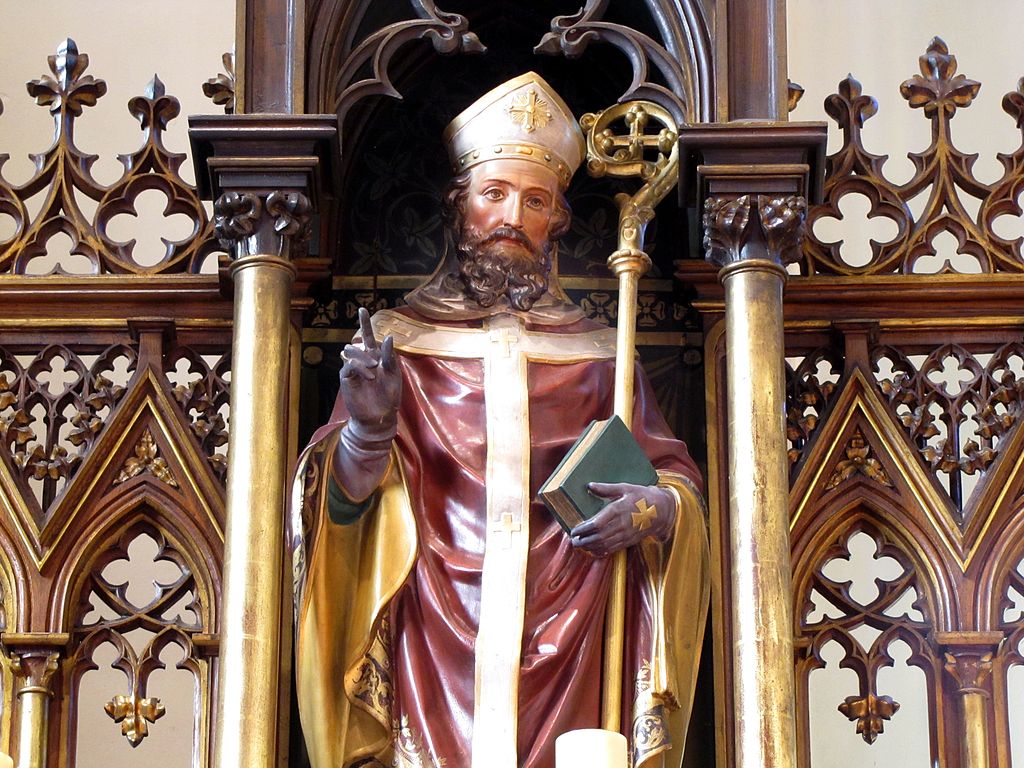
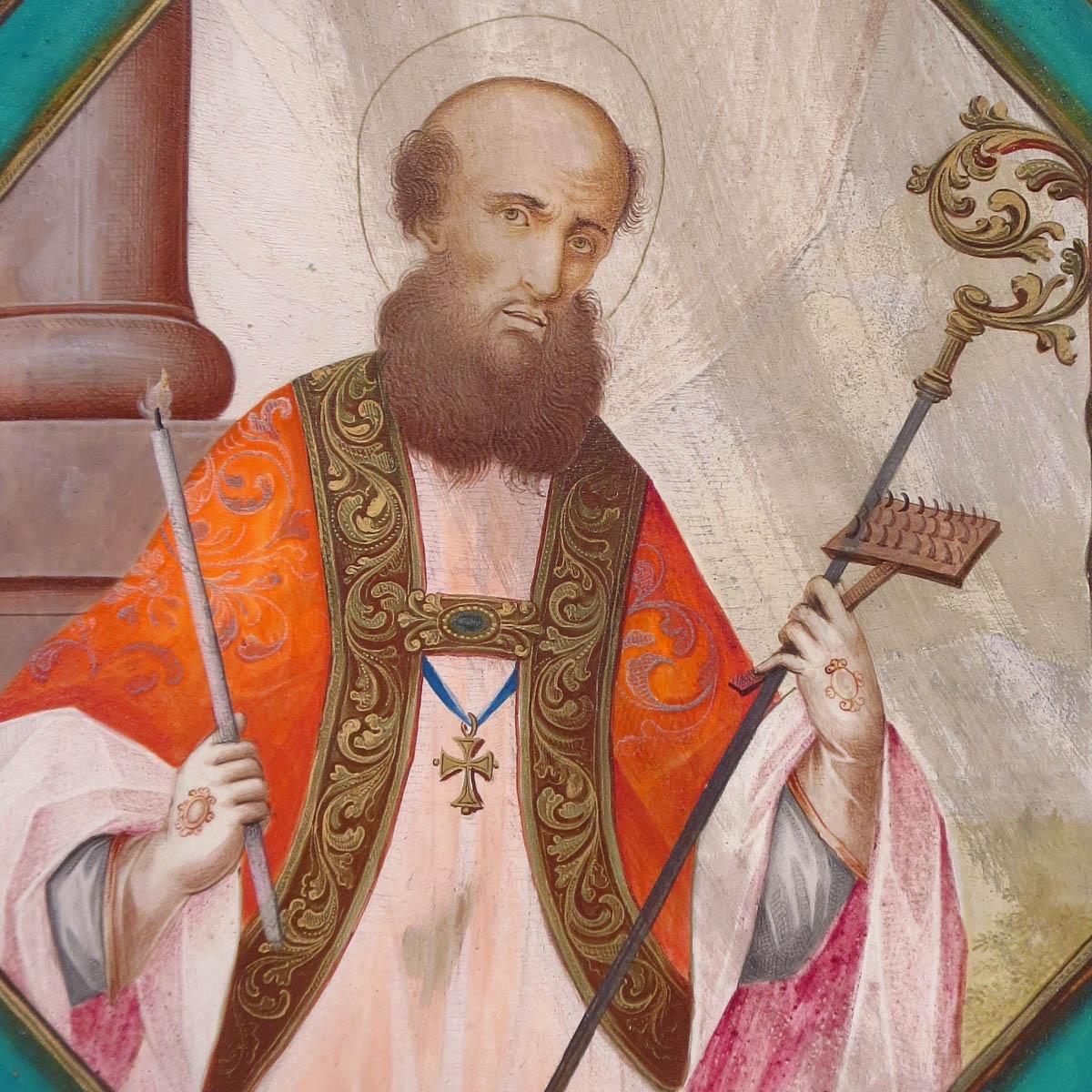
Saint of the Day – 3 February – St Blaise (Died c 316) – Martyr, Bishop of Sebaste, Armenia, Physician, Miracle-worker.   Died in c 316 by his flesh being torn off his body by iron wool-combs, then beheaded.  Patronages – against angina • against bladder diseases • against blisters • against coughs • against dermatitis • against dropsy • against eczema • against edema • against fever • against goitres • against headaches • against impetigo • against respiratory diseases • against skin diseases • against snake bites • against sore throats • against stomach pain • against storms • against teething pain • against throat diseases • against toothaches • against ulcers • against whooping cough • against wild beasts • angina sufferers of ; of children, animals, builders, drapers, against choking, veterinarians, infants, of 21 Cities, of stonecutters, carvers, wool workers. St Blaise is one of the Fourteen Holy Helpers – https://anastpaul.com/2018/07/25/thought-for-the-day-25-july-the-memorial-of-st-christopher-died-c-251-one-of-the-fourteen-holy-helpers/

Today the Church remembers the life and witness of Saint Blaise, a 3rd century Armenian bishop who endured terrifying torments and surrendered his life rather than repudiate his profession of Faith.st blaise statue - large

Much of the life of Saint Blaise is history that has passed into legend but even these legendary accounts offer spiritual insight.

Blaise was renowned as a wonderworker, effecting miraculous cures. T  his would have been enough to attract attention but he was also not averse to calling out the Roman officials who ruled the region in which he lived, Cappadocia, for their tyranny and intolerance of Christian faith and practice.   The combination of a reputation for supernatural power and the courage of his convictions was not welcomed by Rome and the governor ordered Bishop Blaise to be arrested.   Blaise was able to elude capture and took refuge in the wilderness.   It was there in the caves of Cappadocia that his ministry and his mission continued.

There is an account of Saint Blaise that identifies not only his pastoral care for the Christian faithful but also for the animals of the wilderness.

A woman had witnessed her piglet carried off by a wolf and spoke of her plight to the bishop.   Saint Blaise called for the wolf, demanded her return the piglet to its rightful owner and reminded the wolf of the grave penalty that awaited a thief.   The wolf complied and returned the piglet to its owner- a credit to the bishop’s power of persuasion.   The woman would later return the favour to Saint Blaise when he was finally captured and imprisoned.   She brought to him candles to illuminate his dank and dreary cell.

This legend hints at how the saints represent, in their holiness, the restoration of a paradise lost and regained in Christ.   The ease and familiarity with which the Biblical character of Adam is believed to have communed with nature before the fall is recapitulated in Saint Blaise- he is a sign that anticipates the restoration of all things in Christ where the lion will rest with the lamb and in this case, the wolf will return stolen property to its rightful owner.

Saint Blaise Painting by Pere Fernandez; Saint Blaise Art Print for sale

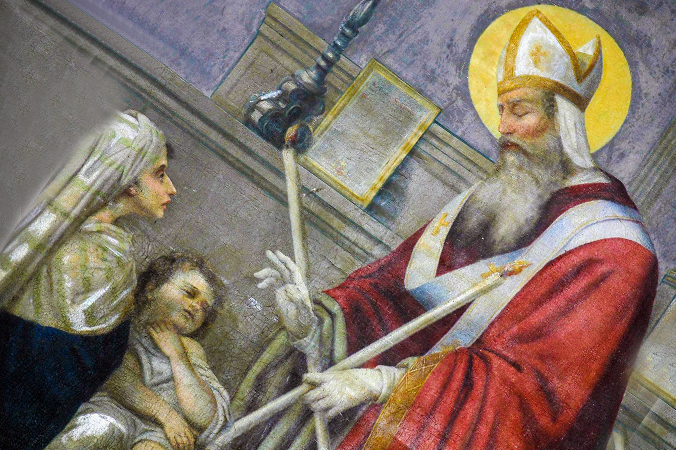
Saint Blaise has been invoked for centuries as a specialist in diseases of the throat.   The origin of this practice might be in the story of a child brought to the saint who was either choking or suffering from some other malady of the throat.   Saint Blaise blessed the boy and he was restored to health.

The practice of blessing throats on the Feast of Saint Blaise is a commemoration of this miracle, that crossed candles are often used to impart this blessing might also be a recollection of the kindness of the woman who gave candles to the saint as he languished in prison.

Saint Blaise was an extraordinarily popular saint during the Middle Ages in Europe. Presentations of his miraculous and mighty deeds were commonly represented in art and sculpture, and he was included in a listing of saints called the Fourteen Holy Helpers (or Auxiliary Saints), holy men and women who could be counted on as intercessors for all manner of maladies from madness to travelers in distress.   During times in which a sore throat could be a signal of an impending epidemic or an early death, the faithful were all too happy to accept the help of a heavenly specialist in such matters like Saint Blaise.

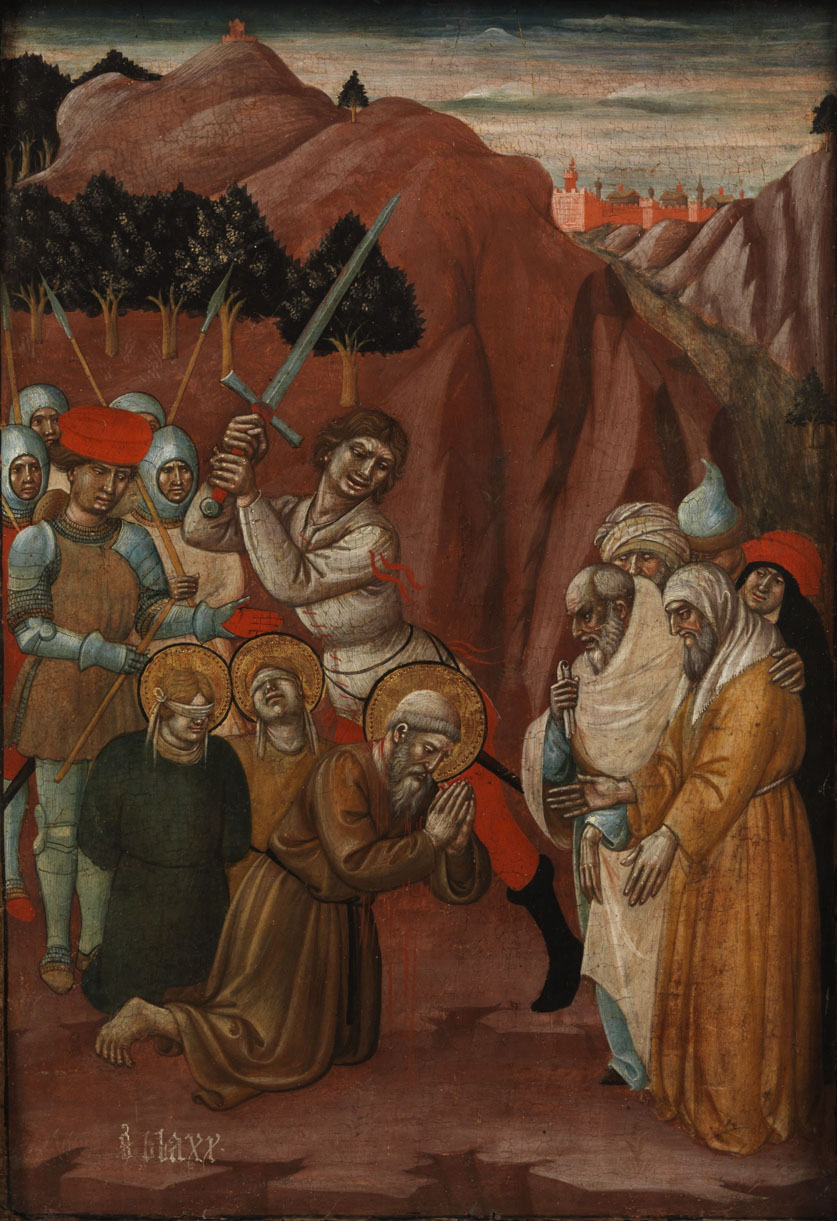
The legends regarding Saint Blaise report that his sojourn in the wilderness did not protect him for very long.   He was eventually arrested and brought to trial.   The judge advised him that only a pinch of incense offered to the image of Caesar and the gods of Rome could win him his freedom.   Blaise refused.   He was cruelly tortured and beheaded. Giovanni Antonio da Pesaro, St. Blaise Martyrdom, 15th cent.

The Church does not mourn Saint Blaise, for we know that in Christ this world is not all that there is.   While tyrants like Caesar and his successors can threaten us with death, Christ promises us a life that like his own, is transformed through suffering and death, into resurrection.

The scriptures proclaim, “though they slay me I will trust in you.”

Saint Blaise did precisely this.   He trusted that Christ would not abandon him to the power of death nor allow his suffering to be meaningless.   Our lives might never be raised to the legendary status of Saint Blaise but we can trust in Christ as he did and live in hope that one day we will join him in communion with all the saints who have gone before us in faith and who, from their place in heaven, guide and protect us still. (Fr Steve Grunow)blaiseCandlelarge - st blaise

Posted in DOMESTIC ANIMALS, EPILEPSY, Of ANIMALS / ANIMAL WELFARE, Of GARDENERS, Horticulturists, Farmers, SAINT of the DAY, SKIN DISEASES, RASHES

Saint of the Day – 17 January – St Anthony Abbot (c 251-356) 

Saint of the Day – 17 January – St Anthony Abbot (c 251-358) Also known as: • Abba Antonius • Anthony of Egypt• Anthony of the Desert• Anthony the Anchorite• Anthony the Great• Anthony the Hermit• Antonio Abate• Father of Cenobites• Father of All Monks• Father of Western Monasticism.  PATRONAGES – against eczema/skin diseases/skin rashes, epileptics; against ergotism, against pestilence, , of amputees, anchorites, animals, basket makers and weavers, brushmakers, butchers, cemetery workers, domestic animals, farmers, gravediggers, graveyards, hermits, pigs, monks, relief from pestilence, swineherds, Hospitallers, Tempio-Ampurias, Italy, Diocese of 9 Cities.

The biography of Anthony’s life by Athanasius of Alexandria helped to spread the concept of Christian monasticism, particularly in Western Europe via its Latin translations.   He is often erroneously considered the first Christian monk but as his biography and other sources make clear, there were many ascetics before him.   Anthony was, however, the first to go into the wilderness (about ad 270), which seems to have contributed to his renown.   Accounts of Anthony enduring supernatural temptation during his sojourn in the Eastern Desert of Egypt inspired the often-repeated subject of the temptation of St Anthony in Western art and literature.   St Anthony is appealed to against infectious diseases, particularly skin diseases.   In the past, many such afflictions, including ergotism, erysipelas, and shingles, were referred to as St Anthony’s fire.HEADER - ST anthonyab

Anthony was born in Egypt in 250.   At age 20, when his parents died, Anthony made sure his younger sister’s education could be completed in a community of holy women.   He then sold all his possessions and left for a life of solitude in the desert.   There an elderly hermit taught him about prayer and penance.   For 20 years, he lived in isolation. Anthony wanted to know God deeply.   He did penance by taking only bread and water once a day at sunset.   The devil appeared to him in terrible shapes to tempt him.   But Anthony had great confidence in God.   Anthony’s unusual life did not make him harsh but radiant with God’s love and compassion.

Annibale_Carracci_-_The_Temptation_of_St_Anthony_Abbot_(detail)_-_WGA4426
The Temptation of St Anthony (detail) – Carracci

Stories of Anthony’s holiness spread and people came to learn from him how to become holy.   Some admirers wanted to stay, so Anthony—at age 54—founded a type of monastery consisting of hermitages near one another.   Anthony wrote a rule that guided the monks.   Later when Anthony heard of the persecutions of the Christians, he wanted to die a martyr.   At 60, he left the desert to minister to the Christians in prisons, fearlessly exposing himself to danger.   He came to realise that a person can die daily for Christ by serving him in ordinary ways with great love.  st-anthony-abbot-LARGE - 1519Martín_Bernat_-_Saint_Anthony_the_Abbot_and_Donors_-_Google_Art_Projectanthony - LARGE

So he returned to the desert to his life of prayer and penance.   His life of solitude was again interrupted, however, when at age 88 he had a vision in which he saw the harm Arian followers were doing to the Church by denying the divinity of Christ.   Anthony left for Alexandria to preach against this heresy.   At age 90, another vision sent Anthony searching the desert for Saint Paul, the first hermit.   These two holy men met and spoke of the wonders of God. Anthony is said to have died peacefully in a cave at age 105.SAVOLDO-Giovanni-Girolamo-St-Anthony-Abbot-And-St-Paul.jpg

The life of Anthony will remind many people of St Francis of Assisi.   At 20, Anthony was so moved by the Gospel message, “Go, sell what you have, and give to [the] poor” (Mark 10:21b), that he actually did just that with his large inheritance.   He is different from Francis in that most of Anthony’s life was spent in solitude.   At 54, he responded to many requests and founded a sort of monastery of scattered cells.   Again like Francis, he had great fear of “stately buildings and well-laden tables.”   Like Francis and of course, many saints, Anthony too desired martyrdom.
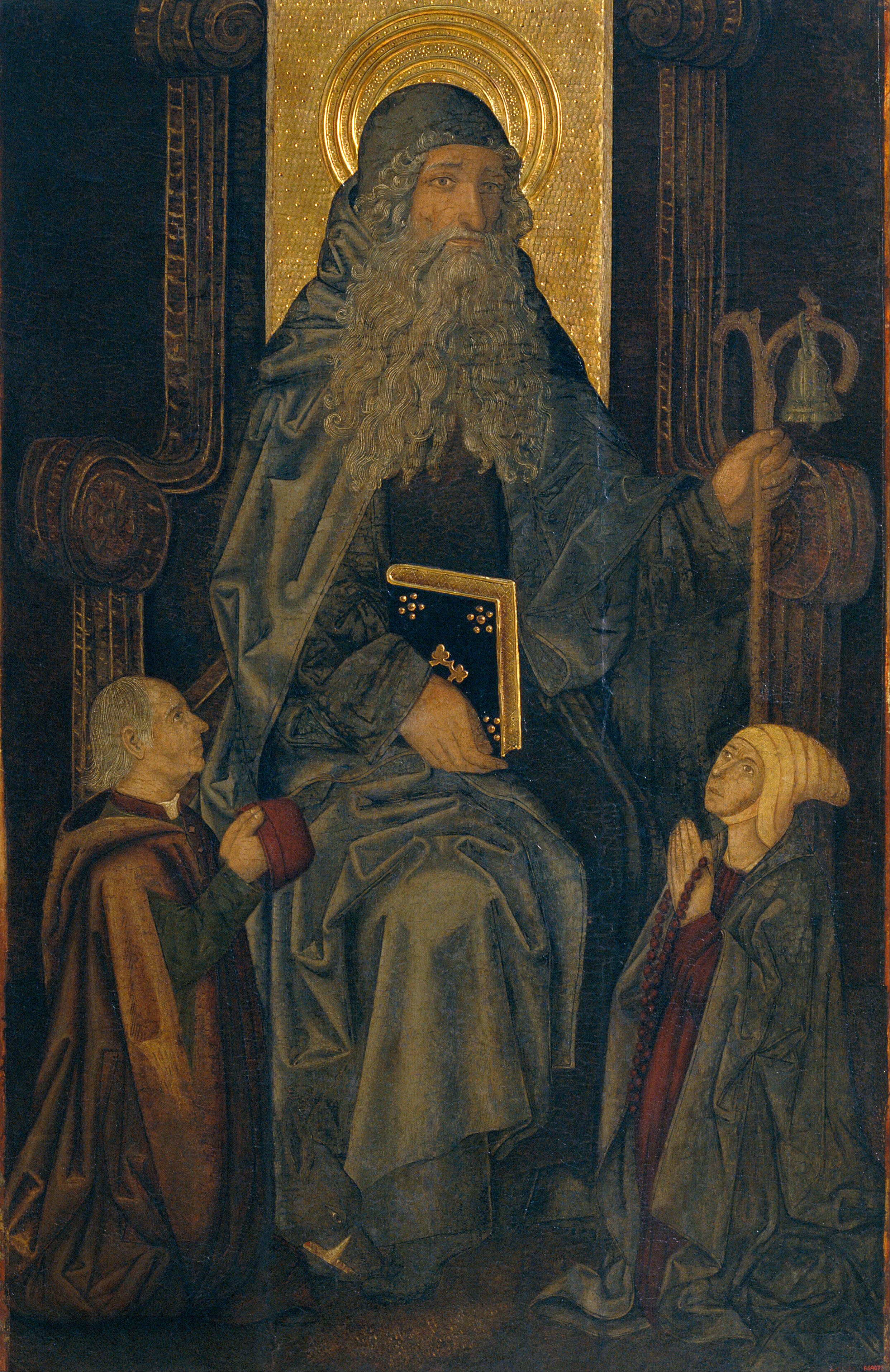
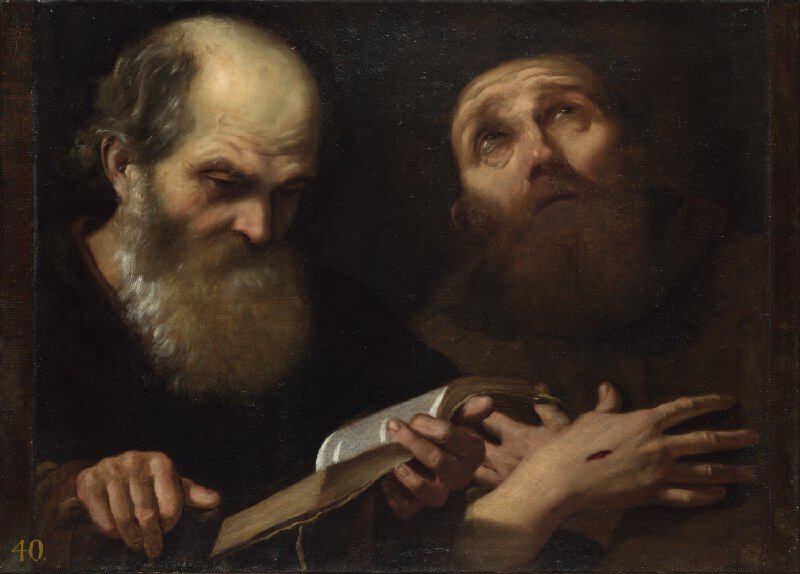
Anthony is associated in art with a T-shaped cross (which St Francis adopted), a pig and a book.   The pig and the cross are symbols of his valiant warfare with the devil—the cross his constant means of power over evil spirits, the pig a symbol of the devil himself.   The book recalls his preference for “the book of nature” over the printed word.ST ANTHONY ABBOT AND ST FRANCIS OF ASSISI

Posted in Of BUILDERS, CONSTRUCTION WORKERS, PATRONAGE - WRITERS, PRINTERS, PUBLISHERS, EDITORS, etc, SAINT of the DAY, SKIN DISEASES, RASHES, The APOSTLES & EVANGELISTS

Saint of the Day – 24 August – St Bartholomew Apostle of Christ

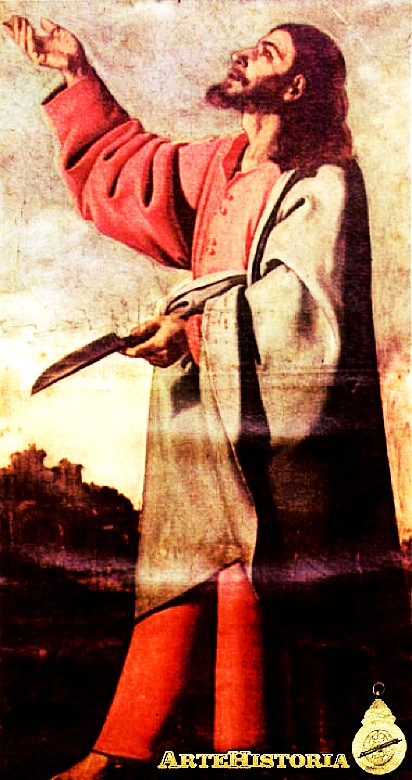
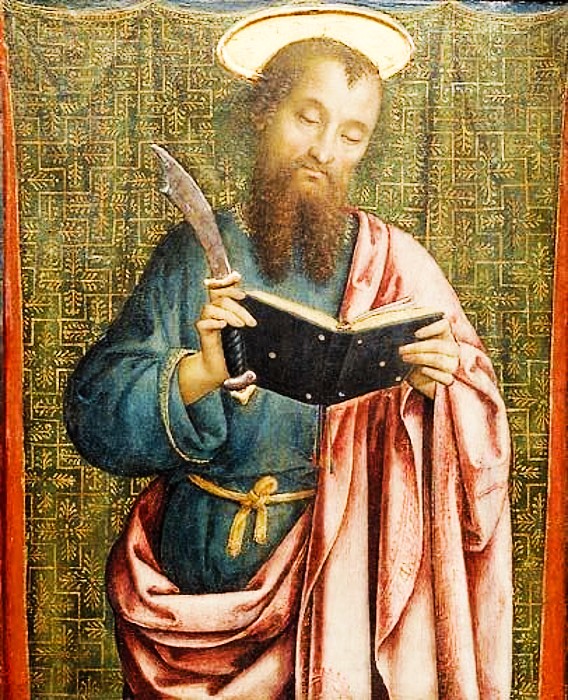
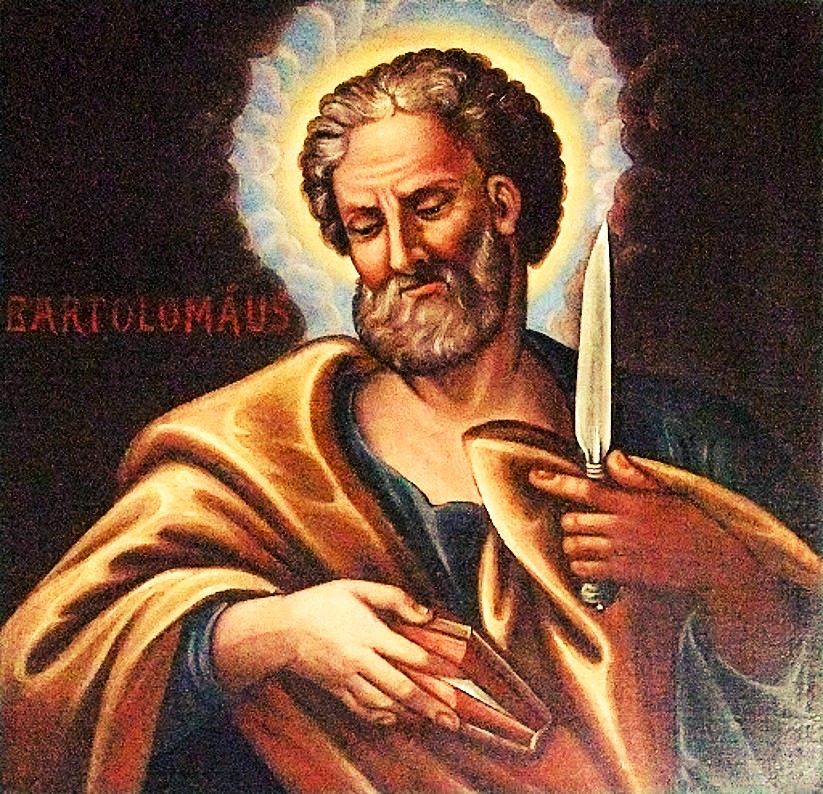
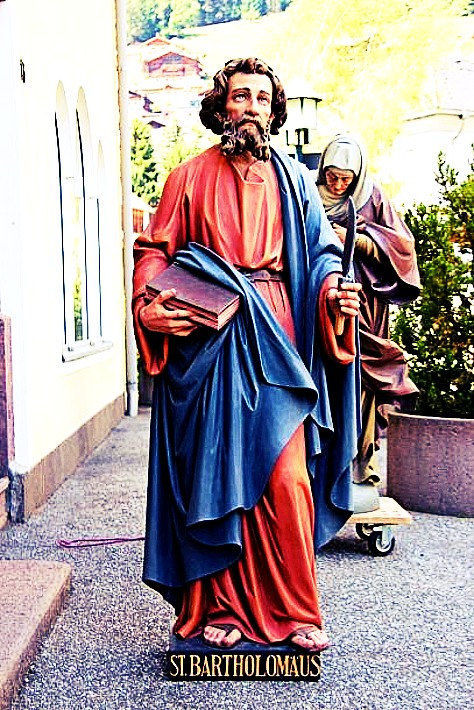
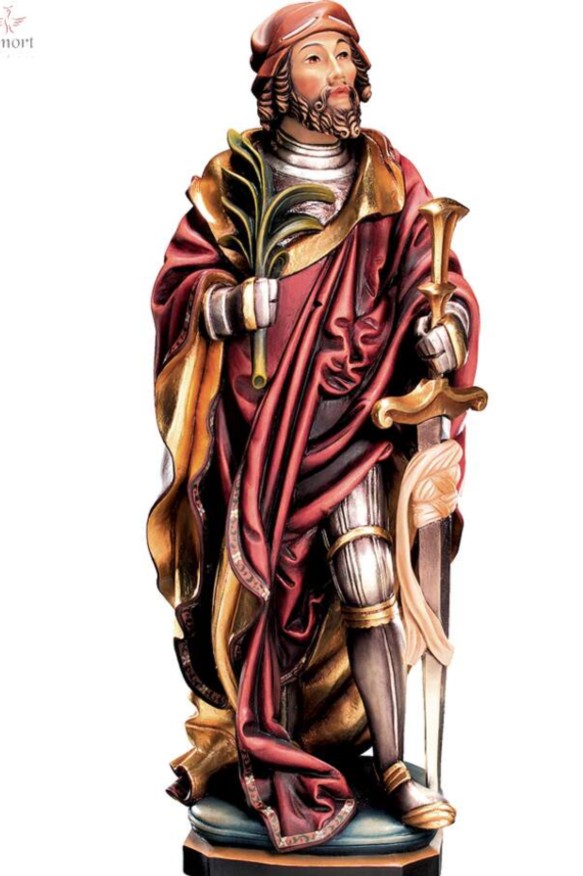
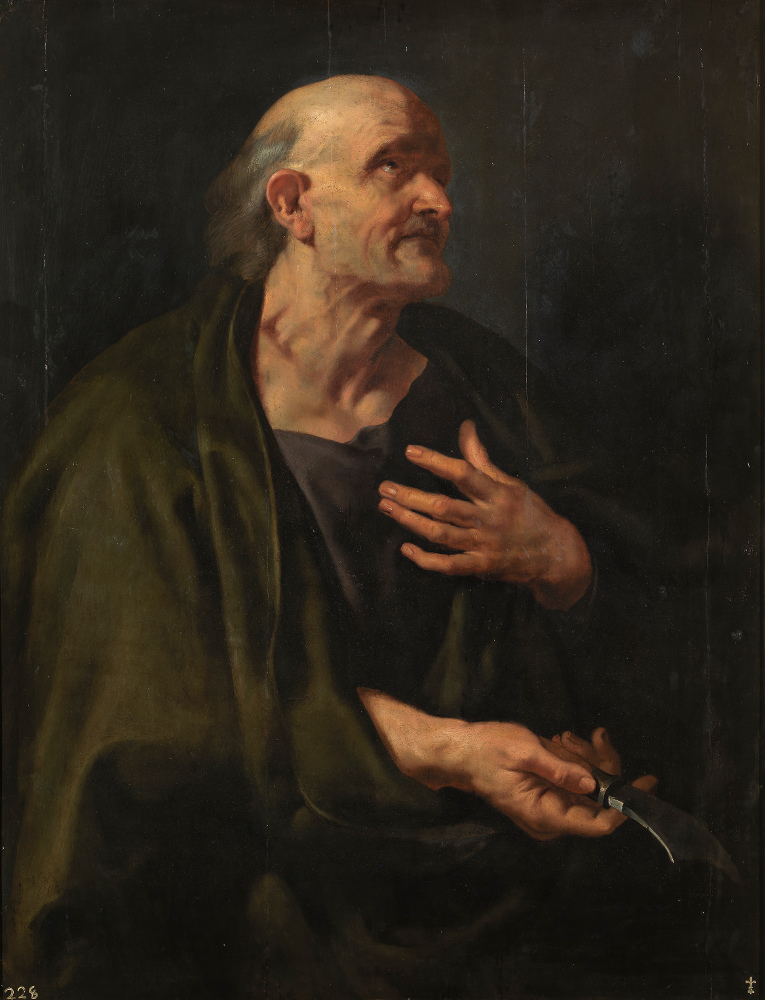
Saint of the Day – 24 August – St Bartholomew Apostle of Christ – Martyr – Patronages – Armenia; bookbinders/publishers; butchers; Florentine cheese and salt merchants; Gambatesa, Italy; Catbalogan, Samar; Għargħur, Malta; leather workers; neurological diseases; plasterers/construction workers; shoemakers; tanners; trappers; skin diseases/rashes, against involuntary  shaking disorders;  Los Cerricos (Spain), 16 further cities all over the world.   Attributes –  cross, elderly man holding a tanner’s knife and a human skin, tanner’s knife, bright red (skinless) man holding his own skin.

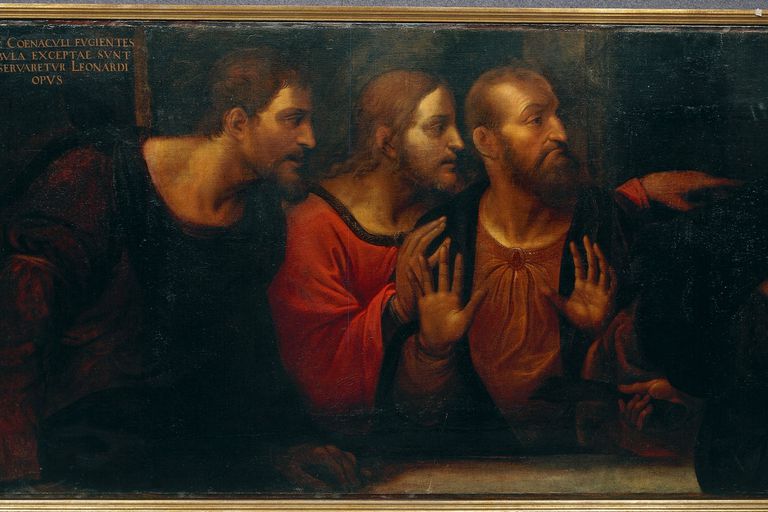
Bartholomew-Andrew-James-5712a8d55f9b588cc2255962
Apostles Bartholomew, Andrew, James

Saint Bartholomew is one of the Twelve Apostles, mentioned sixth in the three Gospel lists (Matthew 10:3; Mark 3:18; Luke 6:14) and seventh in the list of Acts (1:13).   The name (Bartholomaios) means “son of Talmai” which was an ancient Hebrew name.

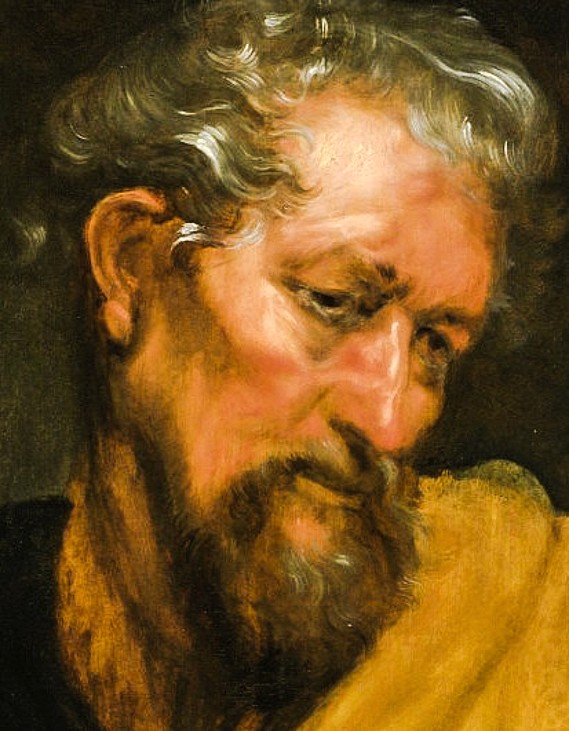
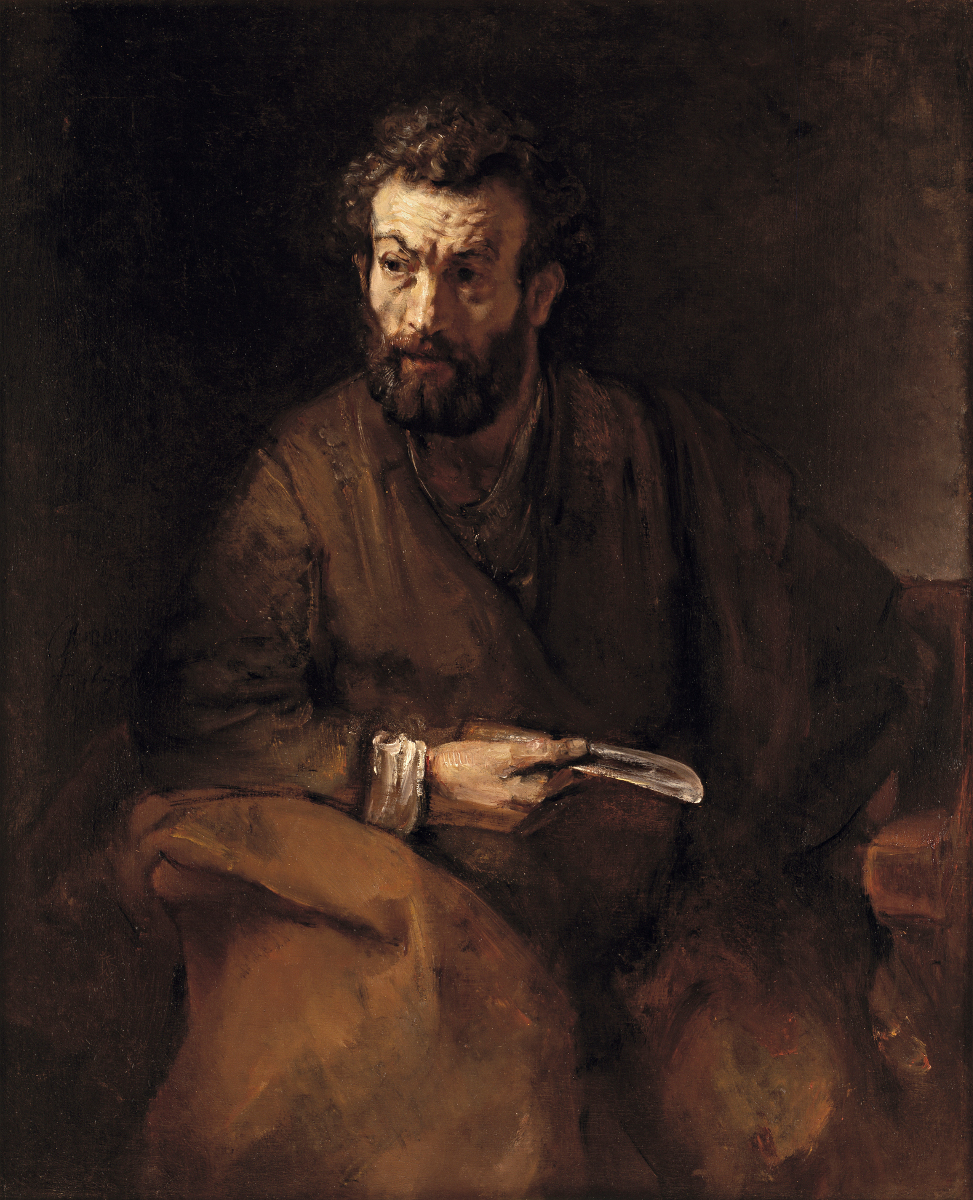
Rembrandt Harmensz. van Rijn- The apostle Bartholomew (1657)
Rembrandt van Rijn

Besides being listed as an Apostle, he is not otherwise mentioned in the New Testament, at least not under the name Bartholomew:  many ancient writers and Catholic tradition have identified Bartholomew as Nathaniel in the Gospel of John (John 1:45-51, and 21:2).

The Gospel passage read at Mass on the feast of Saint Bartholomew is precisely this passage from John (1:45-51) where Nathaniel is introduced to Jesus by his friend Phillip, and Jesus says of him “Here is a true child of Israel. There is no duplicity in him (1:47).”

saint-bartholomew-HEADER

We are presented with the Apostle’s character in this brief and beautiful dialogue with the Lord Jesus.   He is a good Jew, honest and innocent, a just man, who devotes much time to quiet reflection and prayer – “under the fig tree (1:48)” – and has been awaiting the Messiah, the Holy One of God.

At Jesus’ mention that “Before Philip called you, when you were under the fig tree, I saw you (1:48),” Nathaniel responded “Rabbi, you are the Son of God! You are the King of Israel (1:49)!”

Being “a true child of Israel,” Nathaniel was a man well-read in the Scriptures and knew what they said of the Messiah and where he would come from.   This is why he is skeptical of Phillip’s claim that Jesus is the Messiah, “Can anything good come out of Nazareth (1:46)?”

But Nathaniel was lacking “duplicity” – that is, his heart was undivided, his intentions pure – his openness to reality was always ready to recognise and surrender to the truth when he encountered it.   He remained open to his friend Phillip’s invitation to “Come and see (1:46).”   In encountering Jesus and hearing His words, he found himself face to face with the Truth Himself, and, like John the Baptist’s leap in his mother’s womb at the Lord’s presence, Nathaniel’s words leapt out of his own heart in a clear and simple confession of faith, “Rabbi, you are the Son of God! You are the King of Israel!”

Jesus, in Matthew 5:8, says, “Blessed are the pure of heart, for they shall see God.”   In Nathaniel we have an example of the pure man who sees – recognises –  God when confronted with Him and on seeing Him believes in Him and upon believing in Him, follows Him.

Nothing is known for sure about the life of Nathaniel/Bartholomew after the Ascension of Jesus but tradition holds that he preached in the East and died a martyr’s death in Armenia, being flayed alive for having won converts to the Lord Jesus.

rubens_apostel_bartolomeus_grt
Rubens

Posted in Against EPIDEMICS, GOUT, KNEE PROBLEMS, ARTHRITIS, etc, Of ANIMALS / ANIMAL WELFARE, Of BACHELORS, Of the SICK, the INFIRM, All ILLNESS, PATRONAGE - OF DOGS and against DOG BITES and/or RABIES, SAINT of the DAY, SKIN DISEASES, RASHES

Saint of the Day – 16 August- St Roch (1295-1327) Confessor

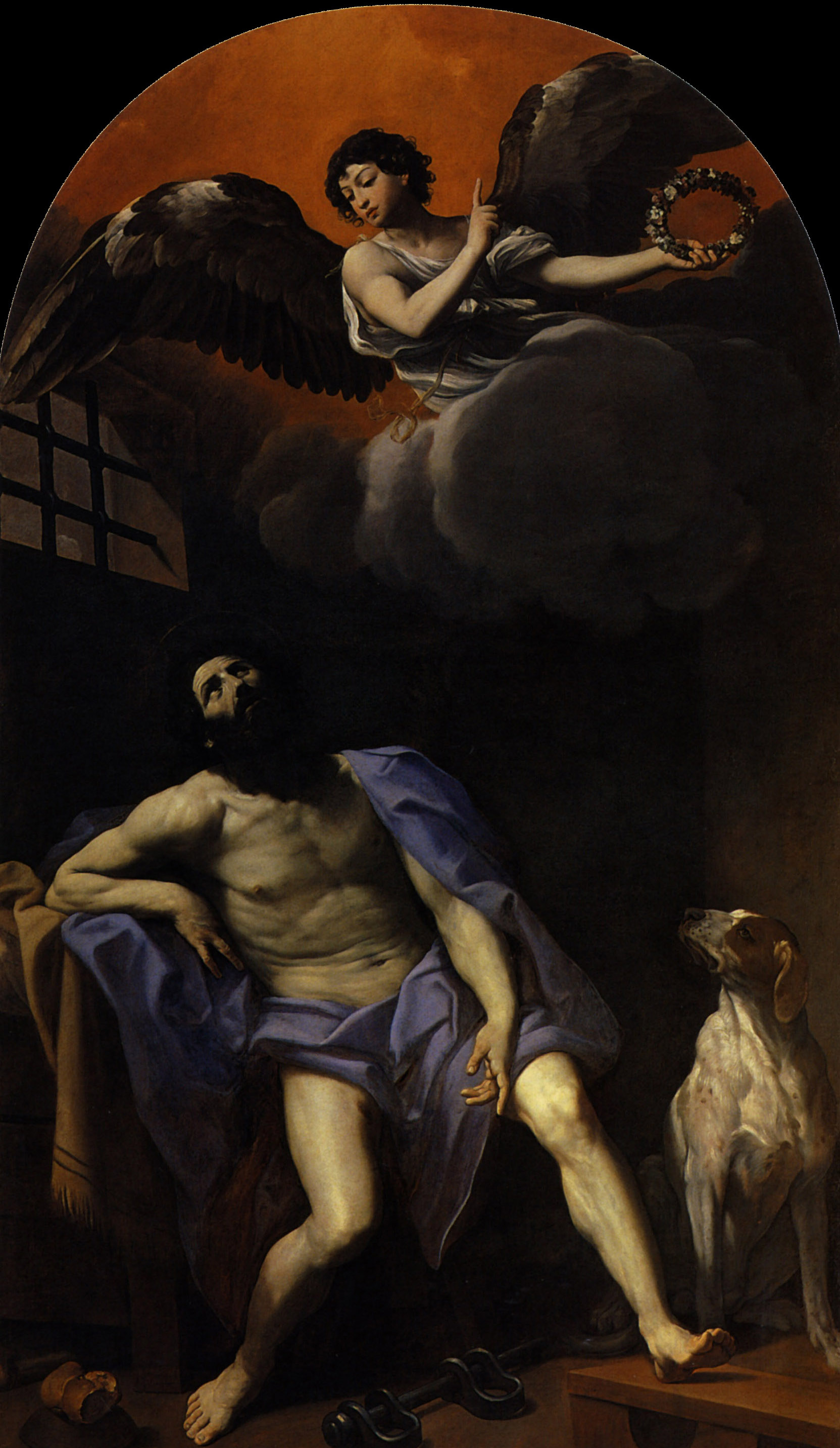
Saint of the Day – 16 August- St Roch (1295-1327)  Confessor, Pilgrim, Hermit, Apostle of the Sick, Miracle Worker.   Born in 1295 at Montpelier, France and died in 1327 at Montpelier or Angleria, France of natural causes).   His relics are in Venice, Italy in the Church of San Rocco,some reside in Rome and others in Arles, France.   Patronages –  against cholera, against diseased cattle, against epidemics, against knee problems, against the plague, against skin diseases and rashes, bachelors, of dogs, falsely accused people, invalids, relief from pestilence, OF  surgeons, tile makers, The Diocese of Tagbilaran, Philippines,Constantinople, 24 other assorted Cities around the world.   Attributes – angel, bread, dog, pilgrim with staff, often displaying a plague wound on his leg, pilgrim with a dog, pilgrim with a dog licking the wound, pilgrim with a dog carrying a loaf of bread in its mouth.

According to his Acta and his vita in the Golden Legend, he was born at Montpellier, at that time “upon the border of France“, as the Golden Legend has it, the son of the noble governor of that city.   Even his birth was accounted a miracle, for his noble mother had been barren until she prayed to the Virgin Mary.   Miraculously marked from birth with a red cross on his breast which grew as he did, he began to manifest strict asceticism and great devotion and piety from a very early age.    On days when his “devout mother fasted twice in the week and the blessed child Rocke abstained twice also, he would drink from his mother but once that day.”

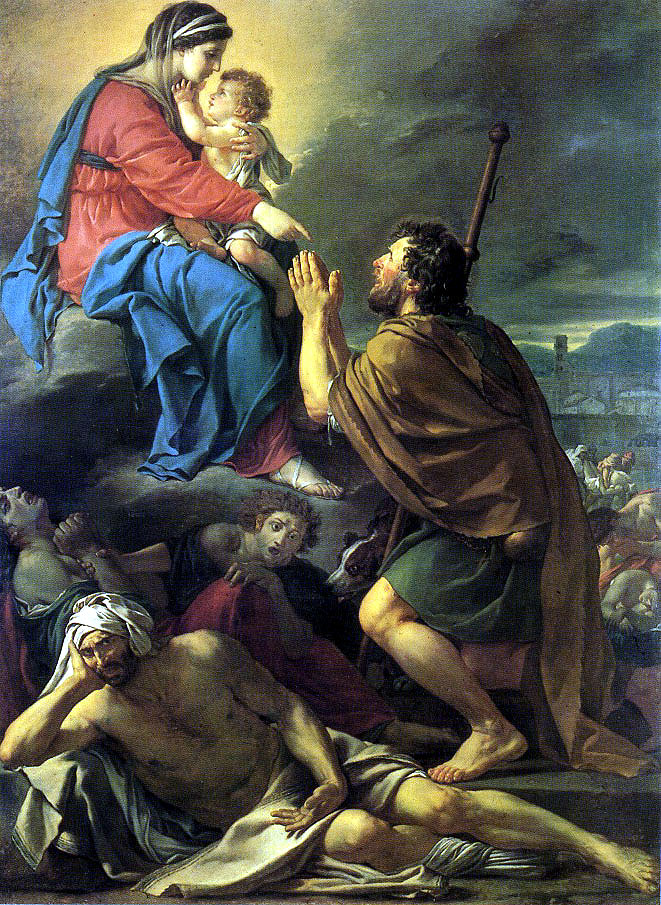
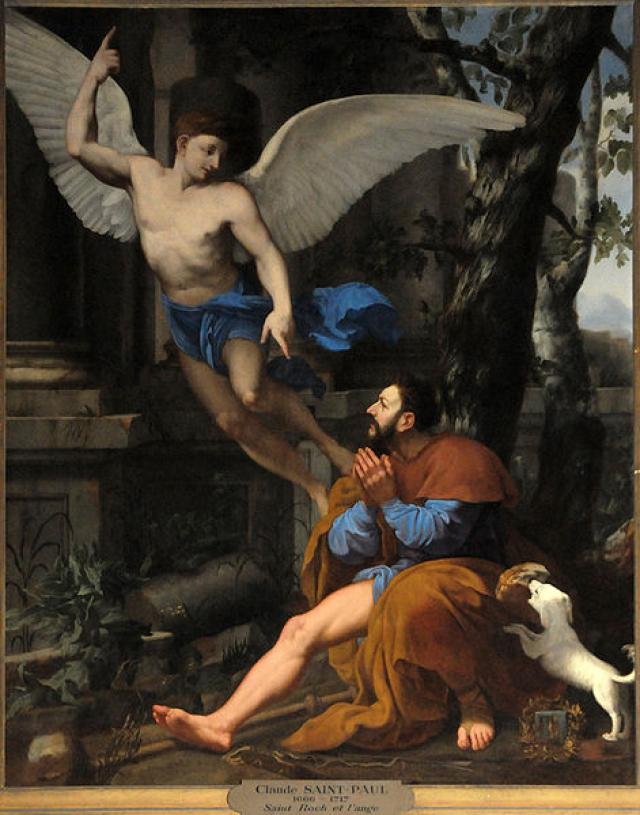
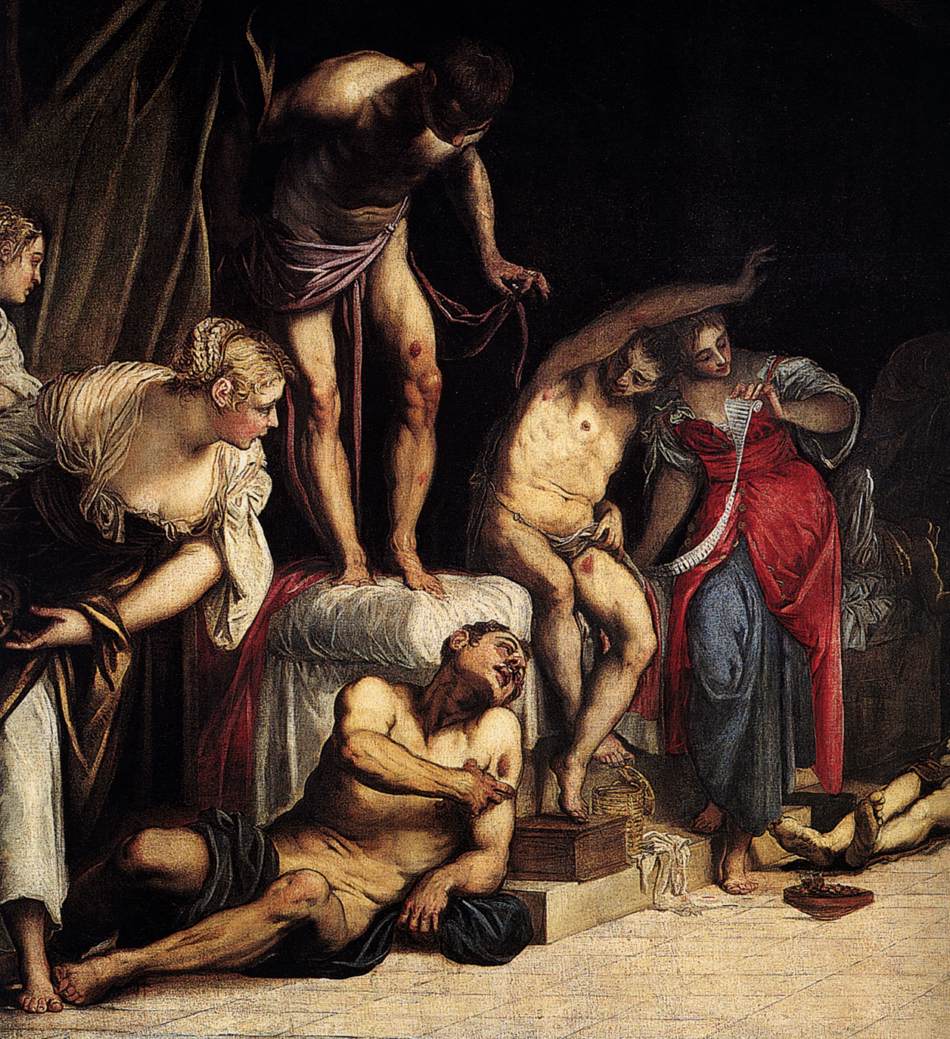
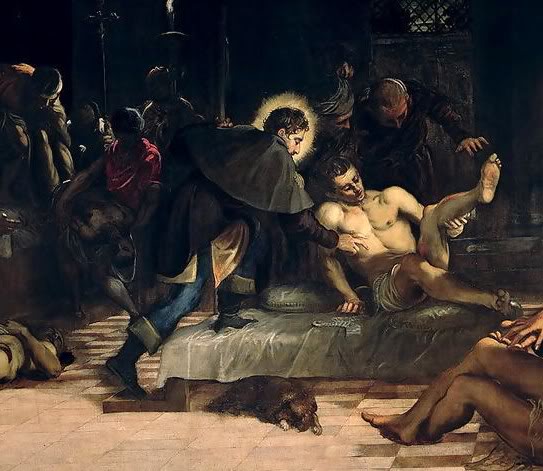
On the death of his parents in his twentieth year he distributed all his worldly goods among the poor like Francis of Assisi—although his father, on his deathbed, had ordained him governor of Montpellier—and set out as a mendicant pilgrim for Rome.   Coming into Italy during an epidemic of plague, he was very diligent in tending the sick in the public hospitals at Acquapendente, Cesena, Rimini, Novara and Rome, and is said to have effected many miraculous cures by prayer and the sign of the cross and the touch of his hand.   St Roch Praying to the Virgin for an End to the Plague Creator(s- Jacques-Louis DavidIn In Rome, according to the Golden Legend he preserved the “Cardinal of Angleria in Lombardy” by making the Sign of the Cross on his forehead, which miraculously remained there, visi nbble to all!    Ministering at Piacenza he himself finally fell ill.   He was expelled from the Town and withdrew into the forest, where he fashioned a shelter of boughs and leaves which was miraculously supplied with water, by a spring wic arose in the place;.   He would have perished, had not a dog belonging to a nobleman named Gothard Palastrelli, supplied him with bread and licked his wounds, healing them.   Count Gothard, following his hunting dog carrying the bread, discovered Saint Roch and became his acolyte.
Jacopo_Tintoretto_-_St_Roch_in_the_Hospital_(detail)_-_WGA22606+(2)816roch16guido reni san roque 1617Saint_Paul_Saint_Roch

On his incognito return to Montpellier he was arrested as a spy (by orders of his own uncle) and thrown into prison, where he languished five years and died on 16 August 1327, without revealing his name, to avoid worldly glory.   After his death, according to the Golden Legend;

“anon, an Angel brought a table into the prison, from Heaven, divinely written with letters of gold, which he laid under the head of St Roch.   And on that table was written, God had granted to him his prayer, that is, to wit, that who that calleth meekly to St Roch shall not be hurt with any hurt of pestilence.”

The townspeople recognised him as well by his birthmark;  he was soon Canonised in the popular mind and a great Church erected in veneration.

The story that, in 1414,  when the Council of Constance was threatened with plague, public processions and prayers for the intercession of Roch were ordered and the outbreak ceased, is provided by Francesco Diedo, the Venetian governor of Brescia, in his Vita Sancti Rochi, 1478.   The cult of Roch gained momentum during the bubonic plague that passed through northern Italy in 1477–79.

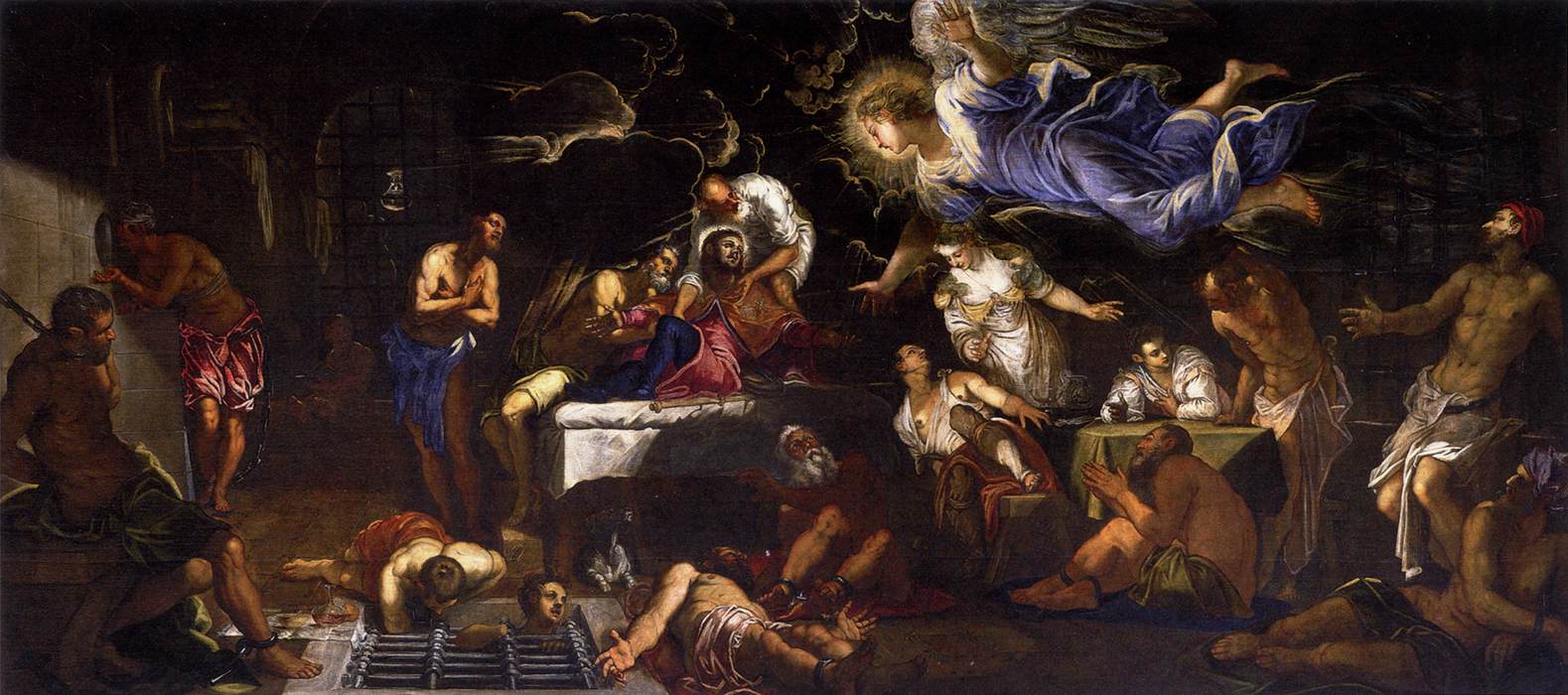
His popularity, originally in central and northern Italy and at Montpellier, spread through Spain, France, Lebanon the Low Countries, Brazil and Germany, where he was often interpolated into the roster of the Fourteen Holy Helpers, whose veneration spread in the wake of the Black Death.   The magnificent 16th-century Scuola Grande di San Rocco and the adjacent church of San Rocco were dedicated to him by a confraternity at Venice, where his body was said to have been surreptitiously translated and was triumphantly inaugurated in 1485;  the Scuola Grande is famous for its sequence of paintings by Tintoretto, who painted St Roch visited by an angel, in a ceiling canvas (1564).

Tintoretto,_Jacopo_-_St_Roch_in_Prison_Visited_by_an_Angel_-_1567

We know for certain that, in 1465,  the body of St Roch was carried from Voghera, instead of Montpellier as previously thought, to Venice.   Pope Alexander VI (1492–1503) built a Church and a hospital in his honour.   Pope Paul III (1534–1549) instituted a confraternity of St Roch.   This was raised to an Arch-confraternity in 1556 by Pope Paul IV;  it still thrives today.

Saint Roch had not been officially recognised as a Saint as yet, however.   In 1590 the Venetian Ambassador to Rome reported to the Serenissima that he had been repeatedly urged to present the witnesses and documentation of the life and miracles of St Rocco, already deeply entrenched in the Venetian life because Pope Sixtus V “is strong in his opinion either to Canonise him or else to remove him from the ranks of the Saints.”    The Ambassador had warned a Cardinal of the general scandal that would result, if the widely venerated St Rocco, were impugned as an impostor.   Sixtus did not pursue the matter but left it to later Popes to proceed with the Canonisation process.   His successor, Pope Gregory XIV (1590–1591), added Roch of Montpellier, who had already been memorialised in the Holy Sacrifice of the Mass for two centuries, to the Roman Martyrology, thereby fixing 16 August as his universal Feast Day.

Numerous brotherhoods have been instituted in his honour.   He is usually represented in the garb of a pilgrim, often lifting his tunic to demonstrate the plague sore in his thigh and accompanied by a dog carrying a loaf in its mouth.   The Third Order of Saint Francis, by tradition, claims him as a member and includes his Feast on its own calendar, observing his Feast on 17 August.

Posted in DOMESTIC ANIMALS, EPILEPSY, Of ANIMALS / ANIMAL WELFARE, Of GARDENERS, Horticulturists, Farmers, SAINT of the DAY, SKIN DISEASES, RASHES

Saint of the Day – 17 January – St Anthony Abbot t (c 251-358)

Saint of the Day – 17 January – St Anthony Abbot (c 251-358) Also known as: • Abba Antonius • Anthony of Egypt• Anthony of the Desert• Anthony the Anchorite• Anthony the Great• Anthony the Hermit• Antonio Abate• Father of Cenobites• Father of All Monks• Father of Western Monasticism.  PATRONAGES – against eczema/skin diseases/skin rashes, epileptics; against ergotism, against pestilence, , of amputees, anchorites, animals, basket makers and weavers, brushmakers, butchers, cemetery workers, domestic animals, farmers, gravediggers, graveyards, hermits, pigs, monks, relief from pestilence, swineherds, Hospitallers, Tempio-Ampurias, Italy, Diocese of 9 Cities.

The life of Anthony will remind many people of St Francis of Assisi. At 20, Anthony was so moved by the Gospel message, “Go, sell what you have, and give to [the] poor” (Mark 10:21b), that he actually did just that with his large inheritance.   He is different from Francis in that most of Anthony’s life was spent in solitude. He saw the world completely covered with snares and gave the Church and the world the witness of solitary asceticism, great personal mortification and prayer.   But no saint is antisocial and Anthony drew many people to himself for spiritual healing and guidance.

At 54, he responded to many requests and founded a sort of monastery of scattered cells. Again like Francis, he had great fear of “stately buildings and well-laden tables.”

At 60, he hoped to be a martyr in the renewed Roman persecution of 311, fearlessly exposing himself to danger while giving moral and material support to those in prison.   At 88, he was fighting the Arian heresy, that massive trauma from which it took the Church centuries to recover. “The mule kicking over the altar” denied the divinity of Christ.

Anthony is associated in art with a T-shaped cross, a pig and a book.   The pig and the cross are symbols of his valiant warfare with the devil—the cross his constant means of power over evil spirits, the pig a symbol of the devil himself.   The book recalls his preference for “the book of nature” over the printed word.   Anthony died in solitude at age 105.