Our Morning Offering – 10 August – St Lawrence (Died 258) Martyr “Keeper of the Treasures of he Church,”
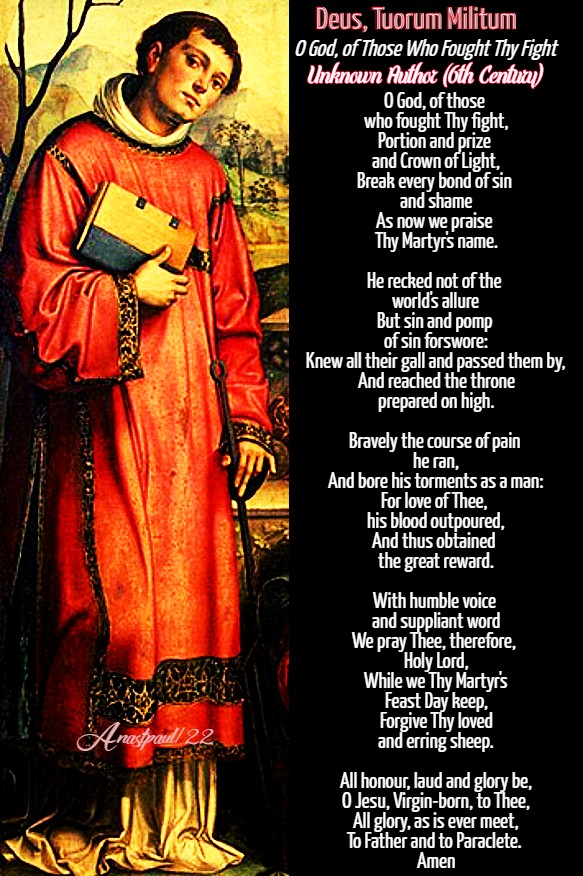
Deus, Tuorum Militum O God, of Those Who Fought Thy Fight Unknown Author (6th Century)
O God, of those who fought Thy fight, Portion and prize and Crown of Light, Break every bond of sin and shame As now we praise Thy Martyr’s name.
He recked not of the world’s allure But sin and pomp of sin forswore: Knew all their gall and passed them by, And reached the throne prepared on high.
Bravely the course of pain he ran, And bore his torments as a man: For love of Thee, his blood outpoured, And thus obtained the great reward.
With humble voice and suppliant word We pray Thee, therefore, Holy Lord, While we Thy Martyr’s Feast Day keep, Forgive Thy loved and erring sheep.
All honour, laud and glory be, O Jesu, Virgin-born, to Thee, All glory, as is ever meet, To Father and to Paraclete. Amen
An Ambrosian Hymn traditionally assigned for Matins and Vespers for the common feast of a Martyr in the Roman Breviary. It dates probably from the sSxth Century and is attributed to the unknown author of Rex Gloriose Martyrum and jesu, Redemptor Omnium. The Hymn exists in a longer versJon of eight strophes and a shorter one of four or five, which is probably earlier. The Vatican Antiphonary provided two different melodies for use in the Paschal Season and during the Octave of the Nativity, during which the Feast of Saint Stephen the Protomartyr occurs. The Hymn is a prayer asking God to forgive the sins of His servants on the day of the Martyr’s triumph over the pleasures of the world and the torture of persecution.
Our Morning Offering – 6 August – The Transfiguration of Our Lord
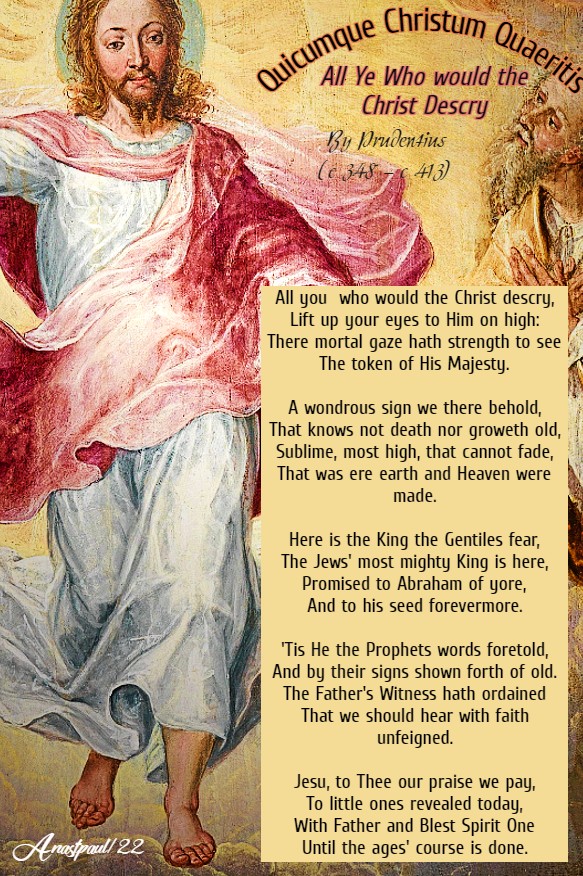
Quicumque Christum Quaeritis All Ye Who would the Christ Descry By Prudentius (c 348 – c 413) (Aurelius Prudentius Clemens) The Renowned Poet
All you who would the Christ descry, Lift up your eyes to Him on high: There mortal gaze hath strength to see The token of His Majesty.
A wondrous sign we there behold, That knows not death nor groweth old, Sublime, most high, that cannot fade, That was ere earth and Heaven were made.
Here is the King the Gentiles fear, The Jews’ most mighty King is here, Promised to Abraham of yore, And to his seed forevermore.
‘Tis He the Prophets words foretold, And by their signs shown forth of old. The Father’s Witness hath ordained That we should hear with faith unfeigned.
Jesu, to Thee our praise we pay, To little ones revealed today, With Father and Blest Spirit One Until the ages’ course is done.
The Hymn Quicumque Christum quaeritis is the twelfth and last poem in the Cathemerino of Prudentius, originally written in honour of the Epiphany. Its 208 lines has furnished four hymns to the Roman Breviary, Latin below the image. On the Feast of the Transfiguration the verses are above are used. There is a short biography of Prudentius here: https://anastpaul.com/2020/01/08/quote-s-of-the-day-8-january-take-courage-it-is-i-and-bl-titus-zeman/
Quicumque Christum quaeritis, Uculos in altum tollite: Illic licebit visere Signum perennis glorias.
Illustre quiddam cernimus, Quod nesciat finem pati, Sublime, celsum, interminum, Antiquius ccelo et chao.
Hic ille Rex est Gentium, Populique Rex Judaici, Promissus Abraha patri, Ejusque in aevum semini.
Hunc et Prophetis testibus, Iisdemque signatoribus Testator et Pater jubet Audire nos, et credere.
Jesu, tibi sit gloria, Qui te revelas parvulis, Cum Patre et almo Spiritu In sempiterna saecula.
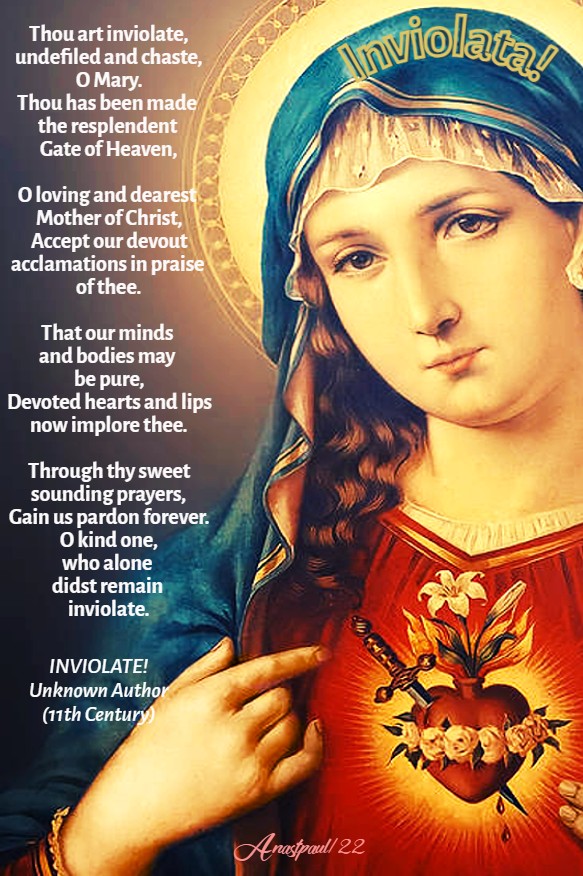
Thou art inviolate, undefiled and chaste, O Mary. Thou has been made the resplendent Gate of Heaven,
O loving and dearest Mother of Christ, Accept our devout acclamations in praise of thee.
That our minds and bodies may be pure, Devoted hearts and lips now implore thee.
Through thy sweet sounding prayers, Gain us pardon forever. O kind one, who alone didst remain inviolate.
The Hymn Inviolata has been claimed by the Carmelite Order, as a Traditional Hymn originating within their ranks. The Hymn is also used by Dominican Friars in the chanting of Compline. Its origins trace to the 11th century. It appears in Hymnals from 1860 to 1920.
Inviolata, integra, et casta es Maria, quae es effecta fulgida caeli porta.
O Mater alma Christi carissima, suscipe pia laudum praeconia.
Te nunc flagitant devota corda et ora, nostra ut pura pectora sint et corpora.
Tua per precata dulcisona, nobis concedas veniam per saecula.
O benigna! O Regina! O Maria, quae sola inviolata permansisti.
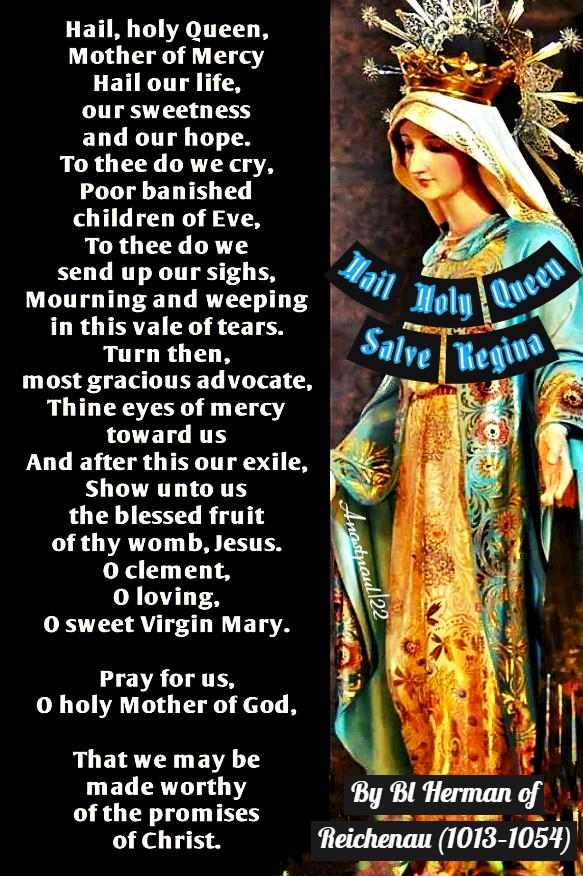
Salve Regina Hail Holy Queen By Blessed Herman of Reichenau (1013–1054)
Hail, holy Queen, Mother of Mercy, Hail our life, our sweetness and our hope. To thee do we cry, Poor banished children of Eve; To thee do we send up our sighs, Mourning and weeping in this valley of tears. Turn then, most gracious advocate, Thine eyes of mercy toward us; And after this our exile, Show unto us the blessed fruit of thy womb, Jesus.
This line, below, by St Bernard of Clairvaux (1090-1153) Doctor of the Church
O clement, O loving, O sweet Virgin Mary.
℣ Pray for us, O holy Mother of God, ℟ that we may be made worthy of the promises of Christ.
Quote/s of the Day – 11 July – The Memorial of St Pius I, Pope (Died c 154) Martyr – 1 Peter 5:1-4; 5:10-11, Matthew 16:13-19
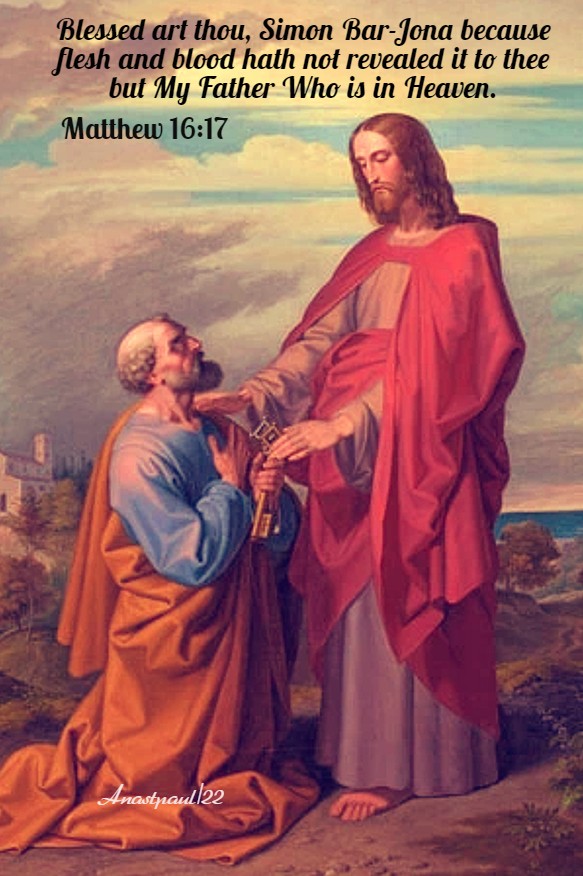
“Blessed art thou, Simon Bar-Jona because flesh and blood hath not revealed it to thee but My Father Who is in Heaven.”
Matthew 16:17
“Faith gives rise to prayer and this prayer obtains an increase of faith.”
St Augustine (354-430) Father and Doctor of Grace
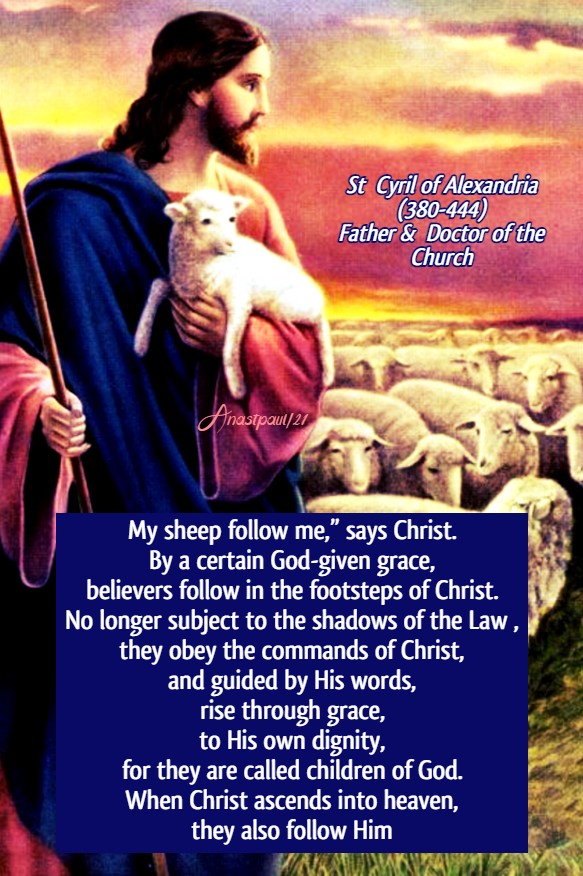
“My sheep follow me,” says Christ. By a certain God-given grace, believers follow in the footsteps of Christ. No longer subject to the shadows of the Law , they obey the commands of Christ, and guided by His words, rise through grace, to His own dignity, for they are called children of God. When Christ ascends into heaven, they also follow Him.”
St Cyril of Alexandria (376-444) Father & Doctor of the Church
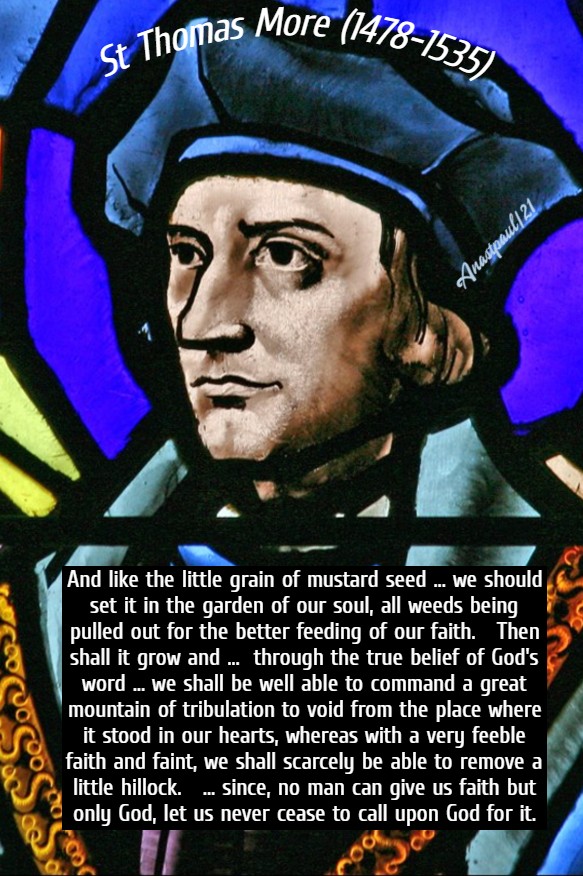
“And like the little grain of mustard seed … we should set it in the garden of our soul, all weeds being pulled out for the better feeding of our faith. Then shall it grow and … through the true belief of God’s word … we shall be well able to command a great mountain of tribulation to void from the place where it stood in our hearts, whereas with a very feeble faith and faint, we shall scarcely be able to remove a little hillock.”
St Thomas More (1478-1535)
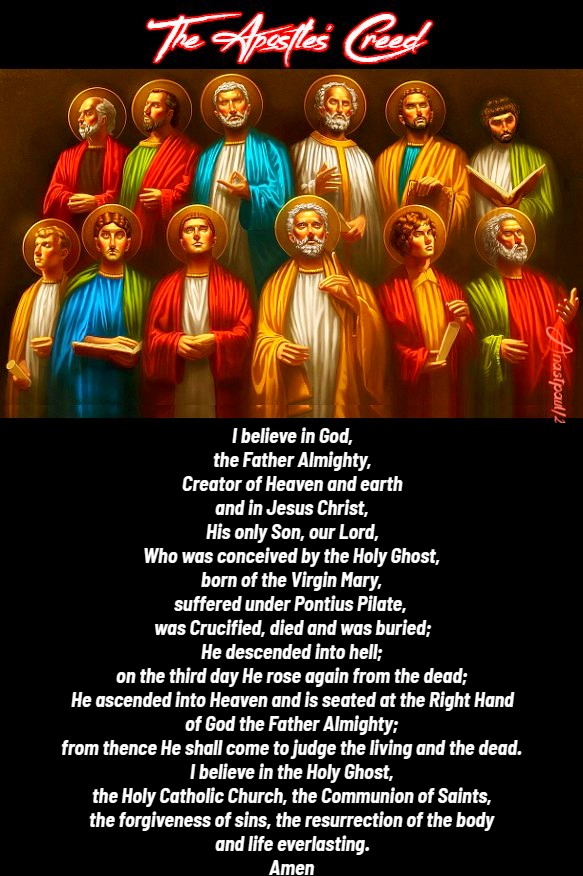
The Apostles’ Creed
I believe in God, the Father Almighty, Creator of Heaven and earth and in Jesus Christ, His only Son, our Lord, Who was conceived by the Holy Ghost, born of the Virgin Mary, suffered under Pontius Pilate, was Crucified, died and was buried; He descended into hell; on the third day He rose again from the dead; He ascended into Heaven and is seated at the Right Hand of God the Father Almighty; from thence He shall come to judge the living and the dead. I believe in the Holy Ghost, the Holy Catholic Church, the communion of Saints, the forgiveness of sins, the resurrection of the body and life everlasting. Amen
The Solemnity of the Most Precious Blood of of Our Lord Jesus Christ
By Servant of God Abbot Prosper Guéranger OSB (1805-1875)
John the Baptist has pointed out the Lamb, Peter has firmly fixed His throne, Paul has prepared the Bride; this their joint work, admirable in its unity, at once suggests the reason for their feasts occurring almost simultaneously on the cycle. The alliance being now secured, all three fall into shade; whilst the Bride herself, raised up by them to such lofty heights, appears alone before us, holding in her hands the sacred cup of the nuptial-feast.
This gives the key of today’s Solemnity; revealing how its illumining the heavens of the holy Liturgy, at this particular season, is replete with Mystery. The Church, it is true, has already made known to the sons of the New Covenant, and in a much more solemn manner, the price of the Blood that redeemed them, its nutritive strength and the adoring homage which is its due. Yes, on Good Friday, earth and Heaven beheld all sin drowned in the saving stream, whose eternal flood-gates, at last gave way, beneath the combined effort of man’s violence and of the love of the Divine Heart.
The festival of Corpus Christi witnessed our prostrate worship before the aAtars whereon is perpetuated the Sacrifice of Calvary and where, the outpouring of the Precious Blood affords drink to the humblest little ones, as well as to the mightiest potentates of earth, lowly bowed in adoration before it. How is it, then, that Holy Church is now inviting all Christians to hail, in a particular manner, the stream of life ever gushing from the Sacred Fount? What else can this mean but, that the preceding Solemnities have, by no means exhausted the Mystery? The peace which the Blood has made to reign in the high places, as well as in the low, the impetus of its wave-bearing back, the sons of Adam, from the yawning gulf, purified, renewed and dazzling white in the radiance of their heavenly apparel; the Sacred Table outspread before them, on the waters’ brink and the Chalice, brimful of inebriation; all this preparation and display would be objectless, all these splendours would be incomprehensible, if man were not brought to see therein, the wooings of a love which could never endure its advances to be outdone, by the pretensions of any other. Therefore, the Blood of Jesus is set before our eyes, at this moment, as the Blood of the Testament; the pledge of the alliance proposed to us by God (Exod. xxiv. 8; Heb. ix. 20); the dower stipulated upon by Eternal Wisdom for this Divine union to which He is inviting all men and whereof, the consummation in our soul is being urged forward with such vehemence, by the Holy Ghost.
“Having therefore, Brethren, a confidence in the entering into the Holies by the Blood of Christ,” says the Apostle, “a new and living way which He hath dedicated for us through the veil, that is to say, His flesh, let us draw near with a pure heart in fullness of faith, having our hearts sprinkled from an evil conscience and our bodies washed with clean water, let us hold fast the confession of our hope without wavering, for He is faithful that hath promised. Let us consider one another to provoke unto charity and to good works (Heb. x. 19-24). And may the God of peace, Who brought again from the dead the great Shepherd of the sheep, Our Lord Jesus Christ, in the Blood of the everlasting Testament, fit you in all goodness, that you may do His will: doing in you, that which is well-pleasing in His sight, through Jesus Christ, to whom is glory forever and ever. Amen!” (Ibid. xiii. 20, 21)
Nor must we omit to mention here, that this Feast is a monument of one of the most brilliant victories of Holy Church, in our own age. Pius IX. had been driven from Rome in 1848, by the triumphant revolution but, the following year, just about this very season, his power was re-established. Under the aegis of the Apostles on 28 June and the two following days, the eldest daughter of the Church, faithful to her past glories, swept the ramparts of the Eternal City; and on 2 July, Mary’s festival, the victory was completed. Not long after this, a twofold decree notified to the City and to the world, the Pontiff’s gratitude and the way in which he intended to perpetuate, in the Sacred Liturgy, the memory of these events. On 10 August, from Gaeta itself, the place of his exile in the evil day, Pius IX, before returning to re-assume the government of his States, addressing himself to the invisible Head of the Church, confined her in a special manner to His Divine care, by the institution of this day’s Festival; reminding Him that it was for His Church that He vouchsafed to shed all His Precious Blood.
Then, when the Pontiff re-entered his Capital, turning to Mary, just as Pius V and Pius VII. had done under other circumstances, he, the Vicar of Christ, solemnly attributed the honour of the recent victory to Her who is ever the “Help of Christians,” for, on the Feast of Her Visitation it had been gained and he now decreed that this said Feast of 2 July should be raised from the rite of double-major to that of second class throughout the whole world. This was but a prelude to the definition of the Dogma of the Immaculate Conception, which the immortal Pontiff had already in project, whereby the crushing of the serpent’s head would be completed.
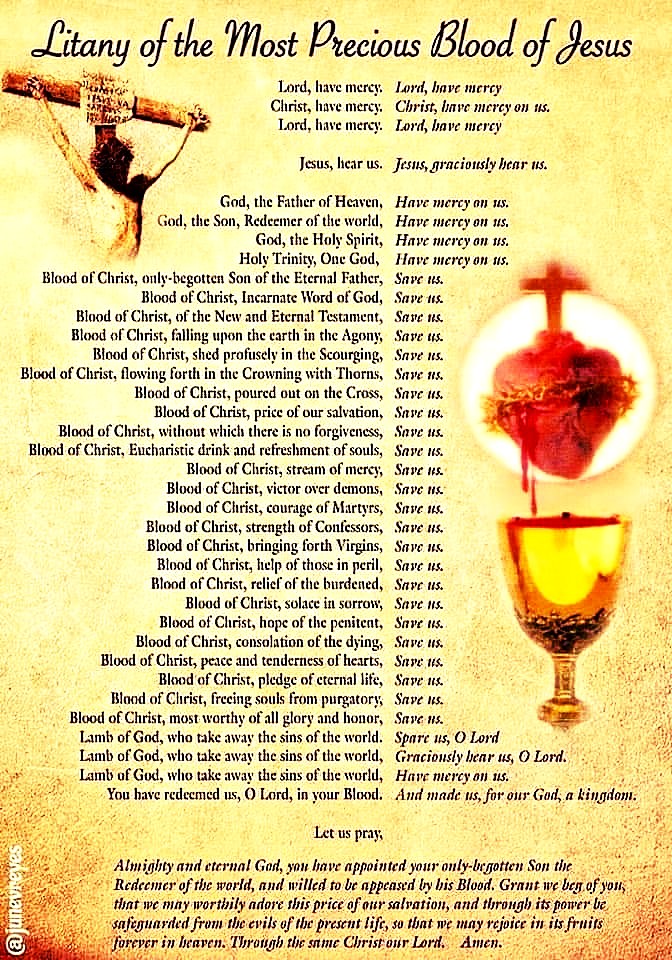
Litany of the Most Precious Blood of of Our Lord Jesus Christ
Lord, have mercy
Lord, have mercy
Christ, have mercy
Christ, have mercy
Lord, have mercy
Lord, have mercy
God our Father in heaven
have mercy on us
God the Son, Redeemer of the world
have mercy on us
God the Holy Spirit
have mercy on us
Holy Trinity, one God
have mercy on us
Blood of Christ, only Son of the Father
be our salvation
Blood of Christ, incarnate Word
be our salvation
Blood of Christ, of the new and eternal covenant
be our salvation
Blood of Christ, that spilled to the ground
be our salvation
Blood of Christ, that flowed at the scourging
be our salvation
Blood of Christ, dripping from the thorns
be our salvation
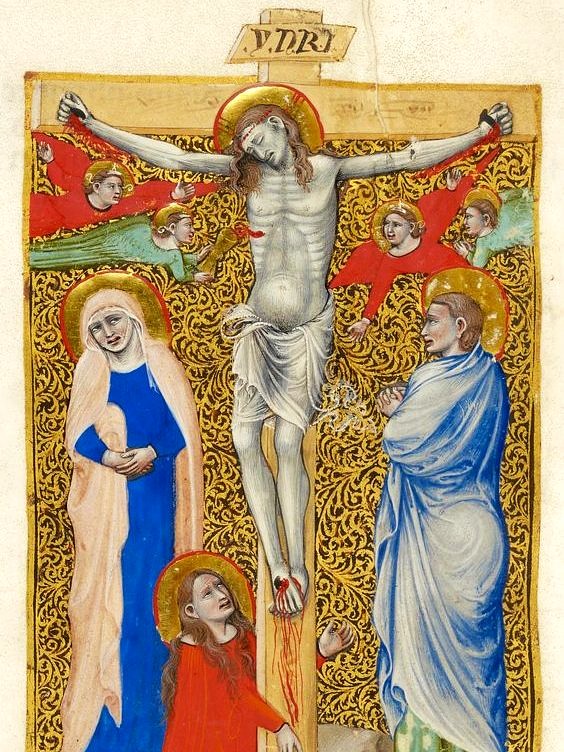
Blood of Christ, shed on the cross
be our salvation
Blood of Christ, the price of our redemption
be our salvation
Blood of Christ, our only claim to pardon
be our salvation
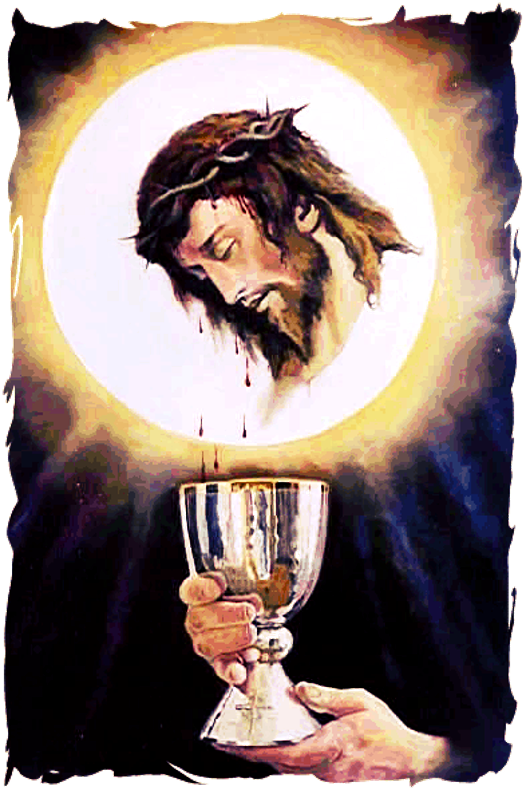
Blood of Christ, our blessing cup
be our salvation
Blood of Christ, in which we are washed
be our salvation
Blood of Christ, torrent of mercy
be our salvation
Blood of Christ, that overcomes evil
be our salvation
Blood of Christ, strength of the martyrs
be our salvation
Blood of Christ, endurance of the saints
be our salvation
Blood of Christ, that makes the barren fruitful
be our salvation
Blood of Christ, protection of the threatened
be our salvation
Blood of Christ, comfort of the weary
be our salvation
Blood of Christ, solace of the mourner
be our salvation
Blood of Christ, hope of the repentant
be our salvation
Blood of Christ, consolation of the dying
be our salvation
Blood of Christ, our peace and refreshment
be our salvation
Blood of Christ, our pledge of life
be our salvation
Blood of Christ, by which we pass to glory
be our salvation
Blood of Christ, most worthy of honor
be our salvation
Lamb of God, you take away the sins of the world
have mercy on us
Lamb of God, you take away the sins of the world
have mercy on us
Lamb of God, you take away the sins of the world
have mercy on us
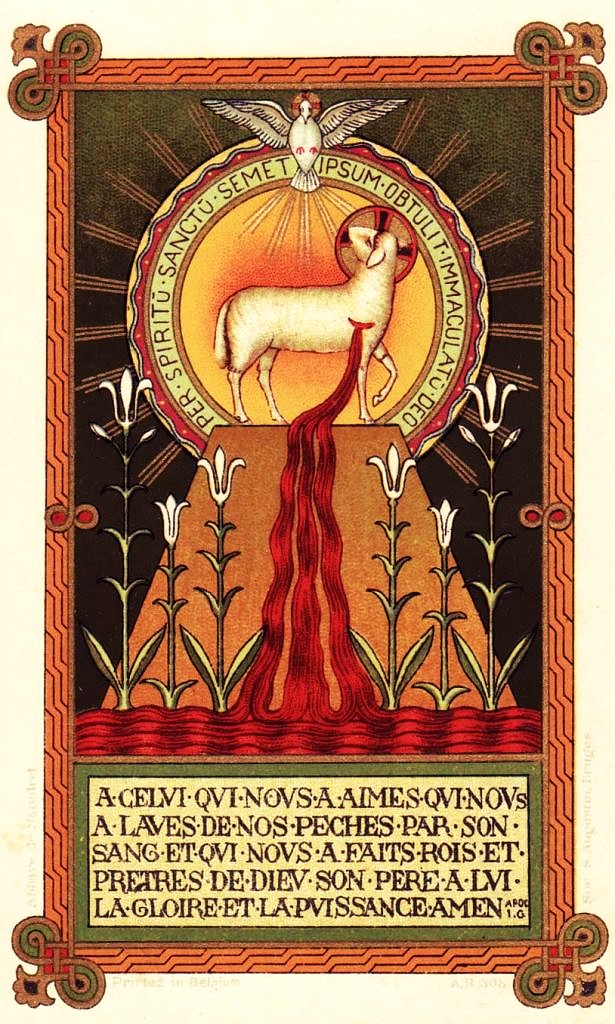
Lord, you redeemed us by your blood.
You have made us a kingdom to serve our God.
Let us pray.
Almighty and Eternal God, Thou hast appointed Thine Only Begotten Son, the Redeemer of the world and willed to be appeased by His Blood. Grant, we beseech Thee, that we may worthily adore this Price of our Salvation,and through its power be safeguarded from the evils of this present life, so that we may rejoice in its fruits forever in Heaven. Through the same Christ Our Lord. R/. Amen.
Our Morning Offering – 5 June – Pentecost Sunday, Alleluia!
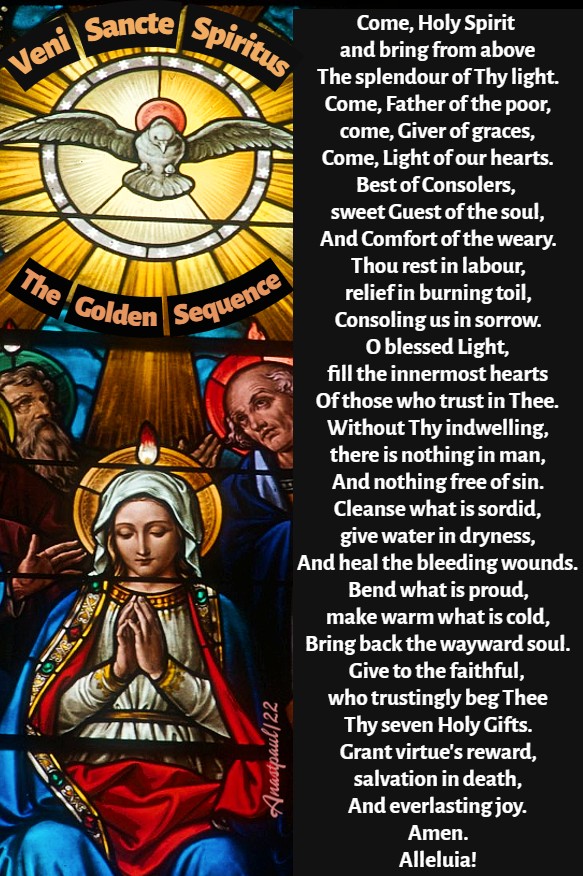
Veni Sancte Spiritus The Golden Sequence
Come, Holy Spirit and bring from above The splendour of Thy light. Come, Father of the poor, come, Giver of graces, Come, Light of our hearts. Best of Consolers, sweet Guest of the soul, And Comfort of the weary. Thou rest in labour, relief in burning toil, Consoling us in sorrow. O blessed Light, fill the innermost hearts Of those who trust in Thee. Without Thy indwelling, there is nothing in man, And nothing free of sin. Cleanse what is sordid, give water in dryness, And heal the bleeding wounds. Bend what is proud, make warm what is cold, Bring back the wayward soul. Give to the faithful, who trustingly beg Thee Thy seven Holy Gifts. Grant virtue’s reward, salvation in death, And everlasting joy. Amen. Alleluia!
“Veni Sancte Spiritus,” the “Golden Sequence”, is a sequence prescribed in the Roman Liturgy for the Masses of Pentecost and its octave, exclusive of the following Trinity Sunday. It is usually attributed to either the thirteenth-century Pope Innocent III (c 1160 – 1216) or to the Archbishop of Canterbury, Cardinal Stephen Langton (c 1150 – 1228).
Quote/s of the Day – 12 May – Wisdom 5:1-5, John 4:46-53.
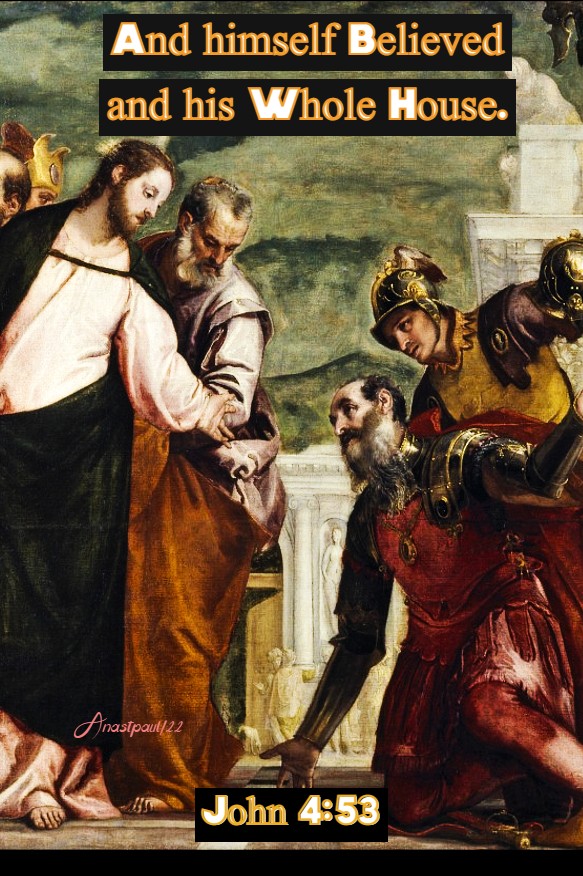
“And himself believed and his whole house.”
John 4:53
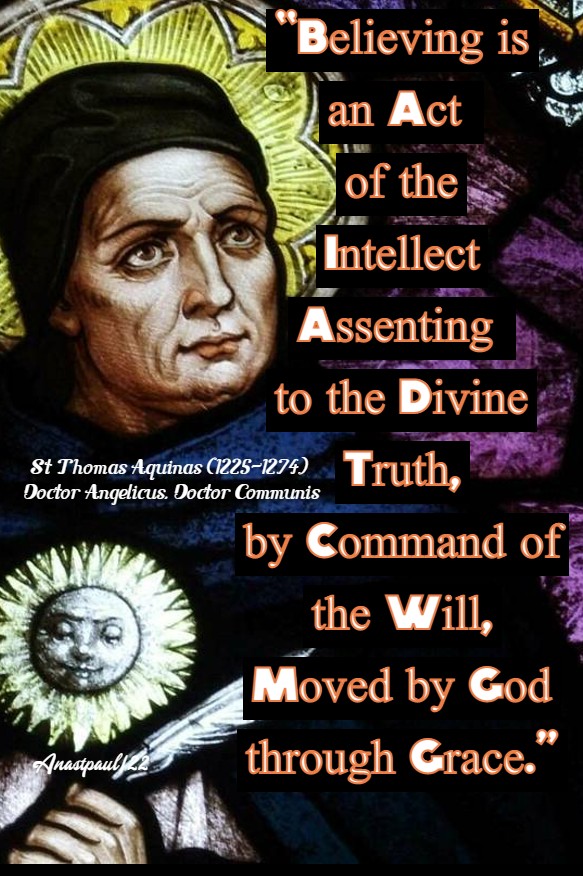
“Believing is: an act of the intellect assenting to the divine truth, by command of the will, moved by God through grace.”
St Thomas Aquinas (1225-1274) Doctor Angelicus. Doctor Communis
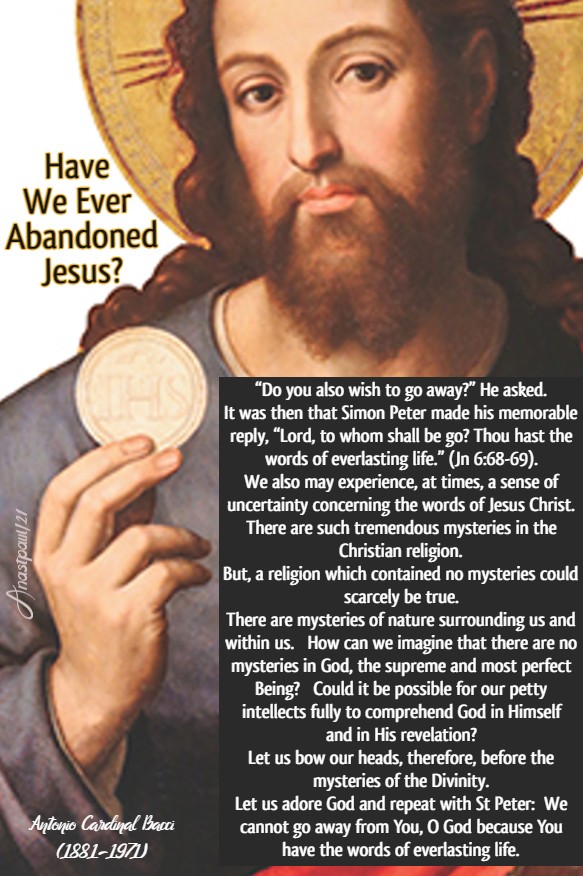
“Do you also wish to go away?” He asked. It was then that Simon Peter made his memorable reply, “Lord, to whom shall be go? Thou hast the words of everlasting life.” (Jn 6:68-69). We also may experience, at times, a sense of uncertainty concerning the words of Jesus Christ. There are such tremendous mysteries in the Christian religion. But, a religion which contained no mysteries could scarcely be true. There are mysteries of nature surrounding us and within us. How can we imagine that there are no mysteries in God, the supreme and most perfect Being? Could it be possible for our petty intellects fully to comprehend God in Himself and in His revelation? Let us bow our heads, therefore, before the mysteries of the Divinity. Let us adore God and repeat with St Peter: We cannot go away from You, O God because You have the words of everlasting life.”
Antonio Cardinal Bacci (1881-1971)
The Apostles’ Creed
I believe in God, the Father Almighty, Creator of heaven and earth and in Jesus Christ, His only Son, our Lord, who was conceived by the Holy Spirit, born of the Virgin Mary, suffered under Pontius Pilate, was crucified, died and was buried; He descended into hell; on the third day He rose again from the dead; He ascended into heaven and is seated at the right hand of God the Father Almighty; from thence He shall come to judge the living and the dead. I believe in the Holy Spirit, the Holy Catholic Church, the communion of Saints, the forgiveness of sins, the resurrection of the body and life everlasting. Amen
Our Morning Offering – 7 May – “The Month of the Blessed Virgin Mary”
Regina Caeli Laetari Eastertide from Holy Saturday until Trinity Sunday (in case you forgot to replace the praying of the Angelus).
Anthem to the Blessed Virgin
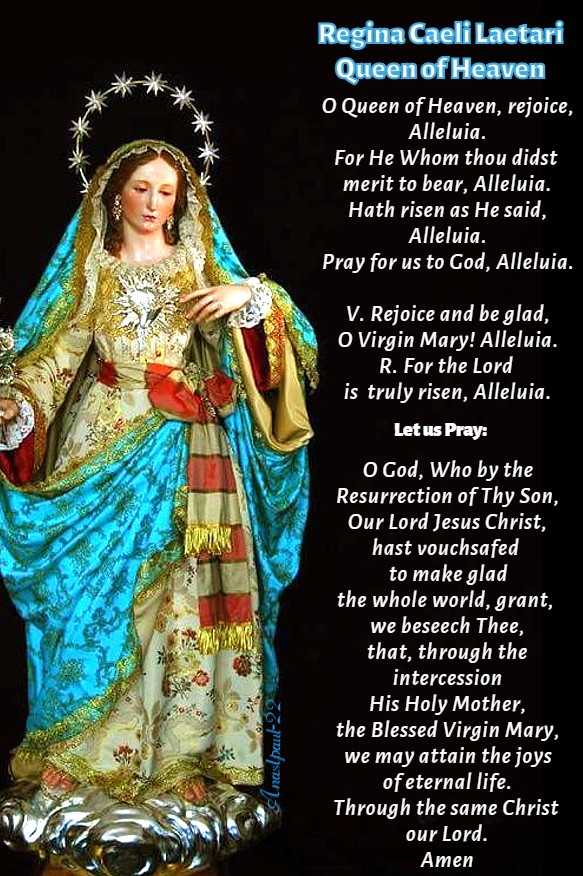
Regina Caeli Laetari Queen of heaven
O Queen of Heaven, rejoice, Alleluia. For He Whom thou didst merit to bear, Alleluia. Hath risen as He said, Alleluia. Pray for us to God, Alleluia.
V. Rejoice and be glad, O Virgin Mary! Alleluia. R. For the Lord is truly risen, Alleluia.
Let us pray
O God, Who by the Resurrection of Thy Son, Our Lord Jesus Christ, hast vouchsafed to make glad the whole world, grant, we beseech Thee, that, through the intercession HIs Holy Mother, the Blessed Virgin Mary, we may attain the joys of eternal life. Through the same Christ our Lord. Amen
There is a venerable tradition connected with this joyous Anthem. It is related that a fearful pestilence raged in Rome, during one of the Easters of the Pontificate of St. Gregory the Great. In order to propitiate the anger of God, the holy Pope prescribed a public procession of both people and clergy, in which was to be carried the portrait of our Blessed Lady painted by St Luke.
The procession was advancing in the direction of Saint Peter’s and as the holy Picture, followed by the Pontiff, (it is said that he processed with bare feet), was carried along, the atmosphere became pure and free from pestilence. Having reached the bridge which joins the City with the Vatican, a choir of Angels was heard singing above the Picture and saying: “Rejoice, O Queen of heaven, alleluia! for He whom thou deservedst to bear, alleluia! hath risen, as He said, alleluia!” As soon as the heavenly music ceased, the saintly Pontiff took courage, and added these words to those of the Angels: “Pray to God for us, alleluia!”
Thus was composed the Paschal Anthem to our Lady. Raising his eyes to heaven, Gregory saw the destroying Angel standing on the top of the Mole of Hadrian and sheathing his sword.
In memory of this apparition, the Mole was called the Castle of Saint Angela and on the dome was placed an immense statue representing an Angel holding his sword in the scabbard.
( “The Sovereign Pontiff Benedict XIII, by a brief, Injuntae nobis, 14 September1724, amended by the Sacred Penitentiary Apostolic, 20 February 1933, granted a Plenary Indulgence, once a month, to all the faithful who, everyday, in the morning (6.00), at noon and in the evening at sunset (6.00), shall say, devoutly, the Angelus Dominie, with the Hail Mary, three times, or at Eastertide the Regina Caeli, on any day when, being truly penitent, after Confession and Communion, they shall pray for peace and union among Christian Princes, for the extirpation of heresy and for the triumph of Holy Mother Church. Also an indulgence of ten years, on all the other days in the year, ever time that they shall devoutly say these prayers.”)
Regina caeli, laetare, Alleluia.
Qua quem meruisti portare, Alleluia. Resurrexit, sicut dixit, Alleluia. Ora pro nobis Deum, Alleluia.
V. Gaude et laetare, Virgo Maria, Alleluia. R. Qua surrexit Dominus vere, Alleluia.
Oremus
Deus, qui per resurrectionem Filii tui, Domini nostri, Jesu Christi, mundum laetificare dignatus es, praesta, quaesumus, ut per ejus Genitricem Virginem Mariam perpetuae capiamus gaudia vitae: per eumdem Christum, Dominum nostrum. Amen
Our Morning Offering – 1 May – The Second Sunday after Easter
You are Holy, Lord, All-Powerful God Prayer known as “Of Peter and the Other Apostles” (Papyrus of the early Church)
You are Holy, Lord, All-Powerful God, Father of our Lord Jesus Christ, Paradise of happiness, Royal sceptre, Infinite love, Assurance of hope… You are Holy, Lord God, You are “the King of kings and the Lord of lords: You alone have immortality, You live in the inaccessible light, that no-one has ever seen” (1 Tm 6:15-16). You walk on the wings of the winds (Ps 103:3); You created the sky, the earth and the sea and all they contain (Acts 4:24). You make the winds Your messengers and burning fire Your servant (Ps 103:4); You made man in Your image and likeness (Gen 1:26), You measured out the span of the sky and the whole earth with the Fingers of Your Hand. Yes, in Your Presence, Your works are altogether lovely. Amen
Our Morning Offering – 11 April – Monday of Holy Week
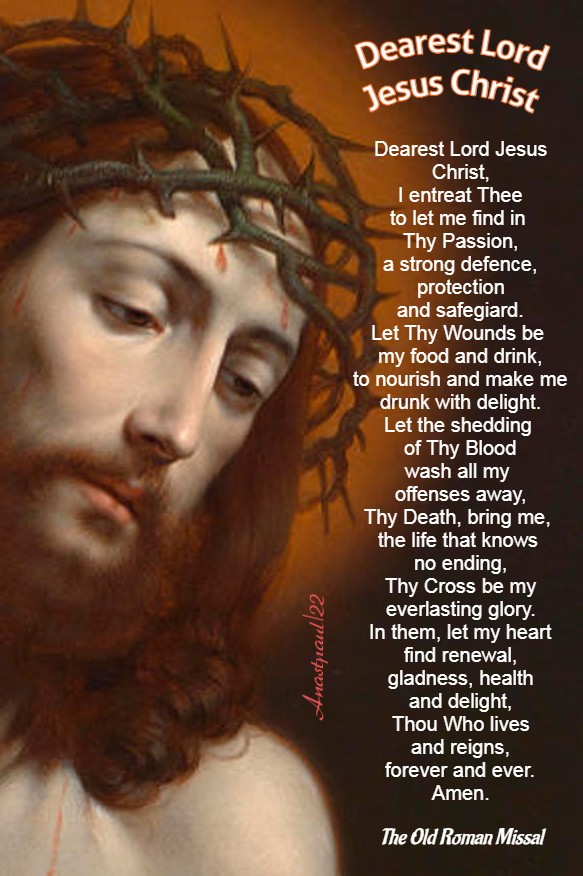
Dearest Lord Jesus Christ The Old Roman Missal
Dearest Lord Jesus Christ, I entreat Thee to let me find in Thy Passion, a strong defence, protection and safegiard. Let Thy Wounds be my food and drink, to nourish and make me drunk with delight. Let the shedding of Thy Blood wash all my offenses away, Thy Death, bring me, the life that knows no ending, Thy Cross be my everlasting glory. In them, let my heart find renewal, gladness, health and delight, Thou Who lives and reigns, forever and ever. Amen.
Our Morning Offering – 4 March – First Friday of Lent
Prayer Before a Crucifix
Look down upon me, good and gentle Jesus, while before Thy face I humbly kneel and, with burning soul, pray and beseech Thee to fix deep in my heart lively sentiments of faith, hope and charity; true contrition for my sins and a firm purpose of amendment. While I contemplate, with great love and tender pity, Thy Five Most Precious Wounds, pondering over them within me and calling to mind the words which David, Thy prophet, said of Thee, my Jesus: “They have pierced My hands and My feet, they have numbered all My bones.” Amen
This Prayer is often said after Holy Mass before the Crucifix in the Church. The faithful receive a Partial Indulgence but on the Fridays of Lent, the Indulgence is a Plenary Indulgence, under the usual conditions.
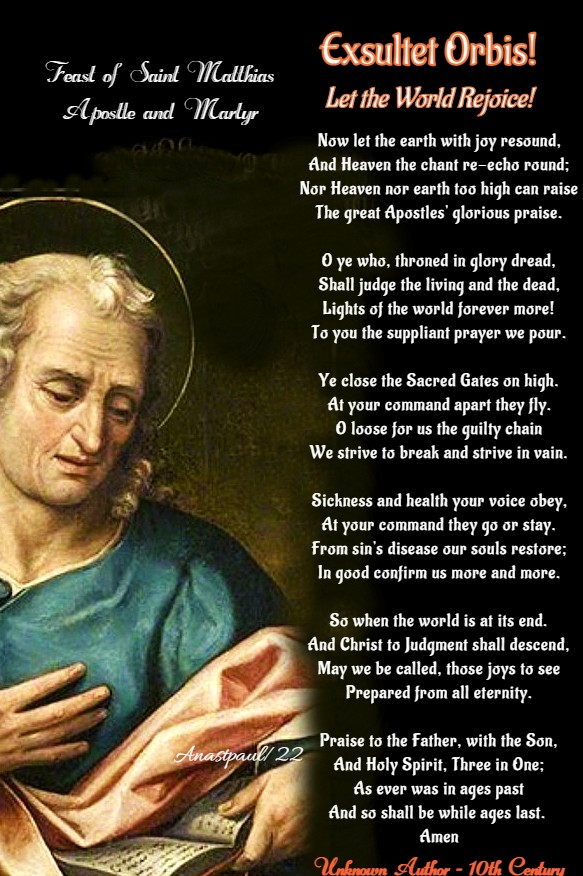
Our Morning Offering – 24 February – Feast of St Matthias, Apostle and Martyr
Exsultet Orbis! Let the World Rejoice! Unknown Author
Now let the earth with joy resound, And Heaven the chant re-echo round; Nor Heaven nor earth too high can raise The great Apostles’ glorious praise.
O ye who, throned in glory dread, Shall judge the living and the dead, Lights of the world forever more! To you the suppliant prayer we pour.
Ye close the Sacred Gates on high. At your command apart they fly. O loose for us the guilty chain We strive to break and strive in vain.
Sickness and health your voice obey, At your command they go or stay. From sin’s disease our souls restore; In good confirm us more and more.
So when the world is at its end. And Christ to Judgment shall descend, May we be called, those joys to see Prepared from all eternity.
Praise to the Father, with the Son, And Holy Spirit, Three in One; As ever was in ages past And so shall be while ages last. Amen
(Roman Breviary for the Common of Apostles) An Office Hymn that was traditionally prescribed for Vespers and Lauds on the Feasts of Apostles and Evangelists outside Easter time. The Hymn is found as early as the tenth century in a hymnal of Moissac Abbey.
Our Morning Offering – 15 February – The Commermoration of Sts Faustinus and Jovinus (Died c 120) Martyrs – 1 Cor. 9:24-27; 10:1-5, Matthew 20:1-16
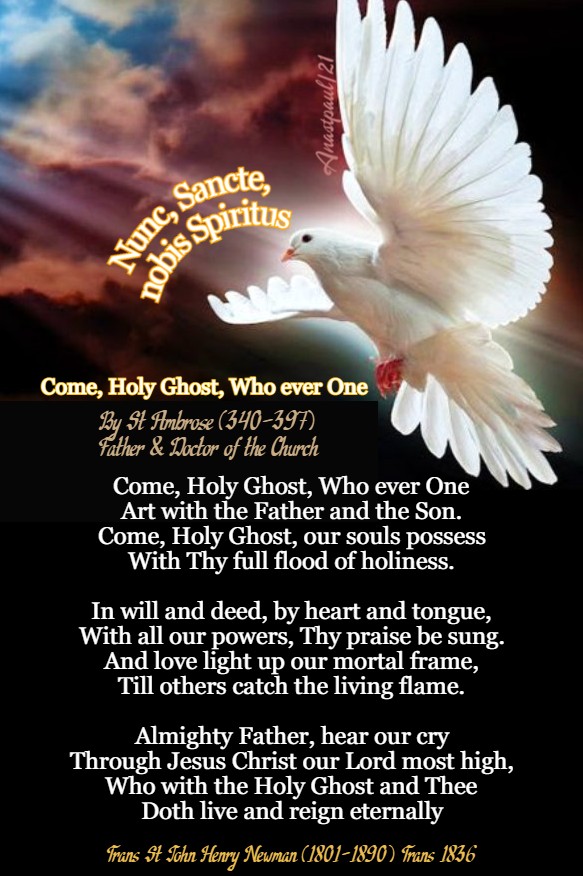
Nunc, Sancte, nobis Spiritus Come, Holy Ghost, Who ever One By St Ambrose (340-397) Trans John Henry Newman (1801-1890) Trans 1836
Come, Holy Ghost, Who ever One Art with the Father and the Son. Come, Holy Ghost, our souls possess With Thy full flood of holiness.
In will and deed, by heart and tongue, With all our powers, Thy praise be sung. And love light up our mortal frame, Till others catch the living flame.
Almighty Father, hear our cry Through Jesus Christ our Lord most high, Who with the Holy Ghost and Thee Doth live and reign eternally.
Our Morning Offering – 14 February – The Memorial of St Valentine (176-273) Bishop and Martyr
Deus Tuorum Militum O God, of Those Who Fought Thy Fight Unknown Author
O God, of those Who fought Thy fight, Portion and Prize and crown of Light, Break every bond of sin and shame, As now we praise Thy Martyr’s name.
He recked not of the world’s allure, But sin and pomp of sin forswore; Knew all their gall and passed them by And reached the throne prepared on high.
Bravely the course of pain he ran And bore his torments as a man: For love of Thee, his blood outpoured And thus obtained the great reward.
With humble voice and suppliant word We pray Thee, therefore, holy Lord, While we Thy Martyr’s Feast-day keep, Forgive Thy loved and erring sheep.
Glory and praise for aye be done To God the Father and the Son, And Holy Ghost, Who reign on high, One God, to all eternity. Amen
An Ambrosian hymn historically assigned for Matins and Vespers for the Common Feast of a Martyr in the Roman Breviary. It dates probably from the sixth century and is attributed to the Unknown Author of Rex Gloriose Martyrum and Jesu, Redemptor Omnium. The hymn exists in a longer version of eight strophes and a shorter one of four, which is probably earlier. The Vatican antiphonary provided two different melodies for use in the Paschal season and during the Octave of the Nativity, during which the Feast of Saint Stephen the Protomartyr occurs. The hymn is a prayer of the Catholic assembly, asking God to forgive the sins of His servants, on the day of the martyr’s triumph over the pleasures of the world and the torture of persecution.
Our Morning Offering – 5 February – Mary’s Saturday
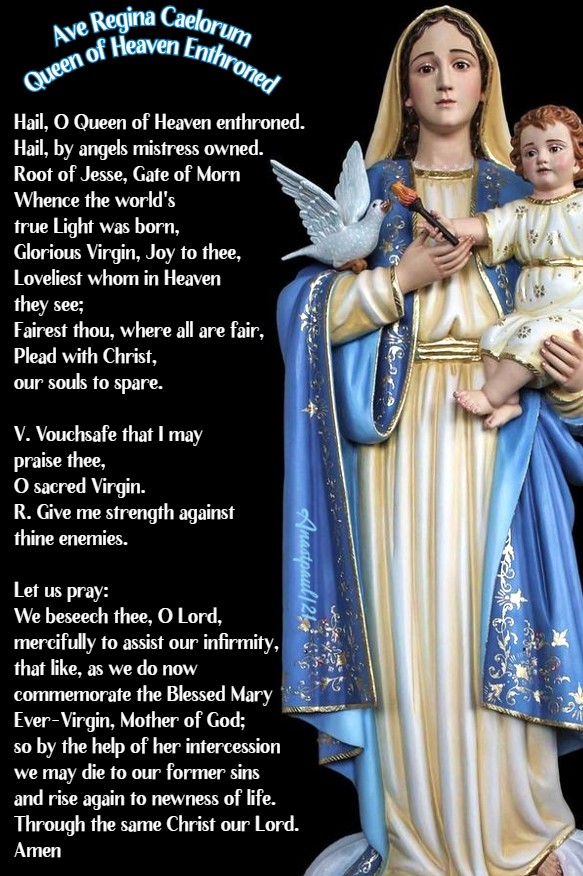
Ave Regina Caelorum Queen of Heaven Enthroned
Hail, O Queen of Heaven enthroned. Hail, by Angels mistress owned. Root of Jesse, Gate of Morn Whence the world’s true Light was born, Glorious Virgin, Joy to thee, Loveliest whom in Heaven they see; Fairest thou, where all are fair, Plead with Christ, our souls to spare.
V. Vouchsafe that I may praise thee, O sacred Virgin. R. Give me strength against thine enemies.
Let us pray: We beseech thee, O Lord, mercifully to assist our infirmity, that like, as we do now commemorate the Blessed Mary Ever-Virgin, Mother of God; so by the help of her intercession we may die to our former sins and rise again to newness of life. Through the same Christ our Lord. Amen
“Ave Regina caelorum” is one of the Marian antiphons said or sung in the Liturgy of the Hours at the close of compline. In the Roman Breviary as revised by Pope Pius V in 1569 it was assigned for this use from compline of 2 February until compline of Wednesday of Holy Week. The original author is unknown – it has been found in a manuscript from the twelfth-century. It has been set to music by various composers including Hyden and many others.
Quote of the Day – 3 February – The Memorial of St Blaise Bishop Martyr (Died c 316)
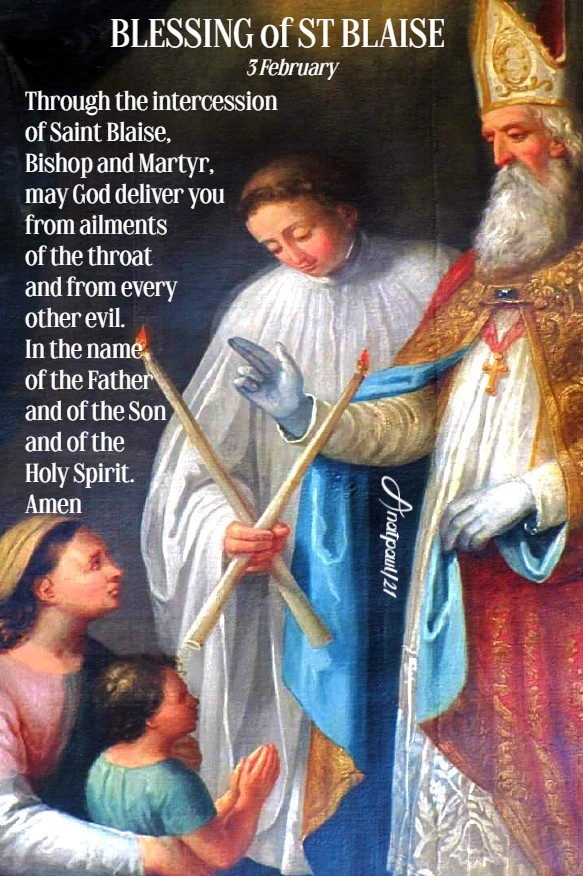
The Blessing of the Throats is a Sacramental of the Church, ordinarily celebrated today, the Feast day of Saint Blaise.
THE BLESSING of ST BLAISE Through the intercession of Saint Blaise, Bishop and Martyr, may God deliver you from ailments of the throat and from every other evil. In the name of the Father and of the Son and of the Holy Spirit. Amen
Our Morning Offering – 2 February – The Feast of the Purification of the Blessed Virgin. Candlemas
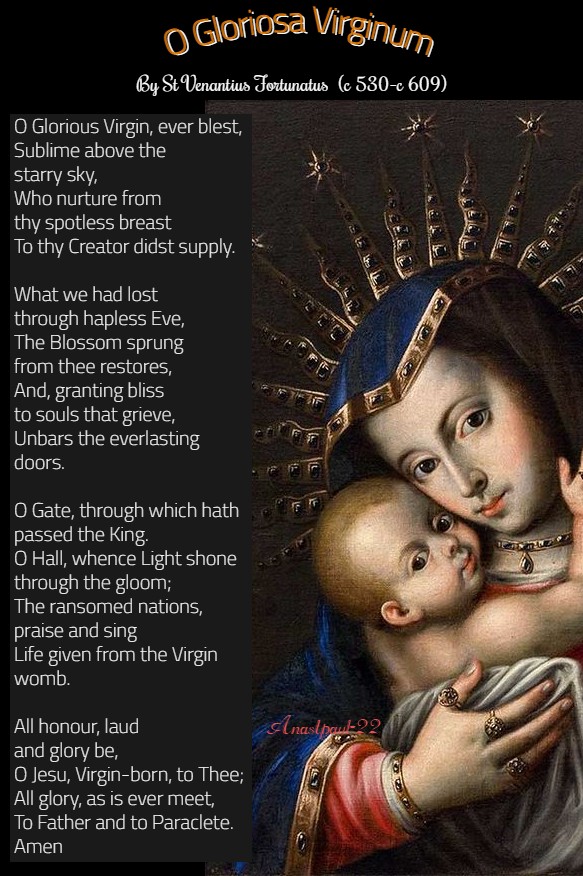
O Gloriosa Virginum By St Venantius Fortunatus (c 530 – c 609)
O Glorious Virgin, ever blest, Sublime above the starry sky, Who nurture from thy spotless breast To thy Creator didst supply.
What we had lost through hapless Eve, The Blossom sprung from these restores, And, granting bliss to souls that grieve, Unbars the everlasting doors.
O Gate, through which hath passed the King. O Hall, whence Light shone through the gloom; The ransomed nations, praise and sing Life given from the Virgin womb.
All honour, laud and glory be, O Jesu, Virgin-born, to Thee; All glory, as is ever meet, To Father and to Paraclete. Amen
O Gloriosa Domina is the second half of the hymn: Quem Terra, Pontus, Aethera. It was composed by St Venantius Fortunatus (c 530 – c 609) the Bishop of Poitiers. In 1632, in accordance with revisions made to the hymns of the Divine Office by Pope Urban VIII (1568-1644), it was altered and changed to O Gloriósa Vírginum. It is sung in the Common of the Blessed Virgin Mary of the Roman Breviary. It is said that St Anthony of Padua (1195-1231) was always singing this hymn. His mother sang it to him as a baby,and even on his death bed after receiving Extreme Unction, he intoned the hymn.
Our Morning Offering – 25 January – Feast of the Conversion of Saint Paul
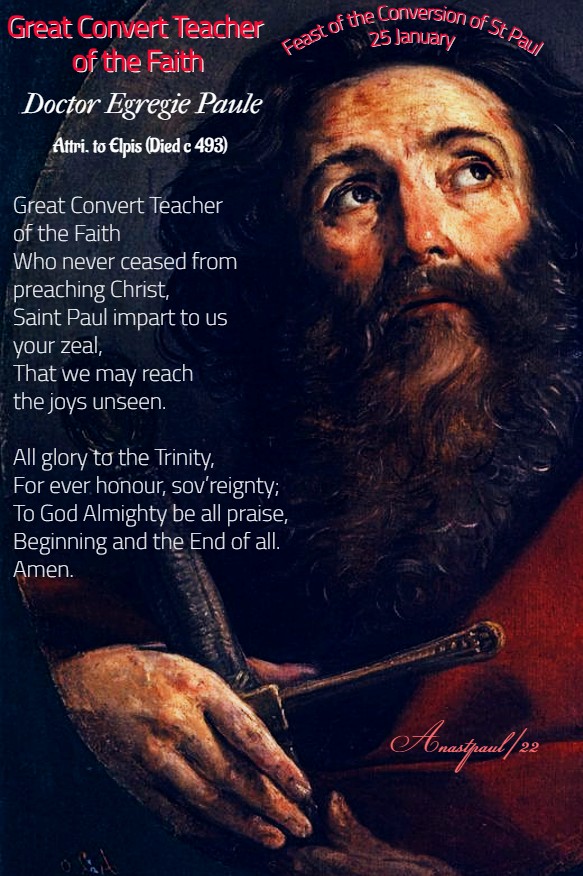
Great Convert Teacher of the Faith Doctor Egregie Paule Attri. to Elpis (Died c 493) Trans. The Benedictines of Saint Cecilia’s Abbey, Ryde, UK
Great Convert Teacher of the Faith Who never ceased from preaching Christ, Saint Paul impart to us your zeal, That we may reach the joys unseen.
All glory to the Trinity, For ever honour, sov’reignty; To God Almighty be all praise, Beginning and the End of all. Amen.
Elpis, first wife of the celebrated Philosopher Boethius, was the daughter of Festus, Consul at Rome, 472 and aunt of St Placidus, a disciple of St.Benedict. The above hymn, as well as, “Aurea luce et decore roseo” are attributed to her. Others also bear her name. She died at an early age, at Padua.
Our Morning Offering – 24 January – Feast of Saint Timothy, Bishop and Martyr
O Fathers of Our Ancient Faith
O Fathers of our ancient faith, With all the heav’n, we sing your fame Whose sound went forth in all the earth To tell of Christ and bless His Name.
You took the Gospel to the poor, The Word of God alight in you, Which in our day is told again, That timeless Word, forever new.
You told of God, Who died for us And out of death triumphant rose, Who gave the Truth which made us free and changeless through the ages goes.
Praise Father, Son and Holy Spirit, Whose gift is faith that never dies, A light in darkness now, until The Day-Star in our hearts arise.
O Fathers of Our Ancient Faith is written by the Benedictine Nuns of Stanbrook Abbey. In the Divine Office it is sung at Morning Prayer in the Common of Apostles. It is set to the anonymous tune associated with the 7th century Latin hymn, Creator Alme Siderum.
Quote/s of the Day – 6 January – The Solemnity of the Epiphany of the Lord
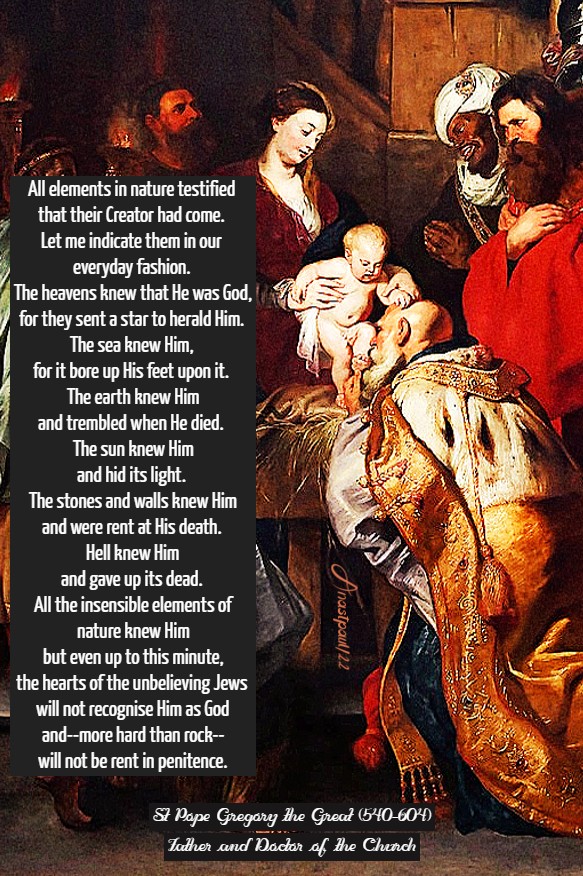
“All elements in nature testified that their Creator had come. Let me indicate them in our everyday fashion. The heavens knew that He was God, for they sent a star to herald Him. The sea knew Him, for it bore up His feet upon it. The earth knew Him and trembled when He died. The sun knew Him and hid its light. The stones and walls knew Him and were rent at His death. Hell knew Him and gave up its dead. All the insensible elements of nature knew Him but even up to this minute, the hearts of the unbelieving Jews will not recognise Him as God and–more hard than rock– will not be rent in penitence.”
St Pope Gregory the Great (540-604) Father and Doctor of the Church
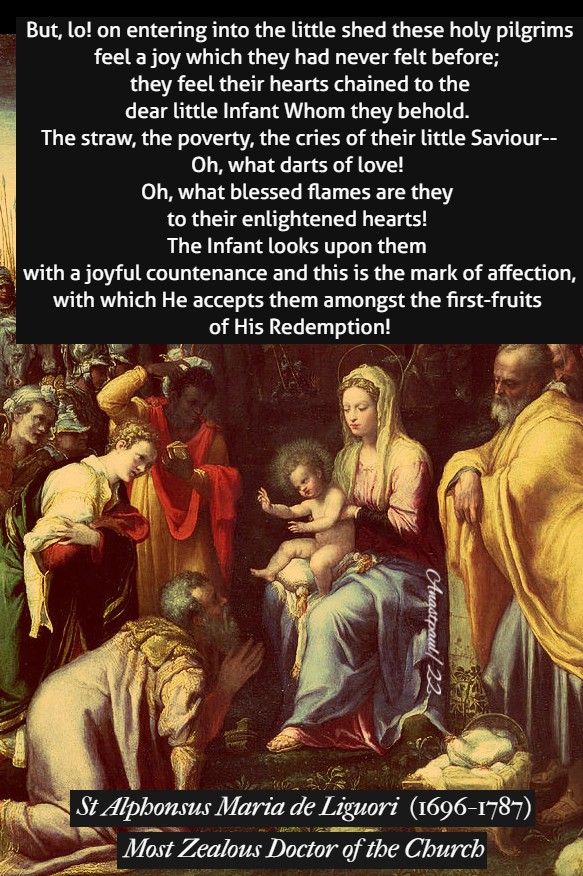
“But, lo! on entering into the little shed these holy pilgrims feel a joy which they had never felt before; they feel their hearts chained to the dear little Infant Whom they behold. The straw, the poverty, the cries of their little Saviour– Oh, what darts of love! Oh, what blessed flames are they to their enlightened hearts! The Infant looks upon them with a joyful countenance and this is the mark of affection, with which He accepts them amongst the first-fruits of His Redemption!”
St Alphonsus Maria de Liguori (1696-1787) Most Zealous Doctor of the Church
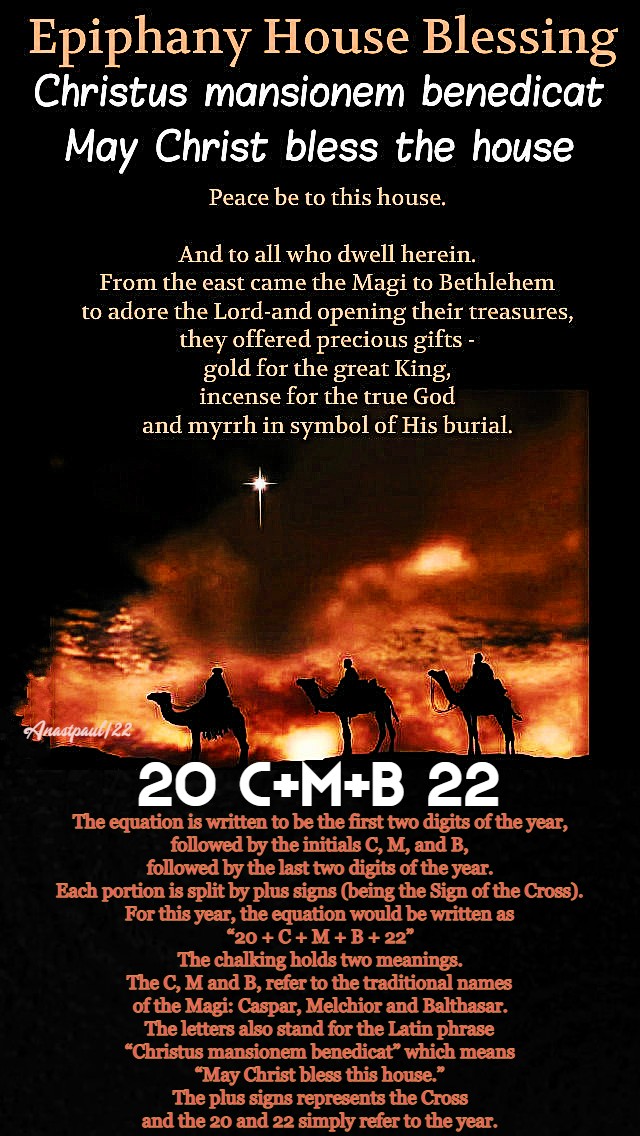
Chalk the Door – Epiphany House Blessing 20 C+M+B 22 “Christus mansionem benedicat” The equation is written to be the first two digits of the year, followed by the initials C, M, and B, followed by the last two digits of the year. Each portion is split by plus signs (being the Sign of the Cross). For this year, the equation would be written as “20 + C + M + B + 22”
The chalking holds two meanings. The C, M and B, refer to the traditional names of the Magi: Caspar, Melchior and Balthasar. The letters also stand for the Latin phrase “Christus mansionem benedicat” which means “May Christ bless this house.” The plus signs represents the Cross and the 20 and 22 simply refer to the year.
Our Morning Offering – 4 January – Christmas Weekday “Month of the Most Holy Name”
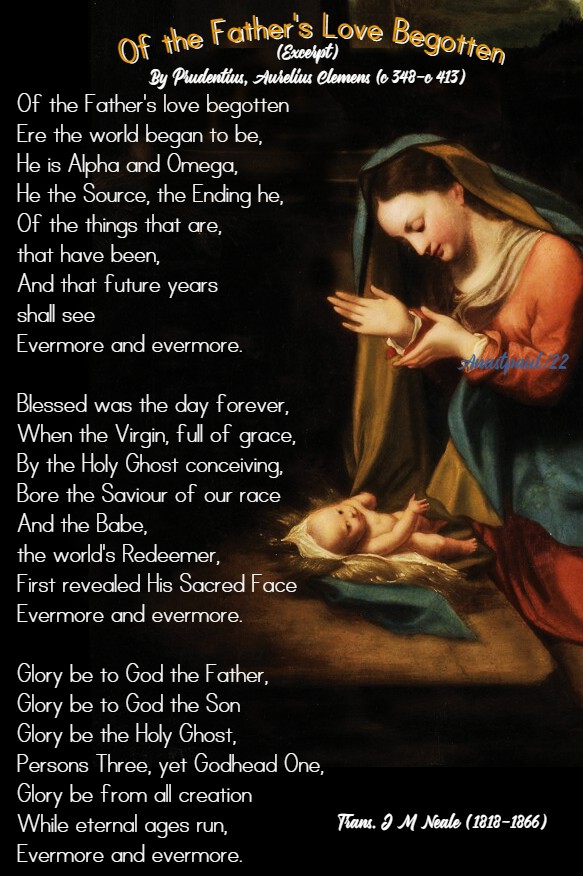
Of the Father’s Love Begotten (Excerpt) By Prudentius, Aurelius Clemens (c 348-c 413) Trans. J M Neale (1818-1866)
Of the Father’s love begotten Ere the world began to be, He is Alpha and Omega, He the Source, the Ending he, Of the things that are, that have been, And that future years shall see Evermore and evermore.
Blessed was the day forever, When the Virgin, full of grace, By the Holy Ghost conceiving, Bore the Saviour of our race And the Babe, the world’s Redeemer, First revealed His Sacred Face Evermore and evermore.
Glory be to God the Father, Glory be to God the Son Glory be the Holy Ghost, Persons Three, yet Godhead One, Glory be from all creation While eternal ages run, Evermore and evermore.
Aurelius Prudentius Clemens was a Roman Christian Poet, born in the Roman Province of Tarraconensis (now Northern Spain) in c 348. He probably died in the Iberian Peninsula some time after 405, possibly around 413. Prudentius practised law with some success and was twice Provincial Governor, perhaps in his native country. Towards the end of his life (possibly around 392) Prudentius retired from public life to become an ascetic, fasting until evening and abstaining entirely from animal food and writing poems, hymns and controversial works in defence of Christianity. Prudentius later collected the Christian poems written during this period and added a preface, which he himself dated 405. The poetry of Prudentius is influenced by early Christian authors, such as Tertullian and St Ambrose, as well as the Sacred Scriptures and the Acts of the Martyrs. His hymn Da, puer, plectrum – “Of the Father’s Love Begotten”) and the hymn for Epiphany O sola magnarum urbium (“Earth Has Many A Noble City”), both from the Cathemerinon, are still frequently in use today, although many others are too but perhaps less frequently..
Our Morning Offering – 3 January – “Month and Feast of the Most Holy Name of Jesus”
The Litany of the Most Holy Name of Jesus received the Church’s approval for private use by Pope Sixtus V in 1585, and public recitation by Pope Leo XIII in 1886. It is one of only six litanies approved for public use. When this litany is prayed publicly, the congregation’s responses to a leader appear in italics below.
The LITANY of The MOST HOLY NAME OF JESUS
Lord, have mercy on us. Christ, have mercy on us. Lord, have mercy on us. Jesus, hear us. Jesus, graciously hear us. God the Father of Heaven, have mercy on us (after each line) God the Son, Redeemer of the world, God the Holy Ghost, Holy Trinity, one God, Jesus, Son of the living God, Jesus, Splendour of the Father, Jesus, Brightness of eternal Light, Jesus, King of Glory, Jesus, Sun of Justice, Jesus, Son of the Virgin Mary, Jesus, most amiable, Jesus, most admirable, Jesus, the mighty God, Jesus, father of the world to come, Jesus, Angel of great counsel, Jesus, most powerful, Jesus, most patient, Jesus, most obedient, Jesus, meek and humble of heart, Jesus, Lover of chastity, Jesus, Lover of us, Jesus, God of peace, Jesus, Author of life, Jesus, Example of virtues, Jesus, zealous Lover of souls, Jesus, our God, Jesus, our Refuge, Jesus, Father of the poor, Jesus, Treasure of the faithful, Jesus, good Shepherd, Jesus, true Light, Jesus, eternal Wisdom, Jesus, infinite Goodness, Jesus, our Way and our Life, Jesus, Joy of Angels, Jesus, King of Patriarchs, Jesus, Master of the Apostles, Jesus, Teacher of the Evangelists, Jesus, Strength of Martyrs, Jesus, Light of Confessors, Jesus, Purity of Virgins, Jesus, crown of all Saints, Be merciful, spare us, O Jesus. Be merciful, graciously hear us, O Jesus. From all evil, deliver us, O Jesus. (after each line) From all sin, From Thy wrath, From the snares of the devil, From the spirit of fornication, From everlasting death, From the neglect of Thine inspirations, By the Mystery of Thy holy Incarnation, By Thy Nativity, By Thine Infancy, By Thy most divine Life, By Thy labors, By Thine agony and Passion, By Thy Cross and dereliction, By Thy sufferings, By Thy Resurrection, By Thine Ascension, By Thine institution of the most Holy Eucharist, By Thy joys, By Thy glory, Lamb of God, Who takest away the sins of the world, Spare us, O Jesus. Lamb of God, Who takest away the sins of the world, Hear us, O Jesus. Lamb of God, Who takest away the sins of the world, Have mercy on us, O Jesus. Jesus, hear us. Jesus, graciously hear us.
Let us pray:
O Lord Jesus Christ, Who hast said: Ask and ye shall receive, seek and ye shall find, knock and it shall be opened unto you; mercifully attend to our supplications and grant us the gift of Thy divine charity, that we may ever love Thee with our whole heart and with all our words and deeds and may never cease from praising Thee. Make us, O Lord, to have a perpetual fear and love of Thy holy Name, for Thou never failest to help and govern those whom Thou dost bring up in Thy steadfast fear and love. Who livest and reignest for ver and ever. Amen.
Our Morning Offering – 31 December – The Seventh Day of the Octave of Christmas
The Apostles’ Creed
I believe in God, the Father Almighty, Creator of heaven and earth and in Jesus Christ, His only Son, our Lord, who was conceived by the Holy Spirit, born of the Virgin Mary, suffered under Pontius Pilate, was crucified, died and was buried; He descended into hell; on the third day He rose again from the dead; He ascended into heaven and is seated at the right hand of God the Father Almighty; from thence He shall come to judge the living and the dead. I believe in the Holy Spirit, the Holy Catholic Church, the communion of Saints, the forgiveness of sins, the resurrection of the body and life everlasting. Amen
Our Morning Offering – 24 December – Vigil of the Nativity of the Lord/Mass at Midnight
Silent Night, Holy Night! Stille Nacht, heilige Nacht! By Father Joseph Mohr (1792-1818)
Silent night, holy night! All is calm, all is bright, Round yon Virgin Mother and Child! Holy Infant so tender and mild, Sleep in heavenly peace, Sleep in heavenly peace.
Silent night, holy night! Son of God, how the light Radiates love from Thy heavenly face, At the dawn of redeeming grace, Jesus, Lord at Thy birth, Jesus, Lord at Thy birth.
O Come, O come, Emmanuel And ransom captive Israel, That mourns in lonely exile here Until the Son of God appear. Refrain: Rejoice! Rejoice! Emmanuel Shall come to thee, O Israel!
O come, Thou Wisdom, from on high And order all things far and nigh, To us the path of knowledge show And teach us in her ways to go. Refrain
O come, o come, Thou Lord of might, Who to thy tribes on Sinai’s height In ancient times did give the law, In cloud, and majesty and awe. Refrain
O come, Thou Rod of Jesse’s stem, From ev’ry foe deliver them That trust Thy mighty power to save And give them vict’ry o’er the grave. Refrain
O come, Thou Key of David, come And open wide our heav’nly home, Make safe the way that leads on high, That we no more have cause to sigh. Refrain
O come, Thou Dayspring from on high And cheer us by thy drawing nigh. Disperse the gloomy clouds of night And death’s dark shadow put to flight. Refrain
O come, Desire of nations, bind In one the hearts of all mankind. Bid every strife and quarrel cease And fill the world with heaven’s peace. Refrain
The favourite O Come, O Come Emmanuel carol was originally written in Latin text in the 12th Century. The author of the words and composer to the music of O Come, O Come Emmanuel is unknown. It is, however, believed that the melody was of French origin and added to the text a hundred years later. The Latin was translated into English by John Mason Neale in 1851.
One Minute Reflection – 22 December – “Month of the Immaculate Conception” – Wednesday of the Fourth Week of Advent, O Rex Gentium/O King of all Nations, Readings: Samuel 1:24-28; First Samuel 2: 1, 4-8; Luke 1:46-56
The Lord is at hand, come let us adore Him.
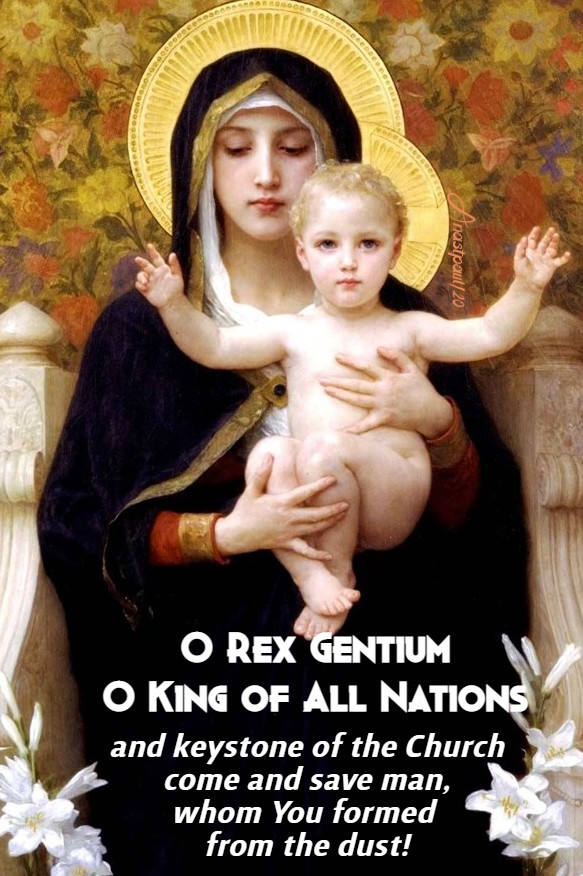
O KING OF ALL NATIONS and keystone of the Church come and save man, whom You formed from the dust!
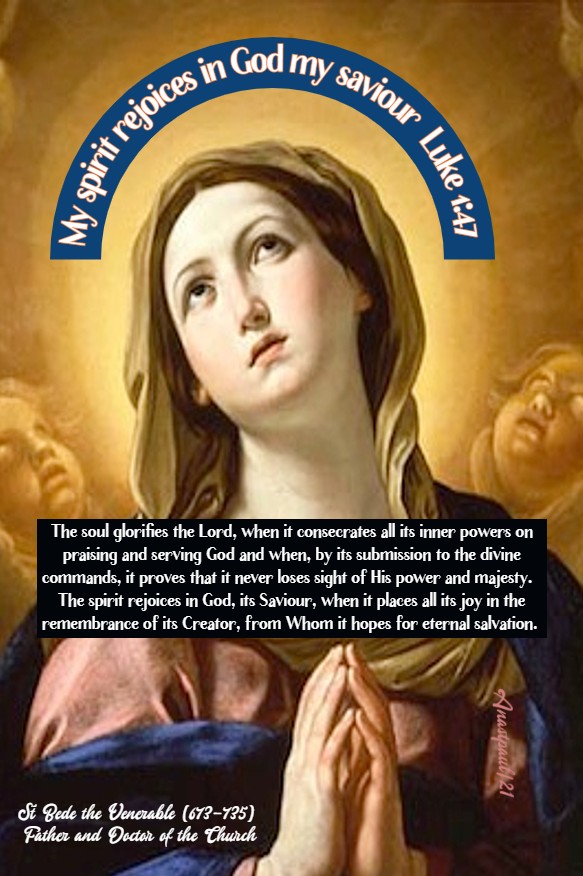
“My spirit rejoices in God my saviour” – Luke 1:47
REFLECTION – “My soul magnifies the Lord, my spirit rejoices in God my Saviour.”. The first interpretation of these words is undoubtedly to acknowledge the gifts granted to her, to Mary in particular, by God. But then she recalls the universal blessing with which God never ceases to surround the human race.
The soul glorifies the Lord, when it consecrates all its inner powers on praising and serving God and when, by its submission to the divine commands, it proves that it never loses sight of His power and majesty. The spirit rejoices in God, its Saviour, when it places all its joy in the remembrance of its Creator, from Whom it hopes for eternal salvation. Without doubt, these words exactly express the thought of all the Saints but it was most especially fitting they should be spoken by the blessed Mother of God, who, filled with a special privilege, burned with a wholly spiritual love for the One she had the joy of conceiving in her flesh. More than any other Saint she had good reason to rejoice in Jesus – that is to say, in her Saviour – because He Whom she acknowledged to be the Eternal Author of our salvation, would in time, as she knew, be born in His own flesh and with such authenticity, that in one and the same Person her Son and her God, would be truly present…
Hence it is a praiseworthy and salutary custom, whose fragrance perfumes Holy Church, when everyday at Vespers, we sing the Canticle of the Virgin. We may well expect from this, that the souls of the faithful, by so often calling to mind the Lord’s Incarnation, will be enflamed with even greater fervour and that, such a frequent reminder of His Holy Mother’s example, will strengthen them in virtue. And Vespers is the best time to come back to this song, since our souls, tired by the day and drawn this way and that by the day’s thoughts, need to come back together again, when the hour of rest draws near, so that they may find, once more, their singleness of focus.” – St Bede the Venerable (673-735) Monk, Father and Doctor of the Church (Homilies on the Gospel, I, 4 ; CCL 122, 25f)
PRAYER –The Magnificat The Canticle of Mary Luke 1:46-55
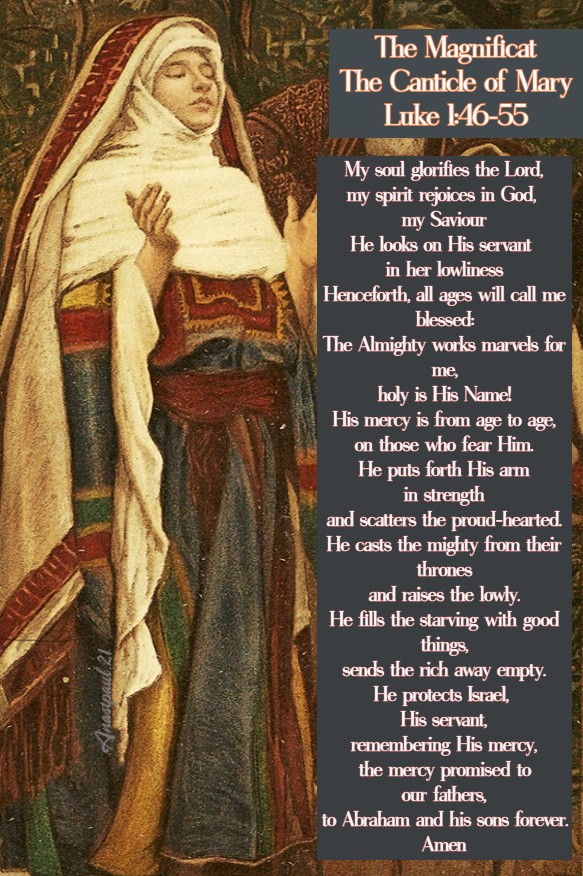
My soul glorifies the Lord, my spirit rejoices in God, my Saviour He looks on His servant in her lowliness Henceforth, all ages will call me blessed: The Almighty works marvels for me, holy is His Name! His mercy is from age to age, on those who fear Him. He puts forth His arm in strength and scatters the proud-hearted. He casts the mighty from their thrones and raises the lowly. He fills the starving with good things, sends the rich away empty. He protects Israel, His servant, remembering His mercy, the mercy promised to our fathers, to Abraham and his sons forever. Amen.































You must be logged in to post a comment.