Bl Adrian of Dalmatia
St Anastasius II of Antioch
St Anrê Tran An Dung
St Baudacarius of Bobbio
St Beornwald of Bampton
Bl Bezela of Göda
Bl Daniel of the Annunciation
St Dioscorus Bl Dominic Spadafora OP (1450-1521)
St Festus of Tuscany
St Glycerius of Nicomedia
St James of Valencia
St John of Tuscany
St John Vincent
St Micah the Prophet
St Phêrô Truong Van Thi
St Severinus of Trèves
Bl Sibrand of Marigård
St Themistocles of Lycia
Quote of the Day – 20 December – The Memorial of Blessed Michal Piaszczynski (1885-1940) Priest and Martyr
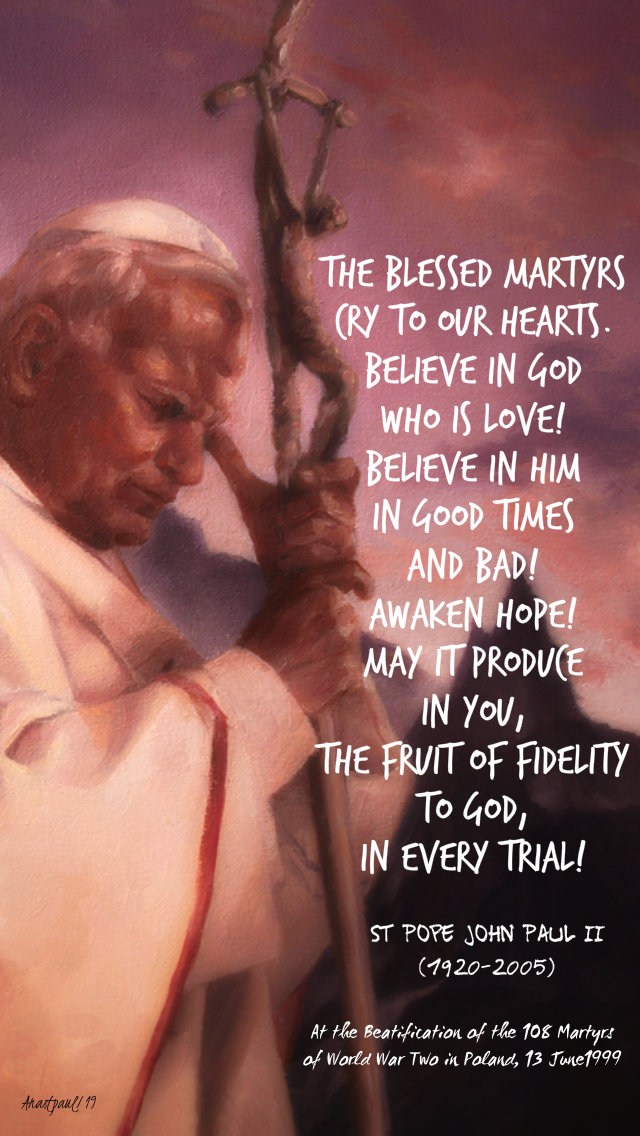
“The blessed martyrs cry to our hearts. Believe in God who is love! Believe in Him in good times and bad! Awaken hope! May it produce in you, the fruit of fidelity to God, in every trial!”
St Pope John Paul II (1920-2005)
At the Beatification of the 108 Martyrs of World War Two in Poland, 13 June 1999
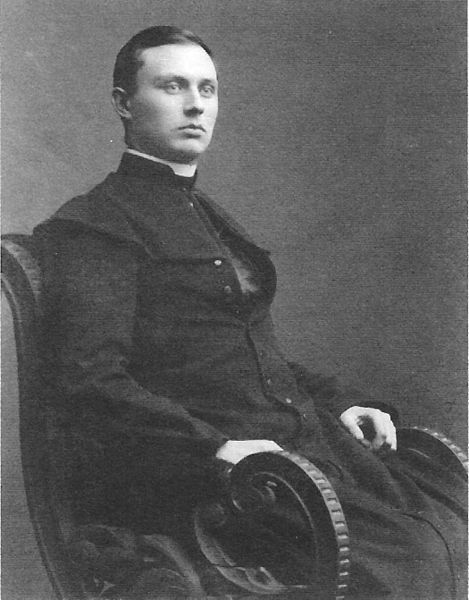
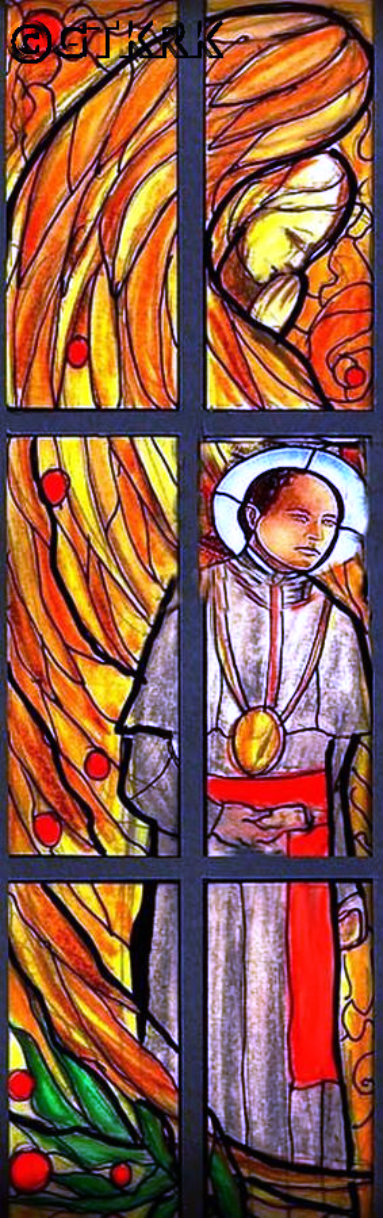
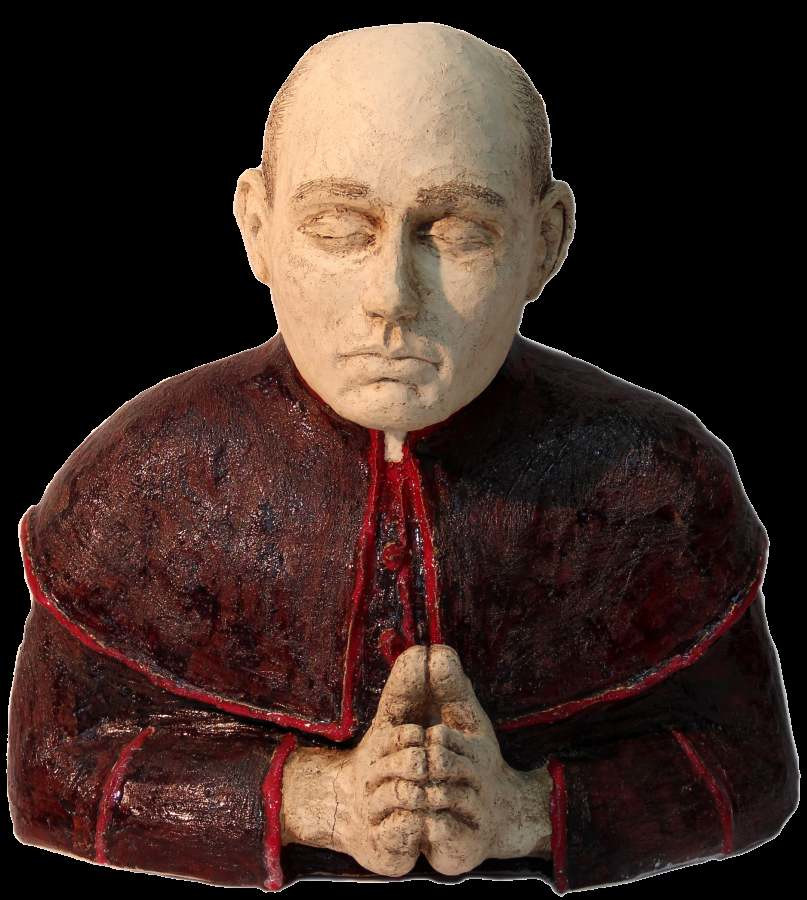
Saint of the Day – 20 December – Blessed Michal Piaszczynski (1885-1940) Priest and Martyr, Poet, Writer, Lecturer, Apostle of the poor – born on 1 November 1885 at Lomza, Podlaskie, Poland and died on 18 December 1940 in the prison camp in Sachsenhausen-Oranienburg, Oberhavel, Germany of starvation and illness related to the concentration camp conditions. He was Beatified as one of the 108 Martyrs of World War II and thus has a secondary feast on 12 June as part of this group.
Michal Piaszczynski was born in Lomza, Poland, the son of Ferdinand and Anna Zientara. In 1903 after graduating from high school, he entered the seminary in Sejny. After being ordained a Deacon, he was sent for further specialised studies to the Catholic Clergy Academy in St Petersburg. The Spiritual Academies – theological colleges – were created as a result of Russian repression after the fall of the November Uprising of 1830-1831 and the liquidation of Polish universities. Their task was to be to attempt to re-educate the Polish Catholic clergy of the Russian partition.
And there, on 13 June 1911 in the academic chapel, he was Ordained a Priest at the hands the Servant of God, Bishop Jan Feliks Cieplak, a defiant priest, many times punished by the Russian authorities for preaching patriotic sermons and participation in national demonstrations and later – during Soviet Russia – arrested twice and in 1923 sentenced at a demonstration trial to the death penalty for ” inciting a rebellion through superstition .”
In 1912 he graduated with a master’s degree in Holy Theology …
He was briefly the first Parish Priest of St Mary Magdalene in Mikaszówka. For a short time – but long enough to be remembered by the village as a church and community builder … Michał left Mikaszówka and in 1914, after two years in Freiburg, he obtained doctorates in philosophy and literature.
At the beginning of the First World War, Fr Michal was visiting Italy. From there, at the request of Polish emigrants he went to France, where for four years he was a chaplain of miners, a priest of the Polish-French parish and a prefect of schools. At that time, he visited Polish colonies and prisoner-of-war camps of Poles in France (in the mining regions of Nord-Pas-de-Calais with the capital in Lille, Lorraine and Picardy) – they were Poles mainly from the German partition, conscripted into the German army, participating in the trench warfare and taken prisoner by Franco-British troops …
“He was known here in the colony in France and was highly respected by all Poles who today, (in 1946) remember and honour him for his holiness and goodness. He assisted the poor and visited the sick. In a word, a holy priest…” (the letter by Jerez-Chojnacka, representatives of the Polish mission in France).
After the end of hostilities, he returned in 1919 to the reborn Commonwealth, to his hometown of Łomża. He threw himself into the teaching work … He became a lecturer and then a vice-director (from 1935), newly opened in 1919 at the Major Seminary in Lomza. He invited Jewish rabbis to him, thus becoming a promoter of religious dialogue with Jews. He addressed them with the term “elder brothers in the faith,” which made him a kind of precursor (though not the only one) of the significant movement of St John Paul II. Blessed Michal was also a teacher in various schools and Chaplain of a Hospital and Confessor of the Benedictine Sisters in the Abbey of Of the Holy Trinity.
When the Second World War broke out and the Germans took possession of Blessed Michal’s area, they immediately proceeded to round up the Catholic Priests. As part of the planned policy of extermination of the Polish clergy and intelligentsia, about 80% of the clergy from areas directly connected to the German Reich – found themselves in German concentration camps. Most of them lost their lives, as did 15% of Polish teachers, 30% of technicians, 40% of university professors, 45% of doctors and dentists, and 57% of lawyers …
Fr Michal was arrested on 7 April 1940 and was moved to Sachsenhausen Concentration Camp on 3 May 1940.
During his detention, he comforted everyone. In the evenings, he prayed with them and gave short homilies and lectures. His deep love for God was also reflected in his attitude towards his fellow man – he helped the weak in camp work and assisted them on their way to the assembly ground.
One day, when the head of the camp, took their daily ration of bread, from the Jews, Fr Michal, who once said at the table, that he would like to eat his fill at least once more in his life, offered his portion of bread to a Jewish lawyer from Warsaw named Kott. At that time, the Jew would say: “You Catholics believe that there is a living Christ in your churches. I believe that there is a living Christ in this bread, He who told you to share it with me,” recalled Fr Kazimierz Aleksander Hamerszmit.
Blessed Michal went to the Lord, emaciated, starved, sick, suffering from numerous complaints related to the conditions under which he lived – deprived of medical care – on 18 December 1940.
He was beatified by St John Paul II in Warsaw, 13 June 1999, in the group of 108 Polish martyrs of World War II.
St Eugene of Arabia
St Gabriel Olivares Roda
St Hoger of Hamburg-Bremen
Bl John de Molina
St Julius of Gelduba
Bl Lorenzo Company
St Liberatus of Rome
St Macarius of Arabia
St Malou of Hautvillers Blessed Michal Piaszczynski (1885-1940) Priest and Martyr
St Paul of Latra
Bl Peter de la Cadireta
Bl Peter Massalenus
Philogonius of Antioch
St Thomas of Dover
St Ursicinus of Saint-Ursanne St Vincenzo Romano (1751-1831) His story:
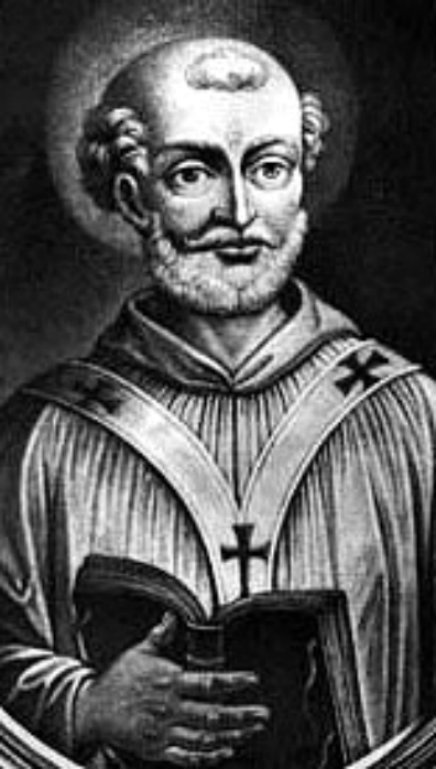
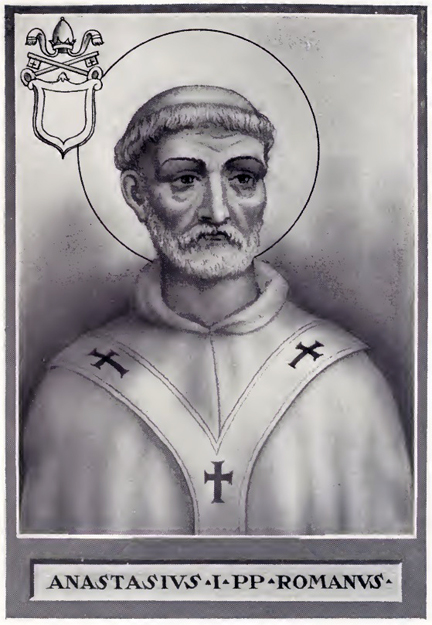
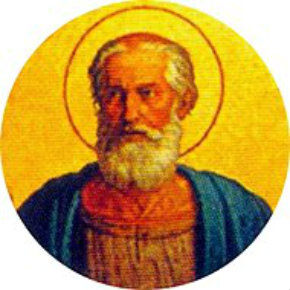
Saint of the Day – 19 December – St Pope Anastasius I (Died 401) – Widower, Priest and Pope – born in the 4th century in Rome, Italy – Papal Ascension, successor to Pope Siricius on 27 November 399 until his death on 19 December 401 of natural causes. Among his friends were Augustine, Jerome and Paulinus. Jerome speaks of him as a man of great holiness who was rich in his poverty.
Anastasius was known as a pious youth and, apparently, cared nothing for material things as an adult. He was born about the year 330, a Roman, whose father’s name was Maximus. When he was a young man, Anastasius must have married and had at least one son. Relatively early, it would appear, Anastasius was widowed and never remarried.
It was a time of peace and growth for the Catholic Church and, despite wars in far off regions of the empire, it was a time of relative peace in the Western provinces. Anastasius became a cleric and, it would make sense to assume, so did his son.
However, just a few years before Anastasius became Pope, in 395, Emperor Theodosius died, leaving his eleven year old son, Honorius, to govern. The half-Vandal Stilicho, became regent and power behind the throne. Within three years, Stilicho declared war on the North African province, when he heard rumours of the province seceding and moving to the Eastern Empire. Africa was Rome’s bread basket. The city of Rome panicked and civil turmoil resulted. The rebellion was quashed within a year and Anastasius was consecrated with the promise of more peace.
The Church had converted to Latin as its universal language, due to the expansion of the faith. It became necessary to have a common language for councils and synods, at this point. Many of the fathers of the Church and theologians thus wrote in, or had works translated into, Latin. It often happened that the original authors were long dead at the time of the translation. Thus was the scenario when Anastasius ascended the Chair of Peter. The new pope, consecrated 27 November 399, received a letter from Patriarch Theophilus of Alexandria, expressing strong doubt about Origen’s fidelity to the Church. Rufinus of Aquiliea had taken the time to translate Origen’s “First Principles” from the original Greek. St Jerome, the elderly man who had worked so hard on the “Vulgate Bible”, had attacked Rufinus’ work. He felt the writings of Origen did not meet his sense of orthodoxy. Not being familiar with Origen’s work, himself, Anastasius called a council to consider the problem. The council ultimately agreed with Jerome and claimed that Origen’s work was heterodox, thus eliminating it from acceptable belief.
“If Origen has put forth any other writings, you are to know that they and their author are alike condemned by me. The Lord have you in safe keeping, my lord and brother deservedly held in honour.”
from his letter to St Simplicianus
Meanwhile, on the south side of the Mediterranean, the North African Christians were battling another heresy – the Donatists. Their main argument, in a nutshell, was that sacraments were only valid, depending on the spiritual character of the priests and bishops. For the better part of one hundred years, the arguments had been continuing, despite the death of Donatus in 355 and several synods trying to straighten it out. In the late 300s, Augustine of Hippo argued and tried to settle the question. This was apparently of high interest to Anastasius, who encouraged the fight against this heresy. He did not live to see Emperor Honorius’ secretary of state declare Donatism illegal. But Augustine did.
St Anastasius instructed priests to stand and bow their head as they read from the gospels.
Anastasius died in Rome on 19 December 401, having ruled just over two years. He was buried in the Catacomb of Pontian together with his son and immediate successor, Pope Innocent I, which is probably a unique case of a pope being succeeded by his son.
St Pope Anastasius I (Died 401)
St Augustine Moi Van Nguyen
St Avitus of Micy
Bl Berengar of Banares
St Berardo Valeara of Teramo OSB (c 1050-1122)
Bl Bogumila Noiszewska
St Boniface of Cilicia
Bl Cecilia of Ferrara
St Dominic Uy Van Bui
St Fausta of Sirmium
St Gregory of Auxerre
St Jaume Boguñá Casanovas
St Johannes Gogniat
St Jordi Sampé Tarragó
St Josep Albareda Ramoneda
Bl Kazimiera Wolowska
Bl Konrad Liechtenau
St Manirus of Scotland
St Meuris of Alexandria
St Nemesius of Alexandria
St Phanxicô Xaviê Hà Trong Mau
St René Dubroux
Ribert of Saint-Oyend
St Stêphanô Nguyen Van Vinh
St Thea of Alexandria
St Timothy the Deacon
St Tôma Nguyen Van Ðe Bl Pope Urban V (1310-1370) About Blessed Pope Urban: https://anastpaul.wordpress.com/2017/12/19/saint-of-the-day-19-december-blessed-pope-urban-v-1310-1370/
Bl William of Fenoli
Blessed Mercedarian Fathers – (6 beati): A group of Mercedarian monks noted for their dedication to the Order’s rule, for their continuous prayer life and their personal piety.
• Blessed Bartolomeo of Podio
• Blessed Giovanni of Verdera
• Blessed Guglielmo de Gallinaris
• Blessed Guglielmo of Prunera
• Blessed Pietro of Benevento
• Blessed Pietro of Gualba
Martyrs of Nicaea – (4 saints): A group of Christians martyred together. The only surviving details are four of their names – Darius, Paul, Secundus and Zosimus. They were martyred at Nicaea, Bithynia (modern Izmit, Turkey).
Martyrs of Nicomedia – (5 saints): A group of Christians martyred together in the persecutions of Diocletian. We know little more than the names of five – Anastasius, Cyriacus, Paulillus, Secundus and Syndimius. They were martyred in 303 at Nicomedia, Asia Minor.
Martyred in the Spanish Civil War:
Thousands of people were murdered in the anti-Catholic persecutions of the Spanish Civil War from 1934 to 1939. Virtually each day of the year a Group are celebrated, usually individually but sometimes an entire Monastery or Convent or Lay Movement were martyred together. Today we remember:
• Blessed Jaume Boguñá Casanovas
• Blessed Jordi Sampé Tarragó
• Blessed Josep Albareda Ramoneda
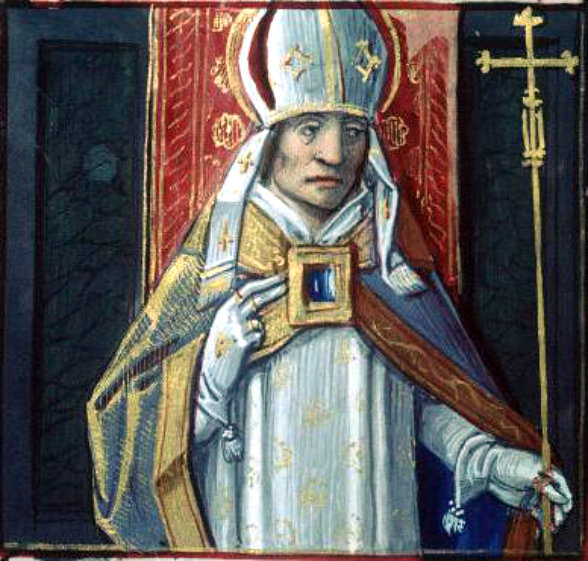
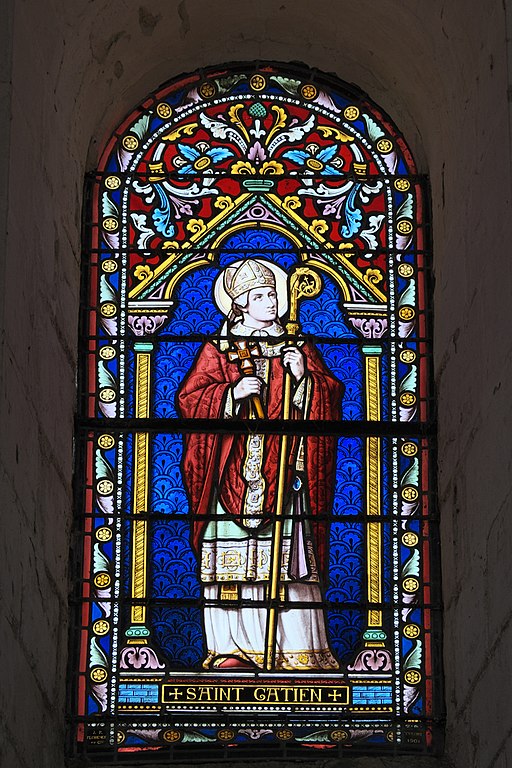
Saint of the Day – 18 December – Saint Gatian of Tours (c 251- 301) First Bishop of Tours, Missionary – St Gatian was the founding Bishop of the see of Tours. He was one of the “Seven apostles of Gaul”commissioned by Pope Fabian to evangelise in the region. St Gatian is also known as Catianus, Gatianus, Gratianus; French: Cassien, Gatien, Gratien. Patronage – Tours, both the City and the Archdiocese.
Pope Fabian sent out seven Bishops from Rome to Gaul to preach the Gospel – Gatian to Tours, Trophimus to Arles, Paul to Narbonne, Saturnin to Toulouse, Denis to Paris, Austromoine to Clermont and Martial to Limoges. A community of Christians had already existed for many years in Lyon, where Irenaeus had been bishop.
St Gatien arrived with with St Dionysius of Paris, about the middle of the third century and preached the faith principally at Tours in Gaul, where he fixed his episcopal see.
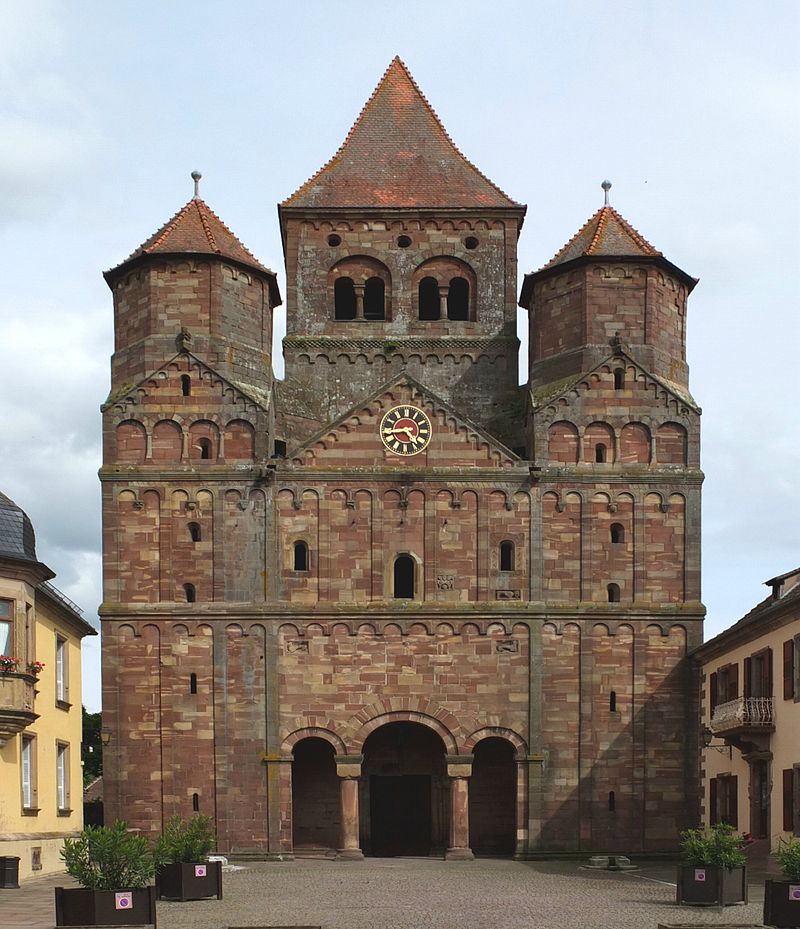
There were few Christians in Tours at that time and in one of the troubled years of his Episcopate, he is said for a time to have lain concealed in a cave on the banks of the Loire, at a spot where later rose the great Abbey of Marmoutier. Gratian would go into the city only when opportunities of preaching presented themselves. He devoted half a century to evangelisation, amid innumerable difficulties but with great success too, for at his death, the diocese of Tours was securely established.
Marmoutier Abbey
In a part of the Empire where Mithraism was a dominating force among the legions, the Abbé Jaud reports that Gatian likewise retreated into a grotto and there celebrated the mystical banquet. Gatian was often portrayed officiating a ceremony in a cavern-like setting. Two grottos cut into the limestone hill above the Loire, across from Tours at Marmoutier Abbey, are designated the first sites where Gatian celebrated the liturgy.
Gatianus established a hospice for the poor outside the walls of Tours. There he lay, overcome with weariness, after five decades of fasting, penances and toil. And there, the Sbbé Jaud relates, the Saviour appeared to him, saying, “Fear not! Thy crown is readied and the Saints await thy arrival in Heaven.” The date was the 18 December 301.
After his death, the Bishopric of Tours was orphaned for 36 years due to the recent persecution of Christians by the Emperor Diocletian. Only his successor St Litorius (337-371) was able to build the first church in Tours. It replaced a memorial to the martyr Mauritius. Bishop St Martin of Tours found the buriel site of St Gatian and had them transferred to this church, from which today’s cathedral was built. Since then it has been called Saint Gatian.
This slideshow requires JavaScript.
Today many towns, institutions, schools, an airport and even a golf course bear the name of Saint Gatian.
St Gregory of Nazianzen wrote this poem in St Gatian’s honour and it appears in the Roman Martyrology:
“You dissolved darkness and gave birth to Light in order to create all things in Light and to give consistency, to unstable matter, by shaping it into the shape of a world. You have, here below, introduced the image of splendour from above, so that by the Light man looks at the Light and becomes entirely Light.”
Our Lady of the Expectation – This Feast originated in Spain. When the feast of the Annunciation (25 March) was transferred to 18 December because of the regulation forbidding feasts in Lent, it remained on this date after the Annunciation was again celebrated on its original date. It impressed on the faithful, the sentiments of the Blessed Virgin as the time of her delivery approached.
St Auxentius of Mopsuetia
St Basilian of Laodicea
St Bodagisil of Aquitaine
St Desiderius of Fontenelle
Bl Eugenio Cernuda Febrero
St Flannán of Killaloe St Gatian of Tours (c 251-301) Bl Giulia Valle (1847-1916) About Blessed Giulia: https://anastpaul.wordpress.com/2017/12/18/saint-of-the-day-18-december-bl-giulia-nemesia-valle-1847-1916/
St Malachi the Prophet
St Mawnan of Cornwall
Bl Miguel San Román Fernández
St Phaolô Nguyen Van My
St Phêrô Truong Van Ðuong
St Phêrô Vu Van Truat
Bl Philip of Ratzeburg
St Rufus of Philippi
St Samthann of Clonbroney
St Theotimus of Laodicea
St Winebald of Heidenheim
St Zosimus of Philippi
Martyrs of Northwest Africa – 42 saints:
Mercedarian Redeemers – 6 beati – These are a group of Mercedarian friars who worked together, under the leadership of Saint Peter de Amer, to ransom (e.g., redeem) prisoners and minister to them after.
Quote of the Day – 17 December – The Memorial of St John of Matha O.SS.T (1160-1213) – Founder of the Trinitarians
The Trisagion Chaplet
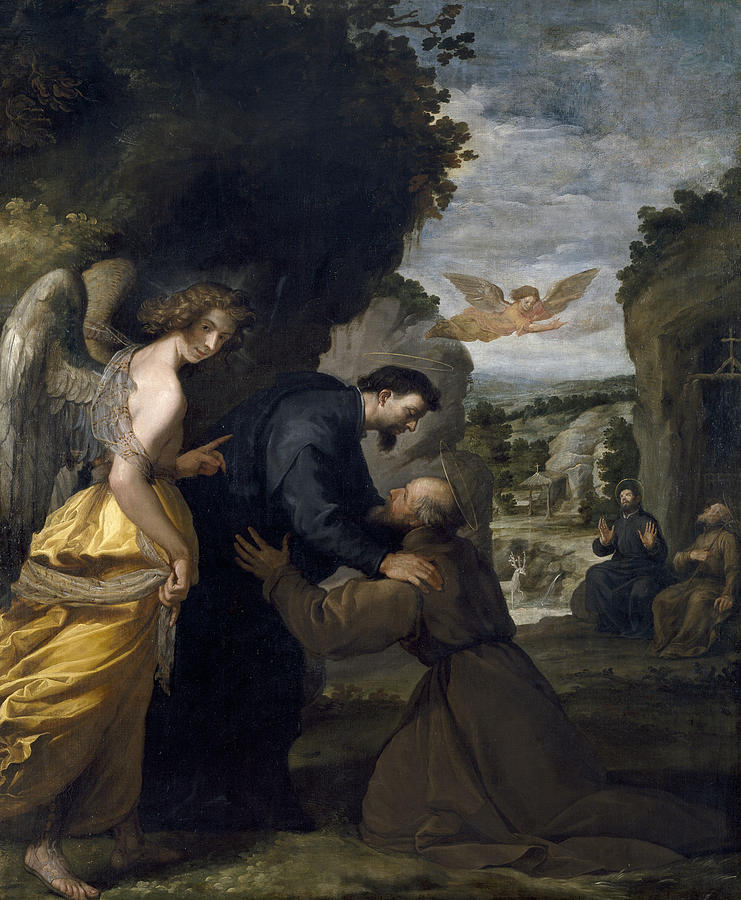
The Order of the Most Holy Trinity for the Redemption of Captives, more commonly known as The Trinatarians, was founded in France by St John de Matha and St Felix of Valois (1127-1212) in 1198.
Meeting of St John and St Felix by Vincenzo Carducci
From the very early stages of the of order, the Trinitarians have used a form of prayer based on the Trisagion (sometimes Trisagium or Triagion, from the Greek “three” + ”holy”).
This is a Byzantine prayer still used in the Divine Liturgy in the Eastern Catholic, Oriental Orthodox and Eastern Orthodox churches in praise of the Holy Trinity.
It’s simplest form is “Holy God, Holy Mighty One, Holy Immortal One, have mercy on us.”
The Trisagion Chaplet (also called a rosary) has three sets of nine beads each – of course, a rosary can be used too.
When reciting the Trisagion Chaplet, each set begins with the Trisagion: “Holy God, Holy Mighty One, Holy Immortal One, have mercy on us.” and the Pater Noster.
An invocation is said on each of the nine beads – “To you be praise, glory, and thanksgiving forever, blessed Trinity. Holy, Holy, Holy, Lord God of power and might, heaven and earth are full of your glory.”
Each set of nine prayers is followed by a Gloria Patri (“Glory be to the Father and the Son and the Holy Spirit…”) and the recitation of the chaplet ends with a closing prayer.
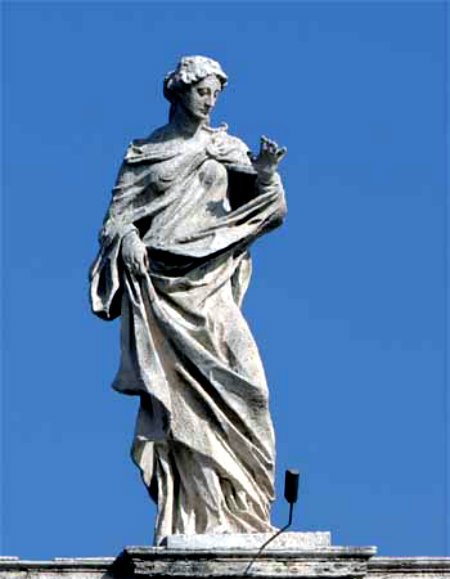
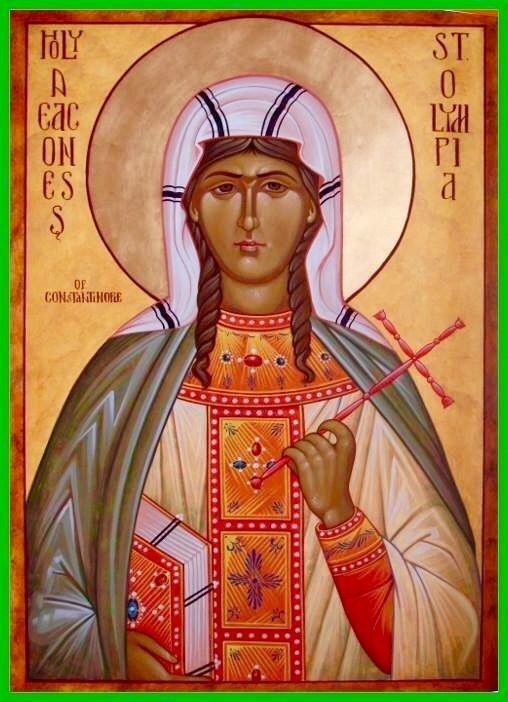
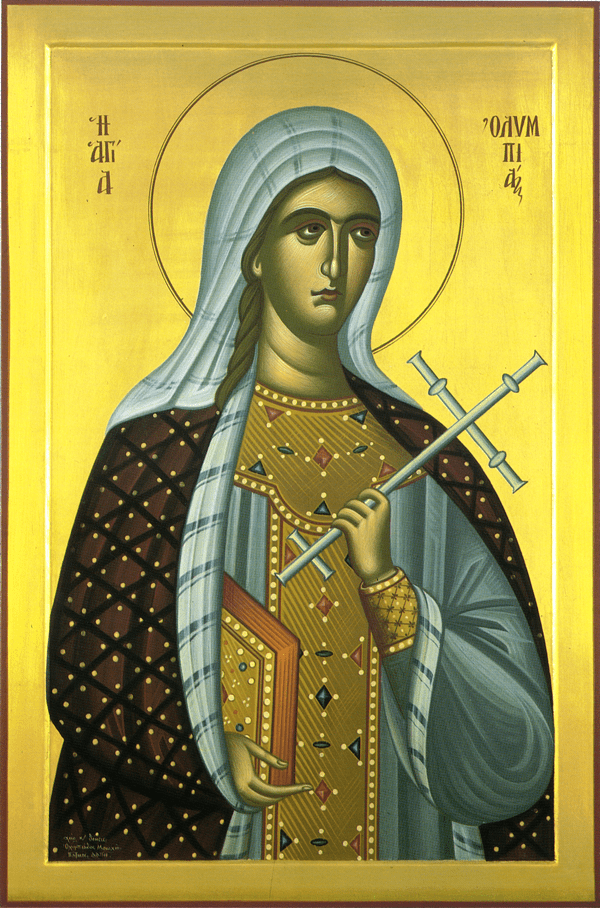
Saint of the Day – 17 December – St Olympias of Constantinople (c 361-365 – 408), childless widow, Diaconess, friend of St John Chrysostom, Apostle of charity and Founder of a Convent, hospital and an orphanage, Defender of the true faith – also known as St Olympias the Younger and St Olympias the Deaconess – born at Constantinople and died in exile on 25 July 408 at Nicomedia following a long illness.
St Olympias is one of the 140 Saints on the Colonnade at St Peter’s
St Olympias was born sometime between 360-365, this pious, charitable and wealthy disciple of St John Chrysostom came from an illustrious family in Constantinople. Her father (called by the sources Secundus or Selencus) was a “Count” of the empire. One of her ancestors, Ablabius, filled the consular office in 331 and was also praetorian prefect of the East.
Her parents died when she was quite young and left her an immense fortune. In either 384 or 385 she married Nebridius, Prefect of Constantinople. St Gregory of Nazianzus, who had left Constantinople in 381, was invited to the wedding but wrote a letter excusing his absence (Ep. cxciii, in P.G., XXXVI, 315) and sent the bride a poem (P.G., loc. cit., 1542 sqq.). Within a short time, Nebridius died and Olympias was left a childless widow. She steadfastly rejected all new proposals of marriage, determining to devote herself to the service of God and to works of charity. Nectarius, Bishop of Constantinople (381-97), consecrated her Deaconess.
On the death of her husband, the emperor had appointed the urban prefect administrator of her property but in 391 (after the war against Maximus) he restored to her the administration of her large fortune. She built beside the principal church of Constantinople a convent, into which three relatives and a large number of maidens withdrew with her to consecrate themselves to the service of God. When St John Chrysostom became Bishop of Constantinople in 398, he acted as spiritual guide of Olympias and her companions and, as many undeserving approached the kind-hearted Deaconess for support, he advised her, as to the proper manner of utilising her vast fortune in the service of the poor (Sozomen, “Hist. eccl.”, VIII, ix; P.G., LXVII, 1540). Olympias resigned herself wholly to Chrysostom’s direction and placed at his disposal ample sums for religious and charitable objects. Even the most distant regions of the empire received her benefactions to churches and the poor.
When St Chrysostom was exiled, at their last interview, Olympias clung to his feet with such desperation that she had to be torn away by force. But, even in his absence, Olympias supported him in every possible way and remained a faithful disciple, refusing to enter into communion with his unlawfully appointed successor. St Chrysostom encouraged and guided her through his letters, of which seventeen are extant (P.G., LII, 549 sq.). These letters are a beautiful memorial of the noble-hearted, spiritual daughter of the great bishop.
Olympias was also exiled and died a few months after Chrysostom on 25 July 408, at Nicomedia. After her death, she was immediately venerated as a saint. A biography dating from the second half of the fifth century, which gives particulars concerning her from the “Historia Lausiaca” of Palladius and from the “Dialogus de vita Joh. Chrysostomi”, proves the great veneration she enjoyed. During he riot of Constantinople in 532, the convent of St Olympias and the adjacent church were destroyed.
Emperor Justinian had it rebuilt and the prioress, Sergia, transferred the remains of the foundress from the ruined church of St Thomas in Brokhthes, where she had been buried. We possess an account of this translation by Sergia herself.
Another Father and Doctor of the Church, St Gregory Nazianzen, called her “the glory of the widows in the Eastern Church”.
St Judicaël
St Lazarus of Bethany
BL Mariano Alarcón Ruiz
Bl Mathilde Téllez Robles
St Maxentiolus
St Modestus of Jerusalem St Olympias of Constantinople (c 361-365 – 408)
Bl Peter of Spain
St Sturmi of Fulda
St Tydecho
St Wivina
St Yolanda
Martyrs of Eleutheropolis – (60+ Martyrs-Beati): Approximately 60 Christian soldiers in the imperial Roman army of emperor Heraclius; they were murdered as a group for their faith by invading Saracen Muslims. We know the names of two of them – Calaoicus and Florian. 638 in Eleutheropolis (Beit Jibrin), Palestine.
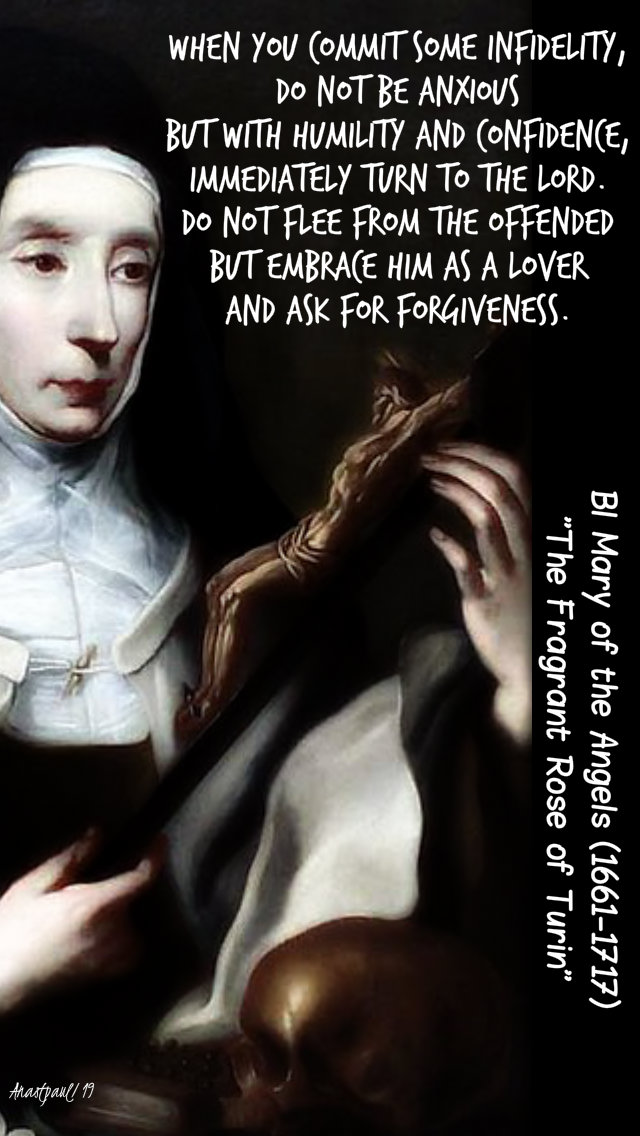
Quote of the Day – 16 December – The Memorial of Blessed Mary of the Angels Fontanella OCD (1661-1717) “The Fragrant Rose of Turin”
“When you commit some infidelity, do not be anxious but with humility and confidence, immediately turn to the Lord. Do not flee from the Offended but embrace Him as a lover and ask for forgiveness.”
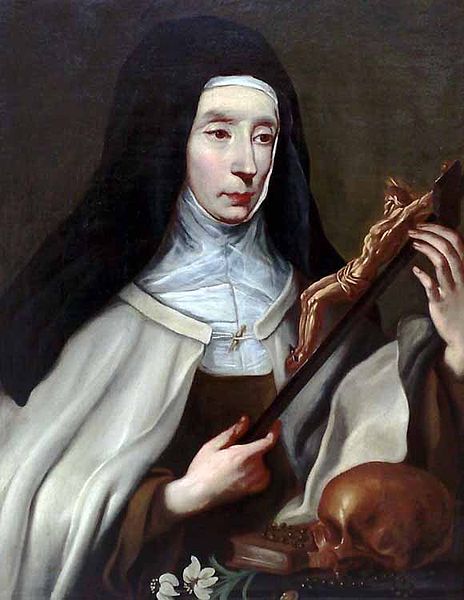
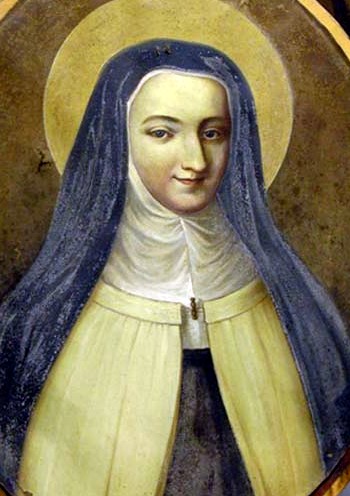
Saint of the Day – 16 December – Blessed Mary of the Angels Fontanella OCD (1661-1717) “The Fragrant Rose of Turin,” Discalced Carmelite, Mystic, Stigmatist, Marian devotee and client of St Joseph, Prioress, Spiritual director – born as Marianna Fontanella on 7 January 1661 at Balderino, Italy and died on 16 December 1717 of natural causes at Turin, Iraly. Also known as Maria degli Angeli, Maria Fontanella of the Angels. Bl Mary studied with the Cistercians as a child and entered the Discalced Carmelites despite the protests of her mother and siblings – she soon became a noted abbess and prioress and in 1703 inaugurated a new convent she herself oversaw the establishment of and later, instigated the building of a beautiful Basilica in honour of the Blessed Virgin.
Marianna Fontanella came into the world on January 7, 1661. She was the youngest of 11 children born to Count Giovanni of Turin and his wife, Lady Maria Tana. The mother had among her close relatives, the mother of St Aloysius de Gonzaga SJ (1568-1591), a youthful aristocrat who renounced a life of privilege to become a holy Jesuit. The fact that there was an official Saint counted among her kin was undoubtedly a source of pride for the family but it wasn’t enough to impress Marianna to want to become one too. It was related that this Blessed initially lived her early years in a manner typical of her high social status – she was well-educated, pampered and exposed to all sorts of social niceties and assemblies … and she enjoyed it all, especially the fancy outfits and the dances.
However, on one particular day, while still a young child, she sat in front of a mirror admiring herself when her own reflection vanished to be replaced by a vision – Christ appeared in the mirror, sadly staring back at her, battered and crowned with thorns. The experience so shocked Marianna that it had the immediate effect of a lasting conversion. From that moment on she shunned her elaborate wardrobe and jewellery and began exercising a devout mode of living despite her tender age. In 1667 she schemed with a little brother to imitate the saints and to run off to live “in the desert” though, at the time they were meant to begin this journey, the two were so fast asleep that their plan was spoiled.
Due to her familial relationship with him, she adopted Saint Luigi Gonzaga as a model for personal holiness and made an effort to imitate the late saint’s example. In 1673 as a 12-year-old, Marianna accompanied one of her sisters to the Cistercian Monastery in Saluzzo where the latter was entering into religious life. Somehow, Marianna was able to persuade her parents to allow her to board with the nuns and she remained with them for over a year until her mother recalled her home due to the unexpected death of her father. Back at the family villa, she resisted her family’s efforts to marry her off and she practised a regimen of prayer and self-mortification. Apparently, while with the Cistercians, an earlier resolve she made to become a nun had strengthened but she was undecided as to which order to join.
After providentially meeting and speaking with a venerable Carmelite priest during one of the rare public exhibitions of the Holy Shroud of Turin, Marianna applied with the local Discalced Carmelite Monastery of Santa Cristina. Lady Maria reluctantly consented when it became clear that her daughter could not be dissuaded, so Marianna made her entrance into Carmel on 19 November 1675, she was 14-years-old and took the name Maria of the Angels.
The first year in the monastery was not easy for the aspiring nun. The sweetness of spirit and the divine favours she had started to enjoy before entering, evaporated, leaving Sr Maria with a terrible dryness in her soul. She clung desperately to her faith and, guided by a meticulous novice mistress, she managed to reach profession on 26 December 1676… but the sense of separation from God – the “dark night of the soul” – continued to torment her for the next 15 years. The devil aggravated the situation, via severe temptations and diabolic assaults.
Fortunately, the beleagured nun weathered her personal storm through the consistent practice of virtue, especially humility and obedience towards her superiors. All that she suffered, served to purify her spirit, as Jesus was leading her on a singular path of extraordinary mystical union with Himself, as was proven later on.
By 1691 Sr Maria was finally free of the darkness and began experiencing supernatural lights with greater intensity. Sublime visions of Christ and heavenly inhabitants resumed, along with other mystical gifts such as Prophecy, the Stigmata and the Fragrance of Sanctity. It was reported that the beautiful scent that constantly surrounded her was so obvious, that the other nuns could track her whereabouts by following the aroma she left in her wake. The Blessed, on her part, took to carrying small bundles of flowers and spices to try to disguise the heavenly scent but to no avail – it increased on feast days and during times when she was ill and unable to take precautions, to disguise the fragrance. Even things she handled, were imbued with the delightful scent!
Noting her many virtues and fine example of Carmelite spirituality, the community elected Sr Maria to the post of novice mistress in 1691 then prioress in 1694. Word soon spread outside of the monastery about the extraordinary prioress and people began seeking her counsel and prayers, including the reigning king of the region, Vittorio Amadeo II of the royal house of Savoy and other members of the nobility. Vocations to the Carmel of St Cristina increased, which necessitated the founding of another monastery in nearby Moncalieri in 1703, with the encouragement from Blessed Sebastian Valfrè CO (1629-1710). Sr Maria had hoped to transfer there, to be away from the centre of the limelight but the king explicitly forbade her to ever leave Turin, due to his dependence on her advice and his devotion to her.
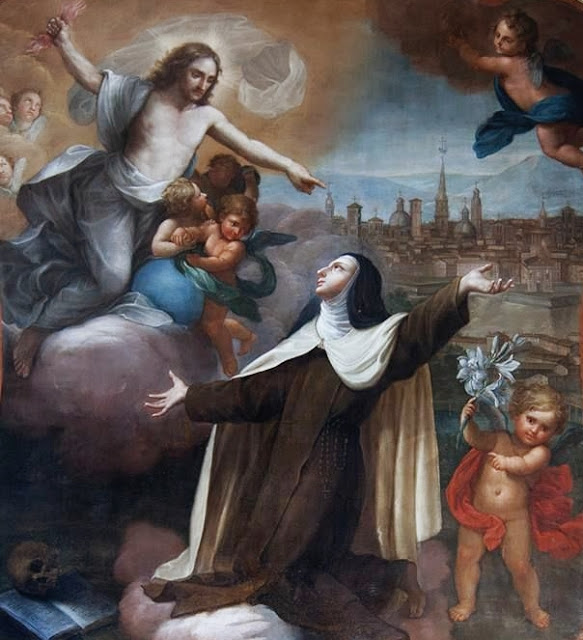
A depiction of Bl Maria of the Angels interceding with Christ to spare Turin from a chastisement of the dreaded plague.
Public esteem for the prioress reached a pinnacle in 1696 when the city was besieged by an invading army. She publicly announced that the city would be saved if people turned to St Joseph, for help, which they did. Turin was liberated and, in gratitude, St Joseph was proclaimed the Patron Saint of the city by the king. Similarly, in 1706 when the French besieged the city, the citizens and royals turned to the intercession of their resident mystic – the nun invoked the Holy Virgin’s protection and the city’s army was again victorious. At Sr Mary’s urging, a church – the great Basilica of the Superga (Superga is a Hill in Turin) – was built to commemorate the victory and to honour Our Lady.
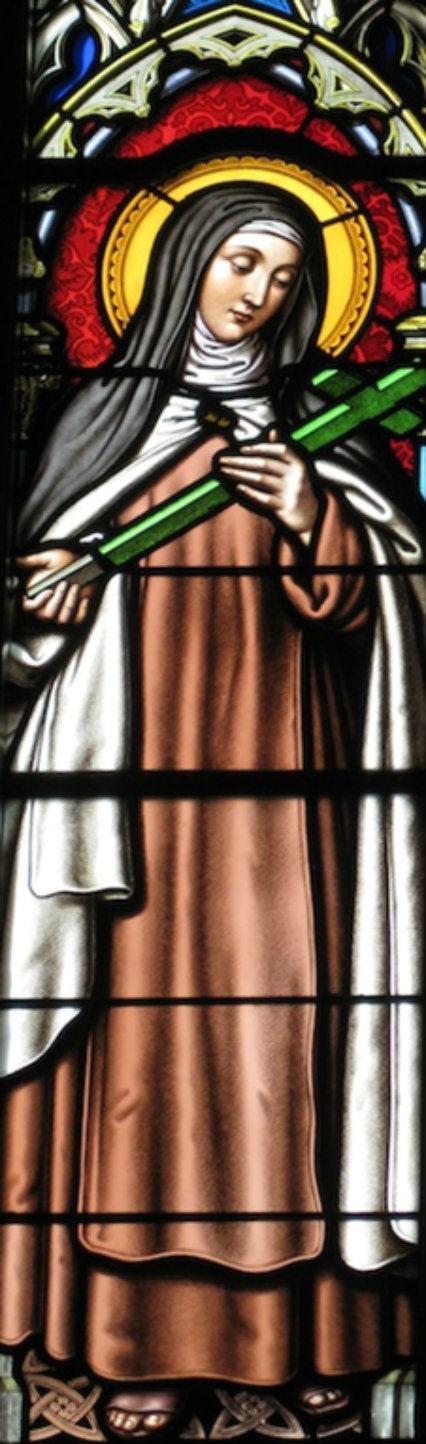
The beautiful Basilica of the Superga in Turin, dedicated to the Blessed Virgin, and constructed under the prompting of Bl Maria of the Angels. Below is a window of Bl Maria in the Basilica.
Sr Maria of the Angels died peacefully in her monastery on 16 December 1717, after living a productive life of prayer, self-sacrifice and service to her beloved people. She was 56-years-old at the time of her death and all of Turin mourned the passing of she, who had saved them from wars and even a plague in 1714.
At the instigation of King Vittorio, the holy nun’s Cause for Canonisation was started just a few years after the death of Sr Maria. Pope Pius IX declared her a Blessed on 25 April 1865 but a second miracle has yet to be officially recognised for the prioress to reach sainthood. Let us pray for her speedy Canonisation.
St Adelard of Cysoing
St Ado of Vienne
Bl Adolphus of Tunis
Bl Arnaldo of Tunis
St Albina of Caesarea
St Ananias
St Azarias
St Bean of Lough Derg
St Beoc
Bl Clemente Marchisio
St Dominic Dosso
Bl Elizabeth of Saint Francis
Bl Filip Siphong Onphithakt
St Irenion
Bl James of Tunis
Bl Jaume Mases Boncompte
St Jean Wauthier
St Macarius of Collesano Blessed Mary of the Angels Fontanella OCD (1661-1717)
St Misael
St Nicholas Chrysoberges
Bl Raynald de Bar Bl Sebastian Maggi OP (1414–1496) Biography: https://anastpaul.com/2018/12/16/saint-of-the-day-16-december-blessed-sebastian-maggi-op-1414-1496/
—
Martyred Women of North-West Africa: A large group of women martyred in the persecutions of Hunneric, Arian King of the Vandals. 482 in North-West Africa.
Martyrs of Ravenna – (4 saints): A group of Christians martyred together. Four names and no other information has survived – Agricola, Concordius, Navalis and Valentine. c 305 at Ravenna, Italy.
Saint of the Day – 15 December – Blessed Maria Vittoria De Fornari Strata (1562–1617) Widow, Nun, Foundress of the Order of the Annunciation – or Blue Nuns, of which she is the Patron. Born in 1562 at Genoa, Italy as Victoria De Fornari and died on 15 December 1617 of natural causes.
Blessed Maria Vittoria was married for just under a decade and decided not to find another spouse after having a vision of the Madonna who instructed her to lead a chaste life of motherhood. The widow decided to found an order not long after this based on the Carmelite charism.
Maria Vittoria De Fornari was born in 1562 in Genoa as the seventh of nine children to Girolamo Fornari and Barbara Veneroso. When seventeen she desired to enter the convent but out of respect for her father’s wishes she married Angelo Strata.
It was a happy marriage. Angelo encouraged his wife in her charitable works and defended her against those who said she should take more part in social events. Maria Vittoria bore him six children, four boys and two girls – Angela, Barbara, Giuseppe, Leonardo, Alessandro, Angelo (1587–97). Unfortunately, Signor Strata died after only nine years of married life. Their eldest daughter Angela became a member of the Canons Regular of the Lateran – as did Barbara not long after – while Giuseppe entered the Minims – OM [the Mendicant Order founded by St Francis of Paola (1416–1507)] with Leonardo and Alessandro following him.
His death was traumatic to Vittoria. She worried that she could not raise so large a family alone. When a local nobleman asked her to marry him, she thought at first that it might be wise to accept, for the sake of her boys and girls. But then she had a vision of Mary (which she wrote up at the request of her confessor) in which Our Lady told her, “My child Vittoria, be brave and confident, for it is my wish to take both the mother and the children under my protection. I will care for your household. Live quietly and without worrying. All I ask is that you trust yourself to me and henceforth devote yourself to the love of God above all things.”
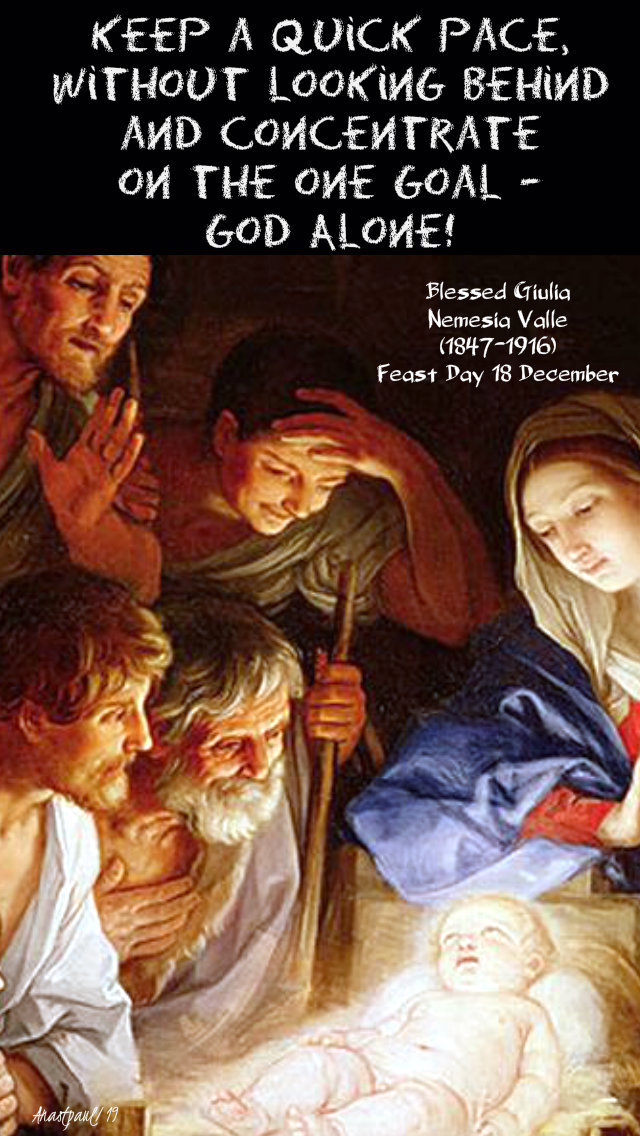
Mary’s words settled Vittoria’s mind completely. She took a vow of chastity and lived in retirement, giving all her time to prayer, the care of her family and the needs of the poor.
When eventually her children were raised (five of the six entered religious orders), Signora Strata revealed to the archbishop of Genoa a proposal that she had long been considering. It was to found a strict new religious order of contemplative nuns. Dedicated to Mary’s Annunciation, the sisters would imitate her hidden life at Nazareth, devoting themselves to prayer and making vestments and altar linens for poor churches. Each member would add the names “Maria Annunziata” to her baptismal name. The archbishop first had his doubts, since the money necessary to make the foundation was not available. However, when a benefactor named Vincent Lomellini offered to purchase a convent for the widow, the prelate gave his permission. Pope Clement VIII approved the order’s constitutions in 1604 and Maria Vittoria and ten companions made their solemn vows in the late summer of 1605.
Early difficulties threatened the project but Our Lady kept the movement going. A second house was established in Italy in 1612. Others followed in Burgundy, France and Germany. Each house was independent. Today there are only three houses and 44 nuns. To distinguish them from the order of the Annunciation established by St Joan of Valois, the Strata “Annunziate” are called “Le Turchine”, i.e. the “Turquoise Annunziate”, or “Blue Nuns” because of their sky-blue scapulars and cloaks.
She served as superior from the order’s founding until ill health saw her not re-elected in 1611 which she accepted with grace and tact. Her order received pontifical approval from Pope Paul V on 6 August 1613.
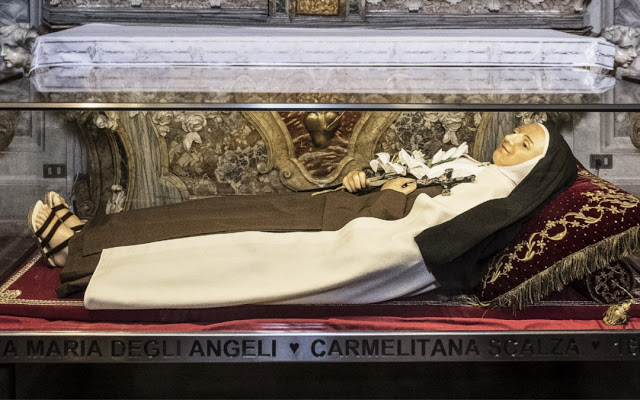
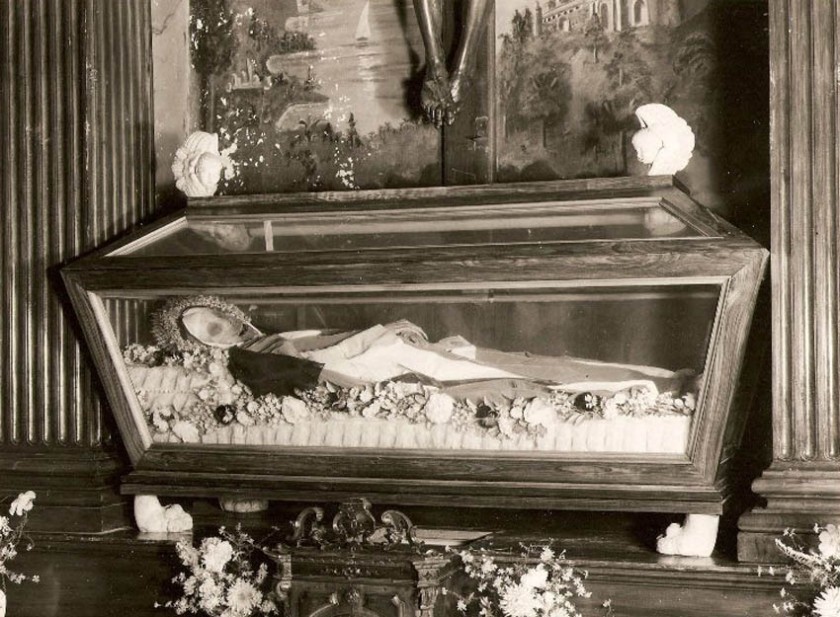
Blessed Maria Vittoria died on 15 December 1617 due to lung disease after having predicted the date of her own death. She is interred in Genoa.
Many widows like Maria Vittoria have had “second vocations” of this sort, entering religious orders after the death of their husbands. St Elizabeth Seton, foundress of the American Sisters of Charity, was, of course, a memorable example. Cloistered, contemplative orders are perhaps even more attractive to widows who are a little older.
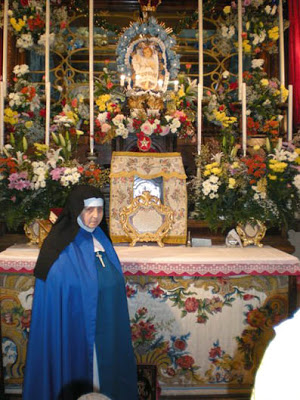
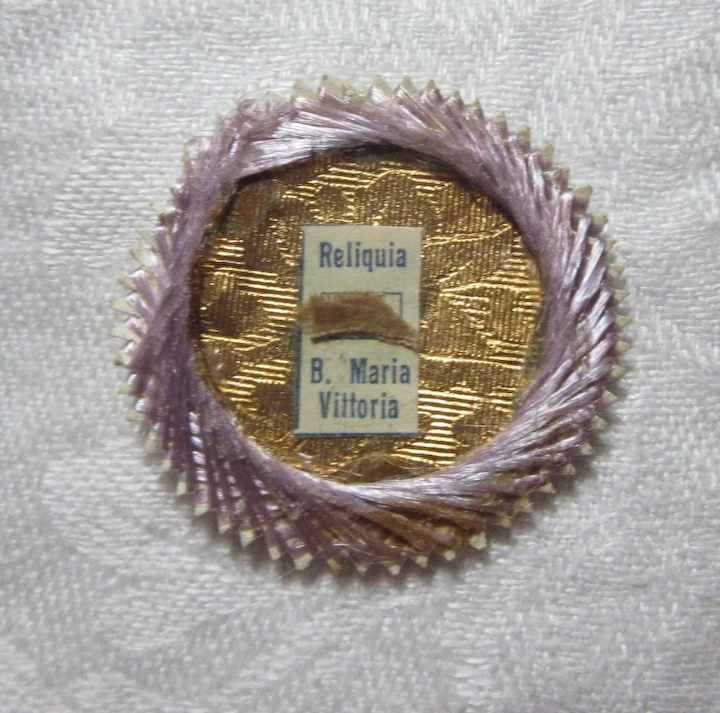
The Beatification cause started under Pope Benedict XIV on 10 September 1746 and the late religious was titled as a Servant of God, while Pope Clement XIII confirmed her heroic virtue and named her as Venerable on 1 April 1759. Pope Leo XII later approved two miracles attributed to her intercession, on 1 April 1828 and later Beatified her in Saint Peter’s Basilica on 21 September 1828. Below is the Altar of her Relics, with Reverend Mother Maria Angela Borsa, Prioress of the Venerable Monastery of the Most Holy Annunciation and Incarnation in Genoa, Italy, before the relics of the Holy Foundress, Bl Maria Vittoria.
‘Vittoria Who Overcame the World’, is a play on the words of Holy Scripture, often seen in pictures of the Blessed: “For whatsoever is born of God, overcomes the world and this is the victory which overcomes the world, our faith.” [1 John 5,4] It is uplifting to see her spiritual daughters continuing to overcome the spirit of the world, the flesh and the devil.
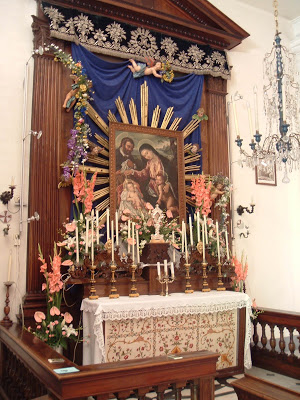
The altar of Our Lady of Protection, a devotion particular to the order.
Martyrs of Drina – (5 beati): Also known as
• Daughters of Divine Charity of Drina
• Drina Martyrs
Five members of the Daughters of Divine Charity who were martyred while fighting off Chetnik rapists. They were –
Jozefa Bojanc
Jozefa Fabjan
Karoline Anna Leidenix
Kata Ivanisevic
Terezija Banja
Their martyrdom occured in December 1941 in Gorazde, Bosansko-Podrinjski, Bosnia-Herzegovina
They were Beatified on 24 September 2011 by Pope Benedict XVI.
Martyrs of North Africa – (7 saints): A group of Christians martyred together for their faith in North Africa. The only details about them that survive are their names – Caelian, Candidus, Faustinus, Fortunatus, Januarius, Lucius and Mark.
Martyrs of Rome – (22 saints): A group of 22 Christians martyred together in the persecutions of Valerian. The only details we have are five of their names – Antonius, Irenaeus, Saturnin, Theodorus and Victor. c 258 in Rome, Italy.
Second Thought for the Day – 14 December – Saturday of the Second week of Advent, Year A, the Memorial of St Venantius Fortunatus (c 530 – c 609) and a Marian Saturday
The Ave Maris Stella (“Hail Star of the Sea”) is a plainsong Vespers hymn to Mary. It was especially popular in the Middle Ages and has been used by many composers as the basis of other compositions. The creation of the original hymn has been attributed to several people, including Saint Venantius Fortunatus (6th century) Saint Bernard of Clairvaux (12th century) and Hermannus Contractus (11th century).
The text is found in 9th-century manuscripts, kept in Vienna and in the Abbey of Saint Gall.
The melody is found in the Irish plainsong “Gabhaim Molta Bríde”, a piece in praise of St Bridget of Ireland. There are many translations of this most beautiful and favourite Catholic prayer, the one below is found in The Little Office of the Blessed Virgin Mary.
Ave Maris Stella
Hail, O Star of the ocean,
God’s own Mother blest,
ever sinless Virgin,
gate of heav’nly rest.
Taking that sweet Ave,
which from Gabriel came,
peace confirm within us,
changing Eve’s name.
Break the sinners’ fetters,
make our blindness day,
Chase all evils from us,
for all blessings pray.
Show thyself a Mother,
may the Word divine
born for us thine Infant
hear our prayers through thine.
Virgin all excelling,
mildest of the mild,
free from guilt preserve us
meek and undefiled.
Keep our life all spotless,
make our way secure
till we find in Jesus,
joy for evermore.
Praise to God the Father,
honour to the Son,
in the Holy Spirit,
be the glory one.
Amen
Thought for the Day – 14 December – The Memorial of St John of the Cross (1542-1591) Doctor of the Church
The Knowledge of the Mystery Hidden in Christ Jesus
Saint John of the Cross
An excerpt from his Spiritual Canticle
Though holy doctors have uncovered many mysteries and wonders and devout souls have understood them, in this earthly condition of ours, yet the greater part, still remains, to be unfolded by them and even to be understood by them.
We must then dig deeply in Christ. He is like a rich mine with many pockets containing treasure – however deep we dig we will never find their end or their limit. Indeed, in every pocket new seams of fresh riches are discovered on all sides.
For this reason the apostle Paul said of Christ – in him are hidden all the treasures of the wisdom and knowledge of God. The soul cannot enter into these treasures, nor attain them, unless it first crosses into and enters the thicket of suffering, enduring interior and exterior labours and unless it first receives from God very many blessings in the intellect and in the senses and has undergone long spiritual training.
All these are lesser things, disposing the soul for the lofty sanctuary of the knowledge of the mysteries of Christ – this is the highest wisdom attainable in this life.
Would that men might come at last to see that it is quite impossible to reach the thicket of the riches and wisdom of God except by first entering the thicket of much suffering, in such a way that the soul finds there its consolation and desire. The soul that longs for divine wisdom chooses first and in truth, to enter the thicket of the Cross.
Saint Paul therefore urges the Ephesians not to grow weary in the midst of tribulations but to be steadfast and rooted and grounded in love, so that they may know with all the saints the breadth, the length, the height and the depth—to know what is beyond knowledge, the love of Christ, so as to be filled with all the fullness of God.
The gate that gives entry into these riches of His wisdom is the Cross, because it is a narrow gate, while many seek the joys that can be gained through it, it is given to few to desire to pass through it.
Quote/s of the Day – 14 December – The Memorial of St John of the Cross (1542-1591) Doctor of the Church
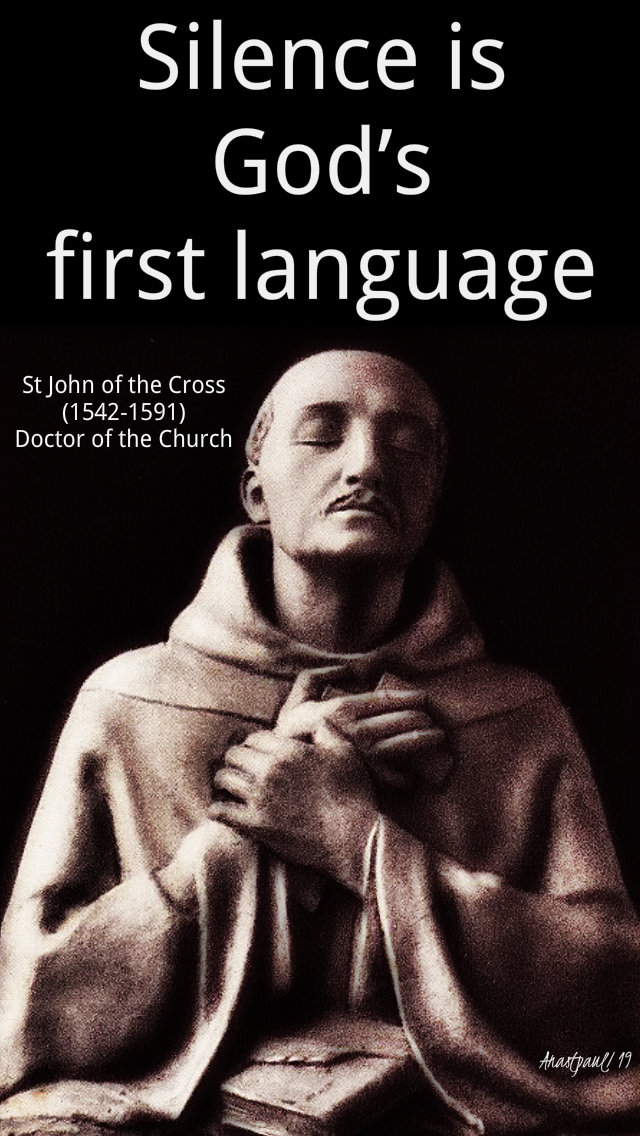
“Silence is God’s first language.”
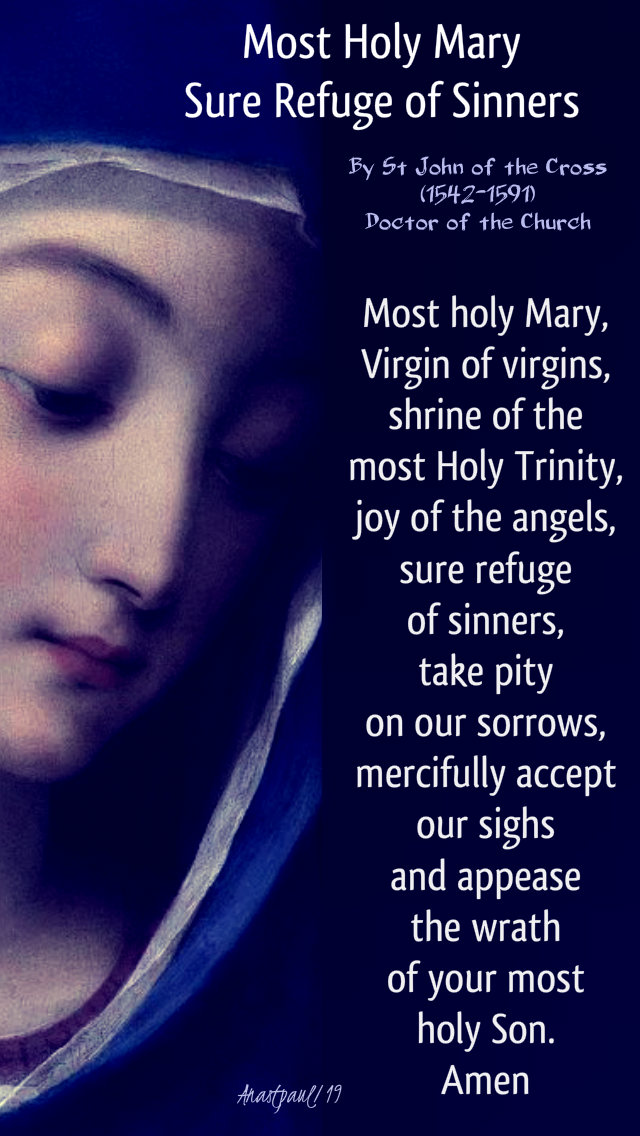
“Most holy Mary, Virgin of virgins, shrine of the most Holy Trinity, joy of the angels, sure refuge of sinners, take pity on our sorrows, mercifully accept our sighs and appease the wrath of your most holy Son. Amen”
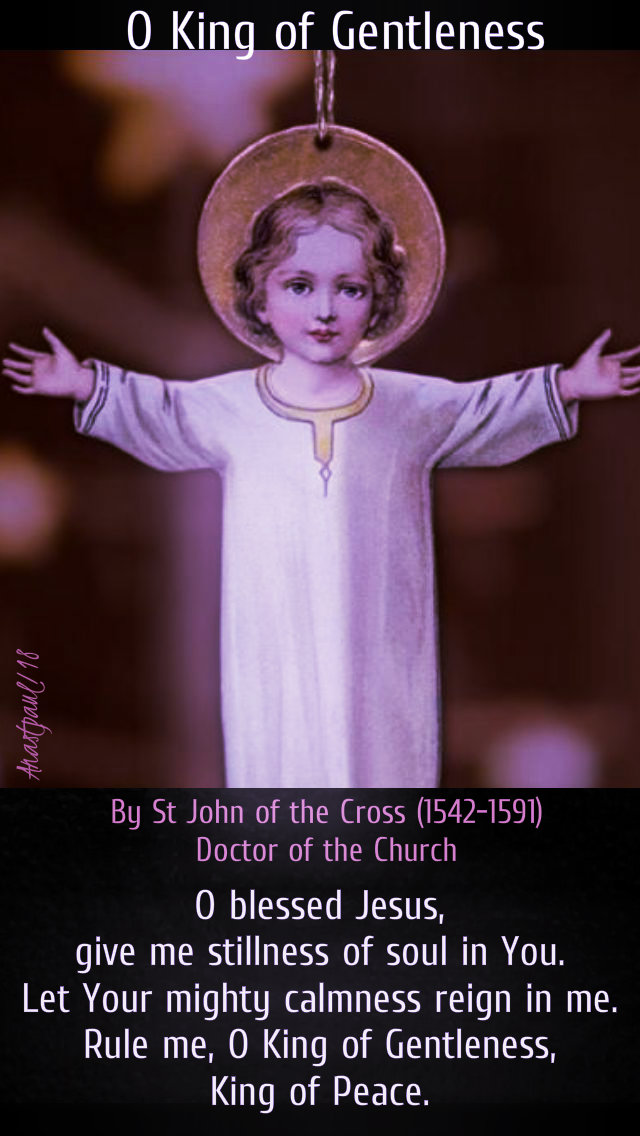
“O blessed Jesus, give me stillness of soul in You. Let Your mighty calmness reign in me. Rule me, O King of Gentleness, King of Peace.”
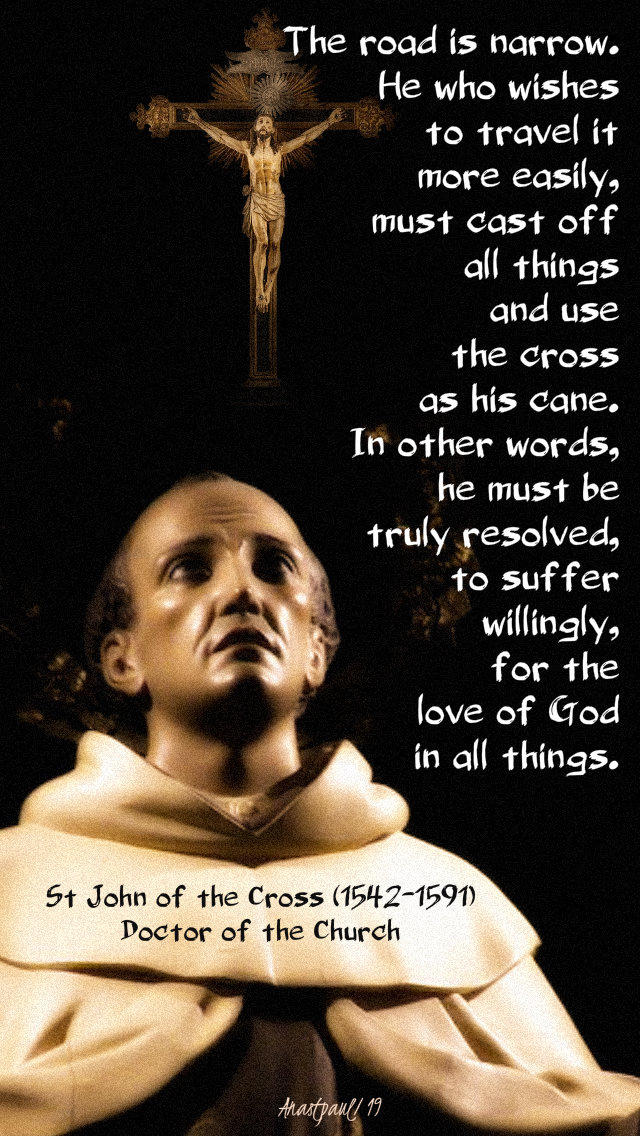
“The road is narrow. He who wishes to travel it more easily must cast off all things and use the cross as his cane. In other words, he must be truly resolved to suffer willingly for the love of God in all things.”
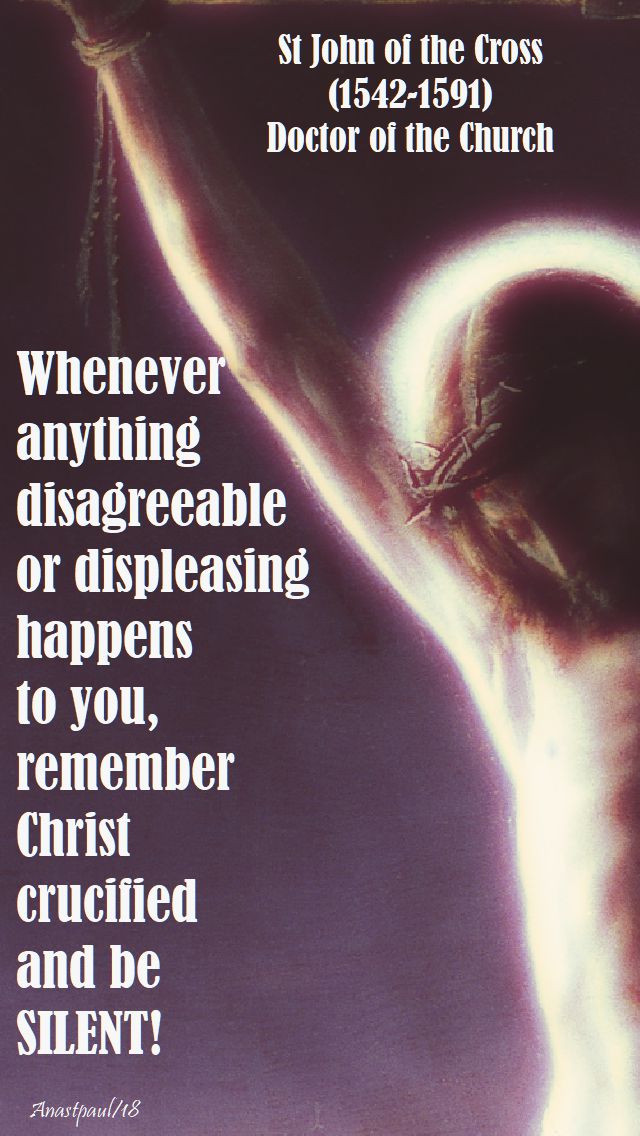
“Whenever anything disagreeable or displeasing happens to you, remember Christ crucified and be silent!”
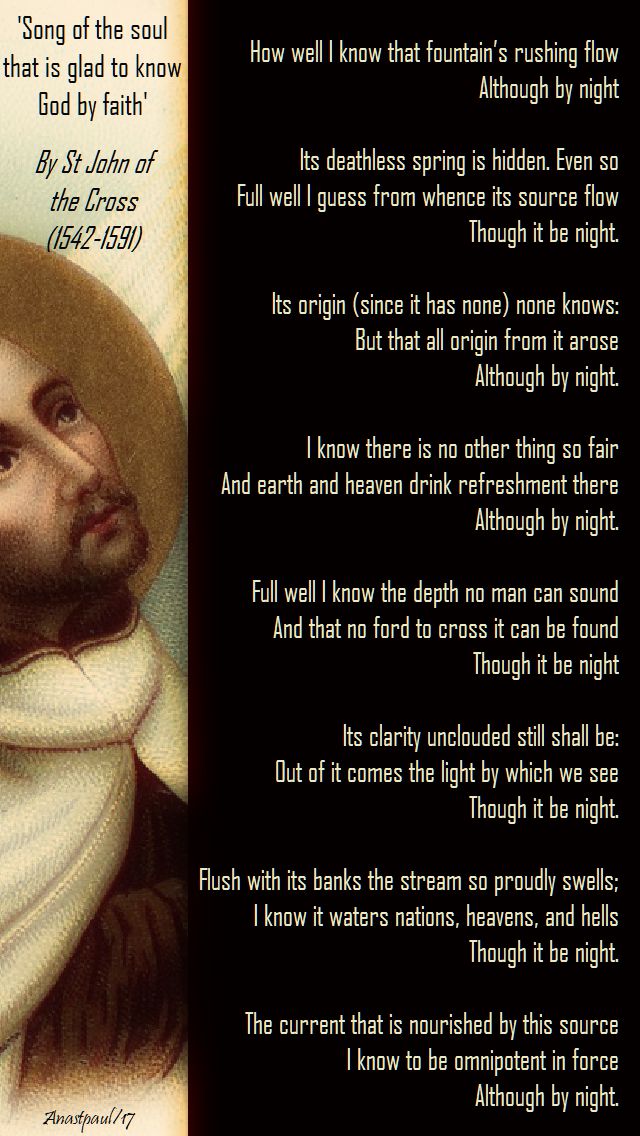
‘Song of the soul that is glad to know God by faith’
How well I know that fountain’s rushing flow Although by night
Its deathless spring is hidden. Even so Full well I guess from whence its source flow Though it be night.
Its origin (since it has none) none knows: But that all origin from it arose Although by night.
I know there is no other thing so fair And earth and heaven drink refreshment there Although by night.
Full well I know the depth no man can sound And that no ford to cross it can be found Though it be night
Its clarity unclouded still shall be: Out of it comes the light by which we see Though it be night.
Flush with its banks the stream so proudly swells; I know it waters nations, heavens, and hells Though it be night.
The current that is nourished by this source I know to be omnipotent in force Although by night.
(Translated by Roy Campbell)
St John of the Cross (1542-1591) Doctor of the Church
Advent Reflection – 14 December – Saturday of the Second week of Advent, Year A, Readings: Sirach 48:1-4, 9-11, Psalm 80:2-3, 15-16, 18-19, Matthew 17:10-13 and the Memorial of St John of the Cross (1542-1591) Doctor of the Church
Let us adore the Lord, the king who is to come.
“… but I tell you that Elijah has already come and they did not recognise him but did to him, whatever they pleased. So also will the Son of Man suffer at their hands…” … Matthew 17:12
REFLECTION – “God fixed a time for His promises and a time for fulfilling what he had promised. The period of His promises was from the time of the prophets, up to John the Baptist and the period for fulfilling what He had promised is from John and henceforward, to the end. God is faithful, He made Himself our debtor, not by accepting anything from us but by promising us such great blessings. The promise was not enough, He even chose to be bound by writing, creating for us a kind of bond for His promises, so that, when He began to fulfil His promises, we might contemplate in scripture, the order of their accomplishment. The period of prophecy, therefore, as we have before now frequently said, was the announcement of the promises.
He promised everlasting salvation and an unending life of blessedness with the angels, an unfading inheritance (1Pt 1:4), everlasting glory, His own dear face, His sanctuary in heaven and, by the resurrection of the dead, no further fear of death. This is, as it were, His final promise, towards which all our endeavours tend and after we have received it, we shall seek nothing more, demand nothing more.
Nor has He passed over in silence in His promises and prophecies, how that final state will be reached. He promised us the divine nature, to mortals, immortality, to sinners, justification, to castaways, a state of glory.” … St Augustine (354-430) Father and Doctor of the Church
MEDIATION – “In giving us His Son, His only Word,
He spoke everything to us at once
in this sole Word – and He has no more to say…
because what He spoke before to the prophets in parts,
He has now spoken all at once by giving us
the ALL Who is His Son.” … St John of the Cross (1542-1591) Doctor of the Church
ADVENT ACTION – He gave us His ALL, perhaps today, we can give Him ourselves. May we be free of earthly things, just for today. Restore us, O God, let thy face shine, that we may be saved! Psalm 80:3
PRAYER – “O blessed Jesus, give me stillness of soul in You.
Let Your mighty calmness reign in me. Rule me, O King of Gentleness,
King of Peace.” … St John of the Cross (1542-1591)
Our Morning Offering – 14 December – Saturday of the Second week of Advent, Year A, the Memorial of St Venantius Fortunatus (c 530 – c 609) and a Marian Saturday
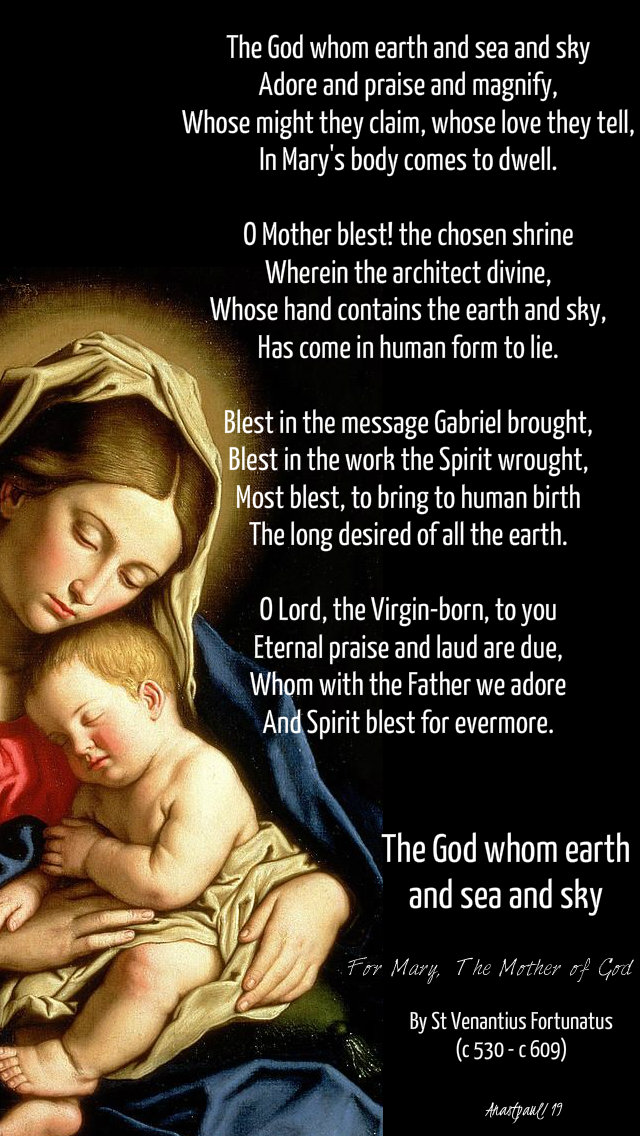
The God whom earth and sea and sky For Mary, The Mother of God For the Annunciation and Christmas By St Venantius Fortunatus (c 530 – c 609)
The God whom earth and sea and sky
Adore and praise and magnify,
Whose might they claim, whose love they tell,
In Mary’s body comes to dwell.
O Mother blest! the chosen shrine
Wherein the architect divine,
Whose hand contains the earth and sky,
Has come in human form to lie.
Blest in the message Gabriel brought,
Blest in the work the Spirit wrought,
Most blest, to bring to human birth
The long desired of all the earth.
O Lord, the Virgin-born, to you
Eternal praise and laud are due,
Whom with the Father we adore
And Spirit blest for evermore.
Saint of the Day – 14 December – Saint Venantius Fortunatus (c 530 – c 609) Bishop, Poet, Hymnist, Writer – born c 530 at Rreviso, Italy and died c 609 at Poitiers, modern France of natural causes.
Today’s saint was unique, first a travelling lay poet, he later became a Priest and then a Bishop. But he always remained a professional author of poetry, a “troubadour” of Christ.
His impressive full name was Venantius Honorius Clementianus Fortunatus. Born near Treviso in northern Italy, he received a good education in literature and law.
While studying at Ravenna, he was cured of an eye ailment by the intercession of St Martin of Tours. To express his gratitude to the Gallic saint, he set out for France, intent on a thanksgiving visit to St Martin’s tomb. He did not take the shortest route, however. He went to Mainz, Cologne, Trier and Metz in Germany, then crossed into Gaul (France) and visited Verdun, Rheims, Soissons and Paris before he reached his destination. We know all this, because, we have the poetry he wrote for benefactors in each of these places. Thus he earned his fare.
After Venantius had thanked the Saint of Tours, he went over to Poitiers, also in France and became attached to the Monastery of the Holy Cross at that place. He had been attracted by the work that St Radegund was doing at Poitiers.
Radegund was the daughter of the King of Thuringia. King Clotaire of the Franks had captured her and forced her to marry him. Escaping from her husband, the unwilling queen had taken the veil at Poitiers and founded Holy Cross Abbey. She chose her adopted daughter Agnes as abbess. Venantius, who had a great sensitivity to women in need, volunteered to serve this monastery as its unofficial steward. Later, he entered the priesthood and became the monastery’s chaplain. His “mother” (as he called St Radegund) and his “sister” (as he called Abbess Agnes) were a good and gracious influence on him.
It was in 569, while Venantius was serving Holy Cross Abbey, that the Emperor Justin II sent to Queen Radegund a generous relic of the true Cross of Jesus. King Sigebert of Gaul arranged for a splendid ceremony to welcome this relic. Venantius composed the hymn Vexilla Regis, (“The royal banners forward go.”) One of the greatest of the medieval hymns, it continued to be chanted at the rites of Good Friday until the 1960s.
When St Radegund died in 587, Fortunatus was freer to travel about. Wherever he went, he was still prevailed on to write new poems. From 599 to 609 he was also bishop of Poitiers. As such, he was a close associate of three other notable bishops – Saints Felix of Nantes, Leontius of Bordeaux and Gregory of Tours. St Gregory urged him to collect and publish his poetical works. He did so and it amounted to ten fat volumes. More volumes were added after his death.
He had written cheerfully for every sort of celebration. Some of his poems were complimentary, some were lives of the saints but the most durable were his devotional works. Another of these was sung, like the Vexilla Regis, in the Good Friday liturgy: “Pange lingua gloriosi lauream certaminis” (“Sing, my tongue, the Saviour’s glory”). A third is still used (in translation) for Easter – Salve festa dies (“Hail thee, festival day”). St Venantius also wrote hymns to Mary – “Quem terra, fontes, aethera” (“To God whom earth and sea and sky”) and perhaps even the popular “Ave Maris Stella” (“Hail, bright star of ocean”).
Fortunatus wrote panegyrics and other types of poems, including praise, eulogies, personal poems to bishops and friends alike, consolations and poems in support of political issues, particularly those presented by his friends Gregory of Tours and Radegunde. His eleven books of poetry contain his surviving poems, all ordered chronologically and by importance of subject. For instance, a poem about God will come before the panegyric to a king, which will come before a eulogy to aBishop. This collection of poems is the main primary source for writing about his life.
Venantius died with a reputation for genial holiness. Although he has never been listed as a saint in the official Roman Martyrology, he was honoured as such even during his lifetime and now, in several French and Italian dioceses, great feasts are still held in his honour. As a poet, his devotional verge can show a depth of poetic piety. Thus, in addressing the Cross in his Vexilla Regis, he sings touchingly – (I took the liberty of making an image of this beautiful verse on the Salvidor Dali rendition of “Christ of St John of the Cross” based on St John’s drawing and on his Feast day today).
“On whose dear arms, so widely flung, The weight of this world’s ransom hung, The price of humankind to pay And spoil the spoiler of his prey All hail, O Cross, our only hope!”
In his time, Fortunatus filled a great social desire for Latin poetry . He was one of the most prominent poets at this point and had many contracts, commissions and correspondences with kings, bishops and noblemen and women from the time he arrived in Gaul until his death. He used his poetry to advance in society, to promote political ideas he supported, usually conceived of by Radegunde or by Gregory and, to pass on personal thoughts and communications. He was a master wordsmith and because of his promotion of the church, as well as the Roman tendencies of the Frankish royalty, he remained in favour with most of his acquaintances throughout his lifetime.
St Abundius of Spain
St Agnellus of Naples
Bl Buenaventura Bonaccorsi
St Folcuino of Therouanne
Bl Joan Lambertini
St John Pan y Agua (Bread-and-Water)
Bl John Discalceat
St Justus of Spain
St Matronianus of Milan
St Pompeius of Pavia
Bl Protasi Cubells Minguell St Venantius Fortunatus (c 530 – c 609)
St Viator of Bergamo
St Yusuf Jurj Kassab al-Hardini
Bl William de Rovira
—
Martyrs of Alexandria – 4 saints: A group of Egyptian Christians martyred together in the persecutions of Decius – Arsenius, Dioscurus, Heron and Isidore. They were burned to death in 250 at Alexandria, Egypt.
Martyrs of Apollonia – 7 saints: Martyred in the persecutions of Decius. The only surviving details are three names – Callinicus, Leucio and Tirso. Apollonia, Bithynia (in modern Turkey).
Martyrs of Ashkelon – 3 saints: Several pilgrims from Egypt to Cilicia (in modern Turkey) who planned to minister to fellow Christians suffering in the persecutions of emperor Maximinus. They were arrested, torture, mutilated and then imprisoned in Ashkelon. Some were ordered to forced labour in the mines, but we have the names of three who were martyred by order of governor Firmilian – Ares, Elijah and Promo. They were burned at the stake or beheaded at the gates of Ashkelon c 308.
Martyrs of Hayle – 2+ saints: Several Christians, including a brother and sister, who were martyred together by pagans. The only other information to survive are the names of the two siblings – Fingar and Phiala. 5th century at Hayle, Cornwall, England.
Martyrs of Syria – 3 saints: Three Christians who were martyred together. Known to Saint John Chrysostom who preached on their feast day, and left us the only details we have – their names – Drusus, Theodore and Zosimus. The date and precise location of their martyrdom is unknown, but it was in Syria, possibly in Antioch.
Thought for the Day – 13 December – The Memorial of St Lucy (c 283-304) Martyr “Bringer of Light”
Every little girl named Lucy must bite her tongue in disappointment, when she first tries to find out, what there is to know about her patron saint. The older books, will have a lengthy paragraph, detailing a small number of traditions. Newer books, will have a lengthy paragraph, showing that there is little basis in history for these traditions. The single fact survives, that a disappointed suitor accused Lucy of being a Christian and she was executed in Syracuse, Sicily, in the year 304. But it is also true, that her name is mentioned in the First Eucharistic Prayer, geographical places are named after her, a popular song has her name as its title and down through the centuries, many thousands of little girls, have been proud of the name Lucy.
One can easily imagine what a young Christian woman had to contend with in pagan Sicily in the year 300. If you have trouble imagining, just glance at today’s pleasure-at-all-costs world and the barriers it presents against leading a good Christian life.
Her friends must have wondered aloud about this hero of Lucy’s, an obscure itinerant preacher in a far-off captive nation that had been destroyed more than 200 years before. Once a carpenter, He had been crucified by the Romans after His own people turned Him over to their authority. Lucy believed with her whole soul that this man had risen from the dead. Heaven had put a stamp on all He said and did. To give witness to her faith she had made a vow of virginity.
What a hubbub this caused among her pagan friends! The kindlier ones just thought her a little strange. To be pure before marriage was an ancient Roman ideal, rarely found but not to be condemned. To exclude marriage altogether, however, was too much. She must have something sinister to hide, the tongues wagged.
Lucy knew of the heroism of earlier virgin martyrs. She remained faithful to their example and to the example of the carpenter, whom she knew to be the Son of God. She is the patroness of eyesight.
If you are a little girl named Lucy, you need not bite your tongue in disappointment. Your patron is a genuine authentic heroine, first class, an abiding inspiration for you and for all Christians. The moral courage of the young Sicilian Martyr shines forth as a guiding light, just as bright for today’s youth as it was in 304.
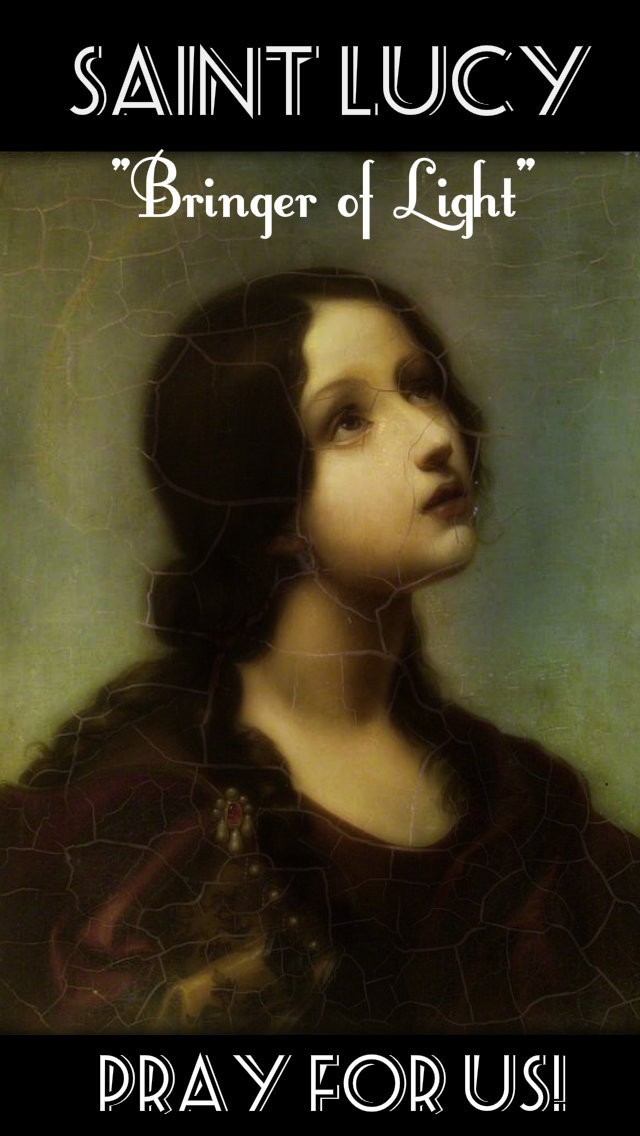
Saint Lucy’s name (Lucia in Latin) shares the root luc with the Latin word for light, lux. Because of this connection, Saint Lucy is often depicted in art and religious custom as a bringer of light – which also ties in to her patronage of eyes and sight. Her feast day today, is during Advent when we await the Light of Christ and is in winter, for the Northern Hemisphere, so there is significant iconography of Lucy as a bringer of light in the darkness. For this reason, she is particularly venerated as part of Scandinavian Christian custom – young girls dress in a white gown and wear wreaths of lights during celebrations in the darkest days of winter. Indeed, the fact that Saint Lucy’s feast day is celebrated as a festival of light, seems appropriate for a woman, who believed, she was bearing the light of Christianity in a world that punished her for it. Let us pray to St Lucy, for the intercession for all those with eye illnesses and for the protection of the ‘eyes of our faith’ of all of us.
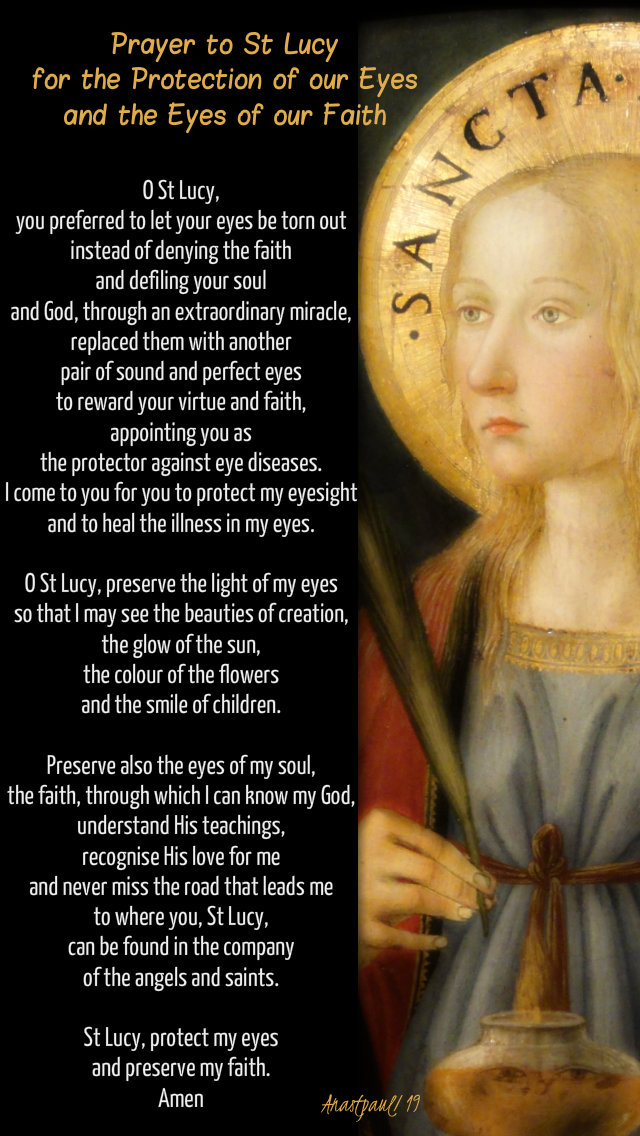
O St Lucy, you preferred to let your eyes be torn out instead of denying the faith and defiling your soul and God, through an extraordinary miracle, replaced them with another pair of sound and perfect eyes to reward your virtue and faith, appointing you as the protector against eye diseases. I come to you for you to protect my eyesight and to heal the illness in my eyes.
O St Lucy, preserve the light of my eyes so that I may see the beauties of creation, the glow of the sun, the colour of the flowers and the smile of children.
Preserve also the eyes of my soul, the faith, through which I can know my God, understand His teachings, recognise His love for me and never miss the road that leads me to where you, St Lucy, can be found in the company of the angels and saints. St Lucy, protect my eyes and preserve my faith. Amen
St Lucy, “Bringer of Light” Pray for those with eye ailments,
Saint of the Day – Blessed Giovanni Marinoni CR (1490-1562) Priest of the Theatines of St Cajetan (1480-1547) (The Congregation of the Clerics Regular of the Divine Providence), renowned Preacher and spiritual director. Also known as John and Francesco Marinoni – born as Francesco Marinoni on 25 December 1490 at Venice, Italy and died on 13 December 1562, aged 71, at Naples, Italy of natural causes. Patronage – of Preachers.
Blessed Giovanni was the third and youngest son of a noble family, originally of Bergamo but was born at Venice, in 1490. From his infancy it was his chief delight to be on his knees at the foot of the altar and to hear as many masses everyday as his employments permitted him.
He usually studied before a crucifix and sanctified his studies by most frequent fervent acts of divine love. To beg of God the grace never to sully his baptismal innocence, he spent forty days in prayer and a rigorous fast in honour of the Immaculate Conception of the Mother of God.
Having embraced an ecclesiastical state, he served among the clergy of St Pantaleon’s church and, when he was ordained priest, became chaplain and afterwards superior of the hospital of incurables, in which charitable employ he was a comforting angel to all who were under his care.
He was called to be the Canon in the celebrated church of St Mark, where his life was the edification of his colleagues and of the whole city. Out of a desire of serving God in a more perfect disengagement from earthly things, he decided to take the habit of the regular clerks called Theatines and made his profession in 1530, then taking the name “Giovanni”, on 29 May, at the age of 40. He was received into the Order by the Founders, St Cajetan and Cardinal Giovanni Pietro Carafa – the future Pope Paul IV, the Bishop of Chieti or Theate, who had instituted this order six years before.
In August 1533 he left Venice for Naples at the request of Pope Clement VII and remained there to direct the faithful. He also made an attempt to strengthen the faith and to prevent unorthodox views from taking root. He was appointed as the Superior of the House of San Paolo Maggiore in April 1540 and served as the spiritual director of a Dominican convent. He also served as a spiritual adviser to Saint Andrew Avellino (1521-1608). Avellino made reference to Marinoni as a great saint.
Pope Paul IV wanted to bestow upon him the Archbishopric of Naples but he refused it.
Both by his prayers and sacrifices and by his exhortations in the pulpit and confessional, he was an instrument of salvation to many.
His age and disease undermined him as he continued to work for others in Naples and the cholera epidemic that spread there, overcame him in 1562 which led to his death on 13 December 1562.
He was Beatified by a bull of Clement XIII on 5 December 1764, who granted to his order, an office in his honour to be celebrated on 13 December. On 27 June 2011 Pope Benedict XVI issued a decree of heroic virtues and approved a miracle attributed to Blessed Giovanni’s intercession and thus cleared the way for his Canonisation cause.
St Aristone
St Arsenius of Latro
St Aubert of Arras
Bl Bartholomew of Tuscany
St Edburgh of Lyminge
St Einhildis of Hohenburg
Bl Elizabeth Rose
St Jodocus Bl Giovanni Marinoni CR (1490-1562)
St Martino de Pomar
St Odilia of Alsace
St Roswinda
St Tassio of Bavaria
St Wifred
Blessed Mercedarian Knights – (7 beati): A group of Mercedarian knights who fought the enemies of the Catholic faith in the first century of the Order.
• Blessed Bernardo de Podio
• Blessed Giacomo de Copons
• Blessed Giovanni de Bruquera
• Blessed Guglielmo de Sa
• Blessed Pietro Boguer
• Blessed Pietro Ricart
• Blessed Raimondo de Frexa
Martyrs of Jeongju – (6 saints): Six Christian laymen who were imprisoned, tortured and martyred together in the persecutions in Korea. They were beheaded on 13 December 1866 in Supjeong-i, Jeongju, Chungcheong-do, South Korea
and Canonised on 6 May 1984 by St Pope John Paul II.
• Bartholomaeus Chong Mun-Ho
• Iosephus Han Won-So
• Peter Cho Hwa-so
• Petrus Son Son-Ji
• Petrus Yi Myong-So
• Petrus Chong Won-Ji
Martyrs of Sebaste – (5 saints): A group of Christians martyred together in the persecutions of Diocletian. We know little more than their names – Auxentius, Eustratius, Eugene, Mardarius and Orestes. They were martyred in c 302 at Sebaste, Armenia (in modern Turkey) and their relics are enshrined at the church of Saint Apollinaris in Rome, Italy.
Thought for the Day – 12 December – Feast of Our Lady of Guadalupe
The Voice of the Turtledove has been Heard in our Land
Don Antonio Valeriano Native American author, 16th century
An excerpt from a Report
At daybreak one Saturday morning in 1531, on the very first days of the month of December, an Indian named Juan Diego was going from the village where he lived to Tlatelolco in order to take part in divine worship and listen to God’s commandments. When he came near the hill called Tepeyac, dawn had already come and Juan Diego heard someone calling him from the very top of the hill: “Juanito, Juan Dieguito.”
He went up the hill and caught sight of a lady of unearthly grandeur whose clothing was as radiant as the sun. She said to him in words both gentle and courteous: “Juanito, the humblest of my children, know and understand that I am the ever virgin Mary, Mother of the true God through whom all things live. It is my ardent desire that a church be erected here so that in it I can show and bestow my love, compassion, help and protection to all who inhabit this land and to those others who love me, that they might call upon and confide in me. Go to the Bishop of Mexico to make known to him what I greatly desire. Go and put all your efforts into this.”
When Juan Diego arrived in the presence of the Bishop, Fray Juan de Zumarraga, a Franciscan, the latter did not seem to believe Juan Diego and answered: “Come another time, and I will listen at leisure.”
Juan Diego returned to the hilltop where the Heavenly Lady was waiting and he said to her: “My Lady, my maiden, I presented your message to the Bishop but it seemed that he did not think it was the truth. For this reason I beg you to entrust your message to someone more illustriou,s who might convey it, in order that they may believe it, for I am only an insignificant man.”
She answered him: “Humblest of my sons, I ask that tomorrow you again go to see the Bishop and tell him that I, the ever virgin holy Mary, Mother of God, am the one who personally sent you.”
But on the following day, Sunday, the Bishop again did not believe Juan Diego and told him that some sign was necessary so that he could believe that it was the Heavenly Lady herself who sent him. And then he dismissed Juan Diego.
On Monday Juan Diego did not return. His uncle, Juan Bernardino, became very ill and at night asked Juan to go to Tlatelolco at daybreak to call a priest to hear his confession.
Juan Diego set out on Tuesda, but he went around the hill and passed on the other side, toward the east, so as to arrive quickly in Mexico City and to avoid being detained by the Heavenly Lady. But she came out to meet him on that side of the hill and said to him: “Listen and understand, my humblest son. There is nothing to frighten and distress you. Do not let your heart be troubled and let nothing upset you. Is it not I, your Mother, who is here? Are you not under my protection? Are you not, fortunately, in my care? Do not let your uncle’s illness distress you. It is certain that he has already been cured. Go up to the hilltop, my son, where you will find flowers of various kinds. Cut them, and bring them into my presence.”
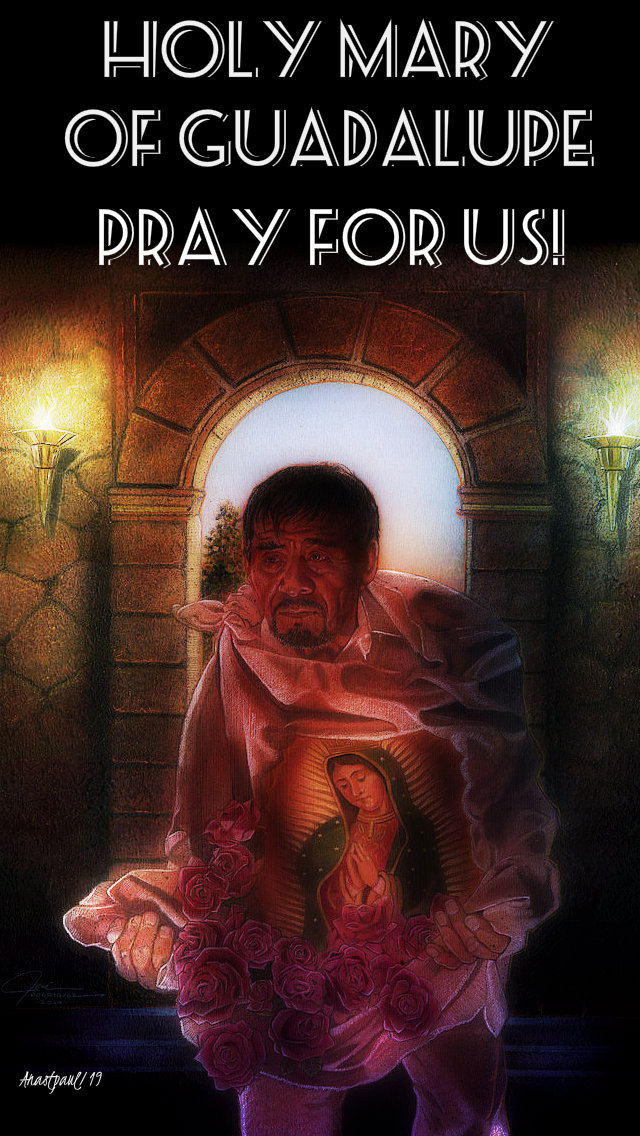
When Juan Diego reached the peak, he was astonished that so many Castilian roses had burst forth at a time when the frost was severe. He carried the roses in the folds of his tilma (mantle) to the Heavenly Lady. She said to him: “My son, this is the proof and the sign which you will bring to the Bishop so that he will see my will in it. You are my ambassador, very worthy of trust.”
Juan Diego set out on his way, now content and sure of succeeding. On arriving in the Bishop’s presence, he told him: “My Lord, I did what you asked. The Heavenly Lady complied with your request and fulfilled it. She sent me to the hilltop to cut some Castilian roses and told me to bring them to you in person. And this I am doing, so that you can see in them the sign you seek in order to carry out her will. Here they are, receive them.”
He immediately opened up his white mantle and, as all the different Castilian roses scattered to the ground, there was drawn on the cloak and suddenly appeared the precious image of the ever virgin Mary, Mother of God, in the same manner as it is today and is kept in her shrine of Tepeyac.
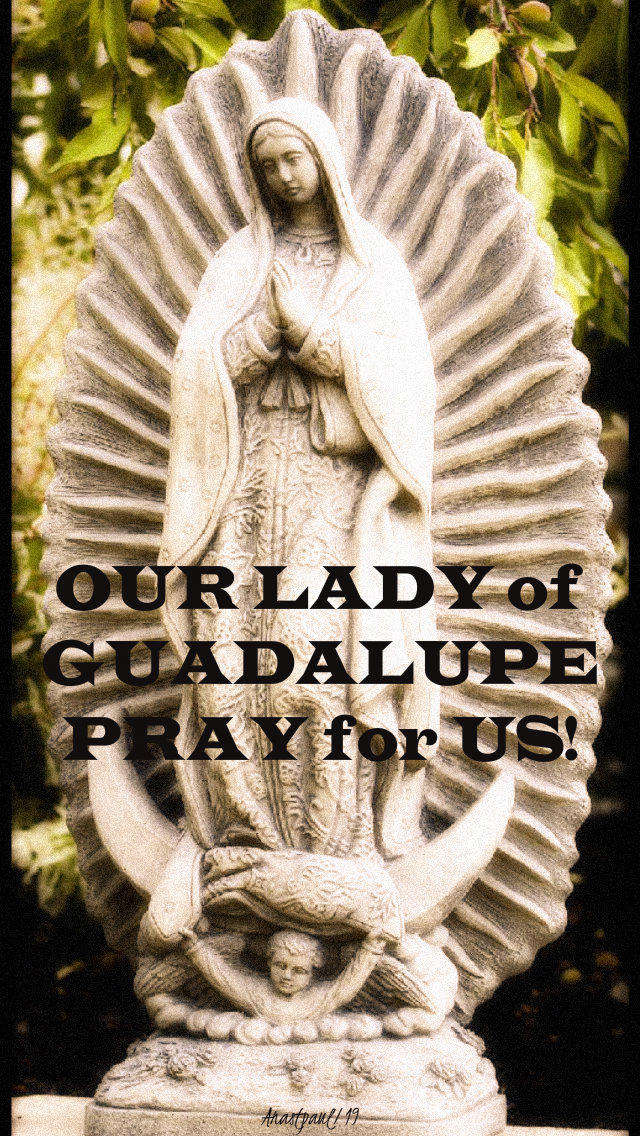
The whole city was stirred and came to see and admire her venerable image and to offer prayers to her and, following the command, which the same Heavenly Lady gave to Juan Bernardino when she restored him to health, they called her by the name that she herself had used: “the ever virgin holy Mary of Guadalupe.”
And to us too, Holy Mary of Guadalupe, we beg your gaze and ask your protection!
Quote of the Day – 12 December – Feast of Our Lady of Guadalupe
“You see that Mary did not doubt but believed and, therefore, obtained the fruit of faith. “Blessed are you who have believed.” But you also are blessed who have heard and believed. For a soul that has believed has both conceived and bears the Word of God and declares His works. Let the soul of Mary be in each of you, so that it magnifies the Lord. Let the spirit of Mary be in each of you, so that it rejoices in God. She is the one mother of Christ according to the flesh, yet Christ is the Fruit of all according to faith. Every soul receives the Word of God, provided that, undefiled and unstained by vices, it guards its purity with inviolate modesty.”
St Ambrose
Bishop of Milan (340-397)
Father & Doctor of the Church
Advent Reflection – 12 December – Feast of Our Lady of Guadalupe – Readings: Zec 2:14-17, Book of Judith 13:18bcde.19, Luke 1:26-38
Let us adore the Lord, the king who is to come.
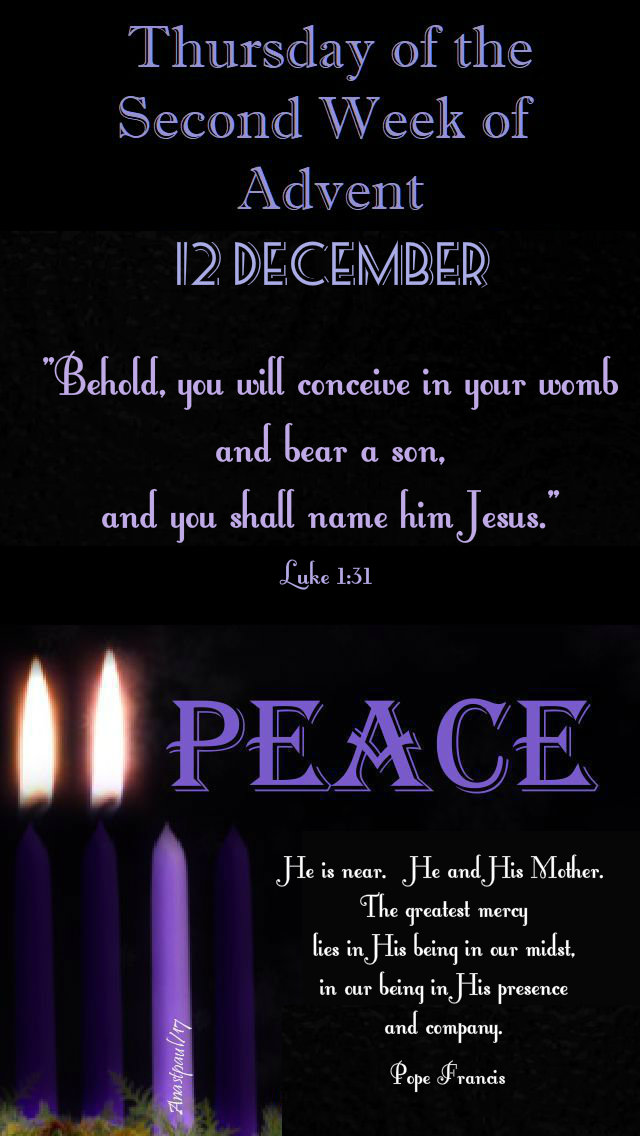
“Behold, you will conceive in your womb and bear a son, and you shall name him Jesus.” … Luke 1:31
REFLECTION – ““The Lord is near”, the Apostle Paul tells us
and nothing should perturb us. He is close by.
He is not alone but is with His Mother.
She said to St Juan Diego:
“Why are you afraid? Am I not here who am your Mother?”.
He is near. He and His Mother.
The greatest mercy lies in His being in our midst,
in our being in His presence and company.
He walks with us, He shows us the path of love,
He lifts us up when we fall and with such tenderness,
He supports us in our labours,
He accompanies us in every circumstance of life.
He opens our eyes to see our wretchedness
and that of the world but at the same time
He fills us with hope!” … Pope Francis, 12 December 2015
MEDITATION – “Even if the sins of souls will be as dark as night, when the sinner turns to My mercy, he gives Me the greatest praise and is the glory of my passion. When a soul praises My goodness, Satan trembles before it and flees to the very bottom of hell.” — St Faustina, Divine Mercy in My Soul, 378
ADVENT ACTION – How can I lead someone to the mercy of Christ and His Mother?
PRAYER – Lord Jesus Christ my Lord, help me to become a devoted client of Your holy Mother Mary. Through Your grace, may I receive the spiritual strength she has promised to all her clients. May I, in simplicity, like St Juan Diego, become her vessel to share Your Light of Love and Mercy, throughout my world. Our Lady of Guadalupe Pray for us! Amen









 She took a vow of chastity and lived in retirement, giving all her time to prayer, the care of her family and the needs of the poor.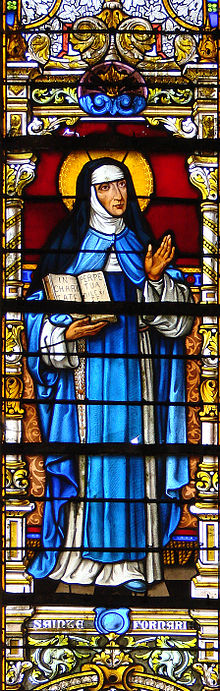









 AnaStpaul
You must be logged in to post a comment.