Posted in franciscan OFM, SAINT of the DAY, VATICAN Resources

Saint of the Day – 18 July – Saint Simon of Lipnica (1435/1440-c 1482)

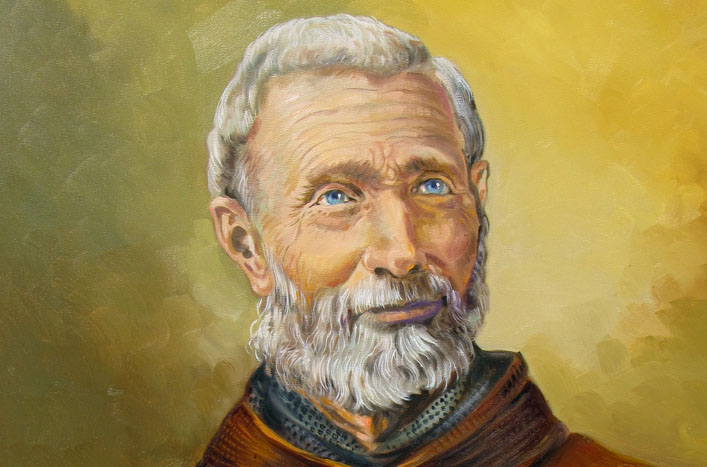
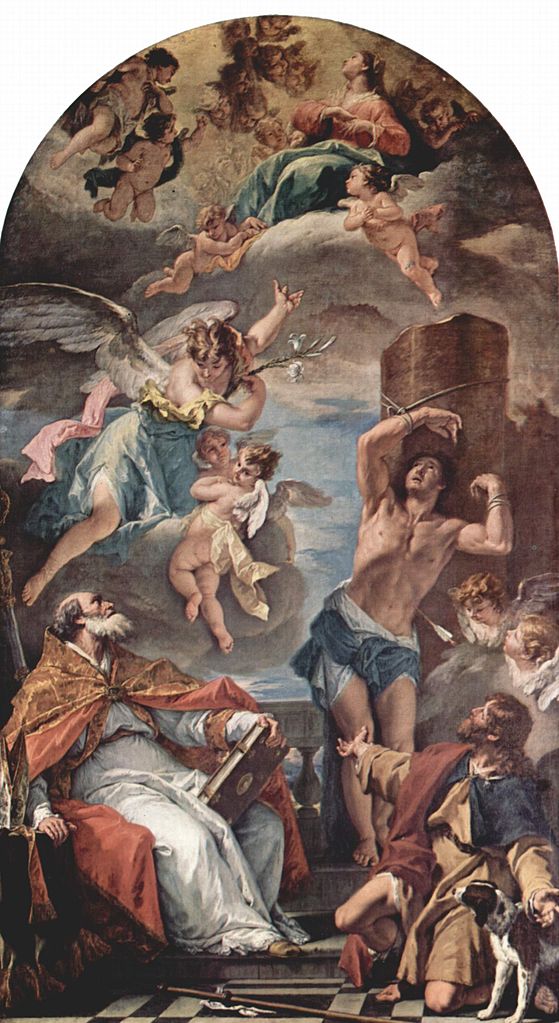
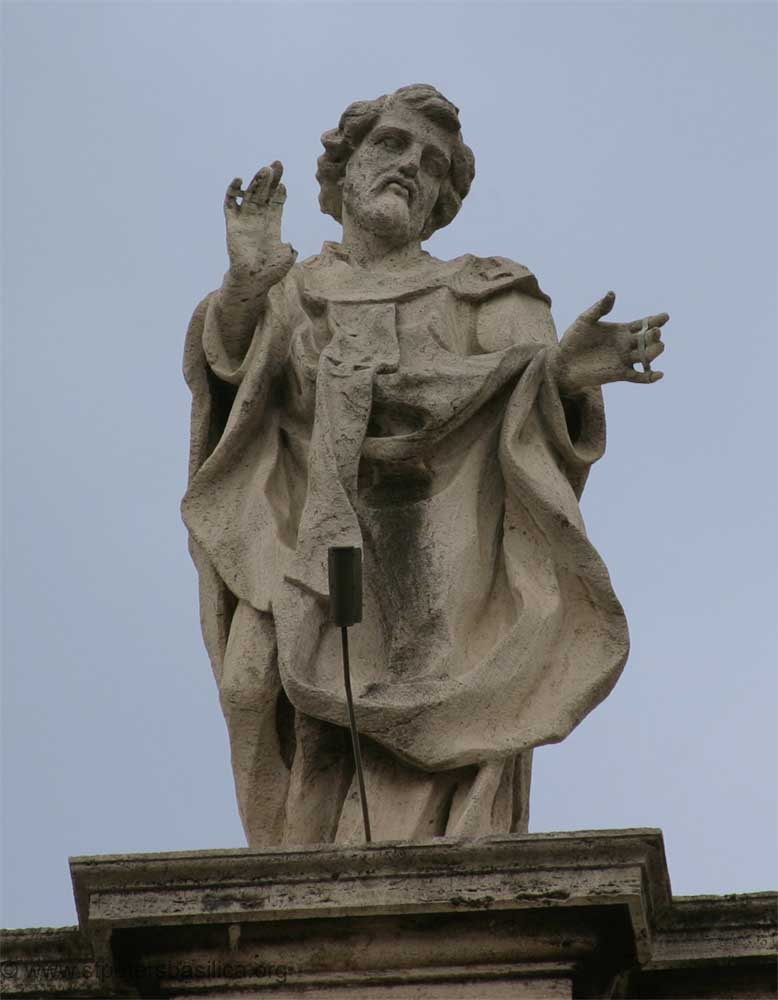
Saint of the Day – 18 July – Saint Simon of Lipnica (1435/1440-c 1482) OFM Cap Priest of the Franciscan Order of Friars Minor (OFM), renowned Preacher, apostle of charity – also known as Szymon of Lipnicza – born in 1435/1440 in Lipnica Murowana, Malopolskie, Poland and died on 18 July 1482 in Kraków, Malopolskie, Poland during a plague epidemic.   Patronages – Krakow, Students.st simon szymon

Simon was born in Lipnica Murowana, in the south of Poland, between the years 1435-1440.   His parents, Gregory and Anne, knew how to give him a good education, inspired by the values of the Christian faith and, despite their modest conditions, they took care to secure him an adequate cultural formation.   Simon grew up with a pious and responsible nature, rich in a natural predisposition towards prayer and a tender love for the Mother of God.

He moved to Krakow, to attend the famous Jagiellonian Academy, in 1454.   It was precisely in those years that St John of Capestrano OFM (1386-1456) enthused the city through the sanctity of his life and the fervour of his preaching, attracting a dense crowd of young, generous men to the Franciscan vocation.   On the 8th September 1453, the Italian saint founded the first convent of the Observance, with the name of the recently Canonised St Bernardine of Siena (1380-1444), in Krakow.   It was for that reason that the Friars Minor of the convent were called the “Berdardini” by the people.

In 1457, the young Simon, fascinated by the Franciscan ideal, also chose to acquire the pearl of great price mentioned in the Gospel and left aside a possible successful and rich future.   He asked to be received, with another ten fellow students, into the convent of Stradom.401px-St

Under the wise guidance of the Novice Master, Br Christopher of Varese, a religious renown for his teaching and sanctity of life, Simon generously embraced the humble and poor life of the Friars Minor and received the priesthood about the year 1460.   He exercised his first ministry in the convent of Tarnów, where he was the Guardian of the fraternity.

He later established himself in Stradom (Krakow), dedicating himself untiringly to preaching with a clear word, full of ardour, faith and wisdom, which permitted a glimpse of his profound union with God and of his prolonged study of Sacred Scripture.

Like St Bernardine of Siena and St. John of Capestrano, Br Simon spread devotion to the Name of Jesus, obtaining the conversion of innumerable sinners.   He, the first of the Friars Minor, took up the duty of preacher in the Cathedral of Wawel in 1463.   Because of his dedication to preaching the Gospel, the ancient sources conferred the title of “predicator ferventissimus” “Zealous Preacher”, on him.st simon glass

In his desire to give homage to St Bernardine of Siena, the inspirer of his preaching, he, with some Polish confreres, went to Aquila to participate in the solemn transfer of the body of the saint, on the 17th May 1472, to the new Church erected in his honour.   He was again in Italy in 1478, on the occasion of the General Chapter of Pavia.   He had a way, then, to be able to satisfy his deepest desire to visit the tombs of the Apostles in Rome and to extend his pilgrimage to the Holy Land later.   He lived this experience in a spirit of penance, truly loving the passion of Christ, with the hidden aspiration of spilling his own blood for the salvation of souls, if it would please God.   He emulated St Francis in his love for the Holy Places.   In view of the possibility of being captured by the non-believers, he wished to learn the Rule of the Order by heart before undertaking the journey in order “to have it always before the eyes of his mind”.

The love of Simon for his brothers and sisters was manifested in an extraordinary way during the last year of his life, when an epidemic of plague broke out in Krakow.   The city was under the scourge of the disease from July 1482 to the 6th January 1483. The Franciscans of the convent of St Bernardine tirelessly did all they could to care for the sick as true consoling angels.beautiful image - st simon of lipnica - Szymon-kanonizacyjny

Br Simone, held it to be a “propitious time” to exercise charity and to fulfil the offering of his own life.   He went everywhere comforting, giving succour, administering the sacraments and announcing the consoling Word of God to the dying.   He was soon infected.   He suffered the pain of the disease with extraordinary patience and, near the end, expressed his desire to be buried under the threshold of the church so that all could trample on him.   On the sixth day of the disease, the 18th July 1482, without fear of death and with his eyes fixed on the Crucifix, he gave his soul back to God.st simon in mural

The “ab immemorabili” cult rendered to Blessed Simon, which passed into the history of seraphic sanctity under the title of “Salutis omnium sitibundus”, was confirmed by Blessed Innocent XI on the 24th February 1685.

The cause of his Canonisation, taken up by the Holy Father Pius XII on the 25th June 1948, today reaches its happy ending, following the recognition of his heroic virtues and of the miraculous cure which occurred in Krakow in 1943 and attributed to the intercession of the Blessed.   The respective Decrees were promulgated by the Holy Father Benedict XVI on the 19th of December 2005 and the 16th December 2006.

This slideshow requires JavaScript.

Simon of Lipnica knew how to combine admirably his commitment to evangelisation and to giving witness to charity, which flowed from his great love for the Word of God and for the poor and suffering.   The Order of Friars Minor, on the vigil of the celebration of the VIII Centenary of its Foundation (1209-2009), salutes him as an authentic witness to poverty, humility and simplicity, as well as to the joy of belonging fully to the Lord and to being a gift to the life of the Friars.

He was Canonised by Holy Father Pope Benedict XVI mere months after the decrees approved by him in 2006, on 3 June 2007 in Saint Peter’s Square upon the confirmation of a 1943 miracle attributed to his intercession….Vatican.vacanonisation st simon

Posted in MARIAN TITLES, SAINT of the DAY, The BLESSED VIRGIN MARY

Feast of Our Lady of Good Deliverance and Memorials of the Saints – 18 July

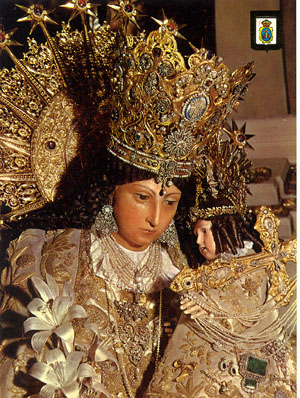
Our Lady of Good Deliverance:  Since the 1000s, the Church of Saint-Etienne-des-Grès in the old Latin Quarter of Paris had a chapel to Our Lady of Good Deliverance, where, across the centuries, pilgrims sought the Virgin’s help with all kinds of sufferings. During the Wars of Religion and counter-Reformation, her confraternity had 12,000 members, including the King and Queen of France. In 1587, young St Francis de Sales, feeling himself damned, recovered confidence and joy after saying the prayer that had been pasted to a tablet before her statue, the Memorare.our-lady-of-good-dliverance-18-july-2017.jpg

St Aemilian of Dorostorium
St Alanus of Sassovivo
St Alfons Tracki
Bl Arnold of Amiens
St Arnoul the Martyr
St Arnulf of Metz
St Athanasius of Clysma
Bl Bernard de Arenis
Bl Bertha de Marbais
St Bruno of Segni OSB (1049-1123)
About St Bruno:
https://anastpaul.com/2017/07/18/saint-of-the-day-18-july-st-bruno-of-segni-o-s-b/

St Ðaminh Ðinh Ðat
St Edburgh of Bicester
St Elio of Koper
St Frederick of Utrecht (c 815 – c 838) Martyr
Biography:
https://anastpaul.com/2018/07/18/saint-of-the-day-18-july-st-frederick-c-815-c-838-martyr/

St Goneri of Treguier
St Gundenis of Carthage
Bl Herveus
Bl Jean-Baptiste de Bruxelles
St Marina of Ourense
St Maternus of Milan
St Minnborinus
St Pambo of the Nitrian Desert
St Philastrius of Brescia
St Rufillus of Forlimpopoli
St Scariberga of Yvelines
St Simon (Szymon) of Lipnica (1435/1440-c 1482)
St Theneva
St Theodosia of Constantinople

Martyrs of Silistria – 7 saints: Seven Christians who were martyred together. No details about them have survived but the names – Bassus, Donata, Justus, Marinus, Maximus, Paulus and Secunda. They were martyred in Silistria (Durostorum), Moesia (in modern Bulgaria), date unknown.

Martyrs of Tivoli – 8 saints: A widow, Symphorosa and her seven sons ( Crescens, Eugene, Julian, Justin, Nemesius, Primitivus and Stracteus) martyred in Tivoli, Italy in the 2nd-century persecutions of Hadrian.

Posted in QUOTES of the SAINTS, QUOTES on ETERNAL LIFE, QUOTES on GRACE, QUOTES on GRATITUDE, QUOTES on HUMILITY, QUOTES on LOVE, SAINT of the DAY

Thought for the Day – 17 July – Let us love to be unknown! 

Thought for the Day – 17 July – Wednesday of the Fifteenth week in Ordinary Time, C, The memorial of St Alexius of Rome – “the Man of God” “the Beggar Saint”

St Alexius is mentioned in the Roman Martyrology under 17 July in the following terms: “At Rome, in a church on the Aventine Hill, a man of God is celebrated under the name of Alexius, who, as reported by tradition, abandoned his wealthy home, for the sake of becoming poor and to beg for alms unrecognised.”

“With regard to God, there is no strict right to any merit on the part of man,” the Catechism plainly teaches us. “Between God and us there is an immeasurable inequality, for we have received everything from Him, our Creator” (#2007).   The Alexius of lore, who at least could’ve rightfully claimed the privileges associated with his family ties, instead embraced a life of severe deprivation and extravagant piety in absolute concealment.

Why?   Not for points, not to earn salvation but out of a rare plenitude of gratitude and love.   “In the evening of this life, I shall appear before you with empty hands, for I do not ask you, Lord, to count my works,” is how St Thérèse of Lisieux expressed the same notion.   “I wish, then, to be clothed in Your own justice and to receive from Your love the eternal possession of Yourself” (CCC 2011).

Even simpler, is St John of the Cross:   “At the end of your life, you will be judged by your love” (CCC 1022) and nobody will be comparing scores.at-the-end-of-your-life-st-j-of-the-cross-14-dec-2017.jpg

Let us love to be unknown!   (St Philip Neri).

St Alexius Pray for us!st alexius of rome pray for us no 2 17 july 2019.jpg

Posted in MORNING Prayers, QUOTES on HUMILITY, QUOTES on SANCTITY, QUOTES on TRUST and complete CONFIDENCE in GOD, SAINT of the DAY, The WORD

One Minute Reflection – 17 July – ‘…the necessary condition…’

One Minute Reflection – 17 July – Wednesday of the Fifteenth week in Ordinary Time, C – Today’s Gospel Matthew 11:25-27.

“You have hidden these things from the wise and the learned, you have revealed them, to the childlike”…Matthew 11:25

REFLECTION – “Thus, children are in and of themselves, a treasure for humanity and also for the Church, for they constantly evoke that necessary condition for entering the Kingdom of God – that of not considering ourselves self-sufficient but in need of help, of love, of forgiveness.”…Pope Francis (General Audience, 18 March 2015)matthew 11 25 you have hidden these things - thus children are - pope francis 17 july 2019.jpg

PRAYER – Lord God, in Your wisdom You created us, by Your Providence, You rule us. Penetrate our inmost being with Your holy light so that our way of life may always be one of faithful service and childlike trust in You.   Grant that we may always follow behind Your Son and grasp His hand, to lead us to You.   Hear the prayers of St Alexius of Rome, who trusted completely in You alone in childlike simplicity. Through Jesus Christ our Lord with the Holy Spirit, one God, forever, amen.st alexius of rome pray for us 17 july 2019.jpg

Posted in SAINT of the DAY

Saint of the Day – 17 July – Saint Alexius of Rome – (Died early 5th Century) “the Man of God” 

Saint of the Day – 17 July – Saint Alexius of Rome – (Died early 5th Century) Hermit, recluse, apostle of Prayer, Mystic, beggar – known as “the Man of God”  – Patronages – Alexians (a religious apostolate), beggars, belt makers, nurses, pilgrims, travellers.st alexius-of-rome-f7c534c7-3fc3-4fac-ad99-14bbf9779a6-resize-750.jpg

Saint Alexius, born in Rome in the fourth century, was the only son of parents pre-eminent among the Roman nobles for both their virtue and their great wealth.   They were particularly noted for their almsgiving; three tables were prepared every day for all who came for assistance — pilgrims, the poor and the sick.   Their son, fruit of their prayers, was married with splendid feasting to a noble young lady of the imperial family but on his wedding night, by God’s special inspiration, he secretly left Rome, longing for a solitude where he could serve God alone.

Garcia_Fernandes_-_Casamento_de_Santo_Aleixo,_1541
The Wedding of St Alexius

He went to Edessa in the far East, gave away all that he had brought with him, content thereafter to live by alms at the gate of Our Lady’s church in that city.   His family, in the deepest grief, could not fathom the mystery of his disappearance and would have been consoled if God had taken him instead through death.

It came to pass that the servants of Saint Alexius, whom his father had sent in search of him, arrived in Edessa and seeing him among the poor at the gate of Our Lady’s church, gave him an alms, not recognising him.   Whereupon, the man of God, rejoicing, said, I thank You, Lord, who have called me and granted that I should receive for Your Name’s name’s sake an alms from my own slaves.   Deign to fulfil in me the work You have begun.

After seventeen years spent at the portico of the church, when his sanctity was miraculously confirmed by the Blessed Virgin, speaking through Her image to an officer of the church, Saint Alexius once more sought obscurity by flight.  st alexius snip catholic art On his way to Tarsus contrary winds drove his ship to Rome.   There no-one recognised him, in this pale and tattered mendicant, the heir of Rome’s noblest house, not even his sorrowing parents, who had vainly sent throughout the world in search of him.   From his own father’s charity Saint Alexius begged a miserable shelter in his palace, under a staircase, with the leavings of his table as food.   There, he spent another seventeen years, bearing patiently the mockery and ill usage of his own servants and witnessing daily, the still inconsolable grief of his spouse and parents.

At last, when death had ended this cruel martyrdom, they learned too late, who it was that they had unknowingly sheltered.   A voice was heard by all in attendance at the Pope’s Mass, saying –‘Seek the man of God, he will pray for Rome and the Lord will be favourable to it, he will die on Friday.’   All the city undertook in vain to find this unknown Saint.  st alexius snip artBut God had commanded Alexius himself to write down his life story and sign it, in this way He Himself confirmed His servant’s sanctity, when he was found lifeless in his retreat, holding that document in his hand.   The Pope read aloud what was written on the parchment of the Saint and everywhere in Rome there was a single cry of admiration, impossible to describe. -saint-july-17-alexius-of-rome-wellcomeimages-org-cc

The house of Alexius’ father Euphemian was later transformed into a church dedicated to Saint Alexius and St Boniface and the staircase – suspended above an altar, under which he had lived for 17 years, is enshrined there as a relic.

the holy staircase of st alexius
The Holy Staircase of St Alexius at the Church of Sts Alexius and Boniface in Rome.   Below it is a statue of the pieta of St Alexius.
st alexius from the church of st pierre-es-liens in france header.jpg
Saint Alexius, from the Church of Saint-Pierre-ès-Liens in Pomport, Dordogne, France
Posted in SAINT of the DAY

Memorials of the Saints – 17 July

St Alexius of Rome (Died early 5th Century)

St Andrew Zorard
Bl Arnold of Himmerod
Bl Bénigne
Bl Biagio of the Incarnation
St Clement of Ohrid
St Cynllo
St Ennodius of Pavia
St Fredegand of Kerkelodor
St Generosus
St Gorazd
St Hedwig, Queen of Poland
St Hyacinth of Amastris
St Kenelm
St Pope Leo IV
St Marcellina
St Nerses Lambronazi
Bl Pavol Gojdic (1888-1960) Martyr
About Blessed Pavol:
https://anastpaul.com/2018/07/17/saint-of-the-day-17-july-blessed-pavol-peter-gojdic-1888-1960-martyr-the-man-with-a-heart-of-gold/

St Petrus Liu Zeyu
Bl Sebastian of the Holy Spirit
Bl Tarsykia Matskiv
St Theodosius of Auxerre
St Theodota of Constantinople
St Turninus

Martyrs of Compiegne (16 beati):   Sixteen Blessed Teresian Martyrs of Compiègne.
Eleven Discalced Carmelite nuns, three lay sisters and two lay women servants who were martyred together in the French Revolution. They were the earliest martyrs of the French Revolution that have been recognised.
• Angelique Roussel • Anne Pelras • Anne-Marie-Madeleine Thouret • Catherine Soiron • élisabeth-Julitte Vérolot • Marie Dufour • Marie Hanniset • Marie-Anne Piedcourt • Marie-Anne-Françoise Brideau • Marie-Claude-Cyprienne Brard • Marie-Françoise de Croissy • Marie-Gabrielle Trezel • Marie-Geneviève Meunier • Marie-Madeleine-Claudine Lidoine • Rose-Chretien de Neuville • Thérèse Soiron •
They were guillotined on 17 July 1794 at the Place du Trône Renversé (modern Place de la Nation) in Paris, France.

The 16 Martyrs Story:
https://anastpaul.com/2017/07/17/saints-of-the-day-17-july-the-carmelite-martyrs-of-compiegne-o-c-d/

Martyrs of Scillium (12 saints): A group of twelve Christians martyred together, the final deaths in the persecutions of Emperor Marcus Aurelius. Upon their conviction for the crime of being Christians, the group was offered 30 days to reconsider their allegiance to the faith; they all declined.   Their official Acta still exist.   Their names –
• Acyllinus • Cythinus • Donata • Felix • Generosa • Januaria • Laetantius • Narzales • Secunda • Speratus • Vestina • Veturius
They were beheaded on 17 July 180 in Scillium, Numidia (in North Africa).

Posted in CARMELITES, MARIAN PRAYERS, MARIAN TITLES, PRAYERS of the CHURCH, PRAYERS of the SAINTS, SAINT of the DAY, The BLESSED VIRGIN MARY

Our Morning Offering – 16 July – “The Flower of Carmel”

Our Morning Offering – 16 July – The Memorial of Our Lady of Mount Carmel

This prayer, also known as the “Flos Carmeli” (“The Flower of Carmel”), was composed by St Simon Stock (1165-1265), a Carmelite, so-called because he and other members of his order lived atop Mount Carmel in the Holy Land.   St Simon Stock was visited by the Blessed Virgin Mary on 16 July 1251, at which time, she bestowed upon him a scapular, or habit, (commonly called “the Brown Scapular”), which became part of the liturgical clothing of the Carmelite order.

O most beautiful Flower of Mount Carmel,
fruitful vine, splendour of Heaven,
Blessed Mother of the Son of God,
Immaculate Virgin,
assist me in this my necessity.
O Star of the Sea,
help me and show me herein
that you are my Mother.
O Holy Mary, Mother of God,
Queen of Heaven and earth,
I humbly beseech you from the bottom of my heart,
to succour me in this my necessity.
There are none that can withstand your power.
O show me herein that you are my Mother.

O Mary, conceived without sin,
pray for us that have recourse to thee.
(Repeat three times)

Sweet Mother, I place this cause in your hands.
(Repeat three times)the flower of carmel by st simon stopck 16 july 2019.jpg

Posted in SAINT of the DAY

Saint of the Day – 16 July – St Marie-Madeline Postel (1756-1846)

Saint of the Day – 16 July – St Marie-Madeline Postel (1756-1846) Religious Sister and Founder of the Sisters of Christian Schools of which she is the Patron, Teacher, Franciscan tertiary – born on 28 November 1756 at Barfleur, Normandy, France as Julie Françoise-Catherine Postel and died on 16 July 1846 at Saint-Sauveur-le-Vicoste, France of natural causes.   During the French Revolution she used her then-disbanded school to house fugitive priests despite the great risk that posed to her own life.

sisters of christian schools of mercy
Motherhouse and Schools of the Sisters of Christian Schools

Julie Françoise-Catherine Postel was born on 28 November 1756 in Barfleur to the fisherman Jean Postel and Thérèse Levallois.   She was the aunt to Blessed Placide Viel.

The Benedictine nuns oversaw her education in Valognes after her initial schooling and it was during that time that she discerned a call to serve God in the religious life.   She took a private vow to remain chaste as a step forward in this dream.

In 1774, she founded a school for girls in Barfleur that became a centre for underground religious activities during the French Revolution, for those who were unwilling to support the new regime.   This school had been shut down at the Revolution’s beginning. Authorisation was granted to her to keep the Blessed Sacrament in her house as the conflict continued and she carried it on her person at times to provide the Viaticum to those who were ill and at the verge of death.   The Jacobins often suspected her but never made allegations and left her alone.st marei-magdalene postel glass

The end of the Revolution saw Blessed Marie-Madeline take up teaching and catechising in Cherbourg where she taught around 300 children.  She made her religious profession into the Third Order of Saint Francis in 1798 (while assuming her religious name) and founded the Sisters of the Christian Schools (initally the words ‘of Mercy’ were added) in Cherbourg on 8 September 1807,  which was initially rather slow to achieve success until 1832 when she acquired a derelict convent in St-Sauveur-le-Vicomte to use as her headquarters which then prompted growth within the order.  st marie-magdalene postel glass 2.jpg

The Bishop of Coutances, Claude-Louis Rousseau issued diocesan approval for her order and it went on to receive the papal decree of praise from Pope Pius IX on 29 April 1859 and received full papal approval, much later, in 1901.   The order based itself on the Rule of the Franciscan Third Order, though this later changed in 1837, to be based upon that of the De La Salle Brothers which also prompted a name change for the congregation.Portrait,_St._Marie_Madeleine_Postel,_Sisters_of_Christian_Schools_of_Mercy

Marie-Madeline died in 1846 but her order continues its work in places such as Romania and Mozambique and in 2005 had 442 religious in 69 different locations worldwide.

The cause for her Canonisation began under Pope Leo XIII on 27 July 1897, at which stage Postel became titled as a Servant of God.   Pope Leo XIII later confirmed that Postel had lived a life of heroic virtue and named her as Venerable on 31 May 1903.   Pope Pius X later signified on 22 January 1908 his approval to two investigated miracles attributed to her intercession and so Beatified her on 17 May 1908.   Pope Pius XI confirmed two additional miracles and Canonised Blessed Marie-Madeline on 24 May 1925.

Below is the Church of St Marie-Madeline, her shrine and statue in the Church at St-Sauveur-le-Vicomte.church of st marie magdalene postelSaintMarieMagdalenPostelst marie- postel 800px-Tombeau_postel

Posted in DOMINICAN OP, SAINT of the DAY, VATICAN Resources

16 July – SAINT Bartholomew of the Martyrs/ of Braga OP (1514-1590)

16 July – SAINT Bartholomew of Braga OP ArchBishop of Braga also known as Bl Bartholomew of the Martyrs (Bartolomeu Fernandez dei Martiri Fernandes) (1514-1590)

https://anastpaul.com/2018/07/16/saint-of-the-day-16-july-blessed-bartholomew-of-the-martyrs-1514-1590/

On 8 July 2019, Pope Francis approved the favourable votes cast by the Eminent and Excellent members of the Congregation and extended to the Universal Church the liturgical worship in honour of Blessed Bartholomew of the Martyrs (born Bartolomeu Fernandes), of the Order of Preachers, archbishop of Braga, born in Lisbon, Portugal on 3 May 1514 and died in Viana do Castelo, Portugal, on 16 July 1590, inscribing him in the book of Saints (Equipollent Canonisation).

Alleluia!

Saint Bartholomew of the Martyrs, Pray for Us!st bartholomew of the martyrs - 16 july 2019.jpg

Posted in MARIAN TITLES, SAINT of the DAY, The BLESSED VIRGIN MARY

Feast of Our Lady of Mount Carmel and Memorials of the Saints – 16 July

Our Lady of Mount Carmel (Optional Memorial)

About:   https://anastpaul.wordpress.com/2017/07/15/feast-of-our-lady-of-mount-carmel-16-july/

The Brown Scapular of Our Lady of Mount Carmel:
https://anastpaul.com/2018/07/16/thought-for-the-day-16-july-the-memorial-of-our-lady-of-mount-carmel/

Bl André de Soveral
St Andrew the Hermit
St Antiochus of Sebaste
Bl Arnold of Clairvaux
Bl Arnold of Hildesheim
St Athenogenes of Sebaste
Bl Bartholomew of Braga OP ArchBishop of Braga also known as Bl Bartholomew of the Martyrs (Bartolomeu Fernandez dei Martiri Fernandes) (1514-1590)
Bl Bartholomew:
https://anastpaul.com/2018/07/16/saint-of-the-day-16-july-blessed-bartholomew-of-the-martyrs-1514-1590/

St Benedict the Hermit
Bl Ceslaus Odrowaz OP (c 1184– 242) (Brother of St Hyacinth)
Bl Claude Beguignot
Bl Domingos Carvalho
St Domnin
St Domnio of Bergamo
Bl Dorothée-Madeleine-Julie de Justamond
St Elvira of Ohren
St Eugenius of Noli
St Faustus
St Faustus of Rome and Milan
St Fulrad of Saint Denis
St Generosus of Poitou
St Gobbán Beg
St Gondolf of Saintes
St Grimoald of Saintes
St Helier of Jersey
Bl Irmengard
Bl John Sugar
St Landericus of Séez
Bl Madeleine-Françoise de Justamond
Bl Marguerite-Rose de Gordon
Bl Marguerite-Thérèse Charensol
Bl Marie-Anne Béguin-Royal
Bl Marie-Anne Doux
St Marie-Madeline Postel (1756-1846)
Bl Marie-Rose Laye
Bl Milon of Thérouanne
Bl Nicolas Savouret
Bl Ornandus of Vicogne
St Paulus Lang Fu
St Reinildis of Saintes
Bl Robert Grissold
Bl Simão da Costa
St Sisenando of Cordoba
St Tenenan of Léon
St Teresia Zhang Heshi
St Valentine of Trier
St Vitalian of Capua
St Vitaliano of Osimo
St Yangzhi Lang

Martyrs of Antioch – 5 saints: Five Christians who were martyred together. No details about them have survived by the names – Dionysius, Eustasius, Maximus, Theodosius and Theodulus. They were martyred in Antioch, Syria, date unknown.

Posted in CHRIST, the WAY,TRUTH,LIFE, DOCTORS of the Church, franciscan OFM, QUOTES of the SAINTS, SAINT of the DAY

Thought for the Day – 15 July – ‘Meditation on Christ in His humanity …’

Thought for the Day – 15 July – Monday of the Fifteenth week in Ordinary Time, Year C, Gospel: Matthew 10:34-11,1 and The Memorial of St Bonaventure OFM (1221-1274) Seraphic Doctor of the Church

Saint Bonaventure saw the spires of the great cathedrals reaching up to heaven as a reflection of the human soul’s reaching up to God in his The Soul’s Journey into God. Likewise, the streams of light coming into the church through the stained-glass windows, reflect God expressing Himself, in the wide variety of creatures upon whom He showers His gifts of grace.

And the images go on and on as the saint reaches into human experience of creation and cultural artifacts and finds vestigium (the footprints) of God since everything in creation, reflects in some way, the grandeur of God.   Human beings, of course, are the actual image of God.

It was this ability to take the spirituality of Saint Francis—as reflected in Saint Francis’ Canticle of the Sun, for instance—and place it at the heart of his writings, keeping the simplicity of the Franciscan insights and creating a sublime theology, that truly deserves the name “Seraphic.”

When Bonaventure was declared a Doctor of the Universal Church in 1588 by Pope Sixtus V, he was given the title “Seraphic Doctor.”   Merriam-Webster defines a seraph as one of the highest-ranking angels as well as “one of the six-winged angels standing in the presence of God.”   It was as a seraph that Christ appeared to Saint Francis when he received the stigmata on Mount La Verna.   Therefore, it is fitting to use the term to describe the soaring mysticism of Saint Bonaventure.

In his General Audience on 3 March 2010, Pope Benedict XVI spoke about the life of St Bonaventure.   He called to mind the great works of literature, art, philosophy and theology that were inspired by the Christian faith during the time period in which the saint lived.

“Among the great Christian figures who contributed to the composition of this harmony between faith and culture, Bonaventure stands out, a man of action and contemplation, of profound piety and prudent government,” Pope Benedict said.

The Pope called on the faithful to take note of “the central role that Christ always played in Bonaventure’s life and teaching,” and to imitate the way in which “the whole of his thinking was profoundly Christocentric.”

“Meditation on Christ in His humanity is corporeal in deed, in fact but spiritual in mind. . . . By adopting this habit, you will steady your mind, be trained to virtues and receive strength of soul….Let meditation of Christ’s life be your one and only aim, your rest, your food, your desire, your study.” – St Bonaventure

St Bonaventure, Pray for us!let meditationof christ's life - st bonaventure pray for us 15 july 2019.jpg

Posted in CHRIST, the WAY,TRUTH,LIFE, DOCTORS of the Church, franciscan OFM, FRUITS of the SPIRIT, QUOTES of the SAINTS, QUOTES on HAPPINESS, QUOTES on HUMILITY, QUOTES on SANCTITY, QUOTES on TRUST and complete CONFIDENCE in GOD, SAINT of the DAY

Quote/s of the Day – 15 July – The wisdom of St Bonaventure

Quote/s of the Day – 15 July – Monday of the Fifteenth week in Ordinary Time, Year C, Gospel: Matthew 10:34-11,1 and The Memorial of St Bonaventure (1221-1274) Doctor of the Church

“Every creature
is a divine word
because it
proclaims God.”every-creature-st-bonaventure-15-july-2018.jpg

“In all your deeds and words,
you should look upon this Jesus, as your model.
Do so, whether you are walking
or keeping silence,
or speaking,
whether you are alone or with others.
He is perfect
and thus, you will be,
not only irreprehensible
but praiseworthy.”in all your deeds and words - st bonaventure 15 july 2019.jpg

“Christ has something in common with all creatures.
With the stone He shares existence,
with the plants He shares life,
with the animals He shares sensation
and with the angels He shares intelligence.
Thus all things are transformed in Christ
since in the fullness of His nature,
He embraces some part of every creature.”christ-has-something-in-common-st-bonaventure-15-july-2018.jpg

“We must beg the Holy Spirit,
with ardent longing, to give us these fruits.
The Holy Spirit alone,
knows how to bring to light,
the sweetness hidden away
under the rugged exterior of the words of the Law.
We must go to the Holy Spirit for interior guidance.”we-must-beg-the-holy-spirit-st-bonaventure-15-july-2018.jpg

“Since happiness is nothing else
than the enjoyment of the Supreme Good
and the Supreme Good is above us,
no-one can enjoy happiness,
unless he rises above himself.”since happiness is nothing else - st bonaventure 15 july 2019.jpg

“God might have created a more beautiful world,
He might have made heaven more glorious
but it was impossible for Him, to exalt a creature,
higher than Mary, in making her His Mother.”

St Bonaventure (1221-1274) Doctor of the Churchgod might have created a more beautiful world - st bonaventure 15 july 2019.jpg

Posted in DOCTORS of the Church, FATHERS of the Church, MORNING Prayers, QUOTES of the SAINTS, QUOTES on LOVE, QUOTES on MARRIAGE, MARRIED LOVE, QUOTES on the FAMILY, SAINT of the DAY, The WORD

One Minute Reflection – 15 July -‘… but not more than you love your God!’

One Minute Reflection – 15 July – Monday of the Fifteenth week in Ordinary Time, Year C, Gospel: Matthew 10:34-11:1 and The Memorial of St Bonaventure (1221-1274) Doctor of the Church and Bl Anne-Marie Javouhey (1779-1851)

“Whoever loves father or mother more than me is not worthy of me…” … Matthew 10:37

REFLECTION – “It is to those who are on fire with love or, rather, those He wants to set on fire with this love, that our Saviour addresses these words.   For our Saviour has not done away with but regulated, the love we owe to parents, spouse, children.   He did not say:  “Those who love them” but “Those who love them more than me”…   Love your father but love the Lord even more,  love him who brought you into the world but love yet more he who gave you being.   It was your father who brought you into the world but it was not he who created you, since he did not know, when he bred you, who you would be or what you would become.   It was your father who fed you but he is not the origin of the food that staunched your hunger.   Finally, your father must die if you are to inherit his goods but you will share the inheritance God intends for you, while living with him eternally.

So love your father but not more than you love your God, love your mother but love still more the Church who has begotten you into eternal life…   Indeed, if you owe such gratitude to those who begot you for mortality, what kind of love do you owe to those who begot you for eternity?   Love your spouse, love your children as God does, to lead them to serve God together with you and then, when you are reunited, you will not be afraid of being separated.   Your love for your family would indeed fall short if you did not lead them to God…

Take up your cross and follow the Lord.   Your Saviour Himself, wholly God as He was in the flesh, clothed with your flesh, He, too, showed human feelings when He said – “My Father, if it is possible, let this cup pass from me,” (Mt 26:39)…   The servant’s nature with which He clothed Himself for your sake caused His human voice, the voice of His flesh, to be heard.   He took your voice so as to express your weakness and give you His strength… and to show you, whose will to prefer.”… St Augustine (354-430) Father & Doctor of the Church – Sermon 344, #2-3matthew 10 37 whoever lovs father or mother - so love your father but not more - st augustine 15 july 2019.jpg

PRAYER – God our Father, we are Your children and You have set us aside to come home to You by the light of the way of Your divine Son.   Grant we pray, that we may grow in faith and love daily, by the intercession of Saint Bonaventure and Blessed Anne-Marie Javouhey (1779-1851) and may be a light of love, to all around us, as they were.   We make our prayer through our Lord Jesus with You in the unity of the Holy Spirit, God forever, amen.st bonaventure pray for us 15 july 2019

bl anne-marie javouhey pray for us 15 july 2019

Posted in 7 GIFTS of the HOLY GHOST: Wisdom, Understanding, Prudence, Strength, Knowledge, Piety, Fear, DOCTORS of the Church, Our MORNING Offering, PRAYERS of the SAINTS, SAINT of the DAY

Our Morning Offering – 15 July – Prayer for the Gifts of the Holy Spirit

Our Morning Offering – 15 July – Monday of the Fifteenth week in Ordinary Time, Year C

Prayer for the Gifts
of the Holy Spirit
By St Bonaventure (1221-1274) – Seraphic Doctor of the Church

We beg the all-merciful Father through You,
His only-begotten Son made man for our sake,
crucified and glorified for us,
to send upon us, from His treasure-house,
the Spirit of sevenfold grace,
Who rested upon You in all His fullness.

The spirit of wisdom,
enabling us to relish the fruit of the tree of life,
which is indeed Yourself.
The gift of understanding:
to enlighten our perceptions.
The gift of prudence,
enabling us to follow in Your footsteps.
The gift of strength:
to withstand our adversary’s onslaught.
The gift of knowledge,
to distinguish good from evil
by the light of Your holy teaching.
The gift of piety,
to clothe ourselves with charity and mercy.
The gift of fear,
to withdraw from all ill-doing
and live quietly in awe
of Your eternal majesty.

These are the things for which we petition.
Grant them for the honour of Your Holy Name,
to which, with the Father and the Holy Spirit,
be all honour and glory, thanksgiving, renown
and Lordship forever and ever.
Amenprayer for the seven gifts of the holy spirit by st bonaventure - 30 oct 2018 mem of st angelo of acri.jpg

Posted in SAINT of the DAY

Saint of the Day – 15 July – Blessed Anne-Mary Javouhey (1779-1851)

Saint of the Day – 15 July – Blessed Anne-Mary Javouhey (1779-1851) aged 71 – Religious Sister, Missionary and Founder of the Sisters of Saint Joseph of Cluny.   She was born on 10 November 1779 at Jallanges, France and died on 15 July 1851 at Paris, France of natural causes.   She is known as the Liberator of the Slaves in the New World, a 19th-century “Mother Teresa” and as the mother of the town of Mana, French Guiana.  Patronages – Jallasnages, Mana and the Sisters she founded.   During the French Revolution through her teen years, she helped to hide and care for a number of priests persecuted by the French Revolution, including keeping watch for them as they said Mass.

Imagine a Mother Teresa in the France of Napoleon’s day and you will have a picture of Anne-Marie Javouhey.   Nanette, as she was called, was a “velvet brick,” a thin layer of gentleness covering her determined core.   A competent leader, Nanette dominated every scene in her adventurous life.Bl.-Anne-Marie-Javouhey

In 1800, she tested her vocation with the Sisters of Charity at Besançon.   One night she heard a voice say, “You will accomplish great things for me.”   A few nights later, St. Teresa of Ávila with black, brown and bronze children appeared to her.   “God wants you to found a congregation to care for these children,” said the saint.

In 1801, Nanette and her three natural sisters opened a school for poor children near Chamblanc.  Anne-Marie-JavouheyDuring the next decade she ran two day schools and an orphanage.   In 1812 she founded the Sisters of St Joseph of Cluny.   Then the dam burst, with demand for her sisters’ services clamouring throughout France.

Nanette, now Mother Javouhey, held her sisters to a high ideal of community life that she articulated in the following correspondence to them:

“As we are joined together in community, we should live in unity with all its members, having one heart and soul.   We should be always willing to labour and suffer privations without troubling others.   We must possess nothing of our own, aware that everything belongs to the community according to the spirit of community life.

If we find that we are in want for certain things—and surely we will be often—we should rejoice because holy poverty does not imply that we should want nothing.   But rather, it means that we should be happy to do without anything for the sake of God and the sake of others.

Each sister should be prepared to accept willingly the duties assigned to her, no matter how hard or how menial they may appear…”

In 1817, Mother Javouhey sent sisters to the African island of Reunion to open her first missionary outpost.  bl anne-marie lifeIt wasn’t long before she had sisters serving black, brown and bronze people at remote places in Africa at Senegal, Sierra Leone and Gambia and in South America at French Guiana.   With dogged faith the sisters battled extreme hardship everywhere.

At the government’s request, Mother Javouhey undertook some very unusual tasks.   For example, she spent four years supervising the establishment of a colony for blacks at Mana, French Guiana.   Then in 1834 she accepted the most remarkable assignment of her life.   Six hundred slaves were to be liberated in Guiana and she was asked to prepare them for emancipation by training them in the ways of religion and civilised society.   As each family was ready to be freed, Mother Javouhey arranged for them to have money, some land and a cottage.bl anne-marie javouhey

Anne-Marie Javouhey spent the last years of her life in France directing the work of her burgeoning congregation.   When she died in 1851, her sisters were in thirty-two countries and colonies.   Today, the Congregation of the Sisters of St Joseph of Cluny numbers close to 3,000 Sisters serving in over 60 countries, including the United States, Canada, India and Ireland.

When news of her death in 1851 reached the black population of French Guiana, there was general grief for “the mother of the slaves”.   Blessed Anne-Marie was Beatified on 15 October 1950 by Ven Pope Pius XII.bl anne marie lg statue face.jpg

Posted in SAINT of the DAY

Memorials of the Saints – 15 July

St Bonaventure of Bagnoregio OFM (1221-1274) – Seraphic Doctor of the Church -(Memorial)
St Bonaventure!
https://anastpaul.com/2018/07/15/saint-of-the-day-15-july-st-bonaventure-o-f-m-1221-1274-doctor-of-the-church/
AND:
https://anastpaul.com/2017/07/15/saint-of-the-day-15-july-st-bonaventure-seraphic-doctor/

Dispersion of the Apostles:   Commemorates the missionary work of the Twelve Apostles. It was first mentioned in the 11th century and was celebrated in the northern countries of Europe during the Middle Ages. It is now observed in Germany, Poland and some dioceses of England, France and the United States.

St Abundantia of Spoleto
St Abudemius of Bozcaada
St Adalard the Younger
St Anrê Nguyen Kim Thông
Bl Anne-Mary Javouhey (1779-1851)
Bl Antoni Beszta-Borowski
St Apronia
St Athanasius of Naples
St Antiochus of Sebaste
St Benedict of Angers
Bl Bernard of Baden
St David of Sweden
St Donivald
St Eberhard of Luzy
St Edith of Tamworth
St Eternus
St Felix of Pavia
St Gumbert of Ansbach
St Haruch of Werden
St Jacob of Nisibis
St Joseph Studita of Thessalonica
Bl Michel-Bernard Marchand
Bl Peter Aymillo
St Phêrô Nguyen Bá Tuan
St Plechelm of Guelderland
Bl Roland of Chézery
St Valentina of Nevers
St Vladimir I of Kiev

Martyred Jesuit Missionaries of Brazil – 40 beati: A band of forty Spanish, Portugese and French Jesuit missionaries martyred by the Huguenot pirate Jacques Sourie while en route to Brazil. They are –
• Aleixo Delgado • Alonso de Baena • álvaro Borralho Mendes • Amaro Vaz • André Gonçalves • António Correia • Antônio Fernandes • António Soares • Bento de Castro • Brás Ribeiro • Diogo de Andrade • Diogo Pires Mimoso • Domingos Fernandes • Esteban Zuraire • Fernando Sánchez • Francisco Alvares • Francisco de Magalhães • Francisco Pérez Godoy • Gaspar Alvares • Gonçalo Henriques • Gregorio Escribano • Ignatius de Azevedo • Iõao • João Fernandes • João Fernandes • Juan de Mayorga • Juan de San Martín • Juan de Zafra • Luís Correia • Luís Rodrigues • Manuel Alvares • Manuel Fernandes • Manuel Pacheco • Manuel Rodrigues • Marcos Caldeira • Nicolau Dinis • Pedro de Fontoura • Pedro Nunes • Simão da Costa • Simão Lopes •
They were martyed on 15 and 16 July 1570 on the ship Santiago near Palma, Canary Islands. They were beatified on 11 May 1854 by Pope Pius IX.

Martyrs of Alexandria – 13 saints: Thirteen Christians who were martyred together. We know the names of three, no details about them and the other ten were all children. – Narseus, Philip and Zeno. Martyred in the early 4th-century in Alexandria, Egypt.

Martyrs of Carthage – 9 saints: A group of nine Christians who were martyred together. We know nothing else but their names – Adautto, Catulinus, Felice, Florentius, Fortunanziano, Januarius, Julia, Justa and Settimino. They were martyred in Carthaginian and their relics at the basilica of Fausta at Carthage.

Martyrs of Pannonia – 5 saints: Five 4th-century martyrs killed together. No information about them has survived except the names – Agrippinus, Fortunatus, Martialis, Maximus and Secundinus.

Posted in SAINT of the DAY

Thought for the Day – 14 July – …Holiness thrives on the Cross, anywhere

Thought for the Day – 14 July – Fifteenth Sunday in Ordinary Time, Year C, Luke 10:25–37 and the Memorial of Saint Kateri Tekakwitha (1656–1680) “Lily of the Mohawks”

The blood of martyrs is the seed of saints.   Nine years after the Jesuits, Isaac Jogues and Jean de Lelande were tomahawked by Iroquois warriors, a baby girl was born near the place of their martyrdom, Auriesville, New York.

Her mother was a Christian Algonquin, taken captive by the Iroquois and given as wife to the chief of the Mohawk clan, the boldest and fiercest of the Five Nations.   When she was four, Tekakwitha lost her parents and little brother in a smallpox epidemic that left her disfigured and half blind.   She was adopted by an uncle, who succeeded her father as chief.   He hated the coming of the Blackrobes—Jesuit missionaries—but could do nothing to them because a peace treaty with the French, required their presence in villages, with Christian captives.   She was moved by the words of three Blackrobes who lodged with her uncle but fear of him kept her from seeking instruction.   Tekakwitha refused to marry a Mohawk brave and at 20 finally received the courage ,to take the step of converting.   She was baptised with the name Kateri–Catherine–on Easter Sunday.

Now, she would be treated as a slave.   Because she would not work on Sunday, Kateri received no food that day.   Her life in grace grew rapidly.   She told a missionary that she often meditated on the great dignity of being baptised.   She was powerfully moved by God’s love for human beings and saw the dignity of each of her people.

She was always in danger, for her conversion and holy life created great opposition.   On the advice of a priest, Kateri stole away one night and began a 200-mile walking journey to a Christian Indian village at Sault S. Louis, near Montreal.

For three years she grew in holiness under the direction of a priest and an older Iroquois woman, giving herself totally to God in long hours of prayer, in charity, and in strenuous penance.   At 23, Kateri took a vow of virginity, an unprecedented act for an Indian woman whose future depended on being married.   She found a place in the woods where she could pray an hour a day—and was accused of meeting a man there!

Her dedication to virginity was instinctive – Kateri did not know about religious life for women until she visited Montreal.   Inspired by this, she and two friends wanted to start a community but the local priest dissuaded her.   She humbly accepted an “ordinary” life. She practised extremely severe fasting as penance for the conversion of her nation. Kateri Tekakwitha died the afternoon before Holy Thursday.   Witnesses said that her emaciated face changed colour and became like that of a healthy child.   The lines of suffering, even the pockmarks, disappeared and the touch of a smile came upon her lips. She was Beatified in 1980 and Canonised in 2012.

We like to think that our proposed holiness is thwarted by our situation.   If only we could have more solitude, less opposition, better health.   Kateri Tekakwitha repeats the example of the saints – holiness thrives on the cross, anywhere.   Yet she did have what Christians—all people—need, the support of a community.   She had a good mother, helpful priests, Christian friends.   These were present in what we call primitive conditions and blossomed in the age-old Christian triad of prayer, fasting and almsgiving, union with God in Jesus and the Spirit, self-discipline and often suffering, and charity for her brothers and sisters.   It is really simple, is it not?

Saint Kateri Tekakwitha, Pray for Us!st kateri tekakwitha pray for us no 2 14 july 2019.jpg

Posted in QUOTES of the SAINTS, QUOTES on LOVE, SAINT of the DAY, The WORD

Quote/s of the Day – 14 July – Eye has not seen….

Quote/s of the Day – 14 July – Fifteenth Sunday in Ordinary Time, Year C, Luke 10:25–37 and the Memorial of Saint Camillus de Lellis MI (1550-1614) “The Giant of Charity” and Saint Kateri Tekakwitha (1656–1680) “Lily of the Mohawks”

Eye has not seen,
ear has not heard,
nor has it so much as dawned on man
what God has prepared
for those who love him.

1 Corinthians 2:91-cor-2-9-eye-has-not-seen-14-july-2017.jpg

“The happiness to which I aspire
is greater than anything on earth.
Therefore, I regard with extreme joy,
whatever pains and sufferings
may befall me here.”

St Camillus de Lellisthe-happiness-to-which-i-aspire-st-camillus-de-lellis-14-july-2017.jpg

“Jesus, I love You.”

St Kateri Tekakwithajesus i love you - last words of st kateri 14 july 2019.jpg

Posted in MORNING Prayers, SAINT of the DAY, The WORD

One Minute Reflection – 14 July – “Go and do likewise.”

One Minute Reflection – 14 July – Fifteenth Sunday in Ordinary Time, Year C, Gospel:  Luke 10:25–37 and the memorial of Saint Camillus de Lellis MI (1550-1614) “The Giant of Charity” and Saint Kateri Tekakwitha (1656–1680) “Lily of the Mohawks”

“Go and do likewise.”... Luke 10:37luke 10 37 go and do likewise - 14 july 2019.jpg

REFLECTION – “In choosing these two Words addressed by God to His people and by putting them together, Jesus taught once and for all that love for God and love for neighbour are inseparable; moreover, they sustain one another.   Even if set in a sequence, they are two sides of a single coin – experienced together they are a believer’s strength!

To love God is to live of Him and for Him, for what He is and for what He does.   Our God is unmitigated giving, He is unlimited forgiveness, He is a relationship that promotes and fosters.

Therefore, to love God means to invest our energies each day to be His assistants in the unmitigated service of our neighbour, in trying to forgive without limitations and in cultivating relationships of communion and fraternity.   It is not a matter of pre-selecting my neighbour – this is not Christian but it is about having eyes to see and a heart to want what is good for him or her.   Today’s Gospel passage invites us all to be projected not only toward the needs of our poorest brothers and sisters but above all to be attentive to their need for fraternal closeness, for a meaning to life and for tenderness.”… Pope Francis (ANGELUS Sunday, 4 November 2018)therefore, to love god means - pope francis - good samaritan 14 july 2019.jpg

PRAYER – God our Father, we are Your children and You have set us aside to come home to You by the light of the way of Your divine Son. Grant we pray, that we may grow in faith and love for You and our neighbour daily, by the intercession of  Saints Camillus and Kateri, may learn the gentleness and tenderness of love, to all around us.  We make our prayer through our Lord Jesus with You in the unity of the Holy Spirit, God forever, amen.st-camillus-de-lellis-pray-for-us-14-july-2017

st kateri tekakwitha pray for us 14 july 2019

Posted in SAINT of the DAY

Saint of the Day – 14 July – Saint Kateri ‘Catherine’ Tekakwitha (1656–1680) “Lily of the Mohawks”

Saint of the Day – 14 July – Saint Kateri ‘Catherine’ Tekakwitha (1656–1680) aged 24 Virgin laywoman, Penitent, Ascetic – known as Lily of the Mohawks – born in 1656 in the Mohawk village of Osserneon (Auriesville), modern New York, USA and died on 17 April 1680 at Caughnawaga, Canada of natural causes.   Patronages – ecologists, ecology, environment, environmentalism, environmentalists, loss of parents, people in exile, people ridiculed for their piety, Native Americans, Igorots, Cordilleras,Thomasites, Northern Luzon,[citation needed] Diocese of Bangued, Vicariate of Tabuk, Vicariate of Bontoc-Lagawe, Diocese of Baguio, Marikina City, Cainta, Rizal, Antipolo City, Philippines.St_Kateri-Caterina-Tekakwitha_V.jpg

Kateri contracted smallpox in an epidemic; her family died and her face was scarred.  She converted to Roman Catholicism at age twenty, when she was renamed Kateri Catherine, baptised in honour of Saint Catherine of Siena.   Refusing to marry, she left her village and moved for the remaining five years of her life to the Jesuit mission village of Kahnawake, south of Montreal in New France, now Canada.

Kateri took a vow of perpetual virginity.   Upon her death at the age of 24, witnesses said that minutes later her scars vanished and her face appeared radiant and beautiful. Known for her virtue of chastity and mortification of the flesh, as well as being shunned by some of her tribe for her religious conversion to Catholicism, she is the fourth Native American to be venerated in the Roman Catholic Church and the first to be Canonised.

st 359px-CatherinaeTekakwithaVirginis1690.jpg
Only known portrait from life of Catherine Tekawitha, c 1690, by Father Chauchetière

Under the pontificate of St Pope John Paul II, she was Beatified in 1980 and Canonised by Pope Benedict XVI at Saint Peter’s Basilica on 21 October 2012  . Many miracles and supernatural events are attributed to her intercession.

This wonderful crown of new blesseds, God’s bountiful gift to His Church, is completed by the sweet, frail yet strong figure of a young woman who died when she was only twenty-four years old –  Kateri Tekakwitha, the “Lily of the Mohawks”, the Iroquois maiden, who in seventeenth century North America was the first to renew the marvels of sanctity of St Scholastica, Saint Gertrude, Saint Catherine of Siena, Saint Angela Merici and Saint Rose of Lima, preceding, along the path of Love, her great spiritual sister, Therese of Child Jesus.

She spent her short life partly in what is now the State of New York and partly in Canada. She was a kind, gentle and hardworking person, spending her time working, praying, and meditating.   At the age of twenty she received Baptism.  Even when following her tribe in the hunting seasons, she continued her devotions, before a rough cross carved by herself in the forest.   When her family urged her to marry, she replied very serenely and calmly that she had Jesus as her only spouse.   This decision, in view of the social conditions of women in the Indian Tribes at the time, exposed Kateri to the risk of living as outcast and in poverty.   It was a bold, unusual and prophetic gesture – on 25 March, 1679, at the age of twenty-three, with the consent of her spiritual director, Kateri took a vow of perpetual virginity – as far as we know the first time that this was done among the North American Indians.Statue_Kateri_Tekakwitha.jpg

The last months of her life were an ever clearer manifestation of her solid faith, straight-forward humility, calm resignation and radiant joy, even in the midst of terrible sufferings.   Her last words, simple and sublime, whispered at the moment of her death, sum up, like a noble hymn, a life of purest charity – “Jesus, I love you….”.

The Church has declared to the world that Kateri Tekakwitha is saint, that she lived a life on earth of exemplary holiness and that she is now a member in heaven of the Communion of Saints who continually intercede with the merciful Father on our behalf.

During the Canonisation ceremony on 21 October 2012, Pope Benedict XVI said in his homily – “Kateri impresses us by the action of grace in her life in spite of the absence of external help and by the courage of her vocation, so unusual in her culture.   In her, faith and culture enrich each other!   May her example help us to live where we are, loving Jesus without denying who we are.   Saint Kateri, Protectress of Canada and the first native American saint, we Entrust to you the renewal of the faith in the first nations and in all of North America!   May God bless the first nations!”

This slideshow requires JavaScript.

Posted in SAINT of the DAY

Memorials of the Saints – 14 July

15th Sunday in Ordinary Time, Year C *2019

St Camillus de Lellis (Optional Memorial)
St Camillus!
https://anastpaul.com/2018/07/14/saint-of-the-day-14-july-st-camillus-de-lellis-m-i-1550-1614-the-giant-of-charity/

Mare de Déu de Canòlich/Mother of God of Canolich:
Read further:
http://www.mariancalendar.org/mare-de-deu-de-canolich-canolich-sant-julia-de-loria-andorra/

Our Lady of Dromon: Saint-Geniez, Alpes de Haute-Provence, Provence-Alpes-Côte d’Azur, France
In 1656, about 2.5 miles from the alpine village of Saint-Geniez, as 12-year-old herder Honoré was praying before a wooden cross on a stone mound, he heard the voice of the Blessed Virgin asking him to dig there to uncover chapels dedicated to her long ago. Excavations on the mountain located a crypt chapel dating back to around 1000, on the site of the ancient city of Theopolis. The upper chapel holds an alabaster statue of the Virgin and Child from the 1600s. The annual pilgrimage takes place on Bastille Day, 14 July.

Bl Angelina di Marsciano
Bl Boniface of Canterbury
St Colman of Killeroran
St Cyrus of Carthage
St Deusdedit of Canterbury
St Donatus of Africa
Bl Dorotea Llamanzares Fernández
St Francis Solano
Bl Giorgio of Lauria
Bl Hroznata of Bohemia
Bl Humbert of Romans
St Idus of Ath Fadha
St Ioannes Wang Kuixin
St Just
St Justus of Rome
St Kateri Tekakwitha (1656–1680) (Optional Memorial USA)

St Liebert
St Marchelm
Bl Michael Ghebre
St Optatian of Brescia
St Papias of Africa
Bl Toscana of Verona
St Ulric of Zell

Posted in DOCTORS of the Church, FATHERS of the Church, MORNING Prayers, QUOTES of the SAINTS, QUOTES on COURAGE, QUOTES on EVANGELISATION, QUOTES on MARTYRDOM, QUOTES on OBEDIENCE, QUOTES on PERSECUTION, QUOTES on PERSEVERANCE, QUOTES on TEMPTATION, SAINT of the DAY, The WORD

One Minute Reflection – 13 July – ‘I will acknowledge before my Father…’

One Minute Reflection – 13 July – Saturday of the Fourteenth week in Ordinary Time, Year C, Gospel: Matthew 10:24–33 and the Memorial of Blessed Carlos Rodriguez Santiago

“So everyone who acknowledges me before men, I also will acknowledge before my Father, who is in heaven…”… Matthew 10:32matthew 10 32 - so everyone who acknowledges me 13 july 2019.jpg

REFLECTION – “You can be a witness to Christ every day.   You were tempted by the spirit of impurity but… you considered that chastity of spirit and body should not be soiled – you are a martyr or, in other words, a witness to Christ… You were tempted by the spirit of pride but, seeing the poor and needy, you were seized by tender compassion and preferred humility to arrogance –  you are a witness to Christ.   Better still – you have not given your witness in word alone but in deed as well.
What is the surest kind of witness?   “Anyone who acknowledges that Jesus Christ came among us in the flesh” (cf. 1Jn 4,2) and who keeps the commands of the Gospel…   How many there are each day of these hidden martyrs of Christ who confess the Lord Jesus!    The apostle Paul knew that kind of martyrdom and witness of faith rendered to Christ, he who said:  “Our boast is this, the testimony of our conscience” (2Cor 1,12).   For how many people have made a confession of faith exteriorly but denied it interiorly!…  So be faithful and courageous in interior persecutions so that you may also win the victory in exterior persecutions.   There are “kings and rulers,” judges of formidable power, in the persecutions within, likewise.   You have an example of these in the temptations undergone by our Lord (Mt 4,1ff.)”… St Ambrose (340-397) Father & Doctor of the Church -Sermon 20 on Psalm 118what is the surest kind of witness - st ambrose - 13 july 2019.jpg

PRAYER – Come to help us in our weakness, God of mercy, forgive the sins of Your people and as nothing we can do is worthy in Your sight, save us through the intercession of the Mother of our Lord, Jesus Christ.   Listen too to the prayers of a fellow pilgrim Blessed Carlos, who has, by his love for You and passion to proclaim Christ Your Son, reached his eternal destination with You.   We make our prayer through Jesus with the Holy Spirit, God forever, amen.bl-mother-of-our-lord-pray-for-us-27-oct-2018

bl carlos santiago pray for us 13 july 2019

Posted in SAINT of the DAY, VATICAN Resources

Saint of the Day – 13 July – Blessed Carlos Manuel Cecilio Rodríguez Santiago (1918–1963)

Saint of the Day – 13 July – Blessed Carlos Manuel Cecilio Rodríguez Santiago (1918–1963) aged 44 Layperson, Apostle of the Liturgy, Catechist, Speaker, Spiritual Advisor – born on 22 November 1918 at Caguas, Puerto Rico – died on 13 July 1963 of cancer at Caguas, Puerto Rico.   He is the first Puerto Rican, the first Caribbean-born layperson in history to be Beatified.

Carlos Manuel Rodríguez was born in Caguas, Puerto Rico on 22 November 1918.   His parents Manuel Baudilio Rodríguez and Herminia Santiago, both came from large families with strong Christian roots.   He was baptised at the Sweet Name of Jesus Church in Caguas on 4 May 1919.   He was the second of five brothers and sisters.   Two of his sisters married, while another is a Carmelite nun.   His only brother is a Benedictine priest and was the first Puerto Rican to become the abbot of a monastery.bl CarlosRodriguezSantiago1.jpg

‘Chali’ as a six years old, experienced a terrible loss – a terrible fire destroyed both his father’s small store and the family home.   Having lost virtually all of their earthly goods, the young family moved in with Carlos Manuel’s maternal grandparents.   Carlos Manuel was thereby strongly influenced by his grandmother, Alejandrina Esterás, a deeply devout and holy woman.

Carlos Manuel’s father, Manuel Baudilio, endured the loss good-naturedly.   Hope and faith never left him until his death in 1940.   Doña Herminia not being in a house of her own, imposed upon herself and her children a strong sense of respect, to a point of inhibition.   This contributed to the reserved and timid personality of her children. Nonetheless, Herminia had the virtue of a serene happiness that was brightened up by her faith.   Her relationship with the Lord was nourished by daily Eucharistic encounters.

So it was that – at a young age and in the heart of his own family – Carlos received his first lessons in Catholic faith and life.   At the age of six he began his schooling at the Catholic School of Caguas, where he remained until completing eighth grade.   It was there that he would come into contact with the Sisters of Notre Dame.   He cultivated a special friendship with them during his entire life.   Under their tutelage – as well as that of the Redemptorist Fathers – he received his initial religious and humanistic education.

His reception of Christ for the first time in the Holy Eucharist would mark the beginning of a love that would last a lifetime.   He became an altar boy and began to experience the riches of the faith through the sacred liturgy of the Church.   It is likely that it was at this time that he felt the initial call to live a life entirely dedicated to the Lord Jesus Christ.

When he graduated from eighth grade in 1932, he was first in his class and won a medal for his Religion.   He then went on to study at the public Gautier Benítez High School in Caguas.   But shortly after, he experienced the first symptoms of what would later become a severe gastrointestinal disorder, ulcerative colitis.   This illness would cause him much suffering and inconvenience for the rest of his life.   Nevertheless, it never undermined his commitment to Christ and His Church.

Carlos Manuel began his third year of high school (1934-35) at the Perpetual Help Academy in San Juan.   There he renewed his contact with the Sisters of Notre Dame and the Redemptorist Fathers  . His health, however, rendered him unable to continue studying there.   Thus back in Caguas, he worked for some time, finally earning his High School diploma, in both the commercial and scientific areas, by May 1939.bl carlos-manuel-cecilio-rodriguez-santiago.jpg

He continued working as an office clerk until 1946, when he decided to pursue a bachelor’s degree at the University of Puerto Rico (UPR) in Río Piedras.   However, despite excellent grades and his love for studies, illness prevented him from completing his second year.   The end of formal education, however, did not mark the end of his education.   As his friends at the UPR – who began to call him ‘Charlie’ would later recall – his studies really never ended.   He was a voracious reader and his interests were wide-ranging, including the arts, science, philosophy, religion and music.   In fact, although he only took piano lessons for a year, he continued to learn on his own, to the point where he was able to not only play the piano but also, the church organ.   The sacred music he loved so much!

Nature was another of his great loves.  As a child, he would spend summer vacations in the countryside  . He often made day trips to the river or to the beach with his siblings. As an adult, he organised leisurely hikes with his family through the countryside.   They would travel light – with modest provisions for food – and yet a great desire to commune with God’s creation.

Carlos Manuel worked as an office clerk in Caguas, Gurabo and at the Agriculture Experiment Station, which was part of the UPR.   There he also translated documents from English to Spanish.   He spent almost his entire modest salary to promote knowledge and love of Christ.   He did this especially promoting a greater understanding of the significance of the Sacred Liturgy.   Using articles on liturgical subjects which he himself translated and edited, Carlos Manuel began publishing Liturgy and Christian Culture, publications to which he dedicated innumerable hours.

Increasingly convinced that “the liturgy is the life of the Church,” (through proclamation of the Word, the Eucharist and the “mysteries of Christ” or sacraments), he organised along with Father McWilliams in Caguas a Liturgy Circle.   Later on, in 1948, he assembles along with Father McGlone the parroquial chorus Te Deum Laudamus.bl carlos santiago art.jpg

In Río Piedras, where brother Pepe and sister Haydée were already UPR faculty members, Carlos was able to achieve his ardent desire to make Christ known, among professors and students.   As his disciples grew in number he moved into nearby Catholic University Centre and organised another Liturgy Circle (later called the Círculo de Cultura Cristiana).

He continued his publications and also organised his notable Christian Life Days for the benefit of University students who sought to understand and enjoy the liturgical seasons. He participated in panels on various topics and distinguished himself for his insistent emphasis on the importance of liturgical life, as well as the paschal meaning of life and death in Christ.

Carlos Manuel organised discussion groups in various towns and participated in societies such as the Brotherhood of Christian Doctrine, the Holy Name Society and the Knights of Columbus.   He also taught Catechism to high school students whose teaching aids he supplied from his own income.

He zealously promoted and stood for liturgical renewal, among bishops, clergy and laymen: – active participation of laity, the use of the vernacular and – most especially – the observance of his much loved Paschal Vigil, which to Charlie’s delight was restored to its proper time near midnight by Pope Pius XII in 1952.   Of note, all of Carlos Manuel’s proactive lay apostolic activity took place prior to the Second Vatican Council, thus a veritable pre-conciliar apostle towards approval of the Sacrosanctum concillium, at its onset.

Many a good number of people testify to their growth of a living faith thanks to his teachings, in conjunction with the integrity of his life and exemplary service.   Others testify that Carlos Manuel’s zeal for Christ awakened in them their vocation to religious life.   Those who sought him out in order to clarify their doubts — or seek to strengthen their faith –would never be disappointed.

To approach Carlos Manuel and to getting to know him was as if to approach a light that illuminated one’s perspective of life and its meaning.   His glance and smile revealed the certain joy of Easter.   An enormous spiritual strength transcended his fragile physical constitution.   The firm conviction of his faith allowed him to overcome his natural shyness and he spoke with assurance resembling Saint Peter’s on Pentecost.   Despite his failing health for so many years, no complaints ever clouded the joy with which he faced life.   He reminded us that the Christian must be joyful because he or she lives the joy and hope that Christ gave with His Resurrection:   VIVIMOS PARA ESA NOCHE – WE LIVE FOR THAT NIGHT – he would say.

His physical strength declined gradually but his spirit never failed.   He lived each moment quietly overcoming his pain with the profound joy of one who knows himself to be resurrected.   Following an aggressive “life-saving” surgery in 1963 he turned out to have advanced terminal cancer.   Near the end, he experienced the “dark night of faith”, thinking himself abandoned by God, a known mystical experience.   Yet, before dying, he rediscovered the Word he had lost and which had given sense to his entire life.   His passage to eternal life took place on 13 July 1963  . He was 44. “The 13th is a good day,” he had said a few days before his death, without any of us having a notion of what that meant.   Now we know.

Charlie’s Beatification Process was indeed a swift one!   Initiated in 1992, the positio on heroic virtues, lead to his status as Venerable as of 7  July 1997.   The miracle for his Beatification (cure of non-Hodgkins malignant lymphoma back in 1981) was approved on 20 December 1999 by HH St John Paul II.    Thus, a record-making eight-year span, a first for lay apostles!…Vatican.va

A school in Bayamón is named after him, with the blessed title.   The school was renamed in 2001: = Colegio Beato Carlos Manuel Rodríguez.   Staff from the school witnessed the Beatification ceremony.

Below are his tomb and Shrine.

Posted in SAINT of the DAY

Memorials of the Saints – 13 July

St Henry (972-1024) Holy Roman Emperor (Optional Memorial)
Biography:
https://anastpaul.wordpress.com/2017/07/13/saint-of-the-day-13-july-st-henry-ii-holy-roman-emperor/

Our Lady of Grace of Valsorda: – Read about Our Lady of Valsorda here: http://mariancalendar.org/madonna-delle-grazie-di-valsorda-/-our-lady-of-grace-of-valsorda-garessio-valsorda-italy/

Our Lady of Soccorso/Our Lady of Help: Read here: http://wdtprs.com/blog/2012/03/beating-the-devil-the-madonna-del-soccorso/

Bl Anne-Andrée Minutte
St Arno of Würzburg
Bl Barthélemy Jarrige de la Morelie de Biars
Bl Berthold of Scheide
Bl Carlos Manuel Cecilio Rodríguez Santiago (1918–1963)

St Clelia Barbieri (1847-1870)
St Clelia’s Story:
https://anastpaul.com/2018/07/13/saint-of-the-day-13-july-saint-clelia-barbieri-1847-1870-foundress-of-the-congregation-of-the-little-sisters-of-the-mother-of-sorrows/

St Dogfan
Bl Élisabeth Verchière
St Emanuele Lê Van Phung
St Esdras the Prophet
St Eugene of Carthage
Bl Ferdinand Mary Baccilleri
St Iosephus Wang Kuiju
Bl James of Voragine
Bl Jean of France
St Joel the Prophet
Bl Louis-Armand-Joseph Adam
Bl Mariano de Jesus Euse Hoyos (1845-1926)
Bl Marie-Anastasie de Roquard
Bl Marie-Anne Depeyre
Bl Marie-Anne Lambert
St Mildred of Thanet
St Muritta of Carthage
St Myrope
St Paulus Liu Jinde
St Salutaris of Carthage
St Sarra of Egypt
St Serapion of Alexandria
Serapion of Macedonia
Bl Thérèse-Henriette Faurie
Bl Thomas Tunstal
St Turiaf

Martyrs of Cyprus – 300 saints: 300 Christians who retired to Cyprus to live as cave hermits, devoting themselves to prayer and an ascetic life devoted to God. Tortured and martyred for their faith and their bodies dumped in the various caves in which they had lived. We know the names of five of them but no other details even about them – Ammon, Choulélaios, Epaphroditus, Eusthénios and Héliophotos. They were beheaded in the 12th century on Cyprus and their bodies dumped in the cave where they had lived and only rediscovered long afterwards.

Martyrs of Philomelio – 31 saints: 31 soldiers martyred for their faith in the persecutions of prefect Magno, date unknown. The only name that has come down to us is Alexander. In Philomelio, Phrygia (in modern Turkey).

Posted in SAINT of the DAY, The WORD

Thought for the Day – 12 July – “Seek always the Face of the Lord”

Thought for the Day – 12 July – Friday of the Fourteenth week in Ordinary Time, Year C – Gospel: Matthew 10:16–23 and The Memorial of John Gualbert (c 985-1073) “The Merciful Knight”

St John Gualbert’s monastic vocation began on Good Friday in a decisive encounter with Jesus Crucified.   Saint John Gualbert points to the Cross as the source of all forgiveness and reconciliation, giving peace to those who dwell in the shadow of its branches.   “They shall return,” says Hosea, “and dwell beneath my shadow, they shall flourish as a garden” (Hos 14:7).the merciful knight painted in honour of st john gualbert 12 july 2019.jpg

The Benedictine lectionary offers proper readings today: Leviticus 19:1-2, 17-18; and Matthew 5:43-48.   The lesson taken from Leviticus, speaks powerfully:  “You shall not hate your brother in your heart, but you shall reason with your neighbour, lest you bear sin because of him.   You shall not take vengeance or bear any grudge against the sons of your own people, but you shall love your neighbour as yourself: I am the Lord” (Lev 19:17-18). The Benedictus Antiphon proposed for today is another stroke of liturgical genius:  “Save us, Lord, from our enemies, and from the hands of all who hate us, to guide our feet into the way of peace” (Lk 1:71, 79).

The Face of Christ
The Word of God compels us always to seek the Face of the crucified, risen and ascended Christ.   One cannot look at the Face of Christ and harbour resentment in one’s heart.  One cannot look at the Face of Christ and refuse to look at one’s brother.   One cannot look at the Face of Christ with compassion and then refuse a look of mercy to one who waits for it.

Ask Saint John Gualbert, today, to obtain for us, the grace to seek always the Face of Jesus Crucified – His Eucharistic Face, His Face hidden in the Scriptures, His Face depicted in holy images — yes — but also His Face in one another.   One who refuses to meet the gaze of Our Lord will never come to know the secrets of His Sacred Heart.   Quaerite faciem Domini semper. “Seek always the face of the Lord” (Ps 104:4b).

St John Gualbert, Pray for Us!st john gualbert pray for us no 2 12 july 2019.jpg

Posted in DOCTRINE, SAINT of the DAY, The SOCIAL TEACHING of the Church, The WORD

Quote of the Day – 12 July – Sheep amidst the wolves

Quote of the Day – 12 July – Friday of the Fourteenth week in Ordinary Time, Year C – Gospel: Matthew 10:16–23 and The Memorial of Sts Louis & Zelie Martin – Parents of St Thérèse of the Child Jesus

“Behold, I send you out as sheep in the midst of wolves,
so be wise as serpents and innocent as doves.”

Matthew 10:16matthew 10 16 behold i send you out as sheep - 12 july 2019

“They live in the world, that is,
in each and in all
of the secular professions and occupations.
They live in the ordinary circumstances
of family and social life,
from which, the very web, of their existence is woven.
They are called there by God,
that by exercising their proper function
and led by the spirit of the Gospel,
they may work for the sanctification of the world,
from within as a leaven.”

Lumen Gentium 31they-live-in-the-world-lumen-gentium-31

Posted in MORNING Prayers, SAINT of the DAY, The WORD

One Minute Reflection – 12 July – Standing firm?

One Minute Reflection – 12 July – Friday of the Fourteenth week in Ordinary Time, Year C – Gospel: Matthew 10:16–23 and the Memorial of St John Gualbert (c 985-1073)

“Behold, I send you out as sheep in the midst of wolves,
so be wise as serpents and innocent as doves.”...Matthew 10:16

REFLECTION – “As Jesus gave His disciples authority to offer valuable services of health, freedom and life, who should they have to face opposition?   The point is, that these good services are not ends in themselves but manifestations of what Jesus came to establish, namely, the Kingdom of heaven.   These services are also the doorway for stirring in people an interest in Jesus, eventually leading them to faith in Him.
So what’s so jarring about the Kingdom of heaven that it provokes persecution?    Since the Kingdom of heaven, ushered in by Jesus, challenges the values of those opposed to it’s values, Jesus anticipates His own rejection and forewarns His disciples to expect persecution, hatred and rejection in His name, even though they will be offering valuable services.
As His disciple, am I willing to continue my services in His name, by standing firm for His cause of establishing God’s reign?”…Fr Isaac SDBmatthew 10 16 behold i send you out as sheep - since the kingdom of heaven - god's word 12 july 2019

PRAYER – Lord God, grant us restless hearts, hearts which seek Your Face.   Keep us from the blindness of heart which sees only the surface of things.   Give us the simplicity and purity which allow us to recognise Your presence in the world.   When we are not able to accomplish great things, grant us the courage which is born of humility and goodness. Impress Your Face on our hearts.   May we encounter You along the way and show Your image to the world.   Grant, we pray that the prayers of St John Gualbert may assist in being courageous and merciful to all.   Through Christ, our Lord, with the Holy Spirit, God forever, amen.st john gualbert pray for us 12 july 2019

Posted in CARMELITES, Our MORNING Offering, PRAYERS of the SAINTS, SAINT of the DAY

Our Morning Offering – 12 July – by St Thérèse

Our Morning Offering – 12 July – The Memorial of Sts Louis & Zelie Martin – Parents of St Thérèse of the Child Jesus

Morning Offering
By St Thérèse of the Child Jesus (1873-1897)

O my God!
I offer You all my actions of this day
for the intentions and for the glory
of the Sacred Heart of Jesus.
I desire to sanctify
every beat of my heart,
my every thought,
my simplest works,
by uniting them to Its infinite merits
and I wish to make reparation for my sins,
by casting them into the furnace
of Its Merciful Love.
O my God!
I ask You for myself and for those
whom I hold dear,
the grace to fulfil perfectly
Your Holy Will,
to accept for love of You
the joys and sorrows of this passing life,
so that we may one day be united together,
in Heaven for all Eternity.
Amenmorning-offering-o-my-god-i-offer-you-all-my-actions-of-this-day-st-therese-lisieux-12-july-2019-mem-of-louis-and-zelie

Posted in ART DEI, SAINT of the DAY, The PASSION

Saint of the Day – 12 July – St John Gualbert (c 985-1073) “The Merciful Knight”

Saint of the Day – 12 July – St John Gualbert (c 985-1073) Abbot, Founder of the Vallumbrosan Order and many monasteries, Apostle of the poor, Reformer – born ‌Giovanni Gualberto in c 985 at Florence, Italy and died in 1073 at Passignano near Florence, Italy of natural causes.   PatronagesForest workers, Foresters, Park rangers, Parks, Badia di Passignano, Vallumbrosan Order, Italian Forest Corps, Brazilian forests.st john gaulbert snip getty image.JPG

Giovanni Gualberto was born circa 985 to nobles who hailed from the Visdomini House, he was born in the Castle known as Poggio Petroio.   His sole sibling was his older brother Ugo.   He was also related to the Blessed Pietro Igneo.

He was educated and raised a devout Catholic but during his adolescence, cared little for religion.   He was instead focused on frivolous things and was concerned with vain amusements and romantic intrigues.   When his brother Ugo was murdered, Gualbert set out to avenge his death.

stjohn gualbert

On Good Friday, as he was riding into Florence accompanied by armed men, he encountered his enemy in a place where neither could avoid the other.   John would have slain him but his adversary, who was totally unprepared to fight, fell upon his knees with his arms stretched out in the form of a cross and implored him, for the sake of Our Lord’s holy Passion, to spare his life.   St John said to his enemy, “I cannot refuse what you ask in Christ’s name.   I grant you your life and I give you my friendship.   Pray that God may forgive me my sin.”   Grace triumphed.

Gualbert entered the nearby Benedictine Church at San Miniato al Monte to pray and the figure on the Crucifix bowed His head to him in recognition of his generous and merciful act.   Gualbert begged pardon for his sins and that week cut off his hair and began to wear an old habit that he had borrowed.

sts-michael-and-john-gualbert
St Michael & St John Gualbert

This holy miracle,  forms the subject of Edward Burne-Jones’s artwork,  “The Merciful Knight” and Joseph Shorthouse, the author,  adapted this in his celebrated novel “John Inglesant”.   The explanatory inscription provided by Burne-Jones tells the viewer of a knight who forgave his enemy when he might have destroyed him and how the image of Christ kissed him in token to show that his acts had pleased God.

512px-Edward_Burne-Jones_-_The_Merciful_Knight. st john gualbert - wow!jpg.jpg
Edward Burne-Jones “The Merciful Knight”

Gualbert became a Benedictine Monk at San Miniato despite his father’s opposition.  His father hastened to find his son but gave him his blessing when he heard his son’s arguments and saw that he was resolute in his decision.   But he counselled his son to do good.   He fought against simoniacal actions of which both his Abbot Oberto and the Bishop of Florence, Pietro Mezzabarba, were accused and their guilt discovered. Unwilling to compromise, he left to find a more solitary and strict life.  st john gaulbertHe often fasted and imposed other strict penances on himself.   His attraction was for the cenobitic and not eremitic life, so after he spent some time with the Monks at Camaldoli he late, in 1036, settled at Vallombrosa where he founded his own convent.   Instead of a traditional garden he wished to have his Monks plant trees (firs and pines for the most part), hence his Patronage of forests and foresters.   He founded additional Monasteries for his Order in locations such as Rozzuolo and San Salvi.

St. John Gualbert

He became a noted figure for his compassion to the poor and the ill.   Pope Leo IX travelled to Vallambrosa to see and talk with St John.    Pope Stephen IX and pOPE Alexander II ,held him in the greatest esteem as did Pope Gregory VII, who praised Gualbert for the pureness and meekness of his faith, as a staunch example of compassion and goodness. Gualbert also admired the teachings of the Church Fathers, in particular Saint Basil and Saint Benedict of Nursia.

He never wished to be Ordained to the Priesthood and nor did he even wish to receive the Minor Orders.  He fought manfully against simony and in many ways promoted the interest of the Faith in Italy.   On 12 July 107, after a life of great austerity, he died whilst the Angels were singing round his bed.

The holy lives of the first Monks at Vallombrosa attracted considerable attention and brought many requests for new foundations but there were few Postulants, since few could endure the extraordinary austerity of the life.   Thus only one other Monastery,, that of San Salvi at Florence, was founded during this period.   But when the Founder had mitigated his Rule somewhat, three more Monasteries were founded and three others reformed and united to the Order during his lifetime.   

In the struggle of the Popes against simony, the early Vallumbrosans took a considerable part, of which the most famous incident is the ordeal by fire undertaken successfully by St Peter Igneus in 1068. Shortly before this, the Monastery of St Salvi had been burned and the Monks ill-treated by the anti-reform party.   These events still further increased the repute of Vallombrosa. A Bull of Pope Urban II in 1090, which takes Vallombrosa under the protection of the Holy See, enumerates fifteen Monasteries besides the Motherhouse.

johngualbert1

St John was Canonised by Pope Celestine III on 24 October 1193.

556px-Santa_Trinita,_Neri_di_bicci,_San_giovanni_gualberto_(dettaglio)2

Pope Pius XII, in 1951, named St John the Patron Saint for the Italian Forest Corps while he was named as the Patron for Brazilian forests in 1957.

Posted in SAINT of the DAY

Memorials of the Saints – 12 July

St Agnes De
St Andreas the Soldier
St Ansbald of Prum
St Balay
St Clement Ignatius Delgado Cebrian
Bl David Gonson
St Epiphana
St Faustus the Soldier
St Felix of Milan
St Fortunatus of Aquileia
St Hermagorus of Aquileia
St Hilarion of Ancyra
St Jason of Tarsus
Bl Jeanne-Marie de Romillon
St John Gualbert (c 985-1073)
St John Jones
St John the Georgian
Bl Lambert of Cîteaux

St Louis Martin (18231894)
St Marie-Azélie Guérin / ZELIE Martin (1831 –1877)
Biography:
https://anastpaul.com/2018/07/12/saints-of-the-day-sts-louis-zelie-martin-parents-of-st-therese-of-the-child-jesus-of-lisieux-1873-1897-doctor-of-the-church/

Bl Madeleine-Thérèse Talieu
Bl Marguerite-Eléonore de Justamond
Bl Marie Cluse
St Menas the Soldier
St Menulphus of Quimper
St Nabor of Milan
St Paternian of Bologna
St Paulinus of Antioch
St Phêrô Khan
St Proclus of Ancyra
St Proculus of Bologna
St Uguzo of Carvagna
St Veronica
St Veronica’s Story:
https://anastpaul.wordpress.com/2017/07/12/saint-of-the-day-12-july-st-veonica/

St Viventiolus of Lyons

Martyrs of Nagasaki – 8 beati: Additional Memorial – 10 September as one of the 205 Martyrs of Japan
Eight lay people, many them related to each other, who were martyred together:
• Catharina Tanaka
• Ioannes Onizuka Naizen
• Ioannes Tanaka
• Ludovicus Onizuka
• Matthias Araki Hyozaemon
• Monica Onizuka
• Petrus Araki Chobyoe
• Susanna Chobyoe
12 July 1626 in Nagasaki, Japan
Beatified on 7 May 1867 by Pope Blessed Pius IX.