Posted in PATRONAGE - OEDEMA/DROPSY, SAINT of the DAY

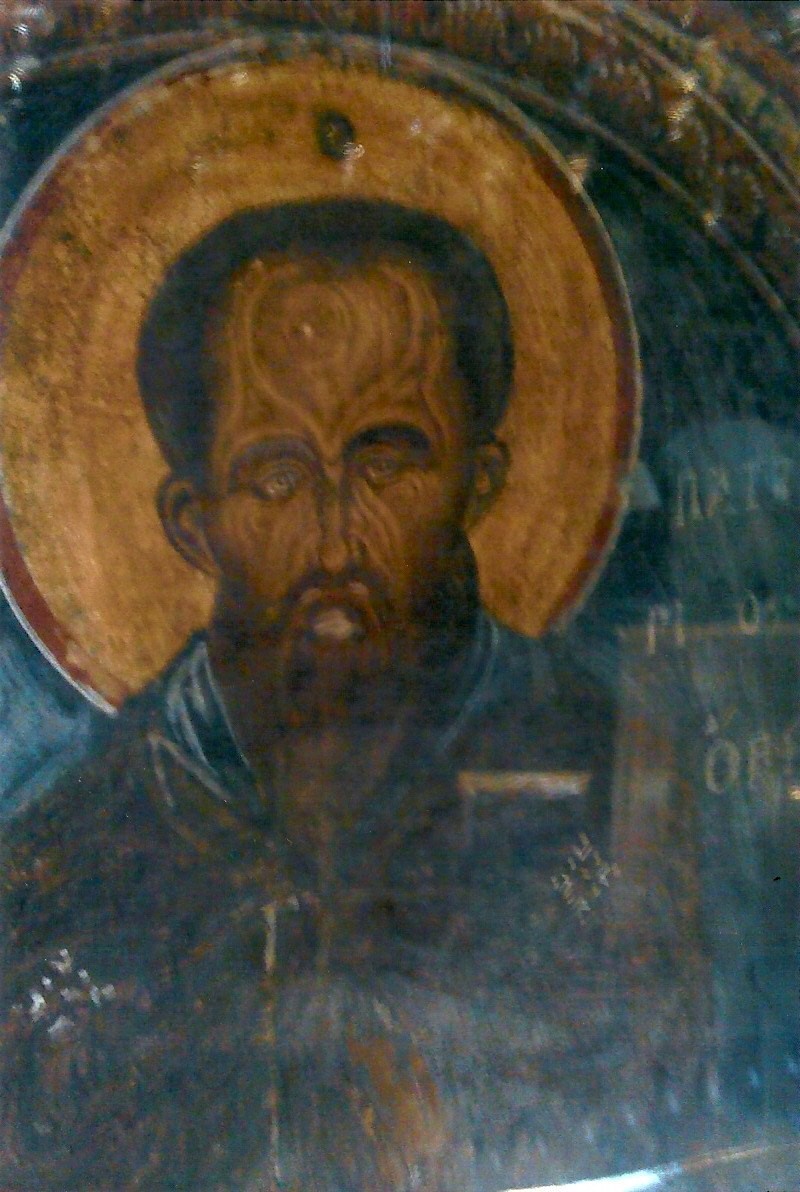
Saint of the Day – 8 December – Saint Patapius (7th Century) Hermit

Saint of the Day – 8 December – Saint Patapius (7th Century) Hermit, spiritual guide, Miracle-worker. Born in Thebes in Egypt and died in Constantinople. Patronage – against Dropsy (oedema). Also known as – Patapius of Thebes, Patapius of Egypt, Patapios…Patario…Patapius…

The Roman Martyrology reads today: “At Constantinople, St Patapius, Solitary, renowned for virtues and miracles.

We have no certain information regarding the exact period of his life; some evidence suggests he had arrived in Constantinople around the time in which two other Egyptians, Bara and Rabula, founded Monasteries there (late 5th, early 6th Century). The Bollandists propose the 7th Century.

St Andrew of Crete (660-740), who lived at a time close to that of Patapius, wrote a Life, a narrative of his miracles.
John of Euchaites (11th Century) speaks of an ancient Life, already mentioned by St Andrew of Crete but both authors certainly adhered to tradition in their works, developing above all the hagiographical style.

Patapius, originally from Thebes in Egypt, spent a certain number of years in solitude in the surroundings of this City; then he went to Constantinople, stopping in the Blachernae district, near the City Walls, where he lived for a long time.
His fame for sanctity immediately attracted numerous visitors. He cured a blind man, a man with dropsy, a possessed man and a woman suffering from a breast disease.
Upon his death, amid popular veneration, he was buried in the Church of St John the Baptist in a nearby Monastery called the Egyptian Monastery, where his body was still venerated at least until the 15th Century.

Posted in Against SORE THROATS, COUGHS, WHOOPING COUGH,, DOCTORS, / SURGEONS / MIDWIVES., PATRONAGE - LUNG and RESPIRATORY illness, PATRONAGE - OEDEMA/DROPSY, PATRONAGE - POLICE, SOLDIERS, PRIESTS, all CLERGY, SAINT of the DAY

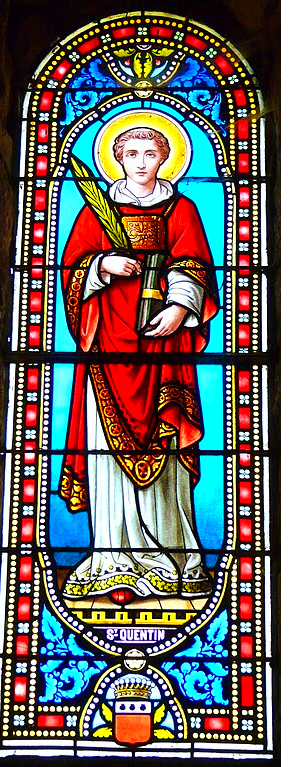
Saint of the Day – 31 October – Saint Quentin (Died c287) Martyr,

Saint of the Day – 31 October – Saint Quentin (Died c287) Martyr, Roman Senator, Missionary. Died in c287 after horrible torments he was finally beheaded. Patronages – against coughs, whooping courgh, colds, against dropsy, against sneezing, of bombardiers, of Chaplains, locksmiths, porters, surgeons, tailors, of Amiens in France, of Monticelli Terme in Italy. Also known as – Quentin of Vermand, Quentin of Amiens, Quinten… Quintin…Quintino… Quintinus… Additional Memorials – 24 June on some calendars, 3 January (discovery of his body), 25 October (translation of the body). In art Quentin is often depicted as a Deacon.

The Roman Martyrology reads today: “At Saint Quentin, in France, St Quintinus, a Roman citizen and Senator, who endured Martyrdom under the Emperor Maximian. By the revelation of an Angel, his body was found incorrupt after the lapse of 55 years.

Quentin belonged to a Roman senatorial family and came to Gaul under the Emperor Maximian to work with St Lucian who was later also Martyred near Beauvais in c290, as a missionary of faith in the area around Amiens.

The Life os St Quentin Unknown Dutch Master

He was arrested in Vermand and finally beheaded near what is now St-Quentin. According to later tradition, he was pricked with nails, doused with hot pitch and his body thrown into the River Somme. Around 55 years later, the blind Roman noblewoman, Matron Eusebia had the body recovered from the Somme following a vision and buried in a Chapel she had built.

The Martyrdom of St Quentin – Unknown artist

According to St Gregory of Tours, Quentin was already being venerated in the 6th Century. Around 641, St Eligius of Noyon found the Relics and made a richly decorated Tomb (St Eligius being a renowned craftsman and goldsmith) – the first recorded story of the Passion of St Quentin dates from that time.

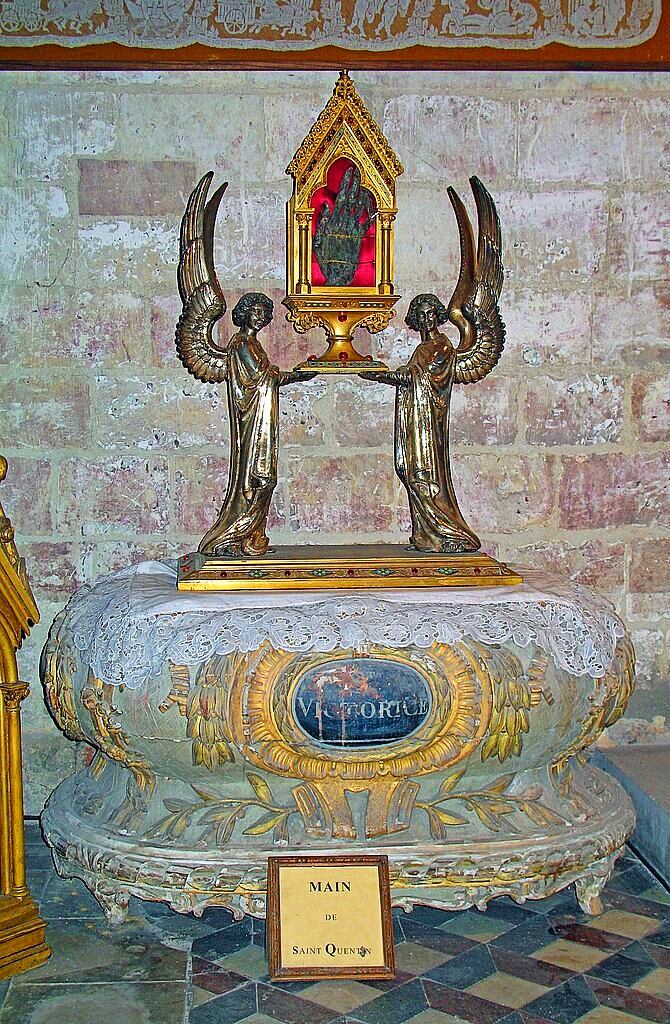
Due to the large stream of pilgrims to the Church dedicated to the Martyr , the Town of St-Quentin developed on this site. The Church, which was renovated between 813 and 826 and again in the 13th Century, contains Quentin’s Tomb and today is a very large Basilica and is still a place of pilgrimage and miracles, so much so, that a new Church, the current Basilica, had to be erected to accommodate the faithful. The Processional Bust and Reliquary below might be that crafted by St Eligius (?).

St Quentin’s Relics in the Basilica at St Quentin

In 881, because of the Norman invasions, the Relics were taken to Laon. In Parma, the Church of San Quintino is dedicated to our Saint which dates to an old Oratory which was built outside the City walls.

the processional Religuary of St Quentin kept in the Basilica

The Martyrs Sts Victoricus and Fuscian were St Quentin’s followers.

 
Basilica of St-Quentin in St-Quentin
Posted in GOUT, KNEE PROBLEMS, ARTHRITIS, etc, PATRONAGE - OEDEMA/DROPSY, PATRONAGE - VINTNERS, WINE-FARMERS, SAINT of the DAY

Saint of the Day – 14 March – Saint Leobinus of Chartres (Died c 558)

Saint of the Day – 14 March – Saint Leobinus of Chartres (Died c 558) Bishop of Chartres, Abbot, Hermit, Miracle worker – he had the gift of healing, especially of dropsy or edema – born as Lubin at Poitiers, France and died on 14 March 558 of natural causes.   Patronages – against dropsy/oedema, against rheumatism, of innkeepers and wine merchants.st leobinus of chartres

Leobinus’s parents were peasants from the region of Poitiers in France.   As a young boy, Leobinus had an aptitude for learning and applied to a monastery where he was employed in menial tasks.

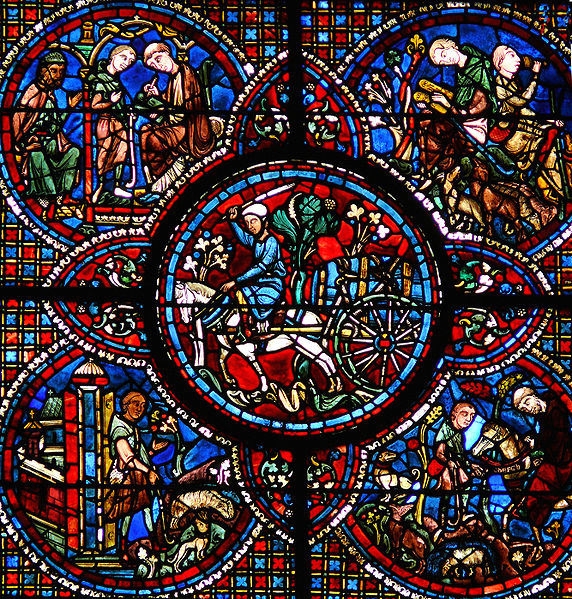
His work occupied him the entire day and he was obliged to do most of his studying at night, screening his candle as best he could.   The monks complained that the light disturbed their slumbers but by much humility and perseverance Lubin advanced in knowledge.572px-Chartres_-_Vitrail_de_la_Vie_de_saint_Lubin- leobinus1

He eventually joined the monastery and, probably at the suggestion of St Carilef, for a time lived as a hermit under the guidance of St Avitus.   Later, he settled in an abbey near Lyons, remaining for five years.Mar+14+Leobinus+of+Chartres+1

In a war between the Franks and the Burgundians this monastery was raided and all the monks fled with the exception of Leobinus and an old monk.   The enemy, unable to extort from Leobinus the location of the monastery’s “treasure”, tortured him by first strangling him with a rope and then by tying his feet and dipping him, head first, into the river.   Left for dead, he recovered and was received in the monastery of Le Perche.st leobanus

After Avitus died, Leobinus continued living as a hermit until he was ordained by Bishop. Aetherius of Chartres, who appointed him Abbot of Brou.   He served until apparently deciding he did not like administrative duties.   So he left to become a monk at Lérins.
He remained there until St Caesarius, the Bishop of Arles and a former monk at Lérins convinced him to return to Brou, rather than to leave his people “like sheep without a shepherd.”

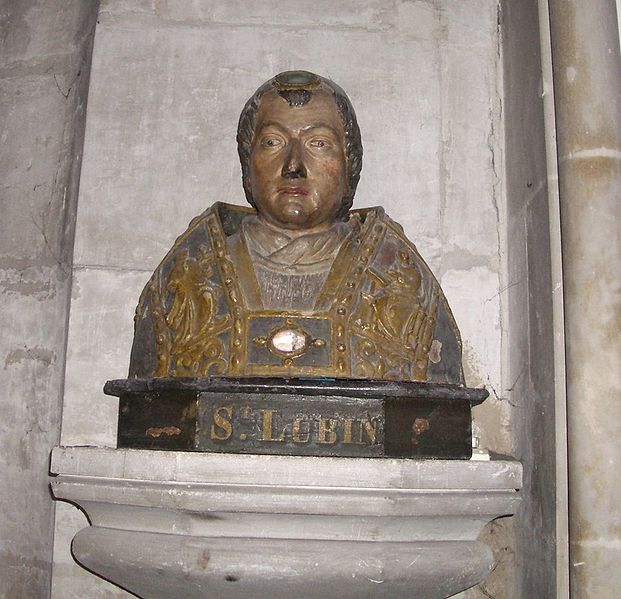
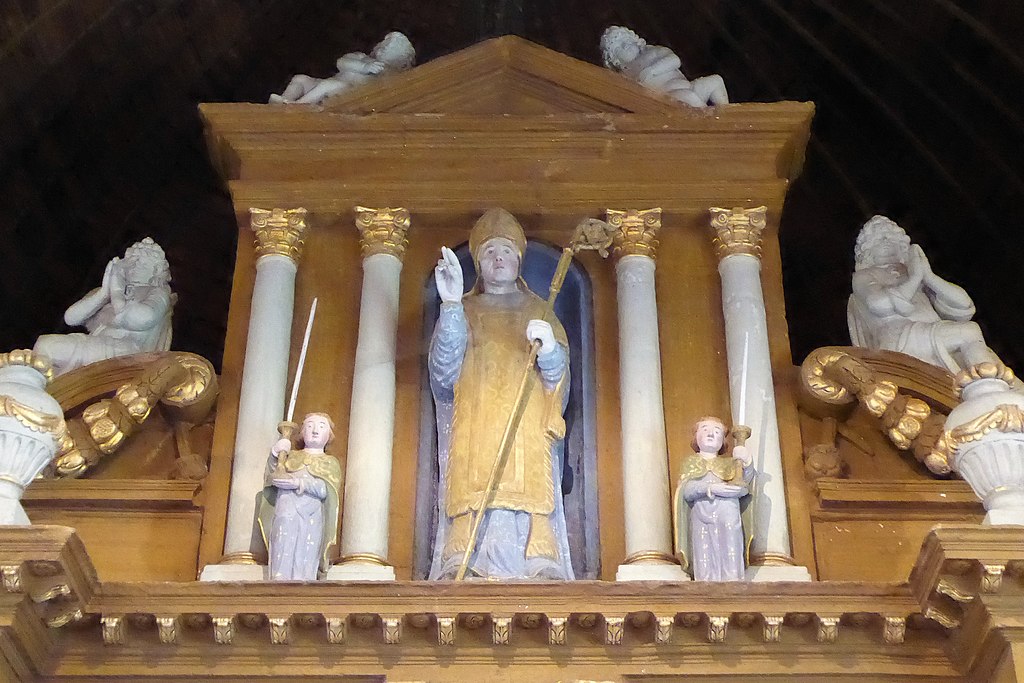
Leobinus participated in the Fifth Council of Orleans and in the Second Council of Paris and died on March 14, about the year 558, after a long illness.   He was buried at the Church named for him in Chassant, Eure-et-Loir, France.621px-Buste_saint_lubin leobinas1024px-Saint_Leobinus _église_Saint-Lubin_Chassant_Eure-et-Loir_France