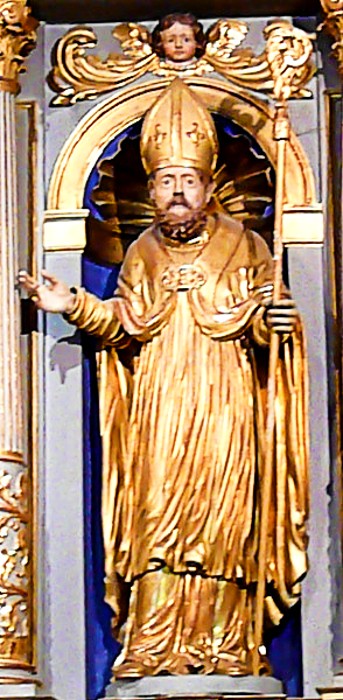
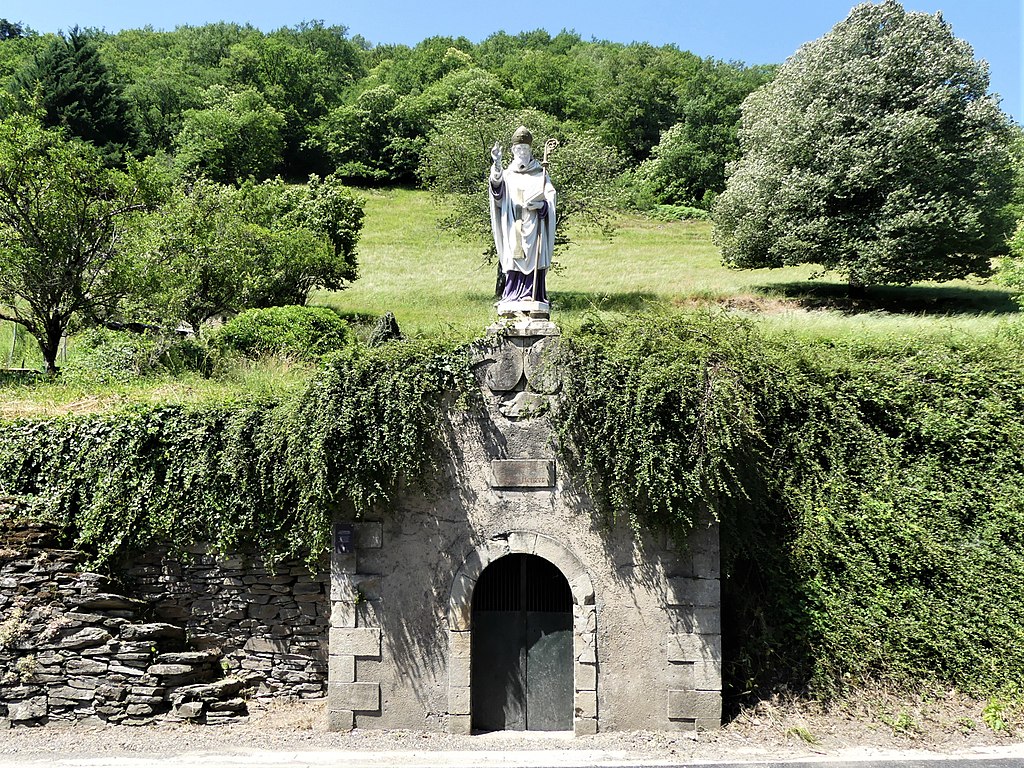
Saint of the Day – 1 July – Saint Fleuret of Estaing (Died c621) Bishop of Auvergne, France , Miracle-worker. Patronages – the blind, those with eye ailments, the lame and crippled, Estaing (modern Aveyron), France. Also known as – Fleuret of Auvergne.
The only known medieval narrative about our Saint is in the Estaing Breviary which says he was the Bishop of Auvergne, the Province north of Rouergue.
The local Abbot was returning with our Bishop from a Synod in Rome and invited him to stay in the village for a while. During this sojourn, a blind man was cured by washing his eyes in water which Fleuret had used and a lame man was enabled to walk, when the Saint gave him a piece of bread.
Local tradition summarised in literature at the Parish Church, has it that he converted the village to Christ by his preaching.
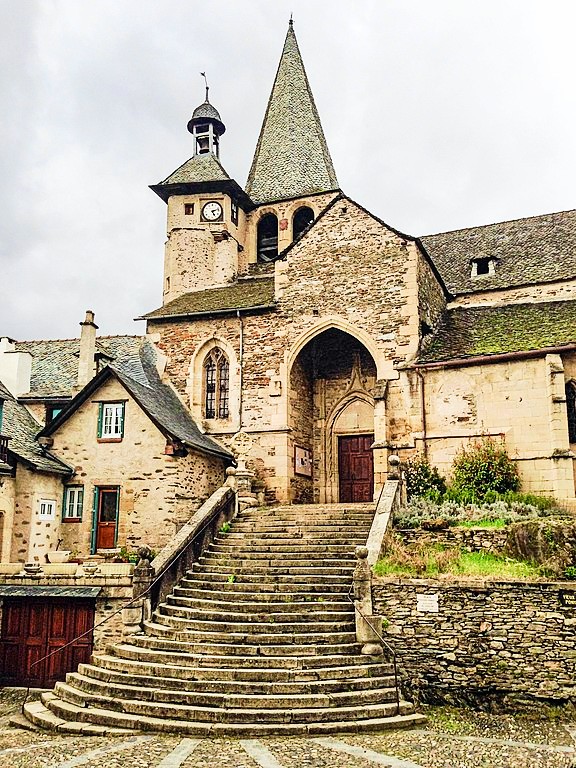
St Fleuret’s Parish Church
The people were amazed and encouraged the Bishop to extend his stay. He did,but after two weeks he took ill and died.
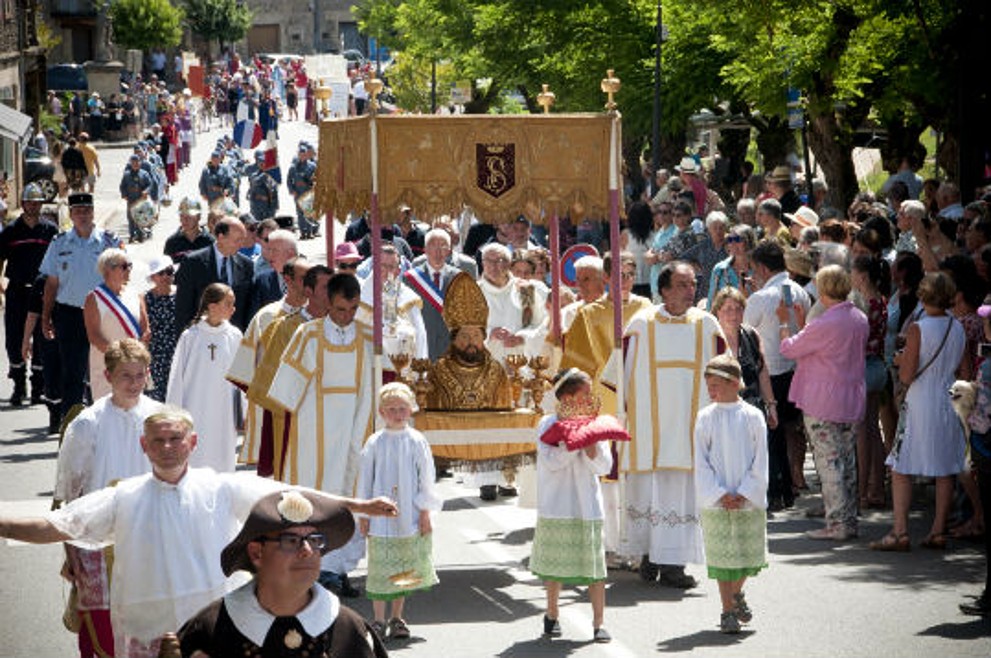
St Fleuret’s Procession in Estaing: According to tradition, St Fleuret, regional Bishop of Auvergne, stopped off at Estaing where he died in 621. St Fleuret’s cult has been attested since the 15th Century. In the 17th and 18th Centuries.
The festival was the occasion for the election of a youth king and a queen. This became more profane than religious, and was condemned by the Church. The Festival was restored in the 19th Century in the form that we now celebrate it as a symbolic, historical and religious tribute.
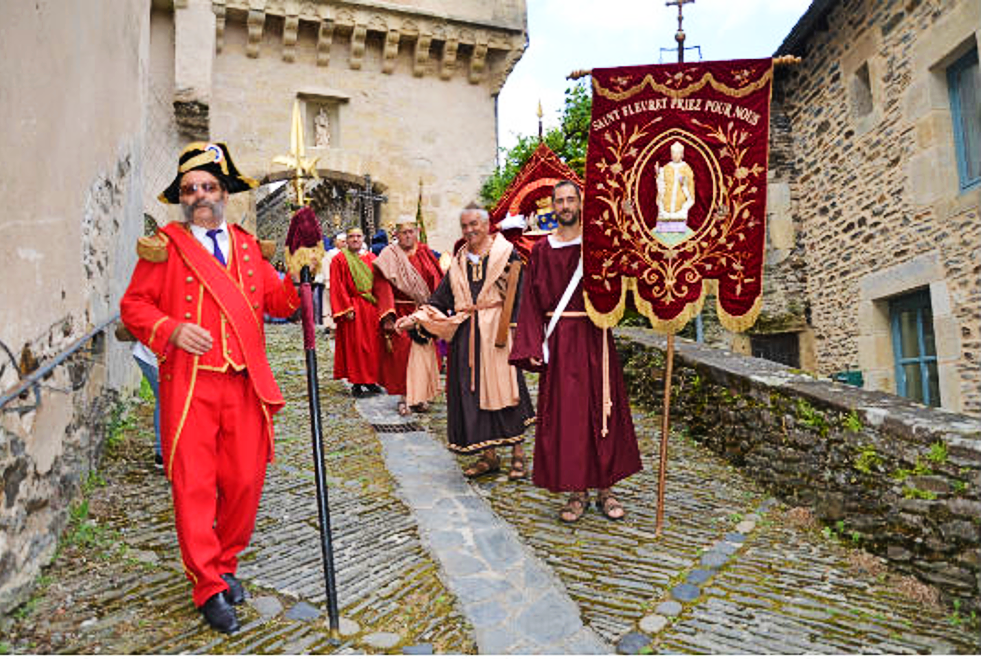
Every first Sunday of July the Procession of Saint Fleuret takes place. A parade representing Saints of Paradise, members of the Ecclesiastical hierarchy, Angels, Archangels, faithful of the old brotherhoods, pilgrims and the most illustrious characters of the Estaing family… accompanied by the clergy and the civil Officials.
They venerate the Relics and the bust in gilded wood of St Fleuret which are carried all along the roads under the triumphal canopy and visiting St Fleuret’s miraculous spring (see below).
Saint of the Day – 1 June – Saint Angelica de Merici TOSF (1474-1540) Virgin, Founder the Company of St Ursula, later called the Ursulines, Third Order Franciscan, Mystic, Apostle of the poor, sick and needy, Teacher, Penitent and Ascetic. Patronages – sickness, handicapped people, loss of parents, courage,
Angela de Merici was born of virtuous parents at Decenzano, a town in the Diocese of Verona, near lake Benago, in the Venetian territory. From her earliest years, she kept the strictest guard over the lily of her virginity, which she had resolved should never be taken from her. She had a thorough contempt for those outward deckings, on which so many women set their hearts. She purposely disfigured the beauty of her features and hair, that she might find no favour, save with the Spouse of our souls.
Whilst yet in the bloom of youth, she lost her parents, whereupon, she sought to retire into a desert, that she might lead a life of penance. Being prevented by an uncle, she fulfilled, at home, what she was not permitted to do in a wilderness. She frequently wore a hairshirt and took the discipline. She never ate flesh-meat, except in case of sickness, she never tasted wine, except on the Feasts of our Lord’s Nativity and Resurrection and, at times, would pass whole days without taking any food at all.
She spent much time in prayer and exceedingly little in sleep and that little, on the ground. The devil having once appeared to her in the form of an angel of light, she at once detected his craft, and put him to flight. At length, having resigned her right to the fortune left her by her parents, she embraced the Rule of the Third Order of St. Francis, received the habit and united evangelical poverty, to the merit of virginity.
She showed her neighbour every kind office in her power and gave to the poor a portion of her own food, which she procured by begging. She gladly served the sick. She gained the reputation of great sanctity in several places, which she visited, either that she might comfort the afflicted, or obtain pardon for criminals, or reconcile them that were at variance, or reclaim sinners from the sink of crime.
She had a singular hungering after the Bread of Angels, which she frequently received and such was the vehemence of her love of God, that she was often in a state of ecstacy. She visited the Holy Places of Palestine with extraordinary devotion. During her pilgrimage, she lost her sight on landing on the isle of Candia but recovered it when leaving. She also miraculously escaped shipwreck and falling into the hands of barbarians. She went to Rome, during the Pontificate of Pope Clement the Seventh, in order to venerate the firm Rock of the Church and to gain the great Jubilee Indulgence. The Pope having had an interview with her, he at once discovered her sanctity and spoke of her to others in terms of highest praise, nor would he have allowed her to leave the City, had he not been convinced that heaven called her elsewhere.
Having returned to Brescia, she took a house near the Church of Saint Afra. There, by God’s command, which was made known to her by a voice from heaven and by a vision, she instituted a new society of Virgins under a special discipline and holy rules, which she herself drew up. She put her Institute under the title and patronage of Saint Ursula, the brave leader of the army of virgins.
She also foretold,, shortly before her death, that this Institute would last to the end of the world. At length, being close upon seventy years of age, laden with merit, she took her flight to Heaven and in the year 1540, on 27 January 27. Her corpse was kept for thirty days before being put in the grave and preserved the flexibility and appearance of a living body. It was laid in the Church of Saint Afra, amidst the many other Relics wherewith that Church is enriched.
Many miracles were wrought at her tomb. The rumour of these miracles spread not only through Brescia and Decenzano but also in other places. The name of Blessed was soon given to Angela and her image used, to be put on the Altars of St Charles Borromeo. A few years after Angela’s death, it was affirmed, that she was worthy of Canonisation. Clement the Thirteenth ratified and confirmed the devotion thus paid her by the Faithful, which had already received the approbation of several Bishops and the encouragement of several Indults of Sovereign Pontiffs. Finally, after several new miracles had been juridically proved, Pius the Seventh enroled Angela in the list of holy Virgins, in the solemn Canonisation celebrated in the Vatican Basilica, on the 24th of May, in the year 1807.
“Angela realised the whole meaning of her beautiful name. In a mortal body, she possessed the purity of the blessed Spirits and imitated their celestial energy by the vigorous practice of every virtue. This heroine of grace, trampled beneath her feet, everything that could impede her heavenward march.” – Abbot Dom Prosper Guéranger OSB (1805-1875)
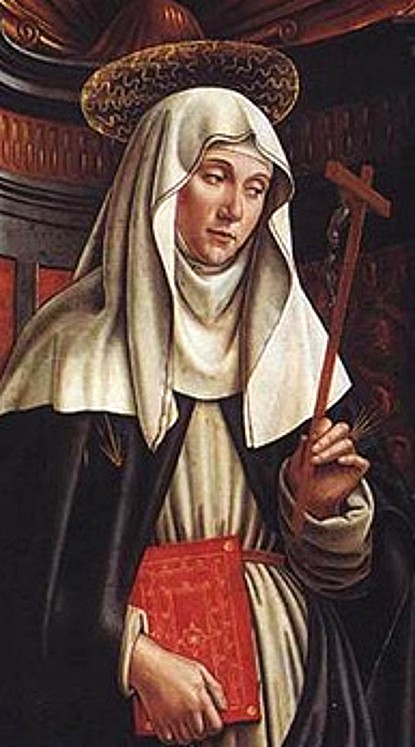
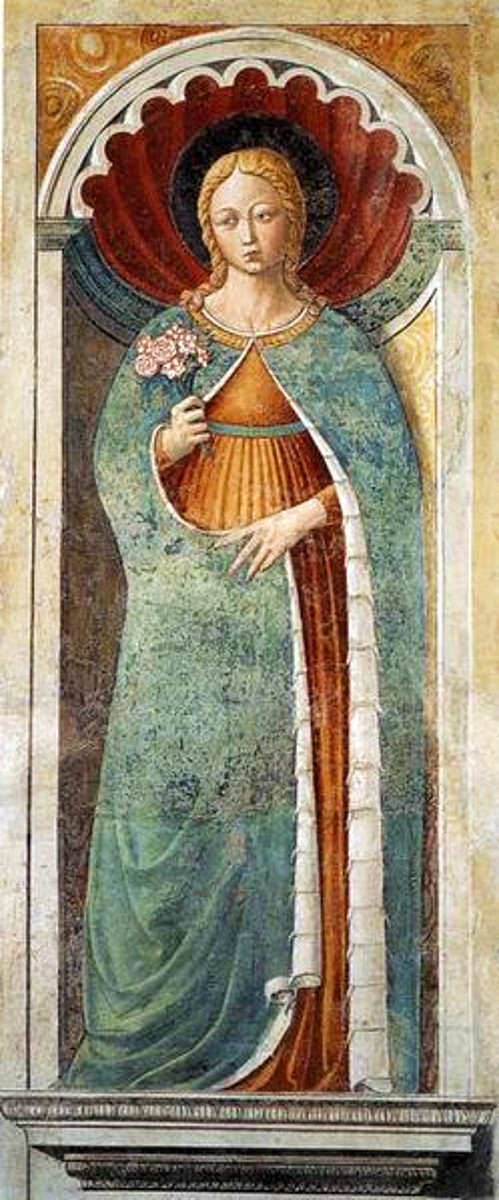
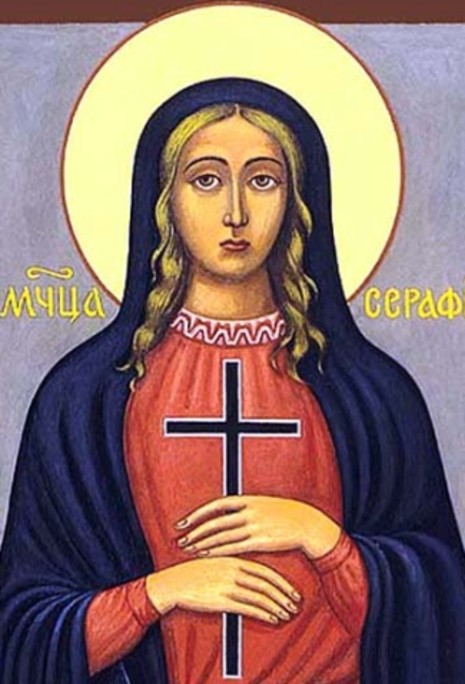
Saint of the Day – 12 March – Saint Seraphina (1238-1253) Virgin. Born as Fina dei Ciardi , in 1238 at San Geminiano, Tuscany, Italy and died on 12 March 1253 of natural causes, aged 15. PATRONAGES– crippled, paralysed and disabled people, spinners. Also known as Fina, Serafina. Saint Seraphina is celebrated in San Gimignano on both 12 March, the anniversary of her death and the first Sunday in August.
Fina dei Ciardi was born in San Gimignano in 1238. The Daughter of Cambio Ciardi and Imperiera, a declined noble family, she lived all her existence in a humble house located in the historic centre of the famous “city of beautiful towers” (today the small road on which her house stands takes her name). There is little record of the first ten years of her life and what information is available comes from legends narrated after her death. Some accounts note Seraphina’s strong devotion to the Virgin Mary and that she went out, only to hear Mass. She was also said to be extraordinarily kind.
In 1248, Seraphina’s life was changed by a serious illness, which began, progressively, to paralyse her (probably a form of tuberculous osteomyelitis). Her deep faith relieved her pain. She refused a bed and chose instead, to lie on a wooden pallet. According to her legend, during her long illness, her body became attached to the wood of the table, with worms and rats feeding on her rotting flesh. During her illness, she lost her father and later her mother died after a fall. In spite of her misfortunes and poverty, she thanked God and expressed a desire that her soul might separate from the body, in order to meet Jesus Christ.
In her reading, St Seraphina had heard of the great sufferings of St Gregory the Great and he became her special Patron. She prayed to him, drew strength from the sufferings that he had to endure and prayed, that he would obtain for her, the patience she needed to bear her own sufferings. She was now so weak and helpless, that it was clear to everyone she could not live very long.
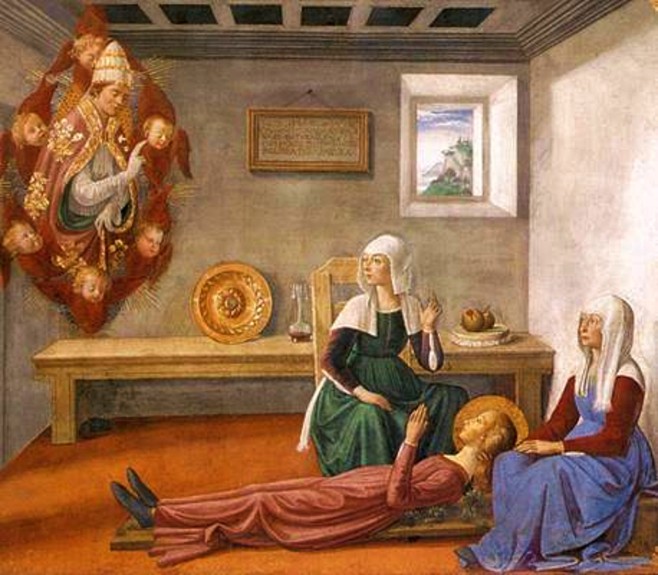
Seraphina’s immense devotion was an example to all the citizens of San Gimignano, who frequently visited her. Visitors were surprised to receive words of encouragement from a desperately ill young girl who was resigned to the will of God. On 4 March 1253, after five years of sickness and pain, her nurses Beldia and Bonaventura, were waiting for her to die. Suddenly, Saint Gregory the Great appeared in Seraphina’s room and predicted, that she would die on the 12th of March .Seraphina died on the predicted date at the age of 15.
Miracles attributed to Seraphina are mentioned in stories, paintings, poems and in notary documents. The most important miracle of her life, was her vision of Saint Gregory, also because she died on Saint Gregory’s Feast day (12 March) as he predicted.
When Seraphina’s body was removed from the pallet that was her deathbed, onlookers saw white violets bloom from the wood and smelt a fresh, floral fragrance throughout her house. The violets grew on the walls of San Gimignano and still grow there today. For this reason, the townspeople call them “The Saint Seraphina violets.” The young girl’s body was brought to the Church and during the transfer, the crowd proclaimed “The Saint is dead!”
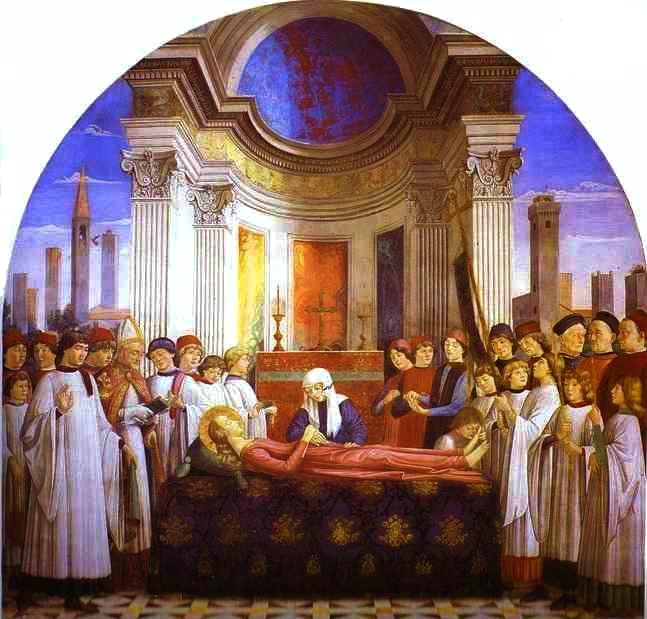
For several days, pilgrims went to the Church to venerate Seraphina’s remains and in the same period, there were many evidences of her intercessionary power. One was her nurse Beldia. The woman had a paralysed hand for the labour in supporting Fina’s head during her sickness. While she was near the body, the dead young girl cured Beldia’s hand. Legends say that, at the exact moment of Seraphina’s passing away, all the bells of San Gimignano rang without anyone touching them.
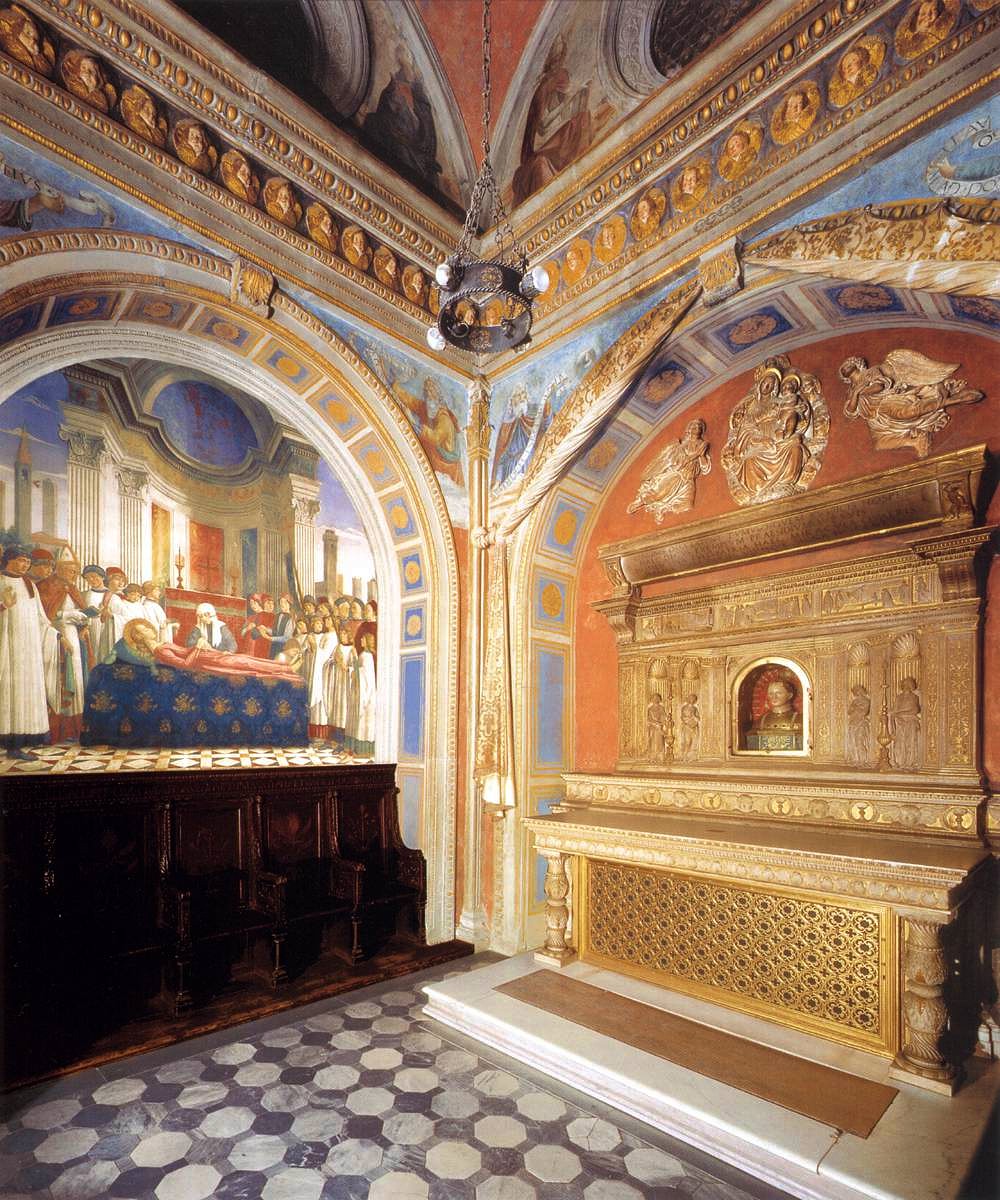
Domenico Ghirlandaio’s Funeral of St Seraphina, details below *-*
Many sick people who visited her grave during the following years were cured and some of these became some of Seraphina’s most fervent devotees.
Another legend tells that during a walk with two of her friends she heard another young girl, Smeralda, crying. Smeralda had broken a pitcher given her to fill with water from well. While she was entertained by other children, she forgot the pitcher on the ground which unfortunately rolled down and broke. Seraphina told her to arrange the pieces and put them under the water and the pitcher became whole and full of water.
Another anecdote about Seraphina’s miracles is the one of Cambio di Rustico, the Ciardi family’s neighbour. On one anniversary of Seraphina’s death, when the townsfolk had a holiday to remember her, Cambio went to cut wood and hurt his leg. Suffering, he asked forgiveness of Saint Seraphina and was very sorry for not having respected her memorial. His cut then miraculously disappeared.
Saint Fina is celebrated in San Gimignano on two separated days. Her first feast is on 12 March – the anniversary of her death – which has been a statutory holiday in the town since 1481. The second feast on the first Sunday of August, commemorates her miraculous intercession for the cessation of two incidents of the Plague, which had ravaged the town in 1479 and 1631.
On both days, her relics are carried in procession in order to bless the town. Her example of devotion has been handed down by the people of San Gimignano through her veneration, despite not being formally canonised by the Church. So, as written in some paintings dedicated to her, it would be correct to call her Blessed Fina. In fact, the official Patron saint of her town, is still Saint Gimignano.
The most important memorial produced in the memory of Saint Fina is the hospital which took her name and was built in 1255, thanks to donations given at her tomb. The hospital gave hospitality to old and poor people and pilgrims too. It became in the following century one of the best in Tuscany. In the hospital’s Chapel, the original oak wood table where Saint Seraphina lay for five years is preserved.
*A Shrine dedicated to Saint Seraphina is a Chapel (designed by Giuliano da Maiano in 1468 and consecrated in 1488) located inside the Church of San Gimignano where, inside theAaltar (built by the brother Benedetto da Maiano), her bones are kept. On the left and right walls of the Chapel there are two frescoes painted by Domenico Ghirlandaio – one shows the vision of Saint Gregory; the other shows the funeral where the violets in blossom on the towers are represented. We also see an angel ringing the bells, Beldia’s cured hand and the self-portrait of the painter and his brother-in-law Mainardi, who painted the Chapel’s ceiling. On the altar there is a bust with Saint Seraphina ’s relics inside.*
View of the Chapel
Inside the Civic Museum of San Gimignano there is a wood tabernacle (by Lorenzo di Niccolò 1402) depicting Saint Seraphina with the town on her lap, an icon of St Gregory and some of her anecdotes. Another image of Fina is in the nearby Sant’Agostino Church, painted by Benozzo Gozzoli. Other artists depicting the Saint’s life were Piero del Pollaiolo and Pier Francesco Fiorentino. In others small Churches in the countryside, further paintings of the Saint reside.
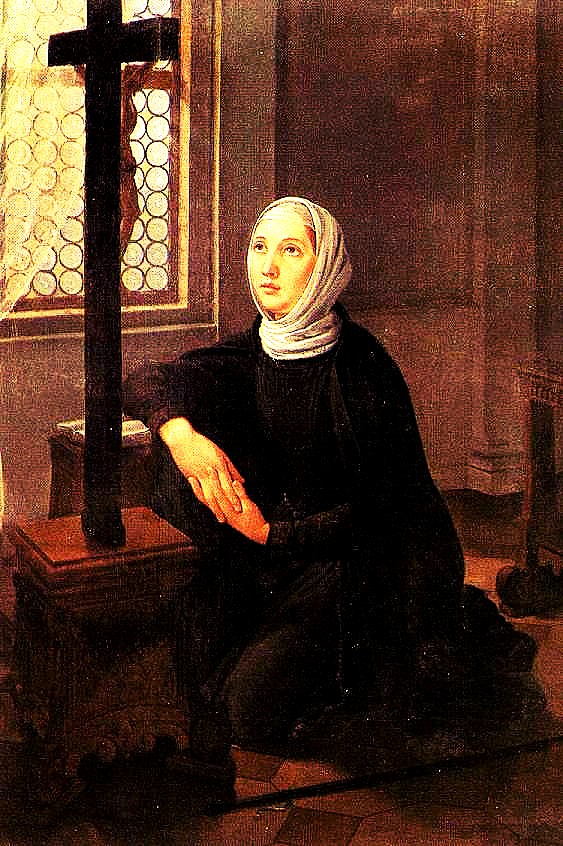
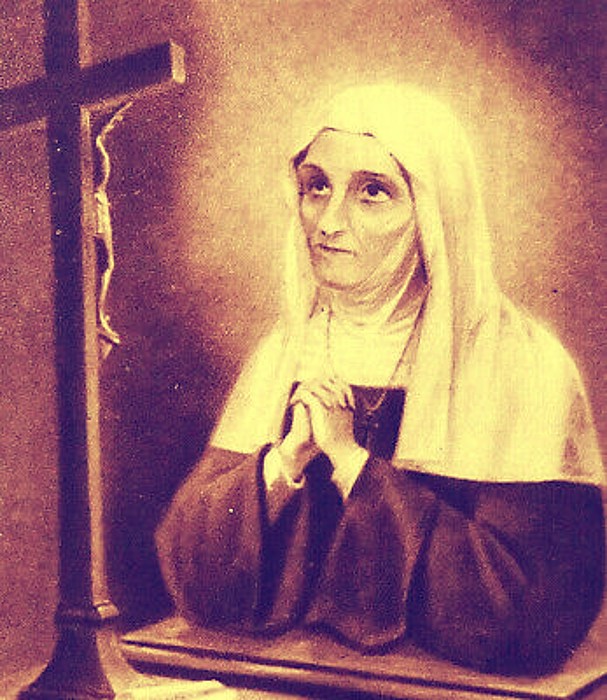
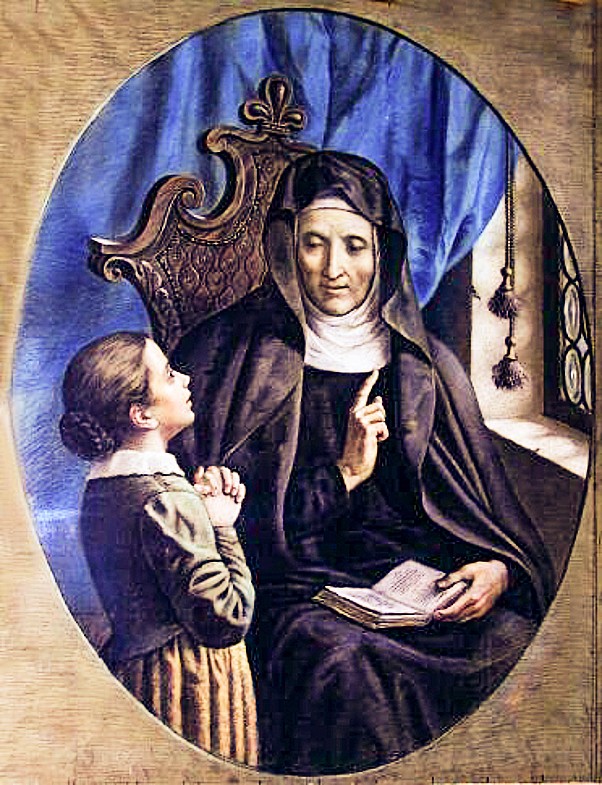
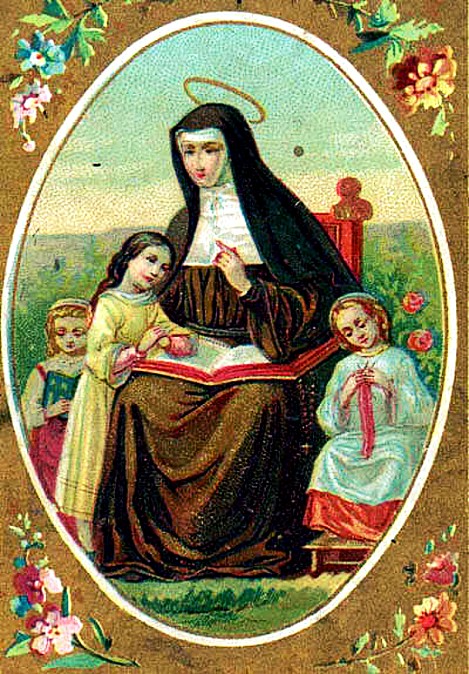
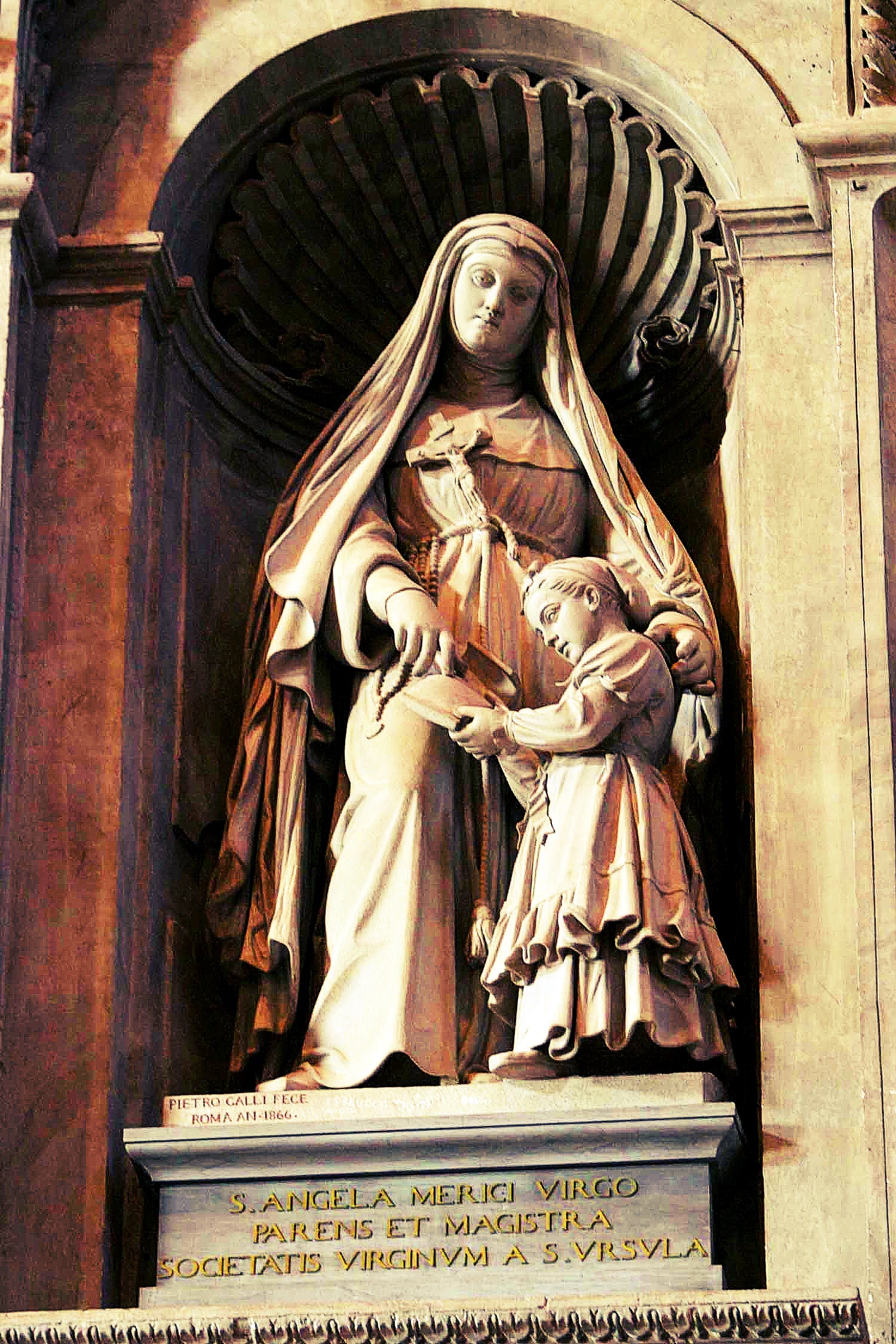
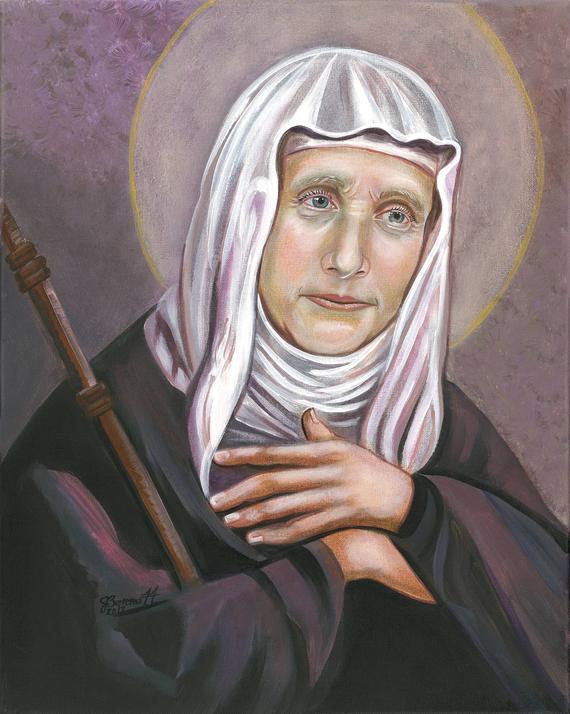
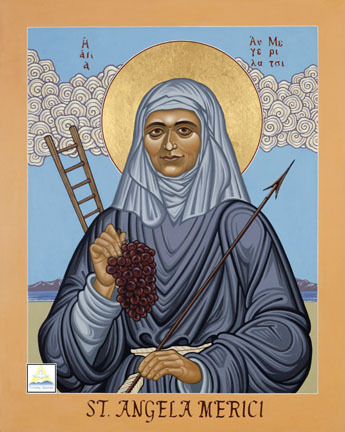
Saint of the Day – 27 January – St Angela Merici (1474-1540) Virgin, Founder. She founded the Company of St. Ursula in 1535 in Brescia, in which women dedicated their lives to the service of the Church through the education of girls. From this organisation later sprang the monastic Order of Ursulines, whose Nuns established places of prayer and learning throughout Europe and, later, worldwide, most notably in North America. Born on 21 March 1474 in Desenzano del Garda, Province of Brescia, Venice, Italy and died oh 27 January 1540 (aged 65) at Brescia of natural causes. Patronages – sickness, handicapped people, loss of parents, courage, She was Beatified on 30 April 1768 by Pope Clement XIII and Canonised on 24 May 1807 by Pope Pius VII.
Women like St Teresa of Ávila and St Catherine of Genoa contributed significantly to the Catholic Reformation. But in the 16th century church perhaps, no woman responded more creatively to the need for reform than St Angela Merici. She built communities that trained single women in Christian living and provided them a secure place of honour in their local societies.
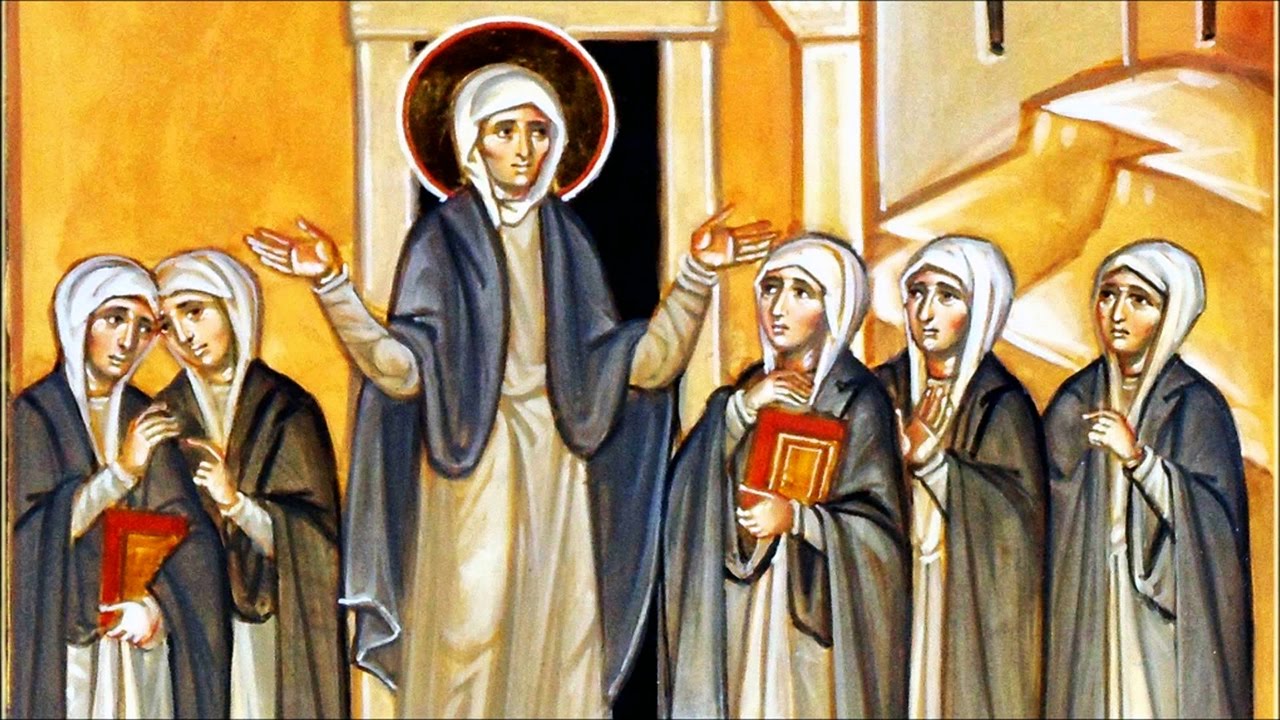
A single lay woman herself, Angela established groups of unmarried women of all classes in Brescia and other northern Italian cities. She wanted the women to be in the world but not of it. So they consecrated themselves to God and promised to remain celibate. But they lived at home with their families and looked for ways to serve their neighbours. In 1535, Angela organised the groups into the Company of St Ursula, later called the Ursulines. Unique for its time, her avant-garde association anticipated modern secular institutes and covenant communities.
Angela gave the Ursulines a military structure, dividing towns into districts governed hierarchically by mature Christian women. This design allowed the community to support members in daily Christian living and protect them from spiritually unhealthy influences.
The rule that Angela wrote for the company required members to remain faithful to the Christian basics. In the following excerpt, she explains the importance of daily vocal and mental prayer:
Each one of the sisters should be solicitous about prayer, mental as well as vocal, that is a companion to fasting. For Scripture says prayer is good with fasting. As by fasting we mortify the carnal appetites and the senses, so by prayer we beg God for the true grace of spiritual life. Thus, from the great need we have of divine aid, we must pray always with mind and heart, as it is written, “Pray constantly” (1 Thessalonians 5:17 NJB). To all we counsel frequent vocal prayer that prepares the mind by exercising the bodily senses. So each one of you, every day will say with devotion and attention at least the Office of the Blessed Virgin and the seven penitential psalms (Psalm 6, 32, 38, 51, 102, 130, and 143) because in saying the office we are speaking with God.
To afford matter and some method in mental prayer, we exhort each one to raise her mind to God and to exercise herself in it every day. And so in the secret of her heart, let her say:
“My Saviour, illumine the darkness of my heart and grant me grace rather to die than to offend your Divine Majesty anymore. Guard, O Lord, my affections and my senses, that they may not stray, nor lead me away from the light of your face, the satisfaction of every afflicted heart.
I ask you, Lord, to receive all my self-will, that by the infection of sin, is unable to distinguish good from evil. Receive, O Lord, all my thoughts, words and deeds, interior and exterior, that I lay at the feet of your Divine Majesty. Although I am utterly unworthy, I beseech you to accept all my being.”
At Angela Merici’s death in 1540 she had started 24 groups. Over the years the Ursulines have flourished as the oldest and one of the most respected of the church’s teaching orders.
To the long list of authorities Ursulines were to obey—Ten Commandments, Church, parents, civil laws—St Angela added “divine inspirations that you may recognise as coming from the Holy Spirit.” A refreshing and liberating rule. Also a dangerous one, for when it’s obeyed, the Holy Spirit may act in unexpected ways.
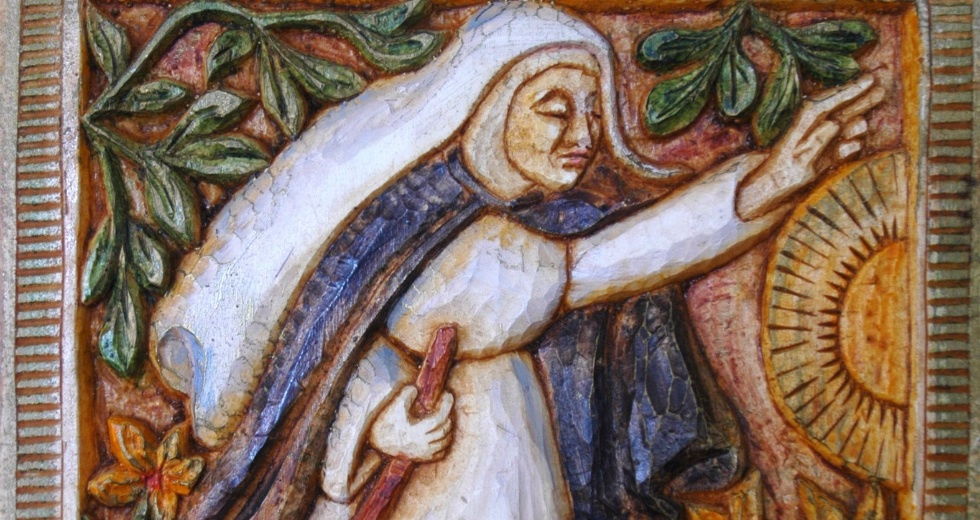
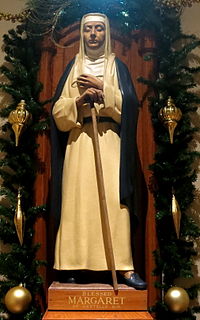
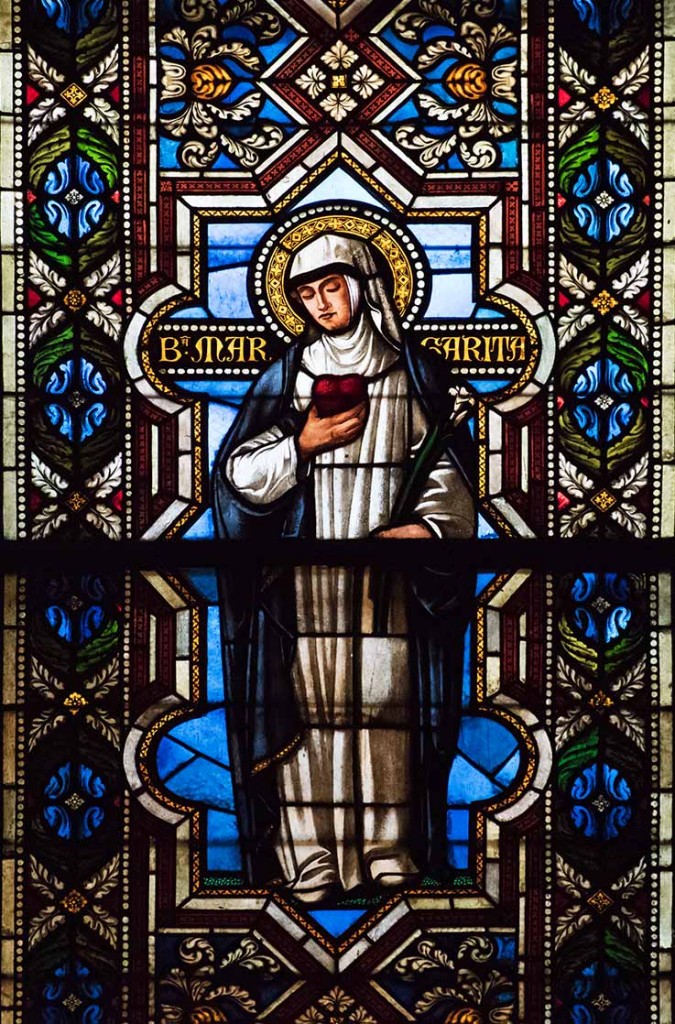
Saint of the Day – 13 April – Blessed Margaret of Castello O.P. (1287-1320) was an Italian professed member from the Third Order of the Order of Preachers of St Dominic. Margaret was disabled and became known for her deep faith and holiness. Patronages – against poverty, disabled people, handicapped people, people rejected by religious orders,Pro-Right Groups. Her body is incorrupt.
Bl Margaret of Castello was born in the fourteenth century in Metola, Italy to noble parents who wanted a son. When the news was brought to the new mother that her newborn daughter was a blind, hunchbacked dwarf, both parents were horrified. Little Margaret was kept in a secluded section of the family castle in the hopes that her existence would be kept secret. However, when she was about six years old, she accidentally made her presence known to a guest. Determined to keep her out of the public eye, her father had a room without a door built onto the side of the parish church and walled Margaret inside this room. Here she lived until she was sixteen, never being allowed to come out. Her food and other necessities were passed in to her through a window. Another window into the church allowed her to hear Mass and receive Holy Communion. The parish priest became a good friend and took upon himself the duty to educate her. He was amazed at her docility and the depth of her spiritual wisdom.
When Margaret was sixteen years old, her parents heard of a shrine in Citta di Castello, Italy, where many sick people were cured. They made a pilgrimage to the shrine so that she could pray for healing. However, Margaret, open to the will of God, was not healed that day, or the next, so her parents callously abandoned her in the streets of the town and left for home, never to see her again. At the mercy of the passersby, Margaret had to beg her food and eventually sought shelter with some Dominican nuns.
W. R. Bonniwell writes, “Her cheerfulness, based on her trust in God’s love and goodness, was extraordinary. She became a Dominican tertiary and devoted herself to tending the sick and the dying” as well as prisoners in the city jail.
Deprived of all human companionship, Margaret learned to embrace her Lord in solitude. Instead of becoming bitter, she forgave her parents for their ill treatment of her and treated others as well as she could. Her cheerfulness stemmed from her conviction that God loves each person infinitely, for He has made each person in His own image and likeness. This same cheerfulness won the hearts of the poor of Castello and they took her into their homes for as long as their purses could afford. She passed from house to house in this way, “a homeless beggar being practically adopted by the poor of a city” (Bonniwell, 1955).
Bl Margaret died on 13 April 1320 at the age of 33. More than 200 miracles have been credited to her intercession since her death. She was beatified on 19 October 1609 by Pope Paul V (concession of indult for Mass and Office). Thus, the daughter that nobody wanted is now one of the glories of the Church.





 AnaStpaul
You must be logged in to post a comment.