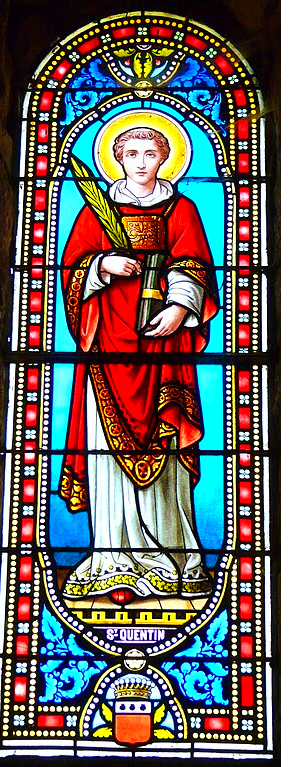
Saint of the Day – 31 October – Saint Quentin (Died c287) Martyr, Roman Senator, Missionary. Died in c287 after horrible torments he was finally beheaded. Patronages – against coughs, whooping courgh, colds, against dropsy, against sneezing, of bombardiers, of Chaplains, locksmiths, porters, surgeons, tailors, of Amiens in France, of Monticelli Terme in Italy. Also known as – Quentin of Vermand, Quentin of Amiens, Quinten… Quintin…Quintino… Quintinus… Additional Memorials – 24 June on some calendars, 3 January (discovery of his body), 25 October (translation of the body). In art Quentin is often depicted as a Deacon.
The Roman Martyrology reads today: “At Saint Quentin, in France, St Quintinus, a Roman citizen and Senator, who endured Martyrdom under the Emperor Maximian. By the revelation of an Angel, his body was found incorrupt after the lapse of 55 years.”
Quentin belonged to a Roman senatorial family and came to Gaul under the Emperor Maximian to work with St Lucian who was later also Martyred near Beauvais in c290, as a missionary of faith in the area around Amiens.
The Life os St Quentin Unknown Dutch Master
He was arrested in Vermand and finally beheaded near what is now St-Quentin. According to later tradition, he was pricked with nails, doused with hot pitch and his body thrown into the River Somme. Around 55 years later, the blind Roman noblewoman, Matron Eusebia had the body recovered from the Somme following a vision and buried in a Chapel she had built.
The Martyrdom of St Quentin – Unknown artist
According to St Gregory of Tours, Quentin was already being venerated in the 6th Century. Around 641, St Eligius of Noyon found the Relics and made a richly decorated Tomb (St Eligius being a renowned craftsman and goldsmith) – the first recorded story of the Passion of St Quentin dates from that time.
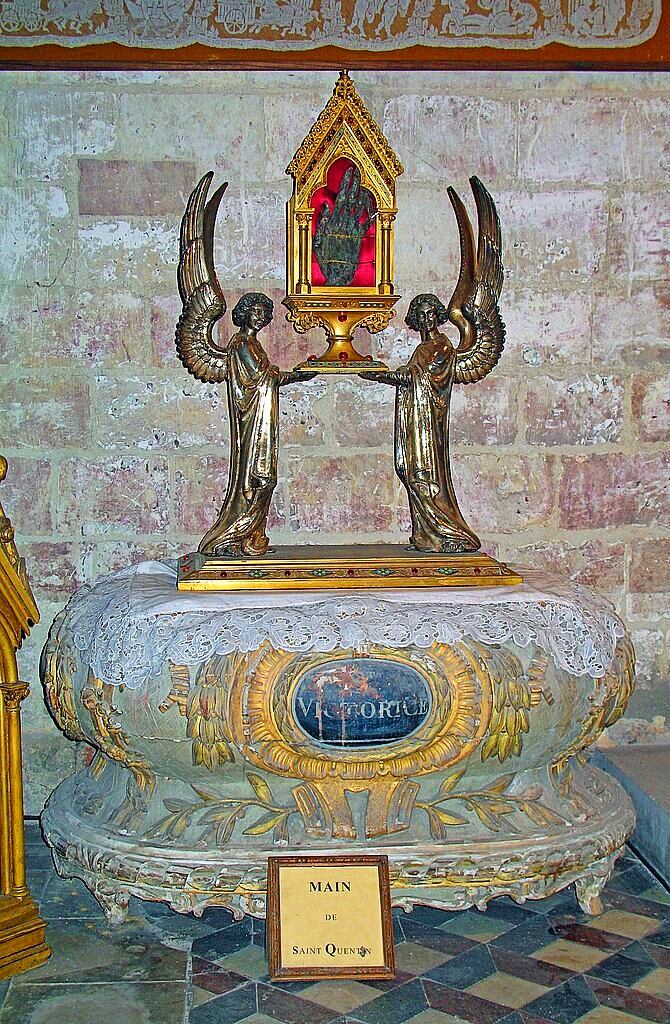
Due to the large stream of pilgrims to the Church dedicated to the Martyr , the Town of St-Quentin developed on this site. The Church, which was renovated between 813 and 826 and again in the 13th Century, contains Quentin’s Tomb and today is a very large Basilica and is still a place of pilgrimage and miracles, so much so, that a new Church, the current Basilica, had to be erected to accommodate the faithful. The Processional Bust and Reliquary below might be that crafted by St Eligius (?).
St Quentin’s Relics in the Basilica at St Quentin
In 881, because of the Norman invasions, the Relics were taken to Laon. In Parma, the Church of San Quintino is dedicated to our Saint which dates to an old Oratory which was built outside the City walls.
the processional Religuary of St Quentin kept in the Basilica
The Martyrs Sts Victoricus and Fuscian were St Quentin’s followers.
Saint of the Day – 8 September – St Adrian (Died 306) Confessor, Lay Martyr, Royal Court Guard in Roman Imperial Court at Nicomedia in Asia-Minor during the time of Emperor Maximian in the early 4th Century. Patronages – against the plague/epidemics, against epilepsy, arms dealers, butchers, guards, soldiers. Also known as – Hadrian.
The Roman Martyrology reads this day: “At Nicomedia, St Adrian, with twenty three other Martyrs, who ended their Martyrdom on the 4th day of March by having their limbs crushed, after enduring many torments, under the Emperors Diocletian and Maximian. Their remains were carried to Byzantium by the Christians and buried with due honours. Afterwards, the body of St Adrian was taken to Rome on this day, on which his festival is celebrated.”
Adrian was a paganGuard at the Imperial Court of Nicomedia. Impressed by the courage of a group of Christians who were being tortured, he declared himself a Christian and was imprisoned with them and suffered excruciating tortures before he was put to death.
After his execution, the executioners wanted to burn the bodies of the dead but a storm arose and quenched the fire. His young wife, Natalia, who was present at his death, comforted him in his agony, recovered one of his severed hands and took it to Argyropolis near Constantinople, where she fled to escape the importunities of an Imperial Official of Nicomedia, who wanted to marry her. She died there peacefully on 1 December in the same year as her husband.
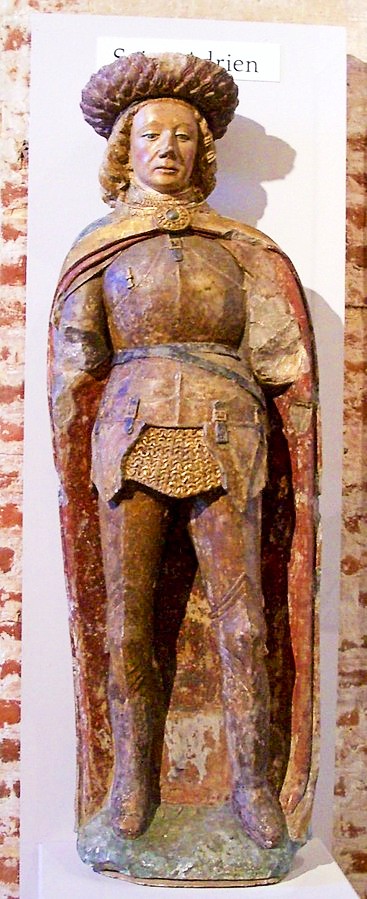
French Statue of St Adrian
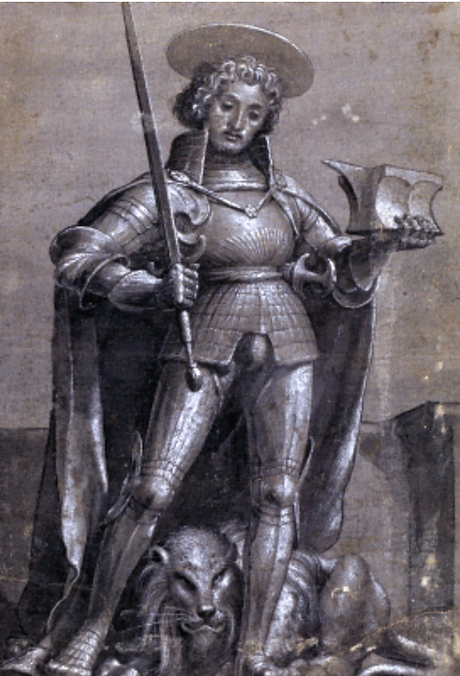
Saint Adrian/Hadrian was the chief military Saint of Northern Europe for many Centuries second only to Saint George and is much revered in Belgium, Germany and the north of France. He is usually represented armed, with an anvil in his hands or at his feet.
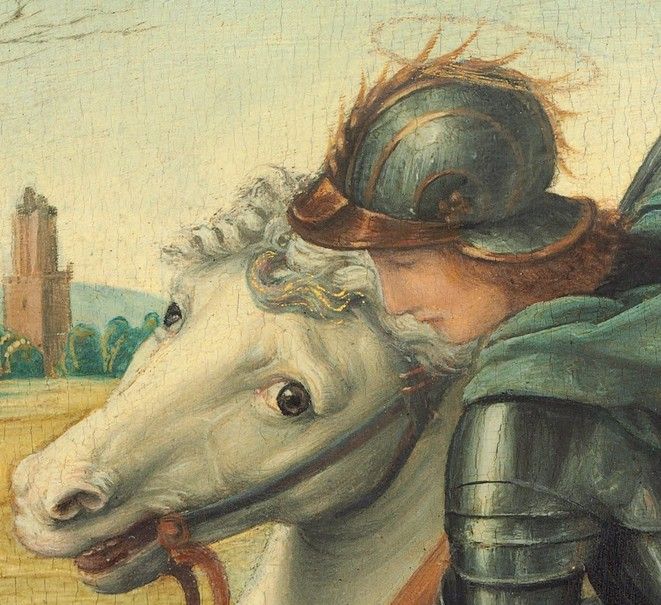
Saint of the Day – 23 April – St George (died c 303) also known as St George of Lydda, Jirí, Jordi, Zorzo, Victory Bringer – Martyr and Soldier. St George was born c 256-285 in Palestine and was tortured and beheaded to death in c 303 in Nicomedia, Bithynia, Roman Empire. Patronages – • against herpes • against leprosy • against plague • against skin diseases • against skin rashes • against syphilis • agricultural workers • Aragon • archers • armourers • Boy Scouts • butchers • Canada • Cappadocia • Catalonia • cavalry • chivalry • Crusaders • England • equestrians • Ethiopia • farmers • field hands • field workers • Georgia • Germany • Greece • halberdiers • horsemen • horses • knights • lepers • Lithuania • Malta • Montenegro • Order of the Garter • Palestine • Palestinian Christians • Portugal • riders • Romanian Army • saddle makers • saddlers • Serbia • sheep • shepherds • soldiers • Teutonic Knights • 2 Dioceses • 181 Cities. He isone of the Fourteen Holy Helpers.
St George was a Roman soldier of Greek origin and officer in the Guard of Roman emperor Diocletian, who was sentenced to death for refusing to recant his Christian faith. As a Christian Martyr, he later became one of the most venerated saints in Christianity and was especially venerated by the Crusaders. George’s parents were Christians of Greek background, his father Gerontius was a Roman army official from Cappadocia and his mother Polychronia was a Christian and a Greek native from Lydda in the Roman province of Syria Palaestina.
St George is commemorated and remembered as one of the Fourteen Holy Helpers and one of the most prominent military Saints, he is immortalised in the myth of Saint George and the Dragon. Due to his chivalrous behaviour (protecting women, fighting evil, dependence on faith and might of arms, largesse to the poor), devotion to Saint George became popular in the Europe after the 10th century. In the 15th century his feast day was as popular and important as Christmas. Many of his areas of patronage have to do with life as a knight on horseback. The celebrated Knights of the Garter are actually Knights of the Order of Saint George. The shrine built for his relics at Lydda, Palestine was a popular point of pilgrimage for centuries.
There is little information on the early life of Saint George. Herbert Thurston in The Catholic Encyclopedia states that based upon an ancient cultus, narratives of the early pilgrims and the early dedications of churches to Saint George, going back to the fourth century, “there seems, therefore, no ground for doubting the historical existence of St. George”. According to Donald Attwater, “No historical particulars of his life have survived, … The widespread veneration for St George as a soldier saint from early times had its centre in Palestine at Diospolis, now Lydda. St George was apparently martyred there, at the end of the third or the beginning of the fourth century; that is all that can be reasonably surmised about him.”
On 24 February 303, Diocletian, who hated Christians, announced that every Christian the army passed would be arrested and every other soldier should offer a sacrifice to the Roman gods. George refused to abide by the order and told Diocletian, who was angry but greatly valued his friendship with George’s father. When George announced his beliefs before his peers, Diocletian was unable to keep the news to himself. In an effort to save George, Diocletian attempted to convert him to believe in the Roman gods, offered him land, money and slaves in exchange for offering a sacrifice to the Roman gods and made several other offers that George refused.
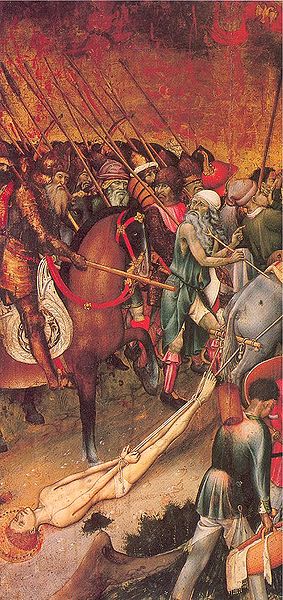
Finally, after exhausting all other options, Diocletian ordered George’s execution. In preparation for his death, George gave his money to the poor and was sent for several torture sessions. He was lacerated on a wheel of swords and required resuscitation three times but still George did not turn from God.
Saint George dragged through the city behind horses – 15th century – Bernardo Martorell
George was decapitated before Nicomedia’s outer wall. His body was sent to Lydda for burial and other Christians went to honour George as a martyr.
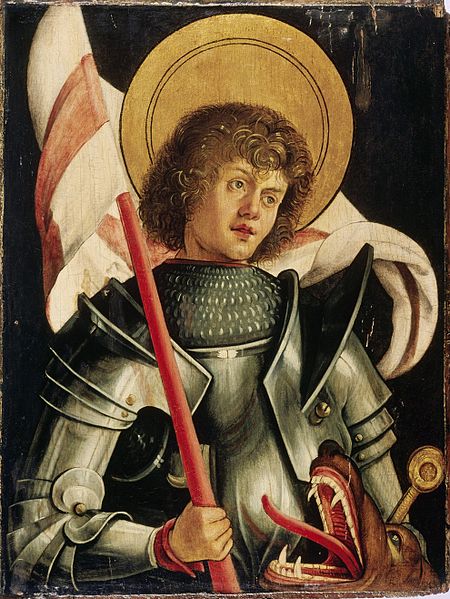
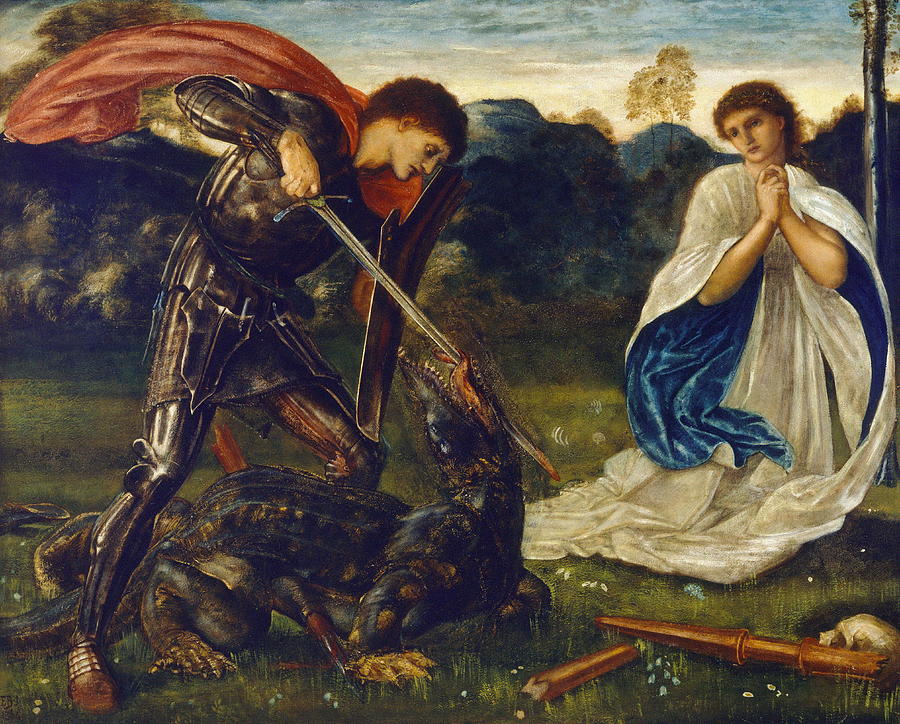
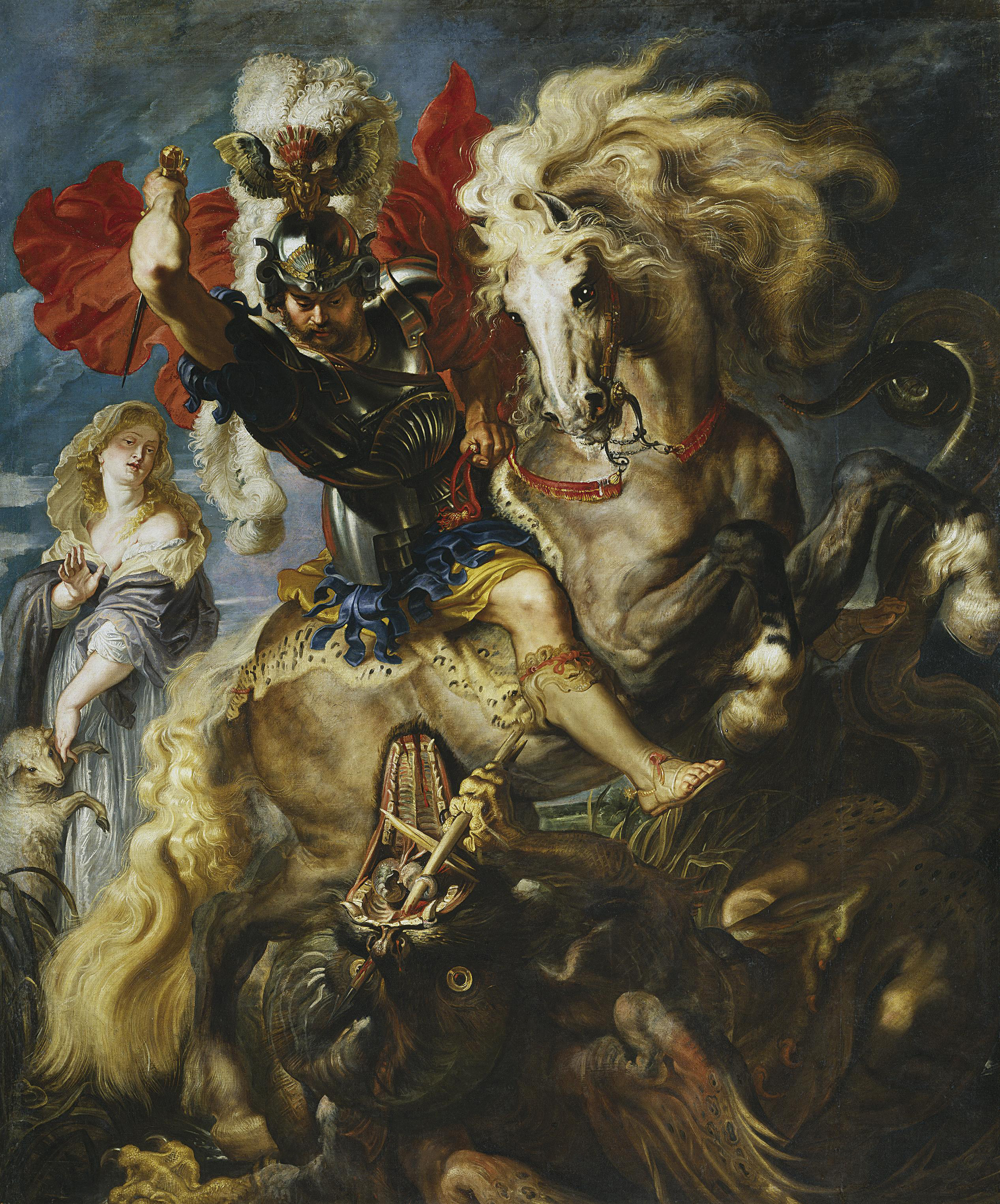
Saint George and the Dragon
There are several stories about George fighting dragons but in the Western version, a dragon or crocodile made its nest at a spring that provided water to Silene, believed to be modern-day Lcyrene in Libya. The people were unable to collect water and so attempted to remove the dragon from its nest on several occasions. It would temporarily leave its nest when they offered it a sheep each day, until the sheep disappeared and the people were distraught. This was when they decided that a maiden would be just as effective as sending a sheep. The townspeople chose the victim by drawing straws. This continued until one day the princess’ straw was drawn. The monarch begged for her to be spared but the people would not have it. She was offered to the dragon but before she could be devoured, George appeared. He faced the dragon, protected himself with the sign of the Cross and slayed the dragon. After saving the town, the citizens abandoned their paganism and were all converted to Christianity.
Interesting Facts
Saint George stands out among other saints and legends because he is known and revered by both Muslims and Christians.
It is said Saint George killed the dragon near the sea in Beirut, thus Saint George Bay was named in his honour.
Saint George’s feast day is celebrated on 23 April but if it falls before Easter, it is celebrated Easter Monday.
The Russian Orthodox Church celebrates three St George feast days each year -23 April, 3 November, to commemorate the consecration of a cathedral dedicated to him in Lydda, and on 26 November for when a church in Kiev was dedicated to him.
In Bulgaria, his feast day is celebrated 6 May with the slaughter and roasting of a lamb.
In Egypt, the Coptic Orthodox Church of Alexandria calls St George the “Prince of Martyrs” and celebrates on 1 May. There is a second celebration 17 November in honour of the first church dedicated to him.
Saint George is the patron saint of England and Catalonia and his cross can be found throughout England including on the English and other Commonwealth flags.
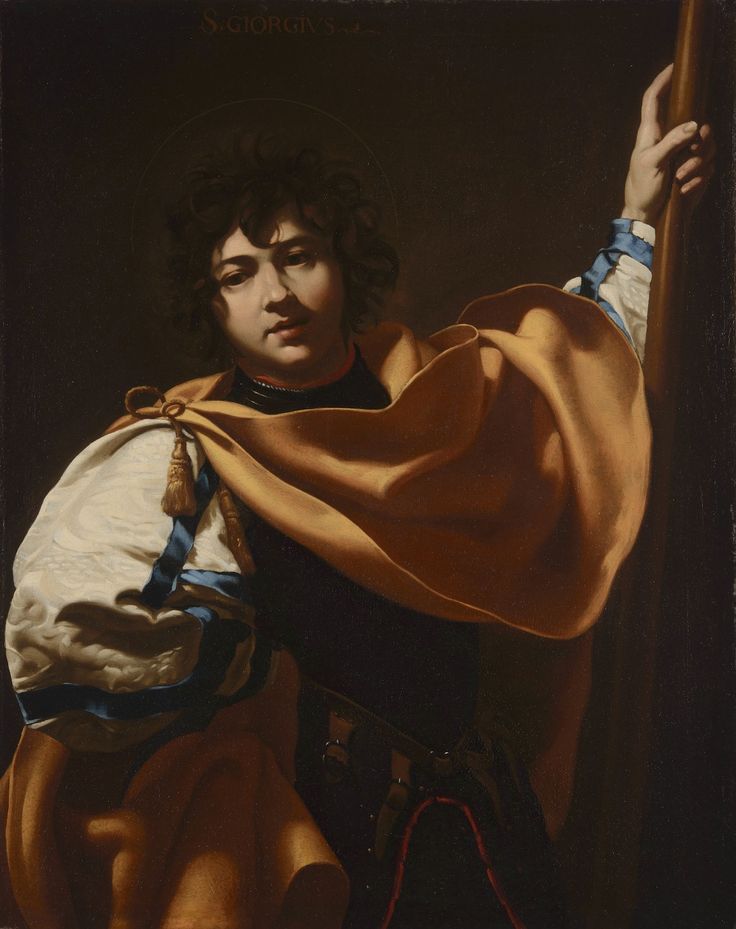
In older works, Saint George is depicted wearing armour and holding a lance or fighting a dragon, which represents Christ’s enemies.
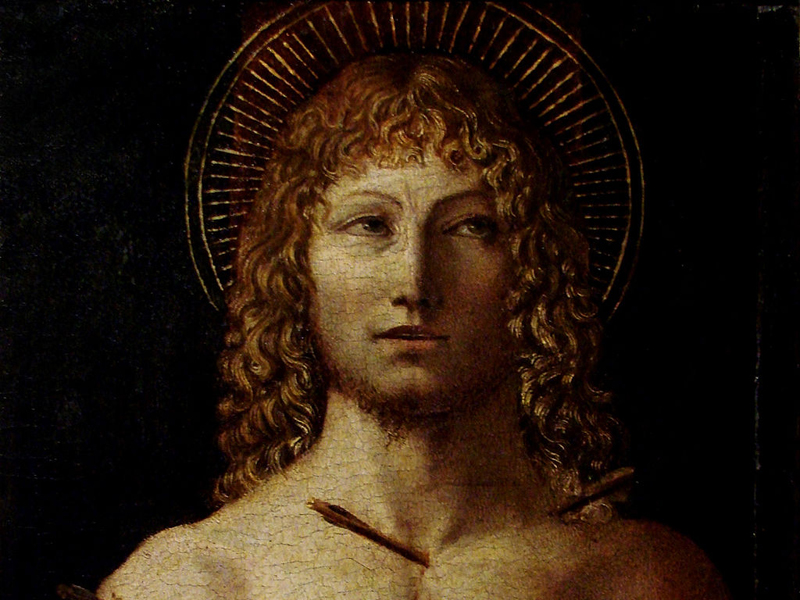
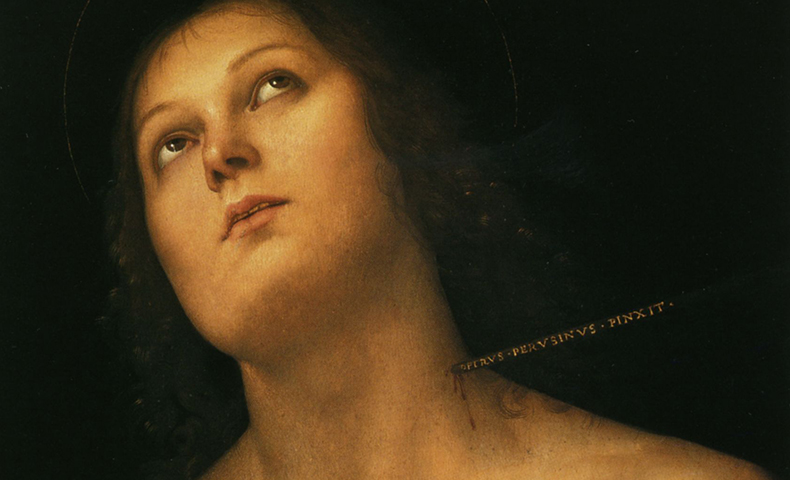
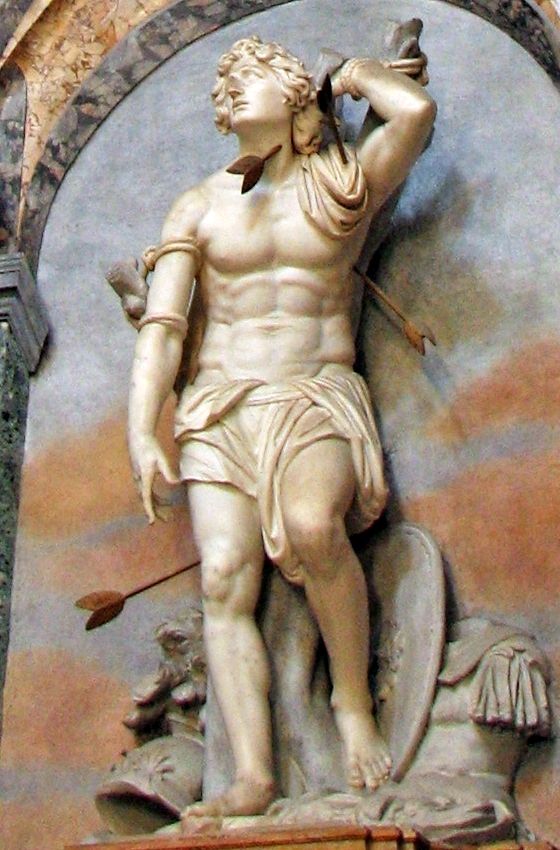
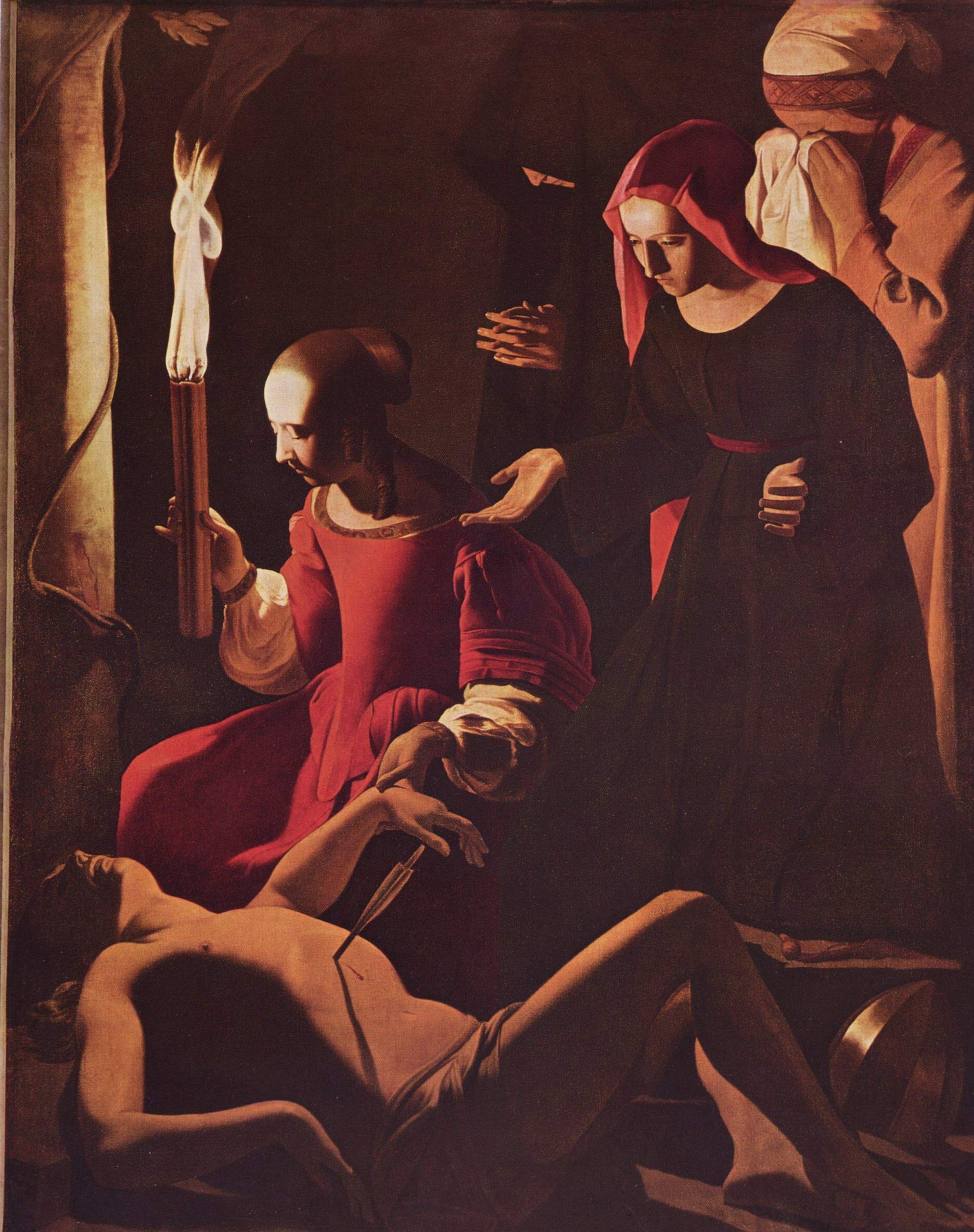
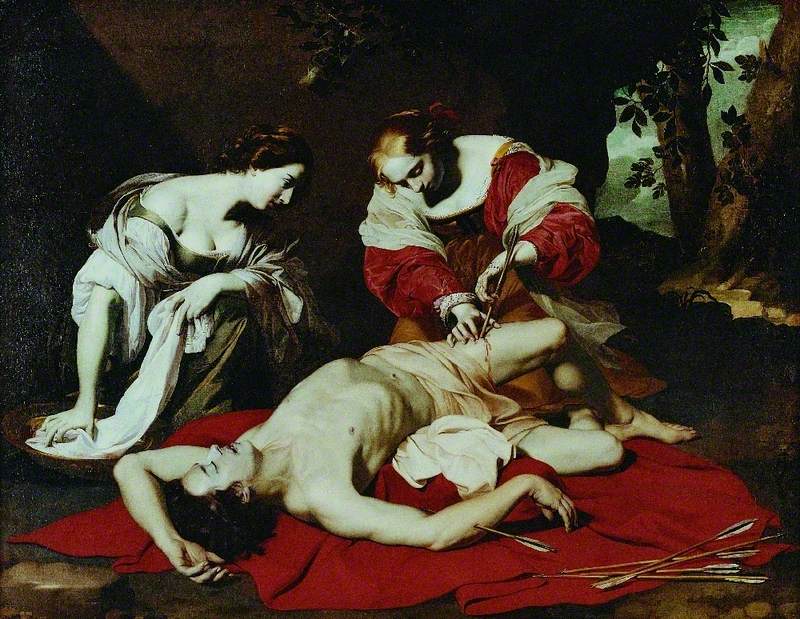
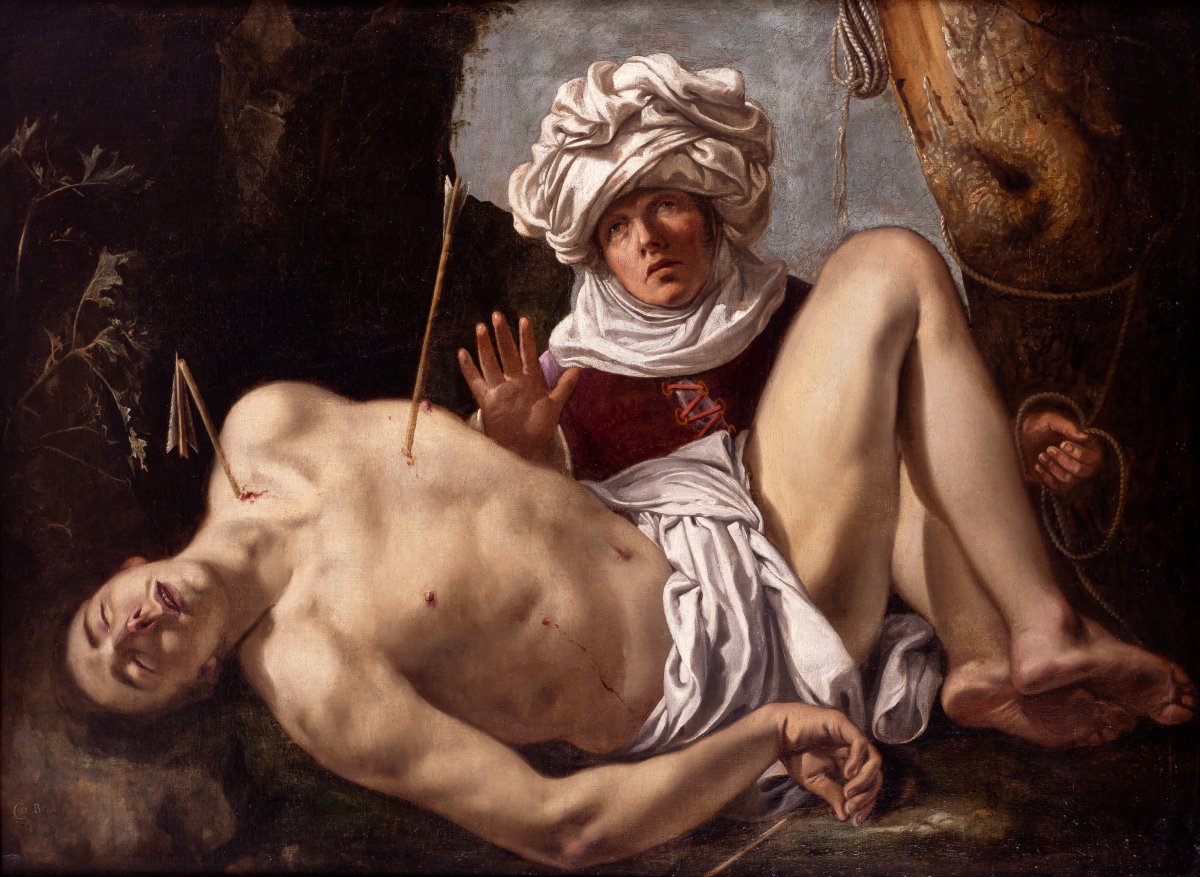
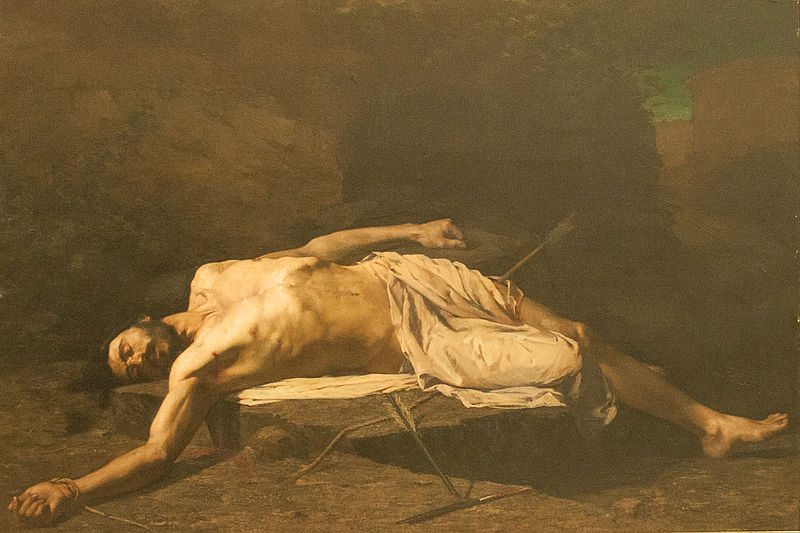
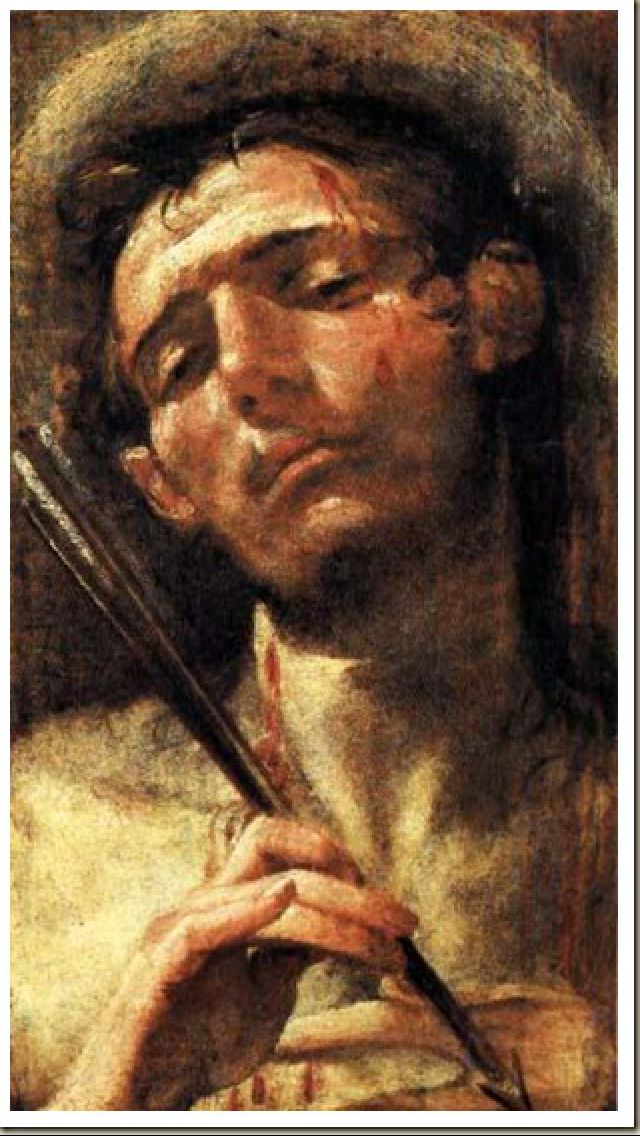
Saint of the Day – 20 January – St Sebastian Martyr, Roman Soldier. He was born in Milan and was Martyred in c 288. Patronages – against cattle disease, against plague/epidemics and the victims, dying people, against enemies of religion, archers, armourers,arrowsmiths, athletes, bookbinders, fletchers, gardeners, gunsmiths, hardware stores,ironmongers, lace makers, lace workers, lead workers, masons, police officers, racquet makers, soldiers, stone masons, stonecutters, Pontifical Swiss Guards, Bacolod, Philippines, Diocese of, Tarlac, Philippines, Diocese of, 22 Cities. St Sebastian was Martyred during the Roman Emperor Diocletian’s persecution of Christians. He is commonly depicted in art and literature tied to a post or tree and shot through with arrows. Despite this being the most common artistic depiction of Sebastian, he was rescued and healed by St Irene of Rome. Shortly afterwards he went to Diocletian to warn him about his sins and as a result, was clubbed to death. The details of Saint Sebastian’s Martyrdom were first spoken of by the 4th Century Bishop, the beloved and revered Doctor of the Church St Ambrose in his sermon (number 22) on Psalm 118. St Ambrose stated that Sebastian came from Milan and that he was already venerated there at that time.
Although there is no doubt that there was a Roman martyr named Sebastian and that devotion to him dates back to the fourth century, the earliest surviving life of the saint was written a century or more after his death. According to this story Sebastian was a Praetorian, a member of an elite troop of soldiers who served as the emperor’s bodyguard. When Emperor Diocletian began his persecution of the Church, Sebastian used his status to visit Christians in prison. This was dangerous business and it was not long before he was denounced to the emperor.
Enraged that one of his own bodyguards was a Christian, Diocletian ordered the Praetorians to take Sebastian back to their camp and shoot him to death with arrows. After performing this deadly evil on their former comrade, the Praetorians assumed that Sebastian was dead. So did everyone else who heard of his martyrdom.
After sunset a Christian woman named Irene crept into the Praetorians’ camp to retrieve the body and give it a Christian burial. As Irene and her serving woman cut Sebastian down, they heard him groan. Incredibly, he was still alive.
Instead of carrying him to the catacombs for burial, Irene brought Sebastian back to her house where she and her servant nursed him. As soon as his strength returned, Sebastian went off to confront Diocletian. He found the emperor on the steps of the imperial palace. Furious that his former bodyguard was still alive, Diocletian demanded of his entourage, “Did I not sentence this man to be shot to death with arrows?” But Sebastian answered for the emperor’s courtiers. He had been made a target for archers, “But the Lord kept me alive so I could return and rebuke you for treating the servants of Christ so cruelly.”
This time the emperor took no chances, he ordered his guard to beat Sebastian to death there on the palace steps, while he watched.
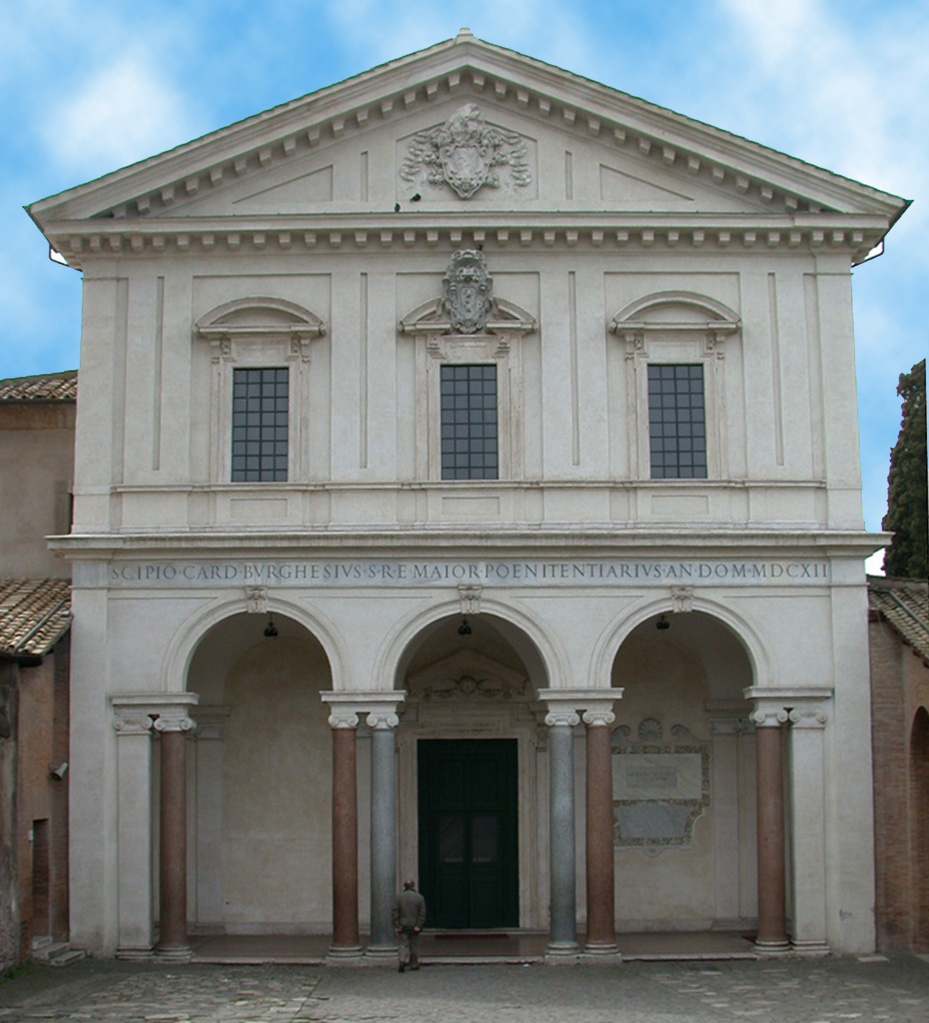
Once he was certain that Sebastian truly was dead, Diocletian had the martyr’s body dumped into the Cloaca Maxima, Rome’s main sewer. Nonetheless, Christians recovered it and buried Sebastian in a catacomb known ever since as San Sebastiano.
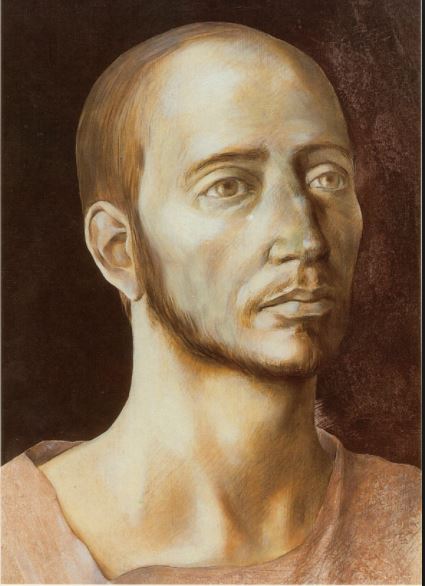
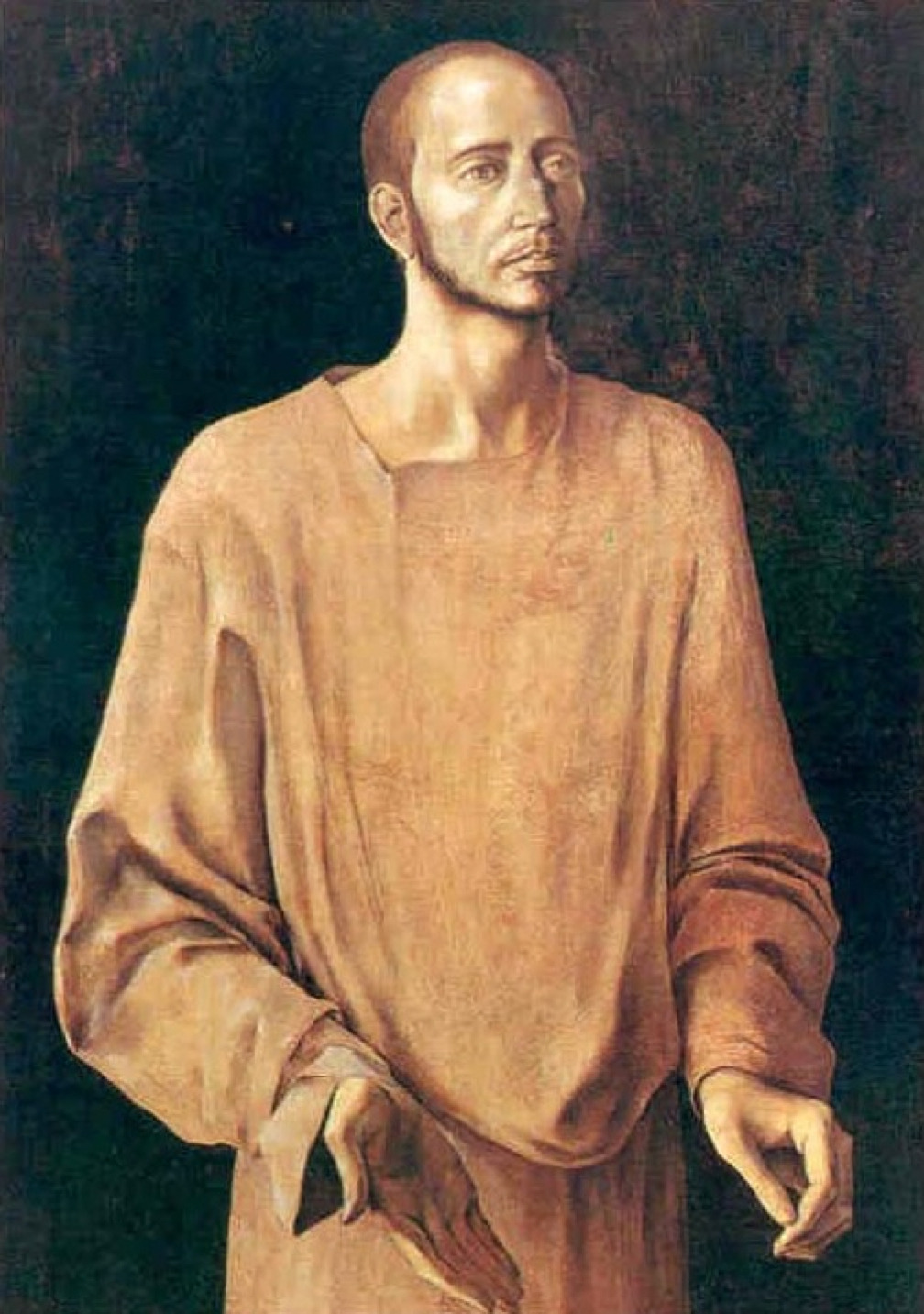
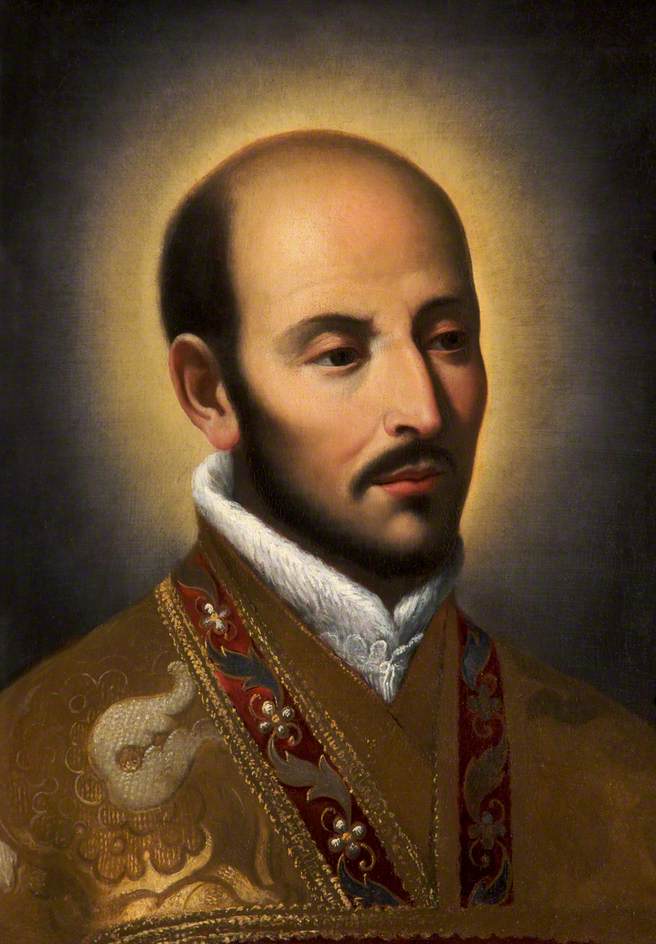
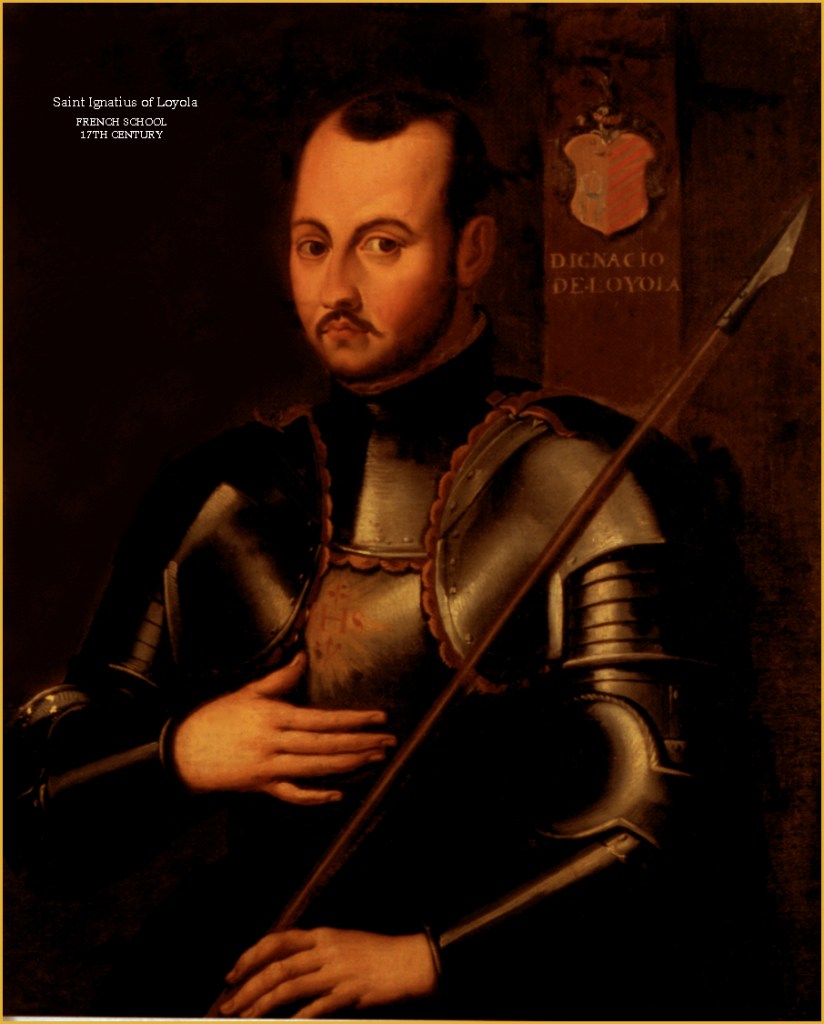
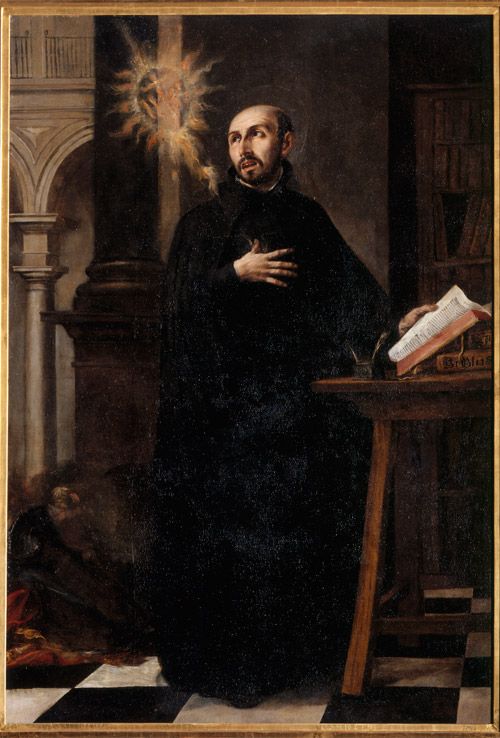
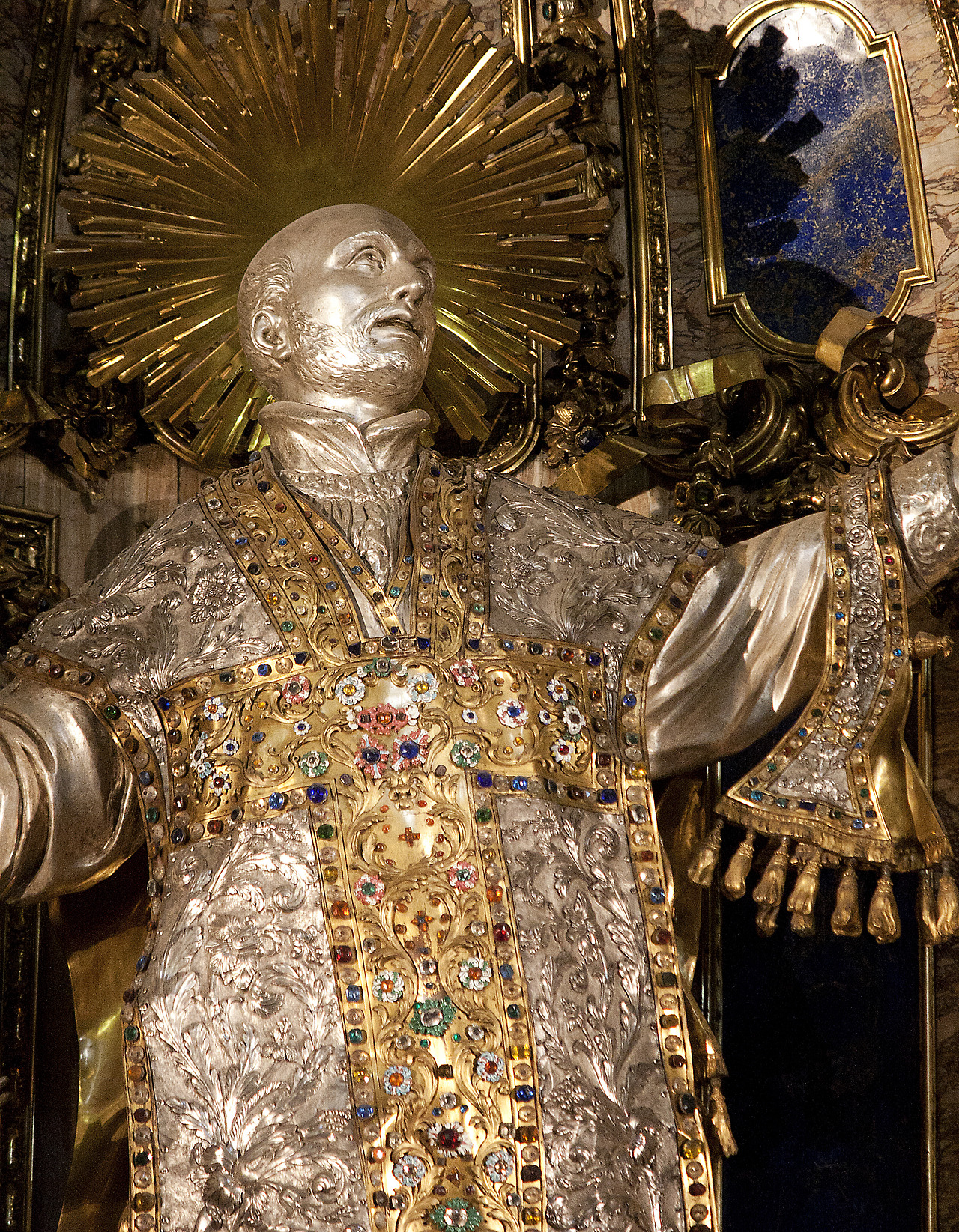
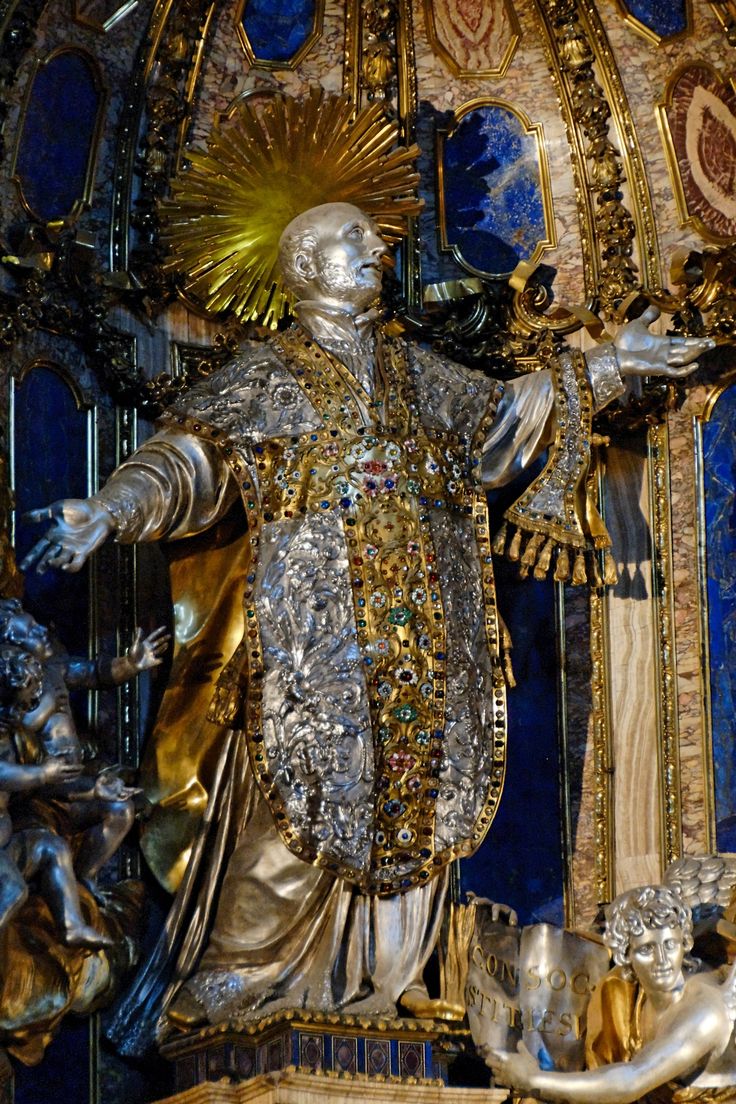
Saint of the Day – 31 July – St Ignatius Loyola sj (1491-1556) Spanish: Ignacio de Loyola; c 23 October 1491 at Loyola, Guipuzcoa, Spain as Inigo Lopez de Loyola – 31 July 1556 at Rome, Italy of fever) was a Spanish Basque Priest, Mystic Founder and Theologian, who founded the religious order called the Society of Jesus (Jesuits) and became its first Superior General. Ignatius was beatified in 1609 and Canonised on 12 March 1622 by Pope Gregory XV. Patronages – soldiers,The Society of Jesus, Retreats (proclaimed on 25 July 1922 by Pope Pius XI), Spiritual Exercises (by Pope Pius XI), Basque country, Diocese of Bilbao, Spain, military ordinariate of the Philippines, álava, Spain, Bizkaia, Spain, Gipuzkoa, Spain, Guipuscoa, Spain, Guipúzcoa, Spain, Vizcaya, Spain. Attributes – apparition of Our Lord, book, chasuble, Holy Communion.
The Early Years
Iñigo Lopez de Oñaz y Loyola, whom we know as St. Ignatius, was born in the Castle Loyola, in the Basque country of northeastern Spain, in 1491, during the reign of King Ferdinand and Queen Isabella. Iñigo was the youngest of 13 children, raised in a family culture of high Catholic piety but lax morals. He experienced the contradictions between the ideals of church and crown and the realities of his own family. His father had several children by another woman and his grandfather’s lawless behaviour led to the top two floors of the Loyola castle being demolished by order of the crown. Iñigo hardly knew his mother, Marina Saenz de Licona y Balda Maria; she died when he was a child. His father, Don Beltrán Yañez de Oñaz y Loyola, died when he was 16. One of his brothers went on the second voyage of Columbus and another died in battle also far away. Iñigo was raised to be a courtier and diplomat in service to the crown, having received a chivalric yet academically sparse education typical of his class. He spent some time as a page at court. Winning personal glory was his passion. He was a fancy dresser, an expert dancer, a womanizer, sensitive to insult and a rough punkish swordsman who used his privileged status to escape prosecution for violent crimes committed with his priest brother at carnival time.
The Soldier
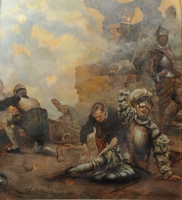
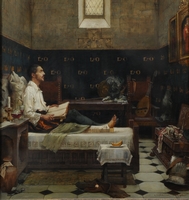
In the spring of 1521, a very large French army attacked the fortress town of Pamplona. A tiny band of Spanish soldiers trying to defend the town were ready to surrender; all of them except Iñigo de Loyola. He would hold off the French single-handedly. But a French cannonball shattered his leg and put an end to his stand. The French admired the courage of the man. They carried him on a litter back home to his castle of Loyola. His leg was not the only thing that had been shattered. His image of himself as a handsome, dashing courtier – everything that he had ever lived for – was shattered, too. The broken leg was not properly set. The bone protruded in a way that would show through the tight hose that a courtier wore, “so much as to be something ugly.” Iñigo insisted on having the leg re-broken and re-set; there was, of course, no anesthetic. In the end one leg was still shorter than the other; Iñigo limped the rest of his life. To pass the time while he recovered, he asked for the kind of books he enjoyed reading: romances of chivalry. But the only reading available in the house was an illustrated Life of Christ and a book of saints’ legends. He spent hours dreaming. He dreamed of the exploits he would do in service to his king and in honour of the royal lady he was in love with. But he would also dream about the exploits he could do to imitate St. Francis of Assisi and St Dominic in fidelity to his heavenly Lord. Gradually, he began to reflect on these experiences; he noticed what was going on within. Both kinds of daydreams engaged him completely but after the romantic chivalry dreaming was over, he felt empty and dissatisfied, whereas after the spiritual dreaming ended, he still felt a deep peace, a quiet happiness. “[H]e did not consider nor did he stop to examine this difference until one day his eyes were partially opened and he began to wonder at this difference and to reflect upon it. From experience he knew that some thoughts left him sad while others made him happy and little by little he came to perceive the different spirits that were moving him…” Here we see the beginning of his powers of discernment, of decision making. He realised God was leading him by his feelings, drawing him toward an entirely new way of life.
The Pilgrim
As soon as Iñigo had healed enough to walk, he began a journey to Jerusalem so that he could “kiss the earth where our Lord had walked.” He traveled through the town of Montserrat, Spain where he gave away his fine clothes to a poor man. Then, in an all-night vigil before the Black Madonna in the church of the Benedictine abbey there, he hung up his sword and dagger. Effectively, his old life was over and his new life had begun. Barcelona was the port from which to embark on a passage to Rome and then to the Holy Land. Not wanting to see his old friends, who might be in conflict with his new values, he went instead to the nearby town of Manresa with the intention of staying there a few days. But those “few days” turned into ten months.
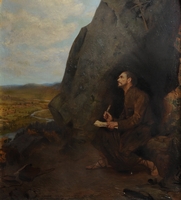
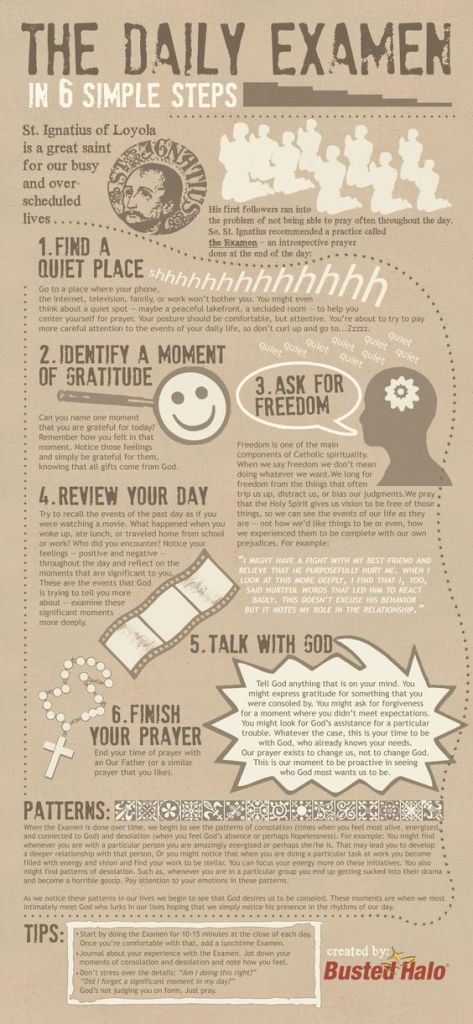
The “Pilgrim,” as he referred to himself in his autobiography, asked for lodging at a hospital for the poor located outside the town’s walls. In exchange for his bed, he did chores around the hospital; and he begged for his food in the town. As we see him here, he spent much of his time in a cave, in prayer with God-praying as much as seven hours a day. He was blessed with powerful insights into himself and about who God was for him. Still, for extended periods, he experienced doubts, anxieties, scruples, severe depression; he even contemplated suicide to end his psychic pain. He recorded his experiences in a notebook and would soon find his jottings helpful in guiding others. These notes which he continued to revise and expand over time as he listened to people became his Spiritual Exercises. Eventually, they were published and then reprinted again and again and translated into many languages as they spread around the world. An example of a spiritual exercise might be to reflect on the ways you have been loved, or on what your personal gifts are and how you use them and for whom, or to imagine yourself present in one of the gospel scenes-for example, Jesus’ feeding of the 5,000. Today, nearly 500 years later, Jesuits and other priests and sisters and brothers, and an ever larger number of professional men and women use these Spiritual Exercises to guide others toward spiritual transformation, to a deeper relationship with God.
Visiting the Holy Land
The Pilgrim did manage to beg passage on a ship to the Holy Land. But instead of being able to fulfill his great dream to remain there for the rest of his life, trying to convert the so-called “infidel,” he was told by church authorities to return to Europe after only a few weeks. They had enough trouble there without him and his conversion scheme. Another dream of Iñigo shattered. When it came time for him to set sail and head back to the western Mediterranean, he ran back to the Mount of Olives to see which way the “footprint of Jesus” was facing. Pious legend had it that the mark in a certain rock there was left by Jesus as he ascended into heaven. Now what may interest us here is not the historical credibility of the legend but rather what this action of the Pilgrim tells us about his own inner life, his imaginative life. He was in the habit of entering imaginatively into all the various gospel stories and scenes, and, in this way, he made them very concrete and real and immediate to himself. He wanted to be in an intimate relationship with Jesus and every detail about Jesus was precious to him.
A Non-traditional Student
Although Iñigo was unable to preach and serve God in the Holy Land as he had hoped, he was still determined to meet this goal in some fashion. He decided that he needed to get an education in order to “help souls.” He returned to Barcelona and attended a free public grammar school to prepare himself for entrance into a university. This meant that beginning at the age of 33 and for two years, he was studying Latin grammar and other basics with classmates who were 8 to 14 years old. He may have felt some discomfort at the age difference but it was at this time that he had the “most beloved” teacher in his entire academic career-Master Jeronimo Ardevol.
Ignatius in Prison
After this initial schooling in Barcelona, Iñigo moved to Spanish university towns-first Alcala, near Madrid and then Salamanca in the north. In both places, he spent nearly as much time engaging people in conversation about spiritual matters as he did studying and attending lectures. Such conversations got him into trouble with the Spanish Inquisition and he was put in prison three times for interrogation. The charge was always the same: that he dared to speak of theological matters when he did not have a theology degree. Further, he was not ordained. In the end, he was always exonerated, but he decided to avoid further harassment by the Inquisition. He left his homeland and headed north to the premier university of sixteenth-century Europe.
Higher Education in Paris
At the age of 38, the Pilgrim attended the College Ste. Barbe of the University of Paris, considered the heart of the French Renaissance. He knew little French and he was not very fluent or correct in Latin. Still he made progress, little by little. In those days, students rose at 4:00 a.m.; classes-lectures-began at 5:00 am. There were also classes for several hours in the later afternoon. The university curriculum-in the Parisian style-was much more orderly than he was used to in Spain. There was progression; there were prerequisites. As a result, he started all over again with grammar, language and the humanities and only then moved on to the sciences, philosophy and theology. The present-day notion of levels or classes–freshman, sophomore, junior, senior– is a Jesuit legacy to education based on the experience with this Parisian style of learning. Eventually, he earned a master’s degree. The name on his diploma was not Iñigo, but “Ignatius,” which he adopted in Paris and used for the rest of his life. (It is speculated that he named himself after a saint he admired – Ignatius of Antioch.) When he applied for doctoral studies, he was turned down as too old; he was 44, and too ill, from stomach ailments that he attributed to the extreme penances he practiced during his time in Manresa.
The First Companions
While at the University of Paris, Ignatius roomed with Peter Faber, a young man from Savoy in the south of France, and Francis Xavier, a nobleman from the eastern end of the Basque country.
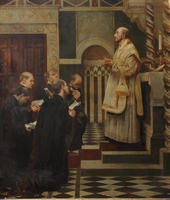
Gradually a whole circle of “Friends in the Lord,” as they called themselves, formed around Ignatius. What bonded them closely together was the fact that one after another they were led through the Spiritual Exercises. Most were guided by Ignatius himself. In a deep sense, they all became “companions of Jesus” and companions of one another. Ignatius also shared with them his dream of going on mission to the Holy Land; yet this time he was a bit wiser and more practical. If the Holy Land dream fell through, they would go to Rome and put themselves at the disposition of the pope. The pope, as universal pastor, should know where the greatest needs were. They waited in Venice a whole year for a ship to take them to the Holy Land. As Providence would have it, just that one year because of war between Venice and the Turks, no ship sailed. So they went to Rome, and there they entered into an extended period of communal discernmen. They were about to be sent all over Europe and all over the world. Spread out like that, how would they secure the bond among them? Their decision was to form themselves into a religious order. They called it the Company (meaning the companionship) or Society of Jesus. Outsiders disparagingly nicknamed them the “Jesuits” but the name caught-on and eventually was used by all alike. “On the morning of the 15th of August, 1534, in the chapel of church of Saint Peter, at Montmartre, Loyola and his six companions, of whom only one was a priest, met and took upon themselves the solemn vows of their lifelong work.” Later, they were joined by Saint Francis Borgia, a member of the House of Borgia, who was the main aide of Emperor Charles V, and other nobles. Ignatius obtained a master’s degree from the University of Paris at the age of forty-three. In later life he was often called “Master Ignatius” because of this.
The Founder
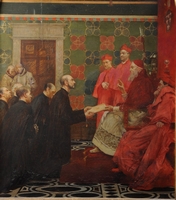
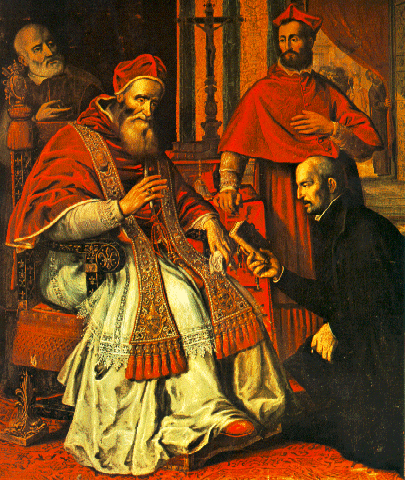
The Society of Jesus was approved by Pope Paul III in 1540 and thus became an official Catholic religious order. Ignatius was elected their first leader. He declined after the first vote. He felt unworthy for the position because of the vanity and licentiousness of his earlier life and because he felt that others were more theologically knowledgeable. After much discernment, he accepted the position and served until his death sixteen years later.
As the Superior General, he sent companions all over Europe and around the world. He called them to “hurry to any part of the world where…the needs of the neighbor should summon them.” And he counseled them to serve “without hard words or contempt for people’s errors.” In addition to writing the Constitutions of the fledgling order, with the help of his assistant Juan Polanco, he wrote nearly 7,000 letters. He wrote to high and low in church and state and to women as well as men. But most of these letters were to his Jesuit companions, thus forming a vast communication network of friendship, love, and care. When companions were sent on various missions by the pope, Ignatius remained in Rome, consolidating the new venture but still finding time to found homes for orphans, catechumens, and penitents. He founded the Roman College, intended to be the model of all other colleges of the Society.
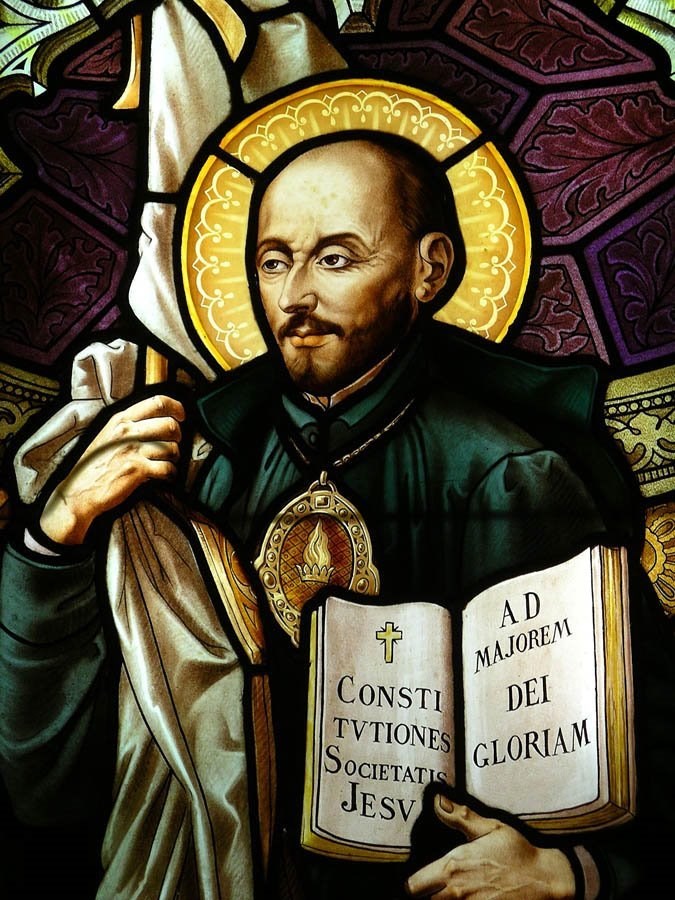
Ignatius was a true mystic. He centered his spiritual life on the essential foundations of Christianity—the Trinity, Christ, the Eucharist. His spirituality is expressed in the Jesuit motto, Ad majorem Dei gloriam—“for the greater glory of God.” In his concept, obedience was to be the prominent virtue, to assure the effectiveness and mobility of his men. All activity was to be guided by a true love of the Church and unconditional obedience to the Holy Father, for which reason all professed members took a fourth vow to go wherever the pope should send them for the salvation of souls.
At the time of his death, there were 1,000 Jesuits, a good number of them involved in the 35 schools that had been founded. Twenty-five years later the number of schools rose to 144, and another 35 years after that, it approached 400. In contrast to the ambitions of his early days, the fundamental philosophy of the mature Ignatius was that we ought to desire and choose only that which is more conducive to the end for which we are created – to praise, reverence, and serve God through serving other human beings.
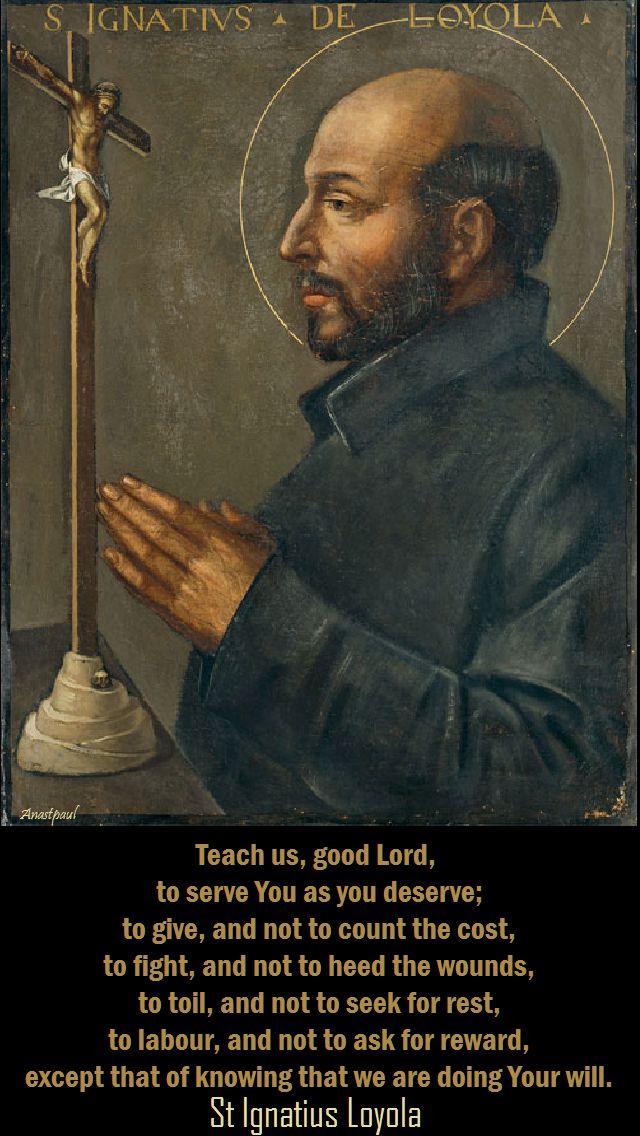
He prayed:
Teach us, good Lord, to serve You as you deserve; to give, and not to count the cost, to fight, and not to heed the wounds, to toil, and not to seek for rest, to labour, and not to ask for reward, except that of knowing that we are doing Your will.









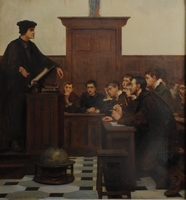
 At the age of 38, the Pilgrim attended the College Ste. Barbe of the University of Paris, considered the heart of the French Renaissance. He knew little French and he was not very fluent or correct in Latin. Still he made progress, little by little. In those days, students rose at 4:00 a.m.; classes-lectures-began at 5:00 am. There were also classes for several hours in the later afternoon. The university curriculum-in the Parisian style-was much more orderly than he was used to in Spain. There was progression; there were prerequisites. As a result, he started all over again with grammar, language and the humanities and only then moved on to the sciences, philosophy and theology. The present-day notion of levels or classes–freshman, sophomore, junior, senior– is a Jesuit legacy to education based on the experience with this Parisian style of learning.
 Gradually a whole circle of “Friends in the Lord,” as they called themselves, formed around Ignatius. What bonded them closely together was the fact that one after another they were led through the Spiritual Exercises. Most were guided by Ignatius himself. In a deep sense, they all became “companions of Jesus” and companions of one another.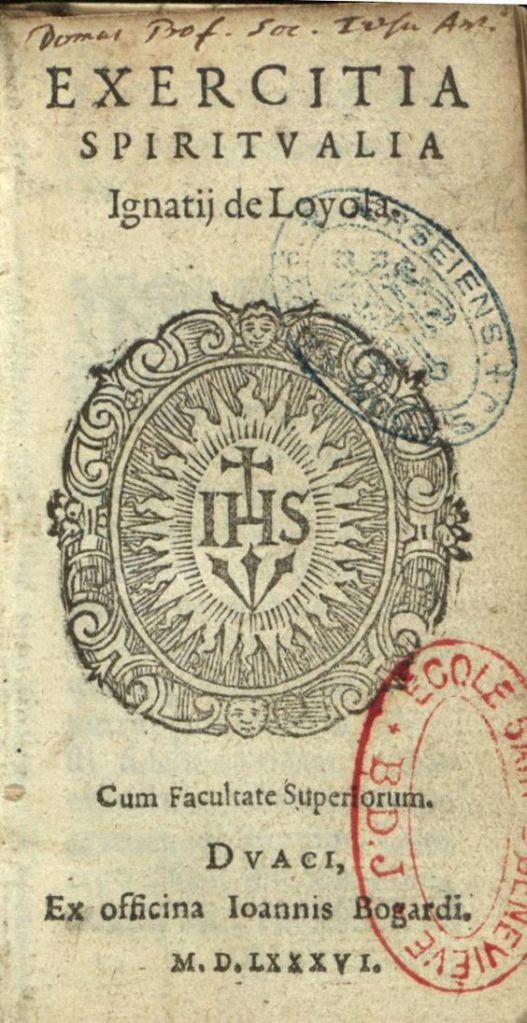

 AnaStpaul
You must be logged in to post a comment.