Wishing you all a Holy and Blessed Solemnity of Saints Peter and Paul
The Solemnity of Saints Peter and Paul
St Augustine (354-430)
This day has been consecrated for us by the Martyrdom of the blessed apostles Peter and Paul. It is not some obscure martyrs we are talking about. “Their sound has gone out into all the earth and their words to the ends of the world” (Psalm 19). These martyrs had seen what they proclaimed, they pursued justice by confessing the truth, by dying for the truth.
The blessed Peter, the first of the Apostles, the ardent lover of Christ, who was found worthy to hear, “And I say to you, that you are Peter” (Matthew 16:13-20). He himself, you see, had just said, “You are the Christ, the Son of the living God.” Christ said to him, “And I say to you that you are Peter, and upon this rock I will build my Church.” Upon this rock I will build the faith you have just confessed. Upon your words, “You are the Christ, the Son of the living God,” I will build My Church, because you are Peter. Peter comes from petra, meaning a rock. Peter, “Rocky”, from “rock” not “rock” from “Rocky”. Peter comes from the word for a rock in exactly the same way as the name Christian comes from Christ.
Before His passion the Lord Jesus, as you know, chose those disciples of His whom He called apostles. Among these it was only Peter who almost everywhere, was given the privilege of representing the whole Church. It was in the person of the whole Church, which he alone represented, that he was privileged to hear, “To you will I give the keys of the kingdom of heaven.” After all, it is not just one man that received these keys but the Church in its unity. So this is the reason for Peter’s acknowledged pre-eminence, that he stood for the Church’s universality and unity, when he was told, “To you I am entrusting,” what has in fact been entrusted to all. To show you that it is the Church which has received the keys of the kingdom of heaven, listen to what the Lord says in another place to all His apostles: “Receive the Holy Spirit” and immediately afterwards, “Whose sins you forgive, they will be forgiven them; whose sins you retain, they will be retained” (John 20:22-23).
Quite rightly, too, did the Lord after His resurrection entrust His sheep to Peter to be fed (Jn. 21: 15-19). It is not, you see, that he alone among the disciples was fit to feed the Lord’s sheep but when Christ speaks to one man, unity is being commended to us. And He first speaks to Peter, because Peter is the first among the apostles. Do not be sad, Apostle. Answer once, answer again, answer a third time. Let confession conquer three times with love, because self-assurance was conquered three times by fear. What you had bound three times must be loosed three times. Loose through love what you had bound through fear. And for all that, the Lord once and again, and a third time, entrusted His sheep to Peter.
There is one day for the passion of two apostles. But these two also were as one; although they suffered on different days, they were as one. Peter went first, Paul followed.
We are celebrating a feast day, consecrated for us by the blood of the apostles. Let us love their faith, their lives, their labours, their sufferings, their confession of faith, their preaching.
O God, who on the Solemnity of the Apostles Peter and Paul
give us the noble and holy joy of this day,
grant, we pray, that Your Church
may in all things follow the teaching
of those through whom she received
the beginnings of right religion.
Through our Lord Jesus Christ, Your Son,
who lives and reigns with You in the unity of the Holy Spirit,
one God, forever and ever.
Amen
Quote of the Day – 16 May – Wednesday of the Seventh Week of Eastertide
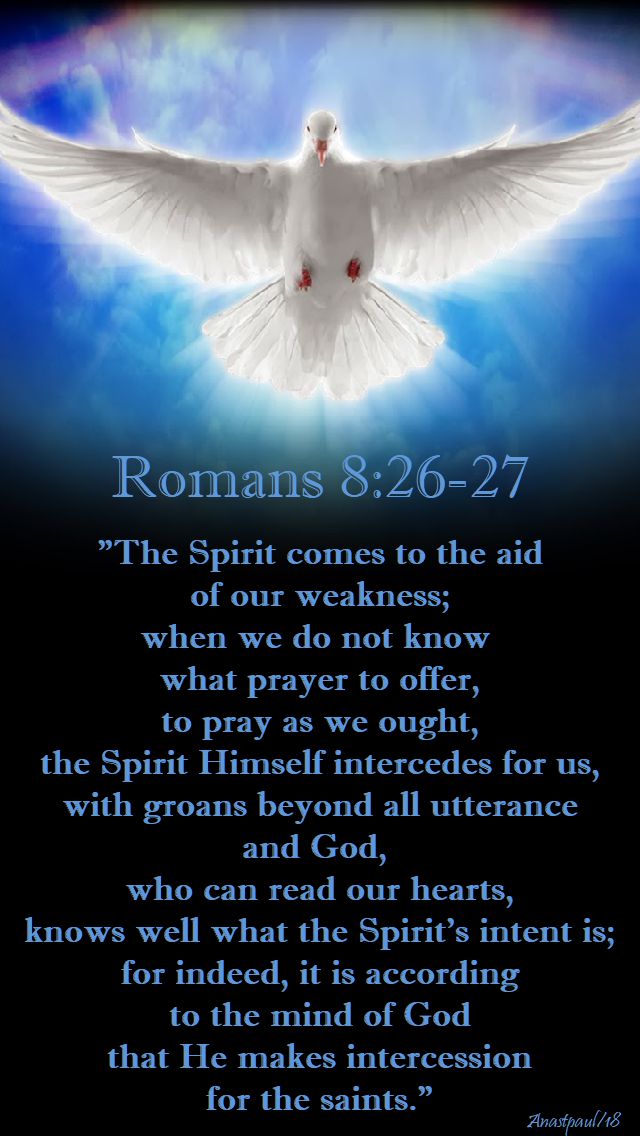
“The Spirit comes to the aid of our weakness; when we do not know what prayer to offer, to pray as we ought, the Spirit Himself intercedes for us, with groans beyond all utterance and God, who can read our hearts, knows well what the Spirit’s intent is; for indeed, it is according to the mind of God that He makes intercession for the saints.”
Quote/s of the Day – 30 March 2018 – Good Friday of the Passion of the Lord
“But far be it from me to glory, except in the Cross of our Lord Jesus Christ, by which the world has been crucified to me and I to the world.”
St Paul
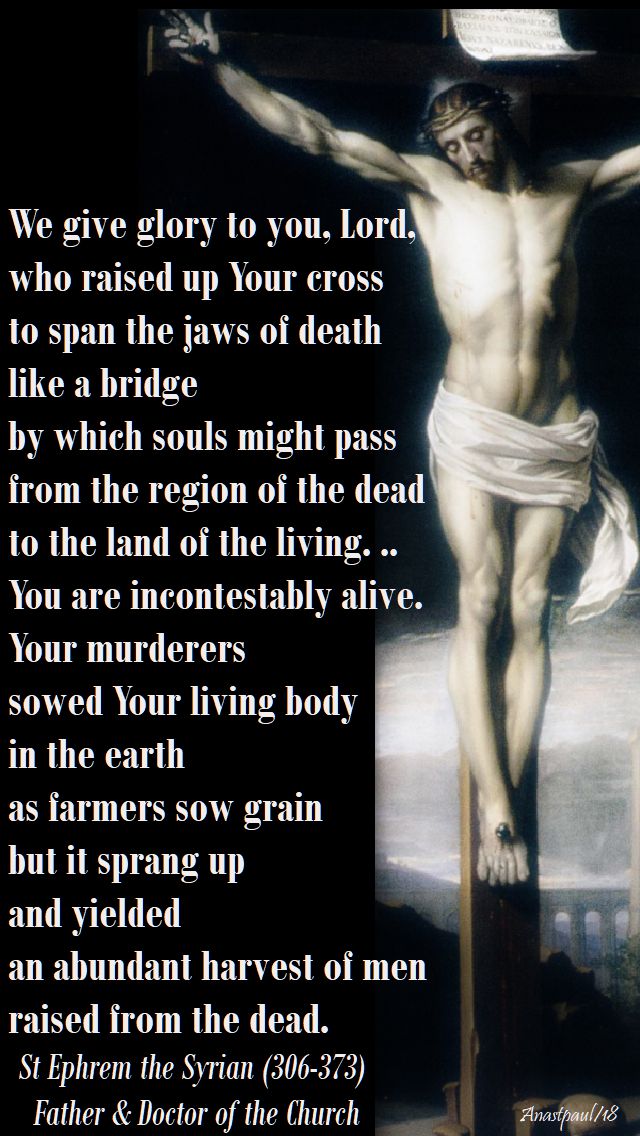
“We give glory to You, Lord, who raised up Your Cross to span the jaws of death like a bridge by which souls might pass from the region of the dead to the land of the living. .. You are incontestably alive. Your murderers sowed Your living body in the earth as farmers sow grain but it sprang up and yielded an abundant harvest of men raised from the dead.”
St Ephrem the Syrian (306-373) Father & Doctor of the Church
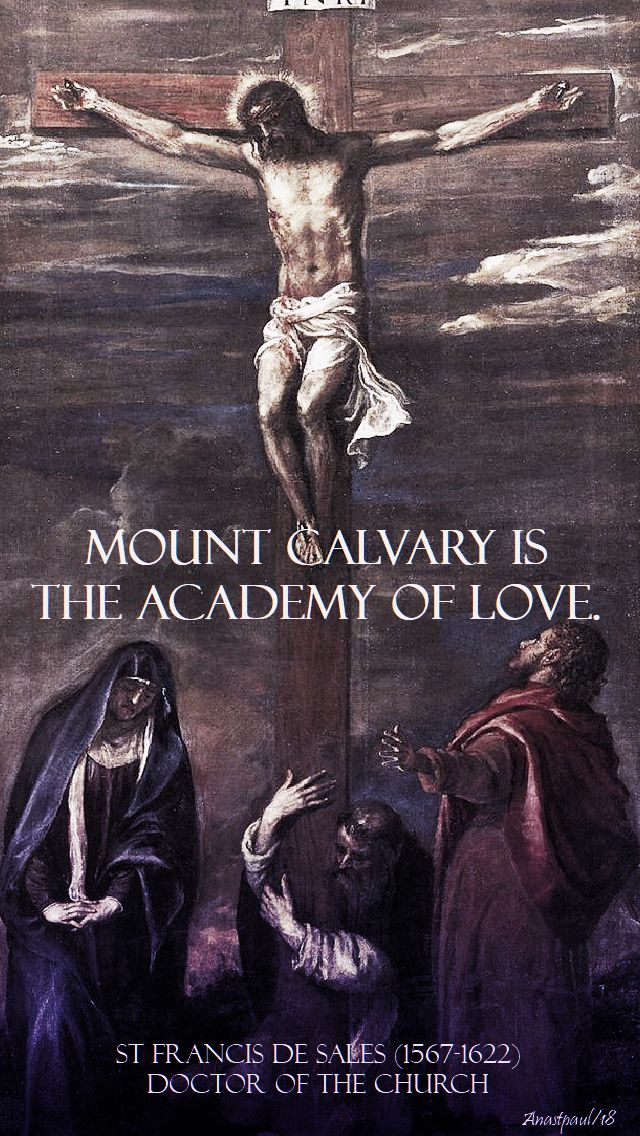
“Mount Calvary is the academy of love.”
St Francis de Sales (1567-1622) Doctor of the Church
” …Let us direct today our gaze toward Christ, a gaze frequently distracted by scattered and passing earthly interests. Let us pause to contemplate His Cross. The cross, fount of life and school of justice and peace, is the universal patrimony of pardon and mercy. It is permanent proof of a self-emptying and infinite love that brought God to become man, vulnerable like us, unto dying crucified.”
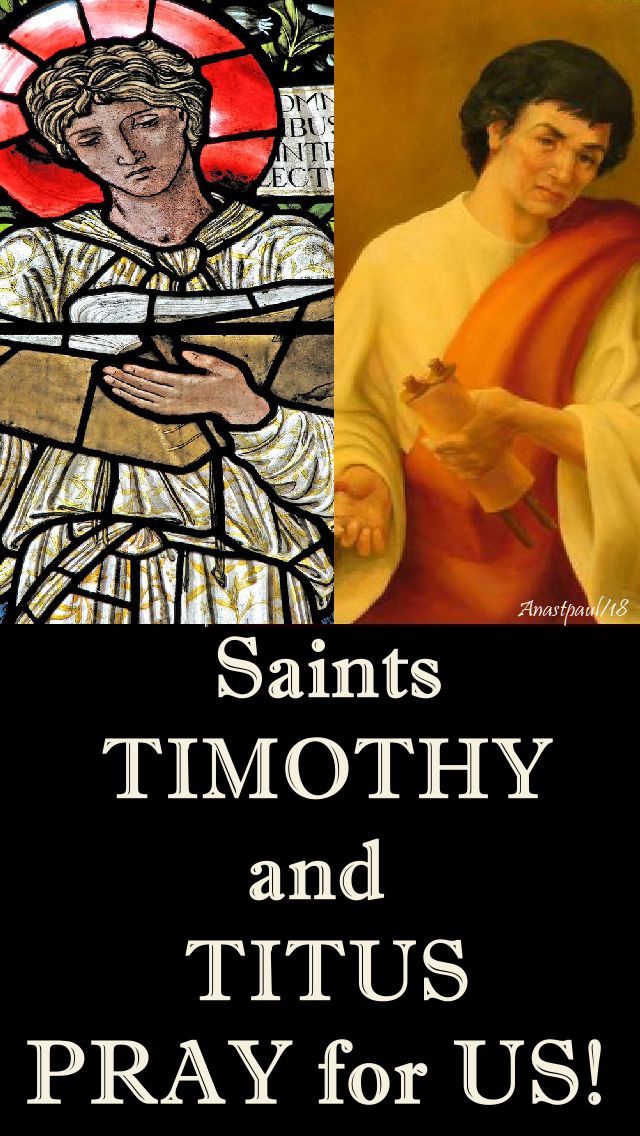
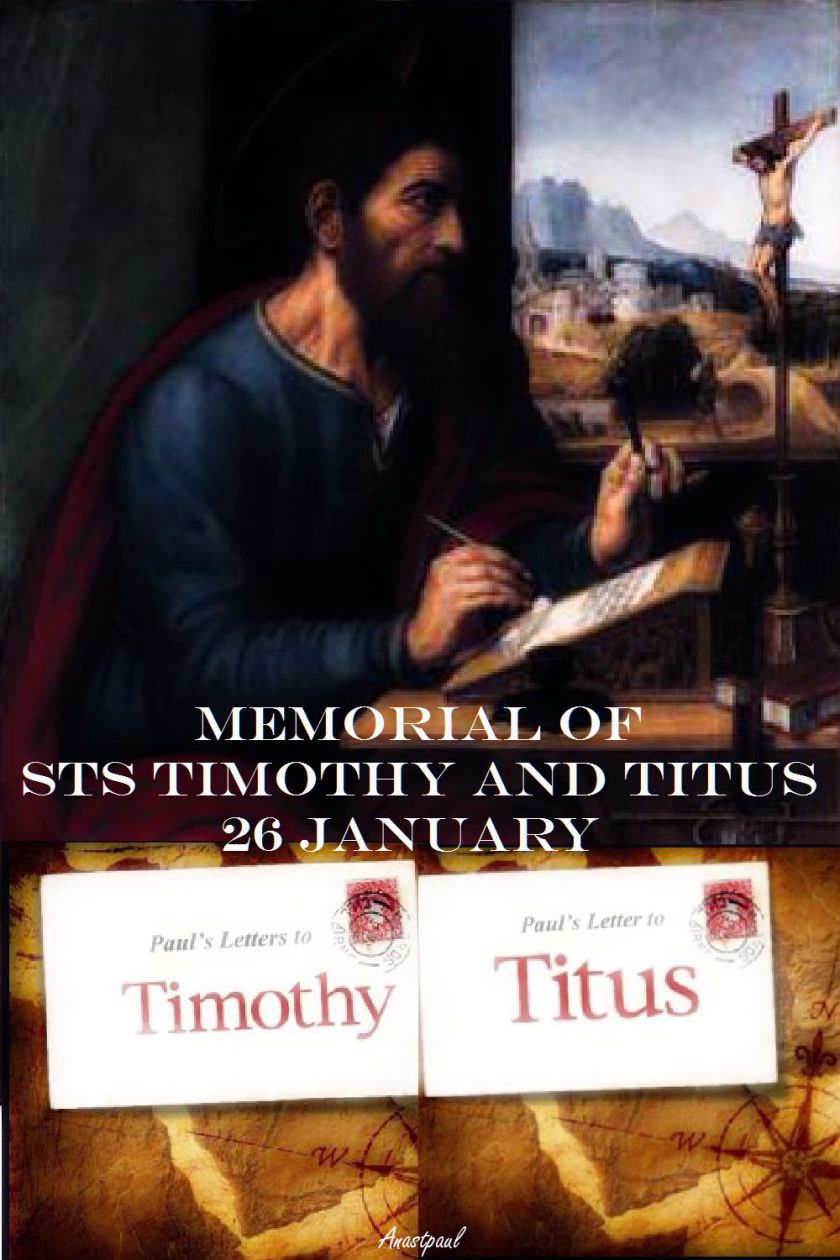
Thought for the Day – 26 January – Memorial of Sts Timothy and Titus, Disciples and Companions of the Apostle Paul and Bishops of the Catholic Church
St Paul makes it clear to Timothy that he is to proclaim the Word with persistence BUT “through all patience.” This is the most important part of these instructions! Growth in the Spirit is a lifelong journey, in which great patience is needed. The one who proclaims the Word needs patience in dealing with the one being taught. This is a human enterprise and humans are notoriously slow to understand, accept and implement the Word of God in their lives. Christians are to proclaim the Word without being judgmental. So, as Paul tells Timothy so he tells you and me to go forth, proclaim the Word, live your faith, treat others with respect and kindness and do it all with patience and love. Thus faith is the centre of the Christian’s life and from that centre he radiates Christ’s love to all whom he meets. (Msgr. Bernard Bourgeois)
In these letters, we get another glimpse of life in the early Church: great zeal in the apostolate, great communion in Christ, great friendship. Yet always there is the problem of human nature and the unglamorous details of daily life: the need for charity and patience in “quarrels with others, fears within myself,” as Paul says. Through it all, the love of Christ sustained them. At the end of the Letter to Titus, Paul says that when the temporary substitute comes, “hurry to me.”
One Minute Reflection – 26 January – Memorial of Sts Timothy and Titus, Disciples and Companions of the Apostle Paul and Bishops of the Catholic Church
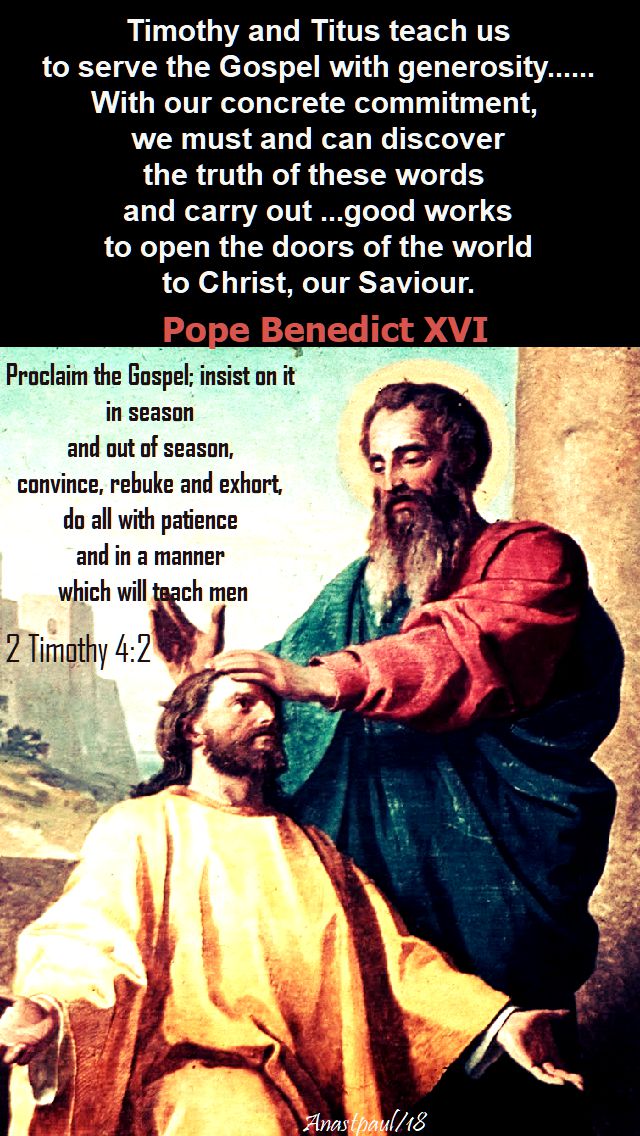
Proclaim the Gospel; insist on it in season and out of season, convince, rebuke and exhort, do all with patience and in a manner which will teach men….2 Timothy 4:2
REFLECTION – “…The sources we have on Timothy and Titus underline their willingness to take on the different tasks, which often consisted in representing Paul even in difficult circumstances. In other words, they teach us to serve the Gospel with generosity...”I want you to insist on these points, that those who have believed in God be careful to devote themselves to good works; these are excellent and beneficial to others” (Titus 3:8). With our concrete commitment, we must and can discover, the truth of these words and carry out …good works to open the doors of the world to Christ, our Saviour.”…Pope Benedict 13 December 2006
PRAYER – Almighty God, You endowed Saints Timothy and Titus with power to preach Your Word. Grant that, living a life of integrity and holiness in this world, reaching out to teach the Gospel both by our lives and our words, we may, through their prayers, come to our true home in heaven. Through our Lord Jesus Christ, in union with the Holy Spirit, one God forever, amen.
Our Morning Offering – 26 January – Memorial of Sts Timothy and Titus, Disciples and Companions of the Apostle Paul and Bishops of the Catholic Church
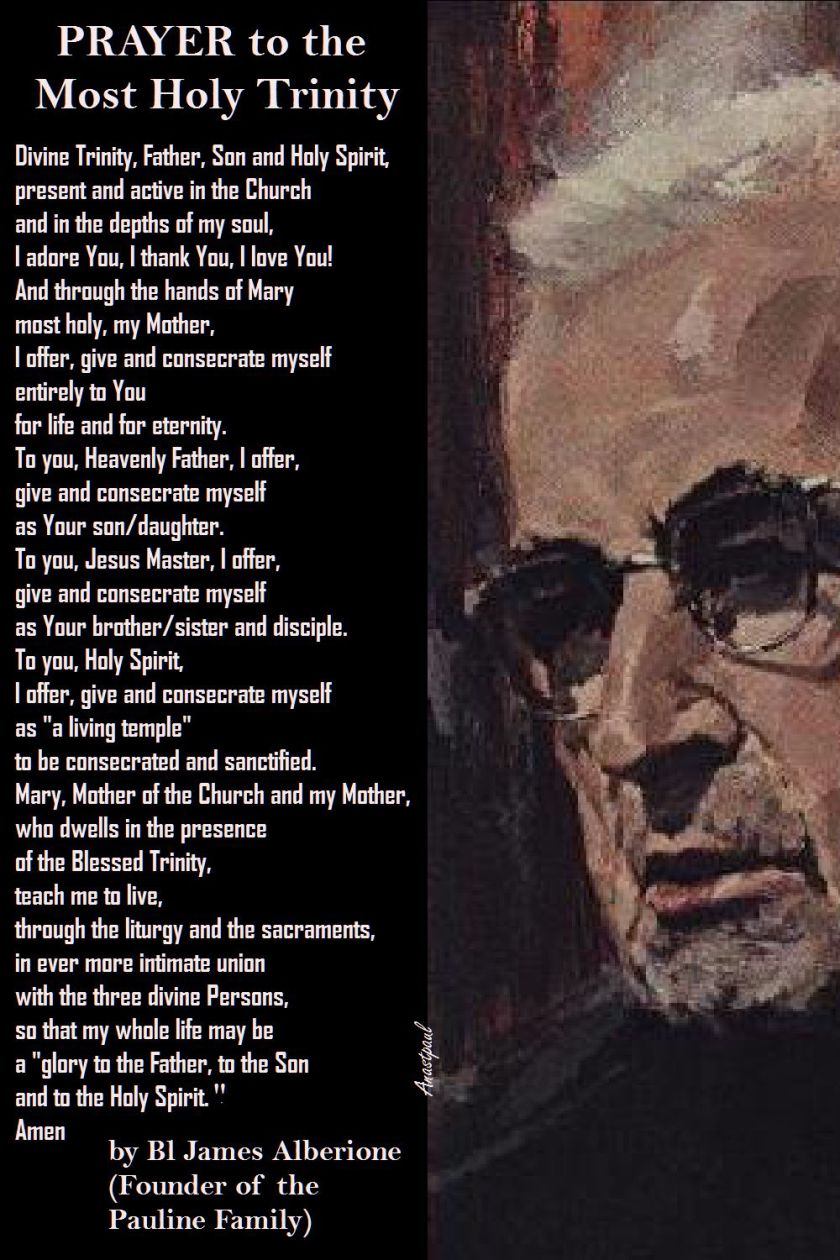
Consecration to the Most Holy Trinity by Blessed James Alberione (1884-1971) (Founder of the Pauline Family)
Divine Trinity, Father, Son and Holy Spirit,
present and active in the Church
and in the depths of my soul,
I adore You, I thank You, I love You!
And through the hands of Mary
most holy, my Mother,
I offer, give and consecrate myself
entirely to You
for life and for eternity.
To you, Heavenly Father, I offer,
give and consecrate myself
as Your son/daughter.
To you, Jesus Master, I offer,
give and consecrate myself
as Your brother/sister and disciple.
To you, Holy Spirit,
I offer, give and consecrate myself
as “a living temple”
to be consecrated and sanctified.
Mary, Mother of the Church and my Mother,
who dwells in the presence
of the Blessed Trinity,
teach me to live,
through the liturgy and the sacraments,
in ever more intimate union
with the three divine Persons,
so that my whole life may be
a “glory to the Father, to the Son
and to the Holy Spirit.” Amen.
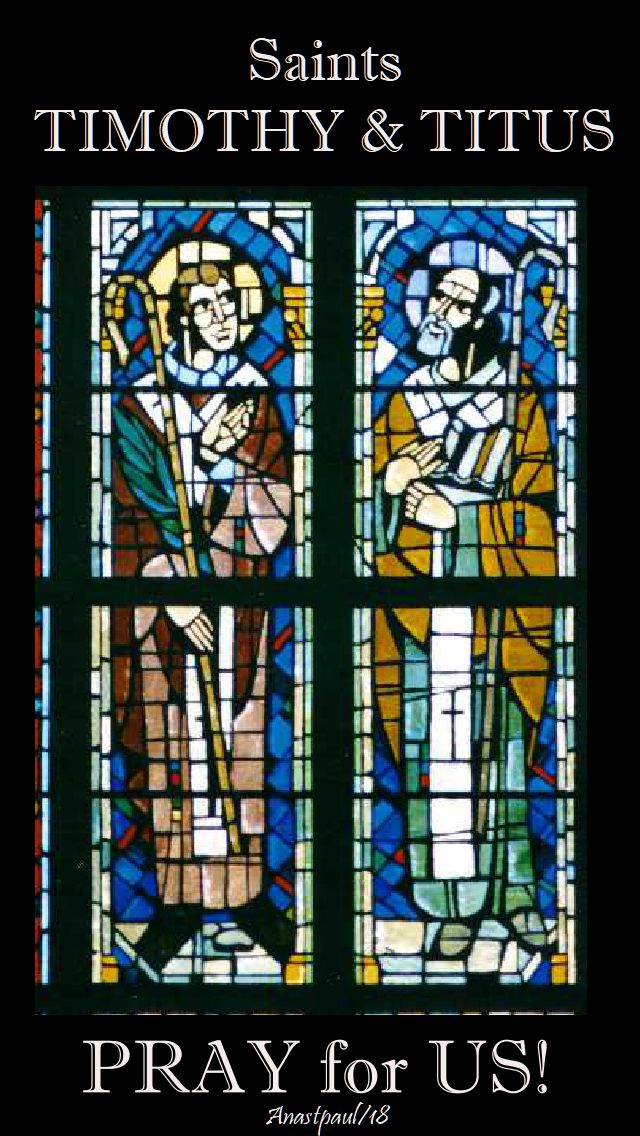
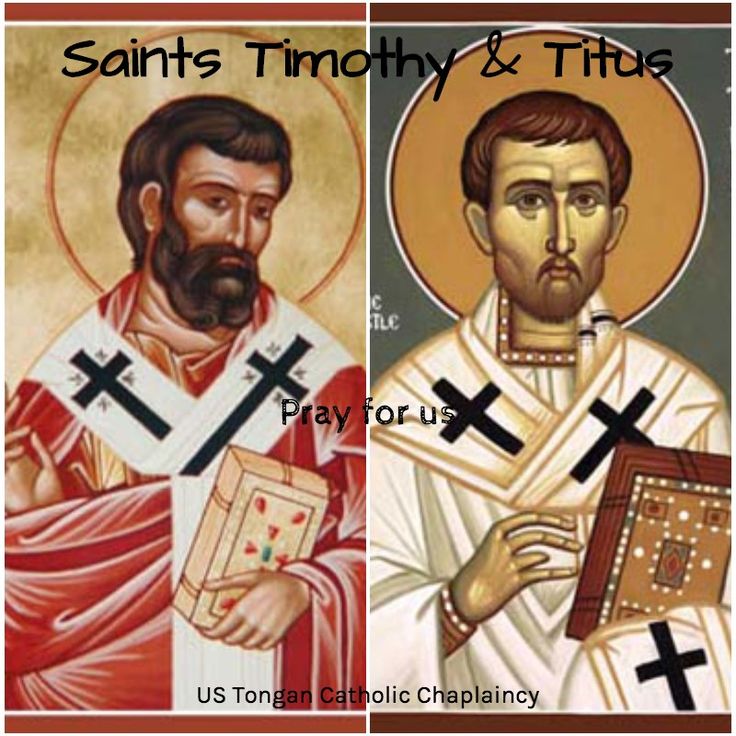
Saints of the Day – 26 January – Sts Timothy and Titus – Bishops, Disciples and trusted and loyal Companions of St Paul.
“Timothy” is a Greek name and means “who honours God.” While Luke, in the Acts of the Apostles, mentions him six times, Paul names him on 17 occasions in his letters (moreover he appears once in the Letter to the Hebrews). We can deduce that from Paul he enjoyed great consideration, although Luke does not tell us all that he had to do with him. The Apostle, in fact, entrusted him with important missions and saw in him a sort of “alter ego,” as can be seen in his great praise of him in the Letter to the Philippians. “I have no one like him, who will be genuinely anxious for your welfare” (2:20).
Timothy was born in Lystra (some 200 kilometers northwest of Tarsus) of a Jewish mother and a pagan father (cf. Acts 16:1). The fact that his mother had contracted a mixed marriage and that she did not circumcise her son leads one to think that Timothy was brought up in a family that was not strictly observant, though it is said that he knew the Scriptures from his childhood (cf. 2 Timothy 3:15). His mother’s name has been transmitted to us, Eunice, and that of his grandmother, Lois (cf. 2 Timothy 1:5).
When Paul passed through Lystra at the start of his second missionary journey, he chose Timothy as his companion, as “he was well spoken by the brethren at Lystra and Iconium” (Acts 16:2), but he “circumcised him because of the Jews that were in those places ” (Acts 16:3). Together with Paul and Silas, Timothy went across Asia Minor to Troas, from where he went to Macedonia. We are told that in Philippi, where Paul and Silas were accused of disturbing the city and imprisoned for having been opposed to some unscrupulous individuals who were taking advantage of a slave girl who had a spirit of divination (cf. Acts 16:16-40), Timothy was released. When Paul then was obliged to travel to Athens, Timothy caught up with him in that city and from there was sent to the young Church of Thessalonica to confirm her in the faith (cf. 1 Thessalonians 3:1-2). He then joined the Apostle in Corinth, giving him good news about the Thessalonians and collaborating with him in the evangelisation of that city (cf. 2 Corinthians 1:19).
We again find Timothy in Ephesus, during Paul’s third missionary journey. From there, the Apostle wrote probably to Philemon and to the Philippians and both letters were written with Timothy (cf. Philemon 1; Philippians 1:1). From Ephesus, Paul sent him to Macedonia with a certain Erastus (cf. Acts 19:22) and later to Corinth, with the task to take a letter, in which he recommended to the Corinthians that they give him a good reception (cf. 1 Corinthians 4:17; 16:10-11).
He appears again as co-writer of the Second Letter to the Corinthians and when from Corinth Paul wrote the Letter to the Romans, he transmitted greetings to Timothy, as well as to others (cf. Romans 16:21). From Corinth, the disciple again travelled to Troas, on the Asian shore of the Aegean Sea, there to await the Apostle who was going to Jerusalem at the end of his third missionary journey (cf. Acts 20:4).
From that moment, we can say that the figure of Timothy stands out as that of a pastor of great importance. According to Eusebius’ subsequent “Ecclesiastical History,” Timothy was the first bishop of Ephesus (cf. 3:4). Some of his relics have been in Italy since 1239, in the Cathedral of Termoli, in Molise, having come from Constantinople.
As regards the figure of Titus, whose name is of Latin origin, we know that he was Greek by birth, that is, pagan (cf. Galatians 2:3). Paul took him to Jerusalem on the occasion of the so-called Apostolic Council, in which the preaching of the Gospel to pagans was solemnly accepted without imposing upon them the precepts of the Mosaic law.
In the Letter he addresses to him, the Apostle praises him describing him as “my true child in our common faith” (Titus 1:4). After Timothy went to Corinth, Paul sent Titus with the task to call that rebellious community to obedience. Titus brought peace to the Church of Corinth and the Apostle wrote these words: “But God, who comforts the downcast, comforted us by the coming of Titus, and not only with his coming but also by the comfort with which he was comforted in you, as he told us of your longing, your mourning, your zeal for me, so that I rejoiced still more…. Therefore we are comforted. And besides our own comfort we rejoiced still more at the joy of Titus, because his mind has been set at rest by you all” (2 Corinthians 7:6-7,13). Paul again sent Titus — whom he called “partner and co-worker” (2 Corinthians 8:23) — to organise the completion of the collections for the Christians of Jerusalem (2 Corinthians 8:6). Subsequent news found in these pastoral letters speak of him as bishop of Crete (cf. Titus 1:5), from whence, by invitation of Paul, he joined the Apostle in Nicopolis, in Epirus, (cf. Titus 3:12). Later he also went to Dalmatia (cf. 2 Timothy 4:10). We do not have any more information on Titus’ subsequent trips or on his death.
In short, if we consider together the two figures of Timothy and Titus, we are aware of some significant facts. The most important is that Paul used collaborators in the development of his missions. He is, of course, the Apostle par excellence, founder and pastor of many Churches. Nevertheless, it is clear that he did not do it all alone but leaned on trustworthy persons, who shared the effort and responsibilities.
To be pointed out, moreover is the willingness of his collaborators. The sources we have on Timothy and Titus underline their willingness to take on the different tasks, which often consisted in representing Paul even in difficult circumstances. In other words, they teach us to serve the Gospel with generosity, knowing that this also implies a service to the Church herself. (Pope Benedict 13 December 2006)
Series on the Catechesis of Pope BENEDICT XVI on St Paul
“Speaking of St Paul ” No 1 – Wednesday, 2 July 2008
Religious and Cultural Environment
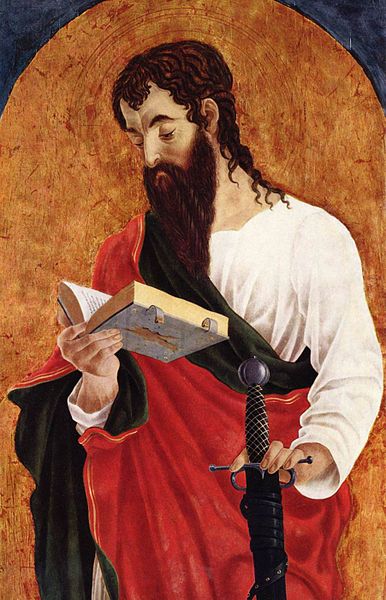
Marco Zoppo (1433–1478) – Italian painter (1433-1478) St Paul circa 1468
Dear Brothers and Sisters,
Today I would like to begin a new cycle of Catechesis focusing on the great Apostle St Paul. As you know, this year is dedicated to him, from the liturgical Feast of Sts Peter and Paul on 29 June 2008 to the same Feast day in 2009. The Apostle Paul, an outstanding and almost inimitable yet stimulating figure, stands before us as an example of total dedication to the Lord and to his Church, as well as of great openness to humanity and its cultures. It is right, therefore, that we reserve a special place for him in not only our veneration but also in our effort to understand what he has to say to us as well, Christians of today. In this first meeting let us pause to consider the environment in which St Paul lived and worked. A theme such as this would seem to bring us far from our time, given that we must identify with the world of 2,000 years ago. Yet this is only apparently and, in any case, only partly true for we can see that various aspects of today’s social and cultural context are not very different from what they were then.
A primary and fundamental fact to bear in mind is the relationship between the milieu in which Paul was born and raised and the global context to which he later belonged. He came from a very precise and circumscribed culture, indisputably a minority, which is that of the People of Israel and its tradition. In the ancient world and especially in the Roman Empire, as scholars in the subject teach us, Jews must have accounted for about 10 percent of the total population. Later, here in Rome, towards the middle of the first century, this percentage was even lower, amounting to three percent of the city’s inhabitants at most. Their beliefs and way of life, is still the case today, distinguished them clearly from the surrounding environment and this could have two results: either derision, that could lead to intolerance, or admiration which was expressed in various forms of sympathy, as in the case of the “God-fearing” or “proselytes”, pagans who became members of the Synagogue and who shared the faith in the God of Israel. As concrete examples of this dual attitude we can mention on the one hand the cutting opinion of an orator such as Cicero who despised their religion and even the city of Jerusalem (cf. Pro Flacco, 66-69) and, on the other, the attitude of Nero’s wife, Poppea, who is remembered by Flavius Josephus as a “sympathiser” of the Jews (cf. Antichità giudaiche 20, 195, 252); Vita 16), not to mention that Julius Caesar had already officially recognised specific rights of the Jews which have been recorded by the above-mentioned Jewish historian Flavius Josephus (cf. ibid., 14,200-216). It is certain that the number of Jews, as, moreover, is still the case today, was far greater outside the land of Israel, that is, in the Diaspora, than in the territory that others called Palestine.
It is not surprising, therefore, that Paul himself was the object of the dual contradictory assessment that I mentioned. One thing is certain: the particularism of the Judaic culture and religion easily found room in an institution as far-reaching as the Roman Empire. Those who would adhere with faith to the Person of Jesus of Nazareth, Jew or Gentile, were in the more difficult and troubled position, to the extent to which they were to distinguish themselves from both Judaism and the prevalent paganism. In any case, two factors were in Paul’s favour. The first was the Greek, or rather Hellenistic, culture which after Alexander the Great had become a common heritage, at least of the Eastern Mediterranean and of the Middle East and had even absorbed many elements of peoples traditionally considered barbarian. One writer of the time says in this regard that Alexander “ordered that all should consider the entire oecumene as their homeland… and that a distinction should no longer be made between Greek and barbarian” (Plutarch, De Alexandri Magni fortuna aut virtute, 6, 8). The second factor was the political and administrative structure of the Roman Empire which guaranteed peace and stability from Britain as far as southern Egypt, unifying a territory of previously unheard of dimensions. It was possible to move with sufficient freedom and safety in this space, making use, among other things, of an extraordinary network of roads and finding at every point of arrival basic cultural characteristics which, without affecting local values, nonetheless represented a common fabric of unification super partes, so that the Jewish philosopher, Philo of Alexandria, a contemporary of Paul himself, praised the Emperor Augustus for “composing in harmony all the savage peoples, making himself the guardian of peace” (Legatio ad Caium, 146-147).
There is no doubt that the universalist vision characteristic of St Paul’s personality, at least of the Christian Paul after the event on the road to Damascus, owes its basic impact to faith in Jesus Christ, since the figure of the Risen One was by this time situated beyond any particularistic narrowness. Indeed, for the Apostle “there is neither Jew nor Greek, there is neither slave nor free, there is neither male nor female; for you are all one in Christ Jesus” (Gal 3: 28). Yet, even the historical and cultural situation of his time and milieu could not but have had an influence on his decisions and his work. Some have defined Paul as “a man of three cultures”, taking into account his Jewish background, his Greek tongue and his prerogative as a “civis romanus [Roman citizen], as the name of Latin origin suggests. Particularly the Stoic philosophy dominant in Paul’s time which influenced Christianity, even if only marginally, should be recalled. Concerning this, we cannot gloss over certain names of Stoic philosophers such as those of its founders, Zeno and Cleanthes and then those closer to Paul in time such as Seneca, Musonius and Epictetus: in them the loftiest values of humanity and wisdom are found which were naturally to be absorbed by Christianity. As one student of the subject splendidly wrote, “Stoicism… announced a new ideal, which imposed upon man obligations to his peersbut at the same time set him free from all physical and national ties and made of him a purely spiritual being” (M. Pohlenz, La Stoa, I, Florence, 2, 1978, pp. 565 f.). One thinks, for example, of the doctrine of the universe understood as a single great harmonious body and consequently of the doctrine of equality among all people without social distinctions, of the equivalence, at least in principle, of men and women and then of the ideal of frugality, of the just measure and self-control to avoid all excesses. When Paul wrote to the Philippians, “Whatever is true, whatever is honourable, whatever is just, whatever is pure, whatever is lovely, whatever is gracious, if there is any excellence, if there is anything worthy of praise, think about these things” (Phil 4: 8), he was only taking up a purely humanistic concept proper to that philosophical wisdom.
In St Paul’s time a crisis of traditional religion was taking place, at least in its mythological and even civil aspects. After Lucretius had already ruled polemically a century earlier that “religion has led to many misdeeds” (De rerum natura, 1, 101, On the Nature of Things), a philosopher such as Seneca, going far beyond any external ritualism, taught that “God is close to you, he is with you, he is within you” (Epistulae morales to Lucilius, 41, 1). Similarly, when Paul addresses an audience of Epicurean philosophers and Stoics in the Areopagus of Athens, he literally says: “God does not live in shrines made by man,… for in him we live and move and have our being” (Acts 17: 24, 28). In saying this he certainly re-echoes the Judaic faith in a God who cannot be represented in anthropomorphic terms and even places himself on a religious wavelength that his listeners knew well. We must also take into account the fact that many pagan cults dispensed with the official temples of the town and made use of private places that favoured the initiation of their followers. It is, therefore, not surprising that Christian gatherings (ekklesiai) as Paul’s Letters attest, also took place in private homes. At that time, moreover, there were not yet any public buildings. Therefore, Christian assemblies must have appeared to Paul’s contemporaries as a simple variation of their most intimate religious practice. Yet the differences between pagan cults and Christian worship are not negligible and regard the participants’ awareness of their identity as well as the participation in common of men and women, the celebration of the “Lord’s Supper”, and the reading of the Scriptures.
In conclusion, from this brief over-view of the cultural context of the first century of the Christian era, it is clear that it is impossible to understand St Paul properly without placing him against both the Judaic and pagan background of his time. Thus he grows in historical and spiritual stature, revealing both sharing and originality in comparison with the surrounding environment. However, this applies likewise to Christianity in general, of which the Apostle Paul, precisely, is a paradigm of the highest order from whom we all, always, still have much to learn. And this is the goal of the Pauline Year: to learn from St Paul, to learn faith, to learn Christ, and finally to learn the way of upright living.
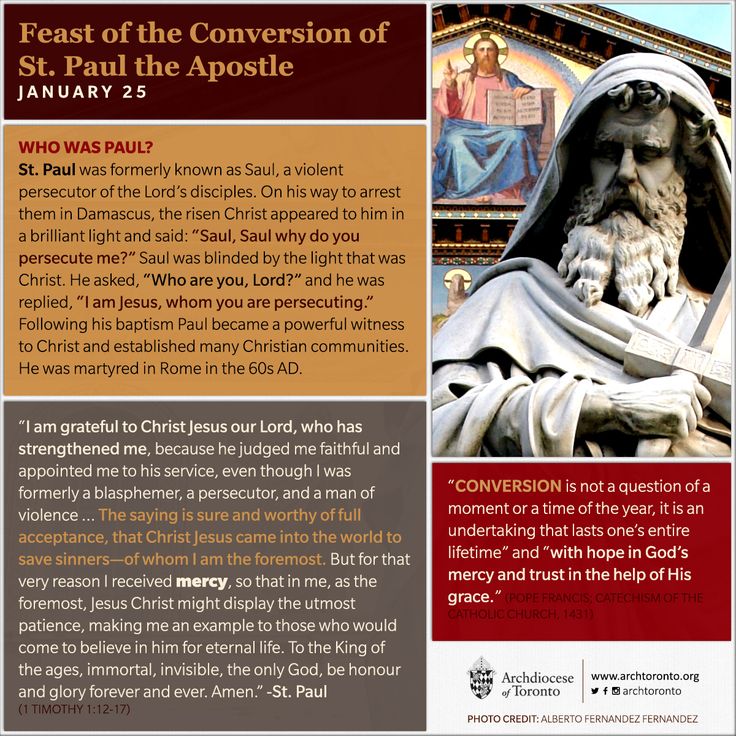
Second Thoughts for Today – 25 January – Feast of the Conversion of St Paul the Apostle
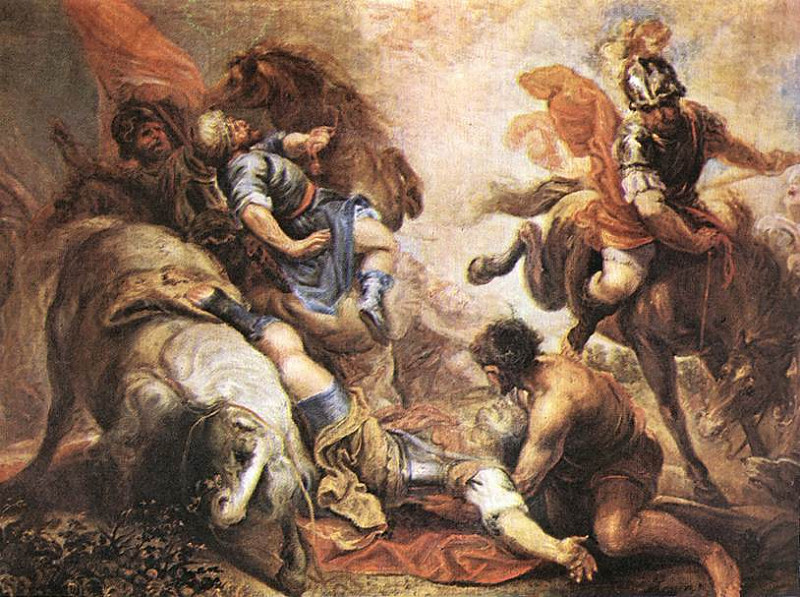
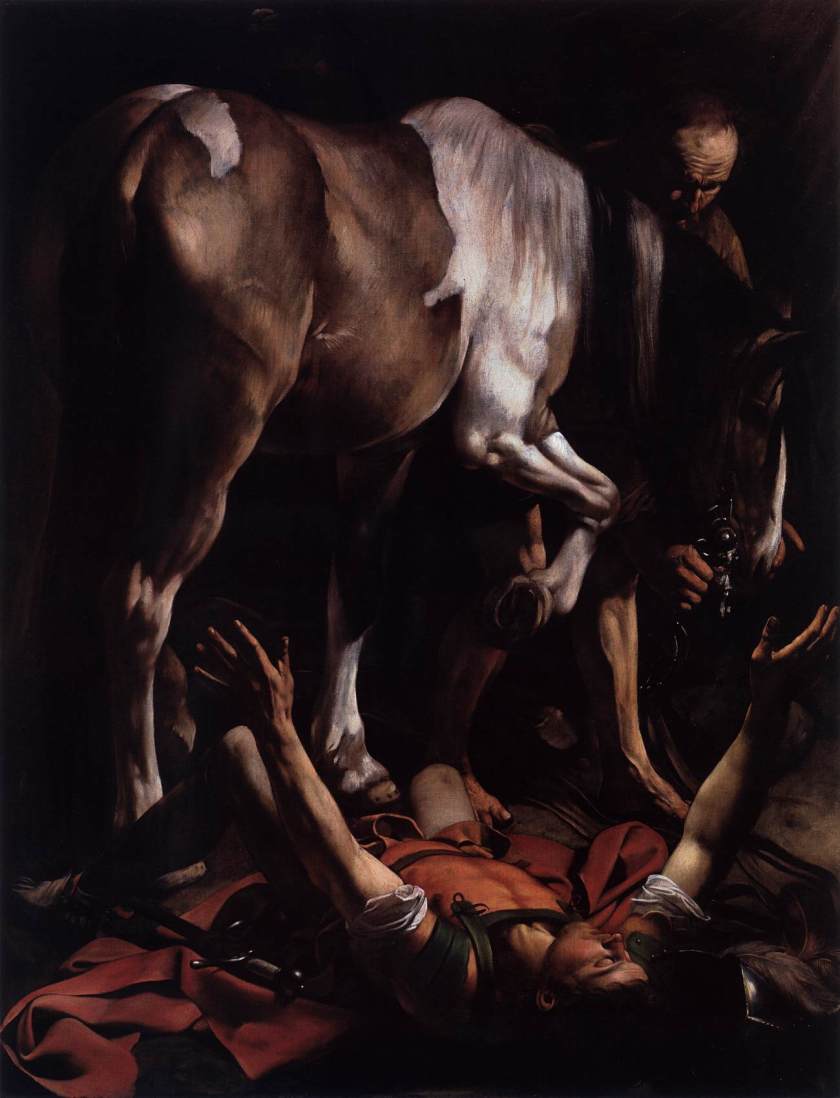
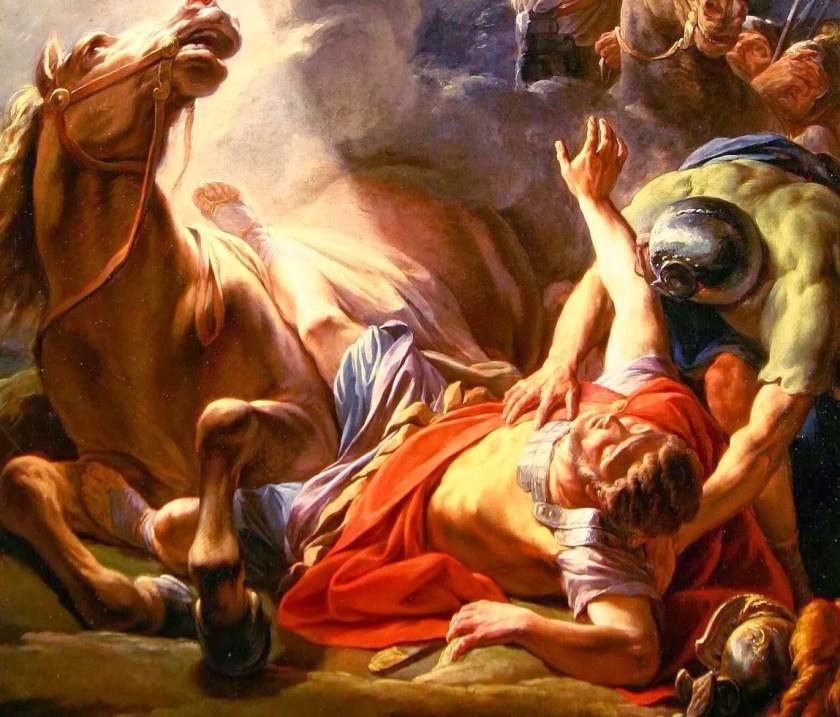
St Paul’s life is perhaps the best known in the annals of the saints and his conversion was one of the most earth-shattering miracles of the early Church.
Of course, not all of us can be knocked off our feet by a vision of Jesus Christ but we can live our faith with the same intensity as that of St Paul did. After his conversion, St Paul spent his life spreading the news of Jesus everywhere and died as his final witness to the faith.
It is total commitment and heroism that planted the Christian faith and it is still needed very badly in our day. The bottom-line is this:
One Minute Reflection – 25 January – Feast of the Conversion of St Paul the Apostle
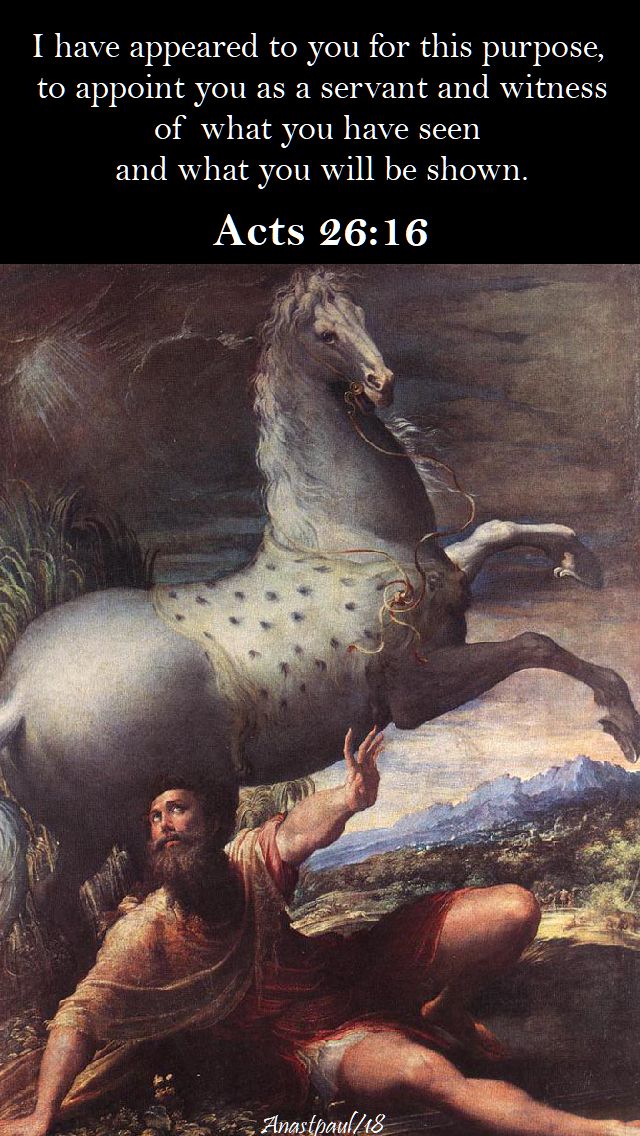
I have appeared to you for this purpose, to appoint you as a servant and witness of what you have seen and what you will be shown. I shall deliver you from this people and from the Gentiles to whom I send you,to open their eyes that they may turn from darkness to light and from the power of Satan to God, so that they may obtain forgiveness of sins and an inheritance among those who have been consecrated by faith in me…Acts 26:16-18
REFLECTION – “Paul, more than anyone else, has shown us what man really is and in what our nobility consists and of what virtue this particular animal is capable. Each day he aimed ever higher; each day he rose up with greater ardour and faced with new eagerness the dangers that threatened him. He summed up his attitude in the words: “I forget what is behind me and push on to what lies ahead”…The most important thing of all to him, however, was that he knew himself to be loved by Christ. Enjoying this love, he considered himself happier than anyone else”…….St John Chrysostom
PRAYER – Today Lord, we celebrate the conversion of St Paul, Your chosen vessel for carrying Your name to the whole world. Help us to make our way towards You by following in his footsteps and by being Your disciples before the men and women of our day. Grant that by the prayers of St Paul, we too may say, “Yet I live, no longer I, but Christ lives in me; insofar as I now live in the flesh, I live by faith in the Son of God who has loved me and given himself up for me.” (Galatians 2:20) Through Jesus Christ, our Lord, in union with the Holy Spirit, one God forever and ever, amen.
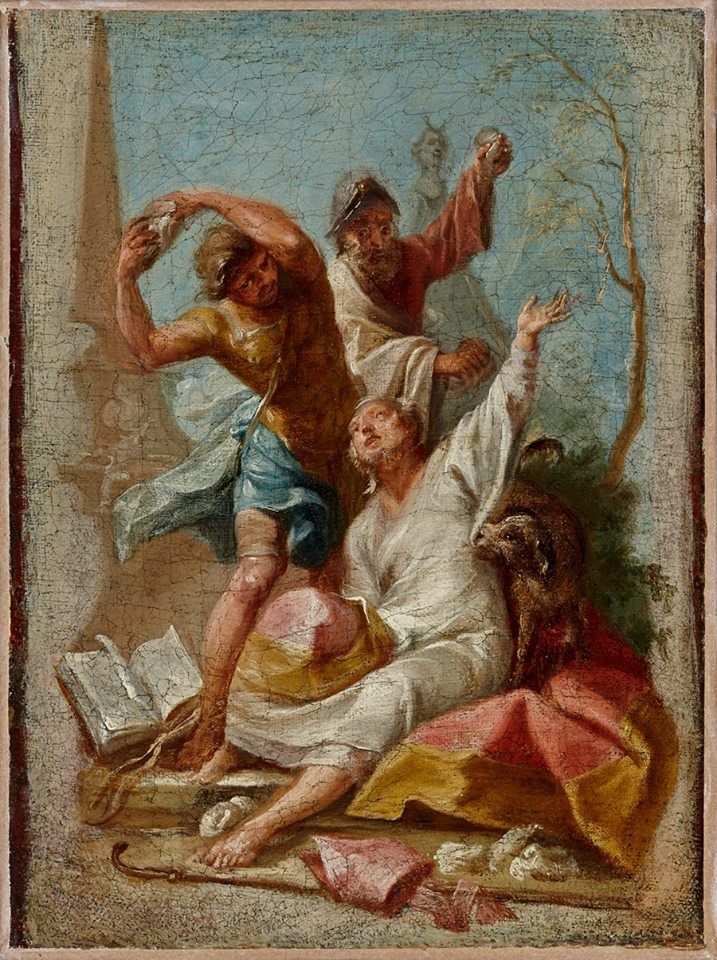
St Paul the Apostle is the greatest of the early Christian missionaries. He first appears in the Acts of the Apostles under the name of Saul. Saul was raised in the Jewish faith as a Pharisee trained in the strict observance of God’s Law. He believed the Law should be obeyed by himself and all Jews. Saul was upset by the early Christian Church, believing that the early Christians had broken away from their Jewish traditions. He actively persecuted the Church in Jerusalem. As the first Christian martyr Stephen was being stoned to death, Saul watched the cloaks of the persecutors (Acts 7:58).
Paul then traveled to Damascus to further persecute early Christians. On the road to Damascus Saul had an encounter with the Risen Jesus Christ (Acts of the Apostles 9:1–19, Galatians 1: 13–14). Jesus asked, “Saul, Saul, why are you persecuting me?” Paul replied, “Who are you, sir?” Jesus responded, “I am Jesus whom you are persecuting”(Acts 9: 4 – 5). Jesus then sent Saul into Damascus to wait for further instructions. Saul was shaken and blinded by the experience. When a Christian named Ananias came and baptised Saul, his blindness went away. As a result of this encounter Saul became a follower of Christ. He was now convinced that fellowship with the risen Jesus Christ, not the observance of the Law, was all that was needed to receive God’s promise of salvation. (Galatians 1:11–12; 3:1–5)
Saul, whose name now became Paul, went to Jerusalem to consult with Peter (Galatians 1: 18). After his first missionary journeys, Paul was called by Jesus to proclaim the Gospel to the Gentiles. He spent the rest of his life journeying on his missions, establishing local churches and writing to them when he heard of their accomplishments and failures. Paul’s letters are the earliest records of the life and history of the early Church. As inspired by the Holy Spirit Paul’s letters are part of the Canon of the New Testament. As a record of the happenings in the early Church they are in invaluable record of the expansion of the Christianity.
St Paul’s Writings
All together, there are 13 epistles that bear Paul’s name as the author. However, scholars do not believe that he wrote them all. Paul himself was the author of first and second Thessalonians, Galatians, Philippians, first and second Corinthians, Romans and Philemon. The epistles to the Ephesians, Colossians, Titus and first and second Timothy bear Paul’s name but it is believed that they were written after his death. The writers of these letters were disciples of Paul who wanted to continue his teaching. Whoever the authors of these epistles were, these writings have been accepted into the New Testament as inspired by the Holy Spirit.
Centrality of Jesus Christ
The most profound and moving day in Paul’s life was when he met the risen Jesus Christ. Paul was well respected by the Jewish community and his peers. But he gave it all up for Christ. “More than that, I even consider everything as a loss because of the supreme good of knowing Jesus Christ my Lord.” (Philippians 3:8) Jesus Christ, Paul realised, was sent by the Father to bring salvation for all. Paul taught that we are united with Christ in faith and Baptism – “We were indeed buried with him through baptism into death, so that, just as Christ was raised from the dead by the glory of the Father, we too might live in newness of life.”(Romans 6:4)
On the personal level, individual Christians recognise that when they are united with Christ, they receive the grace needed to overcome sin and to live moral lives. (Galatians 5:16–26)
Justification
Paul teaches that the justice of God was saving justice at its best. God is faithful, fulfilling the promises made in the Old Testament covenant. Through the sin of Adam and Eve the human family was alienated from God. Through Christ the human family is called back into relationship with God. This process of reuniting the human family with God is called justification. (Romans 3:21–31) It is impossible for us to justify ourselves; we are only justified by being united in faith with Jesus Christ and by accepting the gift of grace won by Christ. (Romans 5:1–2) We can only be made right with God and set free from a life of immoral living by accepting the gift of God’s reconciling grace.
Life in the Spirit
Paul teaches that the love of God is being poured into our hearts through the Holy Spirit. (Romans 5:5) The Holy Spirit is the source of all love. The Holy Spirit creates a bond between us and God like children bound to a father. (Romans 8:14–16) The Holy Spirit not only establishes our relationship with the Father. Even though we are weak, the Holy Spirit helps us to live faithfully within that relationship. (Romans 8:26–27) It is through the Holy Spirit that we can live in love with all people. (1 Corinthians 13:3–7)
The Moral Life
What does it mean to live a Christian moral life? Paul thought deeply about this question. He was raised as a faithful Jew. As we have seen Paul, was raised to believe that following the strict moral code of the Jewish faith was the way to salvation. Paul believed “… the law is holy and the commandment is holy and righteous and good.”(Romans 7:12.) What Paul realised, however, that because we are weakened by the sin of Adam and Eve, it was impossible to us to reconnect in our relationship with God through our efforts alone (Romans 7:14).
After his experience with Jesus Christ, Paul knew that he was not alone on the road to salvation. Jesus Christ has already accomplished salvation for us. In faith and Baptism, Christians receive the grace of the Holy Spirit, who is our constant guide. The Holy Spirit helps us to live in relationship with God and others.
So Paul’s great message to the world was: You are saved entirely by God, not by anything you can do. Saving faith is the gift of total, free, personal and loving commitment to Christ, a commitment that then bears fruit in more “works” than the Law could ever contemplate.
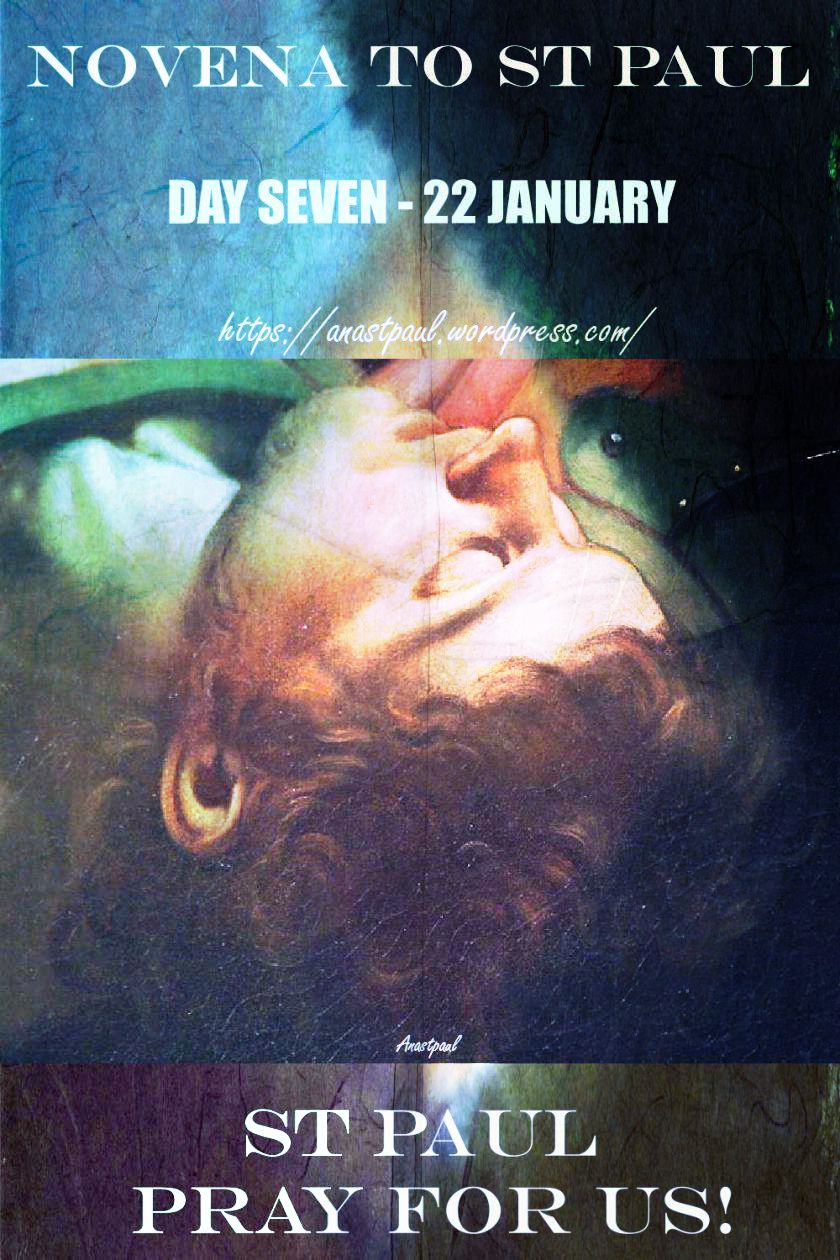
Novena to St Paul in preparation for the Feast of The Conversion of St Paul on 25 January
Day Seven – 22 January
“Make no mistake, my brothers, if anyone joins a schismatic he will not inherit God’s Kingdom. If anyone walks in the way of heresy, he is out of sympathy with the Passion. Be careful, then, to observe a single Eucharist. For there is one flesh of our Lord, Jesus Christ and one cup of His blood that makes us one and one altar, just as there is one bishop along with the presbytery and the deacons, my fellow slaves. In that way whatever you do is in line with God’s will.”………………St Ignatius of Antioch
LET US PRAY:
Glorious St Paul,
your conversion is a powerful witness to the world
that God loves us and does not give up on us,
no matter how far we stray.
Help me to cling to Christ in the Blessed Sacrament
help me to fully participate at every Holy Mass
help me to understand, that this IS He
who showed us the way
gave us the light to follow it in Holy Mother Church
who is His bride and shows us the only truth.
May every circumstante of my life be an occasion
to change my way of thinking,
to renounce self-will and
to surrender myself to the wisdom and tenderness of Jesus Christ
who is acting to make me His saint.
Pray that I may love God’s will and providence for me.
In this confidence, I entrust to you, St Paul,
these, my intentions
……………………………..
(mention your request)












 AnaStpaul
You must be logged in to post a comment.