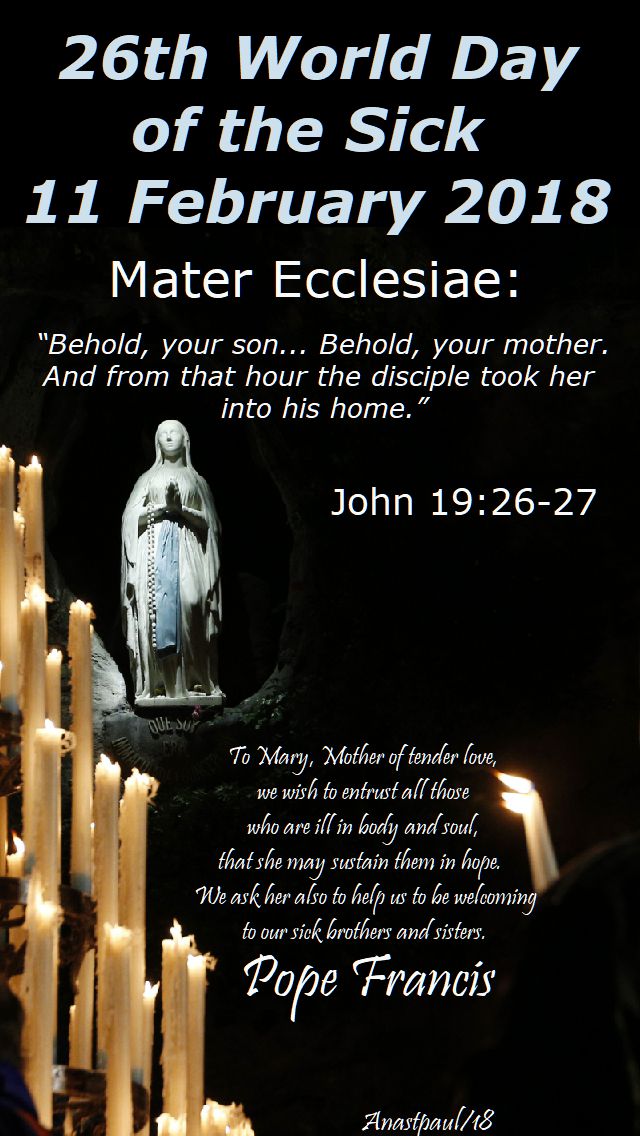
Quote of the Day – 11 February – Memorial of Our Lady of Lourdes and the 26th World Day of Prayer for the Sick
Category: The BLESSED VIRGIN MARY
One Minute Reflection – – 11 February – 6th Sunday of Year B, Memorial of Our Lady of Lourdes and the 26th World Day of Prayer for the Sick
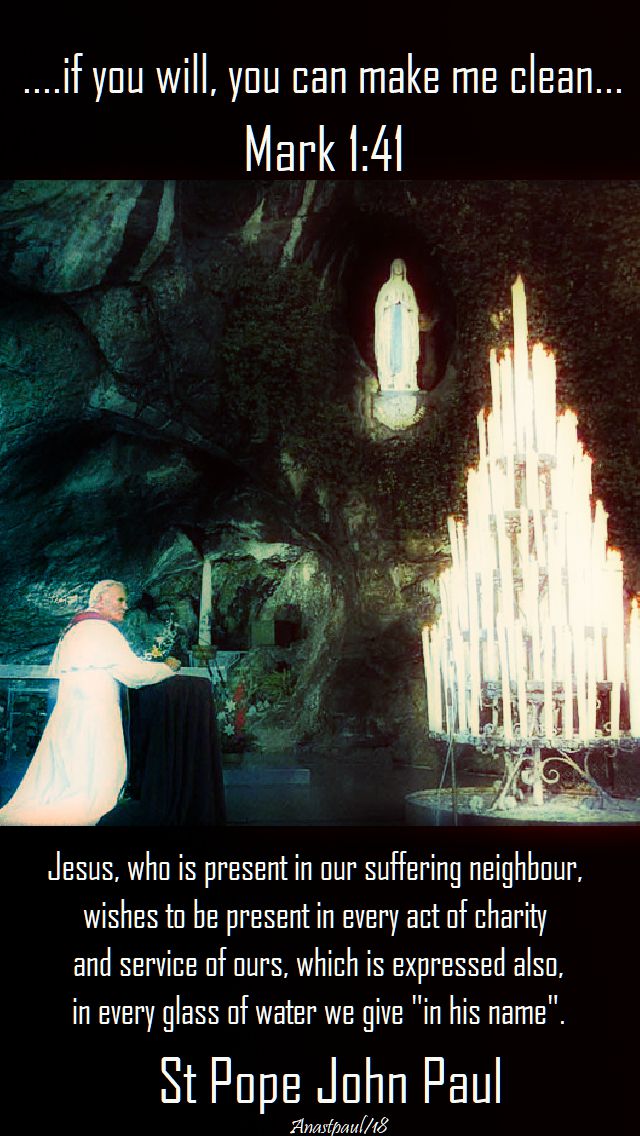
….if you will, you can make me clean…Mark 1:41.
REFLECTION – “Jesus, who is present in our suffering neighbour, wishes to be present in every act of charity and service of ours, which is expressed also, in every glass of water we give “in his name” (cf Mk 9:41). Jesus wants love, the solidarity of love, to grow from suffering and around suffering. He wants, that is, the sum of that good which is possible in our human world. A good that never passes away. The Pope, who wishes to be a servant of this love, kisses the forehead and kisses the hands of all those who contribute to the presence of this love and to its growth in our world. He knows, in fact and believes that he is kissing the hands and the forehead of Christ himself, who is mystically present in those who suffer and in those who, out of love, serve the suffering.”…St Pope John Paul, Memorial of Our Lady of Lourdes – 1979
PRAYER – Christ of our sufferings,
Christ of our sacrifices,
Christ of our Gethsemane,
Christ of our difficult transformations,
Christ of our faithful service to our neighbour,
Christ of our pilgrimages to Lourdes,
Christ of our community, today, in St Peter’s Basilica,
Christ our Redeemer,
Christ our Brother!
Amen.
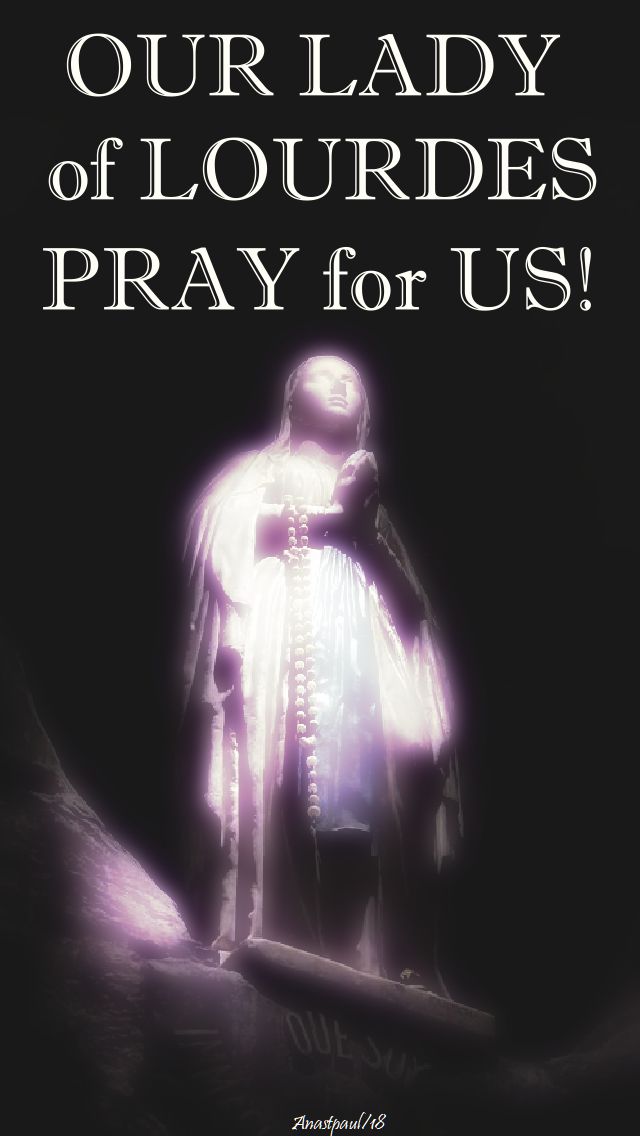
Our Lady of Lourdes, Pray for us that we may live this solidarity of love, in You and with You and for You, amen.
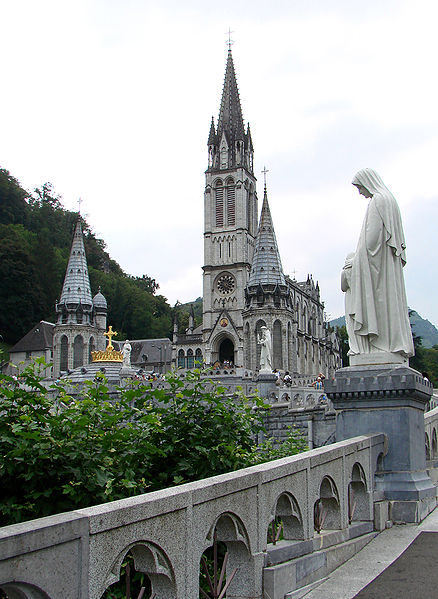
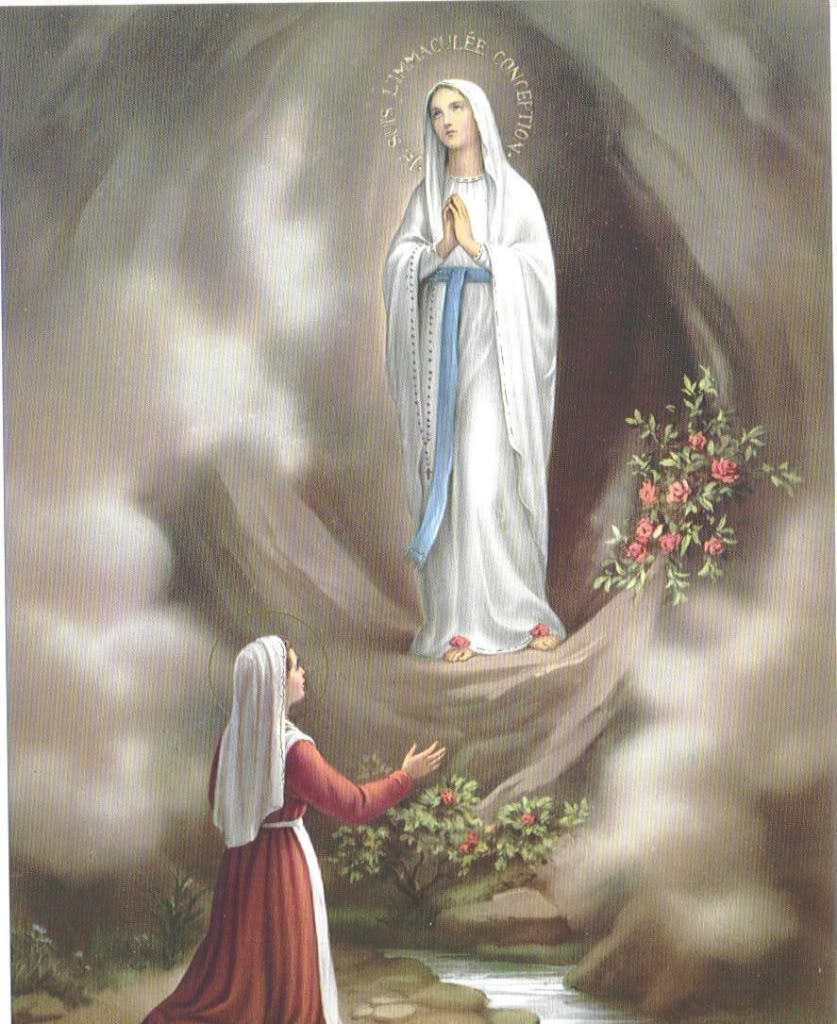
The Memorial of the Apparitions of Our Lady of Lourdes / Our Lady of the Immaculate Conception – 11 February
Blessed Memorial of the Apparitions of Our Lady of Lourdes/Our Lady of the Immaculate Conception – (11 February and 16 July of 1858) – Patron of the ill and infirm, protection from disease, France, 6 cities and a Diocese.

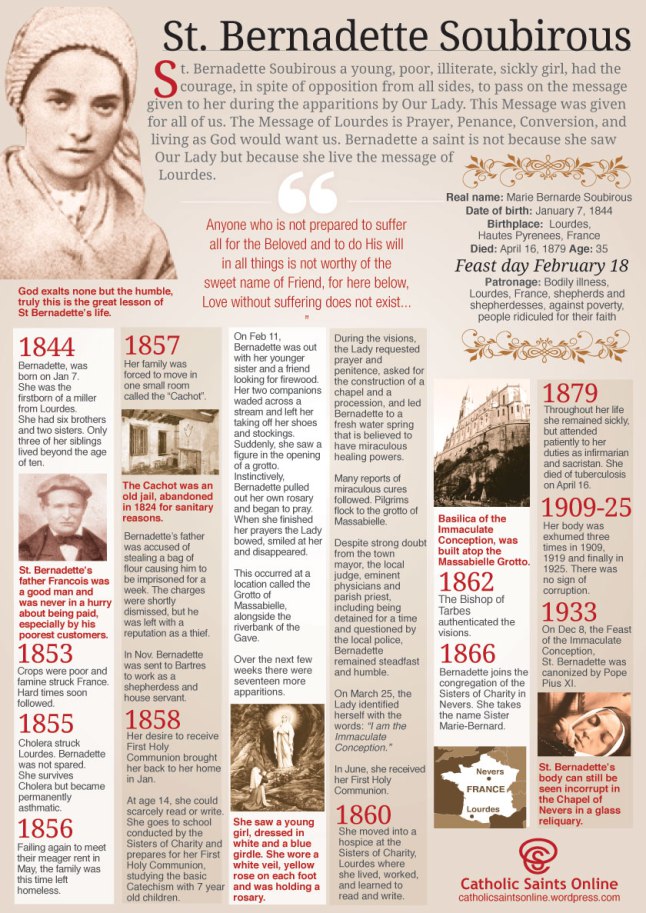
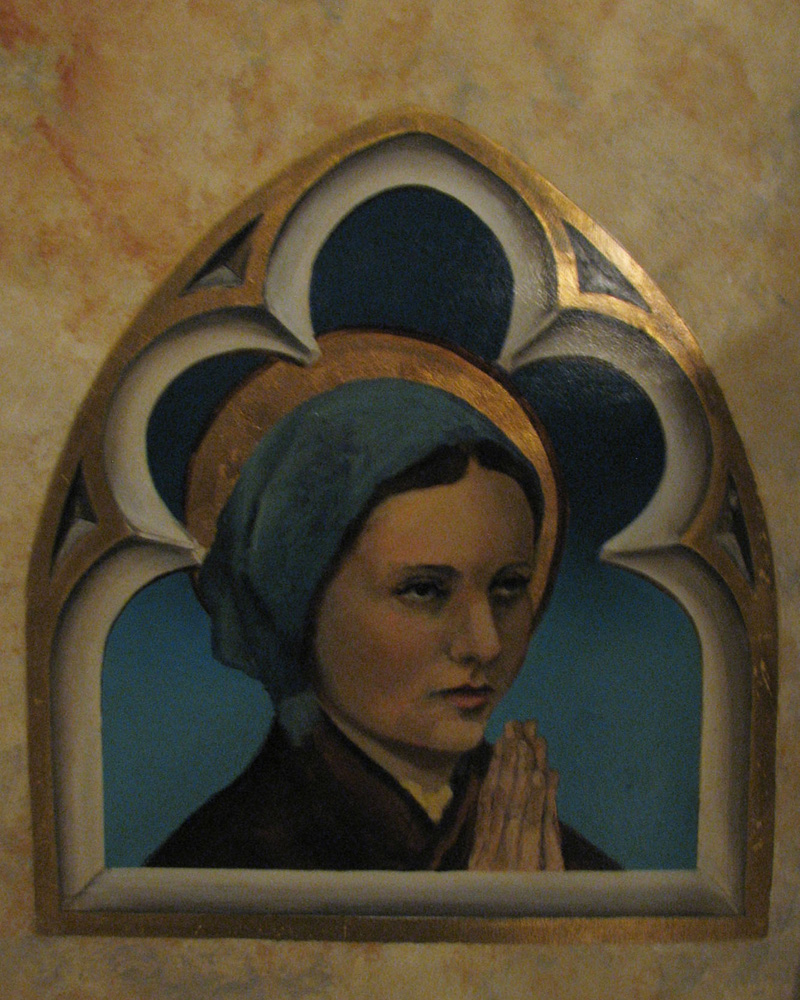
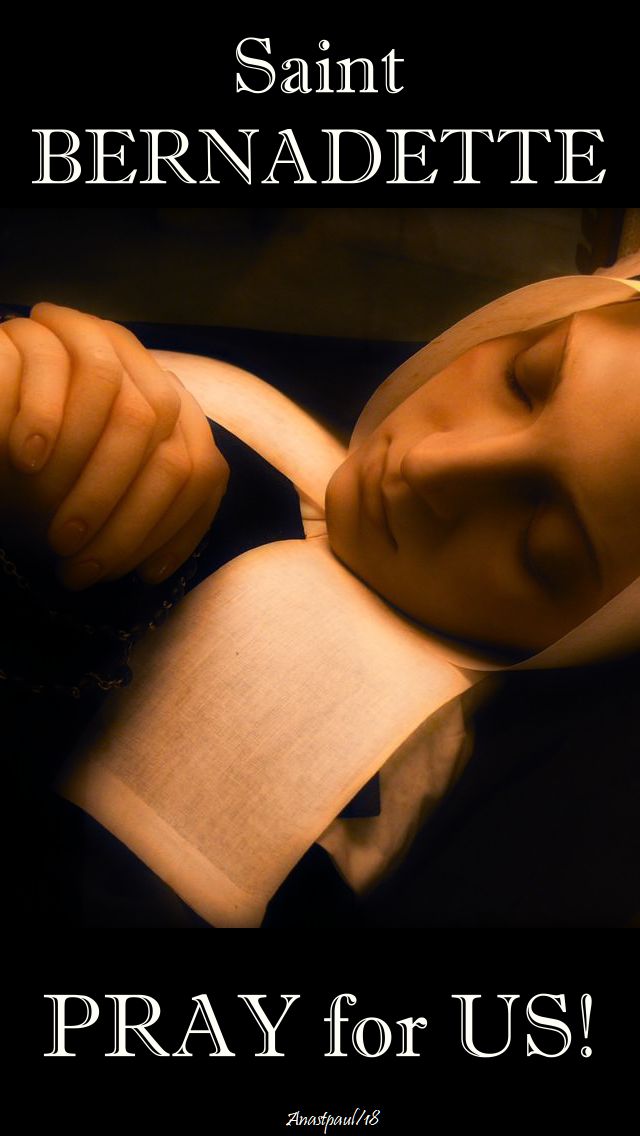
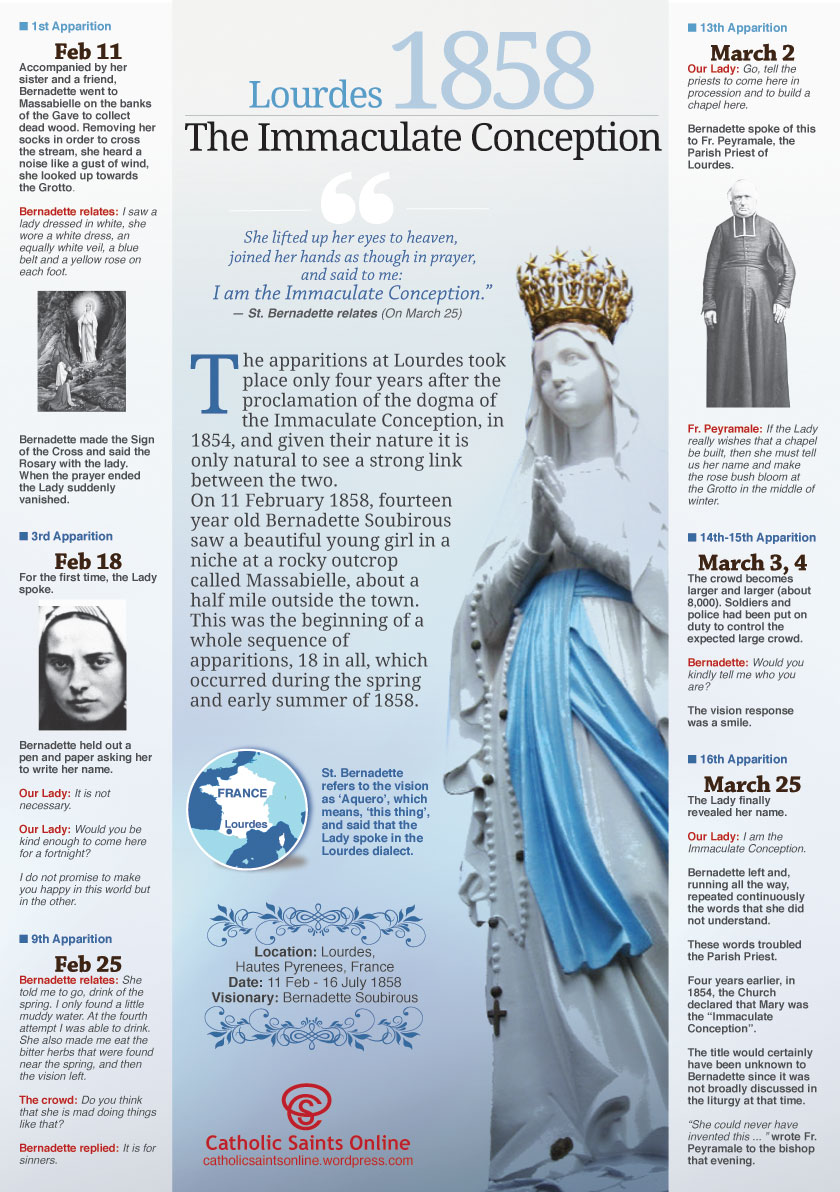
The memorial commemorates the eighteen (18) apparitions of the Blessed Virgin Mary to Saint Bernadette Soubiroux that occurred between 11 February and 16 July of 1858 near the town of Lourdes in the Hautes-Pyrenees region of France. Though there would be other people with her, only Saint Bernadette could see the Lady.
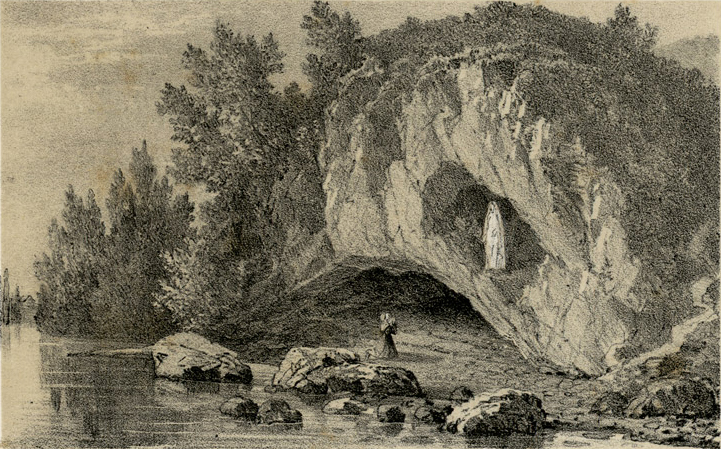
During the 9th appearance, on 25 February, the Lady told Bernadette to drink from a spring that suddenly appeared in the grotto where the apparitions occurred. During the 12th appearance, on 1 March, a visitor washed her arm in water from the spring and some nerve damage in it was immediately cured. There is a tradition of miraculous cures at the grotto, or received by those who drink or are bathed in its waters. Bernadette later said that the water had no special properties but it helped focus the faithful who received the cures through faith and prayer.
During the 13th appearance, on 2 March, the Lady told Bernadette to tell local priests that they should build a chapel at the grotto and have processions to be made to it; the priests were understandably sceptical but due to the numbers of pilgrims coming to the area, construction of several churches was started within a few years.
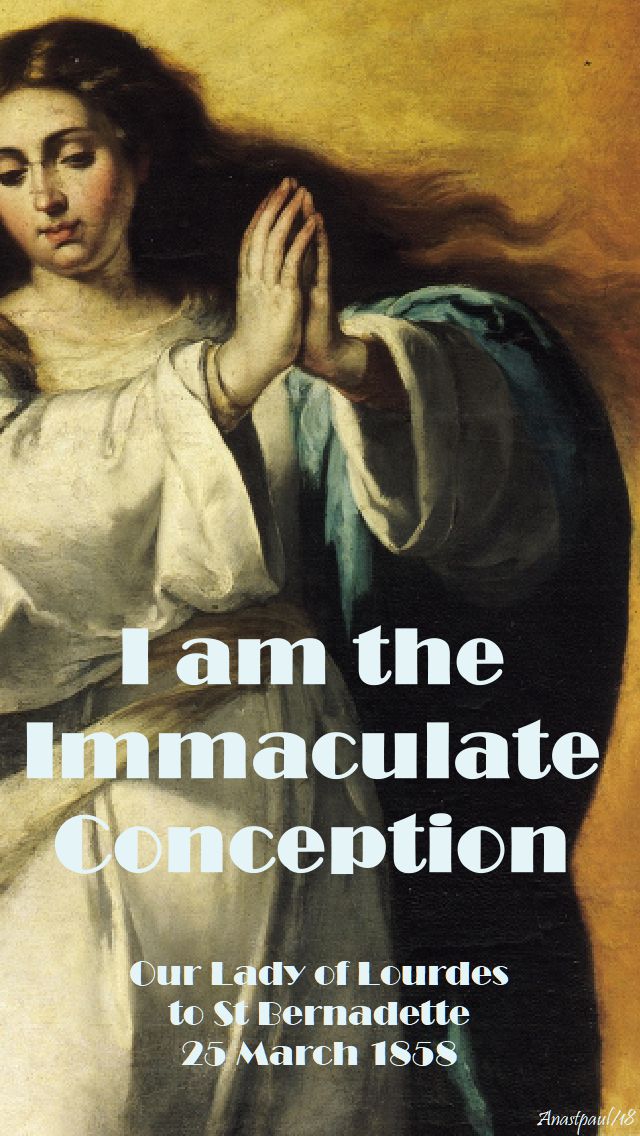
During the 16th appearance, on 25 March, the Lady identified herself as “the Immaculate Conception”.
Due to the number of people gathering at the site and making treks to the area, on 8 June 1858, the mayor of Lourdes barricaded the grotto and stationed guards to prevent public access; visitors were fined for kneeling near the grotto or talking about it and Bernadette saw the last appearance of the Lady from outside the barricade. The grotto was re-opened to the public in October 1858 by order of Emperor Louis Napoleon III and the pilgrims have not stopped coming since.


Church Approval:
• on 18 January 1862 Bishop Bertrand-Sévère Mascarou-Laurence, with the authorisation of Pope Pius IX, declared that the faithful are “justified in believing the reality of the apparition”
• national French pilgrimages to the site began in 1873
• the basilica of Notre-Dame de Lourdes was consecrated in 1876
• Blessed Pope Pius IX formally granted a canonical coronation to the statue of Our Lady in the courtyard of the basilica on 3 July 1876
• Church of the Rosary consecrated in 1901
• a special office and Mass were authorised by Pope Leo XIII
• observance of the feast extended to the whole Church by St Pope Pius X in 1907
Memorial of Our Lady of Lourdes, the 26th World Day of Prayer for the Sick and Memorials of the Saints – 11 February
Our Lady of Lourdes (11 February and 16 July of 1858) – (Optional Memorial)
World Day of the Sick
—
St Ampelius of Africa
St Ardanus of Tournus
Bl Bartholomew of Olmedo
St Caedmon
St Calocerus of Ravenna
St Castrensis of Capua
St Dativus the Senator
Bl Elizabeth Salviati
St Etchen of Clonfad
St Eutropius of Adrianopolis
St Felix the Senator
St Gobnata
St Pope Gregory II
Bl Gaudencia Benavides Herrero
St Helwisa
St Jonas of Muchon
St Lucius of Adrianople
St Pope Paschal I
St Pedro de Jesús Maldonado-Lucero
St Saturninus of Africa
St Secundus of Puglia
St Severinus of Agaunum
St Soter of Rome
St Theodora the Empress
Bl Tobias Francisco Borrás Román
—
Guardians of the Holy Scriptures: Also known as –
• Anonymous Martyrs in Africa
• Martyrs of Africa
• Martyrs of Numidia
• Martyrs of the Holy Books
A large number of Christians tortured and murdered in Numidia (part of modern Algeria) during the persecutions of Diocletian, but whose names and individual stories have not survived. They were ordered to surrender their sacred books to be burned. They refused. Martyrs. c 303 in Numidia.
Martyrs of Africa – 5 saints: A group of five Christians who were martyred together; we know nothing else but the names of four of them – Cyriacus, Oecominius, Peleonicus and Zoticus.
.
Novena to Our Lady of Lourdes – DAY NINE– 10 February
Novena to Our Lady of Lourdes – DAY NINE– 10 February (we Pray the Novena for our own intentions and for the sick, the infirm within our own communities but also for all those throughout the world who suffer, especially those who have no-one to pray for them in preparation for the Wold Day of the Sick on 11 February.)
DAY NINE
O glorious Mother of God,
to you we raise our hearts and hands
to implore your powerful intercession
in obtaining from the benign Heart of Jesus
all the graces necessary
for our spiritual and temporal welfare,
particularly for the grace of a happy death.
O Mother of our Divine Lord,
as we conclude this novena for the special favour
we seek at this time.
……………………………(make your request)
Mary and Bernadette
We feel animated with confidence that your prayers in our behalf
will be graciously heard. O Mother of My Lord,
through the love you bear to Jesus Christ
and for the glory of His Name,
hear our prayers and obtain our petitions.
O Brilliant star of purity, Mary Immaculate, Our Lady of Lourdes,
glorious in your assumption,
triumphant in your coronation,
show unto us the mercy of the Mother of God,
Virgin Mary, Queen and Mother,
be our comfort, hope, strength, and consolation. Amen.
Our Lady of Lourdes, pray for us.
Saint Bernadette, pray for us.
Our Morning Offering – 9 February – The Memorial of Blessed Anne Catherine Emmerich
Our Morning Offering – 9 February – The Memorial of Blessed Anne Catherine Emmerich (1774-1824)
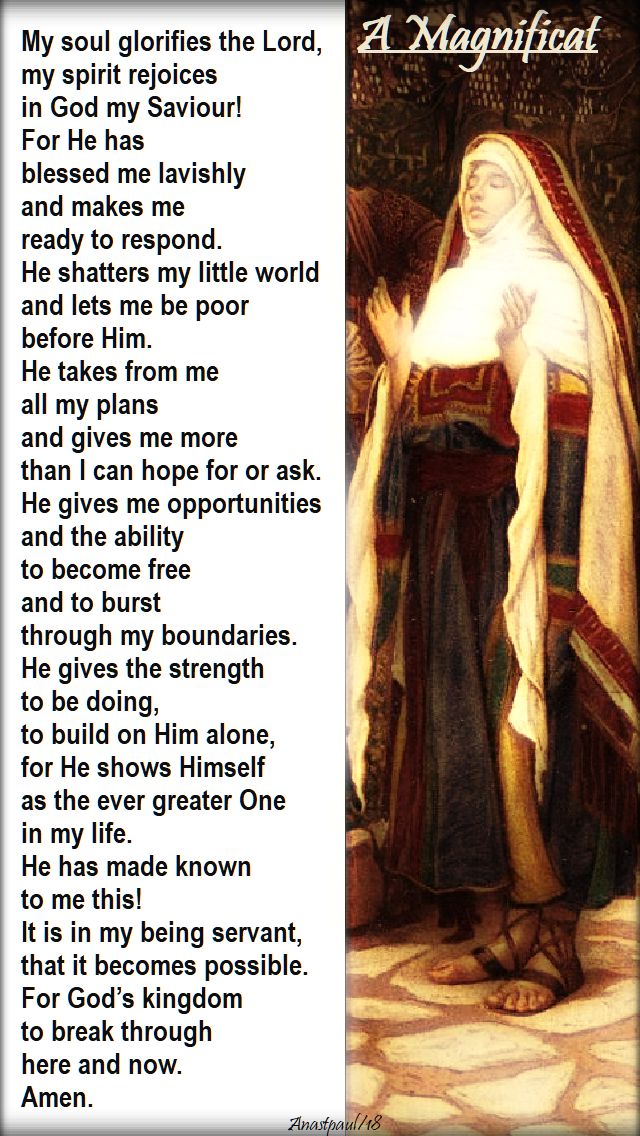
A Magnificat
Translated from the German by Olga Warnke of the Institute of the Blessed Virgin Mary
My soul glorifies the Lord,
my spirit rejoices in God my Saviour!
For He has blessed me lavishly
and makes me ready to respond.
He shatters my little world
and lets me be poor before Him.
He takes from me all my plans
and gives me more than I can hope for or ask.
He gives me opportunities
and the ability to become free
and to burst through my boundaries.
He gives the strength to be doing,
to build on Him alone,
for He shows Himself
as the ever greater One in my life.
He has made known to me this!
It is in my being servant that it becomes possible.
For God’s kingdom to break through
here and now.
Amen.
Saint of the Day – 9 February – Blessed Anna Katharina Emmerick/Anne Catherine Emmerich (1774-1824)
Saint of the Day – 9 February – Blessed Anna Katharina Emmerick/Anne Catherine Emmerich (1774-1824) – Handicapped, Virgin, Religious, Penitent, Marian Visionary, Mystic, Ecstatic, Writer and Stigmatist. Her body is incorrupt.
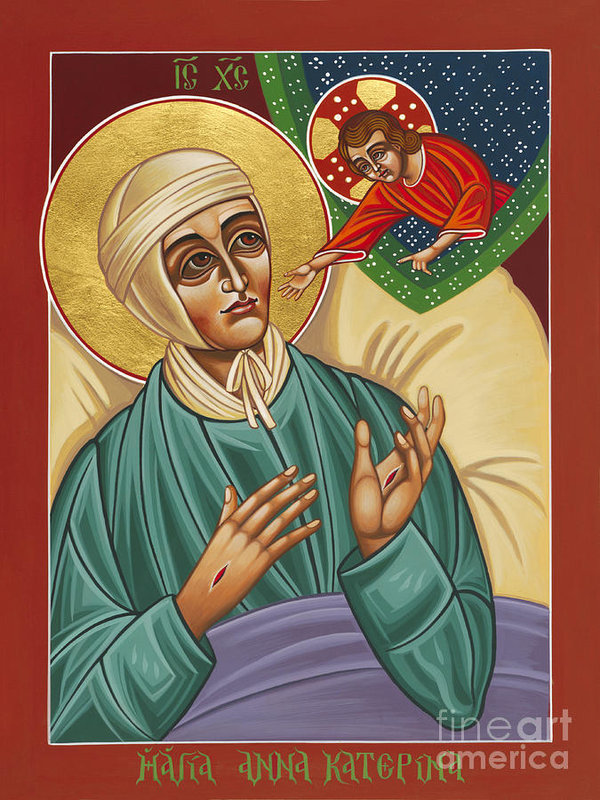
Anna Katharina Emmerick was born on 8 September 1774 in the farming community of Flamsche near Coesfeld. She grew up amidst a host of nine brothers and sisters. She had to help out in the house and with the farm work at an early age. Her school attendance was brief, which made it all the more remarkable that she was well instructed in religious matters. Her parents and all those who knew Anna Katherina noticed early on that she felt drawn to prayer and to the religious life in a special way.
Anna Katharina laboured for three years on a large farm in the vicinity. Then she learned to sew and stayed in Coesfeld for her further training. She loved to visit the old churches in Coesfeld and to join in the celebration of Mass. She often walked the path of Coesfeld’s long Way of the Cross alone, praying the stations by herself. She wanted to enter the convent but since her wish could not be fulfilled at that time, she returned to her parental home. She worked as a seamstress and, while doing so, visited many homes.
Anna Katherina asked for admission to different convents but she was rejected because she could not bring a significant dowry with her. The Poor Clares in Münster finally agreed to accept her if she would learn to play the organ. She received her parents’ permission to be trained in Coesfeld by the organist Söntgen. But she never got around to learning how to play the organ. The misery and poverty in the Söntgen household prompted her to work in the house and help out in the family. She even sacrificed her small savings for their sake.
Together with her friend Klara Söntgen Anna Katharina was finally able to enter the convent Agnetenberg in Dülmen in 1802. The following year she took her religious vows. She participated enthusiastically in the life of the convent. She was always willing to take on hard work and loathsome tasks. Because of her impoverished background she was at first given little respect in the convent. Some of the sisters took offence at her strict observance of the order’s rule and considered her a hypocrite. Anna Katharina bore this pain in silence and quiet submission.
From 1802 to 1811 Anna Katharina was ill quite often and had to endure great pain.
As a result of secularisation the convent of Agnetenberg was suppressed in 1811 and Anna Katharina had to leave the convent along with the others. She was taken in as a housekeeper at the home of Abbé Lambert, a priest who had fled France and lived in Dülmen. But she soon became ill. She was unable to leave the house and was confined to bed. In agreement with Curate Lambert she had her younger sister Gertrud come to take over the housekeeping under her direction.
During this period Anna Katharina received the stigmata. She had already endured the pain of the stigmata for a long time. The fact that she bore the wounds of Christ could not remain hidden. Dr Franz Wesener, a young doctor, went to see her and he was so impressed by her that he became a faithful, selfless and helping friend during the following eleven years. He kept a diary about his contacts with Anna Katharina Emmerick in which he recorded a wealth of details.
A striking characteristic of the life of Anna Katharina was her love for people. Wherever she saw need she tried to help. Even in her sickbed she sewed clothes for poor children and was pleased when she could help them in this way. Although she could have found her many visitors annoying, she received all of them kindly. She embraced their concerns in her prayers and gave them encouragement and words of comfort.
Many prominent people who were important in the renewal movement of the church at the beginning of the 19th century sought an opportunity to meet Anna Katharina, among them Clemens August Droste zu Vischering, Bernhard Overberg, Friedrich Leopold von Stolberg, Johann Michael Sailer, Christian and Clemens Brentano, Luise Hensel, Melchior and Apollonia Diepenbrock. The encounter with Clemens Brentano was particularly significant. His first visit led him to stay in Dülmen for five years. He visited Anna Katharina daily to record her visions which he later published.
Anna Katharina grew ever weaker during the summer of 1823. As always she joined her suffering to the suffering of Jesus and offered it up for the salvation of all. She died on 9 February 1824. She was buried in the cemetery in Dülmen. A large number of people attended the funeral. Because of a rumour that her corpse had been stolen the grave was reopened twice in the weeks following the burial. The coffin and the corpse were found to be intact.
Clemens Brentano wrote the following about Anna Katharina Emmerick: “She stands like a cross by the wayside”. Anna Katharina Emmerick shows us the centre of our Christian faith, the mystery of the cross.
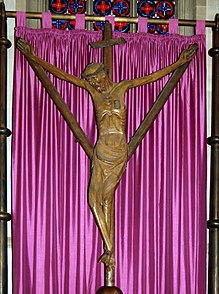
The life of Anna Katharina Emmerick is marked by her profound closeness to Christ. She loved to pray before the famous Coesfeld Cross and she walked the path of the long Way of the Cross frequently. So great was her personal participation in the sufferings of our Lord that it is not an exaggeration to say that she lived, suffered and died with Christ. An external sign of this, which is at the same time, however, more than just a sign, are the wounds of Christ which she bore.

Anna Katharina Emmerick was a great admirer of Mary. The feast of the Nativity of Mary was also Anna Katharina’s birthday. A verse from a prayer to Mary highlights a further aspect of Anna Katharina’s life for us. The prayer states, “O God, let us serve the work of salvation following the example of the faith and the love of Mary”. To serve the work of salvation – that is what Anna Katharina wanted to do.
In Colossians the apostle Paul speaks of two ways to serve the gospel, to serve salvation. One consists in the active proclamation in word and deed. But what if that is no longer possible? Paul, who obviously finds himself in such a situation, writes: “Now I rejoice in my sufferings for your sake and in my flesh I complete what is lacking in Christ’s afflictions for the sake of his body, that is, the church” (Col 1:24).
Anna Katharina Emmerick served salvation in both ways. Her words, which have reached innumerable people in many languages from her modest room in Dülmen through the writings of Clemens Brentano, are an outstanding proclamation of the gospel in service to salvation right up to the present day. At the same time, however, Anna Katharina Emmerick understood her suffering as a service to salvation. Dr Wesener, her doctor, recounts her petition in his diary: “I have always requested for myself as a special gift from God that I suffer for those who are on the wrong path due to error or weakness, and that, if possible, I make reparation for them.” It has been reported that Anna Katharina Emmerick gave many of her visitors religious assistance and consolation. Her words had this power because she brought her life and suffering into the service of salvation. In serving the work of salvation through faith and love, Anna Katharina Emmerick can be a model for us all.
Dr Wesener passed on this remark of Anna Katharina Emmerick: “I have always considered service to my neighbour to be the greatest virtue. In my earliest childhood I already requested of God that he give me the strength to serve my fellow human beings and to be useful. And now I know that he has granted my request.” How could she who was confined to her sickroom and her bed for years serve her highborn? (vatican.va)
Her Works: • The Dolorous Passion of Our Lord Jesus Christ
• The Life of Jesus Christ and Biblical Revelations
• The Lowly life and Bitter Passion of Our Lord Jesus Christ and His Blessed Mother
Anna was Beatified on 3 October 2004, by St Pope John Paul II. However, the Vatican focused on her own personal piety rather than the religious writings associated to her by Clemens Brentano. Her documents of postulation towards canonisation is handled by the Priestly Fraternity of St Peter. Father Peter Gumpel who was involved in the analysis of the matter at the Vatican told Catholic News Service: “Since it was impossible to distinguish what derives from Sister Emmerich and what is embroidery or additions, we could not take these writings as a criteria. Therefore, they were simply discarded completely from all the work for the cause”.
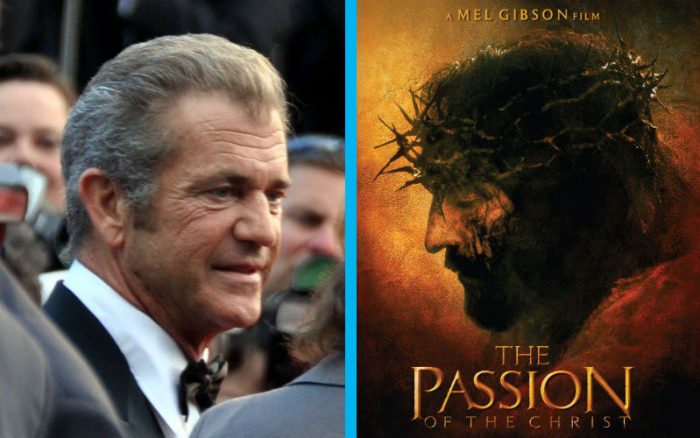
In 2003 actor Mel Gibson brought Anne Catherine Emmerich’s vision to prominence as he used her book The Dolorous Passion as a key source for his movie The Passion of the Christ. Gibson stated that Scripture and “accepted visions” were the only sources he drew on and a careful reading of Emmerich’s book shows the film’s high level of dependence on it.
In 2007 German director Dominik Graf made the movie The Pledge as a dramatisation of the encounters between Anne Catherine and Clemens Brentano, based on a novel by Kai Meyer.
House of the Virgin Mary

Neither Brentano nor Emmerich had ever been to Ephesus and indeed the city had not yet been excavated; but visions contained in The Life of The Blessed Virgin Mary were used during the discovery of the House of the Virgin Mary, the Blessed Virgin’s supposed home before her Assumption, located on a hill near Ephesus, as described in the book Mary’s House.
In 1881, a French priest, the Abbé Julien Gouyet used Emmerich’s book to search for the house in Ephesus and found it based on the descriptions. He was not taken seriously at first but sister Marie de Mandat-Grancey persisted until two other priests followed the same path and confirmed the finding.
The Holy See has taken no official position on the authenticity of the location yet but in 1896 Pope Leo XIII visited it and in 1951 Pope Pius XII initially declared the house a Holy Place. St Pope John XXIII later made the declaration permanent. Blessed Pope Paul VI in 1967, St Pope John Paul II in 1979 and Pope Benedict XVI in 2006 visited the house and treated it as a shrine.

Novena to Our Lady of Lourdes – DAY SEVEN– 8 February
Novena to Our Lady of Lourdes – DAY SEVEN– 8 February (we Pray the Novena for our own intentions and for the sick, the infirm within our own communities but also for all those throughout the world who suffer, especially those who have no-one to pray for them in preparation for the Wold Day of the Sick on 11 February.)
DAY SEVEN
O Almighty God,
who by the Immaculate Conception of the Blessed Virgin Mary
did prepare a worthy dwelling place for Your Son,
we humbly beseech You,
that as we contemplate the apparition of Our Lady in the Grotto of Lourdes,
we may be blessed with health of mind and body.
O most gracious Mother Mary, beloved Mother of Our Lord and Redeemer,
look with favour upon us as you did that day on Bernadette
and intercede with Him for us
that the favour we now so earnestly seek may be granted to us.
………………………………(make your request)
O Brilliant star of purity, Mary Immaculate, Our Lady of Lourdes,
glorious in your assumption, triumphant in your coronation,
show unto us the mercy of the Mother of God, Virgin Mary, Queen and Mother,
be our comfort, hope, strength and consolation. Amen
Our Lady of Lourdes, pray for us.
Saint Bernadette, pray for us.
Novena to Our Lady of Lourdes – DAY SIX– 7 February
Novena to Our Lady of Lourdes – DAY SIX– 7 February (we Pray the Novena for our own intentions and for the sick, the infirm within our own communities but also for all those throughout the world who suffer, especially those who have no-one to pray for them in preparation for the Wold Day of the Sick on 11 February.)
DAY SIX
O glorious Mother of God,
so powerful under your special title of Our Lady of Lourdes,
to you we raise our hearts and hands
to implore your powerful intercession in obtaining
from the gracious Heart of Jesus
all the helps and graces necessary
for our spiritual and temporal welfare
and for the special favour we so earnestly seek in this novena.
……………………………(make your request)
O Lady of Bernadette,
with the stars of heaven in your hair
and the roses of earth at your feet,
look with compassion upon us today
as you did so long ago on Bernadette in the Grotto of Lourdes.
O Brilliant star of purity, Mary Immaculate,
Our Lady of Lourdes,
glorious in your assumption,
triumphant in your coronation,
show unto us the mercy of the Mother of God,
Virgin Mary, Queen and Mother,
be our comfort, hope, strength, and consolation. Amen.
Our Lady of Lourdes, pray for us.
Saint Bernadette, pray for us.
Our Morning Offering – 7 February – The Memorial of Blessed Pope Pius IX (1792-1878)
Prayer in honour of Our Lady of Perpetual Help
By Blessed Pope Pius IX (1792-1878)
O Lord Jesus Christ,
who gave us Your Mother, Mary,
whose renowned image we venerate,
to be a Mother ever ready to help us;
grant we beseech You,
that we who constantly implore her motherly aid,
may merit to enjoy perpetually
the fruits of Your redemption,
Who lives and reigns forever and ever.
Amen.
Feast of Our Lady of Avesnières and Our Lady of the Waters and Memorials of the Saints – 7 February
Our Lady of Avesnières
Our Lady of the Waters

—
Bl Adalbert Nierychlewski
St Adaucus of Phrygia
St Amulwinus of Lobbes
St Anatolius of Cahors
Bl Anna Maria Adorni Botti
Bl Anselmo Polanco
Bl Anthony of Stroncone
St Augulus
St Chrysolius of Armenia
Bl Eugenie Smet
St Fidelis of Merida
Bl Felipe Ripoll Morata
St Giles Mary of Saint Joseph
Bl Jacques Sales
St John of Triora
St Juliana of Bologna
Bl Klara Szczesna
St Lorenzo Maiorano
St Luke the Younger
St Maximus of Nola
St Meldon of Péronne
St Moses the Hermit
St Parthenius of Lampsacus
Bl Peter Verhun
Bl Pope Pius IX (1792-1878)
St Richard the King
Bl Rizziero of Muccia
Bl Rosalie Rendu
St Theodore Stratelates
Bl Thomas Sherwood
St Tressan of Mareuil
Bl William Saultemouche
Novena to Our Lady of Lourdes – DAY FIVE– 5 February
Novena to Our Lady of Lourdes – DAY FIVE– 5 February (we Pray the Novena for our own intentions and for the sick, the infirm within our own communities but also for all those throughout the world who suffer, especially those who have no-one to pray for them in preparation for the Wold Day of the Sick on 11 February.)
DAY FIVE
O Mary Immaculate, Mother of God and our mother,
from the heights of your dignity look down mercifully upon us while we,
full of confidence in your unbounded goodness
and confident that your Divine Son
will look favourably upon any request you make of Him on our behalf,
we beseech you to come to our aid
and secure for us the favour we seek in this novena.
(make your request)
O Brilliant star of purity, Mary Immaculate, Our Lady of Lourdes,
glorious in your assumption,
triumphant in your coronation,
show unto us the mercy of the Mother of God,
Virgin Mary, Queen and Mother,
be our comfort, hope, strength, and consolation. Amen.
Our Lady of Lourdes, pray for us.
Saint Bernadette, pray for us.
Novena to Our Lady of Lourdes – DAY FOUR– 5 February
Novena to Our Lady of Lourdes – DAY FOUR– 5 February (we Pray the Novena for our own intentions and for the sick, the infirm within our own communities but also for all those throughout the world who suffer, especially those who have no-one to pray for them in preparation for the Wold Day of the Sick on 11 February.)
DAY FOUR
O Immaculate Queen of Heaven,
we your wayward, erring children,
join our unworthy prayers of praise and thanksgiving
to those of the angels and saints and of your own-
that the One, Holy, and Undivided Trinity may be glorified
in heaven and on earth.
Our Lady of Lourdes,
as you looked down with love and mercy upon Bernadette
as she prayed her rosary in the grotto,
look down now, we beseech you,
with love and mercy upon us.
From the abundance of graces granted you by your Divine Son,
sweet Mother of God,
give to each of us all that your motherly heart sees we need
and at this moment look with special favour
on the grace we seek in this novena.
……………………………..(make your request)
O Brilliant star of purity,
Mary Immaculate,
Our Lady of Lourdes,
glorious in your assumption,
triumphant in your coronation,
show unto us the mercy of the Mother of God,
Virgin Mary, Queen and Mother,
be our comfort, hope, strength and consolation. Amen.
Our Lady of Lourdes, pray for us.
Saint Bernadette, pray for us.
Novena to Our Lady of Lourdes – DAY THREE– 4 February
Novena to Our Lady of Lourdes – DAY THREE– 4 February (we Pray the Novena for our own intentions and for the sick, the infirm within our own communities but also for all those throughout the world who suffer, especially those who have no-one to pray for them in preparation for the Wold Day of the Sick on 11 February.)
DAY THREE
“You are all fair, O Mary
and there is in you no stain of original sin.”
O Mary, conceived without sin,
pray for us who have recourse to thee.
O brilliant star of sanctity,
as on that lovely day, upon a rough rock in Lourdes
you spoke to the child Bernadette
and a fountain broke from the plain earth
and miracles happened
and the great shrine of Lourdes began,
so now I beseech you to hear our fervent prayer
and do, we beseech you, grant us the petition we now so earnestly seek.
……………………………….. (make your request)
O Brilliant star of purity, Mary Immaculate, Our Lady of Lourdes,
glorious in your assumption,
triumphant in your coronation,
show unto us the mercy of the Mother of God,
Virgin Mary, Queen and Mother,
be our comfort, hope, strength, and consolation. Amen.
Our Lady of Lourdes, pray for us.
Saint Bernadette, pray for us.
NOVENA to OUR LADY of LOURDES – DAY ONE – 2 FEBRUARY
NOVENA to OUR LADY of LOURDES – DAY ONE – 2 FEBRUARY (we Pray the Novena for our own intentions and for the sick, the infirm within our own communities but also for all those throughout the world who suffer, especially those who have no-one to pray for them in preparation for the Wold Day of the Sick on 11 February.)
O Mary Immaculate,
Our Lady of Lourdes,
virgin and mother, queen of heaven,
chosen from all eternity to be the Mother of the Eternal Word
and in virtue of this title preserved from original sin,
we kneel before you as did little Bernadette at Lourdes
and pray with childlike trust in you
that as we contemplate your glorious appearance at Lourdes,
you will look with mercy on our present petition
and secure for us a favorable answer to the request
for which we are making this novena.
……………………………………(make your request)
O Brilliant star of purity,
Mary Immaculate, Our Lady of Lourdes,
glorious in your assumption,
triumphant in your coronation,
show unto us the mercy of the Mother of God,
Virgin Mary, Queen and Mother,
be our comfort, hope, strength and consolation. Amen.
Our Lady of Lourdes, pray for us.
Saint Bernadette, pray for us.
Thought for the Day – 2 February – Feast of the Presentation of the Lord and the World Day of Prayer for Consecrated Life
On this holy feast-day we each have an opportunity to consecrate our lives anew to the Lord. How do we do this? We can simply make a prayer of re-dedication to God which can take many forms. It can be a simple heartfelt prayer reaffirming our baptismal promises or a re-visiting of our religious or marriage vows. Or it can be a prayer which asks the Holy Spirit to renew our sense of vocation as a priest or religious or as a lay person in our chosen job, trade or profession.
We gave our life to the Lord when we were baptised but the call to conversion continues to resound throughout our lives and ‘this second conversion is an uninterrupted task for the whole church’ (Catechism of the Catholic Church 1428). A re-dedication or renewal of vows or promises is a movement of conversion within our heart and is always a work of the Holy Spirit.
Today, step out in faith, whatever your vocation, whatever your calling and give your life to the Lord, in the assurance of God’s grace, blessing and renewal in the power of the Holy Spirit.
LET US PRAY FOR ALL CONSECRATED MEN & WOMEN AND FOR VOCATIONS:
Loving God, You call all who believe in You
to grow perfect in love
by following in the footsteps
of Christ Your Son.
Call from among us more men and women
who will serve You as religious.
Open the hearts of many, raise up
faithful servants of the Gospel, dedicated,
holy priests, sisters, brothers and deacons,
who will spend themselves for Your people
and their needs.
Bless those who are serving now
with courage and perseverance.
Grant that many will be inspired by their
example and faith.
By their way of life, may they provide a convincing sign
of Your Kingdom for the Church and the whole world.
We ask this through our Lord Jesus Christ. Amen.
Quote of the Day – 2 February – Feast of the Presentation of the Lord and the World Day of Prayer for Consecrated Life
“The glorious St Simeon also was very happy…
to carry Him as did Our Lady…
we do this when we endure with love
the labours and pains He sends us,
that is to say, when the love which we bear
to the Law of God makes us find His yoke easy
and pleasing, so that we love these pains and labours,
and gather sweetness in the midst of bitterness.
This is nothing else but to carry Our Lord in our arms.
Now if we carry Him in this way,
He will, without doubt, Himself carry us.”
St Francis de Sales (1567-1622) Doctor of the Church
One Minute Reflection – 2 February – Feast of the Presentation of the Lord and the World Day of Prayer for Consecrated Life
Although he was a Son, he learned obedience through what he suffered...Hebrews 5: 7-9
REFLECTION – “When Mary let Simeon take the Son of the Promise into his arms, the old man began to sing of his dreams. Whenever she puts Jesus in the midst of His people, they encounter joy. For this alone will bring back our joy and hope, this alone will save us from living in a survival mentality. Only this will make our lives fruitful and keep our hearts alive: putting Jesus where He belongs, in the midst of His people…Hence, it is all the more important for consecrated men and women to be one with Jesus, in their lives and in the midst of these great changes (in the world)…Putting Jesus in the midst of His people means having a contemplative heart, one capable of discerning how God is walking through the streets of our cities, our towns and our neighbourhoods. Putting Jesus in the midst of His people means taking up and carrying the crosses of our brothers and sisters. It means wanting to touch the wounds of Jesus in the wounds of a world in pain, which longs and cries out for healing.”…Pope Francis on the Feast of the Presentation of the Lord and the World Day of Prayer for Consecrated Life – 2 February 2017
PRAYER – May the Lord renew in you and in all consecrated people each day the joyful response to His freely given and faithful love. Dear brothers and sisters, like lighted candles, always and everywhere shine with the love of Christ, Light of the world. May Mary Most Holy, the consecrated Woman, help you to live to the full, your special vocation and mission in the Church for the world’s salvation. And may we all follow our Lord in obedience. Amen!
Feast of the Presentation of the Lord – 2 February
Today is the Feast of the Presentation of the Lord, a day that is also known as Candlemas.
The Presentation of the Lord is a second ‘epiphany’—revealing Jesus as the Messiah through the canticle of Simeon and the testimony of Anna the prophetess. Christ, the Light of the World, is revealed in obedience to the Old Lawsand in creation of the new. Traditionally, in recognition of the saving light of Christ, this feast was referred to as “Candlemas,” and marked by candlelight processionals and Masses.
The Presentation of the Lord commemorates the Lord Jesus’ participation in a ritual encoded in the Mosaic Law, in which a newborn child had to be “redeemed” through the performance of a prescribed sacrifice. Christ “embeds” Himself through his Incarnation in the people He has chosen to be His own. He makes himself an Israelite and accepts that people and culture as His own. His willingness to participate in this ritual indicates the election of Israel by God in terms of its mission to bear into the world the divine presence and to become the means through which communion with the one, true God would be extended to the whole world.
The event of the Lord’s Presentation also foreshadows His Paschal Mystery. Christ will make of His suffering and death a sacrifice, a redemptive offering in which humanity’s reconciliation with God will be accomplished. The Lord will be revealed, in the event of Christ’s passion, to be a God who is willing to forgive, even to the point of placing himself in the position of the sinner! Such is God’s solidarity with humanity in Christ!
The readings for today all orientate us toward Christ’s revelation as priest.
The prophet Malachi envisions the divine presence entering the temple and once this happens, the God of Israel reigns as the ruler of Israel, effecting the restoration of His people and setting them all in right relationship with Himself. Christ in His Incarnation is this divine presence and His entry into the temple is happening at the moment of his Presentation.
The Letter to the Hebrews reminds us that Christ’s sacrifice was to enter into the fullness of our humanity by accepting for Himself a human nature and uniting it to His divine nature. Christ does this for our benefit and through this Incarnation makes of Himself a gift that is for us.
In this respect, Christ is a priest, the sacrifice that He offers is Himself and the beneficiary of this sacrifice is all of us.
The Gospel of Luke highlights the event of Christ’s presentation in the temple as the revelation of the divine presence, which the prophet Ezekiel had seen abandoning the temple centuries earlier, returning to the great sanctuary. Christ is the divine high priest who comes to His temple to offer sacrifice but more than this, Christ is the divine presence. With the arrival of the divine presence, a new age for Israel and for the world begins- the age of the Messiah.
Simeon and Anna can see this revelation and appreciate it. For them the moment is as profound as it is bittersweet, for they know that with the beginning of this new age for Israel, the previous era has ended. Their mission is now complete. The Israel of the covenant, the prophets, the law, the temple and the kingdom has been brought to its fulfilment. All these divine gifts were foreshadowings of the greatest of all divine Gifts- Christ the Lord- God with us.
The gifts of Israel will be returned to the world but they will all be transformed in Christ, becoming what we know and experience as the Church.
Candles that are used in the Church’s rituals are often blessed on this day and a procession is recommended with candles to commemorate the entrance of Christ into the temple.
The symbolism of the candle is meant to recall the divine presence, manifested to Israel at the time of the Exodus as a “pillar of fire.” This “pillar of fire” led the Israelites from bondage in Egypt to the land of God’s promise. Christ is this “pillar of fire” who leads humanity from the bondage of sin and death to the promises of resurrection and eternal life. (Fr Steve Grunow)
It is Christ, the divine fire, that leads us still…


Feast of the Presentation of the Lord and Feasts of Our Lady & Memorials of the Saints – 2 February
Presentation of the Lord (Feast): The feast commemorates the purifying of the Blessed Virgin according to the Mosaic Law, 40 days after the birth of Christ, and the presentation of the Infant Jesus in the Temple. The feast was introduced into the Eastern Empire by Emperor Justinian I and is mentioned in the Western Church in the Gelasian Sacramentary of the 7th century. Candles are blessed on that day in commemoration of the words of Holy Simeon concerning Christ “a light to the revelation of the Gentiles” (Luke 2) and a procession with lighted candles is held in the church to represent the entry of Christ, the Light of the World, into the Temple of Jerusalem. “Candlemas” is still the name in Scotland for a legal term-day on which interest and rents are payable (2 February).
Patronage
• Jaro, Philippines
• Western Visayas, Philippines
Our Lady of Candelaria
Our Lady of Good Success
Santa María de Santa Anita
World Day of Prayer for Consecrated Life: Begun in 1997 by St Pope John Paul II, the World Day for Consecrated Life was intended to serve three purposes:
• to praise the Lord and thank him for the great gift of consecrated life;
• to promote a knowledge of and esteem for the consecrated life by the entire People of God;
• to allow those in consecrated life to celebrate together the marvels which the Lord has accomplished in them, to discover by a more illumined faith the rays of divine beauty, spread by the Spirit in their way of life and to acquire a more vivid consciousness of their irreplaceable mission, in the Church and in the world;
It serves an opportunity to highlight the extraordinary contributions of men and women religious, as well as a time to pray for vocations to the consecrated life.
—
St Adalbald of Ostrevant
St Adeloga of Kitzingen
St Agathodoros of Tyana
St Andrea Carlo Ferrari
St Apronian the Executioner
St Bruno of Ebsdorf
St Burchard of Wurzburg
St St Candidus the Martyr
Catherine del Ricci
St Columbanus of Ghent
St Cornelius the Centurion
St Felician the Martyr
St Feock
St Firmus of Rome
St Flosculus of Orléans
St Fortunatus the Martyr
St Giovanni Battista Clemente Saggio
St Hilarus the Martyr
St Jean Theophane Venard
St Jeanne de Lestonnac
St Lawrence of Canterbury
Bl Louis Alexander Alphonse Brisson
Bl Maria Domenica Mantovani
St Marquard of Hildesheim
St Mun
Bl Peter Cambiano
St Rogatus the Martyr
St Saturninus the Martyr
St Sicharia of Orleans
St Simon of Cassia Fidati
Bl Stephen Bellesini
St Theodoric of Ninden
St Victoria the Martyr
—
Martyrs of Ebsdorf: Members of the army of King Louis III of France under the leadership of Duke Saint Bruno of Ebsdorf. The martyrs died fighting invading pagan Norsemen, and defending the local Christian population. Four bishops, including Saint Marquard of Hildesheim and Saint Theodoric of Ninden, eleven nobles, and countless unnamed foot soldiers died repelling the invaders. They were martyred in the winter of 880 in battle at Luneberg Heath and Ebsdorf, Saxony (modern Germany).
Announcing the NOVENA to our Lady of Lourdes – Begins 2 February
Announcing the NOVENA to our Lady of Lourdes – begins 2 February
On 11 February we celebrate the World Day of Prayer for the Sick and it is also the Feast of Our Lady of Lourdes! Join me in praying a novena through Our Lady’s intercession for the sick and suffering. The novena begins tomorrow 2 February.
Please lift up in prayer all of your family members, friends and those unknown throughout the world who have no-one to pray for them. God is with us and Mary our Mother stands at His side to intervene for all our needs!
Our Lady of Lourdes, Pray for us all.
St Bernadette, Pray for us.
Quote/s of the Day – 31 January -The Memorial of St John Bosco (1815-1888)
“Do you want our Lord to give you many graces?
Visit him often.
Do you want him to give you few graces?
Visit him seldom.
Visits to the Blessed Sacrament are powerful
and indispensable means of overcoming the attacks of the devil.
Make frequent visits to Jesus in the Blessed Sacrament
and the devil will be powerless against you.”
“I beg you to recommend to everyone,
first, adoration of Jesus in the Blessed Sacrament
and then reverence for most holy Mary.”
“Take refuge often at the feet of Jesus…
My dear ones, the Visit to the Blessed Sacrament
is an extremely necessary way to conquer the devil.
Therefore, go often to visit Jesus
and the devil will not come out victorious against you.”
“Jesus could have limited His presence only
to the celebration of Mass, but no!
He wanted to make a permanent dwelling among us.
Night and day He awaits us and offers Himself to us at all times.
Like a most tender mother, He opens His arms to us.
He is there generously to give us His gifts.
He is there to draw us to Him
and lead us to paradise with Him.
Oh! Let us go visit Him often.”

“I beg you to recommend to everyone,
first, adoration of Jesus in the Blessed Sacrament
and then reverence for most holy Mary.”
“Ask the Blessed Virgin for the grace
to receive Communion frequently
and worthily… Try to imagine,
that the Blessed Virgin herself,
will give you the Sacred Host.
No one would dare strike
at the Heart of Jesus
while He is in Mary’s hands.”
“The power of evil men lives on the cowardice of the good.”
“The fullness of love, in all the mothers of this earth,
could never equal, the love Mary has, for each one of us.”
Quote/s of the Day – 28 January – The Memorial of St Thomas Aquinas (1225-1274) Doctor angelicus (Angelic Doctor) and Doctor communis (Common Doctor)
“Nothing created has ever been able
to fill the heart of man.
God alone can fill it infinitely.”
“It is only God who creates.
Man merely rearranges.”
“When the devil is called
the god of this world,
it is not because he made it
but because we serve him
with our worldliness.”
“To pretend angels do not exist
because they are invisible,
is to believe we never sleep
because we don’t see ourselves sleeping.”
“Charity is
the form,
mover,
mother
and root
of all
the virtues.”
“To love is to
will the good
of the other.”
“The greatest kindness
one can render
to any man
consists in leading him
from error to truth.”
“Believing is
an act of the intellect
assenting to the divine truth,
by command of the will,
moved by God through grace.”
“He who is NOT angry
when there is just cause
for anger is IMMORAL.
WHY?
Because anger looks to
the good of justice.
And if you can live amid injustice
without anger,
you ARE IMMORAL
as well as UNJUST!”
“The celebration of Holy Mass
is as valuable, as the death
of Jesus on the cross.”
“Mary means Star of the sea,
for as mariners are guided to port
by the ocean star, so Christians attain
to glory through Mary’s maternal intercession.”
St Thomas Aquinas (1225-1274) Doctor of the Church
24 January – Feast of Our Lady of Tears and Memorials of the Saints – 24 January
St Francis de Sales (1567-1622) (Memorial) – Doctor of the Church: Doctor caritatis (Doctor of Charity)
Our Lady of Tears: Also known as the Weeping Madonna of Syracuse, this plaster hanging wall plaque depicts the Immaculate Heart of Mary in the style of the 1950’s. Like many others just like it, it was mass-produced in a factory in Tuscany and shipped to various locations throughout the world. This particular plaque of Our Lady of Tears was purchased for a wedding gift for a couple who wed on 21 March 1953. The couple, Angelo and Antonian Iannuso, would later admit that they were not devout, but they liked the plaque and placed it on the wall over their bed. Antonian soon became pregnant but the happy couple soon learned that the pregnancy caused Antonian to suffer from toxemia that caused frequent convulsions and even temporary blindness.
On the morning of 29 August, 1953, Antonian awoke to find that her sight had been restored.
“I opened my eyes and stared at the image of the Madonna above the bedhead. To my great amazement I saw that the effigy was weeping. I called my sister-in-law Grazie and my aunt, Antonian Sgarlata, who came to my side, showing them the tears. At first they thought it was an hallucination due to my illness but when I insisted, they went close up to the plaque and could well see that tears were really falling from the eyes of the Madonna, and that some tears ran down her cheeks onto the bedhead. Taken by fright they took it out the front door, calling the neighbours, and they too confirmed the phenomenon…”
The plaque of Our Lady of Tears was publically displayed, convincing even the skeptics of the prodigy as many of the sick were miraculously healed of their ailments. Some of the tears were collected for scientific examination and the findings were as follows:
“…the liquid examined is shown to be made up of a watery solution of sodium chloride in which traces of protein and nuclei of a silver composition of excretiary substances of the quanternary type the same as found in the human secretions used as a comparison during the analysis. The appearance, the alkalinity and the composition induce one to consider the liquid examined analogous to human tears.”
The tears stopped four days later at 11:40 am.
On October 17, 1954, Pope Pius XII stated the following during a radio broadcast:
“…we acknowledge the unanimous declaration of the Episcopal Conference held in Sicily on the reality of that event. Will men understand the mysterious language of those tears?”

—
St Anicet Hryciuk
St Artemius of Clermont
St Bartlomiej Osypiuk
Bertrand of Saint Quentin
St Daniel Karmasz
St Exuperantius of Cingoli
St Felician of Foligno
St Filip Geryluk
Bl Francesc de Paula Colomer Prísas
St Guasacht
St Ignacy Franczuk
Bl John Grove
St Julian Sabas the Elder
St Luigj Prendushi
St Macedonius Kritophagos
Bl Marcolino of Forli
Bl Marie Poussepin
Bl Paula Gambara Costa
St Projectus
St Sabinian of Troyes
St Suranus of Sora
St Thyrsus
Bl William Ireland
—
Martyrs of Asia Minor – 4 saints: A group of Christians martyred together for their faith. The only details to survive are four of their names – Eugene, Mardonius, Metellus and Musonius. They were burned at the stake in Asia Minor.
Martyrs of Podlasie – 13 beati: Podlasie is an area in modern eastern Poland that, in the 18th-century, was governed by the Russian Empire. Russian sovereigns sought to bring all Eastern-rite Catholics into the Orthodox Church. Catherine II suppressed the Greek Catholic church in Ukraine in 1784. Nicholas I did the same in Belarus and Lithuania in 1839. Alexander II did the same in the Byzantine-rite Eparchy of Chelm in 1874, and officially suppressed the Eparchy in 1875. The bishop and the priests who refused to join the Orthodox Church were deported to Siberia or imprisoned. The laity, left on their own, had to defend their Church, their liturgy, and their union with Rome.
On 24 January 1874 soldiers entered the village of Pratulin to transfer the parish to Orthodox control. Many of the faithful gathered to defend their parish and church. The soldiers tried to disperse the people, but failed. Their commander tried to bribe the parishioners to abandon Rome, but failed. He threaten them with assorted punishments, but this failed to move them. Deciding that a show of force was needed, the commander ordered his troops to fire on the unarmed, hymn-singing laymen. Thirteen of the faithful died, most married men with families, ordinary men with great faith.
We know almost nothing about their lives outside of this incident. Their families were not allowed to honour them or participate in the funerals, and the authorities hoped they would be forgotten. They were:
• Anicet Hryciuk
• Bartlomiej Osypiuk
• Daniel Karmasz
• Filip Geryluk
• Ignacy Franczuk
• Jan Andrzejuk
• Konstanty Bojko
• Konstanty Lukaszuk
• Lukasz Bojko
• Maksym Hawryluk
• Michal Wawryszuk
• Onufry Wasyluk
• Wincenty Lewoniuk
Martyrdom:
• shot on 14 January 1874 by Russian soldiers in Podlasie, Poland
• buried nearby without rites by those soldiers
Beatified
6 October 1996 by Pope John Paul II
Martyrs of Antioch:
Babylas
Epolonius
Prilidian
Urban
Quote/s of the Day – 23 January – The Memorial of St Ildephonsus (607-667) and St Marianne Cope (1838-1918)
“No one will ever be
the servant of the Son
without serving the Mother.”
“Go to Mary and sing her praises
and you will be enlightened.
For it is through her,
that the true Light
shines on the sea of this life.”
St Ildephonsus (607-667)
“Creep down into the heart of Jesus.
He alone can comfort you in your
supreme hour of sorrow.”
“Let us make the very best use of the precious moments
and do all in our power for His dear sake
and for His greater honour and glory…………
I do not think of reward;
I am working for God and do so cheerfully.”
“Try to accept what God
is pleased to give you
no matter how bitter –
‘God wills it’,
is the thought
that will strengthen you
and help you over
the hard places
if we wish to be
true children of God.”
“Our dear
heavenly Mother Mary…
how little do our trials
and sorrows appear
when compared
to her bitter sufferings.”
St Marianne Cope (1838-1918)
Our Morning Offering – 23 January – The Memorial of St Ildephonsus (607-667)
Prayer of Saint Ildephonsus (607-667)
Act of Consecration to Mary
The Abundance of the Sweetness of Thy Son
I come to thee, only Virgin Mother of God,
and fall prostrate before thee,
who alone didst cooperate in the Incarnation of God.
I humble myself before thee,
who alone were found to be the Mother of my Lord.
I pray thee, who alone were found to be the handmaid of thy Son:
obtain that my sins be wiped away;
command that I be cleansed of the wickedness of my deeds,
and, that I may love the glory of thy virtue,
reveal to me the abundance of the sweetness of thy Son.
Thou Art His Co-Worker in My Redemption
Bestow upon me the gift of proclaiming the true faith of thy Son,
and of defending it.
Grant that I may cleave to God and to thee,
that I may serve thy Son and thee,
that I may be His bondsman and thine;
His, because He is my Creator,
and thine, because thou art the Mother of my Creator;
His, because He is Lord of the angelic powers,
and thine, because thou art the handmaid of the Lord of All;
His, because He is God,
and thine because thou art the Mother of God;
His, because He is my Redeemer,
and thine because thou art His co-worker in my redemption.
The Body by Which He Healed My Wounds
That which He wrought for my redemption,
verily He formed in thine own person.
That He might be my Redeemer,
He became thy Son.
That He might be the price of my ransom,
He became incarnate of thy flesh.
The Body by which He healed my wounds,
He took from thee so that He, in it, might be wounded.
The mortal Body by which He took away my death,
He took from thy mortality.
The Body by which He brought my sins to nought,
He received sinless from thee.
This nature of mine that ahead of time, in Himself,
He placed above the angels in the glory of His Father’s right hand,
He assumed — humbling Himself — out of thine own true body.
I Am Thy Slave
Therefore, I am thy slave,
because Thy Son is my Master.
Therefore thou art my Lady,
because thou art the handmaid of my Lord.
Therefore I am the slave of the handmaid of my Lord,
because thou, my Lady, didst become the Mother of my Lord.
Therefore I have become thy slave,
because thou didst become the Mother of my Maker.
By the Holy Spirit
I pray thee, I pray thee, holy Virgin,
may I, by the Spirit through Whom thou didst give birth to Jesus,
have Jesus and hold Him.
By that Spirit through Whom
thou didst conceive this same Jesus in thy flesh,
may my soul receive Jesus.
Let the Spirit gift me with the knowledge of Jesus,
this Spirit by Whom it was given Thee
to bear Jesus and to give Him birth.
Let the Spirit in Whom thou didst
declare thyself the handmaid of the Lord,
choosing that it should be done unto thee
according to the Angel’s word,
grant me to proclaim the heights of Jesus with lowliness.
To Love Jesus and to Fear Him
In the Spirit thou didst adore Jesus as thy Lord
and gaze upon Him as thy Son;
in that same Spirit may I love Him.
And may I fear this same Jesus,
with that reverence by which He, truly being God,
became subject to His parents.
“For over thirty years now, my dear old friend Father Jacob, O.P. and I have renewed our consecration to the Blessed Virgin Mary, Mother of God annually on January 1st. Experience has taught me the wisdom of entrusting the new year to Our Blessed Lady, Mediatrix of All Graces. Readers of Vultus Christi may want to join me in asking the Mother of God again today to open her hands over the entire year.
I offer today my translation of the sublime prayer of Saint Ildephonsus of Toledo (+667). This prayer, taken from his treatise De virginitate perpetua Sanctae Mariae, is one of the earliest expressions of total consecration to the Blessed Virgin Mary. In it, heralding an expression that Saint Louis Marie Grignion de Montfort will make famous, the Bishop of Toledo declares himself the slave of Mary, Handmaid of the Lord. He also emphasizes the role of the Holy Spirit with theological keenness and tender piety.” …..By Dom Mark Daniel Kirby is Conventual Prior of Silverstream Priory in Stamullen, County Meath, Ireland. The ecclesial mandate of his Benedictine community is the adoration of the Most Holy Sacrament of the Altar in a spirit of reparation, and in intercession for the sanctification of priests.
And, for the image, I have excerpted the last three stanzas and modernised the English.
I pray you, I pray you, holy Virgin,
may I, by the Spirit through Whom
you gave birth to Jesus,
have Jesus and hold Him.
By that Spirit through Whom
you conceived this same Jesus in your flesh,
may my soul receive Jesus.
Let the Spirit gift me
with the knowledge of Jesus,
this Spirit by Whom it was given to you
to bear Jesus and to give Him birth.
Let the Spirit in Whom you declared
yourself the handmaid of the Lord,
choosing that it should be done unto you
according to the Angel’s word,
grant me to proclaim
the heights of Jesus with lowliness.
In the Spirit you adored Jesus as your Lord
and gazed upon Him as your Son;
in that same Spirit may I love Him.
And may I fear this same Jesus,
with that reverence by which He,
truly being God,
became subject to His parents.
Amen

23 January – Feast of the Espousal of the Blessed Virgin Mary and St Joseph and Memorials of the Saints
St Marianne Cope TO.S.F. (1838-1918)
Espousal of the Blessed Virgin Mary: Feast in honour of the Blessed Virgin’s espousal to Saint Joseph. It is certain that a real matrimony was contracted by Joseph and Mary. Still Mary is called “espoused” to Joseph (“his mother Mary was espoused to Joseph”, Matthew 1:18) because the matrimony was never consummated. The term spouse is applied to married people until their marriage is consummated. It dates from 1517 when it was granted to the nuns of the Annunciation by Pope Leo X with nine other Masses in honor of Our Lady. Adopted by many religious orders and dioceses, it was observed for a time by nearly the whole Church but is no longer in the Calendar.
—
St Abel the Patriarch
St Agathangelus
St Amasius of Teano
St Andreas Chong Hwa-Gyong
St Aquila the Martyr
St Asclas of Antinoe
St Clement of Ancyra
St Colman of Lismore
St Dositheus of Gaza
St Emerentiana
St Eusebius of Mount Coryphe
Bl Henry Suso
St Ildephonsus (506-667)
Bl Joan Font Taulat
St John the Almsgiver/the Mericiful
Bl Juan Infante
St Jurmin
St Lufthild
St St Maimbod
Bl Margaret of Ravenna
Martyrius of Valeria
St Messalina of Foligno
St Ormond of Mairé
St Parmenas the Deacon
St Severian the Martyr
Quote/s of the Day – 22 January – The Memorial of St Vincent Pallotti (1795-1850) and Blessed William Joseph Chaminade (1761-1850)
Before his First Holy Mass
“Not the intellect
but God
Not the will
but God
Not the heart
but God
Not taste
but God
Not touch
but God
Not food and drink
but God
Not clothing
but God
Not tranquillity
but God
Not the worldly goods
but God.
Not riches
but God.
Not honours
but God.
Not distinction
but God.
Not dignities
but God.
Not advancement
but God.
God in all
God always.”
“Remember. that the Christian life.
is one of action;
not of speech and daydreams.
Let there be few words
and many deeds
and let them be done will.”
St Vincent Pallotti (1795-1850)
“Jesus made Mary
the companion
of His labours,
of His joy,
of His preaching,
of His death.
Mary had a part in all the
glorious, joyous
and sorrowful mysteries of Jesus.”
“The deposit of the Faith
is entirely in Mary.
At the foot of the Cross
she held the place of the Church. “


You must be logged in to post a comment.