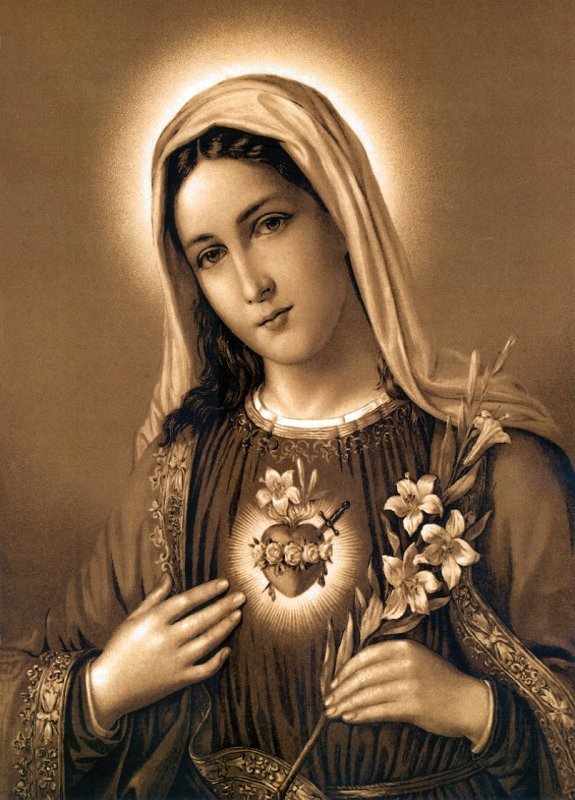
Prayer to the Mother of God by St Cyril of Alexandria (Saint of the Day)
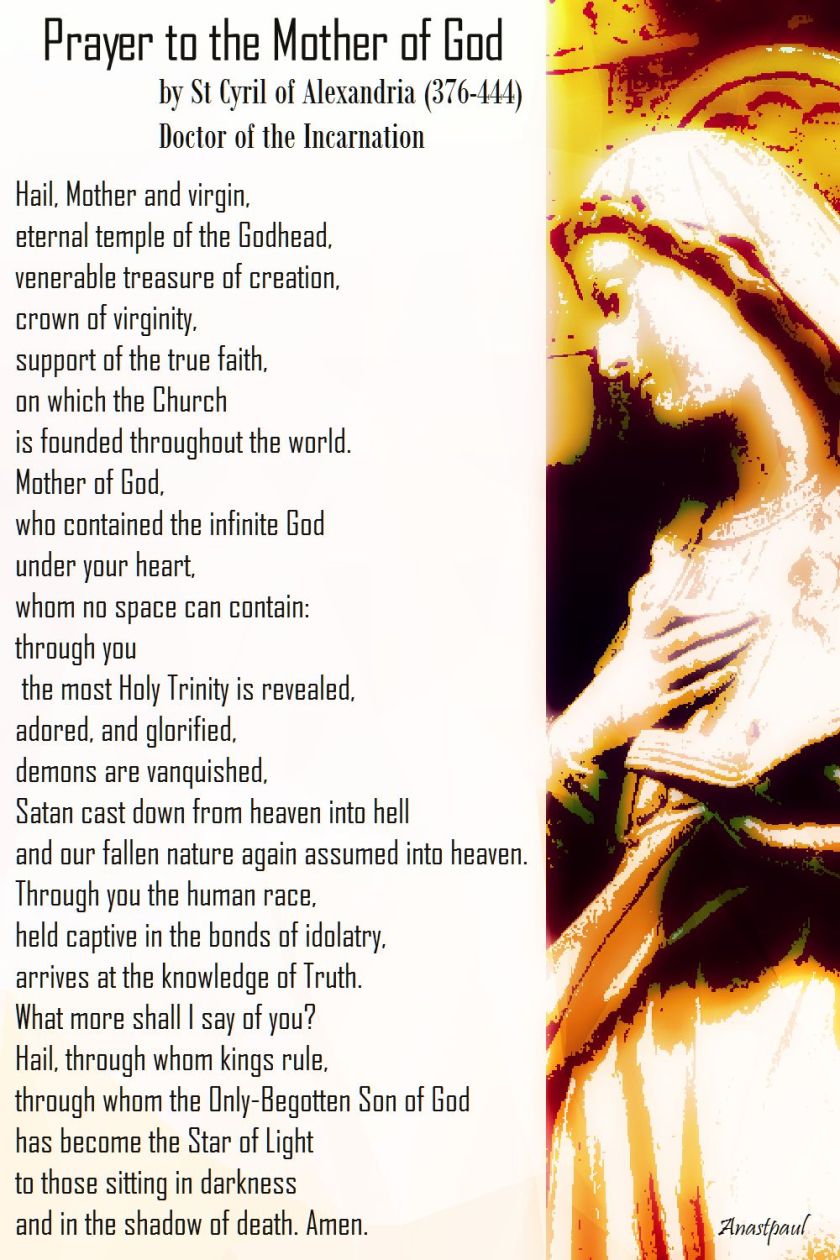
Hail, Mother and virgin,
eternal temple of the Godhead,
venerable treasure of creation,
crown of virginity,
support of the true faith,
on which the Church is founded
throughout the world.
Mother of God,
who contained the infinite God
under your heart,
whom no space can contain:
through you
the most Holy Trinity is revealed,
adored, and glorified,
demons are vanquished,
Satan cast down from heaven into hell
and our fallen nature again
assumed into heaven.
Through you the human race,
held captive in the bonds of idolatry,
arrives at the knowledge of Truth.
What more shall I say of you?
Hail, through whom kings rule,
through whom the Only-Begotten
Son of God
has become the Star of Light
to those sitting in darkness
and in the shadow of death. Amen
Our Lady of Perpetual Succour: The picture of Our Lady of Perpetual Succour is painted on wood, with background of gold. It is Byzantine in style and is supposed to have been painted in the thirteenth century. It represents the Mother of God holding the Divine Child while the Archangels Michael and Gabriel present before Him the instruments of His Passion. Over the figures in the picture are some Greek letters which form the abbreviated words Mother of God, Jesus Christ, Archangel Michael and Archangel Gabriel respectively.
It was brought to Rome towards the end of the fifteenth century by a pious merchant, who, dying there, ordered by his will that the picture should be exposed in a church for public veneration. It was exposed in the church of San Matteo, Via Merulana, between Saint Mary Major and Saint John Lateran. Crowds flocked to this church and for nearly three hundred years many graces were obtained through the intercession of the Blessed Virgin. The picture was then popularly called the Madonna di San Matteo. The church was served for a time by the Hermits of Saint Augustine, who had sheltered their Irish brethren in their distress.
These Augustinians were still in charge when the French invaded Rome, Italy in 1812 and destroyed the church. The picture disappeared; it remained hidden and neglected for over forty years but a series of providential circumstances between 1863 and 1865 led to its discovery in an oratory of the Augustinian Fathers at Santa Maria in Posterula. The pope, Pius IX, who as a boy had prayed before the picture in San Matteo, became interested in the discovery and in a letter dated 11 Dececember 1865 to Father General Mauron, C.SS.R., ordered that Our Lady of Perpetual Succour should be again publicly venerated in Via Merulana and this time at the new church of Saint Alphonsus. The ruins of San Matteo were in the grounds of the Redemptorist Convent. This was but the first favour of the Holy Father towards the picture. He approved of the solemn translation of the picture (26 April 1866) and its coronation by the Vatican Chapter (23 June 1867). He fixed the feast as duplex secundae classis, on the Sunday before the Feast of the Nativity of Saint John the Baptist and by a decree dated May 1876, approved of a special office and Mass for the Congregation of the Most Holy Redeemer. This favour later on was also granted to others. Learning that the devotion to Our Lady under this title had spread far and wide, Pius IX raised a confraternity of Our Lady of Perpetual Succour and Saint Alphonsus, which had been erected in Rome, to the rank of an arch-confraternity and enriched it with many privileges and indulgences. He was among the first to visit the picture in its new home and his name is the first in the register of the arch-confraternity.
Two thousand three hundred facsimiles of the Holy Picture have been sent from Saint Alphonsus’s church in Rome to every part of the world. At the present day not only altars but churches and dioceses (e.g. in England, Leeds and Middlesbrough; in the United States, Savannah) are dedicated to Our Lady of Perpetual Succour. In some places, as in the United States, the title has been translated Our Lady of Perpetual Help but generally Catholics throughout the rest of the world use the proper title.Patronage:
• The Redemptorist Order, Haiti 1 Arch and 7 Diocese around the world, 3 cities in various parts of the world.
The original Image before Restoration
Mother of God of Gietrzwald: Our Lady appeared for the first time to Justyna Szafrynska (13) when she was returning home with her mother after having taken an examination prior to receiving the First Holy Communion. The next day, Barbara Samulowska (12) also saw the ‘Bright Lady’ sitting on the throne with Infant Christ among Angels over the maple tree in front of the church while reciting the rosary. The girls asked “Who are you?” she answered, “I am the Blessed Virgin Mary of the Immaculate Conception!”. “What do you require, Mother of God?”, they asked, the answer was: “I wish you recite the rosary everyday!” There were 13 more apparitions from 27 June 1877 to 16 September 1877.
2 February 1970 – Pope Paul VI elevated the church in Gietrzwald to the rank of Basilica Minor.
11 September 1977 – One hundredth anniversary of Our Lady apparitions in Gietrzwald. Masses of faithful gathered with the representatives of the Episcopal Conference of Poland headed by Cardinal Karol Wojtyla who prayed: “Remember, the Blessed Virgin Mary, no one has heard that anybody who has entrusted his needs to your maternal kindness has been disappointed. Therefore, full of trust in face of pleading might of your heart, we are laying down in your generous hands, the health of your servant and our Primate. Look at his loyalty and devotion, with which he has been serving you for many years as priest and bishop and restore in full his strength so that he may see your glory in the days of the jubilee of the basilica of Our Lady of Czestochowa and direct the Church in Poland for many years.” The primate who was too ill to attend recovered.
11 September 1977 – During the ceremonies, the decree of the Warmian Bishop, Jozef Drzazga, was read approving the devotion to Our Lady’s apparitions in Gietrzwald as not contradicting Christian faith and morality and recognizing the miraculous and divine nature of the events.
—
St Adeodato of Naples
St Aedh McLugack
St Anectus of Caesarea
St Arialdus of Milan
St Arianell of Wales
Bl Benvenutus of Gubbio
St Brogan
St Crescens of Galatia
St Crescentius of Mainz
Bl Daniel of Schönau
Bl Davanzato of Poggibonsi
St Desideratus of Gourdon
St Dimman
St Felix of Rome
St Ferdinand of Aragon
St Gudene of Carthage
St Joanna the Myrrhbearer
St John of Chinon
St Ladislas I of Hungary
St Sampson of Constantinople
St Spinella of Rome
St Tôma Toán
St Zoilus of Cordoba
—
Martyrs Killed Under Communist Regimes in Eastern Europe: Among the thousands of Christians murdered by various Communist regimes in their hatred of the faith, there were 25 members of the Ukrainian Greek Catholic Church and Russian Byzantine Catholic Church, priests, bishops, sisters and lay people, whose stories are sufficiently well documented that we know they were murdered specifically for their faith in eastern Europe and whose Causes for Canonization were opened. Their Causes were combined and they were beatified together. They have separate memorials but are remembered together today. They are –
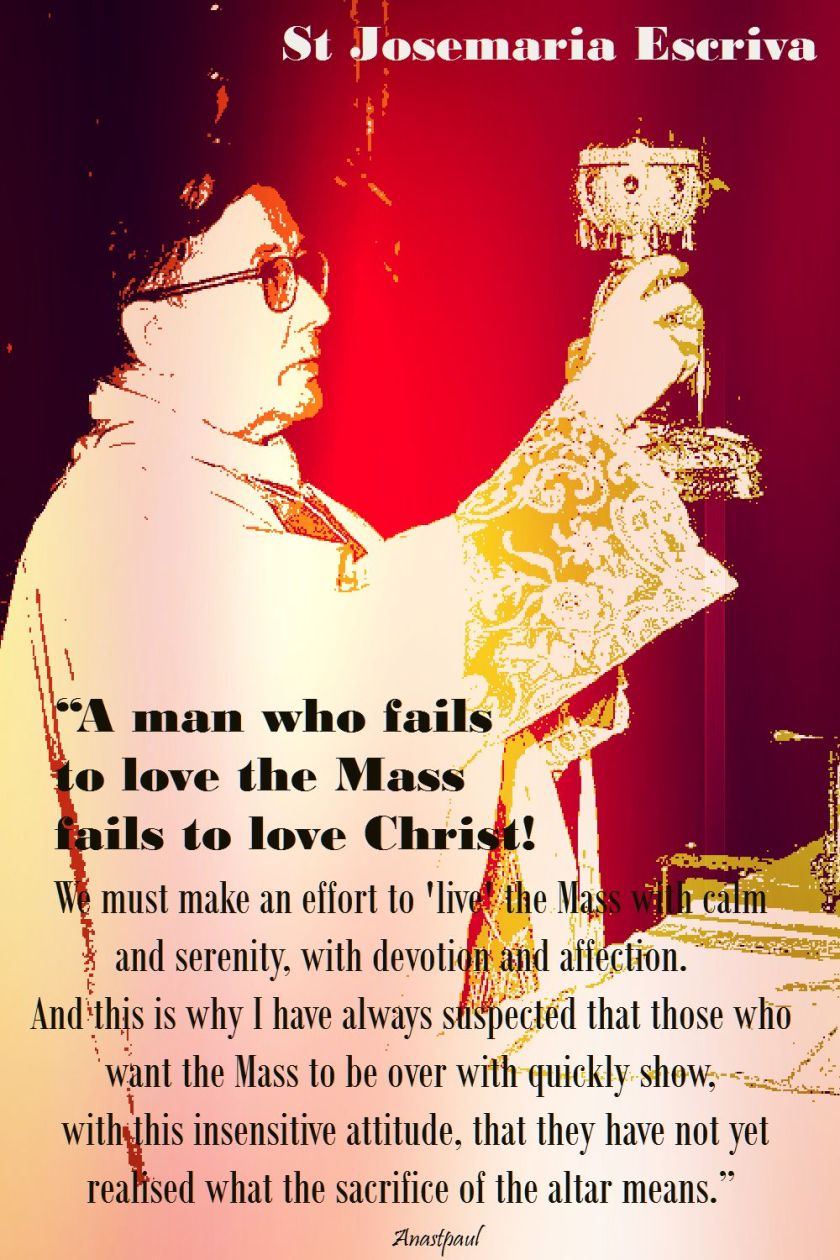
“A man who fails to love the Mass fails to love Christ. We must make an effort to ‘live’ the Mass with calm and serenity, with devotion and affection. And this is why I have always suspected that those who want the Mass to be over with quickly show, with this insensitive attitude, that they have not yet realised what the sacrifice of the altar means.” AND “Many Christians take their time and have leisure enough in their social life (no hurry here). They are leisurely, too, in their professionally activities, at table and recreation (no hurry here either). But isn’t it strange how those same Christians find themselves in such a rush and want to hurry the priest, in their anxiety to shorten the time devoted to the most holy sacrifice of the altar?”
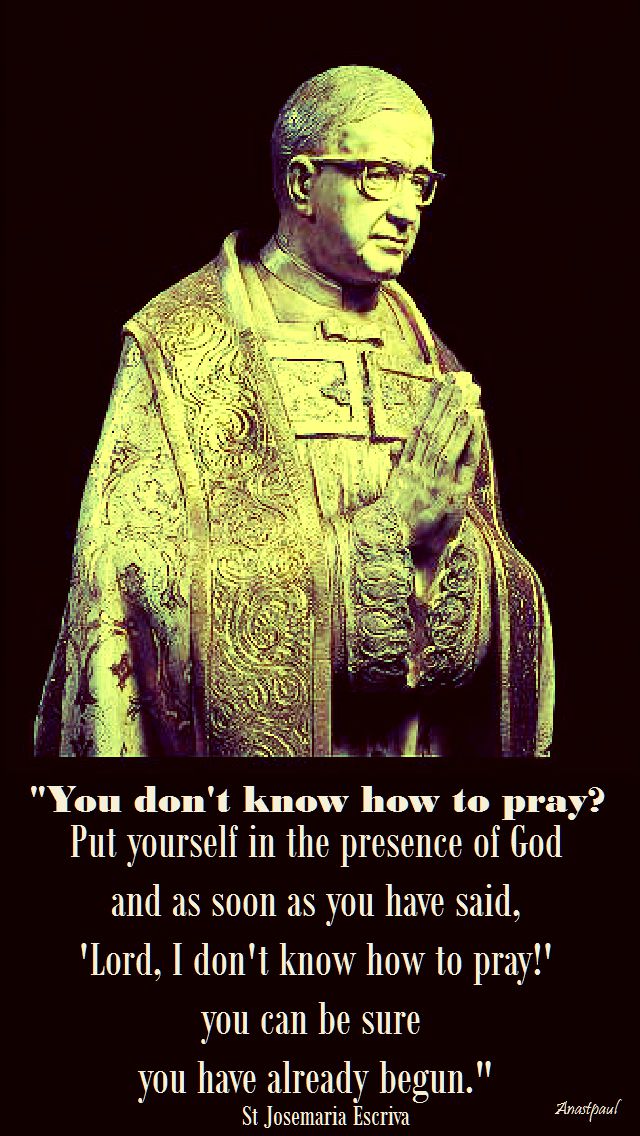
“You don’t know how to pray? Put yourself in the presence of God, and as soon as you have said, ‘Lord, I don’t know how to pray!” you can be sure you have already begun.”
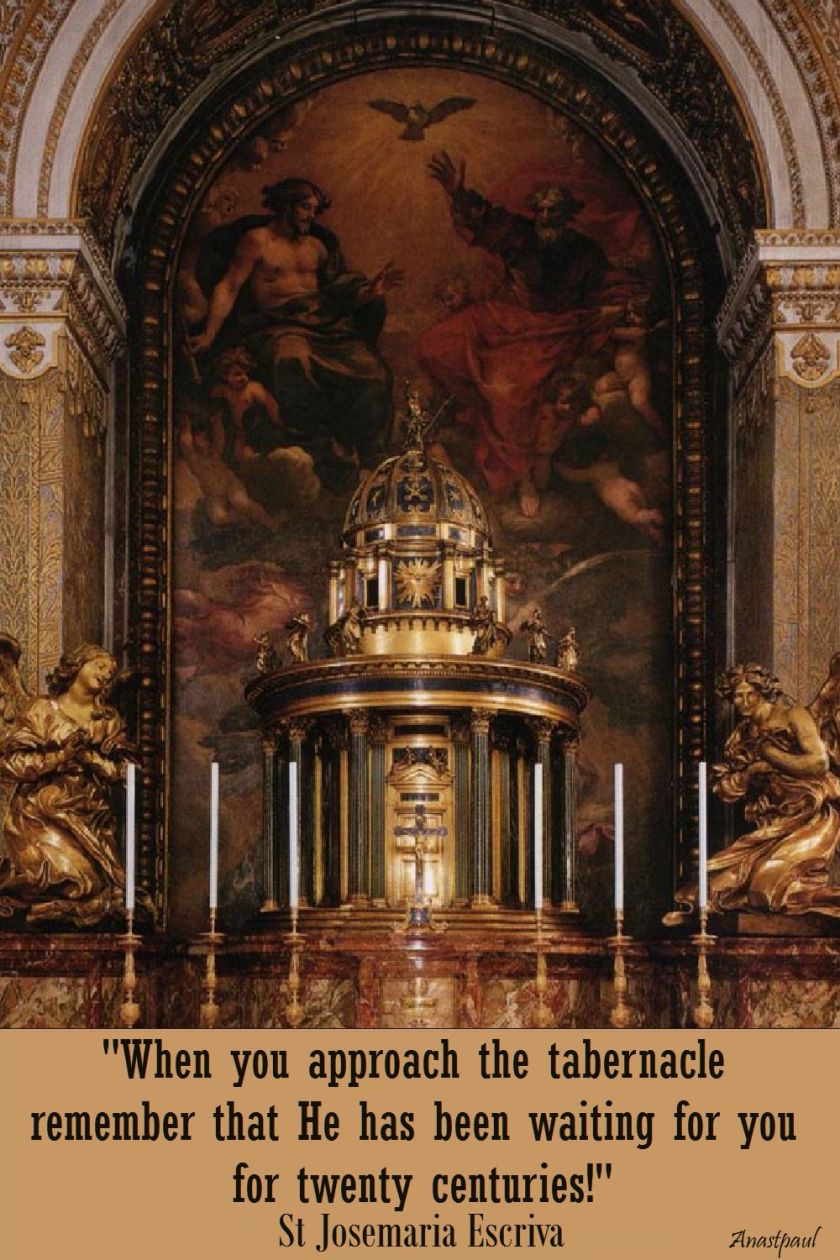
“When you approach the tabernacle remember that he has been waiting for you for twenty centuries.”
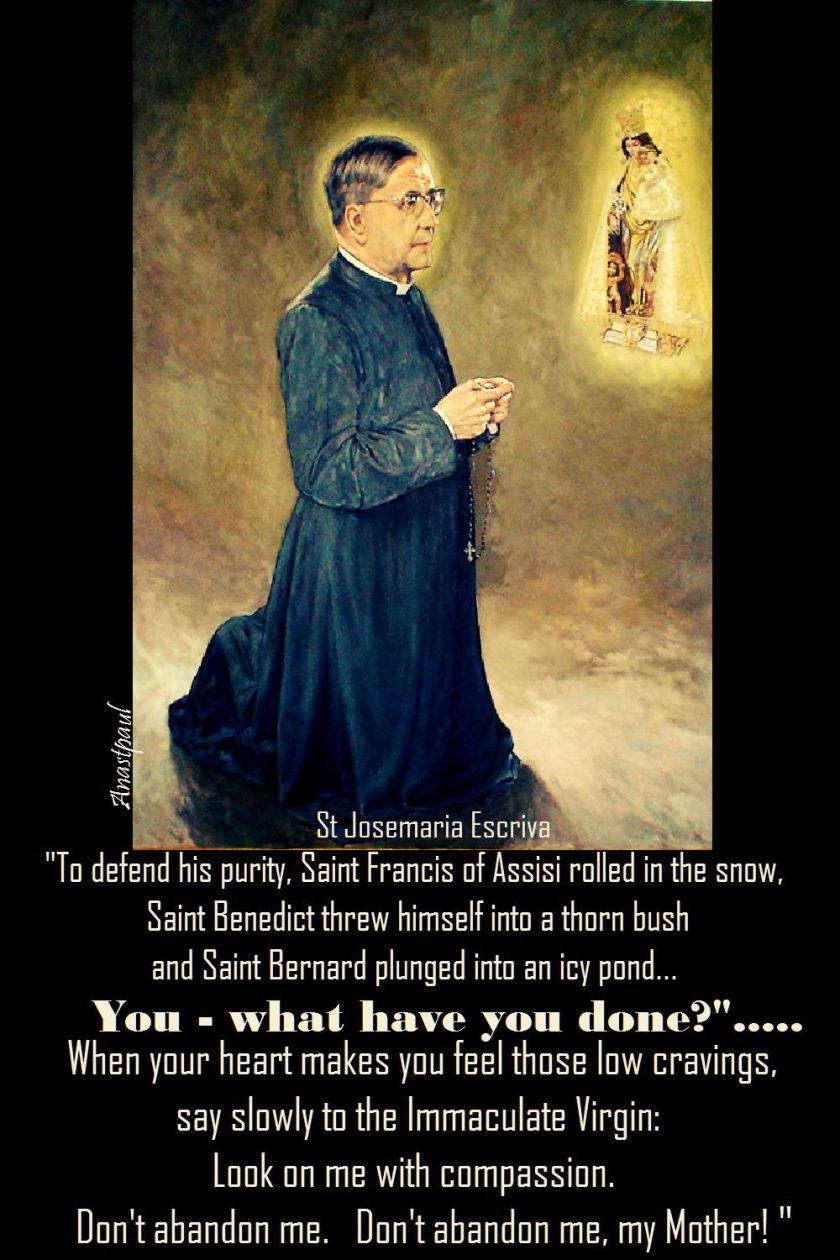
“To defend his purity, Saint Francis of Assisi rolled in the snow, Saint Benedict threw himself into a thorn bush and Saint Bernard plunged into an icy pond… You – what have you done?” …………………May I give you some advice for you to put into practice daily? When your heart makes you feel those low cravings, say slowly to the Immaculate Virgin: Look on me with compassion. Don’t abandon me. Don’t abandon me, my Mother! – And recommend this prayer to others.”
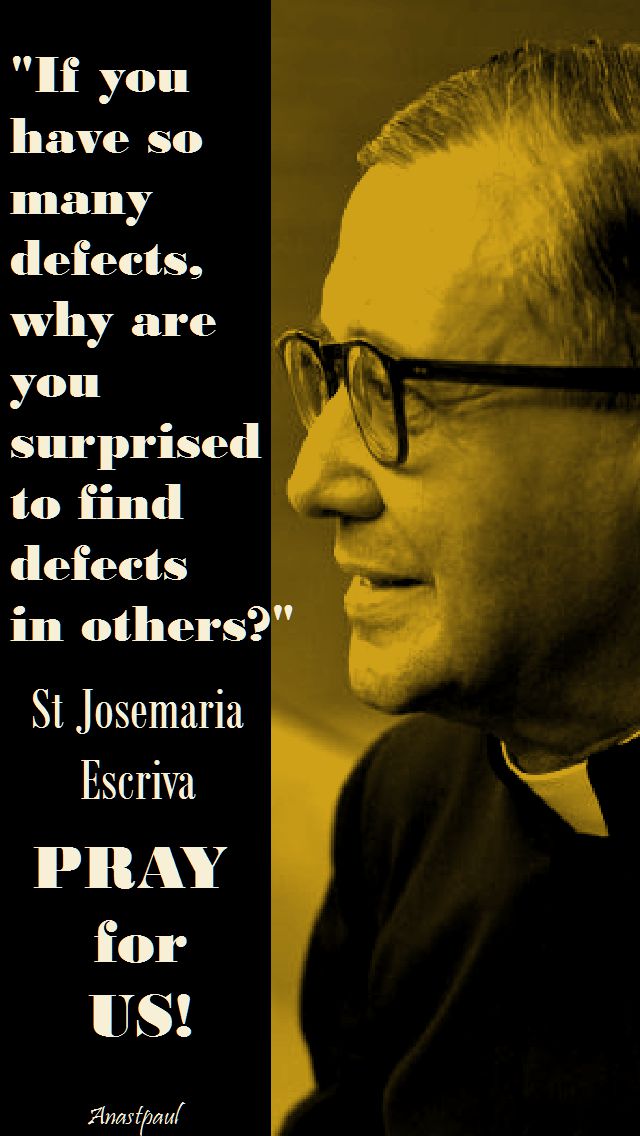
“If you have so many defects, why are you surprised to find defects in others?”
Our Lady of Longing: Matka Boża Tęskniąca / Longing Mother of God, Warsaw, Poland – One of the oldest churches in the Archdiocese of Warsaw is St. Elizabeth Powsin. Located on the main altar is a painting of Our Lady of Longing – artist unknown – from the first half of the seventeenth century. At either side, the image is surrounded by statues of Saints Adalbert and Stanislaus – Polish bishops and martyrs. The testimony of miracles and graces relating to the Our Lady of Longing icon have been collected at least since the mid-seventeenth century. On June 28, 1998, the image became the fourth image of Mary in the Archdiocese of Warsaw to be canonically crowned.
Our Lady of Longing
Our Lady of Trompone: Italy(1562)
—
St Acteie of Rome
St Albinus of Rome
Bl Andrea Giacinto Longhin
Bl Andrii Ischak
St Anthelm of Belley
St Babolenus of Stavelot-Malmédy
St Barbolenus of Fossés
Bl Bartholomew of Vir
St Corbican
St David of Thessalonica
St Deodatus of Nola
St Dionysius of Bulgaria
St Edburga of Gloucester
St Hermogius of Tuy
St Iosephus Ma Taishun
St John of Rome
St John of the Goths
St José Maria Robles Hurtado
St Josemaria Escriva
Bl Khalil Al-Haddad
St Maxentius of Poitou
St Medico of Otricoli
Bl Mykola Konrad
St Paul of Rome
St Pelagius of Oviedo
St Perseveranda of Poitiers
Bl Raymond Petiniaud de Jourgnac
St Salvius
Bl Sebastian de Burgherre
St Soadbair
St Superius
St Terence of Rome
St Vigilius of Trent
Bl Volodymyr Ivanovych Pryima
—
Martyrs of Africa – 4 saints: Four Christians who were martyred together – Agapitus, Emerita, Felix and Gaudentius at an unknown location in Africa, date unknown.
Martyrs of Alexandria – 3 saints: Three Christians who were martyred together, but we really know little more that the names – Agatho, Diogenes and Luceja. They were martyred in Alexandria, Egypt, date unknown.
Martyrs of Cambrai – 4 beati: Four Daughters of Charity of Saint Vincent de Paul nuns at Arras, France. Imprisoned together in 1792 and executed together two years later in the anti-Catholic excesses of the French Revolution. They were:
• Jeanne Gerard
• Marie-Françoise Lanel
• Marie-Madeleine Fontaine
• Thérèse-Madeleine Fantou
They were guillotined on 26 June 1794 at Cambrai, Nord, France and Beatified in June 1920 by Pope Benedict XV.
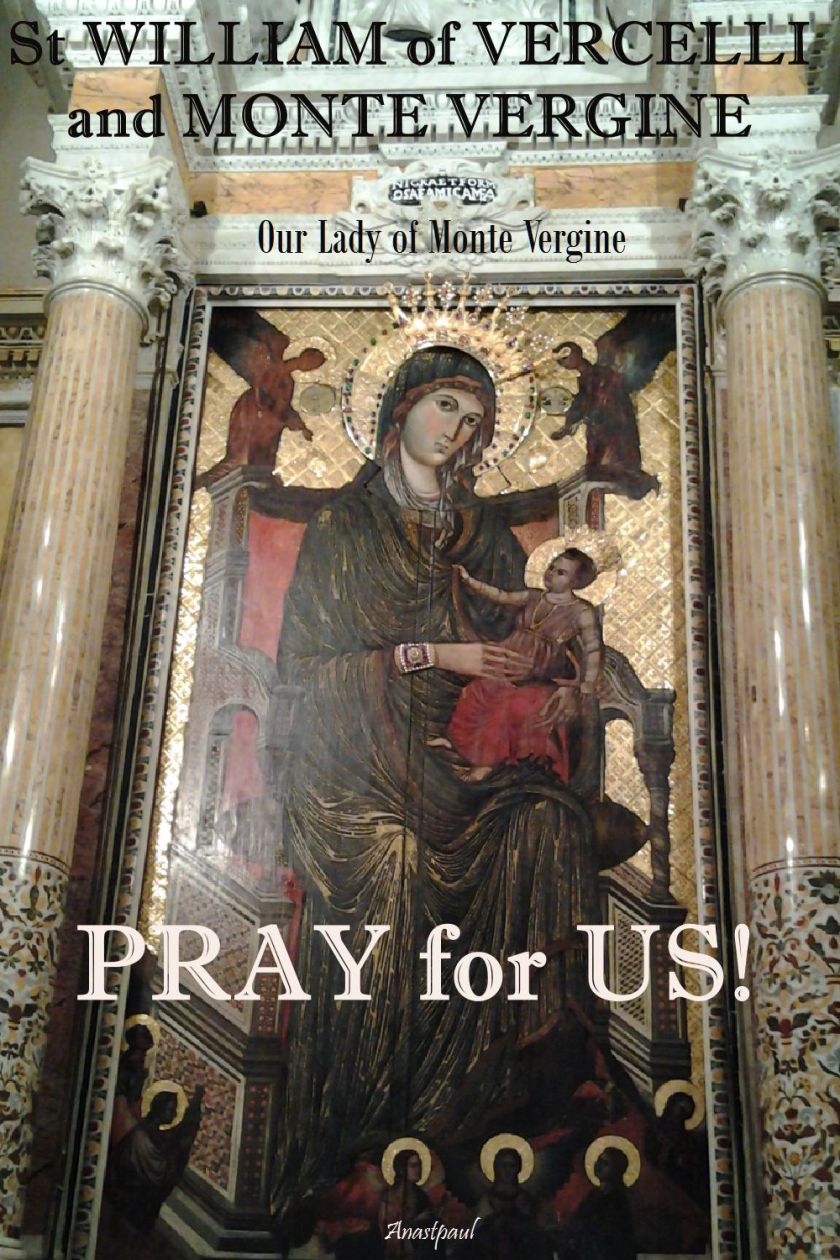
Today, 25 June, we celebrate the feast day of Saint William of Vercelli (1085-1142), founder of the Order of Monte Vergine, also known as the “Williamites.” Saint William lived a quiet life of solitude and contemplation, listening intently for the voice of God and following the directions he received. Through his obedience, William was taken far from home, worked many miracles and established a thriving religious community—all because he was quiet and paused to discern the Will of the Lord.
Saint William had complete trust in the Lord and in His Divine Providence. Ever faithful and contemplative, William was willing to leave his home as a youth and subsequently leave the community he had built with his own hands in service to God. Patient, humble and obedient, Saint William of Vercelli put the Lord’s work above his own desires at every moment of his life. His great devotion to Our Lady, was a source of immense comfort and trust in the holy Mother of God, who he knew would lead him to her Son. We could do well by observing Saint William’s confidence in the Divine Providence and striving to imitate him by creating quiet moments in our own lives for prayer, reflection and contemplation. It is in those moments that the Divine Plan for our own lives quietly unfolds…… if we listen.
St William of Vercelli and Monte Vergine, please pray for us!
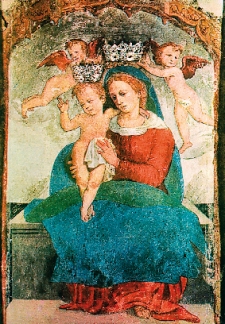
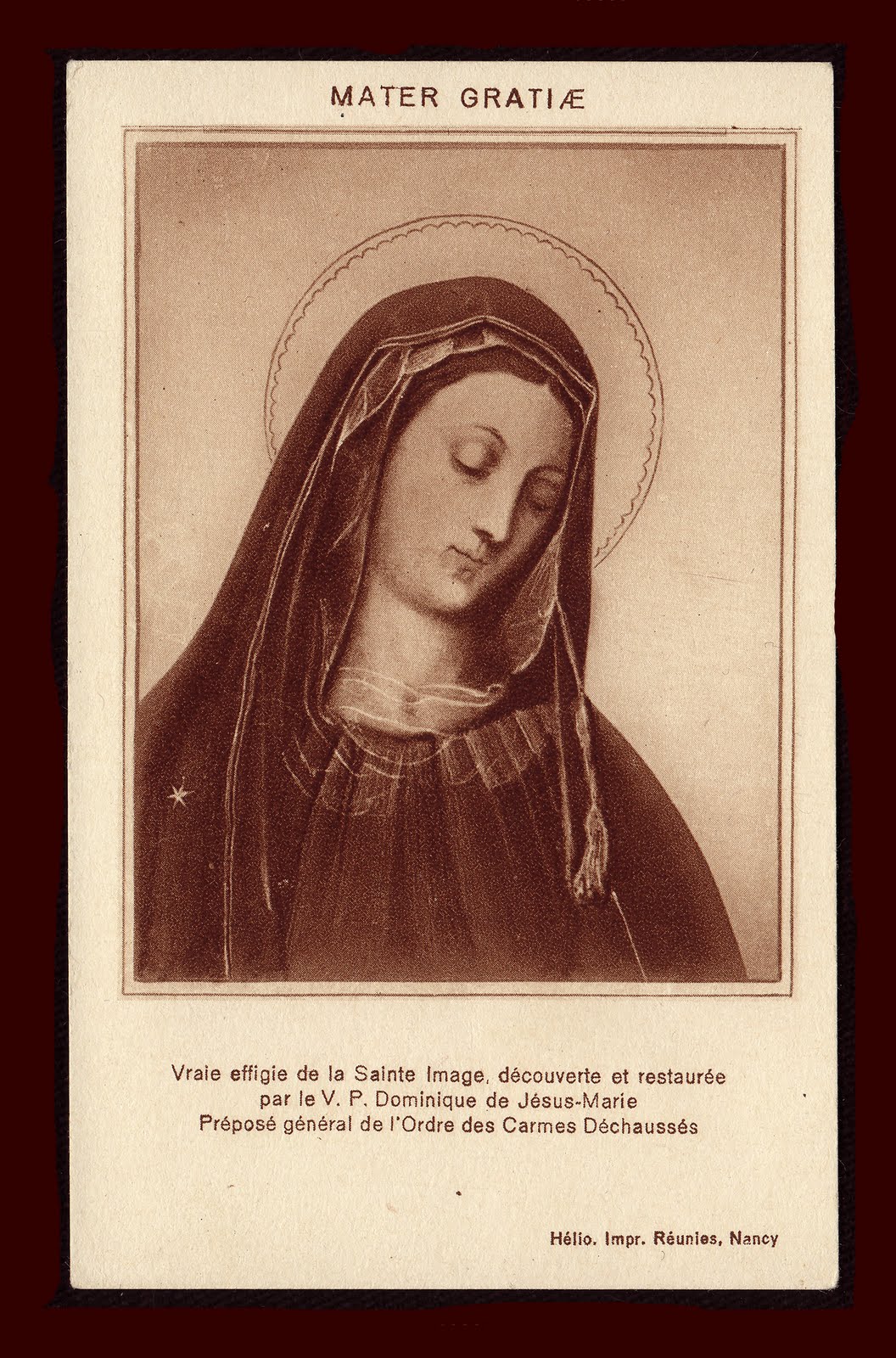
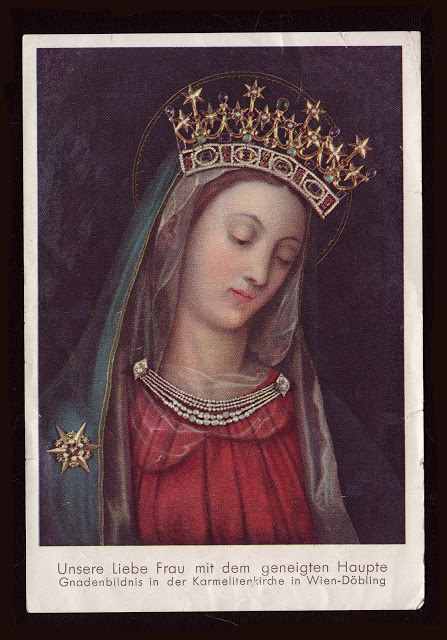
Beata Vergine delle Grazie / Our Lady of Grace/Our Lady of the Bowed Head, Montegridolfo, Rimini, Emilia-Romagna, Italy (1548) – 25 June
Among the many miraculous images of the Mother of God through which she deigns to grant her favours, there is one in the monastery church of the Carmelites in Vienna, entitled the Mother of Grace, or Our Lady of Grace, also known also as Our Lady of the Bowed Head.
In 1610 a Carmelite, Dominic of Jesus-Mary, found among the votaries of an old altar in the monastery church of Maria della Scala in Rome and oil painting of the Mother of God, dust-covered and somewhat torn, which grieved him. Taking it into his hands, he shook the dust off it, and kneeling down venerated it with great devotion.
He had the picture renovated and placed it on the shelf in his cell, where he made it the object of his love and supplications in favour of those who came to him in their necessities and afflictions.
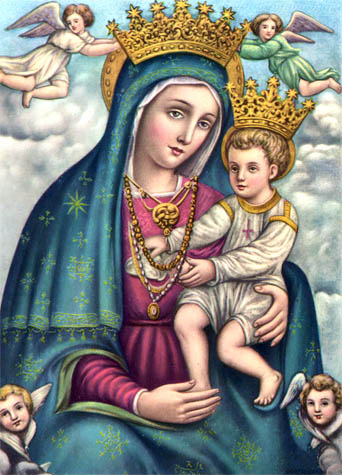
One night while he was praying fervently before the picture, he noticed that some dust had settled on it. Having nothing but his course woolen handkerchief he dusted it with that and apologized,
“O pure and holiest Virgin, nothing in the whole world is worthy of touching your holy face but since I have nothing but this coarse handkerchief, deign to accept my good will.”
To his great surprise, the face of the Mother of God appeared to take on life and smiling sweetly at him, she bowed her head, which thereafter remained inclined.
Fearing he was under an illusion, Dominic became troubled but Mary assured him that his requests would be heard: he could ask of her with full confidence any favour he might desire. He fell upon his knees and offered himself entirely to the service of Jesus and Mary and asked for the deliverance of one of is benefactor’s souls in purgatory. Mary told him to offer several Masses and other good works; a short time after when he was again praying before the image, Mary appeared to him bearing the soul of his benefactor to Heaven. Dominic begged that all who venerated Mary in this image of Our Lady of Grace might obtain all they requested. In reply the Virgin gave him this assurance:
“All those who devoutly venerate me in this picture and take refuge to me will have their request granted and I will obtain for them many graces; but especially will I hear their prayers for the relief and deliverance of the souls in purgatory.”
Dominic soon after placed the image into the church of Maria Della Scala so that more devotees of Mary could venerate it. Many wonderful favours were obtained by those who honoured and invoked Mary here. Reproductions were made of Our Lady of Grace and sent to different parts of the world. After the death of Dominic the original painting was lent to Prince Maximilian of Bavaria. He gave it to the discalced Carmelites in Munich in 1631; they gave it to Emperor Ferdinand II of Austria and his wife Eleanore. After Ferdinand’s death, Eleanore entered the Carmelite convent in Vienna and took the picture with her. During the succeeding years the image was transferred to various places. Today it is in the monastery church of Vienna Doabling. On 27 September 1931, it was solemnly crowned by Pope Pius XI – its 300th anniversary of arrival in Vienna.
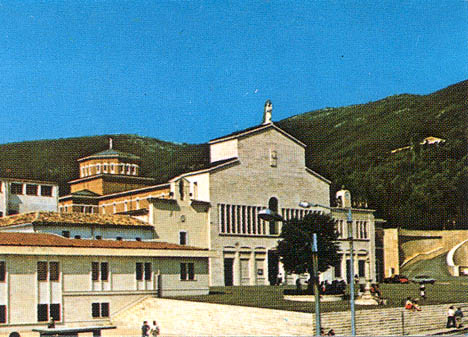
Saint Padre Pio prayed daily to Our Lady of Grace at San Giovanni Rotondo, Italy.
image of Our Lady of Grace is painted on the front wall and ceiling behind the altar in the church at San Giovanni Rotondo, Italy, where St. Pio lived.
Our Lady of Grace Church in San Giovanni Rotondo
Inside Our Lady of Grace Church
St Padre Pio prayed the following Prayer every day to Our Lady of Grace.
O heavenly treasurer of all graces, Mother of God and my mother Mary, since you are the first-born daughter of the Eternal Father and hold in your hands His omnipotence, be moved to pity my soul and grant me the graces which I fervently ask of you.
O merciful dispenser of divine graces, Mary most holy, mother of the Eternal incarnate Word who has crowned you with His immense wisdom, look upon the greatness of my sorrow and grant me the graces I need so much.
O most loving dispenser of divine graces, immaculate Spouse of the Eternal Holy Spirit, most holy Mary, who have received from Him a heart which is moved to pity by human misfortunes and which is constrained to offer consolation to those who suffer, be moved to pity my soul and grant me whose graces which I await from you with full confidence in your immense goodness.
O my mother, treasurer of all graces, refuge of poor sinners, consolation of the afflicted, hope of those who despair and most powerful help of Christians, I places all my confidence in you, being sure that you will obtain for me from Jesus the graces which I so much desire, if they are good for my soul. Amen
12th Sunday in Ordinary Time (2017)
Our Lady of Grace
—
St Adalbert of Egmond
St Amand of Coly
Bl Burchard of Mallersdorf
St Cyneburga of Gloucester
St Domingo Henares de Zafra Cubero
Bl Dorothy of Montau
St Eurosia of Jaca
St Febronia of Nisibis
Bl Fulgentius de Lara
St Gallicanus of Embrun
St Gallicanus of Ostia
St Gohard of Nantes
Bl Guy Maramaldi
Bl Henry Zdick
Bl John the Spaniard
St Luceias and Companions
St Maximus of Turin
St Moloc of Mortlach
St Molonachus of Lismore
St Phanxicô Ðo Van Chieu
St Prosper of Reggio
St Selyf of Cornwall
St Solomon I
St Solomon III of Bretagne
St William of Vercelli – https://www.youtube.com/watch?v=g8DVvgPMJtU
Thought for the Day – 24 June – Feast of the Immaculate Heart of Mary
“It was through the body of a young, Jewish girl, living in a tiny village called Nazareth, that Jesus, the divine Word, was made flesh. Mary belonged to that part of the people of Israel, who awaited the Lord’s coming with expectation and longing. She had no doubt read about His coming in the Old Testament Scriptures and prayed for it. But she had no idea how it would come about. Most Israelites thought the Messiah would manifest Himself gloriously.
When the Archangel Gabriel announced to Mary that she was to be the “door’ through which the long awaited desire of the nations would be fulfilled, she must have been astonished: “Hail, O favored one, the Lord is with you! … You will conceive in your womb and bear a son, and you shall call His name Jesus” (Lk 1.28-31). A new life – filled with risks – opened before her. According to the Church’s tradition, Mary, in an exceptional gesture for a Jewish woman, had decided “not to know man” (Lk 1.34). She had discerned virginity to be God’s will. Her Immaculate Heart – the Feast we keep this day – prompted a total giving of herself to God and included the gift of both her body and her heart. Reassuring her that God had not disdained her vow, Gabriel told Mary that, like the glory of God coming upon the ark, so would the Spirit overshadow her. The young “handmaid of the Lord” contemplated the Angel’s words. She treasured them in her heart. Her response, known as her fiat – “let it be done to me as you say” (Lk 1.38) – shows that she entrusted herself fully to God’s designs. She chose to forgo her own plans for God’s. Through her fiat, the Word of God took flesh in the tabernacle of her womb…..
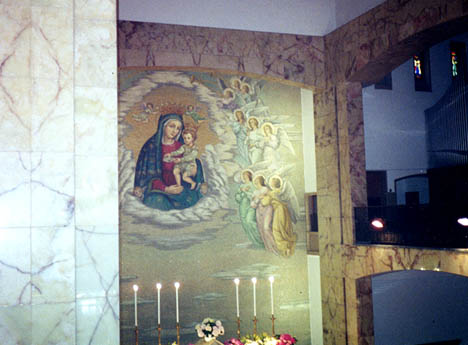
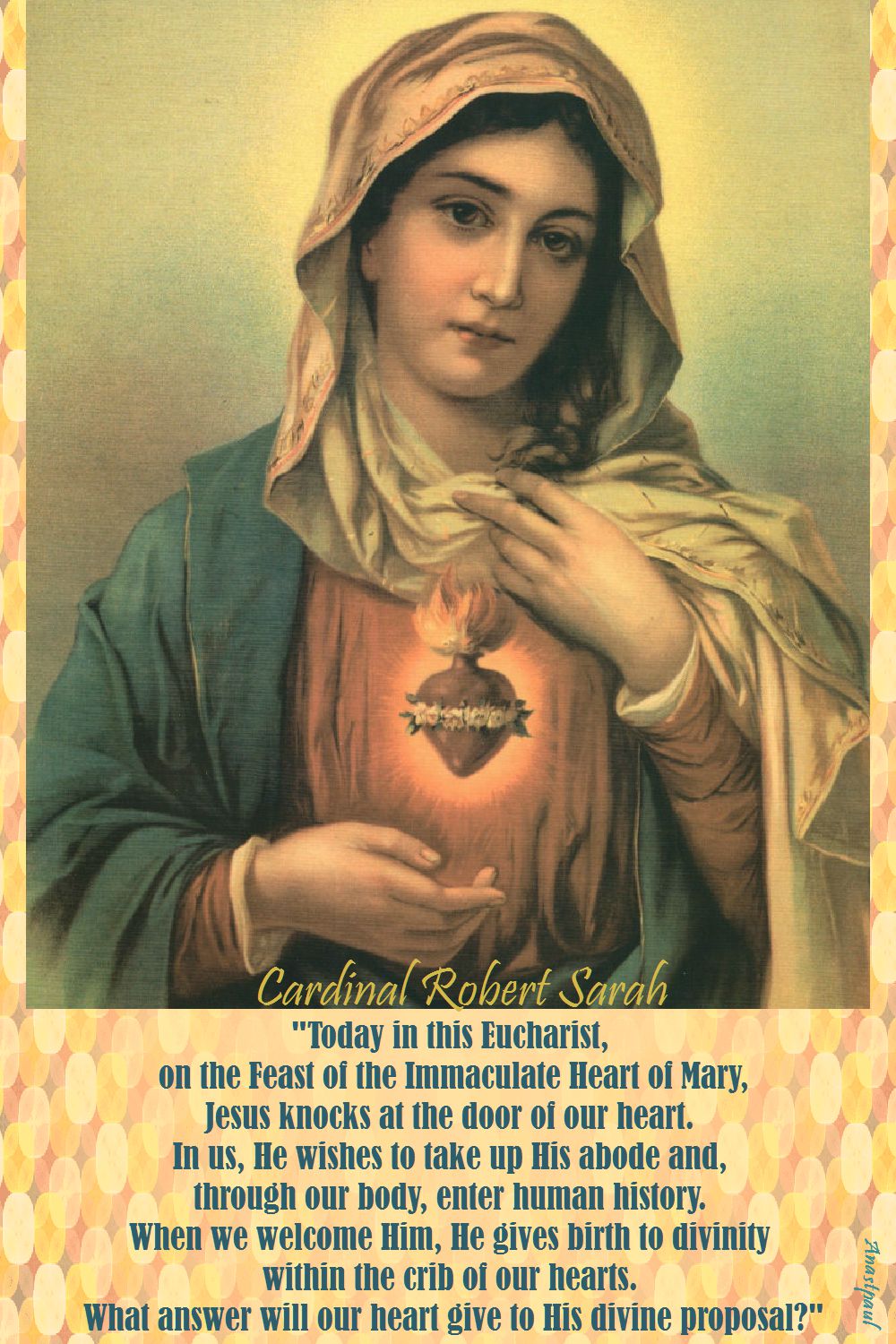
Today in this Eucharist, on the Feast of the Immaculate Heart of Mary, Jesus knocks at the door of our heart. In us, He wishes to take up His abode and, through our body, enter human history. When we welcome Him, He gives birth to divinity within the crib of our hearts. What answer will our heart give to His divine proposal?”…..Cardinal Robert Sarah (16 June 2012)
Quote/s of the Day – 24 June 2017 – The Solemnity of the Birthday of St John the Baptist and the Feast of the Immaculate Heart of Mary
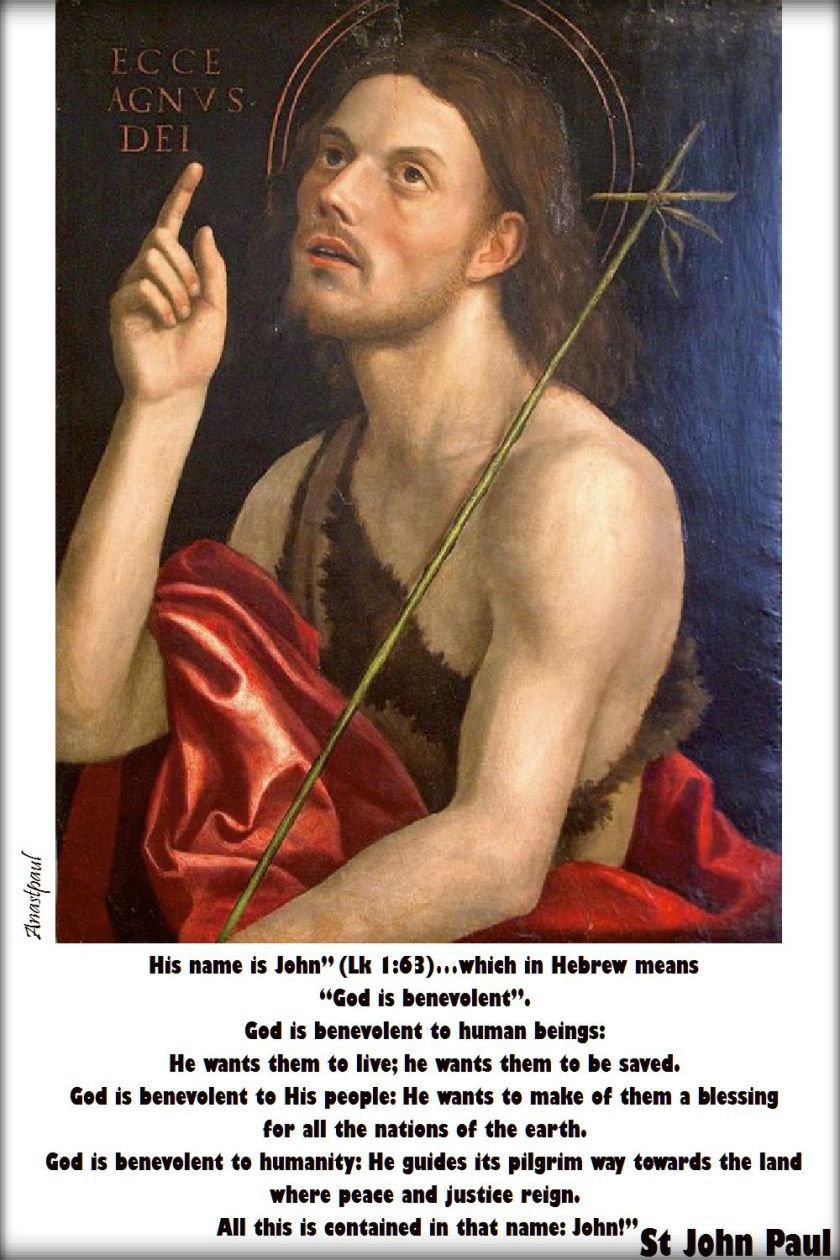
“His name is John” (Lk 1:63)…which in Hebrew means “God is benevolent”. God is benevolent to human beings: He wants them to live; he wants them to be saved. God is benevolent to His people: He wants to make of them a blessing for all the nations of the earth. God is benevolent to humanity: He guides its pilgrim way towards the land where peace and justice reign. All this is contained in that name: John!”…St John Paul (24 June 2001)
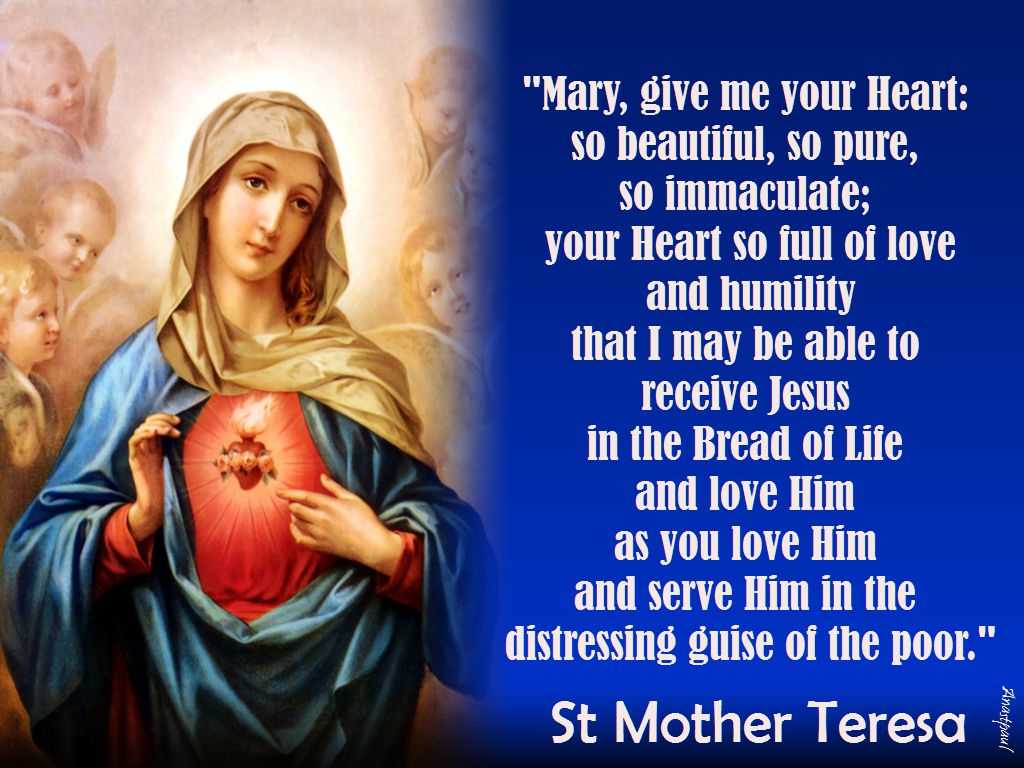
“Mary, give me your Heart: so beautiful, so pure, so immaculate; your Heart so full of love and humility that I may be able to receive Jesus in the Bread of Life and love Him as you love Him and serve Him in the distressing guise of the poor.”
–St Mother Teresa
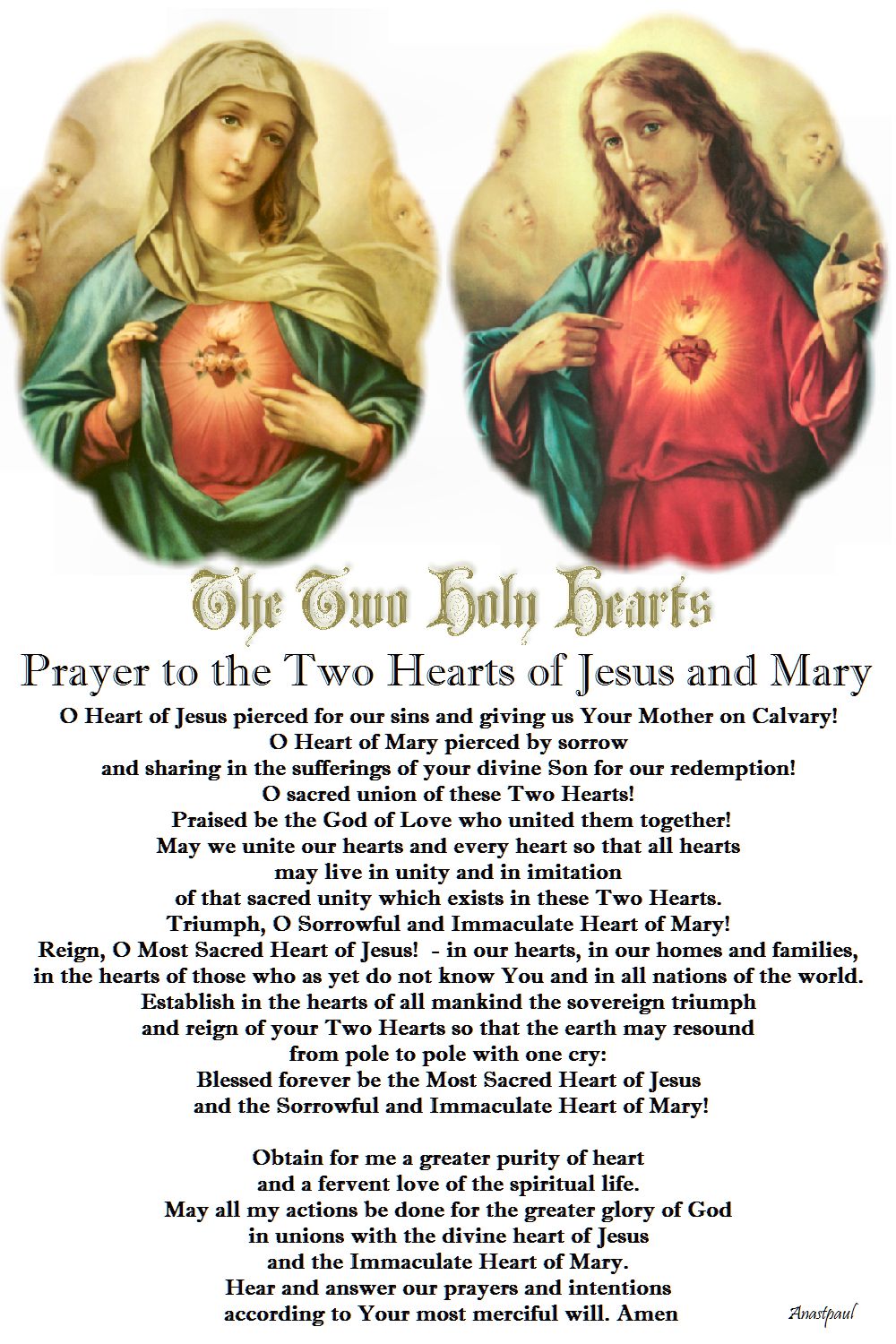
O Heart of Jesus pierced for our sins
and giving us Your Mother on Calvary!
O Heart of Mary pierced by sorrow
and sharing in the sufferings of your divine Son
for our redemption!
O sacred union of these Two Hearts!
Praised be the God of Love who united them together!
May we unite our hearts and every heart
so that all hearts may live in unity and in imitation
of that sacred unity which exists in these Two Hearts.
Triumph, O Sorrowful and Immaculate Heart of Mary!
Reign, O Most Sacred Heart of Jesus!
– in our hearts, in our homes and families,
in the hearts of those who as yet do not know You
and in all nations of the world.
Establish in the hearts of all mankind the sovereign triumph
and reign of your Two Hearts so that the earth may resound
from pole to pole with one cry:
Blessed forever be the Most Sacred Heart of Jesus
and the Sorrowful and Immaculate Heart of Mary!
Obtain for me a greater purity of heart
and a fervent love of the spiritual life.
May all my actions be done for the greater glory of God
in unions with the divine heart of Jesus
and the Immaculate Heart of Mary.
Hear and answer our prayers and intentions
according to Your most merciful will. Amen
The Feast of the Immaculate Heart of Mary – 24 June 2017 – the Saturday following the Feast of the Sacred Heart
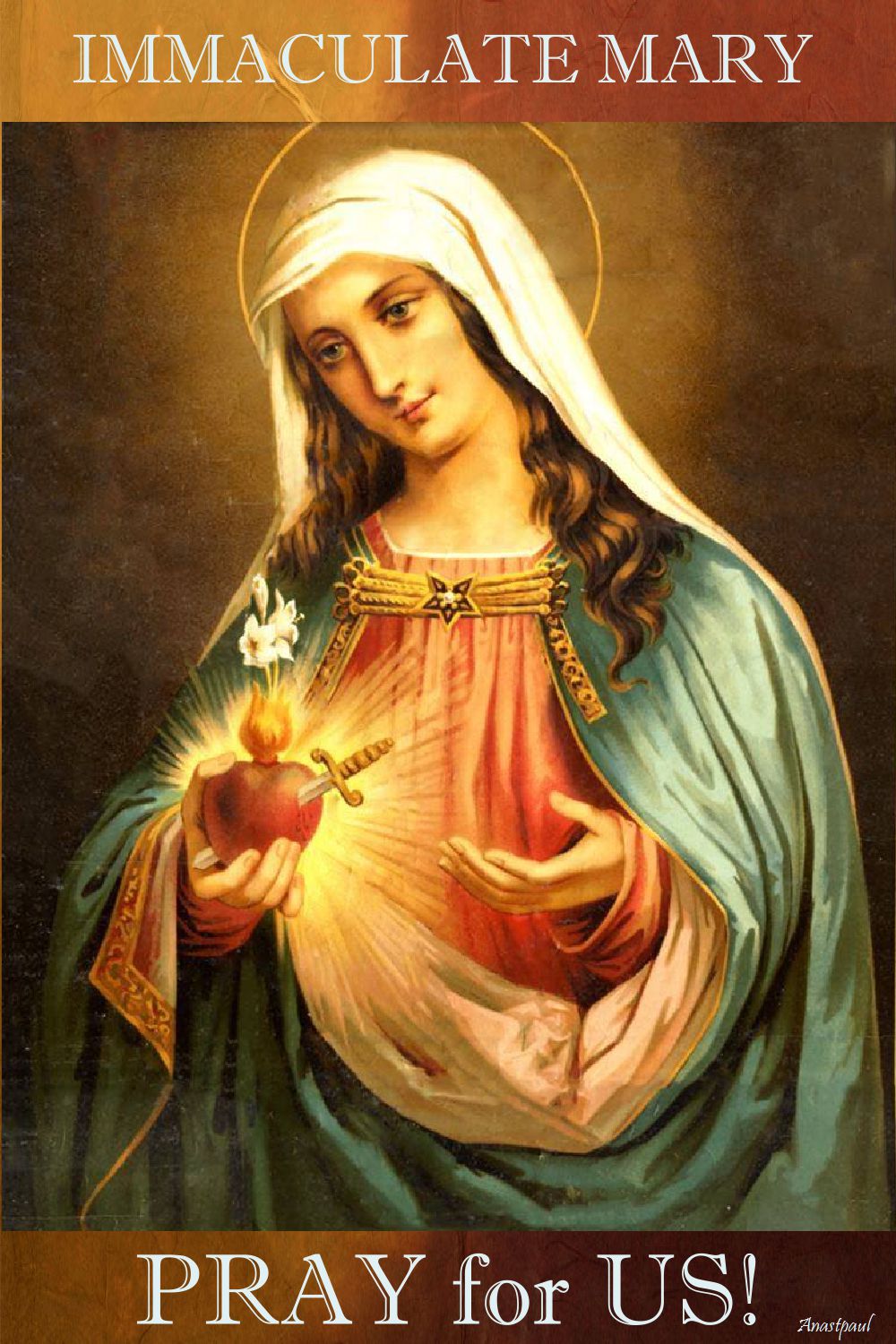
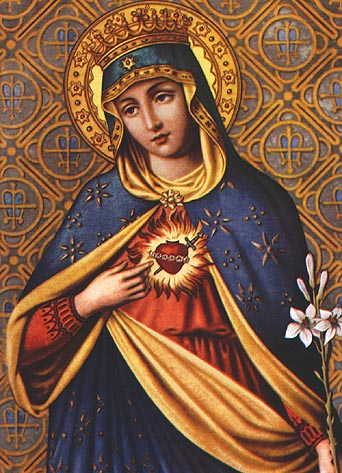
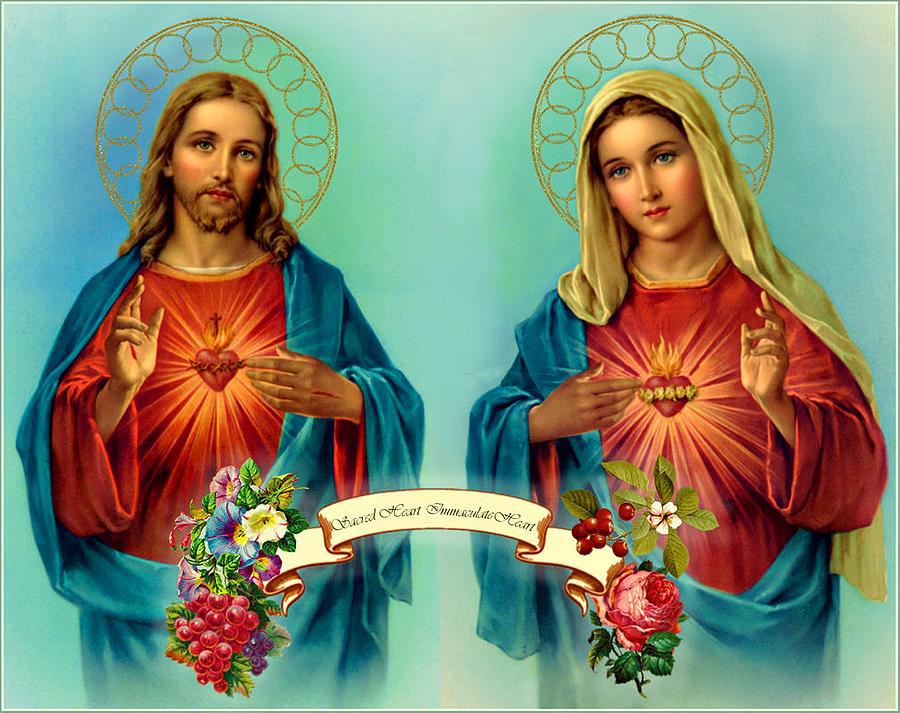
The Feast of the Immaculate Heart of Mary is a devotional name used to refer to the interior life of the Blessed Virgin Mary, her joys and sorrows, her virtues and hidden perfections and above all, her virginal love for God the Father, her maternal love for her son Jesus and her compassionate love for all persons. Two elements are essential to the devotion, Mary’s interior life and the beauties of her soul and Mary’s virginal body. According to Roman Catholic theology, soul and body are necessary to the constitution of man. It was in 1855, that the Mass of the Most Pure Heart of Mary formally became a part of the Catholic practice. Traditionally, the heart of Mary in artwork is depicted with seven wounds or swords, in homage to the seven sorrows of Mary. Also, roses or another type of flower may be wrapped around the heart.
Veneration of the Immaculate Heart of Mary generally coincides with the worship of the Most Sacred Heart of Jesus. However, there is a difference that explains the Roman Catholic devotion to the Immaculate Heart of Mary. The devotion to the Sacred Heart of Jesus is especially directed to the “Divine Heart”, as overflowing with love for humanity. In the devotion to the Immaculate Heart of Mary, on the other hand, the attraction is the love of her Immaculate Heart for Jesus and for God.
A second difference is the nature of the devotion itself. In devotion to the Most Sacred Heart of Jesus, the Roman Catholic venerates in a sense of love, responding to love. In devotion to the Immaculate Heart of Mary, love is formed from study and imitation of Mary’s yes to God as the mother of Jesus. In this devotion, love is more the result, than the “object” of the devotion; the object being rather to love God and Jesus by uniting one’s self to Mary for this purpose and by imitating her virtues, to help one achieve this.
History of the devotion to the Immaculate Heart of Mary is connected in many ways to that of the Sacred Heart of Jesus. Christians were drawn to the love and virtues of the Immaculate Heart of Mary, and this paved the devotion from the beginning. Early Christians had compassion for the Virgin Mary and the Gospels recount prophecy delivered to her at Jesus’ presentation in the temple, and that her heart would be pierced with a sword. The image of the Immaculate Heart of Mary with the pierced heart is the most popular representation. St. John’s Gospel further invites us to the attention of Mary’s heart with its depiction of Mary at the foot of the cross at Jesus’ crucifixion. St. Augustine tells us that Mary was more blessed in having born Christ in her heart, than in having conceived him in the flesh.
The Alliance of the Hearts of Jesus and Mary
The Alliance of the Hearts of Jesus and Mary is based on the historical, theological and spiritual links in Catholic devotions to the Sacred Heart of Jesus and the Immaculate Heart of Mary. The joint devotion to the hearts was first formalized in the 17th century by St. John Eudes who organized the scriptural, theological and liturgical sources relating to the devotions and obtained the approbation of the Church, prior to the visions of St. Margaret Mary Alacoque.
In the 18th and 19th centuries the devotions grew, both jointly and individually through the efforts of figures such as St. Louis de Montfort who promoted Catholic Mariology and St. Catherine Labouré’s Miraculous Medal depicting the Heart of Jesus thorn-crowned and the Heart of Mary pierced with a sword. The devotions, and the associated prayers, continued in the 20th century, e.g., in the Immaculata prayer of St. Maximillian Kolbe and in the reported messages of Our Lady of Fátima which stated that the Heart of Jesus wishes to be honored together with the Heart of Mary.
The Popes have supported the individual and joint devotions to the hearts through the centuries; in 1956 the encyclical Haurietis aquas, Pope Pius XII encouraged the joint devotion to the hearts, In 1979 the encyclical Redemptor hominis, Pope John Paul II explained the theme of unity of Mary’s Immaculate Heart with the Sacred Heart. In his Angelus address on 15th September 1985 he coined the term The Alliance of the Hearts of Jesus and Mary and in 1986 addressed the international conference on that topic held at Fátima, Portugal.
Nuestra Señora de Montemayor
—
St Abraham of Saint-Cyriacus
St Achaicus of Corinth
Bl Albertina Berkenbrock
St Barbara Cui Lianshi
St Benildis of Córdoba
St Constantine of Beauvais
St Domitian of Lobbes
St Edburgh of Winchester
St Eigil
St Eutropia of Palmyra
St Fortunatus of Corinth
St Germaine Cousin
St Hadelinus of Lobbes
St Hesychius of Durostorum
St Hilarion of Espalion
Bl Juan Rodriguez
St Julius of Durostorum
St Landelin of Crespin
St Leonides of Palmyra
St Libya of Palmyra
St Lotharius of Séez
St Melan of Viviers
St Orsisius
Bl Pedro da Teruel
Bl Peter Snow
St Pierre de Cervis
Bl Ralph Grimston
St Tatian of Cilicia
Bl Thomas Scryven
St Trillo of Wales
St Vaughe of Ireland
St Vitus
St Vouga of Lesneven
—
Martyr of Lucania – 11 saints: Eleven Christians martyred together. We known nothing else about them but the names – Anteon, Candidus, Cantianilla, Cantianus, Chrysogonus, Jocundus, Nivitus, Protus, Quintianus, Silvius, Theodolus in Lucania (modern Basilicata), Italy, date unknown.
Our Lady of Montalto
—
St Amphion of Nicomedia
Bl Antonia Maria Verna
Bl Antonio de Pietra
St Arsenius of Konev
St Christian O’Morgair of Clogher
St Chrodobald of Marchiennes
St Cominus
Bl Conrad of Maleville
St Cunera
St Cuniald
St Cyrinus of Antwerp
St Eskil
St Galen of Armenia
St Gaspar Bertoni
St Gerebald of Châlons-sur-Seine
St Geslar
Bl Guy Vignotelli of Cortona
St John of Sahagun
St Pope Leo III
St Lochinia of Ireland
Bl Lorenzo Maria Salvi
Bl Maria Candida Barba
Bl Mercedes Maria of Jesus
St Odulf of Utrecht
St Olympius of AEnos
St Onuphrius of Egypt
Bl Pelagia Leonti of Milazzo
St Peter of Mount Athos
St Placid of Val d’Ocre
Bl Stefan Kielman
St Ternan of Culross
St Valerius of Armenia
The Most Holy Trinity (Solemnity, 2017)
St Barnabas the Apostle (Memorial)
Our Lady of Mantara
—
St Aleydis of Schaerbeek
St Blitharius of Seganne
St Herebald of Bretagne
Bl Hugh of Marchiennes
Bl Ignazio Choukrallah Maloyan
Bl Jean de Bracq
Bl Kasper of Grimbergen
St Maximus of Naples
St Parisius
St Paula Frasinetti
St Riagail of Bangor
St Tochumra of Kilmore
St Tochumra of Tuam
—
Martyrs of Tavira – 7 beati: Members of the Knights of Santiago de Castilla. During the re-conquest of the Iberian peninsula from the Muslims by Christian forces, in a period of truce between the armies, the group was allowed to leave the Portuguese camp to hunt. Near Tavira, Portugal, he and his companions were ambushed and killed by a Muslim force. Making a reprisal attack, the Portuguese army took the city of Tavira. The murdered knights were considered to be martyrs as they died in an action defending the faith. They were –
• Blessed Alvarus Garcia
• Blessed Beltrão de Caia
• Blessed Damião Vaz
• Blessed Estêvão Vasques
• Blessed Garcia Roiz
• Blessed Mendus Valle
• Blessed Pedro Rodrigues
They were martyred in 1242 outside Tavira, Faro, Portugal. Their relics are enshrined under the altar of Saint Barnabas in the Church of Our Lady, Queen of the Angels (modern Santa Maria do Castelo) in Tavria
Mercedarian Martyrs of Damietta: Three Mercedarian lay knights who worked to ransom Christians enslaved by Muslims. During the 7th Crusade, a plague swept through the Christian army and these knights volunteered to work with the sick. During this work they were captured by Muslims and ordered to convert to Islam; they refused. They were tortured, taken to Damietta, Egypt where they were murdered for their faith. They were thrown from a tower in the mid-13th century in Damietta, Egypt.
Our Lady of the Grotto
—
Bl Amata of San Sisto
St Amantius of Tivoli
St Asterius of Petra
St Bardo of Mainz
Bl Bogumilus of Gniezno
St Caerealis of Tivoli
St Censurius of Auxerre
St Crispulus of Rome
Bl Edward Johannes Maria Poppe
Bl Elisabeth Hernden
Bl Elizabeth Guillen
St Evermund of Fontenay
St Faustina of Cyzicus
Bl Gerlac of Obermarchtal
St Getulius of Tivoli
Bl Henry of Treviso
St Illadan of Rathlihen
St Ithamar of Rochester
Bl John Dominici de Banchini
Bl José Manuel Claramonte Agut
Bl Joseph Kugler
St Landericus of Novalese
St Landericus of Paris
Bl Mary Magdalene of Carpi
St Maurinus of Cologne
St Primitivus of Tivoli
St Restitutus of Rome
Bl Thomas Green
St Timothy of Prusa
Bl Walter Pierson
St Zachary of Nicomedia
—
Martyrs of North Africa – 17 saints: A group of seventeen Christians martyred together in North Africa; the only surviving details are two of their names – Aresius and Rogatius. Both the precise location in North Africa and the date are unknown.
Martyrs of the Aurelian Way – 23 saints: A group of 23 martyrs who died together in the persecutions of Aurelian. The only details that survive are three of their names – Basilides, Mandal and Tripos. c.270-275 on the Aurelian Way, Rome, Italy.
Martyrs of the Hulks of Rochefort/Martyrs of La Rochelle – 64 beati: In 1790 the French Revolutionary authorities passed a law requiring priests to swear allegience to the civil constitution, which would effectively remove them from the authority of and allegience to, Rome. Many refused and in 1791 the government began deporting them to French Guyana. 827 priests and religious were imprisoned on hulks (old ships no longer sea-worthy and used for storage, jails, hospitals, etc.) at Rochefort, France to await exile, most on the Deux-Associés and the Washington which had previously been used to house slaves or prisoners. There they were basically ignored to death as there was little provision for food and water, less for sanitation and none at all for medical help. 542 of the prisoners died there.
The survivors were freed on 12 February 1795 and allowed to return to their homes. Many of them wrote about their time on the hulks and many of them wrote about the faith and ministry of those who had died. 64 of them have been positively identified and confirmed to have died as martyrs, dying for their faith, they are:
• Antoine Auriel
• Antoine Bannassat
• Augustin-Joseph Desgardin
• Barthélemy Jarrige de La Morelie de Biars
• Charles-Antoine-Nicolas Ancel
• Charles-Arnould Hanus
• Charles-René Collas du Bignon
• Claude Beguignot
• Claude Dumonet
• Claude Laplace
• Claude Richard
• Claude-Barnabé Laurent de Mascloux
• Claude-Joseph Jouffret de Bonnefont
• élie Leymarie de Laroche
• Florent Dumontet de Cardaillac
• François d’Oudinot de la Boissière
• François François
• François Hunot
• François Mayaudon
• Gabriel Pergaud
• Georges-Edme René
• Gervais-Protais Brunel
• Jacques Gagnot
• Jacques Lombardie
• Jacques Retouret
• Jacques-Morelle Dupas
• Jean Baptiste Guillaume
• Jean Bourdon
• Jean Hunot
• Jean Mopinot
• Jean-Baptiste de Bruxelles
• Jean-Baptiste Duverneuil
• Jean-Baptiste Laborie du Vivier
• Jean-Baptiste Menestrel
• Jean-Baptiste Souzy
• Jean-Baptiste-Ignace-Pierre Vernoy de Montjournal
• Jean-Baptiste-Xavier Loir
• Jean-François Jarrige de la Morelie de Breuil
• Jean-Georges Rehm
• Jean-Nicolas Cordier
• Joseph Imbert
• Joseph Juge de Saint-Martin
• Joseph Marchandon
• Lazare Tiersot
• Louis-Armand-Joseph Adam
• Louis-François Lebrun
• Louis-Wulphy Huppy
• Marcel-Gaucher Labiche de Reignefort
• Michel-Bernard Marchand
• Michel-Louis Brulard
• Nicolas Savouret
• Nicolas Tabouillot
• Noël-Hilaire Le Conte
• Paul-Jean Charles
• Philippe Papon
• Pierre Gabilhaud
• Pierre Jarrige de la Morelie de Puyredon
• Pierre-Joseph le Groing de la Romagère
• Pierre-Michel Noël
• Pierre-Sulpice-Christophe Faverge
• Pierre-Yrieix Labrouhe de Laborderie
• Raymond Petiniaud de Jourgnac
• Scipion-Jérôme Brigeat Lambert
• Sébastien-Loup Hunot
They died between 19 May 1794 and 23 February 1795 aboard prison ships docked at Rochefort, Charente-Maritime, France and were beatified on
1 October 1995 by St Pope John Paul II.
St Ephrem of Syria (Optional Memorial)
Madonna della Fonte Nuova
Mary, Mother of Grace
Mary of the Walnut
—
Bl Alexander of Kouchta
St Alexander of Prusa
Bl Anne Marie Taigi
St Arnulf of Velseca
St Baithen of Iona
St Columba of Iona
St Comus of Scotland
St Cumian of Bobbio
St Cyrus
Bl Diana d’Andalo
St Diomedes of Tarsus
St Felicianus
Bl Henry the Shoemaker
St Jose de Anchieta
Bl Joseph Imbert
St Julian of Mesopotamia
St Luciano Verdejo Acuña
Bl Luigi Boccardo
St Maximian of Syracuse
St Pelagia of Antioch
St Primus
St Richard of Andria
Bl Robert Salt
Bl Sylvester Ventura
St Valerius of Milan
St Vincent of Agen
—
Martyrs of Arbil – 5 saints: Five nuns who were martyred together in the persecutions of Tamsabur for refusing to renounce Christianity for sun-worship – Amai, Mariamne, Martha, Mary and Tecla. They were beheaded on 31 May 347 at Arbil, Assyria (in modern Kurdistan, Iraq)
Mary, Mother of God, your love is strikingly shown forth in this beautiful Feast of the Visitation. When you learned from the angel that your cousin Elizabeth was with child and needed your help, you set out to care for her. Neither the long absence from home, nor the inconvenience of a difficult and dangerous journey to the mountain country, kept you from making this mission of love. You thought only of Elizabeth and the assistance you could bring to her. You hastened to be of service. You lovingly served her until you saw her happily delivered of the child of promise with which God had blessed her.
Help me to strive to imitate your wonderful charity by aiding those who are in need, by sympathising with those who are afflicted, by opening my heart and applying my hands to relieve every form of distress.
Give me love like yours!
Teach me that the test of my following of your Divine Son is practical charity!
One of the invocations in Mary’s litany is “Ark of the Covenant.”
Like the Ark of the Covenant of old, Mary brings God’s presence into the lives of other people.
As David danced before the Ark, John the Baptist leaps for joy.
As the Ark helped to unite the 12 tribes of Israel by being placed in David’s capital,
so Mary has the power to unite all Christians in her son.
Like you, teach me too acclaim and seek the glory of God and sing with you:
My soul proclaims the greatness of the Lord,
my spirit rejoices in God my Saviour
for He has looked with favour on His lowly servant.
From this day all generations will call me blessed:
the Almighty has done great things for me,
and holy is His Name.
He has mercy on those who fear Him
in every generation.
He has shown the strength of His arm,
He has scattered the proud in their conceit.
He has cast down the mighty from their thrones,
and has lifted up the lowly.
He has filled the hungry with good things,
and the rich He has sent away empty.
He has come to the help of His servant Israel
for He remembered His promise of mercy,
the promise He made to our fathers,
to Abraham and his children forever.
Mary remained with Elizabeth
about three months
and then returned home……….Luke 1:56
REFLECTION – “The heart of our good mother Mary is all love and mercy. She desires nothing else but our happiness. We need only have recourse to her and we will be heard.”………..
“Whoever opens his or her heart to the Mother encounters and welcomes the Son and is pervaded by His joy. True Marian devotion never obscures or diminishes faith and love for Jesus Christ Our Saviour, the one Mediator between God and humankind. On the contrary, entrustment to Our Lady is a privileged path, tested by numerous saints, for a more faithful following of the Lord. Consequently, let us entrust ourselves to her with filial abandonment!” ……….Pope Benedict XVI (2006)
PRAYER – Heavenly Father, let me constantly have recourse to Mary. May she lead me to the happiness of heavenly glory which You shar with Your Son in the unity of the Holy Spirit. Holy Mary, Mother of God, pray for us, lead us, teach us and care for us, now and at the hour of our death, amen.
“(Mary) is a young maiden but she is not afraid because God is with her, within her,… In a certain sense, we can say that her trip was ….. the first Eucharistic procession in history. Is not this also the joy of the Church, which receives Christ incessantly in the holy Eucharist and takes Him to the world with the testimony of active charity, full of faith and hope? “Yes, to receive Jesus and to take Him to others is the true joy of the Christian! Let us follow and imitate Mary, the profoundly Eucharistic soul and our whole life will become a Magnificat.”
ARISE MARY, MOTHER OF GOD! Blessed Cardinal JOHN HENRY NEWMAN (1801-1890)
It is the time for your Visitation.
Arise Mary, and go forth in your strength
into that north country,
which once was your own,
and take possession of a land
which knows you not.
Arise, Mother of God,
and with your thrilling voice,
speak to those who labour with child,
and are in pain,
till the babe of grace leaps within them!
Amen
Feast of the Visitation of the Blessed Virgin Mary – 31 May
The feast of the Visitation recalls to us the following great truths and events: The visit of the Blessed Virgin Mary to her cousin Elizabeth shortly after the Annunciation; the cleansing of John the Baptist from original sin in the womb of his mother at the words of Our Lady’s greeting; Elizabeth’s proclaiming of Mary—under the inspiration of the Holy Ghost—as Mother of God and “blessed among women”; Mary’s singing of the sublime hymn, Magnificat (“My soul doth magnify the Lord”) which has become a part of the daily official prayer of the Church. The Visitation is frequently depicted in art and was the central mystery of St. Francis de Sales’ devotions.
The Mass of today salutes her who in her womb bore the King of heaven and earth, the Creator of the world, the Son of the Eternal Father, the Sun of Justice. It narrates the cleansing of John from original sin in his mother’s womb. Hearing herself addressed by the most lofty title of “Mother of the Lord” and realizing what grace her visit had conferred on John, Mary broke out in that sublime canticle of praise proclaiming prophetically that henceforth she would be venerated down through the centuries:
“My soul doth magnify the Lord, and my spirit hath rejoiced in God my Savior. Because he that is mighty, hath done great things to me, and holy is His name” (Lk. 1:46).
This feast is of medieval origin, it was kept by the Franciscan Order before 1263 and soon its observance spread throughout the entire Church. Previously it was celebrated on July 2. Now it is celebrated between the solemnity of the Annunciation of the Lord and the birth of St. John the Baptist, in conformity with the Gospel accounts. Some places appropriately observe a celebration of the reality and sanctity of human life in the womb. The liturgical colour is white.
The Visitation And Mary rising up in those days went into the hill country with haste, into a city of Juda. [Lk. 1:39]
How lyrical that is, the opening sentence of St. Luke’s description of the Visitation. We can feel the rush of warmth and kindness, the sudden urgency of love that sent that girl hurrying over the hills. “Those days” in which she rose on that impulse were the days in which Christ was being formed in her, the impulse was His impulse. Many women, if they were expecting a child, would refuse to hurry over the hills on a visit of pure kindness. They would say they had a duty to themselves and to their unborn child which came before anything or anyone else.
The Mother of God considered no such thing. Elizabeth was going to have a child, too and although Mary’s own child was God, she could not forget Elizabeth’s need—almost incredible to us, but characteristic of her. She greeted her cousin Elizabeth and at the sound of her voice, John quickened in his mother’s womb and leapt for joy.
I am come, said Christ, that they may have life and may have it more abundantly. [Jn. 10, 10] Even before He was born His presence gave life.
With what piercing shoots of joy does this story of Christ unfold! First the conception of a child in a child’s heart and then this first salutation, an infant leaping for joy in his mother’s womb, knowing the hidden Christ and leaping into life.
How did Elizabeth herself know what had happened to Our Lady? What made her realize that this little cousin who was so familiar to her was the mother of her God? She knew it by the child within herself, by the quickening into life which was a leap of joy.
If we practice this contemplation taught and shown to us by Our Lady, we will find that our experience is like hers. If Christ is growing in us, if we are at peace, recollected, because we know that however insignificant our life seems to be, from it He is forming Himself; if we go with eager wills, “in haste,” to wherever our circumstances compel us because we believe that He desires to be in that place, we shall find that we are driven more and more to act on the impulse of His love.
And the answer we shall get from others to those impulses will be an awakening into life or the leap into joy of the already wakened life within them. Excerpted from The Reed of God, Caryll Houselander
Visitation of the Blessed Virgin Mary (Feast)
Mary, Mediatrix of All Graces
—
Alexander of Auvergne
Camilla Battista Varano
Crescentian of Sassari
Donatian of Cirta
Felice of Nicosia
Galla of Auvergne
Hermias of Comana
Bl Jacob Chu Mun-mo
Bl James Salomone
Juan Moya Collado
Bl Kasper Gerarz
Lupicinus of Verona
Mancus of Cornwall
Bl Mariano of Roccacasale
Mechtildis of Edelstetten
Myrbad of Cornwall
Bl Nicolas Barré
Bl Nicholaus of Vangadizza
Bl Nicholaus of Vaucelles
Nowa Mawaggali
Paschasius of Rome
Petronilla of Rome
Bl Robert Thorpe
Silvio of Toulouse
Bl Thomas Watkinson
Bl Vitalis of Assisi
Winnow of Cornwall
—
Martyrs of Aquileia – 3 saints: Three young members of the imperial Roman nobility and who were raised in a palace and had Saint Protus of Aquileia as tutor and catechist. To escape the persecutions of Diocletian, the family sold their property and moved to Aquileia, Italy. However, the authorities there quickly ordered them to sacrifice to idols; they refused. Martyrs all – Cantianilla, Cantian and Cantius. They were beheaded in 304 at Aquae-Gradatae (modern San-Cantiano) just outside Aquileia, Italy
Martyrs of Gerona – 29 saints: A group of Christians martyred together in Gerona, Catalonia, Spain, date unknown. No details about them have survived but the names –
• Agapia
• Amelia
• Castula
• Cicilia
• Donatus
• Firmus
• Fortunata
• Gaullenus
• Germanus
• Honorius
• Istialus
• Justus
• Lautica
• Lupus
• Maxima
• Paulica
• Rogate
• Rogatus
• Silvanus
• Tecla
• Teleforus
• Tertula
• Tertus
• Victoria
• Victurinus
• Victurus
Martyrs of the Via Aurelia – 4 saints: Four Christians martyred together. No information about them has survived except their names – Justa, Lupus, Tertulla and Thecla. The martyrdom occurred in 69 on the Via Aurelia near Rome, Italy
To You we Cry, O Queen of Mercy! By St Bernard of Clairvaux (1090-1153) Doctor mellifluus (Mellifluous Doctor)
To you we cry,
O Queen of Mercy!
Return, that we may
behold you dispensing favours,
bestowing remedies,
giving strength.
Ah, tender Mother!
Tell your all-powerful Son
that we have no more wine.
We are thirsty after the wine of His love,
of that marvelous wine
that fills souls with a holy inebriation,
inflames them,
and gives them the strength to despise
the things of this world
and to seek with ardor heavenly goods.
Amen
Mary, Full of Grace! By St ATHANASIUS (c296-373) Doctor of the Church
It is becoming for you, O Mary,
to be mindful of us,
as you stand near Him
who bestowed upon you all graces,
for you are the Mother of God and our Queen.
Come to our aid for the sake of the King,
the Lord God and Master who was born of you.
For this reason you are called “full of grace.”
Be mindful of us, most holy Virgin,
and bestow on us gifts
from the riches of your graces,
O Virgin full of grace. Amen
O Holy Mary, My Mother St Aloysius Gonzaga (1568-1591)
O Holy Mary, my mother,
into your blessed trust and custody,
and into the care of your mercy
I this day, every day,
and in the hour of my death,
commend my soul and my body.
To you I commit
all my anxieties and miseries,
my life and the end of my life,
that by your most holy intercession
and by your merits
all my actions may be directed
and disposed
according to your will
and that of your Son.
Amen
Give us a Heart like Yours
By St Mother Teresa of Calcutta
O Holy Mary,
Give us a heart as beautiful, pure,
and spotless as yours.
A heart like yours,
so full of love and humility.
May we be able to receive Jesus
as the Bread of Life,
to love Him as you loved Him,
to serve Him under the mistreated face of the poor.
We ask this through Jesus Christ our Lord.
Amen.
Mary, I love you.
Mary, make me live in God,
with God and for God.
Draw me after you, holy mother.
O Mary, may your children persevere in loving you.
Mary, Mother of God and mother of mercy,
pray for me and for the departed.
Mary, holy Mother of God,
be our helper.
In every difficulty and distress,
come to our aid, O Mary.
O Queen of Heaven,
lead us to eternal life with God.
Mother of God,
remember me,
and help me always to remember you.
O Mary, conceived without sin,
pray for us who have recourse to you.
Pray for us,
O holy Mother of God,
that we may be made worthy of the promises of Christ.
Holy Mary, Mother of God,
pray to Jesus for me.
Amen
O Christ, our Morning Star By St Bede the Venerable (673-735) Doctor of the Church
O Christ, our Morning Star,
Splendour of Light Eternal,
shining with the glory of the rainbow,
come and waken us
from the greyness of our apathy,
and renew in us Your gift of hope.
Amen
And, as May is still with us, let us greet our Mother!
A Salutation to Mary (adaped) By St John Eudes
Hail Mary, Daughter of God the Father;
Hail Mary, Mother of God the Son;
Hail Mary, Spouse of the Holy Spirit;
Hail Mary, Temple of the Most Holy Trinity.
Hail Mary, white Lilly of the resplendent and ever
unchanging Trinity.
Hail Mary, red Rose of Paradise.
Hail Mary, Virgin full of sweetness and humility,
from whom the King of Heaven willed to be
born and to suckle at the breast.
Hail Mary, Virgin of virgins.
Hail Mary, Queen of martyrs, who spent
Thy life for Heaven while on this earth.
Hail Mary, Queen of my heart, my sweetness,
my life and my entire hope.
Hail Mary, Mother most amiable.
Hail Mary, Mother most admirable.
Hail Mary, Mother of fair love.
Hail Mary, Mother of mercy.
Hail Mary, conceived without sin.
Thou art full of grace,
the Lord is with Thee;
blessed art Thou among all women,
and blessed is the fruit of Thy womb, Jesus.
Blessed be the Eternal Father who elected Thee.
Blessed be Thy Son, who has loved Thee.
Blessed be the Holy Spirit, who has espoused Thee.
And blessed forever be those who love Thee and bless Thee.
O Blessed Virgin, bless us all, in the Name of Thy dear Son.\
Amen
In the Litany of the Blessed Virgin Mary, commonly known as the Litany of Loreto, there are several “official” titles with which the Church honours Mary: Mother of God; Queen Assumed into Heaven; Mirror of Justice; Seat of Wisdom; Ark of the Covenant; Help of Christians.These titles reflect aspects of Mary’s role in God’s plan, her exalted status as the Mother of God and the many ways she helps God’s people as their mother. Her role in salvation history is not insignificant and is far from finished. Since the apostolic age, her primary task has been to help the pilgrim Church on her journey to her heavenly home.
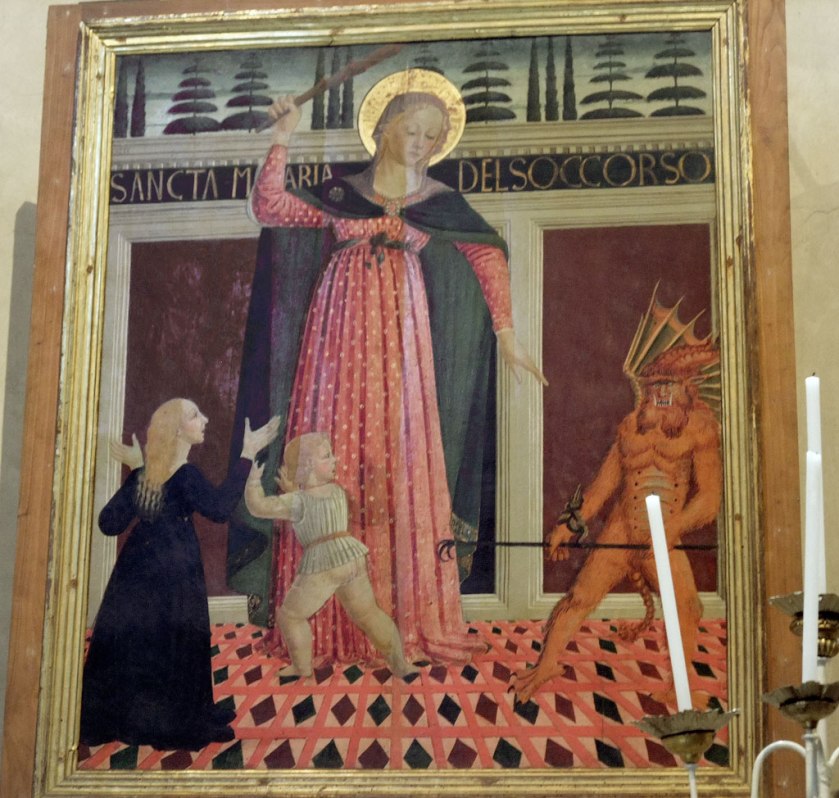
Our Lady’s help encompasses the entire Church. She reaches out to us constantly and her help takes many forms. She is defender and protectress, teacher and guide, the first Christian and our model in faith. She is a comforting mother embracing us in every aspect of our humanity. She is also aware of Satan and his minions and intervenes for us as the New Eve who is neither fooled nor intimidated by his deceptions. The title “Help of Christians” truly embodies her role of co-operation in our redemption, her maternal mediation of grace in our lives and her advocacy for us before God.
Our Lady, Help of Christians, help us, pray for us!
“This motherhood of Mary in the order of grace, continues uninterruptedly from the consent which she loyally gave at the Annunciation and which she sustained without wavering beneath the Cross, until the eternal fulfillment of all the elect. Taken up to heaven she did not lay aside this saving office but by her manifold intercession continues to bring us the gifts of eternal salvation. By her maternal charity, she cares for the brethren of her Son, who still journey on earth surrounded by dangers and difficulties, until they are led into their blessed home. Therefore the Blessed Virgin is invoked in the Church under the titles of Advocate, Helper, Benefactress and Mediatrix. This, however, is so understood, that it neither takes away anything from, nor adds anything to, the dignity and efficacy of Christ the one Mediator.”
You must be logged in to post a comment.