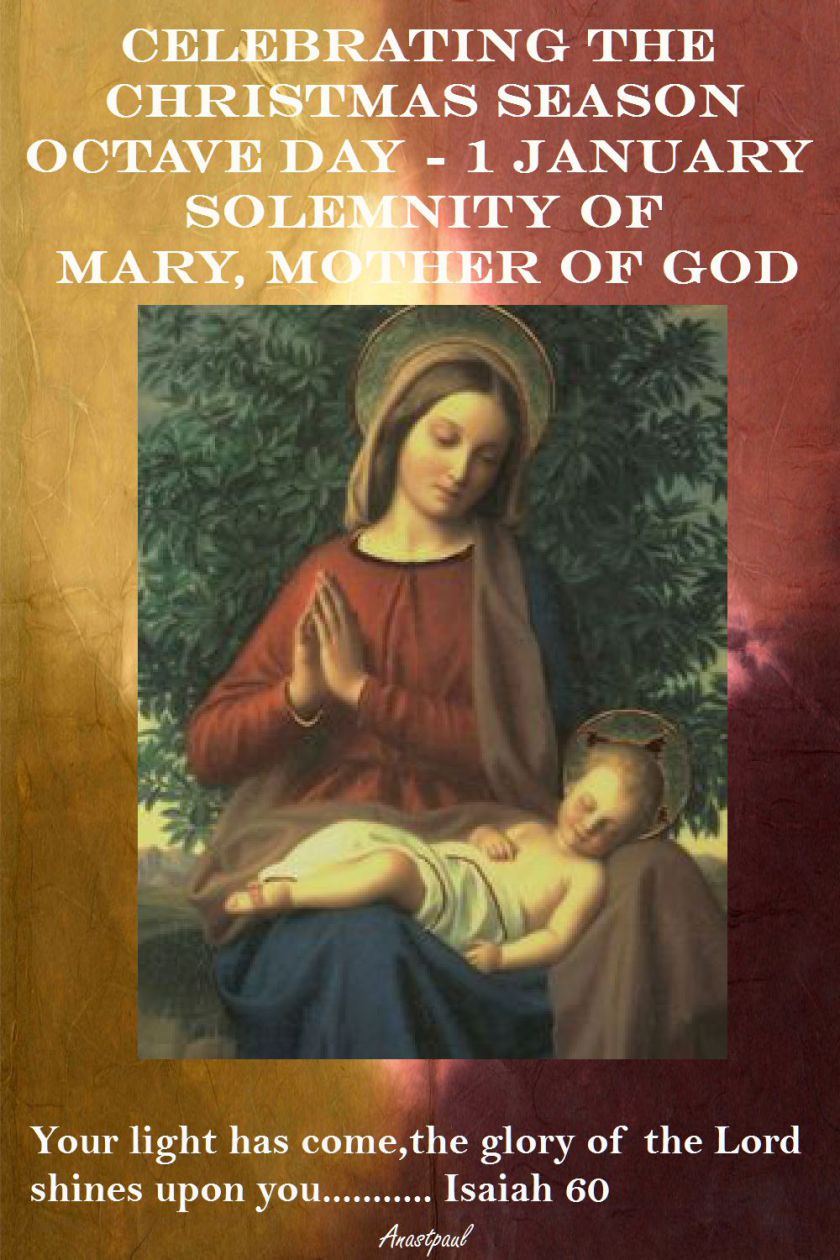
Sunday Reflection – 5 January – The Solemnity of the Epiphany of the Lord
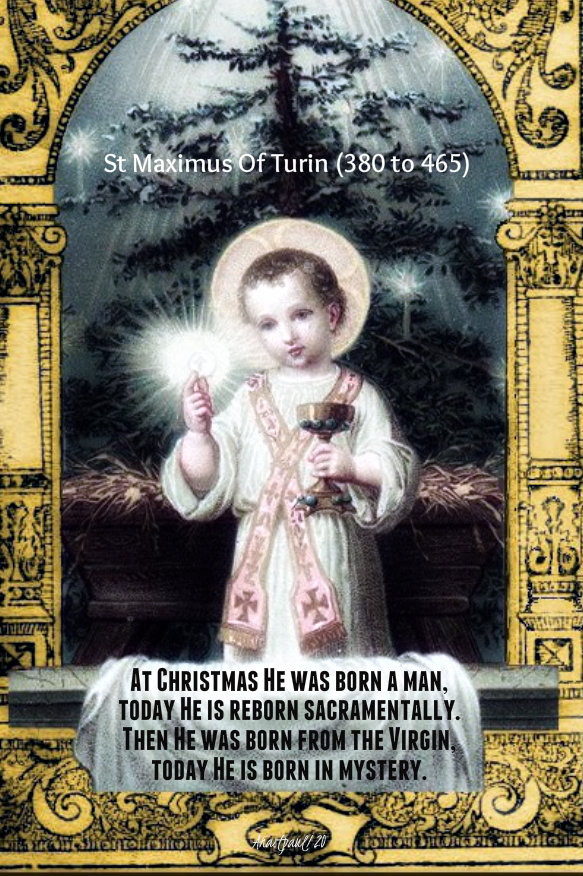
“At Christmas He was born a man, today He is reborn sacramentally.
Then He was born from the Virgin, today He is born in mystery.
When He was born a man, His mother Mary held Him close to her heart, when He is born in mystery, God the Father embraces Him with His voice when He says: This is my beloved Son in whom I am well pleased, listen to Him.
The mother caresses the tender baby on her lap, the Father serves His Son by His loving testimony.
The mother holds the child for the Magi to adore, the Father reveals that His Son is to be worshipped by all the nations.”
St Maximus Of Turin (380 to 465) Bishop of Turin, Theologian
One Minute Reflection – 5 January – The Solemnity of the Epiphany of the Lord, Readings: Isaiah 60:1-6, Psalm 72:1-2, 7-8, 10-13, Ephesians 3:2-3, 5-6, Matthew 2:1-12
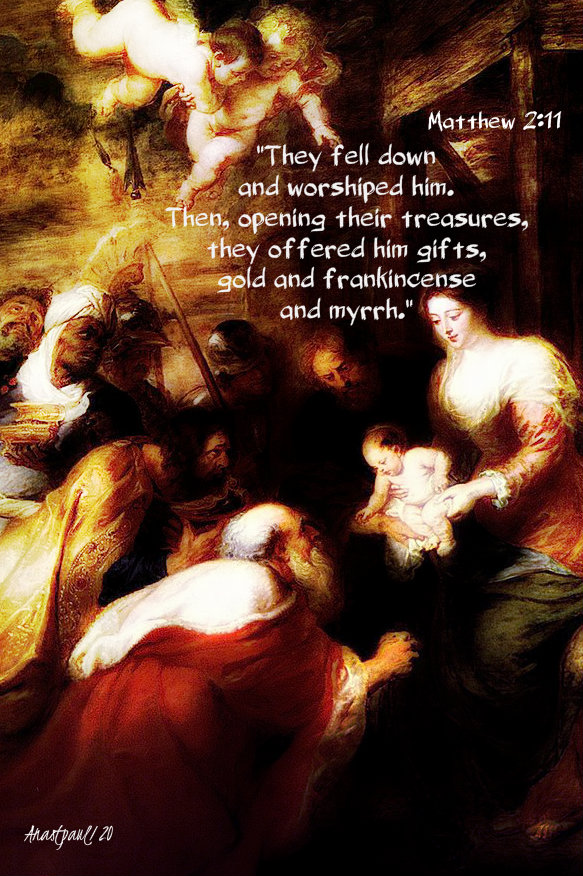
“… They fell down and worshipped him. Then, opening their treasures, they offered him gifts, gold and frankincense and myrrh.” … Matthew 2:11
REFLECTION – “But if with careful thought we wish to see how their threefold kind of gift is also offered by all who come to Christ with the foot of faith, is not the same offering repeated in the hearts of true believers? For he that acknowledges Christ the King of the universe brings gold from the treasure of his heart, he that believes the Only-begotten of God to have united man’s true nature to Himself, offers myrrh and he that confesses Him in no wise inferior to the Father’s majesty, worships Him in a manner with incense.” … St Pope Leo the Great (400-461) Father and Doctor of the Church
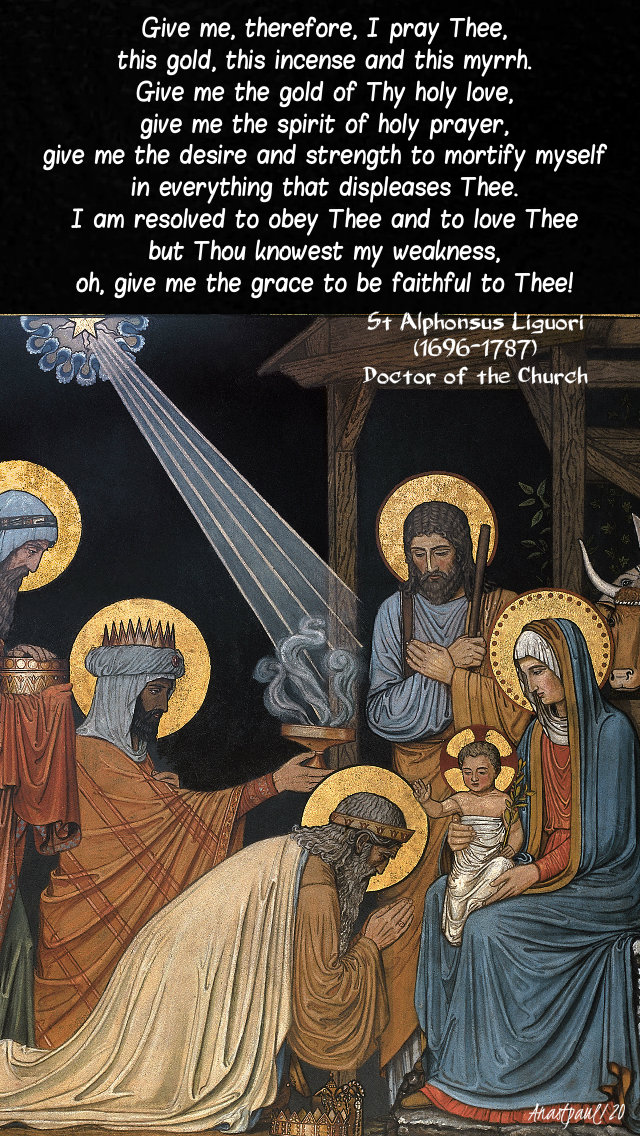
PRAYER – “Give me, therefore, I pray Thee, this gold, this incense and this myrrh. Give me the gold of Thy holy love, give me the spirit of holy prayer, give me the desire and strength to mortify myself in everything that displeases Thee. I am resolved to obey Thee and to love Thee but Thou knowest my weakness, oh, give me the grace to be faithful to Thee!” … St Alphonsus Liguori (1696-1787) Doctor of the Church
Our Morning Offering – 1 January – The Solemnity of Mary, Mother of God and the Octave Day of the Nativity of the Lord
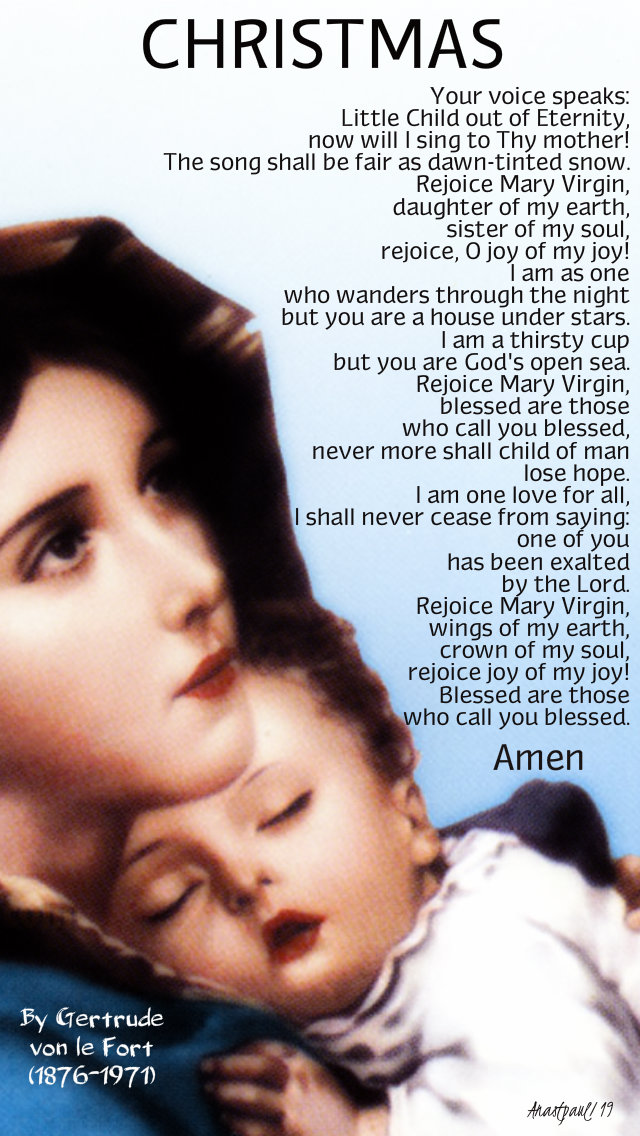
CHRISTMAS By Gertrude von le Fort (1876-1971)
Your voice speaks:
Little child out of Eternity, now will I sing to Thy mother!
The song shall be fair as dawn-tinted snow.
Rejoice Mary Virgin, daughter of my earth, sister of my soul,
rejoice, O joy of my joy!
I am as one who wanders through the night
but you are a house under stars.
I am a thirsty cup but you are God’s open sea.
Rejoice Mary Virgin, blessed are those who call you blessed,
never more shall child of man lose hope.
I am one love for all, I shall never cease from saying:
one of you has been exalted by the Lord.
Rejoice Mary Virgin, wings of my earth, crown of my soul,
rejoice joy of my joy!
Blessed are those who call you blessed.
The Baroness Gertrud von Le Fort (full name Gertrud Auguste Lina Elsbeth Mathilde Petrea Freiin von Le Fort – 11 October 1876 – 1 November 1971 – aged 95) was a German writer of novels, poems and essays. She converted to Catholicism in 1925 and most of her writings came after this conversion. She published over 20 books, comprising poems, novels and short stories. Her work gained her the accolade of being “the greatest contemporary transcendent poet.” Her works are appreciated for their depth and beauty of their ideas and for her sophisticated refinement of style. She was nominated by Hermann Hesse for the Nobel Prize in Literature and was granted an honorary Doctorate of Theology for her contributions to the issue of faith in her works.
53rd Annual World Day of Prayer for Peace: Feast day dedicated to peace. It first observed on 1 January 1968, proclaimed by St Pope Paul VI. It was inspired by the encyclical Pacem in Terris by St Pope John XXIII and with reference to Paul’s encyclical Populorum Progressio. Our Holy Fathers have used this day to make magisterial declarations relevant to the social doctrine of the Church on such topics as the United Nations, human rights, women’s rights, labour unions, economic development, the right to life, international diplomacy, peace in the Holy Land, globalisation, migrants, refugees and terrorism.
Titular Feast of the Society of Jesus – But now celebrated on 3 January, the Feast of the Holy Name of Jesus
Bl Adalbero of Liege
St Baglan of Wales
St Basil of Aix
Bl Bonannus of Roio
St Brogan
St Buonfiglio Monaldi
Bl Catherine de Solaguti
St Clarus of Vallis Regia
St Clarus of Vienne
St Colman mac Rónán
St Colman Muillin of Derrykeighan
St Concordius of Arles
St Connat
St Cuan
St Demet of Plozévet
St Elvan
St Eugendus of Condat
St Euphrosyne of Alexandria
St Fanchea of Rossory
St Felix of Bourges
St Frodobert of Troyes St Fulgentius of Ruspe (c 462 – 533)
St Gisela of Rosstreppe
St Gregory Nazianzen the Elder
Bl Hugolinus of Gualdo Cattaneo
Bl Jean-Baptiste Lego
Bl Jean of Saint-Just-en-Chaussée
St Joseph Mary Tomasi
St Justin of Chieti
Bl Lojze Grozde
St Maelrhys
St Magnus the Martyr
Bl Marian Konopinski
St Mydwyn
St Odilo of Cluny
St Odilo of Stavelot
St Peter of Atroa
St Peter of Temissis
Bl René Lego
St Sciath of Ardskeagh
St Severino Gallo
St Telemachus
St Thaumastus of Mainz
St Theodotus
St Tyfrydog
Bl Valentin Paquay
St Vincent Strambi
St William of Dijon
St Zedislava Berka
St Zygmunt Gorazdowski
—
Breton Missionaries to Britain
Martyred Soldiers of Rome: Thirty soldiers martyred in Rome as a group during the persecutions of Diocletian. We don’t even known their names. They were martyred c 304 at Rome, Italy.
Martyrs of Africa – 8 saints: Eight Christians martyred together in Africa, date unknown. The only details we have are four of their names – Argyrus, Felix, Narcissus and Victor.
Martyred in the Spanish Civil War:
• Blessed Andrés Gómez Sáez
Thought for the Day – 31 December – The Seventh Day in the Octave of Christmas, Readings: 1 John 2:18-21, Psalm 96:1-2, 11-13, John 1:1-18
The Word made Flesh makes us Divine
Saint Hippolytus, Bishop of Pontus (c 170-c 235)
Bishop, Father of the Church and Martyr
An excerpt from his On the Refutation of All Heresies, Chapter 10
“Our faith is not founded upon empty words, nor are we carried away by mere caprice or beguiled by specious arguments. On the contrary, we put our faith in words spoken by the power of God, spoken by the Word Himself at God’s command. God wished to win men back from disobedience, not by using force to reduce him to slavery but by addressing to his free will, a call to liberty.
The Word spoke first of all through the prophets but because the message was couched in such obscure language that it could be only dimly apprehended, in the last days, the Father sent the Word in person, commanding him to show Himself openly, so that the world could see Him and be saved.
We know that by taking a body from the Virgin He re-fashioned our fallen nature. We know that His manhood was of the same clay as our own, if this were not so, He would hardly have been a teacher who could expect to be imitated. If He were of a different substance from me, He would surely not have ordered me to do as He did, when by my very nature I am so weak. Such a demand could not be reconciled with His goodness and justice.
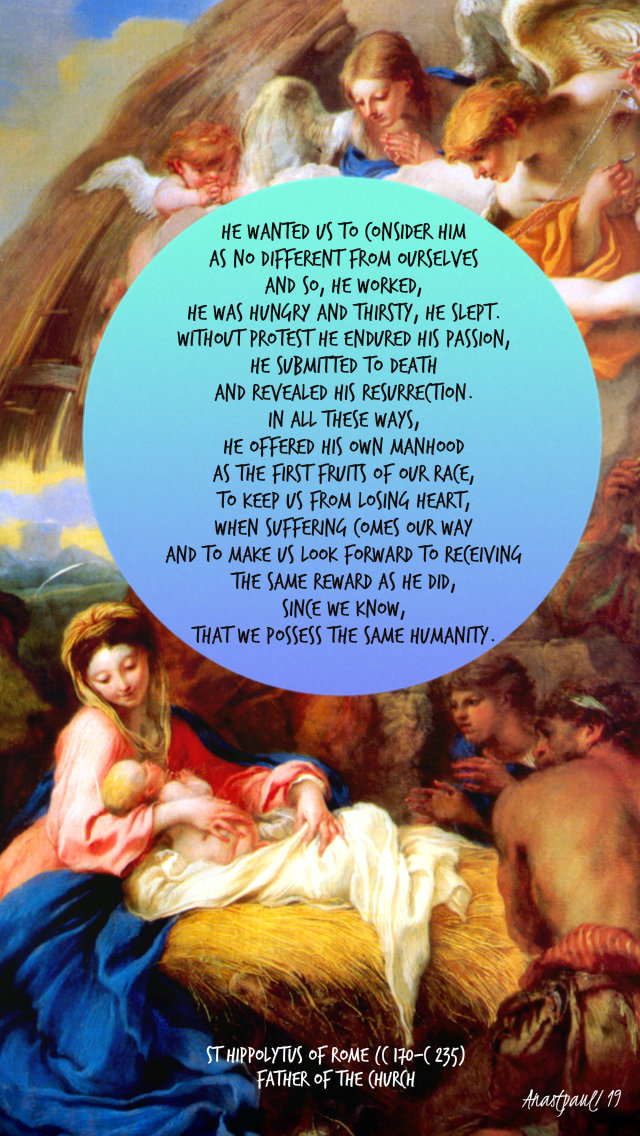
No. He wanted us to consider Him as no different from ourselves and so, He worked, He was hungry and thirsty, He slept. Without protest He endured His passion, He submitted to death and revealed His resurrection. In all these ways, He offered His own manhood as the first fruits of our race, to keep us from losing heart, when suffering comes our way and to make us look forward to receiving the same reward as He did, since we know that we possess the same humanity.
When we have come to know the true God, both our bodies and our souls will be immortal and incorruptible. We shall enter the kingdom of heaven, because while we lived on earth we acknowledged heaven’s King. Friends of God and co-heirs with Christ, we shall be subject to no evil desires or inclinations, or to any affliction of body or soul, for we shall have become divine.
Whatever evil you may have suffered, being man, it is God that sent it to you, precisely because you are man but equally, when you have been deified, God has promised you a share in everyone of His own attributes. The saying “Know yourself” means, therefore, that we should recognise and acknowledge in ourselves, the God who made us in His own image, for if we do this, we in turn will be recognised and acknowledged by our Maker.
So let us not be at enmity with ourselves but change our way of life without delay. For Christ who is God, exalted above all creation, has taken away man’s sin and has re-fashioned our fallen nature. In the beginning God made man in His image and so gave proof of His love for us. If we obey His holy commands and learn to imitate His goodness, we shall be like Him and He will honour us. God is not beggarly and for the sake of His own glory, He has given us a share in His divinity.”
St Hippolytus (c 170–c 235) was one of the most important second-third century Christian theologians, whose provenance, identity and corpus remain elusive to scholars and historians. Many unconfirmed ‘facts’ concerning him abound. I will follow Rome, as in all things – Pope Pius IV identifies him and confirms him as “Saint Hippolytus, Bishop of Pontus” who was martyred in the reign of Severus Alexander through his inscription on a statue found at the Church of Saint Lawrence in Rome and kept at the Vatican. Hippolytus’ voluminous writings, which for variety of subject can be compared with those of Origen, embrace the spheres of exegesis, homiletics, apologetics and polemic, chronography and ecclesiastical law. The Apostolic Tradition, recorded the first liturgical reference to the Virgin Mary, as part of the ordination rite of a bishop. His Feast day is 13 August.
One Minute Reflection – 30 December – The Sixth Day in the Christmas Octave, Readings: 1 John 2:12-17, Psalm 96:7-10, Luke 2:36-40
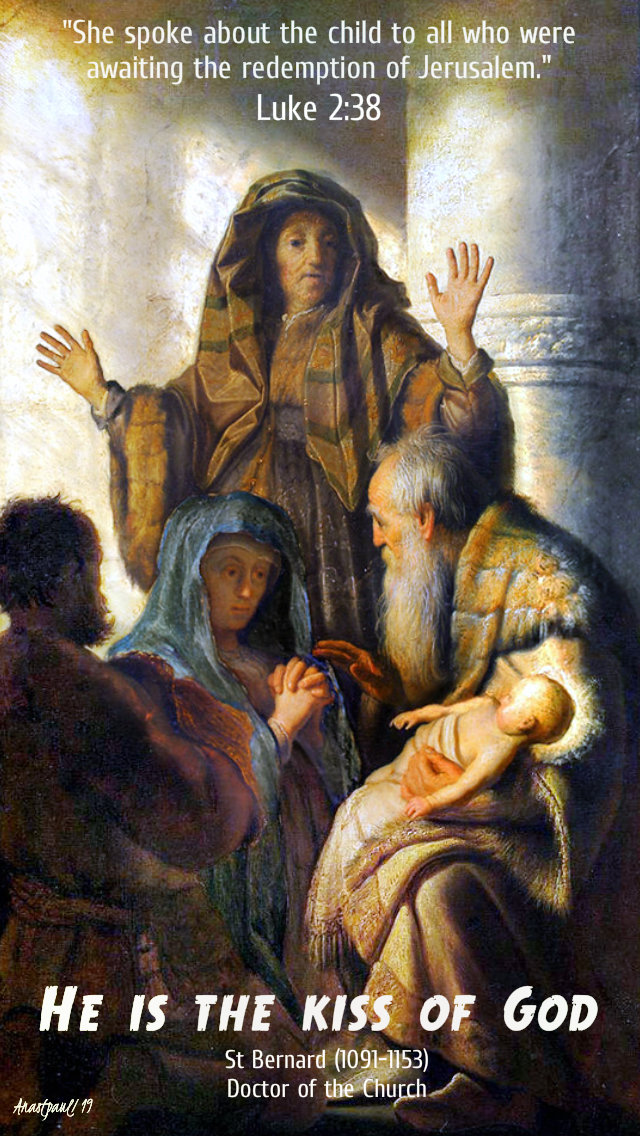
“She spoke about the child to all who were awaiting the redemption of Jerusalem” ... Luke 2:38
REFLECTION– “O Root of Jesse, who stand as a sign to the peoples” (Is 11: 10), “how many kings and prophets wanted to see you and did not” (Lk 10:24)? Simeon is the happiest of them all because by God’s mercy he was still bearing fruit in old age. For he rejoiced to think that he would see the sign so long desired. He saw it and was glad (Lk 8:56). When he had received the kiss of peace, he departed in peace but first, he proclaimed aloud that Jesus was born, a sign that would be rejected (Lk 2:25-34). And so it was. The sign of peace arose and was rejected, by those who hate peace (Ps 119:7). For what is peace to men of goodwill (Lk 2:14) is a stone to make men stumble, a rock for the wicked to fall over (l Pt 2:8). “Herod was troubled and all Jerusalem with him” (Mt 2:3). He came to His own and His own did not receive Him (Jn 1:11). Happy those shepherds keeping watch at night who were found worthy to be shown the sign of this vision! (Lk 23:8)
For even at that time He was hiding Himself from the wise and prudent and revealing Himself to the simple (Mt 11:25; Lk 10:21). ( … ) The angel said to the shepherds, “This is a sign for you” (Lk 2: 12), you who are humble, you who are obedient, you who are not haughty (Rom 12: 16), you who are keeping vigil and meditating on God’s law day and night (Ps 1:2). “This is a sign for you,” he said. What is this sign? The sign the angels promised, the sign the people asked for, the sign the prophets foretold, the Lord Jesus has now made and He shows it to you. ( … )
This is your sign. What is it a sign of? Indulgence, grace, peace, “the peace which will have no end” (Is 9:7). It is this sign: “You will find a baby wrapped in swaddling clothes and lying in a manger” (Lk 2: 12). But this baby is God Himself, reconciling the world to Himself in Him (2 Cor 5: 19). ( … ) He is the Kiss of God, the Mediator between God and men, the man Christ Jesus (1Tm 2:5), who with the Father and the Holy Spirit lives and reigns world without end.” … St Bernard (1091-1153) Cistercian monk and Doctor of the Church
PRAYER – Almighty God and Father, the human birth of Your Only-begotten Son, was the beginning of new life. May He set us free from the tyranny of sin. We make our prayer through Christ, our Lord with the Holy Spirit, God forever and ever, amen.
One Minute Reflection – 27 December – Feast of St John the Evangelist the Memorial of Blessed Sára Salkaházi (1899–1944) Martyr and the Third Day of the Christmas Octave, Readings: 1 John 1:1-4, Psalm 97:1-2, 5-6, 11-12, John 20:2-8
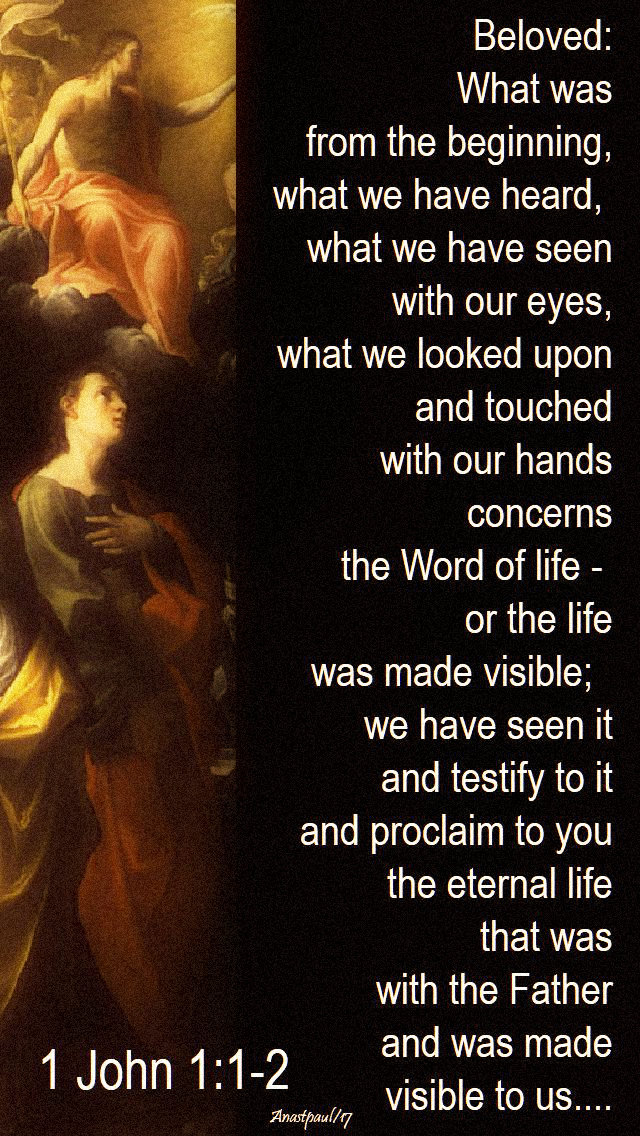
Beloved: What was from the beginning, what we have heard, what we have seen with our eyes, what we looked upon and touched with our hands concerns the Word of life (for the life was made visible; we have seen it and testify to it and proclaim to you the eternal life that was with the Father and was made visible to us.… 1 John 1:1-2
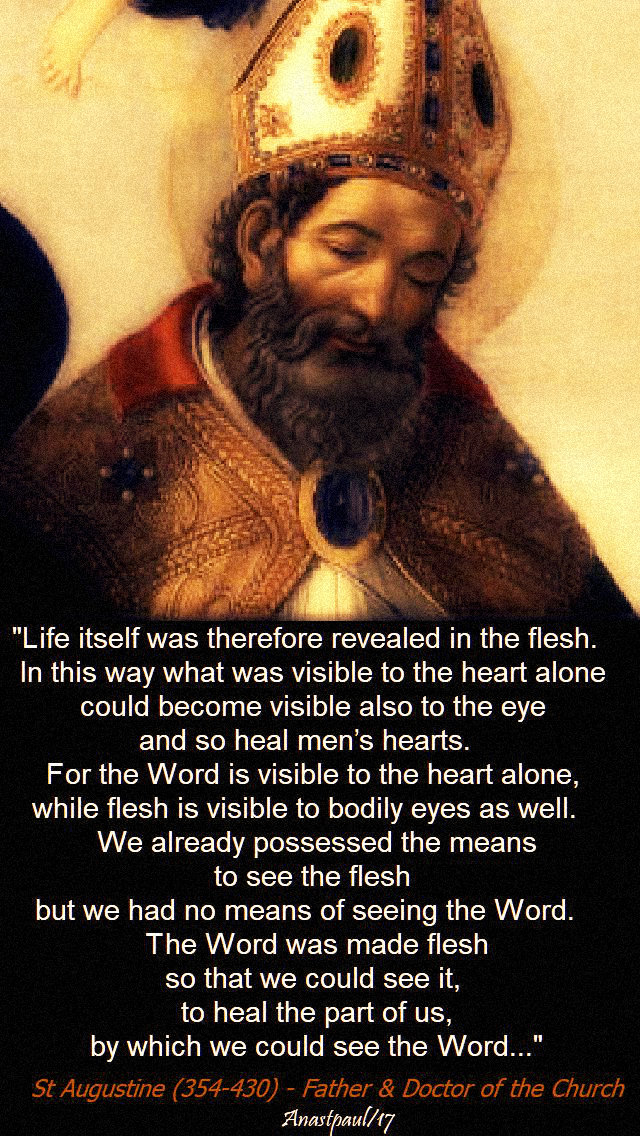
REFLECTION – ““Life itself was therefore revealed in the flesh.
In this way what was visible to the heart alone, could become visible also to the eye and so heal men’s hearts. For the Word is visible to the heart alone, while flesh is visible to bodily eyes as well. We already possessed the means to see the flesh but we had no means of seeing the Word. The Word was made flesh so that we could see it, to heal the part of us, by which we could see the Word…” … St Augustine (354-430) – Father & Doctor of the Church
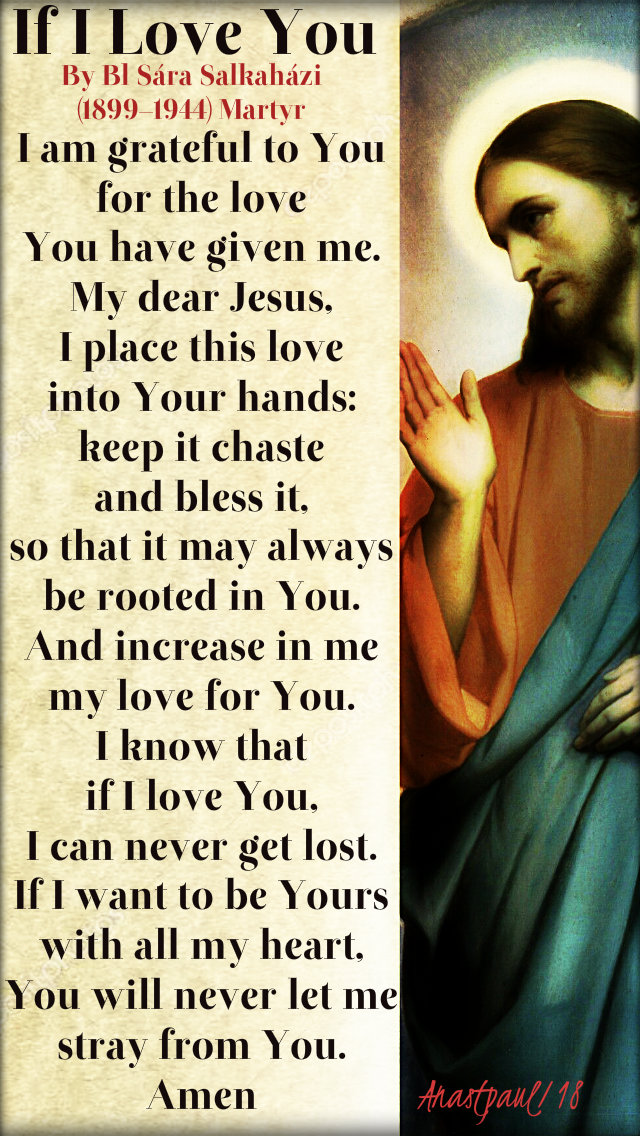
PRAYER – “I am grateful to You for the love You have given me. My dear Jesus, I place this love into Your hands: keep it chaste and bless it, so that it may always be rooted in You. And increase in me my love for You. I know that if I love You, I can never get lost. If I want to be Yours with all my heart, You will never let me stray from You. Amen. May St John the Evangelist, beloved of the Lord and Blessed Sára Salkaházi, intercede for us that we may love You Lord with all our hearts, minds and souls!
Quote/s of the Day – 25 December – The Solemnity of the Nativity of Our Lord, Jesus Christ
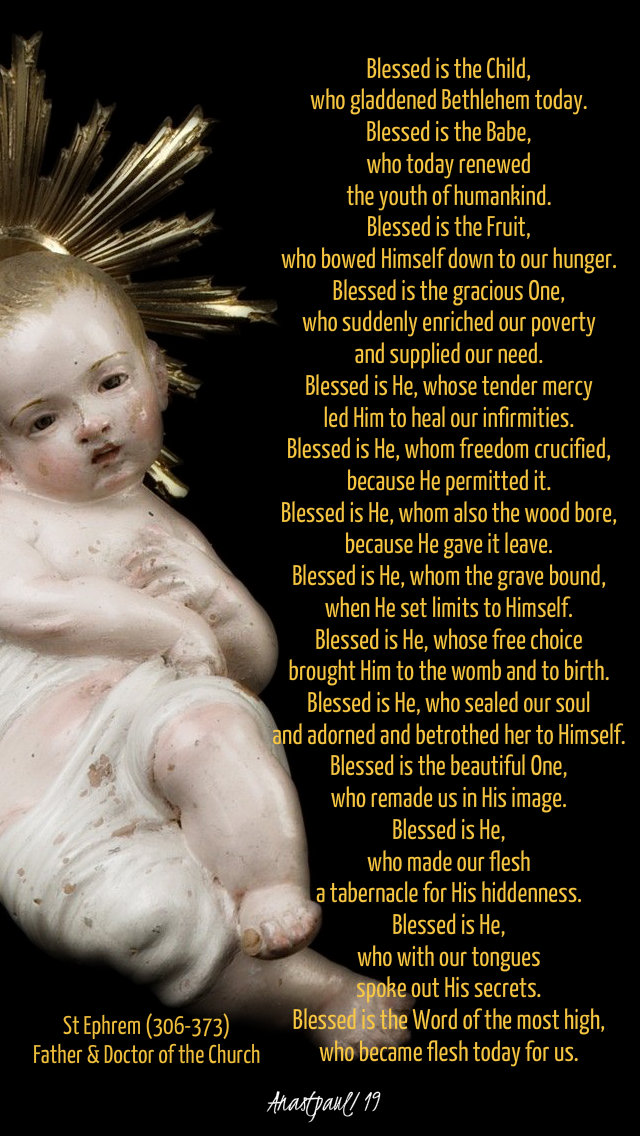
Blessed is the Child, who gladdened Bethlehem today. Blessed is the Babe, who today renewed the youth of humankind. Blessed is the Fruit, who bowed Himself down to our hunger. Blessed is the gracious One, who suddenly enriched our poverty and supplied our need. Blessed is He, whose tender mercy led Him to heal our infirmities. Blessed is He, whom freedom crucified, because He permitted it. Blessed is He, whom also the wood bore, because He gave it leave. Blessed is He, whom the grave bound, when He set limits to Himself. Blessed is He, whose free choice brought Him to the womb and to birth. Blessed is He, who sealed our soul and adorned and betrothed her to Himself. Blessed is the beautiful One, who remade us in His image. Blessed is He, who made our flesh a tabernacle for His hiddenness. Blessed is He, who with our tongue spoke out His secrets. Blessed is the Word of the most high, who became flesh today for us.
“The Firstborn entered the womb … Glorious and unseen in entering, humble and visible in birth. He was God in entering and He was man in birth. A marvel and mystery to hear – fire entered the womb, put on a body and came forth!”
St Ephrem (306-373)
Father and Doctor of the Church
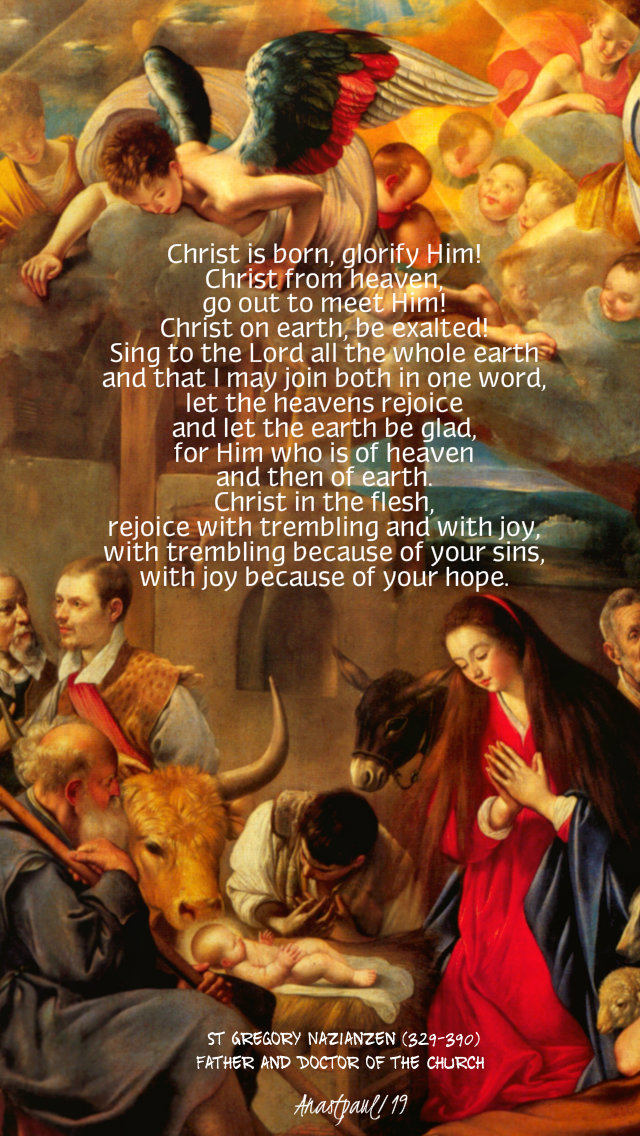
“Christ is born, glorify Him! Christ from heaven, go out to meet Him! Christ on earth, be exalted! Sing to the Lord all the whole earth and that I may join both in one word, let the heavens rejoice and let the earth be glad, for Him who is of heaven and then of earth. Christ in the flesh, rejoice with trembling and with joy, with trembling because of your sins, with joy because of your hope.”
St Gregory Nazianzen (329-390)
Father and Doctor of the Church
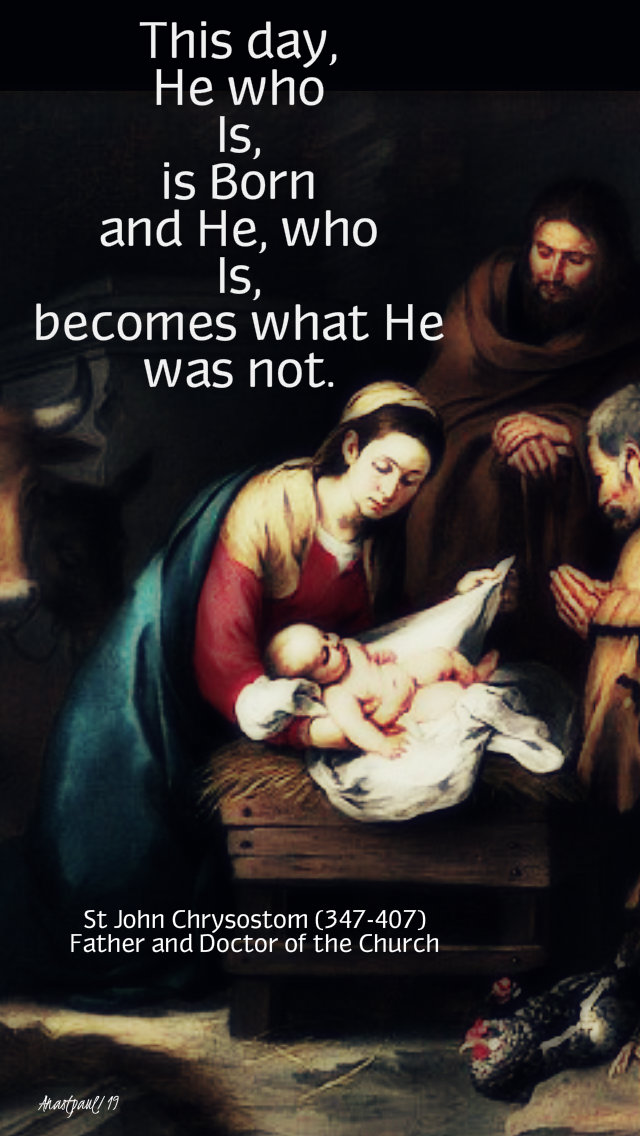
“This day, He who Is, is Born and He, who Is, becomes what He was not.”
St John Chrysostom (347-407)
Father and Doctor of the Church
“Let the just rejoice, for their Justifier is born. Let the sick and infirm rejoice, for their Saviour is born. Let the captives rejoice, for their Redeemer is born. Let slaves rejoice, for their Master is born. Let free men rejoice, for their Liberator is born. Let All Christians rejoice, for Jesus Christ is born!”
St Augustine (354-430)
Father & Doctor of the Church
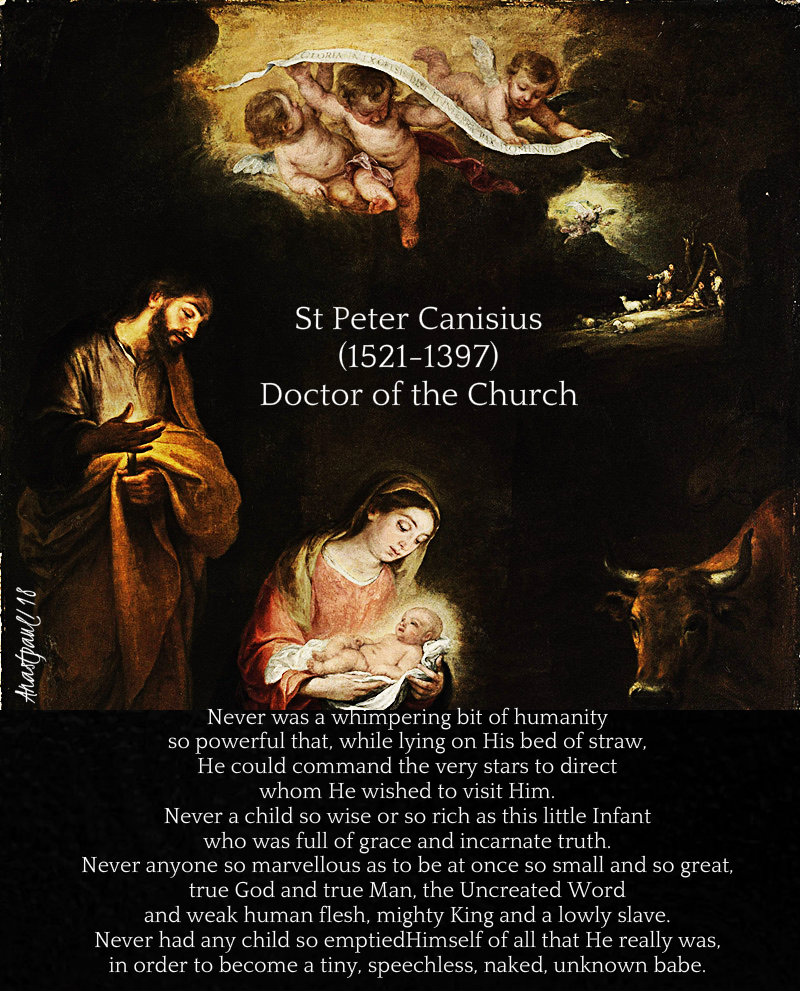
“Never was a whimpering bit of humanity so powerful that, while lying on His bed of straw, He could command the very stars to direct whom He wished to visit Him. Never a child so wise or so rich as this little Infant who was full of grace and incarnate truth. Never anyone so marvellous as to be at once so small and so great, true God and true Man, the Uncreated Word and weak human flesh, mighty King and a lowly slave. Never had any child so emptied Himself of all that He really was, in order to become a tiny, speechless, naked, unknown babe.”
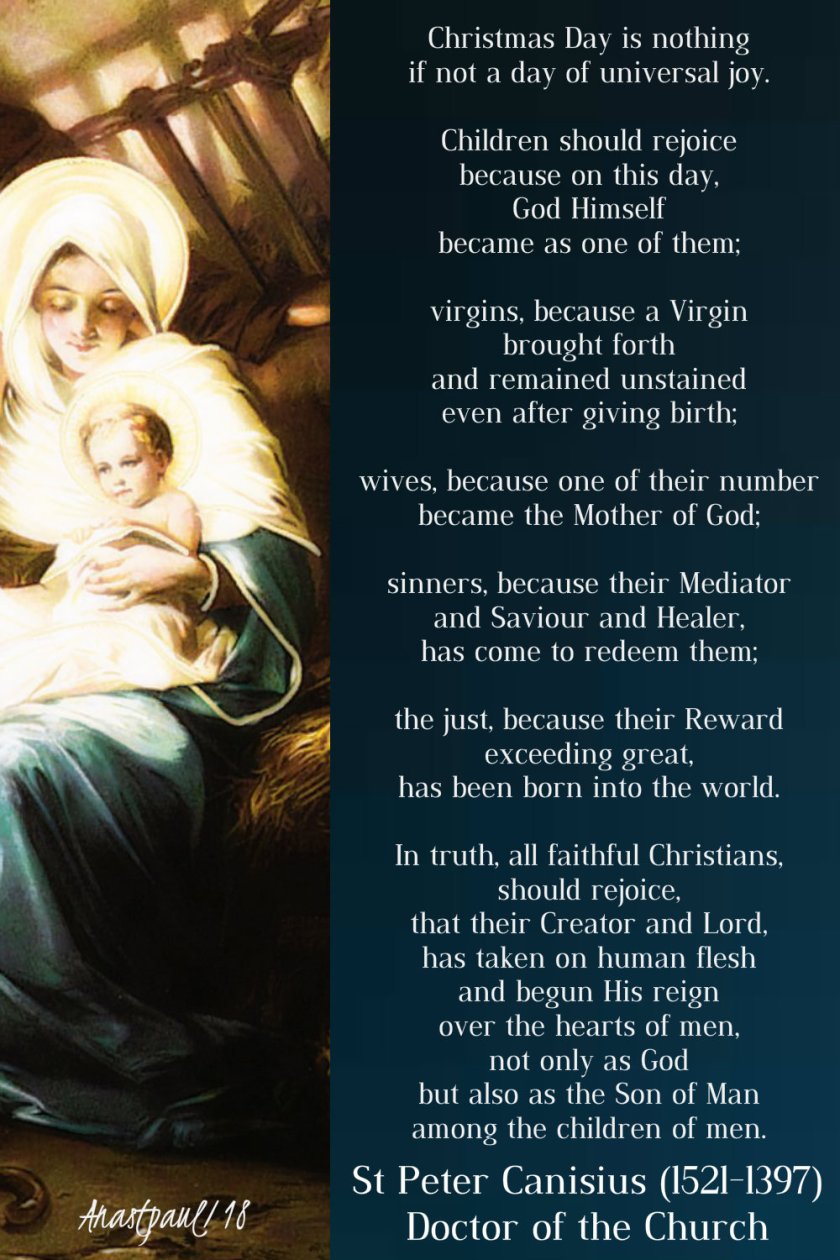
“Christmas Day is nothing if not a day of universal joy. Children should rejoice because on this day, God Himself became as one of them; virgins, because a Virgin brought forth and remained unstained, even after giving birth; wives, because one of their number, became the Mother of God; sinners, because their Mediator and Saviour and Healer, has come to redeem them; the just, because their Reward, exceeding great, has been born into the world. In truth, all faithful Christians, should rejoice, that their Creator and Lord, has taken on human flesh and begun His reign over the hearts of men, not only as God but also as the Son of Man among the children of men.”
St Peter Canisius (1521-1397)
Doctor of the Church
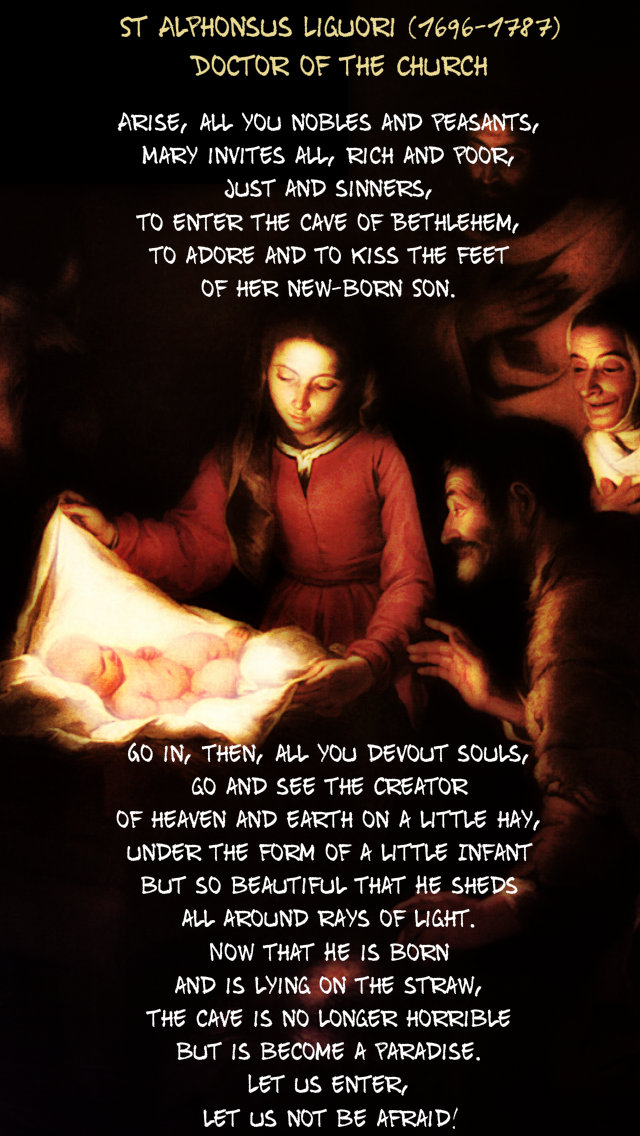
“Arise, all you nobles and peasants, Mary invites all, rich and poor, just and sinners, to enter the cave of Bethlehem, to adore and to kiss the feet of her new-born Son. Go in, then, all you devout souls, go and see the Creator of heaven and earth on a little hay, under the form of a little Infant but so beautiful that He sheds all around rays of light. Now that He is born and is lying on the straw, the cave is no longer horrible but is become a paradise. Let us enter, let us not be afraid!”
St Alphonsus Liguori (1696-1787)
Doctor of the Church
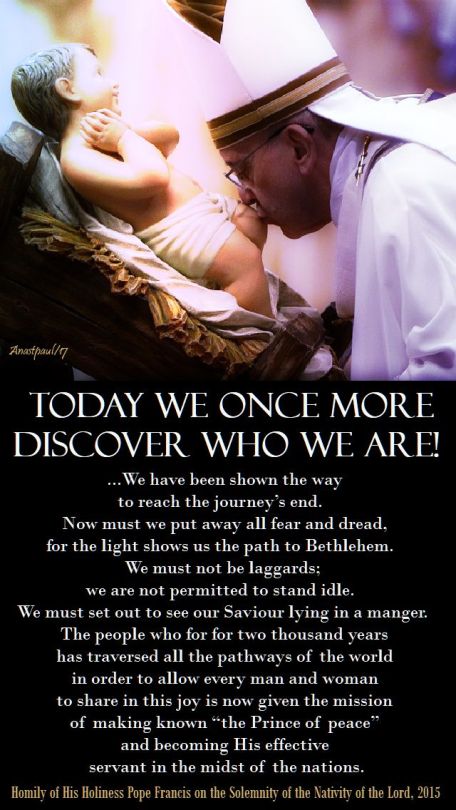
“Today, the Son of God is born and everything changes. The Saviour of the world comes to partake of our human nature; no longer are we alone and forsaken. The Virgin offers us her Son as the beginning of a new life. The true light has come to illumine our lives so often beset by the darkness of sin. Today we once more discover who we are! Tonight we have been shown the way to reach the journey’s end. Now must we put away all fear and dread, for the light shows us the path to Bethlehem. We must not be laggards; we are not permitted to stand idle. We must set out to see our Saviour lying in a manger. This is the reason for our joy and gladness: this Child has been “born to us”; he was “given to us”, as Isaiah proclaims (cf. 9:5). The people who for for two thousand years has traversed all the pathways of the world, in order to allow every man and woman to share in this joy, is now given the mission of making known “the Prince of peace” and becoming His effective servant in the midst of the nations.”
Pope Francis
Homily on the Solemnity
of the Nativity of the Lord, 2015
One Minute Reflection – 25 December – The Solemnity of the Nativity of Our Lord, Jesus Christ – Mass during the day – Readings: Isaiah 52:7-10, Psalm 98:1-6, Hebrews 1:1-6, John 1:1-18
And the Word became flesh and dwelt among us, full of grace and truth; we have beheld his glory, glory as of the only Son from the Father. … John 1:14
REFLECTION – “Christ has come from the Father, He has come from the Word, He has come from the Holy Spirit, since the whole Trinity accomplished His conception and His incarnation. For to come from the highest Trinity was no other than to be conceived and to become a human being by the same Trinity. Therefore, it was said: “His going forth is form the highest heaven.” (cf. Ps 18[19]:6)
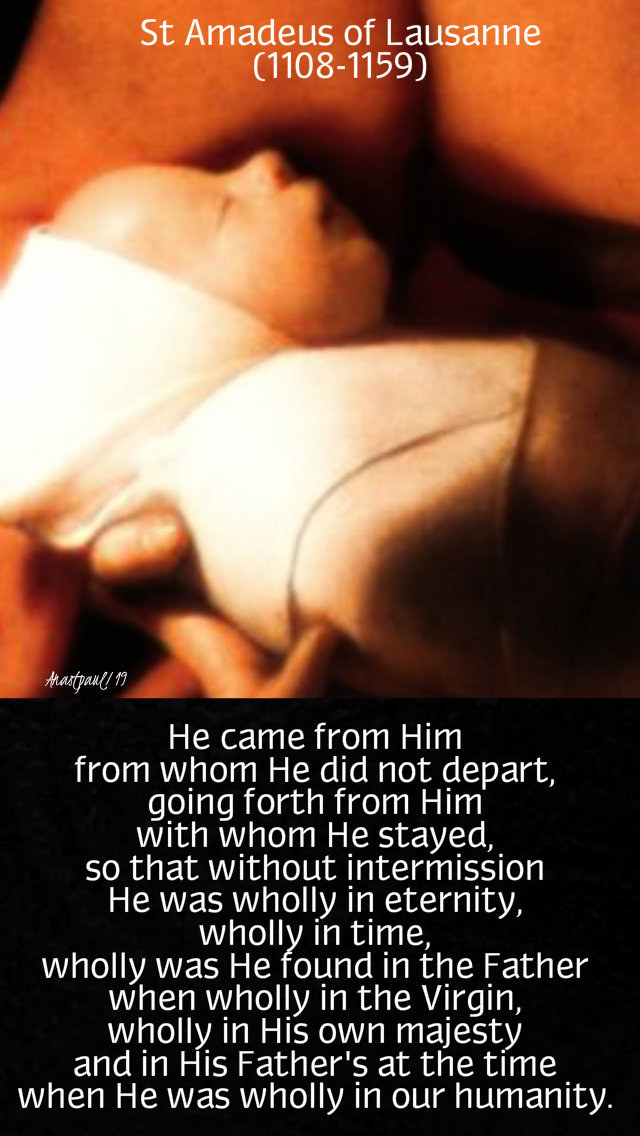
The Only-Begotten (…) begotten of the Father eternally, begotten in time He came forth from His mother, remaining invisibly with the Father and dwelling visibly with us. For to go forth from the Father was this – to enter upon our world, to be seen openly and to become what, from the nature of the Father, He was not. This indeed is wonderful, He came from Him from whom He did not depart, going forth from Him with whom He stayed, so that without intermission He was wholly in eternity, wholly in time, wholly was He found in the Father when wholly in the Virgin, wholly in His own majesty and in His Father’s at the time when He was wholly in our humanity.
If you ask how, gather the truth by means of an illustration. A word conceived in the heart goes forth complete in the voice, so that it comes perfectly to others yet remains wholly in the heart. So the good Word spoken forth from the heart of the Father went forth into the broad plain, yet did not leave the Father.” … St Amadeus of Lausanne (1108-1159) Cistercian Monk and Bishop – On the praises of the Blessed Mary, homily III
PRAYER – Almighty God, Your incarnate Word fills us with the new light He brought to men. Let the light of faith in our hearts, shine through all that we do and say. We make our prayer through Jesus Christ, our Lord, with the Holy Spirit, God forever, amen.
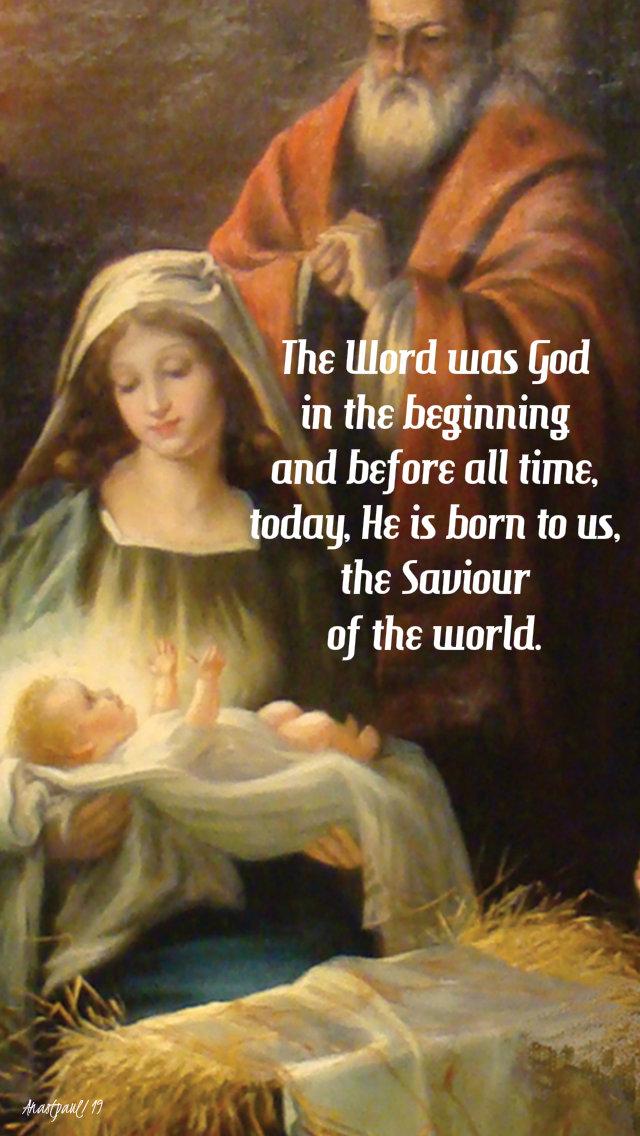
The Word was God in the beginning and before all time, today, He is born to us, the Saviour of the world.
Our Morning Offering – 25 December – The Solemnity of the Nativity of Our Lord, Jesus Christ
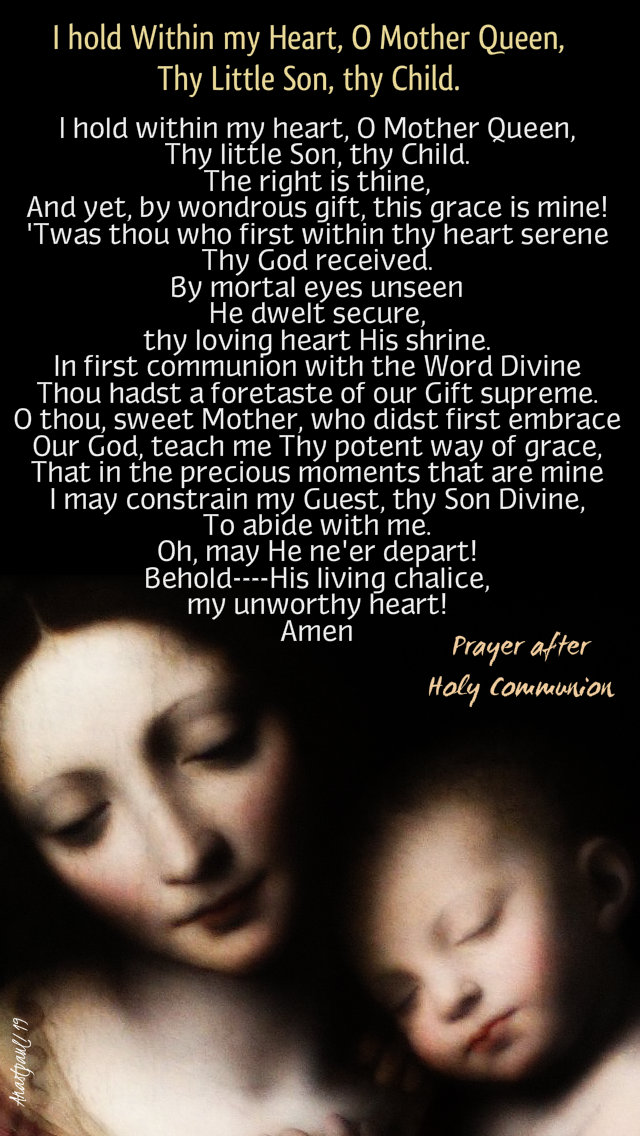
I hold Within my Heart, O Mother Queen, Thy Little Son, thy Child.
Prayer after Holy Communion
I hold within my heart, O Mother Queen,
Thy little Son, thy Child.
The right is thine,
And yet, by wondrous gift, this grace is mine!
‘Twas thou who first within thy heart serene
Thy God received.
By mortal eyes unseen
He dwelt secure,
thy loving heart His shrine.
In first communion with the Word Divine
Thou hadst a foretaste of our Gift supreme.
O thou, sweet Mother, who didst first embrace
Our God, teach me Thy potent way of grace,
That in the precious moments that are mine
I may constrain my Guest, thy Son Divine,
To abide with me.
Oh, may He ne’er depart!
Behold—-His living chalice,
my unworthy heart!
Amen
Thought for the Day – 22 December – The Fourth Sunday of Advent, Year A, Readings: Isaiah7:10-14, Psalm 24:1-6, Romans 1:1-7, Matthew 1:18-24
When Joseph awoke, he did as the angel of the Lord had commanded him and took his wife into his home. … Matthew 1:24
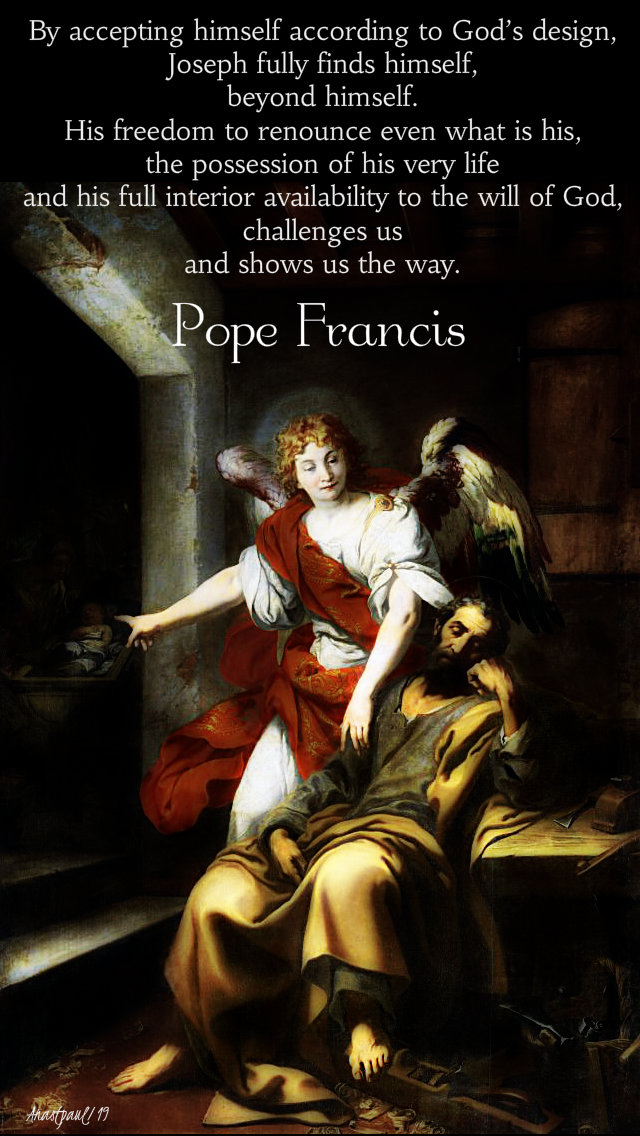
By accepting himself according to God’s design,
Joseph fully finds himself, beyond himself.
His freedom to renounce even what is his,
the possession of his very life
and his full interior availability to the will of God,
challenges us
and shows us the way.
The Lord comes! Go to meet Him and say – Great is His reign and His kingdom will have no end. He is God, the Strong One, the Ruler of the world, the Prince of peace, alleluia!
Advent Reflection – 22 December – The Fourth Sunday of Advent, Year A, Readings: Isaiah7:10-14, Psalm 24:1-6, Romans 1:1-7, Matthew 1:18-24
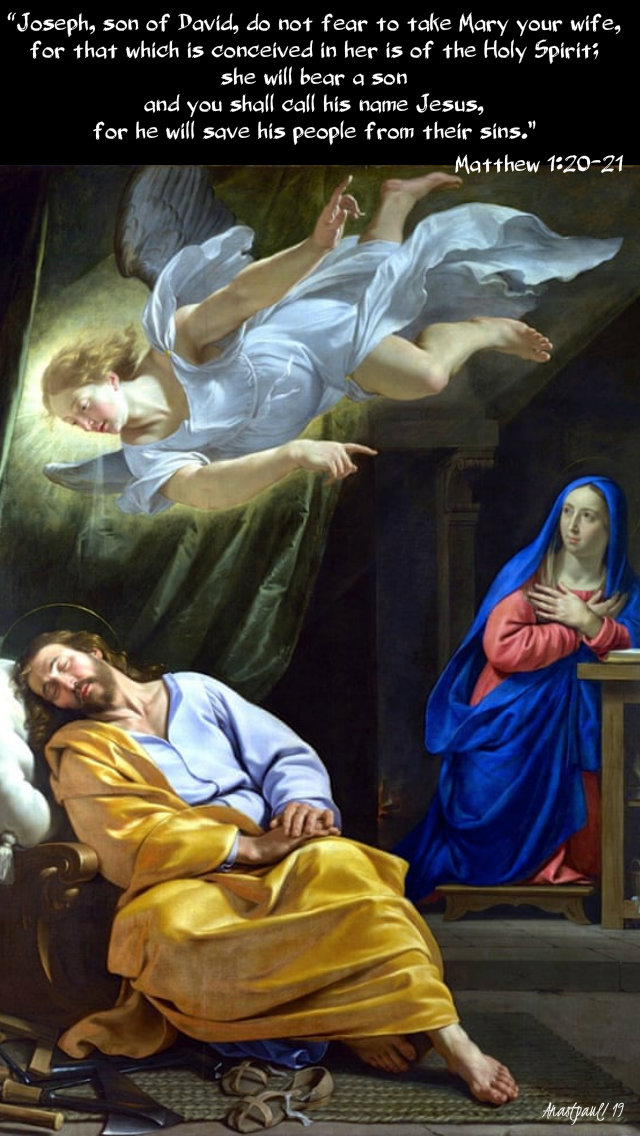
“Joseph, son of David, do not fear to take Mary your wife, for that which is conceived in her is of the Holy Spirit; she will bear a son and you shall call his name Jesus, for he will save his people from their sins.” ... Matthew 1:20-21
REFLECTION – “Behold,” says the prophet Isaiah, “a virgin will conceive and bear a son and he will be called Emmanuel, a name which means God-with-us.” (7:14) The name ‘God-with-us,’ given to our Saviour by the prophet, signifies that two natures are united in His one person. Before time began he was God, born of the Father but in the fullness of time He became Emmanuel, God-with-us, in the womb of His mother, because when “the Word was made flesh and lived among us.” (Jn 1:14) He deigned to unite our frail human nature to His own person. Without ceasing to be what He had always been, He began in a wonderful fashion to be what we are, assuming our nature in such a way that He did not lose his own…
And so, Scripture says: “Mary gave birth to her firstborn son… and she named him Jesus.” (Lk 2:7.21). Jesus, then, is the name of the Virgin’s son. According to the angel’s explanation, it means one who is to save His people from their sins. In doing so, He will also deliver them from any defilement of mind and body they have incurred on account of their sins.
But the title “Christ” implies a priestly or royal dignity. In the Old Testament it was given to both priests and kings on account of the anointing with chrism or holy oil which they received. They prefigured the true king and high priest who, on coming into this world, “was anointed with the oil of gladness above all his peers” (Ps 44[45]: 8). From this anointing or chrismation, He received the name of Christ and those who share in the anointing which He Himself bestows, that is, the grace of the Spirit, are called Christians. May Jesus Christ fulfil His saving task, by saving us from our sins, may He discharge His priestly office by reconciling us to God the Father and may He exercise His royal power by admitting us to His Father’s kingdom…” … St Bede the Venerable (673-735) Father and Doctor of the Church
MEDITATION – “He came from heaven to suffer and die for us, so that we might love Him. How can we remain ungrateful?” … St Alphonsus Liguori (1696-1787) Doctor of the Church
ADVENT ACTION – “O my Jesus, I love You and will always love You. Inflame my heart everyday with the memory of Your love for me. Mary, my mother, help me to live a life grateful to God, who has loved me, even after I have so greatly offended Him.” … St Alphonsus Liguori (1696-1787) Doctor of the Church
PRAYER
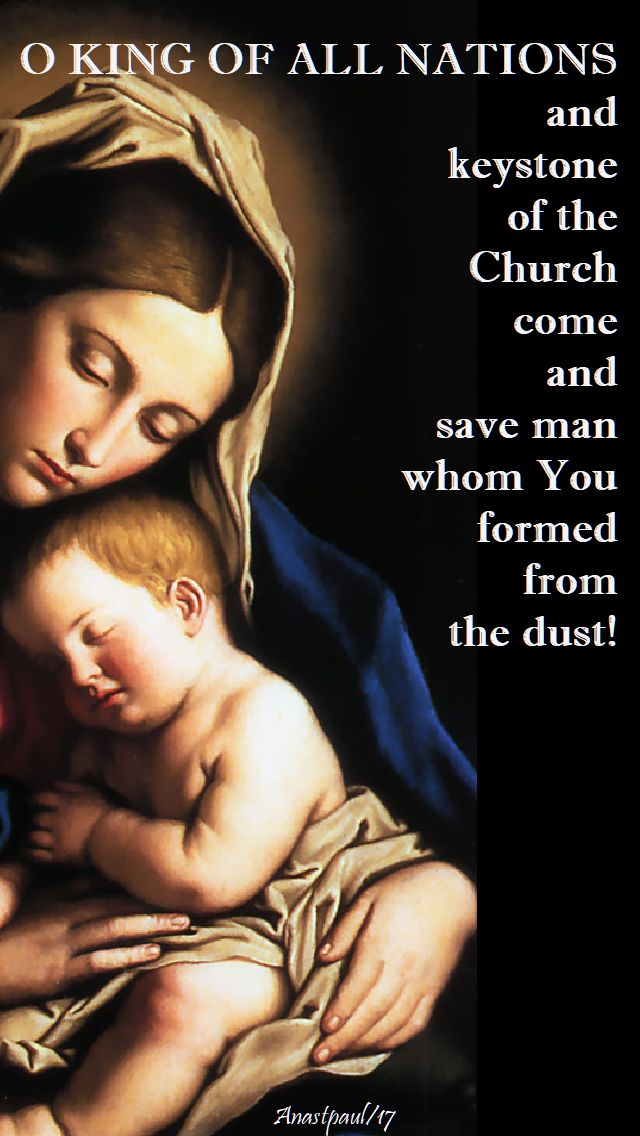
O KING OF ALL NATIONS
and keystone of the Church
come and save man,
whom You formed from the dust!
Thought for the Day – Saturday of Advent 21 December
Mary visits Elizabeth
Saint Ambrose of Milan (340-397)
Great Latin Father and Doctor of the Church
An excerpt from A Commentary on Luke, Book 2
When the angel revealed his message to the Virgin Mary, he gave her a sign to win her trust. He told her of the motherhood of an old and barren woman, to show that God is able to do all that He wills.
When she hears this, Mary sets out for the hill country. She does not disbelieve God’s word, she feels no uncertainty over the message or doubt about the sign. She goes eager in purpose, dutiful in conscience, hastening for joy.
Filled with God, where would she hasten but to the heights? The Holy Spirit does not proceed by slow, laborious efforts. Quickly, too, the blessings of her coming and the Lord’s presence are made clear, as soon as Elizabeth heard Mary’s greeting the child leapt in her womb and she was filled with the Holy Spirit.
Notice the contrast and the choice of words. Elizabeth is the first to hear Mary’s voice but John, is the first to be aware of grace. She hears with the ears of the body but he leaps for joy at the meaning of the mystery. She is aware of Mary’s presence but he is aware of the Lord’s – a woman aware of a woman’s presence, the forerunner aware of the pledge of our salvation. The women speak of the grace they have received, while the children are active in secret, unfolding the mystery of love with the help of their mothers, who prophesy by the spirit of their sons.
The child leaps in the womb, the mother is filled with the Holy Spirit, he fills his mother with the same Spirit. John leaps for you and the spirit of Mary rejoices in her turn. When John leaps for joy, Elizabeth is filled with the Holy Spirit but we know, that though Mary’s spirit rejoices, she does not need to be filled with the Holy Spirit. Her Son, who is beyond our understanding, is active in His mother, in a way beyond our understanding. Elizabeth is filled with the Holy Spirit after conceiving John, while Mary is filled with the Holy Spirit before conceiving the Lord. Elizabeth says: Blessed are you because you have believed.
You also are blessed, because you have heard and believed. A soul that believes, both conceives and brings forth the Word of God and acknowledges His works.
Let Mary’s soul be in each of you, to proclaim the greatness of the Lord. Let her spirit be in each, to rejoice in the Lord. Christ has only one mother, in the flesh but we all bring forth Christ, in faith. Every soul receives the Word of God, if only it keeps chaste, remaining pure and free from sin, it’s modesty undefiled. The soul that succeeds in this, proclaims the greatness of the Lord, just as Mary’s soul magnified the Lord and her spirit rejoiced in God her Saviour. In another place we read – Magnify the Lord with me. The Lord is magnified, not because the human voice can add anything to God but, because He is magnified within us. Christ is the image of God and, if the soul does what is right and holy, it magnifies that image of God, in whose likeness it was created and, in magnifying the image of God, the soul has a share in its greatness and is exalted.
Advent Reflection – The Weekdays of Advent – 20 December, Readings: Isaiah 7:10-14, Psalm 24:1-6, Luke 1:26-38
The Lord is at hand, come, let us adore Him.
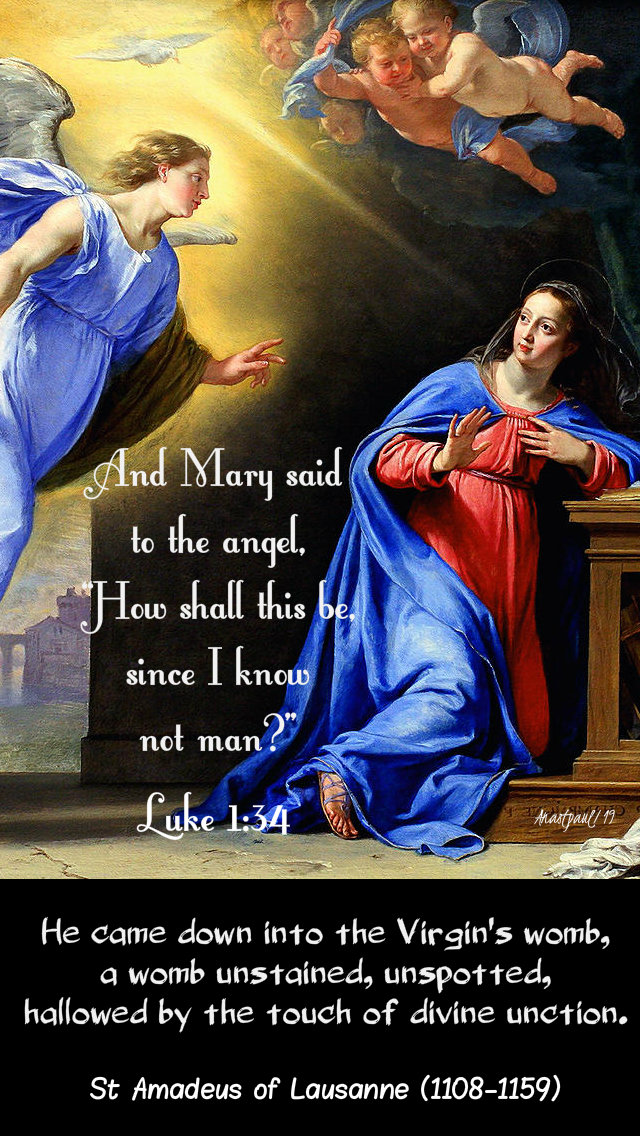
And Mary said to the angel, “How shall this be, since I have no husband?” … Luke 1:34
REFLECTION – “Tell us, blessed David, how [the Word] descended. “He came down as rain upon the fleece, and as drops that water the earth.” (Ps 71[72]:6 LXX). (…) It remains to discuss how the rain descends upon the fleece and how the drops flow out over the earth. (…)
The rain descends upon the fleece without sound, without movement, without any cleavage or division. It is gently poured out, peacefully received, sweetly drunk. Thus the drops gradually, little by little, spread over the earth falling down so wonderfully and so gently that their coming is scarcely perceived and as they depart, they bring forth the shoots. In the same way, the rain coming from beyond, above the heavenly waters, came down into the Virgin’s womb without human act, with no movement of concupiscence, her integrity unimpaired, the seal of her virginity still locked. Gently was it poured, calmly received, ineffably made flesh. It came drop by drop upon her soil, unseen as it entered and, as it departed, plainly going forth. (…)
We have told how the Word of God came down. Where He came down is made clear in like manner, for He came down into the Virgin’s womb, a womb unstained, unspotted, hallowed by the touch of divine unction.” … St Amadeus of Lausanne (1108-1159) Bishop, Cistercian Monk – On the praises of the Blessed Mary, homily III, SC 72
MEDITATION – ” Who shall ascend the hill of the Lord? And who shall stand in his holy place? He who has clean hands and a pure heart, who does not lift up his soul to what is false and does not swear deceitfully.” … Psalm 24:3-4
ADVENT ACTION – “O my Jesus, I am weak, grant me strength against temptation. I am infirm, I hope that Your precious blood will be my medicine. I am a sinner but I hope that Your grace will make me a saint. I acknowledge that I have co-operated with my own ruin but this day, I promise always, to call upon You and in this way co-operate with Your grace.” … St Alphonsus Liguori (1696-1787) Most Zealous Doctor
PRAYER
O KEY OF DAVID,
and Sceptre of the House of Israel, who opens and no-one shuts, who shuts and no-one opens. Come and bring forth the captive from his prison, he who sits in darkness and in the shadow of death.
Thought for the Day – The Weekdays of Advent, 17 December – Readings: Genesis 49:2, 8-10, Psalm 72:1-4, 7-8, 17, Matthew 1:1-17
The book of the genealogy of Jesus Christ, the son of David, the son of Abraham. … Matthew 1:1
The Mystery of our Reconciliation with God
Saint Pope Leo the Great (400-461)
Bishop of Rome, Father and Doctor of the Church
An excerpt from Letter 31
To speak of our Lord, the son of the Blessed Virgin Mary, as true and perfect man, is of no value to us if we do not believe, that He is descended from the line of ancestors set out in the Gospel. Matthew’s gospel begins by setting out the genealogy of Jesus Christ, son of David, son of Abraham, and then traces His human descent by bringing His ancestral line down to His mother’s spouse, Joseph. On the other hand, Luke traces His parentage backward step by step to the actual father of mankind, to show that both the first and the last Adam share the same nature.
No doubt, the Son of God in His omnipotence, could have taught and sanctified men, by appearing to them in a semblance of human form, as He did to the patriarchs and prophets, when for instance He engaged in a wrestling contest or entered into conversation with them, or when He accepted their hospitality and even ate the food they set before Him. But these appearances were only types, signs that mysteriously foretold, the coming of One, who would take a true human nature from the stock of the patriarchs, who had gone before Him.
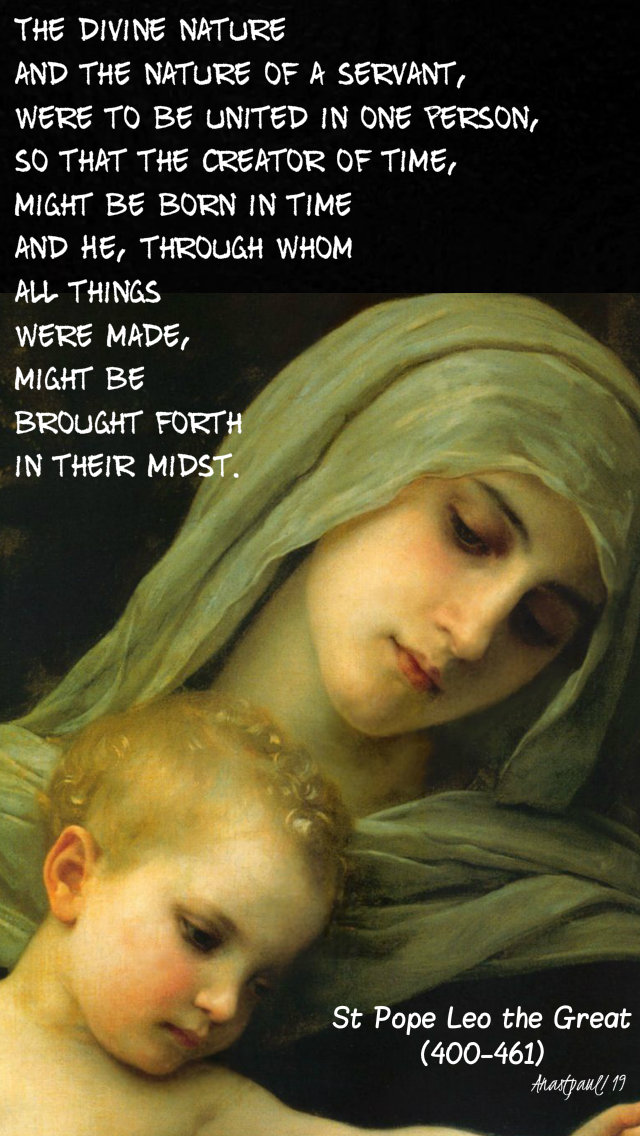
No mere figure, then, fulfilled the mystery of our reconciliation with God, ordained from all eternity. The Holy Spirit had not yet come upon the Virgin nor had the power of the Most High overshadowed her, so that within her spotless womb Wisdom might build itself a house and the Word become flesh. The divine nature and the nature of a servant, were to be united in one person, so that the Creator of time, might be born in time and He, through whom all things were made, might be brought forth in their midst.
For unless the new man, by being made in the likeness of sinful flesh, had taken on Himself, the nature of our first parents, unless He had stooped to be one in substance with His mother, while sharing the Father’s substance and, being alone free from sin, united our nature to His, the whole human race would still be held captive under the dominion of Satan.
The Conqueror’s victory, would have profited us nothing, if the battle had been fought outside our human condition. But through this wonderful blending, the mystery of new birth shone upon us, so that through the same Spirit by whom Christ was conceived and brought forth, we too might be born again in a spiritual birth and, in consequence, the evangelist declares the faithful to have been born not of blood, nor of the desire of the flesh, nor of the will of man, but of God.
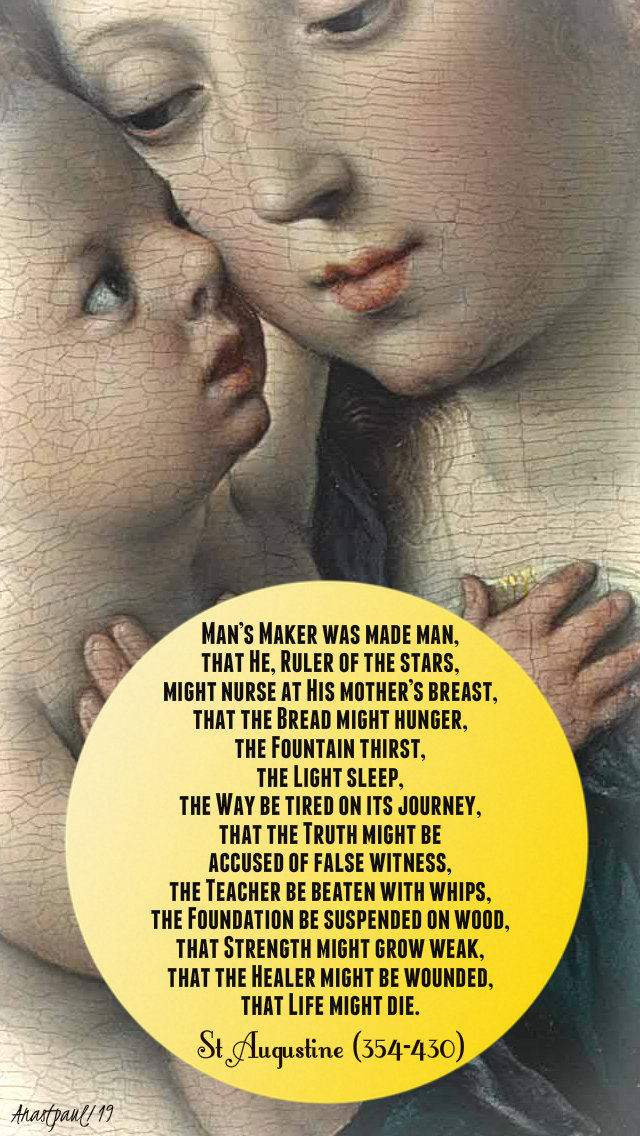
“Man’s Maker was made man, that He, Ruler of the stars, might nurse at His mother’s breast, that the Bread might hunger, the Fountain thirst, the Light sleep, the Way be tired on its journey, that the Truth might be accused of false witness, the Teacher be beaten with whips, the Foundation be suspended on wood, that Strength might grow weak, that the Healer might be wounded, that Life might die.”
St Augustine (354-430)
Father & Doctor of the Church
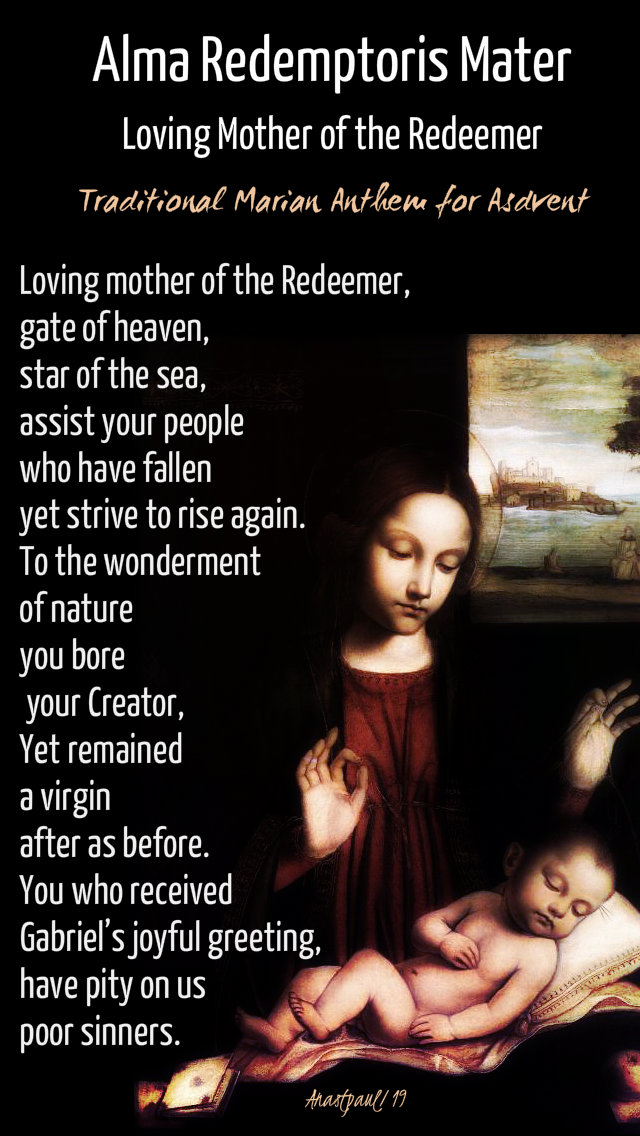
Loving mother of the Redeemer,
gate of heaven,
star of the sea,
assist your people
who have fallen
yet strive to rise again.
To the wonderment of nature
you bore your Creator,
Yet remained a virgin
after as before.
You who received
Gabriel’s joyful greeting,
have pity on us poor sinners.
Marian Antiphon Traditionally Said from Advent to the Presentation of Jesus in the Temple
Our Morning Offering – 14 December – Saturday of the Second week of Advent, Year A, the Memorial of St Venantius Fortunatus (c 530 – c 609) and a Marian Saturday
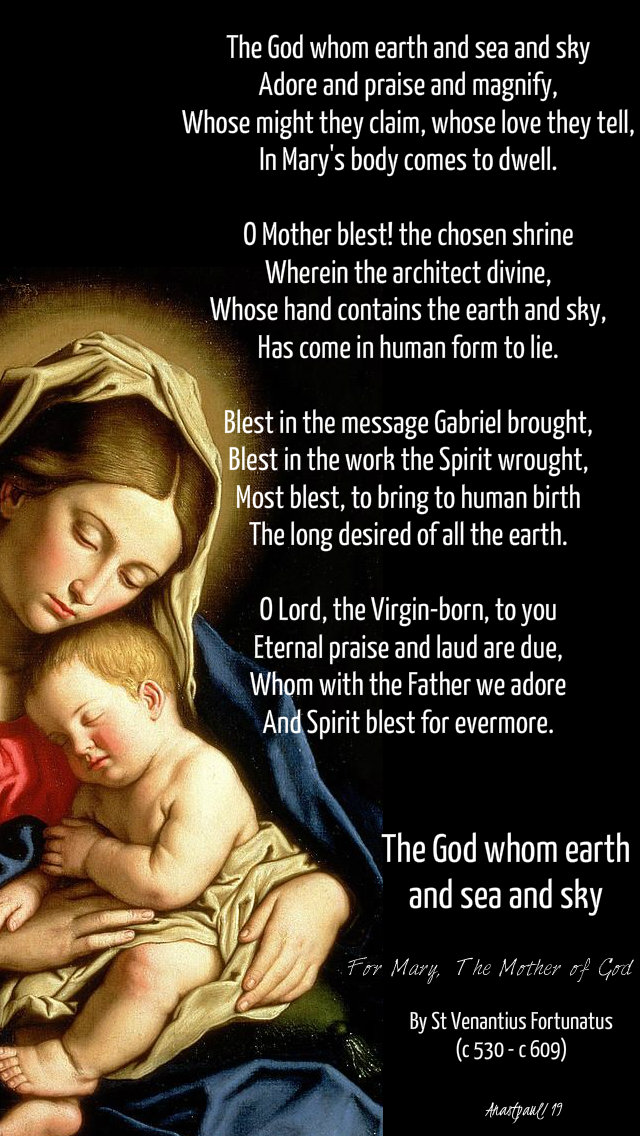
The God whom earth and sea and sky For Mary, The Mother of God For the Annunciation and Christmas By St Venantius Fortunatus (c 530 – c 609)
The God whom earth and sea and sky
Adore and praise and magnify,
Whose might they claim, whose love they tell,
In Mary’s body comes to dwell.
O Mother blest! the chosen shrine
Wherein the architect divine,
Whose hand contains the earth and sky,
Has come in human form to lie.
Blest in the message Gabriel brought,
Blest in the work the Spirit wrought,
Most blest, to bring to human birth
The long desired of all the earth.
O Lord, the Virgin-born, to you
Eternal praise and laud are due,
Whom with the Father we adore
And Spirit blest for evermore.
Sunday Reflection – 13 October – Twenty-eighth Sunday in Ordinary Time, Year C and today, John Henry Newman will be Canonised
The Birth of Jesus
Saint John Henry Newman (1801-1890)
“Consider that the birth of Jesus Christ, caused universal joy in the whole world. Jesus was the Redeemer who had been desired and awaited for so many years. He was called ‘the desire of the nations’ and ‘the desire of the eternal hills.’ Today, we behold Him, born in a little cave! Let us consider, that this day, the angel also announces to us the same great joy announced to the shepherds. “Behold, I bring you good tidings of great joy, for a saviour has been born.”
What great rejoicing there is in a country when the firstborn son of a king is born. But surely, there should be even greater rejoicing when we see the Son of God born! We were lost and He came to save us. He is the shepherd who has come to save His sheep from death. He is the lamb of God, who has come to sacrifice Himself, to become our deliverer, our life, or light and even our food in the Most Holy Sacrament.
Saint Maximus says that for this reason, among many others, Jesus chose to be laid in the manger, where the animals are fed, to make us understand that He has become human and also our food. “In the manger, where the food of animals is placed, He allowed Himself to be laid, demonstrating that His own body would be the eternal food of humankind.”
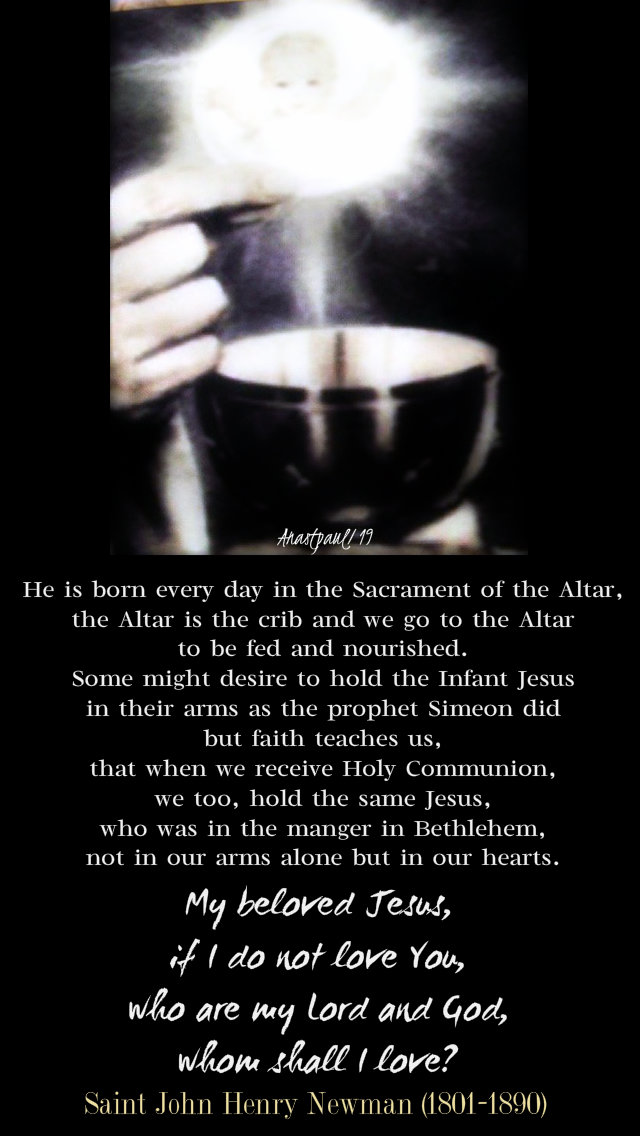
Besides this, He is born every day in the Sacrament of the Altar, the Altar is the crib and we go to the Altar to be fed and nourished. Some might desire to hold the Infant Jesus in their arms as the prophet Simeon did but faith teaches us, that when we receive Holy Communion, we too, hold the same Jesus, who was in the manger in Bethlehem, not in our arms alone but in our hearts.
My beloved Jesus, if I do not love You, who are my Lord and God, whom shall I love?”
Marian Thoughts – 14 May – ‘Mary’s Month’ – Tuesday of the Fourth Week of Easter, C
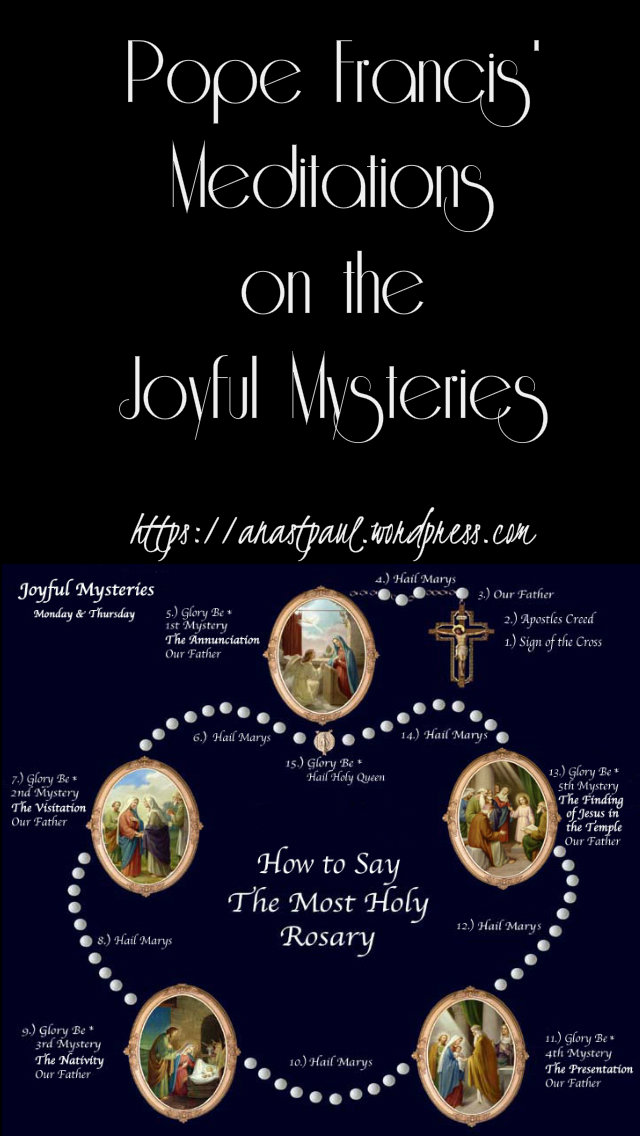
Mini Series – Pope Francis and the Holy Rosary
“I want to recommend some medicine for all of you. It’s a spiritual medicine. Don’t forget to take it. “It’s good for your heart, for your soul, for your whole life.” (17 November 2013)
The First Joyful Mystery: The Annunciation
“The annunciation to Mary can be read alongside the announcement to Zechariah of John the Baptist’s birth. One annunciation happens to a priest in the Temple of God, during a liturgy, where everyone is waiting outside, while the other, happens to a young woman named Mary, in a small town that did not necessarily have a good reputation. This contrast is not insignificant. It serves as a sign that the new Temple of God, the new encounter of God with His people, will happen in places which we normally do not expect, on the margins, on the peripheries. By now, it will no longer be in a place reserved for the few, while the majority wait outside. Nothing and no-one, will be indifferent, no situation will be deprived of His presence, the joy of salvation began in the daily life of the home of a youth in Nazareth.
Even today, God is still searching for hearts like Mary’s that are open to welcoming His invitation and providing hope, even when it’s hard.
God continues to walk our neighbourhoods and our streets, He pushes in each place in search of hearts capable of listening to His invitation and making it become flesh here and now.
In the end, the Lord continues to seek hearts like that of Mary, disposed to believe even in very extraordinary conditions.
Just like He did with Mary, God also takes the initiative in our lives, inserting Himself into our daily struggles, anxieties and desires.
It is precisely in the daily routine of our lives, that we receive the most beautiful announcement we can hear – “Rejoice, the Lord is with you!”
(Pope Francis, 2017)
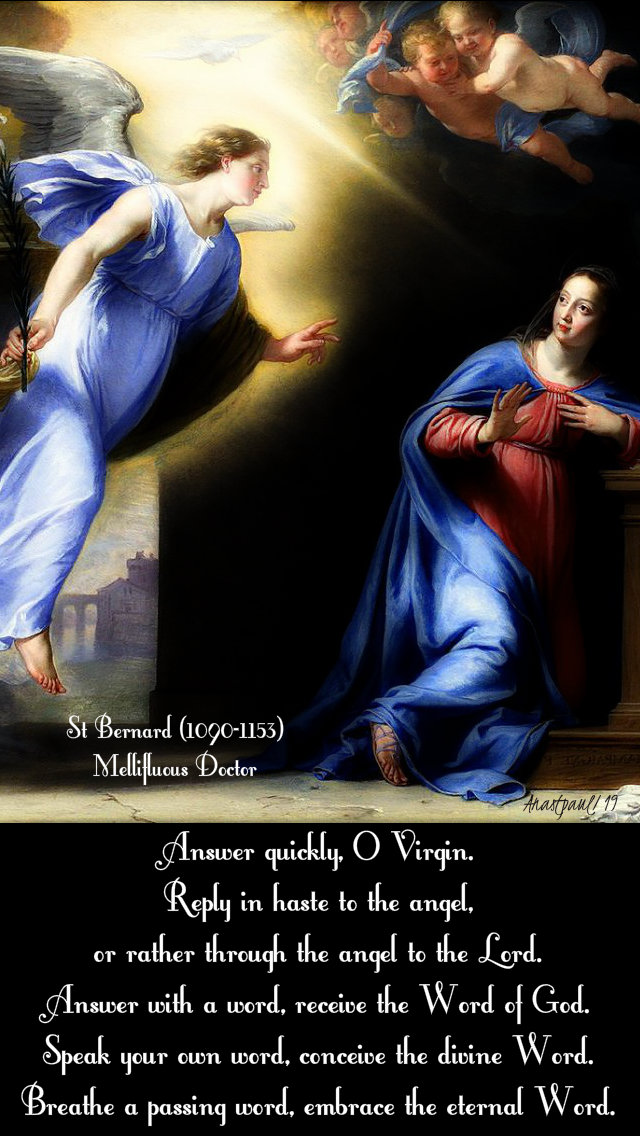
On the Annunciation and Mary’s “fiat” Saint Bernard (1090-1153) Mellifluous Doctor
You have heard, O Virgin, that you will conceive and bear a son, you have heard that it will not be by man but by the Holy Spirit. The angel awaits an answer, it is time for him to return to God who sent him. We too are waiting, O Lady, for your word of compassion, the sentence of condemnation weighs heavily upon us.
The price of our salvation is offered to you. We shall be set free at once if you consent. In the eternal Word of God we all came to be and behold, we die. In your brief response we are to be remade, in order to be recalled to life.
Tearful Adam with his sorrowing family begs this of you, O loving Virgin, in their exile from Paradise. Abraham begs it, David begs it. All the other holy patriarchs, your ancestors, ask it of you, as they dwell in the country of the shadow of death. This is what the whole earth waits for, prostrate at your feet. It is right in doing so, for on your word depends comfort for the wretched, ransom for the captive, freedom for the condemned, indeed, salvation for all the sons of Adam, the whole of your race.
Answer quickly, O Virgin. Reply in haste to the angel, or rather through the angel to the Lord. Answer with a word, receive the Word of God. Speak your own word, conceive the divine Word. Breathe a passing word, embrace the eternal Word.
Why do you delay, why are you afraid? Believe, give praise and receive. Let humility be bold, let modesty be confident. This is no time for virginal simplicity to forget prudence. In this matter alone, O prudent Virgin, do not fear to be presumptuous. Though modest silence is pleasing, dutiful speech is now more necessary. Open your heart to faith, O blessed Virgin, your lips to praise, your womb to the Creator. See, the desired of all nations is at your door, knocking to enter. If He should pass by because of your delay, in sorrow you would begin to seekHhim afresh, the One whom your soul loves. Arise, hasten, open. Arise in faith, hasten in devotion, open in praise and thanksgiving. Behold the handmaid of the Lord, she says, be it done to me according to your word.
This homily excerpt of St Bernard is in the Office of Readings for 20 December the fourth week of Advent. Hom. 4, 8-9
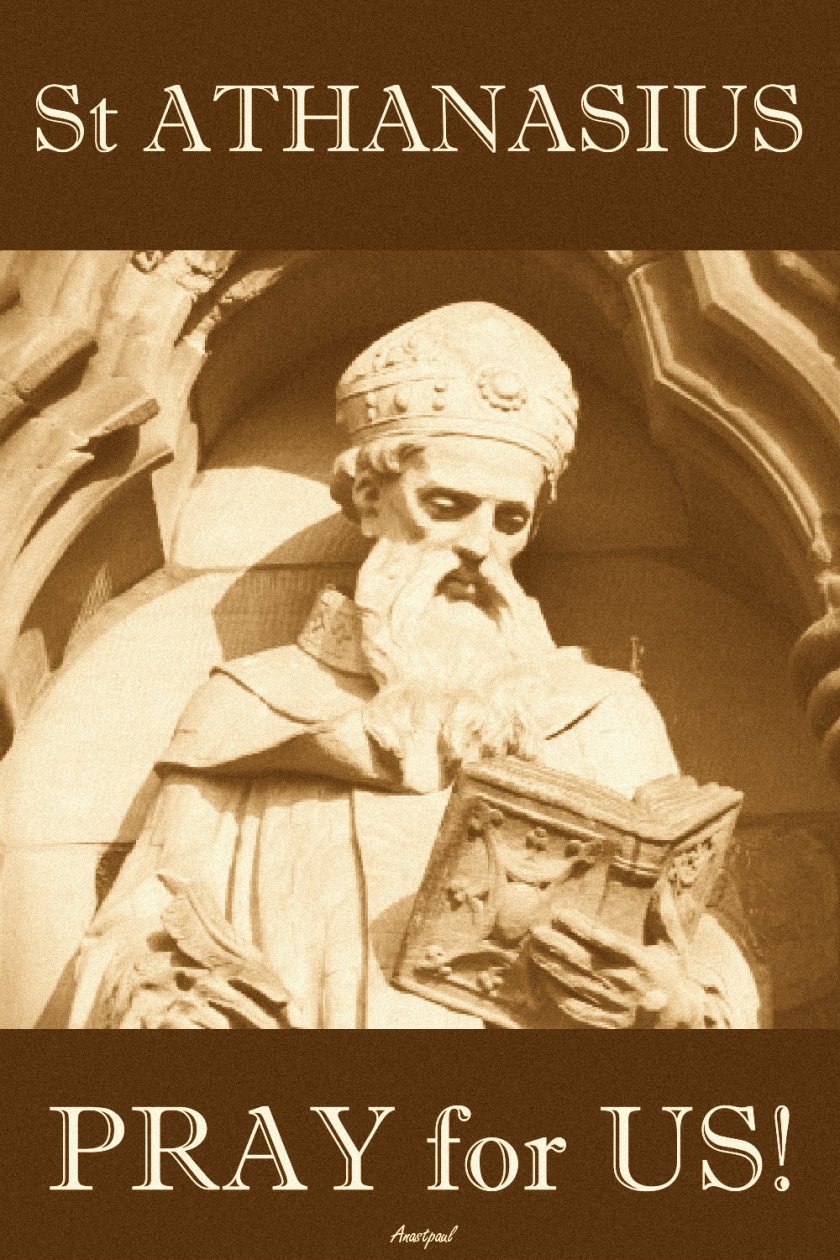
Thought for the Day – 2 May – Thursday of the Second week of Easter, Gospel: John 3:31–36 and the Memorial of St Athanasius (297-373)
On the Incarnation of the Word
Saint Athanasius (297-373)
Bishop, Great Eastern Father & Doctor of the Church
Known as “The Father of Orthodoxy”
An excerpt from On the Incarnation of the Word
The Word of God, incorporeal, incorruptible and immaterial, entered our world. Yet it was not as if He had been remote from it up to that time. For there is no part of the world that was ever without His Presence; together with His Father, He continually filled all things and places.
Out of His loving-kindness for us, He came to us and we see this in the way He revealed Himself openly to us. Taking pity on mankind’s weakness and moved by our corruption, He could not stand aside and see death have the mastery over us, He did not want creation to perish and His Father’s work in fashioning man, to be in vain. He, therefore, took to Himself a body, no different from our own, for He did not wish simply to be in a body or only to be seen.
If He had wanted simply to be seen, He could indeed have taken another and nobler, body. Instead, He took our body in its reality.
Within the Virgin, He built himself a temple, that is, a body, He made it His own instrument in which to dwell and to reveal Himself. In this way, He received from mankind, a body like our own and, since all were subject to the corruption of death, He delivered this body over to death for all and with supreme love, offered it to the Father. He did so, to destroy the law of corruption, passed against all men, since all died in Him. The law, which had spent its force on the body of the Lord, could no longer have any power over His fellowmen. Moreover, this was the way in which the Word was to restore mankind to immortality, after it had fallen into corruption and summon it back, from death to life. He utterly destroyed the power death had against mankind—as fire consumes chaff—by means of the body He had taken and the grace of the Resurrection.
This is the reason why the Word assumed a body that could die, so that this body, sharing in the Word who is above all, might satisfy death’s requirement in place of all. Because of the Word dwelling in that body, it would remain incorruptible and all would be freed forever from corruption, by the grace of the Resurrection.
In death, the Word made a spotless sacrifice and oblation of the body He had taken. By dying for others, He immediately banished death for all mankind.
In this way the Word of God, who is above all, dedicated and offered His temple, the instrument that was His body, for us all, as He said and so paid, by His own death the debt that was owed. The immortal Son of God, united with all men by likeness of nature, thus fulfilled all justice, in restoring mankind to immortality, by the promise of the resurrection.
The corruption of death, no longer holds any power over mankind, thanks to the Word, who has come to dwell among them through His one body.
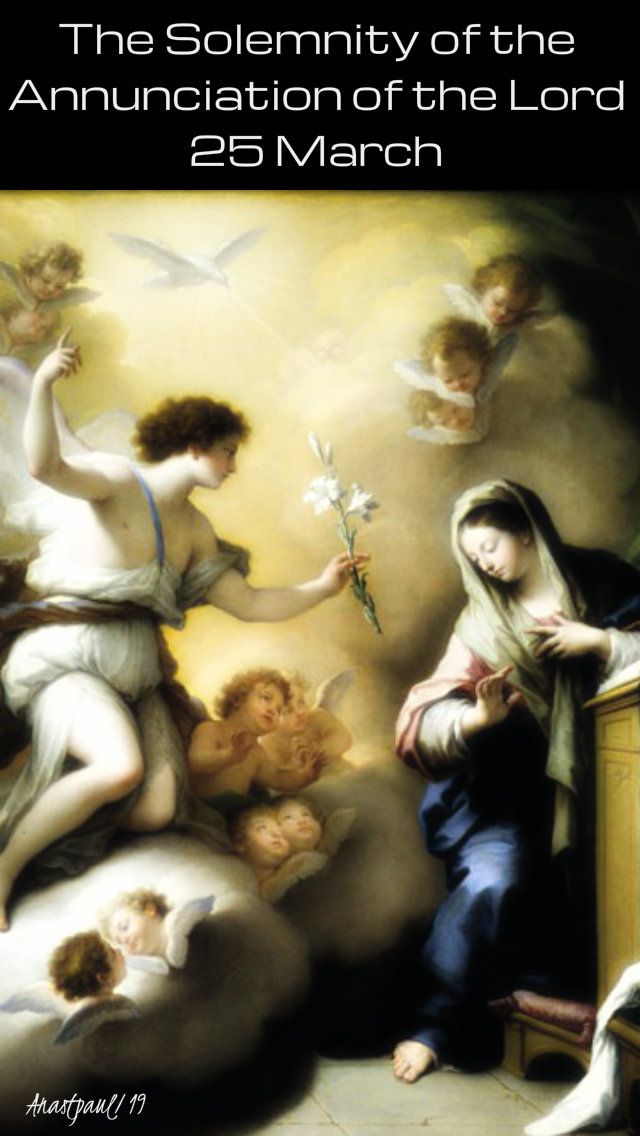
Lenten Thoughts – 25 March – The Solemnity of the Annunciation of the Lord
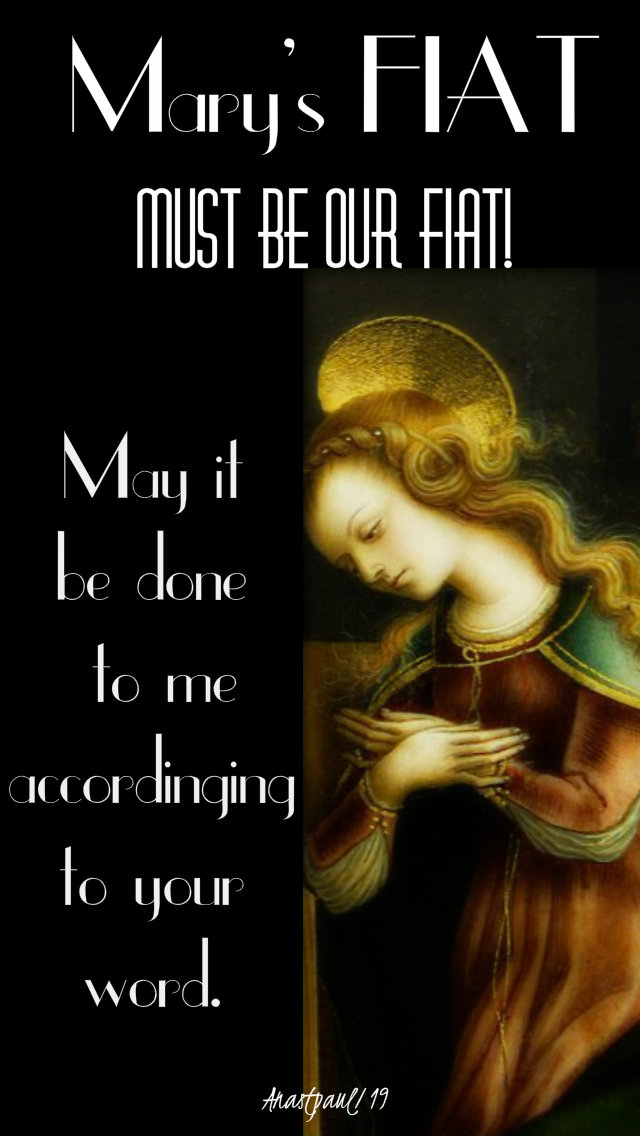
Mary’s Fiat, must be our Fiat
Mary’s fiat– her faithful “Here am I,” which does not replace her perplexity at her conception of God made human but overcomes it– is an announcement in itself. In fact, her announcement, is the most important one of today’s Gospel reading. Let it be our announcement, too, then, for it is appropriate at all times and at any time. And now, our brief, prayerful, announcement: “Here [are we], the servant[s] of the Lord, let it be done to [us] according to your word.”
I delight to do thy will, O my God, thy law is within my heart.
Psalm 40:8
“God Himself is the one Who takes the initiative and chooses to enter, as He did with Mary, into our homes, our daily struggles, filled with anxiety and with desires. And it is within our cities, in our schools and universities, our squares and hospitals, that the most beautiful announcement we can hear is made: “Rejoice, the Lord is with you”. A joy that generates life, that generates hope, that is made flesh in the way we look to the future, in the attitude with which we look at others. A joy that becomes solidarity, hospitality, mercy towards all.”
Pope Francis – Solemnity of the Annunciation of Our Lord, 25 March 2017
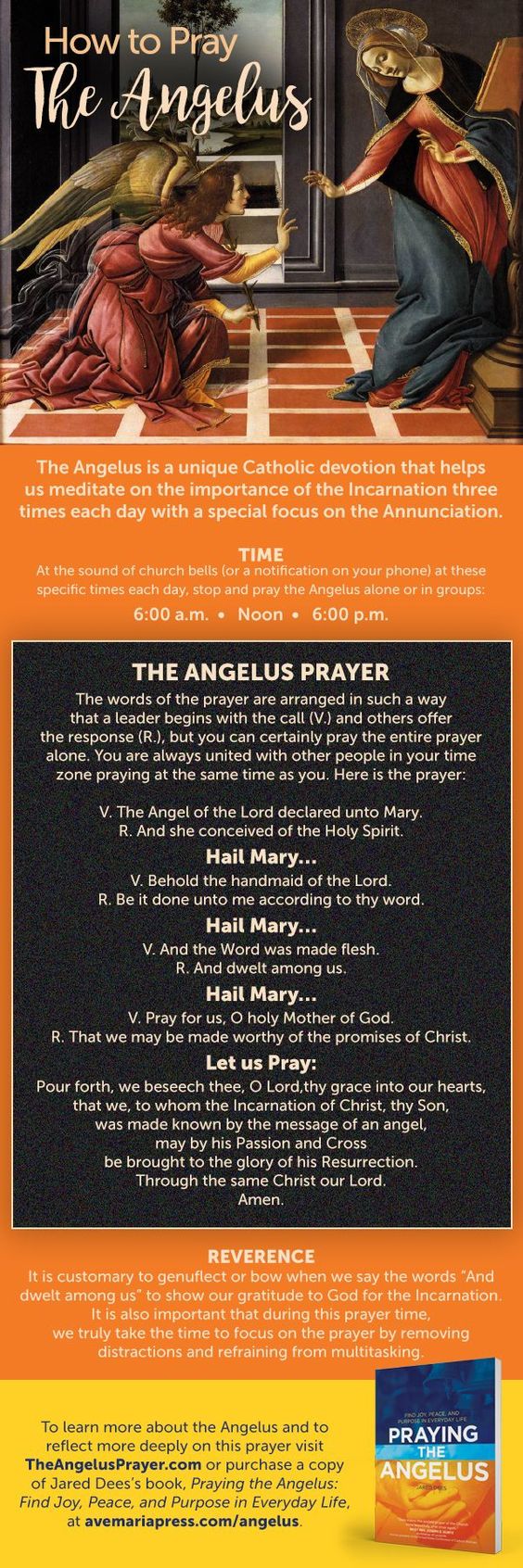
Three times daily, at 6 am, noon and 6 pm, we pray the Angelus. It is still accompanied by the ringing of a bell (the Angelus bell) in some places such as Vatican City and parts of Germany, Belgium, France, Spain and Ireland. The Regina Coeli prayer (which may also be sung as a hymn) replaces the Angelus during the Easter season.
V. The Angel of the Lord declared unto Mary.
R. And she conceived of the Holy Spirit.
Hail Mary, full of grace,
The Lord is with Thee;
Blessed art thou among women,
And blessed is the fruit of thy womb, Jesus.
Holy Mary, Mother of God,
Pray for us sinners,
Now and at the hour of our death. Amen
V. Behold the handmaid of the Lord.
R. Be it done unto me according to thy word.
Hail Mary, etc.
V. And the Word was made Flesh.
R. And dwelt among us.
Hail Mary, etc.
V. Pray for us, O holy Mother of God.
R. That we may be made worthy of the promises of Christ. LET US PRAY
Pour forth, we beseech Thee, O Lord, Thy grace into our hearts, that we to whom the Incarnation of Christ Thy Son was made known by the message of an angel, may by His Passion and Cross be brought to the glory of His Resurrection. Through the same Christ Our Lord. Amen.
Thought for the Day – 25 March – The Solemnity of the Annunciation of the Lord
Together with Jesus, the privileged and graced Mary is the link between heaven and earth. She is the human being who best, after Jesus, exemplifies the possibilities of human existence. She received into her lowliness the infinite love of God. She shows how, an ordinary human being, can reflect God in the ordinary circumstances of life. She exemplifies what the Church and every member of the Church is meant to become. She is the ultimate product of the creative and redemptive power of God. She manifests what the Incarnation is meant to accomplish for all of us.
Sometimes spiritual writers are accused of putting Mary on a pedestal and thereby, discouraging ordinary humans from imitating her. Perhaps, such an observation is misguided. God did put Mary on a pedestal and has put all human beings on a pedestal. We have scarcely begun to realise the magnificence of divine grace, the wonder of God’s freely given love. The marvel of Mary—even in the midst of her very ordinary life—is God’s shout to us, to wake up, to the marvellous creatures that we all are by divine design.
Quote/s of the Day – 25 March – The Solemnity of the Annunciation of the Lord
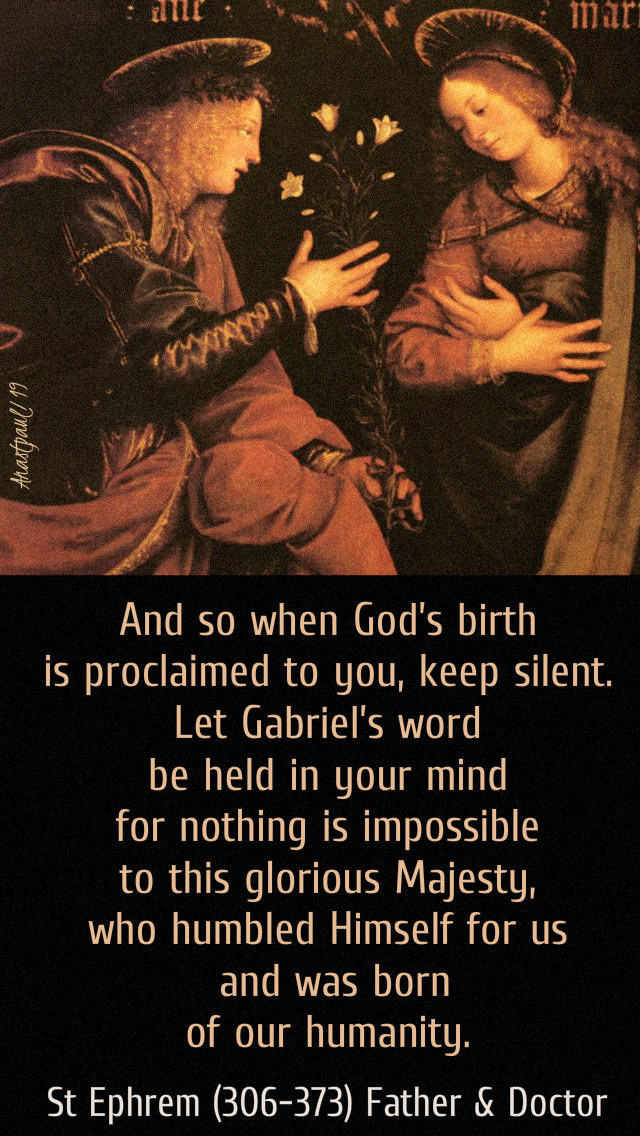
“And so when God’s birth is proclaimed to you, keep silent. Let Gabriel’s word be held in your mind for nothing is impossible to this glorious Majesty, who humbled Himself for us and was born of our humanity.”
“God assumed smallness in her – yet without diminishing His nature – to make us great!”
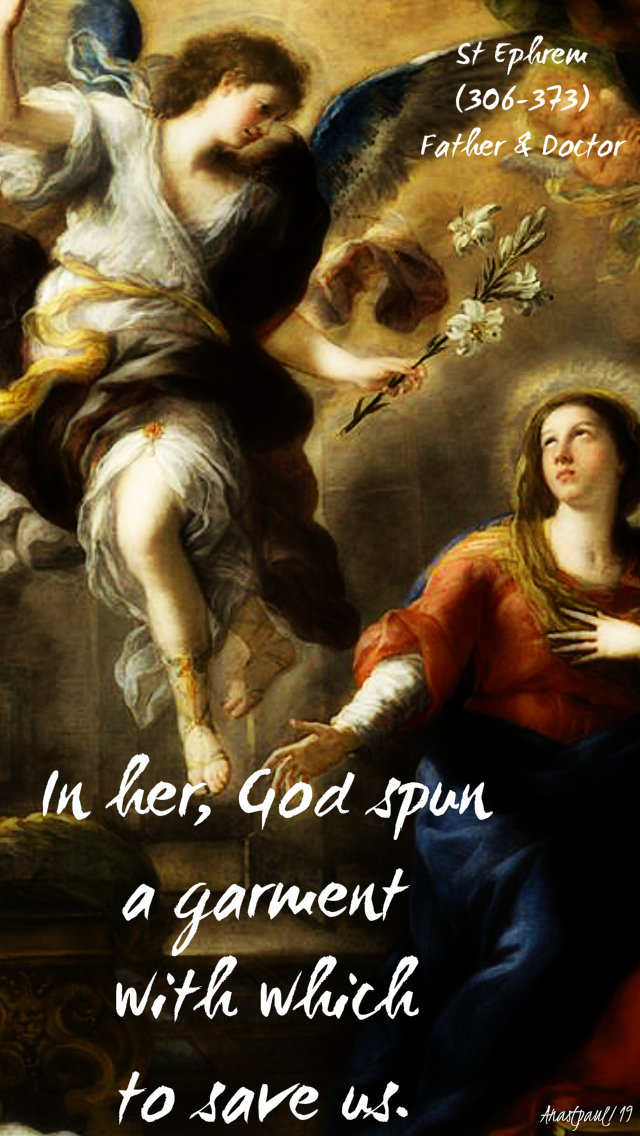
“In her, God spun a garment with which to save us.”
Saint Ephrem (306-373) Father & Doctor
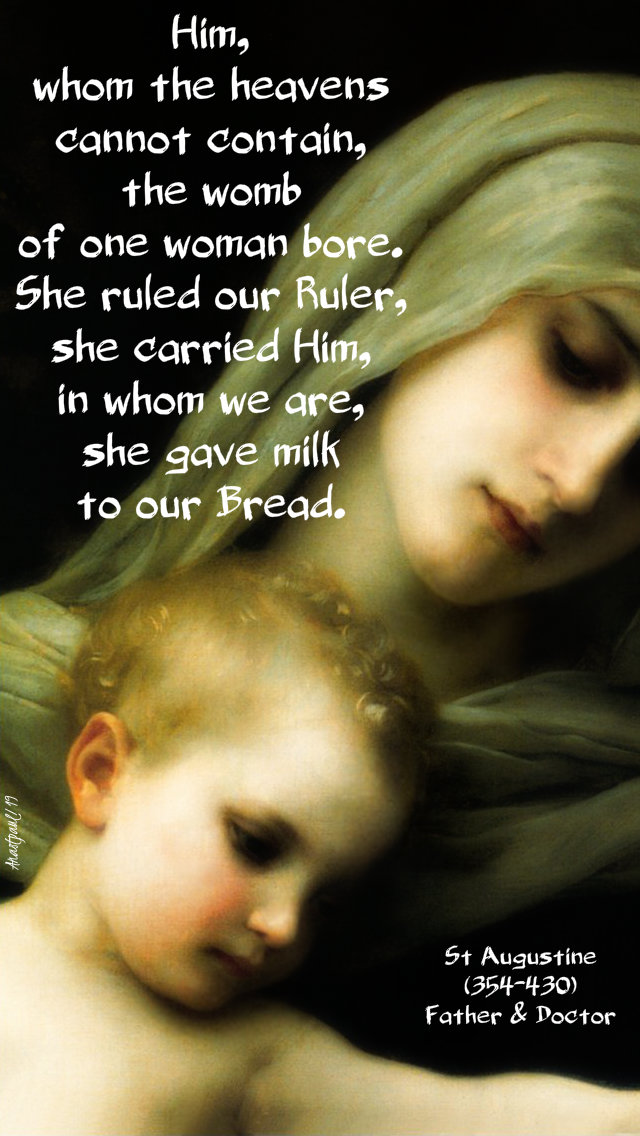
“Him, whom the heavens cannot contain, the womb of one woman bore. She ruled our Ruler, she carried Him, in whom we are, she gave milk to our Bread.”
St Augustine (354-430)
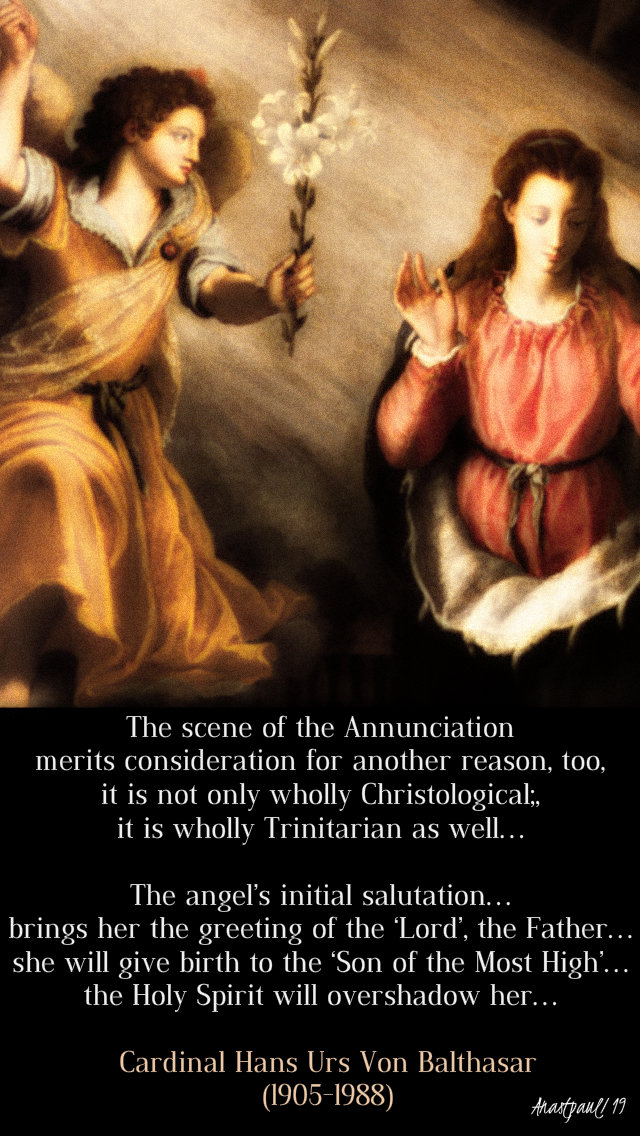
“The scene of the Annunciation merits consideration for another reason, too, it is not only wholly Christological;, it is wholly trinitarian as well… The angel’s initial salutation… brings her the greeting of the ‘Lord’, the Father… she will give birth to the ‘Son of the Most High’… the Holy Spirit will overshadow her…”
Cardinal Hans Urs Von Balthasar (1905-1988)
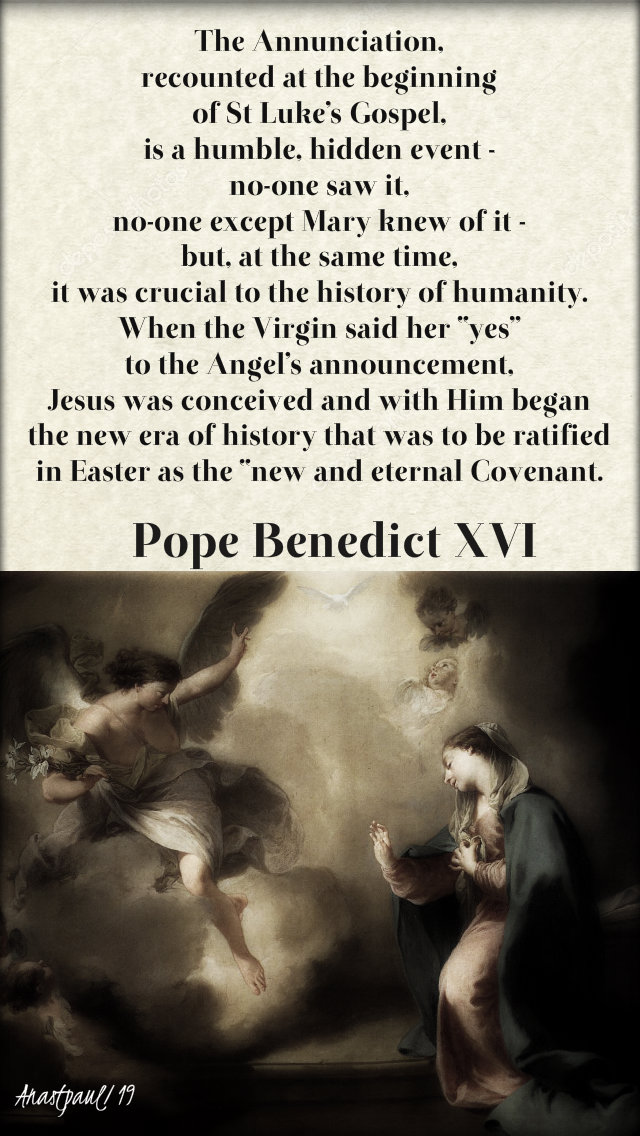
“The Annunciation, recounted at the beginning of St Luke’s Gospel, is a humble, hidden event – no-one saw it, no one except Mary knew of it – but, at the same time, it was crucial to the history of humanity. When the Virgin said her “yes” to the Angel’s announcement, Jesus was conceived and with Him began the new era of history that was to be ratified in Easter as the “new and eternal Covenant”.
Pope Benedict XVI
Angelus St Peter’s Square, Fifth Sunday of Lent, 25 March 2007
One Minute Reflection – 25 March – The Solemnity of the Annunciation of the Lord
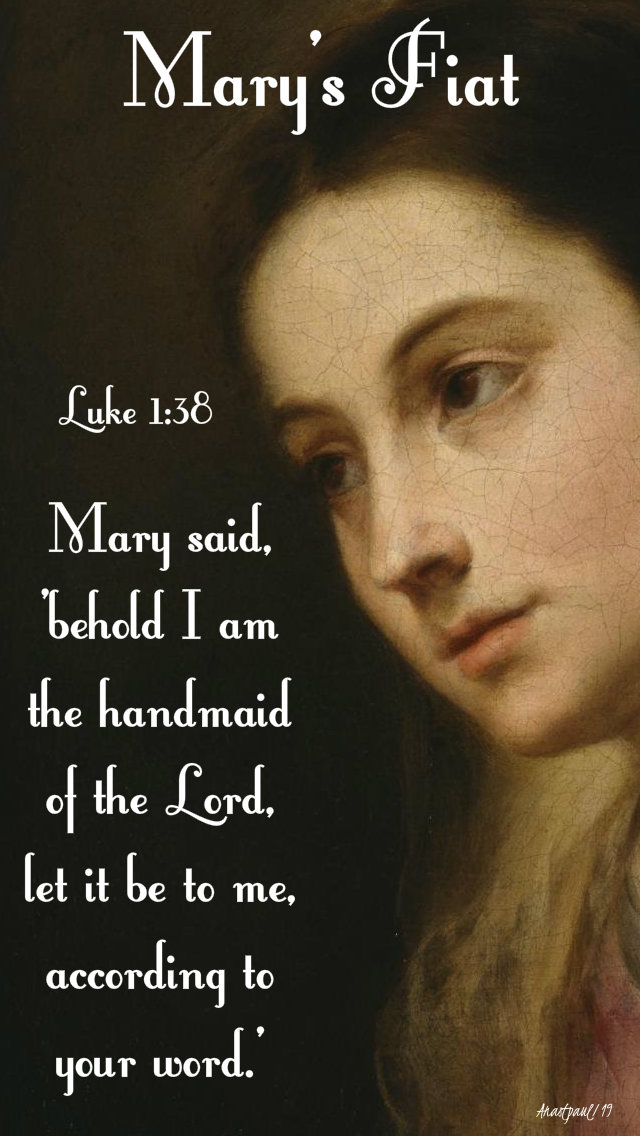
And Mary said, “Behold, I am the handmaid of the Lord, let it be to me according to your word.”...Luke 1:38
REFLECTION – “The icon of the Annunciation, more than any other, helps us to see clearly how everything in the Church goes back to that mystery of Mary’s acceptance of the divine Word, by which, through the action of the Holy Spirit, the Covenant between God and humanity was perfectly sealed. Everything in the Church, every institution and ministry, including that of Peter and his Successors, is “included” under the Virgin’s mantle, within the grace-filled horizon of her “yes” to God’s will. This link with Mary naturally evokes a strong affective resonance in all of us but first of all it has an objective value….
Everything in this world will pass away. In eternity only Love will remain. For this reason, … taking the opportunity offered by this favourable time of Lent, let us commit ourselves to ensure that everything in our personal lives and in the ecclesial activity in which we are engaged is inspired by charity and leads to charity. In this respect too, we are enlightened by the mystery that we are celebrating today.
Indeed, the first thing that Mary did after receiving the Angel’s message was to go “in haste” to the house of her cousin Elizabeth in order to be of service to her (cf. Lk 1: 39). The Virgin’s initiative was one of genuine charity, it was humble and courageous, motivated by faith in God’s Word and the inner promptings of the Holy Spirit. Those who love, forget about themselves and place themselves at the service of their neighbour. Here we have the image and model of the Church!”…Pope Benedict XVI – Excerpt- Solemnity of the Annunciation of the Lord, Saint Peter’s Square, Saturday, 25 March 2006
PRAYER – Shape us in the likeness of the Divine nature of our Redeemer, whom we believe to be true God and true man, since it was Your will, Lord God, that He, Your Word, should take to Himself, our human nature in the womb of the Blessed Virgin Mary. We make our prayer through our Lord Jesus, in the unity of the Holy Spirit, God for always and forever, amen.
Lenten Reflection – 25 March – The Solemnity of the Annunciation of the Lord
Daily Meditation: Mary said, “Behold, I am the handmaid of the Lord. May it be done to me according to your word.”
Today we step out of Lent, in one way.
We are nine months away from Christmas.
This is the feast of the Incarnation – the enfleshment of our God for us.
In Jesus, God entered this world, our world.
This day thereby offers wonderful Lenten graces.
Ahaz has his own plans.
He refuses to ask God for help, because he doesn’t want God’s help.
And, of course, he makes it sound pious.
There’s fruit in that for all of us, whenever we refuse to ask for God’s help.
Mary, on the other hand, is God’s servant.
She is humble and she says “yes.”
And God, for whom “nothing is impossible, does the rest.
I delight to do thy will, O my God, thy law is within my heart.
Psalm 40:8
“The Mighty One has done great things for me” (Lk 1:49)
Saint Ephrem (306-373) Doctor of the Church Sermons on the Mother of God, 2, 93-145
Contemplate Mary, my beloved, see how Gabriel went into her house and her questioning: “How can this be?” The Holy Spirit’s servant gave her this answer: “Nothing is impossible for God, for him, all is easy.” Consider how she believed the word she had heard and said: “Behold I am the handmaid of the Lord.” From that moment the Lord descended in a way known to Him alone, He bestirred Himself and came according to His good pleasure, He entered her without her feeling it and she opened herself to Him without experiencing any suffering. She bore within herself, as a child, Him by whom the world was filled. He descended to become the model that would renew Adam’s ancient image.
And so when God’s birth is proclaimed to you, keep silent. Let Gabriel’s word be held in your mind for nothing is impossible to this glorious Majesty, who humbled Himself for us and was born of our humanity. Today, Mary became God’s heaven for us, in that the sublime Divinity came down and placed His dwelling within her. God assumed smallness in her – yet without diminishing His nature – to make us great. In her, God spun a garment with which to save us. All the words of the prophets and just ones were fulfilled in her. From her, arose the light that drove away the shadows of paganism.
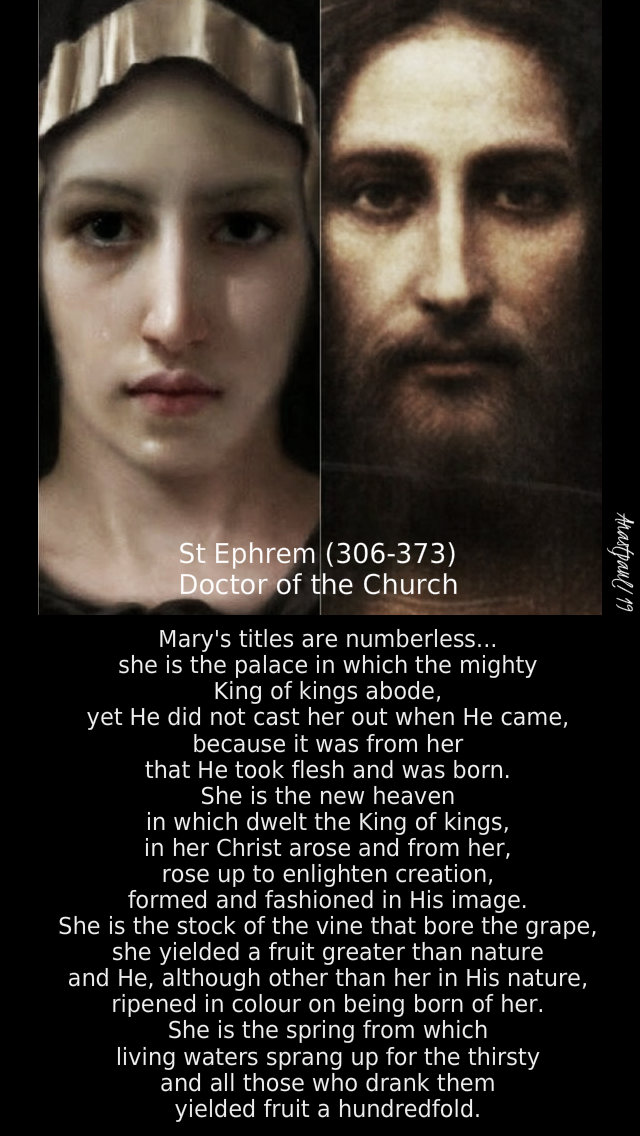
Mary’s titles are numberless… she is the palace in which the mighty King of kings abode, yet He did not cast her out when He came, because it was from her that He took flesh and was born. She is the new heaven in which dwelt the King of kings, in her Christ arose and from her rose up to enlighten creation, formed and fashioned in His image. She is the stock of the vine that bore the grape, she yielded a fruit greater than nature, and He, although other than her in His nature, ripened in colour on being born of her. She is the spring from which living waters sprang up for the thirsty and all those who drank them yielded fruit a hundredfold.
Closing Prayer:
God of infinite love,
I thank You for this feast of our salvation,
right here in the middle of Lent.
I turn to You to beg for Your help.
I need the inspiration and help of Mary on this journey.
Please grant me the grace to be humbly faithful
to what You are calling me to do.
Please give me what I need to be free and to be Your servant.
Please let Mary guide us in the path to peace in our world.
I ask You this, through Jesus our Lord.
May the Lord bless us,
protect us from all evil
and bring us to everlasting life.
Amen
The Solemnity of the Annunciation of the Lord – 25 March
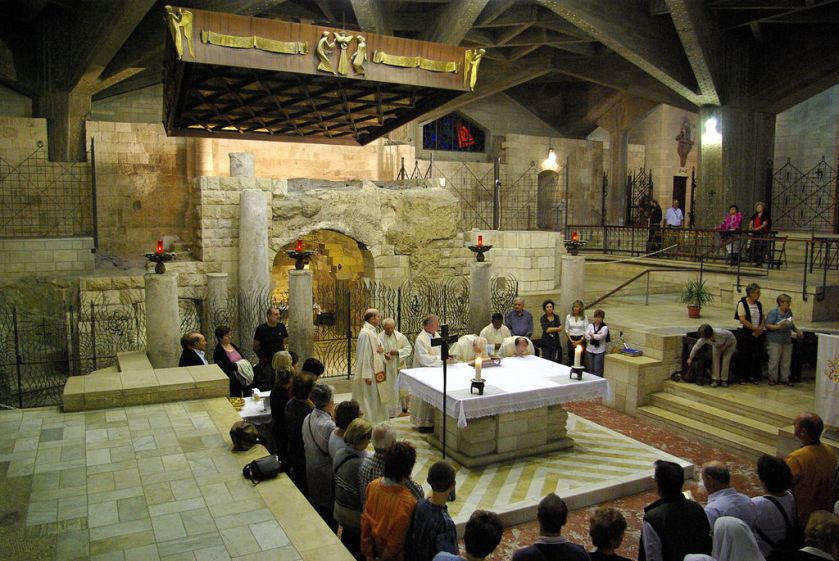
The Grotto of the Annunciation at Nazareth and below Mass being said in front of it
Again Lent’s austerity is interrupted as we solemnly keep a feast in honour of the Annunciation. The Annunciation is a mystery that belongs to the temporal rather than to the sanctoral cycle in the Church’s calendar. For the feast commemorates the most sublime moment in the history of time, the moment when the Second Divine Person of the most Holy Trinity assumed human nature in the womb of the Virgin Mary. Thus it is a feast of our Lord, even as it is of Mary, although the liturgy centres wholly around the Mother of God.
The Church’s Year of Grace, Pius Parsch
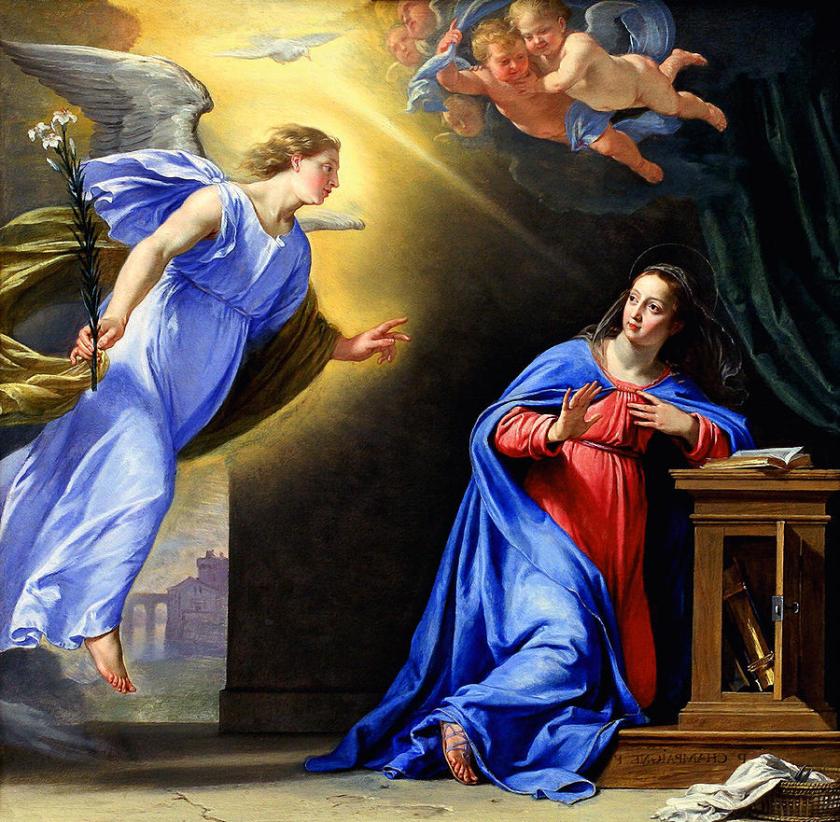
Philippe de Champaigne
The Annunciation, a tradition which has come down from the apostolic ages, tells us that the great mystery of the Incarnation was achieved on the twenty-fifth day of March. It was at the hour of midnight, when the most holy Virgin was alone and absorbed in prayer, that the Archangel Gabriel appeared before her and asked her, in the name of the blessed Trinity, to consent to become the Mother of God. Let us assist, in spirit, at this wonderful interview between the angel and the Virgin and, at the same time, let us think of that other interview which took place between Eve and the serpent. A holy bishop and martyr of the second century, Saint Irenaeus, who had received the tradition from the very disciples of the apostles, shows us that Nazareth is the counterpart of Eden.
In the garden of delights there is a virgin and an angel and a conversation takes place-between them. At Nazareth a virgin is also addressed by an angel and she answers him but the angel of the earthly paradise is a spirit of darkness and he of Nazareth is a spirit of light. In both instances it is the angel that has the first word. ‘Why,’ said the serpent to Eve, ‘hath God commanded you, that you should not eat of every tree of paradise?’ His question implies impatience and a solicitation to evil, he has contempt for the frail creature to whom he addresses it but he hates the image of God, which is upon her.
See, on the other hand, the angel of light, see with what composure and peacefulness he approaches the Virgin of Nazareth, the new Eve and how respectfully he bows himself down before her: ‘Hail, full of grace! The Lord is with thee! Blessed art thou among women!’ Such language is evidently of heaven, none but an angel could speak thus to Mary.
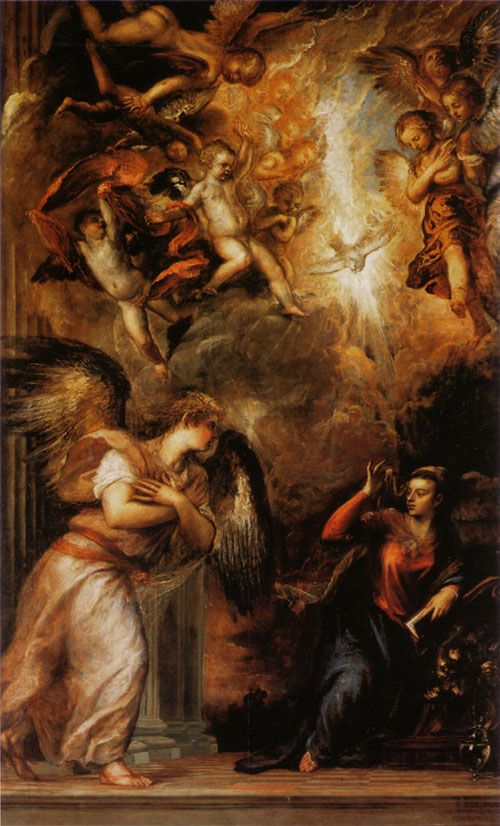
Titian
Scarcely has the wicked spirit finished speaking than Eve casts a longing look at the forbidden fruit, she is impatient to enjoy the independence it is to bring her. She rashly stretches forth her hand, she plucks the fruit, she eats it and death takes possession of her, death of the soul, for sin extinguishes the light of life and death of the body, which being separated from the source of immortality, becomes an object of shame and horror and finally crumbles into dust.
But let us turn away our eyes from this sad spectacle and fix them on Nazareth. Mary has heard the angel’s explanation of the mystery, the will of heaven is made known to her and how grand an honour it is to bring upon her! She, the humble maid of Nazareth, is to have the ineffable happiness of becoming the Mother of God and yet, the treasure of her virginity is to be left to her! Mary bows down before this sovereign will and says to the heavenly messenger: ‘Behold the handmaid of the Lord, be it done to me according to thy word.’
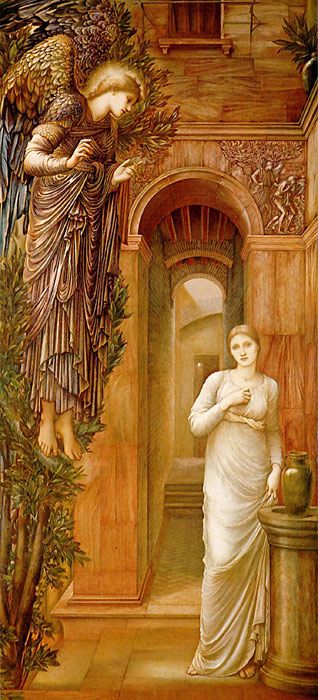
Edward Burne-Jones
Thus, as the great St Irenaeus and so many of the holy fathers remark, the obedience of the second Eve repaired the disobedience of the first, for no sooner does the Virgin of Nazareth speak her fiat, ‘be it done,’ than the eternal Son of God (who, according to the divine decree, awaited this word) is present, by the operation of the Holy Ghost, in the chaste womb of Mary and there, He begins His human life. A Virgin is a Mother and Mother of Go; and it is this Virgin’s consenting to the divine will, that has made her conceive by the power of the Holy Ghost. This sublime mystery puts between the eternal Word and a mere woman the relations of Son and Mother, it gives to the almighty God a means whereby He may, in a manner worthy of His majesty, triumph over satan, who hitherto seemed to have prevailed against the divine plan.
Never was there a more entire or humiliating defeat than that which this day befell satan. The frail creature, over whom he had so easily triumphed at the beginning of the world, now rises and crushes his proud head. Eve conquers in Mary. God would not choose man for the instrument of His vengeance, the humiliation of satan would not have been great enough and, therefore, she who was the first prey of hell, the first victim of the tempter, is selected to give battle to the enemy. The result of so glorious a triumph, is that Mary, is to be superior not only to the rebel angels but to the whole human race, yea, to all the angels of heaven. Seated on her exalted throne, she, the Mother of God, is to be the Queen of all creation. Satan, in the depths of the abyss, will eternally bewail his having dared to direct his first attack against the woman, for God has now so gloriously avenged her and in heaven, the very Cherubim and Seraphim reverently look up to Mary and deem themselves honoured when she smiles upon them, or employs them in the execution of any of her wishes, for she is the Mother of their God.
Therefore, is it that we, the children of Adam, who have been snatched by Mary’s obedience from the power of hell, solemnise this day of the Annunciation. Well may we say of Mary those words of Debbora, when she sang her song of victory over the enemies of God’s people: ‘The valiant men ceased and rested in Israel, until Debbora arose, a mother arose in Israel. The Lord chose new wars, and He Himself overthrew the gates of the enemies.” Let us also refer to the holy Mother of Jesus these words of Judith, who by her victory over the enemy was another type of Mary: ‘Praise ye the Lord our God, who hath not forsaken them that hope in Him. And by me, His handmaid, He hath fulfilled His mercy, which He promised to the house of Israel and He hath killed the enemy of His people by my hand this night. . . . The almighty Lord hath struck him, and hath delivered him into the hands of a woman, and hath slain him.’
–Excerpted from The Liturgical Year, Abbot Gueranger OSB
Actually the name Betania means Bethany in Spanish. It was originally given this name by Maria Esperanza and was the site of their farm, in Venezuela. Apparitions of the Blessed Virgin Mary were reported and eventually a small chapel was built here and the faithful began to gather, especially on Feast Days but throughout the year.
Bl Everard of Nellenburg
Bl Herman of Zahringen
St Hermenland
St Humbert of Pelagius
Bl James Bird
Bl Josaphata Mykhailyna Hordashevska
St Kennocha of Fife
St Lucia Filippini
St Margaret Clitherow
Bl Margaretha Flesch
St Mariam Sultaneh Danil Ghattas
St Matrona of Barcelona
St Matrona of Thessaloniki
St Mona of Milan
St Ndre Zadeja
Bl Pawel Januszewski
St Pelagius of Laodicea
Bl Placido Riccardi
St Procopius
St Quirinus of Rome
Bl Tommaso of Costacciaro
—
262 Martyrs of Rome: A group 262 Christians martyred together in Rome. We know nothing else about them, not even their names.
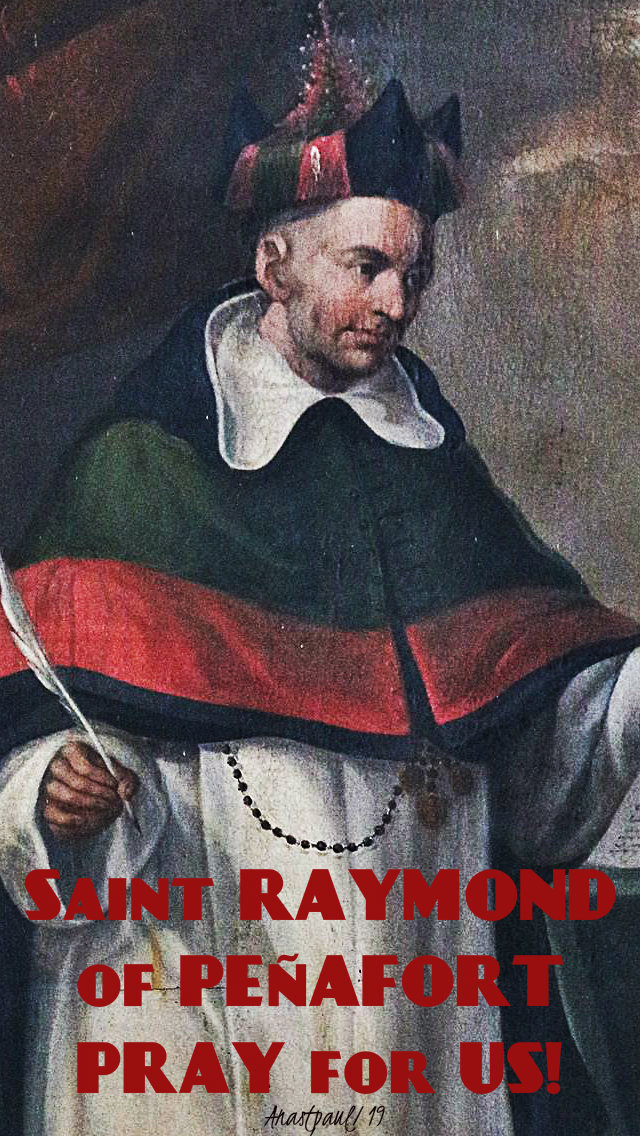
One Minute Reflection – 7 January – Monday after Epiphany – Gospel: Matthew 4:12-17, 23-25 and the Memorial of St Raymond of Peñafort (1175-1275) “Father of Canon Law”
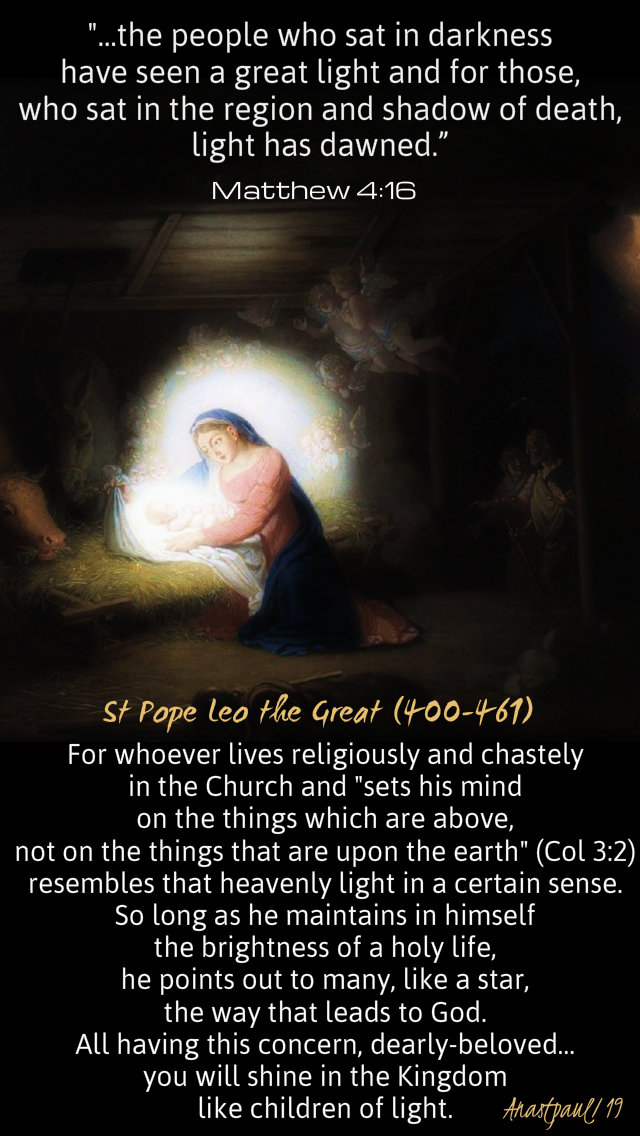
“…the people who sat in darkness have seen a great light and for those, who sat in the region and shadow of death, light has dawned.”…Matthew 4:16
REFLECTION – “All these things we know to have taken place ever since the three wise men, aroused in their far-off land, were led by a star to recognise and worship the King of heaven and earth. The responsiveness of that star exhorts us to imitate it’s obedience and, as much as we can, to make ourselves servants of that grace which invites us all to Christ. For, whoever lives religiously and chastely in the Church and “sets his mind on the things which are above, not on the things that are upon the earth” (Col 3:2) resembles that heavenly light in a certain sense. So long as he maintains in himself the brightness of a holy life, he points out to many, like a star, the way that leads to God. All having this concern, dearly-beloved… you will shine in the Kingdom like children of light.”…St Pope Leo the Great (400-461) Father & Doctor of the Church
PRAYER – Lord, may the radiance of Your glory, light up our hearts and bring us through the shadows of this world, until we reach our homeland of everlasting light. Grant we pray, that by the intercession of St Raymond of Peñafort , our way may be smoothed and our troubles eased. We ask this through Jesus, our Lord, with the Holy Spirit, God forever, amen.
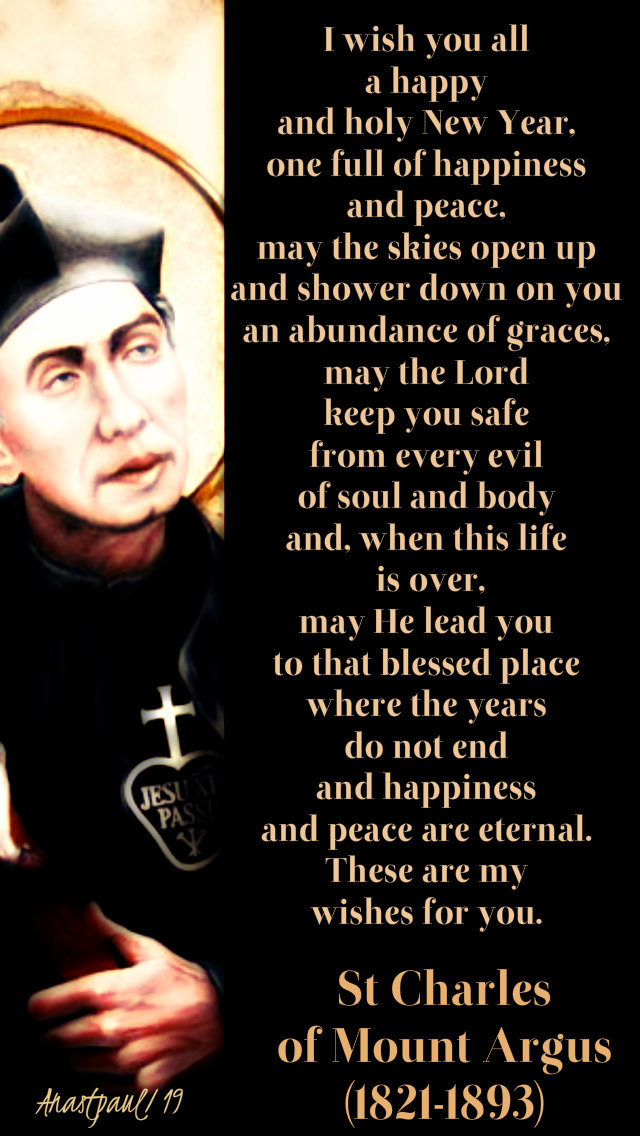
Quote/s of the Day – 5 January – Christmas Saturday and the Memorial of St Charles of Mount Argus C.P. (1821-1893)
“The birth of our Lord Jesus Christ in the stable at Bethlehem is a mystery, it is a miracle so great, abounding so much in humility and love, that it will be wondered at by the angels and saints in heaven for all eternity. What can I, a mere man, give the Divine Redeemer in return for such great and innumerable blessings- so great, that they cannot be explained- which, for so many years, I have received from His mercy? When I consider this, I feel urged, to thank God with greater fervour, to please Him more and to do and suffer everything willingly, for His love and for His greater glory.” (Letter 15-To his brother, Father Peter Joseph Houben. J. X. P. St Paul’s Retreat, Harold’s Cross, Mount Argus, Dublin. 29th December, 1875)
“I wish you all a happy and holy New Year, one full of happiness and peace, may the skies open up and shower down on you an abundance of graces, may the Lord keep you safe from every evil of soul and body and, when this life is over, may He lead you to that blessed place where the years do not end and happiness and peace are eternal. These are my wishes for you.” (Letter 13-To his brother, Father Peter Joseph Houben. J. X. P. St Joseph’s Retreat, Highgate, London W. 15th January, 1873.)
















 AnaStpaul
You must be logged in to post a comment.