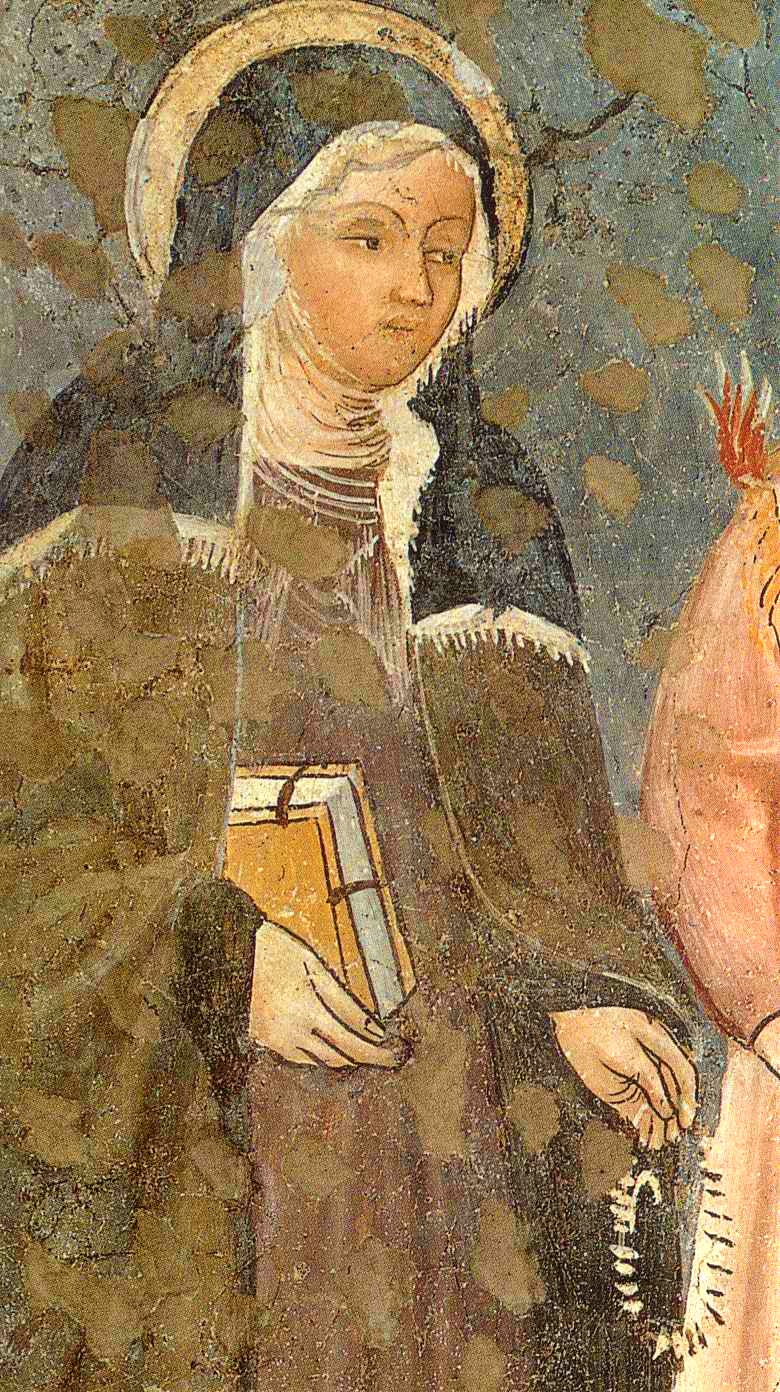
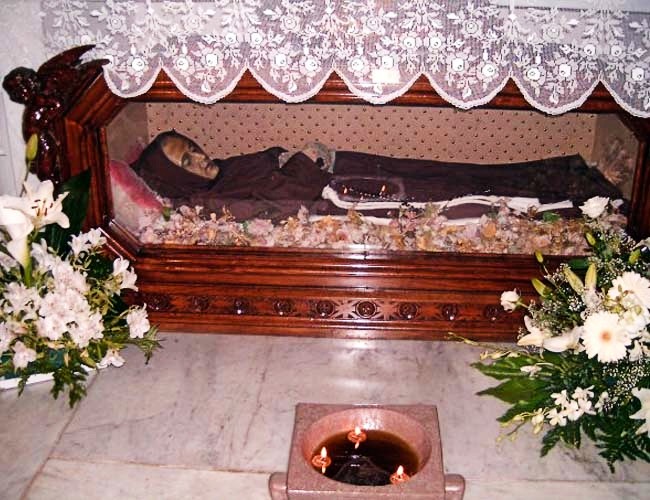
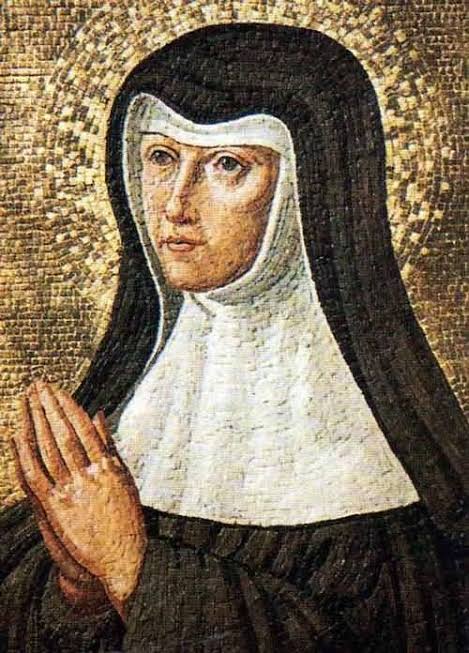
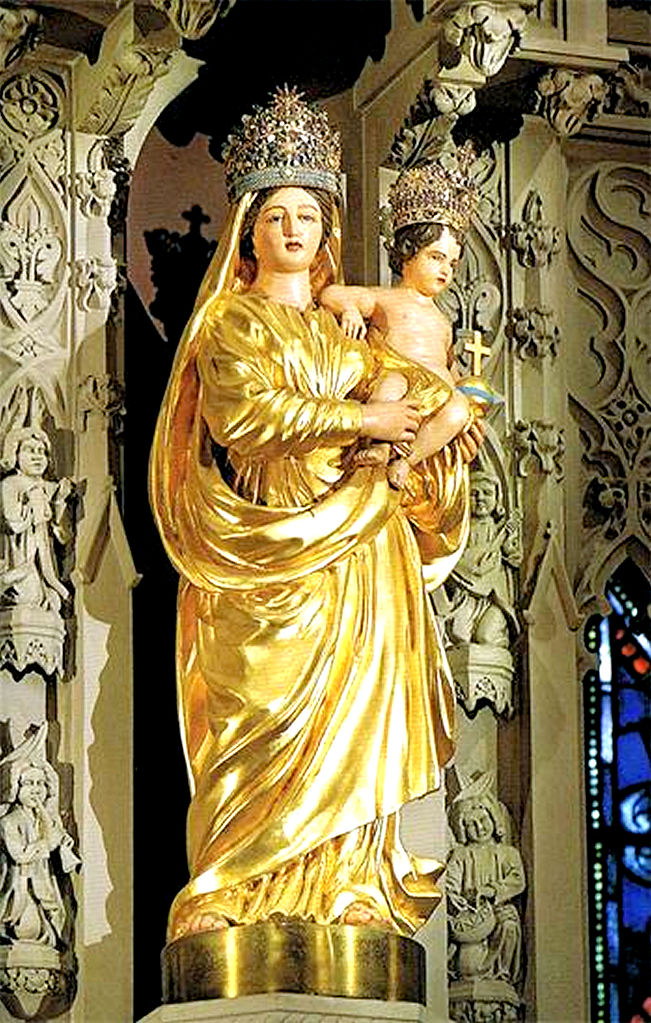
Saint of the Day – 12 January – Blessed Lucia (1370-1430) Consecrated Virgin, Founder of a Community of Nuns known as the “Poor Sisters of St Chiara” adopting the original Rule of St Clare of Assisi. Born in 1370 in Norcia, Perugia, Umbria, Italy and died on 12 January 1430 of natural causes at her Convent in Valcaldara di Norcia. Patronage – of Valcaldara. Also known as – Lucia of Norcia and Lucia of Valcaldara di Norcia.Her body is Incorrupt.
Lucia, born into a wealthy family in Norcia, consecrated herself totally to the Lord when she was only fifteen years old. With seven companions, she founded a religious Community which took up residence in her father’s house. Their choice of life was a great example to the entire City and on 28 January 1386 the City Council decided to help them. Previously, the Patriarch of Jerusalem, Ferdinand, administrator of the Diocese of Spoleto-Norcia (1370-1390), had recognised them as a valid Community, naming the Convent after Saint Jerome.
In 1390, Lucia founded another Convent and the Church of Santa Maria in Valcaldara (a hamlet of Norcia). With her companions she submitted to the Bishop’s obedience, “they wore ash and eremitic habits, lived a community life and observed the evangelical norm, not professing for many years any Rule approved by the Church”. In 1407 the two Convents united, with the approval of Bishop Augustine, giving life to the Convent of St Chiara. They called themselves the “Poor Sisters of St Chiara” expressing their desire to follow her Rule, although they could not officially observe it as it had been replaced by the Rule of Urban IV.
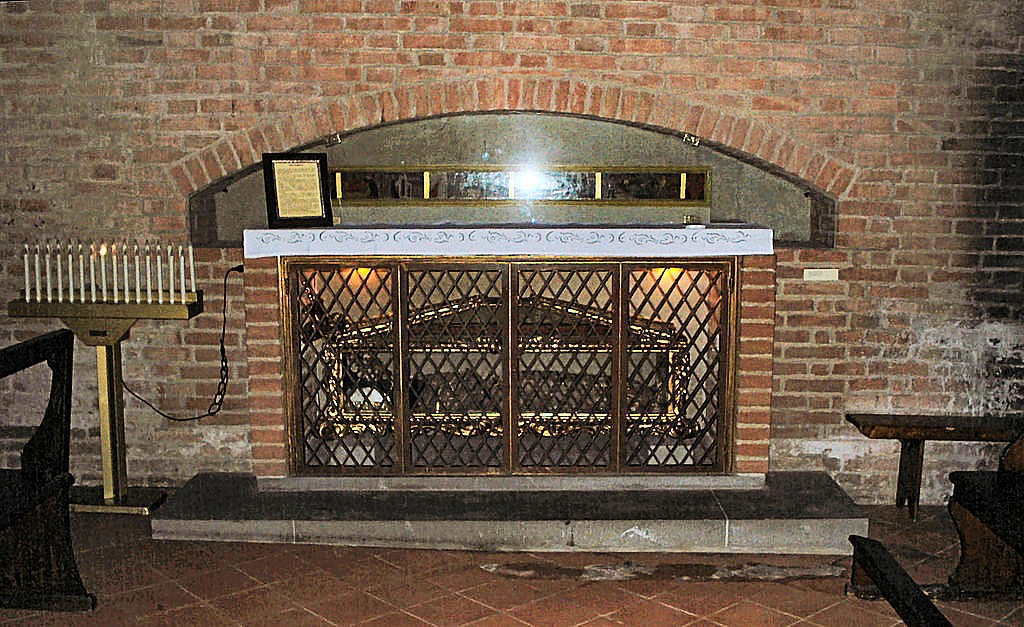
Lucia died in Valcaldara on 12 January 1430 and was immediately venerated and invoked as a Saint. Her body, still incorrupt today, kept in its shrine of 1637, is exhibited in the Church of the Poor Clares of Santa Maria della Pace, the nametaken by the Convent took after the earthquake of 1703. In Valcaldara, the celebrations in honour of their Patron Saint are solemnly celebrated with great festivities.
St Caesaria of Arles St Caroticus Bl Emmanuel d’Abreu St Eutropius St Ferreolus of Grenoble Bishop Martyr Bl John Gaspard Cratz St John of Ravenna Blessed Lucia (1370-1430) Virgin. Her Body is Incorrupt. St Martinian of Belozersk St Peter of Abessala St Probus of Verona St Quinctus the Soldier St Satyrus
St Tatiana of Rome (Died c 226) Virgin, Martyr. Patronage – students, school children. The Roman Martyrology reads today: “At Rome in the time of the Emperor Alexander, St Tatiana, Martyr who was torn with iron hooks and combs, thrown to the beasts and cast into the fire but, having received no injury, was beheaded and thus, went to Heaven.” Her Life and Death: https://anastpaul.com/2023/01/12/saint-of-the-day-12-january-saint-tatiana-of-rome-died-c-226-virgin-martyr/
St Tigrius St Victorian of Asana Bl Vincent da Cunha
Martyrs of Africa – 44 Saints: A group of 44 Christian soldiers murdered together for their faith in Africa. The only details that survive are four of their names – Castulus, Modestus, Rogatus and Zoticus.
Martyrs of Ephesus – 42 Saints: Forty-two Monks Martyred at a Monastery in Ephesus (modern Turkey) during the persecutions of the Iconoclast Byzantine Emperor Constantine V. Their names have not come down to us. Martyred c 762.
Martyrs of Iona – 38 Saints: Thirty-eight Monks Martyred in Iona, Ireland. Their names have not come down to us. They were Martyred in 750 at Iona, Ireland.
Thought for the Day – 11 January – Meditations with Fr Richard Frederick Clarke SJ (1839-1900)
Meditations for Christmastide “The Holy Infancy” From “The Devout Year” By Fr Richard Frederick Clarke SJ (1839-1900)
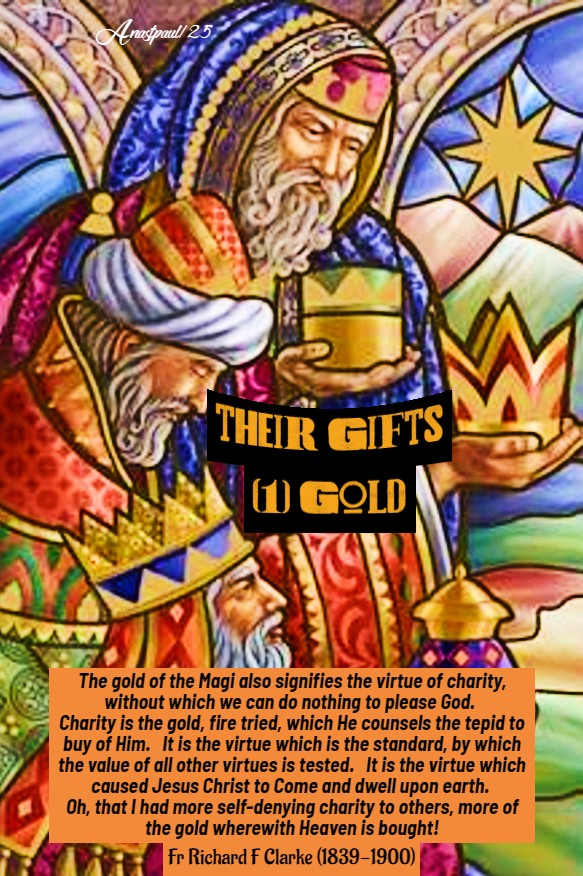
“Their Gifts (1) Gold”
+1. Why did the Magi offer gold to the Babe in Mary’s arms? It was in recognition of Him as their King. It was the tribute by which they declared themselves His vassals professed their loyal submission to His sway. This is the very foundation of all supernatural virtue, not only to acknowledge Christ as our King but, to pay Him the homage which is His due as the Sovereign Lord of Heaven and earth.
+2. The Magi too, by their offering of gold, gave to Him, the most precious gift they had to give. They were the first Christian almsgivers and their almsgiving was a pattern to all who should follow them. They gave liberally; they gave royally; they gave gifts which cost them something. Is this the character of my almsgiving, or do I give sparingly and grudgingly? I must not forget that Christ sees and remembers, not only the amount of the gifts I give to Him but too, the spirit in which they are given.
+3. The gold of the Magi also signifies the virtue of charity, without which we can do nothing to please God. Charity is the gold, fire tried, which He counsels the tepid to buy of Him. It is the virtue which is the standard, by which the value of all other virtues is tested. It is the virtue which caused Jesus Christ to Come and dwell upon earth. Oh, that I had more self-denying charity to others, more of the gold wherewith Heaven is bought!
Quote/s of the Day – 11 January – “The Month of the Most Holy Name of Jesus and of the Holy Family” – Within the Octave of Epiphany – Isaias 60:1-6, Matthew 2:1-12
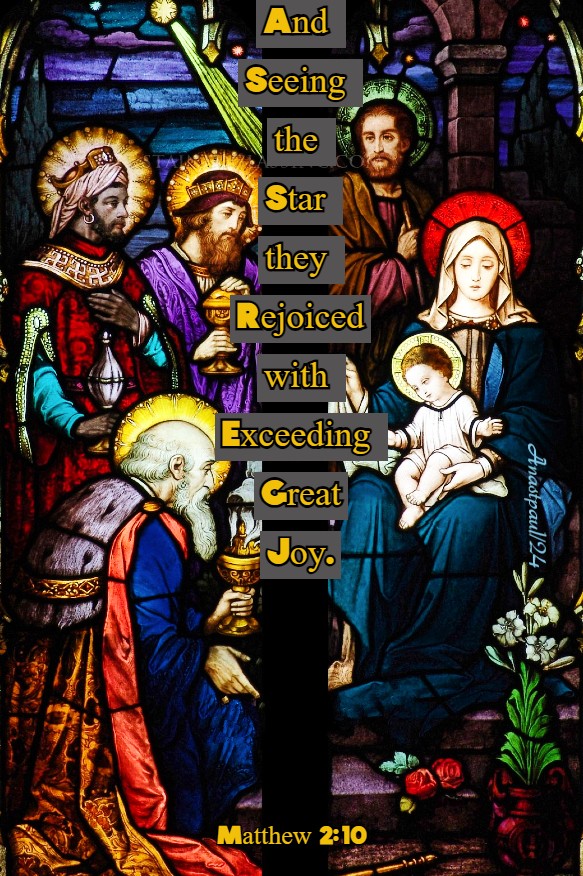
“And seeing the Star they rejoiced with exceeding great joy.”
Matthew 2:10
“We too, then, when we suffer anything for Christ’s sake, should do so, not simply with courage but even with joy. If we have to go hungry, let us be glad, as if we were at a banquet. If we are insulted, let us be elated, as though we had been showered with praises. If we lose all we possess, let us consider ourselves the gainers of all. If we provide for the poor, let us regard ourselves as the recipients! … Above all, remember, that your struggles, are for the sake of the Lord Jesus. Then, you will easily rise above them and live out your lifetime in happiness; for nothing brings more happiness than a good conscience.”
St John Chrysostom (347-407) Father & Doctor of the Church ”
“What is not pleasing to God, is anxiety and disquiet of mind. The Lord wants our limitations and weaknesses, to find their support in His Strength; He wants us to hope that His Goodness will complete and perfect the imperfectness of our means.”
St Ignatius Loyola (1491-1556) Priest, Founder of the Society of Jesus
(Letter of 17 November 1555)
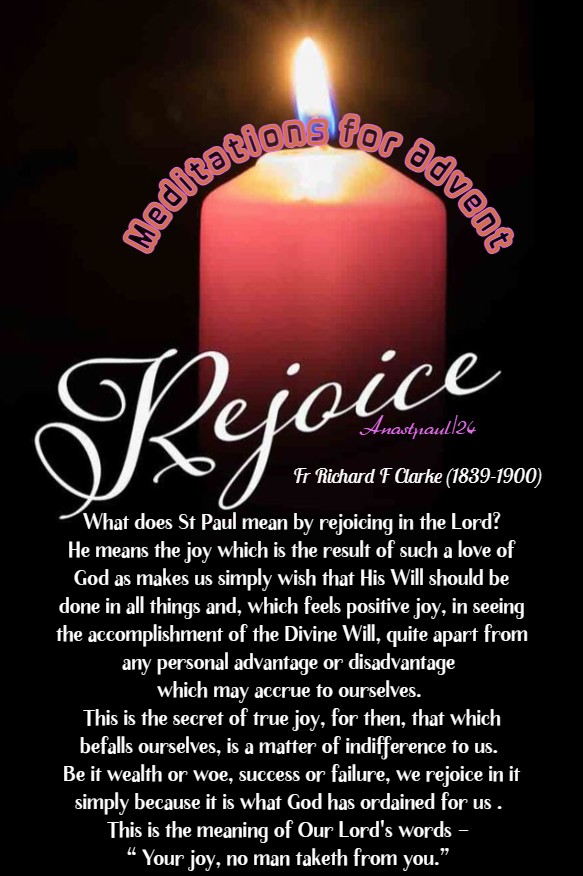
“What does St Paul mean by rejoicing in the Lord? He means the joy which is the result of such a love of God as makes us simply wish that His Will should be done in all things and, which feels positive joy, in seeing the accomplishment of the Divine Will, quite apart from any personal advantage or disadvantage which may accrue to ourselves. This is the secret of true joy, for then, that which befalls ourselves, is a matter of indifference to us. Be it wealth or woe, success or failure, we rejoice in it simply because it is what God has ordained for us . This is the meaning of Our Lord’s words – “ Your joy, no man taketh from you.”
One Minute Reflection – 11 January – “The Month of the Holy Name of Jesus and the Holy Family” – Within the Octave of Epiphany – Isaias 60:1-6; Matthew 2:1-12 – cripture search here: https://www.drbo.org/
“Arise, be enlightened, O Jerusalem, for thy Light is come and the glory of the Lord is risen upon thee.” – Isaias 60:1
REFLECTION – “The loving Providence of God determined that, in the last days He would aid the world, set on its course to destruction. He decreed that all nations should be saved in Christ.
A promise had been made to the holy Patriarch Abraham, in regard to these nations. He was to have a countless progeny, born not from his body but from the seed of faith. His descendants are, therefore, compared with the array of the stars. The father of all nations, was to hope, not in an earthly progeny but, in a progeny from above.
Let the full number of the nations now take their place in the family of the Patriarchs. Let the children of the promise, now receive the blessing in the seed of Abraham, the blessing renounced by the children of his flesh. In the persons of the Magi, let all people adore the Creator of the universe – let God be known, not in Judea only but in the whole world, so that His Name may be great in all Israel.
Dear friends, now that we have received instruction in this revelation of God’s grace, let us celebrate, with spiritual joy, the day of our first harvesting, of the first calling of the Gentiles. Let us give thanks to the merciful God, Who has made us worthy, in the words of the Apostle, to share the position of the Saints in Light, Who has rescued us from the power of darkness and brought us into the Kingdom of His beloved Son. As Isaias prophesied – the people of the Gentiles, who sat in darkness, have seen a great Light and for those who dwelt in the region of the shadow of death, a Light has dawned. He spoke of them to the Lord – The Gentiles, who do not know Thee, will invoke Thee and the peoples, who knew Thee not, will take refuge in Thee.” – St Pope Leo the Great (400-461) Father and Doctor of the Church (An excerpt from his On the Lord’s Epiphany, Sermon 3)
PRAYER – O God, Thou Who by the guidance of a star this day revealed Thy Only-begotten Son to the Gentiles, mercifully grant that we, who know Thee now by faith, may come to behold Thee in glory. Through the same Jesus Christ, Thy Son our Lord, Who lives and reigns with Thee, in the unity of the Holy Ghost, God, world without end. Amen (Collect).
Our Morning Offering – 11 January – “The Month of the Holy Name of Jesus and the Holy Family”
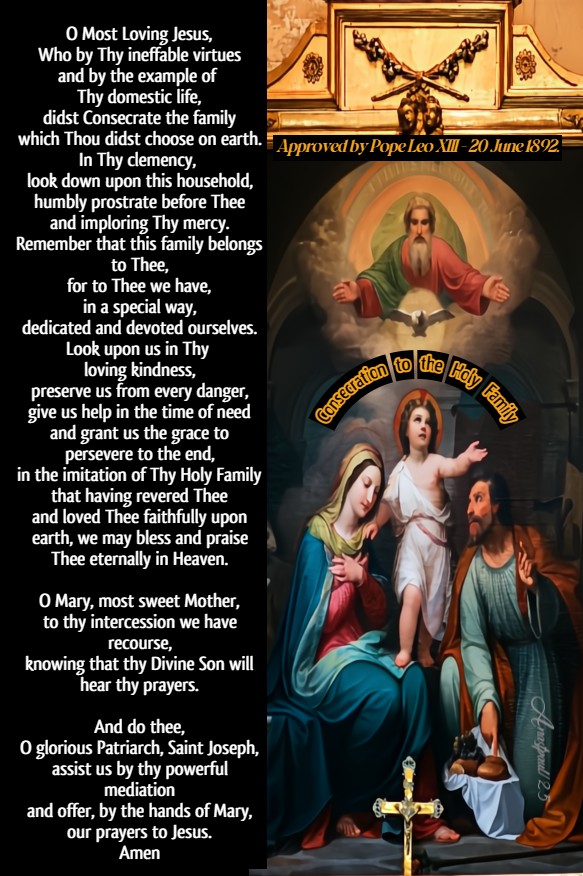
Consecration to the Holy Family Approved by Pope Leo XIII 20 June 1892
O Most Loving Jesus, Who by Thy ineffable virtues and by the example of Thy domestic life, didst Consecrate the family which Thou didst choose on earth. In Thy clemency, look down upon this household, humbly prostrate before Thee and imploring Thy mercy. Remember that this family belongs to Thee, for to Thee we have, in a special way, dedicated and devoted ourselves. Look upon us in Thy loving kindness, preserve us from every danger, give us help in the time of need and grant us the grace to persevere to the end, in the imitation of Thy Holy Family that having revered Thee and loved Thee faithfully upon earth, we may bless and praise Thee eternally in Heaven.
O Mary, most sweet Mother, to thy intercession we have recourse, knowing that thy Divine Son will hear thy prayers.
And do thee, O glorious Patriarch, Saint Joseph, assist us by thy powerful mediation and offer, by the hands of Mary, our prayers to Jesus. Amen
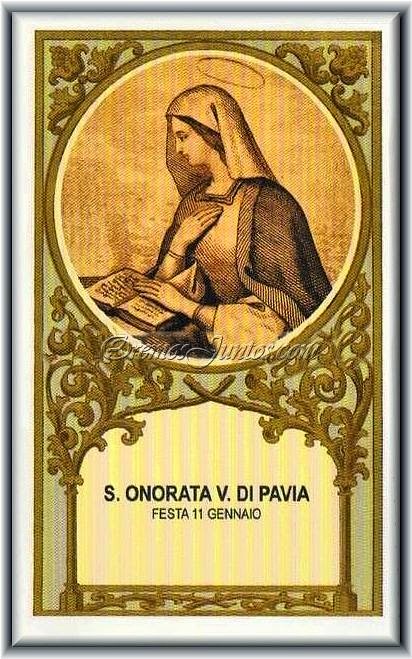
Saint of the Day – 11 January – St Honorata (Died c500) Virgin Consecrated to God and sister of Saint Epiphanius, the Bishop, in the City of Pavia in Italy. Born in Pavia and died there in c500 of natural causes. Also known as – Onorata, Honorata of Pavia..
What we know of Honorata is extracted from the Vita of Saint Epiphanius, her brother and the Bishop of Pavia, written by Saint Ennodius, who was his successor in the Episcopal See.
She was born in Pavia. It is said that she was the sister of Saints Liberata, Especiosa, Luminosa and Epiphanius. She was a Nun at the Convent of San Vicente de Pavia, where she received a good education and training from her sister Saint Liberata or Saint Luminosa. She was Consecrated by her brother Saint Epiphanius of Pavia.
Honorata lived in the Convent until the invasion of the Barbarians who captured her and later freed her through the intercession of her brother Saint Epiphanius. The image below shows Honorata being rescued by her brother.
She was always highly esteemed for her gift of prayer and her dedication to the things of God and her neighbour. She died in her Convent in Pavia. Her remains are preserved in the Convent of Santa Maria in Pavia.
Some traditions believe that Honorata was buried together with the virgins Luminosa, Liberata and Especiosa in the Basilica of San Vicente, in the Church where the remains of Bishop Saint Epiphanius were transferred. 11 January is the anniversary of this translation. Of the group of virgins mentioned, all buried in the Church of San Vicente, only Saint Honorata has been inscribed in the Roman Martyrology which simply states: “In Pavia, Honorata, Virgin.”
St Pope Hyginus (Died 142) Papal Ascension c 138. It is believed he was a Martyr for Christ and suffered during the persecution of Antoninus, although our ancient sources do not confirm this. Tradition holds that during his Papacy he determined the various prerogatives of the clergy and defined the grades of the ecclesiastical hierarchy. Hyginus also instituted Godparents at Baptism to assist the baptised during their Christian life. In addition, he decreed, that all Churches be Consecrated. His Life and Death: https://anastpaul.com/2022/01/11/saint-of-the-day-11-january-saint-pope-hyginus-died-142/
St Boadin of Ireland St Breandan of Ireland (the name is not an error) St Eithne St Fedelemia St Honorata (Died c500) Virgin St Leucius of Alexandria (Died 5th Century) Bishop Martyr
St Liberata of Pavia St Lucius the Soldier St Luminosa of Pavia St Mark the Soldier St Michael of Klopsk St Palaemon St Paldo St Peter of Alexandria St Peter of Anea St Peter the Soldier
Thought for the Day – 10 January – Meditations with Fr Richard Frederick Clarke SJ (1839-1900)
Meditations for Christmastide “The Holy Infancy” From “The Devout Year” By Fr Richard Frederick Clarke SJ (1839-1900)
“The Arrival in Bethlehem”
+1. When the Wise Men had obtained the information they needed, they wasted no further time in Jerusalem but turned their steps towards the Village of Bethlehem. Their faith was being very sorely tried. The Star had disappeared and the inhabitants of Jerusalem, instead of sharing their eagerness to find the Newborn King, seemed to be either indifferent or. positively hostile to the idea of His Presence in their midst. So Jesus, in the Blessed Sacrament, lies waiting in the Tabernacle for a visit from those whom He loves. They have no longing for Him, no desire for His Company. Only a few faithful souls go to pay their court to Him. Am I one of them?
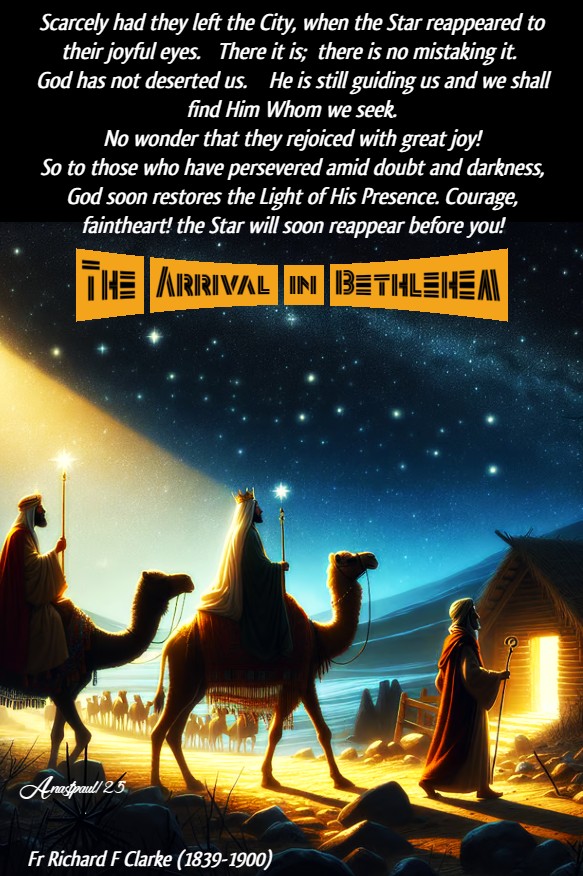
+2. Scarcely had they left the City, when the Star reappeared to their joyful eyes. There it is; there is no mistaking it. God has not deserted us. He is still guiding us and we shall find Him Whom we seek. No wonder that they rejoiced with great joy! So to those who have persevered amid doubt and darkness, God soon restores the Light of His Presence. Courage, faintheart! the Star will soon reappear before you!
+3. At length, the Star, instead of moving above them in the heavens, came nearer to earth and settled on the humble dwelling-place where Jesus and His Mother abode. What! the King of the Jews in that poverty-stricken shed? Yes, so it is; Christ scorns the gilded palace and loves the humble hut. There He is at home; thither He invites His friends to come and see how He dwells with the poor and humble of heart.
Quote/s of the Day – 10 January – Within the Octave– Isaias 60:1-6; Matthew 2:1-12 – Scripture search here: https://www.drbo.org/
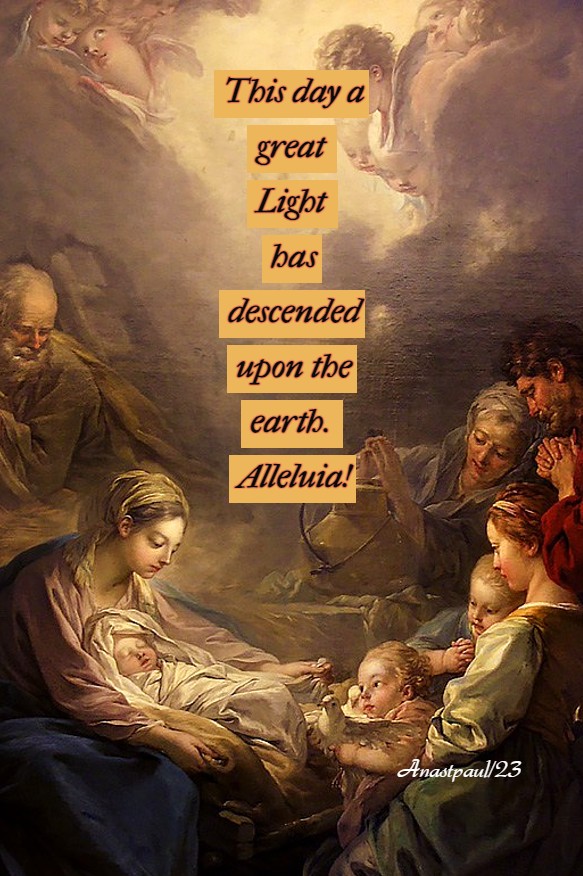
This day a great Light has descended upon the earth! Alleluia!
“Arise, be enlightened, … for thy Light is Come!”
Isaias 60:1
“ The fire of the Lord is Light Eternal; the lamps of believers are lit at this fire: “Gird your loins and light your lamps,” (Lk 12:35). It is because the days of our life are still night that a lamp is necessary. This is the fire which, according to the testimony of the disciples at Emmaus, the Lord Himself set within them: “Were not our hearts burning within us while He spoke to us on the way and opened the scriptures to us?” (Lk 24:32). He gives us evident proof of this fire’s action, enlightening man’s inmost heart. That is why the Lord will Come in fire (Is 66,15) so as to devour our faults at the resurrection, fulfil each one’s desires with His Presence and cast His Light over their merits and mysteries.”
St Ambrose (340-397) Father and Doctor of the Church
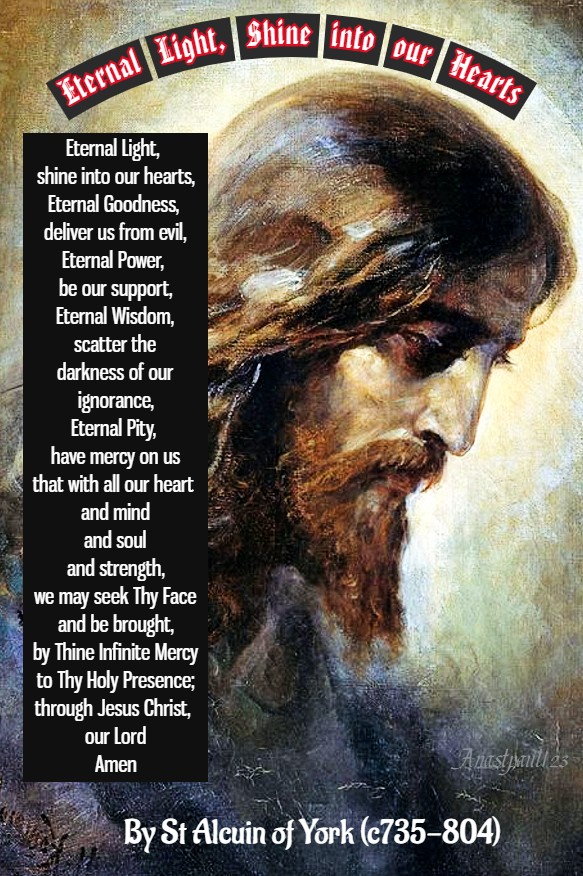
Eternal Light, Shine into our Hearts By St Alcuin of York (735-804)
Eternal Light, shine into our hearts, Eternal Goodness, deliver us from evil, Eternal Power, be our support, Eternal Wisdom, scatter the darkness of our ignorance, Eternal Pity, have mercy on us that with all our heart and mind and soul and strength, we may seek Thy Face and be brought, by Thine Infinite Mercy to Thy Holy Presence; through Jesus Christ, our Lord Amen
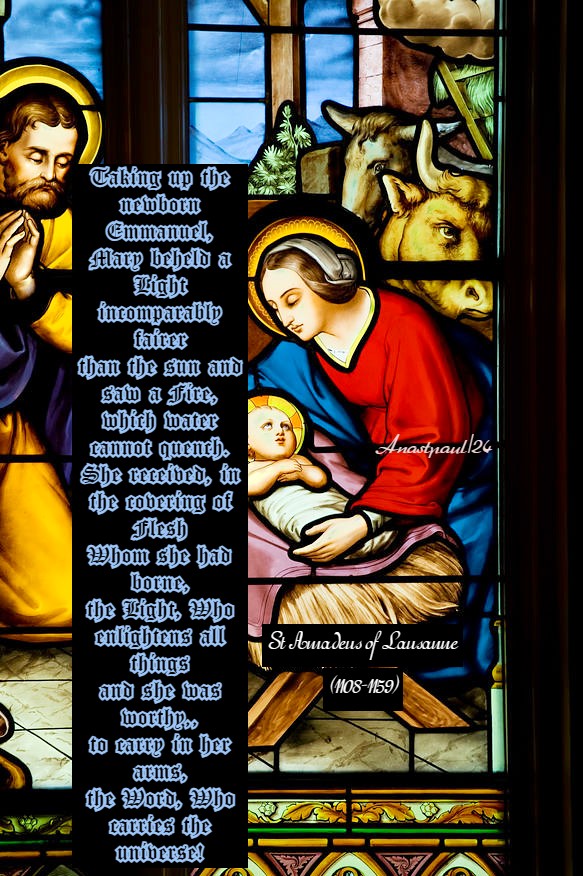
“Taking up the newborn Emmanuel, Mary beheld a Light incomparably fairer than the sun and saw a Fire, which water cannot quench. She received, in the covering of Flesh Whom she had borne, the Light, Who enlightens all things and she was worthy,, to carry in her arms, the Word, Who carries the universe!”
St Amadeus of Lausanne (1108-1159) Bishop, Cistercian Monk
One Minute Reflection – 10 January – “The Month of the Holy Name of Jesus and the Holy Family” – Within the Octave– Isaias 60:1-6; Matthew 2:1-12 – Scripture search here: https://www.drbo.org/
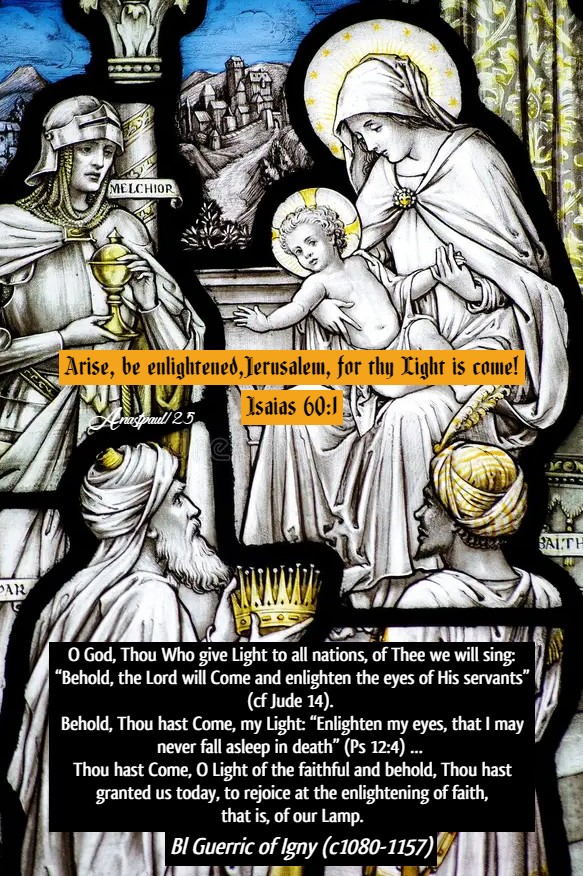
“Arise, be enlightened,Jerusalem, for thy Light is Come!” – Isaias 60:1
REFLECTION – “Arise, be enlightened Jerusalem, for thy Light is Come!” (Is 60:1). Blessed is the Light Who has “come in the Name of the Lord.” “The Lord is God and has shone upon us” (Ps 117:26-27). In virtue of it this day too, you are sanctified by the enlightening of the Church. Thanks be to Thee, true Light, Thou Who “enlighten every man coming into this world” (Jn 1:9), Thou Who, for this very purpose, hast Come into this world as a Man. Jerusalem has been enlightened, our mother (Gal 4:26), mother of all those who have deserved to be enlightened, so that she now shines upon all who are in the world. Thanks be to Thee, true Light, Thou Who hast become a Lamp to enlighten Jerusalem and to make God’s Word “a Lamp for my feet” (Ps 117:105) … For not only has the Church been enlightened: it has been “raised aloft on a candlestick” one all of gold (Mt 5:15; Ex 25:31) . The city sits on the mountain of mountains (cf Mt 5:14) … so that its Gospel may shine out far and wide, as far and as wide as the world’s empire spreads.
O God, Thou Who give Light to all nations, of Thee we will sing: “Behold, the Lord will Come and enlighten the eyes of His servants” (cf Jude 14). Behold, Thou hast Come, my Light: “Enlighten my eyes, that I may never fall asleep in death” (Ps 12:4) … Thou hast Come, O Light of the faithful and behold, Thou hast granted us today, to rejoice at the enlightening of faith, that is, of our Lamp. Grant us too, to rejoice always at the enlightening of the darkness which remains in us …
This is the way in which you should advance, O faithful soul, in order that you may cast off the darkness of this world and arrive at your home country of eternal brightness, where “your darkness will be like midday” (Is 58:10) and “night will be lit up like day” (Ps 138:12). Then indeed, then “you will see and be radiant, your heart will thrill and rejoice” (Is 60;5), when the whole earth is filled with the majesty of unbounded Light and “His glory is seen in you” (Is 60:2) … “Come and let us walk in the Light of the Lord!” (Is 2:5); as “children of Light” let us walk “from brightness to brightness, as led by the Lord” (2 Cor 3:18).” – Blessed Guerric of Igny (c1080-1157) Cistercian Abbot (3rd Sermon for Epiphany).
PRAYER – O God, Thou Who by the guidance of a star this day revealed Thy Only-begotten Son to the Gentiles, mercifully grant that we, who know Thee now by faith, may come to behold Thee in glory. Through the same Jesus Christ, Thy Son our Lord, Who lives and reigns with Thee, in the unity of the Holy Ghost, God, world without end. Amen (Collect).
Our Morning Offering – 10 January – “The Month of the Holy Name of Jesus and the Holy Family” –Within the Epiphany Octave
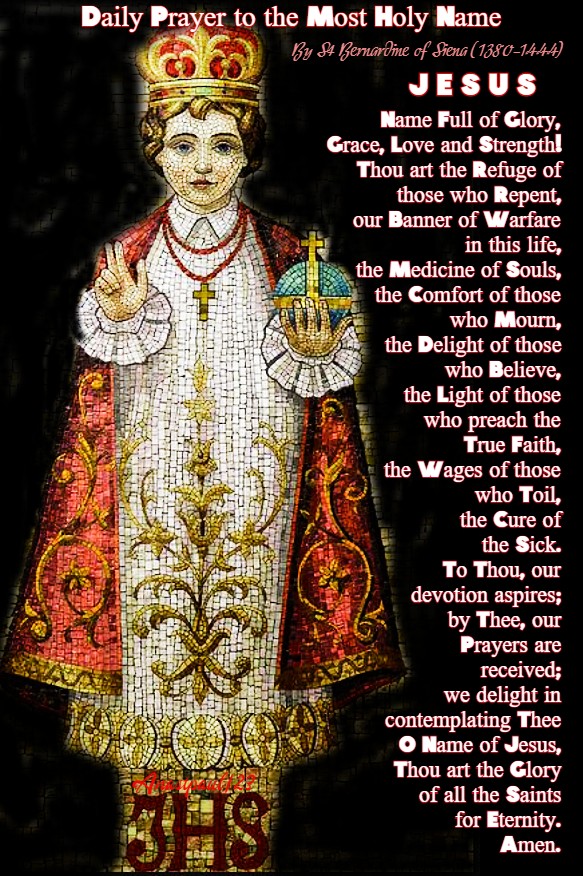
Daily Prayer to the Most Holy Name By St Bernardine of Siena (1380-1444) Apostle of the Most Holy Name
Jesus, Name full of glory, grace, love and strength! Thou art the Refuge of those who repent, our Banner of warfare in this life, the Medicine of souls, the Comfort of those who mourn, the Delight of those who believe, the Light of those who preach the True Faith, the Wages of those who toil, the Cure of the sick. To Thou, our devotion aspires; by Thee, our prayers are received; we delight in contemplating Thee. O Name of Jesus, Thou art the glory of all the Saints for eternity. Amen
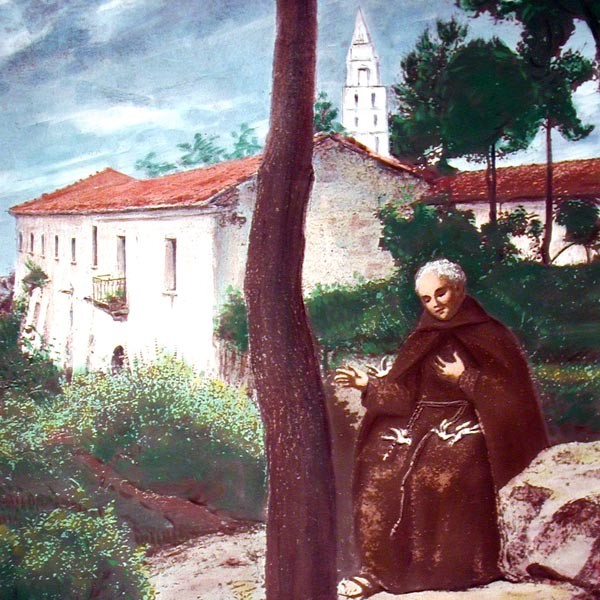
Saint of the Day – 10 January – Blessed Giles of Lorenzana OFM (1443-1518) Lay Brother of the Friars Minor, Hermit, Ascetic, Mystic, Apostle of the all in need. Born in 1443 in Laurenzana, Italy as Bernardin de Bello and died on 10 January 1518 in Laurenzana, Italy of natural causes. Patronage – of the City and Diocese of Laurenzana, Italy. Also known as – Giles di Bello, Bernardi … Bernardin … Egidi … Egidius … Blessed Giles was Beatified on 27 June 1880 by Pope Leo XIII. His body is Incorrupt.
Born of pious parents at Lorenzana in Italy, Giles received the name of Bernardine in Baptism. Even as a youth he received the gift of devotion in so eminent a degree that at prayer, his countenance glowed with fervour and he was often seen raised a foot or more from the floor. This attracted general attention and people came from the surrounding places in order to witness Giles at prayer.
The devout young man, however, desired nothing more than to serve God in seclusion. In order, therefore, to withdraw from the attention of the world and also, to progress in Christian perfection, he asked for admission as a Lay Brother at the Convent of the Friars Minor. This request was granted. He was given the name Giles after the saintly Brother Giles, one of the first companions of St Francis of Assisi.
Burning with love for God, Giles knew no greater joy in the Order than to devote himself to the contemplation of heavenly things and, since his superiors were convinced that he was doing great things for the honour of God and the salvation of souls, they permitted him to live in a hermitage close to the Convent.
Here he lived only for God, to Whom he sacrificed his body by severe fasting, and his soul by constant prayer. He overcame the attacks of hell which, like many other great Saints, he had frequently to endure, without ever yielding, for an instant. When he had finished his course, God called him to the eternal union on 10 January 1518.
The Convent bells rang by themselves when Giles of Lorenzana died and a very great concourse of people flocked to venerate him. Many miracles occurred at his grave. Several years after his death his body was found still perfect and Incorrupt, although he had been buried in a very damp place which should have promoted decay. The veneration which had been accorded to him since time immemorial was approved by Pope Leo XIII.
Even today, the cult of Blessed Egidio is very much alive among the people of the central-northern area of Basilicata.
Thought for the Day – 9 January – Meditations with Fr Richard Frederick Clarke SJ (1839-1900)
Meditations for Christmastide “The Holy Infancy” From “The Devout Year” By Fr Richard Frederick Clarke SJ (1839-1900)
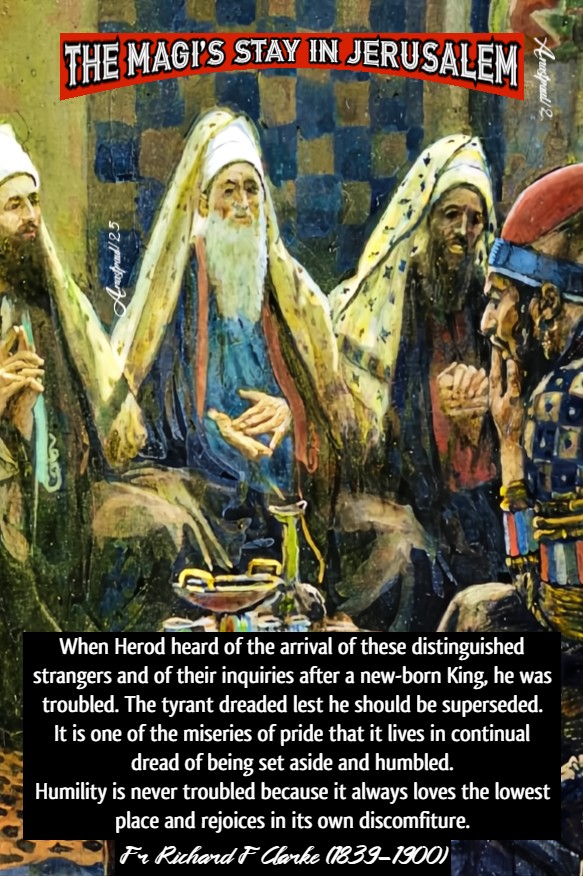
“The Magi’s Stay in Jerusalem”
+I. When the Star disappeared, the Magi were not disconcerted. If God saw fit to withdraw His direct and extraordinary supernatural guidance, they must fall back on the ordinary means. So they sought for information from those on the spot, as to the birthplace of the King of the Jews. Sometimes God leads us by His holy inspirations, sometimes He leaves us to discover His Will by natural means. We cannot expect to live always in the blaze of supernatural Light, showing us the way
+2. When Herod heard of the arrival of these distinguished strangers and of their inquiries after a new- born King, he was troubled. The tyrant dreaded lest he should be superseded. It is one of the miseries of pride that it lives in continual dread of being set aside and humbled. Humility is never troubled because it always loves the lowest place and rejoices in its own discomfiture.
+3. The Priests, when consulted, declared with one voice that Bethlehem is to be the birthplace of the King of the Jews. Yet they manifested no desire to follow the Magi thither. Their knowledge of the truth created in them, no wish to carry it into practice. They could teach others but they did not themselves act on the lessons they taught. How often have I done the same! I preach so well: I practise so ill!
Quote/s of the Day – 9 January – “The Month of the Holy Name of Jesus and the Holy Family”
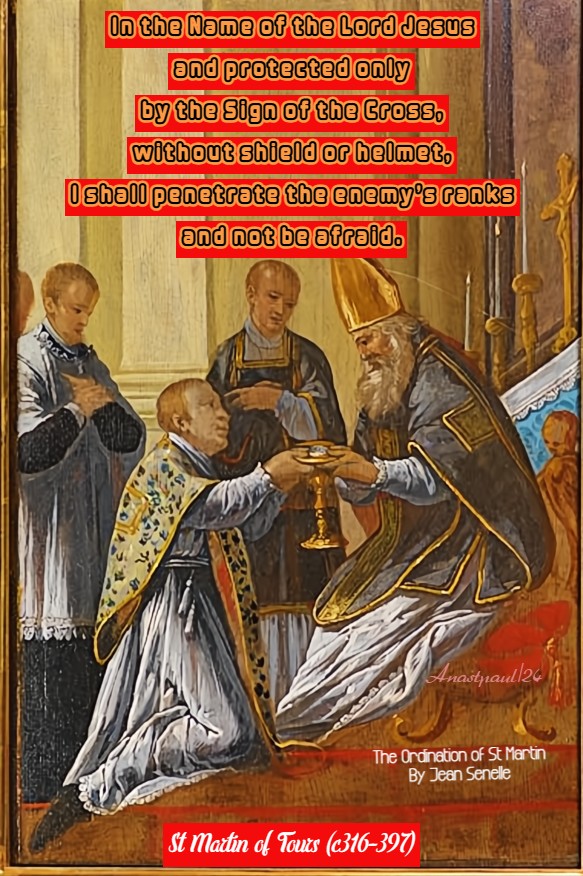
“In the Name of the Lord Jesus and protected only by the Sign of the Cross, without shield or helmet, I shall penetrate the enemy’s ranks and not be afraid.”
St Martin of Tours (c 316-397)
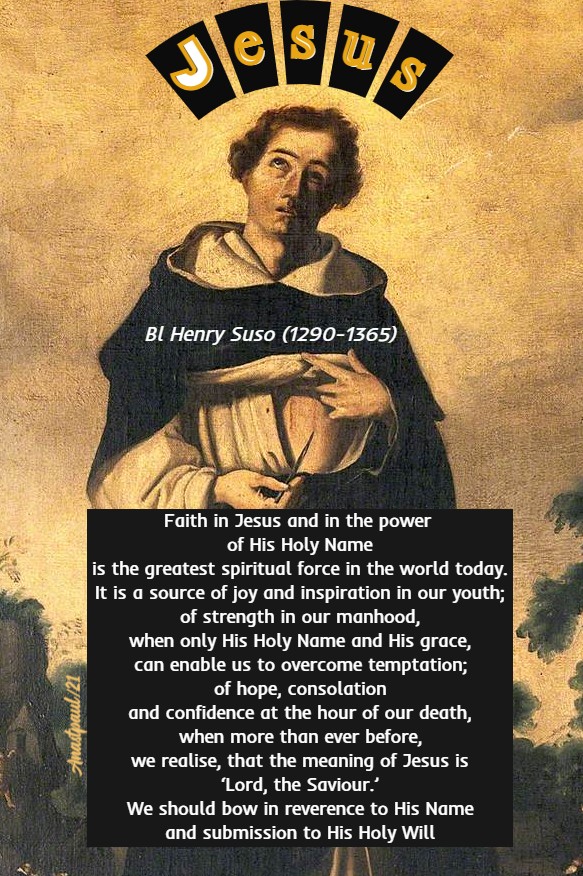
“Faith in Jesus and in the power of His Holy Name is the greatest spiritual force in the world today. It is a source of joy and inspiration in our youth; of strength in our manhood, when only His Holy Name and His grace, can enable us to overcome temptation; of hope, consolation and confidence at the hour of our death, when more than ever before, we realise, that the meaning of Jesus is ‘Lord, the Saviour.’ We should bow in reverence to His Name and submission to His Holy Will.”
Bl Henry Suso OP (1290-1365)
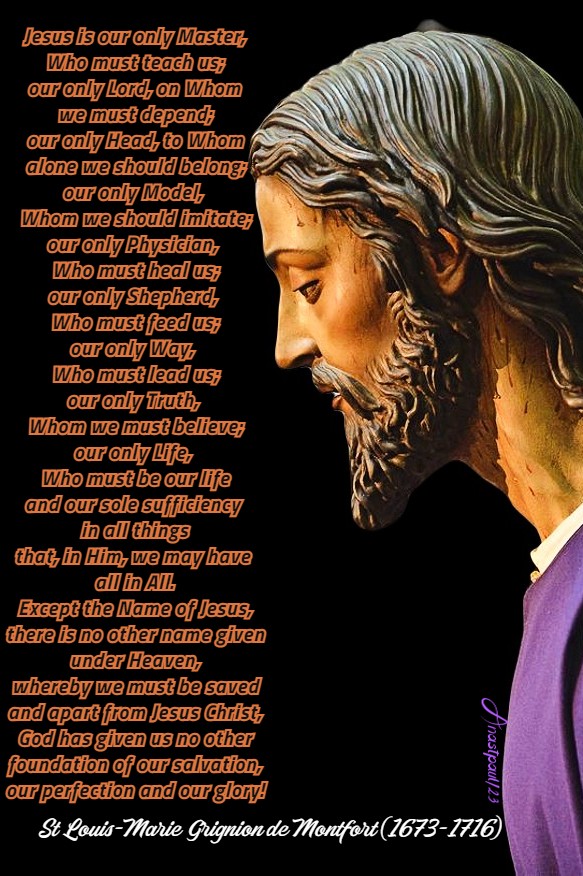
“[Jesus] is our only Master, Who must teach us; our only Lord, on Whom we must depend; our only Head, to Whom alone we should belong; our only Model, Whom we should imitate; our only Physician, Who must heal us; our only Shepherd, Who must feed us; our only Way, Who must lead us; our only Truth, Whom we must believe; our only Life, Who must be our life and our sole sufficiency in all things that, in Him, we may have all in All. Except the Name of Jesus, there is no other name given under Heaven, whereby we must be saved and apart from Jesus Christ, God has given us no other foundation of our salvation, our perfection and our glory! ”
St Louis-Marie Grignion de Montfort (1673-1716)
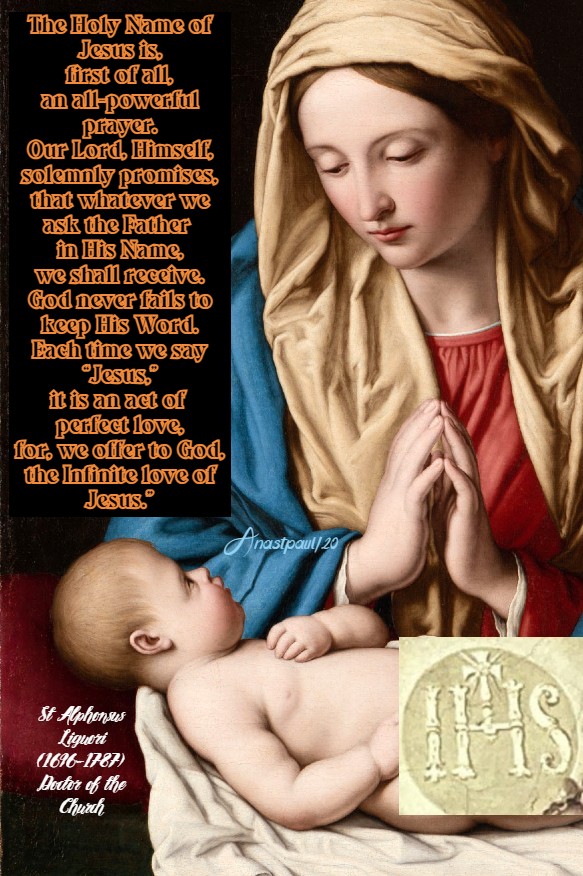
“The Holy Name of Jesus is, first of all, an all-powerful prayer. Our Lord, Himself, solemnly promises, that whatever we ask the Father in His Name, we shall receive. God never fails to keep His Word. Each time we say “Jesus,” it is an act of perfect love, for, we offer to God, the Infinite love of Jesus.”
St Alphonsus Liguori (1696-1787) Doctor of the Church
One Minute Reflection – 9 January – “The Month of the Most Holy Name of Jesus and of the Holy Family”– Within the Octave of The Epiphany –Isaias 60:1-6; Matthew 2:1-12 – Scripture search here: https://www.drbo.org/
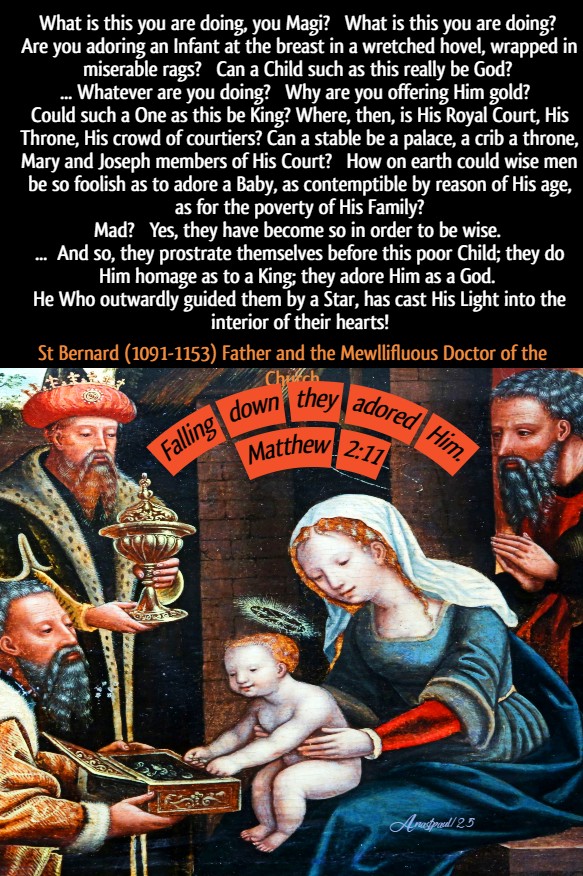
“Falling down they adored Him” – Matthew 2:11
REFLECTION – “God’s intention was not only to come down to earth but to become known there; not only to be born but to be recognised. In fact, it is with this recognition in mind that we hold this celebration of the Epiphany, the great day of His manifestation. For it was today that the Magi came from the East in search of the Sun of Justice at its rising (Mal 3:20), He of Whom we read: “Behold a Man Whose Name is the Orient,” (Zec 6:12 ). Today they have adored the Virgin’s newborn Child, following the guidance of a New Star. What great cause for joy do we not find here, my brethren, as also in those words of the Apostle Paul: “The kindness and generous love of God our Saviour have appeared,” (Tit 3:4)…
What is this you are doing, you Magi? What is this you are doing? Are you adoring an Infant at the breast in a wretched hovel, wrapped in miserable rags? Can a Child such as this really be God? Yet, “The Lord is in His holy temple, the Lord’s throne is in Heaven.” (Ps 11:4) while you are looking for Him in a common stable, held in His Mother’s arms! Whatever are you doing? Why are you offering Him gold? Could such a One as this be King? Where, then, is His Royal Court, His Throne, His crowd of courtiers? Can a stable be a palace, a crib a throne, Mary and Joseph members of His Court? How on earth could wise men be so foolish as to adore a Baby, as contemptible by reason of His age, as for the poverty of His Family?
Mad? Yes, they have become so in order to be wise. The Holy Spirit has taught them already what the Apostle Paul would later proclaim: “Whoever would be wise, let him become a fool. For since the world, in all its wisdom, did not come to know God in His Wisdom, it has pleased God to save those who believe, through the foolishness of the Gospel we proclaim, (Cf 1 Cor 1:21)… And so, they prostrate themselves before this poor Child; they do Him homage as to a King; they adore Him as a God. He Who outwardly guided them by a Star, has cast His Light into the interior of their hearts!” – St Bernard (1091-1153) Cistercian Monk, Father and Doctor of the Church (1st Sermon for the Epiphany).
PRAYER – O God, Thou Who by the guidance of a star this day revealed Thy Only-begotten Son to the Gentiles, mercifully grant that we, who know Thee now by faith, may come to behold Thee in glory. Through the same Jesus Christ, Thy Son our Lord, Who lives and reigns with Thee, in the unity of the Holy Ghost, God, world without end. Amen (Collect).
Our Morning Offering – 9 January – Within the Octave of Epiphany – “The Month of the Most Holy Name of Jesus”
The Love of Thy Name By Thomas à Kempis CRSA (1380-1471) The Imitation of Christ (Book 3 Ch 26:1-4)
My God, Sweetness beyond words, make bitter all the carnal comfort which draws me from love of the eternal and lures me to its evil self, by the sight of some delightful good in the present. Let it not overcome me, my God. Let not flesh and blood conquer me. Let not the world and its brief glory deceive me, nor the devil trip me by his craftiness. Give me courage to resist, patience to endure and constancy to persevere. Give me the soothing unction of Thy spirit, rather than all the consolations of the world and in place of carnal love, infuse into me, the love of Thy Name. Amen
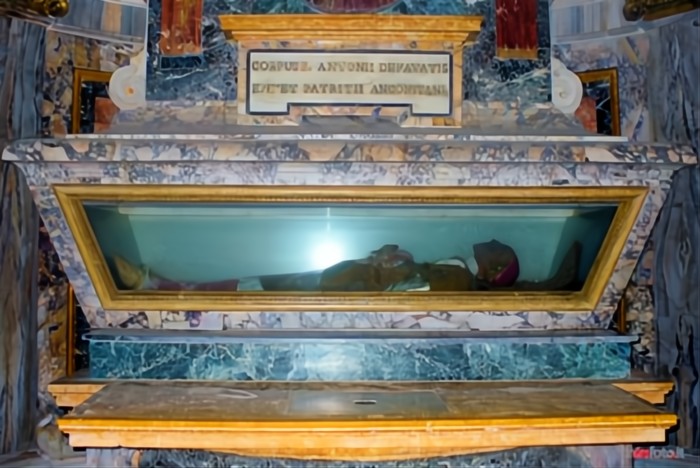
Saint of the Day – 9 January – Blessed Antony Fatati (c1410-1484) Bishop, holding many illustrious Papal appointments for a few Popes in succession. Blessed Antony was austere to himself but generous towards the poor. As the long-serving Bishop of Teramo and then of Ancona, Antony displayed the perfect example of a zealous and loving shepherd. Born in c1410 in Ancona, in the Marches, Italy and died there on 9 January 1484 of natural causes, aged around 74 years. Additional Memorial – 2 September in Ancona. Blessed Antony was Beatified by Pope Pius VI on 9 May 1795. Also known as – Anthony of Teramo, Anthony of Ancona, Antoine… Antonio… His Body is Incorrupt.
Blessed Antony Fatati was born in Ancona to a noble family. He studied in Bologna, Italy and, after Ordination, was appointed a Canon and vicar of the Vatican Chapter of St Peter’s Basilica.
He was then appointed as a senior Chaplain and Cleric of the Apostolic Camera (Treasury) in the Roman Curia, the General Treasurer of the Marches and Vicar General of that Province.
In 1450 he was elected to the Episcopal See of Teramo and, in 1463, of Ancona. In between these elections, in 1456, the King of Naples Alfonso V of Aragon, became so impressed with Antony, the King asked him to be one of his Councilors.
In his long and fruitful pastoral activity, Blessed Antony distinguished himself for his prudence, equanimity, austerity and generosity. He was a shepherd attentive to the needs of his people, whom he guided with wisdom and firmness. He worked to promote charity and social justice and to defend the Catholic Faith.
He was also a man of great culture and profound devotion and piety, devoting himself to prayer and meditation and was an example of Christian life for all who knew him.
Blessed Antony died in his Diocese on 9 January 1484. He was interred in the Diocesan Cathedral. In 1529 his body were found incorrupt after their exhumation. In 1795 a new sarcophagus was commissioned in order to display Blessed Antony’s Incorrupt body for the veneration of the faithful.
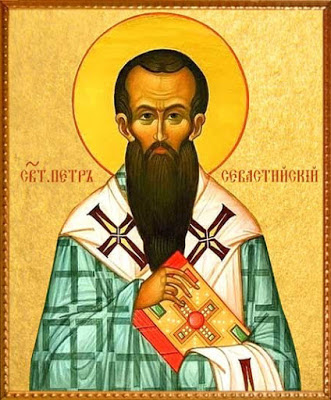
St Peter of Sebaste (c340-c391) Bishop of Sebaste in Lesser Armenia. Member of the glorious family of Saints – He was the younger brother of Basil the Great, Gregory of Nyssa, the famous Christian Hermit Naucratius and Macrina the Younger and a close friend of Gregory of Nazianzen, all Saints. Of course, Basil and Gregory of Nazianzen are both Doctors too. St Pete‘r’s Biography: https://anastpaul.com/2021/01/09/saint-of-the-day-9-january-st-peter-of-sebaste-c-340-c-391-bishop/
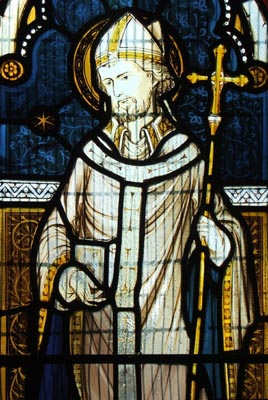
Blessed Antony Fatati (c1410-1484) Bishop. His Body is Incorrupt. St Brithwald of Canterbury St Eustratius of Olympus Bl Franciscus Yi Bo-Hyeon St Honorius of Buzancais
St Marcellinus of Ancona (Died c577) The 5th Bishop of Ancona, Italy. Patronages – against fire (a raging fire ceased by St Marcellinus waving his prayer book at it; the book survived the fire with only slight damage; afterwards, people who touched it, while praying, were cured of ailments), of Ancona, Italy. The Roman Martyrology reads: “At Ancona, St Marcellinus, Bishop, who, according to St Gregory the Great, miraculously delivered that City from destruction by fire.” Holy Marcellinus: https://anastpaul.com/2024/01/09/saint-of-the-day-9-january-saint-marcellinus-of-ancona-died-c577-bishop/
St Marciana Bl Martinus In Eon-min St Maurontius St Nearchus St Paschasia of Dijon St Philip Berruyer St Polyeucte
Martyrs of Africa – 21 Saints: A group of 21 Christians murdered together for their faith in the persecutions of Decius. The only details to survive are 14 of their names – Artaxes, Epictetus, Felicitas, Felix, Fortunatus, Jucundus, Pictus, Quietus, Quinctus, Rusticus, Secundus, Sillus, Vincent and Vitalis. They were Martyred in c 250.
Martyrs of Antioch – 6 Saints: A group of Christians Martyred together during the persecutions of Diocletian – Anastasius, Anthony, Basilissa, Celsus, Julian and Marcionilla.
Thought for the Day – 8 January – Meditations with Fr Richard Frederick Clarke SJ (1839-1900)
Meditations for Christmastide “The Holy Infancy” From “The Devout Year” By Fr Richard Frederick Clarke SJ (1839-1900)
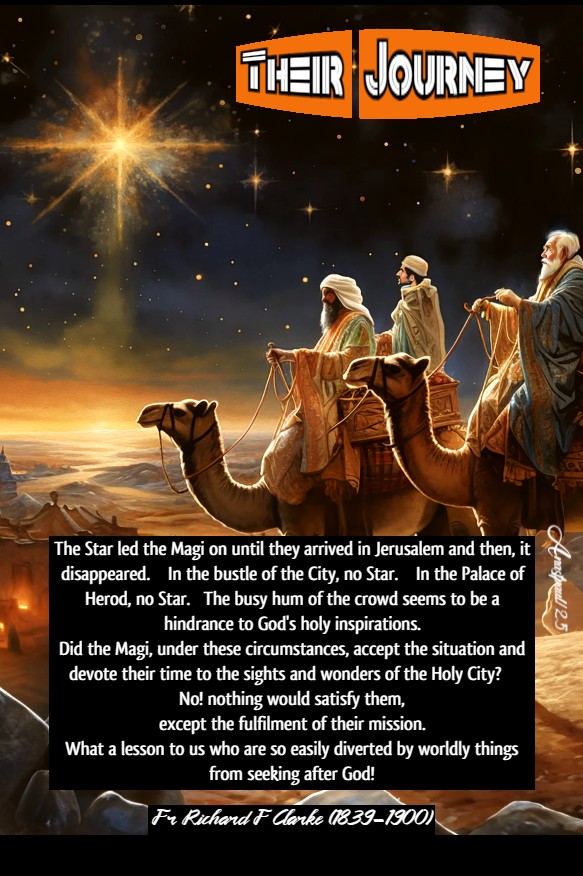
“Their Journey”
+1. The journey of the Magi from their own Country to Palestine, just because a Star appeared in a certain quarter of the heavens, was very like a fool’s errand. Was a mere floating tradition a sufficient ground for undertaking a long, arduous and costly journey? Were not their duties at home of more importance and had they not a greater claim than this strange apparition which tempted them away? What is folly to man is often wisdom to God. How often have similar arguments been used to deter Protestants from making their submission to the Church and, to dissuade Catholics, from Consecrating themselves to God! Perhaps I may sometimes have followed the dictates of mere worldly wisdom, neglecting supernatural grace?
+2. The Star led the Magi on until they arrived in Jerusalem and then, it disappeared. In the bustle of the City, no Star. In the Palace of Herod, no Star. The busy hum of the crowd seems to be a hindrance to God’s holy inspirations.
+3. Did the Magi , under these circumstances, accept the situation and devote their time to the sights and wonders of the Holy City? No! nothing would satisfy them, except the fulfilment of their mission. What a lesson to us who are so easily diverted by worldly things from seeking after God!
Quote/s of the Day – 8 January – Within the Octave of the Epiphany
“Rather blessed are those who hear the Word of God and keep it.’”
Luke 11:28
“I Am the Light of the world. Whoever follows Me will never walk in darkness but will have the Light of Life.”
John 8:12
“Our hearts were made for Thee, O God And restless must they be Until, O God, this grace accord, Until they rest in Thee!”
St Augustine (354-430) Father and Doctor of the Church
“The obedience of the Star calls us to imitate its humble service: to be servants, as best we can, of the grace which invites all men to find Christ.”
St Pope Leo the Great (400-461) Father and Doctor of the Church
“Humility is the mother of many virtues because, from it are born: obedience, fear, reverence, patience, modesty, meekness and peace. He who is humble easily obeys everyone, fears to offend anyone, is at peace with everyone, is kind to all!”
St Thomas of Villanova OSA (1488-1555)
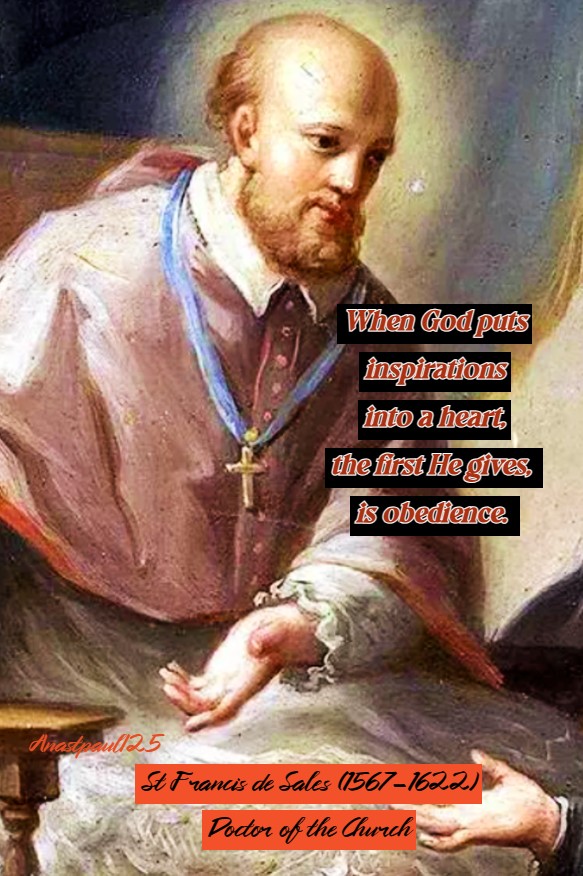
“When God puts inspirations into a heart, the first He gives, is obedience. ”
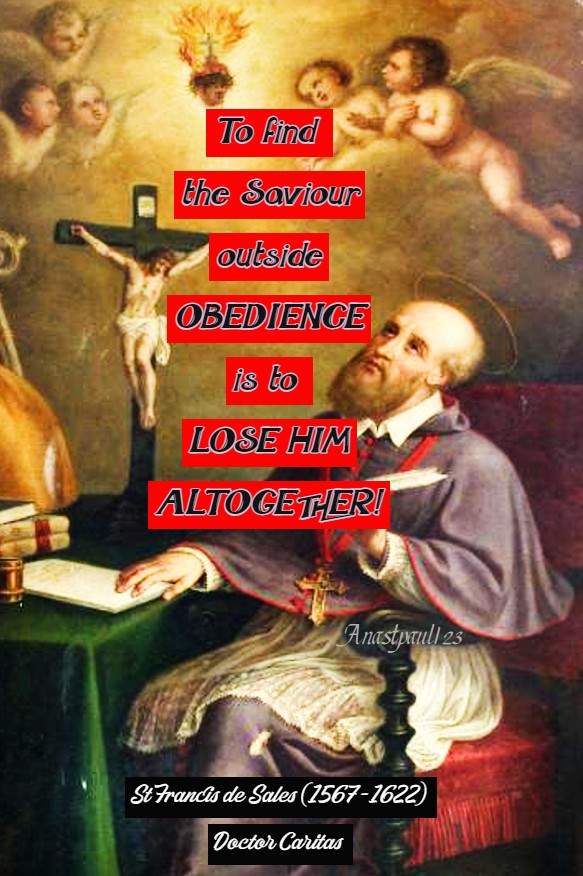
“To find the Saviour outside obedience, is to lose Him altogether.”
St Francis de Sales (1567-1622) Doctor of the Church
One Minute Reflection – 8 January – “The Month of the Holy Name of Jesus and the Holy Family” – Within the Octave of The Epiphany –Isaias 60:1-6; Matthew 2:1-12 – Scripture search here: https://www.drbo.org/
“… They fell down and worshipped him. Then, opening their treasures, they offered him gifts, gold and frankincense and myrrh.” … Matthew 2:11
REFLECTION – “But if, with careful thought, we wish to see how their threefold kind of gift, is also offered by all who come to Christ, with the foot of faith — is not the same offering repeated in the hearts of true believers? For he who acknowledges ,Christ the King of the universe brings Gold from the treasure of his heart, he who believes the Only-begotten of God to have united man’s true nature to Himself, offers Myrrh and he who confesses Him, in no wise, inferior to the Father’s Majesty, worships Him in a manner, with Incense.” … St Pope Leo the Great (400-461) Father and Doctor of the Church
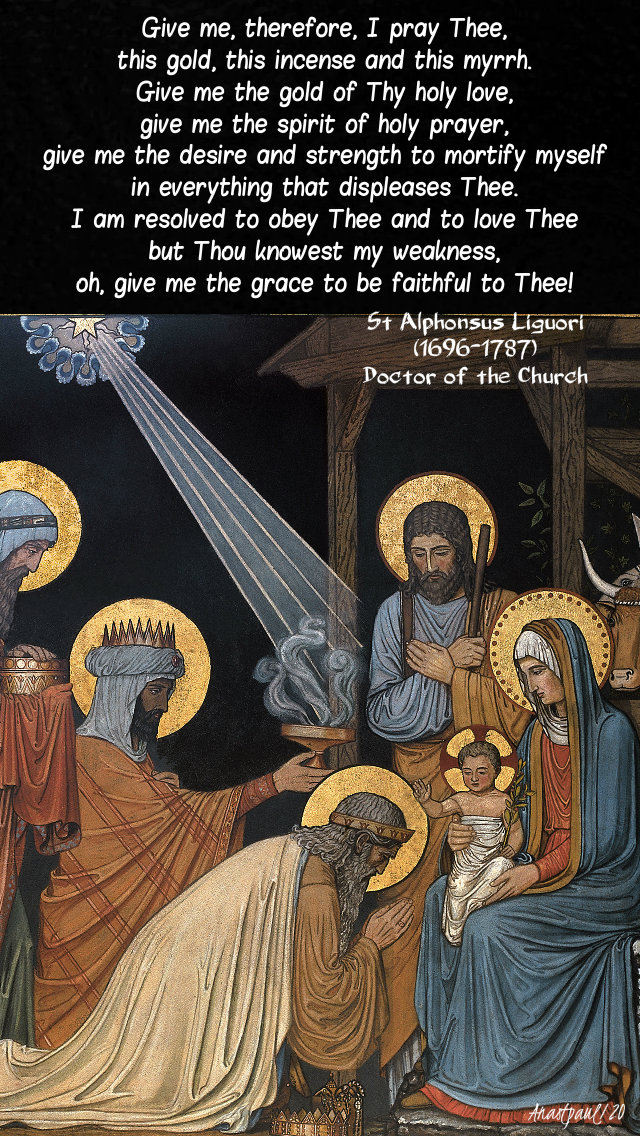
PRAYER – “Give me, therefore, I pray Thee, this gold, this incense and this myrrh. Give me the gold of Thy holy love, give me the spirit of holy prayer, give me the desire and strength to mortify myself in everything that displeases Thee. I am resolved to obey Thee and to love Thee but Thou knowest my weakness, oh, give me the grace to be faithful to Thee!” … St Alphonsus Liguori (1696-1787) Doctor of the Church
Our Morning Offering – 8 January – “The Month of the Most Holy Name of Jesus and of the Holy Family” – Within the Octave of The Epiphany
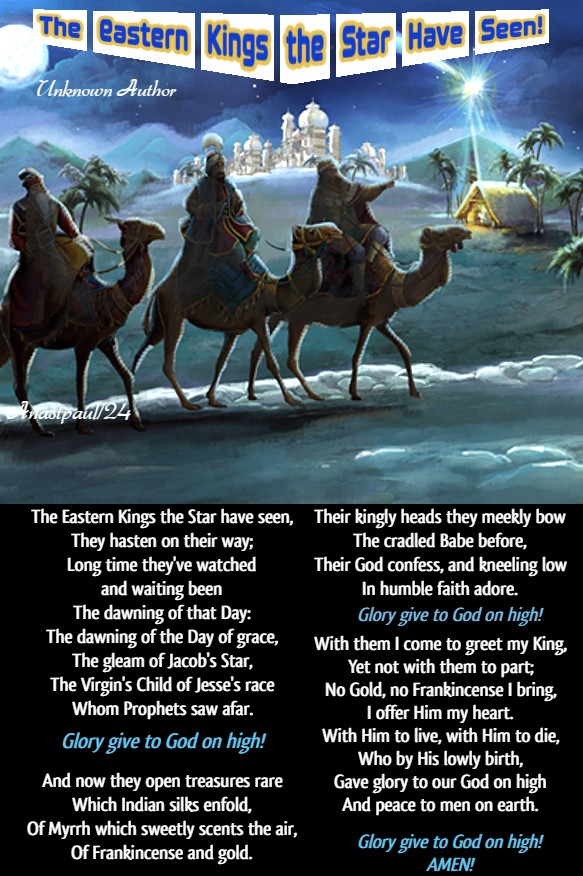
The Eastern Kings the Star Have Seen! Unknown Author
The Eastern Kings the Star have seen, They hasten on their way; Long time they’ve watched and waiting been The dawning of that Day: The dawning of the Day of grace, The gleam of Jacob’s Star, The Virgin’s Child of Jesse’s race Whom Prophets saw afar.
Glory give to God on high!
And now they open treasures rare Which Indian silks enfold, Of Myrrh which sweetly scents the air, Of Frankincense and gold. Their kingly heads they meekly bow The cradled Babe before, Their God confess, and kneeling low In humble faith adore.
Glory give to God on high!
With them I come to greet my King, Yet not with them to part; No Gold, no Frankincense I bring, I offer Him my heart. With Him to live, with Him to die, Who by His lowly birth, Gave glory to our God on high And peace to men on earth.
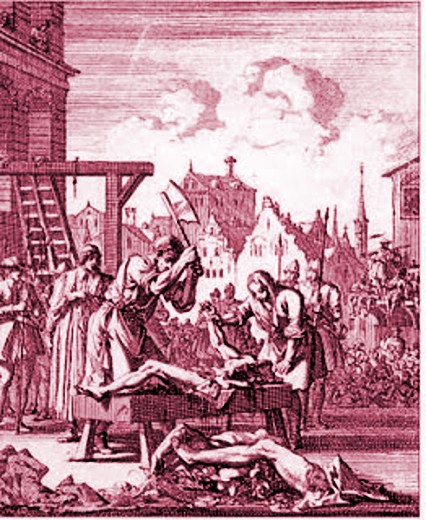
Saint of the Day – 8 January – Blessed Edward Waterson (Died 1593) Priest and Martyr, Missionary to his own beleagured English Catholic people under the horrors set in motion by Henry VIII and now being perpetuated by his daughter Elizabeth I. Edward was born in London, England and died by being hanged, drawn and quartered on 8 January 1593 at Newcastle-on-Tyne, England. The prison horses refused to drag Edward to the scaffold and when the guards finally got him there, the ladder for climbing to the scaffold platform, of its own volition jerked to and fro to keep them from climbing it, until Edward himself, made the Sign of the Cross over it and it settled into its position. Additional Memorial – 29 October as one of the Martyrs of Douai.
Hung, drawn and quartered
Little is known of the English Martyr, Blessed Edward Waterson, before 1588. In that year, this young English Protestant, apparently a man of some status, stopped off at Rome on the way back from a trip he had made to Turkey in the company of some British merchants. He had an unusual story to tell about the Turkish visit. There he had met a wealthy Turk who had taken such a liking to him that he offered him the hand of his daughter in marriage. With one proviso. If he chose the girl, he must first convert to Islam.
Whether the young lady appealed to Edward, the proviso did not. Sorry, he answered, he would not abandon his faith in Christ. Travelling home Edward stopped in Rome and there he must have told the tale of his refusal at the English College in Rome. This college was an ancient hospice for British pilgrims which, in 1579 had also been turned into a Seminary for the training of English Catholic young men for the secular Priesthood and the dangerous Apostolate of the English mission. Even though now a Seminary, the college still had accommodations for pilgrims and visitors to Rome. Edward’s name is entered in its Pilgrims’ Book from 29 November to 11 December 1588.
For the young Englishman who had refused to convert to Islam, that was a momentous fortnight. While at the College, he asked to be instructed in the Catholic beliefs. He received the instructions and converted to the Catholic faith of his English forefathers. Whether this decision was impromptu or long-maturing is not known.
One of the Martyrs of Douai
Edward was not even content to remain a layman. In December he left Rome for the English College at Reims, France, to enroll as a student for the Priesthood. On completing his training, he was Ordained a Priest on 11 March 1592. He had not shown himself to be a brilliant student but he was acknowledged to be a model of humility and self-denial.
In June 1592, the Church authorities at Reims sent the new Priest back to England to begin his work. He knew, of course, that he was courting death. Particularly over the past seven years, many English Douai Seminary Priests had been executed for treason as a result of a law enacted against Priests in 1585. But so great was Edward’s zeal that he declared that if given the choice between owning all France for a year or going to England on the mission, he would choose the latter.
Father Waterson’s Apostolate as a Missionary was very creditable. It was also very brief., around a year. In the summer of 1593 he was arrested and put in harsh confinement at Newcastle-upon-Tyne. At Newcastle, too, he was tried and condemned to death for functioning as a Priest. Execution was set for 7 January 1594.
Those who attended his execution at Newcastle reported some unusual happenings. Catholic Archdeacon Trollope said that when the young Priest was tied down to the hurdle (the wicker sledge used to drag traitors to the place of execution), the horses refused to pull it, so he had to be walked to the scaffold. At the gallows, too, the ladder by which he had to mount the platform began to jerk free and twist about on its own. Only when Father Waterson made the Sign of the Cross over it did it come to rest against the platform. According to the law of execution in treasonable cases, his body was cut down from the hangman’s rope before he was dead, disemboweled and cut into four quarters.
Edward Waterson was Beatified by Pope Pius XI in 1929. Twice tested for his Faith in the Lord Jesus Christ, he had passed the test. He is an interesting illustration of how varied in background were the men and women who were Martyred during the English Reformation. Their witness to the Faith is a many-splendoured memorial!
St Apollinaris the Apologist (Died 2nd Century) Confessor, Defender of the True Faith against heretics, Writer, renowned Scholar. Bishop, Apologist. The Roman Martyrology states: “In Hierapolis in Phrygia, in today’s Turkey, Saint Apollinaris, Bishop, who shone under the Emperor Marcus Aurelius for doctrine and holiness.” A Courageous and Zealous Life: https://anastpaul.com/2022/01/08/saint-of-the-day-8-january-saint-apollinaris-the-apologist-died-2nd-century/
St Athelm of Canterbury St Atticus of Constantinople St Carterius of Caesarea
Blessed Edward Waterson (Died 1593) Priest and Martyr
St Ergnad of Ulster St Erhard of Regensburg St Eugenian of Autun St Garibaldus of Regensburg St Gudule of Brussels St Helladius St Julian of Beauvais St Lucian of Beauvais St Maximian of Beauvais St Maximus of Pavia Bl Nathalan of Aberdeen St Patiens of Metz St Pega of Peakirk
St Severinus of Noricum (c410-482) Abbot, Hermit, Missionary, the “Apostle to Noricum” (Noricum is the Latin name for the Celtic Kingdom or Federation of Tribes which included most of modern Austria and part of Slovenia). He established Monasteries and refuge centres for those stricken by war. Severinus was graced with the gifts of prophecy and miracles. Biography: https://anastpaul.com/2023/01/08/saint-of-the-day-8-january-saint-severinus-of-noricum-c-410-482-the-apostle-to-noricum/
St Theophilus the Martyr St Thorfinn St Wulsin of Sherborne
Martyrs of Greece – 9 Saints: A group of Christians honoured in Greece as Martyrs, but we have no details about their lives or deaths – Euctus, Flix, Januarius, Lucius, Palladius, Piscus, Rusticus, Secundus and Timotheus
Martyrs of Terni – 4 Saints: A group of Christian soldiers in the imperial Roman army. Executed during the persecutions of Emperor Claudius. Martyrs. – Carbonanus, Claudius, Planus and Tibudianus. They were martyred in 270 in Terni, Italy.
Thought for the Day – 7 January – Meditations with Fr Richard Frederick Clarke SJ (1839-1900)
Meditations for Christmastide “The Holy Infancy” From “The Devout Year” By Fr Richard Frederick Clarke SJ (1839-1900)
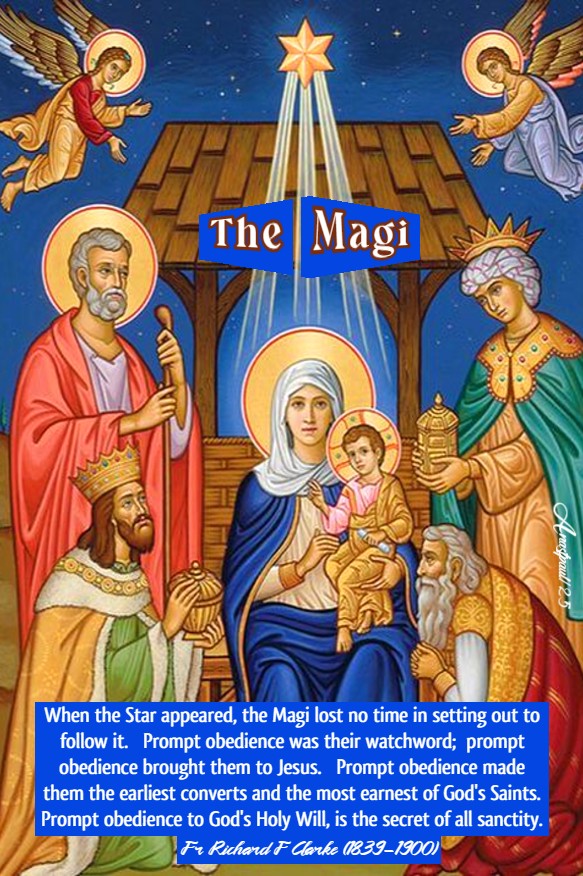
“The Magi”
+1. The three Kings who came to do honour to Jesus on the Feast of the Epiphany are also called the three Magi , or three Wise Men They were the rulers of an eastern tribe at some distance from Bethlehem. Like Abraham, they left home and country at God’s command. If Abraham thus deserved to be called the Friend of God and Father of the faithful, so these Wise Men were not only the subjects but also, the friends of Christ and the spiritual fathers of all faithful Catholics. We are their spiritual offspring; the innumerable company of Christians in Heaven willall have to thank them for having led the way to Jesus.
+2. What led them to this long and apparently aimless journey? In their tribe there had long existed a tradition that one day a Star would appear which the Princes of the tribe were to follow and following it, to find the King of Heaven Incarnate upon earth. How many generations had looked and longed for the promised sign ! Yet it came at last. God always grants, sooner or later, the desires of those who long for Him.
+3. When the Star appeared, the Magi lost no time in setting out to follow it. Prompt obedience was their watchword; prompt obedience brought them to Jesus. Prompt obedience made them the earliest converts and the most earnest of God’s Saints. Prompt obedience to God’s Holy Will, is the secret of all sanctity.
Quote/s of the Day – 7 January – “The Month of the Holy Name of Jesus and the Holy Family”and the Feast of the Holy Family
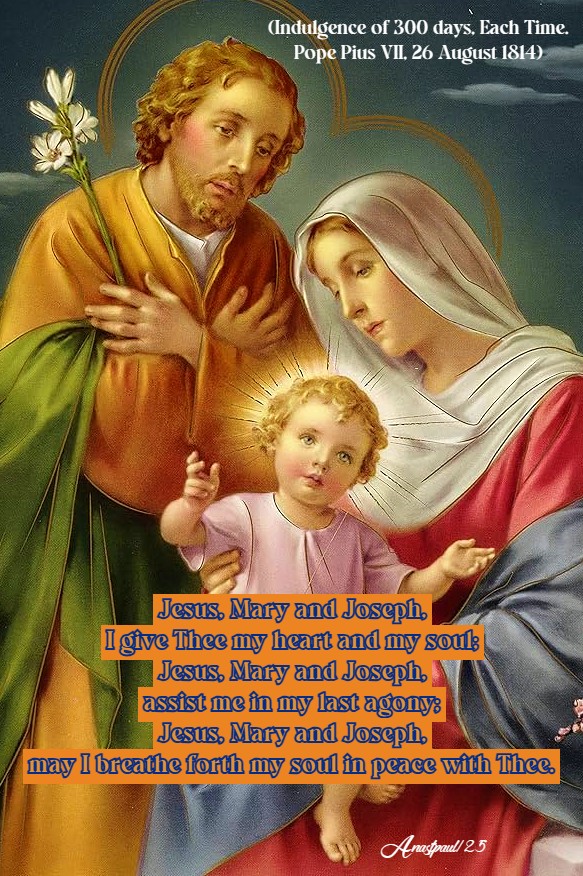
Indulgenced Holy Family Aspiration
“Jesus, Mary and Joseph, I give Thee my heart and my soul; Jesus, Mary and Joseph, assist me in my last agony; Jesus, Mary and Joseph, may I breathe forth my soul in peace with Thee.”
(Indulgence of 300 days, Each Time. Pope Pius VII, 26 August 1814)
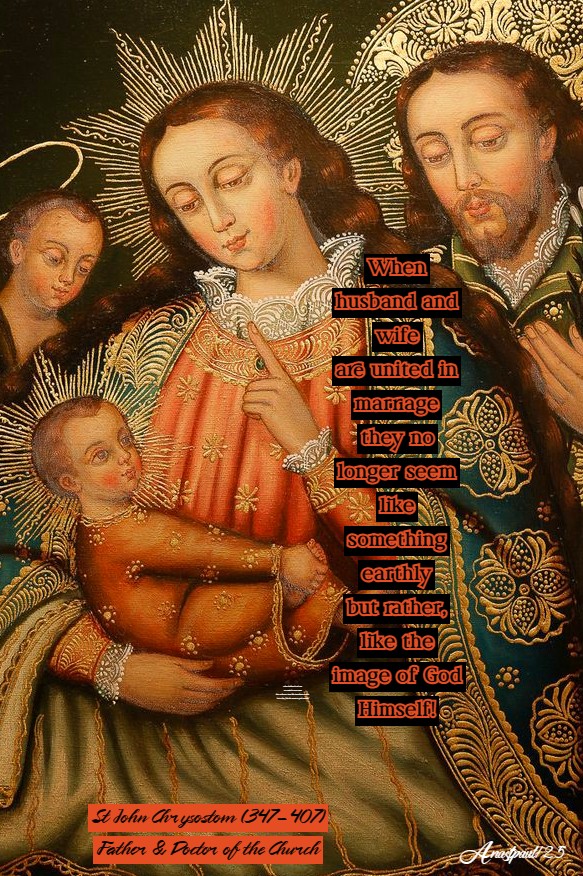
“When husband and wife are united in marriage they no longer seem like something earthly but rather, like the image of God Himself!”
St John Chrysostom (347-407) Father & Doctor of the Church
“The One Who is the Wisdom of the Father, put His arms around her neck, the One Who is the strength, that gives movement to everything, sat in her arms. He Who is the rest of souls, (Mt 11:29) rested on her motherly breast. … Filled with the Holy Spirit, she held Him close to her heart … She never had enough of seeing Him or of hearing Him, ,,, Thus Mary grew evermore in love and her mind was unceasingly attached to Divine contemplation.”
St Amadeus of Lausanne (1108-1159)
“Since God could choose for the Guardian of His Son, the man in the world, the most accomplished in all sorts of perfections, according to the dignity and excellence of his Charge, Who was His most Glorious Son, the universal Prince of Heaven and earth, how could it be that being able, He did not will it and did not do it? There is, then, NO DOUBT that St Joseph was endowed with all the graces and all the gifts that were required for the care which the Eternal Father willed to give him, of the temporal and domestic economy of our Lord and of the guidance of his family … ”
One Minute Reflection – 7 January – “The Month of the Holy Name of Jesus and the Holy Family” – Within the Octave of Epiphany – Feast of the Holy Family – Isaias 60:1-6; Matthew 2:1-12 – Scripture search here: https://www.drbo.org/
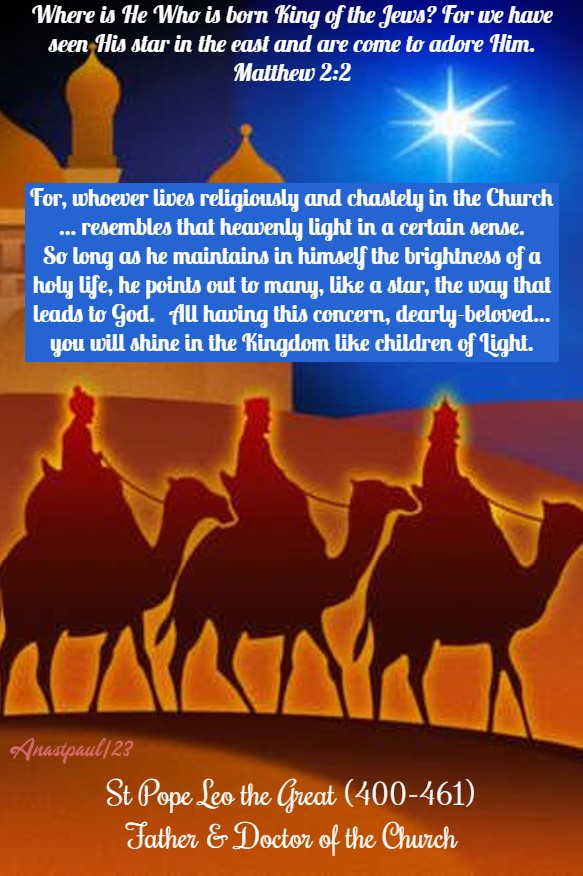
“Where is He Who is born King of the Jews? For we have seen His Star in the east and are come to adore Him.” – Matthew 2:2
REFLECTION – “All these things we know to have taken place ever since the Three Wise Men, aroused in their far-off land, were led by a Star to recognise and worship the King of Heaven and earth. The responsiveness of that Star exhorts us to imitate it’s obedience and, as much as we can, to make ourselves servants of that grace which invites us all to Christ. For, whoever lives religiously and chastely in the Church and “sets his mind on the things which are above, not on the things that are upon the earth” (Col 3:2) resembles that heavenly light in a certain sense. So long as he maintains, in himself, the brightness of a holy life, he points out to many, like a Star, the way that leads to God. All having this concern, dearly-beloved… you will shine in the Kingdom like children of Light.”… St Pope Leo the Great (400-461) Father & Doctor of the Church.
PRAYER – O God, Thou Who by the guidance of a star this day revealed Thy Only-begotten Son to the Gentiles, mercifully grant that we, who know Thee now by faith, may come to behold Thee in glory. Through the same Jesus Christ, Thy Son our Lord, Who lives and reigns with Thee, in the unity of the Holy Ghost, God, world without end. Amen (Collect).
Our Morning Offering – 7 January – Within the Octave of Epiphany – “The Month of the Most Holy Name of Jesus” and the Feast of the Holy Family
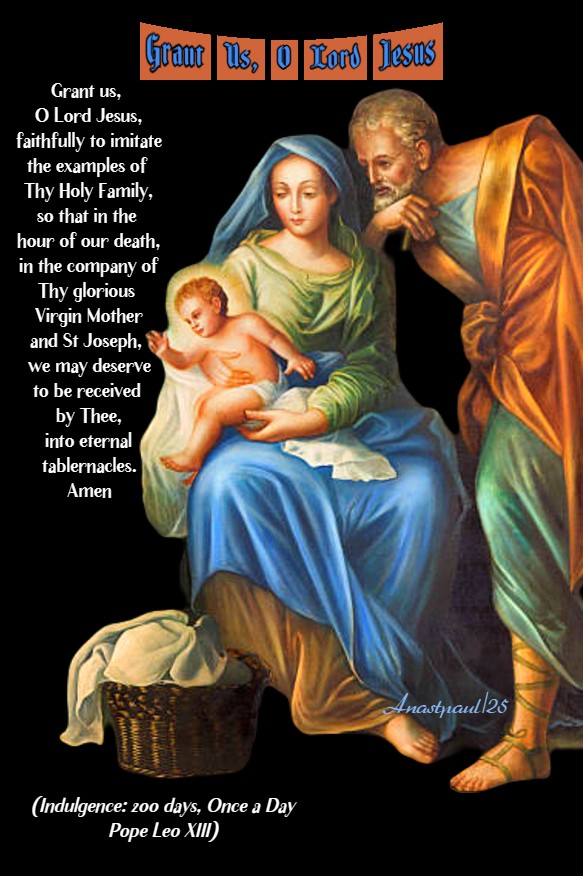
Grant Us, O Lord Jesus Indulgenced Prayer in Honour of the Holy Family (Indulgence: 200 days, Once a Day Pope Leo XIII)
Grant us, O Lord Jesus, faithfully to imitate the examples of Thy Holy Family, so that in the hour of our death, in the company of Thy glorious Virgin Mother and St Joseph, we may deserve to be received by Thee, into eternal tablernacles. Amen



























You must be logged in to post a comment.