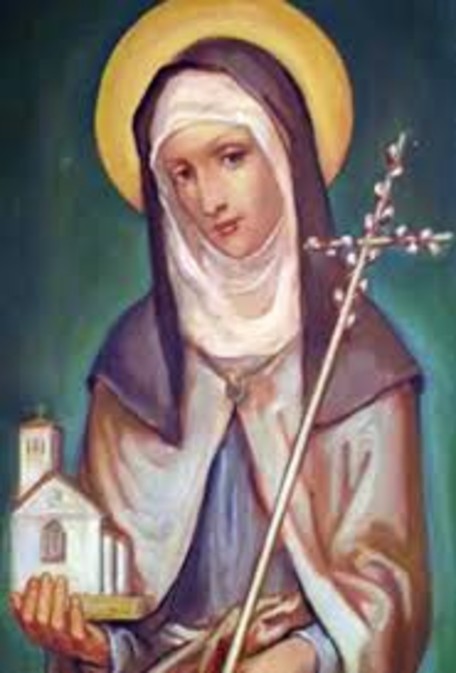
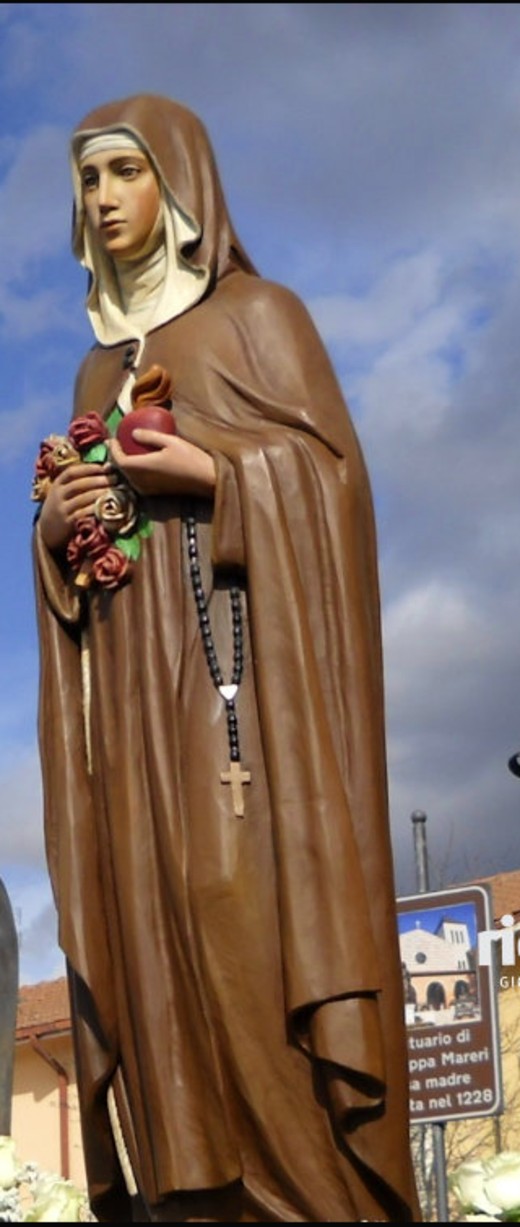
Saint of the Day – 20 February – Blessed Amata (c1200-c1254) OSC Virgin, Nun of Assisi, a Poor Clare Nuna and one of Saint Clare of Assisi’s original followers and her niece Born in Assisi as Amata di Caran. Her name means “beloved” in Latin and is now a common religious name among the Poor Clares.
Amata was born into a noble family in Assisi, Italy; her father was Martino di Carano and her mother Donna Penenda, Clare’s oldest sister.
Amata was destined to marry a nobleman from her hometown and being proud of her beauty, she led a frivolous life. Visiting her aunt, she was enlightened by the humble and serene poverty of the Nuns. She repented, renouncing her previous worldly ideals, refused marriage and in 1213 entered the Monastery of San Damiano.
The Franciscan Martyrology remembers her with this eulogy: “Destined to marry a nobleman from her hometown, proud of her beauty, she led a frivolous life. Visiting her aunt, she was enlightened by the humble and serene poverty of the Damianites later known as the Poor Clares. She repented and changed her worldly ideals, renounced marriage and in 1213 entered the Monastery of San Damiano.
The Franciscan Martyrology remembers her with this eulogy: “What a purified and innocent life fervent in Christ’s will, love excelled.”
Due to her harsh penances, she fell ill for thirteen months she suffered from a violent cough and was finally cured by her holy aunt with a simple Sign of the Cross.
Amata was present at St Clare’s death, she was addressed by her St Clare, as Celano recounts, with these words: “Did you, daughter, see the Kingdom of glory to which I aspire?”
Amata herself died around 1254. When, in 1260, the Damianites abandoned the old Monastery to enter the City, Amata’s remains were brought to the convent of San Giorgio. In 1602, Crescenzio, the Bishop of Assisi, transferred her Relics, those of Blessed Agnes (sister of St Clare) and those of Blessed Benedetta (the first Abbess after St Clare), to a stone urn under an Altar in the Church.
Friday after Ash Wednesday – FASTING and ABSTINENCE
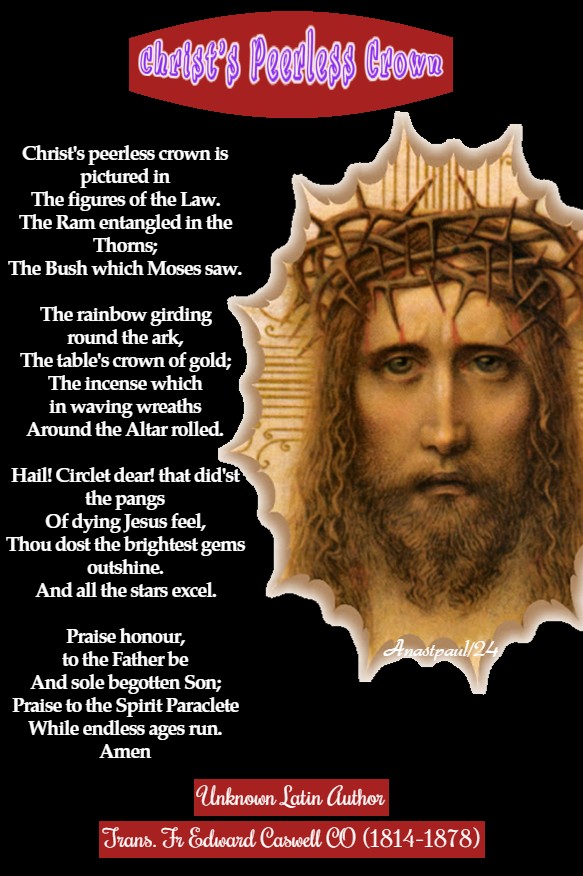
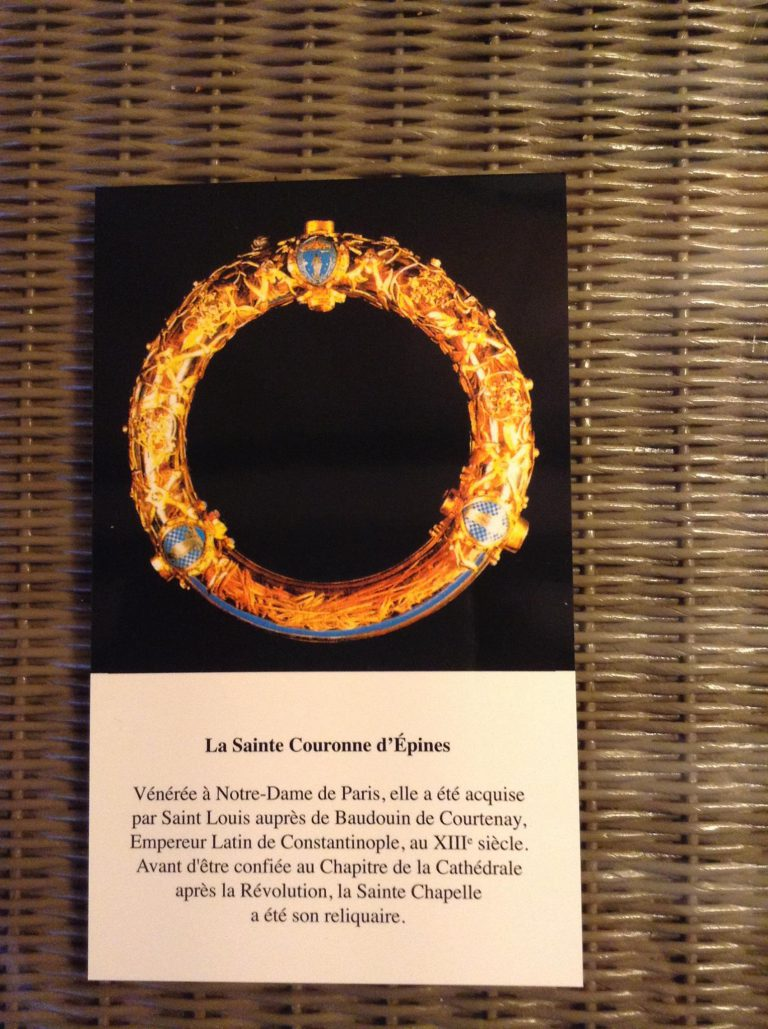
THE FEAST OF THE SACRED CROWN OF THORNS One of the “Seven Passion Feasts” – celebrated on the the Friday after Ash Wednesday. The first Feast in honour of the Sacred Crown of Thorns (Festum susceptionis coronae Domini) was instituted at Paris in 1239, when Saint Louis IX of France brought there the Relic of the Crown of Thorns which was deposited later in the Royal Chapel, erected in 1241–1248 to guard this and other Relics of the Passion. https://anastpaul.com/2024/02/16/feast-of-the-sacred-crown-of-thorns-of-our-lord-jesus-christ-friday-after-ash-wednesday/
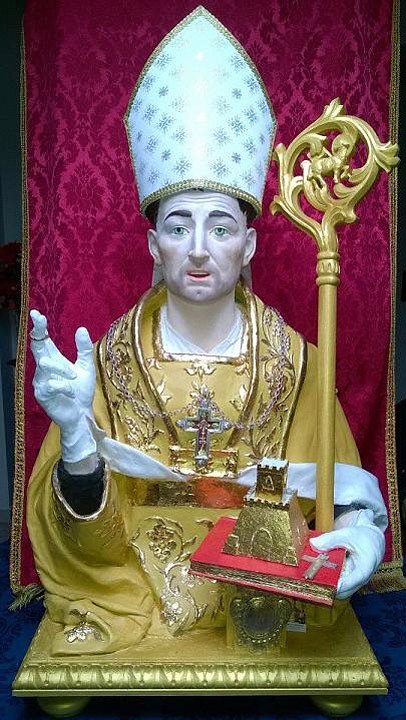
St Leo of Catania (c720-789) Bishop, Defender of Sacred Images for which opposition he was forced to flee into exile for some years, Hermit. Born in c720 in Ravenna, Italy and died on 20 February 789 in Etna, Sicily, Italy, natural causes. St Leo was the 15th Bishop of Catania, Sicily, famed for his love and care for the poor, his brave opposition to the iconoclastic Government of the time and for his Miracles. Courageous St Leo: https://anastpaul.com/2024/02/20/saint-of-the-day-20-february-st-leo-of-catania-c720-789-bishop/ St Nemesius of Cyprus
Ash Thursday – 19 February – Our Lenten Journey With St Thomas Aquinas (1225-1274), Doctor of the Church
Thursday : Fasting
We fast for three reasons.
(i) To check the desires of the flesh. So St Paul says in fastings, in chastity (2 Cor vi. 5), meaning that fasting is a safeguard for chastity. As St Jerome says, “Without Ceres and Bacchus, Venus would freeze,” as much as to say, lust loses its heat through spareness of food and drink.
(ii) That the mind may more freely raise itself to contemplation of the heights. We read in the book of Daniel that it was after a fast of three weeks that he received the revelation from God (Dan x. 2-4).
(iii) To make satisfaction for sin. This is the reason given by the Prophet Joel, Be converted to me with all your heart, in fasting and in weeping and in mourning (Joel ii. 12). And here is what St Augustine writes on the matter. “Fasting purifies the soul. It lifts up the mind and it brings the body into subjection to the spirit. It makes the heart contrite and humble, scatters the clouds of desire, puts out the flames of lust and shines the true light of chastity.”
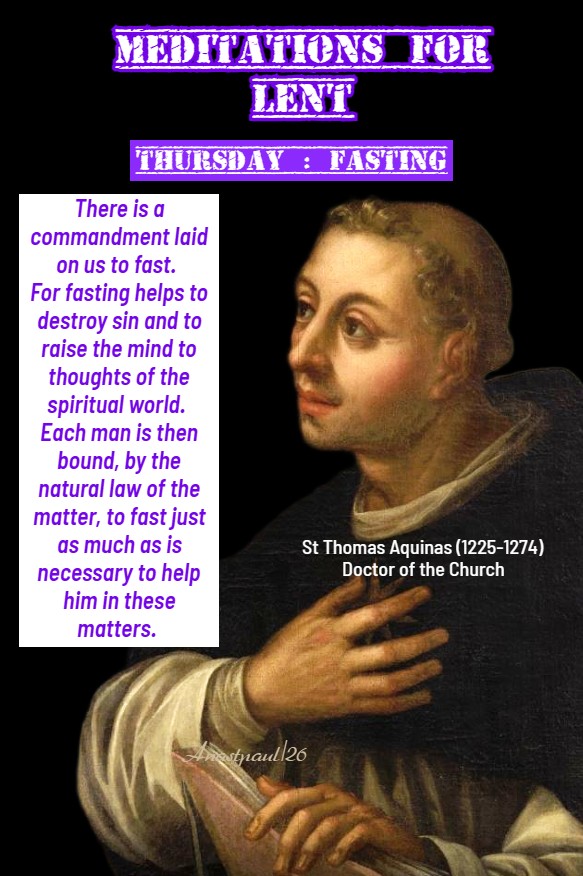
There is a commandment laid on us to fast. For fasting helps to destroy sin and to raise the mind to thoughts of the spiritual world. Each man is then bound, by the natural law of the matter, to fast just as much as is necessary to help him in these matters. Which is to say, fasting in general is a matter of natural law. To determine, however, when we shall fast and how, according to what suits and is of use to the Catholic body, is a matter of positive law. To state the positive law is the business of the Bishops and what is thus stated by them is called Ecclesiastical fasting, in contradistinction with the natural fasting previously mentioned.
ST THOMAS AQUINAS (1225-1274) Priest, Theologian, Dominican Doctor Angelicus (Angelic Doctor) Doctor Communis (Common Doctor) Added by Pope Saint Pius V in 1568
“Fasting cleanses the soul, raises the mind, subjects one’s flesh to the spirit, renders the heart contrite and humble, scatters the clouds of concupiscence, quenches the fire of lust and kindles the true light of chastity. Enter again into yourself!”
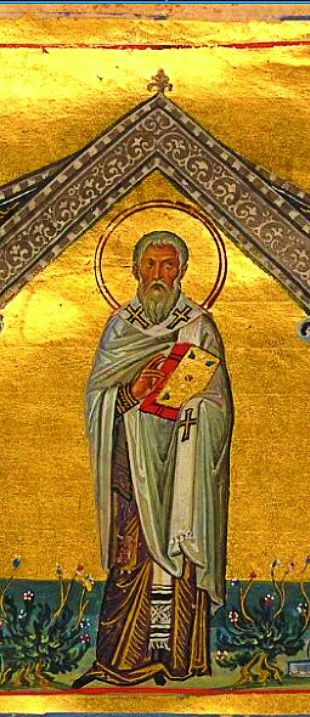
St Augustine (354-430) Father and Doctor of Grace
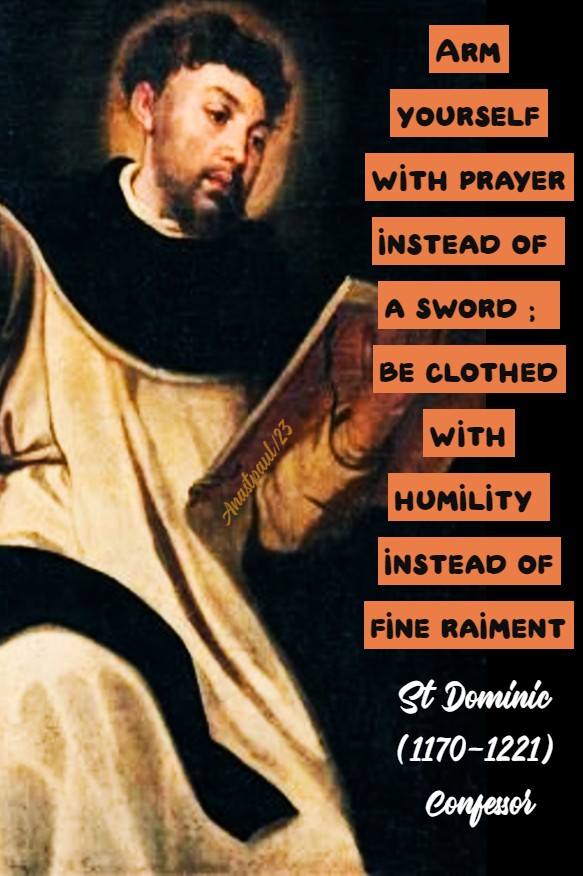
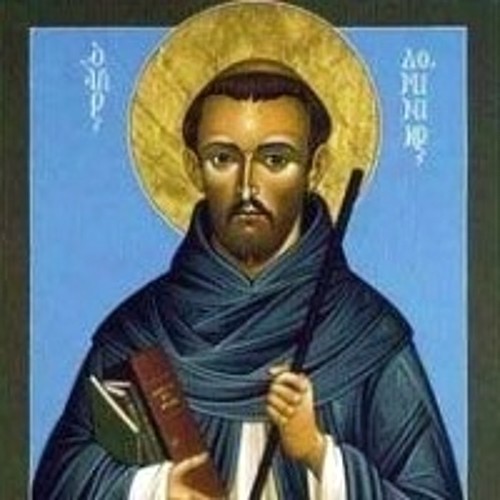
“Arm yourself with prayer instead of a sword; be clothed with humility instead of fine raiment.”
St Dominic OP (1170-1221)
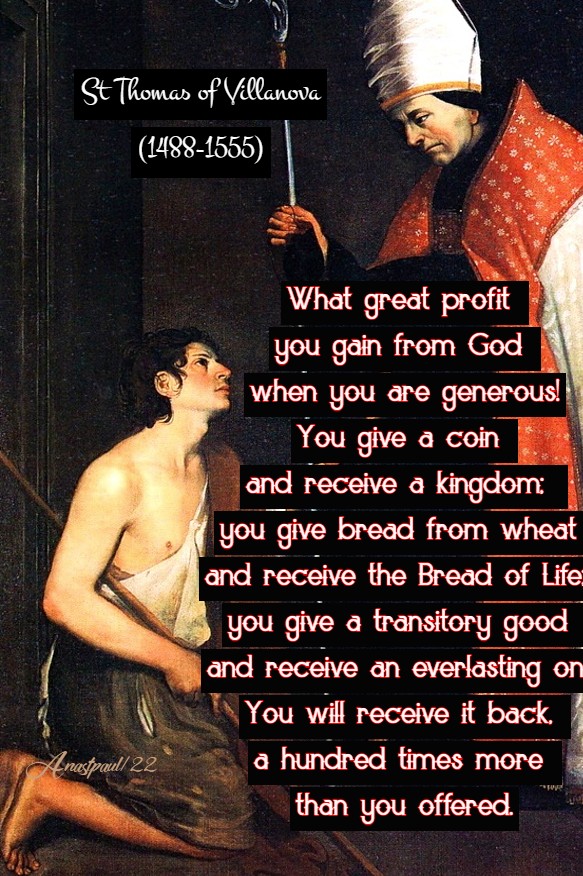
“What great profit you gain from God when you are generous! You give a coin and receive a Kingdom; you give bread from wheat and receive the Bread of Life; you give a transitory good and receive an everlasting one. You will receive it back, a hundred times more than you offered.”
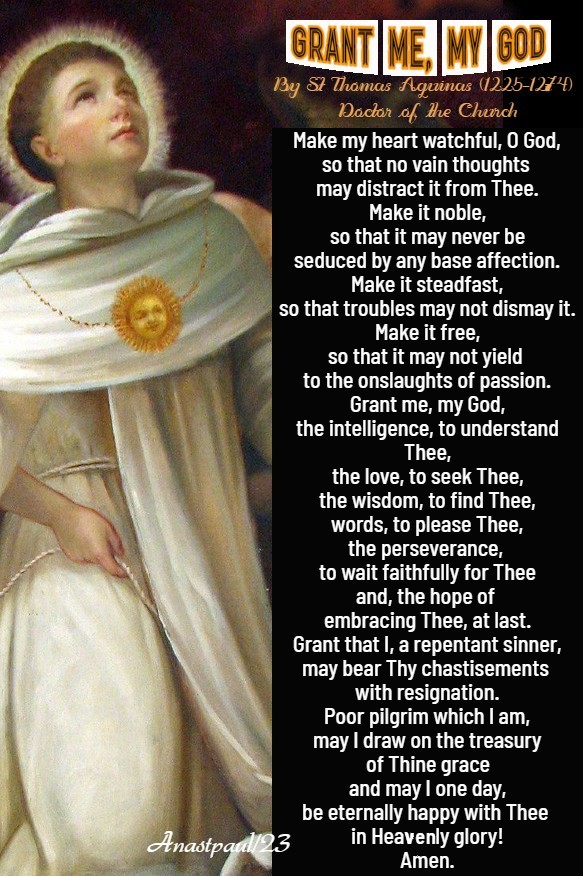
Grant Me, My God By St Thomas Aquinas (1225-1274) Angelic Doctor, Common Doctor
Make my heart watchful, O God, so that no vain thoughts may distract it from Thee. Make it noble, so that it may never be seduced by any base affection. Make it steadfast, so that troubles may not dismay it. Make it free, so that it may not yield to the onslaughts of passion. Grant me, my God, the intelligence, to understand Thee, the love, to seek Thee, the wisdom, to find Thee, words, to please Thee, the perseverance, to wait faithfully for Thee and, the hope of embracing Thee, at last. Grant that I, a repentant sinner, may bear Thy chastisements with resignation. Poor pilgrim which I am, may I draw on the treasury of Thine grace and may I one day, be eternally happy with Thee in Heavenly glory! Amen.
Saint of the Day – 19 February – St Zamudas (Died 3rd/4th Century) Bishop of Jerusalem Also known as –Zambdas, Zabdas, Bazas
The Roman Martyrology reads today: “At Jerusalem, St Zamudas, Bishop.”
Unknown Bishop
Zamudas was the 37th Bishop of Jerusalem. There are divergent dates on the period of his Episcopate, with some sources placing it between 276 and 283, while one source dates it to as late as 302.
He succeeded Hymenaeus as Bishop. He is connected with the legend of the Theban Legion as being the one who brought them to Christ and Baptised them.
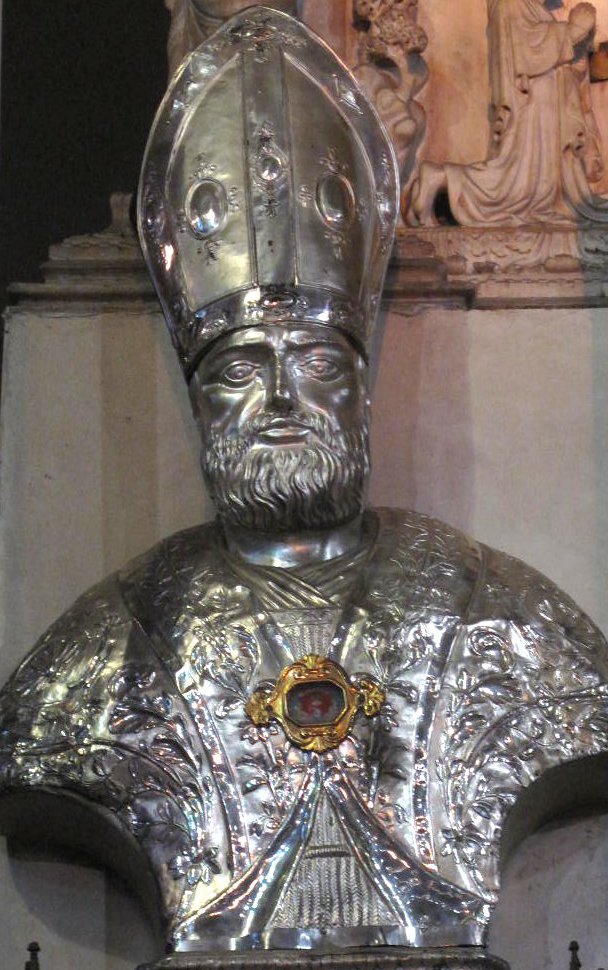
St Quodvultdeus (Died c450) Bishop, Confessor, Father of the Church, Writer and Theologian, spiritual student, friend and correspondent of St Augustine, who dedicated some of his works to St Quodvultdeus. Name Meaning – “What God wants.” The Roman Martyrology reads: “In Naples, deposition of St Quodvultdeus, Bishop of Carthage, who was sent into exile together with his clergy by the Arian king Genseric and placed on disused ships without sails or oars. Against all hope he landed in Naples, where he died. Confessor of the faith.” His Holy Life: https://anastpaul.com/2022/02/19/saint-of-the-day-19-february-saint-quodvultdeus-died-c-450-f/
St Valerius of Antibes St Zamudas (Died 3rd/4th Century) Bishop of Jerusalem
Ash Wednesday – 18 February – Our Lenten Journey With St Thomas Aquinas (1225-1274), Doctor of the Church
Ash Wednesday : Death
“By one man sin entered into this world and by sin death.” – Romans v. 12.
If for some wrongdoing a man is deprived of some benefit once given to him, that he should lack that benefit is the punishment of his sin.
Now, in man’s first creation he was divinely endowed with this advantage that, as long as his mind remained subject to God, the lower powers of his soul were subjected to the reason and the body was subjected to the soul.
But because by sin man’s mind moved away from its subjection to God, it followed that the lower parts of his mind ceased to be wholly subjected to the reason. From this there followed such a rebellion of the bodily inclination against the reason, that the body was no longer wholly subject to the soul.
Whence followed death and all the bodily defects. For life and wholeness of body are bound up with this, that the body is wholly subject to the soul, as a thing which can be made perfect is subject to that which makes it perfect. So it comes about that, conversely, there are such things as death, sickness and every other bodily defect, for such misfortunes are bound up with an incomplete subjection of body to soul.
The rational soul is of its nature immortal and, therefore, death is not natural to man insofar as man has a soul. It is natural to his body, for the body, since it is formed of things contrary to each other in nature, is necessarily liable to corruption and, it is in this respect, that death is natural to man.
But God who fashioned man is all powerful. And hence, by an advantage conferred on the first man, He took away that necessity of dying which was bound up with the matter of which man was made. This advantage was, however, withdrawn through the sin of our first parents.
Death is then natural, if we consider the matter of which man is made and it is a penalty, inasmuch as it happens through the loss of the privilege whereby man was preserved from dying.
Sin – Original Sin and actual sin – is taken away by Christ, that is to say, by Him Who is also the remover of all bodily defects. He shall quicken also your mortal bodies because of His Spirit Who dwelleth in you (Romams viii. II).
But, according to the order appointed by a wisdom which is Divine, it is at the time which best suits, when Christ takes away both the one and the other, i.e., both sin and bodily defects.
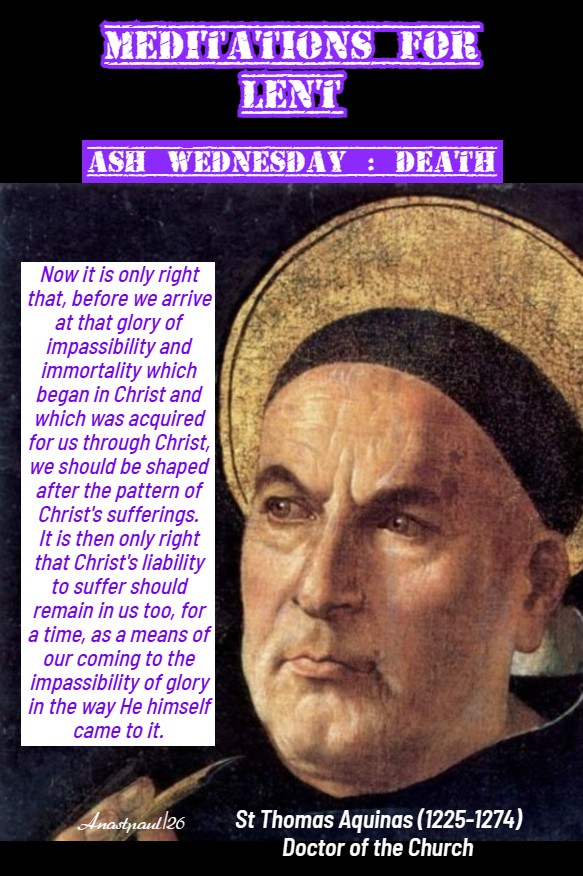
Now it is only right that, before we arrive at that glory of impassibility and immortality which began in Christ and which was acquired for us through Christ, we should be shaped after the pattern of Christ’s sufferings. It is then only right that Christ’s liability to suffer should remain in us too, for a time, as a means of our coming to the impassibility of glory in the way He himself came to it.
ST THOMAS AQUINAS (1225-1274) Priest, Theologian, Dominican Doctor Angelicus (Angelic Doctor) Doctor Communis (Common Doctor) Added by Pope Saint Pius V in 1568
Prayer, Fasting and Mercy St Peter Chrysologus (c400-450) Bishop of Ravenna “Doctor of Homilies” Father and Doctor of the Church
“There are three things, my brethren, by which faith stands firm, devotion remains constant and virtue endures. They are prayer, fasting and mercy. Prayer knocks at the door, fasting obtains, mercy receives. Prayer, mercy and fasting: these three are one and they give life to each other.
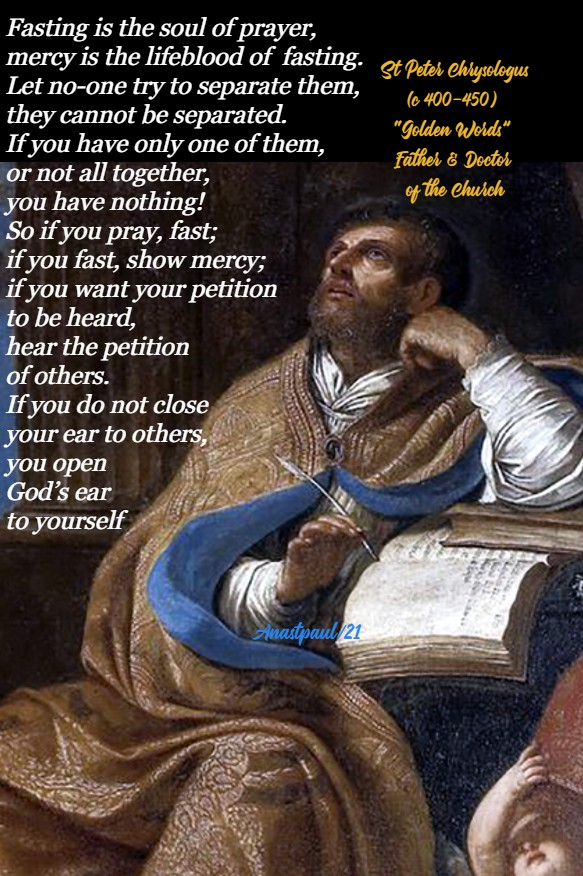
Fasting is the soul of prayer, mercy is the lifeblood of fasting. Let no-one try to separate them; they cannot be separated. If you have only one of them, or not all together, you have nothing. So if you pray, fast; if you fast, show mercy; if you want your petition to be heard, hear the petition of others. If you do not close your ear to others you open God’s ear to yourself.
When you fast, see the fasting of others. If you want God to know that you are hungry, know that another is hungry. If you hope for mercy, show mercy. If you look for kindness, show kindness. If you want to receive, give. If you ask for yourself, that which you deny to others, your asking is a mockery.
Let this be the pattern for all men when they practice mercy – show mercy to others in the same way, with the same generosity, with the same promptness, as you wish others to show mercy to you.
Therefore, let prayer, mercy and fasting be one single plea to God on our behalf, one speech in our defence, a threefold united prayer in our favour.” – (An excerpt from his Sermon 43)
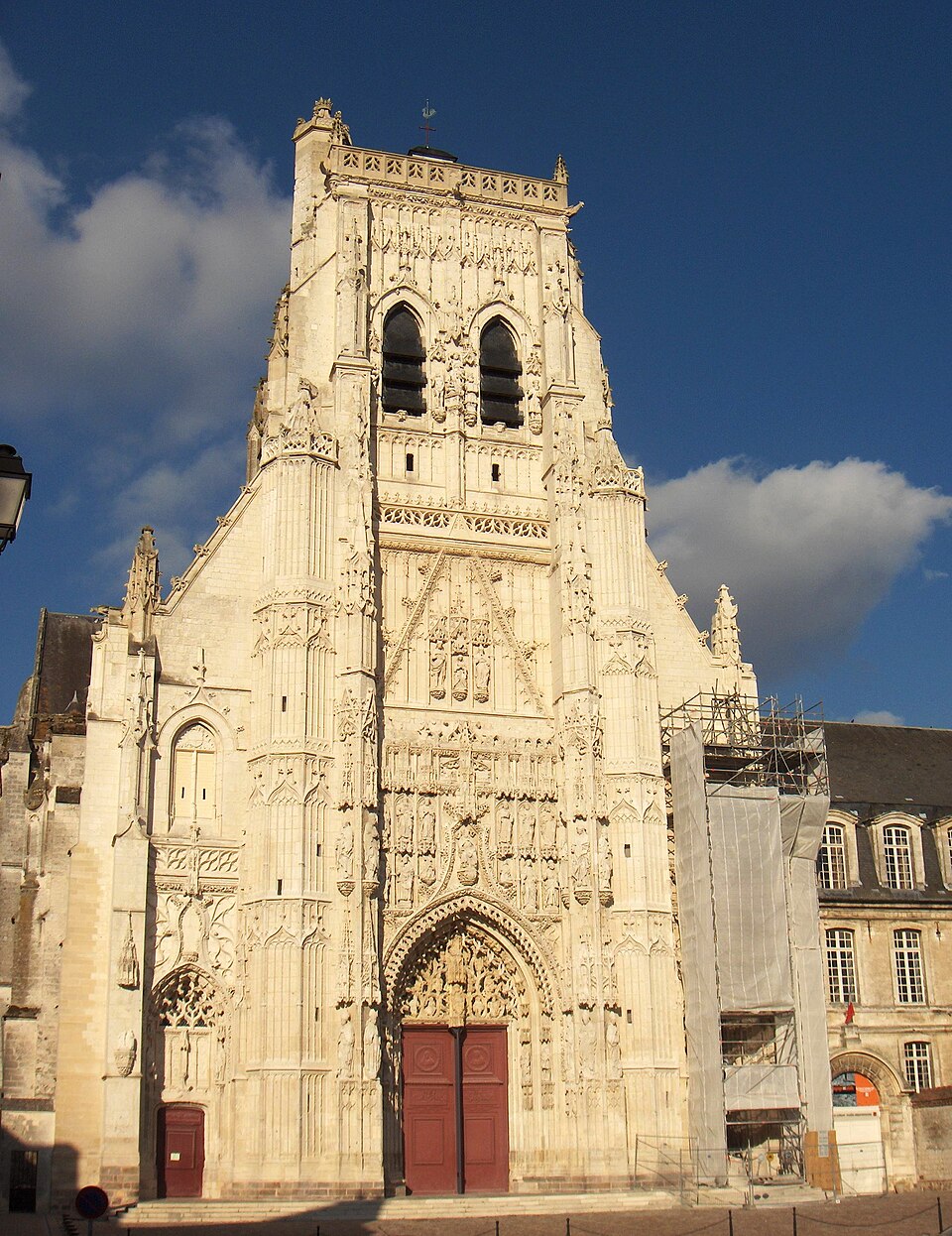
Saint of the Day – 18 February – Saint Angilbert (c750-814) Abbot of Saint-Riquier at Centula, Poet, Official, Advisor and close friend at the Court of Charlemagne, Count of Ponthieu. He married Charlemagne’s daughter but by mutual consent both entered the Religious Life. Born in Aachen, Kingdom of the Franks [now in Germany] around 750 and died on 18 February 814 at the Monastery at Centula, Picardy, France. Also known as – Angilbert of Saint-Riquier, Angilberto…Enghelberto…Homer… (this latter name relates to his great talent as a Poet).
Angilbert, born into a noble family, became an important figure at Charlemagne’s Court. Educated at the Court by the great St Alcuin, he became the Emperor’s friend, confidant, advisor and secretary.
In 781, when the young Pepin was crowned King of Italy, Angilbert became his Attaché, with the title of Primicerius (Chief Administrator) of the Palace. Later, he was named Count of Ponthieu and Abbot of Saint-Riquier.
Angilbert led a dissolute life and fell in love with Princess Bertha, Charlemagne’s daughter. The two had two children, Armida and Nithard. Charlemagne, who was not a paragon of morality, did not at first allow the two lovers to marry but granted Angilbert the commendation of the Abbey of Saint-Riquier.
Abbey of Saint-Riquier
After a serious illness and a victory over the Danes, Angilbert decided to embrace Religious life. He became a Priest and then Abbot of Saint-Riquier.
In 792, Angilbert brought Felix, Bishop of Urgel, condemned for heresy, to Rome. In 794, he submitted the “Carolingian Books” to the Pope which reiterated the condemnation of iconoclasm. In 796, he presented to the Pope, part of the treasures captured by the Frankish army.
After his last mission to Rome, Angilbert retired to his Abbey, where he devoted himself to religious life and the reconstruction of the building.
In 800, Angilbert followed Charlemagne to Rome for his Coronation as Emperor.
Angilbert died on18 February 814, 22 days after Charlemagne’s death. He was buried before the main door of the Basilica of Saint-Riquier. In 1100, Pope Paschal II Canonised him.
Almsgiving of Saint Helladius (Eladius), oil painting by Francisco Bayeu c1770.
Bl John Pibush – one of the Martyrs of Douai St Leo of Patera St Paregorius of Patara St Sadoth of Seleucia St Tarasius of Constantinople
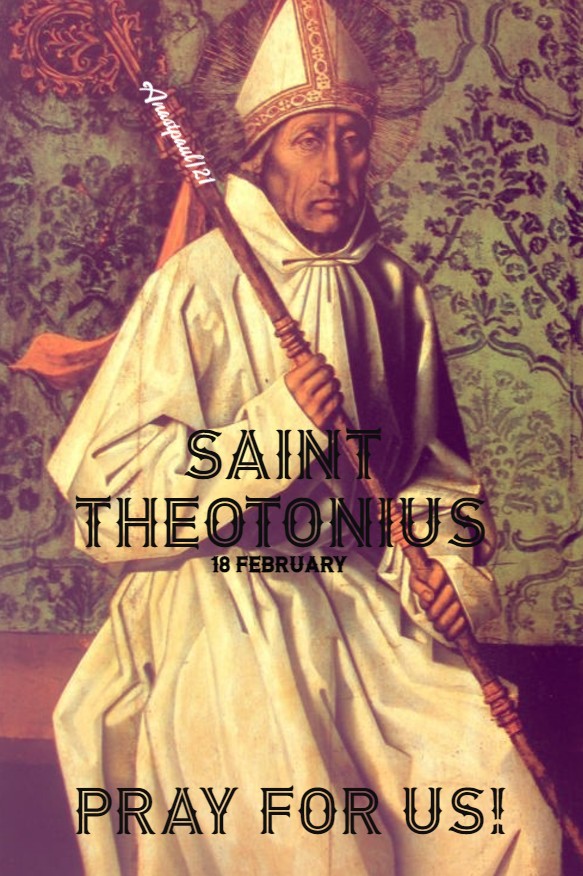
St Theotonius OSC (1082-1162) Priest of the Canons Regular, Reformer of religious life in Portugal, Royal Counsellor,, Apostle of the poor, Founder of the Canons Regular of the Holy Cross, now known as “The Crosiers.” He is the first Portuguese Saint. His Life Story: https://anastpaul.com/2021/02/18/saint-of-the-day-18-february-saint-theotinius-1082-1162/
Bl William Harrington
Martyrs of North Africa – 7 Saints: Group of Christians who were Martyred together, date unknown. We know nothing else but seven of their names – Classicus, Fructulus, Lucius, Maximus, Rutulus, Secundinus and Silvanus. They were born and martyred in North Africa.
Martyrs of Rome – 5 Saints: A group of Christians Martyred together in the persecutions of Diocletian. We know nothing else but their names – Alexander, Claudius, Cutias, Maximus and Praepedigna. They were martyred in 295 in Rome, Italy.
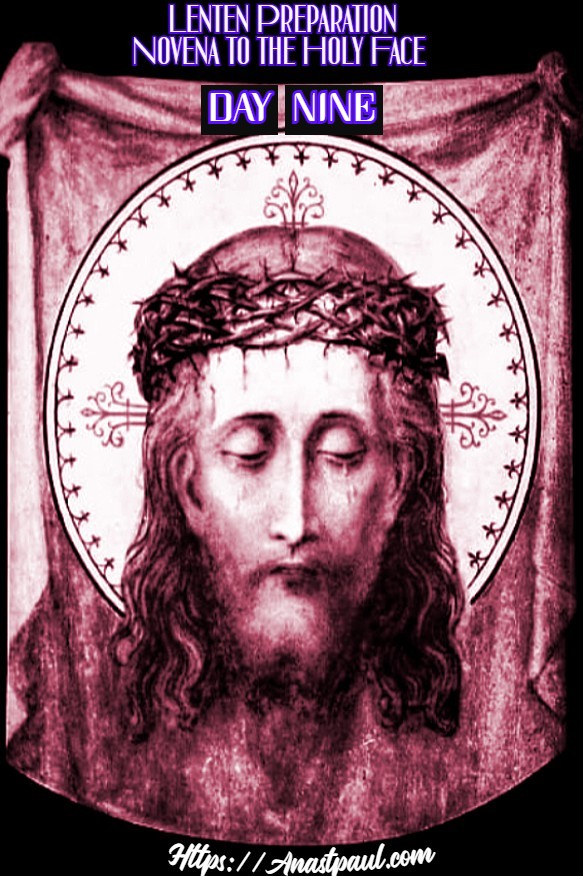
Lenten Preparation Novena in Reparation to the Holy Face Day Nine
“All those who, attracted by My Love and venerating My Countenance, shall receive, by virtue of My Humanity, a brilliant and vivid impression of My Divinity. This splendour shall enlighten the depths of their souls, so that in eternal glory the celestial court shall marvel at the marked likeness of their features, with My Divine Countenance.” … Our Lord Jesus Christ to St Gertrude the Great (1256-1302)
(Console the Holy Face
and recite Daily Preparatory Prayer) below.
DAILY PREPARATORY PRAYER
O Most Holy and Blessed Trinity, through the intercession of Holy Mary, whose soul was pierced through by a sword of sorrow at the sight of the Passion of her Divine Son, we ask Thy help, in making a perfect Novena of Reparation with Jesus, united with all His sorrows, love and total abandonment. We now implore all the Angels and Saints to intercede for us as we pray this Holy Novena to the Most Holy Face of Jesus and for the glory of the most Holy Trinity, Father, Son and Holy Ghost. Amen
THE NINTH DAY Psalm 50:18-19: For in sacrifice Thou take no delight, burnt offering Thou wouldst refuse. A sacrifice to God is an afflicted spirit, a contrite and humble heart, O God, Thou wilt not despise.
Sacred Face of our Lord and our God, what words can we say to express our gratitude? How can we speak of our joy? That Thou hast deigned to hear us, that Thou hast chosen to answer us in our hour of need. We say this because we know, that our prayers will be granted. We know that Thou, in Thy loving kindness, listen to our pleading hearts and will give, out of Thy fullness, the answer to our prayers.
Mary, our Mother, thank you for your intercession on our behalf. Saint Joseph, thank you for your prayers.
Through the merits of your precious blood and your Holy Face, O Jesus, grant us our petition……………… Pardon and mercy. Amen.
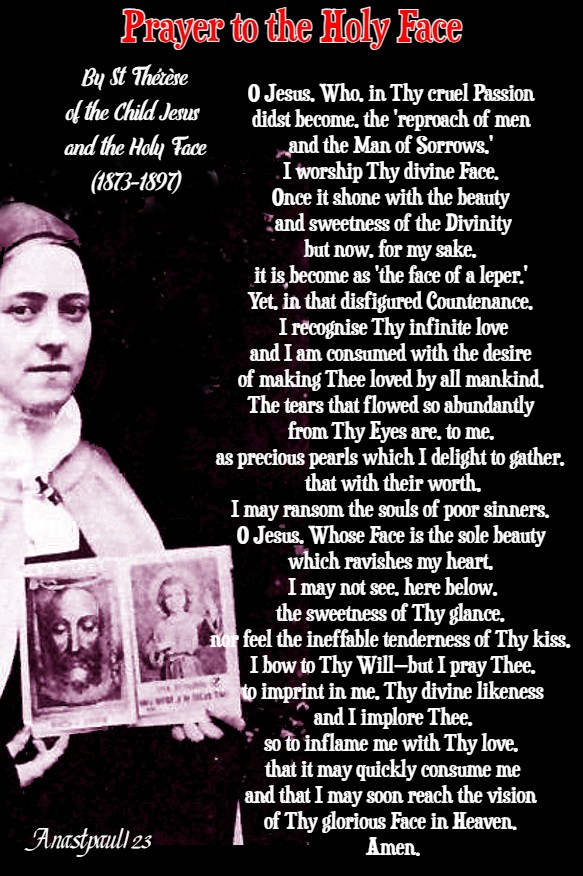
Prayer to the Holy Face By St Thérèse of the Child Jesus and the Holy Face (1873-1897)
O Jesus, Who, in Thy cruel Passion didst become, the ‘reproach of men and the Man of Sorrows,’ I worship Thy divine Face. Once it shone with the beauty and sweetness of the Divinity but now, for my sake, it is become as ‘the face of a leper.’ Yet, in that disfigured Countenance, I recognise Thy infinite love and I am consumed with the desire of making Thee loved by all mankind. The tears that flowed so abundantly from Thy Eyes are, to me, as precious pearls which I delight to gather, that with their worth, I may ransom the souls of poor sinners. O Jesus, Whose Face is the sole beauty which ravishes my heart, I may not see, here below, the sweetness of Thy glance, nor feel the ineffable tenderness of Thy kiss, I bow to Thy Will—but I pray Thee, to imprint in me, Thy divine likeness and I implore Thee, so to inflame me with Thy love, that it may quickly consume me and that I may soon reach the vision of Thy glorious Face in Heaven. Amen.
Pray (1) Our Father, three (3) Hail Marys, one (1) Glory Be
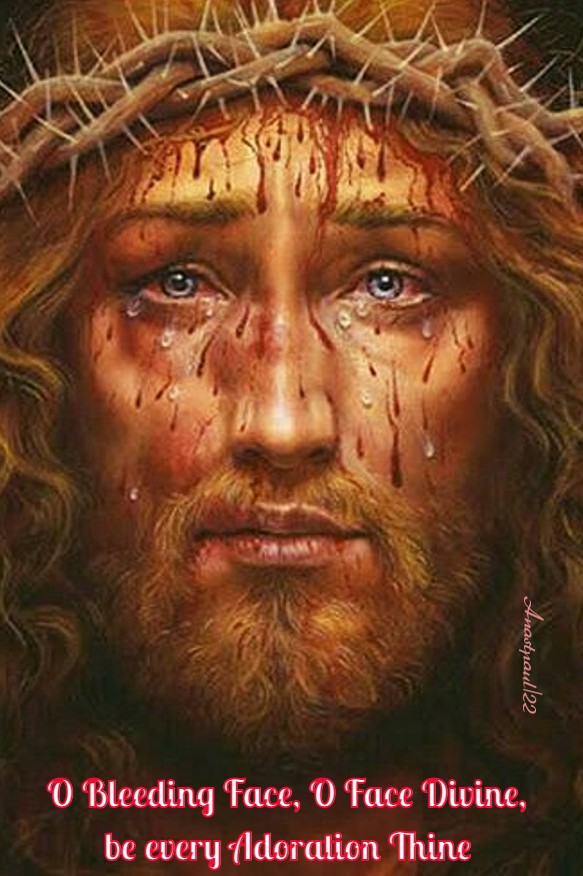
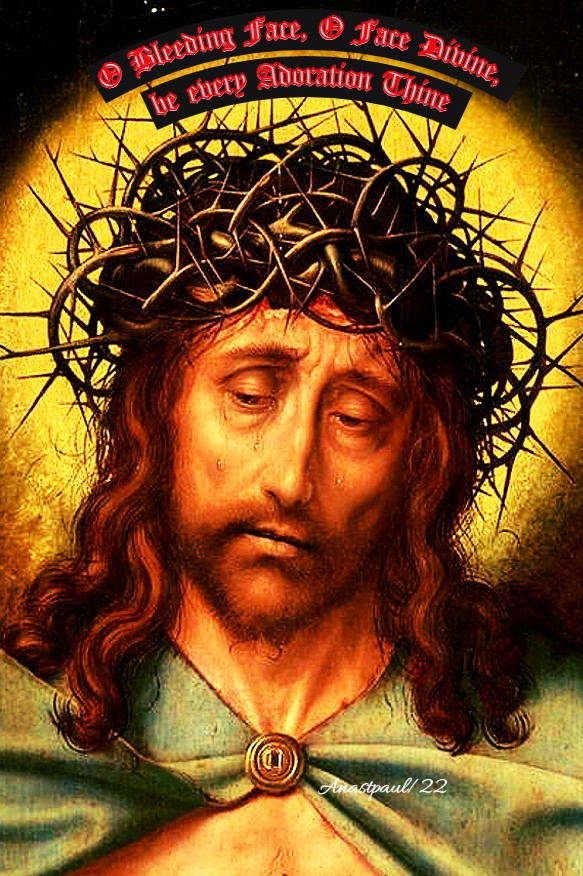
O Bleeding Face, O Face Divine, be every Adoration Thine (Three times)
Quote/s of the Day – 17 February – The Feast of the Holy Face of Jesus
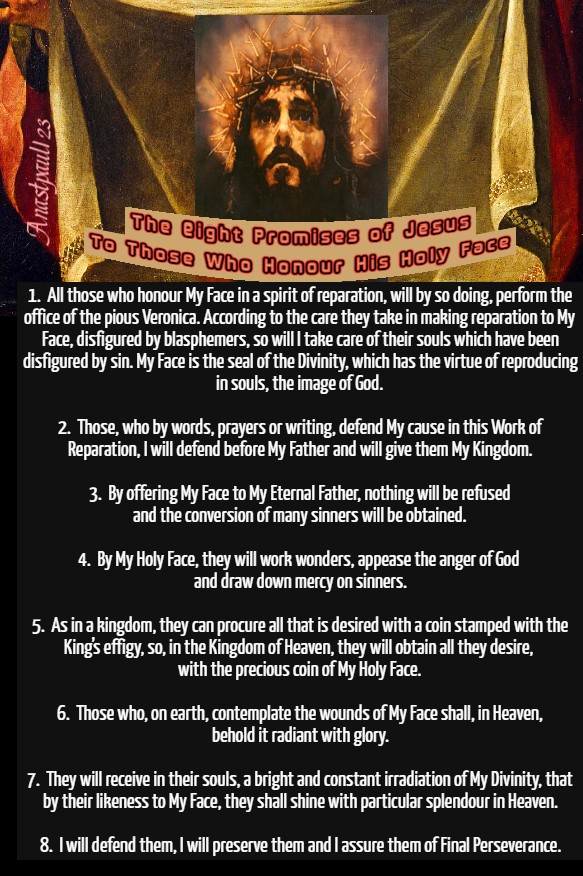
The Eight Promises of Jesus To Those Who Honour His Holy Face
All those who honour My Face in a spirit of reparation, will by so doing, perform the office of the pious Veronica. According to the care they take in making reparation to My Face, disfigured by blasphemers, so will I take care of their souls which have been disfigured by sin. My Face is the seal of the Divinity, which has the virtue of reproducing in souls, the image of God.
Those, who by words, prayers or writing, defend My cause in this Work of Reparation, I will defend before My Father and will give them My Kingdom.
By offering My Face to My Eternal Father, nothing will be refused and the conversion of many sinners will be obtained.
By My Holy Face, they will work wonders, appease the anger of God and draw down mercy on sinners.
As in a kingdom, they can procure all that is desired with a coin stamped with the King’s effigy, so, in the Kingdom of Heaven, they will obtain all they desire, with the precious coin of My Holy Face.
Those who, on earth, contemplate the wounds of My Face shall, in Heaven, behold it radiant with glory.
They will receive in their souls, a bright and constant irradiation of My Divinity, that by their likeness to My Face, they shall shine with particular splendour in Heaven.
I will defend them, I will preserve them and I assure them of Final Perseverance.
One Minute Reflection – 17 February– “The Month of the Most Blessed Trinity” – Feast of the Holy Face of Jesus – Shrove Tuesday – Ferial Day –1 Corinthians 13:1-13 – Luke 18:31-43 – Scripture search here: https://www.drbo.org/
“And immediately he saw and followed him, glorifying God.” – Luke 18:43
REFLECTION – “The commandment of the Lord shines clearly, enlightening the eyes. Receive Christ, receive power to see, receive your Light, that you may plainly recognise both God and man. More delightful than gold and precious stones, more desirable than honey and the honeycomb is the Word that has enlightened us. How could He not be desirable, Who illumined minds buried in darkness and endowed, with clear vision “the light-bearing eyes” of the soul? Sing His praises, then, Lord and make known to me Your Father, Who is God. Your Word will save me, Your song instruct me. I have gone astray in my search for God but now that You light my path, Lord, I find God through You and receive the Father from You, I become co-heir with You, since You were not ashamed to own me as Your brother. Let us, then, shake off forgetfulness of Truth, shake off the mist of ignorance and darkness that dims our eyes and contemplate the true God, after first raising this song of praise to Him: “All hail, O light!” For upon us, buried in darkness, imprisoned in the shadow of death, a heavenly Light has shone, a Light of a clarity surpassing the sun’s and of a sweetness, exceeding any this earthly life can offer.” – St Clement of Alexandria (c150-c215) Theologian, Philosopher , Father (Exhortation to the Greeks, 11).
PRAYER – O Lord, we beseech Thee, mercifully hear our prayers; loose us from the chains of our sins and keep us from all adversity. Through Jesus Christ, Thy Son our Lord, Who lives and reigns with Thee, in the unity of the Holy Ghost, God, world without end. Amen (Collect).
An Aspiration to the Eternal Father to be Frequently Recited During the Day …
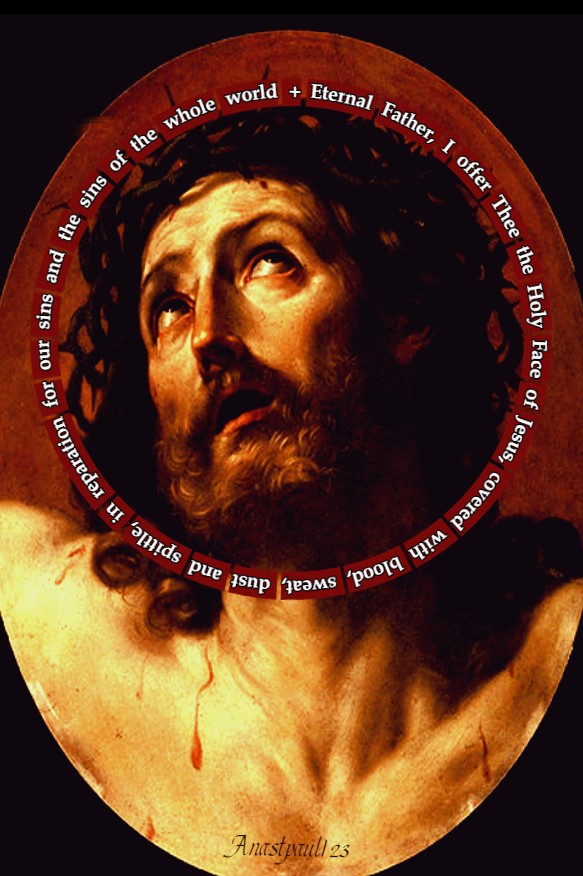
Eternal Father, I offer Thee the Holy Face of Jesus, covered with blood, sweat, dust and spittle, in reparation for our sins and the sins of the whole world.
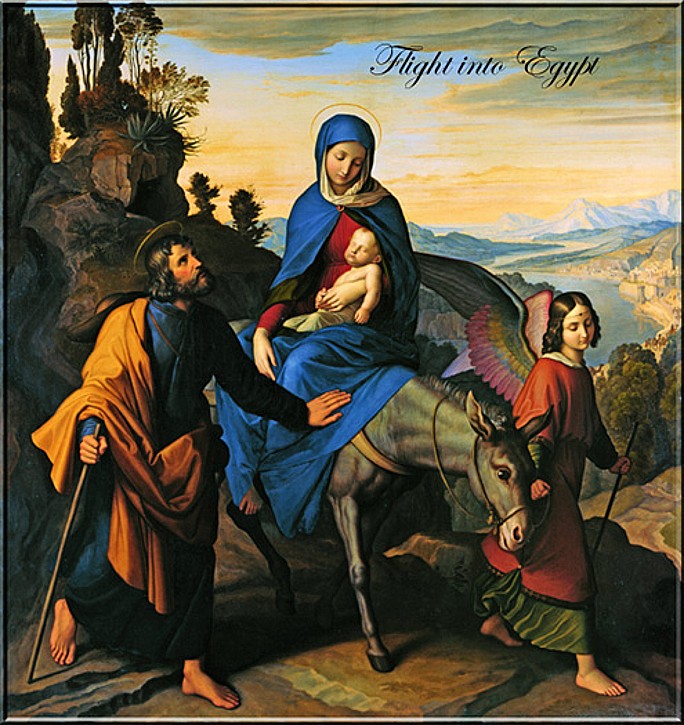
Our Morning Offering – 17 February – Feast of the Flight into Egypt
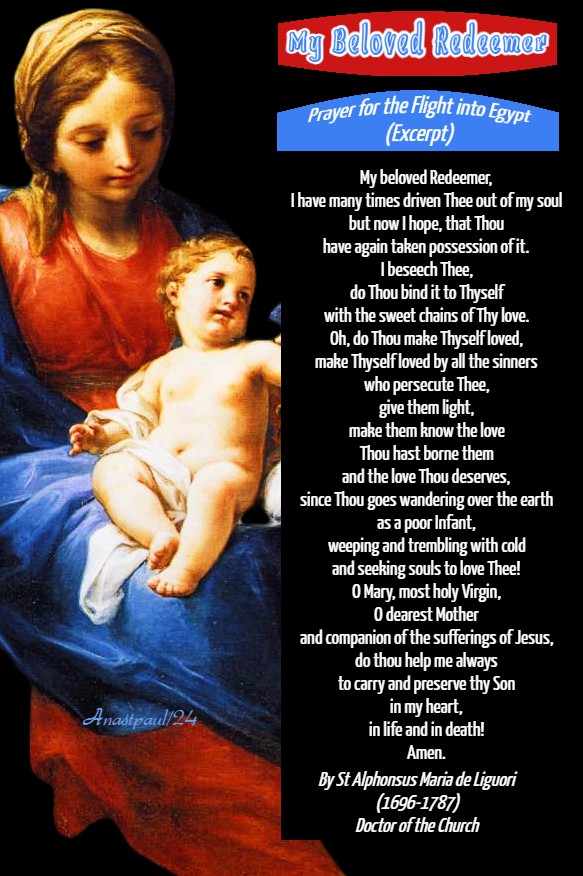
My Beloved Redeemer Prayer for the Flight into Egypt (Excerpt) By St Alphonsus Maria de Liguori (1696-1787) Doctor of the Church
My beloved Redeemer, I have many times driven Thee out of my soul but now I hope, that Thou have again taken possession of it. I beseech Thee, do Thou bind it to Thyself with the sweet chains of Thy love. Oh, do Thou make Thyself loved, make Thyself loved by all the sinners who persecute Thee, give them light, make them know the love Thou hast borne them and the love Thou deserves, since Thou goes wandering over the earth as a poor Infant, weeping and trembling with cold and seeking souls to love Thee! O Mary, most holy Virgin, O dearest Mother and companion of the sufferings of Jesus, do thou help me always to carry and preserve thy Son in my heart, in life and in death! Amen.
Saint of the Day – 17 February – St Theodulus (Died 309) Martyr of Caesarea in Palestine. He confessed Christ with great constancy and love and was granted the grace of dying as his Master had done.
The Roman Martyrology reads today: “At Caesarea in Palestine, Theodulus, an aged man in the service of the Governor, Firmilian, Moved by the example of the Martyrs, he confessed Christ with constancy, was fastened to a cross and thus by a noble victory, merited the Palm of Martyrdom.”
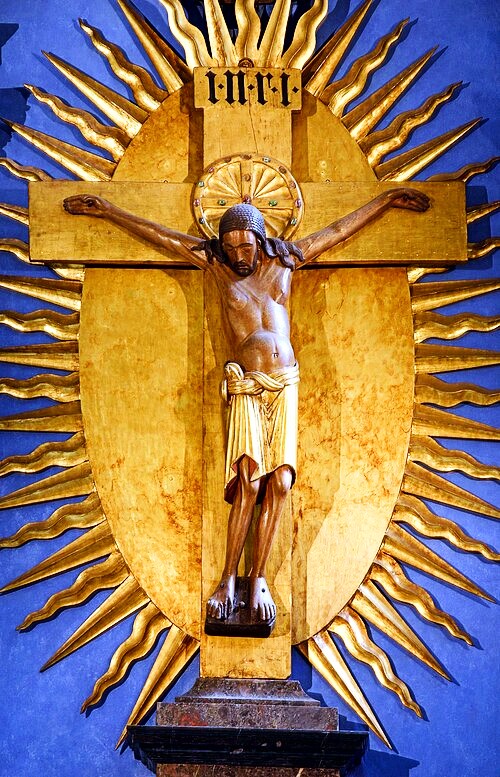
Gero Cross, late 10th Century, Cologne Cathedral, Germany
Theodulus was a member of the household of the governor of Palestine. When the governor learned of Theodulus’s Christianity, he ordered his execution.
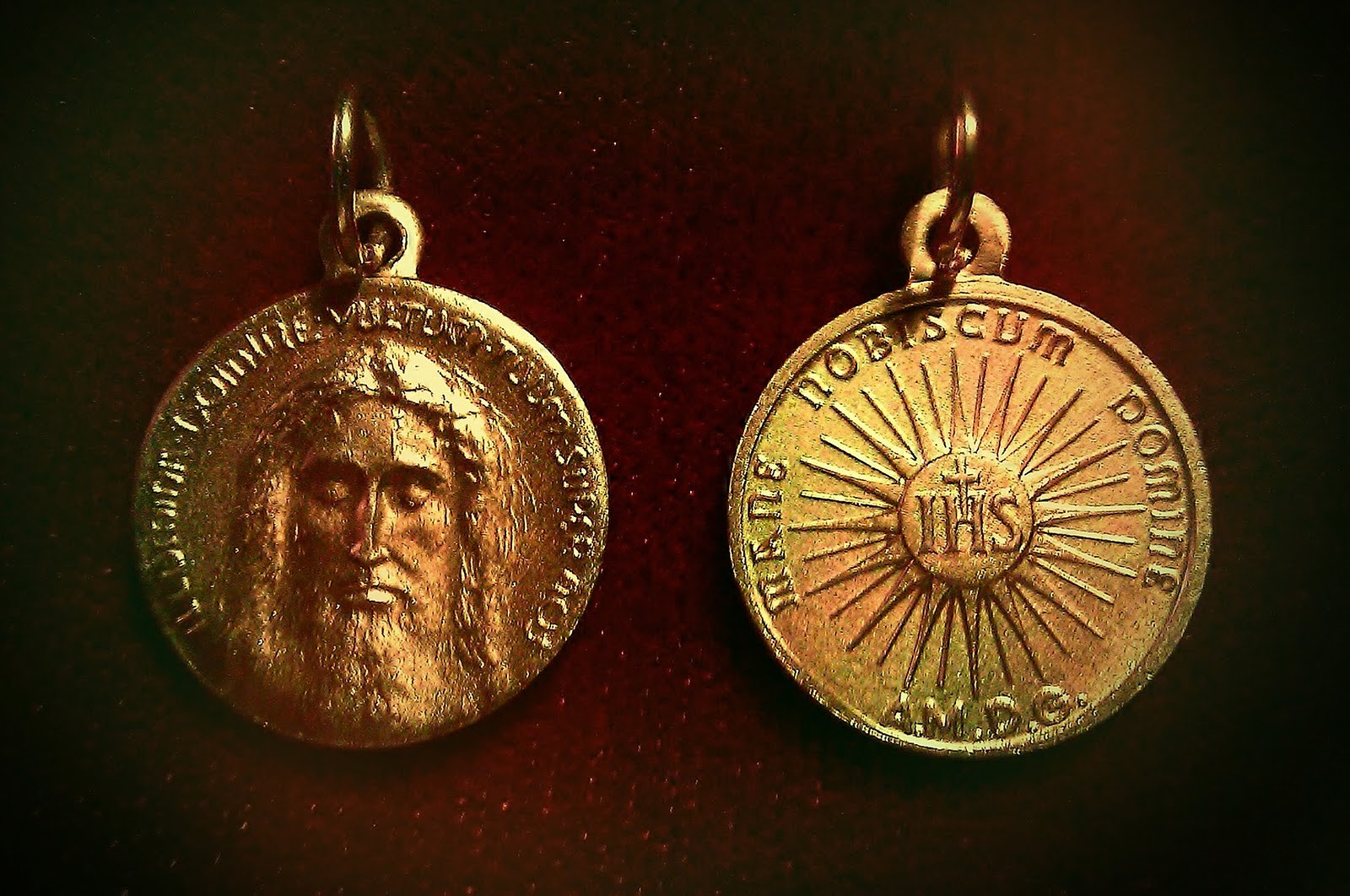
In the 19th Century Jesus expressed His wishes to Sister Mary of St Peter (1816-1848), a Carmelite Nun in Tours, France, that there be an actual Devotion to his Holy Face. Our Lord wanted this in reparation for blasphemies against Himself and His Holy Name as well, as for the profanation of Sunday (when people engage unnecessarily in commerce and other such labours and chores on Sunday, a day meant for rest and reflection on God). In August of 1843 He dictated to her the well-known Golden Arrow Prayer. He also gave her Promises for those who would honour His Holy Face. The first Holy Medal of the Holy Face was given to Ven Pope Pius XII, who approved the Devotion and the Medal. In 1958 he formally declared the Feast of the Holy Face of Jesus as Shrove Tuesday for all Catholics in perpetuity. https://anastpaul.com/2022/03/01/feast-of-the-holy-face/
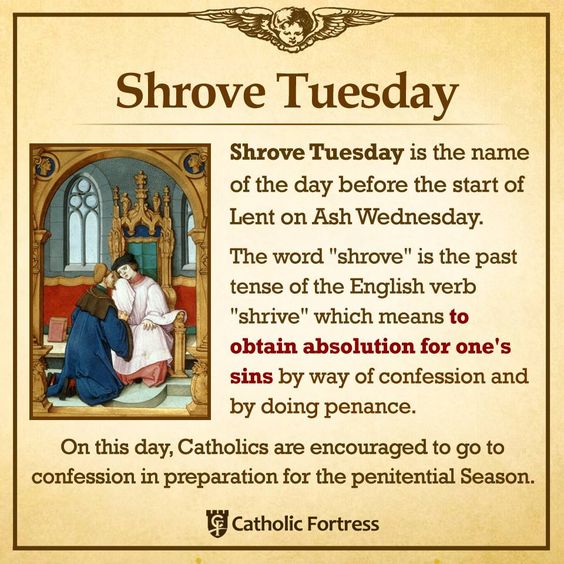
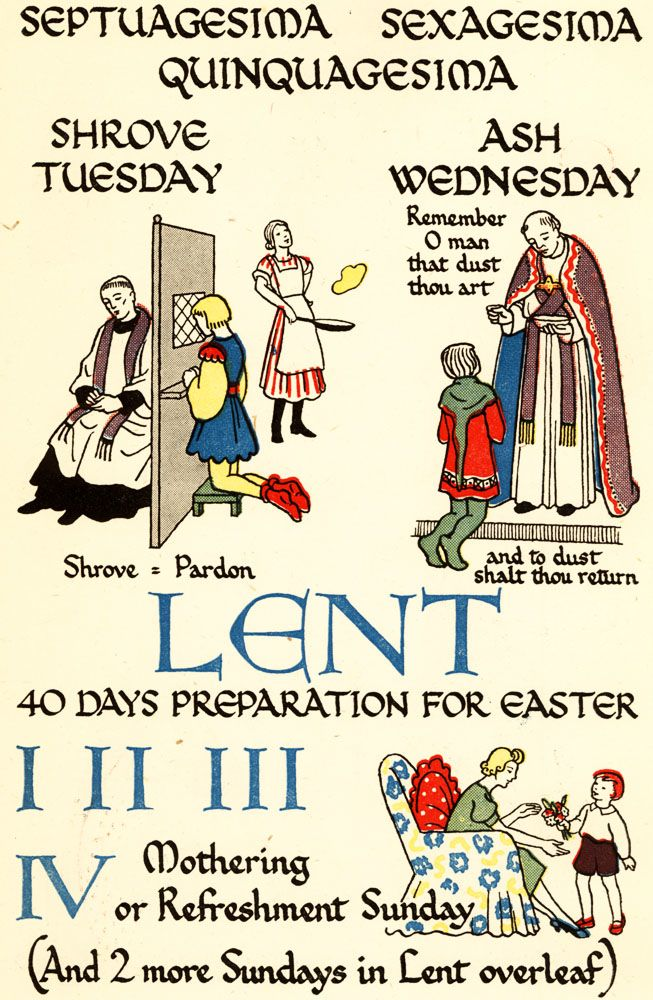
Shrove Tuesday: Shrove is the past tense of the word Shrive, which means “to hear a confession, assign penance and absolve from sin.” In the Middle Ages, especially in Northern Europe and England, it became the custom to confess one’s sins on the day before Lent began in order to enter the penitential season in a repentant spirit.
The Flight into Egypt (Year 1)- 17 February:
It was on the seventeenth of February, fifty five days after the Nativity of Jesus, when King Herod’s soldiers — sent to slaughter all little boys in Bethlehem and its neighbourhood who were two years old or under, in order to destroy a rival King, Jesus — were getting perilously near the cave at Bethlehem, where at first they little expected Our Lord to be. Saint Joseph received a message from God through an Angel, whereupon he took Our Lady and the Divine Infant and set off leaving the land of the Jews to travel to a land of the Gentiles. They took no-one with them, by way of servants or friends, as Saint Peter Chrysologus tells us.
The Town to which the Holy Family fled was called Fostat. It was three hundred miles from Bethlehem. A Church has been erected there, on the site of the house where the Holy Family lived during their exile. The little Town where the Holy Family lived in Egypt was not far from Heliopolis, a City in which — when Jesus, Mary and Joseph passed through it — statues of pagan gods crashed to the ground. Both Fostat and Heliopolis are not far from Cairo in Egypt.
St Lupiano St Mesrop the Teacher St Polychronius of Babylon St Romulus the Martyr St Secundian the Martyr
St Silvinus (c650-c717) Bishop, Missionary evangeliser in north-eastern pagain regions of France, gifted with miracles. Born of Celtic origins and died on 15 February c717 at the Abbey of Auchy-les-Moines, Artois, in Belgium. The Roman Martyrology reads today: “In the territory of Thérouanne, St Silvinus, Bishop of Toulouse.” His Holy Life: https://anastpaul.com/2025/02/17/saint-of-the-day-17-february-saint-silvinus-c650-c717-bishop/
Lenten Preparation Novena in Reparation to the Holy Face Day Eight
“All those who, attracted by My Love and venerating My Countenance, shall receive, by virtue of My Humanity, a brilliant and vivid impression of My Divinity. This splendour shall enlighten the depths of their souls, so that in eternal glory the celestial court shall marvel at the marked likeness of their features, with My Divine Countenance.” … Our Lord Jesus Christ to St Gertrude the Great (1256-1302)
(Console the Holy Face
and recite Daily Preparatory Prayer) below.
THE EIGHTH DAY: Psalm 50:16-17: O rescue me, God of my salvation and my tongue shall extol Thy justice. O Lord, open my lips, and my mouth shall declare Thy praise.
DAILY PREPARATORY PRAYER
O Most Holy and Blessed Trinity, through the intercession of Holy Mary, whose soul was pierced through by a sword of sorrow at the sight of the Passion of her Divine Son, we ask Thy help, in making a perfect Novena of Reparation with Jesus, united with all His sorrows, love and total abandonment. We now implore all the Angels and Saints to intercede for us as we pray this Holy Novena to the Most Holy Face of Jesus and for the glory of the most Holy Trinity, Father, Son and Holy Ghost. Amen
Most merciful Face of Jesus, Who in this vale of tears, was so moved by our misfortunes, to call Thyself the healer of the sick and the good Shepherd of the souls gone astray, allow not Satan to draw us away from Thee but keep us always under Thy loving protection, together with all souls who endeavour to console Thee.
Mary, our Mother, intercede for us. Saint Joseph, pray for us. Through the merits of Your Precious Blood and Your Holy Face, O Jesus, grant us our petition ……………… Pardon and mercy. Amen
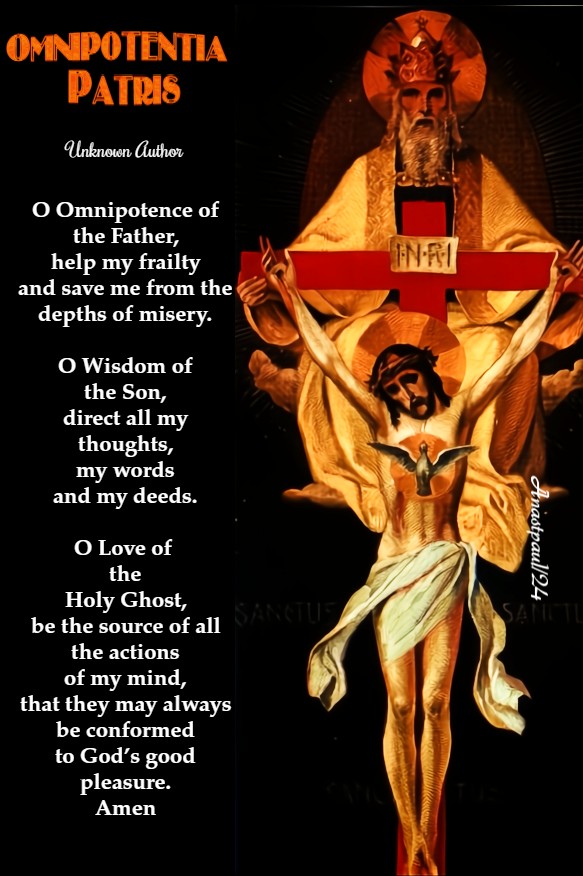
Omnipotentia Patris
O Omnipotence of the Father, help my frailty and save me from the depths of misery.
O Wisdom of the Son, direct all my thoughts, my words and my deeds.
O Love of the Holy Ghost, be the source of all the actions of my mind, that they may always be conformed to God’s good pleasure. Amen
Pray (1) Our Father, three (3) Hail Marys, one (1) Glory Be
O Bleeding Face, O Face Divine, be every Adoration Thine (Three times)
One Minute Reflection – 16 February – “The Month of the Most Blessed Trinity” – Ferial Day – Quinquagesima Sunday –1 Corinthians 13:1-13 – Luke 18:31-43.– Scripture search here: https://www.drbo.org/
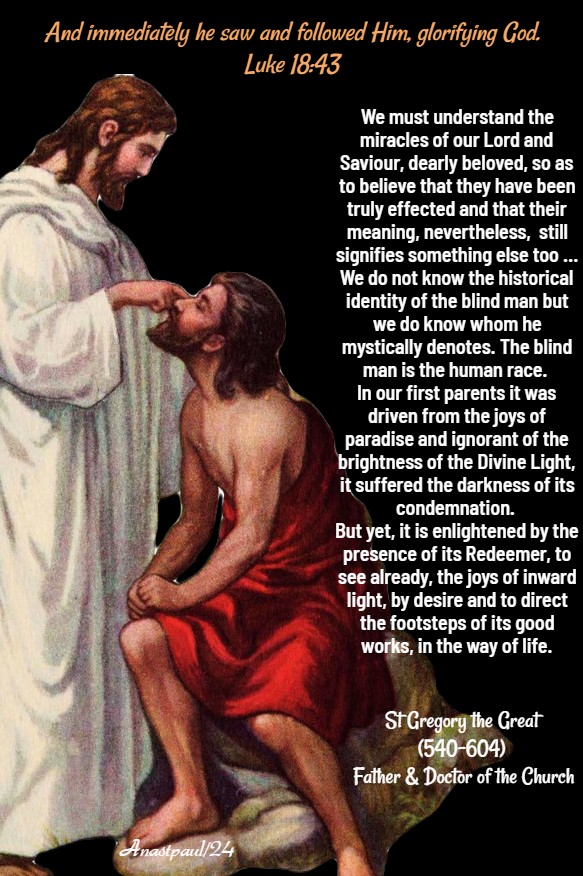
“And immediately he saw and followed Him, glorifying God.” – Luke 18:43
REFLECTION – “Our Redeemer foresaw that the hearts of His disciples would be greatly disturbed by His Passion. He foretold to them, far ahead, of both the agony of His Passion and the glory of His Resurrection (Lk 18:31-33). Then, when they beheld Him dying, as had been foretold, they would not doubt that He was to rise again. But since the disciples, still worldly as they were, were entirely unable to grasp, the Words of the Mystery (v.34), there was need of a miracle! A blind man received the Light before their eyes, so that a heavenly deed might strengthen the faith of those, who failed to grasp the Words of the heavenly Mystery.
We must understand the miracles of our Lord and Saviour, dearly beloved, so as to believe that they have been truly effected and that their meaning, nevertheless, still signifies something else too … We do not know the historical identity of the blind man but we do know whom he mystically denotes. The blind man is the human race. In our first parents it was driven from the joys of paradise and ignorant of the brightness of the Divine Light, it suffered the darkness of its condemnation. But yet, it is enlightened by the presence of its Redeemer, to see already, the joys of inward light, by desire and to direct the footsteps of its good works, in the way of Life.” – St Gregory the Great (540-604) Pope, Father and Doctor of the Church (Sermons on the Gospels).
PRAYER – O Lord, we beseech Thee, mercifully hear our prayers; loose us from the chains of our sins and keep us from all adversity. Through Jesus Christ, Thy Son our Lord, Who lives and reigns with Thee, in the unity of the Holy Ghost, God, world without end. Amen (Collect).
Our Morning Offering – 16 February – “The Month of the Nost Blessed Trinity” – Ferial Day – Quinquagesima Week
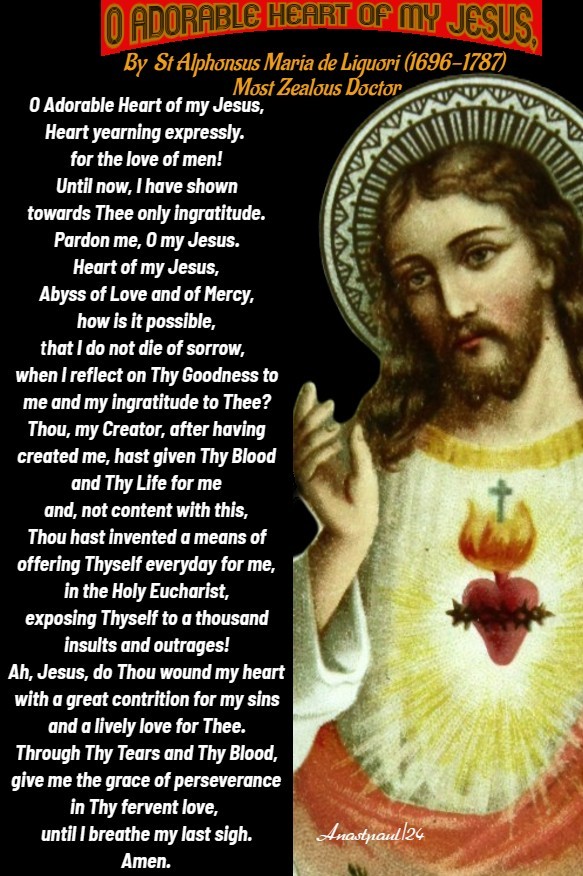
O Adorable Heart of my Jesus! By St Alphonsus Maria de Liguori (1696-1787) Most Zealous Doctor
O Adorable Heart of my Jesus, Heart yearning expressly. for the love of men! Until now, I have shown towards Thee only ingratitude. Pardon me, O my Jesus. Heart of my Jesus, Abyss of Love and of Mercy, how is it possible, that I do not die of sorrow, when I reflect on Thy Goodness to me and my ingratitude to Thee? Thou, my Creator, after having created me, hast given Thy Blood and Thy Life for me and, not content with this, Thou hast invented a means of offering Thyself everyday for me, in the Holy Eucharist, exposing Thyself to a thousand insults and outrages! Ah, Jesus, do Thou wound my heart with a great contrition for my sins and a lively love for Thee. Through Thy Tears and Thy Blood, give me the grace of perseverance in Thy fervent love, until I breathe my last sigh. Amen.
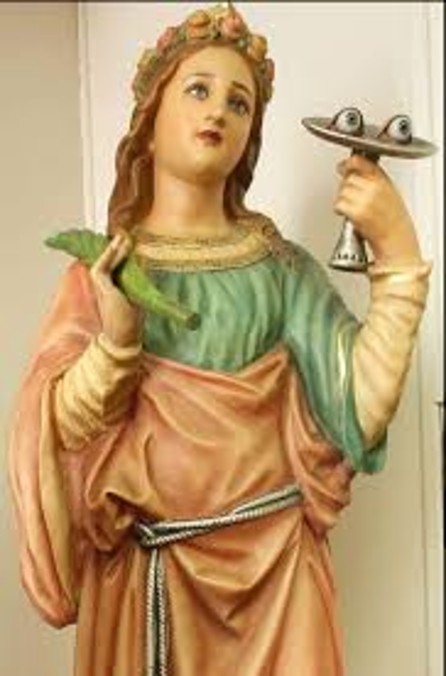
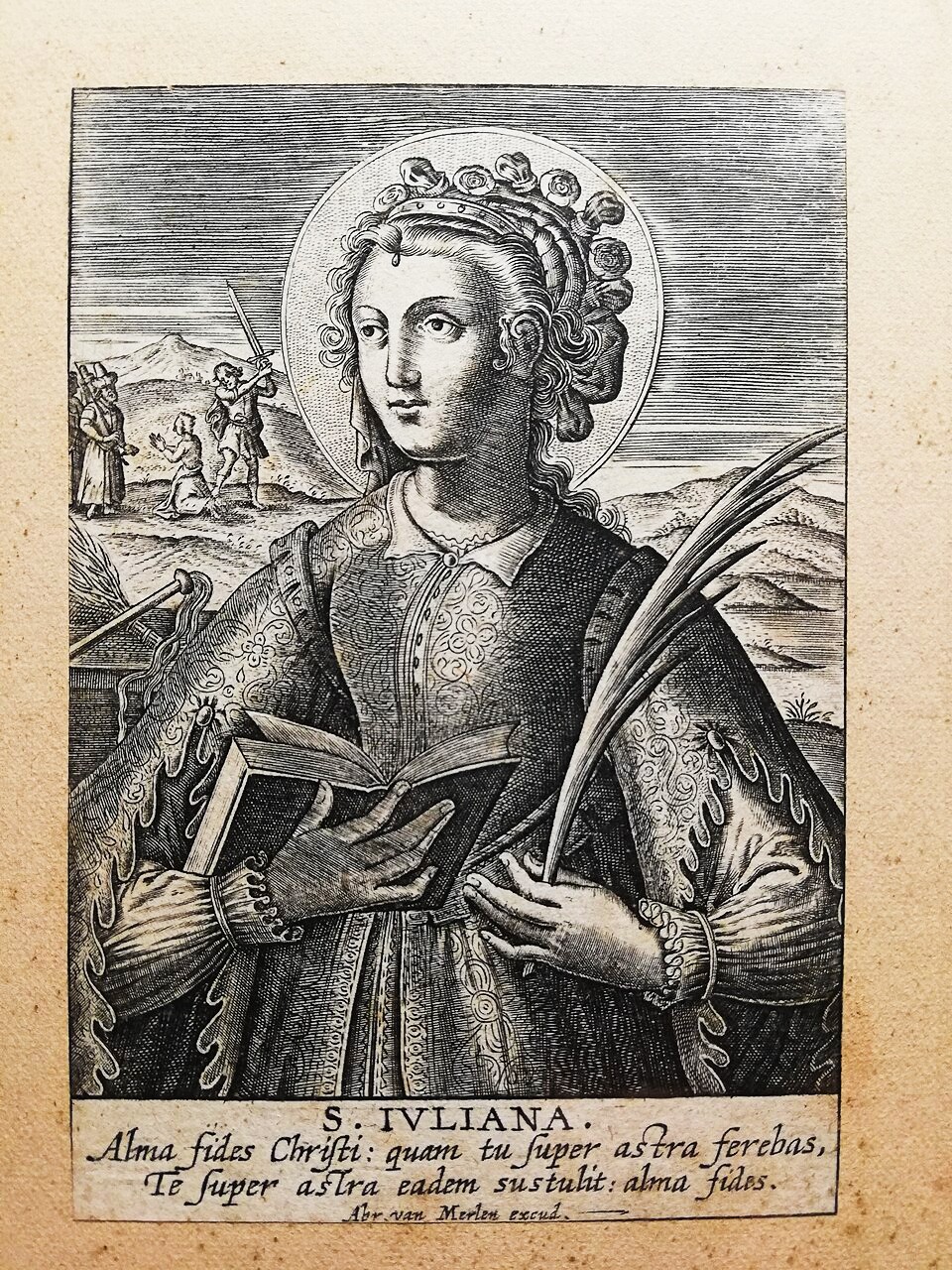
Saint of the Day – 16 February – St Juliana (Died c305) Virgin Martyr of Nicomedia. Patronages – against bodily ills, of the sick, Pedrosa de Río Úrbel, Spain. Also known as – Juliana of Cumae. Additional Feast – 25 February.
The Roman Martyrology reads today: “At Cunae in Campania, the Translation of St Juliana, Virgin and Martyr. Under the Emperor Maximian, she was first severely scourged by her own father, Africanus, then made to suffer many torments by the Prefect, Evilasius, whom she had refused to marry. Later, being thrown into prison, she encountered the evil spirit in a visible manner. Finally, as a fiery furnace and a cauldron of boiling oil could do her no injury, she terminated her Martyrdom by decapitation.”
According to the text of the Passion of Juliana, she was born around 285 in Nicomedia, now Izmit, Turkey. She was the only Christian in her family. Her father, in particular, was a zealous follower of pagan deishe was the only member of her family to follow Christ and her father, Africanus, was a zealous follower of pagan deities.
Being promised in marriage to a pagan named Evilasius, she initially declared that she would marry the City Prefect, only on condition that he converted to Christianity. Evilasius, then, irritated by the young woman’s demands, had her brought before his tribunal. Nothing could change her mind, neither torture nor imprisonment.
After boiling cauldrons of oil and fiery furnace could not harm her, finally, she was sentenced to beheading, thus consummating her Martyrdom. This occurred during the time of Maximian, around 305.
Her Feast today, 16 February was the probably date of the translation (perhaps the second) of the Relics of the holy Virgin Martyr. These would have first been transferred from Nicomedia to Pozzuoli, then at the time of the Lombard invasion (around 568) they were placed in safety in Cumae and from there, in 1207, finally on 25 February they were translated to Naples. This explains the spread of the Saint’s cult throughout the region as well as her presence in the 9th Century marble calendar.
It would certainly be difficult to clarify the problem of partial translations that could justify the claims of numerous Churches in Italy, Spain, Holland and other European Countries to possess Juliana’s Relics.
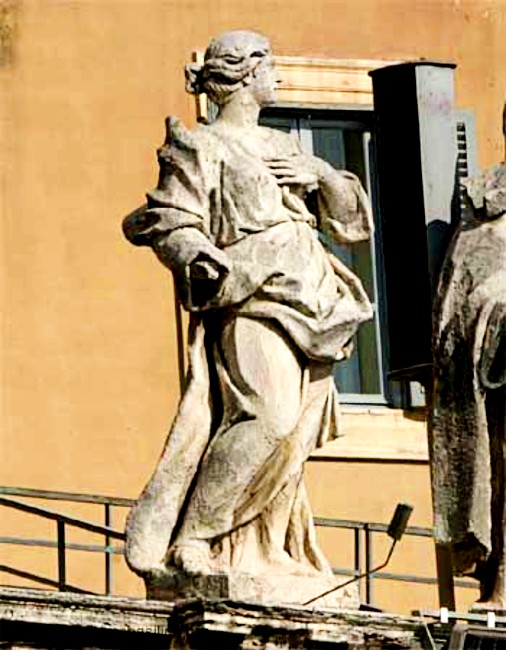
St Juliana on the North Colonnade of St Peter’s at the Vatican
St Honestus of Nimes St John III of Constantinople
St Julian of Egypt
St Juliana (Died c305) Virgin Martyr of Nicomedia
Blessed Mariano Arciero
St Maruta (Died 415) Bishop, Confessor, Theologian, Writer, honoured in the Syrian Rite Church as a Doctor of the Church. He was a friend of Saint John Chrysostom and acted as an Ambassador between the East Roman Emperor and the Persian Emperor. His Saintly Life: https://anastpaul.com/2022/02/16/saint-of-the-day-16-february-saint-maruta-died-c-415/
Martyrs of Cilicia – 12 Saints: A group of Christians who ministered to other Christians who were condemned to work the mines of Cilicia in the persecutions of Maximus. They were arrested, tortured and martryed by order of the governor Firmilian. They were Daniel, Elias, Isaias, Jeremy, Samuel. The group also includes the three known have been sentenced to the mines – Pamphilus, Paul of Jamnia, Valens of Jerusalem and those who were exposed as Christians as a result of these murders – Julian of Cappadocia, Porphyrius of Caesarea, Seleucius of Caesarea, Theodule the Servant. They were Martyred in 309 in Cilicia, Asia Minor (in modern Turkey).
DISCLAIMER: Please note: I cannot control the content of the Advertisements on this Site, or of pop-ups which may appear, The revenue from the Advertisements, however, does provide a little assistance in the support of the Site. I do apologise for any inappropriate content.
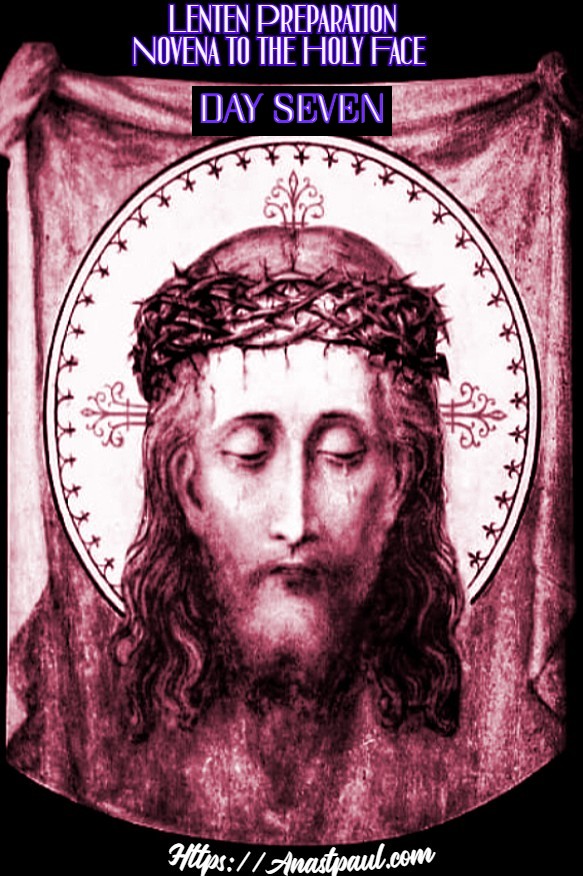
Lenten Preparation Novena in Reparation to the Holy Face Day Seven
“All those who, attracted by My Love and venerating My Countenance, shall receive, by virtue of My Humanity, a brilliant and vivid impression of My Divinity. This splendour shall enlighten the depths of their souls, so that in eternal glory the celestial court shall marvel at the marked likeness of their features, with My Divine Countenance.” … Our Lord Jesus Christ to St Gertrude the Great (1256-1302)
(Console the Holy Face
and recite Daily Preparatory Prayer) below.
Psalm 50:14-15: Restore unto me the joy of Thy salvation and strengthen me with a perfect spirit. I will teach the unjust Thy ways and the wicked shall be converted to Thee.
DAILY PREPARATORY PRAYER
O Most Holy and Blessed Trinity, through the intercession of Holy Mary, whose soul was pierced through by a sword of sorrow at the sight of the Passion of her Divine Son, we ask Thy help, in making a perfect Novena of Reparation with Jesus, united with all His sorrows, love and total abandonment. We now implore all the Angels and Saints to intercede for us as we pray this Holy Novena to the Most Holy Face of Jesus and for the glory of the most Holy Trinity, Father, Son and Holy Ghost. Amen
THE SEVENTH DAY:
Lord Jesus! After contemplating Thy features, disfigured by grief pain, after meditating upon Thy Passion with compunction and love, how can our hearts fail to be inflamed with a holy hatred of sin, which even now, outrages Thy Adorable Face! Lord, suffer us not to be content with mere compassion but grant us grace to closely follow Thee in this Calvary, so that the opprobrium destined for Thee may fall on us, 0 Jesus, that thus, we may have a share, small though it may be, in expiation of sin. Amen
Mary, our Mother, intercede for us.
Saint Joseph pray for us. Through the merits of Your Precious Blood and Your Holy Face, O Jesus, grant us our petition ……………… Pardon and mercy. Amen
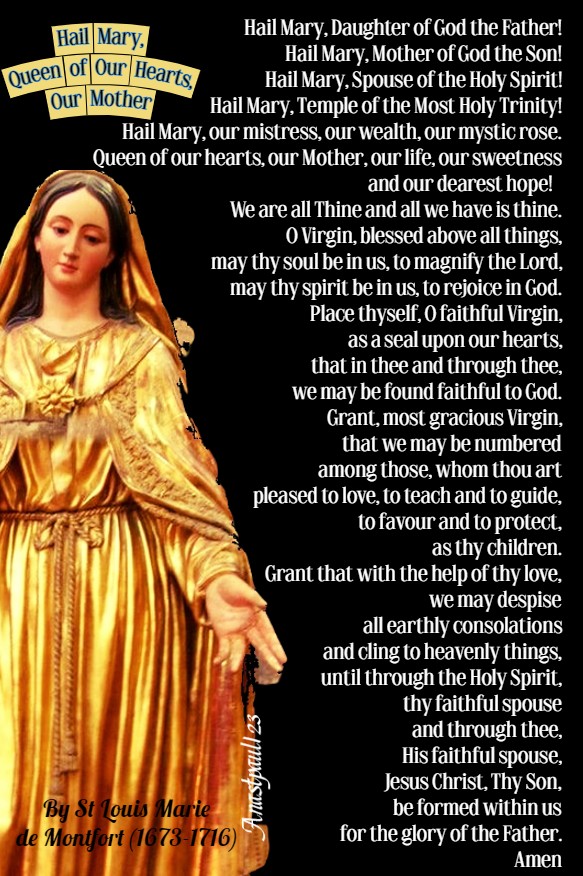
Hail Mary, Queen of Our Hearts, Our Mother Prayer in Honour of Mary By St Louis Marie de Montfort (1673-1716)
Hail Mary, Daughter of God the Father! Hail Mary, Mother of God the Son! Hail Mary, Spouse of the Holy Spirit! Hail Mary, Temple of the Most Holy Trinity! Hail Mary, our mistress, our wealth, our mystic rose. Queen of our hearts, our Mother, our life, our sweetness and our dearest hope! We are all Thine and all we have is thine. O Virgin, blessed above all things, may thy soul be in us, to magnify the Lord, may thy spirit be in us, to rejoice in God. Place thyself, O faithful Virgin, as a seal upon our hearts, that in thee and through thee, we may be found faithful to God. Grant, most gracious Virgin, that we may be numbered among those, whom thou art pleased to love, to teach and to guide, to favour and to protect, as thy children. Grant that with the help of thy love, we may despise all earthly consolations and cling to heavenly things, until through the Holy Spirit, thy faithful spouse and through thee, His faithful spouse, Jesus Christ, Thy Son, be formed within us for the glory of the Father. Amen
Pray (1) Our Father, three (3) Hail Marys, one (1) Glory Be
O Bleeding Face, O Face Divine, be every Adoration Thine (Three times)
One Minute Reflection – 2 March – “The Month of the Most Blessed Trinity” – Quinquagesima Sunday –1 Corinthians 13:1-13 – Luke 18:31-43. – Scripture search here: https://www.drbo.org/
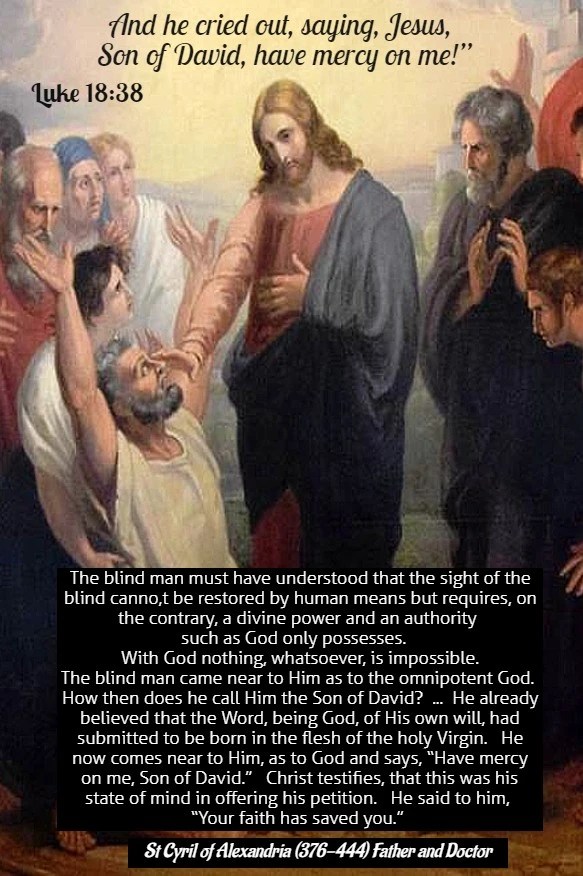
“And he cried out, saying, Jesus, Son of David, have mercy on me!” – Luke 18:38
REFLECTION – The blind man must have understood, that the sight of the blind cannot be restored by human means but requires, on the contrary, a divine power and an authority such as God only possesses. With God nothing, whatsoever, is impossible. The blind man came near to Him, as to the omnipotent God. How then does he call Him, the Son of David? What can one answer to this? The following is perhaps the explanation. Since He was born and raised in Judaism, of course, the predictions contained in the law and the holy Prophets, concerning Christ, had not escaped his knowledge. He heard them chant that passage in the book of the Psalms, “The Lord has sworn in truth to David and will not annul it, saying: ‘of the fruit of your loins I will set a king upon your throne.’” The blind man also knew that the blessed Prophet Isaiah said, “There will spring up a shoot from the root of Jesse and from his root a flower will grow up.” Isaiah also said, “Behold, a virgin will conceive and bring forth a son,and they will call his name Emmanuel, which, being interpreted is, God with us.” He already believed that the Word, being God, of His own will, had submitted to be born in the flesh of the holy Virgin. He now comes near to Him, as to God and says, “Have mercy on me, Son of David.” Christ testifies, that this was his state of mind in offering his petition. He said to him, “Your faith has saved you.” – St Cyril of Alexandria (376-444) Archbishop of Alexandria, Father and Doctor of the Incarnation (Commentary on Luke, Homily 126)
PRAYER – O Lord, we beseech Thee, mercifully hear our prayers; loose us from the chains of our sins and keep us from all adversity. Through Jesus Christ, Thy Son our Lord, Who lives and reigns with Thee, in the unity of the Holy Ghost, God, world without end. Amen (Collect).
Our Morning Offering – 15 February – Quinquagesima Sunday
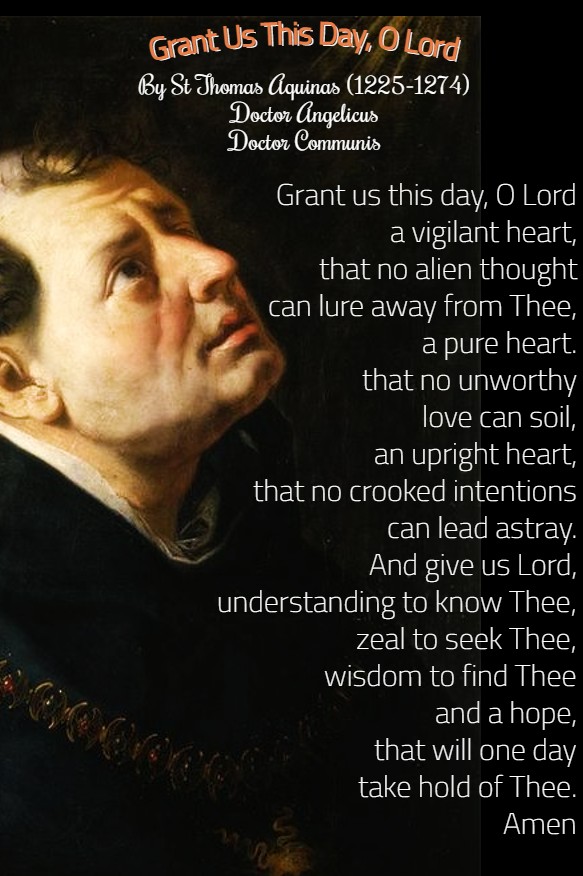
Grant Us This Day, O Lord By St Thomas Aquinas (1225-1274) Doctor Angelicus Doctor Communis
Grant us this day, O Lord a vigilant heart, that no alien thought can lure away from Thee, a pure heart. that no unworthy love can soil, an upright heart, that no crooked intentions can lead astray. And give us Lord, understanding to know Thee, zeal to seek Thee, wisdom to find Thee and a hope, that will one day take hold of Thee. Amen
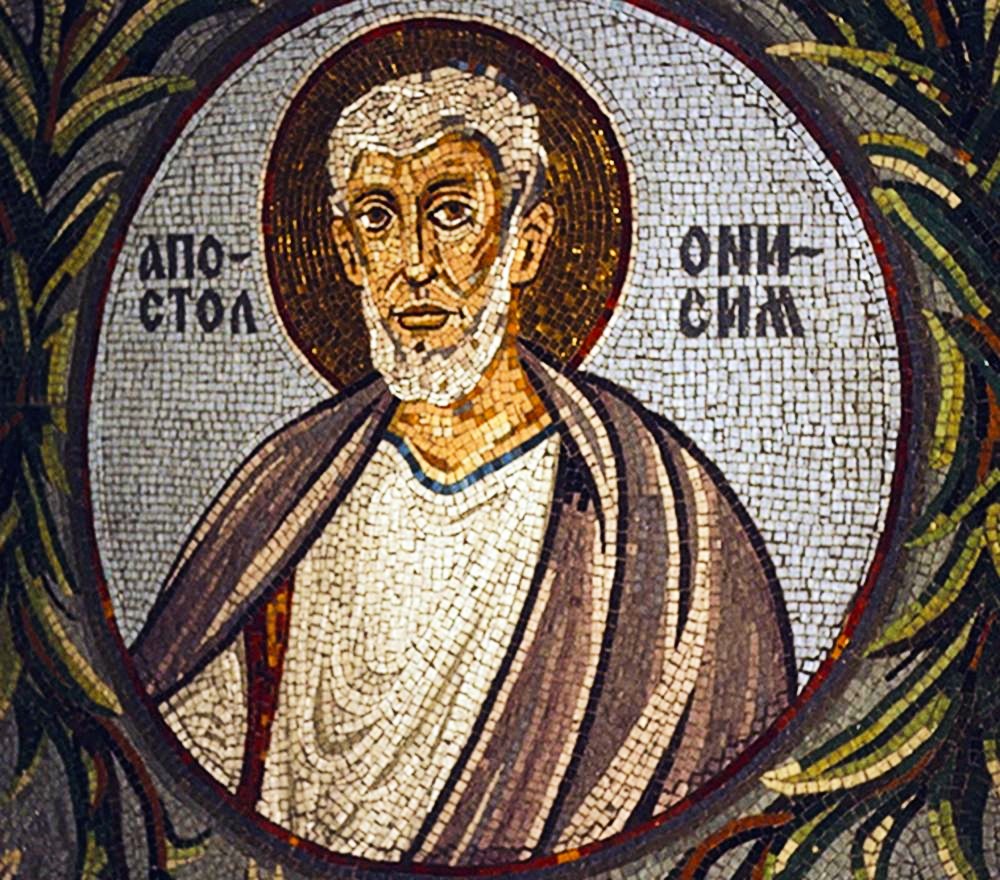
Saint of the Day – 15 February – St Onesimus the Slave (Died c90) Bishop, Martyr, Disciple of St Paul the Apostle.
The Roman Martyrology reads today: “The birthday of the blessed Onesimus, concerning whom the Apostle Paul wrote to Philemon, He made him the Bishop of Ephesus after St Timothy and committed to him the Office of Preacher. Being led a prisoner to Rome and stoned to death for the Faith in Christ, he was buried in that City but his body was afterwards carried to the place where he had been the Bishop.”
Onesimus, in Greek, means “useful or beneficial.“ The Saint thus named lived in Phrygia (Asia Minor) as a slave to the Christian Philemon, a friend and disciple of the Apostle St Paul.
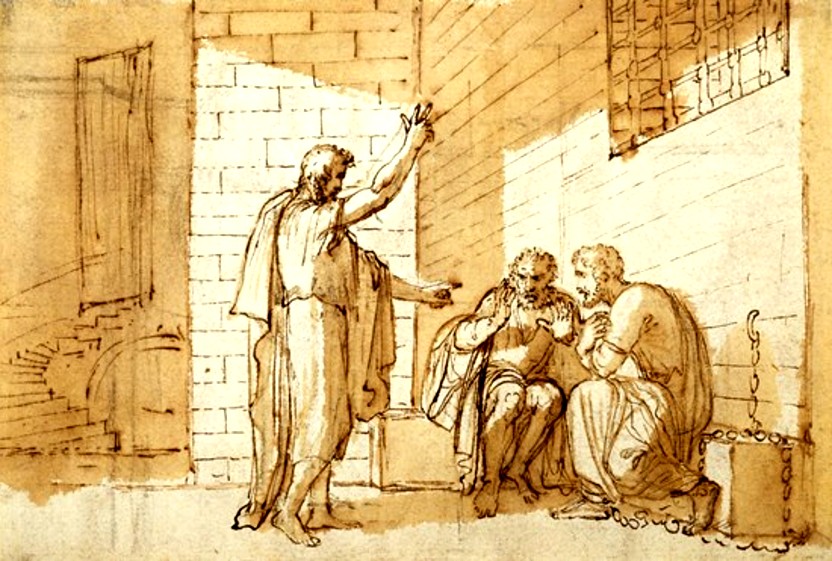
But then Onesimus escaped (perhaps even robbed his master) and woe betide him if he were caught – he might then be sentenced to a lifetime of forced labour, with the letter “F” (Fugitivus) branded on his forehead. After days and days of walking, hiding and terror, finally, he sought refuge with St Paul in Rome. The Apostle was held captive under military custody in a house, almost always chained to a soldier but free to receive visitors. Here Onesimus found ready refuge, tried to make himself useful in daily matters and listened to St Paul’s conversations with so many people; the man in chains called everyone to ente“into the glorious freedom of the children of God.”
St Paul teaching St Onesimus
And he called Onesimus too, of course, who one day too was converted and able to call himself a Christian, treated by Paul as a son “begotten in chains.” Then the Apostle sent him back to his former master, Philemon.
To Philemon, St Paul wrotes a concise and lively letter in his own hand, clarifying a crucial point – Onesimus, having escaped as a slave, now returns as a “dear brother, first to me but how much more to you, both as a man and as a brother in the Lord.” Others think of abolishing slavery with laws; Paul erases it from the heart of man in the name of Christ. And if the former slave had robbed Philemon, the Apostle promptly guarantees: “I will pay!”
Onesimus left to return to his master Philemon, with Tychicus, Paul’s most faithful collaborator, who carries his letters to the Christians of Ephesus and Colossae. And so St Paul introduces him to his fellow Colossians: “With Tychicus will come Onesimus, the faithful and beloved brother, who is one of you. They will inform you of all things concerning this place.”
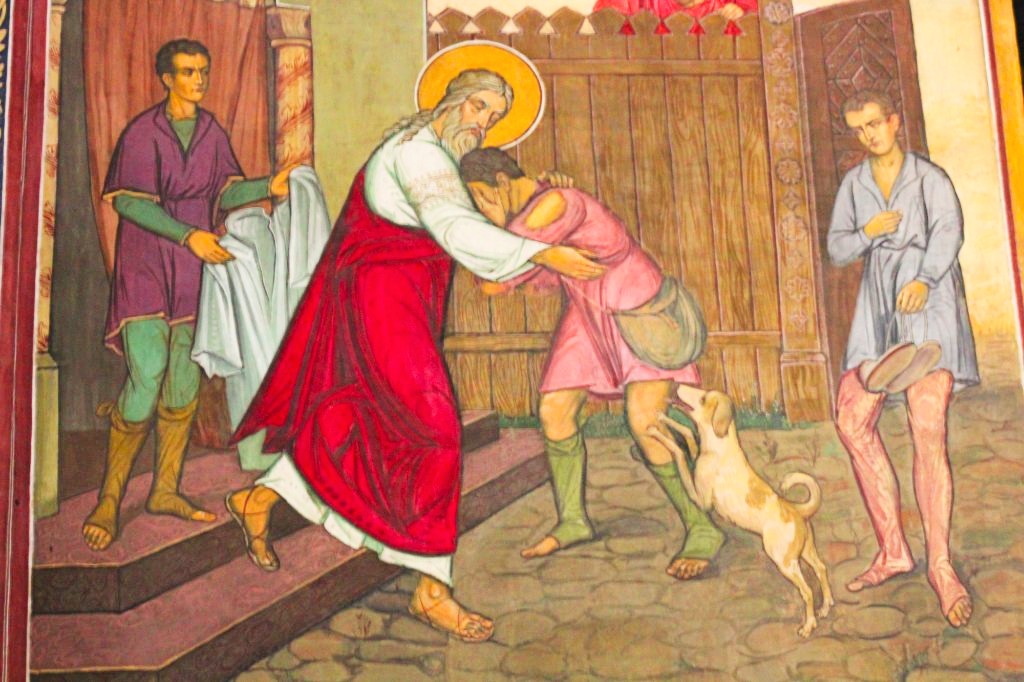
Thus the former slave has already become a collaborator in the apostolate. Then he certainly found Philemon, giving him the letter, which hase reached us in the New Testament.
St Philemon rreceives the ‘prodigal’ St Onesimus
“[10] I beseech thee for my son, whom I have begotten in my bands, Onesimus, [11] who hath been heretofore unprofitable to thee but now is profitable, both to me and thee, [12] whom I have sent back to thee. And do thou receive him as my own bowels. [13] Whom I would have retained with me that in thy stead he might have ministered to me in the bands of the Gospel [14] but without thy counsel I would do nothing that thy good deed might not be as it were of necessity but voluntary. [15] For perhaps he, therefore, departed for a season from thee that thou mightest receive him again for ever, [16] not now as a servant but instead of a servant, a most dear brother, especially to me but how much more to thee, both in the flesh and in the Lord?” [Philemon 1:10-16]
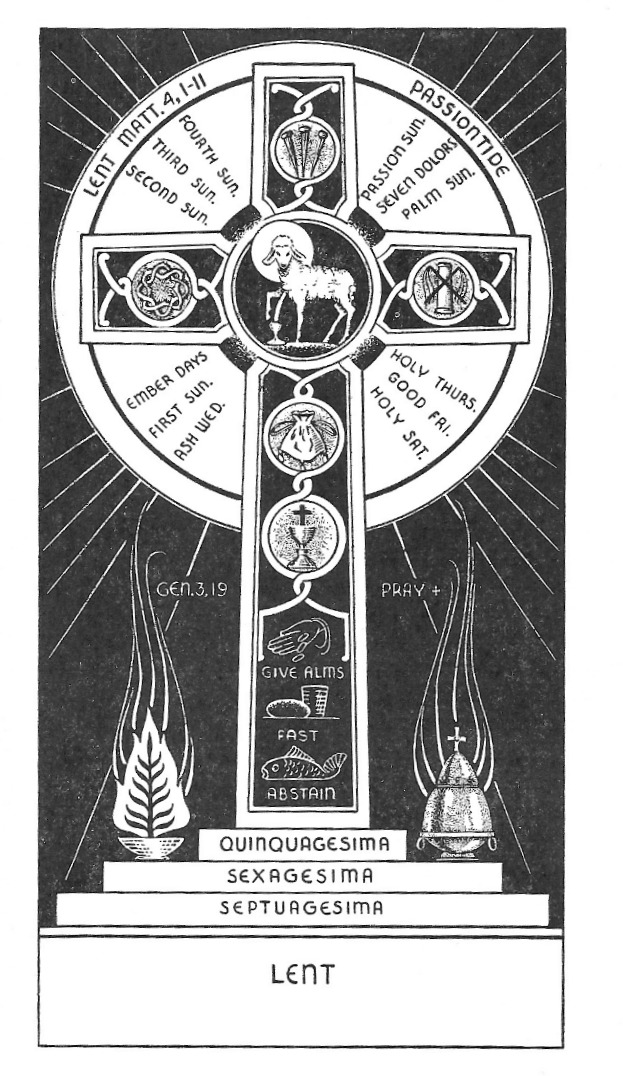
Quinquagesima Sunday: This Season is seventeen (17) days long and includes the three Sundays before Ash Wednesday. The length of the Season never changes but the start date is dependent upon the movable date of Easter, which can fall between 22 March-25 April. For many early Christians Quinquagesima marked the time after which meat was forbidden. In many places, this Sunday and the next two days, were used to prepare for Lent by a good Confession; hence in England, we find the names Shrove Sunday and Shrovetide. Shrove is a form of the English word “shrive,” which means – to obtain absolution for one’s sins by way of Confession and doing penance.. As the days before Lent were frequently spent in merry-making, Pope Benedict XIV by the Constitution “Inter Cetera” (1 January 1748) introduced a Forty Hours’ Devotion to keep the faithful from dangerous amusements and to make some reparation for sins committed. Quinquagesima also means, the time between Easter and Pentecost, or from the Saturday after Easter to the Sunday after Pentecost; it is then called Quinquagesima Paschae paschalis, or laetitae.
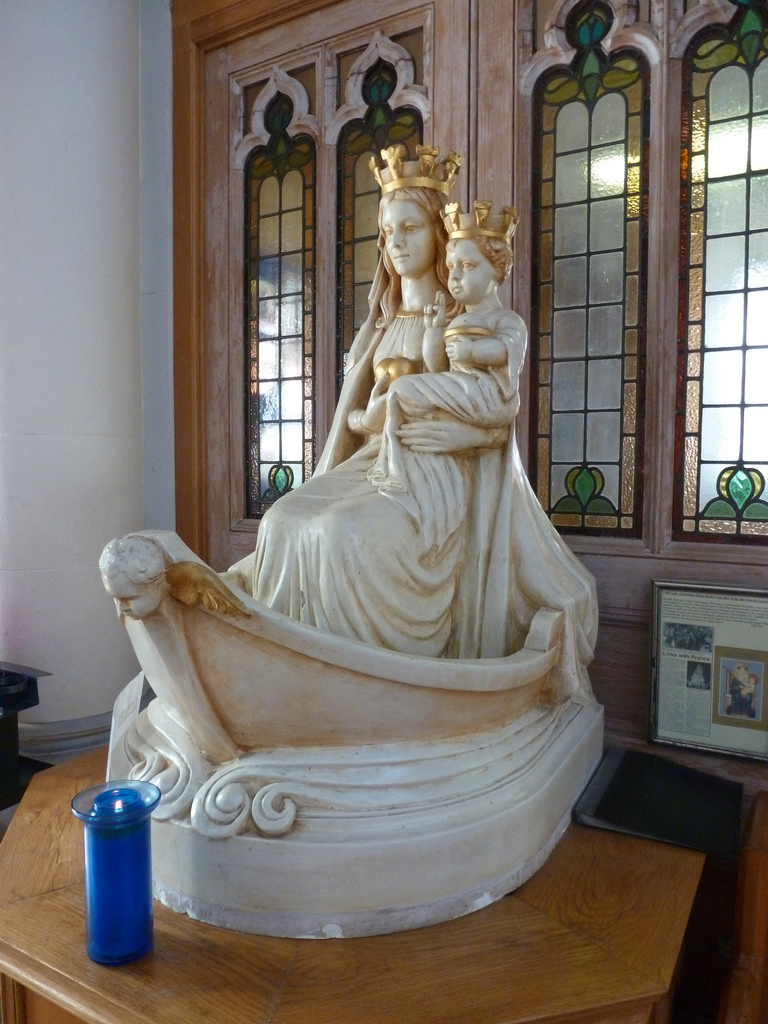
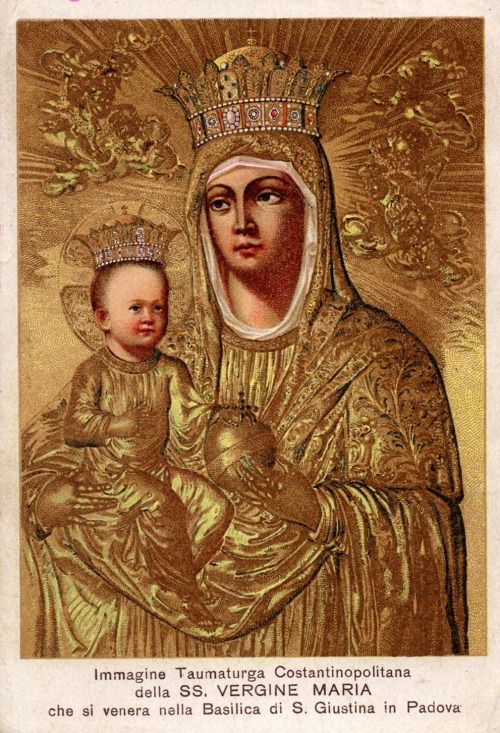
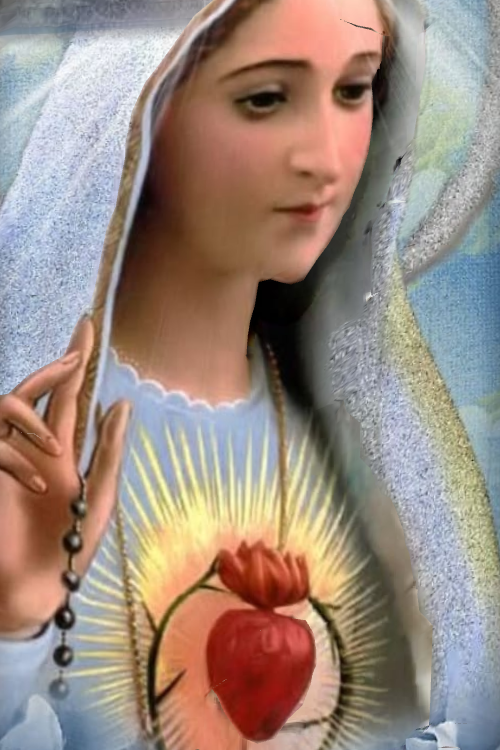
Immaculate Heart of Mary: Refuge of Sinner Listed in the Missal as a Feastday in some place. What does this Feastday mean? The Heart of Mary is the divinely-appointed Refuge of Sinners. “O God,” exclaims St Alphonsus, “how great shall be the remorse of the damned Christian in thinking that, during life, he could have saved his soul with so much facility by invoking the intercession of this Mother of mercy; that he had not done so and that, there shall be no more time to do it.” “Perhaps,” says St Bonaventure, “we are in doubt as to whether Our Lady will hear us when we address our prayers to her. No, Mary does not refuse and never has refused pity and aid, to any sinner who has invoked her intercession.”
St Berach of Kilbarry St Craton St Decorosus of Capua St Dochow St Druthmar of Corvey St Eusebius of Asehia St Farannan of Iona
St Faustinus AND St Jovinus (Died c 120) Martyrs, Priest and Deacon respectively. Brothers. Both Evangelists, Preachers. Born at Brescia, Lombardy, Italy and the two brothers died together. They was thrown to the lions but the animals refused to touch them. Then beheaded in 120 at Brescia, Italy.















 AnaStpaul
You must be logged in to post a comment.