Thought for the Day – 18 October – Meditations with Antonio Cardinal Bacci (1881-1971)
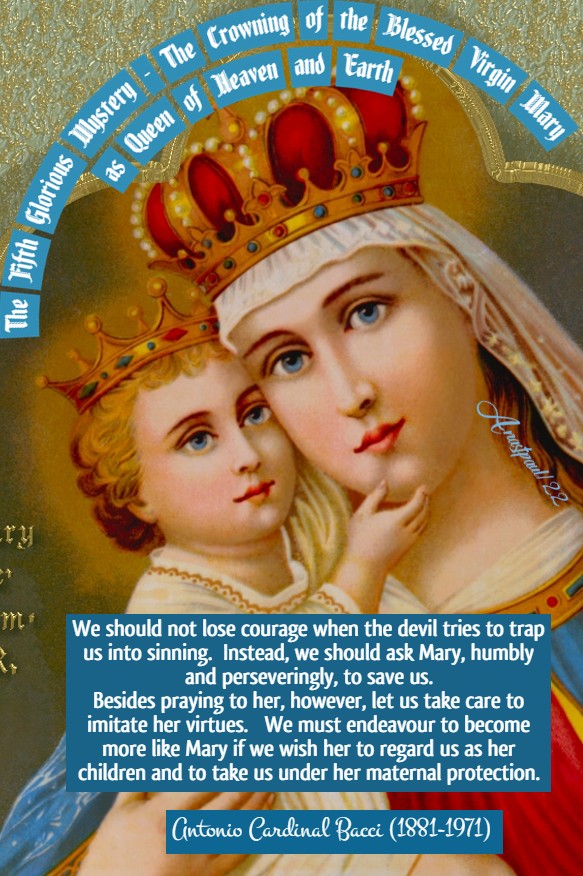
“Month of the Holy Rosary” The Fifth Glorious Mystery The Crowning of the Blessed Virgin Mary as Queen of Heaven and Earth
“Mary’s reign extends even to the powers of hell, which were vanquished through her instrumentality as Mother of God. We should not lose courage when the devil tries to trap us into sinning. Instead, we should ask Mary, humbly and perseveringly, to save us.
Besides praying to her, however, let us take care to imitate her virtues. We must endeavour to become more like Mary if we wish her to regard us as her children and to take us under her maternal protection.”
Quote/s of the Day – 18 October – The Feast of St Luke, the Evangelist – 2 Corinthians 8:16-24, Luke 10:1-9 – Scripture search here: https://www.drbo.org/
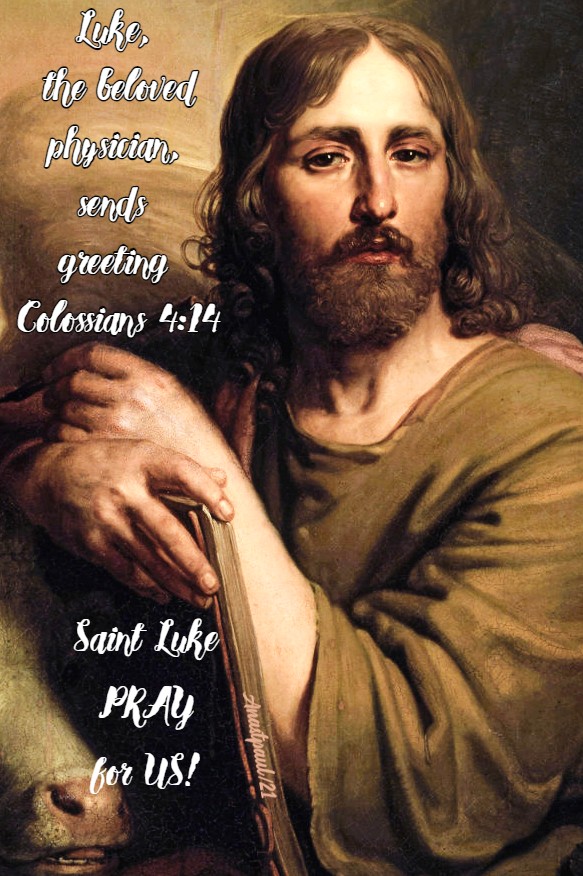
“Luke, the beloved physician, sends greetings … ”
Colossians 4:14
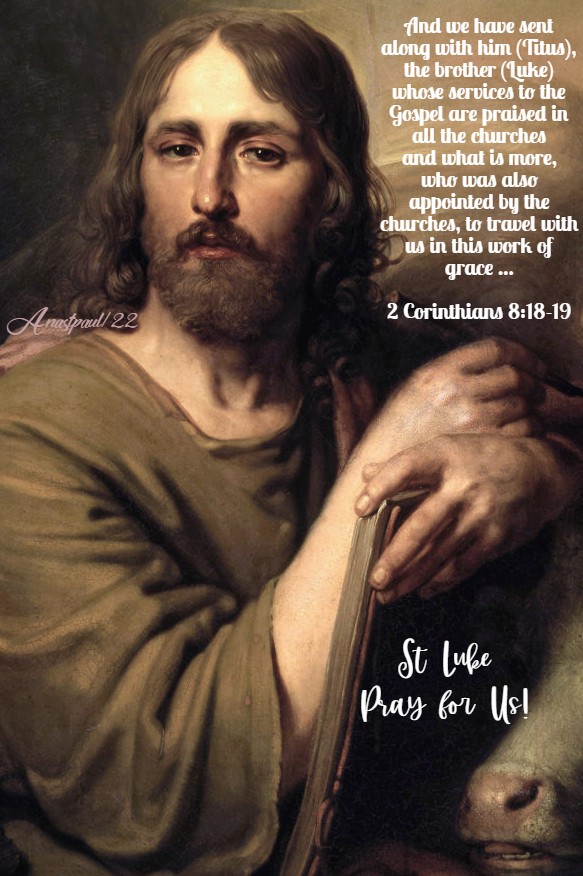
“And we have sent along with him (Titus), the brother (Luke) whose services to the Gospel are praised in all the churches and what is more, who was also appointed by the churches, to travel with us in this work of grace …”
2 Corinthians 8:18-19
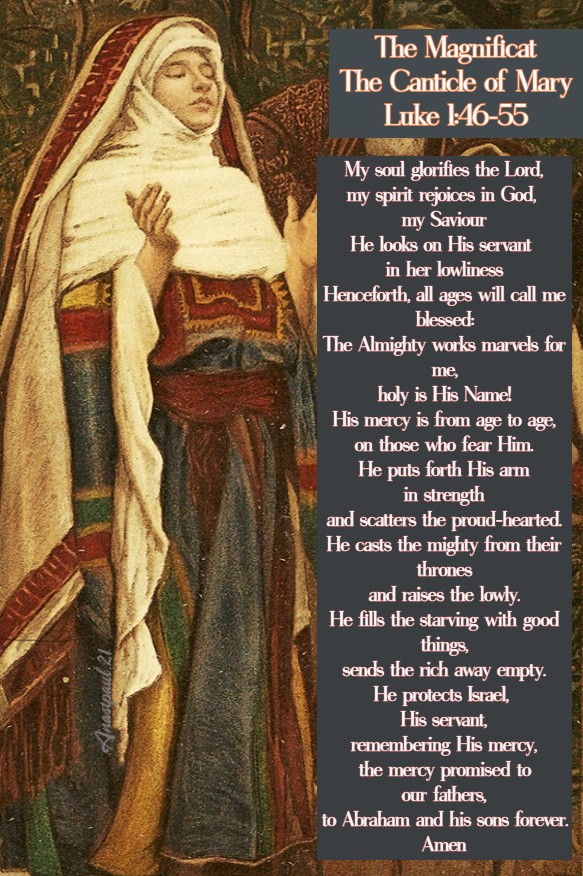
The Magnificat The Canticle of Mary Luke 1:46-55
My soul glorifies the Lord, my spirit rejoices in God, my Saviour He looks on His servant in her lowliness Henceforth all ages will call me blessed: The Almighty works marvels for me, holy is his Name! His mercy is from age to age, on those who fear Him. He puts forth His arm in strength and scatters the proud-hearted. He casts the mighty from their thrones and raises the lowly. He fills the starving with good things, sends the rich away empty. He protects Israel, His servant, remembering His mercy, the mercy promised to our fathers, to Abraham and his sons forever.
One Minute Reflection – 18 October – The Feast of St Luke, the Evangelist – 2 Corinthians 8:16-24, Luke 10:1-9 – Scripture search here: https://www.drbo.org/
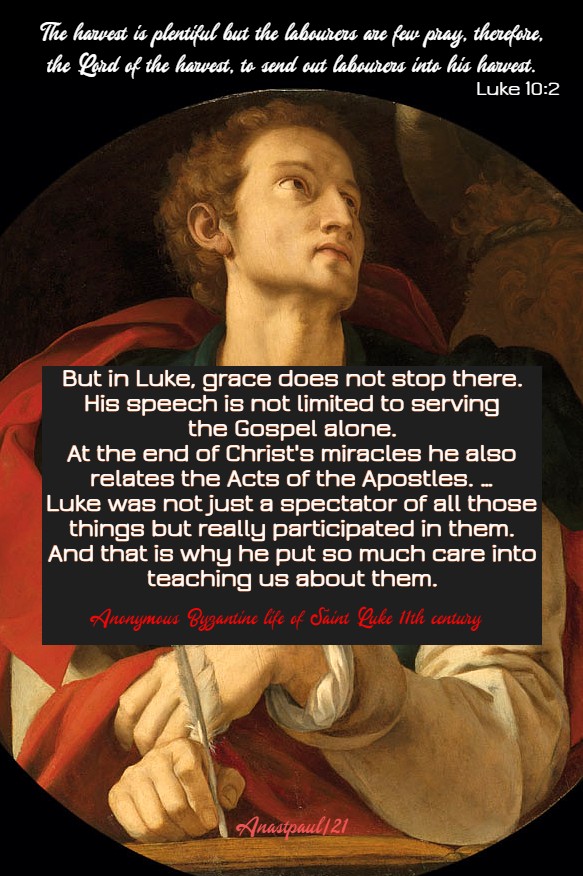
“And he said to them, “The harvest is plentiful but the labourers are few, pray therefore, the Lord of the harvest, to send out labourers into his harvest.” – Luke 10:2
REFLECTION – “When, after abandoning the darkness of error to bind himself to God’s love, Paul was joined to the number of the disciples, Luke went with him everywhere and became his travelling companion (Acts 16:10 f.). … He got on with him so well, was so close to him and shared all his graces, so nearly, that Paul, in writing to the faithful, called Luke his “beloved” (Col 4:14). From Jerusalem and the country round about, as far as Dalmatia, (Rom 15:19) he preached the Gospel with him. From Judea to Rome he shared the same chains with him, the same work, the same difficulties, the same shipwrecks. He desired to receive the same prize with him since he had shared the same labours.
Having acquired the gift of preaching along with Paul and won over and led so many peoples to the love of God, Luke truly seemed like the Saviour’s loving and beloved disciple, in addition to being the Evangelist who wrote His Sacred history. For formerly he had followed the Lord (cf. Lk 10:1), gathered together the testimonies of His first servants (Lk 1:1) and received inspiration from on high. It was this Evangelist who related the mystery of Gabriel, the messenger sent to the Virgin to announce joy to the whole world. It was he who told in full, the birth of Christ, showing us the newborn child lying in a manger and describing shepherds and Angels shouting for joy. … He reports the parabolic teachings in greater number than the other Evangelists. And just as he makes known to us the descent of the Word of God to earth, so too, he describes his Ascension to Heaven and return to the Father’s throne (24:51). …
But in Luke, grace does not stop there. His speech is not limited to serving the Gospel alone. At the end of Christ’s miracles he also relates the Acts of the Apostles. … Luke was not just a spectator of all those things but really participated in them. And that is why he put so much care into teaching us about them.” – Anonymous Byzantine life of Saint Luke – 11th century (Saint Luke, Evangelist and companion of Paul – 6-7; PG 115, 1134-1135).
PRAYER – O Lord, we beseech Thee, that Luke, Thy holy Evangelist, who for the honour of Thy Name bore continuously in his body the suffering of the Cross, may intercede on our behalf. Through the same Jesus Christ, Thy Son our Lord, Who lives and reigns with Thee, in the unity of the Holy Ghost, God, world without end. Amen (Collect).
Our Morning Offering – 18 October – The Feast of St Luke, the Evangelist
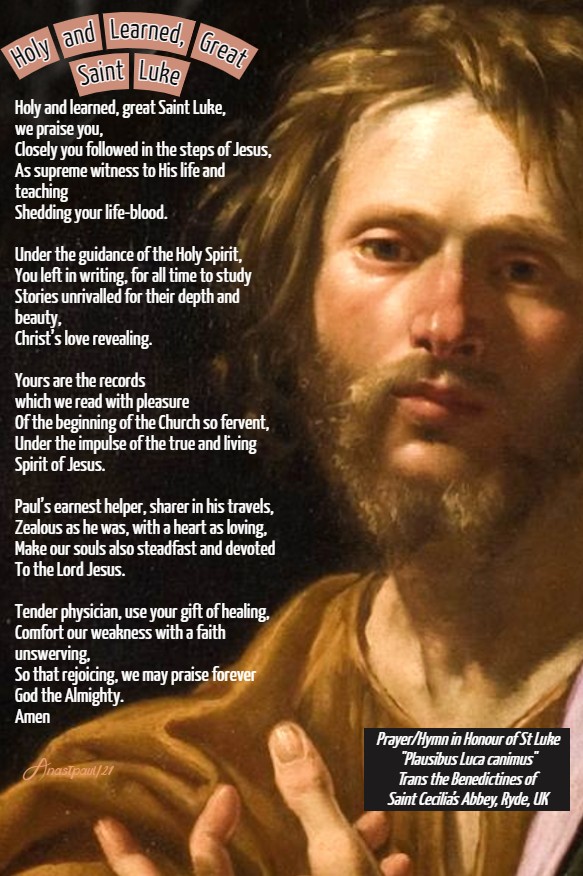
Holy and Learned, Great Saint Luke Prayer/Hymn in Honour of St Luke “Plausibus Luca canimus” Trans the Benedictines of Saint Cecilia’s Abbey, Ryde, UK
Holy and learned, great Saint Luke, we praise you, Closely you followed in the steps of Jesus, As supreme witness to His life and teaching Shedding your life-blood.
Under the guidance of the Holy Spirit, You left in writing, for all time to study Stories unrivalled for their depth and beauty, Christ’s love revealing.
Yours are the records which we read with pleasure Of the beginning of the Church so fervent, Under the impulse of the true and living Spirit of Jesus.
Paul’s earnest helper, sharer in his travels, Zealous as he was, with a heart as loving, Make our souls also steadfast and devoted To the Lord Jesus.
Tender physician, use your gift of healing, Comfort our weakness with a faith unswerving, So that rejoicing, we may praise forever God the Almighty. Amen
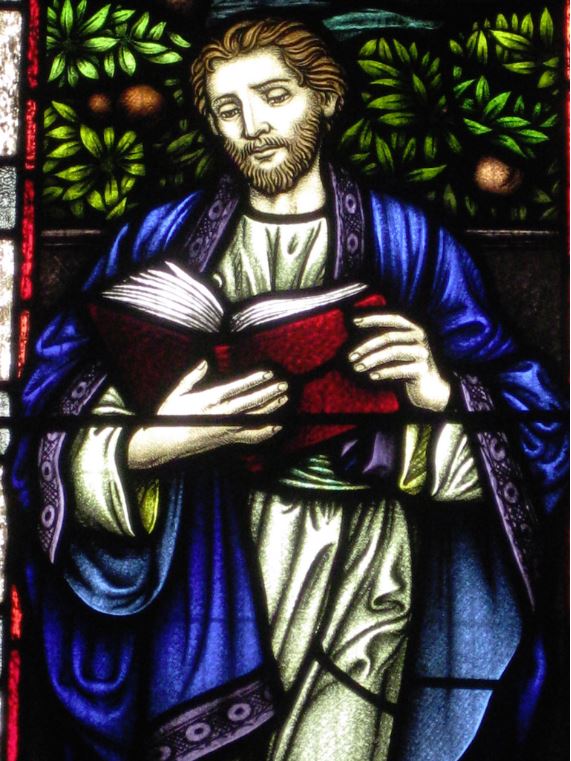
Saint of the Day – 18 October – The Feast of St Luke the Evangelist, Physician, Disciple of St Paul, Evangelist, Author of the Gospel according to Luke and the Acts of the Apostles and traditionally believed to be an Artist.
St Luke, Evangelist By Father Francis Xavier Weninger (1860-1946)
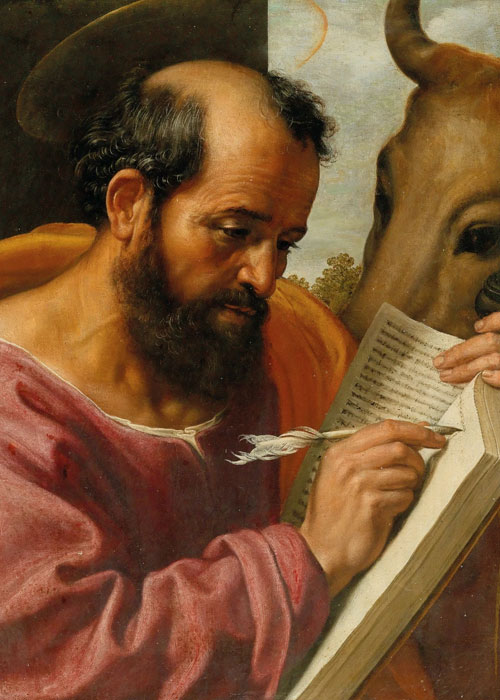
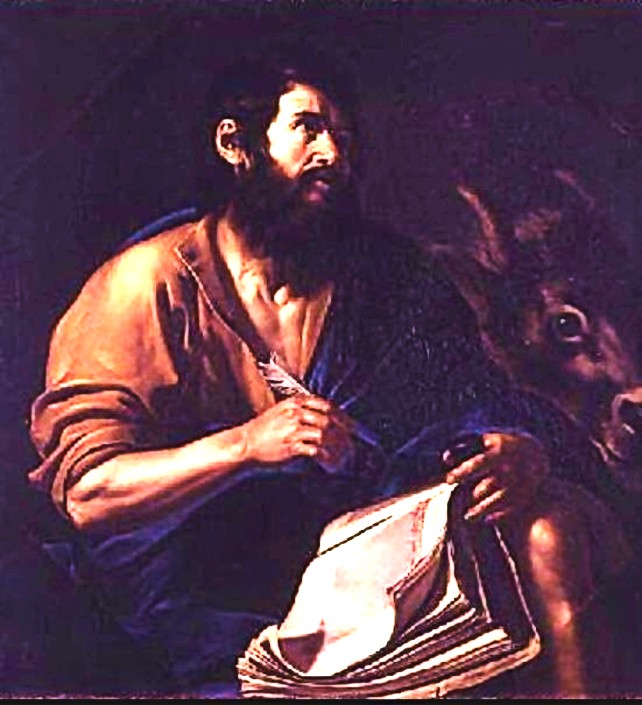
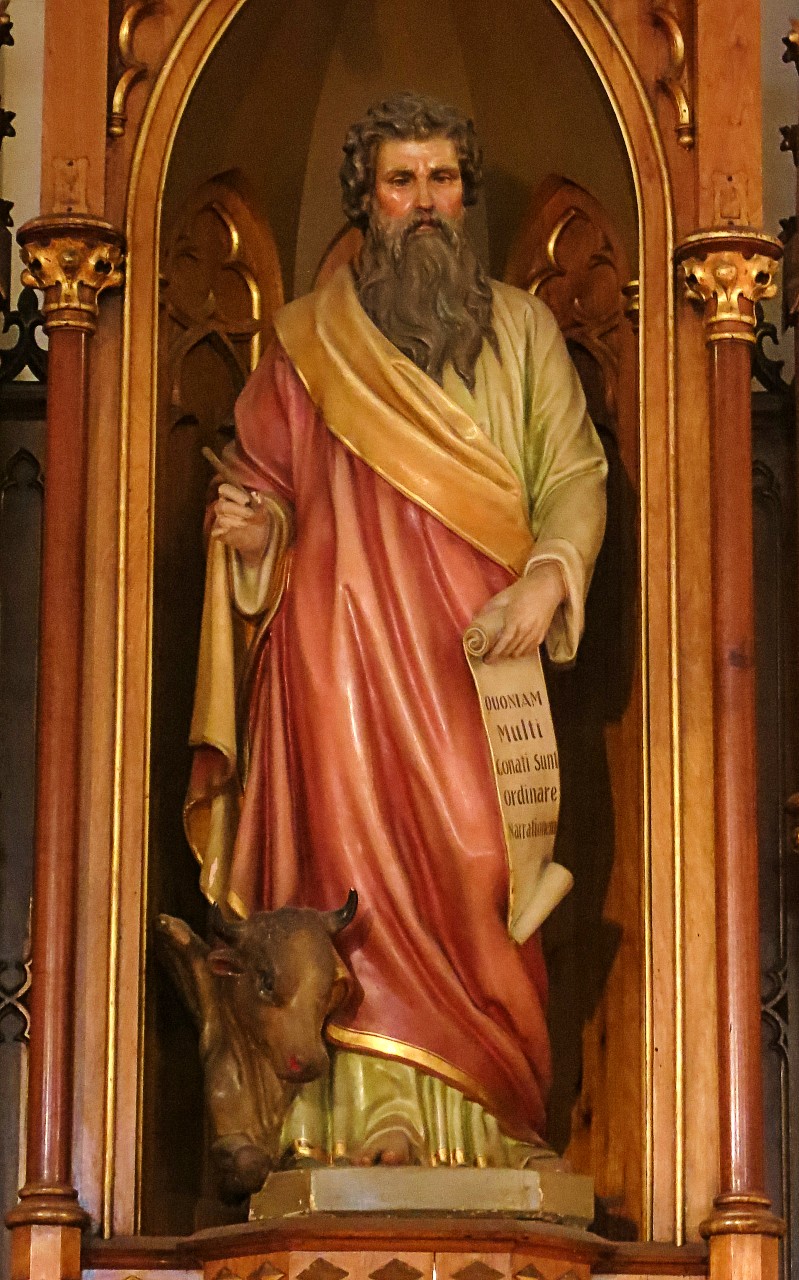
Among the holy men whom the Almighty chose to write the Gospel, or the history of the life and death, the teachings and miracles of Our Lord and Saviour, Jesus Christ, was St Luke, the third of those who are called Evangelists. He is represented with an ox near him, according to the mysterious revelation made to the Prophet Ezekiel because he begins his Gospel with the revelation of what happened to Zachary in the Temple, where oxen, sheep and other animals, were offered, according to the Old Covenant, in sacrifice to the Almighty.
St Luke is said to have been born at Antioch, in Syria and his occupation, in his youth, was the study of the liberal arts, especially rhetoric, physics, sculpture and painting. It is believed that St Paul himself instructed him in the Christian faith, hence, St.Jerome calls him a spiritual son of that holy Apostle. It is quite certain that he accompanied St Paul in the many and laborious travels which the holy Apostle undertook, to convert the infidels. Hence he had a part in all the labours, dangers, hardships and persecutions which the Apostle endured. This, however, caused him, to be most warmly beloved and highly esteemed, by St Paul, who mentions him in several of his epistles and among other praises, calls him an Apostle.
At the desire of St Paul, Luke wrote the Gospel in Greek, as the Apostle was at that time preaching to the Greeks and also, because this language was very much disseminated. St Luke relates, in his Gospel, much that is but slightly mentioned by the other Evangelists, for instance, the Mystery of the Annunciation and the Incarnation of Christ, from whichM the holy Fathers conclude that he must have been on very friendly terms, not only with the Apostles but also with the Divine Mother, as she could give him the best information concerning these Mysteries. Another reason is, that St Luke lived in chastity and earnestly endeavoured, to guard and preserve this virtue.
The commentators of Holy Writ have also observed that St Luke, more than the other Evangelists, gives sinners the hope of Divine Mercy and encourages them, to repentance, as is seen in the parable of the Prodigal Son, so lovingly received by his father, as also, in that of the Good Shepherd, Who, with great solicitude, sought the lost sheep, and brought it back to the fold. Again, in the history of the sinner, who so mercifully receives pardon in the Samaritan, Who cares so kindly for the wounded traveller but above all, in the wonderful conversion of the thief crucified with Christ, to whom, when he had humbly and penitentially begged to be remembered, our kind Saviour promised Paradise. St Anselm gives the reason for this, in the following words: “Luke was at first a Physician of the body, hence, it is that he speaks more than the other Evangelists, of the Merc of our Saviour, who heals and frees men from diseases of the soul.“”
Besides the Gospel, St Luke also wrote a book on the labours of the Apostles,, which is called the Acts of the Apostles. In it, he first relates the Ascension of Christ and the coming of the Holy Ghost and after this, what and where the Apostles preached, the miracles they wrought and the sufferings they endured for Christ’s sake.
He further describes the life of the first Christians and the Martyrdom of St Stephen and St James. He then relates the conversion of St Paul, the labours and sufferings of this holy Apostle, which no-one could know better than St Luke, who was his constant companion. During the two years of St Paul’s imprisonment at Caesarea, Luke aided him in every manner. Hhe also accompanied him to Rome, when St Paul had appealed to the Emperor. At Rome, where the holy Apostle was again imprisoned for two years, St Luke did not leave him and allowed, no persecution to separate him from his beloved master. When St Paul was set at liberty, St Luke accompanied him as before, wherever the unwearied Apostle preached the Gospel. St Epiphanius relates, that, after the death of the two Apostles, Peter and Paul, St Luke preached the Gospel of Christ in Italy, France, Dalmatia and Macedonia, with apostolic zeal. The Greeks assure us that he did the same in Egypt, Thebais and Libya and, that he had great success, in converting the infidels.
It is easy to conceive, what hardships, dangers and persecutions, the holy Evangelist must have suffered, in these many wearisome travels and in consequence of his zealous preaching. Yet he was never discontented, never desponding but always cheerful because he always thought of Him, for Whom he laboured and suffered and of the recompense that was awaiting him. St Jerome writes that the Saint continued his apostolic labours until he had reached his 84th year. St Gregory of Nazianzen, St Paulinus and St Gaudentius maintain that he ended his life by Martyrdom. Nicephorus writes that the heathens hung him to an olive-tree and that thus he died a Martyr.
It is certain that his life, full of cares and hardships, was a continued Martyrdom, the severity of which he increased by severe fasting and other penances. Hence, the Church says of him, in the prayer which she offers up today at Holy Mass, that he bore the mortification of the cross ceaselessly in his body, for the love and honour of Christ. He ended his glorious labours and sufferings at Patras in Achaia. His holy relics, with those of St Andrew, were brought to Constantinople at the time of Constantine the Great. Long afterwards, they were removed to Pavia;but the head had, some time before, been taken by Gregory the Great to Rome and placed in St Peter’s Basilica.
Nanni di Banco, St Luke, 1408-15, marble, Museo dell’Opera del Duomo, Florence
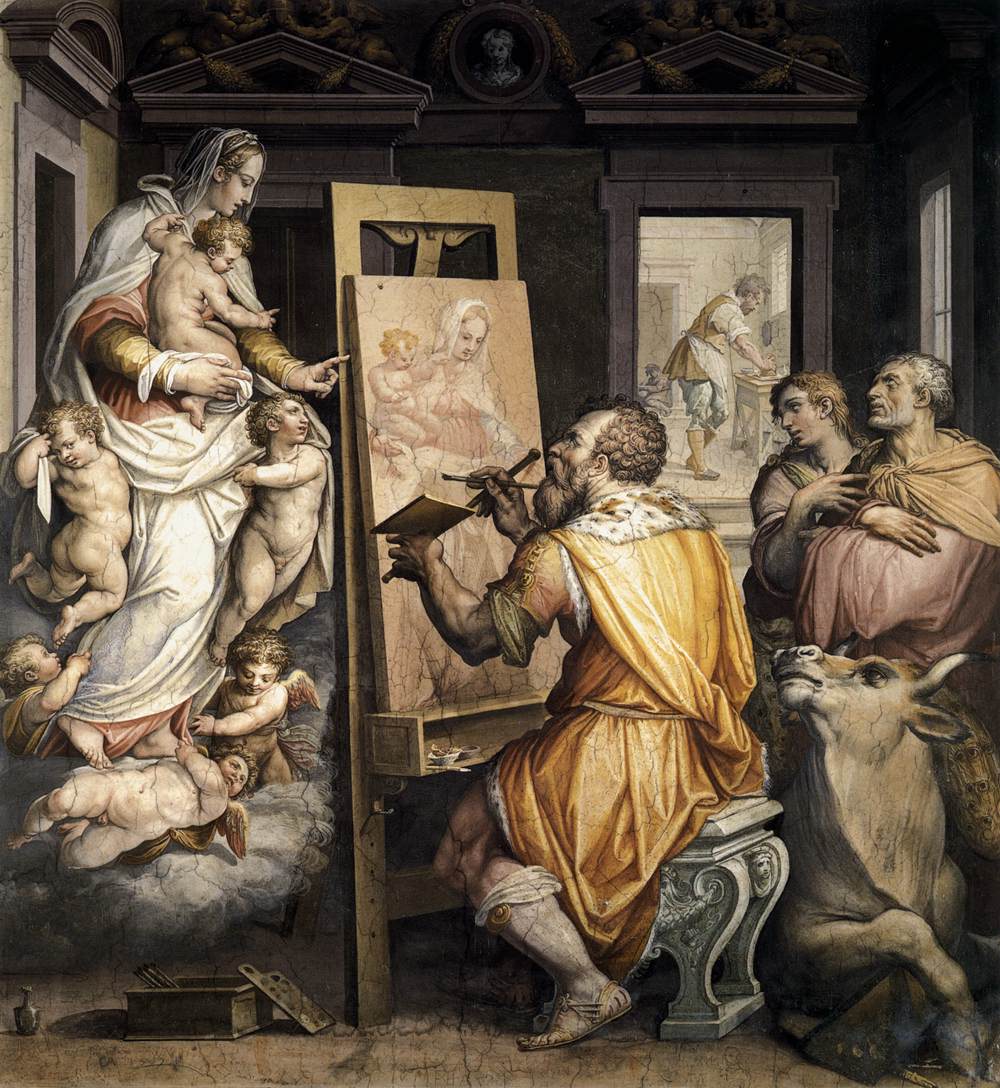
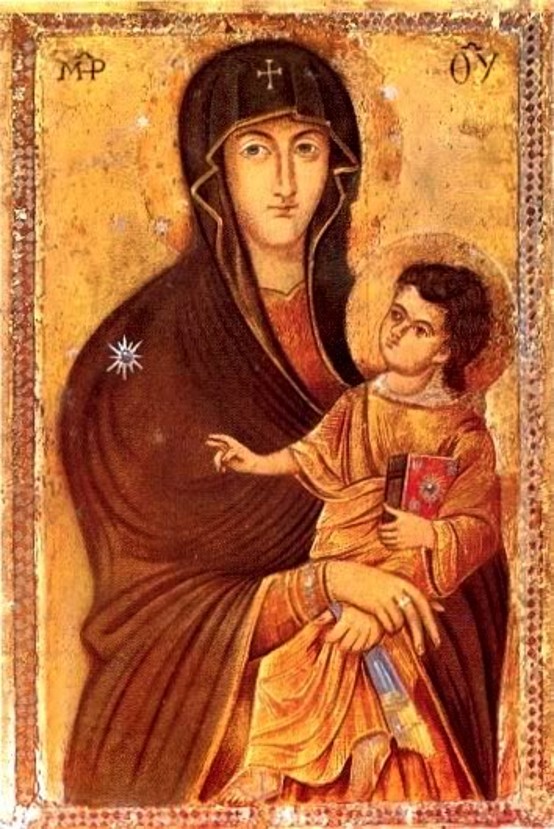
There is a tradition that St Luke painted several likenesses of Christ and the Blessed Virgin and left them to the Christians to comfort them. To this day, several pictures of the Blessed Virgin are shown, which are believed to be his works. One of these is at Rome, in the Church of St Mary Major and another is at Loretto, both of these are venerated by the whole Christian world.
Giorgio Vasari, St Luke Painting the Virgin, after 1565, fresco, Santissima Annunziata, Florence
The Salus Popli Roman by St Luke in St Mary Major Basilica, Rome
St Asclepiades of Antioch St Athenodorus St Brothen Bl Burchard I St Cadwaladr of Brittany Bl Domenico of Perpignano St Eutychius of Pozzuoli St Gwen St Gwen of Tagarth St Gwendoline
Bl Margherita Tornielli St Monon of Nassogne St Proculus of Pozzuoli Bl Theobald of Narbonna St Tryphonia of Rome
Martyrs of Africa – 9 Saints: A group of Christians Martryed together in Africa. The only details that have survived are the names – Beresus, Dasius, Faustinus, Leucius, Lucius, Martialis, Victoricus, Victrix and Viktor. They were martyred in c.300 in Africa.
Thought for the Day – 17 October – Meditations with Antonio Cardinal Bacci (1881-1971)
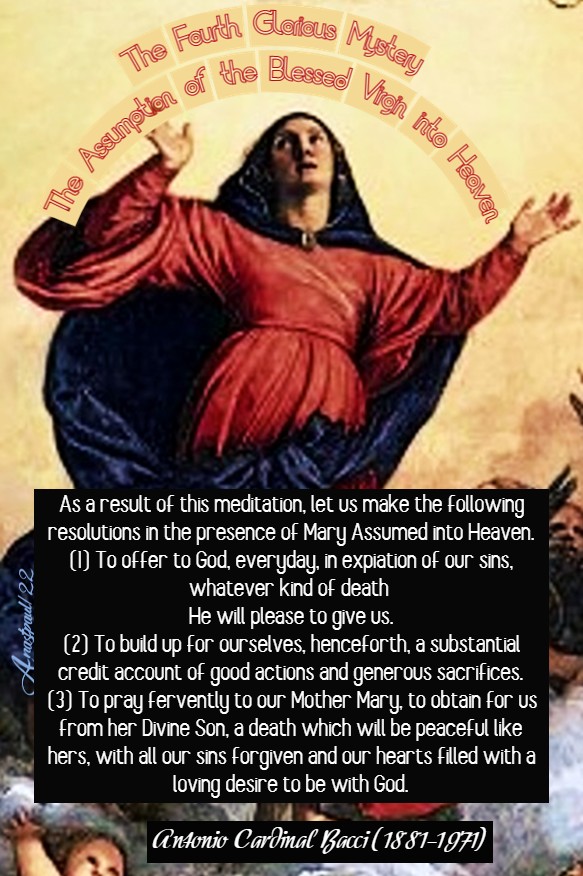
“Month of the Holy Rosary” The Fourth Glorious Mystery The Assumption of the Blessed Virgin into Heaven
“As a result of this meditation, let us make the following resolutions in the presence of Mary Assumed into Heaven.
(1) To offer to God, everyday, in expiation of our sins, whatever kind of death He will please to give us.
(2) To build up for ourselves, henceforth, a substantial credit account of good actions and generous sacrifices.
(3) To pray fervently to our Mother Mary, to obtain for us from her Divine Son, a death which will be peaceful like hers, with all our sins forgiven and our hearts filled with a loving desire to be with God.”
Quote/s of the Day – 17 October – St Margaret Mary Alacoque (1647-1690) Virgin
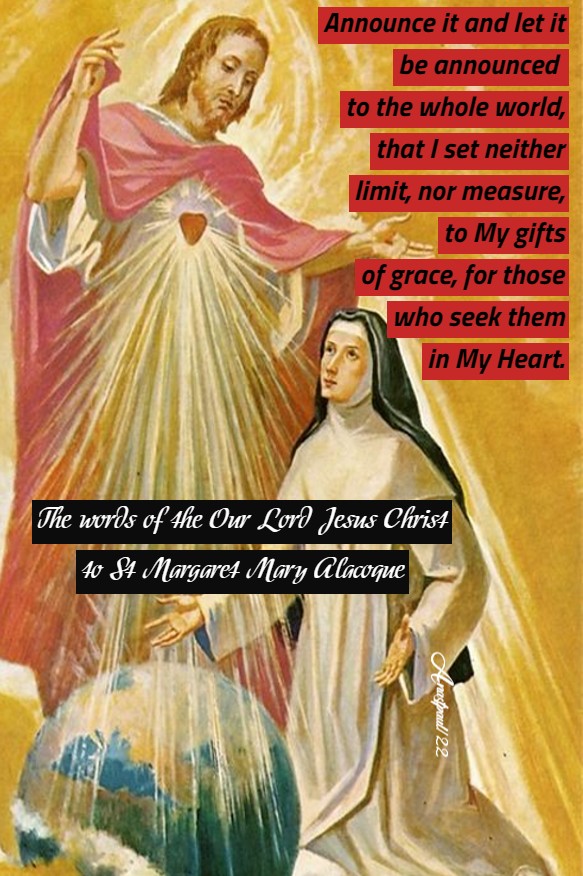
“Announce it and let it be announced to the whole world, that I set neither limit, nor measure, to My gifts of grace, for those who seek them in My Heart.”
The words of the Our Lord Jesus Christ to St Margaret Mary Alacoque
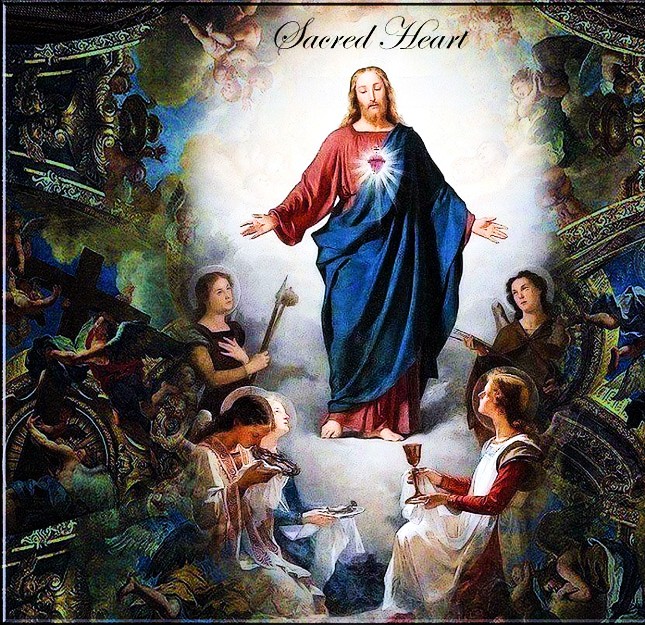
“The Sacred Heart is the symbol of that boundless love which moved the Word to take flesh, to institute the Holy Eucharist, to take our sins upon Himself and, dying on the Cross, to offer Himself as a victim and sacrifice to the eternal Father.”
“We must never be discouraged or give way to anxiety. . . but ever have recourse to the adorable Heart of Jesus.”
“I need nothing but God and to lose myself in the Heart of God.”
“My greatest happiness is to be before the Blessed Sacrament, where my heart is, as it were, in Its centre.”
One Minute Reflection – 17 October – Memorial of St Margaret Mary Alacoque (1647-1690) Virgin – Ephesians 3:8-9, 14-19, Matthew 11:25-30 – Scripture search here: https://www.drbo.org/
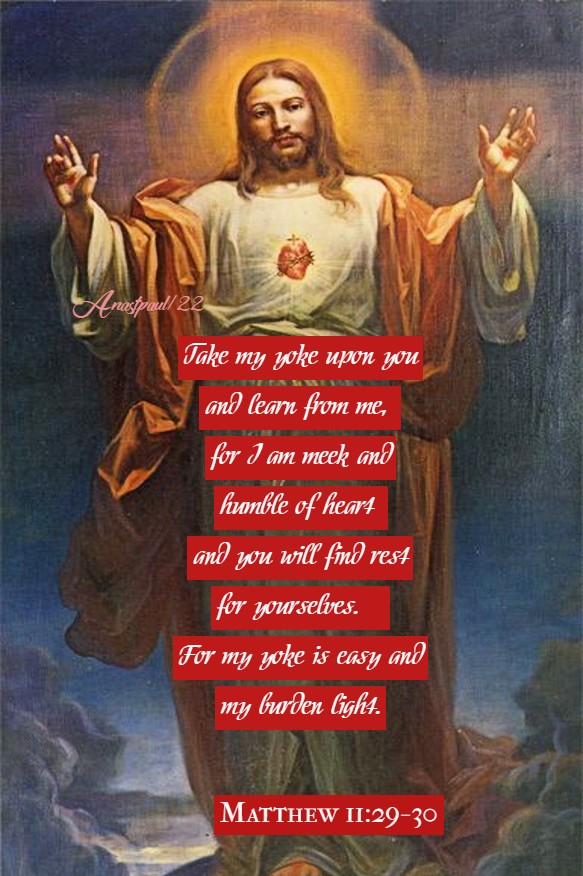
“Take my yoke upon you and learn from me, for I am meek and humble of heart and you will find rest for yourselves. For my yoke is easy, and my burden light.” … Matthew 11:29-30
REFLECTION – “Now, O love, my King and my God, now, O Jesus my dear one, receive me into the most gracious care of Your Divine Heart. There, there, so that I may live entirely for You, fasten me to Your love. Now release me into the great ocean of Your Mercy’s abyss – there, there, commit me to the bowels of Your overflowing kindness. Ah! Now cast me into the voracious flame of Your living love. There, there, transmit me into Yourself, until my soul and spirit are reduced to ashes in the conflagration. And at the hour of my passing away, commit me to the providence of Your fatherly charity.
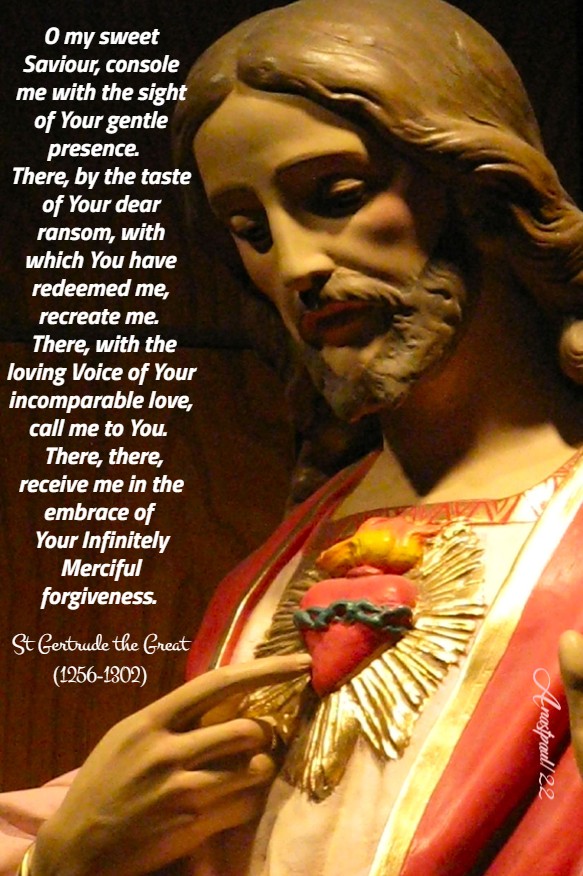
There, there, O my sweet Saviour, console me with the sight of Your gentle presence. There, by the taste of Your dear ransom, with which You have redeemed me, recreate me. There, with the loving Voice of Your incomparable love, call me to You. There, there, receive me in the embrace of Your Infinitely Merciful forgiveness. There, by the exquisite scent of the breath of Your Spirit’s sweetness, draw me to You, draw me in and draw me. There, in the kiss of perfect union of Your fruition, immerse me forever. And grant me, then to see You, to have You, to enjoy You eternally in the greatest happiness, for my soul has yearnrd for You, O Jesus, dearest of all dear ones. Amen.” … St Gertrude the Great (1256-1302) (Exercises IV, §400-419).
PRAYER – O Lord Jesus Christ, Who wondrously revealed the unsearchable riches of Thy Heart to blessed Margaret Mary, the Virgin, grant us, by her merits and through imitating her, to love Thee, in all things and above all things, so that we may be found worthy to possess a lasting dwelling place in Thou Heart itself. Who livest and reignest with God the Father, in the unity of the Holy Spirit, God, world without end. Amen (Collect).
Our Morning Offering – 17 October – Memorial of St Margaret Mary Alacoque (1647-1690) Virgin
Prayer in Adoration of the Sacred Heart By St Margaret Mary Alacoque (1647-1690) Visionary and Apostle of the Sacred Heart of Jesus
Jesus Christ, my Lord and my God, Whom I believe to be really present in the Blessed Sacrament of the Altar, receive this most profound Act of Adoration to supply for the desire I have, to adore Thee unceasingly and in thanksgiving, for the sentiments of love which Thy Sacred Heart has for me in this Sacrament. I cannot better acknowledge them, than by offering Thee, all the Acts of Adoration, resignation, patience and love which this same Heart has made during its mortal life and which it makes still and which it shall make eternally in Heaven, in order that through it, I may love Thee, praise Thee and adore Thee worthily, as much as it is possible for me. I unite myself to this Divine Offering which Thou dost make to Thy Divine Father and I consecrate to Thee, my whole being, praying Thee, to destroy in me, all sin and not to permit that I should be separated from Thee, in time and eternally. Amen.
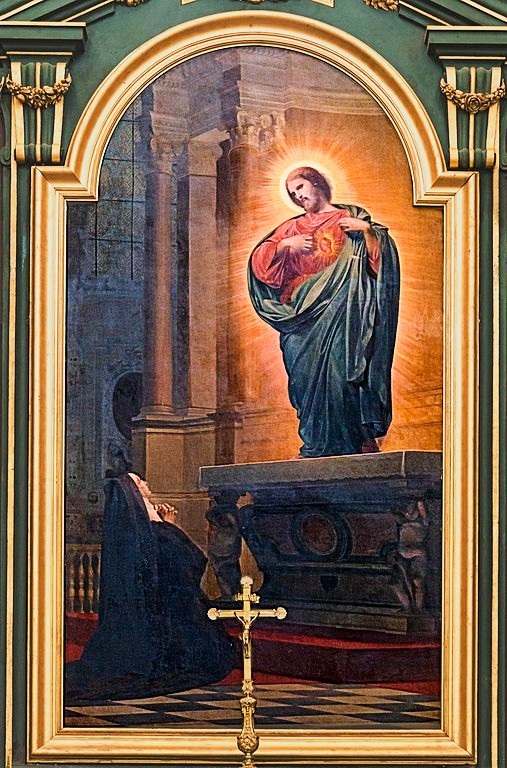
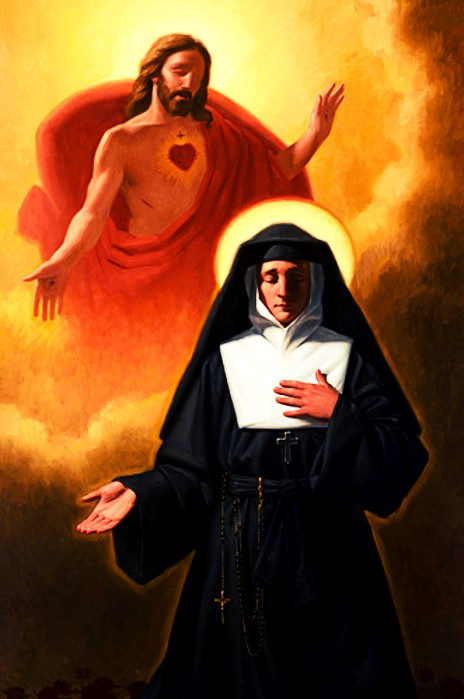
Saint of the Day – 17 October – St Margaret Mary Alacoque VHM (1647-1690) Virgin, Nun of the Order of the Visitation of Holy Mary, Mystic, Visionary and Saint and Apostle of the Sacred Heart.
St Margaret Mary Alacoque (1647-1690) From Little Pictorial Lives of the Saints, 1894
Saint Margaret Mary, a soul of divine predilection, was born at Terreau in Burgundy, on 22 July 1647. During her infancy, she showed a wonderfully sensitive revulsion to the very idea of sin and, while still a young child, always recited the entire Rosary everyday. She lost her father at the age of eight years and her mother placed her with the Poor Clares. She was often sick and for four years was bedridden, losing almost entirely the use of her members. She made a vow to Our Lady to become one of her daughters if she cured her and was suddenly entirely well.
She was of a happy temperament and her heart became easily attached to human affections. God began her purification when the charge of her mother’s house was confided to persons who reduced the family to a sort of servitude. Margaret Mary turned to God for strength and consolation when she was accused of various crimes she had not committed. In short, the Saint of the Sacred Heart learned to suffer for Christ, with patience, what innocence can suffer in such situations.
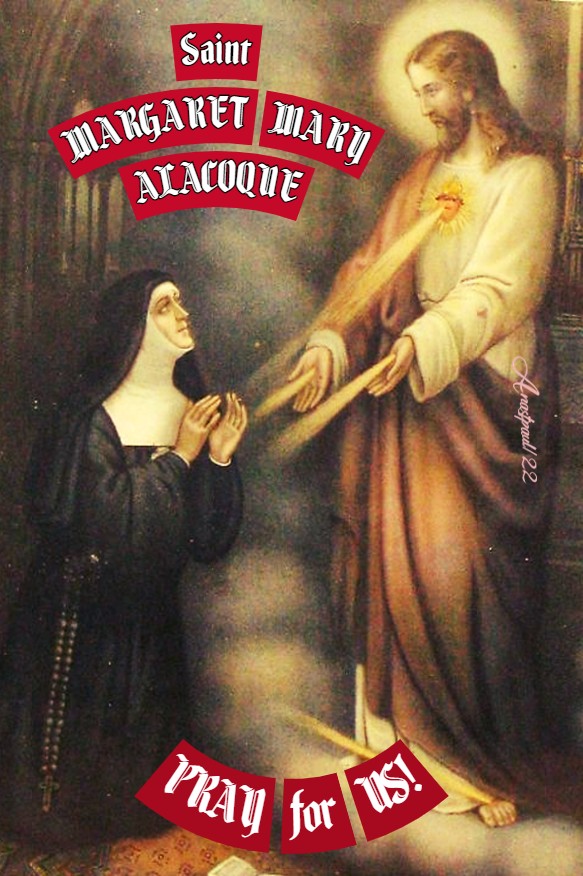
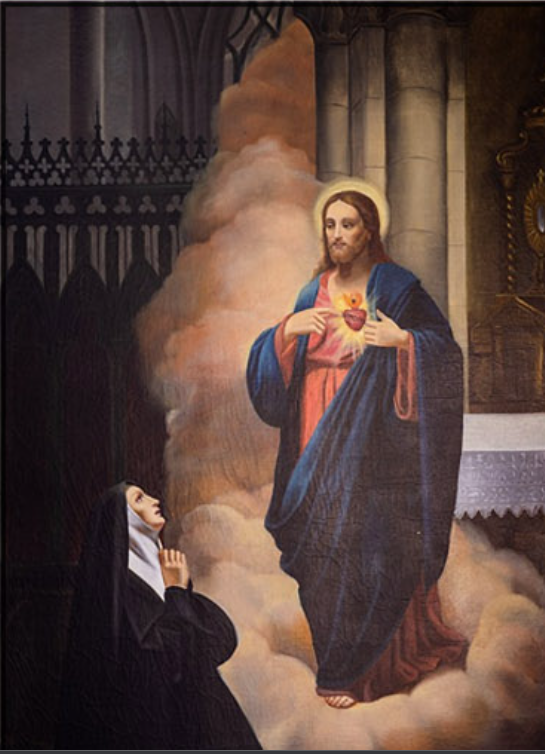
She desired to be a religious but her mother could not bear to hear a word of that desire. Finally, God came to her assistance through a Franciscan Priest, who told her brother that he would answer to God for the vocation of his sister. In 1671 she entered the Order of the Visitation of Mary, at Paray-le-Monial and was professed the following year. She followed all the practices of the Monastery in perfect obedience, spending as much time as she could in the Chapel with her Lord. After sanctifying her by many trials, Jesus appeared to her in numerous visions, displaying to her, His Sacred Heart, sometimes burning as a furnace and sometimes, torn and bleeding on account of the coldness and sins of men. “Behold this Heart which has so loved men and been so little loved by them in return!“
In 1675, she was told by Our Lord that she, with the aid of Father Claude de la Colombiere of the Society of Jesus, was to be His instrument for instituting the Feast of the Sacred Heart and for spreading the devotion everywhere. This was not accomplished without great sufferings. The good Jesuit did all in his power to make known and loved the Heart of Jesus but when it seemed all obstacles were about to disappear, his Superiors sent him to England. He returned to France exhausted and soon died.
Saint Margaret Mary was for a time Mistress of Novices and in this office, exercised a true apostolate, working to win for the Heart of Jesus, the hearts of the young girls who were aspiring to religious consecration. She was persecuted when she sent one of them home, not having seen in her the indications of a genuine vocation – the family attempted to have her deposed. She remained in the charge but was deprived of Holy Communion on the First Friday of the month. This practice was one of Our Lord’s specific requests – for souls who Communicate Nine First Fridays in succession, He promised the most wonderful graces. The demons also persecuted her visibly, nonetheless, her entire Community and later the entire Universal Church, was finally won over to devotion to the Divine Heart of Jesus.
The Twelve Promises of Jesus to Saint Margaret Mary and to those Devoted to His Sacred Heart:
I will give them all the graces necessary for their state of life.
I will establish peace in their families.
I will console them in all their troubles.
They shall find in My Heart an assured refuge during life and especially at the hour of their death.
I will pour abundant blessings on all their undertakings.
Sinners shall find in My Heart the source of an infinite ocean of mercy.
Tepid souls shall become fervent.
Fervent souls shall speedily rise to great perfection.
I will bless the homes where an image of My Heart shall be exposed and honoured.
I will give to priests the power of touching the most hardened hearts.
Those who propagate this devotion shall have their names written in My Heart, never to be effaced.
The all-powerful love of My Heart will grant to all those who shall receive Communion on the First Friday of Nine consecutive months the grace of final repentance; they shall not die under my displeasure, nor without receiving their Sacraments; My heart shall be their assured refuge at that last hour.
St Margaret Mary Alacoque VHM (1647-1690) Virgin, Nun of the Order of the Visitation of Holy Mary, Mystic, Visionary and Saint and Apostle of the Sacred Heart. Her feast day was moved to after Vatican II and prior to that was 17 October the date of her death. Beatified on 18 September 1864 by Pope Blessed Pius IX and Canonised on 13 May 1920 by Pope Benedict XV. Biography here: https://anastpaul.wordpress.com/2017/10/16/saint-of-the-day-16-october-st-margaret-mary-alacoque-1647-1690-v-h-m/
St Ethelbert of Eastry St Ethelred of Eastry St Florentius of Orange Bl Gilbert the Theologian St Heron of Antioch Bl Jacques Burin St John the Short/Dwarf St Louthiern St Mamelta of Persia St Nothelm of Canterbury St Richard Gwyn St Rudolph of Gubbio St Rufus of Rome St Serafino of Montegranaro St Solina of Chartres St Zosimus of Rome
Martyrs of Nicomedia – 3 Saints: A group of Christians Martyred in the persecutions of Diocletian. The only details about them that have survived are their names – Alexander, Marianus and Victor. 303 in Nicomedia (in modern Turkey).
Martyrs of Valenciennes -5 Beati: A group of Ursuline nuns Martyred in the persecutions of the French Revolution. • Hyacinthe-Augustine-Gabrielle Bourla • Jeanne-Reine Prin • Louise-Joseph Vanot • Marie-Geneviève-Joseph Ducrez • Marie-Madeleine-Joseph Déjardins
Martyrs of Volitani: A group of Martyrs who were praised by Saint Augustine of Hippo. In Volitani, proconsular Africa (in modern Tunisia).
Thought for the Day – 16 October – Meditations with Antonio Cardinal Bacci (1881-1971)
“Month of the Holy Rosary” The Third Glorious Mystery The Descent of the Holy Spirit
“Because of our weakness, we should seek the intercession of Mary and, like the Apostles, pesevere in prayer, with her. Our prayers, however, should be more supernatural.
There is nothing to prevent us asking our good Mother to look after our temporal needs, such as our health, our business and our attachments. The first miracle which Mary wrung from the Heart of Jesus, was at the wedding feast at Cana. Nevertheless, we should not be too materialistic. We should seek, first of all, from the Holy Spirit through Mary’s intercession, the greater glory of God and the eternal salvation of ourselves and of all our brethren in Jesus Christ.”
Quote/s of the Day – 16 October – Feast of the Purity of the Blessed Virgin Mary
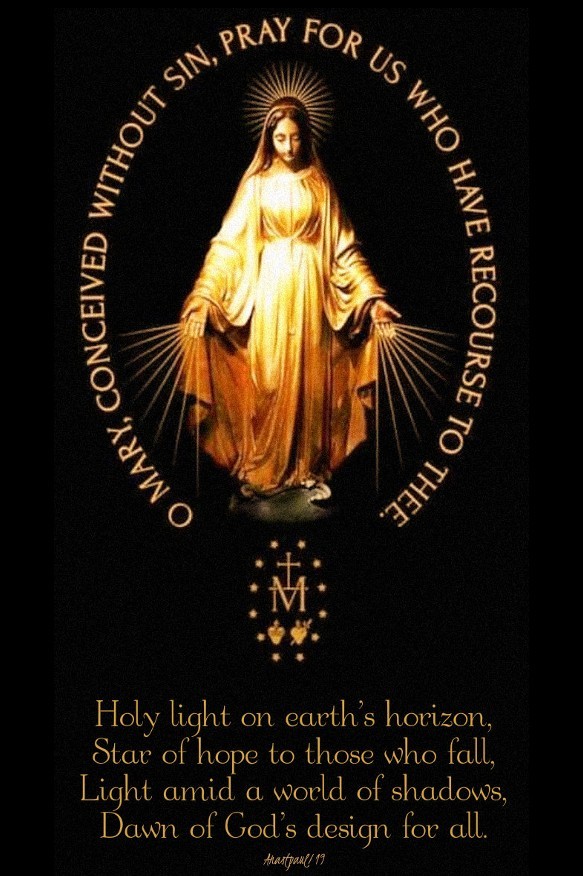
Holy light on earth’s horizon, Star of hope to those who fall, Light amid a world of shadows, Dawn of God’s design for all.
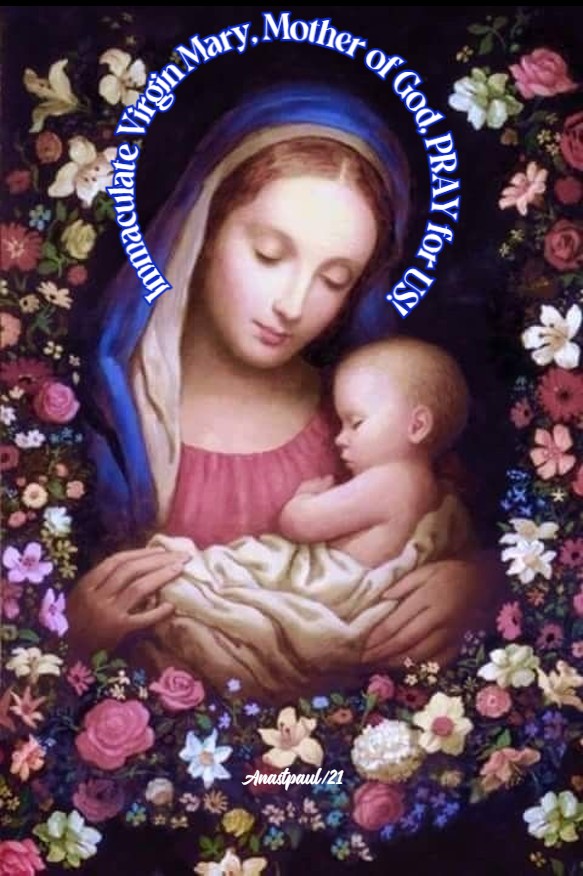
O Mary, conceived without sin, Pray for us who have recourse to thee.
“Thou alone and Thy Mother, are in all things fair, there is no flaw in Thee and no stain in Thy Mother.”
St Ephrem of Syria (306-373) Father and Doctor of the Church
“The very fact that God has elected her, proves, that none was ever holier than Mary; if any stain had disfigured her soul, if any other virgin had been purer and holier, God would have selected her and rejected Mary.”
St Jacob of Sarug (c 451-521) Bishop, Theologian, Poet, Writer
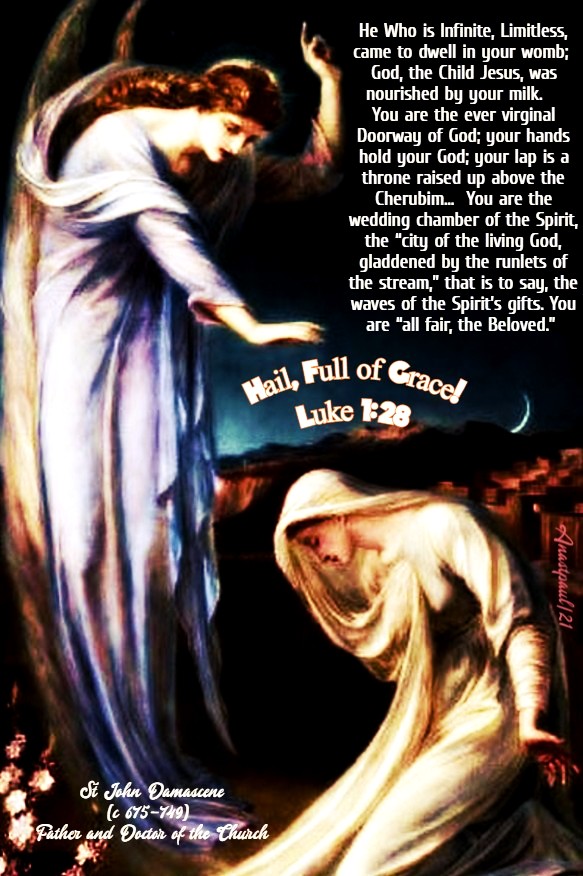
“He Who is Infinite, Limitless, came to dwell in your womb; God, the Child Jesus, was nourished by your milk. You are the ever virginal Doorway of God; your hands hold your God; your lap is a throne raised up above the Cherubim… You are the wedding chamber of the Spirit, the “city of the living God, gladdened by the runlets of the stream,” that is to say, the waves of the Spirit’s gifts. You are “all fair, the Beloved” of God.”
St John Damascene (675-749) Father and Doctor of the Church
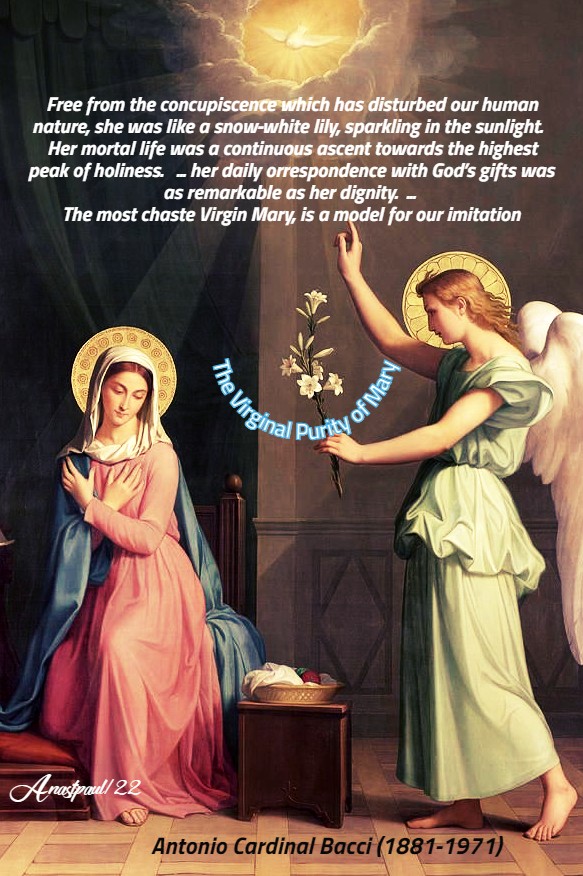
“Free from the concupiscence which has disturbed our human nature, she was like a snow-white lily, sparkling in the sunlight. Her mortal life was a continuous ascent towards the highest peak of holiness. … her daily correspondence with God’s gifts was as remarkable as her dignity. … The most chaste Virgin Mary, is a model for our imitation.”
Antonio Cardinal Bacci (1881-1971)
Tota Pulchra Es, Maria You Are All Beautiful, Mary Unknown Author – 4th Century
You are all beautiful, Mary, and the original stain is not in you. You are the glory of Jerusalem, you are the joy of Israel, you give honour to our people. You are an advocate of sinners. O Mary, O Mary, Virgin most intelligent, Mother most merciful. Pray for us, Plead for us, To the Lord Jesus Christ.
Tota pulchra es, Maria. Et macula originalis non est in Te. Tu gloria Ierusalem. Tu laetitia Israel. Tu honorificentia populi nostri. Tu advocata peccatorum. O Maria, O Maria, Virgo prudentissima. Mater clementissima. Ora pro nobis. Intercede pro nobis. Ad Dominum Iesum Christum.
This prayer used by the Church since the 4th Century for the Feast of the Immaculate Conception and the Purity of the Blessed Virgin. It takes some text from the book of Judith and other text from Song of Songs, specifically 4:7. Many composers have set this prayer to music over the centuries.
One Minute Reflection – 16 October – Feast of the Purity of the Blessed Virgin Mary – Ephesians 4:23-28, Matthew 22:1-14 – Scripture search here: https://www.drbo.org/
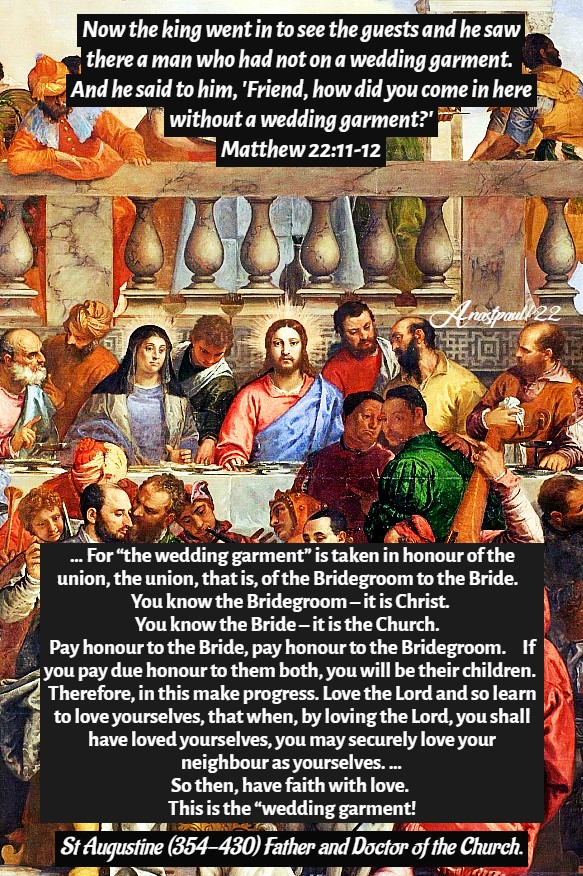
“Now the king went in to see the guests and he saw there a man who had not on a wedding garment. And he said to him, ‘Friend, how did you come in here without a wedding garment?‘” – Matthew 22:11-12
REFLECTION – “What is that “wedding garment” then? … The wedding garment” is such charity as this. “Although I speak with the tongues of men and of Angels and have not charity, I am become as sounding brass and a tinkling cymbal.” Tongues have come in alone and it is said to them, “Friend, how did you come in here without a wedding garment? “I have the gift of prophecy and understand all mysteries and all knowledge and although I have all faith, so that I could remove mountains and have not charity, I am nothing.”
See, these are the miracles of men who very often have not “the wedding garment.” “Although,” he says,” I have all these and have not Christ, I am nothing.” … If then I have not charity, although I bestow alms freely upon the poor, although I have come to the confession of Christ’s Name even unto blood and fire, these things may be done even through the love of glory and so are vain. … For “the wedding garment” is taken in honour of the union, the union, that is, of the Bridegroom to the Bride. You know the Bridegroom – it is Christ. You know the Bride – it is the Church. Pay honour to the Bride, pay honour to the Bridegroom. If you pay due honour to them both, you will be their children. Therefore, in this make progress. Love the Lord and so learn to love yourselves, that when, by loving the Lord, you shall have loved yourselves, you may securely love your neighbour as yourselves. …So then, have faith with love. This is the “wedding garment!” … St Augustine (354-430) Father and Doctor of Grace.
PRAYER – Grant, we beseech Thee, O Lord God, unto all Thy servants, that they may remain continually in the enjoyment of soundness, both of mind and body and by the glorious intercession of the Blessed Mary, always a Virgin, may be delivered from present sadness and enter into the joy of Thine eternal gladness. Through Jesus Christ, Thy Son our Lord, Who lives and reigns with Thee, in the unity of the Holy Ghost, God, world without end. Amen (Collect).
Our Morning Offering – 16 October – Feast of the Purity of the Blessed Virgin Mary
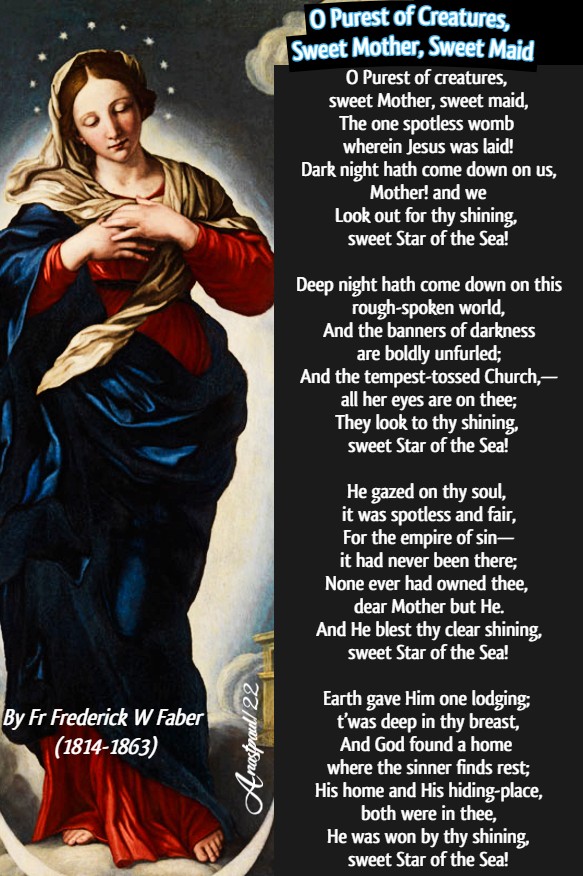
O Purest of Creatures, Sweet Mother, Sweet Maid By Fr Frederick W Faber C.Orat. (1814-1863)
O Purest of creatures, sweet Mother, sweet maid, The one spotless womb wherein Jesus was laid! Dark night hath come down on us, Mother! and we Look out for thy shining, sweet Star of the Sea!
Deep night hath come down on this rough-spoken world, And the banners of darkness are boldly unfurled; And the tempest-tossed Church,— all her eyes are on thee; They look to thy shining, sweet Star of the Sea!
He gazed on thy soul, it was spotless and fair, For the empire of sin—it had never been there; None ever had owned thee, dear Mother but He. And He blest thy clear shining, sweet Star of the Sea!
Earth gave Him one lodging; t’was deep in thy breast, And God found a home where the sinner finds rest; His home and His hiding-place, both were in thee, He was won by thy shining, sweet Star of the Sea!
Saint of the Day – 16 October – Feast of the Purity of the Blessed Virgin Mary. This Feast Day is kept by various Orders and Calendars..
Feast of the Purity Of The Blessed Virgin Mary By Father Lawrence G Lovasik SVD (1913-1986)
Mary, Mother of God, you are the Virgin most pure because you are the Immaculate Conception. The closer a soul is to God, the farther it is from sin. God is Infinite Good; sin, horrible evil. No-one could have had a closer approach to God than you, for it is impossible for any creature to be closer to God’s Son than His own Mother.
From eternity, before anything was, you were united to your Son in the mind of God, as His most pure Mother. When God decreed the Incarnation of the Word, His very own Son, through you alone, you had a place in the same plan, as Jesus. Since the Conception of the Son of God is all holy, all pure, infinitely removed from every appearance of sin, it was supremely fitting that your own conception should be equally far from sin. For that reason, you were conceived by your mother, Saint Anne, without even the shadow of sin. You are the Virgin most pure. Because you were to be the Mother of God, Original Sin which, like all Eve’s daughters you should have contracted, could not touch you. Such a stain would have reflected upon your Son, Who is Holiness itself. Then Satan could boast that he had overcome Jesus in you, His Mother. You are pure and sinless. You expressed this to Saint Bernadette at Lourdes when you said, “I am the Immaculate Conception.”
Mary, My Mother, there is no sin in you; in you there is only God’s grace—His light, His splendour, His love, His unspeakable delight. You are truly His beloved Daughter, the only one in whom there was never a stain. With you all is pure, virginal, immaculate In you, there is no inclination to evil—no impure thoughts or desires. You are God’s purest and holiest creature, the one chosen to conceive and bear the Son of God. Who would not love you and endeavour to imitate you, most beautiful and Immaculate Mother of God?
Mary, Mother of God, you are the Virgin most pure because you are full of grace. You are the most beautiful of creatures, the one in whom there is no spot, God’s masterpiece. You are full of grace, the Lord’s free gift and it overflows in you filling your soul with every virtue and perfection. What marvels of grace possessed your soul! Sanctifying grace made you God’s adopted child and the lawful heir to His Eternal Kingdom, putting you in possession of God’s goods and of God Himself forever. That grace made you holy and most pleasing in God’s eyes, the special object of His love. Sanctifying grace likened you to God as it did no other pure creature. Because you were full of God’s grace and a Virgin most pure, Gabriel could exclaim, “You have found grace with God.” No-one has found or received such grace as you.
But who can describe the matchless purity and beauty of your soul? Jesus is the most beautiful of men; you were His mould, His mirror and He, yours. Your soul contained all the marvels of God’s grace, for which reason, the Church calls you the Singular Vessel of Devotion. Mary, My Mother, you are all beautiful—beautiful in mind, in body, in soul! In you I behold the charm of the purest of Virgins, the majesty of the noblest of mothers. You are beautiful at your presentation in the temple; in prayer before Gabriel as he awaited your answer, in Nazareth’s hidden life and later as you followed Jesus and listened to Wisdom speak. You were beautiful when you stood as the brave Queen of Martyrs beneath the Cross of your dying Son; in the supper room beneath the fiery tongues of the Divine Spirit; beautiful, above all, in the glory in which you reign with Jesus. If a single soul in the state of grace by far excels in beauty all other earthly beauty, what beauty must you possess, Virgin most pure, who surpassed in holiness all other souls in the state of grace!
Mary, Mother of God, you are the Virgin most pure because you are the holiest of God’s creatures. You are the holiest of God’s creatures because you are the Mother of God. The Prophet tells us that God is “wonderful in His saints” (Ps. 67, 36). How wonderful, then, He must be in the Mother of the Saint of Saints! In you, to an eminent degree, all the privileges of other Saints meet. The Church venerates many holy Virgins, Martyrs and other Saints but not one of them has merited, or obtained, your title of Holy Virgin, Virgin most pure. Whatever of sanctity, of dignity, of merit, of grace and of glory, that we can imagine, all is in you.
Holiness is a complete separation from creatures and perfect union with God through love. No-one ever belonged to Jesus as completely as you, for you are His Mother. Jesus belonged entirely to you, the holiest among women. Your womb was so pure, so immaculate that it became the Holy of Holies, in which Jesus Christ our Lord, the Eternal High Priest, alone found entrance. Mary, My Mother, God raised you so high in Himself that He never has created and never will create, a holier person more worthy of Himself, of His greatness, of His love, than you, O Virgin most pure. Having carried within you, Jesus Christ, the Son of God, you share, as no-one else does, in your Divine Son’s holiness and purity. You come nearest to the holiness of God.
You are the holiest of women, the Virgin-Mother thrice holy because you are holy of the Father, holy of the Son, holy of the Holy Spirit of Love. Hence, with Holy Church I repeat, “You are all fair, Mary and the stain of original sin is not in you. You are the Glory of Jerusalem, you are the Joy of Israel, you are the Honour of our people.”
St Amandus of Limoges St Ambrose of Cahors St Balderic St Baldwin St Bertrand of Comminges St Bolonia St Conogon of Quimper St Dulcidius of Agen St Eliphius of Toul St Eremberta of Wierre St Florentinus of Trier
Bl Gerald of Fossanuova St Junian St Lull St Magnobodus of Angers St Martinian of Mauretania St Mummolinus St Saturian of Mauretania St Silvanus of Ahun St Victor of Cologne St Vitalis of Noirmoutier
Martyrs in Africa – 220 Saints: A group of 220 Christians Martyrs about whom we know nothing but that they died for their faith.
Martyrs of North Africa – 365 Saints: A group of 365 Christians who were Martyred together in the persecutions of the Vandal king Genseric. The only details that have survived are the names of two of the Martyrs – Nereus and Saturninus. 450 in North Africa.
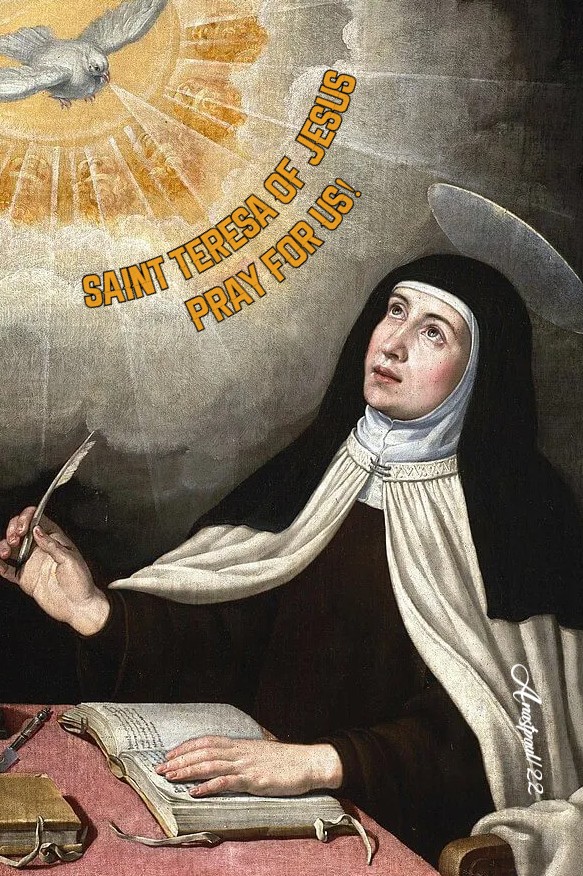
Quote/s of the Day – 15 October – St Teresa of Jesus of Avila OCD (1515-1582) Virgin and Doctor of the Church
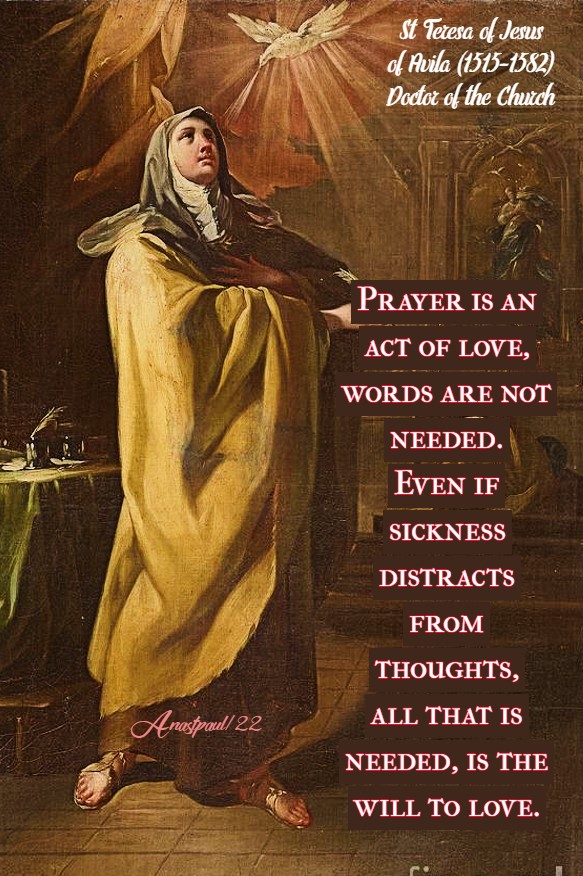
“Prayer is an act of love, words are not needed. Even if sickness distracts from thoughts, all that is needed, is the will to love.”
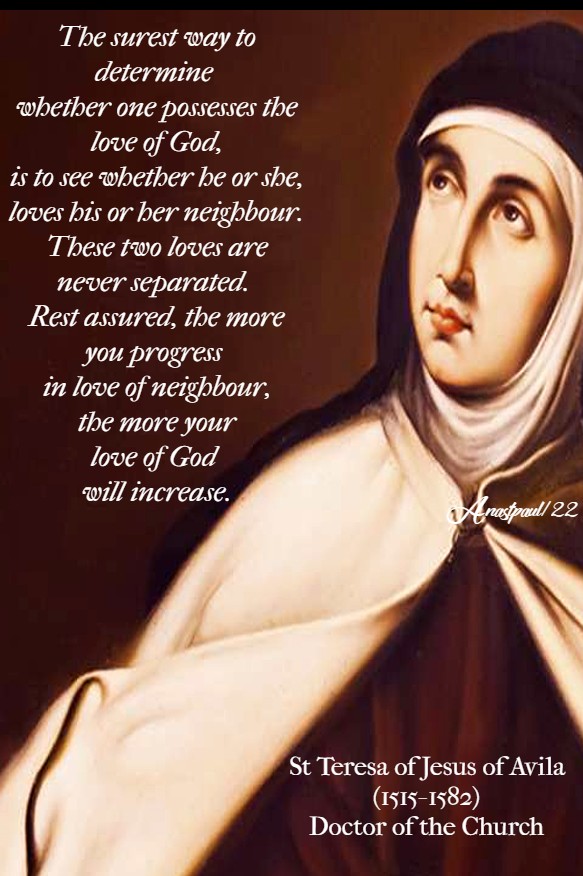
“The surest way to determine whether one possesses the love of God, is to see whether he or she, loves his or her neighbour. These two loves are never separated. Rest assured, the more you progress in love of neighbour, the more your love of God will increase.”
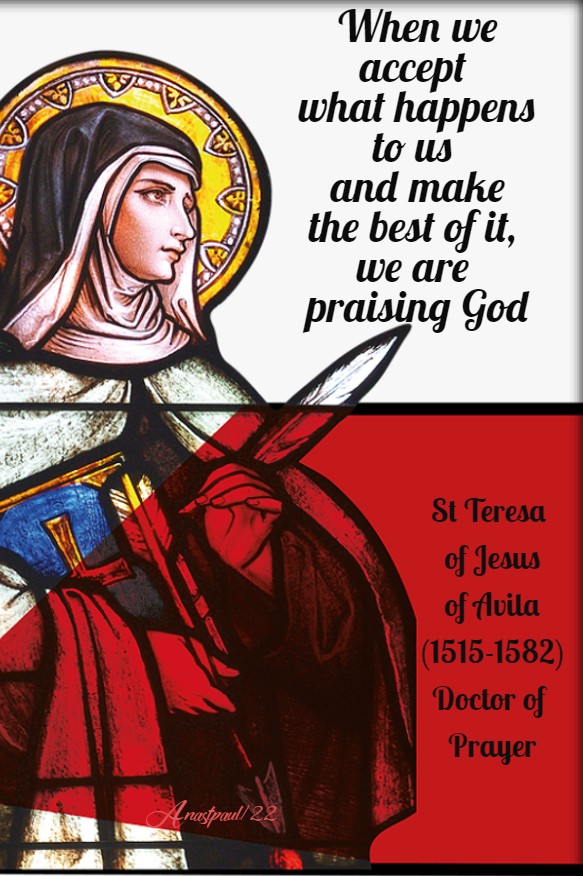
“When we accept what happens to us and make the best of it, we are praising God.”
“Know that, even when you are in the kitchen, our Lord moves amidst the pots.”
“We always find that those who walked closest to Christ, were those, who had to bear the greatest trials.”
“Those who risk all for God will find that they have both lost all and gained all.”
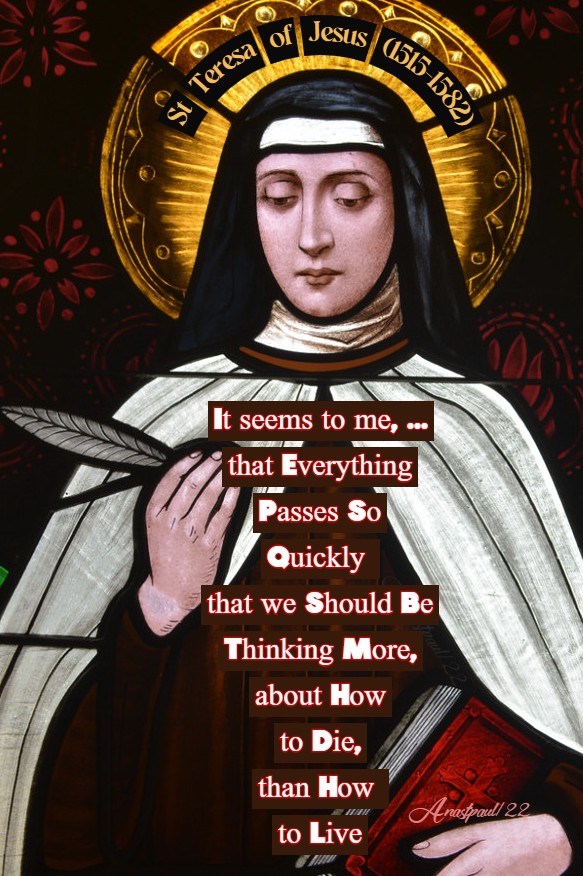
“It seems to me, my daughters, that everything passes so quickly that we should be thinking more, about how to die, than how to live!”
Thought for the Day – 15 October – Meditations with Antonio Cardinal Bacci (1881-1971)
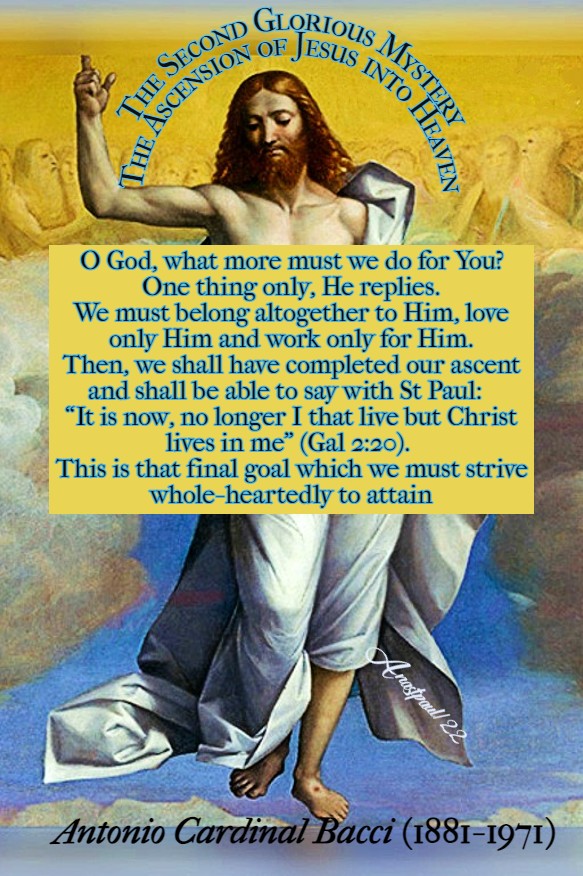
“Month of the Holy Rosary” The Second Glorious Mystery The Ascension of Jesus into Heaven
“O God, what more must we do for You? One thing only, He replies. We must belong altogether to Him, love only Him and work only for Him. Then, we shall have completed our ascent and shall be able to say with St Paul: “It is now, no longer I that live but Christ lives in me” (Gal 2:20). This is that final goal which we must strive whole-heartedly to attain.”
One Minute Reflection – 15 October – St Teresa of Jesus of Avila OCD (1515-1582) Virgin and Doctor of the Church – 2 Corinthians 10:17-18; 11:1-2, Matthew 25:1-13 – Scripture search here: https://www.drbo.org/
“But at midnight there was a cry, ‘Behold, the bridegroom! Come out to meet him.” – Matthew 25:6
REFLECTION – “The souls’ husband is the Holy Spirit, by His grace. When His interior inspiration calls the soul to repentance, then every enticement of vice is in vain. The pride that wants command, the greed and lust that consumes everything: this was the master that used to control and ravage the soul. Their very names have been removed from the repentant sinner’s mouth… When grace is poured into the soul and gives it light, God makes a covenant with sinners. He is reconciled with them… Then is celebrated the wedding of the Bridegroom with His bride, in the peace of a pure conscience.” – St Anthony of Padua (1195-1231) Doctor of the Church
PRAYER – Graciously hear us, O God, our Saviour that as we rejoice on the feast-day of blessed Teresa, Thy Virgin, we may be so nourished by the food of her heavenly teaching, as to learn how to serve Thee.T hrough the same Jesus Christ, Thy Son our Lord, Who lives and reigns with Thee, in the unity of the Holy Ghost, God, world without end. Amen (Collect).
Our Morning Offering – 15 October – St Teresa of Jesus of Avila OCD (1515-1582) Virgin and Doctor of the Church
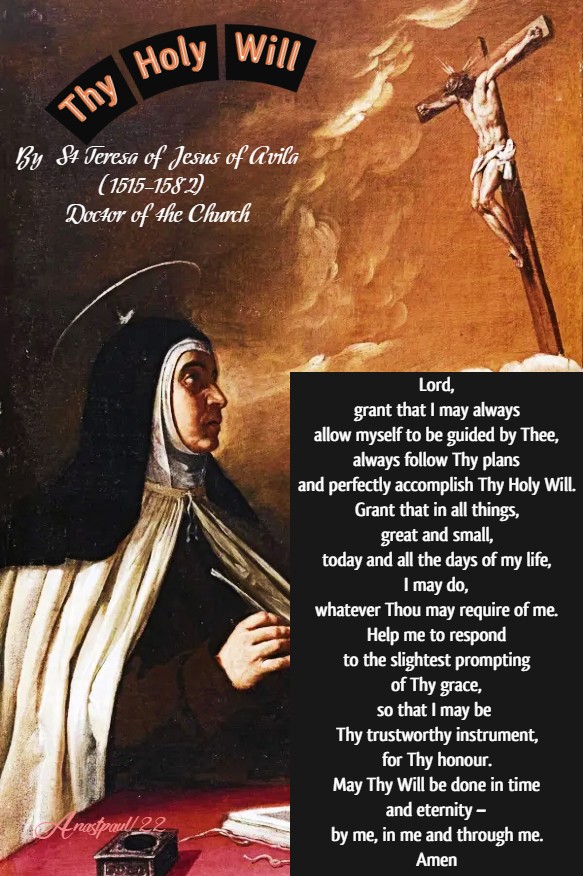
Thy Holy Will By St Teresa of Jesus of Avila (1515-1582) Doctor of the Church
Lord, grant that I may always allow myself to be guided by Thee, always follow Thy plans and perfectly accomplish Thy Holy Will. Grant that in all things, great and small, today and all the days of my life, I may do, whatever Thou may require of me. Help me to respond to the slightest prompting of Thy grace, so that I may be Thy trustworthy instrument, for Thy honour. May Thy Will be done in time and eternity – by me, in me and through me. Amen
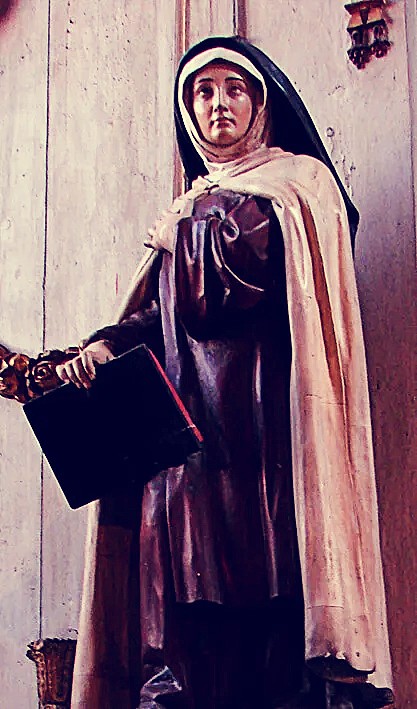
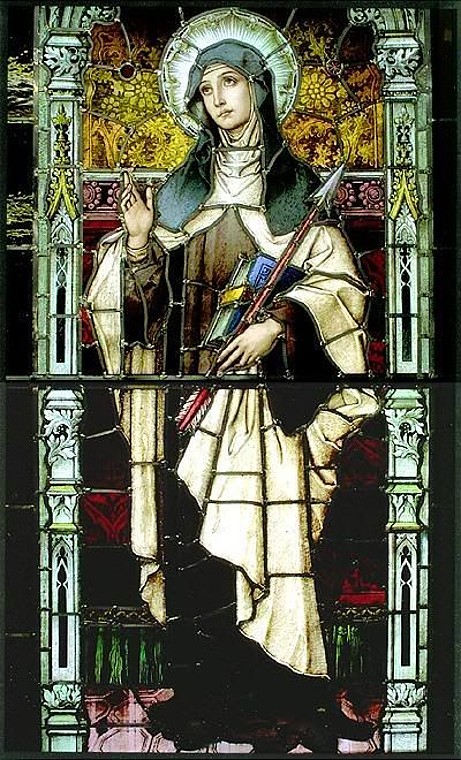
Saint of the Day – 15 October – St Teresa of Jesus of Avila OCD (1515-1582) Virgin and Doctor of the Church
Practical Considerations On the Life of Saint Teresa By Fr Francis Xavier Weninger SJ (1805-1888)
I. Teresa began in early youth, after the teachings of her pious parents, to read devout books. From this, she first drew the spirit of piety. No sooner, however, had she become interested in reading worldly books, than she grew, from day-to-day, more indolent in the service of God and she returned, not to her first fervour, until she had cast aside those works and again resumed her pious reading – a proof of the great benefit we may derive from devout books and of the harm which worldly writings may do us. Oh! that those, who desire to, live piously, may understand this and conform their lives to it. Oh! that all Christians would guide their children, from their early youth, to the reading of devout books!
II. Teresa, after the death of her mother, chose the Blessed Virgin to be another mother to her, and sought and found, in her, comfort and assistance in all her needs. Thrugh her intercession and that of St Joseph, she received the grace of being constant in her reform. Love Mary as your mother – seek, with filial trust, consolation and assistance from her. St Joseph should be one of your principal Patrons, as his intercession is very powerful with the Almighty and, especially, as he has now been solemnly declared the Patron Saint of the Universal Church.
III. The sight of the wounded Jesus, filled the heart of St Teresa with great contrition for her former indifferent life. It inflamed her with true love of God and kept her, until her end, in these sentiments. Consider frequently how your Saviour suffered for your sake and repent of your sins sincerely, as they were the cause of Christ’s bitter Passion. Love your Redeemer with all the strength of your heart and make the resolution to serve Him in future most fervently.
IV. Teresa saw the place in hell which would have been hers, if she had not discontinued her idle discourses and her indifference in the worship of the Most High. Hence, she often gave humble thanks to God that He had not condemned her and she learned, by it, how hurtful even a menial sin can become, since it may lead us gradually to the path of everlasting perdition. You have still more reason to give thanks to God that He did not call you away, from this mortal life, in your sin. How long would you already have been in hell? If idle, empty conversation would have led Teresa gradually into hell, what may you not have to fear, if you do not abstain from so much sinful talking, in which you indulge? Learn also that you should not esteem a venial sin, however small it appears to you, as trifling, for, it may slowly lead you to damnation!
V. Many other lessons, which the life of St Teresa contains, I leave to yourself to consider. One thing only I request of you. Call to mind frequently the words which the Saint uttered in her ecstasy: “Only one God! Only one death! Only one soul! Love this only God and do not offend Him. Take earnest care of your only, your precious, your immortal soul. ‘Keep thyself, therefore and thy soul, carefully.’ (Deut., iv.)”
St Callistus of Huesca St Cannatus of Marseilles Bl Cipriano Alguacil Torredenaida St Euthymius the Younger St Fortunatus of Rome Bl Josefa Martínez Pérez St Leonard of Vandoeuvre Bl Narcis Basté y Basté Bl Pere Verdaguer Saurina Bl Ramón Esteban Bou Pascual St Sabinus of Catania St Severus of Trier
Martyrs of Cologne: A group of 360 Christian soldiers Martyred together in the persecutions of Diocletian and Maximian. They were Martyred in 303 outside the city walls of Cologne, Germany.
Thought for the Day – 14 October – Meditations with Antonio Cardinal Bacci (1881-1971)
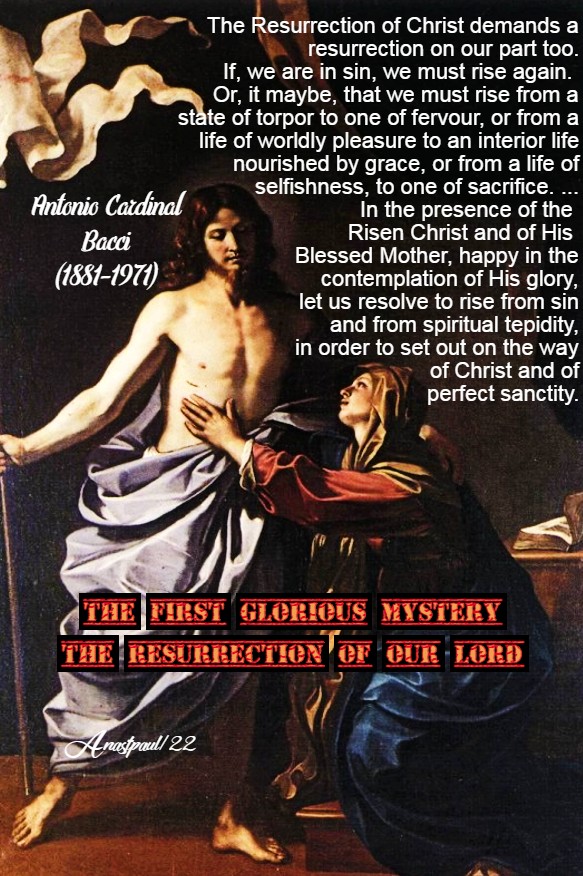
“Month of the Holy Rosary” The First Glorious Mystery The Resurrection of Our Lord
“The Resurrection of Christ demands a resurrection on our part too. If, we are in sin, we must rise again. Or, it maybe, that we must rise from a state of torpor to one of fervour, or from a life of worldly pleasure to an interior life nourished by grace, or from a life of selfishness, to one of sacrifice.
In which state do we find ourselves? In the presence of the risen Christ and of His Blessed Mother, happy in the contemplation of His glory, let us resolve to rise from sin and from spiritual tepidity, in order to set out on the way of Christ and of perfect sanctity.”
Quote/s of the Day – 14 October – – 1 Peter 5:1-4; 5:10-11, Matthew 16:13-19
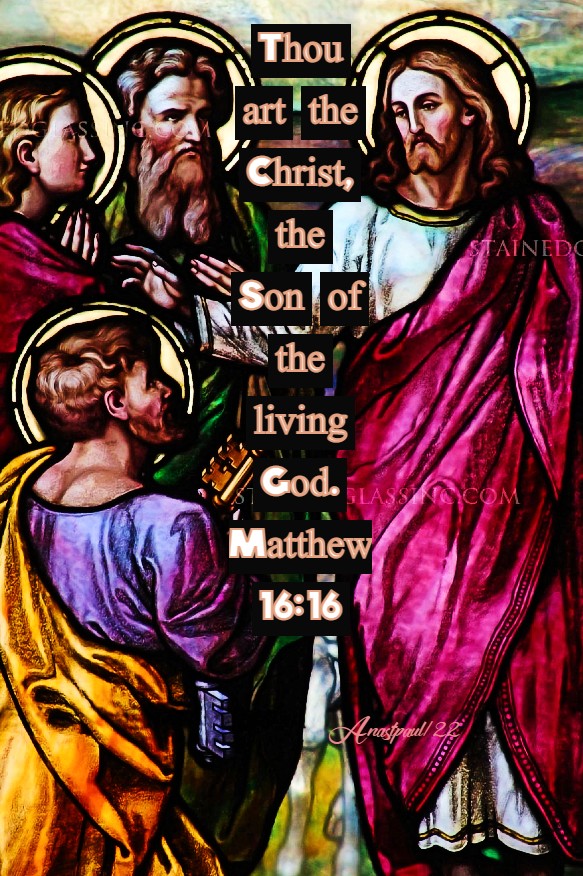
“Thou art the Christ, the Son of the living God.”
Matthew 16:16
“Without Me you can do nothing.”
John 15:5
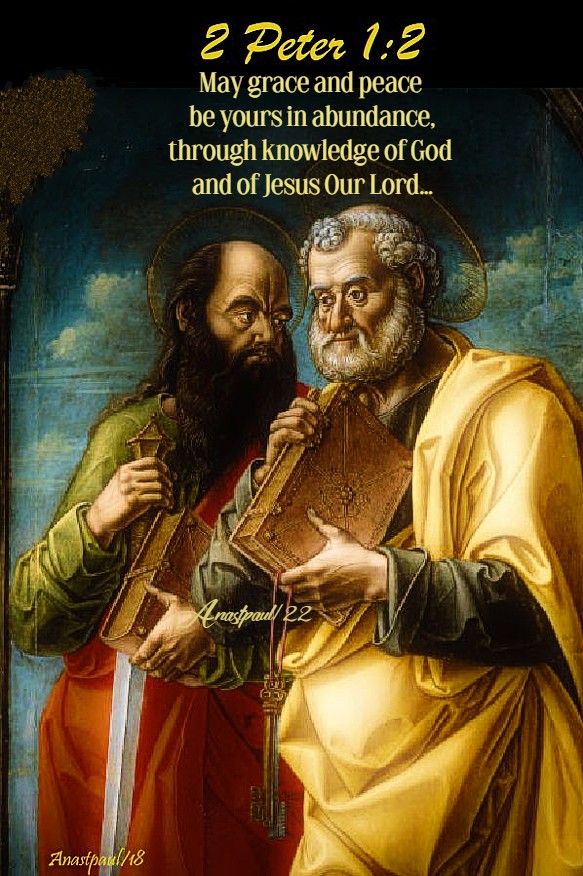
“… May grace and peace be yours in abundance, through knowledge of God and of Jesus Our Lord…”
2 Peter 1:2
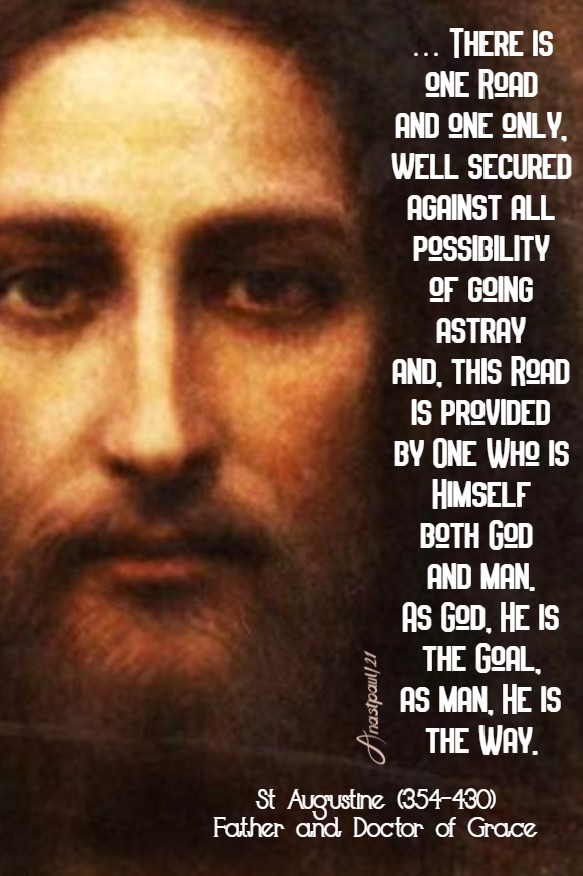
“… There is one Road and one only, well secured against all possibility of going astray and, this Road is provided by One Who is Himself both God and man. As God, He is the Goal, as man, He is the Way.”
St Augustine (354-430) Father and Doctor of Grace
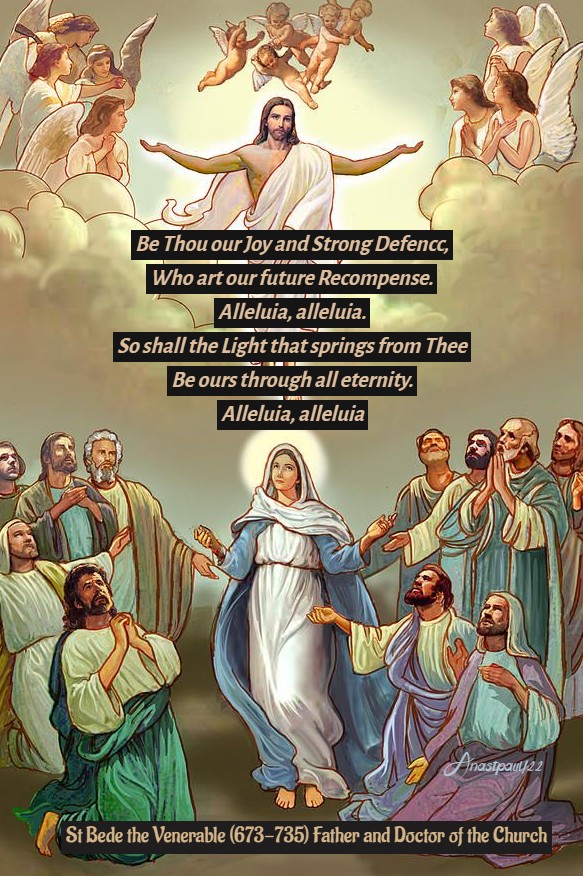
“Be Thou our Joy and Strong Defence, Who art our future Recompense. Alleluia, alleluia. So shall the Light that springs from Thee Be ours through all eternity. Alleluia, Alleluia.”
St Bede the Venerable (673-735) Father and Doctor of the Church”
“Girded with faith and the performance of good works, let us follow in His paths by the guidance of the Gospel.”
St Benedict (c 480-547)
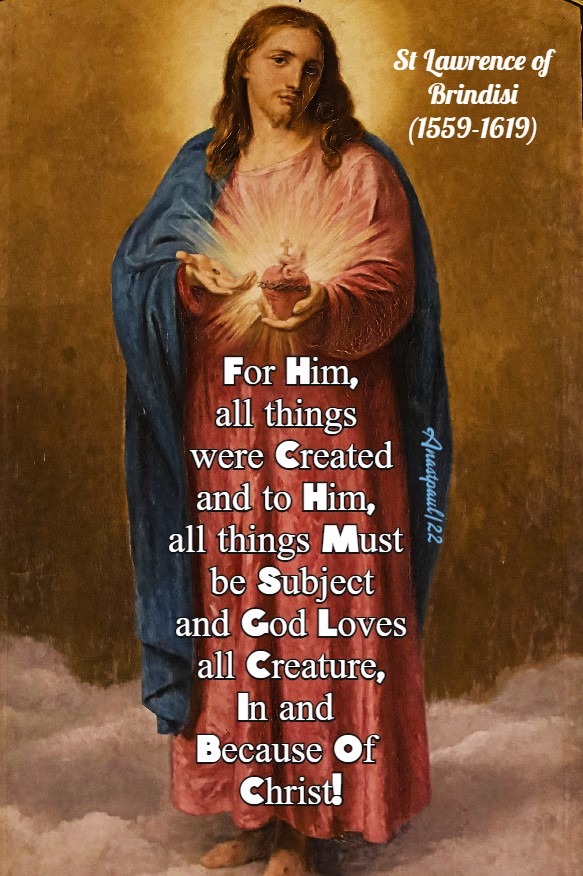
“For Him all things were created and to Him, all things must be subject and God loves all creature, in and because of Christ.”
One Minute Reflection – 14 October – St Callistus I (c 218 – c 223) Confessor, Pope, Martyr – 1 Peter 5:1-4; 5:10-11, Matthew 16:13-19 – Scripture search here: https://www.drbo.org/
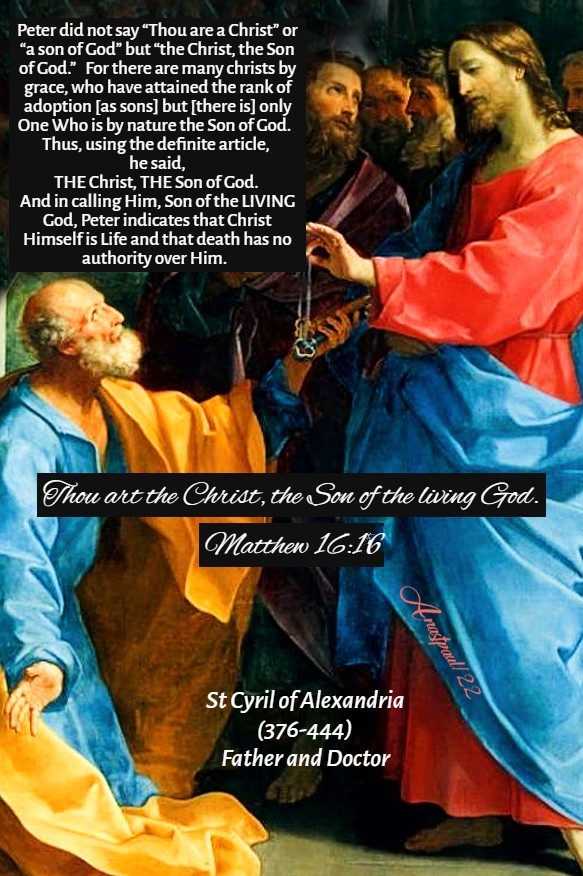
“Thou art the Christ, the Son of the living God.” – Matthew 16:16
REFLECTION – “Peter did not say “Thou are a Christ” or “a son of God” but “the Christ,the Son of God.” For there are many christs by grace, who have attained the rank of adoption [as sons] but [there is] only One Who is by nature the Son of God. Thus, using the definite article, he said, THE Christ, THE Son of God. And in calling Him, Son of the LIVING God, Peter indicates that Christ Himself is Life and that death has no authority over Him. And even if the flesh, for a short while, was weak and died, nevertheless, it rose again, since the Word, Who dwelled in it, could not be held under the bonds of death.” – St Cyril of Alexandria (376-444) Known as “The Pillar of Faith” Archbishop of Alexandria, Father and Doctor Incarnationis (Doctor of the Incarnation) (Fragment 190).
PRAYER – O God, Who behold how we fail in our weakness, mercifully restore us to Thy love, through the examples of Thy Saints.Through Jesus Christ, Thy Son our Lord, Who lives and reigns with Thee, in the unity of the Holy Ghost, God, world without end. Amen (Collect).
Our Morning Offering – 14 October – Catholic Time, Friday: The Passion
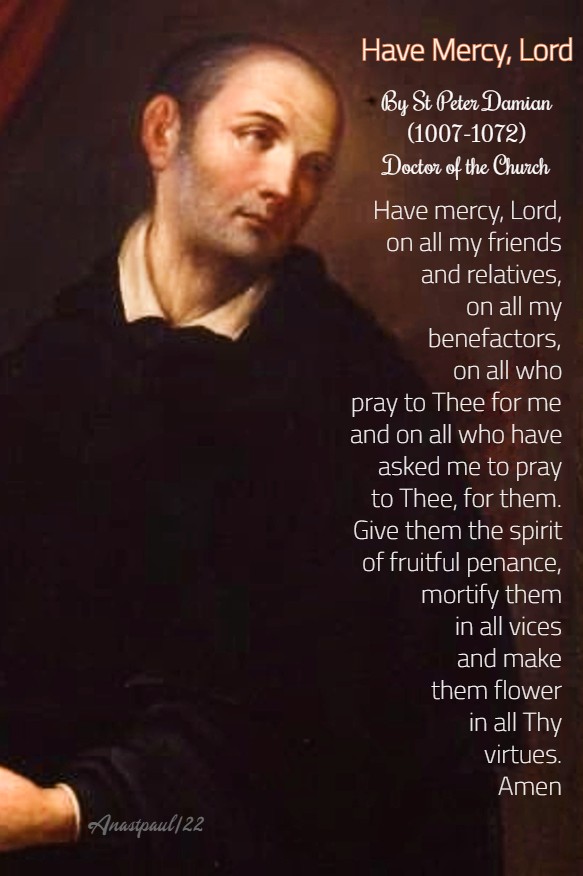
Have Mercy, Lord By St Peter Damian (1007-1072) Father & Doctor of the Church
Have mercy, Lord, on all my friends and relatives, on all my benefactors, on all who pray to Thee for me and on all who have asked me to pray to Thee, for them. Give them the spirit of fruitful penance, mortify them in all vices and make them flower in all Thy virtues. Amen
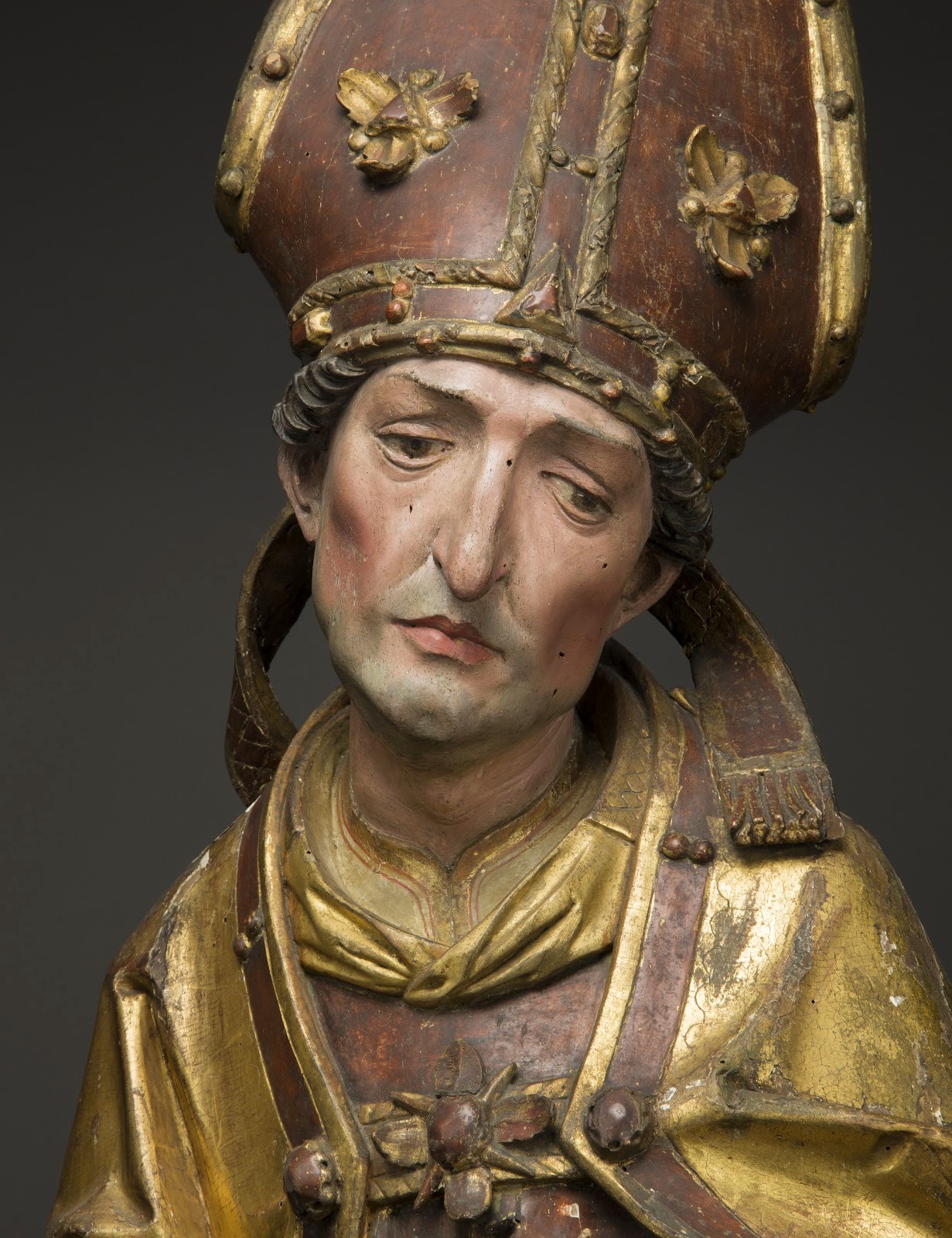
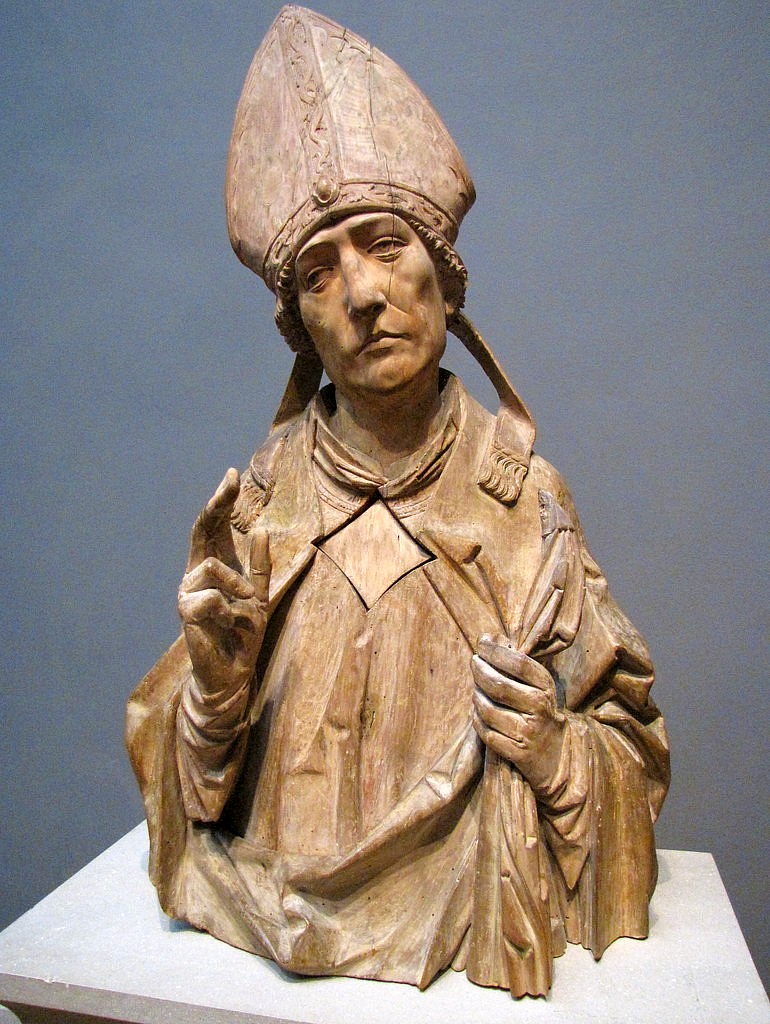
Saint of the Day – 14 October – St Burchard of Wurzburg (Died c752) The First Bishop of Wurzburg, Confessor, Monk, Missionary, English disciple of St Boniface to Germany. Born in an unknown date and location in England and died on 9 February in c 752 in Wurzburg, Germany of natural causes. Also known as – Burkard or Burkhard, Burcard. Additional memorial – 9 February, the day of his death.
The Roman Martyrology states : “In Würzburg in Austrasia, in Germany, St Burcard, a Bishop, who, originally from England, was Ordained by St.Boniface, as the first Bishop of this City.”
In about the year 732, Saint Boniface, standing in need of fellow-labourers, powerful in words and works, in the vast harvest which he had on his hands in Germany, invited from England, Saint Lullus and Saint Burchard, who seem, by this circumstance, to have come from the Kingdom of West-Sussex. They were both persons of an apostolic spirit.
Saint Boniface consecrated Saint Burchard, with his own hands, as the first Bishop of Wurzburg in Franconia, where Saint Kilian had preached the word of life and suffered Martyrdom about fifty years before.
This whole country was converted to Christ, by Burchard’s work. After labouring for twenty years, Burchard exhausted his strength and with the consent of King Pepin and by the approbation of Saint Lullus, (Saint Boniface being gone to preach in Friesland), he resigned his Bishopric to Megingand, a Monk of Fritzlar, and a disciple of Saint Wigbert.
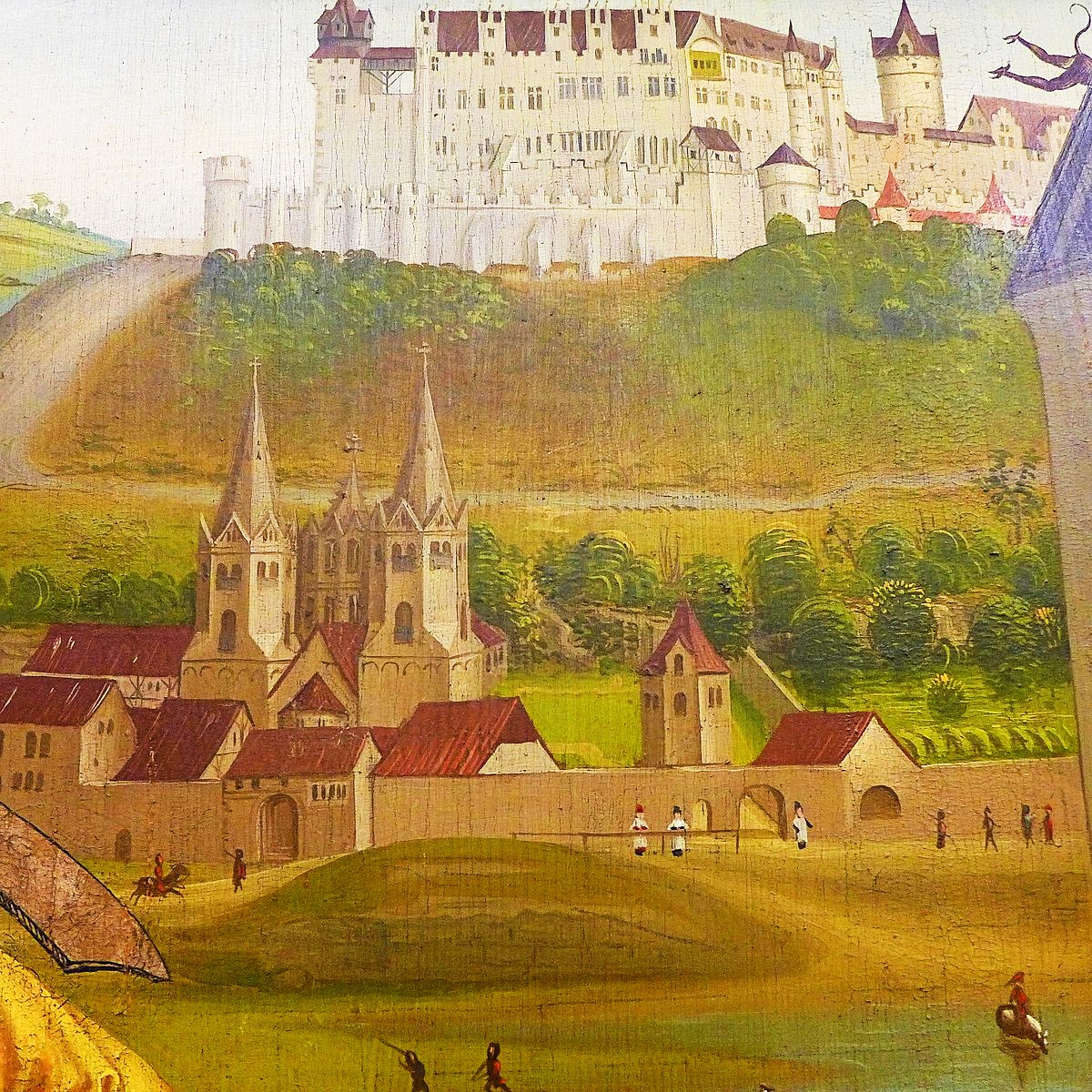
Burchard retiring into solitude in that part of his Diocese called Hohenburg, where he spent the remaining part of his life with six fervent Monks or clergymen, in watching, fasting, and incessant prayer. He died on the 9th of February 752 and was buried near the relics of Saint Kilian at mount Saint Mary’s or Old Wurtzburg, where he had built a Monastery under the invocation of Saint Andrew.
St Burchard’s Abbey c 1400
In 752, out of veneration for his sanctity, King Pepin,declared the Bishops of Wurtzburg as Dukes of Franconia, with all civil jurisdiction. The Emperor Henry IV. alienated several parts of Franconia but the Bishops of Wurzburg retained the sovereignty of this extensive Diocese.
On 14 October 983, Hugh, Bishop of Wurzburg and Chancellor to the Emperor Otho IV. authorised by an order of Pope Benedict VII, made a very solemn translation of Burchard’s relics. This day, on which this ceremony was performed, has been regarded as St Burchard’s principal festival.
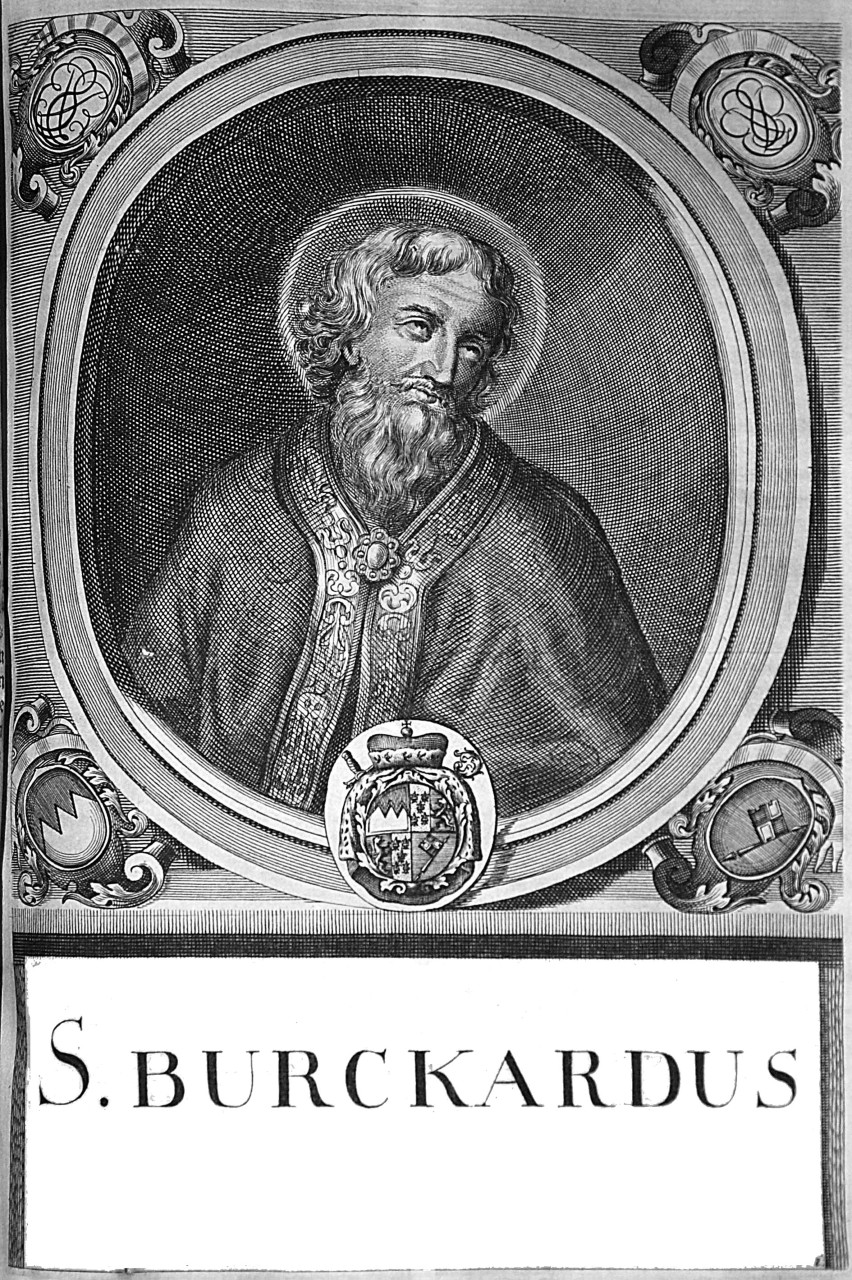
Engraving by Johann Salver
The life of Saint Burchard was written by an anonymous author above two hundred years after his death and again, by Egilward, a Monk of Wurzburg. – Excerpted from Father Alban Butler (1710–1773) English Priest and Hagiographer (Lives of the Fathers, Martyrs and Principal Saints, 1866).
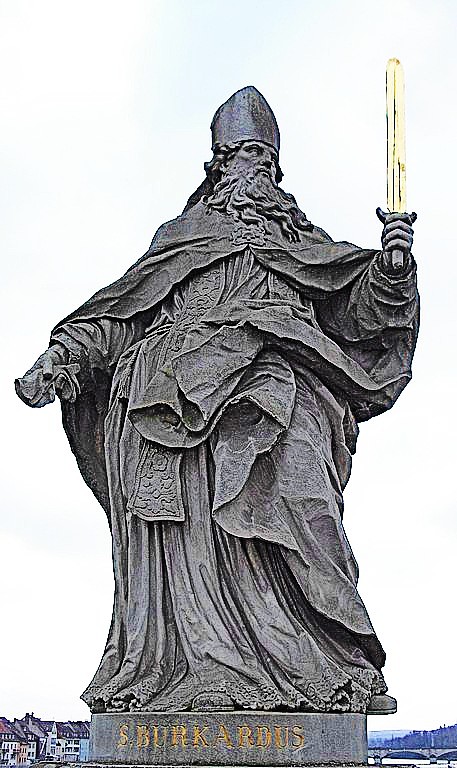
The Statue of St Burchard on Wurzburg’s Old Bridge
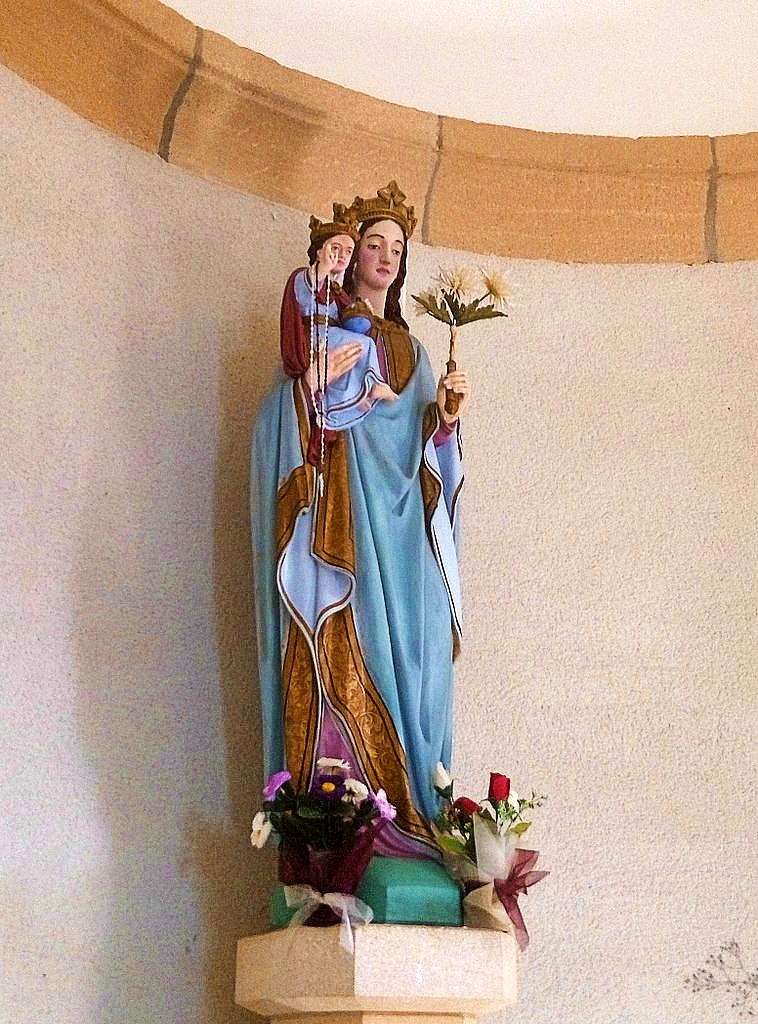
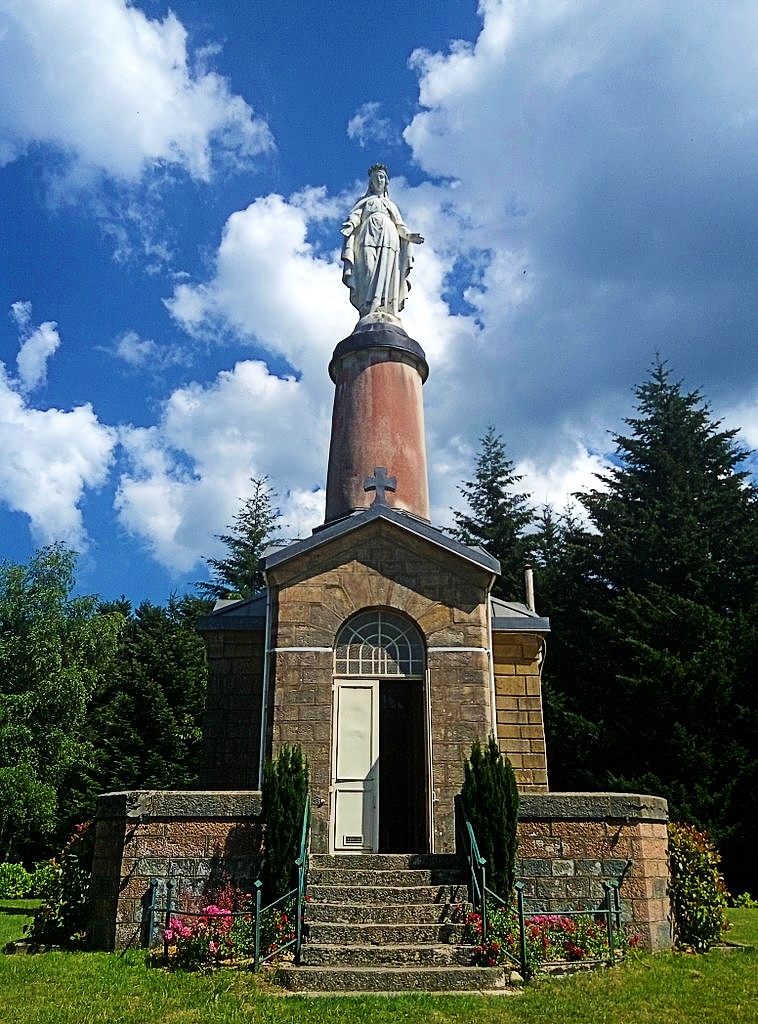
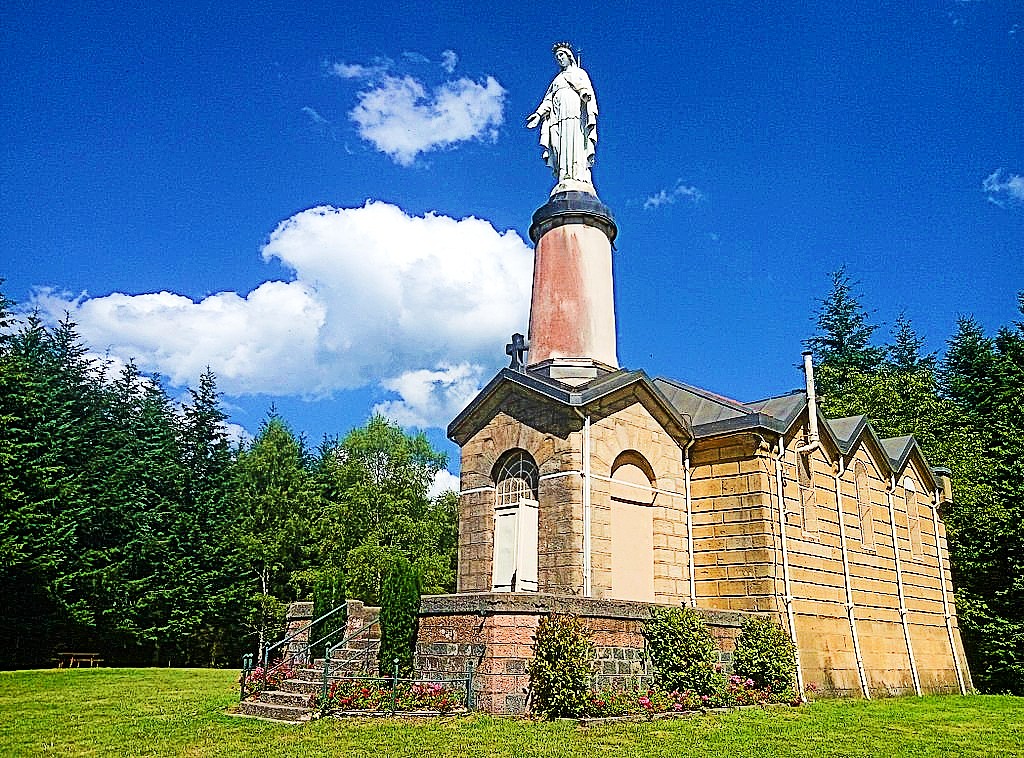
Notre-Dame-de-la-Rochette, Ranchal, France / Our Lady of La Rochette: 14 October
There are no easily translated legends of the above Marian Feast. Hopefully, by next year I will find something somewhere.In the meantime, I have found the beautiful Statues and Church and the little citation by Abbot Orsini:
The Abbot Orsini wrote: “Our Lady of La Rochette near Geneva. A shepherd coming up to a bush, where he heard a plaintive voice, found there an image of the Blessed Virgin, which led to a Church being built there.”
St Bernard of Arce St Burchard of Wurzburg (c 752) Bishop, Confessor, Monk, Missionary, disciple of St Boniface. St Celeste of Metz St Dominic Loricatus
Saint Fortunatus of Todi (Died 537) Bishop, Confessor, miracle-worker. An entry in the Roman Martyrology under 14 October records: “At Todi in Umbria, St Fortunatus, Bishop, who, as is mentioned by blessed Gregory, was endowed with an extraordinary gift for casting out unclean spirits.” About St Fortunatus: https://anastpaul.com/2020/10/14/saint-of-the-day-14-october-saint-fortunatus-of-todi-died-537/
St Gaudentius of Rimini St Gundisalvus of Lagos Bl Jacques Laigneau de Langellerie St Lupulo of Capua St Lupus of Caesarea St Manacca St Manehildis St Modesto of Capua St Rusticus of Trier St Saturninus of Caesarea St Venanzio of Luni
Martyrs of Caesarea – (4 Saints): Three brothers and a sister Martyred together in the persecutions of Diocletian – Carponius, Evaristus, Fortunata and Priscian. In 303 in Caesarea, Cappadocia (in modern Turkey) – their relics enshrined in Naples, Italy.



































 AnaStpaul
You must be logged in to post a comment.