One Minute Reflection – 21 January – Tuesday of the Second week in Ordinary Time, Year A, Readings: 1 Samuel 16:1-13, Psalm 89:20-22, 27-28, Mark 2:23-28 and the Memorial of St Agnes (c 291- c 304) – Virgin Martyr
“…so the Son of man is lord even of the sabbath.”...Mark 2:28
REFLECTION – “From the first, the law of the Sabbath conferred many and great benefits, for instance, it made the Jews gentle and humane towards those of their own household, it taught them God the Creator’s providence and wisdom… hence God gave the law for the Sabbath He said… that He would have them refrain from evil works only when he said: “You must do no work, except for what is necessary for life” (Ex 12:16 LXX).
And in the temple, too, everything continued with more diligence than ever. Thus even by means of the very shadow, He was secretly opening the full light of truth (cf. Col 2:17).
Did Christ then do away with so highly profitable a thing? Far from it, He greatly enhanced it. For it was unnecessary… that we should learn from it, that God made all things or that we should be made kind by it, who are called to imitate God’s own love. For He says: “Be merciful, as your heavenly Father is merciful”(Lk 6:36). It was no longer necessary to fix a day of festival for those who are commanded to keep a feast all their life long. For: “Let us keep the feast,” Saint Paul writes, “not with old leaven, neither with leaven of malice and wickedness but with the unleavened bread of sincerity and truth” (1Cor 5:8)…
So now, why is any sabbath required for Christians who are always keeping the feast and whose conversation is in heaven? Yes, my brethren, let us celebrate that continual, heavenly sabbath.”…St John Chrysostom (c 345-407) Father & Doctor
PRAYER – Almighty, ever-living God, You choose what is weak in the world to shame what is strong. Grant that, as we celebrate the martyrdom of St Agnes, we may follow her example of steadfastness and trust in faith. We pray that through her intercession, we may grow in holiness. Through our Lord Jesus Christ, with the Holy Spirit, one God forever, amen.
Our Morning Offering – 21 January – Tuesday of the Second week in Ordinary Time, Year A
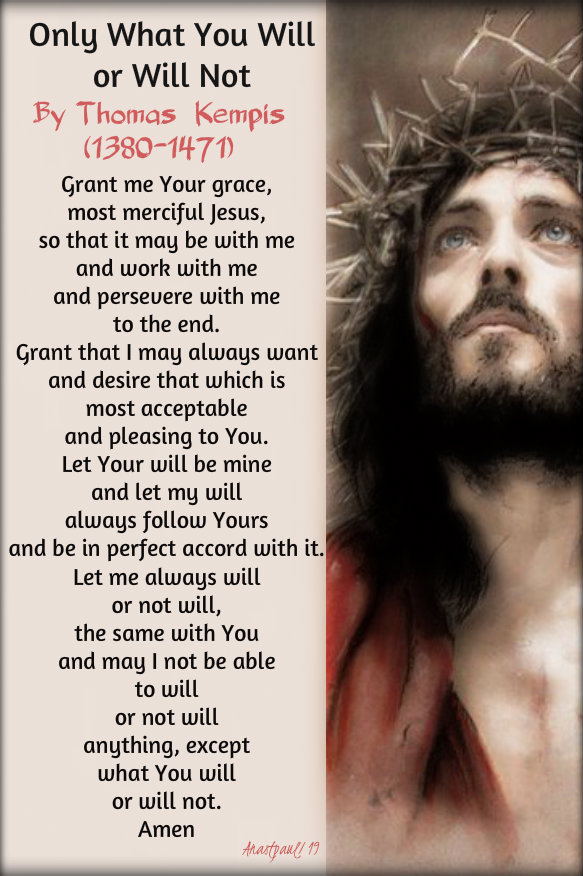
Only What You Will or Will Not By Thomas à Kempis (1380-1471)
Grant me Your grace,
most merciful Jesus,
so that it may be with me
and work with me
and persevere with me to the end.
Grant that I may always want
and desire that which is
most acceptable and pleasing to You.
Let Your will be mine
and let my will always follow Yours
and be in perfect accord with it.
Let me always will or not will,
the same with You
and may I not be able to will
or not will
anything, except
what You will or will not.
Amen
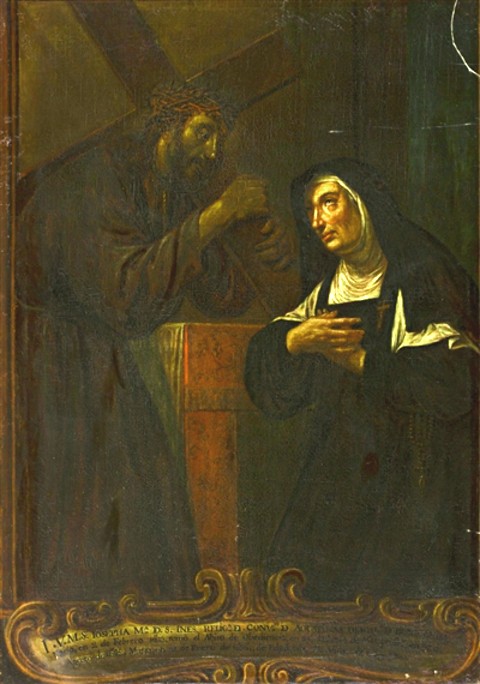
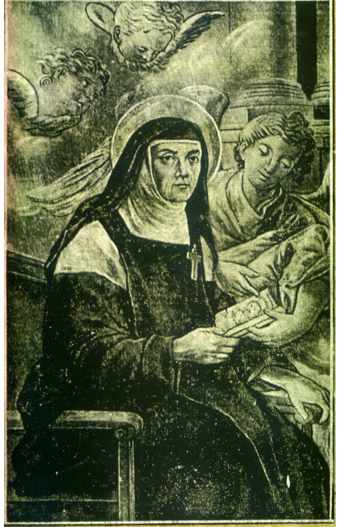
Saint of the Day – 21 January – Blessed Josefa María Inés de Benigánim OAD (1625–1696) born as Josefa María Albiñana Gomar on 9 February 1625 at Benigánim, Valencia, Spain and died on 21 January 1696 at Benigánim, Valencia, Spain of natural causes. She was a Spanish professed religious of the Discalced Augustinian Nuns with the religious name of “Josefa María of Saint Agnes,” Virgin, Mystic, gifted with the charism of prophecy and counsel. She became known for her profound spiritual and theological insight as well as for her severe austerities she practised during her life. Her body is incorrupt.
Josefa María was born to the poor Lluís Albiñana and Vicenta Gomar in Spain in 1625. Her father died during her childhood. The town mayor – her uncle Bartomeu Tudela – aided the family following the death of her father; she also suffered from epilepsy during her childhood. She received her Confirmation at the age of eight.
At the age of 13-14, she went out to the river to wash clothes and had a vision of Jesus Christ who called her to embrace Him and seek the religious life. She refused a marriage offer to do this – though the enraged suitor killed himself.
She entered the Discalced Augustinian convent in her hometown on 25 October 1643 and assumed her religious name – that of “Josefa María of Saint Agnes” – upon the profession of her vows and vesting in the habit on 26 June 1644; she made her solemn profession on 27 August 1645. Blessed Josefa began to practice severe austerities that characterised her life and her time amongst her fellow religious.
She became known for prophetic gifts, which prompted people to consult her for her spiritual insights. Though her formal education was minimal, her gifts of counsel and theological understanding were very evident, to the extent that she was admitted among the choir sisters in 1663 and was consulted for spiritual guidance and clarification on theological issues.
All of Josefa’s religious life was marked by the workings of grace. While her demeanour was simple and humble and her efforts dedicated to the service of the community, she possessed a remarkable spirit of contemplation.
Blessed Josefa died in 1696 – on the feast of Saint Agnes – after having received the sacraments for the last time. Her remains are incorrupt and in the Spanish Civil War her tomb was desecrated though later restored.
After the investigations and approval of two miracles, Blessed Josefa was Beatified on 26 February 1888, at Saint Peter’s Basilica by Pope Leo XIII.
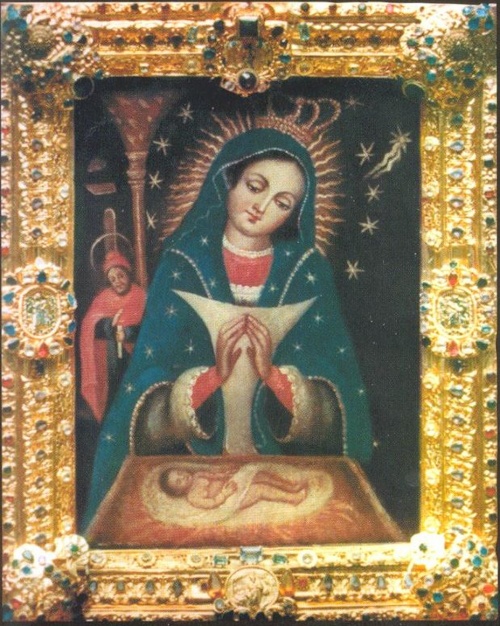
Our Lady of Altagracia – 21 January – Also known as: Our Lady of Grace – Our Lady of High Grace – Protector and Queen of the hearts of the Dominicans – Tatica from Higuey – Virgen de la Altagracia – Virgin of Altagracia.
A portrait of the Virgin Mary in a Nativity scene. It is 13 inches (33 centimeters) wide by 18 inches (45 centimeters) high and is painted on cloth. It is a primitive work of the Spanish school, painted c 1500. The Spanish brothers Alfonso and Antonio Trejo, two of the first European settlers on Santo Domingo, brought the portrait to the island some time prior to 1502 and eventually donated it to the parish church at Higuey. It’s first shrine was finished in 1572 and in 1971 it was moved to its present Basilica. The image was crowned on 15 August 1922 during the pontificate of Pius XI. Due to its age, centuries of handling by the faithful and exposure to candle smoke, it was in sad shape, and was restored in 1978. On 25 January 1979 St Pope John Paul II crowned the image with a gold and silver tiara, his gift to the Virgin. It’s frame is made of gold, enamel and precious stones and was constructed by an unknown 18th century artisan.
The Dominicans see the image as exemplifying Our Lady watching over the island and the growth of Christianity there. The feast day is marked by services, all-night vigils, singing, dancing and festivals in many of the towns.
Legend says that the pious daughter of a rich merchant asked her father to bring her a portrait of Our Lady of Altagracia from Santo Domingo but no-one had heard of that title. The merchant, staying overnight at a friend’s house in Higuey, described his problem as they sat outdoors after dinner. An old man with a long beard, who just happened to be passing by, pulled a rolled up painting from his cloak, gave it to the merchant and said, “This is what you are looking for.” It was the Virgin of Altagracia. They gave the old man a place to stay for the night but by dawn he was gone, not to be seen again. The merchant placed the image on their mantle but it repeatedly disappeared only to be found outside and the family finally returned it to the church.
St Agnes of Aislinger
St Alban Bartholomew Roe
St Anastasius of Constantinople
St Aquila of Trebizond
St Brigid of Kilbride
St Candidus of Trebizond
Bl Edward Stransham
St Epiphanius of Pavia
St Eugenius of Trebizond
Bl Franciscus Bang
St Gunthildis of Biblisheim Blessed Josefa María Inés de Benigánim OAD (1625–1696)
St John Yi Yun-on
St Lawdog
St Maccallin of Waulsort
St Meinrad of Einsiedeln
St Nicholas Woodfen
St Patroclus of Troyes
St Publius of Malta
Bl Thomas Reynolds
St Valerian of Trebizond
St Vimin of Holywood
St Zacharias the Angelic
—
Blessed Martyrs of Laval – 19 beati: Fifteen men and four women who were martyred in Laval, France by anti-Catholic French Revolutionaries.
• Blessed André Duliou
• Blessed Augustin-Emmanuel Philippot
• Blessed François Duchesne
• Blessed François Migoret-Lamberdière
• Blessed Françoise Mézière
• Blessed Françoise Tréhet
• Blessed Jacques André
• Blessed Jacques Burin
• Blessed Jean-Baptiste Triquerie
• Blessed Jean-Marie Gallot
• Blessed Jeanne Veron
• Blessed John Baptist Turpin du Cormier
• Blessed Joseph Pellé
• Blessed Julien Moulé
• Blessed Julien-François Morin
• Blessed Louis Gastineau
• Blessed Marie Lhuilier
• Blessed Pierre Thomas
• Blessed René-Louis Ambroise
The were born in French and they were martyred on several dates in 1794 in Laval, Mayenne, France. They were beatified on 19 June 1955 by Pope Pius XII at Rome, Italy.
Martyrs of Rome – 30 saints: Thirty Christian soldiers executed together in the persecutions of Diocletian. They were martyred in 304 in Rome, Italy.
Martyrs of Tarragona: Augurius, Eulogius, Fructuosus
Thought for the Day – 20 January – Meditations with Antonio Cardinal Bacci (1881-1971) – Monday of the Second Week in Ordinary Time, Year A
The Pope
The words with which a great Bishop and orator, Bossuet, began the funeral oration of a great king, are well remembered in history: “God alone is great.”
This is true in the absolute sense of the word.
We are all insignificant, because any greatness which we can possess, is not ours but comes from God.
There is, in the world, however, one man in whom the greatness of God is reflected, in the most outstanding way of all.
He participates in the authority and, in a certain sense, in the personality of Christ.
This man is the Vicar of Jesus Christ, the Pope.
It is necessary, to think deeply about certain words of our Redeemer, which the protestants and schismatics of every age seem to be anxious to forget.
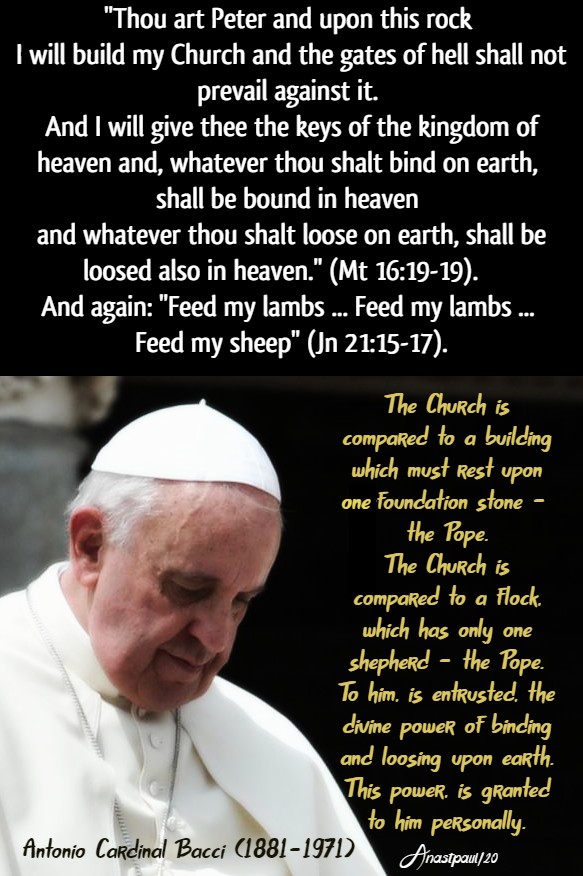
These words were addressed to Peter and through him, to all his successors in the Church, which was destined to last till the end of time (Mt 29:20). “Thou art Peter and upon this rock I will build my Church and the gates of hell shall not prevail against it. And I will give thee the keys of the kingdom of heaven and, whatever thou shalt bind on earth, shall be bound in heaven and whatever thou shalt loose on earth, shall be loosed also in heaven.” (Mt 16:19-19). And again: “Feed my lambs … Feed my lambs … Feed my sheep” (Jn 21:15-17).
These words need to be thought about rather than explained.
The Church is compared to a building which must rest upon one foundation stone – the Pope.
The Church is compared to a flock, which has only one shepherd – the Pope.
To him, is entrusted the divine power of binding and loosing upon earth.
This power, is granted to him personally.
It is given to the other Apostles, only as a group, united to him.
Quote of the Day – 21 January – Monday of the Second week in Ordinary Time, Year A – Readings: 1 Samuel 15:16-23, Psalm 50:8-9, 16-17, 21, 23, Mark 2:18-22
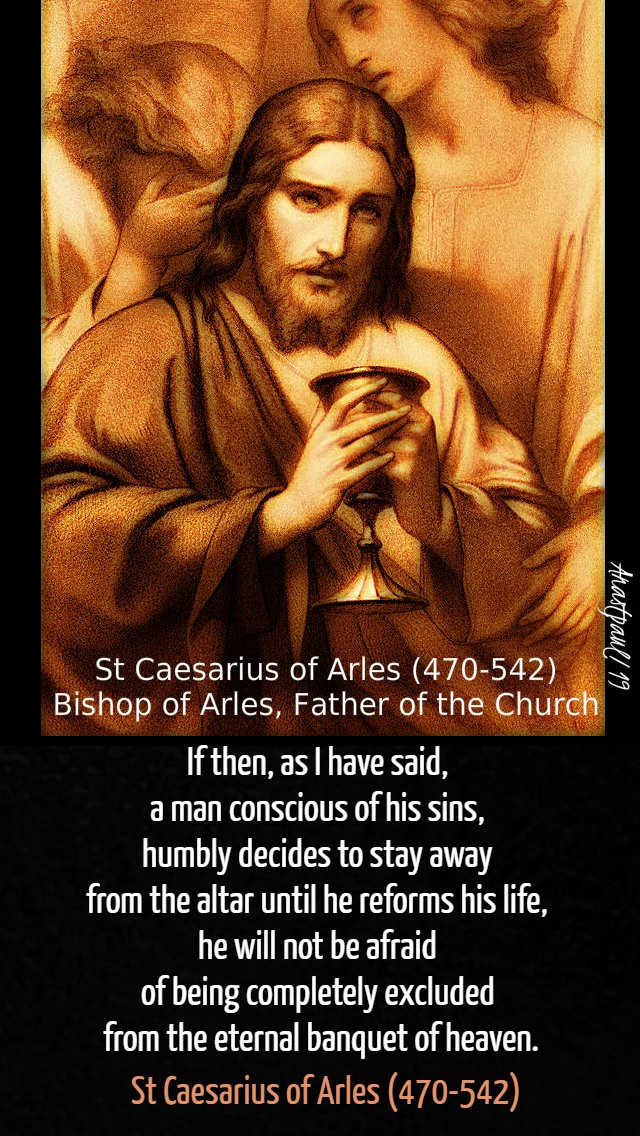
“And so, dearly beloved brethren, let us each examine his conscience and when he sees that he has been wounded by some sin, let him first strive to cleanse his conscience by prayer, fasting, almsgiving and so dare to approach the Eucharist. If he recognises his guilt and is reluctant to approach the holy altar, he will be quickly pardoned by the Divine Mercy, “for whoever exalts himself will be humbled and whoever humbles himself will be exalted” (Mt 23:12). If then, as I have said, a man conscious of his sins, humbly decides to stay away from the altar until he reforms his life, he will not be afraid of being completely excluded from the eternal banquet of heaven.”
St Caesarius of Arles (470-542)
Bishop of Arles
Father of the Church
One Minute Reflection – 21 January – Monday of the Second week in Ordinary Time, Year A – Readings: 1 Samuel 15:16-23, Psalm 50:8-9, 16-17, 21, 23, Mark 2:18-22 and the Memorial of St Eustochia Smeraldo Calafato OSC (1434-1485)
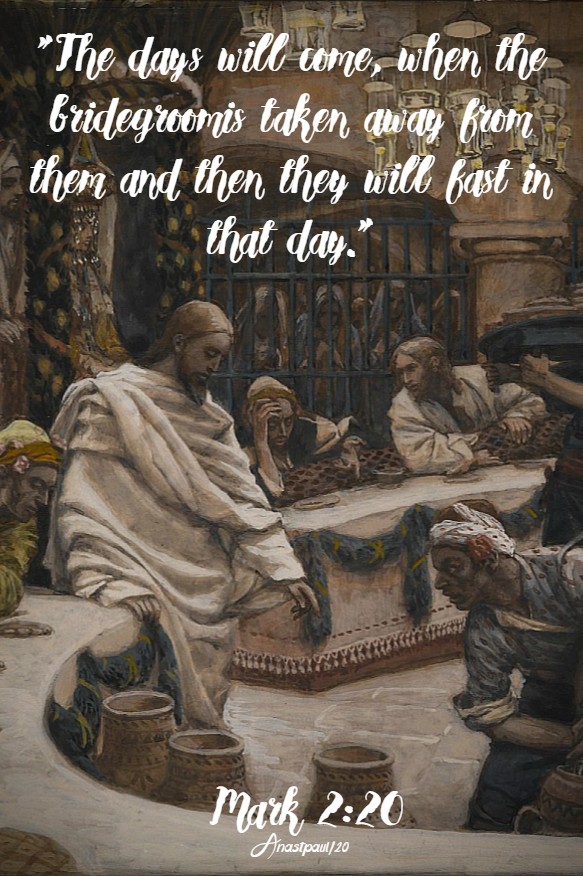
“The days will come, when the bridegroom is taken away from them, and then they will fast in that day.” … Mark 2:20
REFLECTION – “Of fundamental importance are the words of the Letter to the Ephesians: “Husbands, love your wives, as Christ loved the Church and gave himself up for her, that he might sanctify her, having cleansed her by the washing of water with the word, that he might present the Church to himself in splendour, without spot or wrinkle or any such thing, that she might be holy and without blemish… ‘For this reason a man shall leave his father and mother and be joined to his wife, and the two shall become one flesh’. This mystery is a profound one and I am saying that it refers to Christ and the Church” (5:25-32; Gn 2:24)…
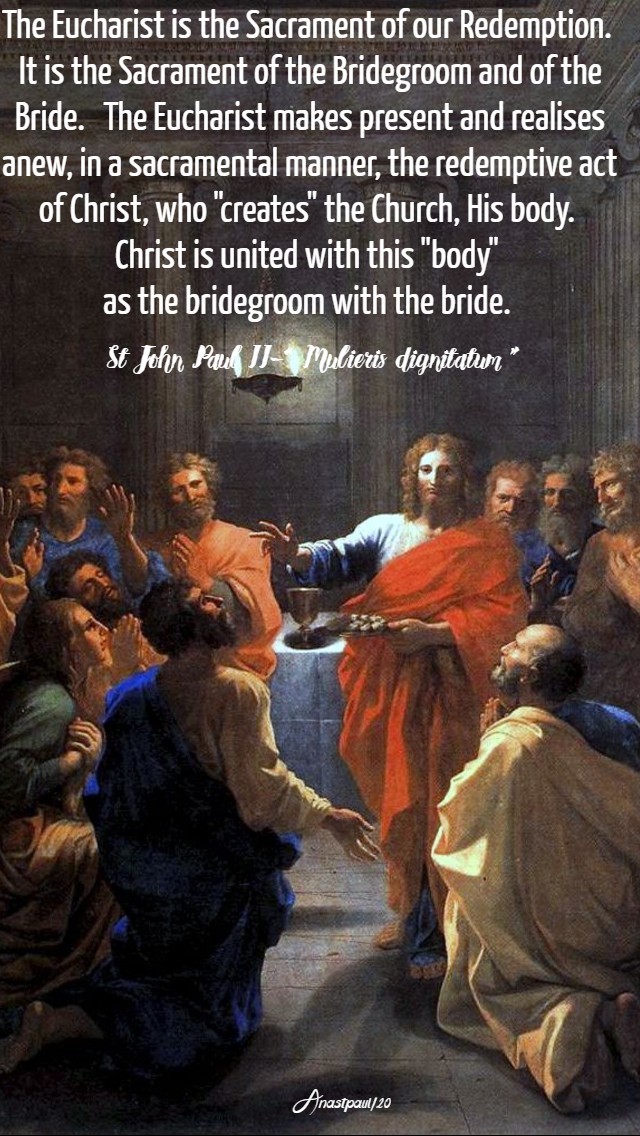
We find ourselves at the very heart of the Paschal Mystery, which completely reveals the spousal love of God. Christ is the Bridegroom because “he has given himself” – His body has been “given”, His blood has been “poured out” (cf. Lk 22:19-20). In this way “he loved them to the end” (Jn 13:1). The “sincere gift” contained in the Sacrifice of the Cross gives definitive prominence to the spousal meaning of God’s love. As the Redeemer of the world, Christ is the Bridegroom of the Church. The Eucharist is the Sacrament of our Redemption. It is the Sacrament of the Bridegroom and of the Bride. The Eucharist makes present and realises anew, in a sacramental manner, the redemptive act of Christ, who “creates” the Church, His body. Christ is united with this “body” as the bridegroom with the bride. All this is contained in the Letter to the Ephesians. The perennial “unity of the two” that exists between man and woman from the very “beginning” is introduced into this “great mystery” of Christ and of the Church.” … St John Paul II – Pope from 1978 to 2005 – Apostolic Letter “ Mulieris dignitatum ” #23, 26
PRAYER – Almighty God, ruler and creator of all things in heaven and on earth, listen favourably to the prayer of Your people. Through Your Son, our Lord Jesus Christ, who gave us His life to lead us to You and made us His own body in His Church, grant us the grace of always listening for His word and following His deeds in all that we are and all that we do. May we too follow His teachings in our Holy Mother Church, for she is His and we are hers. May the prayers of St Eustochia Calafato, intercede for us. Through Christ our Lord, with the Holy Spirit, God forever, amen.
Our Morning Offering – 14 January – Monday of the Second week in Ordinary Time, Year A
Before Jesus Crucified (Sweet Jesus, please, abide with me!) By Blessed Titus Brandsma OCD (1881-1942) Martyr
Dear Lord, when looking up at Thee,
I see Thy loving eyes on me,
Love overflows my humble heart,
Knowing what a faithful friend Thou are.
A cup of sorrow I foresee,
Which I accept for love of Thee,
Thy painful way I wish to go,
The only way to God I know.
My soul is full of peace and light,
Although in pain, this light shines bright.
For here, Thou keepest to Thy breast.
My longing heart to find there rest.
Leave me here freely all alone,
In cell where never sunlight shone.
Should no-one ever speak to me,
This golden silence makes me free!
For though alone, I have no fear,
Never were Thou, O Lord, so near.
Sweet Jesus, please, abide with me!
My deepest peace I find in Thee.
Amen
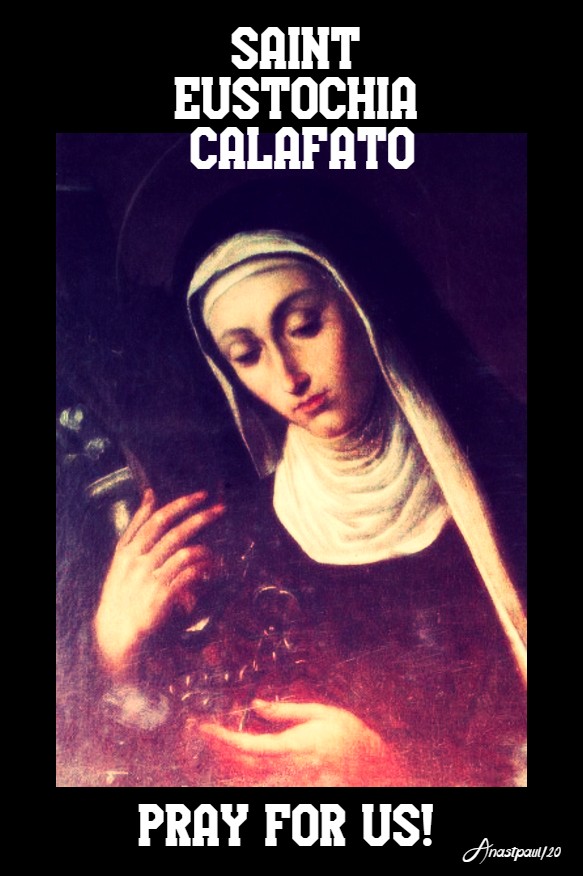
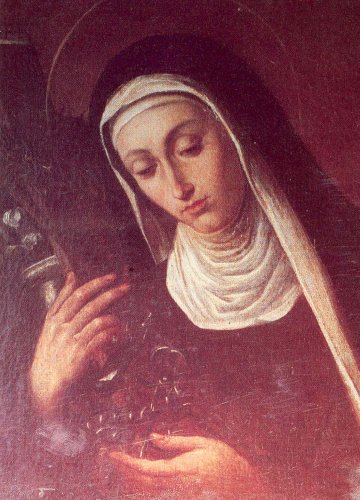
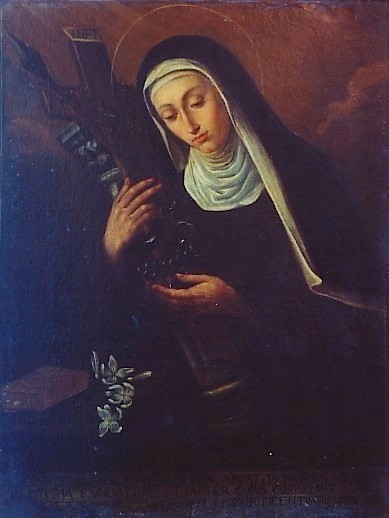
Saint of the Day – 20 January – St Eustochia Smeraldo Calafato OSC (1434-1485) Nun of the Second Franciscan Order of the Poor Clares, Reformer, Founder of a reformed Monastery, Abbess, Ascetic born of her devotion to the Passion of Christ and the Holy Eucharist – born on 25 March (Good Friday) 1434 at Annunziata, Messina, Italy as Smerelda Colonna and died on 20 January 1491 at Messina, Sicily, Italy. Patronage – Messina, Italy. Additional commemoration – 22 August in Messina.
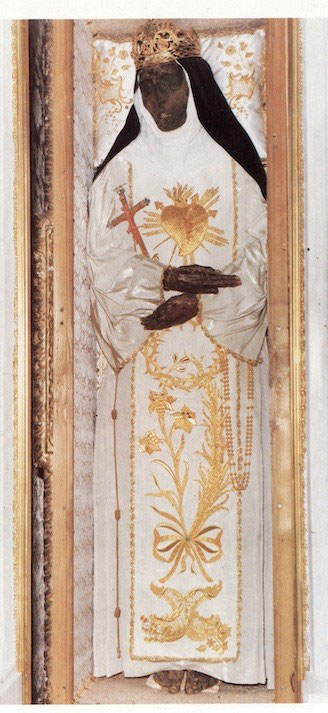
In Messina, in the ancient monumental Church of the Monastery of Montevergine, lies the body of Santa Eustochia Smeralda. Her body has remained incorrupt by a miracle of the Lord, for five centuries, burnished by time, with her right hand with her fingers contracted in perpetual blessing, she watches over the city and the flourishing monastery you founded.
Saint Eustochia was born with the name “Smeralda” (or ‘Esmeralda’ which means ‘emerald’) on 25 March 1434 in Messina, Italy. She was the fourth of six children. Smeralda’s mother was a fervent Christian and enthusiastic admirer of the Franciscan religious order, particularly of the reformers who insisted on following closely the life of St Francis, especially by embracing poverty.
The reform’s first monastery was established in Messina by Blessed Matthew of Agrigento. He inspired a renewal of faith in the people of Messina by his ardent preaching and way of life. Smeralda’s mother had attended one of Blessed Matthew’s sermon’s as an eighteen-year-old bride and devoted her life to prayer, penance and helping those in need. Thus, Smeralda was raised from childhood to exercise Christian piety and virtue, eventually exceeding her mother’s greatest hopes and expectations for her daughter.
Smeralda was beautiful both inside and out, she is thought to be the model for the painting The Virgin of the Annunciation by Antonello da Messina (seen here on the below). When she was fourteen years old, Smeralda wanted to become a Poor Clare nun but her father arranged marriage for her to an older, wealthy widower. Smeralda kept her hope in religious life and the widower died before the wedding. Her father again arranged a marriage for his daughter but that man also died, followed by Smeralda’s father himself. When she entered the convent of Santa Maria di Basico, her brothers threatened to burn it down if she did not return home, which she did. But seeing her great desire, they experienced a change of heart. She finally entered and took her vows, with the name Eustochia, at fifteen-and-a-half years old.
Unfortunately, Eustochia came to discover that the convent had drifted away from the poverty lived by their foundress, St Clare of Assisi. For more than a decade, Eustochia struggled to be an authentic Franciscan in the materialistic atmosphere. She received papal permission to establish a new convent but found resistance to her reforms. Some friars refused to say Mass at the convent, believing that the sisters’ lifestyle was too strict. Eustochia appealed directly to Church authorities in Rome, who approved of Mother Eustochia’s renewal of Franciscan asceticism and poverty. The friars who had refused to assist at the convent were threatened with excommunication should they continue to resist.
Eustochia’s holiness drew many women to her community – so many that they soon outgrew the building and moved to Montevergine, near Messina, where their convent still stands. The local people considered Eustochia their patron and protector and the cloister to be a place of refuge—especially during the earthquakes that rocked the area.
Eustochia was a spiritual mother to her daughters, instructing, educating and training them in the Franciscan life, encouraging them to meditate on the Passion of Christ. She often led them in two-hour Scripture study sessions. Eustochia conveyed to her nuns the fruits of asceticism and lovingly infused into their hearts the virtues which she herself practised with admirable constancy and heroism. She taught them to permeate their whole lives with a simple and generous Franciscan spirituality, focusing on their Beloved Suffering Christ, to devote themselves to the Eucharist and to draw all necessary strength and nourishment for daily meditation from an intense, liturgical life.
Eustochia’s love of Jesus in poverty and penance was outstanding. She wrote a treatise on the Passion, which, unfortunately, is now lost. Though she never visited the Holy Land, Eustochia had a devotion to the holy places that is reminiscent of Saint Bridget of Sweden . In fact, she had one of the first sets of the Stations of the Cross (as we know them today) constructed within her convent.
As she lay on her deathbed, Eustochia spoke to her daughters, who had gathered around her, about the Passion of Christ. She spoke for an hour before passing to her final rest on 20 January 1485.
A few days after her burial, Eustochia’s tomb and body manifested extraordinary phenomena and many people received powerful graces through her intercession. The sisters wrote a biography of their revered mother and founder. She was Beatified on 22 June 1987 and Canonised on 11 June 1988 by St Pope John Paul II.
Her incorrupt body rests in the Sanctuary of Montevergine in Messina, the monastery which she established and can be visited twice a week.
In his homily, John Paul II said of St Eustochia:
“Learning assiduously in the school of Christ Crucified, she grew in knowledge of Him and, meditating on the splendid mysteries of grace, she conceived a faithful love for Him. For our saint, the cloistered life was not a mere flight from the world in order to take refuge in God. Through the severe penance which she imposed upon herself, she certainly wanted to be united to Christ, gradually eliminating whatever in her, as in every human person, was fallen, at the same time, she felt united to all. From her cell in the monastery of Montevergine she extended her prayer and the value of her penances to the whole world. In such a way she wanted to be near to each brother and sister, alleviate every suffering, ask pardon for the sins of all.”
The Body of the Holy Founder is venerated by crowds of devotees, who rely on her intercession to obtain the graces they dream of, while the valid protection of the Saint for the city, especially during public calamities, is officially recognised. The highest city authorities, still today, in fact, meet in the Church of Montevergine on the occasion of the festivities of 22 August of each year, in fulfilment of an ancient vote of the Senate of Messina, to attend the Divine Sacrifice, pay homage to the illustrious Eustachia.
One of the miracles in the history of the Saint is linked to this particular protection. It was the year 1615 and the city was struck, night and day, by appalling earthquakes, so much so that the authorities and the people implored the intercession of the Saint in Montevergine, inviting the nuns to pray for this purpose. The Poor Clares removed the Body from the oratory, where they keep it and placed it in the choir, in its old stall.
As the evening prayers were about to begin, the body which has been incorrupt for almost two centuries suddenly parted its lips, intoning the first line of a psalm from the Office, which the nuns, terrified and moved, continued crying, especially when the body intoned the “Gloria Patri.” From that moment the earthquakes ended.
To the constant protection of the city, is added her uninterrupted presence among her spiritual Daughters, who receive clear and unequivocal signs, with which the Saint manifests her will, warns them about what is about to happen. So it can be said that, even after her death, she continues to be the abbess of the monastery.
St Ascla of Antinoe
Bl Basil Anthony Marie Moreau
St Basilides the Senator
St Bassus the Senator
Bl Benedict Ricasoli
Bl Bernardo of Poncelli
Bl Cyprian Michael Iwene Tansi
St Daniel of Cambron
Bl Didier of Thérouanne
St Eusebius the Senator
St Eustochia Calafato
St Euthymius the Great St Eustochia Smeraldo Calafato OSC (1434-1485)
St Eutyches the Senator
Fechin of Fobhar
Bl Francesco Paoli
St Henry of Uppsalla
Bl Jeroni Fábregas Camí
St Maria Cristina dell’Immacolata Concezione
St Molagga of Fermoy
St Neophytus of Nicaea
St Stephen Min Kuk-ka
St Wulfsin
Thought for the Day – 19 January – Meditations with Antonio Cardinal Bacci (1881-1971) – The Second Sunday in Ordinary Time, Year A
The Church
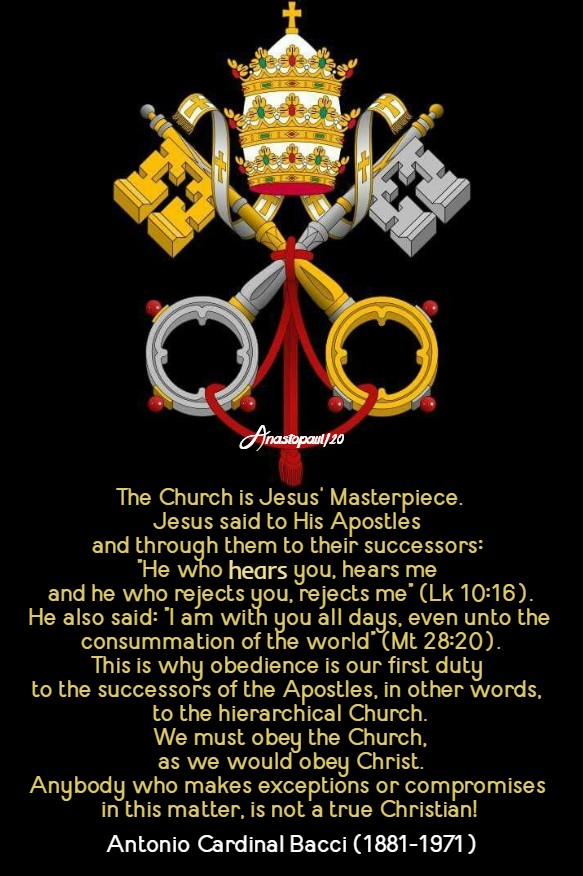
“Jesus Christ did not found the Church only as the Mystical Body, of which He is the Head and we are the members. He also made it a visible and hierarchical society, the supreme authority in doctrine and morals, the distributor of His grace and of the means of Redemption. If He had not done this, it would be impossible to understand how men could have carried on the saving work of the Redeemer, throughout the centuries.
The Church is Jesus’ Masterpiece. It is empowered by His grace and authority, to enlighten men and guide them safely along the path of sanctity. Jesus said to His Apostles and through them to their successors: “He who hears you, hears me and he who rejects you, rejects me” (Lk 10:16). He also said: “I am with you all days, even unto the consummation of the world” (Mt 28:20).
This is why obedience is our first duty to the successors of the Apostles, in other words, to the hierarchical Church. We must obey the Church, as we would obey Christ. Anybody who makes exceptions or compromises in this matter, is not a true Christian!”
Quote/s of the Day – 19 January – Second Sunday in Ordinary Time, Year A, – Readings: Isaiah 49:3, 5-6, Psalm 40:2, 4, 7-10, 1 Corinthians 1:1-3, John 1:29-34
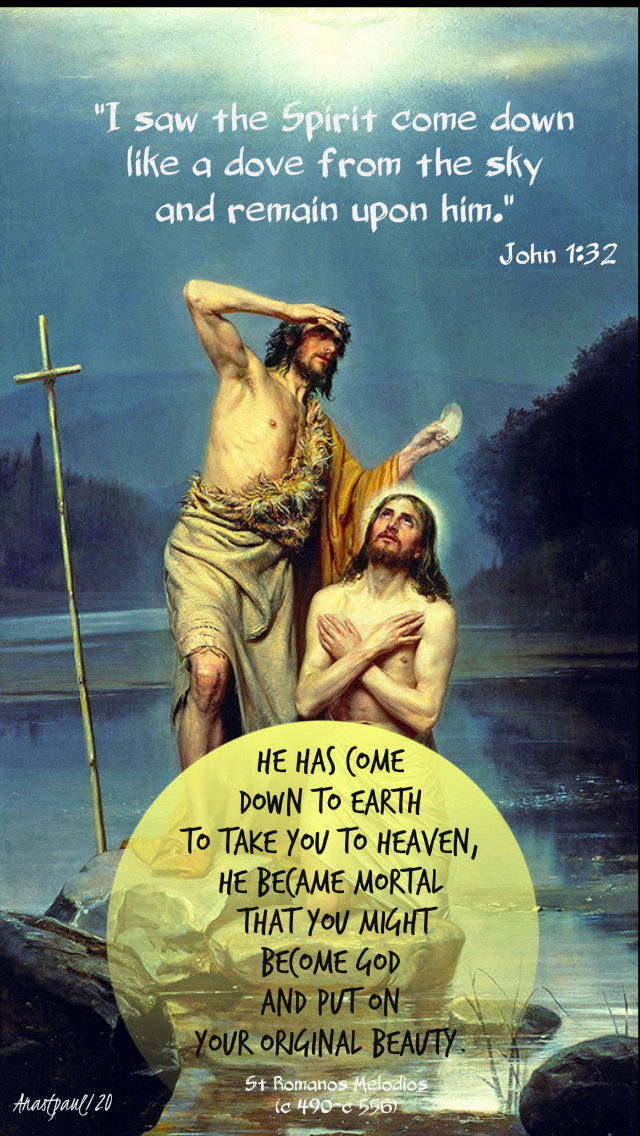
“I saw the Spirit come down like a dove from the sky and remain upon him.”
John 1:32
“He has come down to earth to take you to heaven, He became mortal that you might become God and put on your original beauty.”
Sunday Reflection – 19 January – Second Sunday in Ordinary Time, Year A and The Memorial of Blessed Marcelo Spínola y Maestre, Cardinal-Priest (1835-1906)
Blessed Marcelo was a pious man, of intense prayer and mortification, extremely sensitive to the needs and suffering of his faithful and an untiring apostle. Homes, workers’ societies, centres where food was given to those who needed it, orphanages, night schools, creation of the faculty of theology of Seville, etc., were all part of his mark. He toured all the dioceses in which he exercised his ministry, travelling on a mule, he fought against the attempt to displace the teaching of religion from public centres as a senator from Granada, consoled the afflicted and took the gospel to every corner, preaching and confessing.
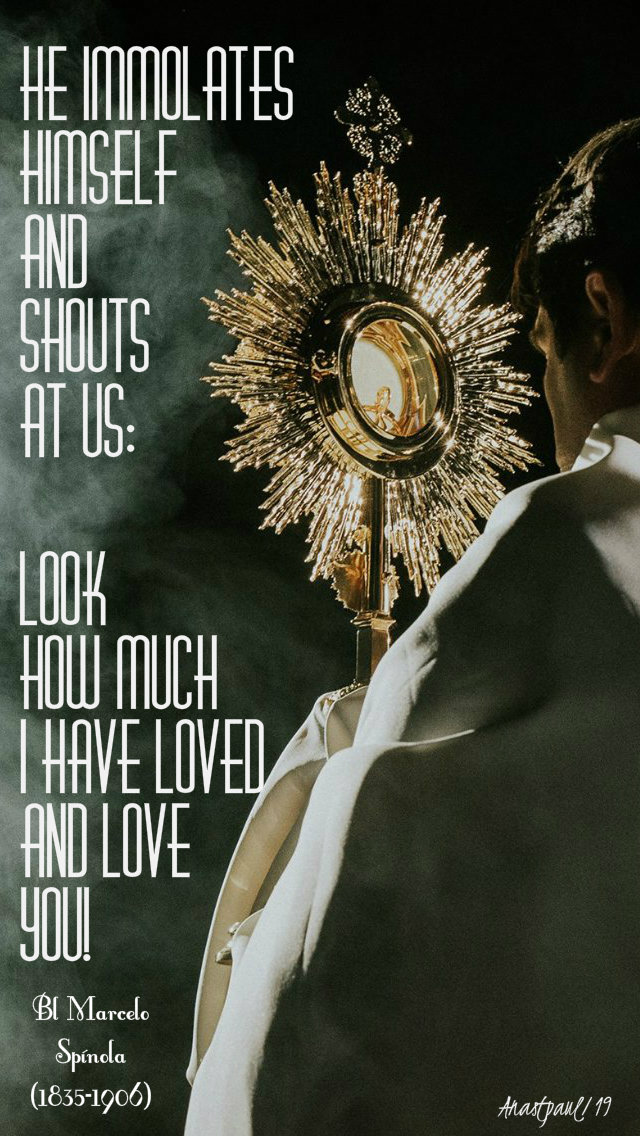
And at the centre of the heart of Blessed Marcelo was the Holy Eucharist.
He wrote:
“The masterpiece of Jesus Christ’s love for humanity is the Eucharist. The Eucharist is within our reach. We can all get close to Christ the guest and talk with Him and perceive the warmth of His word. The word! How it inflames the spirits! How will the word of Christ inflame them! We can all get to the altar when He immolates Himself and shouts at us: Look how much I have loved and loved you! And we can all sit at His table and eat the bread and drink the intoxicating wine of charity. “
Our Morning Offering – 19 January – Second Sunday in Ordinary Time, Year A
I Beseech Thee, Most Sweet Lord Jesus Christ Obsecro te, dulcissime Domine Prayer of Thanksgiving After Holy Mass
I beseech Thee, most sweet Lord Jesus Christ,
that Thy Passion, may be to me power
by which I may be strengthened,
protected and defended.
May Thy wounds,
be to me food and drink
by which I may be nourished,
inebriated and delighted.
May the sprinkling of Thy Blood,
be to me an ablution for all my sins.
May Thy death,
prove for me unfailing life,
and may Thy Cross,
be to me eternal glory.
In these, be my refreshment, joy, health
and delight of my heart,
Thou who lives and reigns forever.
Amen.
OBSECRO TE, DULCISSIME DOMINE IESU CHRISTE
Obsecro te, dulcissime Domine Iesu Christe,
ut passio tua sit mihi
virtus, qua muniar, protegar, atque defendar.
Vulnera tua sint mihi cibus potusque,
quibus pascar inebrier atque delecter.
Aspersio Sanguinis tui sit mihi
ablutio omnium delictorum meorum.
Mors tua sit mihi vita indeficiens,
crux sit mihi gloria sempiterna.
In his sit mihi refectio, exsultatio, sanitas et dulcedo cordis mei:
Qui vivis et regnas in saecula saeculorum.
Amen
The Manual of Indulgences, Grant, No 8 states that: A partial indulgence is granted to the faithful who, using any duly approved pious formula, make: 1° an Act of Spiritual Communion; 2° an Act of Thanksgiving after Communion (e.g., Anima Christi, En ego, O bone et dulcissime Iesu, Obsecro te, dulcissime Domine).
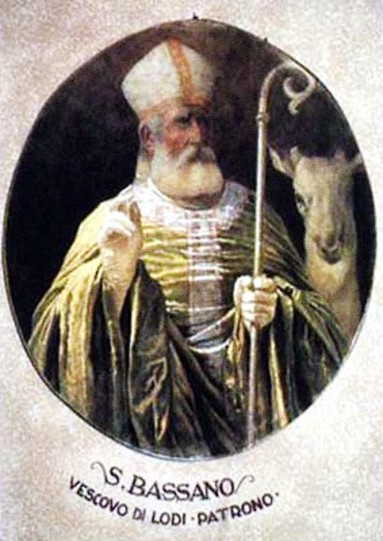
Saint of Day – 19 January – St Bassian of Lodi (c 320–c 413) Archbishop, Penitent, miracle-worker – Born c 320 in Syracuse, Sicily – died in 413 in Lodi, Italy of natural causes. Patronages – Bassano del Grappa, Italy, Lodi, Italy, San Bassano, Italy, Pizzighettone in Italy. St Bassian was a close of friend of St Ambrose and St Felix of Como.
Saint Bassian, Bishop of Lodi, was a friend of Saint Ambrose, Bishop of Milan. Saint Bassian’s father governed the Syracuse region (in Sicily) and he prepared his son to follow in his footsteps. He sent him to Rome to receive his education. While still in his childhood Saint Bassian had heard about the Christians and he wanted to learn more about them and become familiar with the Christian Faith. Gordian the priest taught him the essentials of the Christian Faith and the youth was filled with the desire to accept Baptism. At the time of the performing of the Holy Sacrament, Saint Bassian beheld an angel in the Baptismal font, holding the garment in which the newly-baptised would be clothed. The saint made bold to ask who he was and where he was from. The angel replied that he was sent from afar to help him fulfil his holy intent to know Christ. Then he became invisible.
Saint Bassian began to lead a strict life, eating little food and spending his nights at prayer. His servants were astonished at such temperance and they surmised that he had accepted Christianity. They reported this to Saint Bassian’s father, who ordered him to return to Syracuse. Praying in the church of Saint John, the saint received from the Apostle the command to leave Rome. And so Saint Bassian distributed all his goods to the poor and together with his faithful Christian servant, he set off to Ravenna to his kinsman, Bishop Ursus.
Bishop Ursus set him up at a solitary place outside the city near the church in honour of the St Apollinaris. Saint Bassian quickly advanced spiritually and soon he was glorified by miracles. During this time a judge had been falsely accused and was sentenced to death by decapitation. Along the way to he prayerfully called out for help to Saint Bassian. When the executioner was already holding the sword over his head, the sword suddenly was knocked from his hands and flew off to the side. This occurred three times. The same thing happened with another executioner. When they reported this to the Emperor, the Emperor set the judge free. He then told how he had been saved through the intercession of Saint Bassian.
The people of the city, believing that the prayer of Saint Bassian was powerful before God, asked Bishop Ursus to Ordain him to the Priesthood. Upon the death of the Bishop of the city of Lodi in Liguria, Northern Italy, the priest Clement of the cathedral church had a revelation that Saint Bassian would be chosen Archbishop of Lodi. Both Saint Ambrose, Bishop of Milan and Bishop Ursus officiated at at his Consecration.
He built a church dedicated to the Apostles, consecrating it in 381 in the presence of Saint Ambrose and Saint Felix of Como. He participated in the Council of Aquileia in 381 and may perhaps have participated in the Council of Milan (390).
Saint Bassian taught the people not only by word but also by deed, providing his flock example of a virtuous life. At Lodi, he built a beautiful church dedicated to the holy Apostles. Saint Bassian often exchanged letters with Saint Ambrose and he was present at his blessed repose and buried his body.
Saint Bassian died peacefully in the year 413, having served as Archbishop for 35 years. Bassian’s signature is found together with Ambrose’s in a letter sent to Pope Siricius.
In 1158, when Milanese forces destroyed Lodi, his relics were taken to Milan. They were returned in 1163, when Lodi Cathedral was rebuilt, the Statue below resides there.
St Maris of Persia
St Messalina of Foligno
St Ponziano of Spoleto
St Remigius of Rouen
St Wulstan of Worcester
—
Martyrs of Numidia – 9 saints: A group of Christians martryred together for their faith. The only details to survive are nine of their names – Catus, Germana, Gerontius, Januarius, Julius, Paul, Pia, Saturninus and Successus. 2nd century Numidia in North Africa.
Thought for the Day – 18 January – Meditations with Antonio Cardinal Bacci (1881-1971) – Saturday of the First week in Ordinary Time, Year A
The Veneration and Imitation of the Saints
“If anyone has the good fortune during his lifetime to meet a Saint, he should be very grateful to God.
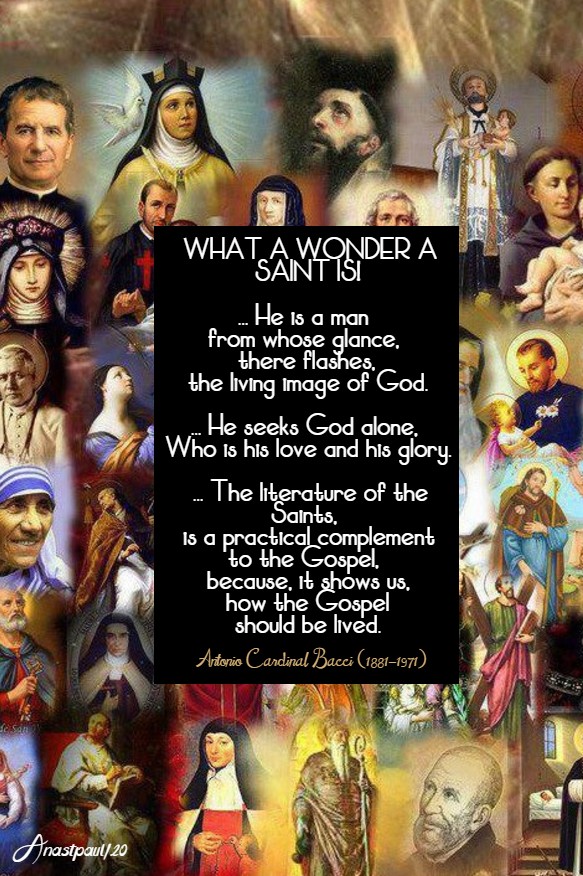
What a wonder a Saint is!
He is a man, in whom God lives in the fullness of His grace, in such a way, that St Paul could say: “It is now no longer I that live but Christ, lives in me.” (Gal 2:20).
He is a man of great spiritual tranquillity, who, by being master of things outside himself, as well as of the inner powers of his own being, can pay the full homage of love and obedience to God.
He is a man from whose glance, there flashes, the living image of God.
He can be found on a bed of pain, in the rags of a beggar, beneath the purple of a Cardinal, in the solitude of a hermitage, or in the hurly-burly of modern life.
It is all the same, because he is no longer involved with himself, nor with the world.
He seeks God alone, Who is his love and his glory.
Such is a Saint.
If we are not lucky enough to meet him in reality, we can and should, read and meditate about his life.
The literature of the Saints, is a practical complement to the Gospel, because, it shows us, how the Gospel should be lived.”
Quot/s of the Day – 18 January – Saturday of the First week in Ordinary Time, Year A and The Memorial of Blessed Maria Teresa Fasce OSA (1881-1947)
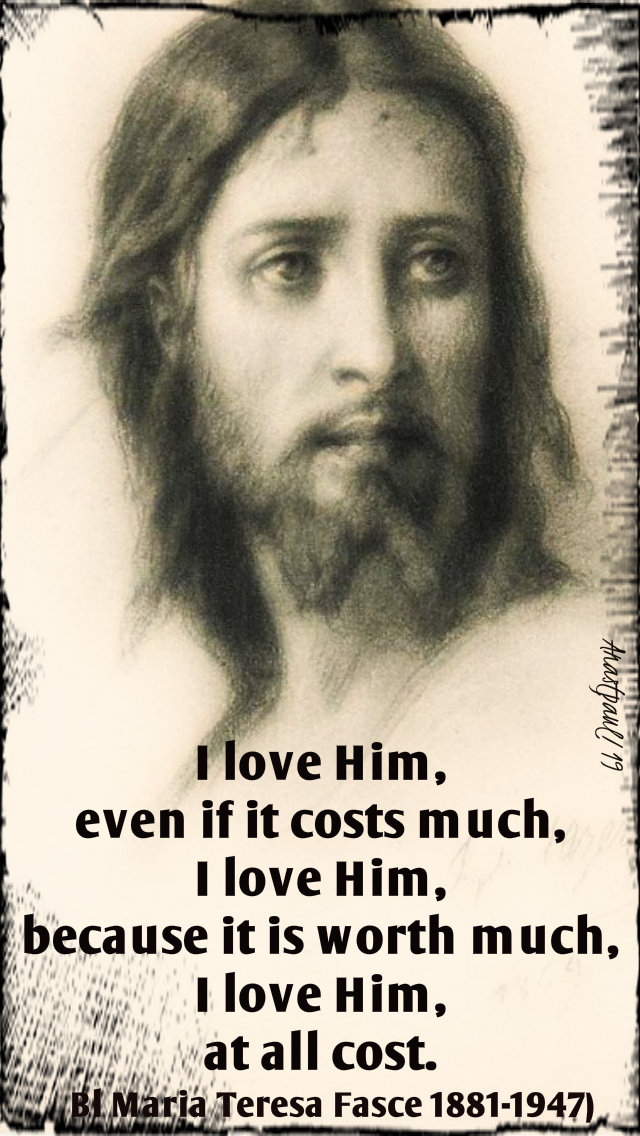
I love Him, even if it costs much, I love Him, because, it is worth much, I love Him, at all cost.
Blessed Maria Teresa Fasce (1881-1947)
“To surrender all that we are, as we are, to the spirit of love, in order that our lives may bear Christ into the world – that is what we shall be asked.”
One Minute Reflection – 18 January – Saturday of the First week in Ordinary Time, Year A – Readings: 1 Samuel 9:1-4, 17-19; 10:1, Psalm 21:2-7, Mark 2:13-17
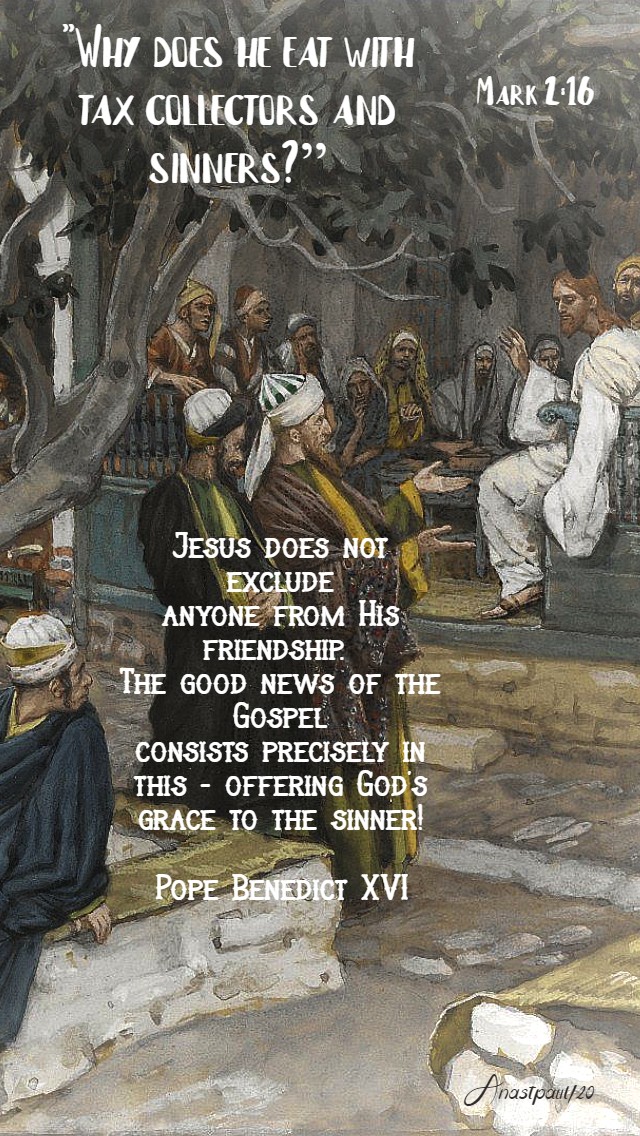
“Why does he eat with tax collectors and sinners?” … Mark 2:16
REFLECTION – “A first fact strikes one based on these references, Jesus does not exclude anyone from His friendship. Indeed, precisely while he is at table in the home of Matthew-Levi, in response to those, who expressed shock at the fact that He associated with people who had so little to recommend them, He made the important statement: “Those who are well have no need of a physician but those who are sick; I came not to call the righteous but sinners” (Mk 2: 17).
The good news of the Gospel consists precisely in this – offering God’s grace to the sinner!
Elsewhere, with the famous words of the Pharisee and the publican who went up to the Temple to pray, Jesus actually indicates an anonymous tax collector as an appreciated example of humble trust in divine mercy, while the Pharisee is boasting of his own moral perfection, the “tax collector… would not even lift up his eyes to heaven but beat his breast, saying, “God, be merciful to me a sinner!'”.
And Jesus comments: “I tell you, this man went down to his house justified rather than the other, for everyone who exalts himself will be humbled but he who humbles himself will be exalted” (Lk 18: 13-14).
Thus, in the figure of Matthew, the Gospels present to us a true and proper paradox – those, who seem to be the farthest from holiness, can even become a model of the acceptance of God’s mercy and offer a glimpse of its marvellous effects in their own lives.
St John Chrysostom makes an important point in this regard – he notes that only in the account of certain calls, is the work of those concerned mentioned. Peter, Andrew, James and John are called while they are fishing, while Matthew, while he is collecting tithes.
These are unimportant jobs, Chrysostom comments, “because there is nothing more despicable than the tax collector and nothing more common than fishing” (In Matth. Hom.: PL 57, 363). Jesus’ call, therefore, also reaches people of a low social class while they go about their ordinary work.” … Pope Benedict XVI – General Audience, 30 August 2006
PRAYER – Almighty, ever-living God, You offer the covenant of reconciliation to mankind through Your Son Jesus Christ, the Word made flesh. Lord God, grant Your people constant joy, in the renewed vigour of their souls. They rejoice because You have restored them to the glory of Your adopted children, through Him who saves them. Grant that by the assistance of Mary, His mother and theirs, they may look forward gladly to the certain hope of resurrection. Through Christ, the Lord, in union with the Holy Spirit, one God for all eternity, amen.
Our Morning Offering – 18 January – Saturday of the First week in Ordinary Time – Month of the Holy Name of Jesus
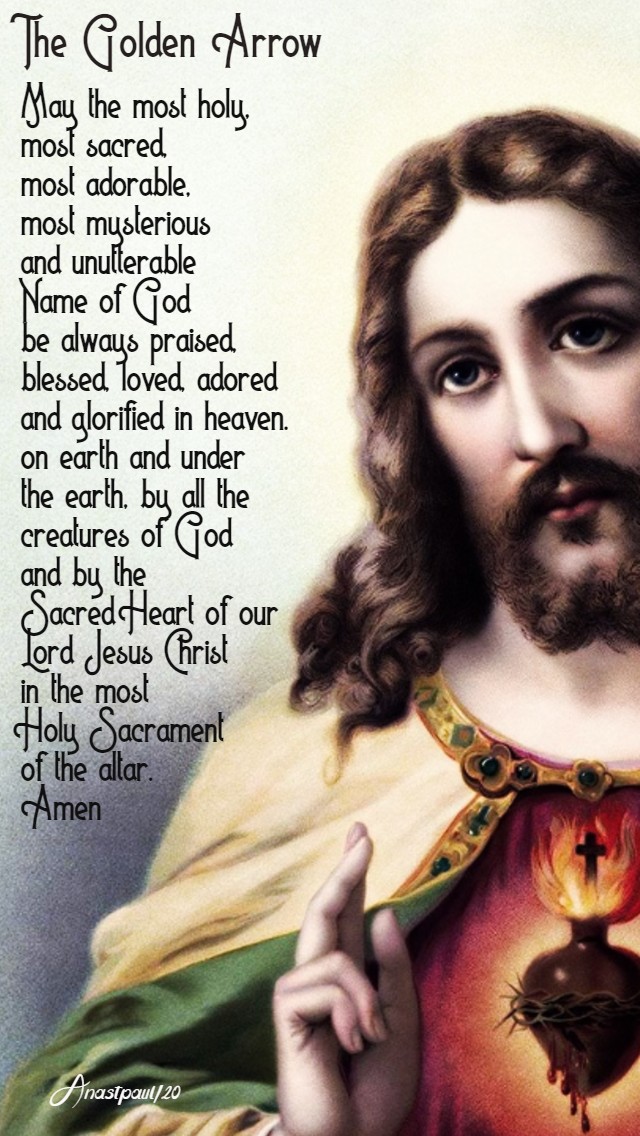
The Golden Arrow
May the most holy,
most sacred,
most adorable,
most mysterious
and unutterable Name of God
be always praised,
blessed,
loved,
adored
and glorified in heaven.
on earth and under the earth,
by all the creatures of God
and by the Sacred Heart
of our Lord Jesus Christ
in the most Holy Sacrament
of the altar.
Amen
This prayer was revealed by Jesus Himself to a Carmelite Nun of Tours in 1843 as a reparation for blasphemy. “This Golden Arrow will wound My Heart delightfully,” He said “and heal the wounds inflicted by blasphemy.”
Saint of the Day – 18 January – Blessed Cristina Ciccarelli OSA (1481–1543) Religious of the Order of Saint Augustine, Mystic, Stigmatist, Apostle of the poor, Reformer, she had a had a particular devotion to the Eucharist and to the Passion and Death of Christ, she was granted the gift of Prophecy, visions and levitation – also known as Cristina of Aquila – born on 24 February 1481 at Luco, Abruzzi, Italy as Matthia Ciccarelli and died on 18 January 1543 at Aquileia, Italy of natural causes.
Mattia Ciccarelli was born in 1481 in Luco dei Marsi as the last of six children to Domenico de Pericolo and Maria de Pericolo. An image of the Pieta was kept in the Luco home from which she developed a strong and lifelong devotion to the Passion of Christ. Her parents taught her the importance of constant prayer. Her call to the religious life solidified during her childhood and she decided to enter the religious life as a nun.
In 1492 she was placed under the spiritual direction of the Franciscan priest Vincenzo dell’Aquila and took his advice on joining the Order of Saint Augustine.
Mattia entered the convent of Santa Lucia in Aquileia in June 1505 and assumed the habit and the religious name of “Cristina.” She served as the abbess several times and was noted for being a prophetic figure.
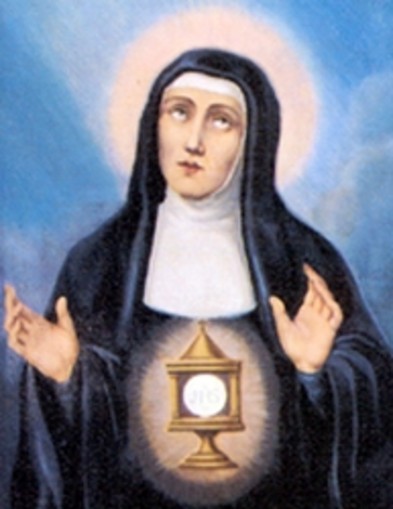
She became revered for her humble outlook as well as for her tender care of the poor. On one occasion – on the Feast of Corpus Christi – she was seen to have levitated and the image of the Eucharist as a host appeared and radiated from her upper chest.
On one Good Friday, she received the stigmata and the pains that Jesus felt until Holy Saturday when the pain subsided. This would be repeated every Friday of her life.
Blessed Cristina had a great devotion to Saint Mark. However, on one occasion Saint Martin of Tours appeared to her and asked why she had a devotion to the latter saint rather than to him – this prompted her to foster a devotion to him too.
Once a man accustomed to cursing, blasphemed Saint Anthony of Padua and she told him to be careful for if he continued to blaspheme she saw a black devil behind him set to choke him for such offences. The man – riding a donkey – did it again and was thrown to the ground where he fractured his skull and broke his neck which led to his death.
Blessed Cristina died in 1543 after a lengthy illness and was interred in the convent of Santa Lucia to the right side of the main altar.
The first biographical account of her life was written in 1595 by the nobleman Giampietro Interverj from l’Aquila and the Belgian Augustinian scholar, Cornelius Curtius, wrote another hagiography, in the Latin language, in Cologne.
Blessed Cristina was Beatified on 15 January 1841, at Saint Peter’s Basilica, Papal States by Pope Gregory XVI.
St Agathius the Martyr
St Ammonius of Astas
St Archelais the Martyr
Bl Beatrix of Este the Younger
Bl Charlotte Lucas
St Catus Blessed Cristina Ciccarelli OSA (1481–1543)
St Day/Dye
St Deicola of Lure
Bl Fazzio of Verona
Bl Félicité Pricet
St Leobard of Tours Blessed Maria Teresa Fasce OSA (1881-1947) Blessed Maria Teresa’s Life: https://anastpaul.com/2019/01/18/saint-of-the-day-18-january-blessed-maria-teresa-fasce-osa-1881-1947/
Bl Monique Pichery
St Moseus of Astas
St Prisca of Rome
St Susanna the Martyr
St Thecla the Martyr
St Ulfrid of Sverige
Bl Victoire Gusteau
St Volusian of Tours
—
Martyrs of Carthage – 3 saints
Martyrs of Egypt -37 saints
Martyrs of Nicaea – 3 saints
Thought for the Day – 17 January – Meditations with Antonio Cardinal Bacci (1881-1971) – Friday of the First week in Ordinary Time, Year A
“The Vicissitudes of Life”
“There are times, when life is like a stream which flows peacefully between two flower-strewn grassbanks.
The sun shines brightly overhead and the whole world seems to smile.
The days pass pleasantly and the future is full of fair promise.
Virtue itself, seems to flower effortlessly, in our hearts.
But God grants these intervals of rest during our earthly voyage, so that we may renew our energy.
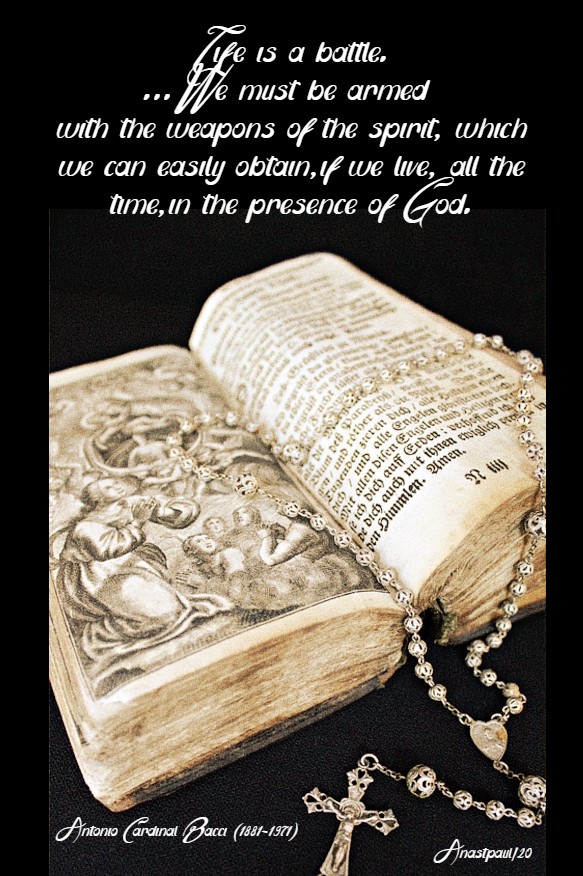
Life is a battle.
Therefore, we have to be armed and ready and always on the alert (Job 7:1) “Wait here and watch” (Mt 26:38).
We must resolve to be prepared, from the earliest hour of the morning, to face the difficulties and temptations which can arise at any moment.
We must be armed with the weapons of the spirit, which we can easily obtain, if we live all the time, in the presence of God.
If we fail to acquire this habit of spiritual watchfulness, the trials and temptations of the day, will catch us off our guard and there is a danger that we may yield.’
Quote of the Day – 17 January – Friday of the First week in Ordinary Time, Year A – The Memorial of Blessed Teresio Olivelli (1916–1945) Martyr “Rebel for Love”
The Rebel’s Prayer
By Blessed Teresio Olivelli
Lord, who among men raised Your Cross as a sign of contradiction, You, who preached and suffered the revolt of the spirit from the treachery and attacks of the powerful, the inert deafness of the mass, oppressed by numerous and cruel abuses we, who have trampled on You, source of free life, grant us the strength of rebellion.
O God, You who are Truth and Freedom, make us free, strong and zealous, breathe in us new purpose, inspire our goals, tend to our wills, multiply our strengths, help clothe us in Your armour. We pray You, Lord.
You who were rejected, reproached, betrayed, persecuted, crucified, in the hour of darkness support us by Your victory, be the Viaticum of consolation, in dangers, of support, of comfort, in our bitterness.
The more the opponent grows stronger and darkens, make us bright with Your Light.
In torture, clamp our lips. Strengthen us, don’t let us bend.
If we fall, let our blood join Your innocent blood, may our death help to grow justice and charity in the world.
You who said “I am the Resurrection and the Life” make Italy, in it’s pain be reborn in a new life in You.
Free us from the temptation of affections, for You watch over our families.
On the windy mountains and in the catacombs of the cities, from the pits of the prisons, we pray to You, grant us the peace that You alone know how to give.
God of peace and armies, Lord who carries the sword of joy, hear the prayer of us the “Rebels for Love.” Amen.
Blessed Teresio Olivelli (1916–1945) Martyr
“Rebel for Love”
(Note: I cannot find a very good translation of this beautiful Prayer, so this is an adaptation of the best of them, by myself).
One Minute Reflection – 17 January – Friday of the First week in Ordinary Time, Year A – Readings: 1 Samuel 8:4-7, 10-22, Psalm 89:16-19, Mark 2:1-12 and the Memorial of Blessed Teresio Olivelli (1916–1945) Martyr “Rebel for Love”
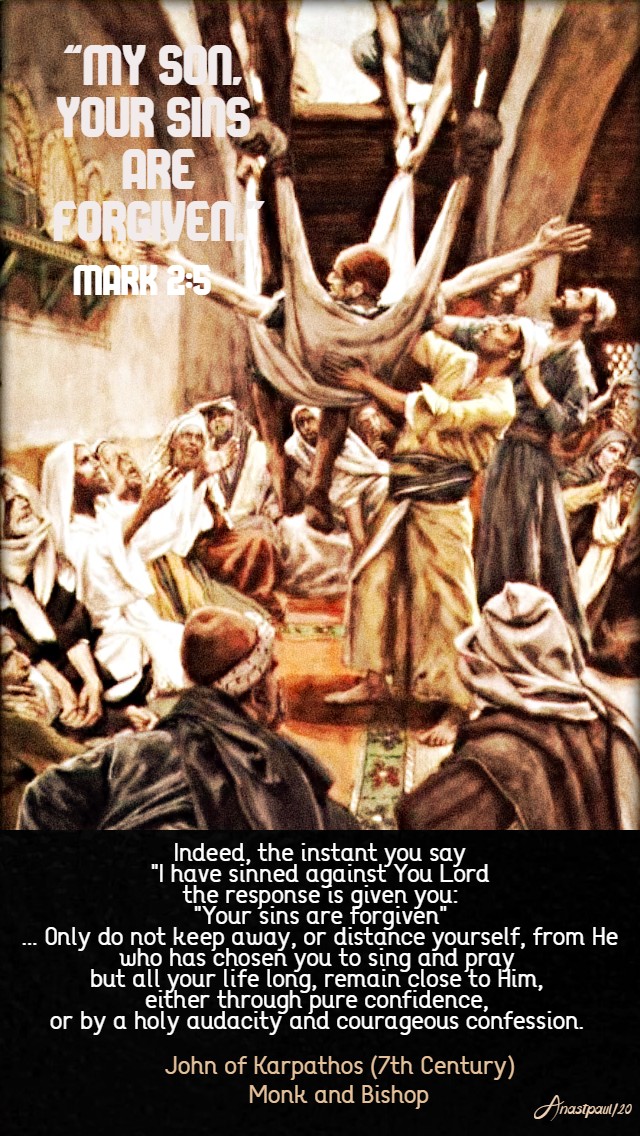
“My son, your sins are forgiven.” … Mark 2:5
REFLECTION – “Why are you downcast? See. Someone’s hands are fishy; a little oil makes them clean. How much more can God’s compassion purify you. For just as you have no difficulty in washing your garment, in the same way – and even more – it is not difficult for the Lord to wash you clean from all reproach, even if each day you naturally have to experience temptation. Indeed, the instant you say: “I have sinned against the Lord”, the response is given you: “Your sins are forgiven” (Mt 9:2). “It is I who wipe out and remember no more” (Is 43:25 LXX). As far as the east is from the west, so far has He removed your sins. As a father has compassion on his children, I have had compassion on you” (Ps 102[103], 12-13 LXX).
Only do not keep away, or distance yourself, from He who has chosen you to sing and pray but all your life long, remain close to Him, either through pure confidence, or by a holy audacity and courageous confession. Then He will hear and purify you. Is He not God who has justified us in His love for human souls? Who will condemn us? (cf. Rm 8:33). If we invoke the name of our Lord Jesus Christ, our conscience is easily purified and nothing separates us from the prophets and other saints.
For God has not destined us for wrath but to gain salvation through our Lord Jesus Christ who died for us. So, whether we are awake in virtue, or asleep in some kind of woe, or are bearing certain circumstances according to nature, we will live with Christ (1 Thes 5:9-10), turning our eyes towards Him, sighing deeply, weeping constantly and only breathing Him. Let us then put on the breastplate of faith and wear the helmet of salvation (cf. 1 Thes 5:8) that the arrows of discouragement and despair may not penetrate us.” … John of Karpathos (7th Century) Monk and Bishop – Texts for the monks in India (The Philokalia)
PRAYER – Lord God, You hold out the light of Your Word to those who do not know You. Strengthen in our hearts, the faith You have given us, so that no trials may quench the fire Your Spirit has kindled within us. Grant us the grace of approaching You in sorrow and repentance, so that we may hear Your Word, “your sins are forgiven you, go and sin no more.” May the prayers of Blessed Teresio Olivelli, grants us eyes to see and ears to hear and strength to approach You. Through Christ, our Lord, with the Holy Spirit, God now and forever, amen.
Our Morning Offering – 17 January – Friday of the First week in Ordinary Time, Year A
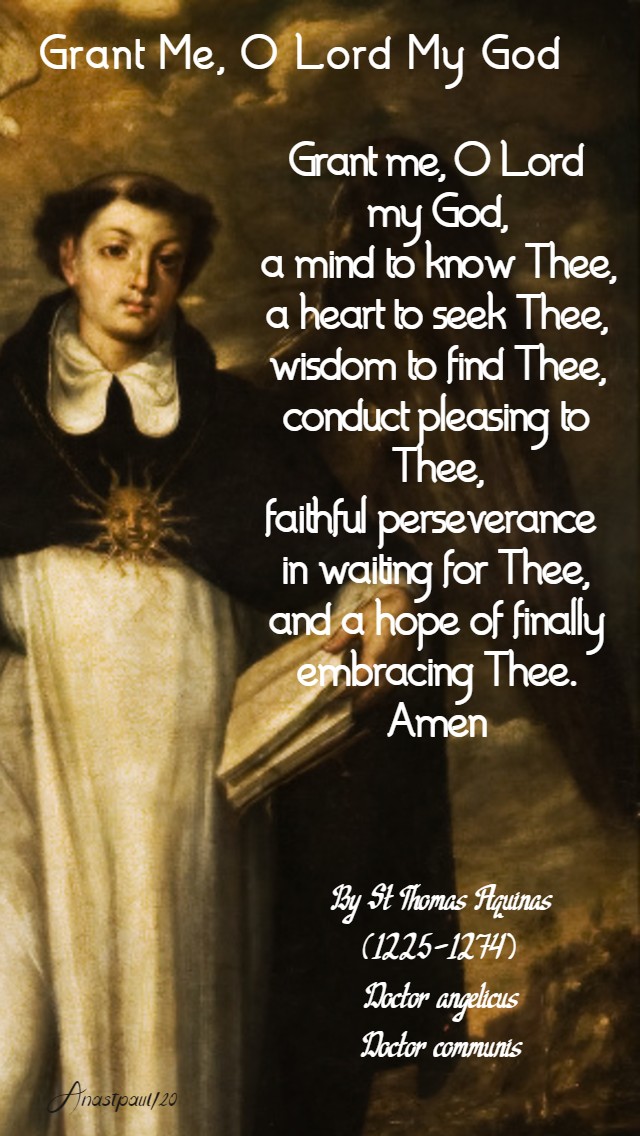
Grant Me, O Lord My God By St Thomas Aquinas (1225-1274) Doctor angelicus Doctor communis
Grant me, O Lord my God,
a mind to know Thee,
a heart to seek Thee,
wisdom to find Thee,
conduct pleasing to Thee,
faithful perseverance
in waiting for Thee,
and a hope of finally
embracing Thee.
Amen
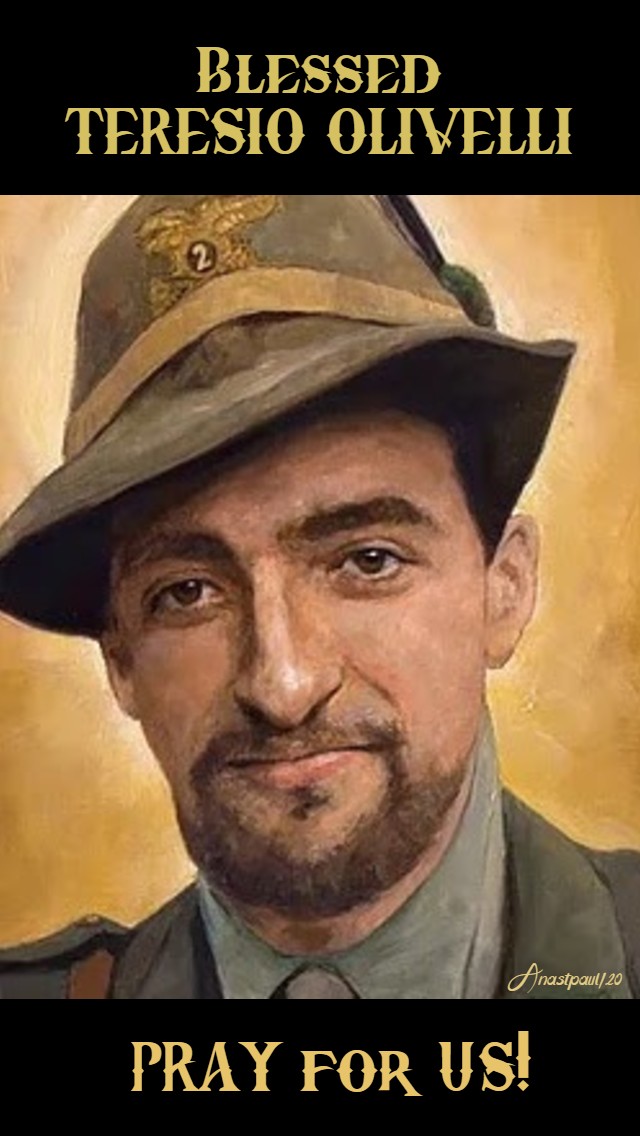
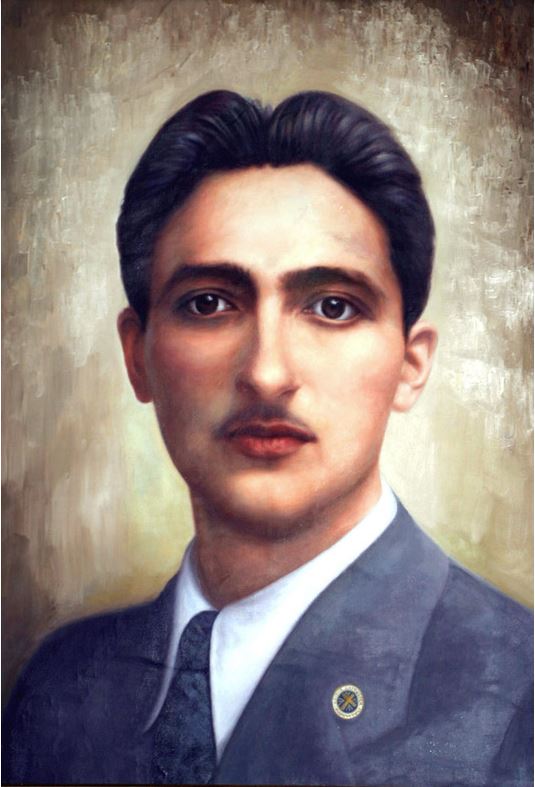
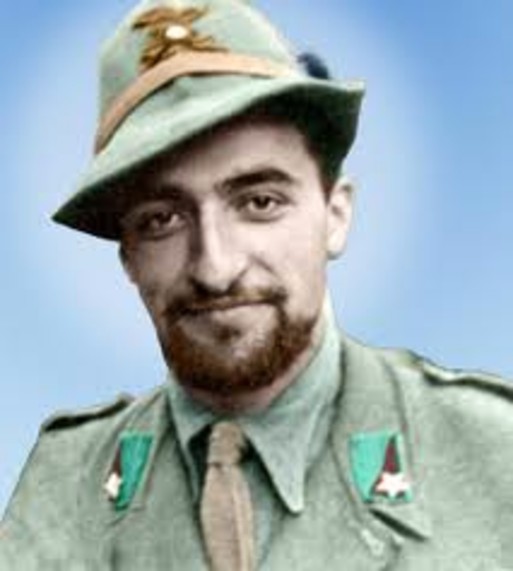
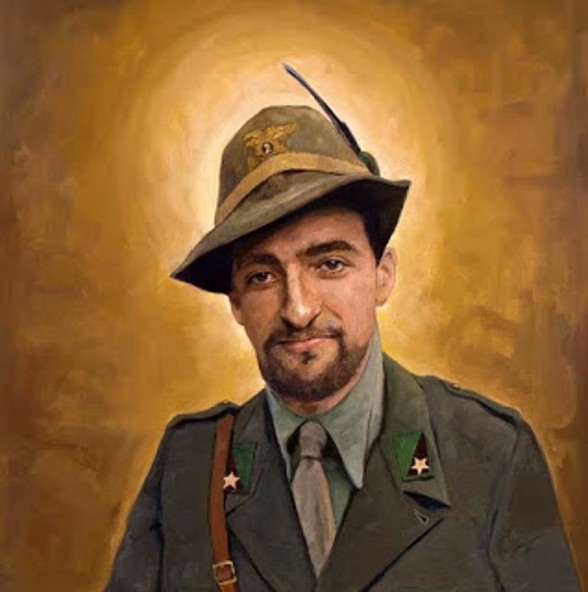
Saint of the Day – 17 January – Blessed Teresio Olivelli (1916–1945) Martyr – known as the “Rebel for Love” – Layman, Lawyer, Professor, Soldier,Defender of Human dignity and rights, apostle of the poor, those in need, apostle of prayer, the Holy Eucharist, the Blessed Virgin, of love of Christ and His Church – born on 7 January 1916 at Bellagio, Como, Italy and died by being beaten and kicked to death by guards on 12 January 1945 at Hersbruck, Nürnberger Land, Germany, he was 29 years old. His body was cremated at the Hersbruck camp and his ashes dumped in a common grave. Patronage – Italian Catholic Action, soldiers, young people.
Teresio was born in Bellagio, in the province and diocese of Como, on 7 January 1916, son of Domenico Olivelli and Clelia Invernizzi. He spent his childhood between Carugo Brianza and Zeme Lomellina (Pavia), receiving a profoundly Christian education from his parents and his uncle Fr Rocco Invernizzi.
At the age of 10, in 1926, the family moved to Mortara in the province of Pavia, where Teresio attended gymnasium, becoming passionate about Latin. His adolescence revealed him full of vitality and capable of not being afraid of anything or anyone.
He ardently professed his love for Jesus, not caring about those who derided him. His faith was crystal clear – every week he attended the Sacrament of Confession and received daily Communion in the parish of San Lorenzo. He meditated every day on the Word of God and on the text of the “Imitation of Christ”.
At the high school in Vigevano (Pavia) he distinguished himself among his peers for intelligence and maturity. He became involved in Catholic Action, taking part in many conferences on religious and social issues and organising some himself. When, in 1931, the Catholic Action circles were forcibly closed, the young Teresio became inflamed against the Fascist regime, saying: “Either Mussolini changes course or we change it!”
Referring to the apostles James and John, called by Jesus “sons of thunder” for their zealous and impetuous character, he often stated that, having been born and baptised in the parish of St James, he too had to become “son of thunder”.
At 18, he was a confident young man, tall and slender, with a firm faith, in other words a convinced and credible Catholic. He enrolled at the Faculty of Law of the University of Pavia, staying at the Ghislieri University College (founded by St Pius V). He attended the University from 1934 to 1938, the year in which he graduated with honours in Law.
In those years in Pavia, Teresio won the affection of professors and classmates, for his generosity and the spirit of sacrifice, for the devotion with which he prayed during Mass and with which he was in Adoration before the Eucharist. He, so cheerful and cultured, immersed himself in long and intense prayers with the Rosary in his hand, isolating himself from everyone – he thus deserved, from those who admired him and those who were just teasing him, the nickname of “Father Olivelli” from the companions of the college.
In 1936 the civil war broke out in Spain – the Church suffered one of the most ferocious persecutions of the modern era, with thousands of priests, religious and lay Catholics, killed by the communist and anarchist revolutionary militias. Teresio, now in his twenties, immediately proposed himself as a volunteer to fight the Godless. To his uncle, Father Rocco, he wrote: “Youth is either heroic or miserable. The man cannot give half measures of himself, he must give everything. When then Christ is the Ideal that impels us, I believe that our duty is realised in total love to Him and must be consumed until the last drop. Either faith is experienced as conquest or it is anaemia of invertebrates. In Catholic Spain, the Divine is fought in us. We must overcome the anti-Christ, the denial of man and of Christ. The future does not belong to the soft. Life is perfect when love is perfect.” His family members prevented him from leaving but from that moment Teresio, while continuing his studies, devoted himself to prayer and self-offering, so that Christ would triumph not only in Spain but also in Russia which was prey to atheistic Bolshevism.
Almost immediately after graduating, he was assistant Professor of Administrative Law at the University of Turin. During his stay in that city, he also undertook to take young stragglers on the right path and took care of the poor of Cottolengo. For him it was a period of intense work, studies and research on legal and social issues.
It was a time when much of the Catholic world believed that it was possible to apply Christian principles to fascism. Teresio, therefore, worked with the ambitious aim of detaching the regime from the German National Socialism as much as possible.
He won the “Littorali della Cultura” of Trieste (competitions of oratory skills and cultural preparation), supporting the thesis that establishes the equal dignity of the human person, regardless of race. He then wrote legal and social articles in the university newspaper “Libro e Muschetto” and in the journal “Civiltà Fascista.” Finally he was appointed Littore and secretary of the Institute of Fascist Culture and a member and first secretary to the Office of Studies and Legislation at Palazzo Littorio.
In 1939 and in 1941, for reasons of study, he stayed in Berlin. At that time, he came into contact with the culture and politics of half of Europe, in Prague, Berlin, Vienna and then in Rome at the National Institute of Culture. He soon discovered the reality that surrounded him and the hatred of opposing ideologies, which developed violence in every sense. The news of the occupation of various nations by the Nazis began – the Second World War had broken out.
In June 1940, Italy also went to war alongside the German ally. Meanwhile, Teresio had been called to military service – he refused the exemption as a teacher. In 1940 he was appointed officer of the Alpini and asked to volunteer in the war of Russia. On 10 September 1941 he found himself on the front line, despite being at the head of the 31st Battery, he shared the dangers and the sufferings of his soldiers. He provided them with help of all kinds, in short, he appeared to them as a big brother rather than a superior in rank. During the disastrous retreat of the Italian troops of the VIII Armata, ill equipped for that frost and attacked by the Russians, the second lieutenant Olivelli succoured the wounded, he comforted the desperate and assisted the dying. He often lingered in the march to help the fallen, regardless of the grave danger. He went through these terrible conditions for two thousand kilometers on foot.
He returned to Italy with the survivors in March 1943, deeply marked in his spirit and increasingly eager to give all of himself to others, especially if suffering. His first occupation was to inform the families about the fate of the soldiers, by letter or personally, also by taking an interest in the prisoners.
A few months later, at the age of 27, he won the Rector’s post at the Ghislieri College of Pavia. However, the position only lasted a few months, because in July 1943 he was recalled again to arms. Shortly thereafter, after the 8 September armistice, Italy was invaded by the Germans. Teresio, who deeply loved his homeland, refused to surrender himself to Hitler’s troops, so as not to be complicit in their occupation. As a result, on 9 September 1943, he was captured and imprisoned in a prison camp in Innsbruck. After two failed attempts to escape, he succeeded on the third attempt, on the night between 20 and 21 October, he managed to escape from the Markt Pongau camp. After a long and exhausting walk he reached Italy, finding refuge a family in Milan. He recovered his health but by now, he was an outlaw. He became part of the Italian resistance movement in Milan as part of the triangular resistance including Brescia and Cremona branches. He worked to create the newspaper “Il ribelle”. His paper was the underground newspaper for the Green Flames Brigades partisan group. In the newspaper he published the article “Rebels”, a manifesto of the moral revolt against fascism and its time and a prayer, commonly called the “The Rebel’s Prayer” considered the most inspiring and beautiful spiritual testimony of the whole Catholic Resistance.
On 27 April 1944 he was arrested in Milan by the fascist police and locked up in the San Vittore prison, where he suffered beatings and torture until 8 June when he was sent to the concentration camp of Fossoli near Modena, from where he again tried to escape, unsuccessfully. In August 1944 he was deported to the concentration camp of Gries. His prison garment was marked not only with the red triangle of political prisoners but also with the red-rimmed white disk of the fugitive prisoners, who needed to be monitored more. Even in Gries he tried to escape, taking refuge in a warehouse, where he remained hidden for about a month. Discovered, he was cruelly and violently beaten and in September 1944 transferred to Flossenburg in Bavaria.
The conditions of life became unbearable but Teresio did not give up – his faith and his charity were opposed to the hatred and violence of the torturers. He confronted the SS by speaking German perfectly, to help alleviate the sufferings of his fellow inmates. In the evenings he organised the recitation of the Rosary and, assisted all who needed him for spiritual guidance and advice.
After 40 days of arrival, he was sent along with others to the satellite camp in Hersbruck. The surviving prisoners later remembered him for his serenity and courage, for the solidarity with the most exposed inmate. He was himself suffering terribly, wasted and beaten, developing many ancillary illnesses due to the conditions and the hunger, the torture and the beatings.
He assisted his friend Blessed Odoardo Focherini (1907-1944) Martyred at aged 37, originally from Carpi, interned for his relief work to the Jews and forced to be admitted to the infirmary for a serious leg injury. He was able to assist him on his deathbed on 27 December 1944. Blessed Odoardo Focherini was an Italian Roman Catholic journalist. He issued false documents to Jewish people. Yad Vashem later recognised him as a Righteous Among the Nations in 1969 for his efforts. He was Beatified in June 2013.
Blessed Odoardo Focherini (1907-1944)
In early January 1945, while Teresio served as a shield with his emaciated and wounded body to a young Ukrainian beaten up unjustly, the irritated wardens launched a violent kick to his belly, followed by twenty-five further kicks. Hospitalised in the infirmary of the Hersbruck camp, he remained lucid and praying to the last. He died on 17 January 1945, at age 29, after having donated the last intact clothes to a friend.
Civil recognition, such as the Gold Medal for Military Valor, were conferred on Teresio on 25 April 1953.
The Beatification process opened in the Diocese of Vigevano in a diocesan process that Bishop Mario Rossi inaugurated on 29 March 1987. The formal introduction to the cause came under St Pope John Paul II on 19 January 1988 after the Congregation for the Causes of Saints issued the official “nihil obstat” and titled him as a Servant of God. On 1 December 2015, the confirmation of his life of heroic virtue allowed for Pope Francis to name Olivelli as Venerable. The pope approved his beatification on 16 June 2017 and on 3 February 2018 the Beatification recognition was celebrated at Palazzetto di Vigevano, Vigevano, Italy presided by Cardinal Angelo Amato, on behalf of Pope Francis.
“The Gospel and the constant reference to the figure of Jesus were his strengths.”
Pope Francis
O God, You who are Truth and Freedom, make us free, strong and zealous, breathe in us, new purpose, inspire our goals, tend to our wills, multiply our strengths, help clothe us in Your armour. We pray You, Lord. from The Rebel’s Prayer (Teresio Olivelli)
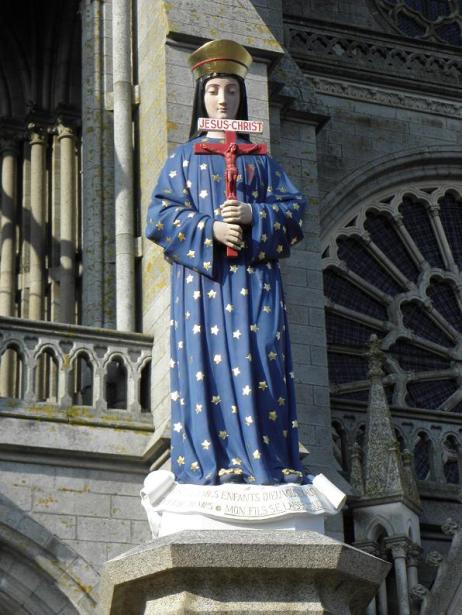
Our Lady of Pontmain – 17 January: During the Franco-Prussian War, German troops approached the town of Pontmain, France and the villagers there prayed for protection. On the evening of 17 January 1871, Mary appeared in the sky for several minutes over the town. She wore a dark blue dress covered in stars, carried a crucifix and below her were the words – Pray please. God will hear you soon. My son lets Himself be touched. That night the German army was ordered to withdraw and an armistice ending the war was signed eleven days later on 28 January. Approval of diocesan bishop.
St Achillas of Sketis
St Amoes of Sketis
St Antony of Rome
Bl Euphemia Domitilla
Bl Gamelbert of Michaelsbuch
St Genitus
St Genulfus
St Jenaro Sánchez Delgadillo
St John of Rome
Bl Joseph of Freising
St Julian Sabas the Elder
St Marcellus of Die
St Merulus of Rome
St Mildgytha
St Nennius
St Neosnadia
St Pior
St Richimir
Thought for the Day – 16 January – Meditations with Antonio Cardinal Bacci (1881-1971) – Thursday of the First week in Ordinary Time, Year A
Heaven 1
“Faith teaches us, that the soul which is in the state of grace and has expiated all the temporal punishments due to it’s sins, goes immediately to Heaven when it is separated from the body.
There, the soul enjoys eternal happiness. It sees God, face-to-face. It sees Him without any intervention of created things but, as He is, in Himself, in the Unity and Trinity of His infinte perfections.
In this beatific vision, the intellect remains completely satisfied, because, in God, there is every truth, beauty and goodness.
The will abandons itself entirely to the will of God, desiring nothing else and loving nothing else but God alone.
There springs from this abandonment, a love which satisfies every desire, an inexpressible joy and a boundless peace.
The happy soul will see the Blessed Virgin, too and she will smile upon it with maternal tenderness.
It will see the Angels and Saints gathered around the King of Kings and the Queen of Heaven, singing their praises.
St Paul, who was taken up to the third Heaven, tells us, that it is impossible to imagine or to describe, the unknown joys which are experienced there.
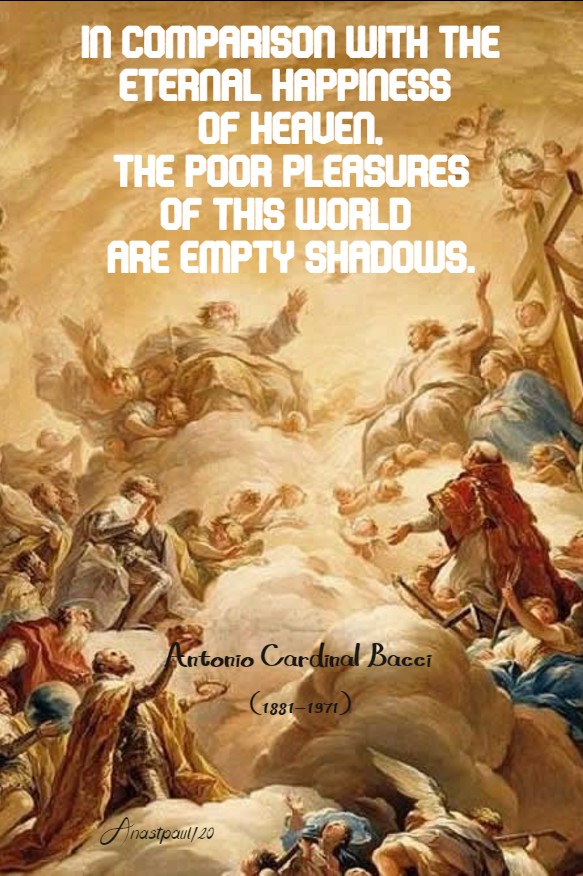
In comparison with the eternal happiness of Heaven, the poor pleasures of this world are empty shadows.
We cannot imagine the happiness of those, who have gained Heaven, by their good lives upon earth.
The concept of Heaven is so beautiful and immense, that it caused the Saints to desire death as a means of going there.
They welcomed suffering, too, because it brought them nearer to their goal.”
Quote/s of the Day – 16 January – Thursday of the First week in Ordinary Time, Year A
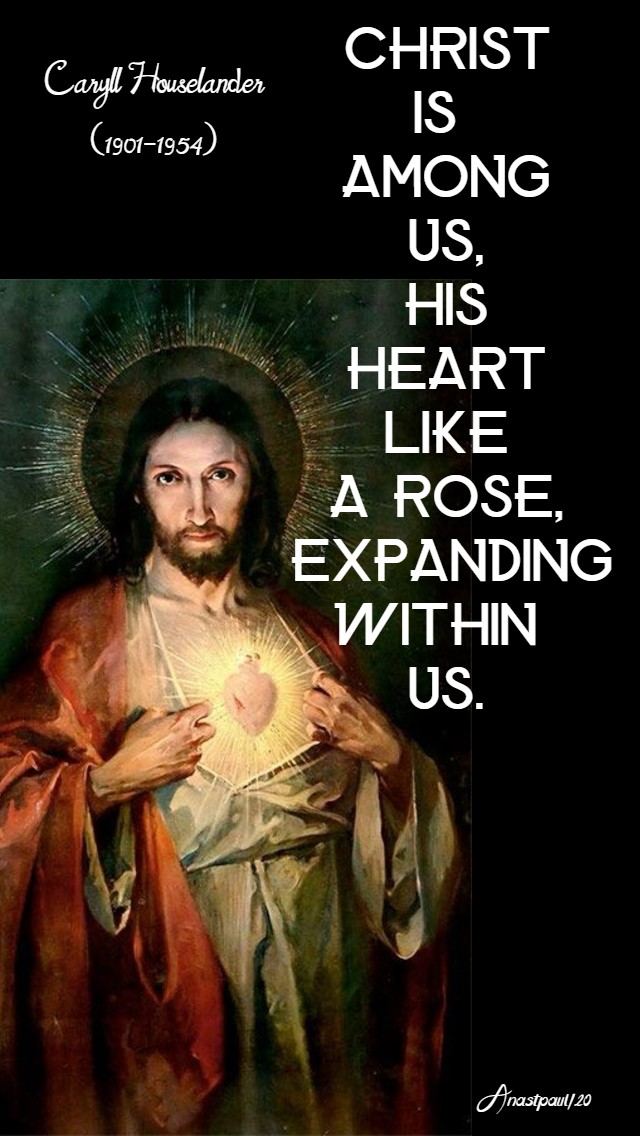
“Christ is among us, His heart like a rose, expanding within us.”
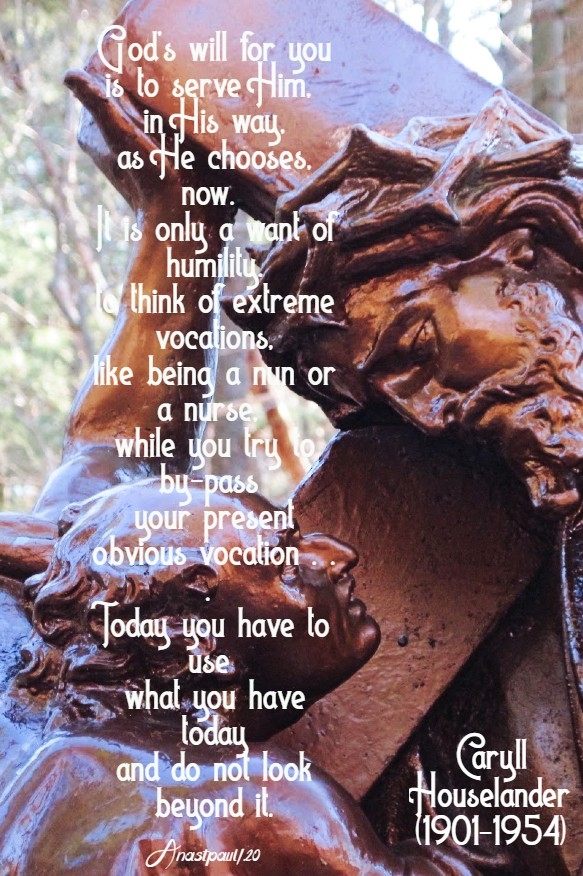
“God’s will for you is to serve Him, in His way, as He chooses, now. It is only a want of humility. to think of extreme vocations, like being a nun or a nurse, while you try to by-pass your present obvious vocation . . . Today, you have to use what you have today and do not look beyond it.”
Caryll Houselander (1901-1954)
Caryll Houselander (29 September 1901 – 12 October 1954) was an English lay Roman Catholic ecclesiastical artist, mystic, popular religious writer and poet.










 Upon the death of the Bishop of the city of Lodi in Liguria, Northern Italy, the priest Clement of the cathedral church had a revelation that Saint Bassian would be chosen Archbishop of Lodi. Both Saint Ambrose, Bishop of Milan and Bishop Ursus officiated at at his Consecration.








 AnaStpaul
You must be logged in to post a comment.