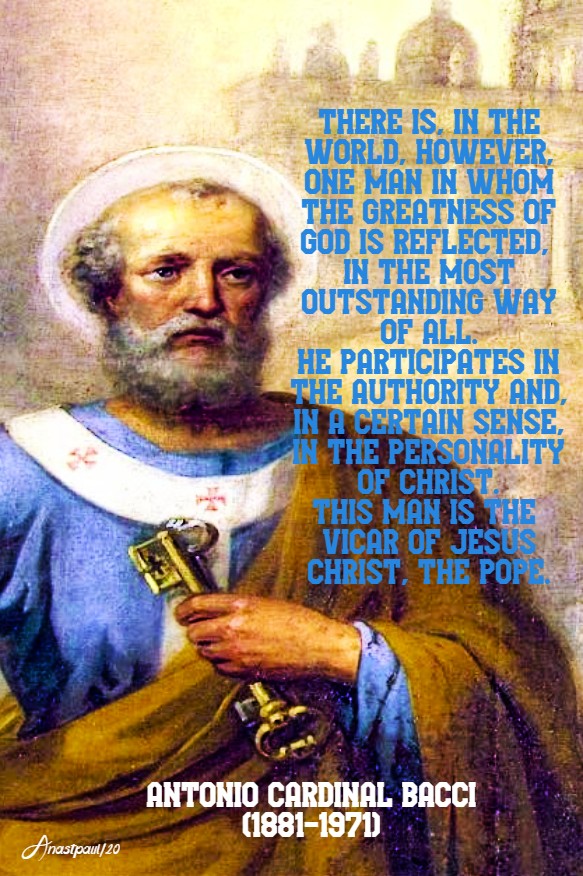
Quote/s of the Day – 11 October – The Memorial of St Maria Soledad Torres Acosta (1826-1887) and St Pope John XXIII (1881-1963)
“May the Lord grant us His holy peace and patience, so that with these two shields, we may carry the holy cross that Our Lord in His mercy has destined for us.”
“The sick are the image of the suffering Christ and it is Him that we serve.”
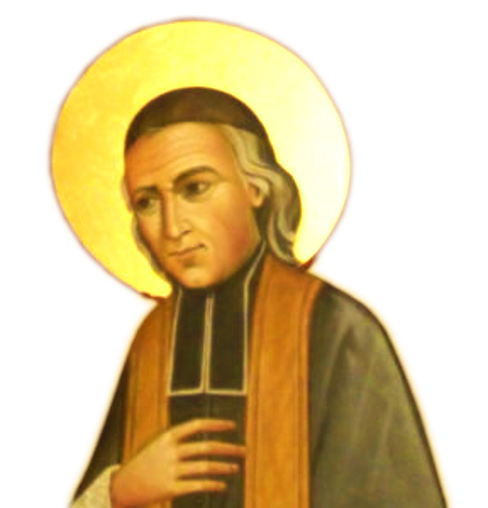
One Minute Reflection – 11 October – Friday of the Twenty Seventh week in Ordinary Time, Year C, Gospel Luke 11:15–26 and the Memorial of St Pope John XXIII (1881-1963)
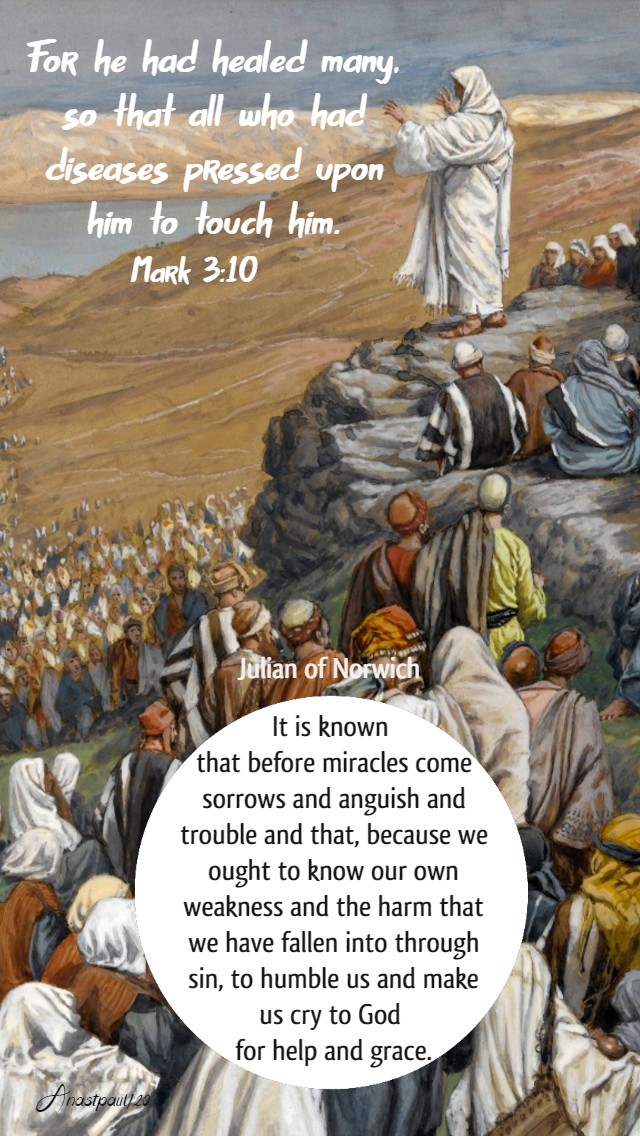
But if it is by the finger of God that I cast out demons, then the kingdom of God has come upon you…Luke 11:20
REFLECTION – ” “The finger: “It is by the finger of God that [Jesus] casts out demons.” If God’s law was written on tablets of stone “by the finger of God” (Ex 31,18), then the “letter from Christ” entrusted to the care of the apostles, is written “with the Spirit of the living God, not on tablets of stone but on tablets of human hearts” (2Cor 3,3). The hymn “Veni Creator Spiritus” invokes the Holy Spirit as the “finger of the Father’s right hand.”…CCC 700
“What things ought I render to Almighty God that He has made me what I am? It is a matter of grace … I am what I am, not from any excellence or merit of my own but by the grace of God who has chosen me to believe. Has He not visited me with over-abundant grace? And was it not necessary for my hardened heart to receive more than other people? …
Lord You have poured on me Your grace. You have been with me in my perplexities. You have forgiven me my sins. You have satisfied my reason. You have made faith easy. You have given me Your saints, You show before me, day after day, Your own Passion – why should I leave You? What have You ever done to me but good?” … Blessed John Henry Newman (1801-1890)
PRAYER – Almighty Father, let Your light so penetrate our minds, that we may walk always in that light and follow Your Son, the Way, the Truth and the Life. Fill us with understanding and may the Holy Spirit guide us in love. Allow the intercession of St Pope John XXIII who followed Your light so faithfully be of help to us all. We make our prayer through our Lord Jesus Christ, Your Son, who lives and reigns with You and the Holy Spirit, God forever, amen.
Our Morning Offering – 11 October – Friday of the Twenty Seventh week in Ordinary Time, Year C and the Memorial of St Pope John XXIII (1881-1963)
Every Day I Need You, Lord By St Pope John XXIII
Every day I need You, Lord
but today especially,
I need some extra strength
to face whatever is to come.
This day, more than any other day,
I need to feel You near me
to strengthen my courage
and to overcome any fear.
By myself, I cannot meet
the challenge of the hour.
We are frail human creatures
and we need a higher power
to sustain us in all that life may bring.
And so, dear Lord,
hold my trembling hand.
Be with me, Lord, this day
and stretch out,
Your powerful arm to help me.
May Your love be upon me
as I place all my hope in You.
Amen
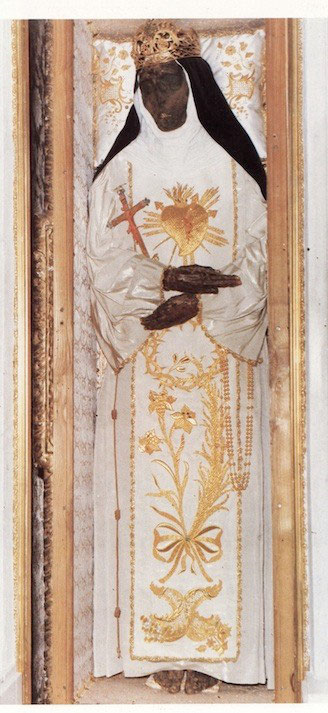
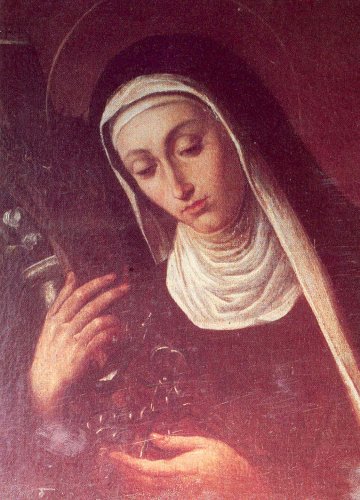
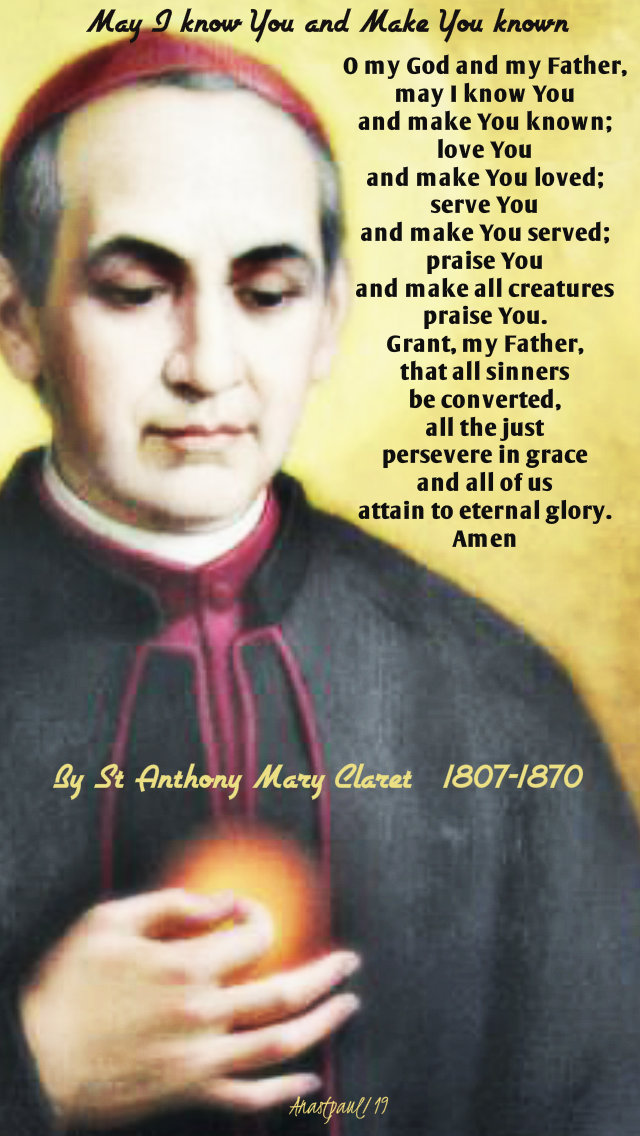
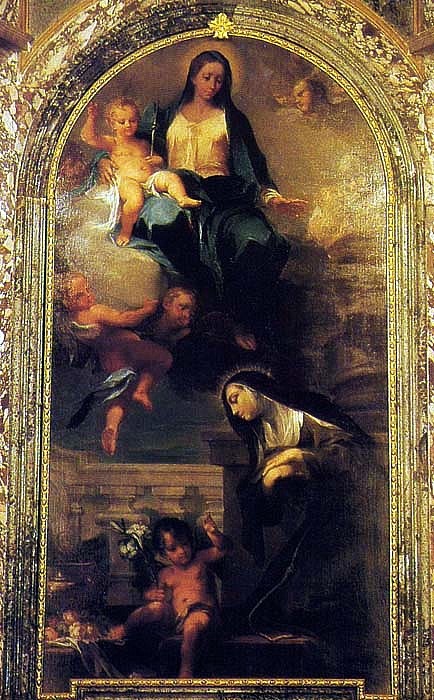
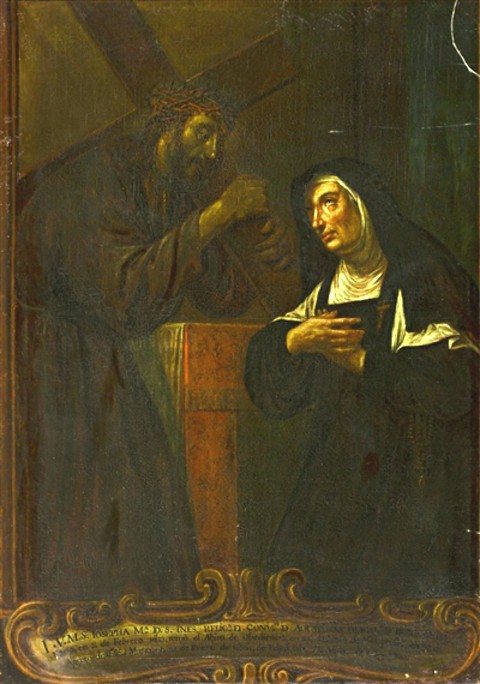
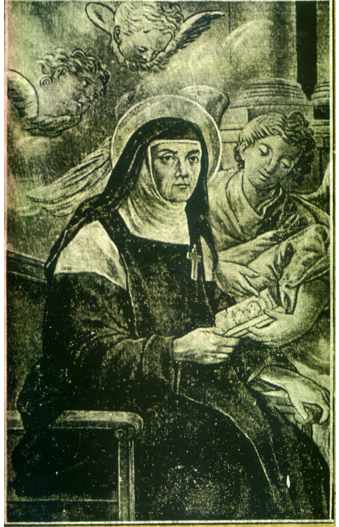
Saint of the Day – 11 October – Saint Maria Soledad Torres Acosta (1826-1887) Religious Nun and Founder of Servants of Mary. Her apostolic actions – and those of her order – were dedicated towards the nursing of the sick and the poor. Patronage – the Servants of Mary.
St Maria Soledad was born and baptised with the name Bibiana Antonia Acosta, in Madrid, Spain, on 2 December 1826. She was the second of five children. Her parents ran a small business in Madrid. St Maria Soledad was educated by the Daughters of Charit, and often visited the sick in her neighbourhood. She performed small penances for the benefit of others.
Because of her poor health, she was unsuccessful in entering the Dominican community, as she desired to become a nun. In 1851, Fr Michael Martinez, a parish Priest and member of the Third Order of the Servites, asked her to minister to the sick and poor of his parish, in their homes. She accepted and with six companions she began this ministry taking the name Maria Soledad.
Five years into the ministry, Fr Michael took six of the Sisters with him to the missions, leaving only six behind. Maria Soledad was appointed as their Superior and the Sisters that remained with Maria immediately removed her from this office. The move so disorganised the community, that the Bishop threatened to dissolve it. The Bishop held an investigation and re-appointed Maria as Superior, with the help of the new Director, Fr Gabino Sanchez, an Augustinian. It was at this time, that the community took the name of “Handmaids of Mary Serving the Sick”. The Bishop formally approved their ministry and extended their work to care for the delinquents of Madrid. Their order received much publicity by their care for the sick when the cholera epidemic broke out.
St Maria Soledad faced several trials throughout her time of leadership in the congregation and was the victim of slander and was once again removed from her office as superior. Fr Gabino reinstalled her as the Superior for a second time, after an investigation. The Handmaids grew in number and in 1875, began a ministry in Havana, Cuba. The new institute received Papal approval in 1876. Maria governed the community for 35 years.
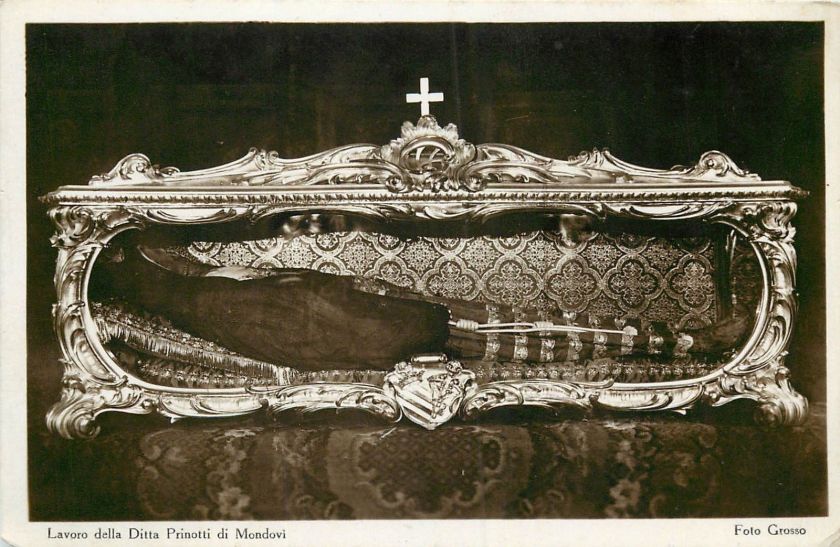
St Maria Soledad was working in Havana, Cuba when she contracted pneumonia. She died on 11 October 1887. At the time of her death there were 46 Houses in Europe and Latin America. She was buried in the Sisters cemetery in the Motherhouse in Madrid, Spain and in 1893 her body was exhumed and transferred to the Chapel. Her body was intact, exuding a bloody liquid, her body exuding a sweet odour.
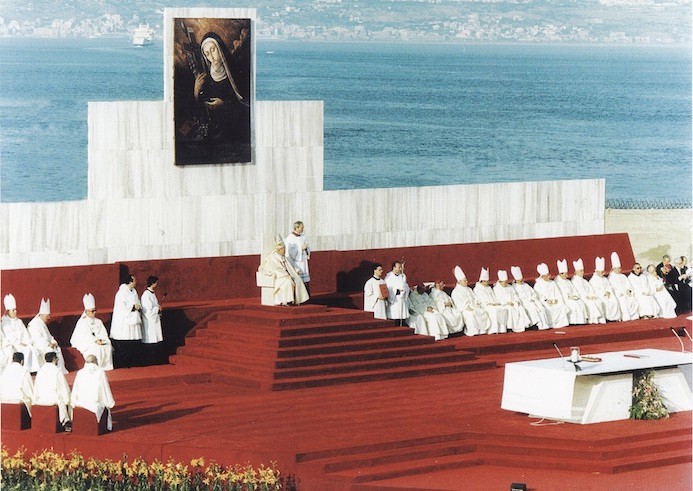
She was Beatified in 1950 by Pope Pius XII, and Canonised by St Pope Paul VI in 1970. In the United States, the Congregations is known as the Sister Servants of Mary, Ministers to the sick. There are six communities in the US, still providing health care as of today.
St Agilbert of Paris
St Alexander Sauli
St Anastasius V
St Anastasius the Apocrisarius
St Andronicus of Ephesus
St Andronicus the Soldier
St Ansilio
St Bruno the Great
St Canice
St Digna of Sicily
St Dionisio de Santarem
St Emilian of Rennes
St Ethelburgh of Barking
St Eufridus
St Firminus of Uzes
St Germanus of Besancon
St Gratus of Oloron
St Guiadenzio of Gniezno
St Gummarus
Bl James Grissinger
St Juliana of Pavilly St Maria Soledad Torres Acosta (1826-1887)
St Nectarius of Constantinople
St Phêrô Lê Tùy
St Philip the Deacon
St Philonilla
St Placid
St Placidia
St Probus of Side
St Santino of Verdun
St Sarmata
St Taracus of Cladiopolis
St Zenaides
—
Martyrs of Vilcassin – 4 saints: Four Christians who were martyred together. We know little more than the names – Nicasius, Pienza, Quirinus and Scubicolus. Their martyrdom occured in Vexin Lugdunense territory of Gaul (modern Vilcassin, France), date unknown.
Journeying with Newman
The Thanksgiving Novena for, with and to
the beloved and blessed John Henry Newman
Day Seven – 10 October
Educator of the Laity
Intention: That we may be inspired to strive for a deeper understanding of the teachings of our Faith.
“I want a laity, not arrogant, not rash in speech, not disputatious but who know their religion, who enter into it, who know just where they stand, who know what they hold and what they do not, who know their creed so well, that they can give an account of it.”
From his writings Blessed John Henry Newman (1801-1890)
Prayer:
Please pray one decade of the Rosary (any you choose) for this Intention and add the following Prayer:
O God our heavenly Father,
we offer You heartfelt thanks
for the life and holiness of John Henry Newman.
In him You give us,
an inspiring example of priest and teacher,
heroic and humble, in his labour
for the salvation of souls
and the pursuit of holiness.
Through his intercession,
we ask You to lead us,
by the kindly light of the Holy Spirit
and so grant us peace and joy,
in the one fold of the Redeemer.
We ask this through Christ our Lord.
Amen
Thought for the Day – 10 October – The Memorial of Blessed Angela Truszkowska (1825-1899)
Excerpt from the Address of the Holy Father JOHN PAUL II to the Sisters of Saint Felix of Cantalice
Friday 16 June 2000
“Your Foundress would often take the children in her care to the Capuchin Church in Warsaw where Saint Felix is shown bearing the Infant Jesus in his arms. In the figure of the Holy Child, Blessed Maria Angela recognised the little ones she was called to serve. She knew that Saint Felix was shown bearing the Infant Jesus in his arms, because, in bearing the burdens of the needy, he had carried in his arms the poor Christ Himself and she recognised this as her own calling. By bearing the burdens of the weakest she and her Sisters would bear in their arms the “little” Lord Jesus. Blessed Maria Angela knew too, that it was Mary who had placed the Holy Child in the arms of Saint Felix and that, it was Mary, who was now placing her Infant Son in the arms of the Sisters of Saint Felix. How right then that she should dedicate the Congregation to the Immaculate Heart of Mary.
3. Yet the sword which pierced Mary’s heart (cf. Lk 2:35) pierced the heart of the Foundress too. “Love means giving”, she wrote, “giving everything that love asks for, giving immediately, without regrets, with joy and wanting even more to be asked of us.”In obeying the logic of the Incarnation and bearing in her arms, the Lord himself, Blessed Maria Angela became a victim of love. Step by step she ascended the hill of Calvary, in a journey of suffering, both physical and spiritual, until her life was ablaze with the mystery of the Cross.
As she journeyed more deeply into Calvary’s darkness she became more insistent, that at the heart of the Congregation’s life, there should be devotion above all to the Holy Eucharist and to the Immaculate Heart of Mary. She bequeathed to her Sisters the motto: “All through the Heart of Mary in honour of the Most Blessed Sacrament”. In long hours of prayer before the Blessed Sacrament, she learnt that she and her Sisters were called to “reproduce the pattern of the Lord’s death” (Phil 3:10) so that they might become the Eucharist. And in the Mother of Christ, Blessed Mary Angela recognised, the one who shared in her Son’s Passion most intimately and she knew, that this was the Sisters’ calling as well. In Mary Immaculate she recognised the woman of the Magnificat, the woman whose self-emptying, allowed God to fill her with the joy of the Holy Spirit. This was to be the life of the Sisters of Saint Felix.
4. Ours is a very different world but we are no less challenged by the spiritual lethargy of our time and by the question of where true freedom lies. It is the Church’s sacred duty to proclaim to the world the true answer to that question and Religious men and women, are crucial in that task. For the Felician Sisters, this must mean, an ever more radical fidelity to the program of life bequeathed to you by your Foundress, since, if there is not this fidelity among you, then you too can fall victim to the spiritual confusion of the age and there may emerge among you, the anxiety and disunity which are its fruits.
I urge you, therefore, dear Sisters, at this critical time in the life of your Congregation, to commit yourself in this General Chapter to more ardent worship of the Most Blessed Sacrament, to deeper devotion to Mary Immaculate and to a more radical love of the charism of your Foundress. Embrace the Lord’s Cross as Blessed Angela did! Then you will become the Eucharist your whole life will sing Magnificat, your poverty will be filled with “the unsearchable riches of Christ” (Eph 3:8). Entrusting the General Chapter and the entire Congregation to Mary, Mother of Sorrows and Mother of all our joys and to the intercession of Saint Francis, Saint Felix and your Blessed Foundress, I gladly impart my Apostolic Blessing, as a pledge of endless grace and peace in Jesus Christ, “the faithful witness and firstborn from the dead” (Rev 1:5).
Prayer for the Intercession of Blessed Angela
God our Father,
we praise and thank You
for the gift of Blessed Angela,
who lived Your will,
in faith and trust
and lived Your love,
in service to others.
I pray, in confidence,
that through her intercession
You will grant me
the favour which I request.
I ask this,
through Christ our Lord.
Amen
One Minute Reflection – 10 October – Thursday of the Twenty Seventh week in Ordinary Time, Year C, Gospel: Gospel: Luke 11:5–13 and the Memorial of Blessed Angela Truszkowska (1825-1899)
“For everyone who asks, receives and he who seeks, finds and to him who knocks, it will be opened.”… Luke 11:10
REFLECTION – “Yes, my Lord, You do desire that I should ask You, You are ever listening for my voice. There is nothing I cannot get from You. Oh, I confess my heinous neglect of this great privilege. I am very guilty. I have trifled with the highest of gifts – the power to move Omnipotence. How slack I am, I in praying to You for my own needs! how little have I thought of the needs of others! How little have I brought before You the needs of the world – of Your Church! How little have I asked for graces in detail! and for aid in daily wants! How little have I interceded for individuals! How little have I accompanied actions and undertakings, in themselves good, with prayer for Your guidance and blessing!”… Blessed John Henry Newman (1801-1890)
PRAYER – Help us my Lord, to discern through prayer and meditation, what You truly want of us. Then enable us to offer it to You and indeed to offer myself and all I have to You. Teach us to listen that we might hear Your answers, teach us to wait in patience for that which we ask and to trust in Your answer and teach us to constantly knock at Your door in prayer. May Blessed Angela Truszkowska, pray for Holy Mother Church, pray for all the members of the Mystical Body, pray for our sons and daughters and for us all, pray for me! Amen
Our Morning Offering – 10 October – Thursday of the Twenty Seventh week in Ordinary Time, Year C and the Memorial of Blessed Angela Truszkowska (1825-1899)
Unite Me to Your Sacred Heart By Blessed Angela Truszkowska (1825-1899)
My Lord, You bid us to suffer,
therefore, my poor soul desires it.
I want to suffer, O Jesus
but with You,
to suffer but for the love of You,
to suffer but in silence and in solitude,
so that no-one would know
that I suffer, only You,
so that only You would hear the groanings of my soul
and only You would see my tears.
Ah! Teach me, O Lord,
to suffer in that way,
teach me to suffer without seeking any consolation,
to suffer without craving the sympathy of creatures,
to suffer without even
expecting the eternal joys of heaven.
Teach me to suffer,
not because suffering is the source of merit and glory
but because it unites us to You
and makes our hearts
like unto your Sacred Heart.
Amen
(The text was written on sheets of paper bound together with two works of St Alphonsus Ligouri. Mother Angela gave this book to Sr Anna Bielska as a gift on the first anniversary of her profession, 8 December 1861.)
Saint of the Day – Blessed Maria Angela Truszkowska TOSF (1825-1899) Nun, Foundress of the Sisters of Saint Felix of Cantalice, commonly known as the Felician Sisters, Franciscan tertiary, Apostle of Eucharistic Adoration, of Prayer, of Charity – born 16 May 1825 at Kalisz, Poland as Sophia Camille Truszkowska and died on 10 October 1899 of natural causes. She forged one of the first active-contemplative communities that, nearly a century and a half later, would grow to include more than 1,800 vowed Sisters over four continents serving in an array of ministries. Patronages – against sickness, exiles, sick people.
Blessed Mary Angela Truszkowska was born in Kalisz on 16 May 1825, the oldest child of Joseph and Josepha Rudzinska. At her baptism she was given the name Sophia Camille. She received a deep religious training in her family home. Already in her youngest years, she distinguished herself with extraordinary sensitivity for the needs of the poor. After the family moved to Warsaw, Sophia attended the boarding school of St Theodora Guerin. As an adult, she joined the Society of St Vincent de Paul and upon the advice of Fr Honorat Kozminski, her confessor, she entered the Third Order of St Francis and became a tertiary.
Destitution on the streets of Warsaw upset her greatly and for this reason in 1854, she rented a simple lodging, near the Church of the Virgin Mary in Nowe Miasto, for the little group of orphaned girls and elderly women whom she gathered off the streets. As the needs of the small institute began to increase, she had to transfer it twice, first to the home of the Dominicans and in July 1857, to the larger Zaluski Library building given to her by Countess Elfryda Zamoyska, known in Warsaw for her charitable undertakings. In this year also, Sophia, with several companions, donned the Franciscan habit and accepted a new name, Maria Angela.
The residents of the Capital City, upon seeing the little group of children being led before the St Felix altar in the Capuchin church, started calling them children of St Felix. With time, the name Felician became associated with the sisters.
The next stage in the life of the young religious family and its Foundress was marked by work among the Greek Catholics in Podlasie. There, she established many houses in which the sisters conducted centres for peasant children, however, the outbreak of the January Insurrection (1863) occasioned a change in the sisters’ involvements. Centres were converted into hospitals where the wounded rebel soldiers received care. This Samaritan deed, however, did not “appeal” to the Russian occupants who in December 1864 issued an edict of suppression of the Congregation of Felician Sisters. The sisters had to remove their habits and return to their families. Only the cloistered sisters – separated from the active community, already in 1860 – were permitted to retain the religious garb and were transferred to the convent of the Bernardine Sisters in Lowicz. Mother Angela was among them. She remained at this convent for a year and a half after which time she moved to Krakow where the Congregation operated a centre and maintained another house on 18 Mikolajska St., given to the sisters by Pelagia Russanowska. Because of the overcrowded conditions there, Mother Angela lived across the street in the home of Antonine Helclowa but after several months, that is in autumn 1866, Mother took up residence in the acquired building.
Mother Maria Angela, now took over the helm of authority in the Felician Community. She expended efforts to obtain approbation of the Congregation in Galicia and planned on building a new convent. Several years later her health declined considerably and she began to gradually lose her hearing. Her request for release from the duties of governing the Congregation was finally granted. From that time on, Mother Angela directed her energies to editing the Constitutions of the Congregation. On 20 January 1870, Mother left the home on Mikolajska to live permanently in the new convent in Krakow. The building, not yet completed, was being constructed on property purchased several years earlier.
Here Mother spent long, even nightly hours in adoration of the Blessed Sacrament in the Felician church where, since 1884, Jesus is exposed on the altar daily. She also embroidered liturgical vestments for poor chapels and grew flowers in the garden at Smolensk. Some writings referring to an episode in Mother’s life at this time disclose that she was struck by the steering pole of a garden wagon that worsened her health which was declining.
Cancer eventually confined her to bed. On 12 September 1899, Mother received the anointing of the sick and lived yet to see the approval of the Congregation by the Holy See several weeks before her death. After midnight on 10 October 1899, the Foundress went to the Lord to receive her deserved reward.
The cult of Mother Angela evolved after her death, however, the time to initiate her beatification process had to be postponed because of the political situation existing in the Polish government, plus the two ensuing world wars. It was not until 1949 that Adam Cardinal Sapieha opened the Informative Process. The stages of this formal action, defined by Canon Law, advanced until 1969 when Karol Cardinal Wojtyla, the Future St Pope John Paul II, closed the process in Krakow and the Cause was accepted by the Holy See. On 2 April 1982, the Sacred Congregation for the Causes of Saints in Rome issued a decree of the heroic virtues of the Servant of God.
Upon confirmation of the miracle attributed to Mother Angela’s intercession, the solemn Beatification took place in St Peter’s Square in Rome on 18 April 1993 by St Pope John Paul II.
St Fulk of Fontenelle
St Gereon
St Gundisalvus
Bl Hugh of Macon
Bl Leon Wetmanski
St Maharsapor the Persian
St Malo the Martyr
St Patrician
St Paulinus of Capua
St Paulinus of York
Bl Pedro de Alcantara de Forton de Cascajares
St Pinytus of Crete
Bl Pontius de Barellis
St Tanca
St Teodechilde
St Victor of Xanten
Martyrs of Ceuta – 7 beati: A group of seven Franciscan Friars Minor missionaries to Muslims in the Ceuta area of modern Morocco. Initially treated as madmen, within three weeks they were ordered to convert to Islam and when they would not they were first abused in the streets, then arrested, tortured and executed.
• Angelo
• Daniele di Calabria
• Donnolo
• Hugolinus
• Leone
• Nicola
• Samuele
They were beheaded in 1227 in Mauritania Tingitana (Ceuta, Morocco). Local Christians secreted the bodies away and gave them proper burial in Ceuta. They were Beatified in 1516 by Pope Leo X.
Journeying with Newman The Thanksgiving Novena for, with and to the beloved and blessed John Henry Newman
Day Six – 9 October His Feast Day!
Counsellor of Converts
Intention: That we are blessed with more vocations to the priesthood.
“Regarding Christianity ten thousand difficulties, do not make one doubt.”
From his writings Blessed John Henry Newman (1801-1890)
Prayer
Please pray one decade of the Rosary (any you choose) for this Intention and add the following Prayer:
O God our heavenly Father,
we offer You heartfelt thanks
for the life and holiness of John Henry Newman.
In him You give us,
an inspiring example of priest and teacher,
heroic and humble, in his labour
for the salvation of souls
and the pursuit of holiness.
Through his intercession,
we ask You to lead us,
by the kindly light of the Holy Spirit
and so grant us peace and joy,
in the one fold of the Redeemer.
We ask this through Christ our Lord.
Amen
Thought for the Day – 9 October – The Memorial of Blessed John Henry Newman (1801-1890)
LETTER OF THE HOLY FATHER JOHN PAUL II
ON THE OCCASION OF THE 2nd CENTENARY
OF THE BIRTH OF CARDINAL JOHN HENRY NEWMAN
To The Most Reverend Vincent Nichols
Archbishop of Birmingham
On the occasion of the second centenary of the birth of the Venerable Servant of God John Henry Newman, I gladly join you, your Brother Bishops of England and Wales, the priests of the Birmingham Oratory and a host of voices throughout the world in praising God for the gift of the great English Cardinal and for his enduring witness.
As Newman pondered the mysterious divine plan unfolding in his own life, he came to a deep and abiding sense that “God has created me to do Him some definite service. He has committed some work to me which he has not committed to another. I have my mission” (Meditations and Devotions). How true that thought now appears as we consider his long life and the influence which he has had beyond death. He was born at a particular time – 21 February 1801, in a particular place – London and to a particular family – the firstborn of John Newman and Jemima Fourdrinier. But the particular mission entrusted to him by God ensures that John Henry Newman belongs to every time and place and people.
Newman was born in troubled times which knew not only political and military upheaval but also turbulence of soul. Old certitudes were shaken and believers were faced with the threat of rationalism on the one hand and fideism on the other. Rationalism brought with it a rejection of both authority and transcendence, while fideism turned from the challenges of history and the tasks of this world to a distorted dependence upon authority and the supernatural. In such a world, Newman came eventually to a remarkable synthesis of faith and reason which were for him “like two wings on which the human spirit rises to the contemplation of the truth” (Fides et Ratio, Introduction; cf. ibid., 74). It was the passionate contemplation of truth which also led him to a liberating acceptance of the authority which has its roots in Christ and to the sense of the supernatural which opens the human mind and heart to the full range of possibilities revealed in Christ. “Lead kindly light amid the encircling gloom, lead Thou me on”, Newman wrote in The Pillar of the Cloud and for him Christ was the light at the heart of every kind of darkness. For his tomb he chose the inscription: Ex umbris et imaginibus in veritatem and it was clear at the end of his life’s journey that Christ was the truth he had found.
But Newman’s search was shot through with pain. Once he had come to that unshakeable sense of the mission entrusted to him by God, he declared: “Therefore, I will trust Him… If I am in sickness, my sickness may serve Him, in perplexity, my perplexity may serve Him… He does nothing in vain… He may take away my friends. He may throw me among strangers. He may make me feel desolate, make my spirits sink, hide the future from me. (Meditations and Devotions). All these trials he knew in his life but rather than diminish or destroy him they paradoxically strengthened his faith in the God who had called him, and confirmed him in the conviction that God “does nothing in vain”. In the end, therefore, what shines forth in Newman is the mystery of the Lord’s Cross – this was the heart of his mission, the absolute truth which he contemplated, the “kindly light” which led him on.
As we thank God for the gift of the Venerable John Henry Newman on the two hundredth anniversary of his birth, we pray that this sure and eloquent guide in our perplexity will also become for us in all our needs a powerful intercessor before the throne of grace. Let us pray that the time will soon come when the Church can officially and publicly proclaim the exemplary holiness of Cardinal John Henry Newman, one of the most distinguished and versatile champions of English spirituality. With my Apostolic Blessing.
Quote of the Day – 9 October – Wednesday of the Twenty Seventh Week in Ordinary Time, Year C, Gospel: Luke 11:1–4 and the Memorial of Blessed John Henry Newman (1801-1890)
Be Merciful, Be Gracious By Blessed John Henry Newman (1801-1890)
Be merciful, be gracious, Lord, deliver me.
From the sins that are past,
From Your frown and Your ire,
From the perils of dying,
From any complying
With sin or denying
My God, or relying
On self,
at the last,
From the nethermost fire,
From all that is evil,
From the power of the devil,
Your servant deliver,
For once and forever,
By Your Birth and By Your Cross,
Rescue me from endless loss,
By Your death and burial,
Save me from a final fall,
By Your rising from the tomb,
By Your mounting up above,
By the Spirit’s gracious love,
Save me in the day of doom.
One Minute Reflection – 9 October – Wednesday of the Twenty Seventh Week in Ordinary Time, Year C, Gospel: Luke 11:1–4 and the Memorial of Blessed John Henry Newman (1801-1890)
“Father, hallowed be thy name.”…Luke 11:2
REFLECTION – “Thou art all-holy, yet I come before Thee. I place myself, under Thy pure and piercing eyes which look me through and through and discern every trace and every motion of evil within me. Why do I do so?
First of all, for this reason. To whom should I go? What can I do better? Who is there in the whole world that can help me? Who that will care for me, or pity me, or have any kind thought of me, if I cannot obtain it of Thee? I know Thou art of purer eyes than to behold iniquity but I know again, that Thou art all-merciful and that Thou so sincerely desires my salvation, that Thou has died for me. Therefore, though I am in a great strait, I will rather fall into Thy hands, than into those of any creature ….
I have an instinct within me, which leads me to rise and go to my Father, to name the Name of His well-beloved Son and having named it, to place myself, unreservedly in His hands, saying “if Thou, Lord, will mark iniquity, Lord, who shall stand it? For with Thee, there is merciful forgiveness.” … Blessed John Henry Newman (1801-1890)To My Father
PRAYER – Our Father, who art in heaven, hallowed be Thy name. Thy Kingdom come, Thy will be done on earth as it is in heaven. Give us this day our daily bread and forgive us our trespasses, as we forgive those who trespass against us and lead us not into temptation but deliver us from evil. And grant us Lord, our Father, that the prayers of Blessed John Henry Newman, the Blessed Virgin Mary and all our holy saints, may help us in our needs. We make our prayer, through Jesus Christ, with the Holy Spirit, one God forever, amen.
Our Morning Offering – 9 October – Wednesday of the Twenty Seventh Week in Ordinary Time, Year C and the Memorial of Blessed John Henry Newman (1801-1890)
Praise to the Holiest in the Height By Blessed John Henry Newman (1801-1890)
Praise to the Holiest in the height,
And in the depth be praise:
In all His words most wonderful;
Most sure in all His ways.
O loving wisdom of our God,
When all was sin and shame,
He, the last Adam, to the fight
And to the rescue came.
O wisest love! that flesh and blood
Which did in Adam fail,
Should strive afresh against the foe,
Should strive and should prevail.
And that a higher gift than grace
Should flesh and blood refine,
God’s presence, and His very self
And essence all-divine.
O generous love! that He, who smote
In man for man the foe,
The double agony in man
For man should undergo.
And in the garden secretly,
And on the cross on high,
Should teach His brethren, and inspire
To suffer and to die.
Praise to the Holiest in the height,
And in the depth be praise:
In all His words most wonderful;
Most sure in all His ways.
Saint of the Day – 9 October – St Cardinal John Henry Newman (1801-1890) NEARLY A SAINT – Just 4 days to go – Priest, Cardinal, Theologian, Philosopher, Prolific Preacher, Writer and Poet of great beauty, Apostle of Prayer and Charity, Founder of the Catholic University in Ireland and a Catholic school in England – “A Mind Alive” – born on 21 February 1801 at London, England and died on 11 August 1890 at Edgbaston, Birmingham, West Midlands, England of pneumonia.
Bl John Henry converted to Catholicism from Anglicanism in October 1845. In early life, he was a major figure in the Oxford Movement. Eventually his studies in the history of the Church Fathers, persuaded him to become a Catholic.
Canonisation will make Newman the first English person who has lived since the 17th century officially recognised as a saint by the Catholic Church. In 1991, Newman was proclaimed “Venerable” by the Congregation for the Causes of Saints – the first stage in the canonisation process. He was Beatified on 19 September 2010 at an open air Mass in Birmingham by Pope Benedict XVI.
On 1 July 2019, Pope Francis announced at the Consistory of Cardinals his intention to Canonise Newman on 13 October 2019.
Born in London, England, he studied at Oxford’s Trinity College, was a tutor at Oriel College and for 17 years was vicar of the university church, St Mary the Virgin. He eventually published eight volumes of Parochial and Plain Sermons as well as two novels. His poem, “Dream of Gerontius,” was set to music by Sir Edward Elgar but many of his other poems have become standard hymns within the Catholic and other Christian denominations.
After 1833, Newman was a prominent member of the Oxford Movement, which emphasised the Church’s debt to the Church Fathers and challenged any tendency to consider truth as completely subjective.
Historical research made Newman suspect that the Roman Catholic Church was in closest continuity with the Church that Jesus established. In 1845, he was received into full communion as a Catholic. Two years later he was ordained a Catholic priest in Rome and joined the Congregation of the Oratory, founded three centuries earlier by Saint Philip Neri. Returning to England, Newman founded Oratory houses in Birmingham and London and for seven years as the Founder, served as rector of the Catholic University of Ireland.
Before Newman, Catholic theology tended to ignore history, preferring instead to draw deductions from first principles—much as plane geometry does. After Newman, the lived experience of believers was recognised as a key part of theological reflection.
Newman eventually wrote 40 books and 21,000 letters that survive. Most famous are his book-length Essay on the Development of Christian Doctrine, On Consulting the Faithful in Matters of Doctrine, Apologia Pro Vita Sua—his spiritual autobiography up to 1864—and Essay on the Grammar of Assent. He accepted Vatican I’s teaching on papal infallibility while noting its limits, which many people who favoured that definition were reluctant to do.
When Newman was named a cardinal in 1879, he took as his motto “Cor ad cor loquitur”—“Heart speaks to heart.” He was buried in Rednal 11 years later. After his grave was exhumed in 2008, a new tomb was prepared at the Oratory church in Birmingham.
Three years after Newman died, a Newman Club for Catholic students began at the University of Pennsylvania in Philadelphia. In time, his name was linked to ministry centres at many public and private colleges and universities in the United States.
Pope Benedict XVI beatified Newman on 19 September 2010, at Crofton Park. Pope Benedict noted Newman’s emphasis on the vital place of revealed religion in civilised society but also praised his pastoral zeal for the sick, the poor, the bereaved and those in prison.
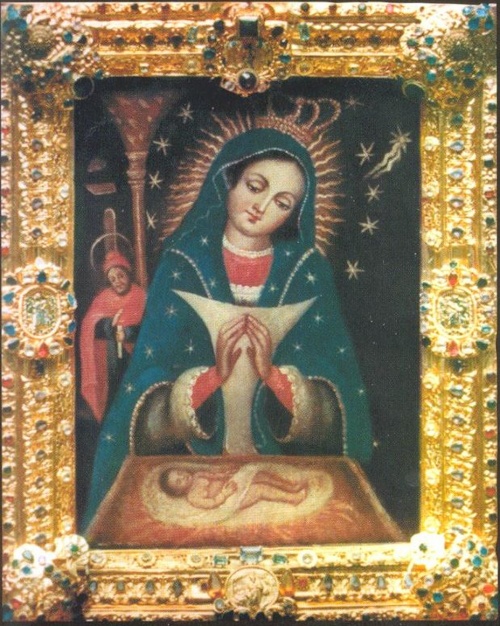
Our Lady of Good Help: 1859 More here: https://anastpaul.wordpress.com/2017/10/09/9-october-our-lady-of-good-help-and-memorials-of-the-saints/
Bl Aaron of Cracow
St Abraham the Patriarch
St Alfanus of Salerno
St Andronicus of Antioch
St Athanasia of Antioch
Bl Bernard of Rodez
St Demetrius of Alexandria
St Deusdedit of Montecassino
St Domninus
St Dorotheus of Alexandria
St Donnino of Città di Castello
St Eleutherius
St Geminus
St Gislenus
St Goswin
Bl Gunther
Bl John Henry Newman Cong. Orat. (1801-1890)
St Lambert St Louis Bertrand OP (1526-1581) Biography: https://anastpaul.com/2018/10/09/saint-of-the-day-9-october-st-louis-bertrand-o-p-1526-1581-apostle-of-south-america/
St Publia
St Rusticus
St Sabinus of the Lavedan
St Valerius
—
Martyrs of the Spanish Civil War – Martyrs of Astoria – (9 saints): Also known as Martyrs of Turon: A group of Brothers of the Christian Schools and a Passionist priest martyred in the persecutions during the Spanish Civil War. They are –
• Aniceto Adolfo
• Augusto Andrés
• Benito de Jesús
• Benjamín Julián
• Cirilo Bertrán
• Inocencio de la Immaculada
• Julián Alfredo
• Marciano José
• Victoriano Pío
They were martyred on 9 October 1934 in Turón, Spain and Canonised on 21 November 1999 by St Pope John Paul II.
—
Martyrs of Laodicea – (3 saints): Three Christians martyred together in Laodicea, but no other information about them has survived but their names – Didymus, Diodorus and Diomedes. They were martyred in Laodicea, Syria.
Journeying with Newman
The Thanksgiving Novena for, with and to
the beloved and blessed John Henry Newman
Day Five – 8 October
Guardian of Conscience
“We can believe what we choose. We are answerable for what we choose to believe.”
From his writings Blessed John Henry Newman (1801-1890)
Prayer
Please pray one decade of the Rosary (any you choose) for this Intention and add the following Prayer:
O God our heavenly Father,
we offer You heartfelt thanks
for the life and holiness of John Henry Newman.
In him You give us,
an inspiring example of priest and teacher,
heroic and humble, in his labour
for the salvation of souls
and the pursuit of holiness.
Through his intercession,
we ask You to lead us,
by the kindly light of the Holy Spirit
and so grant us peace and joy,
in the one fold of the Redeemer.
We ask this through Christ our Lord.
Amen
Thought for the Day – 8 October – Tuesday of the Twenty Seventh week in Ordinary Time, Year C, Gospel: Luke 10:38–42
Reaching out towards God
Saint Gertrude the Great of Helfta (1256-1301) The Herald of Divine Love, Book III, SC 143
On a certain occasion, while she was interiorly worrying that she was unable to feel as much desire as was fitting to the glory of God, Gertrude received this divine explanation: that God is fully satisfied when a person, without being able to do more, is in a state of wanting, if possible, to have great desires. Just as great as they would like to have, so they are before God. In a heart filled with the desire, of wanting to desire, God finds greater delights to dwell, than we do in the flowering of early spring.
On another occasion, due to illness, she had been less attentive to God for several days when, regaining consciousness of this fault, she started to confess this negligence to the Lord with a pious humility. And as she was fearing she would have to bear a long delay before recovering the former sweetness of the divine presence, all at once, in a flash, she was aware that God was bending towards her with a truly loving embrace with these words: “Daughter, you are always with me and all that is mine, is yours” (cf. Lk 15:31). She understood by this reply that, even though, through the weakness of nature, a person might sometimes omit to direct their attention to God, nevertheless, in His merciful kindness, He Himself does not neglect to hold all our works, as worthy of an eternal reward, provided only, that we do not deliberately turn away from Him and that we always repent of everything, for which our consciences reproach us.
“You are always with me and all that is mine, is yours”
The Elder Brother’s Prayer
Teach me, my Lord,
to be sweet and gentle in all the events of life,
in disappointments,
in the thoughtlessness of those I trusted,
in the unfaithfulness of those on whom I relied.
Let me put myself aside,
to think of the happiness of others,
to hide my little pains and heartaches,
so that I may be the only one to suffer from them.
Teach me to profit by the suffering
that comes across my path.
Let me so use it that it may make me
patient, not irritable.
That it may make me broad in my forgiveness,
not narrow, haughty and overbearing.
May no one be less good
for having come within my influence.
No one less pure, less true, less kind,
less noble for having been a fellow traveller
in our journey toward Eternal Life.
As I go my rounds from one distraction to another,
let me whisper from time to time,
a word of love to Thee.
May my life be lived in the supernatural,
full of power for good,
and strong in its purpose of sanctity.
Amen
Lord Jesus Christ, Son of God, have mercy on me a sinner!
Quote/s of the Day – 8 October – Tuesday of the Twenty Seventh week in Ordinary Time, Year C, Goaspel: Luke 10:38–42
“Martha, Martha, you are anxious and worried about many things. There is need of only one thing. Mary has chosen the better part and it will not be taken from her.”
Luke 10:42
“Our Lord’s words teach us that though we labour among the many distractions of this world, we should have but one goal. For we are but travellers on a journey without as yet a fixed abode, we are on our way, not yet in our native land, we are in a state of longing, not yet of enjoyment. But let us continue on our way and continue without sloth or respite, so that we may ultimately arrive at our destination.”
St Augustine (354-430) Father and Doctor (Sermo 103, 1-2, 6: PL 38, 613, 615)
“Action and contemplation are very close companions; they live together in one house on equal terms. Martha and Mary are sisters.”
St Bernard of Clairvaux (1090-1153)
Doctor of the Church
“In bustling about and busying herself, Martha risks forgetting — and this is the problem — the most important thing, which is the presence of the Guest… Most importantly He ought to be listened to. “
One Minute Reflection – 9 October – Tuesday of the Twenty Seventh week in Ordinary Time, Year C, Goaspel: Luke 10:38–42 and the Memorial of Saint Simeon
“Martha, Martha, you are anxious and troubled about many things, one thing is needful. Mary has chosen the good portion, which shall not be taken away from her.”…Luke 10:41-42
REFLECTION – ” Has not the desire of wealth so eaten into our hearts, that we think poverty the worst of ills, that we think the security of property the first of blessings, that we measure all things by mammon, that we not only labour for it ourselves but so involve in our own evil earnestness all around us, that they cannot keep from the pursuit of it though they would? Does not the frame-work of society move forward on such a plan as to enlist into the service of the world all its members, almost whether they will or no? Would not a man be thought unaspiring and unproductive, who cared not to push forward in pursuit of that which Scripture calls “the root of all evil,” the love of which it calls “covetousness which is idolatry,” and the possession of which it solemnly declares all but excludes a man from the kingdom of Heaven? Alas! can this be denied?
And, therefore, of course, the entire system of tranquil devotion, holy meditation, freedom from worldly cares, which our Saviour praises in the case of Mary, is cast aside, misunderstood, or rather missed altogether, as much as the glorious sunshine by a blind man, slandered and ridiculed as something contemptible and vain. Surely, no-one, who is candid, can doubt, that, were Mary now living, did she choose on principle that state of life in which Christ found her, were she content to remain at Jesus’ feet hearing His word and disengaged from this troublesome world, she would be blamed and pitied. Careless men would gaze strangely and wise men compassionately, on such an one, as wasting her life and choosing a melancholy, cheerless portion. Long ago was this the case. Even in holy Martha, zealous as she was and true-hearted, even in her instance, we are reminded of the impatience and disdain with which those who are far different from her, the children of this world, regard such as dedicate themselves to God. Long ago, even in her, we seem to witness, as in type, the rash, unchristian way in which this age disparages devotional services.”…Blessed Cardinal John Henry Newman (1801-1890)
PRAYER – Lord God and Father, who entrusted the earth to men and each to the other, as one family of man, give us the grace this day, to see Your Face in our neighbour and to seek all who need our help. Grant us the grace to work faithfully for Your glory and for our neighbour’s good and never cease to praise Your glory and beg the grace of Your love and mercy. May the prayers of St Simeon and may Mary our Holy Mother, keep us ever in her guiding care. We make our prayer through Christ our Lord, with the Holy Spirit, one God forever and ever, amen.
Our Morning Offering – 8 October – Tuesday of the Twenty Seventh week in Ordinary Time, Year C
Holy Spirit, Enlighten our Hearts Prayer recited before the Sessions of the Second Vatican Council
Holy Spirit, enlighten our hearts.
Give us light and strength to know Your will,
to make it our own
and to live it in our lives.
Guide us by Your wisdom,
supports us by Your power.
You desire justice for all,
enable us to uphold the rights of others,
do not allow us to be misled
by ignorance or corrupted by favour.
Unite us to Yourself in the bond of love
and keep us faithful to all that is true.
Help us to temper justice with love,
so that all our decisions
may be pleasing to You
and bring us the inheritance,
promised to good and faithful servants.
Amen
Saint of the Day – 8 October – St Simeon – also known as Holy Simeon, St Simeon the Prophet, Symeon and Simeon Senex – senex means “the old man” and St Simeon the Elder, was present when Jesus was brought into the temple as an infant – celebrated as the feast of the Presentation – the Presentation is celebrated on 2 February and is the fourth Joyful Mystery of the Rosary.
According to the Biblical account, Simeon had been visited by the Holy Spirit and told that he would not die until he had seen the Christ of the Lord. Moved by the Holy Spirit, he entered the Temple as Mary and Joseph brought the child Jesus in. On taking Jesus into his arms he uttered a prayer, which is still used liturgically as the Latin Nunc Dimittis (“Now you dismiss”) every night in Compline of the Divine Office. Simeon gave a prophecy alluding to the crucifixion. His prophecy is used in the context of Our Lady of Sorrows. Simeon is venerated as a saint with his memorial today in the revised Martyrology of the Roman Catholic Church.
The sole mention in the New Testament of Simeon is as follows:
“Now there was a man in Jerusalem, whose name was Simeon and this man was righteous and devout, looking for the consolation of Israel and the Holy Spirit was upon him. And it had been revealed to him by the Holy Spirit that he should not see death before he had seen the Lord’s Christ. And inspired by the Spirit he came into the temple and when the parents brought in the child Jesus, to do for him according to the custom of the law, he took him in his arms and blessed God and said,
“Lord, now let your servant depart in peace, according to your word, for my eyes have seen your salvation which you have prepared in the presence of all peoples, a light for revelation to the Gentiles and for glory to your people Israel.”
And his father and his mother marvelled at what was said about him and Simeon blessed them and said to Mary his mother, “Behold, this child is set for the fall and rising of many in Israel and for a sign that is spoken against (and a sword will pierce through your own soul also), that thoughts of many hearts may be revealed.”
Luke 2:25-35
The Nunc Dimittis
Latin (Vulgate):
Nunc dimittis servum tuum, Domine, secundum verbum tuum in pace.
Quia viderunt oculi mei salutare tuum
Quod parasti ante faciem omnium populorum.
Lumen ad revelationem gentium, et gloriam plebis tuae Israel.
English (Roman Breviary):
Now, Master, you let your servant go in peace. You have fulfilled your promise.
My own eyes have seen your salvation,
which you have prepared in the sight of all peoples.
A light to bring the Gentiles from darkness, the glory of your people Israel.
The beginning of the Nunc dimittis in the Très Riches Heures du Duc de Berry The Very Rich Hours of the Duke of Berry – It is probably the most famous and best surviving Gothic Manuscript Illumination. It is a book of hours – a collection of prayers to be said at the canonical hours. It was created between c 1412 and 1416.
Your donation, regardless of how big or small it may be, makes a big difference in helping me to continue existing to spread the glory of our beautiful Faith.
May God bless you all!
Ana
I will praise you, LORD, with all my heart, I will declare all your wondrous deeds. I will delight and rejoice in you, I will sing hymns to your name, Most High.
Psalm 9:1-2
I offer too, a Prayer of Thanksgiving, for the great love and generosity of dear friends and supporters
Hugh
& Catherine
Holy Mass will be celebrated for them, on
8 October and 10 October, respectively
Journeying with Newman The Thanksgiving Novena for, with and to the beloved and blessed John Henry Newman
Day Four – 7 October – Memorial of Our Lady of the Holy Rosary
Man of Prayer
Intention:
That we find joy and consolation in the habit of prayer.
“The Rosary seems so simple and easy but you know God chooses the small things of the world, to humble the great.”
From his writings Blessed John Henry Newman (1801-1890)
Prayer
Please pray one decade of the Rosary (any you choose) for this Intention and add the following Prayer:
O God our heavenly Father,
we offer You heartfelt thanks
for the life and holiness of John Henry Newman.
In him You give us,
an inspiring example of priest and teacher,
heroic and humble, in his labour
for the salvation of souls
and the pursuit of holiness.
Through his intercession,
we ask You to lead us,
by the kindly light of the Holy Spirit
and so grant us peace and joy,
in the one fold of the Redeemer.
We ask this through Christ our Lord.
Amen
Thought for the Day – 7 October – The Memorial of – Our Lady of the Rosary
We should Meditate on the Mysteries of Salvation
Saint Bernard of Clairvaux (1090-1153) Abbot and Doctor of the Church
An excerpt from one of his Sermons
The child to be born of you will be called holy, the Son of God, the fountain of wisdom, the Word of the Father on high. Through you, blessed Virgin, this Word will become flesh, so that even though, as He says: I am in the Father and the Father is in me, it is still true for him to say: “I came forth from God and am here.”
In the beginning was the Word. The spring was gushing forth, yet still within Himself. Indeed, the Word was with God, truly dwelling in inaccessible light. And the Lord said from the beginning – I think thoughts of peace and not of affliction. Yet your thought was locked within you and whatever you thought, we did not know, for who knew the mind of the Lord, or who was His counsellor?
And so the idea of peace came down to do the work of peace – The Word was made flesh and even now dwells among us. It is by faith that He dwells in our hearts, in our memory, our intellect and penetrates even into our imagination. What concept could man have of God if he did not first fashion an image of Him in his heart? By nature incomprehensible and inaccessible, He was invisible and unthinkable but now He wished to be understood, to be seen and thought of.
But how, you ask, was this done? He lay in a manger and rested on a virgin’s breast, preached on a mountain and spent the night in prayer. He hung on a cross, grew pale in death and roamed free among the dead and ruled over those in hell. He rose again on the third day and showed the apostles the wounds of the nails, the signs of victory and finally, in their presence, He ascended to the sanctuary of heaven.
How can we not contemplate this story in truth, piety and holiness? Whatever of all this I consider, it is God I am considering, in all this, He is my God. I have said it is wise to meditate on these truths and I have thought it right to recall, the abundant sweetness, given by the fruits of this priestly root and Mary, drawing abundantly from heaven, has caused this sweetness to overflow for us.
Quote/s of the Day – 7 October – Our Lady of the Rosary
“Never, as in the Rosary, do the life of Jesus and that of Mary, appear so deeply joined. Mary lives only in Christ and for Christ!”
“By making our own, the words of the Angel Gabriel and Saint Elizabeth contained in the Hail Mary, we find ourselves constantly drawn to seek out afresh in Mary, in her arms and in her heart, the “blessed fruit of her womb.”
“The centre of gravity in the Hail Mary, the hinge, as it were, which joins its two parts, is the name of Jesus.”
St Pope John Paul II (1920-2005)
#15, 24 and 33 – Apostolic Letter “Rosarium Virginis Mariae”
“Mary joins us, she fights at our side. She supports Christians in the fight against the forces of evil… through the Rosary.”
You must be logged in to post a comment.