One Minute Reflection – 20 July – Friday of the Fifteenth week in Ordinary Time, B – Today’s First Reading: Isaiah 38:1-6.,1-22,7-8 and the Memorial of Bl Gregory Lopez (1542-1596)
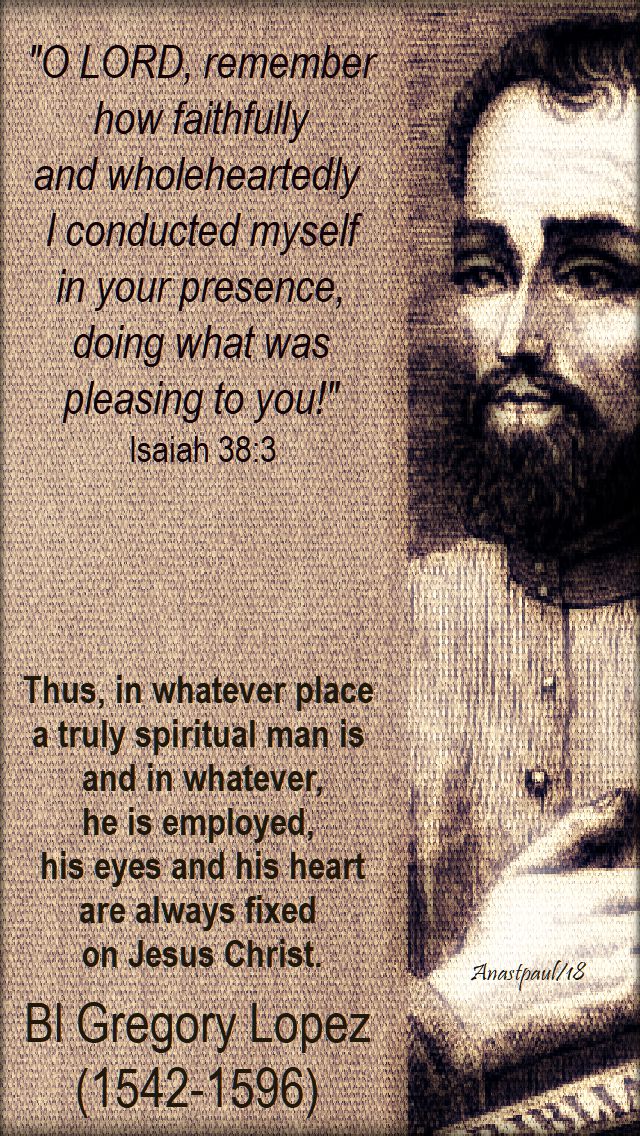
“O LORD, remember how faithfully and wholeheartedly I conducted myself in your presence, doing what was pleasing to you!” ….Isaiah 38:3
REFLECTION – “Thus, in whatever place a truly spiritual man is and in whatever, he is employed, his eyes and his heart are always fixed on Jesus Christ.”…Blessed Gregory Lopez
PRAYER – Almighty Father, let Your light so penetrate our minds, that walking by Your commandments, we may always follow You, our leader and our guide. Turn our hearts to see Your Son who “goes before us” and help us to never lose sight of His saving way. May the prayers of all Your holy ones in heaven, who are our examples and those of Blessed Gregory, be of assistance to us as we walk our earthly journey. We make our prayer through Christ, our Lord, amen.
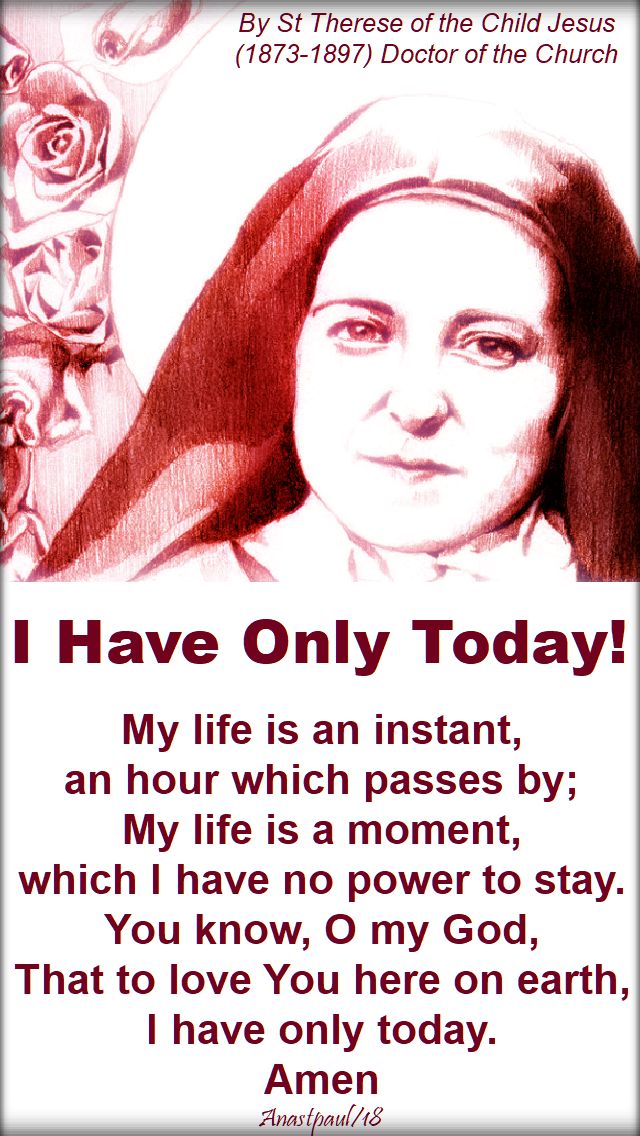
I Have Only Today! By St Therese of the Child Jesus (1873-1897) Doctor of the Church
My life is an instant,
an hour which passes by;
My life is a moment,
which I have no power to stay.
You know, O my God,
That to love You here on earth,
I have only today.
Amen
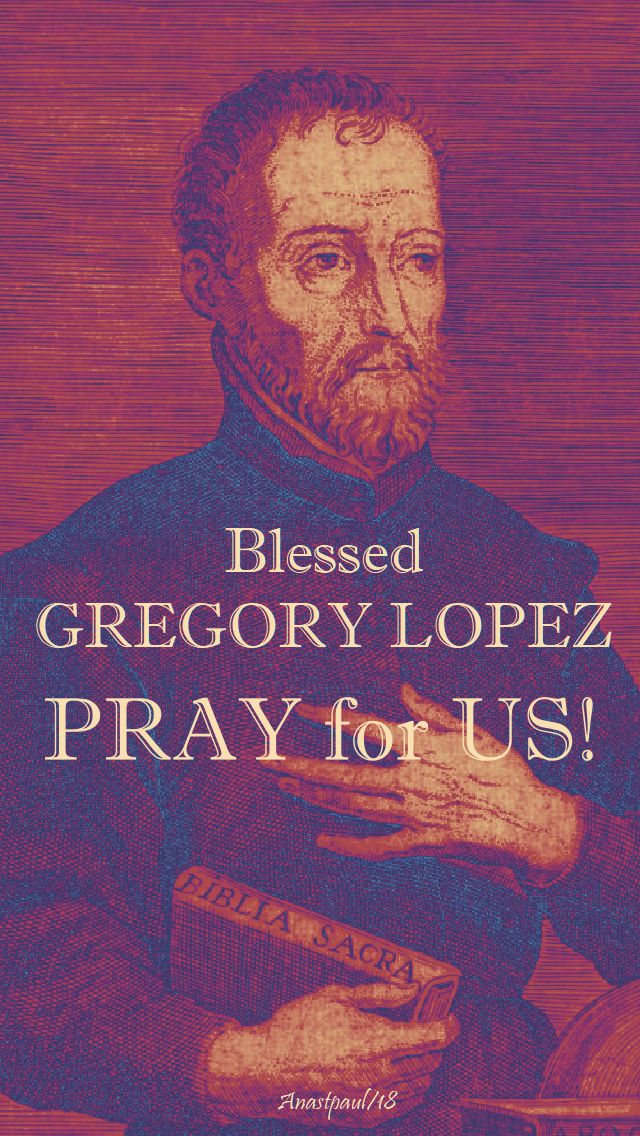
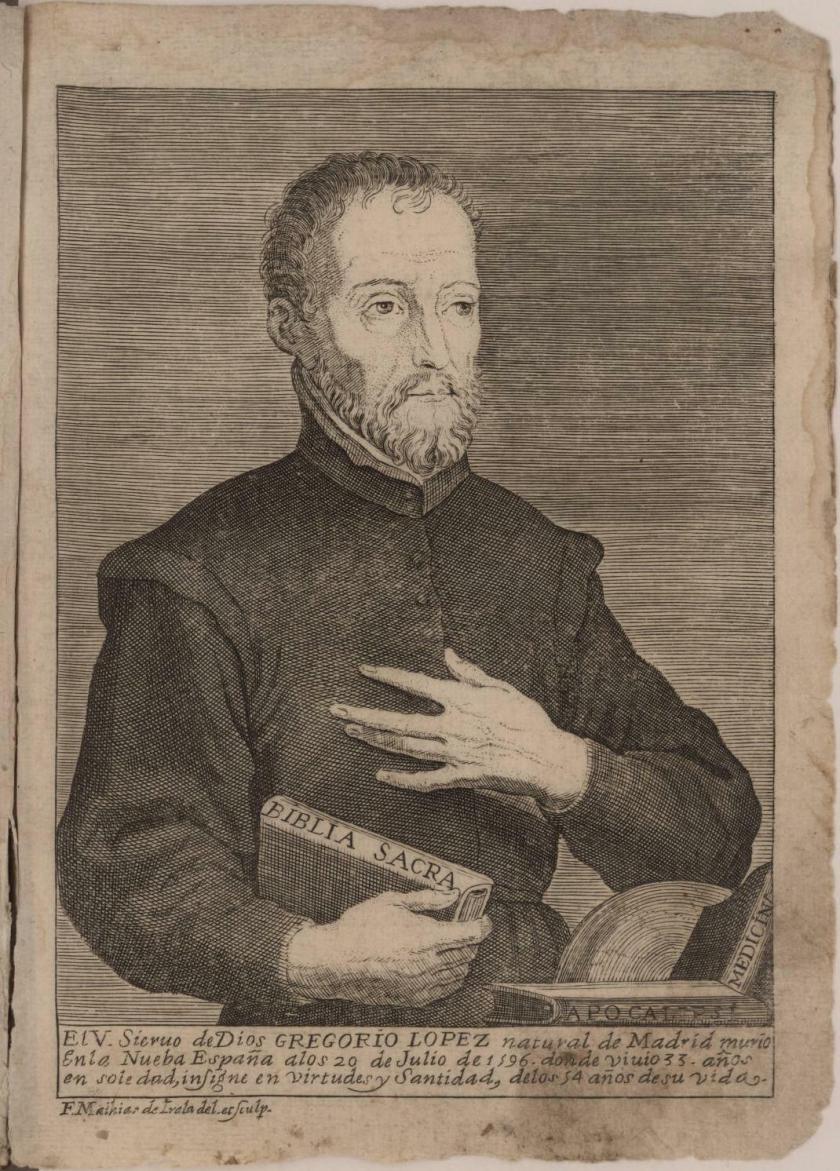
Saint of the Day – 20 July – Blessed Gregory Lopez (1542-1596) – Hermit, Spiritual Advisor, Writer. Born on 4 July 1542 at Madrid, Spain and died on 20 July 1596 of natural causes near Mexico City.
Around 1585, word of a “Mystery Man” began to leak into Mexico City, a strange hermit who lived out in the lonely valley of Guesteca, who walked miles to go to Mass, lived totally subject to “Lady Poverty” and had travelled from the Shrine of Our Lady of Guadalupe in Spain (which dates from 712), to her Shrine in Mexico (which dates from 1531). Disturbed by the wagging tongues of the day and the stories becoming exaggerated with the telling, the Archbishop of Mexico, set up an investigating commission to examine the matter. What they discovered was quite remarkable and Blessed Gregory had to find a new place to hide.
He had been a Page in the Court of Philip II of Spain and while visiting the Shrine of Our Lady of Guadalupe in Estremadura, had heard of the Shrine of the same name in Mexico. He sold all his possessions and gave the money to the poor and then went to Mexico convinced that God would show him what to do. In Mexico, he went in search of a place to live as a hermit. He found a suitable place in Guesteca, walked 24 miles to Mass on Sundays and Feast days and caused a lot of gossip by his unusual way of life. To quiet the tongues, he lived on a plantation for a while to attend daily Mass regularly but after the earthquake of 1566, he returned to his hermitage.
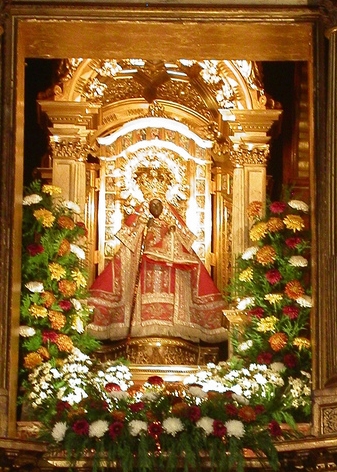
Our Lady of Guadalupe in Estremadura
He thought he should perhaps become a Dominican Friar but he found that community life was not for him and returned to his solitude. When the Archbishop approved his way of life and Blessed Gregory became too popular, he went to work in a hospital and wrote a book on pharmacy for the nursing brothers.
In 1589, a priest friend, Fr Francisco de Losa (1536-1634) helped him to set up a Hermitage near his Parish. At this point, Fr Losa could more carefully observe the piety of his charge and the biography focuses on this aspect. Fr Losa was so edified that he retires from his pastoral duties to accompany and observe his friend.
“I then observed both day and night all his actions and words with all possible attention, to see if I could discover anything contrary to the high opinion which I had of his virtue. But far from this, his behaviour appeared everyday more admirable than before, his virtue more sublime and his whole conversation rather divine than human.”
They spent time in scriptural study, long hours in prayer and became Spiritual advisors to many. Fr Losa notes a typical day. Gregory would rise, wash, read a little, then fall into a “recollection”: “All one could conjecture from the tranquility and devotion which appeared in his countenance was that he was in the continual presence of God.” They would dine at one o’clock, afterwards engage in conversation or one might read aloud as a recreation. Then Gregory would return to his room until the next day, though sometimes he received visitors; in his last years the visitors were often ecclesiastics, the learned, or the nobility, going away much edified. Gregory’s routine remained not to use a candle and he retired by about 9:30 in the evening. Towards his last years he had reluctantly accepted the sheepskin quilt offered by Fr Losa and a bed rather than the floor. In any case, he seldom slept more than a few hours.
Among the virtues of Gregory was his mildness, patience, and humility — though he must have suffered greatly from his physical pain (a bad intestinal illness which caused bleeding). He never judged others: “For many years I have judged no man but believed all to be wiser and better than me. I have not pretended to set myself up above others or to assume any authority over others.”
He never complained, and Fr Losa says, “I never heard him speak one single word that could be reproved.” His conversation was never but “useful and spiritual,” though he preferred silence. Gregory used to say that “My silence will edify more than my words” and “I see that many talk well, but let us live well.” Ultimately, however, Gregory no longer identified with this world: “Ever since I came to New Spain I have never desired to see anything in this world, not even my relations, friends or country.”
Fr Losa attests to the vast knowledge of López, of ecclesiastical and profane history, ancient to contemporary, of astronomy, cosmography, geography, botany, zoology, anatomy, medicine and botanicals. These topics did not distract López from his spirituality, however, for he told Losa, “I find God alike in little things and in great.”
But his spiritual discernment was keen and Fr Losa says that Gregory “saw spiritual things with the eyes of his soul as clearly as outward things with those of his body and had an amazing accuracy in distinguishing what was of grace and what of nature.” For this Blessed Gregory was often consulted by visitors as if he was an “oracle from heaven, as a prodigy of holiness.” One can imagine how this edified Fr Losa, for in 1579 he began writing about López, even while yet a rector of a large parish in Mexico City.
Blessed Gregory remained a hermit all his life, wishing always to be alone with God. When he died in 1596 at the age of 54, miracles were attributed to him almost immediately. He was a most unusual man, who took his own path to holiness and remained convinced that it was the will of God for him. His fame reached as far as England, France and Germany. The sickness that had dogged him returned one last time in 1596. He lost all appetite and could swallow only liquids. The bloody flux would not stop and he grew progressively weaker. He told Fr Losa that he had entered “God’s time” and his comportment would consist in doing and not in talking. Fr Losa records that “I never perceived in him during his whole illness any repugnance to the order of God but an admirable peace and tranquillity, with an entire conformity to His will. All his virtue shone marvellously in his sickness, particularly his humility.” López died in July 1595 at 54 years of age, 34 of them spent in the New World. Due to the unflagging efforts of Losa, Gregory López was eventually named “Blessed” but was never formally beatified though he is regarded as having received equipollent Beatification and is highly revered most especially in Mexico and Spain. Interestingly, many Protestants including John Wesley, revered him as a man of wonderful holiness.
St Apollinaris of Ravenna Disciple of St Peter – Martyr (Optional Memorial)
Bl Anne Cartier
St Ansegisus
St Aurelius of Carthage
St Bernward of Hildesheim
St Cassian of Saint Saba
St Chi Zhuze
St Elijah the Prophet
St Elswith
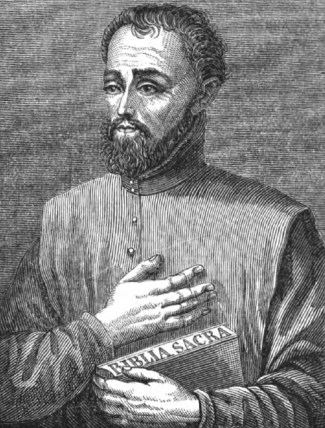
Bl Gregory Lopez (1542-1596)
St José María Díaz Sanjurjo
St Joseph Barsabas
Bl Luigi Novarese
St Margaret of Antioch
St Maria Fu Guilin
St Mère
St Paul of Saint Zoilus
St Rorice of Limoges
St Severa of Oehren
St Severa of Saint Gemma
St Wulmar
—
Martyrs of Corinth – 22 saints: 22 Christians who were martyred together. We know nothing else about them but the names – • Appia • Calorus • Cassius • Celsus • Cyriacus • Donatus • Emilis • Felix • Fructus • Magnus • Maximus • Nestita • Partinus • Pasterus • Paul • Romanus • Spretus • Tertius • Theodolus • Ueratia • Valerian • Victor. They were martyred in Corinth, Greece.
Martyrs of Damascus – 16 saints: 16 Christians who were martyred together. We know the names of six of then, but no details about any of them – Cassia, Julian, Macrobius, Maximus, Paul and Sabinus. They were martyred in Damascus, Syria, date unknown.
Martyrs of Seoul – 8 saints: Eight lay native Koreans in various states of life who were murdered together for their faith.
• Anna Kim Chang-gum
• Ioannes Baptista Yi Kwang-nyol
• Lucia Kim Nusia
• Magdalena Yi Yong-hui
• Maria Won Kwi-im
• Martha Kim Song-im
• Rosa Kim No-sa
• Theresia Yi Mae-im
They were martyred on 20 July 1839 at the Small West Gate, Seoul, South Korea and Canonised on 6 May 1984 by St Pope John Paul.
Martyrs of Zhaojia – 3 saints: Married lay woman and her two daughters in the apostolic vicariate of Southeastern Zhili, China. During the persecutions of the Boxer Rebellion, the three of them hid in a well to avoid being raped. They were found, dragged out, and killed for being Christian. Martyrs. They were – Maria Zhao Guoshi (mother), Maria Zhao and Rosa Zhao (sisters). They were martyred in late July 1900 in Zhaojia, Wuqiao, Hebei, China.
Martyrs of Zhujiahe – 4 saints: Two Jesuit missionary priests and two local lay people who supported their work who were martyred together in the Boxer Rebellion during and immediately after Mass.
• Léon-Ignace Mangin
• Maria Zhu Wushi
• Paul Denn
• Petrus Zhu Rixin
They were martyred on 20 July 1900 in church in Zhujiahe, Jingxian, Hebei, China and Canonised on 1 October 2000 by St Pope John Paul.
Martyred in the Spanish Civil War:
• Blessed Abraham Furones y Furones
• Blessed Antoni Bosch Verdura
• Blessed Francisca Aldea y Araujo
• Blessed Jacinto García Riesco
• Blessed Joan Páfila Monllaó
• Blessed Josep Tristany Pujol
• Blessed Matías Cardona-Meseguer
• Blessed Rita Josefa Pujalte y Sánchez
• Blessed Vicente López y López
Pope Francis announced this morning, 19 July 2018, during an Ordinary Public Consistory that he will canonise an additional person on October 14 along with Blessed Paul VI and Blessed Oscar Romero.
It is fitting that Blessed Nunzio Sulprizio, who died at the age of 19, be canonised during the Synod whose theme is Young People, the Faith and Vocational Discernment. Now with the addition of Blessed Nunzio, the canonisation will include people from every walk of life: clerical, religious and lay.
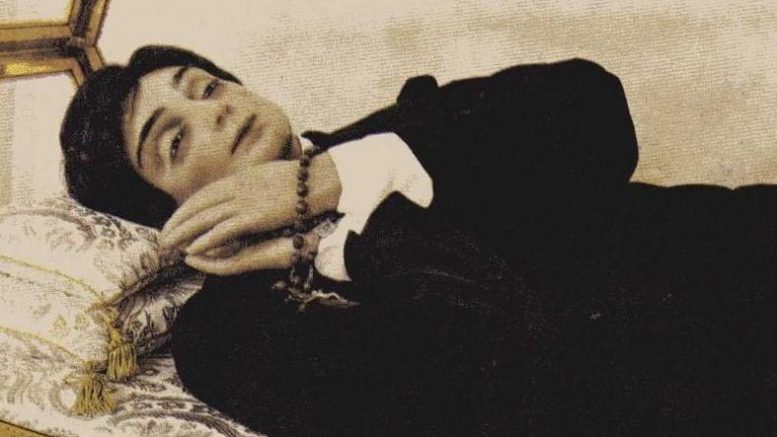
Blessed Nunzio was born in Pescosansonesco in Italy in April of 1817. He lost both of his parents while still a child and was brought up by an uncle. His uncle exploited him, not allowing him to go to school and forced him to work in his blacksmith shop. Regardless of extreme cold or intense heat, he was forced to carry enormous weights over great distances.
He found refuge before the Tabernacle where he would keep Jesus company.
After contracting gangrene in one of his legs, he was sent to a hospital for people with incurable diseases in Naples. He suffered tremendously on account of the pain. Yet, he is known to have said such things as:
Jesus suffered so much for us and by His merits we await eternal life. If we suffer a little bit, we will taste the joy of paradise. Jesus suffered a lot for me. Why should I not suffer for Him? I would die in order to convert even one sinner. When asked who was taking care of him, he would respond: “God’s Providence”.
Once he got better, he dedicated himself to helping other patients. But his health took a sudden turn for the worse. He died from bone cancer in May of 1836 before he reached his 20th birthday.
Pope Paul VI said the following when he Beatified Nunzio on 1 December 1963:
Nunzio Sulprizio will tell you that the period of youth should not be considered the age of free passions, of inevitable falls, of invincible crises, of decadent pessimism, of harmful selfishness. Rather, he will rather tell you how being young is a grace… St Philip used to repeat: Blessed are you, young people, who have the time to do good.
It is a grace, it is a blessing to be innocent, to be pure, to be happy, to be strong, to be full of ardour and life – just like those who receive the gift of fresh and new existence should be, regenerated and sanctified by baptism. They receive a treasure that should not be foolishly wasted but should be known, guarded, educated, developed and used to produce fruit for their own benefit and that of others.
He will tell you that no other age than yours, young people, is as suitable for great ideals, for generous heroism, for the coherent demands of thought and action.
He will teach you how you young people can regenerate the world in which Providence has called you to live and how it is up to you first to consecrate yourselves for the salvation of a society that needs strong and fearless souls.
He will teach you that the supreme word of Christ is to be the sacrifice, the cross, for our own salvation and that of the world. Young people understand this supreme vocation. (vaticannews.va)
Thought for the Day – 19 July – Thursday of the Fifteenth week in Ordinary Time, Year B – Today’s Gospel: Matthew 11:28-30.
“Come to me, all who labour and are heavy laden and I will give you rest. Take my yoke upon you and learn from me; for I am gentle and lowly in heart and you will find rest for your souls. For my yoke is easy, and my burden is light.”…Matthew 11:28-30
The light burden of the law of Christ
Saint Jerome (347-420)
Priest, Translator of the Bible,
Father & Doctor of the Church
“Bear one another’s burdens and so you will fulfil the law of Christ.” Sin is a burden as the psalmist attests when he says: “My sins weigh heavy upon me.” But the Lord has carried this burden for us, teaching us, by His example what we ourselves should do. For it is He who bore the burden of our sins; He was stricken for our sake (cf Is 53:8) and invites those who are weighed down by the heavy burden of the Law and of their sins to carry the easy burden of virtue, saying: “My yoke is easy and my burden is light” (Mt 11:30).
Therefore, whoever holds out a hand to the person who begs for support, not despairing of a neighbour’s salvation, who weeps with those who weep, is weak with those who are weak and who regards other’s sins as though they were his own – such a one, fulfils through charity, the law of Christ. What is this law of Christ? “I give you a new commandment, that you love one another” (Jn 13:34). What is the law of the Son of God? “Love one another as I have loved you.” How has the Son of God loved us? No one has greater love than this, “to lay down one’s life for one’s friends” (Jn 15:13).
Someone who shows no clemency, who is not clothed with the bowels of mercy and tears, no matter what sort of student he is in spirituality, such a one does not fulfil the law of Christ.
Someone who comes to the assistance of the poor weighed down by the burden of destitution and makes friends with dishonest wealth (Lk 16:9), such a one shoulders the needs of his neighbour. This is the one to whom Jesus will say after the general resurrection: “Come, you that are blessed by my Father, inherit the kingdom prepared for you from the foundation of the world. For I was hungry and you gave me food, I was thirsty and you gave me something to drink” (Mt 25:34-35).
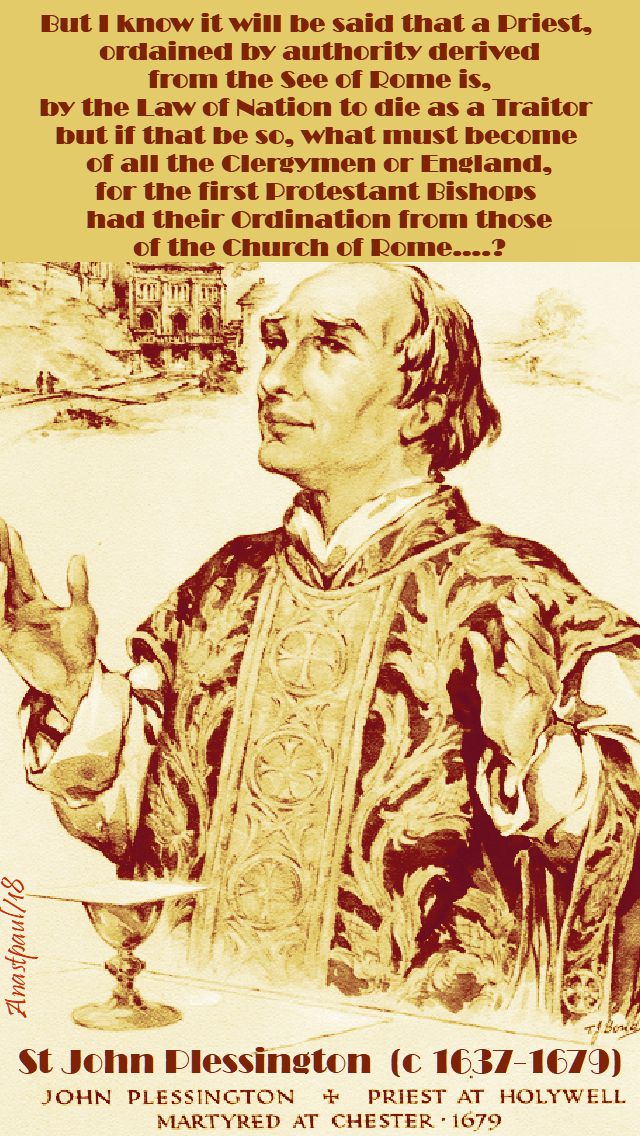
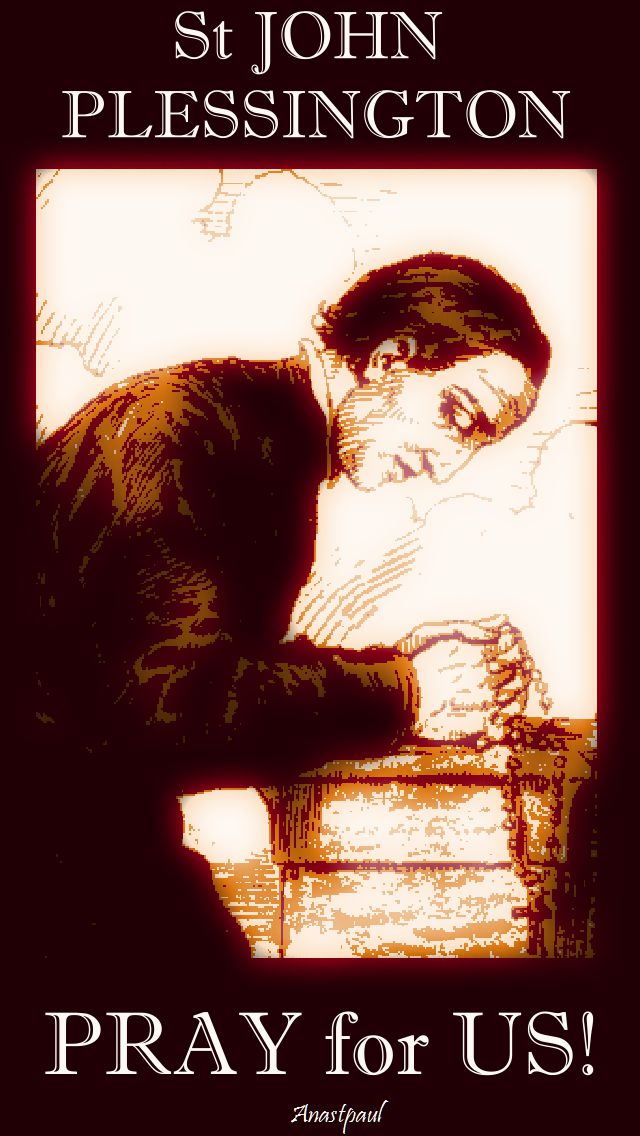
Quote/s of the Day – 19 July – The Memorial of St John Plessington (c 1637-1679) Martyr of England
“But I know it will be said that a Priest, ordained by authority derived from the See of Rome, is by the Law of Nation, to die as a Traitor but if that be so, what must become of all the Clergymen or England, for the first Protestant Bishops had their Ordination from those of the Church of Rome….?”
“Bear witness, good hearers, that I profess, that I undoubtedly and firmly believe, all the Articles of the Roman Catholic Faith and for the truth of any of them, (by the assistance of God), I am willing to die and I had rather die, than doubt of any Point of Faith, taught by our Holy Mother the Roman Catholic Church.”
St John Plessington (c 1637-1679)
Martyred because he was a Catholic Priest
by Elizabeth I of England
John Plessington was born at Dimples Hall, near Garstang, Lancashire in 1637, the son of Robert Plessington and Alice Rawstone, into a family at odds with the authorities, for both their religious and political beliefs. Educated by Jesuits at Scarisbrick Hall, at Saint Omer’s in France and then at the College of Saint Alban at Valladolid, Spain, he was ordained in Segovia on 25 March 1662. He returned to England in 1663 ministering to Catholics in the areas of Holywell and Cheshire, often hiding under the name William Scarisbrick. He was also tutor at Puddington Hall near Chester. Upon arrest in Chester during the Popish Plot scare caused by Titus Oates, he was imprisoned for two months, and then hanged, drawn and quartered for the crime of being a Catholic priest. His speech from the scaffold at Gallow’s Hill in Boughton, Cheshire was printed and distributed:
He said: “I know it will be said that a priest ordayned by authority derived from the See of Rome is, by the Law of the Nation, to die as a Traytor but if that be so what must become of all the Clergymen of the Church of England, for the first Church of England Bishops had their Ordination from those of the Church of Rome, or not at all, as appears by their own writers so that Ordination comes derivatively from those now living.”
He was martyred in 1679. He was beatified in 1929 by Pope Pius XI, and canonised as one of the Forty Martyrs on 25 October 1970 by Blessed Pope Paul VI.
A lot more detail about St John here: https://anastpaul.wordpress.com/2017/07/19/saint-of-the-day-19-july-st-john-plessington/
and his scaffold speech here: https://anastpaul.wordpress.com/2017/07/19/thought-for-the-day-19-july/
One Minute Reflection – 19 July – Thursday of the Fifteenth week in Ordinary Time, Year B – Today’s Gospel: Matthew 11:28-30.
“Come to me, all who labour and are heavy laden and I will give you rest. Take my yoke upon you and learn from me; for I am gentle and lowly in heart and you will find rest for your souls. For my yoke is easy, and my burden is light.”…Matthew 11:28-30
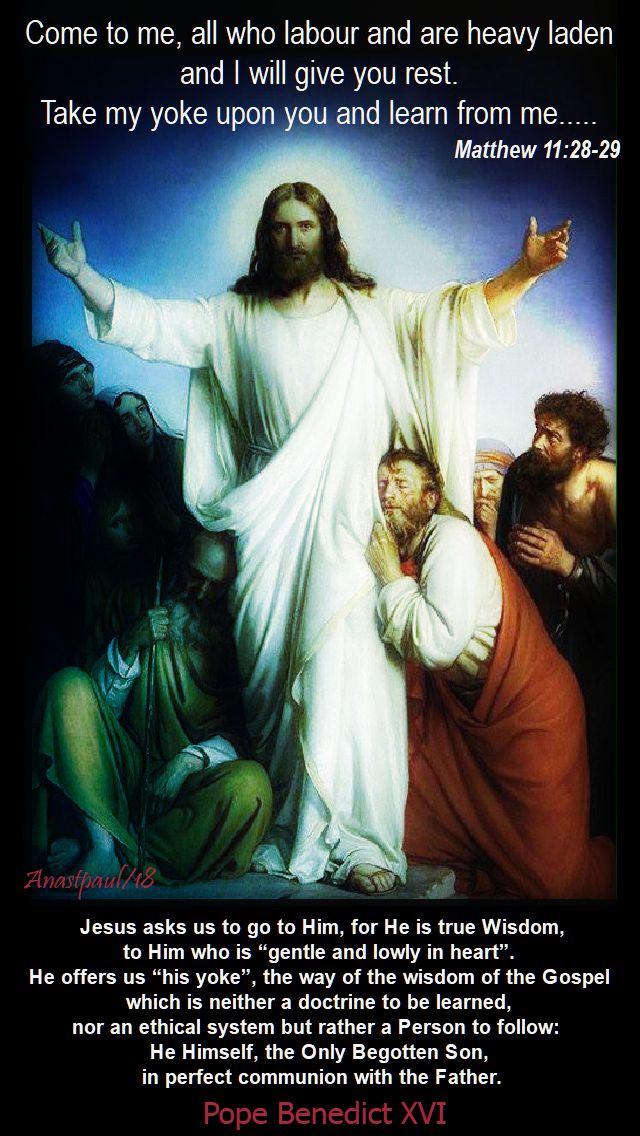
REFLECTION – “Jesus asks us to go to Him, for He is true Wisdom, to Him who is “gentle and lowly in heart”. He offers us “his yoke”, the way of the wisdom of the Gospel which is neither a doctrine to be learned, nor an ethical system but rather a Person to follow: He Himself, the Only Begotten Son, in perfect communion with the Father.”…Pope Benedict, XVI, General Audience, 7 December 2011
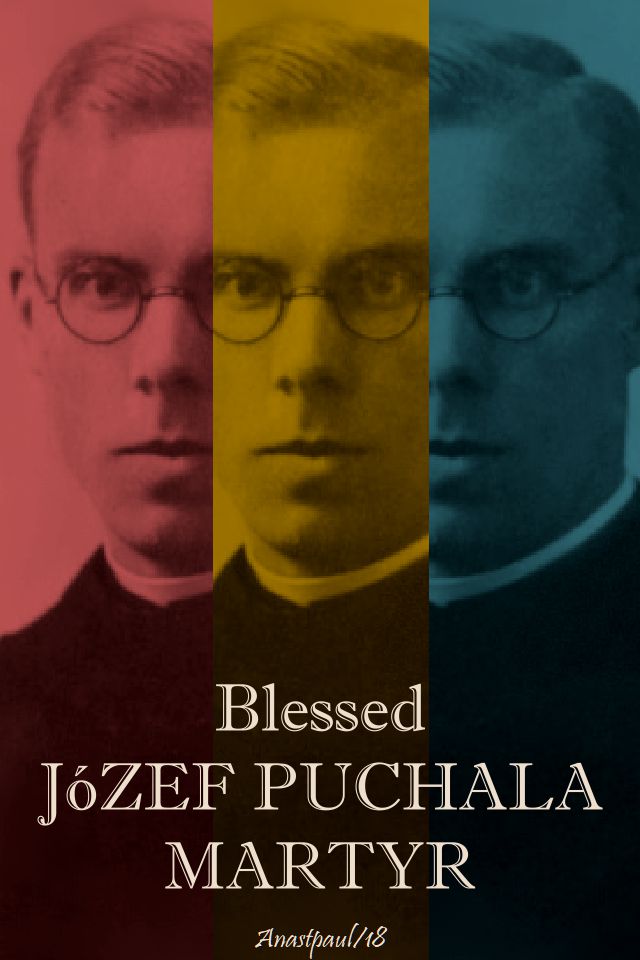
PRAYER – “Holy God, our Father, we turn to You in confidence as children and pray, give us meekness of heart, make us “poor in spirit” that we may recognise that we are not self-sufficient, that we are unable to build our lives on our own but need You, we need to encounter You, to listen to You, to speak to You. Help us to understand that we need Your gift, Your wisdom, which is Jesus Himself, in order to do the Your will in our lives and thus to find rest in the hardships of our journey.” Blessed Jozef Puchala, Holy Martyr for Christ, Pray for us, amen. (Adapted from the same homily above.)
NOTE: The Image used for the Reflection above is called “Christ the Consolator” by Carl Heinrich Bloch (1834-1890). You would be mistaken in believing that this great Artist was a Mormon but of course, he was a Danish Artist of a Christian leaning (Mormons are NOT Christians and were begun by Joseph Smith in the 1820s in New York), studied and was inspired and drawn to Catholicism (but did not convert) in Rome and was vastly influenced by Rembrandt (a protestant) in Holland. The Mormons have used his artworks endlessly – in their temples, advertising and media, he would be highly indignant I believe, without a doubt!
Our Morning Offering – 19 July – Thursday of the Fifteenth week in Ordinary Time, Year B – Today’s Gospel: Matthew 11:28-30.
“Come to me, all who labour and are heavy laden and I will give you rest. Take my yoke upon you and learn from me; for I am gentle and lowly in heart and you will find rest for your souls. For my yoke is easy and my burden is light.”…Matthew 11:28-30
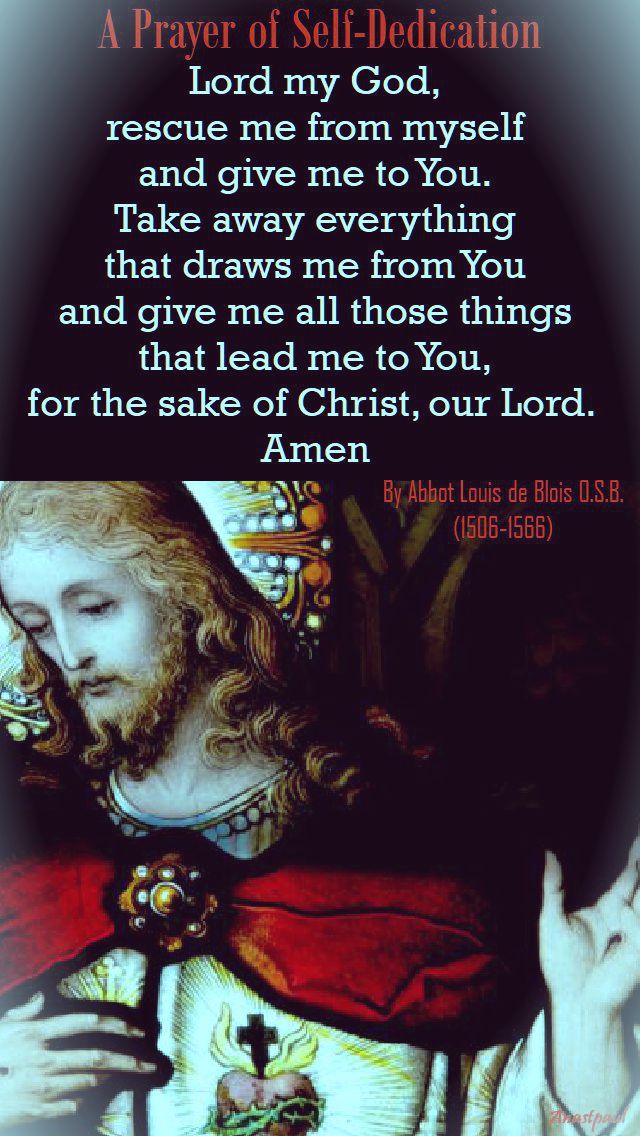
A Prayer of Self-Dedication Abbot Louis de Blois O.S.B. (1506-1566)
Lord my God,
rescue me from myself
and give me to You.
Take away everything
that draws me from You
and give me all those things
that lead me to You,
for the sake of Christ, our Lord.
Amen
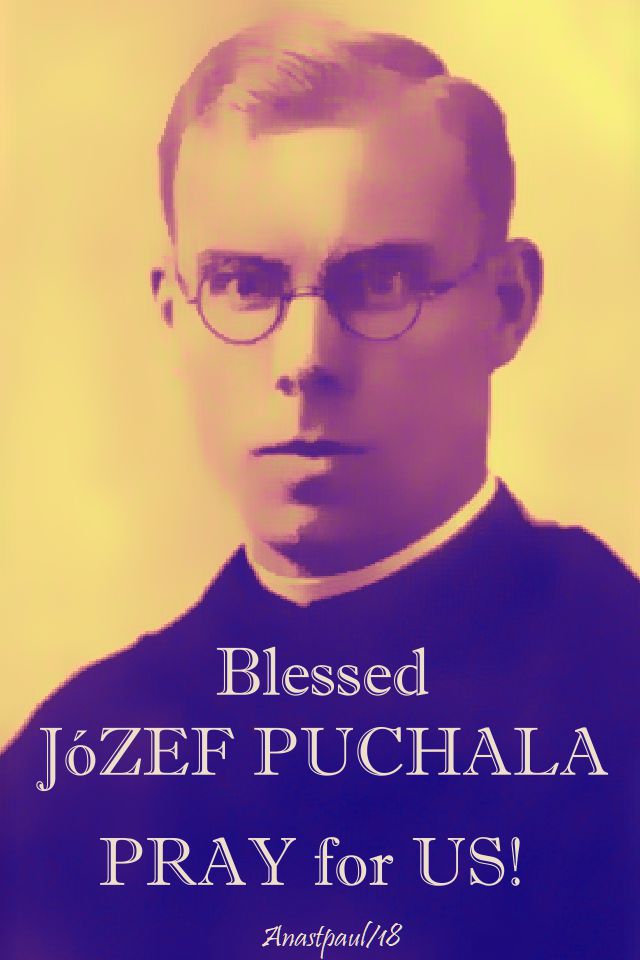
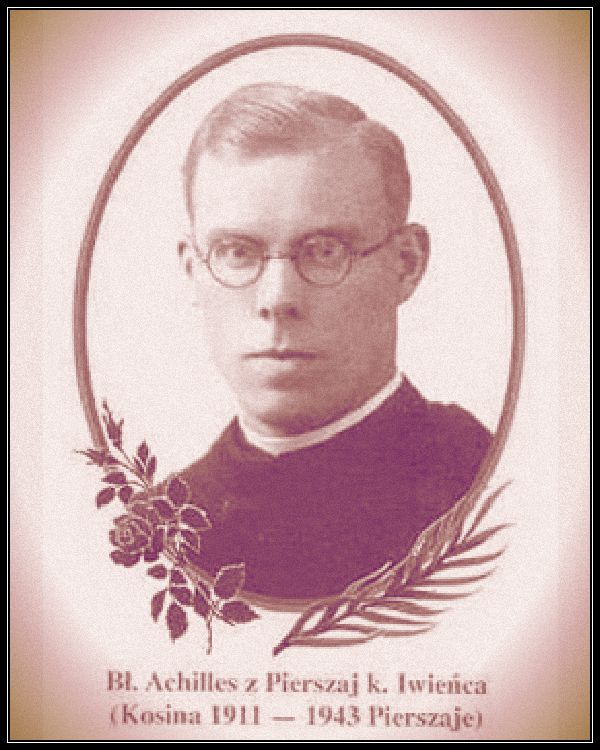
Saint of the Day – 19 July – Blessed Józef Achilles Puchala OFM Conv (1911-1943) Martyr – Priest and Franciscan Friar. Also known as – Achilles Puchala, Brother Achilles, Father Achilles. Born on 18 March 1911 in Kosina, Podkarpackie, Poland and died on 19 July 1943 in a barn outside Borovikovshchina, Minskaya voblasts’, (now) in Belarus. Additional Memorial on 12 June as one of the 108 Martyrs of World War II.
Blessed Jozef was born on 18 March 1911 and baptised on the day of his birth, which is the way Catholics lived and should still live!
He entered the minor seminary in Lviv (in modern Ukraine) in 1924 and once ordained a Deacon, he entered the Monastery of the Franciscan as a Friar Minor Conventual, taking the name Achilles and making his solemn vows on 22 May 1932.
He was ordained as a Priest on 5 July 1936. Before the total devastation of Poland by the Nazis, he served in the Franciscan convents in Grodno and Iwieniec in Poland.
In early 1940 he moved into parish service in Pierszaje, Poland to help with a shortage of priests who had been arrested, murdered or fled ahead of arrest, by the Gestapo during the Nazi occupation and persecutions of World War II.
Finally, Blessed Jozef too was arrested, tortured and eventually murdered by the Gestapo on 19 July 1943. The barn in which he was martyred was set alight but his remains were later retrieved by local Catholics. They were buried in the Parish Church, in which Blessed Jozef had served in in Pierszaje, Poland.
Blessed Jozef was Beatified on 13 June 1999 by St Pope John Paul along with the other 107 (known) Martyrs of World War II. Their liturgical feast day is 12 June. The 108 were Beatified by St Pope John Paul II in Warsaw, Poland. The group comprises 3 bishops, 52 priests, 26 members of male religious, 3 seminarians, 8 female religious and 9 lay people. There are two parishes named for the 108 Martyrs of World War II in Powiercie in Koło County and in Malbork, Poland.
St Ambrose Autpertus
Bl Antonio of Valladolid
St Arsenius the Great
St Aurea of Cordoba
Bl Bernhard of Rodez
St Daria of Constantinople
St Epaphras of Colosse
St Felix of Verona
St John Plessington (c 1637-1679) Martyr – About St John Plessington: https://anastpaul.wordpress.com/2017/07/19/saint-of-the-day-19-july-st-john-plessington/
Bl Józef Puchala OFM Conv (1911-1943) Martyr
St Macrina the Younger
St Martin of Trier
St Michael the Sabaitè
Bl Pascasio of Lyon
St Romain of Ryazan
St Pope Symachus
St Vicente Cecilia Gallardo
—
Martyrs of Meros – 3 saints: Three Christians tortured and martyred together in the persecutions of emperor Julian the Apostate and governor Almachio. We know nothing else about them but the names – Macedoniuis, Tatian and Theodule.
They were burned to death on an iron grill in Meros, Phrygia (in modern Turkey).
Martyrs of China: 3 Beati
Elisabeth Qin Bianshi Elisabeth
Ioannes Baptista Zhu Wurui
Simon Qin Chunfu
Thought for the Day – – 18 July – The Holy Father’s Prayer Intention for July “Pray for our Priests and their Pastoral Ministry”
What joy did the Apostles feel after the Resurrection of Our Lord, at seeing the Master whom they had loved so much! The priest must feel the same joy, at seeing Our Lord whom he holds in his hands. Great value is attached to objects which have been laid in the drinking cup of the Blessed Virgin and of the Child Jesus, at Loretto. But the fingers of the priest, that have touched the adorable Flesh of Jesus Christ, that have been plunged into the chalice which contained His Blood, into the pyx where His Body has lain, are they not still more precious?
The priesthood is the love of the Heart of Jesus.
When you see the priest, think of Our Lord Jesus Christ.
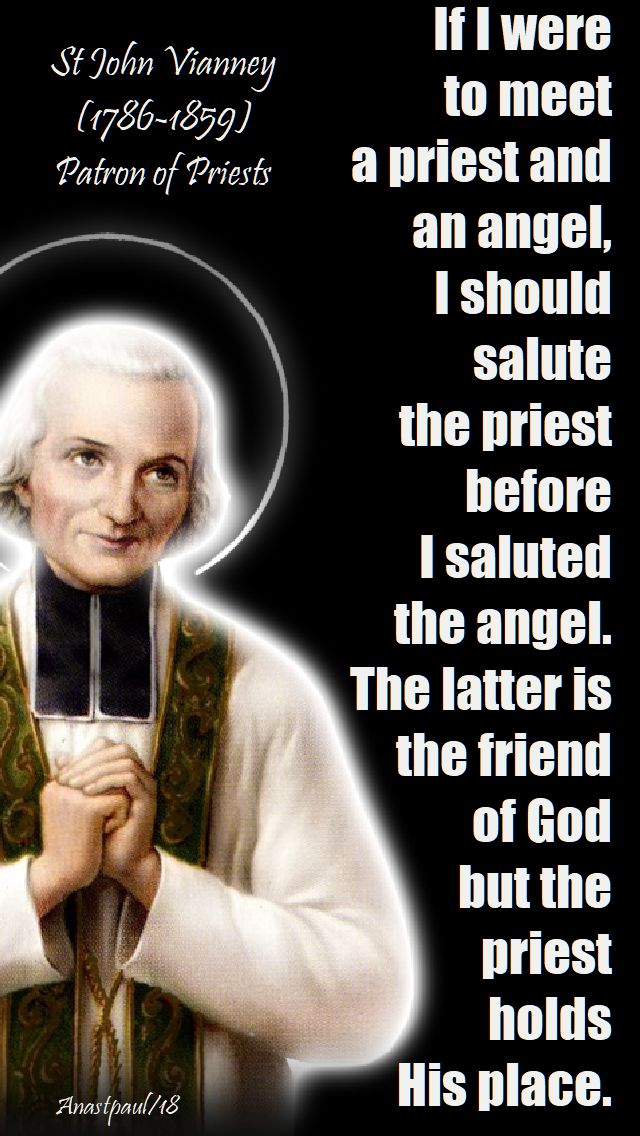
St John Vianney (1786-1859) Patron of Priests
Prayer for Priests By St John Vianney
God, please give to Your Church today
many more priests after Your own heart.
May they be worthy representatives
of Christ the Good Shepherd.
May they wholeheartedly devote themselves
to prayer and penance;
be examples of humility and poverty;
shining models of holiness;
tireless and powerful preachers
of the Word of God;
zealous dispensers of Your grace
in the sacraments.
May their loving devotion to Your Son,
Jesus in the Eucharist
and to Mary His Mother,
be the twin fountains of fruitfulness
for their ministry.
Amen
Quote/s of the Day – 18 July – The Holy Father’s Prayer Intention for July “Pray for our Priests and their Pastoral Ministry”
“He made them, the vicars of His love.
St Ambrose (340-397)
Father & Doctor of the Church
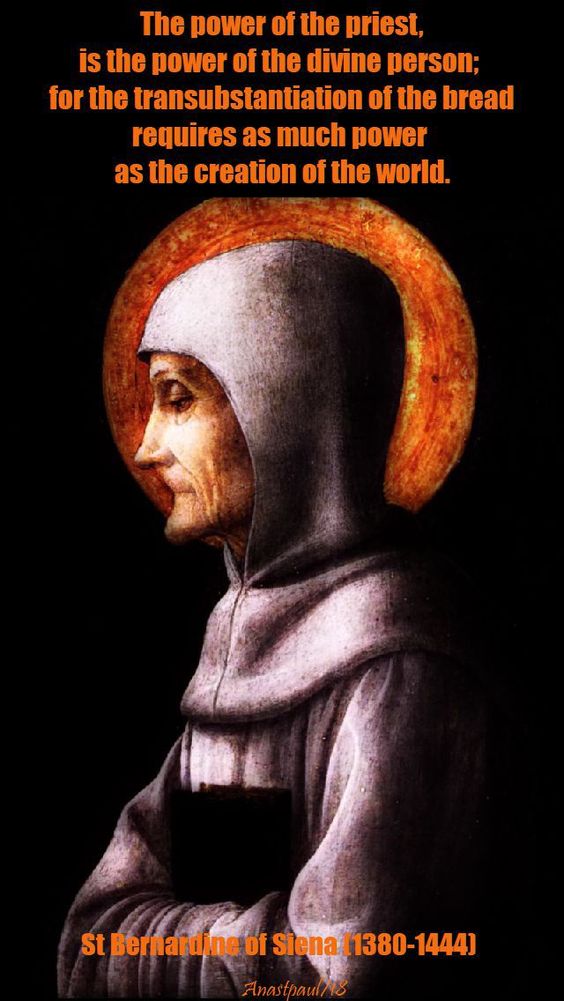
“The power of the priest, is the power of the divine person, for the transubstantiation of the bread, requires as much power, as the creation of the world.”
St Bernardine of Siena (1380-1444)
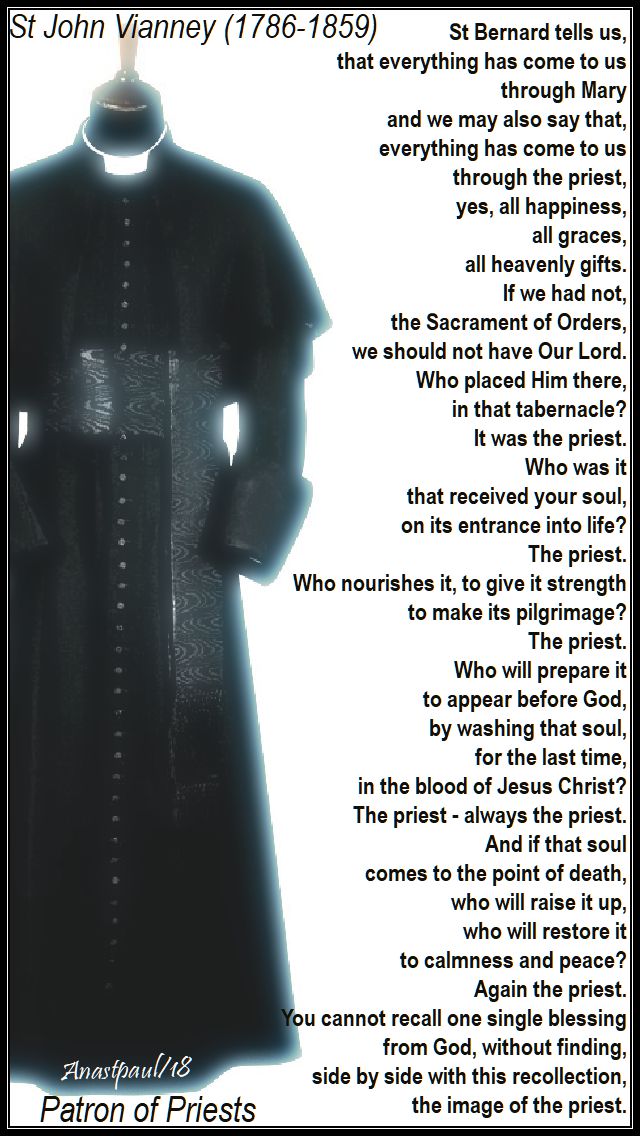
“St Bernard tells us that everything has come to us through Mary and we may also say that everything has come to us through the priest, yes, all happiness, all graces, all heavenly gifts. If we had not the Sacrament of Orders, we should not have Our Lord. Who placed Him there, in that tabernacle? It was the priest. Who was it that received your soul, on its entrance into life? The priest. Who nourishes it, to give it strength to make its pilgrimage? The priest. Who will prepare it to appear before God, by washing that soul, for the last time, in the blood of Jesus Christ? The priest – always the priest. And if that soul comes to the point of death, who will raise it up, who will restore it to calmness and peace? Again the priest. You cannot recall one single blessing from God, without finding, side by side with this recollection, the image of the priest.”
“If I were to meet a priest and an angel, I should salute the priest before I saluted the angel. The latter is the friend of God but the priest holds His place.”
St John Vianney (1786-1859) Patron of Priests
“Day after day, it is necessary to learn, that I do not possess my life for myself. Day by day, I must learn to abandon myself, to keep myself available for whatever He, the Lord, needs of me at a given moment, even if other things seem more appealing and more important to me, this means giving life, not taking it.”
One Minute Reflection – 18 July – Wednesday of the Fifteenth week in Ordinary Time, B – Today’s Gospel Matthew 11:25-27.
“You have hidden these things from the wise and the learned, you have revealed them, to the childlike”…Matthew 11:25
REFLECTION – “O my Saviour and my God! This ought to astonish us. We run after knowledge as if all our happiness depended on it. Woe to us if we don’t have it! We certainly need it but in its fullness, we ought to study but in moderation. Other people claim understanding of business and pass for people of substance and negotiation in the world. These are the ones from whom God takes away perception of Christian truths, from the learned and knowing of this world. Who does He give it to, then? To simple, ordinary people… Gentlemen, true religion is to be found among the poor. God enriches them with living faith, they believe, touch, taste the words of life… For the most part they preserve their peace in the midst of trouble and distress. What is the reason for this? Faith. Why? Because they are simple, God causes those graces to abound in them, that He refuses to the rich and learned of this world.”…St Vincent de Paul (1581-1660)
PRAYER – Lord God, in Your wisdom You created us, by Your Providence, You rule us. Penetrate our inmost being with Your holy light so that our way of life may always be one of faithful service and childlike trust in You. Grant that by the intercession of St Frederick, we may always follow behind Your Son and grasp His hand, to lead us to You, Through Jesus Christ our Lord with the Holy Spirit, one God, forever, amen.
Our Morning Offering – 18 July – Wednesday of the Fifteenth week in Ordinary Time, B – Today’s Gospel Matthew 11:25-27.
“All things have been handed over to me by my Father. No one knows the Son except the Father, and no one knows the Father except the Son and anyone to whom the Son wishes to reveal him.”...Matthew 11:27
May the Lord Jesus Touch Our Eyes Origen (c 185-253) Father of the Church
May the Lord Jesus touch our eyes,
as He did those of the blind.
Then we shall begin to see in visible things
those which are invisible.
May He open our eyes to gaze,
not on present realities
but on the blessings to come.
May He open the eyes of our heart,
to contemplate God in Spirit,
through Jesus Christ the Lord,
to whom belong,
power and glory,
through all eternity.
Amen
Saint of the Day – 18 July – St Frederick (c 815 – c 838) Martyr, Bishop – died on 18 July 8383 by being stabbed to death just after saying Mass.
Frederick was born around 780 in Friesland and was a grandson of the Frisian King Radboud. At a young age he was taught at Utrecht by the clergy, including Bishop Ricfried. He was trained in piety and sacred learning among the clergy of the Church of Utrecht. Being ordained priest, he was charged by Bishop Ricfried with the care of instructing converts and about 825 he was chosen to succeed him as Bishop of Utrecht. The new bishop at once began to establish order everywhere and sent St Odulf and other zealous and virtuous labourers, into the northern parts, to dispel the paganism which still subsisted there.
Given his reach and reputation, Saint Frederick was soon embroiled in the political matters of the times. Saint Frederick found himself in the position to admonish the Empress Judith, after her sons raised charges against her, citing immorality. While Frederick spoke to her with patience, prudence and charity, she became irate and worked to undermine him. Similarly, he raised the ire of many of those throughout the land who did not ascribe to the Christian faith, enforcing marriages and spreading the Gospel. Through his labours, he found himself greatly disliked by many dangerous and powerful individuals. Saint Frederick refused to be intimidated, however, certain in the power of the Lord.
On 18 July 838, following celebration of the Mass, Saint Frederick was stabbed by two assassins. He died only minutes later, reciting Psalm 144, “I will praise the Lord in the land of the living.” It is unclear as to who had ordered the assassination but historians agree it was due to his preaching and enforcing of the tenets of the faith. As such, the Church considers Saint Frederick a holy Martyr, having given his life to the faith and suffered death as a consequence.
St Frederick composed a prayer to the Blessed Trinity which for many ages was used in the Netherlands. The reputation of his sanctity appears from a poem of Rabanus Maurus, his contemporary, in praise of his virtues.
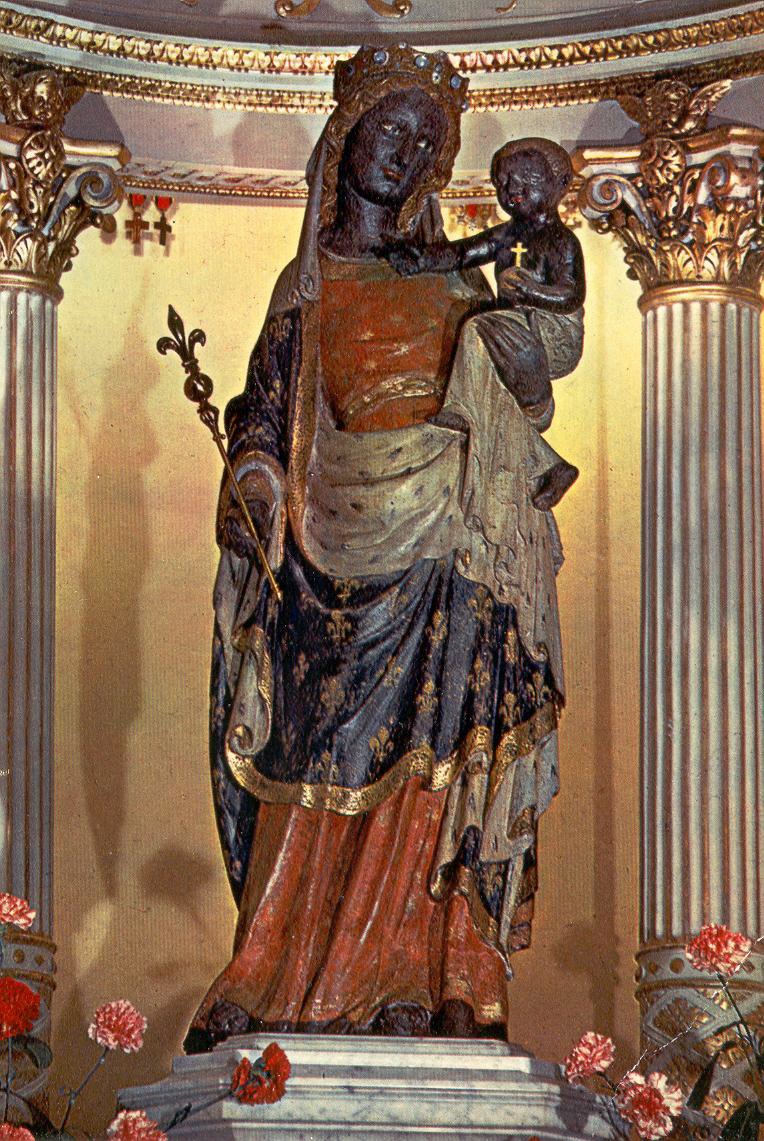
Our Lady of Good Deliverance: Since the 1000s, the Church of Saint-Etienne-des-Grès in the old Latin Quarter of Paris had a chapel to Our Lady of Good Deliverance, where, across the centuries, pilgrims sought the Virgin’s help with all kinds of sufferings. During the Wars of Religion and counter-Reformation, her confraternity had 12,000 members, including the King and Queen of France. In 1587, young St Francis de Sales, feeling himself damned, recovered confidence and joy after saying the prayer that had been pasted to a tablet before her statue, the Memorare.
In 1790, the revolutionary government closed the Church of Saint-Etienne-des-Grès. In 1791, when the church’s furnishings were advertised for sale, a devoted countess, Madame de Carignan Saint Maurice, bought the statue of the Black Virgin and moved it to her lodgings in Paris. The following year, St-Etienne’s was destroyed. In 1793, the countess was sent to prison, where she met the Sisters of St Thomas of Villanova. They all got out the next year but when the government threatened to disband the Sisters, Mme de Carignan vowed to give them the statue if they were spared. In 1806, she fulfilled the vow. The image was installed in the Sisters’ chapel in Paris, moving with them in 1908 to their present motherhouse in the suburb of Neuilly-sur-Seine.
On a pedestal above the altar, the life-size polychrome limestone statue dates from the 1300s: a classic Gothic standing mother and child, but both coal-black. The Black Virgin wears a white veil and dark blue mantle ornamented with fleurs-de-lys over a red robe. Every day, the Sisters gather in the chapel to pray on behalf of families, the sick, religious vocations, those who have entrusted themselves to the Virgin and peace in the world.
The feast of Our Lady of Good Deliverance, is set for 18 July, the date when the Vatican officially approved the congregation of Soeurs de Saint Thomas de Villenueve in 1873. The 1 May procession formerly held by her confraternity has been revived in recent years by the Chapter of Our Lady of Good Deliverance, Neuilly’s branch of Notre-Dame de Chrétienté.
St Aemilian of Dorostorium
St Alanus of Sassovivo
St Alfons Tracki
Bl Arnold of Amiens
St Arnoul the Martyr
St Arnulf of Metz
St Athanasius of Clysma
Bl Bernard de Arenis
Bl Bertha de Marbais
St Bruno of Segni O.S.B. (1049-1123)
St Ðaminh Ðinh Ðat
St Edburgh of Bicester
St Elio of Koper
St Frederick of Utrecht (c 815 – c 838)
St Goneri of Treguier
St Gundenis of Carthage
Bl Herveus
Bl Jean-Baptiste de Bruxelles
St Marina of Ourense
St Maternus of Milan
St Minnborinus
St Pambo of the Nitrian Desert
St Philastrius of Brescia
St Rufillus of Forlimpopoli
St Scariberga of Yvelines
St Szymon of Lipnicza
St Theneva
St Theodosia of Constantinople
—
Martyrs of Silistria – 7 saints: Seven Christians who were martyred together. No details about them have survived but the names – Bassus, Donata, Justus, Marinus, Maximus, Paulus and Secunda. They were martyred in Silistria (Durostorum), Moesia (in modern Bulgaria), date unknown.
Martyrs of Tivoli – 8 saints: A widow, Symphorosa and her seven sons ( Crescens, Eugene, Julian, Justin, Nemesius, Primitivus and Stracteus) martyred in Tivoli, Italy in the 2nd-century persecutions of Hadrian.
Thought for the Day – 17 July – Tuesday of the Fifteenth week in Ordinary Time, B – Today’s Gospel: Matthew 11:20-24
To be converted and return to the Lord
Verse Homily of
Saint Jacob of Sarug (c 449-521)
Syrian monk and Bishop
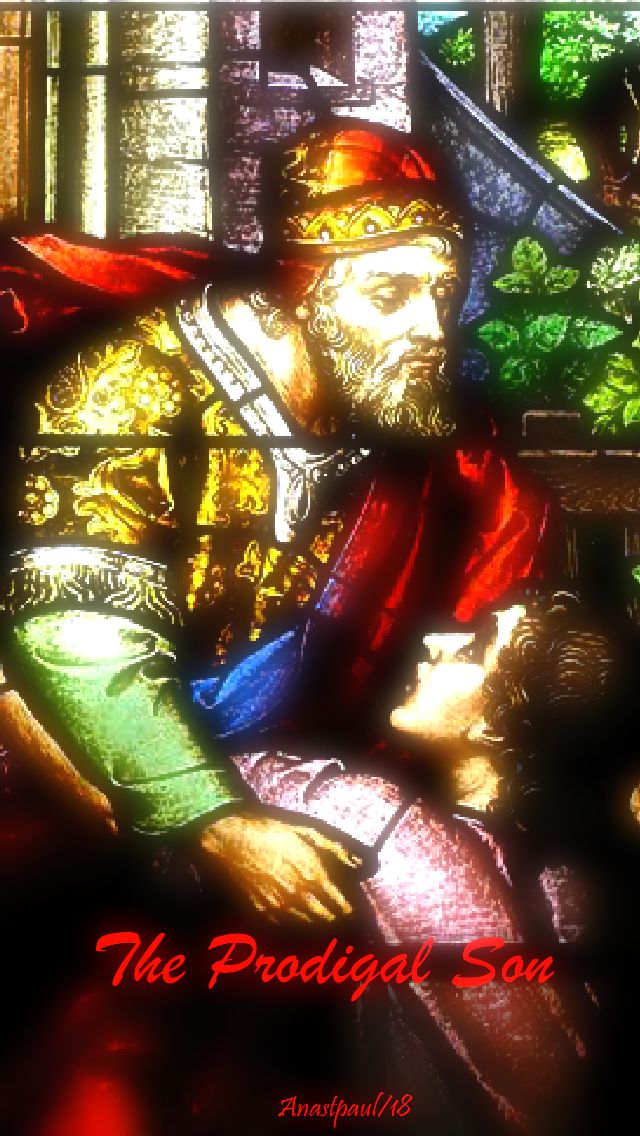
I will go back to my Father’s house like the prodigal son (Lk 15:18) and He will welcome me. For I was dead through sin as though by sickness; raise me up from my distress that I may praise Your name! O Lord of heaven and earth, come to my help and show me Your way, that I may come to You. Draw me to You, Son of the Most Good and bring Your compassion to completion. I will set out towards You and there be filled with joy. Knead for me now the grain of life at this time when I am crushed.
I set out in search of You and the Evil One spied on me like a thief (cf. Lk 10:30). He bound and chained me in the pleasures of this wicked world: he imprisoned me in its pleasures and slammed the door in my face. There was no one to free me, so that I might set out in search of You, O Lord, my good!… O Lord, I long to be Yours and walk Your way. See how I meditate Your commandments by day and by night (Ps 1:2). Grant my request and accept my prayer, O merciful one! Do not cast off the hope of Your servant, for he is waiting for you.
Quote/s of the Day – 17 July – Tuesday of the Fifteenth week in Ordinary Time, B – Today’s Gospel: Matthew 11:20-24
Speaking of: Seeking Repentance with the Fathers
“When once you have departed this life, there is no longer any place for repentance, no way of making satisfaction. Here, life is either lost or kept. Here, by the worship of God and by the fruit of faith, provision is made for eternal salvation. Let no one be kept back either by his sins or by his years from coming to obtain salvation. To him who still remains in this world, there is no repentance that is too late.”
St Cyprian of Carthage (c 200- c 258)
Father of the Church
“Do you fast? Then feed the hungry, give drink to the thirsty, visit the sick, do not forget the imprisoned, have pity on the tortured, comfort those who grieve and who weep, be merciful, humble, kind, calm, patient, sympathetic, forgiving, reverent, truthful and pious, so that God might accept your fasting and might plentifully grant you the fruits of repentance.”
“Since it is likely that, being men, they would sin every day, St Paul consoles his hearers by saying ‘renew yourselves’ from day to day. This is what we do with houses: we keep constantly repairing them as they wear old. You should do the same thing to yourself. Have you sinned today? Have you made your soul old? Do not despair, do not despond but renew your soul by repentance and tears and Confession and by doing good things. And never cease doing this.”
“If repentance is neglected for an instant, one can lose the power of the Resurrection as he lives with the weakness of tepidity and the potential of his fall.”
St John Chrysostom (347-407)
Father and Doctor of the Church
“Reform yourself and so be always ready. Be not afraid of the last day, as a thief, who will break up your house as you sleep but awake and reform yourself today.”
“In failing to confess, Lord, I would only hide You from myself, not myself from You.”
St Augustine (354-430) Father and Doctor of the Church
“To do penance is to bewail the evil we have done and to do no evil to bewail.”
St Pope Gregory the Great (540-604)
Father & Doctor of the Church
“Repentance raises the fallen, mourning knocks at the gate of Heaven and holy humility opens it.”
“Repentance is the renewal of baptism. Repentance is a contract with God for a second life. A penitent is a buyer of humility. Repentance is constant distrust of bodily comfort. Repentance is self-condemning reflection of carefree self-care. Repentance is the daughter of hope and the renunciation of despair. A penitent is an undisgraced convict. Repentance is reconciliation with the Lord by the practice of good deeds contrary to the sins. Repentance is purification of conscience. Repentance is the voluntary endurance of all afflictions. A penitent is the inflicter of his own punishments. Repentance is a mighty persecution of the stomach and a striking of the soul into vigorous awareness.”
“Confession is like a bridle that keeps the soul which reflects on it from committing sin but anything left unconfessed we continue to do without fear as if in the dark.”
One Minute Reflection – 17 July – Tuesday of the Fifteenth week in Ordinary Time, B – Today’s Gospel: Matthew 11:20-24.
“But I tell you, it will be more tolerable for Tyre and Sidon on the day of judgement than for you..”…Matthew 11:22
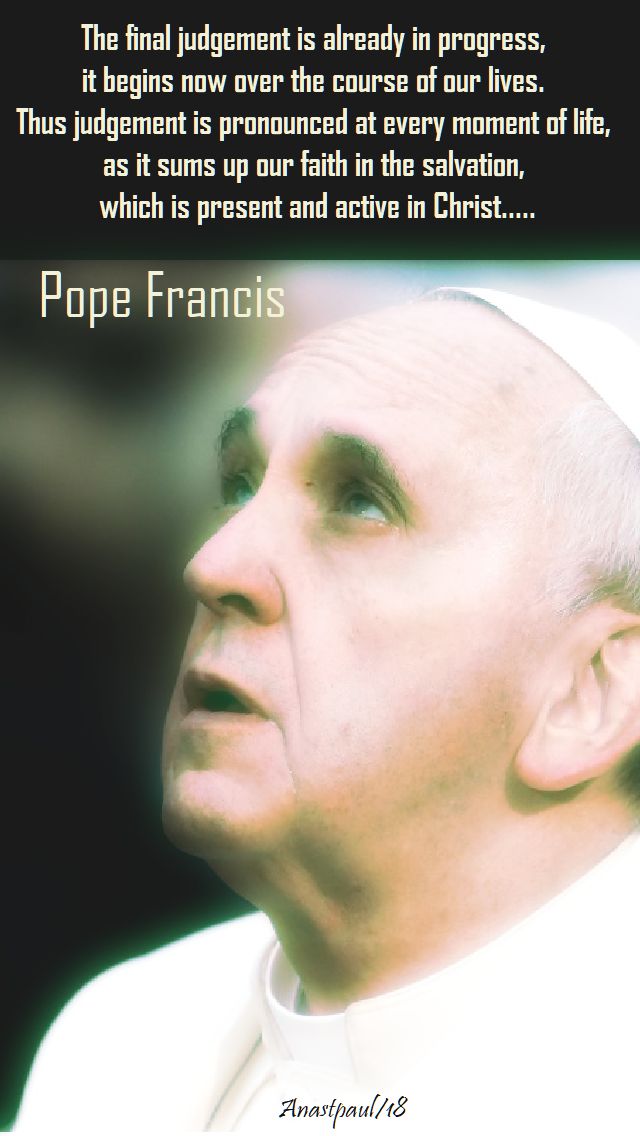
REFLECTION – “The final judgement is already in progress, it begins now over the course of our lives. Thus judgement is pronounced at every moment of life, as it sums up our faith in the salvation which is present and active in Christ, or of our unbelief, whereby we close in upon ourselves. But if we close ourselves to the love of Jesus, we condemn ourselves. Salvation is, to open oneself to Jesus, it is He who saves us.”…Pope Francis – General Audience, 11 December 2013
PRAYER – Almighty God, to whom this world with all its goodness and beauty belongs, give us grace joyfully to begin this day in Your name and to fill it, with an active love for You and for our neighbour. Grant us the grace to repent of our sins, to turn to the Cross of Your Son and to beg Him in His great love and suffering to forgive us again! Mary, Holy Mother, intercede for us in our weakness and help us to turn our backs on sin and look only at the face of Christ. Amen
Our Morning Offering – 17 July – Tuesday of the Fifteenth week in Ordinary Time, B
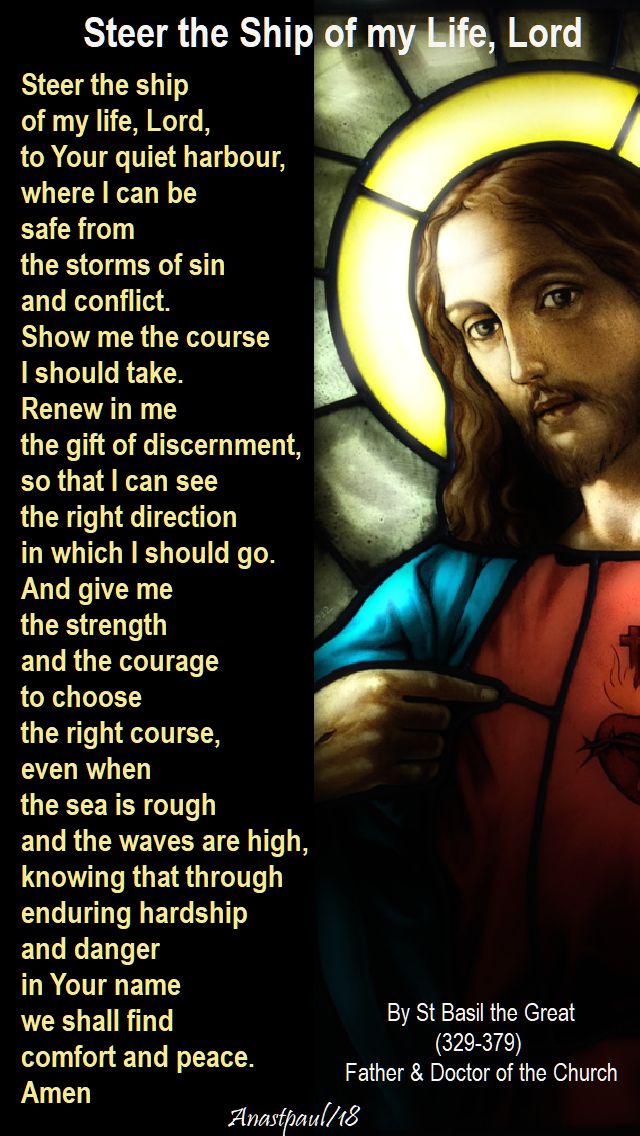
Steer the Ship of My Life, Lord By St Basil the Great (329-379) Father & Doctor of the Church
Steer the ship of my life, Lord,
to Your quiet harbour,
where I can be safe from
the storms of sin and conflict.
Show me the course I should take.
Renew in me the gift of discernment,
so that I can see the right direction
in which I should go.
And give me the strength
and the courage
to choose the right course,
even when the sea is rough
and the waves are high,
knowing that through enduring
hardship and danger in Your name
we shall find comfort and peace.
Amen
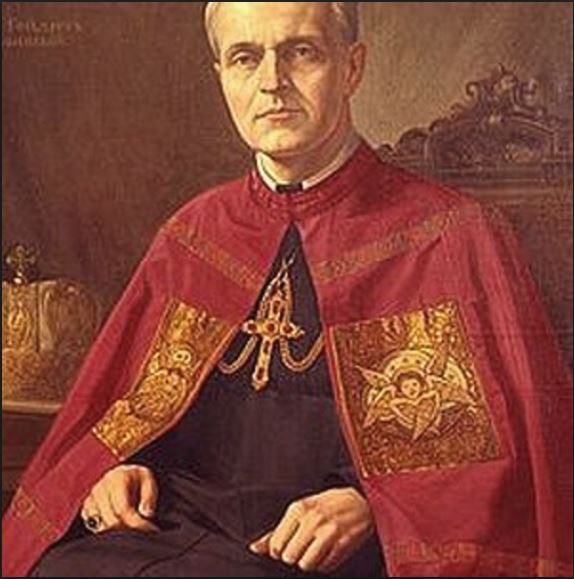
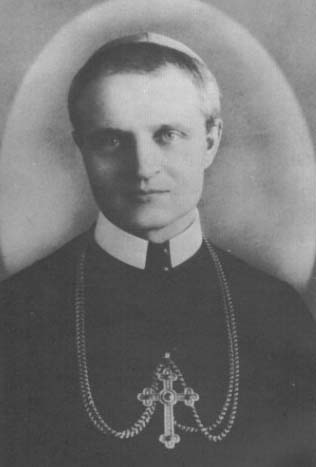
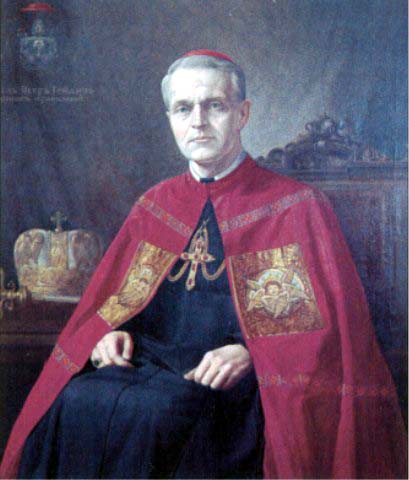
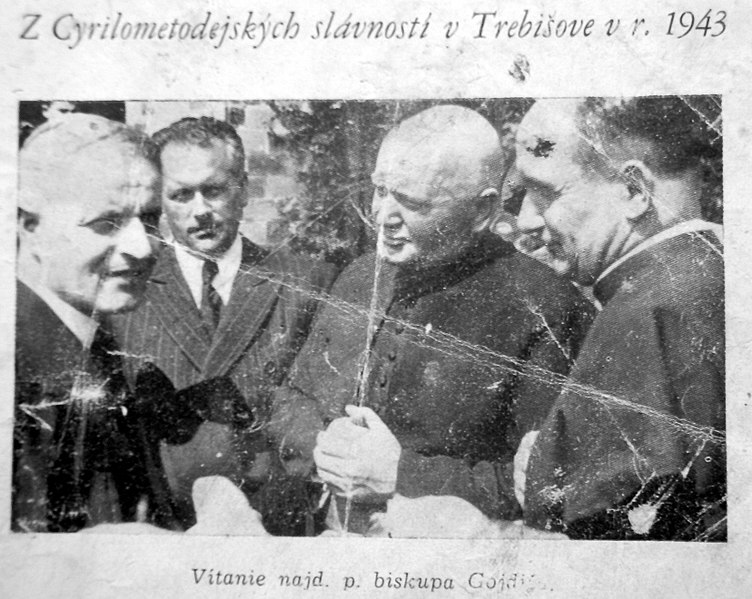
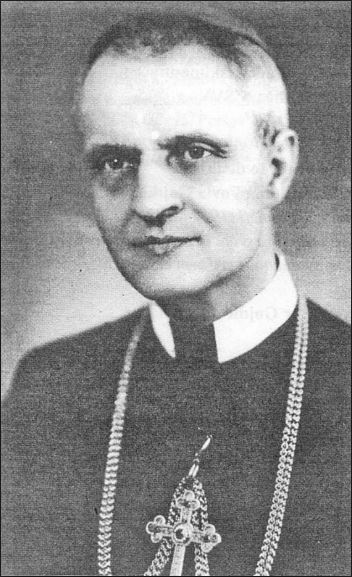
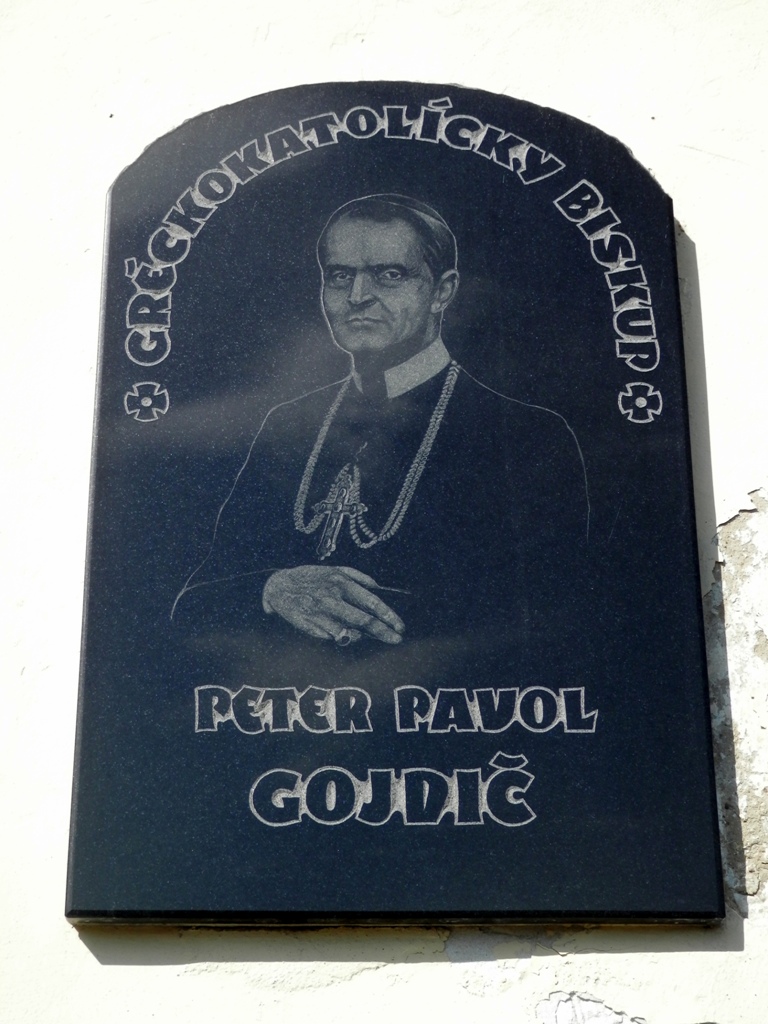
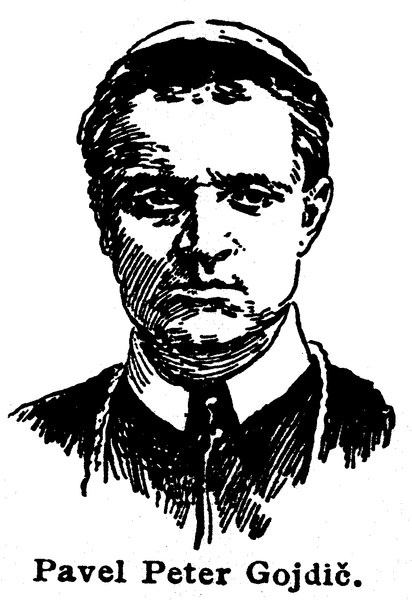
Saint of the Day – 17 July – Blessed Pavol Peter Gojdic “The Man with a Heart of Gold”(pronunciation Goydich) O.S.B.M. (1888-1960) Martyr, Monk, Teacher, Basilian Bishop, Apostle of Charity, Eucharistic and Marian devotee. Born on 17 July 1888 at Ruské Peklany, PreSov, Slovak Republic as Peter Gojdic and died on 17 July 1960 in the prison hospital at Leopoldov, Hlohovec, Slovak Republic of illness and maltreatment received in prison. (O.S.B.M. The Order of Saint Basil the Great (Latin: Ordo Sancti Basilii Magni) also known as the Basilian Order of Saint Josaphat is a monastic religious order of the Greek Catholic Churches that is present in many countries and that has its Mother House in Rome (Santi Sergio e Bacco degli Ucraini). The order received approbation on 20 August 1631 and was based at the Holy Trinity monastery in Vilnius. Its monks, brothers and priests work primarily with Ukrainian Catholics and are also present in other Greek-Catholic churches in central and eastern Europe.
Pavol Gojdič was born on 17 July 1888 at Ruské Pekľany near Prešov, into the family of the Greek-Catholic priest Štefan Gojdič; his mother’s name was Anna Gerberyová. He received the name of Peter in baptism. Obeying God’s call to the priesthood he began his study of theology at Prešov, immediately after school. Since he obtained excellent results, he was sent a year later to continue his studies in Budapest. Here too he tried to lead a profoundly spiritual life. While still a seminarian, he was directed by his spiritual director on these lines: “Life is not difficult, but it is a serious matter”– words that were to guide him throughout his life. Having finished his studies on 27 August 1911 he was ordained priest at Prešov by Bishop Dr Ján Valyi. After his ordination he worked for a short period as assistant parish priest with his father. After a year he was appointed prefect of the eparchial seminary and at the same time taught religion in a higher secondary school. Later he was put in charge of protocol and the archives in the diocesan curia. He was also entrusted with the spiritual care of the faithful in Sabinov as assistant parish priest. In 1919 he became director of the episcopal office.
To everyone’s surprise on 20 July 1922 he joined the Order of St Basil the Great at Černecia Hora near Mukačevo, where, taking the habit on 27 January 1923 he took the name Pavol. He took this decision as a sign of modesty, humility and a desire to lead an ascetic life in order to better serve God. But God willed otherwise and had ordered him to a higher office as bishop. On 14 September 1926 he was nominated Apostolic administrator of the eparchy of Prešov. During his installation as Apostolic Administrator he announced the programme of his apostolate: “With the help of God I want to be a father to orphans, a support for the poor and consoler to the afflicted”.
The first official act of Pavol Gojdič in his office as newly appointed administrator of the eparchy of Prešov was to address a pastoral letter on the occasion of the 1100st anniversary of the birth of St Cyril, apostle of the Slavs. Thus he began his activity in the spirit of the apostle of the Slavs, always faithful to Rome, as they were. He was a Slav and was very fond of his oriental rite.
A short time later, on 7 March 1927 he was nominated bishop with the title of Harpaš (Church of Harpaš – in Asia Minor). The episcopal consecration took place in the basilica of San Clemente, Rome, on 25 March 1927, the feast of the Annunciation of Our Lady. After his episcopal ordination he visited the basilica of St Peter in Rome, where he prayed on the tomb of the Apostle. On 29 March 1927, together with Bishop Nyaradi, he was received in a private audience by the Holy Father Pius XI. The pope gave Bishop Pavol a gold cross saying: “This cross is only a faint symbol of the heavy crosses that God will send you, my son, in your work as bishop”.
For his episcopal programme he chose as a motto the following words: “God is love, let us love Him!”As bishop he was engaged in the promotion of spiritual life of both clergy and faithful. He insisted on the proper celebration of the liturgy and of church feasts. He erected new parishes, for instance, in Prague, Bratislava, Levoča and elsewhere. Thanks to his hard work the orphanage at Prešov was built and entrusted to the local sisters. His activity in the scholastic field was outstanding, as is proved by the foundation of the Greek-Catholic school in Prešov in the year 1936. He supported also the teaching academy, the seminary, colleges etc. He was interested in every aspect of spiritual reading, which resulted in the launching of the review Blahovistnik (Messenger of the Gospel), Da prijdet carstvije Tvoje (Thy Kingdom Come) and various prayers etc., published by the PETRA publishing house. For his kindness, caring and charitable relationship with the people he was described as “the man with a heart of gold”.
An important characteristic of the bishop was also his strong affection for the Eucharistic Saviour, which he continually strengthened through his visits to the Blessed Eucharist in the chapel at his residence. Another characteristic, not less evident, of his spiritual life, was his devotion to the Sacred Heart. Already as a Seminarian in Budapest he had consecrated himself to the Sacred Heart and this he confirmed every morning with the words “All the prayers, sacrifices and crosses, I offer, in reparation for the sins of the whole world!”. One must not forget that the bishop had great devotion to the Mother of God and as as a Marian devotee held in his residential chapel a picture of the Virgin of Klokočov, in front of which he prayed every day and to whose protection he entrusted himself and the whole eparchy.
On 13 April 1939 he was appointed apostolic administrator in Slovakia of the Apostolic Administration of Mukačevo. In the difficult situation of the Slovak State he became a “thorn in the flesh” for the representatives of the government of the time and so offered his resignation from the post – in fact the Holy Father refused his resignation but also made him residential bishop of Prešov. And so on 8 August 1940 he was solemnly enthroned at Prešov and then on 15 January 1946 confirmed in his jurisdiction over the Greek-Catholics in the whole of Czecho-Slovakia.
The progress in religious and spiritual life in the eparchy that followed the personal example and fervour of Bishop Pavol was interrupted by the events of war and especially with the coming to power of the communists in 1948. Their ideological programme made itself felt above all against the Greek-Catholic Church. Bishop Gojdič resisted any initiative to submit the Greek-Catholics to Russian orthodoxy assisted by the communist party and the power of the State, even though he knew he was risking persecution and arrest, maybe even death. Gradually he was isolated from the clergy and the faithful.
Even though put under severe pressure to renounce the Catholic faith and break unity with the Pope, he refused every attractive offer and exclaimed: “I am already 62 and sacrifice all my goods and residence but I will not deny my faith in any way because I want to save my soul. Do not even speak to me.”
During the sad event of Sobor of Prešov, 28 April 1950, when the State outlawed the Greek-Catholic Church and forbade her activity, Bishop Pavol Gojdič was arrested and interned. Thus began his via crucis in many prisons of what was Czecho-Slovakia, which ended with his death. In the days from the 11 to the 15 of January 1951 in a trial set up against the so called high treason Bishops (Vojtaššák, Buzalka, and Gojdič) he was given a life sentence; fined two hundred thousand crowns and deprived of all his civic rights. Transfers from one prison to another followed. Blessed Pavol suffered physical and psychological punishments, humiliations; he was forced to do the most difficult and degrading jobs. However, he never complained and never asked to be relieved. He made use of every available time to pray and celebrated the sacred liturgy in secret. Following the amnesty in 1953, given by State President A. Zapotocký, his life sentence was changed to 25 years detention. He was then 66 and his state of health deteriorated continuously. Yet all further requests for amnesty were refused.
Bishop Pavol Gojdič could only leave prison at the cost of his faithfulness to the Church and to the Holy Father. Various offers were made to him, as is proved by an event that he himself recounts: In the prison of Ruzyň he was received in an office, where he had been brought from his cell, by a high official in uniform. They informed him that from that office he could go straight to Prešov, on condition that he was willing to become patriarch of the Ortodox church in Czecho-Slovakia. The bishop refused this offer excusing himself and explaining that this would be a very grave sin against God, a betrayal of the Holy Father, of his conscience and of his faithful, most of whom were then suffering persecution.
Even in the most difficult situation he abandoned himself to the will of God, as can be seen from these words of his: “I do not really know whether it is a gain to exchange the crown of martyrdom with two or three years of life in freedom. But I leave the good Lord to decide”.On the occasion of his 70° birthday even the Holy Father Pius XII sent him a telegram in prison. In it he assured him he would not forget his heroic son. For the bishop this was one of his best days of his life.
A great desire of Blessed Pavol was to die comforted by the sacraments on his birthday. Both desires were fulfilled.
Father Alojz Vrána was transferred to the room of the prison hospital of Leopoldov (Slovakia), where the Bishop passed his last days and could hear his confession. The chalice of suffering of Blessed Pavol was about to overflow. An eye-witness of the last moments of his life was his fellow prisoner – the nurse František Ondruška, who has given a unique testimony. He confirmed that the desire of the bishop had been fulfilled – he died on 17 July 1960 that is on the day of his 72nd birthday. He died in the hospital of the prison of Leopoldov as a result of illness resulting from the ill treatment he had suffered. He was buried without ceremony in the prison cemetery in a nameless tomb, with the prison number 681.
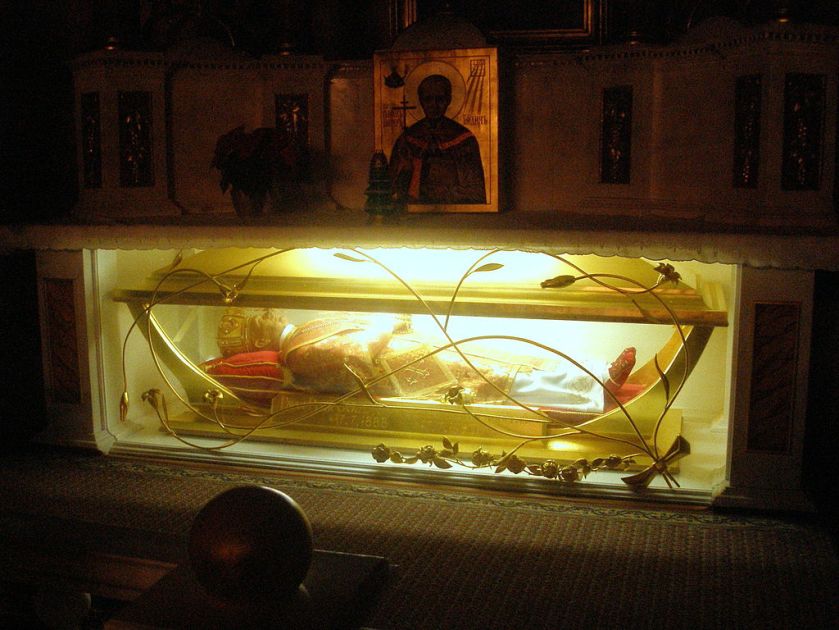
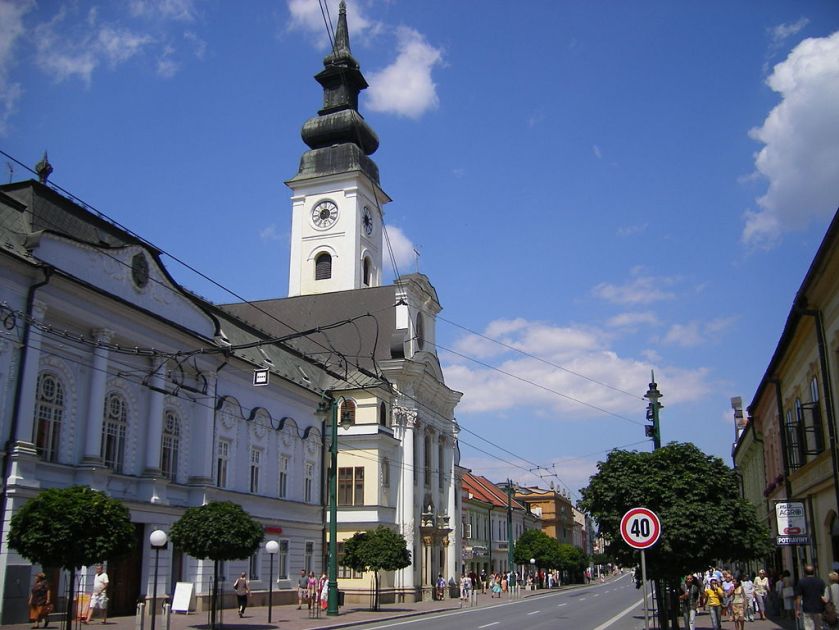
As a result of the easing of the political situation in Czecho-Slovakia in 1968, the state autorities after many delays gave permission for exhuming the mortal remains of Blessed Pavol. This happened in the cemetery of Leopoldov on 29 October 1968 and was followed by the transfer of the remains to Prešov. By a decision of the authorities set up after the soviet occupation, these were transferred to the crypt of Greek-Catholic Cathedral of St John the Baptist in Prešov. From 15 May 1990 they are to be found in a sarcofagus in the chapel of the cathedral.
Cathedral of St John the Baptist
Bishop Pavol Gojdič was legally rehabilitated on 27 September 1990. Subsequently he was decorated posthumously with the Order of T G Masaryk – II class, and with the Cross of Pribina – 1st class.
The Holy Father, St John Paul II during his historic visit in Slovakia, while visiting Prešov, prayed at the tomb of this bishop-martyr in the chapel of the cathedral. He Beatified him on 4 November 2001.
St Alexius of Rome
St Andrew Zorard
Bl Arnold of Himmerod
Bl Bénigne
Bl Biagio of the Incarnation
St Clement of Ohrid
St Cynllo
St Ennodius of Pavia
St Fredegand of Kerkelodor
St Generosus
St Gorazd
St Hedwig, Queen of Poland
St Hyacinth of Amastris
St Kenelm
St Pope Leo IV
St Marcellina
St Nerses Lambronazi
Bl Pavol Gojdic (1888-1960) Martyr
St Petrus Liu Zeyu
Bl Sebastian of the Holy Spirit
Bl Tarsykia Matskiv
St Theodosius of Auxerre
St Theodota of Constantinople
St Turninus
—
Martyrs of Compiegne (16 beati): Sixteen Blessed Teresian Martyrs of Compiègne.
Eleven Discalced Carmelite nuns, three lay sisters and two lay women servants who were martyred together in the French Revolution. They were the earliest martyrs of the French Revolution that have been recognized.
• Angelique Roussel • Anne Pelras • Anne-Marie-Madeleine Thouret • Catherine Soiron • élisabeth-Julitte Vérolot • Marie Dufour • Marie Hanniset • Marie-Anne Piedcourt • Marie-Anne-Françoise Brideau • Marie-Claude-Cyprienne Brard • Marie-Françoise de Croissy • Marie-Gabrielle Trezel • Marie-Geneviève Meunier • Marie-Madeleine-Claudine Lidoine • Rose-Chretien de Neuville • Thérèse Soiron •
They were guillotined on 17 July 1794 at the Place du Trône Renversé (modern Place de la Nation) in Paris, France.
Martyrs of Scillium (12 saints): A group of twelve Christians martyred together, the final deaths in the persecutions of Emperor Marcus Aurelius. Upon their conviction for the crime of being Christians, the group was offered 30 days to reconsider their allegiance to the faith; they all declined. Their official Acta still exist. Their names –
• Acyllinus • Cythinus • Donata • Felix • Generosa • Januaria • Laetantius • Narzales • Secunda • Speratus • Vestina • Veturius
They were beheaded on 17 July 180 in Scillium, Numidia (in North Africa).
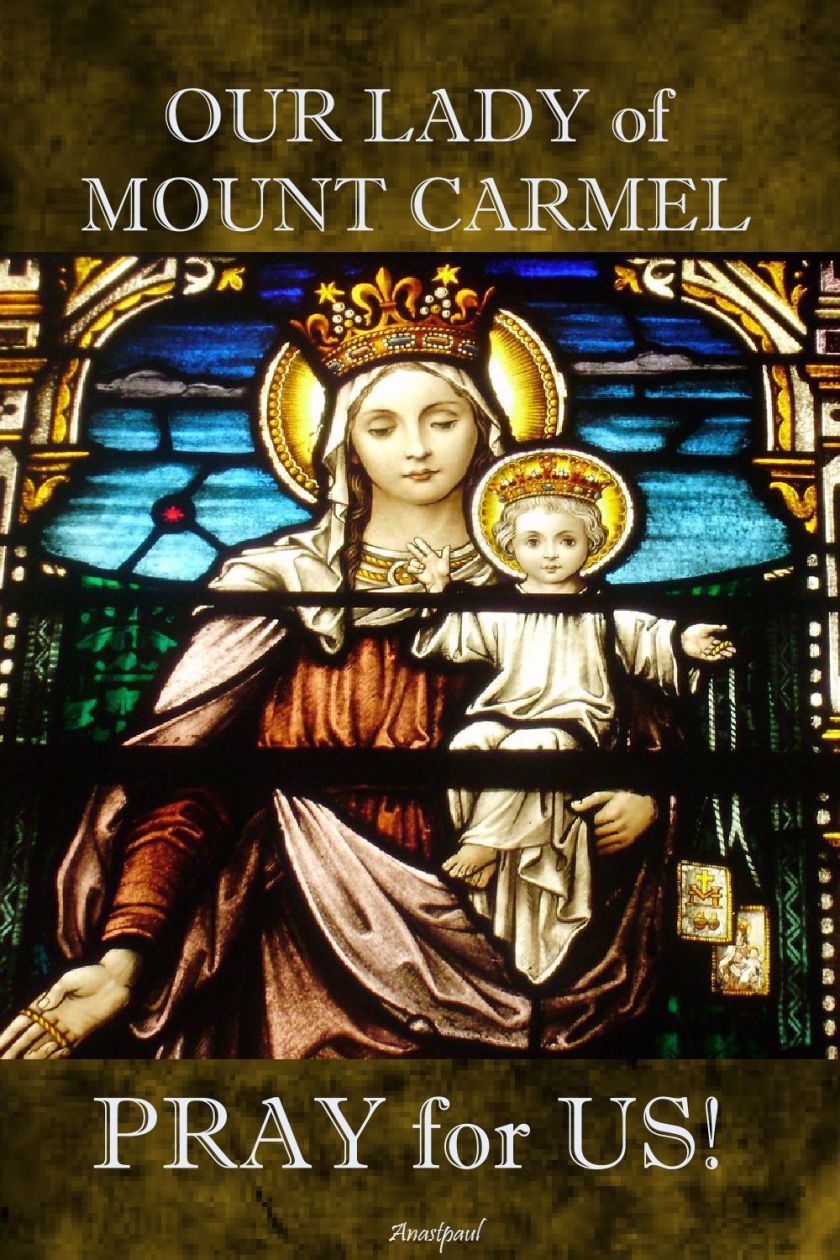
Thought for the Day – 16 July – The Memorial of Our Lady of Mount Carmel
A 1996 doctrinal statement approved by the Congregation for Divine Worship and the Discipline of the Sacraments states that:
“Devotion to Our Lady of Mount Carmel is bound to the history and spiritual values of the Order of the Brothers of the Blessed Virgin Mary of Mount Carmel and is expressed through the scapular. Thus, whoever receives the scapular becomes a member of the order and pledges him/herself to live according to its spirituality in accordance with the characteristics of his/her state in life.”
According to the Church on the Brown Scapular:
“The scapular is a Marian habit or garment. It is both a sign and pledge. A sign of belonging to Mary, a pledge of her motherly protection, not only in this life but after death.
As a sign, it is a conventional sign signifying three elements strictly joined:
first, belonging to a religious family particularly devoted to Mary, especially dear to Mary, the Carmelite Order;
second, consecration to Mary, devotion to and trust in her Immaculate Heart;
third, an urge to become like Mary by imitating her virtues, above all her humility, chastity and spirit of prayer.”
The Shorter Form of Blessing and Bestowing the Scapular of Our Lady of Mt Carmel.
The Postulant kneels before the Priest, who is vested in surplice and white stole and the Priest says:
V. Show us Your mercy, O Lord.
R. And grant us Your salvation.
V. O Lord, hear my prayer.
R. And let my cry come unto You.
V. The Lord be with you.
R. And with Your spirit. Let us pray:
O Lord Jesus Christ, the Saviour of men, bless † with Your right hand this habit which, for Your love and for the love of Your holy Mother, the Blessed Virgin Mary of Mount Carmel, this Your Servant (Handmaid) shall wear devoutly, so that, through the intercession of the same Blessed Virgin, Your Mother, he (she) may be guarded against the wicked one and remain until death in Your grace. Who lives and reigns, world without end.
R. Amen.
The Priest sprinkles the Scapular with holy water and, placing it upon the shoulders of the postulant, says:
Receive this blessed habit and pray the most Holy Virgin
that by her merits you may bear it without stain
and that she may guard you from all adversity
and bring thee unto life everlasting.
R. Amen.
By the power that has been granted to me, I admit you to share in all the spiritual blessings which, through the cooperation of our merciful Saviour, Jesus Christ, are obtained by the Religious of Mount Carmel.
In the name of the Father and of the Son, † and of the Holy Ghost.
R. Amen
Almighty God, the Creator of heaven and earth, bless † you, He Who has vouchsafed to join you unto the Society and Confraternity of the Blessed Virgin Mary of Mount Carmel; let us beseech her, therefore, that in the our of your death she may bruise the head of the old serpent and that you may obtain the palm of victory and the crown of inheritance everlasting. Through Christ our Lord.
R. Amen.
Then the Priest sprinkles the Recipient with holy water.
Notice--Scapulars of Our Lady of Mount Carmel can now be replaced by a MEDAL, having on one side the image of Our Lord showing His Sacred Heart and on the other, the image of the Blessed Virgin; even, ONE such medal can replace SEVERAL scapulars: but, then, it must receive just as many blessings as there are scapulars to be replaced, one sign of the Cross, however, suffices for each blessing.
Quote/s of the Day – 16 July 2018 – Monday of the Fifteenth week in Ordinary Time – Today’s Gospel: Matthew 10:34-42,11:1.
Speaking of: Seeking Abandonment to Divine Providence
with Father Jean-Pierre de Caussade S.J. (1675-1751)
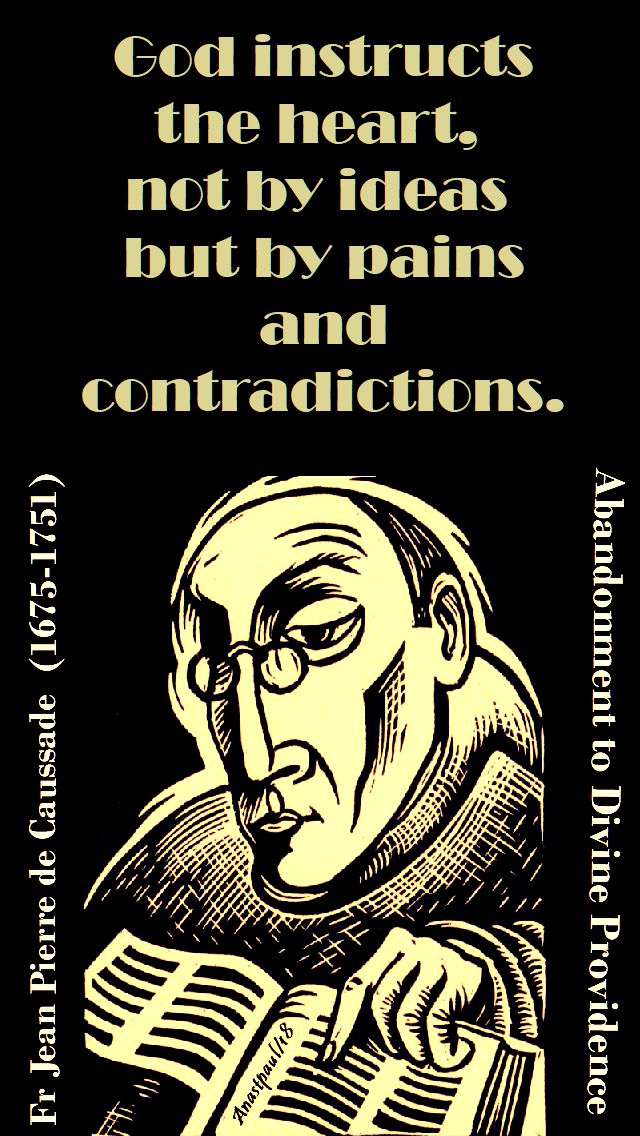
“God instructs the heart, not by ideas but by pains and contradictions.”
“There is not a moment in which God does not present Himself under the cover of some pain to be endured, of some consolation to be enjoyed, or of some duty to be performed. All that takes place within us, around us, or through us, contains and conceals His divine action.”
“The books the Holy Spirit is writing, are living and every soul a volume, in which the divine author, makes a true revelation of His word, explaining it to every heart, unfolding it in every moment.”
“The duties of each moment are the shadows beneath which, hides the divine operation.”
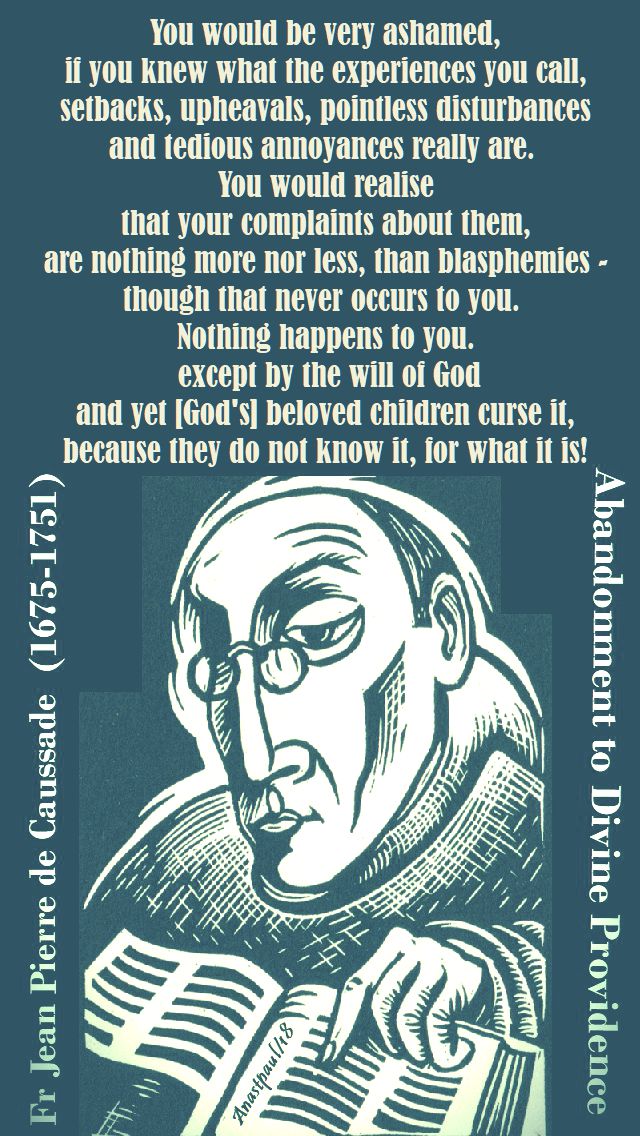
“You would be very ashamed, if you knew what the experiences you call, setbacks, upheavals, pointless disturbances and tedious annoyances really are. You would realise that your complaints about them, are nothing more nor less, than blasphemies – though that never occurs to you. Nothing happens to you except by the will of God and yet [God’s] beloved children curse it, because they do not know it, for what it is!”
One Minute Reflection – 16 July – Monday of the Fifteenth week in Ordinary Time, B – Today’s Gospel: Matthew 10:34-42,11:1.
Whoever loves father or mother more than me is not worthy of me and whoever loves son or daughter more than me is not worthy of me and whoever does not take up his cross and follow after me is not worthy of me...Matthew 10:37-38
REFLECTION – “A further means of staying faithful, Daughters, is perfect detachment from father, mother, relations and friends in such a way that you are God’s alone. And to possess this great good you have to strip yourself of everything and have nothing of your own. The apostles had just such a detachment. For one cent you will have a hundred, as many women, as many mothers which Providence, Daughters, will never fail you. Don’t you have any courage at all to give yourselves to the God who is so mindful of you? Never claim you are saving something for your own livelihood; always put your trust in Providence. Rich people can fall into need through the accidents that often happen but they will never be in want, who intend to rely solely on God.
Isn’t it good, Daughters, to live like this? What is there to fear? For God has promised that people who care for the poor will never lack anything. O my Daughters, would you not love God’s promises better than the world’s deceits? God is obliged to provide for all our needs.”…St Vincent de Paul (1581-1660) – Conferences to the Daughters of Charity
PRAYER – Grant us Your Grace O Holy God almighty, rule over our hearts and bodies this day. Sanctify us and guide our every thought, word and deed according to the commandments of Your divine Son, so that now and forever Your Grace may free us from the world and save us for Yourself. “May the Virgin Mary, first disciple and missionary of the Word of God, help us to take the message of the Gospel to the world, in humble and radiant exultance, beyond every rejection, incomprehension or tribulation. Amen”… Pope Francis
Our Morning Offering – 16 July – The Memorial of Our Lady of Mount Carmel
Prayer to Our Lady of Mount Carmel
O all-blessed, immaculate Virgin,
ornament and glory of Mount Carmel,
you, who looks with most gracious countenance,
on those who have been clothed
with your venerable livery,
look kindly also on me
and take me under the mantle
of your maternal protection.
Strengthen my weakness with your might;
enlighten the darkness of my heart
with your wisdom;
increase in me faith, hope and charity.
So adorn my souls with graces and virtues
that it may always be dear to your divine Son and to you.
Assist me during life,
comfort me in death with your most sweet presence
and present me as your child and faithful servant
to the most Holy Trinity,
that I may be enabled
to praise and extol you in heaven forever.
Amen (Say 3xHail Mary’s and 3xGlory Be’s)
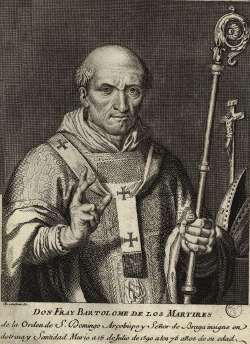
Saint of the Day – 16 July – Blessed Bartholomew of the Martyrs or St Bartholomew of Braga O.P. ArchBishop of Braga (1514-1590) – Portuguese Dominican Friar and Priest, Writer, Theologian, Advisor, Teacher and Catechetical writer, Apostle of Charity founding a series of hospitals and hospices in Braga and surrounds – born as Bartolomeu Fernandes on 3 May 1514 in Lisbon, Portugal and died on 16 July 1590 in the monastery of Viana do Castelo, Minho, Portugal of natural causes. Patronage – Archdiocese of Braga.
Blessed Bartholomew was born near Lisbon on 3 May 1514 to Domingos Fernandes and Maria Correia. He was baptised mere hours after, in the local parish church of Nossa Senhora dos Mártires.
He entered the Order of Preachers on 11 November 1527 and later made his solemn profession into the order on 20 November 1529. On the completion of his own studies in 1538 he taught philosophical studies in the Convent of the Order at Lisbon and then for about two decades taught theological studies in the various houses of the Dominicans. In 1551 he received his Master’s degree at the provincial chapter of Salamanca in Spain. He also served as the prior of the Benfica Convent from 1557 to 1558 and was in Évora as a teacher from 1538 until 1557.
During the course of teaching theological studies at the Batalha Convent, he was summoned to Évora at the request of Luis of Portugal, Duke of Beja to undertake the religious education of his son who was entering the ecclesiastical life himself. He dedicated a great deal of his time to this task.
In 1558 – against his own desires – and out of obedience to his provincial superior (the Venerable Louis of Granada (1505-1588) he accepted the appointment to the Archepiscopal see of Braga for which Queen Catherine had chosen him and in 1559 received his episcopal consecration at the Convent of Saint Dominic on 3 September 1559 from the Bishop of Coimbra João Soares. In actual fact it was Luis of Grenada who was initially nominated to become the Archbishop though Luis urged the queen to select Fernandes instead. Pope Paul IV confirmed this appointment in the papal bull “Gratiae divinae praemium” on 27 January 1559. He devoted himself to the duties of his new office with his installation in his Archdiocese on 4 October 1559.
On the resumption of the Council of Trent in 1561, the Archbishop repaired to the Council and took part in the last sessions. He made a total of 268 suggestions at the council and collaborated with Saint Charles Borromeo. There was also one instance in which he pushed for the defense of a certain topic and opposed view of the Archbishop of Toledo Bartolomé Carranza. He was esteemed and held in high regard among the Council Fathers both on the account of his theological learning and the holiness of his life. Bartholomew exercised great influence in the discussions and more so with regard to the decrees on the reform of ecclesiastical life and development. The conclusion of that council saw him return to Braga in February 1564 and in 1566 he held an important provincial gathering of the diocese, in which decrees were passed for the restoration of ecclesiastical discipline and the elevation of the moral life of priests and people (“Concilium provinciale Bracarense quartum” in 1567). As Archbishop, Bartholomew now devoted himself to the task of enacting the reforms of the Council of Trent in addition to the decrees of his own provincial synod.
A great famine and a visitation of the plague, revealed the depths of his charitable and merciful nature, in addition to his willingness to aid his flock in their time of need; he also constructed a series of hospitals and hospices.
He made repeated requests to resign from his episcopal see and received papal permission from Pope Gregory XIII on 20 February 1582 to resign and withdraw to the Dominican Convent at Viana do Castelo where he lived in solitude for the remainder of his life but also serving as a teacher for some time.
Blessed Bartholomew died at Viana do Castelo on 16 July 1590.
The sainthood process commenced under Pope Benedict XIV on 11 September 1754 and he was titled as a Servant of God while Pope Gregory XVI later named him as Venerable on 23 May 1845. St Pope John Paul II Beatified Bartholomew in Saint Peter’s Square on 4 November 2001. Pope Francis – on 20 January 2016 – authorised the C.C.S. to work towards the Equipollent Canonization of the late archbishop and authorised that the second miracle required for his Canonization be waived as a result. It is probable that Blessed Bartholomew will be Canonised soon.
Blessed Bartholomew’s writings have been republished on numerous occasions and have also been translated into several languages. A collective edition is: “Opera omnia cura et studio Malachiae d’Inguinbert, archiepisc. Theodos.” (1 vol. Fol. In 2 parts, Rome, 1734–35).
Bl André de Soveral
St Andrew the Hermit
St Antiochus of Sebaste
Bl Arnold of Clairvaux
Bl Arnold of Hildesheim
St Athenogenes of Sebaste
Bl Bartholomew of Braga O.P. ArchBishop of Braga also known as Bl Bartholomew of the Martyrs (Bartolomeu Fernandez dei Martiri Fernandes) (1514-1590)
St Benedict the Hermit
Bl Claude Beguignot
Bl Domingos Carvalho
St Domnin
St Domnio of Bergamo
Bl Dorothée-Madeleine-Julie de Justamond
St Elvira of Ohren
St Eugenius of Noli
St Faustus
St Faustus of Rome and Milan
St Fulrad of Saint Denis
St Generosus of Poitou
St Gobbán Beg
St Gondolf of Saintes
St Grimoald of Saintes
St Helier of Jersey
Bl Irmengard
Bl John Sugar
St Landericus of Séez
Bl Madeleine-Françoise de Justamond
Bl Marguerite-Rose de Gordon
Bl Marguerite-Thérèse Charensol
Bl Marie-Anne Béguin-Royal
Bl Marie-Anne Doux
St Marie Madeline Postel
Bl Marie-Rose Laye
Bl Milon of Thérouanne
Bl Nicolas Savouret
Bl Ornandus of Vicogne
St Paulus Lang Fu
St Reinildis of Saintes
Bl Robert Grissold
Bl Simão da Costa
St Sisenando of Cordoba
St Tenenan of Léon
St Teresia Zhang Heshi
St Valentine of Trier
St Vitalian of Capua
St Vitaliano of Osimo
St Yangzhi Lang
—
Martyrs of Antioch – 5 saints: Five Christians who were martyred together. No details about them have survived by the names – Dionysius, Eustasius, Maximus, Theodosius and Theodulus. They were martyred in Antioch, Syria, date unknown.
Sunday Reflection – 15 July – Fifteenth Sunday of the Year
“….in the Blessed Sacrament Our Lord Himself is the light which manifests Him as our model and reveals His beauties to us. He is Himself His light, His means of being known, just as the sun is itself its own proof. To make Himself known, He has only to show Himself. Recognition of Him need not come from its being reasoned out.
A child does not have to discourse with himself to recognise his parents. Our Lord reveals Himself through His presence, just as parents do. But as we grow to know His voice better and as our hearts become more sympathetic to Him in emptying themselves of what is not Him, our Lord manifests Himself in a clearer and more intimate manner, which only those know, who love Him. He gives the soul a divine conviction which overshadows the light of human reason.
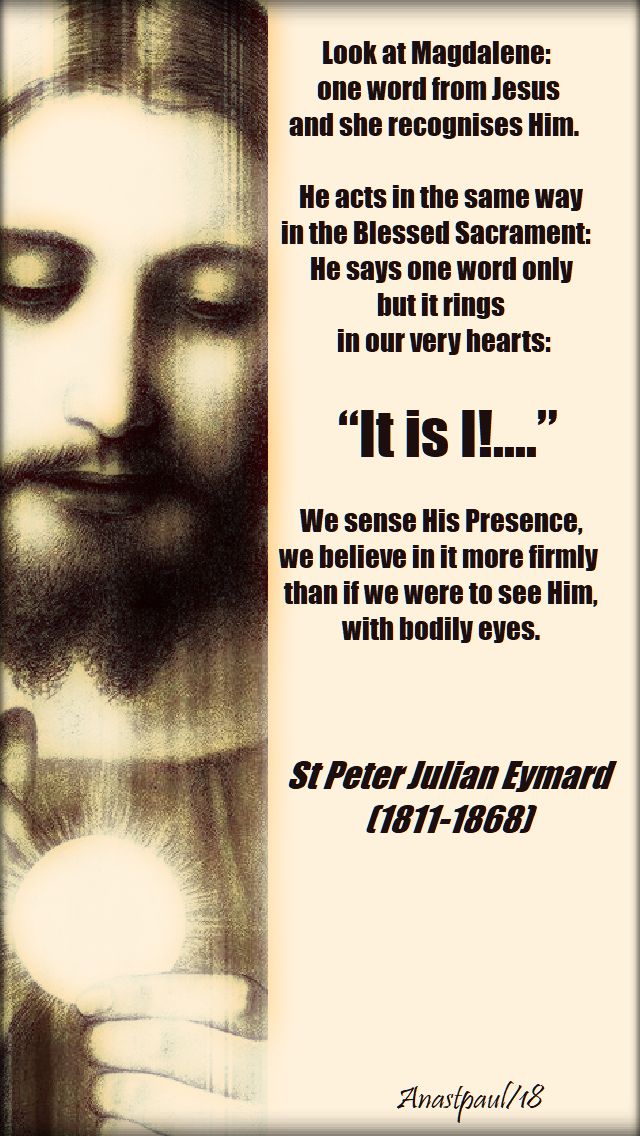
Look at Magdalene: one word from Jesus and she recognises Him. He acts in the same way in the Blessed Sacrament: He says one word only but it rings in our very hearts: “It is I!….” We sense His Presence, we believe in it more firmly than if we were to see Him with bodily eyes.”
























You must be logged in to post a comment.