
St Bernadine of Siena (Optional Memorial)
—
St Abercius
Bl Albert of Bologna
St Alexander of Edessa
St Althryda
St Anastasius of Brescia
St Aquila of Egypt
St Arcangelo Tadini
Bl Arnaldo Serra and Companions
St Asterius of Edessa
St Austregisilus of Bourges
St Basilla of Rome
St Baudelius of Nîmes
St Codrato
Bl Columba of Rieti
St Ethelbert of East Anglia
BlGuy de Gherardesca
St Helena
St Hilary of Toulouse
St José Pérez Fernández
St Lucifer of Caglieri
St Marcello
Bl Maria Angelica Perez
St Plautilla of Rome
St Protasius Chong Kuk-bo
St Rafaél García Torres
St Talaleo of Egea
St Thalalaeus of Edessa
St Theodore of Pavia
St Tomás Valera González
The Saint Who Influenced Pope St. John Paul II’s Profound Devotion to Mary
The Saint Who Influenced Pope St. John Paul II’s Profound Devotion to Mary
Pope St. John Paul II was well known for having a deep and abiding love for the Blessed Virgin Mary. His devotion to her was evident in all that he did: his teaching, his prayer life, even his papal motto and coat of arms were dedicated to the Blessed Mother.
When he was nearly fatally shot during his papacy he credited the intercession of the Virgin Mary, specifically Our Lady of Fatima, with the miraculous save of his life.
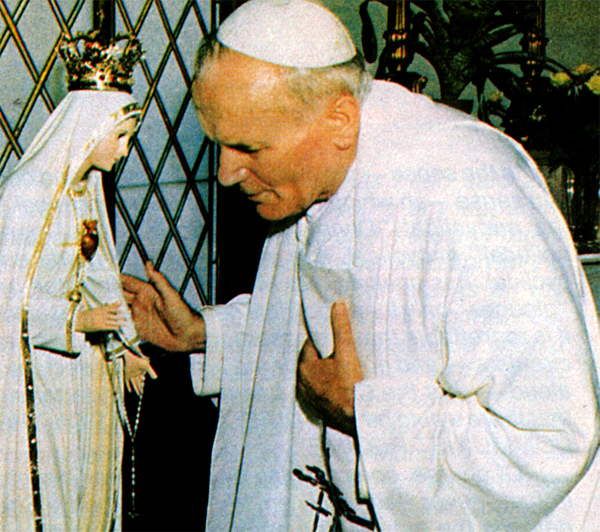
But how did he develop this life-long devotion to Mary?
In his book, Gift and Mystery, Blessed Pope John Paul II credits his home parish and the nearby Carmelites for their early influence on him. He also had a very devout father who regularly took him on pilgrimages to local Marian shrines.
However, as he matured in his faith as a young adult, he singles out one overwhelming influence which changed his life. He gleaned his profound devotion to Mary largely through the writings of one man: St. Louis de Montfort.
The book that changed Karol Wojtyla’s life was True Devotion to Mary. The Pope relates that,
“At one point I began to question my devotion to Mary, believing that, if it became too great, it might end up compromising the supremacy of the worship owed to Christ. At that time, I was greatly helped by a book by Saint Louis Marie Grignion de Montfort…
There I found the answers to my questions, Yes, Mary does bring us closer to Christ; she does lead us to him, provided that we live her mystery in Christ… The author was an outstanding theologian. His Mariological thought is rooted in the mystery of the Trinity and in the truth of the Incarnation of the Word of God”.
Pope John Paul II thought so highly of the writing of St. Louis De Montfort that he spoke about the saint on many occasions. In addition, on December 8, 2003, he wrote a special letter on the occasion of the 160th Anniversary of De Montfort’s publication. In this letter he wrote: “I myself, in the years of my youth, found reading this book a great help.”
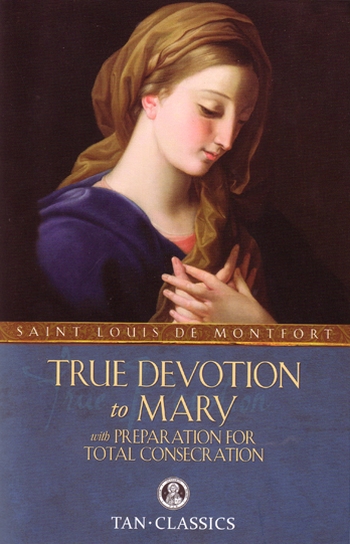
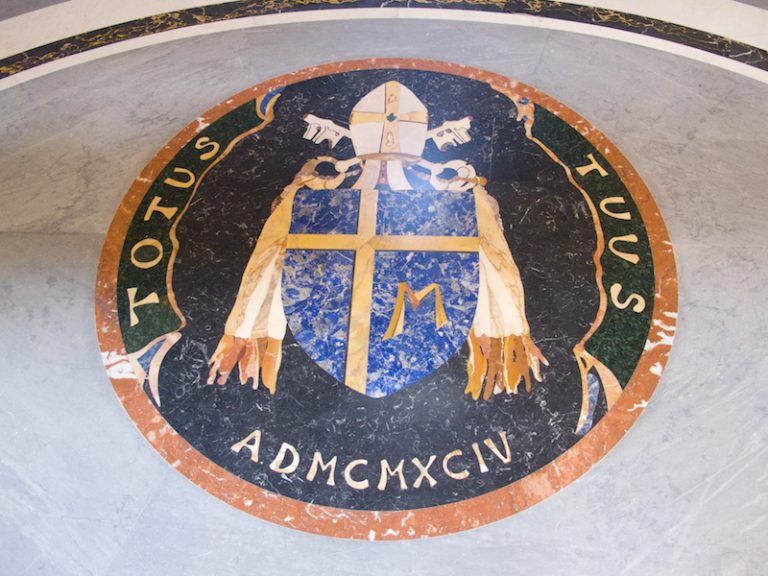
True Devotion to Mary had such a lasting influence on him that when he was elected Supreme Pontiff in 1978, he chose his papal motto, Totus Tuus, from words written by St. Louis De Montfort, as he describes below:
“As is well known, (in) my episcopal coat of arms … the motto Totus tuus is inspired by the teaching of St. Louis Marie Grignion de Montfort. These two words express total belonging to Jesus through Mary: “Tuus totus ego sum, et omnia mea tua sunt.” (“I am all Yours, and all that I have is Yours.”) . . . “This Saint’s teaching has had a profound influence on the Marian devotion of many of the faithful and on my own life.”
There is no better way to advance quickly in holiness, no better way to please God, and no better way to guarantee one’s present sanctity and eternal salvation than with a true devotion to Mary. Pope John Paul II learned this and demonstrated this truth in his life, proven now that he has been raised to the altars and numbered with the saints in heaven.
Catholic Meditation and Contemplative Prayer: What’s the Difference?
Catholic Meditation and Contemplative Prayer: What’s the Difference?
To answer this question, let’s look at the Catechism of the Catholic Church. In the glossary, we find the following definitions (I’ve highlighted several words and phrases in each definition to help us parse out the difference):
First, for meditation:
MEDITATION: An exercise and a form of prayer in which we try to understand God’s revelation of the truths of faith and the purpose of the Christian life, and how it should be lived, in order to adhere and respond to what the Lord is asking.
And now, for contemplation:
CONTEMPLATION: A form of wordless prayer in which mind and heart focus on God’s greatness and goodness in affective, loving adoration; to look on Jesus and the mysteries of his life with faith and love.
So immediately we can see that Catholic meditation is a cognitive exercise — prayer seeking understanding; whereas contemplative prayer sets aside that kind of mental effort, seeking instead a wordless, loving adoration of Christ and his mysteries.
Put another way: in meditation we think; in contemplation we rest our thoughts and simply love (and respond to love).
To unpack this a bit further, we can look into the body of the Catechism itself, for further insight into both meditation and contemplation. In sections 2705-8 of the Catechism we find further insight into a Catholic understanding of meditation. In the interest of brevity I’m only going to post a few key phrases but look it up in the Catechism and read the entire section:
Meditation is above all a quest. The mind seeks to understand the why and how of the Christian life, in order to adhere and respond to what the Lord is asking… To meditate on what we read helps us to make it our own by confronting it with ourselves… To the extent that we are humble and faithful, we discover in meditation the movements that stir the heart and we are able to discern them… Meditation engages thought, imagination, emotion, and desire… This form of prayerful reflection is of great value but Christian prayer should go further: to the knowledge of the love of the Lord Jesus, to union with him.
Immediately following this (sections 2709-19) is the Catechism’s discussion of contemplative prayer. Once again, here are just a few key phrases:
Contemplative prayer seeks him “whom my soul loves.” … We seek him, because to desire him is always the beginning of love… In this inner prayer we can still meditate, but our attention is fixed on the Lord himself…. One cannot always meditate but one can always enter into inner prayer, independently of the conditions of health, work, or emotional state. The heart is the place of this quest and encounter, in poverty and in faith… Entering into contemplative prayer is like entering into the Eucharistic liturgy: we “gather up” the heart, recollect our whole being under the prompting of the Holy Spirit, abide in the dwelling place of the Lord which we are, awaken our faith in order to enter into the presence of him who awaits us… Contemplative prayer is the poor and humble surrender to the loving will of the Father in ever deeper union with his beloved Son… It is a gift, a grace; it can be accepted only in humility and poverty. Contemplative prayer is a covenant relationship established by God within our hearts. Contemplative prayer is a communion in which the Holy Trinity conforms man, the image of God, “to his likeness.”
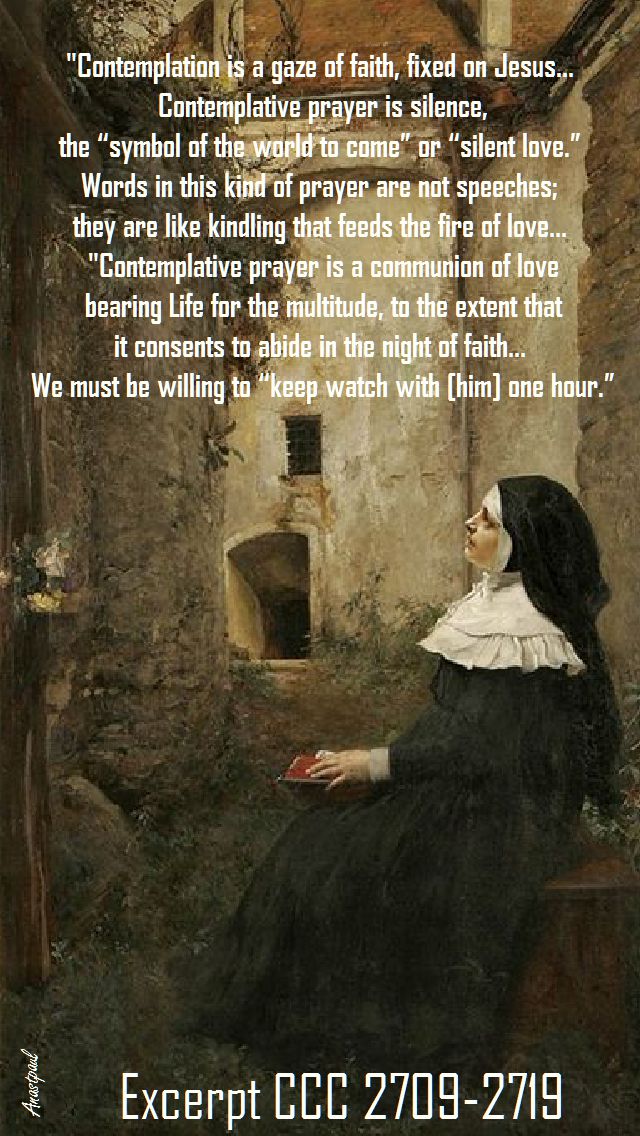
Contemplation is a gaze of faith, fixed on Jesus… Contemplative prayer is silence, the “symbol of the world to come” or “silent love.” Words in this kind of prayer are not speeches; they are like kindling that feeds the fire of love… Contemplative prayer is a communion of love bearing Life for the multitude, to the extent that it consents to abide in the night of faith… We must be willing to “keep watch with [him] one hour.”
The Catechism refuses to draw a hard and fast distinction between meditation and contemplation: “in [contemplation] we can still meditate.” Head and heart are both intimate parts of one being. We may seek in contemplation to love and behold God in silence but thoughts will still dance in our minds. But as “The Cloud of Unknowing” so helpfully teaches us, when meditative thoughts emerge during contemplative prayer, seek to be non-attached. Let them arise and let them fall. Keep our focus “fixed on the Lord himself” — in contemplation our intent is to love God, not to think about God; to know God rather than merely know about God.
Nevertheless, because meditation is an effortful prayer, there are times when we are simply too tired, or too angry, anxious, or whatever, to meditate. Yet contemplative prayer, emphasising rest and silence, is always available to us. Perhaps most important of all is the recognition that meditation is not the highest form of prayer: contemplation is. Yet true contemplation is always a gift, a grace. It’s not something we achieve, it’s something we receive.
To summarise:
- Meditation is a quest; contemplation involves rest.
- Meditation is mental, cognitive, discursive; contemplation is silent, heart-centered, beholding
- Meditation is important, contemplation even more so.
Thought for the Day – 19 May
Thought for the Day – 19 May
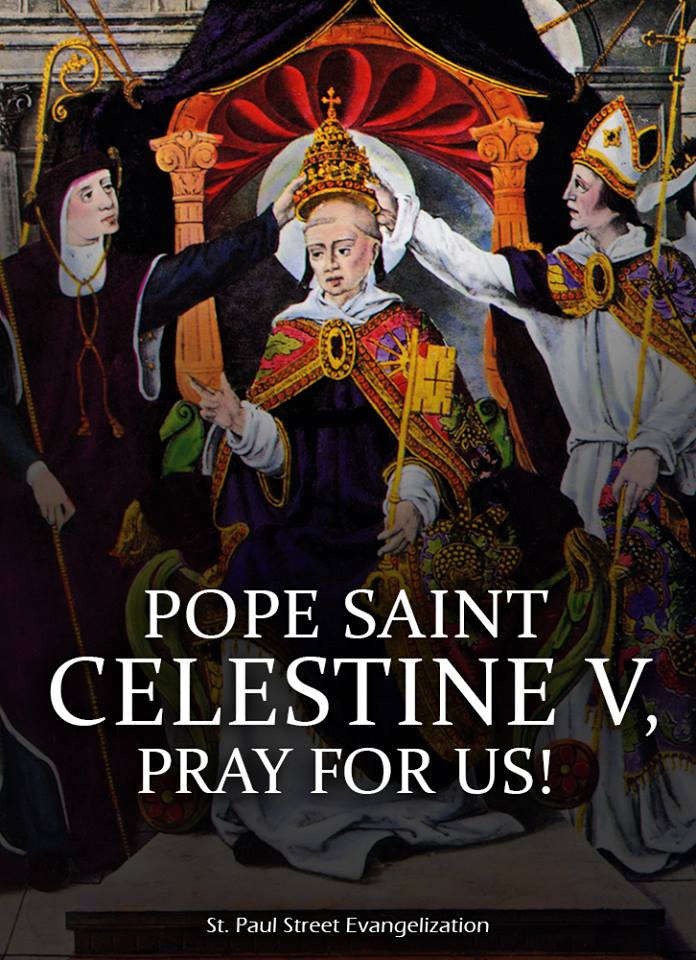
St Celestine V tasted bitterly his own failure but this did not prevent him from being a saint. When he realised that he was in the wrong place, he quickly did something about it, whatever the consequences. To admit failure, particularly in a place of importance and public scrutiny, takes a rare kind of courage and that kind of courage is the stuff that saints are made of. Say no more!
St Pope Celestine V, please pray for us, that we may have the courage to admit our failures.

Quote of the Day – 19 May
Quote of the Day – 19 May
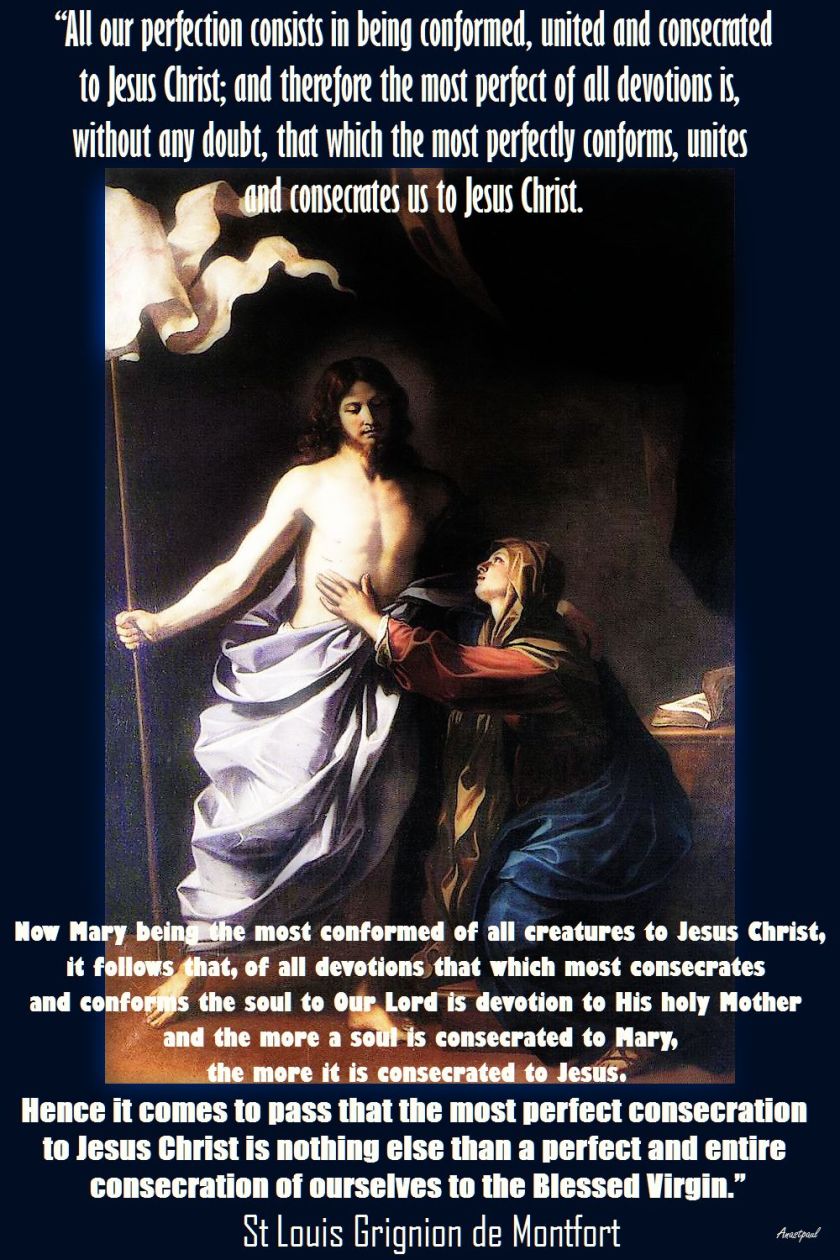
“All our perfection consists in being conformed,
united and consecrated to Jesus Christ;
and therefore the most perfect of all devotions is,
without any doubt, that which the most perfectly
conforms, unites and consecrates us to Jesus Christ.
Now Mary being the most conformed of all creatures to Jesus Christ,
it follows that, of all devotions that which most consecrates
and conforms the soul to Our Lord is devotion to His holy Mother
and the more a soul is consecrated to Mary,
the more it is consecrated to Jesus.
Hence it comes to pass that the most perfect consecration
to Jesus Christ is nothing else than a perfect and entire
consecration of ourselves to the Blessed Virgin.”
St Louis de Montfort
One Minute Reflection – 19 May
One Minute Reflection – 19 May
Those who love me I also love and those who seek me find me…….Proverbs 8:17
REFLECTION – “Blessed are those who abandon themselves into Our Lady’s hands. Their names are written in the Book of Life.”………………St Bonaventure (1217-74) Doctor seraphicus (Seraphic Doctor)
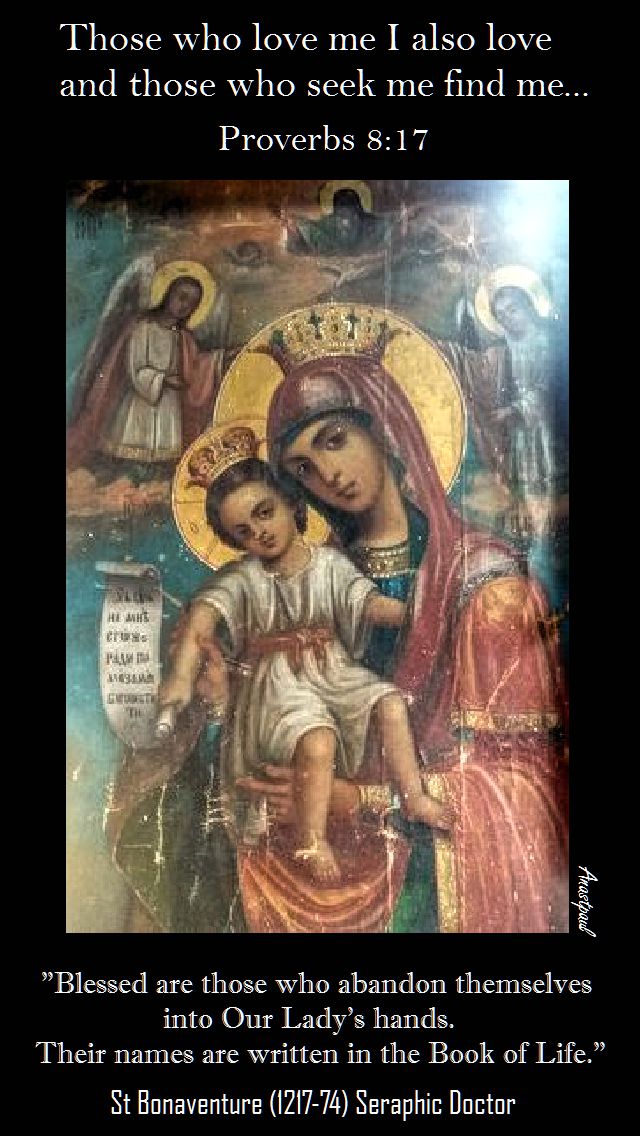
PRAYER – Heavenly Father, make a devoted client of Your beloved Daughter, Mary. Let me entrust myself always into her hands so that she may protect me as she took cate of Your Son, Our Lord Jesus Christ, in His infancy, childhood and throughout His life. Make me unto her, Lord my God! Mary, my beloved Mother, give me your spirit and pray for us all amen!
Our Morning Offering – 19 May
Our Morning Offering – 19 May
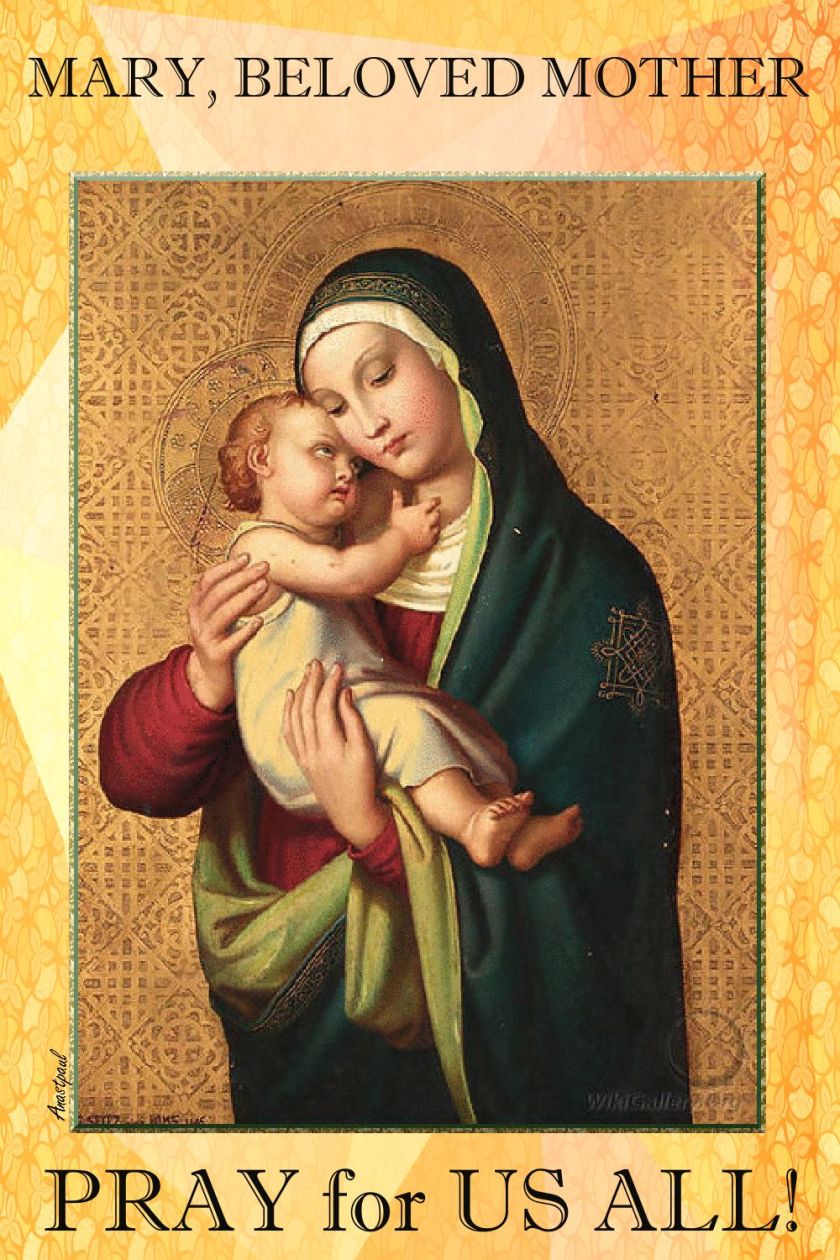
Grant me your Spirit, my Beloved Mother
By ST LOUIS DE MONTFORT (1673-1716)
My powerful Queen,
you are all mine through your mercy,
and I am all yours.
Take away from me all that may displease God
and cultivate in me all that is pleasing to Him.
May the light of your faith
dispel the darkness of my mind,
your deep humility
take the place of my pride,
your continual sight of God
fill my memory with His presence.
May the first of the love of your heart
inflame the lukewarmness of my own heart.
May your virtues take the place of my sins.
May your merits be my enrichment
and make up for all
that is wanting in me before God.
My beloved Mother,
grant that I may have no other spirit but your spirit,
to know Jesus Christ and His Divine will
and to praise and glorify the Lord,
that I may love God with burning love like yours.
Amen

Saint of the Day – 19 May – St Pope Celestine V
Saint of the Day – 19 May – St Pope Celestine V Born 1210 at Isneria, Abruzzi, Italy as Pietro del Morrone; Papal Ascension – 5 July 1294 – Papal Abdication – 13 December 1294. Died: • 19 May 1296 in Rome, Italy of natural causes. St Celestine is buried in the church of Saint Agatha, Ferentino, Italy and re-interred in the Church of Saint Maria di Collemaggio, Aquila, Italy. Monk, Hermit, Pope, Founder. Patron of Bookbinders,Papal resignations, Aquila, Urbino, Molisem Sant’Angelo Limosano. Attributes – Papal vestments, Papal tiara, Book
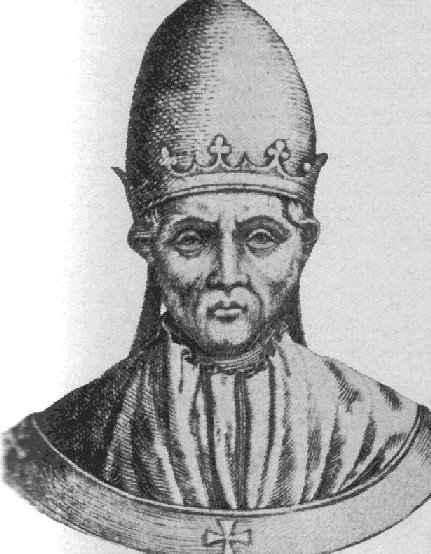
Peter Celestine, was Pope for five months from 5 July to 13 December 1294, when he resigned. He was also a monk and hermit who founded the order of the Celestines as a branch of the Benedictine order.
He was elected pope in the Catholic Church’s last non-conclave papal election, ending a two-year impasse. Among the only edicts of his to remain in force was the confirmation of the right of the pope to abdicate; nearly all of his other official acts were annulled by his successor, Boniface VIII. On 13 December 1294, a week after issuing the decree, Celestine resigned, stating his desire to return to his humble, pre-papal life. He was subsequently imprisoned by Boniface in the castle of Fumone in the Campagna region, in order to prevent his potential installation as antipope. He died in prison on 19 May 1296 at the age of 81.
St Celestine was canonized on 5 May 1313 by Pope Clement V. No subsequent pope has taken the name Celestine.
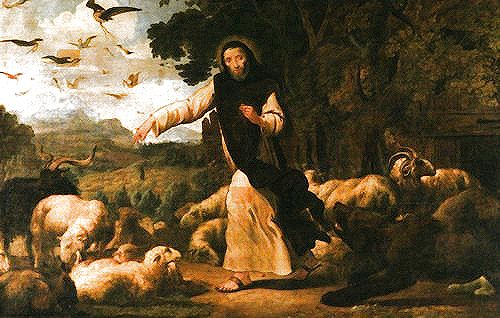
Pietro Angelerio was born to parents Angelo Angelerio and Maria Leone in a town called Sant’Angelo Limosano, in the Kingdom of Sicilia (Sicily). After his father’s death he began working in the fields. His mother Maria was a key figure in Pietro’s spiritual development: she imagined a different future for her deeply beloved son than becoming just a farmer or a shepherd. From the time he was a child, he showed great intelligence and love for others. He became a Benedictine monk at Faifoli in the Diocese of Benevento when he was 17. He showed an extraordinary disposition toward asceticism and solitude and in 1239 retired to a solitary cavern on the mountain Morrone, hence his name (Peter of Morrone). Five years later he left this retreat and went with two companions to a similar cave on the even more remote Mountain of Maiella in the Abruzzi region of central Italy, where he lived as strictly as possible according to the example of St. John the Baptist. Accounts exist of the severity of his penitential practices.
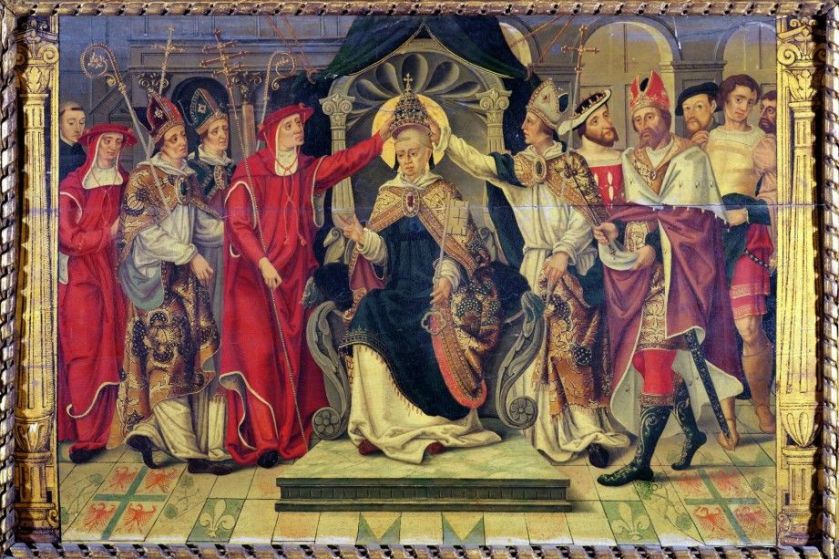
The cardinals assembled at Perugia after the death of Pope Nicholas IV in April 1292. After more than two years, a consensus had still not been reached. Pietro, well known to the cardinals as a Benedictine hermit, sent the cardinals a letter warning them that divine vengeance would fall upon them if they did not quickly elect a pope. Latino Malabranca, the aged and ill dean of the College of Cardinals cried out, “In the name of the Father, the Son, and the Holy Ghost, I elect brother Pietro di Morrone.” The cardinals promptly ratified Malabranca’s desperate decision. When sent for, Pietro obstinately refused to accept the papacy and even, as Petrarch says, tried to flee, until he was finally persuaded by a deputation of cardinals accompanied by the king of Naples and the pretender to the throne of Hungary. Elected on 5 July 1294, at age 79, he was crowned at Santa Maria di Collemaggio in the city of Aquila in the Abruzzo on 29 August, taking the name Celestine V.
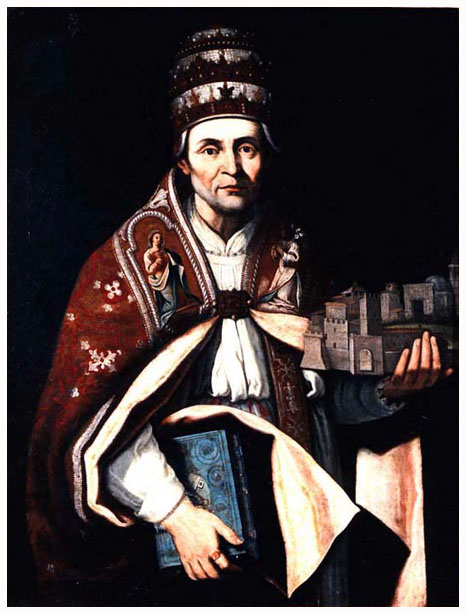
Shortly after assuming office, Celestine issued a papal bull granting a rare plenary indulgence to all pilgrims visiting Santa Maria di Collemaggio through its holy door on the anniversary of his papal coronation. The Perdonanza Celestiniana festival is celebrated in L’Aquila every 28–29 August in commemoration of this event.
With no political experience, Celestine proved to be an especially weak and ineffectual pope. He held his office in the Kingdom of Naples, out of contact with the Roman Curia and under the complete power of King Charles II. He appointed the king’s favorites to church offices, sometimes several to the same office. One of these was Louis of Toulouse, whom Celestine ordered given clerical tonsure and minor orders, although this was not carried out. He renewed a decree of Pope Gregory X that had established stringent rules for papal conclaves after a similarly prolonged election. In one decree, he appointed three cardinals to govern the church during Advent while he fasted, which was again refused. Realizing his lack of authority and personal incompatibility with papal duties, he consulted with Cardinal Benedetto Caetani (his eventual successor) about the possibility of resignation. This resulted in one final decree declaring the right of resignation, which he promptly exercised after five months and eight days in office, thus on 13 December 1294, Celestine V resigned. In the formal instrument of renunciation, he recited as the causes moving him to the step: “The desire for humility, for a purer life, for a stainless conscience, the deficiencies of his own physical strength, his ignorance, the perverseness of the people, his longing for the tranquility of his former life”. Having divested himself of every outward symbol of papal dignity, he slipped away from Naples and attempted to retire to his old life of solitude.
The next pope to resign of his own accord was Pope Benedict XVI in 2013, 719 years later.
The former Celestine, now reverted to Pietro Angelerio, was not allowed to become a hermit once again. Various parties had opposed his resignation and the new Pope Boniface VIII had reason to worry that one of them might install him as an antipope. To prevent this he ordered Pietro to accompany him to Rome. Pietro escaped and hid in the woods before attempting to return to Sulmona to resume monastic life. This proved impossible and Pietro was captured after an attempt to flee to Dalmatia was thwarted when a tempest forced his ship to return to port. Boniface imprisoned him in the castle of Fumone near Ferentino in Campagna, attended by two monks of his order, where Pietro died after 10 months at about the age of 81. His supporters spread the allegation that Boniface had treated him harshly and ultimately executed Pietro but the historical evidence is lacking. Pietro was buried at Ferentino but his body was subsequently removed to the Basilica Santa Maria di Collemaggio in Aquila.
Philip IV of France, who had supported Celestine and bitterly opposed Boniface, nominated Celestine for sainthood following the election of Pope Clement V. The latter signed a decree of dispensation on 13 May 1306 to investigate the nomination. He was canonised on 5 May 1313 after a consistory. Most modern interest in Celestine V has focused on his resignation. He was the first pope to formalise the resignation process and is often said to have been the first to resign. In fact he was preceded in this by Pope Pontian (235), John XVIII (1009), Benedict IX (1045) and Gregory VI (1046). As noted above, Celestine’s own decision was brought about by mild pressure from the Church establishment. His reinstitution of Gregory X’s conclave system established by the papal bull Ubi periculum has been respected ever since.
A 1966 visit by Pope Paul VI to Celestine’s place of death in Ferentino along with his speech in homage of Celestine prompted speculation that the Pontiff was considering retirement.
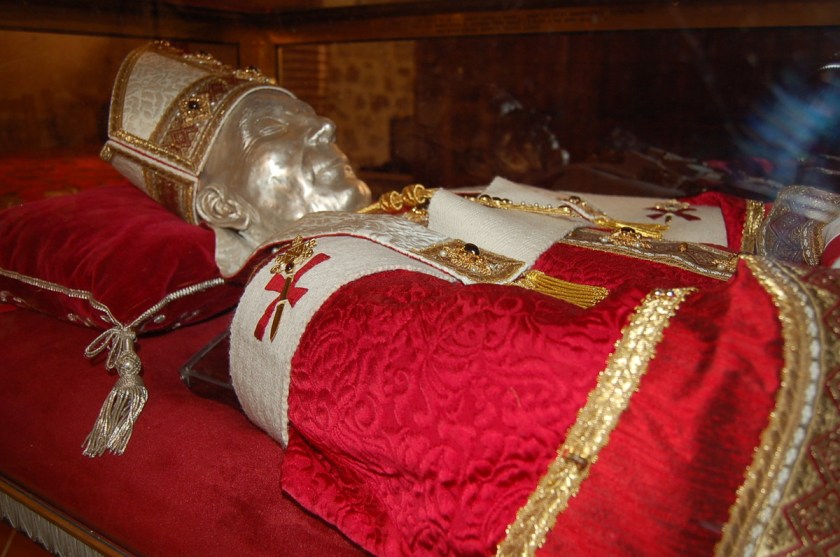
Celestine’s remains survived the 2009 L’Aquila earthquake with one Italian spokesman saying it was “another great miracle by the pope”. They were then recovered from the basilica shortly after the earthquake. While inspecting the earthquake damage during a 28 April 2009 visit to the Aquila, Pope Benedict XVI visited Celestine’s remains in the badly damaged Santa Maria di Collemaggio and left the woolen pallium he wore during his papal inauguration in April 2005 on his glass casket as a gift.
To mark the 800th anniversary of Celestine’s birth, Pope Benedict XVI proclaimed the Celestine year from 28 August 2009 through 29 August 2010. Benedict XVI visited the Sulmona Cathedral, near Aquila, on 4 July 2010 as part of his observance of the Celestine year and prayed before the altar consecrated by Celestine containing his relics, on 10 October 1294.


Saints – 19 May
St Alcuin of York
Bl Augustine Novello
St Calocerus of Rome
St Pope Celestine V
St Crispin of Viterbo
St Cyriaca of Nicomedia and Companions
St Cyril of Trèves
St Dunstan of Canterbury
St Evonio of Auvergne
St Hadulph of Saint-Vaast
Bl Humiliana de’ Cerchi
St Ivo Hélory of Kermartin
Bl Jean-Baptiste-Xavier Loir
Bl Józef Czempiel
Bl Juan of Cetina
Bl Louis Rafiringa
Bl Lucinio Fontanil Medina
St Parthenius of Rome
Bl Peter de Duenas
Bl Peter Wright
St Philoterus of Nicomedia
St Pudens of Rome
St Pudentiana of Rome
St Theophilus of Corte
Bl Verena Bütler
Contemplative Prayer – Making a Start
“Contemplation is a gaze of faith, fixed on Jesus” (Catechism of the Catholic Church, No 2715).
Contemplation is the prayer of the heart and not of the mind. Contemplative prayer may focus on a word or a saying or one may simply be in the presence of God. It is the prayer of the listening heart. The goal of contemplative prayer is to enter into the presence of God where there are no words, concepts or images. It is the prayer of being in love.
HOW: Before the Blessed Sacrament – sit or kneel. Gaze into the Tabernacle or look into the Monstrance. Be still. Focus on your breathing. Ask Mary to help you to pray. Pray to the Holy Spirit. Then peacefully repeat a word or a phrase: ‘Jesus; Jesus I love you; Jesus I trust in you; Father; Father, into your hands I commend my spirit’, etc. Don’t continue to repeat the word or the words over and over again. Only use the word or the phrase when your mind begins to wander. Focus your gaze on the Eucharist. Be open to whatever Jesus is asking of you.
At home – sit or kneel. Close your eyes. Again, be still and focus on your breathing. Ask Mary to help you to pray. Pray to the Holy Spirit. As before, repeat a word or a phrase, rooted in the scripture, the creed, a prayer or an aspect of our Christian faith. Do not repeat the word or words over and over again. Remember to use the word only when your mind begins to wander. Focus your gaze on the loving presence of God within you. If you begin to feel embraced by God, be still and be silent. Just allow the Holy Spirit to pray within you.
Jesuit Father William Johnston who has written much about contemplative prayer said: “Properly understood, contemplation shakes the universe, topples the powers of evil, builds a great society and opens the doors that lead to eternal life”.
What are the practical steps that we can take in order to incorporate into our busy lives daily contemplative prayer?
- First of all, we need balance in our lives. When was the last time that we enjoyed dinner with family and friends, or turned off our cell phone and refrained from checking our email at every moment? Excessive work and travel, excessive involvement in sports and entertainment are tearing us apart.
- Secondly, contemplation requires the capacity to be alone. It is difficult to be alone in our contemporary society. Even when we are alone, the noise of our own worries and fears drown out the silence of God’s voice. Many people are incapable of being alone and they immediately feel an obsession to talk with someone on a cell phone or check their email.
- We all need moments of solitude. Spending a quiet time before the Eucharist, reading the Scriptures during a peaceful moment at home, taking tranquil walks through the woods or along the beach all are necessary for our soul. In order to be with God, we must develop the ability to be alone with ourselves.
Excerpt from Fr James Farfaglia’s Homily on Contemplative Prayer
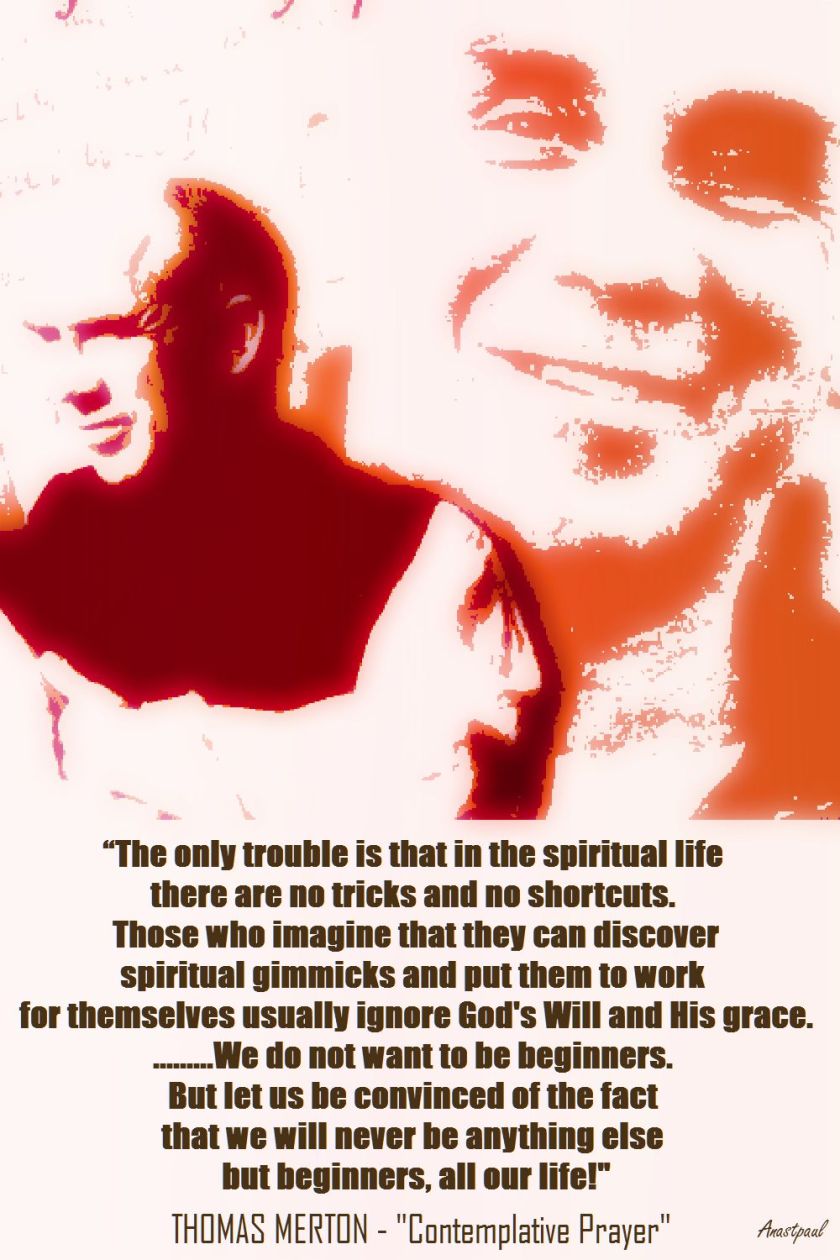
“The only trouble is that in the spiritual life there are no tricks and no shortcuts. Those who imagine that they can discover spiritual gimmicks and put them to work for themselves usually ignore God’s will and his grace.”
“We do not want to be beginners. But let us be convinced of the fact that we will never be anything else but beginners, all our life!”
“Hence monastic prayer, especially meditation and contemplative prayer, is not so much a way to find God as a way of resting in Him whom we have found, who loves us, who is near to us, who comes to us to draw us to Himself.”
― Thomas Merton, Contemplative Prayer
Thought for the Day – 18 May
Thought for the Day – 18 May
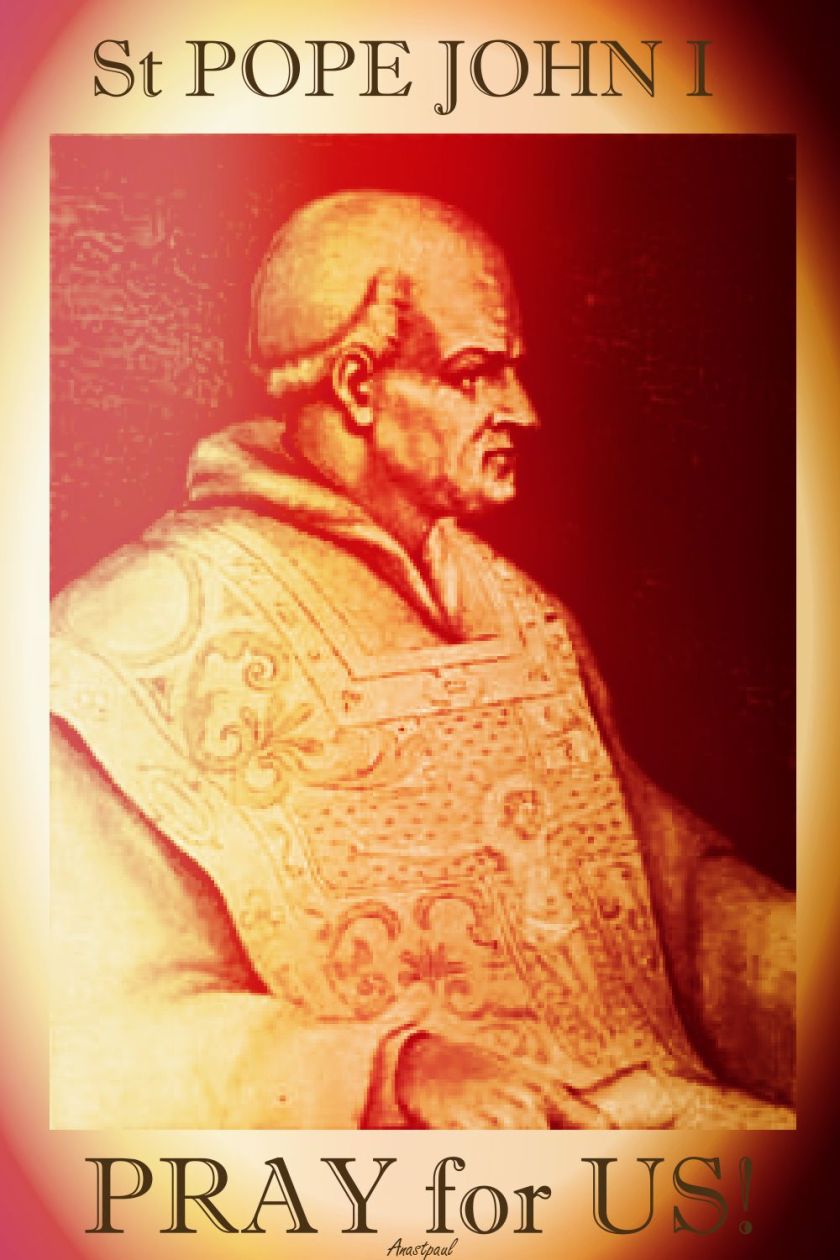
St Pope John I tried to bring peace between king and emperor but succeeded also in endangering his own life. So it seems to be lot of peacemakers. However, he was willing to take the risk and so should we be in trying to reconcile others. Sometimes, we succeed but oftentimes, both sides turn against the striving peacemaker. That is the risk we take but that is also the challenge of being a Christian. “If you find that the world hates you, know it has hated me before you” (John 15:18). St Pope John I, please pray for us that we too might have your courage in the face of adversity and persecution.
Quote of the Day – 18 May
Quote of the Day – 18 May
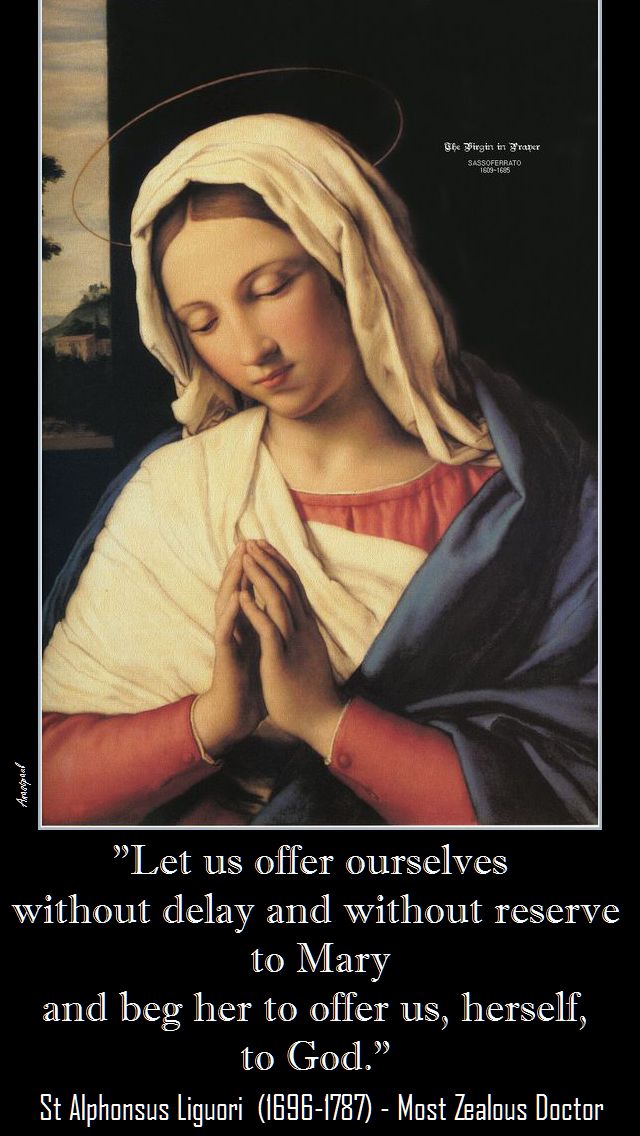
“Let us offer ourselves without delay
and without reserve to Mary
and beg her to offer us, herself, to God.”
St Alphonsus Liguori (1696-1787)
Doctor zelantissimus (Most Zealous Doctor)
One Minute Reflection – 18 May
One Minute Reflection – 18 May
“You are the glory of Jerusalem!
You are the great pride of Israel!
You are the great boast of our nation!……Judith 15:9
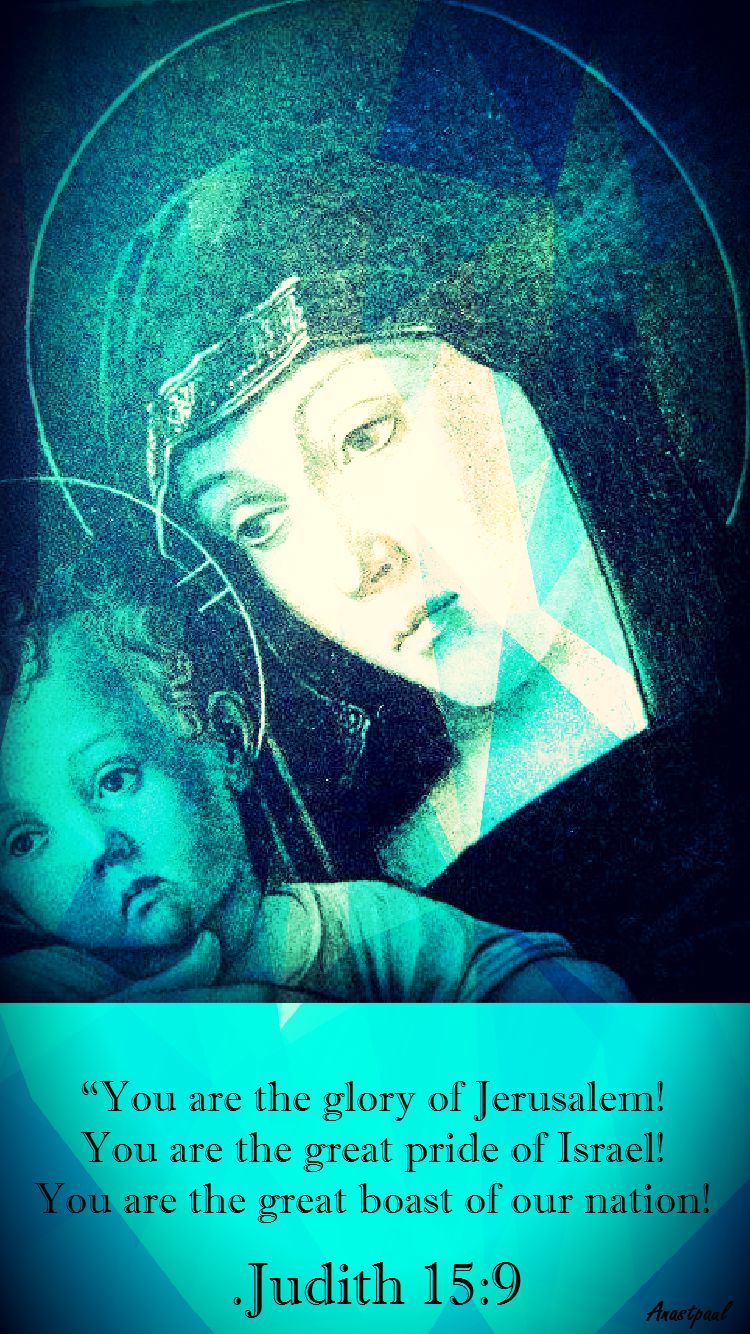
REFLECTION – “Those who want to prevent their heart from being pervaded by the evils of earth, should entrust it to the Blessed Virgin, our Lady and our Mother. They will then regain it in heaven, freed from all evils.”……………St Francis de Sales
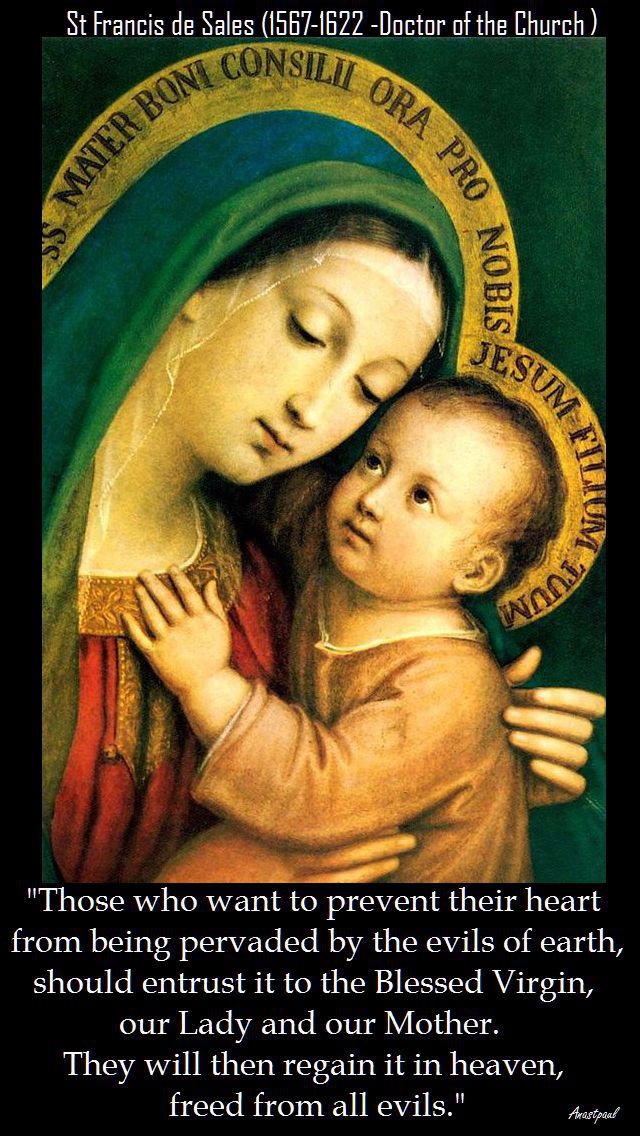
PRAYER – Lord Jesus, move me to entrust my heart and my affections to Your Holy Mother. Grant that her prayers may keep me from all evil and firmly attached to You forever. Holy Mary, Holy Mother, pray for us, amen.

Our Morning Offering – 18 May
Our Morning Offering – 18 May
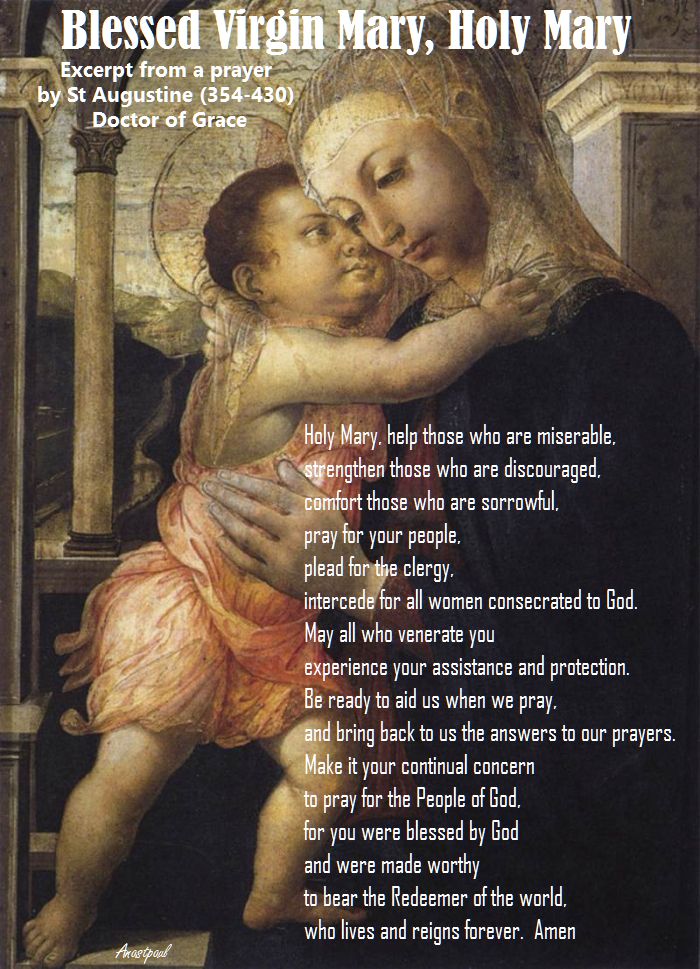
Blessed Virgin Mary, Holy Mary
Excerpt from a prayer by St Augustine (354-430)
Doctor gratiae (Doctor of Grace)
Holy Mary, help those who are miserable,
strengthen those who are discouraged,
comfort those who are sorrowful,
pray for your people,
plead for the clergy,
intercede for all women consecrated to God.
May all who venerate you
experience your assistance and protection.
Be ready to aid us when we pray,
and bring back to us the answers to our prayers.
Make it your continual concern
to pray for the People of God,
for you were blessed by God
and were made worthy
to bear the Redeemer of the world,
who lives and reigns forever.
Amen.
Saint of the Day – 18 May – St Pope John I
Saint of the Day – 18 May – St Pope John I (c 470 – 526) He
was Pope from 13 August 523 to his death in 526.
He was a priest in Rome and was elected the 53rd pope in 523. Italy’s ruler, Theodoric the Goth, was an Arian and for a while he let Catholics alone but in later life he became suspicious of everyone, imagining conspiracies and attempts to seize his throne. He tried to involve Pope John in his political machinations. John led a delegation to Constantinople to negotiate with Emperor Justin I; he was the first pope to travel to Constantinople and while there crowned Justin. The mission was successful but Theodoric thought John and Justin I had plotted against him. While returning to Rome, John was kidnapped and imprisoned by Theodoric’s soldiers at Ravenna, where he died of neglect and ill treatment. His body was transported to Rome and buried in the Basilica of St. Peter. St Pope John I is depicted in art as looking through the bars of a prison or imprisoned with a deacon and a subdeacon. He is venerated at Ravenna and in Tuscany.


Saints – 18 May
St Pope John I, (Optional Memorial)
—
Bl Burchard of Beinwil
St Dioscorus of Kynopolis
St Elgiva of Shaftesbury
St Eric of Sweden
St Felix of Cantalice
St Felix of Spoleto
St Feredarius of Iona
Bl Jan Oprzadek
St Merililaun
St Ortasio of Alexandria
St Potamon of Heraclea
St Serapione of Alexandria
Bl Stanislaw Kubski
St Venantius of Camerino
Bl William of Toulouse
—
Martyrs of Ancyra – 8 saints: Seven nuns martyred in the persecutions of Diocletian and the innkeeper who was executed for giving them a Christian burial: Alexandria, Claudia, Euphrasia, Julitta, Matrona, Phaina, Thecusa and Theodatus. c.304 in Ancyra, Galatia (in modern Turkey)
Thought for the Day – 17 May
Thought for the Day – 17 May
The life of St Paschal Baylon is one of simple adoration of the Lord. He recognised the importance of spending time before Our Saviour, in contemplation of His passion, love, and sacrifice—in the earthly presence of God. Through his devotion to the Blessed Sacrament, St Paschal was graced with wisdom beyond his education and obedience and charity beyond measure. His life inspires us to greater communion with the Lord, leading us to His spiritual treasures. As prayer before the Blessed Sacrament occupied much of Saint Francis’ energy. Most of his letters were to promote devotion to the Eucharist. St Paschal shared this concern. An hour in prayer before our Lord in the Eucharist could teach all of us a great deal! Many holy and busy Catholics today, across the world, find that their lives in every respect, are enriched by these minutes regularly spent in prayer and meditation.
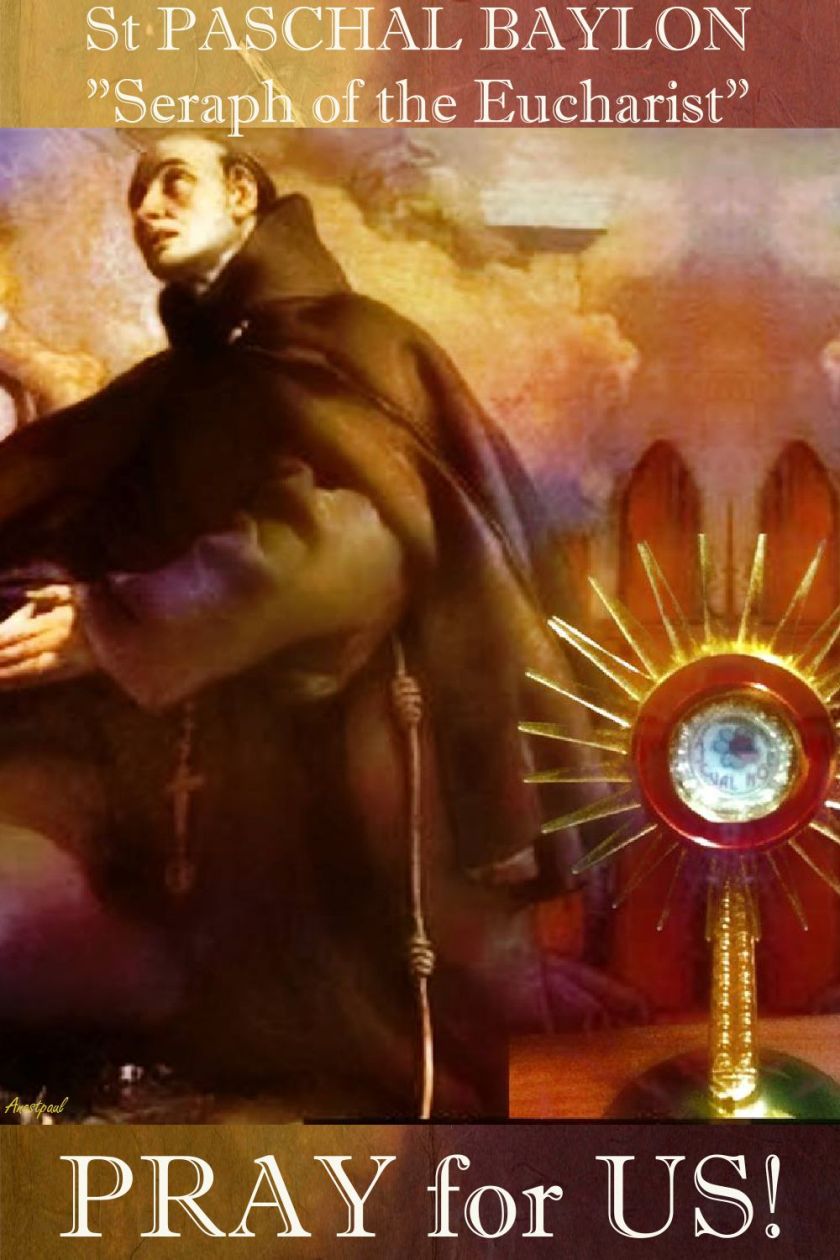
O God, You filled St. Paschal with a wondrous love for the sacred mysteries of Your Body and Blood. May we draw from this Divine Banquet the same spiritual riches he received. St Paschal Baylon Pray for us amen!
Quote of the Day – 17 May
Quote of the Day – 17 May
“There is no more efficacious means than this (Eucharistic Adoration)
for nourishing and increasing the piety of the people
toward this admirable pledge of love
which is a bond of peace and of unity.”
St Paschal Baylon
One Minute Reflection – 17 May
One Minute Reflection – 17 May
“He who feeds on my flesh and drinks my blood has life eternal”……………….John 6:54
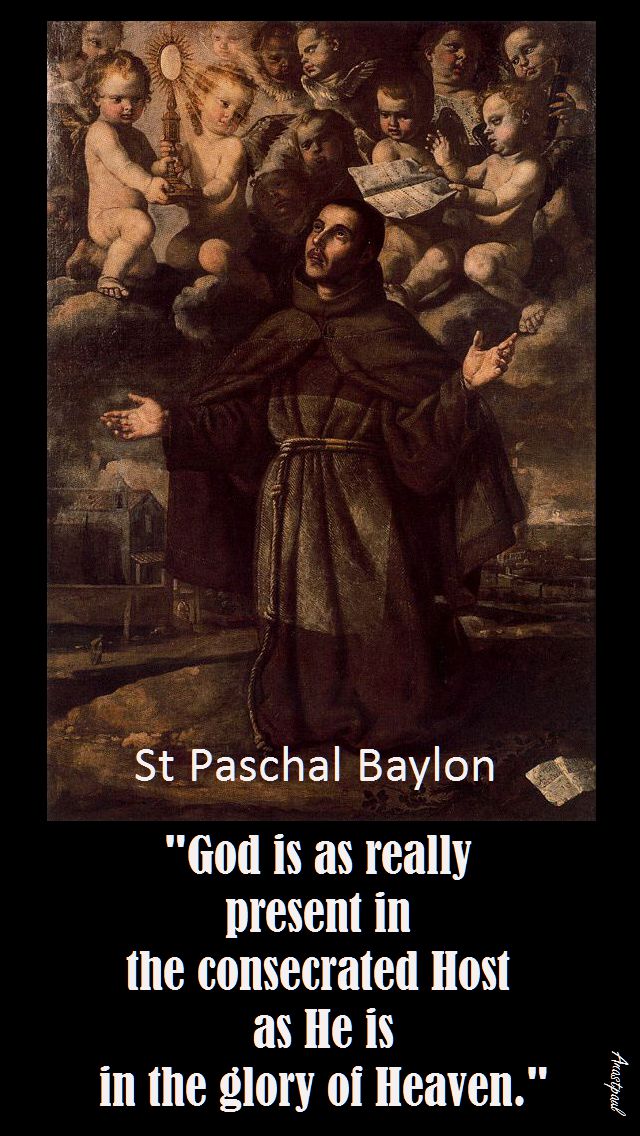
REFLECTION – “God is as really present in the consecrated Host as He is in the glory of Heaven”…..St Paschal Baylon
PRAYER – Lord Jesus Christ, never let me abstain from receiving You in Holy Communion and let me always find the time to visit You in the Tabernacle. Lord teach enlighten my mind with a fuller love and understanding of Your Eucharistic Heart. St Paschal Baylon, Seraph of the Eucharist, pray for us all! Amen

Our Morning Offerings – 17 May
Our Morning Offerings – 17 May
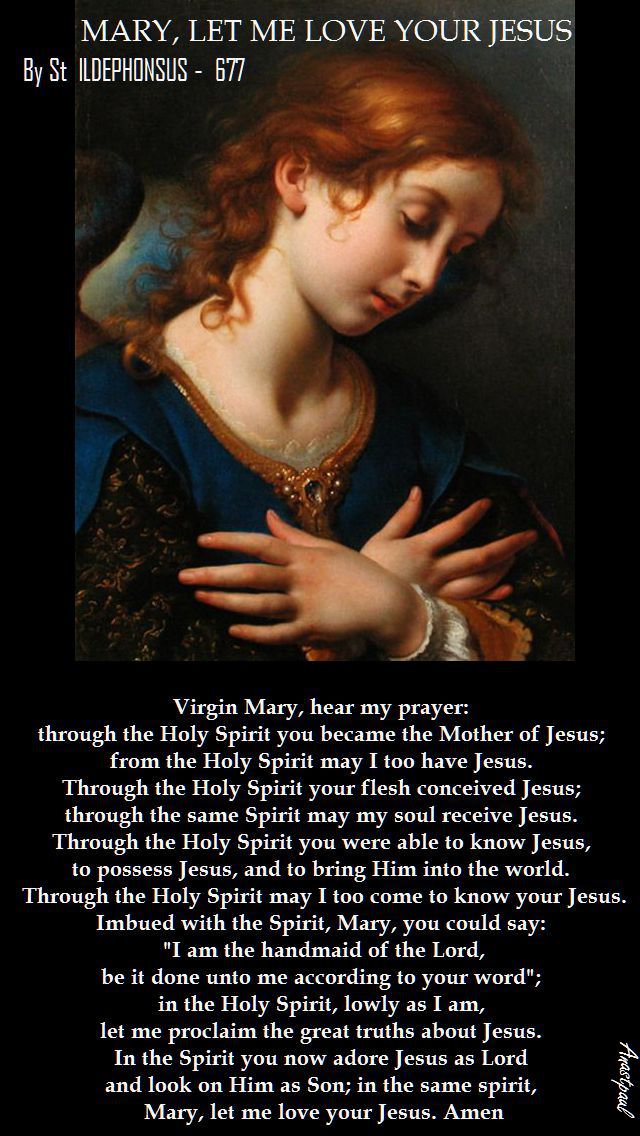
MARY, LET ME LOVE YOUR JESUS
By St ILDEPHONSUS OF SPAIN – 677
Virgin Mary, hear my prayer:
through the Holy Spirit
you became the Mother of Jesus;
from the Holy Spirit may I too have Jesus.
Through the Holy Spirit your flesh conceived Jesus;
through the same Spirit may my soul receive Jesus.
Through the Holy Spirit you were able to know Jesus,
to possess Jesus,
and to bring Him into the world.
Through the Holy Spirit may I too come to know your Jesus.
Imbued with the Spirit,
Mary, you could say:
“I am the handmaid of the Lord,
be it done unto me according to your word”;
in the Holy Spirit,
lowly as I am,
let me proclaim the great truths about Jesus.
In the Spirit you now adore Jesus as Lord
and look on Him as Son;
in the same spirit,
Mary, let me love your Jesus. Amen
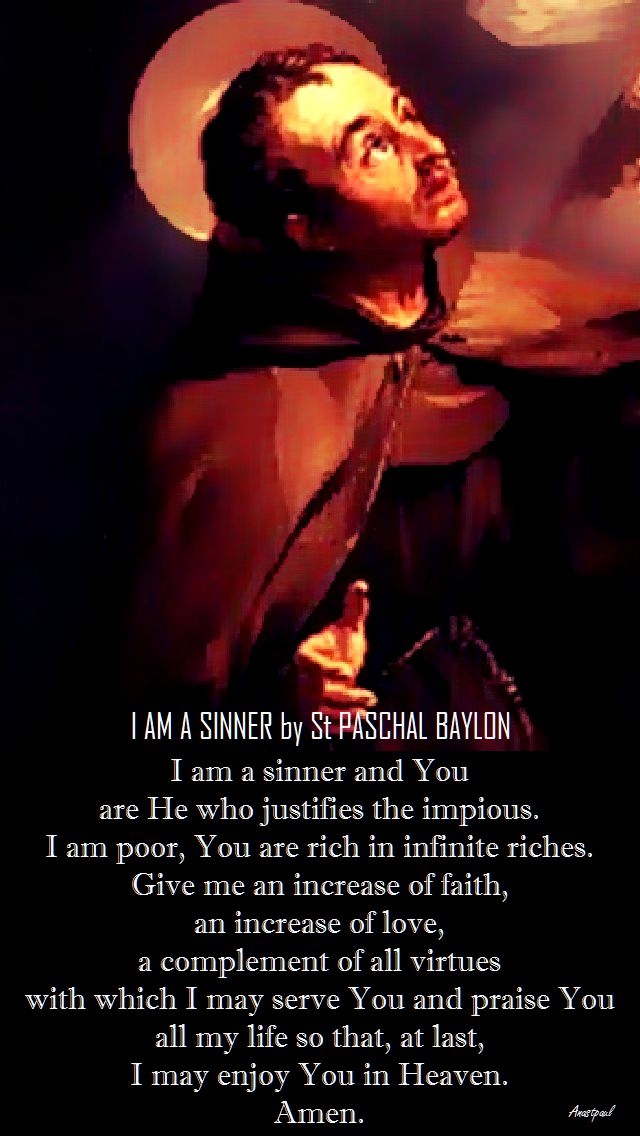
I AM A SINNER by ST PASCHAL BAYLON (Memorial today 17 May)
I am a sinner and You
are He who justifies the impious.
I am poor, you are rich in infinite riches.
Give me an increase of faith,
an increase of love,
a complement of all virtues
with which I may serve You and praise You
all my life so that, at last,
I may enjoy You in Heaven.
Amen.
Saint of the Day – 17 May – St Paschal Baylon OFM (1540-1592) “Servant of the Eucharist”
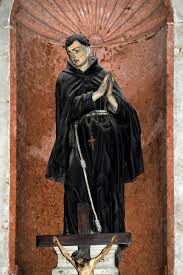
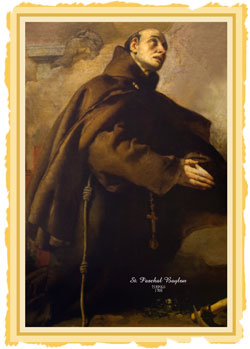
Saint of the Day – 17 May – St Paschal Baylon (1540 (feast of Pentecost) at Torre Hermosa, Aragon, (modern Spain) – 15 May 1592 (feast of Pentecost) at Villa Reale, Spain of natural causes) Franciscan lay brother, Mystic, Contemplate, known as the “Seraph of the Eucharist,” “Saint of the Blessed Sacrament,” “Servant of the Eucharist.” Patron of cooks, shepherds, Eucharistic congresses and organisations (proclaimed by Pope Leo XIII on 28 November 1897), Diocese of Segorbe-Castellón de la Plana, Spain, Obado, Bulacan, Philippines. Attributes – The Eucharist, Monstrance, Franciscan habit.
Today, 17 May marks the Feast Day of Saint Paschal Baylon, mystic, known for his profound devotion to the Blessed Sacrament. While Saint Paschal never became a priest, he is the saint most often thought of in relation to the Holy Eucharist and Pope Leo XIII declared him the patron saint of Eucharistic congresses and associations. He wrote, “There is no more efficacious means than this for nourishing and increasing the piety of the people toward this admirable pledge of love, which is a bond of peace and of unity.” Among all those most devoted to the Eucharist, Paschal Baylon seemed to the Pope to be “the greatest.”

As a youth, Paschal Baylon tended his family’s sheep. He taught himself to read so that he could pray the Little Office of the Blessed Virgin, the popular prayer book of his day. Paschal disciplined himself to endure the harshness and loneliness of a shepherd’s work. And when his sheep trod on others’ vines, he scrupulously paid for the damage out of his own meager resources.

At twenty-one, St Paschal joined the reformed Franciscans of St. Peter of Alcántara at Loreto. As a lay brother, Paschal for many years served as porter and guestmaster with patience and good humor. John Ximenes, his biographer, reports that he was a model friar, always the first at prayer and never once behaving badly in a relationship. “In no single case,” said Ximenes, “do I remember to have noted even the least fault in him, though I lived with him in several of our houses and was his companion on two long journeys.”
Like other saintly doorkeepers Brother André and Solanus Casey, Paschal gained a reputation for miracles.
For example, Martin Crespo once told how the saint freed him from his determination to take vengeance on his father’s murderers:
“One Good Friday there was a lifelike representation of the descent from the cross. Along with everyone else in town, I followed the crucifix borne in triumph through the streets. In a last ditch effort to get me to repent, my friends boxed me in and forced me to endure the preacher’s address. He concluded his eloquent speech in a pathetic peroration, urging me to forgiveness in memory of our Saviour’s passion. His fine discourse left me unmoved and cold.
“Quit tormenting me,” I exclaimed angrily. “It’s no use. I will not forgive them.” Brother Paschal, whom I had not noticed before, stepped forward. He took me by the arm and drew me aside. “My son,” he said, “have you not just now seen a representation of our Lord’s passion?” Then with a glance that penetrated my soul he said: “For the love of Jesus Crucified, my son, forgive them.”
“Yes, Father,” I replied, hanging my head and weeping. “For the love of God I forgive them with all my heart.” I no longer felt the same person. The crowd anxiously awaited the outcome of our mysterious conference. When Paschal announced that I had forgiven my enemies, they burst into applause.”
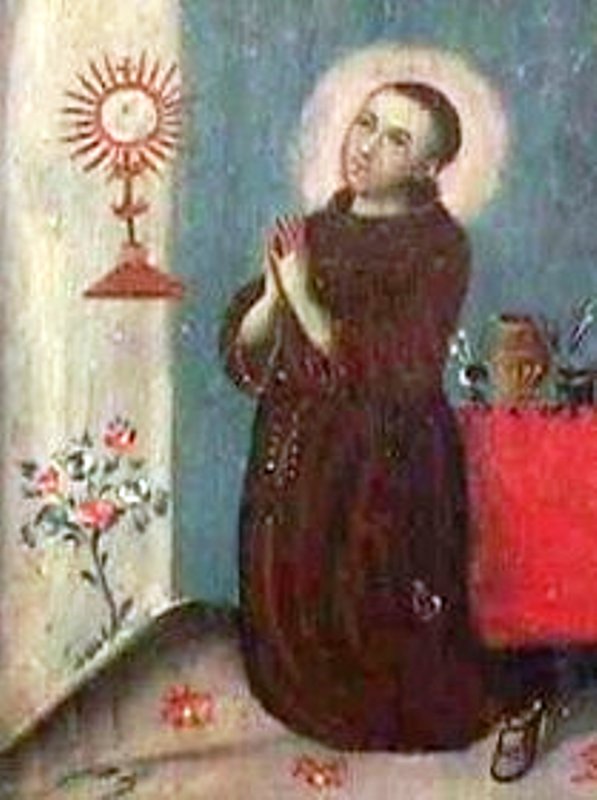
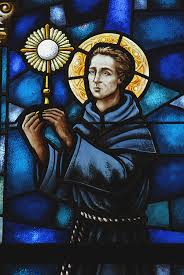
We remember Paschal Baylon most as the “Saint of the Blessed Sacrament.” Typically he spent as many hours a day as he could worshiping before the Tabernacle. Because of his faithful devotion, the Church has named him Patron of Eucharistic Congresses and conferences. He died in 1592 at the age of fifty-two.
Saint Paschal exhibited an ardent love for Christ and was especially devoted to the Eucharistic Mystery. He traveled from church to church, always on foot, visiting and praying before the Blessed Sacrament, referring to his encounters with “the real presence of Jesus” in these moments. During his prayers, he would often levitate above the floor, so much was his love and zeal for Christ.
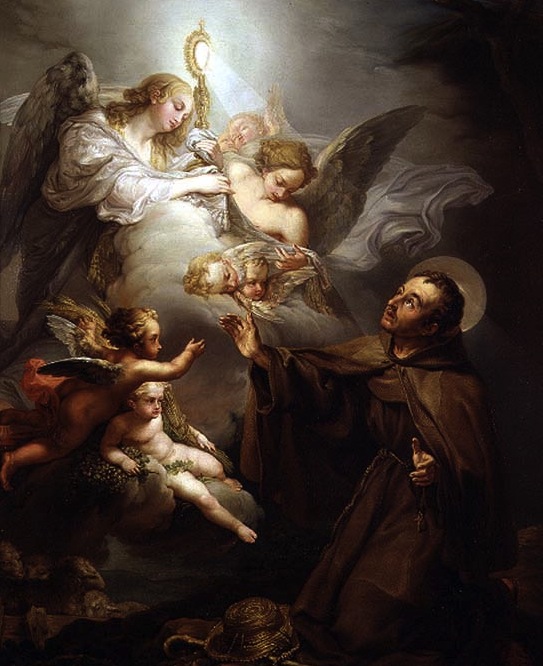
Many miracles are attributed to Saint Paschal, including creating fresh-flowing streams by striking the ground, healing, and miraculous charity. Saint Paschal also experienced mystical visions. On one such occasion, while he was out in the fields with his sheep and unable to go to Mass at the nearby monastery, Paschal was waiting for the sound of the Consecration Bell which he always observed in prayer. In his longing to be present at the Holy sacrifice of the Mass, he cried out, “My Master, My adorable Master, Oh that I might see Thee!” Suddenly before him he saw Angels bowed down before a Chalice, with the Blessed Sacrament floating above it. In the Divine Presence of Our Lord, Paschal fell flat on his face and adored God. Then taking courage he gazed upon the beautiful vision.
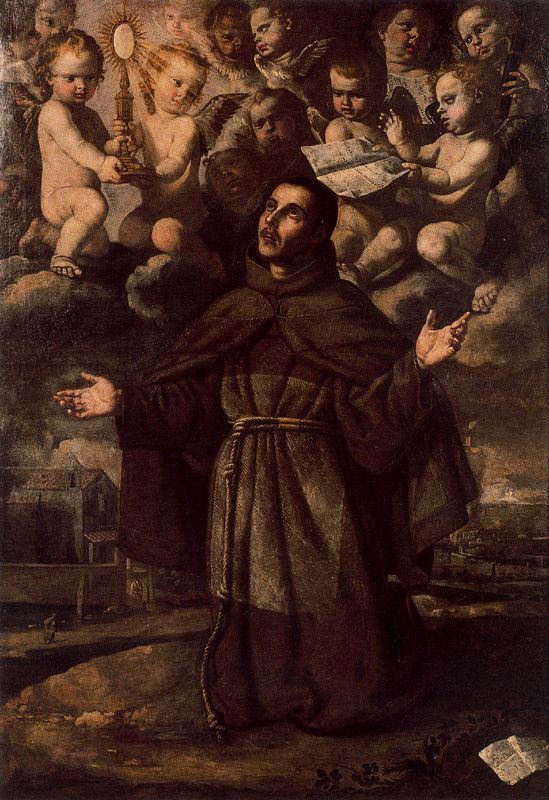
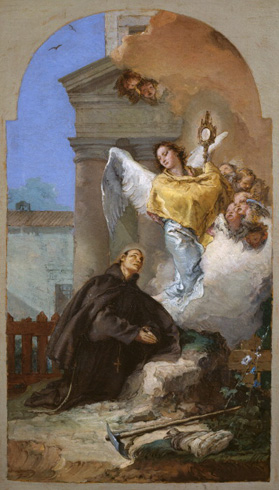
The “Servant of the Eucharist,” as he was commonly called, died on 17 May Pentecost Sunday, in 1592. His tomb at the Royal Chapel in Villareal, Valencia, Spain immediately became the object of innumerable pilgrimages, even by the king and the nobles of Spain. At his funeral Mass, Saint Paschal’s eyes miraculously opened during the Consecration, adoring the Blessed Sacrament even in death. Since his death, strange occurrences have continued to be reported, known as the “Knocks of St. Paschal.” At first, the knocks came from Paschal’s tomb. Later they came from relics and pictures of the saint. The knocking sound is believed to come as a kind of warning, to let people know that a terrible event was about to take place. It is also said that in Spain and Italy, those who are devoted to Saint Paschal, are warned about their death, days before, so that they may have a chance to receive the Last Sacraments. Beatified by Pope Paul V in 1618, he was Canonised by Pope Alexander VIII on 16 October 1690.
Saints – 17 May
St Adrione of Alexandria
Bl Antonia Messina
Bl Bernard of Verdun
St Cathan of Bute
St Fionnchan of Druim-Eanaigh
St Giulia Salzano
St Heraclius of Noviodunum
Bl Ivan Ziatyk
St Madron of Cornwall
St Maildulf of Malmesbury
St Maw
St Paschal Baylon
St Paul of Noviodunum
St Peter Lieou
St Rasso of Grafrath
St Restituta of Carthage
St Silaus of Lucca
St Solochanus of Chalcedon
St Thethmar
St Victor Roma
—
Martyrs of Alexandria – 3 saints: Three Christians martyred together; no details about them have survived except their names: Adrio, Basilla and Victor.
4th century Alexandria, Egypt
Martyrs of Nyon: A group of Christians martyred together in the persecutions of Diocletian. We know little more than three of their names: Aquilinus, Heradius and Paul. 303 at Noyon, Switzerland
The Present Moment is the Only Real Moment
The Present Moment is the Only Real Moment
“The spiritual life always concerns itself with the present.
Retreatants are very inclined to worry about the future and be guilty about the past.
It is important to set goals for the future and to implement ways to achieve those goals.
It is also important to review the past, claim the history of grace and sin and more grace.
But the PRESENT MOMENT is the only real moment…………….live in the NOW moment because the present is the ONLY moment of grace.”…….Fr Bill Creed SJ
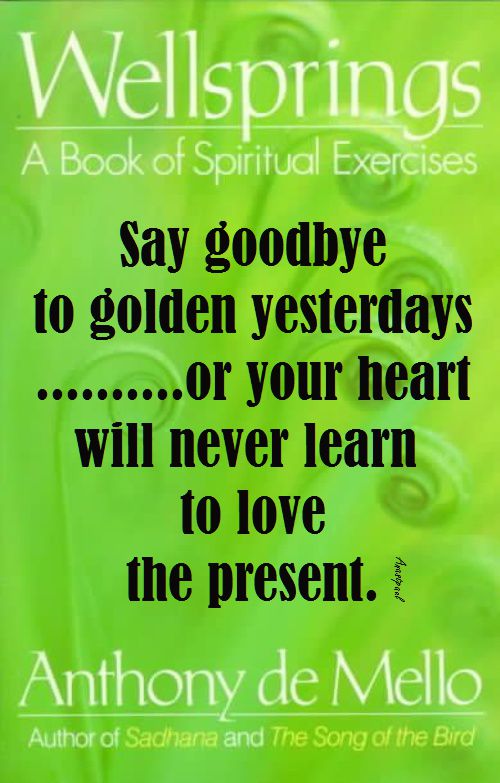
Say goodbye
to golden yesterdays
……….or your heart
will never learn
to love
the present.
Fr Anthony de Mello SJ “Wellsprings”
Pause in your activities today – perhaps when you are in the car, or between meetings, or busy doing ‘mother’ things that leave you mindless – and be STILL in the present moment of grace. This is the beginnings of contemplative prayer.
Thought for the Day – 16 May
Thought for the Day – 16 May
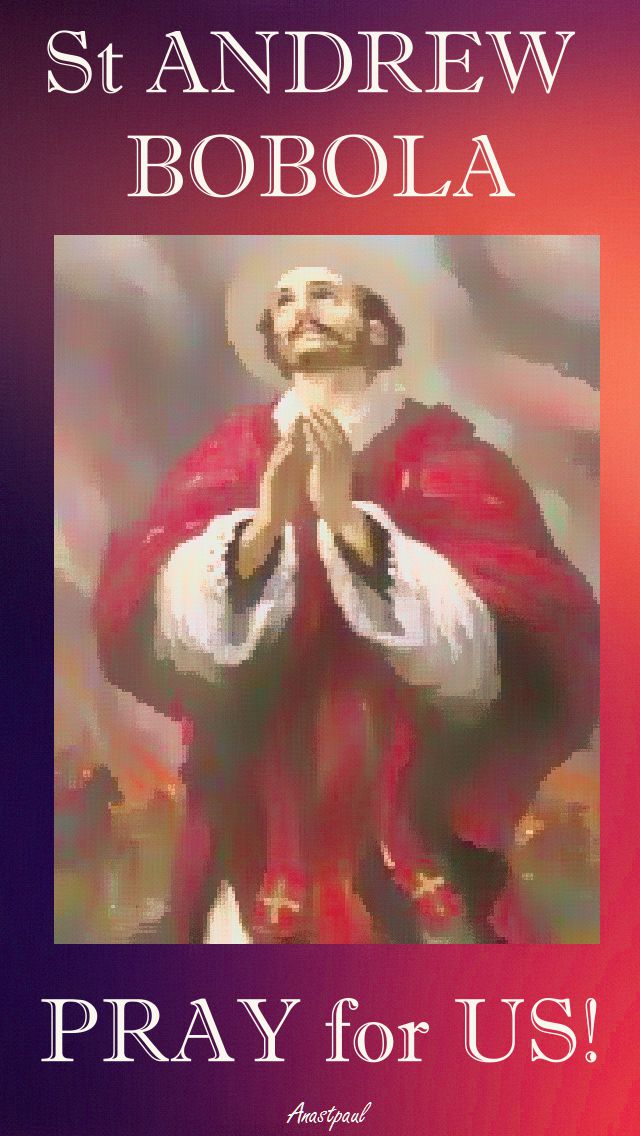
“What seems to shine forth especially in the life of Andrew Bobola is his Catholic faith, whose vigour, nourished by divine grace, grew so much stronger with the passing of the years that it conferred on him a special mark of distinction, and spurred him on to undergo his martyrdom with courage.
But the Catholic Church, particularly in the countries to the East, was facing an extremely grave crisis owing to the efforts of the schismatics, who were striving by every device to draw the faithful away from the unity of the Church into their own errors. Andrew went, therefore, into those regions on the instruction and command of his Superiors and by public sermons and private instruction through their cities, towns and villages and most of all by the fervour of his exceptional holiness and the burning zeal of his apostolate, he freed the wavering faith of a multitude of Christians from beguiling falsehood, brought them back to sound principles, and joyfully invited all he could to return to the one fold of Jesus Christ.
He did not merely restore and strengthen the faith of the Christians, languishing and on the verge of collapse but roused them also to weep for their own sins, to settle their disputes, to heal their divisions, to restore true morality. It seemed that, like his Divine Master, wherever he passed by doing good, a new spring blossomed forth, bright with heavenly flowers and fruits of salvation. Consequently, as tradition has it, he received from all, even from the schismatics, the significant title of “Hunter of Souls.”
This tireless apostle of Jesus Christ had lived by faith, had spread the faith and had defended the faith; so too, he did not hesitate to die for the faith of his fathers.”
INVICTI ATHLETAE (On St. Andrew Bobola)
(Venerable) Pope Pius XII
Encyclical Promulgated on 16 May 1957
Do you find yourself persecuted, in trouble, disliked and maligned because you live by and defend the Faith? But this is our mission – we do not live according to the instructions of our Divine Master, unless we ‘go forth and spread the good news’. If we miss a single opportunity to live and speak the truth, we may well be responsible for the eternal damnation of a soul – what a frightening thought!
St Andrew Bobola, inspire us with your zeal for souls and please Pray for us!

Quote of the Day – 16 May
Quote of the Day – 16 May
…..”the Polish Martyr rose to the heights of the noblest triumphs which the Church commemorates. Andrew was asked if he were a priest of the Latin rite, and he replied:
‘I am a Catholic priest. I was born in the Catholic faith. In that faith I wish to die. My faith is true; it leads to salvation. Do you rather repent; give place to sorrow for sin, else you will be unable, in your errors, to win salvation. By embracing my faith, you will acknowledge the true God and will save your souls’.
St Andrew Bobola SJ
At these words, those wicked men, utterly devoid of humanity, were roused to a fiendish barbarity and reached such a degree of cruelty that they inflicted still more horrible sufferings on the soldier of Christ. Once again, “he was scourged, a crown like that of Jesus Christ was bound about his head, he was struck heavy blows and lay wounded by a scimitar. Next, his right eye was gouged out, strips of skin were torn off, his wounds were savagely scorched and rubbed with prickly bundles of straw. Nor was that enough: his ears, nose and lips were cut off, his tongue torn out by the root and finally, a weapon plunged into his heart. And, at long last, the valiant athlete, three hours after midday, displaying a truly marvelous example of fortitude, was pierced by a sword and achieved the glory of martyrdom.” ……………….Venerable Pope Pius XII – INVICTI ATHLETAE (On St. Andrew Bobola) Encyclical Promulgated on 16 May 1957

One Minute Reflection – 16 May
One Minute Reflection – 16 May
Blessed are you when they insult you and persecute you and utter every kind of evil against you [falsely] because of me. Rejoice and be glad, for your reward will be great in heaven…………..Matthew 5:11-12
REFLECTION – “The mind shudders as it recalls all the tortures which the athlete of Jesus Christ endured with unconquerable fortitude and a faith resolute and unbroken……..We do not think this filled him with fear but rather with a heavenly joy. For We know that he had always prayed for martyrdom and had often recalled these words of the Divine Redeemer..”………Venerable Pope Pius XII

PRAYER – Gracious Lord, help me too to be an apostle of zeal and a ‘hunter of souls’. For I know that is through Your grace and by that grace manifest in my life that I may reach out and help all those around me. Grant me Lord, the courage and zeal of St Andrew Bobola, who I now request for his intercessionary prayers, on behalf of all Your Holy Church. Amen
Our Morning Offering – 16 May
Our Morning Offering – 16 May
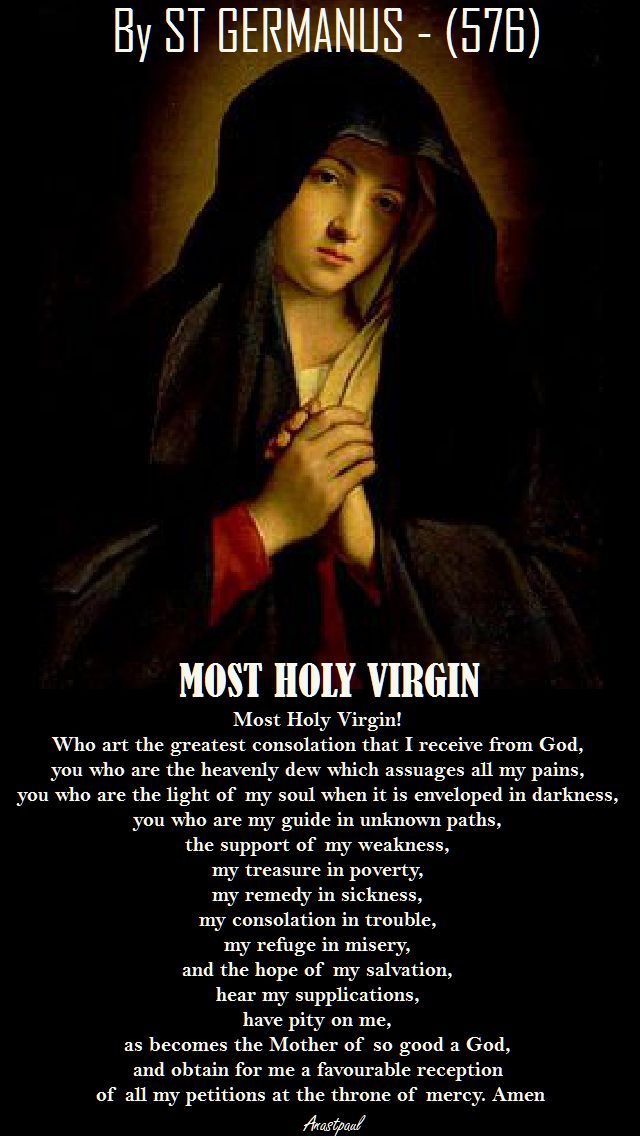
MOST HOLY VIRGIN
ST GERMANUS – 576
(Bishop of Auxerre)
Most Holy Virgin!
Who art the greatest consolation
that I receive from God,
you who are the heavenly dew
which assuages all my pains,
you who are the light of my soul
when it is enveloped in darkness,
you who are my guide in unknown paths,
the support of my weakness,
my treasure in poverty,
my remedy in sickness,
my consolation in trouble,
my refuge in misery,
and the hope of my salvation,
hear my supplications,
have pity on me,
as becomes the Mother of so good a God,
and obtain for me a favourable reception
of all my petitions at the throne of mercy. Amen
Saint of the Day – 16 May – St Andrew Bobola SJ
Saint of the Day – 16 May – St Andrew Bobola SJ (1591-1657) Martyr, Priest, Missionary, known as the Apostle of Lithuania and the “Hunter of Souls.”. Born Andrzej Bobola – Patron of Poland and the Archdiocese of Warsaw. His body is incorrupt.
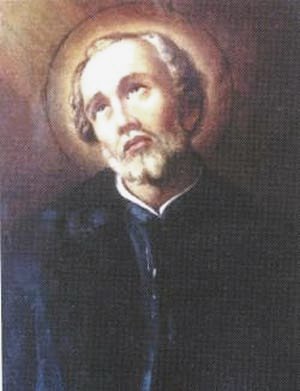
Bobola was born in 1591 into a noble family in the Sandomir Palatinate in the Province of Lesser Poland of the Crown of the Kingdom of Poland, then a constituent part of the Polish–Lithuanian Commonwealth. In 1611 he entered the Society of Jesus in Vilnius, then in the Grand Duchy of Lithuania, the other part of the Commonwealth. He subsequently professed solemn vows and was ordained in 1622, after which he served for several years as an advisor, preacher, Superior of a Jesuit residence, etc., in various places.
From 1652 Bobola also worked as a country “missionary”, in various locations of Lithuania: these included Polotsk, where he was probably stationed in 1655 and also Pinsk, (both now in Belarus). On 16 May 1657, during the Khmelnytsky Uprising, he was captured in the village of Janów (now Ivanava, Belarus) by the Cossacks of Bohdan Chmielnicki and, after being subjected to a variety of tortures, killed.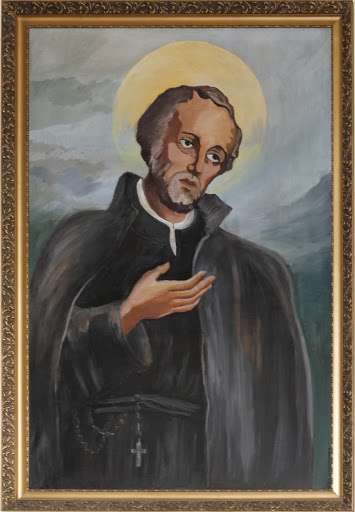
One description of Bobola’s death written in 1865 states:
“In the same year, the Cossacks surprised a holy Polish Jesuit, in the town of Pinsk and conferred on him the palm of martyrdom, on the 16th of May, 1657. Father Andrew Bobola, …had just offered up the holy sacrifice, when a horde of Cossacks attacked the town. On beholding the barbarians, Father Bobola fell upon his knees, raised his eyes and his hands toward heaven, and, having a presentiment that his hour had arrived, exclaimed, “Lord, thy will be done!” At that moment, the Cossacks rushed upon him, stripped him of his holy habit, tied him to a tree, placed a crown upon his head, …after which they scourged him, tore out one of his eyes, burned his body with torches, and one of the ruffians traced, with his poignard, the form of a tonsure on the head of the venerable Father and on his back the figure of a chasuble! To do this, the executioner had to strip off the skin of the holy martyr! But this was not yet all. The fingers of the apostle had received the priestly unction. The executioner tore from them the skin and forced needles under his nails! And during this indescribable torture, the hero prayed for his tormentors; he preached, both by word and example, until the schismatics tore out his tongue and crushed his head. Father Andrew Bobola, whom the Church declared Blessed, the 30th of October, 1853, was sixty-five years of age.”
Bobola’s body was originally buried in the Jesuit church in Pinsk. It was later moved to their church in Polotsk. By the beginning of the 18th century, however, nobody knew where Bobola’s body was buried. In 1701 Father Martin Godebski, S.J., the Rector of the Pinsk College, reputedly had a vision of Bobola. This caused him to order a search for the body. It was found completely incorrupt, which was recognized by the Church and its supporters as proof of holiness. In 1719 the casket was officially reopened and the body inspected by qualified medical personnel (five physicians and pharmacists). It was reportedly still completely incorrupt: pliable and with soft flesh.
In 1922, the Bolsheviks moved the corpse, later described by an American journalist as “remarkably well-preserved” to the Museum of Hygiene of People’s Commissioners of Health in Moscow. The whereabouts of the remains was not known to the Catholic authorities and Pope Pius XI charged the Papal Famine Relief Mission in Russia, headed by American Jesuit Father Edmund A. Walsh, with the task of locating and “rescuing” them. In October 1923—as a kind of “pay” for help during famine—the remains were released to Walsh and his Assistant Director, Father Louis J. Gallagher, S.J. Well packed by the two Jesuits, they were delivered to the Holy See by Gallagher on All Saints’ Day (1 November) 1923. In May 1924, the relics were installed in Rome’s Church of the Gesù, the main church of the Society of Jesus.


Since 17 June 1938 the body has been venerated at a shrine in Warsaw, with an arm remaining at the original shrine in Rome.
Declared Blessed by Pope Pius IX on 30 October 1853, Bobola was canonised by Pope Pius XI on 17 April 1938. His feast day was originally celebrated by the Jesuits on 23 May but it is now generally celebrated on 16 May. On his feast day in 2002, Pope John Paul II declared Bobola a patron saint of Poland and of the Roman Catholic Archdiocese of Warsaw.


Saints – 16 May
St Abdas of Cascar
Bl Adam of Adami
Bl Adam of San Sabine
St Andrew Bobola
St Annobert of Séez
St Aquilinus of Isauria
St Brendan the Navigator
St Carantac
St Carantoc
St Diocletian of Osimo
St Felix of Uzalis
St Fidolus of Aumont
St Fiorenzo of Osimo
St Fort of Bordeaux
St Francoveus
St Gennadius of Uzalis
St Germerius of Toulouse
St Hilary of Pavia
St Honorius of Amiens
Bl Louis of Mercy
St Margaret Of Cortona
St Maxima of Fréjus
Bl Michal Wozniak
St Peregrinus of Auxerre
St Peregrinus of Terni
St Possidius of Calama
St Primael of Quimper
St Simon Stock
St Ubaldus Baldassini
St Victorian of Isauria
Bl Valdimir Ghika
—
Martyrs of Saint Sabas: A group of monks, whose names have not come down to us, who were massacred by Moors at the monastery of Saint Sabas in Palestine.
Thought for the Day – 15 May
Thought for the Day – 15 May
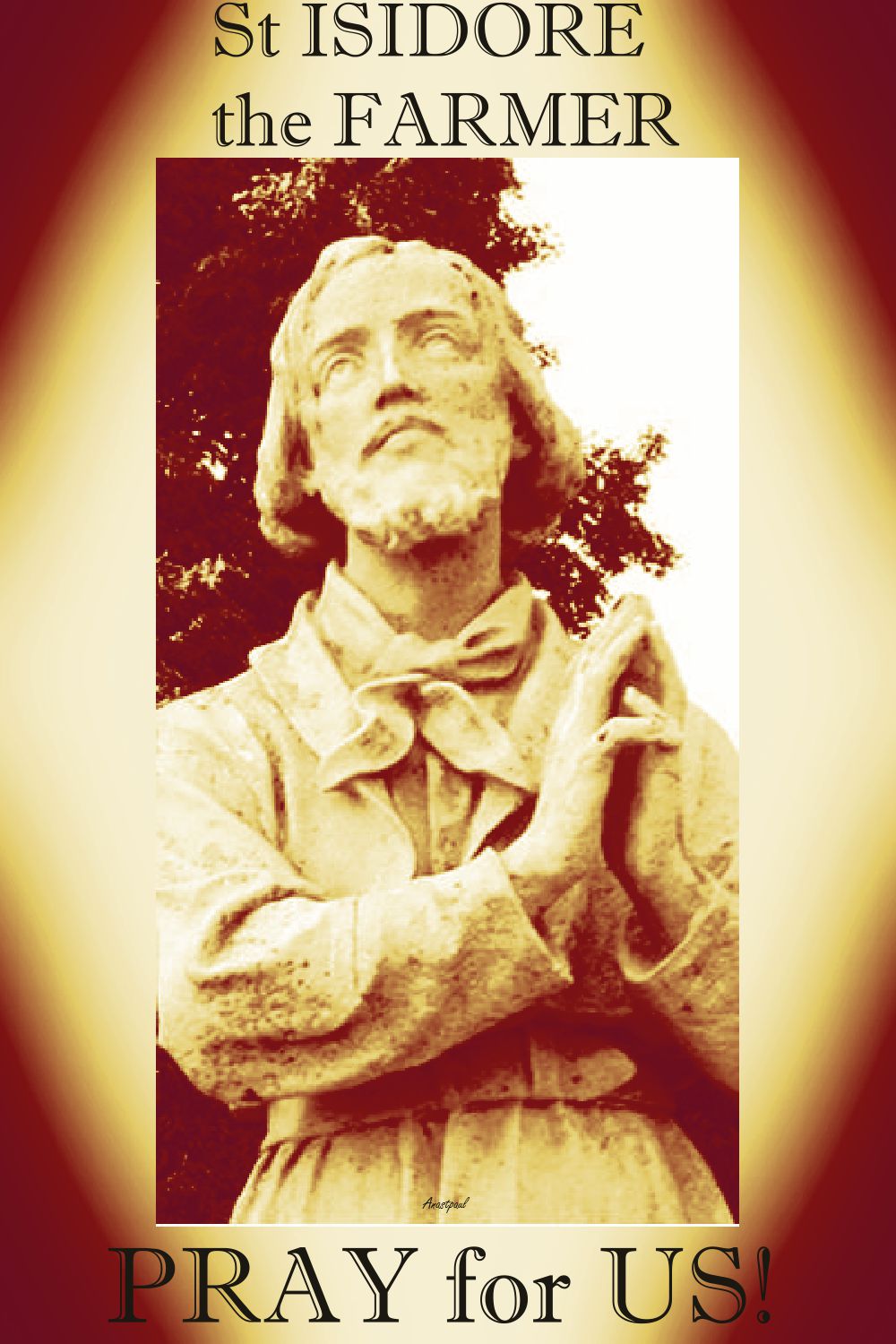
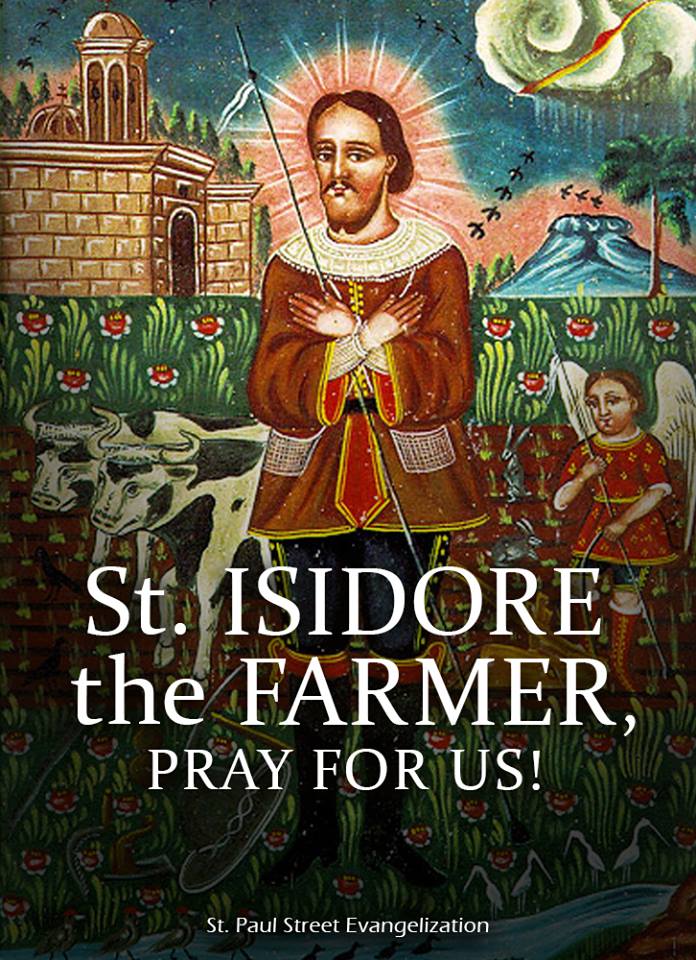
There was nothing exceptional about St Isidore the Farmer’s life except his obvious holiness. He was a husband, a father and a common labourer who did all things exceptionally well because he did all for God. His life teaches that holiness is within the reach of everyone and that the life of the ordinary man should be the pathway to God. Many implications can be found in a simple laborer achieving sainthood: Physical labor has dignity; sainthood does not stem from status; contemplation does not depend on learning; the simple life is conducive to holiness and happiness. The truth which emerges is this: If you have your spiritual self in order, your earthly commitments will fall into order also. “[S]eek first the kingdom [of God] and his righteousness,” said the carpenter from Nazareth, “and all these things will be given you besides” (Matthew 6:33).
St Isidore the Farmer, Pray for us!
 AnaStpaul
You must be logged in to post a comment.