Comfort and upbuild one another as indeed you are doing…..1 Thes 5:11
REFLECTION – “If on any particular day we do nothing more than give a little joy to a neighbour, that day will not be wasted. For we have succeeded in giving comfort to an immortal soul.”………Bl Contardo Ferrini T.O.S.F.
PRAYER – God of all consolation, teach me to put all my trust in You. Grant me the grace to then go and offer my neighbour all the Christian consolation and assistance in every tribulation. Be my help in all things my God and allow me to pass Your help to others in need St Zita you were a true light to all those more in need than yourself, although you suffered, you never complained but instead gave good for evil. Please pray for us all, amen.
Help us, O Lord, our God
By St Bernard of Clairvaux (1090-1153)
Mellifluous Doctor
Help us, O Lord, our God,
since we cannot flee from the body,
nor the body flee from us.
We must carry it about, because it is bound up with us.
We cannot destroy it; we are forced to preserve it.
But the world surrounds us and assails us
through the five gateways of sense.
Alas! Everywhere we are in conflict,
everywhere darts fly against us,
everywhere there are temptations,
there are snares!
Deliver us, we beseech You, from our enemies;
defend us from all dangers to the soul
and to the body, Lord,
that at length we may come to Your eternal rest,
through Jesus Christ, Our Lord. Amen.
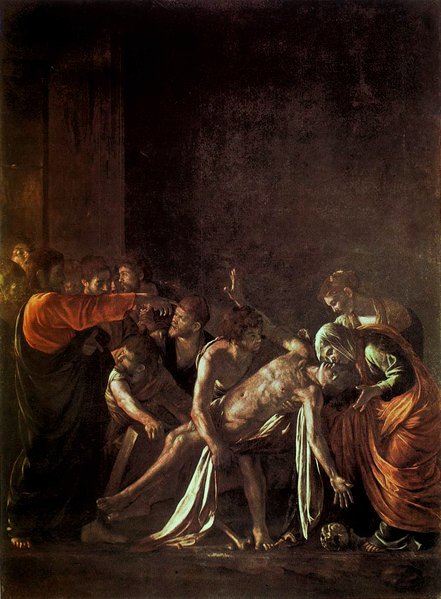
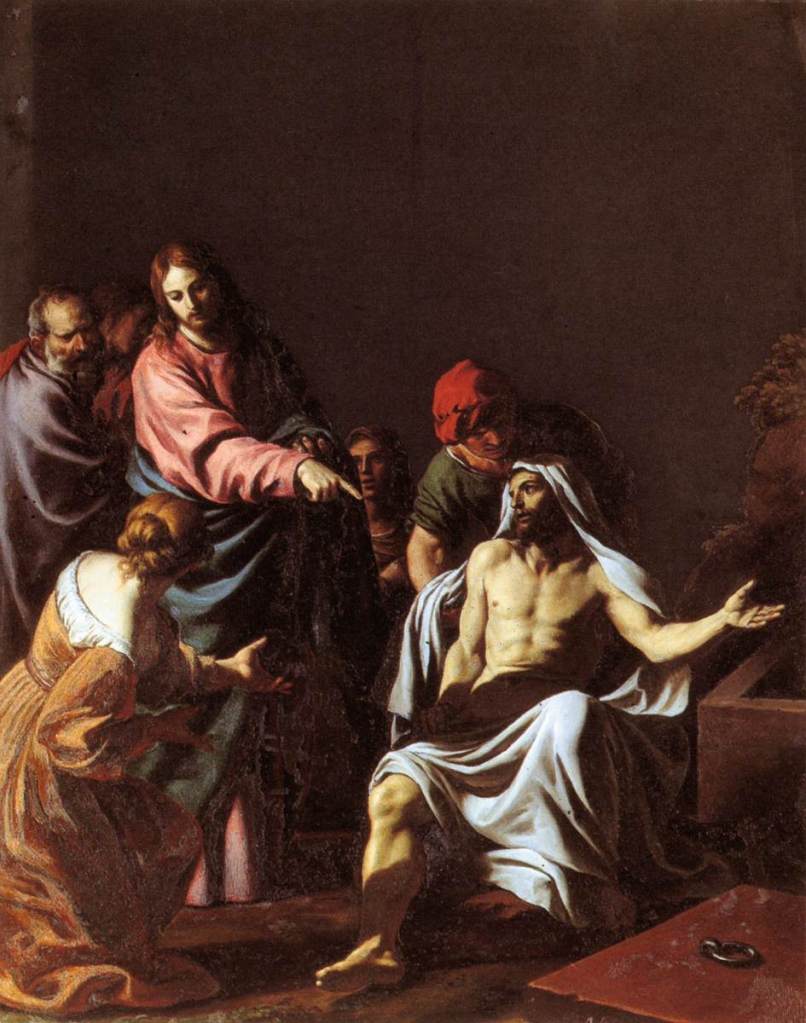
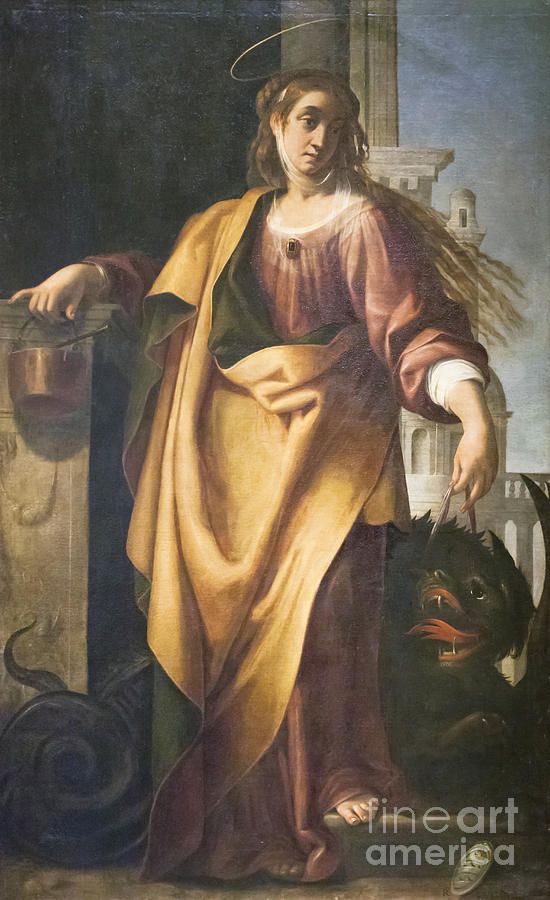
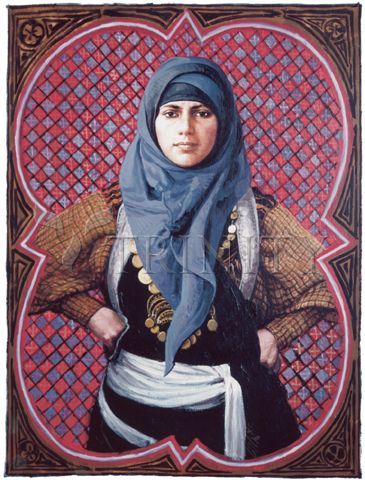
Saint of the Day – 27 April – St Zita of Lucca (1212-1272) Virgin, Apostle of the needy and poor. Also know as Cita, Sita, Citha, Sitha. P atronages – housewives, butlers, housemaid, domestic servants (proclaimed by Pope Pius XII), housemaid, lost keys, maids, manservants, people ridiculed for their piety,rape victims, servants, servers, single laywomen, waiters, Lucca, Italy. Her body is incorrupt.
Saint Zita was born in Tuscany in the village of Monsagrati, not far from Lucca where, at the age of 12 she became a servant in the Fatinelli household. For a long time, she was unjustly despised, overburdened, reviled and often beaten by her employers and fellow servants for her hard work and obvious goodness. The incessant ill-usage, however, was powerless to deprive her of her inward peace, her love of those who wronged her, and her respect for her employers. By this meek and humble self-restraint, Zita at last succeeded in overcoming the malice of her fellow-servants and her employers, so much so that she was placed in charge of all the affairs of the house. Her faith had enabled her to persevere against their abuse and her constant piety gradually moved the family to a religious awakening.
Zita often said to others that devotion is false if slothful. She considered her work as an employment assigned to her by God and as part of her penance and obeyed her master and mistress in all things as being placed over her by God. She always rose several hours before the rest of the family and employed in prayer a considerable part of the time which others gave to sleep. She took care to hear Mass every morning with great devotion before she was called upon by the duties of her station, in which she employed the whole day, with such diligence and fidelity that she seemed to be carried to them on wings and studied when possible to anticipate them.
One anecdote relates a story of Zita giving her own food or that of her master to the poor. On one morning, Zita left her chore of baking bread to tend to someone in need. Some of the other servants ensured the Fatinelli family was aware of what happened; when they went to investigate, they claimed to have found angels in the Fatinelli kitchen, baking the bread for her. St. Benita Zita died peacefully in the Fatinelli house on April 27, 1272. It is said that a star appeared above the attic where she slept at the moment of her death. She was 60 years old and had served and edified the family for 48 years. By her death, she was practically venerated by the family. After one hundred and fifty miracles wrought in the behalf of such as had recourse to her intercession were juridically proven, she was canonised in 1696.
Her body was exhumed in 1580, discovered to be incorrupt St Zita’s body is currently on display for public veneration in the Basilica di San Frediano in Lucca.
To this day, families bake a loaf of bread in celebration of St. Zita’s feast day. Soon after Zita’s death a popular cult grew up around her, centring on the church of St Frigidian in Lucca. This was also joined by prominent members of the city. Pope Leo X sanctioned a liturgical cult within the church in the early 16th century, and was confirmed upon her canonisation. In 1748, Pope Benedict XIV added her name to the Roman Martyrology.
During the late medieval era, her popular cult had grown throughout Europe. In England she was known under the name Sitha and was popularly invoked by maidservants and housewives, particularly in event of having lost one’s keys, or when crossing rivers or bridges. Images of St. Zita may be seen in churches across the south of England. The church of St Benet Sherehog in London had a chapel dedicated to her,and was locally known as St. Sithes.
Our Lady of Montserrat
—
St Adelelmus of Le Mans
St Asicus of Elphin
St Castor of Tarsus
St Enoder
St Floribert of Liege
Bl Hosanna of Cattaro
Bl Jakov Varingez
St John of Kathara
St Joseph Outhay Phongphumi
St Laurensô Nguyen Van Huong
St Liberalis of Treviso
St Maughold
Bl Nicolas Roland
St Noël Tenaud
Bl Peter Armengol
St Pollio of Cybalae
St Simeon of Jerusalem
St Stephen of Tarsus
St Tertullian of Bologna
St Theophilus of Brescia
St Winewald of Beverley
St Zita of Lucca
—
Martyrs of Nicomedia: A group of Christians murdered together for their faith. In most cases all we have are their names – Dioscurus, Evanthia, Felicia, Felix, Germana, Germelina, Johannes, Julius, Laetissima, Nikeforus, Papias, Serapion and Victorinus. They died at Nicomedia, Bithynia, Asia Minor (modern Izmit, Turkey)
For Christianity then, “human work represents the gradual beginnings of man’s dominion over things, of a governance to which he aspires by realising the image of God.” (Servant of God Fr Luigi Giussanti)
Let us Pray:
DAY FIVE
Glorious St Joseph, patron saint of workers,
blending skill with charity,
silent carpenter, we praise you!
Joining work with honesty,
you taught Christ with joy to labour,
sharing His nobility.
Joseph, close to Christ and Mary,
lived with them in poverty,
shared with them their home and labour,
worked with noble dignity.
May we seek God’s will as you did,
leader of His family!
Joseph, inspiration for workers,
man of faith and charity,
make us honest, humble, faithful,
strong with Christ’s true liberty,
Make our labour and our leisure
fruitful to eternity!
Humbly we ask of you dear St Joseph,
to intercede for all workers, in the difficulties
of their daily lives especially for the unemployed,
in their anxieties for tomorrow,
so that through the guidance of God,
the great Architect and Builder, they all
may use their strength and talents
to make visible God’s new creation,
to offer a concrete service to society
and to earn wages worthy of their efforts.
With confidence and trust
we make our intention
(make your intention)
I pray to you, dear St Joseph, through our Lord,
Jesus Christ, your dearly beloved foster Son,
in union with the Father and the Holy ,
one God for ever and ever.
Amen
Thought for the Day – 26 April – The Feast Day of Our Lady of Good Counsel
In the Alban Hills, not far from the city of Rome, lies the little town of Genazzano, where the miraculous image of Our Lady of Good Counsel is venerated. The story of the picture dates back to 1467. Pilgrims assembled on the feast of St. Mark were startled by a mysterious rustling sound and strains of sweet music. Looking toward the sky, they beheld what seemed a soft cloud. Slowly it descended and rested in front of the unfinished wall of the church dedicated to the Mother of God under the title of Good Counsel. The picture rests suspended in the air without any visible means of support to maintain its stable condition and this for five centuries! Although painted on a piece of plaster no thicker than an ordinary visiting card, the image has withstood the ravages of time. The artist of the painting is unknown.
It is said that the figures themselves represent Mother and Child after they had returned from the temple where Mary heard the sad prophesies of Simeon. Mary’s eyes are half-veiled as though she were lost in contemplation, taking counsel with her God. The little Child does not return the gaze of the beholder, as happens in so many pictures, rather He draws our eyes upward to Mary as if to tell us to look for Counsel there, in the very Seat of Wisdom. It is a picture to be loved, a plain and common picture a pious image to be copied and hung in the homes of the poor. That is all the sweet Mother of Good Counsel asks for her picture: a home in our midst, by our firesides, a family to guard and watch over, hearts that will love and venerate her.
Overshadowed by the Holy Ghost, Mary became the Mother of God. His gifts of Wisdom, Understanding, and Counsel belong to her. She is Our Mother of Good Counsel because she is the Spouse of God the Holy Ghost. If to her was granted the wisdom to counsel her Son, surely she has the wisdom to counsel poor humanity. In her there is the wisdom of ages. For 2000 years, she has been watching the children of men upon this earth. Our Lady of Good Counsel knows how to help us. She can help us. She wants to aid and counsel us! Once she sees upon a soul the sign of the Cross of her Son, that soul may count upon all her assistance. She loves with an undying love all those for whom her Son died.
God trusted her with His own Son, Who clung to her till life was done. Through sorrow none can comprehend she mothered Jesus to the end. And if you think her love may fail, You thrust within her heart a nail!
Our Lady of Good Counsel, please be with us and pray for us!
Through (Jesus) let us continually offer God a sacrifice of praise, that is,
the fruit of lips which acknowledge his name……………Hebrews 13:15
REFLECTION – “The hour has sounded for joyful chants – Alleluia!
Let us praise God with our life,
with our voice, with our heart
and with our deeds.”………….St Augustine
PRAYER – Heavenly Father, help me to give You constant praise in my heart At the same time, let this attitude bear fruit in my life – producing truly Christ-like deeds. Help me to always be a witness to Your Son, truly risen. St Pope Cletus, ordained by St Peter and martyred for Christ, pray for us, amen.
Hold dominion over my heart, O Lord!
Keep it as Your inheritance.
Make Your dwelling in me,
along with the Father and the Holy Spirit.
Widen in me the cords of Your tabernacle,
even the operations of Your Most Holy Spirit.
For You are my God and I will praise You,
together with the Eternal Father
and your quickening Spirit,
now, henceforth and forever. Amen
Saint of the Day – 26 April – St Pope Anadletus (c25-c89) 3rd Bishop of Rome and MARTYR – Also known as – Cletus and Celto – Relics reside in relics in Saint Linus Church, Vatican City
St Pope Analetus led the fledgling Church during the reign of Emperors Vespasian and Domitian. The name Cletus, in ancient Greek, means “one who has been called.” Pope Saint Anacletus is remembered as having been converted by St Peter and ordained by the first Pope as well. His name is included in the Roman Canon of the Mass. Saint Cletus/Anacletus is traditionally said to have been born and raised a Roman, and following his ordination and ascension, served the Church for twelve years as the third Pope. During that time, he is said to have divided Rome into twenty-five parishes, as well as ordained a significant number of priests to serve the growing Church. He is also the first pope to build a shrine over the relics of Saint Peter, which would eventually become the basilica that stands today.
The canon of the Roman mass, St Bede, St Augustine and other Martyrologists, style him a Martyr, although the direct events of his death for the faith have been lost to history. He was Martyred in the persecutions of Domitian.
Our Lady of Good Counsel (Memorial)
—
Bl Alda of Siena
St Antoninus of Rome
St Basileus of Amasea
St Clarence of Venice
St Claudius of Rome
St Pope Cletus
St Cyrinus of Rome
St Exuerantia of Troyes
Bl Gregory of Besians
Bl Juli Junyer Padern
St Lucidius of Verona
St Pope MarcellinusSt
Paschasius Radbertus
St Pelligrino of Foggia
St Peter of Braga
St Primitive of Gabi
St Rafael Arnáiz Barón
St Richarius of Celles
Bl Stanislaw Kubista
St Trudpert of Munstertal
St William of Foggia
Bl Wladyslaw Goral
—
Mercedarian Martyrs of Auterive
“We are often called upon to do ‘mindless’ work. But our spiritual task is to transform it. Emptying the trash can be considered mindless but if I see it as a contribution to the well-being of my family, it can be immensely significant to me.”
Msgr Lorenzo Albacete
Let us Pray:
DAY FOUR
Glorious St Joseph,
in your diligent daily labour,
you provided for the household
of the Holy Family.
Patron of all workers,
you model how work is a
participation in God’s own activity.
Silent and glorious carpenter of Nazareth,
model of workers, by the work of your
hands you gave your contribution to the work of the Creator,
you earned your living, and
you provided for the needs of the Holy Family.
Intercede for all workers, in the difficulties
of their daily lives especially for the unemployed,
in their anxieties for tomorrow,
so that through the guidance of God,
the great Architect and Builder, they all
may use their strength and talents
to make visible God’s new creation,
to offer a concrete service to society
and to earn wages worthy of their efforts.
With confidence and trust
we make our intention
(make your intention)
I pray to you, dear St Joseph, through our Lord,
Jesus Christ, your dearly beloved foster Son,
in union with the Father and the Holy ,
one God for ever and ever.
Amen
St Mark was the inadvertent cause of a quarrel between St Paul and St Barnabas. Saints are not immune to human failings and it is good to know that saints sometimes struggle to get along in peace and harmony – they argue! So, we should not be too discouraged by our own failings – rather, we should try to turn all things to the good. God writes straight with crooked lines and St Mark fulfilled in his life what every Christian is called to do: proclaim to all people the Good News that is the source of salvation – this is our job too!
Jesus appeared to the Eleven and said to them:
“Go into the whole world
and proclaim the Gospel to every creature.
Whoever believes and is baptised will be saved;
whoever does not believe will be condemned.
These signs will accompany those who believe:
in my name they will drive out demons,
they will speak new languages.
They will pick up serpents with their hands,
and if they drink any deadly thing, it will not harm them.
They will lay hands on the sick, and they will recover.”
At once the man’s ears were opened; he was freed from the impediment and began to speak plainly……….Mark 7:35
REFLECTION – “The knot in his tongue was untied
and he spoke plainly. You too have the tongue
untied and can use it when you wish.
Why do you use it for evil rather than for good?
You take care to choose among foods,
what you wish to eat.
You should be just as careful to choose
what you want to say!”……….St Augustine
PRAYER – Heavenly Father, help me to realise the wonderful way of communicating with others that You have given to me. Let me always use for good and for Your glory. Almighty Father, You chose St Mark the Evangelist and ennobled him grace to preach the Gospel. May his teaching help us in our lives, that we may walk faithfully in the footsteps of Christ, Your Son. St Mark, pray for us, amen!
Lord, strengthen us!
By St Augustine (354-430)
Doctor of Grace
Blessed are all Your saints, my God and King!
Who have through travail and in peace of soul
all traveled within the ship with You,
the tempestuous sea of mortality and have,
at last, made the desired port of peace and of felicity!
O, cast a gracious eye upon us who are
in our dangerous voyage still!
Remember, succour us in our distress and
think of those who lie exposed to the rough storms
of troubles and temptations!
Strengthen our weakness in Your strength,
that valiantly we may do Your will in this spiritual battle.
Help us against our own negligence,
our cowardice and defend us
from the treachery of our unfaithful hearts.
We are exceedingly frail and indisposed
to every virtuous and gallant undertaking.
Grant, O Lord, that we may bring our vessel safe to shore,
into our desired haven, Lord. Amen
Saint of the Day – 25 April – St Mark the Evangelist (1st century -martyred 25 April 68 at Alexandria, Egypt) Evangelist, Martyr, Missionary, Preacher, Teacher, friend and assistant to St Peter, St Paul, cousin of St Barnabas – also known as John Mark. Patronages: – against unrepentance, against insect bites, Lawyers, notaries, prisoners, lions, glaziers and stained glass artists, of Egypt, Iona Islands, Arezzo-Cortona-Sansepolcro, Italy, Diocese of, Arica, Chile, Diocese of, Cortona, Italy, Diocese of Infanta, Philippines, Prelature of, Venice, Florida, Diocese of, 45 Cities – Attributes: lion, winged lion, bishop on a throne decorated with lions, man helping Venetian sailors, man holding a book with pax tibi Marce written on it, man holding a palm and book, man with a book or scroll accompanied by a winged lion, man with a halter around his neck, man writing or holding his gospel, rescuing Christian slaves from Saracens, winged lion. Major shrine – Venice, Italy.
Interior of St. Mark’s Basilica, Venice. View through the central nave towards transept and apse. Mosaics, begun in the 11th century, cover more than 4000 sq.m. Iconostasis with 14 statues of Saint Mary and the apostles.
St. Mark was an evangelist, or Gospel writer. In fact, he was the pioneer in Gospel writing. His is the shortest and the oldest of the Gospels. Little is known of Mark except from the New Testament. He was not one of the twelve apostles but was a member of the first Christian community. Mark had firsthand experience of the early Church and apostolic life. He was a traveling companion and assistant of Paul and Barnabas on the first missionary journey. Something happened to Mark on that journey, perhaps homesickness, so he returned to Jerusalem. The incident caused a quarrel between Paul and Barnabas. Barnabas, Mark’s cousin, was sympathetic toward Mark but Paul would not hear of Mark accompanying them again. Later Paul and Mark must have been reconciled, because when Paul wrote to Timothy during his final imprisonment, he asked for Mark’s help.
BAT52241 St. Mark the Evangelist (copy of a painting by Fra Bartolommeo) by Gabbiani, Antonio Domenico (1652-1726)
Museo di San Marco dell’Angelico, Florence, Italy
Italian, out of copyright
Like another Gospel writer Luke, Mark was not one of the 12 apostles. We cannot be certain whether he knew Jesus personally. Some scholars feel that the evangelist is speaking of himself (so he then did know Jesus) when describing the arrest of Jesus in Gethsemane: “Now a young man followed him wearing nothing but a linen cloth about his body. They seized him, but he left the cloth behind and ran off naked” (Mark 14:51-52). Mark’s Gospel was a great contribution to the Church. It included oral and written tradition concerning the words and deeds of Jesus. Mark probably secured some of his material from St. Peter. He shows Jesus as the suffering Son of God. Mark knew that to accept the Risen Jesus meant to come to terms with the cross. Jesus was glorified because he willingly allowed himself to suffer death for our salvation. Mark writes that anyone who wishes to follow Jesus must accept the cross.
Mark wrote to proclaim the Good News to a community of both Jewish and Gentile Christians. His Gospel is direct and simple to read. He speaks to Christians about Jesus, who understands their difficulties and sufferings and will one day bring them to share with him eternal joy and glory.
Traditionally Mark is thought to have been founder and bishop of the church of Alexandria, Egypt, where he was martyred.
Over the years artists have given a symbol to each of the evangelists. Mark’s symbol is a winged lion because his Gospel begins with the story of John the Baptist who, like a roaring lion, called people to repent. The lion derives from Mark’s description of John the Baptist as a “voice of one crying out in the desert” (Mark 1:3), which artists compared to a roaring lion. The wings come from the application of Ezekiel’s vision of four winged creatures to the evangelists.
St Mark the Evangelist (Feast)
—
St Agathopodes of Antioch
Bl Andrés Solá Molist
St Anianus of Alexandria
Bl Antonio Pérez Lários
St Callista of Syracuse
St Clarentius of Vienne
St Ermin of Lobbes
St Evodius of Syracuse
St Franca Visalta
St Giovanni Piamarta
St Heribaldus of Auxerre
St Hermogenes of Syracuse
Bl José Trinidad Rangel y Montaño
St Kebius
St Macaille
St Macedonius
St Mario Borzaga
St Pasicrate of Mesia
St Paul Thoj Xyooj
Pedro de San Jose Betancur
Phaebadius of Agen
Philo of Antioch
Robert of Syracuse
Bl Robert Anderton
Stefano of Antioch
St Valenzio of Mesia
Bl William Marsden
—
Martyrs of Yeoju – 3 saints: Three Christian laymen martyred together in the apostolic vicariate of Korea. 25 April 1801 in Yeoju, Gyeonggi-do, South Korea
They were Beatified15 August 2014 by Pope Francis
• Ioannes Won Gyeong-do
• Marcellinus Choe Chang-ju
• Martinus Yi Jung-bae
Novena to St Joseph the Worker- Day Three – 24 April
“It is only by confronting the daily demans of work that we deepen our interior dynamism….Work itself is meant to become a spiritual act and this happens when it is experienced as being at the service of the quest for the Infinite.”
Msgr Lorenzo Albacete
Let us Pray: DAY THREE
Glorious St. Joseph,
model of all those who are devoted to labour,
obtain for me the grace to work conscientiously,
putting the call of duty above my many sins;
to work with thankfulness and joy,
considering it an honour to employ and develop,
by means of labour,
the gifts received from God;
to work with order,
peace, prudence and patience,
never surrendering to weariness or difficulties;
to work, above all,
with purity of intention,
and with detachment from self,
having always death before my eyes
and the account which I must render of time lost,
of talents wasted,
of good omitted,
of vain complacency in success
so fatal to the work of God.
I offer to you today my special intention for this novena
(mention your intention)
knowing that by your powerful intercession
you will assist me and all workers,
especially those seeking employment.
All for Jesus,
all for Mary,
all after thy example,
O Patriarch Joseph.
Such shall be my motto in life and death.
Many saints, like St Fidelis of Sigmaringen, realise that they are wasting their time in the midst of greed and foolish ambition and decide on another course. Their gifts were turned to doing good and to this they devote the whole of their lives. Sometimes, it is often easily apparent, that a change is demanded in our lives – feeling miserable, unsatisfied, uneasy, worried by the greed of the world, it’s lukewarmness or apathy and more! Courage now is needed and that courage comes from he grace of God in prayer. ‘You become what you love’ – what is it that you love?
And so I say to you, you are Peter
and upon this rock I will build my church
and the gates of the netherworld
shall not prevail against it……….Matthew 16:18
REFLECTION – “O Catholic faith, how solid, how strong you are! How deeply rooted, how firmly founded on a solid rock! Heaven and earth will pass away but you can never pass away. From the beginning the world opposed you but you mightily triumphed over everything. This is the victory that overcomes the world, our faith. It has subjected powerful kings to the rule of Christ; it has bound nations to His service. What made the holy apostles and martyrs endure fierce agony and bitter torments, except faith and especially faith in the resurrection? What is it that today makes true followers of Christ cast luxuries aside, leave pleasures behind and endure difficulties and pain? It is living faith that expresses itself through love. It is this that makes us put aside the goods of the present in the hope of future goods. It is because of faith that we exchange the present for the future.”…………………St Fidelis of Sigmaringen
PRAYER – Father, Son and Holy Spirit, we praise You and give You glory: we bless You for calling us to be Your holy people. Remain in our hearts and guide us in our love and service. Help us to let our light shine before others and lead them to the way of faith.
Holy Trinity of love, we praise You now and for ever. St Fidelis man of courage and true faith, pray for us, amen!
Prayer in front of the Crucifix of San Damiano
Francis used to recite this prayer already in 1205-1206, during the period of his vocational discernment, when he would visit the small abandoned church of San Damiano, where there was a Byzantine Crucifix which is nowadays venerated in the Basilica of Santa Chiara in Assisi.
Most High, glorious God,
enlighten the darkness of my heart
and give me true faith,
certain hope
and perfect charity,
sense and knowledge, Lord,
that I may carry out
Your holy and true command. Amen
Saint of the Day – 24 April – St Fidelis of Sigmaringen OFM Cap (1577-1622) Priest of the Capuchins of the Friar’s Minor and Martyr, Lawyer, Philosopher, Teacher, Apostle of Eucharistic Adoration and charity – Major Shrine at the Capuchin Friary of Weltkirchen (Feldkirch), Austria, the image below.
St Fidelis was born as Mark Rey in 1577 in Sigmaringen, a town in modern-day Germany, then under the Principality of Hohenzollern-Sigmaringen. His father’s name was John Rey. He studied law and philosophy at the University of Freiburg. Mark ultimately earned the degree of Doctor of Law and subsequently taught philosophy at this University,. During his time as a student, he did not drink any alcoholic beverages and wore a hair-shirt in penance for his own and the sins of those around him. He was known for his modesty, meekness and chastity.
In 1604, Mark accompanied, as preceptor (teacher-mentor), three young Swabian gentlemen on their travels through the principal parts of Europe. During six years of travel, he attended Mass very frequently. In every town they came to, he visited the hospitals and churches, passed several hours on his knees in the presence of the Blessed Sacrament and was generous to the poor, sometimes giving them the very clothes off his back.
Upon his return, he practiced law at Colmar, in Alsace where he came to be known as the ‘poor man‘s lawyer’. He scrupulously forbore all invectives, detractions and whatever might affect the reputation of any adversary. Disenchanted with the evils associated with his profession, he was determined to enter the religious life as a member of the Capuchin friars.
As soon as Fidelis finished his course of theology, he was immediately employed in preaching and in hearing confessions. After becoming guardian of the Capuchin friary in Weltkirchen, Feldkirch (in present-day Austria), many residents of the town and neighbouring places were reformed by his zealous labours and several Calvinists were converted. The Congregation of the Doctrine of the Faith commissioned Fidelis to preach in the Graubünden region of eastern Switzerland. Eight other Capuchin friars were to be his assistants and they laboured in this mission under his direction.
The Calvinists of that territory, being incensed at his success in converting their brethren, loudly threatened Fidelis’ life and he prepared himself for martyrdom. Fidelis and his companions entered into Prättigau, a small district of Graubünden, in 1622, on the Feast of the Epiphany, January 6. The effects of his ardent zeal, where the Bishop of Coire sent a lengthy and full account to the Congregation for the Propagation of the Faith, enraged the Calvinists in that province.
On 24 April 1622, Fidelis made his confession, celebrated Mass and then preached at Grüsch. At the end of his sermon, which he had delivered with more than ordinary zeal, suddenly he stood silently, with his eyes fixed upon Heaven, in ecstasy. He foretold his death to several persons in the clearest terms and began signing his letters, “P. Fidelis, prope diem esca vermium” (“Father Fidelis, in days ahead to become food for worms“). After the service at Grüsch he and several companions travelled to Seewis. His companions noted that he was particularly cheerful.
On 24 April, in a campaign organised by the Habsburgs, Fidelis was preaching under protection of some Austrian imperial soldiers in the Church at Seewis with the aim of re-convert the people of Seewis to Catholicism. During the sermon, his listeners were called “to arms” by the Calvinist agitators outside. Some of the people went to face the Austrian troops outside the Church. Fidelis had been persuaded, by the remaining Catholics, to immediately flee with the Austrian troops out of Seewis, which he did but then returned alone to Grüsch. On his way back he was confronted by 20 Calvinist soldiers who demanded, unsuccessfully,, that he renounce the Catholic faith and when he refused, they subsequently murdered him.
A local account:
From Grüsch he went to preach at Seewis, where, with great energy, he exhorted the Catholics to constancy in the faith. After a Calvinist had discharged his musket at him in the Church, the Catholics entreated him to leave the place. He answered that death was his gain and his joy, and that he was ready to lay down his life in God’s cause. On his road back to Grüsch, he met twenty Calvinist soldiers with a minister at their head. They called him a false prophet and urged him to embrace their sect. He answered: “I am sent to you to confute, not to embrace your heresy. The Catholic religion is the faith of all ages, I fear not death.”One of them beat him down to the ground by a stroke on the head with his backsword. Fidelis rose again on his knees and stretching forth his arms in the form of a cross, said with a feeble voice “Pardon my enemies, O Lord: blinded by passion they know not what they do. Lord Jesus, have mercy on me. Mary, Mother of God, succour me!.” Another sword stroke clove his skull and he fell to the ground and lay in a pool of his own blood. The soldiers, not content with this, added many stab wounds to his body with their long knives and hacked-off his left leg, as they said, to punish him for his many journeys into those parts to preach to them.
It is said that a Catholic woman lay concealed near the place of Fidelis’ martyrdom as the saint was slain. After the soldiers had left, she came out to assess the incident and found the martyr’s eyes open, fixed on the heavens. He was buried by Catholics the next day.
The rebels were soon after defeated by the imperial troops, an event which the martyr had foretold them. The Protestant minister who had participated in Fidelis’ martyrdom, was converted by this circumstance, made a public abjuration of Calvinism and was received into the Catholic Church.
After six months, the martyr’s body was found to be incorrupt but his head and left arm were separated from his body. The body parts were then placed into two reliquaries, one sent to the Cathedral of Coire, at the behest of the bishop and laid under the High Altar; the other was placed in the Capuchin church at Weltkirchen, Feldkirch, Austria.
St Fidelis was Beatified on 24 March 1729 by Pope Benedict XIII and Canonised on 29 June 1746, Rome by Pope Benedict XIV
St Fidelis of Sigmaringen (Optional Memorial)
Our Lady of Bonaria: Devotion to the Blessed Virgin Mary in the form of a statue of Mary and the Christ Child that was washed up at a Mercedarian monastery near Cagliari, Italy on 25 April 1370, apparently from a shipwreck the night before. Legend says that the locals tried to open the crate it was in, but only one of the Mercedarian monks could get the it open. Patron of Sardinia, Italy
Our Lady of Buenos Aires
—
St Alexander of Lyon
St Anthimos of Nicomedia
St Authairius of La Ferté
St Benedetto Menni
St Bova of Rheims
St Deodatus of Blois
St Diarmaid of Armagh
St Doda of Rheims
St Dyfnan of Anglesey
St Egbert of Rathemigisi
St Eusebius of Lydda
St Gregory of Elvira
St Honorius of Brescia
St Ivo of Huntingdonshire
St Leontius of Lydda
St Longinus of Lydda
St Mary Euphrasia Pelletier
St Mary of Cleophas
St Mary Salome
St Mellitus of Canterbury
St Neon of Lydda
St Sabas the Goth of Rome
St Tiberio of Pinerolo
St William Firmatus
—
Mercedarian Martyrs of Paris
Work positively affects the worker’s family, the whole of society and the worker personally. “It forms the person in the process of transforming things; it humanises and spiritualises the person in the process of modifying material objects. And finally, it draws men together in the purusit of a goal that is visible to all and in the construction of the world in which they are called to live” (Louis Lavelle).
Thus when a worker offers to God not only the firstfruits of his labour but his labour itself, human labour “can become a great liturgy of worship” (M D Philippe).
Day Two
Let us Pray:
Glorious St Hoseph,
foster-father and protector of Jesus Christ,
spouse of the blessed Virgin Mary the Mother of God,
powerful protector of the Holy Church,
to you do I raise my heart and implore your powerful intercession.
You gave yourself completely to the Saviour,
it was cause for joy to pray, to work, to sacrifice yourself,
to suffer, to die for Him.
You were unknown in this world even though Jesus knew you very well,
He would look at your simple and hidden life with love.
We are called to contribute by our diligient industry
to the unfolding of the Creator’s plan in history.
Protect the rights of all workers.
Enable people to find work that befits their dignity.
Do not let those who are unemployed become discouraged
but them them in finding fitting employment.
May I too approach my work as an act of worship.
United in your powerful intercession,
I offer you my intentions
(make your intention)
I commend to your fatherly solicitude this specific task.
I am placing it in your hands.
I ask for the grace to never separate myself from God,
to know Christ ant love Him even more and His blessed Mother,
and to always live in the presence of God,
to do all for His glory and the good of other souls
and one day to reach the beatific vision of God
to praise Him eternally with you. Amen.
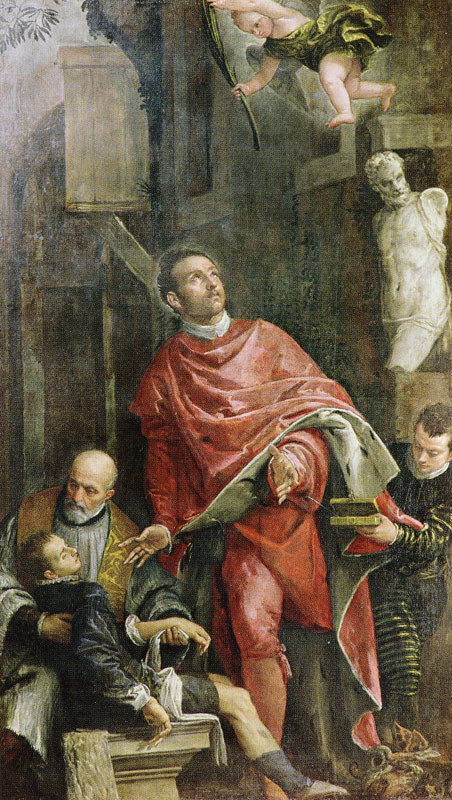
The Christian hero is not the slayer of dragons or the knight who wields the sword.
The Christian hero is the saint, although saints like St Joan of Arc, could and did wield the sword too.
St George, whose Memorial it is today, got lost in legends and folklore but he was a real soldier who gave his life in witness to Christ. He was a Martyr for Christ – the ultimate act of heroism. If only we remembered him correctly and with honour, for this martyrdom for the One who saved us!
Martyrdom of Saint George, c.1564 – Paolo Veronese
St George pray for us and we pray that your memory may be restored!
Quote/s of the Dat – 23 April – Divine Mercy Sunday
“There is nothing more man needs than Divine Mercy – that love which is benevolent, which is compassionate, which raises man above his weakness to the infinite heights to the holiness of God.”
“When we go before Jesus in the Blessed Sacrament we represent the one in the world who is in most need of God’s Mercy.” We “Stand in behalf of the one in the world who does not know Christ and who is farthest away from God and we bring down upon their soul the Precious Blood of The Lamb.”
One Minute Reflection – 23 April
Octave and Divine Mercy Sunday
DAILY MEDITATION: Kindle the faith of your people and show us Your Mercy!
But you are “a chosen race, a royal priesthood, a holy nation, a people of his own, so that you may announce the praises” of him who called you out of darkness into his wonderful light. Once you were “no people” but now you are God’s people; you “had not received mercy” but now you have received mercy………………..1 Peter 2:9-10
REFLECTION – “How much the world is in need of the mercy of God today! In every continent, from the depths of human suffering, a cry for mercy seems to rise. In those places where hatred and the thirst for revenge are overwhelming, where war brings suffering and the death of innocents, one needs the grace of mercy to pacify the minds and the hearts and make peace spring forth. In those places where there is less respect for life and human dignity, one needs the merciful love of God, in whose light we see the ineffable value of every single human being. Mercy is needed to ensure that every injustice may find its solution in the splendour of truth. …..As a gift to humanity, which sometimes seems bewildered and overwhelmed by the power of evil, selfishness, and fear, the Risen Lord offers His love that pardons, reconciles, and reopens hearts to love. It is a love that converts hearts and gives peace. How much the world needs to understand and accept Divine Mercy!”…………St John Paul
PRAYER – “Lord, who reveal the Father’s love by Your death and Resurrection, we believe in You and confidently repeat to You today: Jesus, I trust in You, have mercy upon us and upon the whole world. Amen.” – St John Paul (During his last journey to Poland in August of 2002) St Adalbert of Prague pray for us!
YOU, WHO ARE RICH IN MERCY
By St Anselm of Canterbury (1033-1109)
Doctor magnificus (Magnificent Doctor);
Doctor Marianus (Marian Doctor)
My prayer is but a cold affair, Lord,
because my love burns with so small a flame
but You, Who are rich in mercy
will not mete out to them Your gifts
according to the dullness of my zeal
but as Your kindness is above all human love
so let your eagerness to hear me
be greater than the feeling in my prayers.
Do this for them and with them, Lord,
so that they may speed according to Your will
and thus ruled and protected by You,
always and everywhere,
may they come at last to glory and eternal rest,
through You who are the living and reigning God,
through all ages. Amen
You must be logged in to post a comment.