
Saint of the Day – 14 March – Blessed Arnaldo OSB (c1185-1255) Abbot at the Santa Giustinain Monastery in Padua, Italy, a powerful and effective governor, a defender of the rights of the Monastery, the Church and the poor. Born in Padua, Italy in 1185 and died on 10 February 1255 in the prison at Asolo, Italy. Also known as – Arnaldo de’Cattanei, Arnold Cattaneo, Arnold… Arnaldo… Arnaud… Arnoldus…
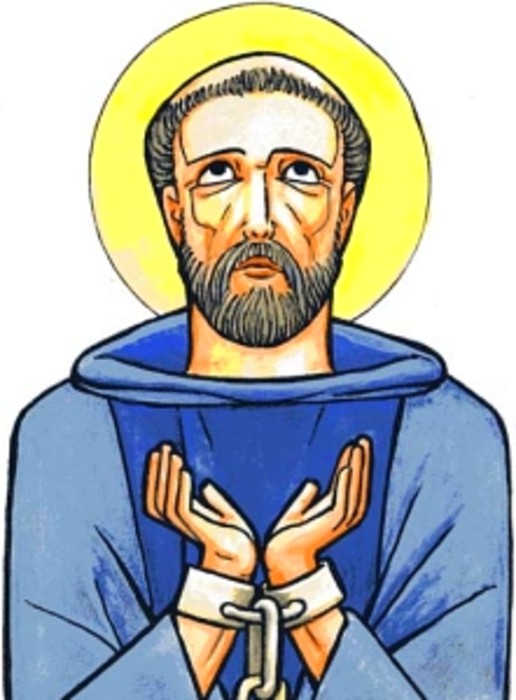
Arnaldo, born in 1185 to the noble Cattanei family of Limena, near Padua, entered the Monastery of San Giustina in Padua, at a very young age.
Arnaldo soon distinguished himself for his piety, seriousness and exemplary life, so much so that, in 1209, at only 24 years of age, he was elected as the Abbot.
His government was very active – he defended the rights of the Monastery, then compromised, he claimed ancient privileges, such as the one according to which, the abbot of San Giustina participated in the election of the Bishop. He restored the Monastery and enriched it with new buildings and new possessions, he diverted the waters of the Bacchiglione to operate a mill plant and more. We do not know if and what type of relationship he had with St Anthony, who also worked in Padua at this time.
When Ezzelino III took over charge of Padua in 1237 and imprisoned Giordano Forzaté, the Pprior of San Benedetto, the other large Benedictine Monastery in Padua, Arnaldo fled to the Este family, first to Ferrara and then to the closer Monselice. In 1238, Emperor Frederick II returned the Monastery of San Giustina to Arnaldo and the following year, he was a guest there for two months.
However, when the Emperor left, the City remained at the mercy of Ezzelino, who, in 1246, as soon as he felt safe, had Arnaldo arrested and locked him in the fortress of Asolo. The Abbot languished there, on bread and water, for eight years and three months, until his death on 10 February 1255.
On that occasion, there were seen as two burning torches descending from the sky and shining above the castle.
Buried temporarily in the Church of the Friars Minor of Asolo, as soon as the tyrant was driven out, his body was transported to Padua and placed in San Giustina in an Ark near the exit. When, on 14 March 1562, the Holy Bodies, already buried in the old Basilica, were definitively buried in the new Church, Arnaldo was placed in the second Chapel on the left starting from the choir, in a beautiful baroque Altar with a marble statue representing the blessed, SEE BELOW. An 18th Century painting representing our Saint is preserved in the large Sacristy.
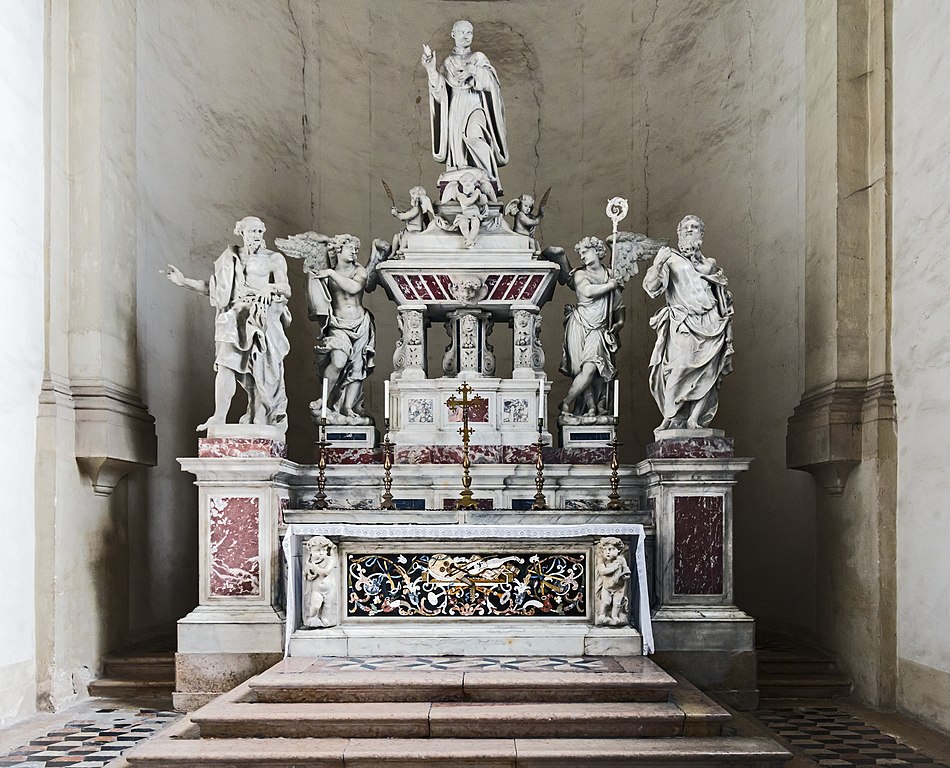
There is no evidence that his cult has official recognition – it is based on tradition. Arnaldo did not have his own Office but only the commemoration in the Martyrologies of the Order. In San Giustina, he continued to be celebrated on 15 March until the suppression of the Abbey in 1806 but since that period, his memory has been renewed. Blessed Arnaldo is also remembered on 10 February, the anniversary of his death.



 AnaStpaul
You must be logged in to post a comment.