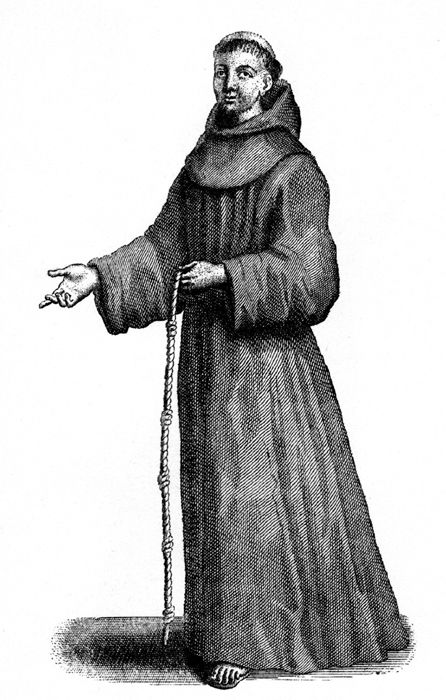
Saint of the Day – 5 April – Blessed Conrad of Saxony OFM (Died c1288) Friar, Missionary Preacher Martyr of the Order of Friars Minor. Born in Saxony (in modern Germany) and died by being strangled to death c1288 in the regions of modern Kurdistan.
A Franciscan Missionary
The life and death of Conrad takes us to the time of the Crusades and the missionary ardour which animated the Franciscan Order. Conrad, driven by a deep desire to spread the Gospel, ventured into a distant and dangerous land, Hyrcania, located in modern Kurdistan.
The region of Hyrcania, although it had received th preaching of the Gospel since the first centuries of Christianity (4th-6th Century) had been partly influenced by the Eastern Schism and Muslim sympathies.
Conrad and his co-Franciscan Missiomary, Stephen, animated by a strong apostolic zeal, courageously dedicated themselves to preaching the Faith, facing the challenges of a complex religious and cultural atmosphere.
While they were going to the place where they usually held their sermons, the two Friars were attacked by a crowd of fanatics, who accused them of apostasy and condemned them to death. Their Martyrdom, by strangulation, occurred around 1288.
The Church has recognised these two Franciscans, Conrad and Stephen, as Blessed. Their liturgical memory is celebrated today, 5 April.
St Irene of Thessalonica St Maria Crescentia Hoss St Pausilippus Bl Peter Cerdan St Theodore the Martyr
Martyrs of Lesbos: 5 Saints: Five young Christian women Martyred together for their faith. We don’t even know their names. island of Lesbos, Greece.
Martyrs of North-West Africa: Large group of Christians murdered while celebrating Easter Mass during the persecutions of Genseric, the Arian king of the Vandals. They were Martyred in 459 at Arbal (in modern Algeria).
Martyrs of Seleucia: 120 Saints :One-hundred and eleven (111) men and nine (9) women who, because they were Christians, were dragged to Seleucia and Martyred for refusing to worship the sun or fire or other pagan idols during the persecutions of King Shapur II. They were burned alive in 344 in Seleucia, Persia.



 AnaStpaul
You must be logged in to post a comment.