St Berach of Kilbarry St Craton St Decorosus of Capua St Dochow St Druthmar of Corvey St Eusebius of Asehia St Farannan of Iona
St Faustinus AND St Jovinus (Died c 120) Martyrs, Priest and Deacon respectively. Brothers. Both Evangelists, Preachers. Born at Brescia, Lombardy, Italy and the two brothers died together. They was thrown to the lions but the animals refused to touch them. Then beheaded in 120 at Brescia, Italy.
St Faustus of Monte Cassino St Georgia St Joseph of Antioch St Onesimus the Slave St Quinidius of Vaison
Martyrs of Antioch: 5 Saints: A group of Christians murdered together. We know the names of five of them – Agapev, Baralo, Isicio, Joseph and Zosimus.
Martyrs of Passae: Castulus Lucius Magnus Saturninus
Martyrs of Prague – 14 Beati – Franciscan Friars Minor martyred together by a mob led by Lutherans – • Blessed Antonín of Prague • Blessed Bartolomeo Dalmasoni • Blessed Bedrich Bachstein • Blessed Christoffel Zelt • Blessed Didak Jan • Blessed Emmanuel of Prague • Blessed Gaspare Daverio • Blessed Giovanni Bodeo • Blessed Girolamo degli Arese • Blessed Jakob of Prague • Blessed Jan of Prague • Blessed Juan Martínez • Blessed Klemens of Prague • BlessedSimon of Prague They were martyred on • Shrove Tuesday 15 February 1611 at the Church of Our Lady of the Snows in Prague, Czech Republic • body dumped nearby but given Christian burial on 19 February 1611 in the monastery • re-interred in the side Chapel of the Church in 1616.
Martyrs of Sweden: Sigfrid Sunaman Unaman Winaman
Martyred in the Spanish Civil War: Bl Pere Vallmitjana Abarca
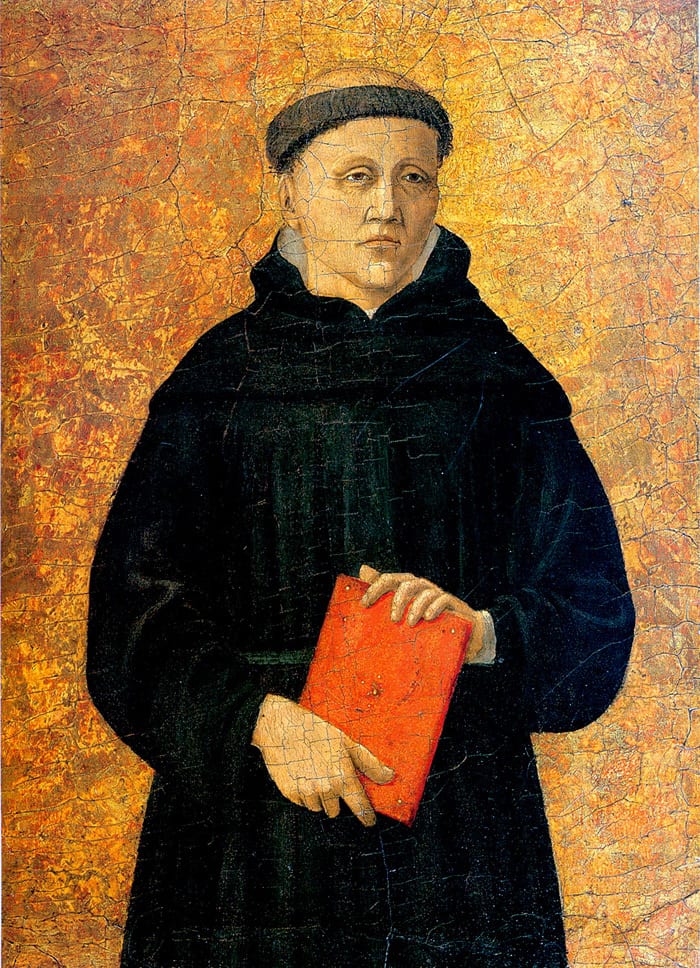
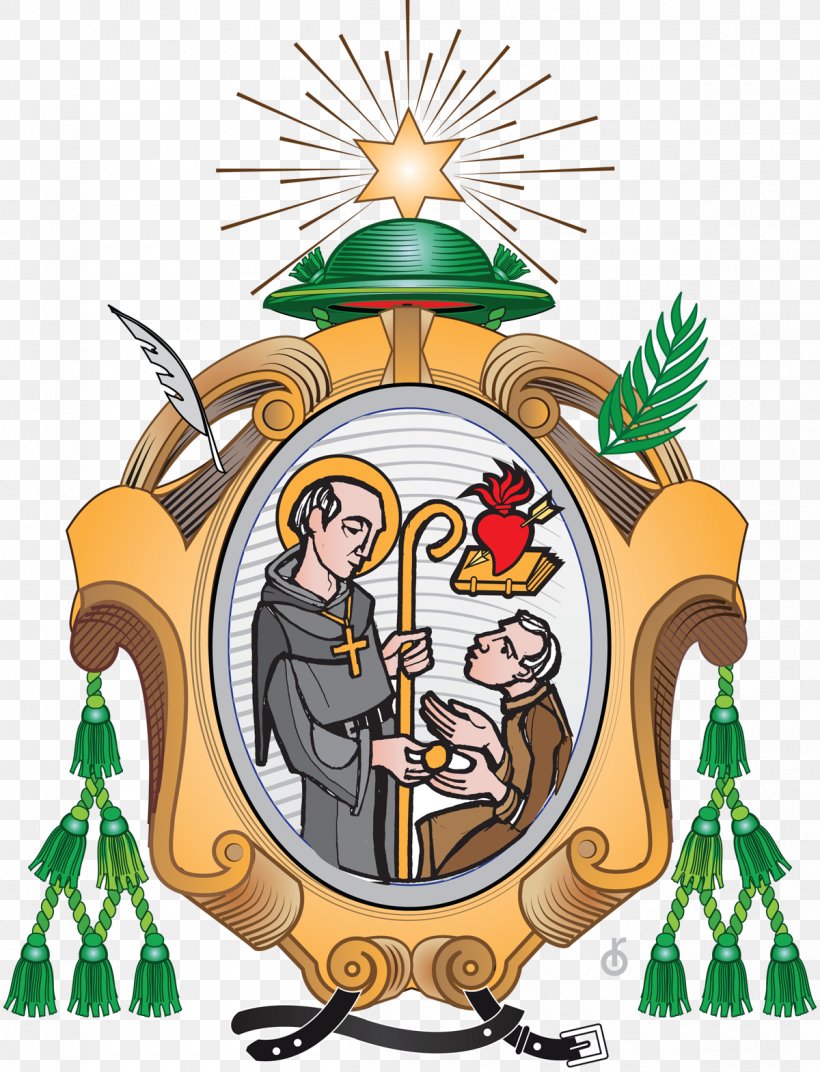
Saint of the Day – 15 February – Blessed Angelus de Scarpetti OSA (Died c 1306) Religious of the Order of the Hermits of St Augustine, Missionary, miracle-worker. Born at Borgo San Sepolcro modern Sansepolcro, Italy and died in 1306 at Borgo San Sepolcro modern Sansepolcro, Italy. Also known as – Angelo de Scarpetti, Angelus of Sansepolcro, Angelo of Borgo San Sepolcro
Angelus was born into the Scarpetti family in Sansepolcro, Italy, in the first half of the thirteenth century. He entered the convent in his city of the Hermits of St John the Good in approximately 1254. In 1256 the convent passed to the new Order of the Hermit Friars of St Augustine. There he became a fellow-student with Saint Nicholas of Tolentino.
He was sent to England as a Missionary but we have little information of his time there.
His reputation for sanctity was endowed by some miraculous episodes that occurred during his lifetime, including the resurrection of an innocent man who was condemned to death. Angelus had made a formal request for the innocent man’s pardon but it was refused and the man was executed. However, by Angelus’ fervent entreaties to the only Judge, the man was raised to life.
Since the sixteenth century, Augustinian writers have noted his profound humility, unflinching charity and his spotless purity of spirit and body. All of these gained him, among his countrymen, renown as a man acceptable to God, who God made full of supernatural gifts.
Angelus died in Sansepolcro in 1306. In 1905 the local Diocese began the process for his Beatification, which reached a successful conclusion in 1922.
His body is currently kept in a carved, gilt wooden casket that is decorated with scenes from his life and is kept under the main altar of the Church of Sant’Agostino in Sansepolcro.
Angelus was Beatified on 27 July 1921 by Pope Benedict XV.
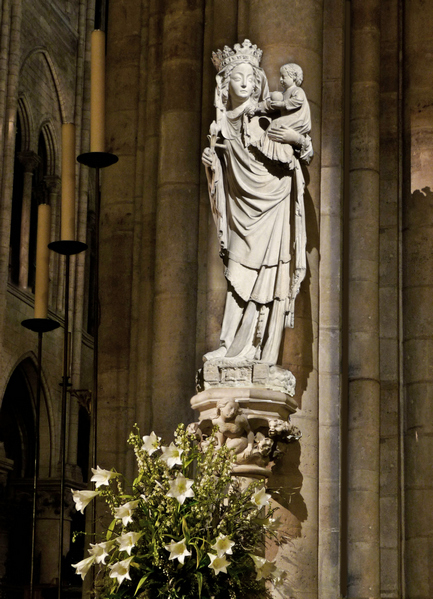
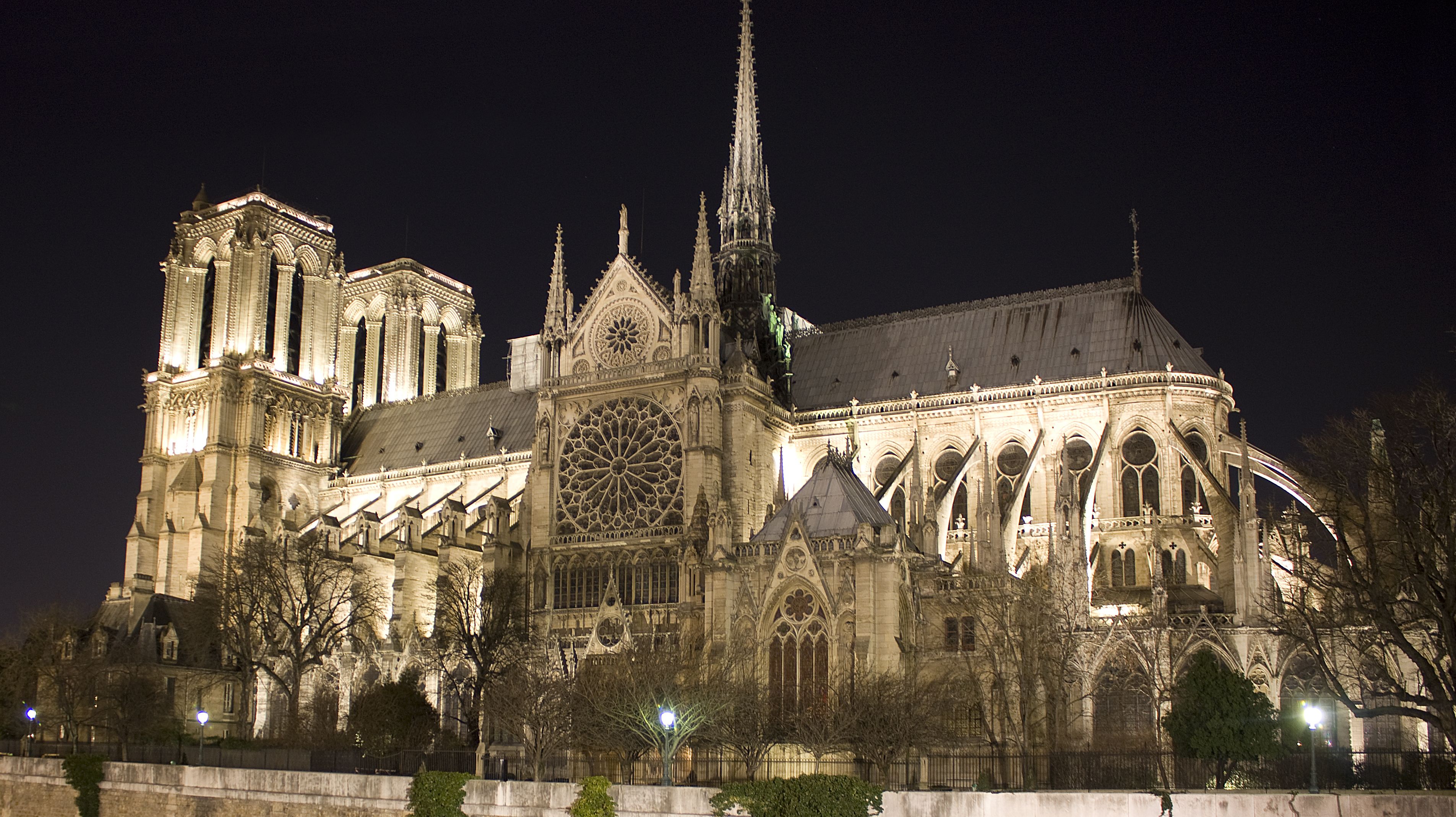
Notre-Dame de Paris / Our Lady of Paris, France (522) – 15 February:
There does not seem to be a great deal of information about Our Lady of Paris; it is an ancient title and can be traced well back before the 12th Century, when the Cathedral of Notre Dame de Paris (Our Lady of Paris) was begun. Some authorities say that veneration of the Blessed Virgin in Paris can be traced to the first apostles of the city. Since Saint Paul was in Gaul (France) during his travels, it may be assumed that this veneration dates to the first century of the Christian era. And, if Mary was venerated in Paris at that early date, it is possible that she was, even then, known as Our Lady of Paris. Briefly, as long as Christian minds can remember, Paris was consecrated to the Virgin Mary, whom the inhabitants always venerated. It is known that Our Lady of Paris was a Church first built by King Childebert in the year 522. About the year 1257, the King, Saint Louis IX assisted in the construction of a larger Church carried on in the same place, on the foundations which King Philip Augustus had laid in the year 1191. The older Church built by King Childebert, which had been dedicated to the Blessed Virgin, had became too ruinous to be repaired, so Maurice, Bishop of Paris, decided to rebuild it and, at the same time, adorn Paris with a Cathedral that would outshine all those which had hitherto been built anywhere.
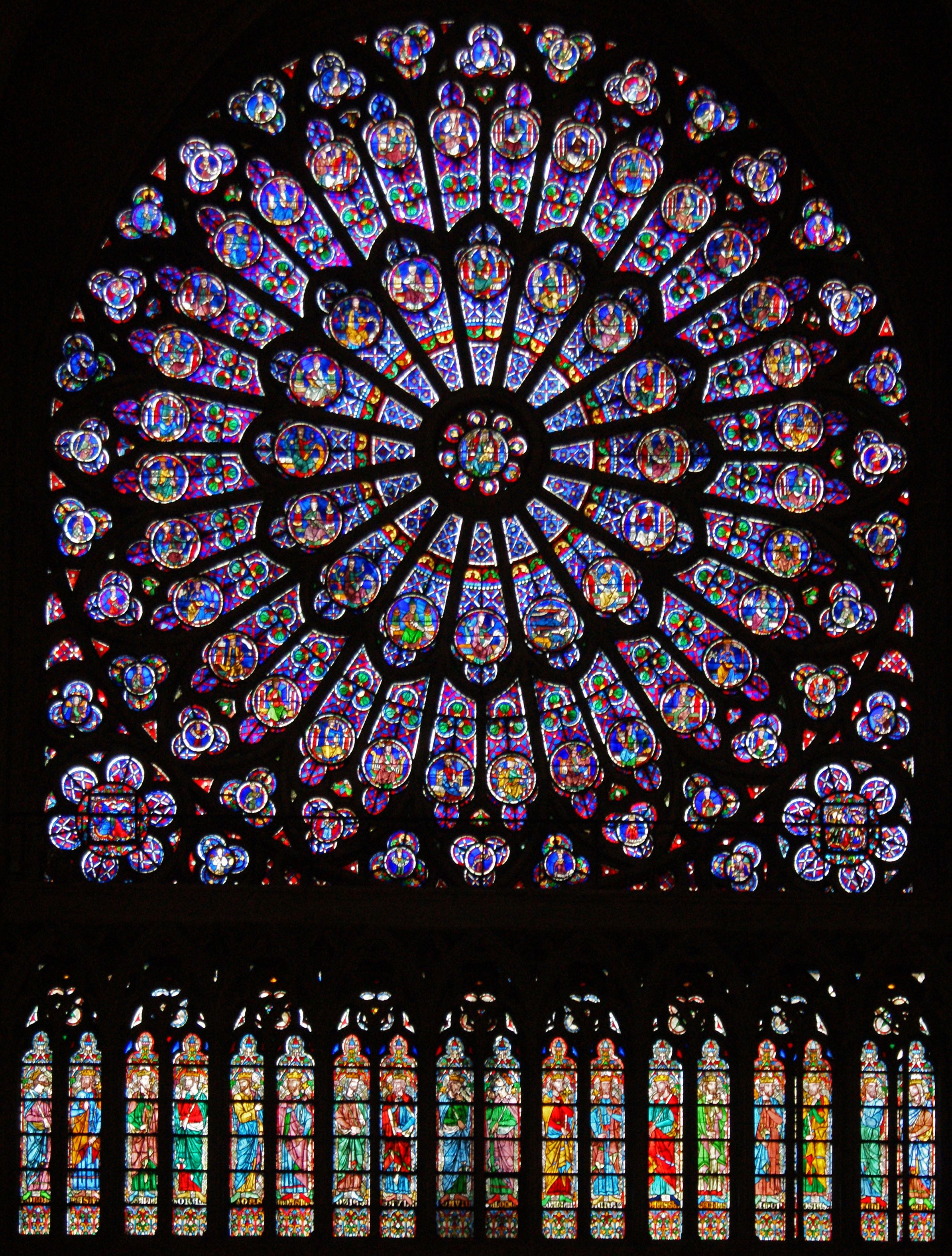
Plans were drawn up during the reign of King Louis VII and work had actually begun on Notre Dame de Paris, Notre Dame Cathedral, in 1162. The cornerstone was laid in the presence of Pope Alexander III. Notre Dame is a huge Gothic Cathedral on the Ile de la Cite, with beautiful flying buttresses to support the tremendous height of the walls and are adorned with stylish gargoyles. It is home to a reliquary which contains Christ’s Crown of Thorns. By the beginning of the fourteenth century, perhaps 1345, the Cathedral was finished, virtually as it stands today. Sometime during the building of the Cathedral, a statue of Our Lady was fashioned and installed in place. As was typical, the Cathedral was desecrated during the French Revolution and many of the religious artifacts were lost to future generations, although the incredible stained glass windows were not destroyed, including the three spectacular “rose window” that can still be seen today.
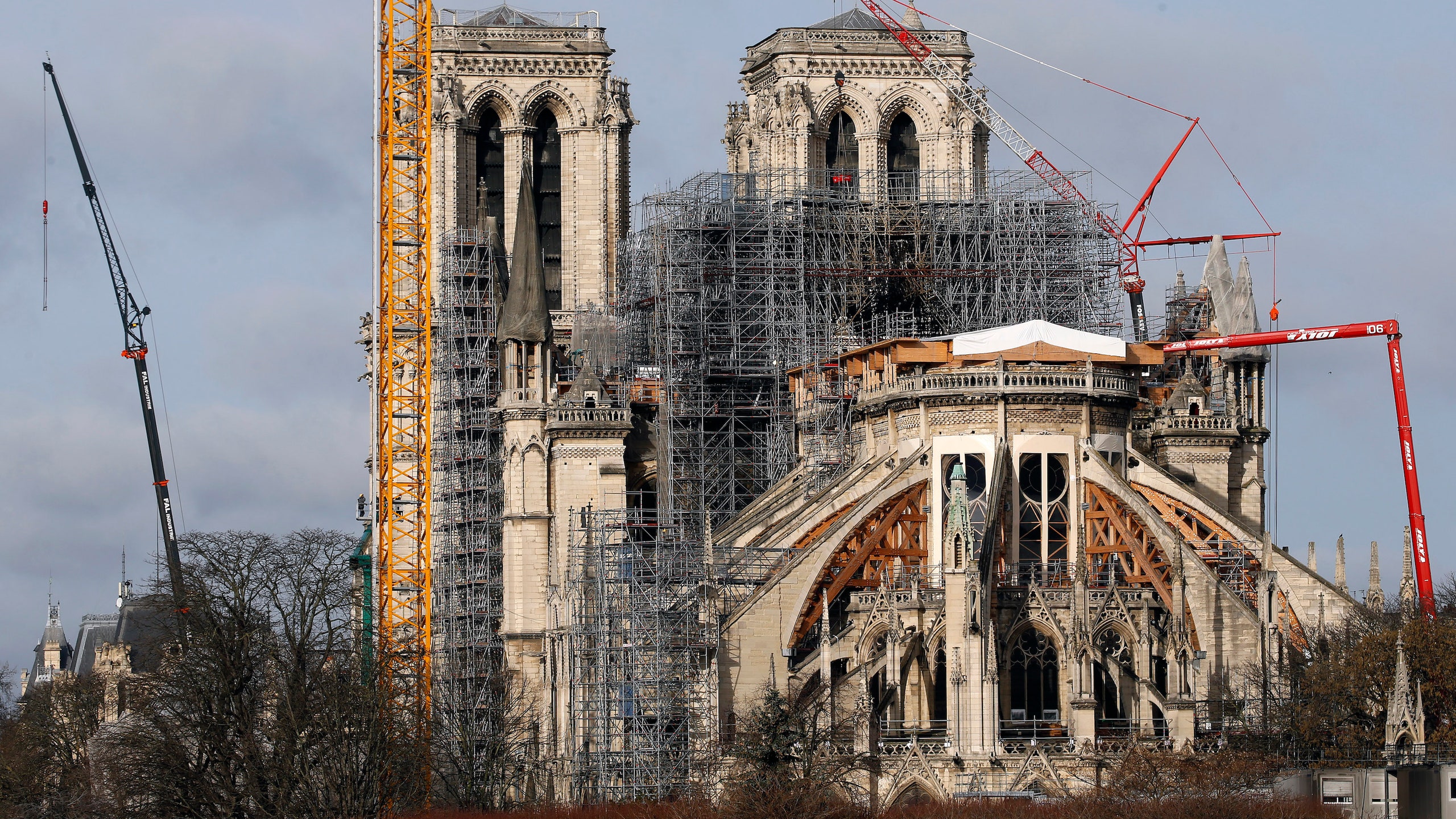
A smoke detector first alerted building staff to a fire beneath the roof at 6:18 pm on 15 April 2019, f Notre-Dame de Paris. By the time it was extinguished, the building’s spire collapsed and most of its roof had been destroyed and its upper walls severely damaged. Extensive damage to the interior was prevented by its stone vaulted ceiling, which largely contained the burning roof as it collapsed.
The restoration in early 2020
Many works of art and religious relics were moved to safety early in the emergency but others suffered some smoke damage and some exterior art was damaged or destroyed. The Cathedral’s altar, two pipe organs, and its three 13th-century rose windows suffered little to no damage.
The Nave before the fireThe Nave after the fire
Three emergency workers were injured. French President, Emmanuel Macron, said that the Cathedral would be restored by 2024 and launched a fundraising campaign which brought in pledges of over €1 billion as of 22 April 2019. A complete restoration could require twenty years or more. On 25 December 2019, the Cathedral did not host ChristmasMass for the first time since 1803.
Martyrs of Passae: Castulus Lucius Magnus Saturninus
Martyrs of Prague – 14 beati – Franciscan Friars Minor martyred together by a mob led by Lutherans – • Blessed Antonín of Prague • Blessed Bartolomeo Dalmasoni • Blessed Bedrich Bachstein • Blessed Christoffel Zelt • Blessed Didak Jan • Blessed Emmanuel of Prague • Blessed Gaspare Daverio • Blessed Giovanni Bodeo • Blessed Girolamo degli Arese • Blessed Jakob of Prague • Blessed Jan of Prague • Blessed Juan Martínez • Blessed Klemens of Prague • BlessedSimon of Prague They were martyred on • Shrove Tuesday 15 February 1611 at the Church of Our Lady of the Snows in Prague, Czech Republic • body dumped nearby but given Christian burial on 19 February 1611 in the monastery • re-interred in the side chapel of the church in 1616. Beatified 13 October 2012 by Pope Benedict XVI
Martyrs of Sweden: Sigfrid Sunaman Unaman Winaman
Martyred in the Spanish Civil War: Bl Pere Vallmitjana Abarca





 AnaStpaul
You must be logged in to post a comment.