Posted in MARIAN TITLES, SAINT of the DAY

First Saturday, Saturday of the Second Week in Lent, Nuestra Señora de las Apariciones / Our Lady of Apparitions, Madrid, Spain (1449) and the Saints for 2 March

First Saturday of the Month

St Absolon of Caesarea

St Basileus the Martyr

St Cynibild of Laestingaeu
St Felix of Treves
St Fergna the White
St Girolamo Carmelo di Savoia
St Gistilian
St Joavan of Brittany (Died c576) Bishop
St Jovinus the Martyr
St Lorgius of Caesarea
St Lucius of Caesarea

St Slebhene
St Troas

Posted in SAINT of the DAY

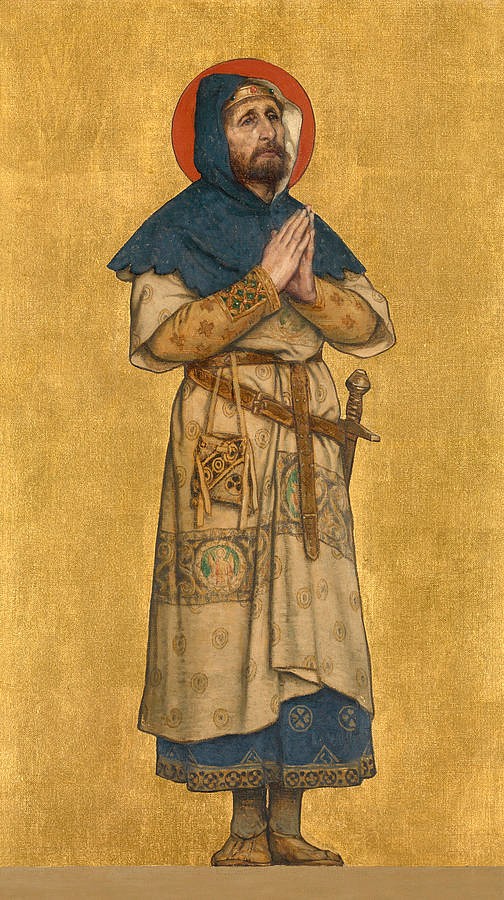
Saint of the Day – 2 March – Blessed Charles the Good (c1083-1127) Martyr

Saint of the Day – 2 March – Blessed Charles the Good (c1083-1127) Martyr, Duke, Apostle, protector and defender of the poor, selling his and his kingdom’s riches to help those in need, wherever he could, a fair and just Ruler who made laws to accommodate the poor rather than the rich (the eventual cause of his Martyrdom), Knight who assisted in Secomd Crusade. Born in c1083 and died by being beheaded on 2 March 1127 at Bruges, Belgium. Patronages – of Dukes, Counts, the Diocese of Bruges,Crusaders.Also known as – Charles of Flanders. Blessed Charles cultus was officially confirmed by his Beatification in 1883 by Pope Leo XIII.

Charles was the son of St Canut, King of Denmark and of Alice of Flanders, who, in 1086, after the death of his father, carried him, then an infant of 3 years, into Flanders. His cousin, Baldwin the Seventh, Earl of Flanders, dying without issue in 1119, appointed Charles as his heir, on account of his extraordinary valour and merit.

The young Earl was a perfect model of all virtues, especially devotion, charity and humility. Among his friends and courtiers, he loved those best who admonished him of his faults. He frequently exhausted his treasury to the benefit of the poor and often gave the clothes off his back to be sold for their relief. He served them with his own hands and distributed clothes and bread to them wherever he travelled. It was observed that in Ipres he gave away, in one day, no less than seven thousand eight hundred loaves.

Charles took care, for the sake of the poor, to keep the price of corn and provisions always low and he made wholesome laws to protect them from the oppressions of the great. This exasperated Bertulf, who had tyrannically usurped the provostship of St Donatian’s in Bruges, to which dignity was annexed the Chancellorship of Flanders. Between Bertulf and and his wicked relatives, the exercised a great oppressors of their country.

In this horrible conspiracy they were joined by Erembald, Castellan or Chief Magistrate of the territory of Bruges, with his five sons, who were provoked against their Sovereign Charles because he had repressed their unjust violence.

The holy Earl went every morning barefoot and very early, to perform his devotions before the Altar of the Blessed Virgin in St Donatian’s Church. On the morning of 2 March 1127, following his usual practice he left to walk to the Church. Before he left, he was informed of a conspiracy but answered; “We are always surrounded by dangers but we belong to God. If it be His will, can we die in a better cause than that of justice and truth?”

While he was reciting the Penitential Psalms before the Altar, the conspirators rushed in and hacked him to death with broadswords. These enemies were Fromold Borchard, nephew to Bertulf.

The brutal and sacrilegious murder of the popular Duke provoked widespread public outrage, and he was immediately regarded as a Martyr and Saint, although not formally Beatified until 1882.

The Erembalds, who had planned and carried out the murder of Charles, were besieged inside the castle of Bruges by the enraged nobles and commoners of Bruges and Ghent. All the conspirators were defeated, captured and tortured to death. King Louis VI of France, who had supported the uprising against the Erembalds, used his influence to select William Clito as the next Duke of Flanders., Charles having died without issue.

Jan van Beers (1852–1927).- The funeral of Charles I, Count of Flanders, celebrated in Bruges in the Church of St. Christopher on 22 April 1127. This remarkable painting is now situate at the Petit Palais Museum in Paris

Charles was buried in St Christopher’s Church at Bruges, not in that of St Donatian See the remarkable painting above created by Jan van Beers. To view clearly click on the image. In 1600, Charles’s Shrine was placed, by an order of Charles Philip Rodoan, the fourth Bishop of Bruges, in the Chapel of the Blessed Virgin in the St Saviour’s Cathedral in Bruges. Ever since the year 1610, a Solemn High Mass in honour of the Blessed Trinity, is sung on his festival.

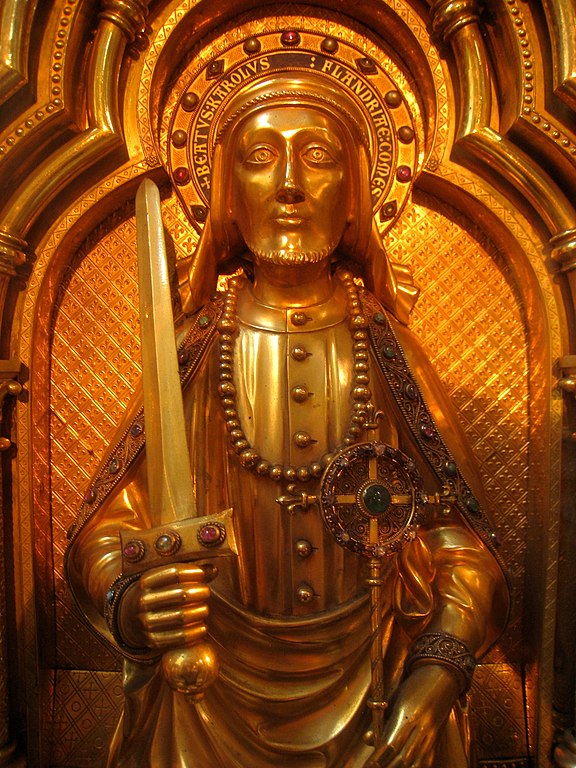
Image of Charles on his rRliquary in the Sint-Salvatorskathedraal, Bruges, Belgium
Posted in MARIAN TITLES, SAINT of the DAY

Nuestra Señora de las Apariciones / Our Lady of Apparitions, Madrid, Spain (1449) and Memorials of the Saints – 2 March

Thursday of the First Week in Lent – Fast

Nuestra Señora de las Apariciones / Our Lady of Apparitions, Madrid, Spain (1449) – 2 March:
HERE:

https://anastpaul.com/2021/03/02/our-lady-of-apparitions-madrid-spain-1449-and-memorials-of-the-saints-2-march/

St Absolon of Caesarea

St Agnes of Prague/Bohemia (1211-1282) Nun, Princess, Foundress, Abbess, Missionary of Charity and Mercy – Patron of the Czech Republic and Prague.
Biography:

https://anastpaul.com/2017/03/02/saint-of-the-day-2-march-st-agnes-of-praguebohemia/

St Basileus the Martyr

St Chad (c 620-672) Bishop of Lichfield, Confessor, Abbot, Monk, known as the “Apostle of Mercia,”in England.
About St Chad:

https://anastpaul.com/2021/03/02/saint-of-the-day-2-march-saint-chad-c-620-672-bishop/

Blessed Charles the Good (c1083-1127) Martyr, Duke
St Cynibild of Laestingaeu
St Felix of Treves
St Fergna the White
Bl Girolamo Carmelo di Savoia
St Gistilian
St Joavan of Brittany
St John Maron
St Jovinus the Martyr
St Lorgius of Caesarea
St Lucius of Caesarea

St Luke Casali of Nicosia (Died c 800) Priest Abbot.
The Roman Martyrology reads: “In Agíra in Sicily, Saint Luke Casale of Nicosía, a Monk, full of humility and virtue.”
St Luke’s Life:

https://anastpaul.com/2022/03/02/saint-of-the-day-2-march-saint-luke-casali-of-nicosia-died-c-800/

St Quintus the Thaumaturge
St Slebhene
St Troas
St Willeic

Martyrs of Campania – Approximately 400 northern Italian Christians Martyred for their faith by pagan Lombards. Their story was recorded by Pope Saint Gregory the Great, who reports that they people spent their final days supporting each other with prayer. c 579 in Camnpania, Italy.

Martyrs of Porto Romano – 4 Saints – Group of Christians Martyred in the persecution of Diocletian. The only other information that survives are the names of four of them – Heraclius, Januaria, Paul and Secondilla. c305 at Porto Romano at the mouth of the River Tiber, Rome.