The Archangel Saint Gabriel The Feast of Saint Gabriel was included by Pope Benedict XV in the General Roman Calendar in 1921, for celebration on 24 March. The Archangel Saint Gabriel’s name means “the Power of God” He appeared to the Prophet Daniel (Dan 8:16; 9:21), to the priest Zachary to announce the forthcoming birth of Saint John the Baptist (Luke 1:11, 19) and, most importantly, to the Blessed Virgin Mary to announce the birth of Our Saviour (Luke 1:26). St Gabriel! https://anastpaul.com/2022/03/24/saint-of-the-day-24-march-the-archangel-saint-gabriel/
St Agapitus of Synnada (Died 3rd Century) Bishop of Synnada, Phrygia, in Asia Minor. Its site is now occupied by the modern Turkish Town of Suhut. We have no further information on the life of St Agapitus..
St Bernulf of Mondov Bl Bertha de’Alberti of Cavriglia Blessed Bertrada of Laon (c726-783) Married to King Pepin the Short. Queen of the Franks. Mother of Blessed Charlemagne. St Caimin of Lough Derg St Cairlon of Cashel
St Latinus of Brescia St Macartan of Clogher St Mark of Rome St Pigmenius of Rome St Romulus of North Africa St Secundus of North Africa St Seleucus of Syria St Severo of Catania St Timothy of Rome
Martyrs of Africa – 9 Saints: A group of Christians murdered for their faith in Africa, date unknown. The only details about their that survive are the names – Aprilis, Autus, Catula, Coliondola, Joseph, Rogatus, Salitor, Saturninus and Victorinus. .
Martyrs of Caesarea – 6 Saints: A group of Christians Martyred together in the persecutions of Diocletian. We know little else but six of their names – Agapius, Alexander, Dionysius, Pausis, Romulus and Timolaus. They were martyred by beheading in 303 at Caesarea, Palestine.
Friday of the Fourth Week in Lent – FAST AND ABSTINENCE
FEAST OF THE MOST PRECIOUS BLOOD OF JESUS is a Feast for the Fridays of Lent, which has been in the General Roman Calendar from 1849 to 1969 with the same Office as that of the Solemnity of the Precious Blood in July.. HERE: https://anastpaul.com/2022/07/10/the-solemnity-of-the-most-precious-blood-of-of-our-lord-jesus-christ-and-the-litany/ For many Diocese, there were two days to which the Office of the Precious Blood was assigned, the Office for both being the same. The reason was that the Office was at first granted only to the Fathers of the Most Precious Blood. Later, as one of the Offices of the Fridays of Lent, it was assigned to the Friday after the Fourth Sunday in Lent (Laetare Sunday) in some Diocese, including, by decision of the Fourth Provincial Council of Baltimore (1840), those in the United States.
The Solemnity in July is again the same Office and both Feasts (during Lent and in July) are kept in some Diocese. On 10 August of the same year, (1849) Pope Pius IX officially included the Feast of the Most Precious Blood of Our Lord Jesus Christ in the General Roman Calendar, for celebration on the first Sunday in July, that is the first Sunday after 30 June, which is the anniversary of the liberation of the City of Rome from the insurgents.
In reducing the number of Feasts fixed for Sundays, Pope Pius X assigned the date of 1 July to this Feast. In 1933, Pope Pius XI raised the Feast to the rank of Double of the 1st Class to mark the 1,900th anniversary of the Passion of Our Lord Jesus Christ.
The Archangel Saint Gabriel The Feast of Saint Gabriel was included by Pope Benedict XV in the General Roman Calendar in 1921, for celebration on 24 March. The Archangel Saint Gabriel whose name means “the Power of God. ” He appeared to the prophet Daniel (Dan 8:16; 9:21), to the priest Zachary to announce the forthcoming birth of Saint John the Baptist (Luke 1:11, 19) and to the Blessed Virgin Mary to announce the birth of Our Saviour (Luke 1:26.). St Gabriel! https://anastpaul.com/2022/03/24/saint-of-the-day-24-march-the-archangel-saint-gabriel/
St Agapitus of Synnada St Aldemar the Wise OSB (985-c1080) Priest, Abbot St Bernulf of Mondov Bl Bertha de’Alberti of Cavriglia Bl Bertrada of Laon Bl Brian O’Carolan St Caimin of Lough Derg St Cairlon of Cashel
St Latinus of Brescia St Macartan of Clogher St Mark of Rome St Pigmenius of Rome St Romulus of North Africa St Secundus of North Africa St Seleucus of Syria St Severo of Catania St Timothy of Rome
Martyrs of Africa – 9 Saints: A group of Christians murdered for their faith in Africa, date unknown. The only details about their that survive are the names – Aprilis, Autus, Catula, Coliondola, Joseph, Rogatus, Salitor, Saturninus and Victorinus. .
Martyrs of Caesarea – 6 Saints: A group of Christians Martyred together in the persecutions of Diocletian. We know little else but six of their names – Agapius, Alexander, Dionysius, Pausis, Romulus and Timolaus. They were martyred by beheading in 303 at Caesarea, Palestine.
The Archangel Saint Gabriel The Feast of Saint Gabriel was included by Pope Benedict XV in the General Roman Calendar in 1921, for celebration on 24 March.
St Agapitus of Synnada St Aldemar the Wise St Bernulf of Mondovi Bl Bertha de’Alberti of Cavriglia Bl Bertrada of Laon Bl Brian O’Carolan St Caimin of Lough Derg St Cairlon of Cashel
St Pigmenius of Rome St Romulus of North Africa St Secundus of North Africa St Seleucus of Syria St Severo of Catania St Timothy of Rome
Martyrs of Africa – 9 Saints: A group of Christians murdered for their faith in Africa, date unknown. The only details about their that survive are the names – Aprilis, Autus, Catula, Coliondola, Joseph, Rogatus, Salitor, Saturninus and Victorinus. .
Martyrs of Caesarea – 6 Saints: A group of Christians Martyred together in the persecutions of Diocletian. We know little else but six of their names – Agapius, Alexander, Dionysius, Pausis, Romulus and Timolaus. They were martyred by beheading in 303 at Caesarea, Palestine.
Notre-Dame de L’épine Fleurie / Our Lady of the Flowering Thorn, France – 24 March:
From the infancy of the Church, images of our Blessed Lady have been in use among the faithful to enkindle and keep alive in their hearts a tender devotion to the Mother of God. When the barbarians overran the Roman Empire, the Christians, fearful of profanation, hid these paintings and Statues of the Blessed Virgin, in the most secret recesses of caves and forests. The Huns and vandals spared neither age nor sex and when the tumult of war had subsided, oftentimes, few or none remained to withdraw those images from their hiding places and they rested, until the providence of God, allowed them to be discovered and often, in a miraculous manner. “Our Lady of the Flowering Thorn” was one of these and the marvellous circumstances of the discovery, are thus related by a chronicler of the olden time:
“On the western side of the Jura, France, there once stood an old baronial residence. Its noble owner had heard the voice of St Bernard calling through the length and breadth of the land, to the rescue of Jerusalem and of the Holy Sepulchre. He had listened to the thrilling words, “Hail to thee, holy City, City of the Son of God, chosen and sanctified to be the source of salvation to man. Sovereign of nations, capital of empires, metropolis of patriarchs, mother of prophets and apostles, hail to thee.” The infidel had taken possession of her, and Christendom rose to the rescue. Who has not heard of what the world calls the fatal ending of St Bernard’s crusade! Yet surely not fatal to those devoted souls, whom the love of God inspired to fight for the land where Jesus suffered and died for them and who fell on the battlefield, to rise and grasp the crown of glory. Among those heroes of the Cross fell the Lord of our castle on the Jura, leaving a widow to mourn her loss while she rejoiced in his gain. “Sorrowful, yet always rejoicing.” Their names have been lost in the lapse of ages, he is only remembered as the crusader, she as the saint. It was on one of those days when winter, about to leave the earth, seems to cast himself into the bosom of spring, that our saint was walking along the avenue of her castle, her mind full of pious meditation. She had reached the termination of the avenue, when her eye was attracted toward a thorny bush, and there she saw an arbutus laden with the richest blossoms of spring. She hastened towards it, doubtful whether the flakes of snow had not deceived her but no, she found it crowned with a multitude of little white stars shaded with crimson rays and she carefully broke off a branch to hang up in her oratory, over an image of the Blessed Virgin which she had venerated from childhood. She joyfully returned towards the castle, carrying her innocent offering. Whether this little tribute was really agreeable to the Mother of Jesus, or whether it was only that pleasure, which the heart feels at the slightest effusion of tenderness, towards a beloved object, the soul of the lady was that evening filled with the most ineffable sweetness. She promised herself a great deal of pleasure in going every day to gather a fresh garland to adorn the statue of her Mother Mary, and she was faithful to her resolution. Now it happened that one day, being very busy in relieving the wants of the poor who came to her for alms and kind words, she could not go to gather her garland before the shades of evening had covered the earth and as she approached the thicket, an uneasy feeling came over her, occasioned by the increasing darkness. S he was thinking that it would be difficult to gather the flowers, when a calm clear light seemed to overspread the bushes. Startled at the sight, and fearing that robbers might be lurking there, she paused for a moment, but remembering she had never once omitted to bring her offering, she boldly ventured forward, though it was with a trembling hand she plucked the branch, that seemed as if it bent towards her. During that night and all the next day, the lady reflected on what she had seen, without being able to account for it and her heart, being penetrated with the mystery, she went the following evening to the thicket, accompanied by a faithful servant and her old Chaplain. The soft light was seen as they approached, becoming every instant brighter and more vivid. They stopped and fell upon their knees, for it seemed to them, that this light came from heaven . Then the good old Priest arose and moved with reverential steps toward the thicket, chanting a hymn of the Church; he put aside the branches which appeared to open of their own accord, and there, a little image of the Blessed Virgin, rudely carved by unskilled though pious hands, was descried in the midst of the bushes and it was from this Statue that the light emanated. “Hail Mary, full of grace,” said the Priest, kneeling before the image, “and at that moment a melodious murmur was heard through the surrounding woods, as if the chant had been taken up by the choirs of angels.” He then recited those admirable litanies in which faith speaks the language of the most sublime ecstasy and after repeated acts of veneration, he took the Statue in his hands to carry it to the castle, where it would rest in a sanctuary more worthy of it. The lady and her servant followed with hands joined and bowed heads, repeating the responses of the solemn litany. It is needless to tell of the elegance and rich decorations of the niche where the holy image was placed, surrounded with blazing lights and rich perfumes, while the lady and her household knelt in prayer until morning advanced—but lo! when the beams of the orb of day arose upon the earth, the image was nowhere to be seen. Why had the heavenly Virgin deserted the widowed saint? What new dwelling had she chosen? The blessed Mother of the lowly Jesus had preferred the modest shelter of her flowery thorns, to the splendour of a worldly dwelling; she had returned to the freshness of the woods, to taste the peace of solitude and the sweet exultations of the flowers. All the inhabitants of the castle proceeded at evening to the wood and found it more resplendent than ever. They knelt in respectful silence. “Queen of angels, Queen of all saints,” said the Chaplain, “it is here thou art pleased to dwell, be it as thou wilt.” And soon a Chapel was raised on the spot, embellished with all the architectural beauties those ages of faith and poetic sentiment could inspire. The rich adorned it with gifts, and kings lavished it with jewels and gold. The renown of the miracles wrought there, drew large crowds of pilgrims and ere long, a convent reared its head, of which the saint became the superior. She died full of years and good works and our Lady of the Flowering Thorn received her pure soul and carried her in her maternal arms to the blissful bowers of paradise, where thornless flowers bloom forever, around the Throne of God. Still, each spring, till Time is no more, the thorn trees bloom and white petals testify to those who will listen, to the tale that no scientist would believe, the story of Our Lady of the Flowering Thorn. If you wish to check on the details, you might go yourself to the forgotten valley, near the highest peak of the Jura and walk among the ruins there. As you kneel on the grassy stone that once formed the arch above the Chapel window, say a prayer to Our Lady for the one from whom I heard the tale, for me and for all lovers and devotees of Mary. Amen.”
The 29th “Day of Missionary Martyrs” + 2021 “In Love and Alive” A day of prayer and fasting in memory of the missionary Martyrs of the Faith.
St Pigmenius of Rome St Romulus of North Africa St Secundus of North Africa St Seleucus of Syria St Severo of Catania St Timothy of Rome — Martyrs of Africa – 9 saints: A group of Christians murdered for their faith in Africa, date unknown. The only details about their that survive are the names – Aprilis, Autus, Catula, Coliondola, Joseph, Rogatus, Salitor, Saturninus and Victorinus. .
Martyrs of Caesarea – 6 saints: A group of Christians martyred together in the persecutions of Diocletian. We know little else but six of their names – Agapius, Alexander, Dionysius, Pausis, Romulus and Timolaus. They were martyred by beheading in 303 at Caesarea, Palestine.
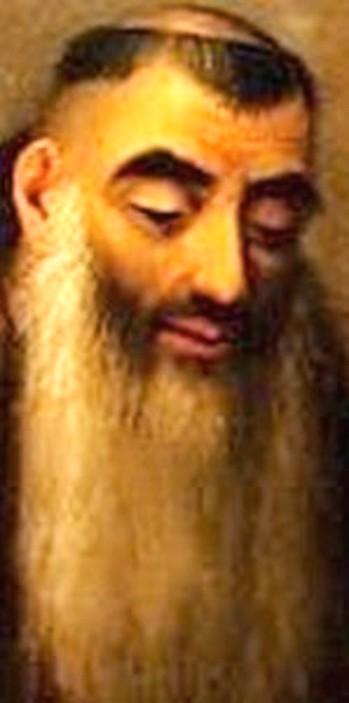
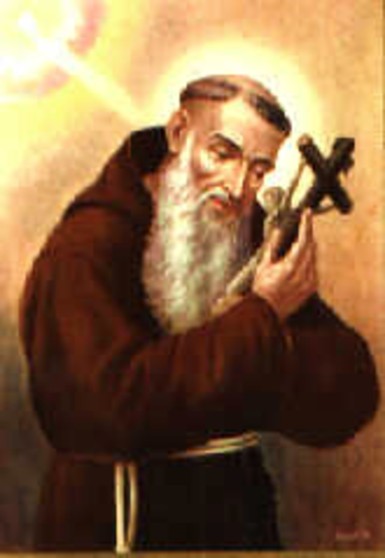
Saint of the Day – 24 March – Blessed Didacus Joseph of Cadiz OFM Cap (1743–1801) Spanish Capuchin Priest Friar, renowned Preacher, Missionary – Known as the “Apostle of Our Lady, the Mother of the Good Shepherd” and the “Apostle of the Blessed Trinity,” Miracle-worker – born as José Francisco López-Caamaño y García Pérez on 30 March 1747 in Cádiz, Seville, Spain and died on 24 March 1801 in Ronda, Malaga, Spain of natural causes.
José Francisco López-Caamaño y García Pérez was born in Cádiz in 1743. His lineage dated from the Visigoth kings. His mother died when he was 9 years old. Later, his father moved the family to the city of Grazalema, where he entered the local school run by the Dominican Order. Though of noble ancestry, as a youth, Joseph could make no progress at school, receiving the nickname of the “dunce of Cadiz”. A classmate, a Dominican friar named Antonio Querero, testified how difficult study had been for him.
Initially rejected by the Observant Franciscan friars due to this perceived limitation of intellect, López-Caamaño was later accepted by the Capuchin friars and, at the age of 15, entered their novitiate in Seville, at which time he was given the name Didacus Joseph. He was professed as a member of the Order on 31 March 1759. He was Ordained to the Priesthood in Carmona in 1766, for which he prepared himself by an extremely ascetic life.
In 1771, after further training in homiletics, he was assigned to one of the teams of friars who would preach Parish Missions to residents of isolated, rural villages, which was a major focus of the Capuchins of that era. His biographers stated that the congregations marvelled at the tender love he displayed to the Crucifix he would hold while preaching and the singular power of his words, which swayed his audiences and left an impression on their lives. He wandered throughout the entire peninsula on foot, preaching in this way to the various communities he encountered on the road.
Spain was undergoing changes in its intellectual climate, as the influence of the Enlightenment began to spread in the upper classes of the country. Didacus became a major force in promoting the traditional devotions and beliefs of Catholicism as part of the identity of the nation and is seen, as an early integrist in the development of Spanish culture, opposing Liberal Catholicism. He also was a strong critic of the policy of consumerism, being promoted in the universities and some government circles. For this teaching, he was denounced to the Spanish Inquisition for attacking royal prerogatives . In turn, he accused the proponents of new economic policies and the secularisation of Spanish society of heresy. He preached at the Royal Court in 1783 but found that he had no effect on the nobility. Leaving Madrid in disappointment, he later wrote: “I do not want the royal couple to remember me”.
Didacus was appointed an official of the Inquisition, the synodal examiner for almost all Spanish dioceses and an honourary canon. The University of Granada conferred upon him the honourary degrees of Master of Arts and Doctorates in Theology and Canon Law. A collection of his sermons numbers 3,000.
Didacus died in 1801, apparently as a result of yellow fever, at the age of 58, in Ronda, Málaga. His remains are kept for veneration in an urn in the small, simple chapel of Our Lady of Peace in Ronda where he died, on the square now named in the friar’s honor.
He was Beatified by Pope Leo XIII on 22 April 1894.
This unlearned man became a celebrated preacher in Spain and an honourary Doctor of Theology and Canon law! During his sermon one day, a child shouted aloud in the church: “Mother, mother, see the dove resting on the shoulder of Father Didacus! I could preach like that too if a dove told me all that I should say!” Didacus prayed devotedly before his sermons, even scourging himself to the point of blood, in order to draw down God’s mercy upon the people.
Once when his superior chided him because of the austerity of his life, Didacus Joseph replied: “Ah, Father, my sins and the sins of the people compel me to do it. Those who have been charged with the conversion of sinners must remember that the Lord has imposed upon them the sins of all their clients. By means of our penances we should atone for the sins of our fellowmen and thus preserve ourselves and them from eternal death. It would hardly be too much if we shed the last drop of our blood for their conversion.”
Many miraculous events are recorded of his life, these three all took place in the main square of Cadiz. In one, he was able to save the life of a builder who had fallen off a roof, stopping his fall with one hand. On another occasion, a priest passed him while en route to administer the Last Sacraments to a dying person. When the acolyte accompanying the priest pointed out to the friar, that he had not removed his hood (the customary form of reverence to the Blessed Sacrament which the Priest would be carrying), Didacus told him, “Tell the priest that the ciborium is empty.” This turned out to be the case. On yet another occasion, a heavy rainstorm hit the city. The square, where Didacus happened to preaching at the time, was the only spot on which no rain fell.
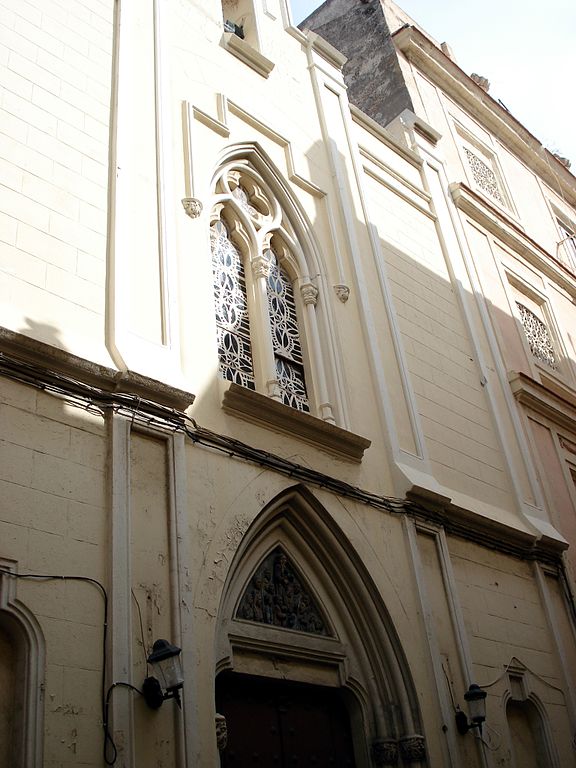
The Chapel of Blessed Didacus, located on the site of his birthplace and family home in Cadiz
The 28th Day of Missionary Martyrs + 2020 “In Love and Alive”
A day of prayer and fasting in memory of the missionary Martyrs of the Faith.
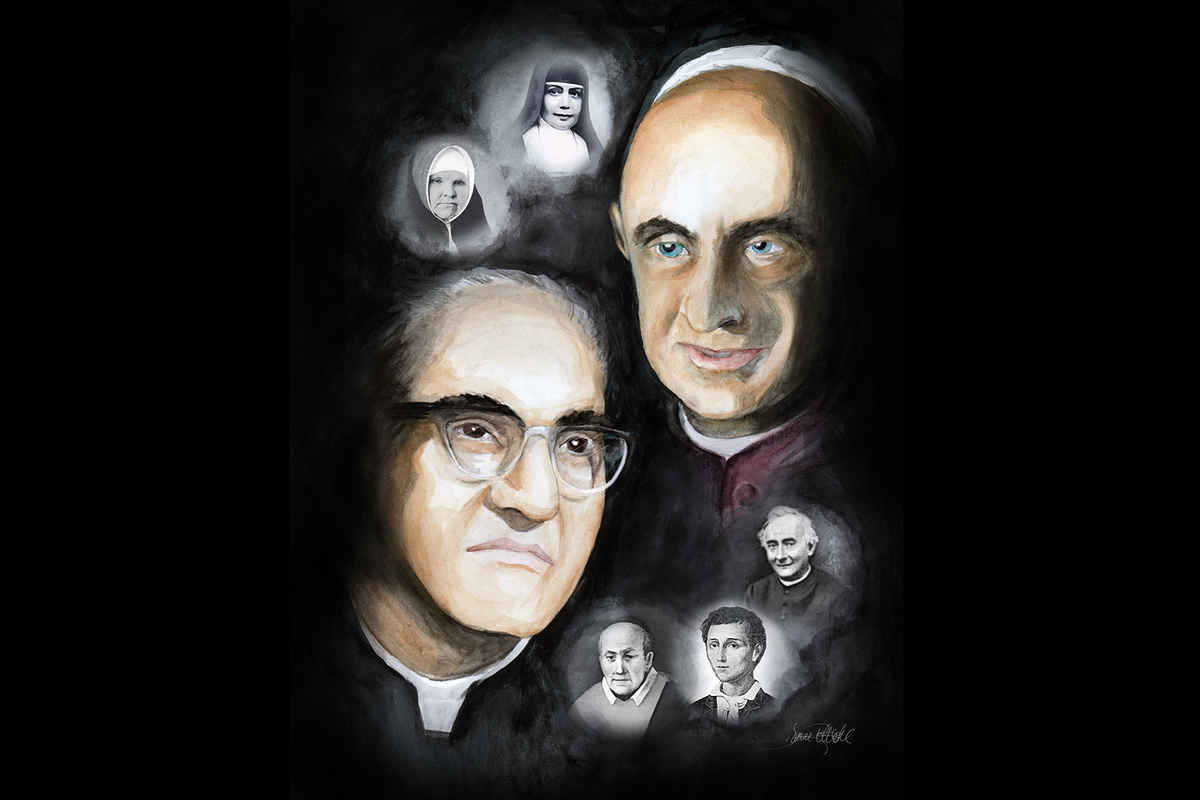
The day in which Msgr Oscar Arnulfo Romero, Archbishop of San Salvador was assassinated in 1980, was chosen 28 years ago by the then Missionary Youth Movement of the Pontifical Mission Societies of Italy, to celebrate annually the “Day of Prayer and Fasting in memory of the Missionary Martyrs.”
The Archbishop, assassinated while celebrating Mass, was Beatified on 23 May 2015 and Canonised by Pope Francis on 14 October 2018, together with St Paul VI and 5 others.
The Bishops’ Conference of El Salvador, on the occasion of the 40 years since his Martyrdom, had announced a “Jubilee Year of the Martyrs,” to celebrate the National Martyrs – Fr Rutilio Grande, Msgr. Oscar Arnulfo Romero, Fr Cosme Spessotto.
However, this year, the coronavirus emergency has forced the Bishops to suspend all celebrations and gatherings, so this Day in 2020 will not see public initiatives.
The slogan of the 2020 Day is “In Love and Alive” informs Giovanni Rocca, national secretary of Missio Giovani. “A message that holds two meanings within itself. The first, in the qualifying meaning, fully describes those who ardent of love for God the Father and His creatures invested all their time to take care of them. The second is a real imperative, the legacy that the Martyrs received from our Lord by transmitting it to us today. Only those who fall in love are willing to abandon the superfluous, in order to grasp the essence of life. This promise is not only hope for the future but above all a guarantee for the present.” Then an invitation: “Convinced that each of us is a worker in the vineyard of the Lord, on 24 March we join in prayer and fasting in memory of the sisters and brothers who by giving their lives continue to be ‘In love and alive.'”
Various aids are available on the Missio Italia website that were prepared to deepen the theme of the day and proposals for concrete initiatives of prayer and solidarity. Following the directives of the Italian government, Missio Giovani has suspended the scheduled events and offers through its social channels – Facebook and Instagram – contents and moments of confrontation to live this time together. (SL) (The Vatican Missionary Agency – Agenzia Fides, 23/3/2020)
St Agapitus of Synnada
St Aldemar the Wise
St Bernulf of Mondovi
Bl Bertha de’Alberti of Cavriglia
Bl Bertrada of Laon
Bl Brian O’Carolan
St Caimin of Lough Derg
St Cairlon of Cashel St Catherine of Sweden (1331-1381) Biography: https://anastpaul.com/2019/03/24/saint-of-the-day-24-march-st-catherine-of-sweden-1331-1381/ Blessed Diego José of Cádiz/Blessed Didacus Joseph of Cadiz OFM Cap (1743–1801)
St Pigmenius of Rome
St Romulus of North Africa
St Secundus of North Africa
St Seleucus of Syria
St Severo of Catania
St Timothy of Rome
—
Martyrs of Africa – 9 saints: A group of Christians murdered for their faith in Africa, date unknown. The only details about their that survive are the names – Aprilis, Autus, Catula, Coliondola, Joseph, Rogatus, Salitor, Saturninus and Victorinus. .
Martyrs of Caesarea – 6 saints: A group of Christians martyred together in the persecutions of Diocletian. We know little else but six of their names – Agapius, Alexander, Dionysius, Pausis, Romulus and Timolaus. They were martyred by beheading in 303 at Caesarea, Palestine.





 AnaStpaul
You must be logged in to post a comment.