St Eusebius of Rome (Died 357) Priest, Confessor. “At Rome, the birthday of the blessed Priest Eusebius, who for the defence of the Catholic Faith, was shut up in a room of his own house by the Arian Emperor, Constantius, where constantly persevering in prayer for seven months, he rested in peace. His body was removed by the Priests, Gregory and Orosius and buried in the cemetery of Cllistus on the Appian Way.” – Roman Martyrology. His Life: https://anastpaul.com/2020/08/14/saint-of-the-day-14-august-saint-eusebius-of-rome-died-357-priest-confessor/
Bl Aimo Taparelli
St Athanasia of Timia St Callistus of Todi St Demetrius of Africa St Eberhard of Einsiedeln (c890-958) Priest, Abbot St Eusebius of Palestine St Fachanan of Ross
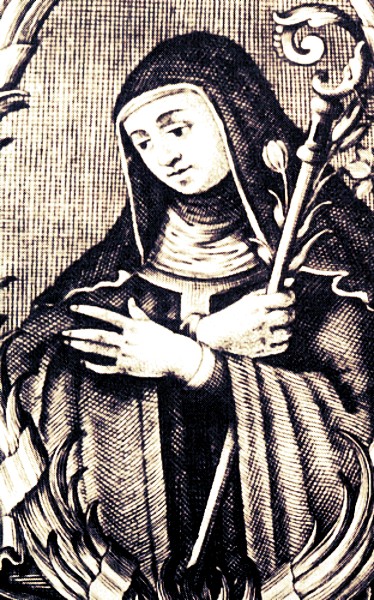
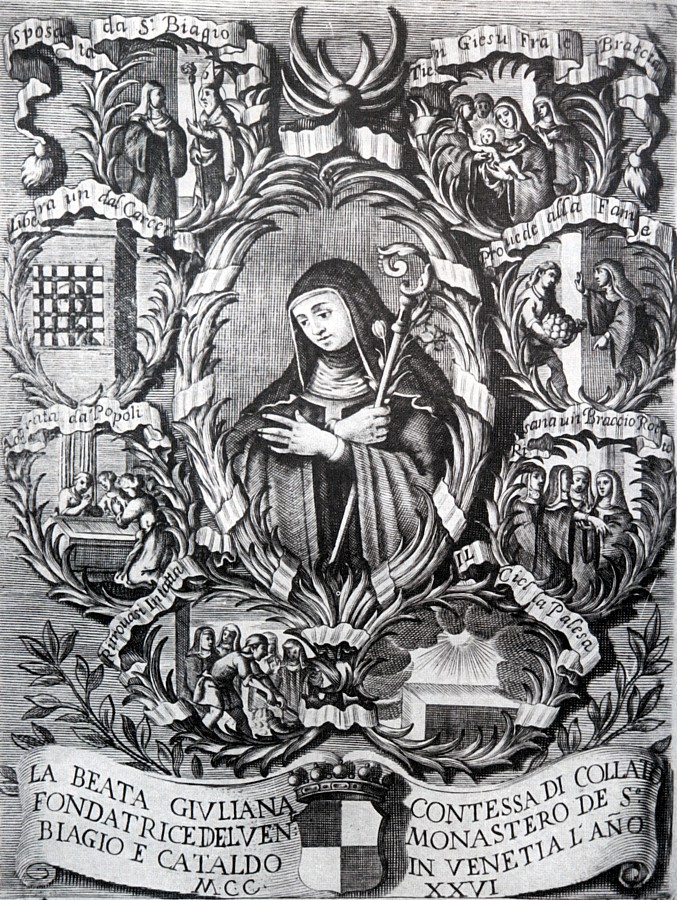
Saint of the Day – 1 September – Blessed Giuliana of Collalto (1186-1262) Benedictine Nun, Abbess, Thaumaturgist, Apostle of the poor. Born in 1186 in Collalto, Susegana, Treviso, Italy and died on 1 September 1262 at Venice, Italy of natural causes. Also known as – Juliana. Patronages – against headaches, against migraines; of migraine sufferers. Her body is incorrupt.
The Roman Martyrology states of her today: “In Venice, Blessed Giuliana da Collalto, Abbess of the Order of Saint Benedict.”
Giuliana was born in Collalto (today a fraction of the Municipality of Susegana in the Province of Treviso, Italy) in 1186. Her parents were Count Rambaldo VI and Countess Giovanna di Sant’Angelo di Mantova.
She was educated in a Christian manner and very young, at the age of twelve, she wore the Benedictine habit in St Margherita di Salarola, on the Euganean Hills. Here she lived the first years of religious life in an exemplary way. In 1220 the Blessed Beatrice I d’Este entered the same Monastery and a deep friendship was born between the two chosen souls.
In the powerful and rich Venetian Republic, Monasteries also had their importance because young people from the most important and noble families were welcomed within their walls.
On the island of Spinalonga (now Giudecca) stood the ruined Church of St Cataldo. Giuliana, whose illustrious name in terms of wealth was by now also known for her excellent virtues, was entrusted with the foundation, next door, of a Monastery. Thus was born, in that abandoned place, a cloistered community that for centuries devoted itself to prayer. The Church was also dedicated to St Biagio. Giuliana, nominated Abbess, in addition to respecting the Rule for her own sanctification and that of her Sisters, always had particular regard for the poor. Her charity was known throughout the City and she performed many wonders while still alive. Following the laws of suppression of religious orders at the end of the eighteenth century, the building was then transformed into the Villa Albarea, being located right along the Riviera del Brenta.
During the last years of her life the blessed suffered from severe headaches, which earned her the Patronage of those who suffer from the same ailment. She died on 1 September 1262, at the age of seventy-six, of which sixty-four had been dedicated to the Lord. She was buried in the Church cemetery. Her memory remained alive and above all her fame as a thaumaturgist against migraines. Her biographers were several.
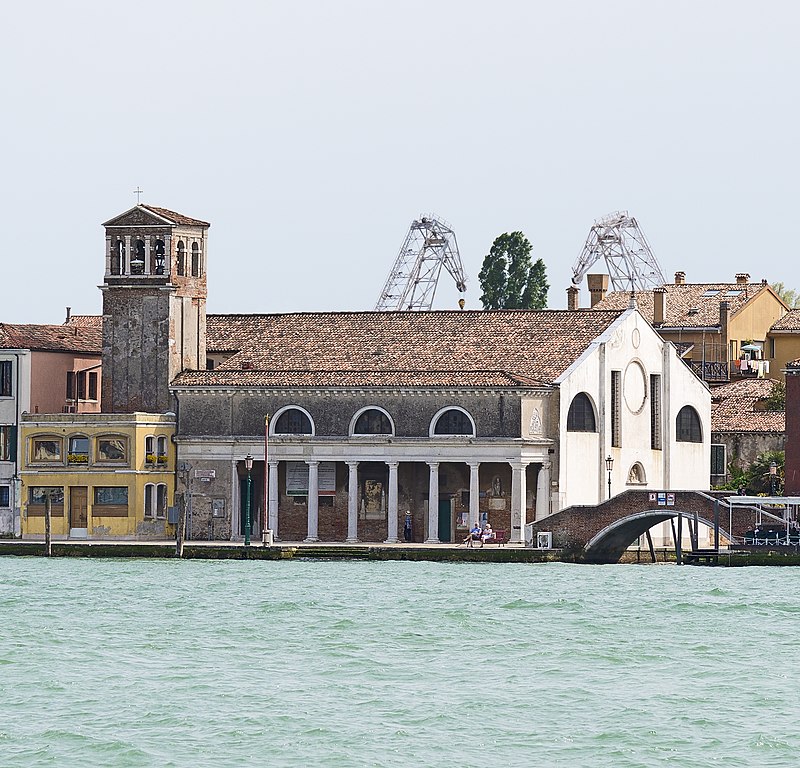
Around 1290 the body, found incorrupt, was placed in an artistic wooden sarcophagus. In 1733 the relics were placed in an Altar of the Church while exactly twenty years later (on 30 May) Pope Benedict XI confirmed the cult “ab immemorabili,” with her Memorial y on 1 September . In 1810 the body was moved to the Church of the Redentore and twelve years later to the parish of St Eufemia where it is still venerated in the Chapel of St Anna. In the Church of her birthplace there is a relic of the phalanx, a crown on which she rested her head, a pillow and part of the dress worn at the time of death. The ancient wooden sarcophagus is now kept at the Correr Museum in Venice. Her paintings are an ancient example of how Venetian painting was influenced, at that time, by the Byzantine style.
St Eufemia Church in Venice where the incorrupt body of Blessed Giuliana is enshrined
Collection of all the Feasts of Our Lady, celebrated at Louvain – 1 September:
The Abbot Orsini writes that “A feast is kept in honour of the Blessed Virgin, called the Collection of all the Feasts of Our Lady.”
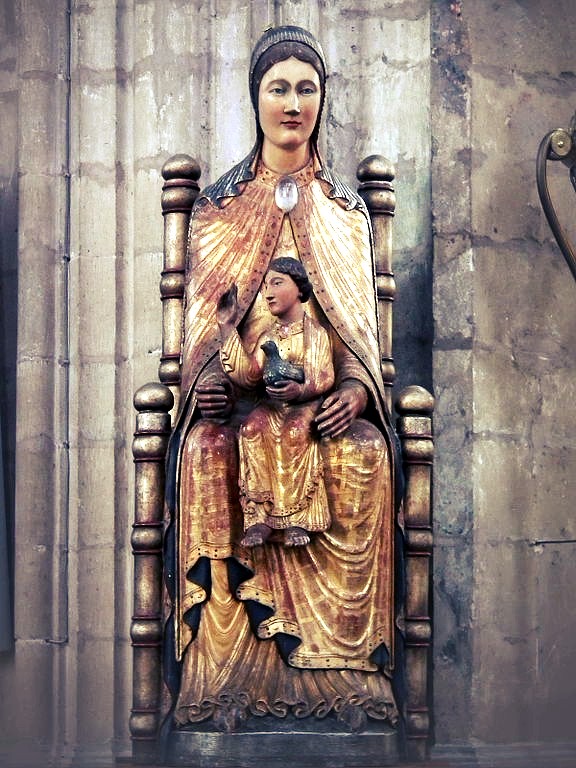
Louvain refers to Leuven, the capital of the Province of Flemish Brabant in the Flemish Region of Belgium. There was once a Chapel called Our Lady of Louvain, which had stood near the Church tower of a separate Church dedicated to Saint Peter. The Chapel owed its origin to an image of the Blessed Virgin Mary that was given by a group of Monks from Abbey Park as a sign of brotherhood in 1132. According to tradition, the wooden statue, which depicted the Blessed Virgin seated with the Divine Child in her lap, was a gift from heaven deposited on the earth by heavenly Angels. The image excited a lively religious fervour upon its reception and there are numerous miracles credited to pious devotion to the image of Our Lady of Louvain.
Over 350 years later, as the Chapel of Our Lady of Louvain was built on land that was needed for the construction of the new and larger Church of Saint Peter, it was necessary to demolish the Chapel. In a letter dated 28 March 1496, Bishop John Horne of Liege, authorised the transfer of materials from the Chapel of Our Lady of Louvain to the new Basilica of Saint Peter The old Chapel was demolished two years later in 1498 and the Statue of the Virgin was placed on a special Altar in the collegiate Church of Saint Peter. Every year, on the eve of the first Sunday in September, the miraculous image of Our Lady of Louvain had been carried in procession by the canons and members of the local council while bells tolled and musicians accompanied the image singing the Salve Regina. Sometime later, the Statue became known by the title of Notre-Dame-sous-la-Tour. The original Church of Saint Peter was made entirely of wood and completed in about 986. It burned to the ground in 1176. It was rebuilt in Romanesque style with two west towers, and that image is still used as the ancient seal for the City. The Church was then enlarged in 1425 in the Brabantine Gothic style. The Church of Saint Peter was heavily damaged in both world wars but most importantly, the original Statue of Our Lady of Louvain was completely destroyed in 1944 by allied bombing during World War II and it is now only a replica that is on display at the Church.
Abigail the Matriarch St Aegidius St Agia St Anea St Arcanus St Arealdo of Brescia Bl Colomba of Mount Brancastello St Constantius the Bishop St Donatus of Sentianum St Felix of Sentianum
Blessed Giuliana of Collalto OSB (1186-1262) Benedictine Nun Bl Giustino of Paris Bl Giovanna Soderini St Jane Soderini St Joshua the Patriarch Bl Juliana of Collalto St Laetus of Dax
St Lythan St Nivard of Rheims St Priscus St Regulus St Sixtus of Rheims St Terentian St Verena St Victorious St Vincent of Xaintes — Exiles of Campania Twelve Holy Brothers: Martyrs of the South – A group of Martyrs who died c 303 at various places in southern Italy. In 760 their relics were brought together and enshrined in Benevento, Italy as a group. • Saint Arontius of Potenza • Saint Donatus of Sentianum • Saint Felix of Sentianum • Saint Felix of Venosa • Saint Fortunatus of Potenza • Saint Honoratus of Potenza • Saint Januarius of Venosa • Saint Repositus of Velleianum • Saint Sabinian of Potenza • Saint Sator of Velleianum • Saint Septiminus of Venosa • Saint Vitalis of Velleianum One tradition describes Saint Boniface of Hadrumetum and Saint Thecla of Hadrumetum as their parents.
Martyred in the Spanish Civil War: Martyred Hospitallers of Saint John of God – (12 beati) • Blessed Alejandro Cobos Celada • Blessed Alfonso Sebastiá Viñals • Blessed Amparo Carbonell Muñoz • Blessed Antonio Villanueva Igual • Blessed Carmen Moreno Benítez • Blessed Crescencio Lasheras Aizcorbe • Blessed Enrique López y López • Blessed Francesc Trullen Gilisbarts • Blessed Guillermo Rubio Alonso • Blessed Isidro Gil Arano • Blessed Joaquim Pallerola Feu • Blessed Joaquín Ruiz Cascales • Blessed José Franco Gómez • Blessed José Prats Sanjuán • Blessed Josep Samsó y Elias • Blessed Manuel Mateo Calvo • Blessed Mariano Niño Pérez • Blessed Maximiano Fierro Pérez • Blessed Miquel Roca Huguet • Blessed Nicolás Aramendía García • Blessed Pedro Rivera • Blessed Pio Ruiz De La Torre



 AnaStpaul
You must be logged in to post a comment.