
Saint of the Day – 4 March – Blessed Humbert III, Count of Savoy (1136–1189) Layman Prince. It is recorded of Humberto “who, forced to leave the cloister to deal with public affairs, practiced the monastic life with greater dedication, to which he later returned.” Born in 1136 in Avigliana, Italy and died on 4 March 1189 in Chambéry, France of natural causes. Beatified in 1838 by Pope Gregory XVI.

Humbert III was born around 1136 in the Castle of Avigliana, Piedmont, near Turin, to Count Amadeus III of Savoy and Mahaut (Mathilde), Countess of Albon and Vienne. Humbert III is an important figure in medieval society, as attested in the history of House of Savoy. His life was characterised by certain key features, including mysticism, borne of a vocation and tradition of the contemplative life . But he events of his time and of his place by birth, forced instead that he become a warrior and politician which he undertook exclusively for Dynastic reasons., having inherited the dream of his father and grandfather of unifying the kingdoms of Burgundy.
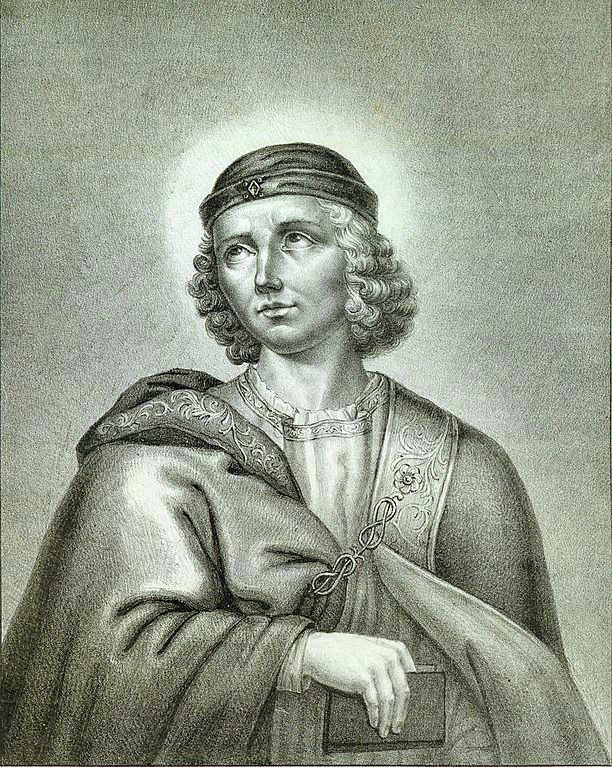
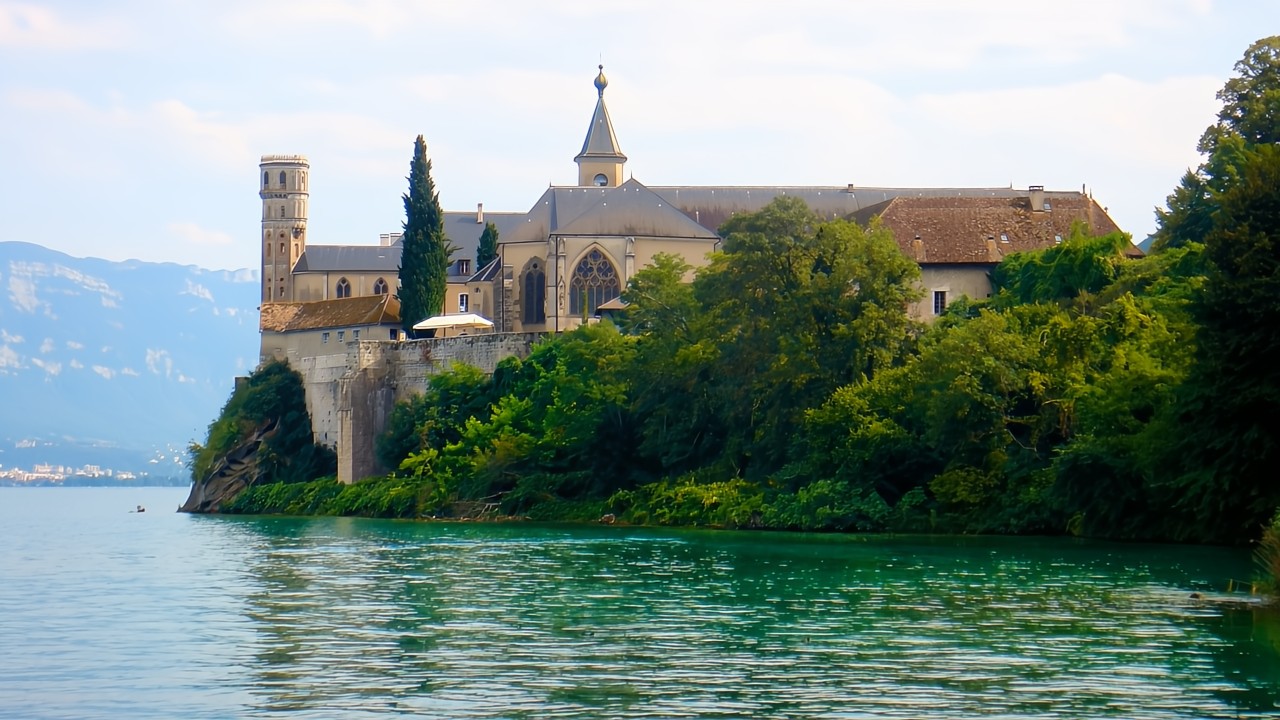
Humbert’s education was entrusted to Saint Amadeus of Lausanne, the former Abbot of Hautecombe and, under his guidance, little Humbert made great progress in his studies and spiritual formation, despising the apparent splendour of worldly things and wishing to devote himself to prayer, meditation and penance. To better achieve his lofty goals, he often retreated to the Abbey of Hautecombe, on the banks of Lake Bourget in Savoy, founded by his father. He always left this holy place with regret, each time the family and the Savoyard nobility, called him back to deal with political issues.

In 1122, Humbert’s much older brother, Amadeus III, who had inherited the Dynastic leadership from their father, went on pilgrimage to the Holy Land out of gratitude towards Pope Callixtus II and from 1146, he participated in the Second Crusade. However, in 1148, he died on the island of Cyprus, where he was buried, leaving young Humbert as heir – Humbert III was then just twelve years old.
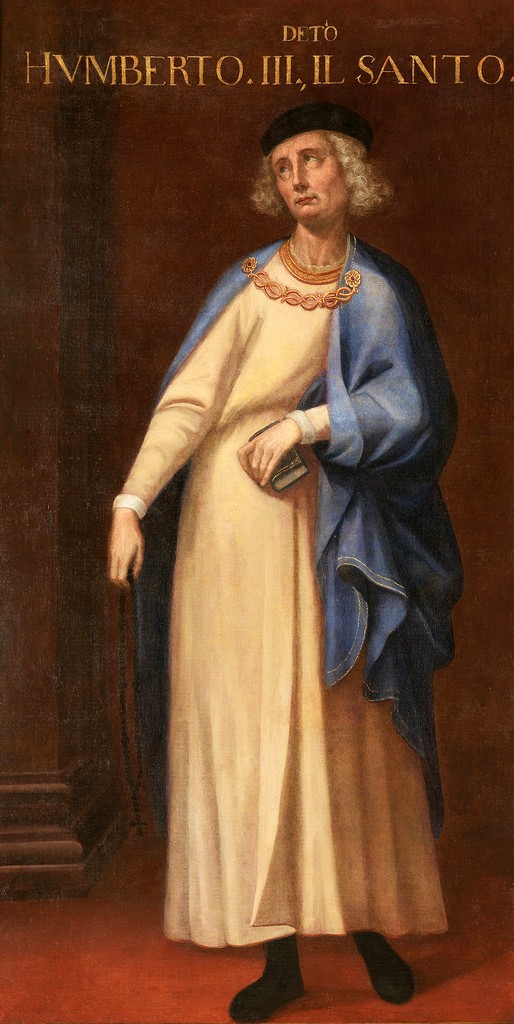
At the age of 15 Humbert married Fedica, daughter of Count Alfonsus-Giordanus of Toulouse, who soon died without children. Later he married a cousin, Gertrude, daughter of Count Theodoric of Flanders and Clemenza of Burgundy. Unfortunately, this second marriage was annulled, due to sterility. In 1164 he married Clementina of Zharinghen, who however gave him only two daughters, Alice and Sofia. Widowed again in 1173, Humbert decided to retire to Hautecombe Monastery, until, in 1177, the nobility managed to convince him to marry for the fourth time, hoping for a male heir,. Finally, his fourth wife, Beatrice, daughter of Count Gerard of Macon bore a son, Thomas, who would continue the Dynasty and another daughter, who however died at the age of seven.
The long reign of Humbert III which lasted aaround forty years, was characterised by particular conflicts with the Emperor, the various Lords and Bishop-Counts. In 1187, he was in fact, banished from the Empire by Henry VI, as he supported the Emperor’s opponents. Humbert retreated to his Alpine domains, dedicating himself to the practice of personal virtues and fraternal charity and the promotion of Monastic foundations.

Humbert ‘s spirituality undoubtedly blossomed in an environment of ancient Christian traditions, favoured in particular by the example of his father, a pilgrim and Crusader in the Holy Land and of the holy Bishop St Amadeus of Lausanne, his spiritual father. The life of thisPrince passed almost entirely under the sign of contradictions – a lover of peace, he had to encounter frequent hostilities and wars; penitent, contemplative ascetic –the care of the government imposed on him a life of action, finding himself almost forced into marriage to leave an heir. However, he gave undoubted signs of great moral balance, of severity with himself and of indulgence and charity towards others. He was very generous towards Churches, Monasteries and above all, towards the poor.
The death of Humbert III, on 4 March 1189 in Chambéry, at the age of fifty-two, was mourned with sincerity by all the people. He was the first Savoy Prince to be buried in the Hautecombe Abbey,which, since then, became a necropolis for the dynasty, so much so, that Humbert II and Maria José, the last Italian Empress, still rest there today. The deceased Count immediately received great veneration, also supported by many miracles, until in 1838 King Charles Albert of Sardinia managed to obtain from Pope Gregory XVI the official approval of the title of “Blessed” for his ancestor, as well as for nephew of these, Blessed Boniface, Carthusian Monk and later Archbishop of Canterbury. The two Blessed of the House of Savoy, rest today in two valuable Sarcophagi behind the High Altar of the Abbey Church in Hautecombe.
In Italy, Blessed Humbert III is still remembered today, in particular in Racconigi, where a painting of the Blessed donated by Queen Elena and restored by King Humbert II, is kept in the Royal Sanctuary of the Madonna delle Grazie. Furthermore he is venerated in Aosta, where he is depicted on the facade of the Cathedral and in the Castle of Sarre, also in the Aosta Valley.

 AnaStpaul
You must be logged in to post a comment.